

 Mountain Bike (MTB)
 Gravel Bike
 All-Terrain Bike (ATB)
 Fat Bike


Crust Nor’Easter Review: Dreamboat



Dainty tubes, a threaded headset, and lugs are just a few of the features that make the Crust Nor’Easter atypical in today’s bike market. A few years removed from its release, clearance for 29” x 2.6” tires sits at the very edge of what even the most experimental gravel bikes can offer. After waiting more than half a decade for a specific version of this bike to appear, Nic finally got his hands on one. In his Crust Nor’Easter Review, he shares whether this antiquated object lives up to the dream…
PUBLISHED Jul 13, 2026
Riding shots by Holden Mathis and Joe Redbeard
Nostalgia is a hell of a drug. Why we prefer the albums, teams, or bikes we came to know early in our experience over what’s currently on offer is a complex cocktail of thoughts and feelings. Irrational? Perhaps. But fun and telling of the person in question? Undoubtedly.
Bikes from companies like Crust present an interesting package. More up to date than the classic silhouettes they’re inspired by, fat-tire randonneuring bikes are designed to strike a balance between sentiment and Surly. Capable enough to hit trails, rocky roads, and doubletrack, they’re also somehow supposed to exhibit incredible, soulful ride quality on the road. Breaking into the mainstream in the late ‘10s, Crust delivered on that seemingly impossible idea with style. Through bikes like the Bombora, Romanceur, and Nor’Easter, the small but mighty brand based in Richmond, Virginia, hit on something people were clearly yearning for—concepts from a bygone era, wrapped in an irreverent package.
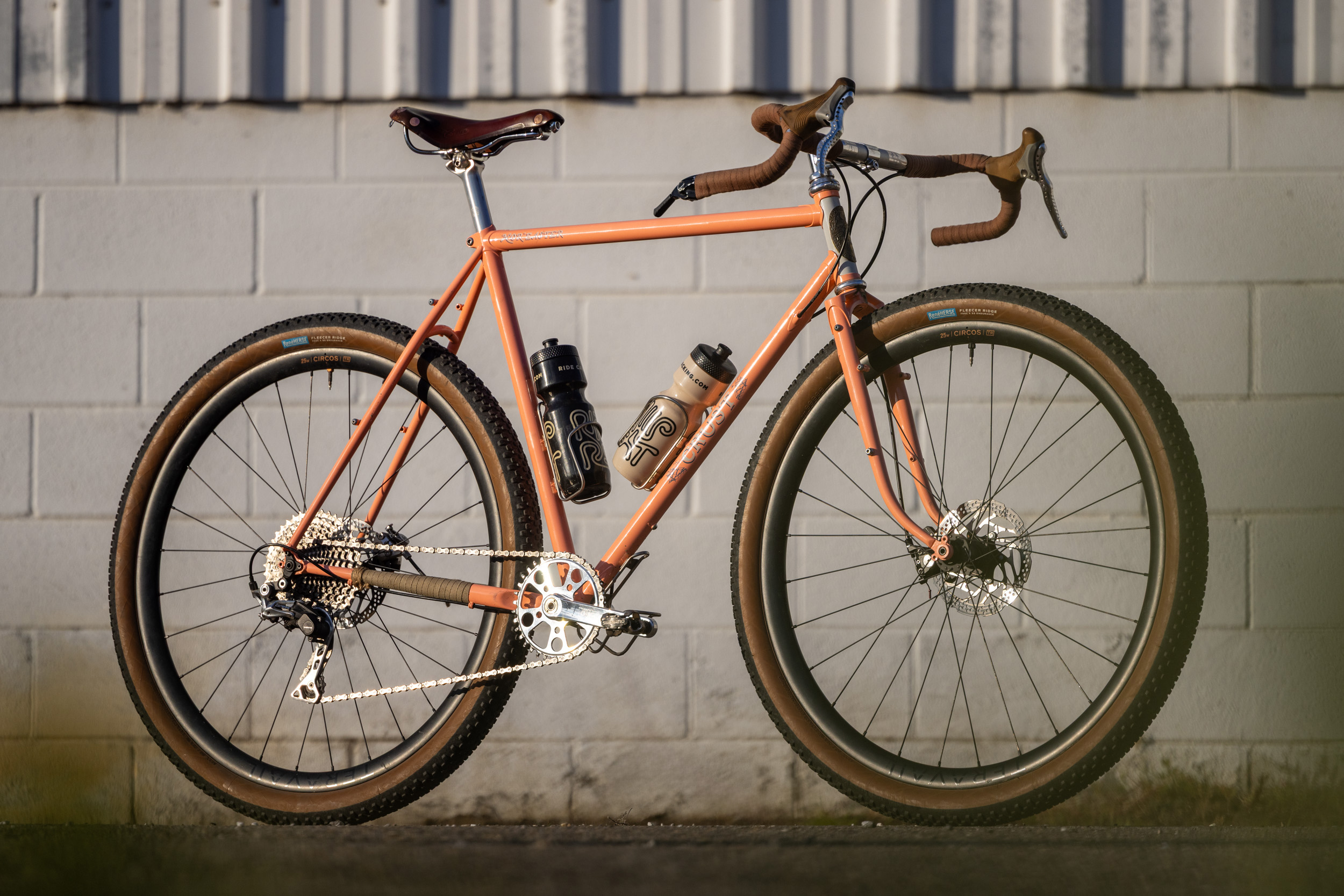
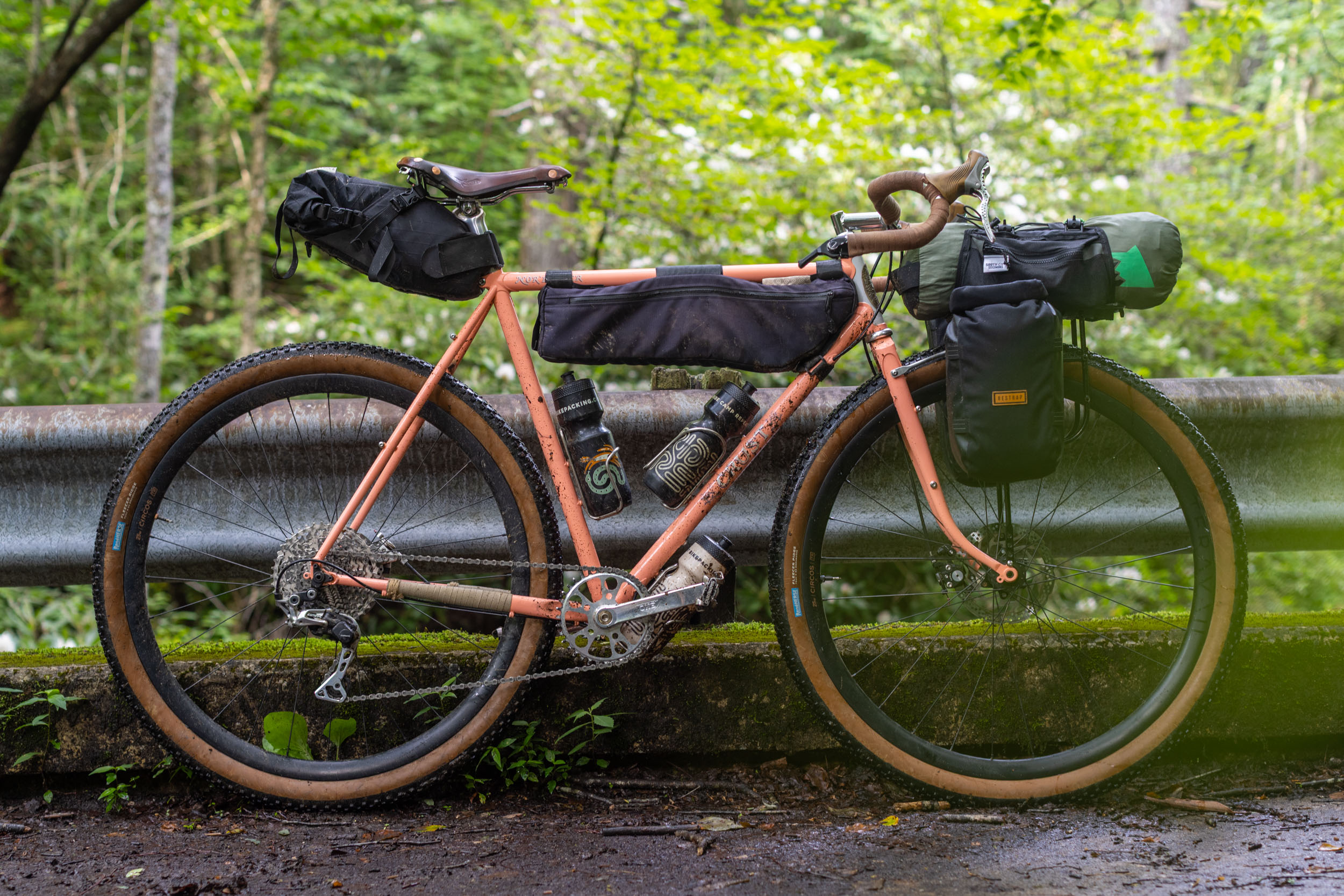

The Crust Nor’Easter is an object of nostalgia. It harkens back to yesteryear—when standards were simpler, lines were cleaner, and people asked more of themselves than their bikes. But nostalgia isn’t always rosy. It can often be an inaccurate depiction of what once was. Just because something was great doesn’t mean it meets today’s demands. At times, it’s better left in the past. After years of dreaming about one very particular version of the Nor’Easter, I finally managed to get my hands on one. In my review, I dissect whether this oddball of a bike and its outsized presence in my mind holds up in the lug and steel I spent so long lusting after.
History
Started by Matt Whitehead and bolstered by his wife, Angelica Casaverde, Crust was little more than a pipedream on an iPod touch in its infancy. Starting small and eventually breaking their way into GQ in 2024, Crust broke the mold by offering off-the-wall concepts in bright, unique packages. Through models like the Bombora and Nor’Easter, they filled a need for fast, dirt-capable bikes in a more interesting way than many other, bigger bike companies could. They punted on fat-tire, road-inspired frames when others said it wouldn’t make sense, and leaned into obscure wheel sizes when it was uncool and untested. Appearing in the strangest places, Crust finds itself in skate magazines, at some of the gnarliest trailheads in the country, and beneath the legs of professional athletes. With little in the way of a budget, they’ve made it big time.


Part of that is because of their unmistakably punk energy. But an equally large aspect is their capacity for collaboration. The Romanceur, a similarly light-tubed, randonneuring-inspired frame in their lineup, is designed by Ronnie Romance. The Derecho is by mountain runner Anton Krupicka. Garrett, their long-time star employee, made the Wombat. As much as bikes like the Evasion and Bombora are born of Matt’s weird and wonderful desires, he also draws design inspiration from friends and others who stimulate the brand.
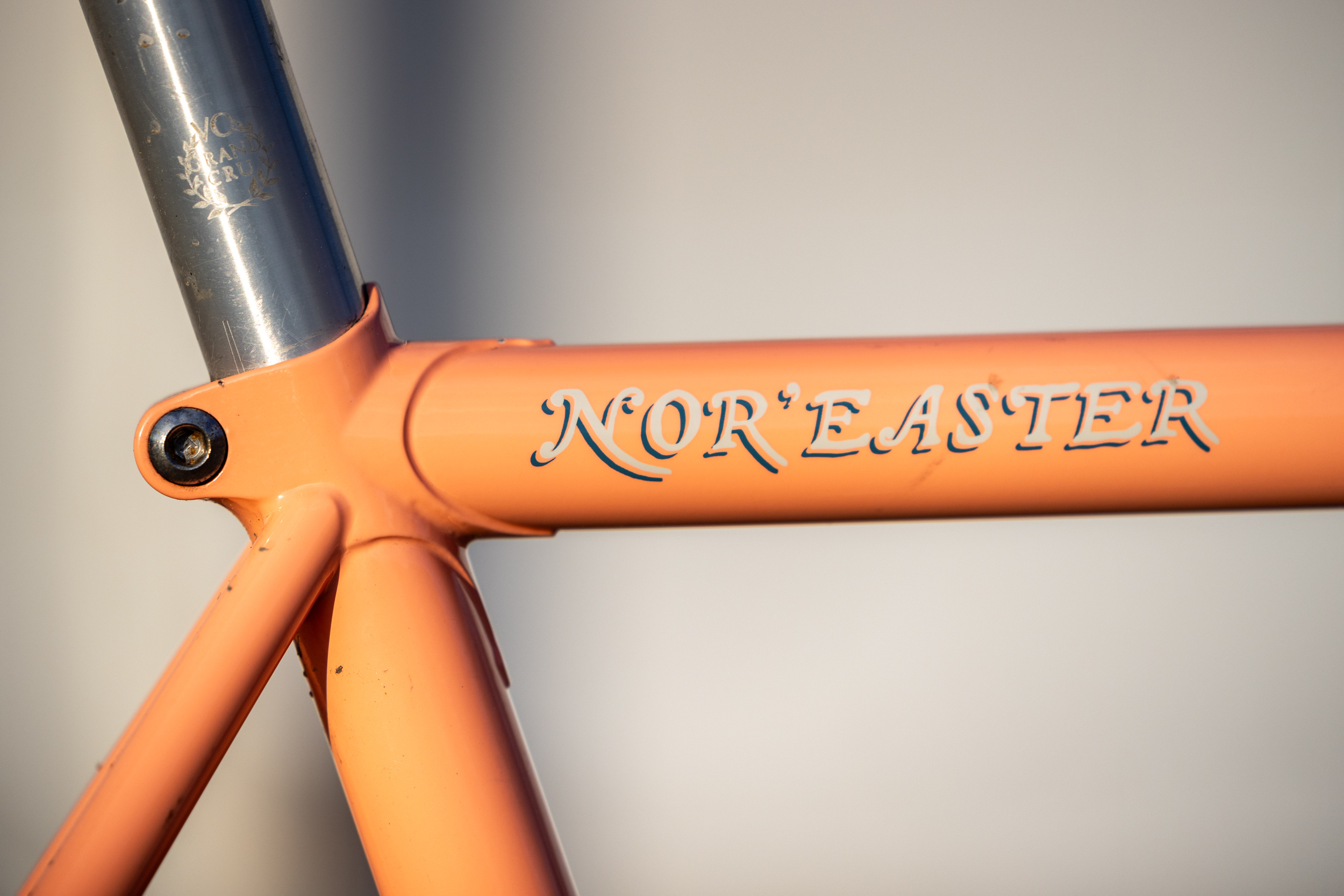
The Nor’Easter is born of similar origins. Brought on through Matt’s time staying in Nutmeg country with friend Edward Simpson in the early days of the company, Edward wanted something like Mr. Romance’s custom randonneuring bike, but with lugs. So, Matt took the geometry and ran with it. Ronnie’s signature model, the Romanceur, already existed, and they’d seen people riding it on trails and the kind of doubletrack it wasn’t exactly intended for. So, they beefed up the tubing, increased the trail, and based it around 29” and 27.5” wheels rather than 27.5” and 26”. Meant to fit in lying against lobster traps and imagery consistent with the Northeast, early iterations like this one had hand-drawn ships and nautical imagery. That sea-oriented theme is primarily what drew me to this version, as I used to surf.
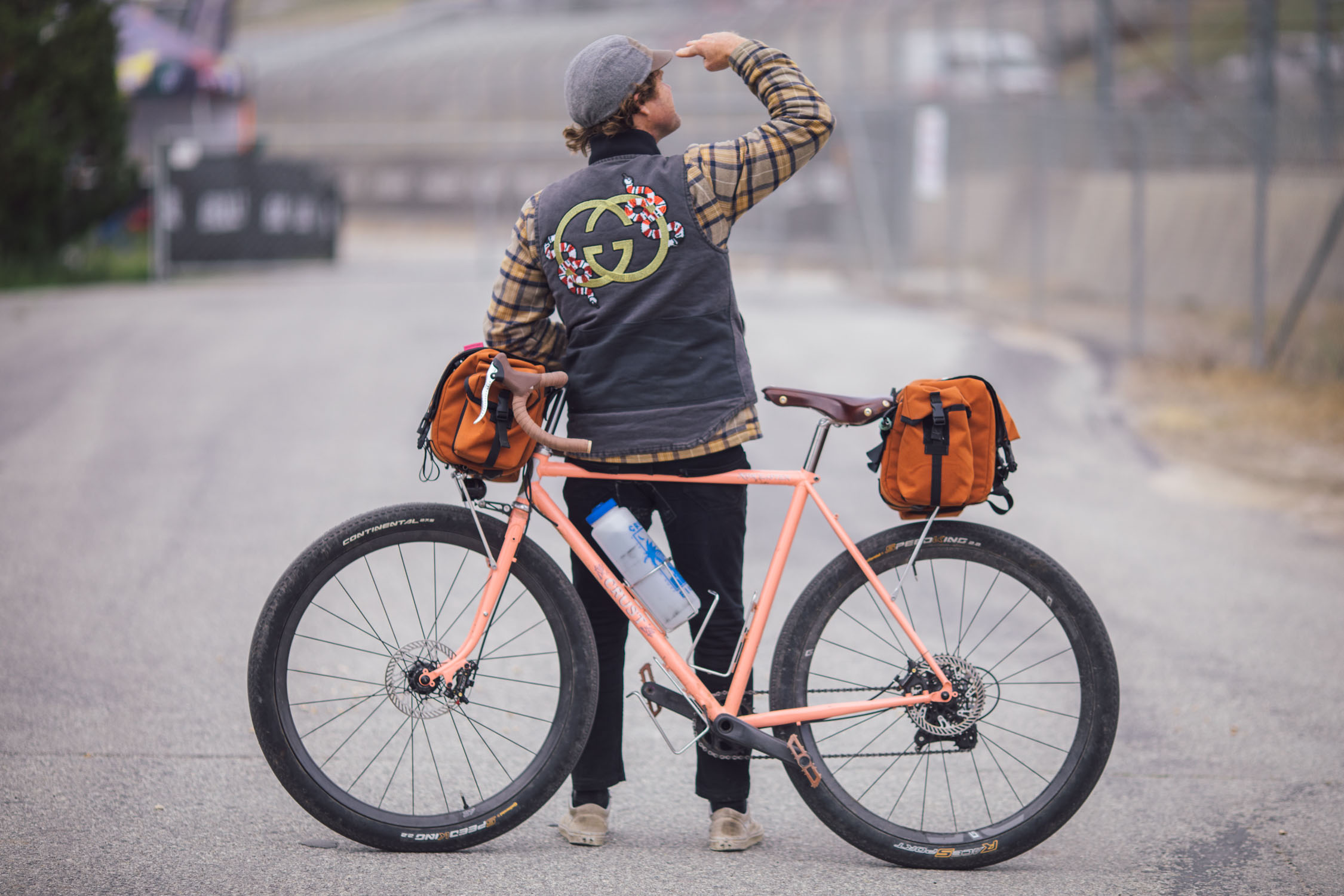

Matt’s own history in bikes is surfing-adjacent, and the Nor’Easter is named after the extratropical cyclones that hit the American Northeast every year from November to March. I know how hit-or-miss the swells can be on the East Coast, and that it takes some creativity to have a good time. Most good surfing results from storms or tectonic plate shifts. In the Pacific, these events typically occur hundreds of miles offshore. The energy then travels through the ocean, and by the time it reaches Mexico, California, Oregon, or Washington, it has organized itself into clean, 12-15-second swell periods. Ideal for gliding on perfectly curated energy sets. The Atlantic, however, is a lot messier. It’s much smaller than the Pacific, and there’s a lot more in the way, making that tidy transfer of energy far muddier. So, when a storm big enough to make a few waves pops up, it’s not uncommon to find a few nutjobs out there, risking their lives to catch a 30-second ride on those surges of energy.
To say all of that is expressed in the imagery on the Nor’Easter would be an exaggeration. Still, it’s a narrative I’ve enjoyed constructing since I laid my eyes on the first generation of the bike more than a few years ago.
My Story
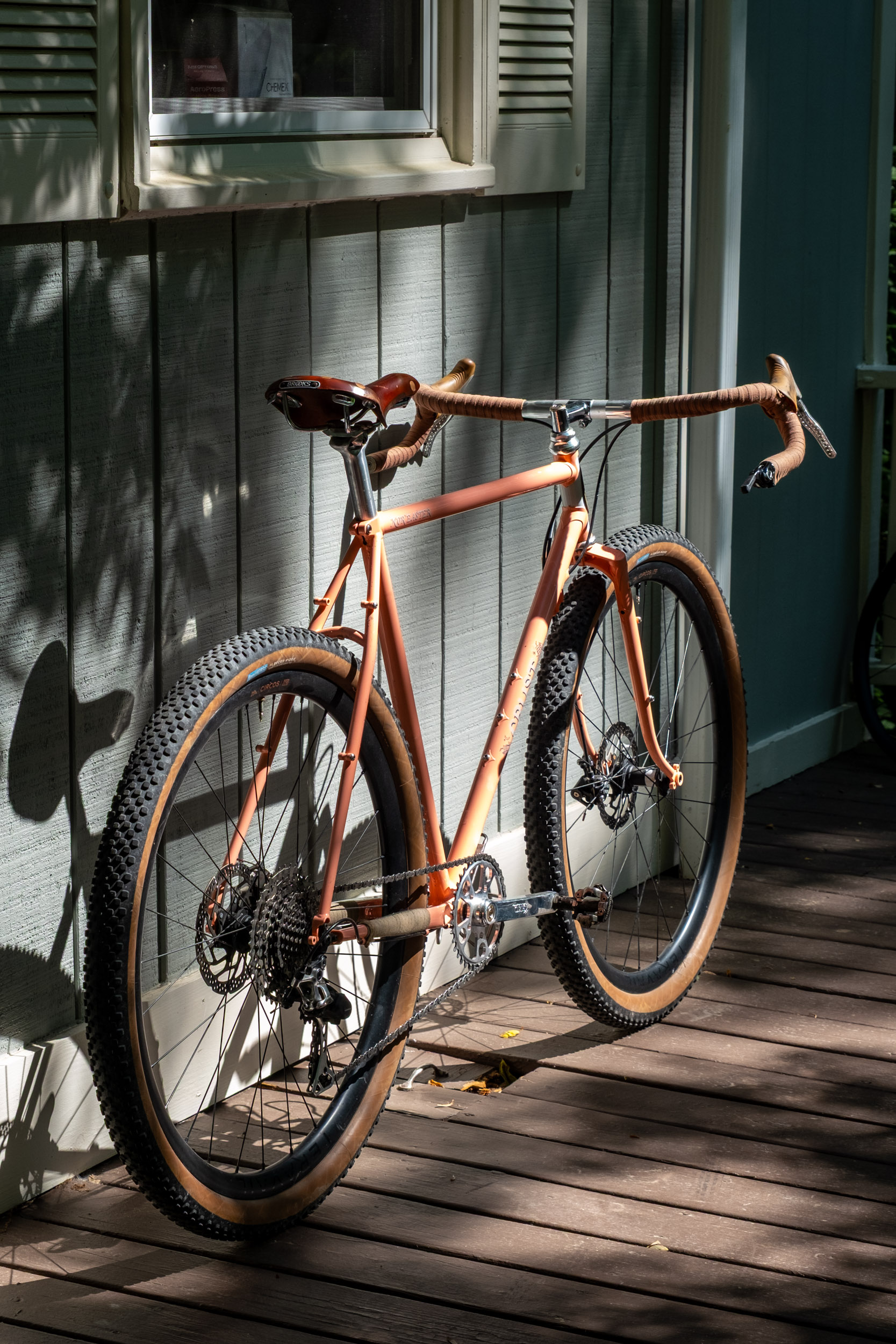
This is not a typical review. I didn’t reach out to the brand and ask to review the bike. This colorway hasn’t been available for years, and some peculiarities, like the mismatched brake mounts, are no longer present in more recent production runs. I bought this bike with my own money on a resale site after waiting nearly six years for this specific version.
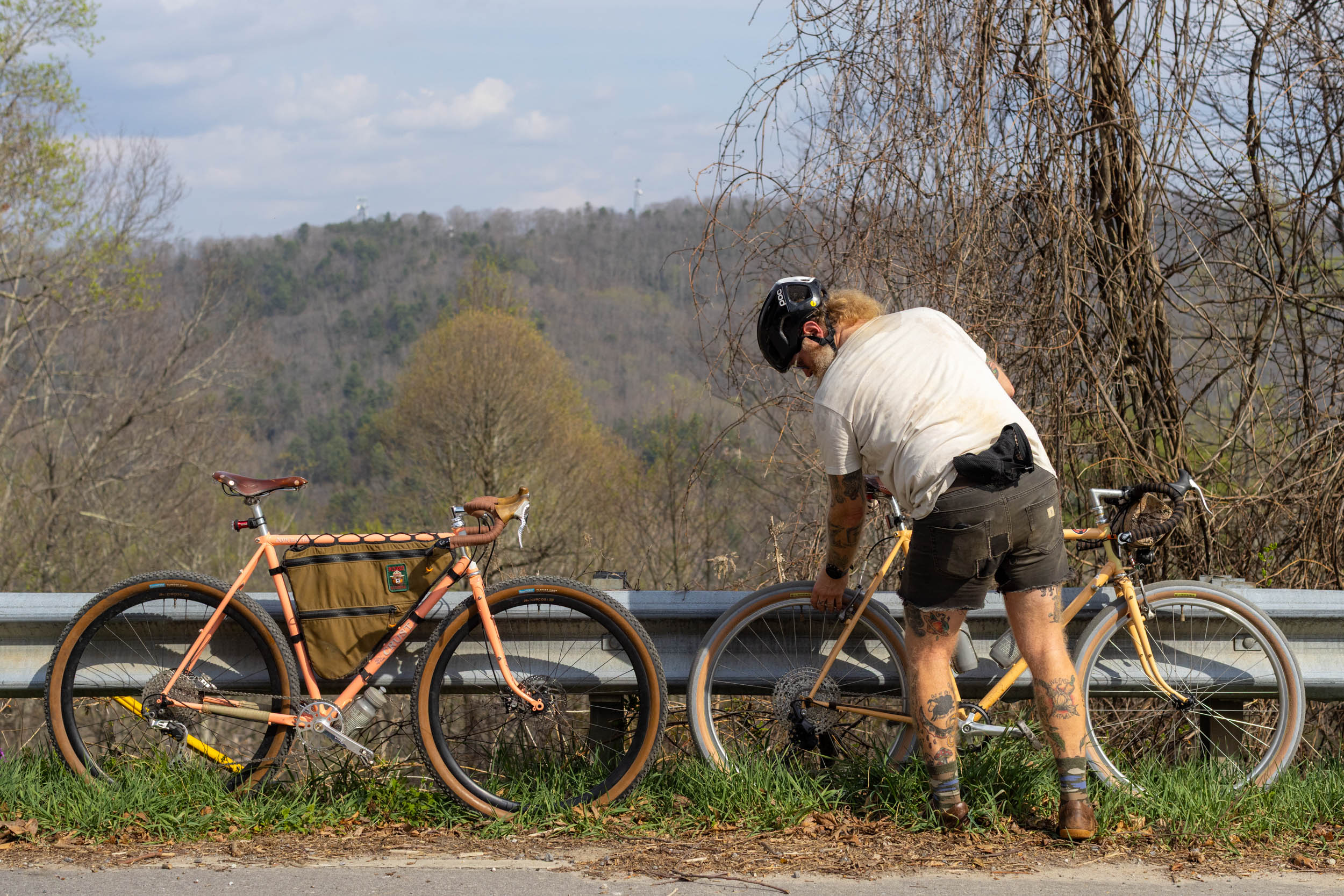
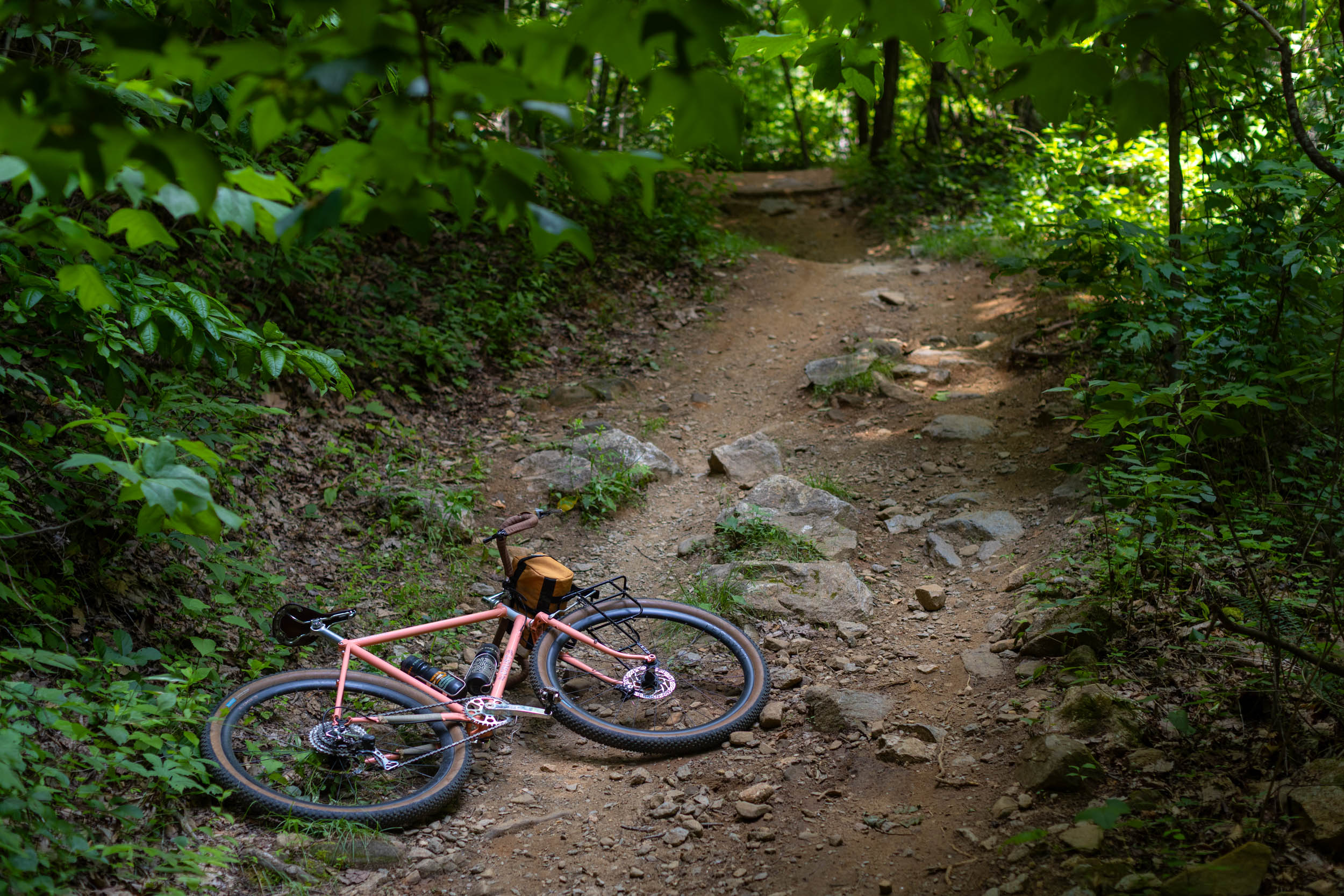
The year was 2020. I had a desk job I truly loathed, and I spent all the time I wasn’t hocking T-shirts or sleeping riding through Florida’s now-developed wilds. Whenever the rain or heat was so bad that I couldn’t get out, I perused sites like BIKEPACKING.com for inspiration. What I once found by chance became a tri-weekly landing spot. Logan’s meetup with Matt, during which he documented the Nor’Easter in detail, became my obsession.
I try to never lust after things, especially not material objects. I’m uncomfortable with the idea of our objects owning us, and I know that an unactualized want is better than a purchased desire. Yet, I couldn’t get the Nor’Easter out of my head. The thin tubes, fat tires, and ship-like themes called to me like a siren. I was flat broke at the time, and the demands COVID placed on the bike industry meant the Nor’Easter had long since sold out. Saved from making what would’ve been a terrible financial decision, I vowed to myself that if I ever saw that specific color of that bike in my size, I’d have to get it.

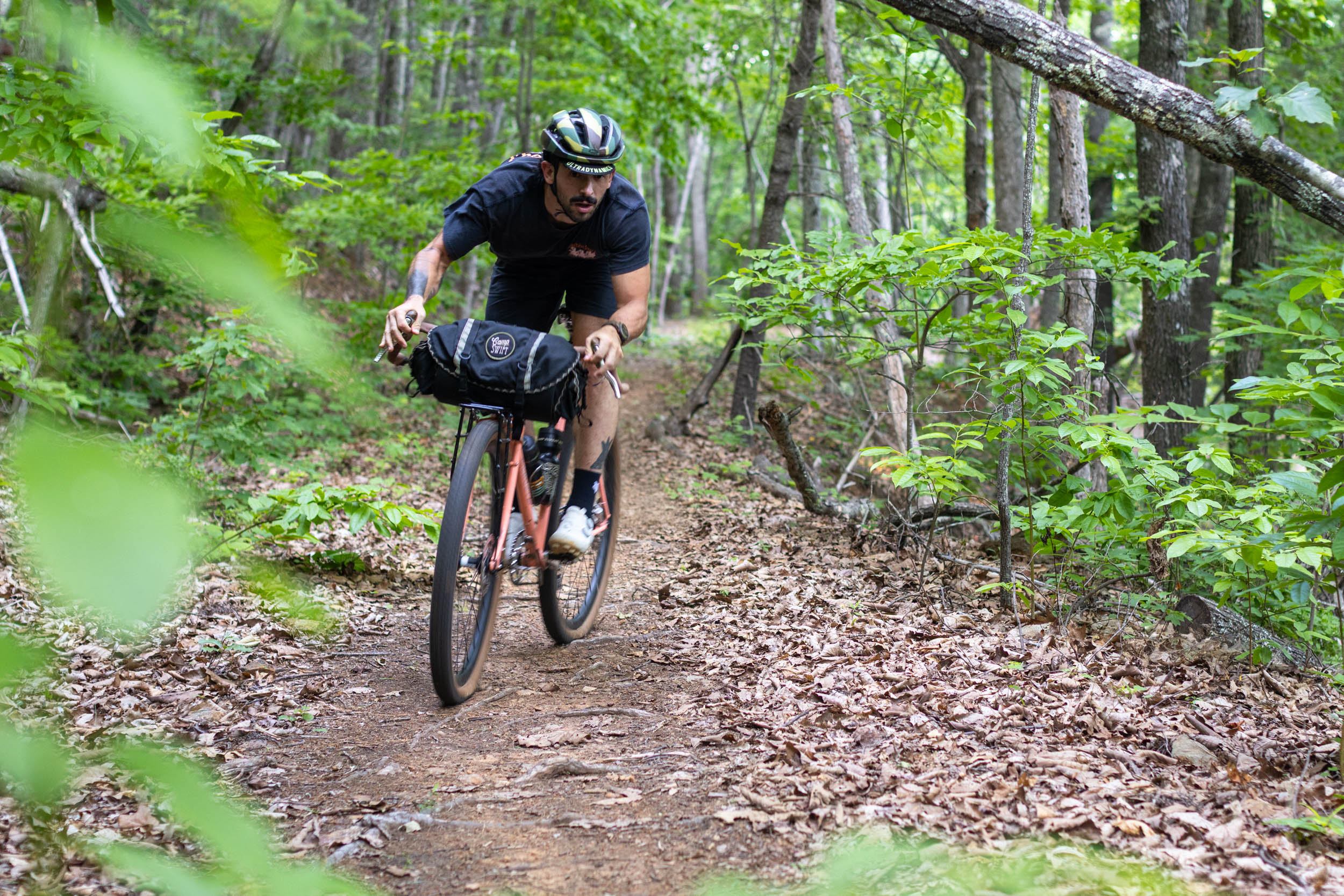

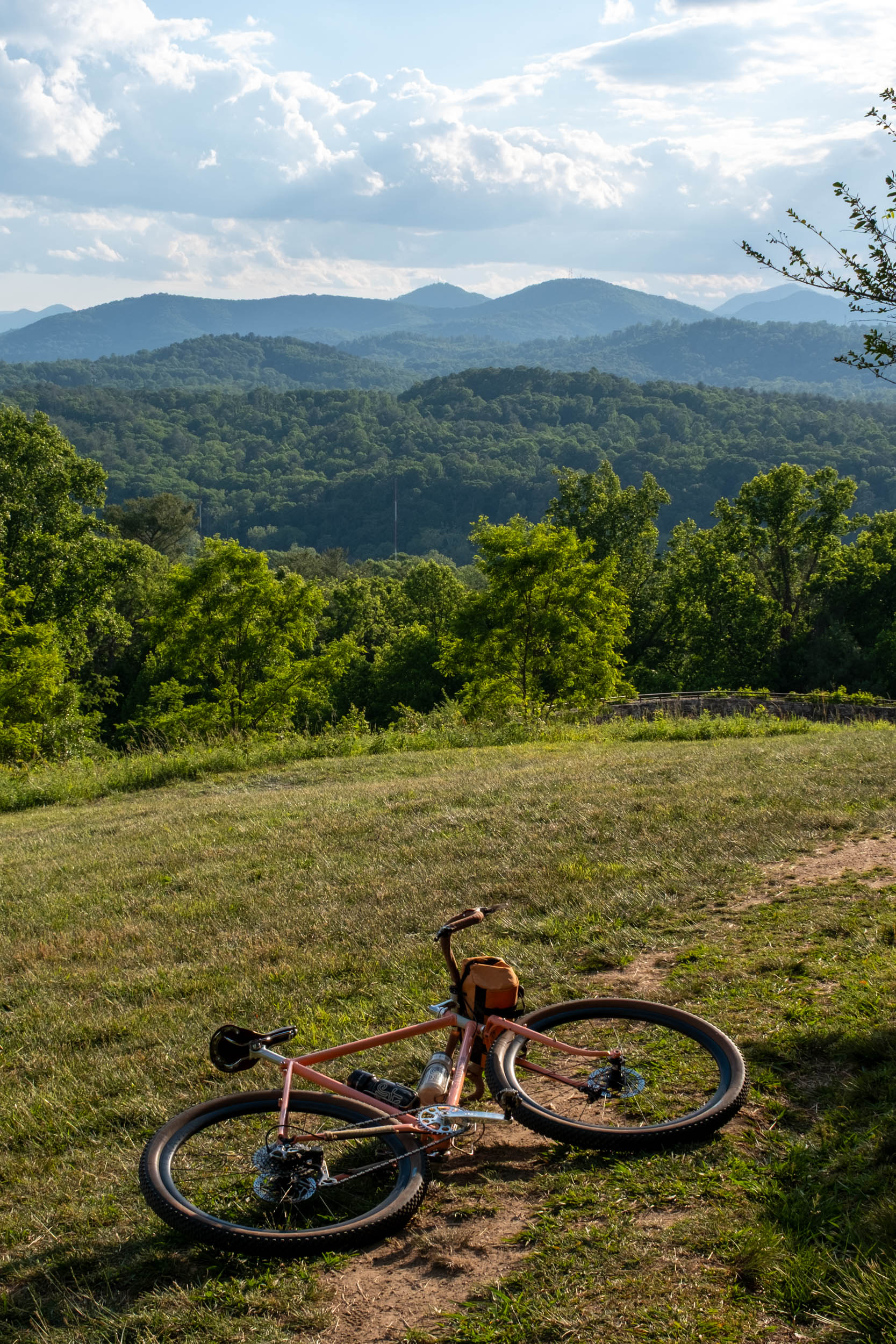
Years passed. Countless Bomboras, Evasions, Scapegoats, and other models hit resale sites after the COVID boom had passed, but there was rarely, if ever, a Nor’Easter. Sometimes, one of the latter models would crop up, but never one with that iconic Slammin’ Salmon color. That is, until early this year.
My Build
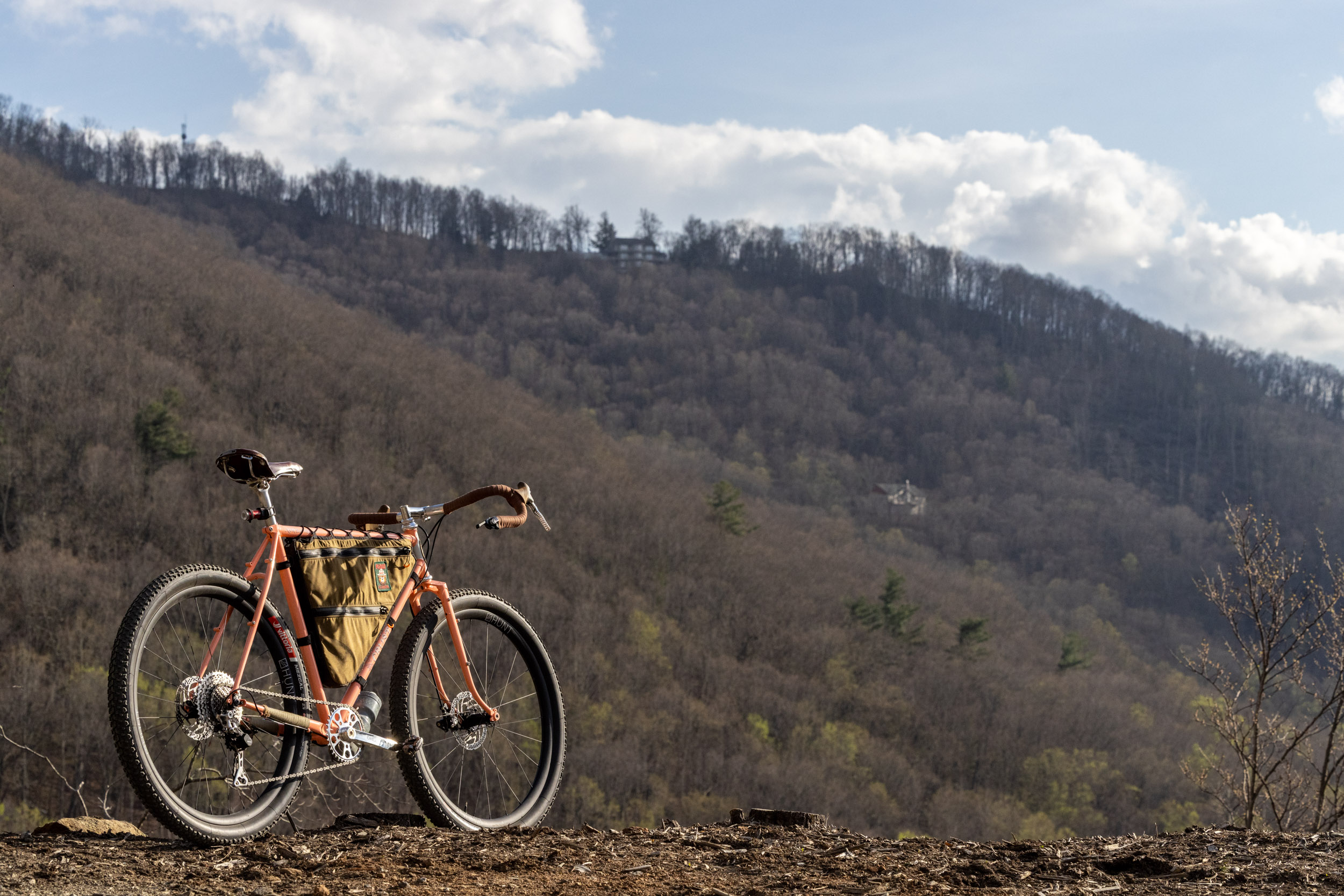
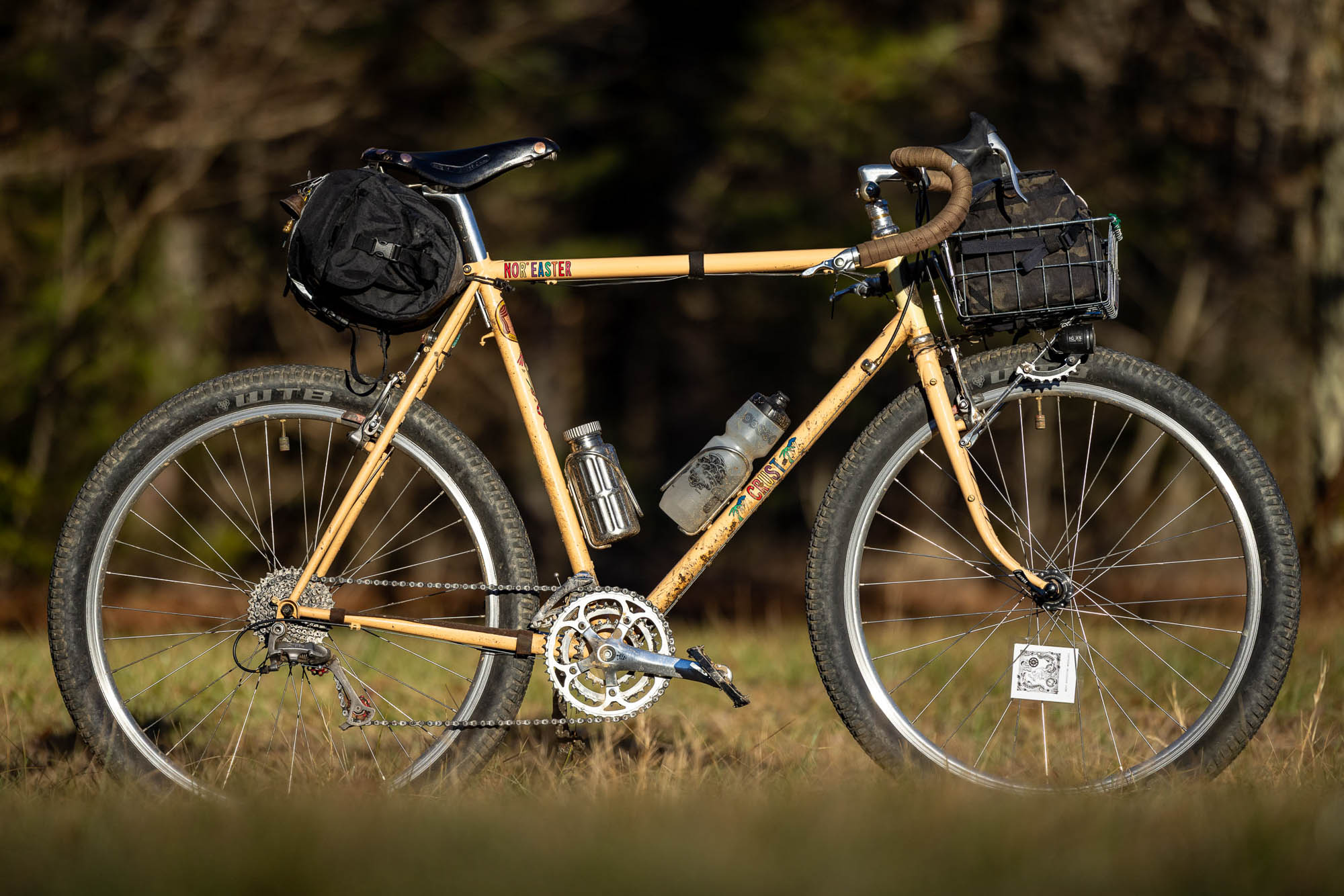
After finally finding a Salmon Nor’Easter in roughly my size, I built it up as I would any in the same mold. I like my bikes mechanical, relatively simple, and pieced together from stuff I have lying around. That might come across as annoying given what’s on it, but the only new component on the bike is the White Industries ENO crankset. Otherwise, they’re just components I had in the bin from past builds. The silver Shimano GRX rear derailleur has been used on four prior bikes. I bought the bar-end shifter used for 30 bucks from Tom LaMarche eons ago. The Brooks Swift saddle easily has 6,000+ miles on it from my own ass, and potentially even more, as I bought it used over three years ago. Even the tires have well over 2,000 miles on them. Somehow, they’re still going strong.
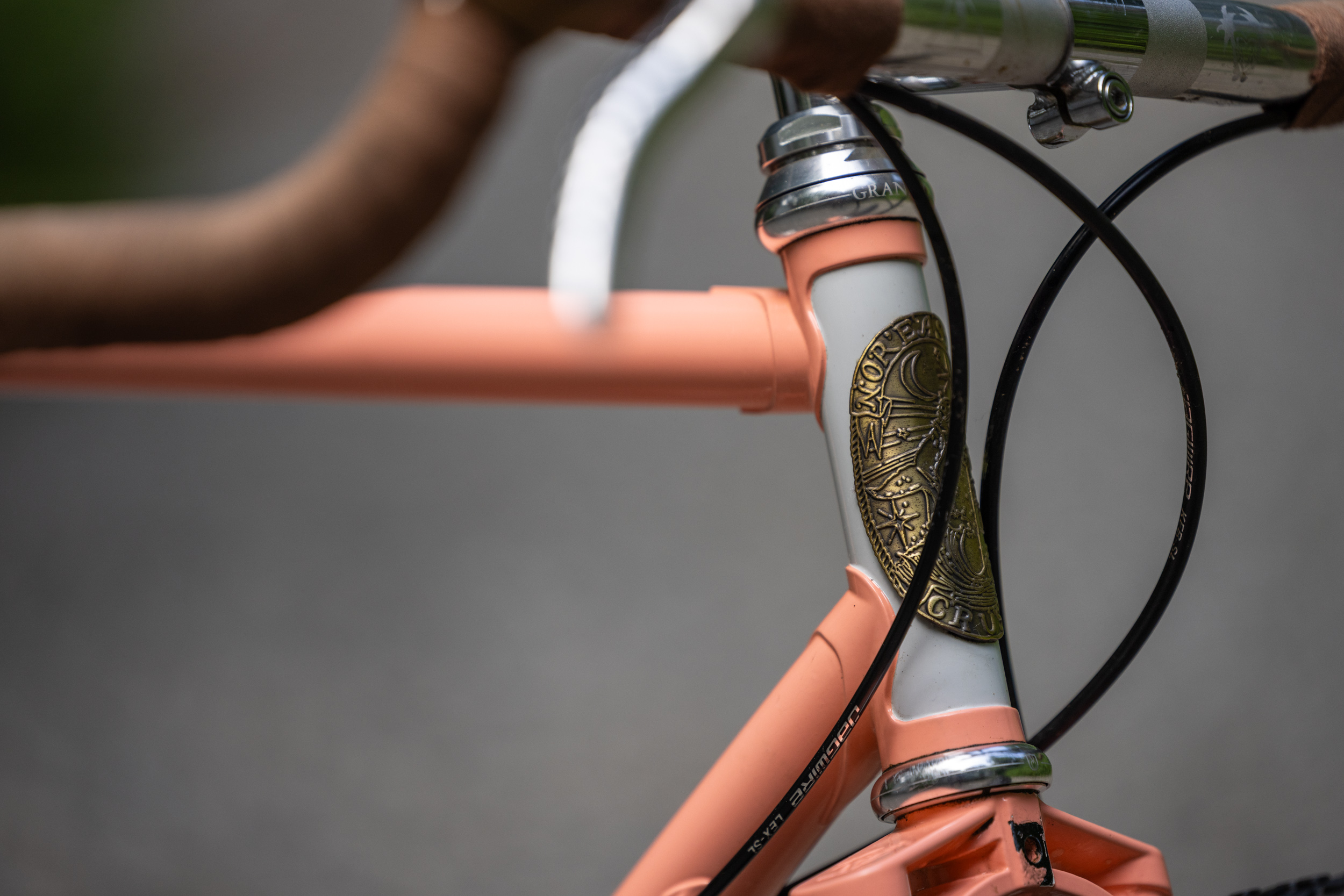

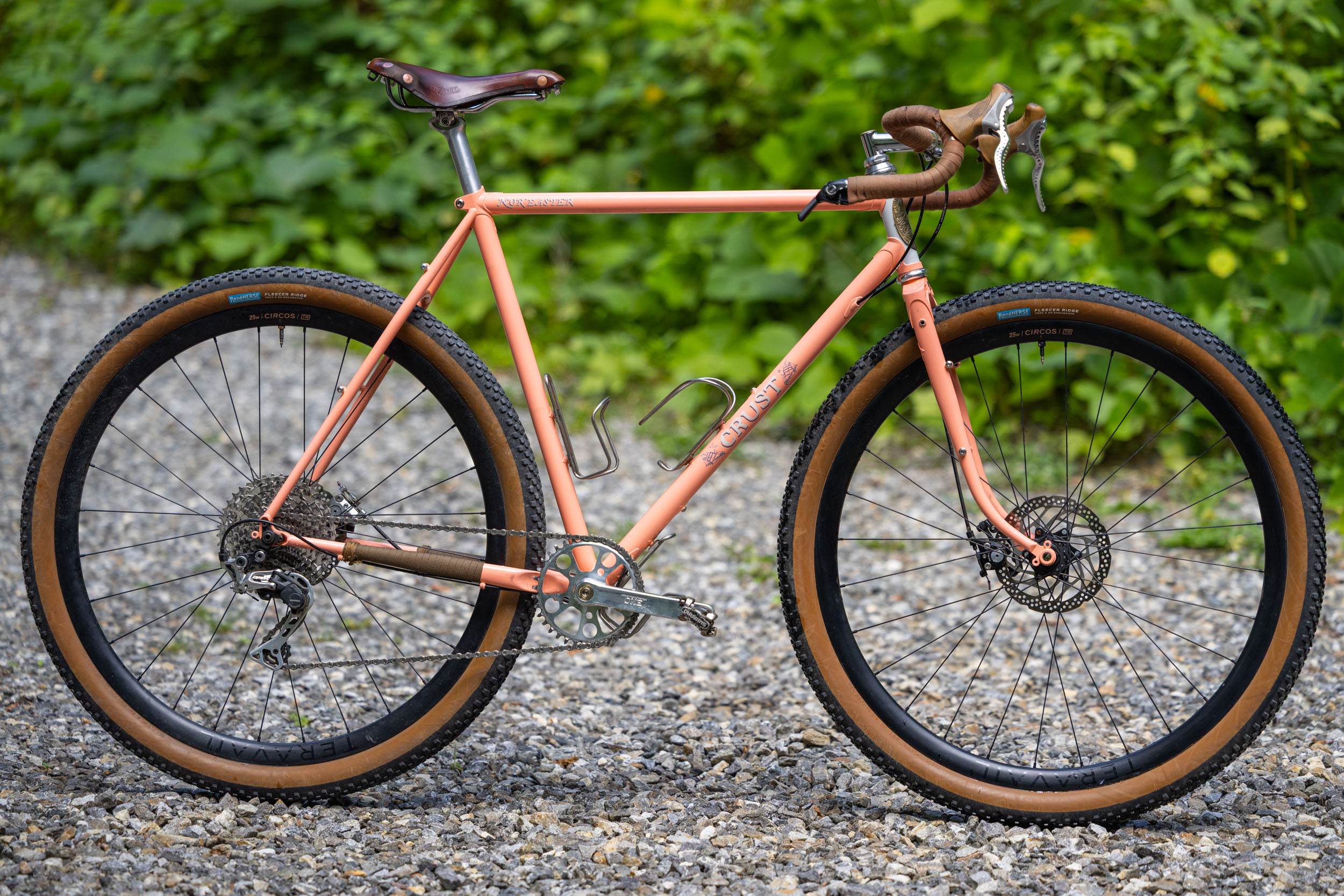


The other component I bought for this build, the Crust Towel Rack bars, are also used. I didn’t have any 26.0mm drops in my shed, and I didn’t like the idea of using a converted 31.8mm stem, as I thought it would clash with the tube size. Plus, you have to commit to the bit. A Crust frame demands an oddly wide Crust bar.
- Frame & Fork: Nor’Easter, 58cm (Large)
- Crankset: White Industries Square Taper ENO Cranks, 165mm
- Derailleur: Shimano GRX 810, Silver
- Shifter: microSHIFT bar end, friction
- Cassette: Shimano 11-42T
- Bottom Bracket: Parts Bin Special, 128mm
- Wheels: Teravail Circos rims laced to DT Swiss 350 hubs
- Tires: Rene Herse Fleecer Ridge 700 x 55mm
- Headset: Velo Orange Gran Cru
- Handlebar: Crust Towel Rack, 600mm, 26.0
- Stem: Gettin’ Hungry, 90mm
- Saddle: Brooks Swift, Brown
- Seatpost: Velo Orange zero setback Gran Cru
- Brake Levers: TRP RRL, drilled
- Brake Calipers: Growtac EQUAL, flat and post
- Rotors: 160mm Shimano


Building it up was emotional. It came together around the same time I was able to purchase a home. While I don’t take the privilege of having a bank-owned property to call my own lightly, I’d be lying if I said that some part of me didn’t cherish the Nor’Easter more. It meant something different to me. Weirdly, it felt like more of a signifier of my progress as a reformed failure than a house did. I don’t know how to square that.
Once complete, I sat back and admired something that I felt was entirely my own. I’d been patient. I’d waited for exactly what I wanted. While I could marvel at the form, would my “dream bike” function as intended?
Ride Feel and Geometry
The Nor’Easter is the flexiest bike I’ve ever ridden. Though I couldn’t get a clear answer from those I reached out to, my research suggests that the bike’s early iterations were made with Reynolds 853 tubing. Discernible on the smoothest pavement from day one, it’s clear this is an exceedingly light tubeset. Even the fork flexes and shimmies under completely unloaded braking, causing a slight juddering regardless of terrain. That said, it’s an absolute blast to ride. Be it on pavement or roots and rocks, the bike dances as you push into the pedals. You don’t need to have enormous legs to make the bottom bracket twist and shake, and the delicate nature of the tubing feels satisfyingly light as it brushes through gravel, loamy singletrack, and hardpack.
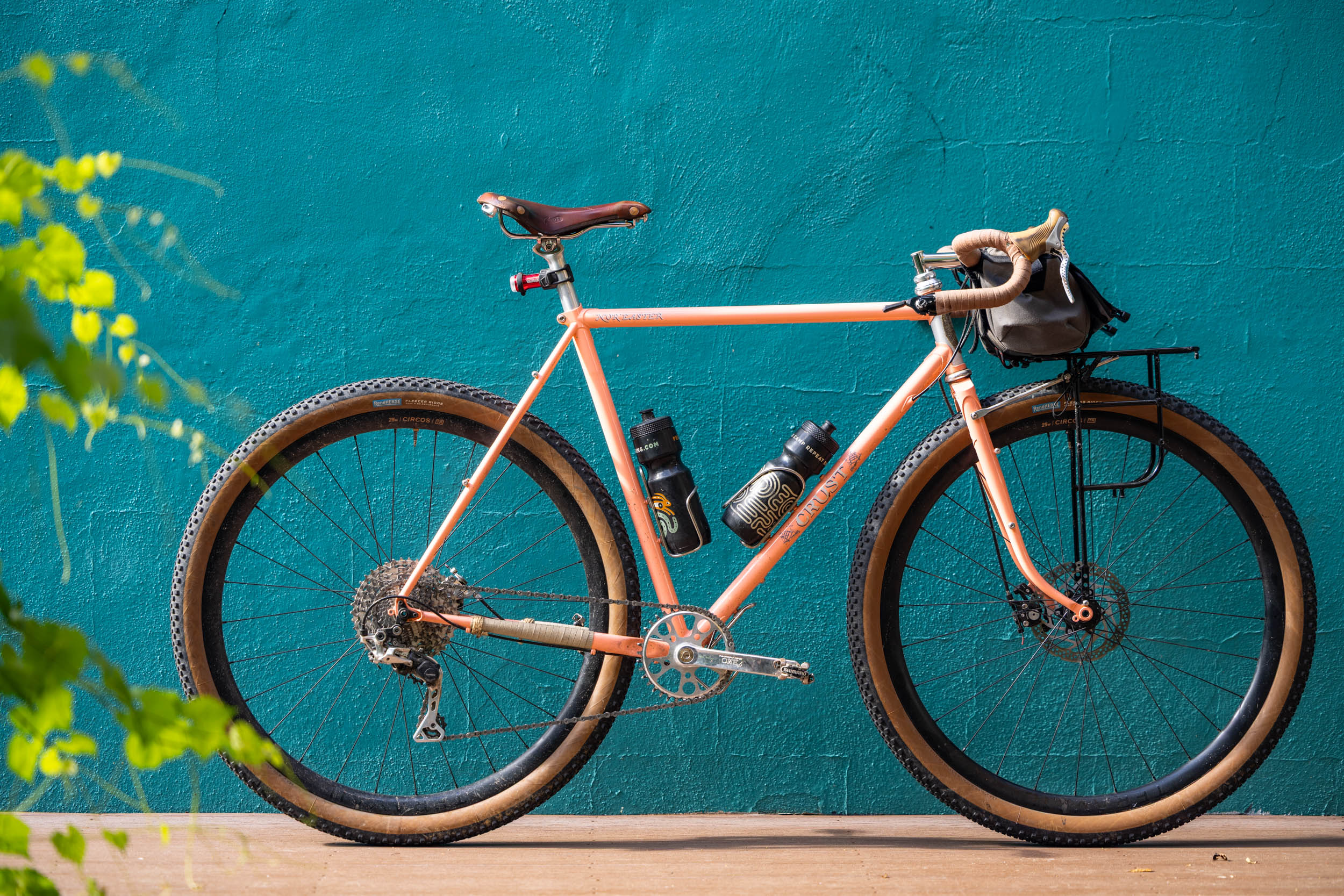

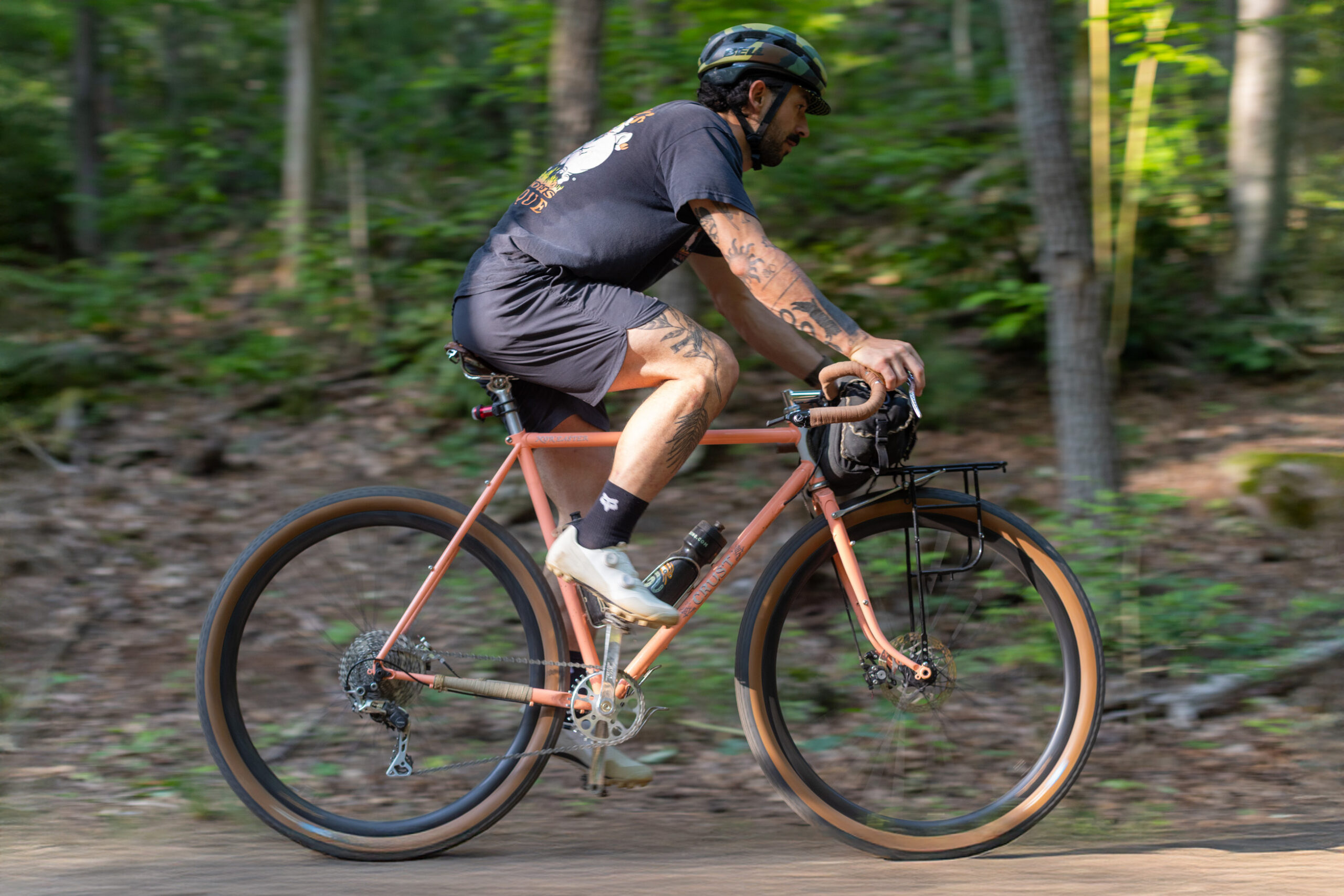
However, it’s not a sensation everyone will like. One of the many elements that intrigued me about the Nor’Easter was the combination of disc brakes and a 1” threaded head tube. It’s a thin-walled tube that I chose to combine with the even smaller 26.0 Crust Towel Rack for handlebars. The handlebar and stem combination would likely be flexy enough if attached to a different head tube, but when combined with the long, 1” threaded setup on the Nor’Easter and modern disc brakes, you’re getting a lot of wiggly, responsive vibration out of the cockpit. With this being a large, it also lacks the stiffness sometimes associated with smaller, more compact framesets. There’s a lot of length in that headtube, and you can feel it. It all adds up to an extremely feedback-heavy ride feel that I enjoy, but is distinctly different from the squashed, stiffer tubes you’ll find on a lot of modern production gravel bikes.
Crust Nor’Easter Geo
| Size | SM | MD | LG | XL |
|---|---|---|---|---|
| Top Tube Length (Center to Center | 545 | 565 | 585 | 600 |
| Reach (from bottom bracket) | 390 | 395 | 406 | 410 |
| Wheelbase | 1064 | 1074 | 1084 | 1120 |
| CS Length | 460 | 460 | 460 | 460 |
| Effective ST Angle | 74 | 73 | 73 | 73 |
| ST Length | 520 | 550 | 580 | 620 |
| HT Angle | 72 | 72 | 73 | 73 |
| HT Length | 105 | 123 | 149 | 168 |
| Rake | 65 | 65 | 65 | 65 |
| BB Drop | 73 | 73 | 73 | 82 |
| Stack | 538 | 555 | 584 | 621 |
| Trail | 43 | 49 | 49 | 48 |
To that end, the sizing is a little odd with the Nor’Easter. As I said, I’ve wanted this specific bike for a long time. When the Salmon version popped up, I was excited but slightly worried the listed 58cm size would be too big. Being the only one I’d ever seen, I sent it. Luckily, the reach is quite short at just 406, so the 58 worked for me. It’s still a bit big and feels slightly inefficient while pedaling, but the rando-esque fit works well with the Nor’Easter. The raked-out fork provides a rudimentary mode of suspension that mutes harsh bumps, while the 460mm chainstays feel surprisingly nimble at the rear end.


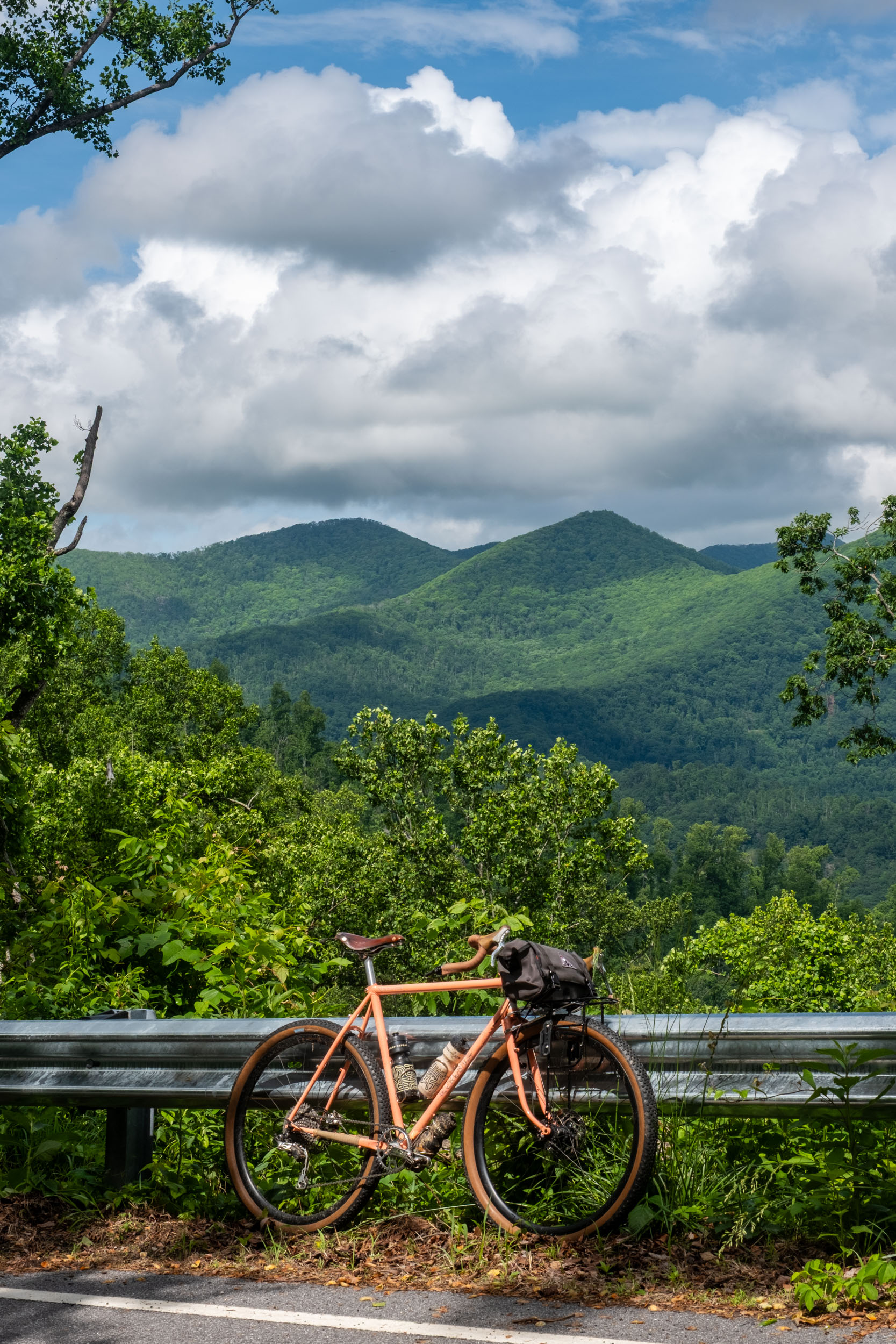

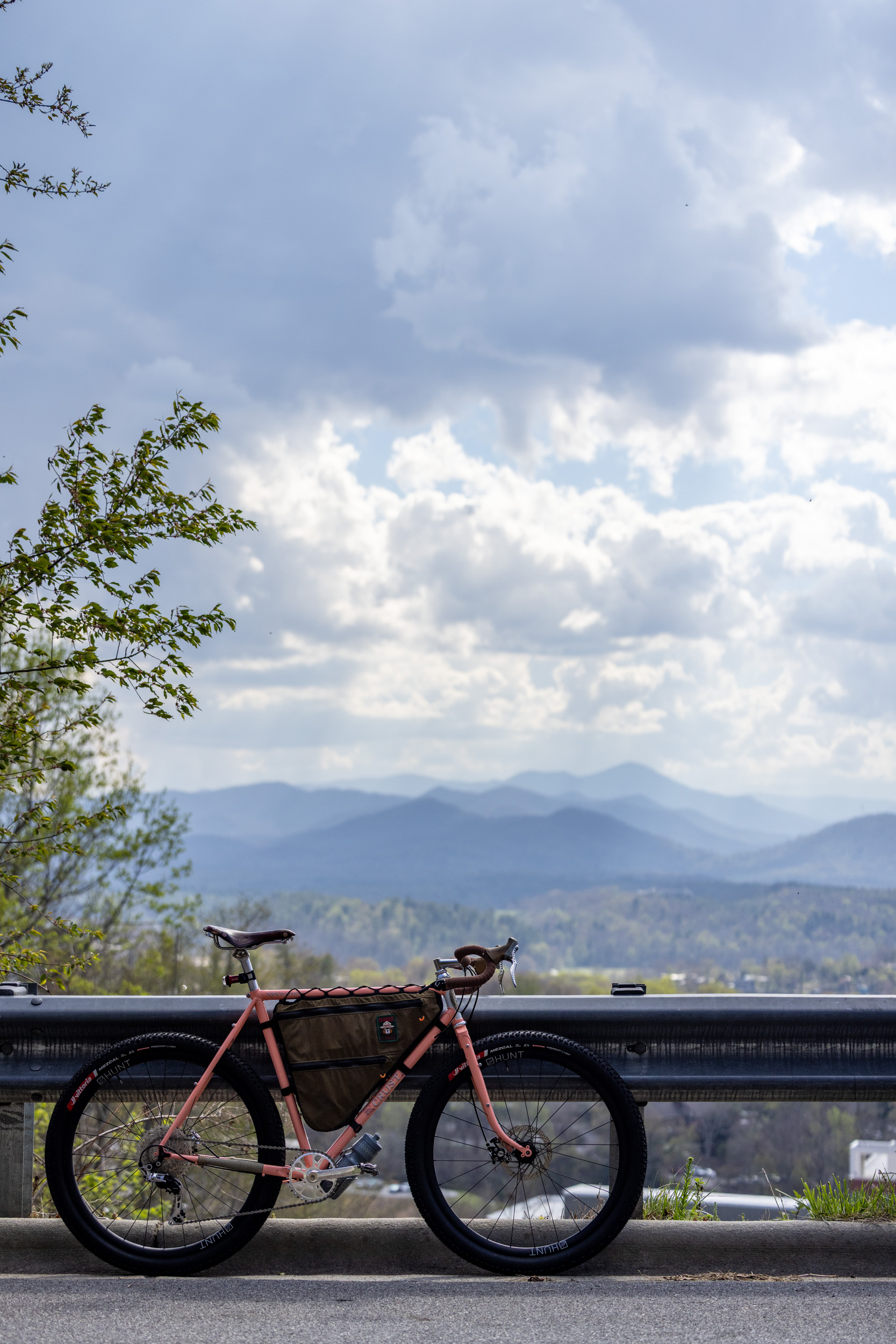
One of the biggest issues with bikes in this style is bottom bracket height on singletrack. While it had a similar feel to the Fairlight Secan and Bassi Belmont when I ran 27.5” wheels, the ability to easily fit 29” x 2.6” tires is a huge plus for this bike. It raises the bottom bracket to about 300mm, which provided a solid balance of stability while still being capable when things got rough and narrow. Most of my time on the bike has been with these well-worn 29” x 2.25” Rene Herse Fleecer Ridge tires, which perform phenomenally well across most terrain, but I have also put in a few miles with some 2.6” tires. Even being able to fit tires that big on a bike like this feels odd, but I’m glad it does.
Bikepacking and the Crust Effect
While unloaded, I never thought the Nor’Easter would make a good dirt tourer. The tubes seemed too light to support any significant weight, and I imagined it would be uncomfortable to have that much flex under a heavy load. Low-trail bikes feel best with weight on their raked-out forks. So, at best, I imagined it would be good for long ventures on the Blue Ridge Parkway.
Though I was pleasantly surprised by how well the bike tracked with an overnighter’s worth of food, water, and gear, I ultimately had a mixed experience with it while bikepacking. The bike’s lightness is present when loaded down, and it still emits a pleasant, supple ride quality with bags strapped to it. However, there are a few issues.
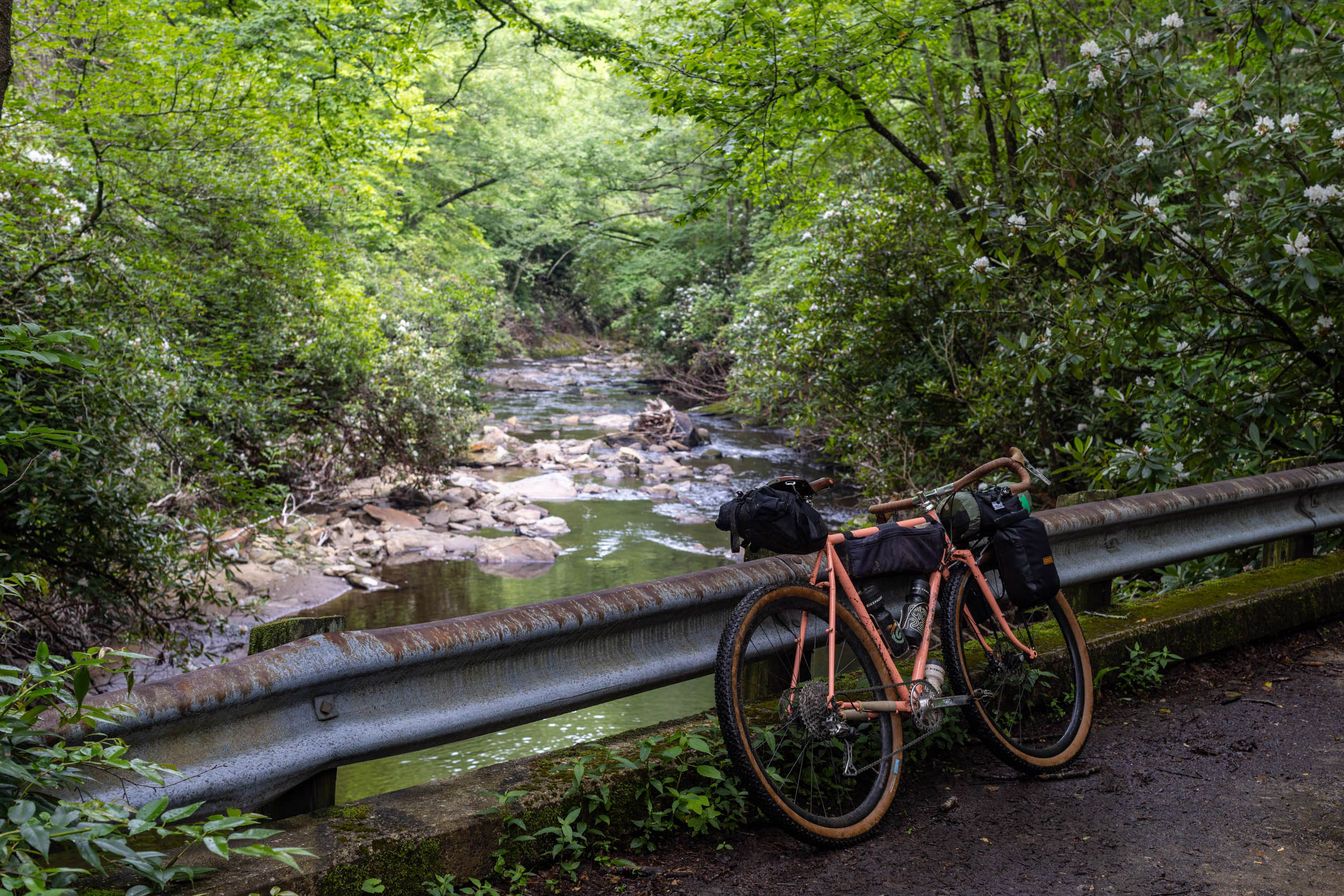
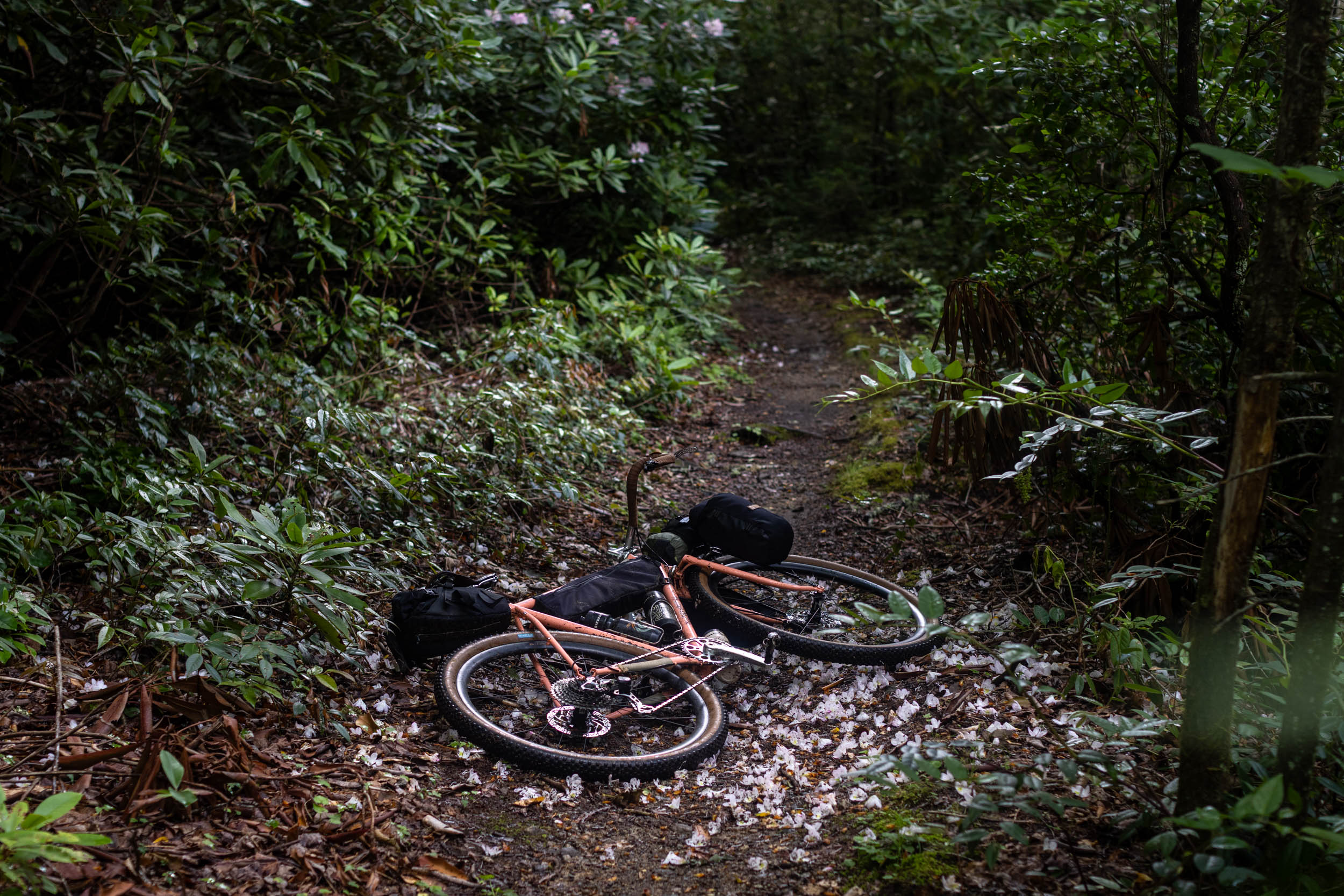

Firstly, the fork’s lighter construction didn’t provide the confidence I’m familiar with on bikes with the same geometry but tweaked for dirt riding. On the Velo Orange Polyvalent, for example, I felt like I could blast through tough terrain and actively feel the front end push things out of the way. The tubing on the Polyvalent isn’t anywhere near as light as what’s specced here, and, as a result, is less exciting to ride. However, on rock-filled singletrack, the Polyvalent’s frame “follows” the fork, pushing the rider forward. The fork on the Nor’Easter feels much lighter, deflecting off rocks and roots. At speed, this is uncomfortable and requires much more attention when headed downhill.
Secondly, climbing with a load on the front is difficult. Low-trail bikes aren’t going to shine in technical terrain, especially when factoring in a steep grade, but this felt especially difficult. The bike is slow to take directions and pick through rocks, and requires a lot of pre-emptive steering and line choice to get through technical sections. Granted, I took the Nor’Easter on some very challenging, rutted trails that some have trouble ascending on a mountain bike. But it felt beyond what I’m used to. I’m fine with this, as I take it as part and parcel of the experience of riding this bike in places it wasn’t explicitly designed for. But it’s an experience I don’t think most people will enjoy.


An exterior factor that affected how I rode the bike off-road was Crust’s reputation. A number of friends and bike people reached out when I started posting photos of the Nor’Easter, asking, “Have you cracked that thing yet?” As someone familiar with the brand, I’ve long been privy to the memes and general perception that these bikes break. While I think it’s important not to engage with hearsay, there are some merits to that perception. Part of this is down to what is specced. The tubing on the two Crusts I’ve owned is very light, and something users should note when hitting singletrack. Their website is riddled with warnings that these are not mountain bikes, and using them as such would void your warranty. But, I think there’s also something more going on here.
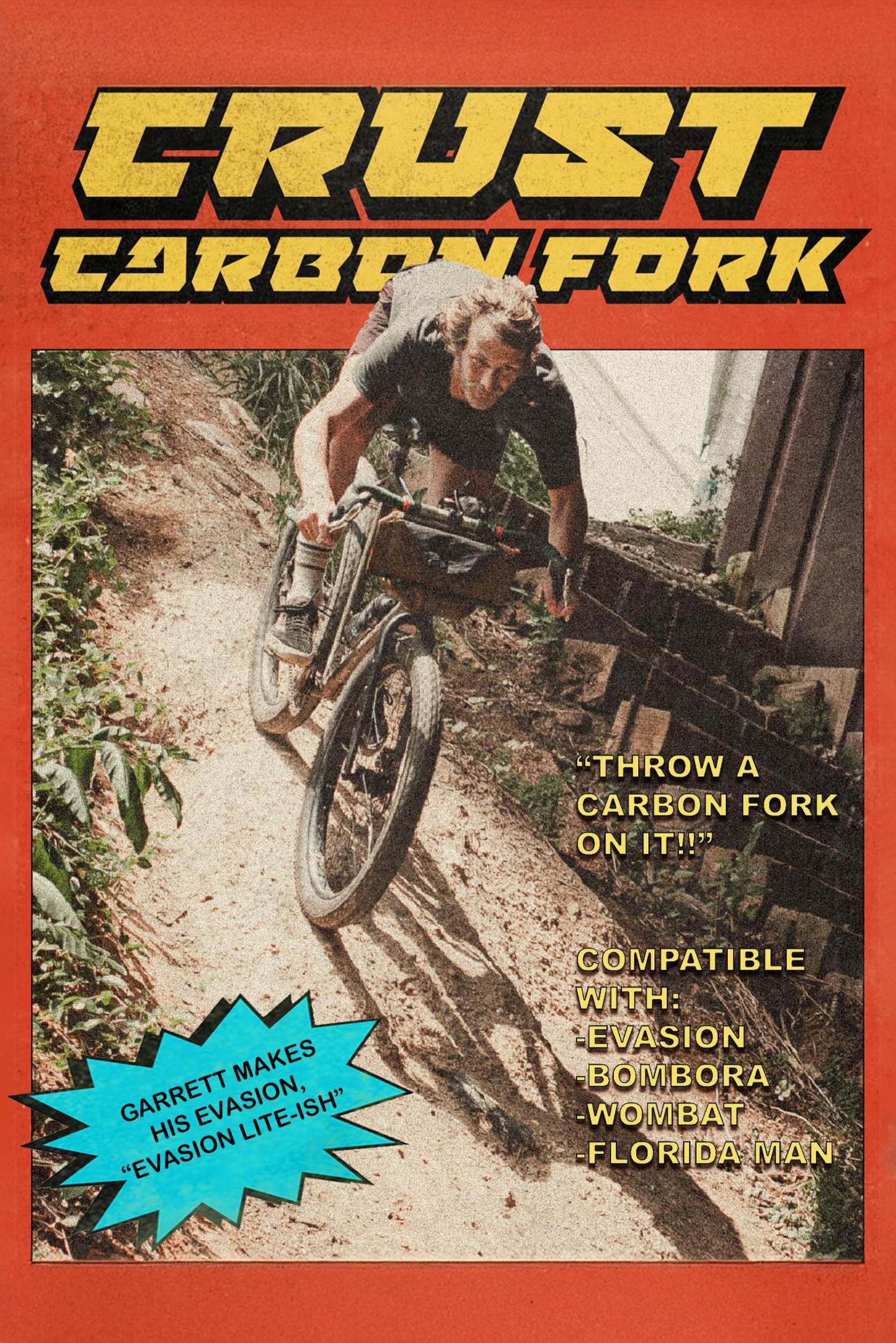

The kind of person who tends to gravitate toward Crust is also the kind of person who’s willing to bend the rules. When I reached out to Ronnie to get a better idea of the bike’s origin story, he said that some of his friends who’d owned Nor’Easters had done extended touring on both the Great Divide and Baja Divide routes. Having ridden this bike extensively, I can’t imagine doing the same. But risk is part of the brand’s ethos. Combining the punk energy inherent in those who started the brand with the elements I mentioned at the start of this piece is obviously a big part of their design philosophy. Why else would you create a randonneuring-inspired frame that can fit 29” x 2.6” tires? More than just a desire to be nostalgic for a time when bikes looked different, it’s an attitude consistent with the frames and designs these bikes are inspired by.
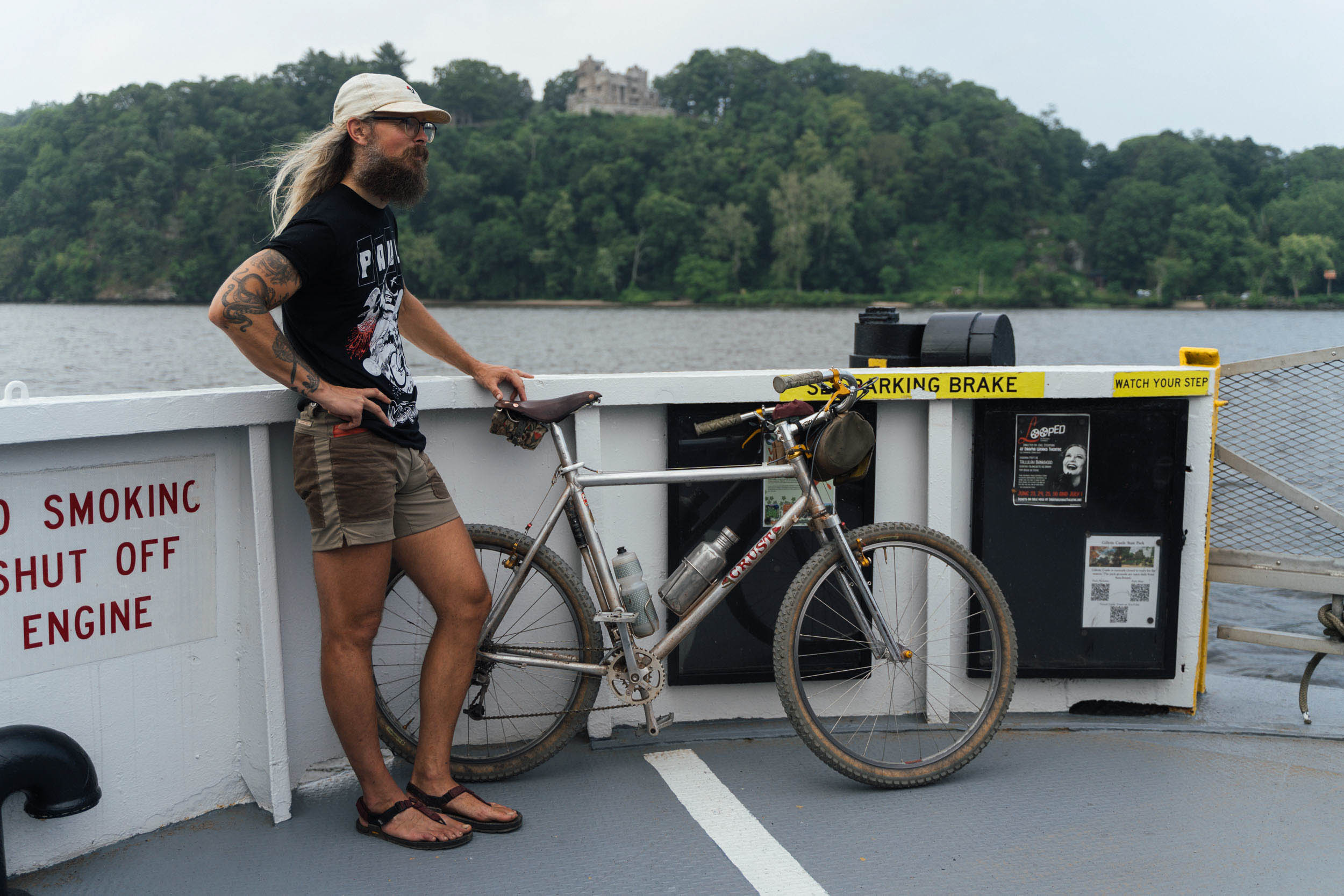
To be clear, breakage isn’t consistent with my experiences on Crust’s frames. I’ve owned two first-generation Crusts, a Bombora and this Nor’Easter, and ridden the hell out of them. I’ve yet to experience a crack or worrying dent. Joe, the other person pictured throughout this review, has taken his Nor’Easter onto mountain bike trails well above his pay grade and had no issues. Like most things, your mileage may vary.
- Model Tested: Crust Nor’Easter, 58cm
- Actual Weight: 29 pounds (13.15 kilograms)
- Place of Manufacture: Taiwan
- Price: $1,250
- Manufacturer’s Details: Crust Bikes
Pros
- Flexy, light, and supple ride quality
- Classic lines with fat tires—what more do you want?
- Huge tire clearance in both 29” and 27.5”
- Large inner triangle is good for water storage and large frame bags
Cons
- Light tubeset might not be appropriate for aggressive off-road riding
- Quill stem, road cranks, and other standards might not appeal to some
- Low-trail geo doesn’t make sense for the aggressive riding the tire clearance suggests is possible
- The fork is arguably too light
Wrap Up
To try and put a bow on this story: the Crust Nor’Easter is a great bike. It’s not for everyone, and it has its issues, but there are few bikes I’ve literally dreamed about riding. Somehow, it lived up to the expectation I created for it. And that alone is a testament to how much fun it is. Moreover, it appeals to me, specifically, because of its imperfections.
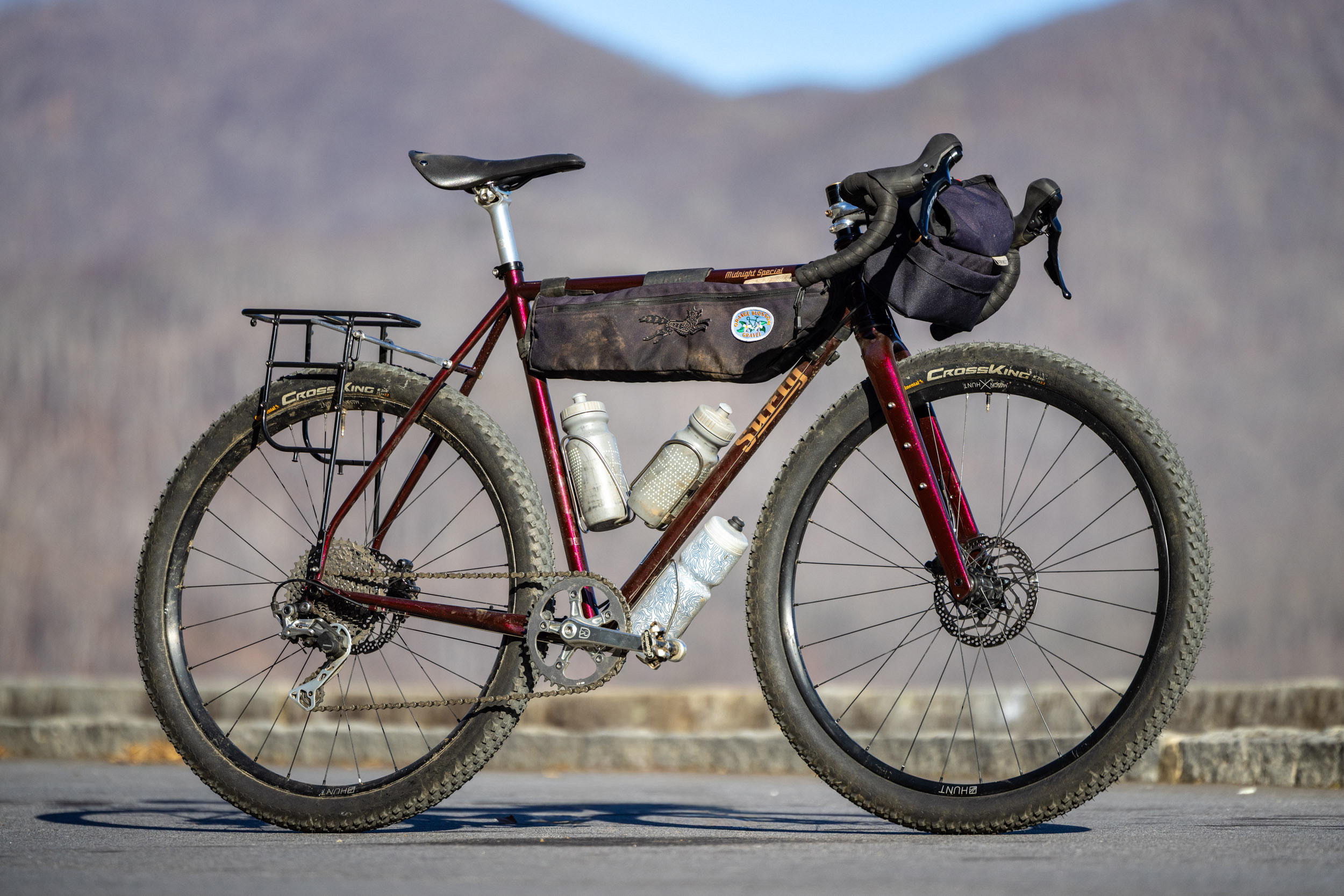
Last fall, I penned a review about the Fairlight Secan 3.0. Somewhat similar in vibe and design, the engineering, thought, and consideration founder Dom Thomas puts into any Fairlight is a step above. Not just Crust, but anyone. In that review, one of the listed pros was, “Perfect… almost too perfect.” And I stand by that; there’s nothing wrong with that bike. And there are many things “wrong” with this one. The tubes that are likely too thin for the kind of riding the tires allow, the geometry that doesn’t make sense for trail riding, and the combination of disc brakes and frame flex are just a few of the things one could say are off. But that’s what makes this bike romantic. That’s what makes it charming. It walks the thin line between risk and safety.
Are there more efficient bikes? More appropriate? More capable? Absolutely. But, for the right kind of rider, the Nor’Easter scratches an itch. It’s a weird, kooky itch that you might need a doctor to look at. But there’s only one medicine for it. And it’s this bike.
Further Reading
Make sure to dig into these related articles for more info...


Please keep the conversation civil, constructive, and inclusive, or your comment will be removed.