


 Mountain Bike (MTB)
 Gravel Bike
 All-Terrain Bike (ATB)
 Fat Bike



Kona Unity Review: Escaping Convention



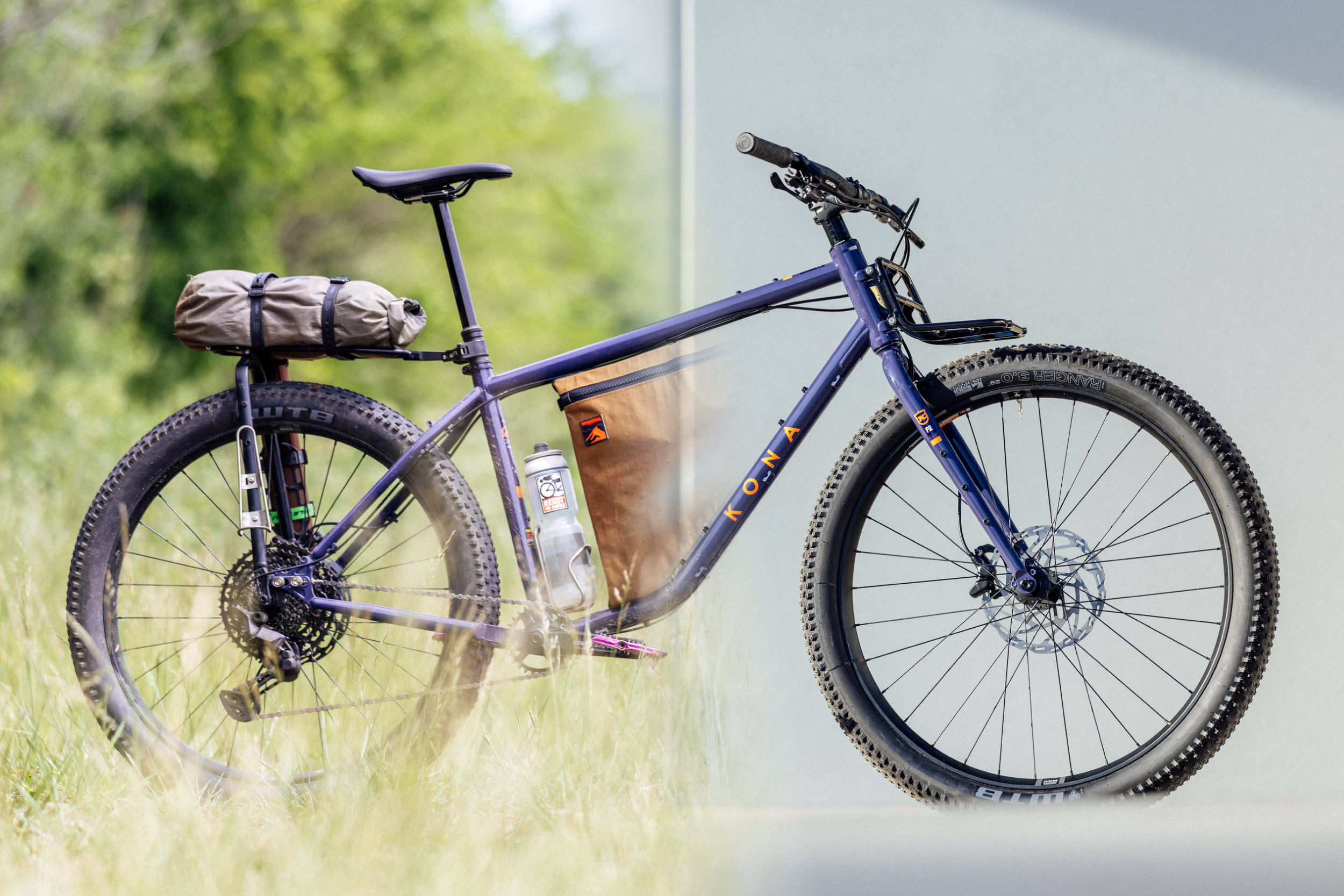
With its massive frame triangle, mixed-wheel, plus-tire setup, unique front rack, and geometry unlike anything else in Kona’s lineup, the Unity doesn’t follow the usual formula. After a couple of months of living with it, Logan shares his thoughts on one of the most interesting bikepacking bikes released in recent years. Find the full Kona Unity review here…
PUBLISHED Jun 23, 2026
Weird, inventive bikes don’t come along often anymore. Everything’s been done, as they say, and that kind of bums me out. After all, the bedrock of this very website is littered with out-of-the-box bikes and experimental setups. Back when it was just a bike-travel blog in 2012, the oddball Rohloff-equipped apocalypse Surly Trolls we toured on were a gateway drug to a variety of unconventional bicycles, including fat bikes and 29+ tires, a phenomenon that evolved into the de facto platform for dirt-road cyclo-camping and bikepacking. Fortunately, a few brands are still willing to throw a curveball now and then. The all-new Kona Unity is the latest example, and I couldn’t resist spending some time with this weird mullet-wheel cargo-klunker. I’ve been riding the Unity for the past couple of months to try to better understand exactly what Kona was aiming for and whether this peculiar bicycle is more than just a novelty.

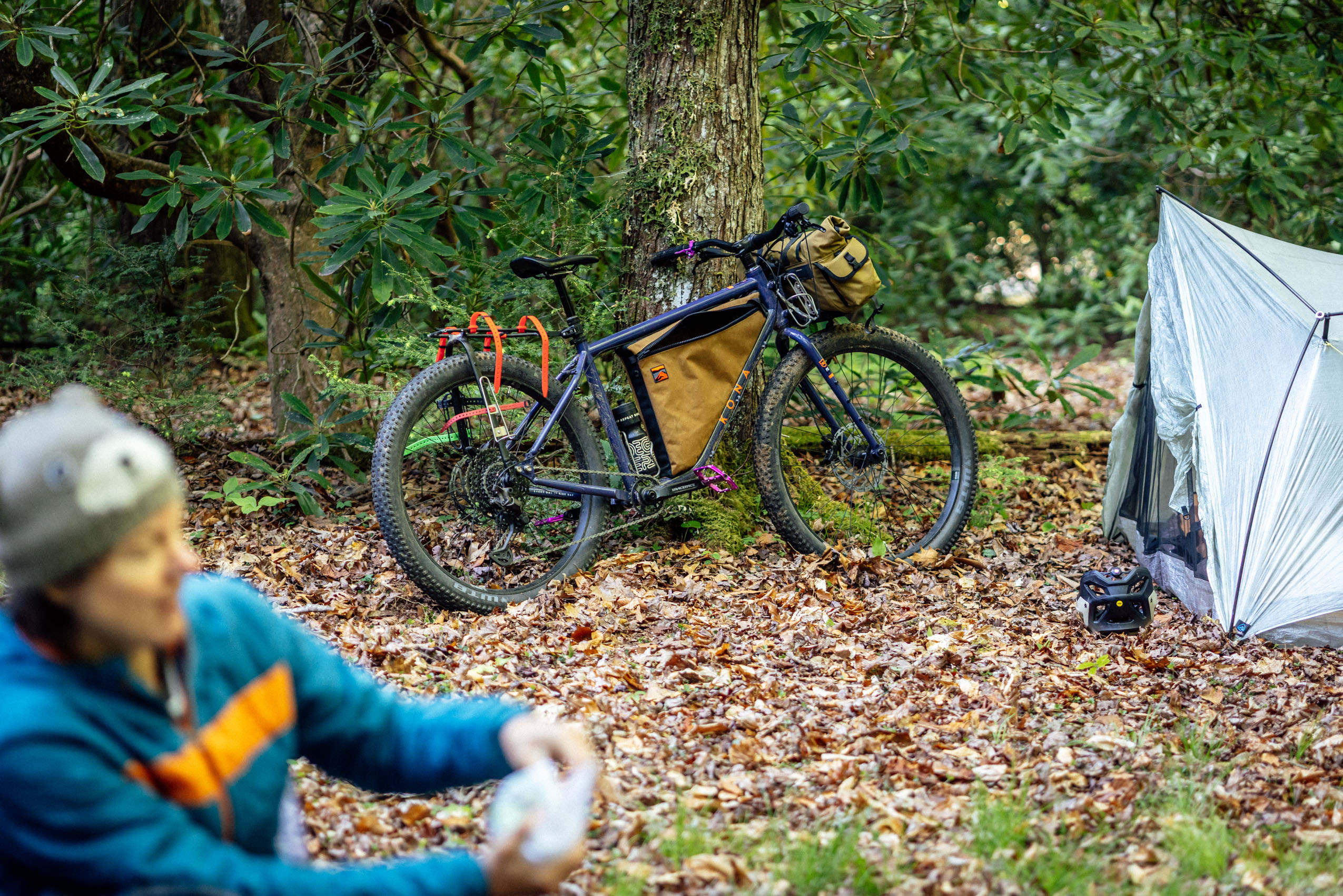


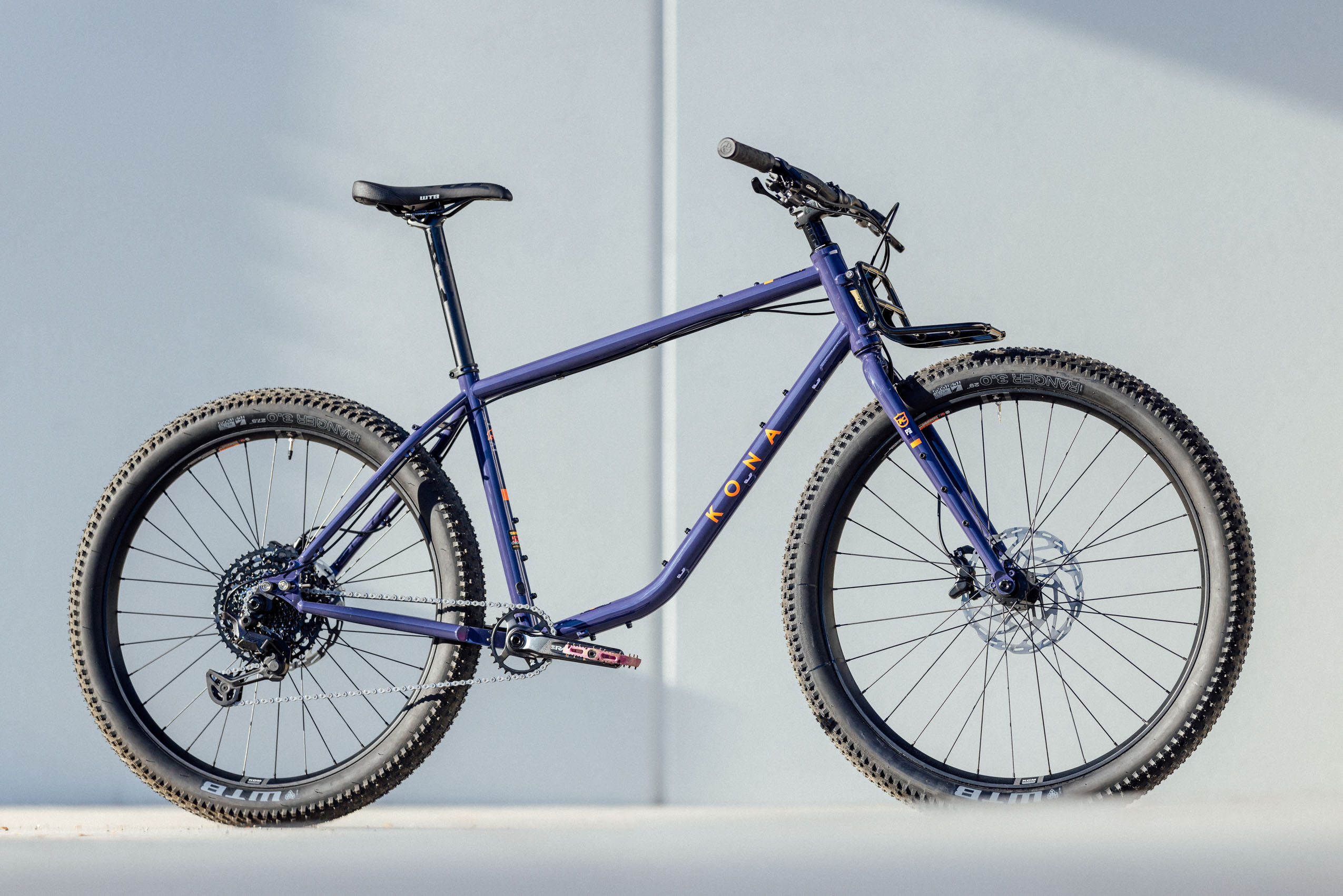
Kona has always done things a little differently from most other bike brands. They’re kind of like Surly in that regard. Not only do they have a quirky, against-the-grain brand vibe, but they’re also not afraid to try new things, diving headfirst into niche bike design and radical engineering. I think back on my freakish four-bar 2005 Dawg and the iconic Sutra LTD, which was arguably experimental with its mishmash of gravel and MTB standards. Still, the new Unity might be the brand’s most unusual bike yet. With its unorthodox frame shape, mullet mixed-wheel setup, raked-out fork, integrated (and static) front rack, and a few interesting component choices, there’s a lot going on. Let’s take it bit by bit. Instead of the usual bike review that outlines all the features and then pivots to how it rides, I’ll take a different approach, looking at 10 major points about the bike and weighing in on my experiences riding it throughout.


1. XYZ
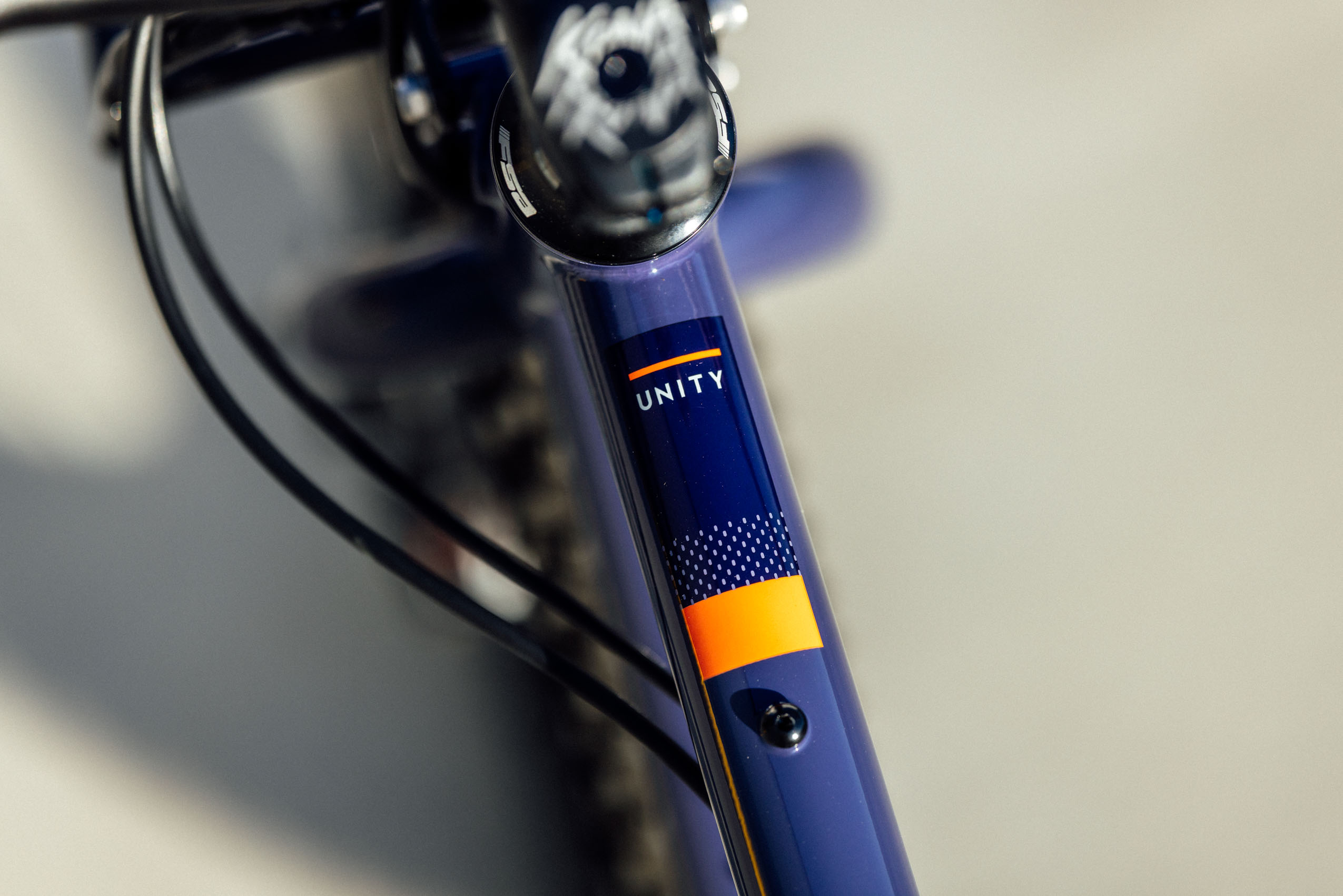
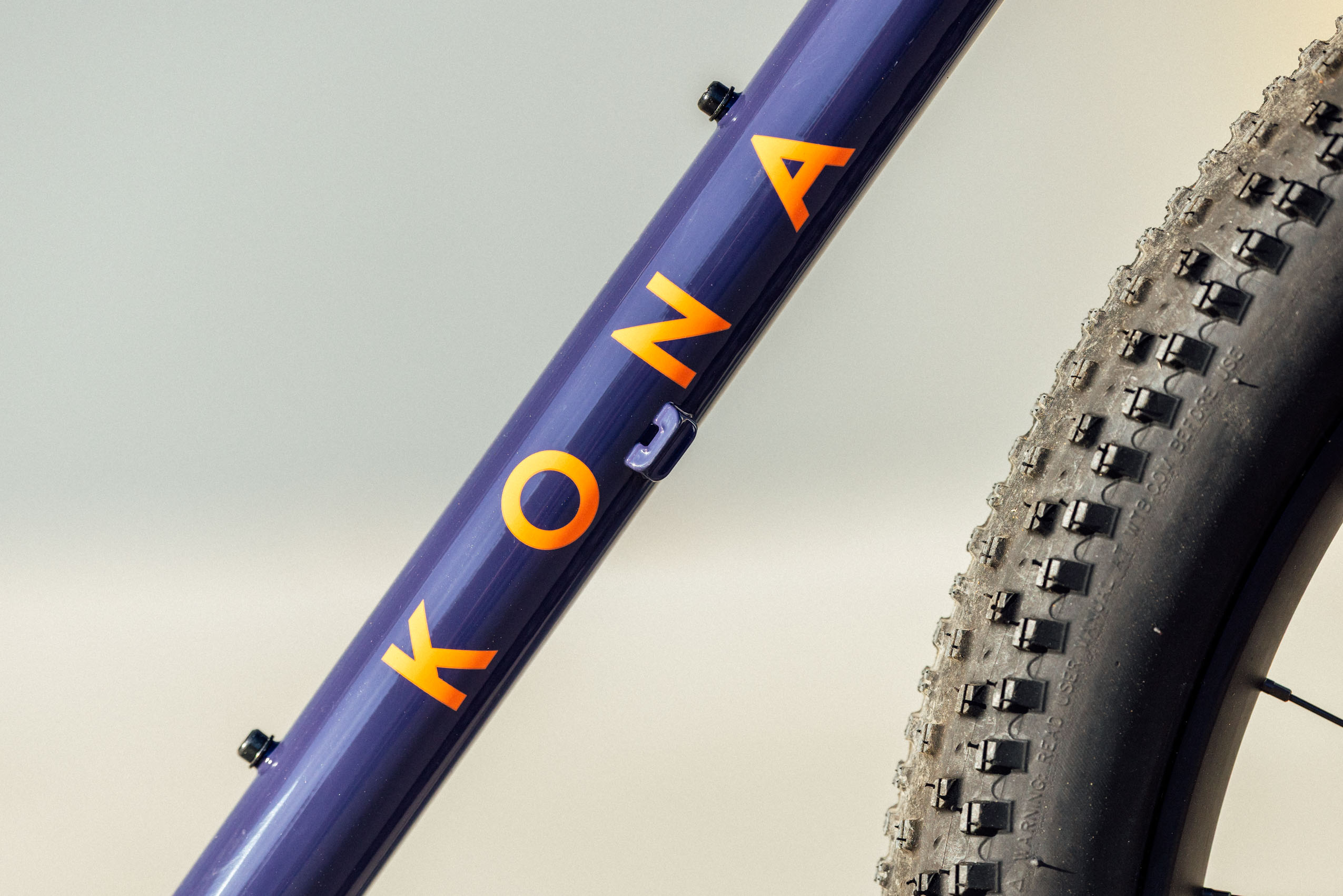
First introduced in 2003, the Kona Unit earned its name for its singular purpose: to be a simple, one-gear mountain bike. As one of the earliest production singlespeeds, it offered a refreshing alternative to mainstream MTBs that were on the market at the time. When Kona added gears and redesigned the platform in 2016, it became the Unit X, with the “X” referencing its 1×10 drivetrain. By that logic, Unit Y would have been a fitting name for the latest evolution—or perhaps mutation—but according to Kona’s Caleb Smith, “…it also felt like the bike had evolved into Unity, an all-encompassing bikepacking bike and a full-blown adventure rig.” Curiosity got the better of me, so I asked, but Smith confirmed there are currently no plans for a Unit Z.
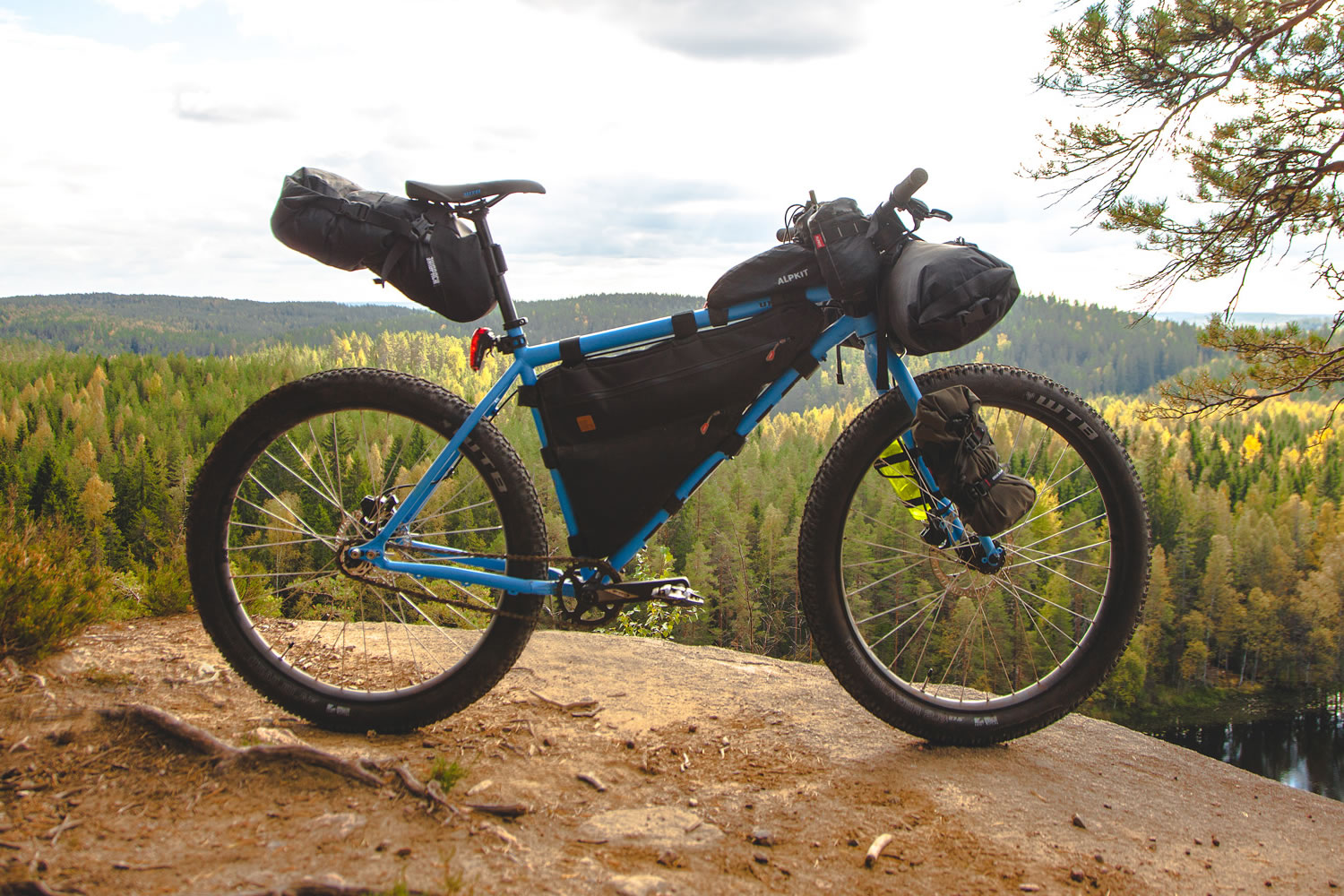
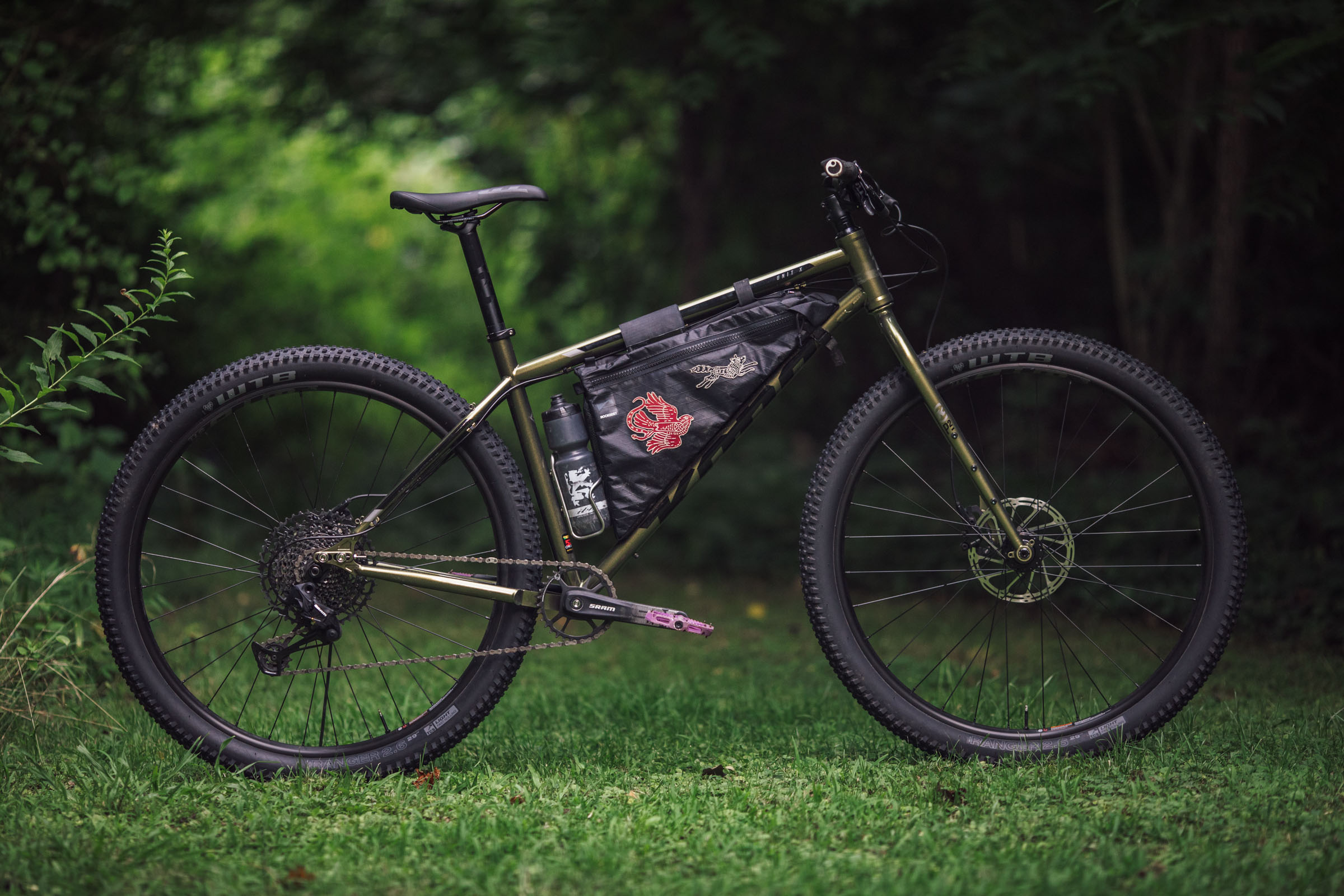
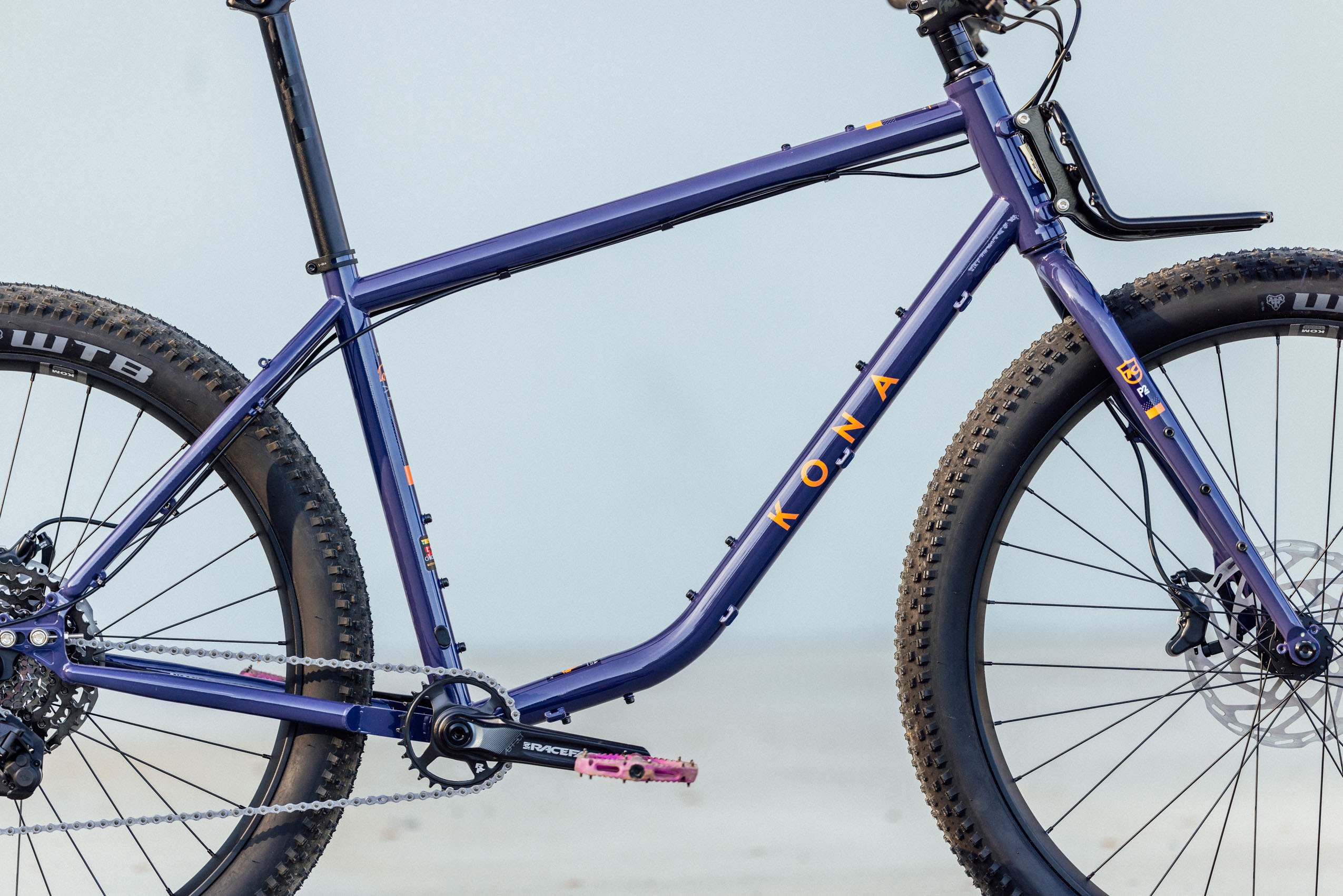
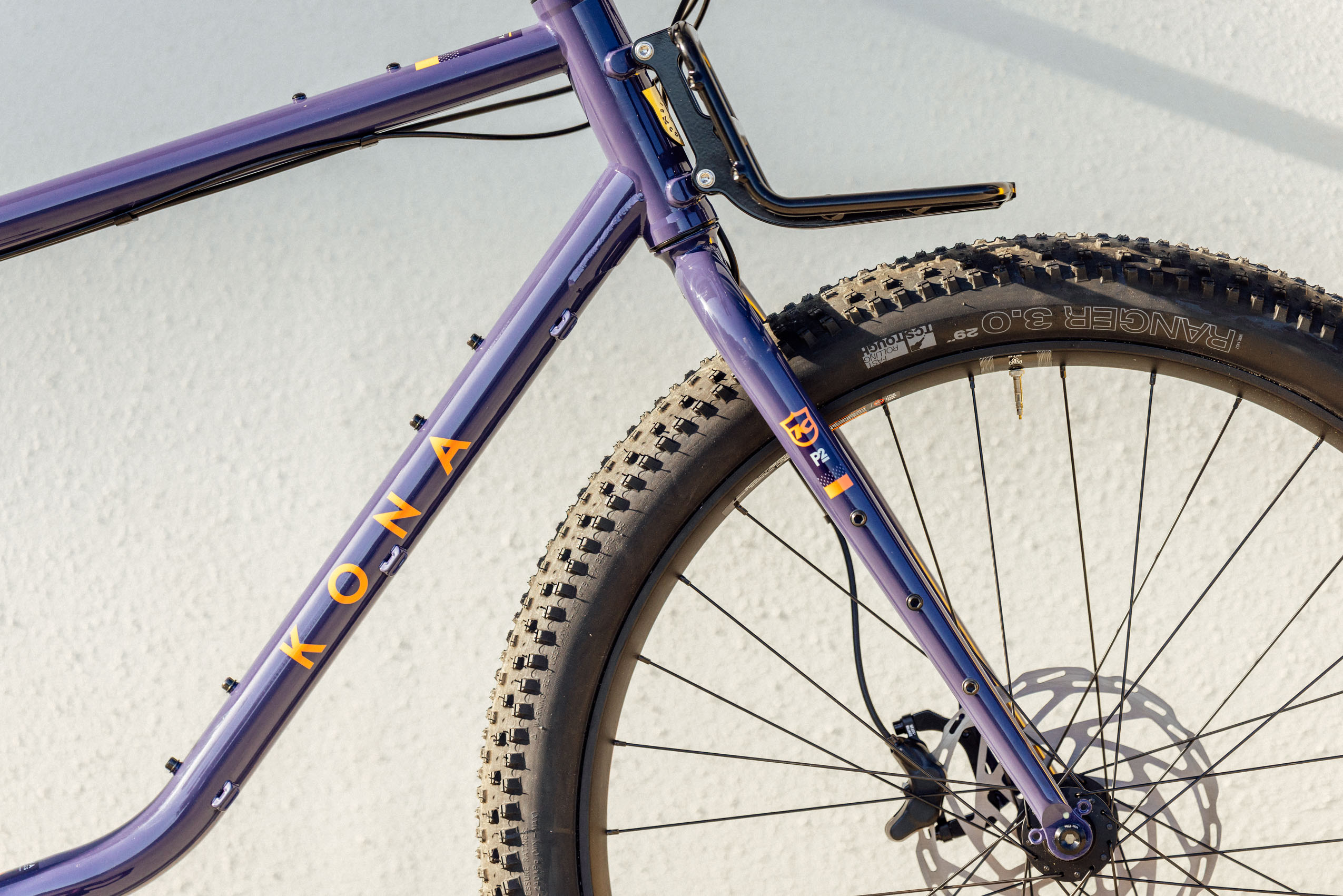
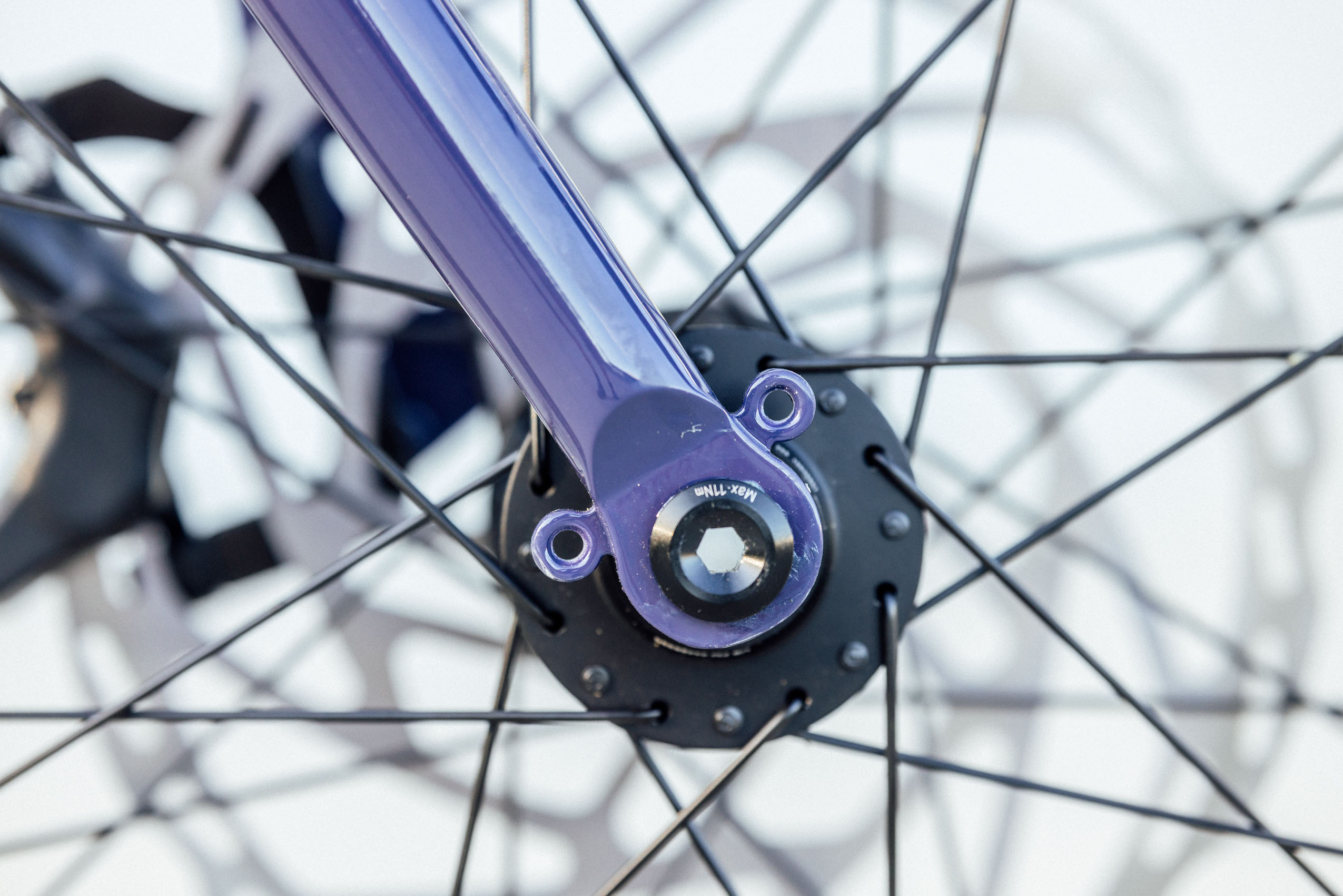
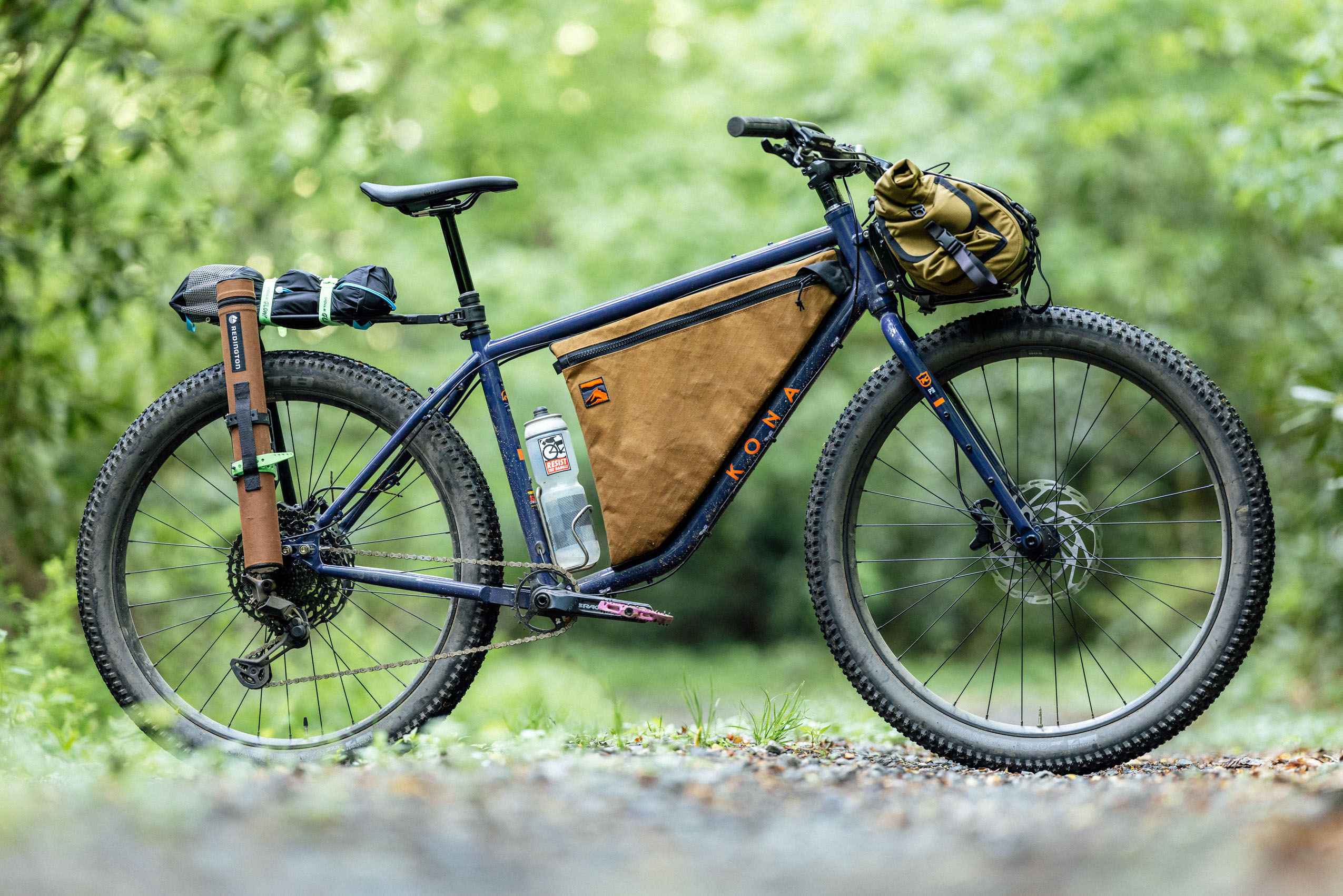
After spending considerable time with it, the Kona Unity proved to be exactly what Kona intended: a purpose-built bikepacking machine that brings many thoughtful ideas together in a cohesive package. At its core, it’s a plus-tire bruiser built around a chromoly steel frame with sliding dropouts, comprehensive provisions for carrying gear, and a head tube-mounted front rack designed specifically for it. There are a few eccentric details throughout, but Kona wisely stuck with proven frame standards, including Boost 148 x 12 and 110 x 15 hub spacing, a 73mm threaded bottom bracket, external cable routing, and internal routing for a dropper post. The Unity is unapologetically rigid, too, pairing the frame with a matching non-suspension-corrected steel fork.
2. Mulletude Plus
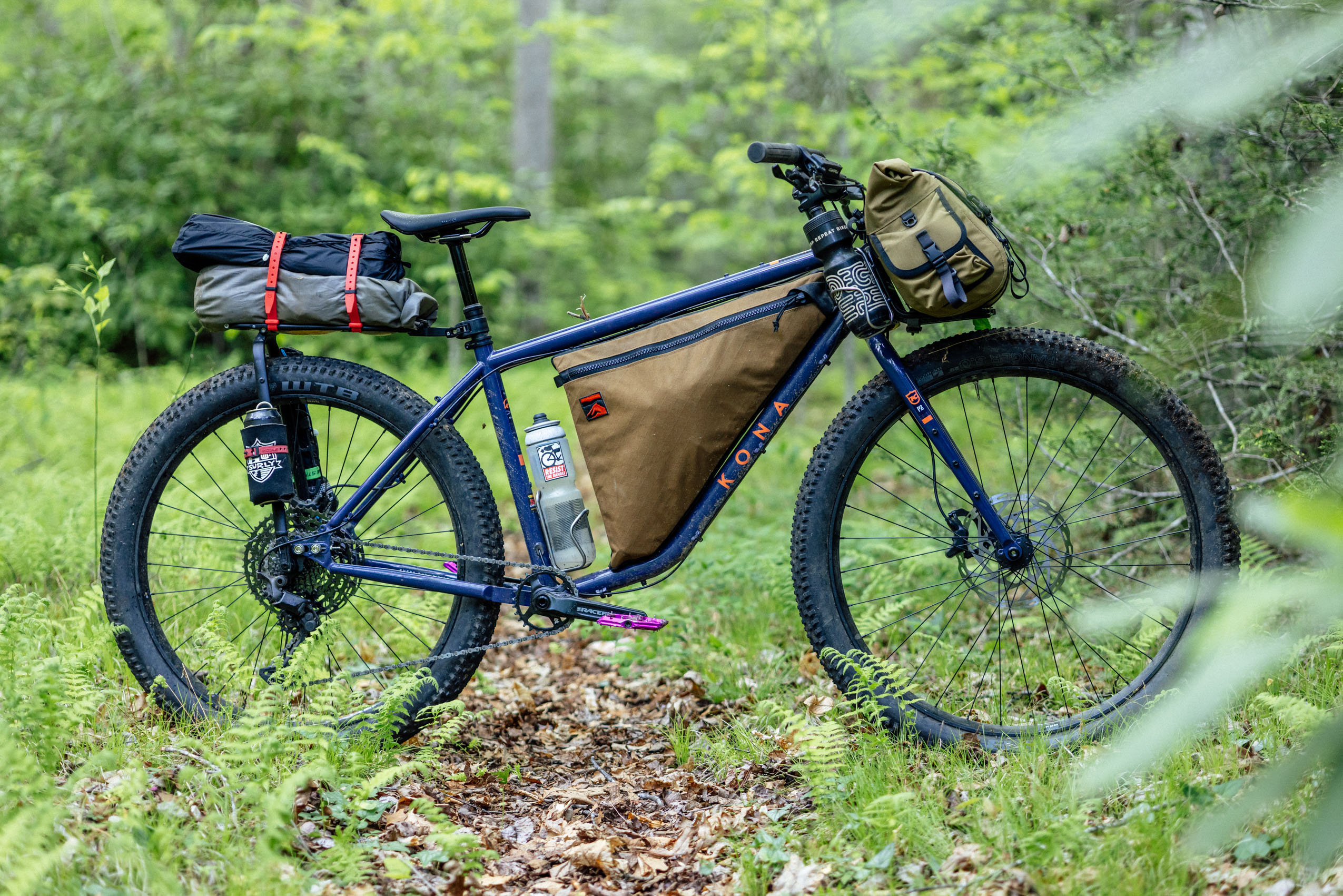
To offset the lack of built-in suspension, the stock build comes equipped with a cushy 29 x 3.0″ tire up front and a 27.5 x 3.0″ tire in the back, which is exactly what the Unity was engineered around, though it’s not limited to that configuration, which I’ll dig into in more depth later.
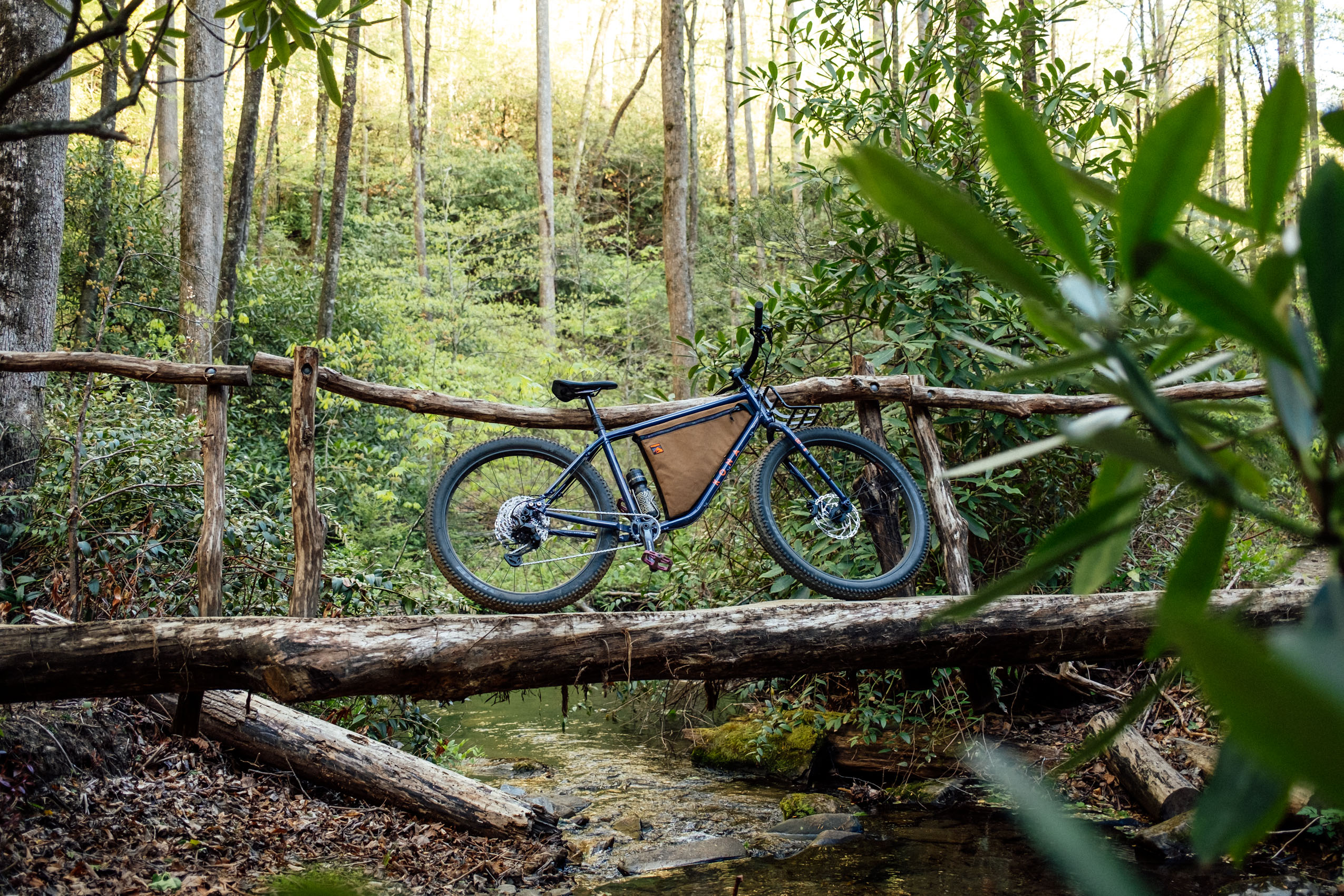
The mixed-wheel—or plus-mullet—setup left some folks scratching their heads, but I thought it was pretty clear why Kona went for it, and the decision wasn’t simply a commitment to weirdness. Most of the time, you find mullet wheel configurations on progressively long mountain bikes, which use the smaller rear wheel to offset their barge-like length and slack head tube. The name of the game is improving maneuverability on aggressive terrain while maintaining stability and high-speed confidence. Although the rigid Unity isn’t really built for that type of riding, the rationale is the same, which makes sense when you factor in its limousine-level wheelbase.
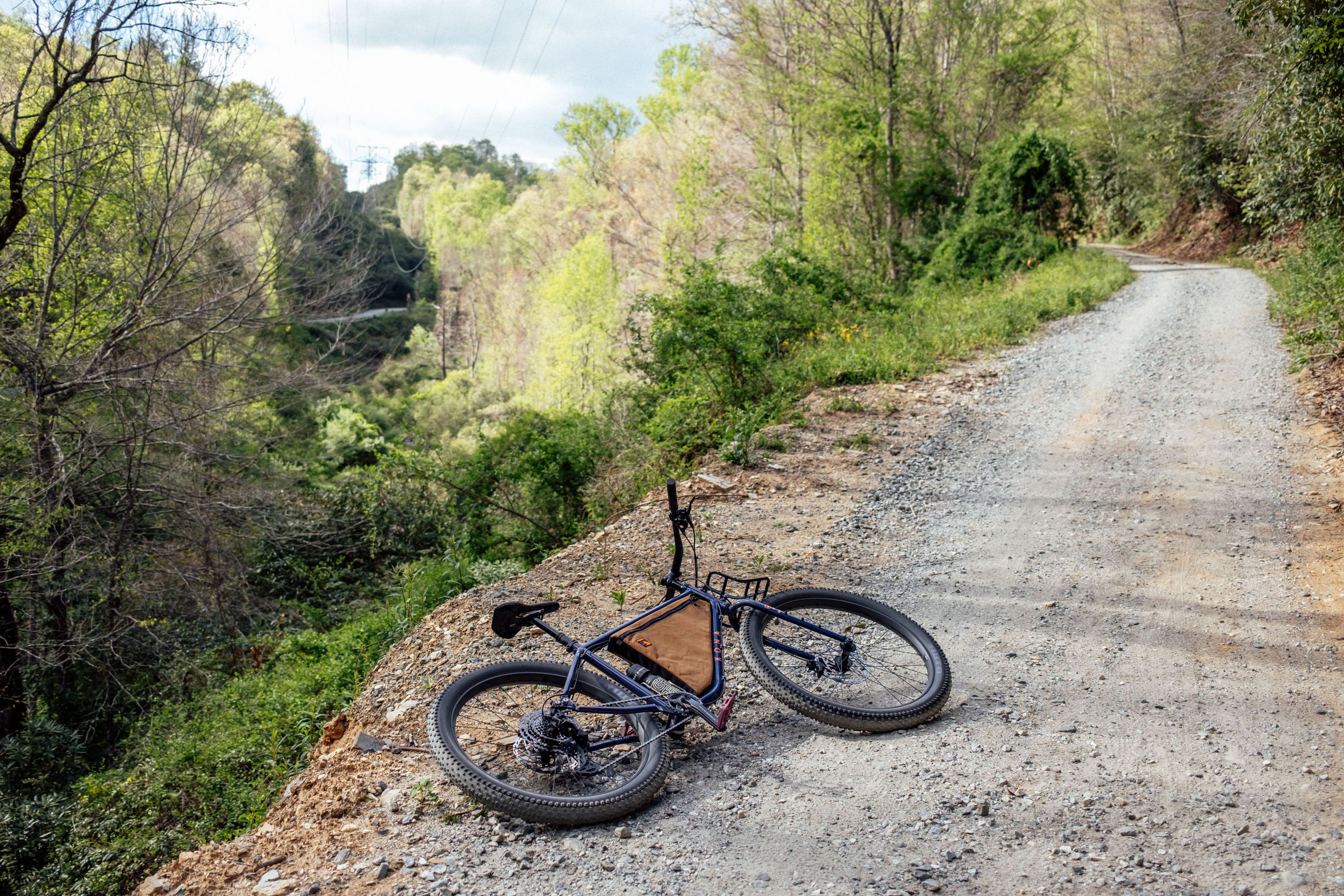
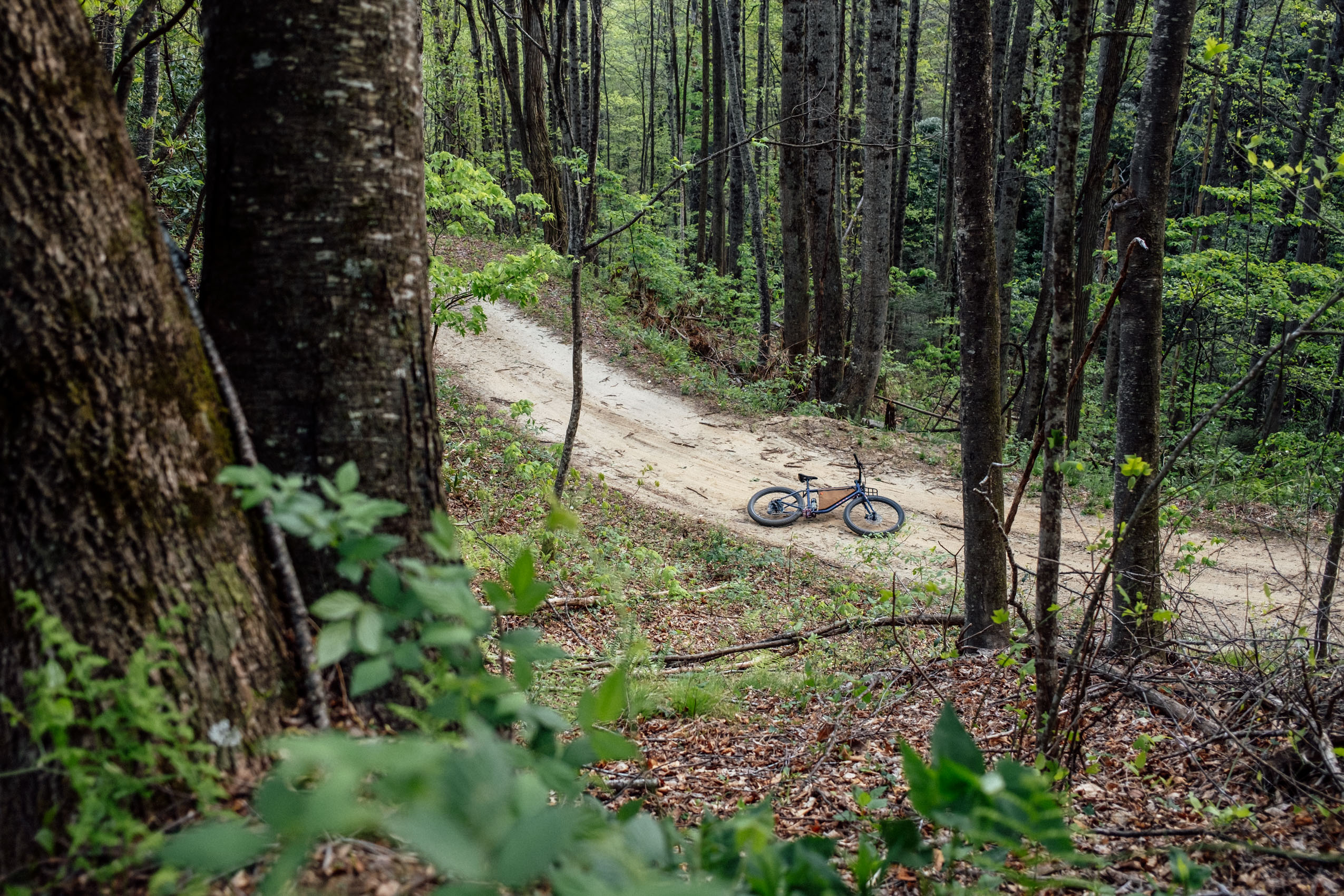


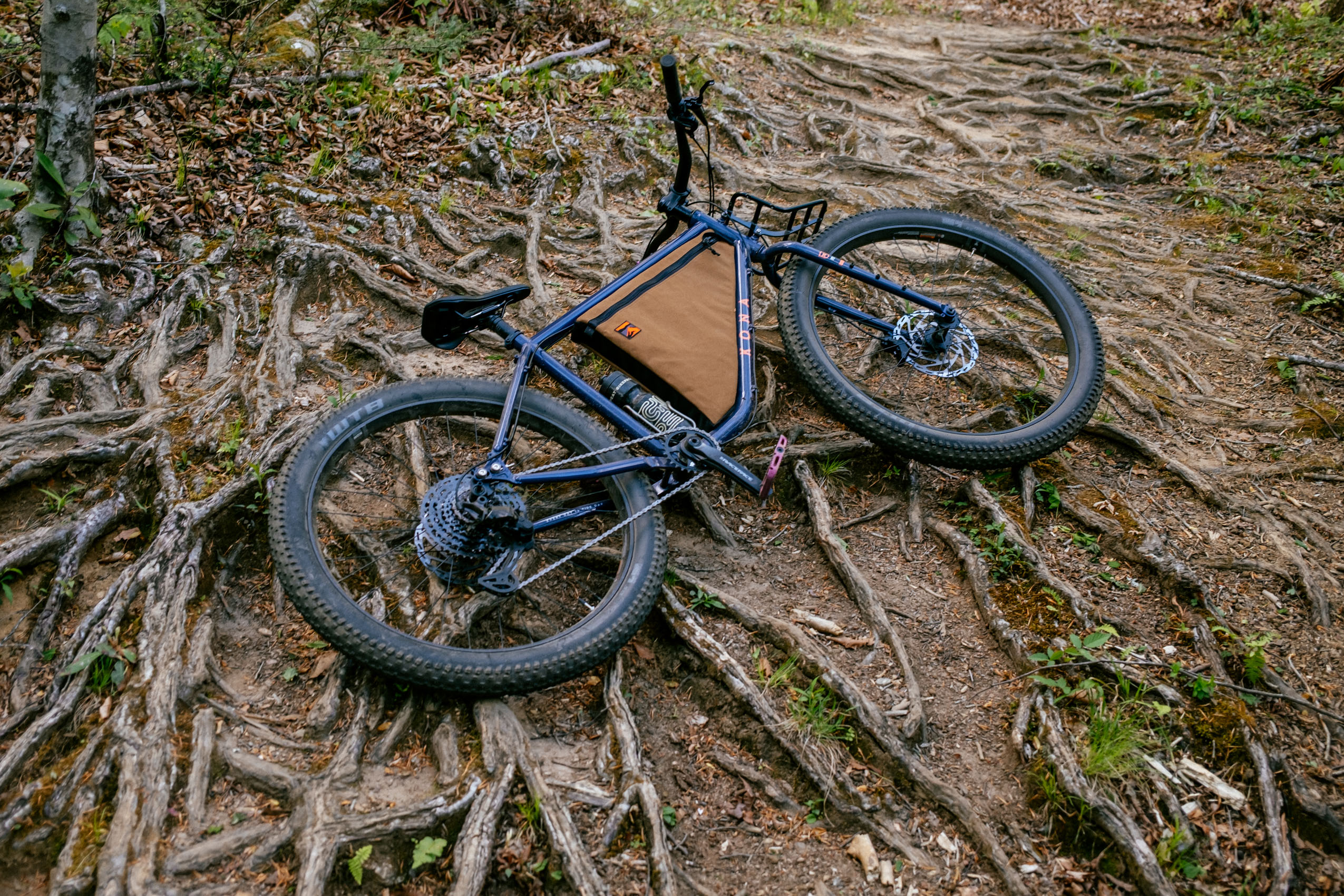
It’s almost as if Kona took the word mullet to another level—not only does business in the front, party in the back apply to the wheels, but the geometry also kind of has that vibe. Kona really stretched out the front-center with this one, adding nearly 5 centimeters to the Unit X I reviewed. It’s also about 3 centimeters longer than the Stooge Dirt Tracker and 4.3 cm longer than the large Stooge Scrambler, two other rigid-specific bikes I’ve ridden in the last year.

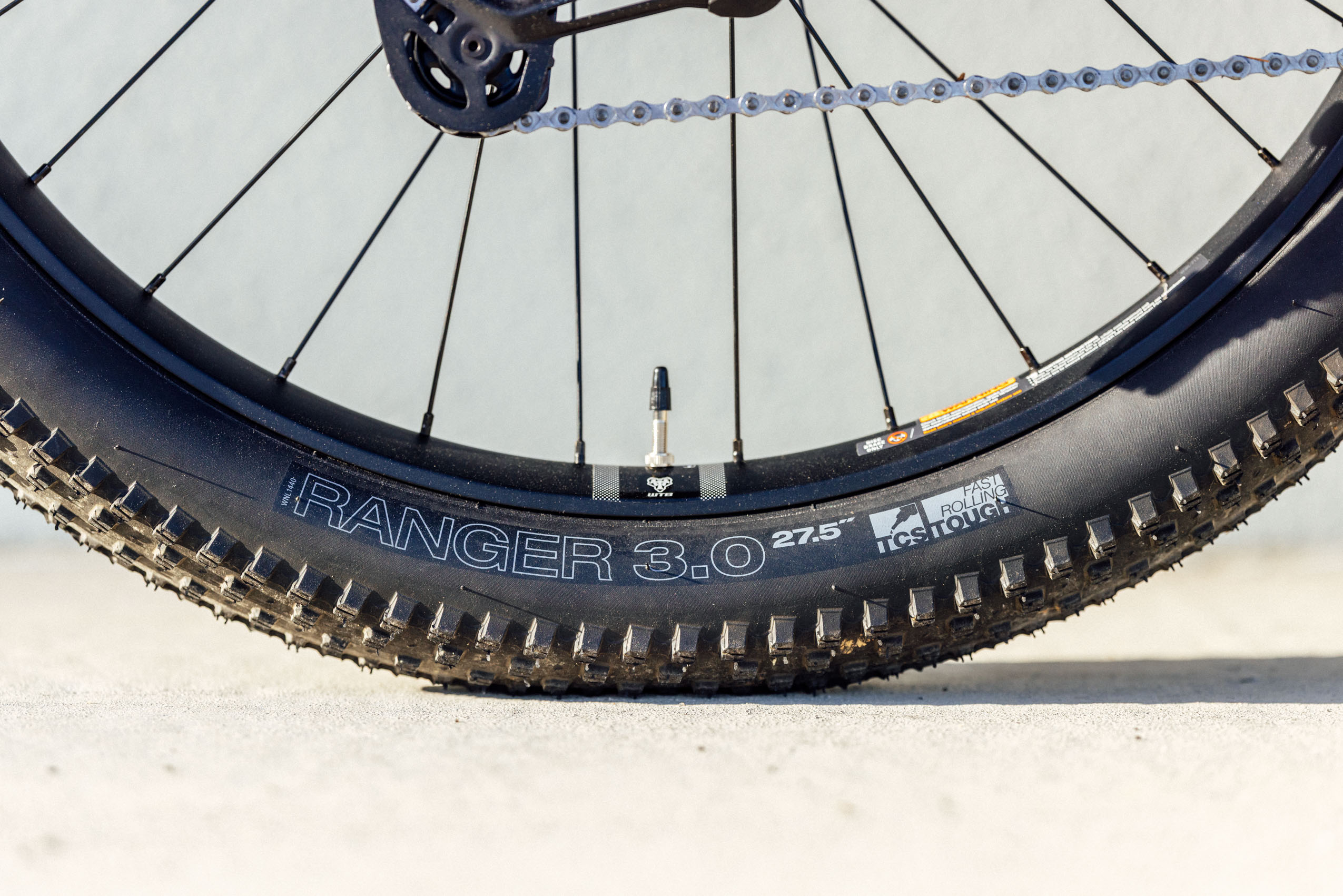
During my first ride on the Unity, I thought Kona mispaired the lengthy front end with relatively normal-length chainstays (440-456mm). At times, it almost felt like the bike was riding on a swivel. I quickly got used to it, however, and I realized that much of the sensation came from the WTB Ranger front tire. I used to like the Ranger, but it has noticeably more self-steer than I remembered. I adapted to it to some degree, but ultimately swapped in my beloved 3.0″ DHF, and that swooping, unpredictable steering characteristic was minimized.
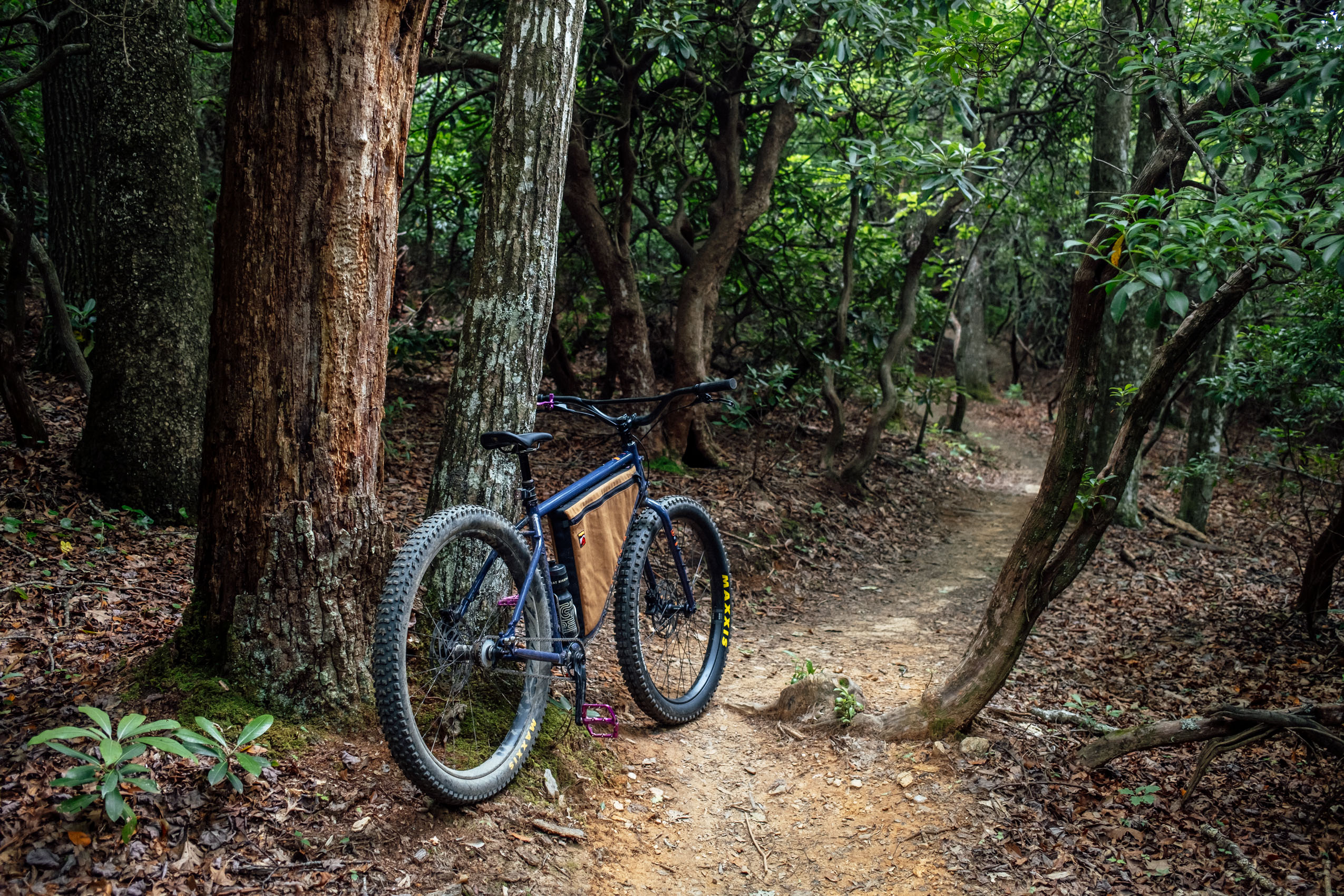
I took the Unity on all sorts of rides on tracks ranging from rough forest roads to technical trails. In the end, the plus-mullet formula proved to be most worthwhile on rougher two-track and technical trails. The 29+ front tire delivers all the added rollover capability, confidence, and traction you’d expect, while the 27.5+ rear accomplishes exactly what it’s intended to do: offset the bike’s overall length and provide a more maneuverable, playful feel when the trail becomes twisty, tight, or full of obstacles. It’s not as sharp or quick as something like the Stooge Scrambler, but it has chops, and I often found myself impressed with how well it can carve and flow with the trails.


I expected the smaller rear wheel to negatively affect rollover performance, but that wasn’t the case. Anyone who’s ever gotten hung up in a technical rock garden knows that it usually happens at the front wheel, not the back, often because of a poor line choice, bad body English, or just a general lack of gusto. Once you move your body weight over the object(s), it’s easier to carry the momentum through the rear wheel. Throughout my time riding with it, I never found a situation on the trail that left me wanting a larger rear tire.
Kona’s decision to use a mixed-wheel setup on a bike designed for long-distance touring raised one lingering question for me. I’ll dive deeper into that in the ‘Risk…’ section below.
3. Mass Triangle
The leads me to the most striking feature on the Unity: its enormous front triangle. In one sense, I’d liken the Unity to a cargo-centric longtail or midtail bike since it also prioritizes maximum carrying capacity. However, longtails and midtails optimize the rear end of the bike for added pannier and rack deck storage. The Kona Unity takes a different, more “bikepacking” approach by stretching the middle of the bike to provide greater utility with a larger frame bag. It could almost be described on its own terms as a “long-mid.”
Kona’s not the first to design a bike with a pronounced belly-like downtube curve, but they really went for it on the Unity. Paired with a relatively tall head tube, it creates a void large enough for full-grown adults to climb through, which some guys proved on video when the Unity was first released. This layout is clearly concieved to maximize frame bag space, a refreshing counterpoint to many modern hardtails, which have increasingly small triangles. We’re currently at peak frame triangle shrinkflation as brands continue lowering standover height for the sake of downhill valor and longer dropper posts, a trend that’s minimizing usable storage space where it matters: inside the frame.
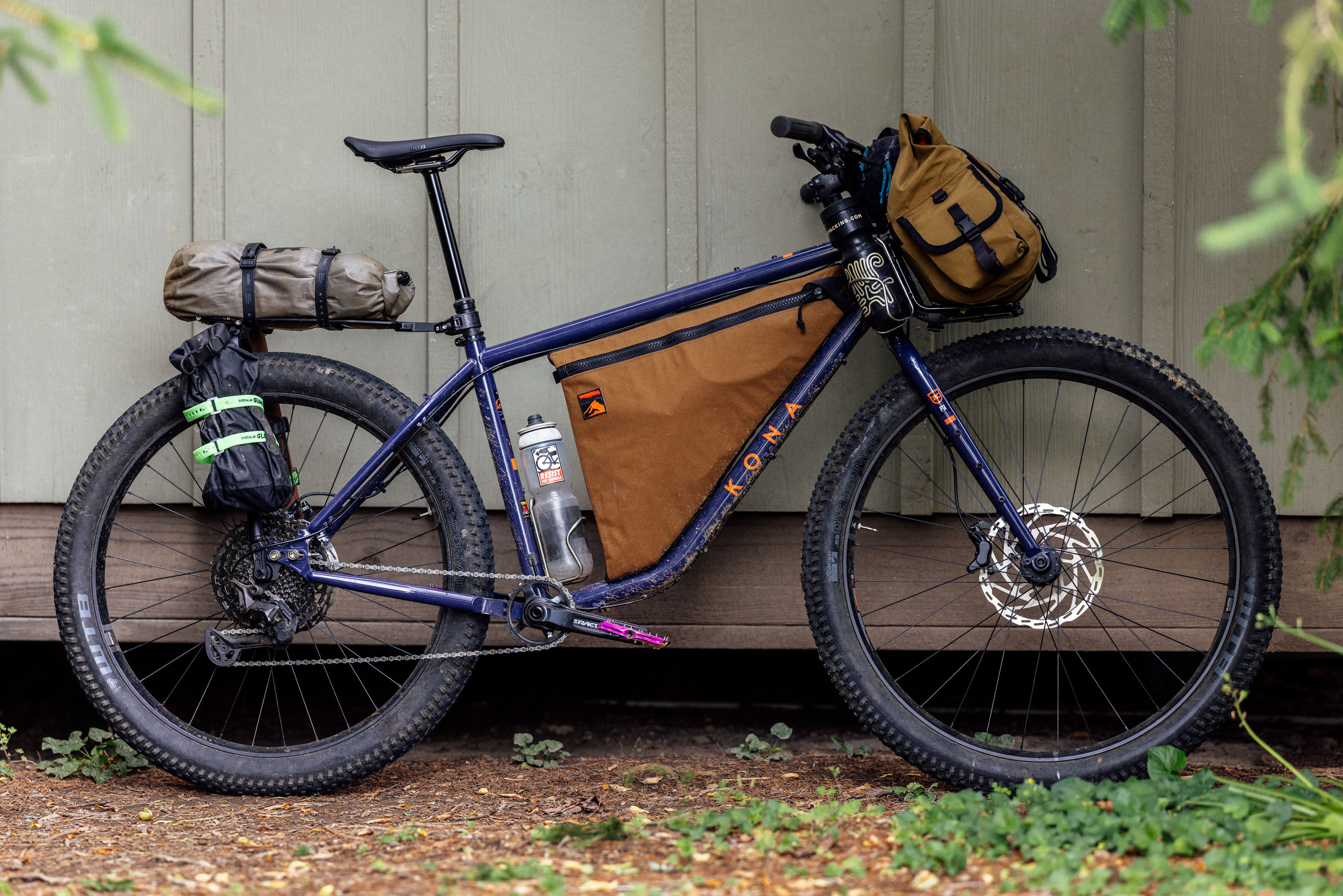
As we’ve hemmed and hawed about over the years, this is a missed opportunity since the frame triangle is the most efficient place to carry weight. Keeping mass low and centered affects handling less than any other place on the bike, which is exactly what you want on a loaded bicycle. Kona’s approach to maximizing cargo space makes complete sense from the perspective of load/weight distribution.
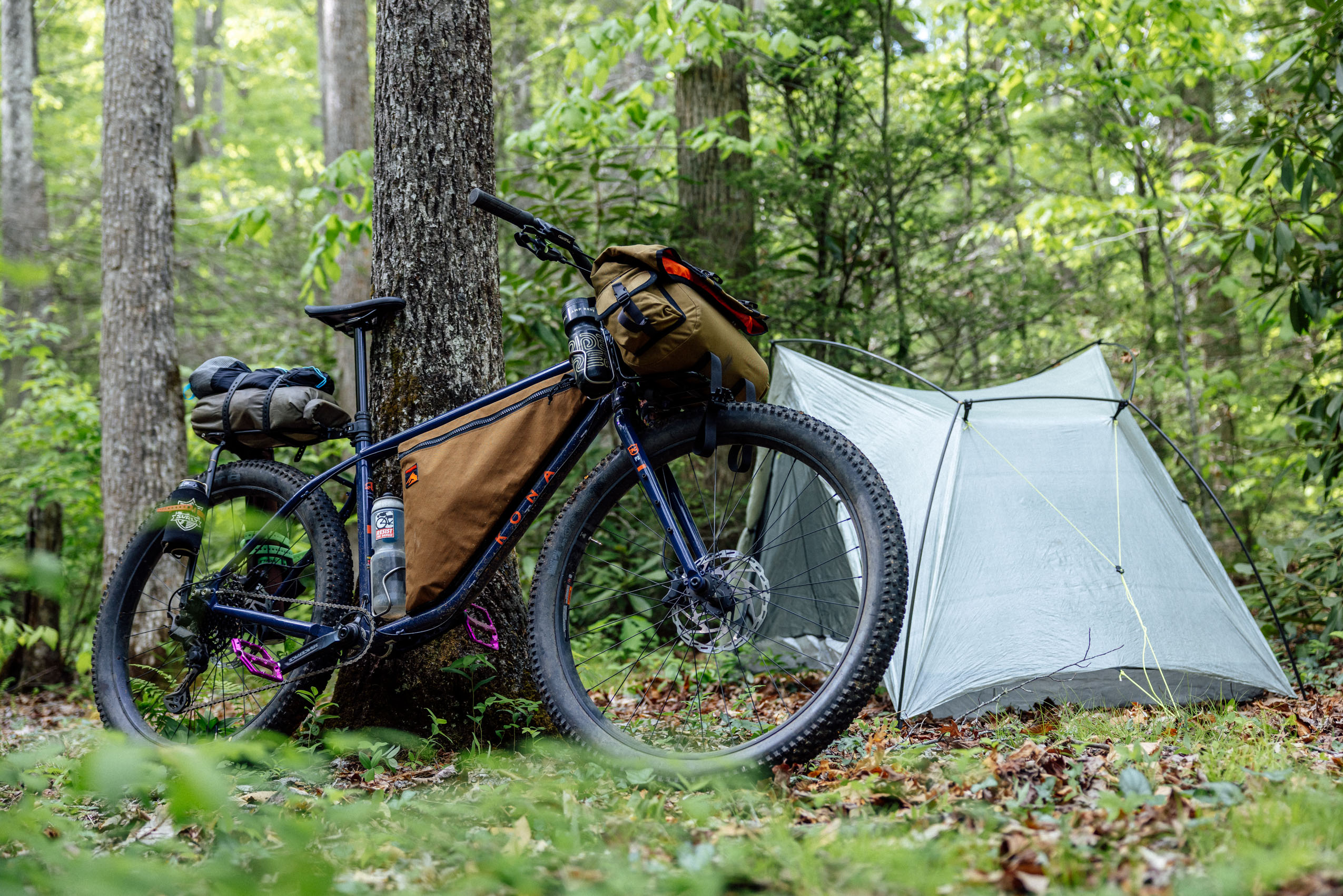
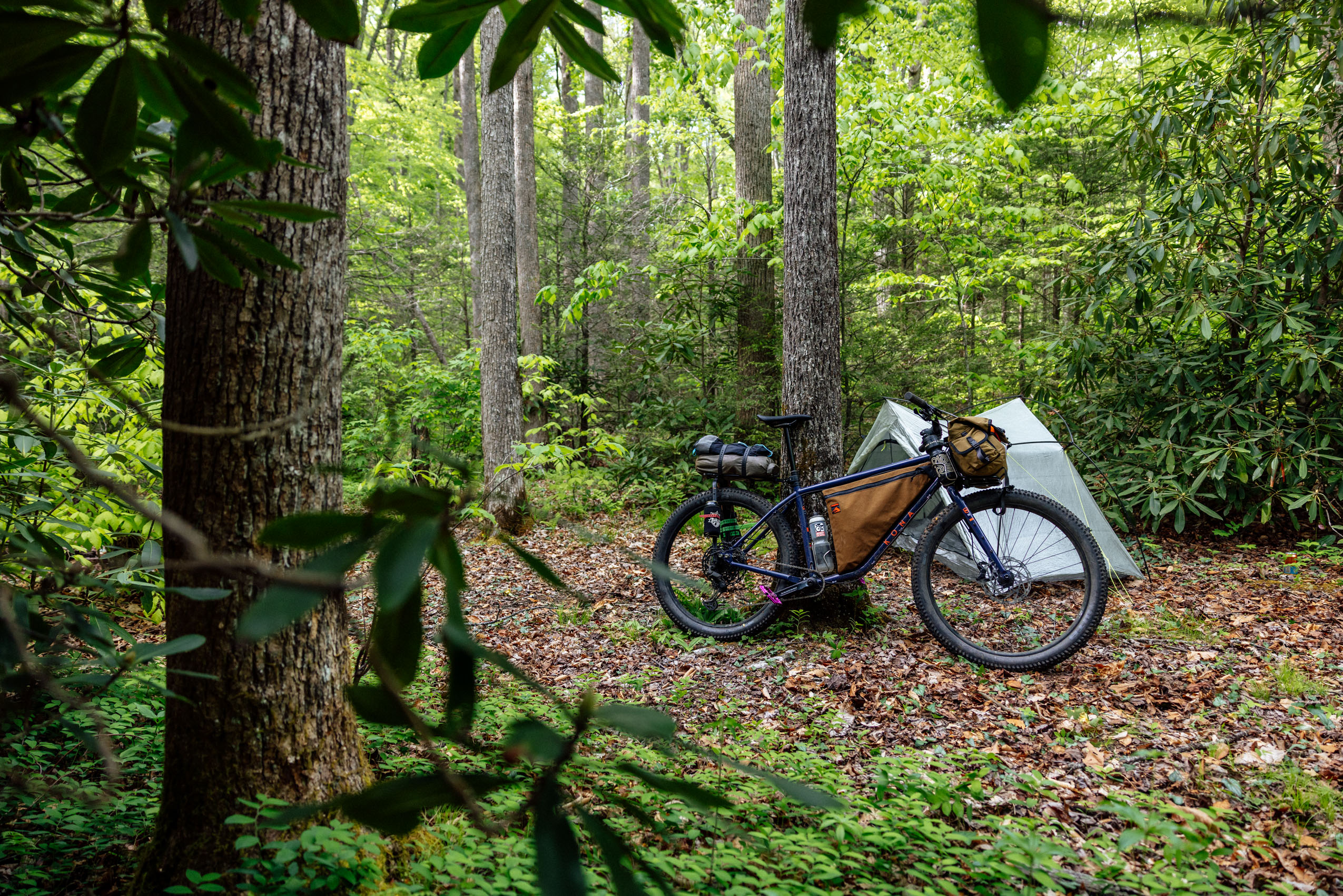
Kona also included multiple mounting points within the triangle, making it easier to secure a custom frame bag like the one shown here from Rockgeist. Despite it being a wedge-style design made to retain the use of a bottle cage on the seat tube, I think it’s the biggest frame bag I’ve ever owned. During the few bikepacking outings I took on the Unity, I was hard-pressed to fill my rear bag after loading up my frame and front bags.
There are also plenty of other mounts for a variety of rack and cargo cage combos. There’s 20 on the frame alone, 11 on the fork, and an additional 8 on the rack, which I’ll talk about later.

4. Slightly Baggy
Kona is notorious for unorthodox sizing. That’s not a strike against them, just another point that they don’t always do things like everyone else. That said, the brand’s mountain bikes are usually consistent, and it’s largely their drop-bar offerings that aren’t true to size. The Unity runs a little large, however. I’m six feet tall with long legs and almost always fit a large mountain bike. I wouldn’t say that the large Unity is way too big for me since I ultimately liked the fit, but it feels like a slightly baggy pair of pants.
| Size | SM | MD | LG | XL |
|---|---|---|---|---|
| ST Length | 370 | 420 | 470 | 530 |
| TT Length | 591 | 623 | 656 | 691 |
| Reach | 435 | 460 | 485 | 510 |
| Stack | 615 | 620 | 629 | 643 |
| Standover | 725 | 760 | 816 | 849 |
| HT Angle | 65.8° | 65.8° | 65.8° | 65.8° |
| HT Length | 160 | 165 | 175 | 190 |
| ST Angle | 75.8° | 75.3° | 74.8° | 74.3° |
| CS Length | 440–456 | 440–456 | 440–456 | 440–456 |
| BB Drop | 70 | 70 | 70 | 70 |
| BB Height | 311 | 311 | 311 | 311 |
| Wheelbase | 1176–1191 | 1203–1219 | 1232–1248 | 1263–1279 |
| Front Center | 745 | 772 | 796 | 831 |
| Fork Length | 450 | 450 | 450 | 450 |
| Fork Offset | 59 | 59 | 59 | 59 |
Also, in true Kona fashion, it has a fairly short stack height. To get comfortable on it, I had to leave about 3 centimeters of spacers under the stem and replace the stock low-rise bars with my 85mm-tall Milhouse (now the Teravail Moonstone) bars to make up for the Unity’s low-slung front-end. I feel like it fits me pretty well after that adjustment, though a riding buddy consistently said it looked a little big on me.
5. Component Decisions
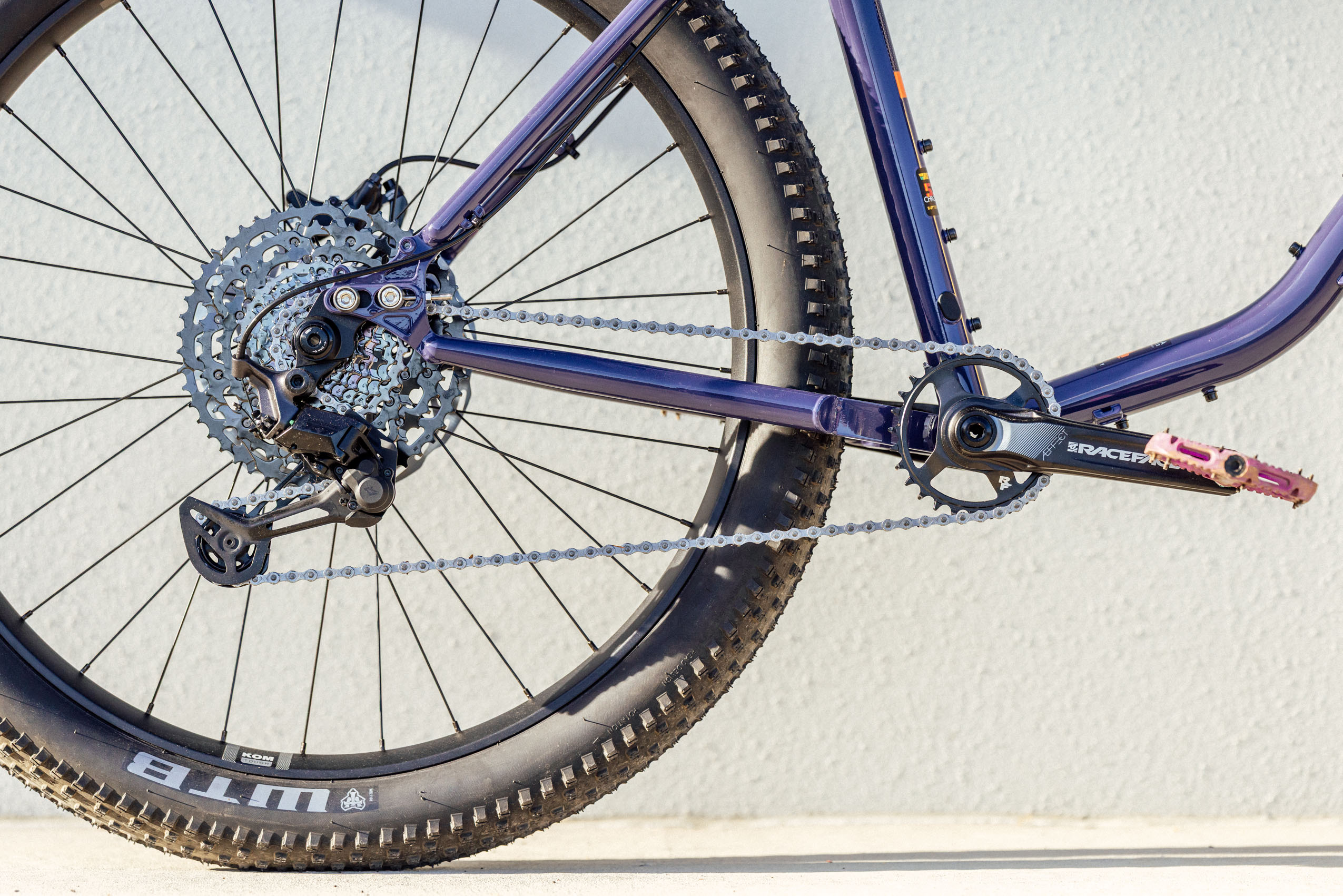
The Kona Unity is only available in a single complete build. Kona made a few thoughtful decisions in component selection, but there are also a few I didn’t like. One welcome spec is the 28-tooth chainring, shaving about 1.14 gear inches off the bottom line of the 51-tooth cassette cog (15.92 gear inches) compared to a standard 30-tooth ring. That’s exactly what we want on a bike made for hauling gear up steep grades and rolling slowly through the landscape. Another fair decision is the Shimano Linkglide 1×11 drivetrain, a group built specifically for durability. Originally developed for e-bikes, it has beefier components made to prolong wear, which is equally useful for long-distance touring.
- Frame: Kona Chromoly Butted
- Fork: Kona Unity Fork, 110mm Spacing
- Crankset: RaceFace 11-Speed, 28T
- Derailleur: Shimano XT Linkglide 11-speed
- Shifter: Shimano XT Linkglide
- Cassette: Shimano XT Linkglide 11-50T
- Chain: KMC eGlide Turbo EPT 11-Speed
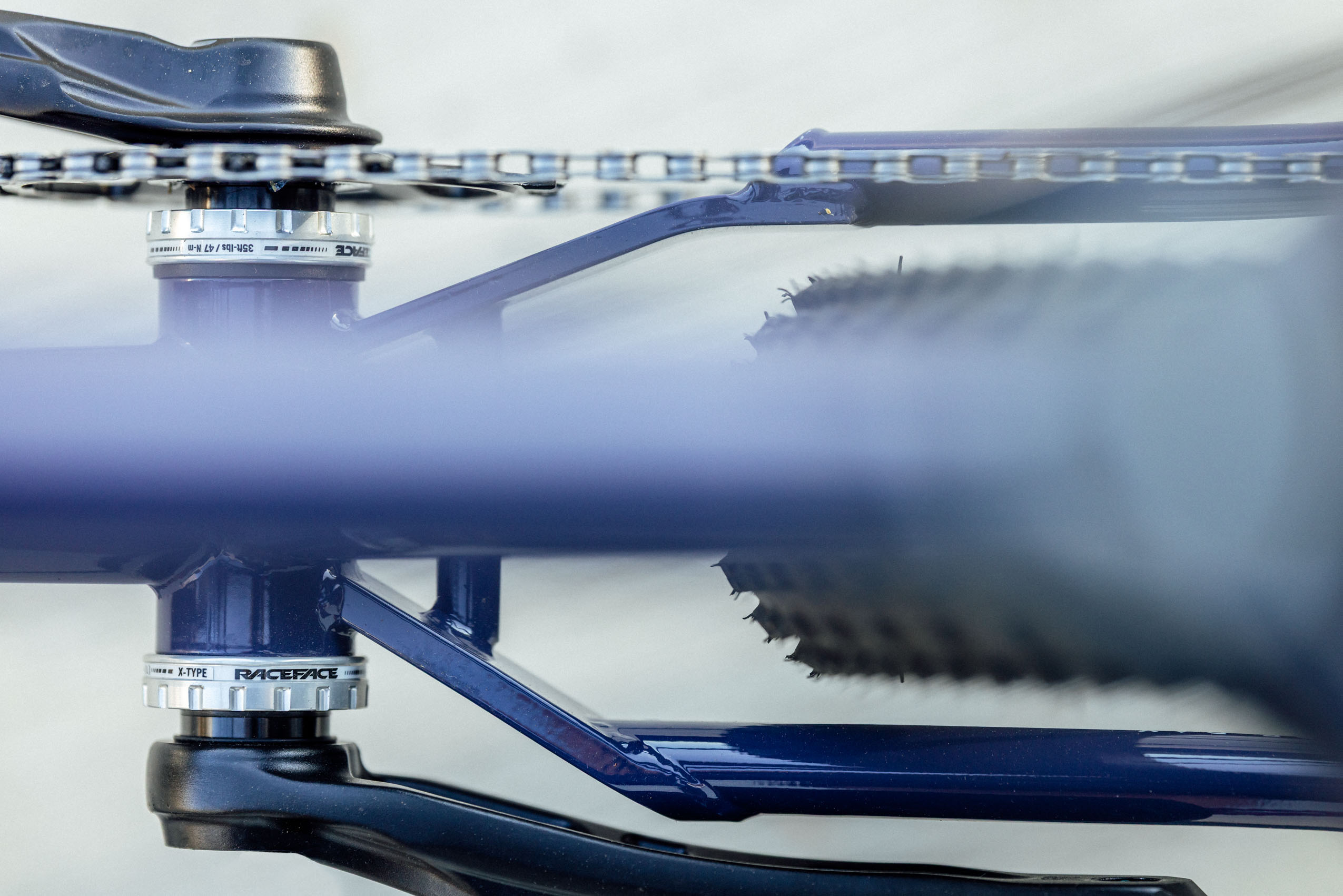
- Bottom Bracket: RaceFace 73mm
- Rims: WTB KOM Tough i40
- Spokes: Stainless 14g
- Front Hub: DT 370 110 x 15mm
- Rear Hub: DT 370 148 x 12mm, 36T Ratchet
- Front Tire: WTB Ranger TCS Tough 29 x 3.0″
- Rear Tire: WTB Ranger TCS Tough 27.5 x 3.0″
- Headset: TH ZST No.10
- Handlebar: Kona XC/BC Riser
- Stem: Kona XC/BC
- Grips: Kona Key Grips
- Saddle: WTB Volt
- Seatpost: Kona Thumb w/offset 31.6mm
- Seat Clamp: Kona Clamp
- Brake Levers: Tektro Gemini Hydraulic
- Brake Calipers: Tektro Gemini
- Rotors: Trektro TR 203mm
- Extras: Kona “Utility” Rack
The 170mm Race Face Aeffect cranks and WTB KOM i40 rims were two more solid spec choices. The wheels are built around DT Swiss 370 hubs, which now use DT’s reliable ratchet internals. While they’re a step below the venerable DT 350, they’re still a dependable option. The hubs are paired with large 203mm rotors front and rear, another thoughtful choice for a loaded bikepacking rig where braking power and consistency matters.

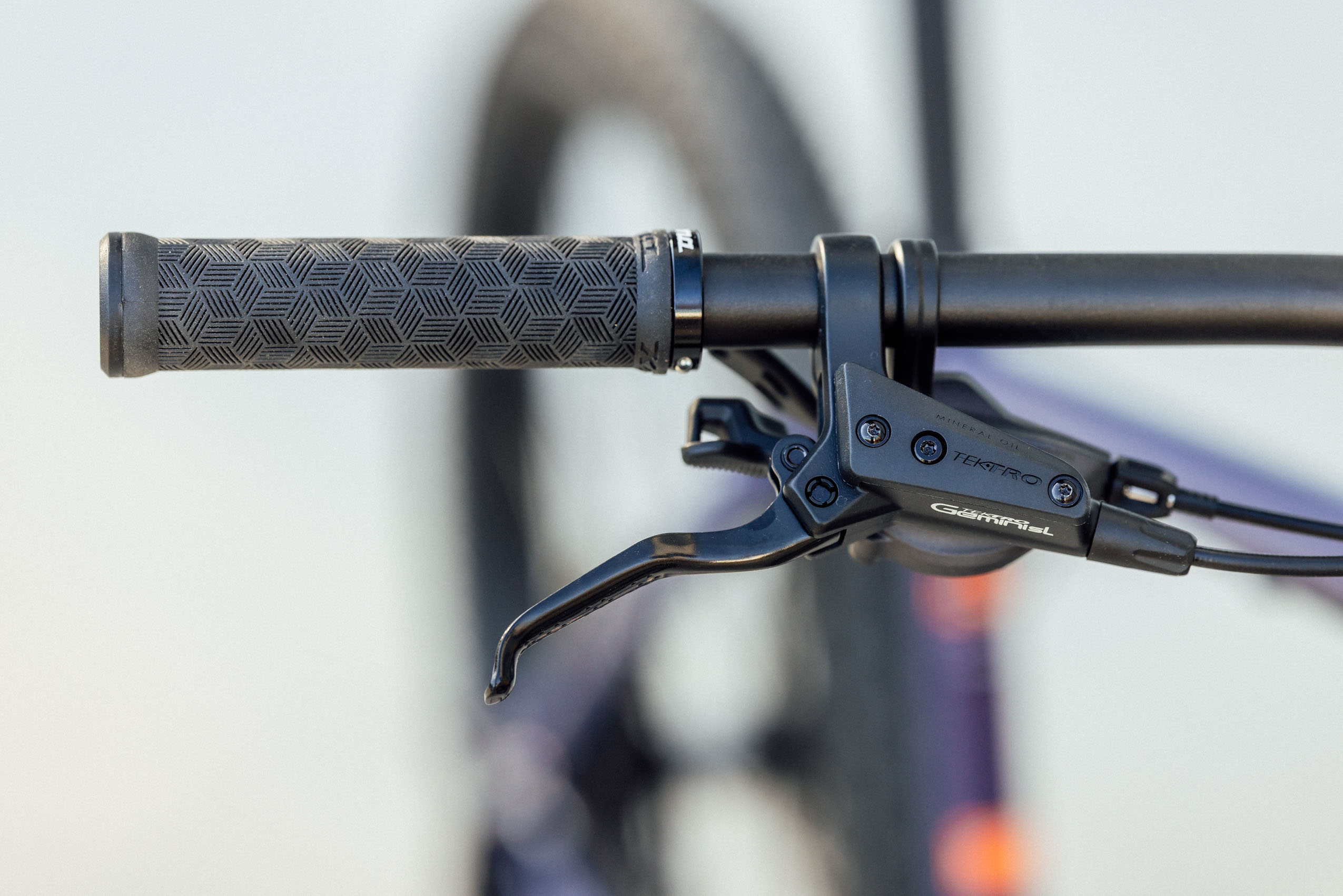

I wasn’t quite as impressed with the Tektro hydraulic brakes. Even with the oversized rotors and reach adjustment via a single Allen bolt, they felt hard on the hands. The rear brake also needed a bleed right out of the box.
The house-branded Kona cockpit components are serviceable, though unremarkable. As mentioned above, I swapped the stock handlebar for a high-rise moto bar. I was more surprised by Kona’s decision to spec a rigid seatpost, and I immediately installed a 210mm OneUp V3 dropper before taking the bike out of my neighborhood. An off-road bike without a dropper post in 2026? C’mon, Kona. That said, at $2,699 complete—including the front rack—the Unity seems like an excellent value by today’s standards.
6. Mostly a Cadillac
The Unity uses a custom chromoly tubeset that Kona says they developed to meet the demands of loaded bikepacking and rough off-road riding. The brand keeps their tubing recipes pretty close to the chest, but they provided a little feedback on the subject when asked. Rather than chasing a particular tubing brand, they went with standard 4130 tubing and focused on creating the frameset by selecting tube diameters and wall thicknesses that delivered the ride characteristics they were after: stability when loaded, durability for long-term use, and enough compliance for big days in the saddle. The frame uses some butted tubing and some plain-gauge tubing, according to Kona.

They mentioned that the bent downtube added some unique tubing design requirements, but I think it may have unlocked a more comfortable ride in combination with the elongated front end. Riding two-track, relatively smooth singletrack, and gravel roads, the Unity frame felt surprisingly forgiving, and the word “plush” even popped into my head on a few occasions. It has a buoyant, big-car vibe, as if the protracted top tube and down tube act as leaf springs to soak up chatter and vibration. This caught me off guard since the full build registered 15.58 kilograms (34.34 pounds) on my scale, without the rack and pedals. I didn’t expect it to feel as light and comfy as it did.
However, the going got a little rougher on rocky and rooty singletrack. The rear end feels pretty good, but the fork doesn’t soak up hits and drops as well as something like the lengthier, leaner Stooge MK fork. For its intent, I wouldn’t say the Unity is harsh—especially when running a 3.0” DHF tire at about 14 PSI as I did—but I wouldn’t say it’s made for slamming downhills, either.

As the subtitle suggests in my 2020 review of the Unit X, “The Ultimate… Gravel Bike,” Kona managed to make a mountain bike that was just as—if not more—at home cruising along national forest roads and gravel than it was on trails. The same quality stood out to me on the Kona Unity. I was impressed with how efficient and planted it felt just riding along crushed-rock roads. It didn’t feel at all sluggish, which I had feared, given its weight and stature. It just wants to go and keep going.
7. More Rake
The fork is one of the Unity’s most interesting features. Rather than relying on a cookie-cutter option, Kona developed a dedicated design to complement the bike’s unique geometry and intended use. In other words, you’d be hard-pressed to find a replacement in our long list of “Utility Forks” that matches its atypical 450mm axle-to-crown length and long rake.

A few forks are similar in length, but the rake, or offset, is another story. The bread and butter of the Unity is its slack head tube angle and XL front tire. This combo makes it stable at speed and extra confident on rough and technical descents, both of which it excels at. In my experience, tackling many of our black-diamond-level downhill trails around here, it’s about as confident as any rigid bike I’ve been on. The drawbacks to this approach with a touring bike are the significant trail numbers that a 66° HTA and oversized 29+ tire create—higher trail translates to stability and poise, but the steering can often become heavy or floppy at lower speeds. Kona addressed this by using a longer-than-average 59mm fork offset (as opposed to the more common 44 or 52mm), reducing trail and wheel flop while injecting some lightness back into the steering. Plus, the longer offset kicks the front wheel forward, adding to its confidence-inspiring long front-center.
Jones and Stooge have been using long fork offsets for years, which I’ve written about on multiple occasions. However, the Kona Unity’s 59mm fork rake is significantly shorter by comparison. The Jones LWB uses a 67.5° HTA and 76mm rake, and the Stooge MK7 has a 66° HTA and a 65mm fork offset. Still, I found the steering on the Unity to be remarkably light and quick on rooty, rocky trails, even when loaded. This allows you to react to obstacles quickly, a characteristic that’s crucial on a rigid trail bike.
8. Separation of Weight
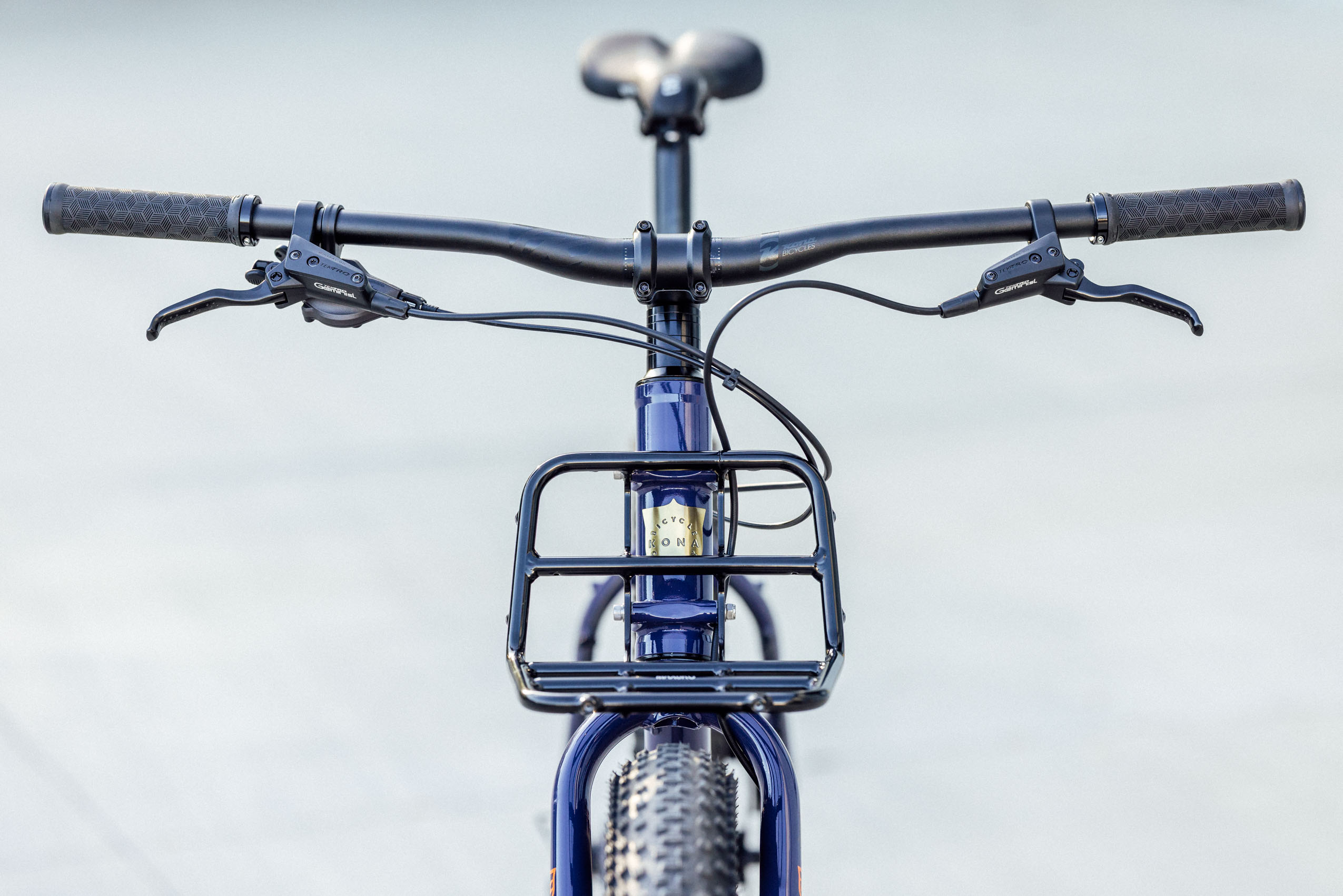
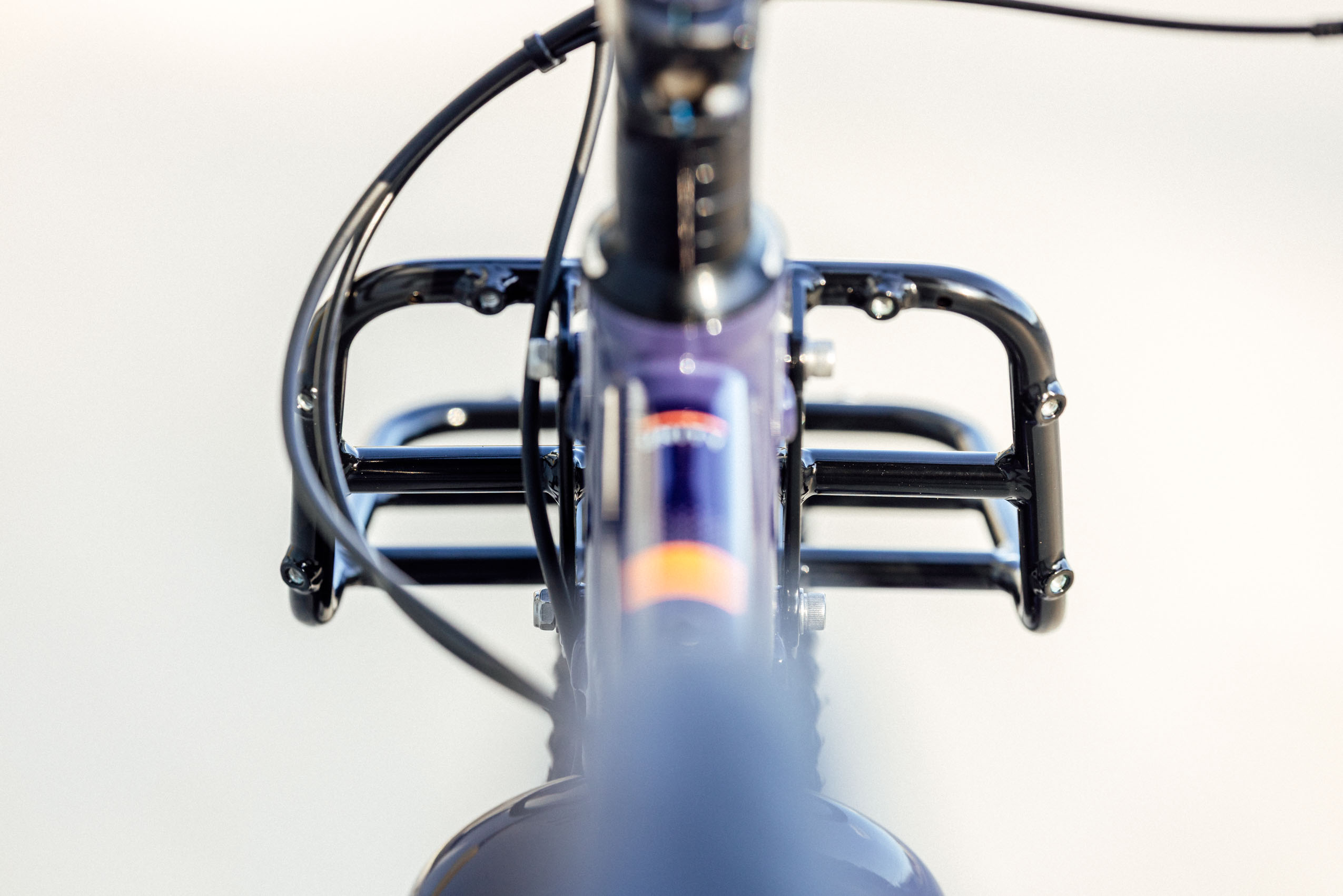
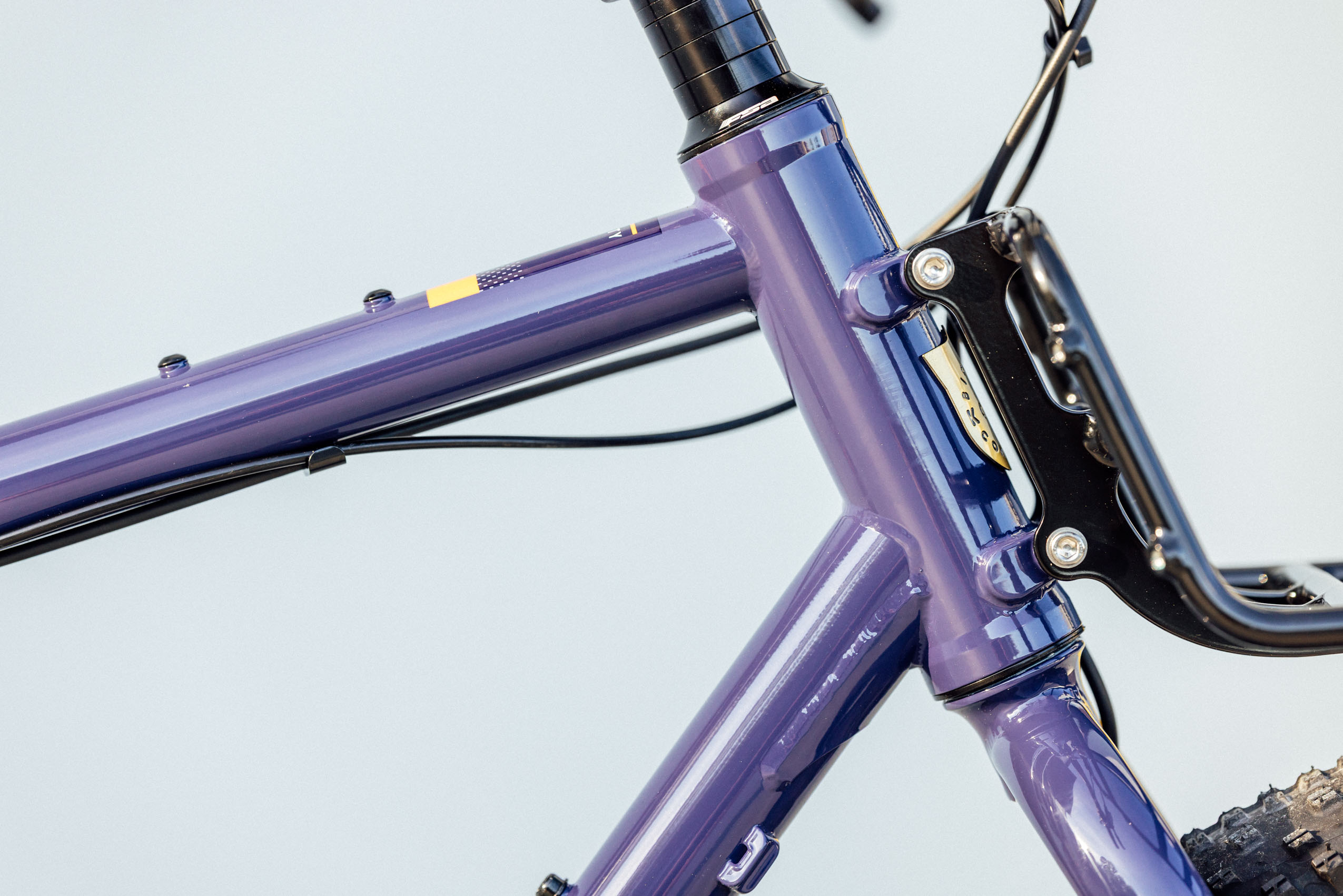
Credit for that latter point about steering while loaded is owed to the Unity’s tailor-made front rack. Because it mounts to the frame’s head tube rather than the fork or handlebars, steering remains independent of whatever weight is being carried on it. The result is lighter steering that feels exactly like it would on an unloaded bike, without any heaviness or side-to-side slop that often comes from handlebar bags, baskets, or front racks.
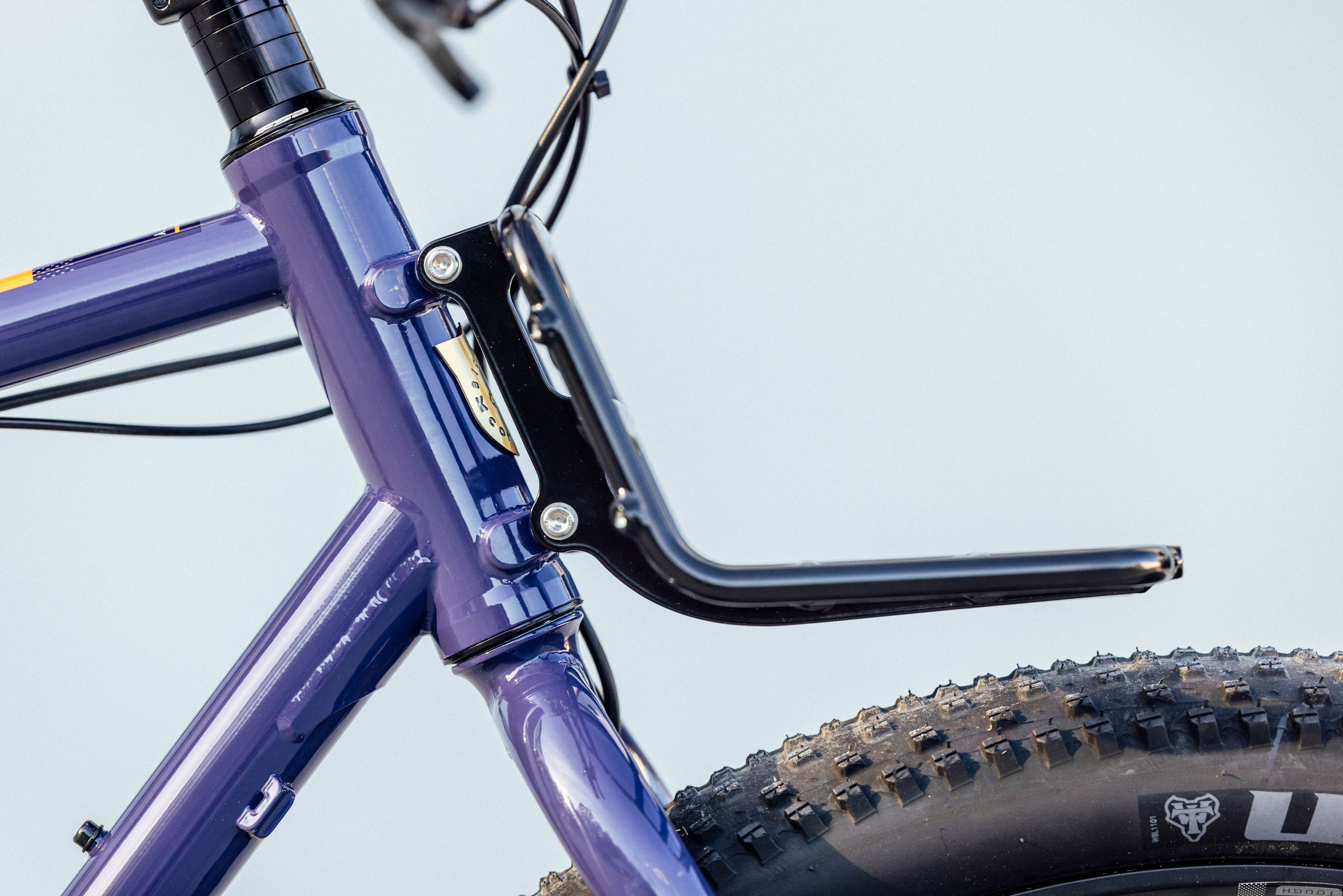

This isn’t anything completely new. The Trek 1120 may have been the first non-cargo bike to adapt the idea of a custom-mounted front mini rack for an off-road bikepacking setup. However, it was mounted to the fork and didn’t separate weight from steering. Kona’s implementation is nicer. The attachment system is a little burlier than Trek’s. Instead of threaded eyelets, Kona uses solid steel pipes welded to the head tube. This allows two stainless steel bolts to pass through and hold the rack in place.

The head tube-mounted design also addresses one of the main challenges many front-loading bag and rack systems face: they place cargo well above and/or in front of the steering axis, increasing the force that luggage exerts on the handlebars. As loads get heavier, steering can feel slower and more unpredictable, particularly when climbing steep grades or maneuvering at low speeds. By mounting the rack directly to the head tube, Kona keeps the rack cargo low and isolates it from the steering system. I can’t overstate how freeing this feels when carrying a bunch of weight on a long ride. Not only does the bike simply perform better, but not having to wrestle the load all the time is simply less fatiguing. It’s an incredibly sensible decision for off-road touring, and I’m surprised that more brands aren’t adapting this technique.
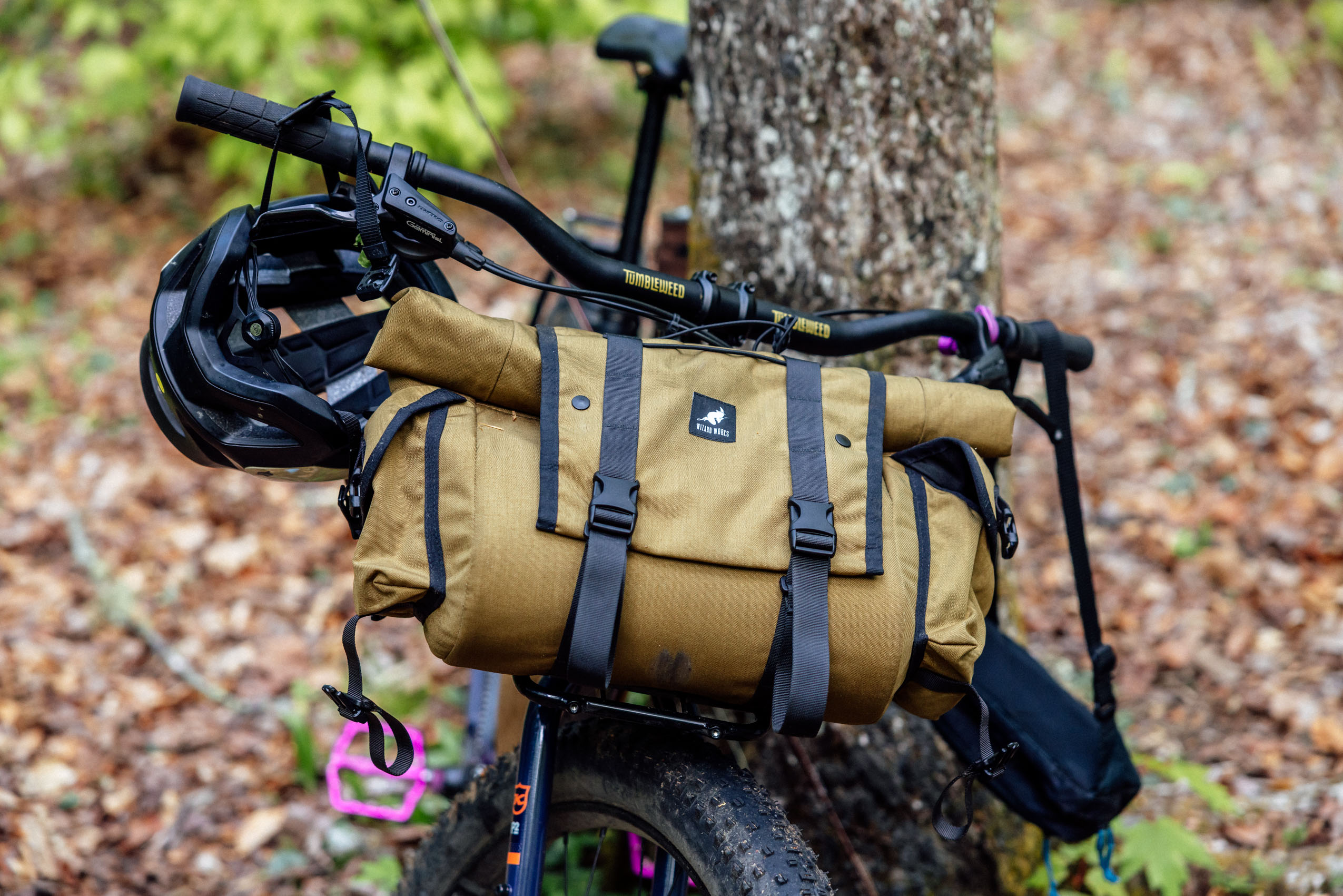
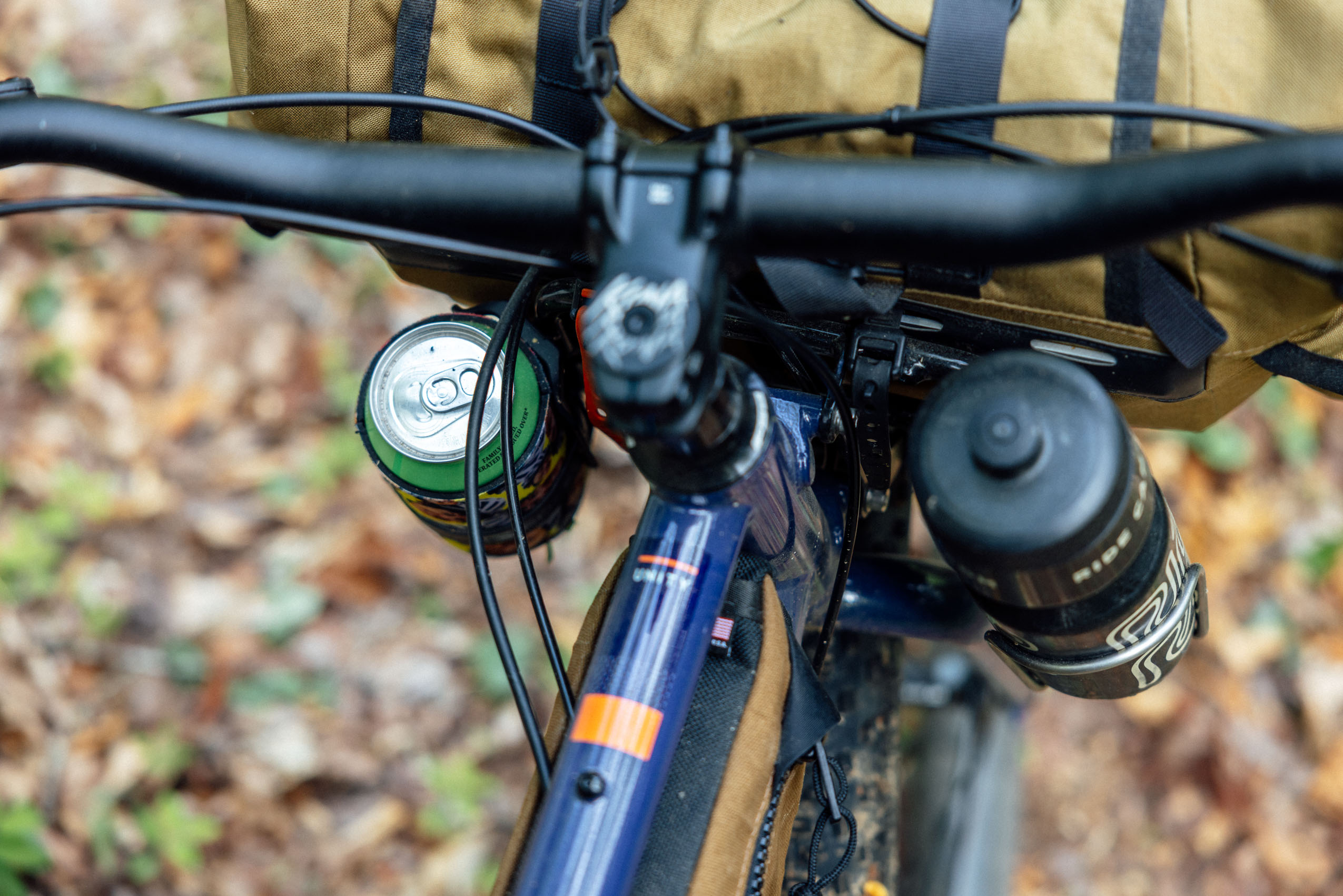
I used the rack to carry a medium 15-liter Wizard Works Bad Jelly bag that contained my tent, sleeping quilt, pillow, inflatable pad, and a couple of other odds and ends. It works pretty well with a handlebar bag like this, though it would be beneficial for the back to be a centimeter or two taller to accommodate the strap placement on this style of bag. Either way, it’s also compatible with any dry bag.

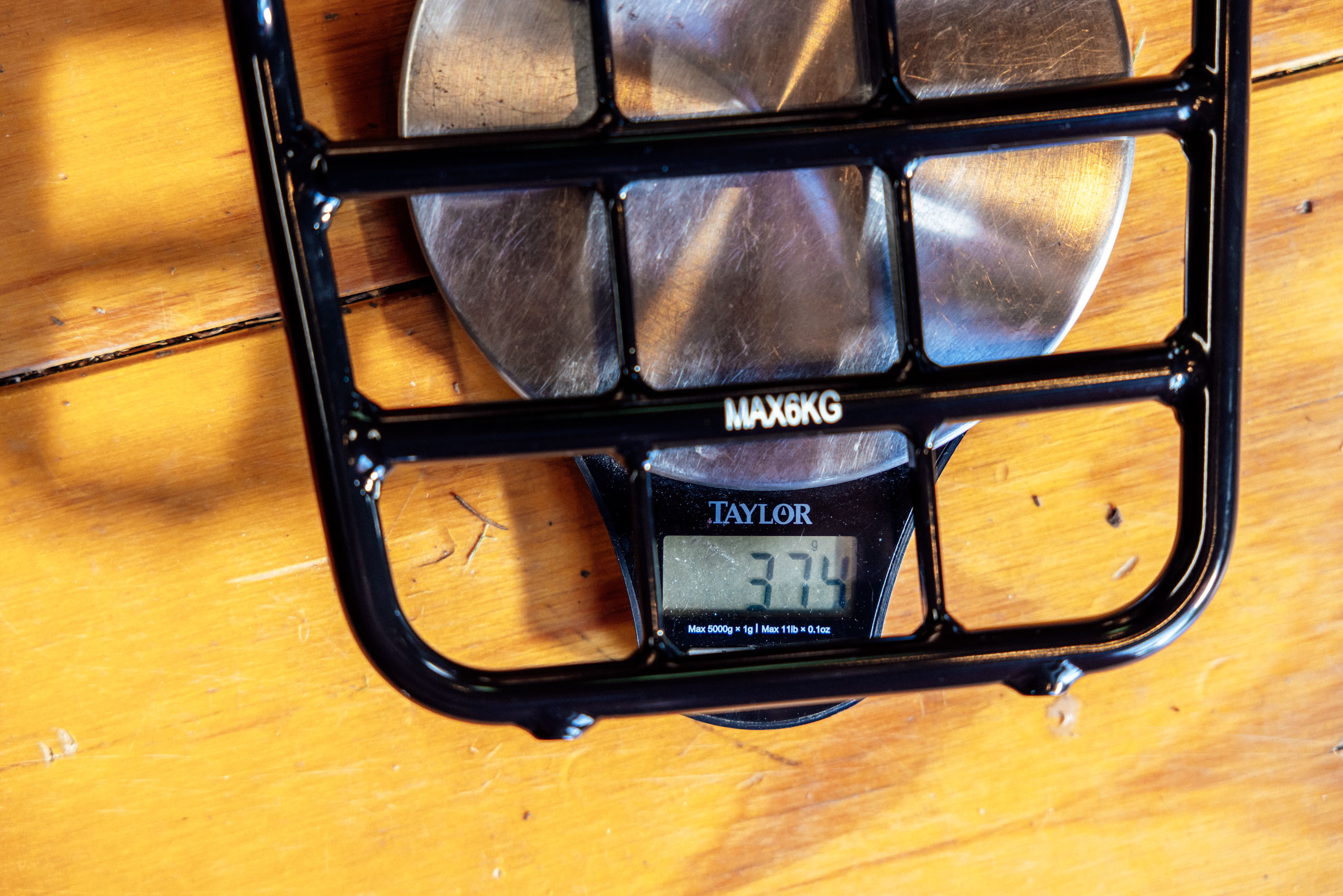
The rack is rated for six kilograms and includes side mounts for bottles and accessories. It also solves a few other common problems: crushed cables from bar bags, luggage sagging into the front tire, and the need for feed bags. I think that’s my favorite thing about this rack. It has two pairs of eyelets positioned perfectly on the sides, where you can hang a bottle cage or a small cargo cage. Again, the weight is separated from the steering, which works great for carrying heavy water bottles and a 12-ounce can, as shown here. It also places the items a little more forward than stem bags, which keeps it out of the way of your knees. The rack has two additional eyelets on the front for lights or other accessories and two more on the top bar.
9. Risk vs. Reward
Rewinding a bit, one of the first things that crossed my mind when I heard about the Unity’s mixed-wheel setup was whether it would be a liability on a long international tour. This bike seems purpose-built for that kind of travel, yet the mullet configuration feels almost counterintuitive in that context. It reminded me of when I committed to riding a Surly ECR from Cape Town to Tanzania in 2013 on the then-new 29+ platform. At the time, I had all sorts of concerns. What would happen if I needed a replacement tire? How many spare tubes should I carry? Could I even run a standard-width tire on a 40mm rim if I got into a bind?


Having two different wheel sizes might seem even more daunting. I’m still not entirely sure how I’d feel about heading overseas with both a 29+ and 27.5+ tire. Then again, tires generally last a long time, and as long as you’re running tubeless, spare tubes become less of a concern. Bring a comprehensive tire repair kit and carry one tube in each size, or simply rely on a 27.5-inch tube, which can be stretched to fit a 29-inch tire in a pinch.


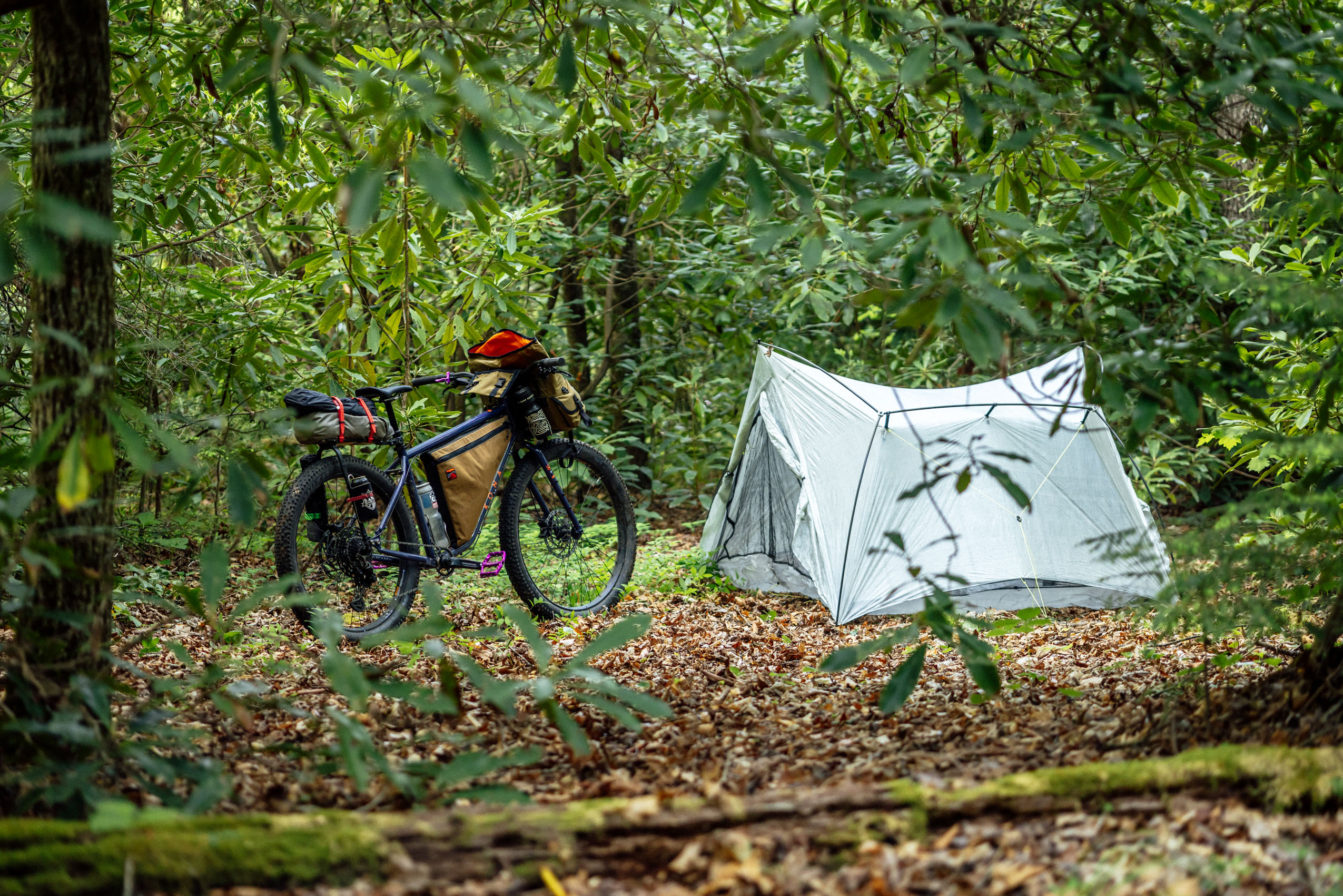
The world is also a much smaller place than it was back then. In the event of a catastrophic tire or wheel failure, you can usually have a replacement shipped almost anywhere, though that’s not always possible, and delivery times will vary depending on how remote you are. On that Africa trip, I never had a tire-related issue, but had I needed one, I could have sourced a standard 29er tire and carried on just fine. That said, on a later trip through Uganda and Rwanda, I did suffer a dynamo hub failure. By pure luck, I crossed paths with the Team Rwanda race team, who happened to have a spare six-bolt disc hub, which got me rolling again. There’s always risk when traveling by bike. A hub can fail, a frame can crack, you could break your toe, or any number of unexpected problems can arise.
Either way, if the mixed-wheel setup gives you pause, there’s always the option of running the Unity as a full 29er…
10. Adventures in 29er-ing
For me, the bigger concern is tire availability. As one reader pointed out in the launch Dispatch, “I worry enough about 29 x 3.0 availability let alone having to stress about plus tires in two diameters.” He’s right, plus tires are slim pickings as brands discontinue them, and I worry about 27.5+ availability even more than 29+, for whatever reason. I’m hopefully optimistic that 29+ will be the cult classic that prevails.
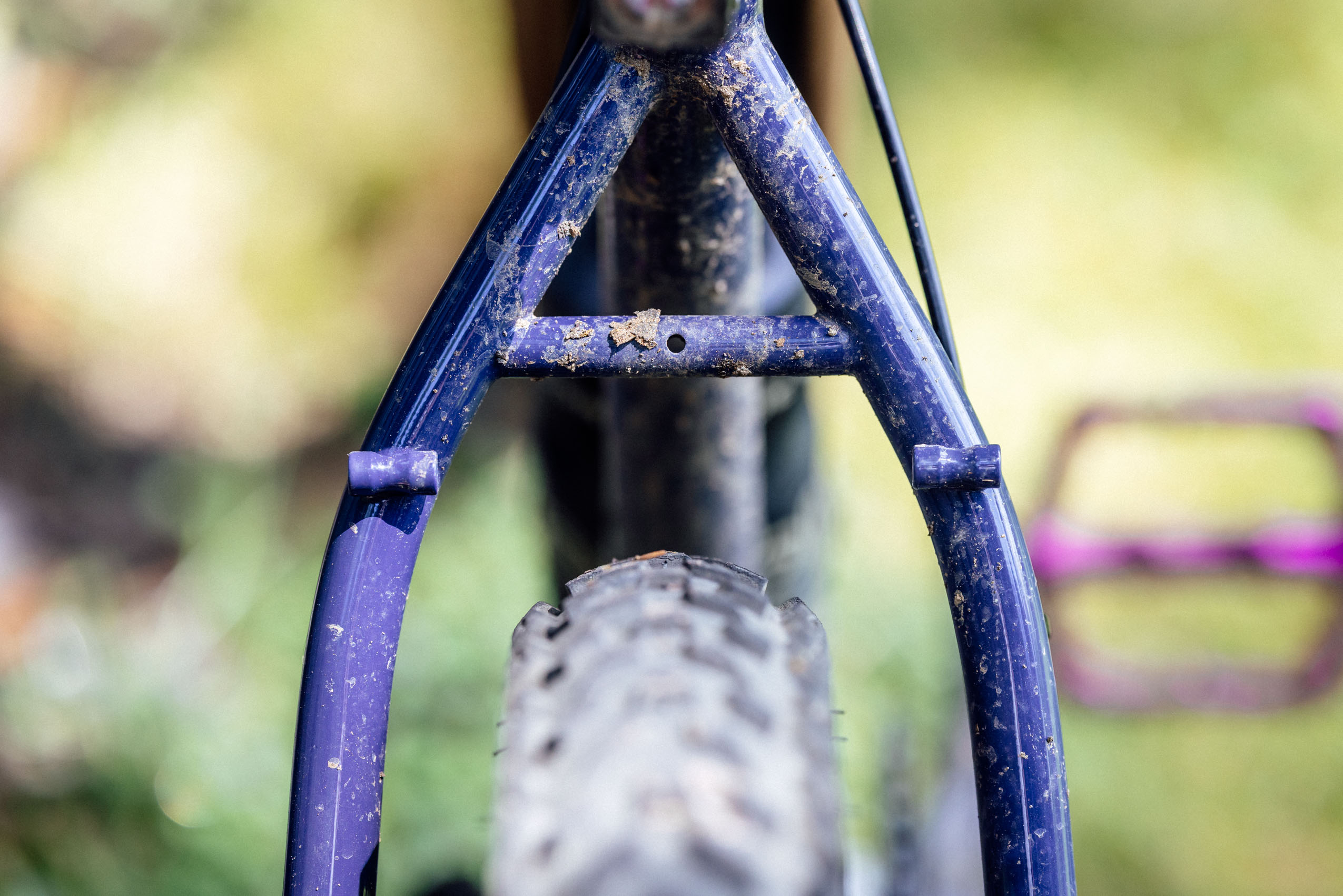
29 x 2.5″
Kona specifies a max 29 x 2.5” tire. Fortunately, Kona was extremely conservative. For the sake of experimentation, I popped on a 30mm internal-width (IW) rim with a 29 x 2.5 Teravail Clifty to see what gives. These photos show the clearance with the sliding dropouts nearly all the way forward. Unlimited clearance.



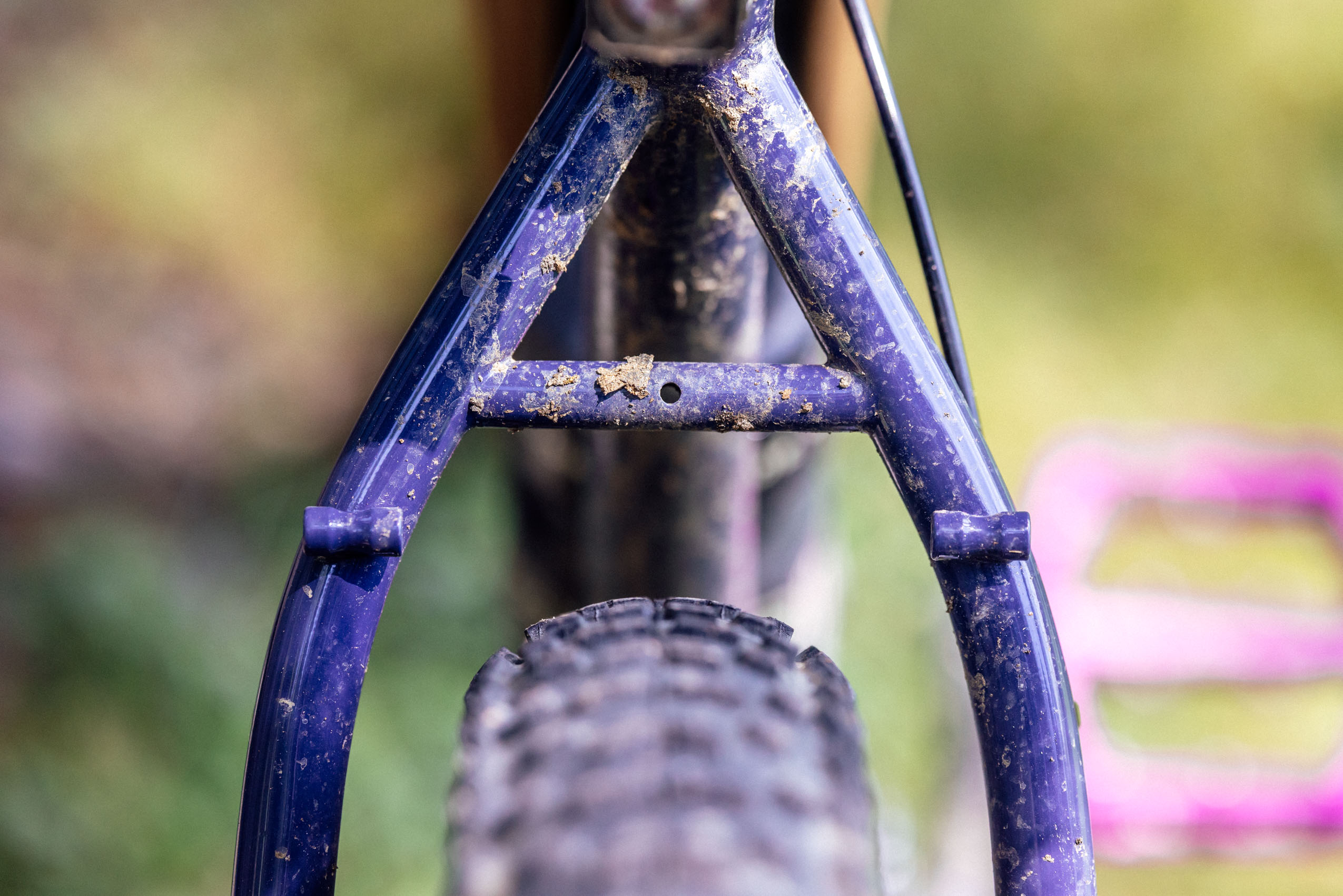
29 x 2.8″
Kona admits that they’re intentionally conservative with published tire clearance figures. As with their other bikes, they needed to be confident that it works across a wide range of tire brands, rim widths, manufacturing tolerances, frame configurations, and riding conditions. They were overly cautious, obviously, and my interest was piqued. So, I tossed on my 35mm IW Ibis 942 with a 29 x 2.8” Maxxis Rekon. As you can see in these photos below, there’s still loads of room, and this is with the dropouts slid all the way forward. We’ve all seen what happens when mud, clay, or debris starts packing up around a tire, particularly on loaded bikepacking trips. But there’s way more than enough room here—about a centimeter of space on either side.

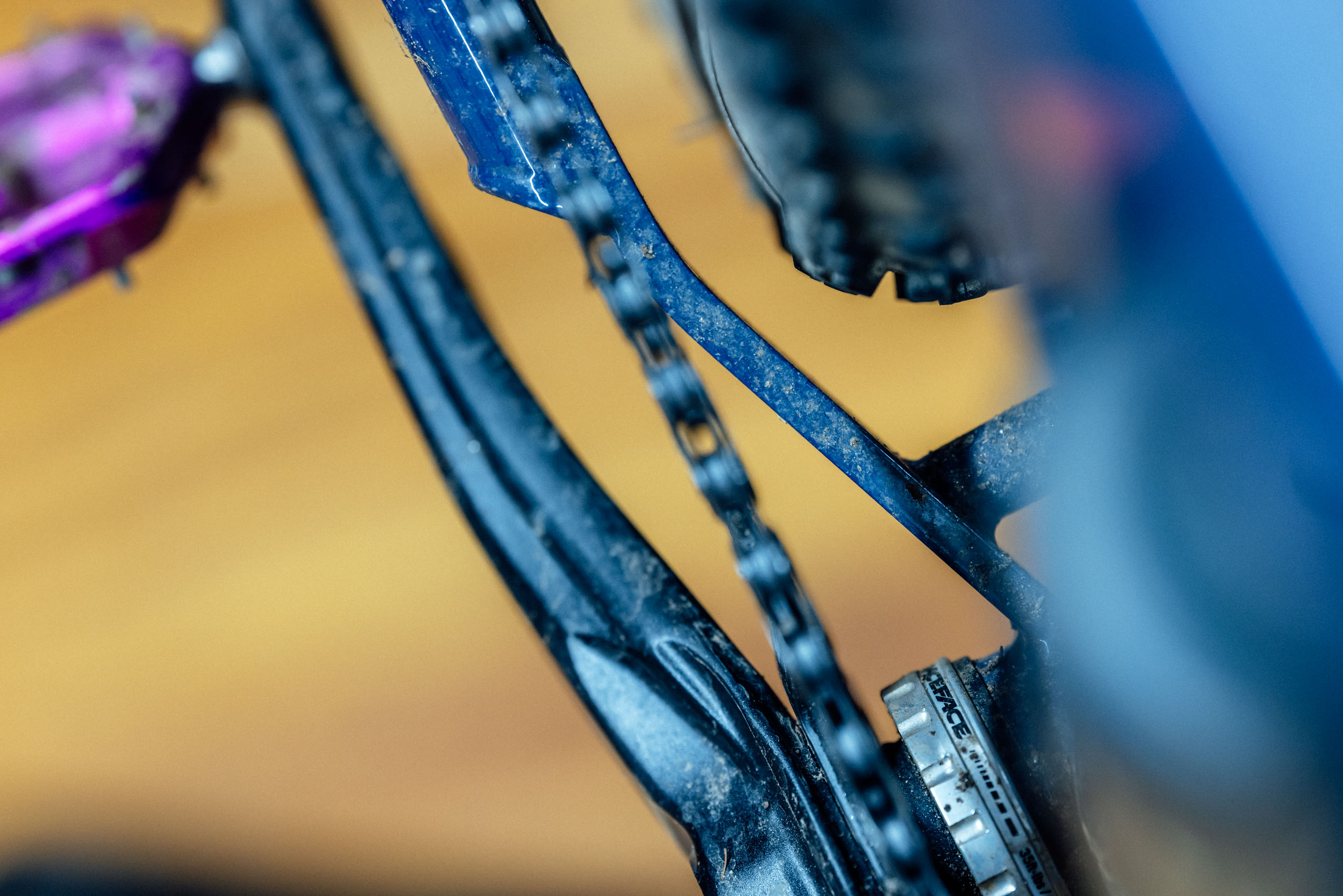


I decided to leave it on, free the Unity from that pesky derailleur, and give it a fair shake as a 29+ singlespeed. As you can see, the angles didn’t change all that much. Some people might even prefer how the angles steepened up a bit. It also raised the bottom bracket, which some folks might find to be an improvement on rocky or rooty terrain.

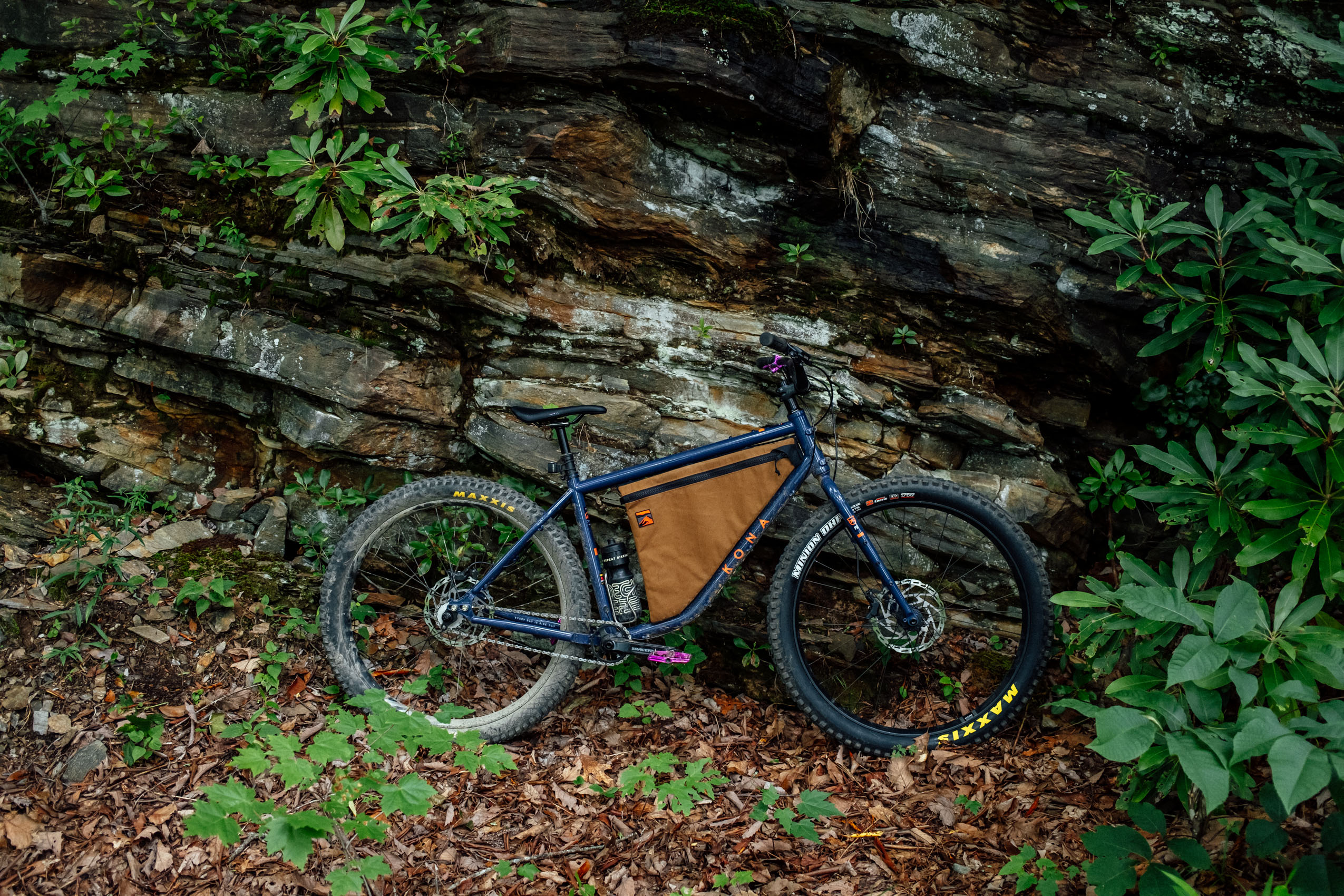
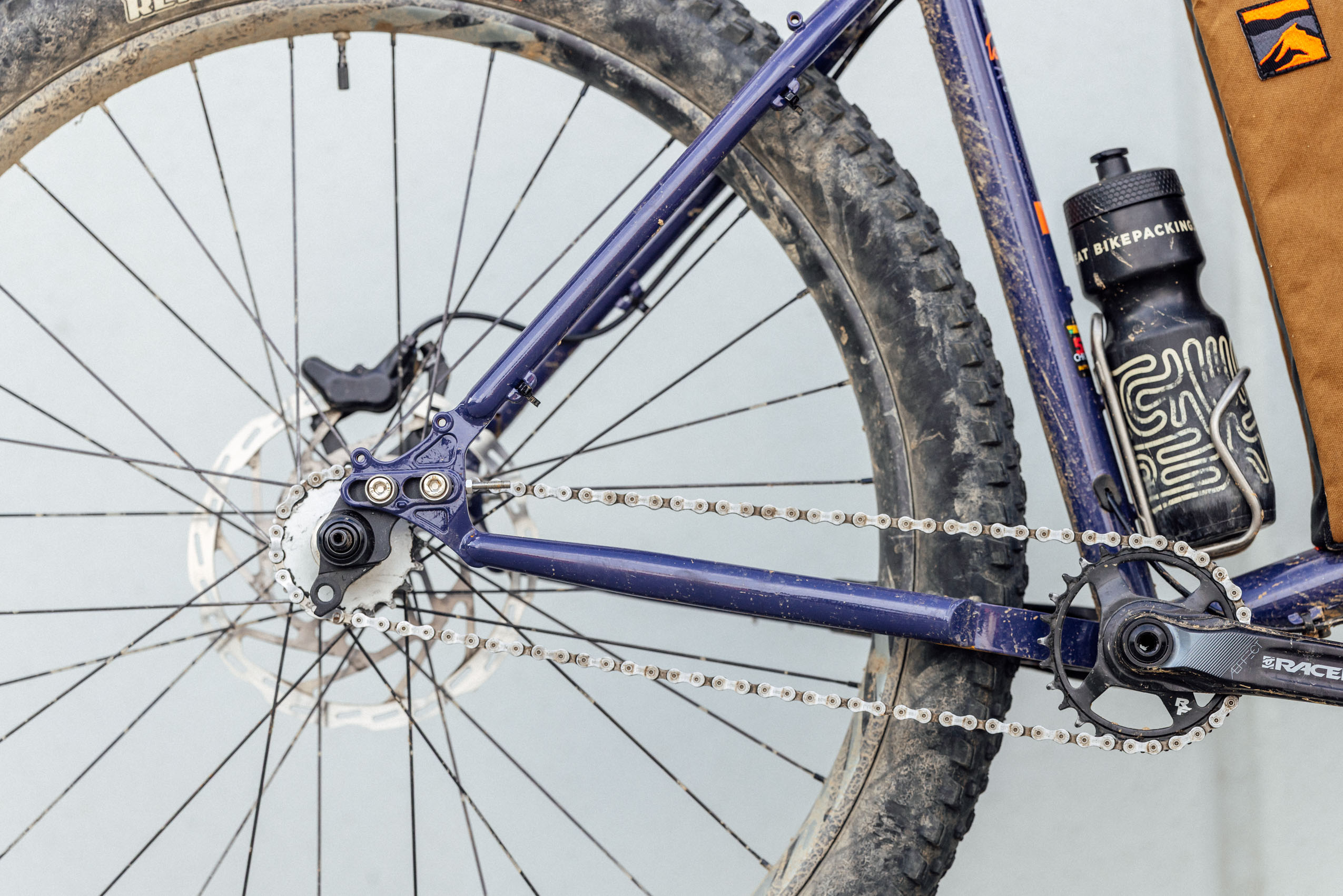

There were some interesting findings on the trail. Overall, the Unity didn’t completely lose its mojo as a full 29+ rig, but as I described in a recent comment about overforking a bike, I think the shift in geometry may have dulled its edge a tad—that and having a larger wheel in the back. It still has quick steering and incredible confidence, but it doesn’t feel quite as fluid in the corners. I only noticed this when riding singletrack. I could happily pedal the Unity on a long mixed-terrain tour to the moon and back as a 29+ bike.
- Model/Size Tested: Kona Unity, Size Large
- Actual Weight: 15.58 kilograms (34.34 pounds)
- Place of Manufacture: Taiwan
- Price: $2,699
- Manufacturer’s Details: Kona World
Pros
- Rigid-specific design maximizes storage options/capacity
- Unique front rack (with its own “feed bag” mounts) that separates front load from steering
- Feels much faster and more comfortable than you’d expect
- Balances stability and confidence with fairly quick steering and surprising maneuverability
- Extraordinarily confident on descents
- Tracks extremely well and prioritizes big-ride performance
- Clears much larger tires than claimed
Cons
- Heavy build
- 780mm basic handlebar isn’t the best choice for this bike
- Fork can feel harsh on larger bumps while riding aggressive singletrack
- Low stack won’t be for everyone; riser bar upgrade was necessary for me
- No dropper post!
Wrap Up
After a couple of months aboard the Unity, I love the fact that people stare at it like some sort of rolling experiment. Yet I keep riding it for a much simpler reason: it works exceptionally well. One day, I can point it down technical singletrack and find myself riding lines I probably shouldn’t be taking on a rigid bike. The next, I can stuff its gargantuan frame bag with far more gear than I need and disappear into the woods for a few days.
What makes the Unity so compelling is that Kona took several individually sensible ideas—a massive frame triangle, a really well-done frame-mounted front rack, somewhat progressive rigid mountain bike geometry, and a plus-tire mullet setup—and blended them into a package that feels surprisingly cohesive. More than once, I expected some glaring compromise or quirky behavior to reveal itself, but it never did, aside from the front tire over-steer. The Unity is undeniably eccentric, yet it rides with a level of confidence and refinement that suggests Kona spent a great deal of time thinking through how all of its unusual pieces would work together.
As for who it’s for, the Kona Unity isn’t aimed at the average mountain biker, nor is it for the rider who wants a minimally loaded bikepacking rig. I suppose it will be an interesting choice for anyone who appreciates unconventional design, but moreover, I would say it’s for people who view bicycles as tools. It’s a cargo-centric bike, first and foremost. However, at the same time, the mixed-wheel configuration and surprisingly light steering prevent it from feeling like a cumbersome cargo bike. Either way, the fact that Unity won’t appeal to everyone is precisely why it exists. In an era when many bikes feel increasingly similar, Kona deserves credit for building something genuinely original, and, more surprisingly, making it work so well.
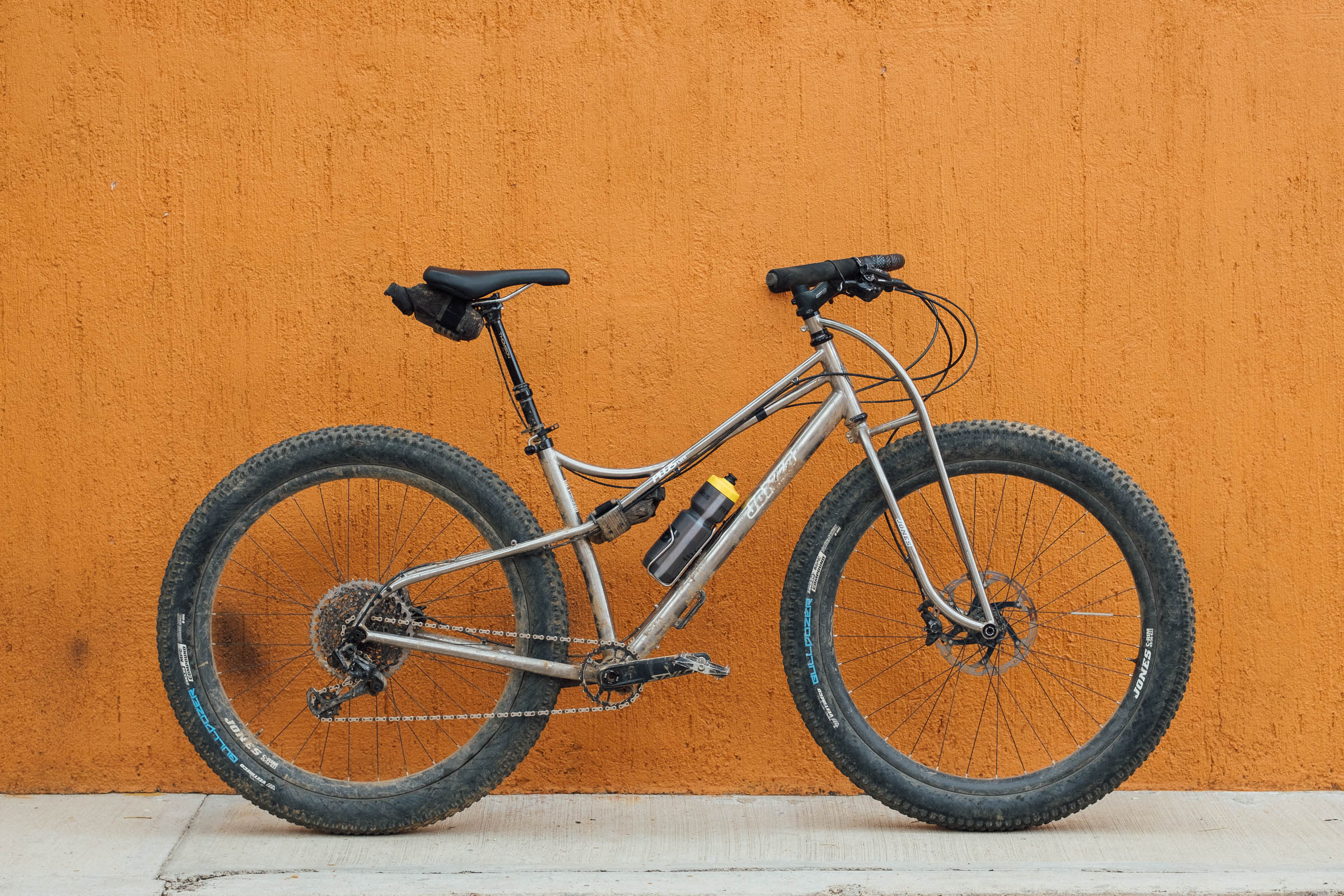
Further Reading
Make sure to dig into these related articles for more info...



Please keep the conversation civil, constructive, and inclusive, or your comment will be removed.