


 Mountain Bike (MTB)
 Gravel Bike
 All-Terrain Bike (ATB)
 Fat Bike



Rigs of the 2026 Tour Divide Stats Analysis




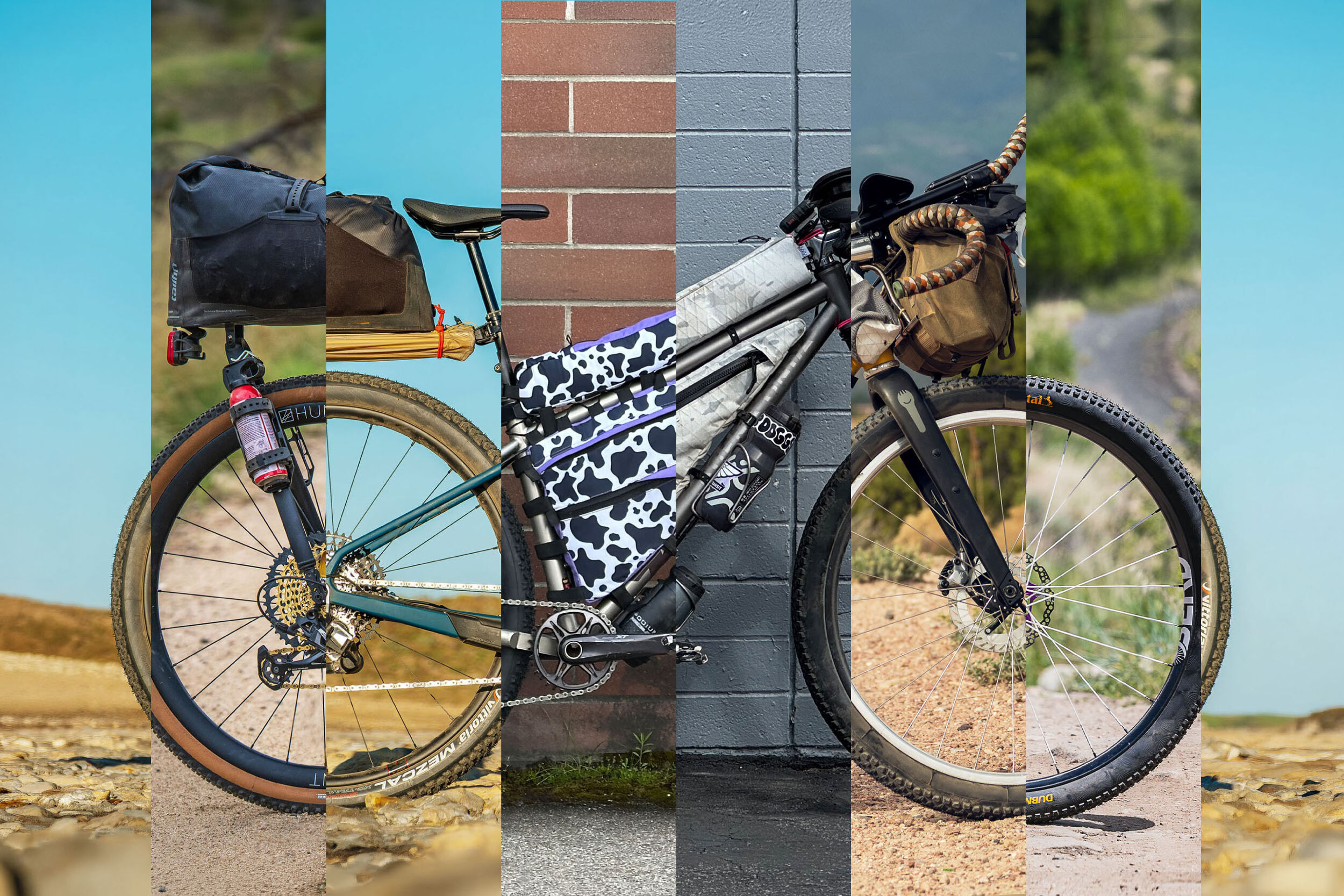
Neil dug into the Rigs of the 2026 Tour Divide submissions, uncovering trends that reveal a clearer picture of the bikes and gear used in this year’s event. In this piece, he breaks down the data and highlights some interesting findings, including where folks are from, the bikes, tires, drivetrains, gearing, and cargo setups they’re running, and much more. Find it all below…
PUBLISHED Jun 12, 2026

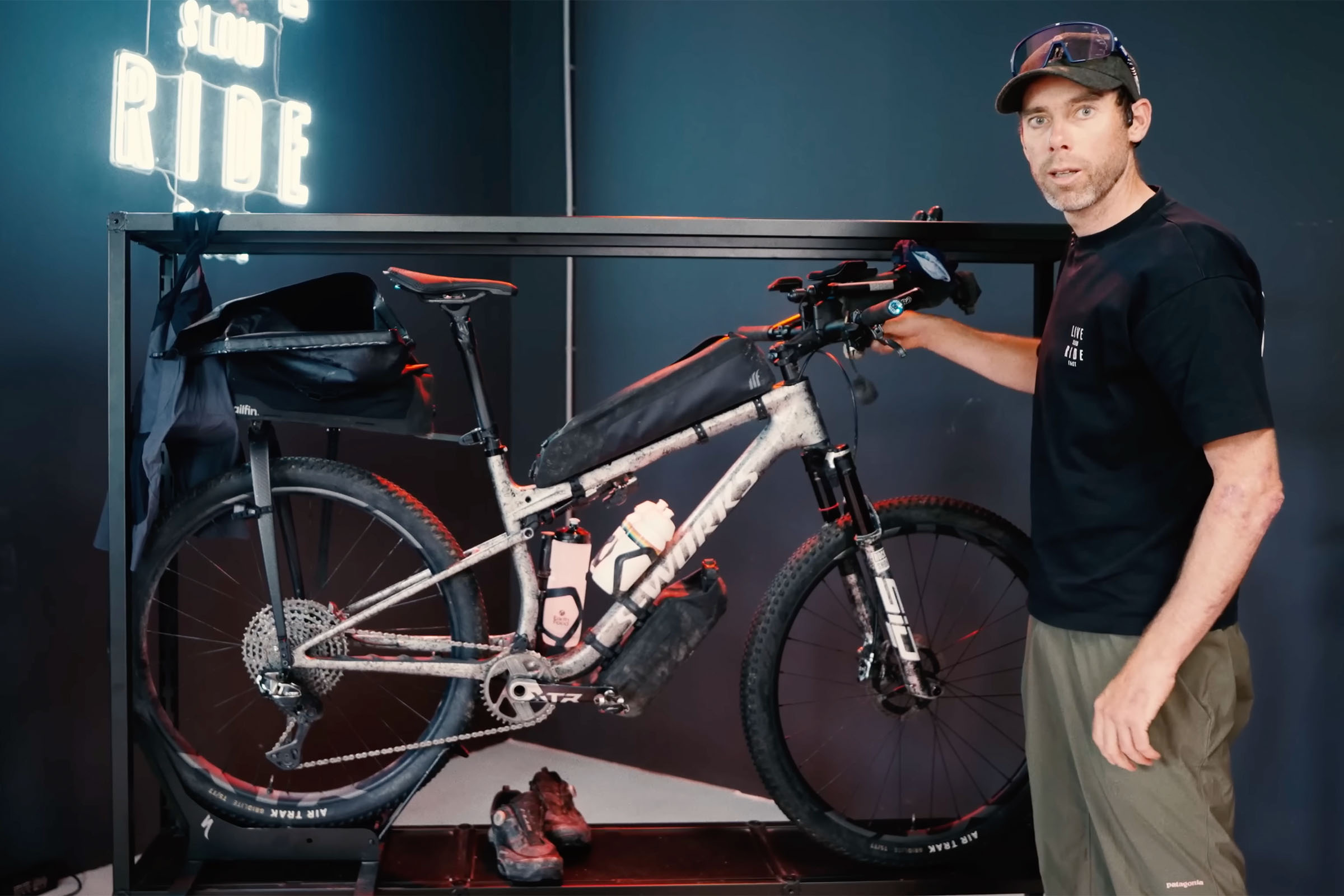
The 18th annual Tour Divide starts today, as it does every year on the second Friday of June. This is our 11th or 12th year covering the Rigs of the Tour Divide, depending on how you count what I did with Bikepacker.com and what Miles has now picked up here at BIKEPACKING.com. It’s also our fourth year dissecting the details, including the people, their bikes, and the gear they’re using. Check out the full video below, followed by a written version of all the findings.
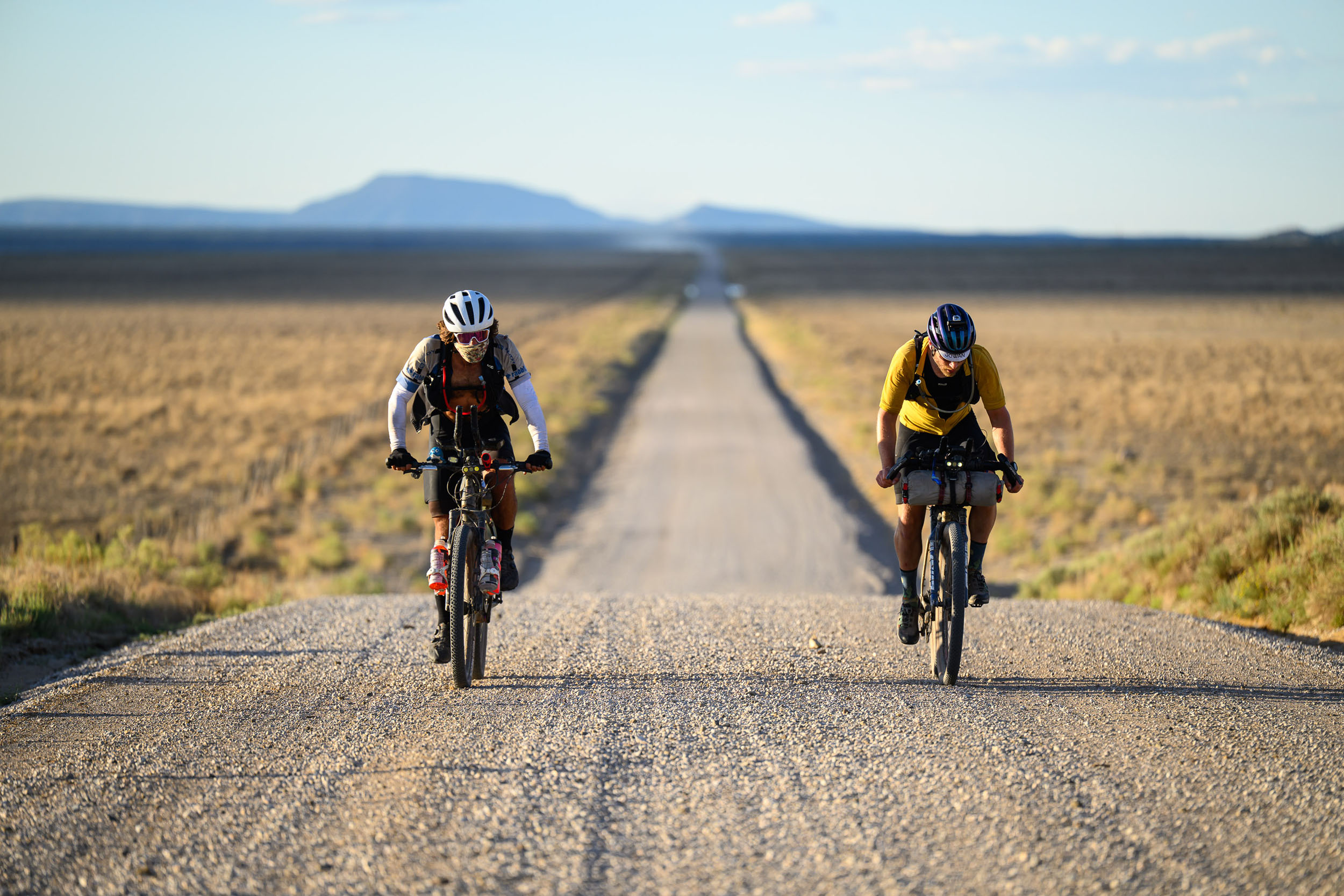
The inaugural Tour Divide bikepacking race started in 2008. It was established as an extension of the old border-to-border Great Divide Race, which began in 2004. The Tour Divide is well known, but it remains a self-supported, underground-style race that attracts adventurous cyclists from all around the world.
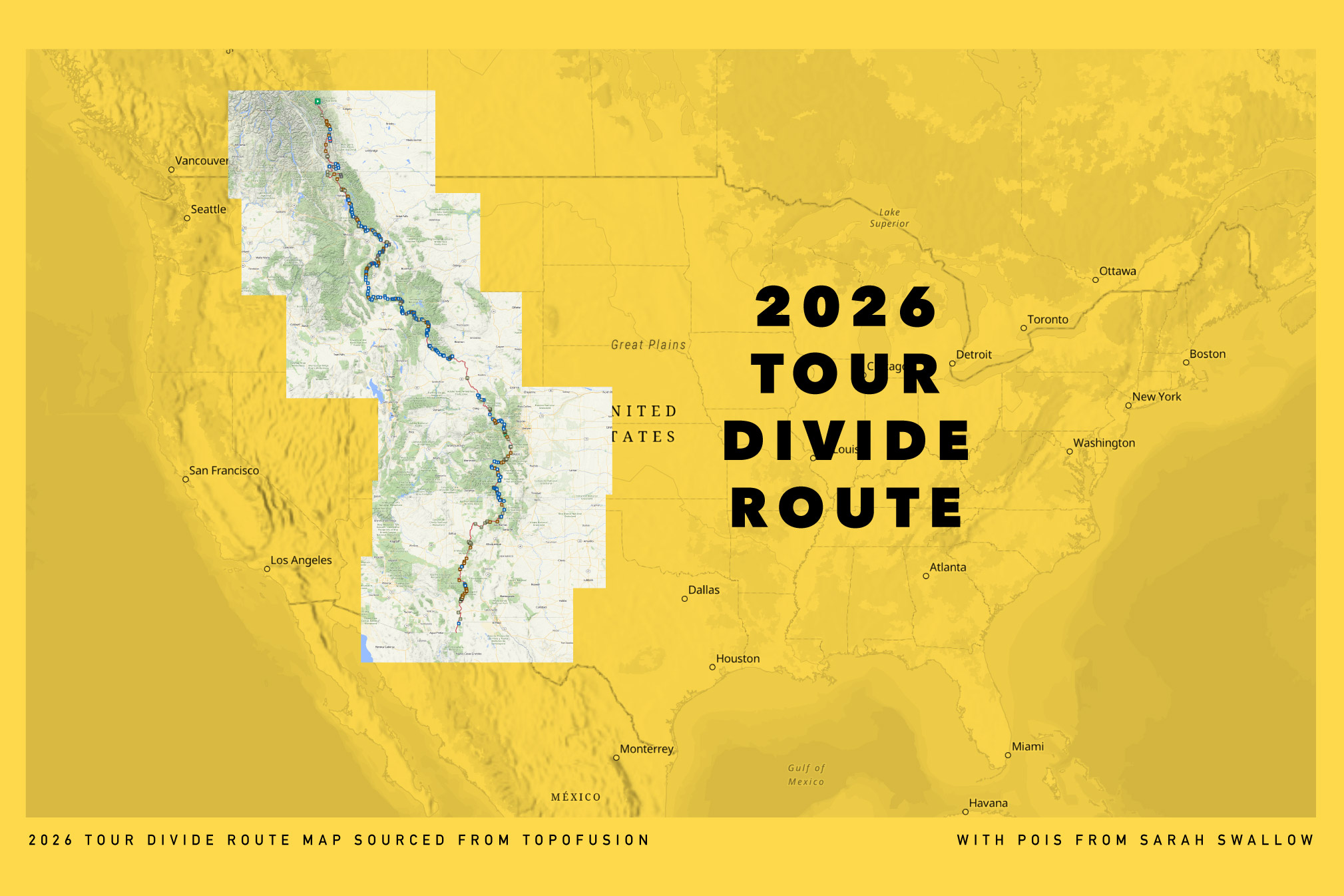
The route itself is massive, spanning more than 2,700 miles from Banff, Alberta, to Antelope Wells, New Mexico. It loosely follows the Great Divide Mountain Bike Route, though it deviates in places. Along the way, riders pass through two Canadian provinces and six U.S. states, crossing huge mountain ranges, long desert stretches, and weaving in and out of small and large towns along the spine of the continent.

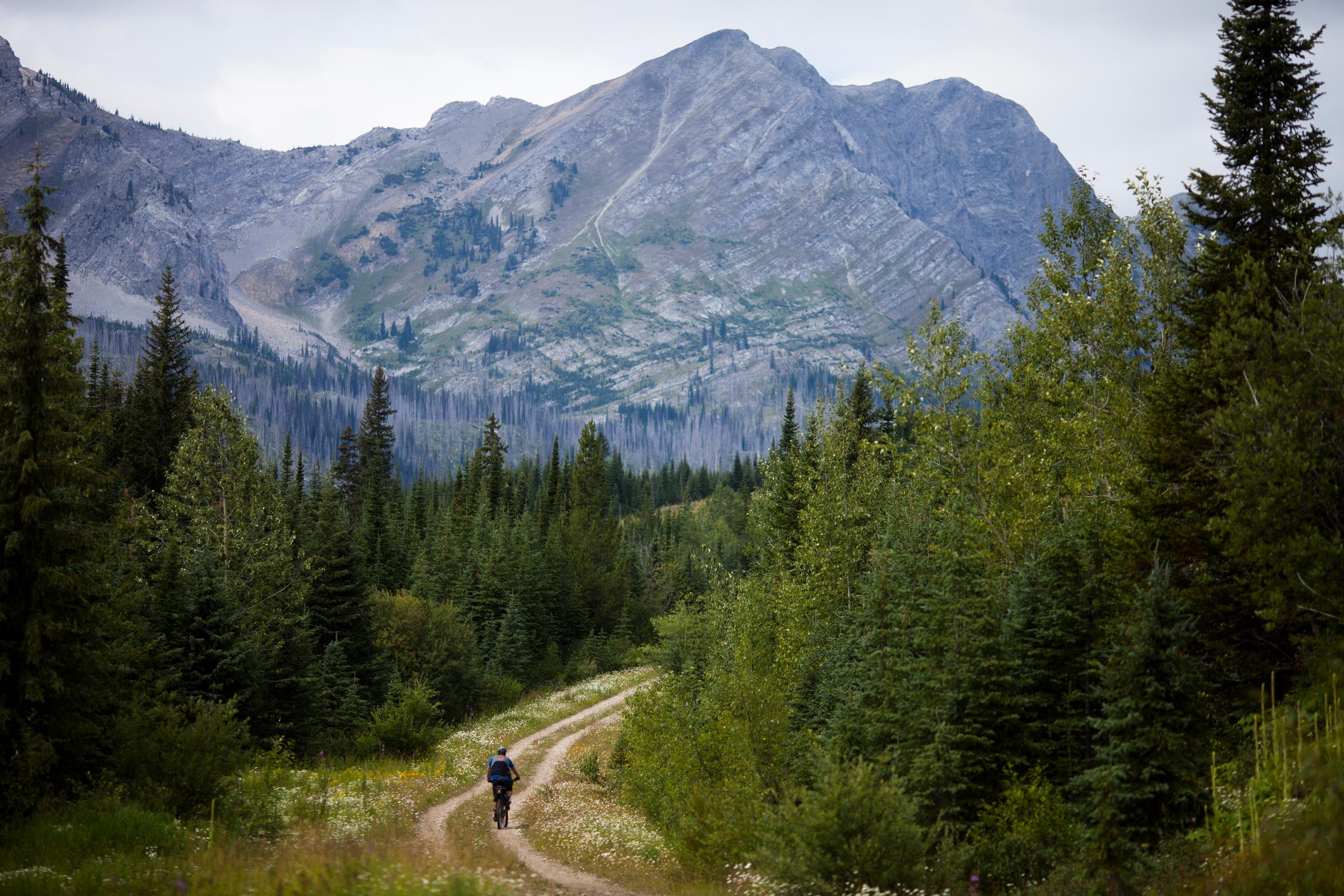
It’s a feat just to sign up and start, and even better to finish. And yet, every year, folks race the darn thing. Some have even finished in under two weeks. If you want more detailed information, including what to expect, who to watch, and updated information throughout the race, make sure to stay tuned to our 2026 Tour Divide tracker page for analysis from Jill Homer, daily updates from the team, and amazing photography from Eddie Clark. Now, let’s dive into some key sections of the 2026 race.
People
These races and adventures are obviously not possible without the people, so let’s start there. According to the unofficial Tour Divide spreadsheet, where folks share their intent to race, there were 267 people listed as of the Tuesday before the race start. That includes the Grand Depart as well as individual time trials, or ITTs, which are basically starts outside of the Grand Depart.
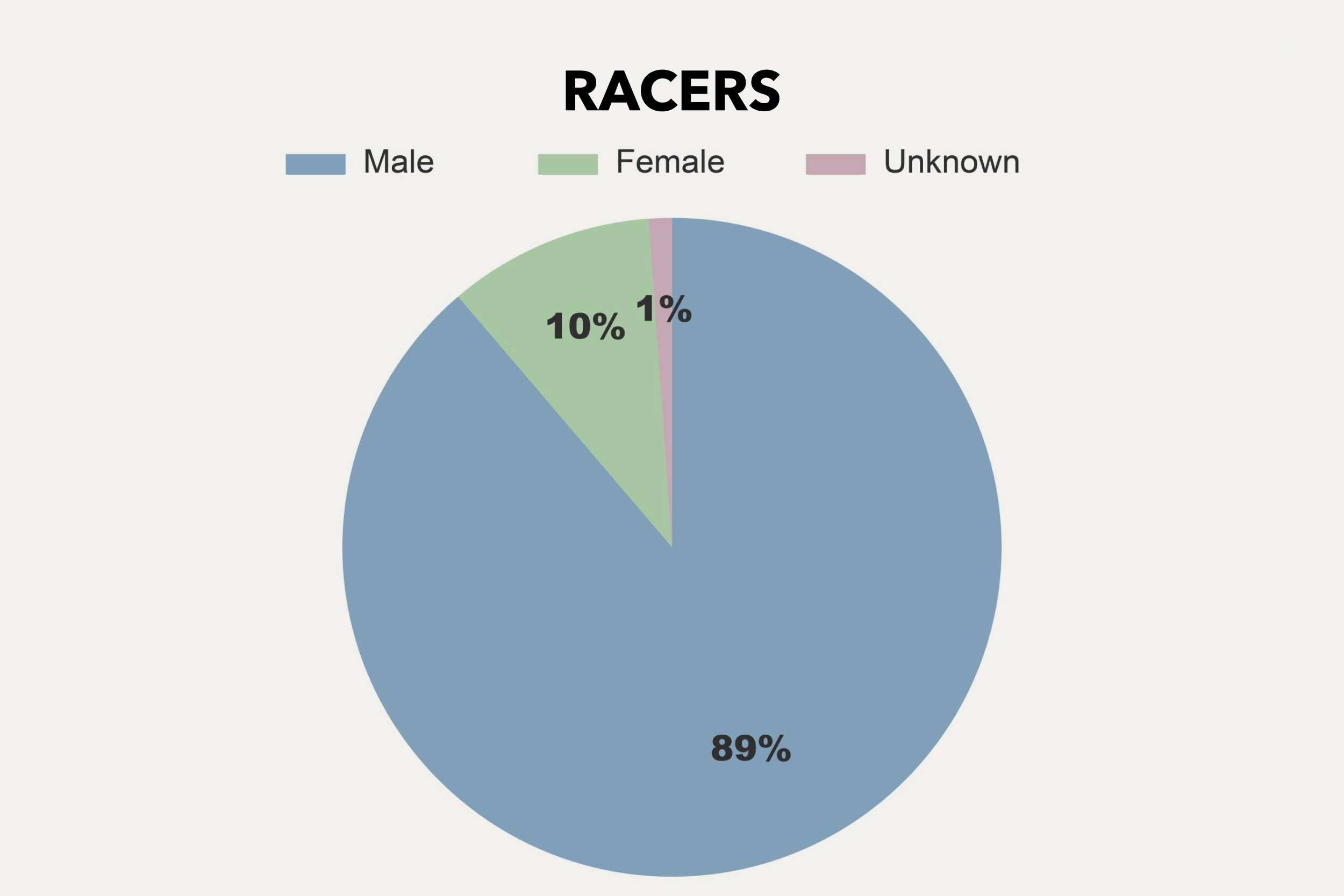
The data here isn’t perfect. A few people left categories blank, and some of the answers needed a little cleanup, but for the most part, it’s a pretty good dataset. Overall, as in past years, well over 200 folks committed to taking on the route. And, as usual, the field skews heavily male: 237 men to 27 women, with a few undisclosed or unknown. That’s fewer women than last year, but still up from 21 women in 2024, and the same number of women who raced in 2023.
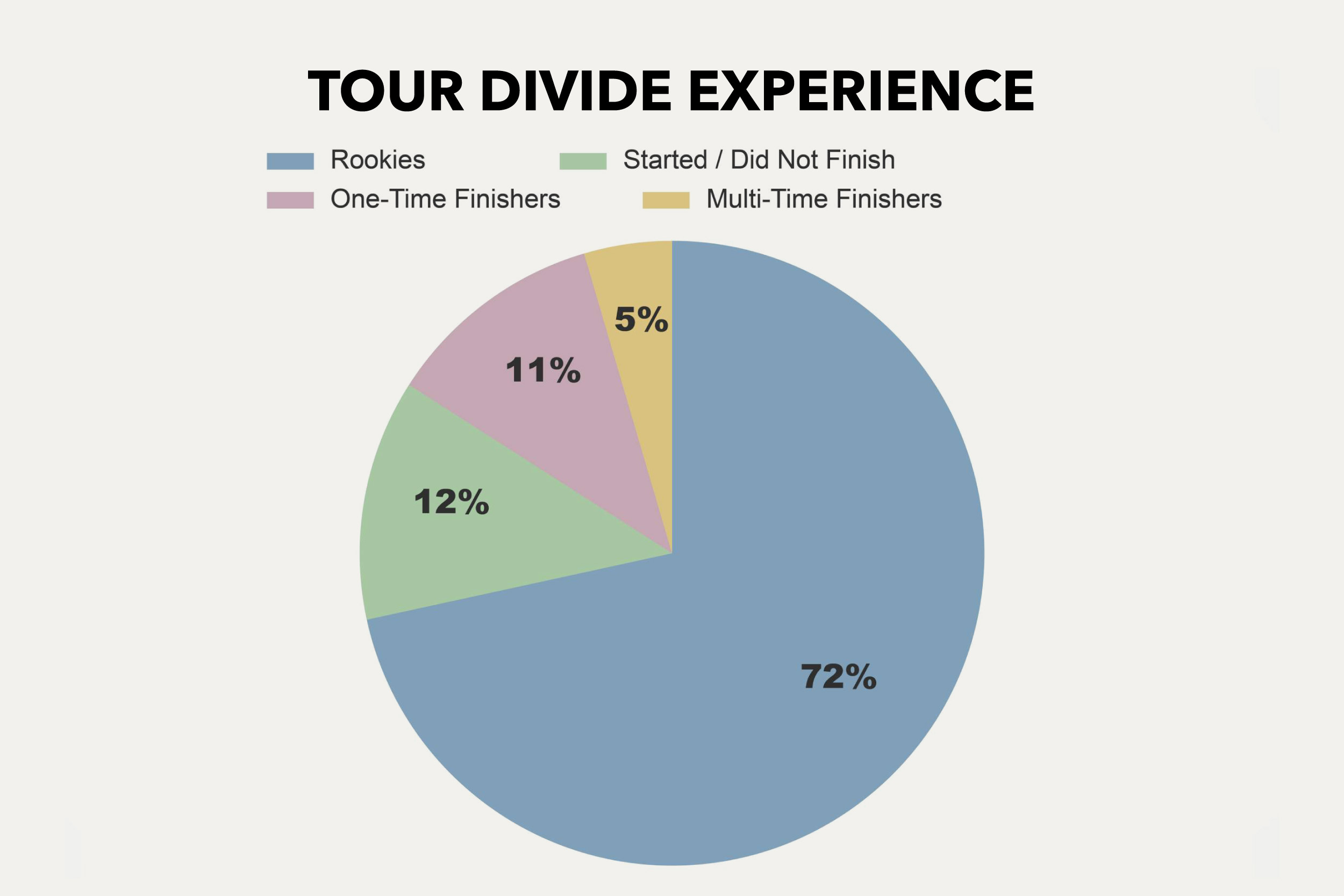
Looking at Tour Divide experience, there are 189 rookies signed up, 33 folks who started in a previous year but didn’t finish, 30 riders who had finished once and are coming back, and 12 who’ve finished more than once and are lining up again. Those folks have some true determination. I like to think of it as fine-tuning the art of the Divide.
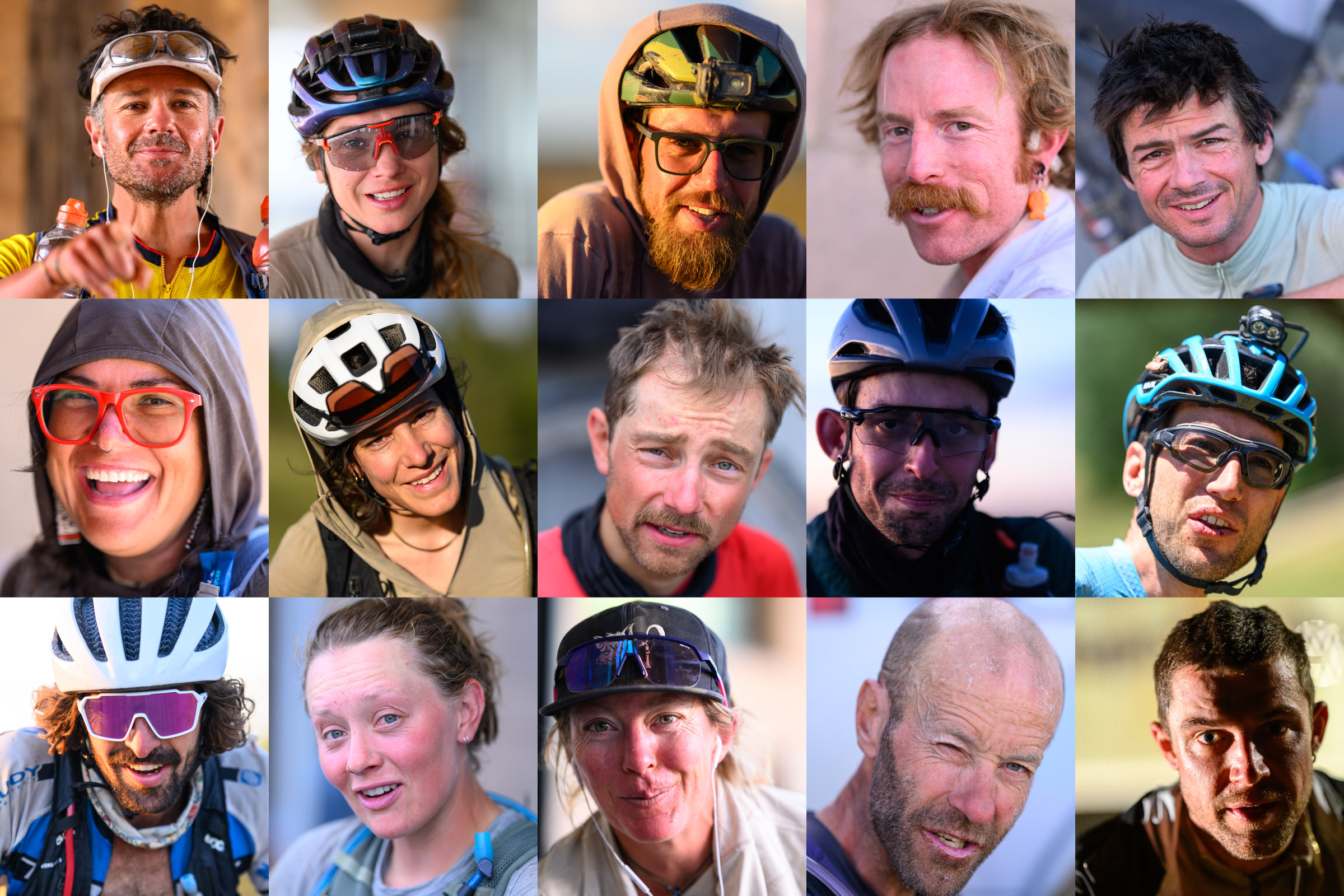
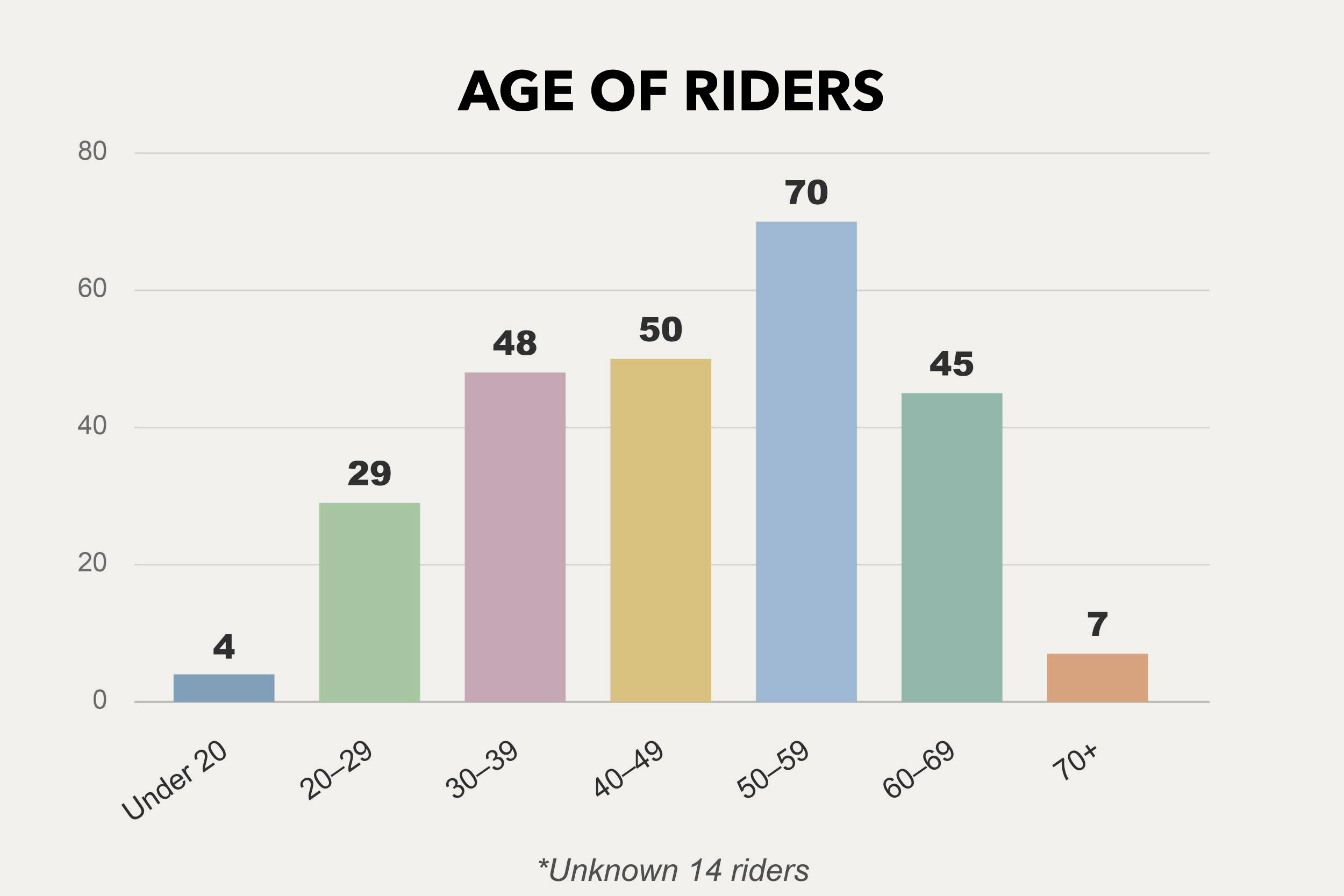
The riders’ ages are always an interesting stat. The average rider is 46.9 years old. The youngest rider listed was 17, and the oldest was 79. Looking at the age breakdown, there were four riders under 20, 29 riders in the 20 to 29 category, 48 in the 30 to 39 category, and 50 in the 40 to 49 category. The biggest group was 50 to 59, with 70 riders. Then it starts to taper back down, with 45 riders in the 60 to 69 age group and seven riders in the 70-plus category. But really, this just shows that age doesn’t matter. Maybe retirement, more time, and life experience all start to play a role as people get older.
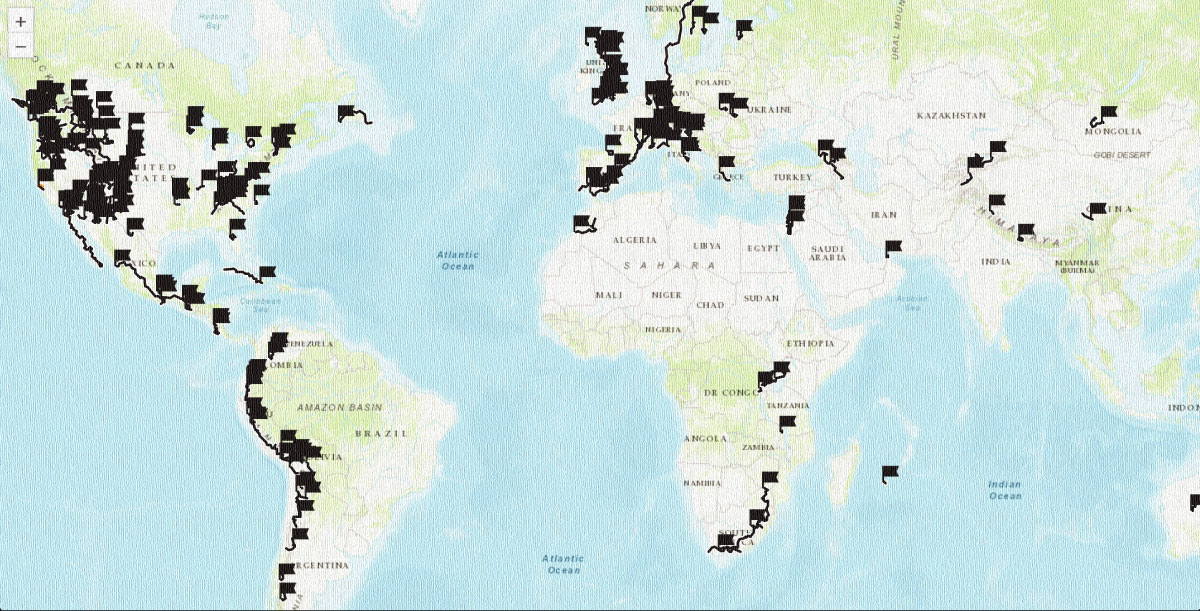
The 2026 Tour Divide drew folks from 23 countries, underscoring its worldwide popularity. Most riders are coming from the two countries the route travels through, with 152 Americans and 28 Canadians. Rounding out the other most-represented nationalities were British riders with 16, New Zealanders with 15, Australians with 11, Germans with 10, Belgians and Polish riders with four each, and Italy and South Africa with just two apiece.
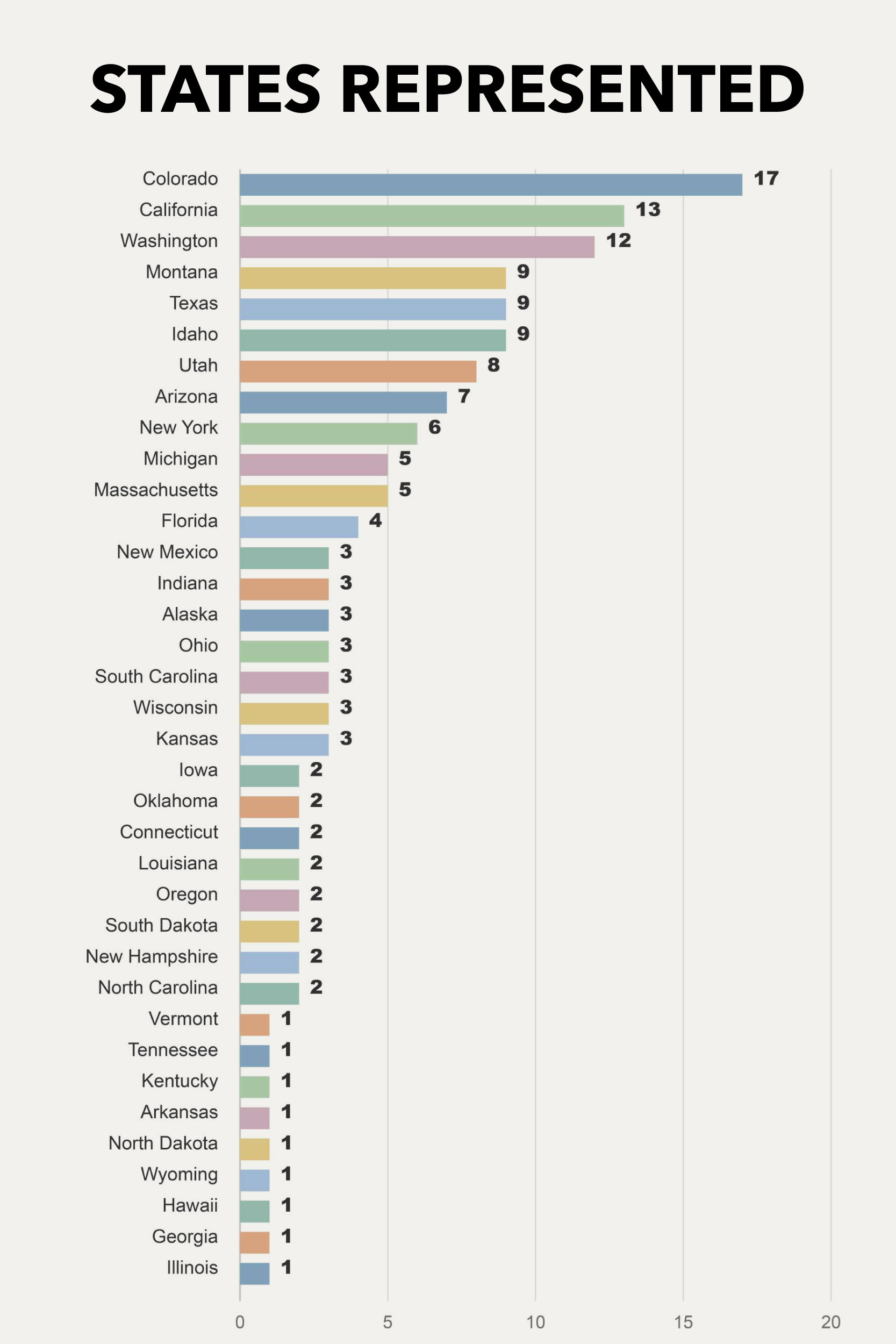
Of the American riders, 149 live in the United States. The most-represented state was Colorado with 17 riders, followed by California with 13, Washington with 12, and Montana, Texas, and Idaho with 9 each. Utah had 8, Arizona had 7, and our first state east of the Mississippi was New York with 6. Michigan and Massachusetts rounded out the top 10 with 5 riders each.
Bikes
Because the analysis process is painstakingly slow, this section focuses on 100 rigs randomly selected from the 156 total submissions from our rigs of series. It just takes too long to sort through every single detail on every rig, which is why I capped it at 100.
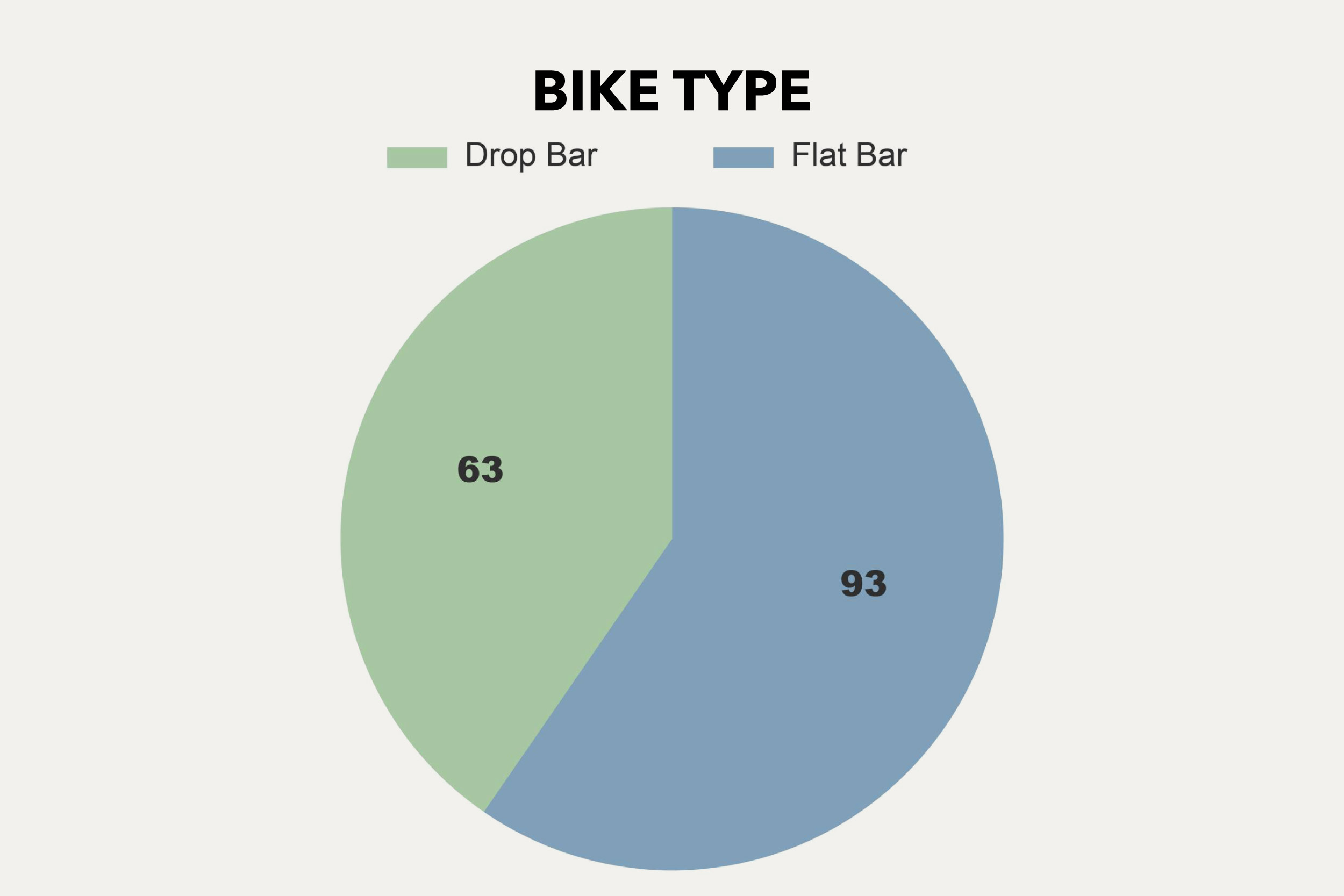
Of the 156 rigs, it was easy to decipher the big-picture totals since we split the galleries into flat-bar and drop-bar bikes. Miles counted 93 flat-bar setups and 63 drop-bar setups. That’s right on target with the trend we’ve seen the last couple of years, with flat-bar bikes continuing to outnumber drop-bar bikes. Last year, for comparison, there were 96 flat-bar setups and 72 drop-bar rigs.
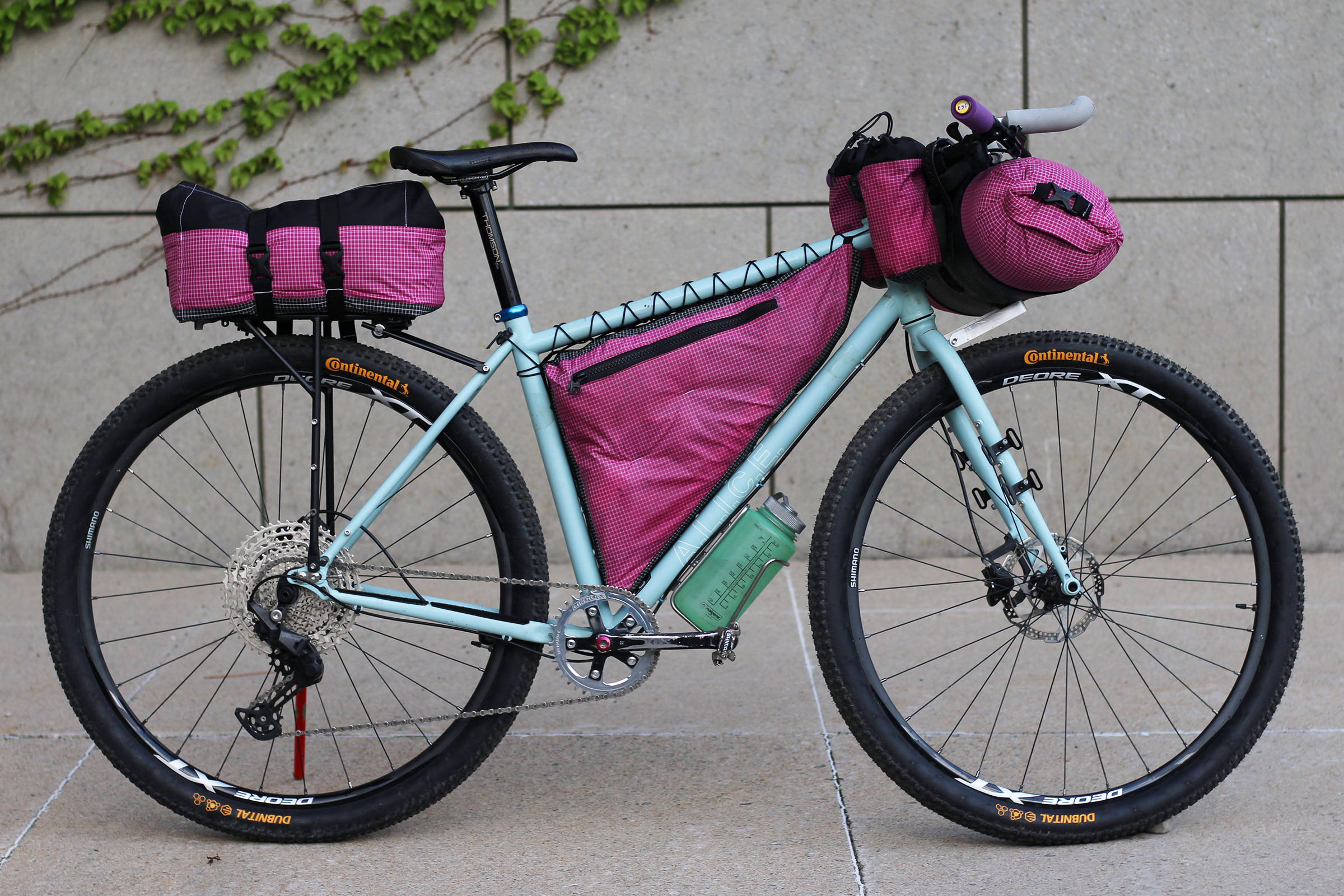
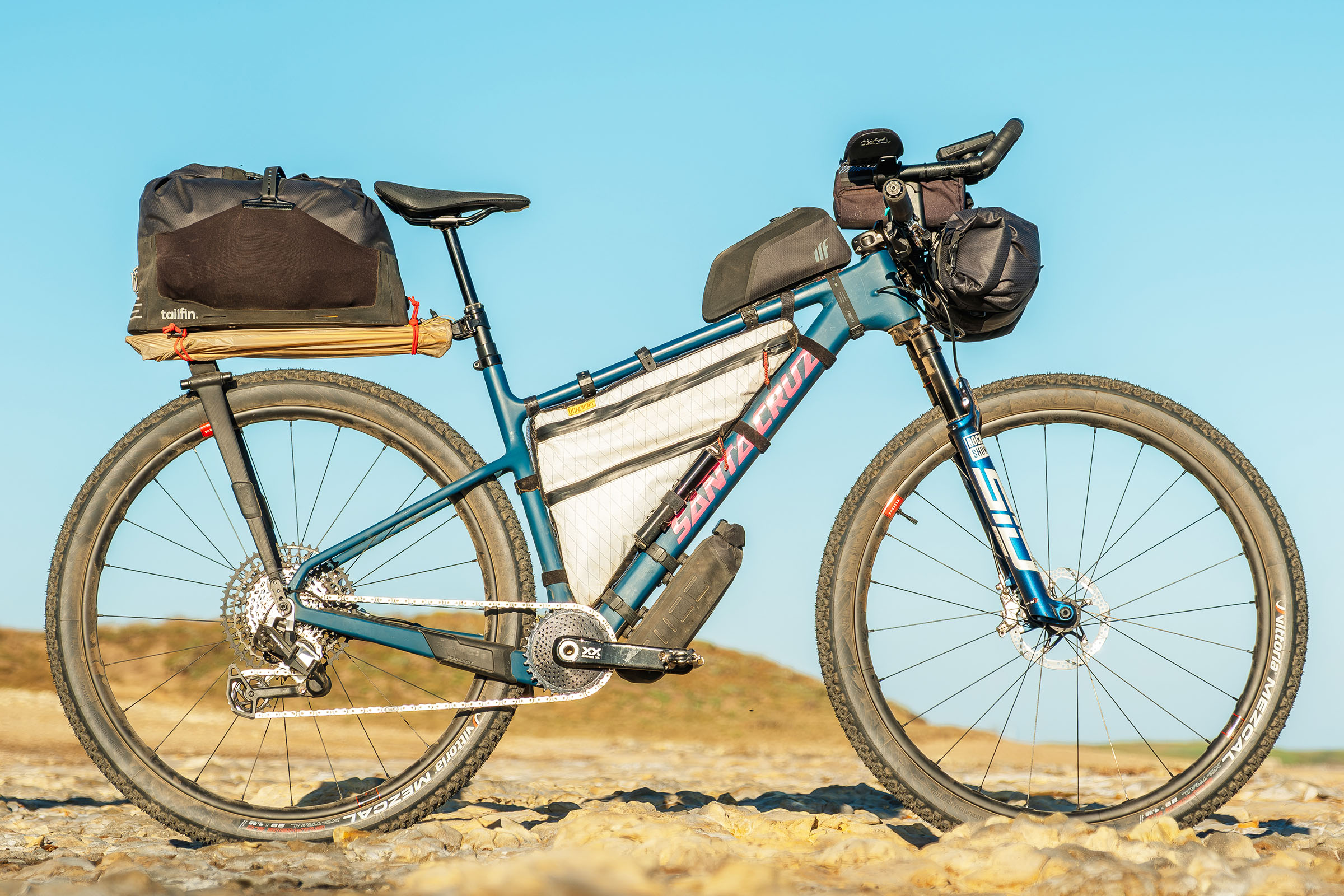


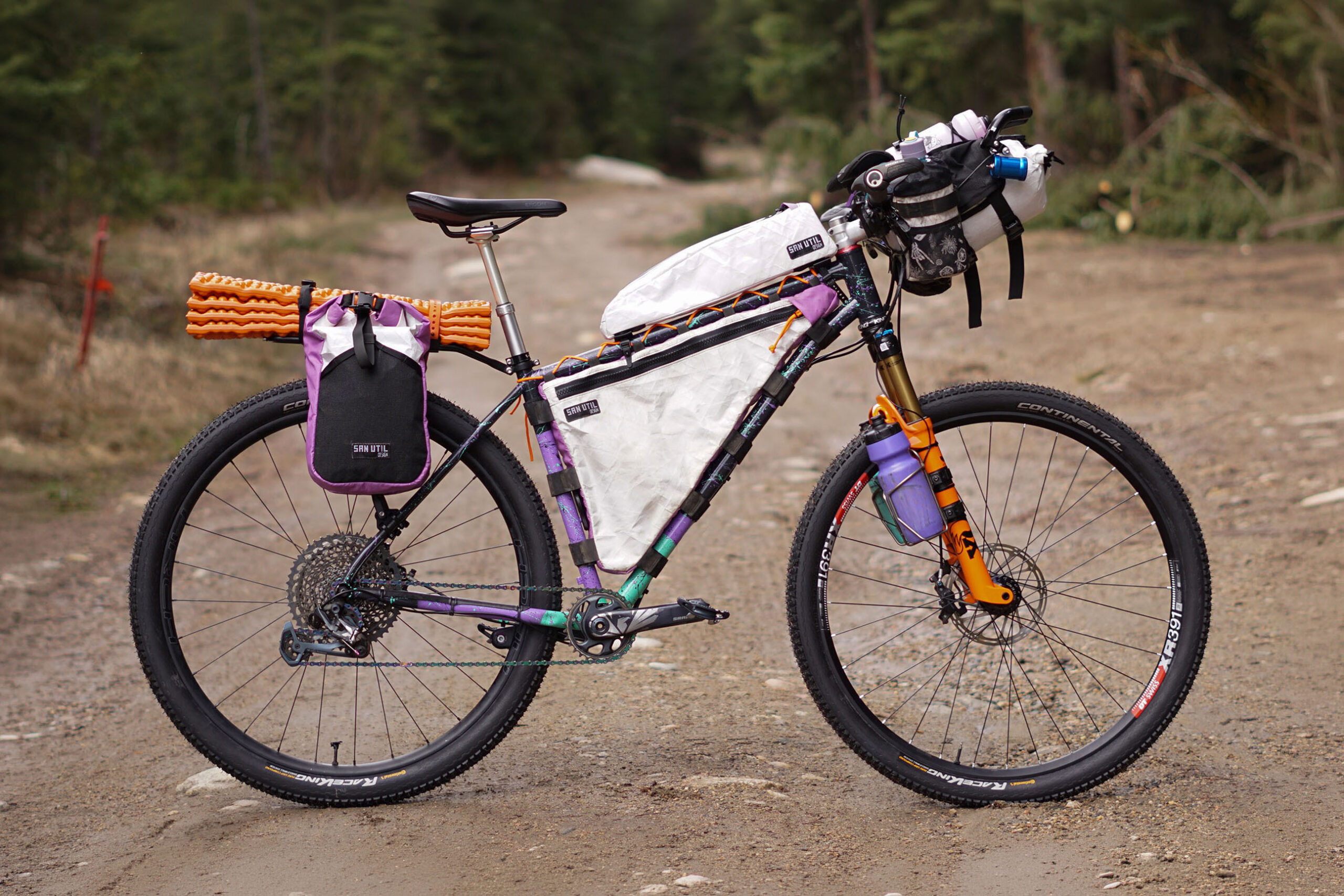
Of the 100 bikes I sampled, 46 had suspension forks, 41 were rigid, and 13 were full-suspension bikes. Rigid setups were by far the most popular on drop-bar bikes, while suspension forks were the most common setup on flat-bar bikes. And in my 100-bike sample, there were zero drop-bar full-suspension bikes this year.
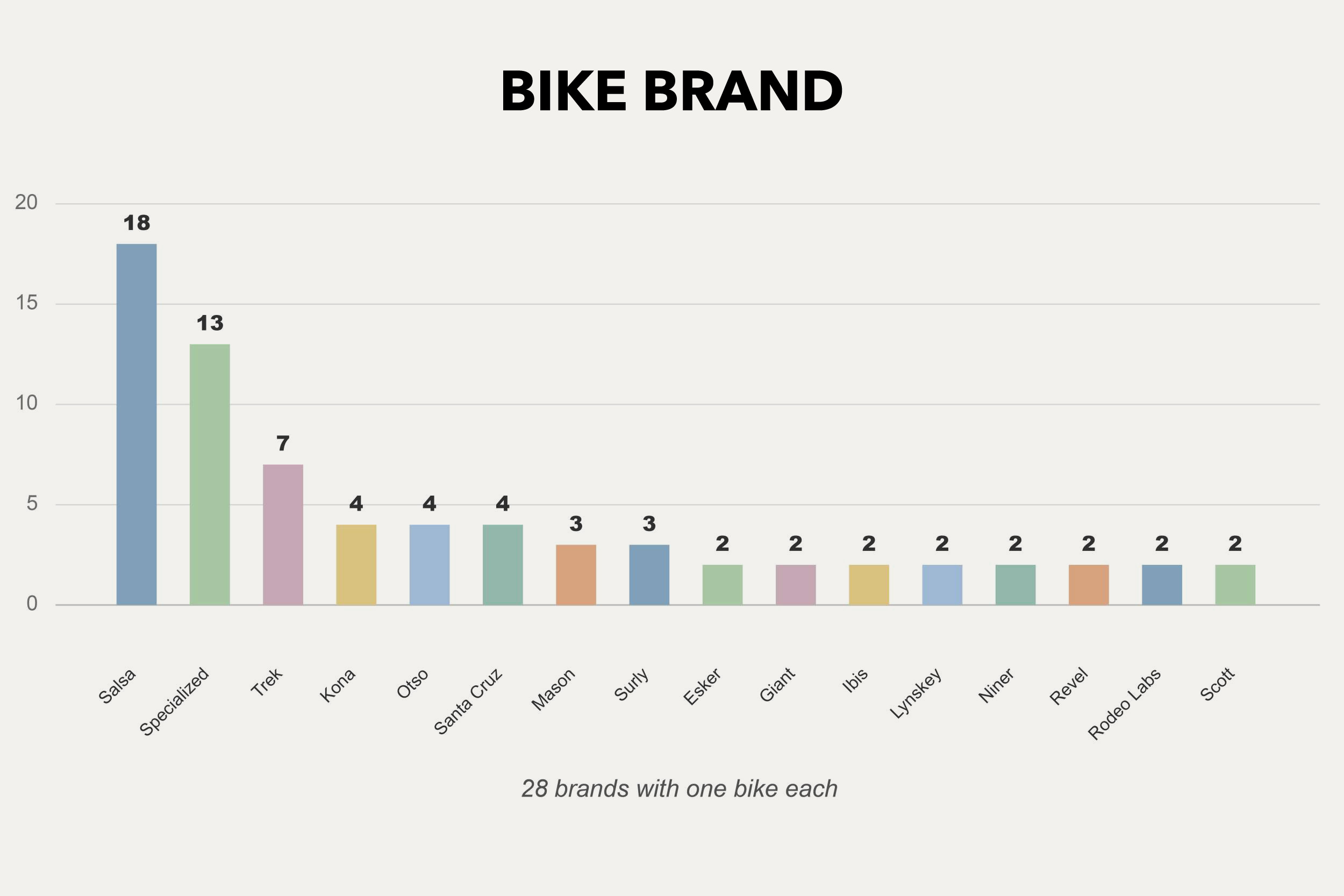
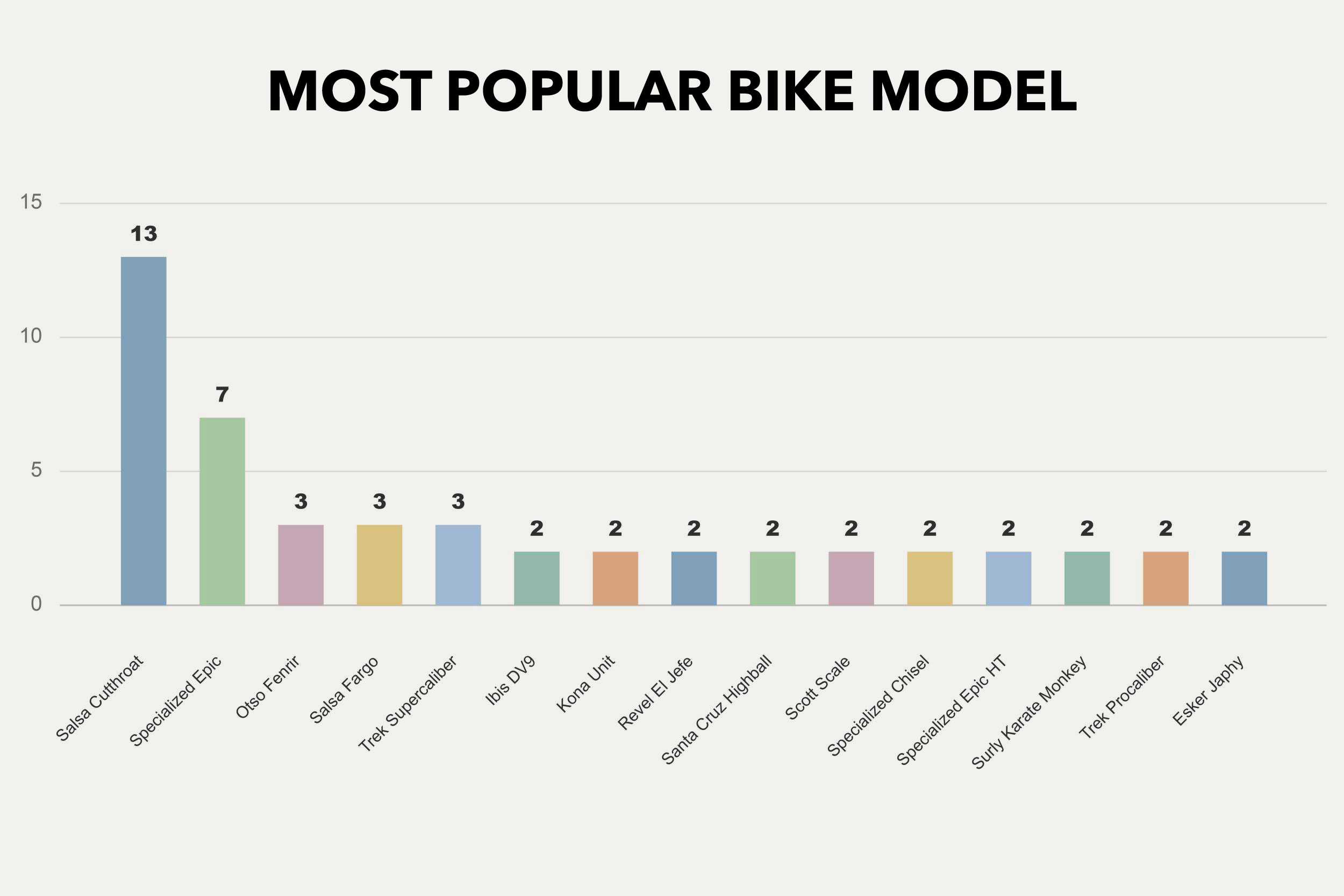
Unsurprisingly, Salsa dominated with 18 bikes, and most of those were Cutthroats. Specialized was second with 13, largely thanks to the Epic platform, followed by Trek with 7. Kona, Otso, and Santa Cruz each had 4 bikes represented. The most popular individual bike was the Salsa Cutthroat, with 13 rigs out of 100.
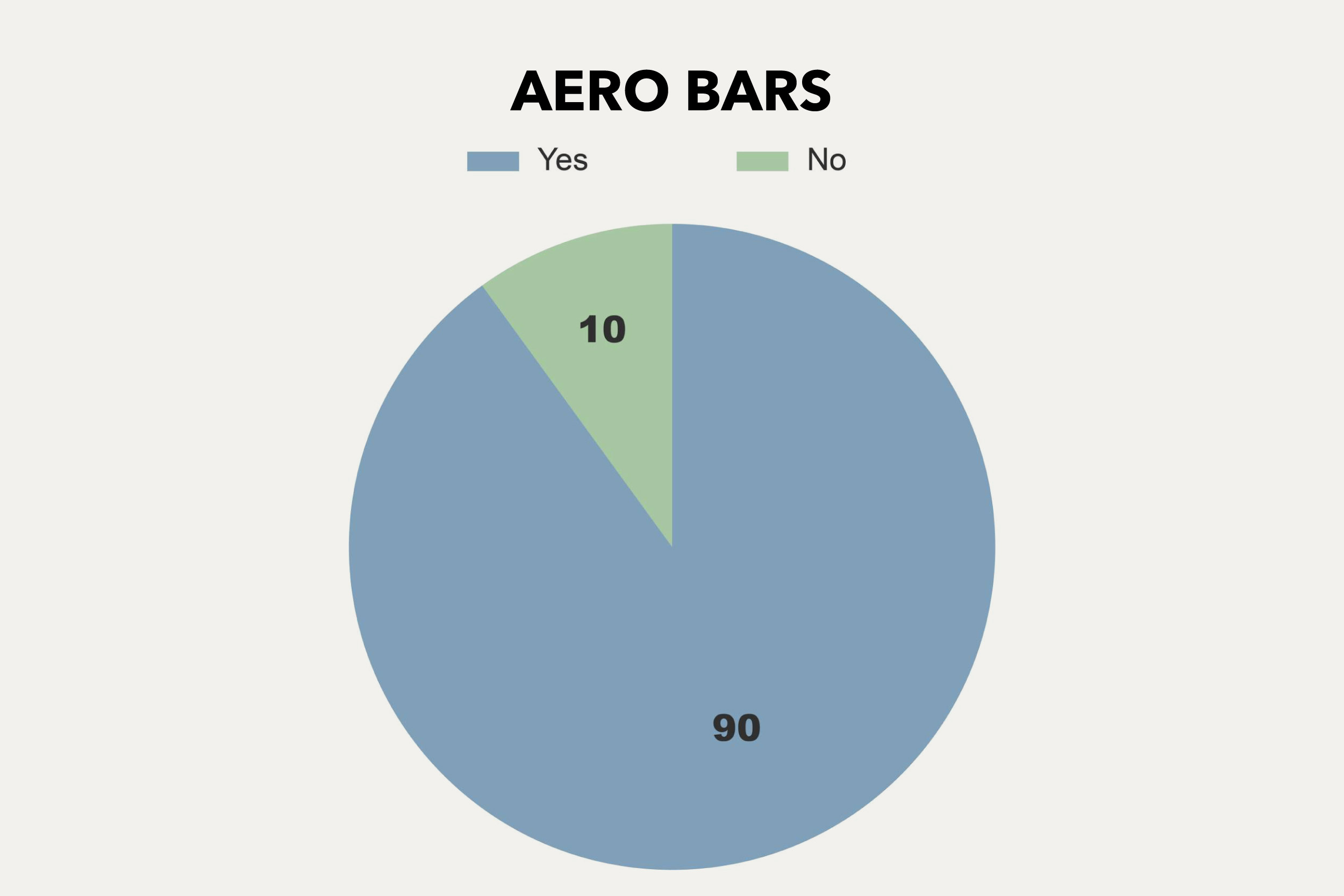
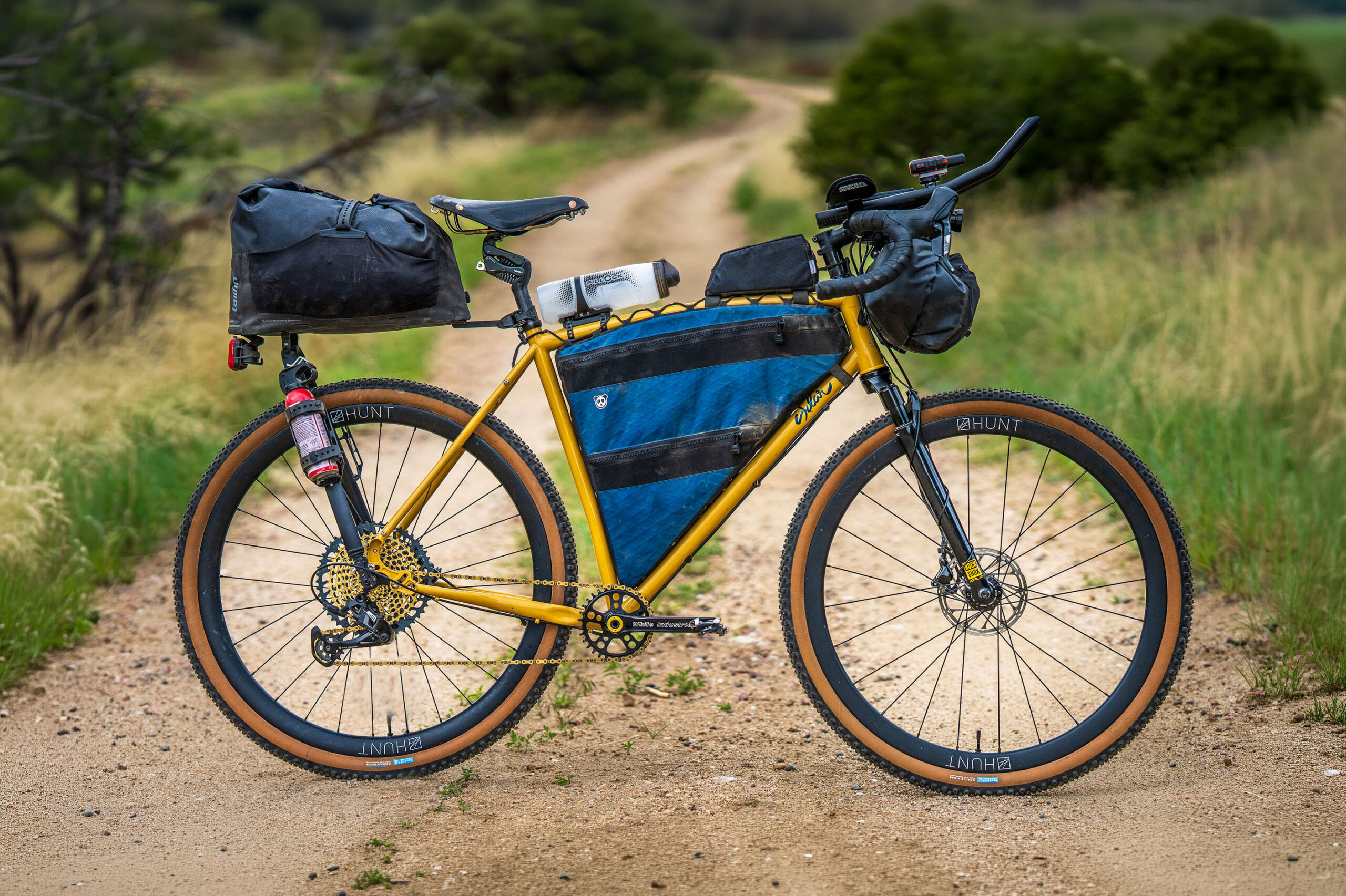
Material stats were a bit more surprising. Carbon made up 53 of the 100 rigs, while 23 were titanium, 19 were steel, and just five were aluminum. Out of the 100 rigs we sampled, 90 were running aero bars, which is wild, but also not all that surprising for the Divide. Even more interesting, aero bars were more common on flat-bar bikes, with 52 of 54 flat-bar rigs using them, compared to 38 of 46 drop-bar bikes. Looking at aero bars by suspension type, they were nearly universal across every setup. Every single full-suspension bike had aero bars, and even among rigid and suspension-fork bikes, nearly 90 percent were running them. At this point, aero bars feel less like a speed choice and more like standard Tour Divide comfort equipment.
Drivetrain and Gearing
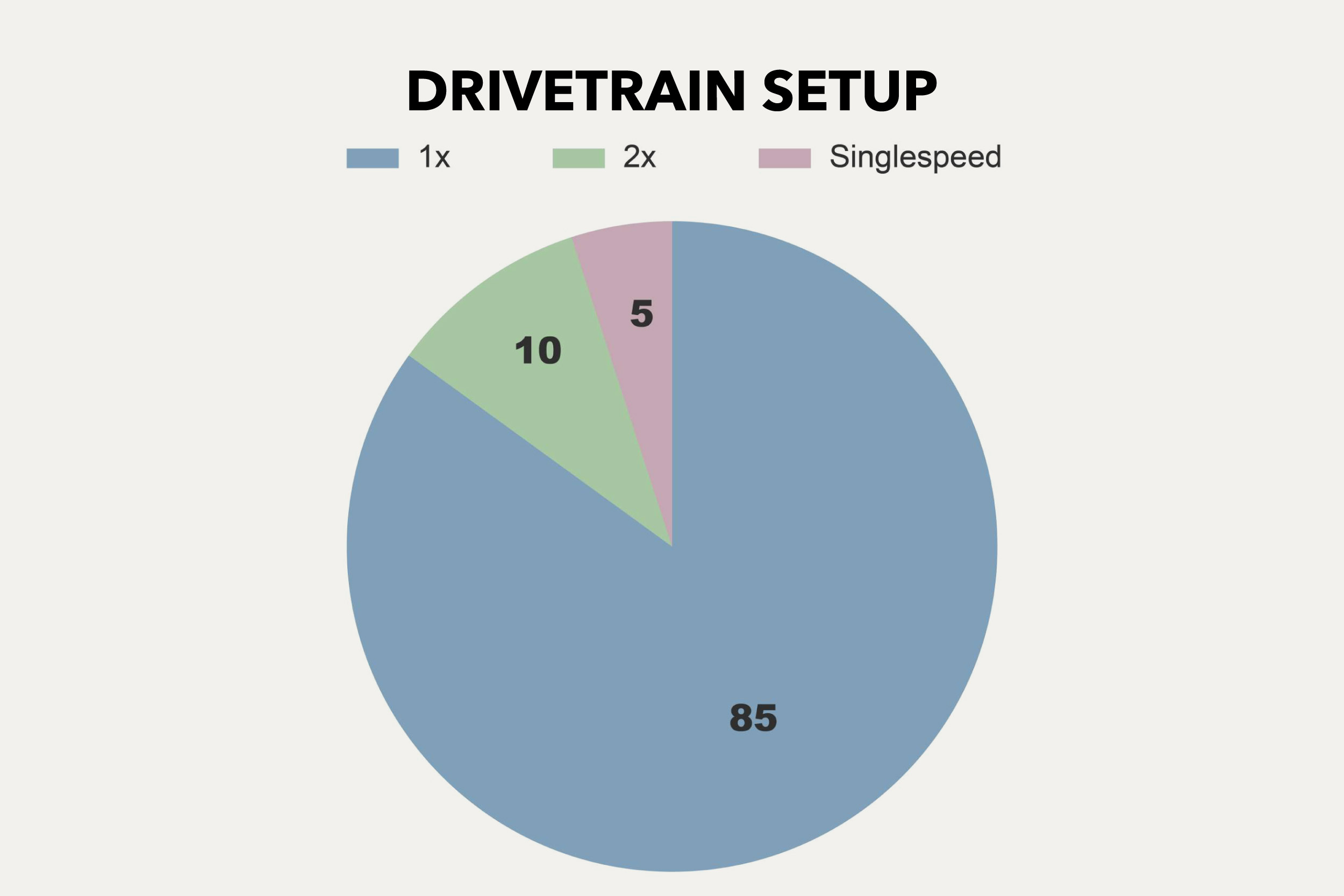
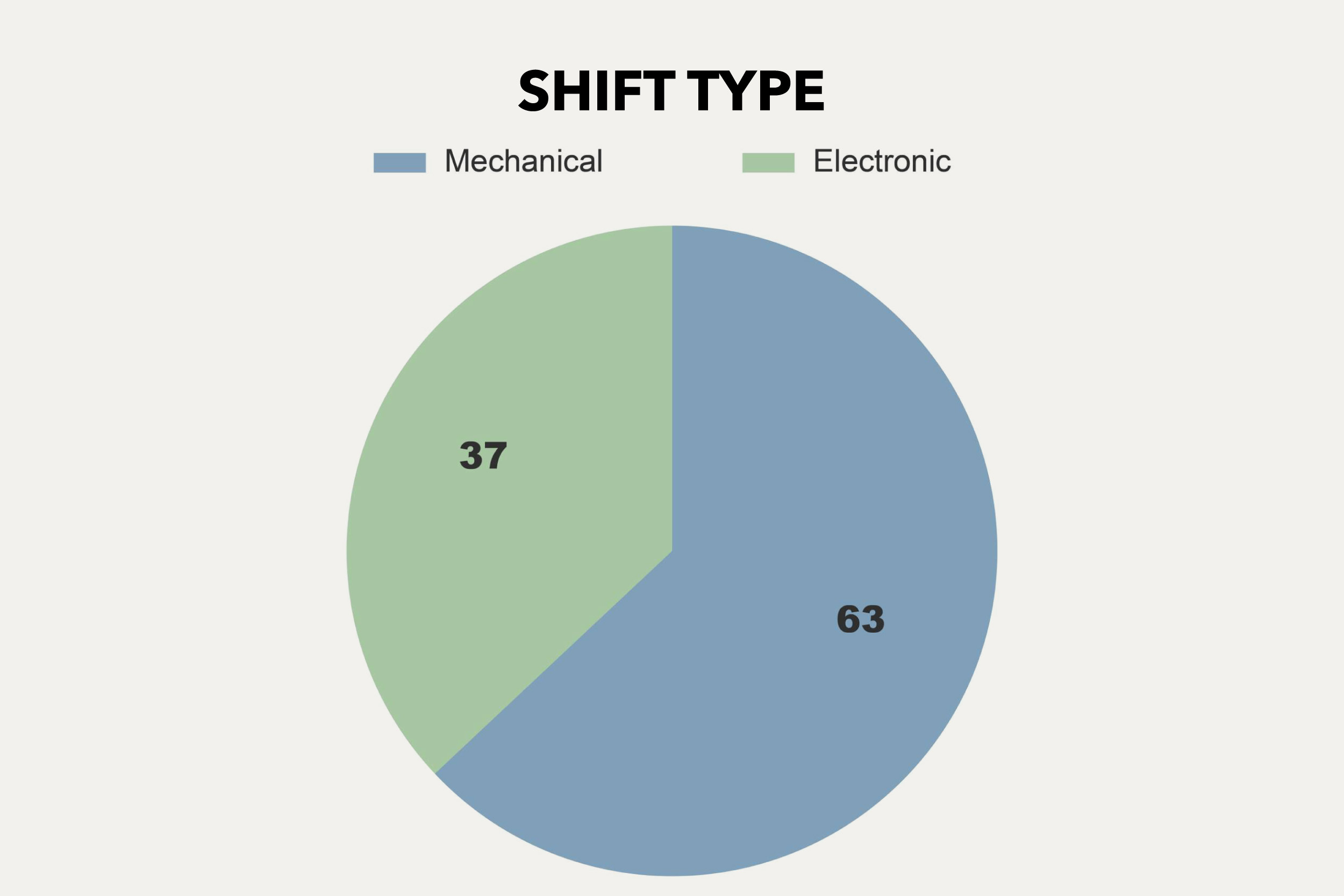
Drivetrains were overwhelmingly 1x, with 85 of the 100 rigs running a single-ring setup. Ten bikes were running 2x drivetrains, and five were singlespeed. SRAM led the drivetrain count with 53 bikes, followed by Shimano with 36. Electronic shifting was also pretty popular, showing up on 37 of the 100 rigs, though mechanical drivetrains still made up the majority at 63.
Of the electronic setups, 17 were SRAM Transmission drivetrains, and five were Shimano Di2, all of which are still relatively new in the broader cycling industry. But overall, the most popular drivetrain was SRAM GX Eagle, which makes sense. It’s tried and true, and I still love that drivetrain. That was followed by Shimano GRX and then Shimano XT.
When it came to chainrings, 32T rings were the clear favorite this year, showing up on 41 bikes. That’s not too surprising, as a 32T ring comes stock on most drivetrains. Next up were 34T rings, which appeared on 23 bikes, followed by 30T rings on 9 bikes. A few were tougher to categorize because those bikes used Rohloff- or Pinion-style systems, and there were 4 of those gearbox or internally geared hub setups in the group.
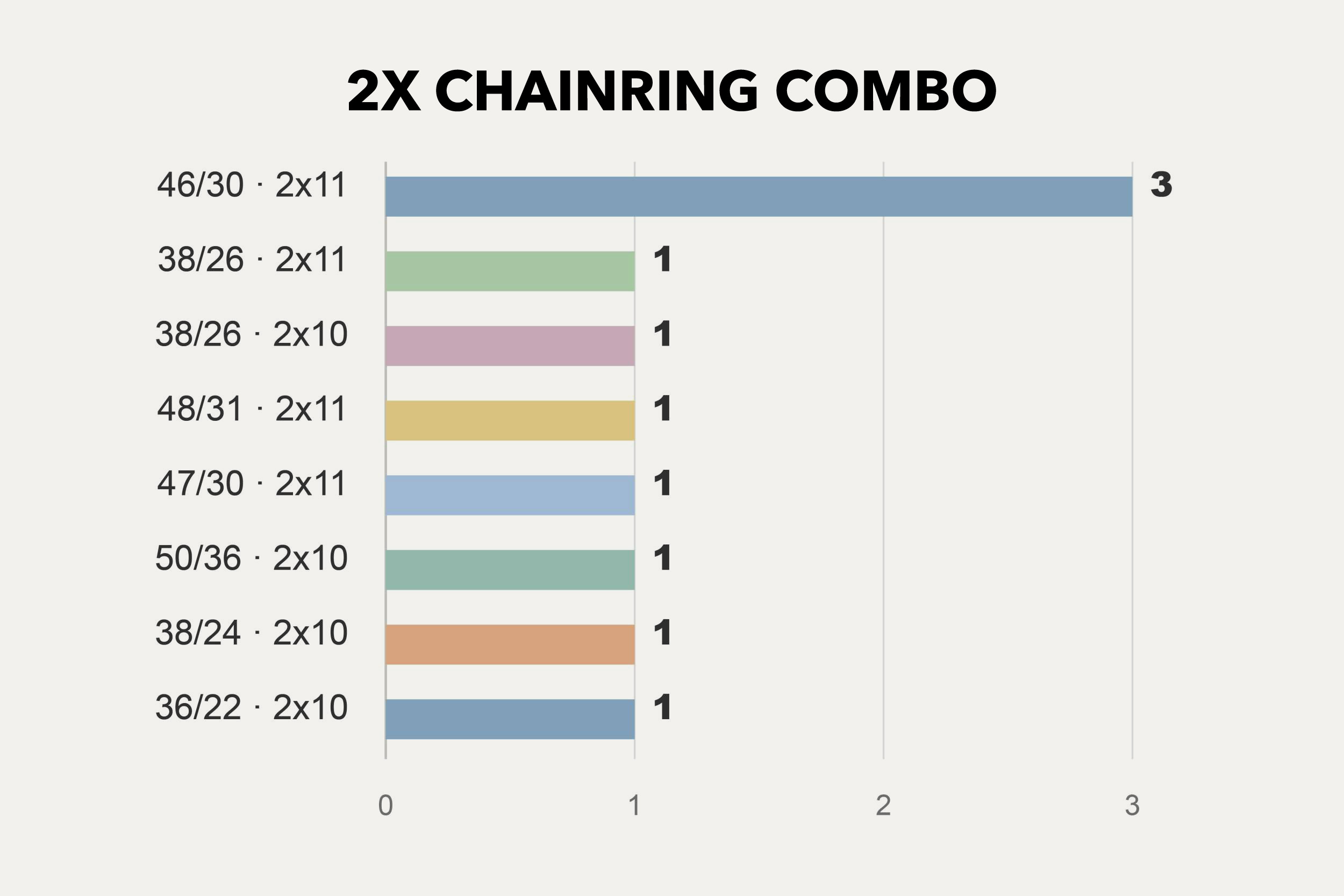
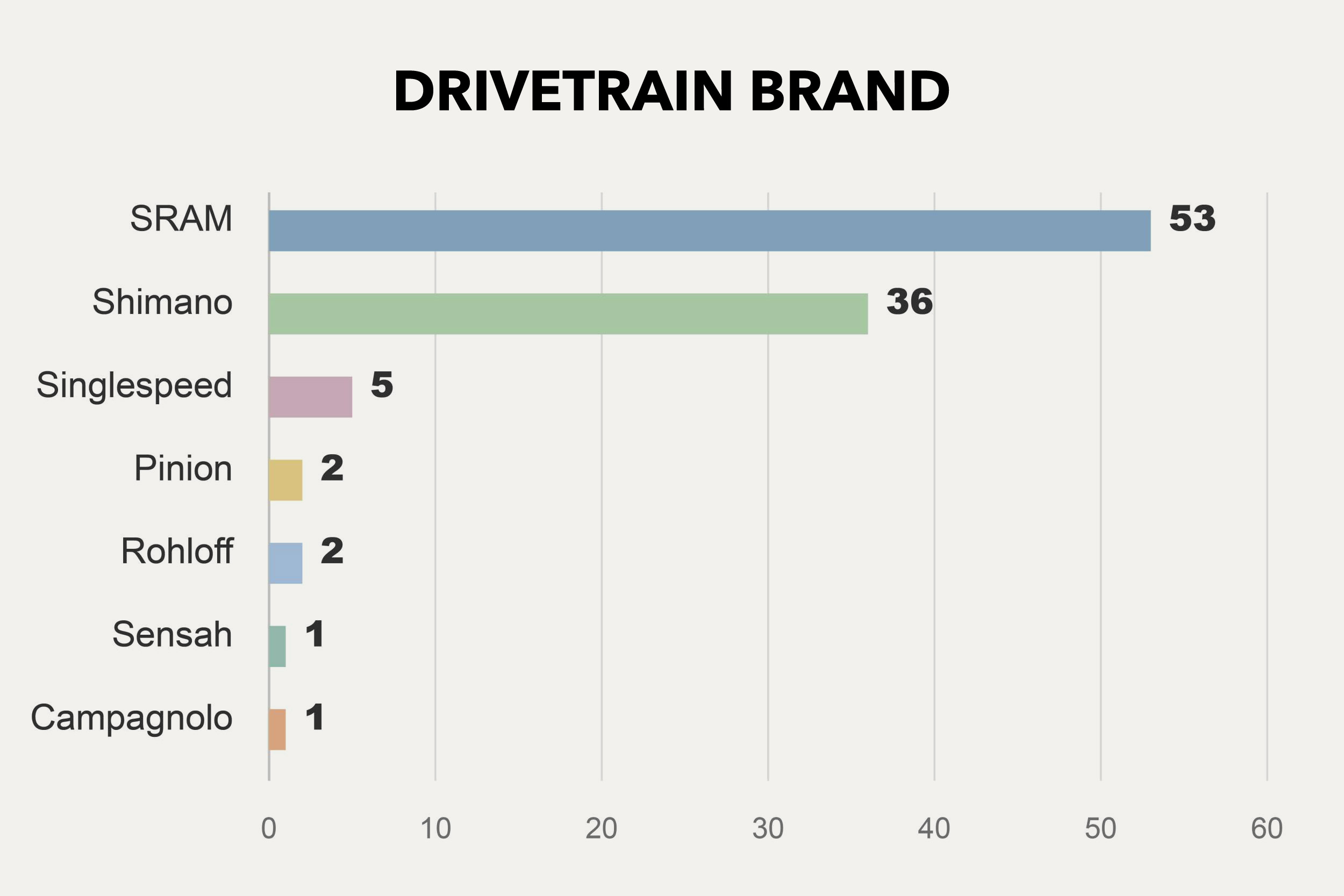
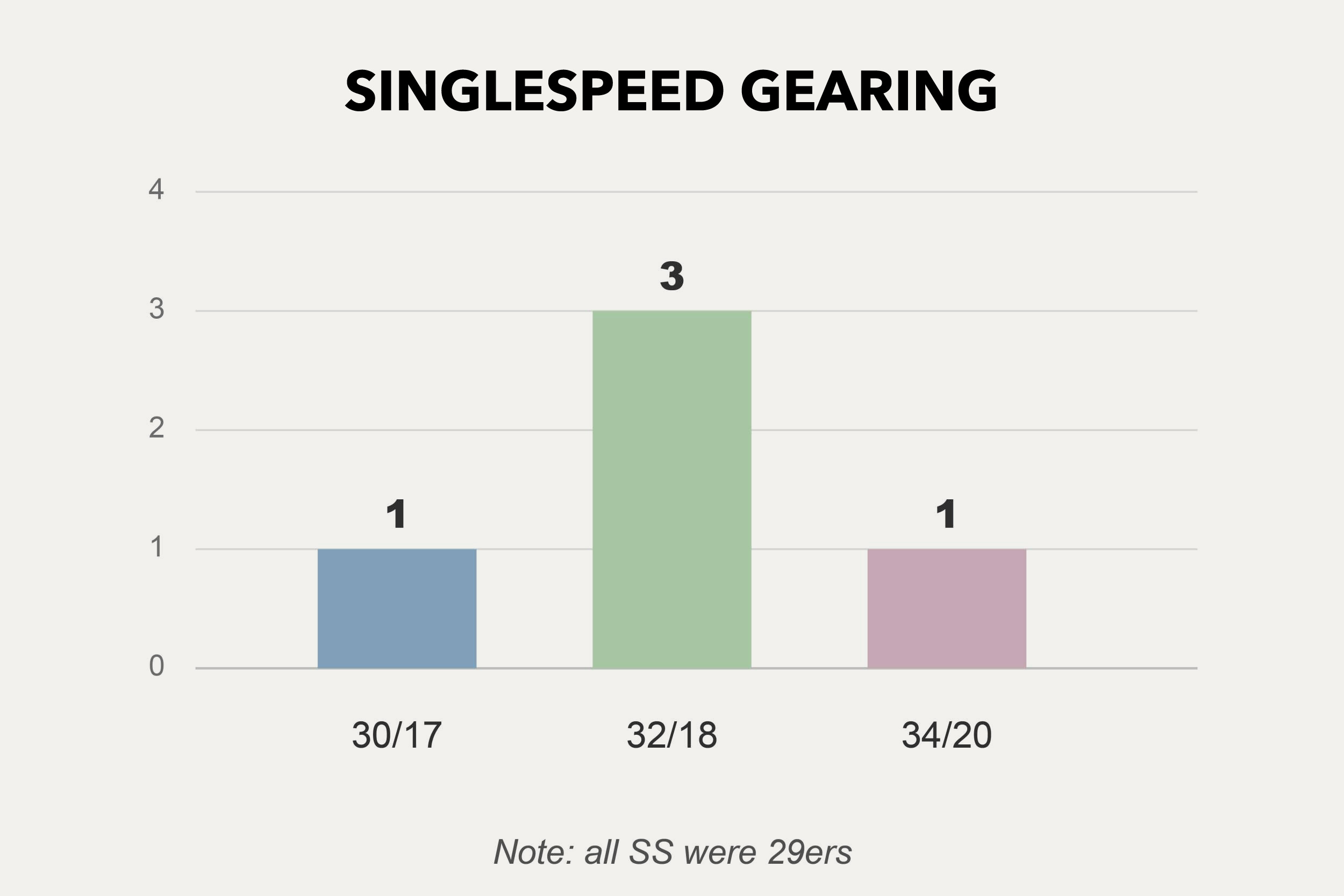
Of the 2x systems, 46/30 was the most common front ring combo, followed by 38/26. Most of those 2x setups were 11-speed, but a few 10-speed drivetrains were mixed in. As far as singlespeeders go, they still had a small but mighty presence, with five bikes in the 100-rig sample. All five were 29ers, and the most common ratio was 32×18, which showed up on three of them.
Wheels and tires
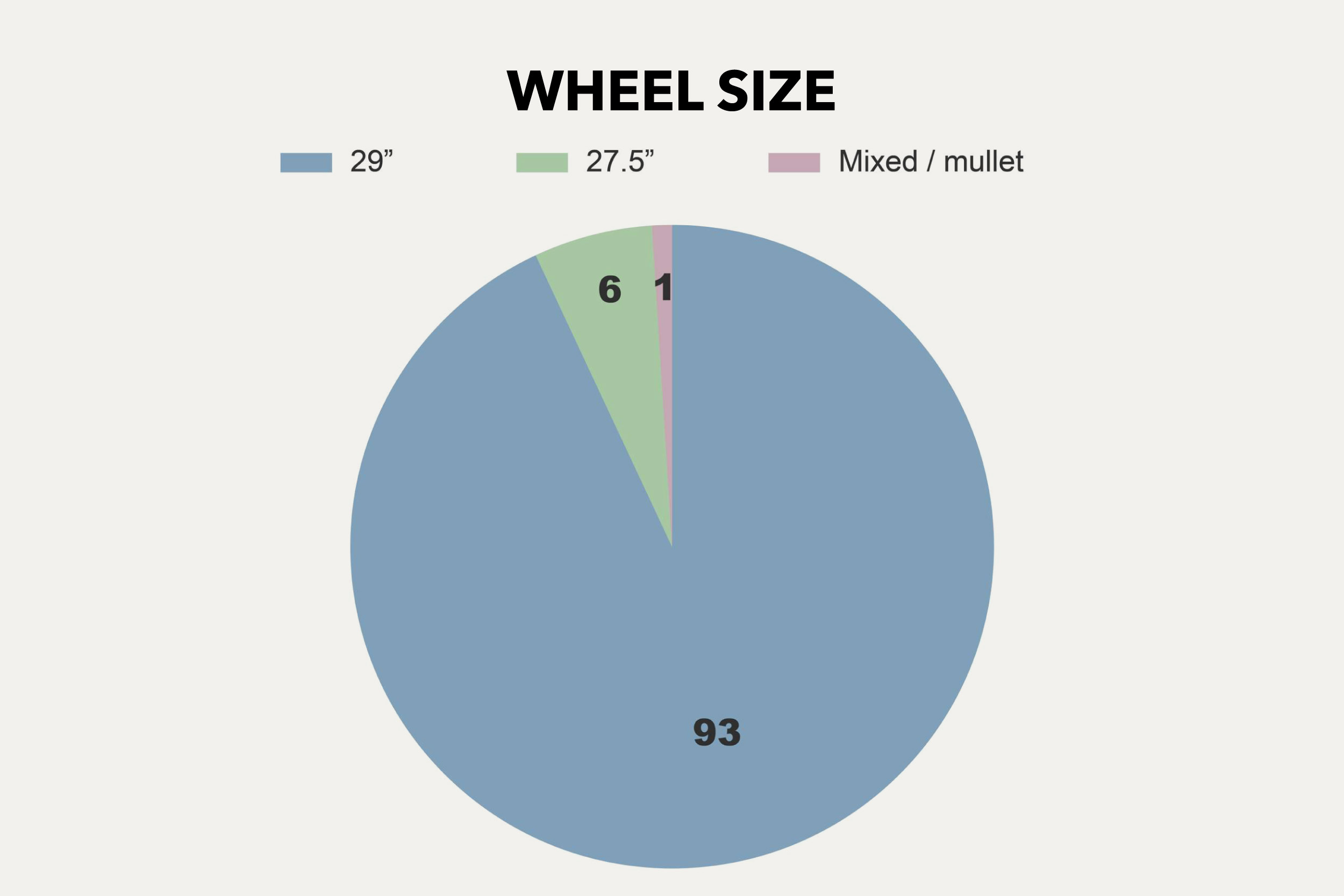
This has been one of the most popular topics among cyclists lately, especially with all the chatter about 32-inch wheels. But spoiler here: there were zero 32-inch bikes in this 100-rig sample. Miles also mentioned there were zero lining up that we know of, so for now, the 29er still reigns supreme, with 93 bikes on 29-inch wheels, 6 on 27.5, and a single mullet setup. While we don’t see 32-inch wheels this year, with more bikes becoming available, I’m guessing we’ll see a handful next year.

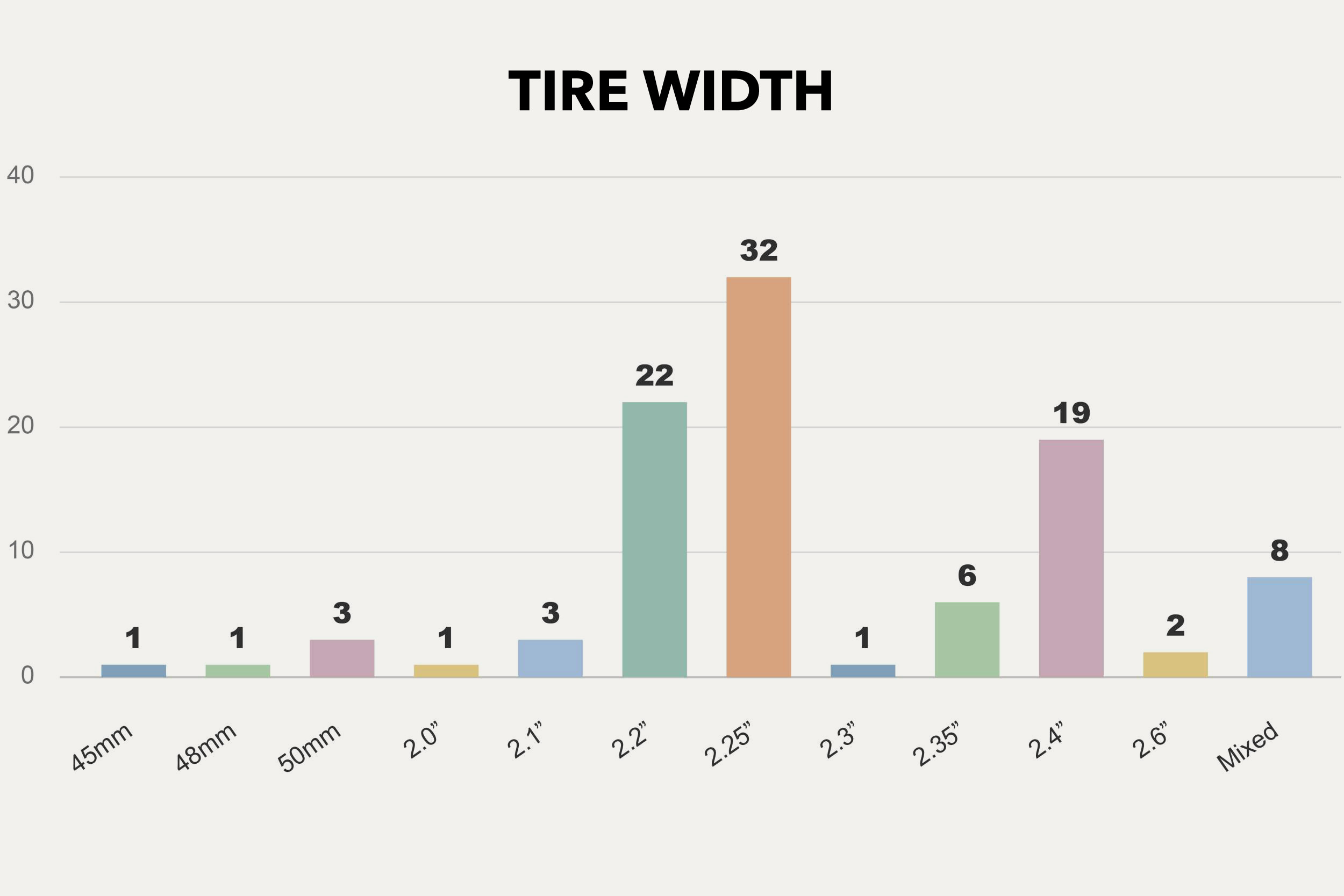
As for tire width, that’s always interesting and varies a bunch. The big takeaway is that 2.2- to 2.4-inch tires dominated, with 73 of the 100 bikes landing in that range if we count only the single-width entries. Add in the mixed or staggered setups, which accounted for eight rigs, and it’s even more obvious that most riders are living in that 2.2 to 2.4-inch range. That was also the majority range for riders last year.
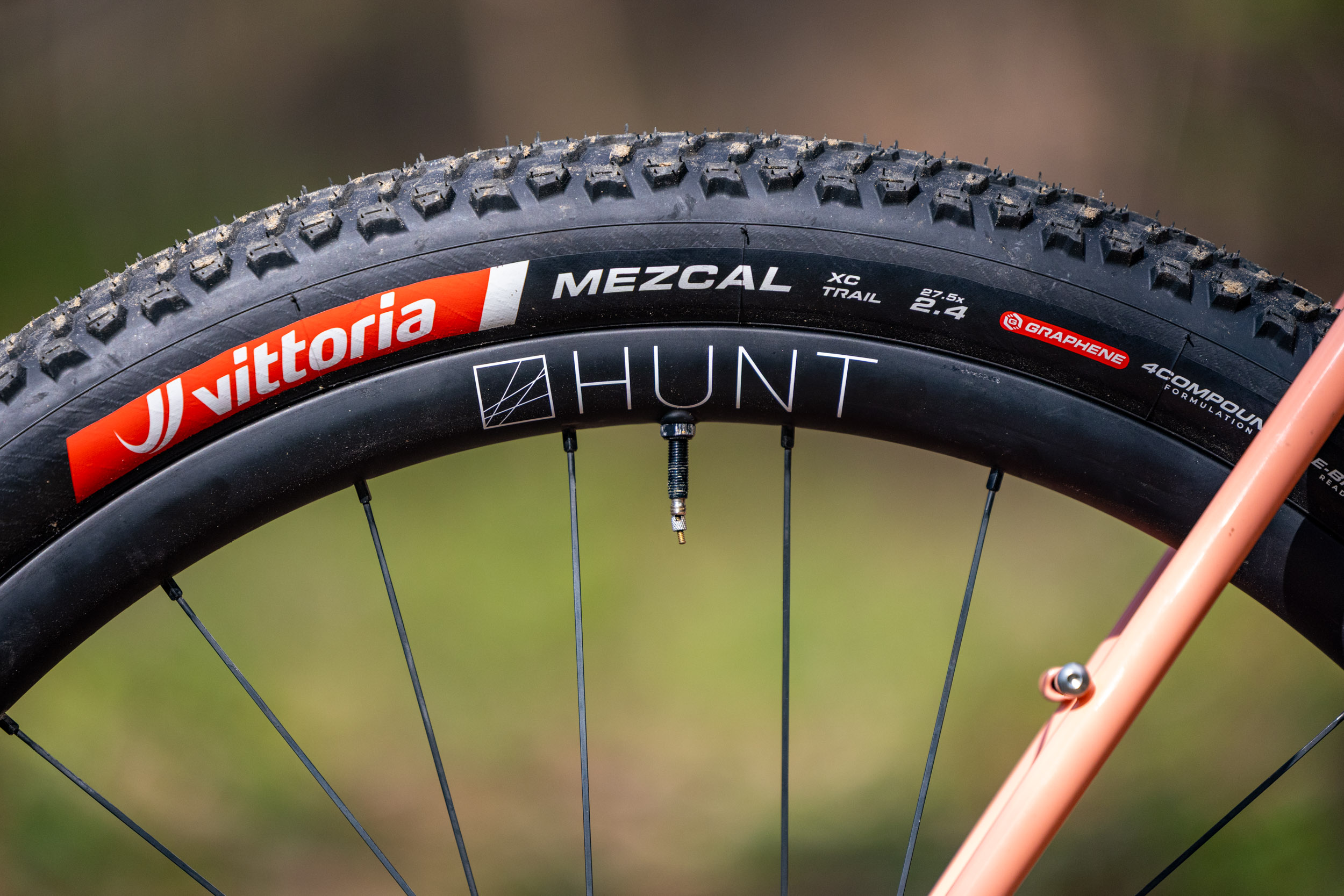
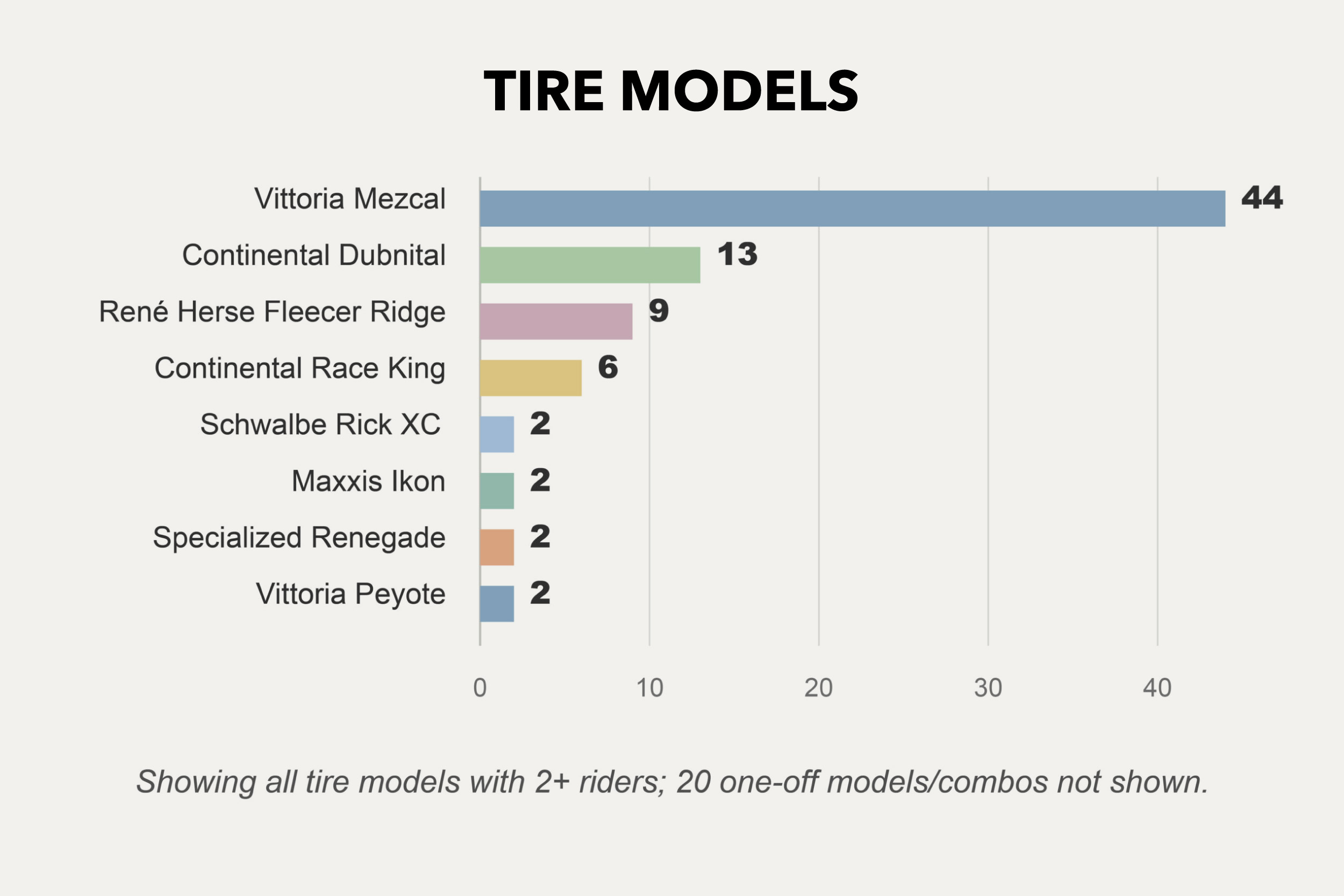
Another constant with tires is that the Vittoria Mezcal continues to set the standard for Tour Divide tire choice. If you count mixed setups by brand mentions instead of one setup per bike, Vittoria appeared on half the bikes, Continental on 24, René Herse on 10, Maxxis on 5, and Pirelli on 4. The Mezcal was found on 44 bikes, while the Continental Dubnital showed up on 13, and the René Herse Fleecer Ridge rounded out the podium with 9. The most notable drop-off was Maxxis. They have seen less love year over year.
Cargo
In 2023, about two-thirds of folks were using seat packs. Last year, that flipped, with about two-thirds using racks. And this year, 77 of the 100 rigs sampled were using racks or rack-top systems, with only 23 using seat packs. It shows how much racks have been adopted, but it’s also a testament to where racks have come over the years.
Of those 77 rack users, I was curious how folks were actually using their racks. Were they using the top of the rack for storage, panniers, side bags, or both? As it turns out, 49 were using both the top and sides, 25 were going a little lighter and using only the top of the rack for cargo, and only 3 were simply using side bags or panniers with nothing on top.

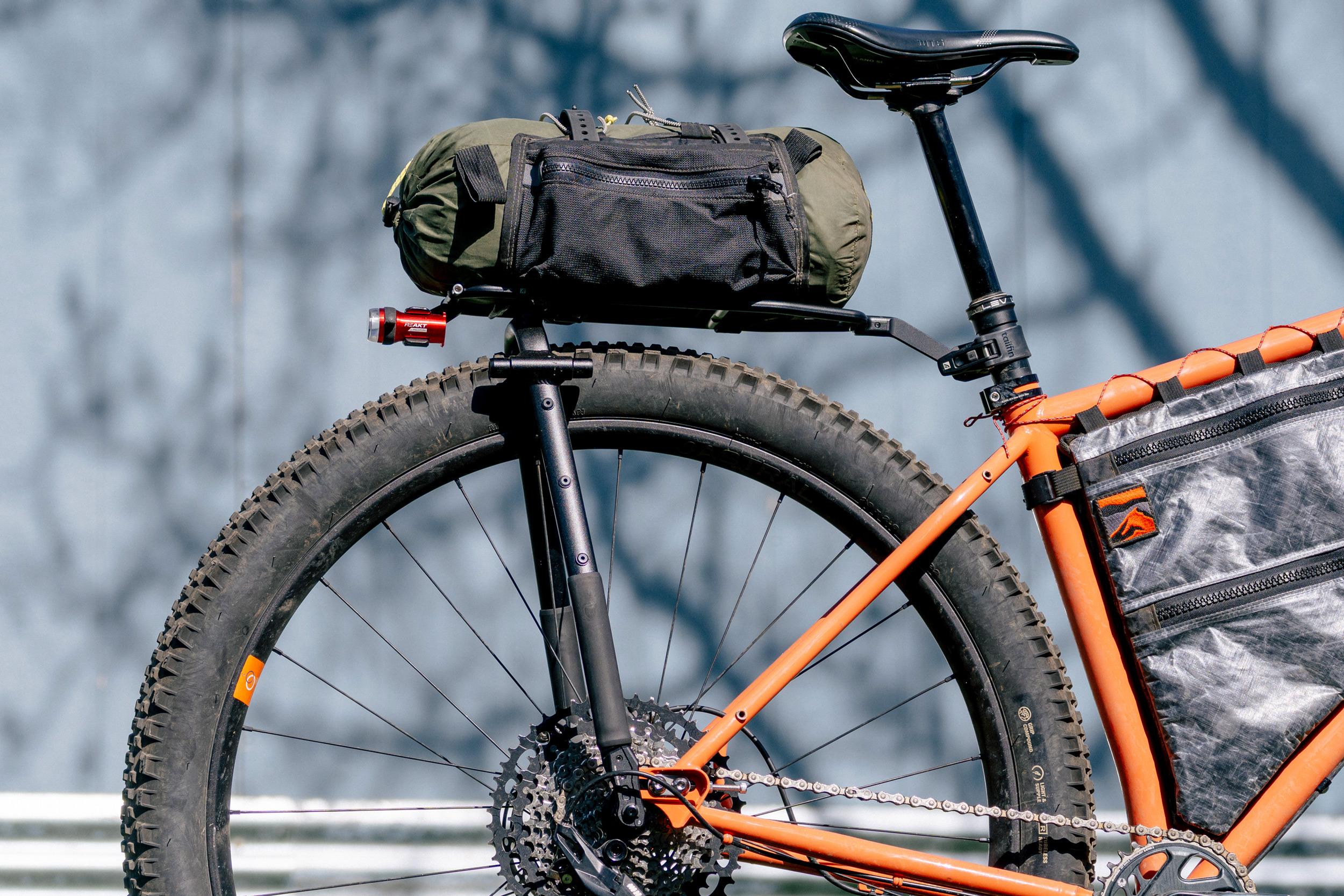

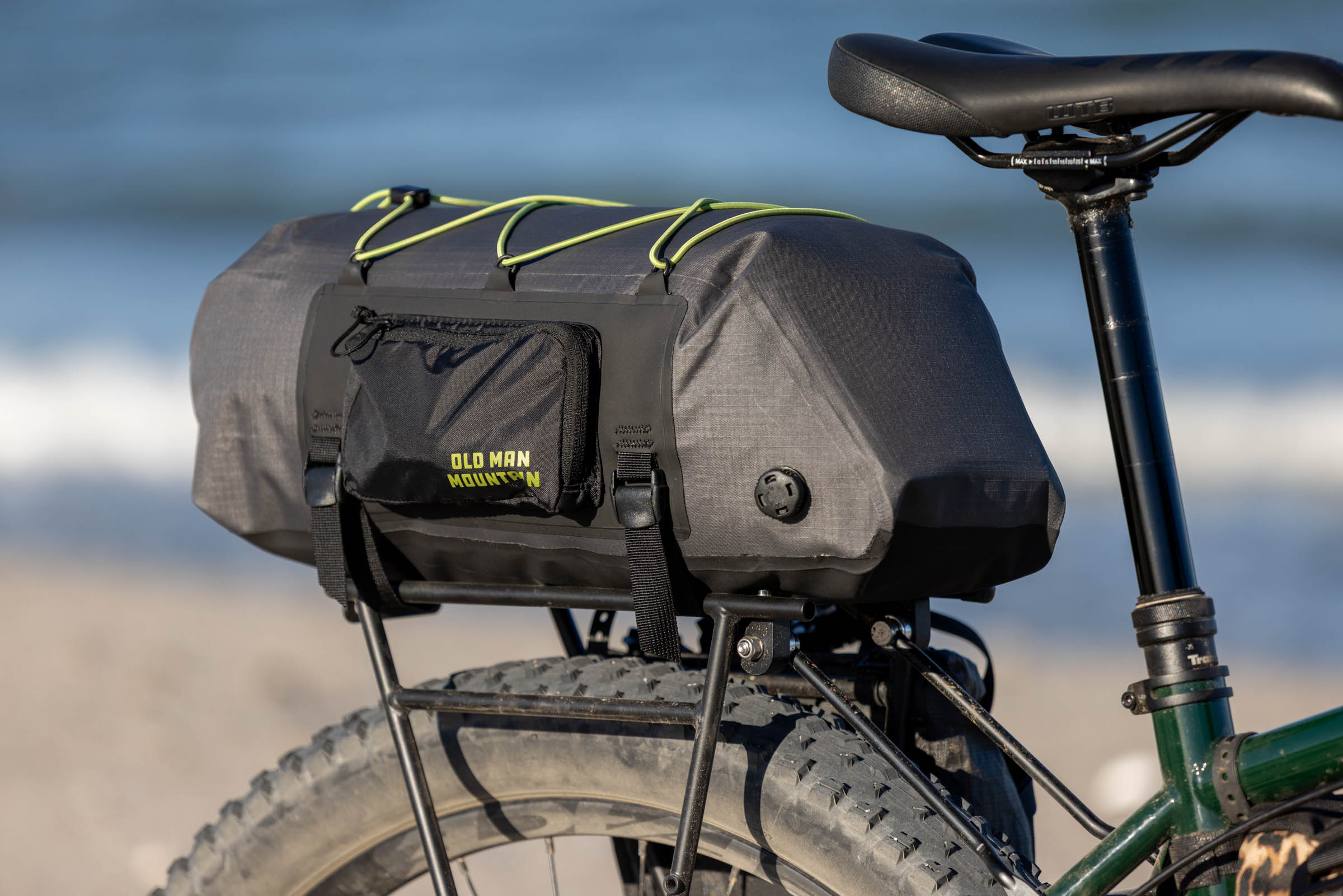
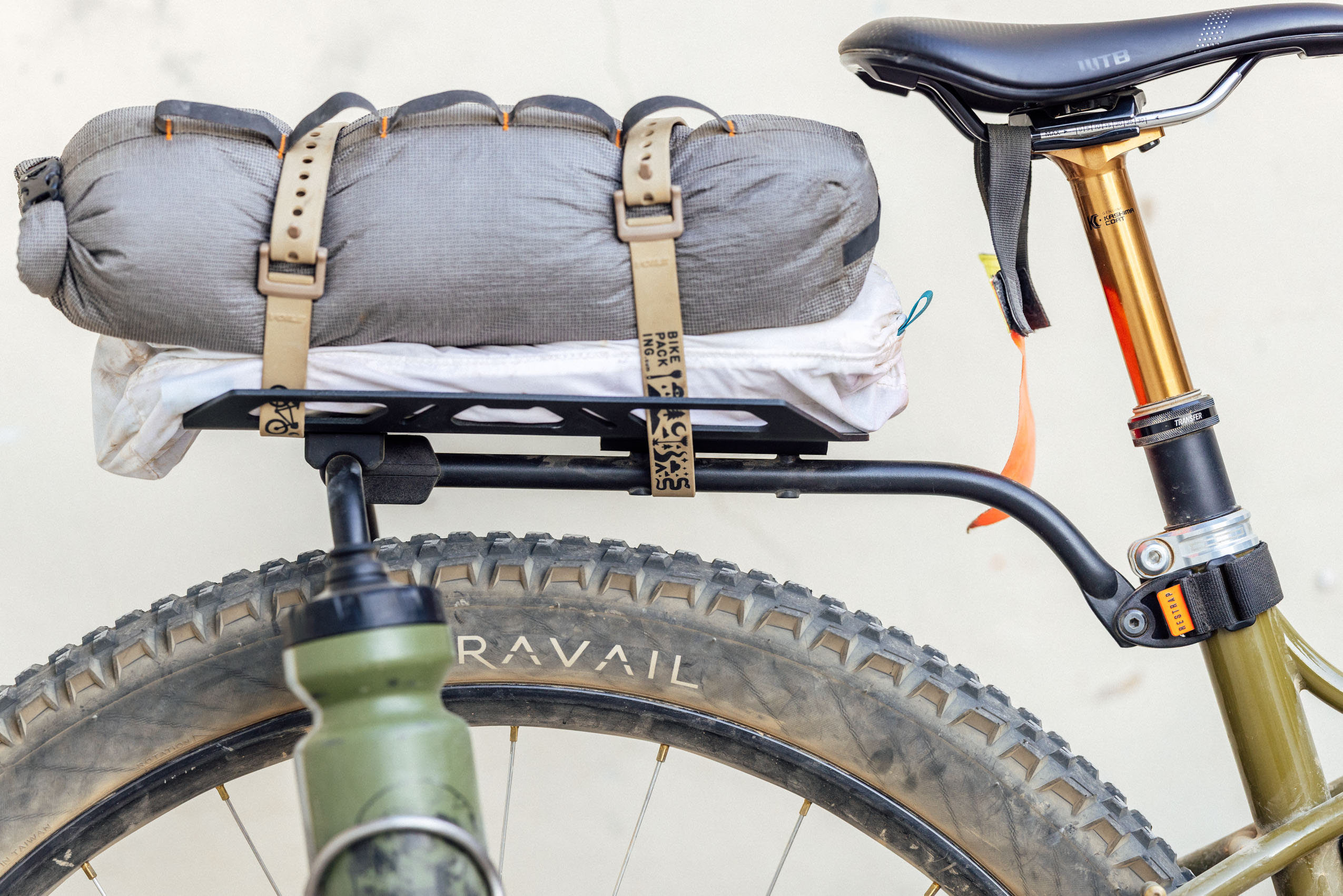
As far as rack brands go, 31 folks were using Tailfin rack systems, 13 were using Old Man Mountain racks, six were using the Mica Rat Tail, and a handful were using custom or unknown racks. After that came Tumbleweed, Aeroe, Restrap, Ortlieb, and a few others. As for the 23-seat packs, Revelate Designs led the way with nine, followed by a steep drop-off among other brands.

Finally, I counted how many bikes used a fork cargo setup, since that seems like a great use of space for a race like the Tour Divide. I was actually surprised that only 42 folks were using their forks for cargo or water, with 58 keeping theirs empty. Fork cargo was more common on drop-bar bikes, which probably has a lot to do with the forks themselves. In this sample, 61 percent of the drop-bar bikes were rigid, compared to just 24 percent of the flat-bar bikes. And rigid bikes were far more likely to use the fork for cargo, with 26 of 41 carrying gear or water on the fork. That makes sense, since rigid forks are more likely to have cargo mounts, and they make adding bags or cages a whole lot easier.
Random Findings
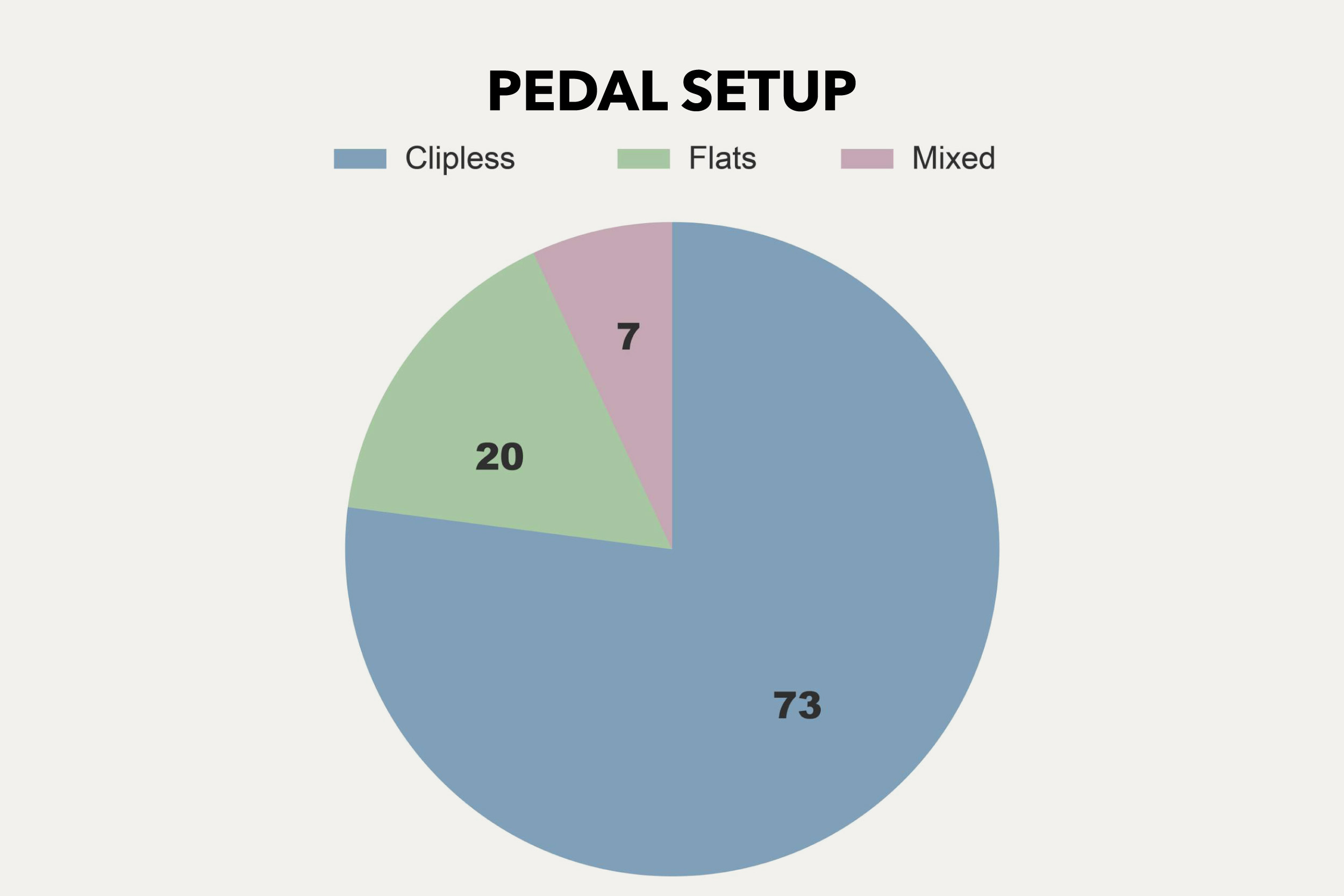
Clipless pedals still dominated, showing up on 73 of the 100 rigs. Twenty riders were on flats, and only a handful were using mixed or unclear pedal setups. Seatpost choice was actually pretty split. A majority, 58 of the 100 rigs, were still using a standard rigid seatpost. But 22 riders were using dropper posts, and another 20 were using suspension seatposts, which shows that comfort and control are both still big priorities, just in different ways.
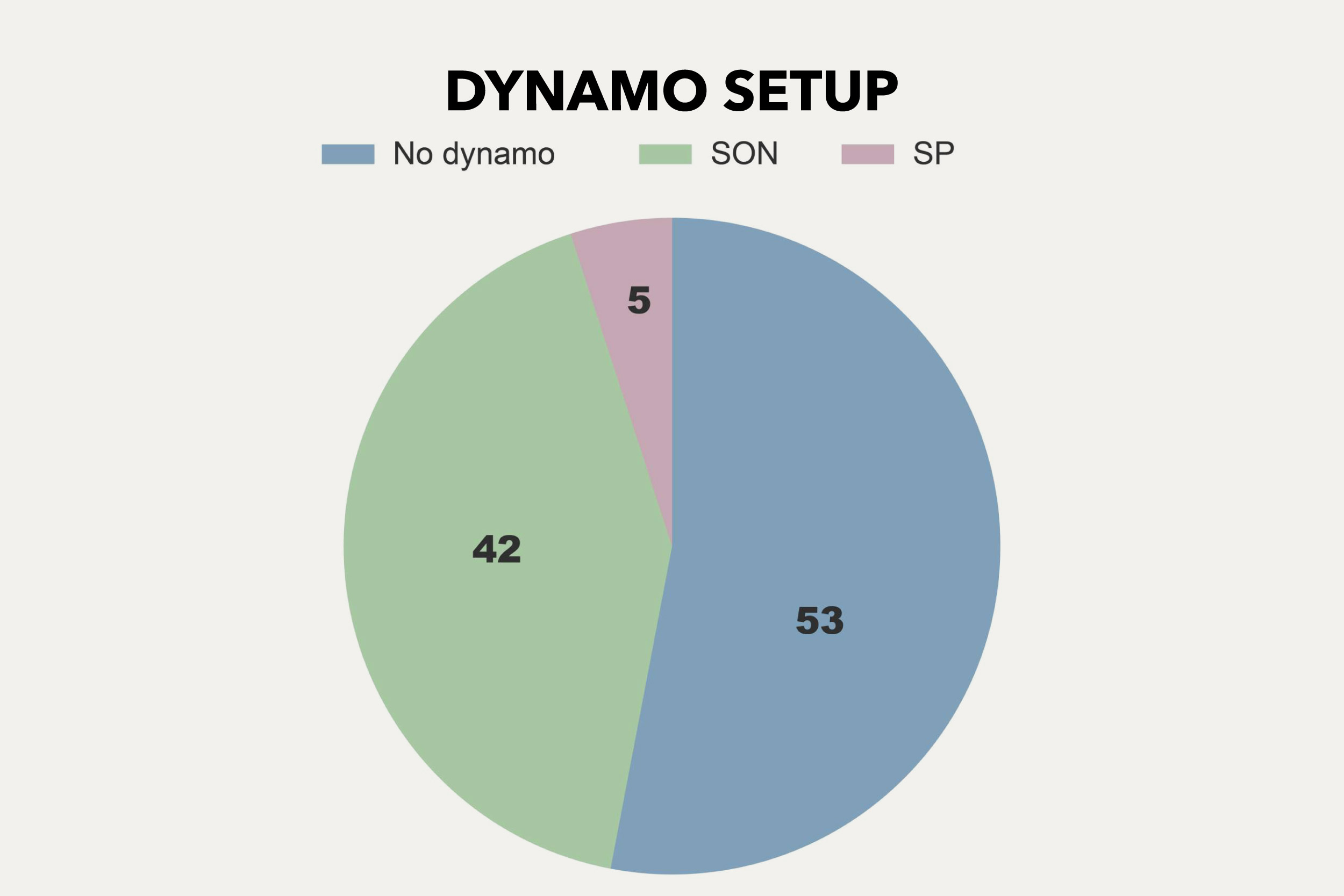
As for dynamo hubs, roughly half the sample was using them. Forty-seven bikes had dynamos, while 53 went without human-powered electricity. Of the 47 dynamo-equipped bikes, SON dominated with 42, while SP showed up on five. And while some riders didn’t mention what lights they were using, kLite and Sinewave were the most commonly mentioned lighting systems.

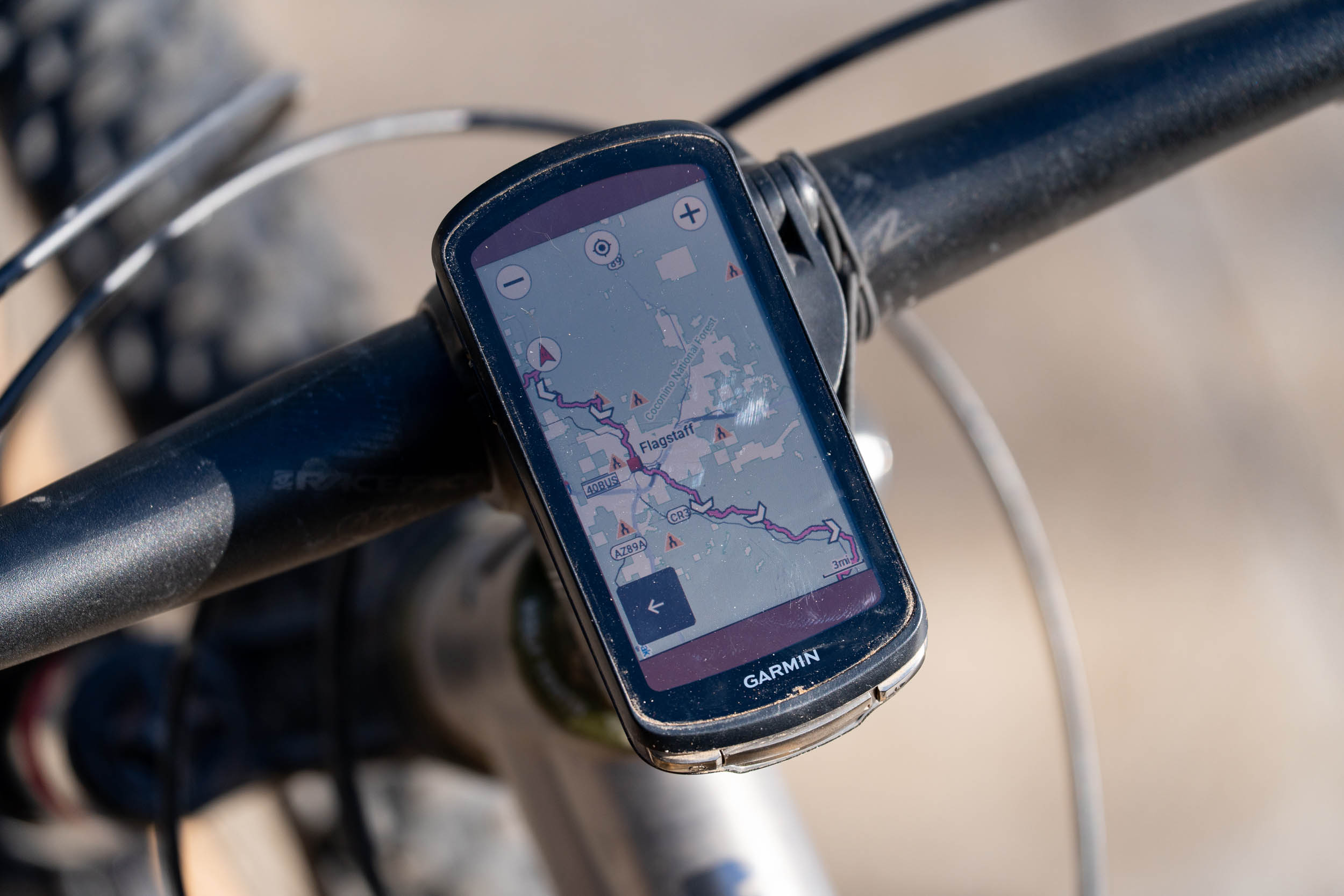
Navigation has also been an interesting topic. The COROS Dura has been on the market for only a couple of years, and it has quickly gained popularity. Garmin was still the most popular navigation brand, with 45 of the 100 units, but COROS now makes up 33 percent of the sample, followed by Wahoo and a variety of others. The most popular individual unit was the Dura, with 32 units, followed by the Garmin 1040 and Garmin 840, which rounded out the top three. If I were to do this race again, I think I’d be on a Dura, simply because the battery life is so much better than the competition.
Final Thoughts
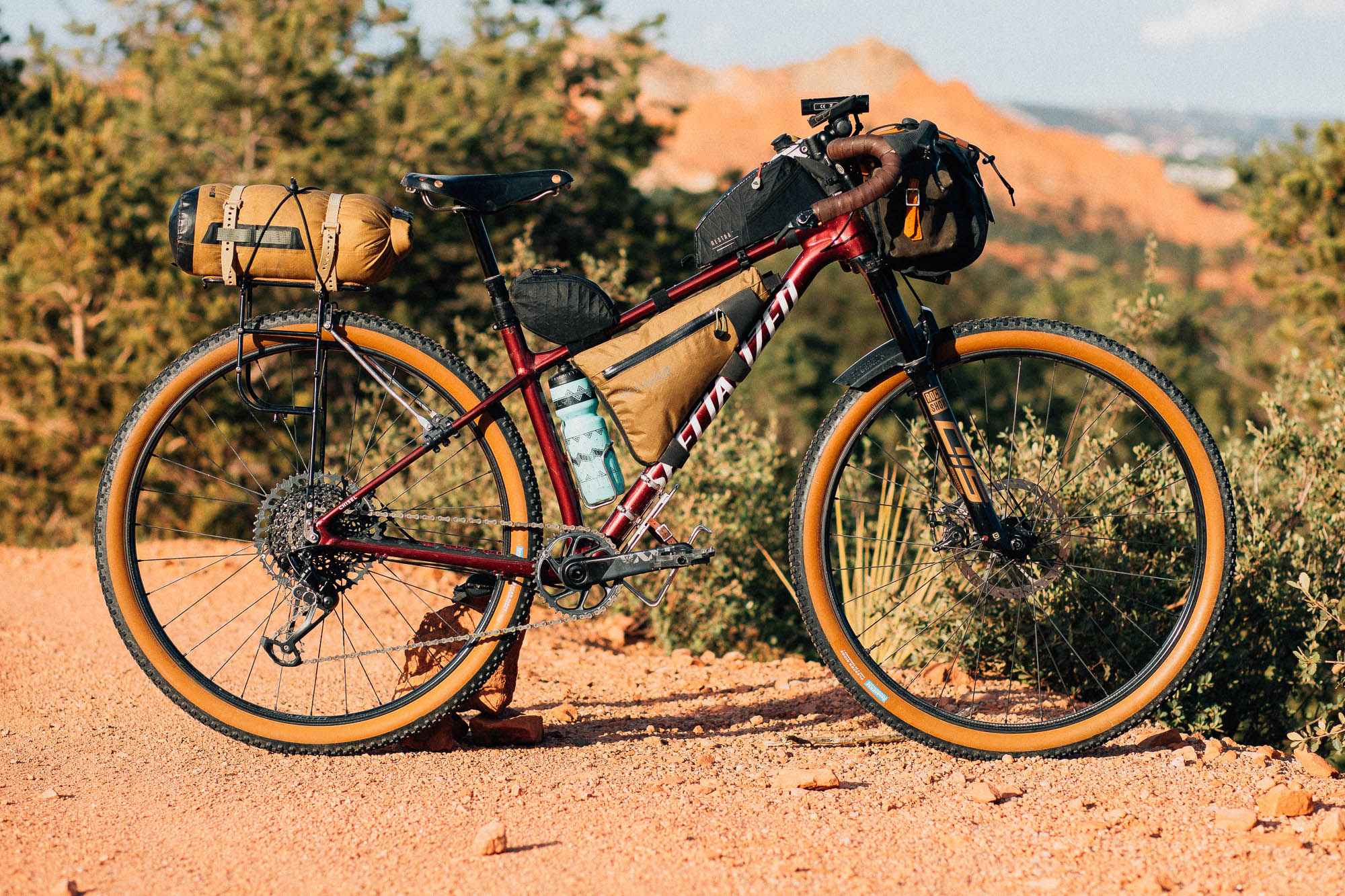
Looking back through the years, the classic Divide rig was easier to define: a rigid drop-bar bike or hardtail, seat pack, handlebar roll, frame bag, mechanical drivetrain, and a Garmin on the bars. That setup still works, but things have clearly shifted. This year’s sample points toward nearly all 29ers, aero bars, rack systems, 1×12 drivetrains, fast tires, and more comfort-focused choices.
Garmin still leads, but COROS has entered the chat, and electronic shifting is now part of the Divide conversation. More than anything, the modern Divide rig seems less about following one proven formula and more about managing fatigue and using systems that make life easier out there.
It’s been interesting to witness, but I’d love to hear your thoughts. Did any of these stats stand out? Be sure to let us know in the Conversation below…
 Check out the 2026 Tour Divide Tracker page to follow along on the live tracking map, and stay tuned in for more event coverage. Find it here.
Further Reading
Make sure to dig into these related articles for more info...
Please keep the conversation civil, constructive, and inclusive, or your comment will be removed.