

 Mountain Bike (MTB)
 Gravel Bike
 All-Terrain Bike (ATB)
 Fat Bike


Nemo Dragonfly Bikepack OSMO Two-Person Tent Review: Good, Better, Best


Earlier this year, the Nemo Dragonfly Bikepack OSMO tent lineup was announced with new pole hardware, a redesigned handlebar bag, and a lighter overall weight. After several months of testing, find Miles’s thoughts on how the Dragonfly Bikepack OSMO two-person tent stacks up against the previous version and why it might be the best “bikepacking” tent yet…
PUBLISHED Apr 8, 2026
There are many products we test, such as bikes, components, and bikepacking bags, that are always evolving and improving. It’s wild to watch how fast tech evolves and how quickly brands push new ideas and concepts. Camping equipment, on the other hand, seems to move a little more slowly, especially in tent technology. It’s not as if camping equipment hasn’t evolved; we live in an age with the most technically advanced fabrics and designs, resulting in the lightest tents the world has ever seen. But I can’t think of any massive game-changing advancements in the last five or so years that have caused a stir in the world of lightweight tents. They’ve been slowly getting better (lighter, sometimes more durable, and easier to use), but the changes have been incremental.
The slow evolution of tents and other camping gear parallels my experience using and testing camping equipment. I started out sleeping in the dirt sans shelter, then began messing around with tarps, had a brief stint with hammocks, and eventually upgraded to a proper tent. I’ve tried featherweight one-person tents with carbon poles, trekking-pole-style tents, and these days, I’m usually sharing a free-standing or semi-free-standing two-person tent with Emily. Over the years, I’ve identified which features I like, which ones don’t make a difference in, and which I’ll never use again (sorry, bivvy converts). Like the brands designing these tents, I’ve started to really nitpick tents, noticing little details that make me smile or, at times, piss me off.
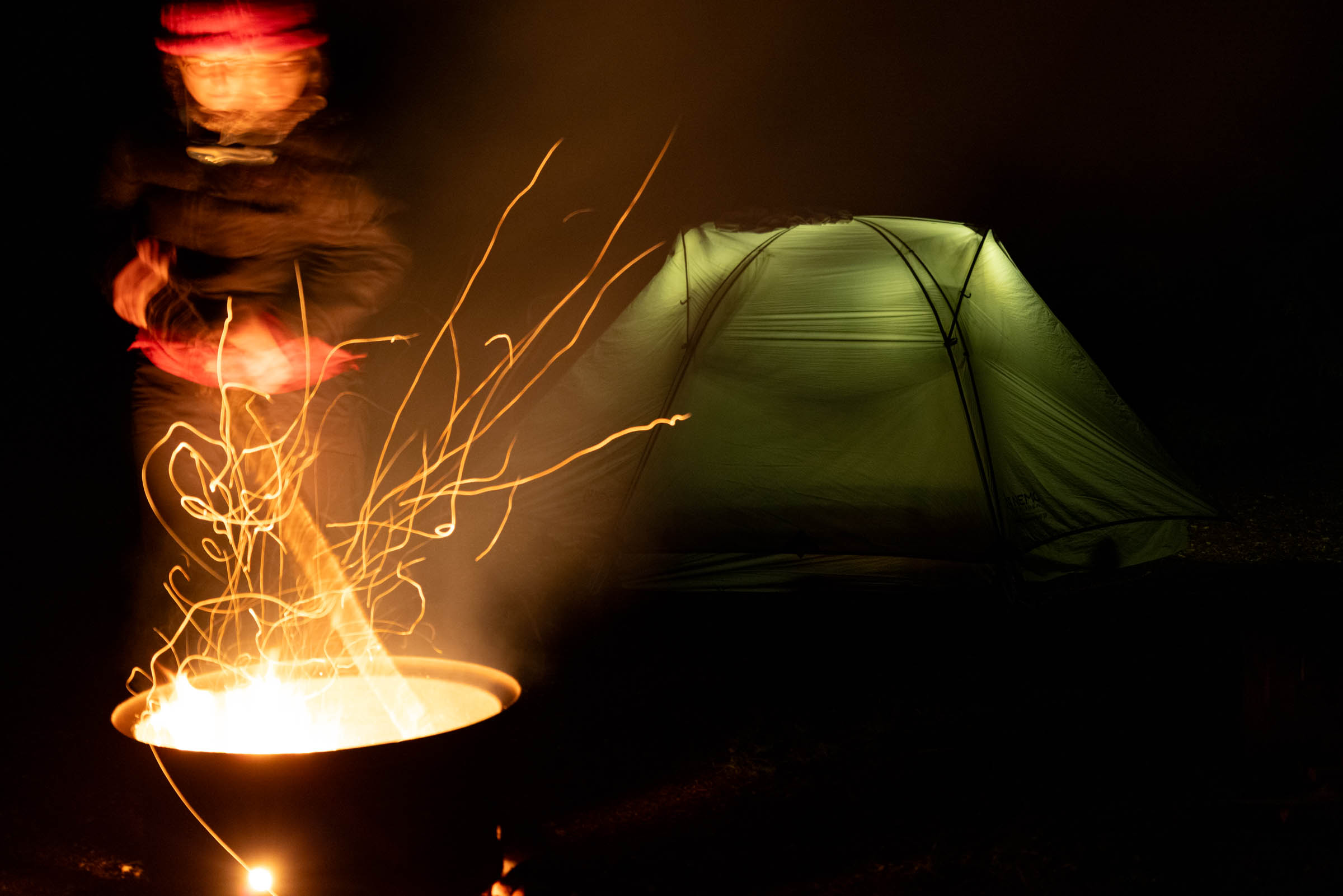
I’m a little obsessed with the never-ending journey to find the perfect tent because it’s your home while you’re bikepacking, and I’ve really grown to find comfort within its thin walls. Tents provide organization at camp, protection from the elements, and the false sense of security that no man or beast can find its way through their impossibly thin walls. Plus, given the price of many modern ultralight tents, I think it’s worth everyone’s time to look at them with some extra scrutiny.
Bikepacking Tents Gone Wrong
Following Big Agnes’s lead, in 2021, Nemo released their own tent with bikepacking-specific features. I spent several months testing the two-person model, and although it had some nice features, it had one glaring flaw: the handlebar bag lacked a headtube strap, and the attachment system left much to be desired. Short poles are nice for packing in some situations, but if you claim the tent’s stuff sack doubles as a handlebar bag, it should compete with other basic handlebar bags.

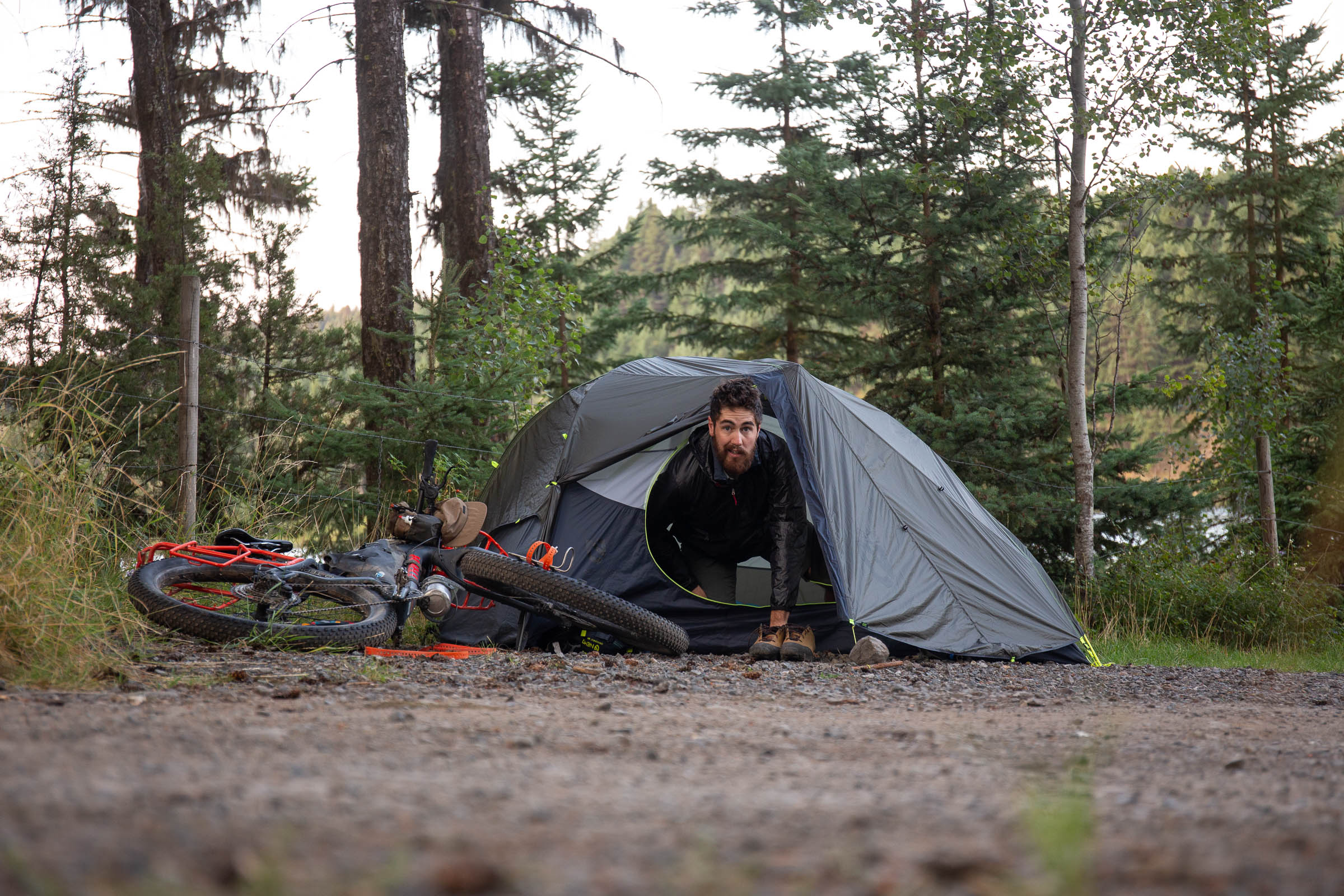
The next bikepacking tent I tested was the MSR Hubba Hubba Bikepack, which told a similar story. I really liked all the organization in the tent; there was plenty of living space, but once again, the handlebar bag fell short. At this point, I was of the mind that maybe “bikepacking tents” shouldn’t have handlebar bags at all, and maybe bag-making should be left to the experts. And then, earlier this year, Nemo announced an updated version of the Dragonfly Bikepack tent series I tested, promising new features, a lighter overall weight, and a totally updated handlebar bag. Did someone finally make a bikepacking tent with a handlebar bag that’s more than just a dry bag with two straps? To find out, I tested it over the last few months, including a scouting trip for the new Jeune Landing Loop on Vancouver Island and a nine-day ride on the Cape Loop in Baja, Mexico.
Nemo Dragonfly Bikepack OSMO Tent Overview
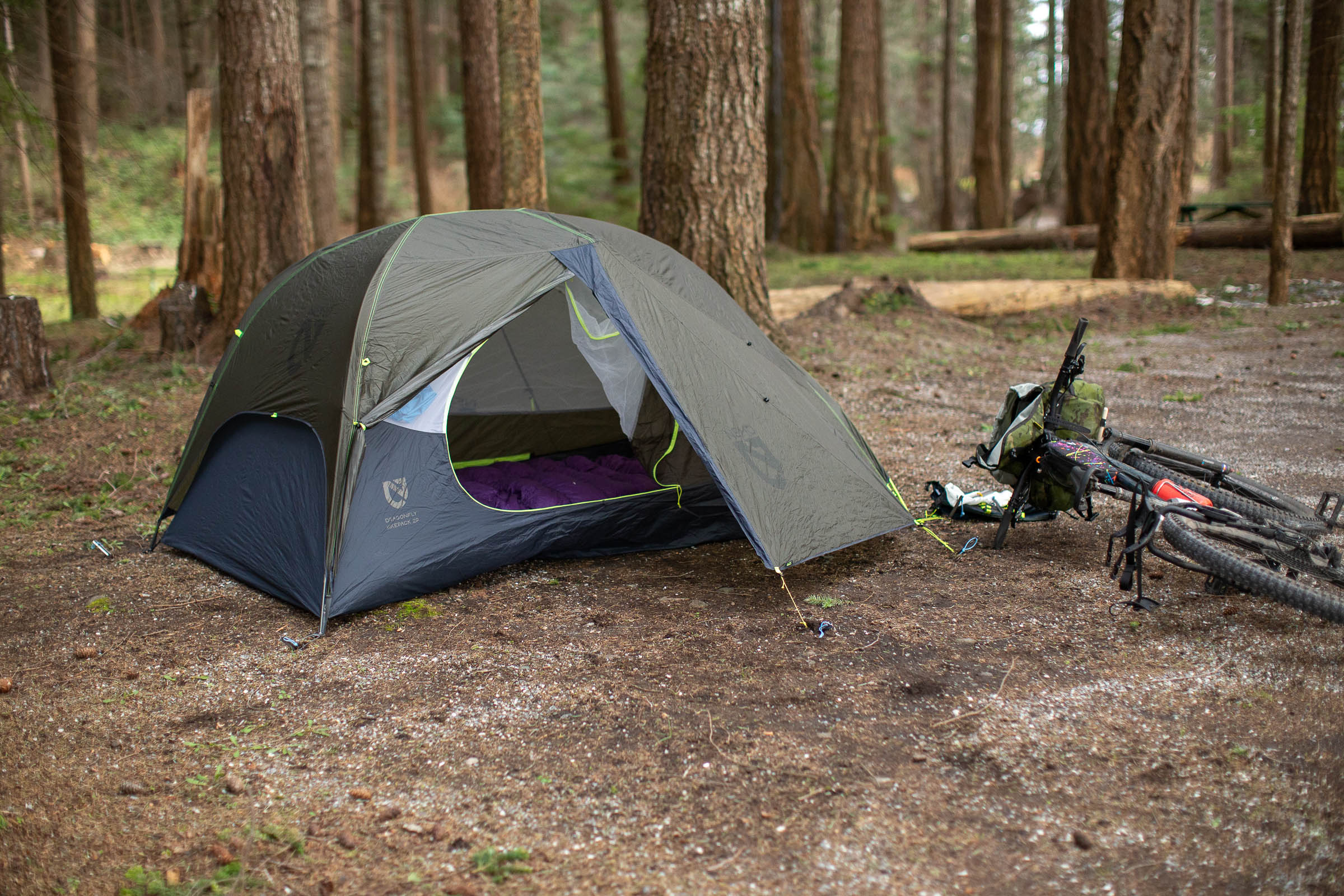
The latest Nemo Dragonfly Bikepack OSMO Tents received a lengthy list of updates, but at their core, they are the same tents. They are still freestanding, with an internal gear loft and pockets, a Landing Zone waterproof storage tub in the vestibule, vents, and an overhead headlamp pocket. Both the one-person and two-person models are made from an OSMO poly-nylon ripstop fabric, which Nemo claims has “4x longer-lasting water repellency and 3x less stretch when wet.” The two-person version has two zippered doors, and the one-person model has a single door.


The first major update, and the one I was most excited to see in person, is the redesigned handlebar bag/storage bag. Instead of a basic stuff sack, Nemo includes a bag that doubles as a handlebar bag. However, this time around, they spent some extra time improving basic features, and I like what I see. The dry bag now features a double-ended roll-top closure instead of the single closure of the previous version. The fabric has been updated to a more durable ripstop material that feels like a huge step forward compared to a dry bag with straps, and, drum roll please, Nemo has finally added a dedicated headtube strap to keep the bag from bouncing all over the place. Other features include grippy TPU straps that wrap around the bag and redesigned poles and tent hardware.
According to Nemo, the packed weight is 3 pounds, 12 ounces (1.69 kilograms) for the two-person model, and 3 pounds, 2 ounces (1.41 kilograms) for the one-person tent. The two-person model I tested has a 40″ (101.6cm) peak height, and an 88″ (223.5cm) long floor that tapers from 50″ to 45″ (127 to 114cm) wide at the foot end. The collapsed poles are shorter than the non-bikepack tents to make packing easier, resulting in a pack size of about 12″ (30.5cm).


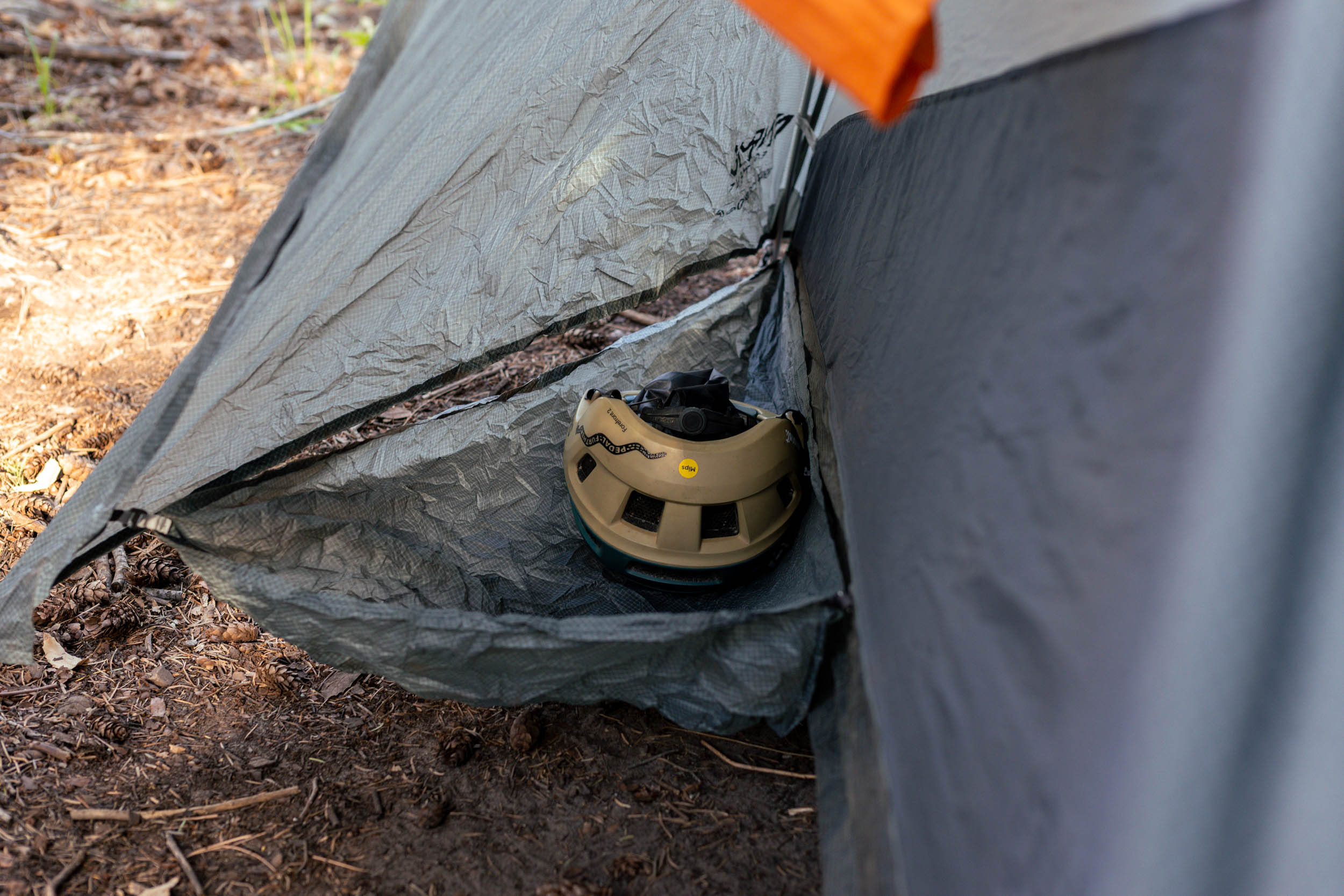
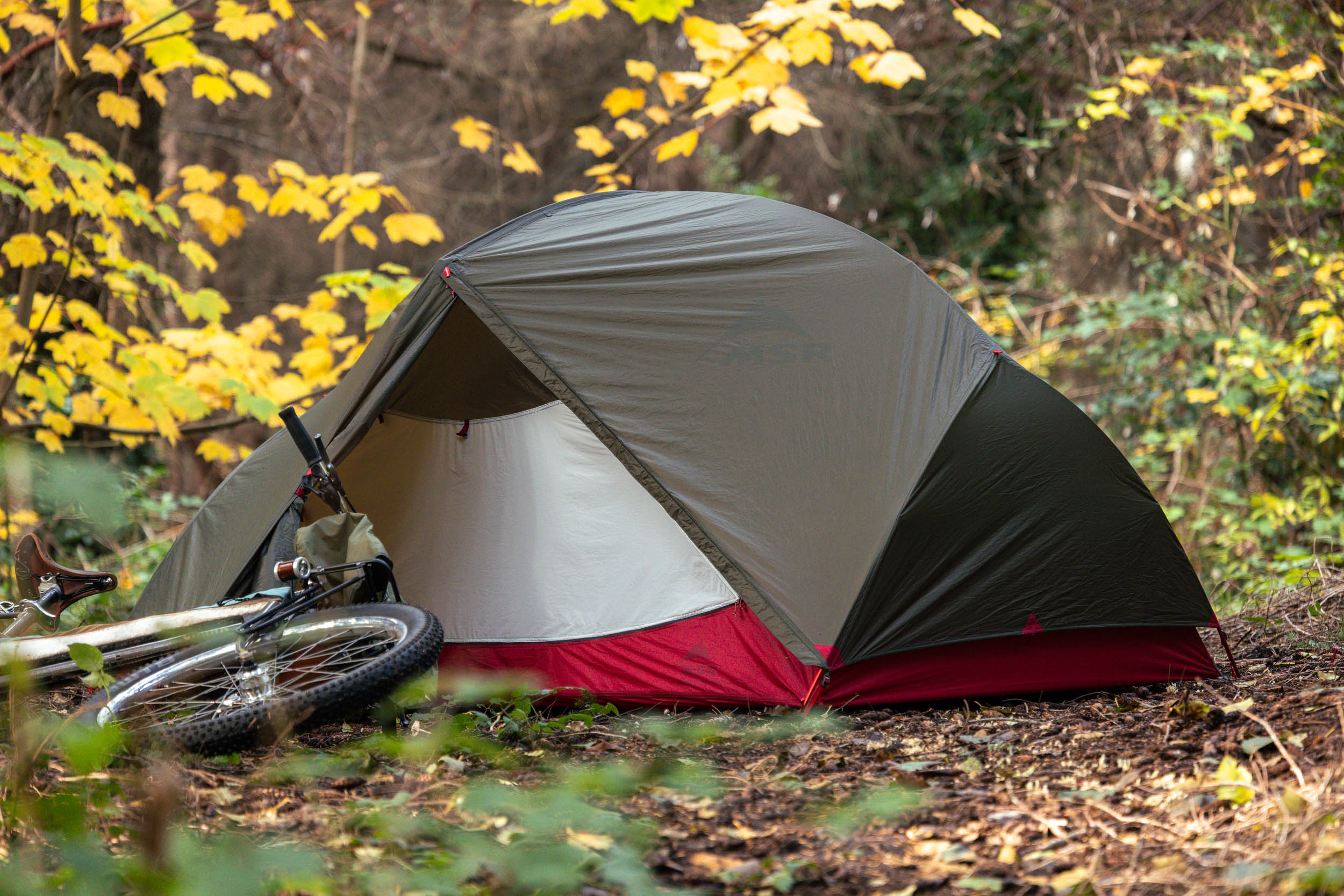
I was happy to see that the new model also ditched the cutaway fly, which was there to save weight but meant less coverage against rain and snow. Privacy is maintained by a raised polyester canopy fabric that extends halfway up the tent but tapers toward the foot end. They took the stealthy rainfly a step further by ditching the high-viz stitching and webbing, replacing it with a dark grey fly, matching thread, and subdued webbing and hardware. The new look does a good job of avoiding unnecessary attention.
Details Matter
Despite being quite simple, the redesigned handlebar bag included with the Dragonfly Bikepack OSMO is a huge improvement over the original. It’s easy to look at the bag and think, “That sucks compared to a proper handlebar bag,” and you’re not wrong, but having used it on several trips now, I think it’s probably as good as any tent manufacturer needs to get at making bikepacking bags.
The new handlebar bag, or Divvy Cube, as Nemo calls it, has a completely new construction and design. The materials are far more rugged-feeling than the ripstop fabric used on the original version, and while it might not matter to everyone, it has a more sophisticated, dialed-in aesthetic. The bag now has dual-ended roll-top closures, accessed via side-release buckles, instead of a single opening. The main handlebar straps have also been updated from basic webbing straps with G-hook buckles to a mix of webbing and TPU, where they wrap over the bars for added grip. The straps extend further down the front of the bag, providing some extra storage space for a sleeping pad or foam roll, which is exactly how I used them.
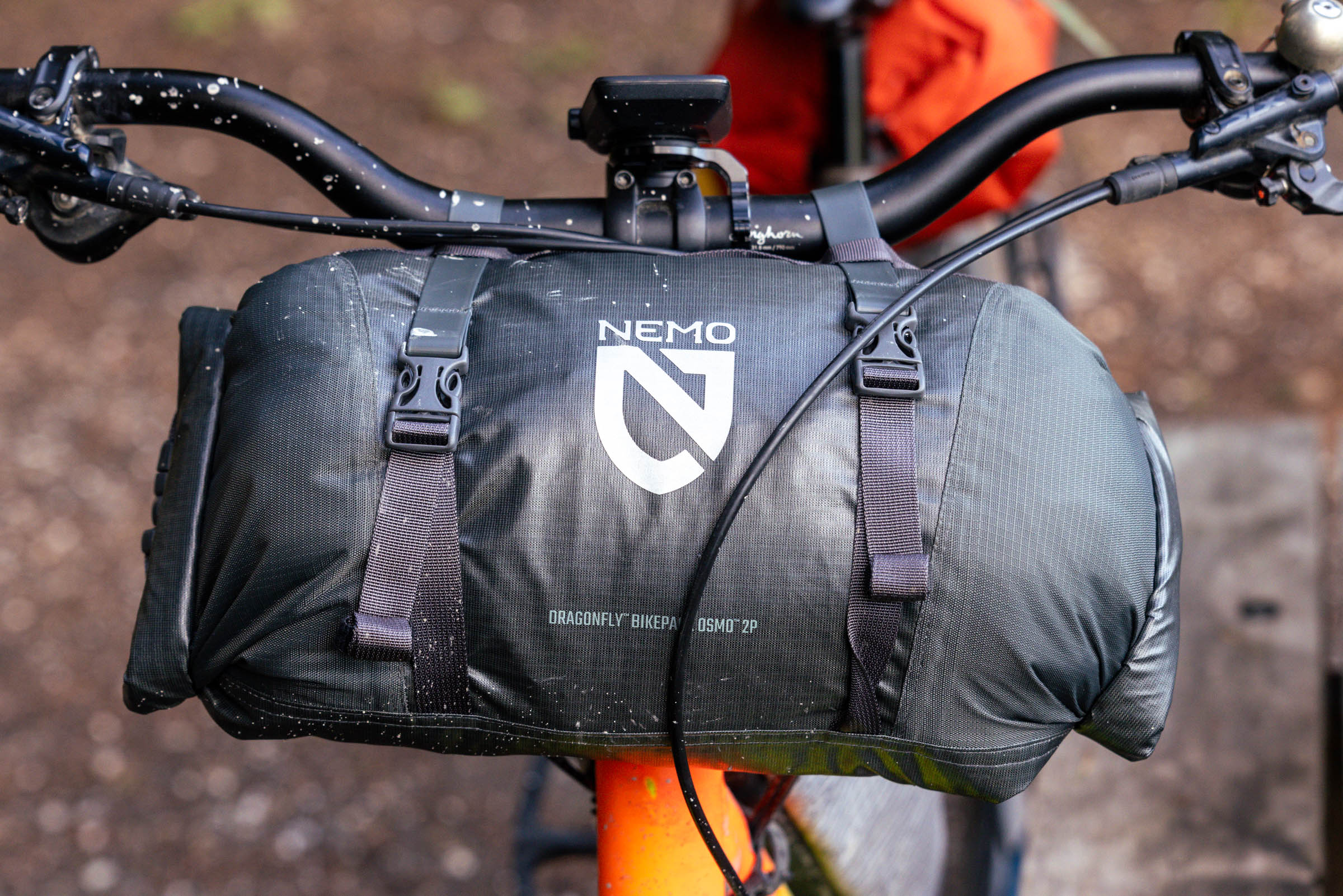


The bag itself seems larger than the previous version, which could fit only the tent, poles, and stakes, with little room to spare. The new handlebar bag is slightly oversized, so it’s possible to sneak in a few extra items, lightweight layers, or even a small sleeping pad, which I managed to do this fall. Paired with the longer front straps, you’ve got yourself a basic but totally functional handlebar bag that can hold more than just a tent.
The most exciting update is the addition of a headtube strap. It’s a small change, but essential for any type of handlebar-mounted roll. Nemo kept it simple with a daisy-chain-style attachment point on the back of the bag and a velcro strap to secure it to the bike’s headtube. Paired with the TPU straps, it’s easy to cinch the bag tight under the bars and against the bike’s front. I was pleasantly surprised by how stable the setup was, with negligible movement while riding.

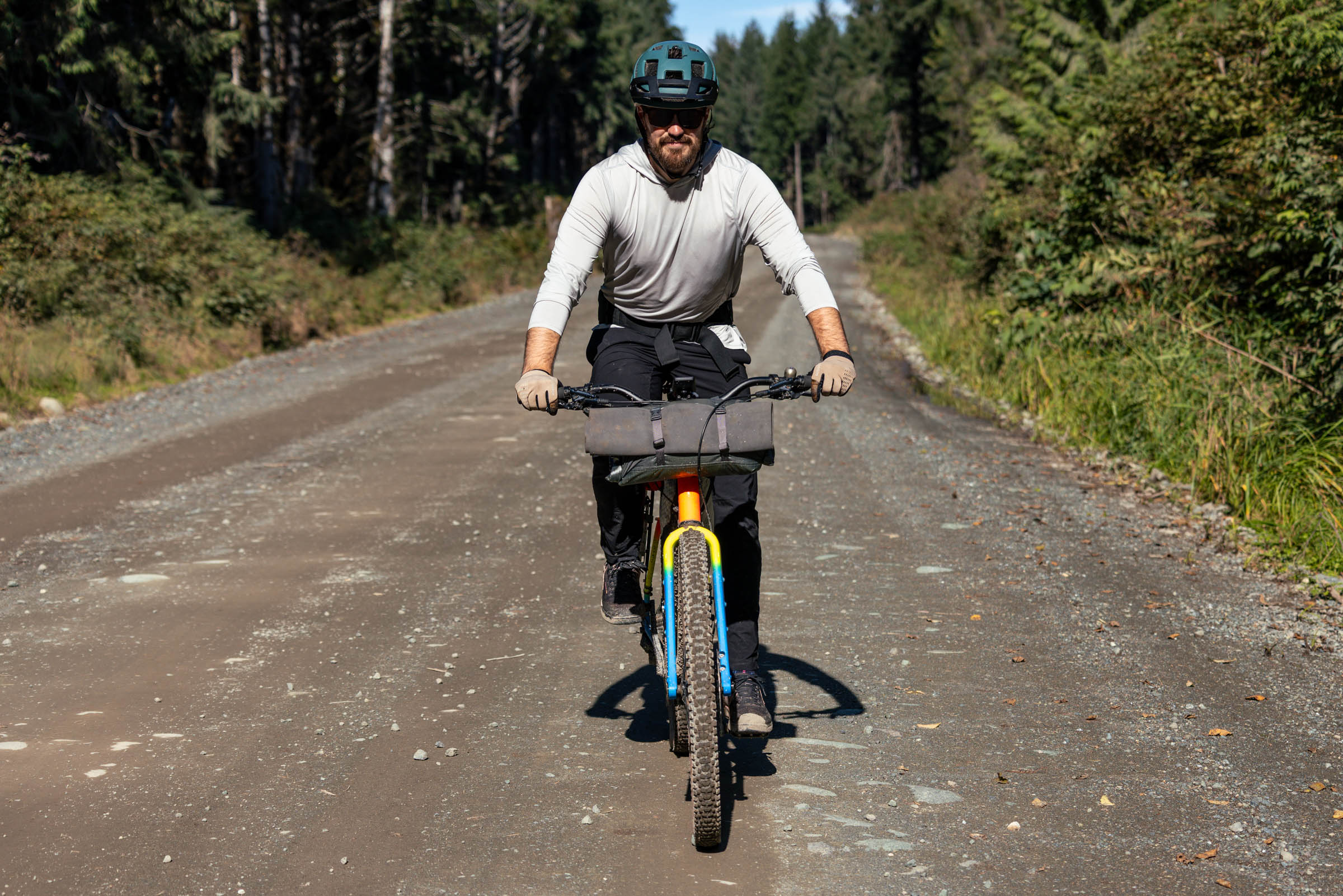

Despite receiving some thoughtful improvements, the included bag is still small and likely won’t replace a bigger setup on longer trips. This was true as I decided what gear to bring for a ride on Baja’s Cape Loop in Mexico last month, leaving the handlebar bag at home and stuffing the tent into two panniers instead.
Gone Bikepacking
Review obligations aside, I was happy to pack the Nemo Dragonfly Bikepack OSMO for Mexico. Knowing I’d be camping on beaches and other sandy surfaces, I wanted a free-standing tent. Emily and I have also really enjoyed the internal storage on some recent tents we’ve reviewed, and the Dragonfly Bikepack OSMO checked all the boxes. It’s not an extremely lightweight tent, at just under four pounds, but I wasn’t too concerned with weight considering how much water we’d need to carry for the trip.
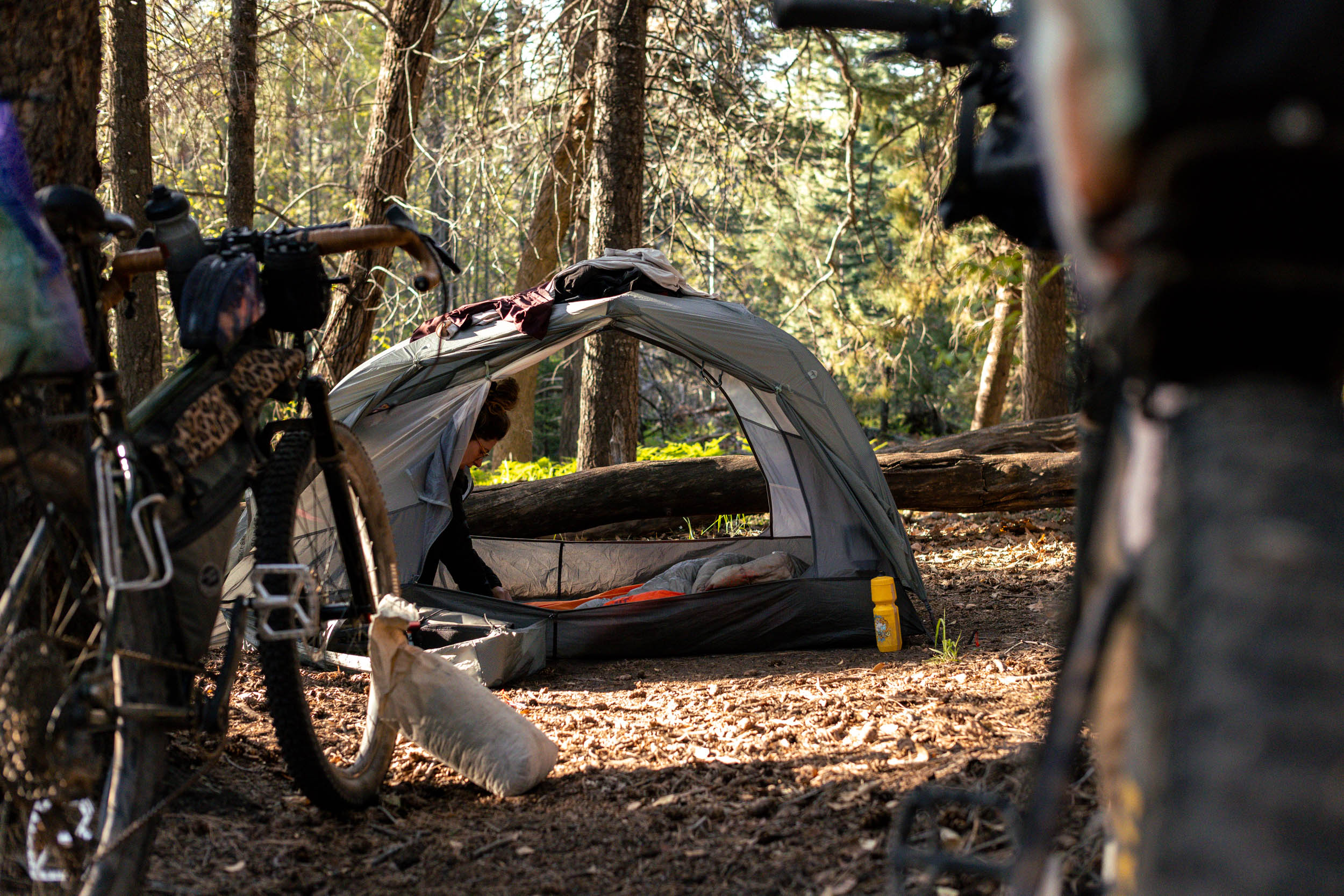
When sharing a tent on a multi-day trip, there’s nothing worse than feeling cramped inside your home. The new Nemo Dragonfly Bikepack tent is on the roomier side, and thanks to the crossbar pole at the peak, the two doors/walls only slant slightly inwards, leaving plenty of room to sit up inside.


Although condensation hasn’t been an issue, the lack of airflow was noticeable low inside. The darker grey body fabric provides additional privacy, which was nice when changing or sleeping without the fly, but it also reduced airflow. I didn’t originally think it would be an issue, but it’s amazing how much airflow there is further up, where the mesh panels start, compared to lower down. On a few hot evenings, I opted to keep my door partially unzipped to get some airflow. Our average nighttime temperature was around 60°F (15°C), and we were comfortable, but any warmer and I’d be reaching for something airier.


I’m a little torn about short tent pole segments. Shorter can be nice, depending on where you are packing them, but I rarely pack my poles in my handlebar bag, and the shorter the pole segment, the larger the diameter of the pole bundle becomes. If you’re planning to use Nemo’s handlebar bag, the pole bundle isn’t a problem, but I sometimes use a big frame bag and stash my poles along the length of my downtube, where length isn’t much of a concern.
The hub at the center of the pole bundle is bulky, and even as a taller rider with plenty of length in my bags, I would have preferred to see something a little less chunky. With that said, any short riders with a small frame bag or folks planning to use the handlebar bag will probably appreciate the super short pole segments. Because the pole structure is a single piece, it can feel slightly awkward to put the segments together, and even more so when trying to disassemble the tent. The single structure creates a stronger and more rigid tent, but two corner-to-corner poles and a separate cross pole at the peak would make the teardown process much cleaner.


Early on in our Cape Loop ride, I managed to lose one of the corner pole anchors, or “Axial Lite corner anchors,” as Nemo puts it. The aluminum anchors have a split in them that allows them to be replaced, but mine must have slipped off the webbing at some point. For a moment, I thought I wouldn’t be able to set up the tent, but thankfully, the round nub on the pole ends fit perfectly into the webbing loop where the anchor attaches. Crisis averted, but I’m still missing the corner anchor, which is needed to properly secure the fly. I really liked the new ball-and-socket corner anchors, as they engaged quickly and held tight during setup. There’s nothing more annoying than setting up a tent by yourself and having the poles pop out of the corner anchors as you work your way around.
Instead of attaching the fly to a stake or grommet, as in the previous version, the fly has a small aluminum hook that slips into the body’s corner anchor. It’s quick and holds extremely well, and the webbing is color-coded (light grey on one end, and black on the other) to make set-up a little easier. The stakes Nemo provides with the tent aren’t revolutionary, but they worked well in sand and have held up to some light rock hammering when setting up on hard surfaces. No complaints there.
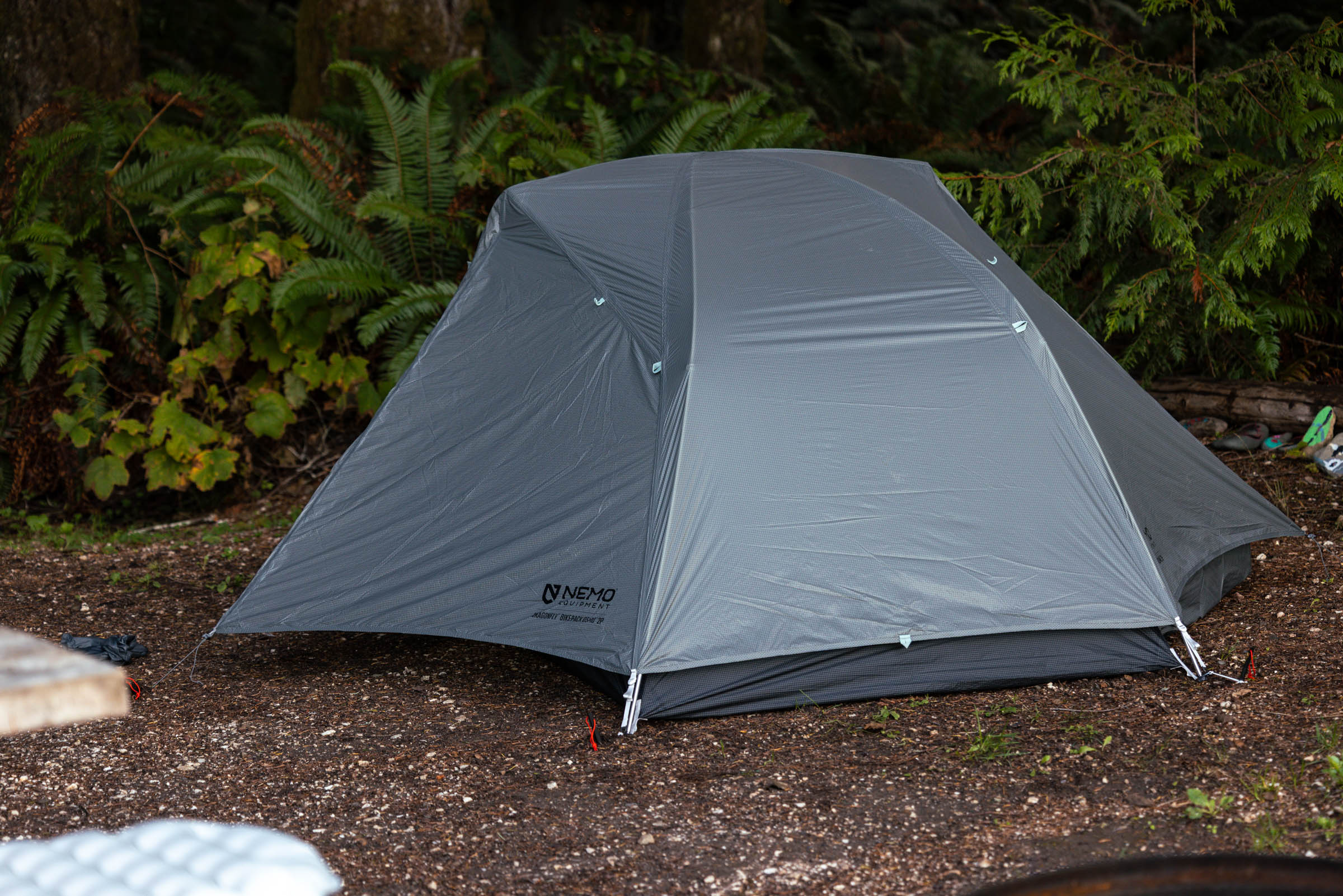


We had a few windy beach nights in the tent, and the fly’s slanted walls did a good job at deflecting most of it. Like the previous version, the head end of the tent is most susceptible to wind because it’s only slightly slanted. As long as you take that into consideration during setup, it shouldn’t be a problem. I also think the one-piece pole structure contributes to the tent’s overall stability, but I’ll touch on that more below.
There’s a single dedicated vent with a strut at the head end of the tent, and the two doors have two-way zippers that provide additional ventilation. It was enough to eliminate any condensation build-up while camping in the Pacific Northwest, but as I mentioned earlier, if it’s hot and humid, I imagine it might feel a little stuffy inside with the fly on. The only thing I’ve really missed are magnetic door toggles, which may seem superfluous, but I’ve grown to appreciate just how speedy they are compared to Nemo’s cord lock/hook system.


Final Ramblings
As the kids say, the Nemo Dragonfly Bikepack OSMO Tent “is doing too much.” This might feel a bit harsh, considering my overwhelmingly positive experience over the last few months, but I would enjoy this tent just as much if some of these extra elements and features didn’t exist. The funky pole structure and center hub look neat, and maybe it provides some stability, but it’s a pain to disassemble. The Landing Zone gear tub for the vestibule is theoretically useful, but the tiny G-hooks at each corner make it so annoying that I usually leave it at home. The handlebar bag, despite being the best version yet, likely won’t function as anyone’s primary handlebar bag for long.
Despite these grumblings, I really do like the tent. It’s spacious, the vestibules are functional and roomy, and the internal gear loft and dual door pockets are great for long trips. Emily, a lifelong glasses wearer, can’t stand tents without internal pockets to keep her glasses safe, and we both appreciated the flared peak when changing side by side. The core of the tent, including its materials, shape, and design, leaves little to be desired. It’s all the extra stuff that feels a bit forced and open for refinement.


Pros
- Finally, a bikepacking tent handlebar bag that works!
- Subdued, full-cover fly and half-mesh body make for a private and stealthy tent.
- Large gear loft and two side pockets.
- Ball-and-socket poles/corner anchors are functional, if you don’t lose them.
- Spacious interior thanks to the pole structure and cross-pole.
- Stable and taught in all conditions.
Cons
- Corner anchors can get lost if you’re not careful.
- Short pole segments and single-pole structure result in a thick pole bundle and an awkward setup/takedown.
- Airflow inside the tent is disrupted by privacy panels on the walls.
- 3.75 pounds isn’t ultralight, but it’s not heavy either.
- $599 for the two-person model isn’t cheap.
- Model Tested: Nemo Dragonfly Bikepack OSMO, Two-Person
- Weight: 3.75 pounds (1.69 kilograms)
- Place of Manufacture: Vietnam
- Price: $599 at REI
- Manufacturer’s Details: NemoEquipment.com
Wrap Up
I don’t know if I’ll ever truly be satisfied with a tent. There’s always a buckle, zipper design, or spec that rubs me the wrong way, and I’ve started to accept that there is no perfect design. In the case of the “bikepacking” tent, which I’m not entirely sure we really need, a well-designed handlebar bag and easily packable tent should be the minimum. Thankfully, the latest generation of Dragonfly Bikepack OSMO tent comes with a fully functional handlebar bag with a little room to spare for extra gear. It’s basic and doesn’t look like much compared to the dedicated handlebar bags we test regularly, but it’s surprisingly functional. Overall, I think the tent is great. It’s on the pricer side, but everything seems to be these days, and it has a few quirks, but it’s the best take on a bikepacking tent I’ve seen or tested to date.
Further Reading
Make sure to dig into these related articles for more info...

Please keep the conversation civil, constructive, and inclusive, or your comment will be removed.