

 Mountain Bike (MTB)
 Gravel Bike
 All-Terrain Bike (ATB)
 Fat Bike
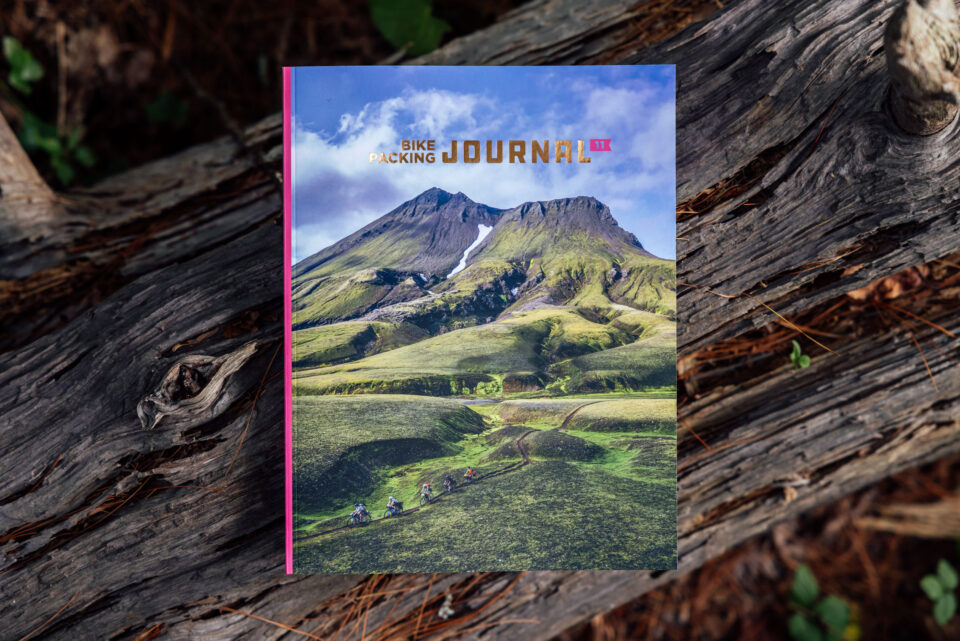


Apidura Expedition Handlebar Pack Review: Same Bee, Different Bag


Apidura’s Expedition bag series received a complete overhaul this year, building on designs originally released over a decade ago. Miles got his hands on the new Apidura Expedition Handlebar Pack, with integrated accessory mounts, waterproof construction, and a hardware-free mounting system, to see how it stacks up against other modern handlebar bags. Find his review here…
PUBLISHED Nov 4, 2026
Most handlebar bags fall into one of four categories: harness, cradle, roll, or top-opener. Each has its own pros and cons, but recently, the focus has shifted to clever rigid mounting systems and cradles that are virtually wiggle-free and free up handlebar space. However, not all bags follow the rules.
Ten years ago, Apidura released its first collection of waterproof, welded bikepacking bags with the Expedition line. The range has expanded over the years, but the designs have remained mostly unchanged. Earlier this year, Apidura re-engineered the entire Expedition line from the ground up, keeping the waterproof construction but adding a full suite of new features and designs. The latest Expedition line includes a new seat pack, a handlebar bag, top tube bags, and several frame bags.


Of the whole lot, the Expedition Handlebar Pack seemed the most interesting. With a new clamp-free attachment system, the option to mount lights and other devices directly to the bag, two front pockets, and more, there’s a lot to like. I’ve tested the new handlebar system on a few bikepacking trips to see how it performs in the real world.
The Apidura Expedition Handlebar Pack
The original Expedition Handlebar Pack’s simplicity was its greatest strength. It was little more than a waterproof, seam-welded roll with handlebar/head tube straps, roll closures on both ends, and a bungee lace-up up front. The redesigned Expedition Handlebar Pack maintains a waterproof, welded construction and two roll-top closures, but it introduces a long list of updates.


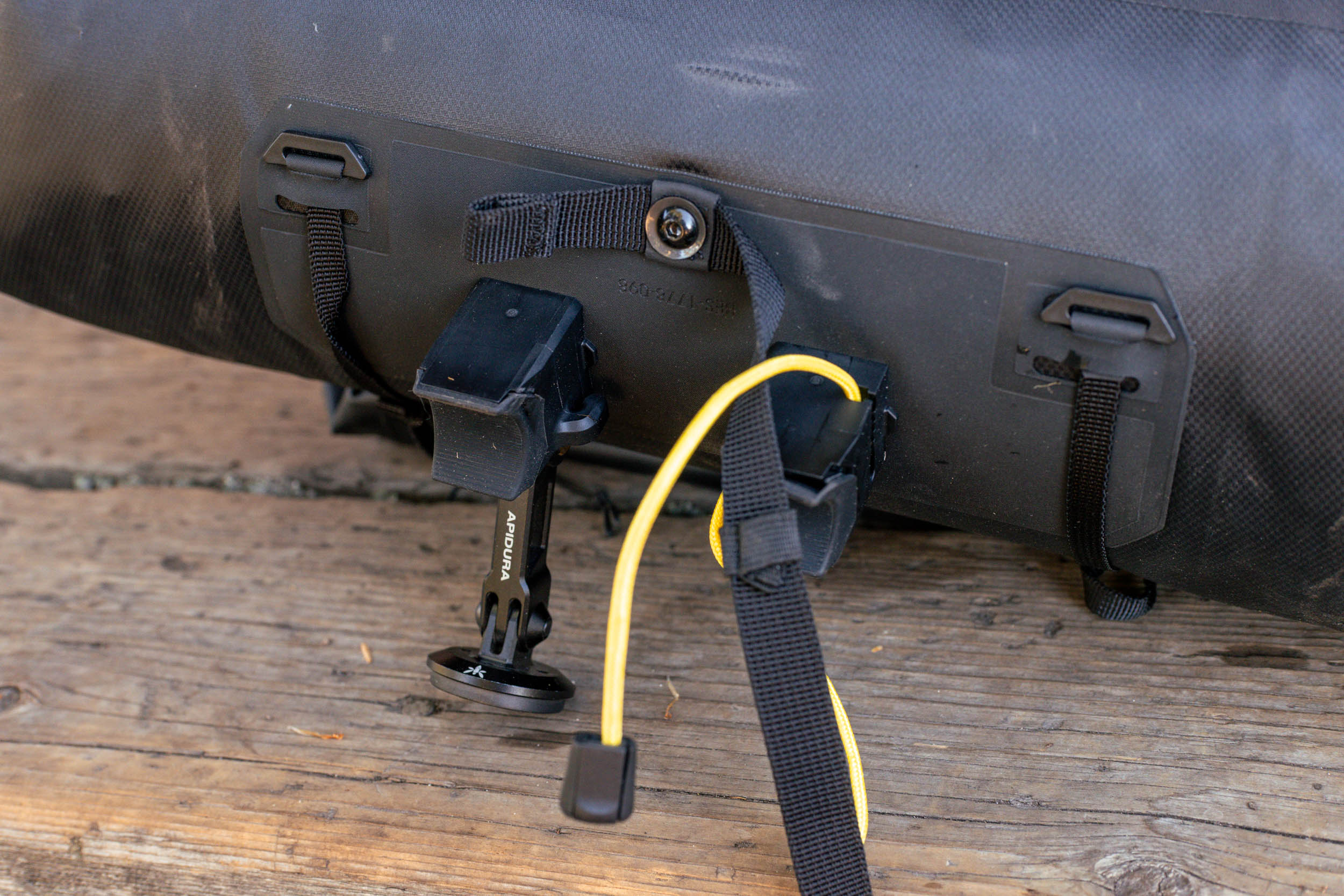
The biggest change is the attachment system. The basic straps have been replaced with an interesting tool-free mounting system made up of two mounting/space blocks, a stability cord, and a pre-load strap. The blocks that connect with the handlebar, or “BarSpace modules,” as Apidura calls them, bolt to an internal plastic cradle on the back of the main roll. You can mount them in two positions, depending on how wide your stem is. In the narrow position, the blocks are spaced 4.5 centimeters apart, and in the wide position, they are 6.9 centimeters apart. The yellow stability cord loops around a hook on the right module, runs under the stem, and hooks into the left module, preventing the entire system from rotating down toward the front tire. Finally, the pre-load strap pulls the system toward the front of the bike, preventing the bag from bouncing up and away from the tire.
Once set up, you can quickly remove the entire bag by disconnecting the pre-load strap and unhooking the right side of the stability cord. To reinstall, hook the stability cord back in place and cinch down the pre-load strap. It’s easy enough to do at camp to make packing the roll easier, which is a common complaint with more basic all-in-one handlebar rolls. It also has an integrated air purge valve, which Apidura calls its SoftVent Air Valve, built directly into the fabric layers instead of requiring extra hardware.


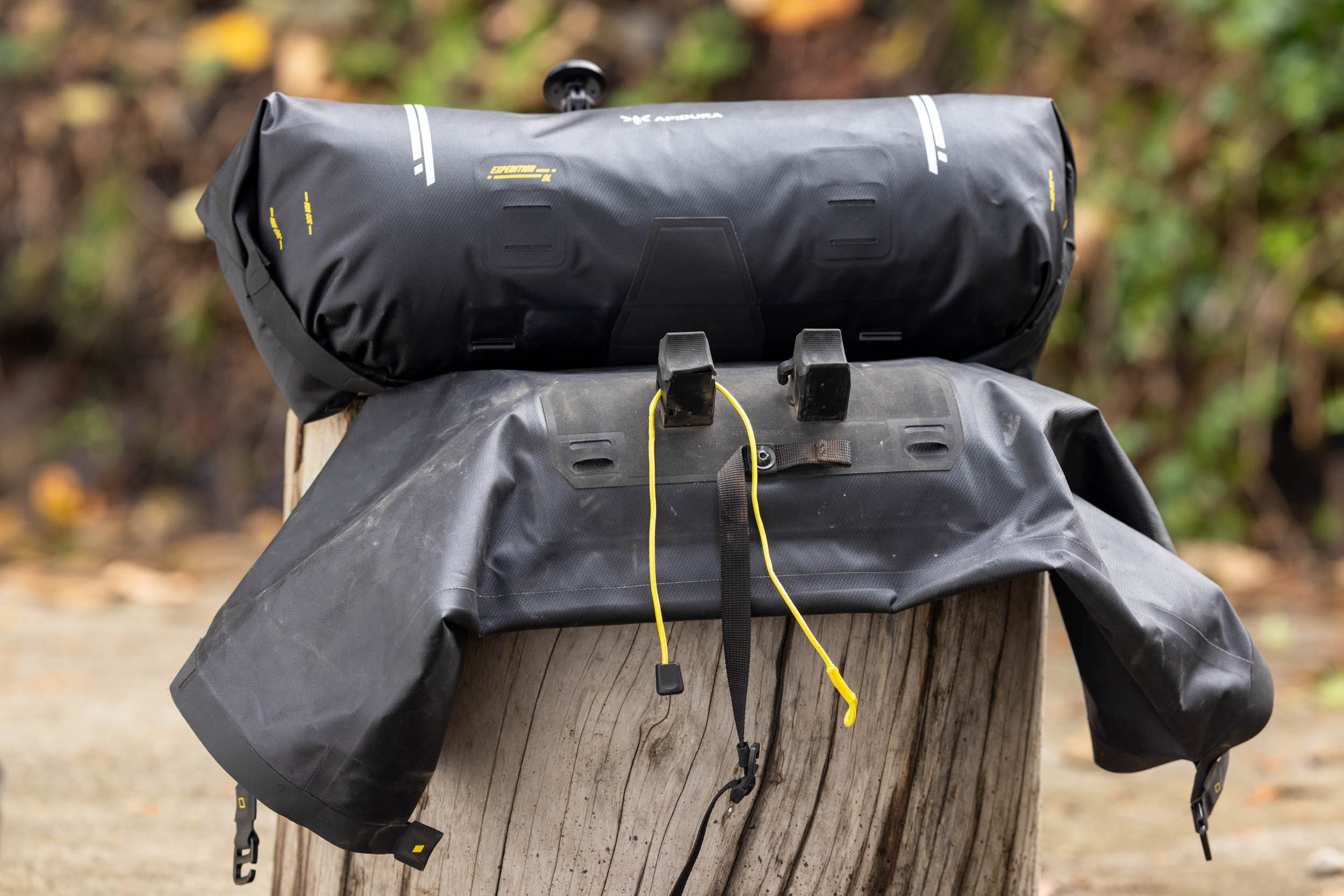

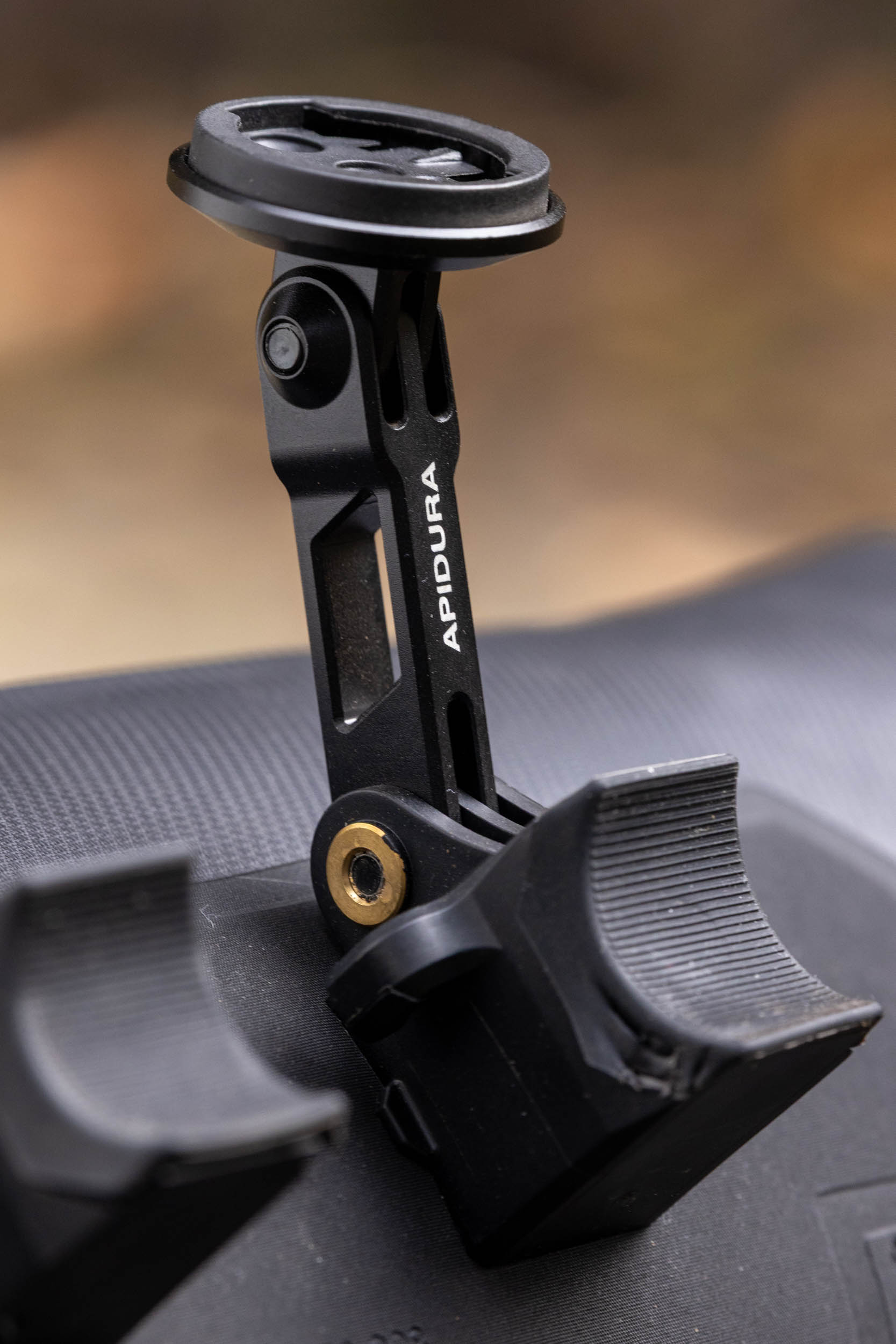
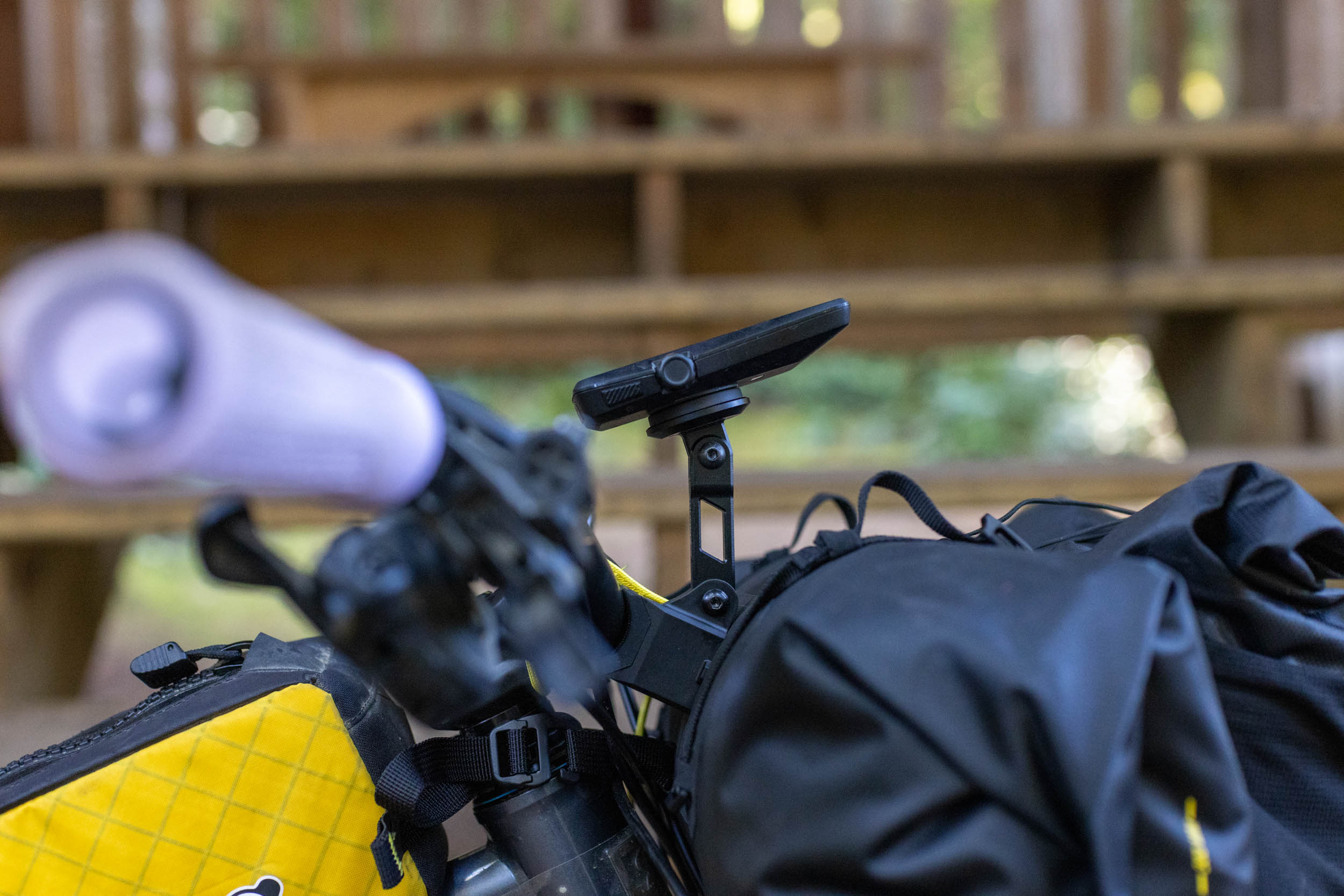
Each module, or mounting block, has three-prong, GoPro-style mounting points on top that let you attach the system’s GPS mount and Accessory Arm off the bars. With the Accessory Arm, you can mount a light and position it over the top of the roll. For additional storage, the handlebar system also has an Expedition front cargo mesh and an Expedition Accessory Pack. These optional components expand carry capacity and can convert into wearable, on-body storage.
The roll-top closures at either end of the bag have also been updated. The standard side-release buckles have been replaced with roll-down ends that snap together with internal magnets and then secure back down to the roll with a G-hook buckle. The bag has markings on both ends to make it easy to get even rolls on each side. The Expedition Handlebar system comes in both 9- and 14-liter options, weighs 436 and 448 grams, respectively, and costs $228 and $248. I’ve been using the 9L version.
Handlebar Rolls Compared
The Expedition Handlebar Pack’s unique mounting system makes it hard to compare with most all-in-one handlebar rolls, as most use straps or a fully rigid bolt-on bracket system to attach to the bars. It’s on the heavier end of most waterproof roll systems, with one of the only heavier options being the 700+ gram Tailfin Bar Bag System. Most are very light, and the ones made by smaller brands aren’t fully waterproof. The Expedition Handlebar Pack is also more expensive than every other bag below except Tailfin’s, and a handful of the options are made in North America, if that’s important to you.
| Product Model | Attachment | Weight | Price |
|---|---|---|---|
| Apidura Exp. Handlebar Pack (9L) | Stem/Pre-Load Straps |
15.4 oz
436 g
|
$228 |
| Tailfin Bar Bag (14.7L) | Bolt-On/Quick Release |
27.7 oz
785 g
|
$320 |
| Ortlieb Handlebar-Pack (9L) | Velcro |
13.2 oz
375 g
|
$170 |
| Dispersed Handlebar Roll (9L) | Voile Straps |
11.5 oz
325 g
|
$175 |
| Arkel RollPacker (15L) | Cradle/Load Straps |
24 oz
680 g
|
$182 |
| Apidura Backcountry Handlebar Pack (11L) | Webbing Straps |
9.5 oz
270 g
|
$180 |
| EVOC Handlebar Pack BOA (9L) | Straps/BOA System |
13.4 oz
380 g
|
$175 |
| Miss Grape Tendril 8 (10L) | Webbing Straps |
8.5 oz
240 g
|
$140 |
| Venture Handmade Kilo (12.5L) | Webbing/Velcro |
13.9 oz
396 g
|
$190 |
Thoughts from the Trail
At first, I was skeptical that the cantilevered mounting system could hold the handlebar bag steady. Like Jack the Rack, these attachment methods often have some play and aren’t well suited to rough terrain and singletrack. Rogue Panda’s Blueridge Cradle was the last handlebar system I used extensively, and it has virtually no movement at all, so I worried the Apidura bag would disappoint me.
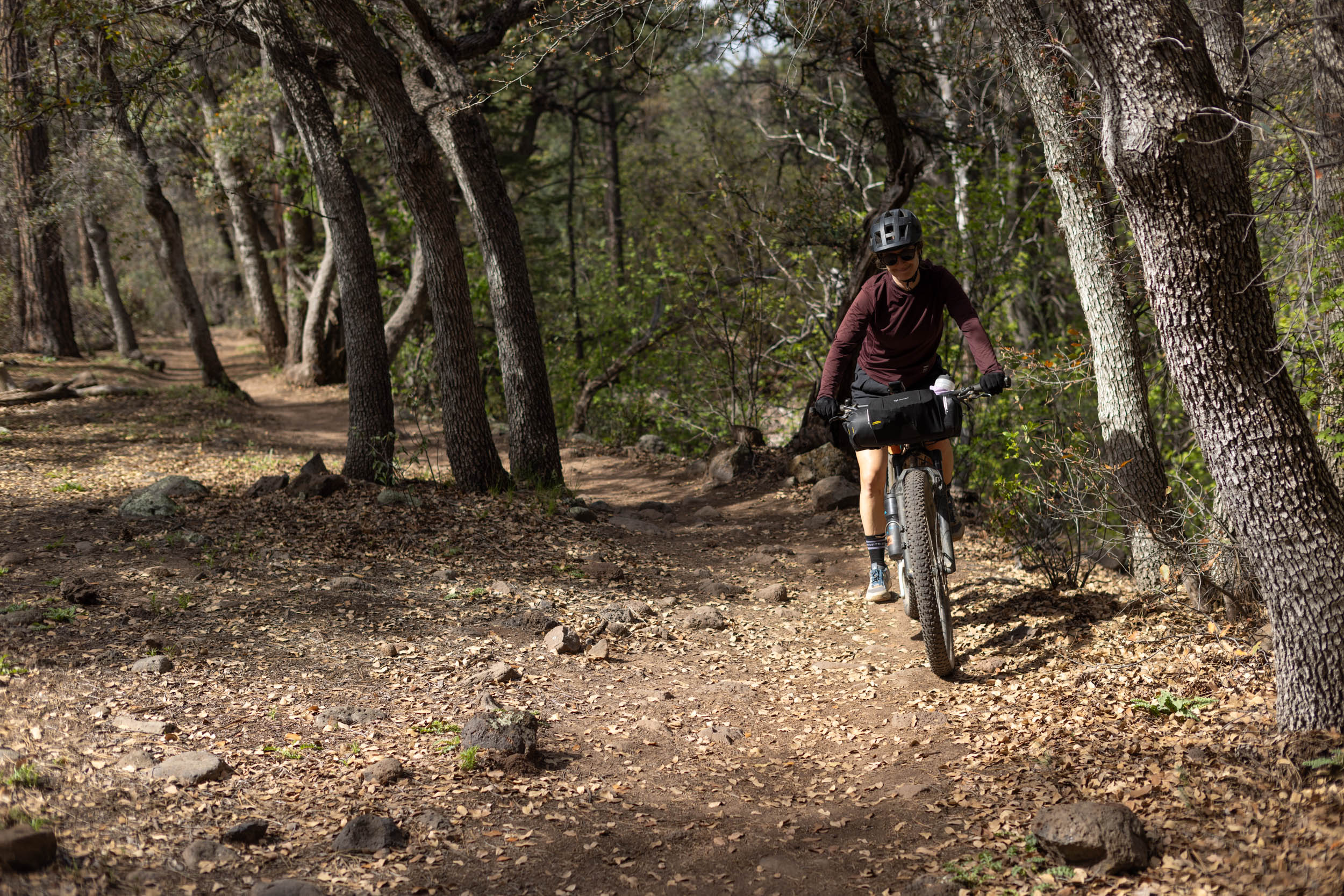
However, after a few bikepacking trips, including an overnighter scouting the Highline Trail Overnighter and a ride on the Powell River Sampler back home, I was pleasantly surprised at how stable I could get the bag. With no bolts or clamps to manage, once the initial setup and positioning of the yellow load strap is locked in, it’s quite easy to remove and install the bag. This proved important because the openings on either side of the bag are small and awkward to pack on the bike.
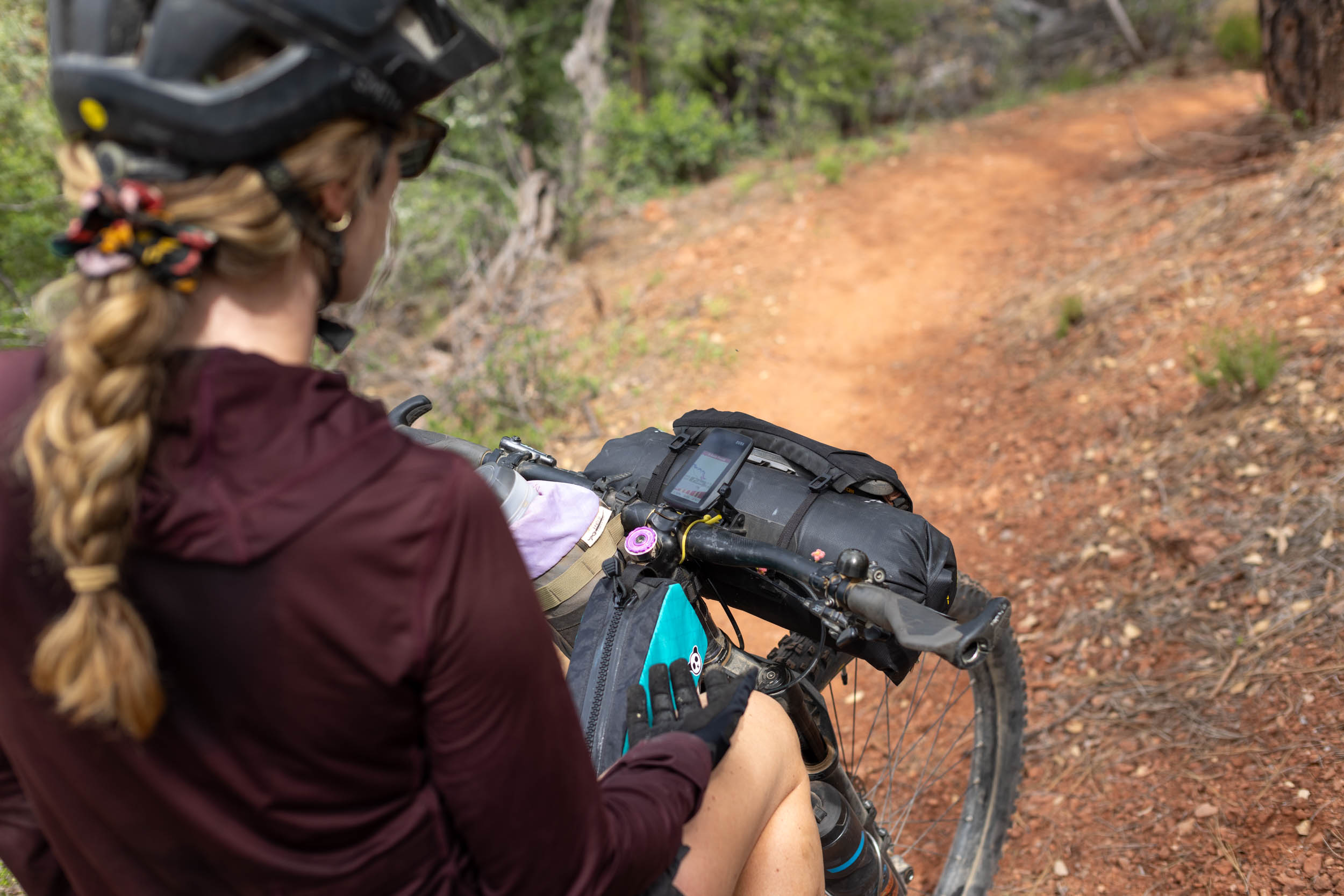
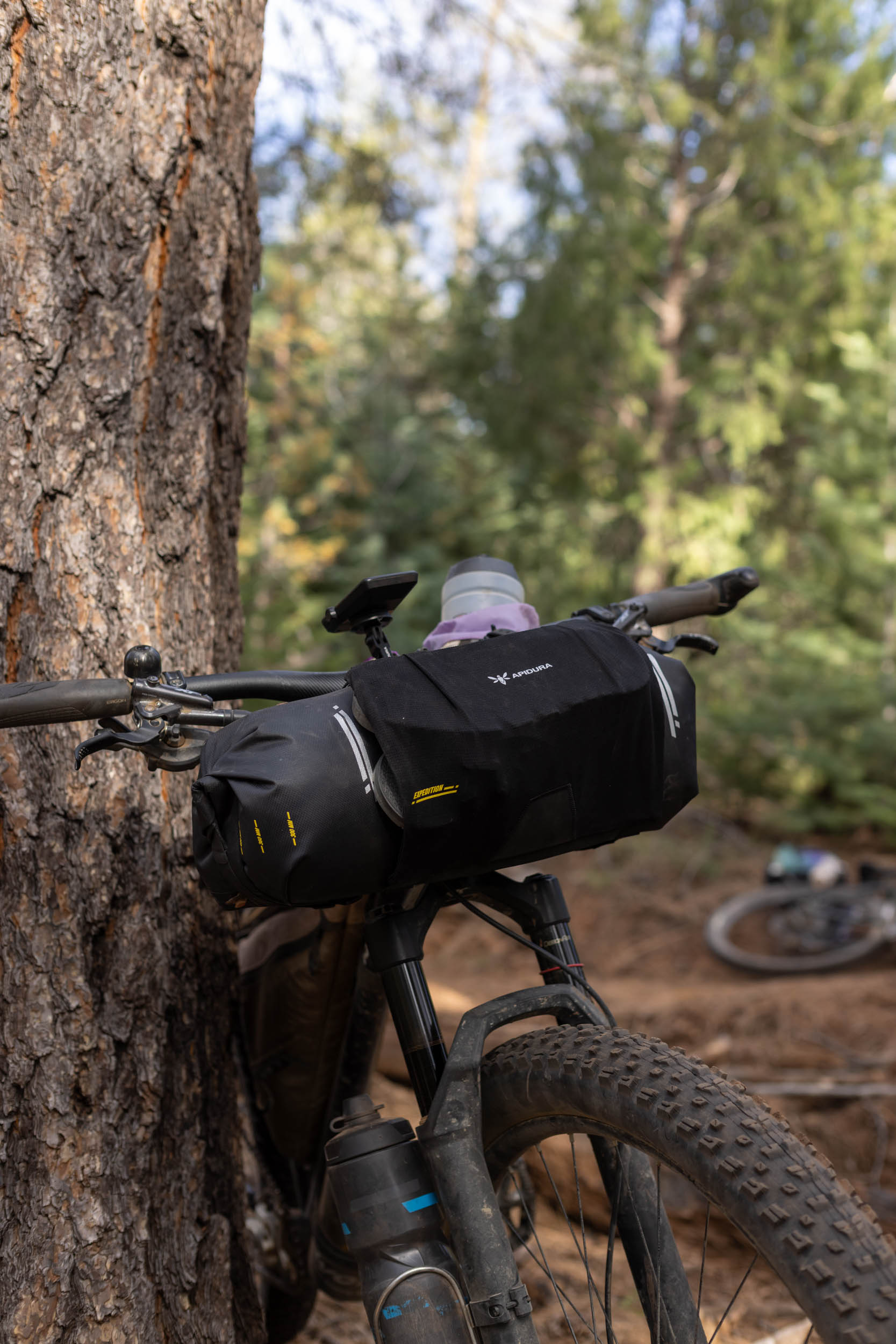

With the pre-load strap pulled tight, there’s very little movement. The mounting blocks provide just enough room between the handlebar and the bag without pushing it too far away from the bike. Because of its stability, I ended up using the three-prong mounts for my GPS device and liked having it sit higher off my bar. I didn’t use it with a front light, but being able to mount one higher above the front bag is a huge advantage over handlebar-mounted systems that are often obstructed by the bag itself.
Although I eventually got the hang of the roll-end, G-hook closure, I can’t say I was a fan. Trying to line up the magnets before hooking the buckle onto the roll felt awkward, especially with the G-hook loops positioned on the underside of the roll. The closure kept the bag tight, but I think a standard roll-top with a center buckle would have done the same.


Growing Pains
I like the idea of optional front pockets, giving users extra packing space when needed, but I could never get over how they attach to the bag. At the base of the pocket, two raised plastic lips slot into channels on the bag itself. In theory, this works, but because they both slide in from the inside out, you have to awkwardly bend the pocket or the roll to line them up. The top of the pocket attaches using two included adjustable webbing straps, which pull the pocket firmly against the roll.
On the first bag I was sent, I was able to tear the cord loops right off the top of the pocket, which Apidura said might have been a pre-production model. I could also easily rip off the electronic port cover on the new top tube bag they sent, and they gave a similar answer. While these could have been growing pains with pre-production versions of the bags, the mix of laser-cut fabrics and glued components can be problematic.
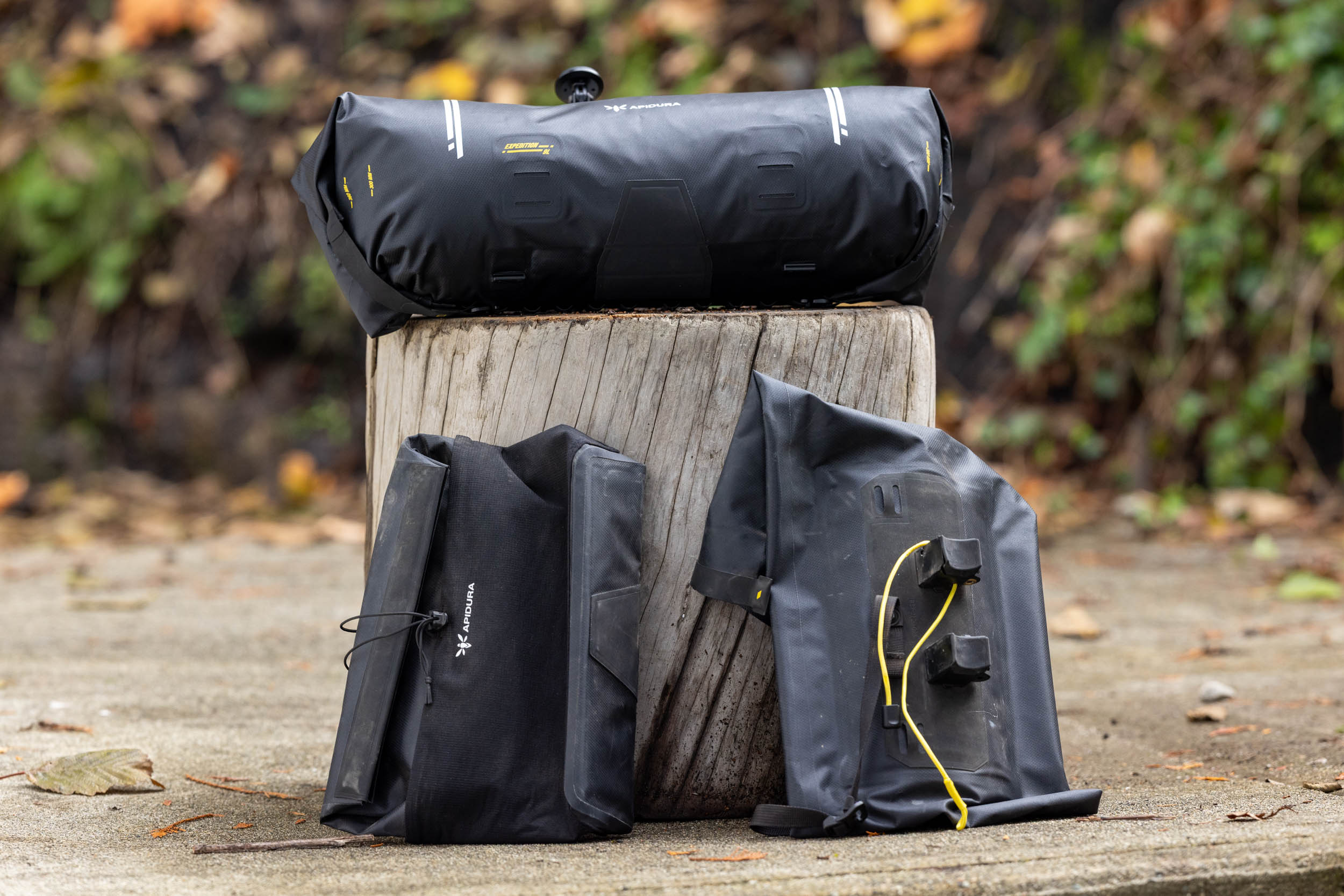

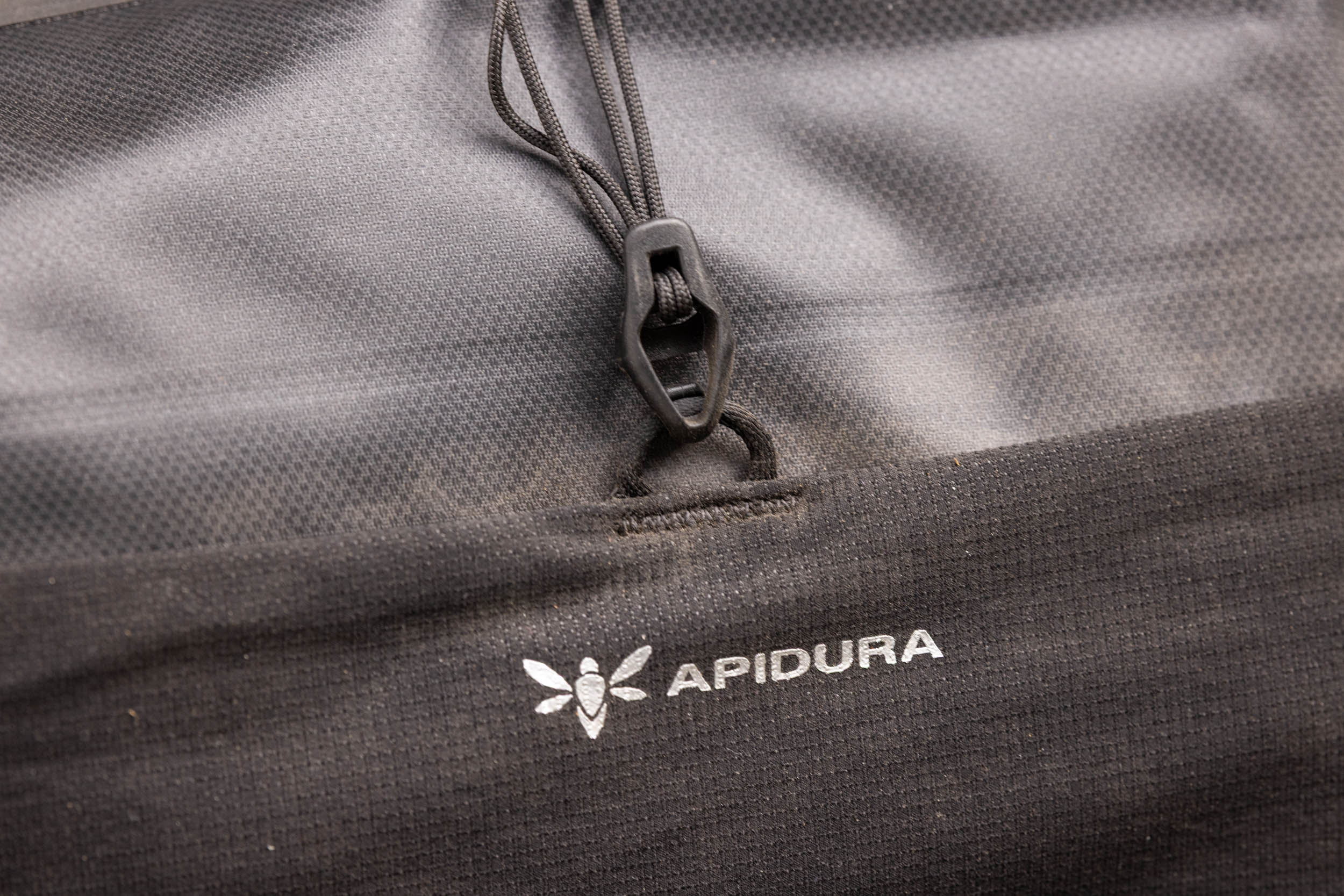

I also found the tiny plastic hook and webbing loop on the front of the Front Accessory Pack tricky to secure after opening, which seemed out of place for what should be a quick-access bag. Thankfully, a magnetic strip in the roll-top opening keeps the contents secure, even if the front strap isn’t tightened. The optional Front Cargo Mesh pocket is a slimmer, pared-down version with an easy-access magnetic opening and Ultra Stretch mesh sleeve. Still, you access it via a zipper on the inside of the pocket, so I found I needed to loosen the two upper straps to get to it. All things considered, I wasn’t particularly impressed by either optional pocket and saw room for improvement.

My only other complaint is that the dry bag openings are slightly too small, and the interior is a touch grippy, which makes it hard to stuff bulky, lightweight gear like sleeping bags into. This is especially difficult with the bag still on the bike, so I’d sometimes remove it to pack up at camp—not something I tend to do with all-in-one roll systems. On the 9L version I’ve been using, the opening is 6 inches (15 centimeters) wide, so unless you really don’t need the extra space, I’d suggest sizing up to the 14L, which has a one-inch-wider opening but the same length as the 9L model.
- Capacity: 9L / 14L (Handlebar Pack, no pocket)
- Material: 3-Layer Laminate
- Weight: 436 grams
- Place of Manufacture: China
- Price: $228+ USD
- Manufacturer’s Details: Apidura.com
Pros
- Hardware-free, cantilevered mounting system is surprisingly stable
- Two sizes and optional front pockets to fit different needs
- Three-prong mounting points for lights and GPS mounts is a nice touch
- Front Accessory Pack adds a useful amount of storage
- Quick to remove/install once the load strap is installed
- Waterproof
Cons
- G-hook/magnetic closures on either end aren’t practical
- Small dry bag opening at 9L model can make packing awkward
- The front pocket attachment and closure could use some work
- Expensive
Wrap Up
The updated Expedition Handlebar Pack is a clear step forward from the original Expedition line, released a decade ago. The hardware-free mounting system, integrated GPS/light mounting options, fully waterproof construction, and optional front pockets are all promising features for anyone looking for an all-in-one bag. There’s a lot to like. However, I can’t help but imagine the system as a cradle, which theoretically exists inside the dry bag itself. A removable dry bag would have meant easier packing at camp, the ability to use different-sized bags, and competition with the latest wave of cradles, like the Rogue Panda Blue Ridge and the new Revelate Designs Hammerhead Harness.
Further Reading
Make sure to dig into these related articles for more info...
Please keep the conversation civil, constructive, and inclusive, or your comment will be removed.