


 Mountain Bike (MTB)
 Gravel Bike
 All-Terrain Bike (ATB)
 Fat Bike



Hunter Cycles Cargo Rack Review: When Something Clicks





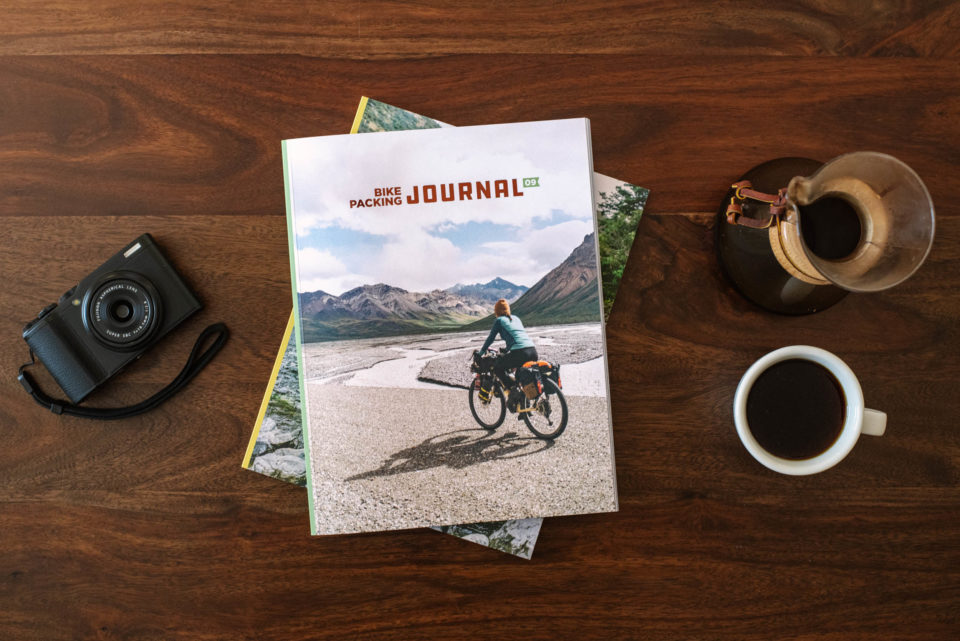
Rick Hunter has been refining racks for decades, but his new Hunter Cycles Cargo Rack feels like one of those rare designs that just clicks. With built-in cargo cages, axle mounts, clever strap-keepers, and a modular chromoly construction, it’s a minimalist’s dream for carrying extra water, food, or gear without compromise. After a few trips with it, we’re convinced it’s one of the smartest and most versatile bikepacking racks out there. Find Logan’s full review here…
PUBLISHED Aug 20, 2025
Every so often, a familiar component gets reimagined in a way that feels so obvious you wonder, “Why didn’t someone already think of that?” That was my reaction when I saw the new Hunter Cycles Cargo Rack in June. I ordered one straight away, and after a few trips with it, I can say it more than lived up to expectations. Read on for my detailed review.
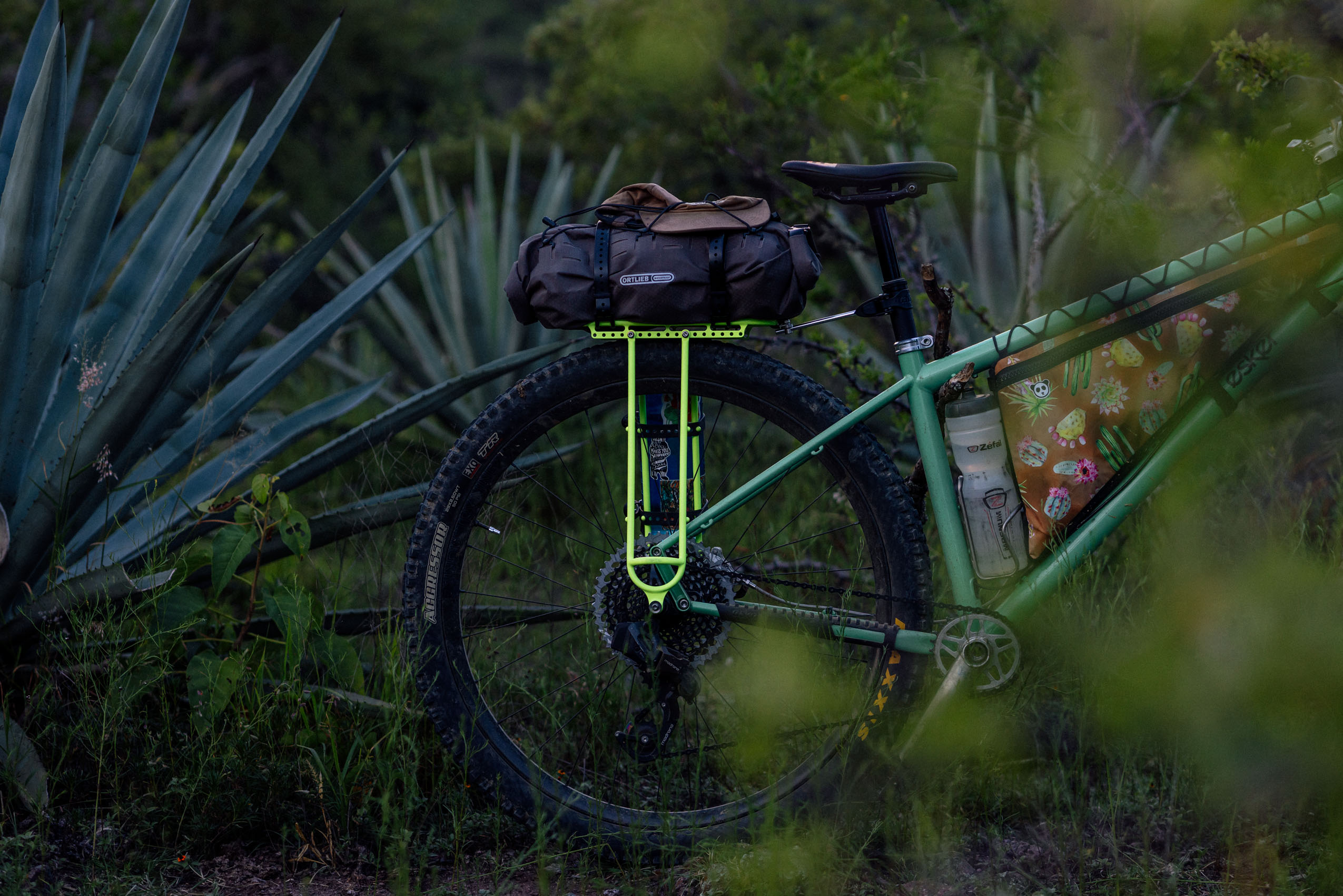


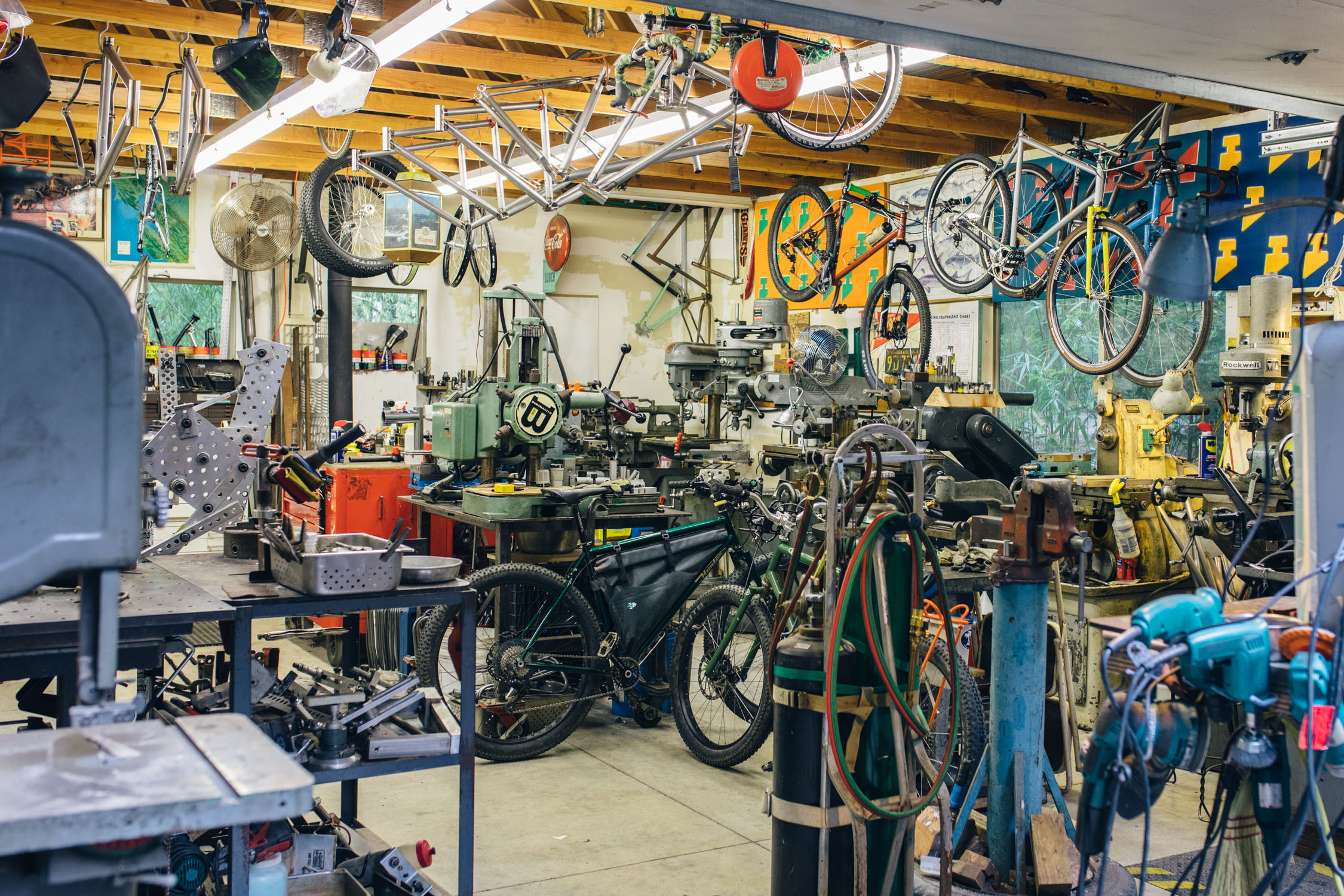
Longtime framebuilder and touring gear tinkerer Rick Hunter has built countless racks over the years—everything from custom carriers for his frames to the Cow Catcher cradle and the legendary Mr. Fusion mini-racks. He’s been refining this particular design since 2021, testing prototypes on trips and experimenting with clever details like a rotating crossbar platform that resulted in a half-pizza rack when mounted to the front.
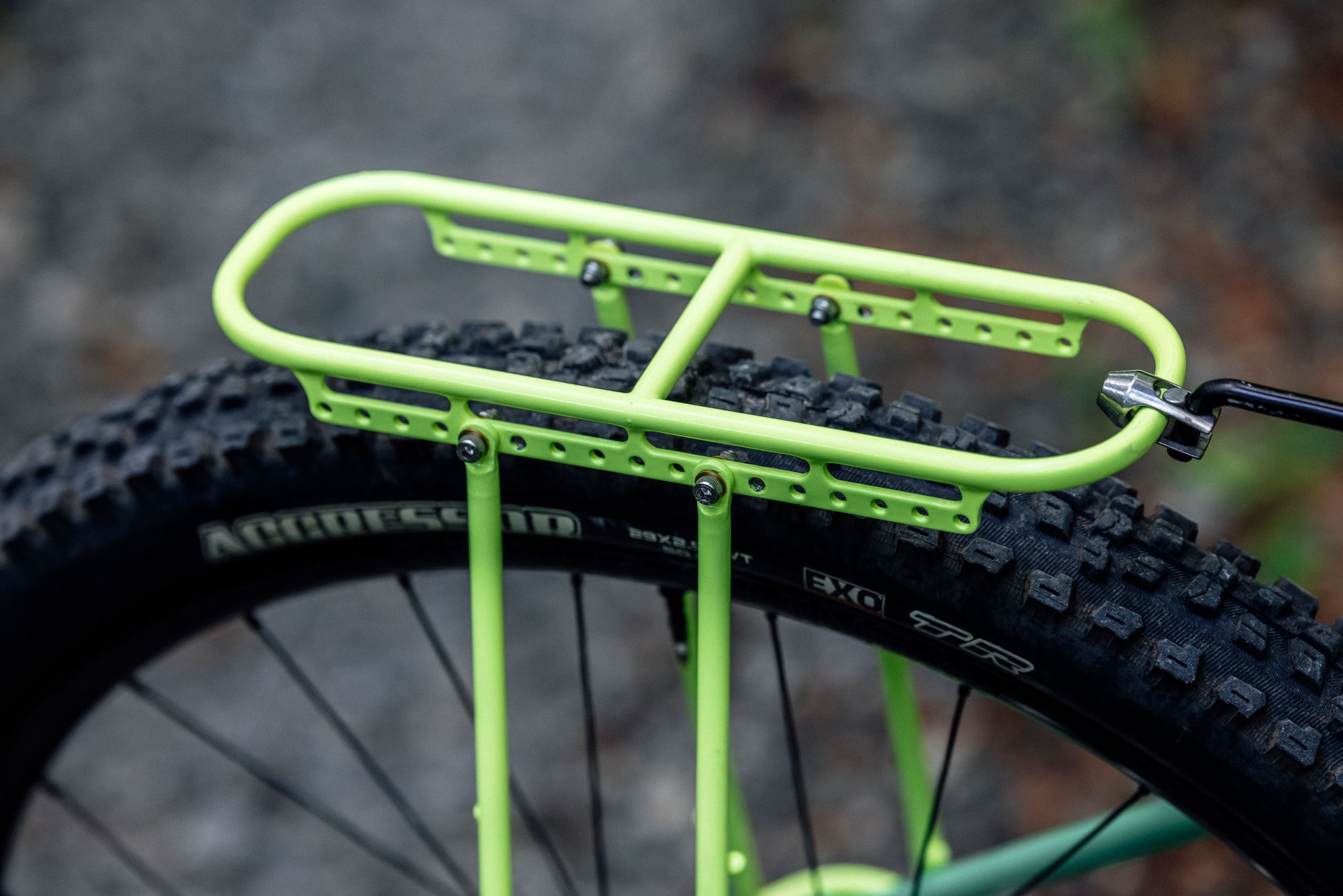
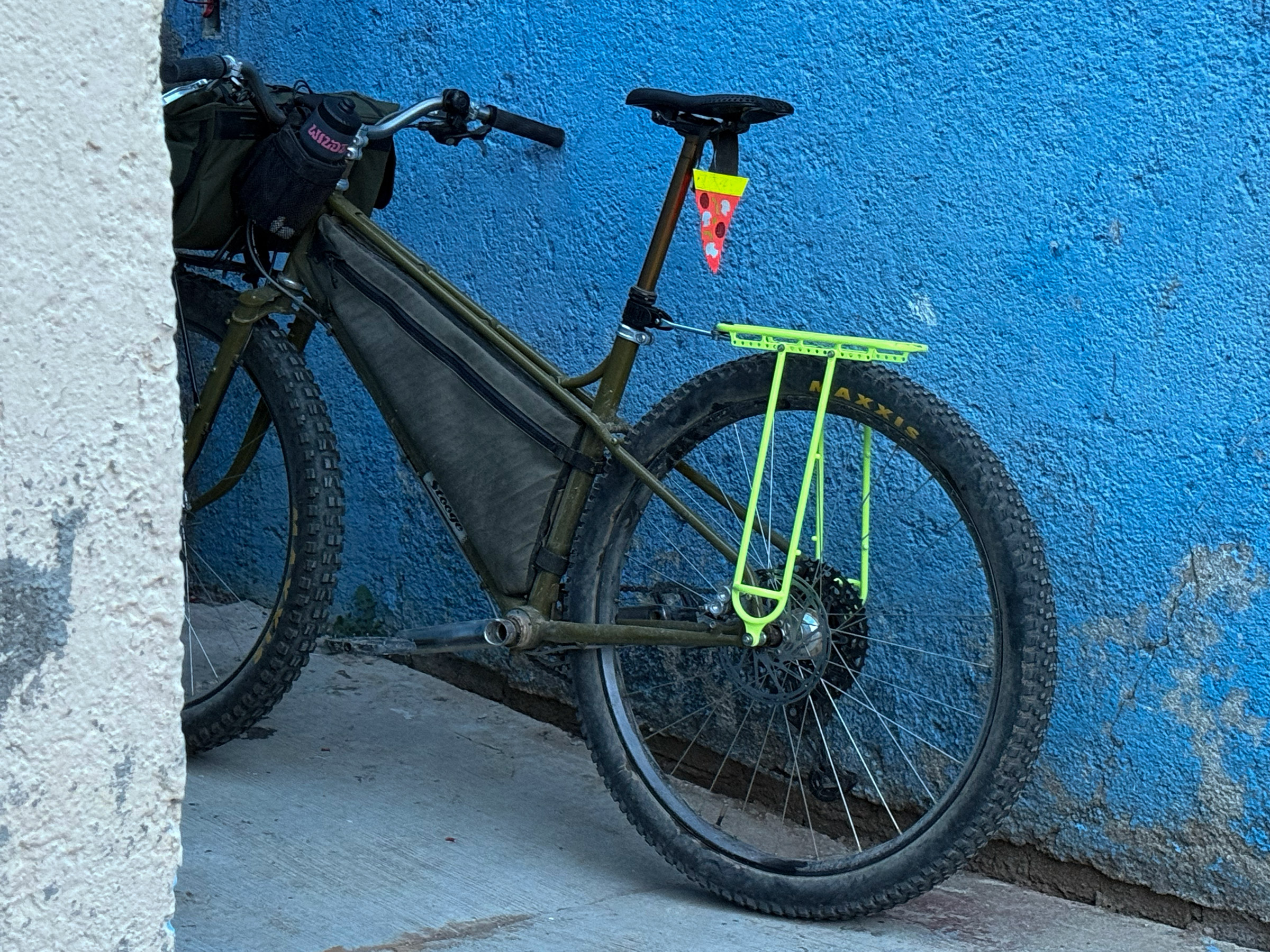
The final version, simply called the Hunter Cycles Cargo Rack, was released in a small batch this summer. Handmade in Tulare County, California, it clears 29+ tires, is constructed largely from 10mm chromoly steel tubing, and comes in three pieces, making it a modular design for easy shipping and transport. It features a 4 x 12″ (10.2 x 30.4cm) top deck that has about 13cm of fore–and–aft adjustability via integrated drilled brackets. The rack weighs 575 grams without struts or the axle.

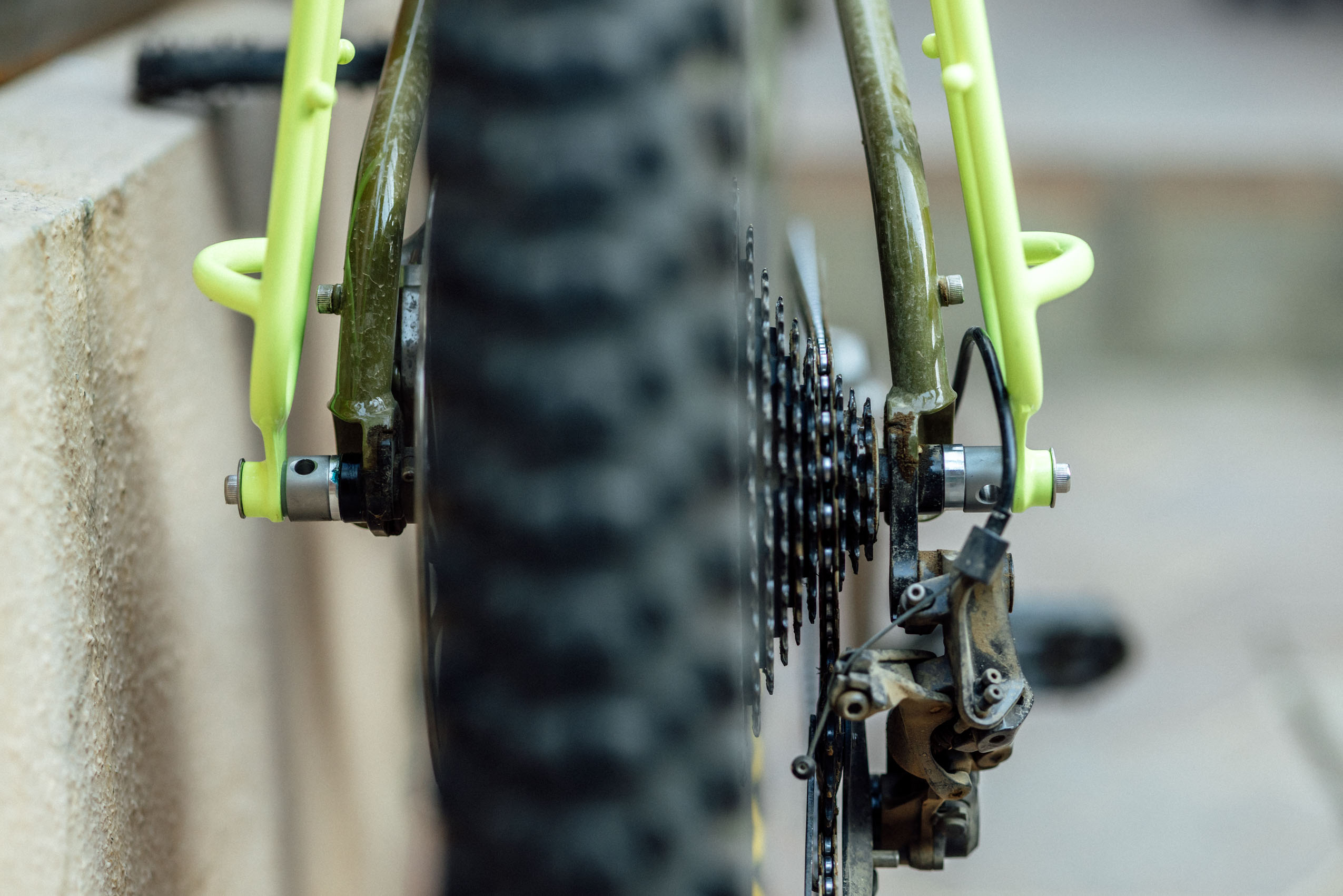

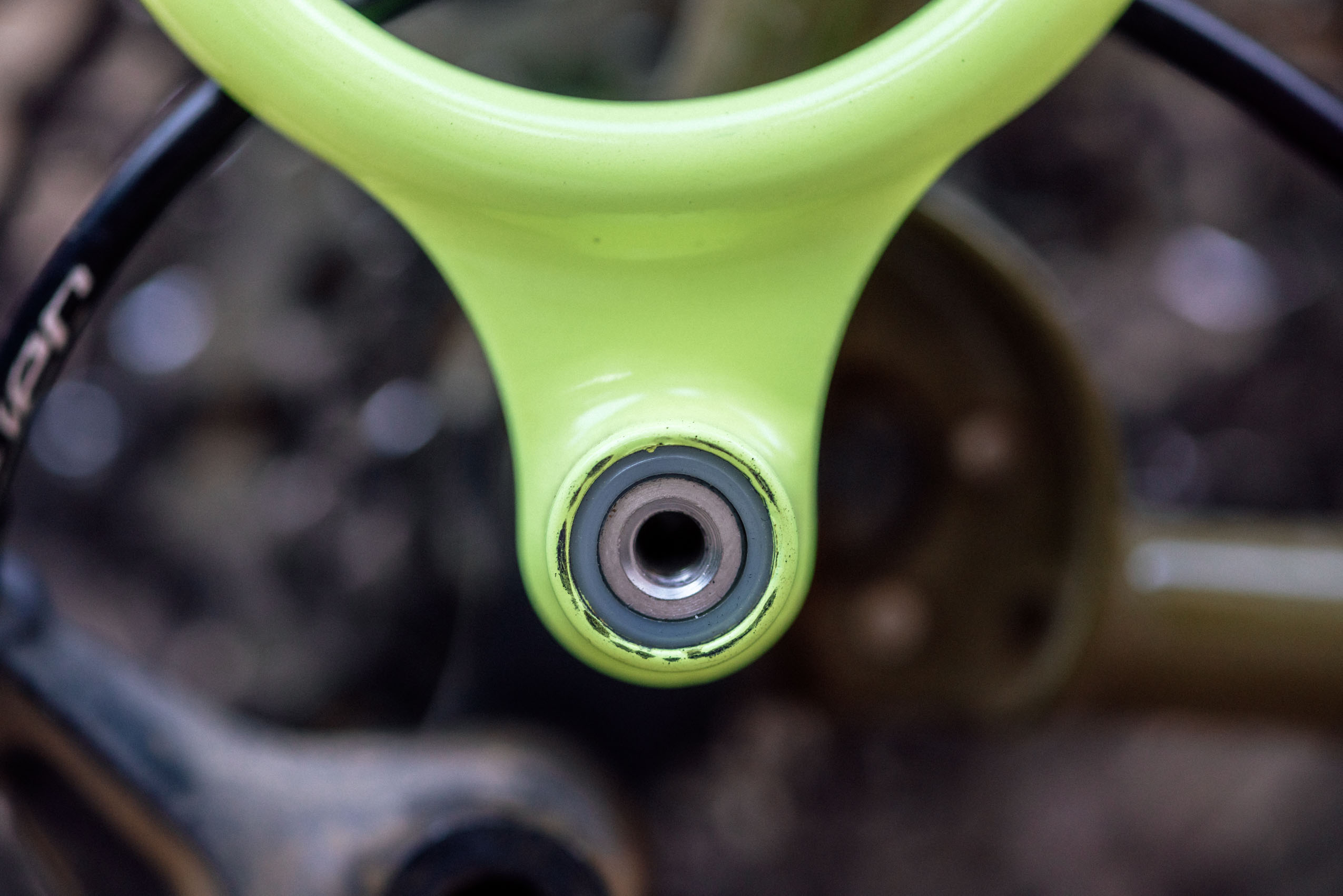

It’s a smart design, and once bolted down, it’s very sturdy and stable. Rick didn’t provide a load rating, but it has circular feet with a plastic bushing that snugly mounts to a Robert Axle Project/Old Man Mountain Fit Kit—a thru-axle with external threaded studs, which puts the load on the axle. Considering that Old Man Mountain increases their own Divide Rack’s load rating from 55lbs/25kg to 70lbs/31.75kg when axle-mounted with one of these Fit Kits, it’s fair to assume that they’re designed to carry a heftier load than standard rack eyelets. At any rate, I’m plenty confident that the Hunter Cycles Cargo Rack would be fine hauling a heavily laden dry bag and oversized water bottles on each cargo mount.
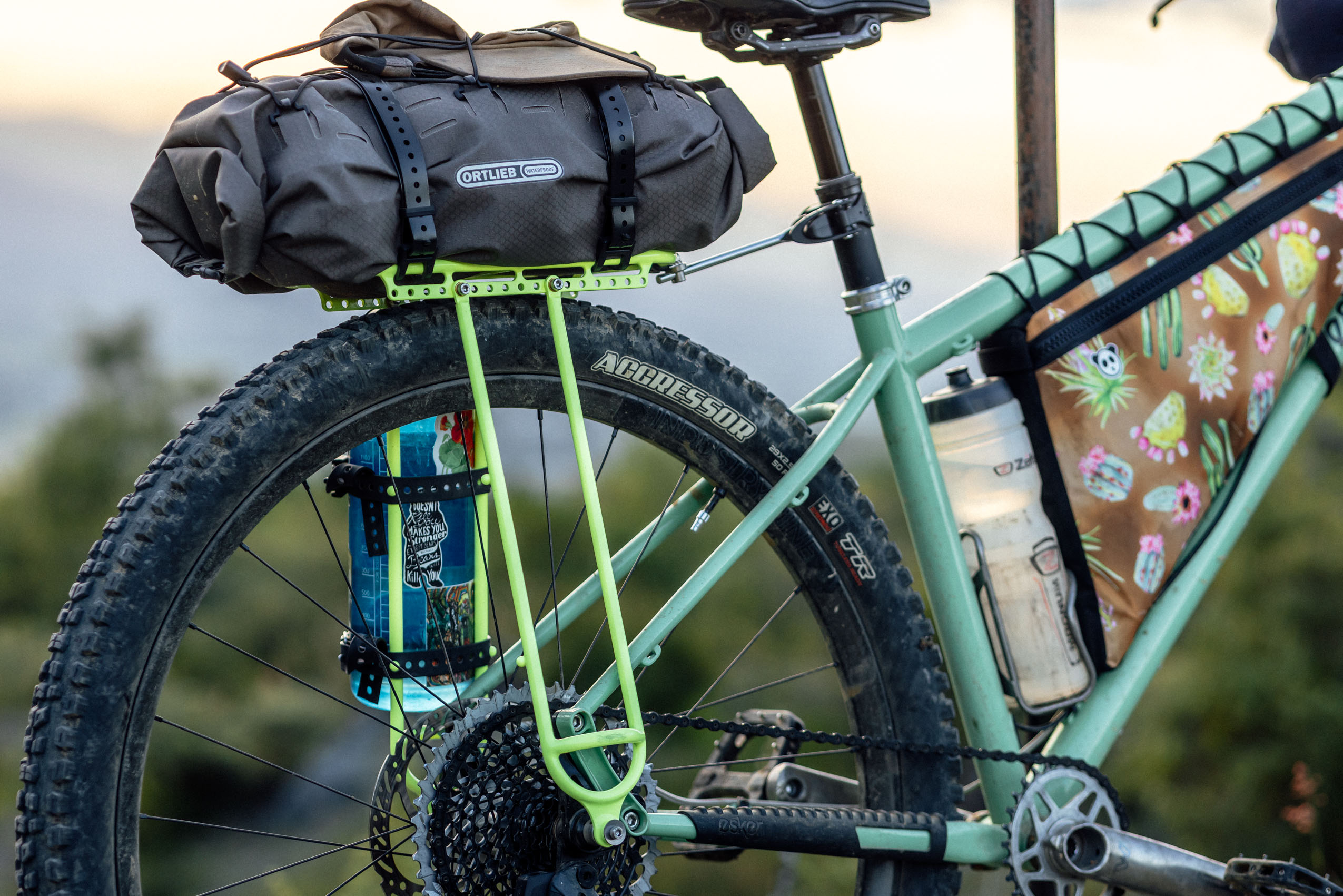

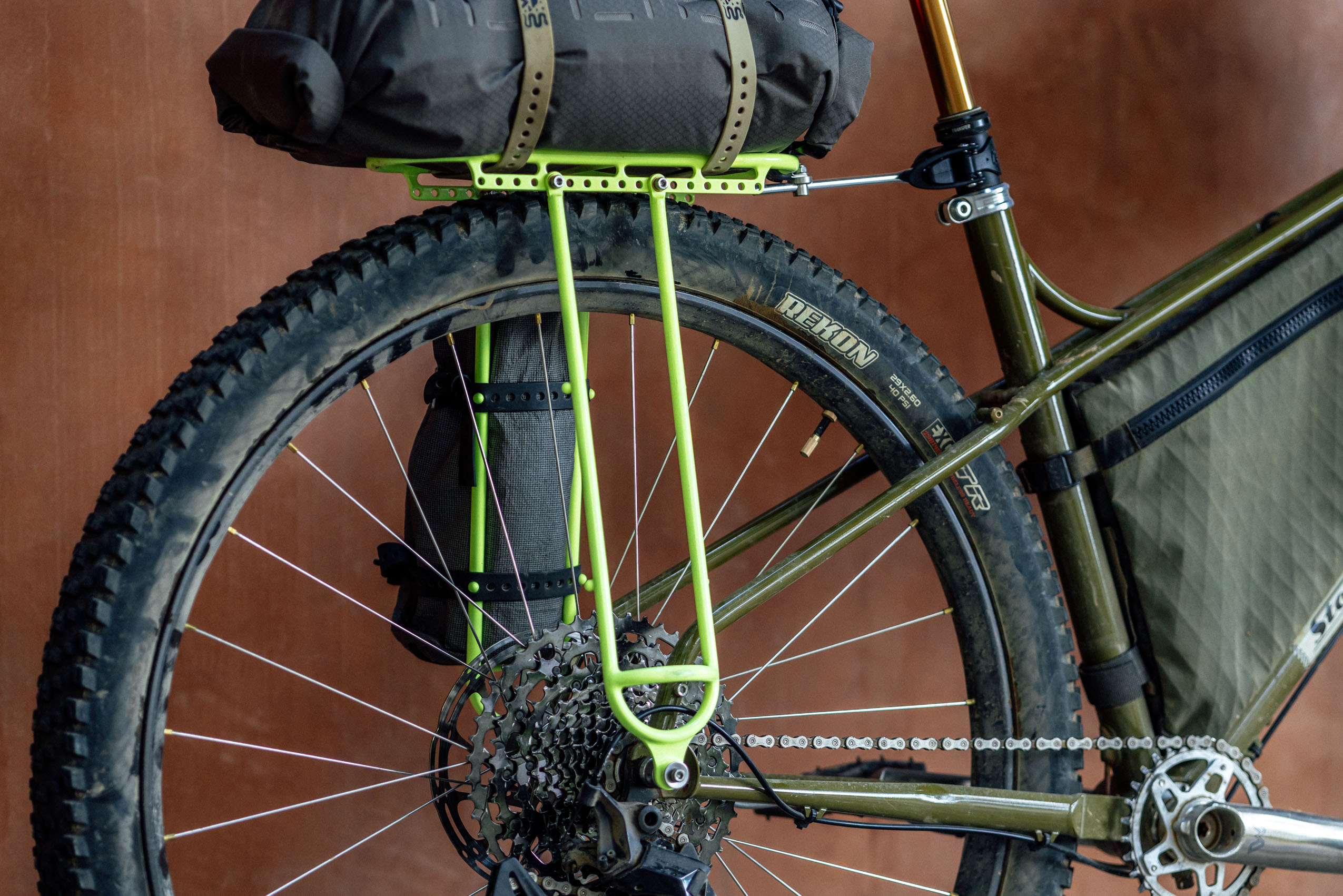
That leads me back to what triggered my quick-draw order of the Cargo Rack: my favorite rear rack packing system. I use mini-panniers on occasion—this rack can also handle them—but I prefer a more minimal method: mounting a roll-top bag on the platform and then using the uprights to carry backup water or food. Back in 2013, before there were racks that came equipped with eyelets on the legs, I hacked an old Tubus Vega to mount two bottle cages using P-clamps, aluminum stock, and a riv-nut setter. My goal with this system was to use the rack to support a bag and carry supplemental water while riding from Cape Town to Tanzania. When I didn’t need the surplus H2O, those bottles remained empty, and between the cages and bottles, there wasn’t much of a net weight penalty.
Since then, I’ve employed a similar strategy with the Tumbleweed T Rack and Old Man Mountain Elkhorn—two racks outfitted with three-pack mounts on the uprights—bolting lightweight cargo cages on each side for additional water capacity or to carry small dry bags for food overflow. The beauty of the Hunter Cycles Cargo Rack—and the reason it clicked for me when I first saw it—is that it was designed exactly for this type of flexible setup.

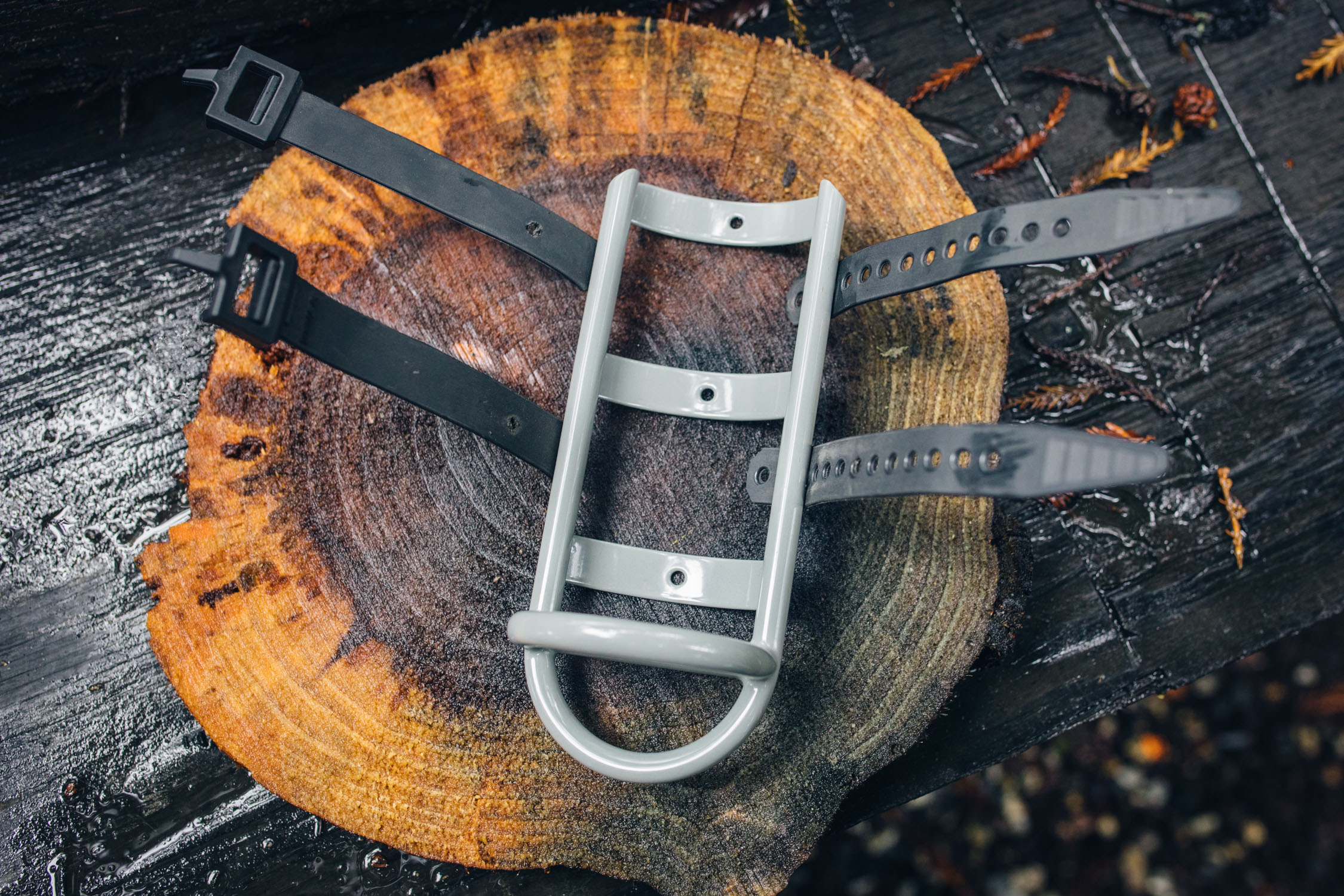
Rick tackled this by integrating two built-in cargo cages and an ingenious strap-keeper system. On each side, U-shaped vertical leg struts mimic the width of a cargo cage, eliminating the need for additional eyelets and cages. There are two pairs of small strap retention balls—aka NUBZ—on the legs to keep Voile-style TPU straps in place, and a built-in arced cage foot to support whatever cargo is strapped onto them. The design is flat-out smart. The strap retention balls are sized perfectly to pop a standard Voile in place, and they make strapping and unstrapping a cinch. The semi-circular feet are sized to hold anything from a large Klean Kanteen to a small one- to three-liter dry bag. I’ve used it for both, and the system works perfectly. Additionally, the slots on the deck keep the straps and load from sliding, an issue I’ve had with other racks in the past.


My only complaint about the integrated cargo system is that I kind of wish there were three pairs of NUBZ on each side. They’re spaced about 12.5cm apart, which is great for strapping a large Nalgene, 700ml bottle, or a bag, but if you wanted to attach something smaller, like a tall-boy or small 500ml bottle, you’d be limited to one strap based on the spacing.
Either way, it should go without saying that this design is a huge advantage on arid routes like the Baja Divide, where two Nalgenes or large PET bottles can add three or four extra liters of water volume. The uprights are perfectly spaced to carry almost any sized bottle. On a recent trip in the arid Oaxaca Valley, where many of these photos were made, we crossed the valley and climbed up to a pass to camp. I strapped a 1.5-liter Nalgene on one side to carry enough water to make coffee the next morning and have a little extra to wet the whistle before rolling back down. The same mounts can just as easily be used for small cargo bags to carry overflow food. We’ve relied on this approach with fork mounts many times, as it makes it easy to adapt for long stretches without resupply or when water is scarce. Placing the weight low on the bike also helps maintain stable handling, even when running heavier loads. In my opinion, there’s no rack/cage combo that does it better than this one. Not only does it function well, but it eliminates the risk of bending a cage or damaging mounts in a crash or the inevitable bike tumble.
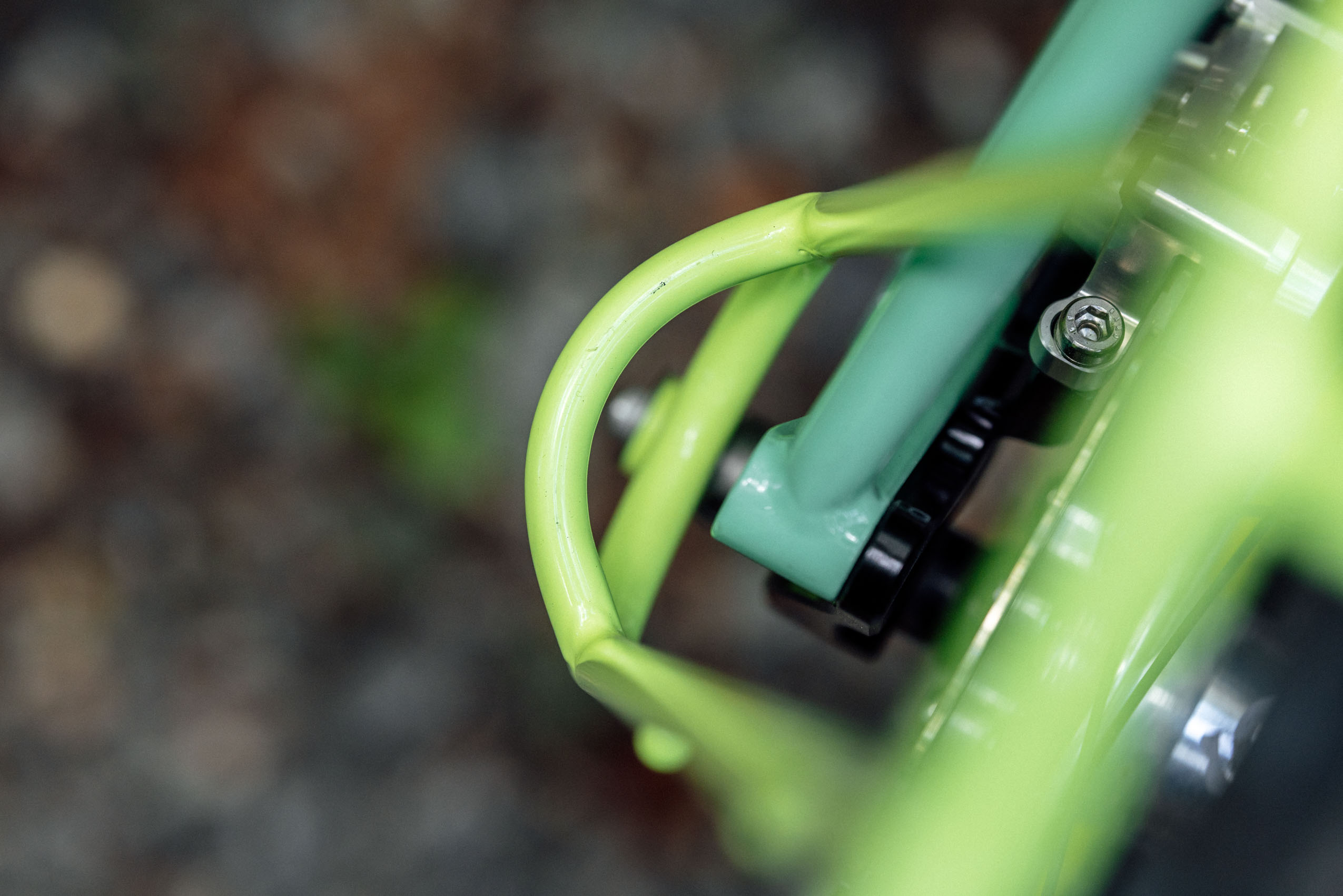

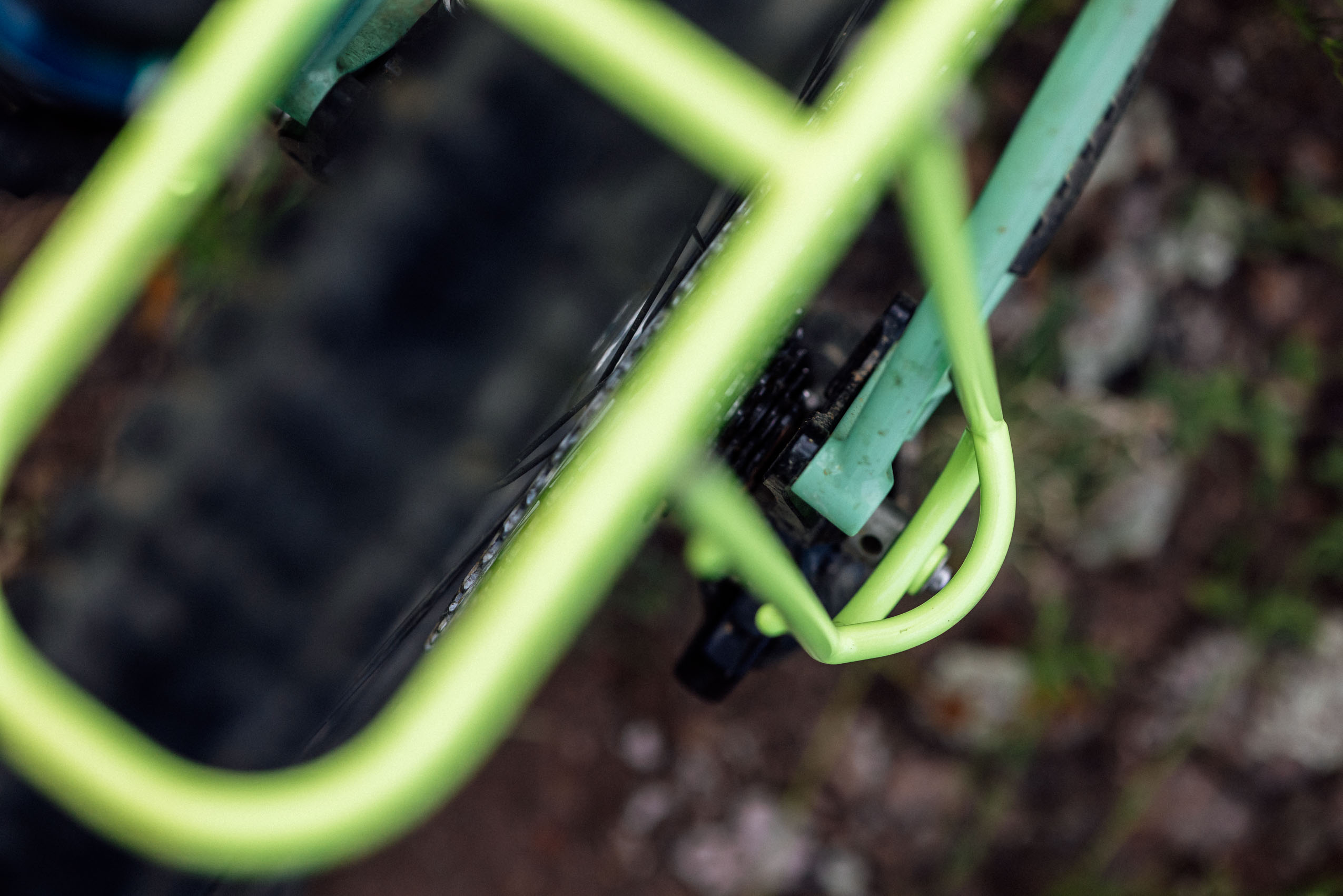

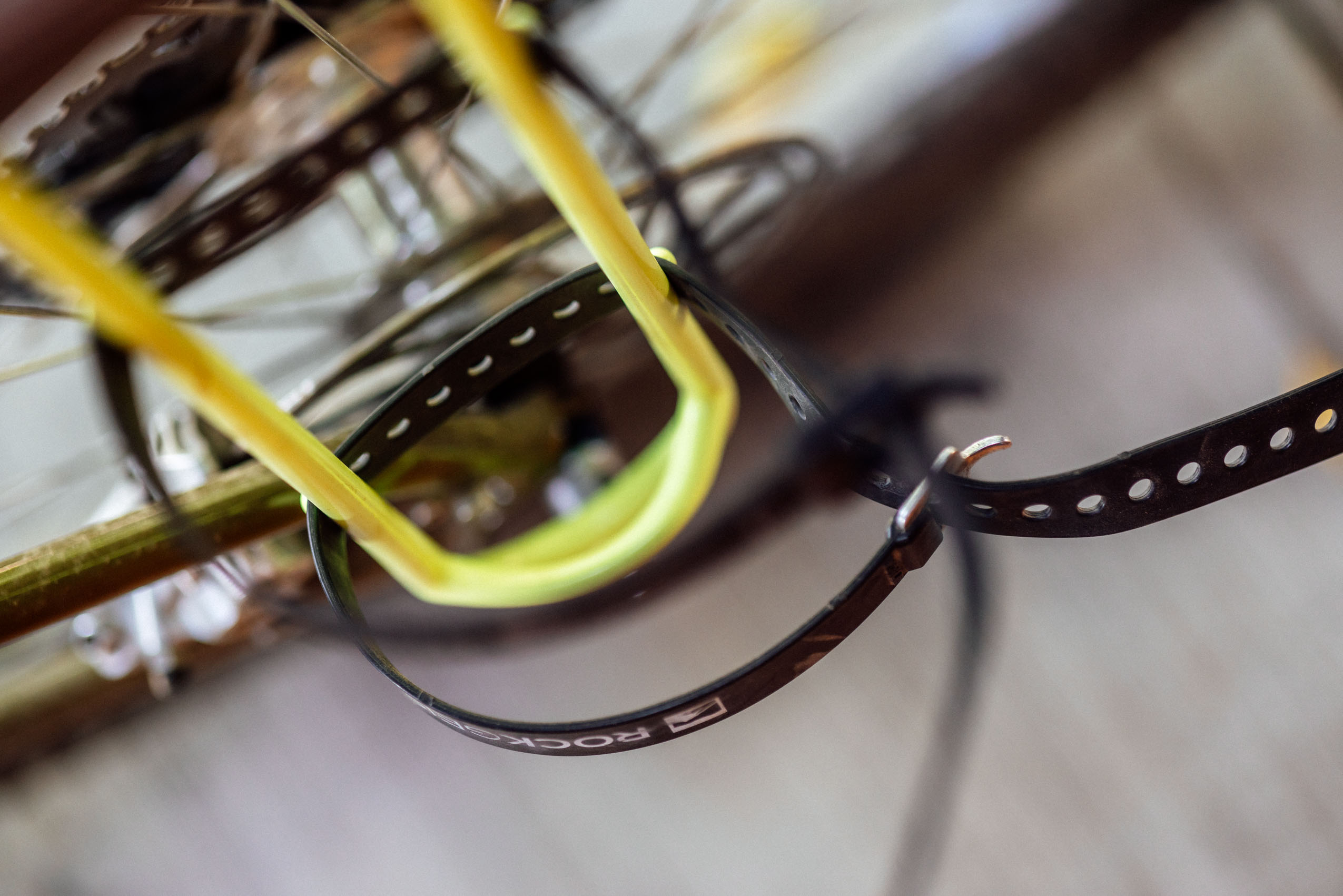
Another hidden benefit is that the rounded profile of the driveside “cage foot” acts as a derailleur protector in the event that your bike topples over or gets banged in a bike box. During my last flight with this bike, the box was beat to hell on arrival—thanks, American Airlines. I left the Cargo Rack mounted when packed, and as such, left the derailleur bolted on—I usually remove it when flying. No bent cage or hanger, and I’d confidently say that the rack and cage foot are owed a debt of gratitude!

Before you scroll down to the Conversation and complain about the price of this rack and the fact that $275 doesn’t even include the horizontal struts, let’s just take a deep breath. We already saw the comments play out on this, and I’d encourage you to remember that it’s handmade by a single person operating a small business. Plus, consider that it includes two heavy-duty cargo cages built into the legs; this feature should be factored into the cost and weight of the rack.

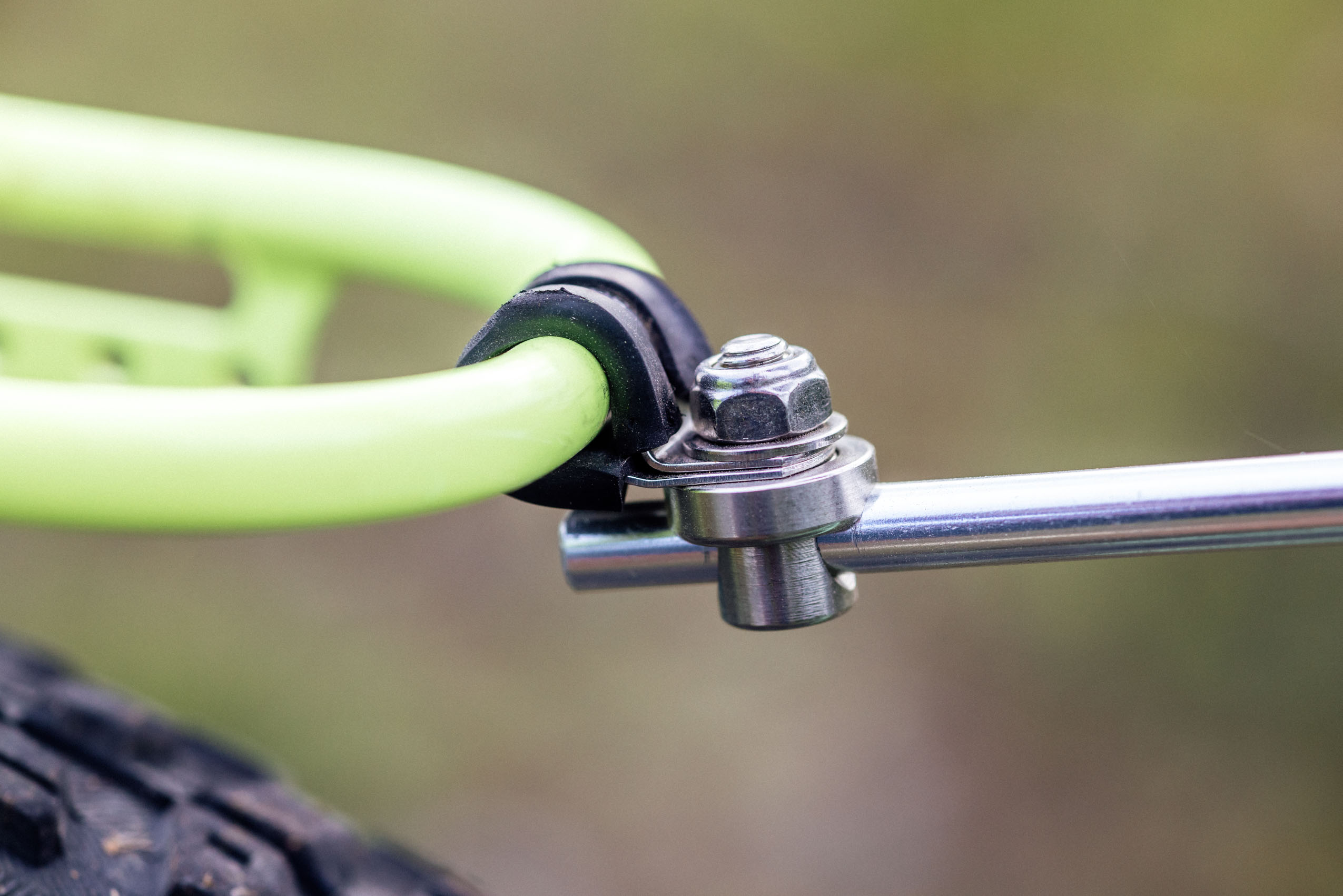
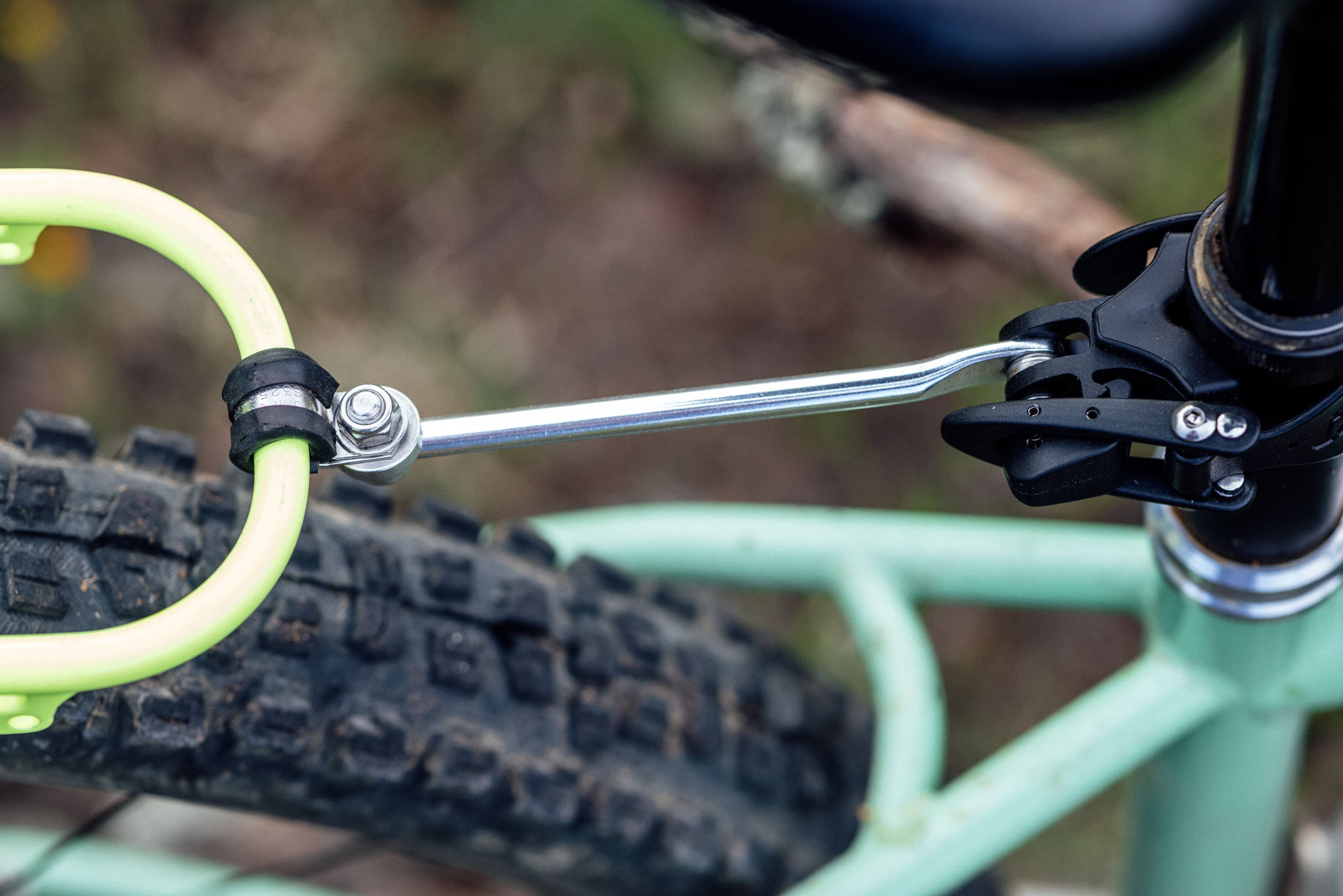


As for the struts, it’s fairly easy to go to your local hardware store and grab a piece of flat aluminum stock to pretty quickly (and cheaply) to fabricate two bars that connect the platform holes with seat stay rack mounts or a mount-equipped seat post clamp (like the Salsa Rack Lock). Make a couple of cuts and drill a couple of holes, and voila. Or, better yet, you could get creative. I tried a couple of options using parts I had on hand, including a repurposed quick-release mechanism off a Tailfin Aeropack. The first method used the compression hardware from an old (now discontinued) Surly Upper Rear Rack Kit to connect a bent aluminum strut to the Cargo Cage platform. That worked okay, but I knew it could be cleaner. My ultimate solution used a P-clamp mounted to a rack compression bolt, as shown here; this was borrowed from a Ron’s Bikes Pec Dec bag support. Not everyone’s going to have stuff like this lying around, but there are a lot of options. This one is perfect for my intent, which was to make it a quick-release rack that could be moved between a couple of bikes.
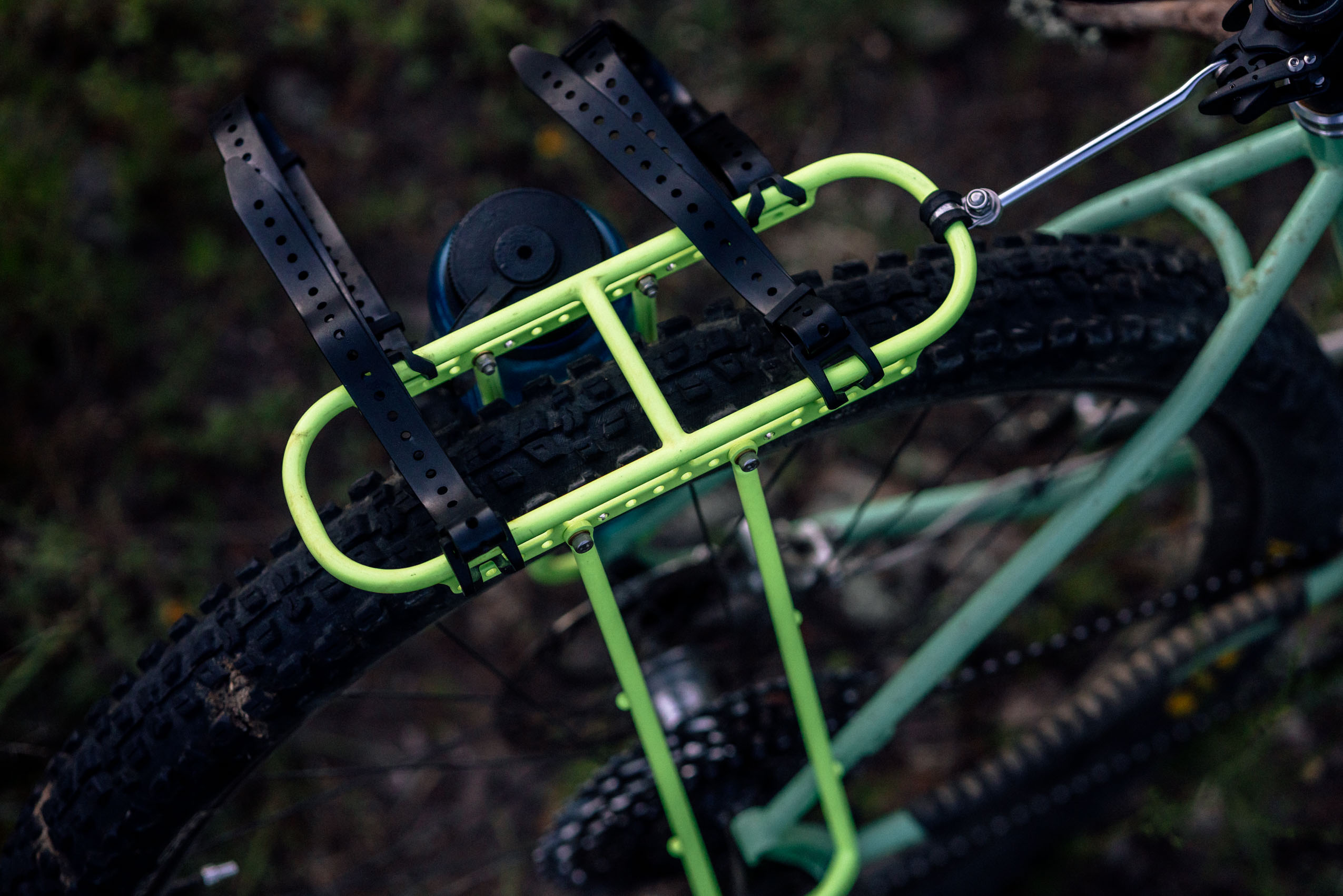


Last but not least, the neon yellow-green is a sight to behold. As you can see in several of these photographs, it nearly glows in the dark if there’s any ambient light. I guess that could be good or bad, depending on whether you want to be seen or creep under the radar in stealth mode. I ordered the powder coated black one at first, then immediately emailed Rick to change my order to yellow. I couldn’t resist, and I’m glad I didn’t. Note that the powder coat rubbed off a little on the Ortlieb Rack Pack shown here during one ride, but I’m pretty sure that was the result of not strapping it down tightly.

- Model/Size Tested: Hunter Cycles Cargo Rack
- Weight (without strut): 575 grams
- Place of Manufacture: California, USA
- Price: $275
- Manufacturer’s Details: Hunter Cycles
Pros
- Well-proportioned rack design
- Very stable for rough stuff riding, especially considering how lightweight it is
- Modular, adjustable, and versatile—axle mount means it can be used with many that don’t have mounts
- Heavy-duty integrated cargo cages for flexible packing
- Bonus derailleur protection!
- In the event of a wreck, you’re not going to break a cage or damage eyelets
- Strap retention nubs (NUBZ) are ingenius
- Almost glows at night
Cons
- Three pairs of NUBZ would be even better
- Powder coat rubs off a little
- Expensive compared to racks made in Taiwan and elsewhere, and price doesn’t include struts
- Hard to get with Hunter’s small-batch model
- Almost glows at night
Wrap Up
The Hunter Cycles Cargo Rack has a lot going for it, blending Rick Hunter’s decades of framebuilding experience with a clever, practical design. Its standout feature is obviously the built-in cargo system with integrated NUBZ strap keepers and feet that securely hold bottles or bags without needing extra hardware. This approach not only simplifies setup but also makes carrying supplemental water or overflow food seamless, which is particularly handy on long, dry routes where resupply is limited. For my preferred packing style, it ticks all the boxes.
Beyond its clever cargo features, the rack has a few other shining details, such as the modular, three-piece chromoly construction, clearance for big 29+ tires, and the use of Old Man Mountain’s axle-mount system, which is designed for rugged use to carry serious weight. It’s lightweight and even provides a couple of hidden perks, such as protecting the derailleur during travel. While the price might seem high at first glance, factoring in the integrated heavy-duty cargo cages—and the fact that each rack is handmade by Rick in California—makes it a fair value.
In the end, the Hunter Cycles Cargo Rack feels like one of those rare designs that instantly makes sense. It’s versatile, stable, and purpose-built for modern bikepacking setups that balance minimalism with utility. Whether hauling extra water in the desert, strapping food for a long stretch without resupply, or simply keeping gear low and secure, it delivers a perfect solution—an understated but brilliant evolution of the touring rack.
Further Reading
Make sure to dig into these related articles for more info...

Please keep the conversation civil, constructive, and inclusive, or your comment will be removed.