

 Mountain Bike (MTB)
 Gravel Bike
 All-Terrain Bike (ATB)
 Fat Bike


San Util Mini Panniers V2 Review: Rise of the Tiny Pannier




After testing the original version of San Util’s Mini Panniers for over a year, Miles got his hands on an updated version that addresses some of the issues he uncovered. The San Util Mini Panniers V2 have an external stretch pocket, a simplified attachment system, and optional waterproof taped seams. Following several months of riding, dig into Miles’s review here…
PUBLISHED Jul 16, 2026
Founded in 2021, San Util Design is owned and operated by Adam Nicholson. Up until this month, Adam ran the business out of Winter Park, Colorado, but he recently moved to Bellingham, Washington, marking the beginning of an exciting new chapter. San Util produces a variety of fully custom and ready-made packs and bags. During the cold months, Adam shifts his focus to his winter lineup, which influences how he designs his products. Everything San Util makes is simple, functional, and reliable.

San Util’s pannier lineup has been revamped since I reviewed the V1 Mini Panniers two years ago. Today, the pannier range consists of the Old Man Mountain FLiP-equipped Micro Panniers, the Mini Panniers, the Large Panniers, and the newly released bolt-on UL Nano Panniers. The Mini Panniers and Large Panniers use the same simple strap-on attachment and differ only in size. The Mini Panniers hold roughly 4-7 liters, while the Large Panniers hold around 8-14 liters. Both products are available in a variety of colors and fabrics, including EcoPak X-Pac, Waxed Canvas, and ULTRA fabric with a seam-taped, waterproof construction. My chief complaint with the original version was that it wasn’t waterproof, so seeing a waterproof ULTRA option that weighs nearly half as much as the waxed canvas version caught my eye.
Mini Panniers, Revamped
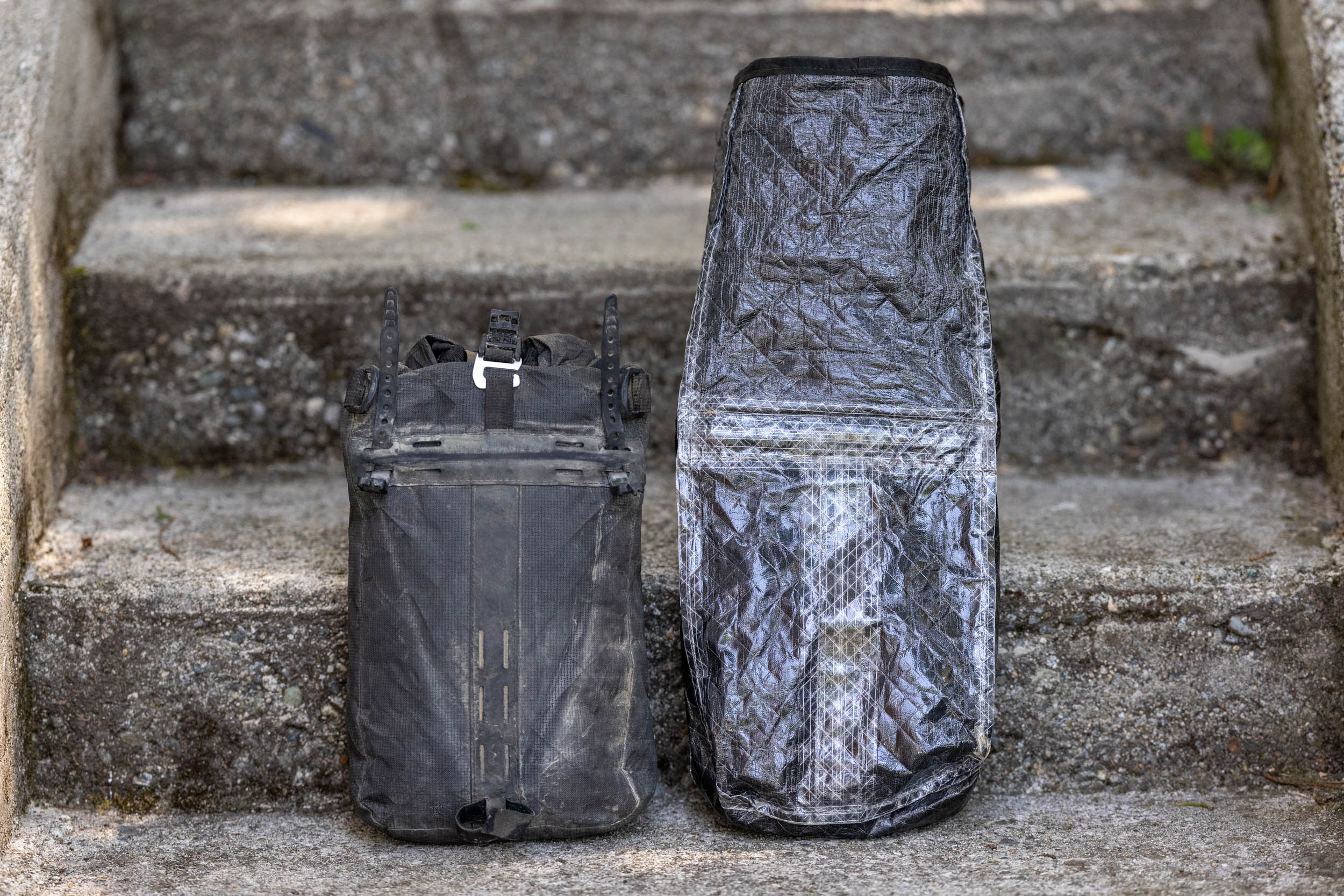
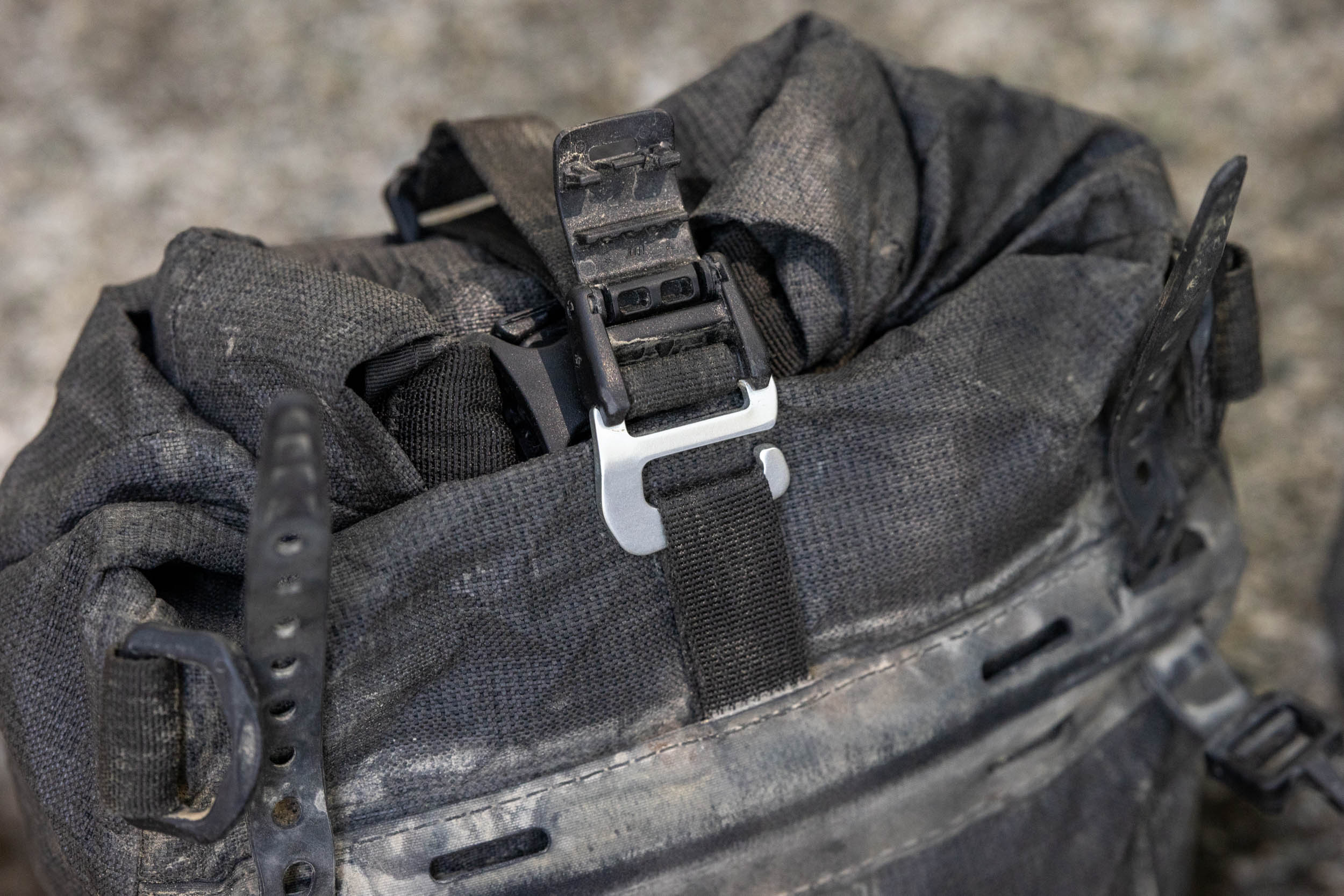
Much of what I liked about the original Mini Panniers has carried over to the V2 model. They still use a fuss-free, roll-top closure and two daisy chains on the backside for straps, but instead of the roll-top clipping down onto the sides, the ends clip together like a regular dry bag, and a single compression strap loops over the top to cinch everything down. The compression strap has an aluminum locking G-hook buckle that hooks onto a small section of webbing at the top.
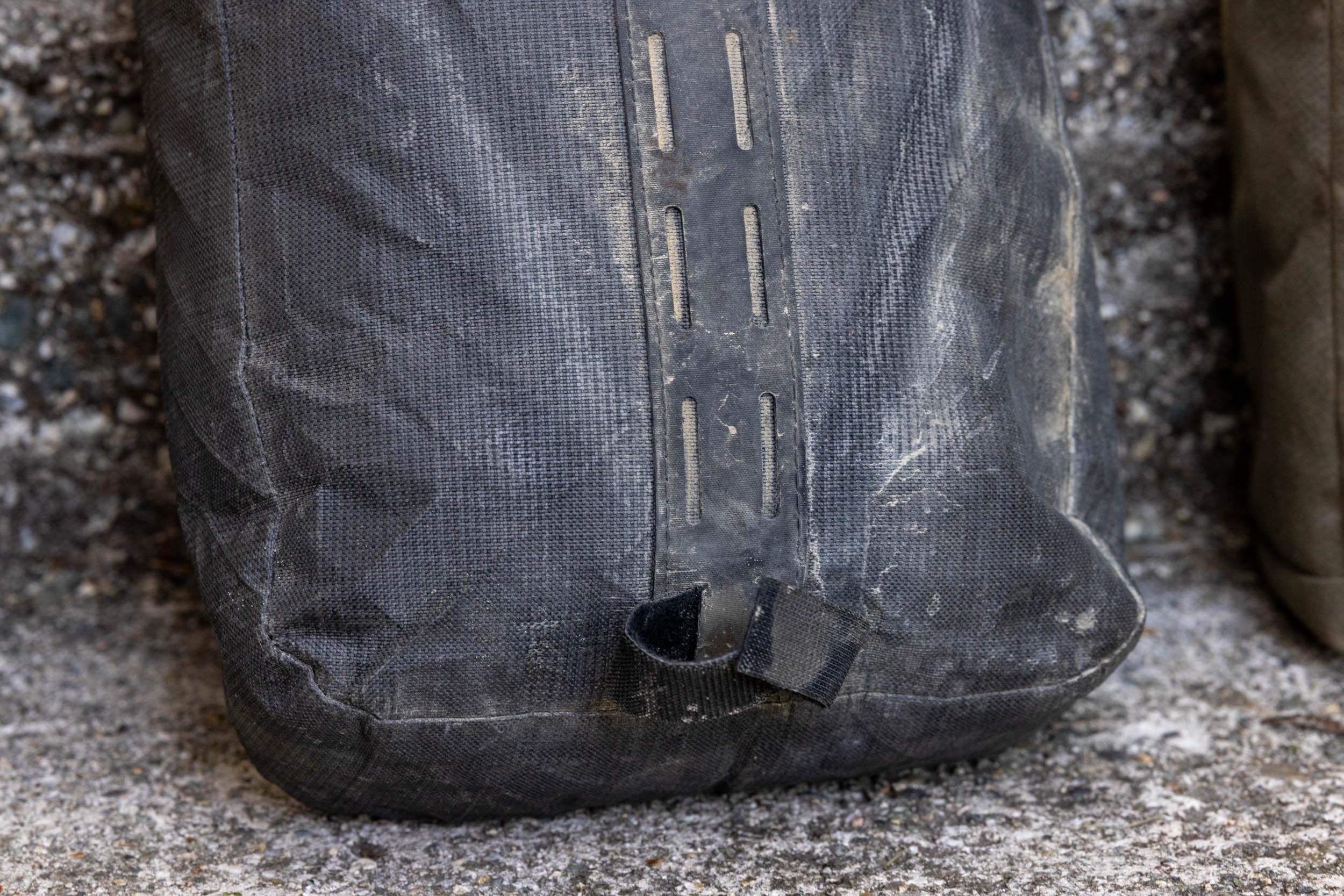
The original version had no stiffener or panel in the back panel, and the V2 model maintains this less-is-more approach but adds laser-cut Hypalon strips on the backside to help distribute attachment loads more evenly. It generally feels like a thoughtful upgrade compared to the previous nylon webbing daisy chain. The previous version used an HDPE rod at the upper attachment points, but the latest version ditches the rod in favor of two layers of webbing. I’ve used both versions now and found that the HDPE rod flexed and provided only a small amount of structure to the pannier. With it tightly packed, the dual-webbing upper attachment strip is just as effective.
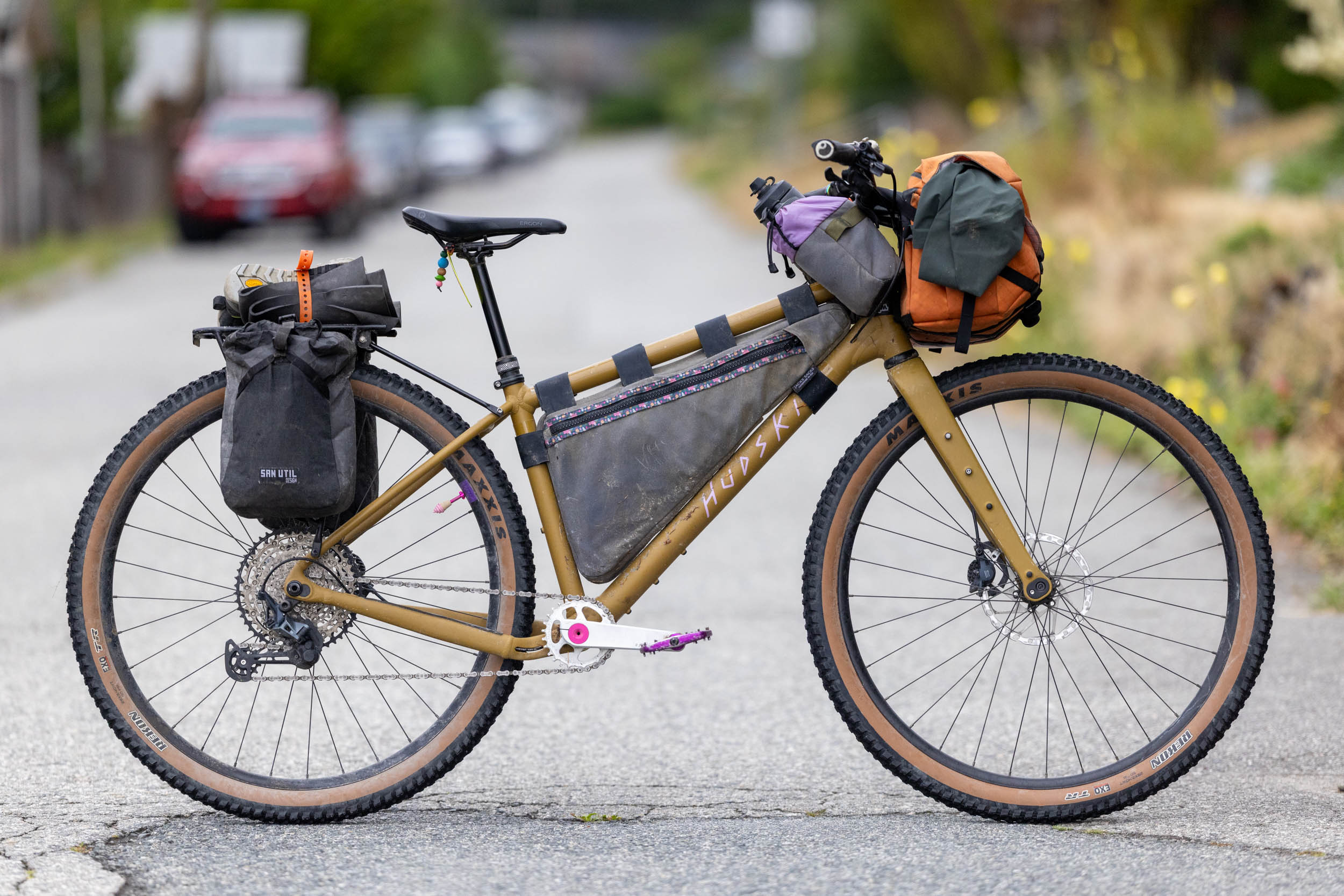
The other big change is the addition of a stretchy exterior pocket, made from the Challenge Outdoor UltraStretch fabric. Many bag makers are incorporating UltraStretch into their designs, and I’ve been impressed with its durability and usefulness for external pockets. I even included it in my 2025 Editor’s Dozen roundup. The main compression strap is sewn into the top of the pocket, providing additional security the more it’s tightened. The edge of the pocket is finished with an additional daisy chain for folks who like to get dangly. The other change, which I noted in my review of the V1 Mini Panniers, is that the 1” upper attachment webbing made it awkward to achieve a tight installation on narrow rack tubes. The latest version uses ¾” webbing, which addresses the issues I had during installation.
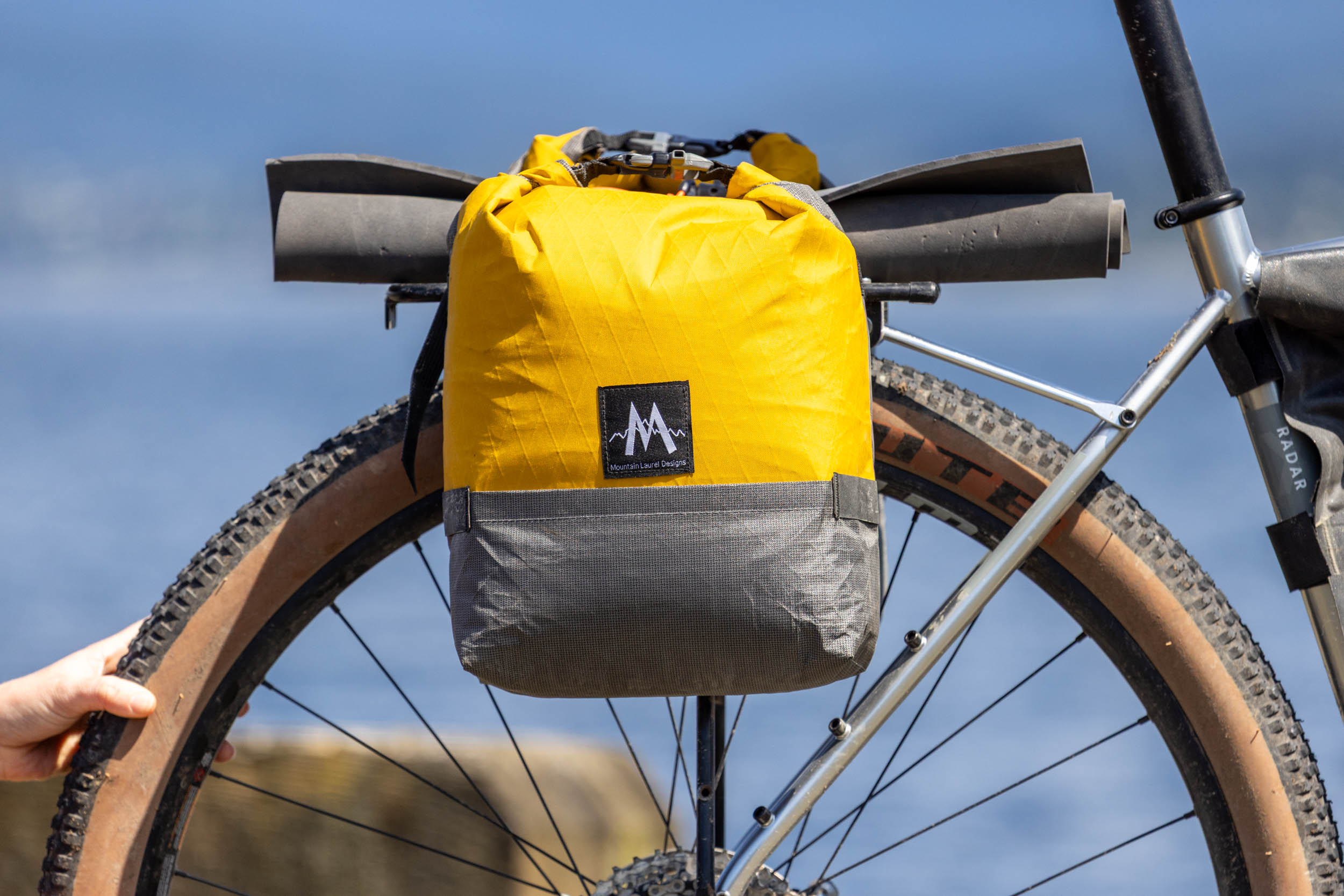
The ULTRA version I’ve been using weighs just over 160 grams per pannier, with all required straps. The only other mini pannier I’ve used that compares weight-wise is the Mountain Laurel Designs Poco Pannier, which offers a 5-7L capacity and weighs just 176 grams. Both panniers are surprisingly durable given their weight, and the Mini Panniers are showing no signs of wear after over a month of actual use. The Poco Panniers and Mini Panniers share similar dimensions as well, the latter being 8” wide, 10” tall, and 3” deep.
Ultralight Mini Panniers Compared
| Product | Weight/pair | Size/each | Waterproof? | Price/set (USD) |
|---|---|---|---|---|
| MLD Ultra Poco Panniers V3 (small) | 340g | 7L | Yes | $235 |
| Revelate Designs Nano Panniers | 510g | 11L | No | $275 |
| San Util Mini Panniers V2 | 330g | 7L | Yes (ULTRA) | $280 |
| Paper Roads Trail Panniers | 320g | 8L | Optional | $166 |
| Stealth Mountain Panniers | 344g | 8L | No | $175 |
| Tailfin Mini Panniers | 310g | 5L | Yes | $330 (incl. rack) |
What I Liked and Didn’t Like
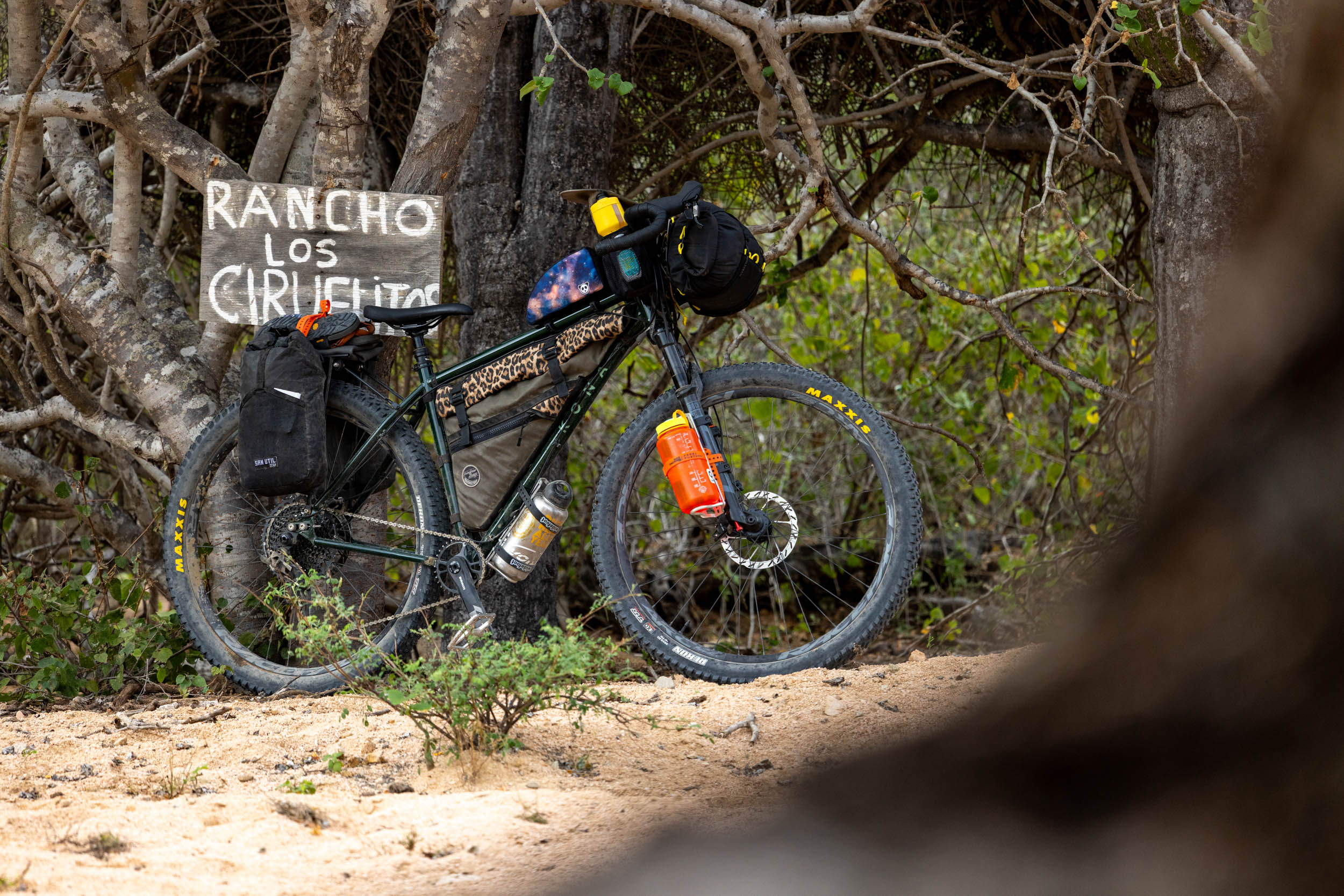
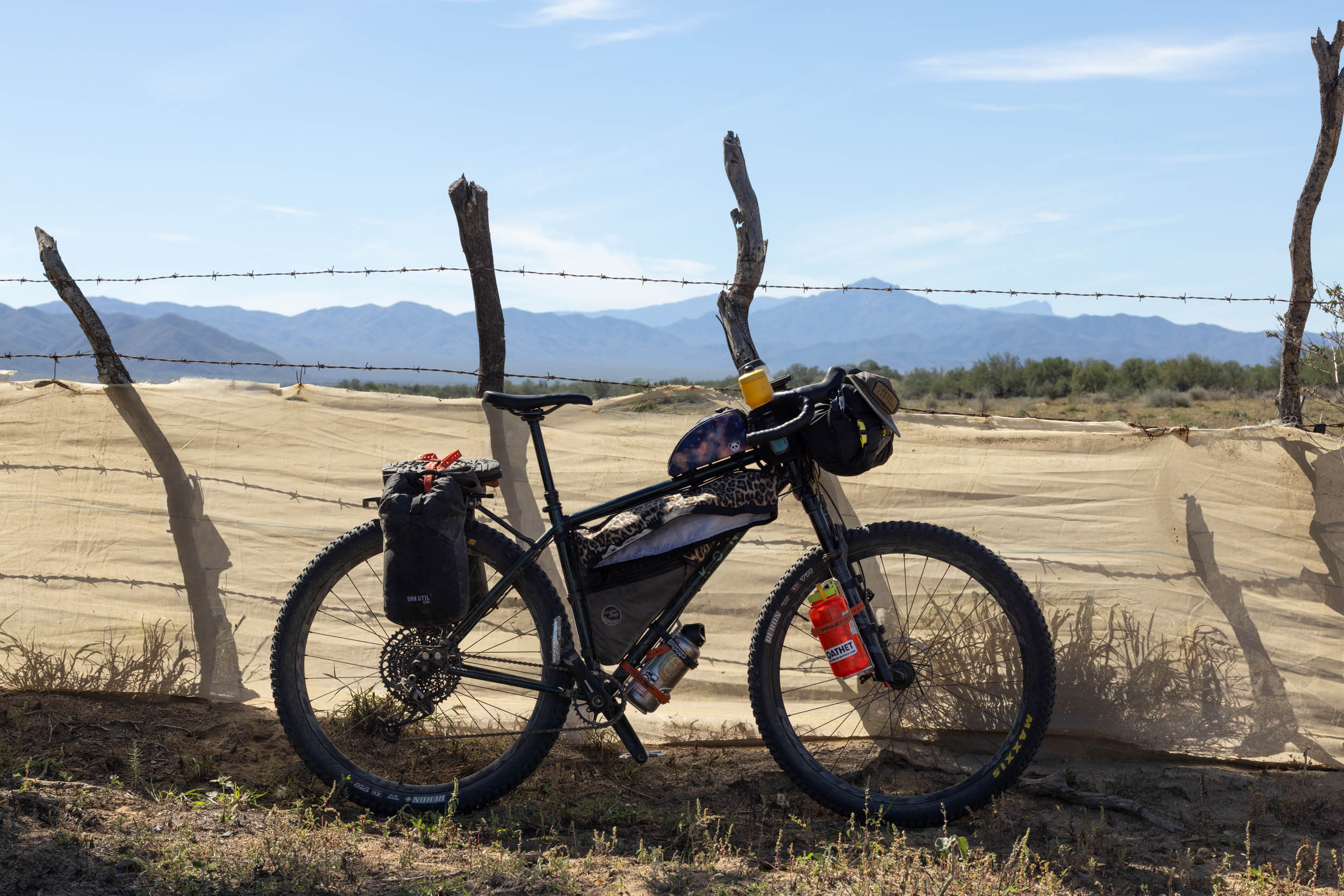
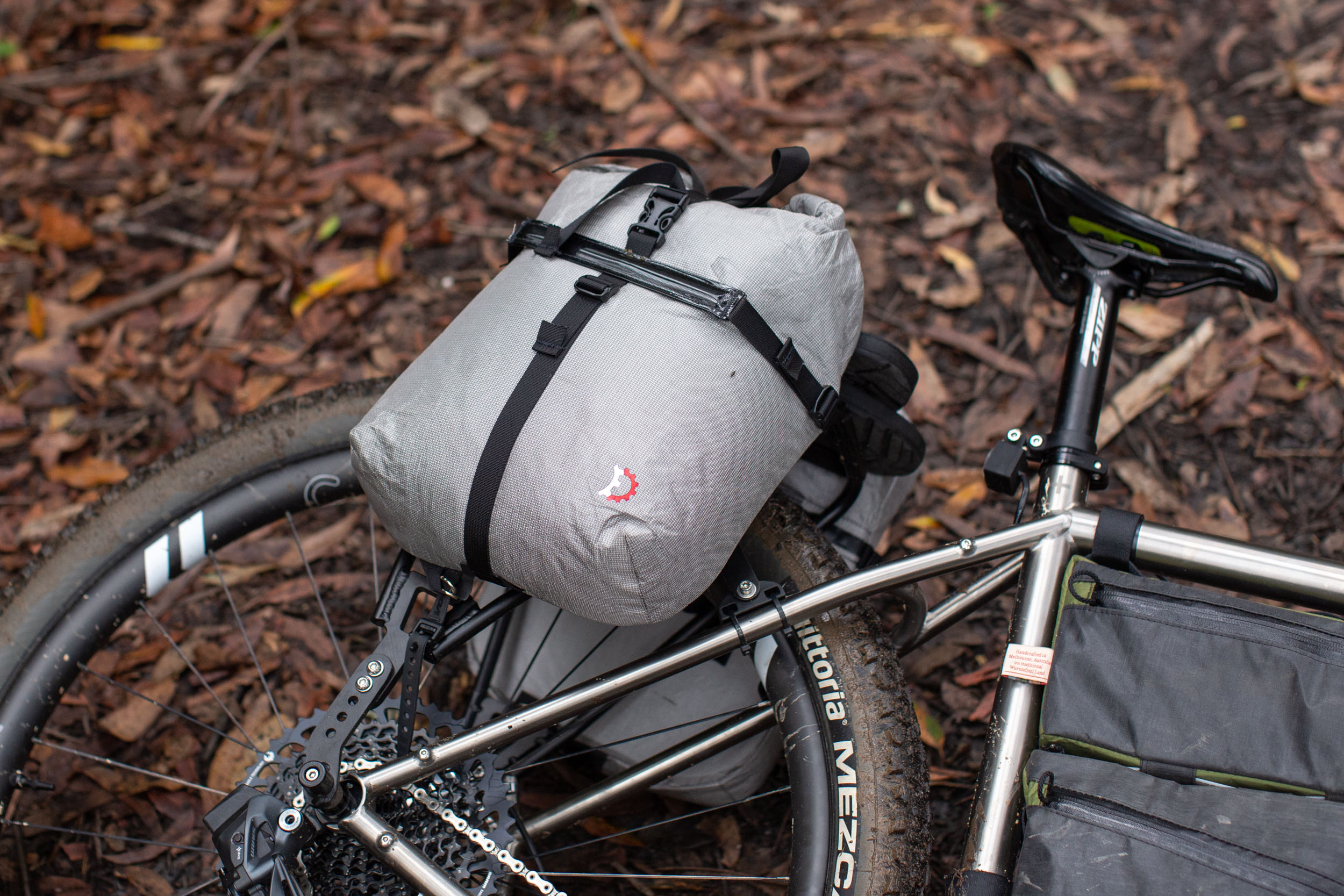
It’s easy to look at setups like the one below and make claims about bikepacking coming full circle, and in some ways, that’s true. However, a closer look at the racks, bikes, and bags reveals a fully evolved system that’s stronger, lighter, and much better suited for off-road bike travel. There are also way more mini panniers available, which easily sub into existing bag setups for longer trips or can be used on their own.

When prepping for Baja’s Cape Loop this winter, I knew I’d be testing the new Tumbleweed Macro Pannier Rack, but I wanted to keep the top platform mostly free for additional water, if I needed it. Mini panniers were the obvious choice for the rest of my gear. The 4 to 7-liter capacity and slim profile of the San Util Mini Panniers are perfect for when you need extra capacity, but conditions still allow for a relatively lightweight gear list. When designing a do-everything bikepacking kit, they fit in naturally. You can use a standalone dry bag or rack-top bag for short trips, mini panniers for longer trips, or both when you need maximum carrying capacity.
The Mini Panniers are small but large enough to justify the extra weight of a rack-and-pannier setup compared to a seat pack. The expandable roll-top design provides some wiggle room and overflow during resupplies, and it’s relatively quick to get in and out of. The main G-hook buckle is very secure, and I never had any issues with it unhooking or coming loose.
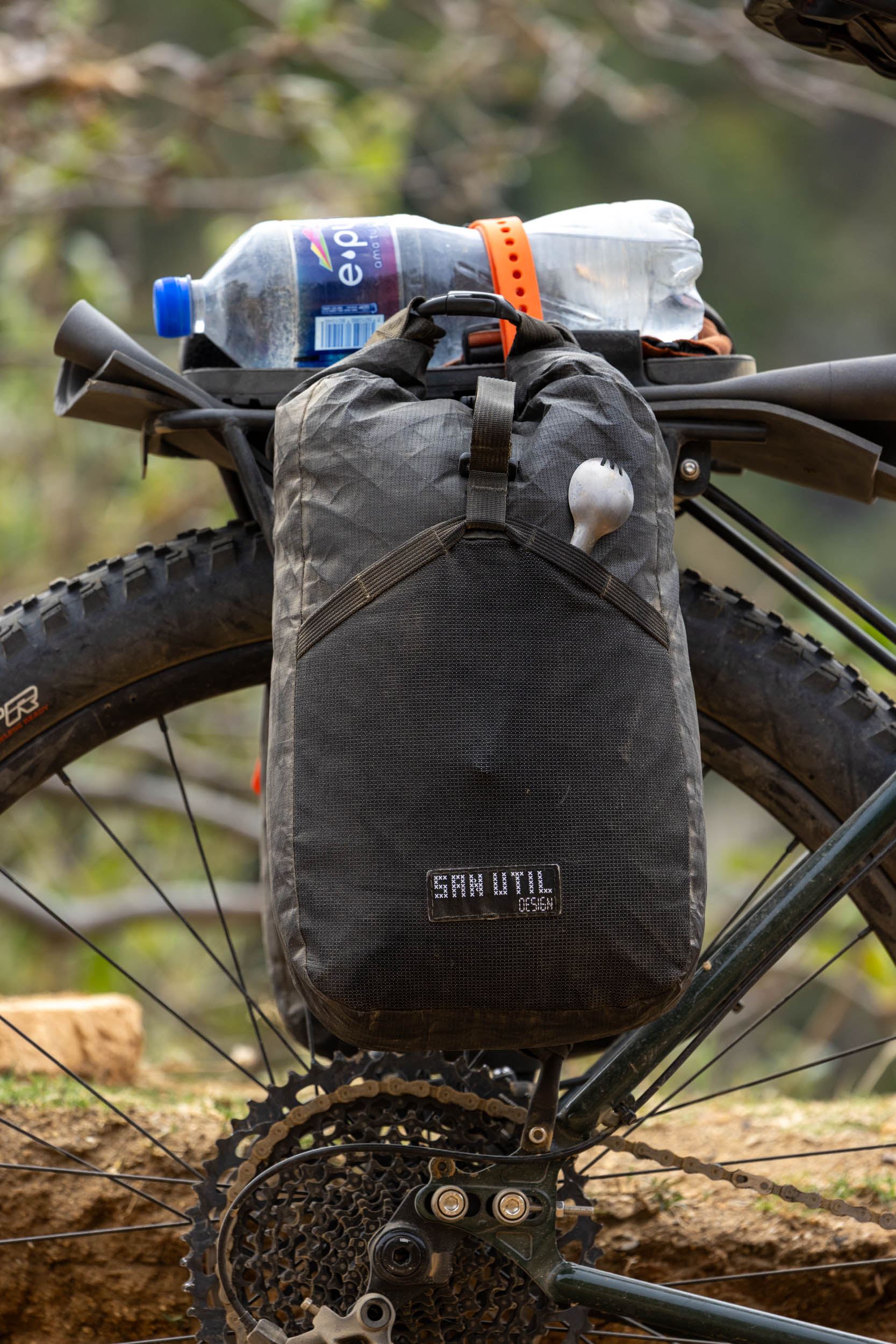
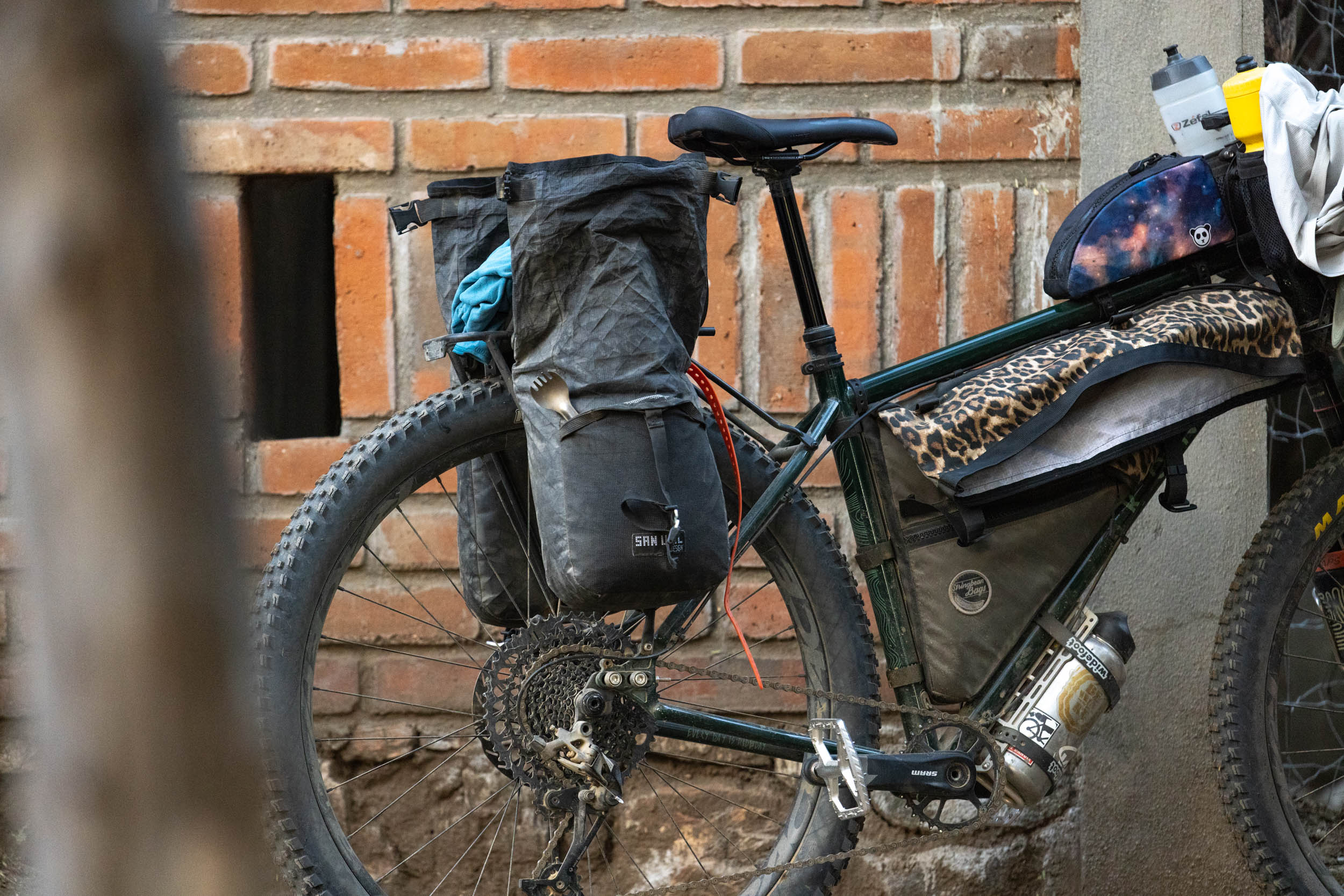
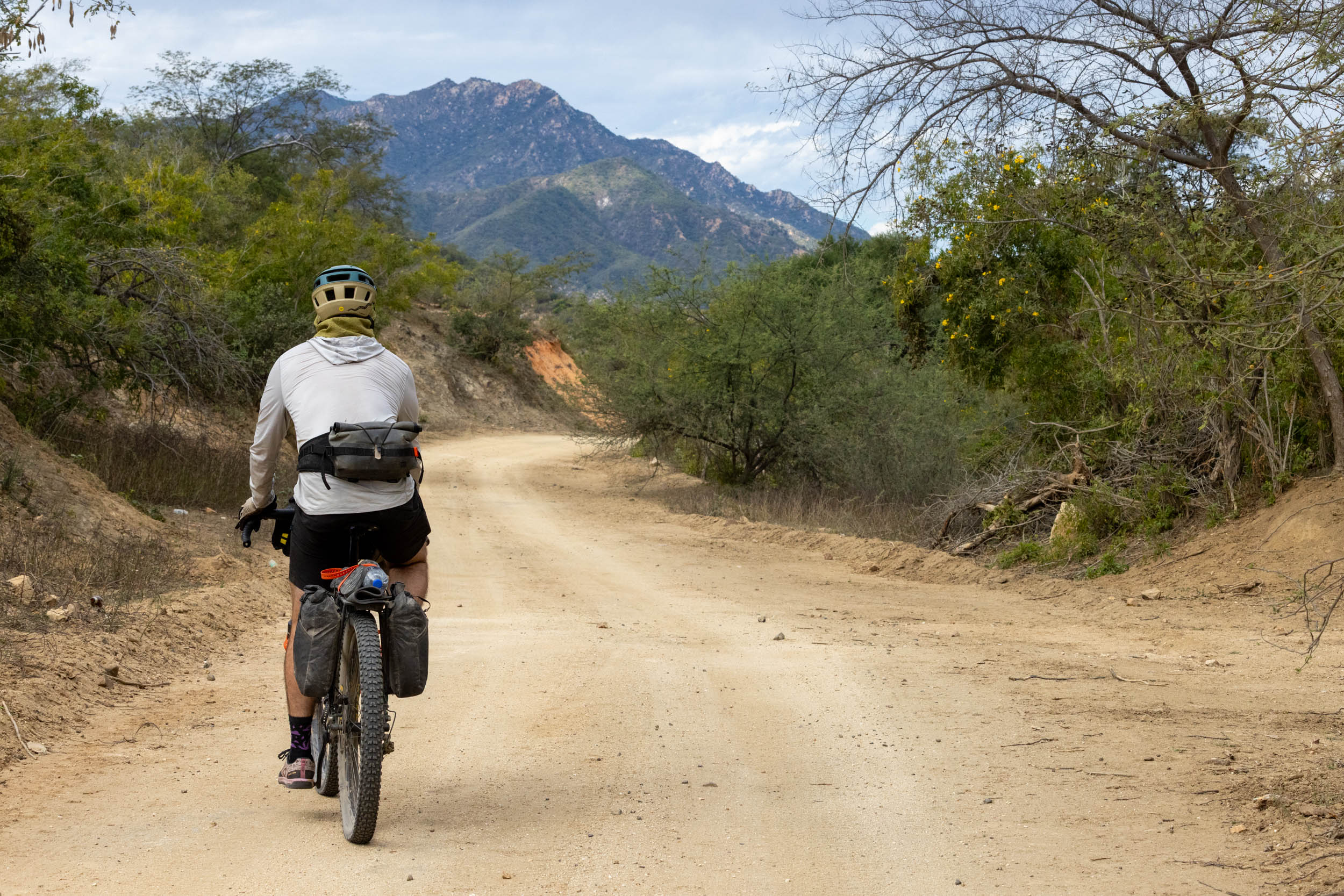
The attachment system has undergone a few revisions, but simplicity reigns supreme with daisy chain webbing and Voile Nano Straps for the upper and lower attachment. When secured tightly, there is virtually no movement or noise. They are also relatively easy to install and remove, requiring only slight adjustments to ensure the strap’s tail doesn’t rub against the tire.
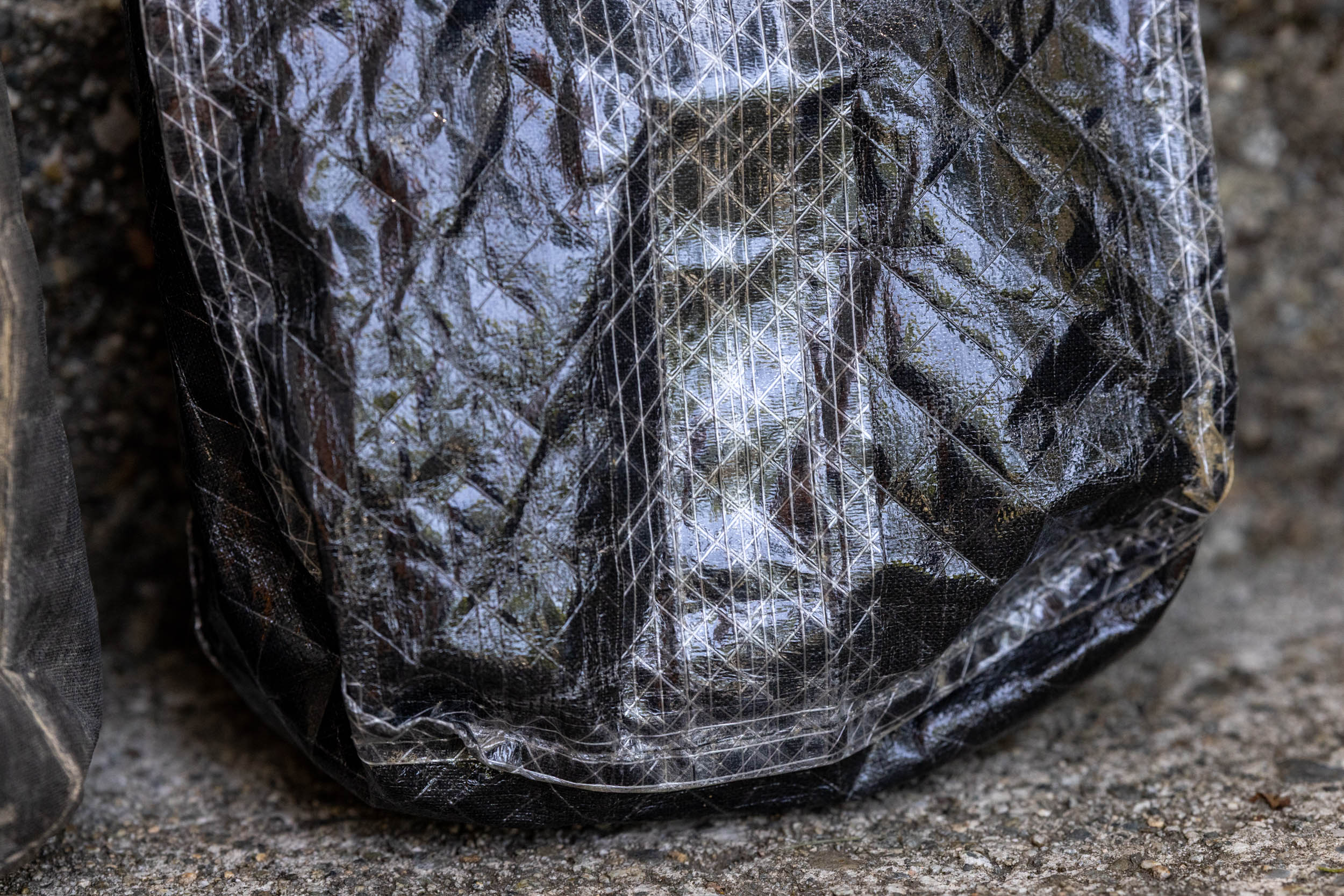
Beyond being lighter, the benefit of the ULTRA 400x version I’ve been using is that all internal seams are taped for a fully waterproof construction. Where I live, non-waterproof panniers are a no-go, and although the X-Pac and canvas versions are highly weather-resistant, that’s not enough to keep your contents dry in multiple hours of rain. The interior face of the ULTRA fabric is finished with a thin, waterproof PET film that’s pleasantly slick, making it easy to stuff lightweight items.
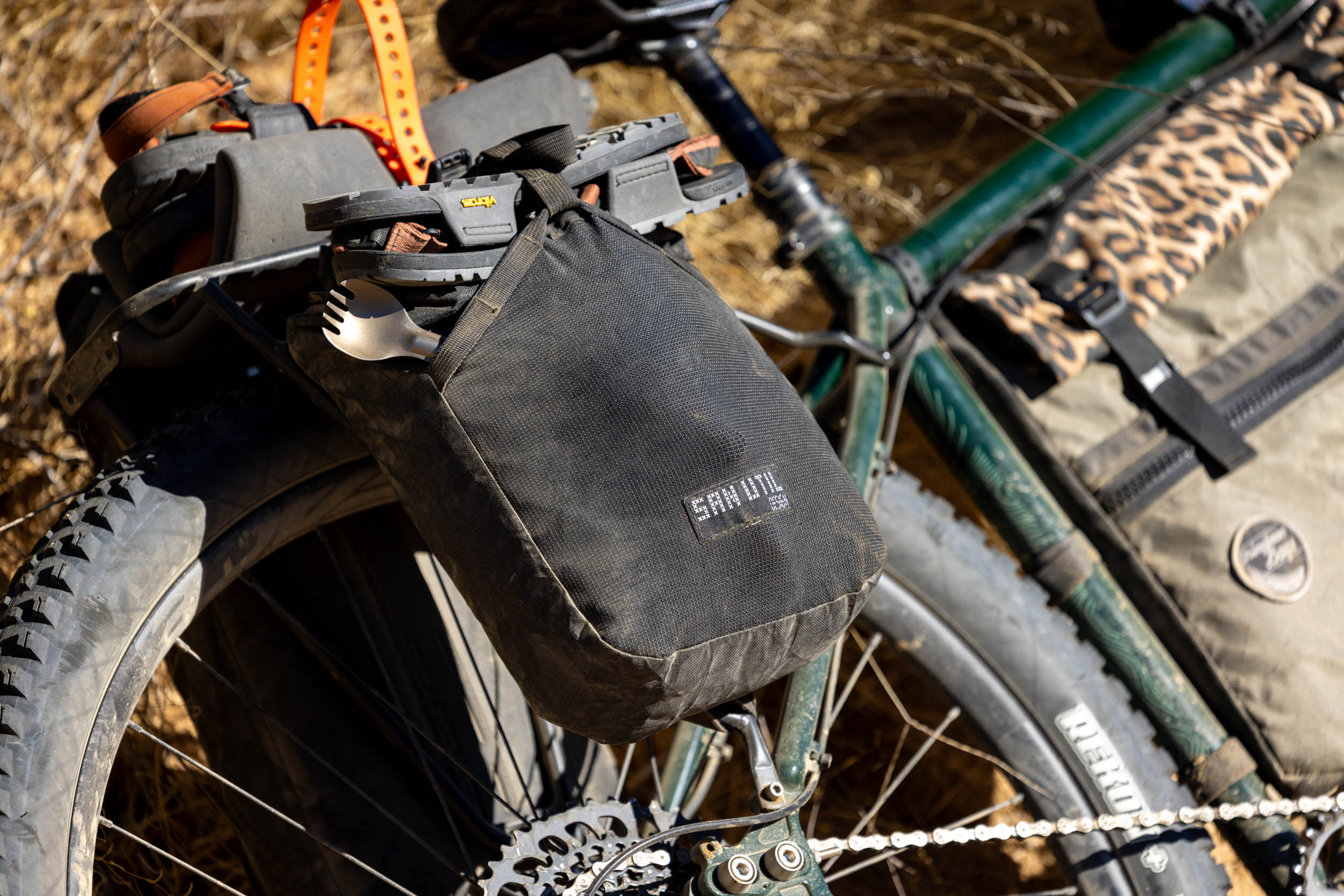

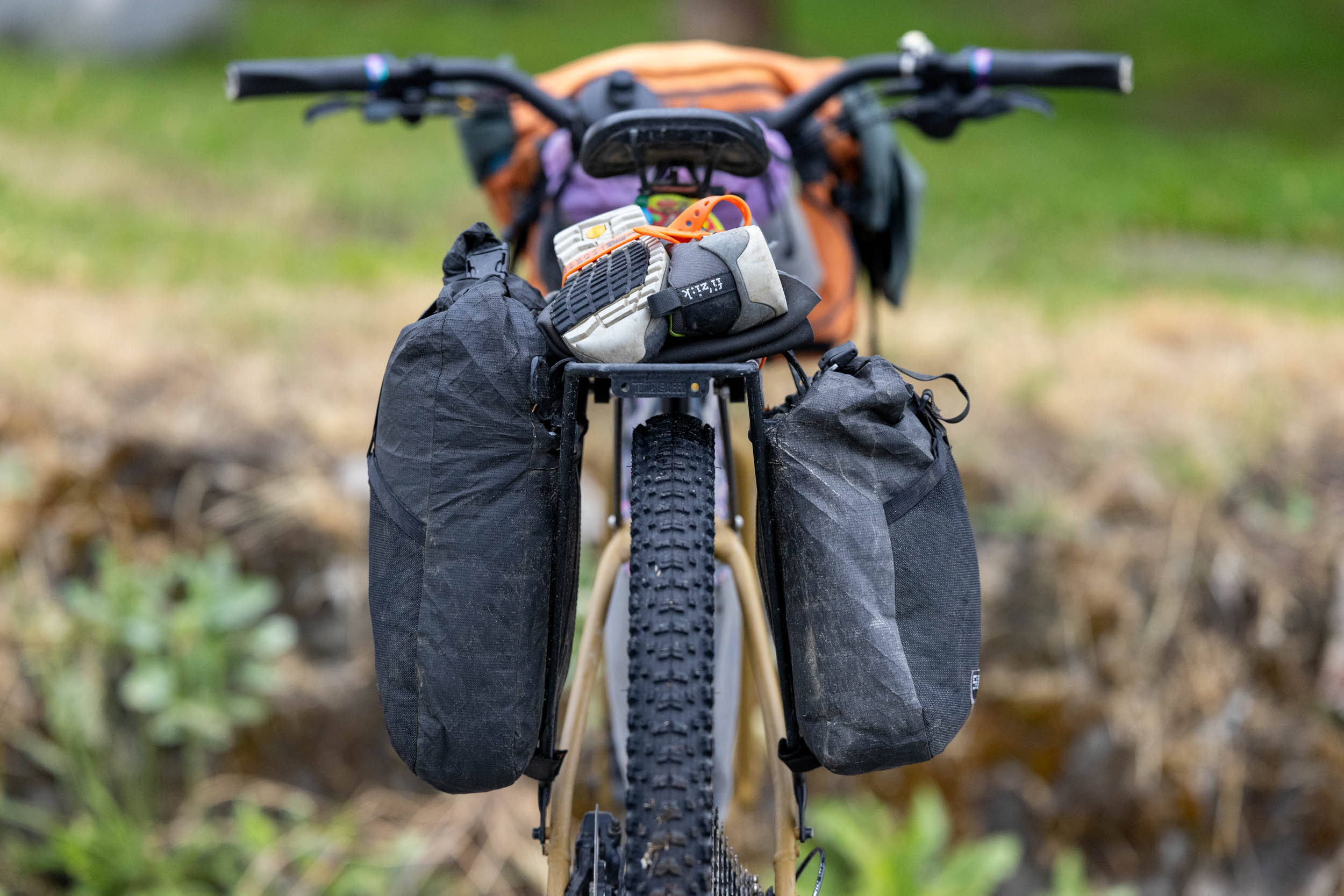
I wasn’t sold on the stretchy exterior pocket, but it ended up being a good place to slide my trowel or garbage in during the day. With the pannier fully packed, the pocket isn’t spacious enough for anything that large, but whatever can slip inside fits snugly and securely. The main top strap is attached to the daisy chain that trims the top of the pocket, so when it’s pulled tight, it locks the contents in even more.
Same Same, But Better
Thinking about panniers and bikepacking coming “full circle” has had me reflecting on my packing strategies over the last 10 years. My first setup, which I wrote about here, was based on what was readily available in Canada: a Revelate Designs Viscacha seat pack and Handlebar Harness and a DIY frame bag. I wasn’t riding technical trails back then, so a seat pack and a rigid seatpost served my needs.
It took two years for me to realize the benefits of a dropper post, thanks to the Oregon Timber Trail, and with that came an appreciation for specific components and gear that make bikepacking on singletrack more fun. The Porcelain Rocket Albert, the first dropper seat pack, set the bar high with its mini cradle and removable dry bag, and these days, there are over a dozen brands offering dropper-friendly bags.
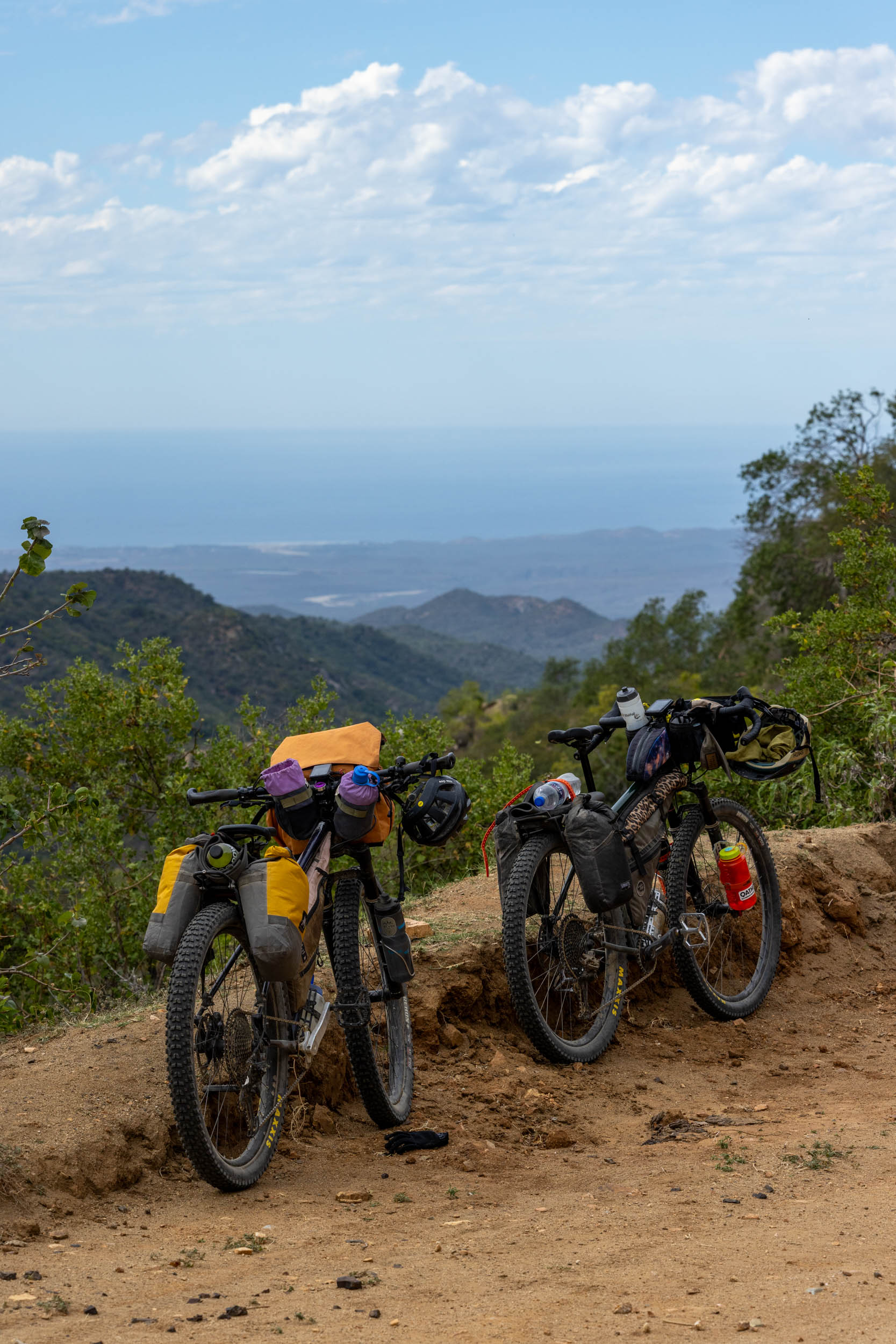

Rear racks didn’t really enter the picture, as they’ve always been around, but everything started to change with the advent of axle-mounted racks, lighter racks, and bags suitable for off-road use. At some point, I decided a dropper post was essential, but dropper-compatible seat packs couldn’t handle heavy loads. I remember lifting up my saddle by its nose, wondering if there was a better way.
It turns out the way was here the entire time. Thanks to brands like Old Man Mountain, Tailfin, Mica Cycles, Tubus, and Tumbleweed, modern racks made it hard to justify seat packs, except for when the lightest possible setup is the goal. Converted to lightweight racks, at some point it just became easier to leave the rack installed and switch between a smaller rack-top bag or two panniers, depending on the trip. It’s the epitome of versatility, in my mind. My dropper post remains unrestricted, most racks are compatible with a wide range of bikes, and I can mix and match my bags depending on my needs.
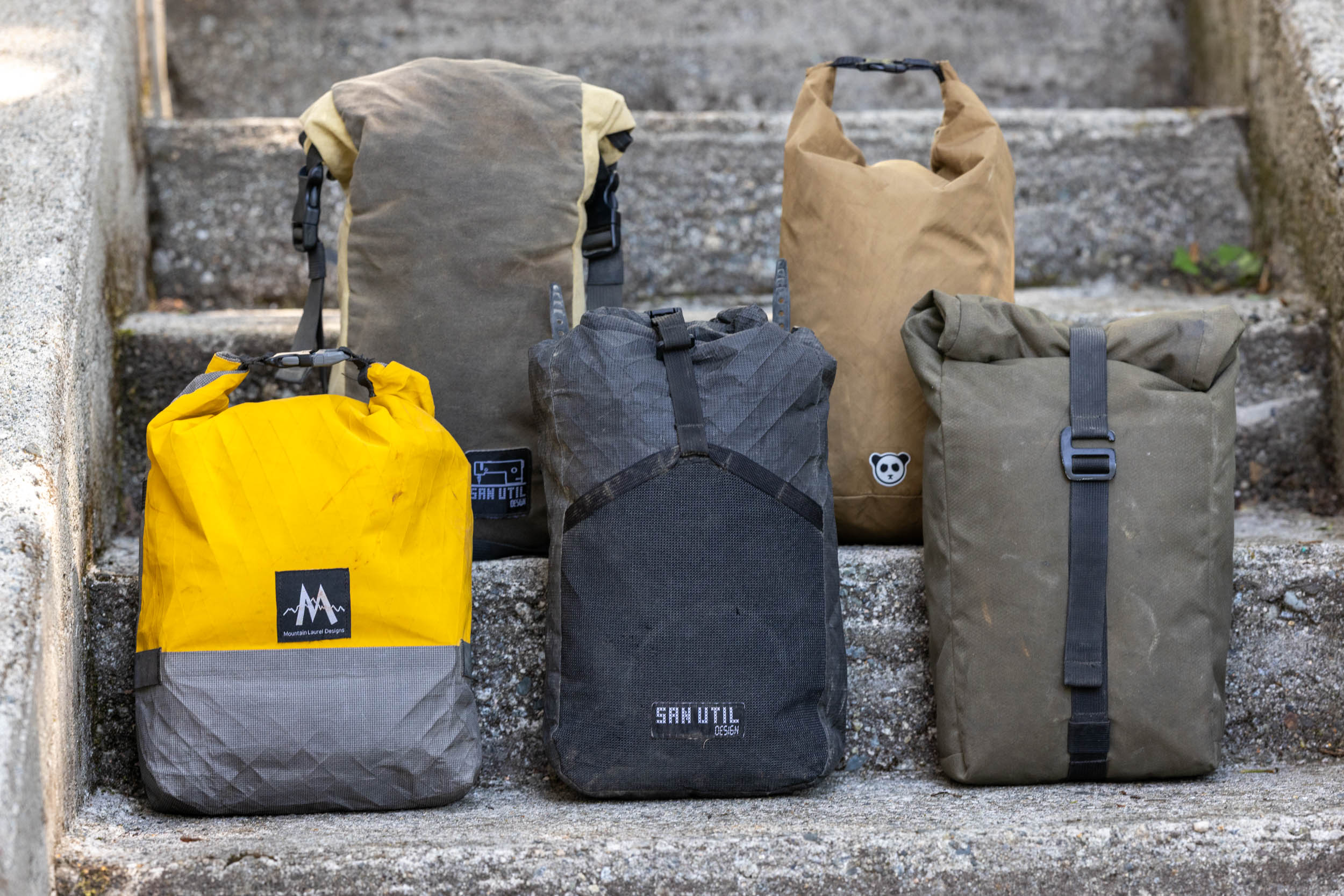
Dependable racks are one thing, but the plastic mounting hardware found on traditional panniers doesn’t cut it for rugged, off-road riding. Bag makers like San Util stepped up with simplified, modern options that meet the needs of today’s bikepackers. Full circle? In a way. Better than before? For sure.
Pros
- Some of the lightest rack-mounted mini panniers available.
- ULTRA version is waterproof and durable.
- Simple daisy chain + Voile strap mounting system is robust and rattle-free.
- 7L max capacity is the perfect size for a mini pannier.
- Slim profile is discreet and functional even on technical terrain and hike-a-bike.
Cons
- Best suited for racks with some sort of pannier support/strut, as opposed to minimalist racks, due to lack of internal structure.
- Only the ULTRA version is waterproof with taped seams, and tape will eventually require replacement or patches.
- Top webbing loop is sometimes difficult to reach with the pannier packed full or when mounted to a lower pannier strut.
- Front stretch pocket’s usefulness is limited.
- Slightly slow to remove, so will probably stay on at camp.
- Capacity: 4-7L
- Material (as tested): ULTRA 400x
- Weight: 330 grams/pair
- Place of Manufacture: Washington, USA
- Price: $140 USD/per pannier
- Manufacturer’s Details: SanUtilDesign.com
Wrap Up
Most racks add extra weight to the back end of your bike, which is why I appreciate the minimal, super-lightweight approach bag makers like San Util are taking. If your idea of bikepacking involves singletrack, rugged trails, or back-to-back days of gravel or forest service roads, then the benefits of a stripped-back mini pannier like San Util’s Mini Panniers outweigh the drawbacks. I’ve now tested both the Mountain Laurel Designs Poco Panniers and the Revelate Designs Nano Panniers, and I’d slot the San Util panniers into the same best-of-the-best category, if there was one.
Further Reading
Make sure to dig into these related articles for more info...

Please keep the conversation civil, constructive, and inclusive, or your comment will be removed.