

 Mountain Bike (MTB)
 Gravel Bike
 All-Terrain Bike (ATB)
 Fat Bike


Tectonic Alibi Pedals Review


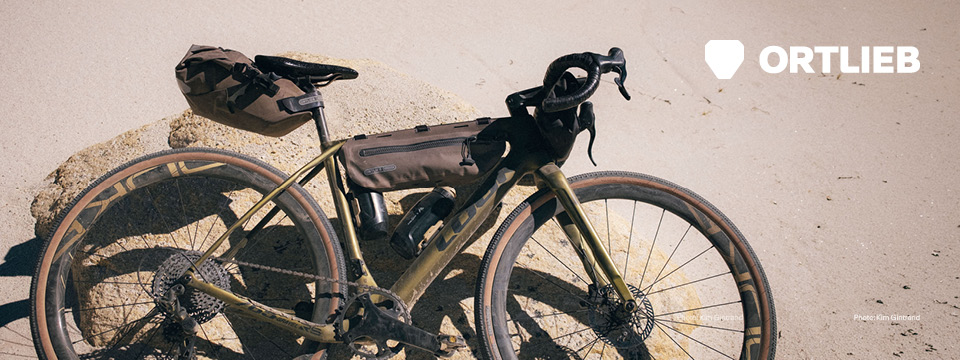


For years, Logan has searched for the perfect flat pedal, convinced that each new contender might finally unseat his longtime favorites. After more than 1,000 miles of testing on rocky singletrack and dirt roads, the Tectonic Alibi may have done exactly that. Read his full review here…
PUBLISHED Aug 5, 2026
Not too long ago, I caught myself wondering why I’m always in search of the next great flat pedal. It’s not like I need another set. I already have a dozen pairs, and there are three models I consider to be perfectly excellent. I’d be happy to ride with any one of them for the remainder of my cycling days. Still, perfectionism always gets the better of me. And every so often, a new contender comes along that raises the bar. The latest pedals I tested, the Tectonic Alibi, might just be the best yet.
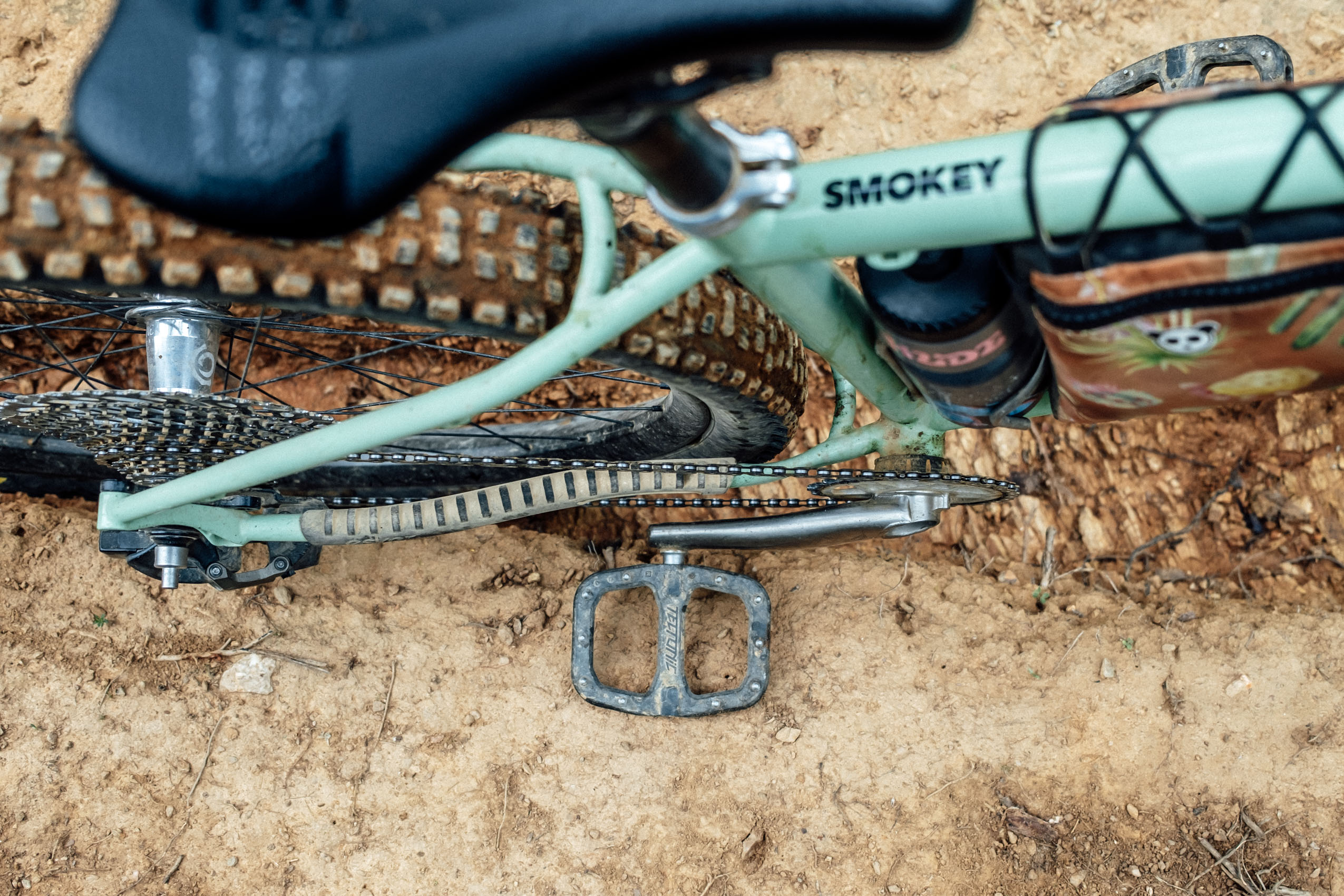
I suppose if there’s one bike part to be completely obsessed about, it might as well be pedals. They keep you glued to the bike, and I’ve heard about more pedal failures on big bikepacking trips than any other component. The best choice for clipless is pretty clear—it’s hard to argue with XT/XTR, and in my opinion, the buck stops there. But flats are different. There’s a variety of factors to consider, such as shape, material, and size as it relates to your shoes.
Lessons Learned
I switched to flat pedals back in 2017. That was after spending over 10 years dedicated to the SPD camp. But, as regular readers may have discerned in past writings, I was forced to switch. A serious back injury and surgery left me with nerve damage in both feet, making the twisting motion needed to unclip completely unreliable. After falling over when coming to a stop a handful of times, I realized that being locked in was no longer an option.


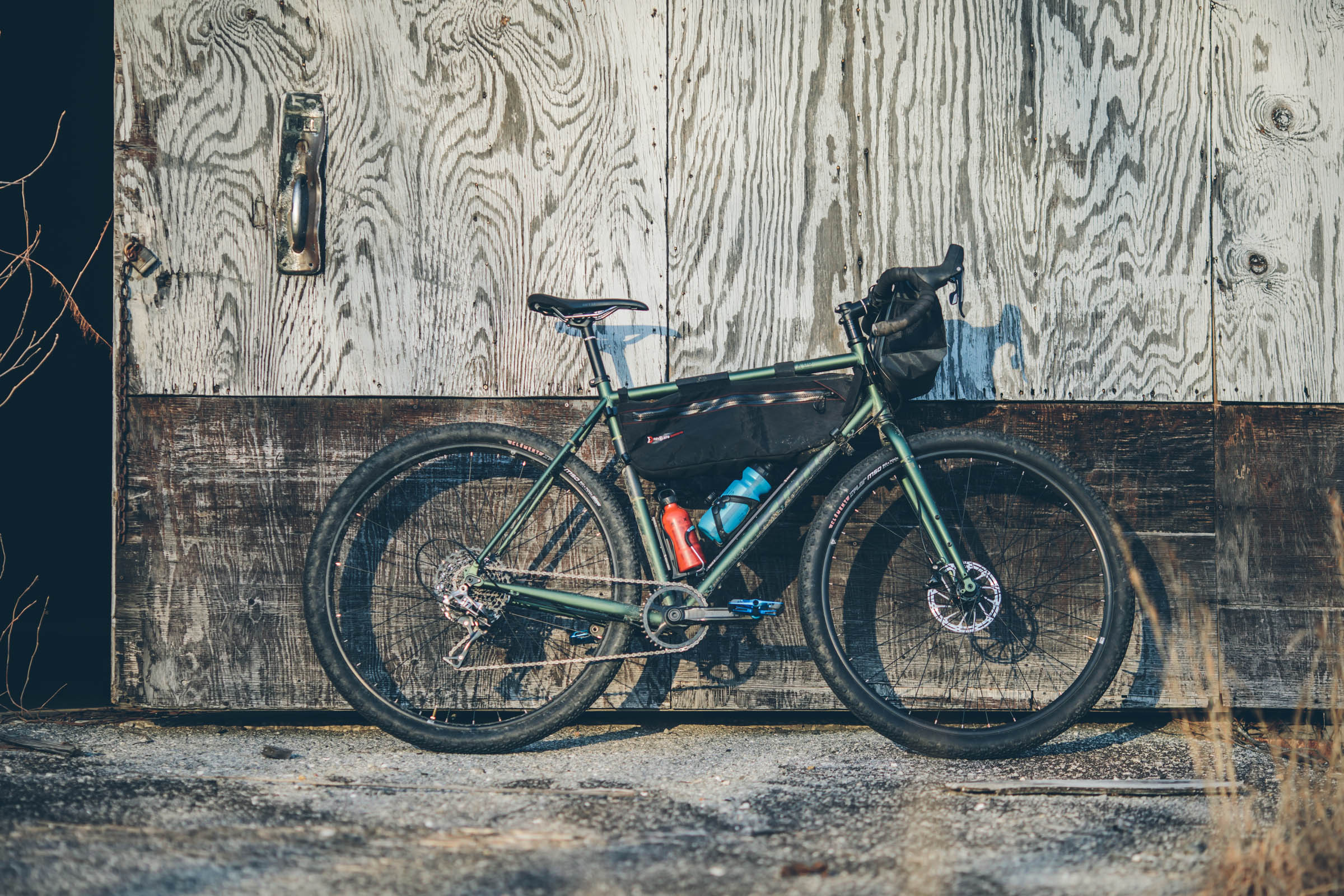

I started running flats on all types of outings ranging from singletrack mountain biking to gravel to multi-day bikepacking trips. At first, on a mountain bike, it almost felt like I was starting over. Riding technical terrain without being locked into the bike demanded better technique, more deliberate body movement, and a different approach altogether. It ultimately made me a better rider, and even after recovering, I never felt compelled to go back.
That experience also taught me the importance of having the right equipment. The ideal flat pedal isn’t an exact science, however. There’s no specific number of pins, particular platform dimensions, or precise pin placement that’s baked into the perfect recipe for grip and control. I’ve tested concave and convex versions in all shapes and sizes with a variety of pin lengths and styles. I’ve also tried multiple pedal body materials. My favorite, hands down, is composite plastic. It’s less expensive, light, remarkably durable, and more importantly, it shrugs off impacts and absorbs the shock of violent pedal strikes, unlike aluminum, which can transfer the impact and trigger an outcome far more severe than a bent pin. Some of my worst crashes have been from clipping an alloy pedal on a rock while cornering during a technical descent. In my experience, a plastic pedal provides a significant buffer, almost like a bumper.
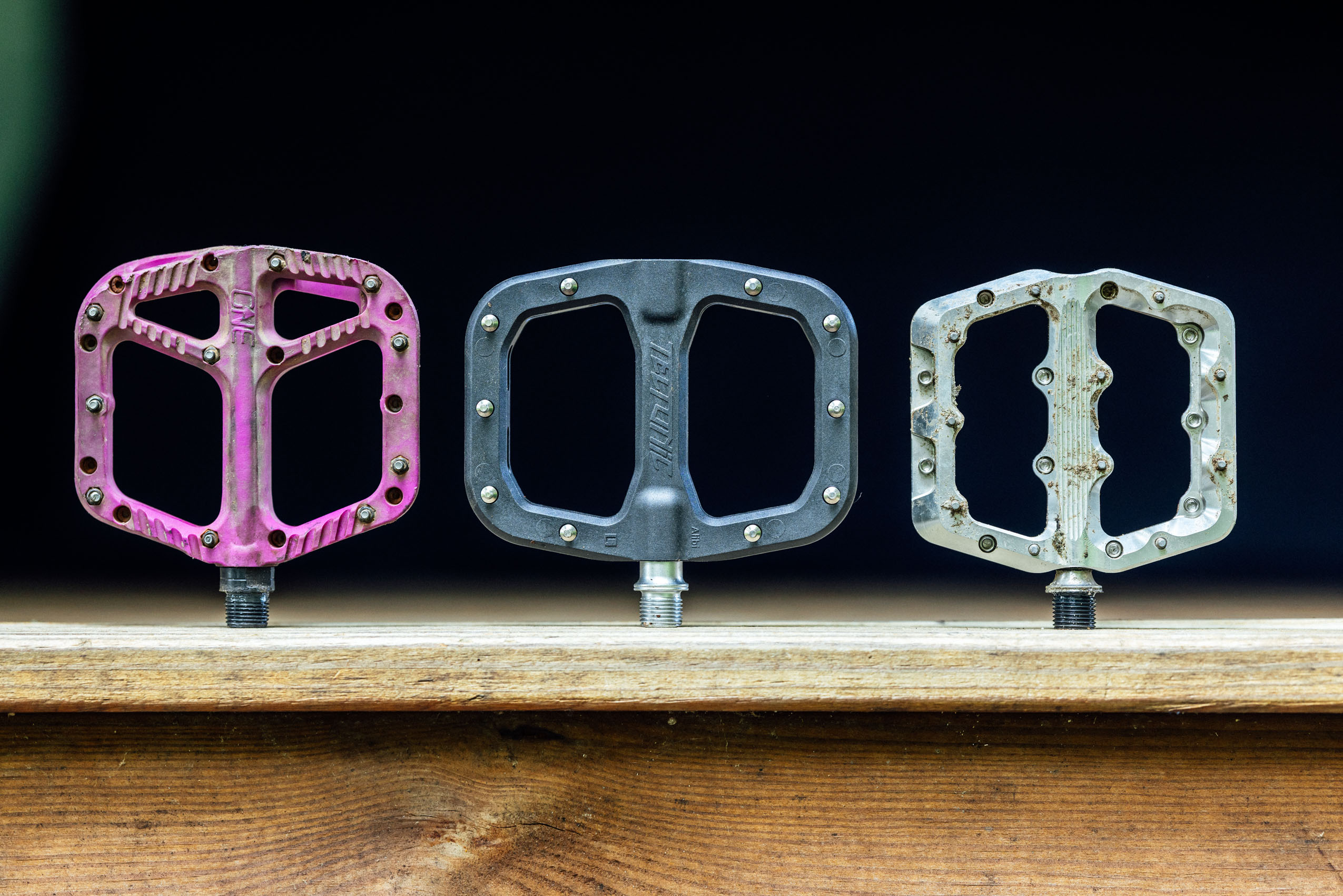
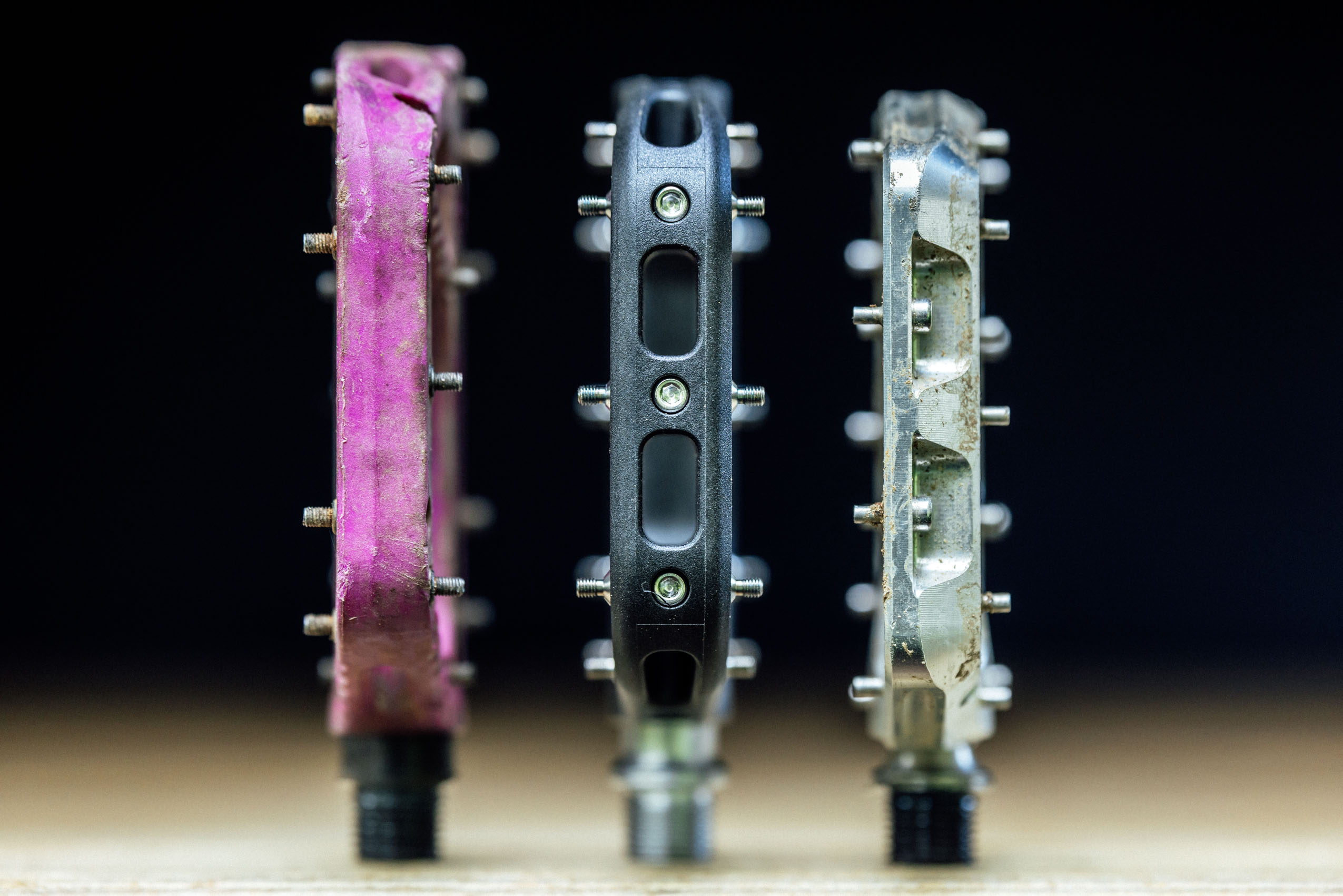
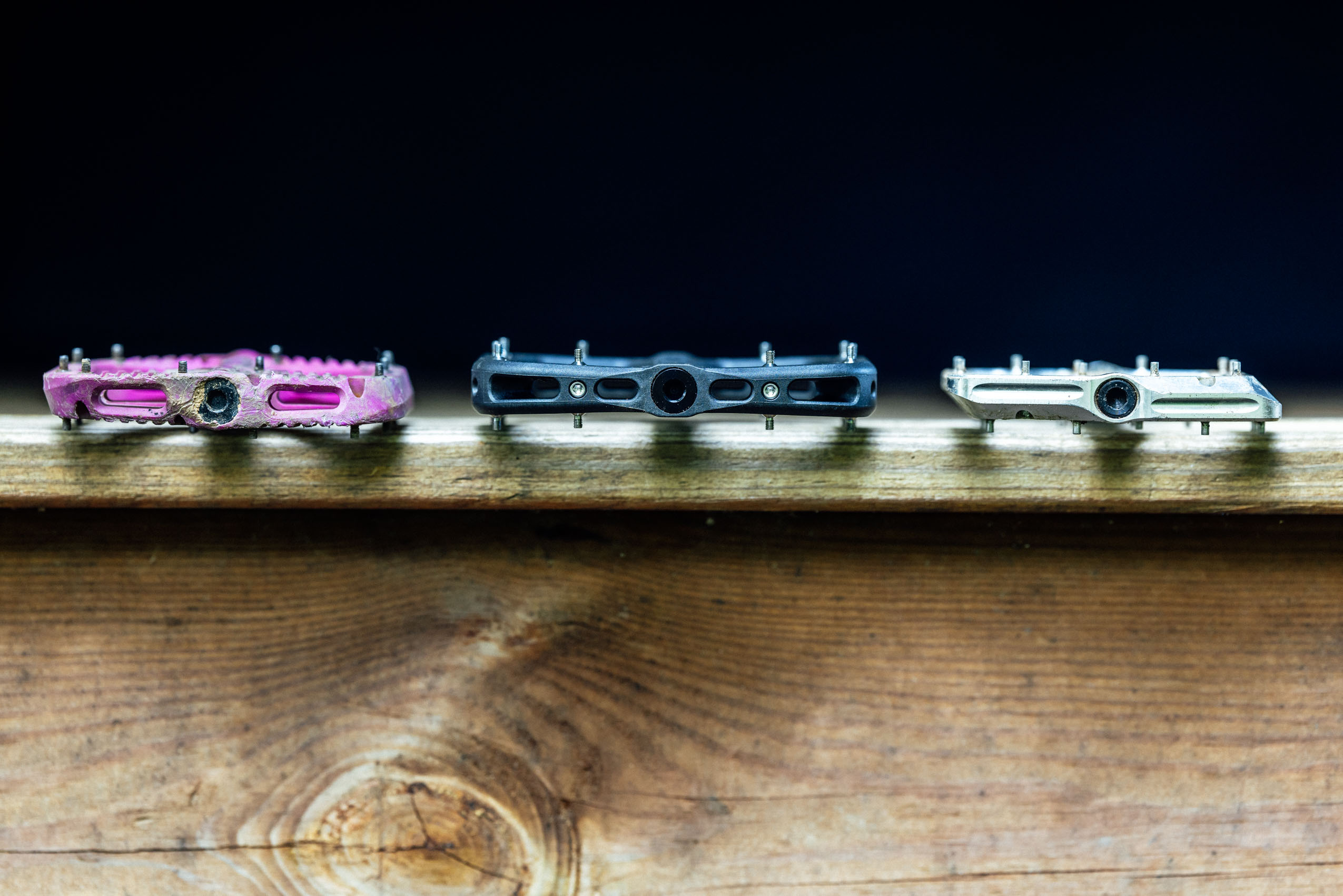
That’s one thing the Tectonic Alibi has going for it, and what piqued my interest in the first place—aside from Miles’s review of the Alibi’s predecessor, the Altar. The Altar was made in the USA from a proprietary carbon-reinforced nylon with a similar shape and design to the Alibi. However, it cost $200—and that was 2022 pricing. The Durango, Colorado, brand has since revamped it in aluminum alloy and subsequently released the Alibi as a more affordable composite model that’s now manufactured overseas.

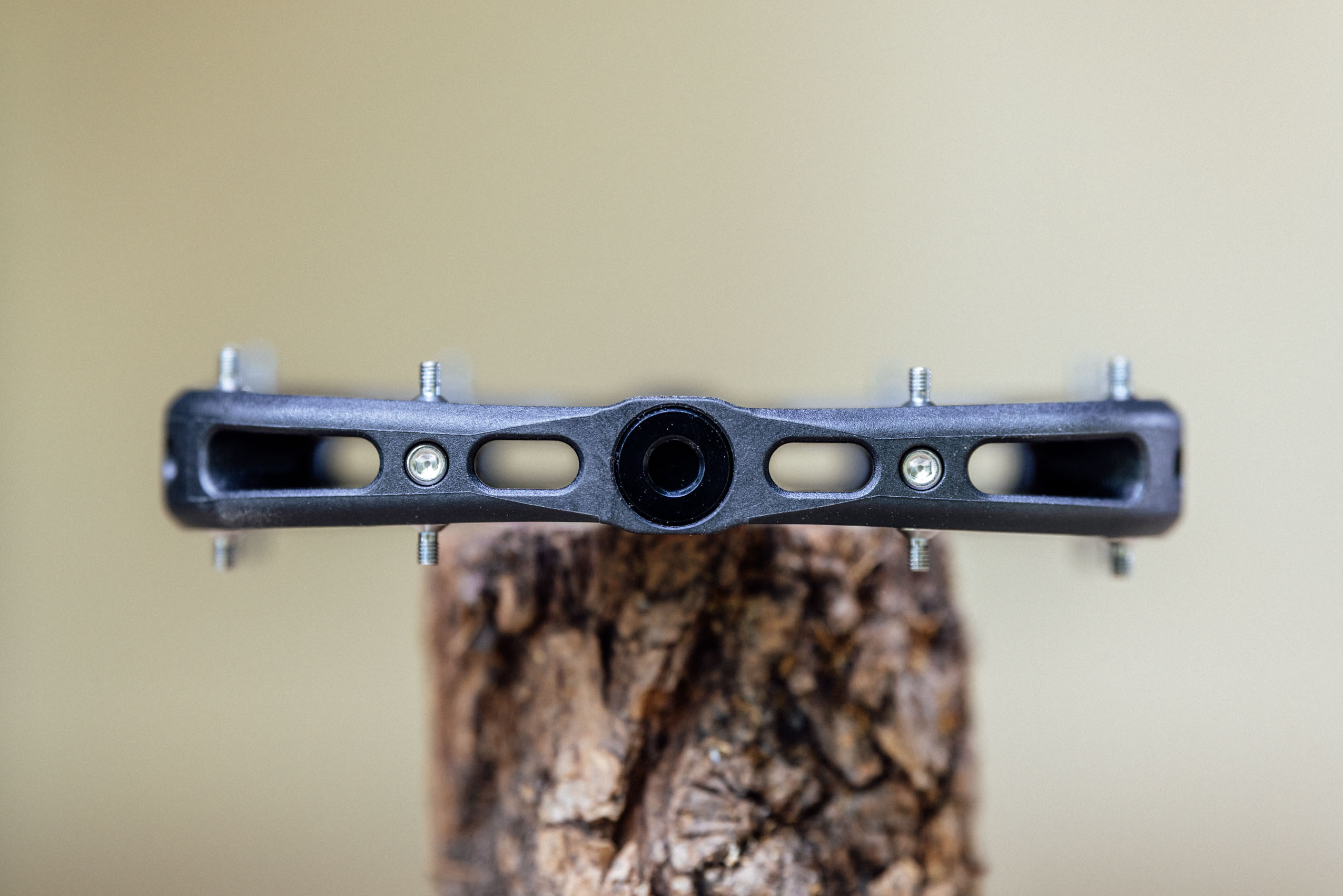

The Tectonic Alibi pedal body is made from “ReVibe,” a unique composite consisting of 70% nylon and 30% carbon fiber by volume. The nylon is sourced entirely from recovered ocean plastic, while approximately 20% of the carbon fiber comes from factory waste generated by Taiwan’s bicycle industry, resulting in roughly 75% recycled content overall. “Nylon is a highly recyclable material with very little loss in its properties, and recycled carbon fiber is ideal for injection molding,” Tectonic founder Andrew McKee said. “The result is a pedal body that’s both lighter and stronger than aluminum, and a return to the original concept that inspired this project.”
Fault-Justifying Design
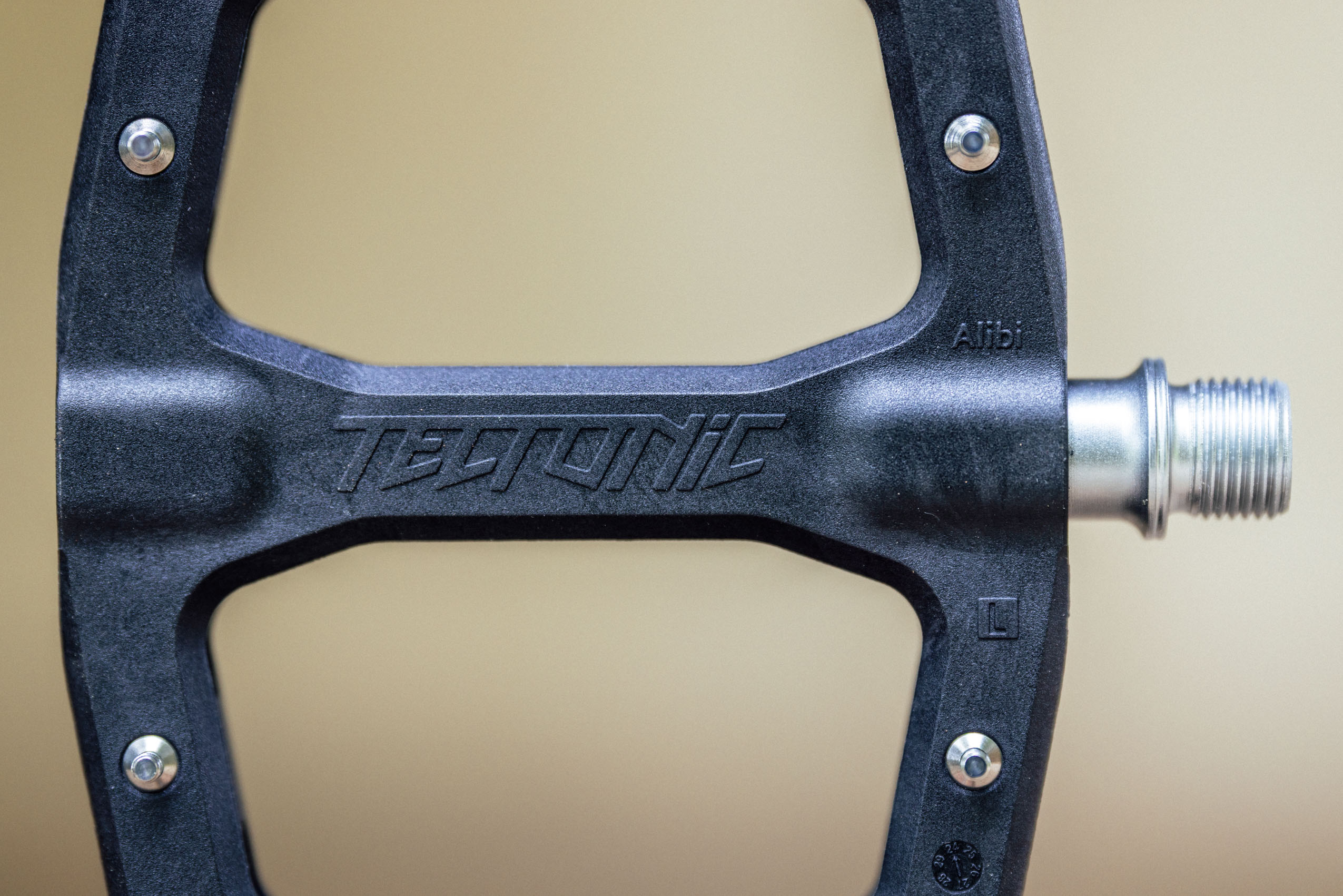
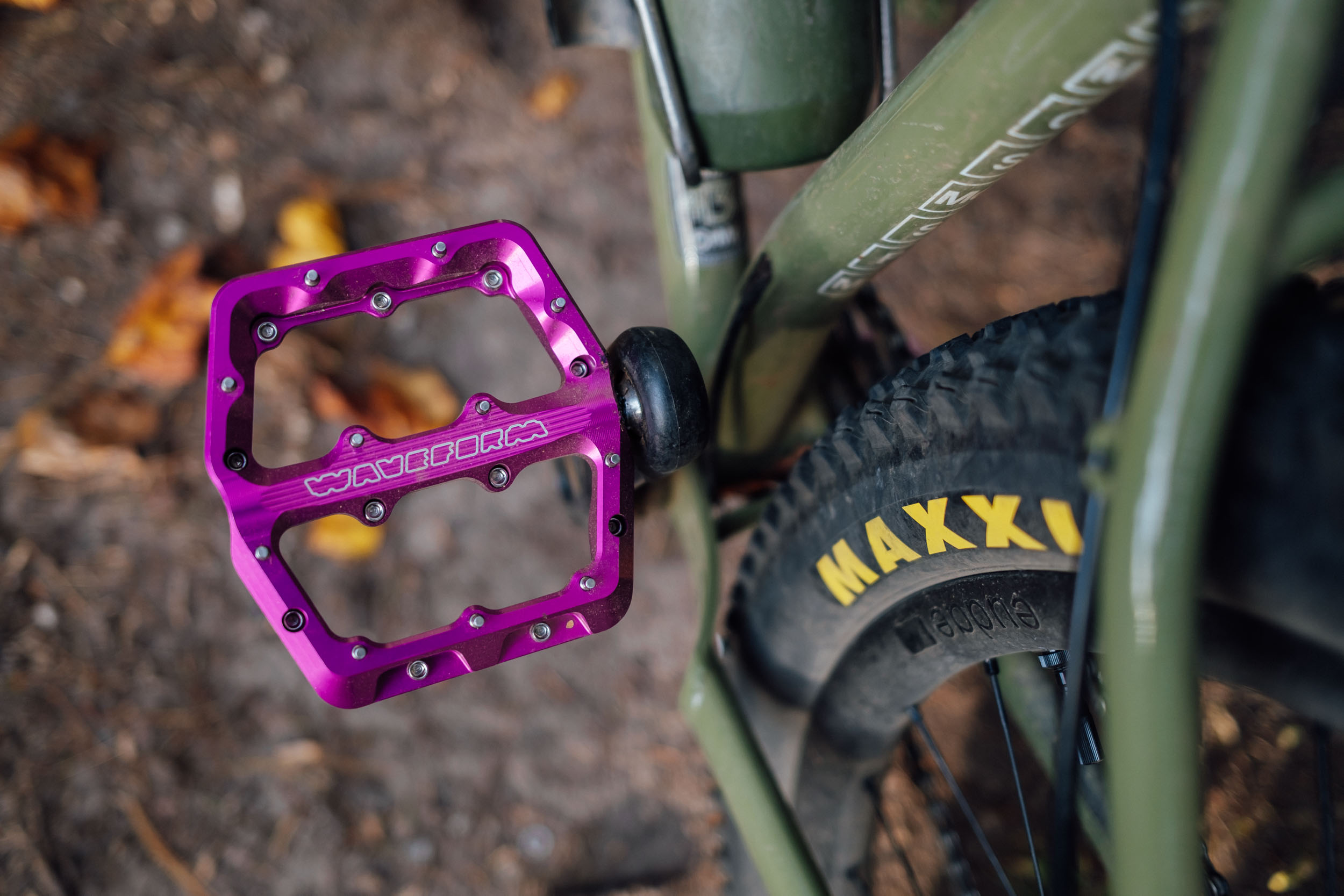
Now, onto the meat, which thus far hasn’t been from my shins. The Alibi got its name from the literal definition of the word, to justify a fault. It “helps keep you out of trouble,” which is usually slipping a foot when it comes to pedals. It’s a clever concept considering that I think this pedal actually accomplishes that task better than any other pedal I’ve used. For one, they’re incredibly grippy. I’d argue that they’re the most sure-footed flat pedal I’ve used. The size, shape, and placement of the 10 pins per side and the large 108mm (W) x 128mm (L) dual concave platform all contribute to this.
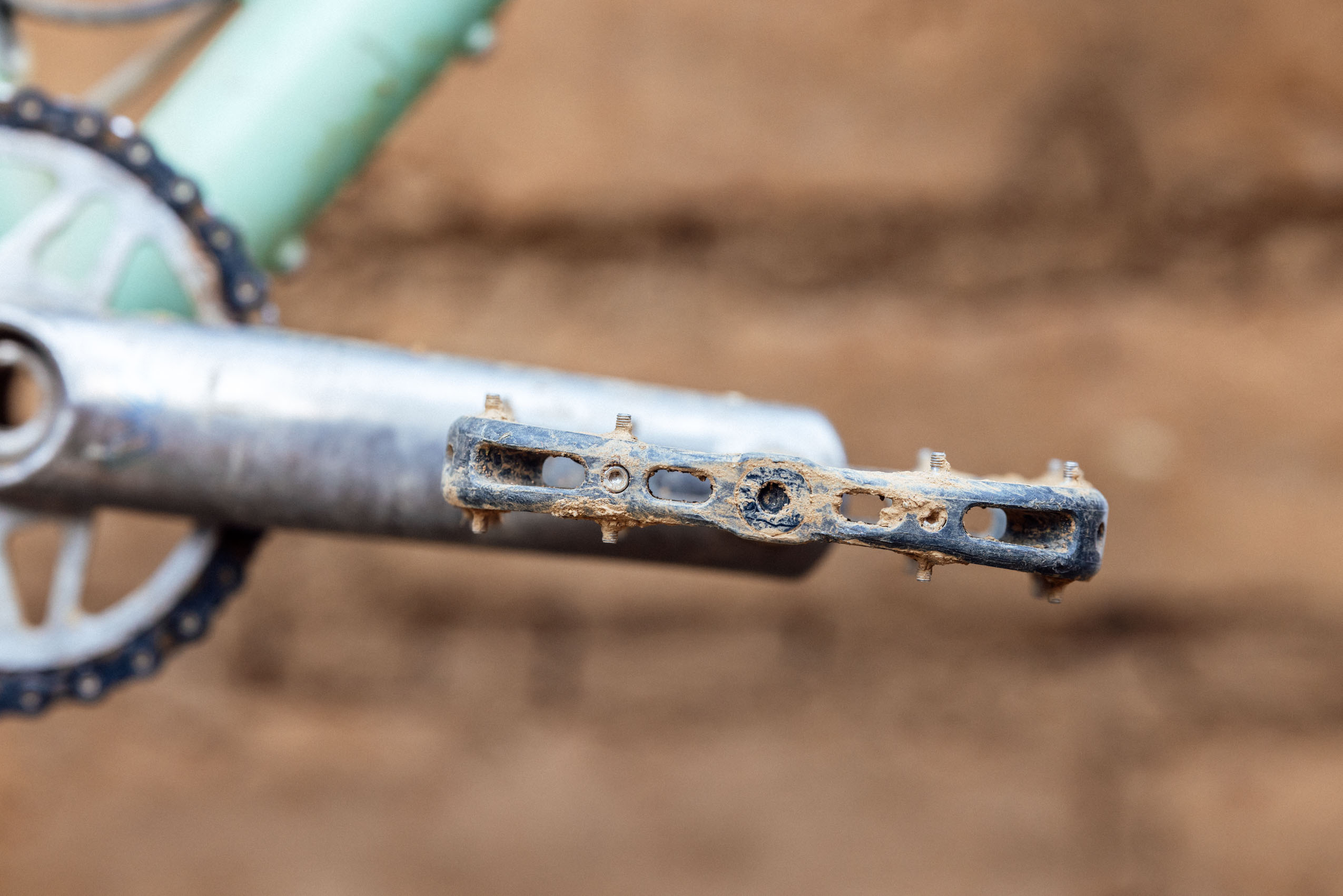
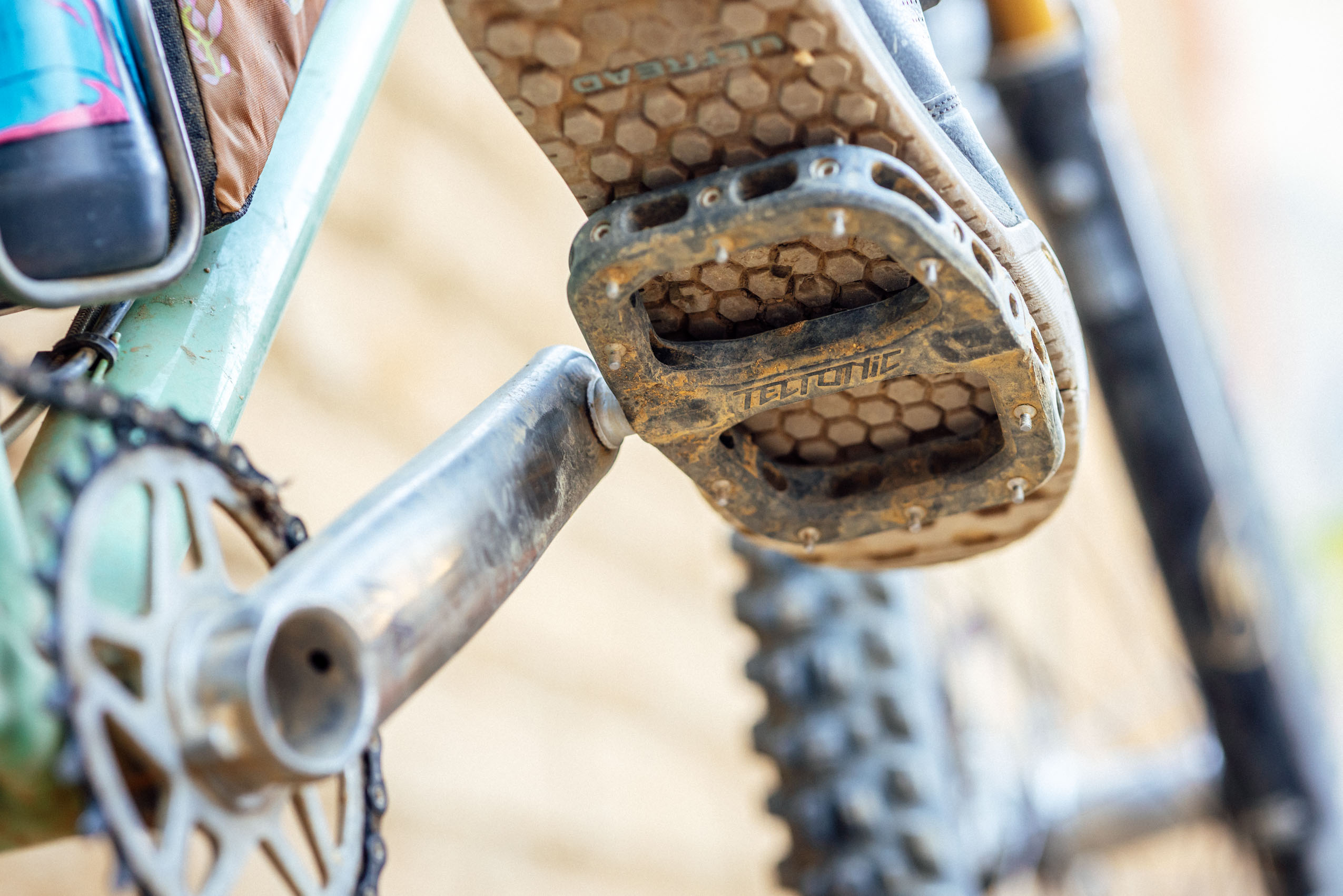

They’re tenaciously tacky both descending and climbing, yet somehow they don’t make it difficult to reorient your foot placement. I’ve ridden a few different shoes on them, and even the least sticky rubber soles are highly effective on the Alibi. I’ve ridden out a line with my foot improperly placed or only half on the pedal on plenty of occasions. The size and shape, and claw-like pins, have a very stable feel that doesn’t seem like it’s going to rotate out from under you when your foot isn’t in the right position.

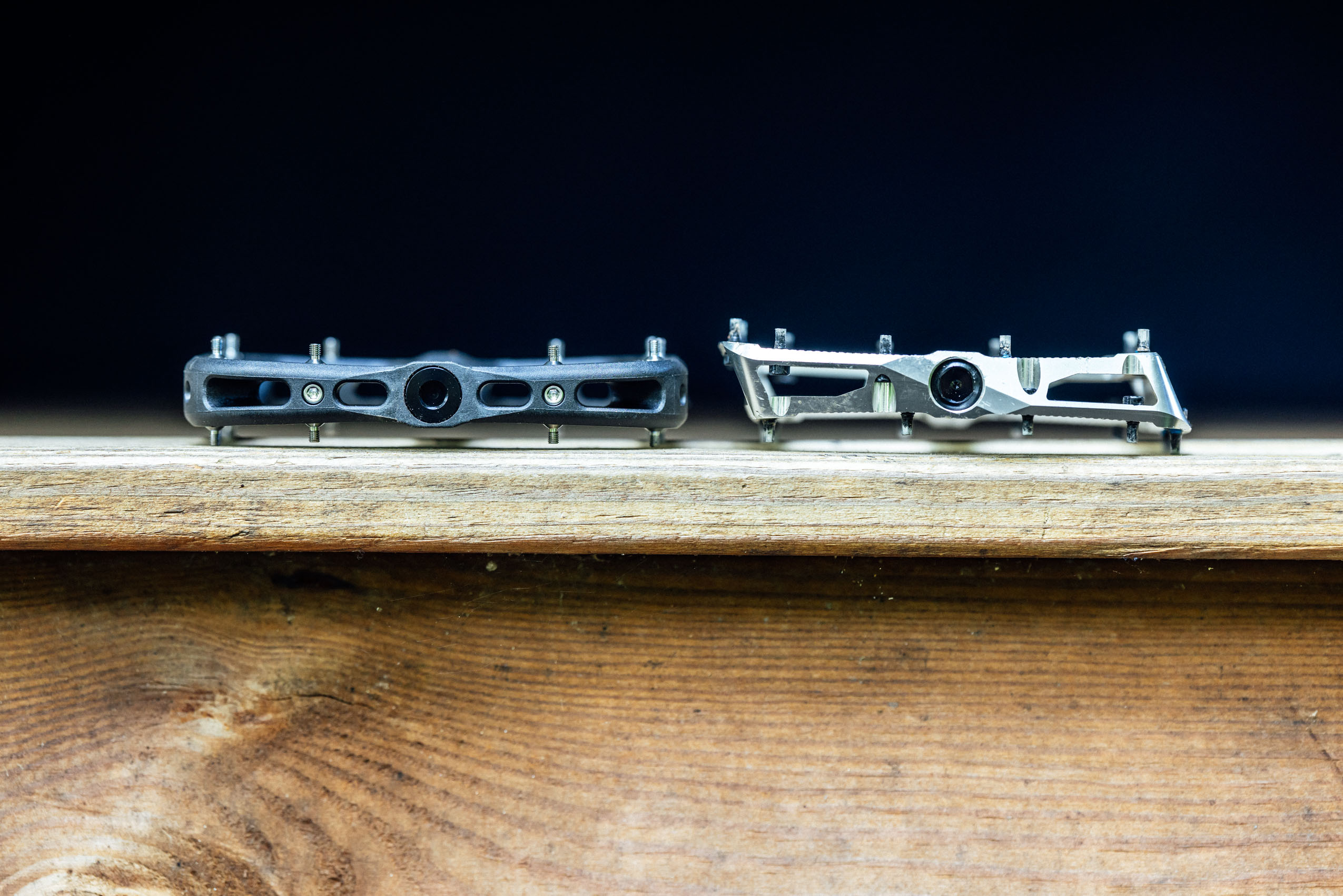
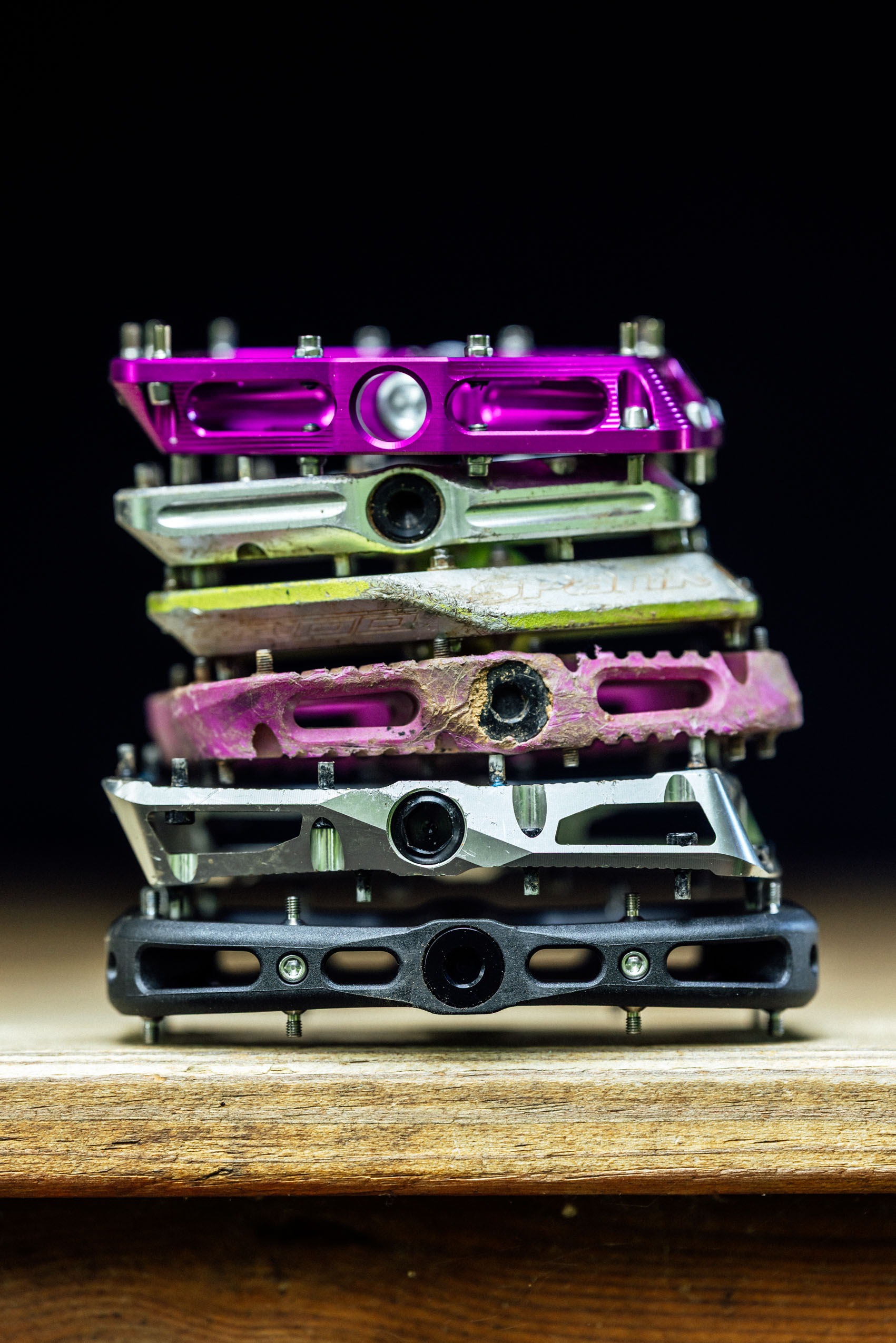
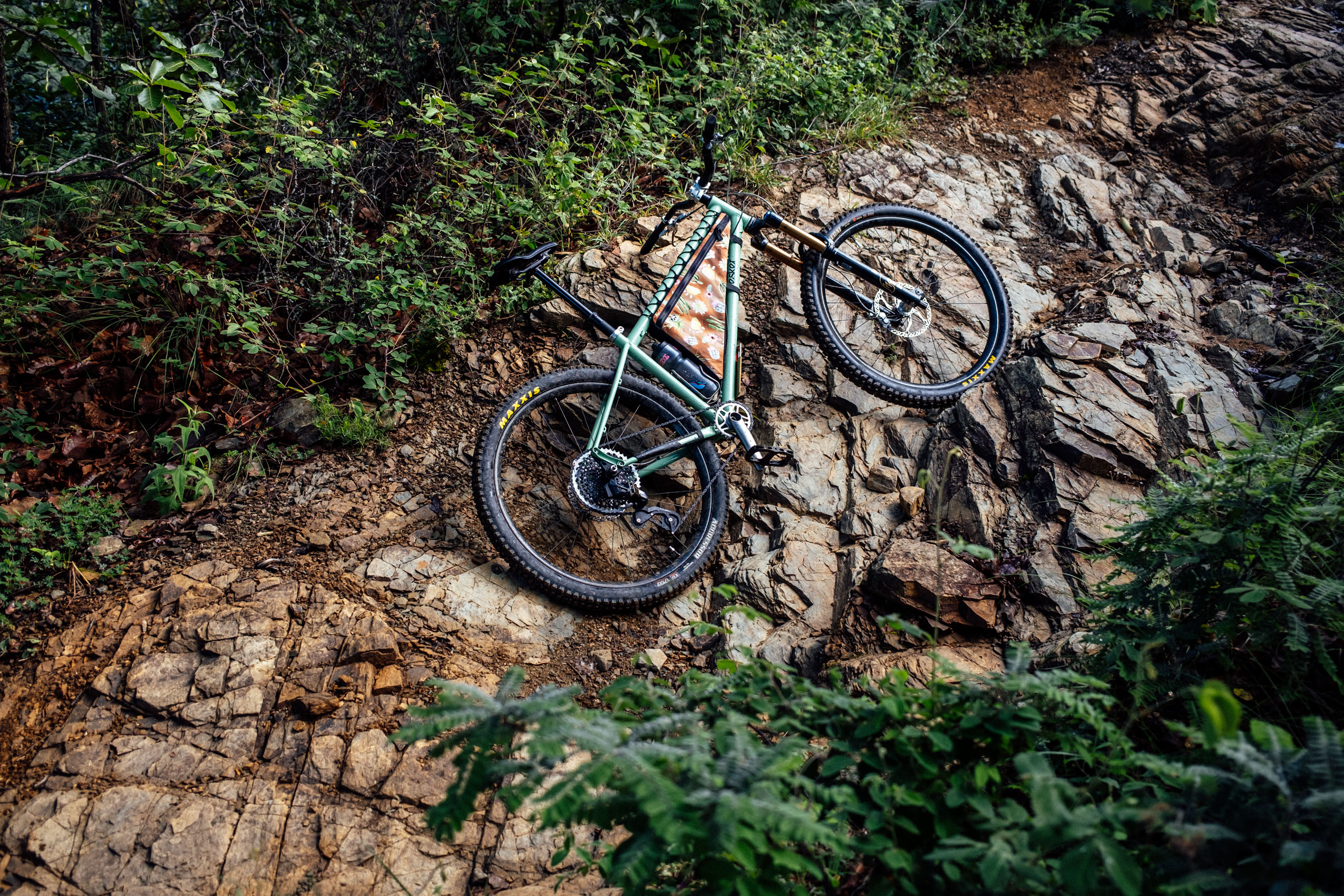
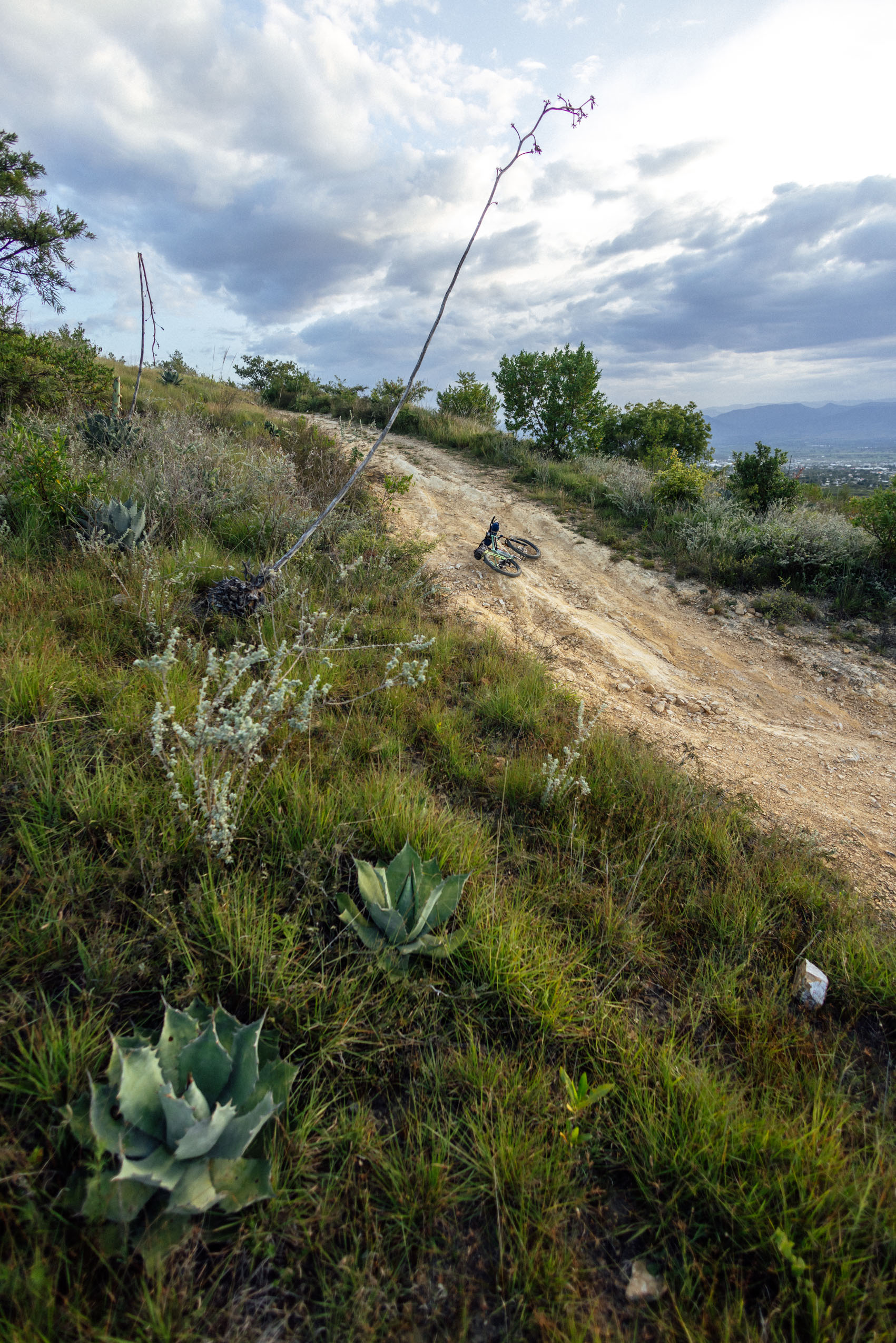
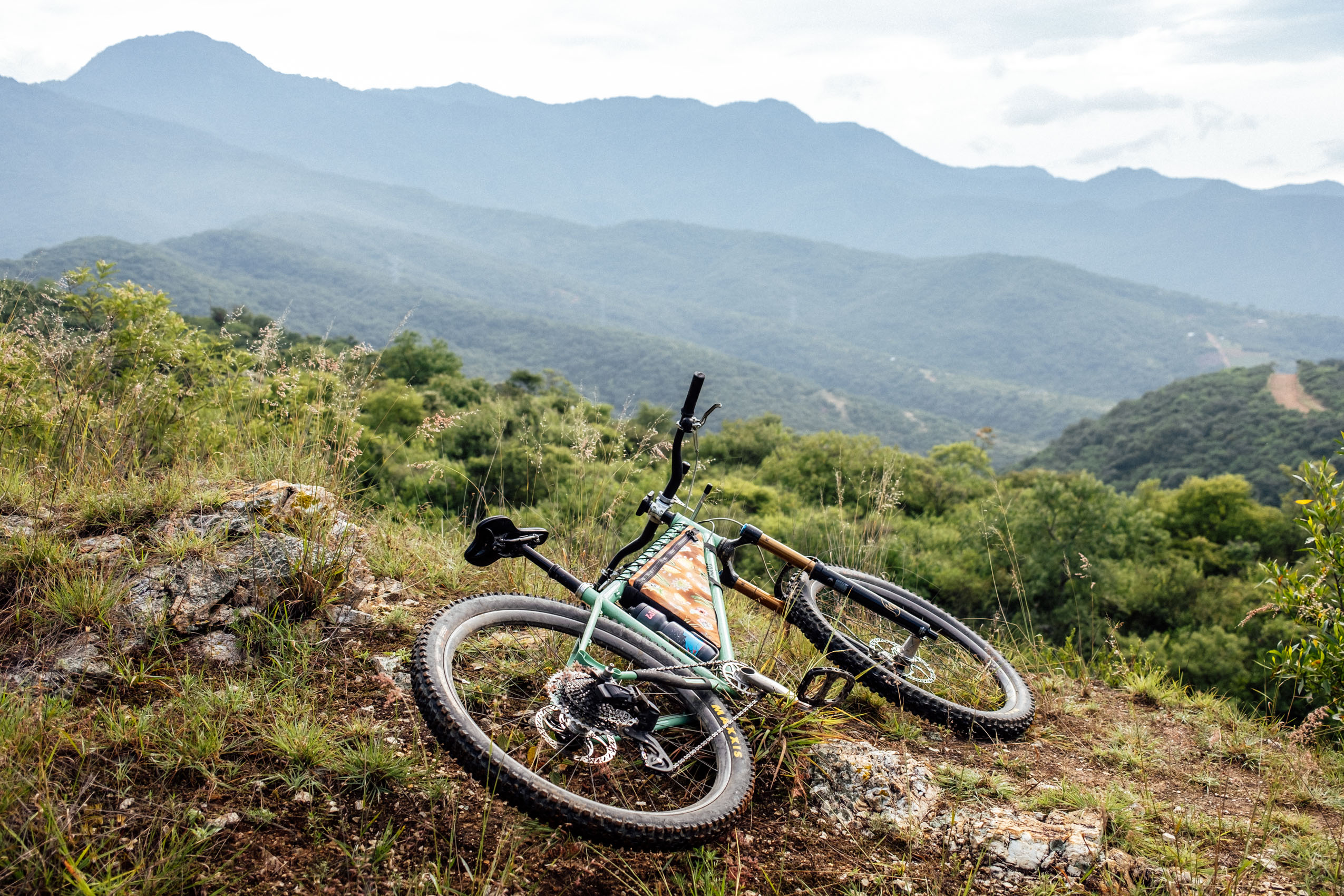
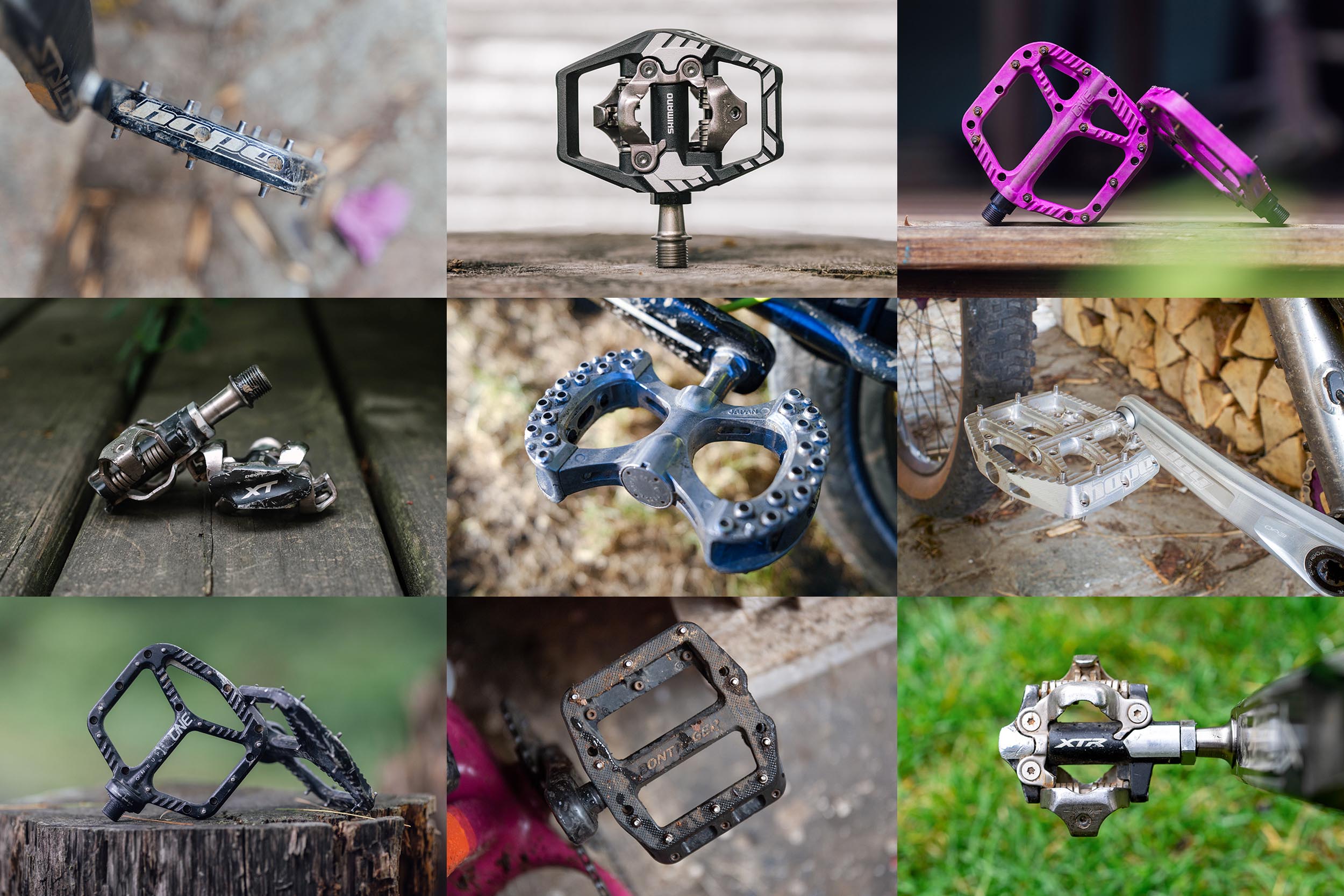
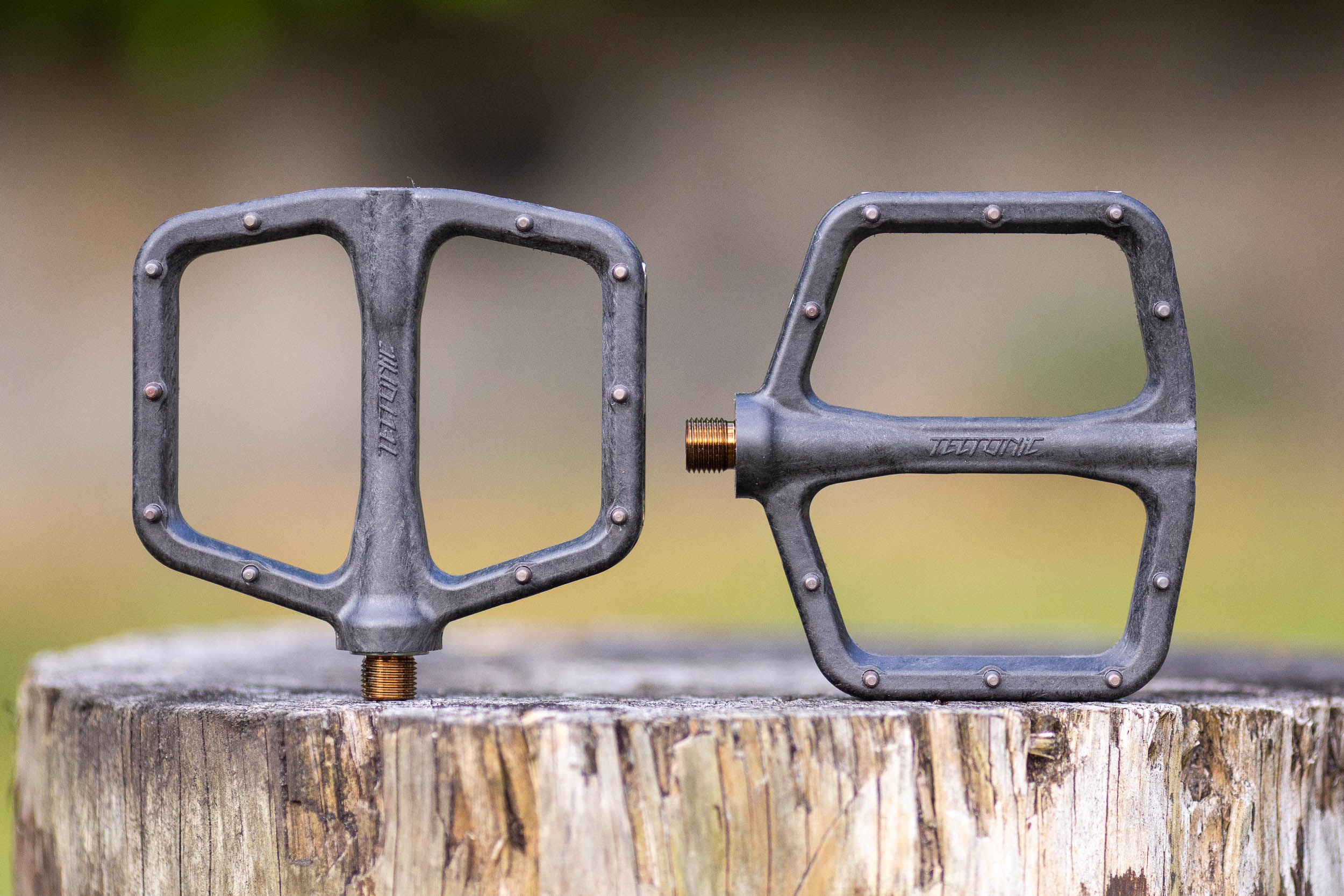
The alibi analogy also fits my point about the forgiving quality of composite pedal bodies. They’re a little more lenient when slamming into rocks or roots at high speed. I’ve hit a fair few with the Tectonics while riding Oaxaca’s rutted and rocky singletrack and have yet to take a big tumble as a result. Knock on wood three times. That said, folks who are riding bikes with low bottom brackets should consider the size of these platforms. As shown in the comparison shots, they’re a little larger than others, and they don’t have intricate angles designed to avoid pedal strikes.
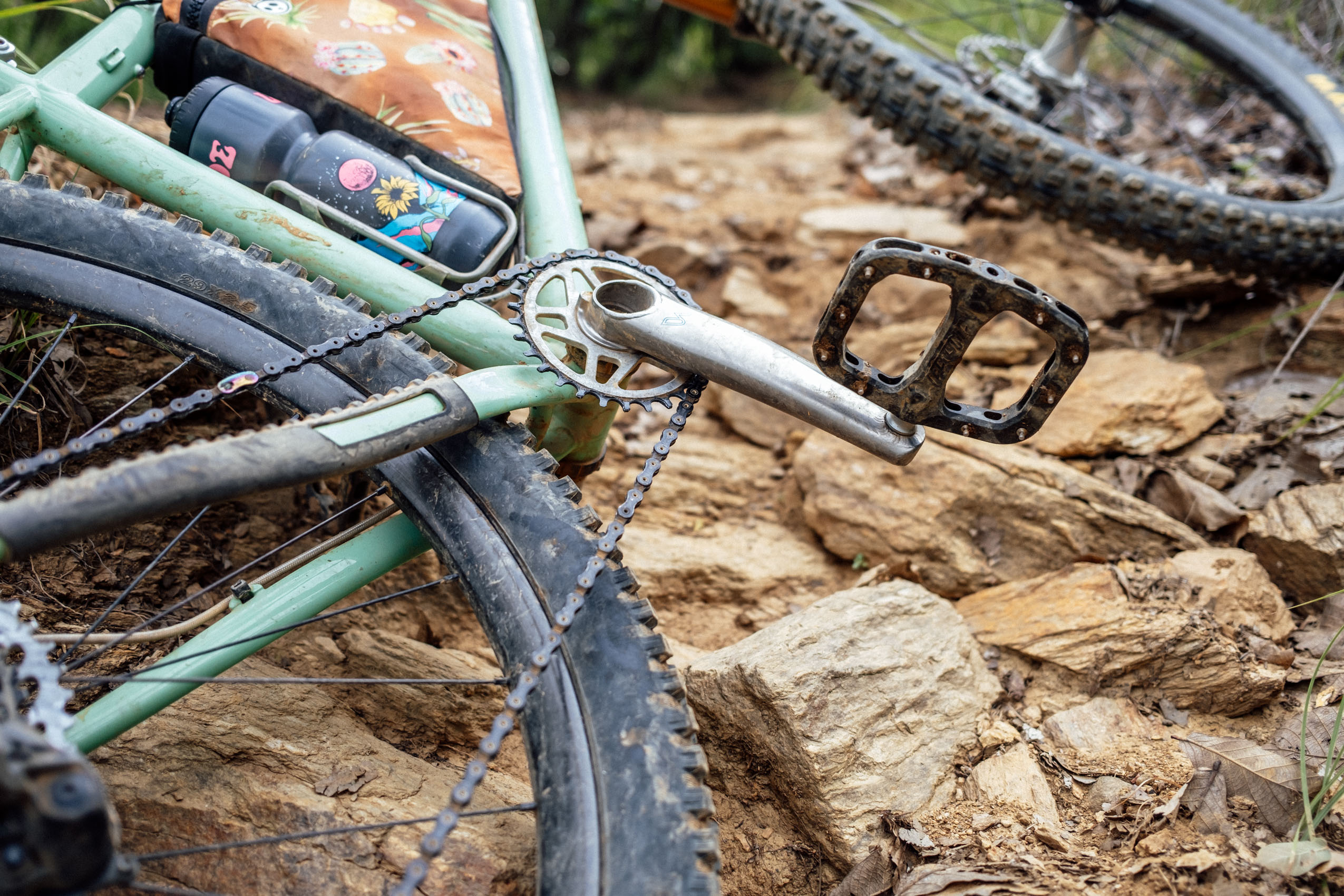
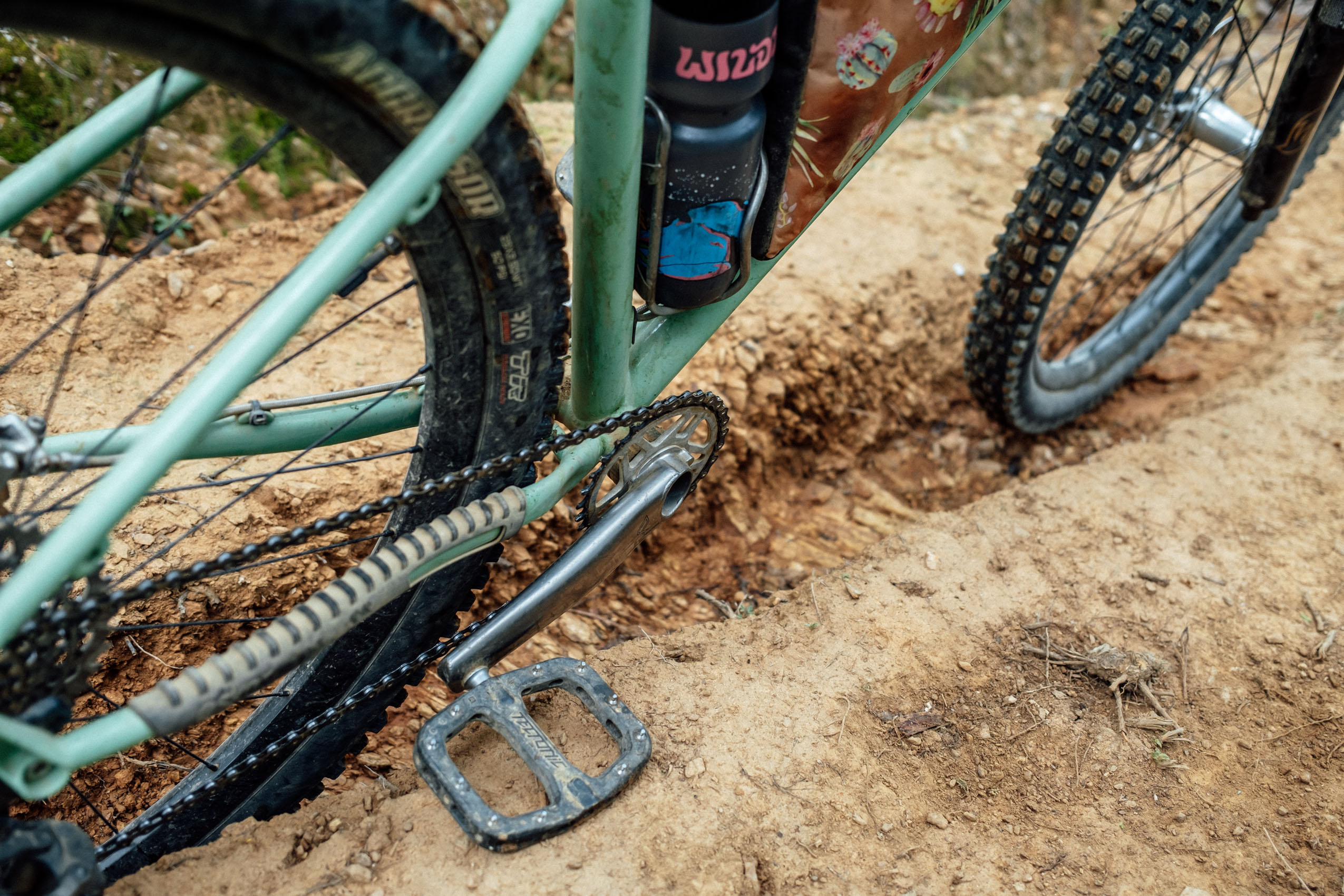
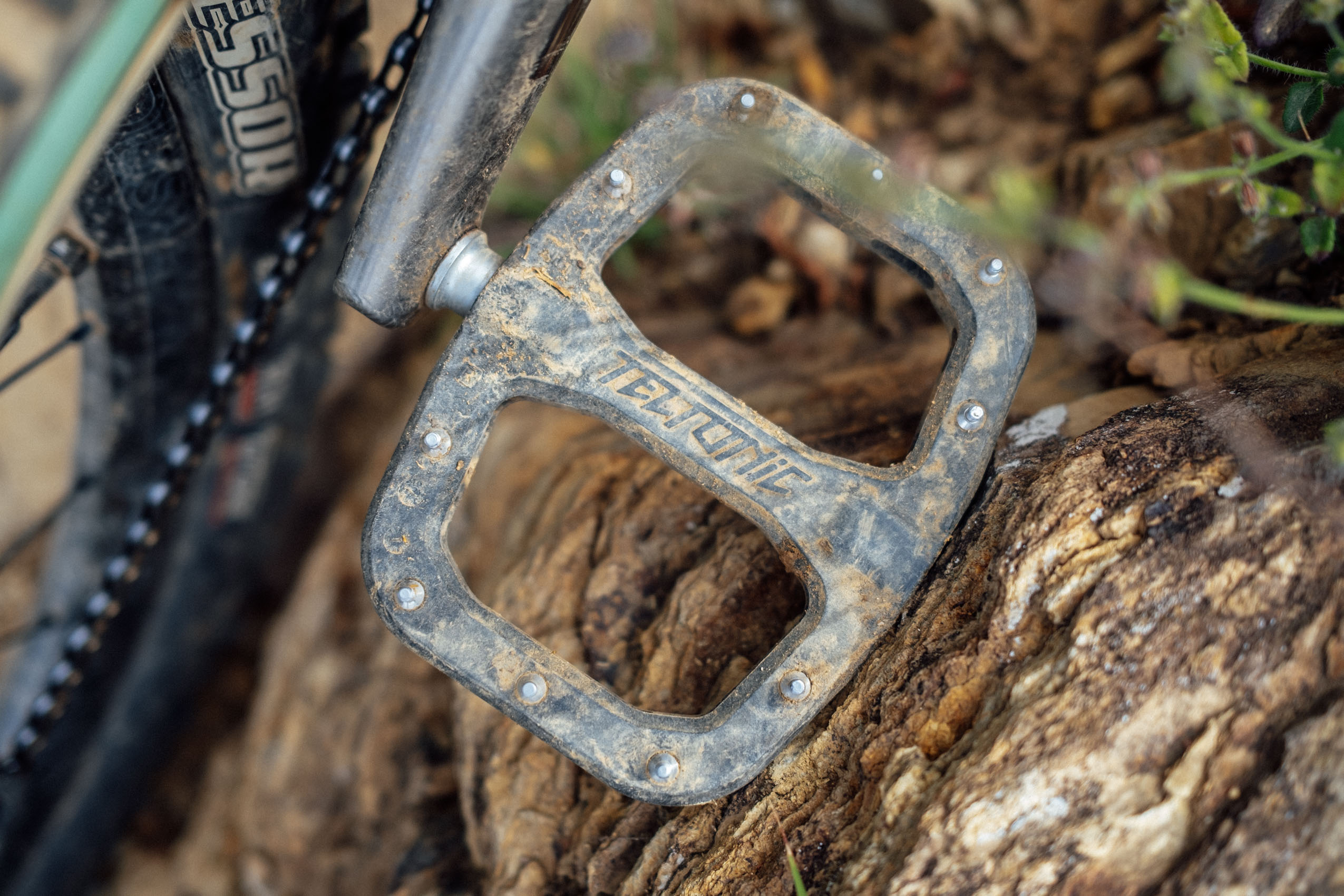
Still, the size of the Tectonic Alibi pedal bodies is one of its major strengths. They’re longer than most other options and are incredibly comfortable as a result. The only pedal I’ve tried that’s bigger is the freakish Pedaling Innovations Catalyst, which I found to be way too large, particularly for riding chunky singletrack. I wear a size 10-ish shoe, and the Alibi is perfect for both trail riding and extended rides, such as all-day-everyday bikepacking.

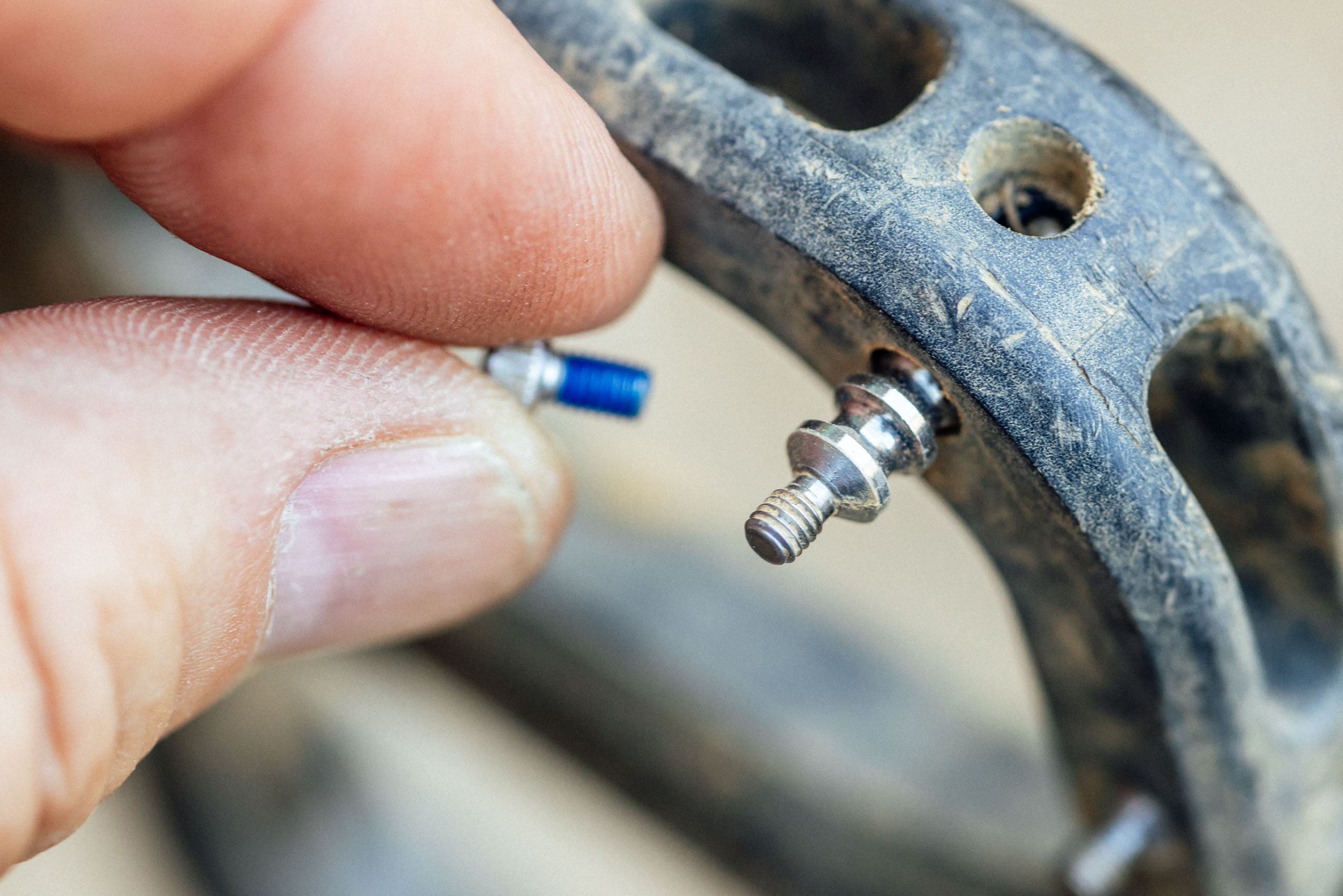
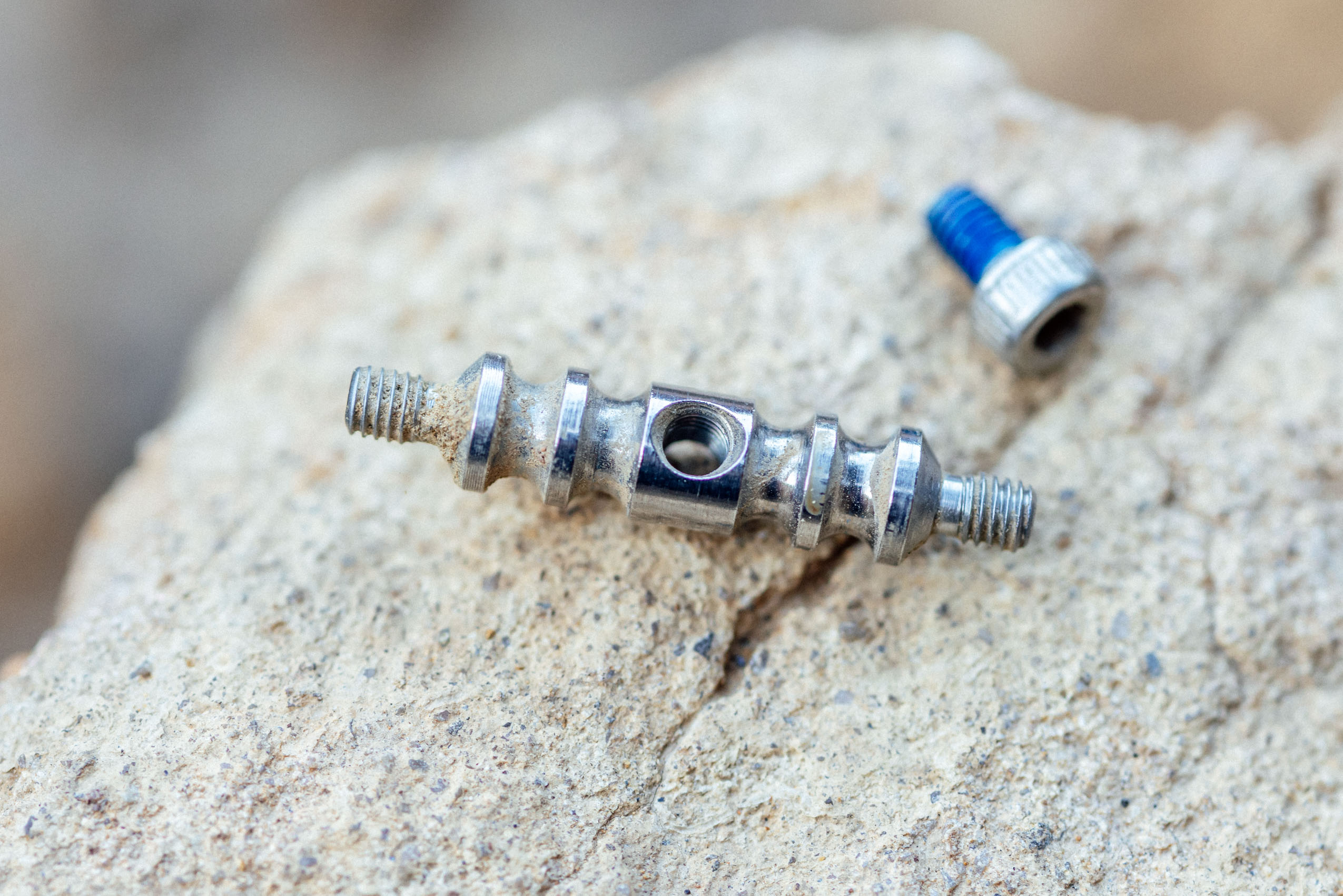
The “Sharktooth” pins might be the most impressive part of Tectonic’s design. This patented, full-length stainless steel system allows each pin to pass completely through the pedal body, where it’s secured by a side-loading retention bolt, creating a textured traction pin on both sides. Not only does this eliminate the risk of stripped threads, but it also makes bent pins easy to replace. I’d also argue that their beefier construction makes them more durable than typical threaded pins. After all the abuse I put them through, I inspected each one closely. A couple showed signs of wear, but none were bent or significantly damaged. Each pedal uses six long pins, four short pins, and 10 retaining bolts.
Durability and Reliability
As mentioned above, I’ve been privy to many tales of pedal failures on bikepacking trips. I’ve undoubtedly heard the most stories from Alexandera Houchin, who’s broken enough pedals over the years to become understandably skeptical of most designs. She snapped a pair of Race Face Chesters at the axle during the 2019 Unbound XL, stripped a set of Race Face Atlas pedals off their spindle during the 2019 Tour Divide, seized a OneUp Alloy pedal on her 2021 Arizona Trail Race attempt, and pulled a Deity TMAC pedal off its spindle during a short tour. Those experiences led her to replace her pedals before every major race. As of a few years ago, the Tectonic Altar was the first pedal she claimed not to have to worry about.
The Tectonic Alibi doesn’t have the same internals as the Altar, however. The Alibi runs on a single outer bearing and an IGUS bushing (vs. four bearings in the Altar). Tectonic moved away from the full bearing setup of the Altar, removing the inboard bearing bulge and providing a less complicated pedal body design. This also streamlined the manufacturing process, thus halving the cost to consumers. According to Tectonic, these internal changes also increased the service intervals, since the bushing can run longer without issues.
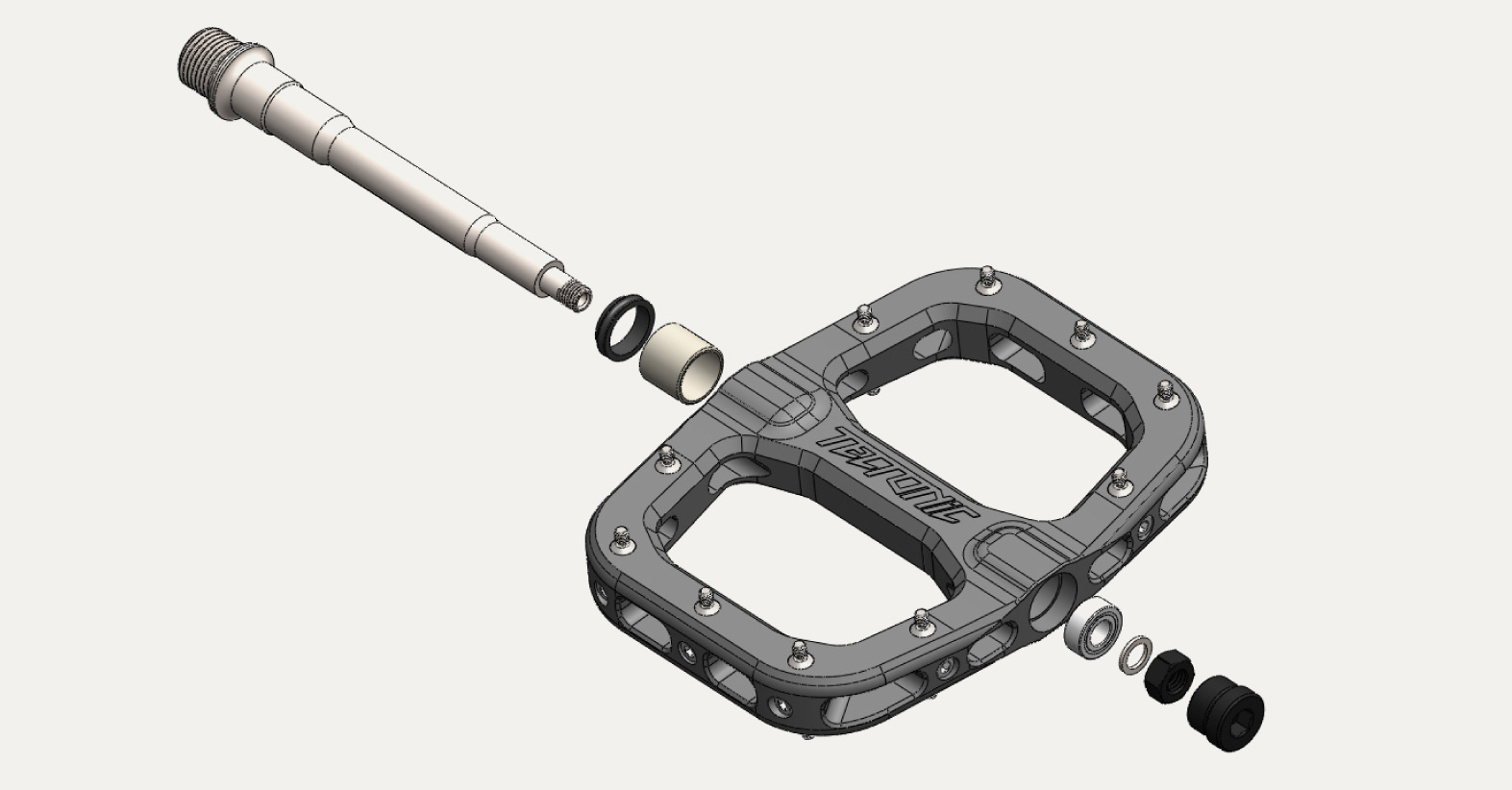
When you do have to service it, it looks pretty straightforward. The only “special tool” required is an 8mm deep socket. I actually had one of these, but when I wanted to break these pedals down for photos the other day, it was nowhere to be found. The ghost in my workshop must have taken it. He seems to do that for things that I suddenly need. Either way, here’s a diagram from Tectonic that shows the simple layout. The 686 bearing and 12x14x12 (IDxODxW) metric sleeve IGUS bushing are both common sizes. As Andrew explained, “If you were to be dropped into a McMaster warehouse, you could walk out with all the rolling elements you needed to refresh a pair of Alibis.”

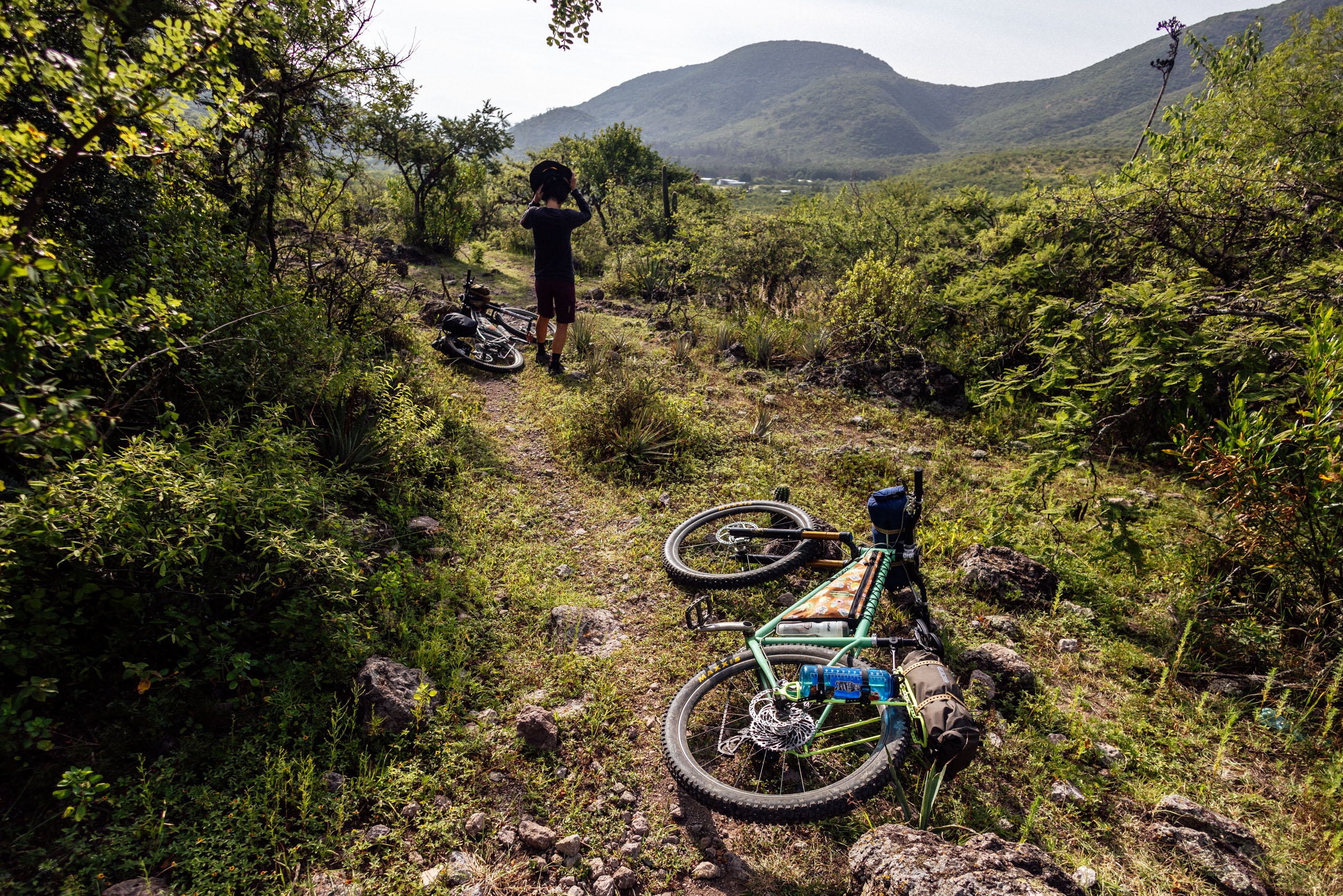
I’ve now put well over 1,000 miles on this pair of Alibis, and haven’t yet needed to service them. There’s no play in the bearings or bushings, and they’re running smoothly.
- Model Tested: Tectonic Alibi Pedals
- Actual Weight (pair): 396 grams (13.97 oz)
- Place of Manufacture: Taiwan
- Price: $100
- Manufacturer’s Details: Tectonic
Pros
- Best-in-class grip
- Forgiving and very stable
- Pedal body material is tough and recycled
- Interesting and rugged pin design
- Large, lengthy platform is comfortable for long rides
Cons
- Not as affordable as other composite pedals
- Large platform and non-angled edge design might not play well with low BBs
- Plenty long, but might not be wide enough for some people’s tastes
Wrap Up
The Tectonic Alibi has earned a top spot alongside the handful of flat pedals I genuinely recommend without hesitation. It combines the impact-friendly nature of a composite body with class-leading grip, an exceptionally stable platform, and reliable construction. After more than 1,000 miles of rocky trails in Oaxaca, the bearings are still smooth, and the body has shrugged off quite a few pedal strikes.
Perhaps what impressed me most is that the Alibi doesn’t use the same formula many flat pedals were built around. It’s a simple design with a very generous platform, an aggressive pin layout, a recycled composite construction, and straightforward internals. If you value outright grip and a larger pedal body, especially for long rides and remote adventures where a pedal failure can quickly become trip-ending, the Alibi should be on your list. For me, it has become the new benchmark for flat pedals—so much so that I just bought my second pair.
Further Reading
Make sure to dig into these related articles for more info...

Please keep the conversation civil, constructive, and inclusive, or your comment will be removed.