

 Mountain Bike (MTB)
 Gravel Bike
 All-Terrain Bike (ATB)
 Fat Bike


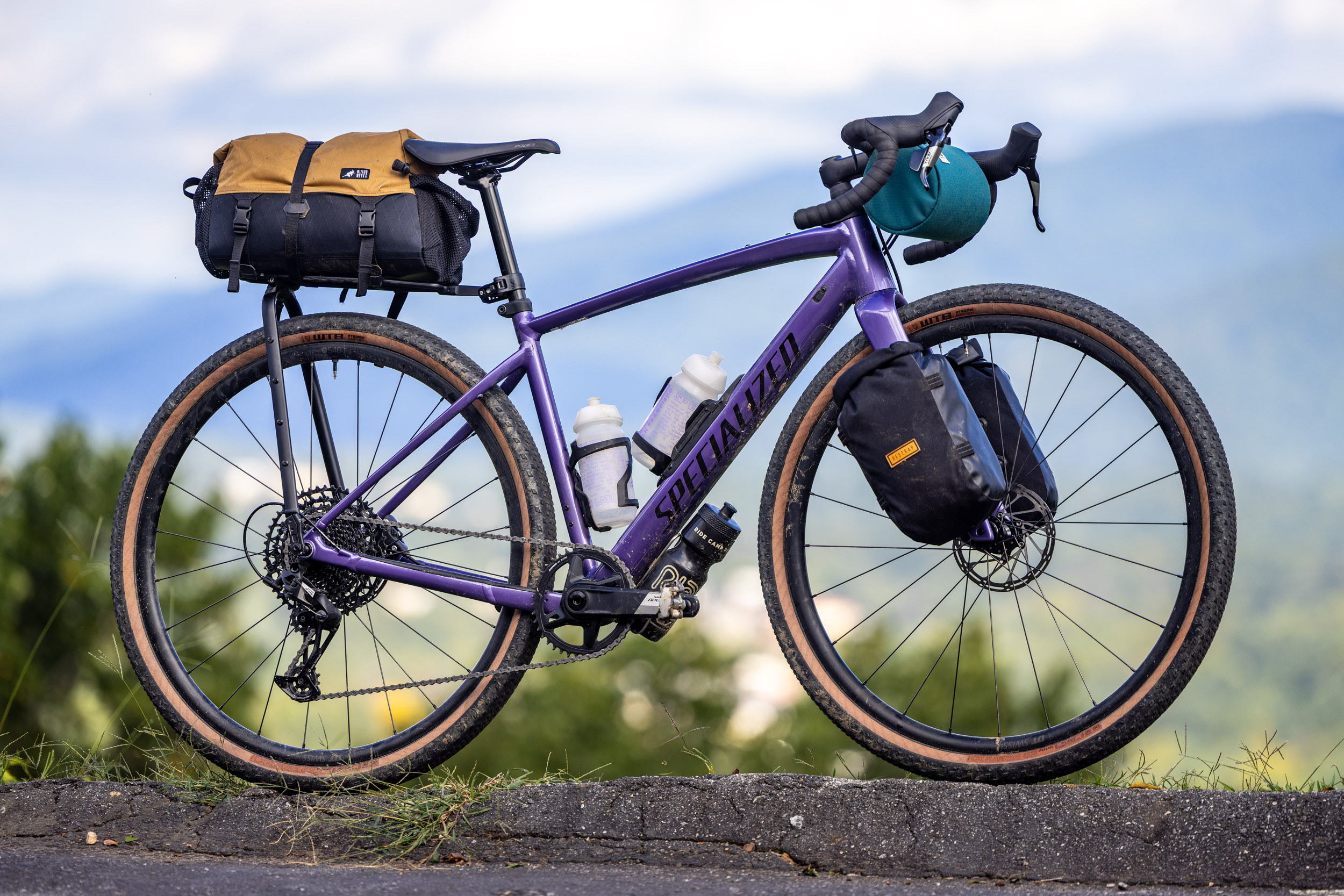
Specialized Diverge Review: Catch 22



Finding good value for a complete bike in today’s market is hard. From high-end super bikes to budget-oriented ones that require upgrading from the get-go, it seems the middle class has vanished. When the new Specialized Diverge alloy popped up, it presented seemingly impossible value. A brand-name groupset, wide-range shifting, internal storage, suspension, and DT Swiss wheels for well under $3,000? There had to be a catch. In his review, Nic finds out whether this new gravel bike lives up to the hype…
PUBLISHED Sep 9, 2026
Riding shots by Holden Mathis
I had the distinct misfortune of owning four cars in 2025. I’ll spare you the details, but a game of expensive musical vehicles wasn’t something I loved partaking in last year. Along the way, I learned a lot about modern cars: their features, what consumers supposedly want, and what manufacturers want to give them.
After poring over all the available options, I couldn’t help but see a larger parallel to the bike industry. We’ve all heard the adage, “light, fast, or cheap—pick two.” While that still rings true, digging deeper into the pros and cons of buying a vehicle today reveals that mainstream gravel bikes come with the same catch-22s as cars. A disappearing middle class has made value harder to find, and simple, reliable, affordable options are increasingly rare.
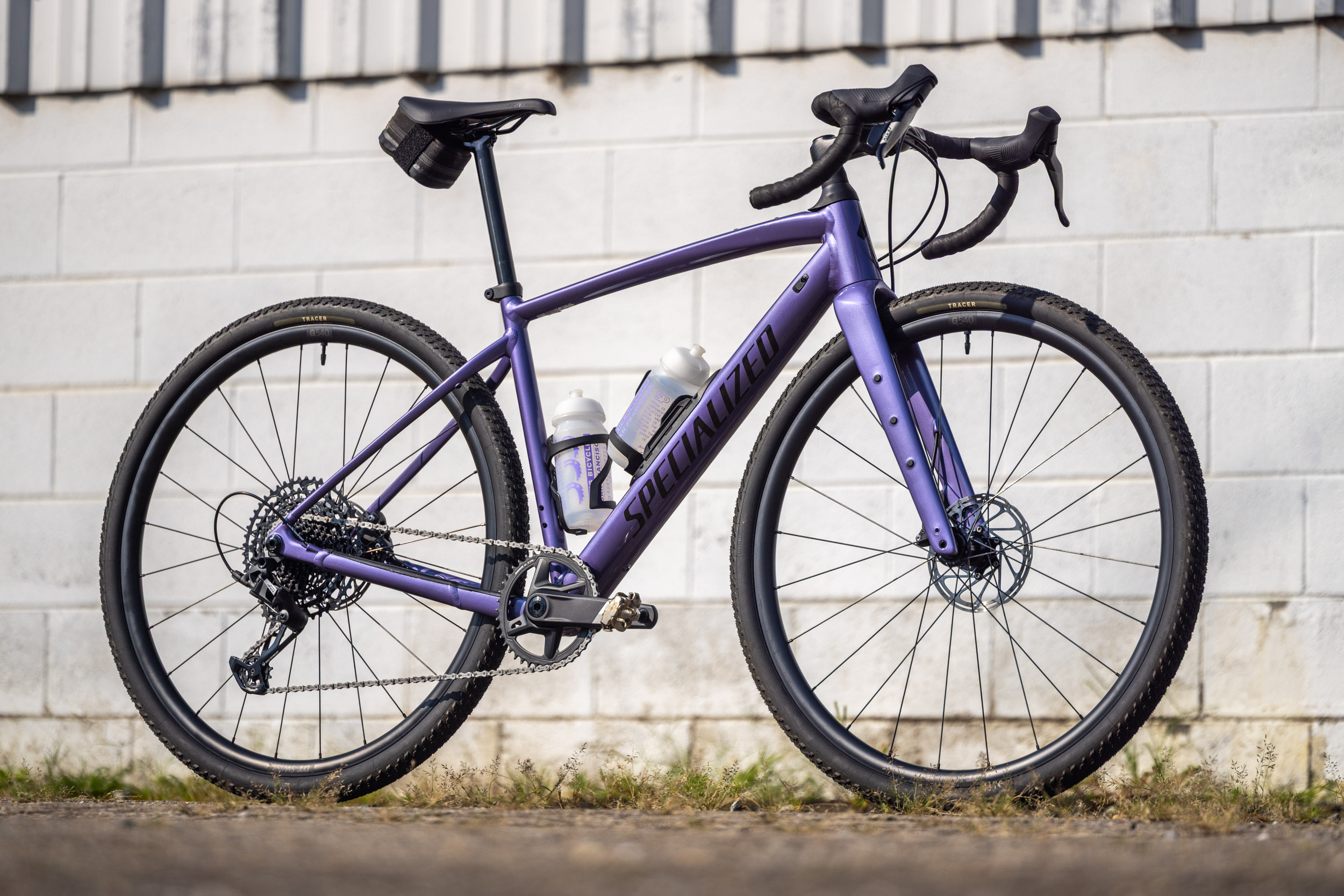
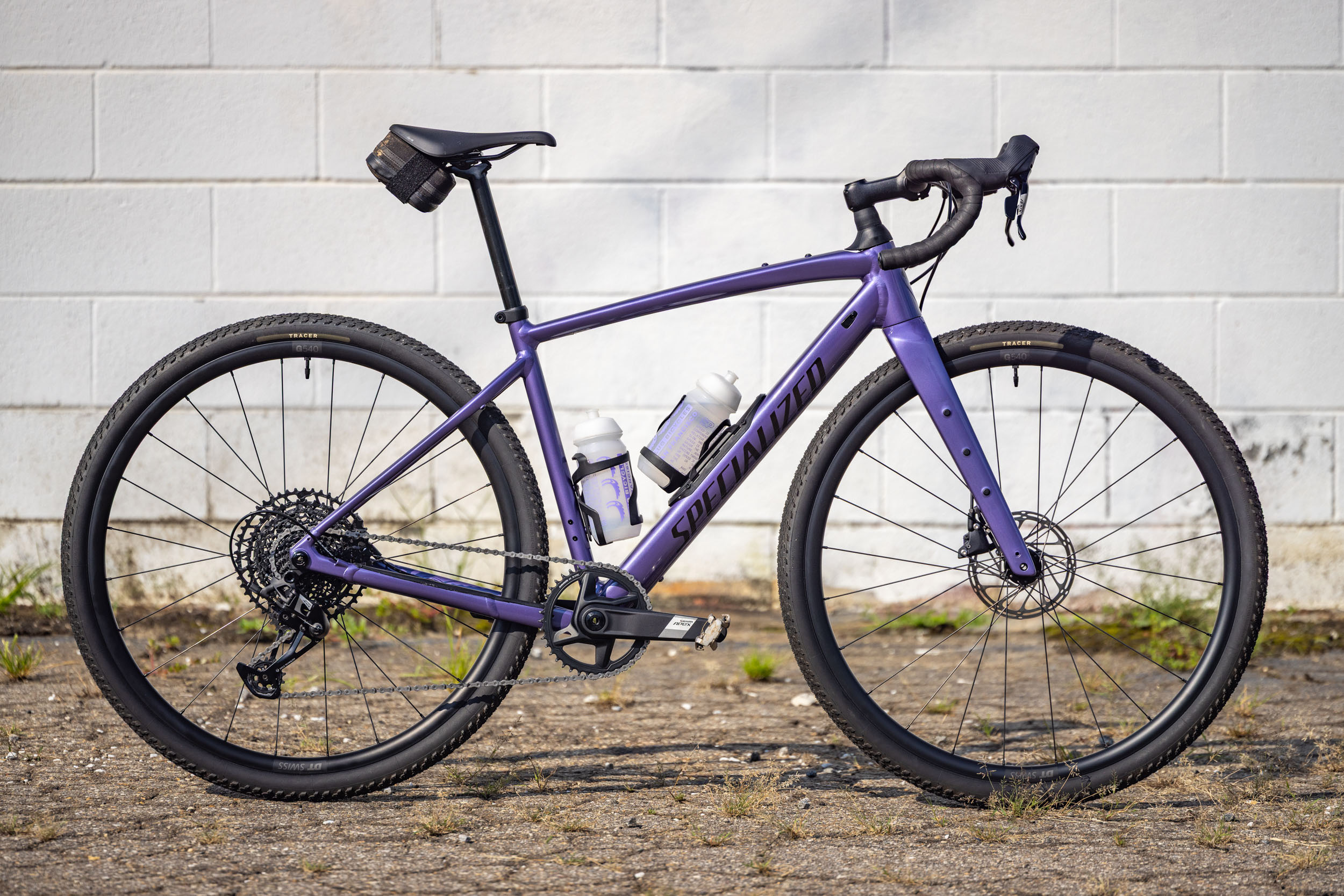
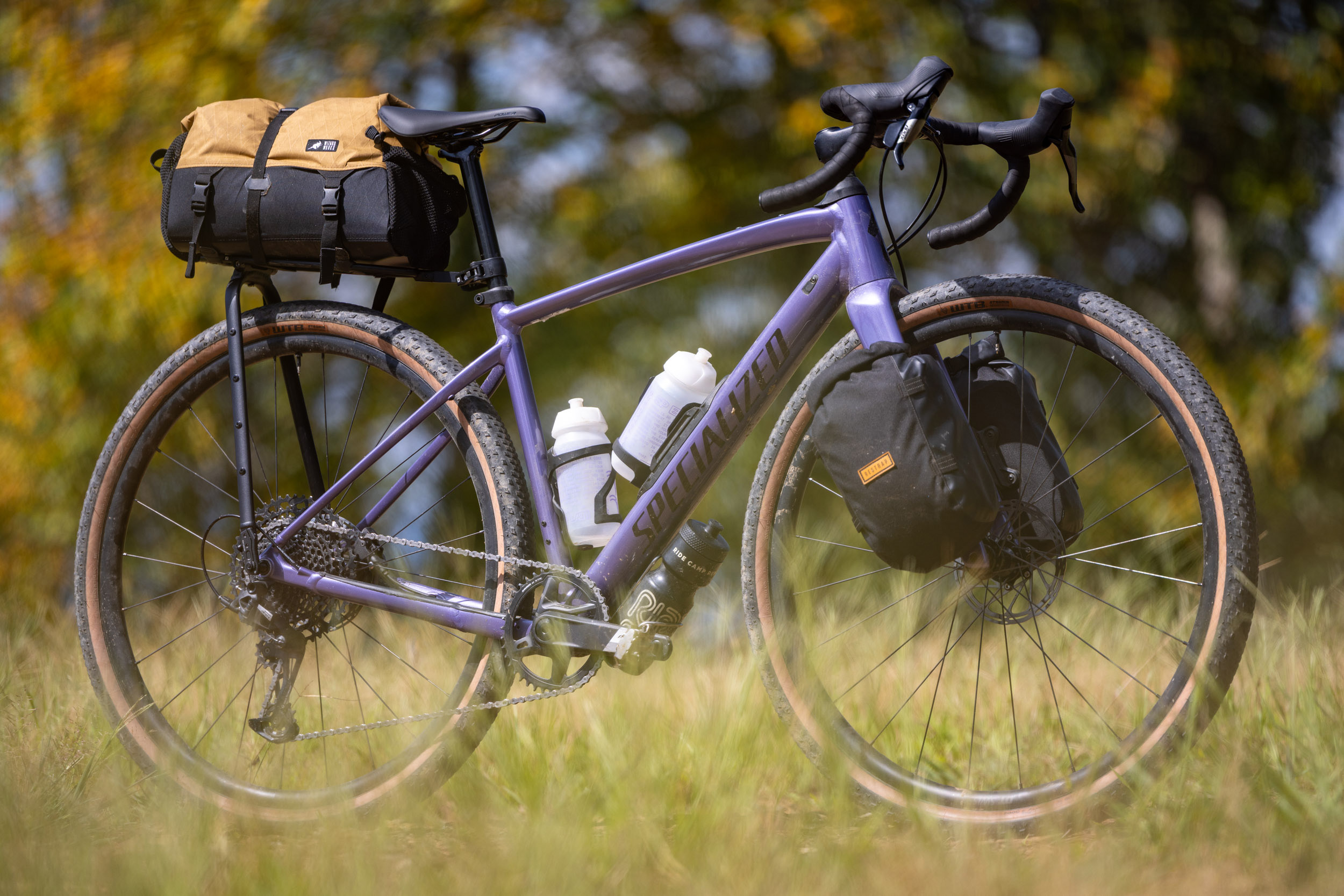
So, when I saw that Specialized’s latest alloy gravel bike was priced well under $3,000 complete, my interest was piqued. The Specialized Diverge 4 Comp Alloy didn’t seem like a cruddy take-down version of the carbon model; it had the same tire clearance, downtube storage, and brand-name groupset as some of the more expensive options. Moreover, with three-pack mounts on the fork and a headtube suspension system, it appeared equally capable and offered some of the same quality-of-life features. In my review, I determine whether the Specialized Diverge 4 Alloy provides true value or if it’s too good to be true.
Changes
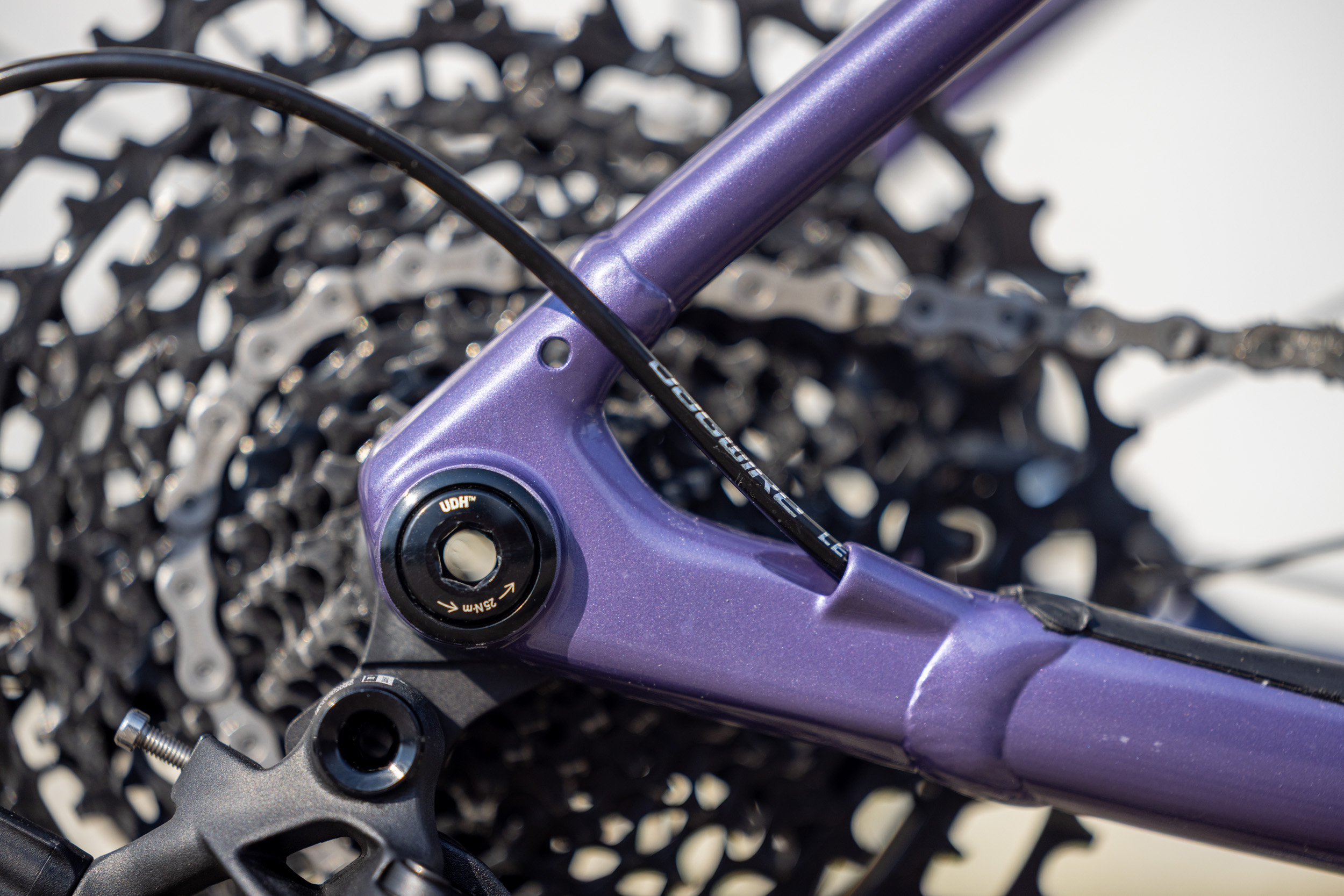
The main differences from the new model are tire clearance, geometry, and quality-of-life features. I’ll get to the tire clearance, but the geometry is a little longer and slightly lower than past iterations of the Diverge, though there is an asterisk given its included suspension technology. It has UDH compatibility and is their first aluminum bike to feature internal storage. The SWAT system is spacious, easy to use, and valuable for riders who want to make the most of their frame space. While my review model didn’t include a stuff sack, production models come with a large sleeve that minimizes rattle and gives users a place for small tools and other essentials. Otherwise, there’s plenty of room for food, extra water in a soft flask, layers—whatever you can cram in there. The new model also features dropper-post routing on the backside of the downtube, a great addition.


When I parsed through the press pack while dispatching the bike a year ago, the tire clearance changes raised an eyebrow. The brand said it fits a 50mm tire with 8mm of mud clearance: a figure that’s more than double the industry standard for maximum tire size. The suggestion at the time was, “You can fit a 2.2, but it’s not recommended.” That said, the bottom bracket height, while race-y and close to the floor with the supplied 45mm Tracer tires, is said to be optimized for 50mm rubber or larger. It’s an odd, sort of in-between approach that has yielded some interesting results.
First, the bike fits 2.25s. However, Specialized was right not to lead with that number, as the toe overlap starts well before that. I started feeling some rub at 52mm tires. Toe overlap isn’t something that bothers me, but it’s worth mentioning due to the odd communication around the maximum size.
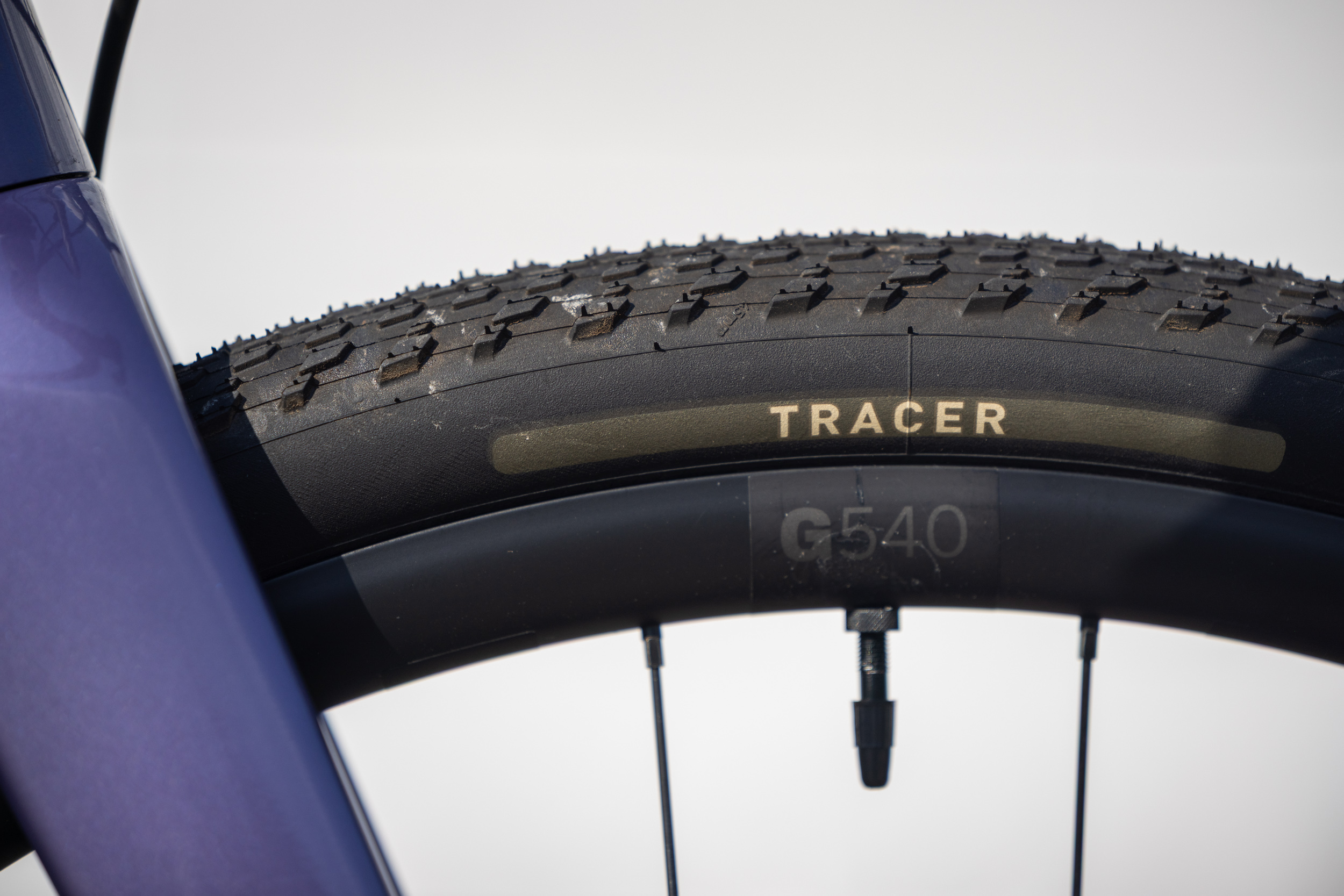


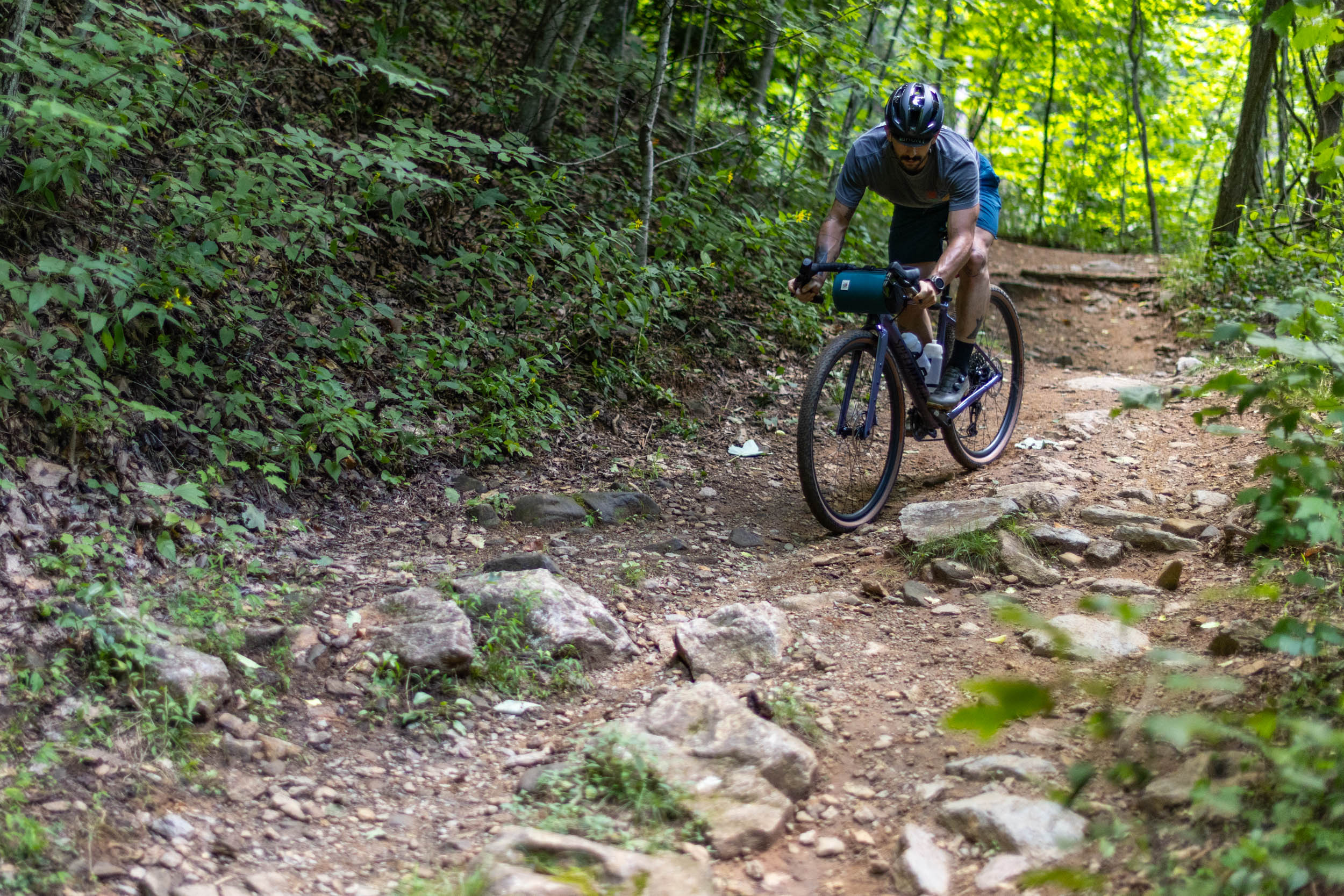
I’d also argue the bottom bracket height is too low for those looking to get rowdy. Given my affinity for cramming massive rubber on aggressive gravel bikes, usually by way of fitting a smaller 27.5” wheel, I consider myself more than accustomed to the occasional pedal strike. Yet, even with 700 x 52s, I found myself nearly bottoming the entire bike out, let alone the cranks, fairly often. I took it on the same terrain that randonneuring bikes and other fat-tire machines have fared okay on, and I’ve never hit the ground so many times. The supplied 170mm Apex cranks didn’t help, but there’s something about the wheelbase, bottom bracket drop, and tires here that doesn’t quite jive with true off-road endeavors. In my view, this bike is designed for something like UNBOUND—plenty of thunderous chunk on a relatively flat road. Not Appalachia, a place where the rocks are strewn across steep and extremely uneven terrain, creating gaps and places for race bikes to fall into.
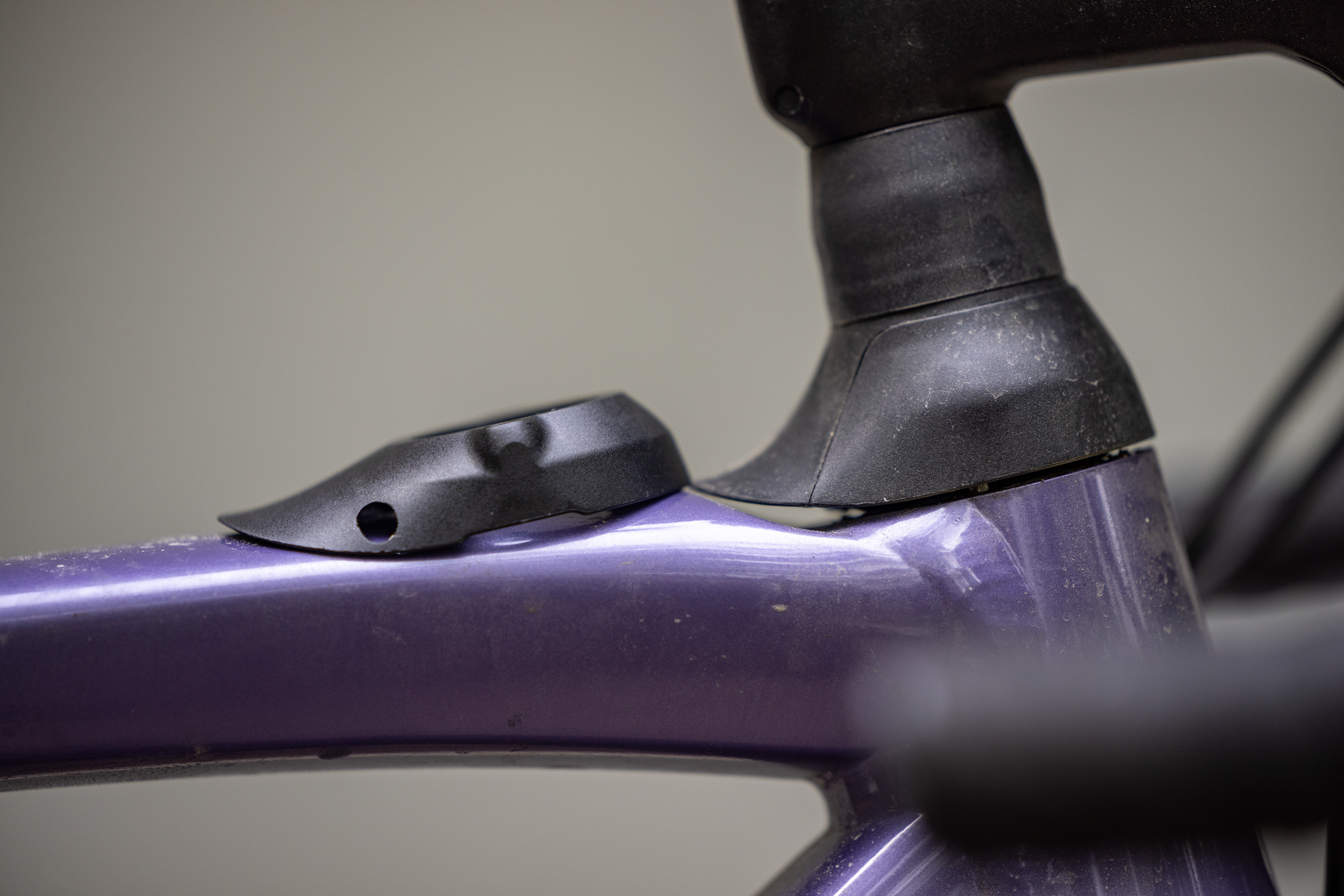


To that last point, the head tube has been slackened out ever so slightly at 71 degrees. It makes for a good handler on descents, but there’s more to that puzzle because of the Future Shock. It’s more Slug Earthling than Fairlight Secan, but it’s halfway between and certainly not as satisfying on singletrack as the Slug.
Tech and Spec
Moving on to the attention-grabber, the new Future Shock on the Diverge 4 is an interesting piece of technology. Since introducing the Future Shock system in 2016, Specialized has continued to iterate on this headtube suspension system. Now in its third version, the technology is split into three sub-versions across the Diverge 4’s spec line. I rode the Future Shock 3.1, which lacks an adjustment mechanism. This is similar to prior versions of the Future Shock, and Specialized notes that only the 3.2 and 3.3 are hydraulically dampened, while the 3.1 operates differently.


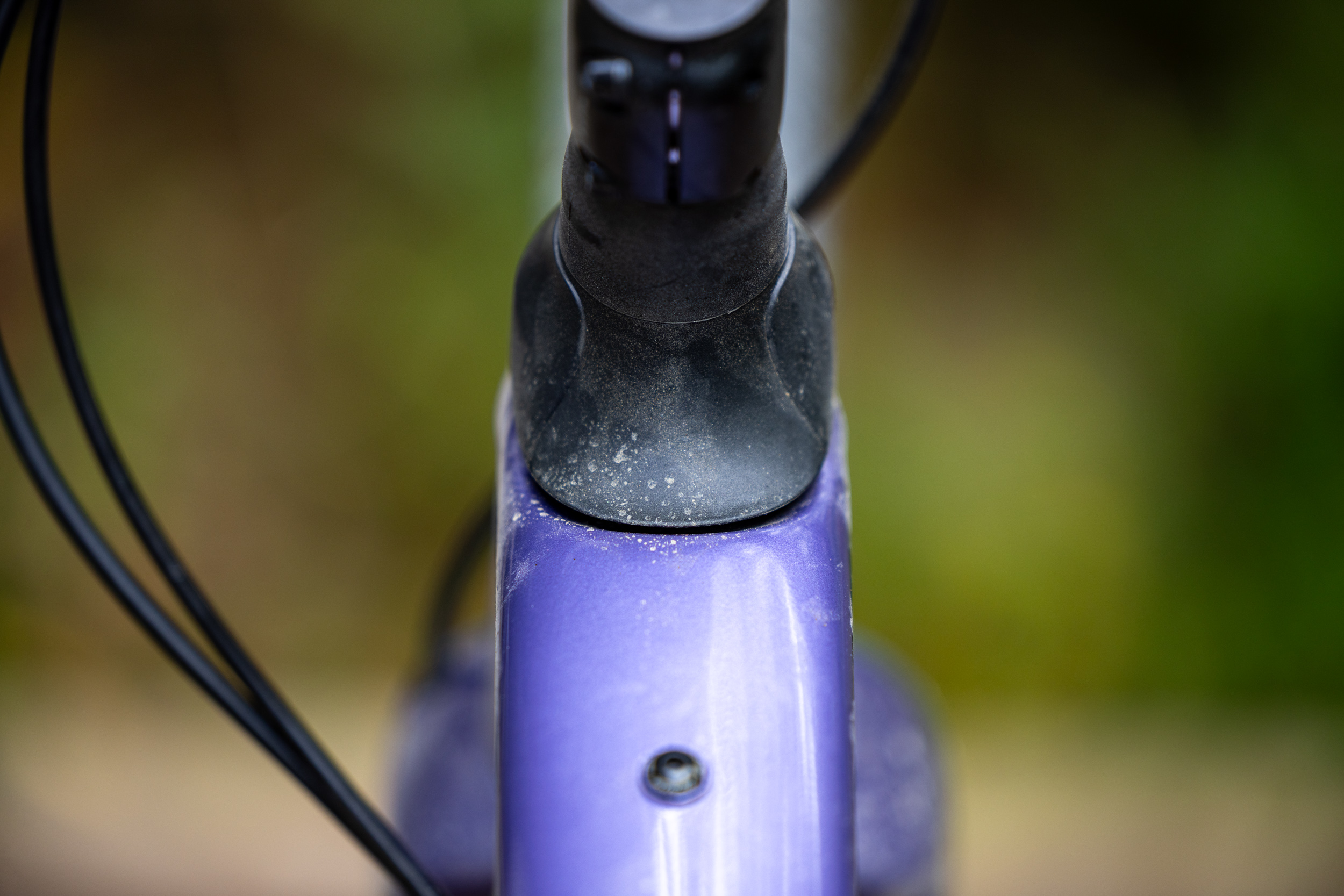
Either way, users get 20mm of travel, and though there is no variation in how quickly it moves through the travel like on the 3.3, you can adjust the system’s firmness by replacing the internal spring. Specialized provides a guide in the manual based on rider weight, and I used the intermediate black spring for all of my testing. Aside from the lack of immediate adjustment, the 3.1 is also similar to the former 1.0, 1.5, and 2.0 versions in that it is not serviceable. The 3.3 supposedly has some serviceability, which is nice to hear, since riders of the former versions have said the 1 and 2 get worn out after a few thousand miles. At that point, the only option is a full replacement, which can cost almost $500, not including installation.
Upon release, our comments were filled with people poking fun at Specialized’s claim that the Future Shock system would reduce vibrations by nearly 53%. It’s an easy thing to poke fun at, especially from those who are skeptical of the kind of unavoidable, baked-in tech that is always being rammed down people’s throats.
Having now ridden the system, the issues I have with it are as follows:
- It doesn’t provide more comfort than, say, simply maxing out the tire clearance and adapting the geometry.
- The shock could fail, or at least not work as intended, after a certain point.
- It makes getting a proper fit, the biggest factor in bike comfort, more complicated due to a lack of meaningful adjustment in stack height.
- There is a sense of planned obsolescence.
Skepticism aside, it works. I got used to the Future Shock after 15 minutes on my first ride, and I can confidently say it reduces the fatigue you feel in your hands after a long day on varied surfaces. That said, I don’t think it’s much better than simply fitting a larger tire. Together, they offer a comfortable ride but only a minor benefit. Not something I would base a bike purchase on.
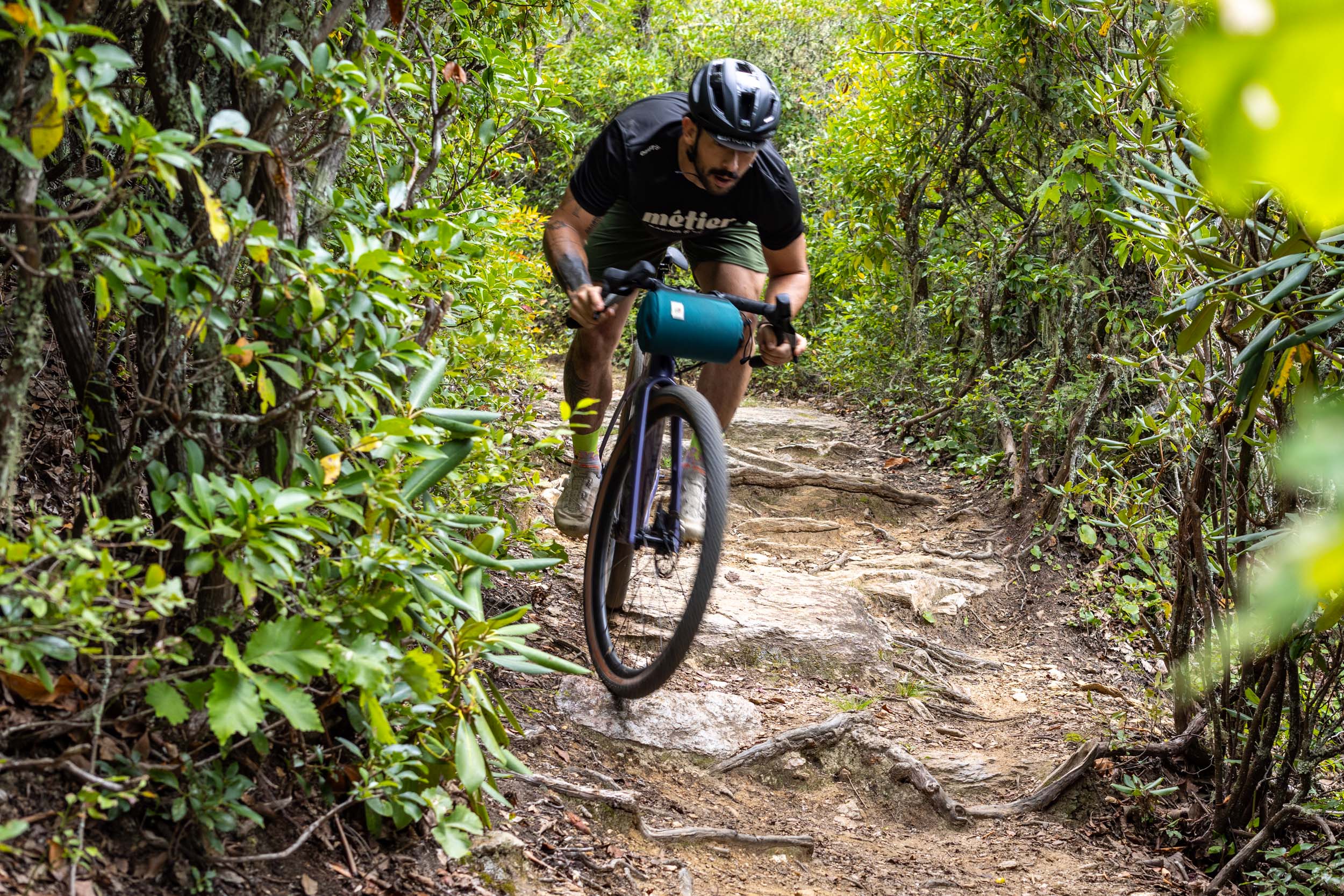
From a performance perspective, it takes away the predictable rigidity you get on any other non-suspension bike in fast corners. But for livability, the added complexity, planned obsolescence, and lack of adjustability in bike fit make it less than ideal. As with past models, you can run a normal 1 1/8th stem on the Diverge using the supplied shim. But the lack of flexibility in stack height is largely unavoidable, since the provided boot covers only nominally change the front-end height. Specialized has some internally installed spacers, but those relate to how much pre-load an individual is putting on the bars. For bikepackers with a heavy load on the bars, these are useful to add so that the ride isn’t as pogo-y, but they don’t relate much to the system’s actual stack height.
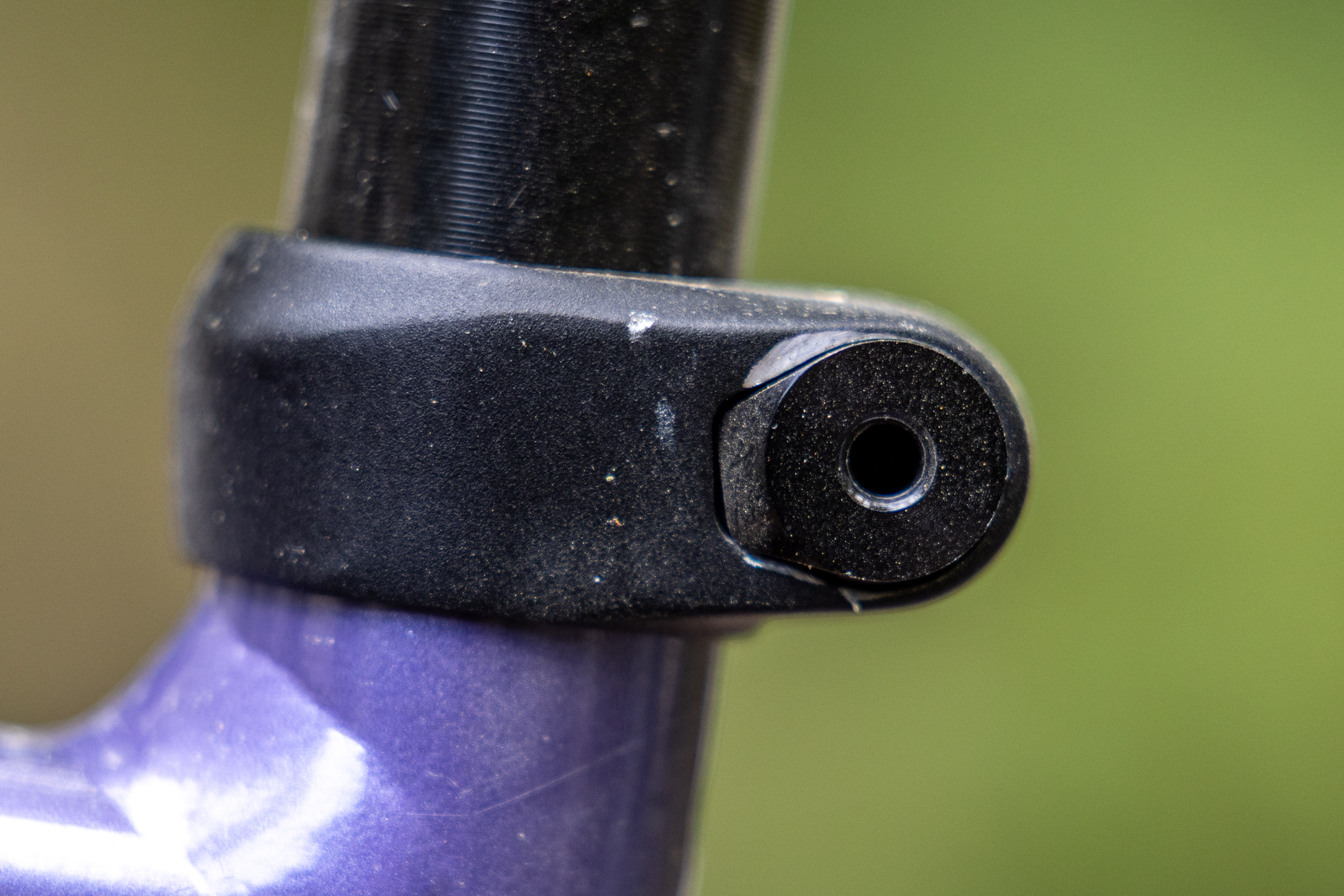
Moving on to the build kit, the SRAM Apex mechanical 12-speed performed admirably. The brakes were strong and consistent. The shifting had the signature SRAM clunk but always found its spot, and the range with a 40T chainring felt wide enough to get up most of the climbs I ventured onto. The only issue I found is with the shifter paddle. I had to adjust the lever’s reach, and as a result, shifting onto larger sprockets up the cassette often caused the shift paddle to get stuck on the brake lever. It’s a minor annoyance that a change in shifting technique fixed, but it’s worth noting if you have to adjust the paddle’s standard reach. The other problem was the seat post clamp. It’s significantly more complicated than it needs to be, and its design can easily be damaged or screwed up by the user. Aside from a small metal ring that’s easy to drop if the main bolt is backed out too far, the non-drive-side end has to sit in a specific position in order to be tightened down properly. Of course, this can slip out of position and make tightening the clamp impossible. Plenty of off-the-shelf designs perform better, and the seatpost is normal and round, so I don’t understand the strange choice here.
Specialized Diverge 4 Comp Alloy Build Kit
- Frame: Specialized Diverge E5 Alloy, 54cm
- Crankset: SRAM Apex
- Derailleur: SRAM Apex 12-speed mechanical
- Shifter: SRAM Apex 12-speed mechanical
- Cassette: SRAM PG-1210 Eagle, 12-speed, 11-50T
- Bottom Bracket: SRAM DUB BSA 68 Wide
- Wheels: DT Swiss G540 rim, Specialized sealed bearing hubset
- Tires: WTB Course, 700 x 52mm
- Handlebar: Specialized Adventure Gear Hover
- Stem: Future Stem
- Saddle: Body Geometry Power Sport
- Seatpost: Alloy
- Seat Clamp: Alloy, 30.8mm
- Brakes: SRAM Apex, hydraulic disc
The build kit was otherwise solid. The wheels on the Comp version of the Diverge are the biggest spec differentiator compared to the Sport. For $700 less, you get the same frame and technology but with a Shimano CUES and an OEM wheelset. Though the DT Swiss rims laced to less impressive OEM hubs are nice, I’m not sure they add much value over what the Sport offers. If you’re going to upgrade the wheels, you’d get more bang for your buck on a discounted or second-hand set of carbon wheels. Elsewhere, the riser-style drop bars were quite comfortable in every position and had great shape for all kinds of riding. The Body Geometry Power Sport saddle felt short and a bit stiff but still generally provided enough comfort on long rides.
Ride Feel and Geo
Having ridden more than a few aluminum bikes, I can confidently say this is one of the nicest. The tubing feels supple and appropriately responsive irrespective of the terrain. Though it misses that “hum” I find on high-quality steel bikes, it’s not overly harsh or uncomfortable, just somewhat rigid as opposed to being stiff in a way that would negatively affect ride feel. Though it’s hard to distinguish through the feel of the Future Shock, the carbon fork felt similarly solid. It’s light, responsive, and has just the right amount of rigidity.
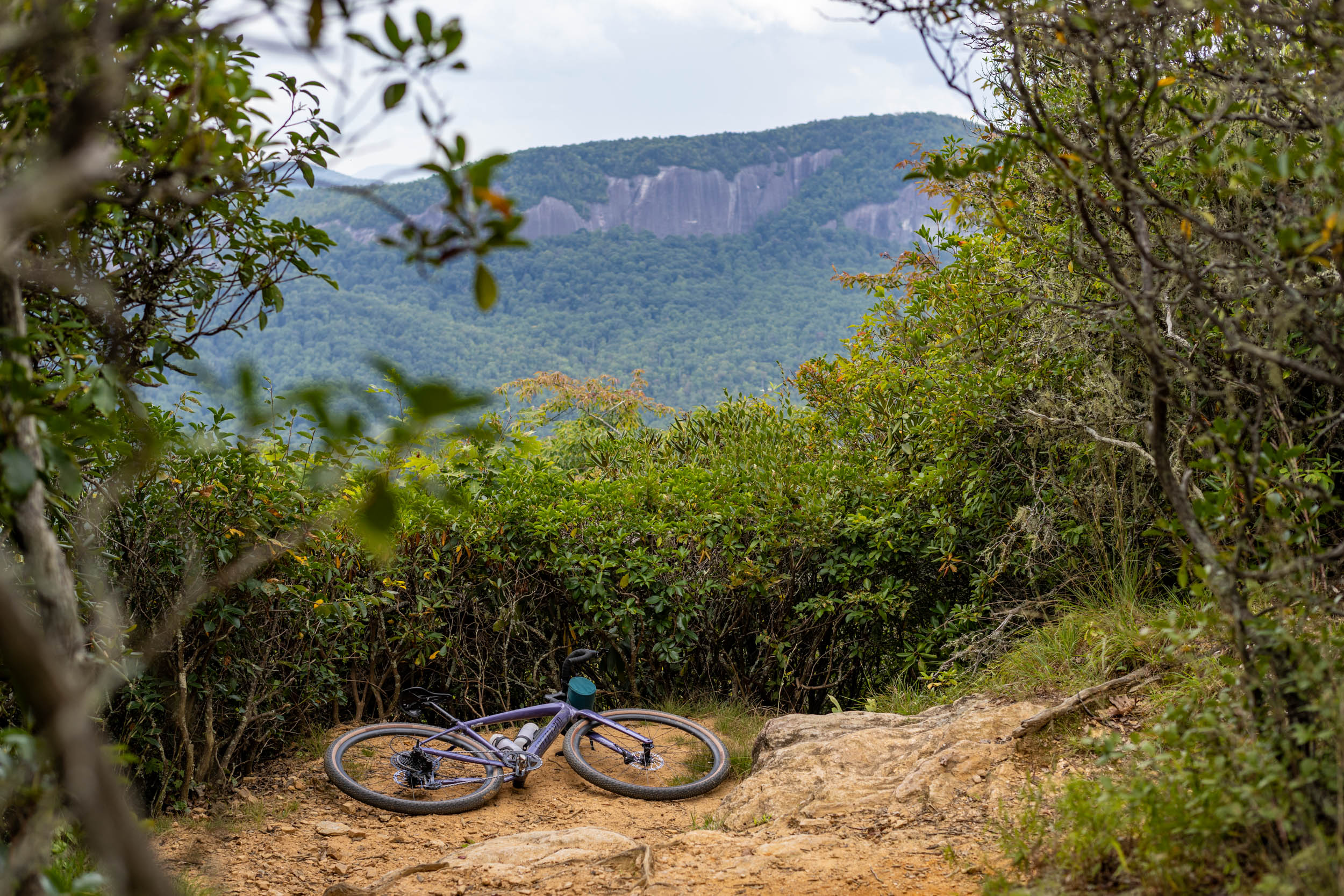

Though I already touched on drawbacks of the lower bottom bracket, it’s not all bad. Despite its off-road issues, the benefits are that this bike feels amazing on hero gravel and pavement. Perhaps indicative of its target audience, the handling of the Diverge 4 feels like it’s aimed at the kind of person who asks, “Can I also use this as a road bike?” However arbitrary that question may seem, the Diverge most closely resembles the feel of a modern performance machine. If that’s your thing, it delivers in spades.
Specialized Diverge 4 Geometry
| Size | 49 | 52 | 54 | 56 | 58 | 61 |
|---|---|---|---|---|---|---|
| TT Length | 521 | 537 | 556 | 575 | 593 | 613 |
| Reach | 365 | 374 | 387 | 400 | 412 | 425 |
| Wheelbase | 1019 | 1031 | 1041 | 1060 | 1081 | 1102 |
| CS Length | 430 | 430 | 430 | 430 | 430 | 430 |
| ST Angle | 74.5 | 74 | 74 | 74 | 74 | 74 |
| ST Length | 400 | 430 | 470 | 500 | 530 | 560 |
| HT Angle | 70 | 70.5 | 71 | 71 | 71 | 71 |
| HT Length | 90 | 104 | 116 | 135 | 161 | 187 |
| Fork Length | 391 | 391 | 391 | 391 | 391 | 391 |
| BB Drop | 85 | 85 | 85 | 85 | 85 | 85 |
| Stack | 563 | 578 | 592 | 610 | 634 | 659 |
That said, the bike’s road-inspired position asks a lot of the rider. With nearly two years of bike reviews in the archives, it’s clear my position and fit preference are the most aggressive on the site. Even so, I found this bike somewhat challenging at times. For whatever benefits you get from the riser-style handlebars and Future Shock position, the bike still demands an aggressive position that some may find harsh. I went with a size 54 for the review bike and never felt cramped, just a bit too stretched out in the rear. On a long day of riding from central Asheville to the top of Mount Mitchell, my outer buttocks and hamstrings felt the position more than other bikes I’ve reviewed.
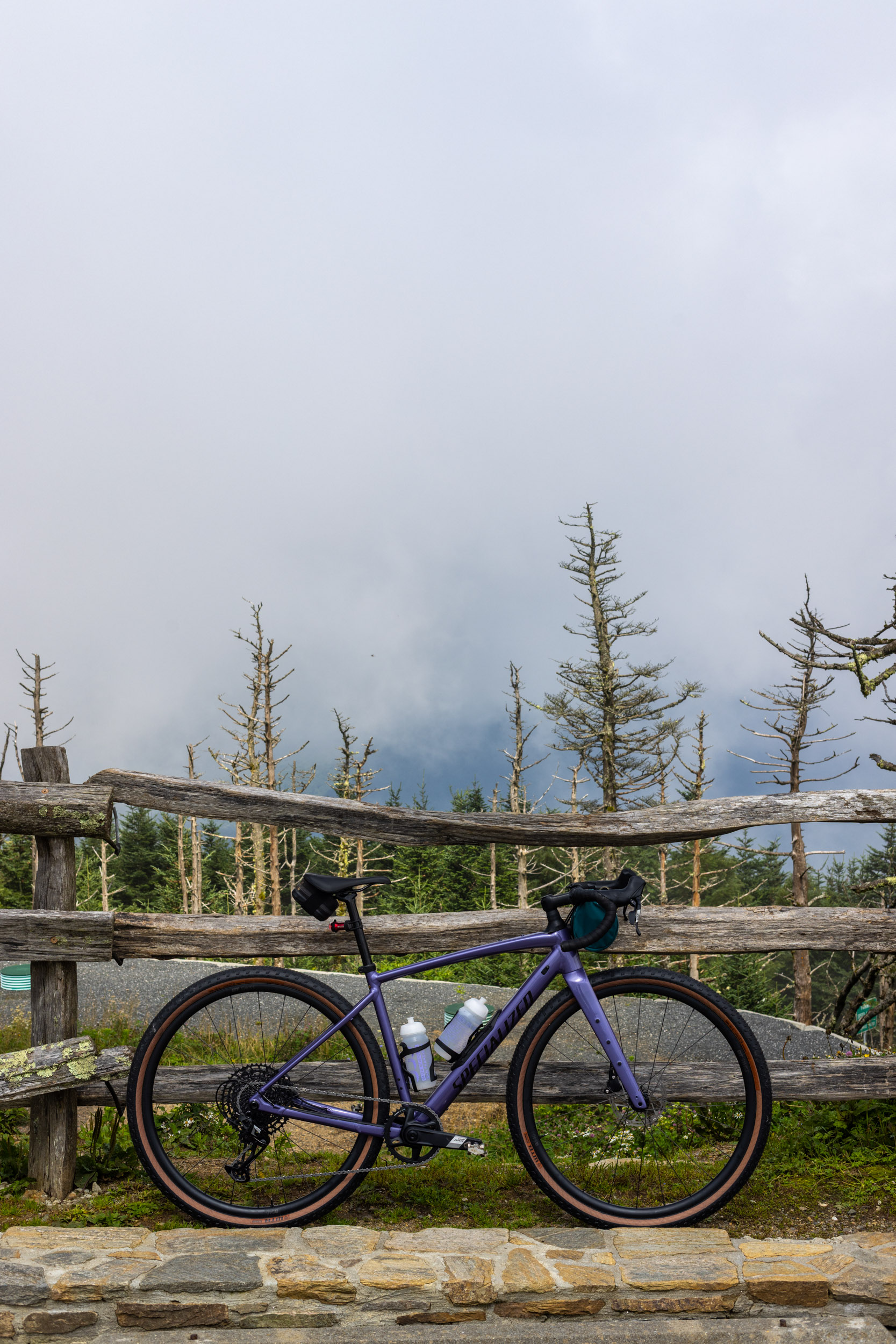
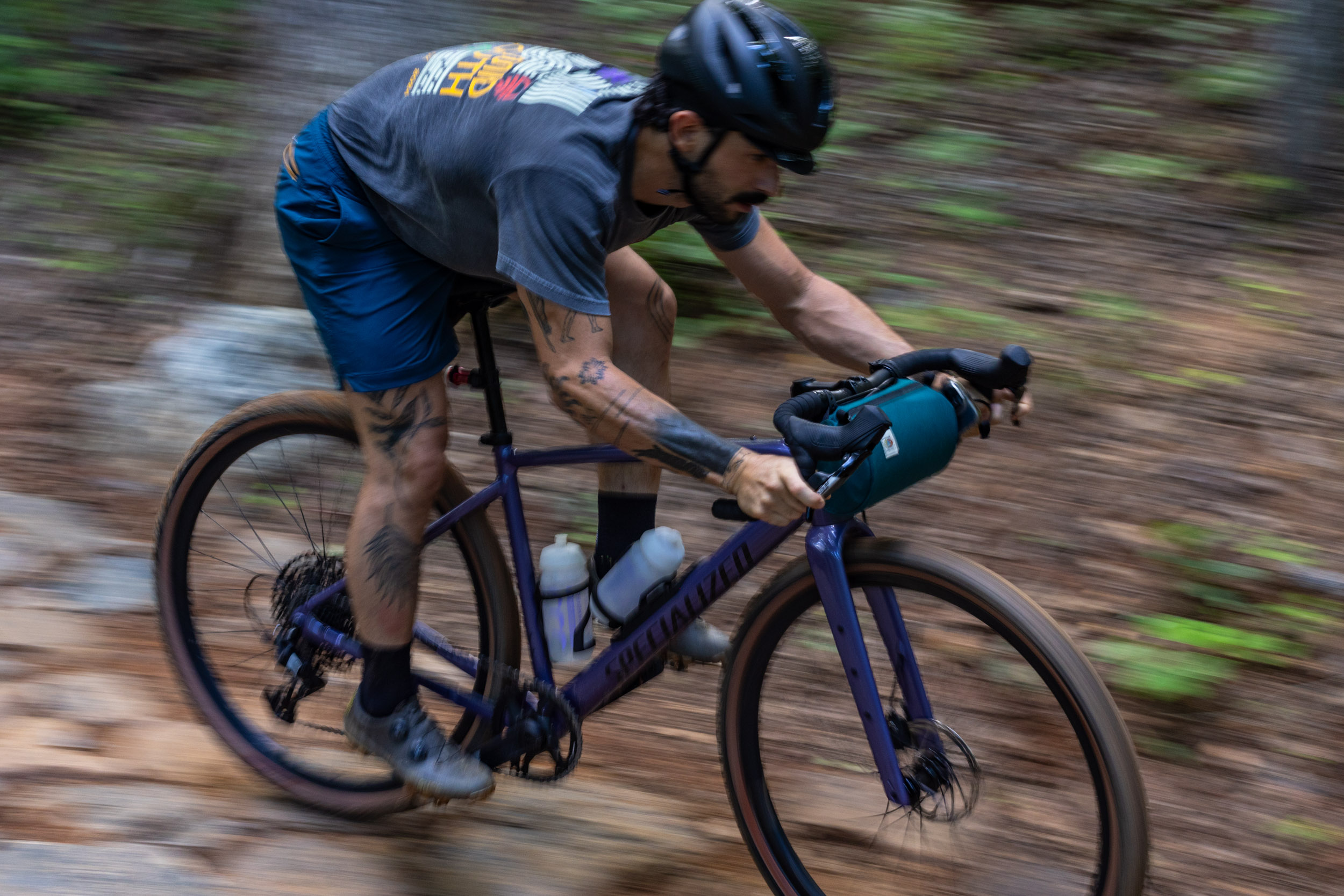

Elsewhere, the bike felt nicely balanced and stable. Specialized also lengthened the chainstays to 430mm and adjusted reach and stack to make it a better handler with shorter stems. At 90mm, the length feels good and doesn’t have any inconsistencies or odd moments while cornering and going down steep, rutted singletrack. The bike handles exceedingly well and is surprisingly capable by modern gravel bike standards.
Bikepacking with the Diverge
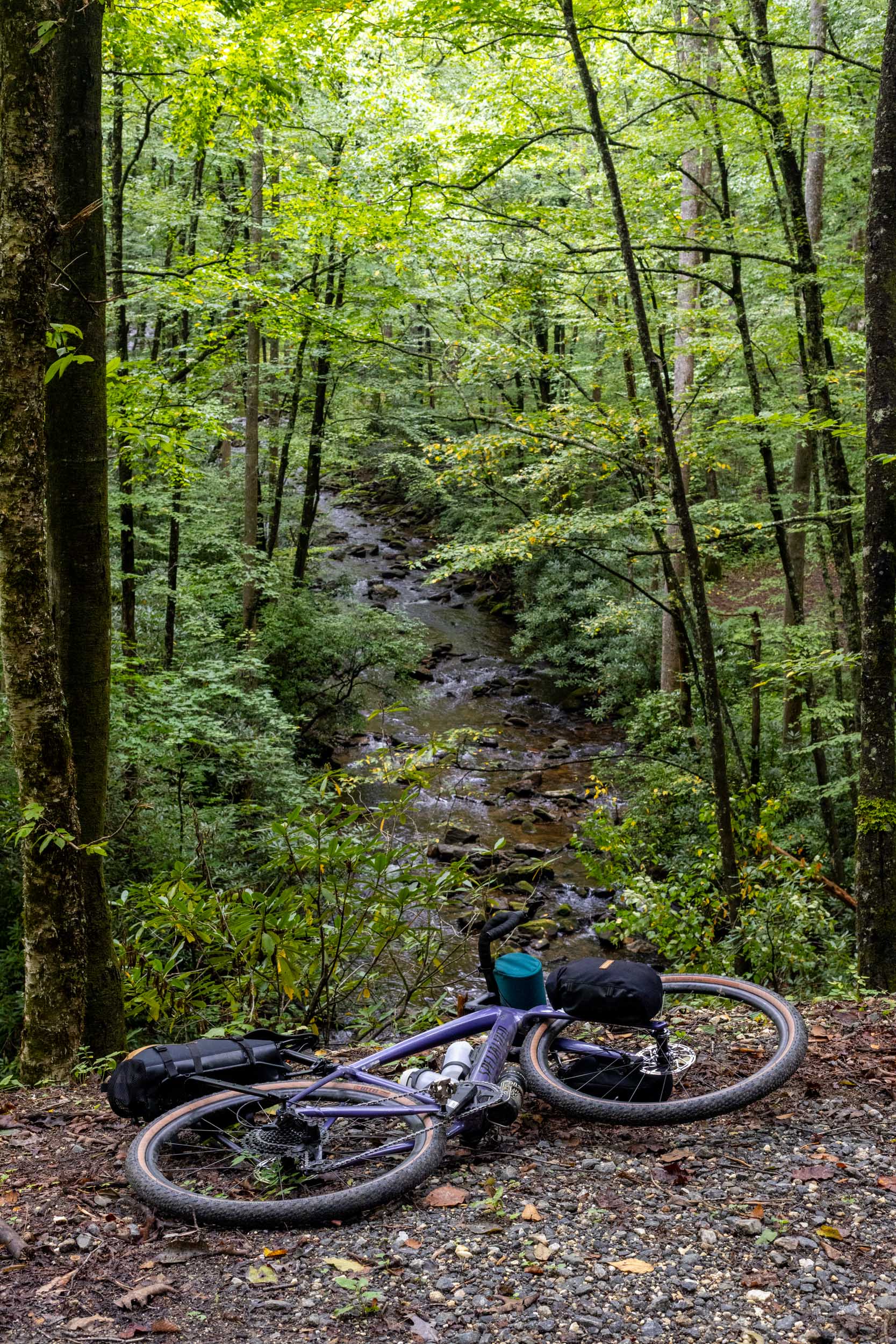
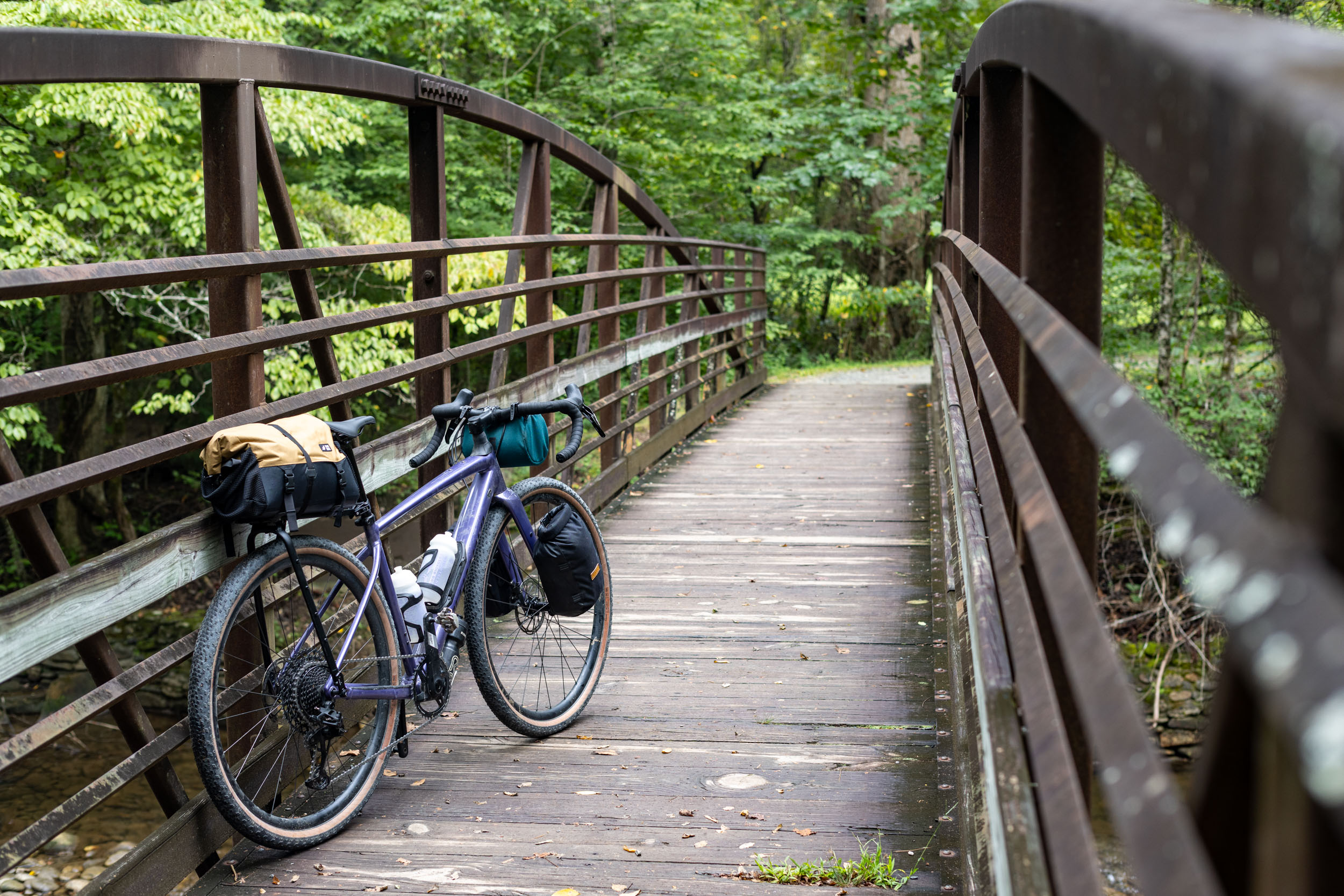
Capability is relative. While some coverage focused on the bike’s three-pack mounts and tire clearance as evidence that it’s sufficient for bikepacking adventures, there are some limitations to the bike’s mounting points. The ability to load up the fork is useful, but there’s no natural position for a non-thru-axle-mounted rack system in the rear. I procured a Tailfin Journey rack for my testing, which is fantastic, but it would have been nice to run something cheaper and simpler, such as the Velo Orange There and Back Rack or another non-axle-mounted system.

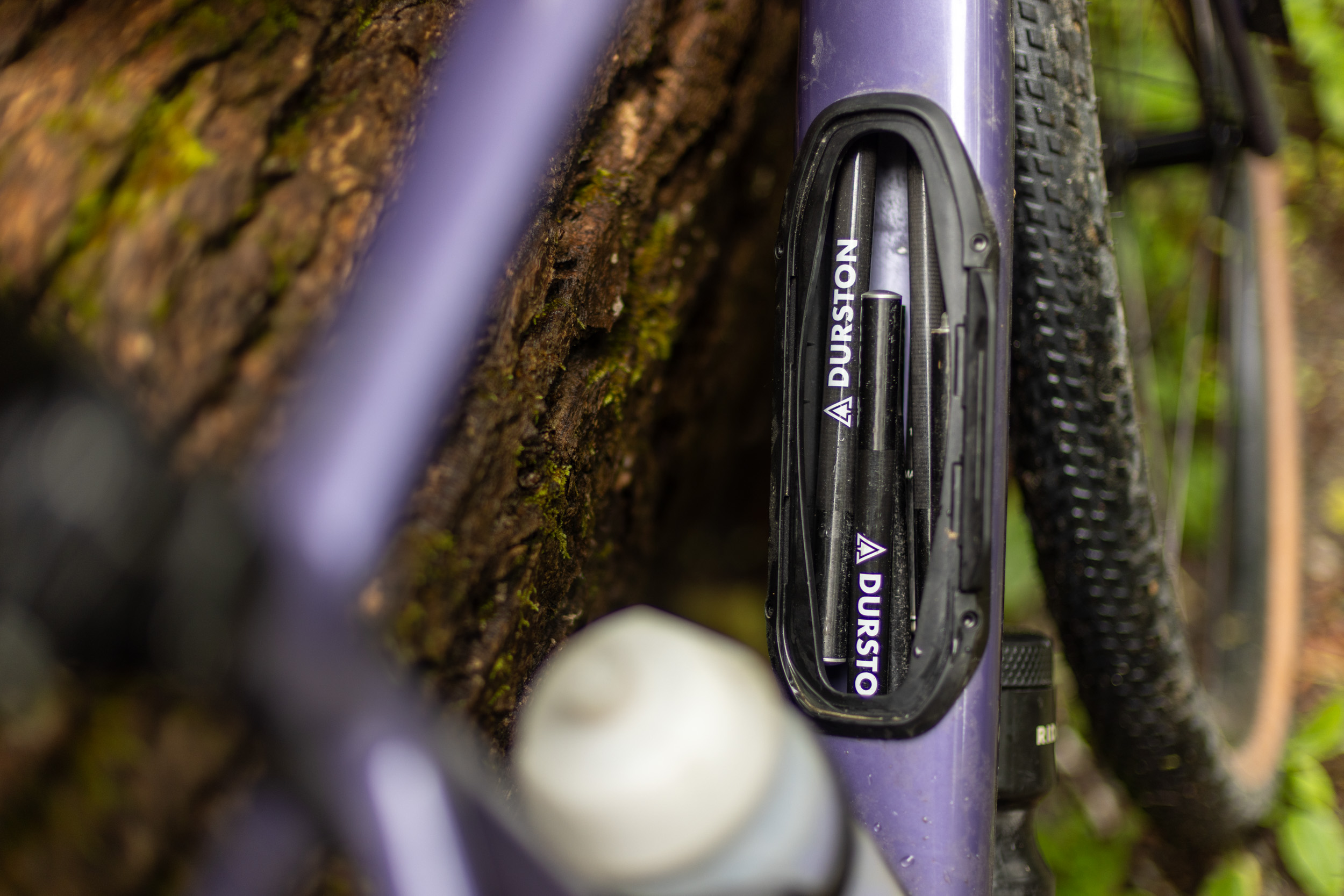
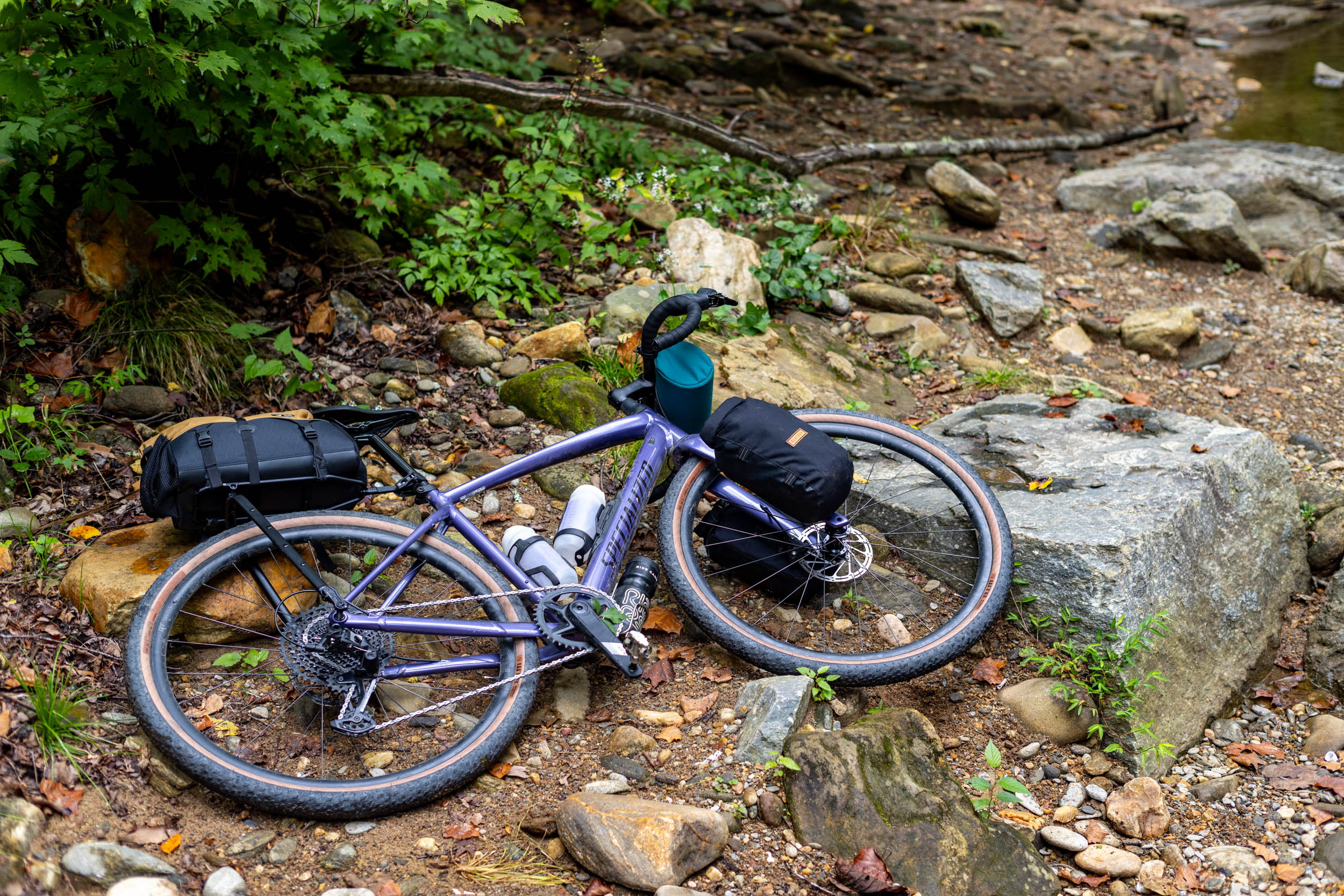
I don’t say this just because it would have been convenient, but because that’s how the bike performed best. With most of the weight in the rear, handling was largely unaffected, and the bike still felt relatively nimble on technical terrain. Putting a bunch of weight at the front, particularly with the Future Shock system, was less than ideal. Even without the extra spacers, the suspension moves through its full range when completely unloaded. Under load, it only makes the system more reactive, which isn’t a great sensation.


Aside from that, the internal storage is a great addition for bikepacking; the mounts on the underside of the downtube are valuable, and the ride still felt pleasant with an overnighter’s worth of gear strapped to the tubes. I wouldn’t call it a bikepacking bike, and the low bottom bracket felt even more troublesome with gear on board, but it’s still versatile enough to work as a light-duty weekender when needed.
- Model Tested: Specialized Diverge 4 Comp Alloy, Gloss Mauve Metallic
- Actual Weight: 24 pounds (10.8 kg)
- Place of Manufacture: Taiwan
- Price: $2,700
- Manufacturer’s Details: Specialized
Pros
- A great deal for a complete
- Tire clearance is up to modern industry standard
- SWAT storage is great
- Three-pack mounts on the fork are useful
- Great ride quality
Cons
- The Future Shock and all its complexities
- Lack of adjustment in fit
- Aggressive, even for me
- Lack of mounts in the rear
- Bottom bracket height
Wrap Up
Most modern machines feel like a catch-22. Equal parts capable and unnecessarily complex, we crossed a point a few years ago where features started to feel more like bugs. Instead of creating simple, long-lasting, dependable products, we’re served an endless churn of innovative ideas that justify themselves through their own logic. It’s true of cars, and it’s at least partially true of the new alloy Diverge.
That might seem like an overly harsh characterization for a bike that I largely enjoyed riding, but I critique it because I think this good gravel bike could be great. Sold without the unnecessary suspension technology and a simpler seatpost clamp for around the same price, the Diverge would be an easy recommendation. At its current price point, it would be an unbeatable deal and likely an instant classic. It rides well and has the kind of geometry that could stretch from spirited, road-oriented group rides to heavy-duty gravel and small bikepacking adventures, all while offering enough mounting points and internal storage to make it a pleasant experience. But, as such, I struggle to stop myself from thinking about what could’ve been. The Diverge has six build iterations ranging from $2,100 to $10,000. If an alloy spec skipped the Future Shock, Specialized could keep its desire to innovate on a functional, pleasant suspension system while still offering a bare-bones option for the luddites among us. That would be a perfect budget gravel bike.
Sold as-is, however, it offers the same issues I experienced in the car market. Fantastic fuel economy but the questionable longevity of a CVT. Great storage space but safety features that watch your eye movements and send unnecessary alerts. A great aluminum frame with fantastic tire clearance and internal storage but a suspension system that doesn’t make a huge difference and introduces more problems than it solves.

Further Reading
Make sure to dig into these related articles for more info...



Please keep the conversation civil, constructive, and inclusive, or your comment will be removed.