

 Mountain Bike (MTB)
 Gravel Bike
 All-Terrain Bike (ATB)
 Fat Bike

Head First: Notes on Diving in and Learning as You Go

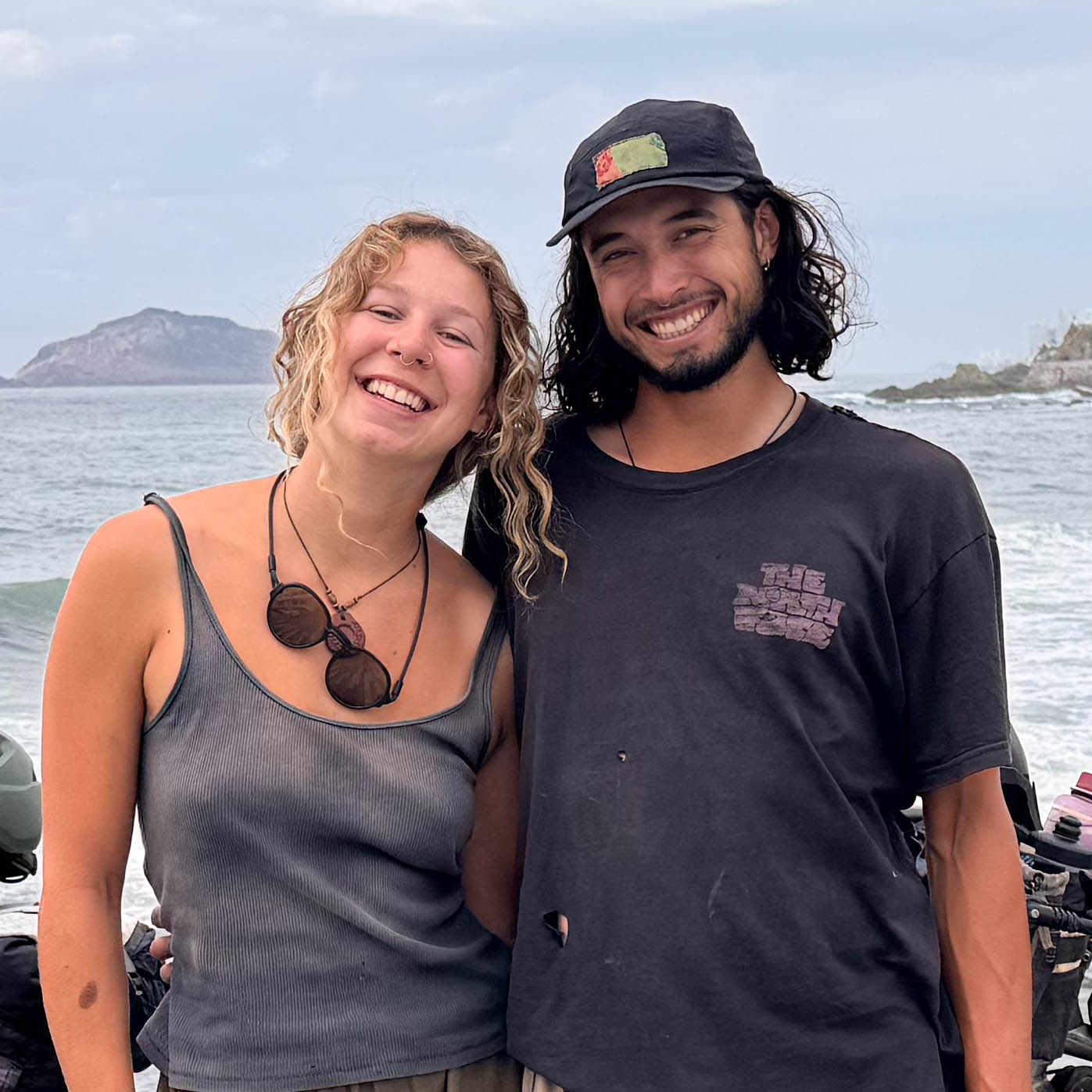
After many months of planning, Rylie Denis and Tristan La Haye loaded up their rigid steel Surlys and pedaled away on a bikepacking and surfing trip down the Americas. Nearly a year in, they share valuable insights for anyone considering an ambitious ride, including advice on budgeting, preventing burnout, finding resources, and accepting imperfection. Read on for their experience-based guide to getting started…
PUBLISHED Sep 4, 2026
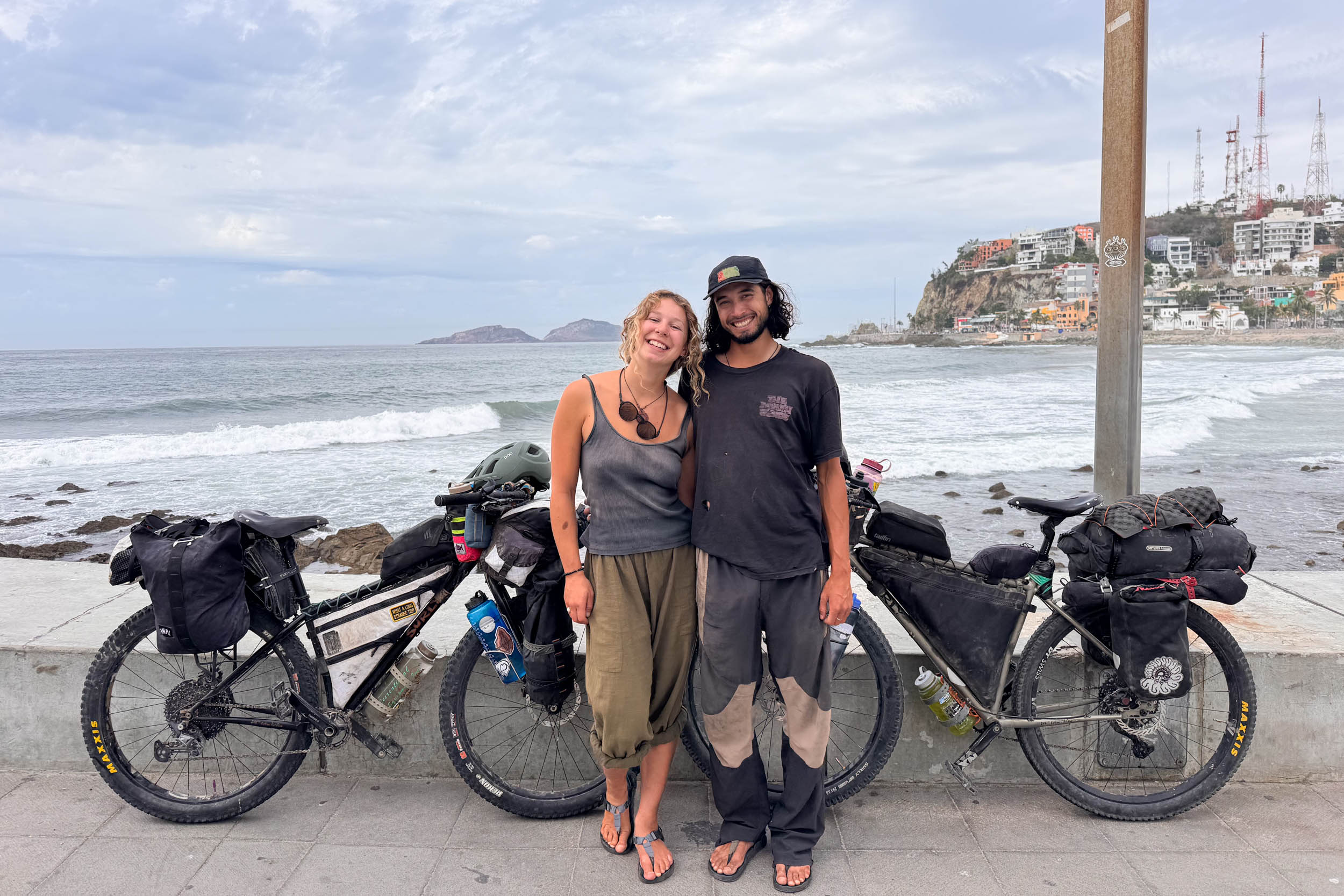
A few years ago, before we were even dating, we both sprawled in our respective tents, separated by thousands of miles of British Columbia forest. We chatted on the phone like two teens in the ‘90s, fingers twirling through hair. Not that either of us would know what that was like, seeing as we missed the 20th century entirely due to the small fact that we weren’t born yet. Anywho, as we chatted away, Tristan dropped a bomb: “So, I think I’m going to bike to Argentina…” He was far from a cyclist and had never biked more than 50 kilometres. And Rylie, well, she had just found out what bikepacking was.
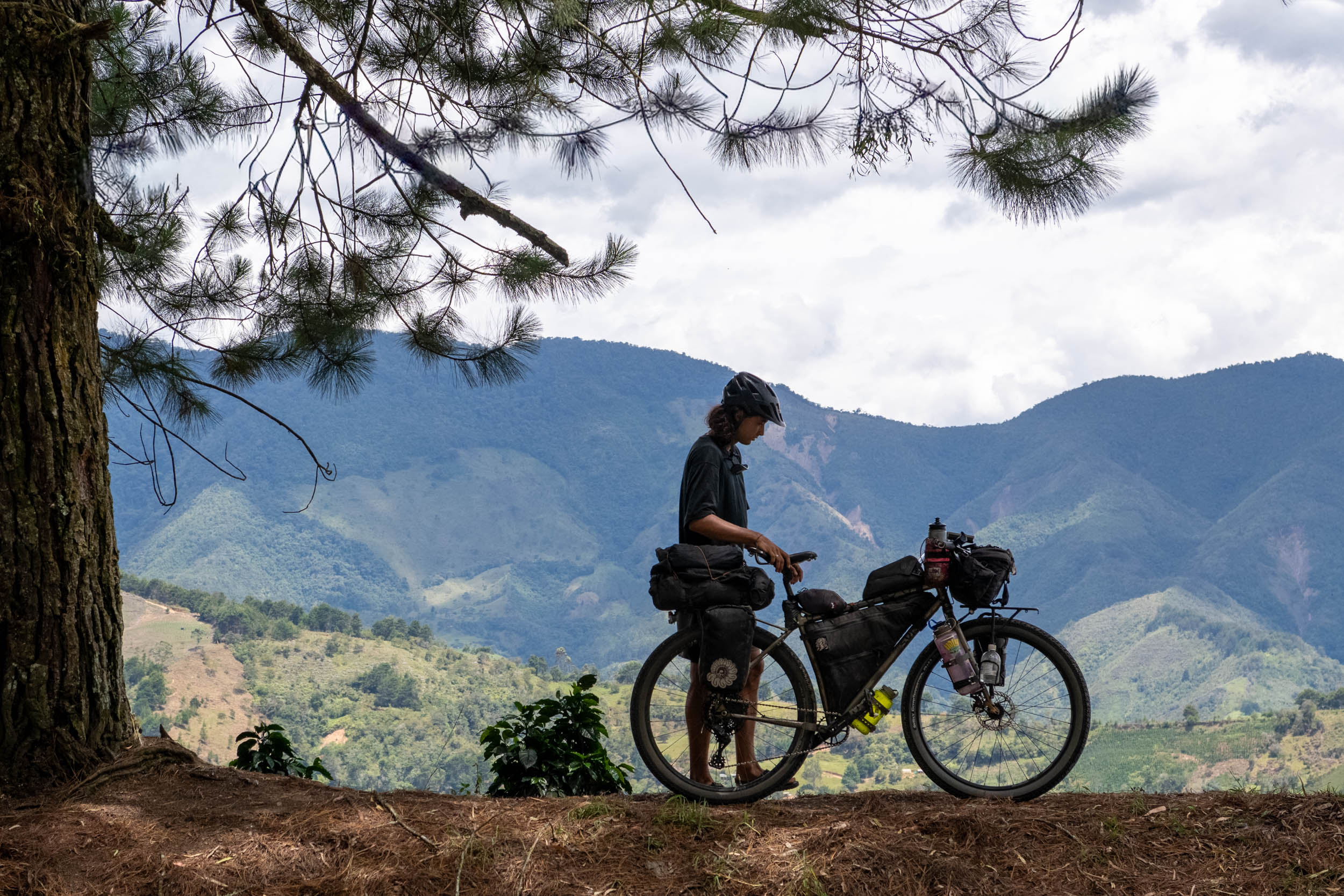

What does it take to go from noob to full-time bikepacker? Surely a bike, a few bags, and the willingness to try. Within the span of a year, we shifted all of our priorities to setting ourselves up to bikepack for the foreseeable future—one so far away that it felt hard to see. We took the time to organise ourselves, including meticulous gear research, learning to be our own camera crew, fiddling with logistics, and explaining our journey to family members.
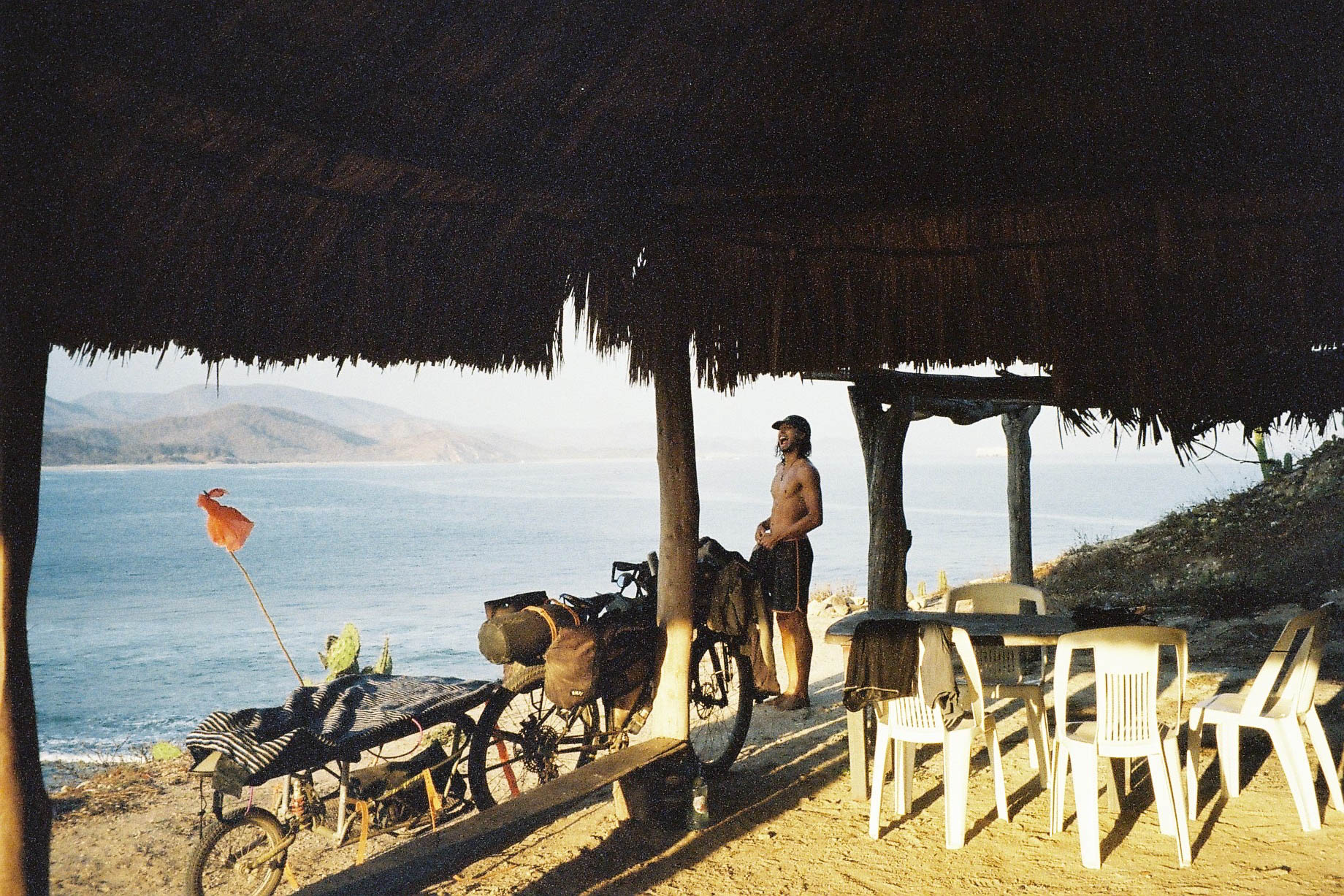
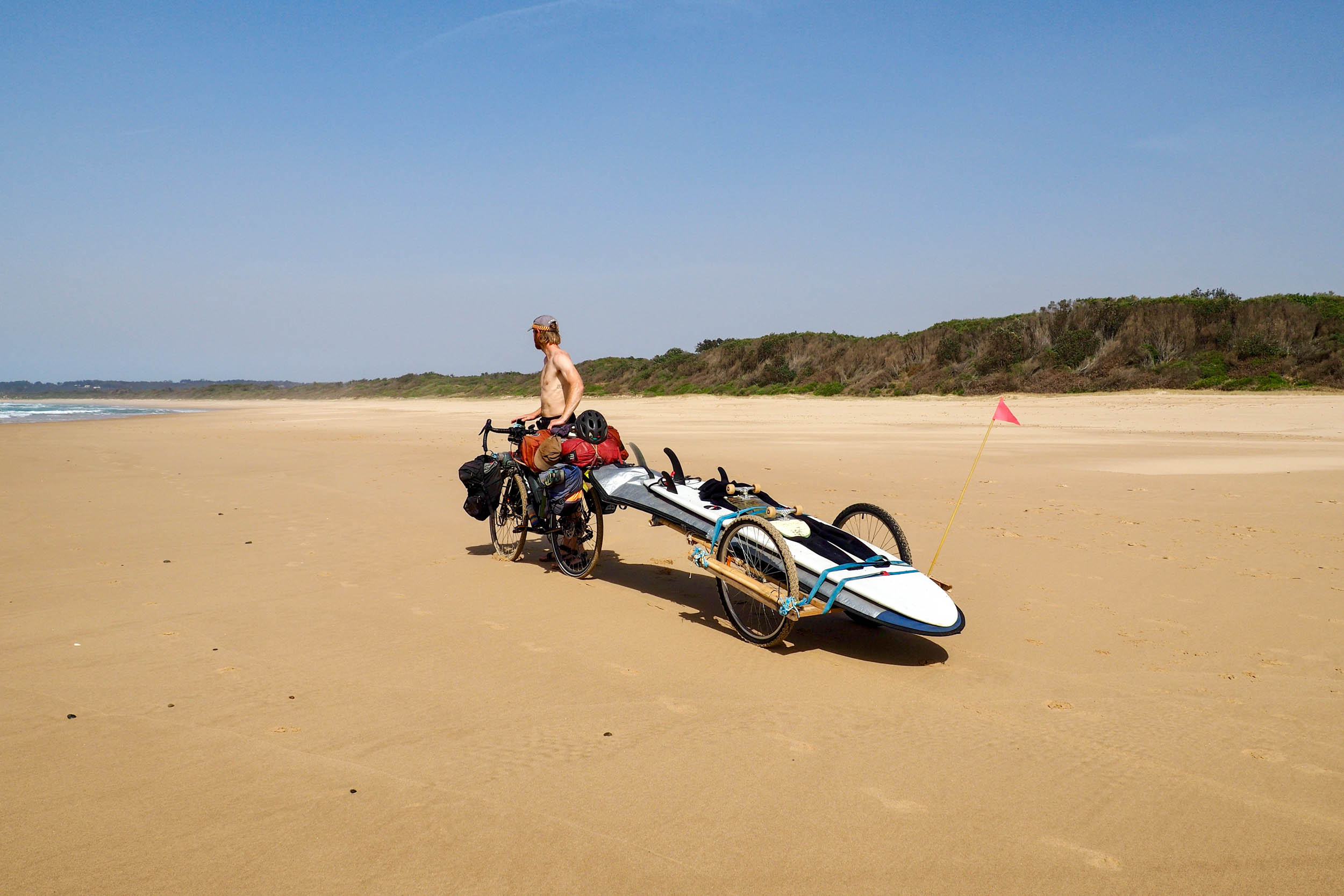
We created a hybrid expedition that tied in Rylie’s dreams of surf travel and Tristan’s long-distance biking goals. Tristan would start on the Great Divide from Banff, Alberta, a place he called home for four years. Rylie would take her bike to Indonesia and test out surfpacking. After a few months, we would meet in San Diego, ride the Baja Divide together, and keep pedalling South. As if being total noobs in all things biking wasn’t enough, we decided we would tow a trailer with surfboards along the Pacific coast of Mexico and down into Central America.
With versatility and longevity in mind, we set ourselves up with some ol’ reliables: rigid Surly steel framesets. Tristan found a new 29er Ogre on sale and began building his setup. Rylie won the marketplace lottery, securing a pristine Karate Monkey equipped with Tumbleweed racks, Jones bars, a Lezyne micro floor pump, and an extra set of chunky Dirt Wizard tires, all for a steal. We spent weeks collecting tidbits of equipment in Rylie’s mom’s garage. Everything was a mess, us included.
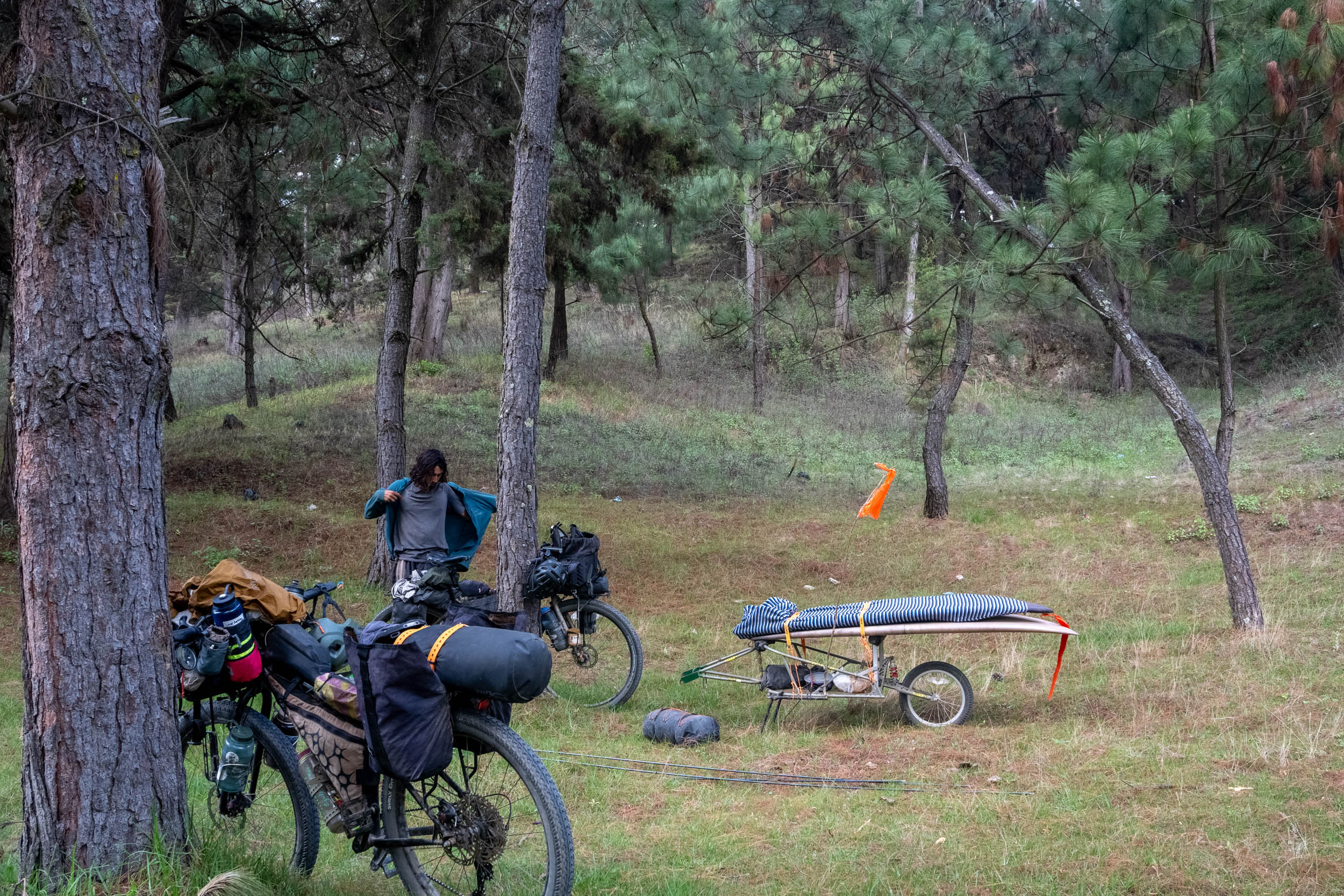
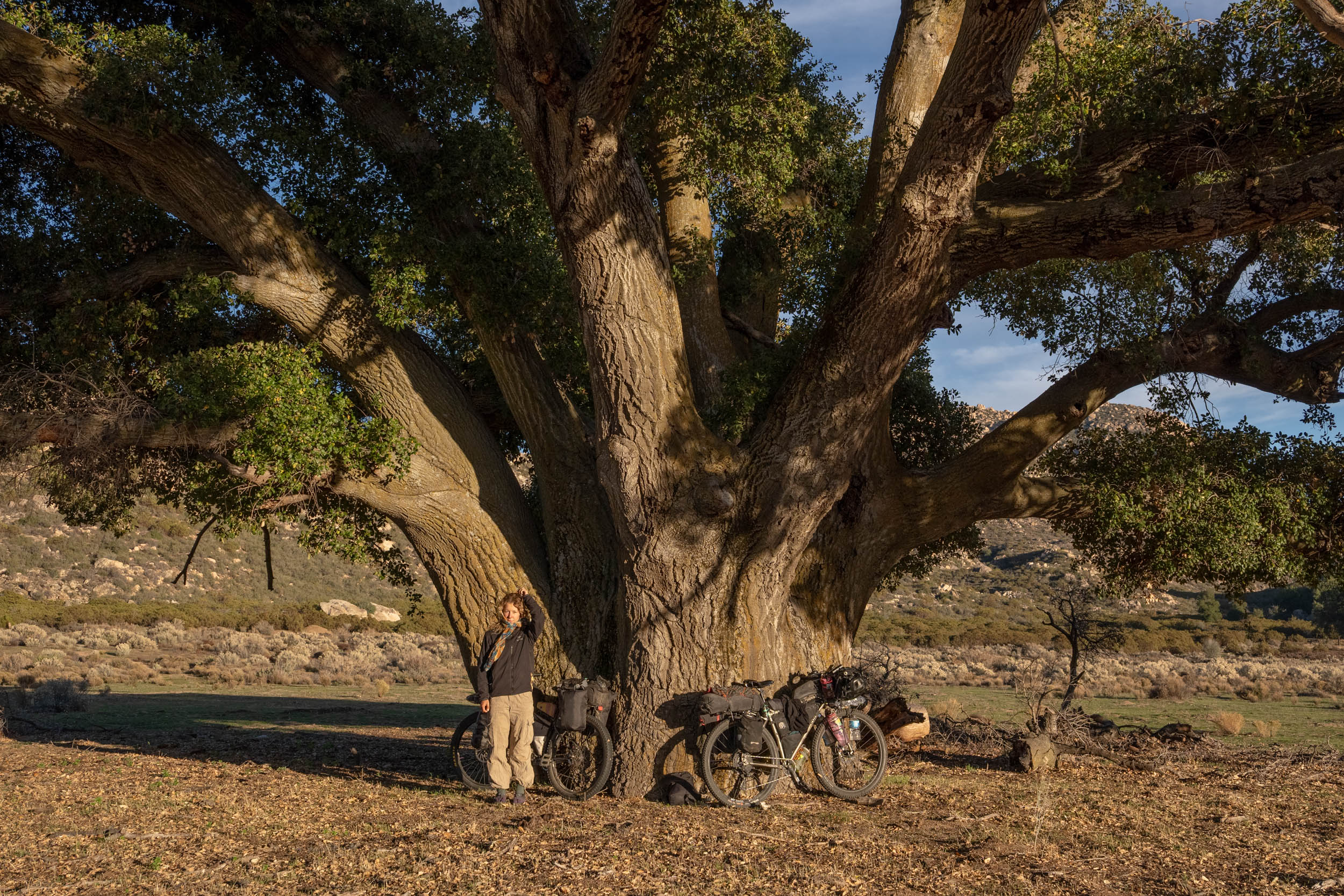
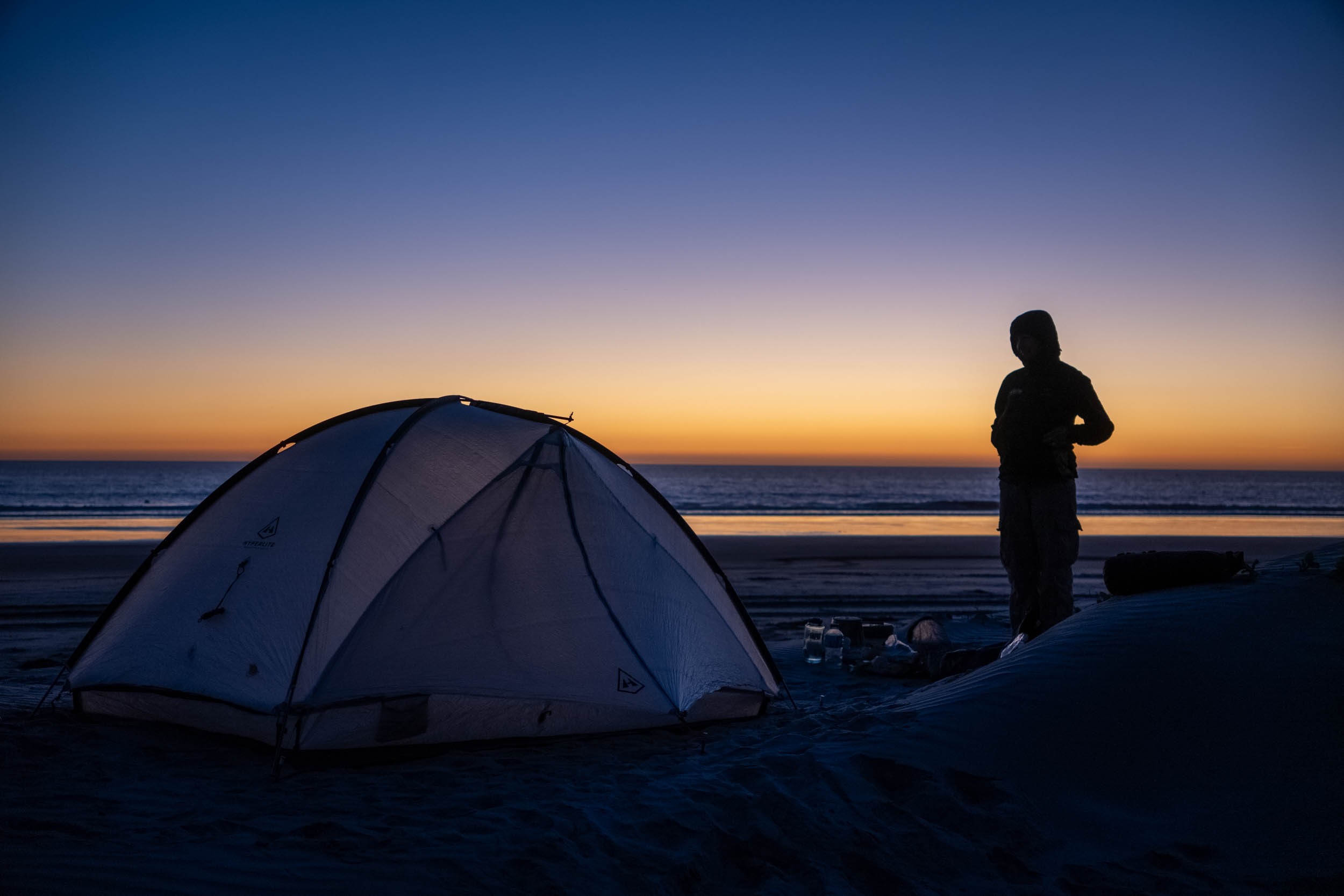
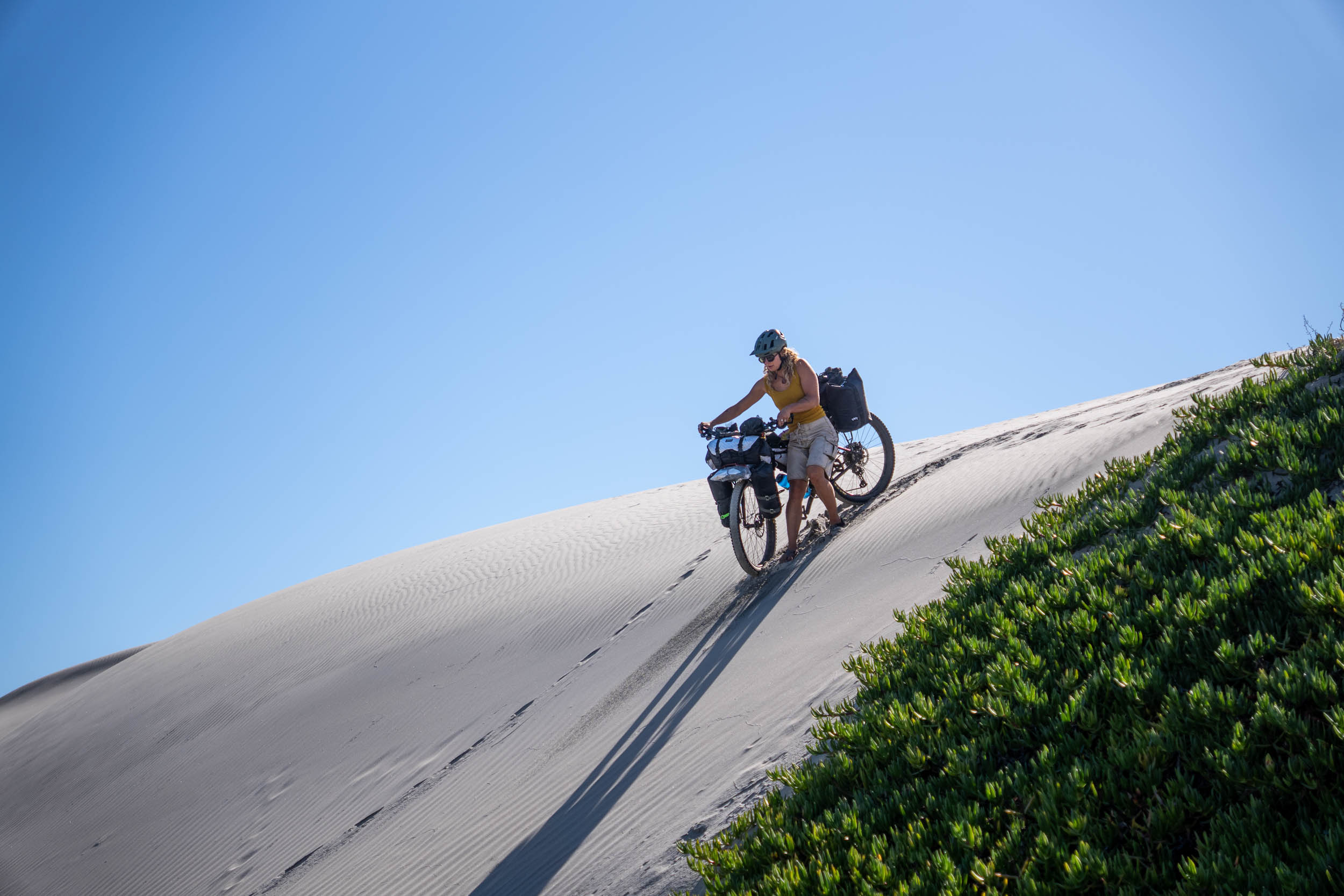
This was almost a year ago. We’re now separated by even more land and imagined borders, as Tristan has reached Colombia—still pedaling—and Rylie is back to the Canadian coastal life of Vancouver Island. Since the beginning of this undertaking, we’ve learned so much about bikes, gear, bike travel, surfing, new countries, and ourselves. Being full-time bike travelers has changed our lives in unforeseen ways. If you’re thinking about heading off on a backyard overnighter or maybe dropping everything and biking across the world, here’s a collection of our learnings, from beginner bike noobs to full-time bike noobs.
It doesn’t have to be perfect
Some gear can make your life easier, but your bike and kit don’t have to be perfect. It can be intimidating to see all these beautiful rigs online, giving the impression that you need the most dialled setup and freshest bags to get after it. The truth is, all these riders with pretty rigs have been in the bike game for years. They’ve put in the time and made countless mistakes to learn what suits them best. It’s fun to peruse the stacks of Reader’s Rig posts and Tour Divide setups as inspiration for what could work for you, but in the end, it’s not about the bike.
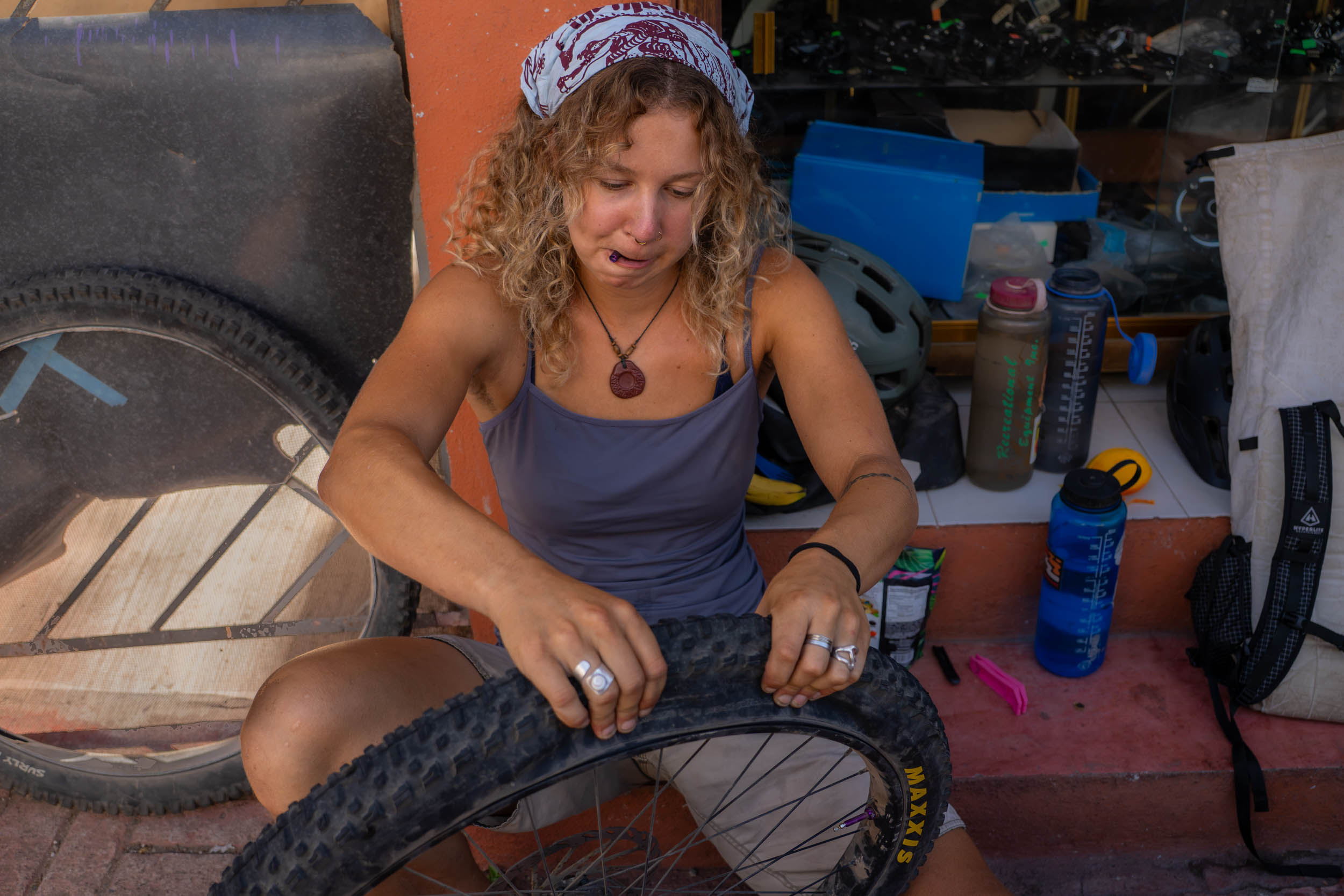
In fact, even with the days of research we put into it, it ultimately took time putting in bumpy miles to truly refine our setups. Learn to enjoy the fun game of Tetris—squeezing your gear into different nooks and crannies while keeping accessibility, bike balance, and waterproofing in mind. As it turns out, even after a year on the bike, the Tetris game continues.
Use your resources
Without first-hand experience, it’s tough to be sure what works and what doesn’t. Luckily, BIKEPACKING.com is a thriving ecosystem full of information. We scoured its depths, from gear reviews to route descriptions and member comments from a decade ago. Slowly, along with a full scholarship to YouTube University, we became more and more clued in to what we needed for our journey. Some awesome creators to learn from are Dan Cycles the World, Tristan Ridley, and Leoni Kolberg.
Facebook groups are also incredible community platforms. There are some for specific bikepacking routes, and some more general bike travel ones. Join the groups, ask questions, and you’ll soon learn that we’re all just figuring out what works as we go. And no, don’t ask AI. Save the water for that mid-ride cool-off.
Lastly, don’t stress the unknown. Our best source of information while on the road was word of mouth. The more time you spend pursuing a certain field, the more connections you’ll make with people who know a little something.
Road vs. Dirt
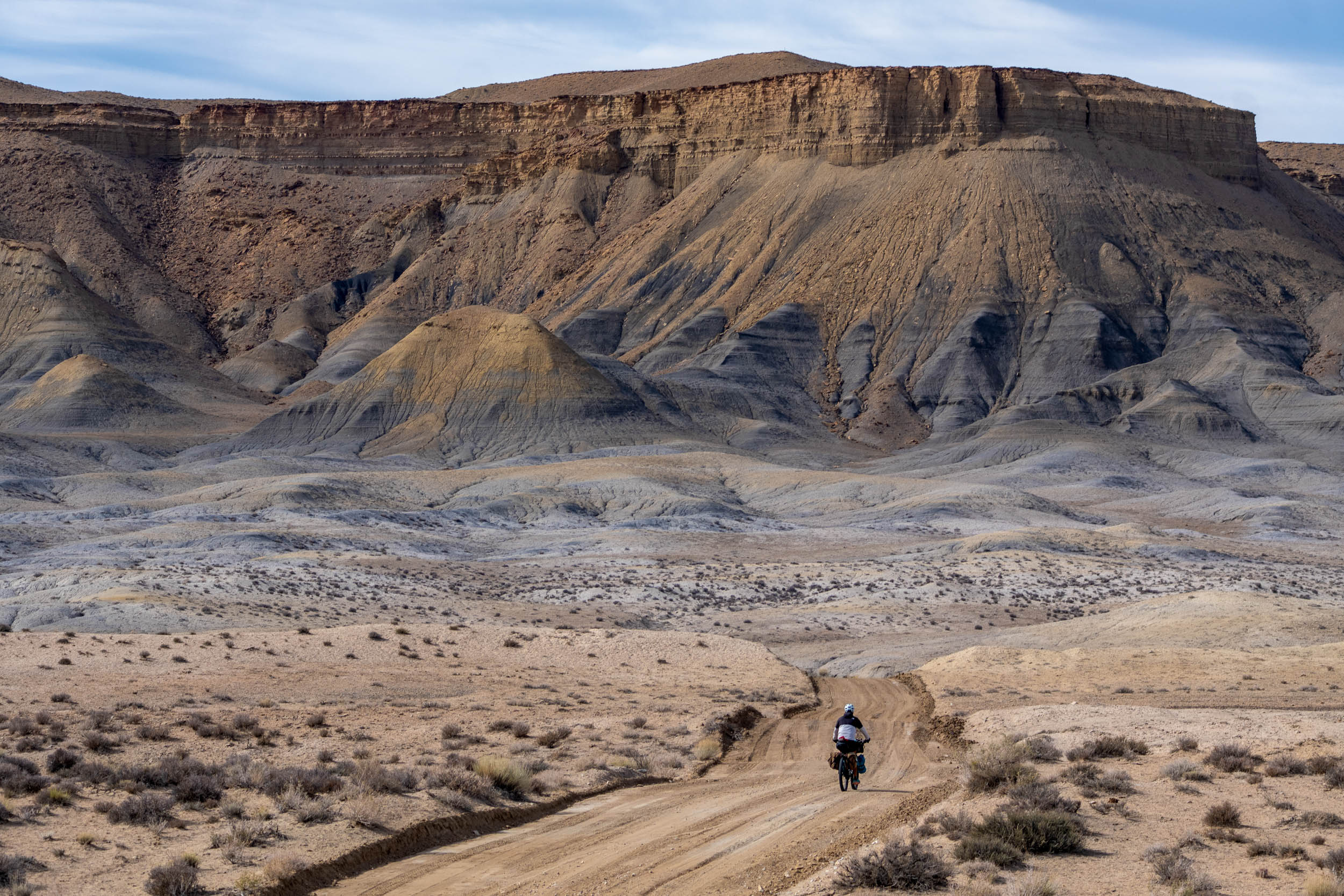
If you’re on this site, you’re most likely a dirt lover. We are too. We cherish the freedom of a quiet road and the adventures that come from being far out and self-sufficient. That said, we unexpectedly rode a big chunk of our route on the highway to meet mileage goals and avoid dirt road closures. It’s much less glorious, but it’s worth considering when looking into adventure bikes and bag setups.

On smooth paved roads, you can get away with nearly anything. A rickety bike, a couple of dry bags, and some bungee cords will have you cruising worry-free. In Mexico, we crossed paths with a man who had strapped two pink children’s backpacks to his rear rack to act as panniers. Another Argentinian couple had an assortment of plastic containers strapped and screwed all over their cockpit and front rack. Both of these are awesome, creative examples of what you can do while riding smooth roads.
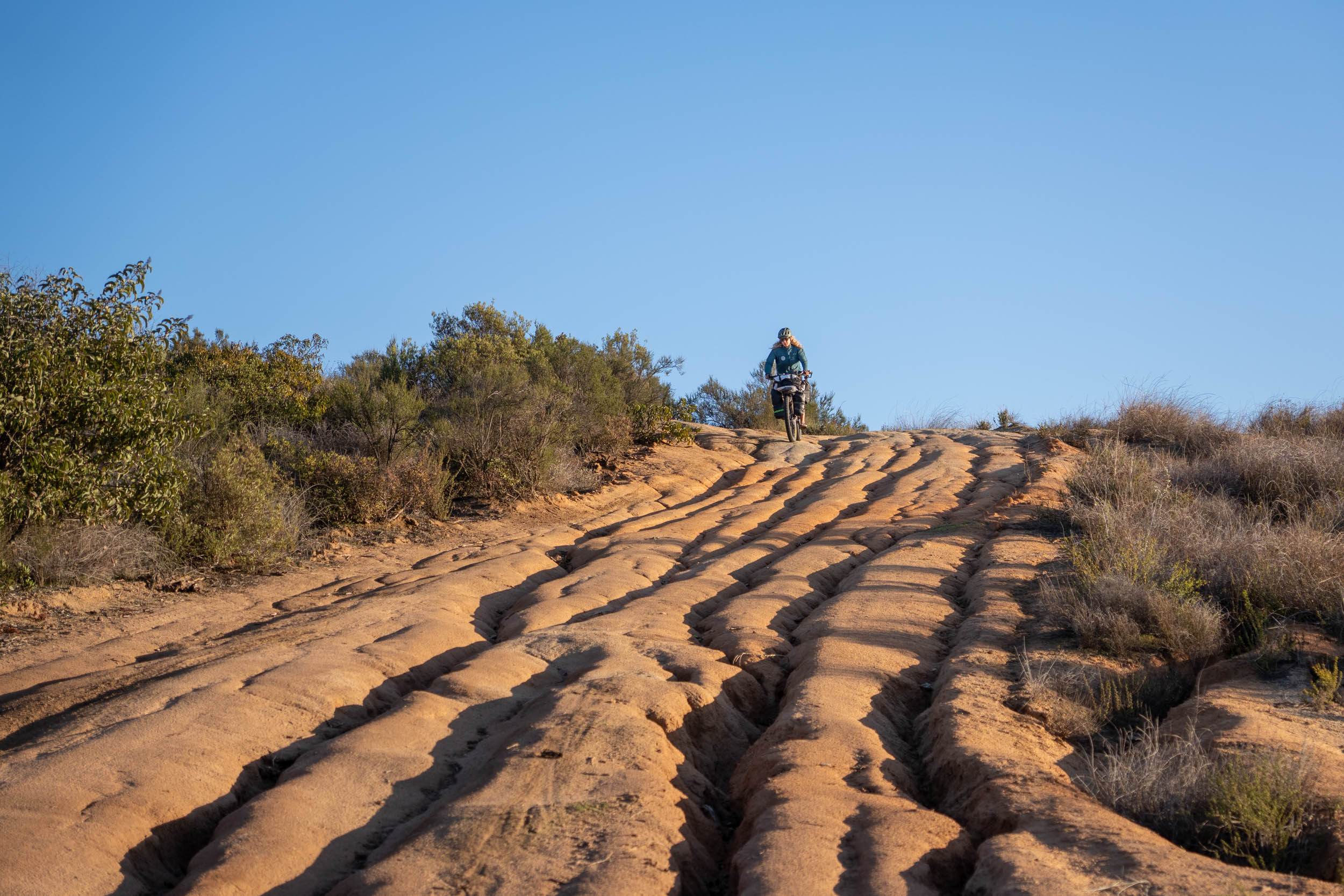
We were impressed, but as awesome as they were on the pavement, they would have been a liability on rougher stretches and dirt. In the end, a good approach is to invest in your bike if you’re going to be rough on it. When riding dirt, if you can lose something, you will. Just ask Tristan, who lost a shoe in the first week of the Great Divide when it flew out of its bungee cord home and deep into the forest. Make sure your stuff is packed tight and held down securely.
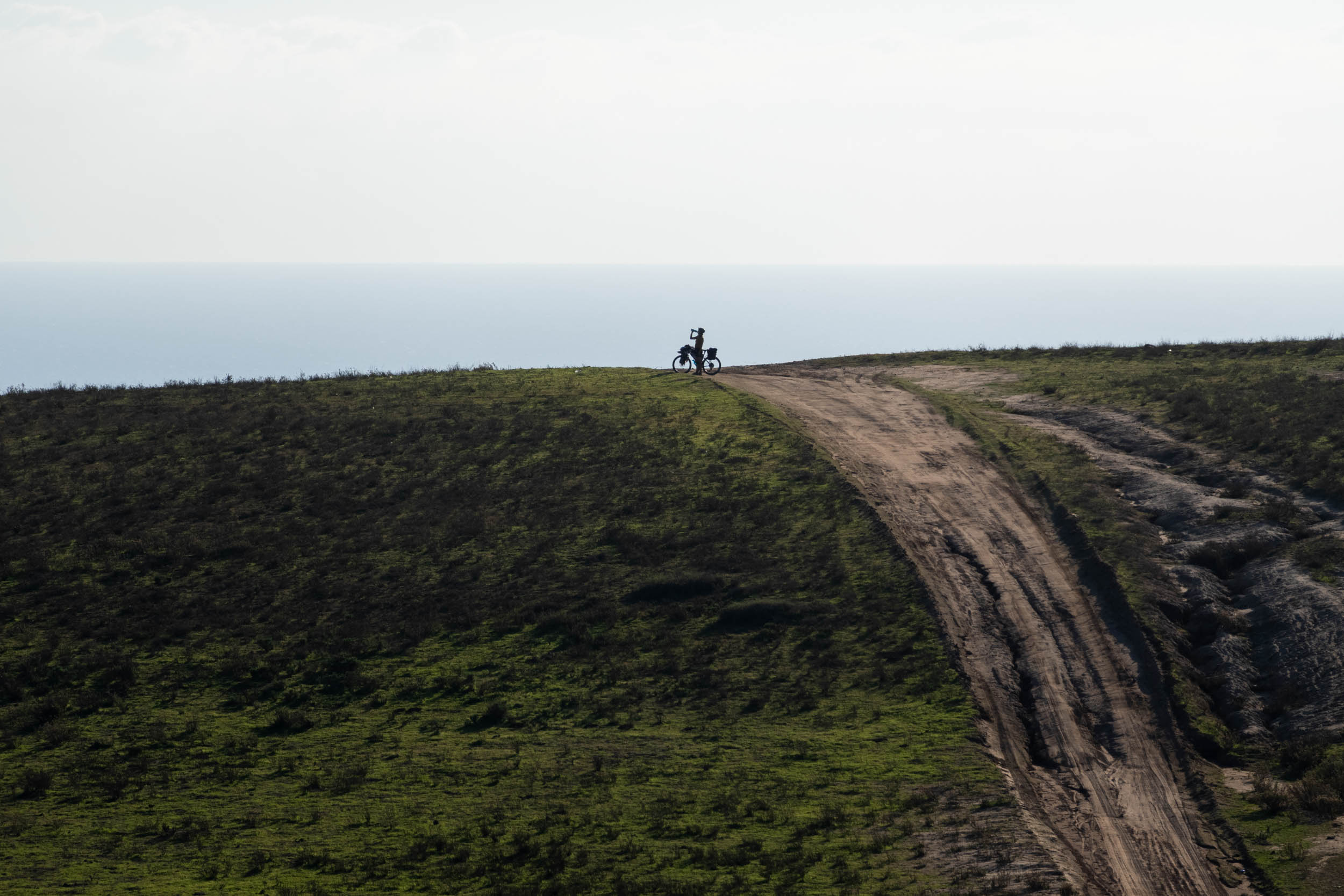
For the sustainability of our journey, it was important to us to have bikes that could handle the rough stuff while also cruising paved surfaces. Riding on pavement can sometimes feel like a cop-out—like more of a commute than an adventure—but balance is key, and we’re learning that it’s okay to take the easy way sometimes.
Preventing Burnout
Bikepacking on its own is rather exhausting. Throw surfing into the mix, and you’ve got a fun recipe for adventure burnout. We both love pushing our bodies to the limits, learning new skills, and seeing improvement in our hobbies. Expecting constant progression and forward momentum, however, was a sticky mindset to get caught in. The lows we reached from overextending ourselves were a reminder of how prioritising pacing and rest can play a huge part in the enjoyment and sustainability of a journey.
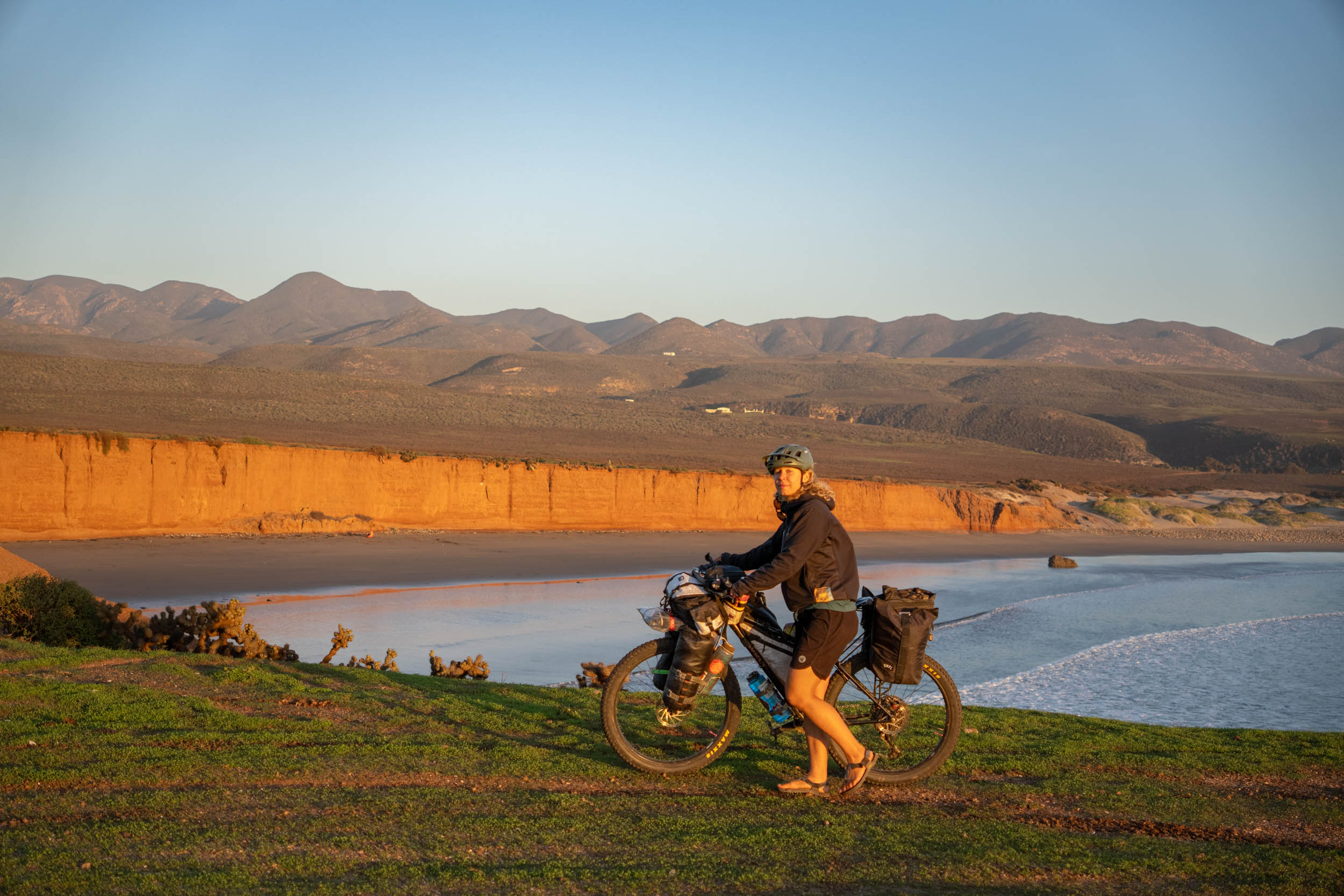
Everyone’s tolerance for discomfort is different, and it can change over time; whether you’re on a trip for a few months or have packed up for the next five years, checking in with your personal battery early and often is key. Here are some tactics we would employ more on our next long-term bikepacking/surfpacking trip:
Flexibility
Allow wiggle room in both mindset and budget for hotel stays. Tenting in some densely populated countries is often far from restful. Lack of sleep is a tough one on our immune systems and mood. It’s not cheating or weak to need sleep; go get that rest!
Side Quests
Side quests were an unlikely source of fuel and rest. Sometimes even more so than sleeping in a quiet room, we simply needed a switch-up from our daily expedition routine to shake us back to life.
Nutrition
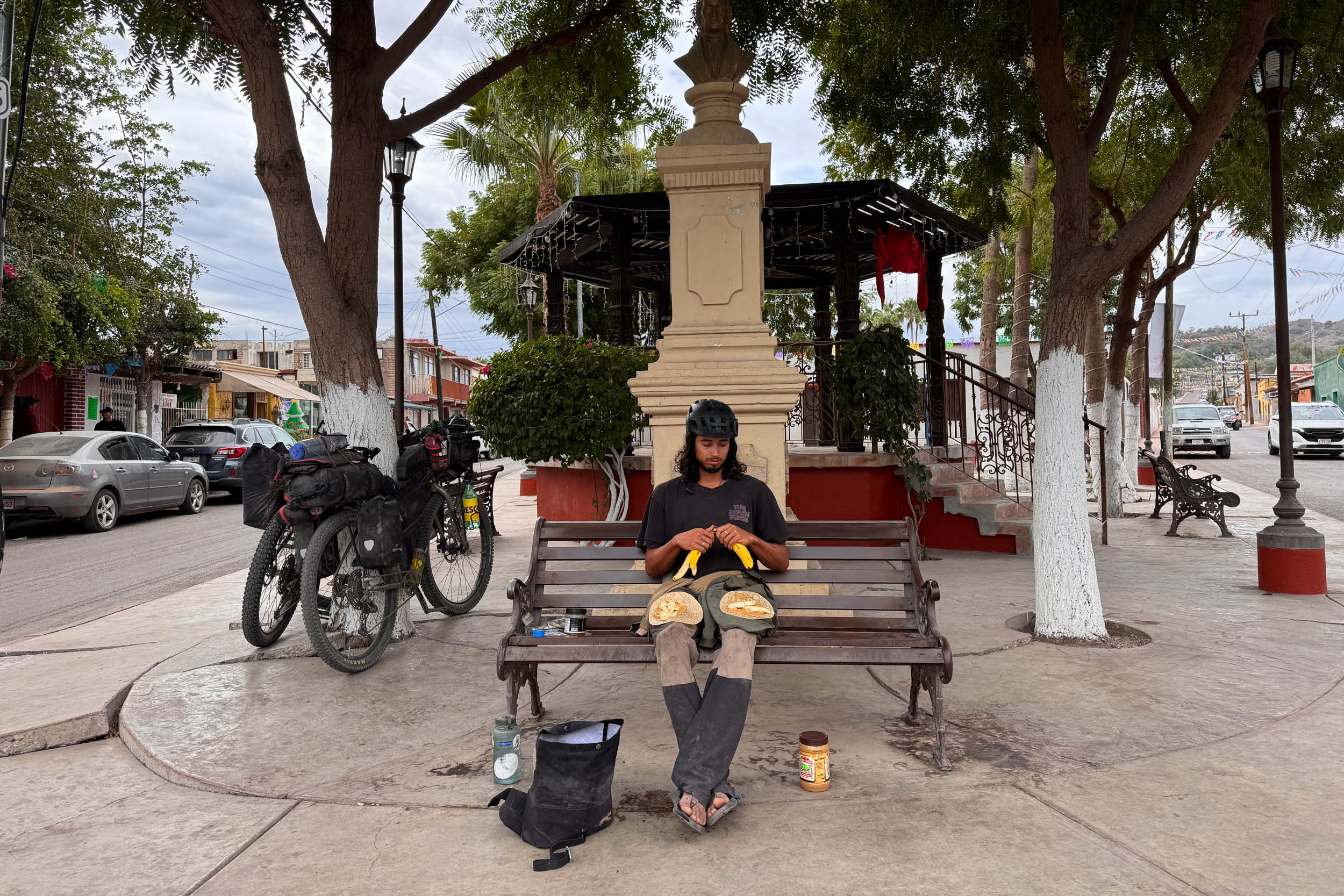
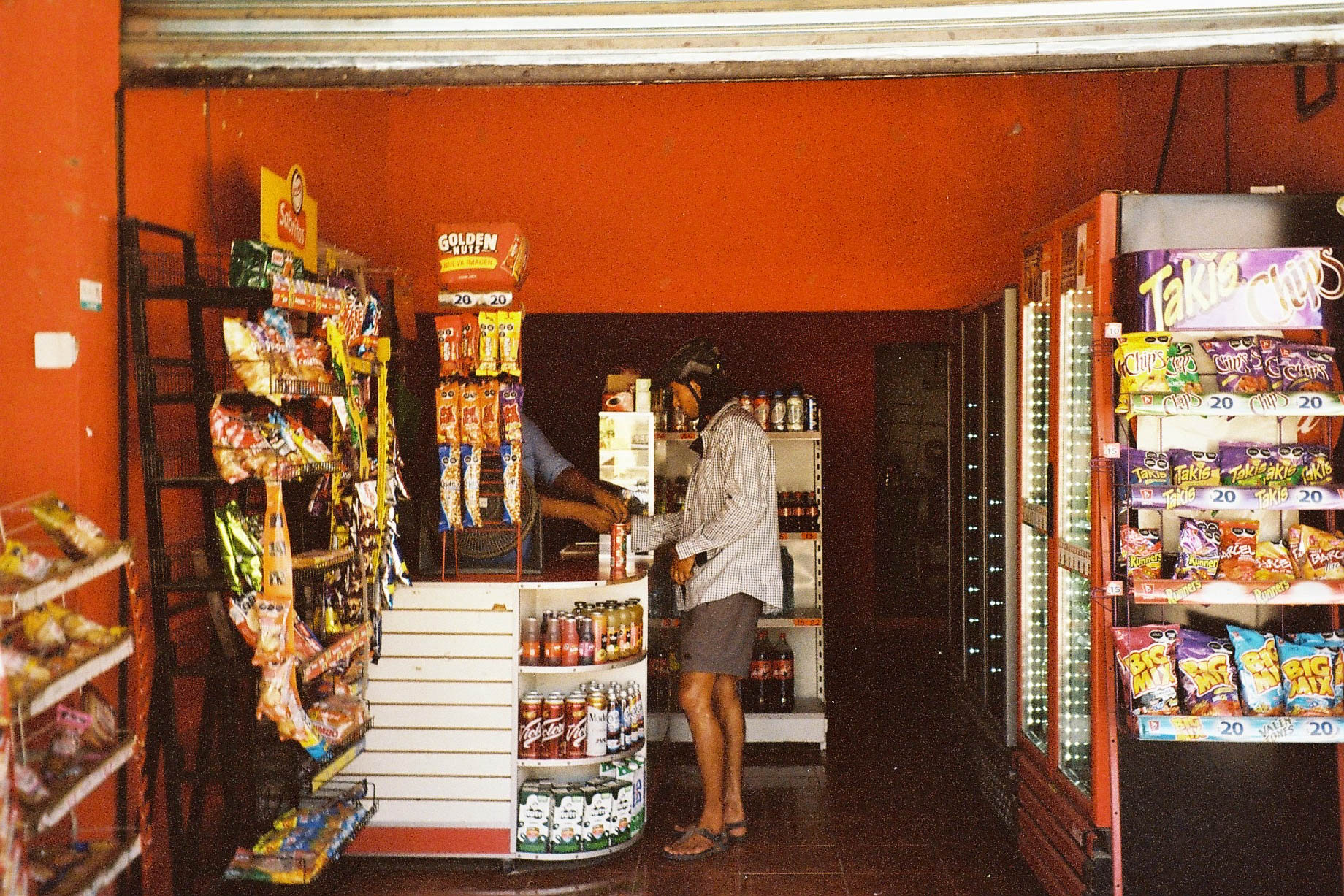
Everyone’s nutrition needs are so different. What’s important is listening to your body and sticking to what makes you feel good, even if it’s harder to find or means you’re packing a few extra supplements. It’s easy to romanticise the gas station bikepacking diet in the beginning. If this is sustainable for you, rock on. If not, make that extra stop at the market for some fresh foods. Your machine will thank you.
Sun and Hydration
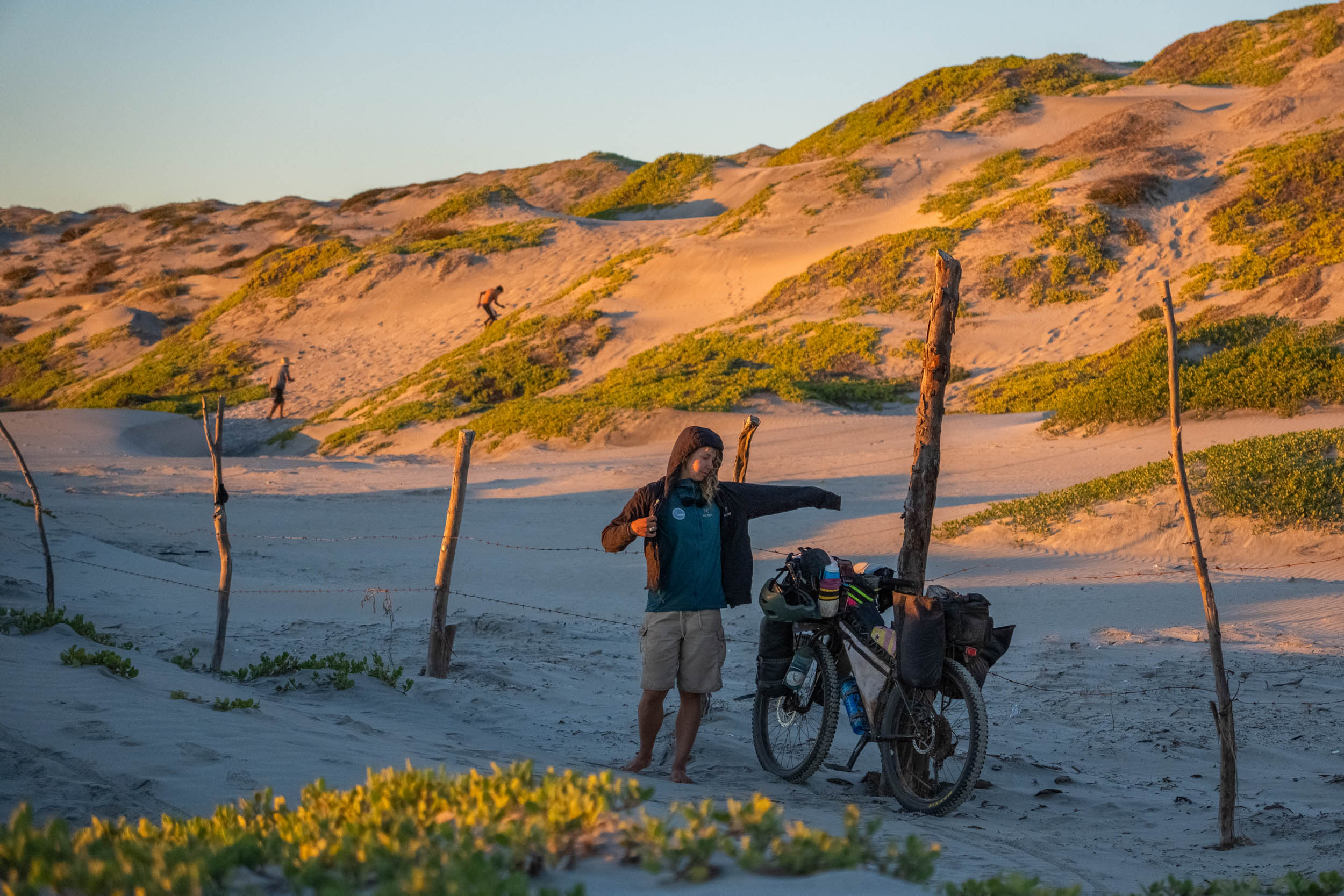
This one is essential for any hot-weather expedition. It made a huge difference to find shelter from the sun and stay obsessively hydrated while surfpacking. We found electrolyte packets to be the best way to keep us from turning into sad prunes.
Surfpacking-specific pointers
Bikepacking as a means for surfing a coastline is on the rise. Surfpacking is rad, and complicated. It’s easy to get stirred in an idyllic dream of empty waves and cruisey rides. Here are our top tips for successful surfpacking and managing expectations.

Seasonality
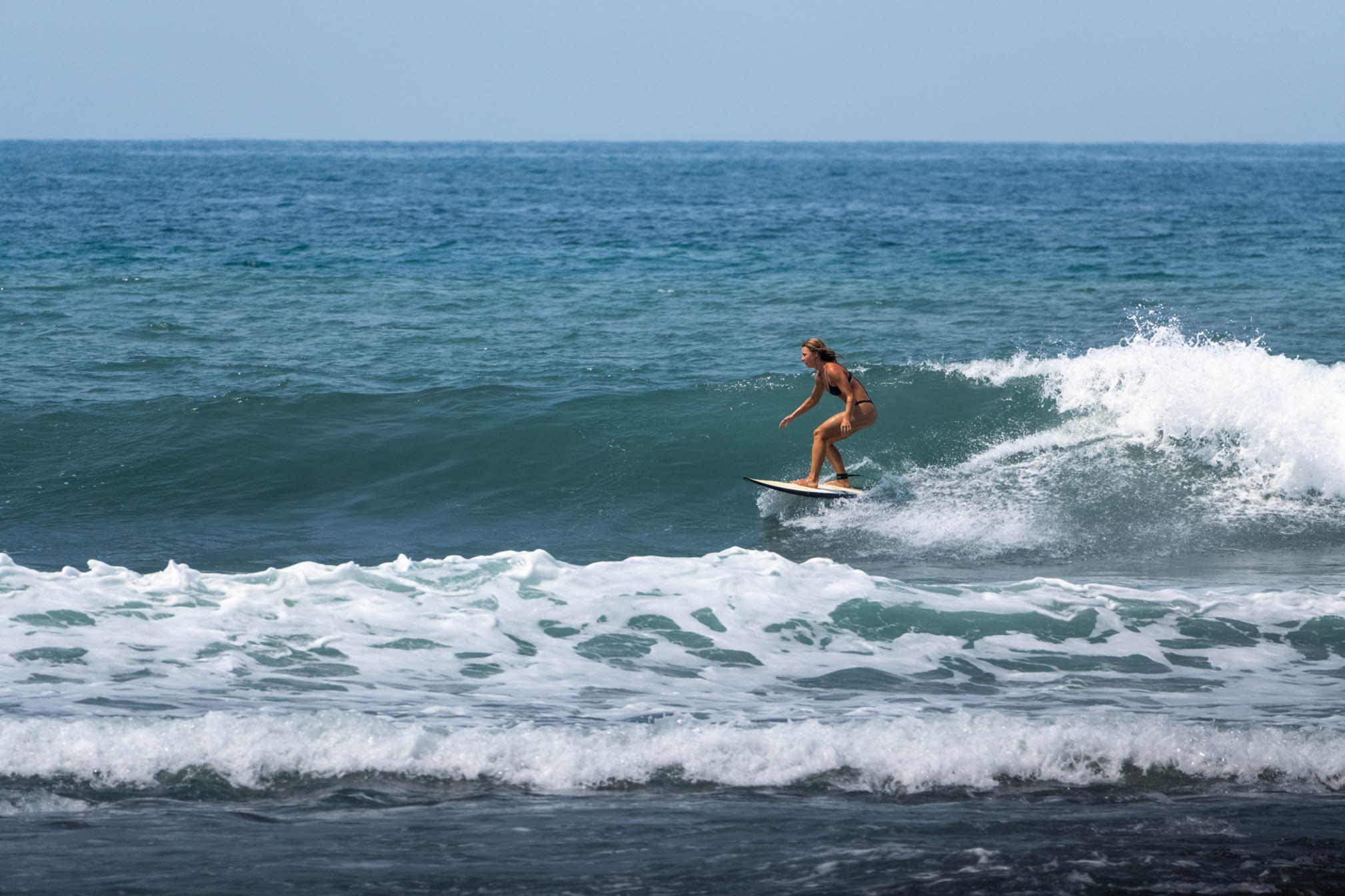
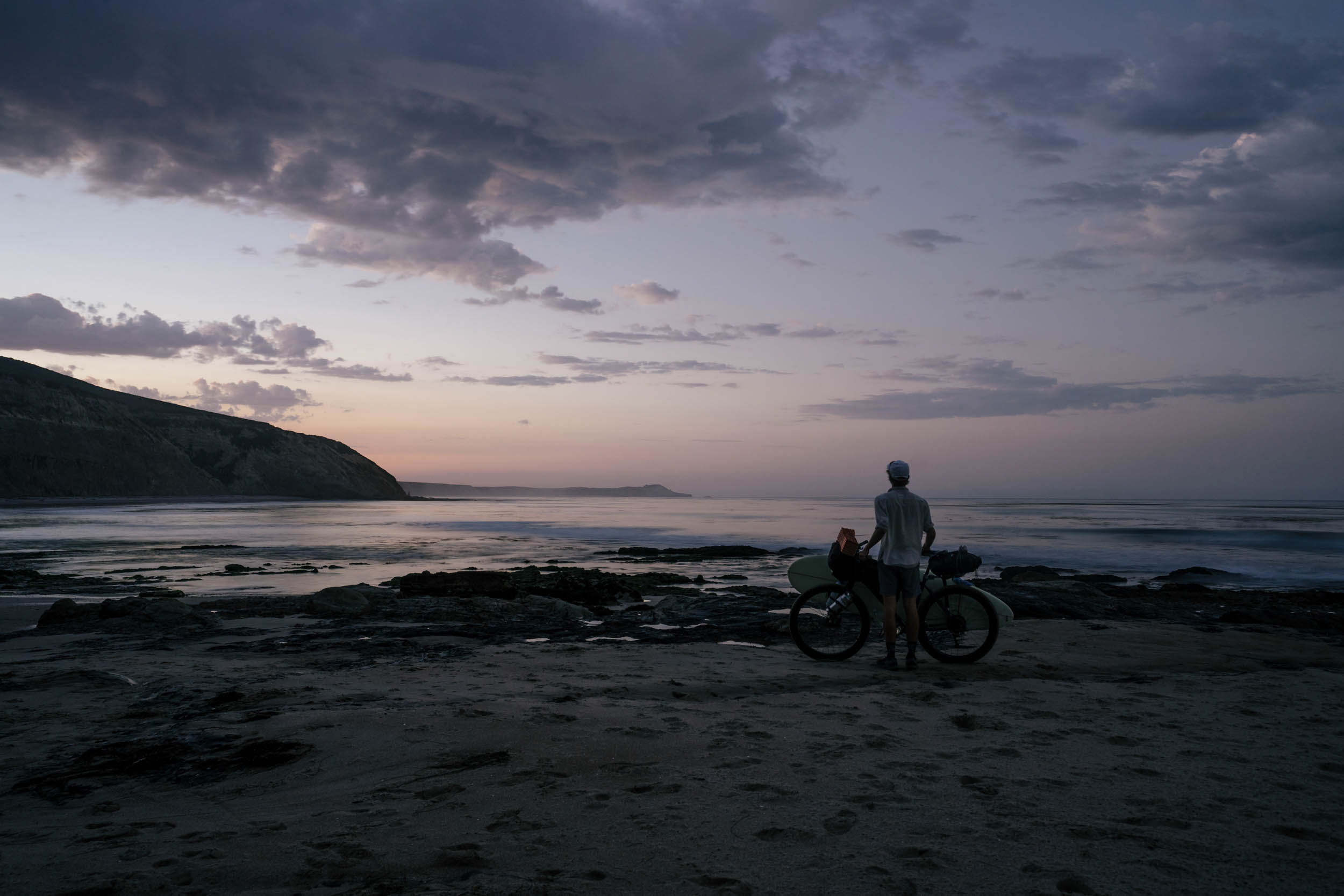
Surfing is an extremely condition-dependent sport, with each coastline having unique times of the year when it works best. Try to plan accordingly. If on a long-haul journey, it’s inevitable that some waves just won’t work as expected; it’s okay to tow the board and not score.
Effort vs. Reward
Biking is tiring. Towing a surfboard is tiring. And surfing is, well, tiring. Bikepacking with the intent to surf is a bit like saving room for dessert during dinner. You may not be able to complete as many miles as you would without boards. This style of adventure will have you constantly re-evaluating whether to stay for the surf or push forward to the next spot. No decision is wrong; it’s all part of the process.
Trailer vs. Side Racks
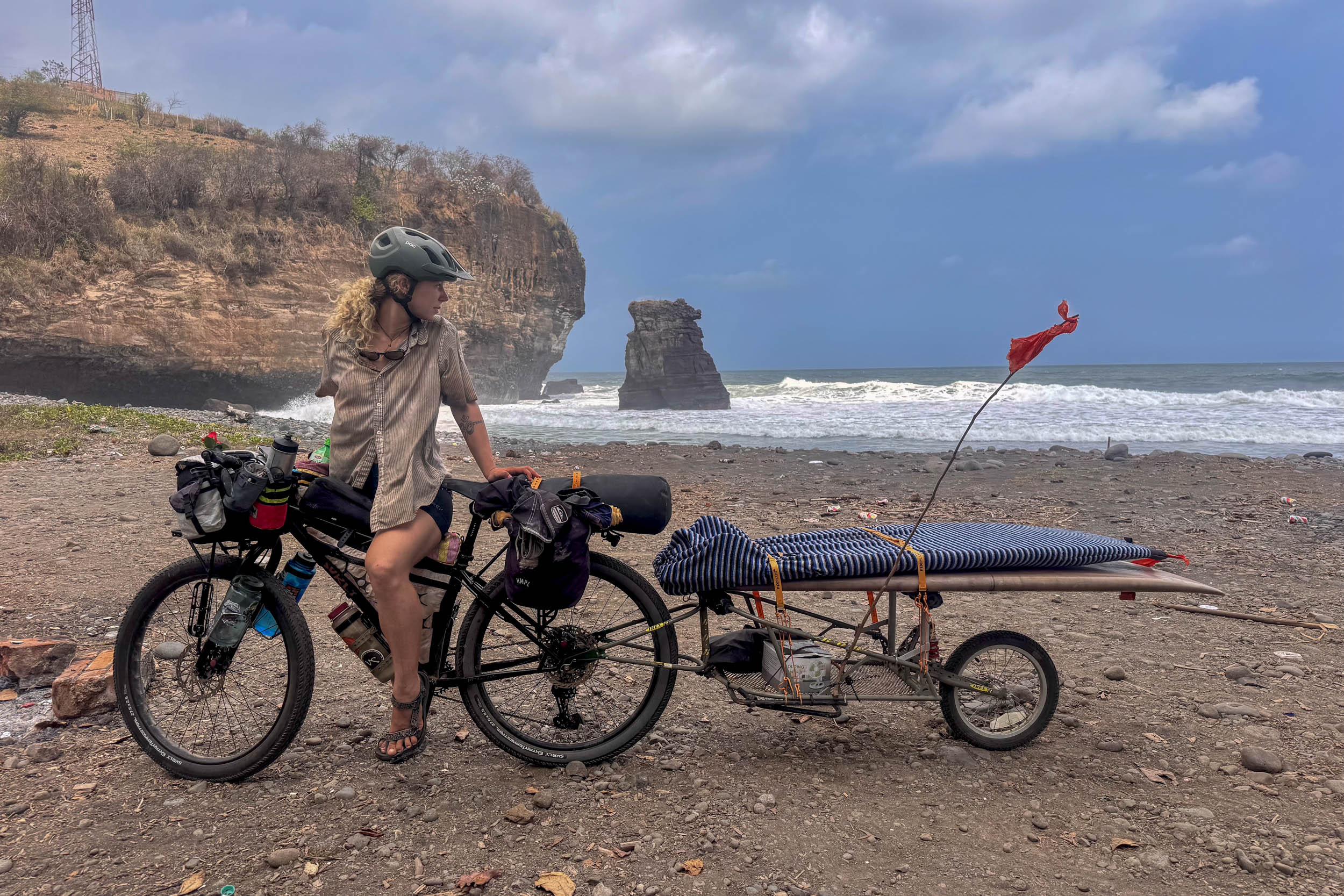
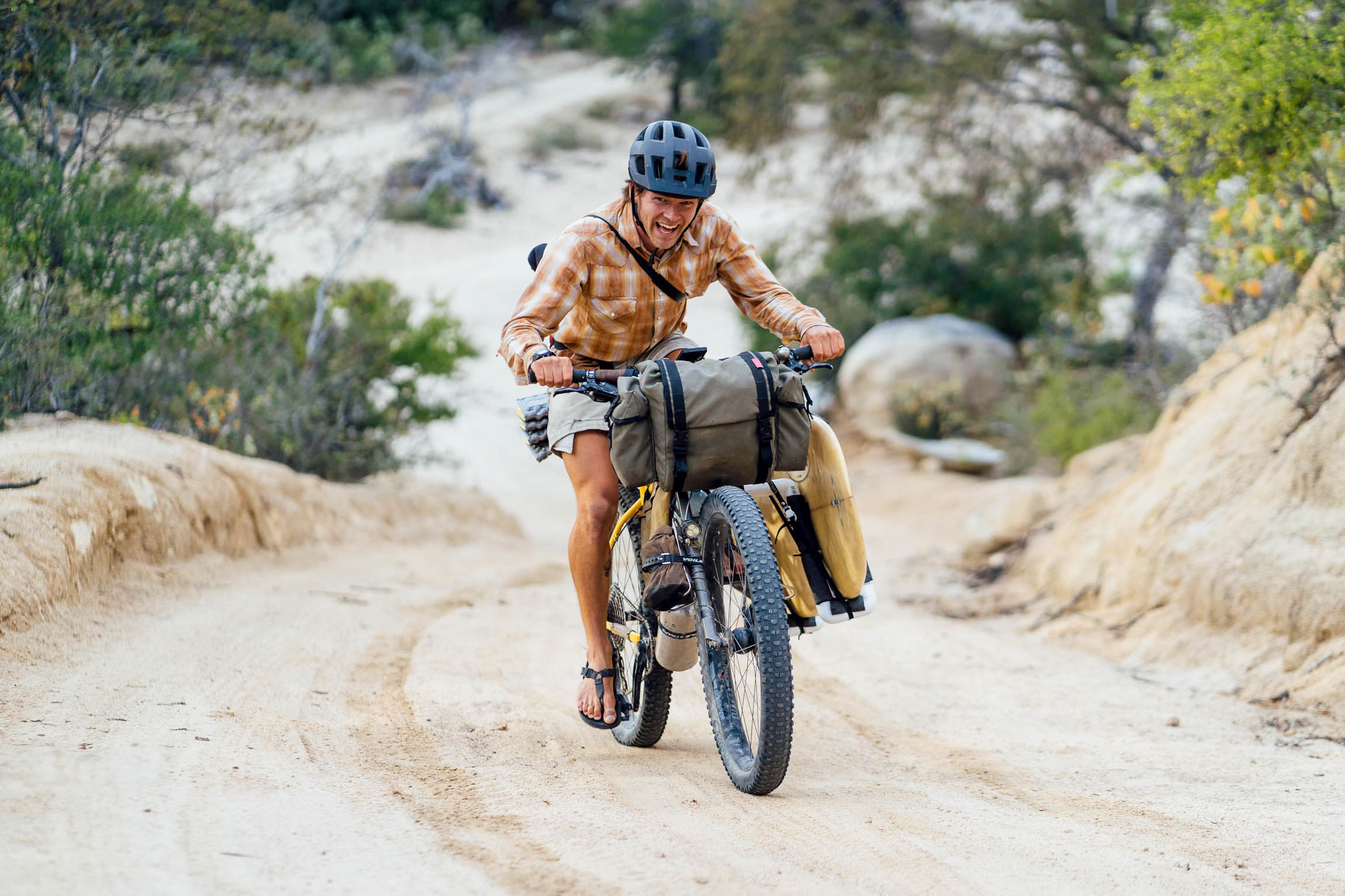
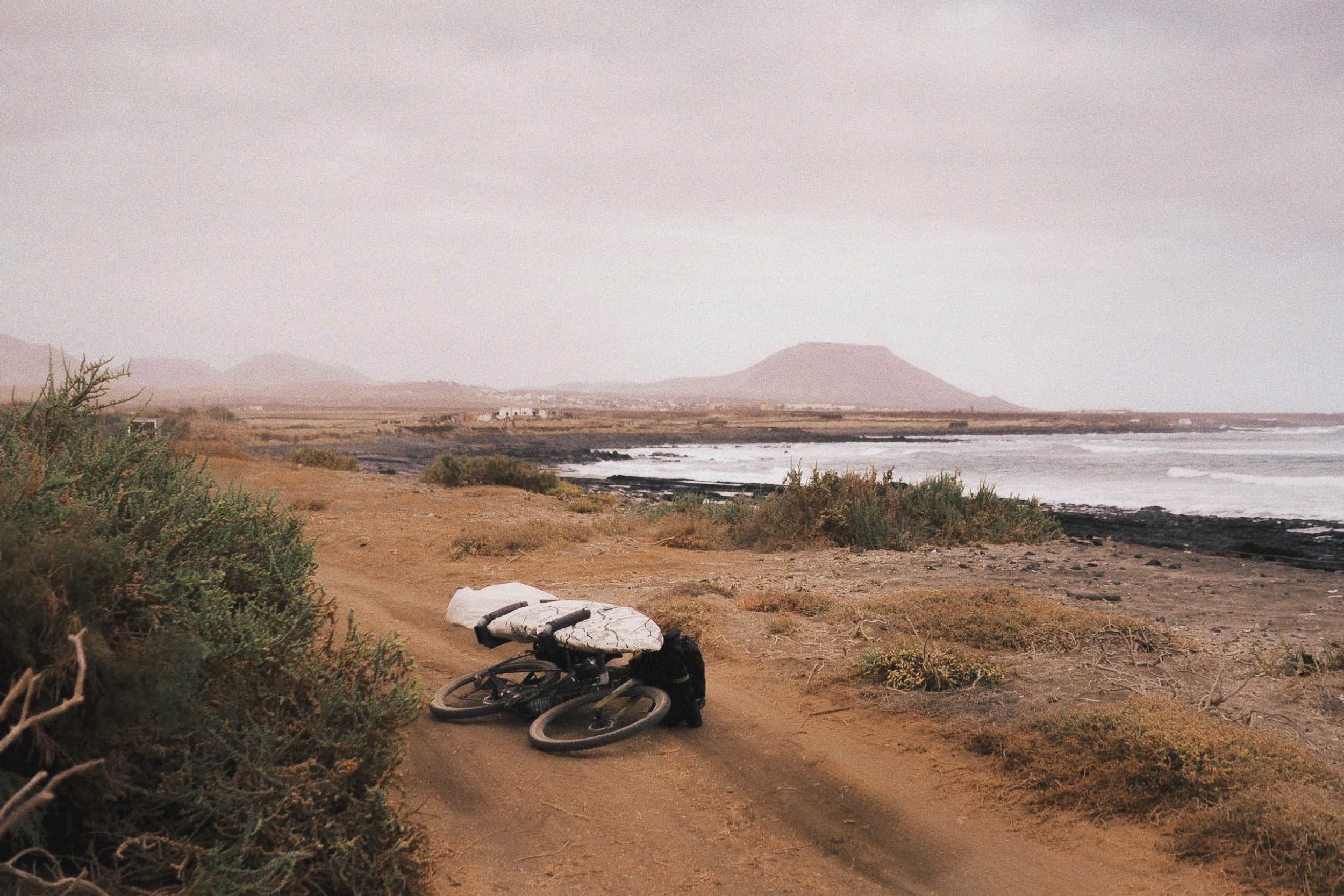
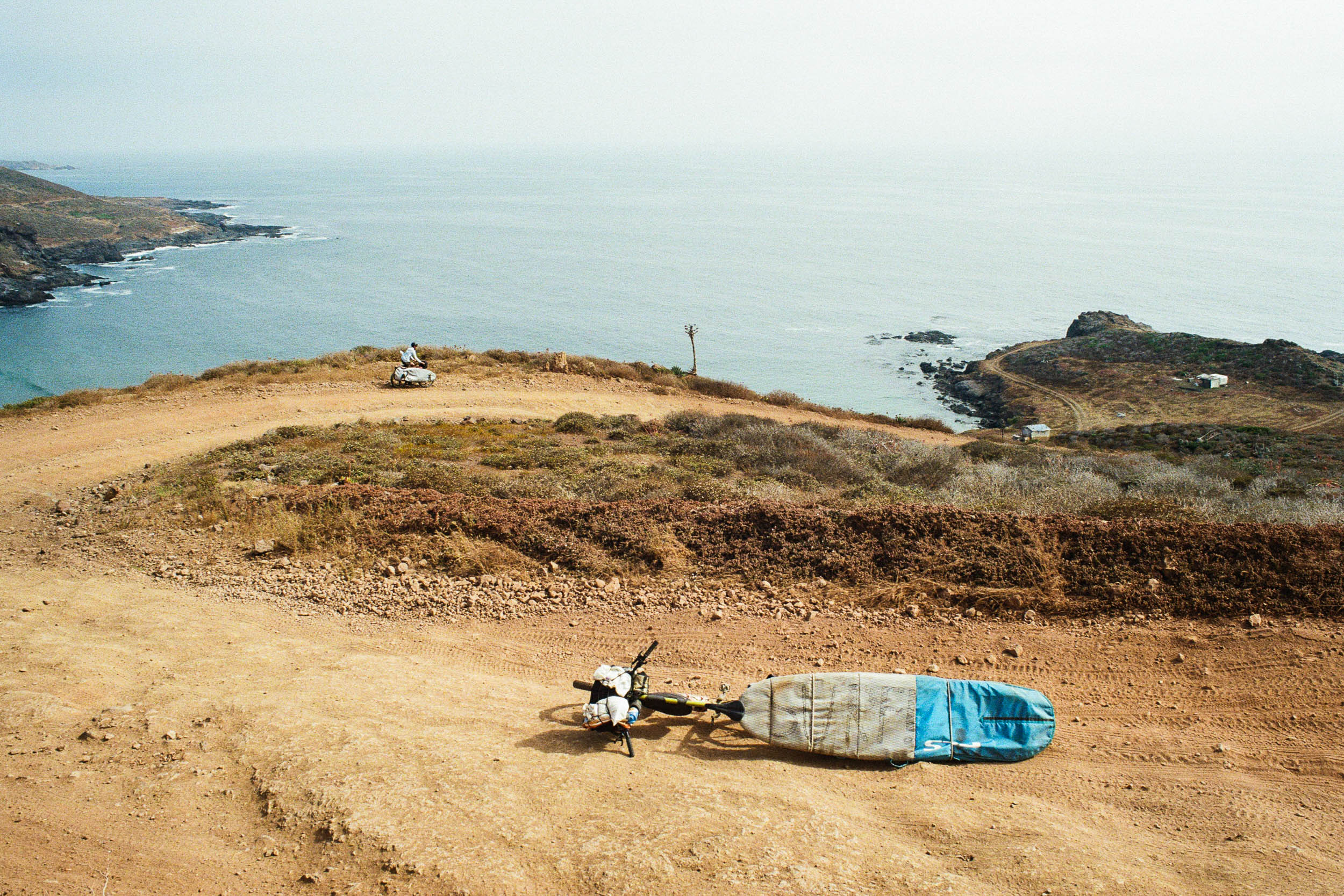
We found a clear difference in wind drag with the side rack vs the trailer. While the trailer weight was heavy uphill, we barely noticed it in the wind. The side rack is budget-friendly and convenient to take on the plane, but it adds considerable drag downhill and in the wind. It could be great for a shorter journey, whereas the trailer worked great for the long haul. Up to you, sailor!
Self-Care
Surf earplugs, rash guards, and surf hats are our recommended gear investments to keep your surfpacking machine in top shape. You are the passenger and the engine, after all.
Embrace the Adventure
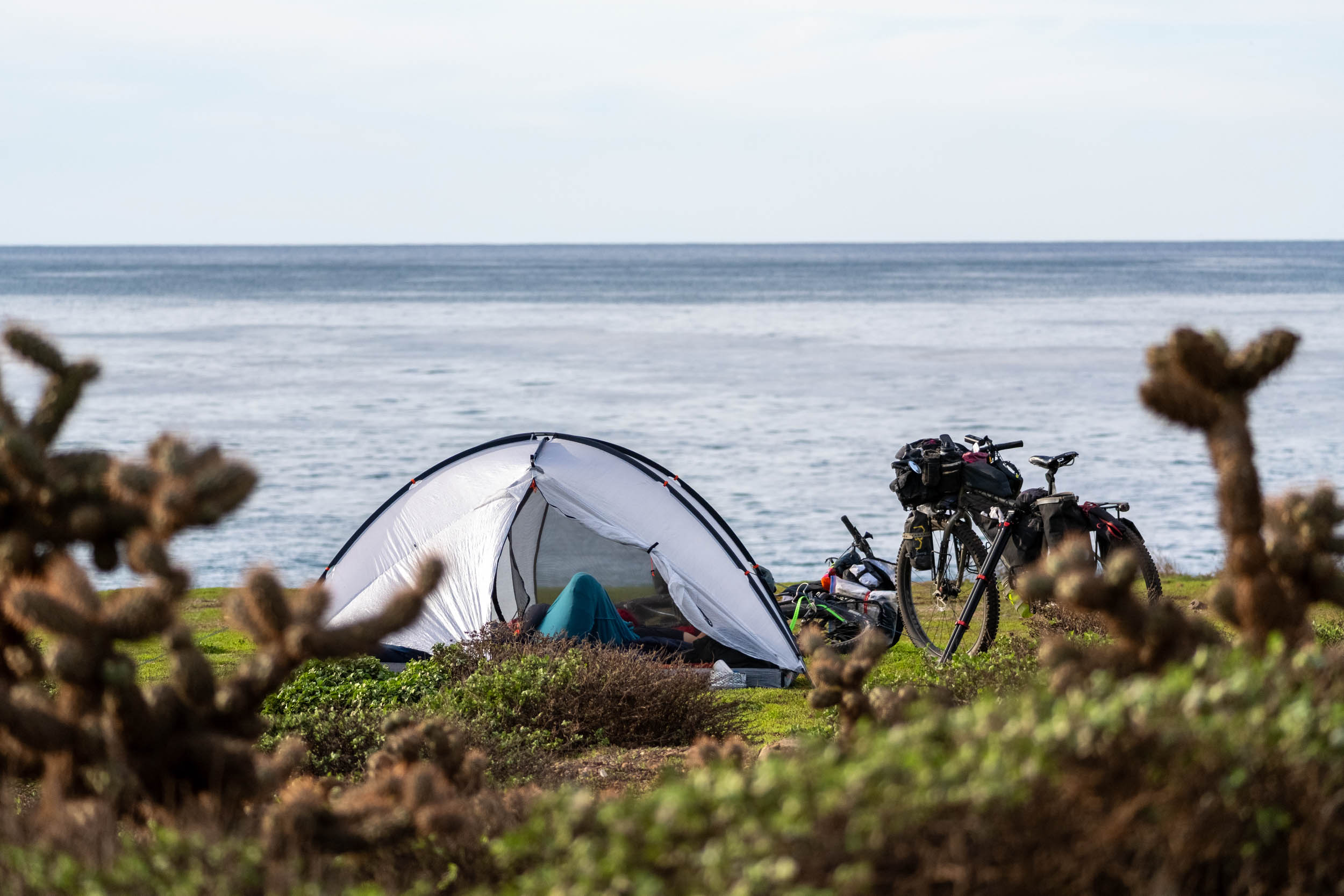
In the end, it’s not about what bike you’re riding or your fancy ultralight pooper scooper. It’s about the adventure. It’s when things don’t go according to plan that the journey gets interesting. Fixing a flat tire in a torrential downpour at 1 a.m. Getting trapped on a ranch in Idaho and struggling over six barbed wire fences to escape. Rylie’s beautiful surfboard safely travelling 5,000 kilometres on our trailer, only to be shattered by a mango falling from a tree. These are the stories we remember and will continue to share for years to come. Embrace the crap, the mishaps, and the campsite treasure hunt, because a story is not complete without a healthy dose of the unexpected.
Budget
One of the top questions we got when telling people we were planning to set off on a two-year journey was, “Will you have enough money?” We had worked hard to save up more than we thought was enough and set up a budget, but we still found ourselves asking the same question. A balance between strict budgeting and spending money to take care of ourselves wasn’t always easy to strike. Finding some online streams of income, such as writing articles, went a long way towards easing our minds about budgeting.
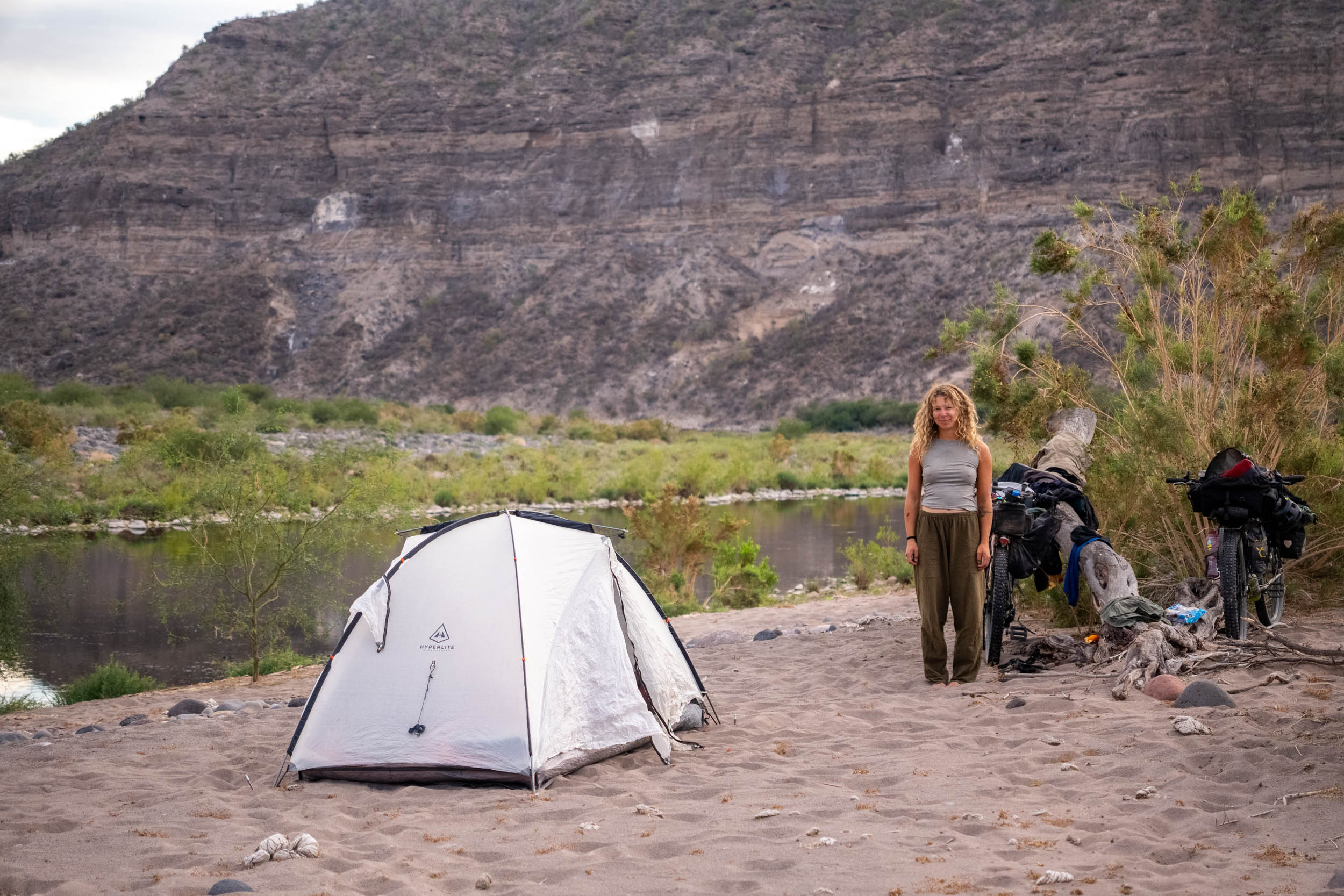
During our time in Mexico and Central America, accommodation ended up being more expensive than we had budgeted for. A typical campsite could run us 200 pesos each, or 16 Canadian dollars. We spent a lot of our sweaty, tired afternoons pedalling in circles, searching for the best value spot. It’s apparent that where you don’t spend the money, you will spend the time. When planning a long-term adventure budget, especially as a pair, it’s important to talk about and understand your priorities. Accommodation, food, gear, and extras. Allow room in your budget for some things to be more expensive than you’d expected. Find ways to be savvy by avoiding tourist traps, and don’t skimp spending on your priorities when you’re sick or feeling down.
You are Worthy
With social media, we can follow along with the highlights of countless adventures in mere minutes. This can be inspiring, but it can also be equally overwhelming when we compare ourselves. It’s important to remember the work and struggles behind the reels of incredible adventures. The joy of long-distance bikepacking, in particular, often lies in the contrast between intense struggle and moments of elation.
Be easy on yourself throughout the highs and lows. You’d be surprised how many “pros” on social media are still figuring it all out. Whether your trip is three days or three years, you can congratulate yourself for getting outside and moving your body. Carrying the weight of unnecessary shame that you are not adventuring hard enough will feel like rocks in your panniers. We are all worthy of enjoying adventure, no matter how small or grand. Taking pride in your initiative will be your tailwind, one that inspires others to get after it.


Conclusion
There you have it—our panniers unpacked for everyone to see. The secret to success as a noob is simply to try. With all the grand adventure media and optimization tips out there, it’s easy to forget that at the heart of bikepacking is a bike, a few bags, and the will to push the pedals just a little bit further. After diving into a bikepacking trip headfirst, we want to inspire you not to shy away from a dream that feels impractical to an onlooker.
If you’re planning a long haul with little experience, you’ll want to think about budget flexibility, burnout prevention, and gear investment priorities. If your adventure stomach is tempted by the thought of a juicy surfpacking trip, consider location and seasonality closely, find a board attachment that works for you, and pack your most flexible mindset. In the end, adventure is about the inherent risk of losing or gaining something, and within that push and pull come learning, crying, laughing, and damn good stories. Embrace it all!
Further Reading
Make sure to dig into these related articles for more info...

Please keep the conversation civil, constructive, and inclusive, or your comment will be removed.