

 Mountain Bike (MTB)
 Gravel Bike
 All-Terrain Bike (ATB)
 Fat Bike


Closing the Circle: 4,000 Kilometers Across Central Asia

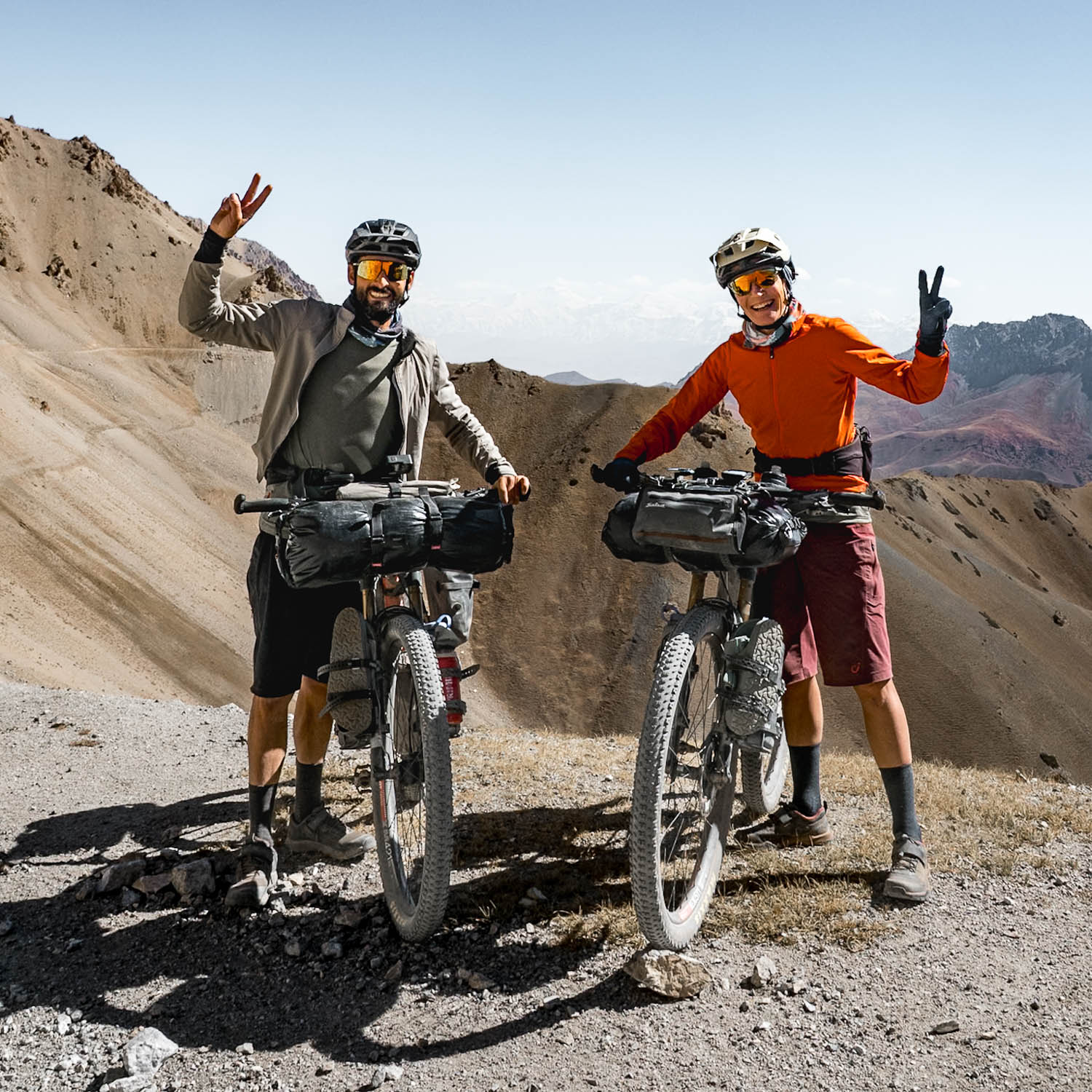
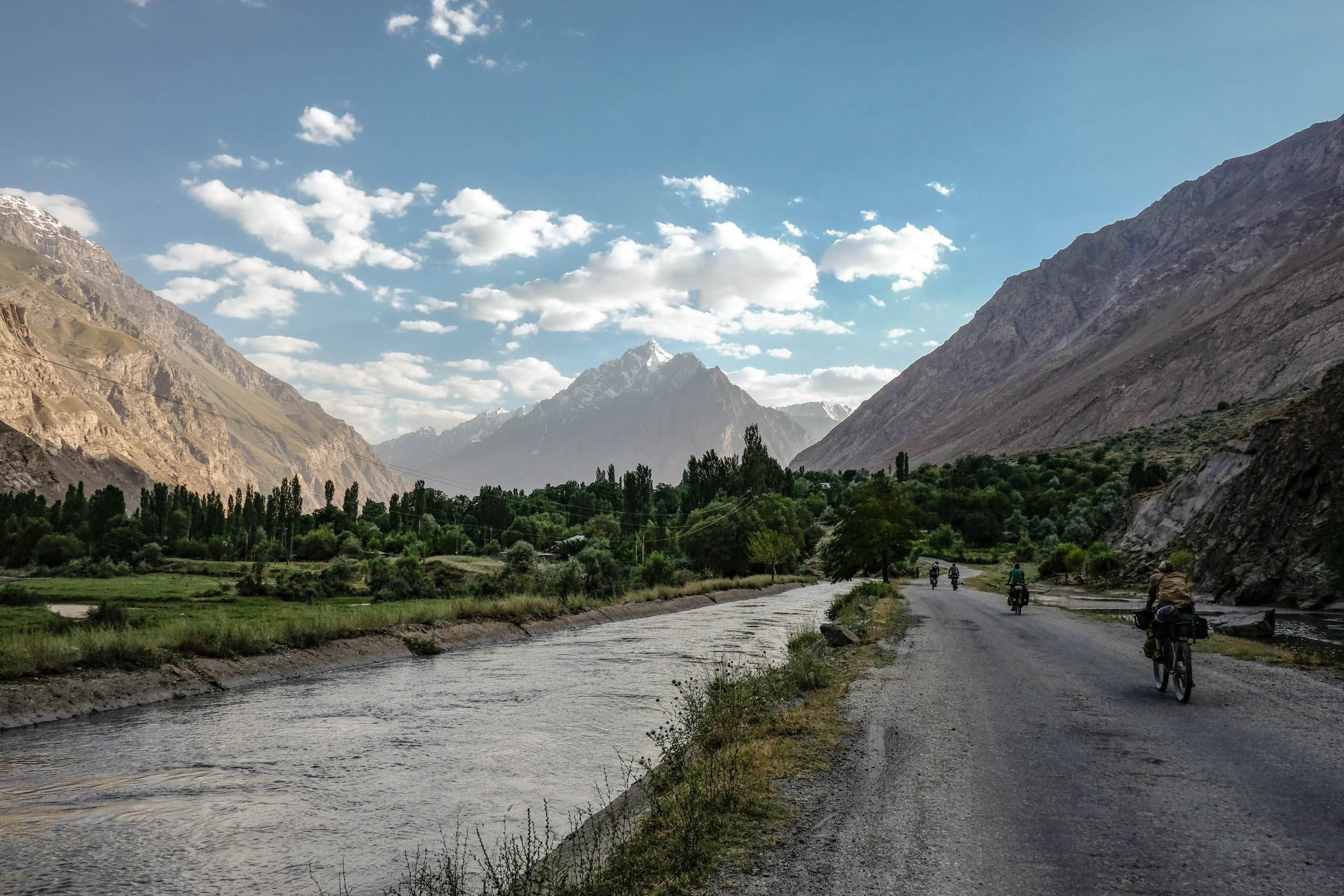
Last year, Alba Xandri and Ricard Calmet traversed three Central Asian countries, bikepacking some 4,000 hard-earned kilometers across Kyrgyzstan, Tajikistan, and Western China. In this detailed report, they recount their dynamic journey and share a sweeping gallery of photos from the rugged region. Find it here…
PUBLISHED Jul 15, 2026
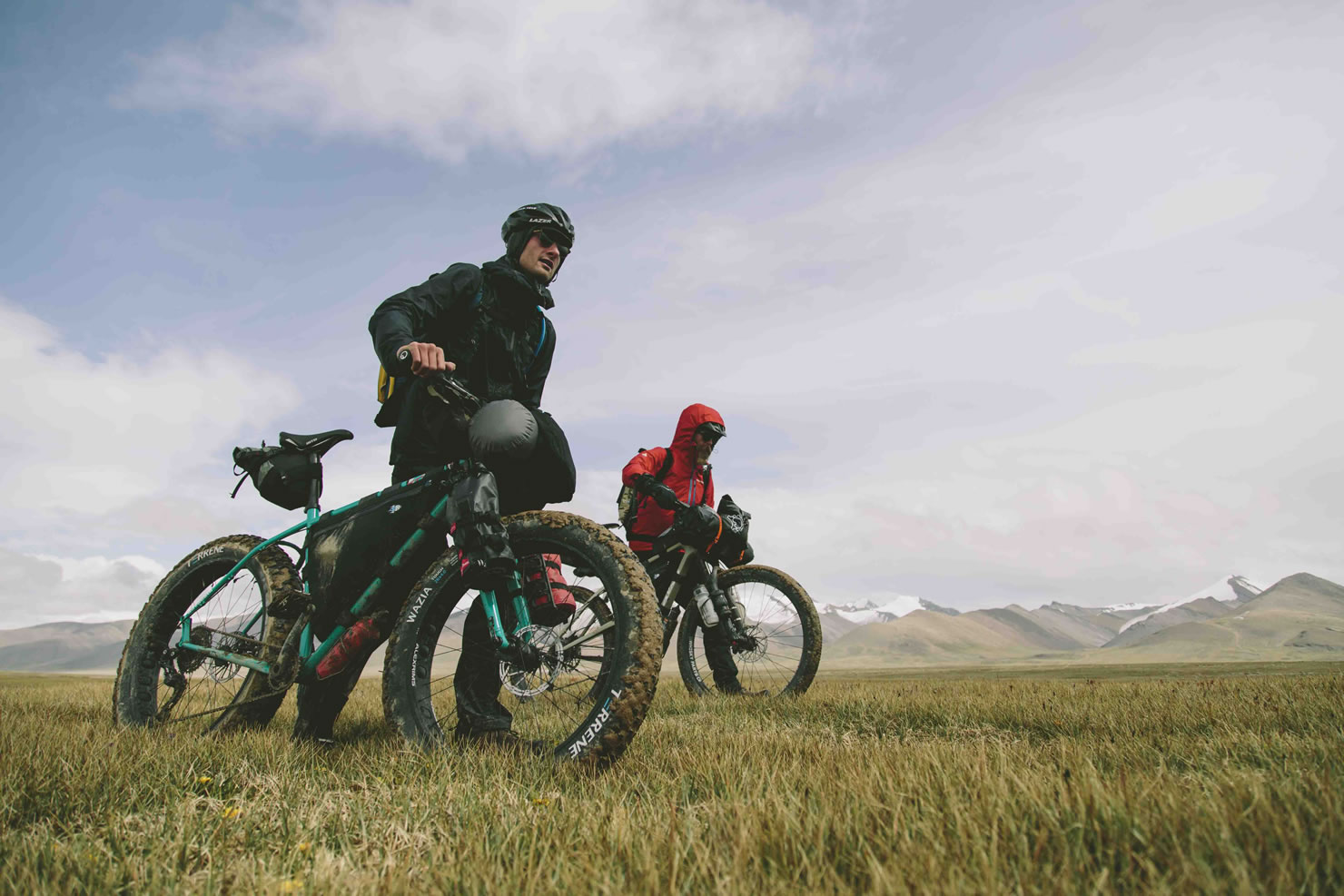
We’ve been pedaling for hours. Today, the weather has kept us moving fast, with a storm snapping at our heels. On the far side of Ak-Tog Pass, we took shelter in a small empty hut that served as a kitchen for a nomadic family. Three lightning bolts struck almost at once, instantly sharpening all our senses as we searched for shelter. The storm lingered for a while, but the rain eventually eased, and the threatening clouds drifted away.
We had to cross the mountain pass because the forecast for the next few hours looked grim, and staying put was not an option. Half in darkness, with the snowy peaks of the mountain range separating Kyrgyzstan from China glowing around us, we finally reached the pass.

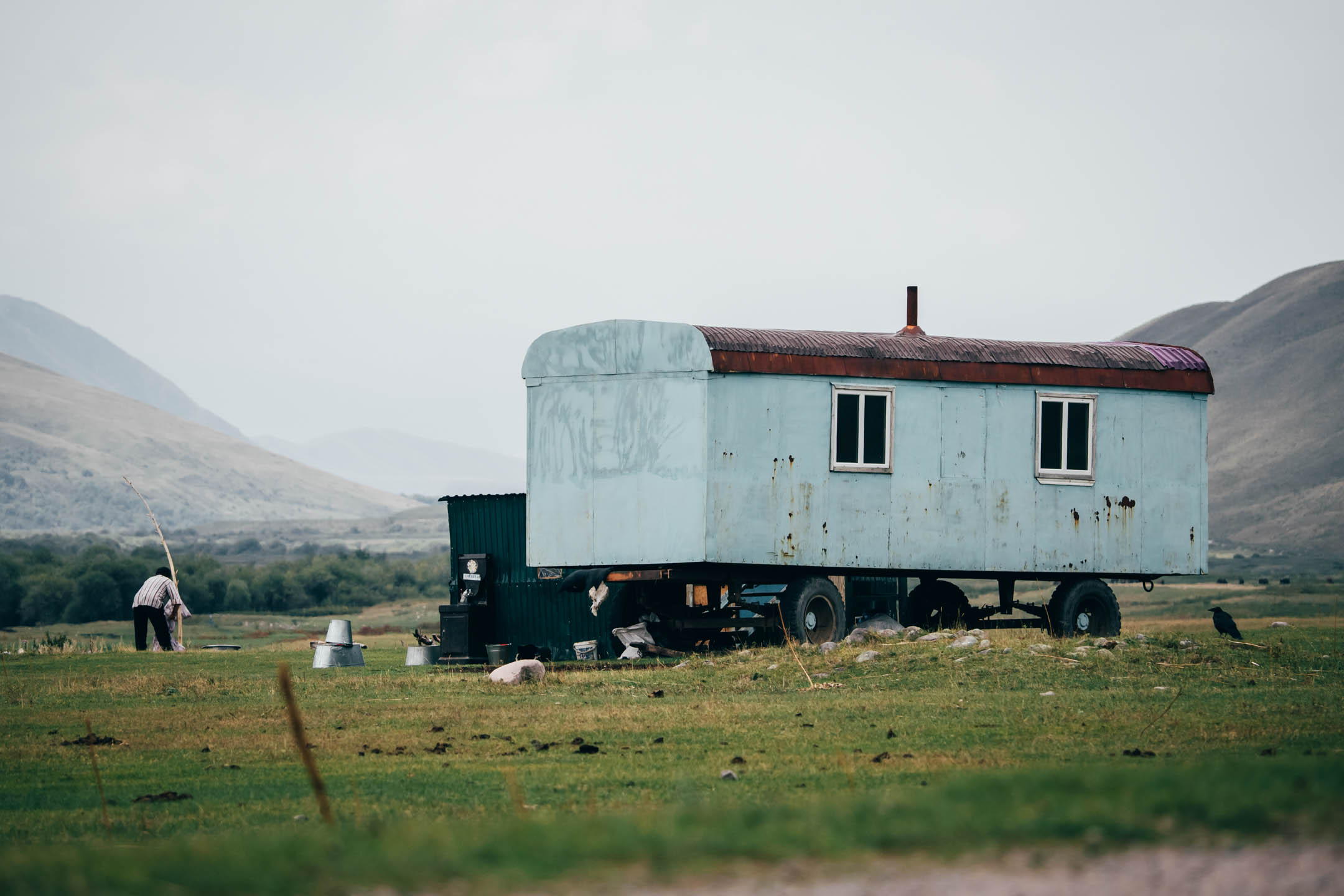
We agreed that wherever we first found water, we’d camp. But the ride felt endless: the river ran far below, we crossed no streams, and there wasn’t even a patch of flat ground to set up a tent. By now, it was pitch black. Then, we saw lights. What is this? A truck? A truck and a small house! It had started raining again, and a young man stood outside, smiling at us. Am I dreaming? We pointed at a shed and said “palatka,” which means tent. He looked at us for a few seconds before replying, “Warm inside!”
We didn’t hesitate and followed him. He prepared a room for us with blankets and lit a stove fueled by dried yak dung. We thanked him. We were freezing. Soon after, we heard more voices. The young man came back and said, “chai” (tea). An entire family was gathered around a table full of food in an adjoining room. They offered us the two most comfortable seats, and we ate while trying to make ourselves understood. For a brief moment, the chatter stopped. There was no phone signal, yet the muezzin’s call to prayer echoed from someone’s mobile phone. It was time to pray. Once again, we thanked them. That night, we slept inside like babies.


Kegeti, Karakol, Tjibel, Kalmak, Semiz-Bel, Kazanchi, and now Ak-Tog… these are words from Kyrgyzstan; in fact, they’re the names of passes marking each stage of our journey through this deeply mountainous country. They connect green valleys, powerful rivers of icy water, and high pastures where nomads and livestock live austere yet harmonious lives. The route goes on, and every so often we have to stop to absorb so many images, so much beauty, and so many experiences.
Before leaving Bishkek, Stephane, a French mountain guide who has lived here for years, told us that Kyrgyzstan is often advertised as a land of dreams and fairy tales, but that most people arriving nowadays don’t truly understand the country’s real harshness. That sentiment lingered somewhere in our subconscious, or perhaps in our full consciousness. With every pedal stroke, every mountain pass, every little storm, and every encounter with nomads, his words made more and more sense.
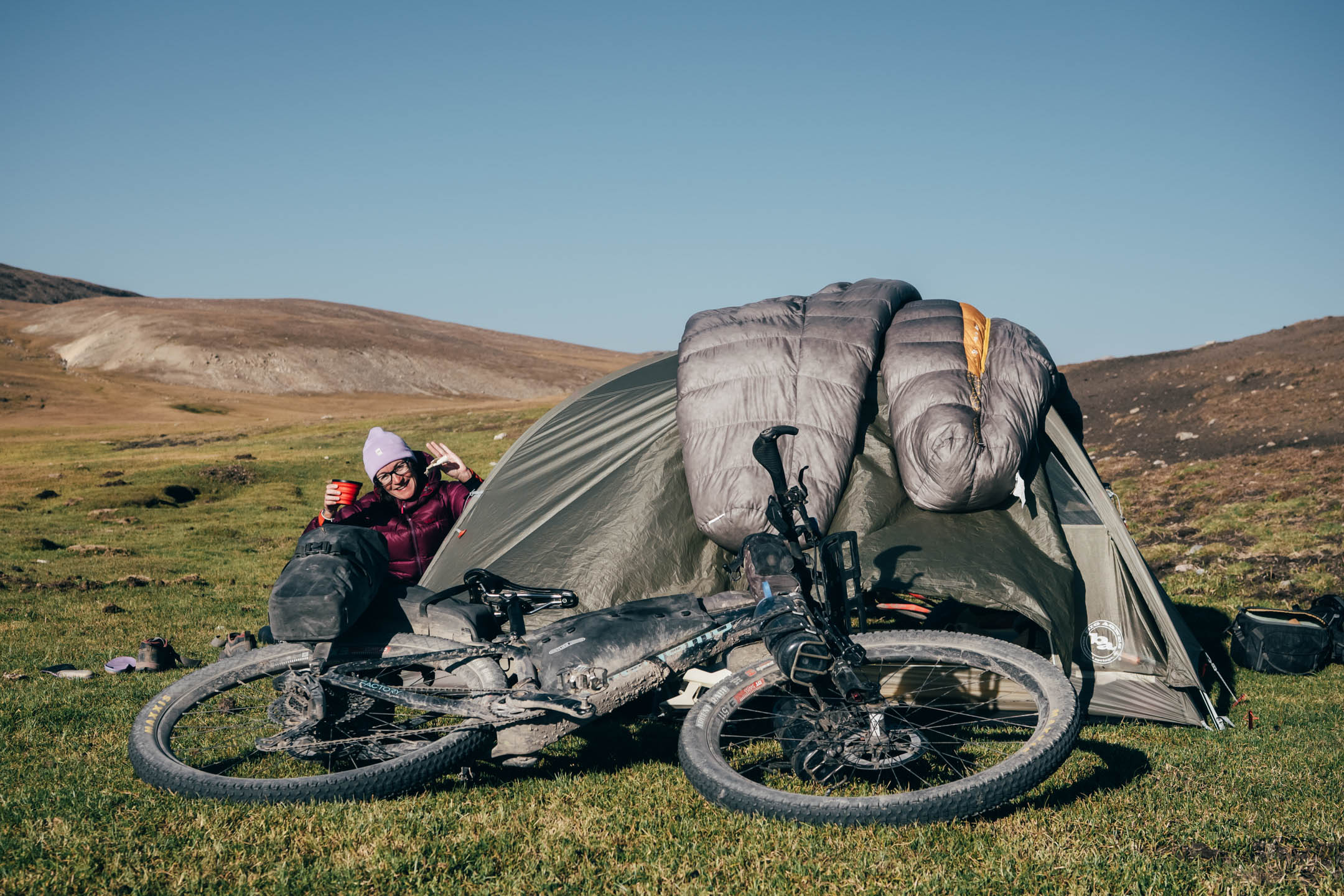
This was actually our third time in this corner of the world. In 2012, we passed through Khorog, in Tajikistan, just two days before a large-scale military offensive erupted following the assassination of a general. We had to flee the country in a hurry toward Kyrgyzstan. Then, in 2015, we crossed Kyrgyzstan on our way to China and Southeast Asia. Some of the places we pedaled through on this trip were almost unrecognizable. Thankfully, some families now have access to water and electricity. Tourism, too, has brought major change, especially to Kyrgyzstan.
And yet, even if certain places seem transformed, the energy remains the same. There are places in the world where something intangible flows—places that connect us to the earth and bring peace. Song-Kul Lake, at 3,000 meters, is one of them. It wasn’t our first time cycling there, either. But this time, we approached it from the backside, over Tjibel Pass, traversing brutally steep slopes down toward the lakeshore. The landscape and the evening light were enchanting.
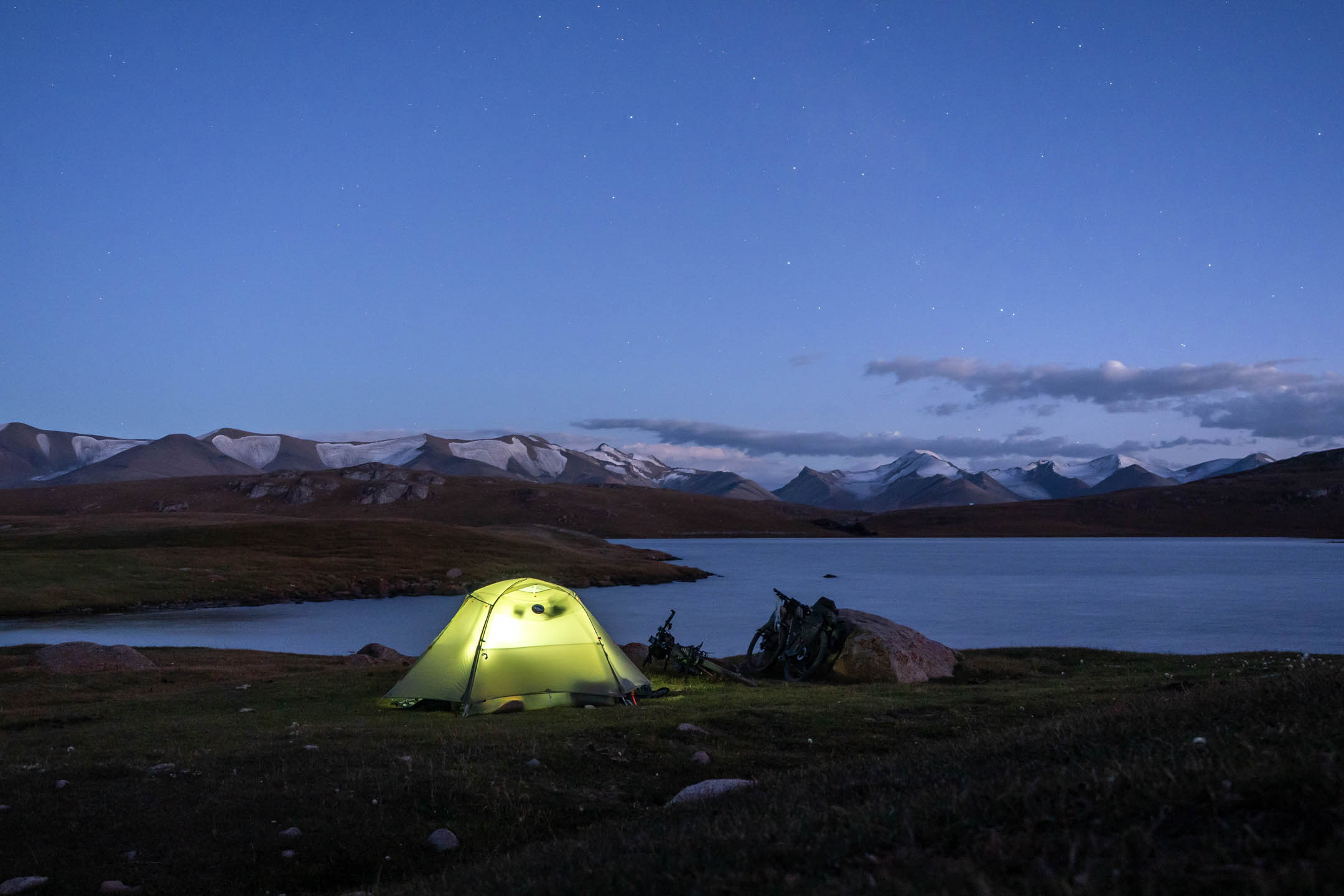


We spent the night there, and the next morning, it was hard to get moving. It simply felt too good to leave. The place has a special magnetism. Everything seems to slow down. The horses don’t gallop, the dogs don’t bark, and the birds gliding overhead seem to move in slow motion. Slowly, we set off along the northern shore of Song-Kul. Constant ups and downs carried us into a kind of magical flow.
A few days later, the opposite side of the coin came with our visit to Engilchek, a symbol of human resilience. The energy there was entirely different. The few families still living there seemed to cling to the past: a ghost town, witness to the Soviet mining era. It’s a strange place with dismantled buildings, abandoned homes, dusty streets, snowy peaks like the mighty Khan Tengri and Pobeda towering nearby, rusted cables, piles of scrap metal, and shattered windows.

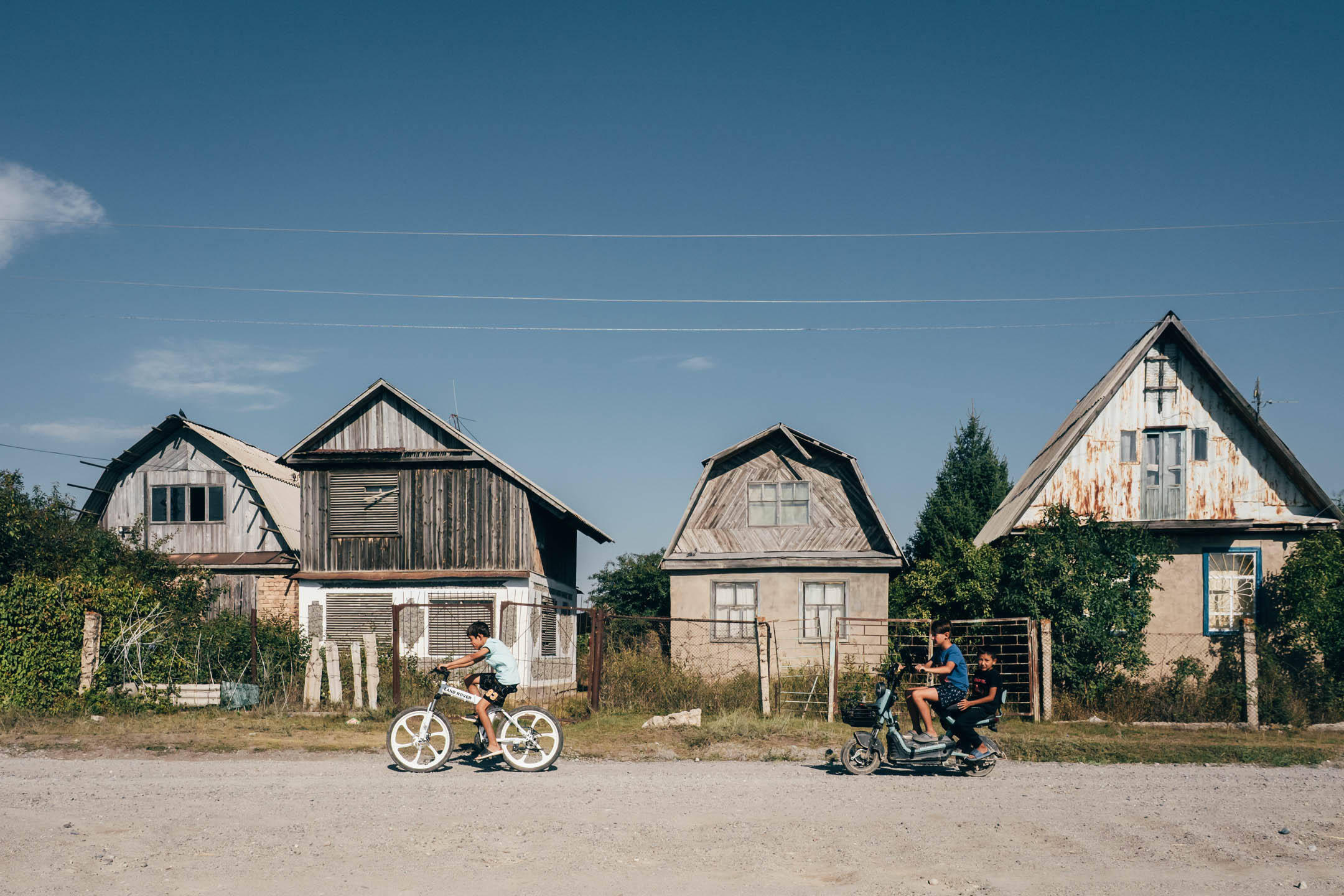
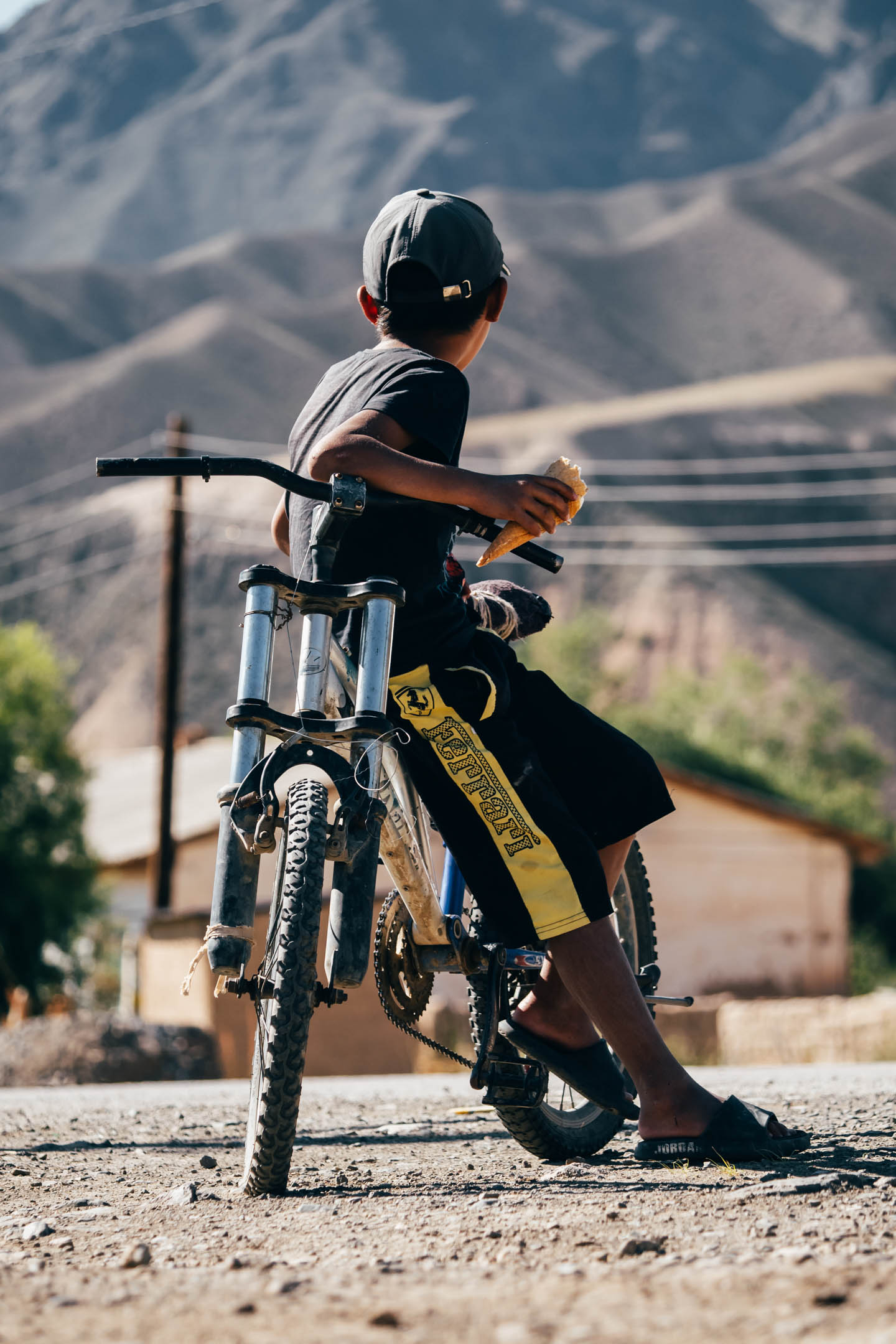
Walking through Engilchek transported us to a communist past and a present with little hope. An uncomfortable silence filled the air, broken only by the endless wind and the laughter of four children riding bicycles outside.
For several days, a headwind became our constant travel companion as the route continued toward the beautiful colors surrounding Chon Pass (3,822 meters). During one of those long stretches, my mind drifted toward the isolation of the families living there—their social lives, the tiny school, the snowy winters, and above all, their resilience. I wondered who was more resilient: the people of Engilchek, or the nomadic families living off their livestock in these remote lands.
Before turning toward China, we still had to cross Jukuu Pass. Time to push hard. This wasn’t one of those hike-a-bike moments for Instagram glory. With the last light of day fading, we gathered every ounce of strength and literally dragged our bikes over the rocks. It was steep. Very steep. We don’t know how long it took, but at the top of Jukuu Pass, a vast plateau opened before us, perfect for camping and soaking in the extraordinary views.
Then, from the Kumtor gold mines, we climbed toward the Arabel Plateau via Soek Pass. The mountain chain bordering China was majestic and expansive. But another companion had joined us over the past few days. Unwanted, exhausting, relentless: the wind. There’s no fighting it. You simply have to surrender to its rhythm, even when it becomes frustrating enough to make you question your very existence out there.

With perseverance and one rest day in Naryn—a city still carrying Soviet vibes—we finally reached Torugart, the border crossing between Kyrgyzstan and China.
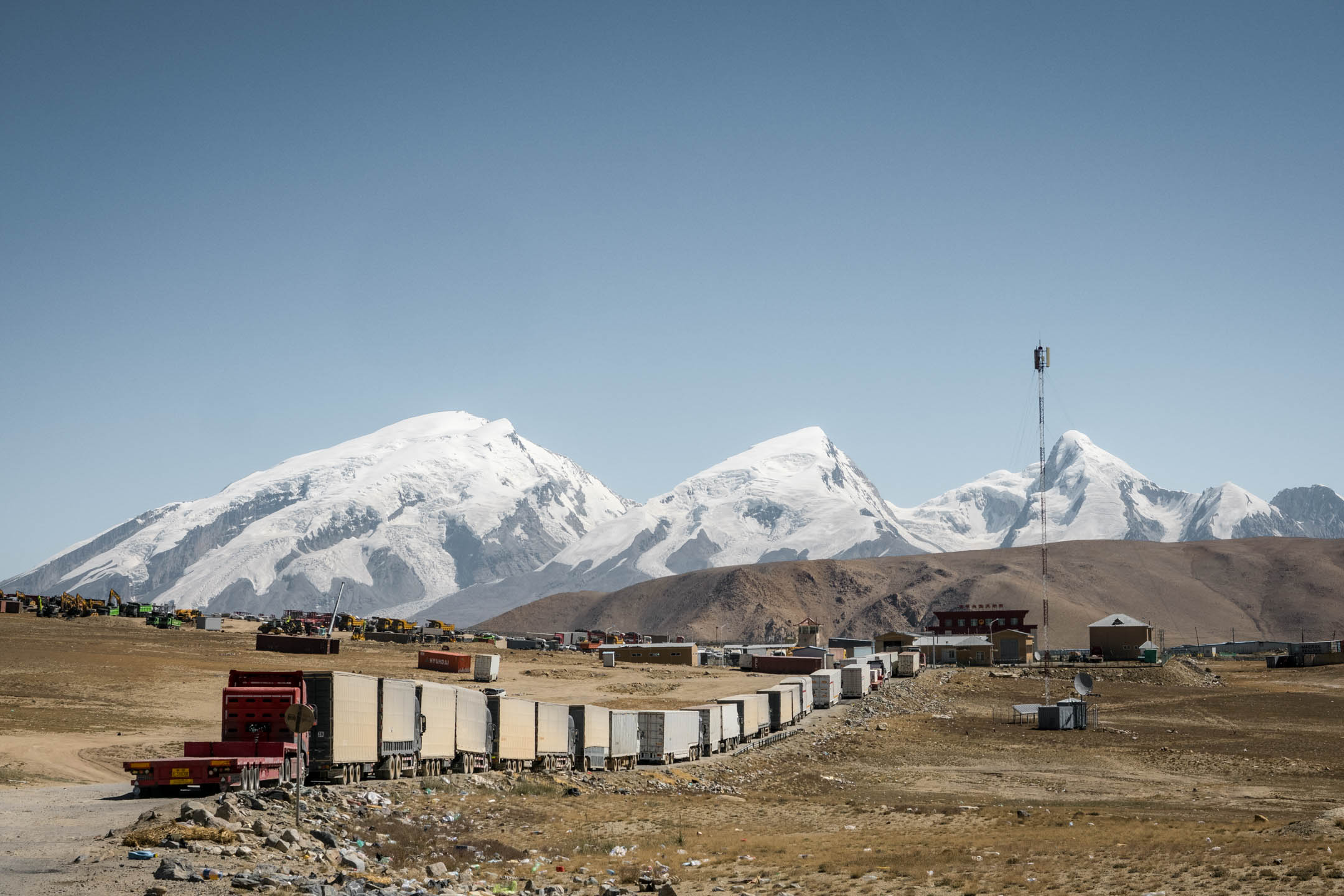
A sandstorm forced us to look for shelter to pitch the tent. It wasn’t the most idyllic campsite imaginable, but tomorrow would be another day and, if all went well, we’d enter a new country. One of the many truck drivers waiting to cross the border pointed us toward a railway wagon. A couple lived there and served (very spicy) food. There was a stove inside, and even warmth. For a while, at least, we forgot about the howling wind.
Into China
The next day, at the gates of China and surrounded by the same sandstorm that reduced visibility to almost nothing, we tackled the border formalities, pedaled to Torugart Pass (3,752 meters), and officially entered China. The procedures were exhausting, but we kept moving. Every official who checked our passports proudly shouted “visa free!” as though awarding us a prize. We nodded politely and waited patiently for our documents to be returned.

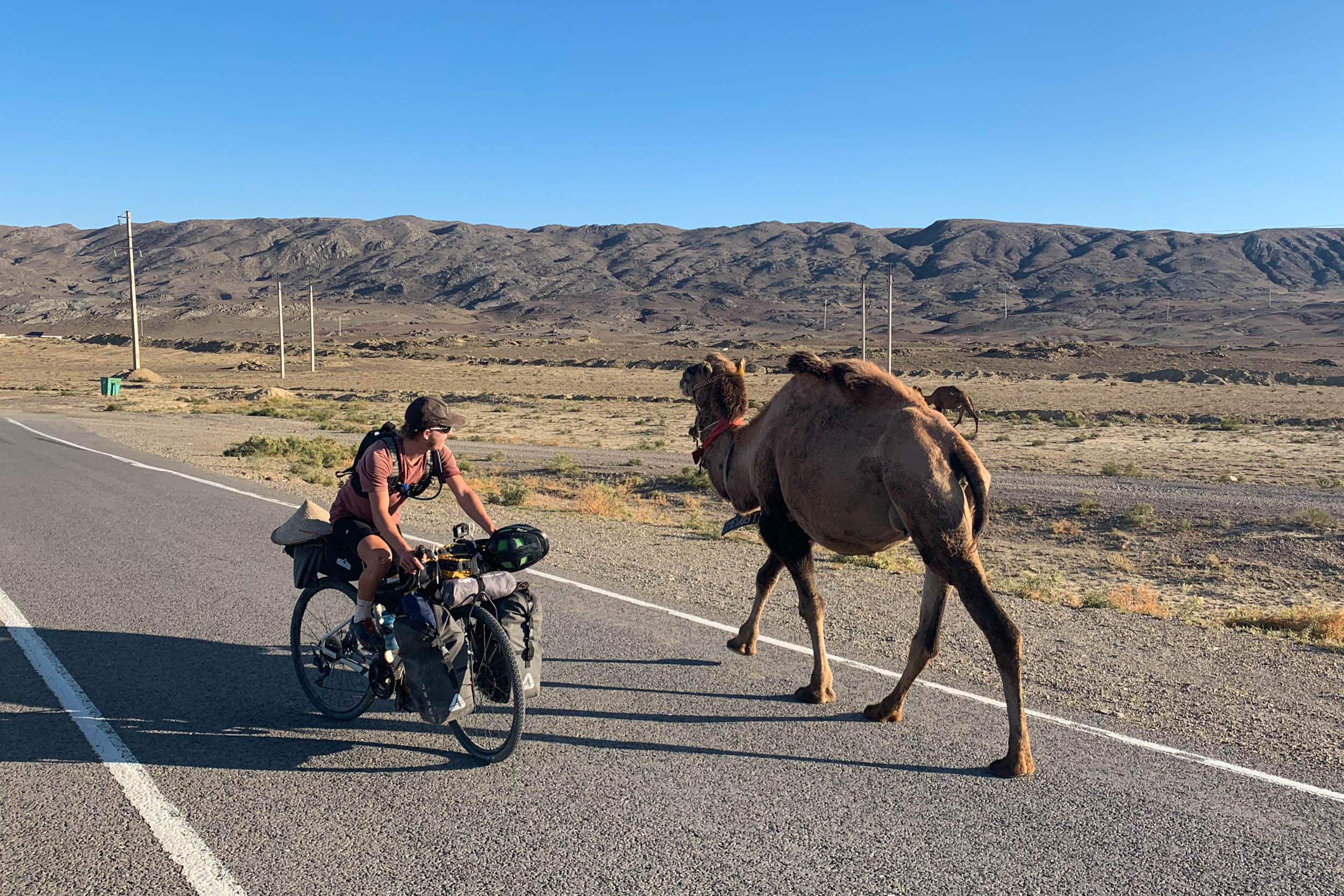
We love China, but it has always been a country of contradictions. The checkpoints are endless, just like the security cameras. Hoping to avoid traffic, we followed a brand-new road not yet open to the public. After a few kilometers, a car came skidding toward us with a police officer inside. He asked for our passports and ordered us to follow him. Apparently, we had skipped one of the countless checkpoints along the way.
Once our passports had been inspected, we continued toward Kashgar. Since we were passing by, we decided to stop at the office to arrange paperwork for crossing into Tajikistan. We took a number and immediately realized the place was pure chaos. People were shouting, pushing, arguing. It was a shame we couldn’t record it (or fully understand what was happening), but it was better entertainment than any tourist attraction. Three hours later, the office closed and sent everyone home. We had to go back.



The next morning, Sunday, the office opened at 10:30 a.m., and by 9, we were already there. We noticed a Chinese couple walking toward the entrance too. Suddenly, the woman, handbag and sun umbrella in hand, looked at us and started sprinting as if her life depended on it. They wanted to arrive first. We looked at each other and found ourselves in an improvised 100-meter race. We had to play by their rules!
At first, only five people were waiting. Slowly, the line grew longer, and people began trying to cut in. When the doors opened, we calmly took our numbers. Yet somehow, the family behind us marched up to the police officer holding number one. How? They had asked the security guard whether the grandmother could go inside to use the bathroom. The old lady casually slipped over to the machine and grabbed the first ticket. Everyone started yelling, including the police officer. He looked completely overwhelmed. The computers weren’t even switched on yet, and things were already as chaotic as the day before.
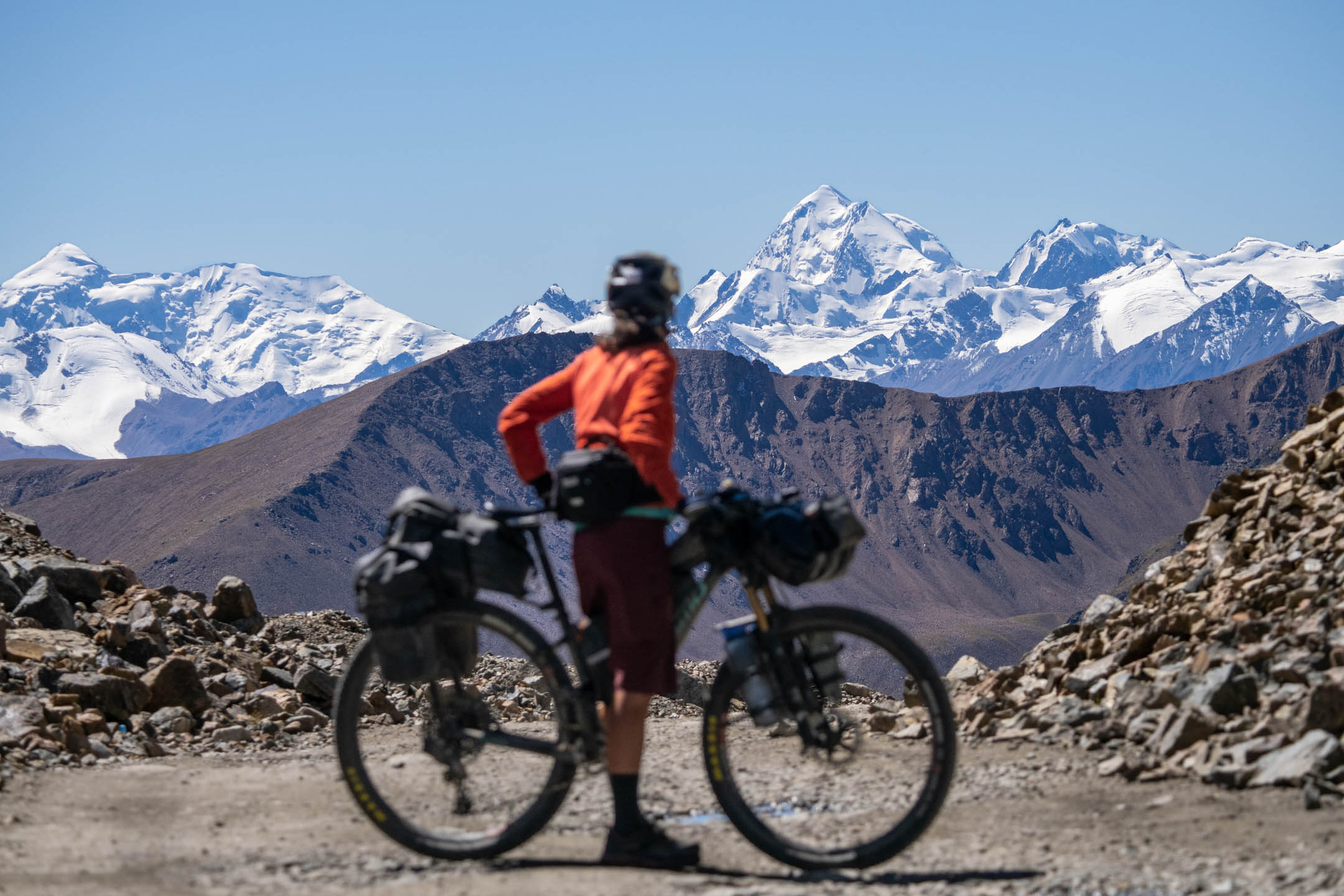
Luckily, we held numbers 9 and 10. Then a guy appeared with number 7. How? Where had he come from? We guessed someone had sold him their place. One Chinese woman shouted loudly, but one of the officers shouted even louder. For us, unable to understand much of the language, it was incredibly stressful and, at the same time, strangely theatrical. Finally, after more than two hours, sweaty and exhausted, we got the precious documents.
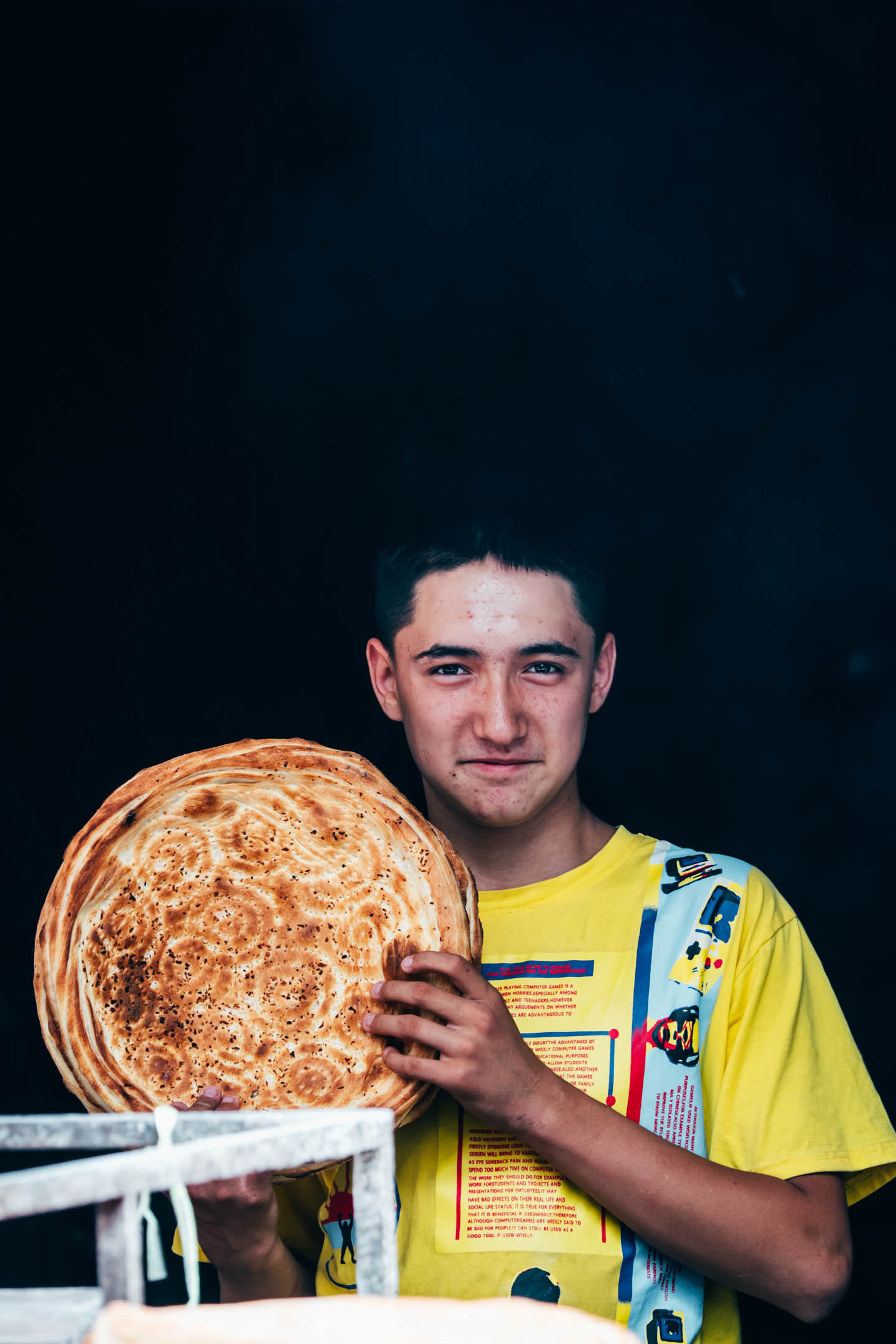
To celebrate, we treated ourselves to a proper lunch. At the restaurant, we met a Chinese doctor who spoke a little English. He told us stories about Kashgar and offered us traditional tea and some delicious figs. That’s China, too!
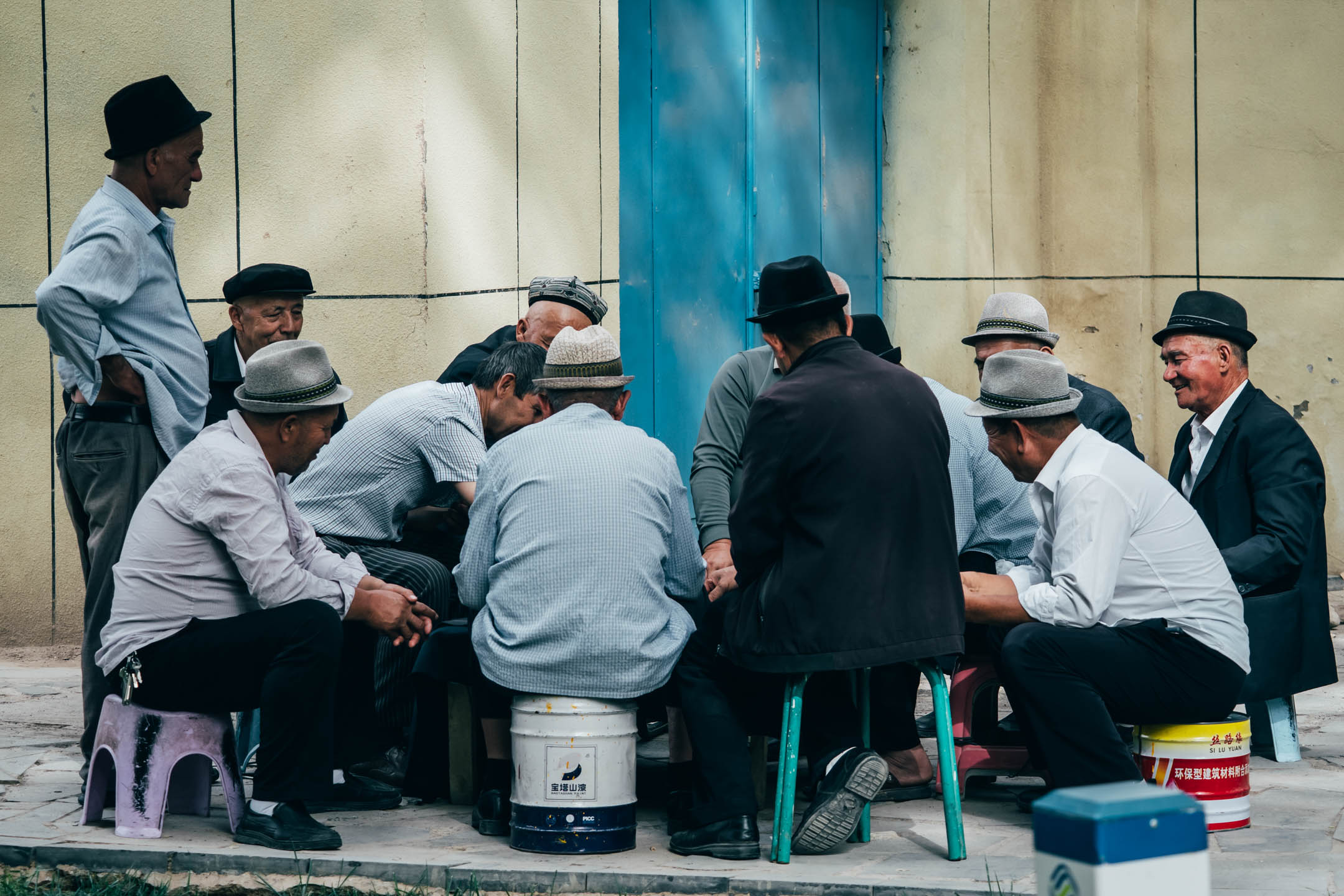
The following day I asked Ricard if he had noticed we were being followed. For kilometers, a white car had stayed behind us. Soon it became obvious that it was an unmarked police car. After 30 kilometers, we asked through the tinted window, using Google Translate, “Why are you following us?” The officer, surprised, replied that he was “waiting for someone.” We had caught him. Not long after, though, another car appeared.
Across Tajikistan
Eventually, we left behind China’s obsessive control and reached Qolma Pass, which leads into Tajikistan. What a place! The road toward Murghab, the first village, was destroyed, but despite being above 4,000 meters, we could finally breathe again. Perhaps we were breathing freedom. From Murghab, we headed toward Zorkul Lake. A few days crossing a lonely and wild landscape where the only people we encountered were two Russian motorcyclists who had fallen into the river. Not a good place to get soaked.
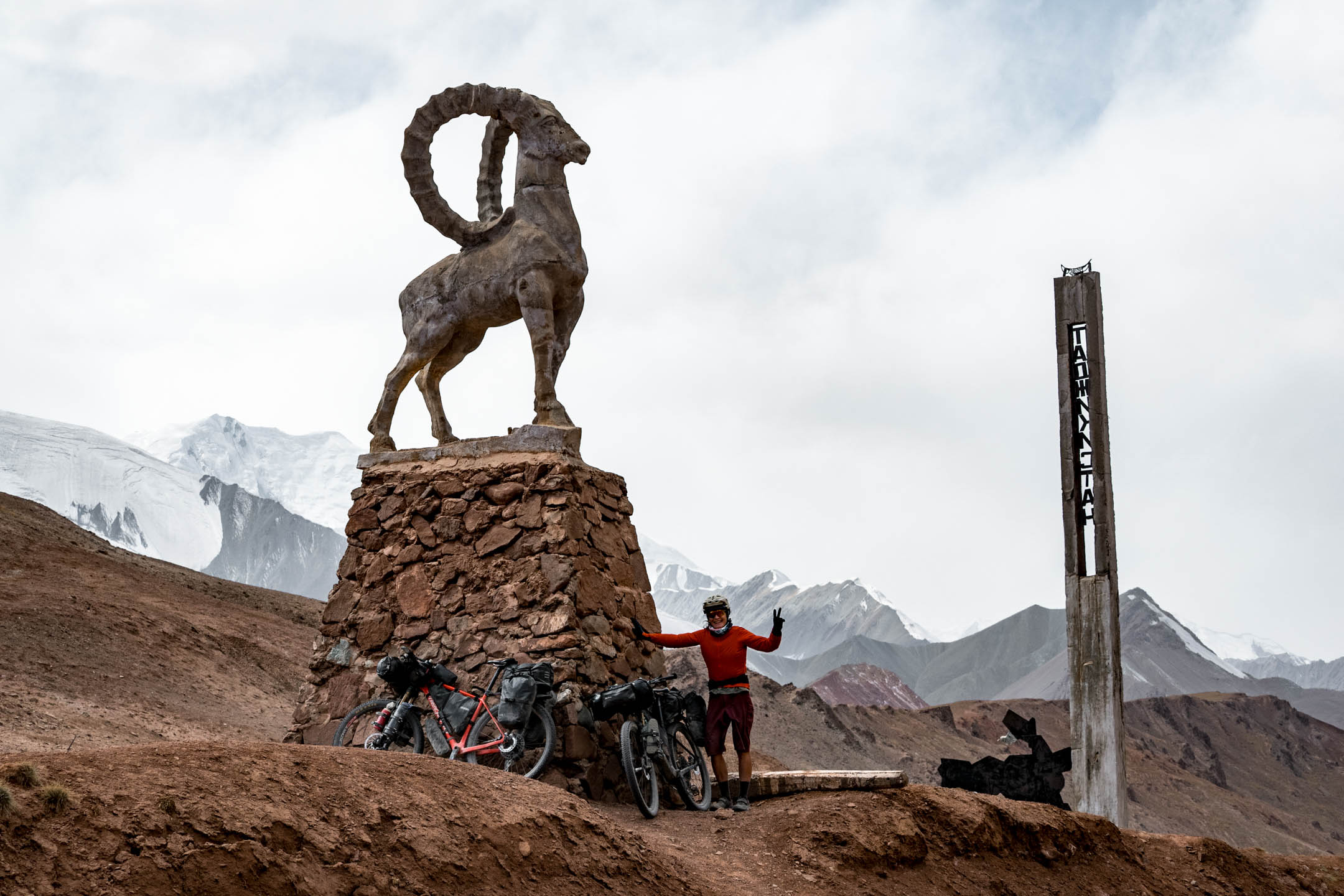
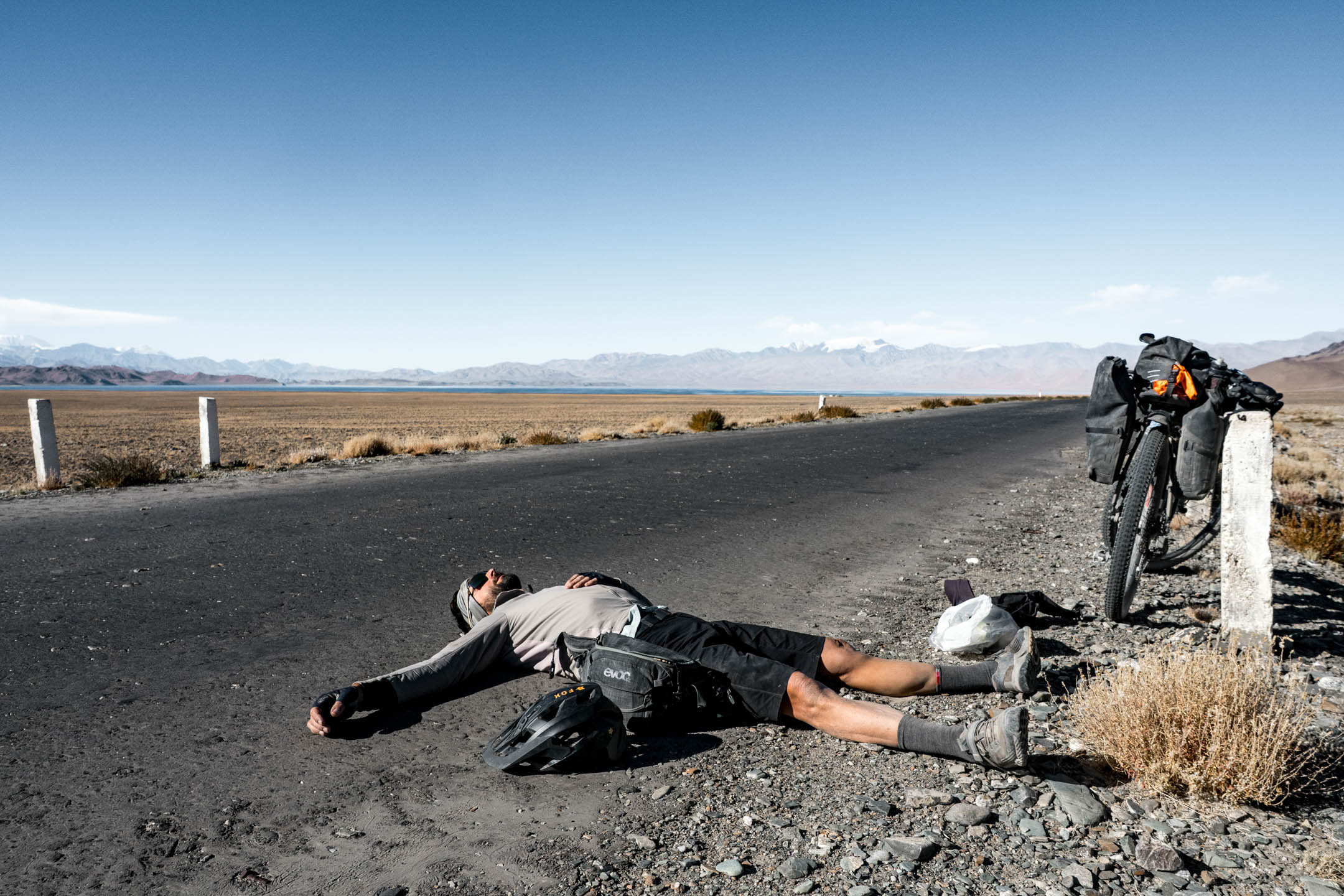
This natural reserve, bordering Afghanistan, offered extraordinary scenery. Few families live there, and we were lucky enough to be invited by one of them for afternoon tea and conversation, within the limits of our shared languages. Classic Tajik hospitality.
We left the remote Zorkul Reserve behind and continued through the Pamir highlands toward the legendary Shakhdara Valley. This time, the “magnificent four” marched together in perfect formation: headwind, sandy tracks filled with rocks and corrugation, half-empty stomachs, and 4,000 meters of elevation. We would somehow get through it.
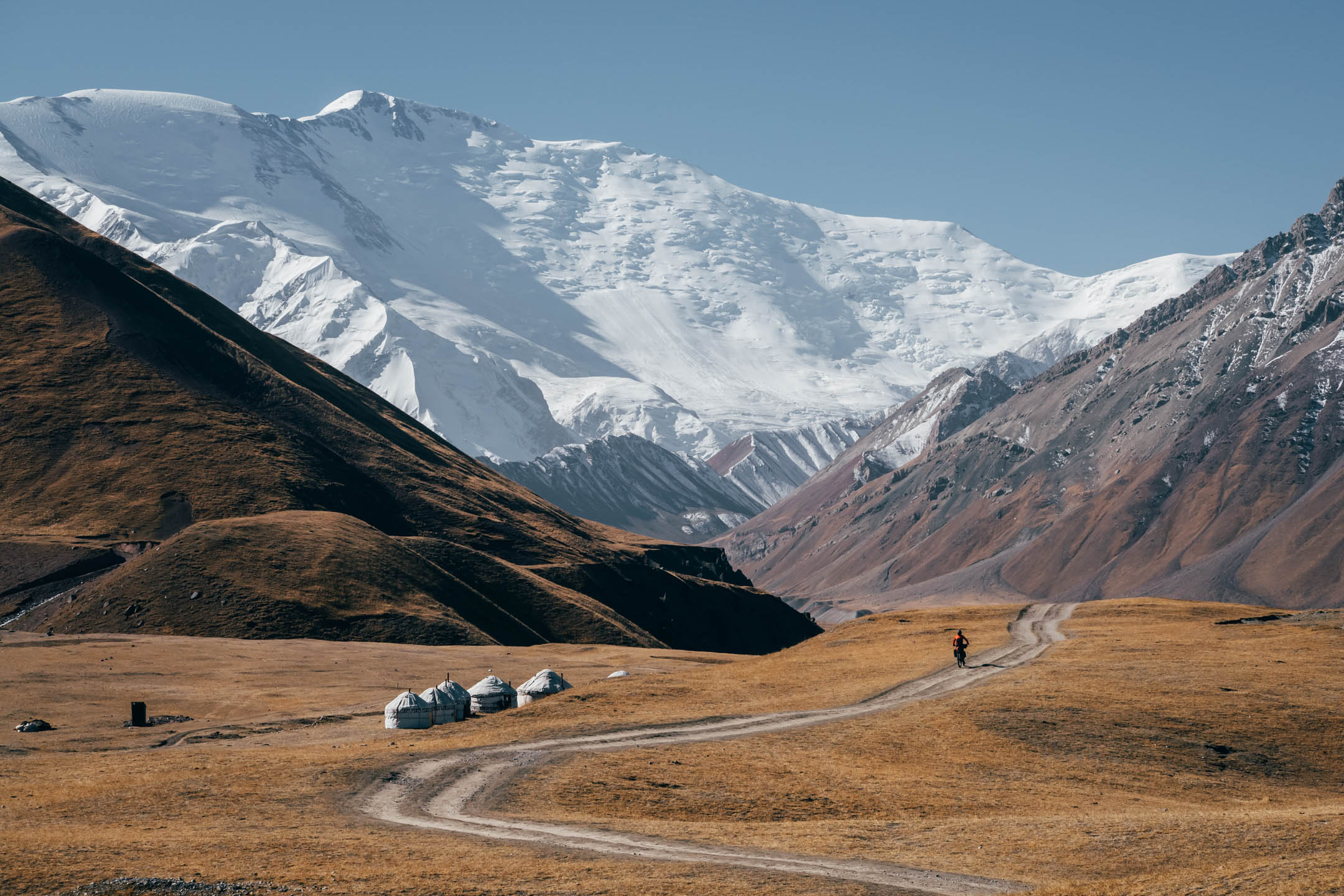
Over Khargush Pass (4,340 meters), we pedaled a stretch of the legendary Pamir Highway before turning off toward the steep and wild Maysara Pass (4,100 meters). The reward awaited on the far side: an immense lonely plateau opened before us, framed on the horizon by two giants, Karl Marx Peak and Engels Peak.
Further down, in the wider and gentler Shakhdara Valley, villagers were cutting grass to prepare winter fodder for their livestock. Everyone greeted us as we passed; children shouted “hello!” enthusiastically.
At last, we found a tiny shop beside a school. We searched for some shade to eat when a couple of men gestured for us to wait. They brought us tea, bread, and apricot jam. We felt the hardship of the journey dissolve, as if the mountains themselves were giving us permission to rest. We felt that familiar desire to offer something in return, as though our gratitude alone could never be enough. It’s overwhelming how much such a simple, ancient gesture can mean.

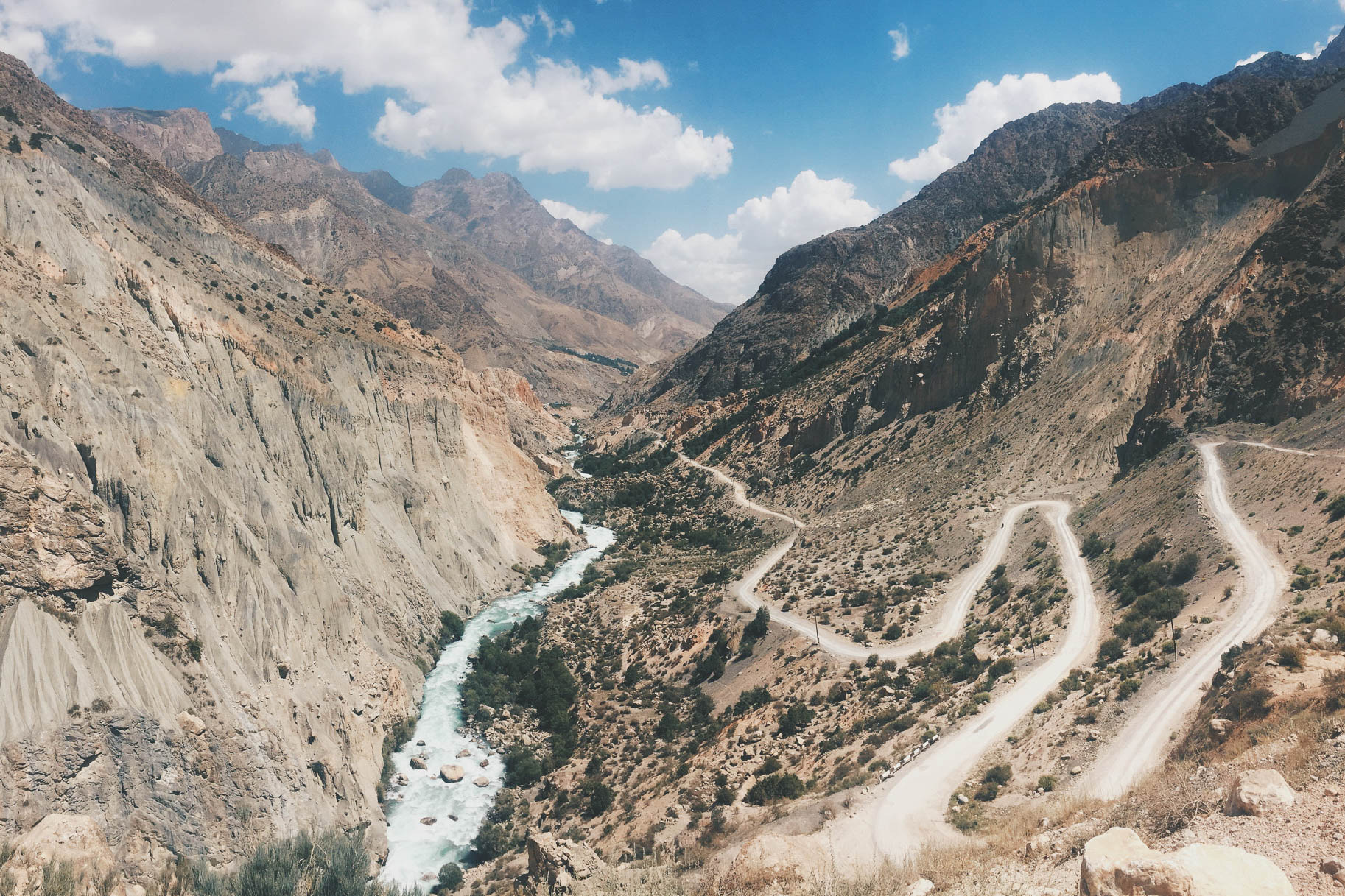
We resumed our route toward Khorog, our next stop, with vivid memories of 2012 still fresh in our minds. Thirteen years ago, we stood at the same crossroads, in the village of Rushan. Back then, we chose the Wakhan Valley; today, it would be the Bartang Valley, 300 kilometers leading to the village of Karakul.
It was probably more remote back then, but thankfully for the valley’s inhabitants, electricity has now arrived through local hydropower, and the road is in better condition. “Only” 130 kilometers remain truly forgotten by the world.

Still, the warmth of the people remains as intense as ever. Near the village of Basid, a man invited us to eat tomatoes freshly picked from his garden. He even prepared a bag for us to take away, filled with walnuts. In Savnob, we were gifted freshly baked bread. Smiles and greetings never stopped.
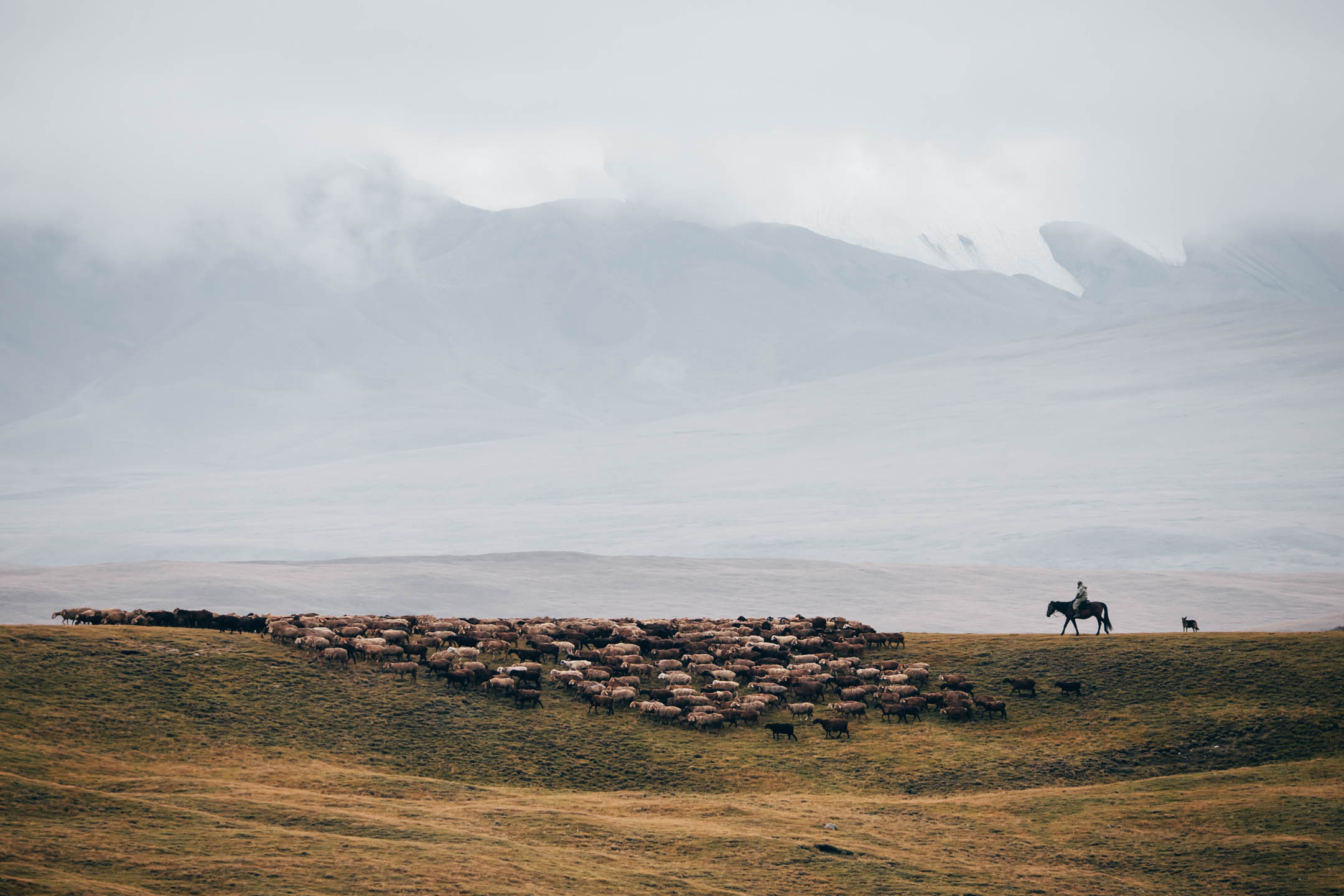
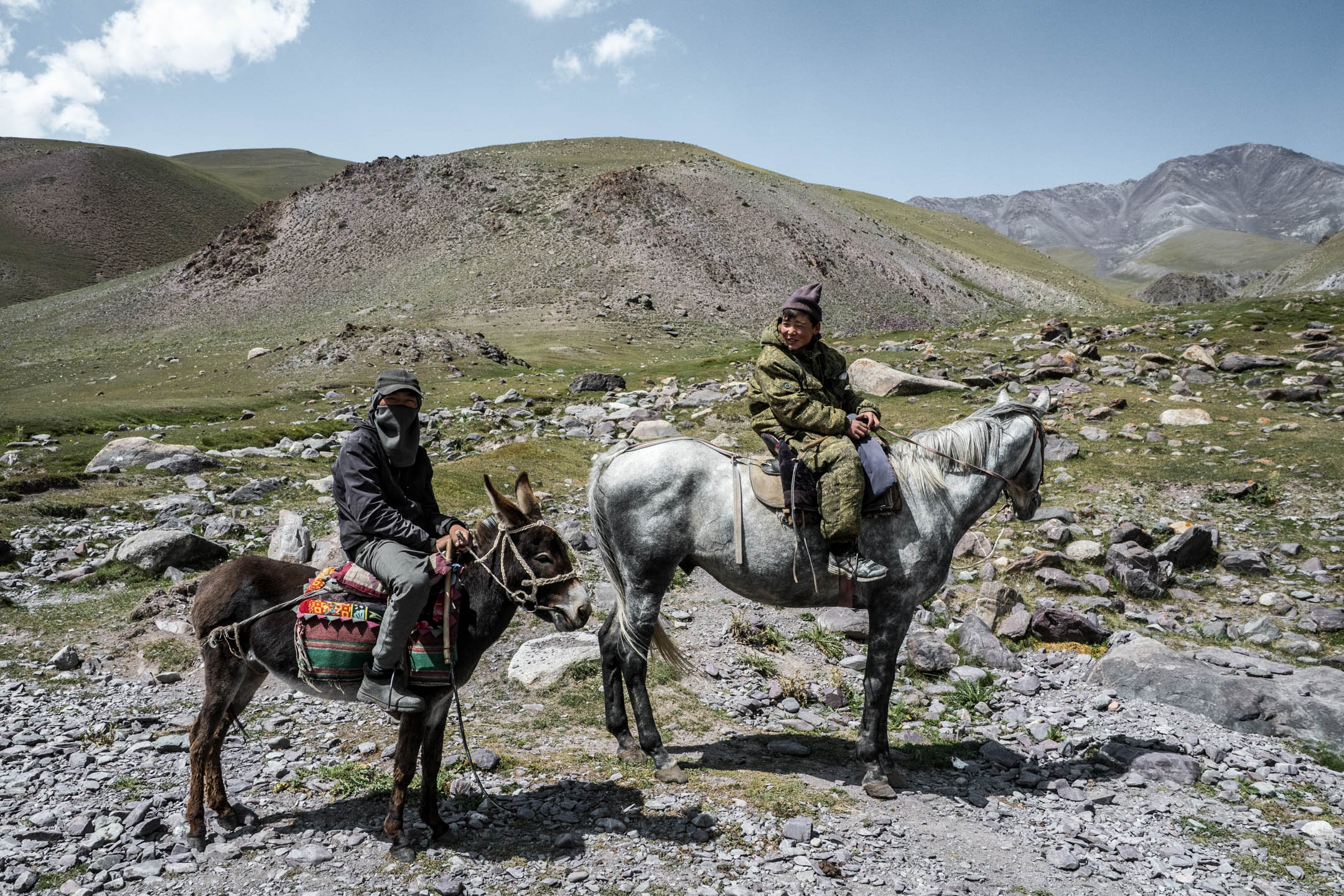
We kept climbing higher into the valley while herds of cows, sheep, and goats—accompanied by shepherds on horseback or riding donkeys—moved in the opposite direction. The first snowfall was approaching, and it was time for transhumance. It was beautiful to witness the changing season: new colors, the icy wind creeping in, and the first snow-covered peaks. The air already smelled like late autumn.

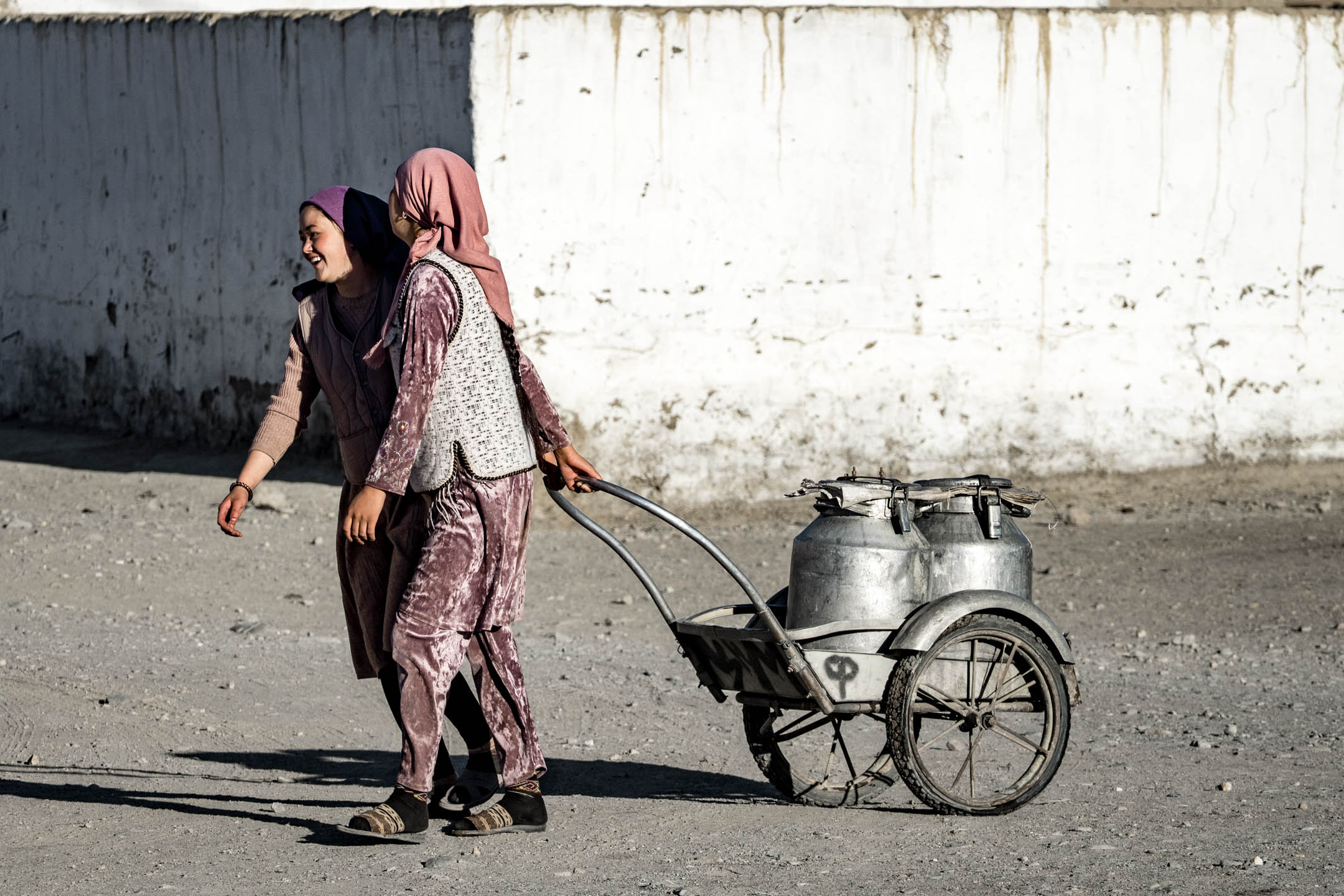
Days later, we reached Karakul. We stayed with a family of local teachers. Although they had no shower, they prepared a bucket of hot water for us in a heated room so we could wash. Karakul, at 3,900 meters, is a place where life is harsh, winters are long, and when the sun goes down, smoke begins rising from every house. That improvised “shower” comforted me deeply. Listening in the distance to prayers echoing from the old mosque, the occasional bark of a dog, and the few children still playing outside, I realized we had finally cycled through the Bartang Valley, a place we’d talked about so often back home.
Return to Kyrgyzstan
Kyzyl-Art Pass, at 4,282 meters, brought us back into Kyrgyzstan. From the top, we took one last look back, as if thanking every single kilometer we had pedaled through Tajik lands before dropping down the mountain. The track was easy and the border formalities quick, but a weather front was moving in, and the cold was biting hard.

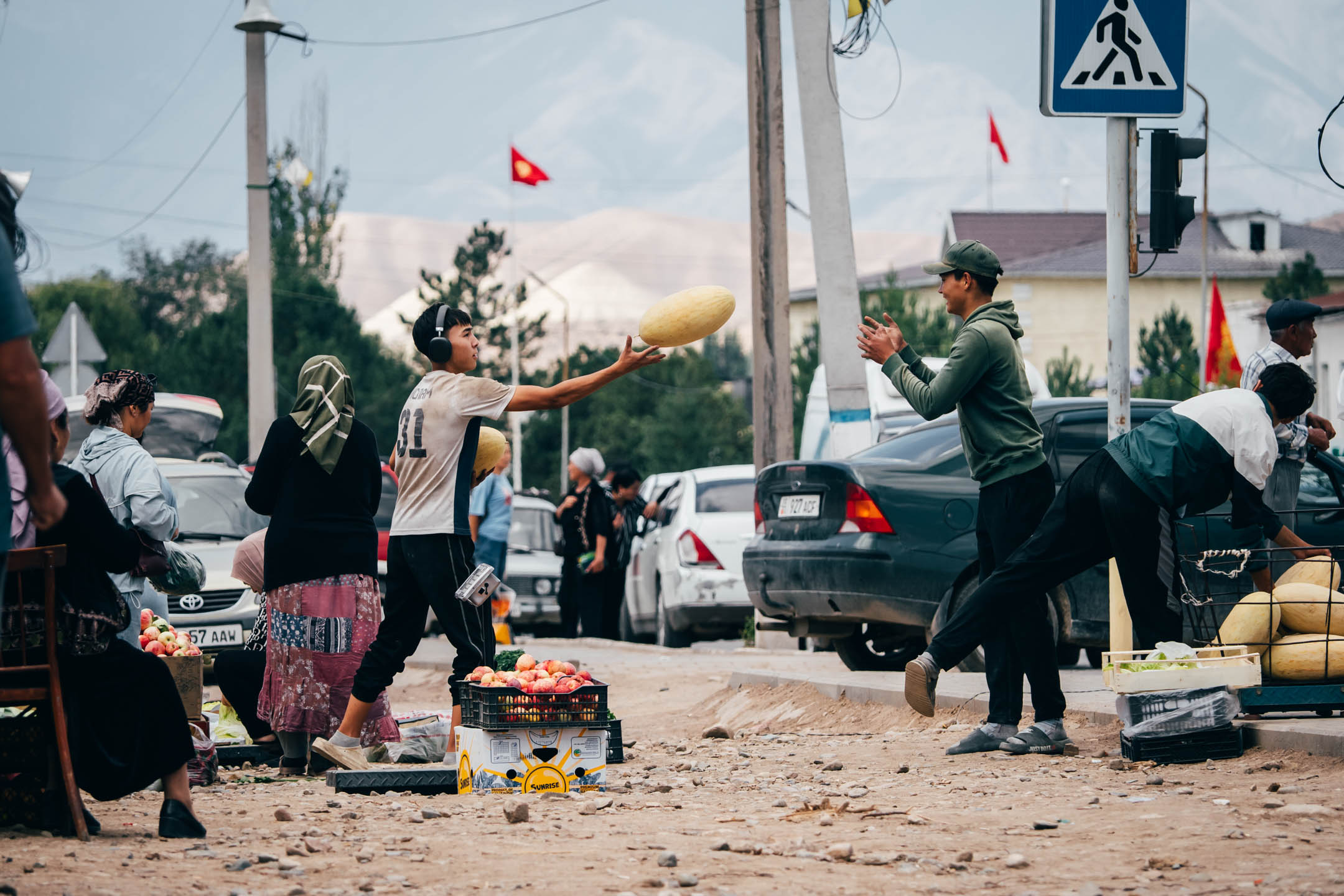
Halfway down, we found an abandoned train wagon where we improvised a meal and brewed some coffee. We warmed up a little before happily arriving in the village of Sary-Tash, where we planned to rest for a day, wash clothes, exchange money, and buy supplies for the next stage. We wandered slowly through the dusty streets of the village and discovered it was slaughter day. One woman washed intestines in the river, men cooked lamb in huge steaming cauldrons, and farther away lay the dismembered body of a horse.
The following day, well-rested, we detoured from our route to visit Lenin Peak Base Camp. Hardly anyone remained there; it was the end of the season, and the atmosphere felt both melancholic and decadent.
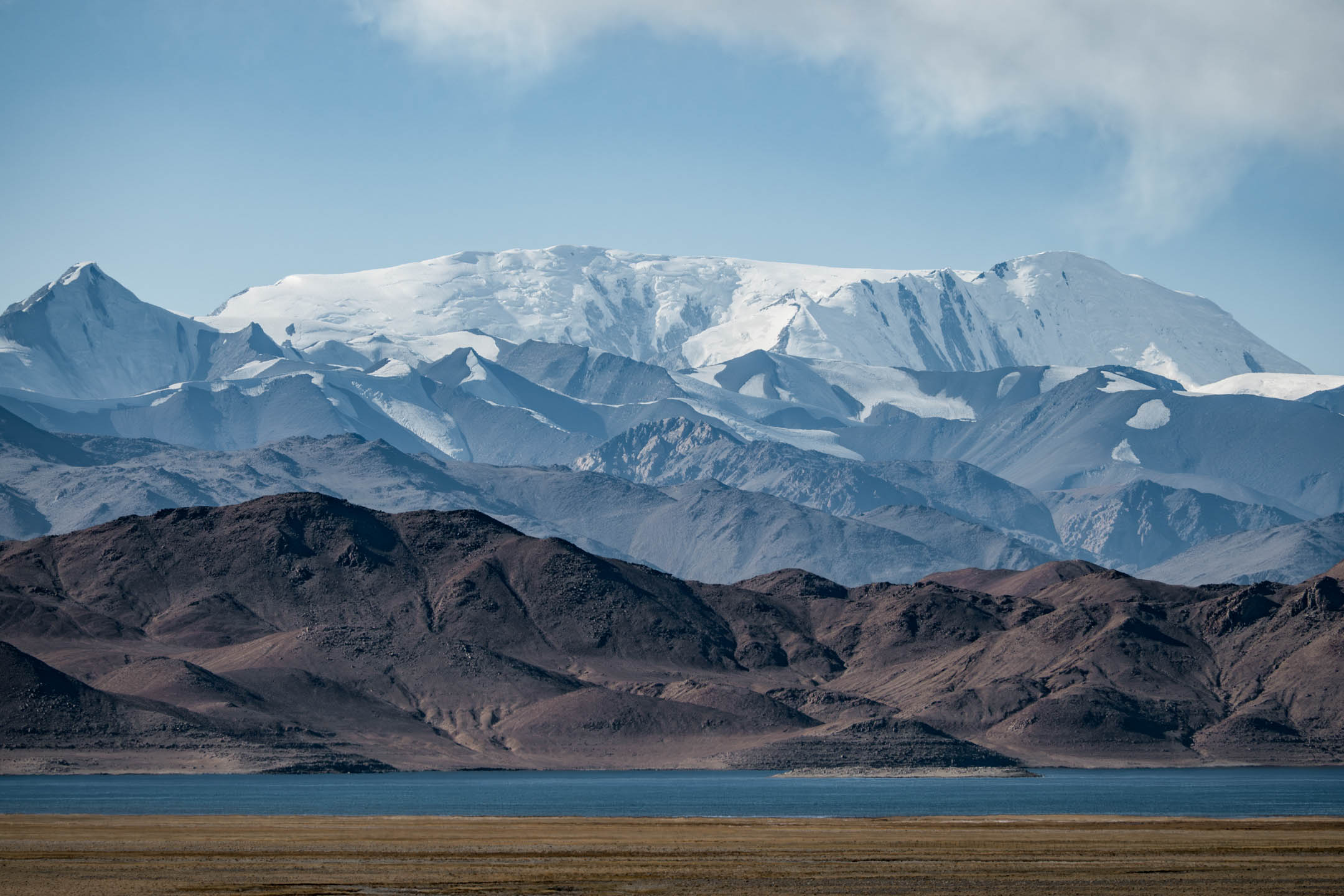

What we didn’t realize was that something had started to wear Ricard down from the inside. His pedals no longer turned with energy. He was exhausted and had to stop at every climb to recover. Somehow, we finally reached base camp, where we spent another freezing night beneath the shadow of mighty Lenin Peak, hoping the mountain’s magic would restore his strength.
Thankfully, this time, a good night’s rest was enough. We could let ourselves be absorbed by the silence and beauty of that privileged place. We kept moving to complete the circle. We crossed the Surmatash Nature Reserve and Kojdzuly Pass at 3,800 meters. There were no yurts, no livestock, and no cars, only a few metal structures left behind as reminders of summer life.
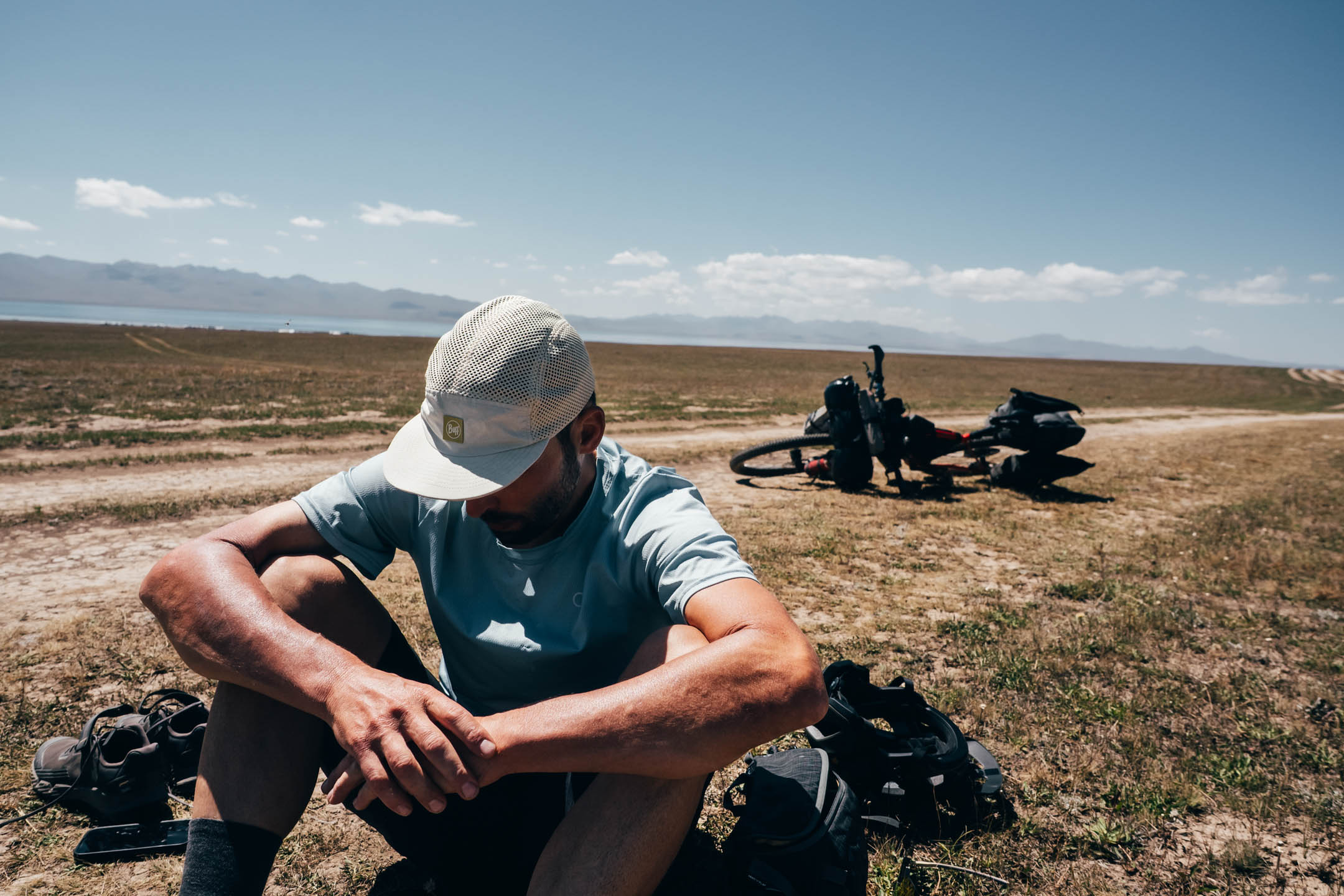
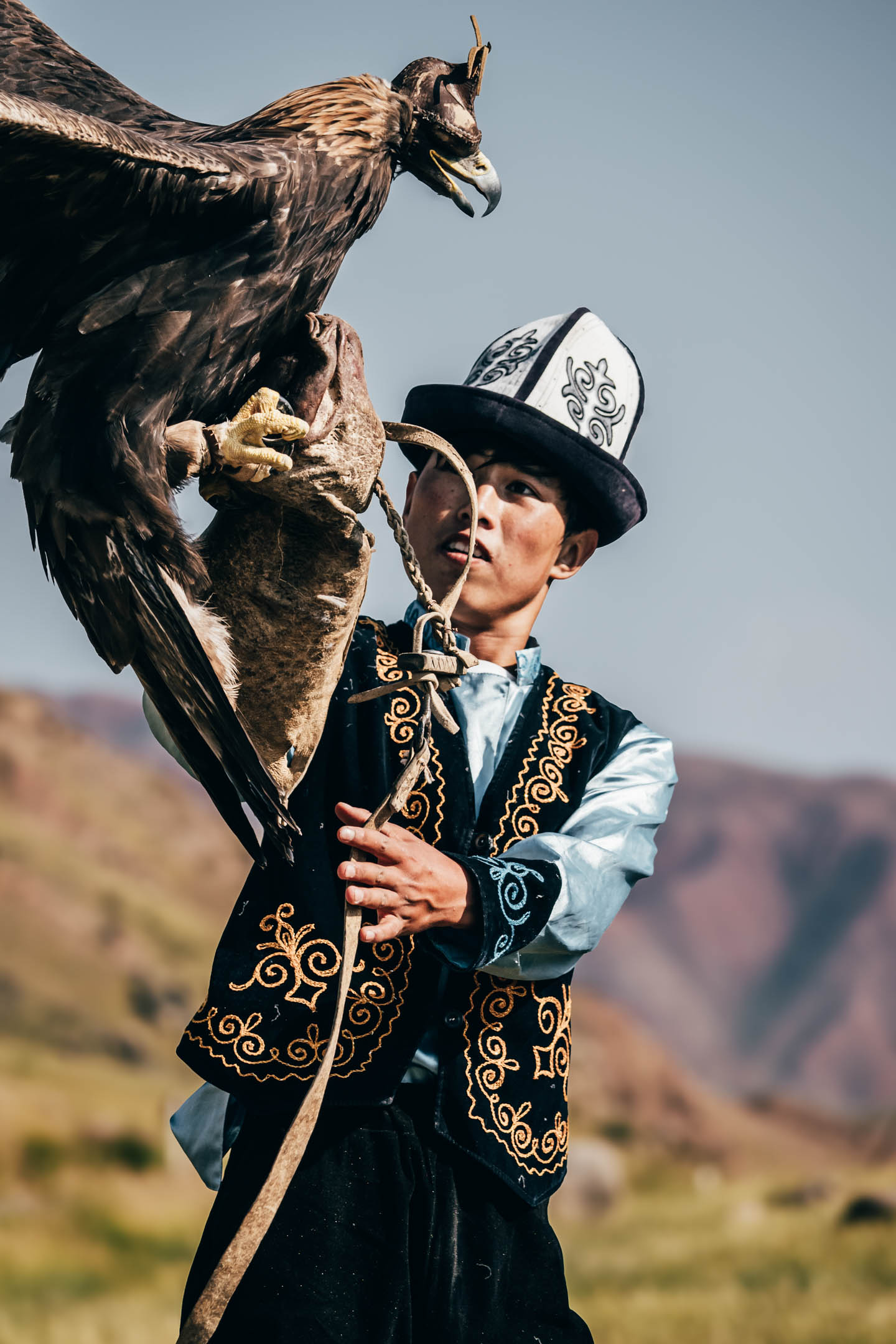
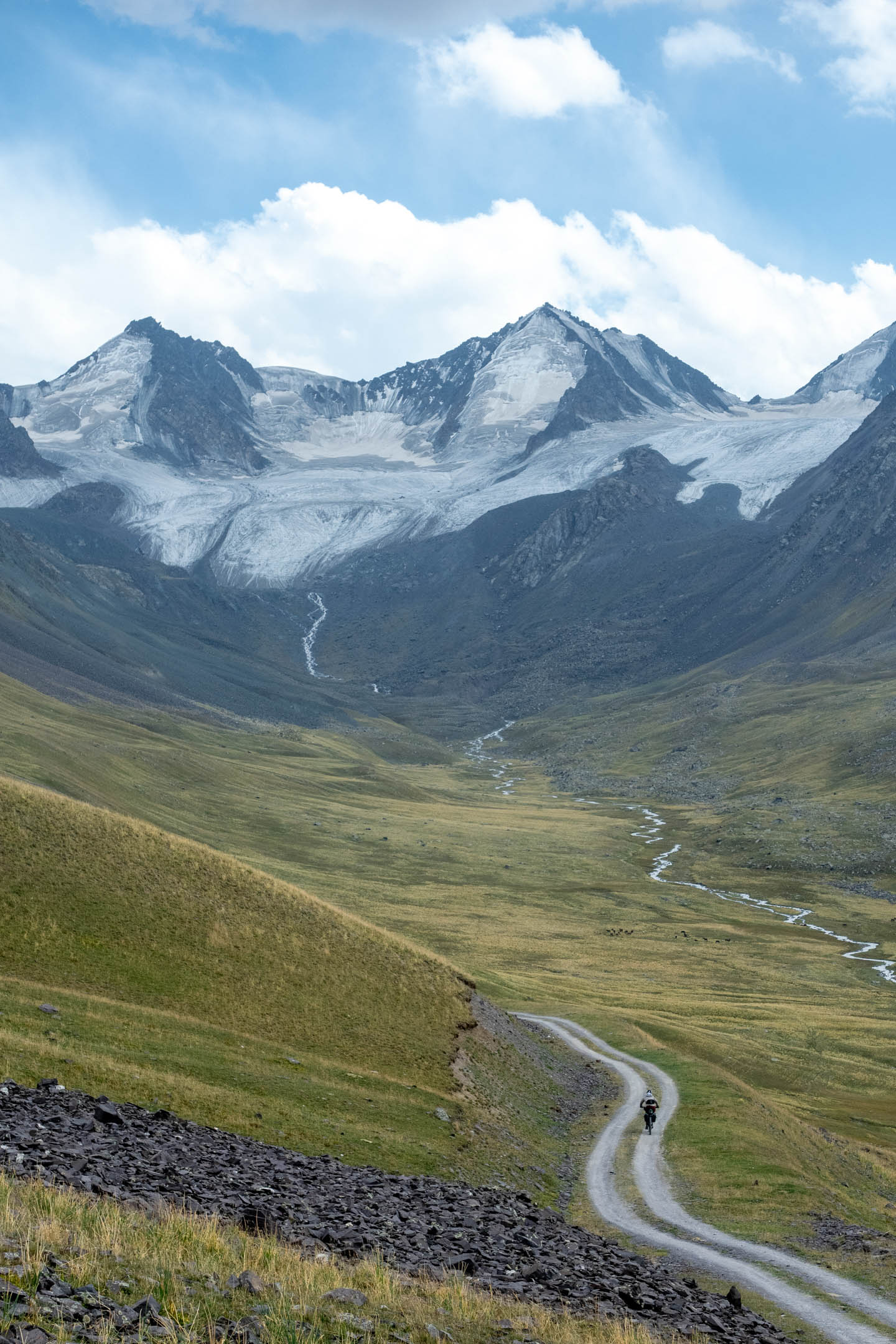
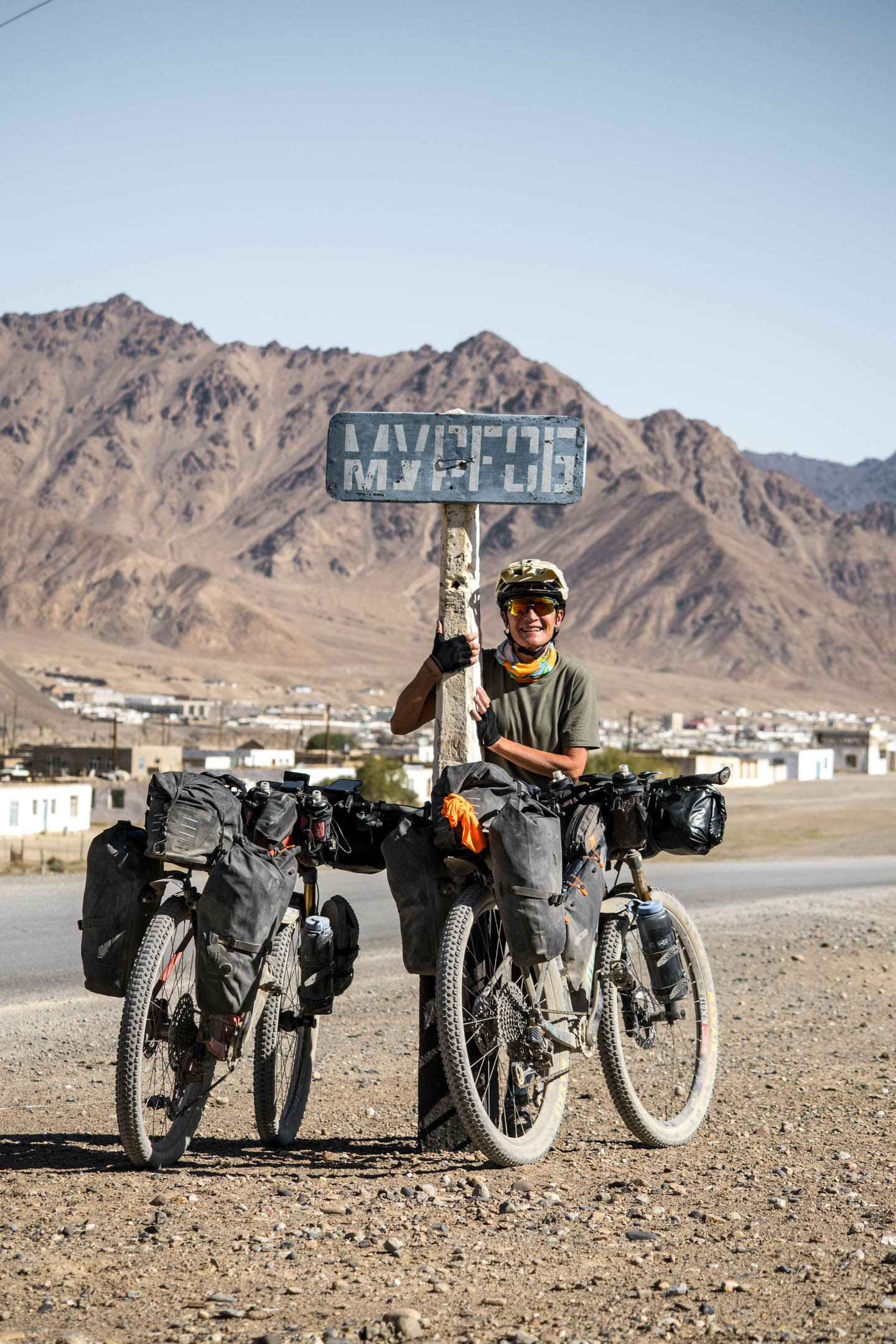
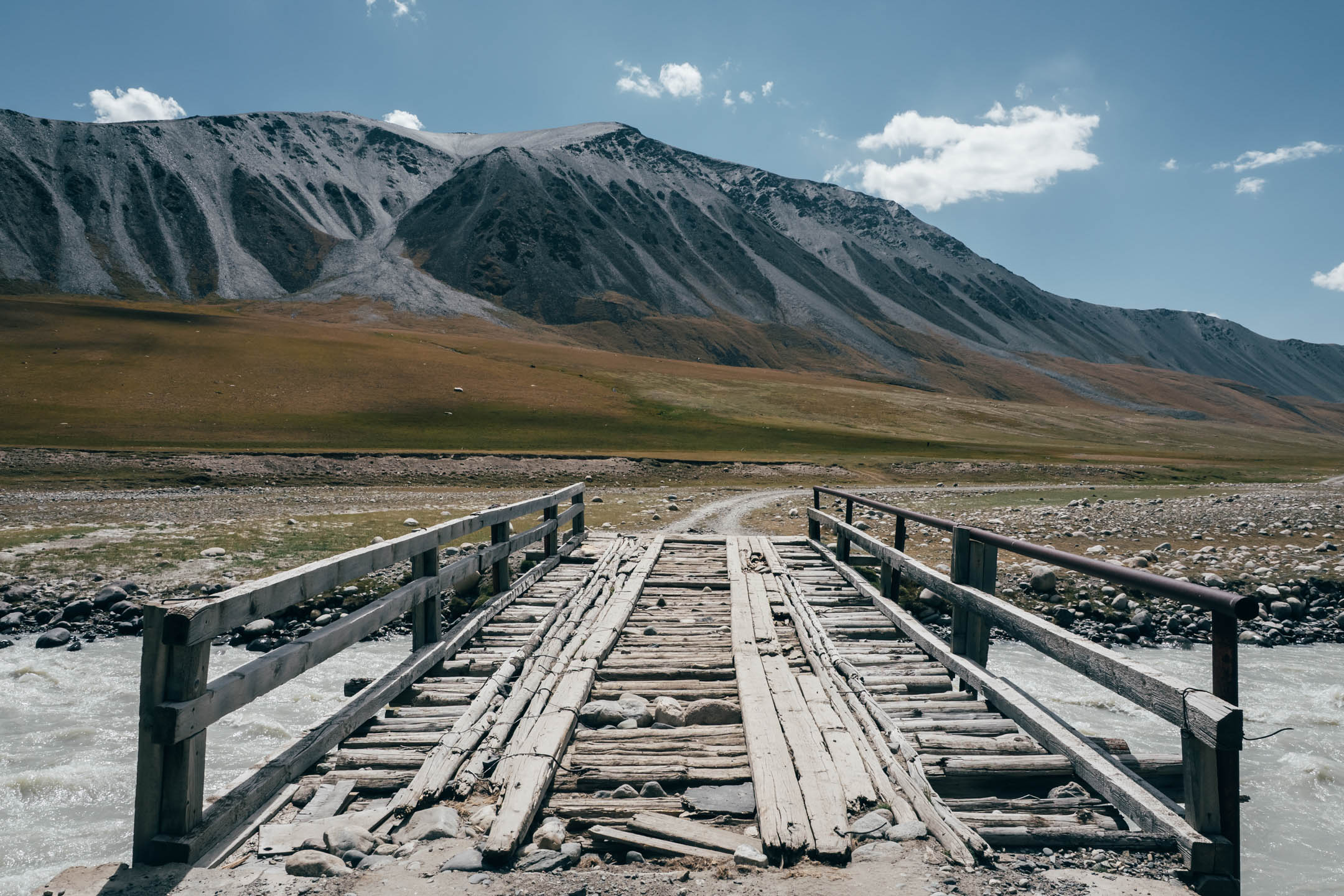
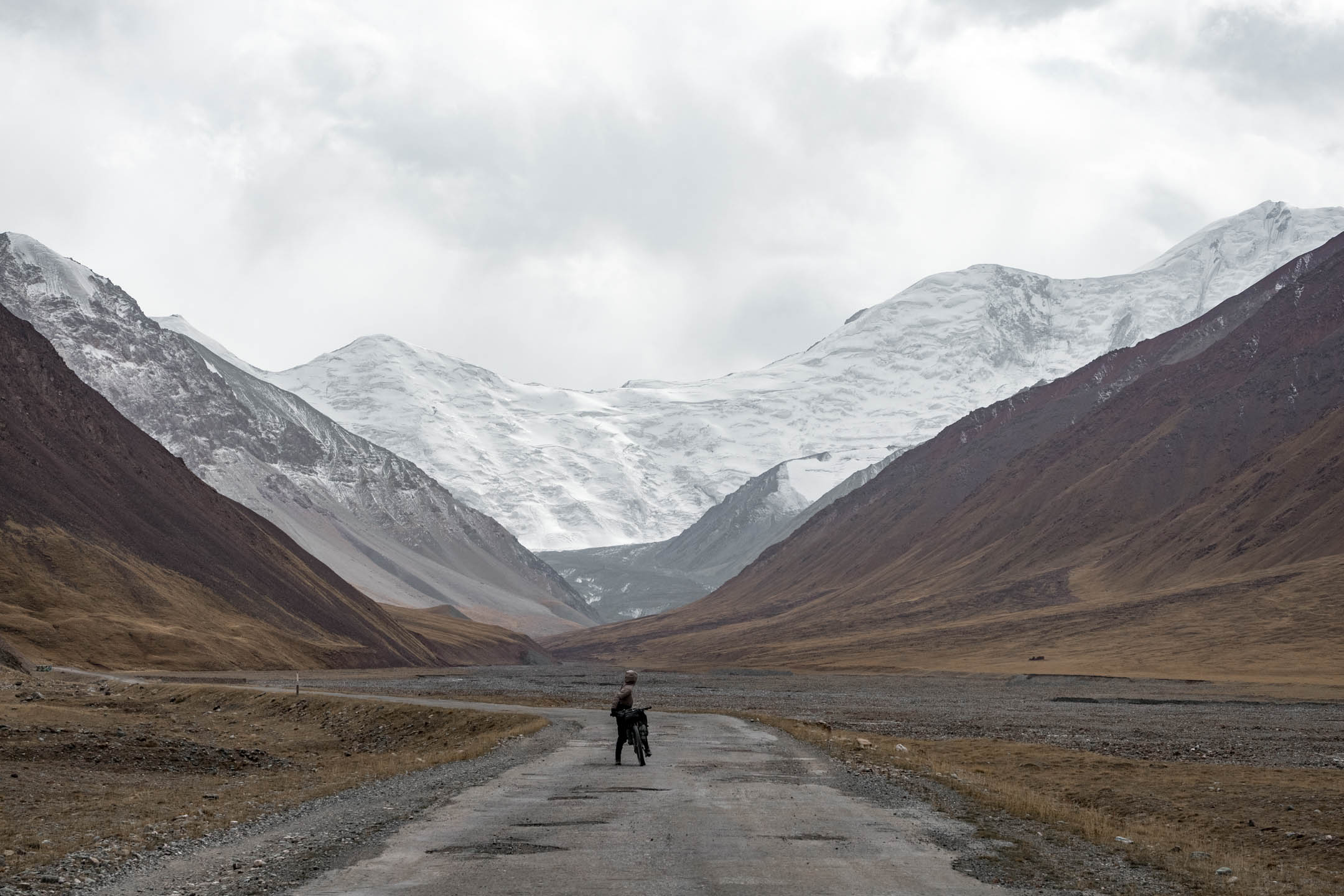
It felt as though the entire landscape belonged to us: endless Pamir views, mountains painted in oranges and ochres, rivers rushing below, and occasional small bridges that saved us from getting our feet wet. A true wonder.
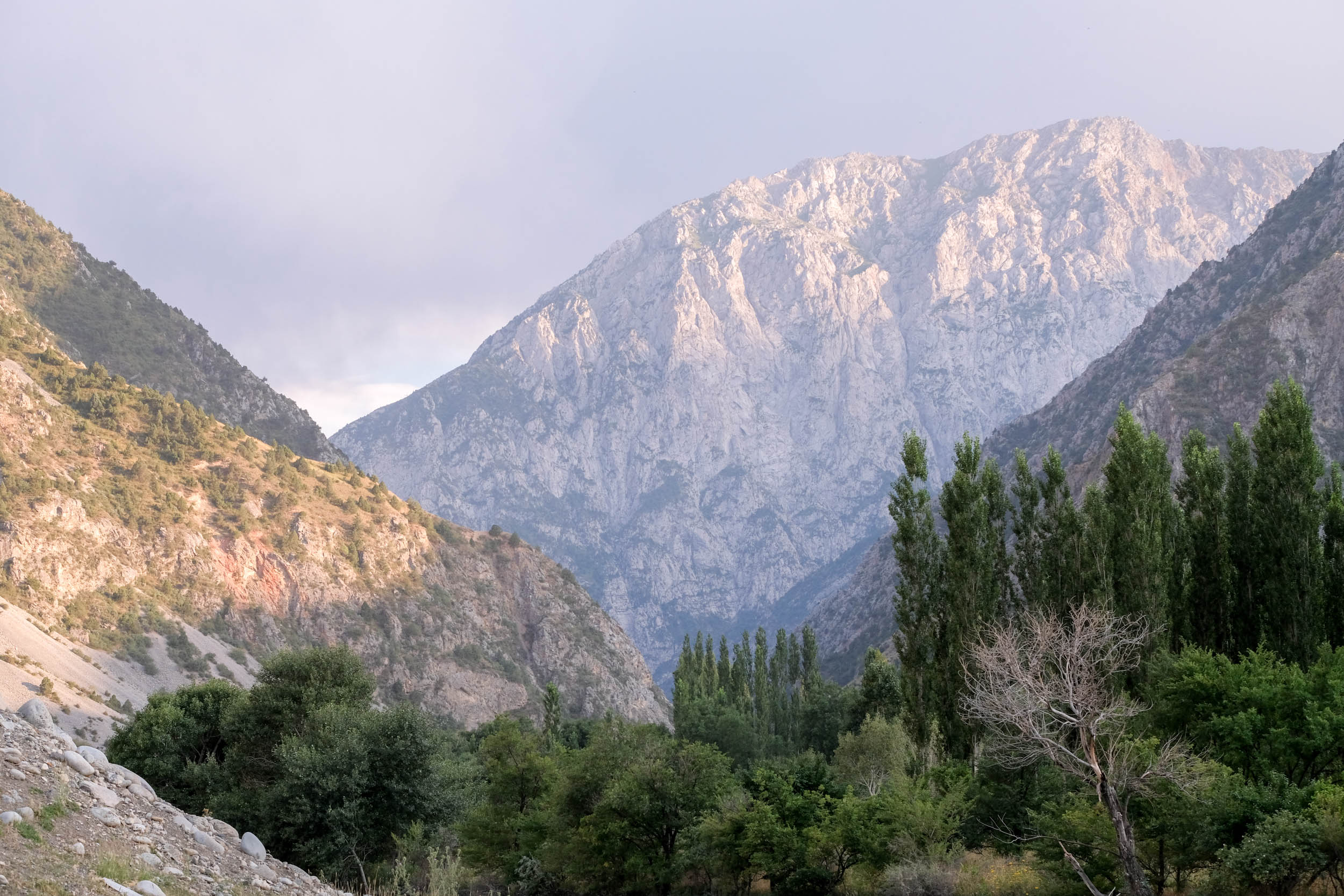
Then, suddenly, we lost elevation dramatically and entered a valley that felt more alive, warmer, and more deeply Muslim. A valley running parallel to the legendary Fergana Valley, close to Uzbekistan. And somehow, within just a few kilometers, our panniers were full again: a jeep driver gave us bread; the barber handed us juice, biscuits, and ice cream; the barber’s friend offered yogurt; and the shopkeeper gave us sausages. Anonymous people whose names we’ll never know, yet who made us feel welcome. Good people who smoothed the road ahead and reminded us why we travel.
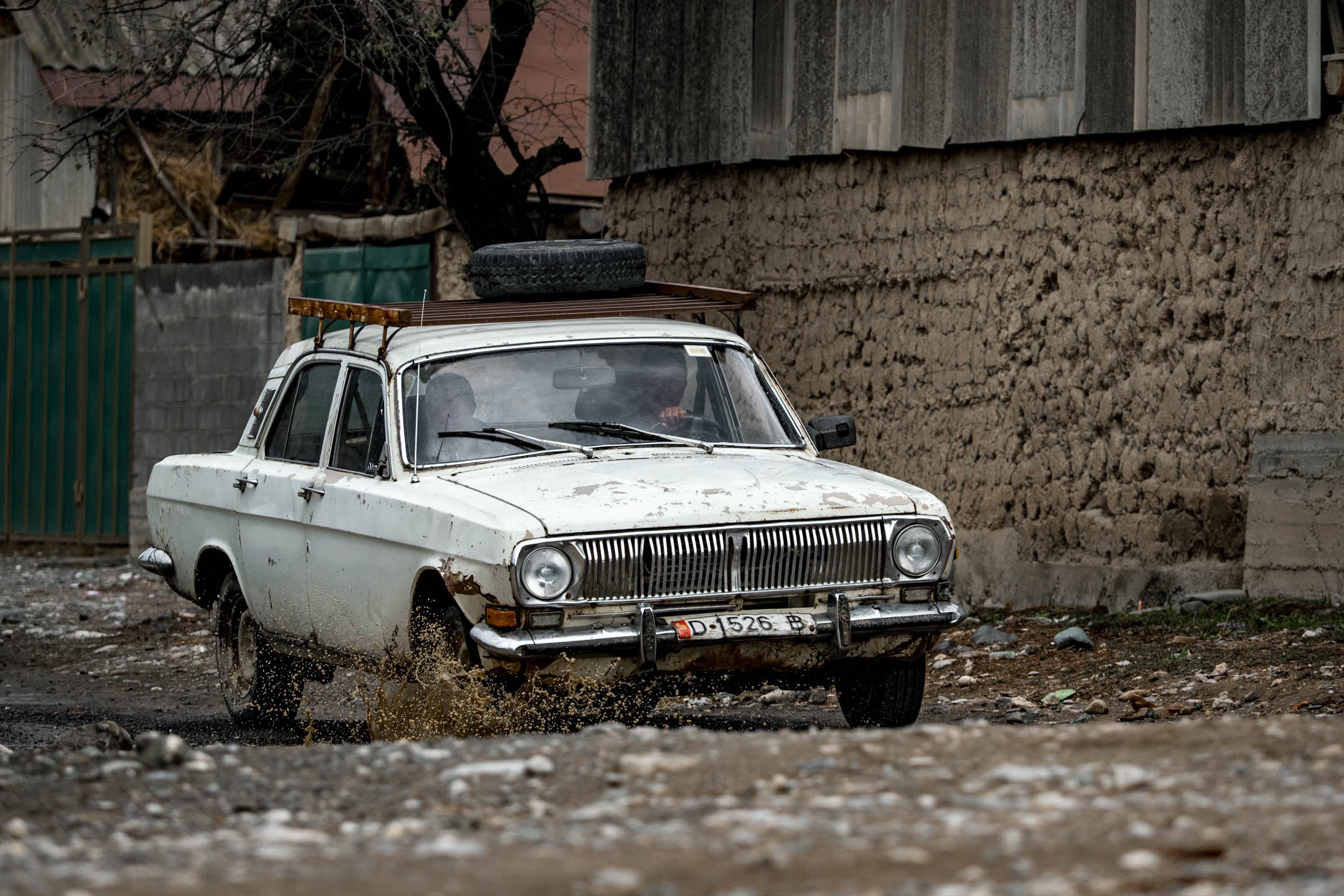
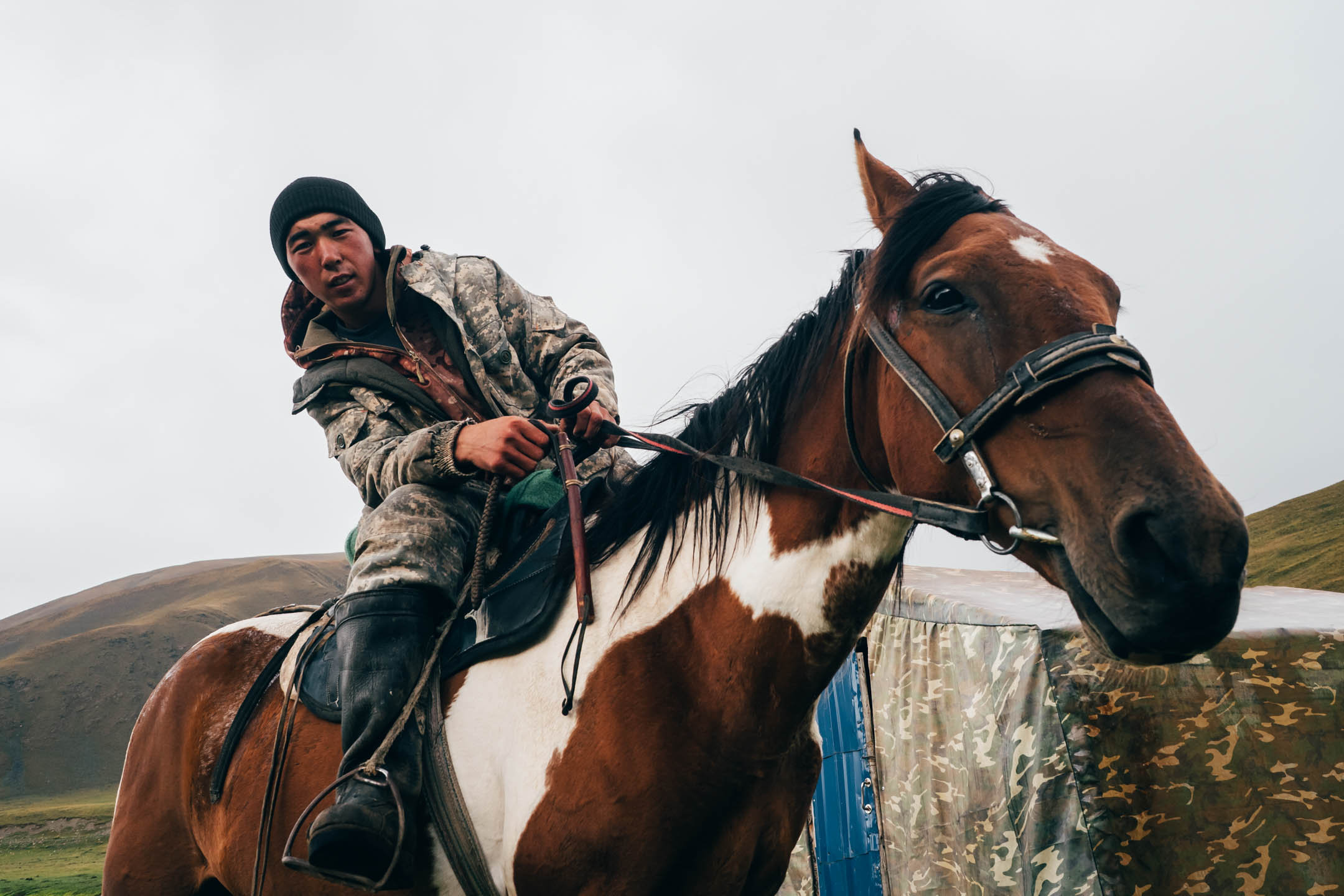
Once again, we witnessed the wisdom of the shepherds. They had foreseen winter days before we did, even while we still thought we were living in a paradise of flowers. An unexpected rainstorm kept us stranded in the tiny village of Kyzyl-Ungkur. For an entire day, we watched life pass by while occasionally lifting our eyes toward the mountains, trying to guess what weather awaited us up there. The walnut trees wept; yellow leaves and ripe walnuts fell to the ground. Children ran through puddles after a long, dry summer with not a single drop of rain. Somewhere, a stray dog hid inside a dimly lit shop.
And just as we expected, we woke to clear blue skies and mountains dusted with fresh snow. Shyldyrak Pass (3,044 meters), which we had to cross that day, was known to be difficult, and we were almost certain we’d find snow. We followed the river until the steep slopes and rocky terrain forced us off the bikes and onto our feet. We made bets about where the snowline would begin and, without being far off, we were walking through snow at 2,800 meters.
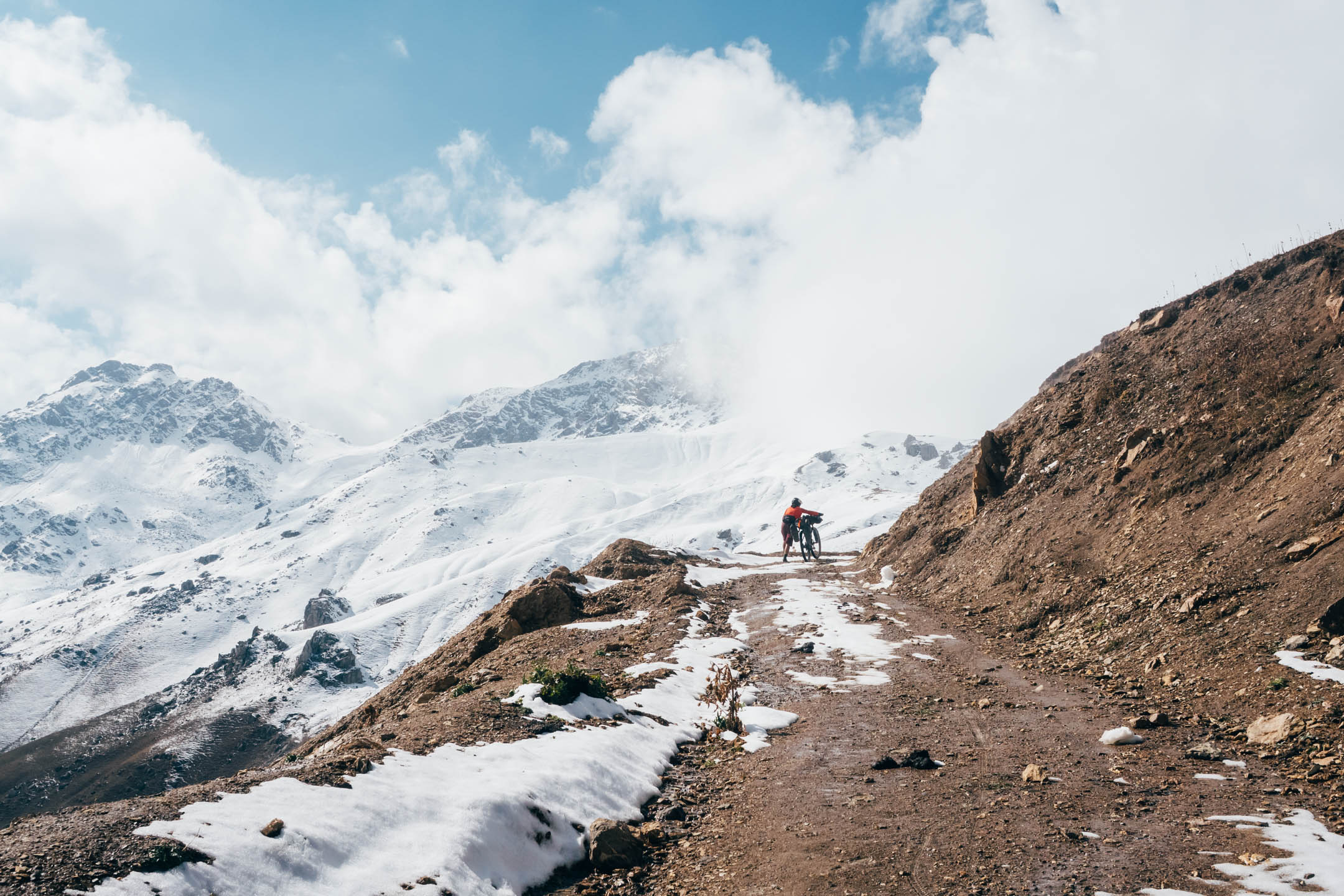
We couldn’t deny that, despite our frozen feet and not knowing how much snow lay ahead on the far side of the pass, we were mesmerized by the pure, untouched winter landscape. The descent was just as slow and exhausting. Yet hours later, camped beside the river with a small fire crackling nearby, we felt a deep calm, as if we had already arrived home.
Sometime after midnight, we heard an engine stop beside the tent, and headlights blinded us. Now what? Ricard climbed out of the tent, and suddenly three drunk men approached carrying a bottle and cups. They sat down beside us. Dead tired as we were, we had to play along. Jokes, laughter, endless chatter.
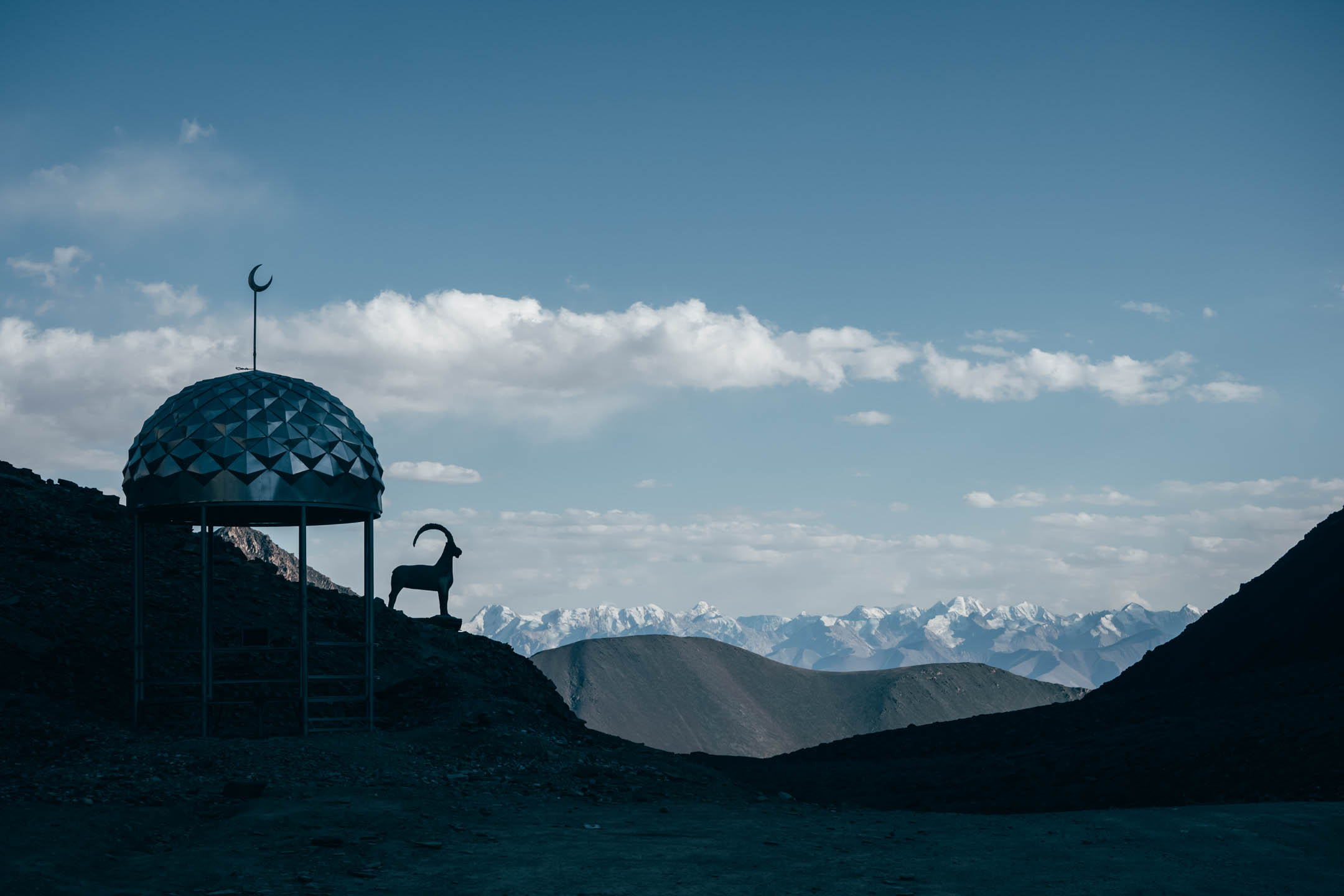

We had no idea where they had come from or where they were going, since the nearest village was hours away. Eventually, the driver (fortunately, the least drunk of the group) managed to gather them back into the car. One of them, however, refused to leave before pressing his forehead against Ricard’s.
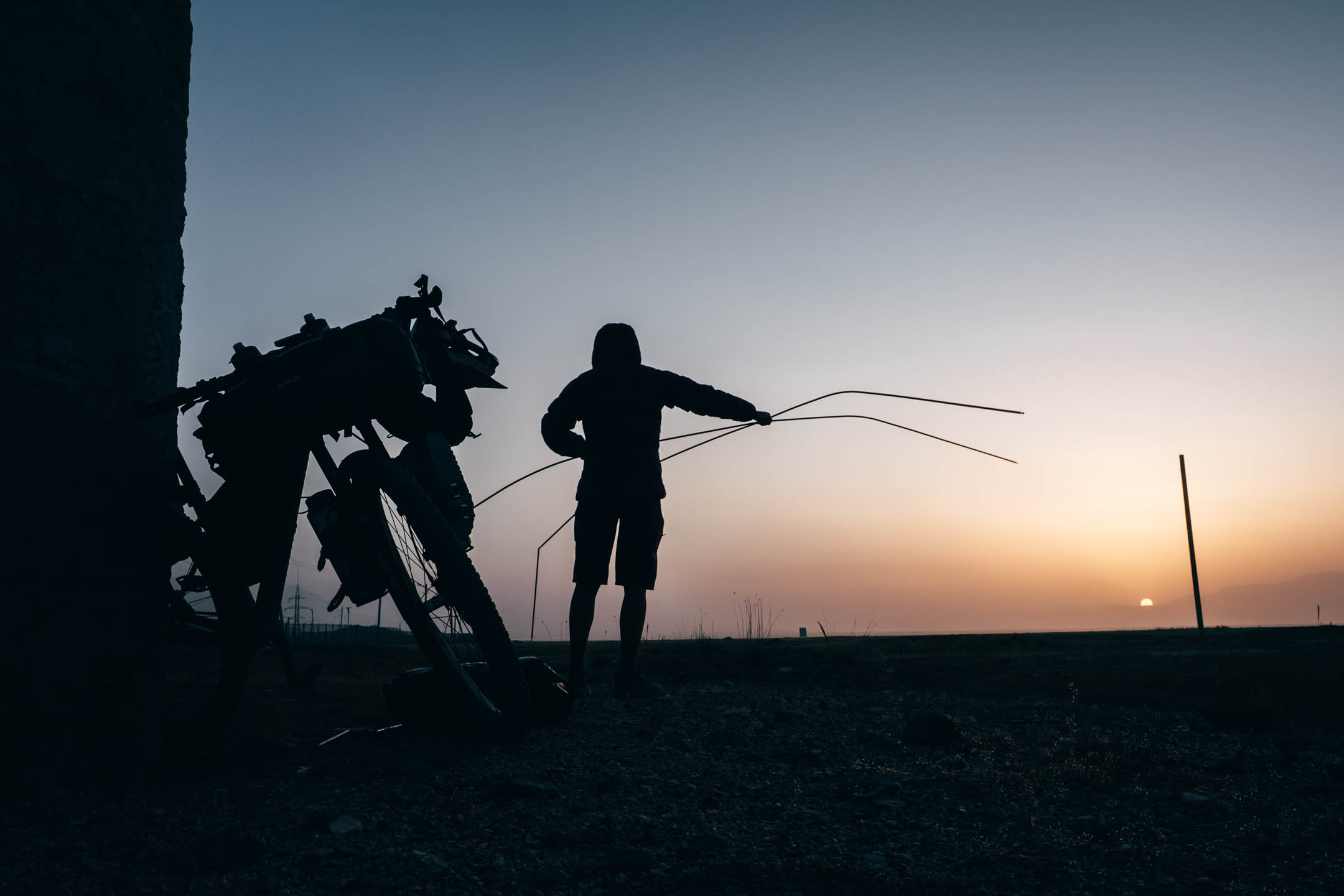
We fell asleep again, but not long after, howling wolves woke us once more. I’m not sure which beasts were worse, but exhaustion quickly carried us back into sleep. We were on the verge of closing the circle—returning to where we had started, crossing deeply rural valleys and absorbing every last moment of this beautiful autumn. The final days of pedaling and camping slowly helped us say goodbye to this intense and unforgettable journey.
The Route
Further Reading
Make sure to dig into these related articles for more info...

Please keep the conversation civil, constructive, and inclusive, or your comment will be removed.