

 Mountain Bike (MTB)
 Gravel Bike
 All-Terrain Bike (ATB)
 Fat Bike

Fenderfest in the Prignitz: Comfort, Ease, and Joy



The third Fenderfest took place in rural Germany this spring, and Rob van Driel traveled from the Netherlands to attend the special camping edition. In this report, he shares impressions from the event, musings on bicycles and how we relate to them, and a photo gallery from the ride through the serene countryside. Find it all here…
PUBLISHED Jul 6, 2026
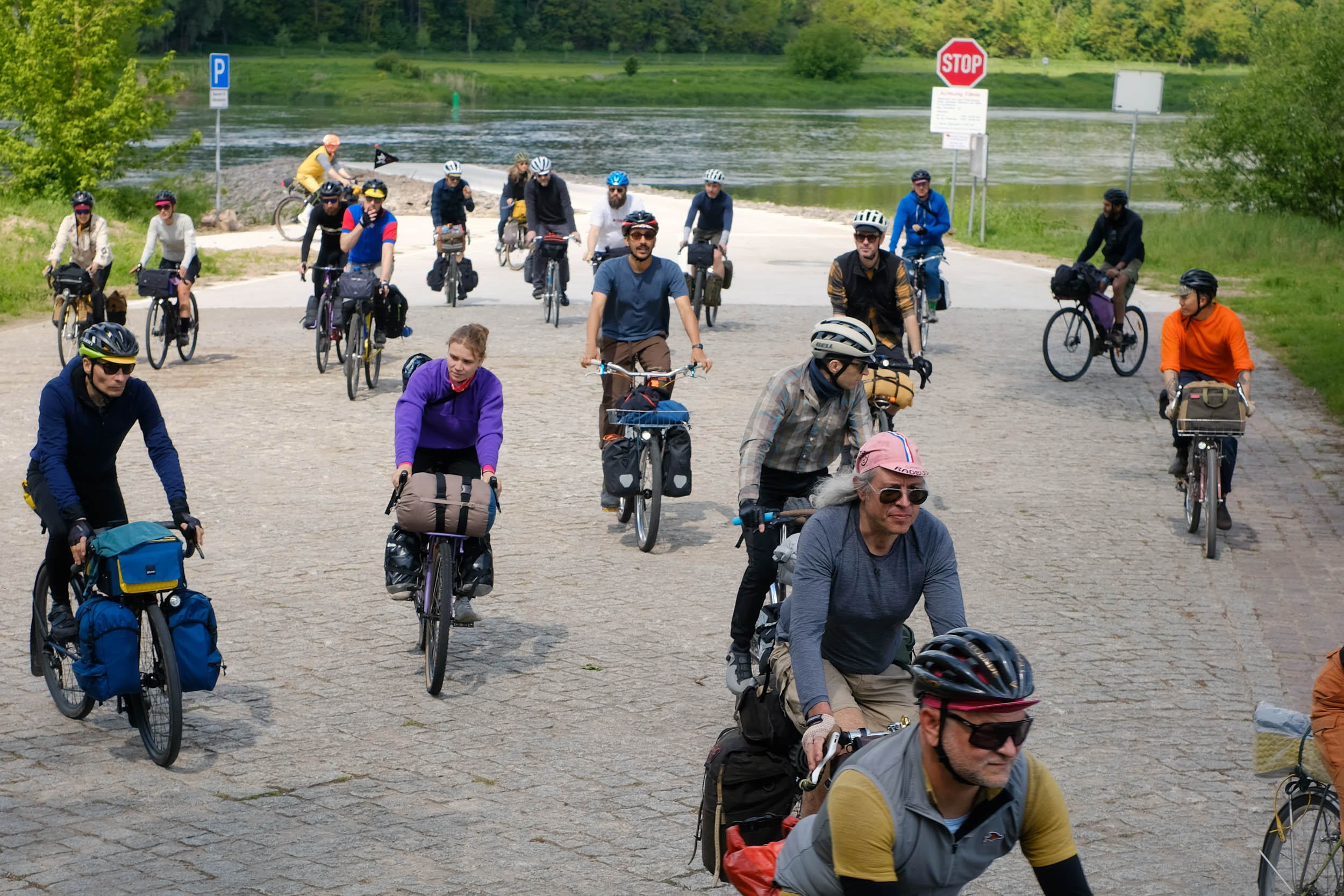
Outside the Hauptbahnhof in Stendal, Germany, dozens of bikepackers and cyclotourists from across Europe have gathered for the start of the third edition of Fenderfest. It’s finally Friday, May 15th, 2026. It’s 10 a.m., time to forget about the clock and all the anxieties that come with it. I’d caught the delayed trains the day before, arrived too late, well after midnight, found the key to the room, and set the alarm, which indeed did its job of waking me up. I’d had the coffee and read the itinerary. For the next 50 hours, we’d basically do nothing but ride our bikes, take breaks, and go camping.
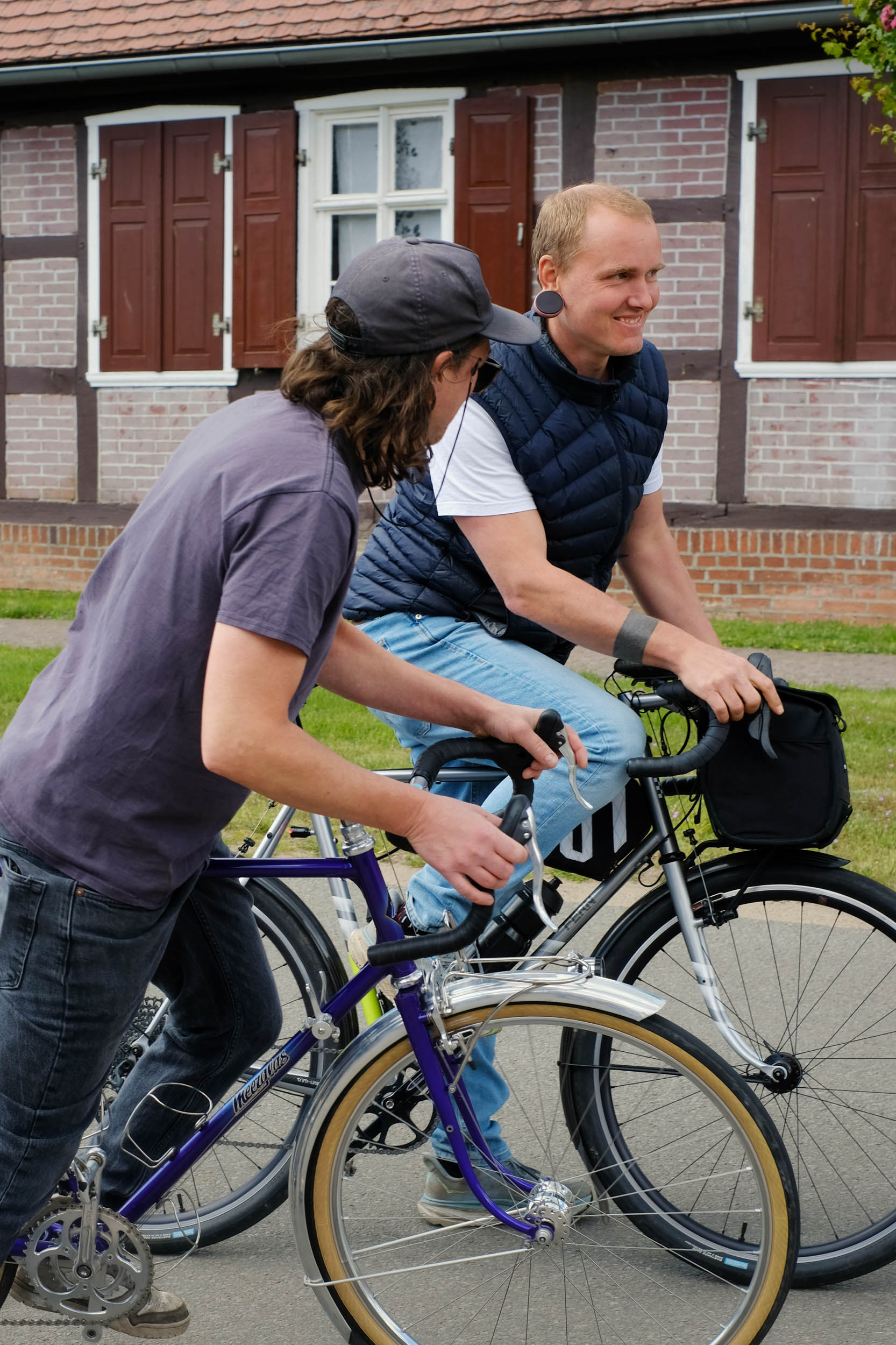
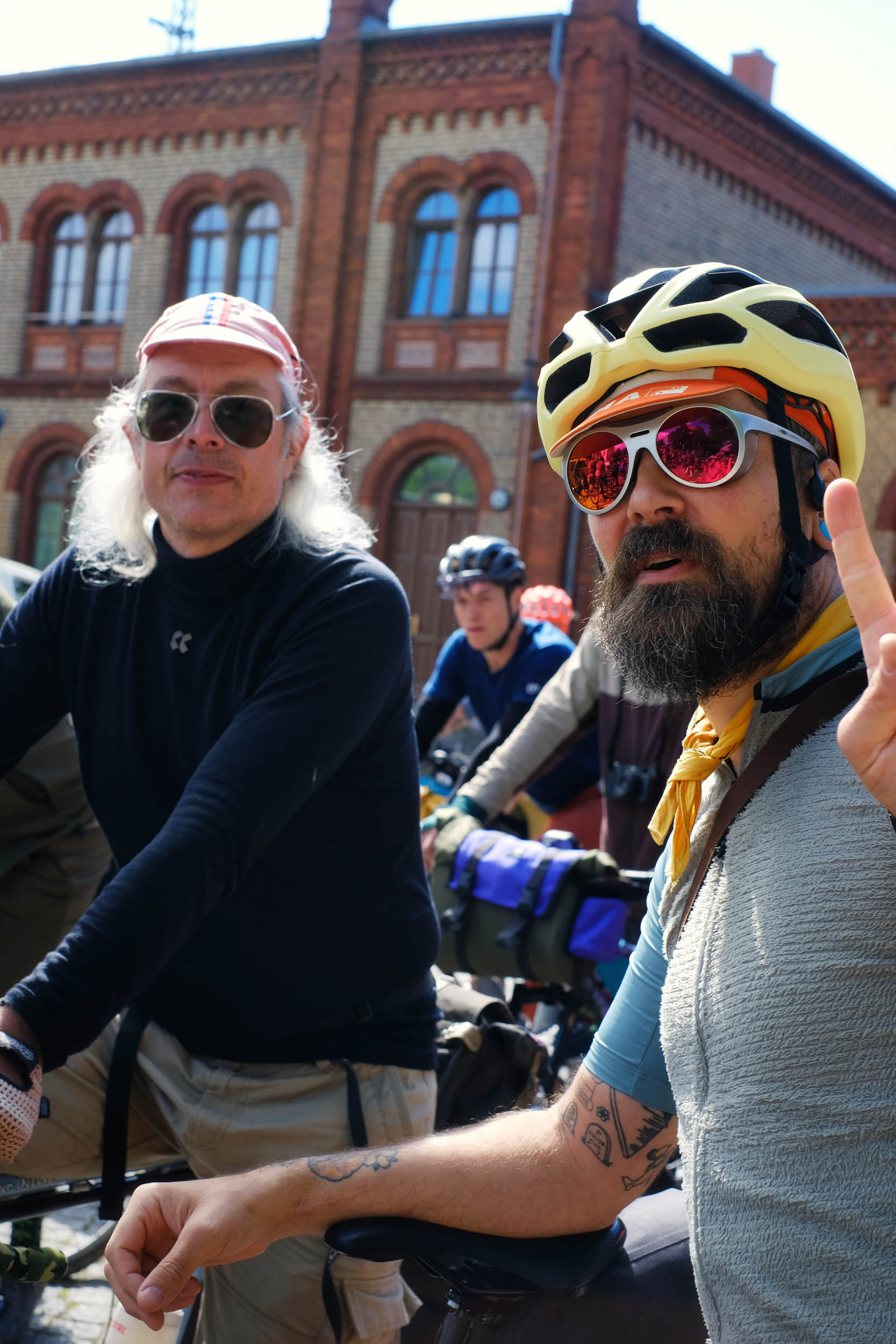
Tom, our host, appears. We’ll be riding on the roads he knows and loves well. He welcomes the group, expressing his gratitude that we all came to visit him out here. He seems to pause, but then he’s lost for words. It’s a touching moment, and it turns out to be the start signal for the cyclists. Never mind the formalities, Tom. Let’s roll.
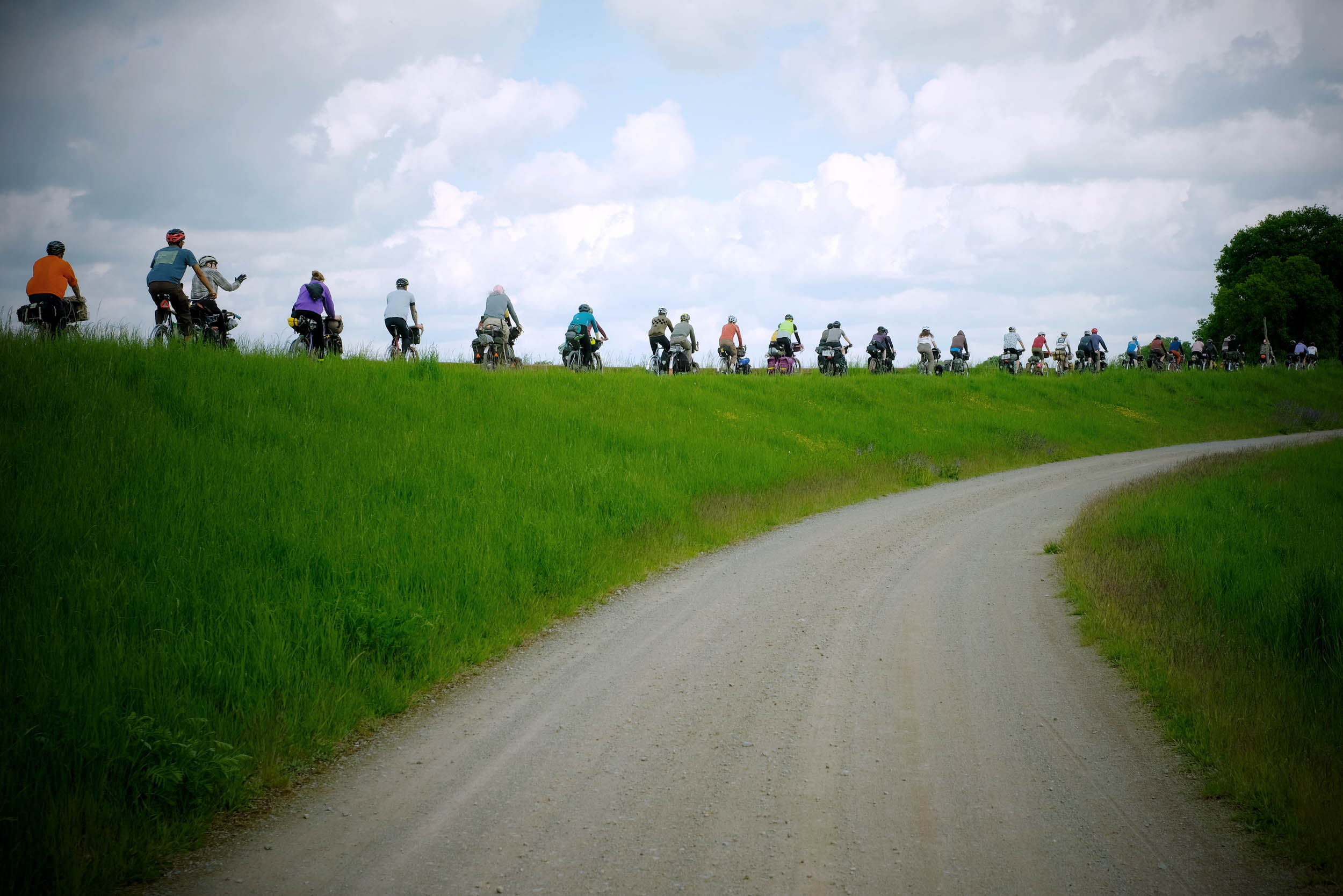
The non-competitive peloton of some 70 riders immediately settles into an effortless party pace. We’re about to loosely follow the Elbe River downstream, through the rural flatlands of the Altmark to those of the Prignitz. Two days of bikepacking, or cyclocamping. The landscape reminds me of the crowded Netherlands I’m from, except here, the North European Plain is showing its better side. The scenery is seldom interrupted by urbanization, only sometimes by patches of forest. It’s spacious and panoramic out here, and it’s the season for endless yellow rapeseed fields. We’re probably seeing more storks than cars.

If only every bicycle tour was this easy! No worrying where we are, where to eat, where we’re heading, or whether or not we’ll make it in time. We’re a rolling party of ever-changing pairs gently chatting away, catching up with old friends and making new ones. The only people who seem hard at work are Tom and Tine with their walkie-talkies. They’re taking turns riding in the front and the back of the pack, long poles attached to their machines, little flags up high. We’re merely following them, taking the right turns, and finding ourselves on yet another unpaved country lane. Whenever the occasional flat happens, we all stop.
Our tour guides are taking great care that all is well, so we can ride without a care. After the first few hours, we arrive at a little tree-lined lake. On its green banks is a restaurant reserved for us, with a lunch buffet all lined up and ready to devour. The sun is starting to peep through the clouds. The vibe is relaxed; some take a dip in the lake. It really feels like we are here together as one.
Fenderfest is such a welcoming event—it even includes people without fenders. You like your wheels to be naked? No problem. We’re not a secret society excluding people with some rigid ancient ritual here. We just don’t like crud to shoot up all over our backsides. These guards won’t prevent any of us “from getting wet.” Rain will be falling regardless. The cloudscapes are beautiful today. Looks like we’ll be standing under some trees for a bit.
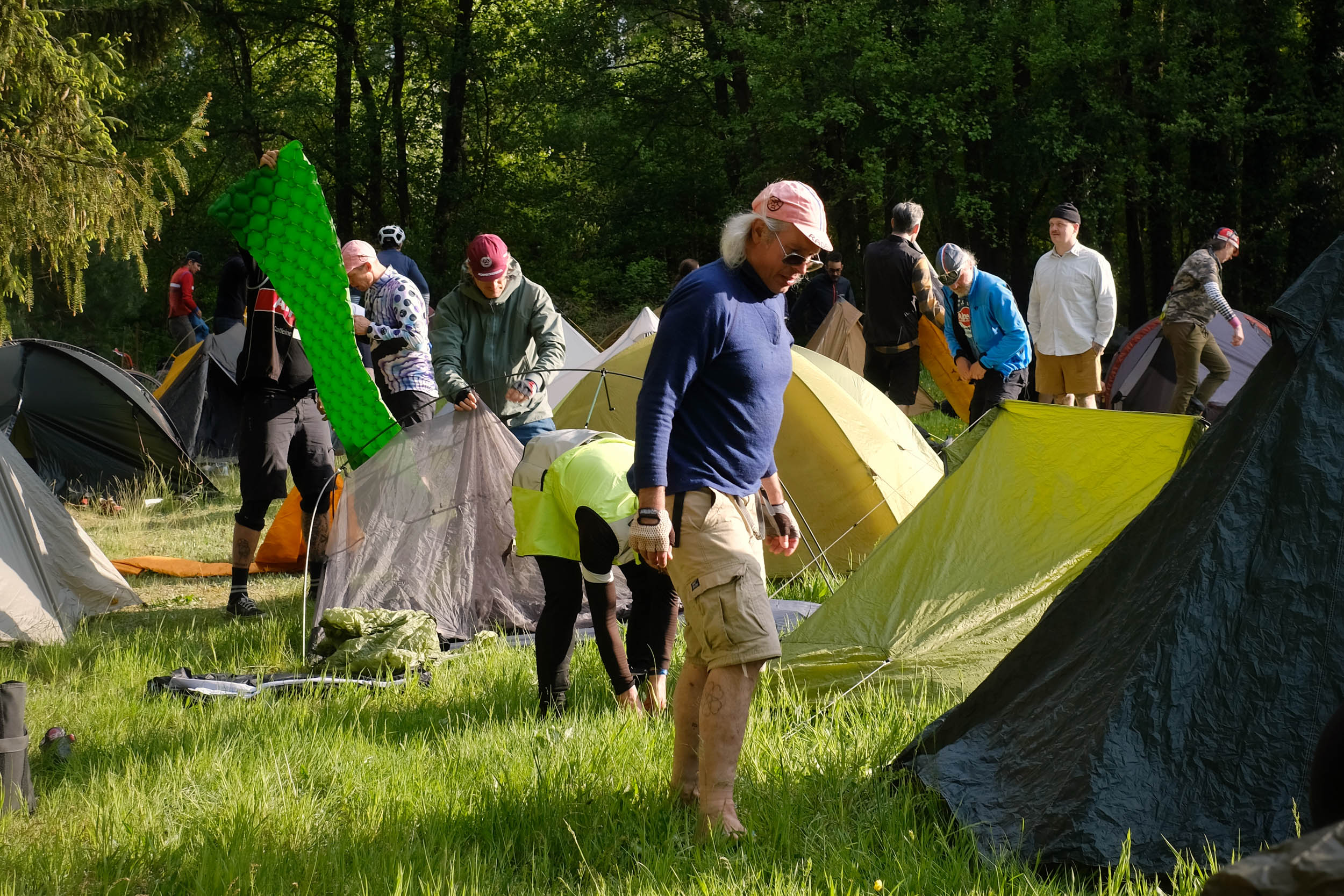


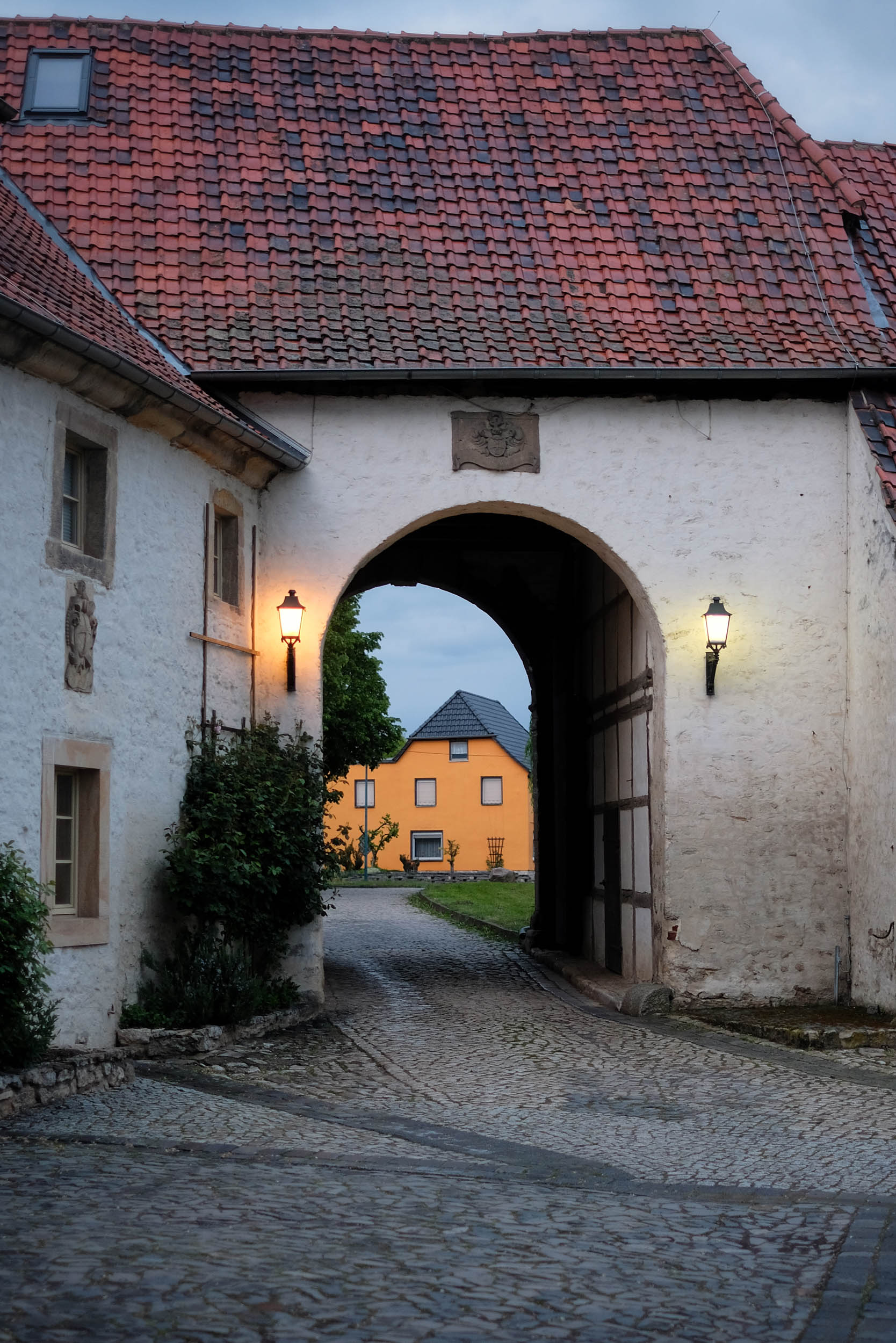
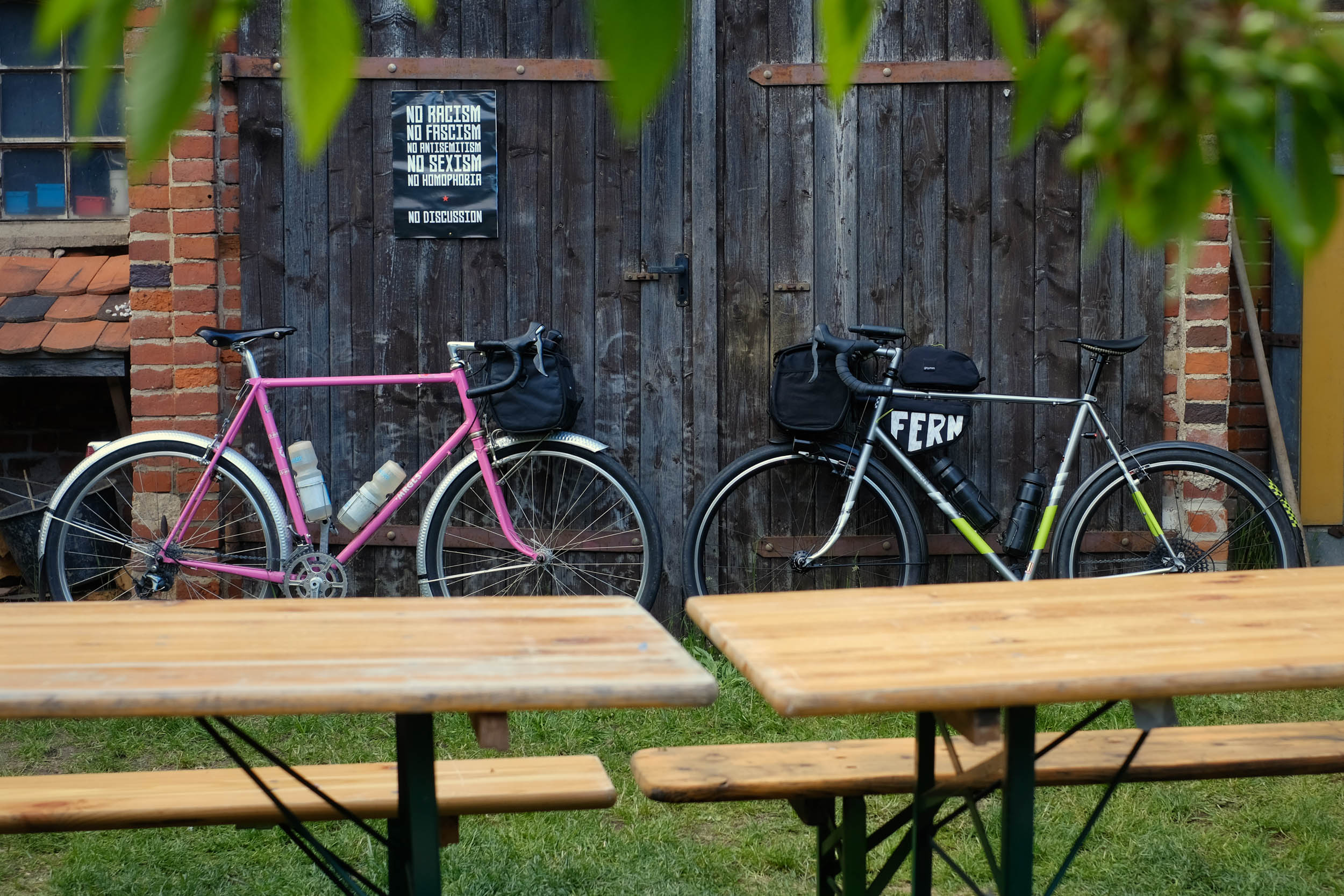
Many flaps can be seen. Mudflaps sitting low in the front to prevent fine grit from being propelled into our well-lubed drivetrains, and buddy flaps in the back to keep the crud from flying in the face of the rider behind us. Fenders are for people who care.
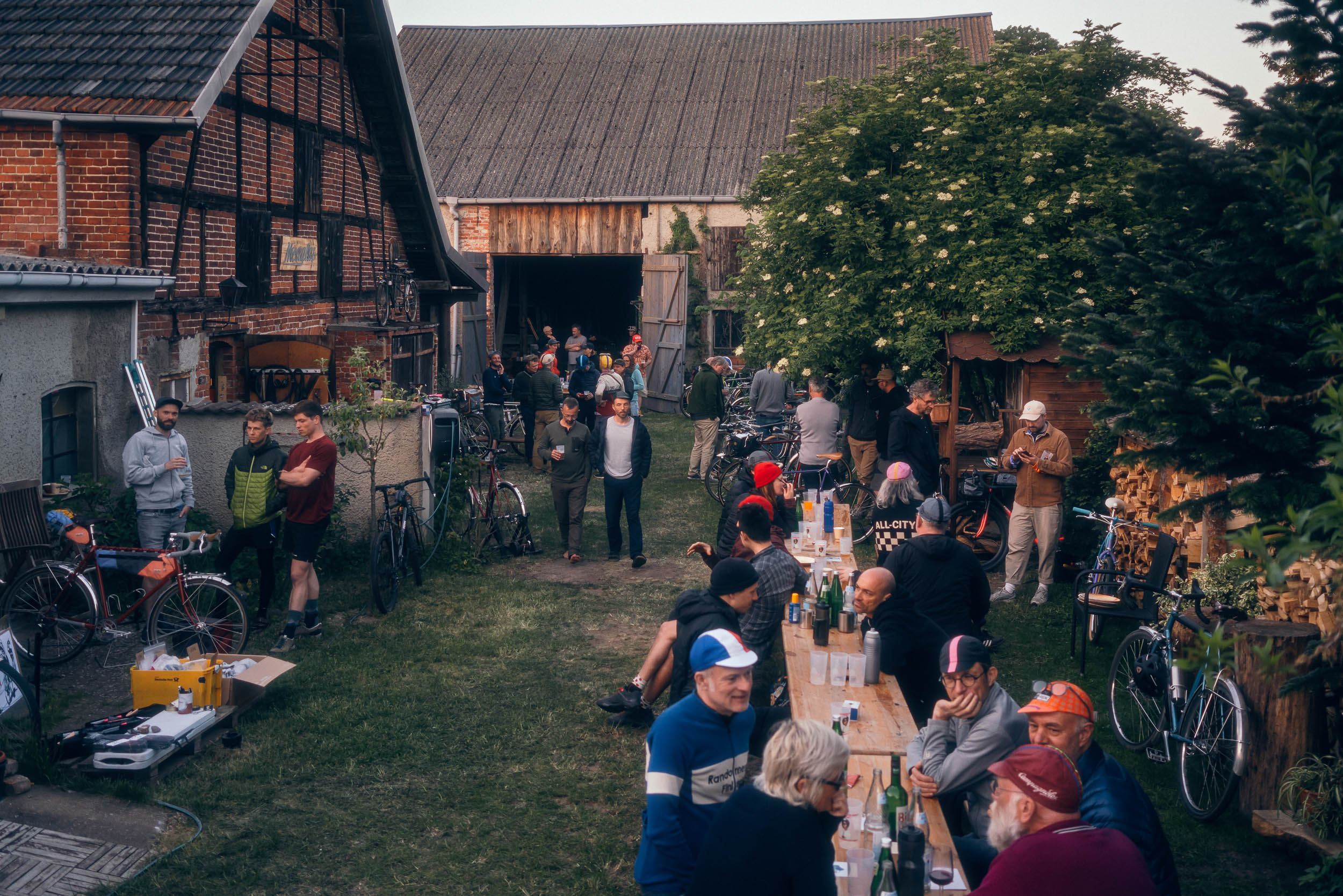
After lunch, Tom takes the lead again for the afternoon ride to the Krankenschwester rock festival, where a lush camping spot awaits us in the adjacent meadows. Tomorrow, there’ll be more riding before we finally arrive in Groß Lüben, the sleepy village where our host lives with his family and constructs his exquisite Meerglas bicycles. There will be a campfire in the garden, a disco in the barn, and camping in the backyard. The morning after, we’ll participate in the now-traditional eating of soft-serve ice cream while test-riding each other’s bicycles.

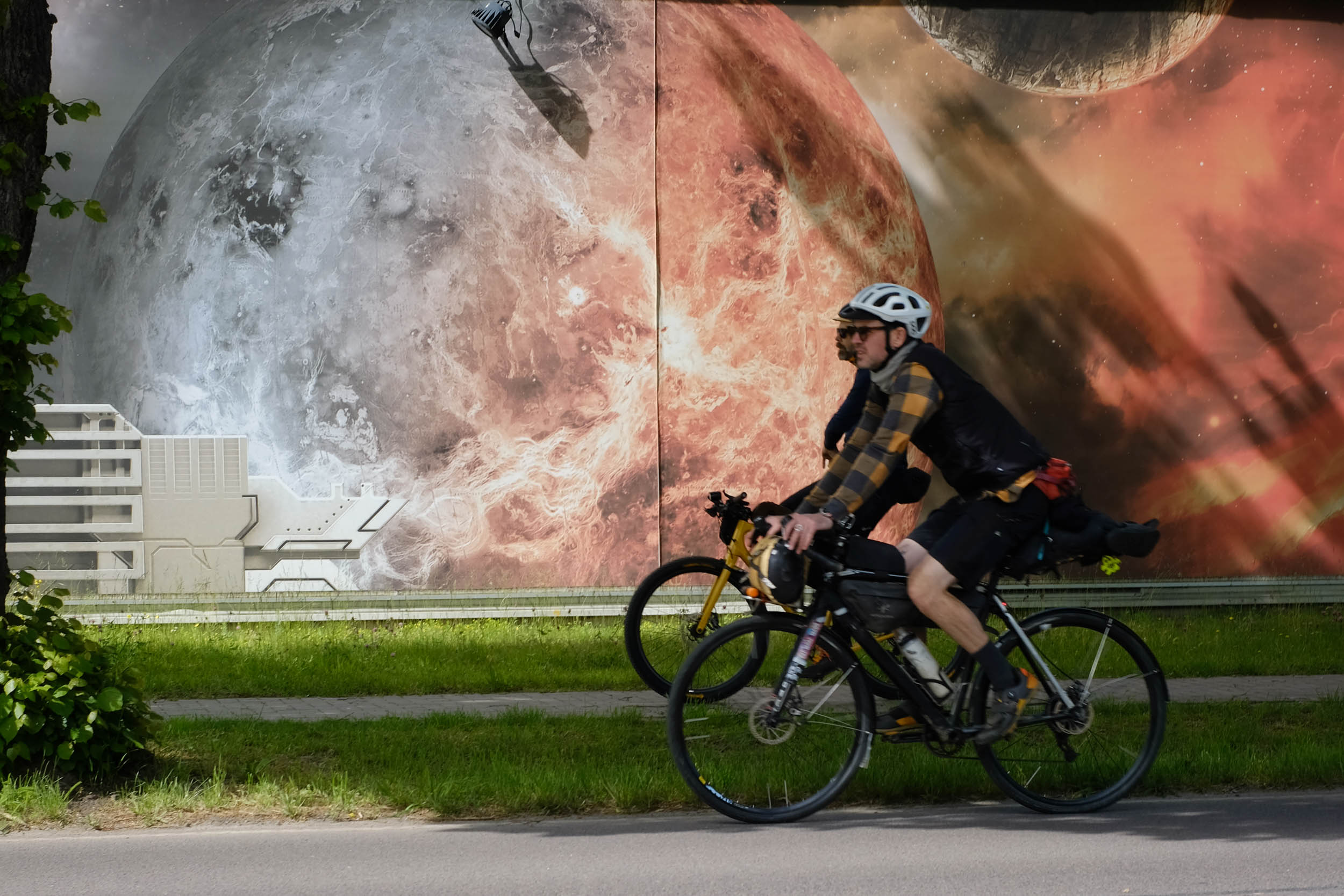


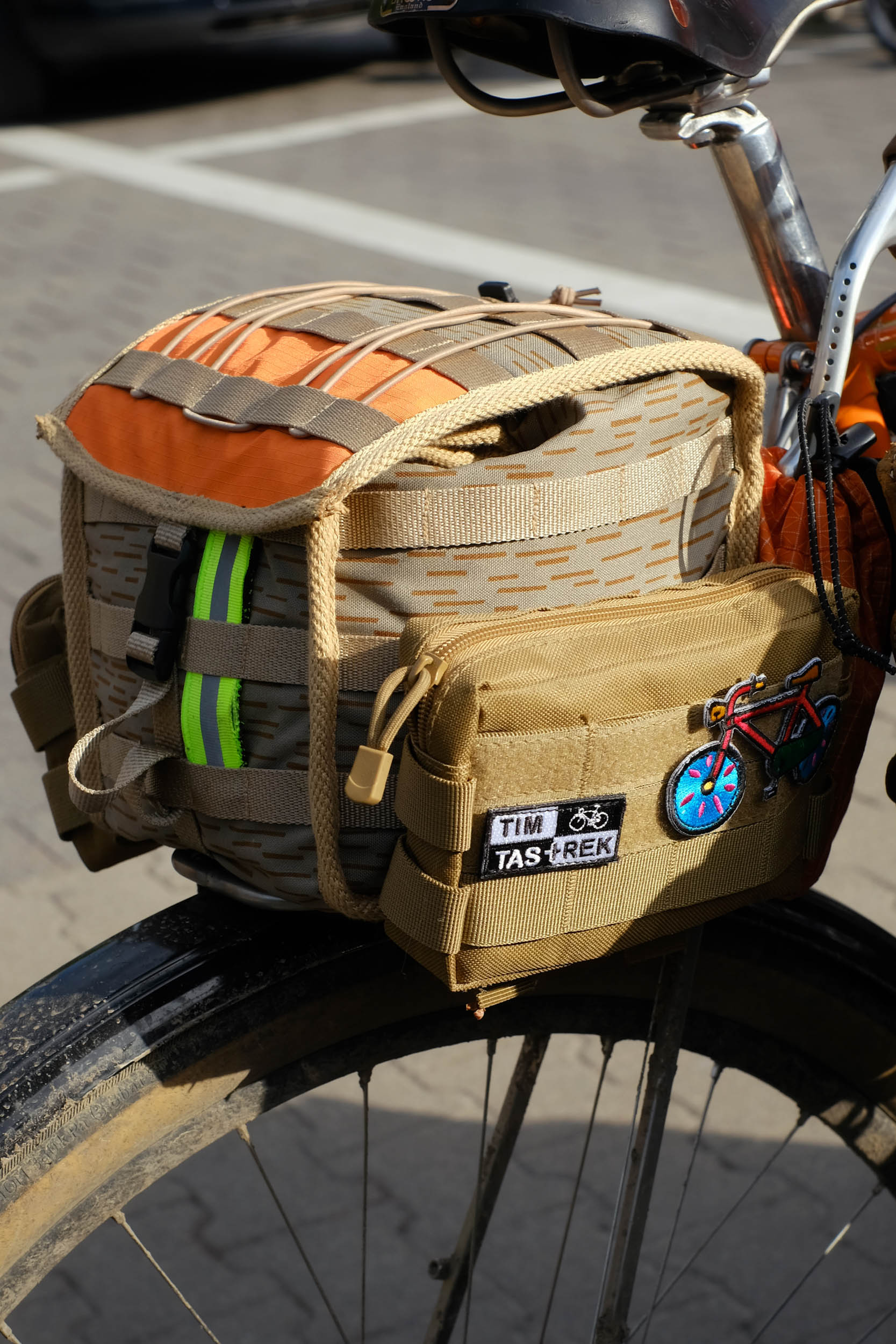
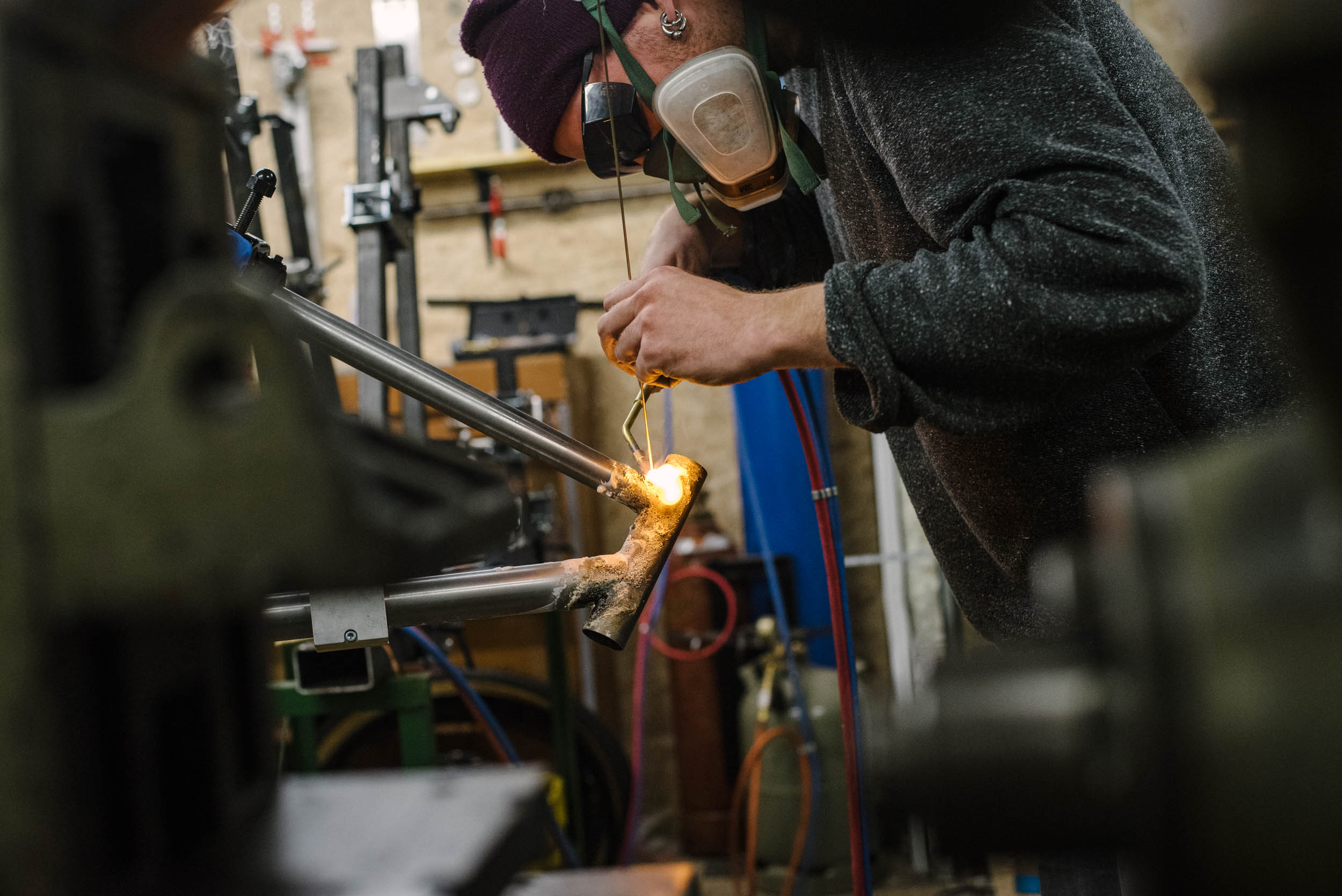
Tom mainly builds lightweight cyclotouring bikes, carrying the torch of a tradition originating in mid-century France. They’re often called randonneurs. It’s a genre that’s been here to stay, maintaining a stubborn international niche of artisanal bicycle makers. There’s always been somebody somewhere in the Northern Hemisphere building a new bike from “skinny” steel tubing with fenders and racks, aiming for the Frenchness. It was trending again in the 2010s, but it’s proven to be immune to fashion, really. Especially in Japan. It’s the sort of bike that’s confidently timeless.
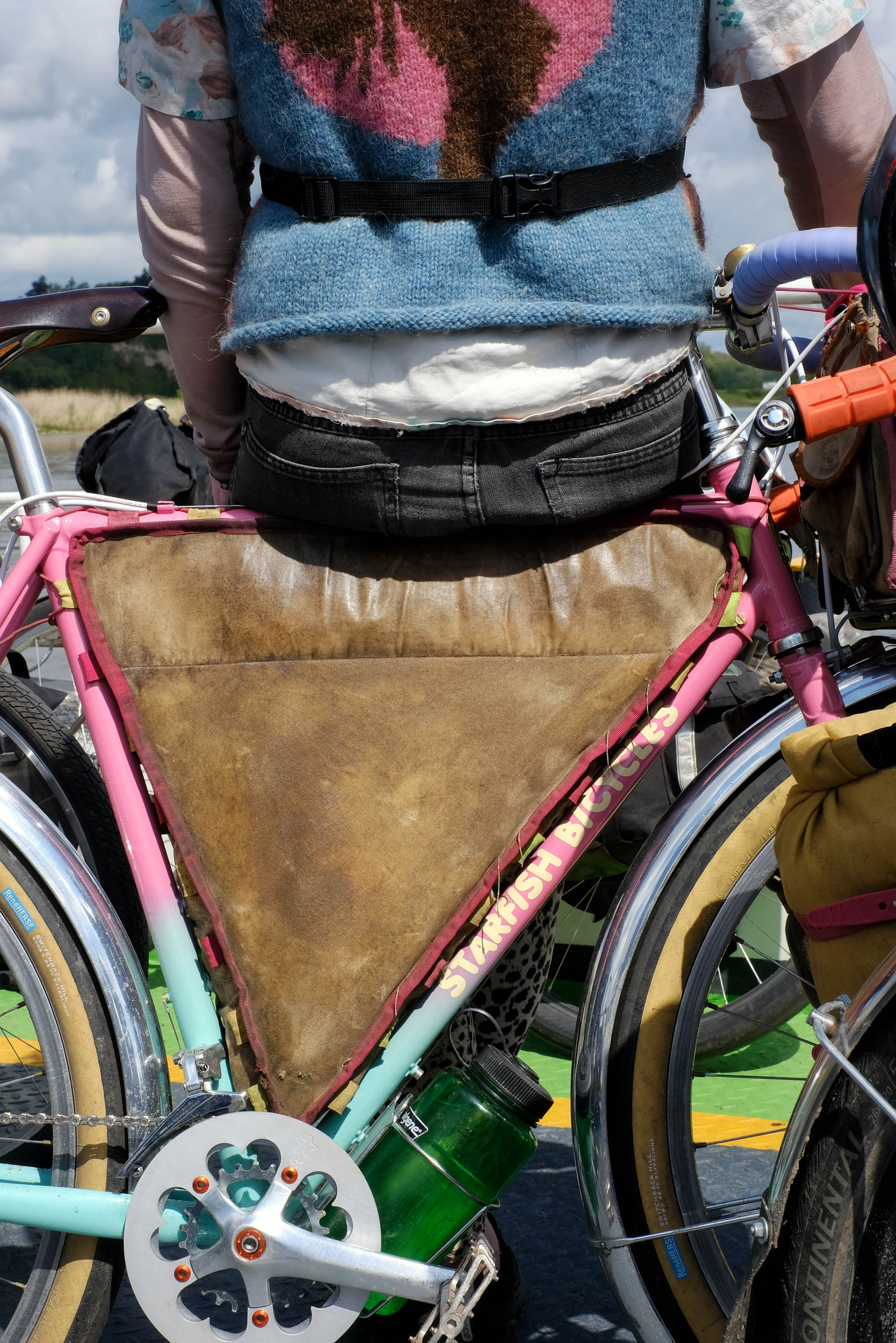
Fenderfest is by no means for some specific type of bicycle, though. There are various contemporary bikepacking rigs to admire. Different current European builders working with steel and titanium are represented, showing a wild variety of flavors. There’s this transatlantic whiff—we’re spotting steel bikes by American purveyors like Rivendell and Crust, as well as a bunch of old mountain bikes turned basket tourers. Some ride single speeds—perfectly doable around here—and others bring their child in the trailer, and of course you’ll spot a few classics with the Frenchness. A certain character had the audacity to show up with an e-bike. In his defense, he left its motor off, and he brought the most stunning bag of the bunch.

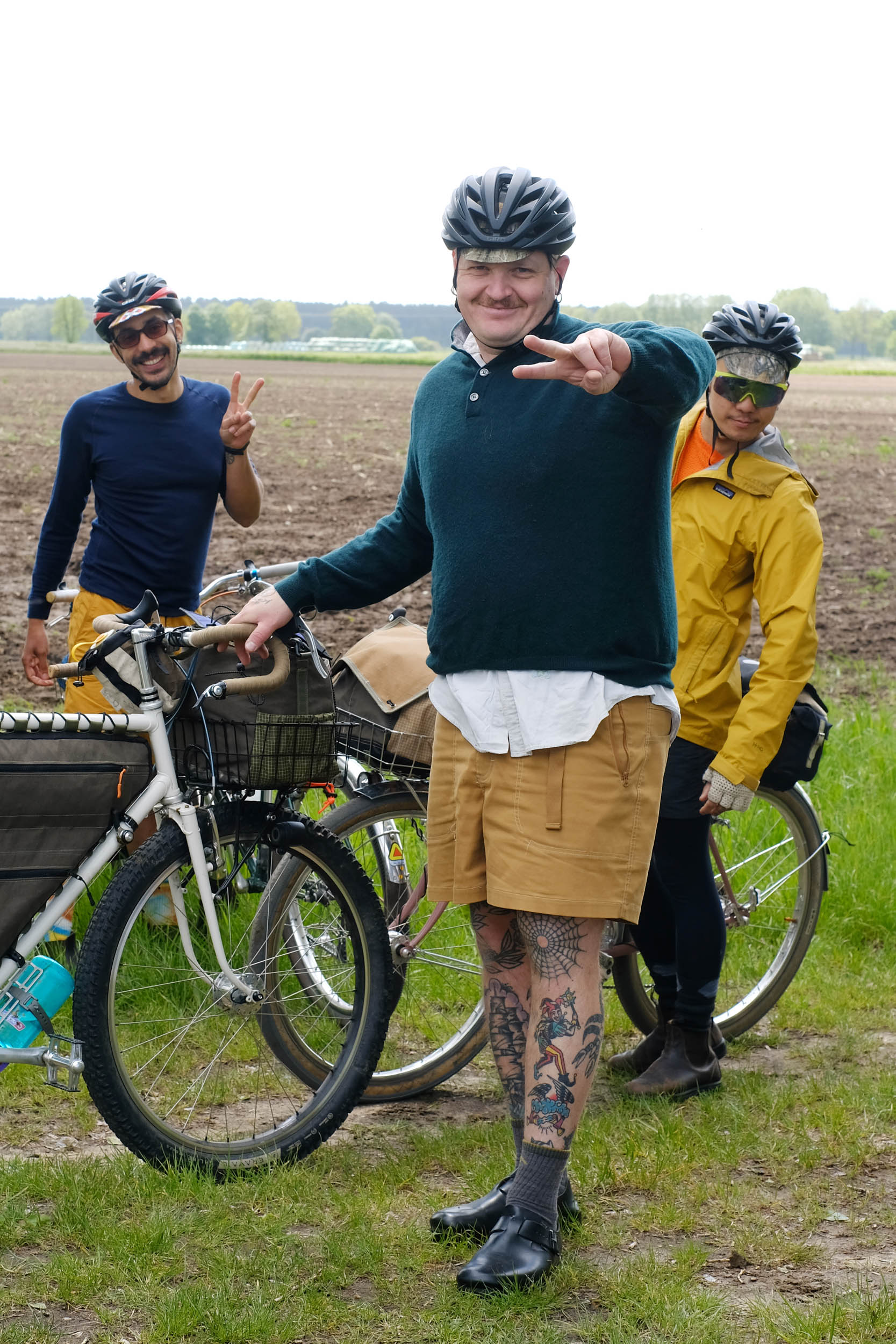
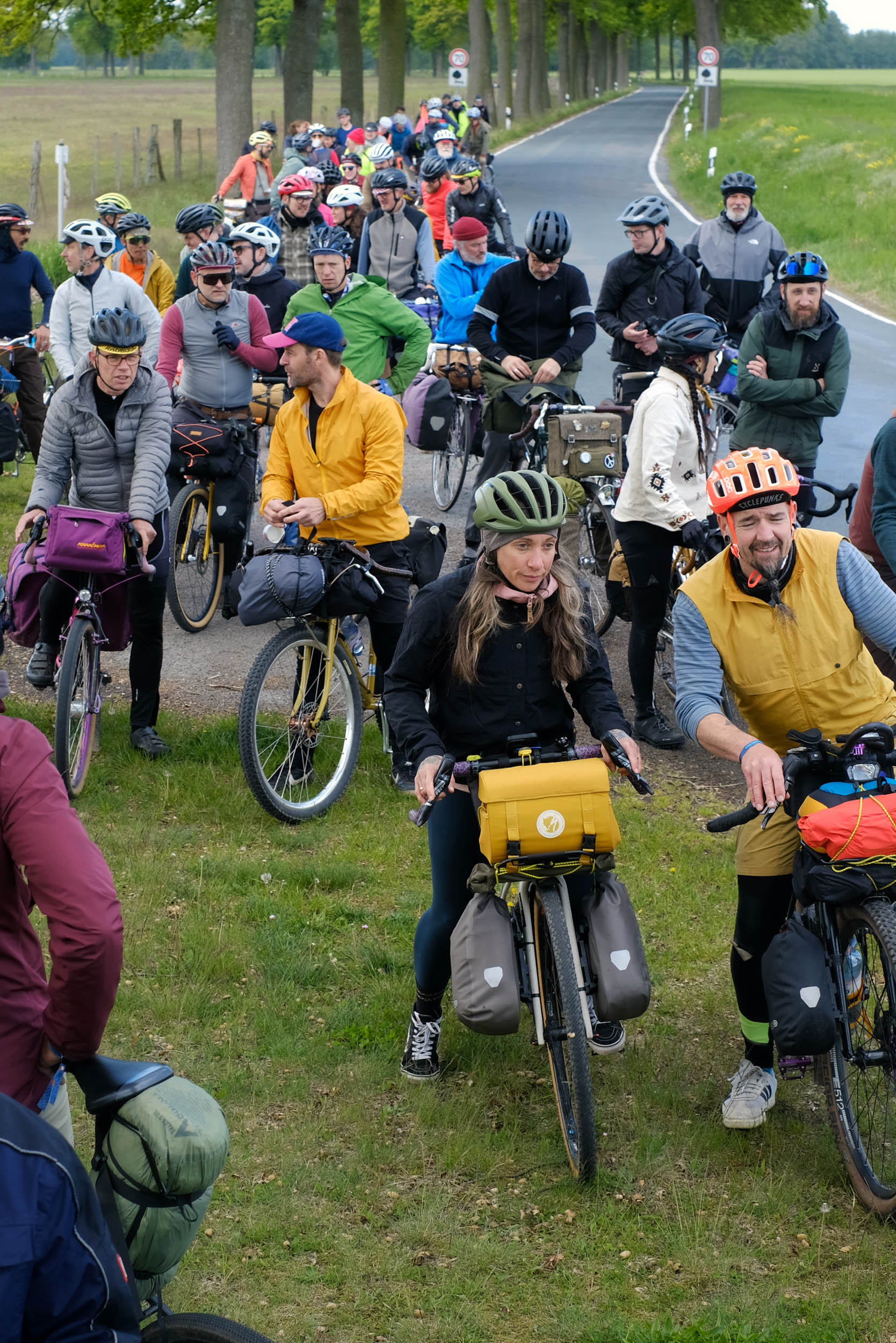
Bike talk is inevitable, especially when the common denominator is folks who made it their job in one way or another. Many bicycle builders, shop owners, bag makers, tent developers, wheel lacers, component crafters, and cycling writers and photographers are present. For this year’s camping edition, a conscious effort was made to keep us from hanging around the two-wheelers for too long. Fenderfest wants to get closer to what it’s all about: last year’s afterthought group ride has now become the main event.
Bicycles are nothing without us. They’re just standing there taking up space, if they’re even capable of not falling over at all. We’re looking at them, start treating them as just visible expressions of this or that style, we’re seeing solutions we would have done differently ourselves, and before we know it, we’re discussing the differences between bikepacking and cyclotouring. Bicycles need our energy to even work, so we better ride the damn things.
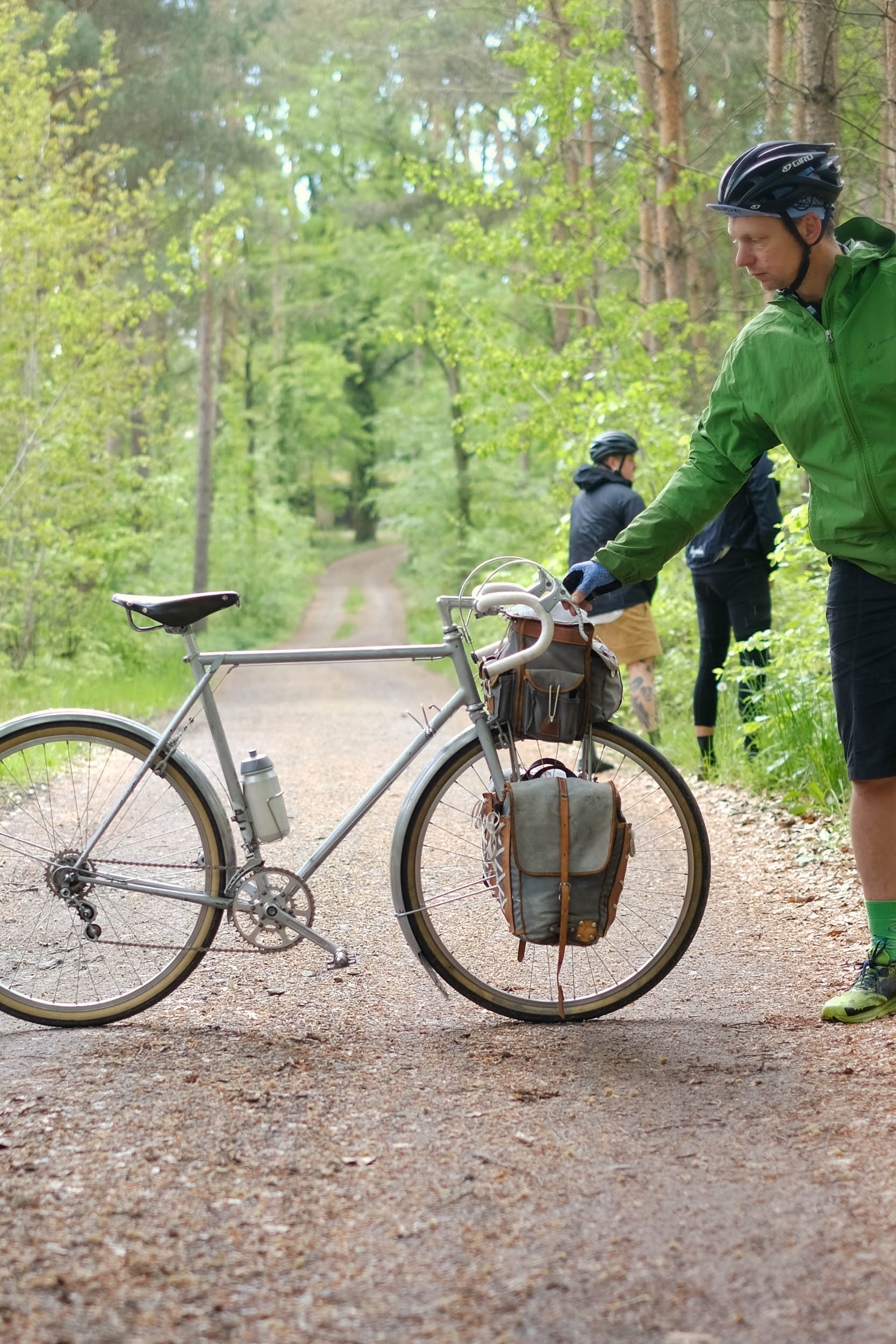
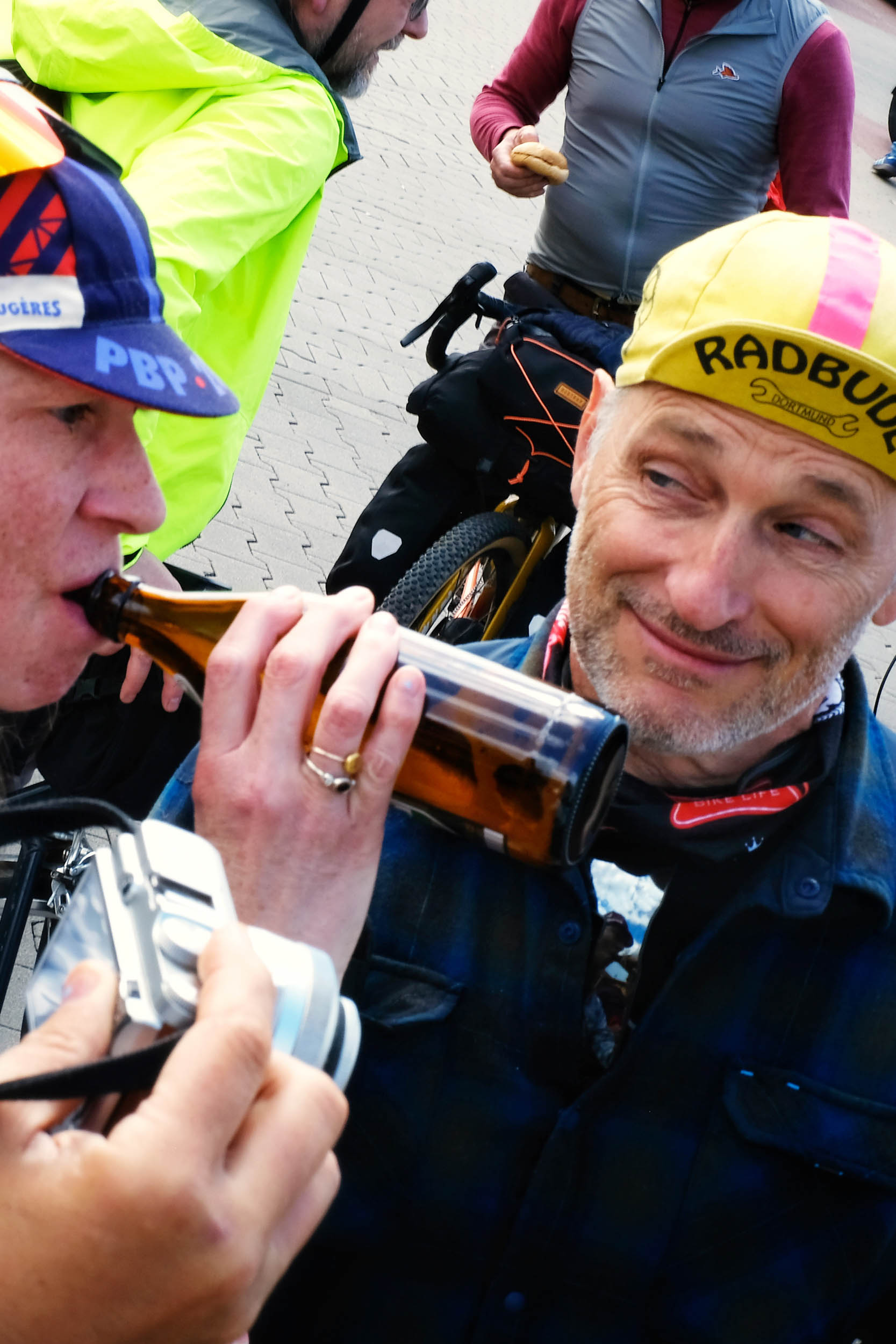
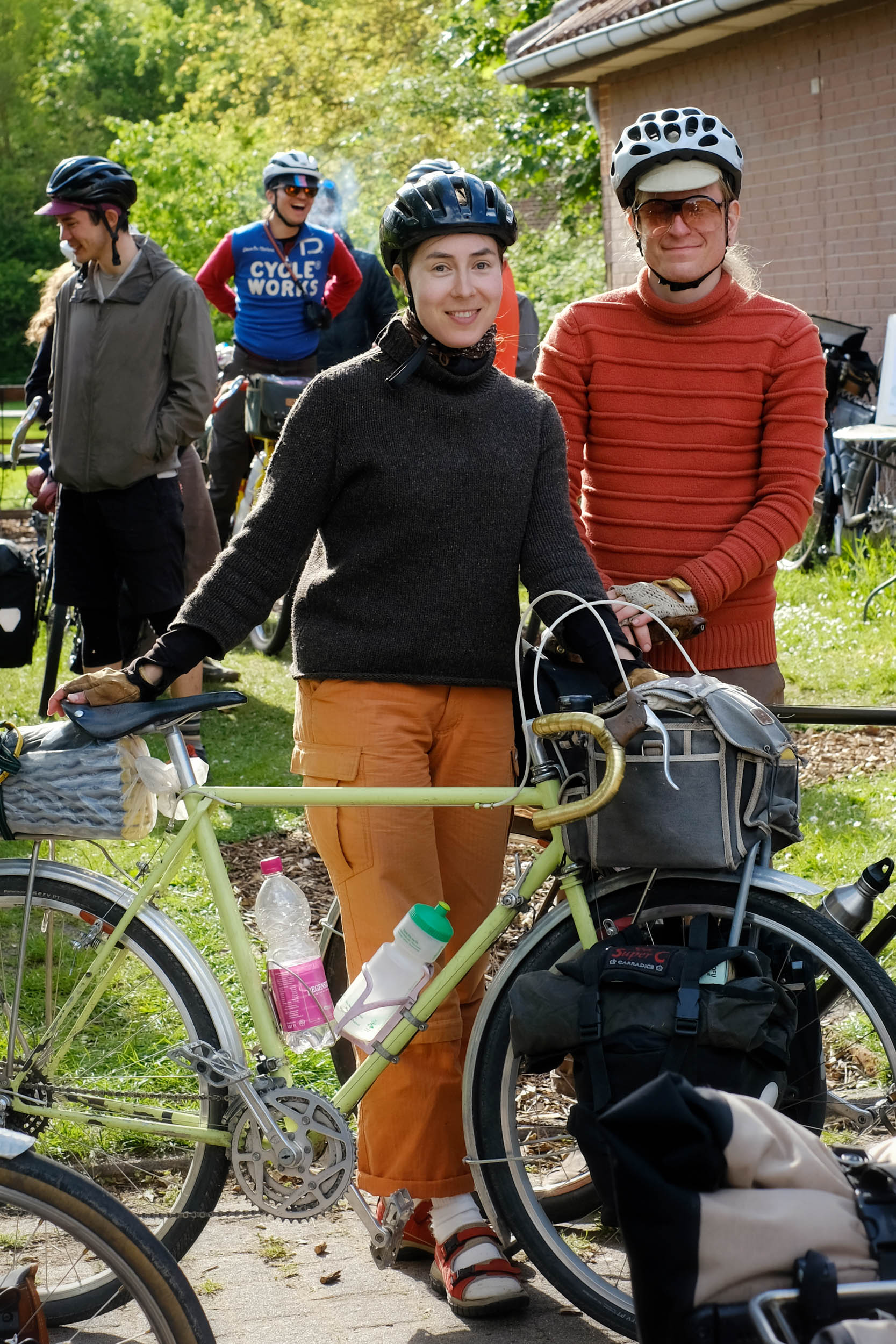
The land here is mostly flat. There’s hardly any elevation gain except when we climb a few meters to go ride on top of the dikes. They protect the rural landscape we’re traversing from flooding by the mighty Elbe, and have done so since the 14th century. I can’t remember if I shifted at all. Most of us are overbiking, I guess—unnecessarily well equipped with all of our gears.
Fenders are a bit like dikes; they’re barriers against water and crud. Things that are here to stay and protect other things. They’re about longevity, in more than one way. You’ll be cleaning and lubing less, buying fewer replacement chains, rings, pulleys, cogs, oils, and waxes, and producing less waste. No need to get the latest, either; these are not singing along to the industry’s tired old “new and improved” tune. Fenders are the ultimate anti-consumerist bike parts. We can get them in carbon fibre now, but in their basic form, they’re still the same old staple.
A festival around fenders seems funny, even to its attendees. Mudguards don’t add nearly as much to the qualities of our riding as the tires beneath them do. No matter the diversity of bikes here, they all seem to roll on more or less compliant and voluminous rubber. We might as well call it Supplefest.

Last year, the great American framebuilder Peter Weigle came flying over to give Fenderfest his blessings. Each fall throughout the 2010s, he would organize an event known as French Fender Day in the yard outside his workshop in Connecticut. This tradition is now being continued northwest of Berlin. Weigle was one of the trailblazers of the “wide-tire revolution” unfolding today, doing his part to make high-performance, higher-volume tires available again. He worked closely with Jan Heine, probably the most prolific proponent and developer of these fine components. Peter would prototype new versions by shaving excess material off of earlier ones, so we could have less rubber and more air.
Lounging in Tom’s bucolic garden last year, our American guest was interviewed for a podcast. He reminisced about the early buzz surrounding these plump-looking slicks. Even short rides on the supple rubber would turn skeptics into believers. “Can you describe this enthusiasm in one sentence, the essence?” the podcaster asked. “Big smiles,” Peter didn’t hesitate to answer. There is something about their ride quality that makes people happy.
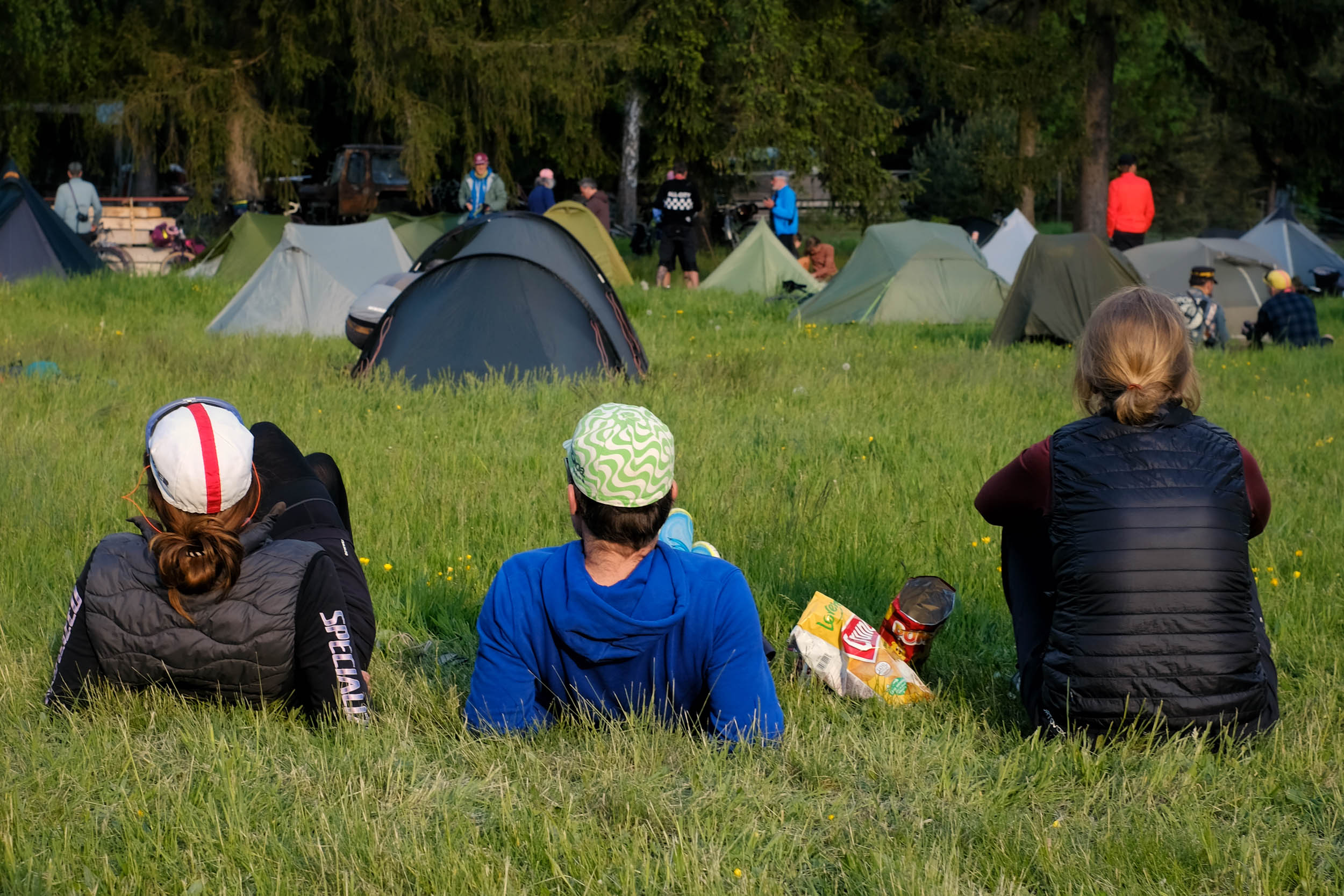
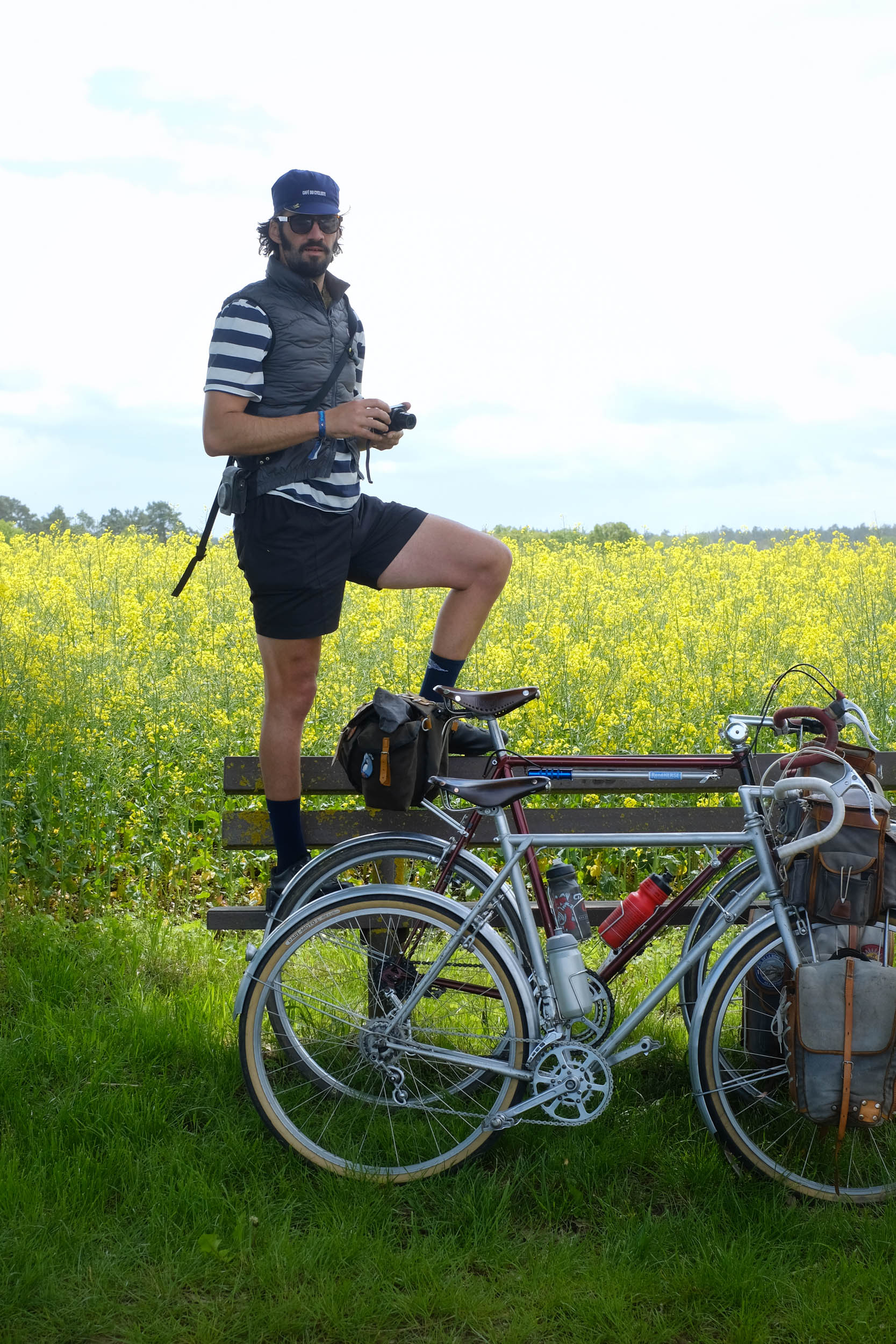
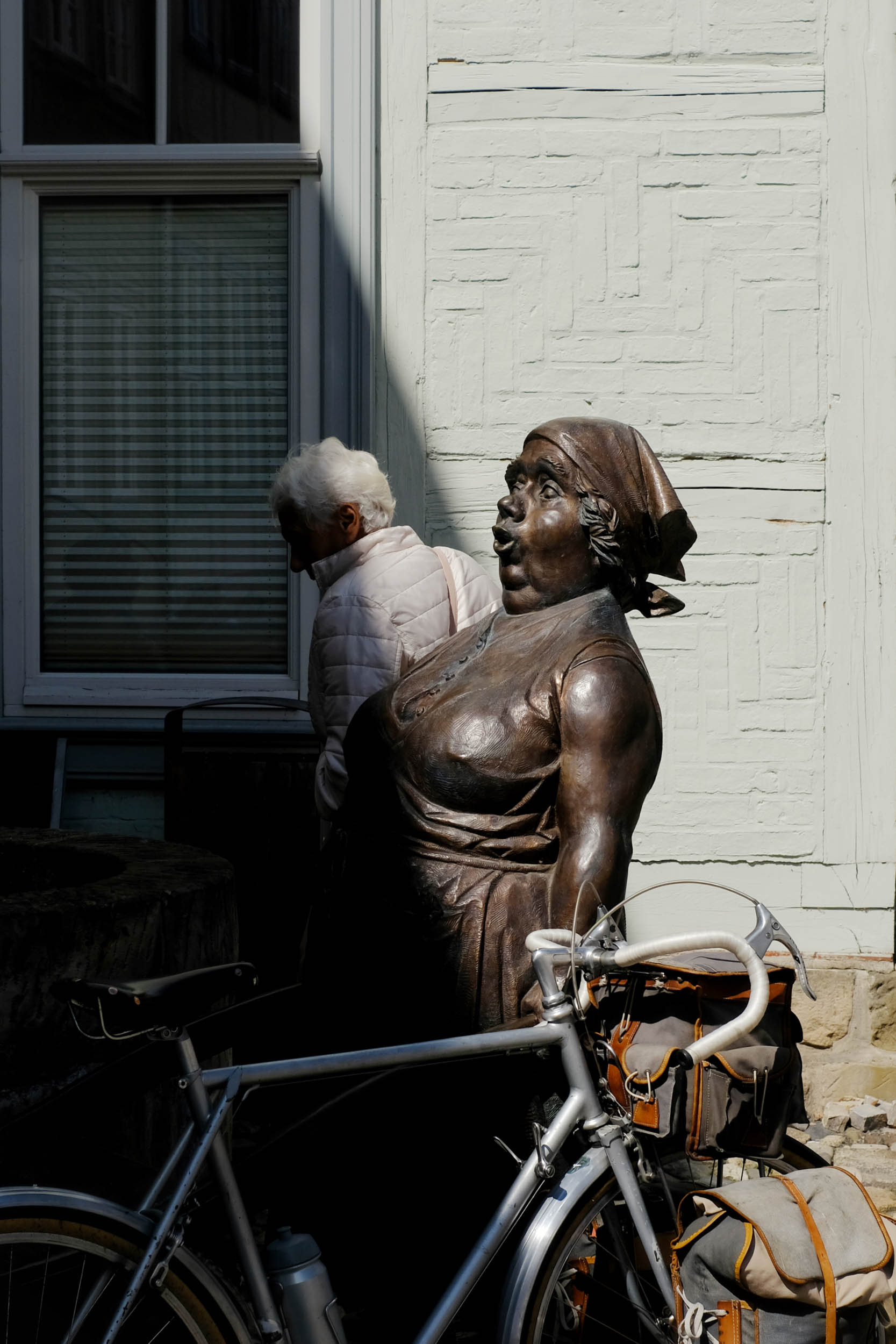

I’m riding a bicycle with a frameset from the 1970s, handmade by Jo Routens in Grenoble, France. Shortly after the exciting new tires became available, I built this bike up around them and never looked back. My Routens is not much different from the new Meerglas bicycles made in the Prignitz today. Tom will agree. When he gave it a short test ride on Sunday, the machine made him glow. After only one kilometer or so, he was just beaming. The same thing happened to Tine when she tried it. All smiles. I have photographic evidence.
After a few days of rolling along with kindred spirits, I felt happily energized. If Fenderfest is about performance at all, its results are of the intangible kind that can’t be expressed in numbers, graphs, or statistics. It seems to me cyclists are generators of human energy. Some of our pedaling force is somehow returned to us as joy. No need to push limits or even sweat for it to happen. Just riding effortlessly can turn calories into wellbeing.
I realized all the while that I hadn’t been looking at any clock or screen. Instead, there’d been this more expansive sense of time, allowing for musings on the permanence of dikes and Frenchness and such. These things just happen when you studied to become a cultural historian. On the way back, rolling solo along the northern edge of the Harz Mountains, the earliest cyclists to ever ride on air tires keep crossing my mind. Theirs was the primordial wide-tire revolution around 1890. Going from pushing solid rubber to floating on compressed air must have felt sensational. My curiosity led me to find their firsthand reports. Here’s a little spoiler.
Some rave about the record-breaking speeds that the new pneumatic tires enable. These are much faster than the old stuff, and we have the numbers to prove it, say the Racers riding on clock time, practicing cycling as a competitive sport. Their experience is well known; it’s often the only one we read about in the history books.


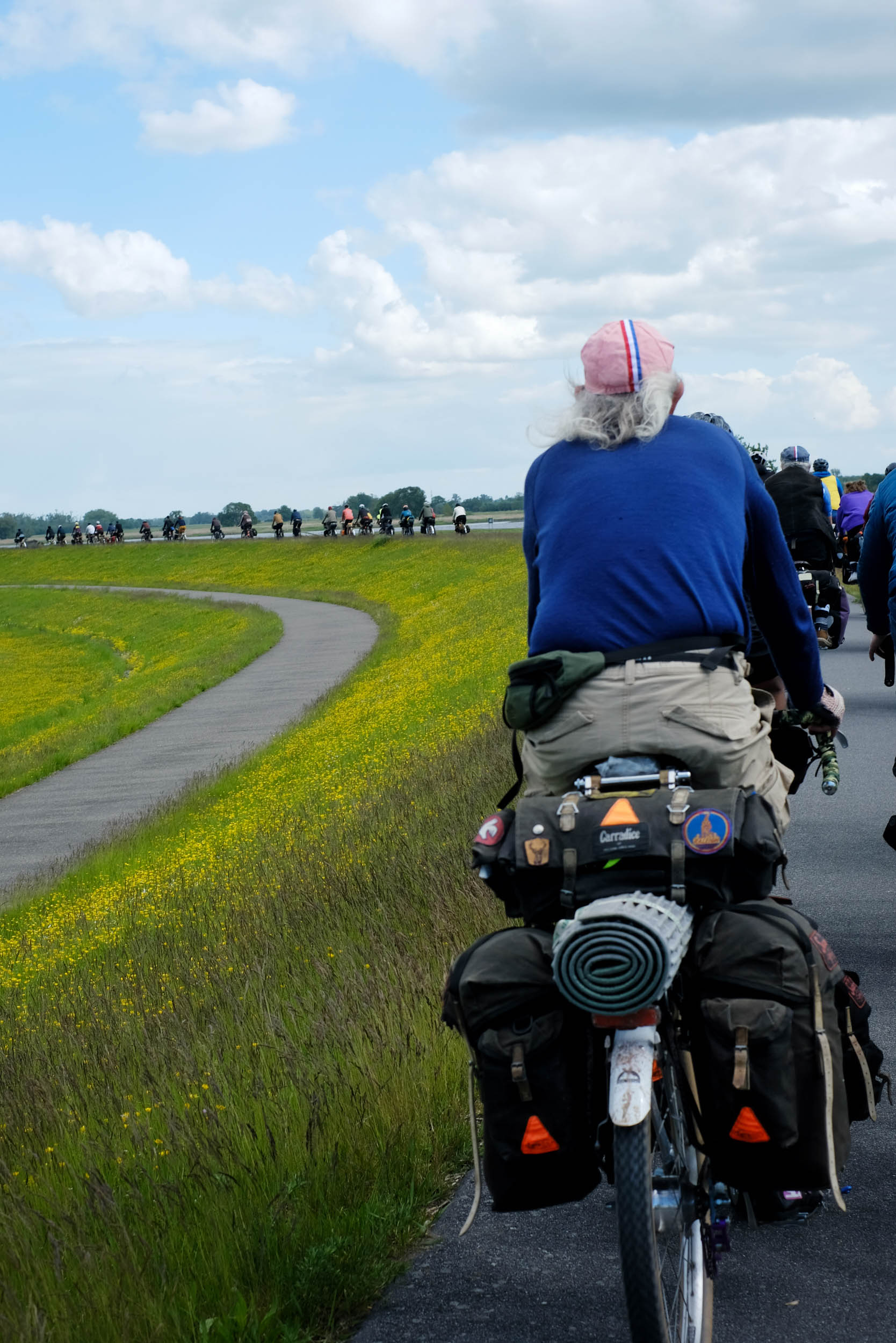
The cyclists identifying as tourists, on the other hand, treat the new pneumatics as a more profound invention. They highlight the comfort, ease, and joy they bring to their riders. There’s a surprising number of doctors among them who all seem to agree: as long as we don’t ride them to the point of exertion, these things hold therapeutic qualities. They describe the miraculous benefits cycling has on their nervous systems and those of their patients. The best antidote to the stresses and anxieties of our industrialized age, they say, is to ride modern bicycles on air tires and take it easy. But that’s another story.
Love and respect to Thomas “Tom” Becker of Meerglas Frameworks and all the sweet people doing their part in making Fenderfest as beautiful as it is, both in organization and in spirit. Big up to Kristin “Tine” Heil of Gramm Tourpacking. Final shout-out goes to our friend in the back, trying to keep up with the pack. I wish we’d taken the chance to talk; I hope you didn’t feel guilty for “slowing us all down.” Instead, you made us realize that ease is a privilege and an acquired skill. You gave the more impatient ones a chance to practice it.
Further Reading
Make sure to dig into these related articles for more info...


Please keep the conversation civil, constructive, and inclusive, or your comment will be removed.