

 Mountain Bike (MTB)
 Gravel Bike
 All-Terrain Bike (ATB)
 Fat Bike


The Bikes and Builders of CRAFTED 2026

Over the weekend, Cane Creek hosted the inaugural edition of CRAFTED, a bike show spotlighting small builders and brands in the American Southeast. Nic popped by to see what was on offer and returned with details on some of the best dirt-focused bikes on display. In his report, he speaks to the event’s significance and highlights the best and brightest of CRAFTED 2026…
PUBLISHED Sep 28, 2026
Earlier this year, Fletcher, North Carolina-based Cane Creek announced it was hosting the inaugural CRAFTED bike show. With the simple goal of establishing an annual celebration of bikes in the American Southeast, the historic component manufacturer invited brands from across the industry to present. Based just 20 minutes up the road in Asheville, I joined in the festivities of the first-ever CRAFTED to see what it was all about.
What is CRAFTED?
Like many other bike shows, CRAFTED centers on showcasing the craft and ingenuity of the brands and small makers that make up the industry. Unlike other shows, however, CRAFTED has a few quirks that set it apart. Hosted in its inaugural year by Cane Creek, the high-end component brand suggests it won’t always be that way. Speaking to Jenna Toney, marketing director, she says that CRAFTED is intended to exist as its own entity. “We’re stoked to put something on here for those builders and brands that either can’t make it to some of the other shows in the industry, or just want to come join in on the fun here in Western North Carolina. We’re not trying to compete with the other shows right now; we just want to offer a venue in a place we think is worth highlighting. While CRAFTED is currently being hosted by Cane Creek, we’re happy to pass the event to whoever might want to take the reins one day. The idea is to start a tradition of highlighting the best of what we have from a place we believe in, and that won’t always rest solely on our shoulders. Right now, we’re happy to host it. But we’re open to all future possibilities.”

For Western North Carolina specifically, CRAFTED’s first show arrives at an interesting time. On the second anniversary of Hurricane Helene, a storm that brought historic flooding to the area, CRAFTED’s presence might incidentally signal the “vibe” some feel is coming through the industry right now. “It certainly wasn’t intentional, and we had our hesitations about doing so on the anniversary, but there is a resilience here that feels unique. After a few difficult years, that’s the through line. The bike industry, North Carolina—they’re resilient. Getting to share this place with people is part of why we’re so excited about CRAFTED,” said Jenna.
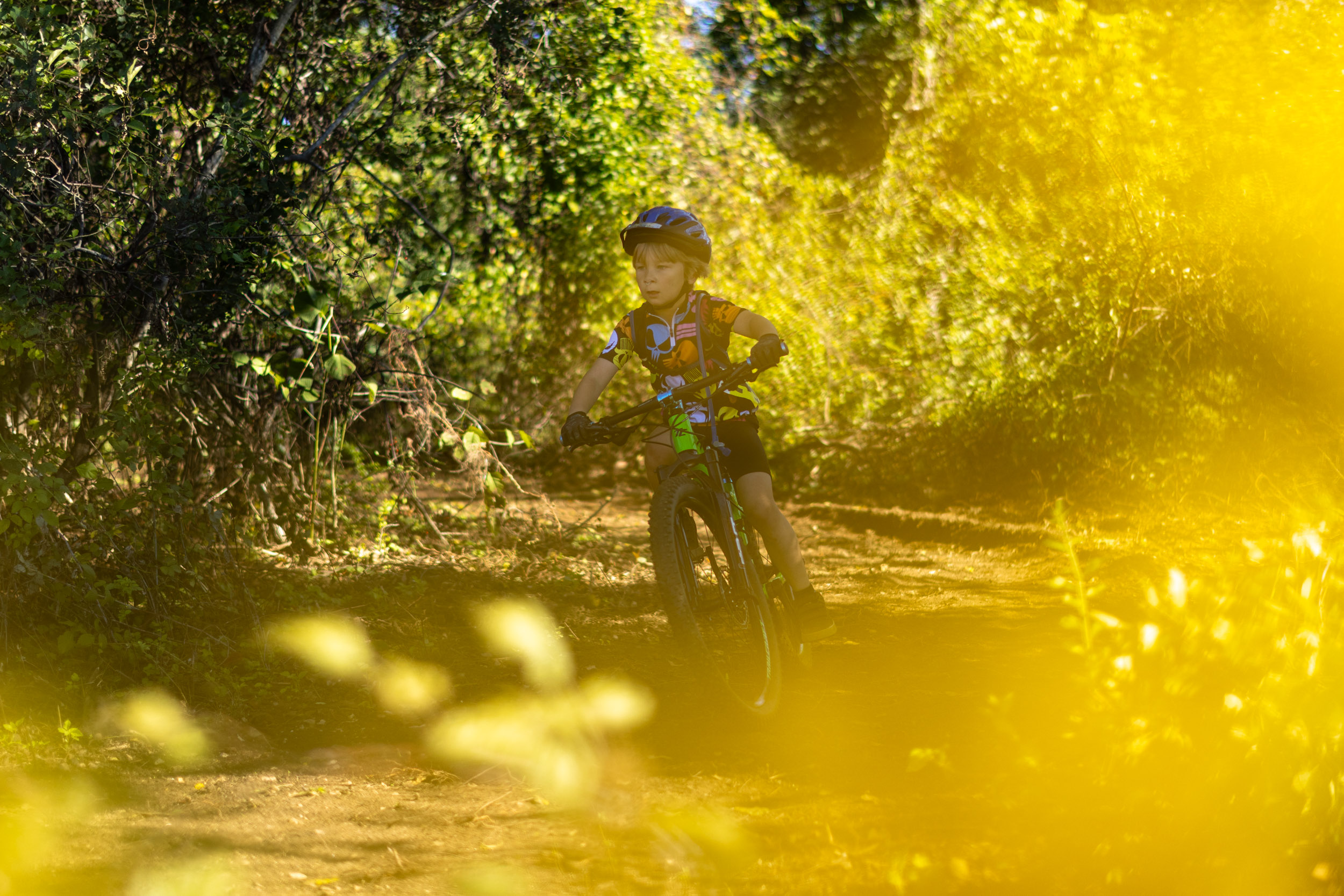

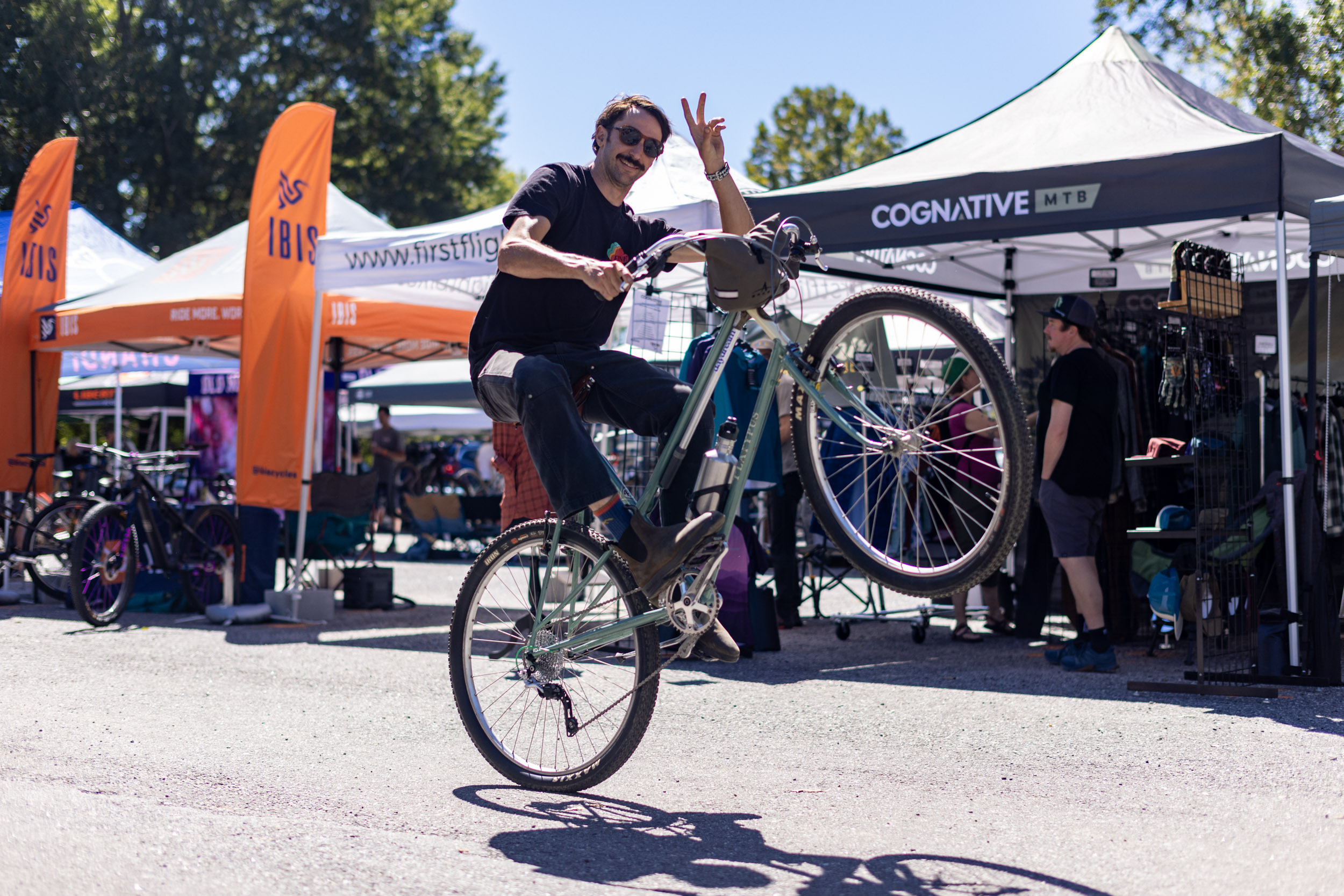
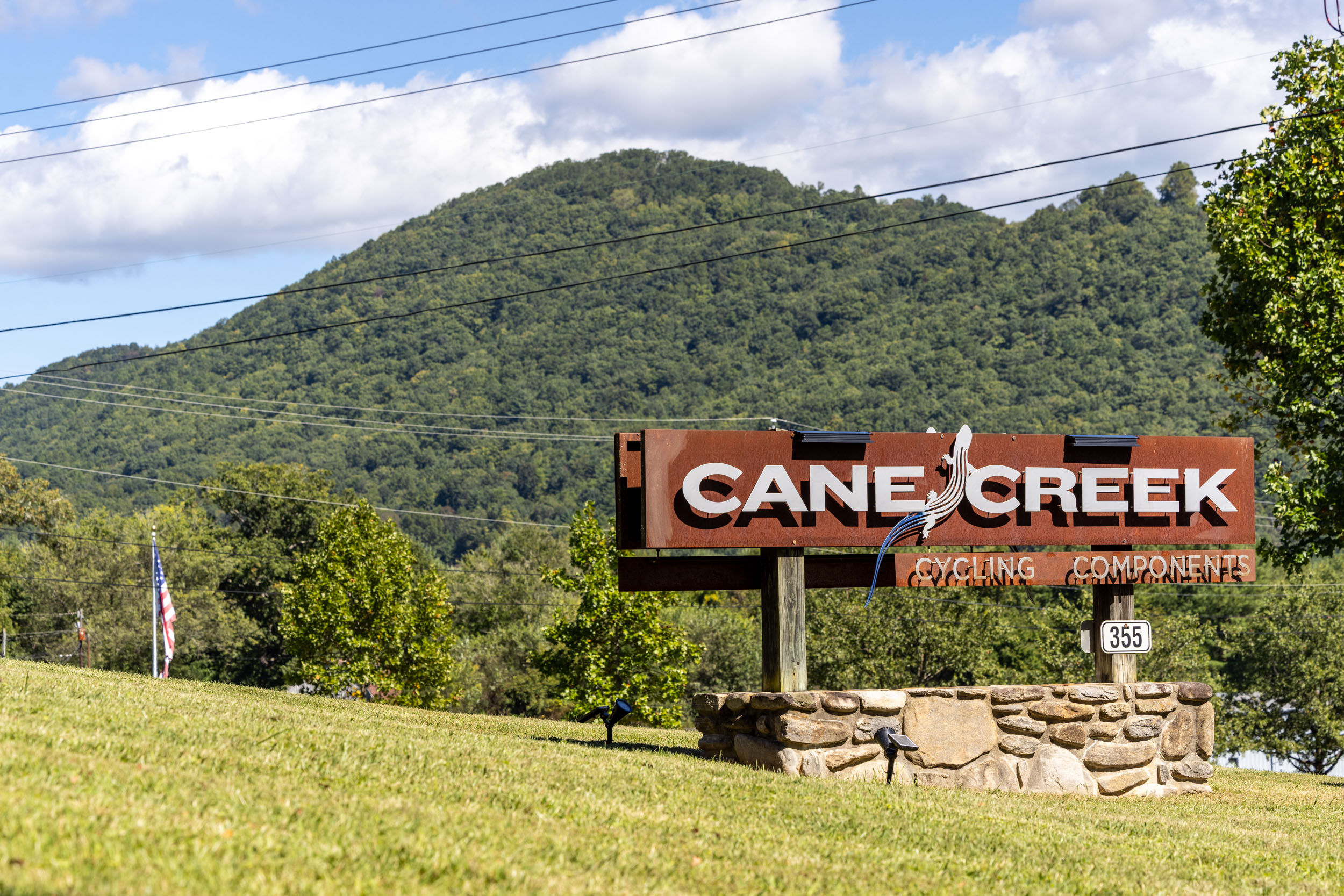
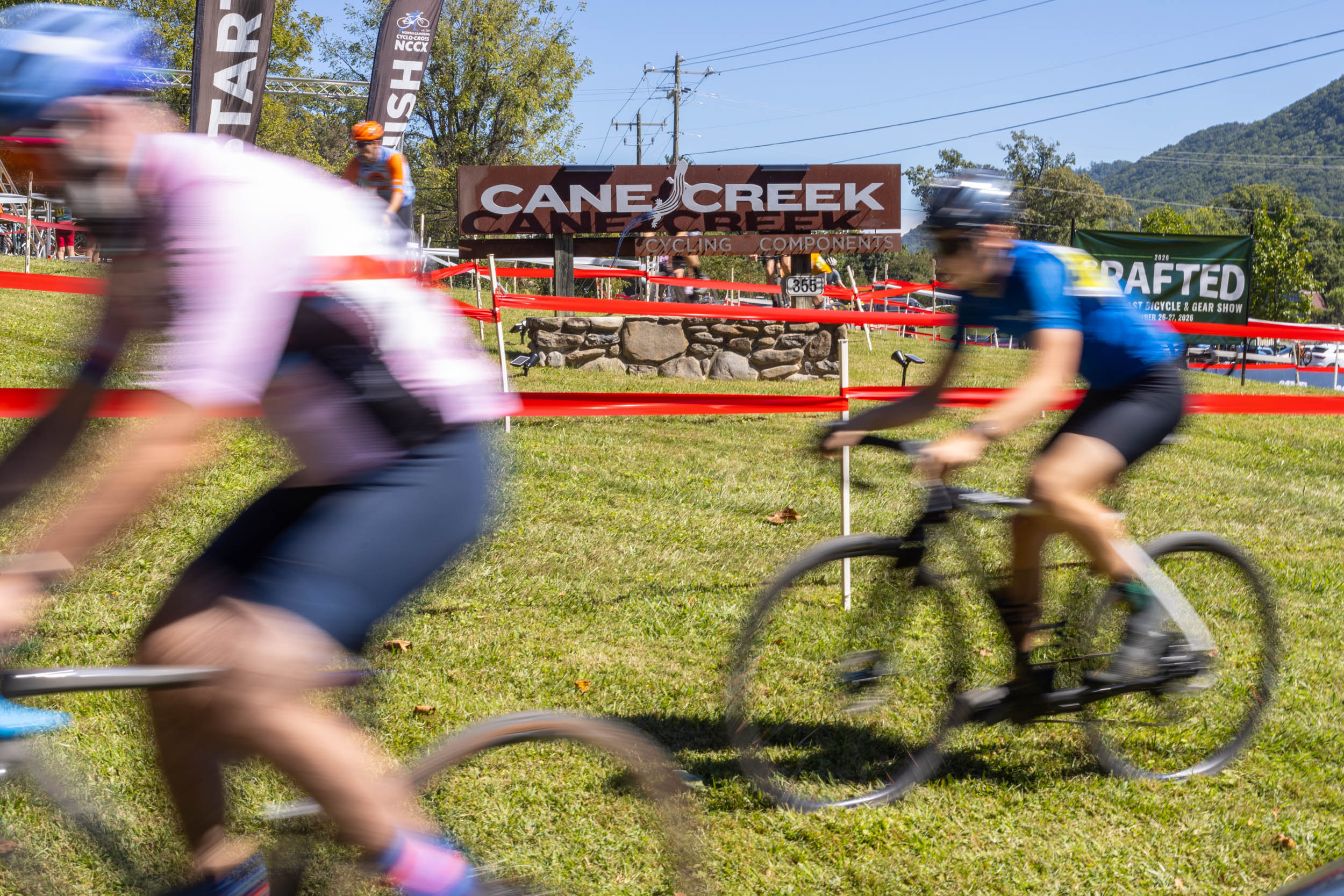
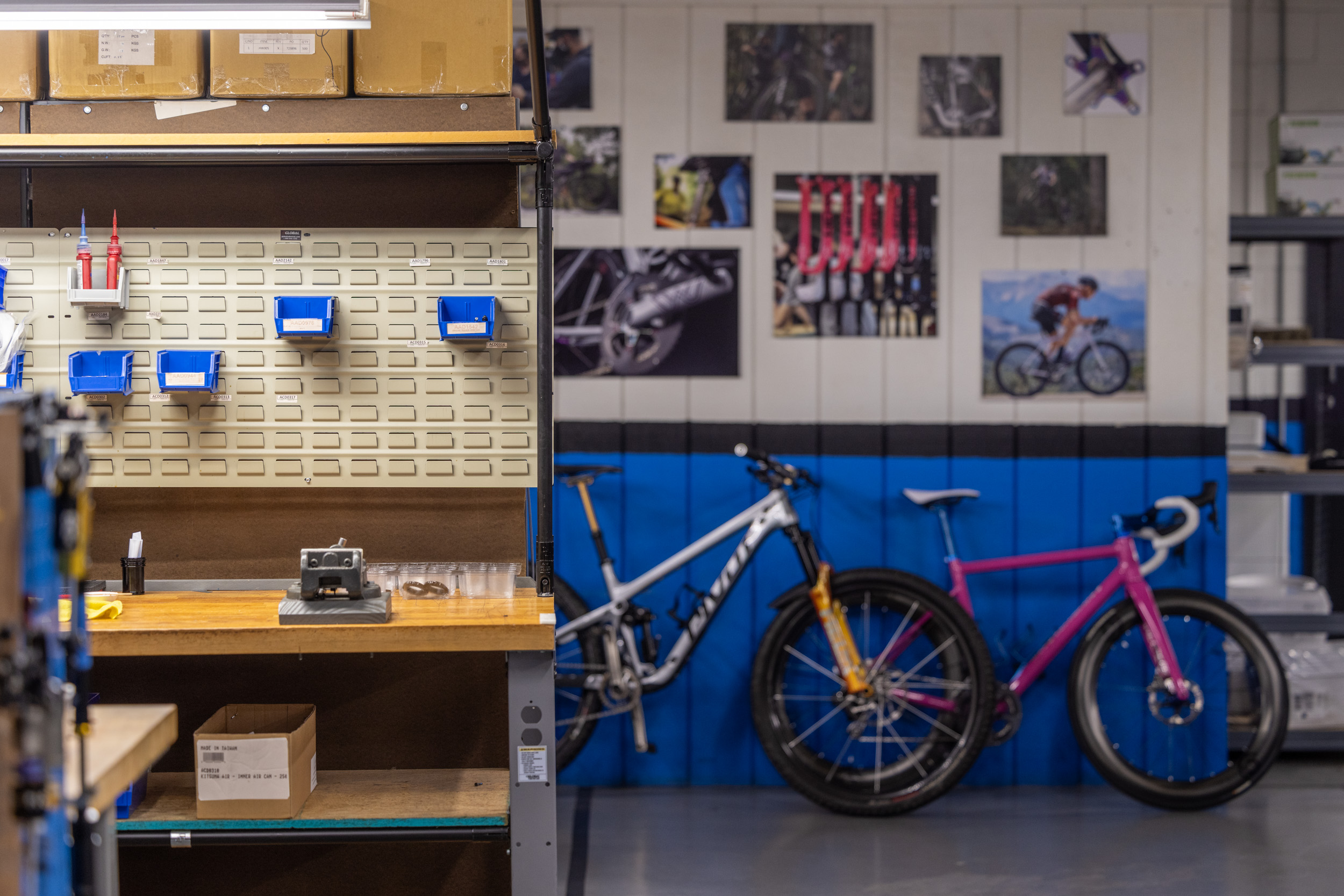
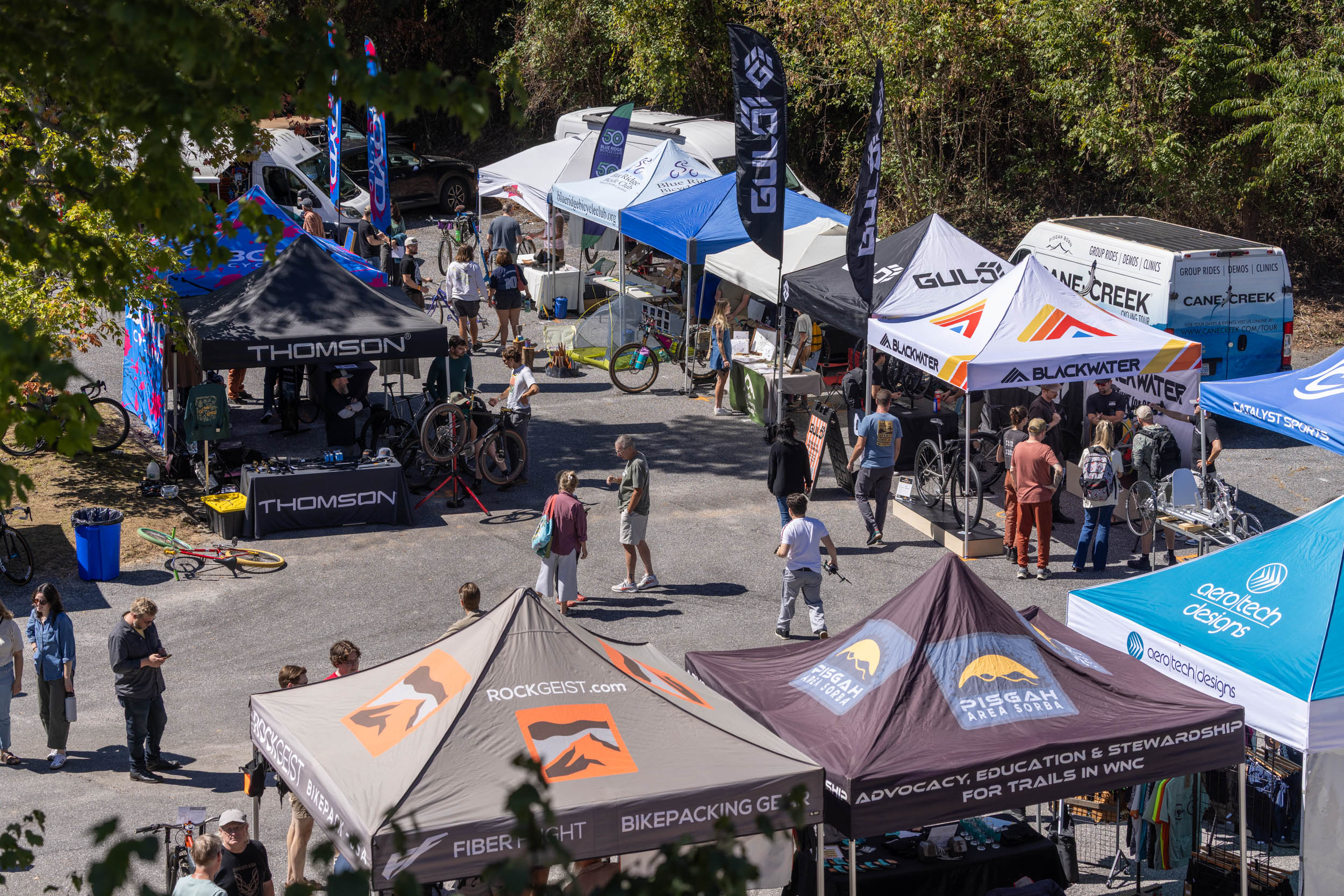
The show featured booths and vendors spreading the word about their wares to the general public, plus live music, food, tours through the Cane Creek facility, and a cyclocross race for kids and adults. It was jam-packed with all kinds of fun activities, but most of all: some great bikes! With that, let’s get into the Bikes and Builders of CRAFTED 2026.
Flowers Bikeslink
West Asheville, North Carolina
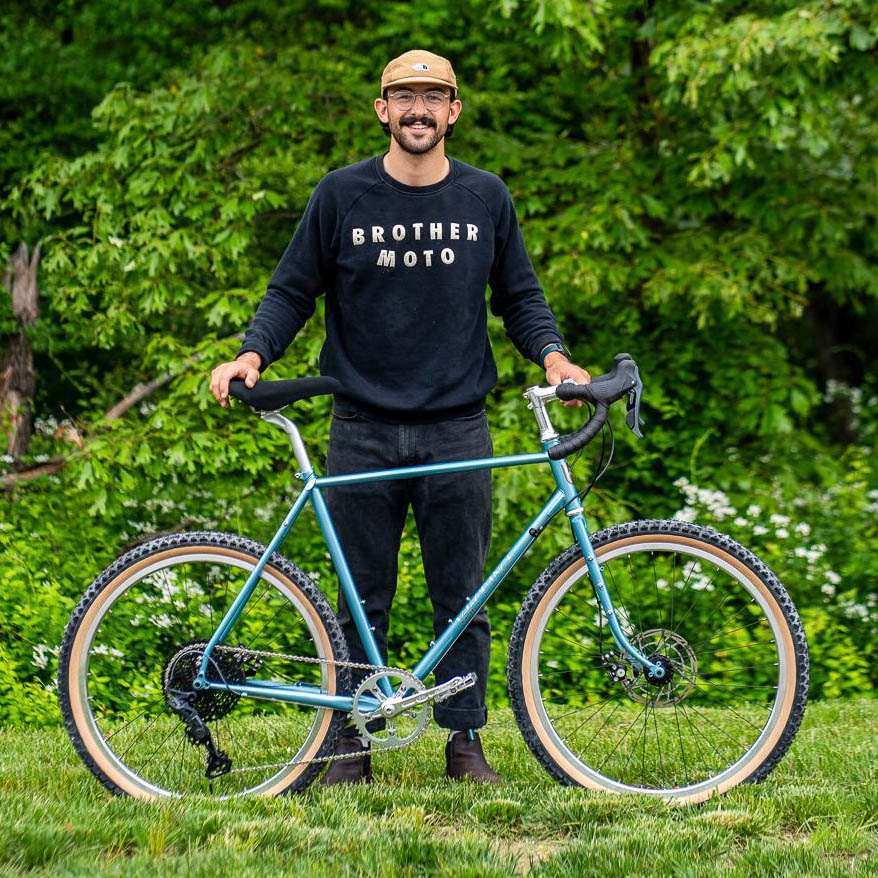
Jack Kosma is one of the only local builders at CRAFTED, as he’s based in Asheville, North Carolina. He’s been building bikes for four years, and keeps his builds “dirt-able.” Though he had an array of bikes scattered about the venue, the bike I felt most drawn to was one I had heard a few things about. If you’d visited Find Your Line in West Asheville, you’d likely met Derrick Hetlage. He’s a local mechanic, and a gem of one at that.


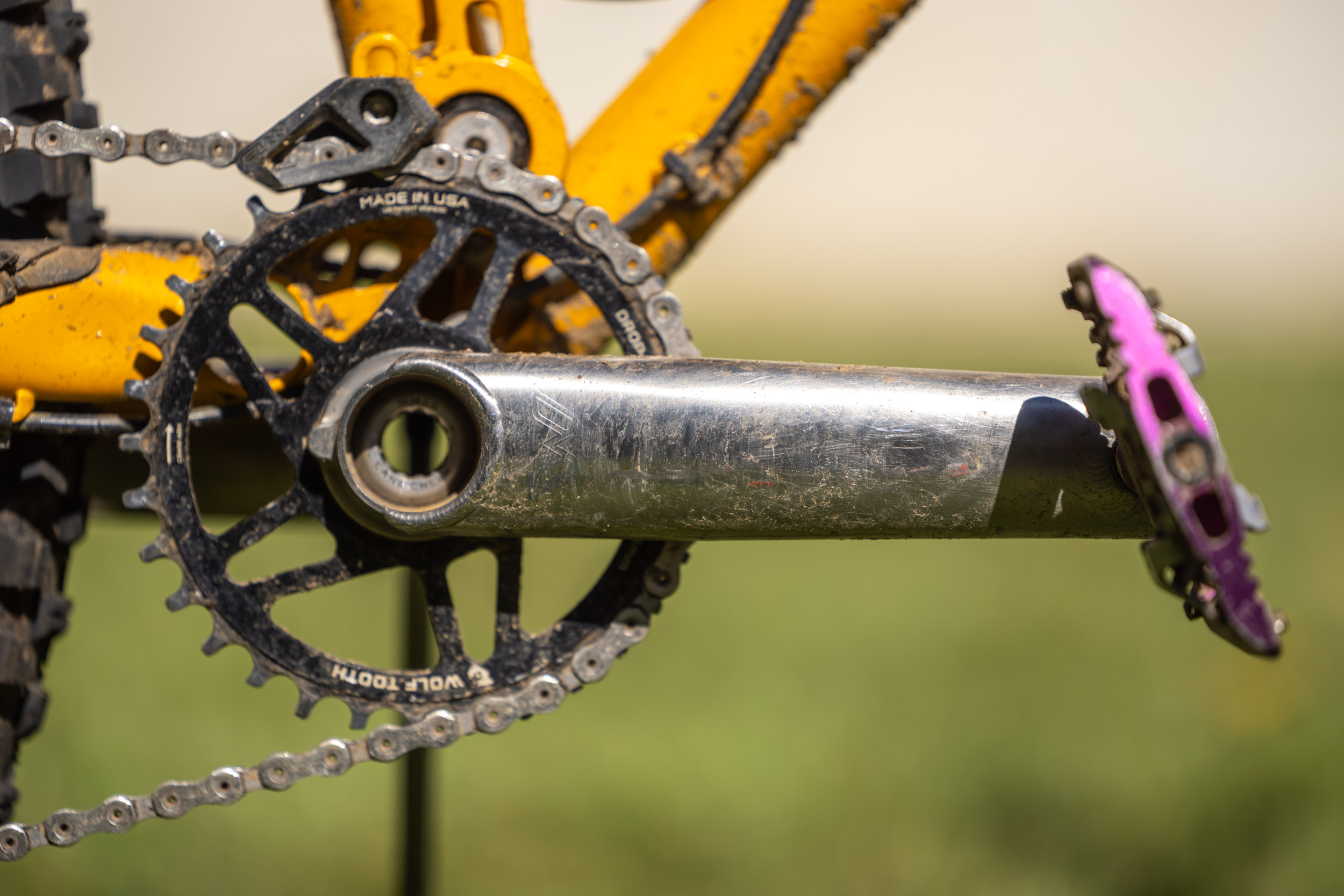
Like an increasing number of Asheville locals, he hit Jack up for a custom build. Replacing his beater with what Jack is calling “Derrick’s Shit Bike.” The steed he’d been using for cruises around town was never all that great, and Derrick wanted something that fit him a bit better, but also something he could put some of his most beloved parts on. After receiving and riding it a few times, he fell in love and got a little blingy with it. Specced with gold-anodized Wolf Tooth parts, it’s truly a mechanic’s bike. Relatively cheap, dependable, mechanical, and capable of just about anything.


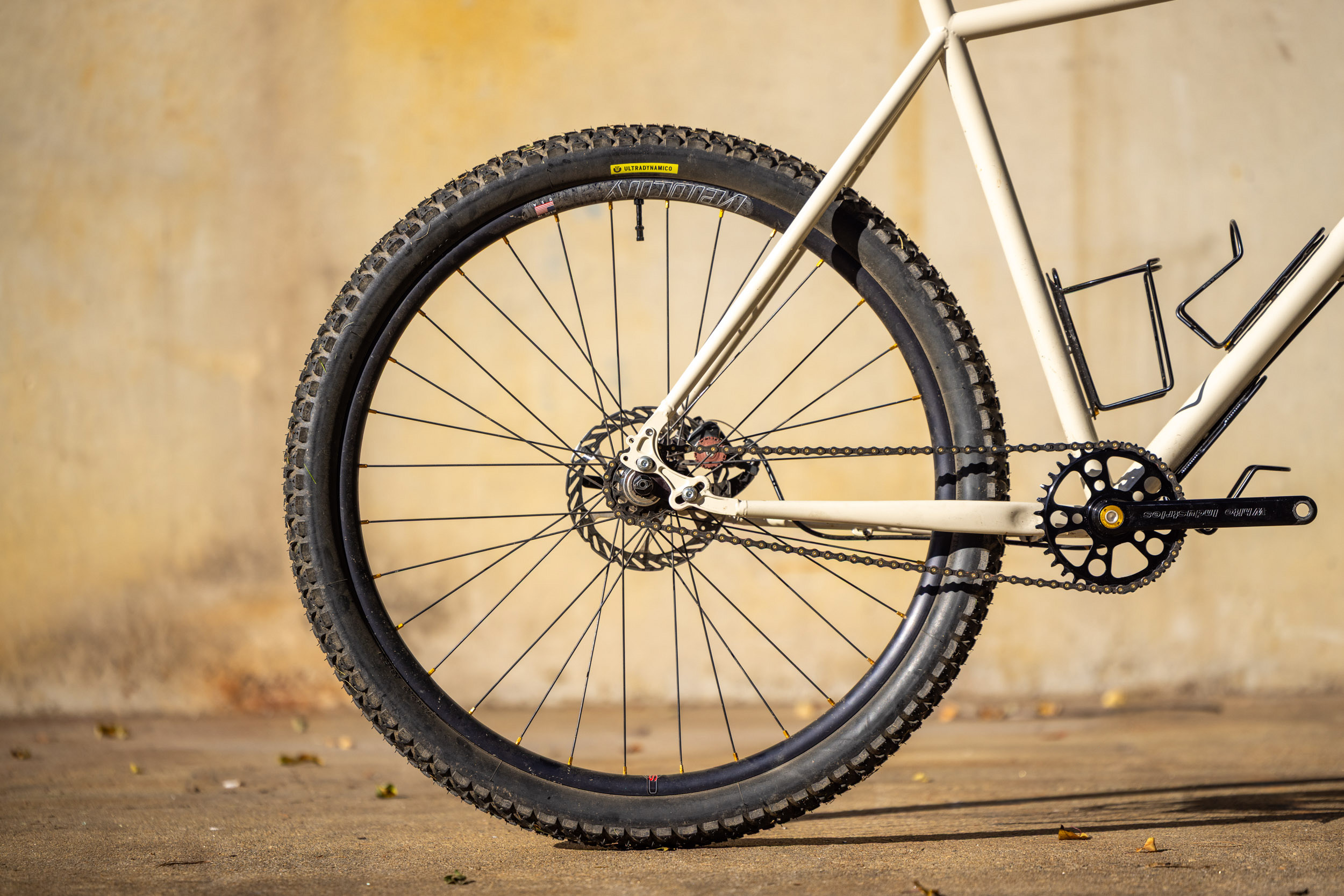
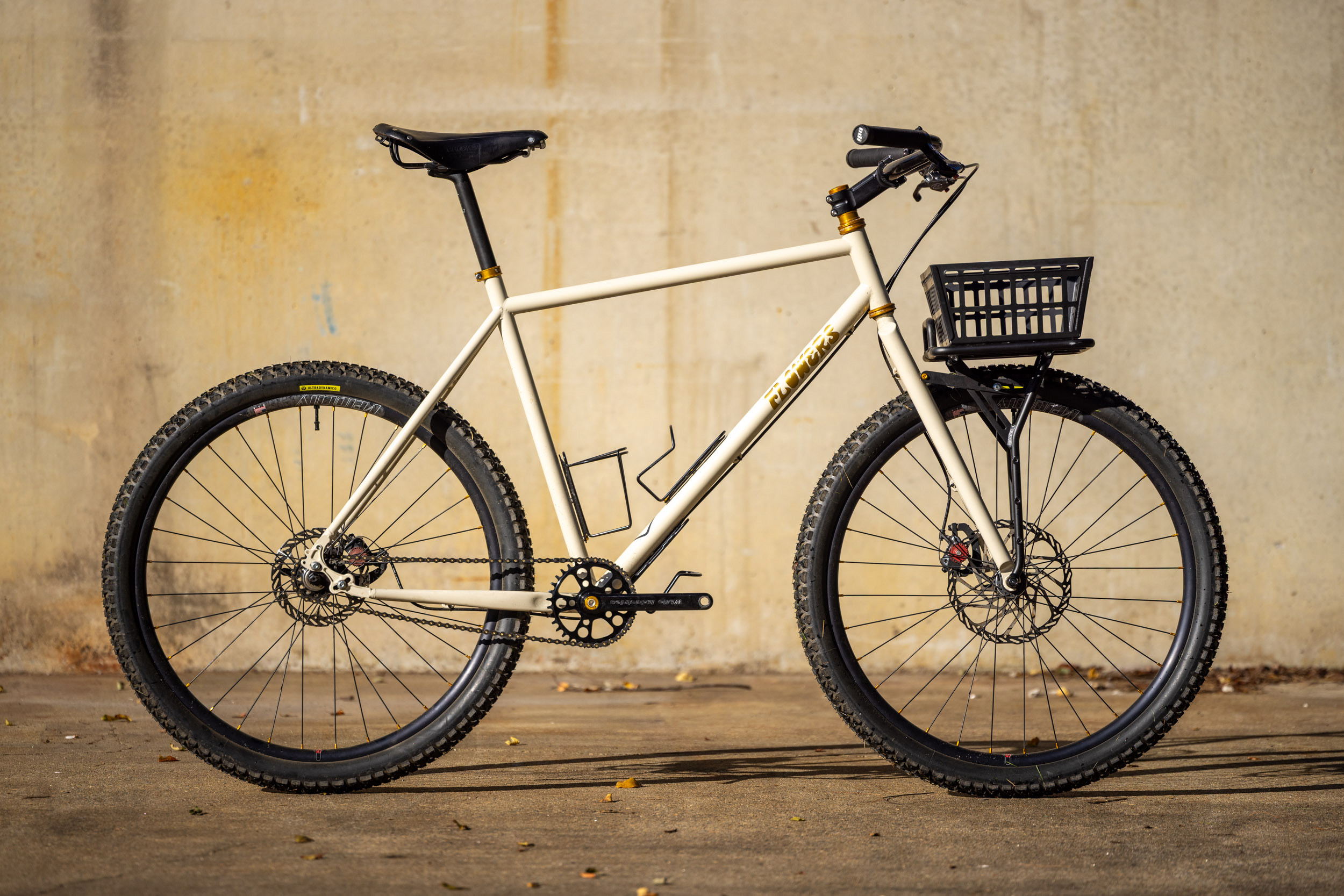
That ethos also parallels Jack’s philosophy on Flowers. A member of many hardcore bands before he became obsessed with bikes, Jack decided to name his bike venture “Flowers” because he felt it was somewhat fungible. It could have hippie-like connotations, soft, rock, hardcore, or just be something fun to look at. For this bike, Jack used a mix of Columbus Zona and Life tubing, based it around the fork that Derrick supplied—some random steel fork he had lying around—and 27.5 x 2.2” tires. It’s Flowers number 16, though the bike lacks any serial-like markings, as Jack reminded me, “No serial numbers, no masters.”
Big Block Bikeslink
Raleigh, North Carolina
Dustin Simons is a relatively new builder out of Raleigh, North Carolina. He’s been building bikes for three years, but he started his brand, Big Block Bikes, earlier this year. It’s based on a desire to bring the price of custom bikes down to a level more people can afford through 3D printing. As Dustin tells it, most of what he’s doing today wouldn’t have been possible 10 years ago. Mixed-material printing has come leaps and bounds over the years, giving more small producers and builders like Dustin access to expensive, complex 3D printing machines.


As the story goes, Dustin went through three expensive carbon bikes in about 18 months. Finally deciding he needed something more robust for himself, he resolved to combine his love for tinkering, something he had lost touch with since his youth playing around with engines and car parts, with a formal education as a mechanical engineer. What resulted was what he feels is the ideal way for him to create custom solutions in a time and cost that’s comparable to some production offerings.
In essence, he has a master design file for his lugs—headtube, bottom bracket, chainstays, dropouts—and he alters them based on geometry and riding needs. Once he receives the lugs, he welds them using whatever tubing the customer or bike style calls for. Right now, he focuses primarily on drop-bar bikes because that’s what he knows, but he plans to develop a flat-bar/mountain bike offering in the coming months.
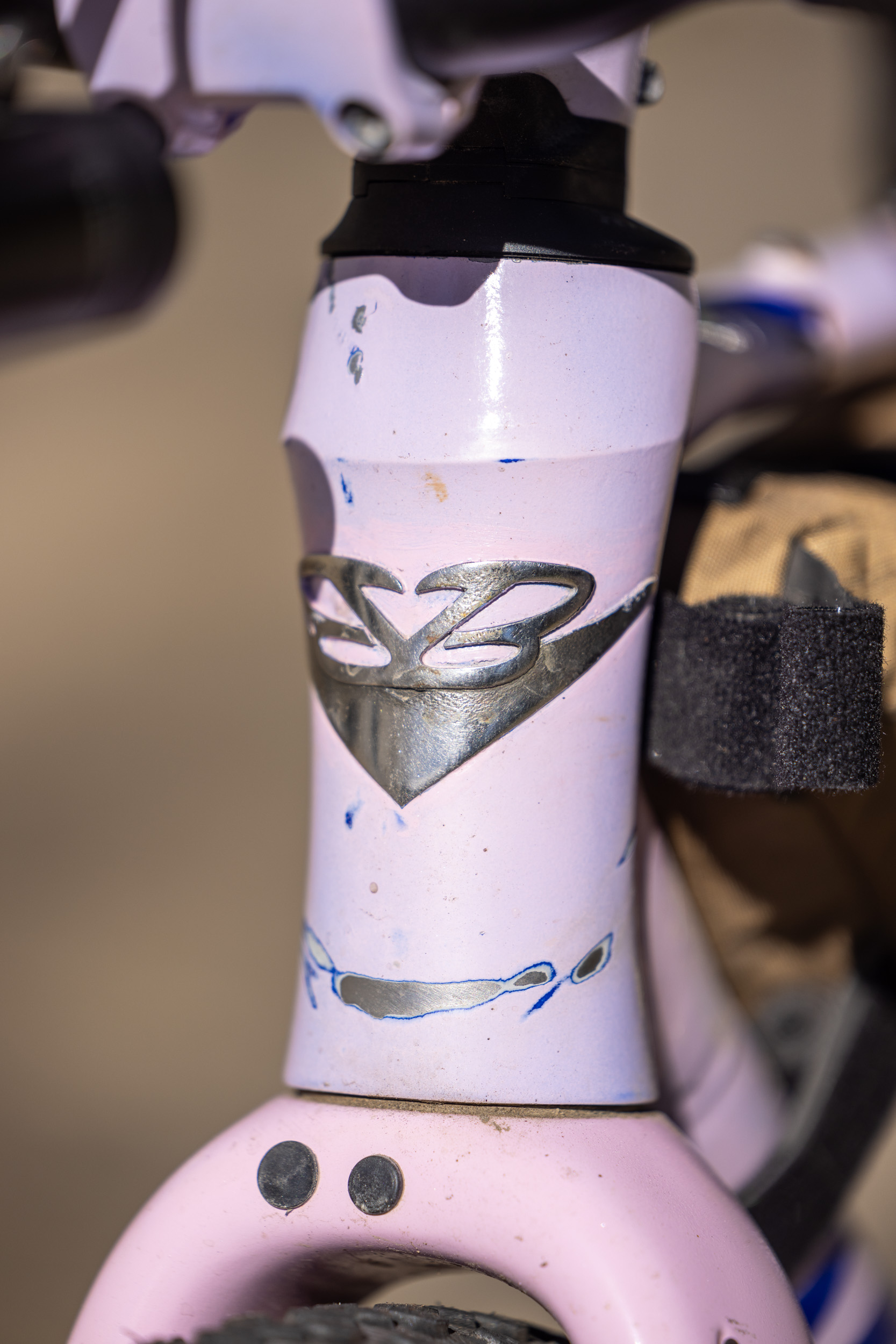


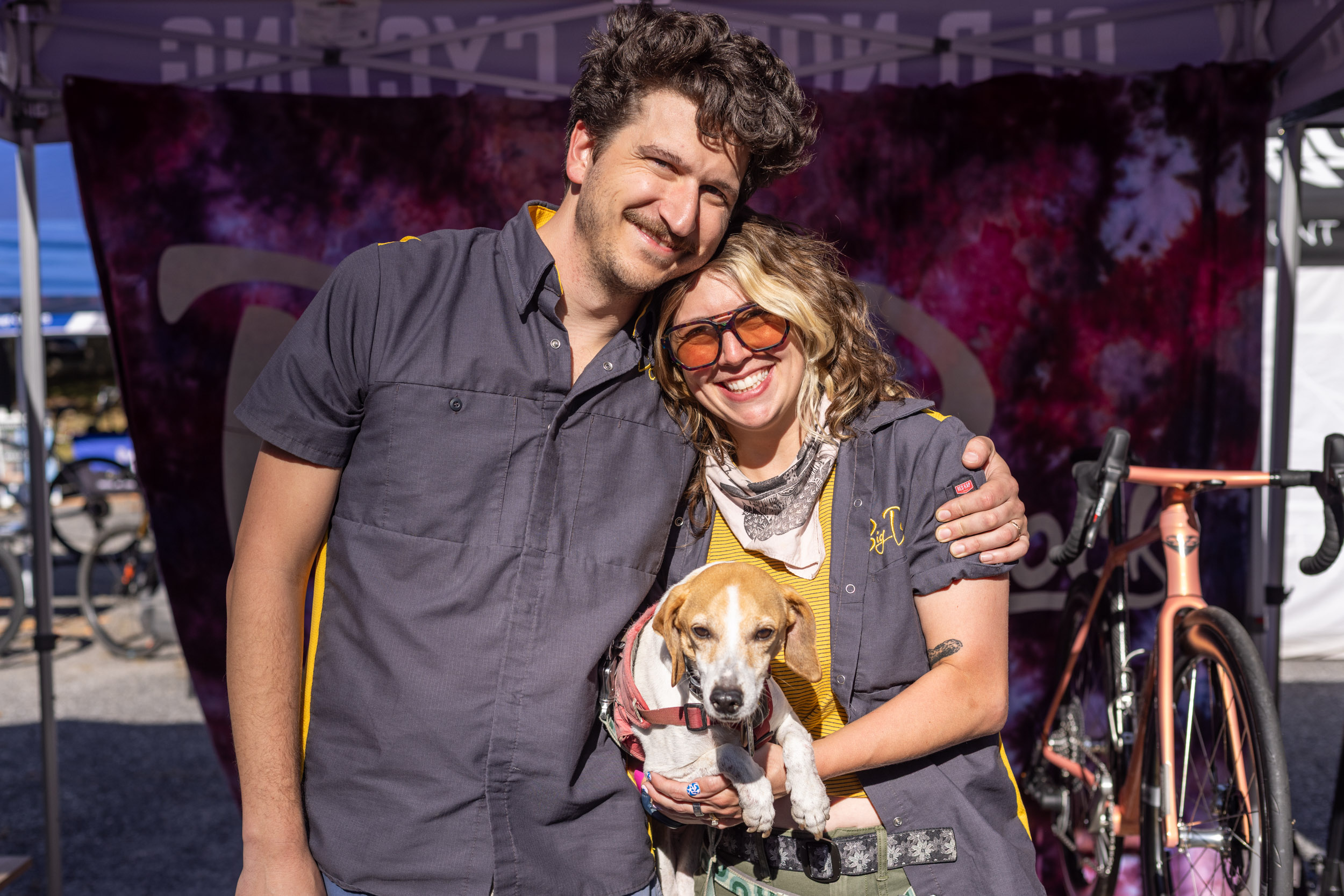
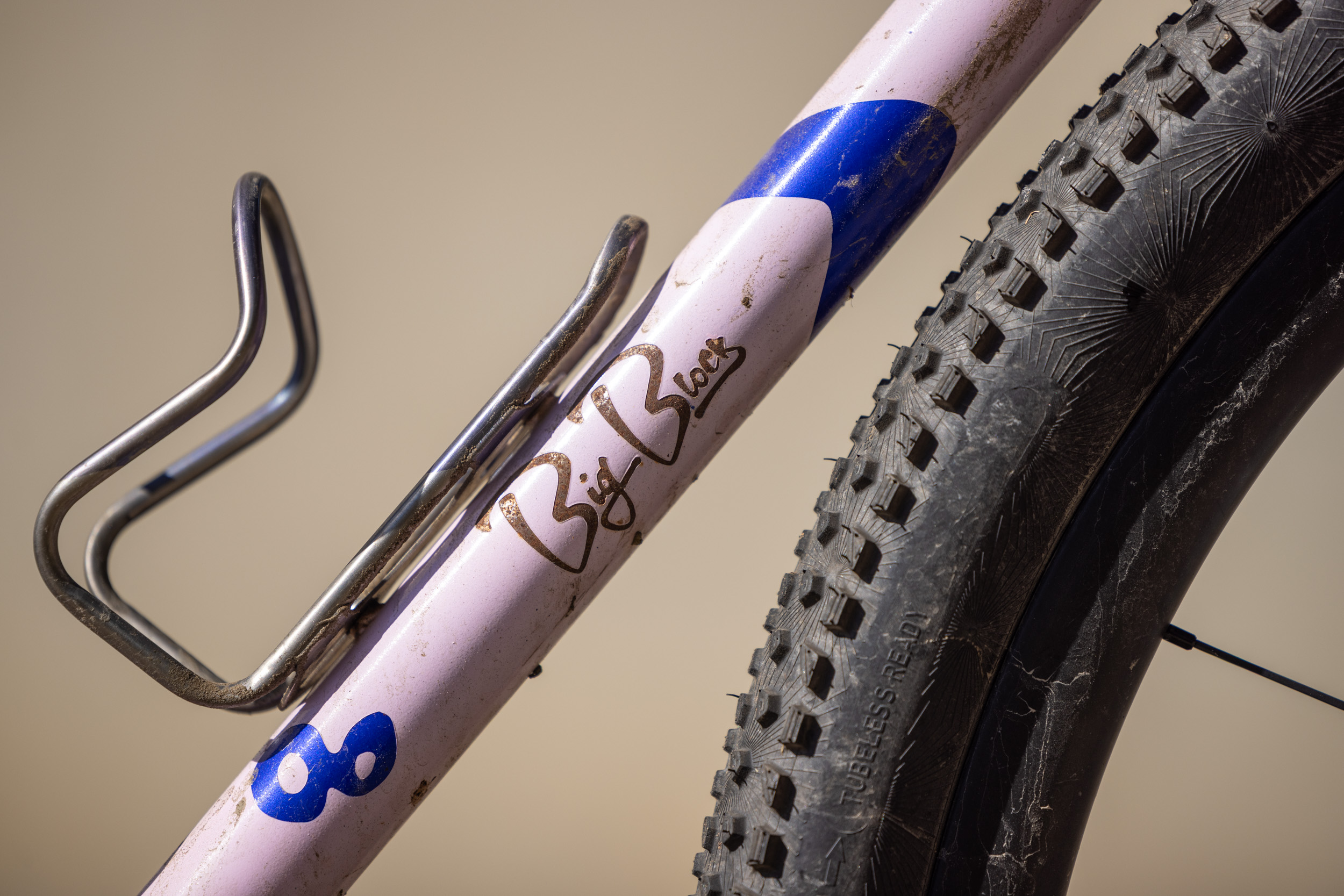
For $2,500 and with an eight-week lead time, he offers fully custom geometry and a two-tone paint job. Dustin says that while 3D printing has pros and cons, his bikes are pound for pound as strong as bikes made with other welding and fabricating techniques. Though many of his bikes have skinnier tires, his wife’s bike, which has seen tons of use on dirt and is taking on West Virginia’s Mountaineer Monster Race in a month, felt the most appropriate to document. Dustin’s wife, Paulina, did the paint and designed the logo, basing the bike’s paint job on a “groovy vibe.” She had her nails painted to match, and their dog Frito came along to hang.
Euler Bikeslink
Lowell, Massachusetts
One of the most surprising bikes at CRAFTED this year was from Carter Bilawchuk, a 17-year-old high school student with a penchant for design and craftsmanship. Originally inspired by a school project, Carter eventually wanted to figure out if he could make something better than a bike off the shelf. He drew on his childhood experience learning from his father, a woodworker, and set about making his first bike frame. If that wasn’t hard enough, Carter was intent on making the bike he wanted, not just any bike.
An avid mountain biker, he had to wrap his head around suspension designs and everything that comes with it. As I spoke to the bright young man, his parents were just out of earshot. Supportive and caring, I could tell his mom didn’t want her son playing around with torches and the kinds of fumes that have produced some of the more eclectic minds in the bike world, so part of that is a material motivation for what you see here: a bike frame made of aluminum tubes held together with epoxy.
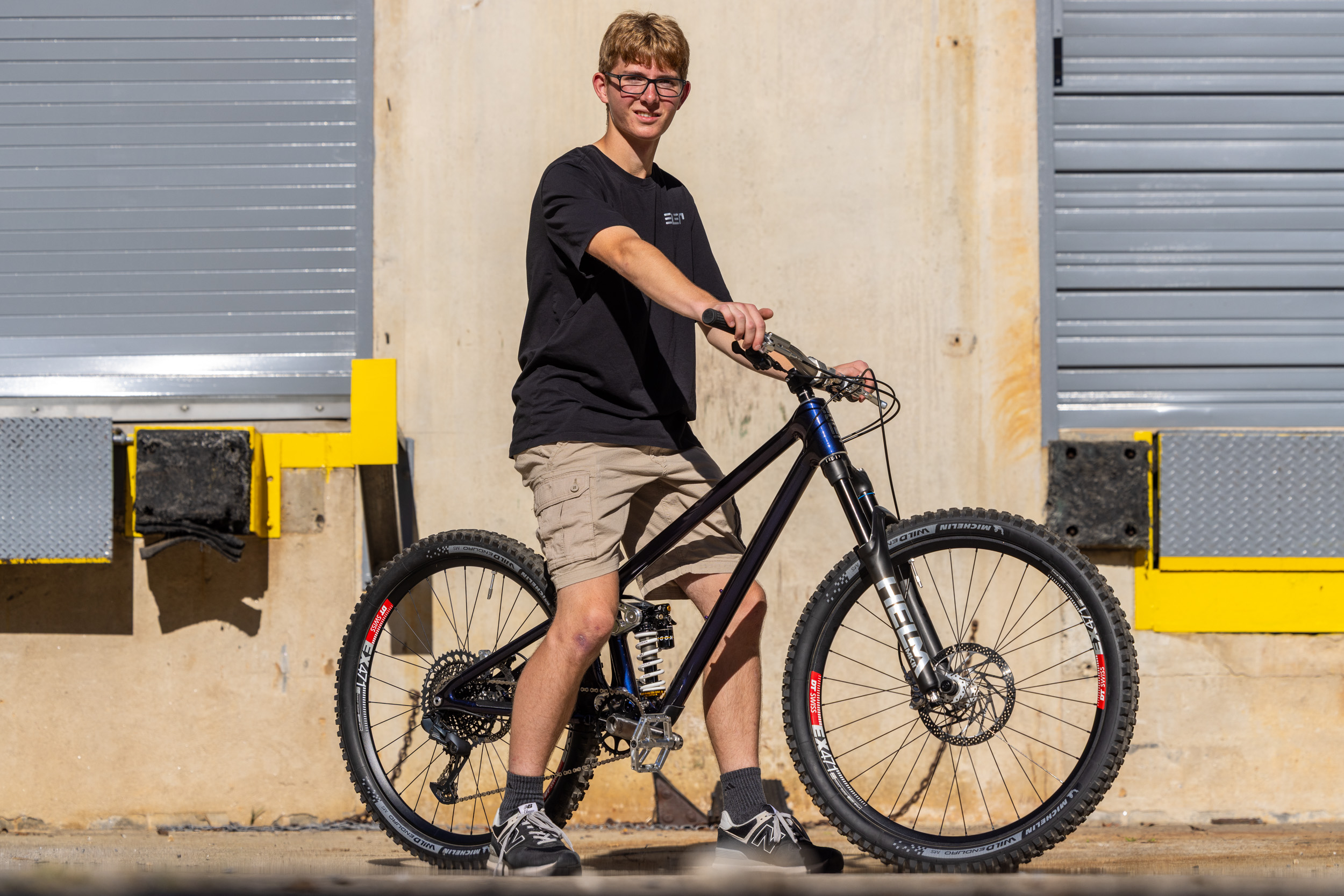
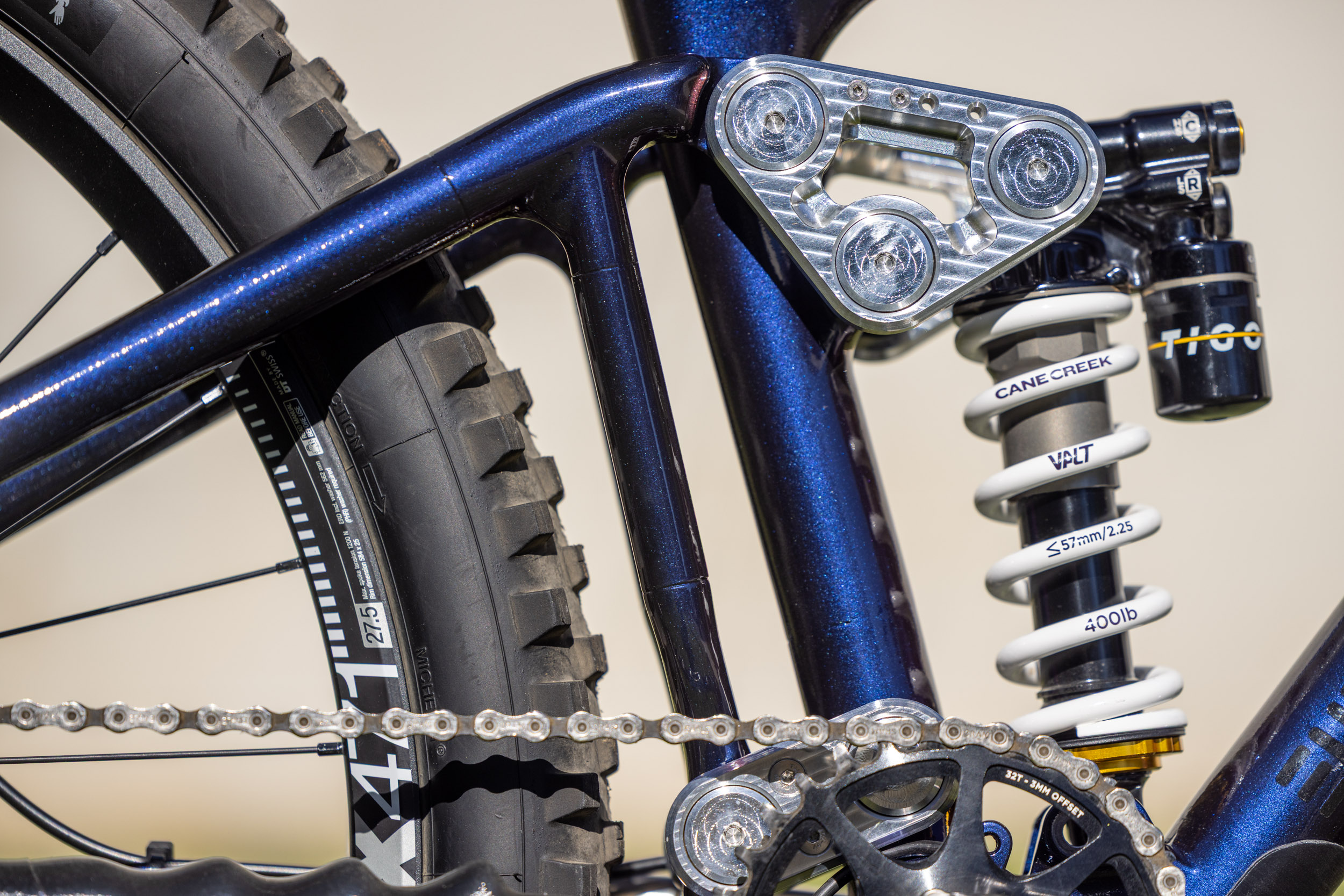


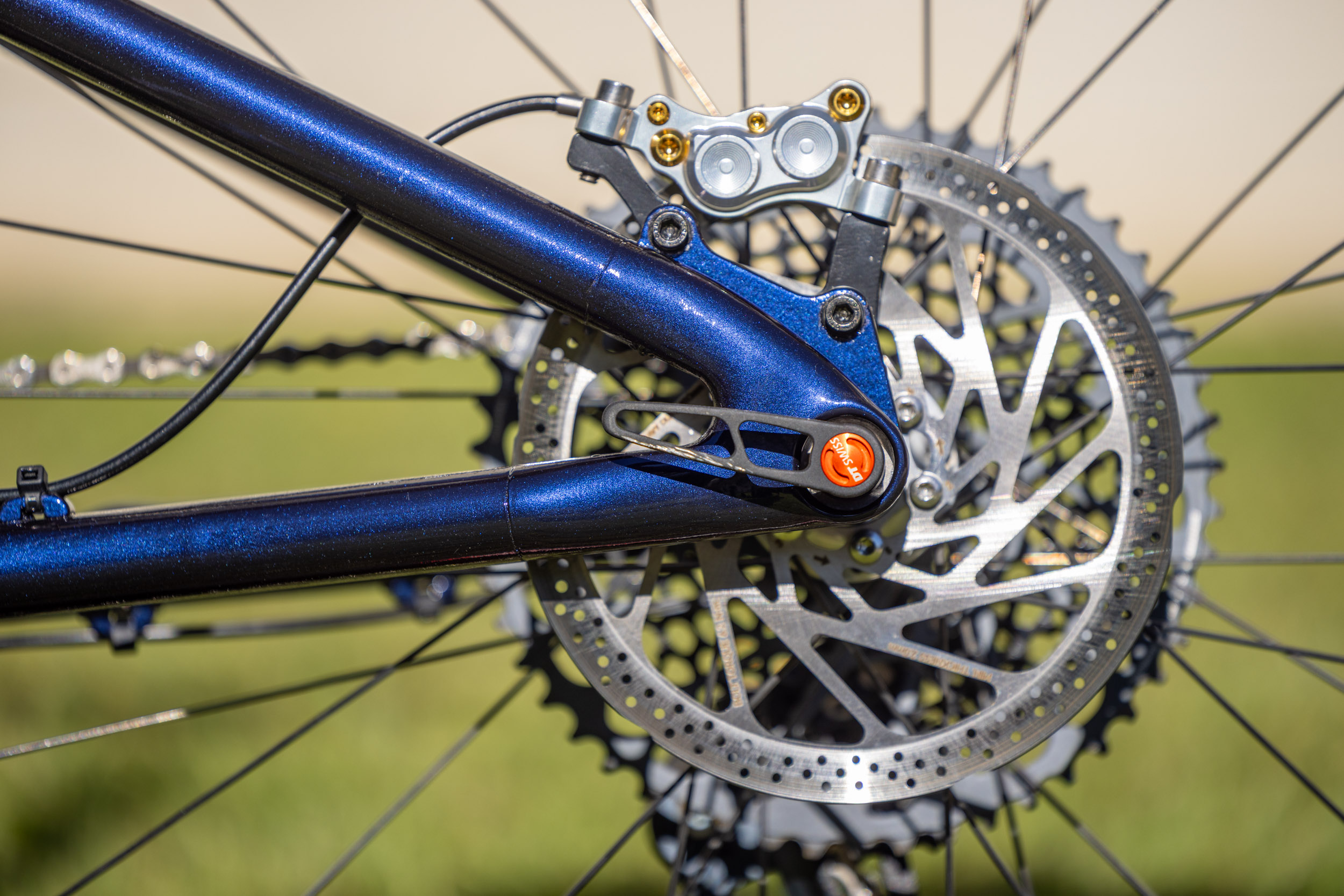
When I first heard it wasn’t welded, I thought, “Surely this thing is going to break.” But Carter assured me that it’s every bit as strong as something you can get from a store. In fact, he has a whole YouTube channel dedicated to showing off his rides. It’s by no means light, as the entire bike weighs over 30 pounds (not bad for a full-suspension, actually), but the craftsmanship and attention to detail are mesmerizing. Using 3D-printed lugs, Carter joined the 6061 aluminum tubes to the joints after designing the bike and its components in CAD.
The frame uses machined aluminum linkage and bolts and has a clean external appearance that Carter says is intended to keep the unusual construction understated. The bike is a 27.5″, 135mm-travel trail bike designed around a 140mm fork. According to Carter, “the goal was to create something that could be ridden hard on technical Northeast trails while remaining relatively efficient and responsive rather than becoming a sluggish enduro bike. This also made it a perfect bike for jumps and freeriding.”
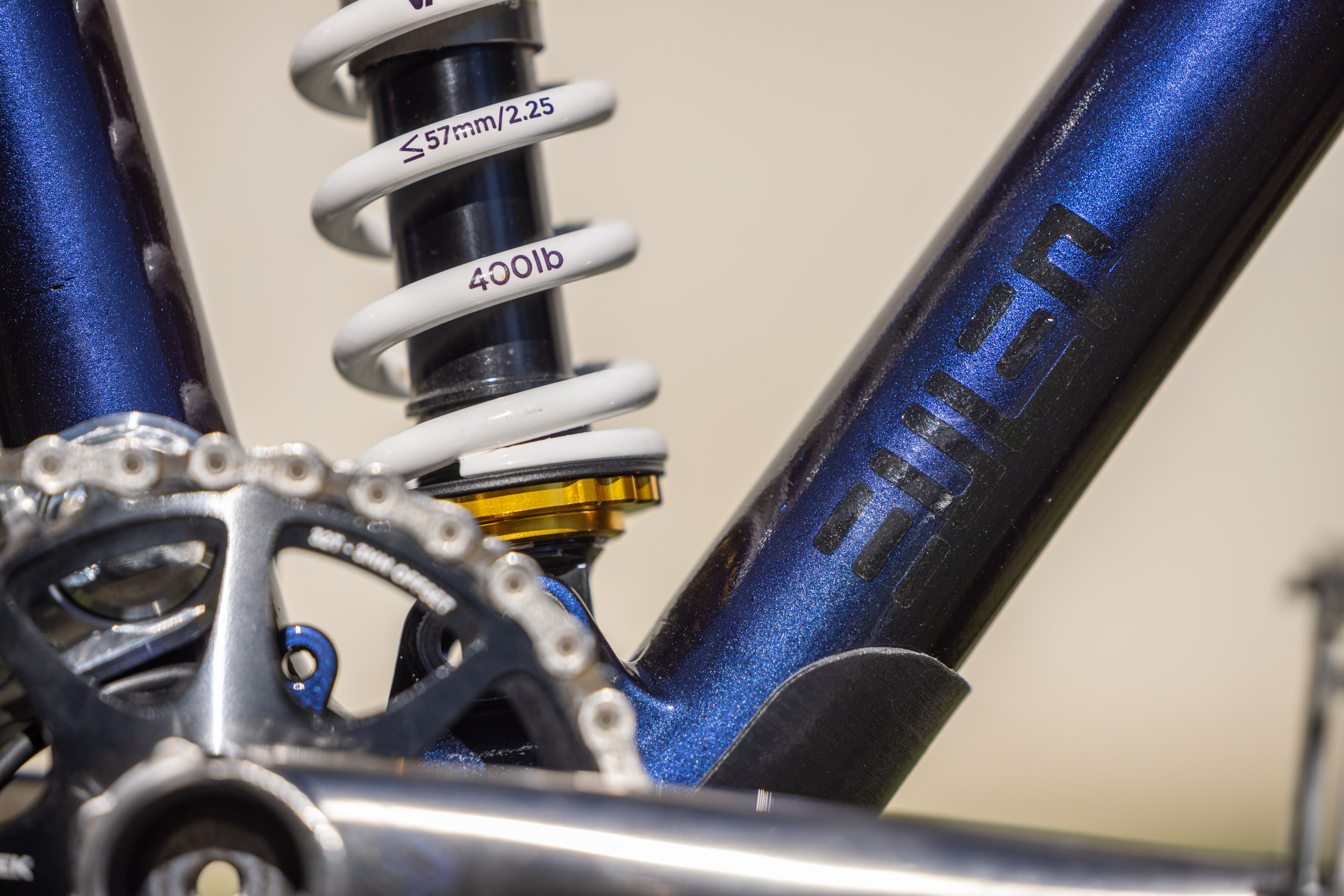
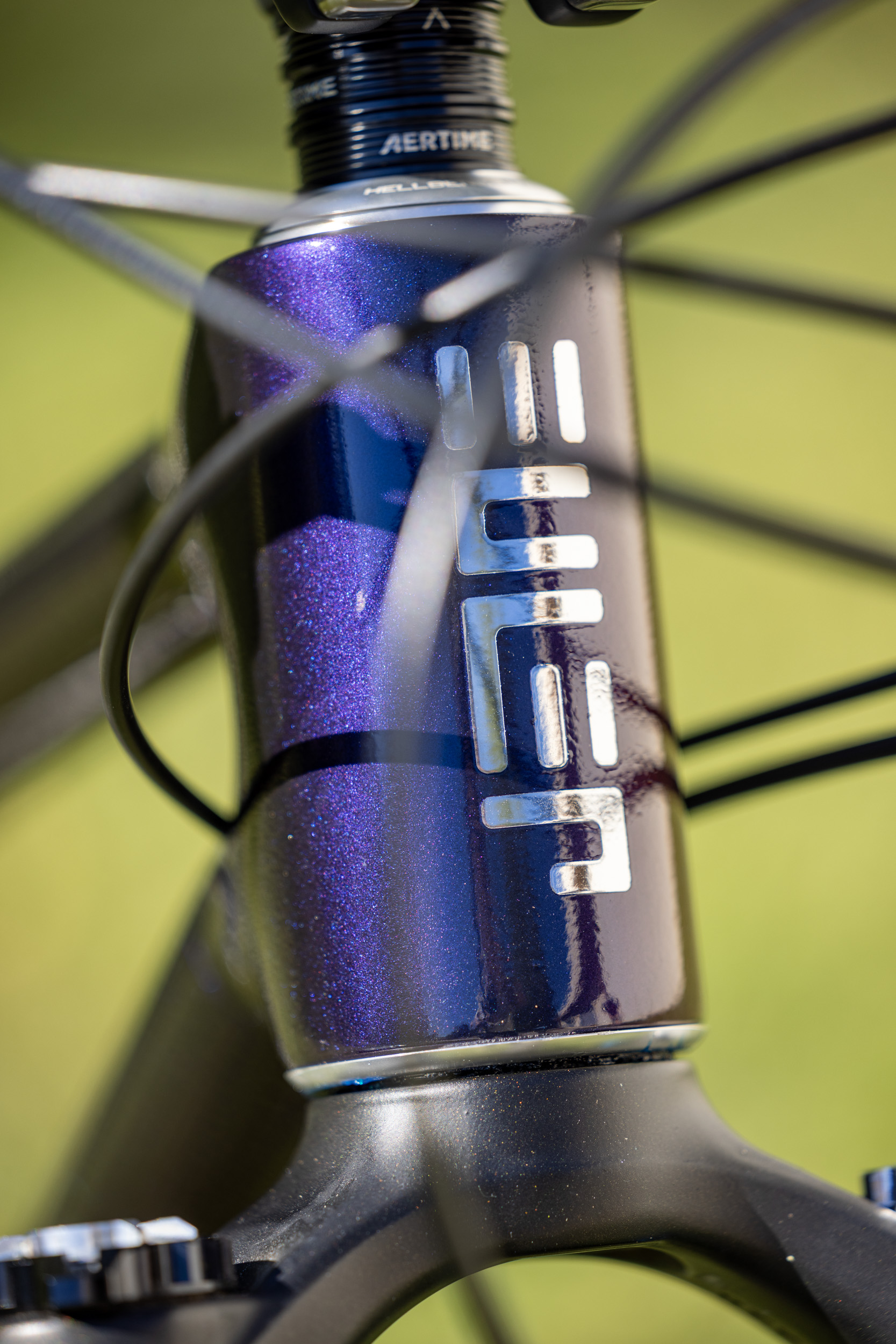

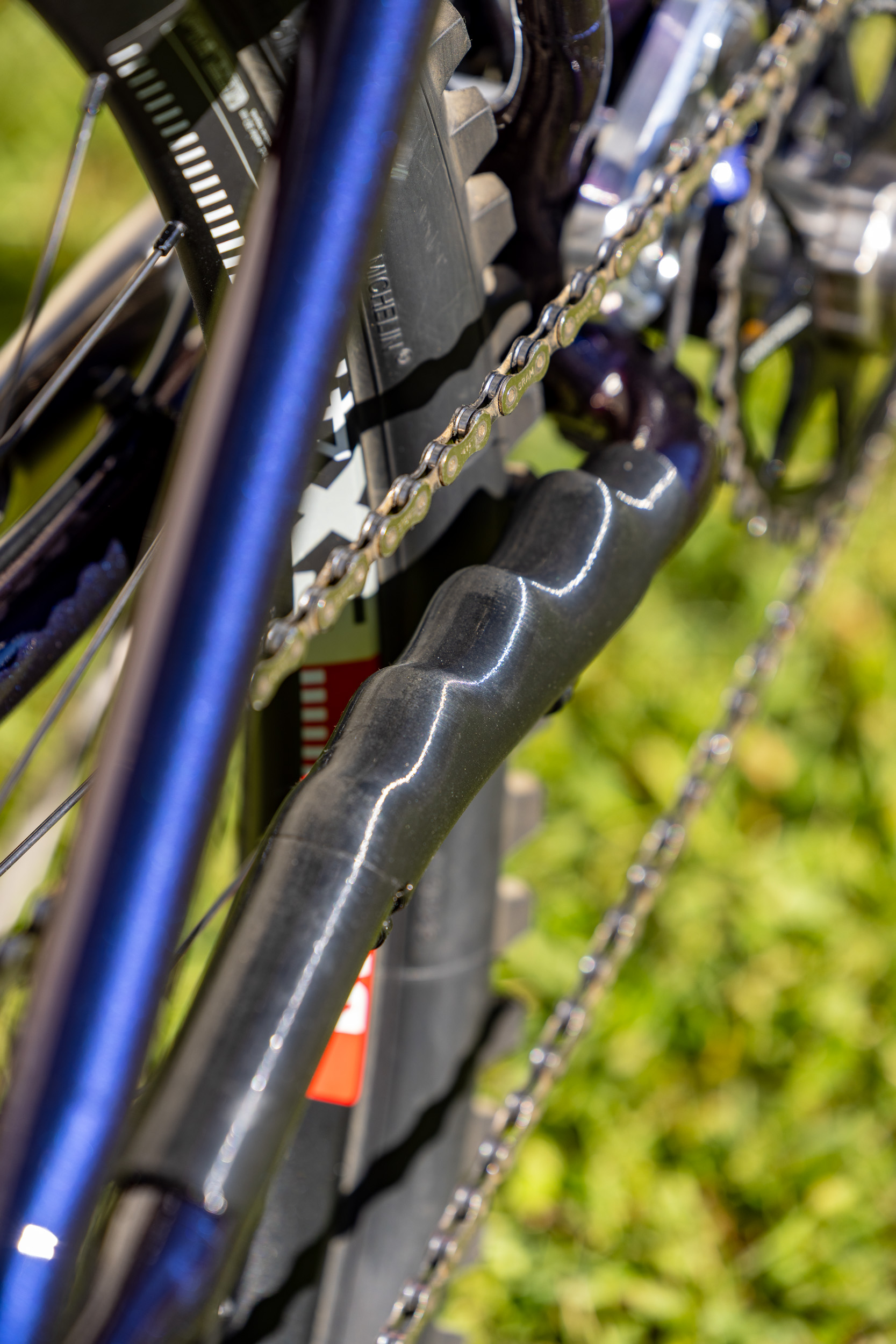
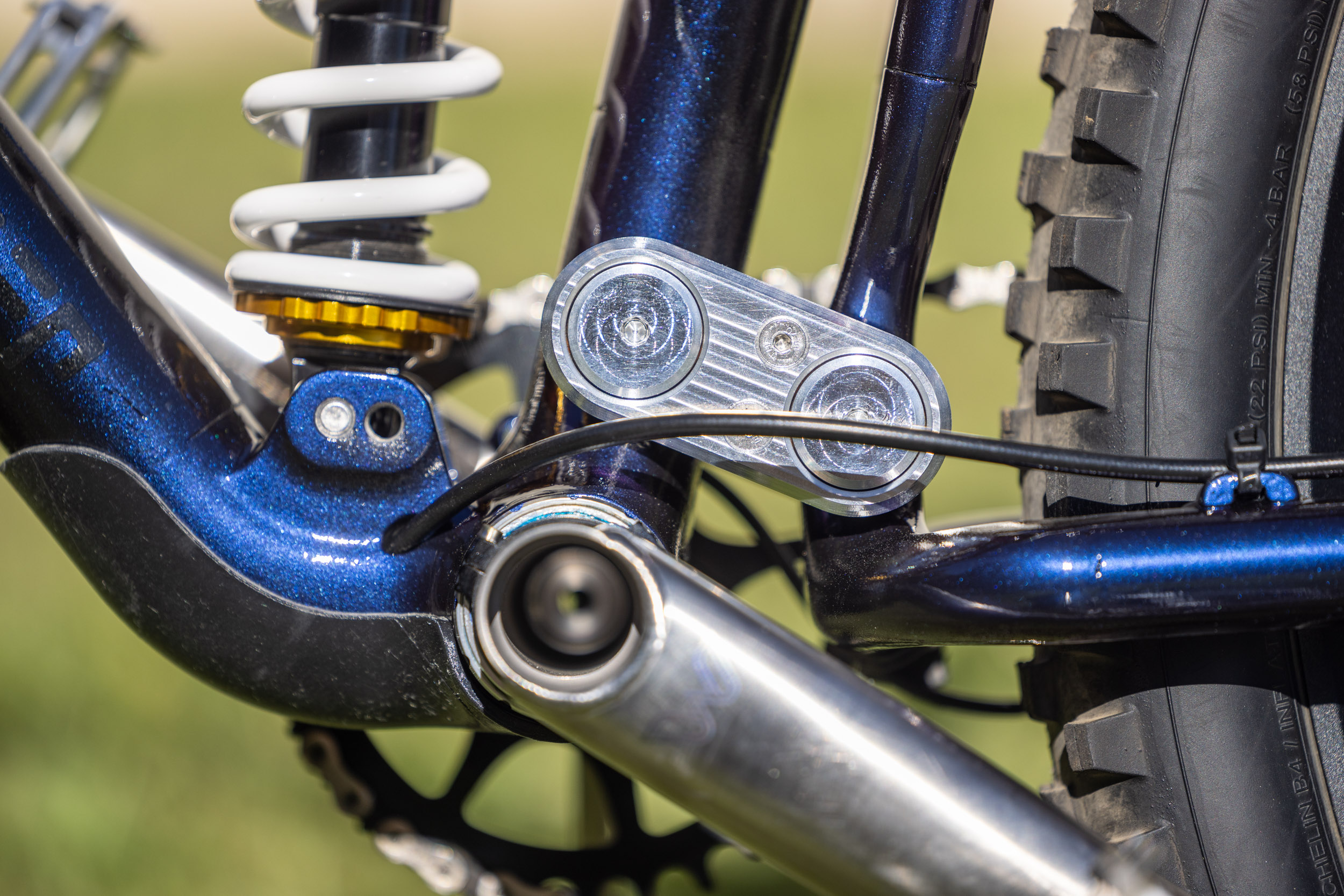
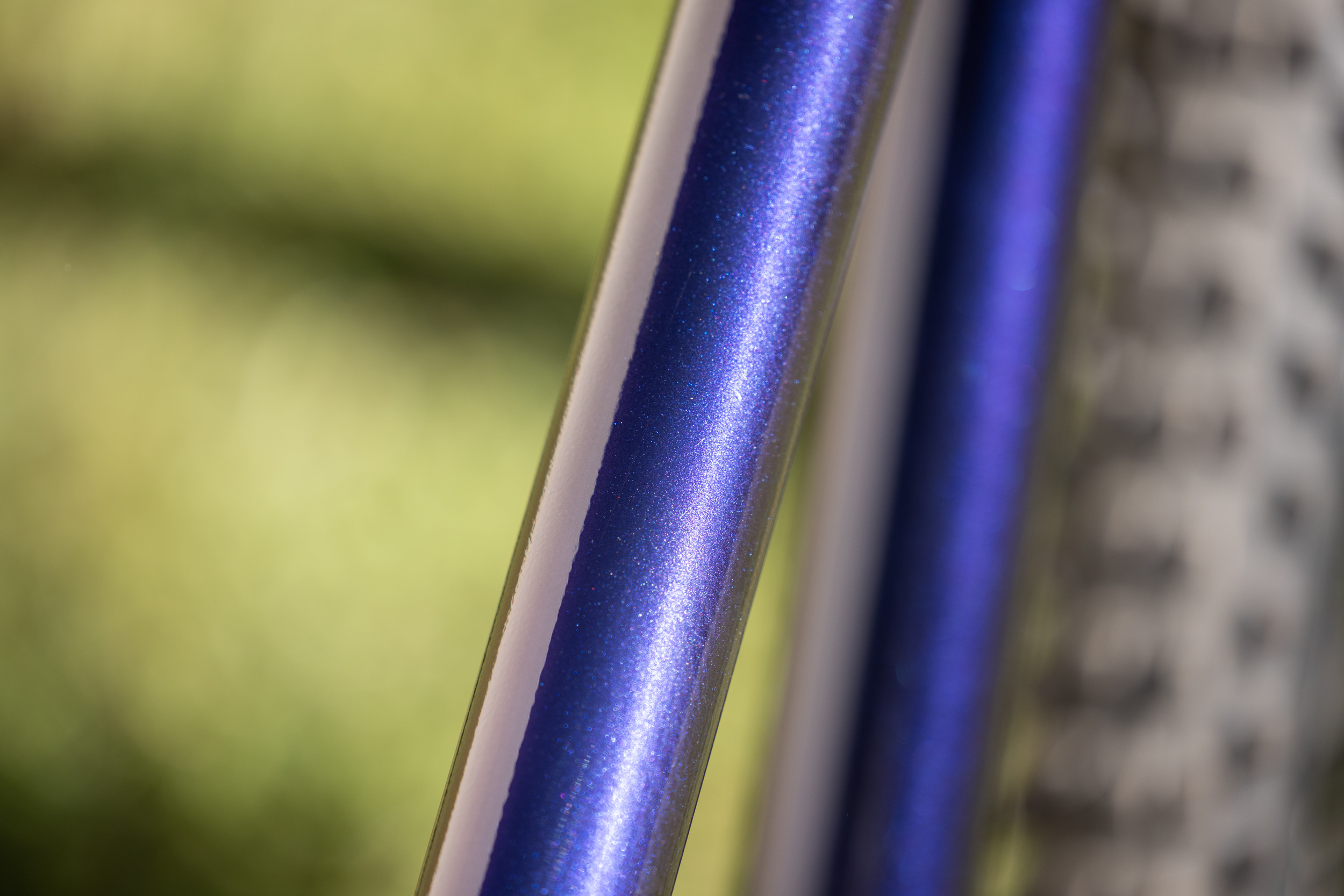
Carter also did the iridescent paint scheme with rattle cans in their backyard. Its blue-purplish hue sparkled in the bright North Carolina sun and changed colors depending on perspective. Carter also designed all the linkage elements, as well as the protective chainstay and bottom bracket guards, and had an independent fabricator machine them. It’s an impressive effort that might take the cake for one of the best first attempts I’ve ever seen, even when considering the atypical construction. I was smoking illicit substances and listening to Slighty Stoopid in the back of a friend’s Honda Fit when I was 17, so I think the kids are all right.
Blackwater Bicycleslink
Milton, Florida
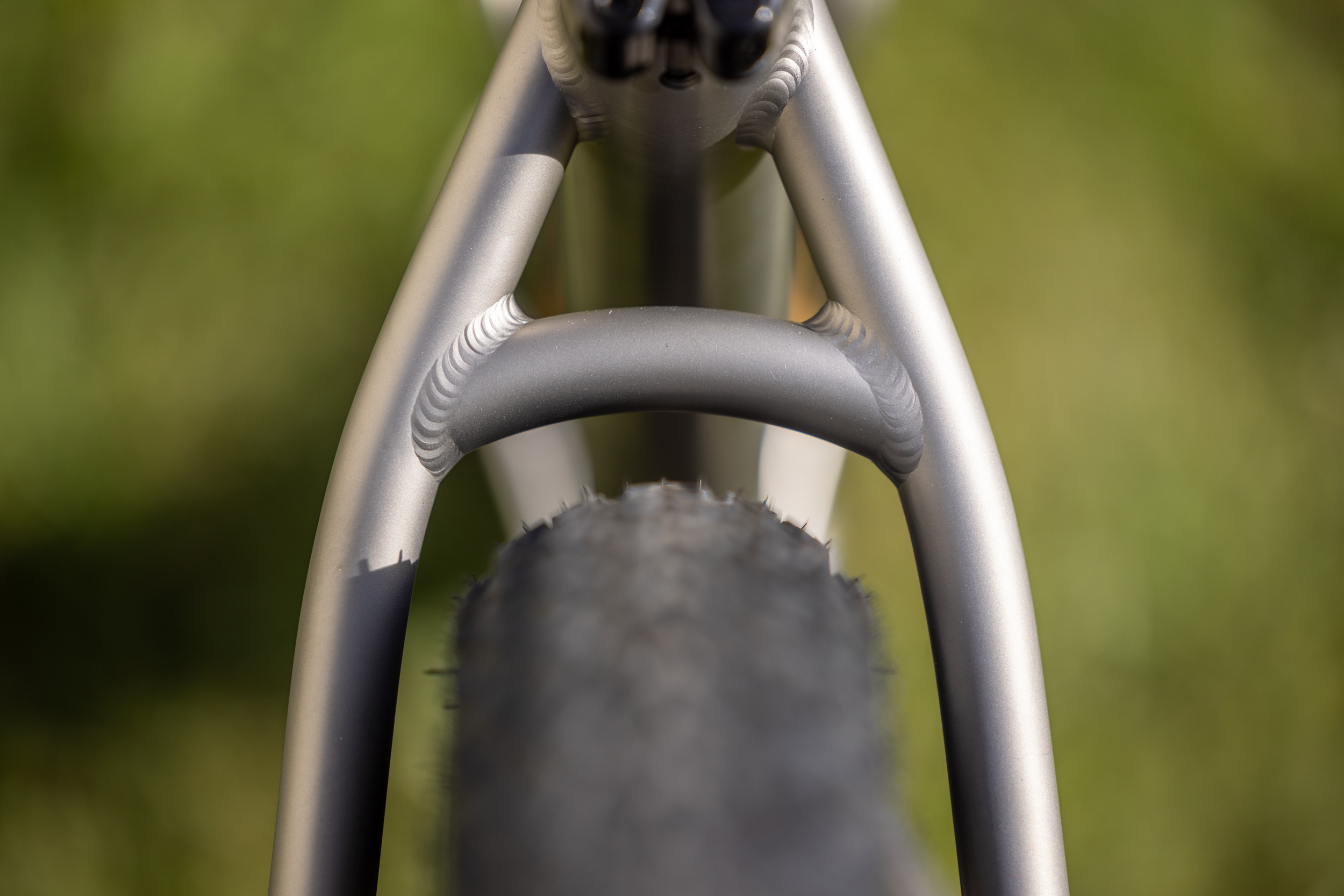
Hailing from my home state of Florida was Billy Hudgens of Blackwater Bicycles. Named after the Blackwater River State Forest, an area characterized by dark, tannin-stained water, sandy roads, and miles of places to explore, Billy had one of the few 32ers at the show: the Splitfire 32. It featured a load of interesting elements that appear distinctly Floridian. With an elevated chainstay design, Billy feels it is ideal for the grit and grime found in droves in the ever-changing terrain of the panhandle; this prototype is Billy’s first attempt to see whether the larger wheel size makes sense for the riding he does in the nation’s flattest state.
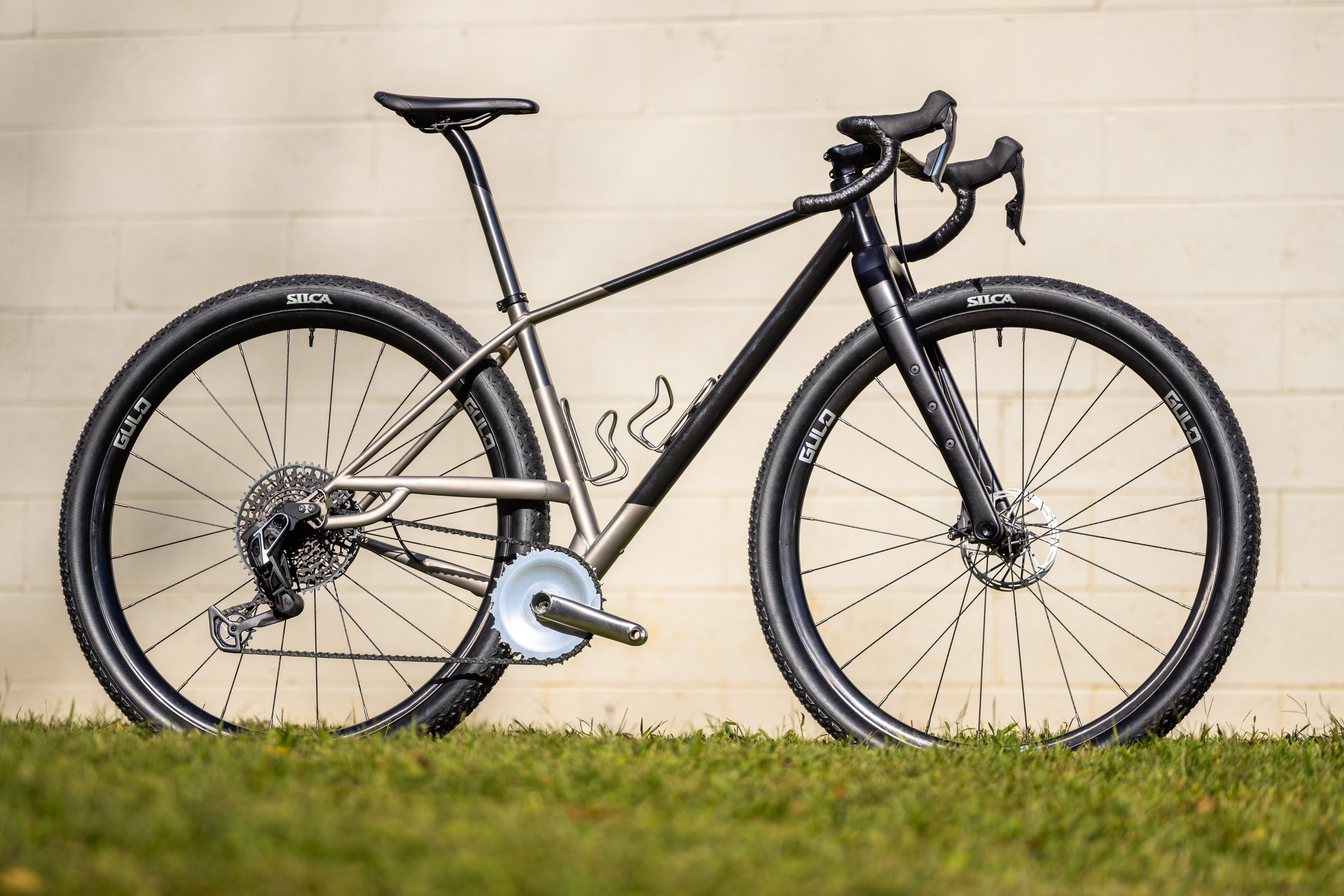


The elevated chainstay keeps the rear end short while still fitting a massive tire. Though Billy designs the bikes, partners in Taiwan build the frames for him to test and eventually release. After looking over the frame and riding thousands of miles of Florida grit and grime myself, I felt positive about the concept the frame puts forth. If there were a place where 32 makes sense, it’s Florida. The supposed speed benefits are likely felt best across its pancake-flat terrain, and Billy’s desire to have ultra-short chainstays makes good use of the geometry quirks here. As he told me, one of the first bikes he ever designed had chainstays just south of 395mm. While you can make anything work anywhere, the desire for that short of a rear end is distinctly Floridian.
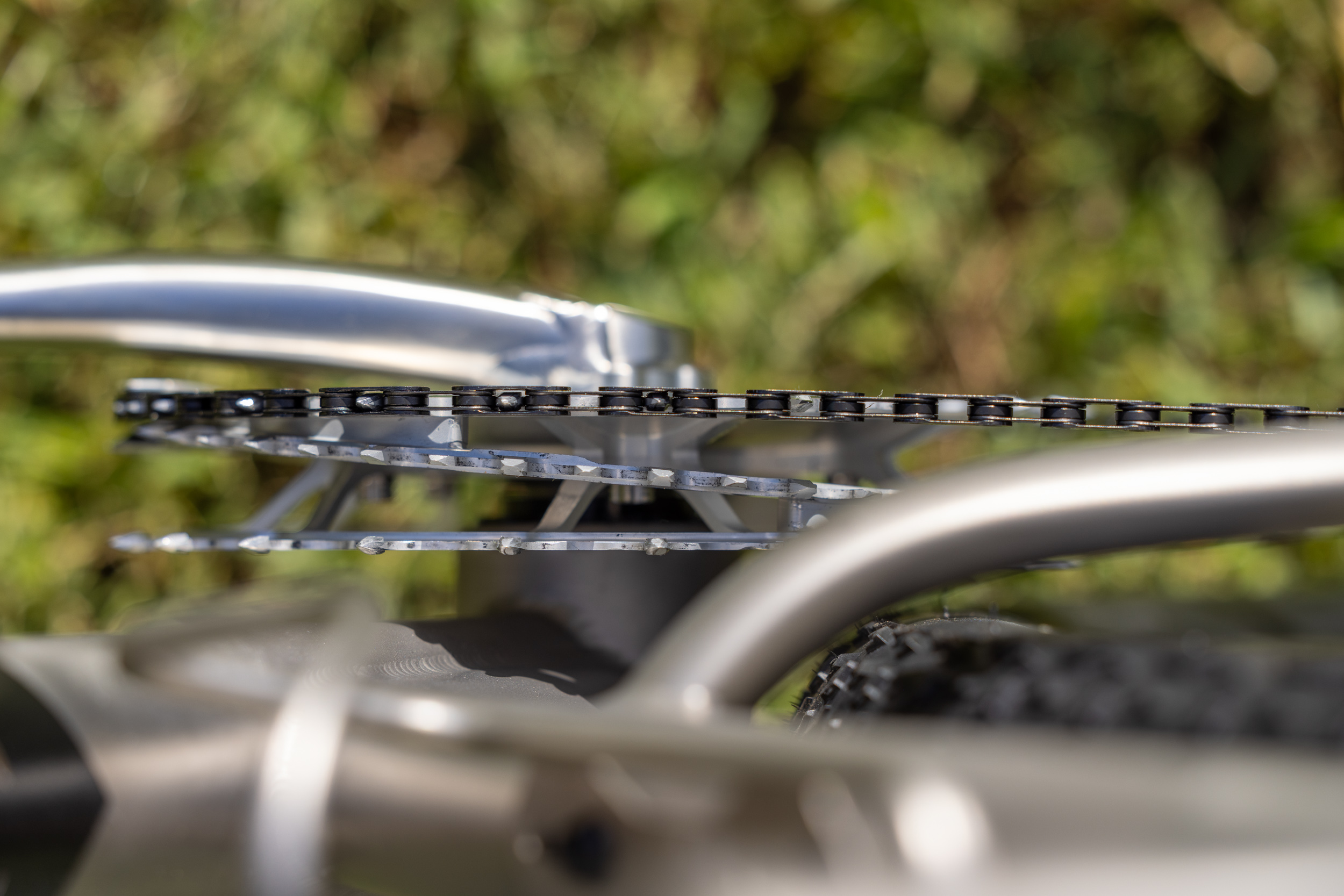


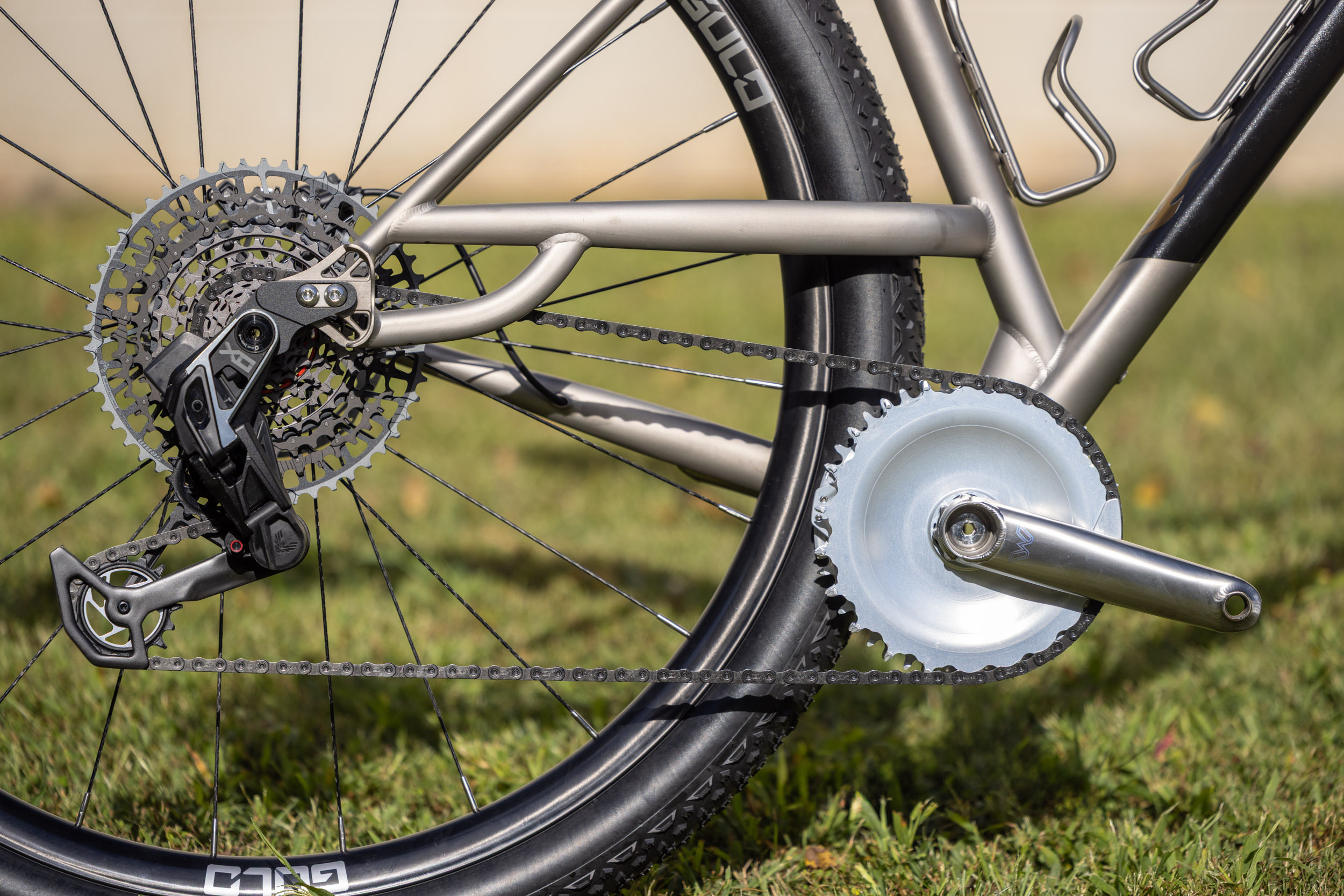
Another interesting Splitfire element was the proprietary 1x chainring. Designed in conjunction with Marginal Gain in Colorado, the Orient drivetrain aims to solve the problem of chainlines in modern wide-range systems. Per Billy, “The goal is to reduce the extreme chain articulation found in modern wide-range drivetrains, which in turn has the potential to reduce friction and chain wear while improving drivetrain efficiency. Marginal Gain’s calculations show that an Orient system paired with a 15- or even 16-speed cassette could maintain less extreme chain deviation than today’s conventional 1×12 and 1×13 systems.” It’s a strange system that isn’t quite perfected, but it looks aimed at those seeking every possible advantage in a race.
Litespeedlink
Chattanooga, Tennessee
Litespeed is an interesting modern brand. Though they have wide name recognition, largely because of their history as a storied American framebuilder, the brand is managed by a group that sets it apart from the small players that attend these kinds of shows. Litespeed is part of a conglomerate of brands owned by American Bicycle Group and, as such, is managed differently than one- to ten-person brands and builders. Put plainly, finding out information about any of the bikes you’ll see in our show coverage is as simple as asking the people at the show. They’re often the same folks mitering, welding, and/or designing the bikes on display.
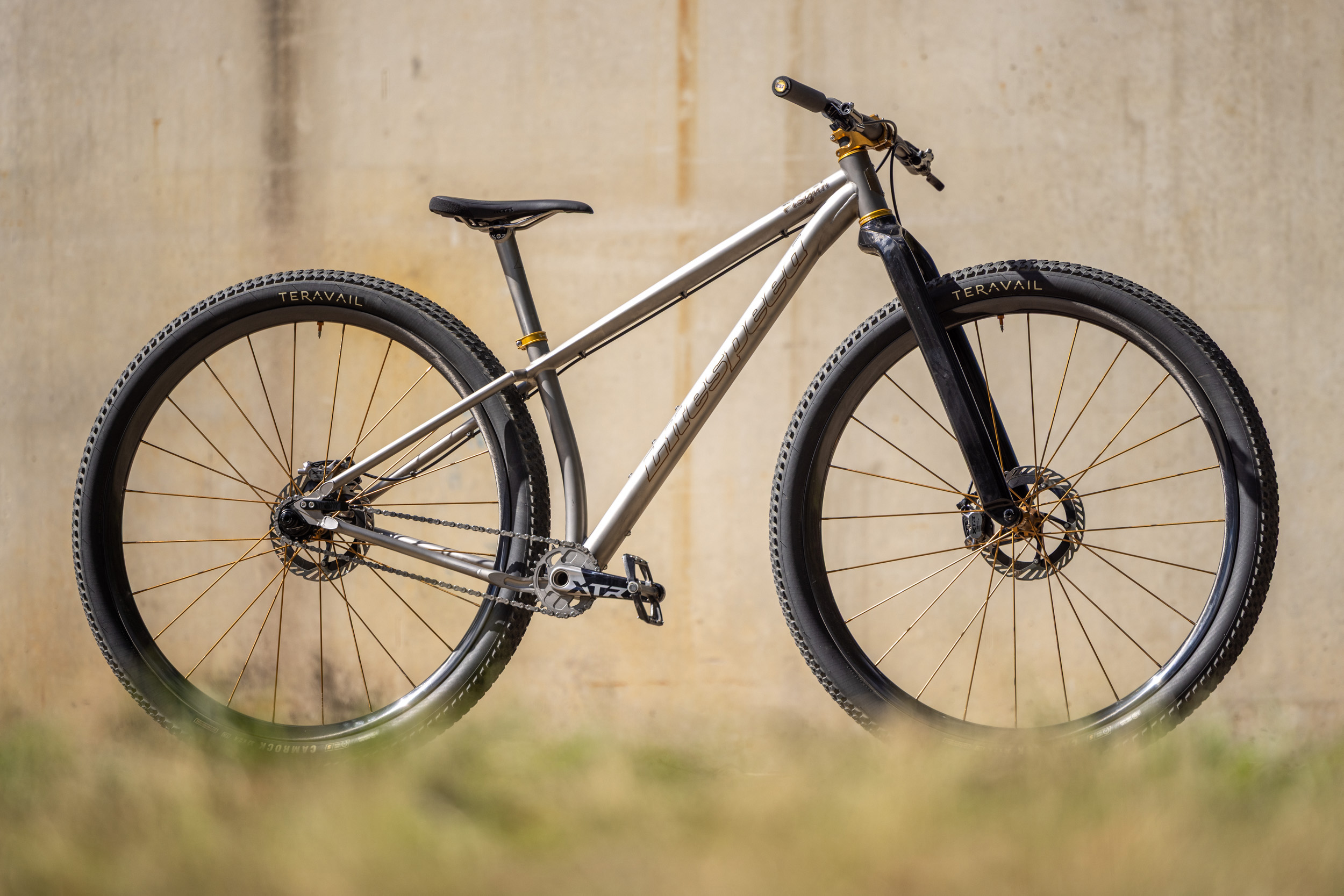


This year, I met Brad DeVaney, one of the designers at Litespeed. Though he was somewhat tight-lipped about what the brand had in store, they had two rideable 32ers in their show fleet. One, the Pisgah 32, was a prototype based on the titanium trail hardtail. It was set up as a single-speed with an older, unbranded rigid fork and prototype wheels, and Brad insisted just about anyone who walked by should ride it. “Just don’t keep it inside the parking lot, okay?” he said with a wry grin.

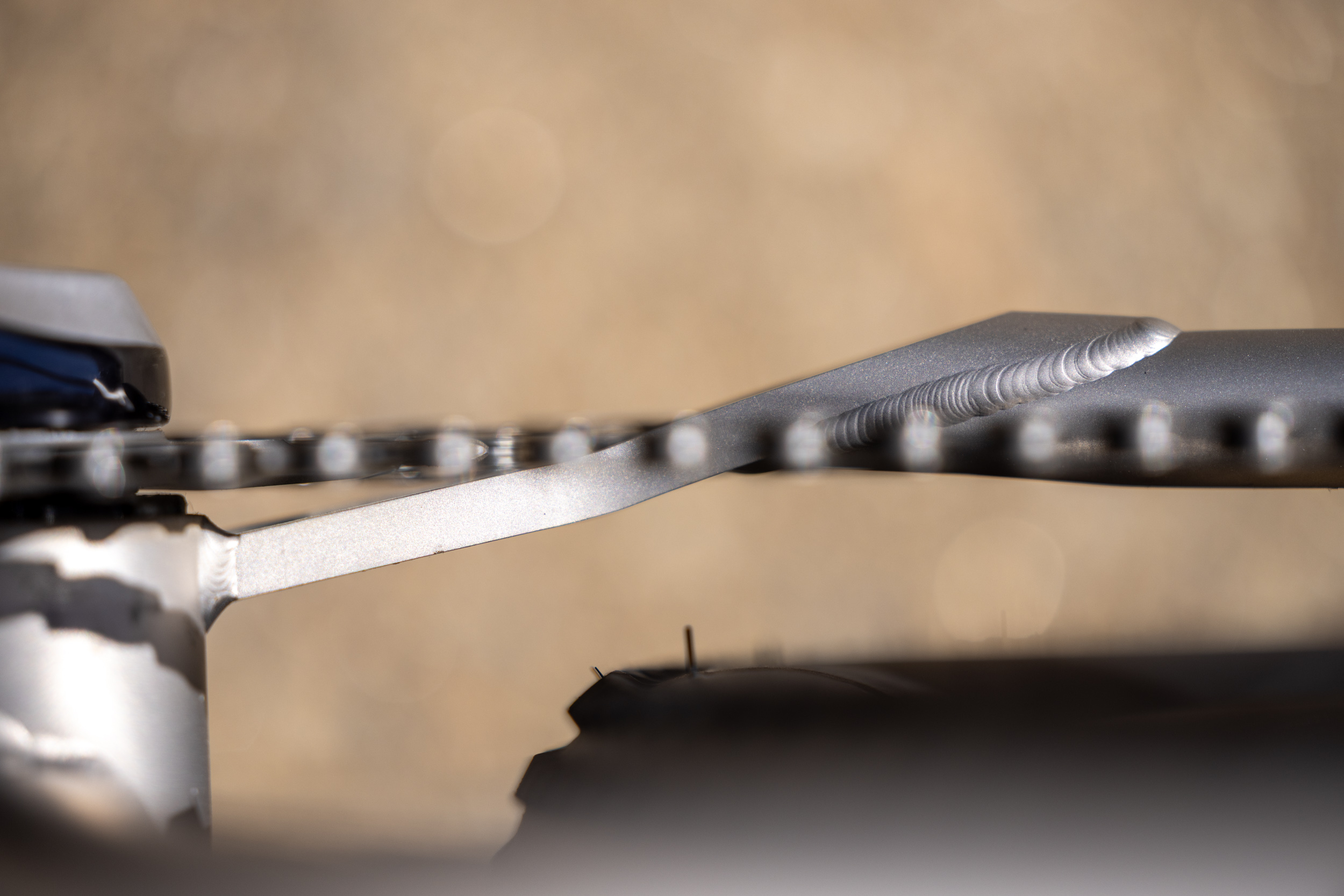
It was the first time I had the opportunity to put a 32er through its paces. As I pedaled it around the makeshift cyclocross course crudely dug into the perimeter of Cane Creek’s headquarters, I was surprised just how quick the bike felt. With carbon wheels and no gears, bags, or bottles, the wheel size and handling intrigued me. It lined up with everything Neil and Miles, the two at the site who’ve had the most time on 32ers, have said. It was a little slow and awkward to handle, but it moved in a straight line like little else I’ve experienced.
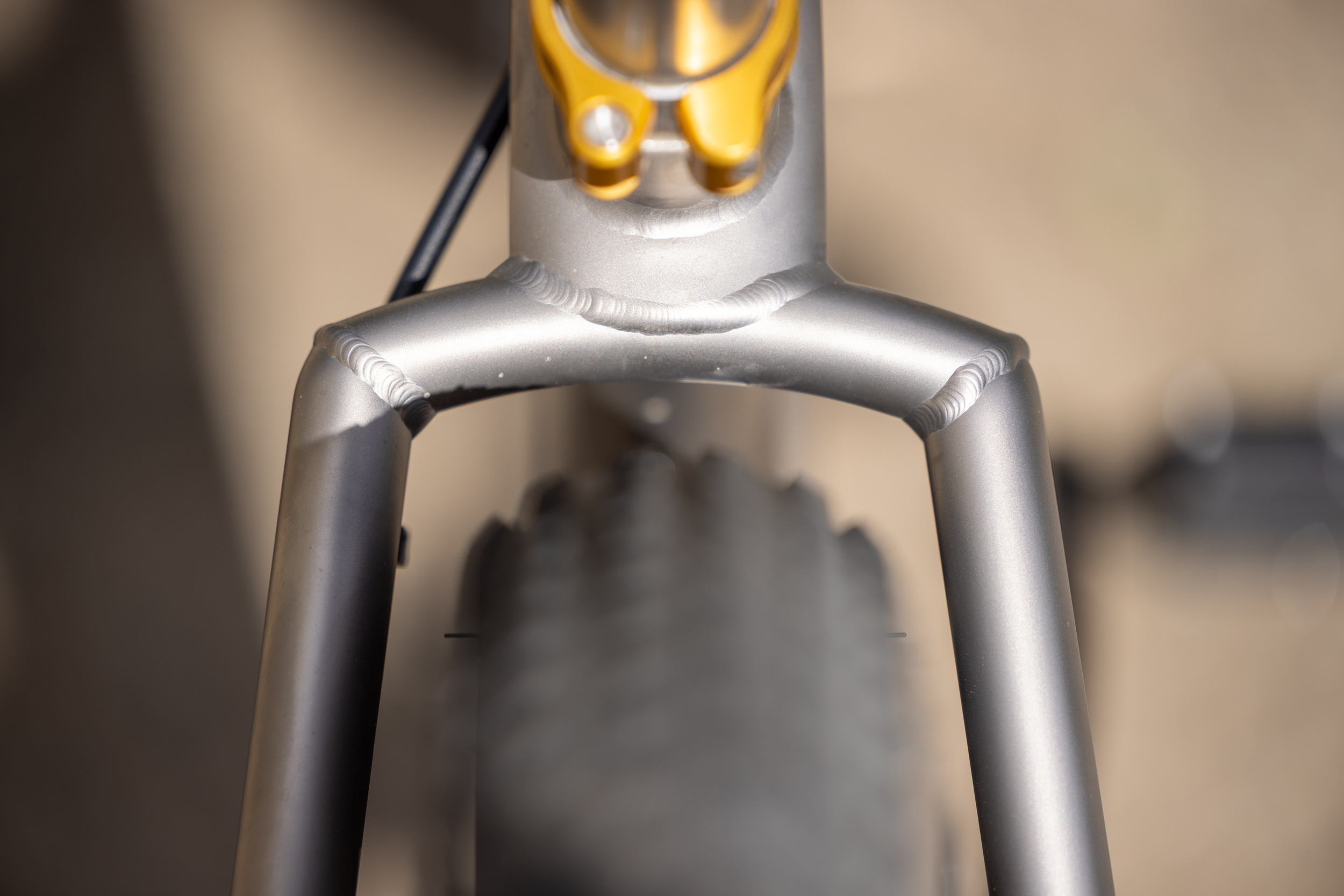

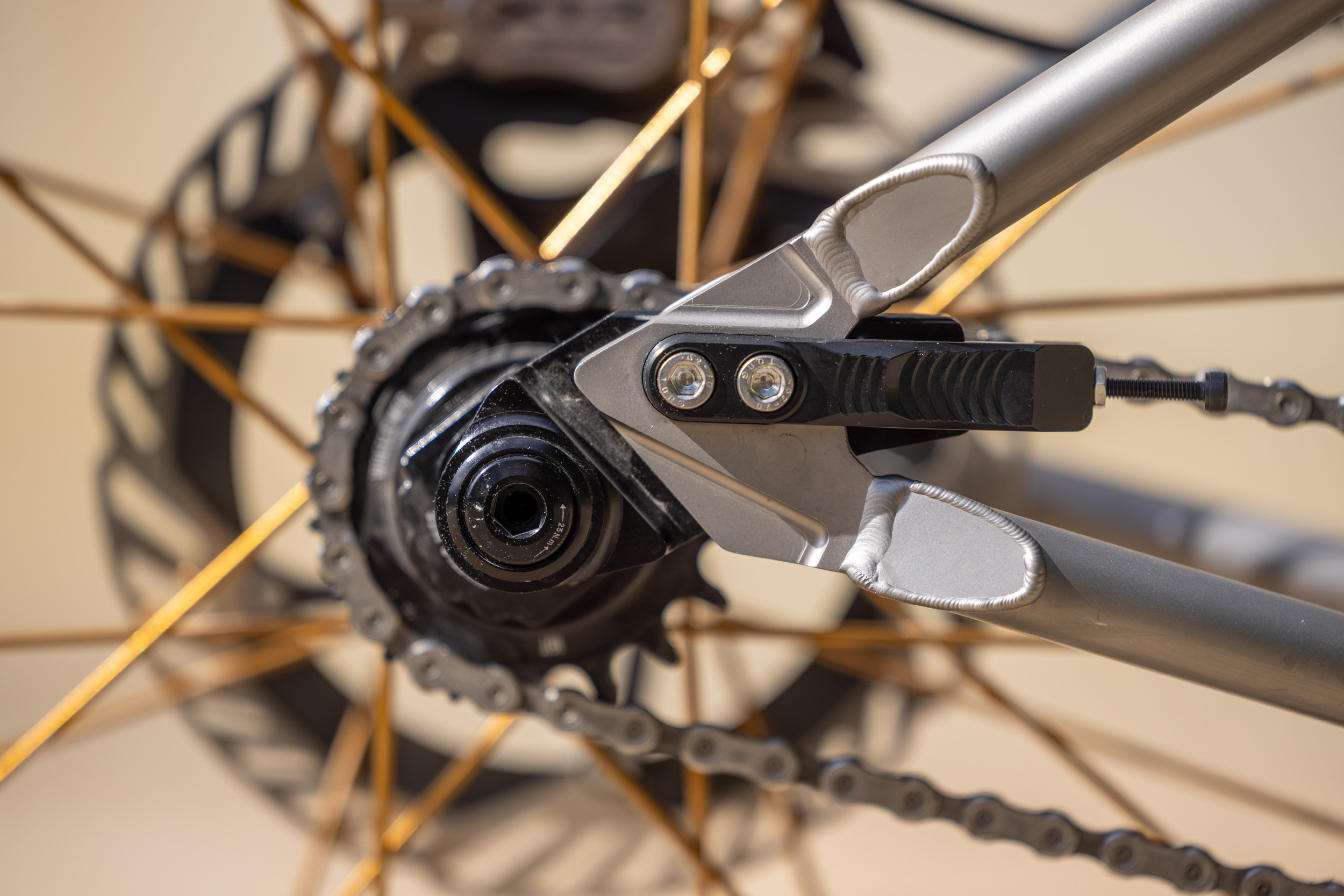
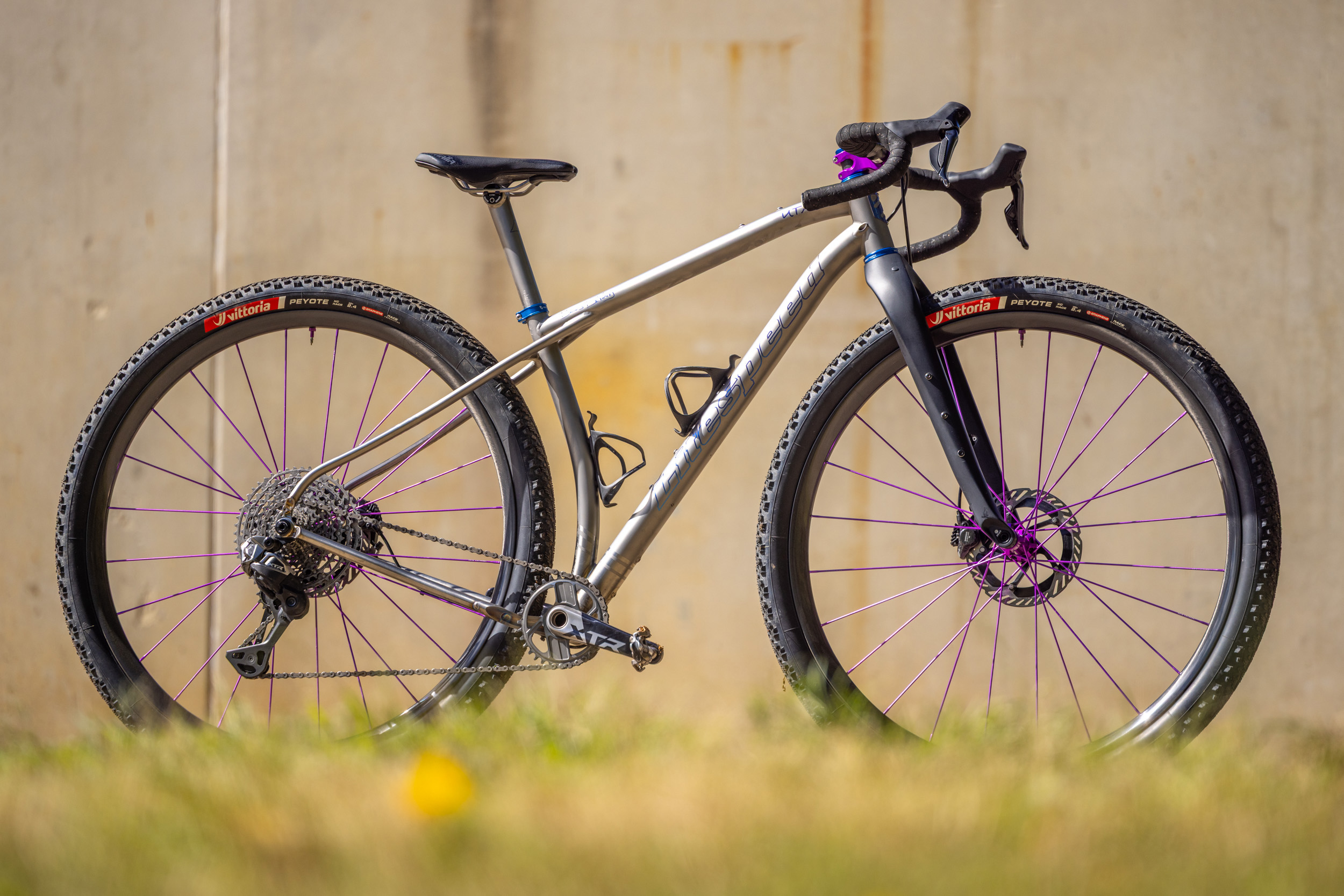
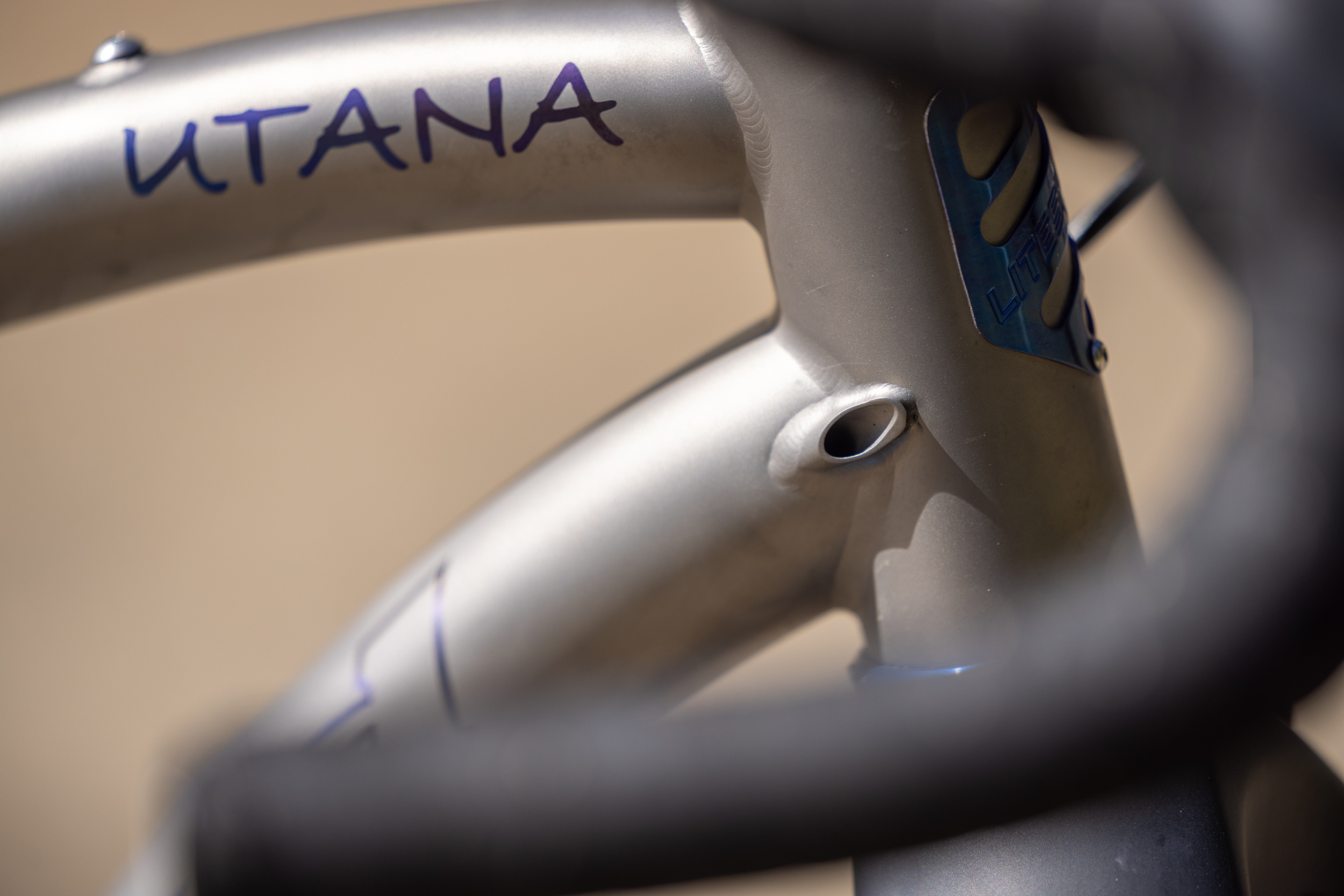
The same was true of their Utana gravel bike. It’s a model they say is closer to production-ready than the Pisgah, but one they were still somewhat hesitant to talk about openly. What’s interesting is what this all means for the development of the wheel size. The talk of the town at last year’s edition of MADE is that some of the largest brands are starting to get on board with the new tech and iterate on the possibilities. I’ll be excited to see what Litespeed does in the space, especially since it’s all still so new.
Stringbean Bagslink
Brevard, North Carolina
If you’re in Western North Carolina, you might know Stringbean, also known as Steve Koellmer. A reformed backpacker, he offers custom bikepacking bags, drawing on 16 years of experience creating outdoor gear for himself and others. After living in a trail town in Maryland for over a decade, he says that once he discovered mountain biking and bikepacking, he never looked back. With his wife leading them to North Carolina, he’s made some inroads in the bikepacking community. He’s made bags for Tj Kearns and a variety of other characters you’re likely to spot on the trails in Pisgah, and he has an eye for craftsmanship that’s apparent in his roll-top frame bags and other offerings.
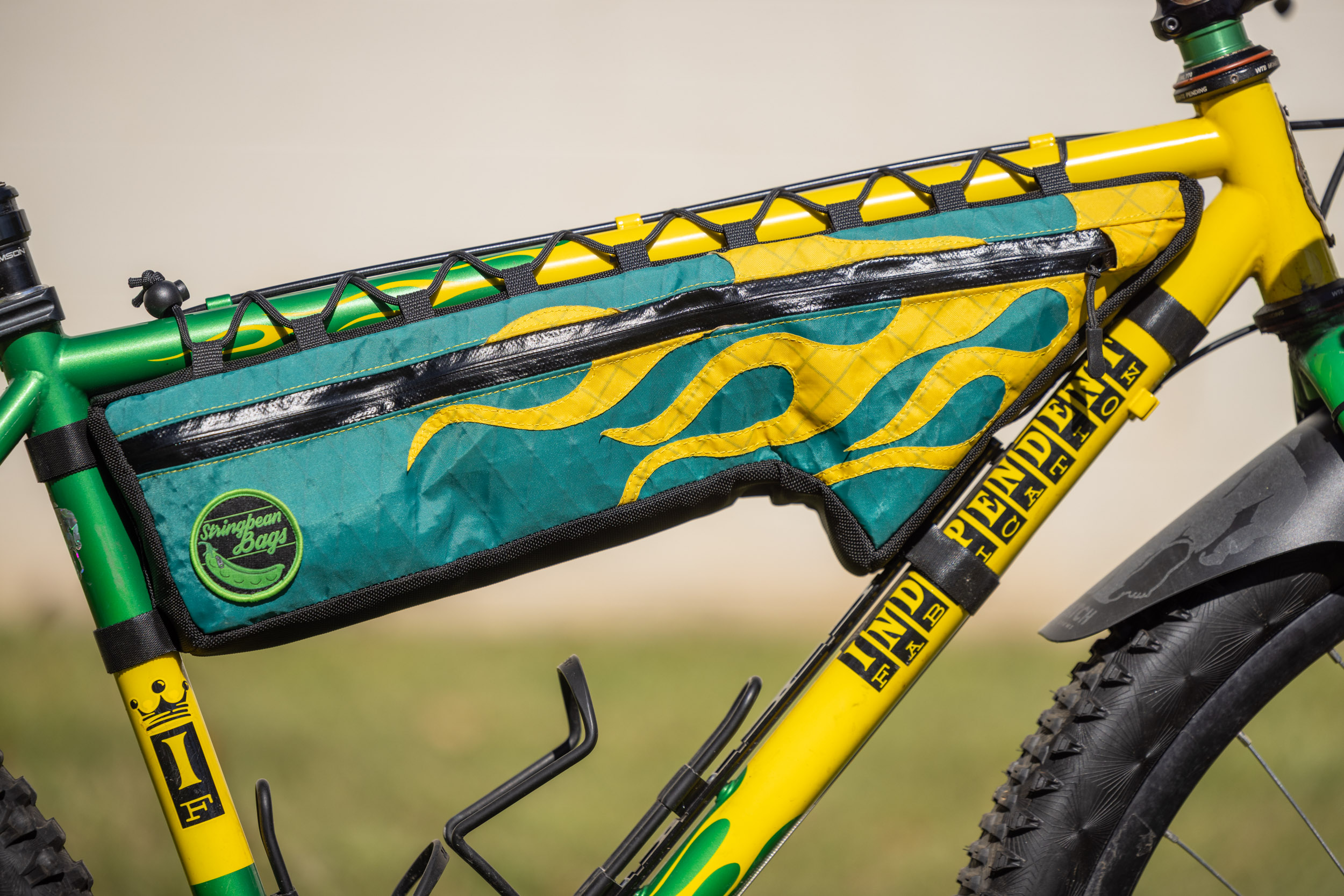

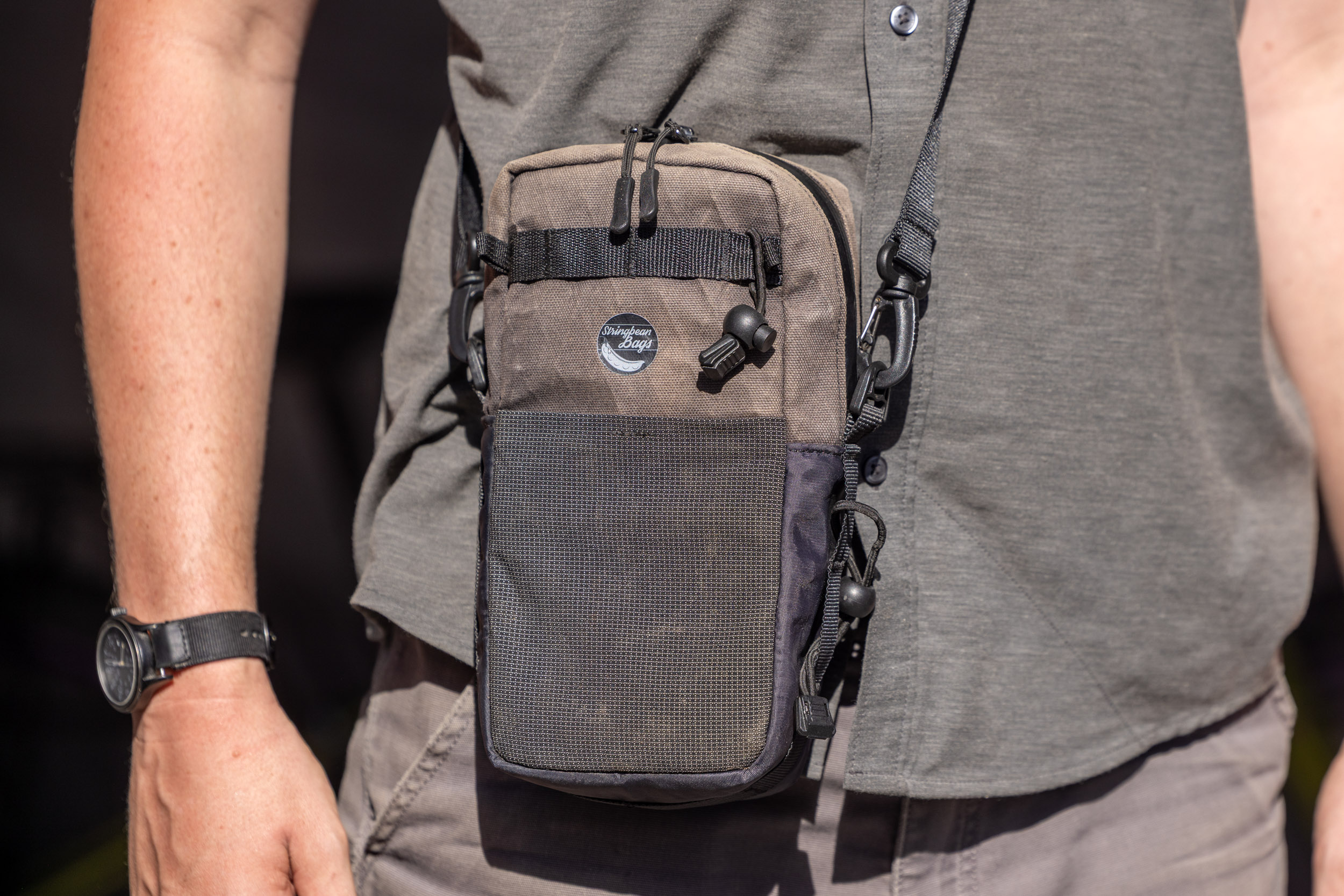


New to his inventory is a cross-body design called the Fayot. It can easily fit on a handlebar and is inspired by his trips down to the river with a compact fly rod. Steve also says you can easily fit about four standard beers in the bag, a claim he has tested extensively. Other than that, Steve says the business keeps him busy, and that he’s excited to continue pumping out bags for great bikes and great people—something he’s glad isn’t in short supply these days.
Haute Bikeslink
Richmond, Virginia
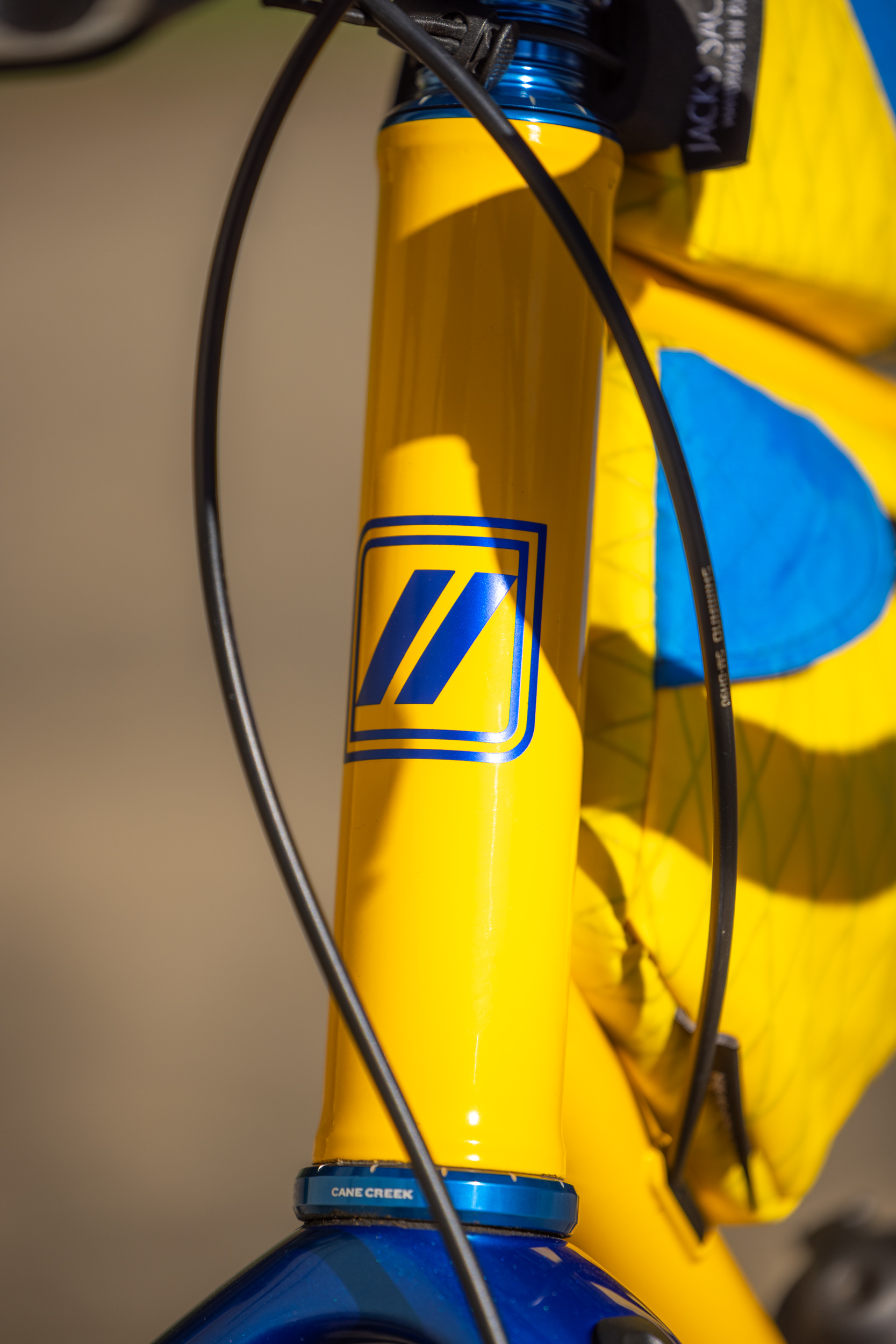
Half of the Haute Bikes team came out for the show. They’re based in Richmond, Virginia, and brought just two bikes—both their signature gravel model, the Sauce. Coincidentally, they’d recently built a customer a custom-geometry Sauce with some of Cane Creek’s 40th-anniversary components. So, what better bike to show off?


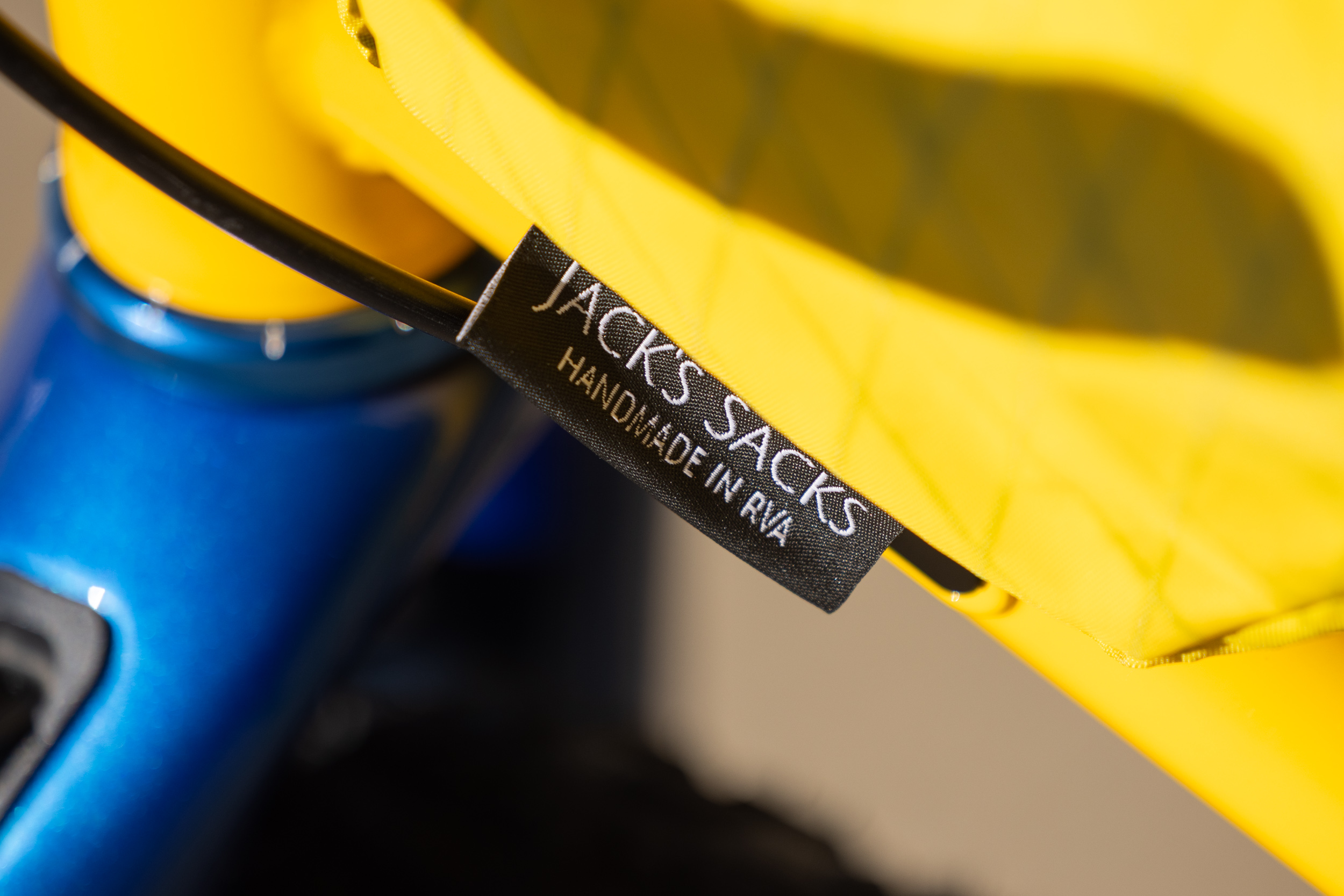
It also features the company’s custom Paragon-based slider add-ons, which allow some adjustability in chainstay length. A friend and local maker, Jack’s Sacks, custom-made the top tube and frame bags, which match the bike’s carefully curated aesthetic. Otherwise, it’s similar to many of the custom-geometry bikes they make. Like many builders, Sauce offers an off-the-peg model you can customize for stack and reach for a little extra. This particular model features much more stack than a typical Sauce and also accounts for the Cane Creek suspension fork.


Chumbalink
Richmond, Virginia
Catching up with Vince Colvin of Chumba is always a pleasure. Quietly plugging along as one of the country’s most consistent small makers, Chumba is a solid and steady player in the space. Speaking to Vince, he said they were focused on ensuring the transition away from Texas was as smooth as possible. Without the added pressure of adding to their lineup, Vince and Mark have guided the company through the challenges of moving their production to two separate facilities: one in Richmond and one in Kansas.
Vince is based in Richmond, where he works closely with the folks at Haute to create their steel bikes. In what he says has been one of the best professional relationships in his career, he’s really excited about how their production partners have taken critical feedback and worked to continually improve the quality of the bikes they’re producing.
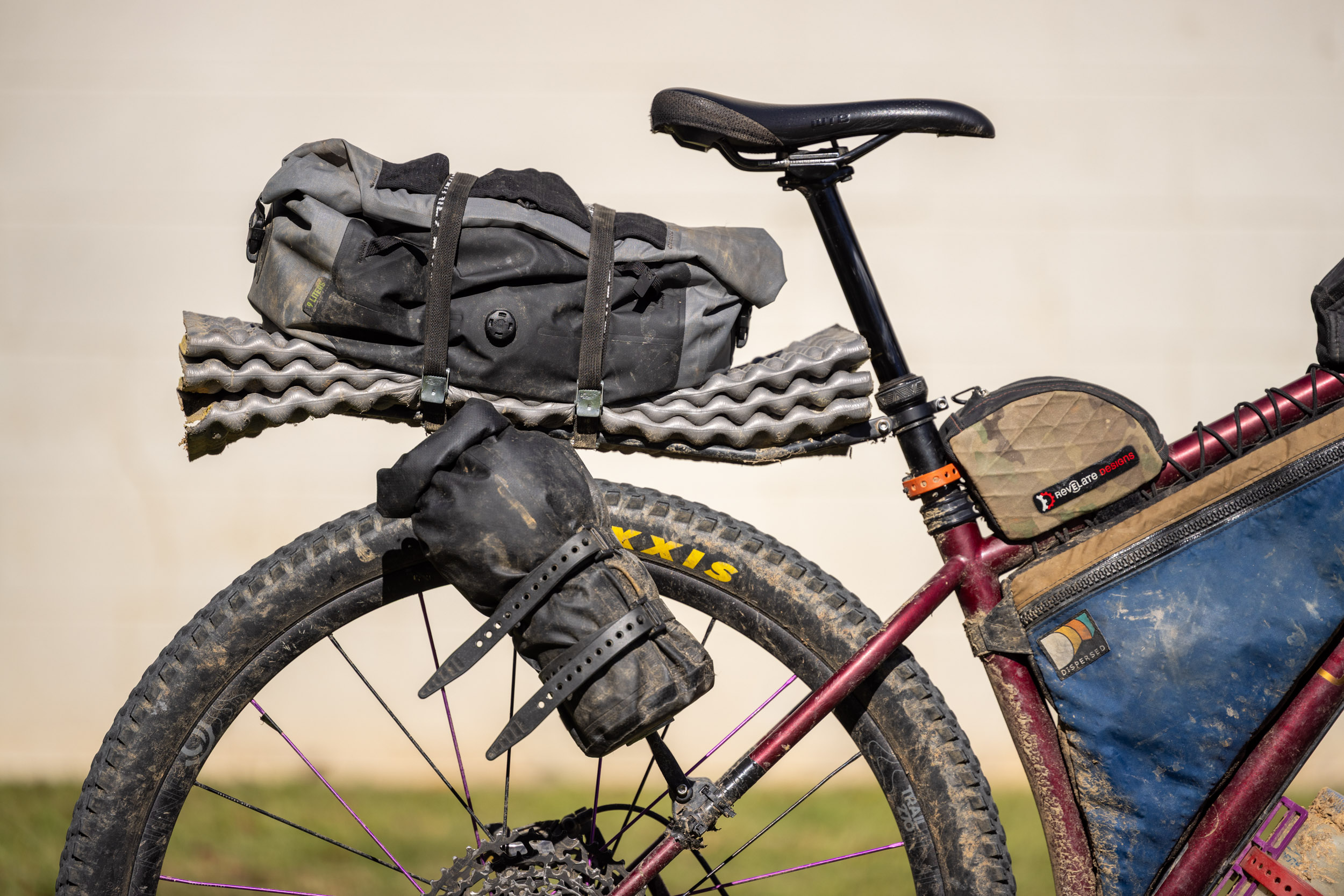
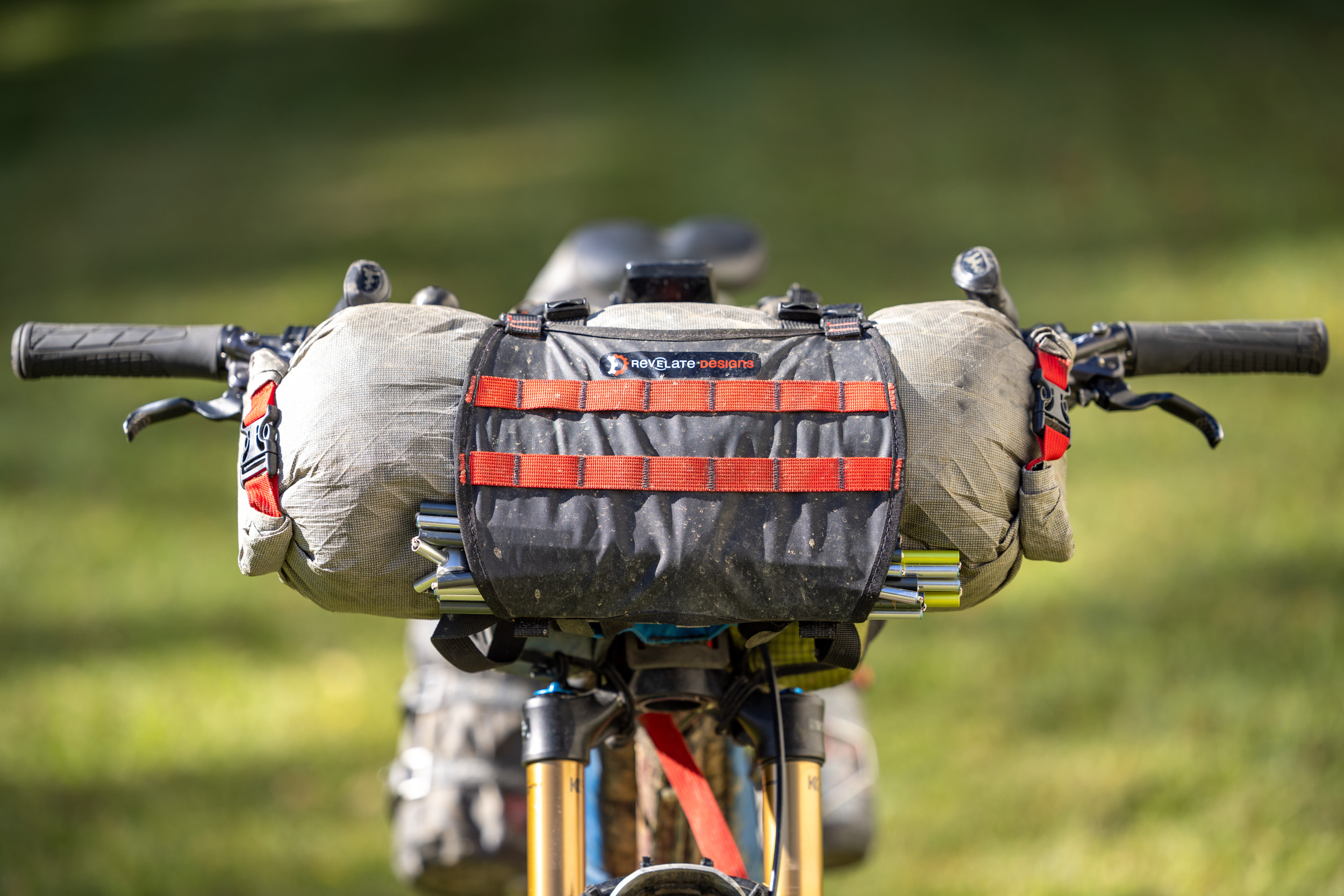
Beyond logistics, Vince also talked about their Darksky project. Inspired by the starry, dark sky we see when we’re dreaming up our biggest ideas, Vince said the project exists to house the brand’s most interesting and innovative concepts. Right now, it works as a means to get people on their production fat bikes. In the future, however, the Darksky project will let subscribers get a first look at experimental concepts and ideas.
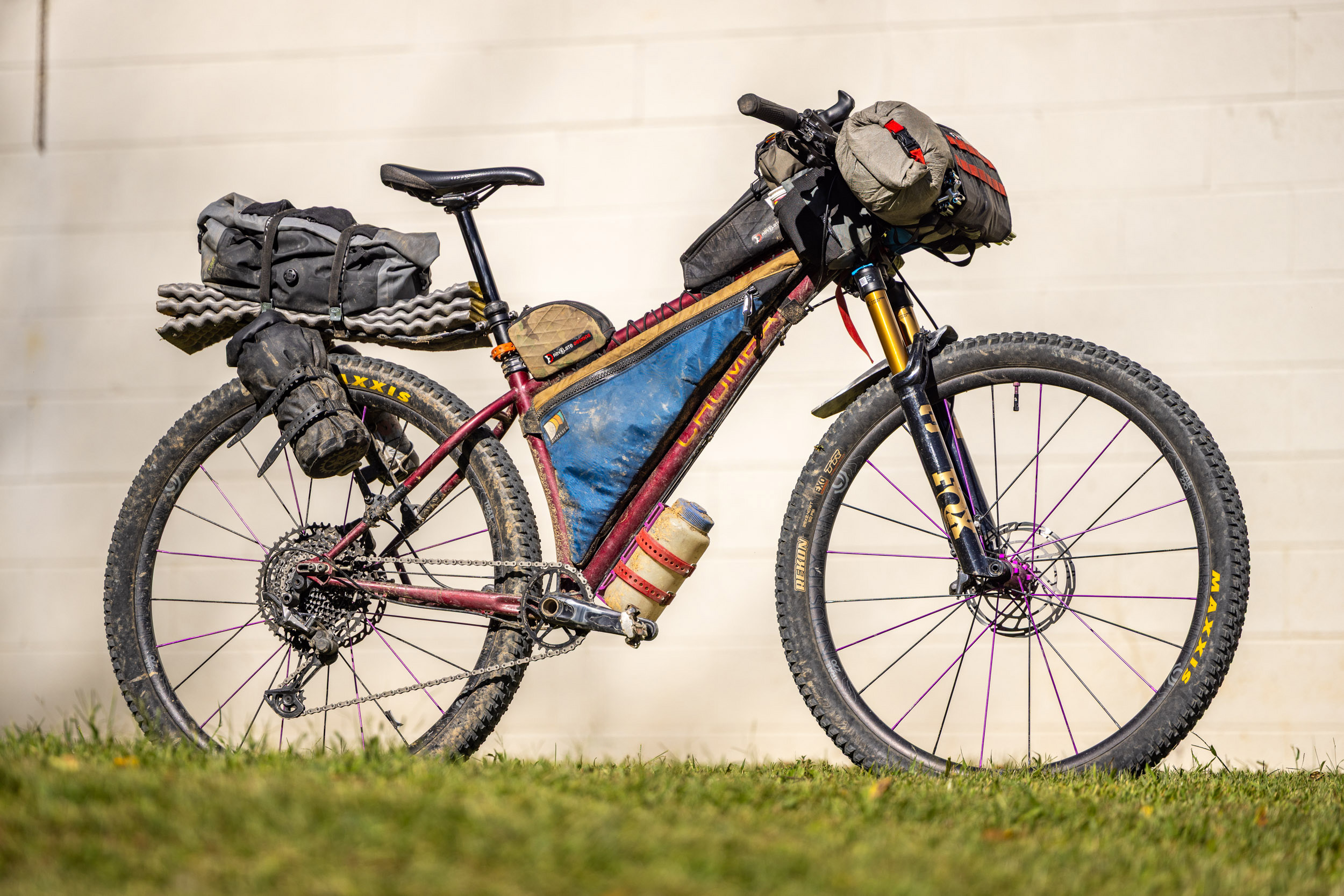

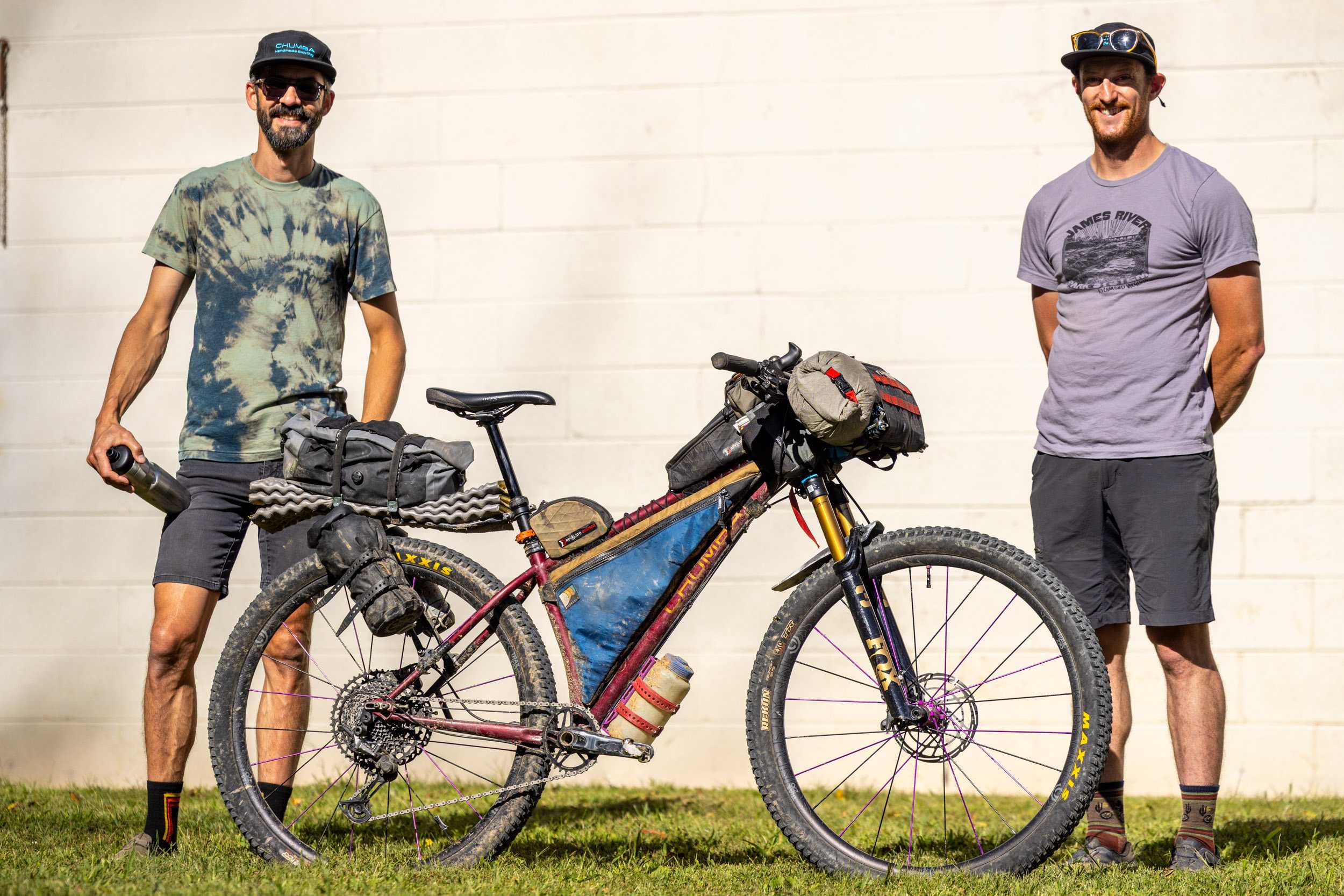
With no new bikes or products, the best representation I found of the brand was from Nathan Salle. He’d ridden from Dillard, Georgia, and enjoyed thousands of miles on many of the routes in our library. Nathan spoke highly of his experiences on the Sendero and was glad to have it with him on the washed-out, gnarly chunk he’d recently encountered on his travels.
Chandi Bicycleslink
Chattanooga, Tennessee
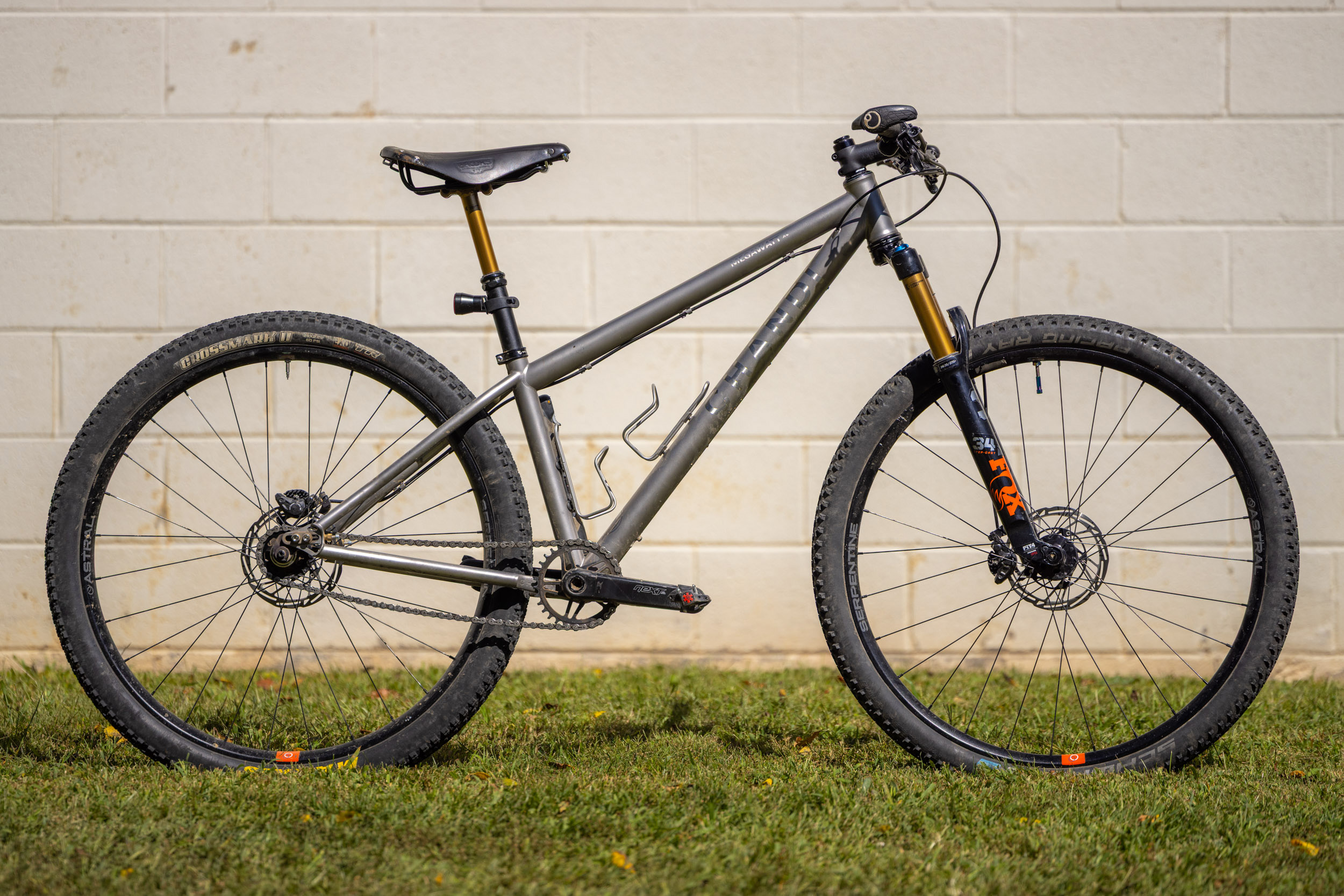
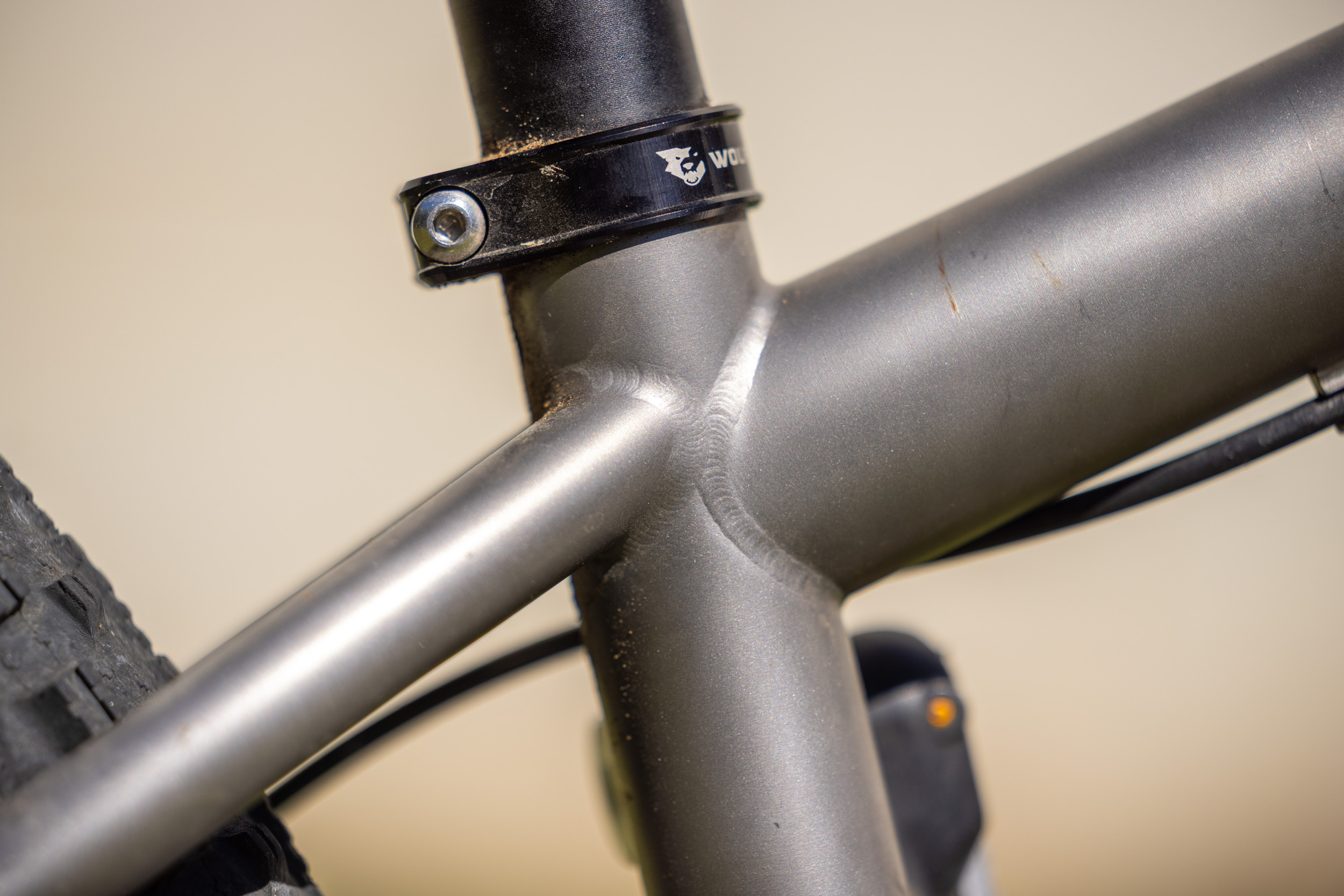
Another builder with some history behind their name is Chandi Bikes out of Chattanooga. Eric Titsworth has been building for over 20 years, first cutting his teeth fabricating and welding titanium with Litespeed. For years now, Eric and a few others he’s hired have been making frames under the Chandi name. They exclusively manufacture titanium bikes, though Eric says he’s partial to steel for personal rigs. Given his upbringing in the industry, he knows welding and titanium fabrication, and anyone who recognizes the Chandi name understands the level of manufacturing Eric and his team are known for. I’ve shot several Chandi bikes over the years, and the welds are some of the best I’ve seen.
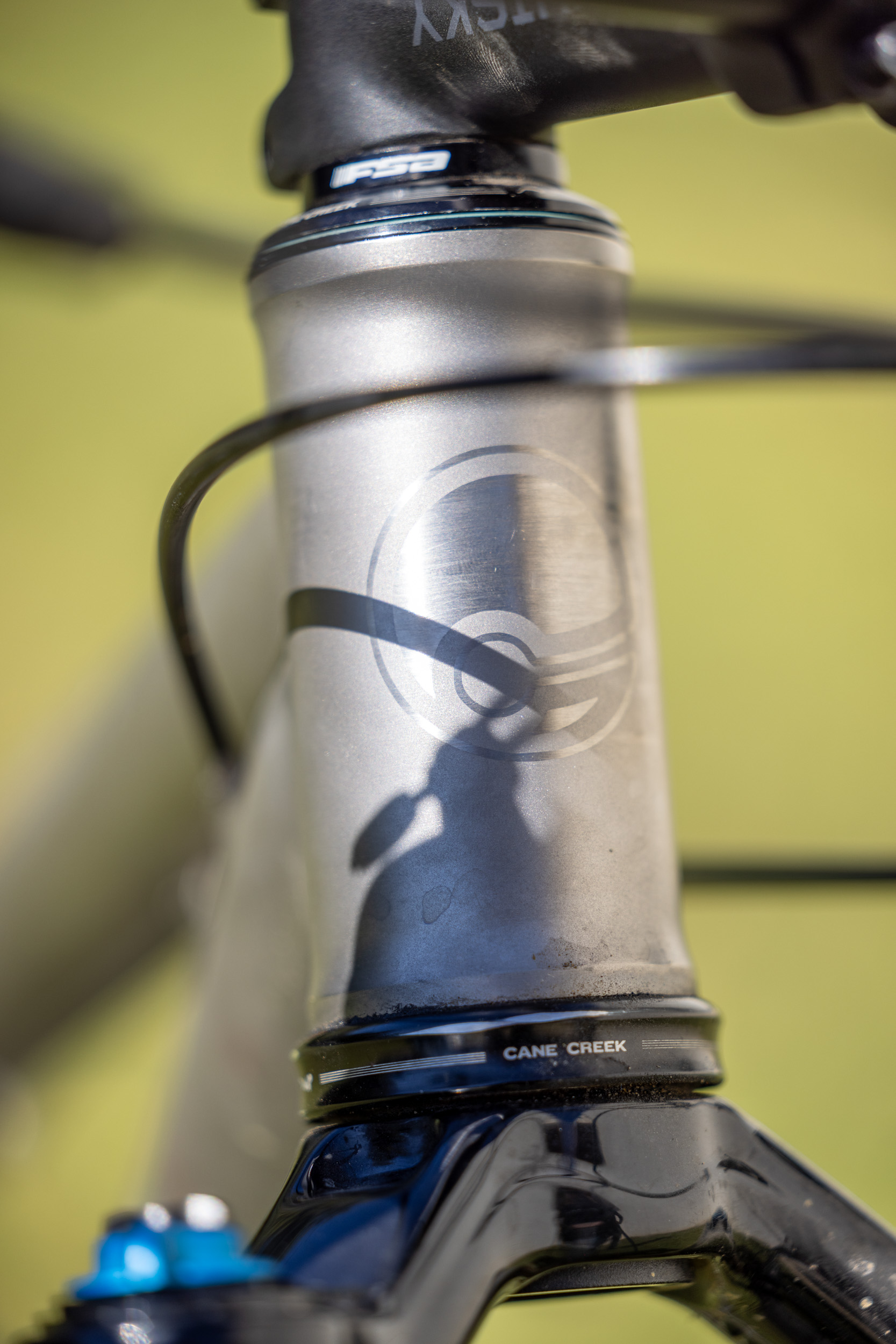
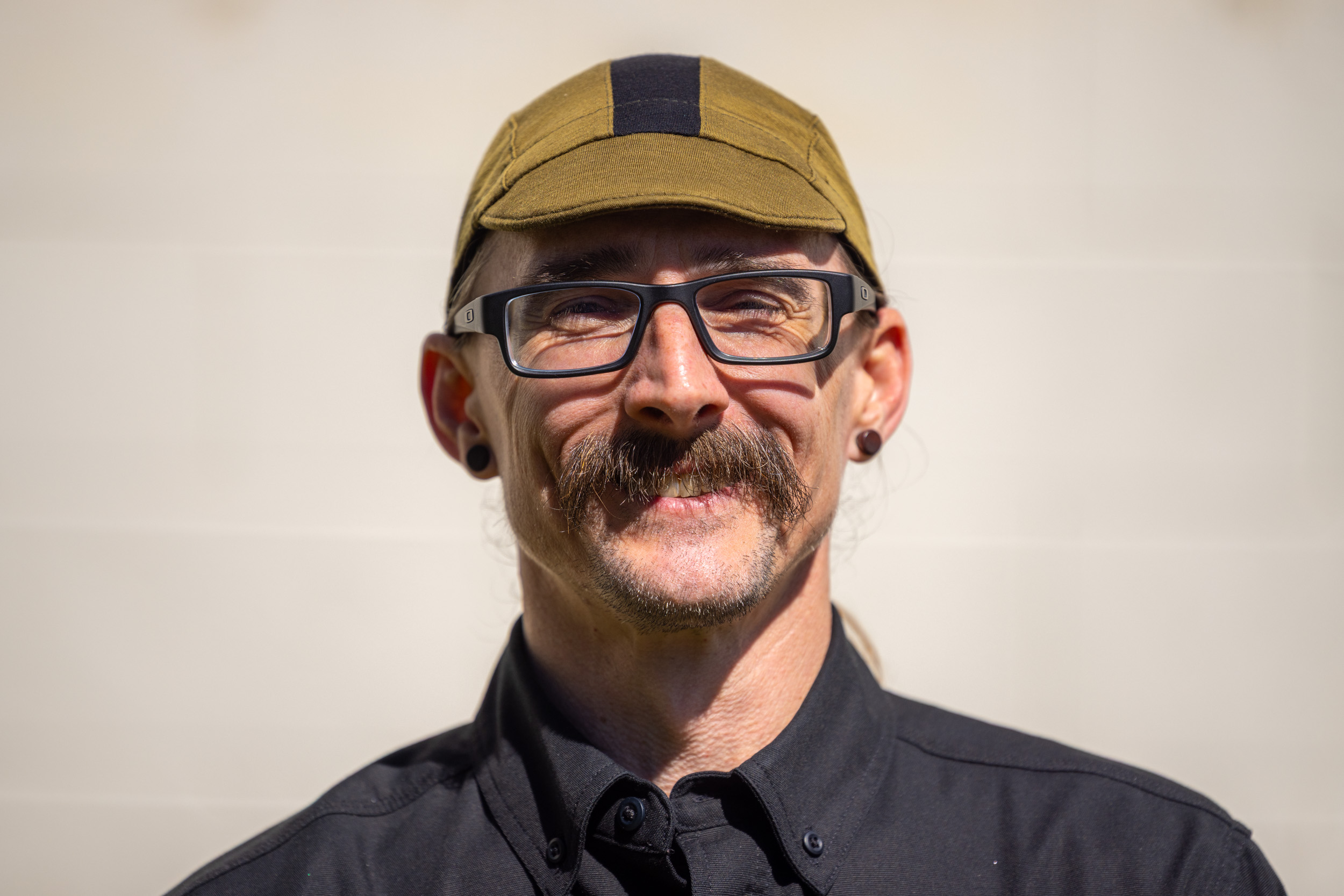
That said, although I was familiar with his work, I didn’t actually meet Eric until CRAFTED. It was a pleasure to put a face to the name. We spoke candidly about industry woes, how tariffs have affected his small business, and how he’s made it work. Luckily, he’s been riding a wave of customers he’s carved out for himself and is doing just fine these days.
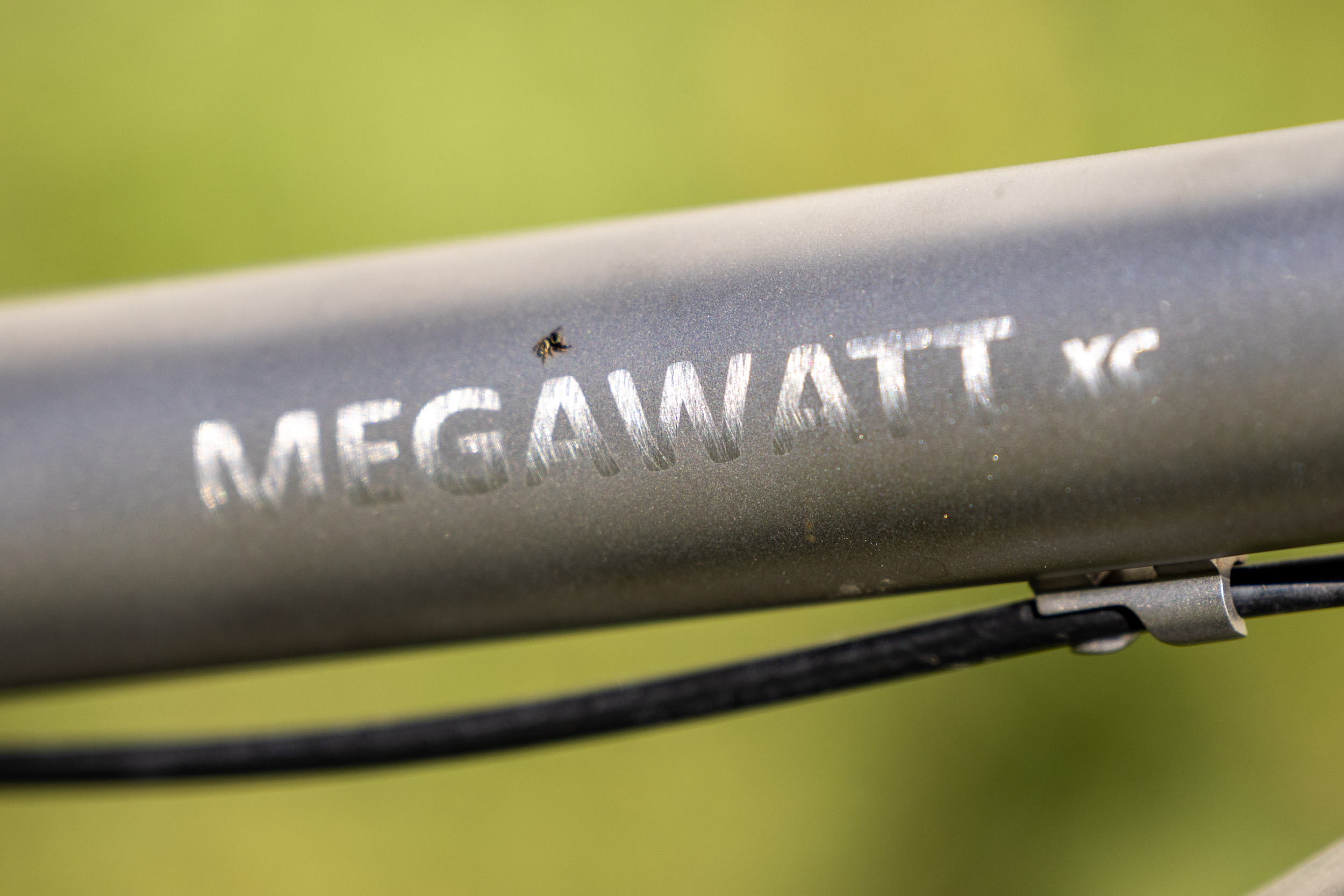

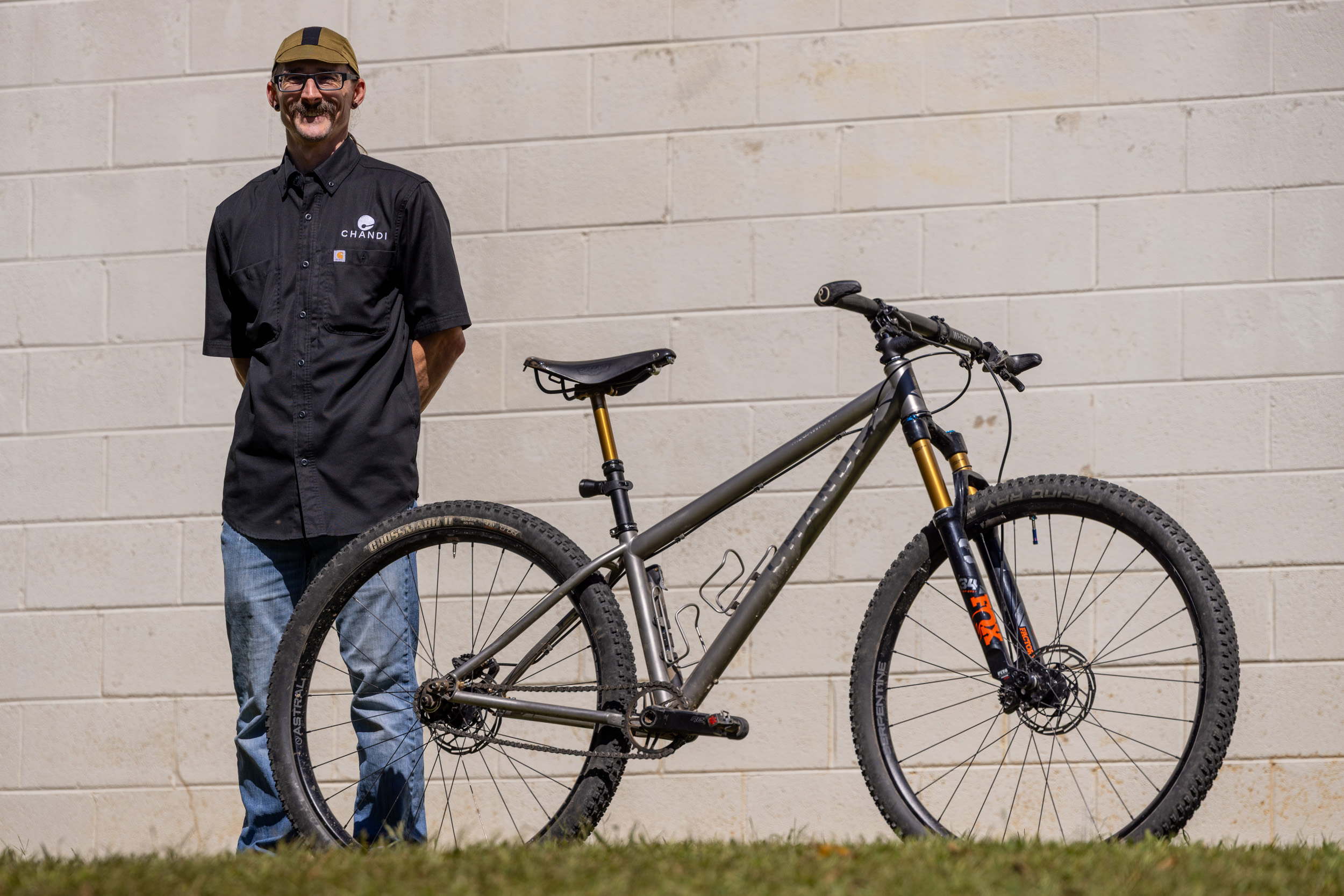

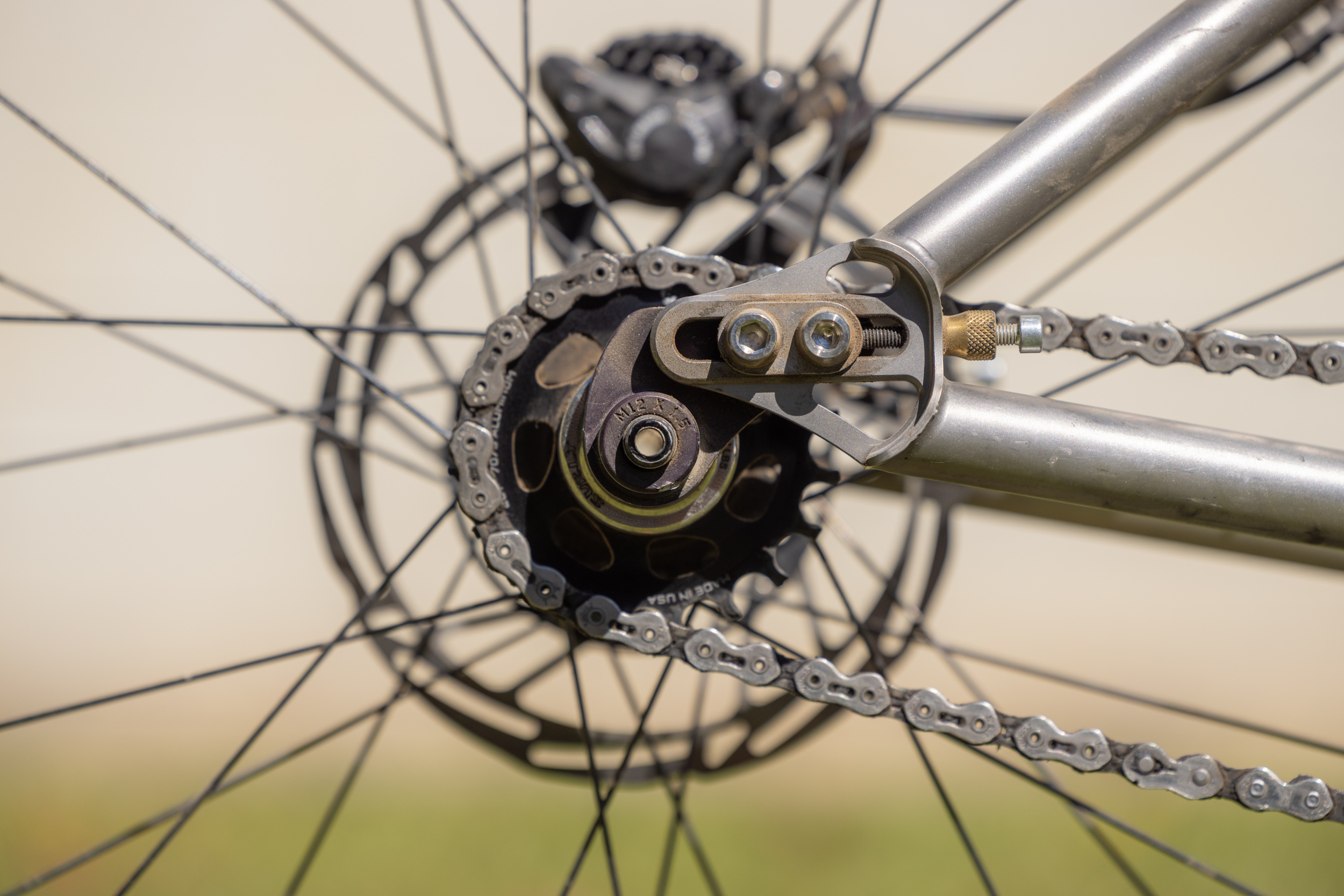
Eric regaled me with the tale of how Chandi got its name. As he told it, when he left Litespeed, they were looking for a fun, creative brand name. Titanium bikes are a sort of eye candy, but “Candy” was taken. Eventually, a friend’s partner found “Chandi,” the name of a Hindu goddess known to destroy evil forces. Chandi, pronounced chon-dee, is also an Urdu word for silver, which fits the theme of raw, unpainted titanium bikes Chandi is partial to. It was a cool thing to learn about a niche brand that has a lot of respect in the Southeast. As for the bike, this is Eric’s personal singlespeed, and he takes it on trips of all kinds. Although he says his knees are worse for it, he just can’t stop riding this simple titanium bike.
Ogle Designslink
Durango, Colorado
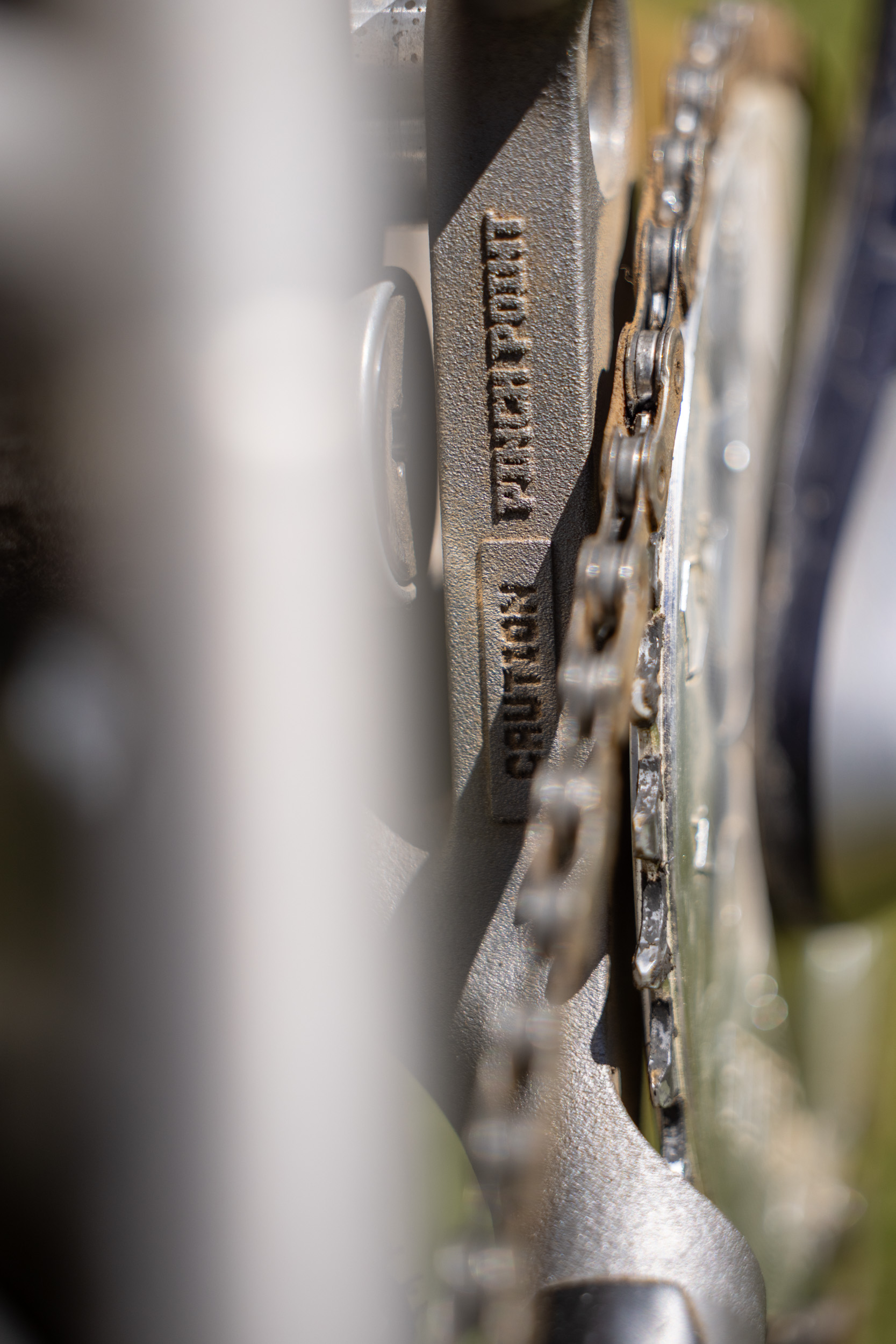
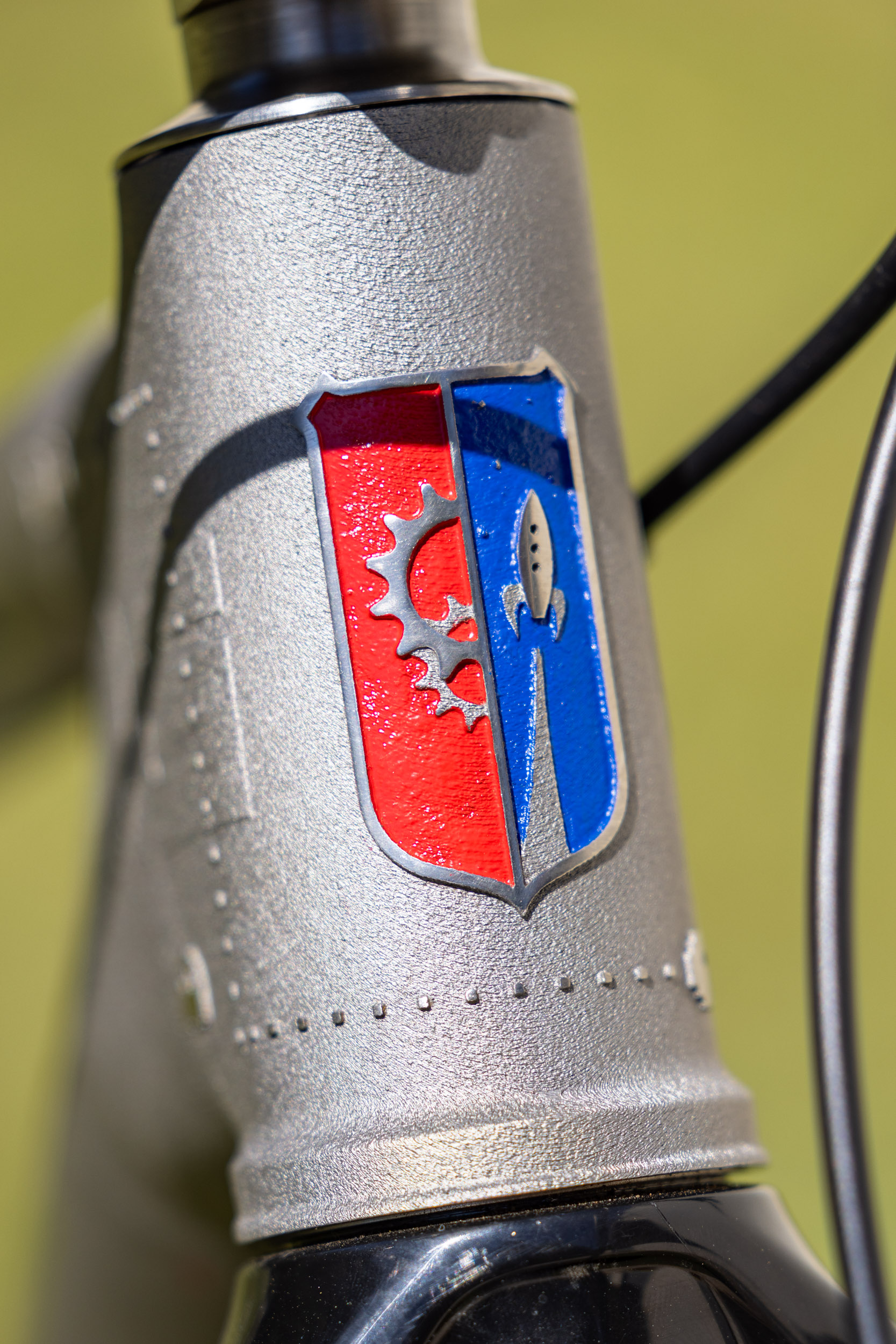
We missed this arcade-game-inspired full-suspension bike from Josh Ogle at MADE this year, but I was lucky enough to capture it at CRAFTED. Though Josh wasn’t at the show, his one-of-a-kind, 3D-printed bike put his design philosophy front and center. SILCA manufactured the 3D-printed lugs at its Indianapolis headquarters, and from blogs and other reporting I found, Josh hand-bent aerospace-grade titanium tubing to make the bike’s elements work. Obviously, it’s packed with video game references and custom graphics that pay homage to Pac-Man and Space Invaders. But true to his engineering roots, it also includes warnings and torque specs. The chainring also references Asteroids.


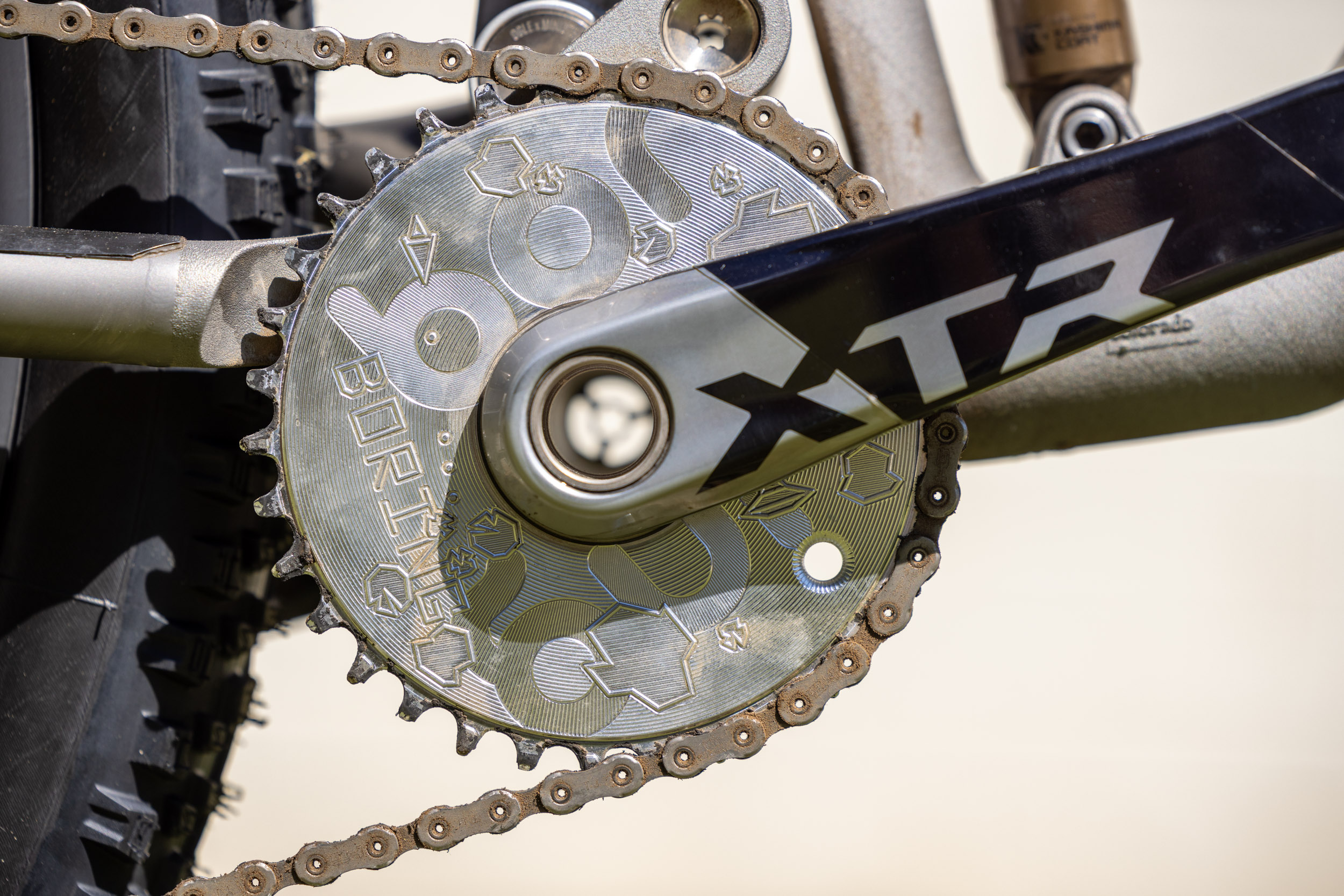
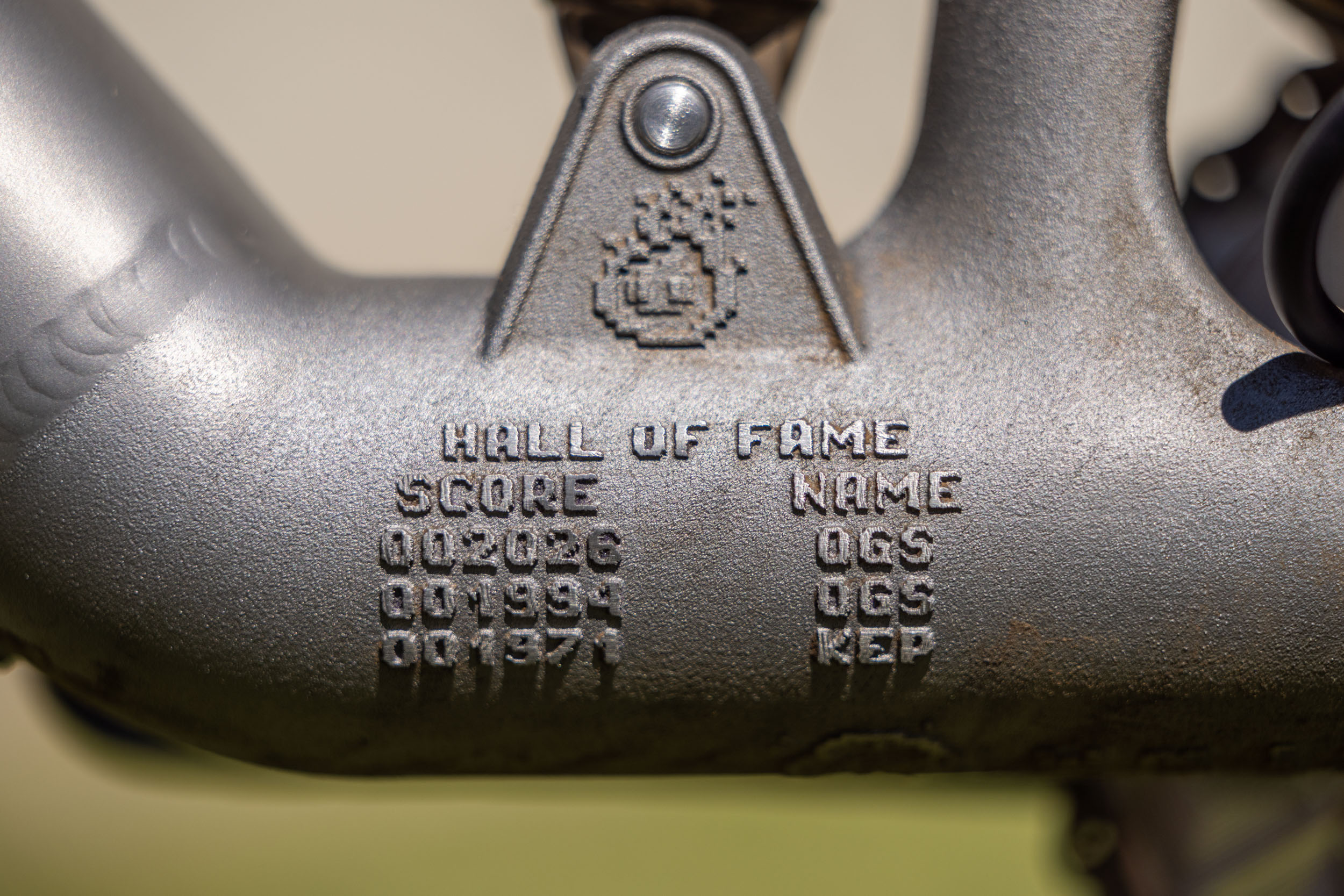
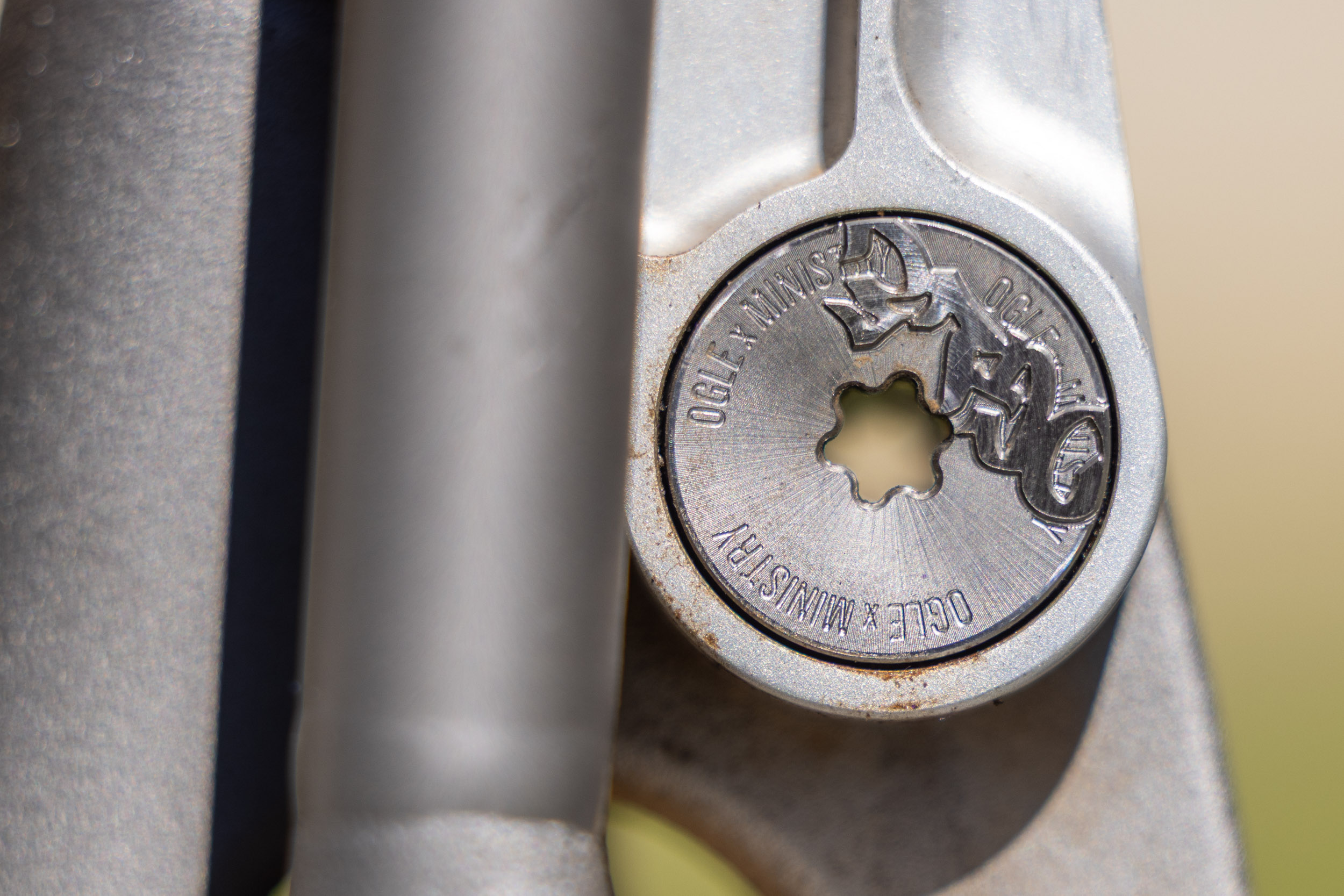
The bike’s suspension is built around the 3VO multi-link platform from Ministry, giving the rider 150mm of rear travel through the custom titanium linkage. The raw finish adds texture to the bike, unlike anything I’ve seen. Overall, it speaks to a long career of fabricating fantastic bikes.

Rockgeistlink
Asheville, North Carolina
I stopped by Rockgeist, a local bikepacking bag brand, a few days before the show to see how things were going. Many readers will be familiar with the brand and will likely be interested to know how they’re doing since the damage caused by the storm in 2024. Like many businesses in the area, Rockgeist was hit hard. Pretty much everyone in the region was affected in some way, but shops and inventory near a water source were hit especially hard. Rockgeist’s original space flooded due to its proximity to the French Broad, and they were forced to relocate across the street.
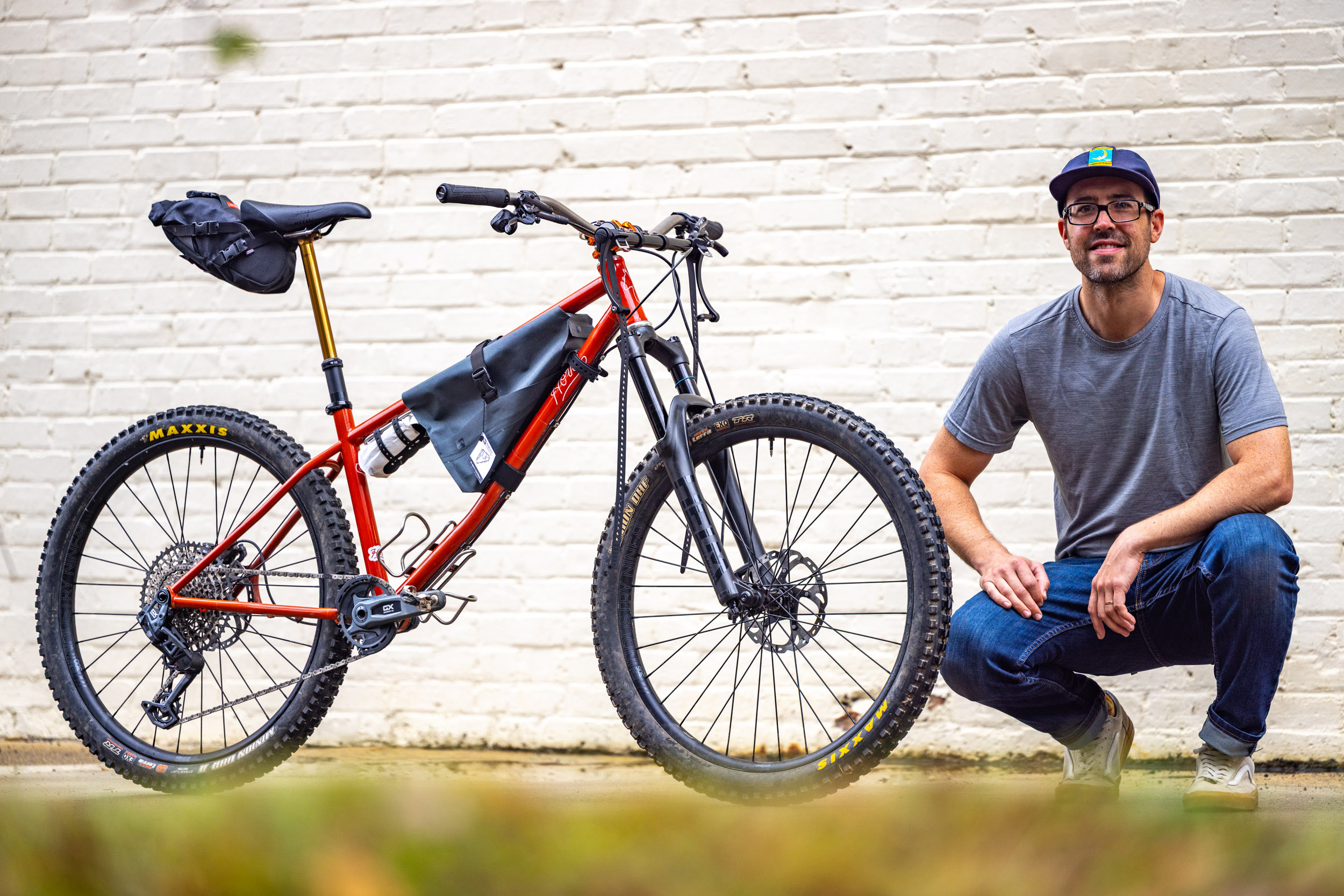

Thankfully, thanks to everyone’s dedication, they’re finally getting back into the swing of things. As a small company, many manufacturing processes depend on the specific people tasked with making certain bags. Given that some folks have left in the past few years, nailing down and re-jigging certain processes, in addition to the chaos brought on by the move, was a new puzzle for owner Greg Hardy to figure out. Thankfully, he feels like things are finally getting back on track.
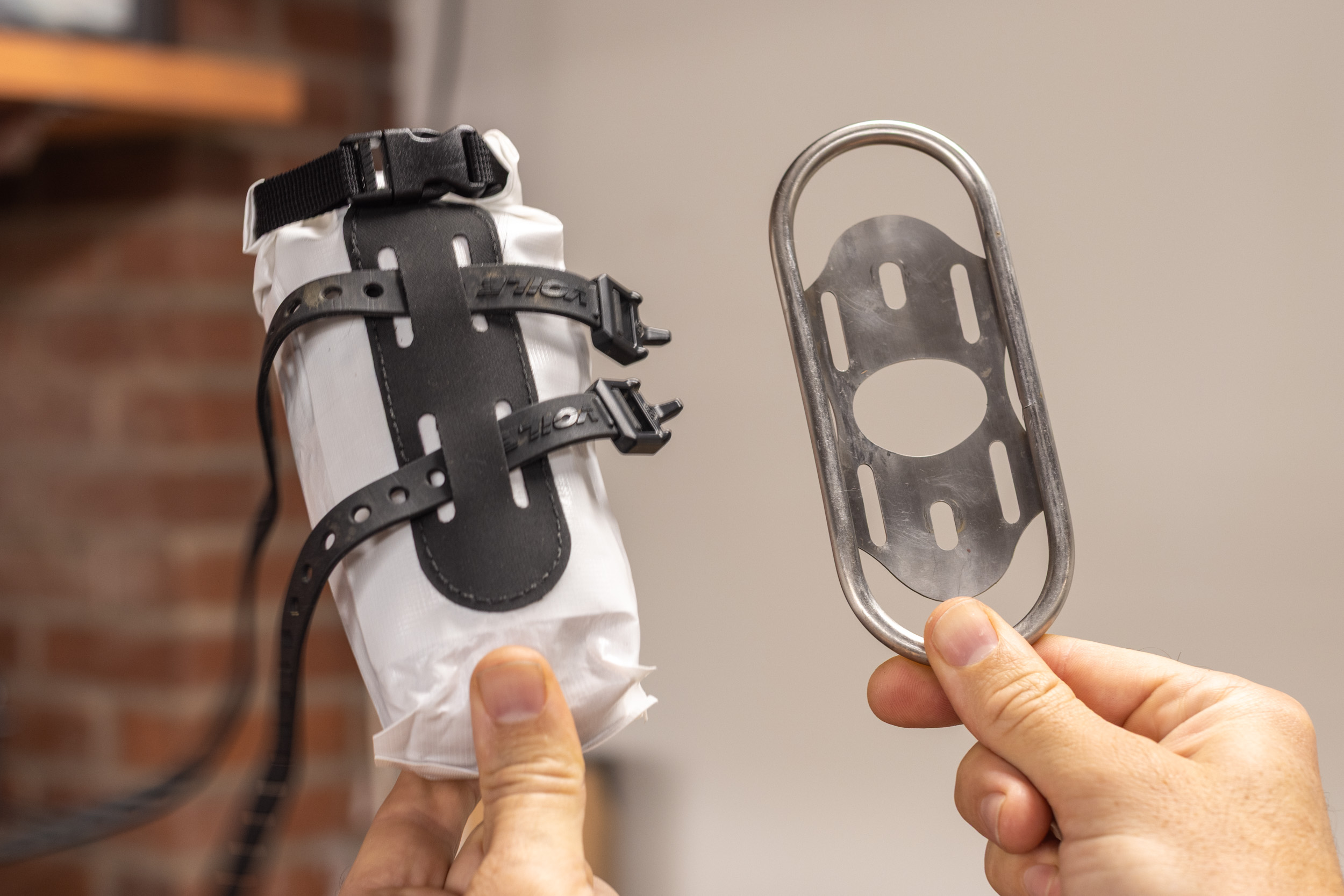

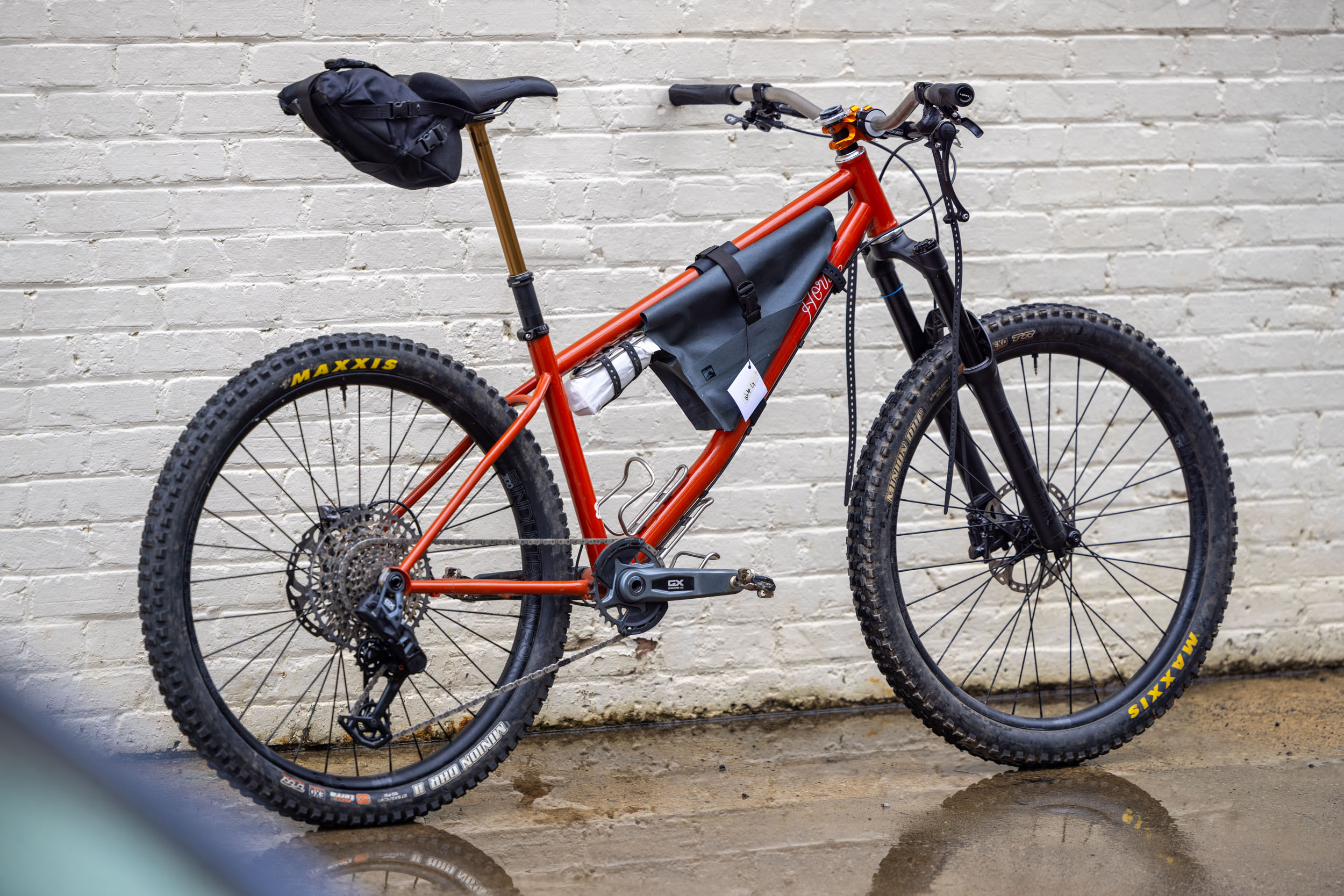
While it isn’t a groundbreaking release, Rockgeist is launching a new bag with a small builder in the coming months. In partnership with Thomas Callahan of Horse Cycles in upstate New York, the brand has created a small bag targeted at racers and those looking for a lighter solution for their flat kit. Using Aluula fabric, Rockgeist is creating these small white bags—official size still TBD—and Thomas has made the corresponding cage. Greg says the project has been in the works for years, but he finally got around to putting the finishing touches on it more recently.
It came from his experience on routes like the TNGA, where the small protruding foot on standard cages used on the underside of the downtube would sometimes hit rocks and other objects on trail. His Horse Cycles 27.5″ mountain bike, which he commissioned ages ago, actually has a bottle cage mount on the underside of the top tube specifically for this project. Now, it’s finally coming to market. We’ll share more details when the bag hits the site, but it looks like a great, useful small bag.
Cane Creek Bikes
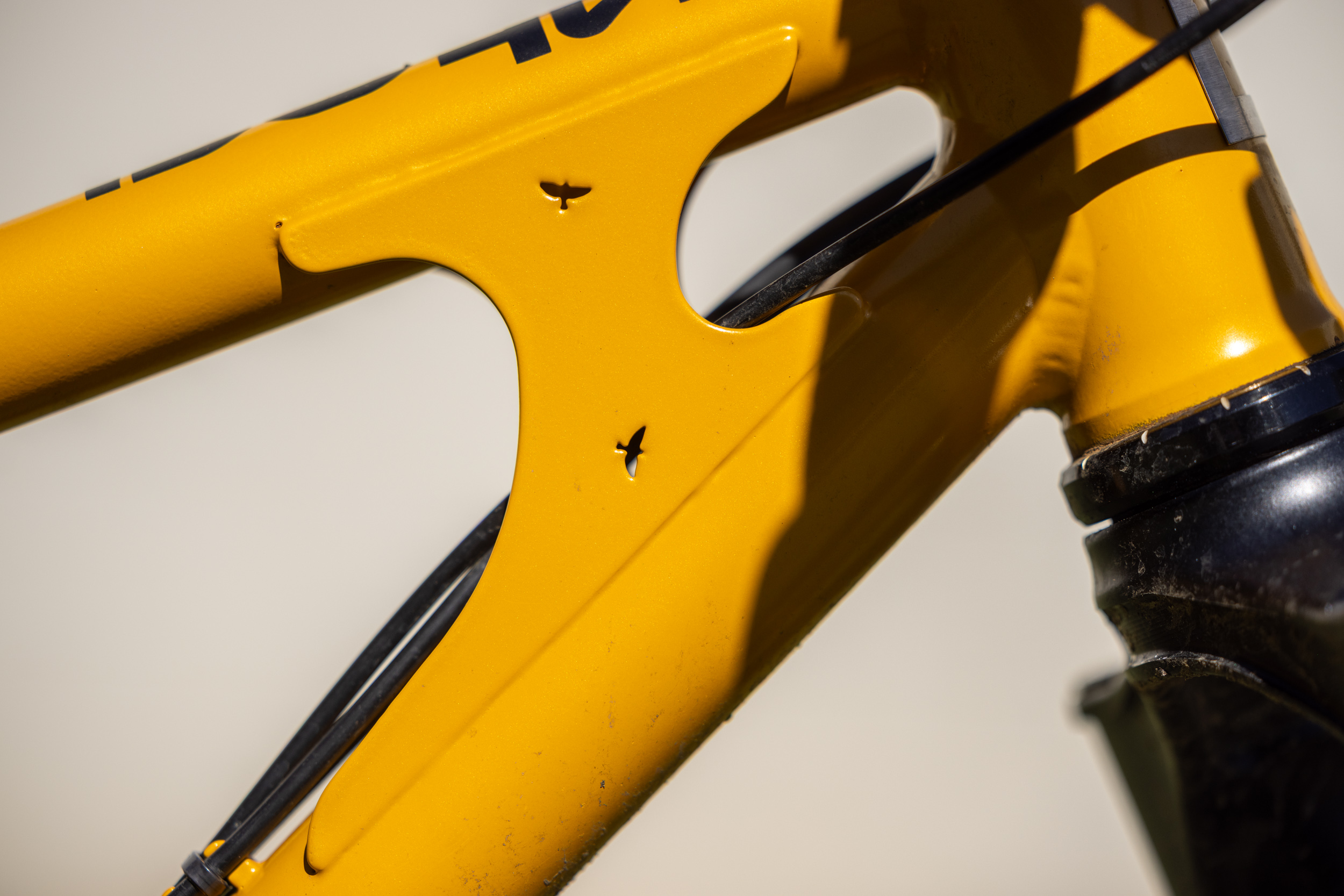
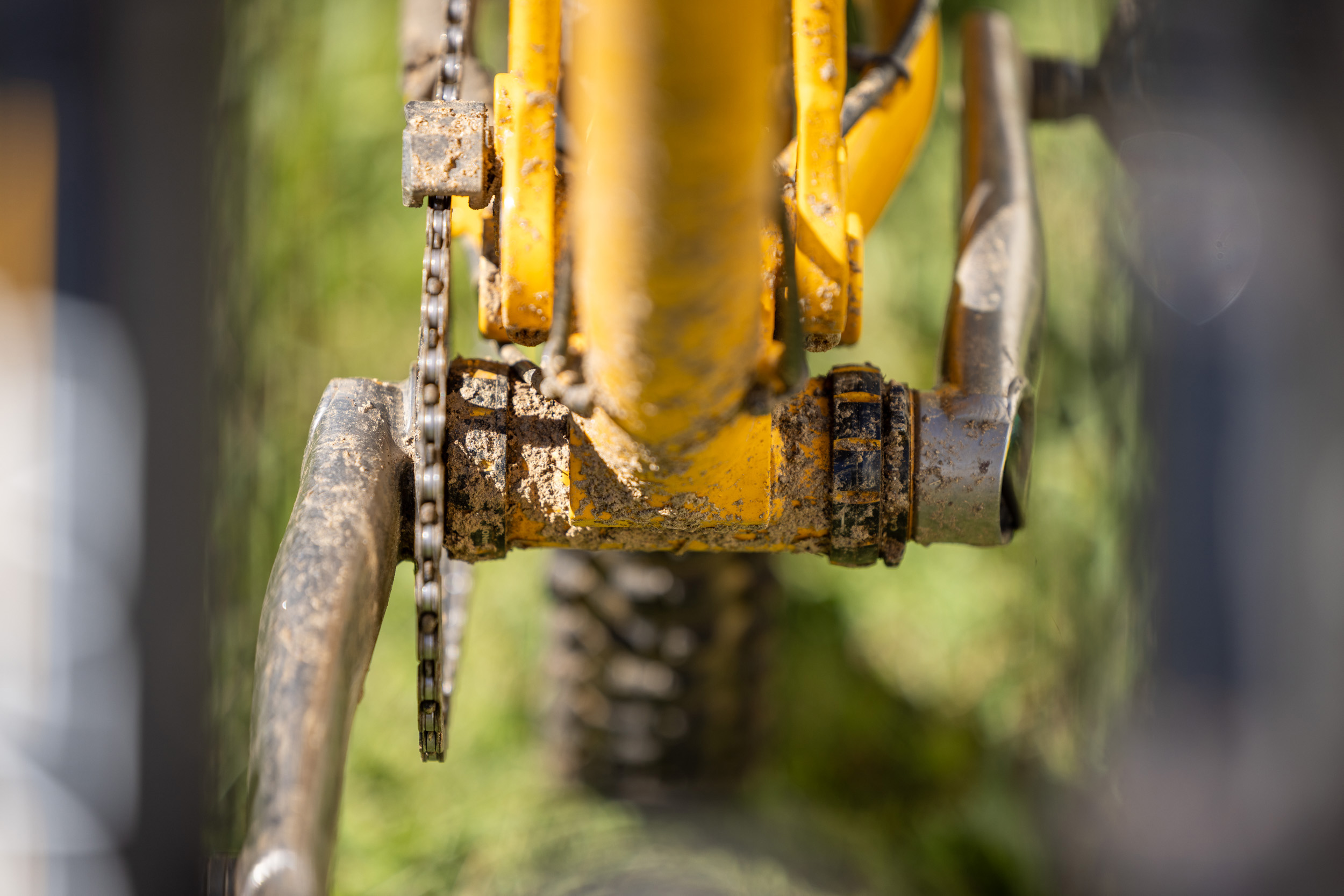
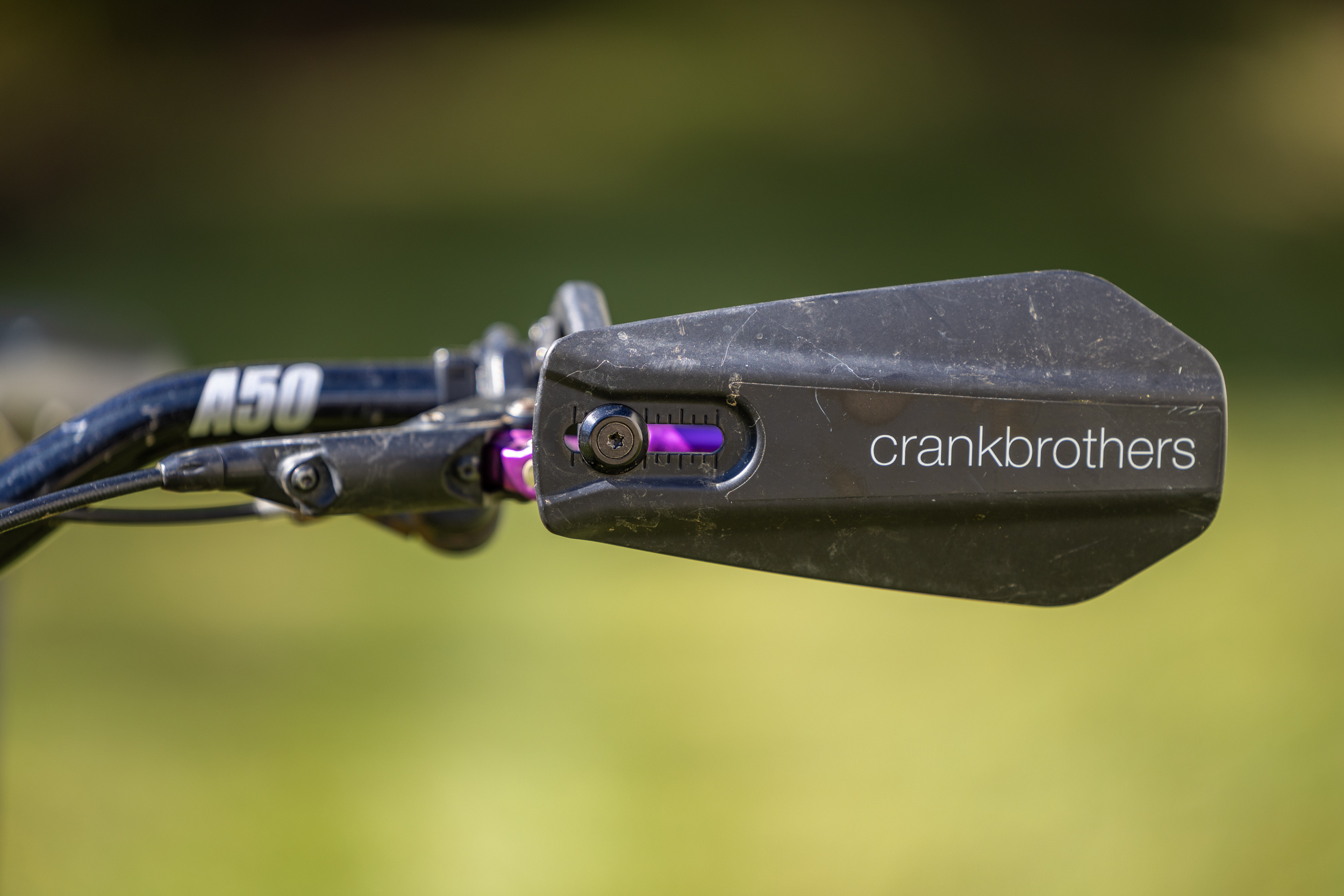
Of course, though they insist the two are distinct entities, Cane Creek took the opportunity to have a few builds decked out in their components at the show. Not all of the builders could make it, but various staff bikes were outfitted with drool-worthy Cane Creek components that were a little different than what you might be able to pick up online. The following gallery includes a few of the bikes that stood out, plus a sneak peek at one or two unreleased components that will hit stores soon.

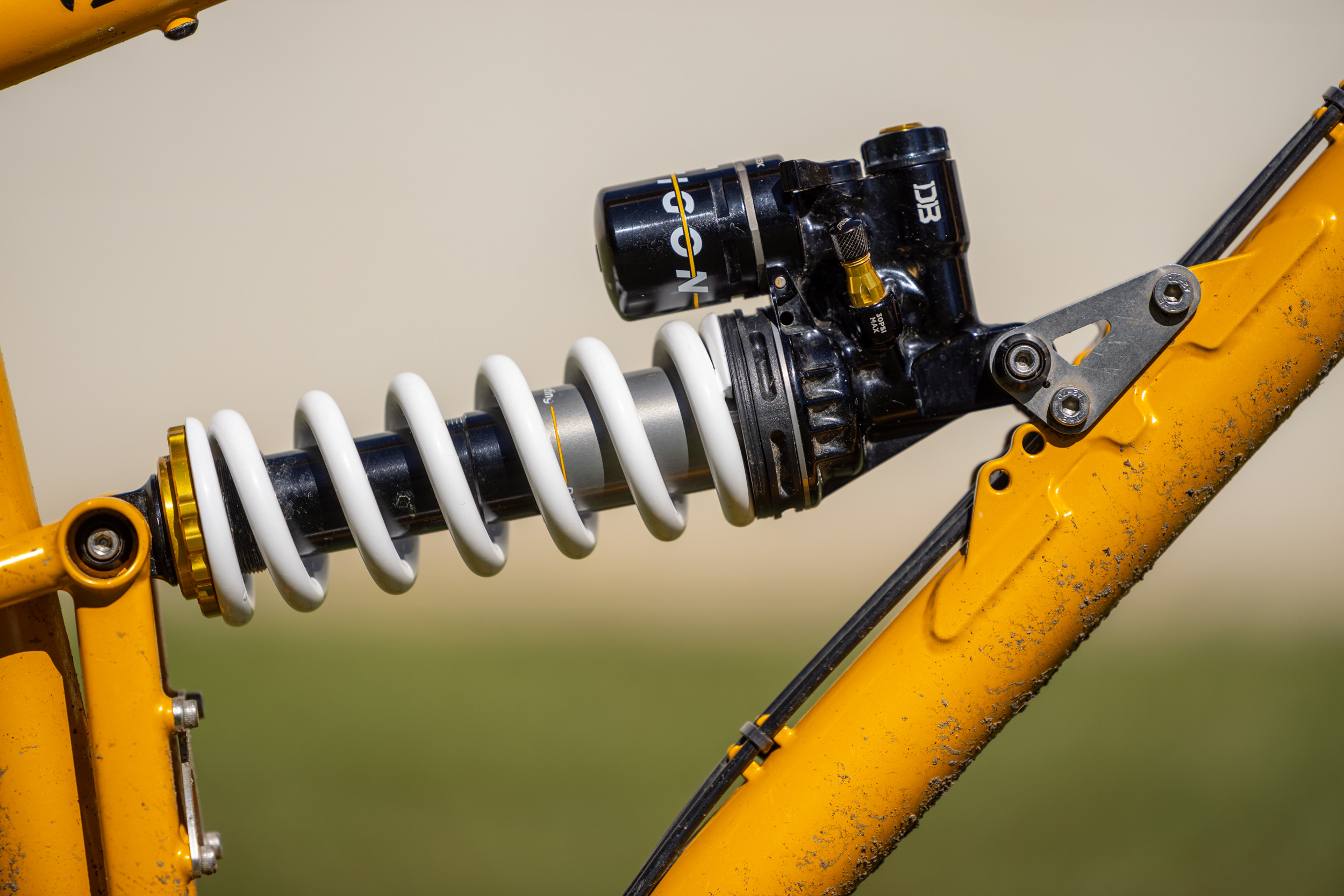

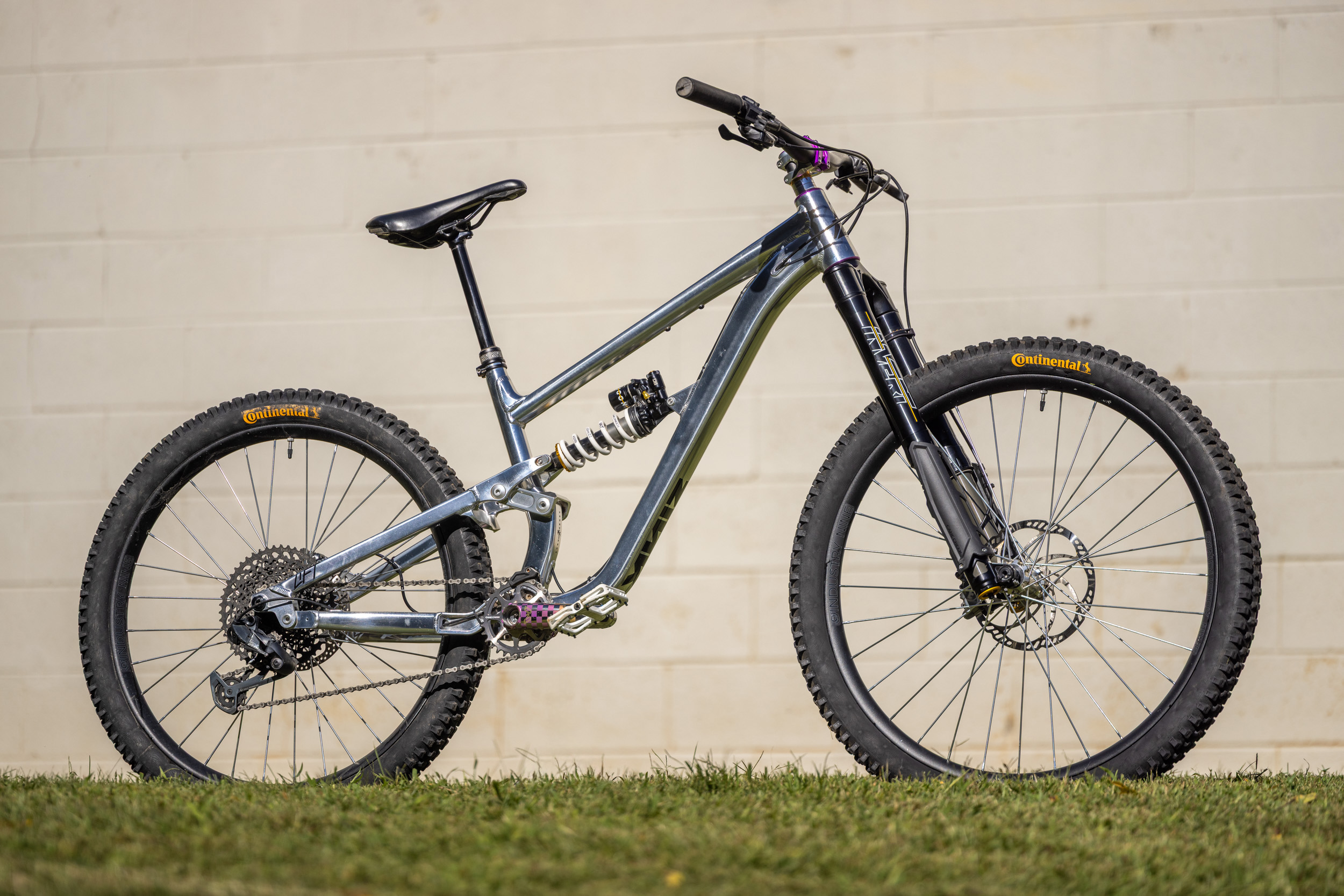
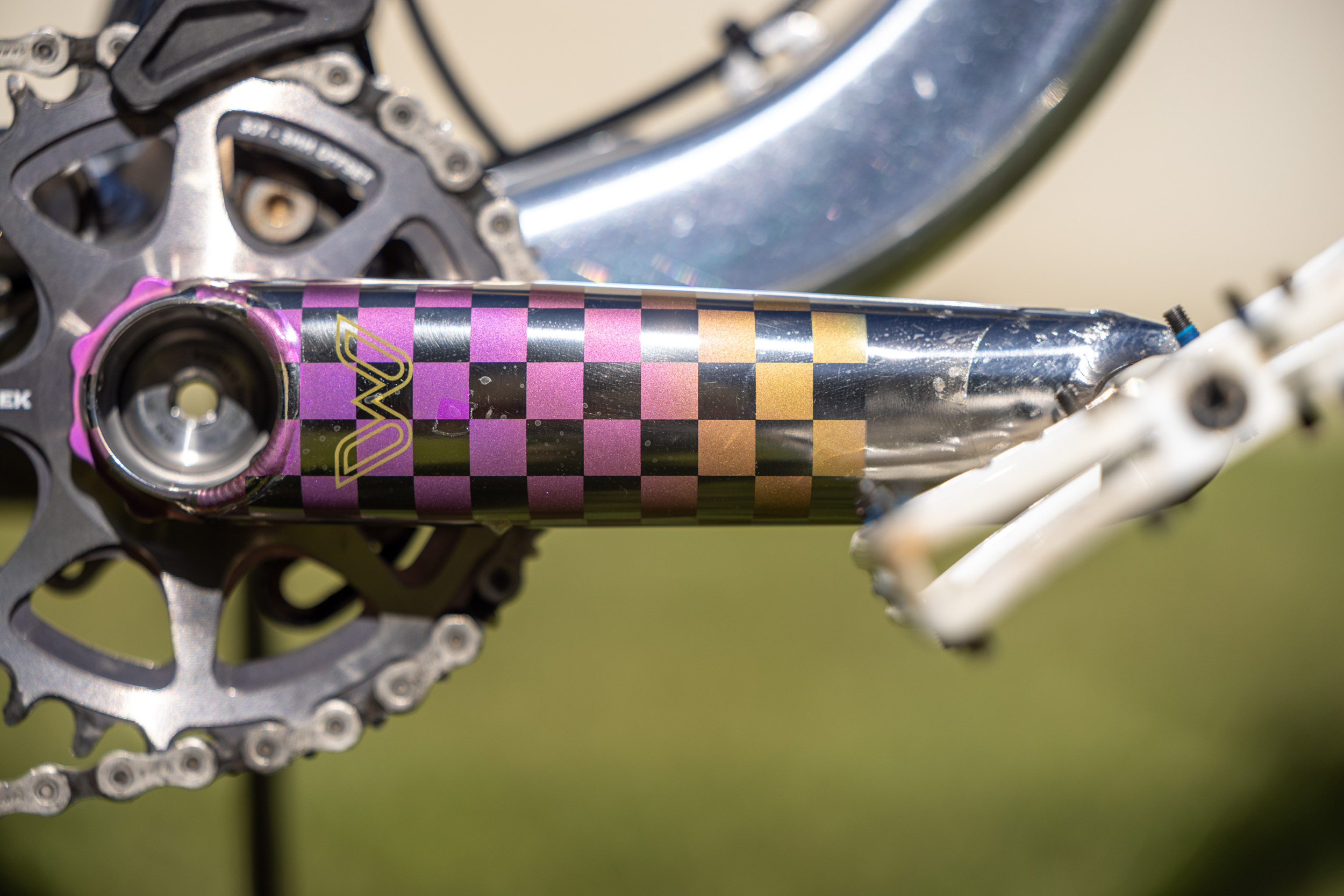
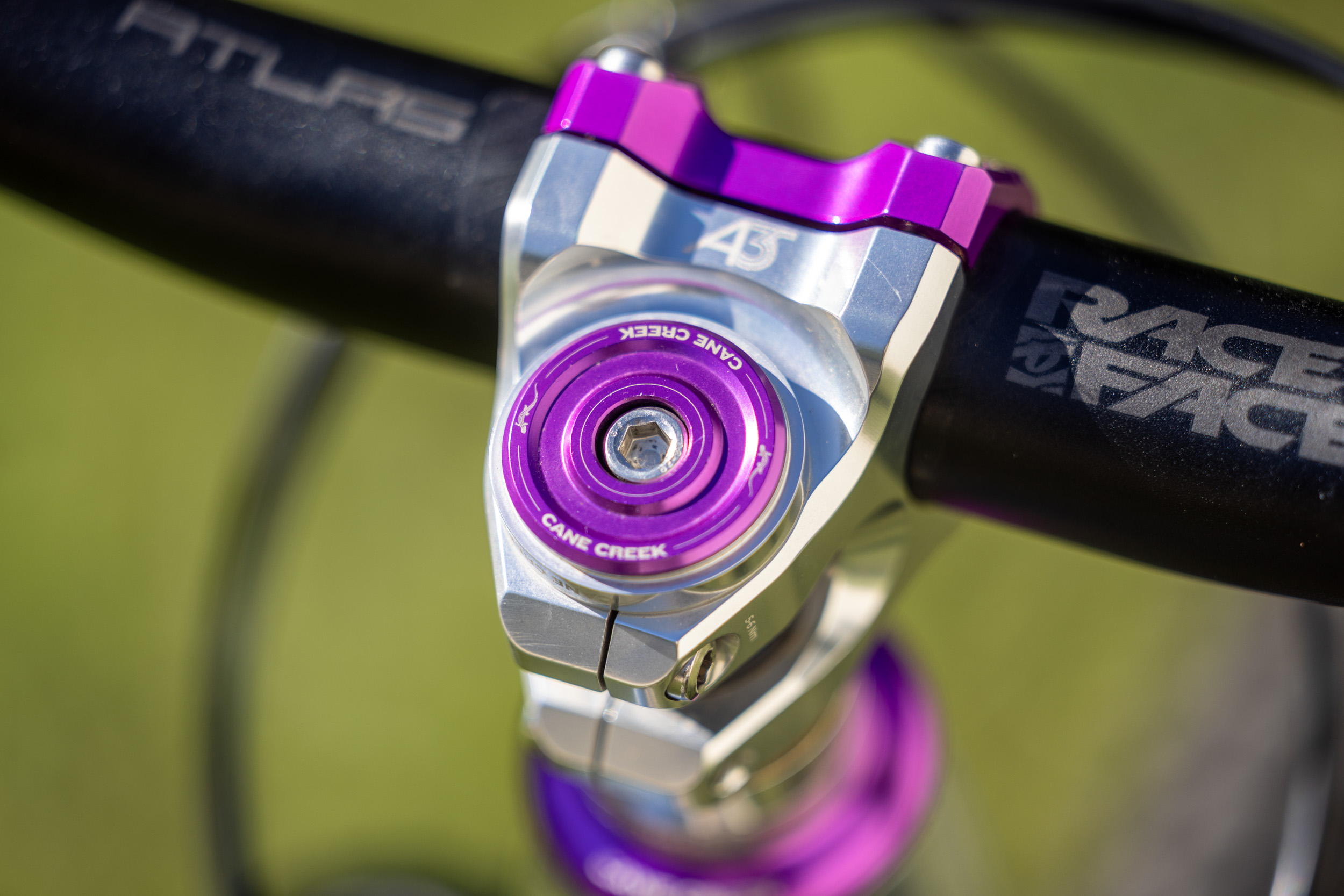
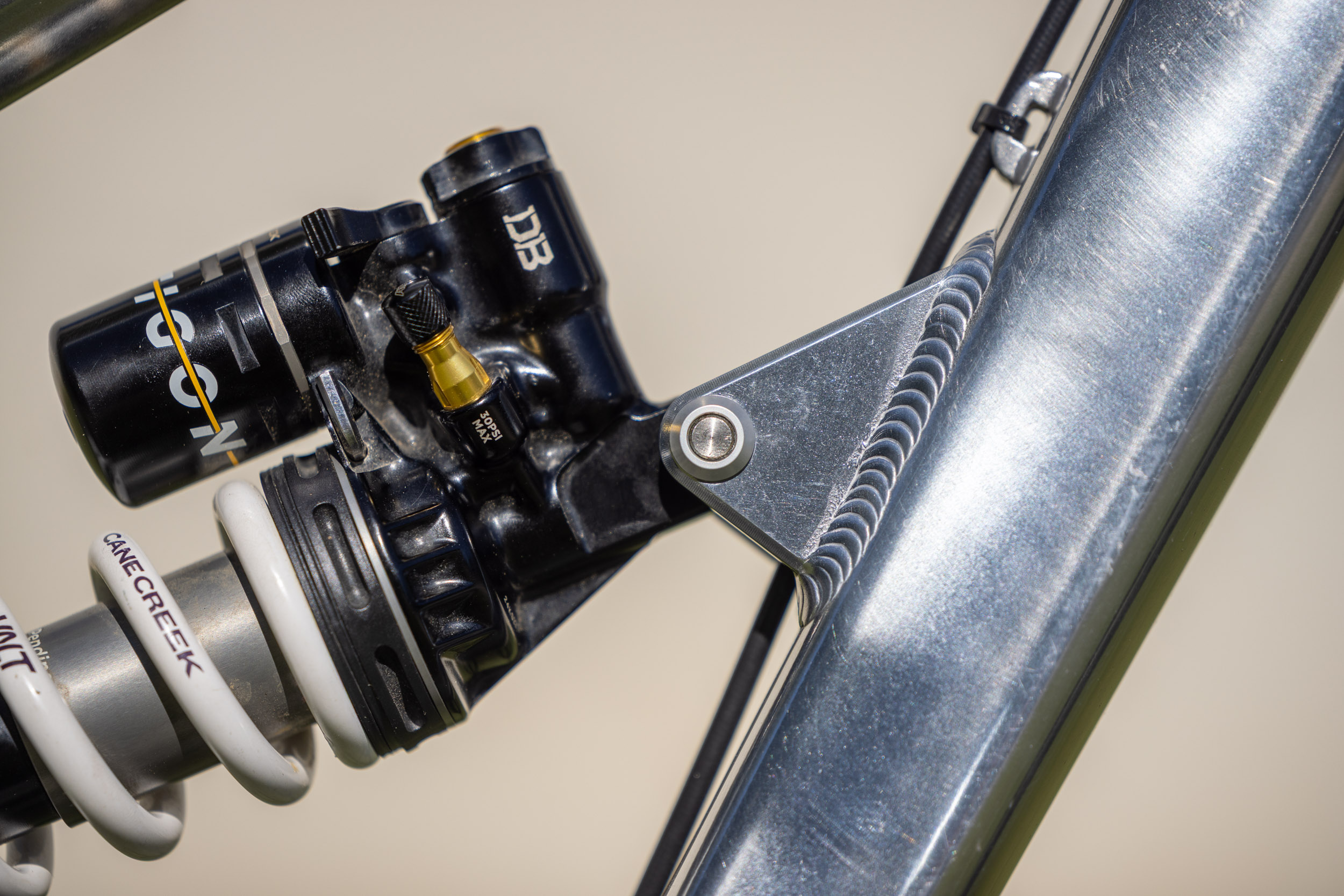
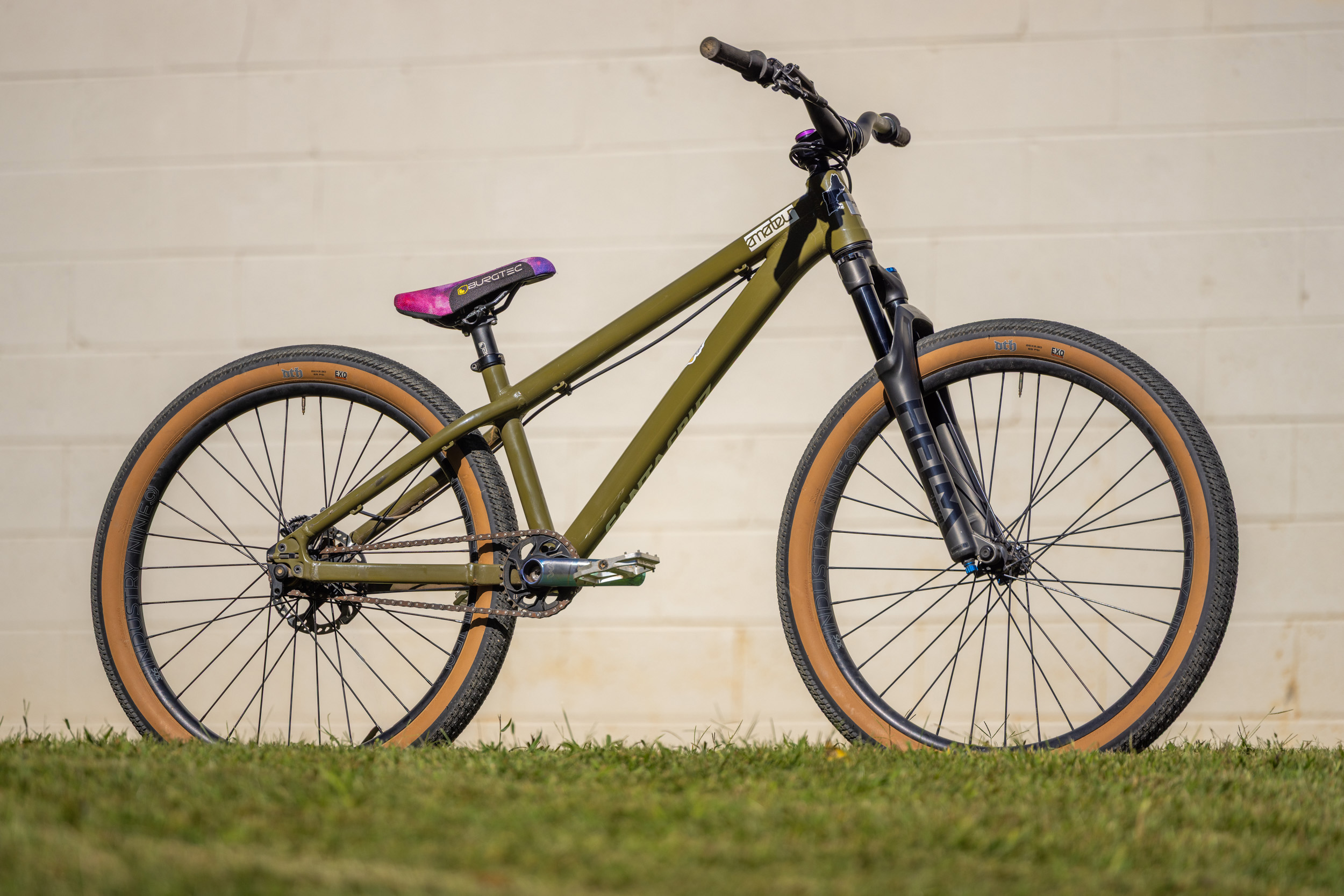
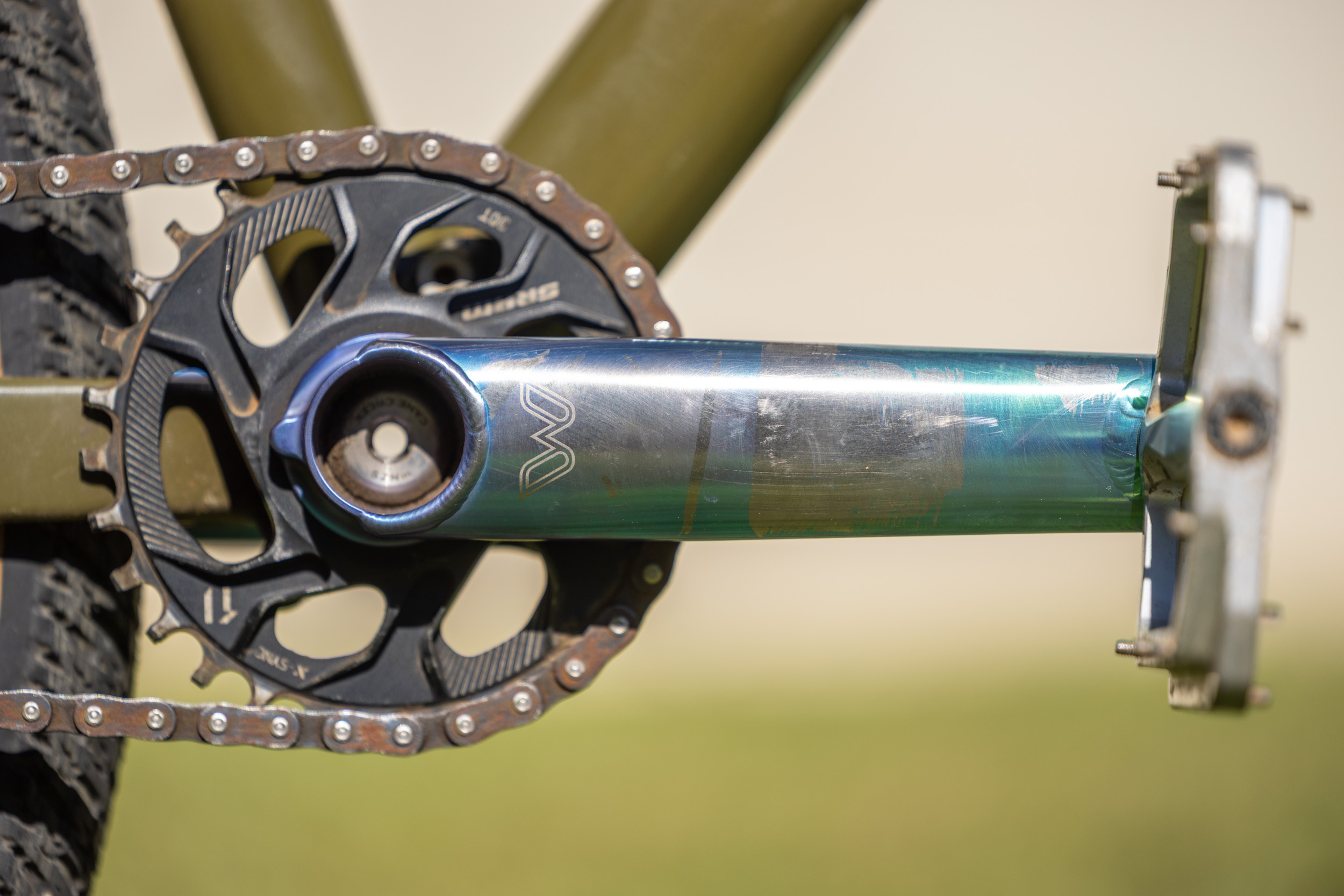
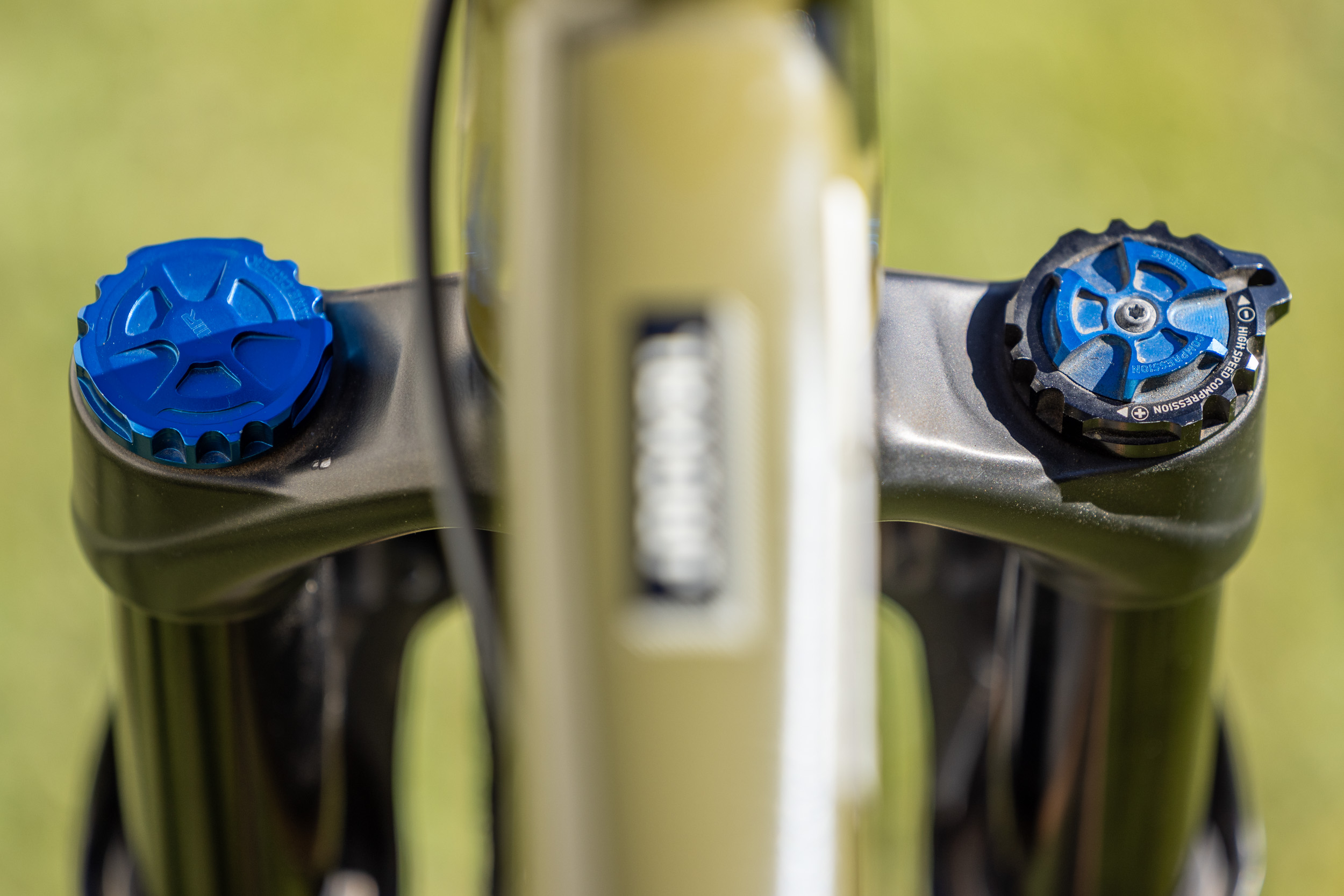
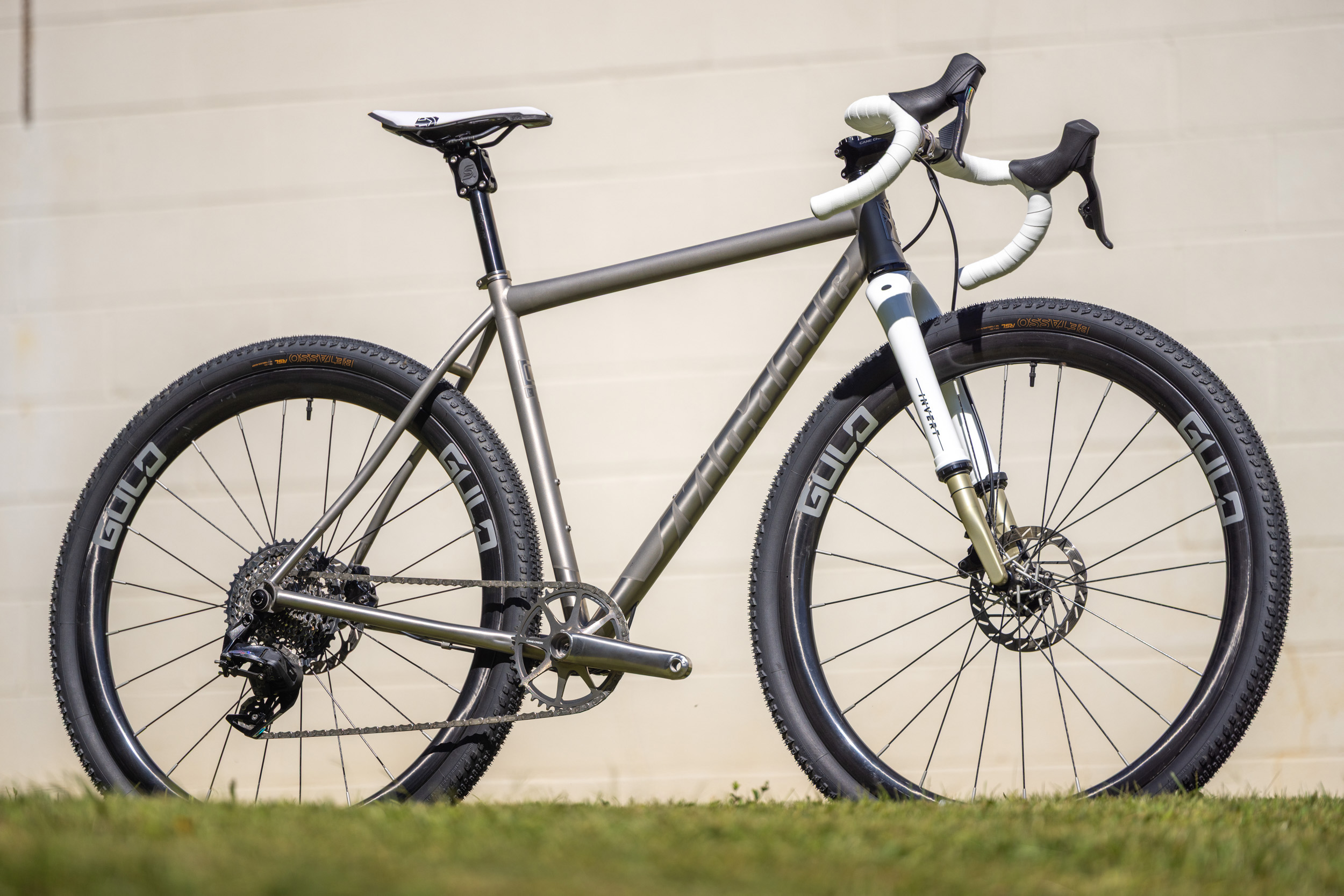
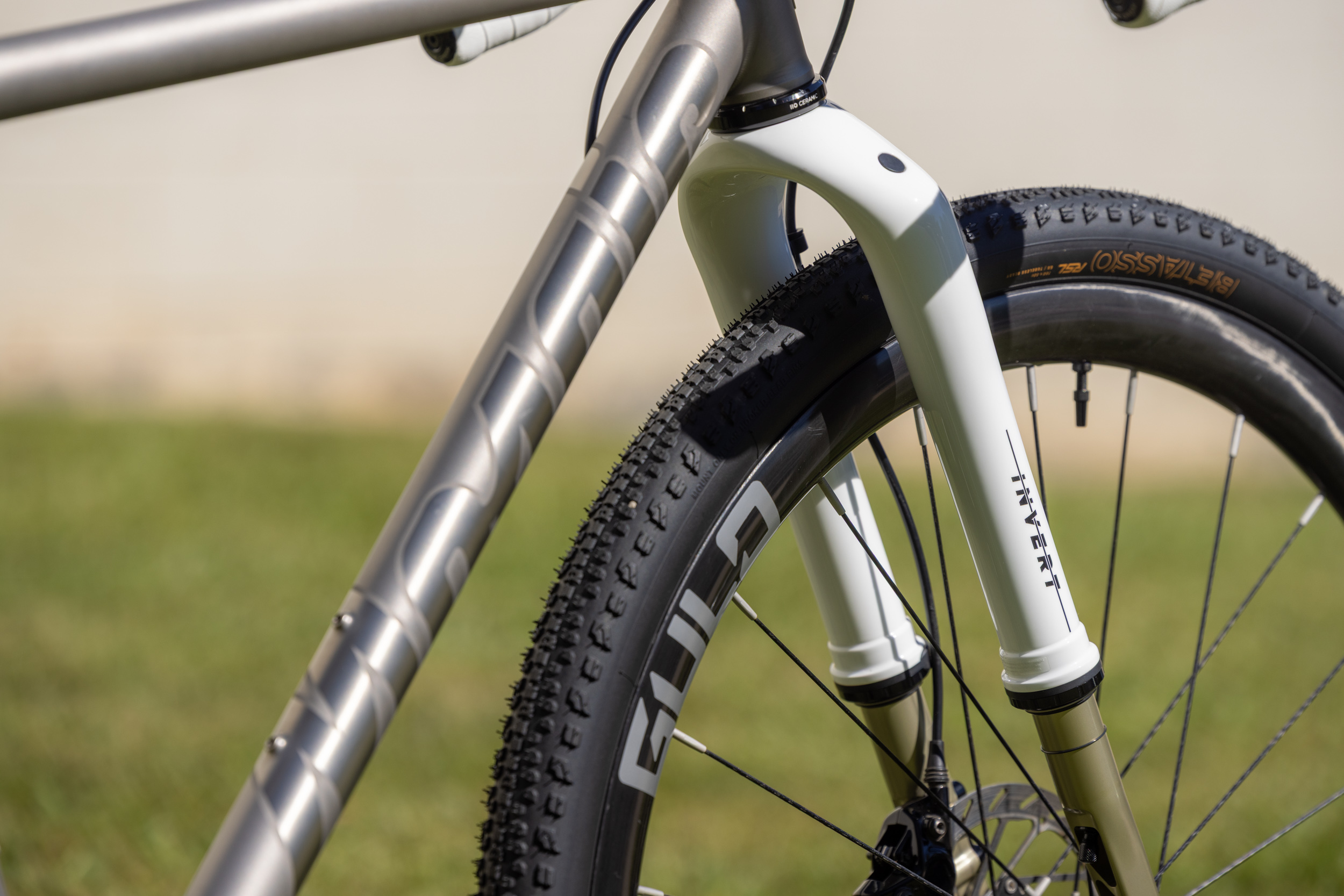

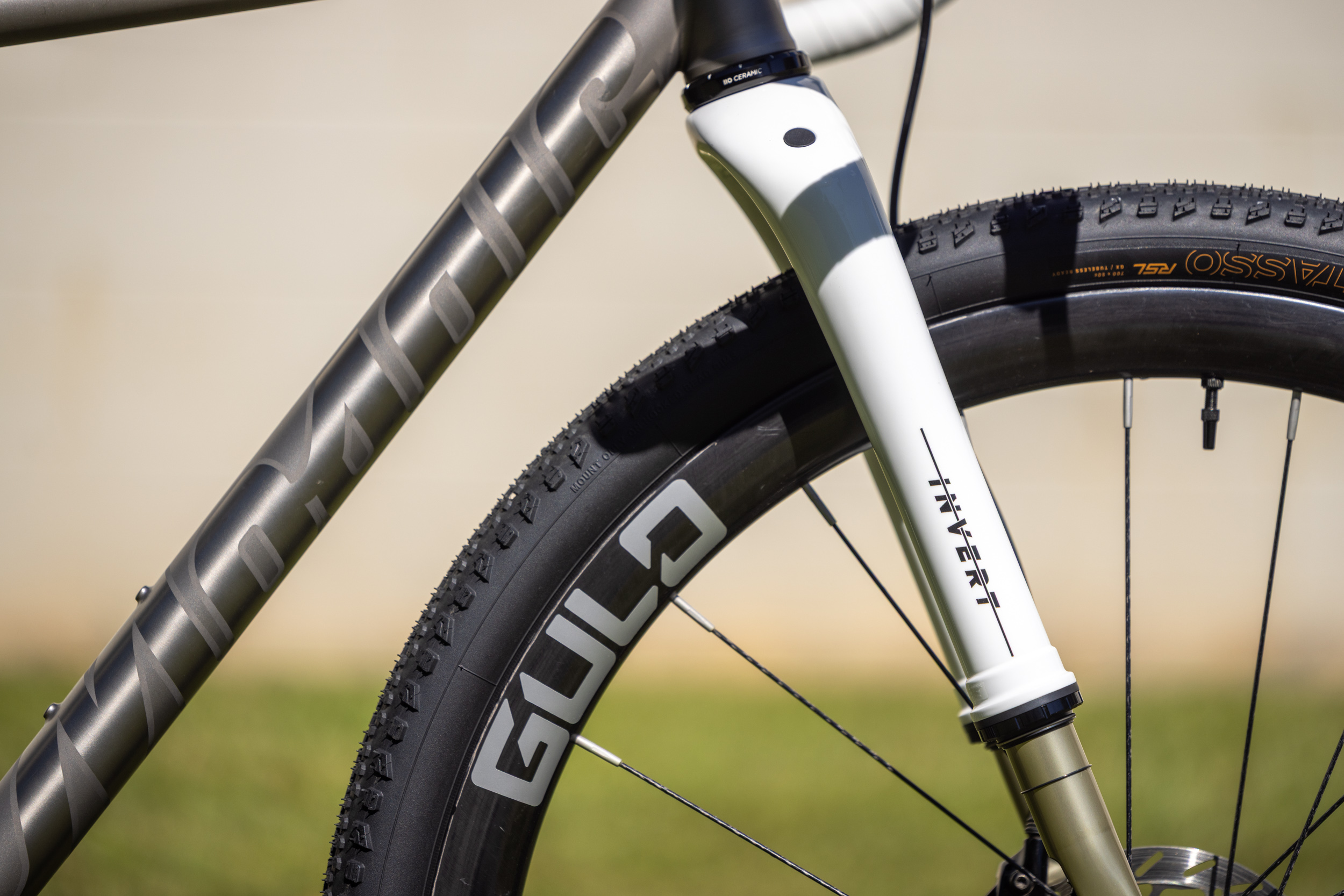
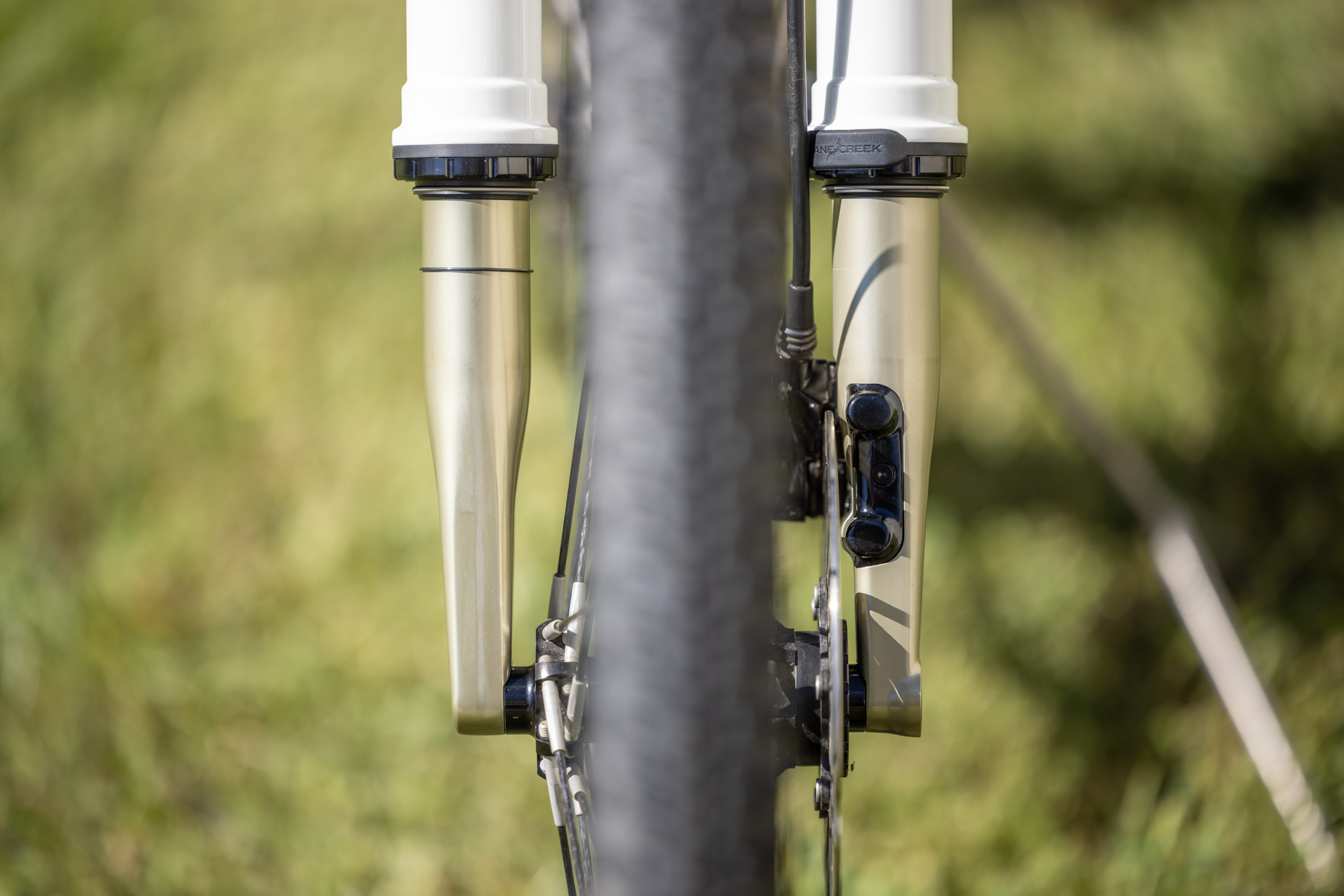
That’s it for our coverage from the show! Did anything from the first edition of CRAFTED catch your eye? Be sure to let us know in the Conversation below…
Further Reading
Make sure to dig into these related articles for more info...



Please keep the conversation civil, constructive, and inclusive, or your comment will be removed.