

 Mountain Bike (MTB)
 Gravel Bike
 All-Terrain Bike (ATB)
 Fat Bike


Kona LBF Review: A Drop-Bar MTB Done Right



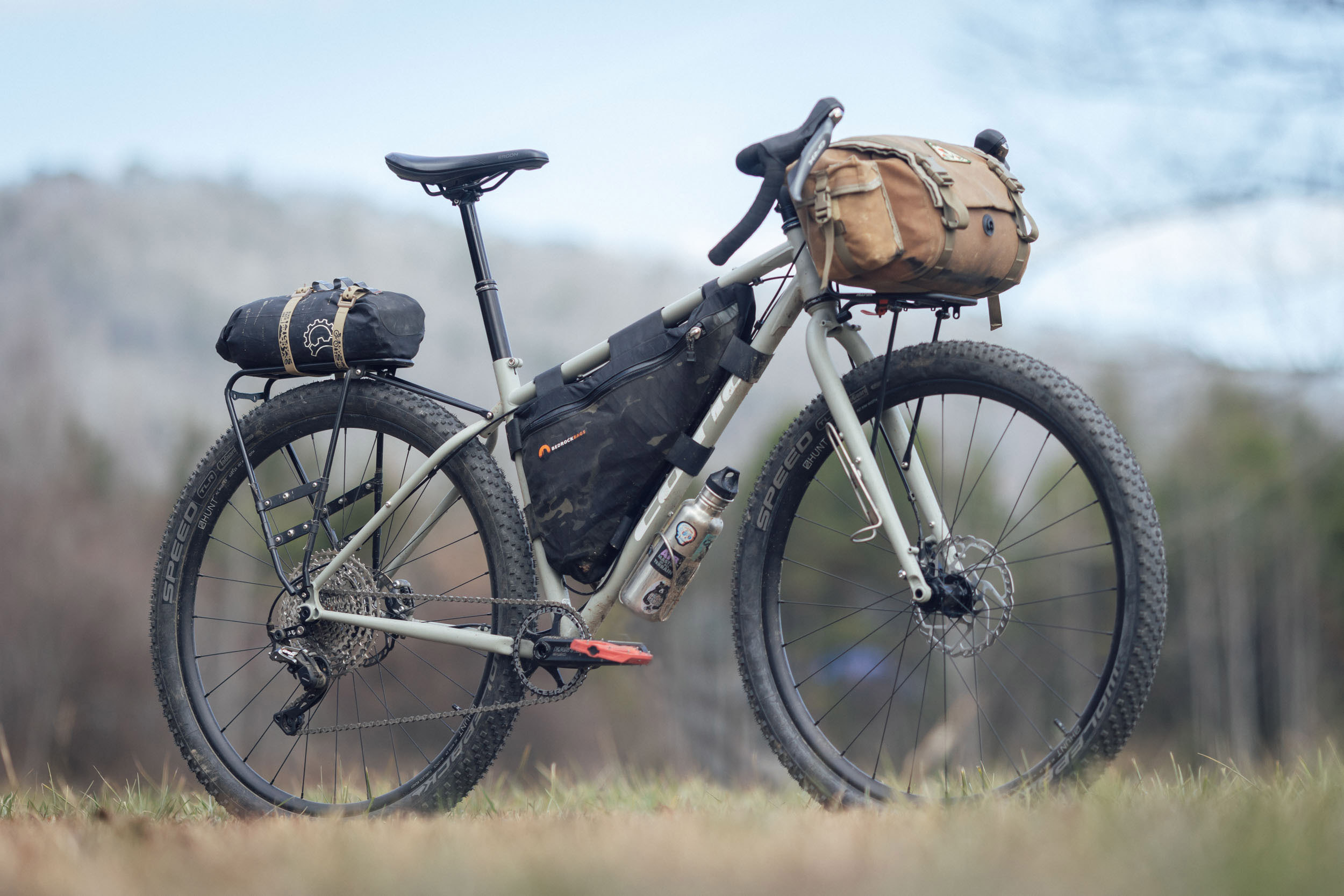
The new Kona Legend of Big Fork, or LBF for short, is a drop-bar mountain bike in every sense of the word. Built up with a Reynolds steel frame, a 100mm suspension fork, long and slack geo, and a unique mix of components, it’s an unusual bike. Miles spent the last few months testing it ahead of today’s release, culminating with a bikepacking trip on the sandy, chunky tracks of the Baja Cape Loop. Find his Kona LBF review here…
PUBLISHED Mar 3, 2026
Most drop-bar mountain bikes overpromise and underdeliver. Whether it’s a problem with the geometry or undergunned components that leave me wishing for more, there’s always something that has me thinking “if only…” Launched today, the new Kona Legend of Big Fork, or LBF, might be the most well-rounded drop-bar mountain bike on the market. I’ve been testing the LBF to figure out exactly how it stacks up against the competition and to unpack why someone would choose it over a hardtail. To get the most accurate, in-depth read on it, I headed south to Baja, Mexico, for a winter bikepacking escape, where the Baja Cape Loop served as a worthy proving ground.


Drop-bar mountain bikes aren’t a new concept. As Neil explained in our drop-bar MTB roundup, experimentation with drop bars on rough terrain has been documented as early as the 1980s, with one of the first production options being the Bridgestone MB-1 in the late 1980s. Things took off from there, with framebuilders experimenting with this new concept, and eventually larger bike brands began releasing their own takes. One notable modern example is the Salsa Fargo, which debuted in 2007.
As we explained in our Gear Index of drop-bar 29ers, we consider a drop-bar MTB to be any dirt-centric drop-bar bike with at least 29 x 2.2” tire clearance, mounts for gear and bottles, and geometry tailored for drop-bars and off-road use. There are dozens, maybe even hundreds, of bikes in this category. It turns out that it fills a sweet spot between a flat-bar mountain bike and a traditional gravel bike—you get the benefits of extra hand positions for long rides, but the off-road capability of a hardtail mountain bike.


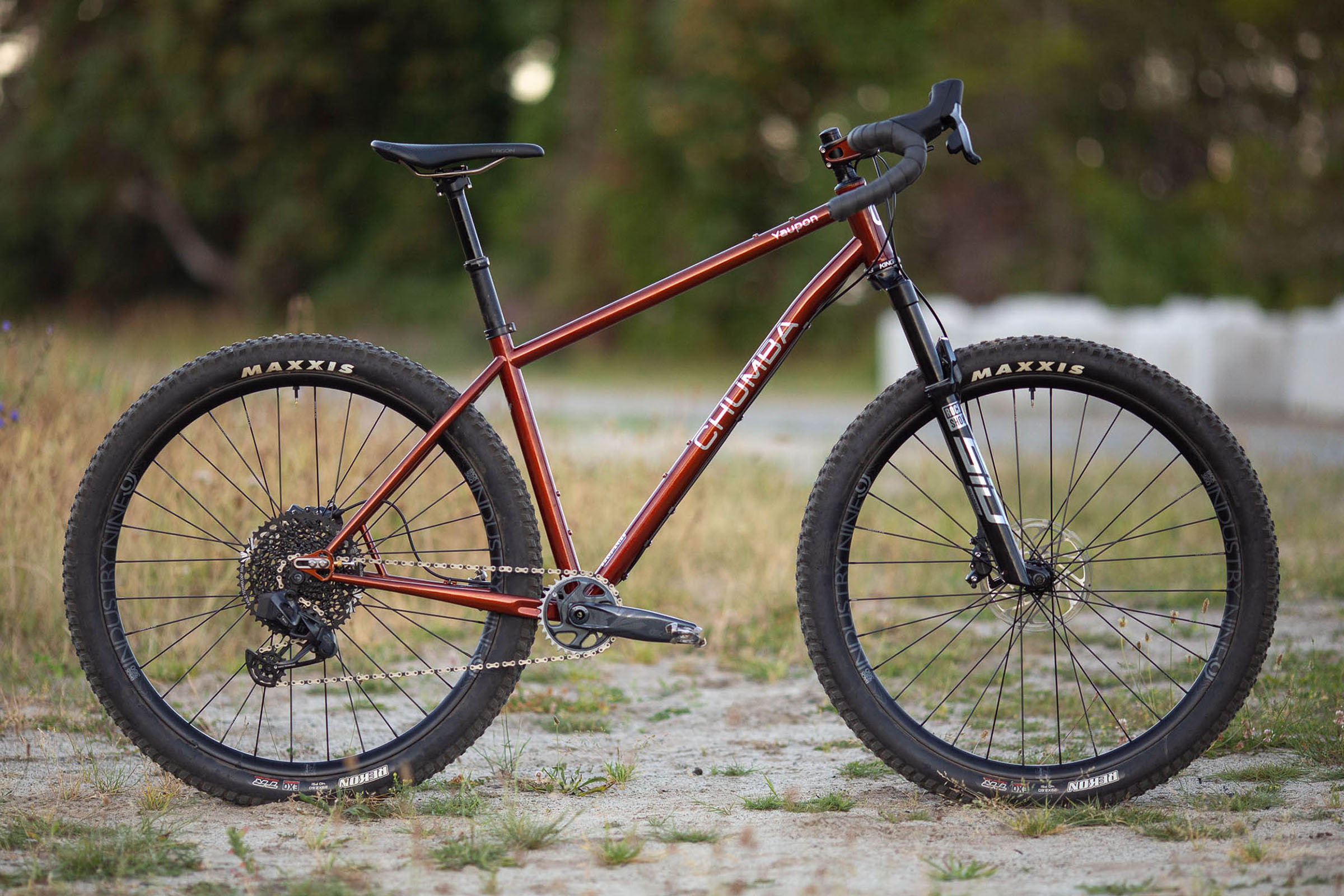
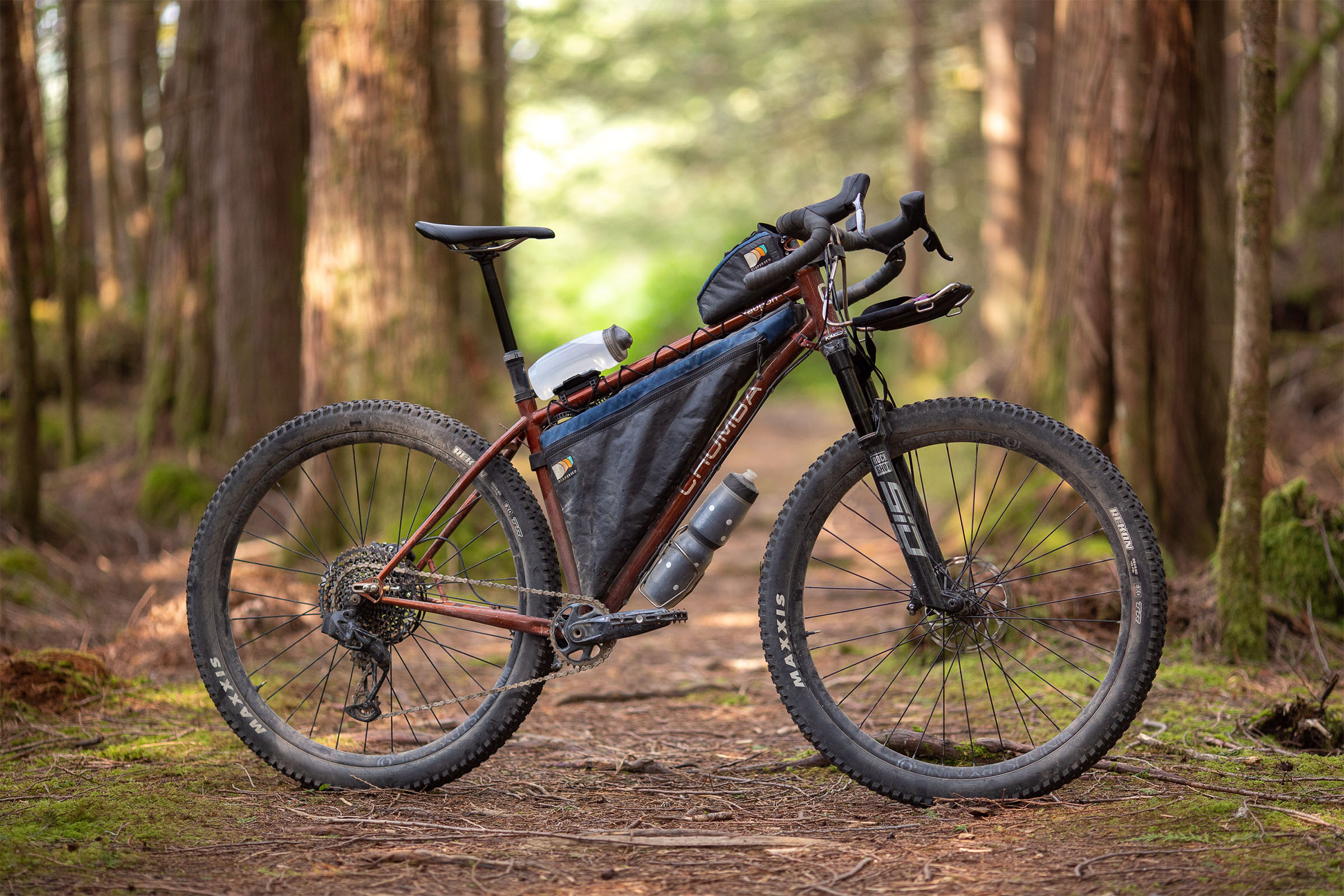
I’ve tested my fair share of these bikes, including the Breezer Radar X, Chumba Yaupon, and the new Trek CheckOUT, as well as more gravel-leaning drop-bar 29ers such as the Sklar SuperSomething, Curve GMX+, and Bearclaw Beaux Jaxon and Thunderhawk. In nearly every review, I usually end up discussing when it might make sense to just ride a hardtail. This choice is inevitably quite personal. Many folks prefer the multiple hand and riding position of drop bars, while others gravitate toward flat bars for a different riding experience and MTB-specific controls.
Looking back at some drop-bar mountain bikes we’ve tested, some unofficial geometry specs can help differentiate between them. It seems most big-tired, drop-bar mountain bikes have head tube angles between 68 and 70 degrees, and any slacker fall into flat-bar territory. In fact, until today, I could only find a few examples of production drop-bar bikes with properly slack head tubes. There’s the Evil Chamois Hagar at 66.6°, and the Marin Gestalt X at 67.5°, but those are the closest I’ve come across.


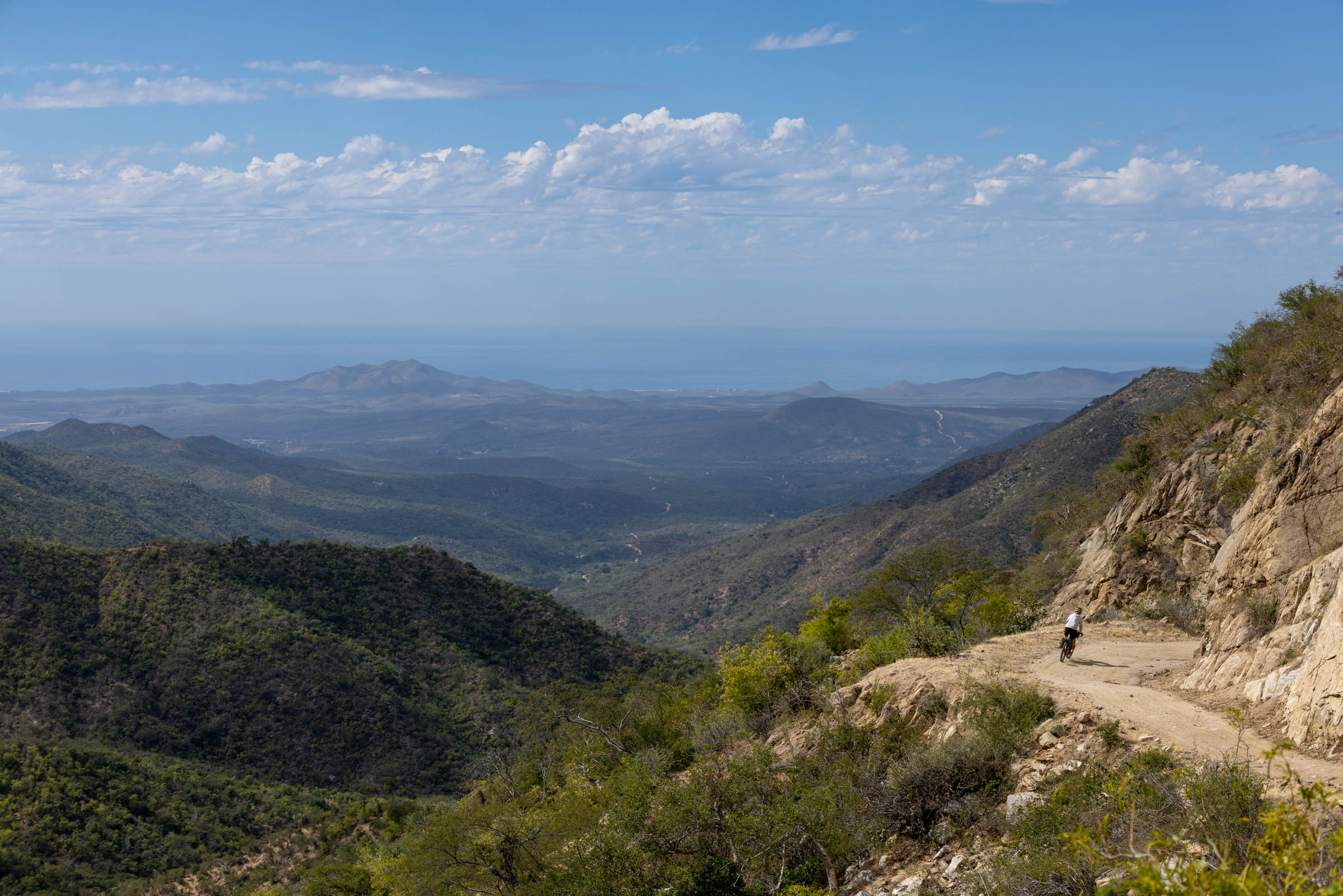
The new Kona LBF might just be the most progressive take on the drop-bar mountain bike yet. It’s built up around a Reynolds 520 steel frame, a 100mm travel fork, and clearance for 29 x 2.5” tires, although it can fit larger. For some, the Kona LBF might just be another confusing drop-bar bike with no purpose, but for others, it leans even harder into its off-road demeanor—making it THE quintessential drop-bar MTB. Over the last few months, I’ve been testing the LBF on the root-covered trails and logging roads where it was born, and loaded up for a nine-day bikepacking trip on Baja’s Cape Loop to share my take.
A Curious Bike, Explained
Brands love slapping big tires on gravel bikes with steep head tube angles, ultimately neutralizing most of the benefits of having big tires in the first place. The Decathlon Riverside Touring 920 I reviewed was an extreme example of this, and the ride quality suffered as a result. As I see it, if we’re going to call these bikes drop-bar mountain bikes or drop-bar 29ers, let’s inject a little more MTB into them. Putting big tires and a suspension fork isn’t enough if you truly want to ride them like mountain bikes.


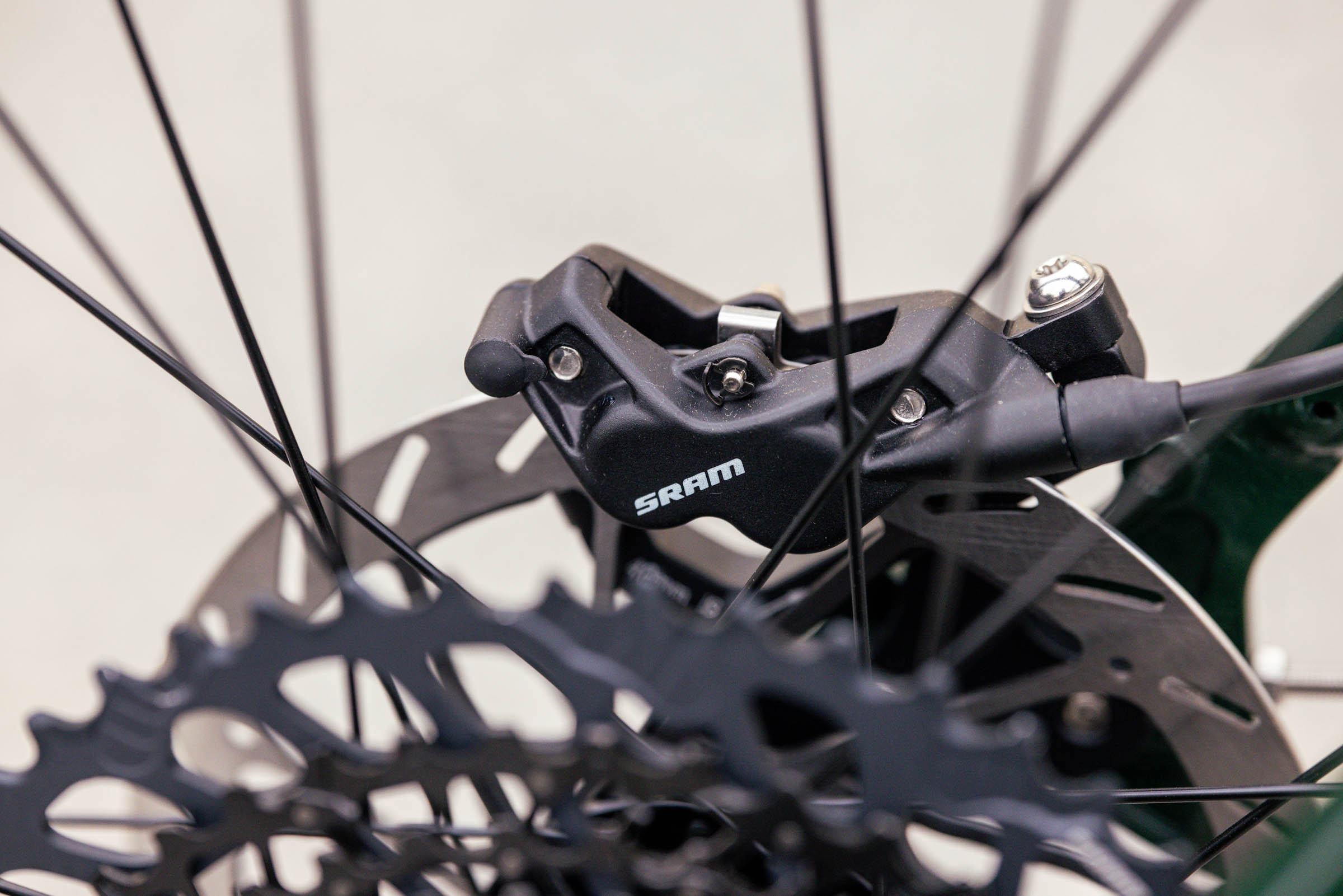
The Kona LBF takes its Pacific Northwest roots to heart. Its 67° head tube angle is a start, and Kona also worked with SRAM on a custom pairing of SRAM Apex Eagle levers with powerful SRAM G2 four-piston calipers, addressing the issue of braking performance feeling underwhelming compared to what should feel possible. Matched with 180mm rotors (with room for 200mm) front and back, the Kona LBF stops when you want it to. It comes specced with 27.5mm IW RaceFace Arc mountain bike rims, its straight seat tube leaves plenty of room for long dropper posts, and the stock build features a chunky 29 x 2.4” Maxxis Dissector/Forkaster combo. Up front, you’ll find a 100mm travel RockShox SID fork with 35mm stanchions and a Ritchey cockpit centered around a wide and flared Beacon handlebar.
The LBF isn’t just a mountain bike with drop bars, which is good, but it’s not too far off. One giveaway is its top tube length, which is shorter than most modern mountain bikes, including the Kona Unit, but longer than most comparable drop-bar mountain bikes. Dedicated drop-bar bikes require a shorter top tube/reach to compensate for the added length of the drop bars, as the primary riding position is further forward than on a flat bar. Too short, and you’re left feeling cramped and unstable. Too long, like when folks do a flat-to-drop-bar swap, and you’ll likely be stretched out. The Chumba Yaupon is the only other drop-bar MTB I’ve tested with a comparable front-end length (top tube length and reach), and like the Yaupon, it felt most comparable to my preferred position on a mountain bike, with plenty of room to maneuver the bike and my body around it.

Looking at the comparison chart below, we can see the LBF is slacker and longer than the others. It also has a lower bottom bracket, longer wheelbase, and more stack and reach. These numbers align with my experience riding the bike, including its status as the most off-road-capable drop-bar bike I’ve ridden. After adjusting for sag, the head tube angle is about 68 degrees, and all my findings remain consistent.
Steel Drop-Bar MTBs Compared
| Metric | Kona LBF (XL) | Esker Lorax (XL) | Chumba Yaupon (XL) | Otso Fenrir (XL) | Cotic Cascade (XL) |
|---|---|---|---|---|---|
| Stack | 679 | 670 | 674 | 660 | 667 |
| Reach | 465 | 405 | 438 | 441 | 435 |
| Top Tube Length (Ef.) | 647 | 610 | 640 | 618 | 631 |
| Head Angle | 67° | 68° | 68° | 68° | 69° |
| Seat tube angle | 75° | 73° | 73.5° | 75° | 74° |
| Fork Travel | 100mm | 120mm | 120mm | 100mm | 100mm |
| BB drop | 75 | 68 | 60 | 68-72 | 70 |
| Chainstay length | 440-456 | 445-459 | 440-460 | 430-450 | 439 |
| Wheelbase | 1203-1219 | 1143 (short) | 1158-1178 | 1170-1190 | 1163 |
The closest comparison I found is the Viral Wanderer, a titanium, Pinion-equipped drop-bar MTB with the same mountain bike DNA as the LBF. The XL Viral has a 67.5-degree HTA, 645mm effective top tube length, 650mm stack, 491mm reach, and a 1,211mm wheelbase. Aside from the different frame material, the Wanderer and the LBF are quite similar. Like Neil, I found the extra length, both in the cockpit and on the ground, to offer welcome stability when riding off-road, but it also reduced the zippy, racy gravel bike feel that some people really enjoy.


Paired with a short stem, the LBF still felt long, but the extra stack height made for a comfortable all-day riding position. While riding the Cape Loop over nine days, I never felt stretched out, and the long wheelbase and low bottom bracket offered a planted, stable ride. The LBF excelled in places where other drop-bar bikes would likely fall short, such as rock-riddled descents, any type of singletrack, and when the “roads” felt more like forgotten doubletrack. For me, overbiking typically equates to less fatigue on multi-day rides, as was the case aboard the LBF. I believe its steel frame, suspension, big tires, geometry, good gearing, and powerful four-piston brakes all worked together to achieve this. I wasn’t eager to catch air or get too rowdy, mainly because that’s not how I ride drop-bar bikes. Crucially, it felt sure-footed and capable.
Over the last few months, Emily has been exclusively riding her Esker Japhy hardtail while I’ve been on the LBF. I almost considered bringing a second bike, figuring I’d be left in her dust, which thankfully wasn’t often the case. I don’t think I’ll ever find the same confidence and handling in drop bars that flat bars offer, and Emily has been riding singletrack and steeper sections of trail with a touch more grace compared to me on the LBF. Most of the time, though, they feel surprisingly well-matched.
Kona LBF Geometry
| Size | SM | MD | LG | XL |
|---|---|---|---|---|
| ST Length (mm) | 400 | 445 | 490 | 535 |
| TT Length (mm) | 552 | 577 | 607 | 647 |
| Reach (mm) | 385 | 405 | 430 | 465 |
| Stack (mm) | 623 | 642 | 660 | 679 |
| Standover (mm) | 748 | 783 | 816 | 849 |
| Head Tube Angle (°) | 67° | 67° | 67° | 67° |
| Head Tube Length (mm) | 90 | 110 | 130 | 150 |
| Seat Tube Angle (°) | 75° | 75° | 75° | 75° |
| Chainstay Length (mm) | 440 | 440 | 440 | 440 |
| BB Drop (mm) | 75 | 75 | 75 | 75 |
| BB Height (mm) | 305 | 305 | 305 | 305 |
| Wheelbase (mm) | 1099 | 1127 | 1160 | 1203 |
| Front Center (mm) | 670 | 697 | 730 | 773 |
| Fork Length (mm) | 511 | 511 | 511 | 511 |
| Fork Offset (mm) | 44 | 44 | 44 | 44 |


LBF vs. Hardtail
We know the Kona LBF is capable compared to other drop-bar MTBs, but how does it compare to proper mountain bikes? It turns out the LBF isn’t too far off from several other flat-bar equipped hardtail mountain bikes I’ve reviewed on the site, which I’ve referred to as “semi-rad hardtails” in the past. The Panorama Taiga comes to mind, which shares the same 67° head tube angle, 75° seat tube angle, and a similar chainstay length. As expected, the top tube on the Taiga is longer to accommodate flat bars, but it otherwise shares a strikingly similar silhouette.


The top tube doesn’t slope quite as aggressively as those on true mountain bikes, but the seat tube is short enough to provide ample room for reasonably long dropper posts. The XL frame I’ve been riding has clearance for a 410mm (total length) post, leaving room for most 120-140mm droppers. A little more standover height also means the main triangle is fairly spacious, leaving room for bags and bottles. I opted for a custom Stringbean Bags two-story roll-top frame bag, which delivered up loads of usable packing space.
Where the LBF differs, besides top top length, is its stack height, which plays a huge role in how I ride drop-bar mountain bikes. Too much stack, and you can be left with a super upright riding position that isn’t conducive to riding off-road. Too little stack, and you might have the opposite problem. The LBF has more stack than most hardtails and drop-bar MTBs, which yields a fairly upright position and not much saddle-to-bar drop—my favorite. This is great for riding tame terrain, but on the hoods, it lacks control. I particularly noticed this on Baja’s sandy tracks, where having weight over the front end is essential to keep the front wheel going where you want it. It’s a good thing the LBF comes specced with a drop bar, because riding in the drops at least gave me a fighting chance to remain in control. A flat bar set up at the same height would have been a losing battle in loose sand.


Kona nailed it with speccing the Ritchey Beacon handlebar, which has a very shallow 80mm drop. It was Chumba who introduced me to the Beacon lineup, as it came specced on the drop-bar Yaupon I tested and turned out to be a standout component. On the LBF, the shallow drop not only allowed for quick transitions between the hoods and drops, but it also provided a wholly different secondary riding position that felt far closer to riding a flat-bar mountain bike than I’ve ever experienced on a drop-bar bike. With lower stack heights and bars with more drop, I rarely find the drops comfortable, but that wasn’t the case with the LBF. I found myself shifting into the lower position so often that it almost became my default. It wasn’t just the width that improved control and stability, but the resulting height of my hands on the bar. The drops were my safe place on chunky descents, when riding anything at speed, and on most climbs where some extra control was needed. Between the flats, the hoods, and the drops, it truly felt like the LBF has three distinct usable riding positions. During my Cape Loop ride, I found myself lowering into the drops through sand and on loose climbs, making a good case for rowdy drop-bar MTB geo for mixed-terrain bikepacking.
Part of the Package
Most drop-bar mountain bikes are undergunned when compared to their flat-bar counterparts. A suspension fork, big tires, and a slack head tube angle are something, but if the brakes are underpowered, the handlebar doesn’t feel right, or the tires are too slick, then I don’t see the point. Thankfully, the LBF isn’t one of those bikes.
Four-Piston Drop-Bar Brakes: The real standout feature on the LBF is how Kona managed to spec four-piston SRAM G2 brake calipers with SRAM Apex drop-bar shifters. According to Kona, this is the first of its kind in a production bike and is fully SRAM-certified. The brakes performed flawlessly and offered far more power and control than the regular two-piston brakes typically used on production drop-bar bikes. This was especially useful when riding a fully loaded bike with five liters of water.


Burly Rims and Big Tires: The LBF comes specced with RaceFace Arc mountain bike rims rated for proper trail riding. They have a 27.5mm internal width, which is great for 2.0 to 2.4” tires, and the 32-spoke count on both the front and the rear makes for some seriously burly wheels. The OEM formula hubs aren’t anything special, but I haven’t had any issues with the wet and grime back home or the dry and grit in Baja. Kona went all-in and chose a 29 x 2.4” Maxxis Dissector up front and a Maxxis Forekaster out back. At first, I couldn’t help but roll my eyes at this type of tire selection on a drop-bar bike, but the more I’ve ridden it, the more I’m starting to warm up to the idea of an overly aggressive drop-bar bike. There’s plenty of room for 2.4” tires, and I ended up swapping them out for some faster rolling 29 x 2.6”/2.8” (front/rear) Maxxis Rekons for riding in the Baja. Kona claims the max tire size is 29 x 2.5”, but the 2.8” fit with just enough clearance not to cause me any worry.
Long Dropper and Short Cockpit: I’d take a dropper post over front suspension, but only when it’s a functional length. At 6’1” tall, I’m blessed with plenty of room for longer dropper posts, and it’s great to see Kona taking advantage of the short seat tube with a categorically long dropper. Paired with the Ritchet Beacon’s short reach and shallow drop, it made for a functional, and at times, shreddable, cockpit. I didn’t have a hardtail on hand to compare the grip height to the LBF’s height in the drops, but I’m willing to bet they aren’t too far off.


Kona LBF Build Kit
- Frame: Kona LBF, Reynolds 520
- Fork: Rock Shox SID Base 100mm
- Crankset: SRAM Eagle X1, 32T
- Derailleur: SRAM Apex Eagle 12-speed
- Shifter: SRAM Apex 12spd
- Cassette: SRAM Eagle 10-52T 12-speed
- Bottom Bracket: SRAM DUB 73mm
- Front Hub: Formula 110x15mm
- Rear Hub: Formula 148x12mm
- Rims: RaceFace ARC 29″
- Front Tire: Maxxis Dissector TR 29 x 2.4″
- Rear Tire: Maxxis Forekaster EXO TR 29 x 2.35″
- Headset: FSA No.9
- Handlebar: Ritchey Beacon Comp
- Stem: Ritchey Comp Trail
- Tape: Kona Bar Tape
- Saddle: WTB Volt
- Seatpost: TranzX Dropper +RAD Internal 31.6mm
- Seat Clamp: Kona Clamp
- Dropper Lever: TranzX
- Brake Levers: SRAM Apex
- Brake Calipers: SRAM G2 4P
- Rotors: SRAM HS2 180mm
I had no issues or complaints with the build kit Kona put together. It was refreshing to see it outfitted with a mechanical drivetrain and no batteries, as these days it seems electronic drivetrains are becoming more common than the alternative, which is still my preferred choice for bikepacking. I was also happy with the gearing, even for loaded bikepacking, thanks to a 32T chainring up front. Most drop bar bikes I review end up with me complaining about a massive front chainring. All of these findings provided especially useful on Baja’s Cape Loop.
Proving Ground: Baja’s Cape Loop
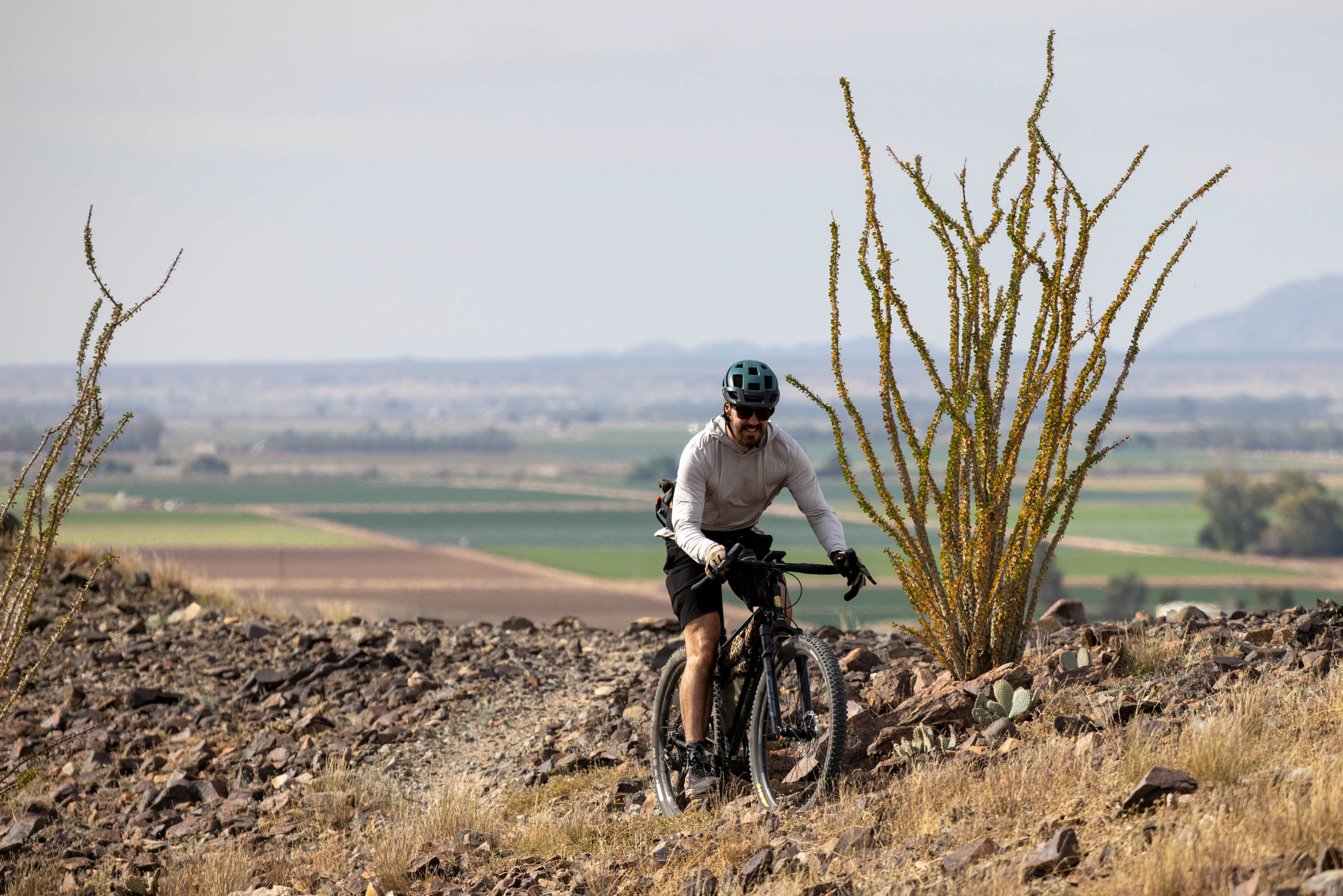
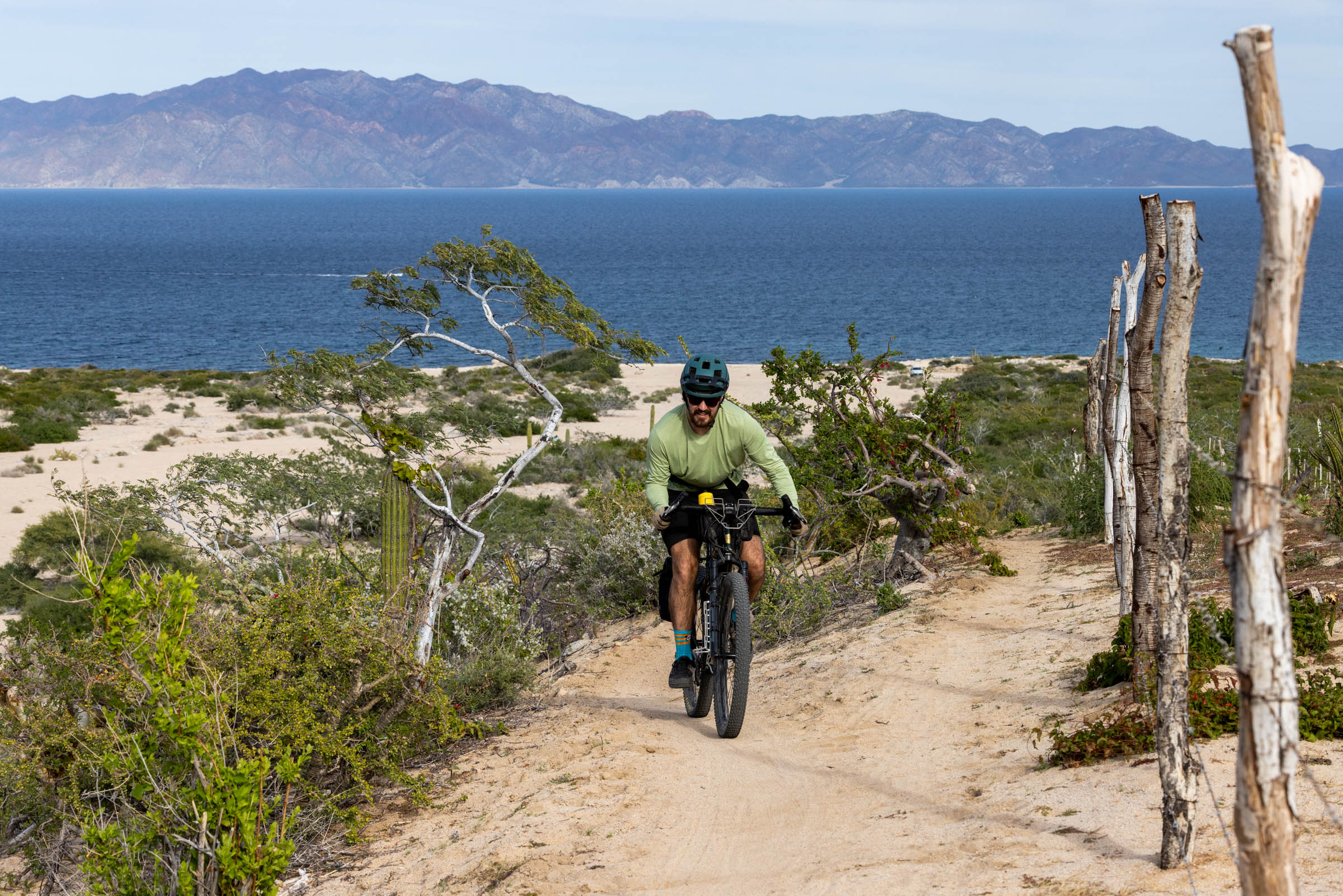
Every now and then, I ride a route that really feels like the ultimate testing ground for the bikes and gear we review here on the site. Baja’s Cape Loop is one such route. We drove down to Mexico in our cargo van, and, as mentioned, I was torn about which bike to bring and whether to bring a secondary bike with flat bars. I was worried the LBF wouldn’t be enough. This was our first time riding in Baja, and the 400-kilometer Cape Loop throws a lot at riders. There are long stretches of slow, sandy roads, steep climbs, and steeper descents, and everything seems pretty chunky most of the time. We worked in some singletrack, but the main route mostly sticks to doubletrack and narrow roads.

There’s no single ideal bike for the Cape Loop, but choosing one that can carry enough water and gear while moving efficiently and comfortably through these ever-changing conditions is key. That’s where I found the LBF to shine. I never felt beat up at the end of the day, and my hands didn’t rebel against me because I was always moving around between bar positions. After finishing the Cape Loop aboard the LBF, my concerns about only having a drop-bar bike for a few months were mostly gone.
If I had seen the Kona LBF launch video before seeing the bike in person, which features a lot of massive gap jumps, I would have expected no additional cargo mounting points, but thankfully, they didn’t stray too far down that road. Kona has always been pretty good at maintaining utility across their lineup, and the LBF is no exception. It has top tube bosses for bolt-on top tube bags, downtube bosses, dedicated rear rack mounts, five threaded bosses along the top of the downtube, and a few additional mounts under the top tube that double as cable guide mounting points. There aren’t bottle mounts on the seat tube, likely to allow for full dropper post insertion, but it would have been great to see some spaced-out mounts or a bracket, similar to what Neuhaus has been doing on their Hummingbird.


Even with its sloping top tube, the XL frame I’ve been testing has a spacious main triangle. I’m not sure how much room there is on smaller frame sizes; I’d guess much less, but it does feel like Kona did a good job of taking full advantage of the bike’s angles and prioritizing main triangle space. On the Cape Loop, where I carried five or six liters of water at a time, I had to use all available mounting points. The terrain and lack of bike shops also called for a reliable setup, and I was happy not to have any mechanical issues during my ride. Everything just worked, and the benefit of having a slack front end, suspension, and a long wheelbase meant I didn’t need to hold back too much on descents, knowing the bike was up for the job.
The LBF frame isn’t particularly lean. The tubes are quite beefy, which helps handle a heavy load of bikepacking gear and water. It wasn’t wobbly or flexy under all that extra weight, and it maintained its predictable handling. The Reynolds 520 Chromoly tubing offered a comfortable ride quality that felt more responsive than springy or lively. It uses the same slotted dropouts as the Kona Unit, so you could theoretically run it as a singlespeed or with a Rohloff, if you wanted.


I wasn’t very concerned about weight, but the stock XL build I tested weighs 33 pounds (14.97 kg) with flat pedals installed. It’s not a lightweight bike by any means. In fact, it weighs almost exactly the same as the Sklar Tall Tale hardtail with a 150mm travel fork I reviewed, which makes you wonder who the LBF is really for.
For Whom, and Why
In short, the LBF is for drop-bar lovers who want one of the most off-road capable drop-bar mountain bikes there is. At first, I didn’t really see the point of such a rowdy drop-bar bike, especially given the tire choice from Kona, which is on the more aggressive side of what these bikes normally have. However, after riding it on sandy tracks, steep loose-over-hard surfaces, chunky descents, and some root-covered trails back home, I’m starting to warm up to the idea of an overly agro drop-bar MTB.
Although slack and long don’t scream bikepacking bike, the LBF reminds me of modern trail hardtails and how I’ve come to appreciate their stability and control for both loaded and unloaded rides. Thinking back, it’s surprising how much it reminded me of the Chromag Surface Voyager, with its 65.5° head tube angle, long stance, and high front end. Despite its interesting angles and thoughtful component selection, I’m still not convinced that drop bars provide as much control and stability as flat bars, and I’m willing to die on that hill.


Pricing for the LBF is $4,299 in Canada, $3,699 in the USA, and €3,999 in the EU. It’s not available as a frameset, so you’re limited to the complete build shown here. It’s hard to compare it with just about any production bike out there, but the price seems justified considering the build kit. However, it’s undoubtedly a pricey bike, and it would have been great to see a complete build option closer to $2,500 USD.
- Model/Size Tested: Kona LBF, XL
- Weight: 33 pounds (15 kilograms)
- Place of Manufacture: Taiwan
- Price: $3,699 USD
- Manufacturer’s Details: KonaBikes.com
Pros
- Mountain-bike-inspired geometry and angles work well with drop bars
- Expedition-ready thanks to a stout frame and plenty of mounting points
- Sliding dropouts, external cables, and a robust build are appreciated while bikepacking
- Build kit shines against other drop-bar MTBs, especially the four-piston brakes, handlebar, and included dropper post
- High stack and long front-end resulted in a very comfortable and usable riding position in the drops for the rowdiest terrain
- Generous tire clearance and 100mm travel fork make for a comfortable ride
Cons
- Stock tires might be suitable for some terrain, but I was eager to swap them out for a faster rolling tread for bikepacking
- Finding the balance between fit, stack height, stem height, and various hand positions can be complicated
- No seat tube bottle mounts
- 33 pounds isn’t exactly light
- Single, slightly pricey stock build, and no option for frame-only
Wrap Up
Over the last few months, some curious bike folks have approached the LBF, looking it over suspiciously. At one point, while loading something into the side of our van, some cyclists walked up to my bike rack, and I overheard one of them say, “Nice, a Salsa Fargo!” The Kona LBF is a curious bike. When Kona shared their launch video, which shows a rider hucking off massive gap jumps aboard the LBF, I couldn’t help but feel slightly defensive and call Kona out for displaying this bike as probably less than two percent of people will ride it. As I said, the LBF is a curious bike.
The way I see it, and based on how I ride, the LBF is an interesting step forward in the crowded and confusing segment of drop-bar mountain bikes. The entire package makes for a unique riding experience that I haven’t felt before, leaning way further into the MTB realm than other bikes in this category, thanks to rowdier-than-average geo and components that take advantage of it, rather than hold riders back. The LBF makes a surprisingly capable bikepacking bike, as I experienced in Baja. It checks a lot of boxes with its tall stack, stable wheelbase, and bigger-than-listed tire clearance. Sure, you can find a similar experience on a hardtail, and you can even add bar ends or different grips to gain hand positions, but there is something special about the distinct positions of a proper drop-bar mountain bike, and the LBF takes this concept to a new level.
Further Reading
Make sure to dig into these related articles for more info...
Please keep the conversation civil, constructive, and inclusive, or your comment will be removed.