

 Mountain Bike (MTB)
 Gravel Bike
 All-Terrain Bike (ATB)
 Fat Bike

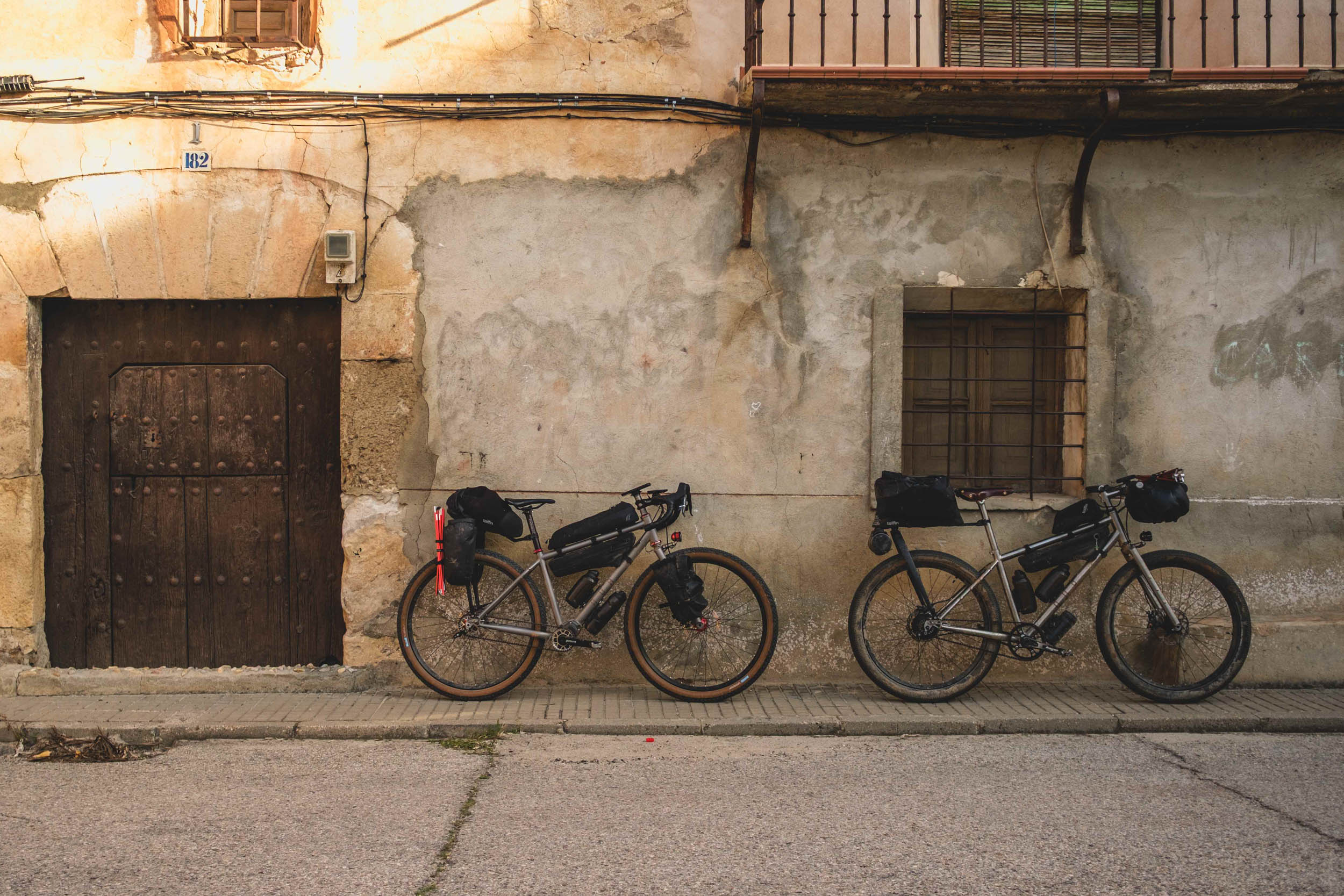
Nua Terra Pinion and Roure Rohloff on the Montanas Vacias

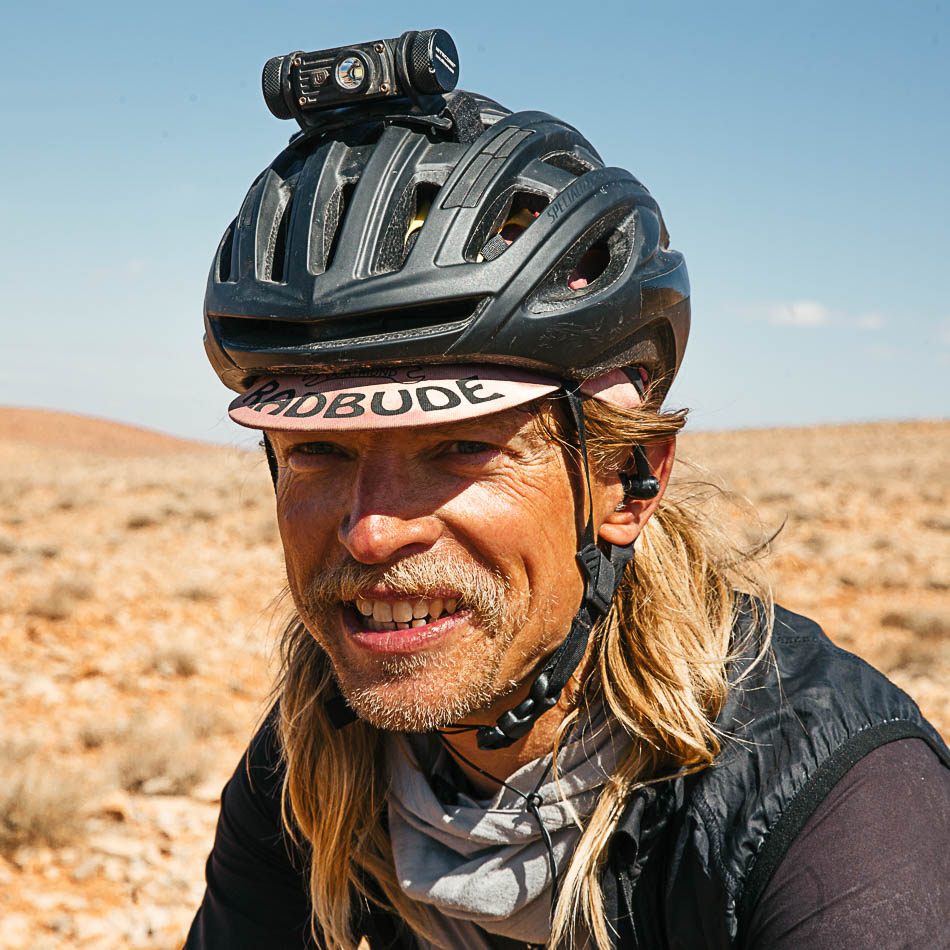
Part route report from Spain’s Montañas Vacías, part two-in-one review of the titanium Terra Pinion and Roure Rohloff from Nua Bikes in Barcelona, this unique piece from friends Bengt Stiller and Jona Riechmann blends travel writing, exceptional photography, and an analytical approach to pedaling. Read their thoughts on both bikes and the storied 700-kilometer track here…
PUBLISHED Sep 18, 2026
Additional input by Jona Riechmann
It was chance, more than any carefully laid plan, that put a pair of titanium bikes from Barcelona-based Nua Bikes beneath Jona and me. We’d been trading ideas for our next bikepacking trip for some time, but we’d yet to settle on where it might take us. Then, a message from Spain landed in Jona’s inbox. Would we be interested in testing two very different Nua bikes?
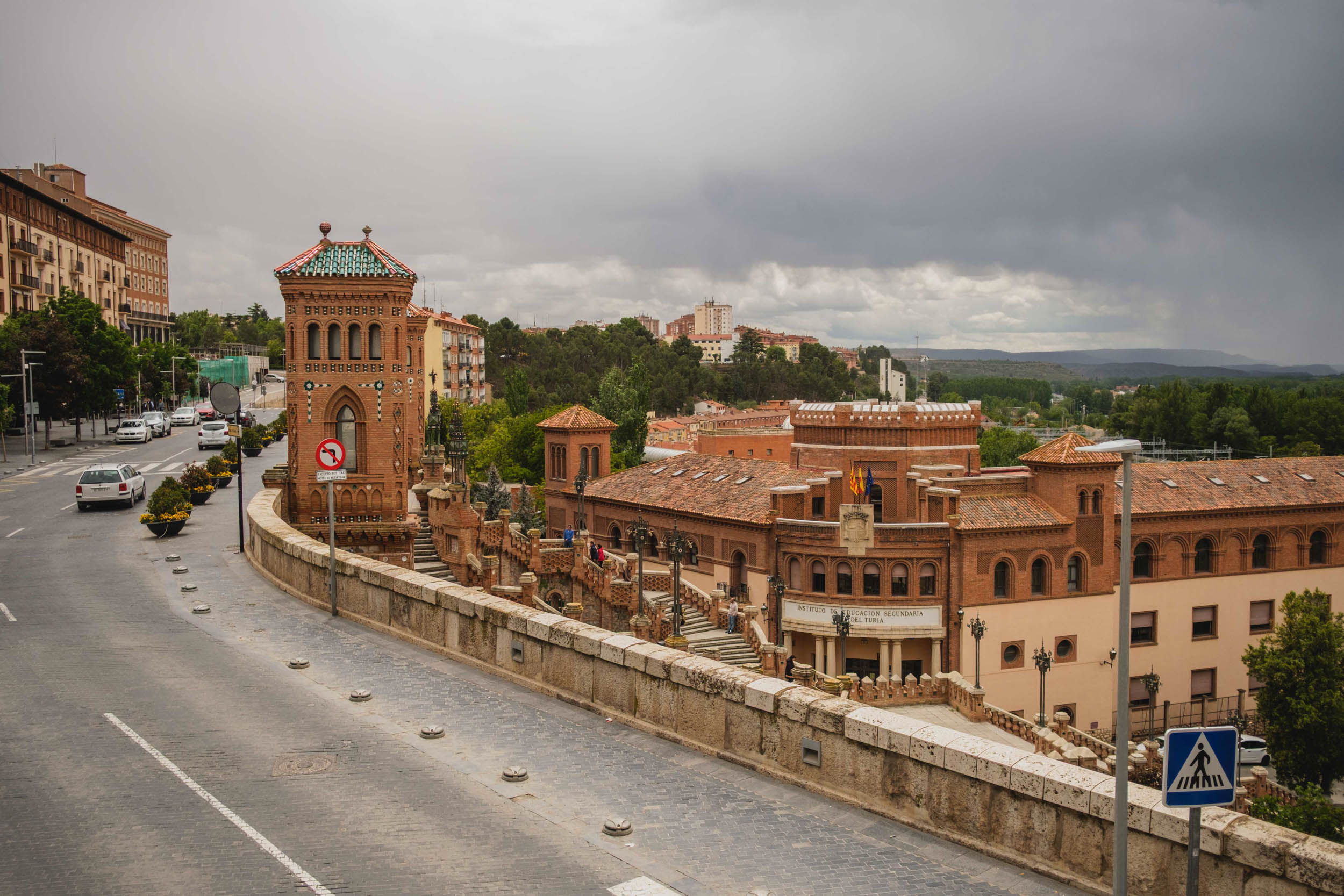

Suddenly, the destination seemed obvious. If we wanted to understand these bikes, it made sense to ride them on their home ground, through terrain that felt true to their purpose. The plan was simple enough: collect them in Barcelona, load them with our bags, and make our way inland to Teruel by public transport. From there, we would set out on the Montañas Vacías, an expansive bikepacking route through a sparsely populated region.

Spain, however, was still largely uncharted territory for both of us. Jona had ridden one of the early editions of Badlands, and I had crossed the country in early 2020, following a near-straight line from Madrid to Tarifa to catch the ferry to Morocco, destined for the Atlas Mountain Race. Those journeys had offered us fleeting glimpses of the country but little sense of Spain as a whole. The Montañas Vacías route is hardly unknown. Ernesto Pastor’s route has been chronicled in many stories on these pages, yet for us it remained a blank on the map. On paper, it also looked like an ideal proving ground for the bikes NUA founder Roberto Aznar created. It didn’t take long for one thing to become clear: our all-too-brief time on the route wouldn’t be enough.
FROM BARCELONA TO TERUEL
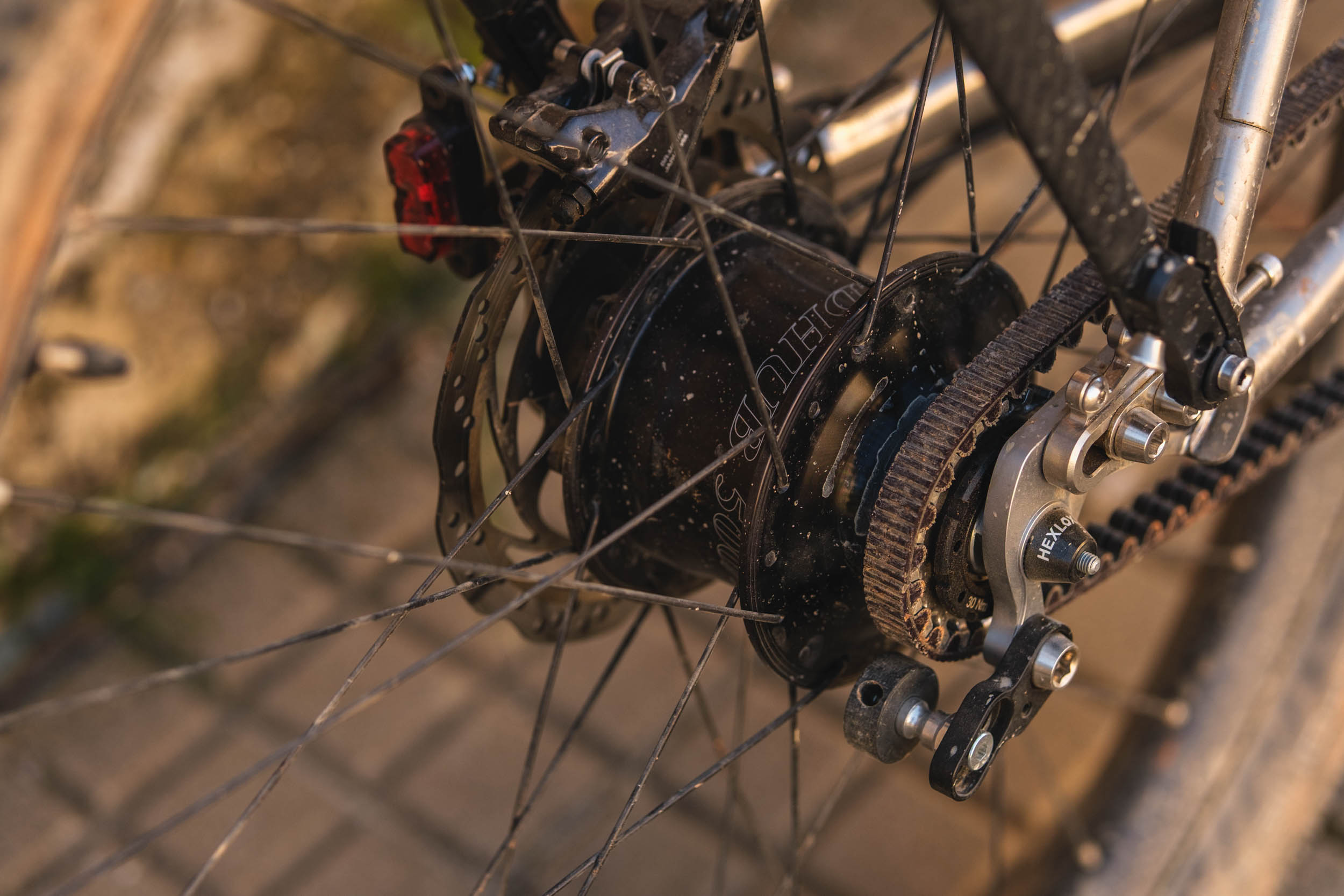
Before leaving Barcelona, we collected the packed bikes from Roberto’s friend David at Explora Cicles. Nua was in the middle of relocating its workshop from the Montseny Mountains to Barcelona proper, a recent move intended to make the company easier to visit, particularly for customers travelling from farther afield. Along with handing over the bikes, David gave us a much-needed introduction to their unfamiliar drivetrains: a Rohloff hub on one, a Pinion gearbox on the other, and Gates belt drives on both. Neither of us had previous experience with either system, and our curiosity was quickly piqued.
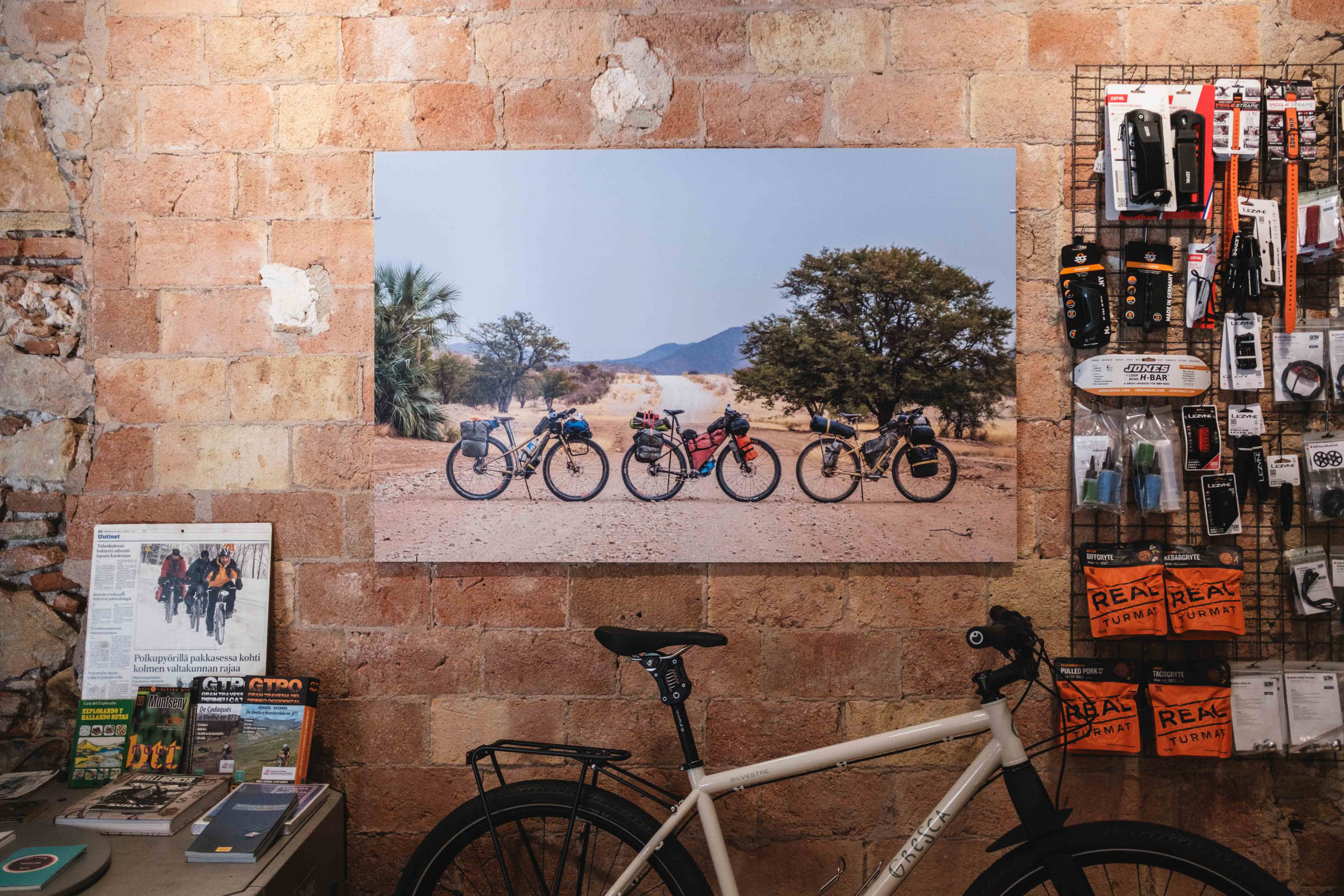
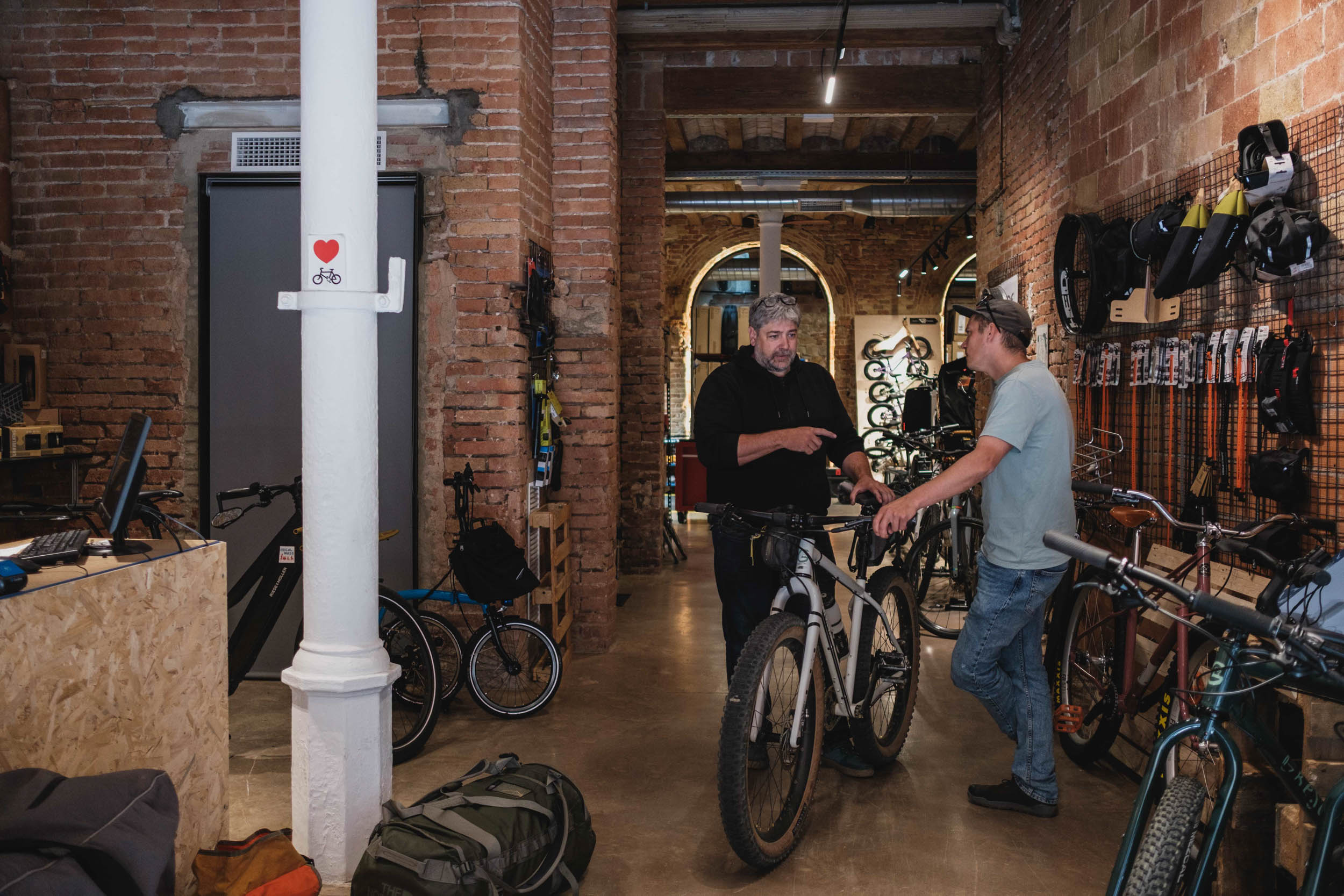
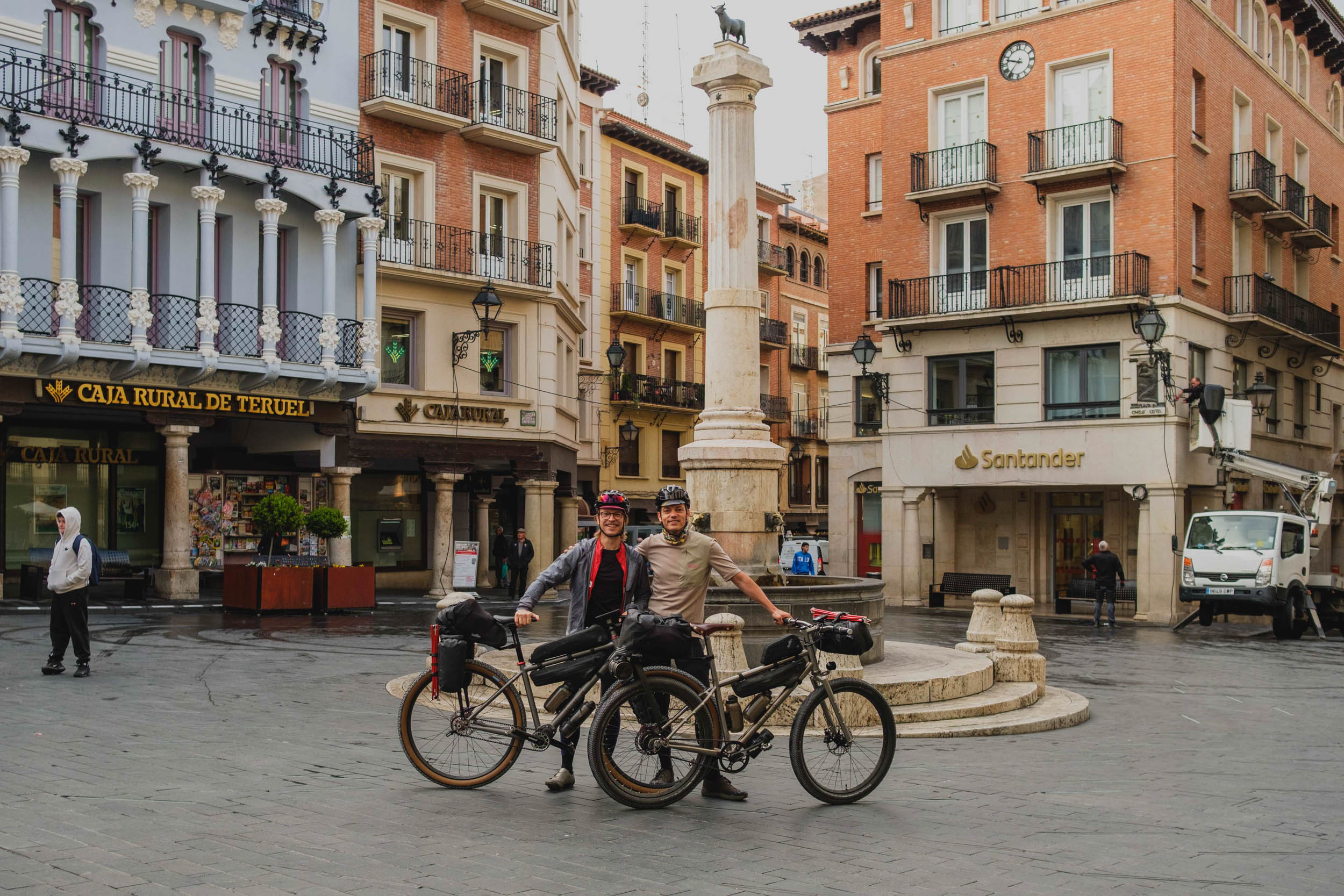
Then came the less glamorous part: getting the bikes and all our gear to Teruel by public transport. Travelling with two bikes packed into soft cases was cumbersome enough; hauling everything we needed for a week on the route along with them made each change that much harder. The farther inland we travelled, the hotter it became, hinting at the temperatures this region must endure at the height of summer. By the time we reached our hotel, we were relieved to put everything down.
Teruel makes a striking starting point. Its picturesque buildings, narrow and often remarkably steep streets, tapas bars, cafes, and ice cream shops speak to a city shaped over centuries and endowed with enough charm to draw a steady stream of visitors. Back inside, our hotel room was rapidly turning into a bikepacking workshop. Two titanium adventure bikes, a mountain of bags, and even more loose equipment covered every available surface. Faced with so many options—and without having had the bikes and bags together beforehand—I briefly felt as though I was assembling a bikepacking setup for the very first time.


I had also overlooked one detail that mattered more to me than most: keeping my camera equipment within reach. Sometimes, your head is elsewhere. Thankfully, it wasn’t a disaster. When it is time to roll, you find a way to make things work. A little later, two complete setups stood before us, ready to go.
THE ROUTE THROUGH ERNESTO’S EYES
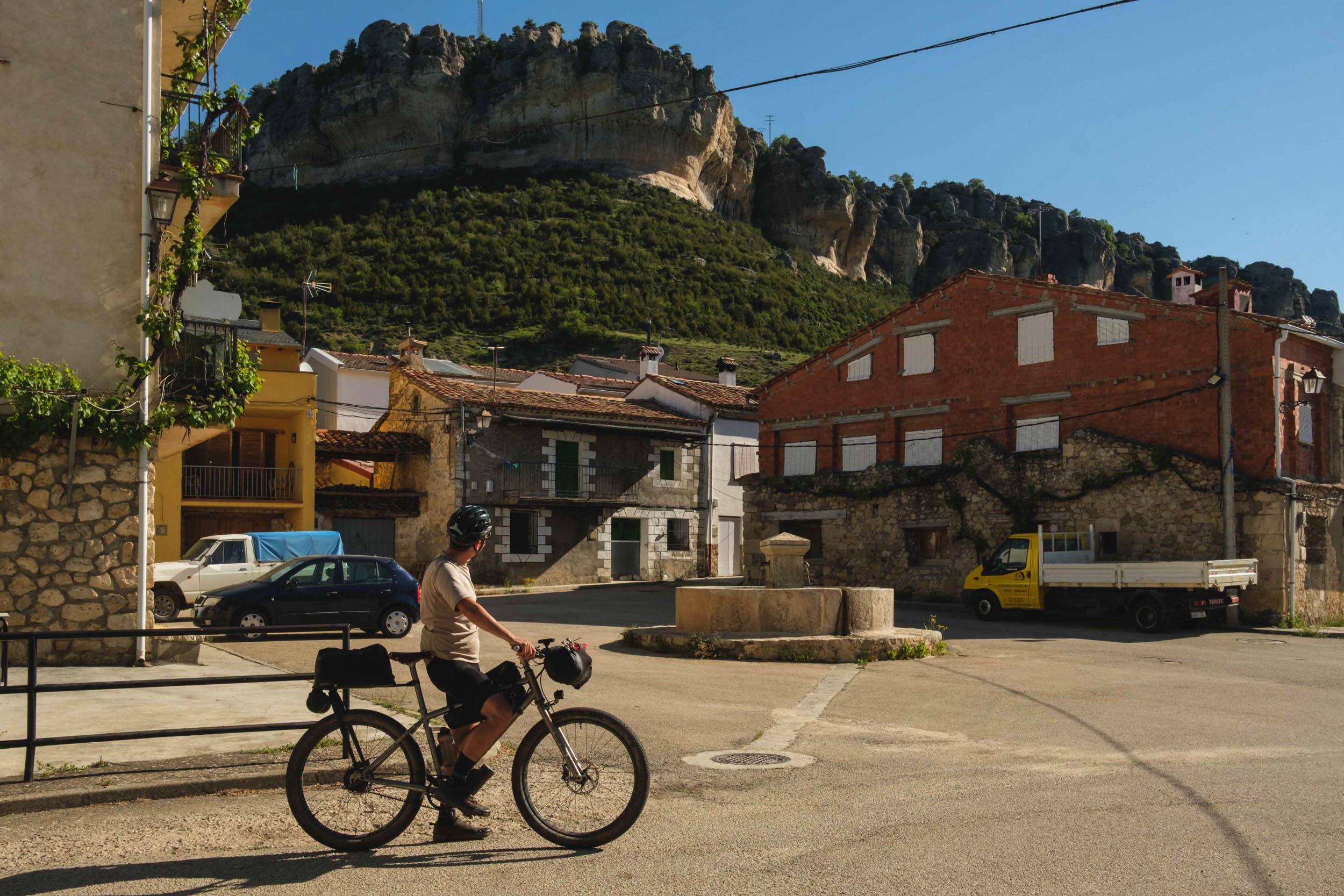
Before we left Teruel, we were fortunate enough to meet Ernesto Pastor, the creator of the Montañas Vacías. Over a table laden with the region’s famous ham, eggs, vegetables from his garden, and incredible olives, he welcomed us into his home and shared what made the route and the surrounding landscape so meaningful to him. His quiet way of speaking and moving seemed to mirror the stillness we would soon encounter along the route. The glint in his eyes suggested someone who had found not only his place but something close to a calling. We left his home grateful for the encounter and even more eager to begin.

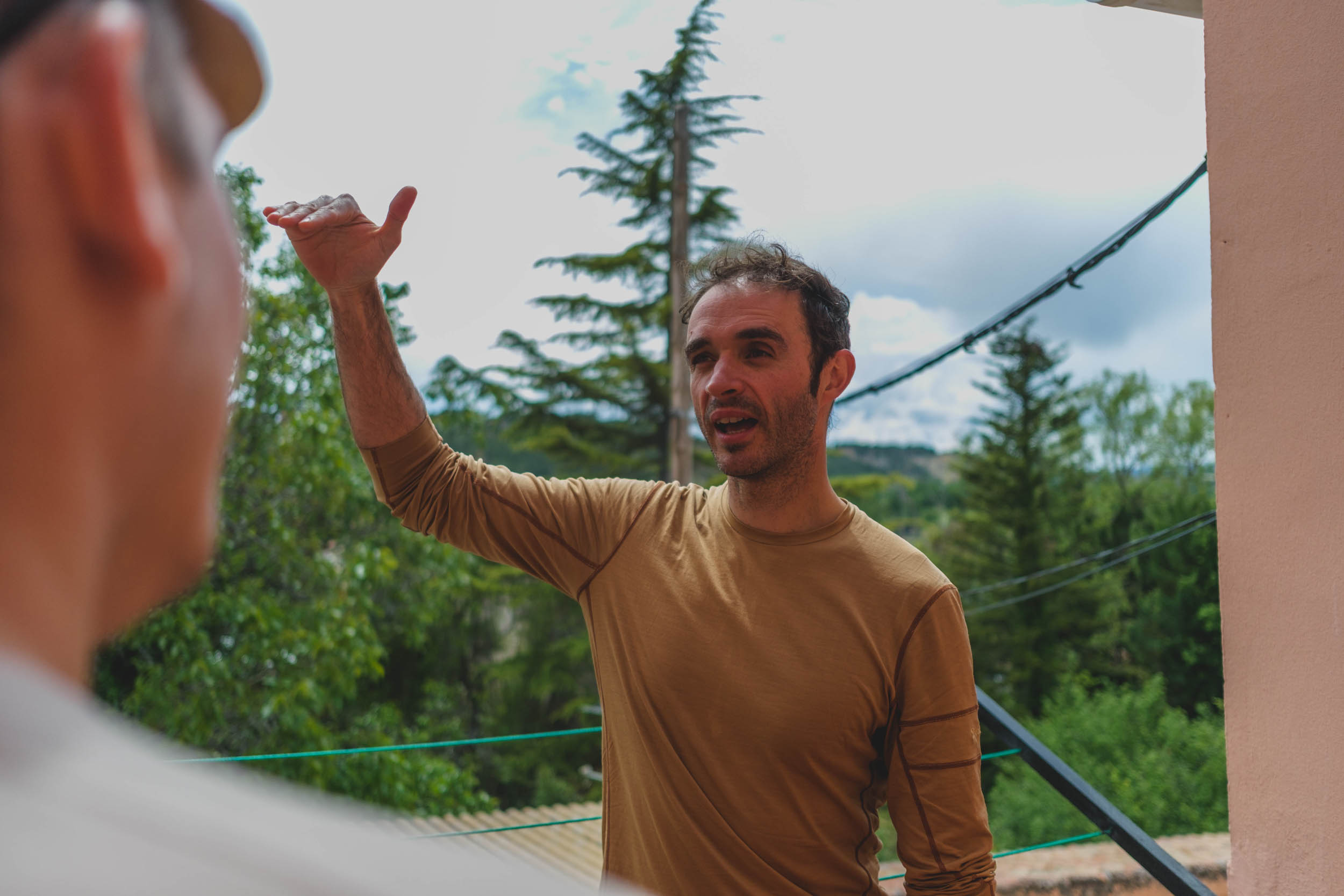
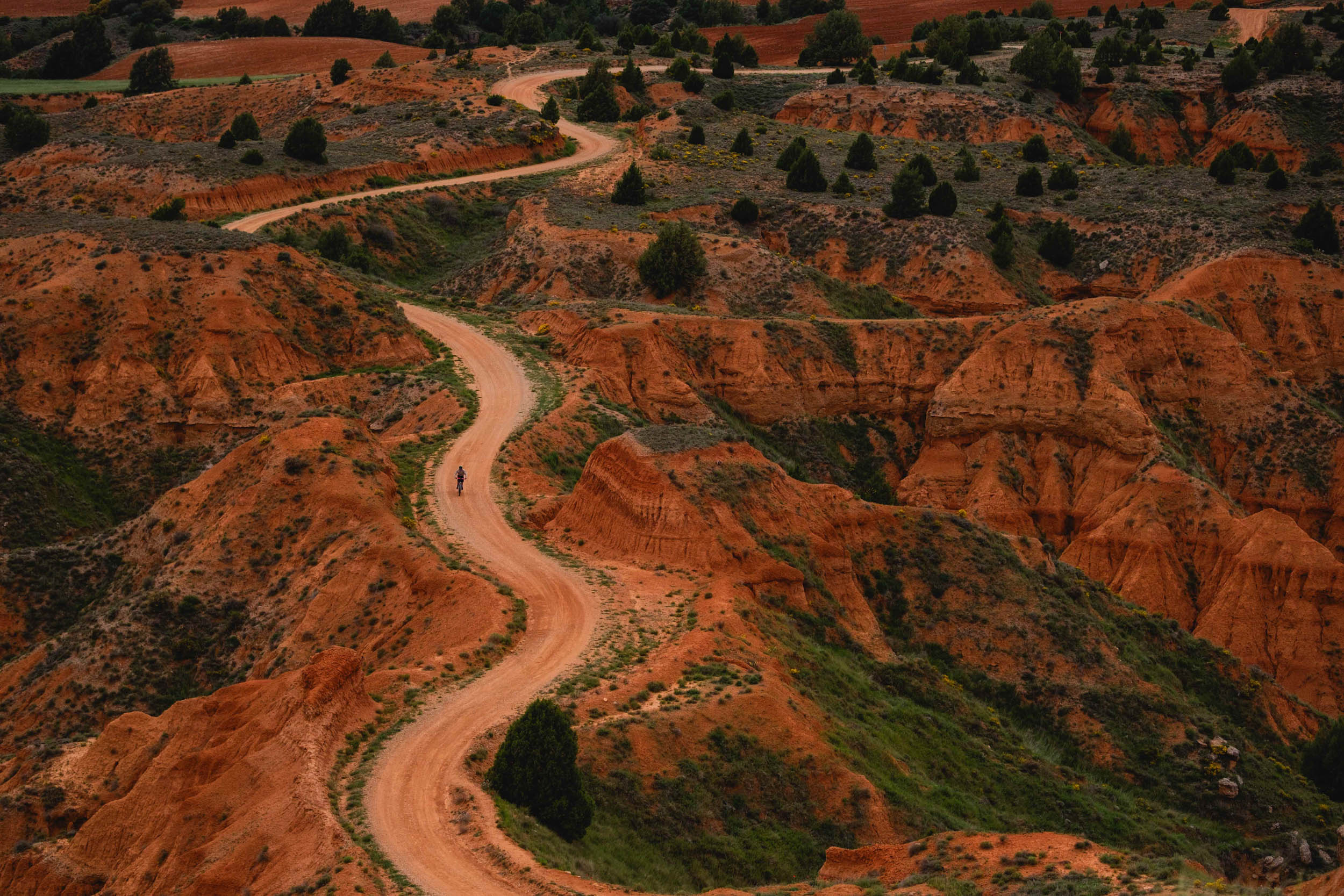
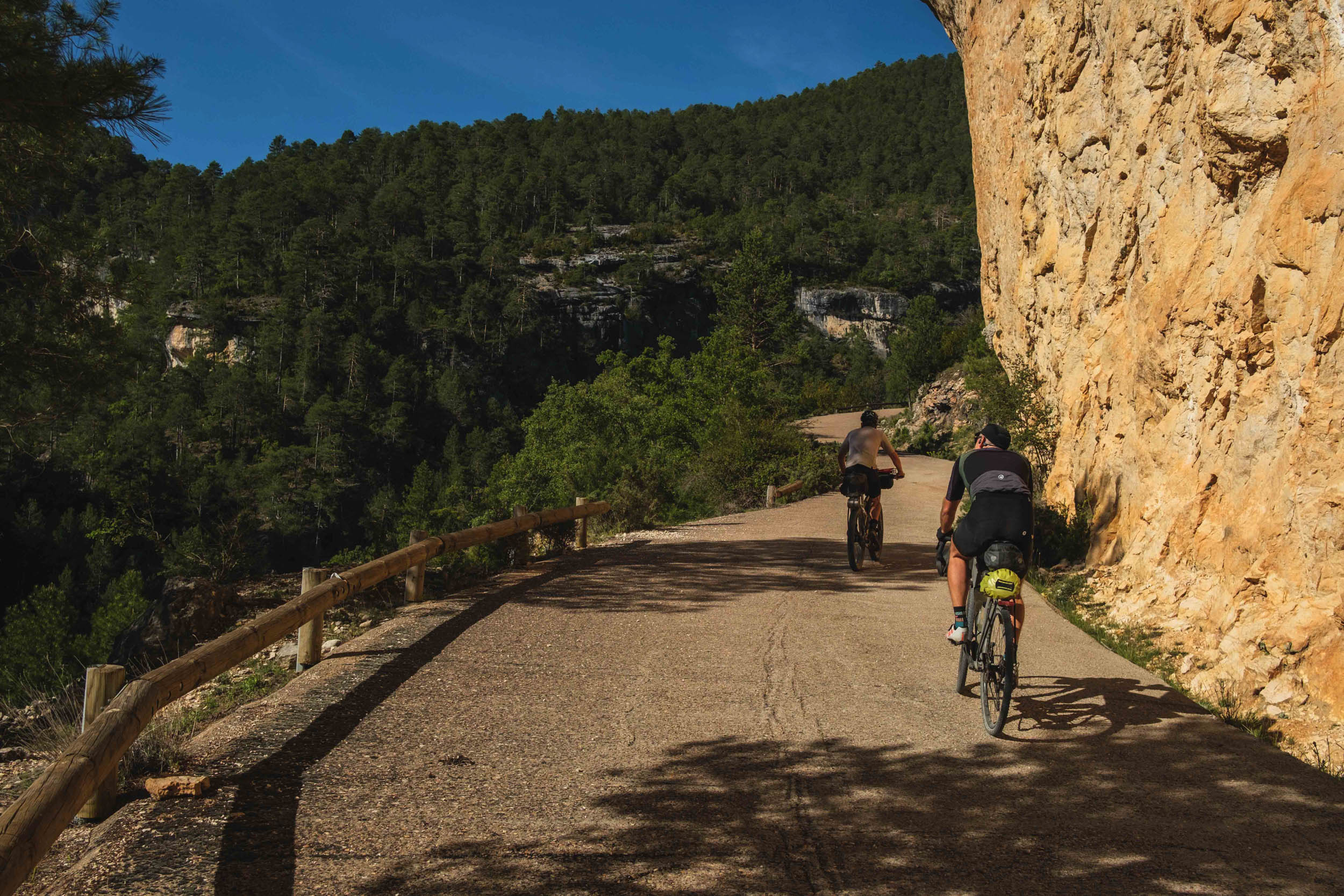
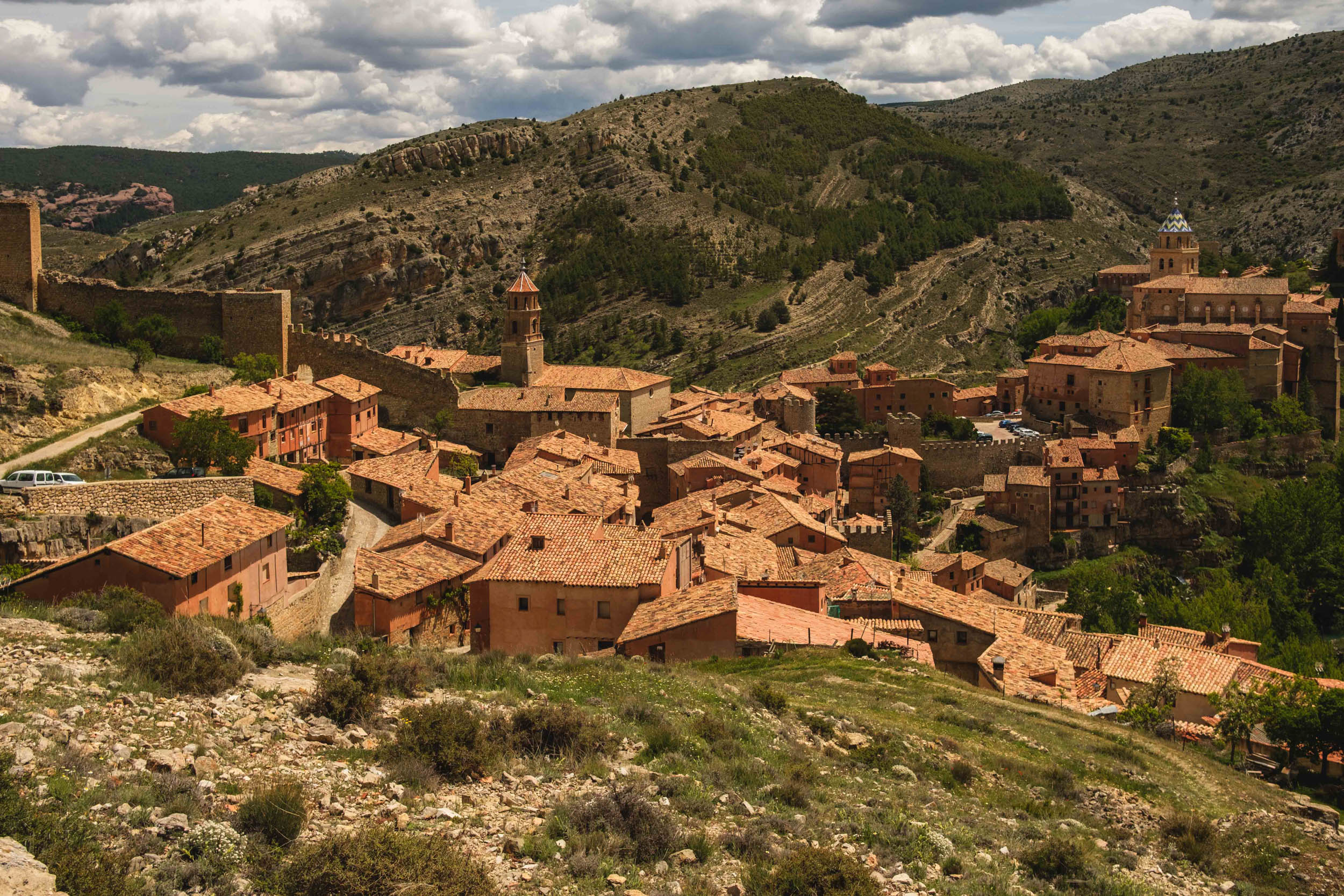
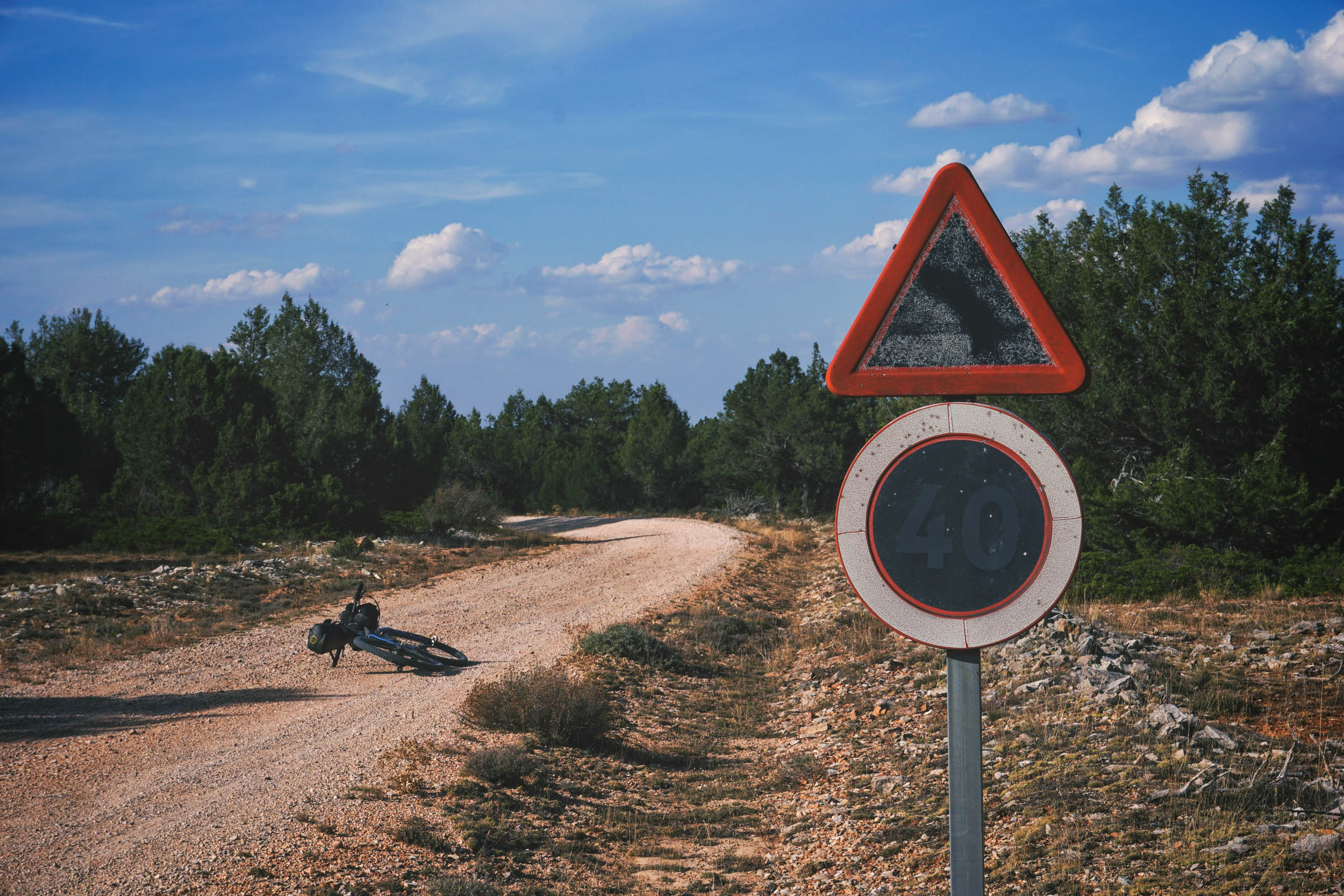
Over the following days, I often felt as though I was seeing the track and its surroundings partly through Ernesto’s eyes, trying to understand what he’d discovered here and why it mattered so deeply to him. That perspective became an essential part of the journey and of testing the bikes in this particular place. The landscape changed at an almost overwhelming pace. Immense open plateaus gave way to dense forests; fast-flowing rivers shimmered emerald green before the track tilted sharply upward again. The days seemed to disappear amid these constant transitions, all of them unfolding in near-total silence.

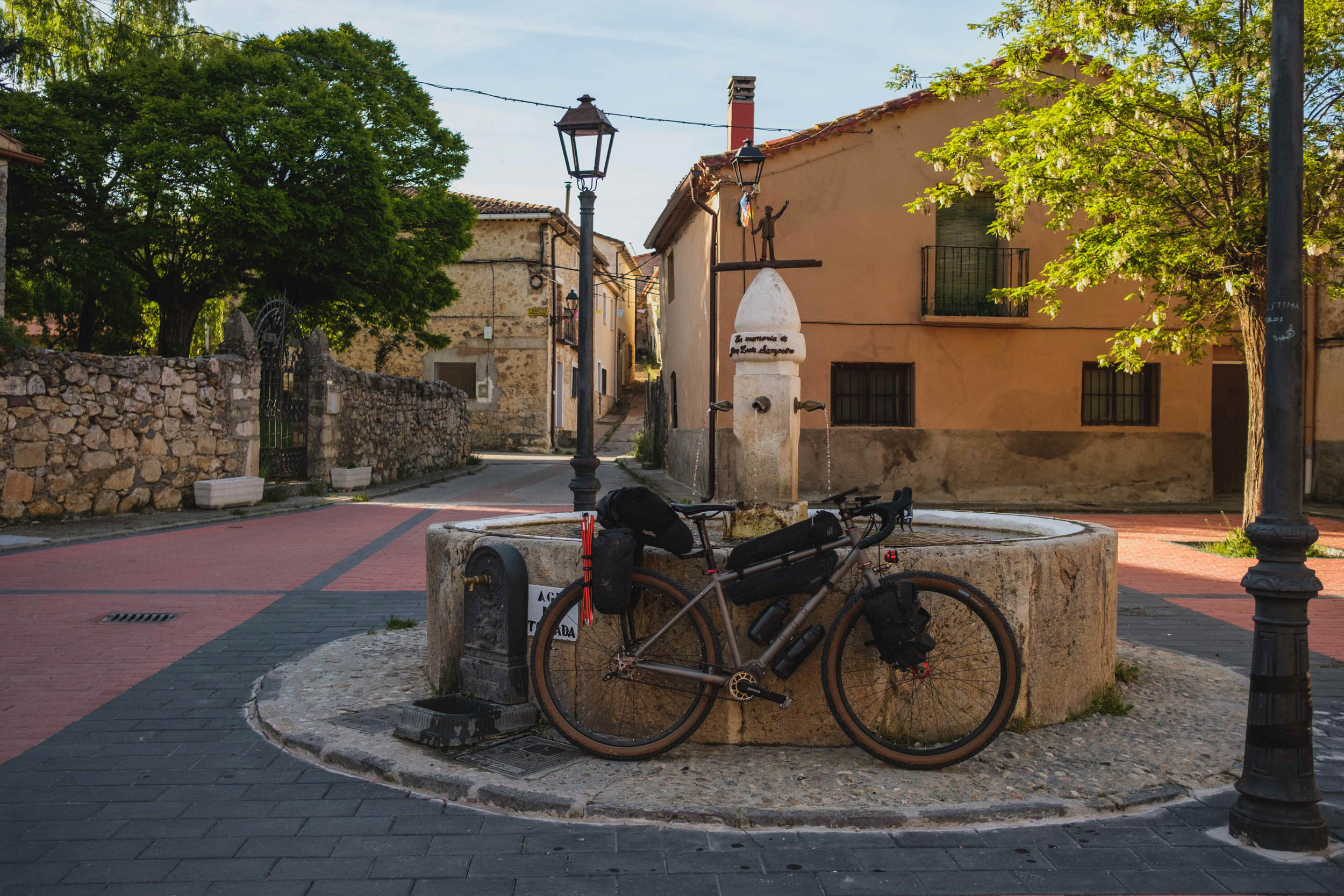
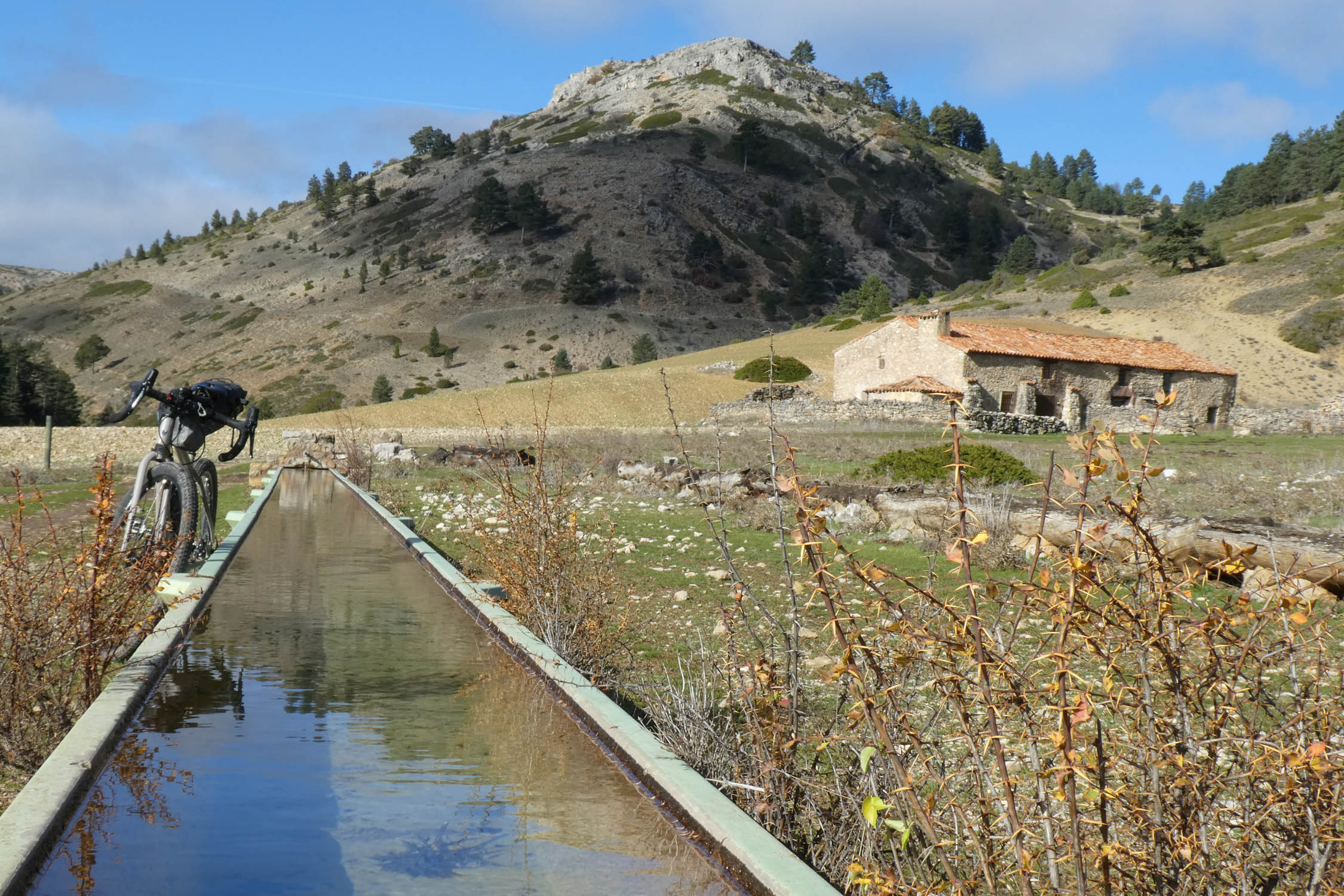
The dryness was ever-present, as was the sense of heat gathering across a region that lives with it for much of the year. Water gradually became the question that shaped our days. We found it at fountains in eerily deserted villages or in small supermercados, if they happened to be open. Google Maps opening hours were little more than statements of intent out here. Ernesto’s advice proved invaluable: whenever the route offers something, take it. You have to work with what is there. It was as simple as that.
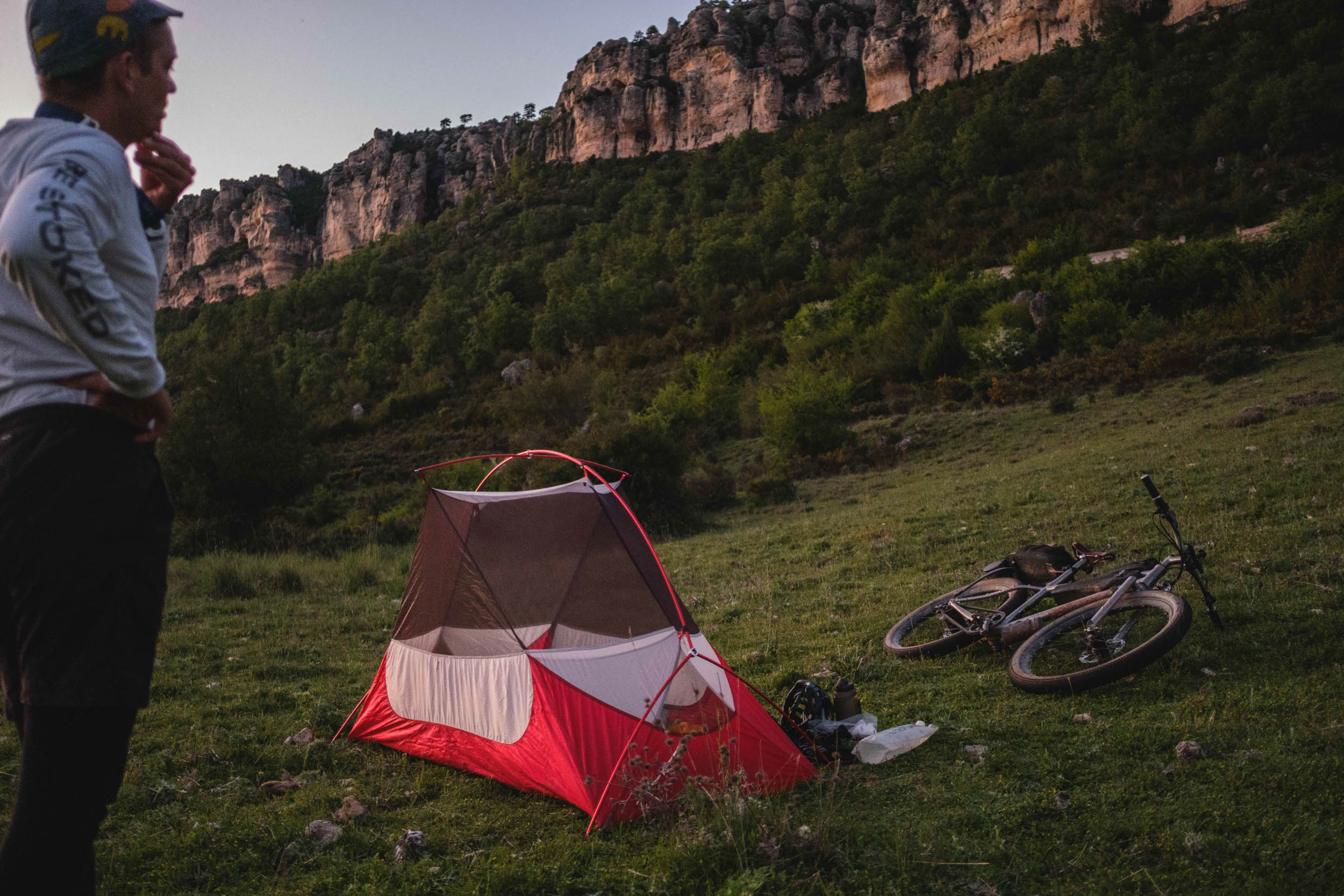
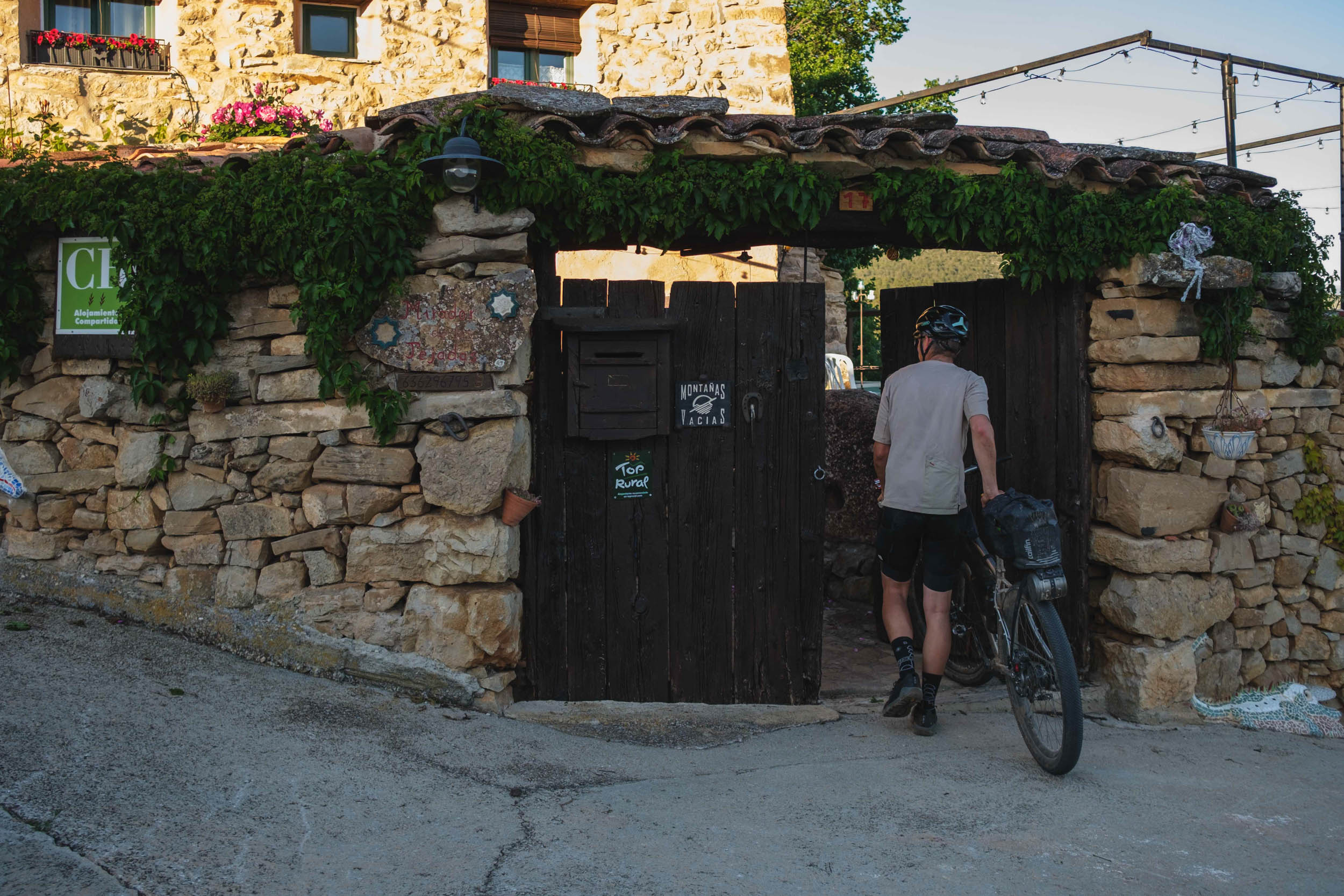
Our nights offered the full range of possibilities. We stayed in the route’s well-documented refugios—traditional stone shelters scattered across the landscape—slept in our tents, and occasionally found a bed and wonder traditional hospitality in nearby villages. Encounters with locals and fellow travellers offered a welcome contrast to the long stretches of silence. What will stay with me most are the deserted villages, some of them resembling abandoned Western film sets. The dozens of vultures circling overhead for hours at a time only strengthened that impression.
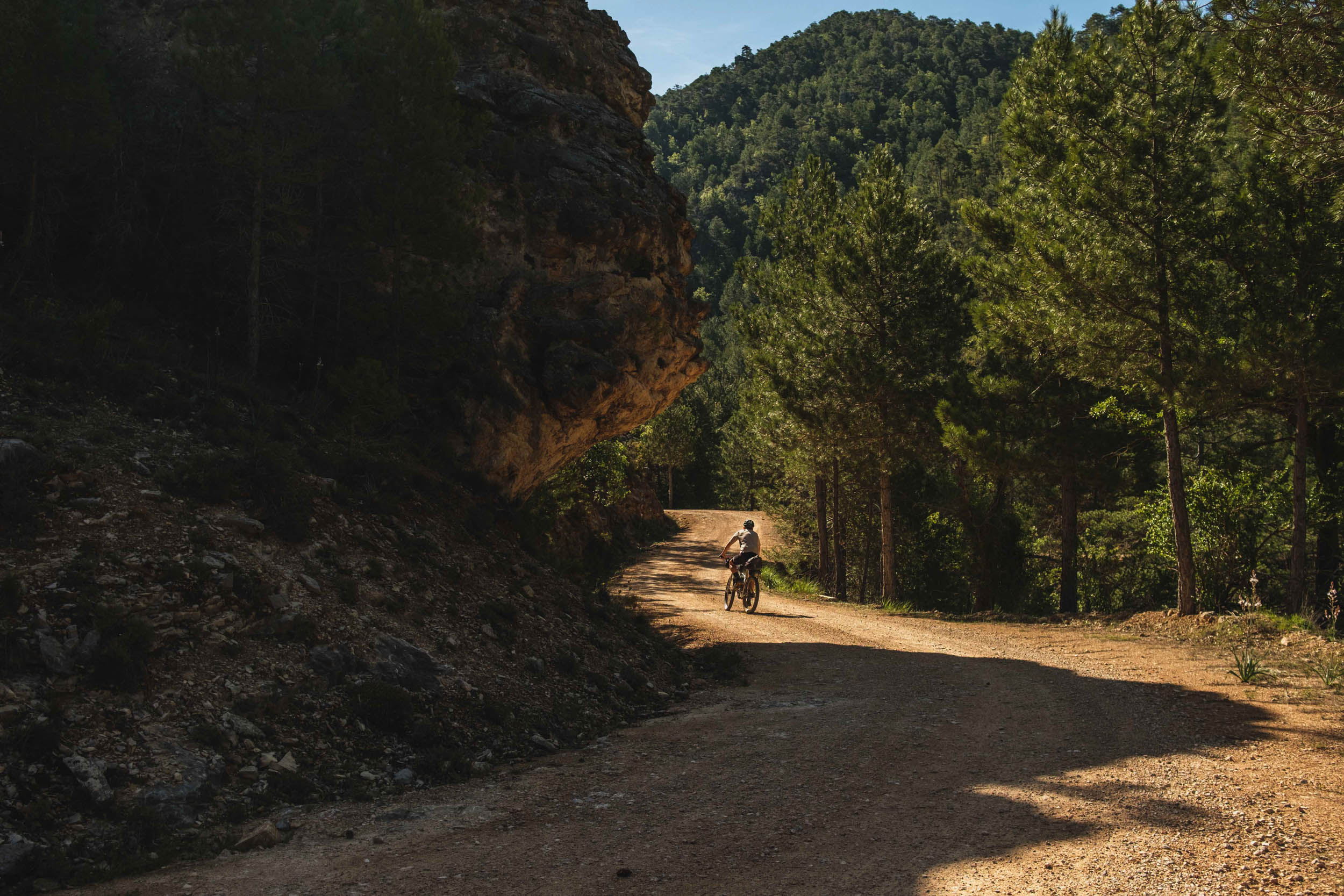
When we turned back towards Teruel, one conclusion had already settled in: I had been riding exactly the right kind of bike for this route. What remained was to understand why.
Nua TERRA PINION AND ROURE ROHLOFF
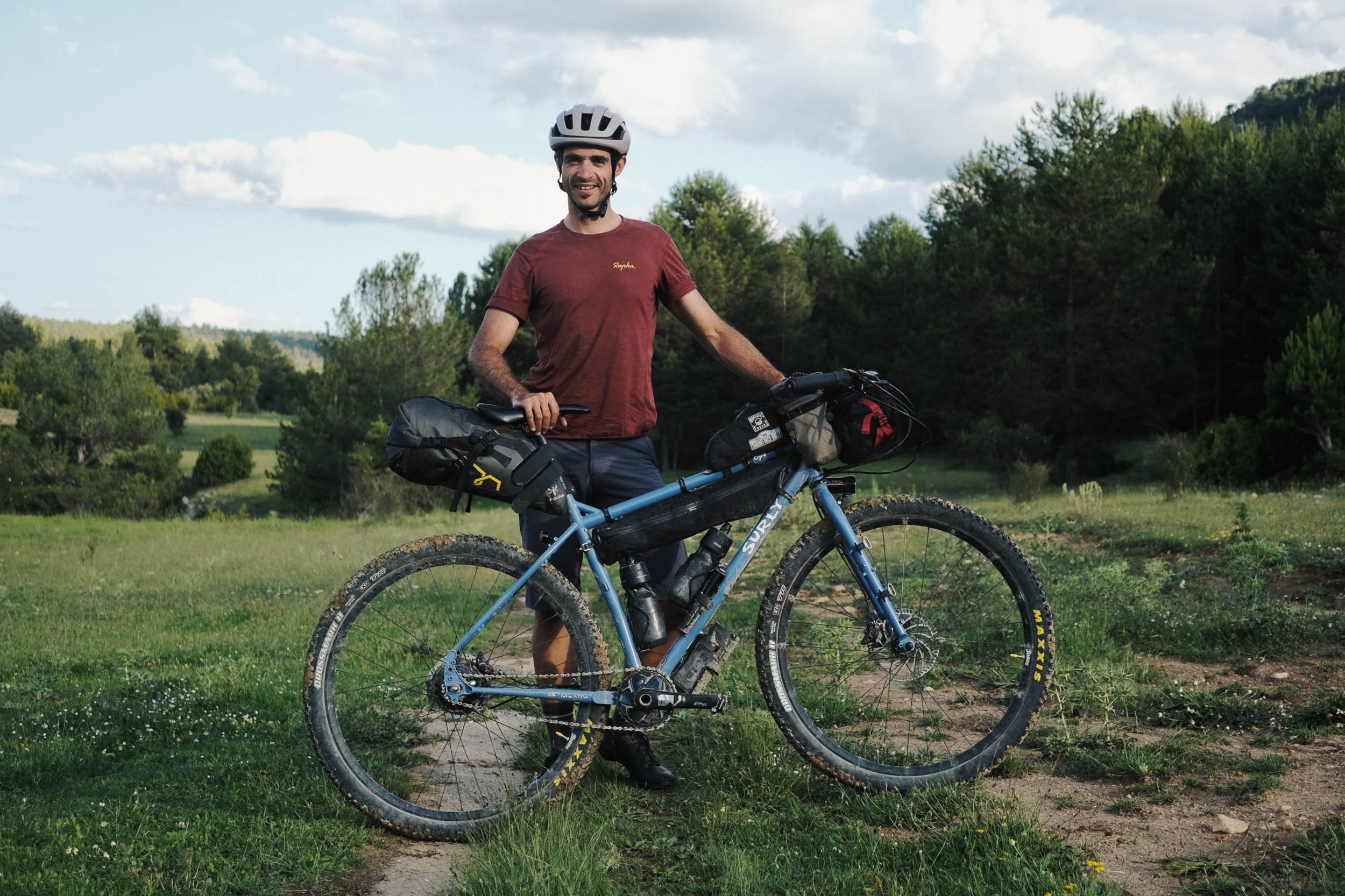
The two bikes Nua supplied for our trip occupy neighbouring but distinct places in the small company’s range. The Terra is their drop-bar monster gravel platform, combining gravel-bike ergonomics with the tyre clearance and carrying capacity of an ATB. The flat-bar Roure sits closer to a traditional expedition bike, with an emphasis on stability, simplicity, and long-distance travel. Riding them side by side let us compare two approaches to the same terrain.


The quality of both bikes was apparent the moment we unpacked them. The Roure’s hand-brushed Grade 9 Ti-3Al-2.5V titanium frame and the Terra’s sandblasted finish were spotless, with remarkably clean and consistent welds. The same attention to detail was evident across Nua’s titanium forks and finishing components.
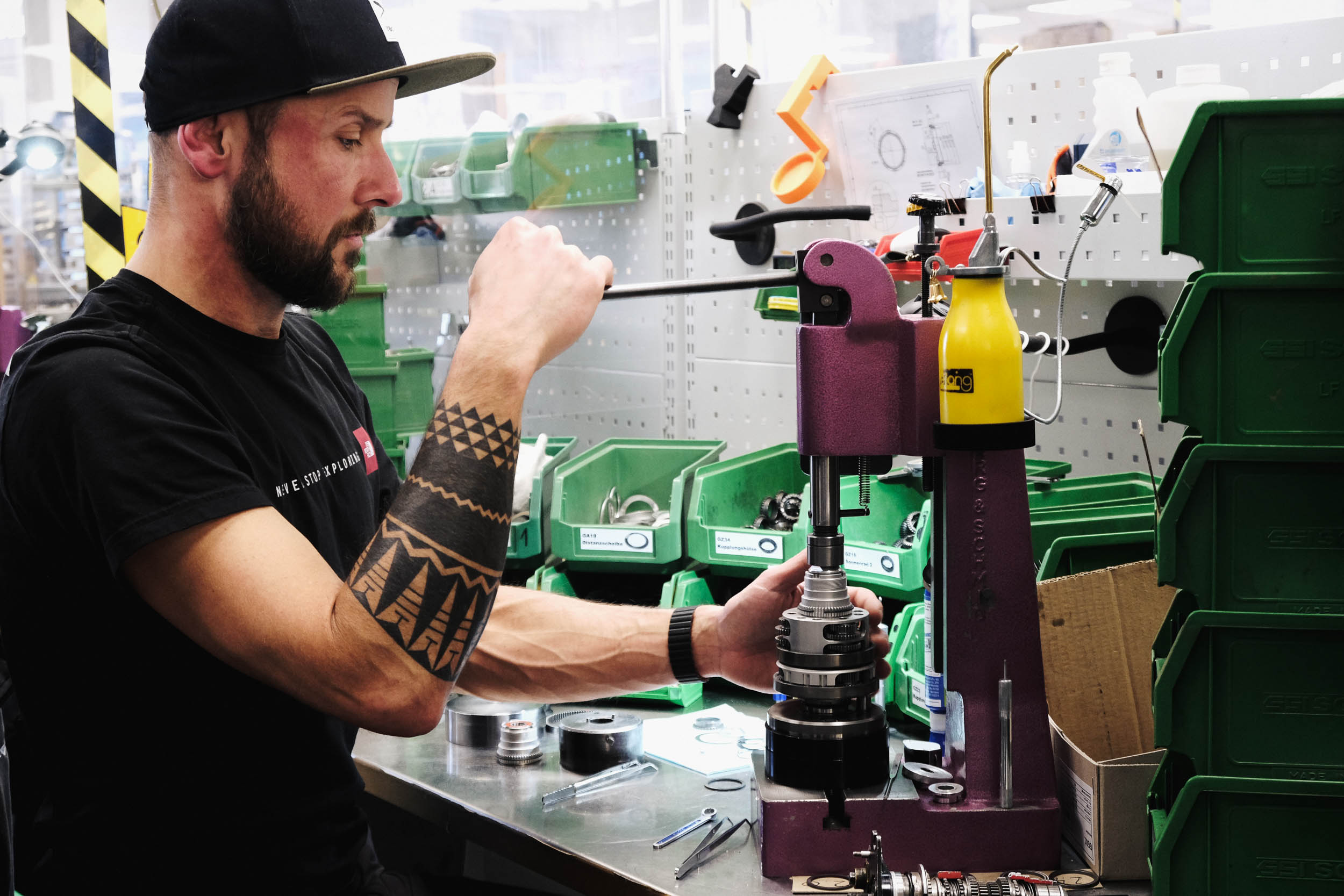
Before the trip, we had assumed the frames were produced locally in Barcelona. The fuller story is more nuanced. After spending around three years equipping its workshop, developing its own tooling, and learning the production process, Nua had already built a handful of frames in-house, and originally intended for our test frames to be made there as well. Staffing changes interrupted that project, and all Nua frames and forks are currently produced by a small specialist titanium workshop in China. That distinction is worth making, but not as a qualification: the execution of both test bikes was outstanding. Roberto intends to reintroduce Barcelona-made frames as an additional, higher-priced option while continuing to work with the production partner overseas.
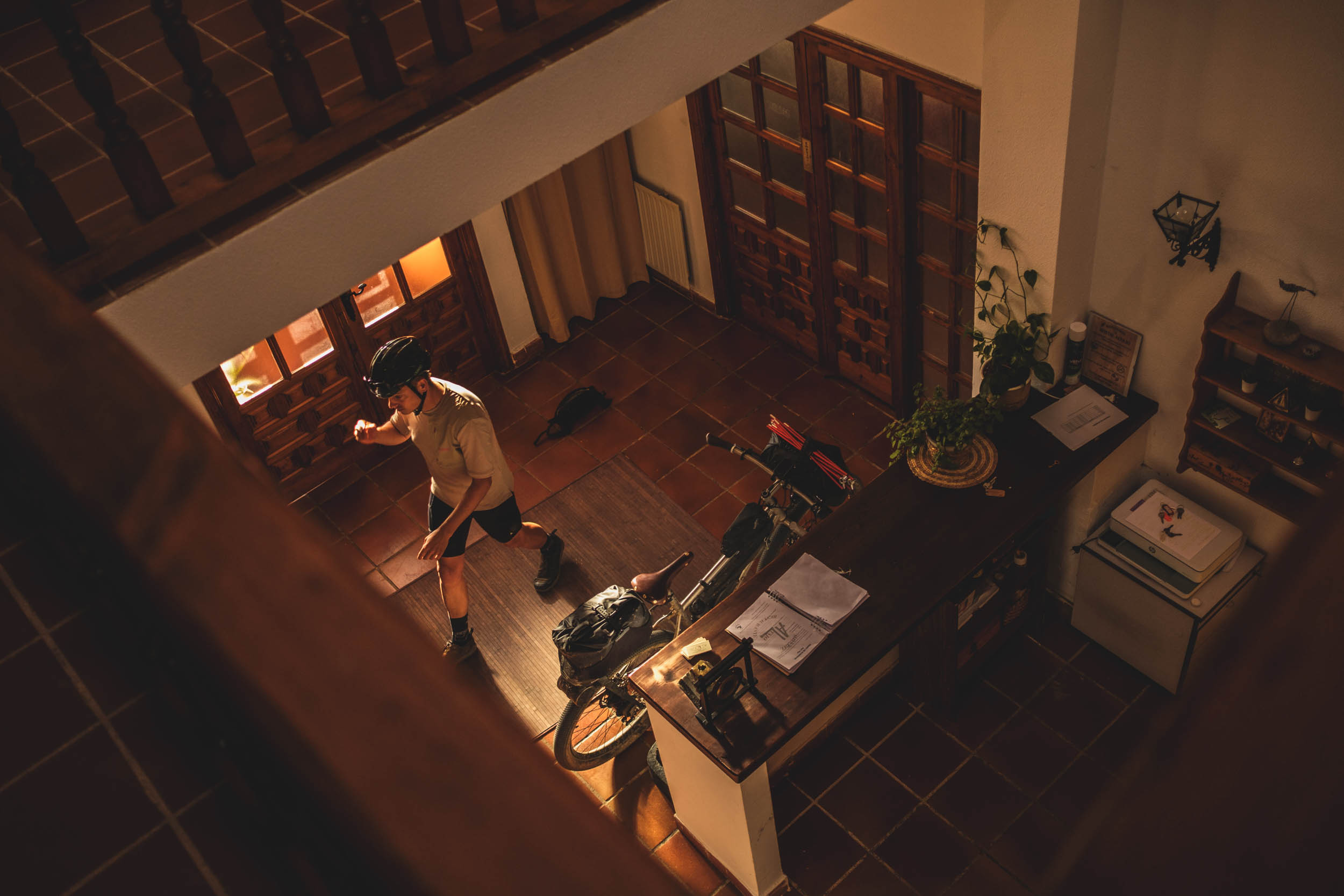
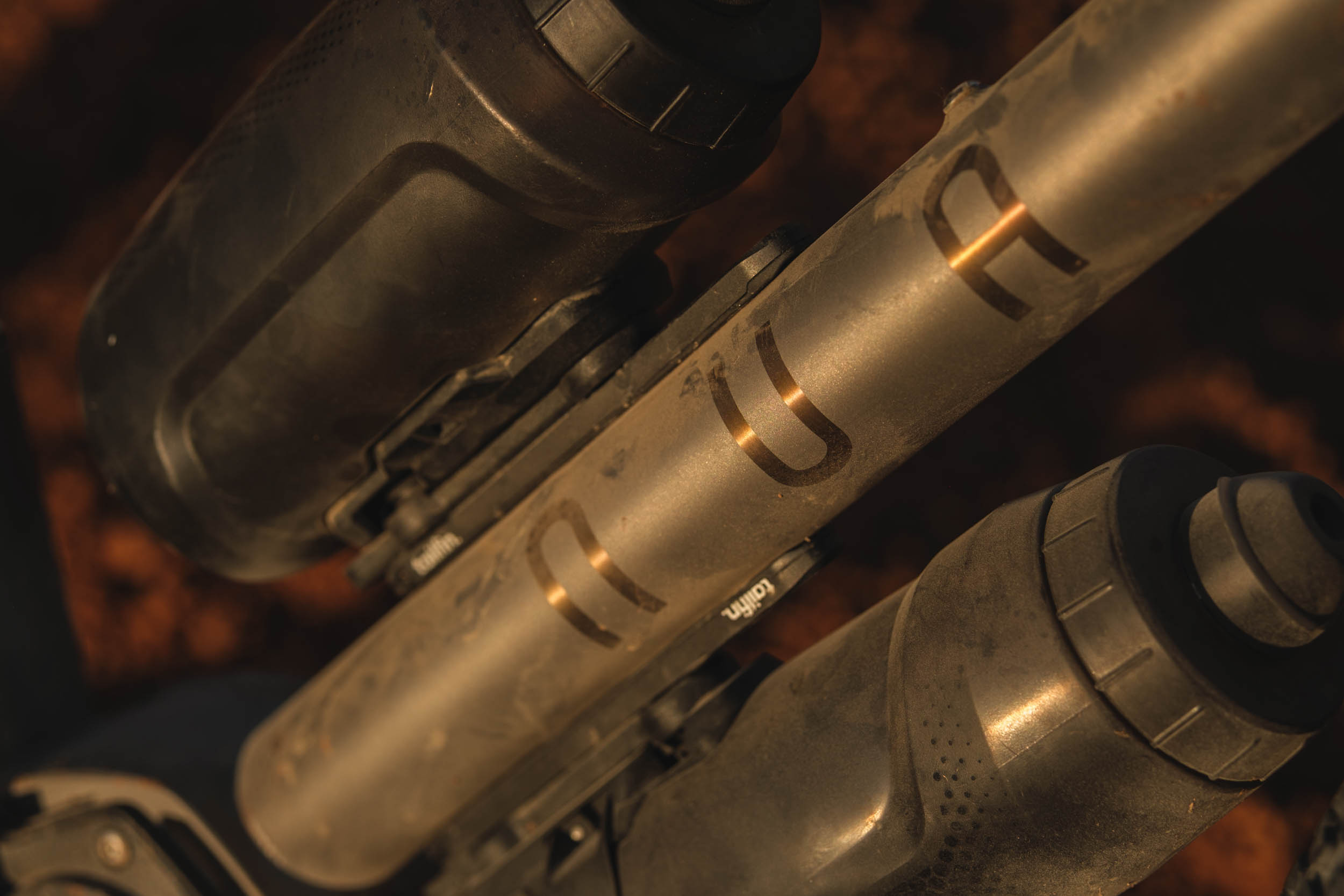
Both frames accommodate either 27.5 x 3.0-inch or 29 x 2.4-inch tyres. Belt ports and sliding dropouts let you install and tension the Gates Carbon Drive, and internal routing keeps brake, lighting, and shifter cables largely out of sight. Both also feature mounts for mudguards, rear racks, three bottle cages, and top-tube bags. Jona’s Roure added three-pack mounts on the seatstays and internal dropper routing.


The bikes shared Nua’s segmented Type B titanium fork, with a 435mm axle-to-crown measurement and clearance matching the frames. Three-pack mounts on both blades, mudguard compatibility, and internal routing for brake and dynamo wiring make it a purpose-built option for loaded travel. Together with the titanium frames, it gave both bikes a fully titanium foundation.
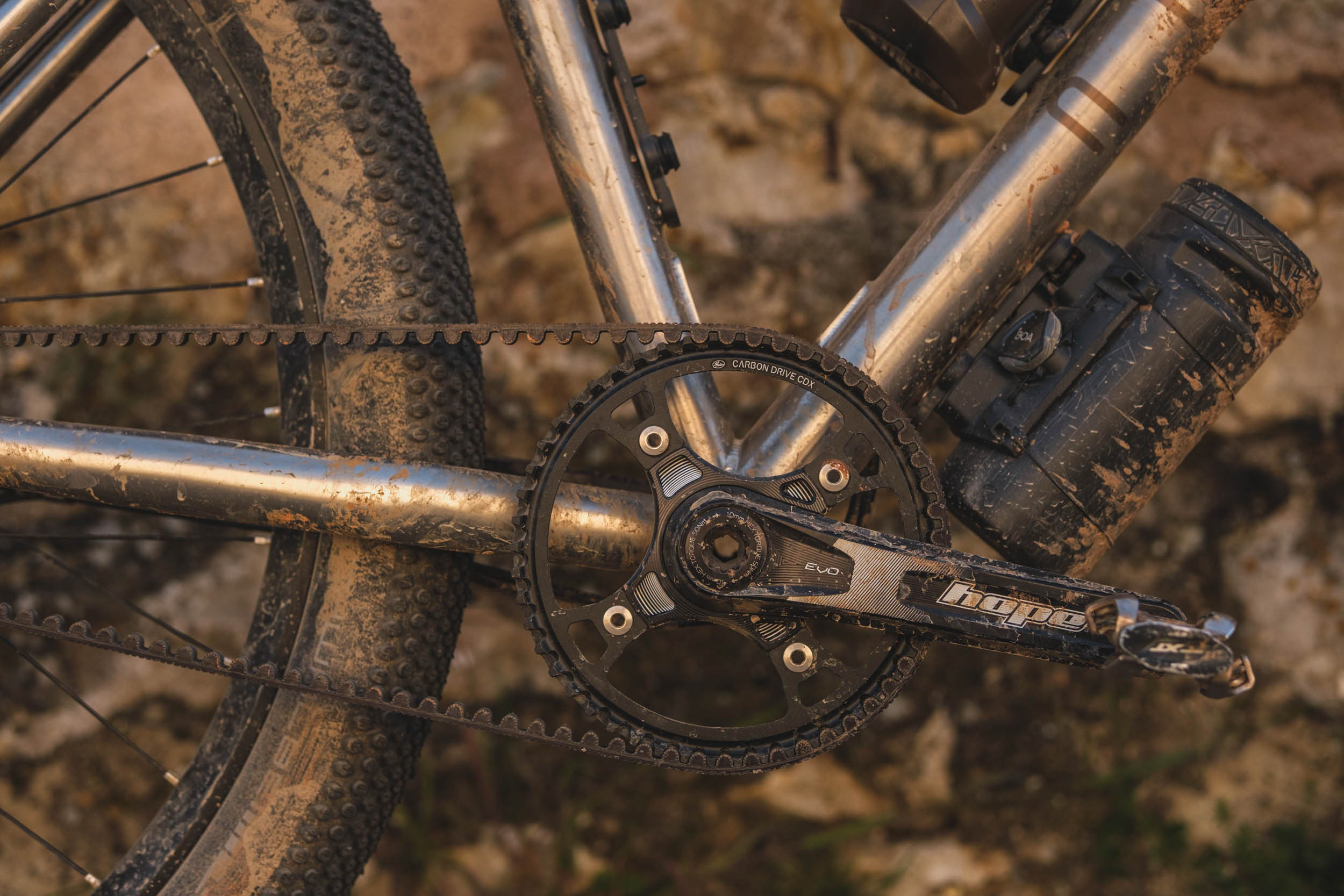
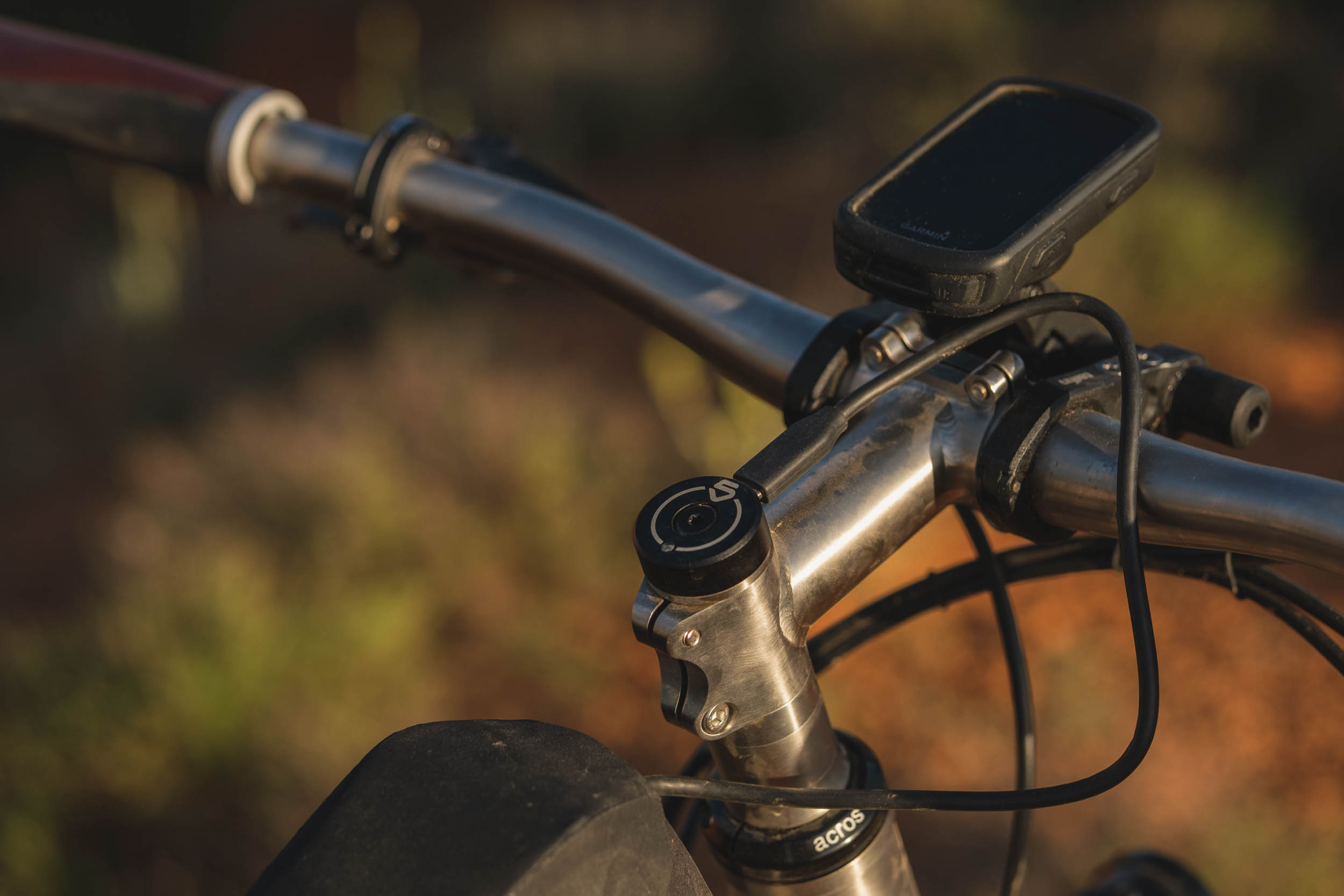
The main differences were in their drivetrains, cockpits, and wheel formats. My Terra was built around a 12-speed Pinion C1.12 gearbox with a 600 percent range, connected to a Hope rear hub by a Gates CDX belt. Modified SRAM Force levers and a Hibox conversion system allowed the gearbox to be shifted from the drop-bar cockpit. It rolled on 29-inch wheels with 2.25-inch René Herse Fleecer Ridge Endurance tyres.

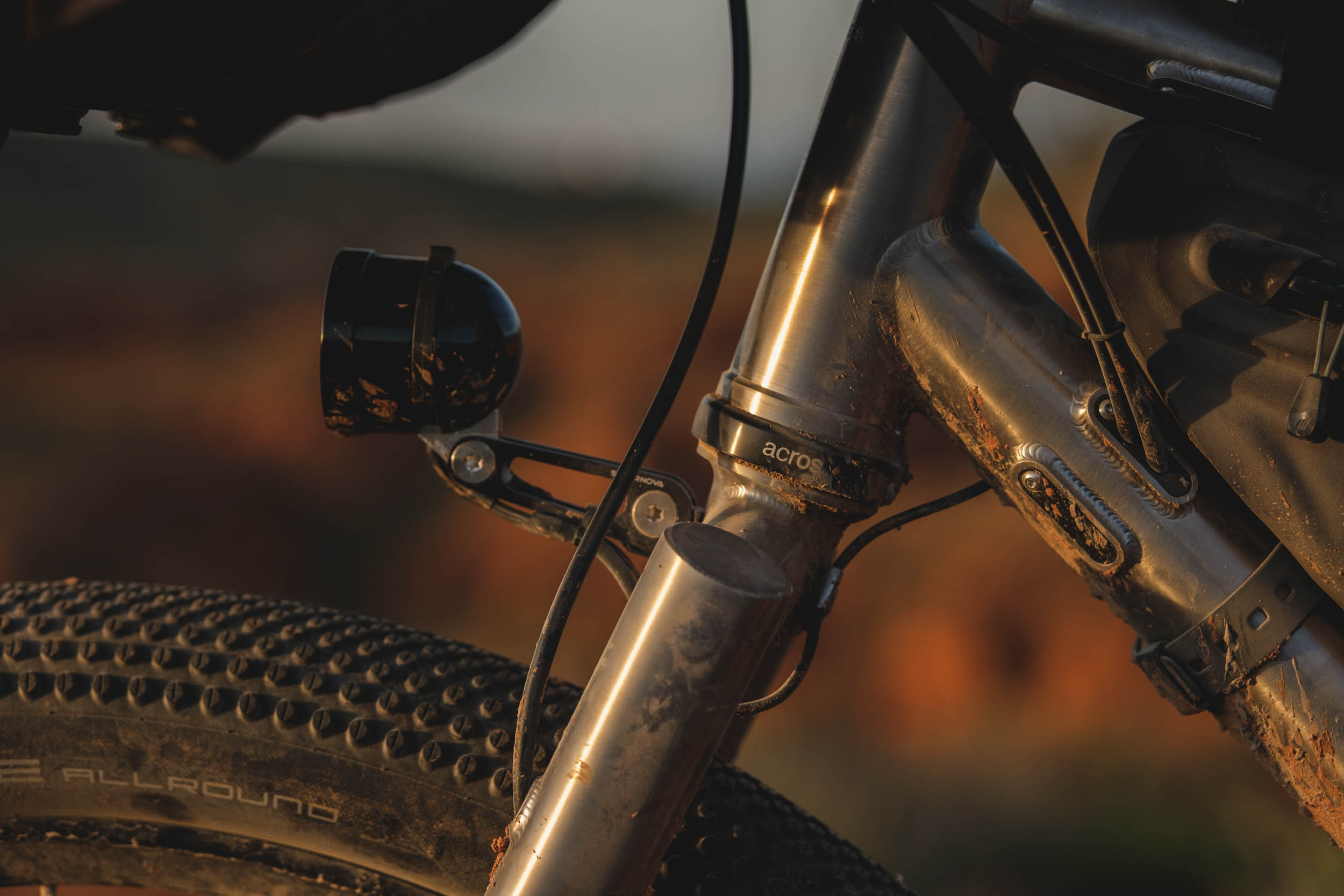

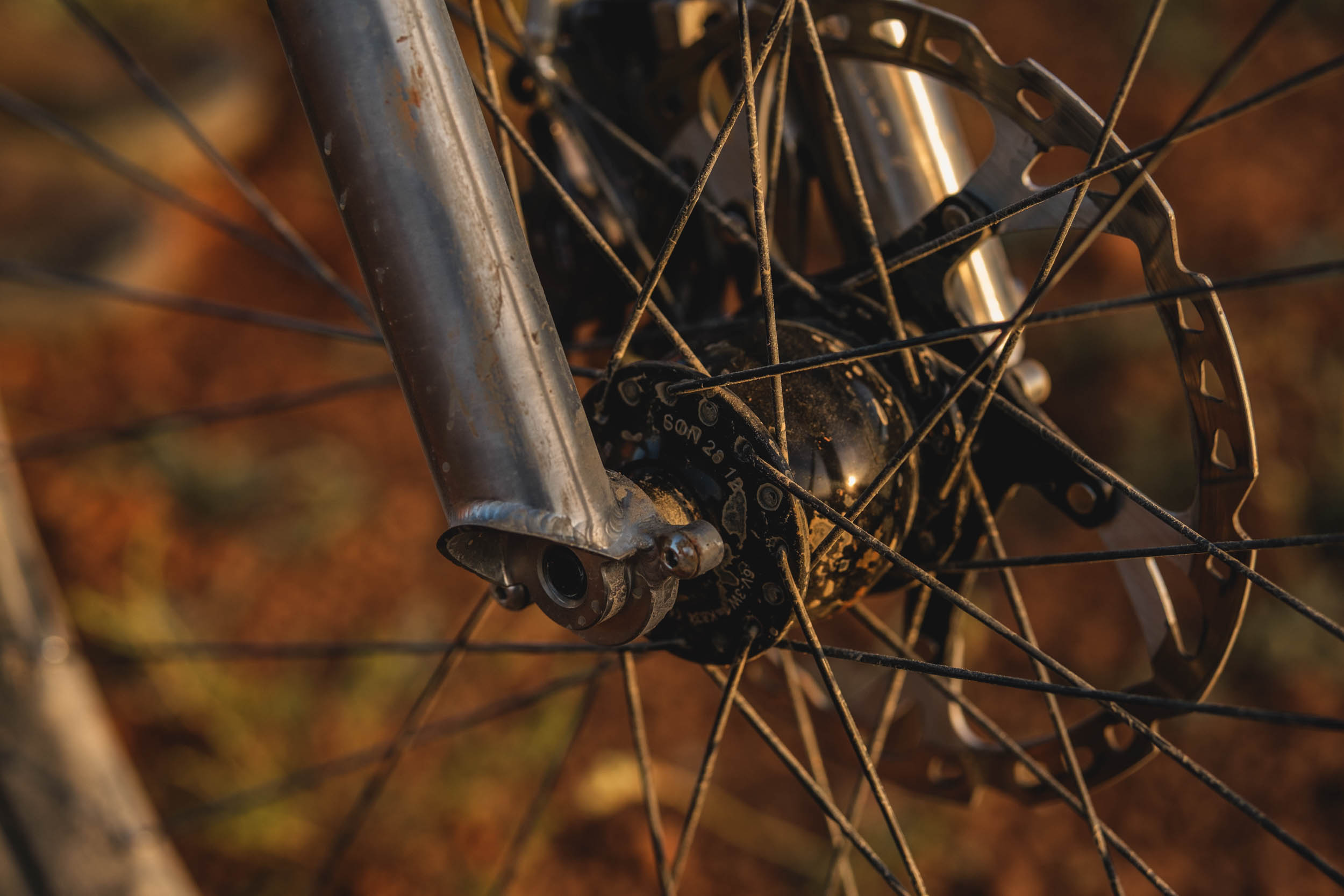
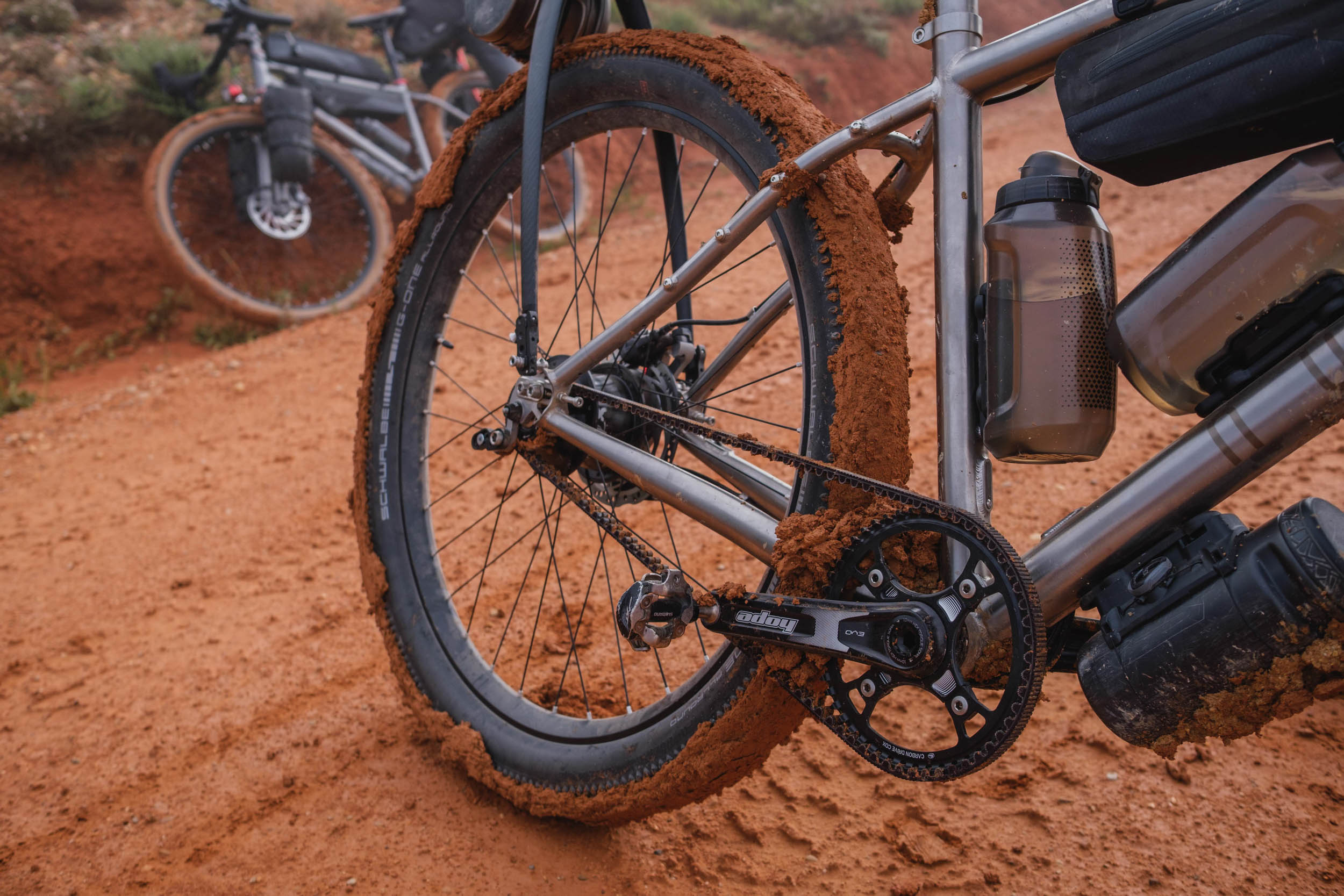
Jona’s Roure used a 14-speed Rohloff Speedhub with a 526 percent range, again paired with a Gates CDX belt. Its flat-bar cockpit featured a 760mm NUA titanium riser bar, while 27.5-inch wheels with 2.8-inch Schwalbe G-One Allround tyres were set up tubeless. Nua titanium components, including the stem and seatpost, continued the material theme beyond the frameset.
By the Numbers
Despite their differening builds, the underlying frame angles were remarkably similar. Both bikes sport a 69-degree head tube angle, a 74-degree seat tube angle, and 455mm chainstays. The drop-bar Terra has a shorter 397mm reach and a 1,101mm wheelbase, while the flat-bar Roure has a longer 422mm reach and a 1,134mm wheelbase.
| Measurement | Terra Pinion (Bengt) | Roure Rohloff (Jona) |
|---|---|---|
| Frame Size | Medium | Medium |
| Wheels and tires | 29 x 2.25 inch | 27.5 x 2.8 inch |
| Head tube angle | 69 degrees | 69 degrees |
| Seat tube angle | 74 degrees | 74 degrees |
| Reach | 397mm | 422mm |
| Stack | 593mm | 605mm |
| Chainstay | 455mm | 455mm |
| Wheelbase | 1,101mm | 1,134mm |
Both builds also featured complete SON dynamo lighting systems and CinQ USB chargers. Although designated as size medium, neither was a standard off-the-shelf build. For its first decade, Nua worked exclusively with fully custom geometries and specifications. Standard frame sizes were introduced around three years ago, but the company still holds no stock frames: every bike is made to order and receives its own manufacturing and fit drawing. Details such as stem length, headset spacers, and seatpost setback are then adjusted to suit the individual rider within the selected size.
Nua’s online Bike Builder extends that customisation to frame and fork details as well as component choices, updating the estimated price and weight as the configuration develops. Once complete, the customer can submit the build and receive the full specification as a PDF. Separate builders are available for the Roure Rohloff and Terra Pinion. As such, the specs above describe our particular test bikes rather than fixed production builds.
First-Ride Impressions
Five days on one route obviously can’t support any claims about long-term durability, especially when both bikes and drivetrains are designed around journeys measured in weeks, months, or even years. What the Montañas Vacías did provide was a concentrated mix of loose tracks, rough climbs, fast descents, mud, heat, and loaded riding. The following impressions are exactly that: two riders’ first reactions to two distinct bikes, rather than definitive long-term verdicts.
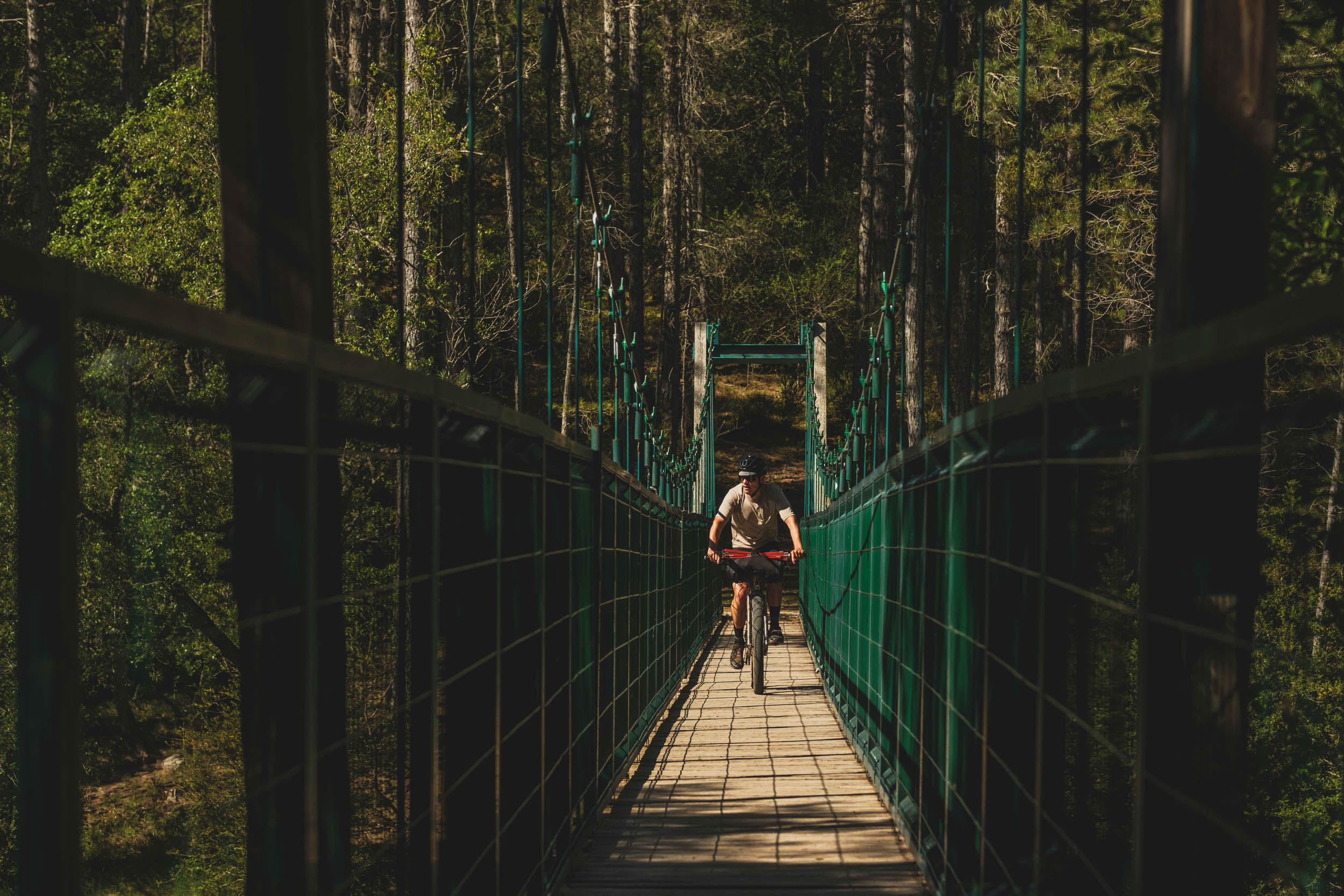
JONA’S TAKE: NUA ROURE ROHLOFF
The Roure makes its intentions clear from the outset. With its long wheelbase, upright cockpit, and voluminous 2.8-inch tyres, it iprioritises comfort and stability rather than speed. Fully loaded, it felt calm and predictable beneath me, and the wide Schwalbe G-One Allrounds took much of the sting out of rough surfaces despite the bike being fully rigid. Descents felt particularly controlled and confidence-inspiring—perhaps a little too much so at times, judging by one minor crash after I carried too much speed into an abrupt change of surface.
The Rohloff was new to me, but its 50-tooth chainring and 20-tooth sprocket provided enough low-end range for the steeper and rougher climbs along the route. The twist shifter required a little adjustment, though within a day it felt intuitive. Whether that style of shifting suits a loaded expedition bike will ultimately come down to personal preference, but I finished the trip convinced it worked well here.


Our first encounter with the Gates belt was less straightforward. Heavy rain the night before our departure had turned a short section outside Teruel into the infamous peanut-butter mud we’d been warned about. Within minutes, the belt was packed solid and repeatedly skipping off the front pulley. Once we had pushed beyond the worst of it and cleaned the drivetrain, everything ran smoothly again. Still, it was a useful reminder that even a system designed around minimal maintenance has its limits.

Beyond that brief episode, the Roure proved remarkably composed and comfortable on this kind of terrain. It carried a full bikepacking load without feeling cumbersome and remained reassuring through the Montañas Vacías’ constant changes in surface. For riders looking for a titanium bike built around the Rohloff platform—and who value dependability, comfort, and carrying capacity over outright speed—the Roure makes a convincing case.
BENGT’S TAKE: NUA TERRA PINION
From the first rough sections of the Montañas Vacías, the Terra gave me a strong sense of control. It held its line across loose and broken ground without demanding constant corrections. The same was true on faster off-road descents, where its steady steering made it easy to trust the bike and let it run.
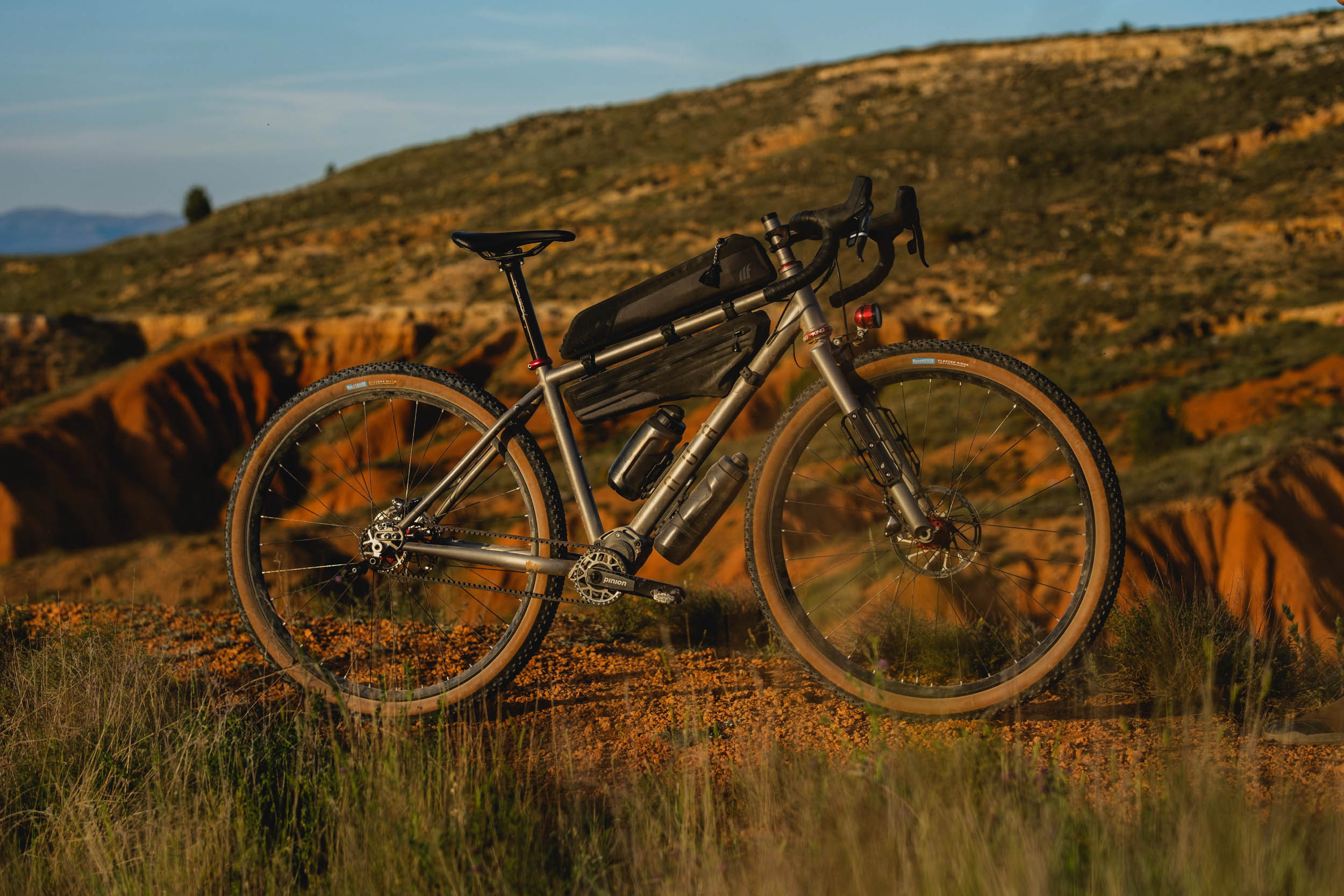
That planted character also defines the Terra. To me, it felt designed less around agility and playful handling than around covering long distances with confidence. Fully loaded, that made perfect sense. The additional weight never unsettled it as the surfaces changed. On shorter or more spirited rides, however, I would have preferred a little more liveliness—something that responded more eagerly when I moved the bike beneath me or changed lines on the trail.
My relationship with the Pinion gearbox was also divided. Its range was never the issue, and the idea of a centrally positioned, sealed drivetrain paired with a belt is compelling. What I struggled with was having to ease off the pedals before shifting. On rough or unexpectedly steep climbs, where I instinctively wanted an immediate gear change under pressure, the brief interruption never became entirely natural to me. I missed the crisp, direct response of a derailleur-based drivetrain and the feeling that the next gear is available almost the moment I ask for it.
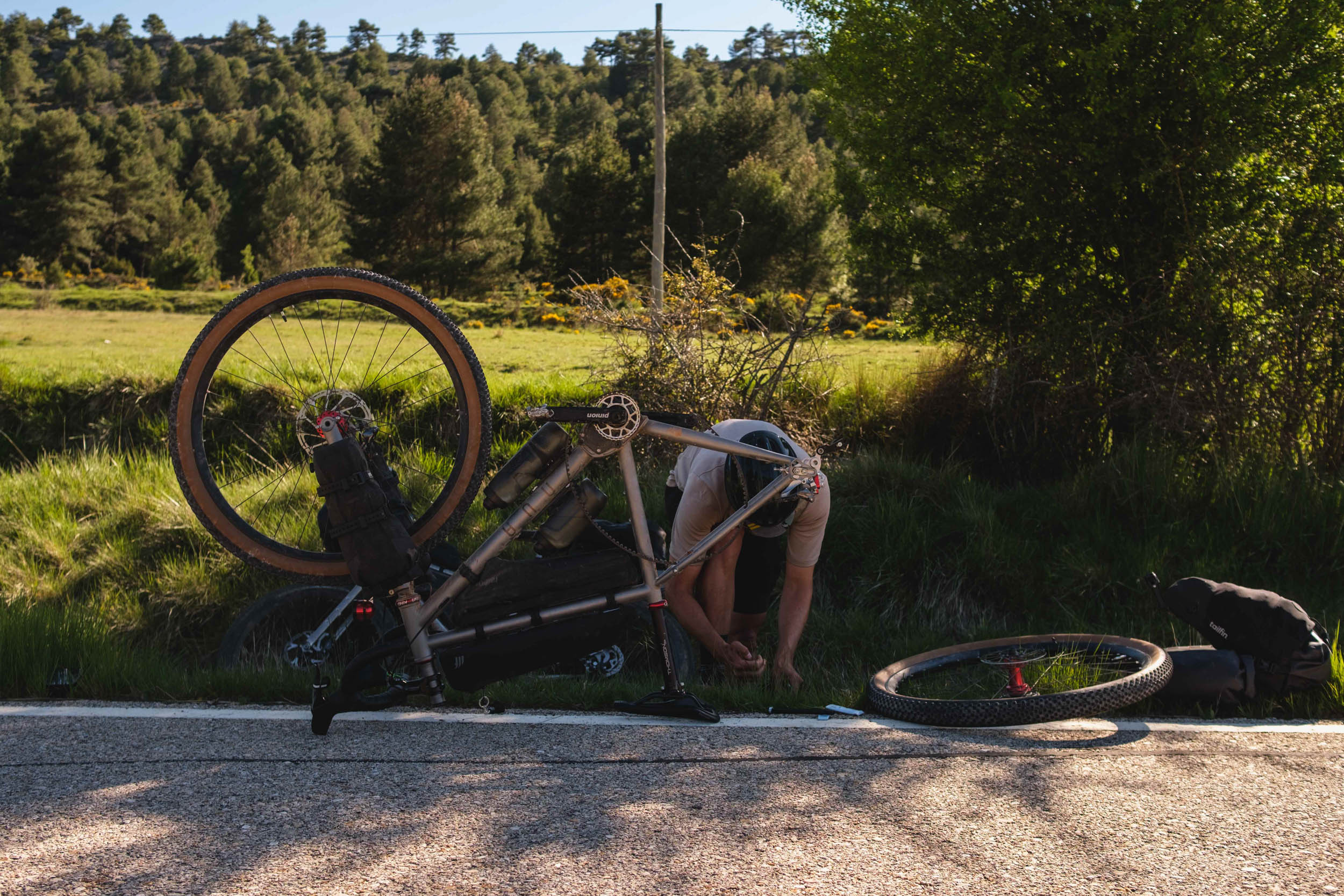

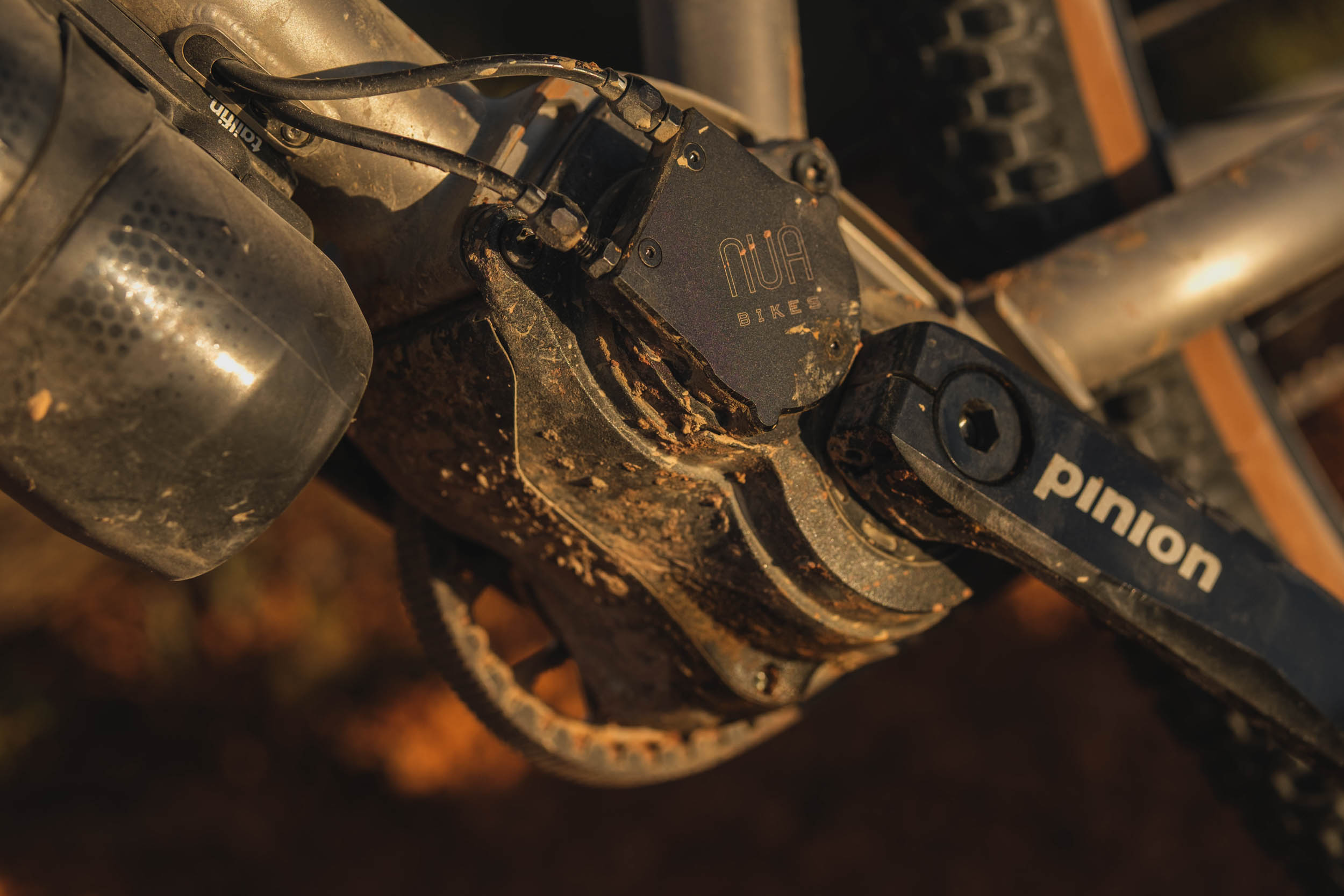
More experienced Pinion riders learn to manage this without fully stopping their pedal stroke. By briefly increasing momentum and shifting as the cranks pass through the vertical position, when relatively little force is travelling through the gearbox, the interruption can become almost imperceptible. It’s a technique I might have picked up with more time on the bike, but during our five days, it never became intuitive. Nua also offers Pinion’s electronic Smart.Shift system, which is designed to shift under load and offers a better option for riders who prefer that response.

At the same time, it would be unfair to judge the Pinion only by what I missed. The Terra makes the most sense when viewed as a bike for much bigger journeys than our short time in Spain. Through that lens, the gearbox and belt’s durability, protection, and simplicity could easily matter more than the immediacy I prefer. It may not be the drivetrain I would instinctively choose, but on a bike intended to carry someone deep into remote country, I can clearly understand why it belongs.
Final Thoughts
By the end of the trip, the differences between the Terra and Roure mattered less than the purpose they shared. Neither was trying to disguise itself as a race bike. Both felt most convincing when the ground became rough, the bikes were loaded, and the next resupply point was uncertain.
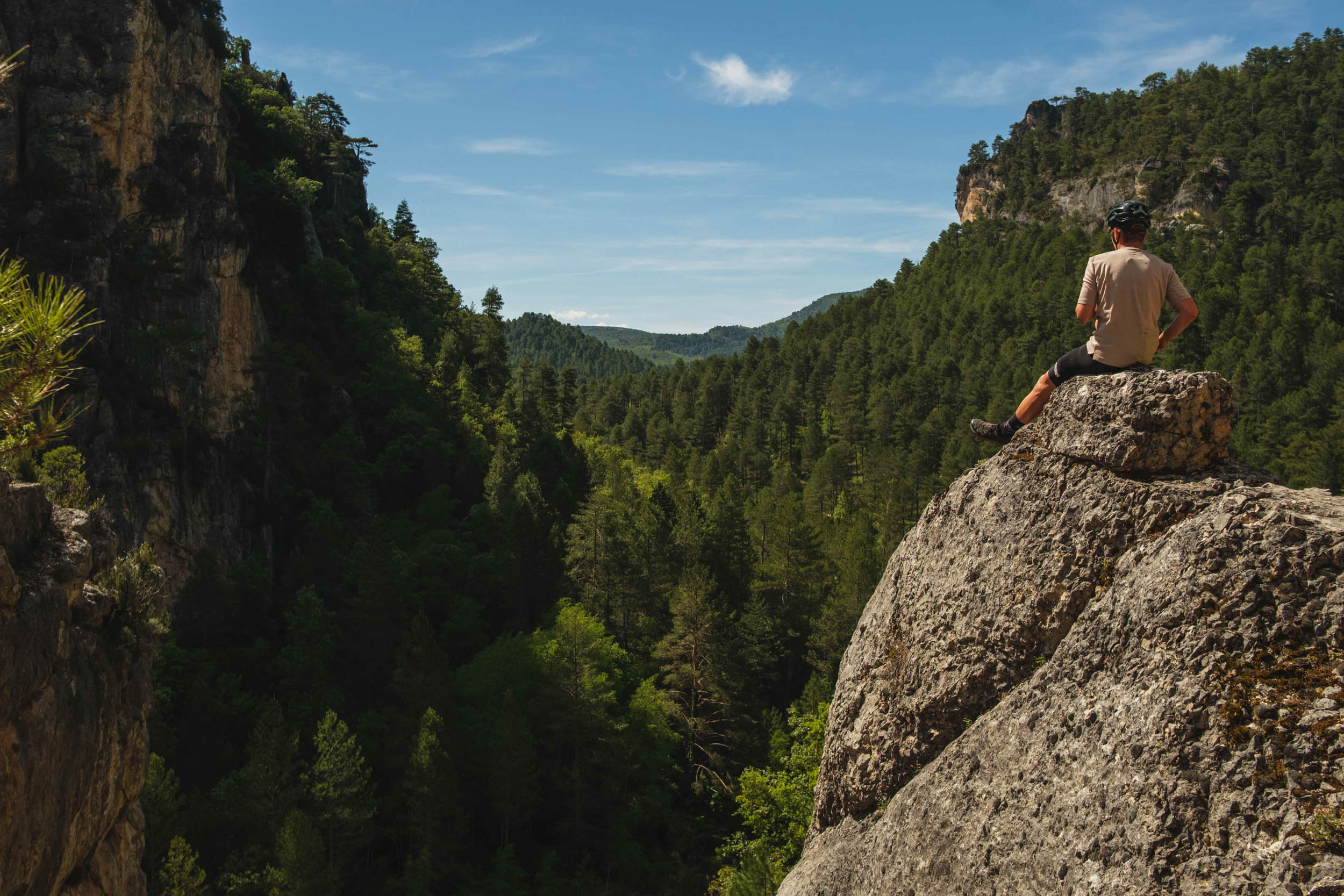
Our preferences ultimately revealed as much about us as riders as they did about the bikes. Jona adapted quickly to the Rohloff and came away convinced by the Roure’s calm, dependable character. I trusted the Terra completely on rough ground and fast descents, even if I never formed the same relationship with the Pinion gearbox. That tension does not diminish the bike; it helps define the rider it is built for.
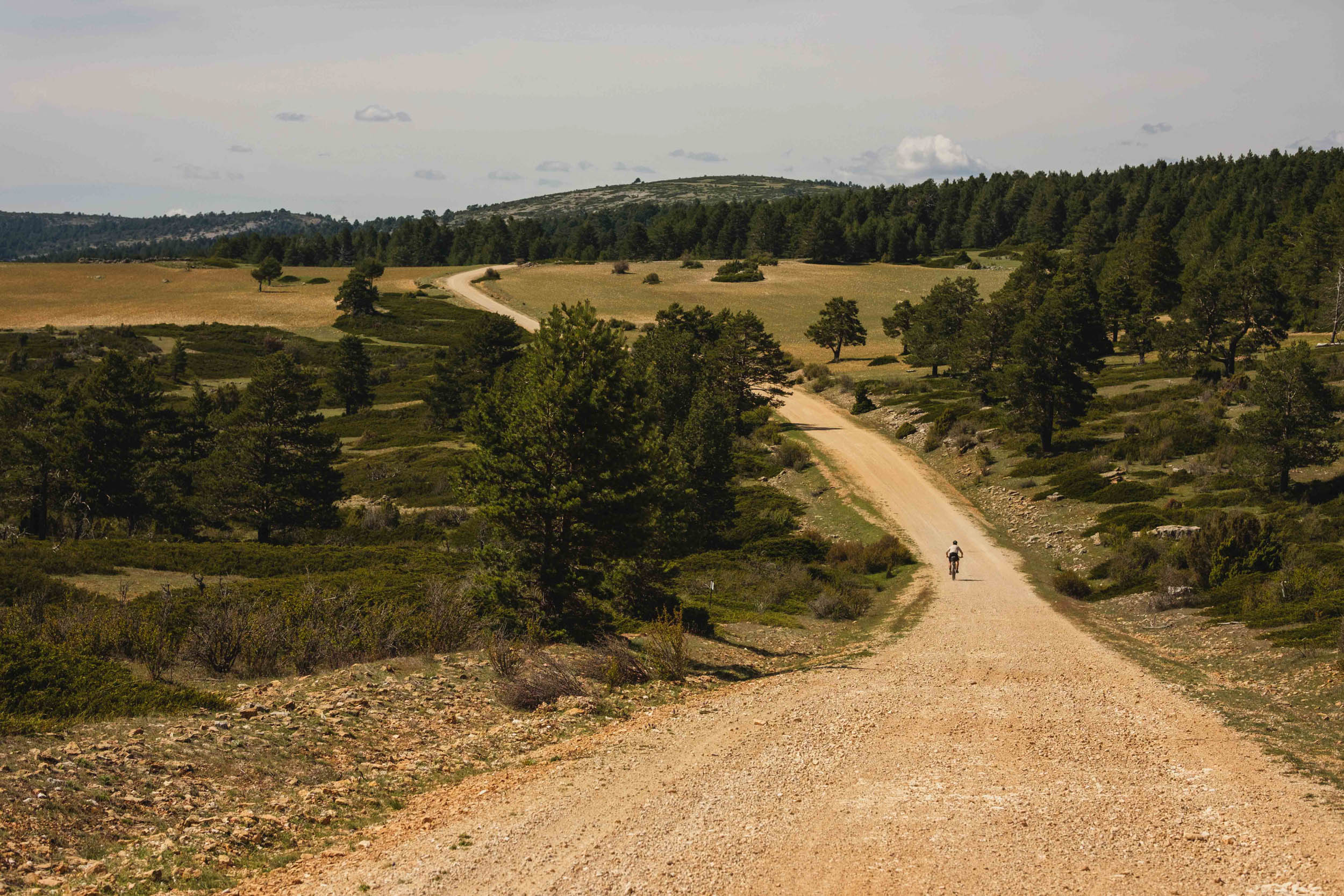

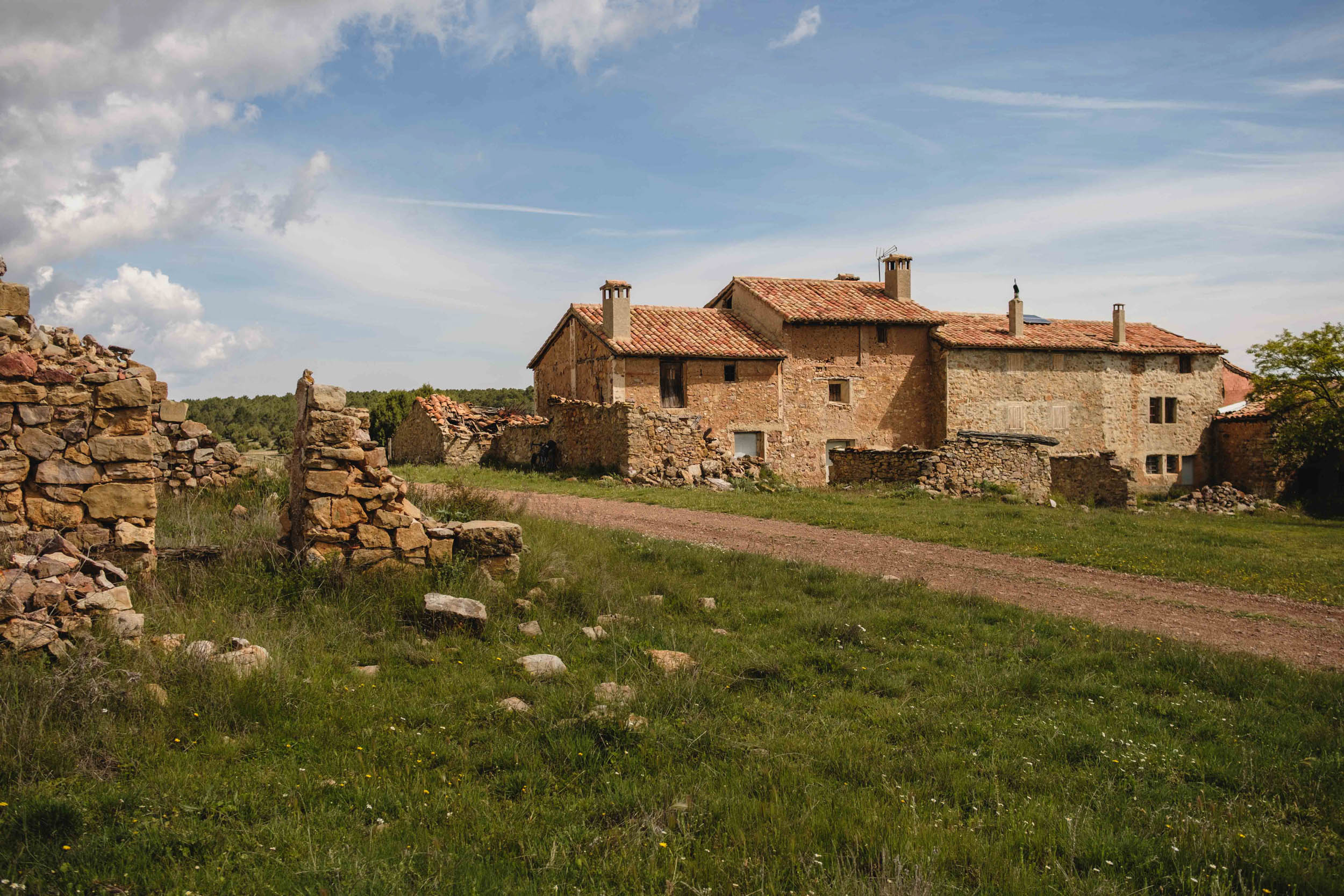
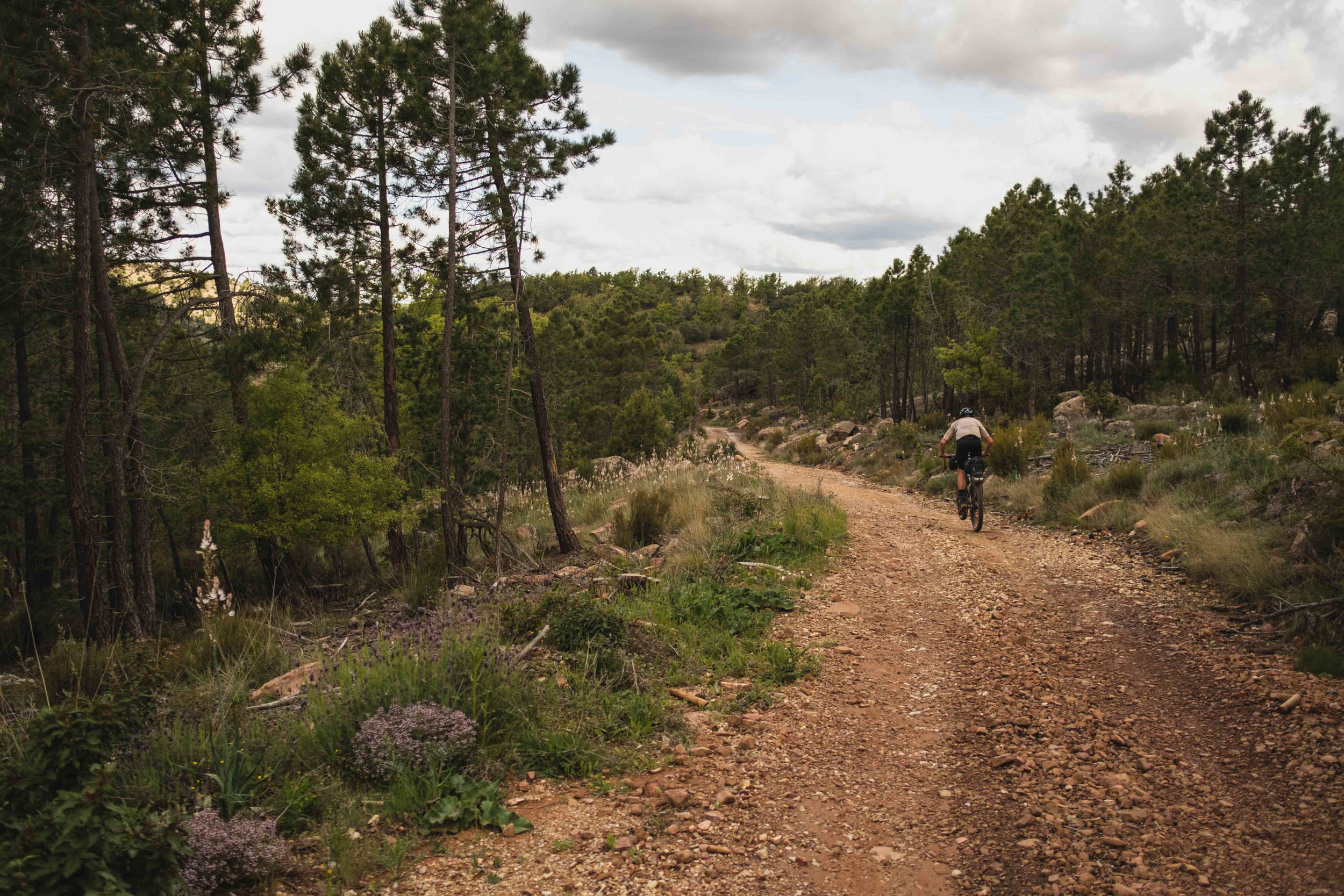
By the time we returned to Teruel, the strongest shared impression was simpler: both Nua frames were beautifully executed, deeply considered, and entirely at home on the Montañas Vacías. We have no basis for sweeping claims about years of use, but we have every reason to believe either bike could have kept going long after our own route ended. Much like the Montañas Vacías itself, we felt we had only just begun to understand them.
You can learn more about the Terra Pinion and Roure Rohloff at NuaBikes.com.
Further Reading
Make sure to dig into these related articles for more info...


Please keep the conversation civil, constructive, and inclusive, or your comment will be removed.