

 Mountain Bike (MTB)
 Gravel Bike
 All-Terrain Bike (ATB)
 Fat Bike


Reader’s Rig: Pete Skelton’s Medusa Kangal

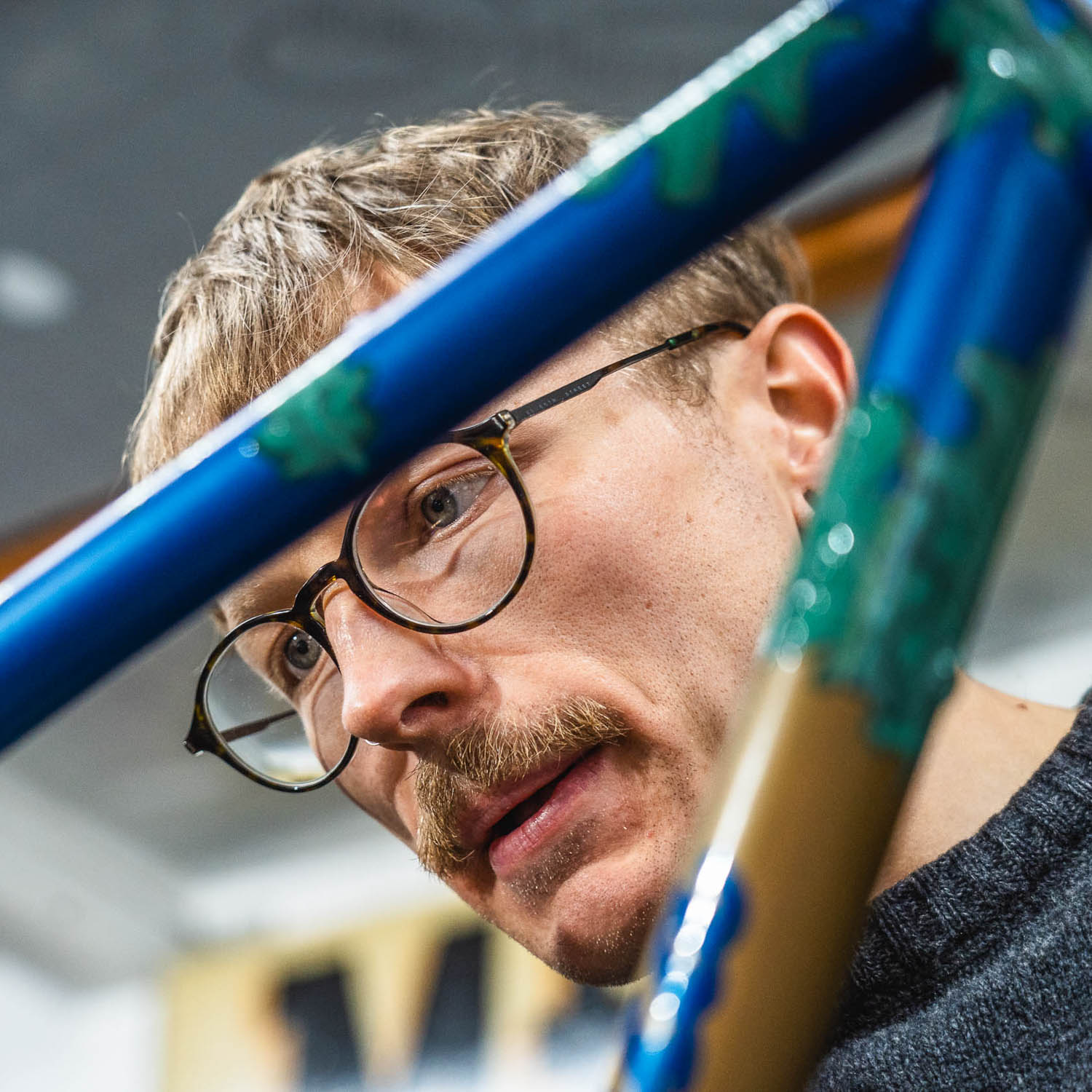
In this feature edition of Reader’s Rig, we meet UK-based framebuilder Pete Skelton of Medusa Cycles and learn the story of how a rugged 2018 tour across Europe and Asia planted the seed for what would eventually become the Kangal concept build. Find photos and a detailed description of what Pete considers the “ultimate bikepacking rig” here…
PUBLISHED Sep 25, 2026
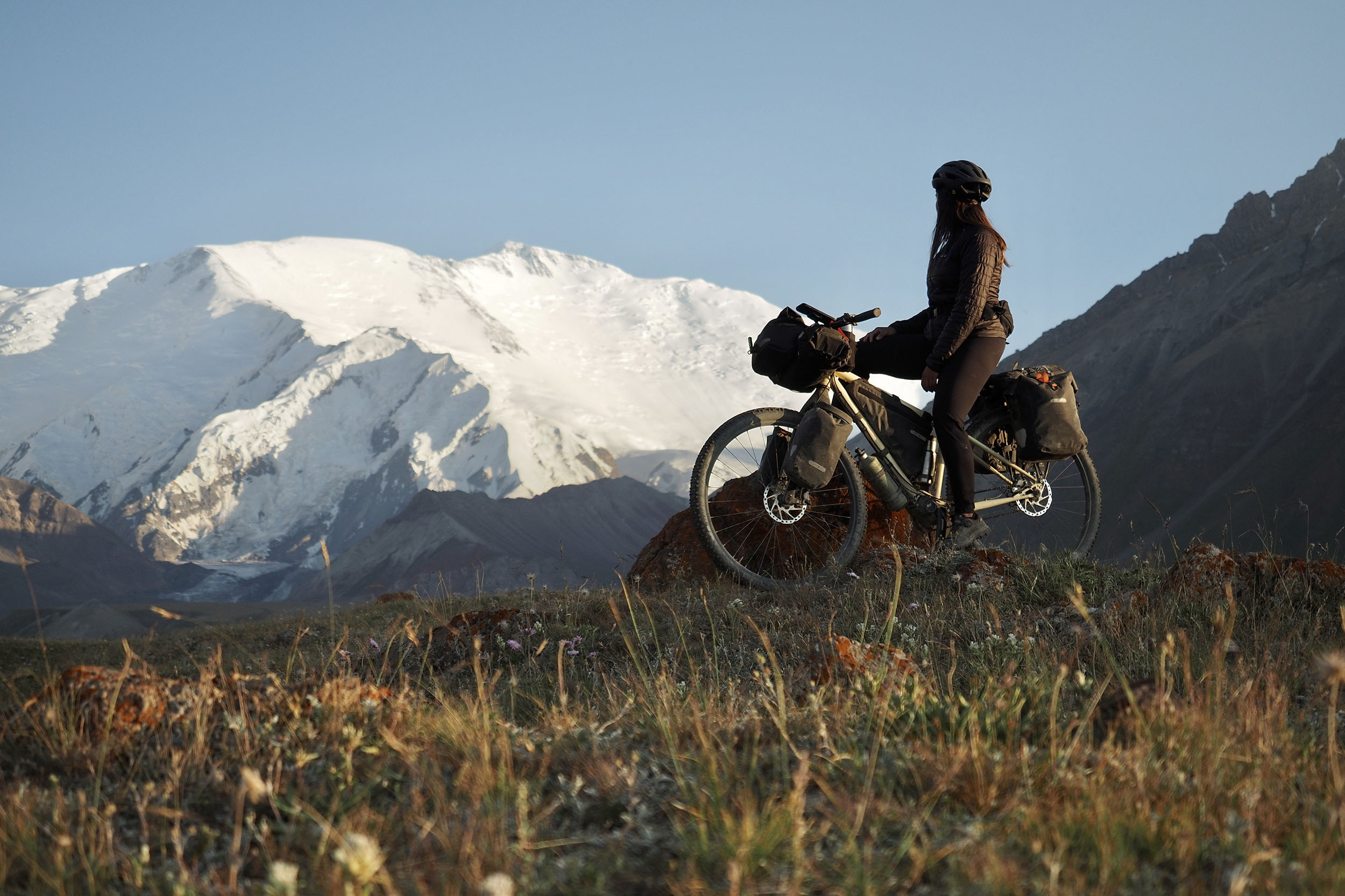
Hi, I’m Pete. I created the Medusa Kangal as a concept build. I wanted to address some shortcomings of the bike I rode while on an overland bike trip heading east in 2018. The destination was India, so the route took my close pal, Jordan, and me across unforgiving terrain in remote parts of the world, namely the Anatolian Steppe and the Pamir Mountains. However, our experiences in the mountains of Northern Greece had already set the tone. There, we endured some of the coldest weather so far, along with heavy rainstorms that turned unpaved roads into quagmires.

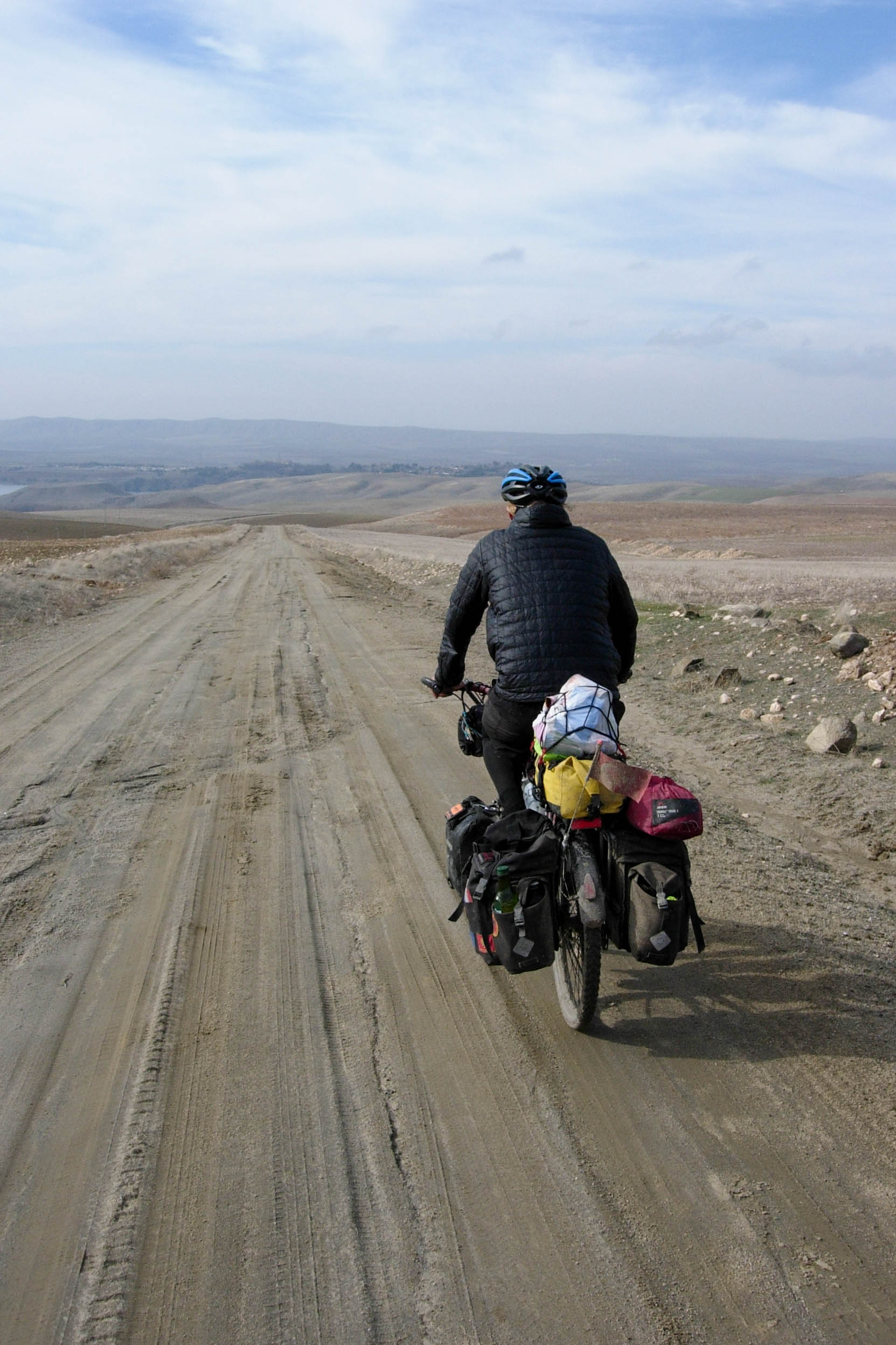
After putting a chilly, wet Greece behind us, we began crossing Anatolia as winter set in. In our naive ignorance, we assumed the weather would warm and become more bearable as we headed further east. Our only prior experiences of Turkey were those at sunny holiday resorts on the south coast, and, momentarily, our prayers for kinder weather were answered. In December, we spent time in the warm sun, sitting on the beach in heat upwards of twenty degrees Celsius. Still, when the time came to shake a leg and head up and over the mountains from Fethiye, it felt like we had climbed over a wall into a different world, a thousand miles from the one printed on the postcards.
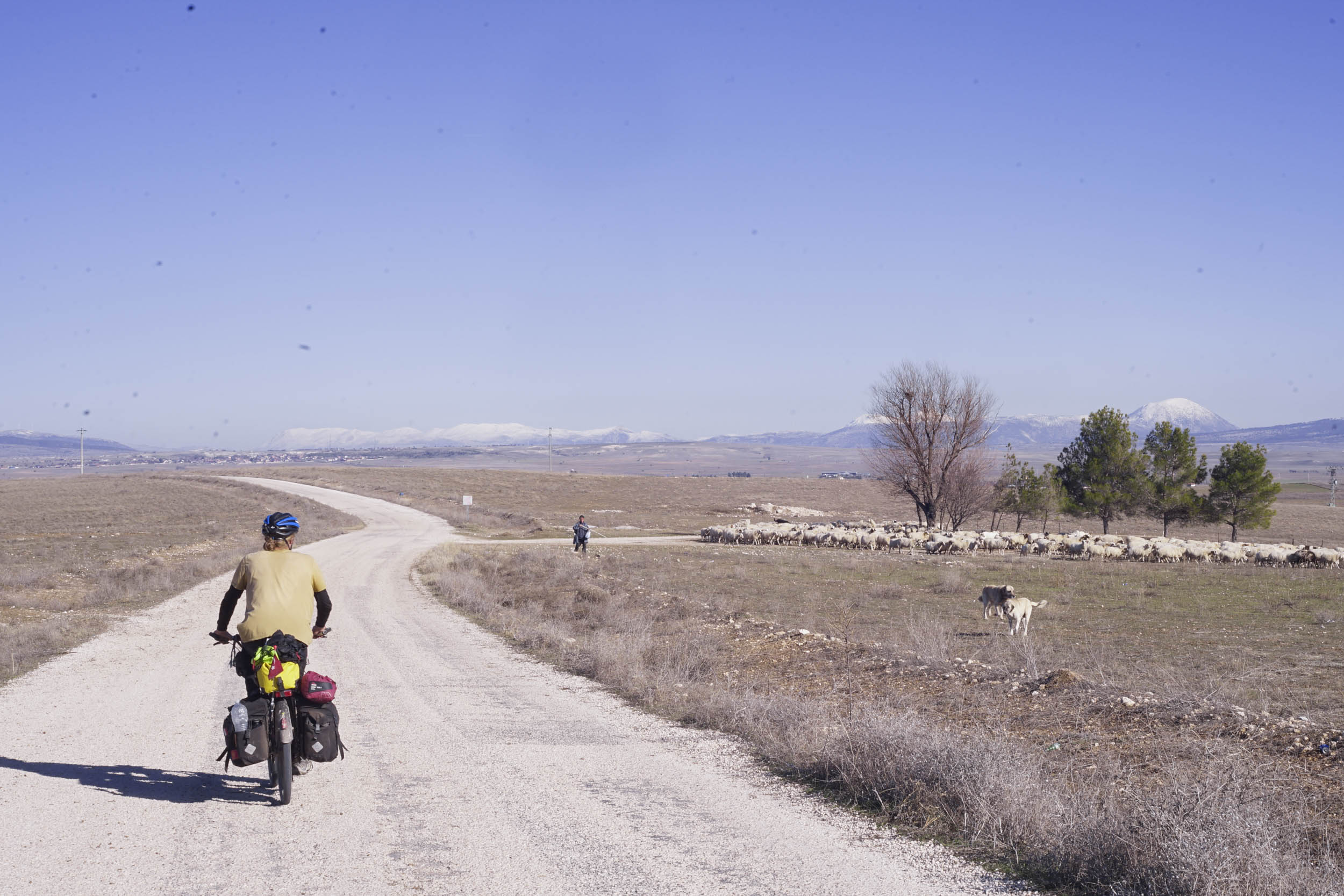
For weeks, we navigated frozen, sometimes unnavigable mountain passes and trudged across rough, unpaved roads over a steppe dominated by bitter winds and relentless rain. Chases from fierce Kangal dogs were common; sometimes they were solitary, sometimes in packs, sometimes they barked as they chased us, sometimes they were silent, which was even more terrifying!
But sometimes they would approach us at camp and simply sit with us. We would share a little food, and they would rest alongside us. Perhaps it was instilled in their psyche to protect humans from bears and wolves. Perhaps they had never seen a person on a bike before, which is maybe why they would chase us as we pedaled. As we lived on the bike in this harsh environment, at the mercy of the elements and wildlife, it felt as if we were beginning to embody the feral dogs we shared our days with. To me, the Kangal best represents Anatolia, and the impression it left me after that part of the trip is why I chose to name this bike the Medusa Kangal.
Frameset Overview
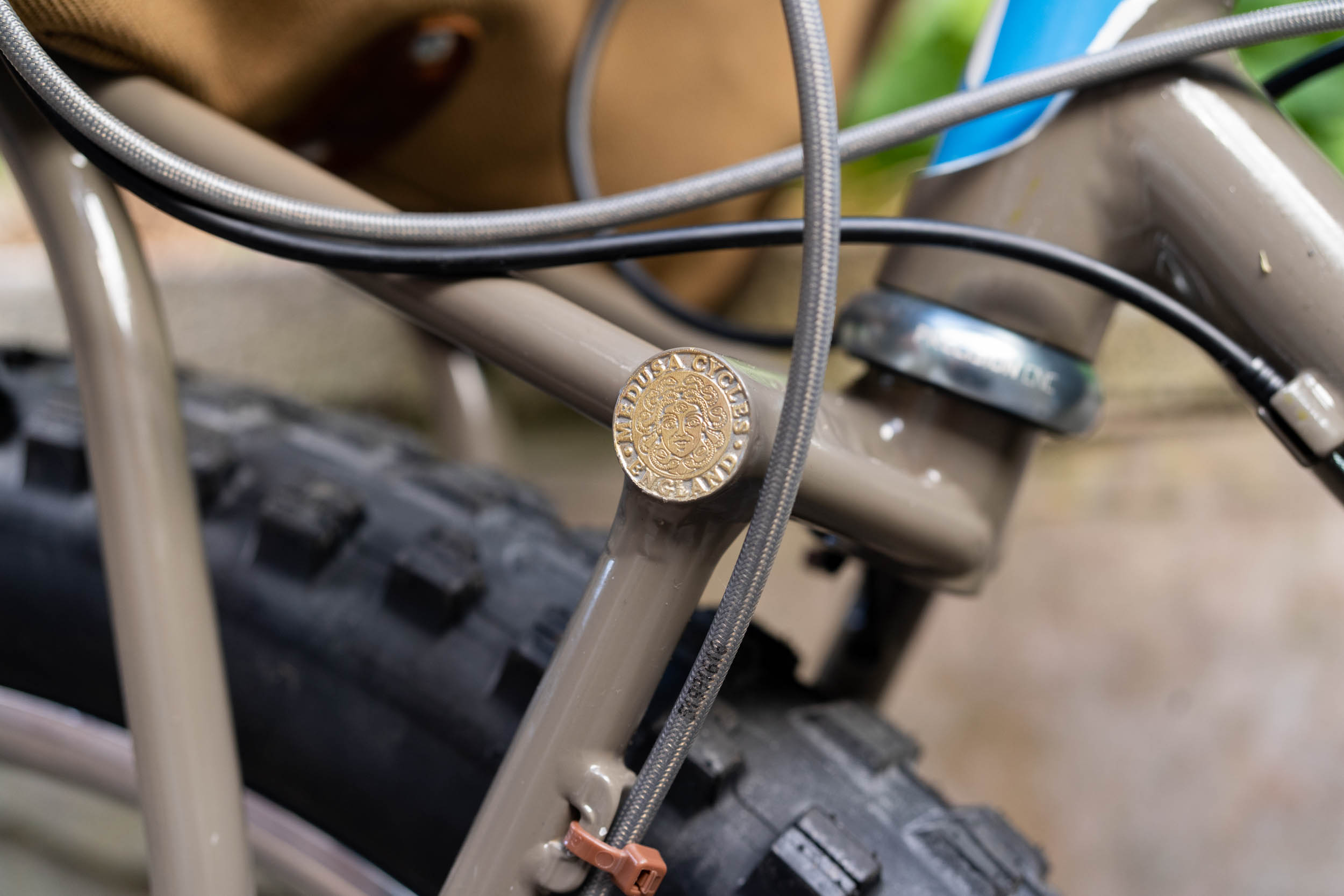
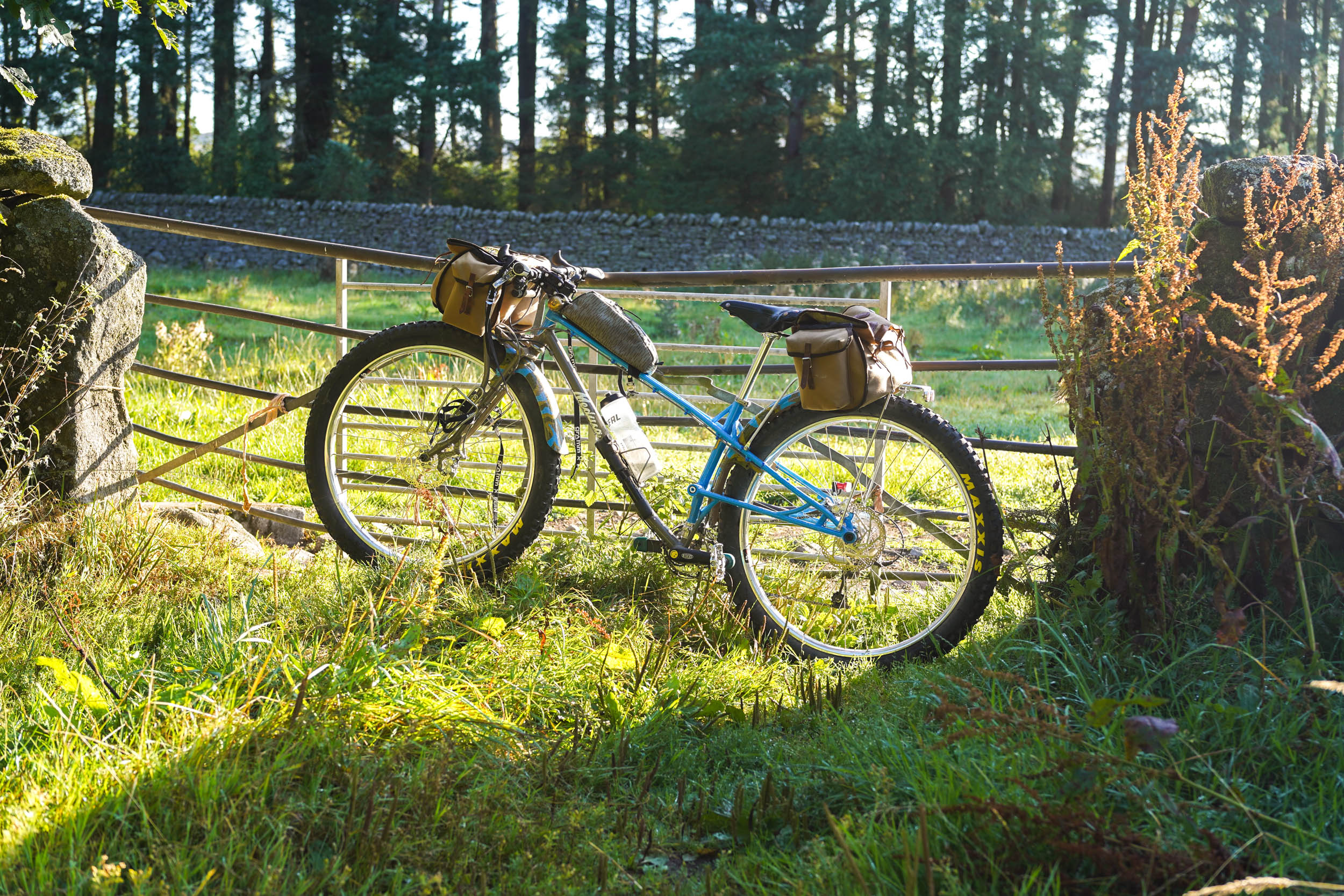
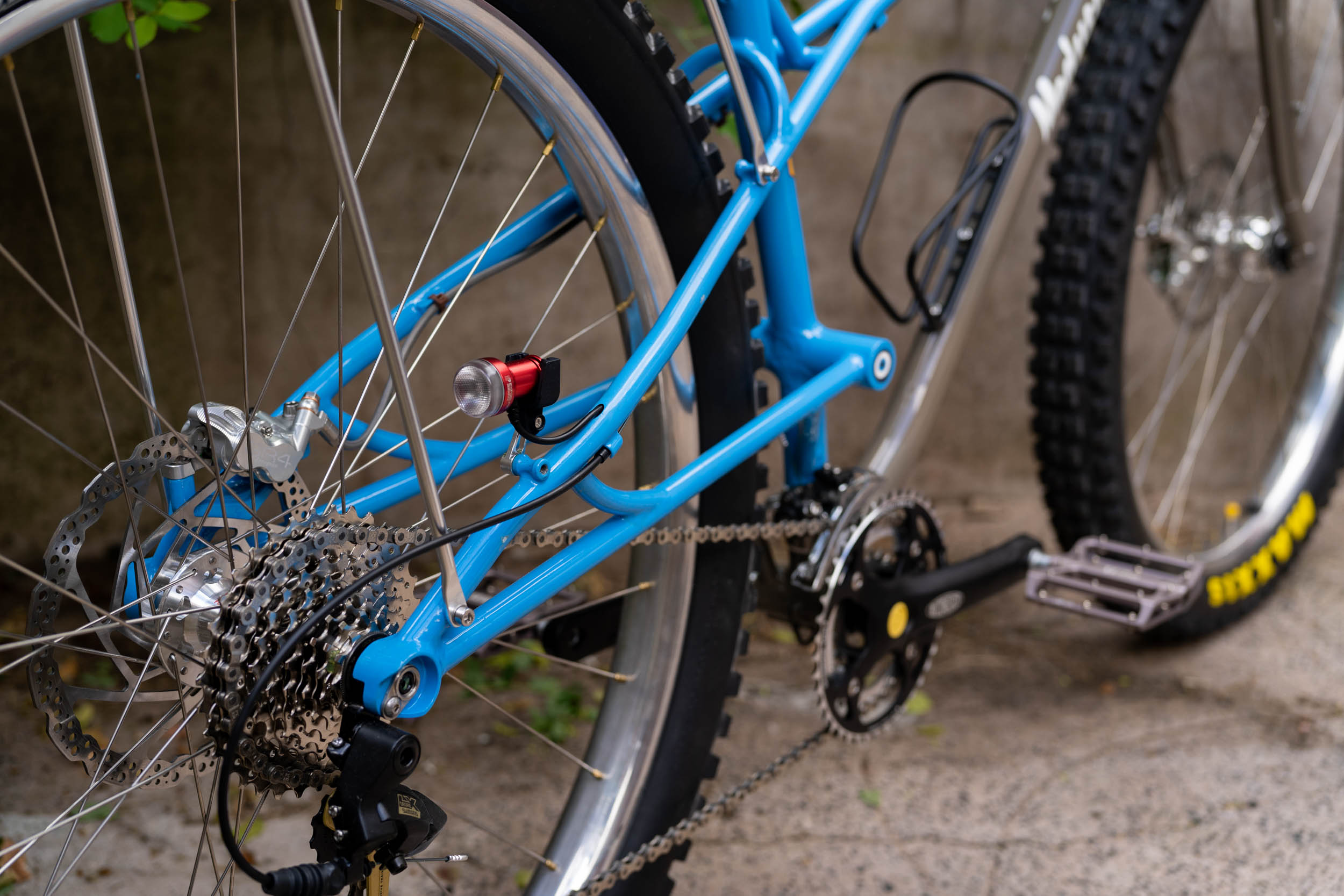
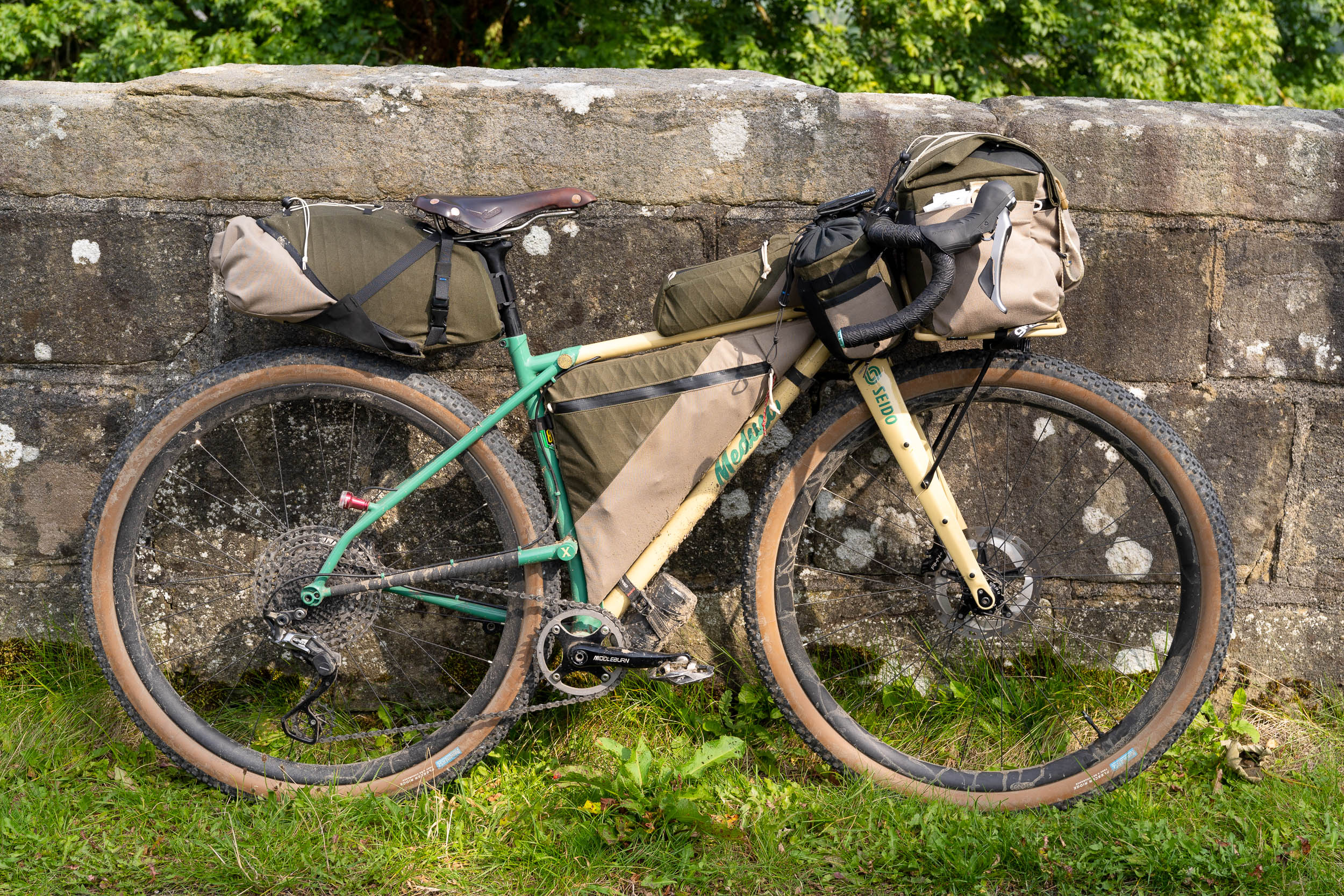
The frame is built from a mixture of Reynolds 631 and 25CrMo4. The 631 is nice and simple to work with, and it bends forgivingly in my tube bender; the same goes for 25CrMo4. I knew this build would have plenty going on in terms of geometry, so I wanted to keep things simple where possible. As you might notice from other examples of my work, I love a raised chainstay! However, this frame is the first I have built with both the drive-side and non-drive-side chainstays raised. I have previously only raised the drive-side chainstays on my builds. My reasoning for raising both of the chainstays on this build is to help with maintaining better mud clearance when running that huge 29 x 3.0” tire with the triple chainset.
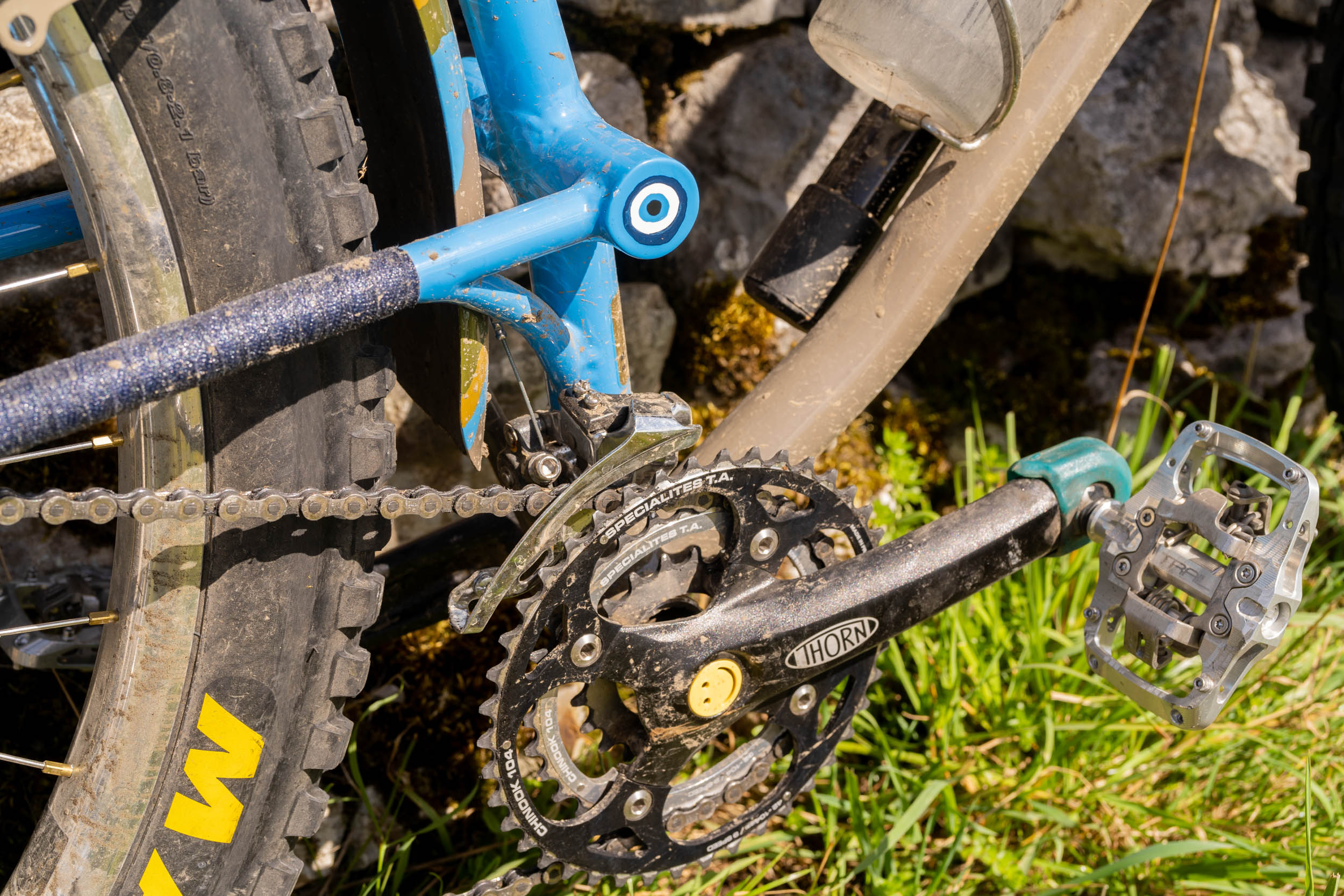
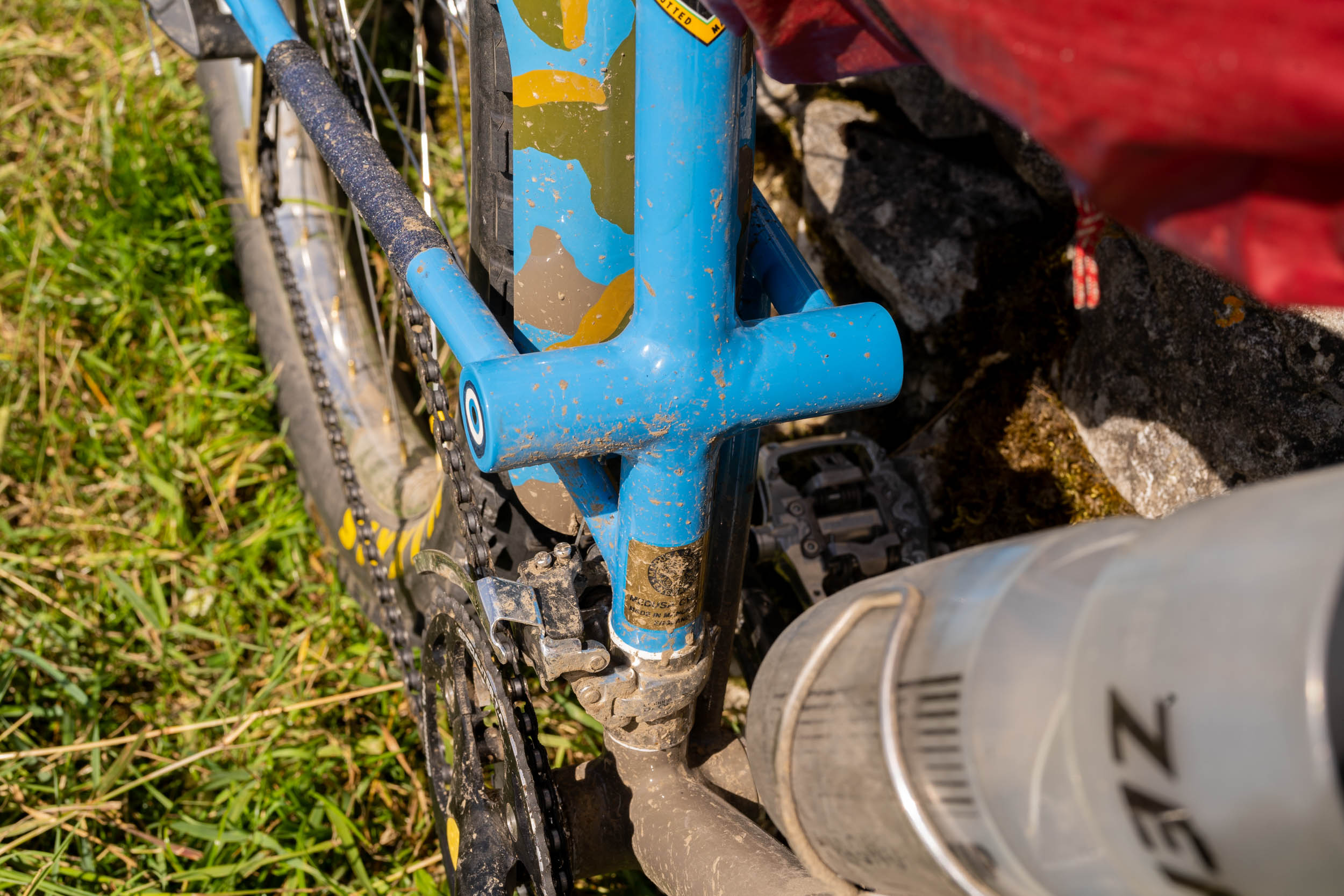
Another, less obvious advantage is the offset positioning of the lower section of the seat tube, where the front mech is clamped. The rear end of the bike has boost spacing, and most triple front mechs aren’t designed to work with the extra 3mm of offset you’ll see with a boost chainline. Effectively having two sections of seat tube let me budge the lower section 3mm out towards the driveside while still keeping the upper section centered with the rest of the bike. I added some extra tubes down at the BB/chainstay junction to aid overall stiffness; I also think it gives a bit of snake-like vibe and brings everything together aesthetically with the double toptubes.

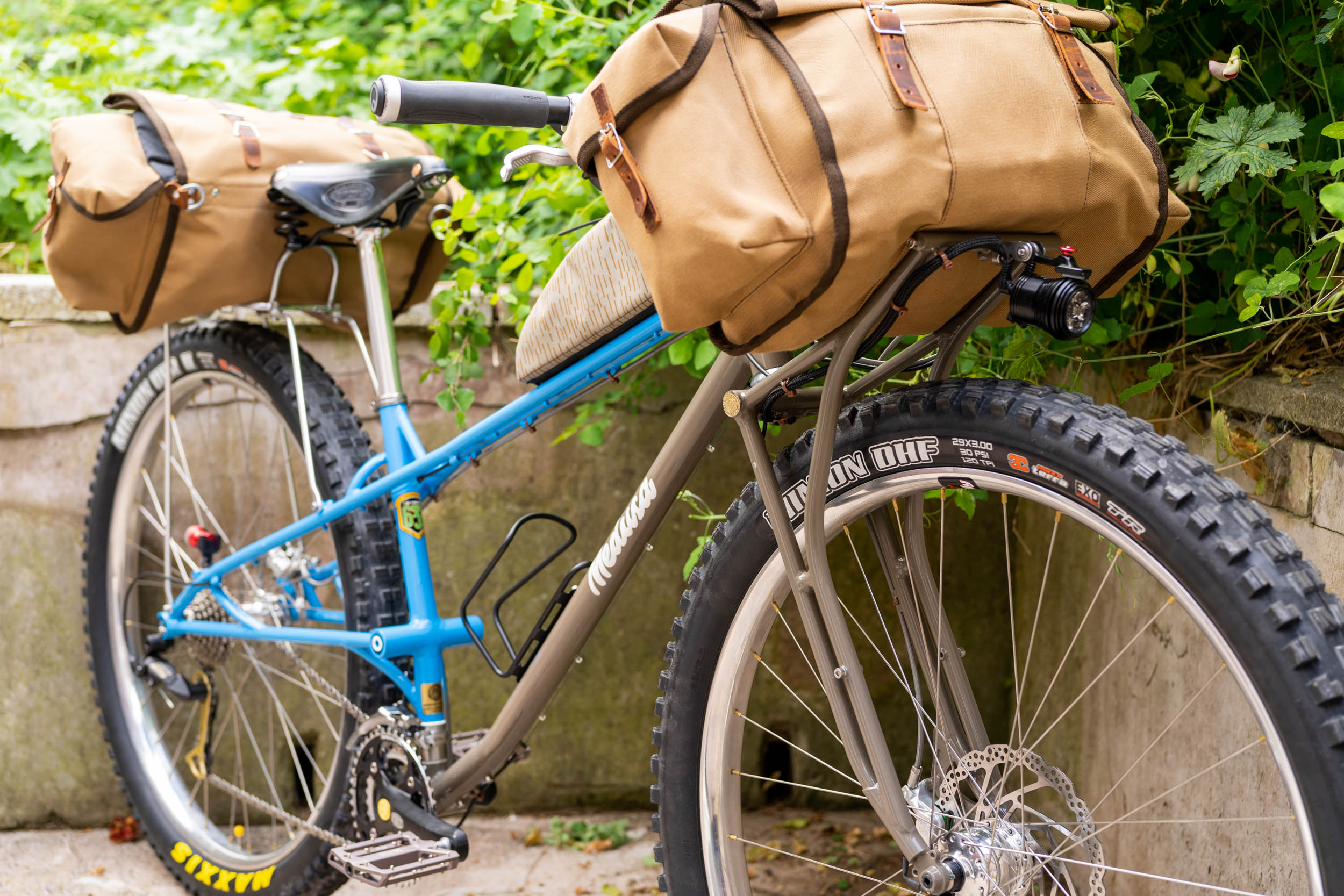
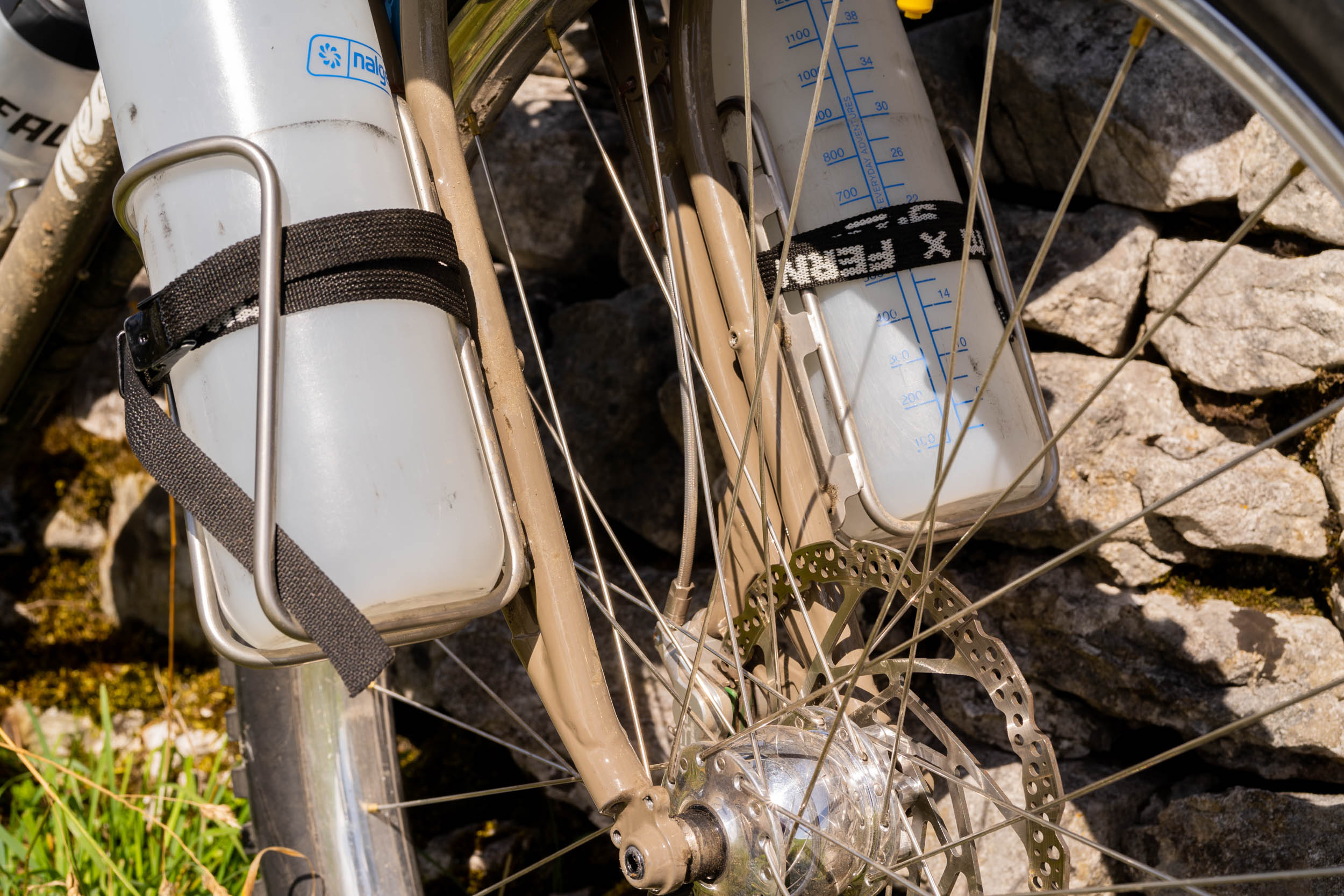
This was also my first attempt at building anything like a truss fork. To achieve the fork trail value I wanted, the fork would need a ridiculous 90mm of rake. To make sure everything would be strong enough up front, I added some reinforcement, and the result was this half-truss fork. I used a truss-style design and added an integrated bag mount that would also conveniently hold the front light at a suitable height above the front wheel.
A Lesson in Repairability
Reynolds 631 and 25CrMo4 also have real-world practicality, as they’re easy to repair. On the 2018 trip, Jordan’s bike frame sustained some damage after a few days of violently juddering along the washboard sections of the Pamir Highway. His rear Pannier mount sheared itself from its seat stay, requiring it to be welded back on. After a quick repair with some cable ties, we cautiously continued to the town of Murghab. Murghab is at the highest altitude of any town in Tajikistan, and the former Soviet Union, sitting up in the Pamirs at 3,650 metres above sea level. It is an interesting little place with a bit of a Wild West vibe, where we easily found a welder who could fix Jordan’s pannier boss. The chap who repaired it wore clothes covered in holes from hot sparks, and the only protection from the brightness of the arc he employed was that of his closed eyelids.
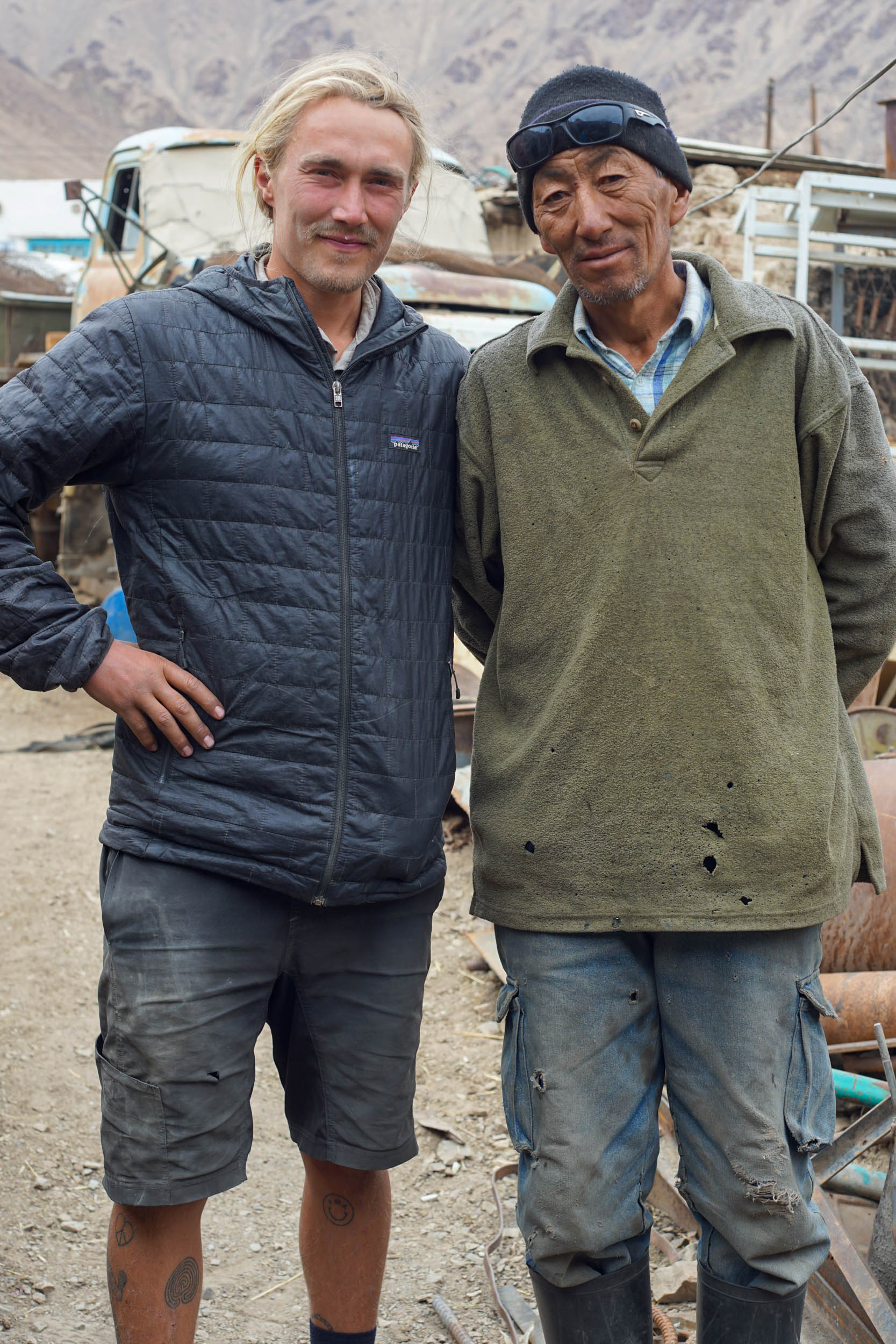
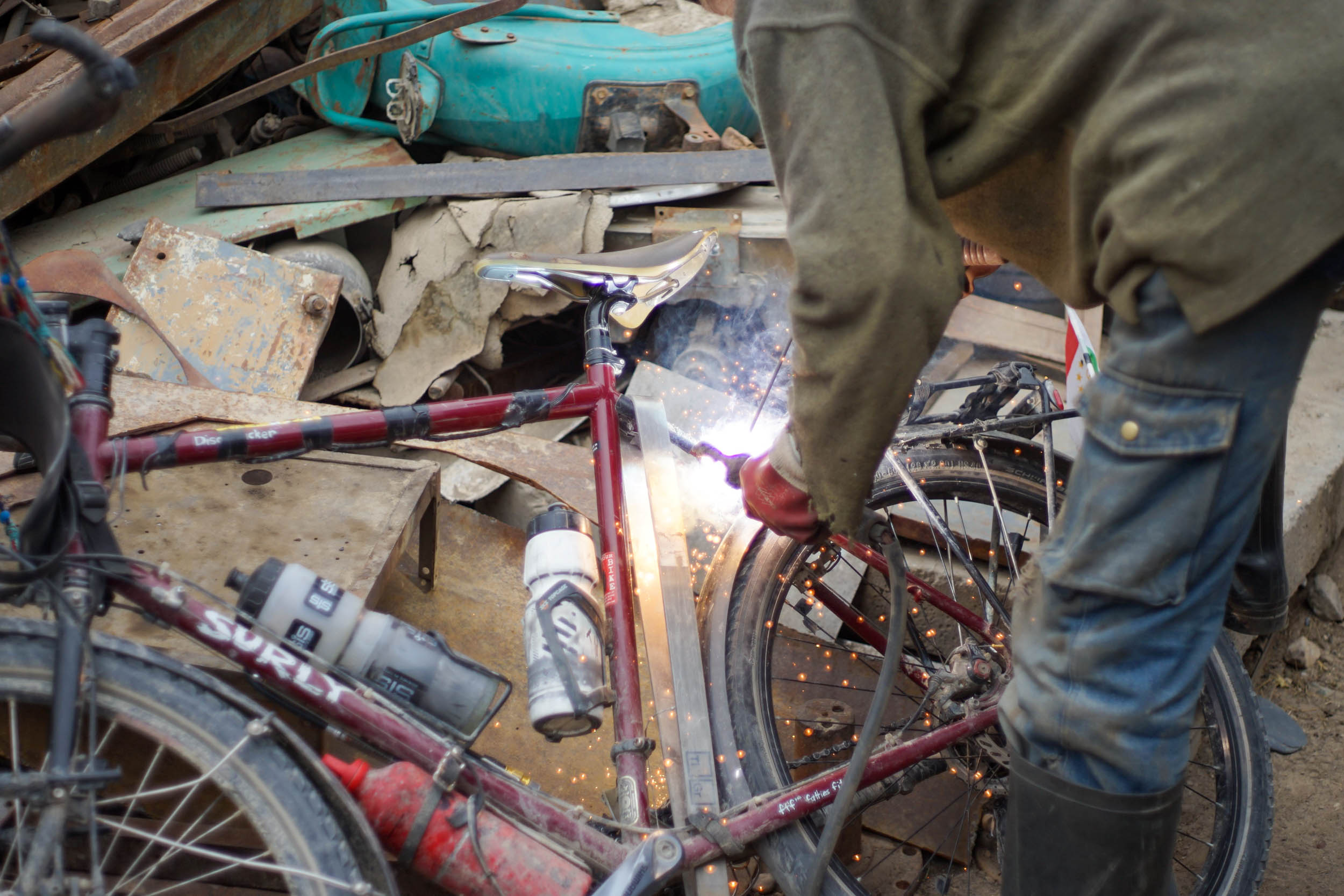
Nonetheless, he completed the repair, and it has remained sturdy ever since. Jordan’s Surly frame was made from 4130 chromoly, very similar to Reynolds 631 and 25CrMo4. It is instances like this that make these steels—and their reparability, even in the most rudimentary settings—the best choice for this kind of bike. Sure, aluminum and titanium are strong, but routes like the Pamir Highway have their way of trying to destroy everything. If Jordan’s frame was made from anything else, it might have ended up in a more difficult situation.
On Keeping it Simple
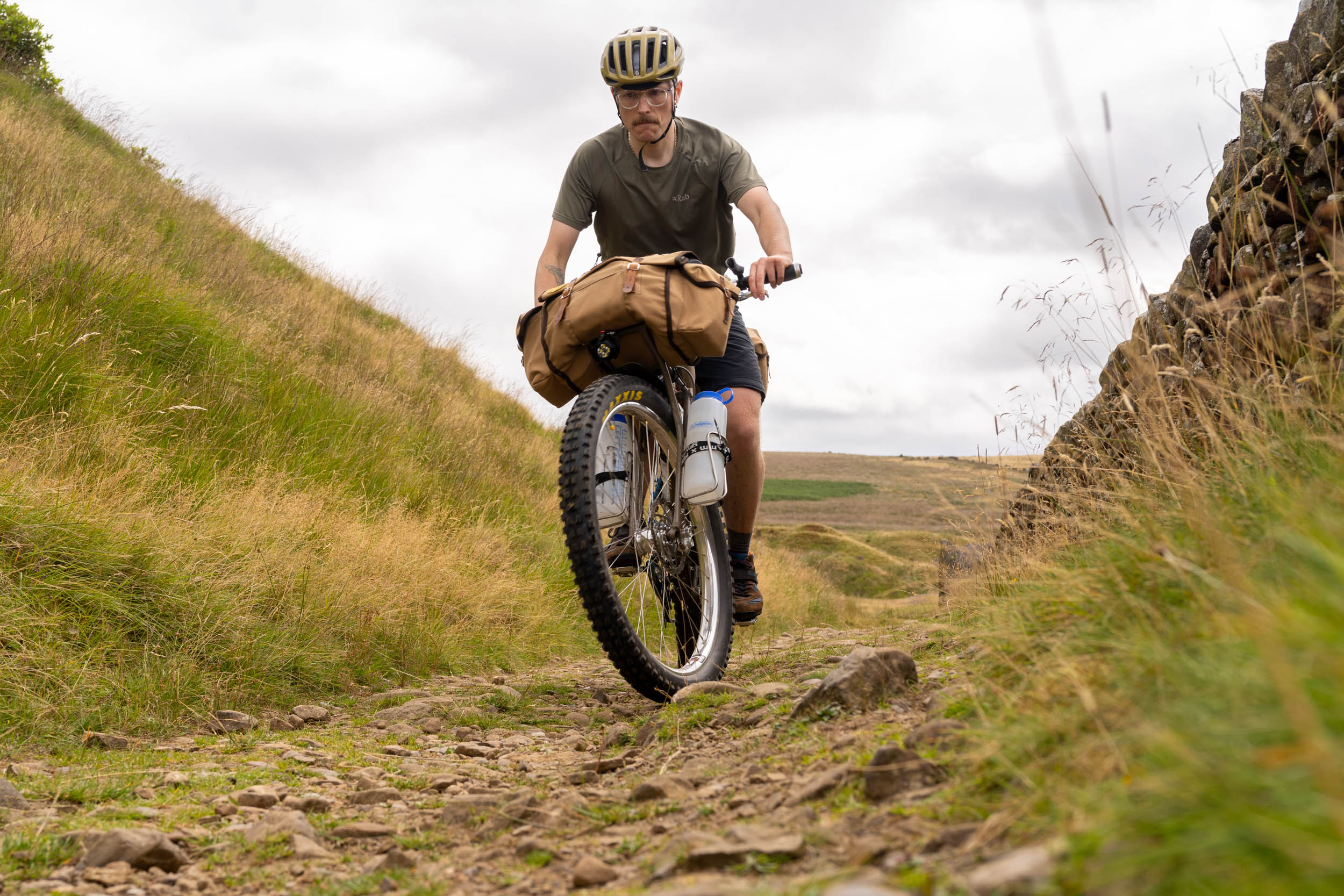
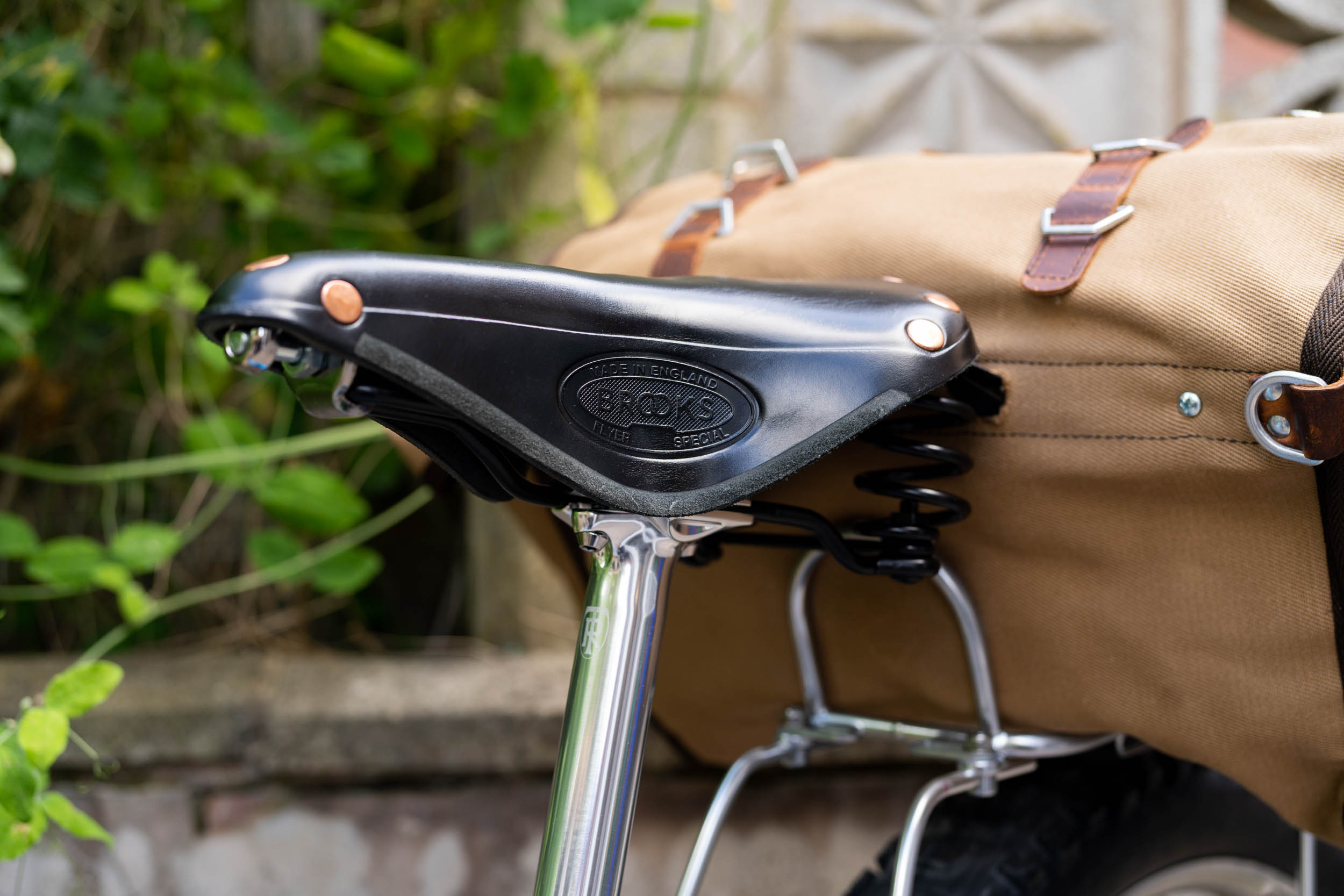
With the Kangal, I wanted to build something rugged, reliable, and capable. Clearance for 29er plus tires would mean a comfortable ride, with enough volume to negate the need for a suspension fork. I decided the sprung Brooks Flyer saddle and Vecnum Freequence suspension stem would add to the ride’s overall suspension, while still keeping things simple and largely maintenance-free. Suspension forks and rear shocks are nice, but simplicity on a bike like this pays dividends.
The frame features an extensive bottom bracket drop of 130mm. This makes for a very stable ride, and combined with the huge tires and short 150mm cranks, it offers plenty of ground clearance. I am an aficionado of super short cranks, as they’ve done wonders for my knee pain. I wanted the ride to be as fatigue-limiting as possible. This was shaped by my experiences riding over high passes such as Ak Baital (4,655 metres) and Khargush (4,344 metres) in the Pamirs. With the thin air, it was truly demanding work, only amplified by rough, loose road surfaces. To this day, those roads remain the most grueling challenge I’ve faced.
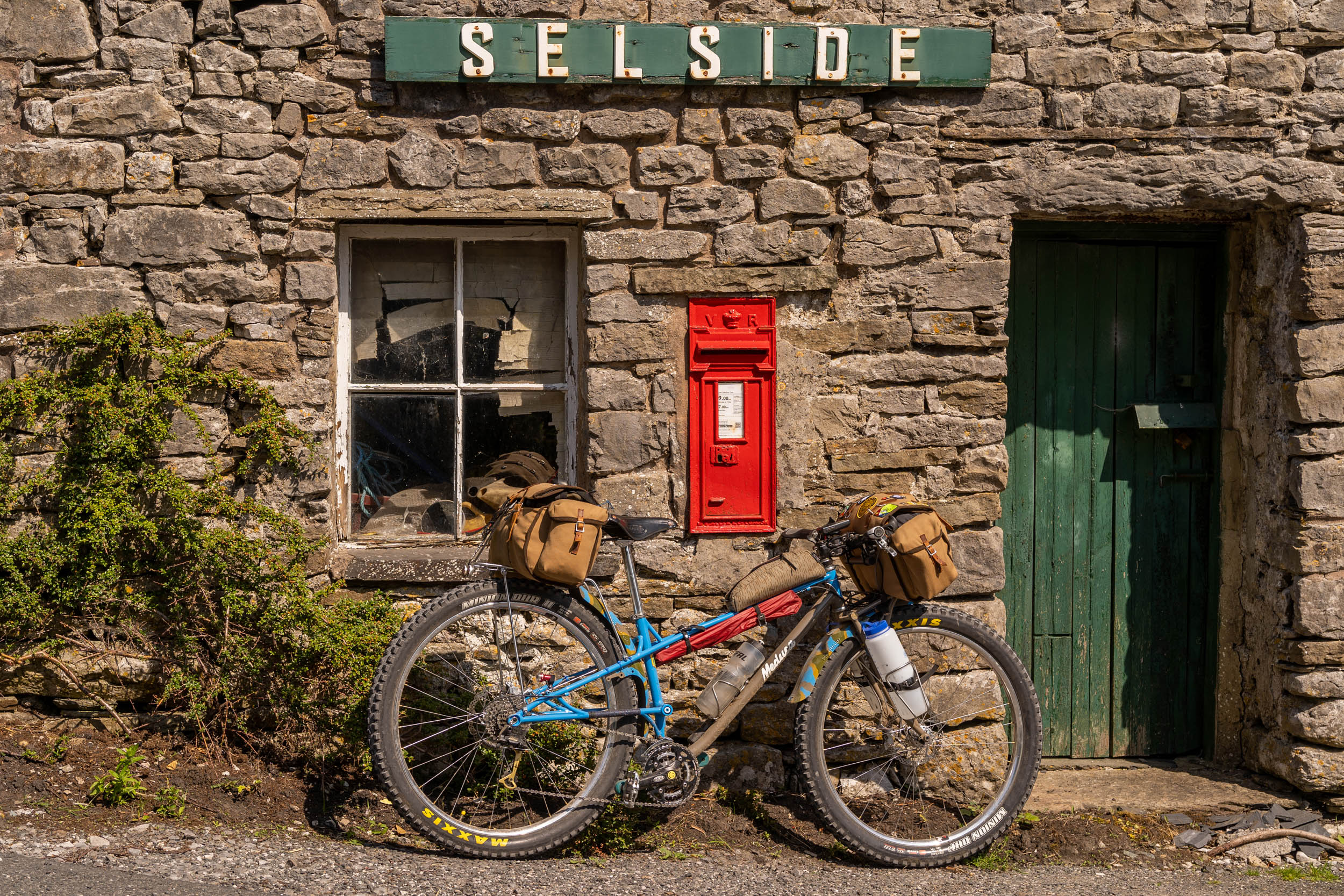
Build Kit
- Frame: Reynolds 631
- Fork: 24CrMo5
- Hubs: SON 28 100mm (front) / T Swiss 240 DEG Classic 3Decades 148mm Boost (rear)
- Rims: Velocity Dually 29 rim, 32h
- Front Tire: Maxxis Minion DHF, 29 x 3.0
- Rear Tire: Maxxis Minion DHR, 29 x 3.0
- Crankset: Thorn Mk2 104 BCD triple 42/32/20 (20T by Stambecco). 150mm long cranks.
- Derailleur: Shimano Deore XT FD-M739 triple (front) / Shimano Deore LX RD-M570 (rear)
- Shifter: Shimano Deore XT SL-M739, 3 x 8 speed
- Cassette: Shimano HG41 11-34
- Bottom Bracket: Shimano UN55
- Headset: FSA
- Handlebar: SEIDO Components Deviation
- Stem: Vecnum FreeQUENCE suspension stem
- Grips: Ergon GP1
- Saddle: Brooks Flyer Special
- Seatpost: Ritchey Logic Classic
- Seat Clamp: Surly Stainless Seat Clamp
- Brake Levers: Hope Tech Evo
- Brake Calipers: Hope Tech GR4
- Rotors: Hope Tech Fixed Rotors, 2.3mm thickness, 180mm dia
Gearing
Given that most modern off-road bikes come equipped with a 1x drivetrain, some people might be surprised to see the Kangal is equipped with a triple chainset. The chainrings are 42T, 32T, and 20T, and the cassette is 11-34T. If you run the numbers, you’ll find the range is vast. The 42T chainring, combined with the 11T cassette sprocket and the 29 x 3” tire, creates a suitably high gear. It is actually a higher gear than if you were to use a 26 x 2.1” tire with a 44T x 11T setup, which was the same highest ratio as was on my Surly LHT in 2018. For those riders from the early 2000s who like to run a 50T x 11T high gear on a 700 x 25mm tire, that same 29 x 3 inch with the 42T x 11T is only 4 gear inches less—excellent for chugging down a long straight Turkish highway descent trying to hit 50 miles per hour. It also comes in handy during dog chases!

But what about the granny ring? The lowest possible gear on my 2018 trip was a 22T x 34T, which, with the 26 x 2.1” tire, was very low. In fact, it is lower by one gear inch than if you were to run a 34T x 52T setup on a bike with a 29 x 2.2”. That super-low gear, combined with the traction of the 3.0” tires, makes spinning up chunky, steep stuff much more manageable.
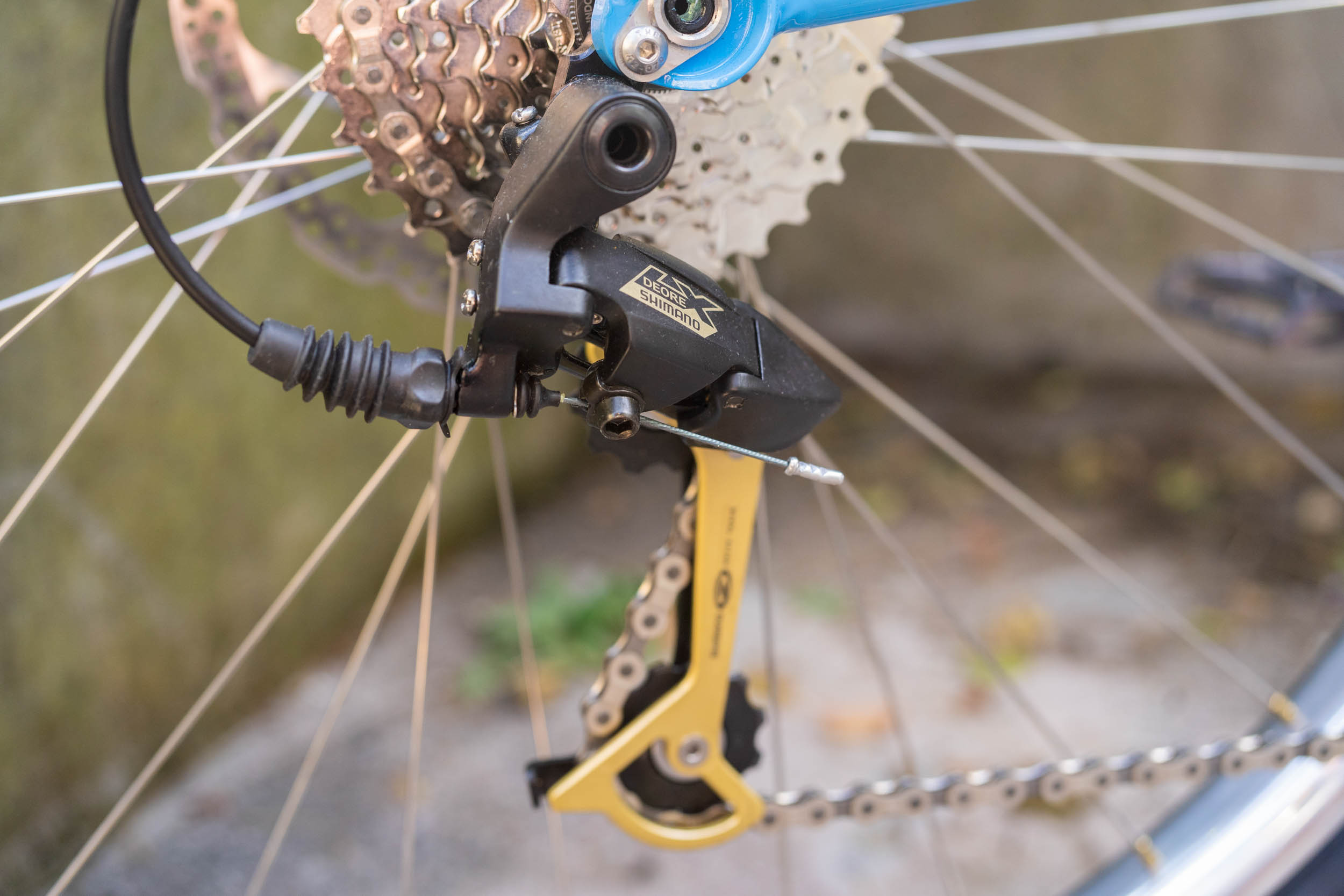
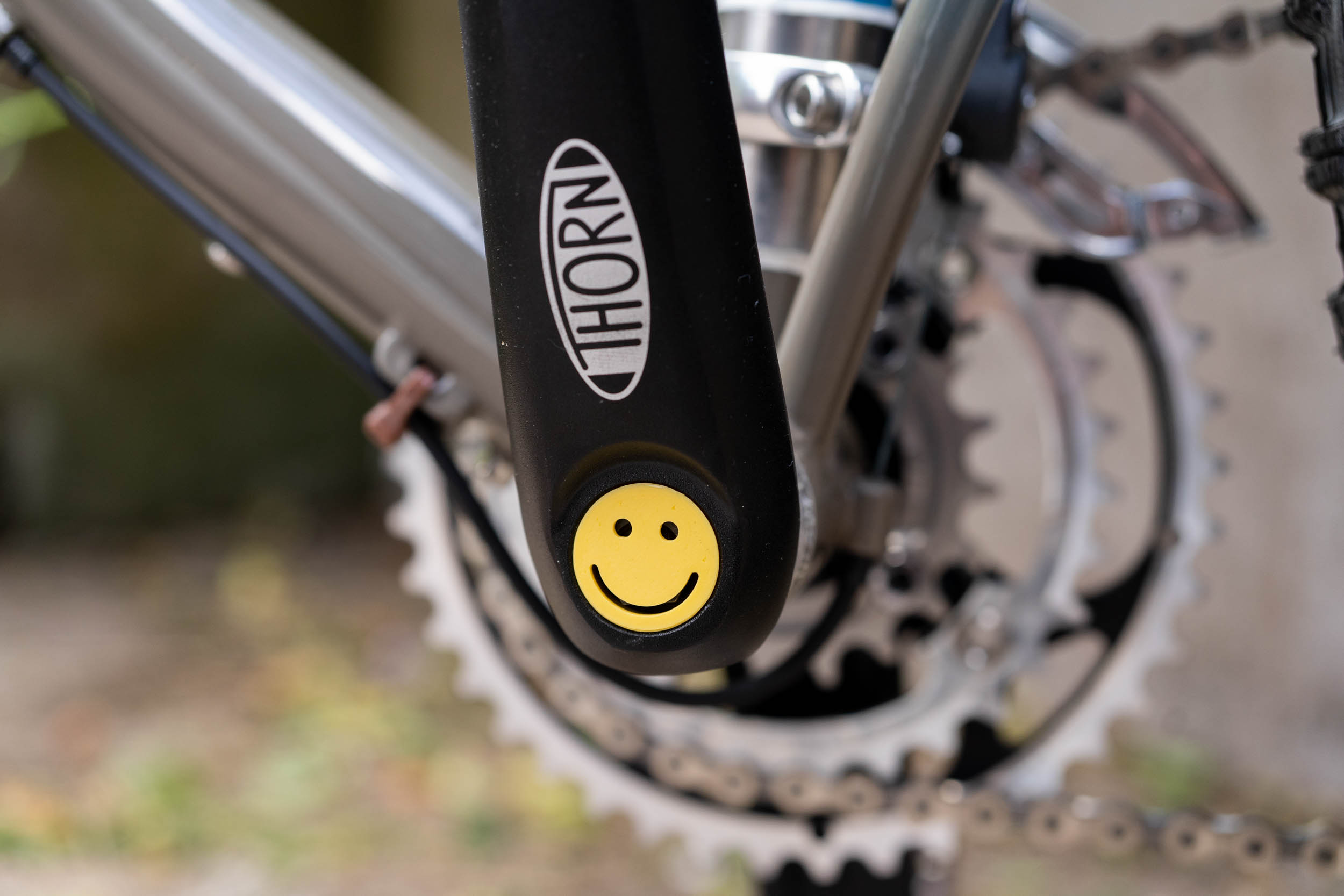
I opted for an 8-speed setup. It never failed me on my trip, and my years as a bike mechanic have shown me that 8-speed seems bombproof. Many times, I have used a chain checker on an 8-speed chain, only for it to show that the chain and drivetrain should be long dead. Lo and behold, the drivetrain still shifts flawlessly. It’s the zombie of the bike drivetrain world. You will also find that replacement chains and cassettes, should you need them, cost much less than their 11- and 12-speed counterparts, and are much more available in more remote parts of the world. Long trips like mine in 2018 require sticking to a shoestring budget, so choosing cheap, reliable consumable parts is essential.
Rim vs. Disc Brakes
One mistake I made when building my Surly Long Haul Trucker in 2018 was choosing the rim-brake version over the disc-brake frameset. I originally thought rim-brake blocks would be more readily available on the road. This theory was put to the test from day one, as Jordan chose to undertake the trip on a Surly Disc Trucker. Disc brake pads are very small and easily packed away, so it was no trouble for him to carry along plenty of spare sets. As far as I remember, he didn’t need to buy any replacements during the trip, and he had to replace his brake pads less often than I did my rim brake pads. His braking control was also noticeably better than mine, and on gnarly hairpin descents, I could see plainly that he was able to brake much later into the corners.
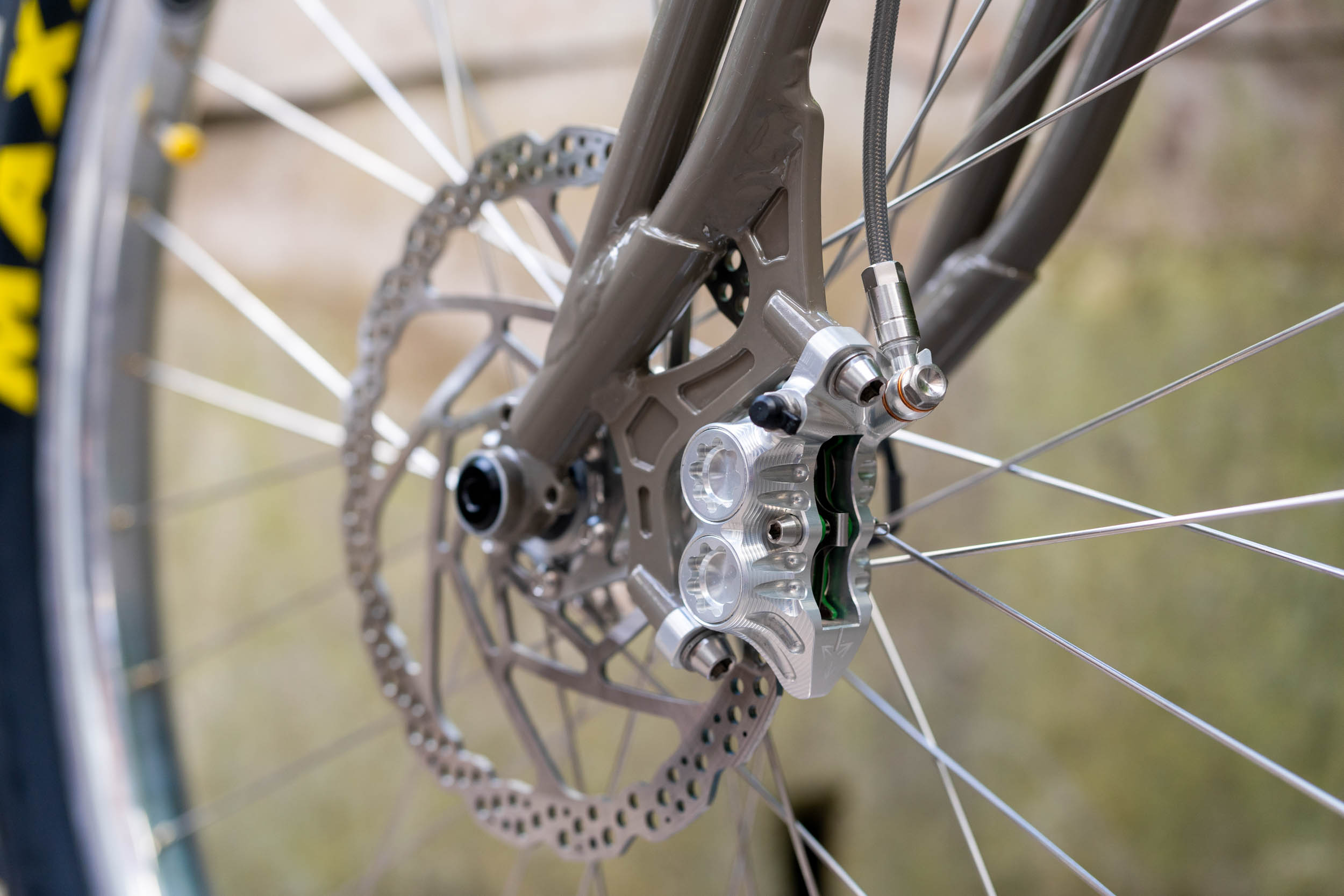
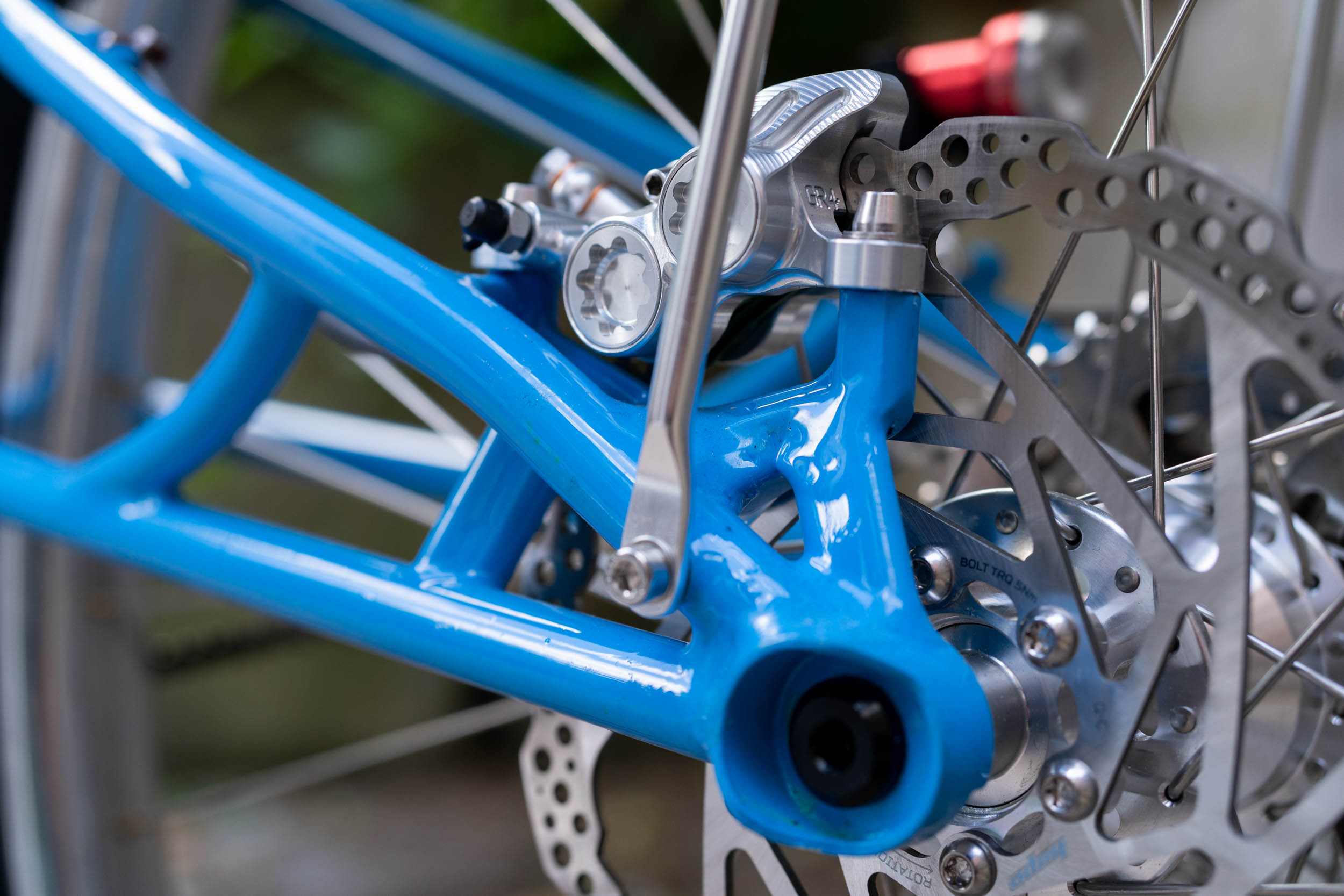
So, I chose to equip the Kangal with disc brakes, though unlike those on Jordan’s bike, the Kangal has Hope EVO GR4s. Their stopping power is impressive. The extra power really shows with the added weight of bikepacking and hauling the gear required for a four-season trip. The Hope brakes run on DOT 5.1, which is widely available from motor garages worldwide, and their open-bath reservoir system means they can be bled without a bleed kit if needed. This makes them easy to service in the field. I find hydraulic brakes far better than cable disc brakes, so if you are confident you can fix them if something goes wrong, they’re worth it.
Lighting the Way
Like most of the frames I build, I specified the Kangal to accommodate internal dynamo cable routing. I look back on the Surly from 2018, which included a dynamo light system—the Velogical rim dynamo, and it worked well for the most part. The Velogical dynamo is a fantastic piece of tech. It’s super lightweight and very powerful. I would consider using one again on a build where weight savings are important, or on a bike for riding mostly on paved surfaces. However, for obvious reasons, it didn’t work well when the wheels got clogged with mud.
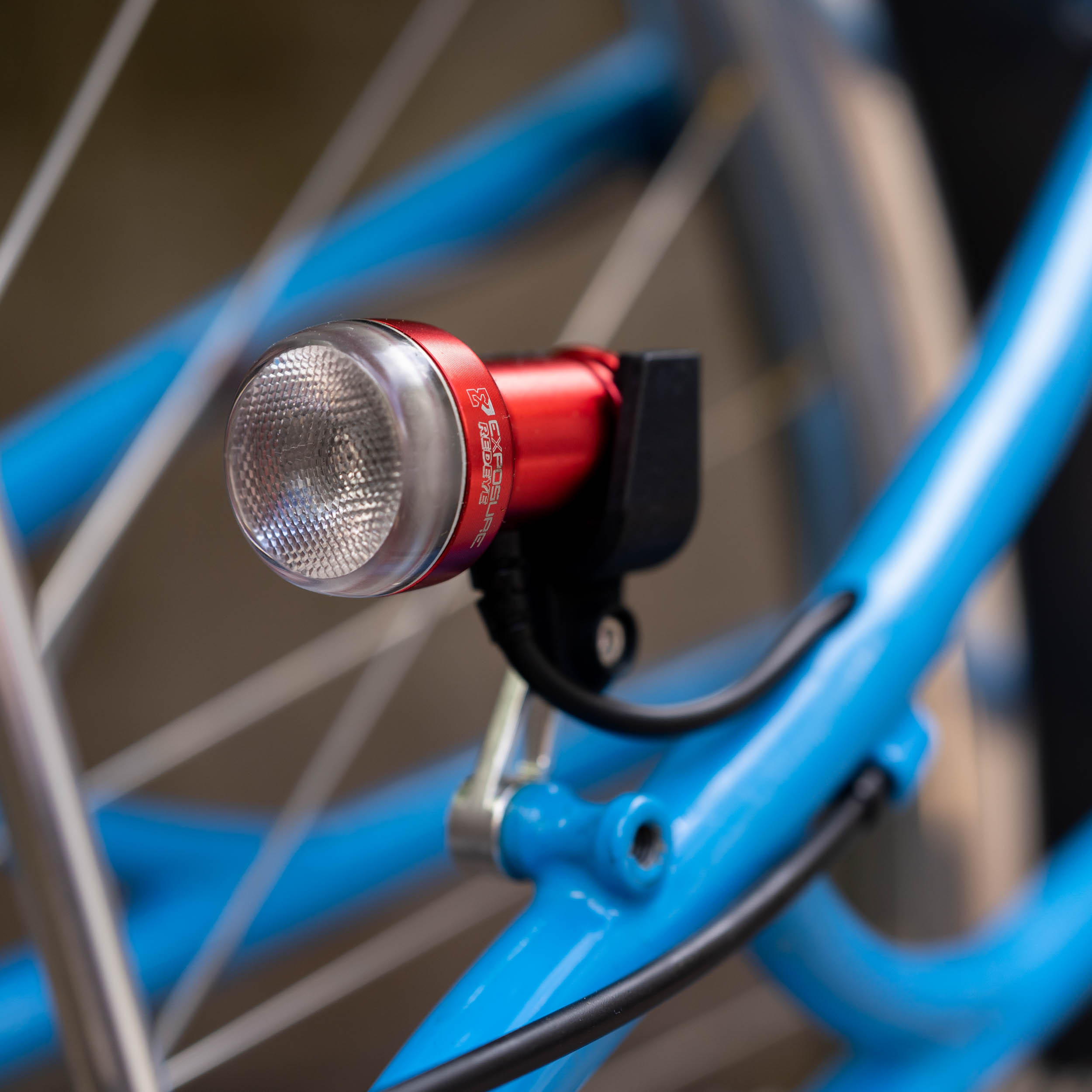

The Busch and Muller lighting setup I had fitted to the Surly didn’t fare too well either, and eventually it decided to give up. It seems it didn’t enjoy being battered by freezing rain, day after day, as winter crept up. With lessons learned, I wanted to keep everything contained and well sealed. The Kangal is fitted with a SON28 dynamo hub, and reliable lighting comes from an Exposure Revo front light and Exposure Red Eye rear light. These lights are made in the UK and have served me well on numerous other bikes. The rear Red Eye light is mounted to the frame using a Drust Cycles Rear Light Mount combined with a custom-designed Raceware Direct 3D-printed mount.
Bags and Packing Strategies
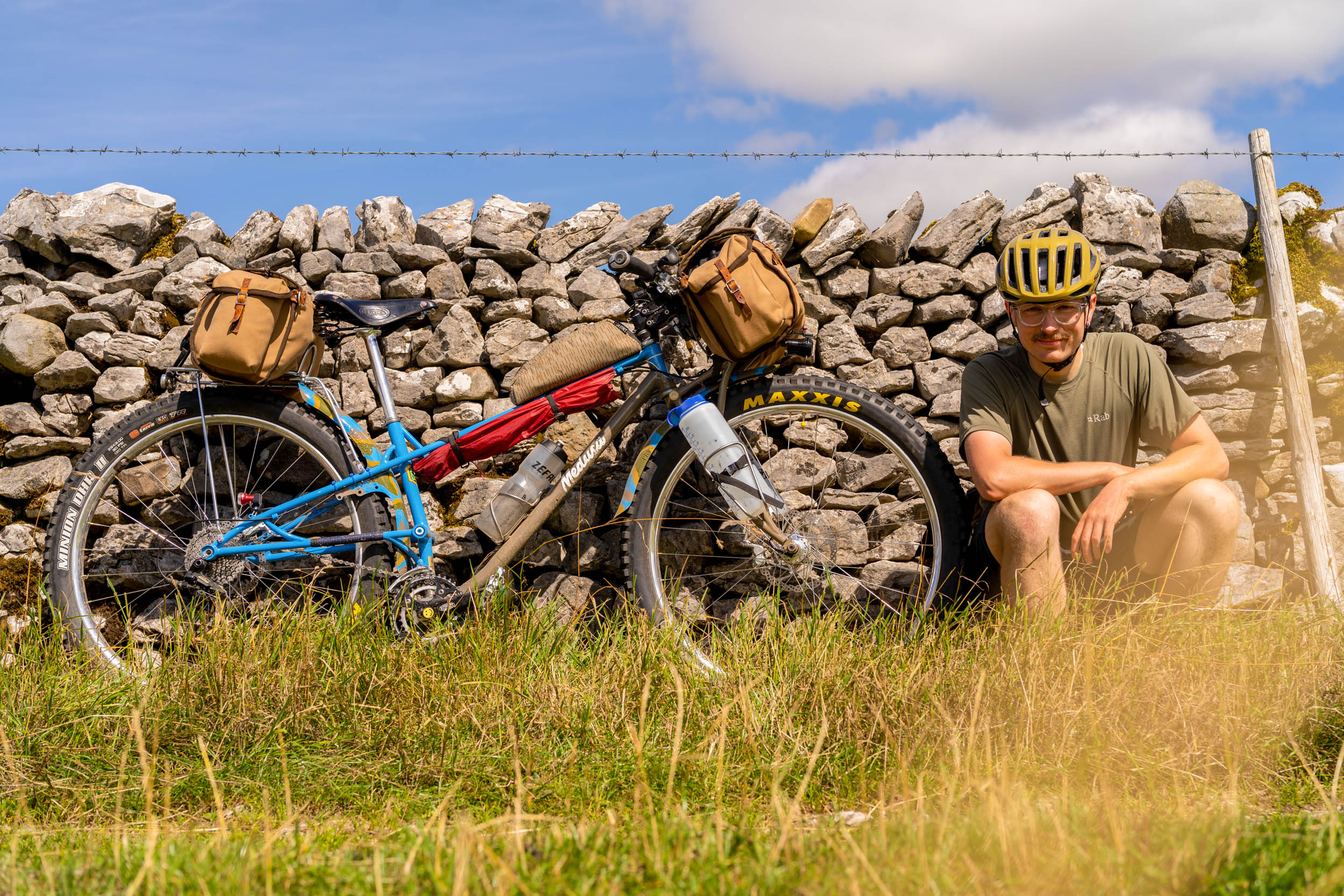
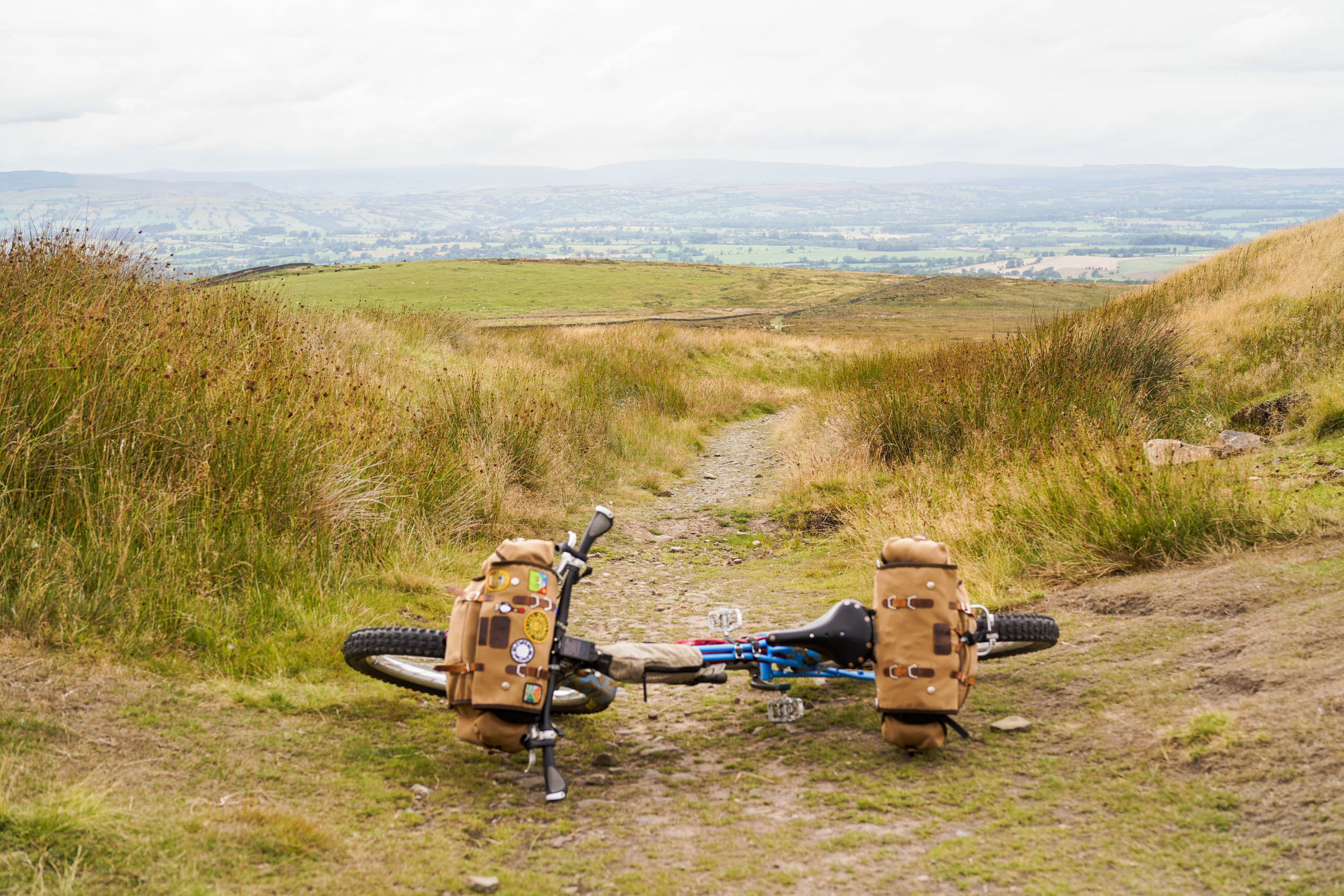
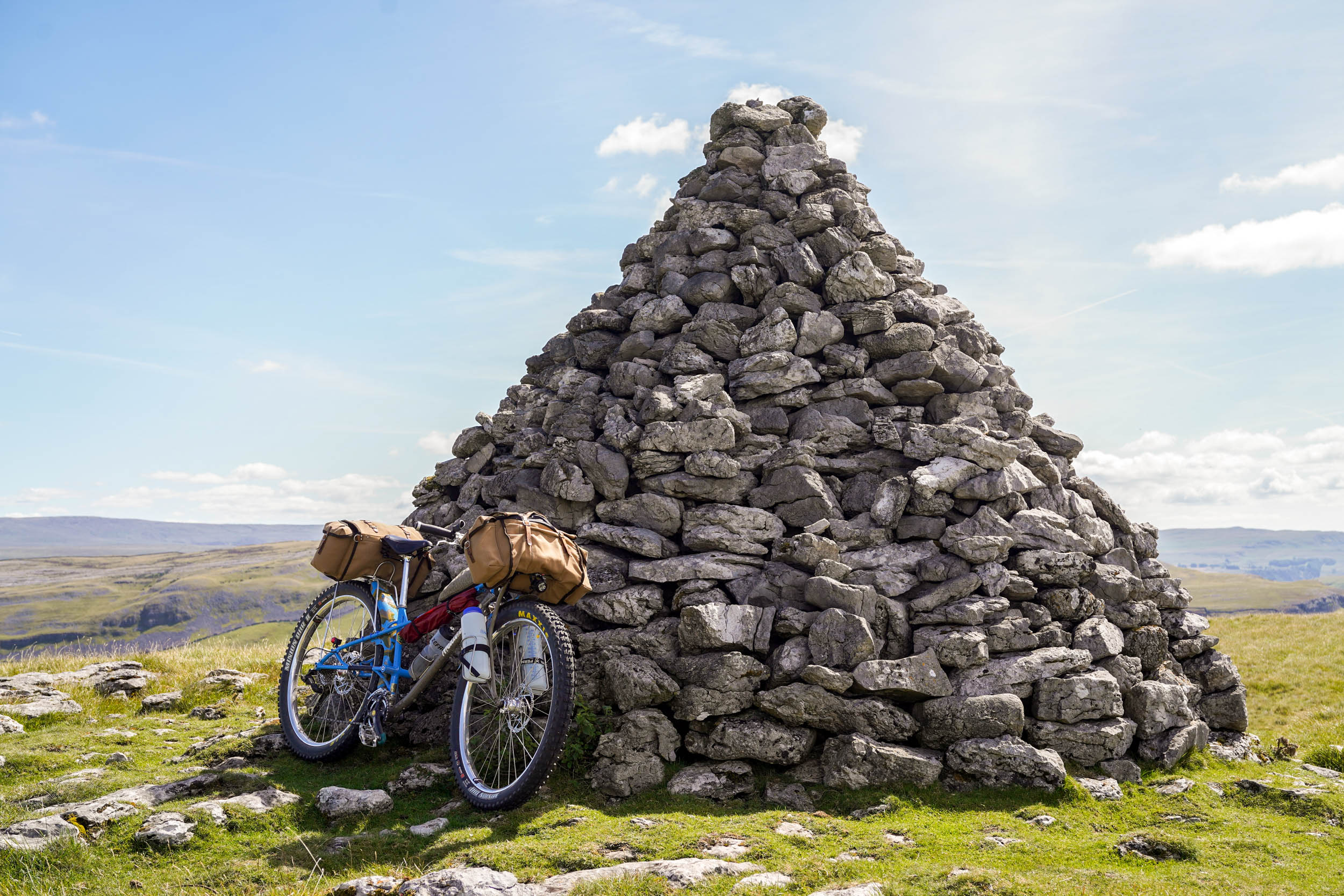
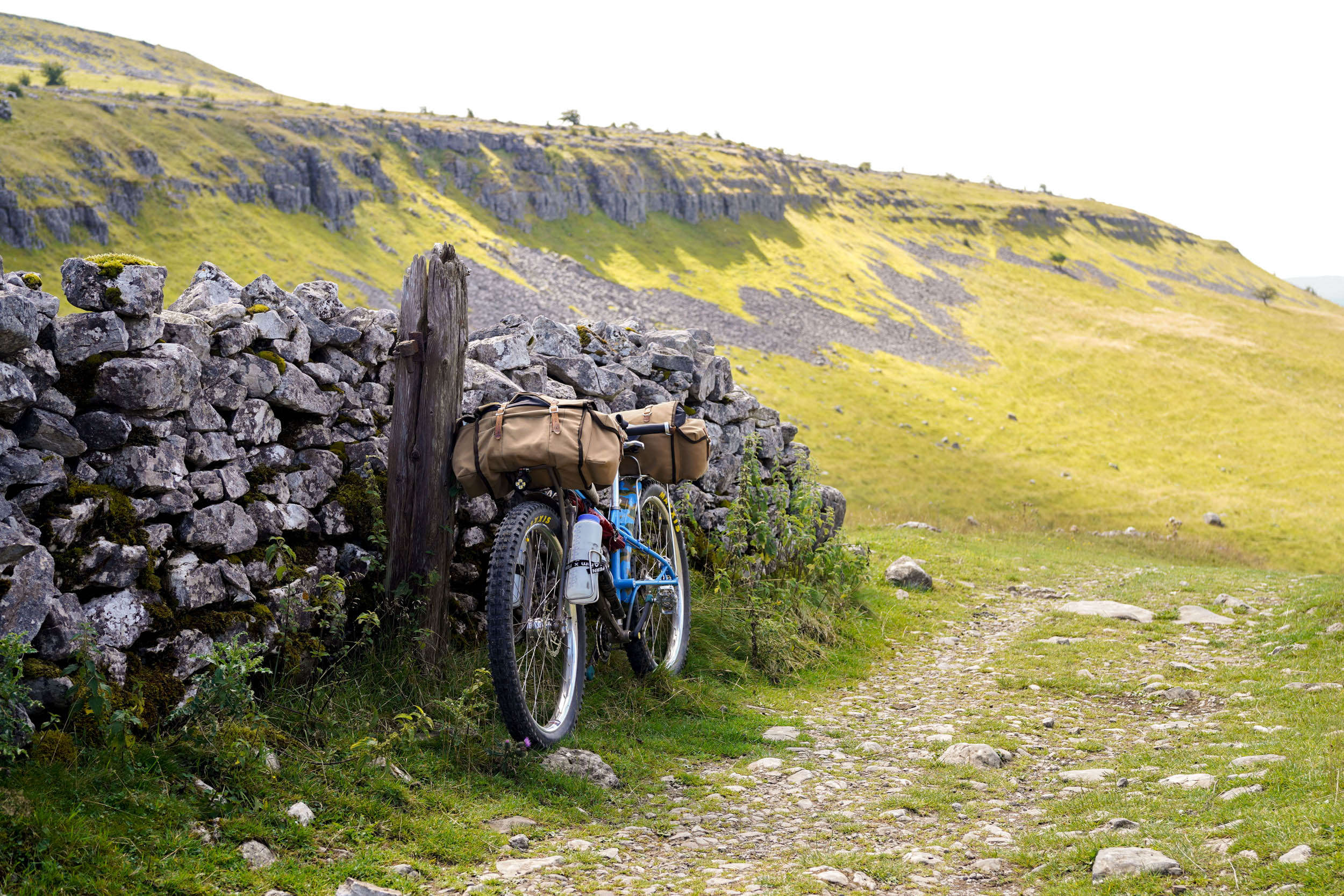
The bike is pictured here sporting two matching Carradice Camper Longflap bags. Unfortunately, the bag is not yet commercially available, as the bags you see here were made especially for this build. I’m a big fan of the limited edition Safari cotton duck fabric, and in true Carradice style, it feels like it should last a lifetime. Carradice are a manufacturer who are local to where I grew up, so they have a special place in my heart. Their Super C pannier bags are what I took on the 2018 trip, and they performed unbelievably well. They’re still going strong today. If I were to take the Kangal on a long four-season trip, I would opt to fit some pannier bags.
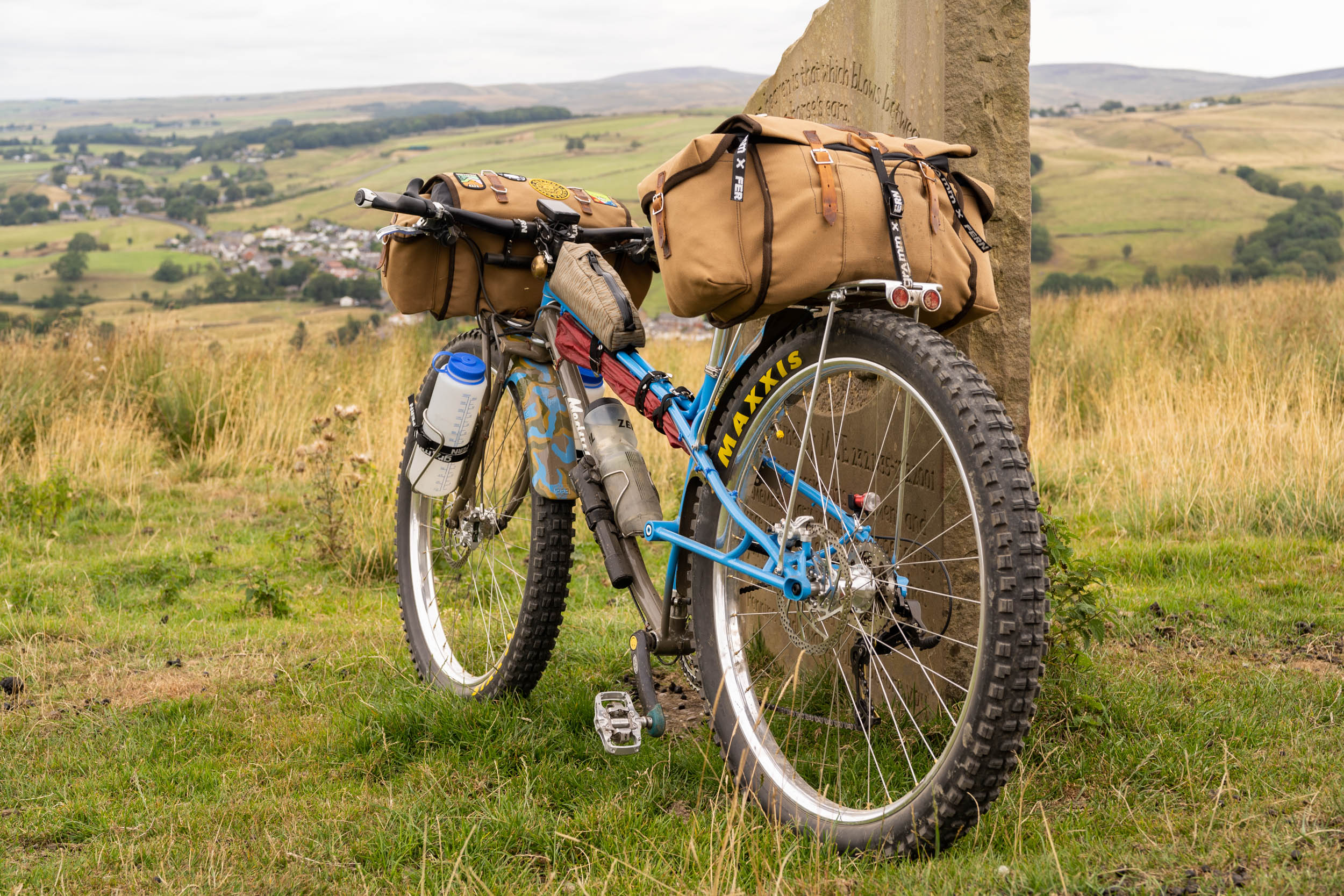
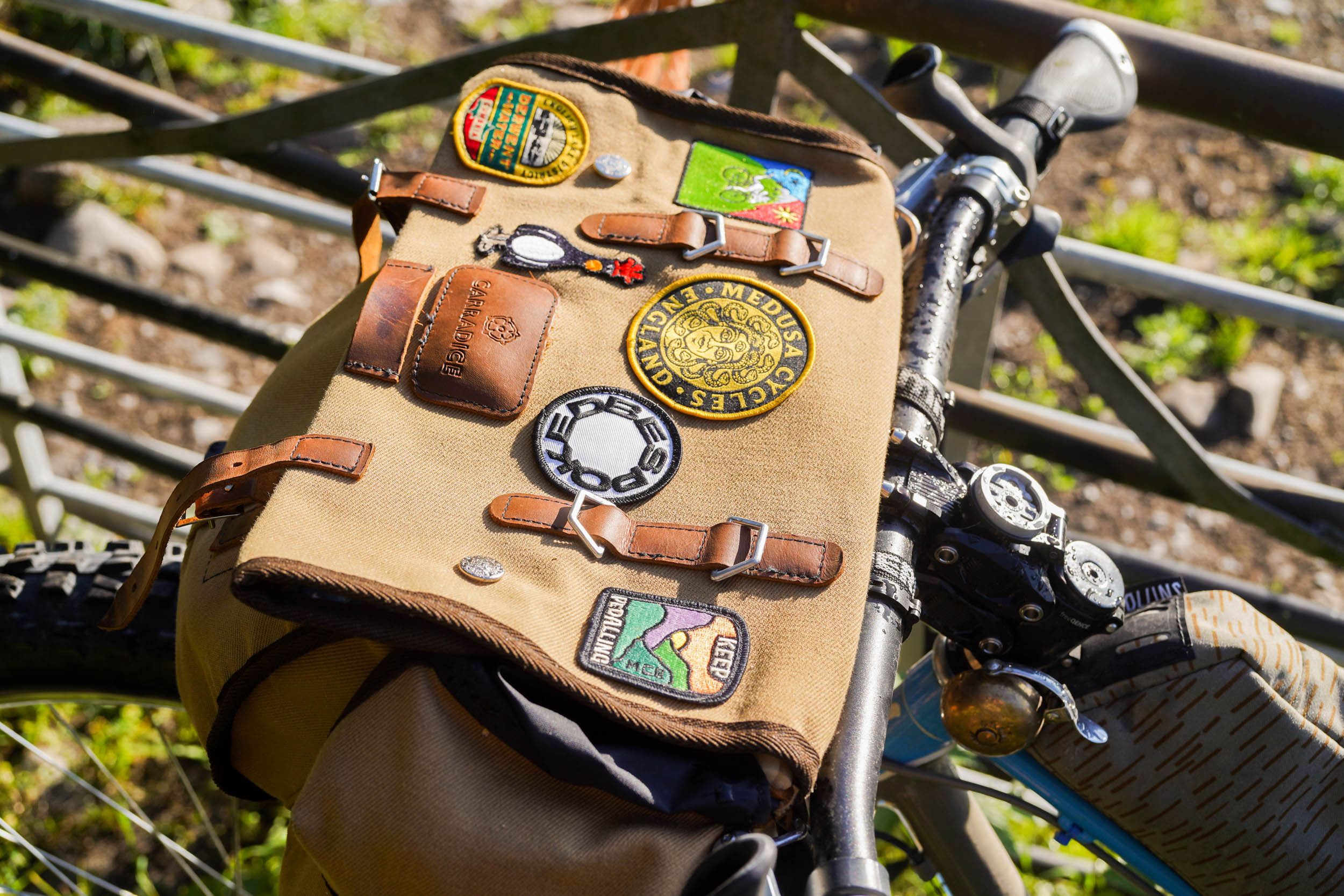
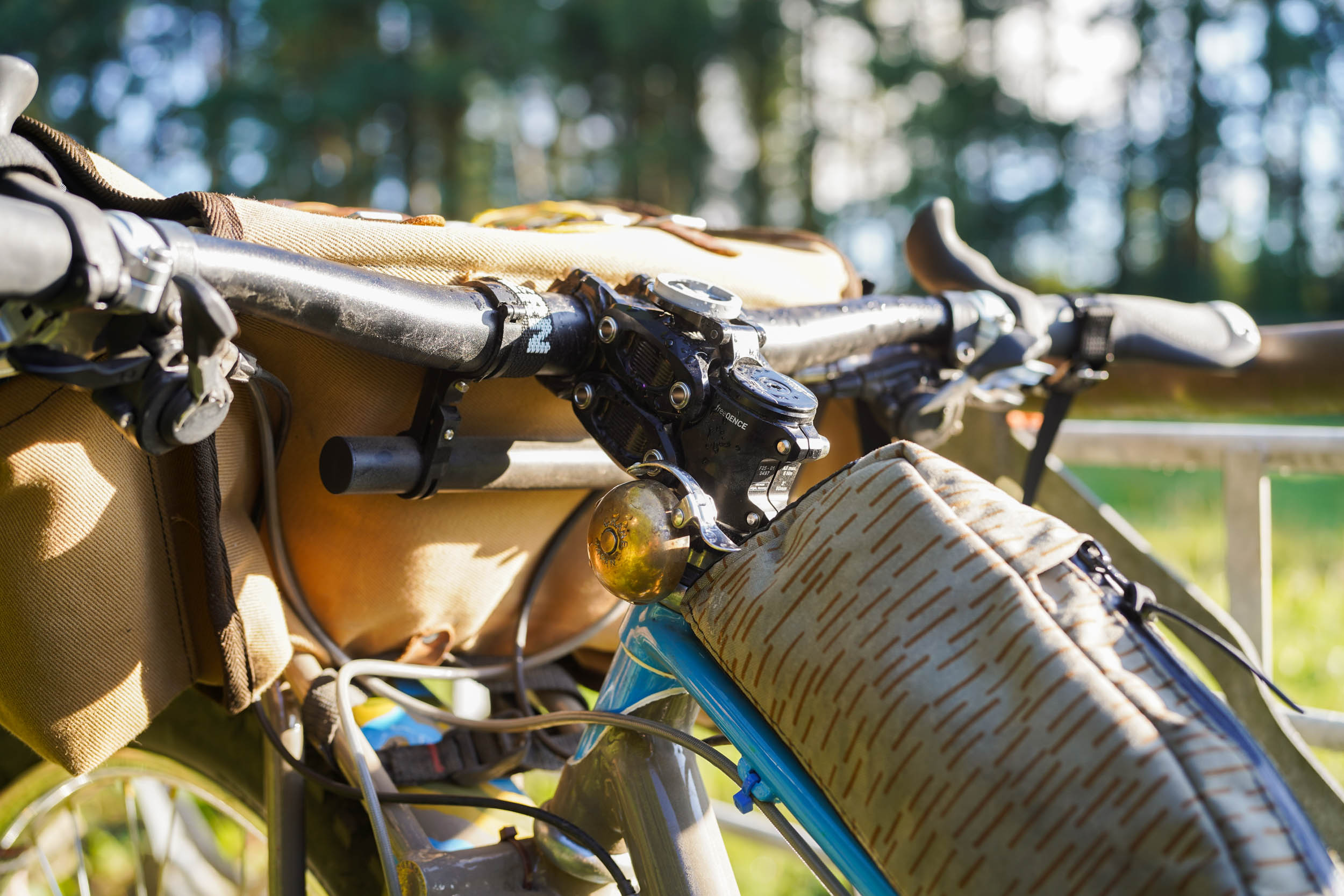
The fork is complete with mounts to accommodate a low-rider rack. But these Camper Longflap bags are huge, with a combined capacity of 48 liters, and I would most likely only need to fit some smaller pannier bags to reach the required capacity. I would be cautious about overpacking, too. On the original bike trip, some things on my kit list turned out to be absolutely ludicrous. A wooden chopping board and a full-size moka pot were just two of the outlandish things on the pack list.


I’m also a bit of a sucker for a toptube bag, so I fitted a big one to the Kangal. When I approached Patch to ask if he could make me a bag, I was looking for something large enough to fit a chunky power bank, plus a few extra bits I would need to hand. I’m not much of a fan of stem bags, so the roomy top tube bag here is perfect for my needs. I do also love a bit of obscure camouflage; the East German Strichtarn camo pattern is right up my alley.
Safety Features
Despite its appearance, the Kangal is not just for off-road riding. On a long, overland bike trip, much of the riding time is spent pedalling along paved roads, and often, those roads are busy. Road safety should be taken very seriously. Traffic accidents pose the biggest threat to riders on this kind of trip, and I wanted to highlight that in this build. The rear Exposure Red Eye light shines brightly when the dynamo is turning, and the Exposure setup’s Standlight feature keeps you visible when the bike isn’t moving.
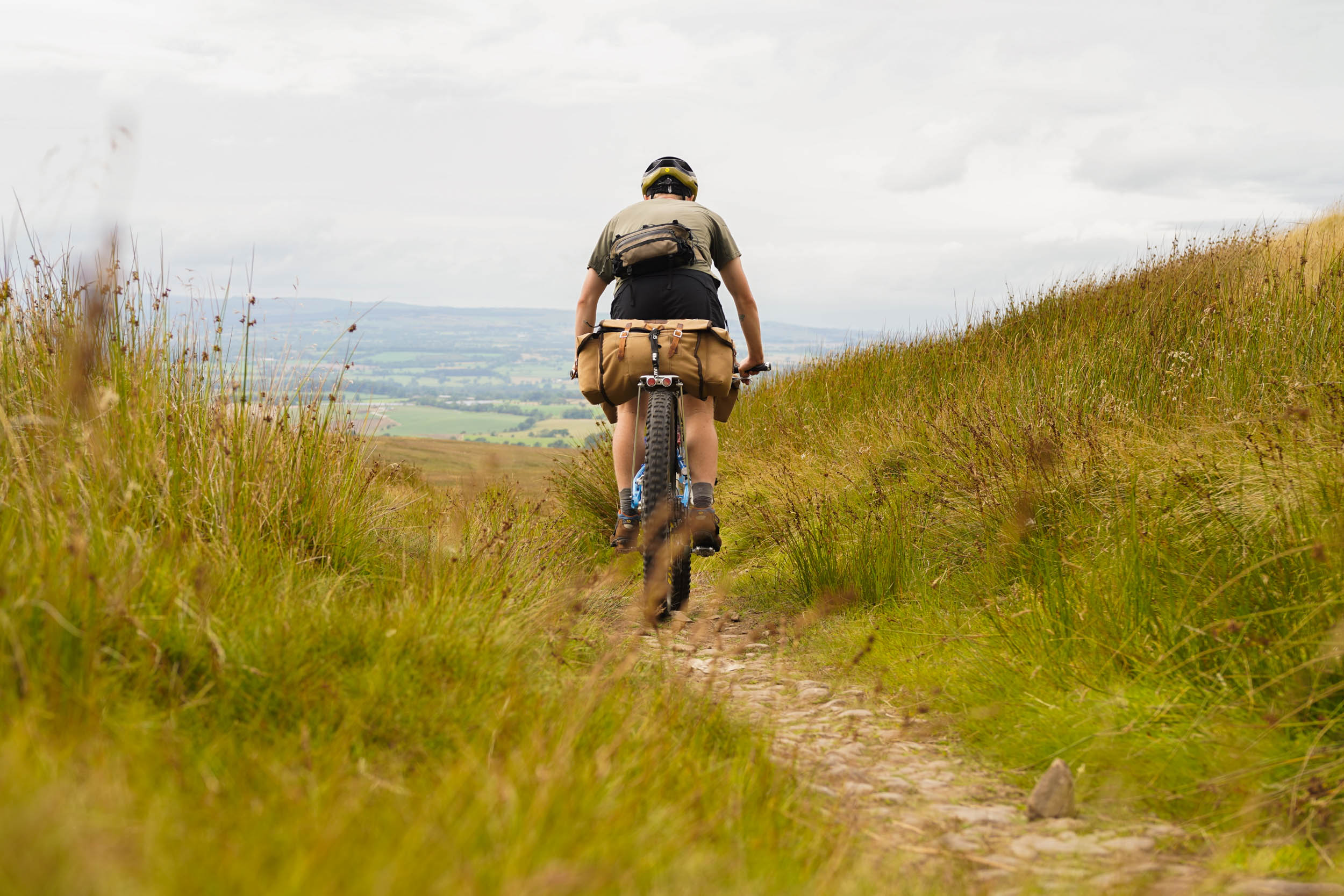

I also wanted to reduce the margin for error and add some reflectors. But reflectors aren’t cool, right? That’s what I thought, until I came across the KiLEY LM-019 Coin Reflector. These are excellent quality, with their housing machined from aluminum. They fit very neatly onto the back of the Nitto R14 rear bag support and match the bike’s aesthetic, too. They serve as a bit of peace of mind when there are miles to be plodded out on busy highways.
Pamir-Inspired Paint
The colours you’ll see on the Kangal are intended to mimic the backdrop of the Pamir Mountains. The contrast in shades up there in the Pamirs sticks in my mind, and somehow it always felt to me that the sky was a much more profound blue than the sky above us in the UK. I wanted to represent the Pamir sky with the light blue on the frame; the dark khaki grey represents the mountains, and the white lettering and lining are the patches of snow.
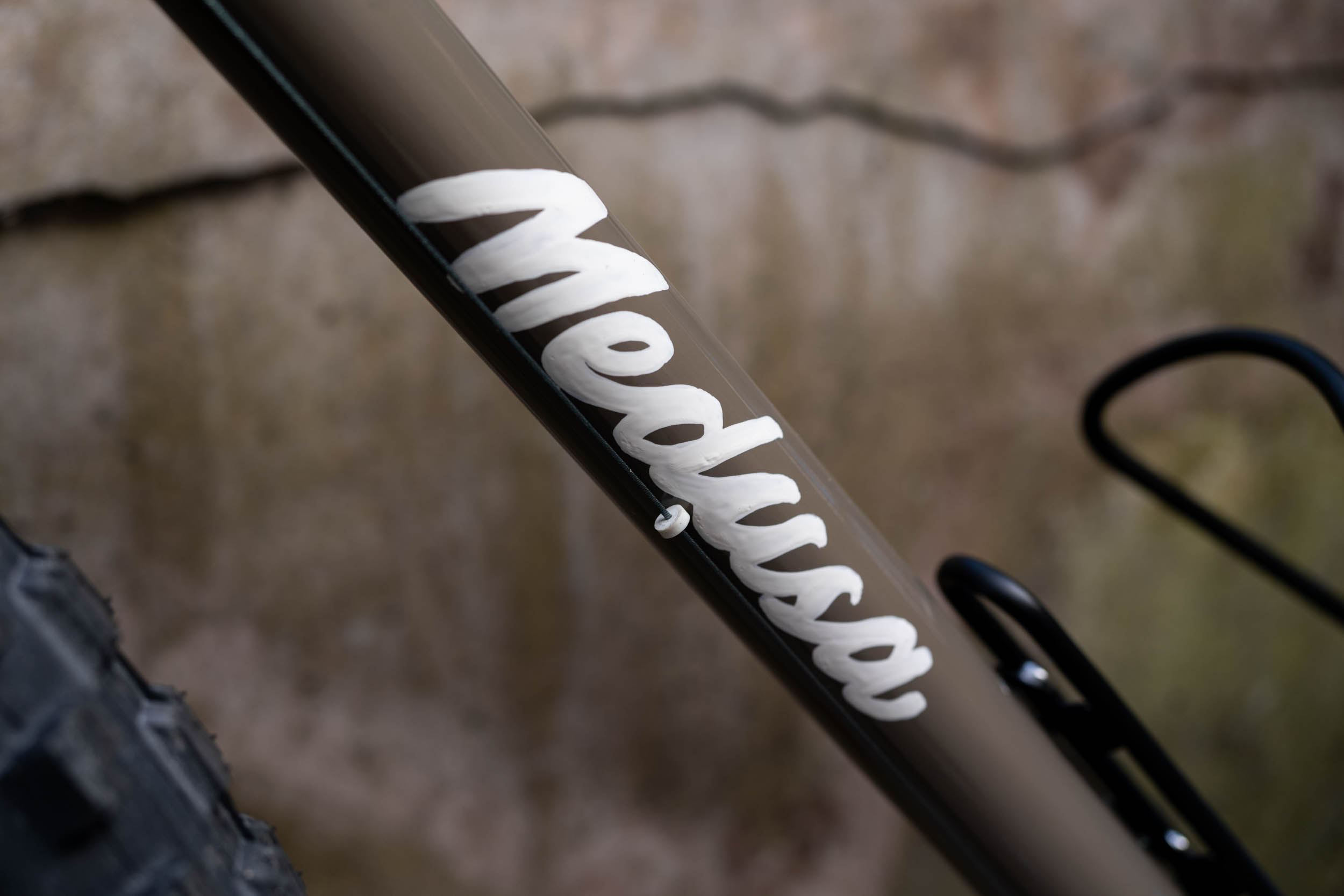
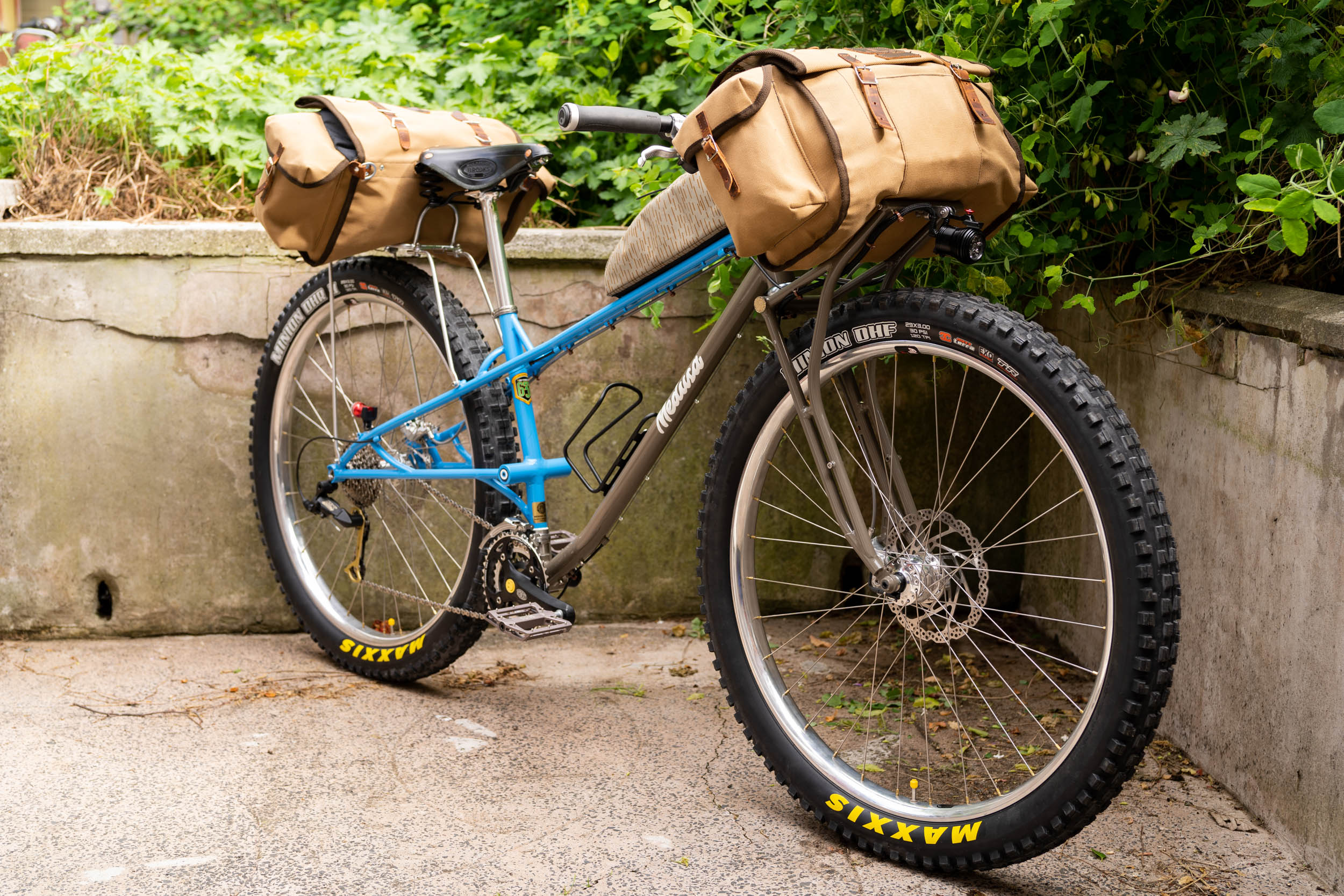
By chance, the blue cable rub donuts I had in my box were almost an exact match for the blue paint on the frame. I also had some brown cable ties and white cable run donuts that came in handy. As with most of my frames, I painted the downtube lettering by hand with signwriting enamel, and on this frame I painted a Turkish eye at the ends of the chainstay yoke.
You can find more of Pete’s work at Medusa-Cycles.com and follow him on Instagram.
Send Us Your Bikepacking Rig
Use the form below to submit your bikepacking rig. We’ll choose one per week to feature in a Reader’s Rig Dispatch and on Instagram. To enter, email us your best photo of the bike (preferably at a 90° angle), your Instagram username (optional), and a short description of you and your rig. If your bike is selected, we’ll need a total of five photos and a little bit more info.
Readers Rig
Further Reading
Make sure to dig into these related articles for more info...


Please keep the conversation civil, constructive, and inclusive, or your comment will be removed.