

 Singletrack/MTB
 Gravel/All-road
 Dirt-road Touring
 Fat-bike


State 4130 Trail Review: Inflation Buster


With a refreshing $1,500 price tag that doesn’t sacrifice modern specs or a well-executed design, the State 4130 Trail offers a compelling package on a budget. Skyler Des Roches was eager to see how it stacks up compared to more expensive bikes. After several months of testing, find his State 4130 Trail review here…
PUBLISHED Feb 17, 2026
Photos by Miles Arbour
Note to readers: This review is of the first-generation State 4130 Trail, which was released last April. As of today, State has released a new version with an updated build kit and a new raw steel finish option, but all the key specs and angles remain the same.
When State Bicycle Co. announced its 4130 Trail last spring, I was eager to find out what a $1,500 hardtail could do these days. Bikes have gotten absurdly expensive over the last five years, and while I’m lucky to have been able to maintain and keep riding my top-quality bikes through the price spikes, it has no doubt become a major barrier to entry for many folks. At $1,500 ($1,700 with dropper), the State 4130 Trail occupies an important price point. It’s a notable step up from the cheapest level, with a beautifully fabricated chromoly frame and quality components, but by no means in the league of the high-performance builds that occupy most of the race rigs and other review bikes seen on this site. This $1,200 to $2,000 USD price range seems to be where you can start to expect the durability, reliability, and repairability you’d want for loading up with camping gear and heading deep into the woods for a night or two. It’s not the true entry level, but it’s one worth careful consideration from a bikepacking perspective.

Reviewing a bike designed and specced to a budget is, in many ways, much more difficult than reviewing the latest and greatest, no-expense-spared superbike. When the sky’s the limit, every detail is worthy of critique. But the people at State have had to make trade-offs in component and feature selection to achieve their target price in this build. As someone familiar with the joys of boutique steel bikes and expensive components, it would be all too easy to nitpick every detail and report on every nuance of bike performance. The conclusion of that review would be predictable: “Don’t buy this $1,500 bike. Buy a $4,500 one instead.” How helpful.
My hypothesis is that many people interested in the 4130 Trail won’t have tried many hardtail mountain bikes. So, I think it’ll be more helpful if I write a grade-school report card for the 4130 Trail rather than a graduate thesis.
State 4130 Trail Overview
It’s right there in the model name: the State 4130 Trail is a trail bike, through and through. And, big shock, the frame is made of 4130 grade chromoly steel.
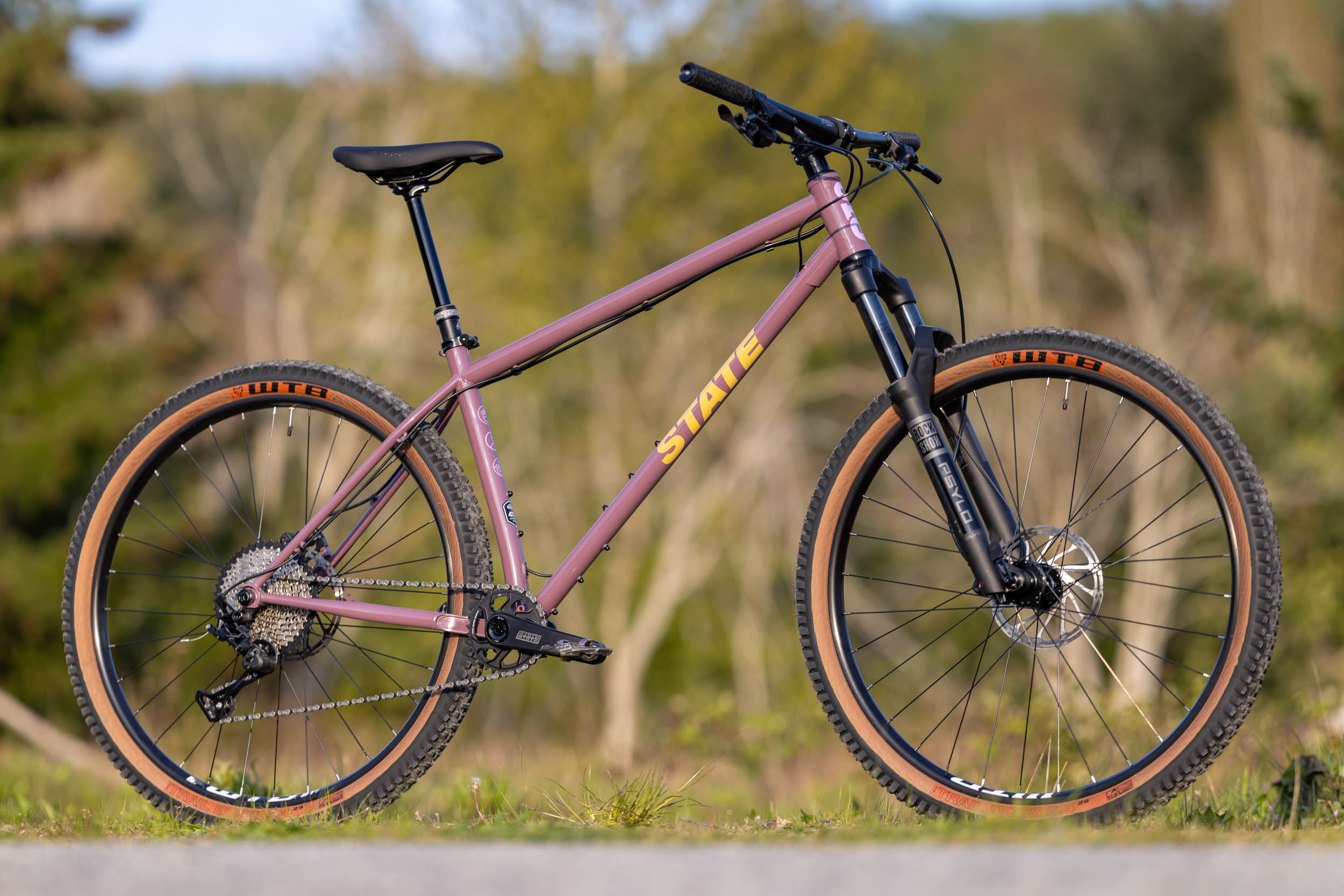
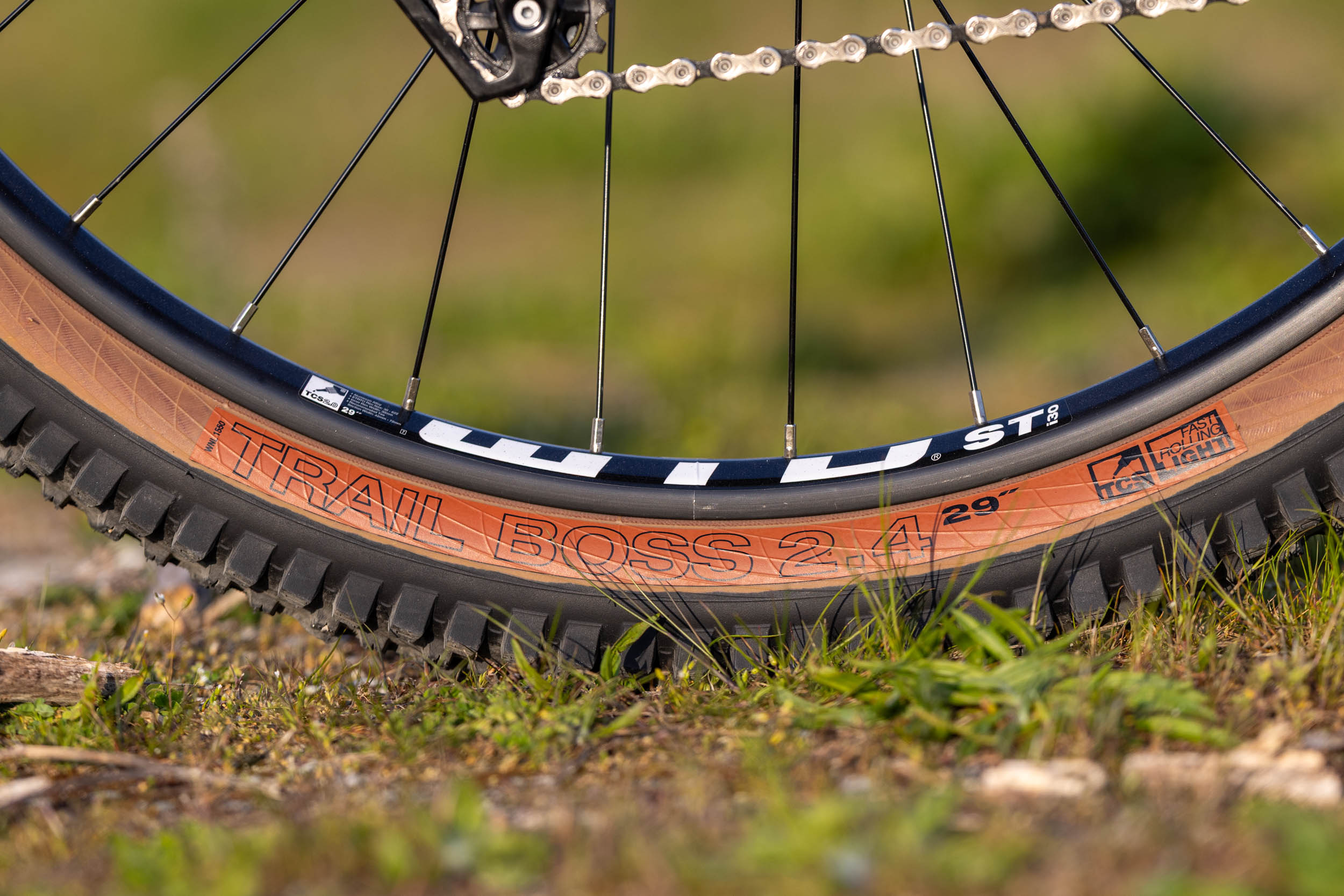
What’s a trail bike? In short, it’s a mountain bike designed without a particular race specialization in mind. A sort of all-around (off-road) bike that can deal with any style of trail. The 4130 Trail’s geometry fits that description well, to my taste, with a neutral 65° head angle and 74.4° seat tube angle. The rear triangle can clear 29 x 2.6” or 27.5 x 3” rubber, and it ships with WTB Trail Boss 29 x 2.4” tires.
The frame offers all the details you’d expect in a modern mountain bike: 148mm Boost thru-axles, post-mount brakes, internal dropper routing, a threaded bottom bracket, and an oversized head tube for modern suspension forks. There’s a bottle mount on the inside of the seat tube, and triple mounts on the top and underside of the downtube. Other than the internal dropper routing, the cables are externally routed neatly along the underside of the top tube.



The only frame detail that I feel is missing are rack mounts. I think this bike might be the first real mountain bike for many who buy it, and some of them will catch the bug and upgrade in a few years. A pattern I’ve witnessed time and again—especially with steel hardtails—is that bikes can evolve with their owners. For example, my 2012 Surly Krampus started as my primary mountain bike, and as I upgraded with the revolutionary geometry changes of the last 10 years, it evolved into a slick-tired, full-fendered commuter. It has even spent a period with an electric conversion, whisking me across to a neighbouring city for a job every day. I still ride that bike frequently, now dressed as a singlespeed ATB, to putter around town on aimless excursions. I can imagine it further evolving into a world tourer, should the need or opportunity arise.
Though rack mounts aren’t strictly necessary to enable that sort of evolution, I always appreciate them as a sign that the bike’s designer has a somewhat utopic vision for a bicycle’s life cycle, and I say this as a guy who makes racks that don’t require rack mounts.
Moving on.


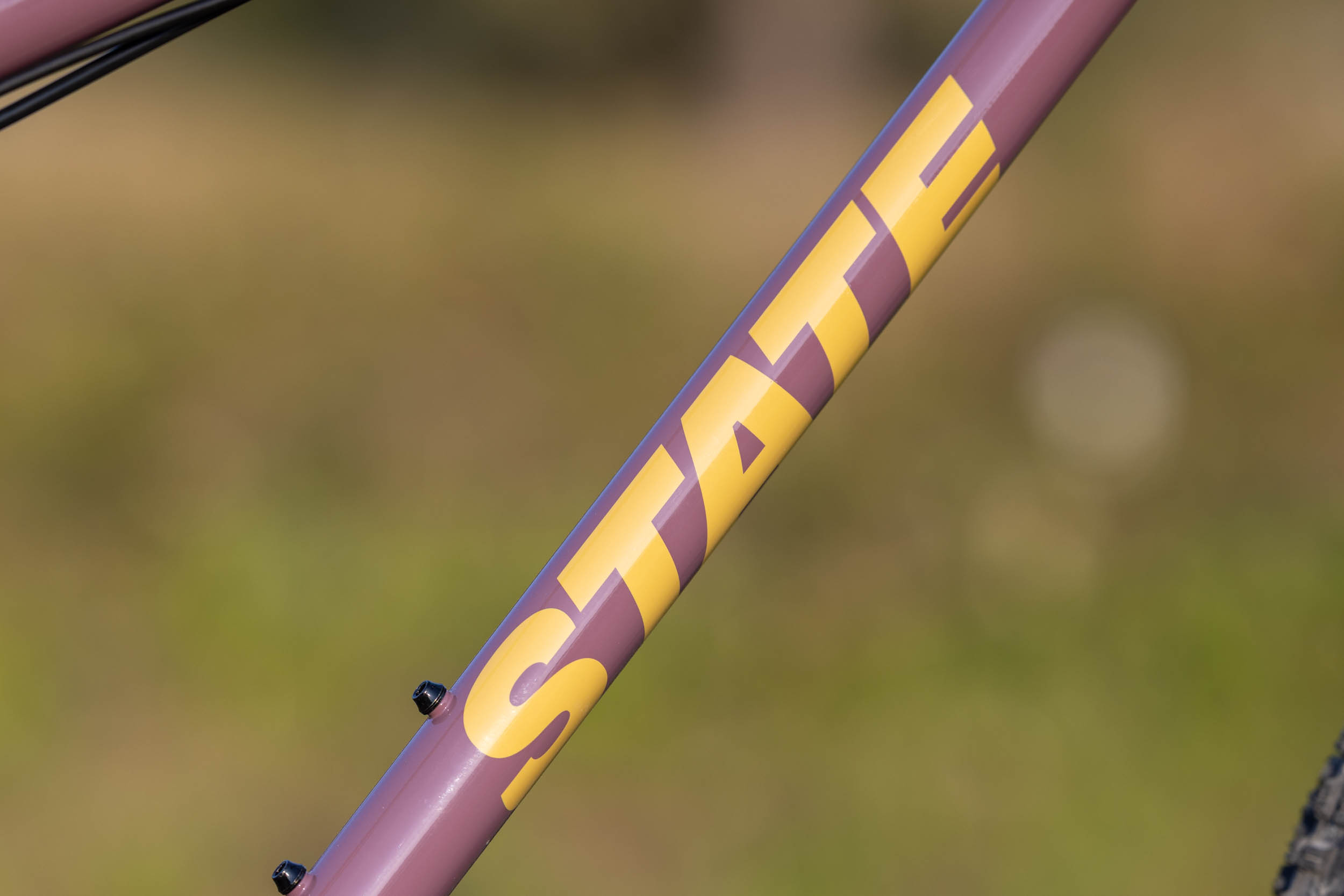
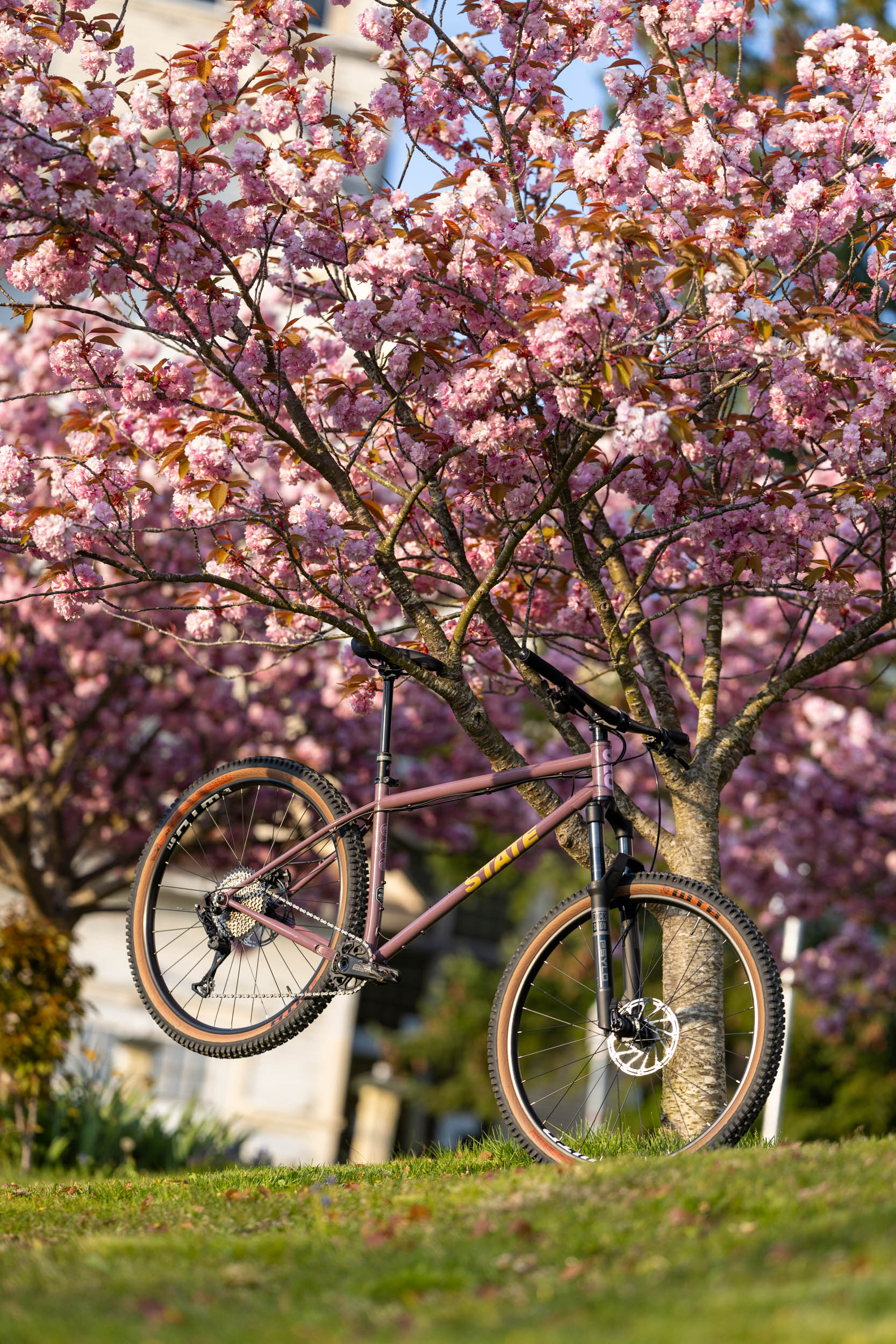
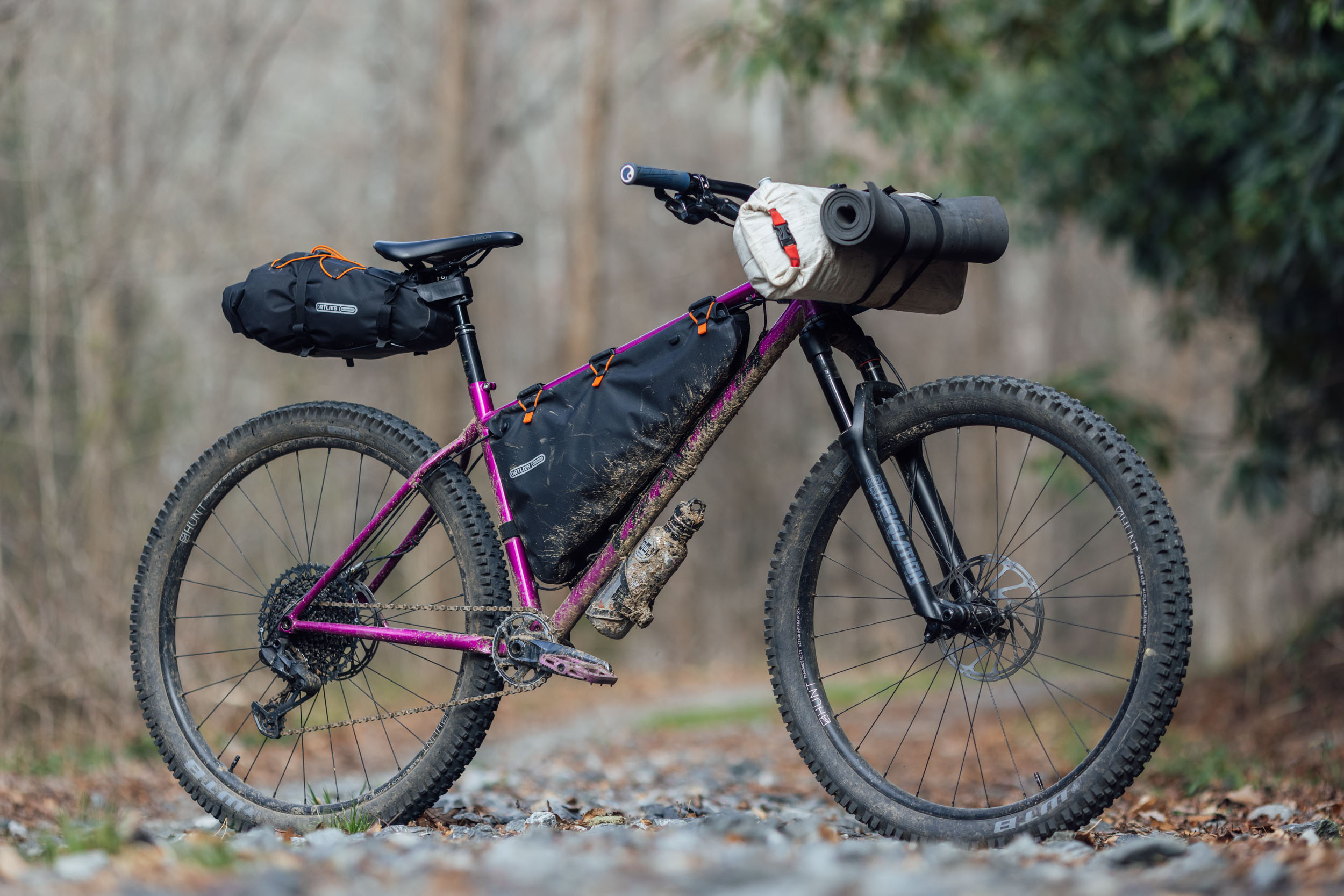
Importantly, the State 4130 Trail is available in two stunning colours: the lavender colour of this review bike, which they call West Sunset, and a mustard colour called Patina Cold. And just announced today, a raw steel (clear-coated) colour option has been added for 2026.
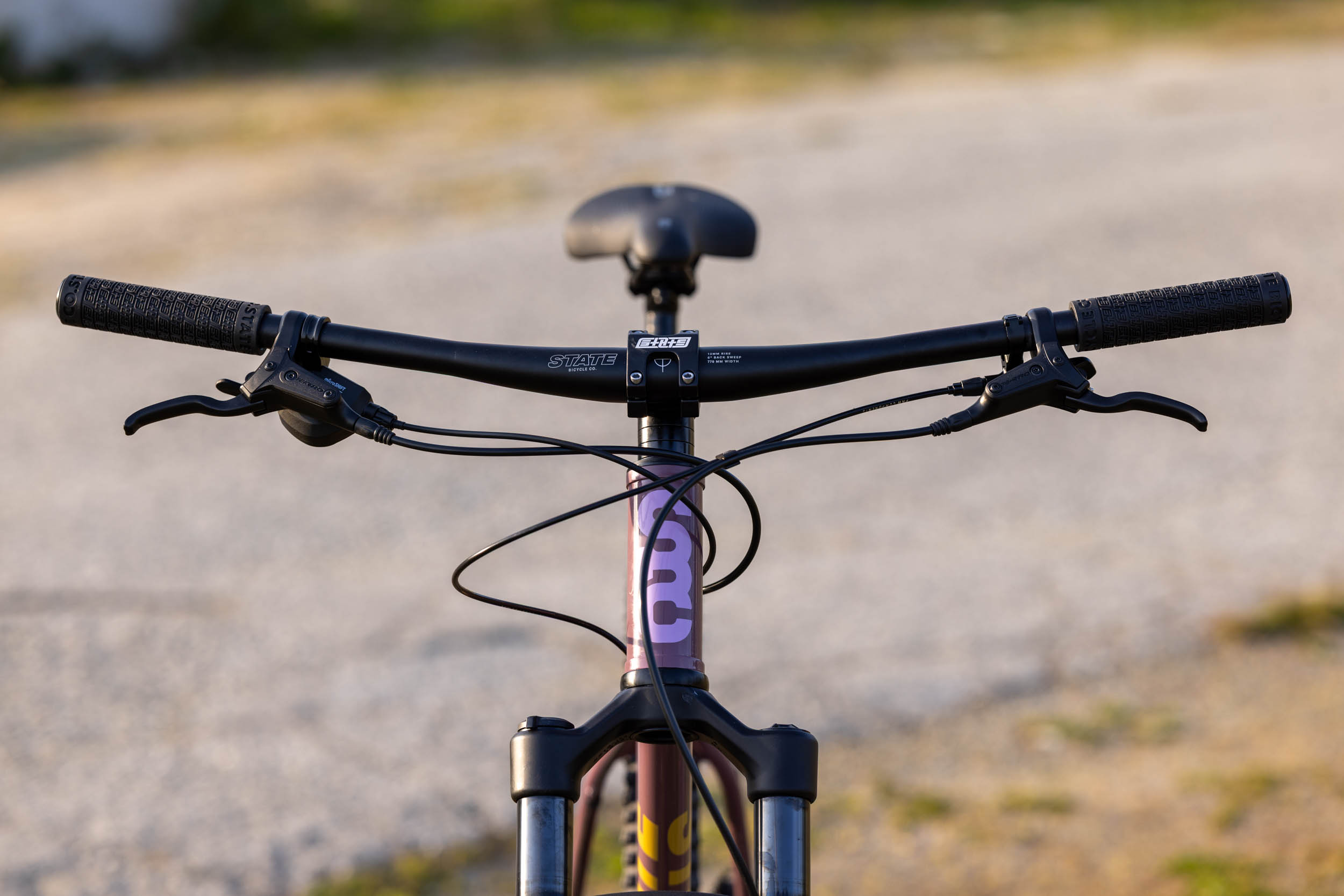
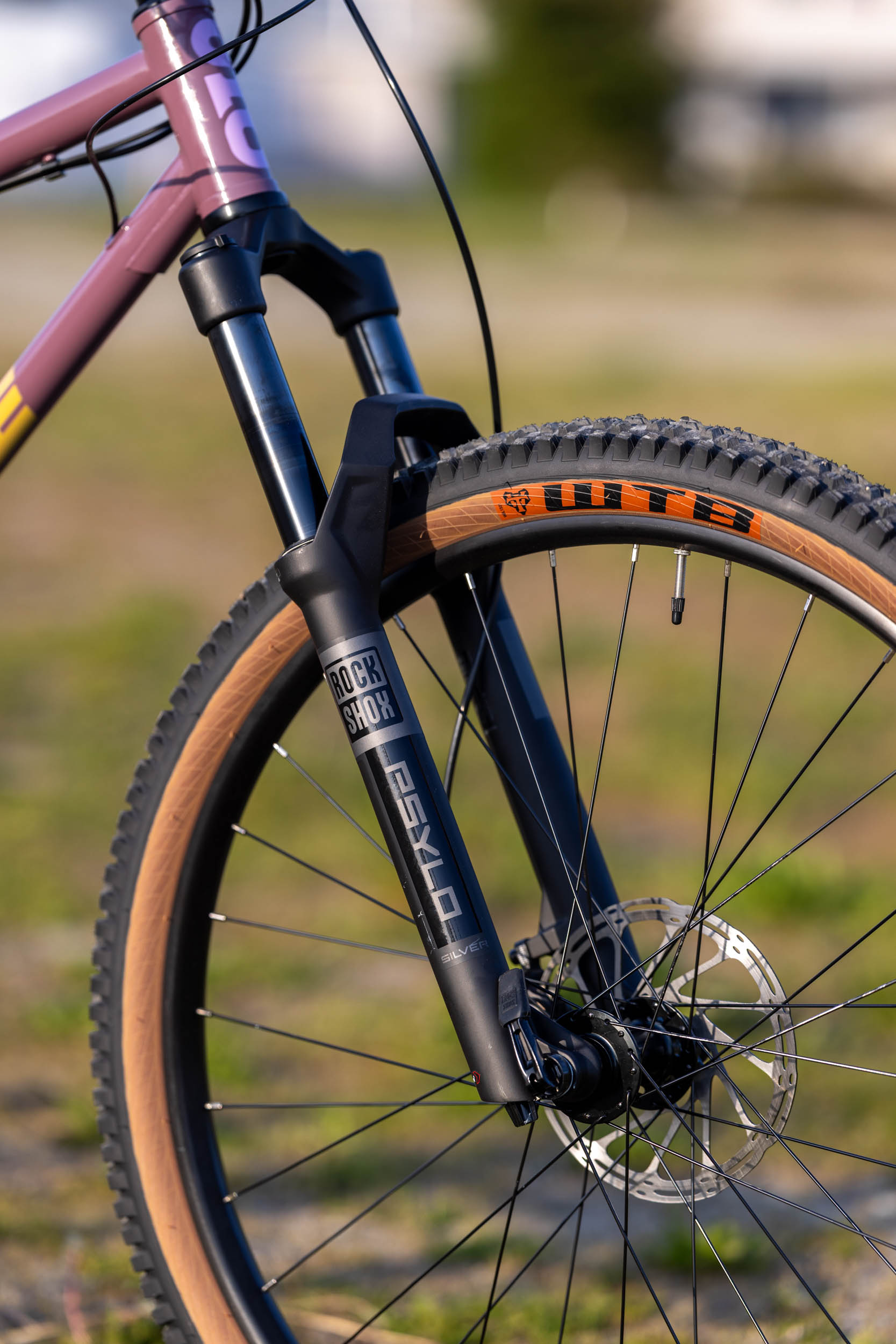
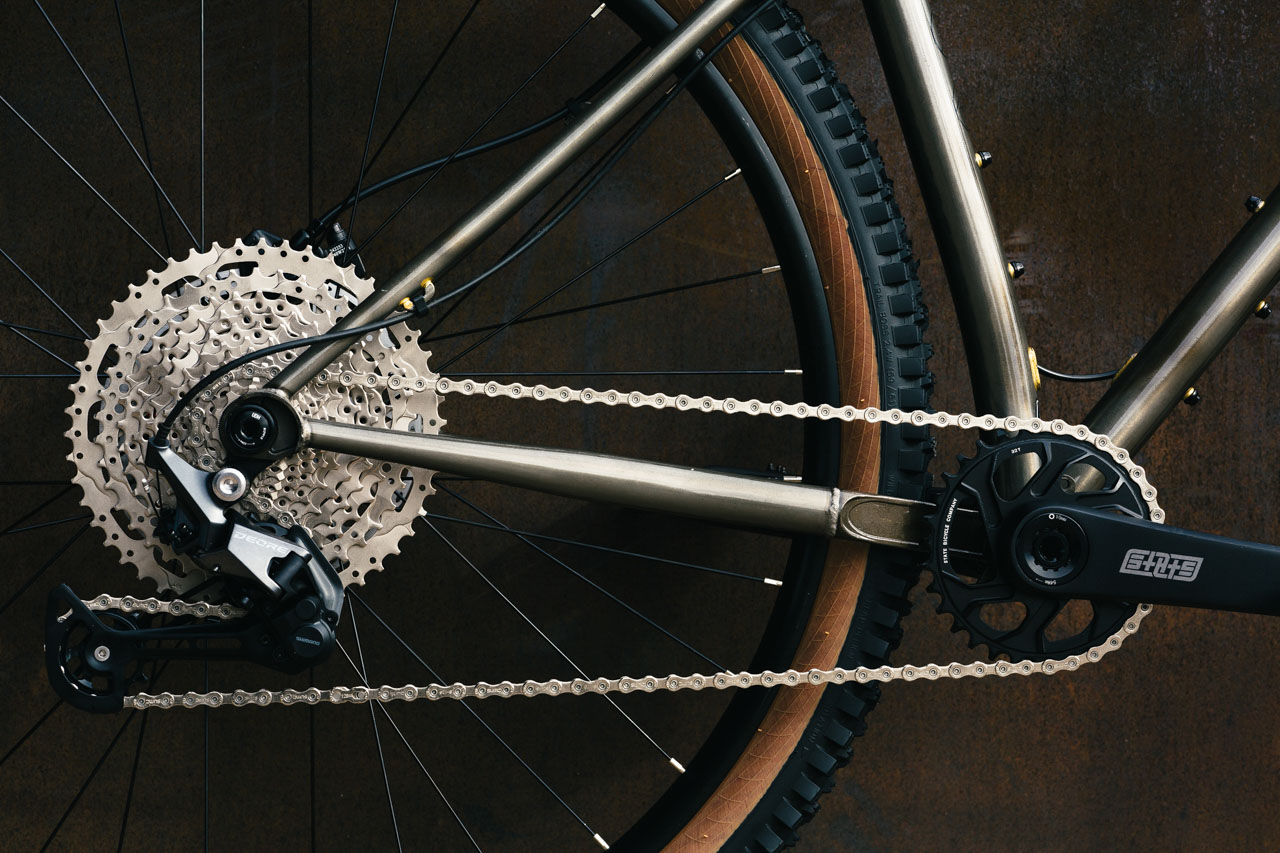
In an industry dominated by SRAM and Shimano, the stock build of the 4130 Trail is excitingly rebellious. You’ll find a mix of Microshift, WTB, and Tecktro parts mixed with house-brand bits. The big S brands only appear on the RockShox (SRAM) Psylo Silver RC fork. House-brand parts, which I presume are designed by Taiwanese manufacturers and offered to brands like State as white-label options, are found on the handlebars, stem, crankset, chainring, saddle, and grips. The cockpit parts are unremarkable, but the crankset looks solid and features nice details, such as a direct-mount chainring and a 29mm alloy spindle. More on all that below.
The Ride
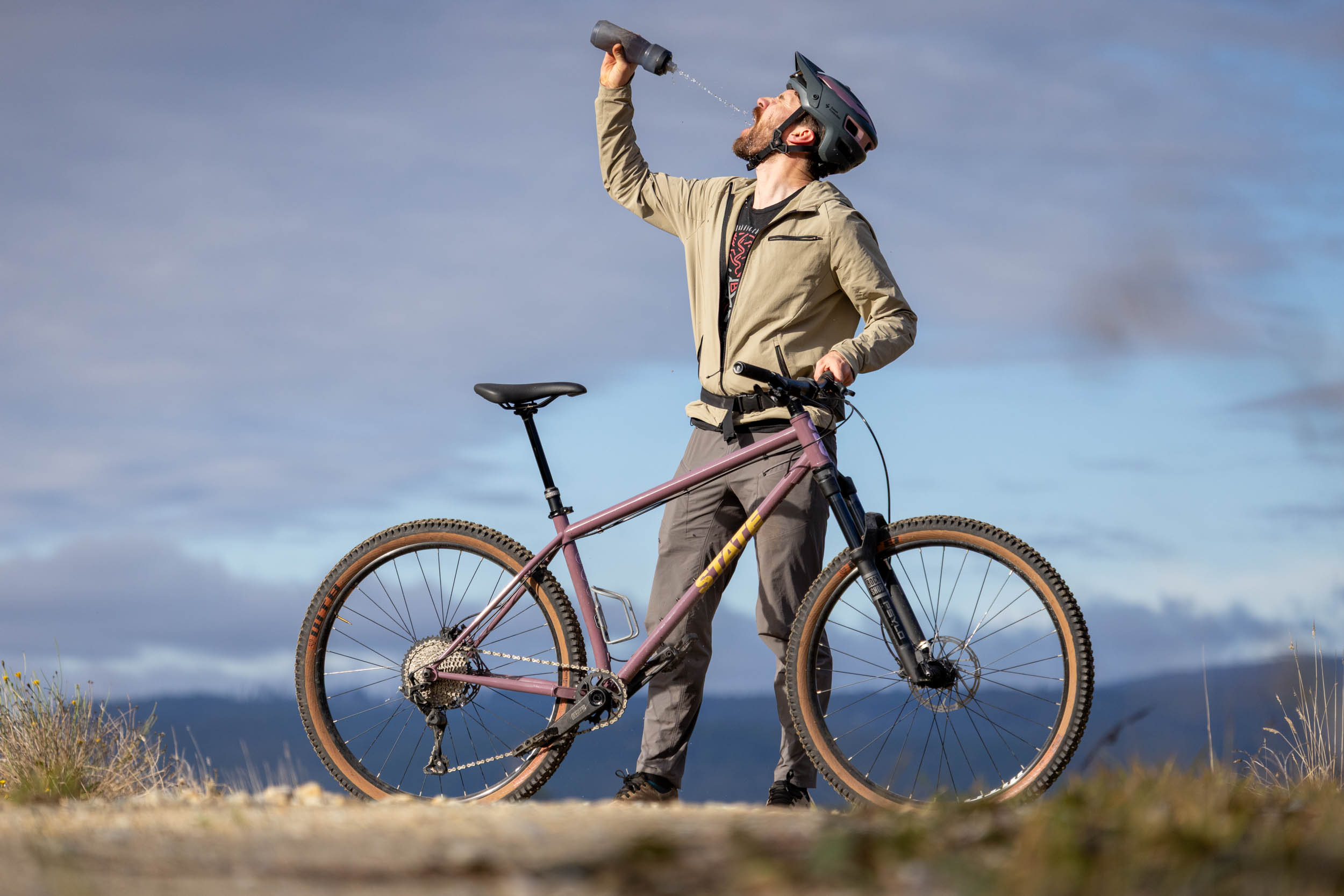
The first, and arguably most important thing to note about riding the State 4130 Trail is the fit. For me, a guy who comes from mountain biking and rides flat-bar bikes everywhere, the riding position felt comfortable from the start. It offers a nice modern posture that’s upright but still athletic.
I remember just a few years ago when access to up-to-date geometry on a trail bike was only available on premium bikes. Lower-priced bikes were only made with classic XC geometry that left you hanging off the back of the bike in fear of going end-over on a descent or hanging off the handlebar to keep from wheelieing out on climbs. And this never made much sense to me, since geometry doesn’t add a significant material cost to frame production. Yes, any change bears an up-front design expense, but new models were being designed and released regardless. So, it comes as a great relief that the bike industry has moved past this phase, and good geo is no longer reserved for the top-of-the-line frames.

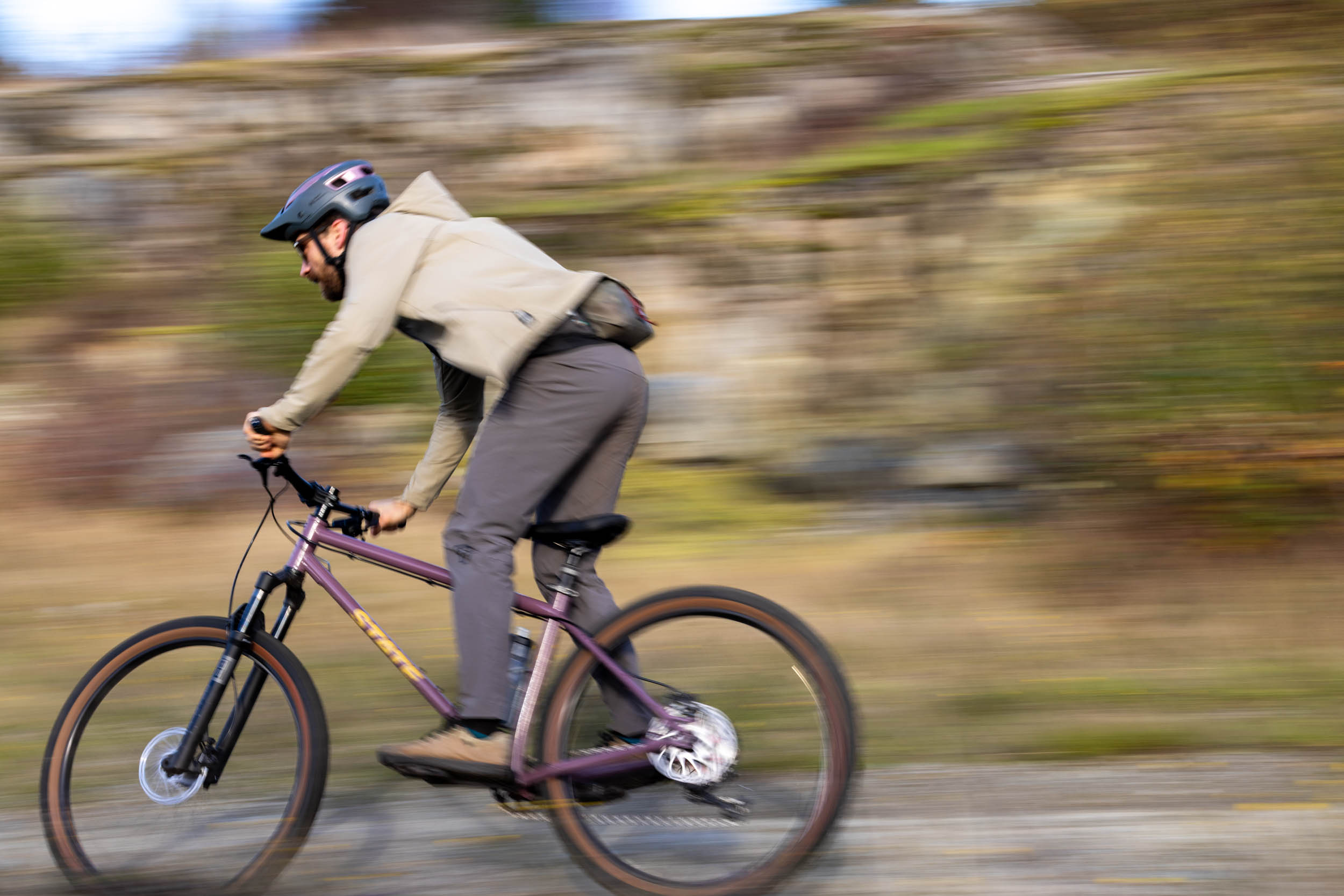
Geometry does not exclusively affect riding position, of course. There’s also the question of how a bike interacts with the trail that deserves major consideration. And here, too, the State 4130 Trail is contemporary and reassuringly neutral. Though the size XL’s 1240mm wheelbase sounds gigantic if you’re coming from the world of drop-bar bikes, this bike feels higher on agility than stability compared to many mountain bikes I’ve ridden in the past few years. Regardless, I didn’t feel held back by the frame on any terrain. In fact, the combination of frame, fork, and tires had me feeling encouraged to shred, jump, and play—and then, suddenly, terrified at having written a cheque the brakes might not cash.

The Tektro 2-piston hydraulic brakes bear a lot of resemblance to lower-end Shimano brakes such as the MT-410, and I would expect similarly acceptable performance from them. You would not typically expect top-level power from such a brake, but these days, you could safely expect strong bite and acceptable power on regular-length descents where heat management isn’t an issue. However, I was surprised by the Tektro brakes—in a bad way. It felt like the pads could have been glazed or contaminated. And since Tektro has a record of making decent hydraulic brakes, I suspect most of the blame should fall on the pads. A swap to some better brake pads would likely give these brakes enough bite to manage on steeper trails.This bike wants to gallop, but be sure your brakes are working better than mine before you let it.
Budget vs. Premium Steel
So, if this bike has such comfortable and confidence-inspiring geometry, what are premium frames even offering these days? If you’ve never tried a high-end steel frame, I recommend that a) you never do, and b) don’t worry about it. Do not taste the forbidden fruit!
Since I’m not your financial advisor, let me tell you about the forbidden fruit anyway:
Magic is real. It was discovered by engineers through advances in material science and manufacturing technology. Premium steel bikes are able to achieve higher strength in the frame material by using special heat treatment recipes or by the use of exotic alloys (or both). Since the metal is stronger, they can use less of it, with thinner walls and more butting, meaning the tube’s wall thickness varies more.
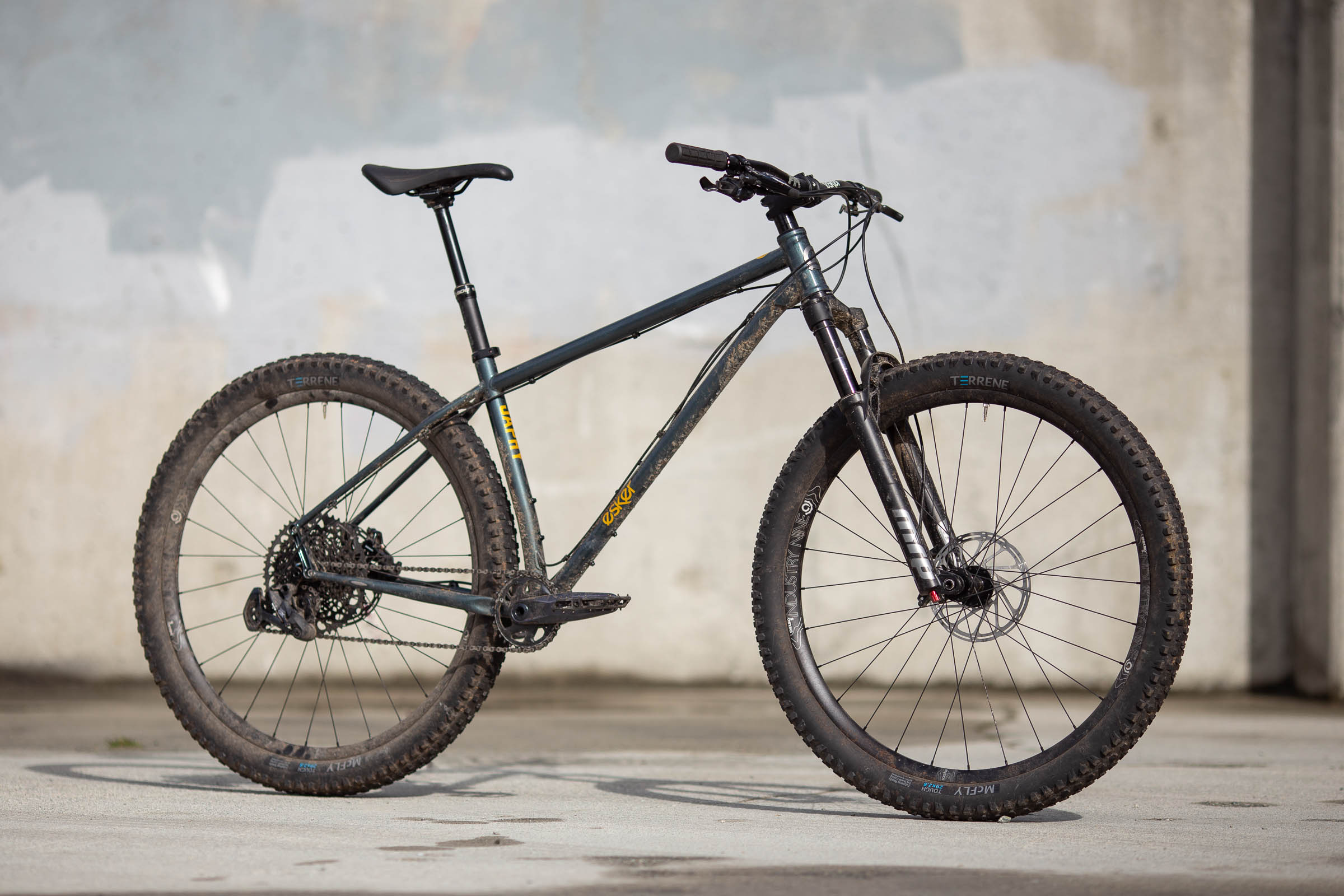
Importantly, all steel has about the same stiffness, no matter its strength, so less material means a more flexible frame. My fleet of bikes has recently included two such specimens that achieve the premium magical feel with different approaches. One is a handbuilt frame with an exotic air-hardening alloy, double-butted top tube and down tube, the other an Esker Japhy with quad-butted 4130 chromoly (same alloy as the State) and heat treatment. Though the exotic alloy is theoretically stronger, the heat treatment and butting probably allow Esker to achieve similar properties. Both have a good dose of that famous premium steel feel. The best I can describe it is that it feels like riding a tuning fork. There’s a sort of spring-loaded buzz to it that makes a bike feel alive.
I’d compare fancy steel bikes to hi-fi stereos. Music is so good, full stop. If I’m stuck in a 20-year-old base model Nissan (as is my regrettable lot in life), I’m still going to turn on the radio and enjoy it. But compared to listening to those same songs in high-fidelity in a carpeted room, I will be missing half the song. The concerning squeaks and rattles emanating from the back of the vehicle will have drowned out the sounds of fingers moving up the fretboard that come alive in front of a good stereo. And the cheap stock speakers never were capable of outputting any sort of bass note to begin with.


That’s what an affordable steel bike like the State 4130 Trail is missing. You don’t feel the resonant ringing of the tuning fork between your legs. The clouds do not part above the trail, revealing a shaft of light vibrating with the voices of a thousand angels in perfect harmony. Instead of feeling the trail as if plucking a steel guitar string, it feels more like plucking a tent’s nylon guyline.
Sadly, exotic alloys come at a premium, and proper heat treatment requires incredibly expensive furnaces that run on large volumes of cash (in the form of argon and electricity). Besides, how many of us have absolutely rocked out to highly compressed MP3s on dollar store earbuds? Perhaps in music and bike frames, it’s better to have never tasted the forbidden fruit and to continue on in blissful innocence.
The State’s heavier, stiffer frame has a deader, blunter ride feel that will appeal less to the most rabid steel cultists among us. It might even make sense to compare it to aluminum bikes in this price range. What you’d lose in steel feel, because the State is not completely without the magic, you might compensate for with the liveliness that comes from a lighter bike.
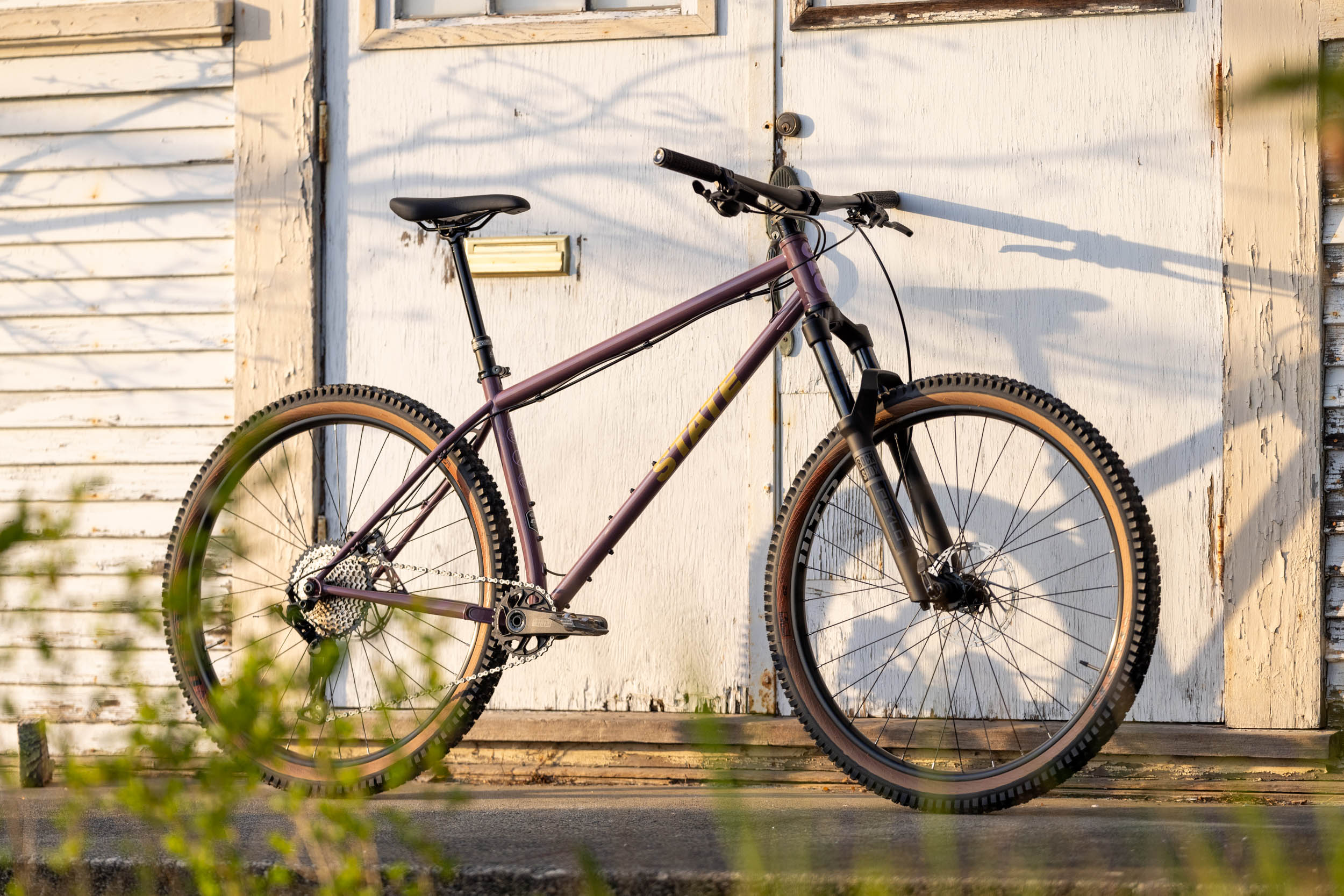


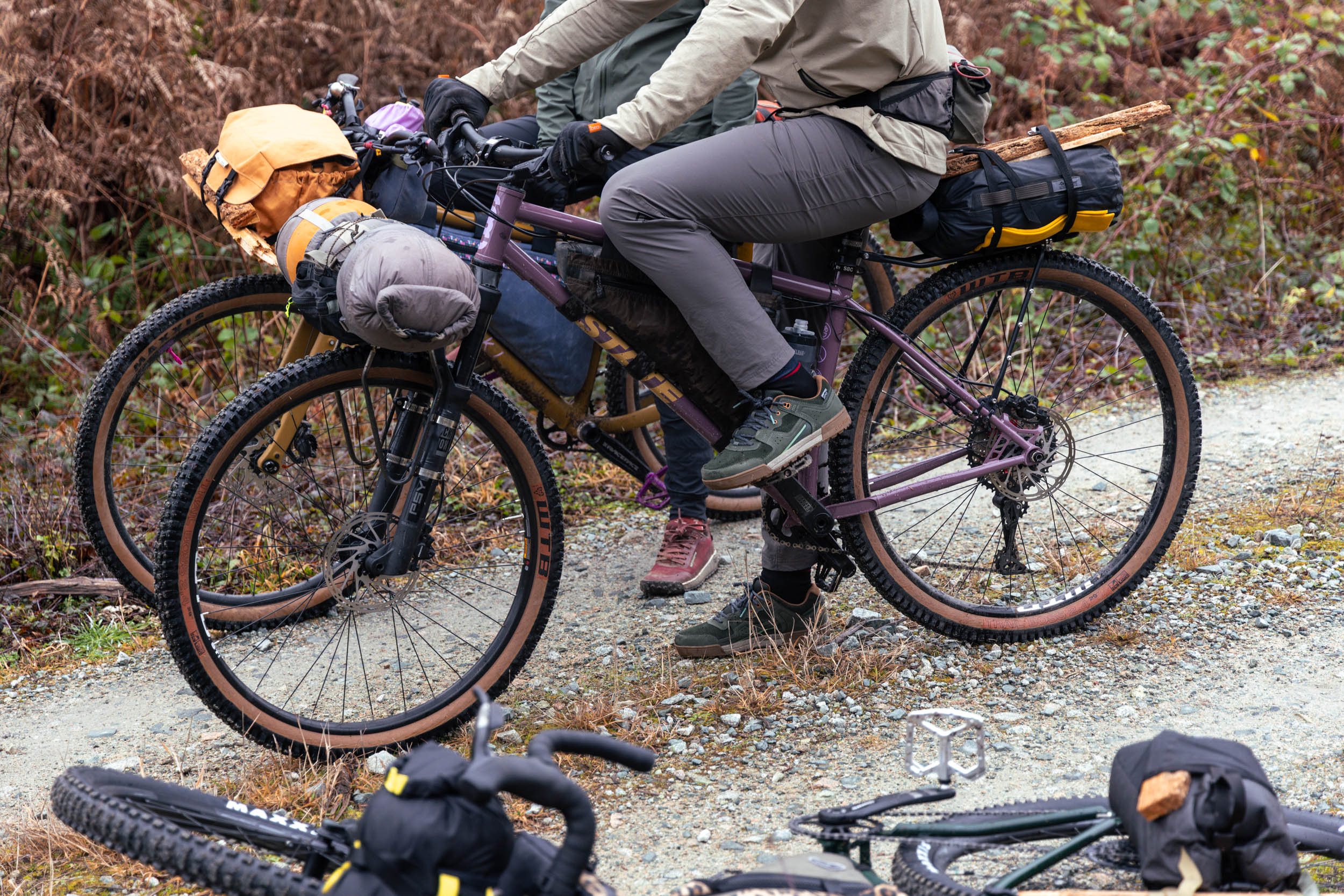
Overall, thanks to the aggressive knobby tires and stiff frame/fork build, this bike felt more at home on swoopy, jumpy, low-angle mountain bike trails than on long gravel rides. The riding position and handling felt at home everywhere, so a few key part changes would expand the 4130 Trail’s comfort zone. Adding a light bikepacking load to my ~200-pound riding weight did not radically transform the bike. Rather, I became less interested in the ride feel and more appreciative of its reassuring stoutness.

Geo and Comparisons
State offers the 4130 Trail in four sizes, for riders 5’1” to 6’5″ tall, per their sizing guide. At 6’2” (187cm), the XL is the best and most familiar fit for me. The geo chart aligns with modern geometry—what would have been considered progressive for a 130mm travel bike a few years ago—with a 65° head tube angle, a 74.4° seat tube angle, and generous reach numbers for each size. Longer, lower, slacker was the movement over the span of a decade. In 2026, mountain bike geometry has stabilized, and the State’s numbers are no longer considered progressive. Instead, they’re close to expected benchmarks.
I’m toward the lower end of the recommended height for this size, and with its 673mm effective top tube length, I would have expected the pedaling position to feel slightly stretched out for me. Instead, thanks to a reasonably tall stack height and a generous pile of spacers below the stem, the XL felt upright, comfortable, and (back to this word…) neutral. I really did feel right at home on this bike with no changes to stem length or handlebar, and I could happily spend long days in this riding position with a saddle swap and maybe some Ergon grips.


State 4130 Trail Geometry
| Size | XS/S | S/M | M/L | XL |
|---|---|---|---|---|
| Seat Tube Length (mm) | 380 | 405 | 430 | 460 |
| Top Tube Length (mm) | 594.7 | 622.6 | 645.5 | 673.3 |
| Head Tube Angle | 65° | 65° | 65° | 65° |
| Seat Tube Angle | 74.5° | 74.4° | 74.4° | 74.4° |
| Head Tube Length (mm) | 100 | 110 | 120 | 130 |
| Front Center (mm) | 737.6 | 766.7 | 790.9 | 820 |
| Rear Center (mm) | 426.5 | 426.5 | 426.5 | 426.5 |
| Wheelbase (mm) | 1158.2 | 1187.5 | 1211.7 | 1240.9 |
| BB Height (27.5 x 3.0 Tire) (mm) | 312 | 312 | 312 | 312 |
| BB Height (29 x 2.6 Tire) (mm) | 321 | 321 | 321 | 321 |
| BB Drop (mm) | 56 | 56 | 56 | 56 |
| Reach (mm) | 420 | 445 | 465 | 490 |
| Stack (mm) | 628.3 | 637.4 | 646.5 | 655.5 |
| Standover Height (27.5 x 3.0 Tire) (mm) | 784 | 800 | 817 | 835 |
| Standover Height (29 x 2.6 Tire) (mm) | 793 | 809 | 826 | 844 |
The short, 426mm chainstays and relatively low 56mm BB drop add to a sense of maneuverability and playfulness despite the weight and size of the bike. If you prioritize speed/stability over agility/nimbleness, you may want to consider something like a Surly Krampus with a 65mm BB drop and 435-455mm chainstays or a Trek Roscoe with 430mm stays, 60mm BB drop, and an extra 25mm of wheelbase.
| Metric | State 4130 Trail (XL) | Salsa Timberjack (XL) | Trek Roscoe 7 (XL) | Esker Japhy (XL) | Cotic Solaris (C4) |
|---|---|---|---|---|---|
| Head Tube Angle (°) | 65 | 66.4 | 65 | 66 | 65.7 |
| Eff. Top Tube Length | 673 | 659 | 677 | 660 | 665 |
| Chainstay Length | 427 | 420-440 | 430 | 430-444 | 444 |
| Bottom Bracket Drop | 56 | 57 | 61 | 65 | 67 |
| Wheelbase | 1241 | 1211-1231 | 1250 | 1231-1245 | 1237 |
| Fork Travel | 130 | 140 | 140 | 120 | 120-130 |
| Seat Tube Angle (°) | 74.4 | 75.1 | 74.7 | 76 | 74.7 |

Compared to other hardtails in this category, you can see that the State 4130 Trail’s geometry is quite similar to that of much more expensive bikes. We’re lucky to live in a time where trail bike geo has converged on something comfortable, confidence-inspiring, and high-performance.


These days, I prefer to think about bike geometry as falling on a spectrum from agility to stability, where longer chainstays, longer wheelbases, and lower bottom bracket heights offer the most “progressive” take on MTB geometry by prioritizing stability. But the perfect place on that spectrum will depend on the speed and tightness of the trail you ride. In my opinion, the 4130 Trail lands somewhere in the middle of that spectrum for mountain bikes.
The Build
Besides my issue with the brakes, other key components, such as suspension fork, drivetrain, wheels, tires, and cockpit are unremarkable in the sense used by doctors: everything is okay. The 130mm RockShox Psylo Silver RC fork is a steel-stanchioned bruiser, more often found on eMTBs. It’s very heavy, but it rides better than other forks I’ve tried at this price point, such as RockShox 35 Gold, and pairs well with the State’s frame geo to encourage recklessness and fun. It’s quite likely that some of the bike’s stiff feel can be attributed to the stoutness of the fork.

The MicroShift 1×11 drivetrain shifts reliably, albeit slightly more slowly than premium drivetrains. Shifting down the cassette (to harder gears) requires pressing with your index finger, rather than thumb, and had me relearning some long-forgotten habits. I prefer to use my thumb for both up and down shifts like on SRAM or Shimano, keeping my index finger over the brake lever, but that’s really a matter of taste and an easy enough adjustment to make. My only real complaint with the drivetrain is that a smaller chainring than 32T would be far more suitable for both loaded riding and the sort of mountainous trail riding we have here in the Pacific NW. The tall gearing can be partly attributed to the short 165mm crank length specced on all frame sizes.
V1 State 4130 Trail Build Kit
- Frame: State 4130 Trail
- Fork: RockShox Psylo Silver RC Fork 130mm
- Crankset: State Bicycle Co. 32T
- Derailleur: MicroShift XLE 1×11
- Shifter: MicroShift XLE XPress Plus Shifter
- Cassette: Shimano 11-46T
- Bottom Bracket: 73mm BSA Threaded
- Front Wheel: WTB i30 TCS2.0 29″, 32H
- Rear Wheel: WTB i30 TCS2.0 29″, 32H
- Front Tire: WTB Trailboss TCS 29″ x 2.4″
- Rear Tire: WTB Trailboss TCS 29″ x 2.4″
- Headset: State Bicycle Co.
- Handlebar: State Bicycle co. Low-rise
- Stem: State Bicycle Co. Alloy 3D-Forged
- Grips: State Bicycle Co.
- Saddle: State Bicycle Co.
- Seatpost: State Bicycle Co. (tested with optional PNW Range Dropper)
- Dropper Lever: PNW Range
- Brake Levers: Tektro Hydraulic Disc
- Brake Calipers: Tektro HD-M275
- Rotors: Tektro 180mm


Fortunately, the house-branded crankset uses SRAM’s 3-bolt direct-mount chainring standard, which means affordable replacements are readily available.
While the State 4130 Trail arrived with tubes in the tires, the WTB tubeless-ready rims come pre-taped for easy tubeless set up. After pinch flatting the tube on my first real mountain bike ride, it was easy to toss in a tubeless valve and sealant and then forget about it.
The biggest takeaway for me was that at this price point, while the components can perform pretty well, you can’t expect the bike to be completely trouble-free. I experienced frequent small annoyances.
- Grips: I usually prefer slide-on grips to lock-ons for their extra cushioning, but these ones are slide-off grips. They would move up or down the handlebar on every ride and are basically unsuitable without being glued in place. Expect to glue them down if you’d like to keep them.
- Dropper: I had some trouble with the dropper cable routing that led to an intermittent issue with keeping it up. PNW droppers are known for reliability and would not be out of place on a bike costing two or three times more. But the combination of my leg length, this frame size, and the dropper cable routing meant I had to frequently fiddle with the post and cable to make it so that the actuator on the bottom of the post could function correctly. As a result, I had issues with the post randomly losing function, and requiring me to stop to play with it on at least a dozen occasions. This likely would be solved if my legs were a hair longer, the dropper shorter, or the cable port on the seat tube lower.
- Cranks: The driveside crankarm required tightening two times during the test period. It requires a big 10mm Allen wrench, so make sure it’s properly torqued before going bikepacking.
- Fork: The recommended spring pressure wasn’t even remotely accurate for me. While the starting point suggested by RockShox was 180PSI, I settled on 110PSI. This leads me to believe I may have received a fork with a different air spring than usually specced in a Psylo Silver. Regardless, I was happy with its performance.

Pros
- Amazing value
- Great fit
- Comfortable, fun, and confidence-inspiring ride
- Many water bottle mounts
- Well-built, robust frame
Cons
- Not lightweight
- Sub-standard saddle and grips
- Tall stock gearing
- Brakes lacked power
- Faster tires would be more appropriate for most bikepacking routes
- Model/Size Tested: State 4130 Trail, XL, with dropper post upgrade
- Material: 4130 Chromoly Steel
- Weight: 34.2 lbs (15.5 kg)
- Place of Manufacture: Taiwan
- Price: $1,500 USD
- Manufacturer’s Details: StateBicycle.com
Wrap Up
Over the many months I spent with the State 4130 Trail, I found myself reaching for it more often for short mountain bike rides on tight trails than for long adventure rides on mixed terrain. On trail, its easy, playful manner is delightful fun. For big rides that involved a lot of gravel, I found it hard to resist reaching for my (considerably more expensive) personal bike with faster-rolling tires and lighter parts.
Nevertheless, I did enjoy the State on every type of terrain, and I feel confident saying that the value this bike offers makes it seriously compelling. And while I can’t promise it will be completely trouble-free, my complaints centered on relatively minor parts. When I look at the landscape of $1,500 mountain bikes, I don’t think anyone shopping in this price range would regret choosing the 4130 Trail.
Further Reading
Make sure to dig into these related articles for more info...
Please keep the conversation civil, constructive, and inclusive, or your comment will be removed.