

 Mountain Bike (MTB)
 Gravel Bike
 All-Terrain Bike (ATB)
 Fat Bike


Surly Sorceress Review: Trail Magic?



Neil’s latest review explores the all-new Surly Sorceress, a 140mm suspension-corrected hardtail that he didn’t expect to like. Complete with a fresh dropout design that enables compatibility with singlespeed setups and modern drivetrains, there’s plenty to cover with Surly’s latest hardtail. Find the full review here, complete with 10 clarifying questions…
PUBLISHED Apr 7, 2026
The Sorceress is a departure from what you might expect from a steel, Natch tubing-equipped bike from Surly. But it’s also a really interesting bike for the right rider. Spoiler: That rider might be me. In this video, I ask myself 10 questions to help answer just about everything you might be wondering about Surly’s latest bike. Watch the full video below, followed by a written version of my complete thoughts.
Quick and Dirty
Before we dig in, here’s a rundown of the Sorceress’s specs…
- 4130 Surly Natch steel frame, double-butted main triangle, trumpet flared tubes, TIG welded, E.D. coated
- Designed around a 140mm fork
- Colors: Elderberry Tonic, Hot Honey Bling, Swamp Water Taffy
- 29” wheels on SM-XL, 27.5” on XS
- Tire clearance: 29 x 2.6”
- Long front center for confidence; tucked 410-429mm rear center for snappy handling
- BB Drop: 55-65mm
- Headtube Angle: 64-65°
- Seattube Angle: 76°
- New Patent-pending DUH dropouts that are UDH and singlespeed-capable
- Two in-triangle bottle mounts on MD-XL, one on XS-SM
1. Where does Surly’s Newest Bike fit in?
At this point, most people know Surly Bikes, but if you don’t, it’s a brand that has built its identity on steel bikes since 1998 under the Quality Bicycle Products umbrella. Over the years, they’ve made some of the most recognizable bikes in the space. Think the Surly Long Haul Trucker, Cross-Check, and Straggler on the touring and all-road side, and bikes like the Surly Bridge Club, and Grappler pushing further into off-road territory.
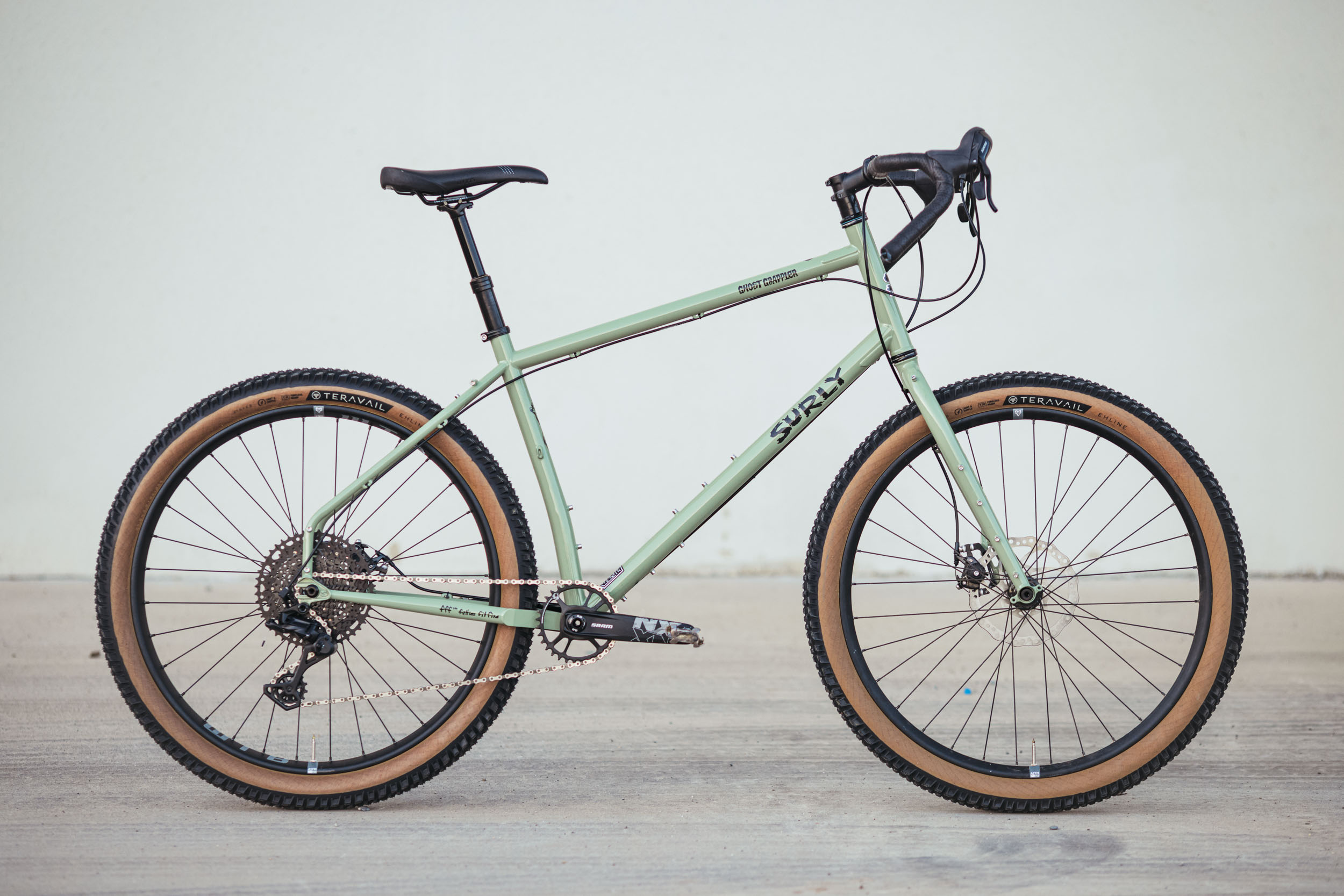
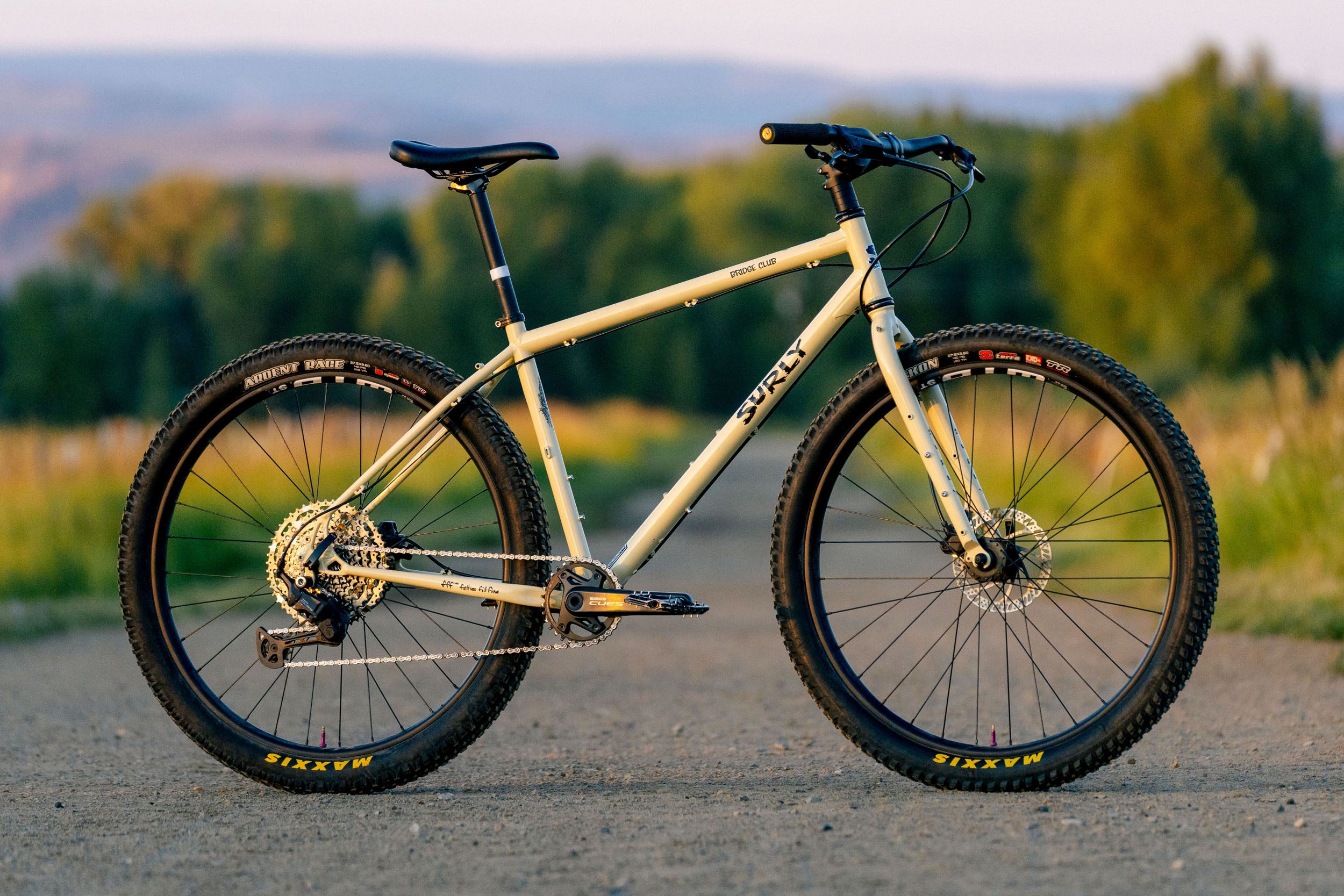


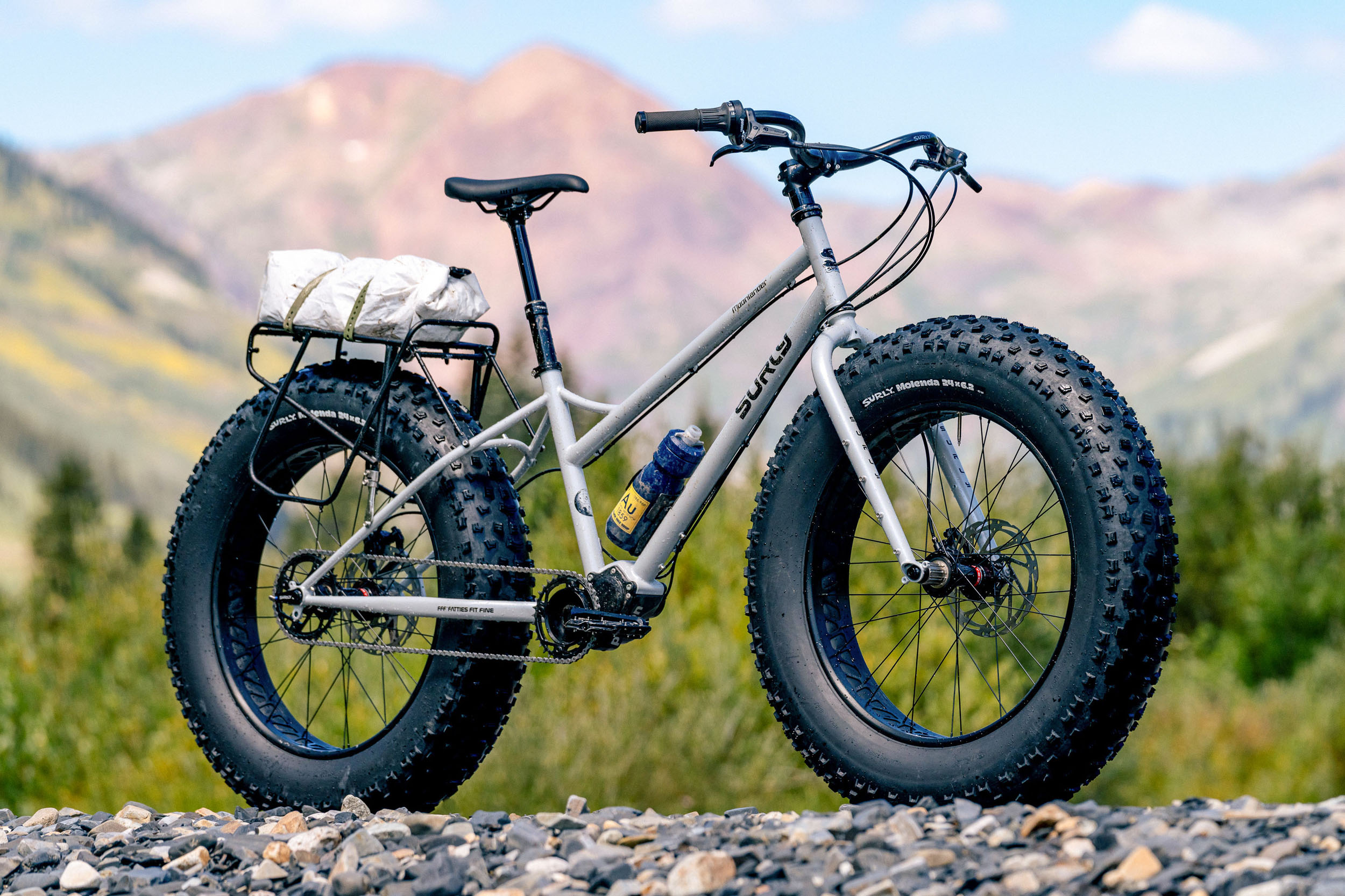
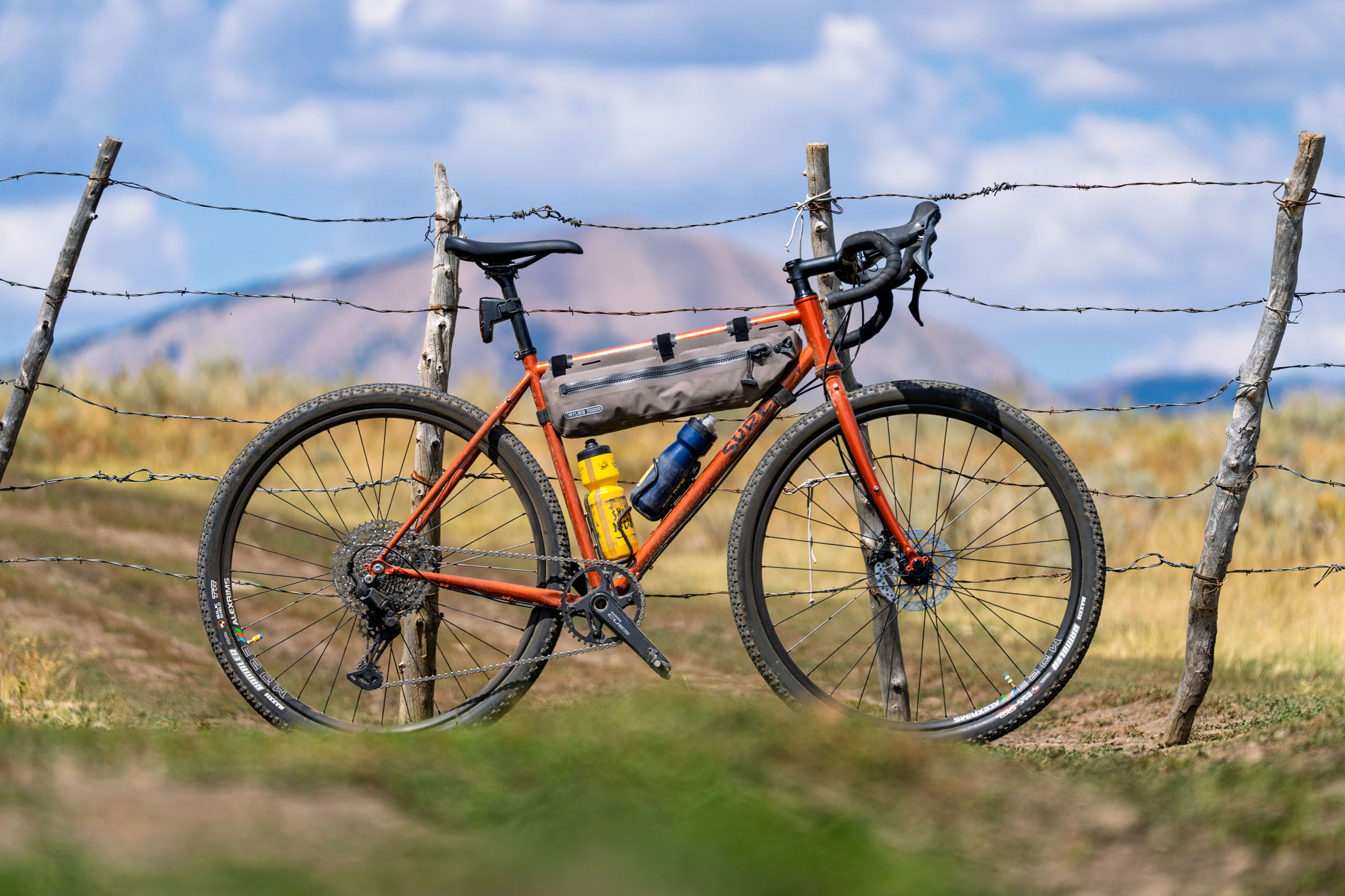
Then there’s their hardtail lineage, which is hard to ignore. The Surly Karate Monkey has been around for over 20 years and still shows up on local trails. The Surly Krampus, launched in 2012, is often considered a pioneer of 29″+ bikes. Of course, there’s the often-forgotten Surly Instigator, which, in a lot of ways, was ahead of its time. Surly points out that both the Krampus, corrected around a 120mm fork, and the Karate Monkey, which can run a 140mm fork like the Sorceress, still hold their place. Those bikes continue to cover the bikepacking and shorter-travel mountain bike side of things.
All this is to say, the Sorceress doesn’t replace those bikes; it just complements what’s already there. It expands what a Surly hardtail can be, but also feels like a bit of a return to what they were already exploring more than a decade ago with the Instigator: a slack, aggressive hardtail built for rough terrain. Sure, that was a 26″+ bike, but the intent feels familiar. Looking at the Sorceress, it’s hard not to see this as Surly stepping back into a more aggressive hardtail space, just with a modern lens. Let’s talk about what that actually looks like in 2026.
2. What’s Up With The Slacked-Out Hardtail?
Logan has been a big fan of these longer, slacker hardtail frames, which the industry has seen plenty of over the last few years. Bikes like the Esker Smokey, Cotic BFe, and Pipedream Moxie all fall into this category, all of which we’ve reviewed here on BIKEPACKING.com. I even tested something similar back in 2021 with the Santa Cruz Chameleon, but that bike never really stuck with me. Needless to say, this style of bike isn’t new. And if you go back far enough, it’s not even new to Surly. For the longest time, I was resistant to it, which was probably just a personal thing. Maybe I’m a bit stubborn. But I’ve been slowly breaking down those barriers. Maybe I finally found the right bike. Maybe it’s just the right time. Or maybe the psychic I didn’t know I had saw this coming all along.
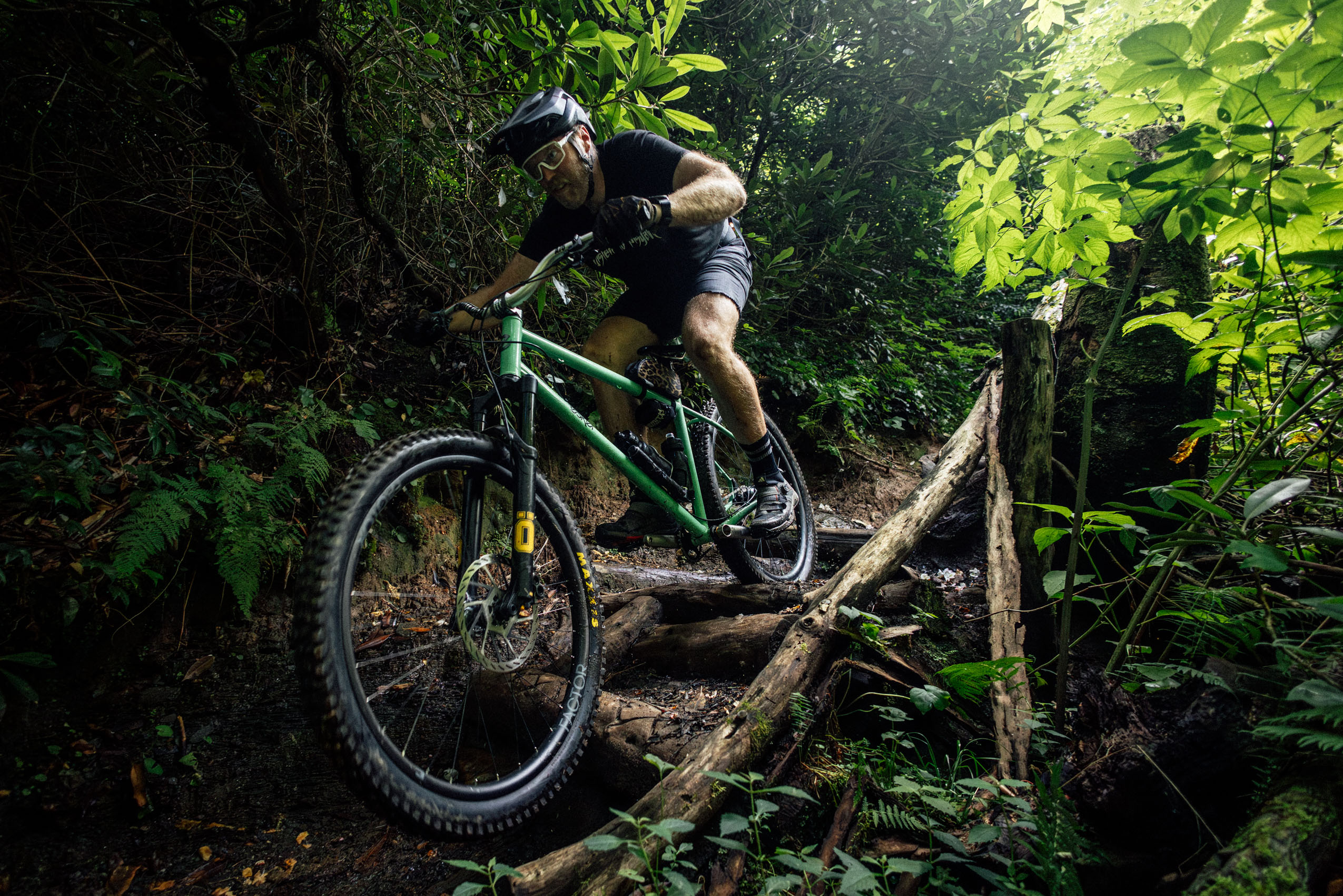
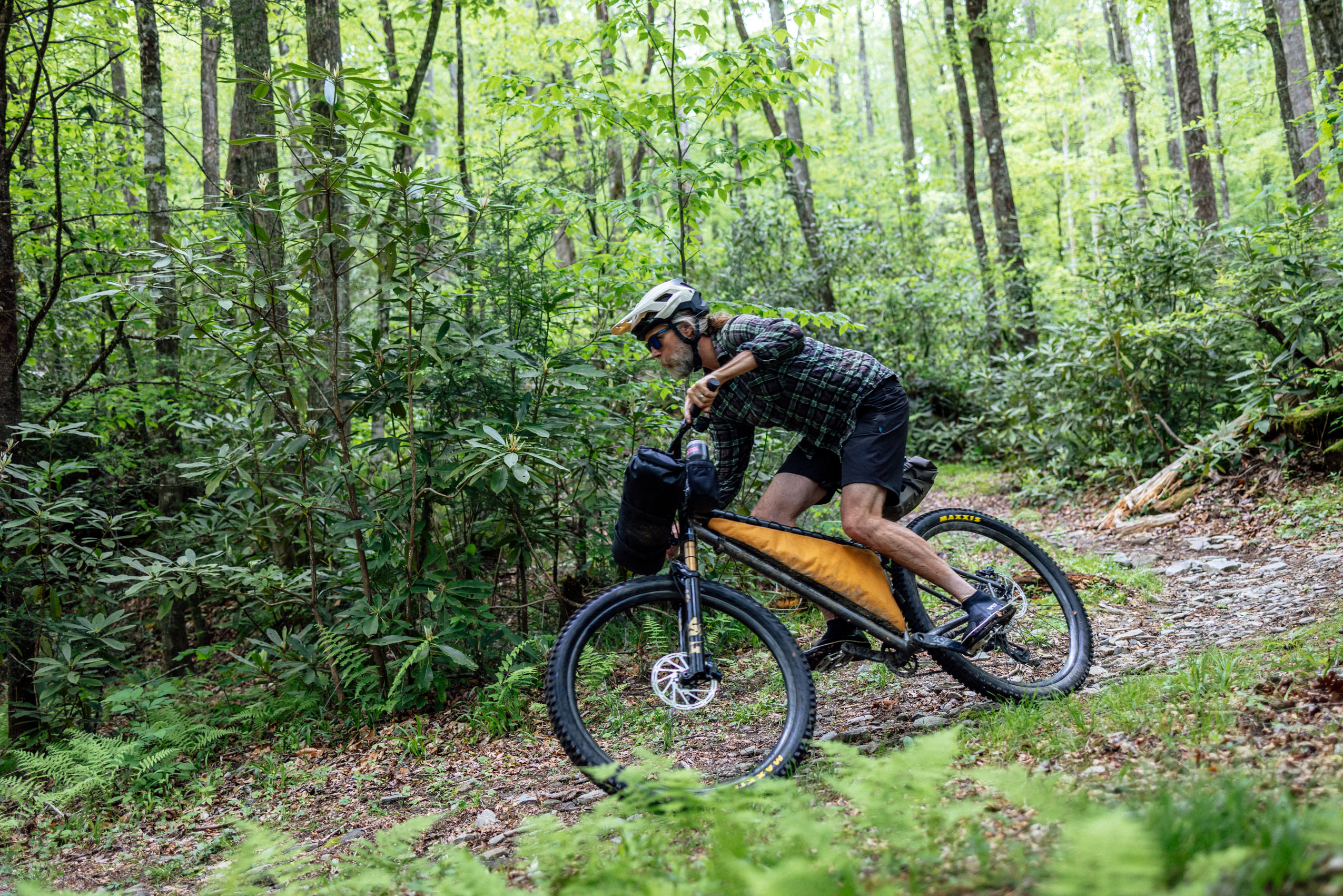
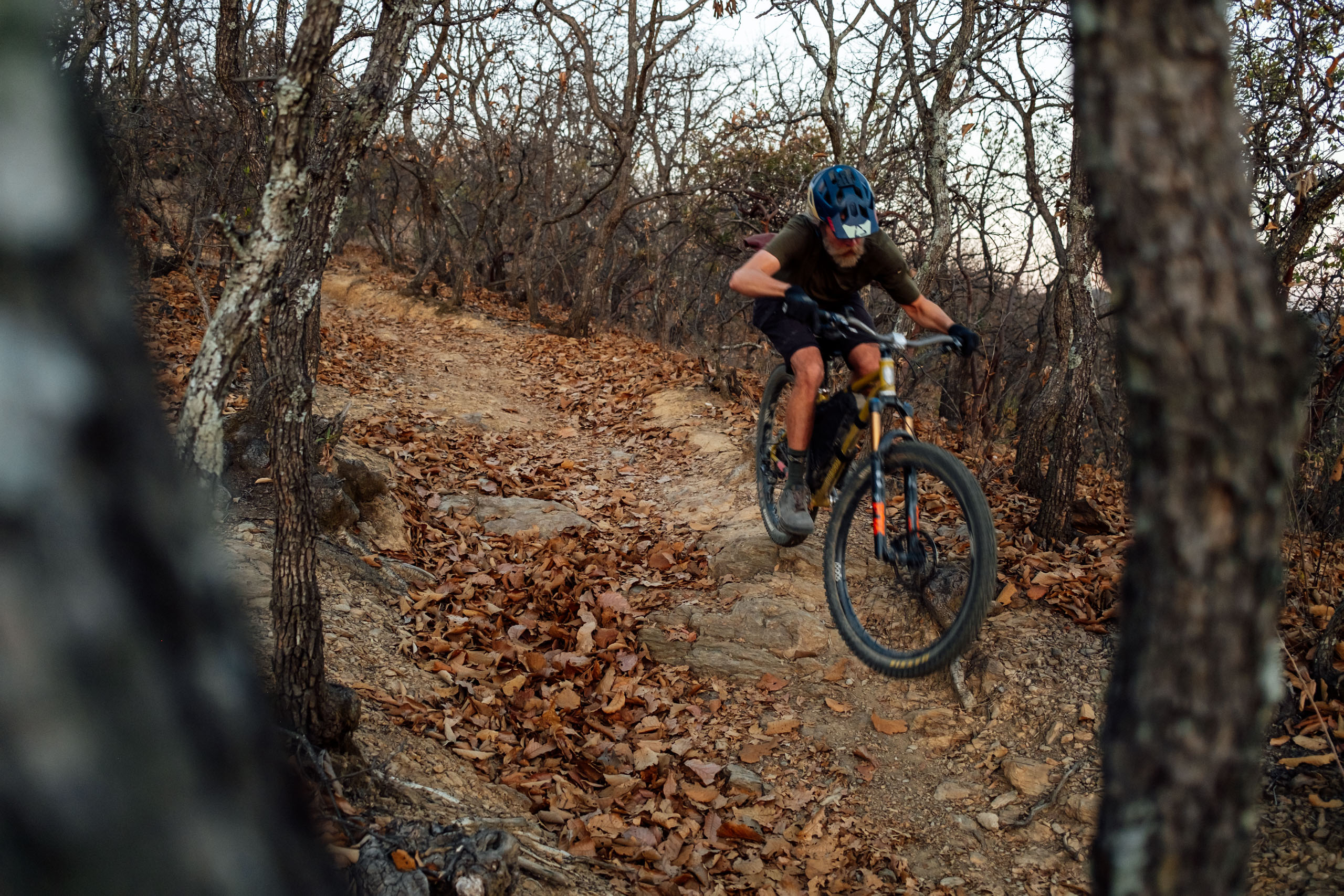

Whatever the reason, the Sorceress is Surly’s take on a long, slack 29er hardtail, available in five sizes from XS to XL. The small through extra large share most of the key numbers: a 65-degree head tube angle, a 76-degree seat tube angle, 429mm chainstays, and a 65mm BB drop. The XS switches things up slightly with 27.5” rubber and some geometry tweaks to help accommodate the smaller wheel size. I tested the medium, which has a 1193mm wheelbase. Most of that length is up front, between the bottom bracket and the front wheel, with those 429mm chainstays keeping the rear end fairly compact.
Surly Sorceress Geo
| Size | XS | SM | MD | LG | XL |
|---|---|---|---|---|---|
| Effective TT Length | 560 | 590 | 617 | 645 | 675 |
| Reach | 415.3 | 437 | 462.8 | 484.1 | 507 |
| Wheelbase | 1126.8 | 1165.5 | 1193.4 | 1227.3 | 1263.2 |
| CS Length | 410 | 429 | 429 | 429 | 429 |
| Effective ST Angle | 76 | 76 | 76 | 76 | 76 |
| ST Length | 300 | 330 | 360 | 410 | 460 |
| HT Angle | 64 | 65 | 65 | 65 | 65 |
| HT Length | 95 | 95 | 100 | 130 | 160 |
| Fork Length | 498 | 518 | 518 | 518 | 518 |
| BB Drop | 55 | 65 | 65 | 65 | 65 |
| Stack | 580.4 | 613.8 | 618.3 | 645.5 | 672.7 |
The effective top tube is 617mm, paired with a 462.8mm reach and a 618.3mm stack. I pulled it out of the box and had that moment of second-guessing the size. I thought, “Wait… is this actually a medium?” The top tube is low, there’s a ton of standover, but after the first ride, it made sense. It felt really good. It never felt like too much bike to maneuver with the short rear end, but plenty of length when things start moving fast.


Standover shouldn’t be an issue for just about anyone, and that plays a bigger role than I expected in how this bike rides, which I’ll get into next. But, simply put, these numbers on a steel hardtail are pretty inspiring. Speaking of steel…
3. What are Trumpet Flaired Tubes?
While angles and geometry are a big part of the story, they’re only one piece of the puzzle. One of the shapes that stood out to me right away was the top tube. Surly uses a double-butted, 4130 Natch front triangle, but it’s not just a straight-gauge tube welded together. There’s more going on than you might notice at first glance. If you look closely, you can see a subtle flattened or fluted section near the seat tube. But what you don’t really see is how that tube changes shape and diameter along its length. They are calling this a trumpet-flared tube, a design trickled down from the Karate Monkey and the Instigator 2.0.


Up near the head tube, the top tube is significantly larger in circumference. As it moves back toward the seat tube, it narrows down and takes on that flattened shape. The result is a tube that’s stiff and strong at the front, where you want precision and control, and more compliant at the rear, where comfort matters more.
It contrasts in design from the Sklar PBJ I reviewed recently. On that bike, the shaping near the front helps compensate for a rigid fork. Here, the Sorceress already has 140mm of suspension up front, so Surly adds more compliance to the frame itself, especially around the seat tube and top tube junction. They’re two very different bikes, but both use tube shaping to achieve a similar goal, adding stiffness where it’s needed and comfort where it matters most.

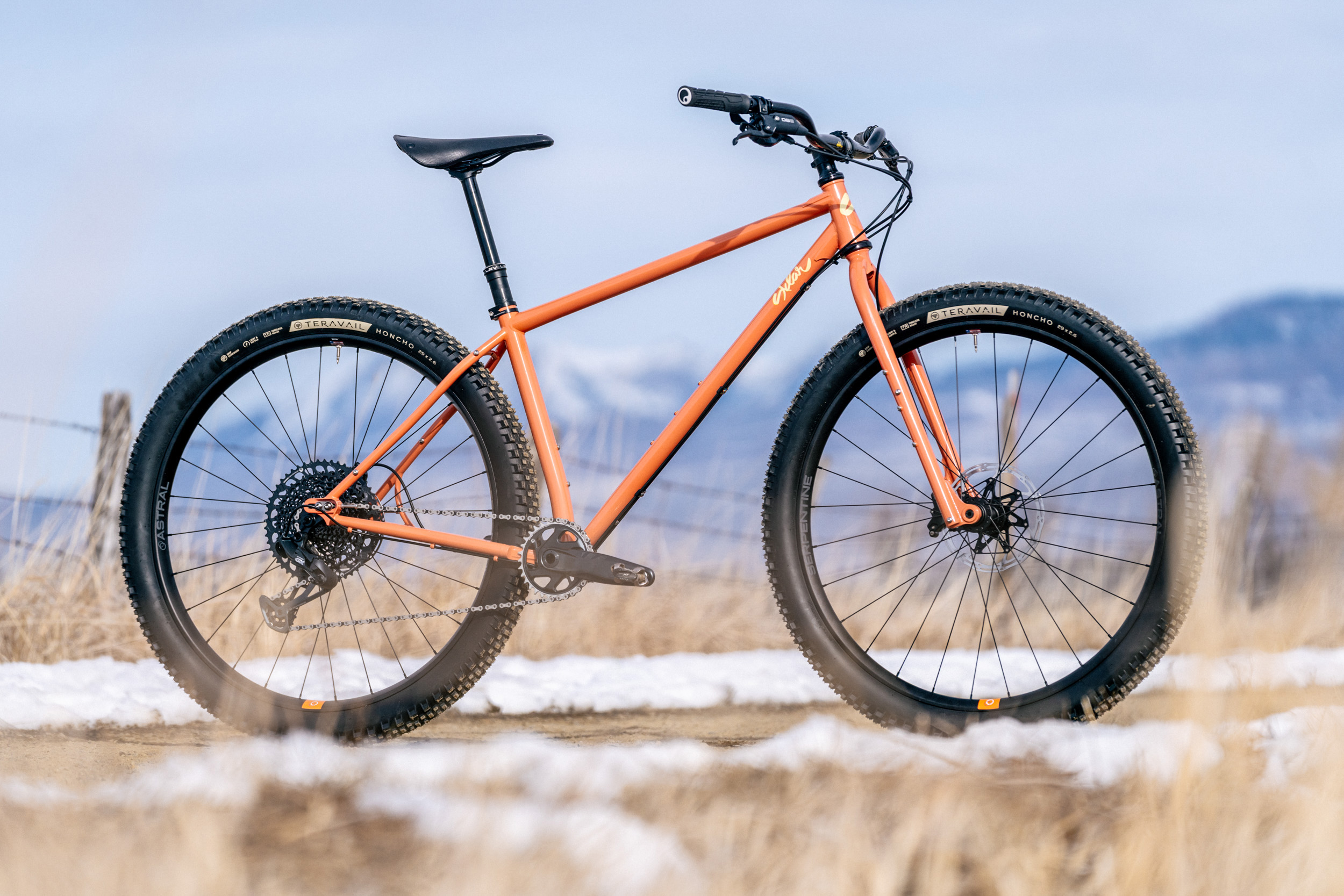
Speaking of that, the oversized tubing at the head tube, along with the custom butting, eliminates the need for gussets. Surly says the highest stresses in these trumpet-shaped tubes don’t occur near the welds, which is pretty interesting. Pair that with an oversized down tube, 0.8 straight-gauge seat stays, ovalized, tapered, butted chainstays, and the whole frame starts to make a lot of sense. It’s supportive when you need it, but it also takes the edge off in a way I didn’t fully expect from a hardtail.
All in all, I feel pretty lucky to have spent time with two well-designed, surprisingly comfortable frames back-to-back: the Sklar PBJ and this Surly Sorceress. If anything, it’s reinforced for me that chromoly is still a really compelling material for a bike frame.
4. Is Simplicity your Friend?
It feels like everything has gotten more complicated over time. Maybe that’s just part of getting older, but the bike world hasn’t helped. Over the last decade, things have gotten pretty layered. Drivetrains don’t always play nice with all frames, hub width and freehub standards keep changing, and suspension designs are all over the place and changing far too often. Then you’ve got flip chips, bottom bracket and headset standards, and frame materials, all seemingly trying to create the best overall experience, but oftentimes it comes with big trade-offs. The Sorceress doesn’t chase any of that. It leans into simplicity, and I appreciate that.


It’s defined more by a well-thought-out tubeset and straightforward specs. You get 2.6” tire clearance, native 180mm post mount brake standard on the front and rear, ISCG tabs if you want to run a bash guard or chain guide, clean external routing with stealth dropper compatibility, a 30.9 mm seatpost diameter, threaded bottom bracket, and a 44mm head tube. Hardtails are simple, the kind of bikes that give you what you actually need, and not much more. That said, where it does get a bit more interesting is the DUH Dropout. Yes, you read that right, DUH.
5. What is a Surly DUH Droput?
One of the more interesting things about this bike is something relatively new for Surly. In conjunction with SRAM, Surly developed the DUH dropout, a patent-pending design. It’s a modular system built around the SRAM Universal Derailleur Hanger, which means you can run Transmission, a standard hanger setup, or singlespeed. I was able to test both ends of that spectrum, running it geared with SRAM’s Eagle 90 drivetrain and set up as a singlespeed.


The bike came equipped with Eagle 90, which uses a threaded axle system that works with both Transmission and a standard SRAM hanger. It’s also Boost spaced, not Gnot Boost like some other Surly models. That might disappoint some folks, but it makes sense here, given what Surly wanted to accomplish with this dropout design. That said, I didn’t stick with gears for the whole test period. I put about 100 miles on it geared, but for the last week or so, I’ve been running it singlespeed, and let’s just say, I’ve been enlightened.


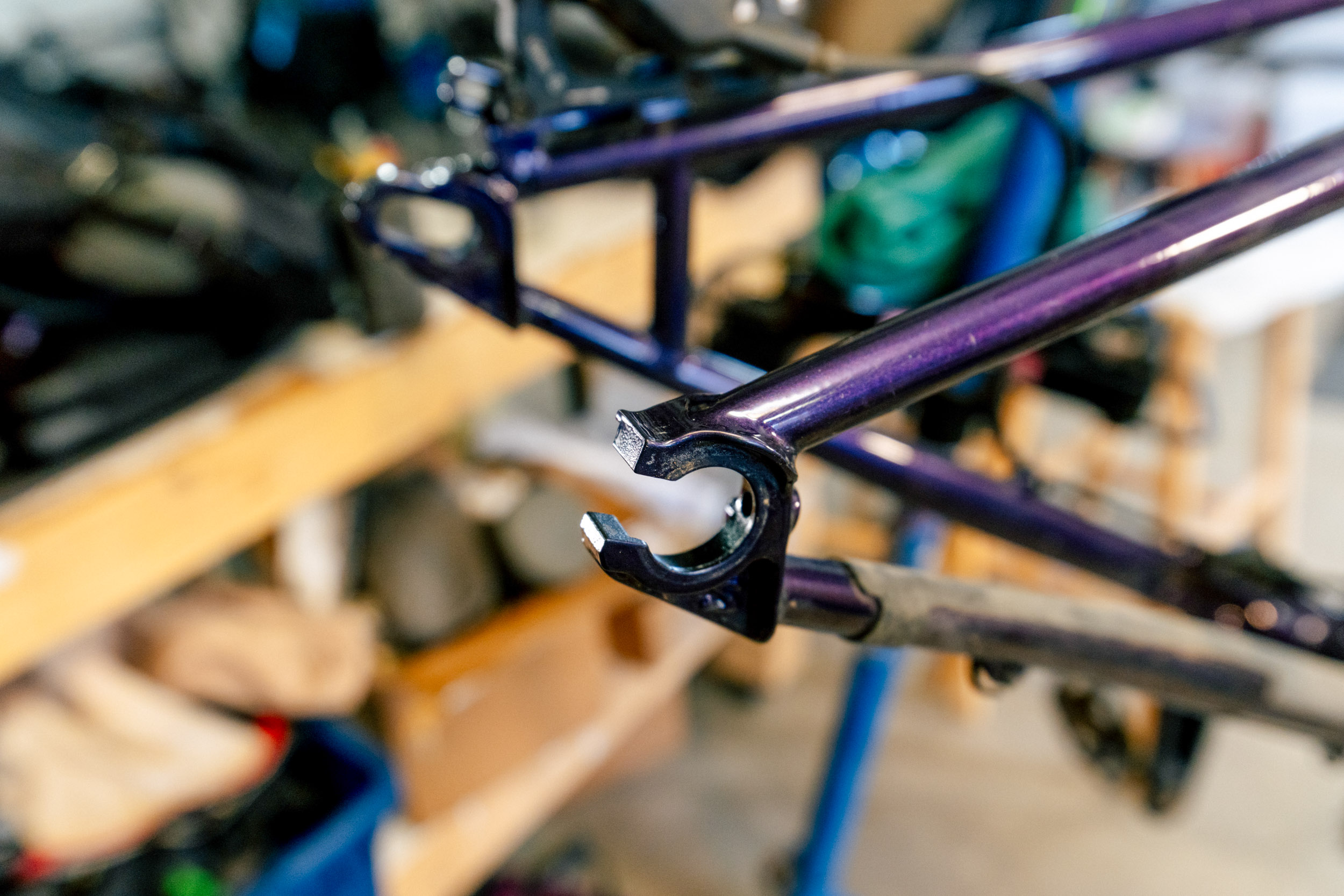

The conversion is pretty straightforward, although it does require a silly number of hex keys. You’ll need most of the common sizes. First, pull the wheel, swap in the singlespeed dropout, install the singlespeed-specific axle, remove the placeholder hardware, loosen the brake bolts, and reinstall the wheel. From there, leave the axle slightly loose, set your chain tension using the drive-side screw while keeping the wheel straight in the frame, then bring the non-drive-side screw in until it contacts the axle. Lock both down, tighten the axle, realign the brake (which is actually really slick), and you’re done.
6. Sorceress induced SSickness?
Once set up, I didn’t have to touch it again. Even after some pretty demanding rides and steep terrain that had me fully in a singlespeed-induced pain cave with max torque going through the drivetrain. It held tension perfectly with no slippage. I loved every second of it. It’s kind of like an addiction. I forgot how good singlespeeding can feel, and I’m glad the Sorceress brought that back for me.
One thing I noticed within the first few minutes in singlespeed mode was that the bottom bracket height feels pretty well-balanced. It’s something you quickly figure out when you’re stuck with one gear. Paired with 165mm crank arms on the medium, it’s another reason this bike just feels like it wants to be ridden singlespeed.


All told, I’m really impressed with how well this bike works in that setup, and it says a lot about the overall balance. The Sorceress descends with confidence but still climbs in a way I really value. It’s long enough to stay composed in rough terrain, but not so long that it feels like a handful. The DUH dropout just makes sense. It’s simple, versatile, and gives you a ton of flexibility in how you want to run the bike. I asked Surly about a 142 DUH, and they said the future is uncertain.
7. Is a 200mm Dropper too much?
When I first got this frame, I thought, “Oh, great… a 200mm dropper. Who actually needs a dropper that long?” It felt a bit excessive at first, especially since I’ve been totally content running something in the 150-175mm range on a medium.
But it all made sense after the first ride. The whole point of a dropper is to get the saddle out of the way so you can move your body freely without being limited by it. With 200mm, it takes that idea and pushes it further. Everything gets lower. The saddle drops way out of the picture, your center of mass comes down, and suddenly the bike feels like it’s giving you a lot more room to work with.

What stood out the most, aside from getting used to the time it took to rebound and compress the dropper and to the squatting muscles needing to adapt, was how little the bike got in the way. My knees weren’t brushing the top tube, the saddle wasn’t anywhere near me on descents, and I had way more freedom to shift my weight around. This allowed me to correct myself more quickly and made the bike more playful and nimble. At a certain point, it almost feels like your body becomes part of the suspension, moving naturally with the terrain rather than relying on the bike.


It also builds confidence in a way that’s hard to explain until you ride it. You get used to having that extra space, and then when you hop back on another bike, you immediately notice what’s missing. You start thinking about how you could lower things, shorten things, or just get more clearance overall. Of course, this kind of setup isn’t perfect for everything, and there are some tradeoffs to consider.
8: It Can Bikepack, but Should it?
The most obvious limitation for bikepacking is the sloping top tube. It’s designed to accommodate that massive dropper and standover clearance. Naturally, that comes at the cost of frame space for bikepacking. But of course, I had to try it anyway.

I ended up running an axle-mounted setup with the Restrap Switch rack using the Tailfin Transmission adapter, which worked really well for this bike. That rack style keeps things stable while letting me use a good bit of the dropper post, but unfortunately, not all of it. That said, once you start stacking a rack and a dry bag on the back, it does get in the way a tad. It takes away from how freely the bike wants to move when it’s unloaded, and on steep descents, my butt would occasionally kiss the rear cargo setup.
Because of the low top tube and long dropper insertion, frame space is limited. There aren’t even seat tube mounts for a bottle. Surly tries to make up for it by allowing two bottles inside the downtube on medium through extra-large frames, and one on extra-small and small frames. I was able to fit a frame bag I had lying around, and it worked okay, but it was a little oversized for the available space on the medium. On shorter rides, I also ran a tool keg in the frame and stacked a bottle above it, which actually worked pretty well and felt like I was making good use of the limited space for day rides.


Up front, certain things stood out to me when I loaded it up. I used the new Old Man Mountain and Salsa collaboration cradle, and with the already slack front end, adding weight up there made the steering feel like it was working against me. By the second day, I’d adjusted and gotten used to it, and the bike actually felt really planted, especially on descents. But there was more flex and slightly slower handling than I’d ideally want from a loaded setup.
The bike doesn’t have mounts under the downtube, which feels like a miss, too, but it does have top tube mounts, which I always appreciate. That said, they almost feel better suited to a bike like the Straggler than something like this. Still, I’ll always take more mounting options where I can get them. In fact, that lower top tube works well with a longer, full-length top tube bag, which I ended up using and still had a massive amount of standover.
At the end of the day, it handled a singletrack-heavy overnighter trip just fine. It wouldn’t be my first choice for a dedicated bikepacking bike, but if you’re more of a trail rider who occasionally wants to load up and get out there, it’s a perfectly capable tool for the job.
9. How do the Parts Fare?
I’ll admit, when I first saw this bike, I didn’t really consider running it as a singlespeed. But after testing it in its geared configuration, I was intrigued, mostly because I wasn’t getting along with the Eagle 90 drivetrain.
After spending time with the microSHIFT Advent MX drivetrain, I was pretty stoked on how effortless it felt and how crisp it shifted. So, when I moved over to Eagle 90, I was pretty underwhelmed. The shifter felt cheap, and shifting in general took more effort than I expected. After about 100 miles, I switched the bike over to singlespeed mode.


When I took the rear wheel off, it felt like a brick. It came in at 7.2 pounds, so removing the cassette not only simplified things but also reduced some weight. One upside here is that the bike came with the Eagle 70 cassette, which uses a standard HG freehub body. That makes the singlespeed conversion pretty straightforward, especially compared to working with an XD driver.
The other component I’d likely swap out is the DB6 brakes. Over time, I noticed that the rear brake was losing power. It felt decent once it warmed up and started to bite, but it took too long to get there, and the amount of lever pull required to really engage the caliper was more than I’d like. In my experience, that’s two SRAM mineral oil brake setups in a row that I haven’t loved.


As for the wheels, the WTB ST Tough i30 rims laced to Novatec hubs are straightforward. They’re heavy but durable. Mounted to them are the WTB Kessel 29 x 2.5” tires, which I ended up liking. They broke in over time and started to roll better, and overall, they feel more efficient than you’d expect for a tire of their size. I did have to throw in four plugs after a hard bottom-out, which is a good reminder of why I tend to run inserts in the rear, but overall, these tires are great. They corner well in very loose terrain, brake exceptionally well, and let you ease off the brakes more than I normally would.
Up front, the RockShox Psylo Gold fork does its job. It’s a budget 140mm fork, and while I slowed the rebound slightly to get it where I wanted, it worked as intended. It is on the heavier side, and you can feel that weight in the front end, but it’s not a dealbreaker. I considered swapping in something like a Fox 36 SL, but I didn’t want to stray too far from the supplied build kit.


The cockpit is pretty simple with TranzX Alloy 31.8mm bars, a 45mm stem, and about 20mm of rise on the medium and large. You could easily go higher with a riser bar, but I actually like the lower front end here. It gives a better sense of what’s happening beneath me on the trail. And for the saddle, it came with the WTB Solano, which is the more cushioned version between it and the SL version. Both are really nice saddles. I still prefer the firmer version, but WTB nailed it with this design.
Surly Sorceress Eagle 90 Build Kit
- Frame: Surly Sorceress, Elderberry Tonic
- Fork: RockShox Psylo Gold RC 140mm
- Crankset: SRAM Eagle 90 Transmission, 30T
- Derailleur: SRAM Eagle 90 Transmission
- Shifter: SRAM Eagle 90 Transmission
- Cassette: SRAM XS-1270 Eagle Transmission, 10–52t, 12-speed
- Bottom Bracket: SRAM Dub BSA, 73mm
- Wheels: WTB ST Tough i30 29″ TCS 2.0
- Tires: Teravail Kessel, 29 x 2.5″
- Headset: FSA Orbit ITA
- Handlebar: TranzX Alloy 31.8mm
- Stem: Promax DA-205 Alloy
- Grips: WTB Wavelength Lock-On
- Saddle: WTB Solano
- Seatpost: TranzX YSI36 w/ SRAM MMX Dropper Lever, 30.9mm
- Dropper Lever: SRAM MMX
- Brake Levers: SRAM DB6
- Brake Calipers: SRAM DB6
- Rotors: SRAM CenterLine180/180, 6-Bolt
The Eagle 90 build I tested comes in at $3,199 USD and weighs 32 pounds, 9.6 ounces. There’s also a Shimano Deore build at $2,499 and a singlespeed build at $2,199, though that one comes with pretty stout 32×17 gearing. I was barely getting by with a 20-tooth cog, so keep that in mind. Surly is also offering the Sorceress as a frameset for $999, which I consider a great value.
10. Right Bike, Right Time?
A lot of things came together to make my time on the Surly Sorceress such a positive experience. The trails opening up for the first time this spring, the kind of terrain I found myself riding most days, and even the ability to roll out the front door and go bikepacking in March. It all lined up. But that only goes so far. You still need the right bike for that moment, and in this case, I think the bike mattered more than anything else. I can easily see myself enjoying this one well into the future.

What really made the Sorceress click is how simple it is, but with just enough versatility to feel engaging. It’s a bike I connected with more than most I’ve ridden recently. The geometry and angles open the door, but it’s the way this bike actually rides that seals it. It handles technical climbs, rough descents, and everything in between in a way that feels natural, and in some cases, better than other bikes I’ve tested on the same terrain, which includes full suspension bikes. That’s what gets me excited.
Taking a step back, this isn’t the bike for everyone. If you’re looking for something lightweight, super efficient, or more bikepacking-first, there are better options. Where this bike really shines is for the rider who prioritizes trail riding, wants something simple and durable, and maybe likes the idea of mixing in the occasional overnighter or even running it singlespeed.


And whether Surly intended it or not, this bike features one of the most comfortable tubesets I’ve ridden in a long time. Maybe that’s just what longer steel bikes can offer, but the small details add up. It ends up being a great option for someone getting into mountain biking or looking to simplify their setup and return to a hardtail. The Elderberry Tonic colorway is the cherry on top of the cake. I’m a big fan, though it also comes in Hot Honey Bling and Swamp Water Taffy, both of which are nice.
- Model Tested: Surly Sorceress, medium
- Actual Weight: 32.6 pounds (14.8 kilograms)
- Place of Manufacture: Taiwan
- Price: $3,199
- Manufacturer’s Details: Surly Bikes
Pros
- Really well-balanced geometry
- Incredibly comfortable tubeset
- 200mm dropper + lots of standover
- Singlespeed compatibility (DUH dropout) + rides great set up SS
- Simple, durable, and thoughtful specs
- Still capable of light bikepacking
- Great value, especially the frameset
Cons
- Heavy
- Limited frame space
- Not a bikepacking-first design
- Eagle 90 driver and DB6 brakes are underwhelming
- No seat tube or down tube mounts
- Stock singlespeed gearing is steep
- Lots of tools to swap out DUH dropout
Wrap Up
Though the Surly Sorceress isn’t for everyone, it’s a bike I enjoyed. With a unique dropout design that is as interesting and utilitarian as its parent company, the Sorceress presents solid value for a hardtail in 2026. Equipped with intricate tubing some are bound to overlook due to its Natch branding, the Sorceress impresses in a variety of setups and configurations. A bikepacking-oriented rig it is not, though the bike still holds its own with some racks and bags and can double as an overnighter-worthy machine for someone who is more trail-focused. Available in four build kits ranging from $2,200 to $3,200, the version reviewed here, Surly has delivered a budget-friendly bike imbued with a bit of magic.
Further Reading
Make sure to dig into these related articles for more info...


Please keep the conversation civil, constructive, and inclusive, or your comment will be removed.