


 Mountain Bike (MTB)
 Gravel Bike
 All-Terrain Bike (ATB)
 Fat Bike



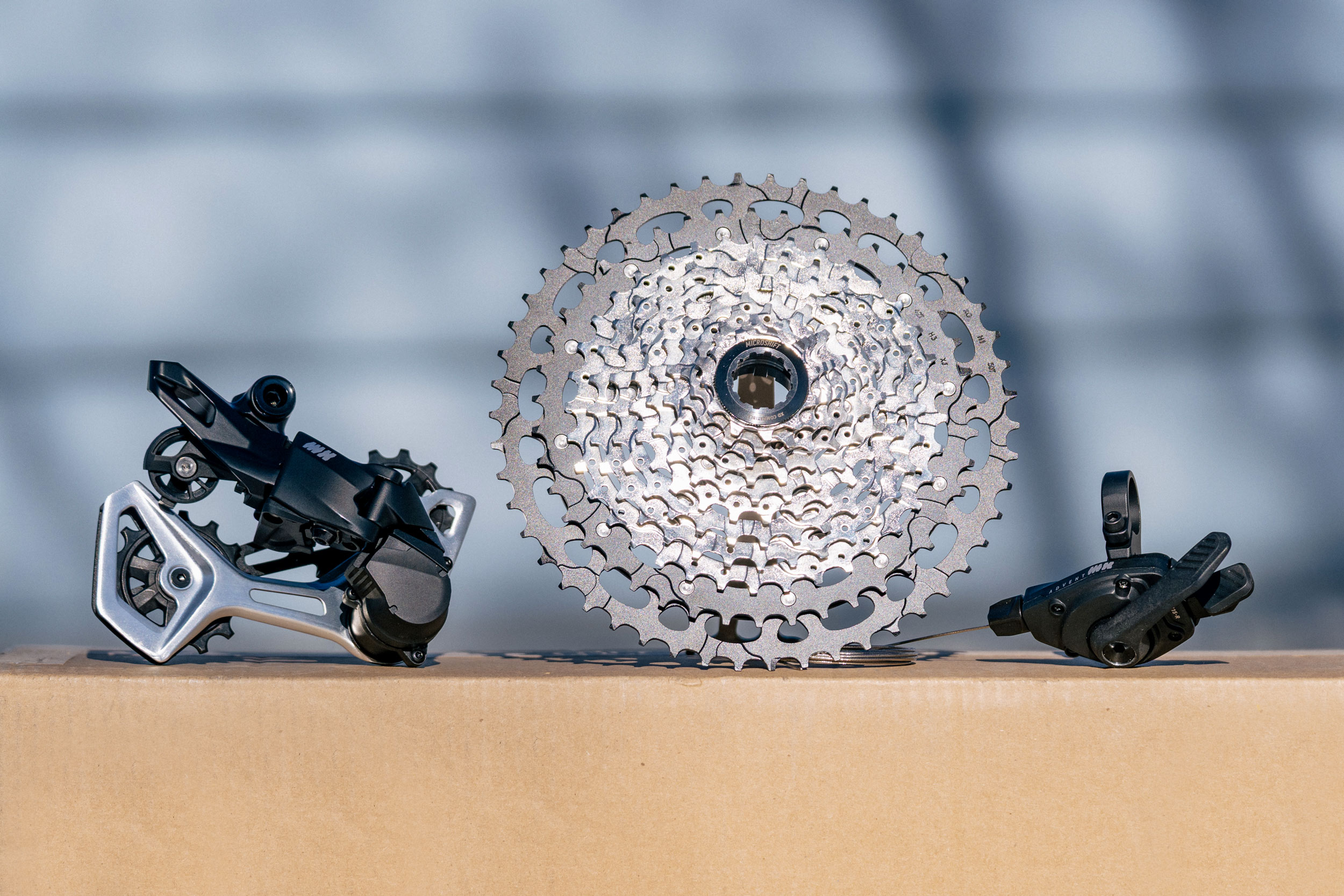
Microshift Advent MX Review





The new microSHIFT Advent MX and MX Black groupsets are a redesign of the brand’s budget-focused Advent and Advent X systems. With claims of better shifting, increased durability, and a wider range, Neil put this fresh mountain bike group through its paces to see if it delivers the same affordable quality. Find his video and written reviews here…
PUBLISHED Feb 25, 2026
Today, microSHIFT is releasing its latest mountain bike-specific drivetrains. A complete redesign of the Advent systems the brand has become known for, the 11-speed Advent MX and 10-speed Advent MX Black are the company’s latest foray into wide-range groupsets. I’ve been riding these systems for the last month and have logged over 200 miles so far. Though I anticipate many more miles ahead, you can dive into the video and written reviews below for my first look at microSHIFT’s new drivetrains.
microSHIFT’s History
Based in Taiwan, microSHIFT has been around since 1999. Taking a different approach to drivetrains, the brand has adopted a simple philosophy. Instead of chasing the latest trends, microSHIFT focuses on introducing wide-range drivetrains without new standards, and serviceability and price over bleeding-edge technology. While the new MX platform pushes things forward, those core values still live on in a system that’s relatively affordable and easy to work on.


Available through distributors and bike shops alike, microSHIFT wasn’t always directly available to the public. Earlier on, their focus was more on OEM-spec parts, something that changed in 2019 with the launch of the Advent 9-speed drivetrain—a reliable, budget-friendly 1x wide-range system. That platform laid the foundation for Advent X, which arrived a year later as a 10-speed system with an 11–48T cassette. The new system was easier to set up, lighter, and compatible with the standard HG freehub body. A few years after launch, they quietly updated the Advent X derailleur, keeping the same ecosystem intact while revising the pivot layout to improve shifting response.

In 2023, microSHIFT expanded into drop-bar territory with the Sword gravel group. It boasted wide gearing, solid ergonomics, and notable cross-compatibility with Advent X, even using the same cassette. Available in both 1x and 2x configurations, Sword emphasized affordability and real-world usability. Then came Sword Black in 2024. Despite the name, it’s actually the more budget-focused option, with 1×9 and 2×9 configurations, no clutch mechanism in the derailleur, and a square-taper crank to keep costs down. Consistent with the brand’s desire for cross compatibility, it maintains similar pull ratios, allowing some mixing and matching between Advent and Sword components.
What is Advent MX and MX Black?
Their new release, microSHIFT Advent MX and MX Black, is positioned as their most robust systems to date, with noted improvements in chain retention, faster, smoother shifting, and better overall durability. In their press release, microSHIFT mentions that the majority of their previous mountain bike products worked well for about 90% of riders. These updates are intended to improve their usability, creating a drivetrain that works just as well for casual riders who are hard on gear as for racers seeking a durable system with more precise shifting. Though I only tested the Advent MX system, I’ll be talking about both MX and MX Black here since they are cross-compatible.
Advent MX and MX Black Cassettes
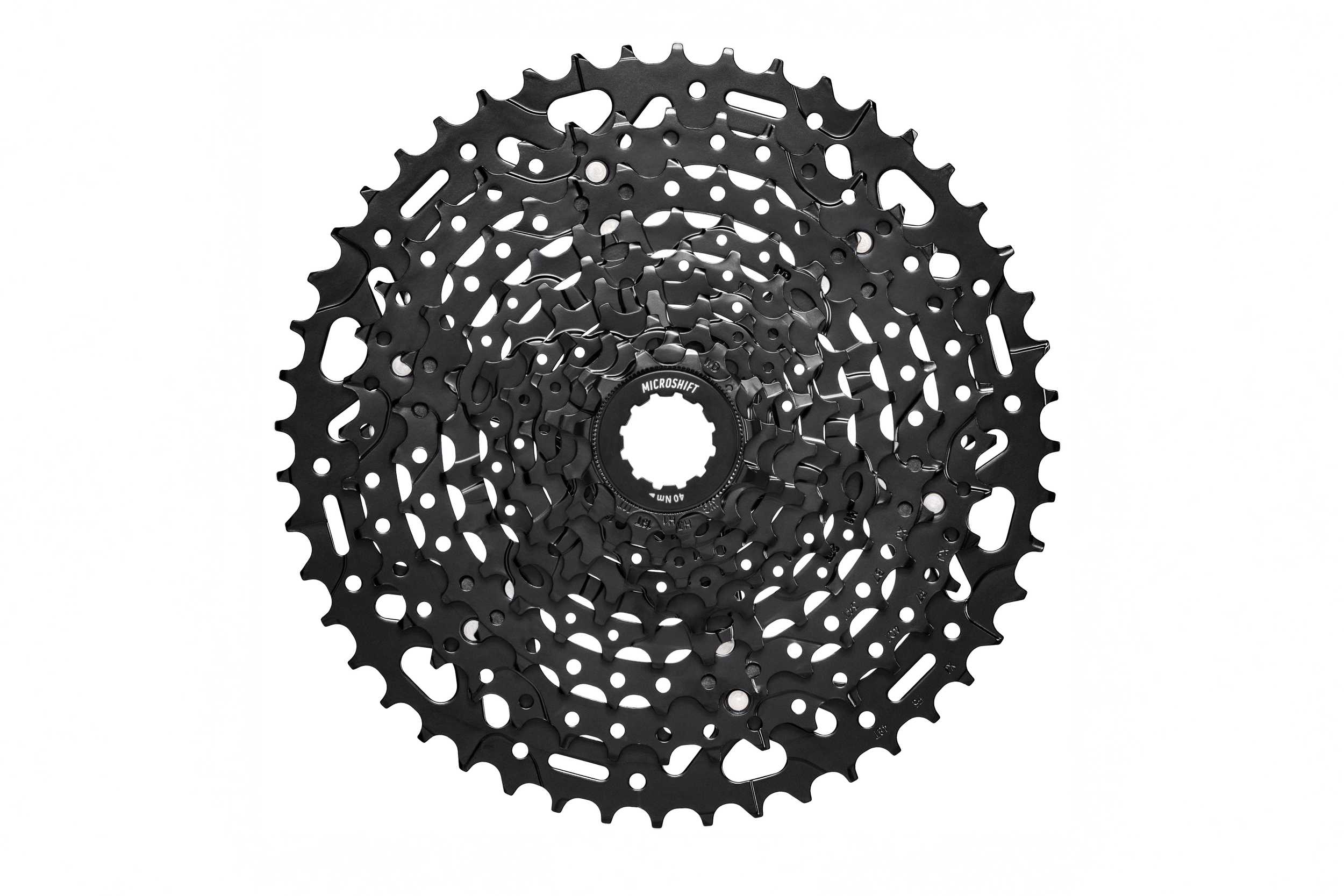
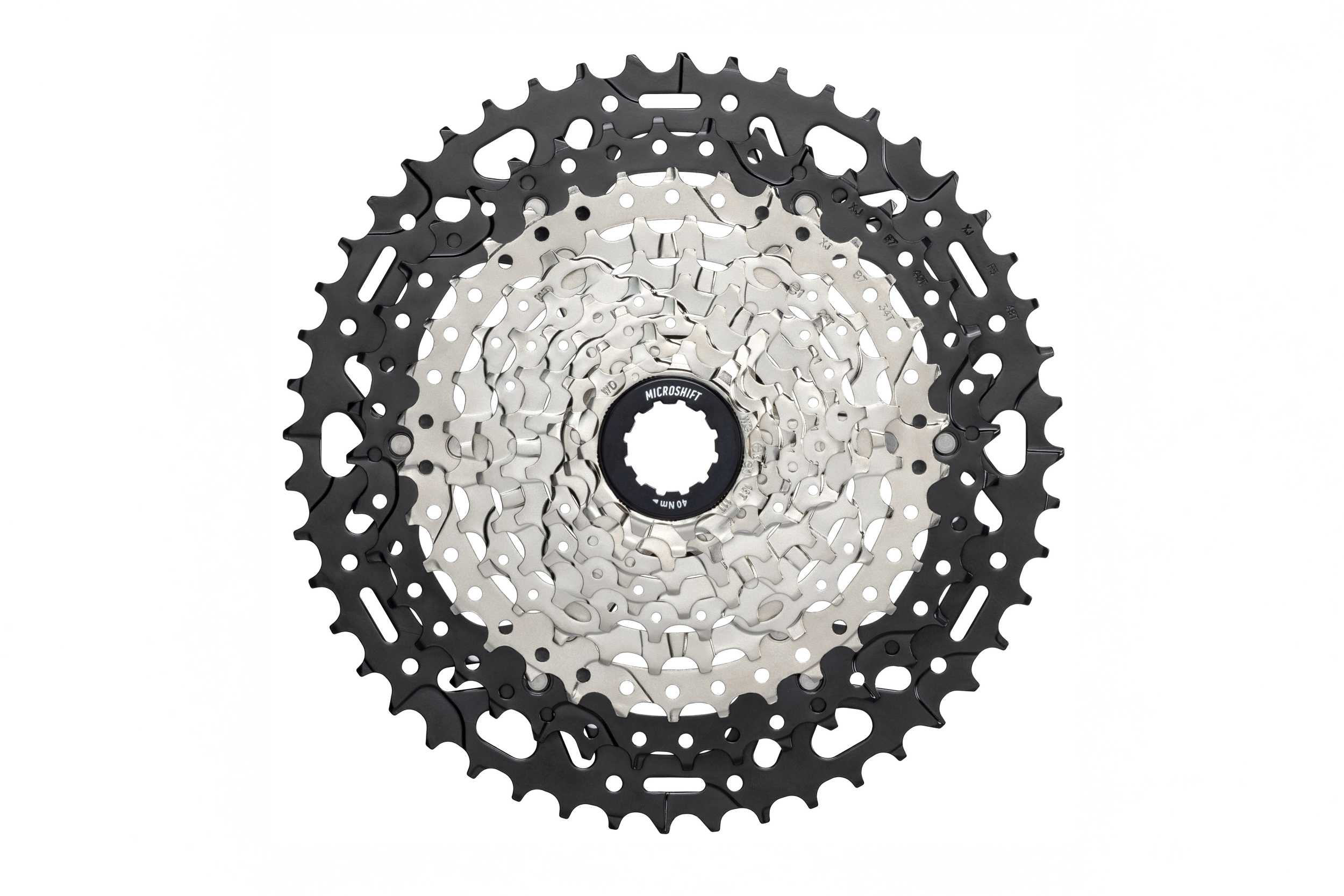
The updates to the Advent system start with the new cassette. Completely redesigned, it features updated shift ramps at 64 locations that work in both directions, so shifting up and down the cassette is smoother and quicker than before. Though that’s not necessarily a new development, as older Advent cassettes used ramps, these are tuned for faster engagement and smoother shifting, especially under load. The cassette comes in a few different versions that all share the same tooth counts (11-13-15-18-21-24-28-32-36-42-50T) across the gear range. A detail that might surprise users is that microSHIFT offers these four distinct Advent MX cassette options in different materials.


| Advent MX 11-Speed Cassettes | CS-XD116 11-50T | CS-EG116 11-50T | CS-EH116 11-50T | CS-H1114 11-50T |
|---|---|---|---|---|
| Weight | 550 grams | 480 grams | 650 grams | 655 grams |
| Chromoly cogs | 7 cogs (11-28T) | 7 cogs (11-28T) | 7 cogs (11-28T) | N/A |
| Steel Cogs | 2 cogs (32,36T) | 2 cogs (32,36T) | 3 cogs (32-42T) | 10 cogs (11-42T) |
| Aluminum Cogs | 2 cogs (42,50T) | 2 cogs (42,50T) | 1 cogs (50T) | 1 cogs (50T) |
| Spider | Alloy Spider | Alloy Spider | N/A | N/A |
| Hub Compatibility | XD Driver | HG | HG | HG |
| Cog Combinations | 11-13-15-18-21-24-28-32-36-42-50T | 11-13-15-18-21-24-28-32-36-42-50T | 11-13-15-18-21-24-28-32-36-42-50T | 11-13-15-18-21-24-28-32-36-42-50T |
| Price | $144.99 | $129.99 | TBD | $74.99 |


First is the standard Advent MX steel cassette. Built with steel cogs from 11 through 42T and an aluminum 50T bailout cog, the steel cassette weighs around 655 grams. Next is an e-bike-specific version designed for added durability. It uses 1.8mm chromoly steel for the smaller 11-28T cogs, regular steel for the 32-42T cogs, and an aluminum 50T cog weighing a claimed 650 grams.
Then there are the lighter cassette options, which use an alloy spider along with aluminum 42T and 50T cogs to reduce weight compared to the full steel versions. One of the biggest updates here is expanded freehub compatibility. All of the cassettes in the new Advent MX range are available with standard HG freehub bodies. However, for the first time, microSHIFT is also offering an XD driver version.

| Advent MX 10-Speed Cassettes | CS-EG106 11-48T | CS-EH106 11-48T | CS-H104B 11-48T |
|---|---|---|---|
| Weight | 486 grams | 680 grams | 675 grams |
| Chromoly cogs | 7 cogs (11-28T) | 7 cogs (11-28T) | N/A |
| Steel Cogs | 1 cog (34T) | 3 cogs (34-48T) | 10 cogs (11-48T) |
| Aluminum Cogs | 2 cogs (40,48T) | N/A | N/A |
| Spider | Alloy Spider | N/A | N/A |
| Hub Compatibility | HG | HG | HG |
| Cog Combinations | 11-13-15-18-21-24-28-34-40-48T | 11-13-15-18-21-24-28-34-40-48T | 11-13-15-18-21-24-28-34-40-48T |
| Price | $114.99 | $84.99 | $64.99 |
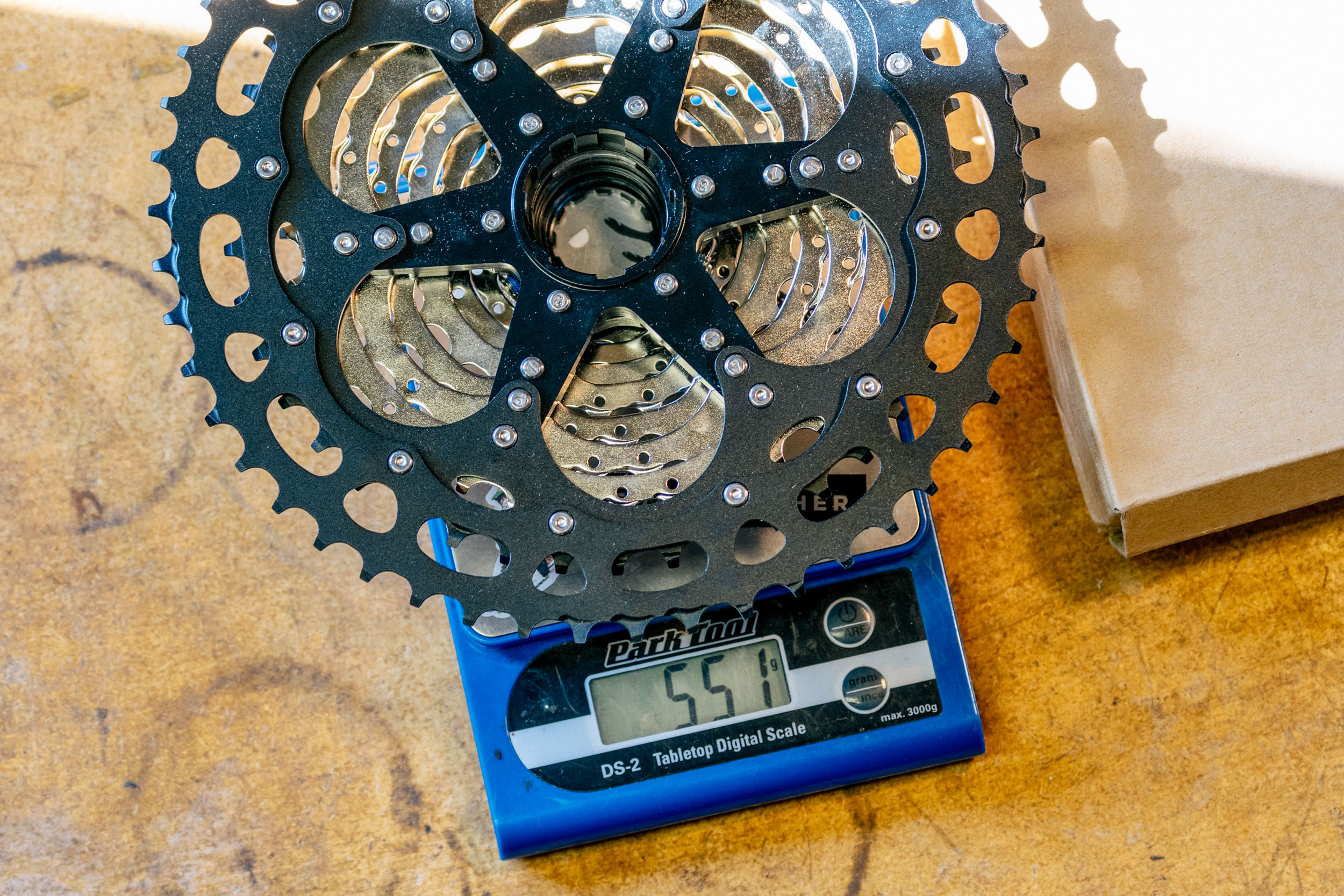
I received both alloy cassette versions and weighed them to verify their claimed weights. The XD cassette weighs 551 grams and the HG cassette 487 grams, making them noticeably lighter than the steel options. For reference, the Shimano CUES 11-speed weighs about 608 grams, a 100-gram difference compared to the Advent MX option. As for MX Black, you essentially get the same three cassette constructions (Steel, E-bike, and Alloy) but with slightly different gearing (11-13-15-18-21-24-28-34-40-48T). On the alloy version, the 40 and 48T cogs are aluminum, but there is currently no XD freehub option for MX Black.
Derailleur
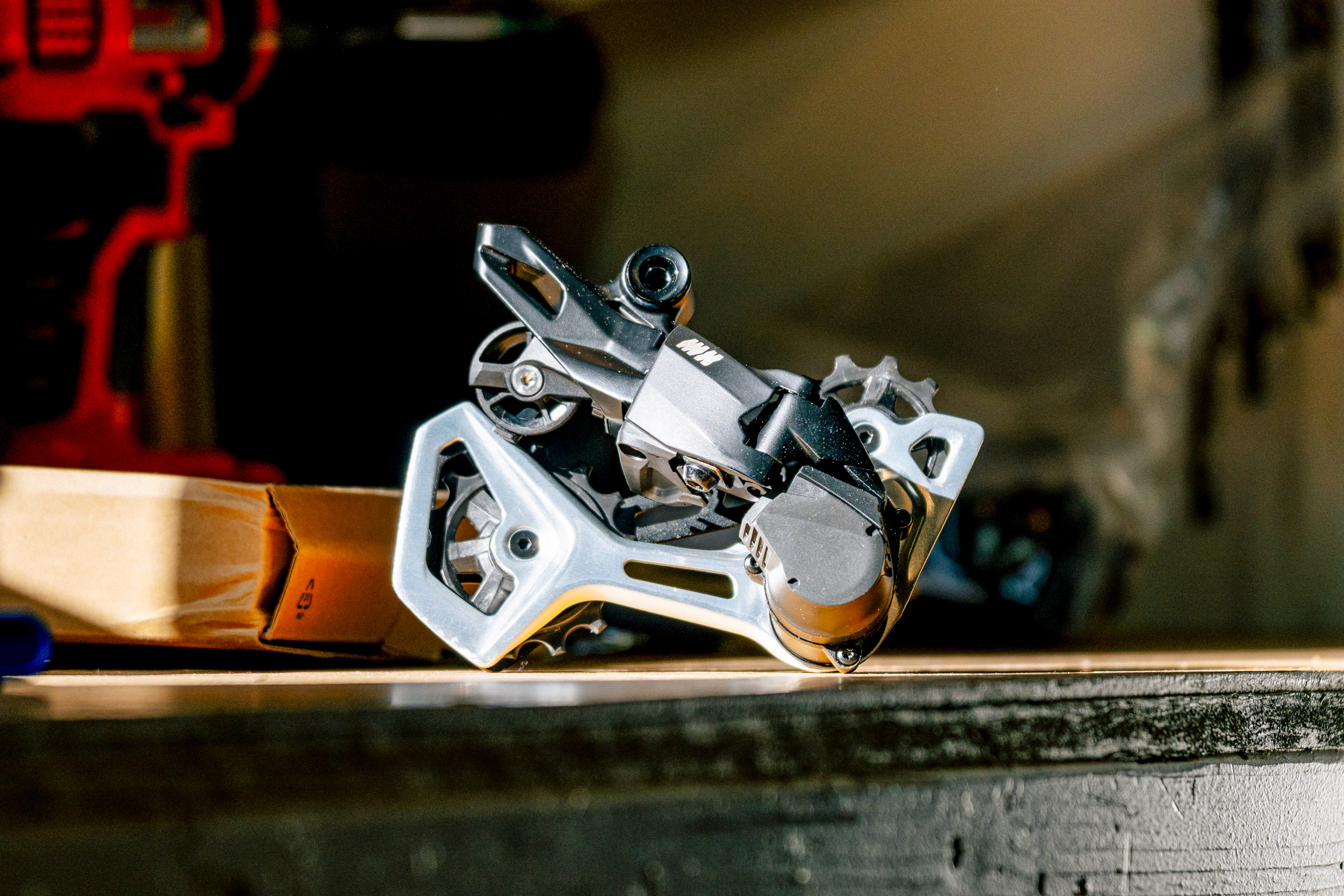
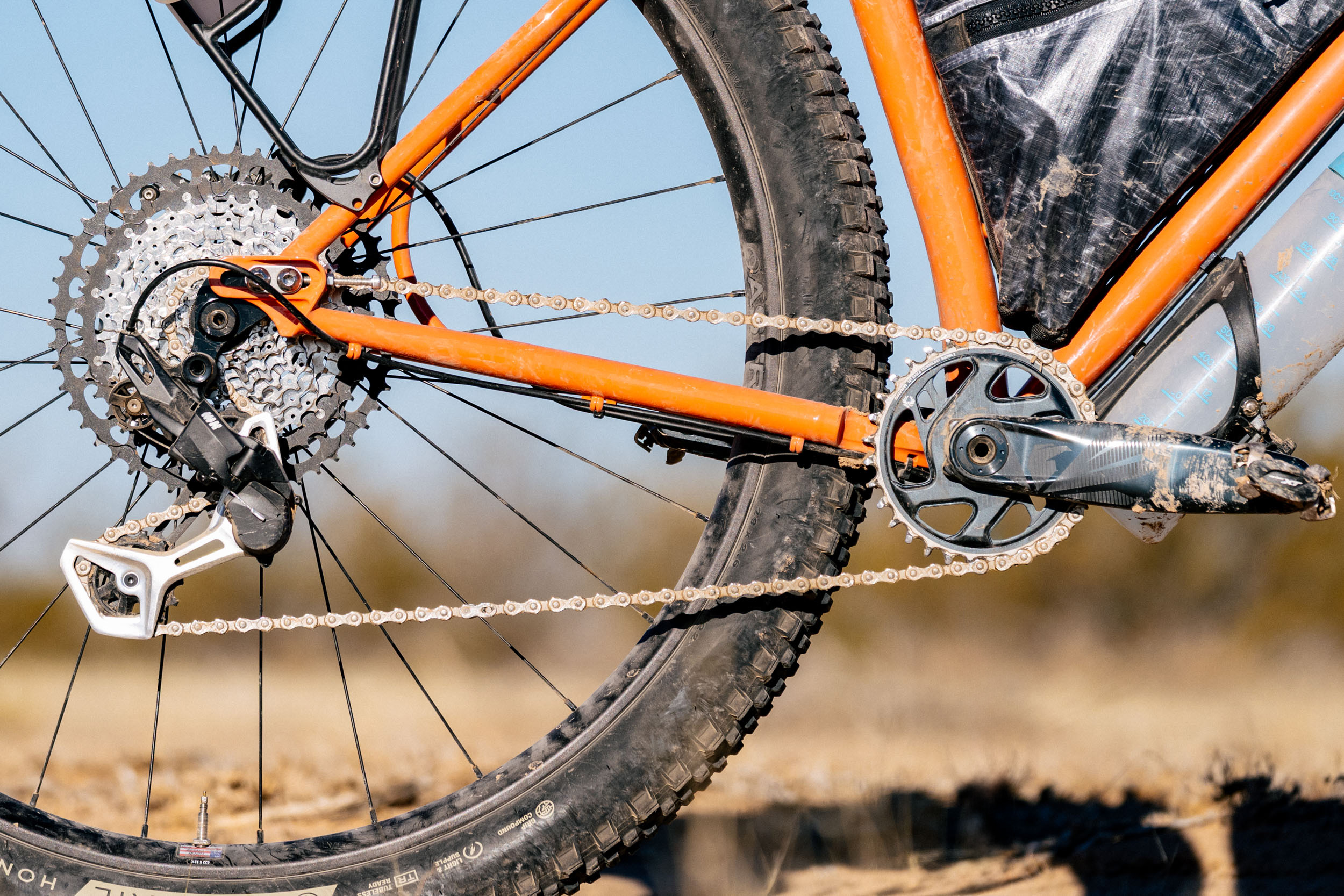
The derailleur has also been redesigned and no longer resembles the older Advent X unit. Instead, it takes on more of an SRAM Eagle style, including a cable redirection pulley. The first time microSHIFT has used this design. They also implemented a horizontal parallelogram shape that helps the derailleur track more consistently across the cassette. By managing shifting movement separately from chain tension, it improves chain stability and helps maintain smoother shifts under load. In practice, this lets the drivetrain better leverage the updated ramps for quicker, more decisive shifts. One thing I noticed right away is the reduced force required at the shifter. Especially when compared to the older Advent X system, it’s noticeably easier on the thumb.


| Advent MX and MX Black Derailleurs | RD-M7015M | RD-M7005M |
|---|---|---|
| Weight | 365 grams | 420 grams |
| Speed | 11/10 Speed | 11/10 Speed |
| Max Cog | 48-50T | 48-50T |
| Clutch | Silent | Silent |
| Repairable Cage | Yes | No |
| Construction | Aluminum | Aluminum / Steel |
| Compatibility | Advent MX and Advent X | Advent MX and Advent X |
| Price | $69.99 | $54.99 |


All of this works alongside an adjustable, built-in clutch that can be turned on or off. The brand says it achieved a stronger, more durable feel by retuning the friction stack, which also allows users to adjust the clutch’s strength to their preference and riding style. I found the default setting works great, though I realized halfway through the northern section of the Monumental Loop that I had the clutch off, which resulted in quite a bit of noise. I’ve since turned it on, which has improved retention. However, noise still emanates from the system. The Advent MX derailleur weighs 356 grams with an alloy construction and replaceable cage, and the MX Black version weighs about 420 grams and uses a mix of steel and aluminum.
Shifter
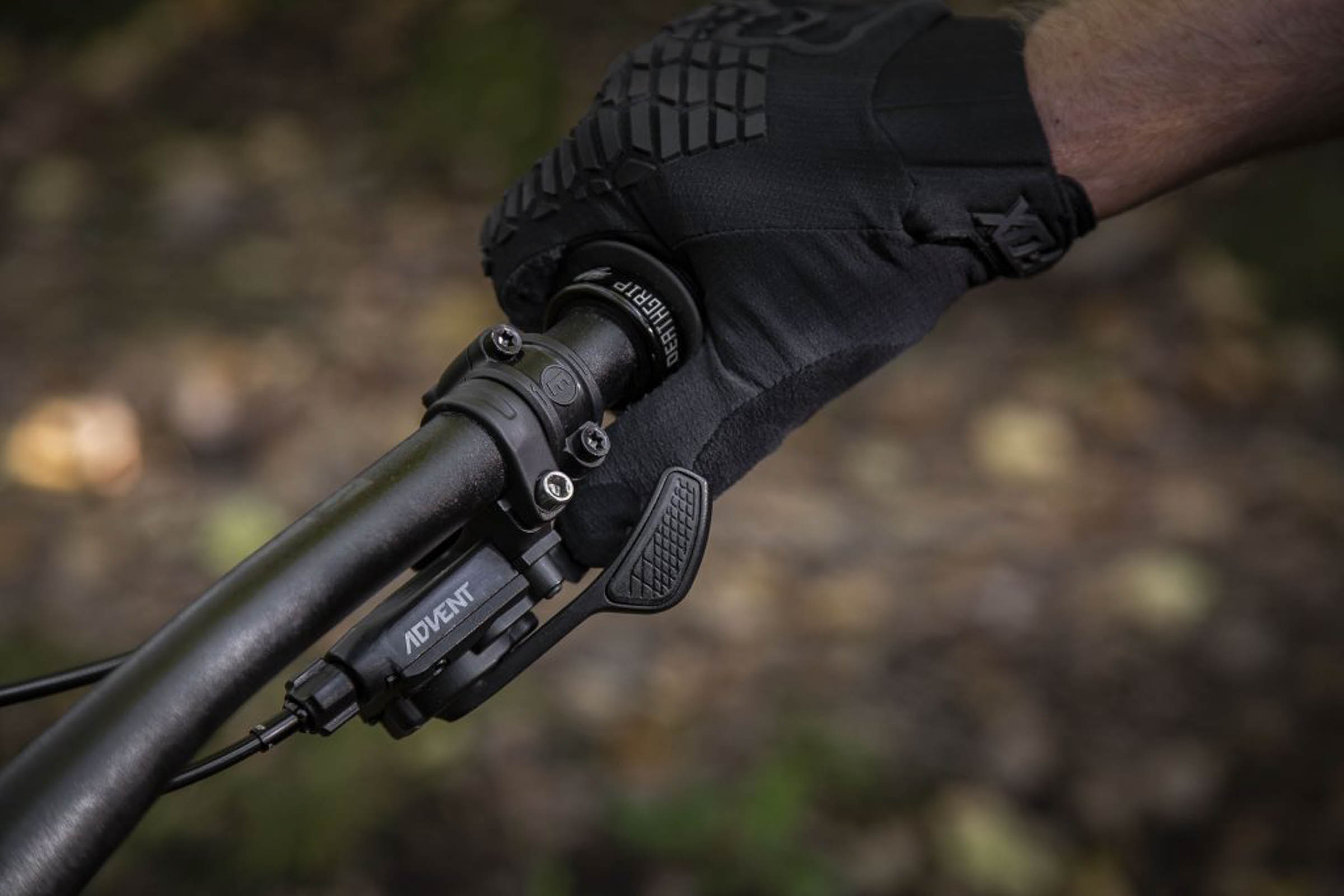
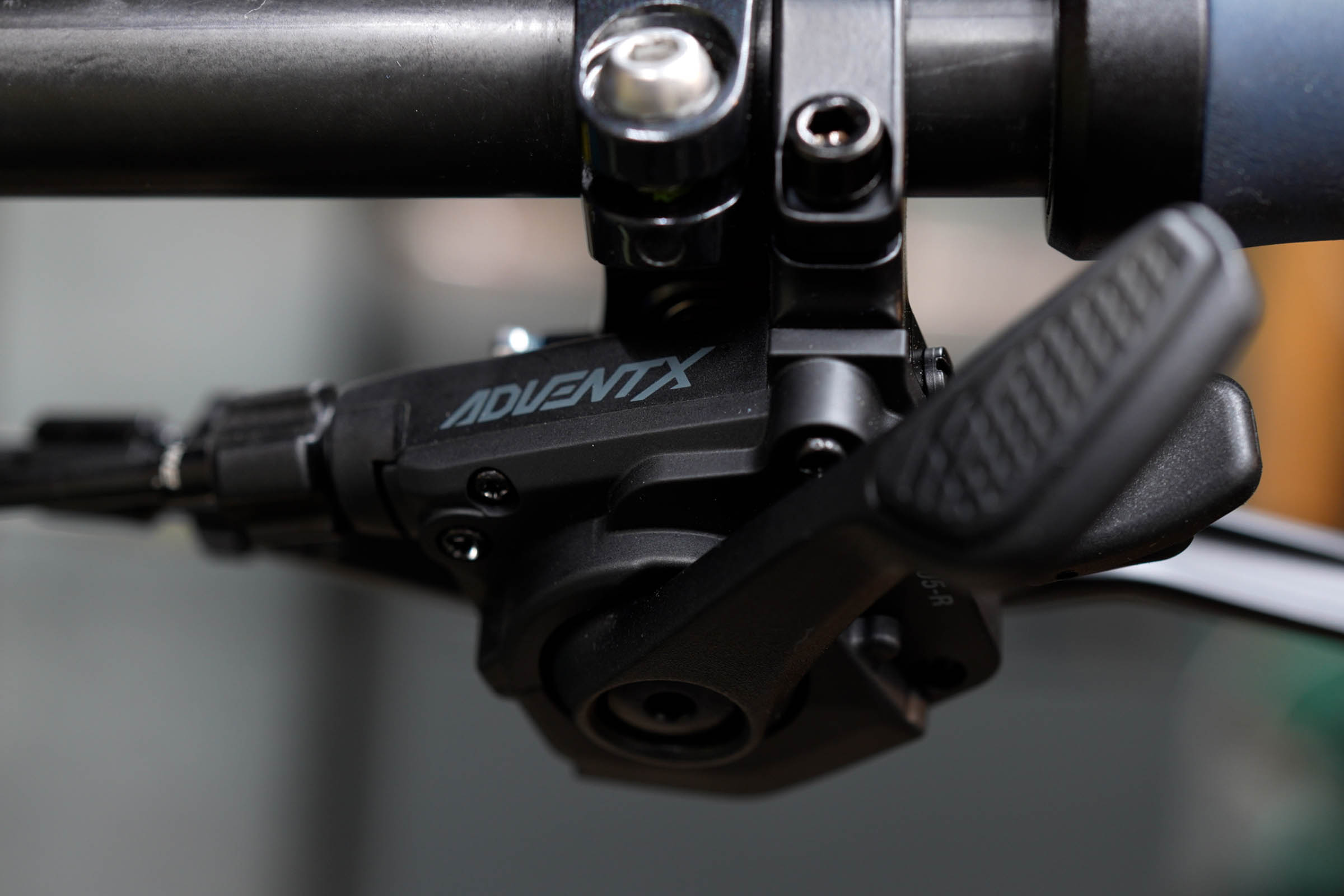
Moving on to the shifter, it’s still a simple bar clamp design that microSHIFT claims shifts four times faster than Advent X. In my experience, I don’t know if I’d say it’s a full four times faster, but the system undoubtedly moves the cassette up and down more quickly than my Advent X shifter. The triggers feel comfortable to hold and feature a removable clamp that allows for two distinct mounting positions, each about 10mm apart, to help with bar positioning. The Advent MX shifter weighs 133 grams with cable installed and 123 grams without. The MX Black shifter is lighter at around 120 grams, but it doesn’t have an adjustable clamp.


| Advent MX and MX Black Shifters | SL-M7115 | SL-M7005-R |
|---|---|---|
| Weight | 123 grams | 120 grams |
| Speed | 11 Speed | 10 Speed |
| Side | Right | Right |
| Mounting | Two Position | Fixed |
| Compatibility | Advent MX | Advent MX and Advent X |
| Price | $32.99 | $27.99 |
Other Parts
One of the things I’ve always appreciated about microSHIFT is the upgrade-friendly nature of their component ecosystem. It’s an aspect of their design philosophy they’ve emphasized for years, which is why they don’t produce their own MTB cranks, chains, or chainrings for the MX build.


In my testing period, I installed the MX drivetrain on a Sklar Bikes PBJ, which originally came with a SRAM GX Eagle setup. I ended up running a KMC chain and even tried a Shimano-specific chain paired with the GX crank and chainring, and everything worked just fine. The brand recommends the KMC E-Glide chain, citing its durability and responsiveness, but it’s not the cheapest option on the market. That said, e-bike-rated chains like the one microSHIFT recommends are built to take a beating. That kind of durability makes sense for a system like this.
Compatibility
Advent MX and MX Black are cross-compatible, as the derailleurs are interchangeable between the 10 and 11-speed systems. As long as users match the number of speeds available on the shifter to the cassette, the components can be used interchangeably. The brand says they’ll be phasing out Advent X over time, but that most Advent X and Sword components remain compatible with the new MX Black 10-speed system. This means you could start upgrading piece by piece, moving from Advent X to MX Black, then to Sword, and eventually to the full Advent MX setup.
Another interesting note is that microSHIFT Cassettes are compatible with Shimano CUES. That means users can run an MX 11-speed cassette alongside certain CUES setups, which is especially useful if you’re already on an XD freehub body and looking for a compatible wide-range cassette solution.
Installation
In my experience, installation was easy. It’s fully mechanical, which simplified things quite a bit given my prior experience as a mechanic. The biggest doubt going into the setup was the XD cassette. I wasn’t sure how it mounted at first, since it comes with what looks like a standard cassette lockring outer, but that part isn’t used for threading onto the XD driver.


Instead of threading the cassette onto the free hub body, it’s secured through three set screws located between the fifth and sixth cogs. These tighten down with the included 2.5mm hex bit. The most important aspect here is whether the cassette is fully seated on the XD driver. You’ll know it’s installed correctly if you can see a good amount of the end cap exposed above the cassette. Once it’s seated, tighten the three set bolts evenly and check for any side-to-side play to make sure everything is secure.
It’s a unique design, somewhat similar to e*Thirteen’s approach, so you don’t need any special cassette tools. All you really need is a ratchet or driver for the included hex bit. MicroSHIFT says this system helps distribute tightening force more evenly across the driver compared to the e*Thirteen design.


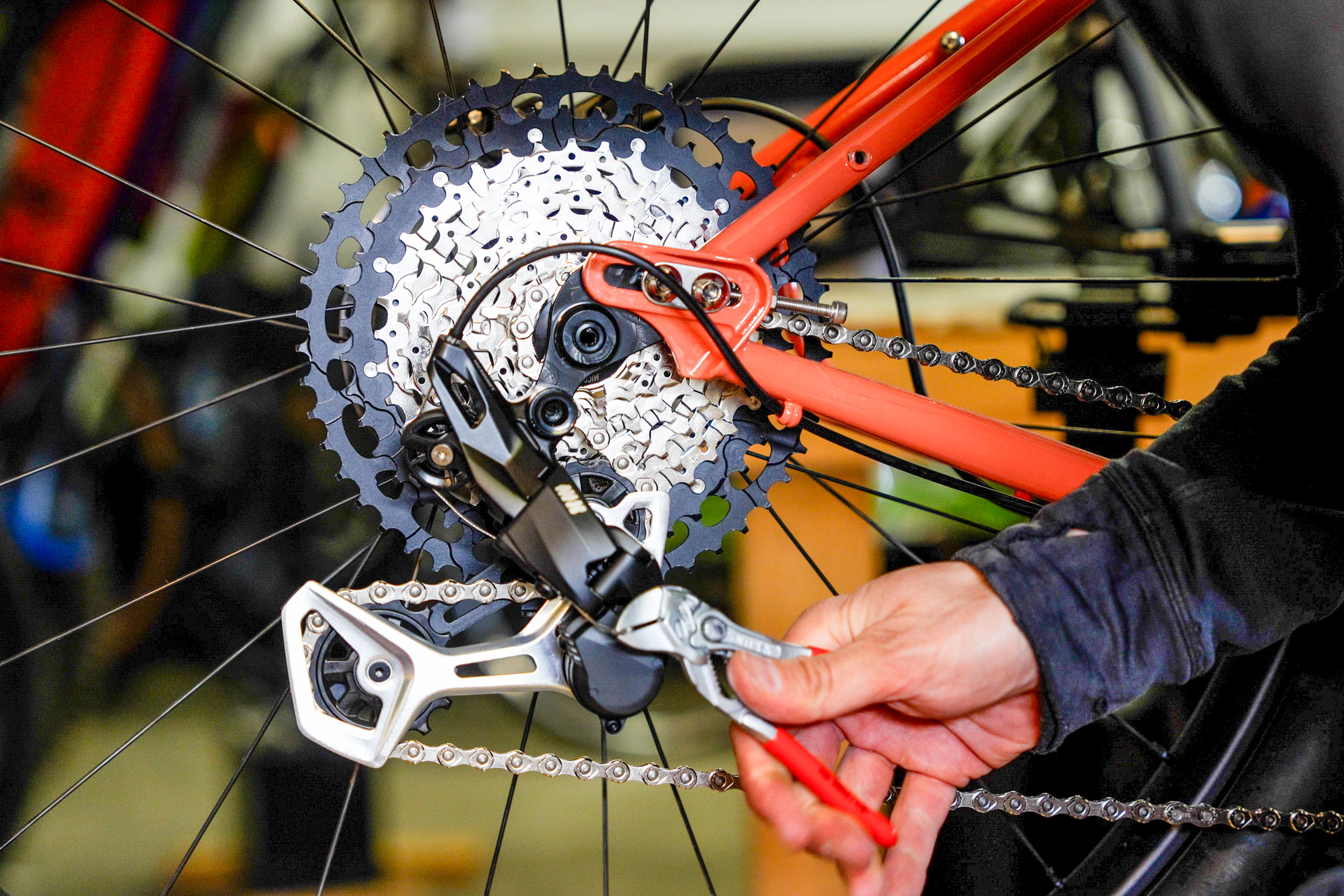
Installation of the rear derailleur is straightforward and mirrors that of any other standard mechanical option. The only change from the Advent X system is the cable routing, which is a bit more involved due to the redirection pulley. If you’re familiar with SRAM Eagle setups, it will feel very similar. After mounting, I made small tweaks to the high- and low-limit screws, threaded the cable, tightened everything down, turned the clutch off, and measured the chain by wrapping it around the large cog and the chainring. MicroSHIFT recommends placing two inner links next to each other on the chainring, then adding two inner links before cutting the chain. I followed the prescribed method, but it ended up a little too slack for my setup. So, I removed one more inner and outer link, which worked perfectly.
In Use

I’ve logged just over 200 miles on the Advent MX system. That’s not a ton of use, but I feel I have enough experience with the system to speak to its function. There was a normal break-in period, and I did have to adjust the barrel slightly as the cable stretched during the first few rides. But, since then, I haven’t had to touch it.
As for the overall ride feel, it feels fast in shifting action. I distinctly recall the quickness and precision of each shift feeling great as I rode along. The chain grabs quickly and efficiently, which lets you keep pedaling through shifts without hesitation. The shifter can also dump three gears with one full push of the big downshift paddle. Similar to other high-end drivetrains, this makes dropping gears quickly feel natural and gives the whole system a more premium feel. Considering this is an 11-speed setup with a 455 percent range, it actually dumps gears faster without sacrificing too much gearing.


Compared to the larger gear ranges from SRAM and Shimano, the biggest difference comes down to the top end and slightly tighter high-end spacing. The 18 through 50T portion of the cassette is very similar to SRAM’s 10-50 layout. The main change is the small cogs, where the Advent MX uses 11-13-15 instead of the tighter 10-12-14-16 progression on SRAM cassettes. If you don’t need that extra high gear and are happy with four faster gears instead of five, this offers an incredible value given the price differential.
Thanks to the MX drivetrain’s high-end range, I never found myself wishing for more gears during a recent bikepacking trip in New Mexico. The only thing I missed was some of the aspects of a Shimano system I’ve been riding recently. I like Shimano’s 45T cog in place of the 42T, and I felt the gap between gears on steep pitches. That said, the 50T bailout gear is massive compared to something like the old 10-speed 11-48 Advent X setup, so climbing was never an issue. Unfortunately, the MX Black cassette has the same tooth count configuration as the Advent X 10-speed, so those users will miss out on the extra two teeth.


As for the shifter, I love the 10mm lateral adjustment. It makes it easier to position everything around the brake clamp, though I wish it allowed more free movement rather than just two fixed positions. Another small complaint is that they didn’t keep the rubberized texture from the Advent X shifters. It’s a feature that made it easier to find and stay planted on the big paddle when shifting quickly. Overall, however, the feel of the shifter, the responsiveness, and the sound all give off a level of quality that really impressed me. I tested this system on some really demanding and rough roads in New Mexico, along with a mix of milder trails and roads here in Colorado. It felt durable throughout, and I didn’t experience any shifting inconsistencies or odd behavior, even when things got rough and a little sloppy during the warmest winter I’ve endured in Colorado.
One thing I noticed is that the derailleur body and clutch housing are slightly larger and protrude more than those of some other options on the market. If you’re already flirting with millimeters of clearance on technical terrain, that’s something to keep in mind. The upside is that the cage is replaceable and the clutch is serviceable, so you have options if you do clip a rock a little too hard.
Cost
Despite the performance-minded updates, microSHIFT has kept affordability at the heart of its designs. The complete Advent MX group with the XD cassette comes in at $245 USD, with the only added expense being an 11-speed chain. The one I use costs roughly $50, making the complete package $300 USD, which is slightly more than a Shimano CUES 11-speed setup. If you’re running an HG driver, that version drops the price further to about $230 USD. The other option is the MX Black group with the lighter cassette, which comes in at around $195 USD.


That said, all the parts are sold individually, which I find is the best way to upgrade gradually, especially if you’re coming from an Advent or Advent X setup. The XD cassette is the most expensive at about $145. In comparison, the steel 11-speed cassette is closer to $75. The Advent MX derailleur I tested sells for around $70, and the MX Black derailleur costs about $55 USD. Shifters are also pretty affordable at roughly $33 for the 11-speed and $28 for the 10-speed.
Final Thoughts


Over the last few years, microSHIFT has quietly earned my trust. They consistently deliver practical value and affordable, high-quality components. They’ve always focused on making things approachable, easy to service, and upgrade-friendly, and Advent MX feels like a natural evolution. Yes, the price has risen slightly from what customers might typically expect from microSHIFT, but so has the durability, refinement, and overall performance. The Advent MX system doesn’t feel like a budget alternative. It feels like a drivetrain that can handle hard riding, long trips, and rough terrain without overcomplicating the experience. That’s what stands out most to me. MicroSHIFT isn’t chasing spec sheets or trying to win the arbitrary numbers game. Rather, they’re building systems that work in the real world. It’s made for riders who want reliability, simplicity, and something that keeps going when conditions get rough.

With the Advent X system installed on my Surly Grappler, the go-to commuting option in my stable, I’ve been able to consistently return to that drivetrain mile after mile, season after season. It’s my local do-it-all bike, and the one I ride with my kids nearly every day in the winter. I’ve swapped it from drop bar to flat bar with nothing more than an Advent X shifter change, and after years of hard use, it still works great. That kind of longevity speaks volumes about the ecosystem they’ve built. The Advent MX builds on that same foundation and pushes it forward without losing the spirit that made microSHIFT appealing in the first place. It’s faster, stronger, and more refined, but it still feels attainable. In a world where drivetrains keep getting more complex and expensive, the balance they’ve struck feels pretty refreshing.
- Model Tested: microSHIFT Advent MX, 11-Speed
- Place of Manufacture: Taiwan
- Price: $245
- Manufacturer’s Details: microSHIFT
Pros
- Another affordable, wide-range groupset from microSHIFT.
- Precise, fast shifting.
- Cross-compatible with new and older systems.
- Focused on durability and range as opposed to weight savings.
- An already solid, budget-focused system gets better for a similar price.
- Freehub compatibility increases with an XD option.
Cons
- 10 and 11-speed systems may seem antiquated to those seeking even more speeds.
- Shifter grip could use more rubberized feel, like what’s on the Advent X system.
- Some jumps at either end of the cassette.
Wrap Up
Despite a slight price increase, the redesigned microSHIFT Advent MX systems deliver as the brand always has. Through reliable, simply designed, affordably priced components, the Advent MX offers a wide-range, albeit more spaced-out, drivetrain option for those looking for something contemporary without a modern price tag. Through these two systems, users have plenty of options to mix and match to their heart and wallet’s content.
What do you think about the new Advent MX group? Let us know your comments and questions in the Conversation below…
Further Reading
Make sure to dig into these related articles for more info...



Please keep the conversation civil, constructive, and inclusive, or your comment will be removed.