

 Singletrack/MTB
 Gravel/All-road
 Dirt-road Touring
 Fat-bike


The Best 1-Liter Bottles for Bikepacking



With plenty of overlap between the backpacking and bikepacking worlds, Neil recently tested some alternative water storage solutions that have proven popular among backpackers. From compatibility with water filters to ease of use, Neil walks through the pros and cons of six bottles that stood out after months of extensive testing. Find his video and breakdown of each bottle below…
PUBLISHED Feb 17, 2026
Over the past few months, I’ve been testing a wide range of lightweight one-liter bottles that work well for both bikepacking and everyday use. After extensive testing and a few bikepacking trips, I’m sharing my thoughts on how they work both on and off the bike and everything in between. Check out the full video below, followed by a breakdown of all of the options.
Like a lot of the gear we cover, there’s tons of crossover between backpacking and bikepacking. Convenience and durability take precedence in almost everything we do, and both disciplines demand robust gear, especially for heavy items like water. A few years ago, backpackers began using ultra-light Smartwater bottles from convenience stores as a simple, easy, and accessible way to carry water. However, their lack of durability eventually spurred a shift toward more durable, lightweight, and reusable options—a perfect fit for bikepacking.

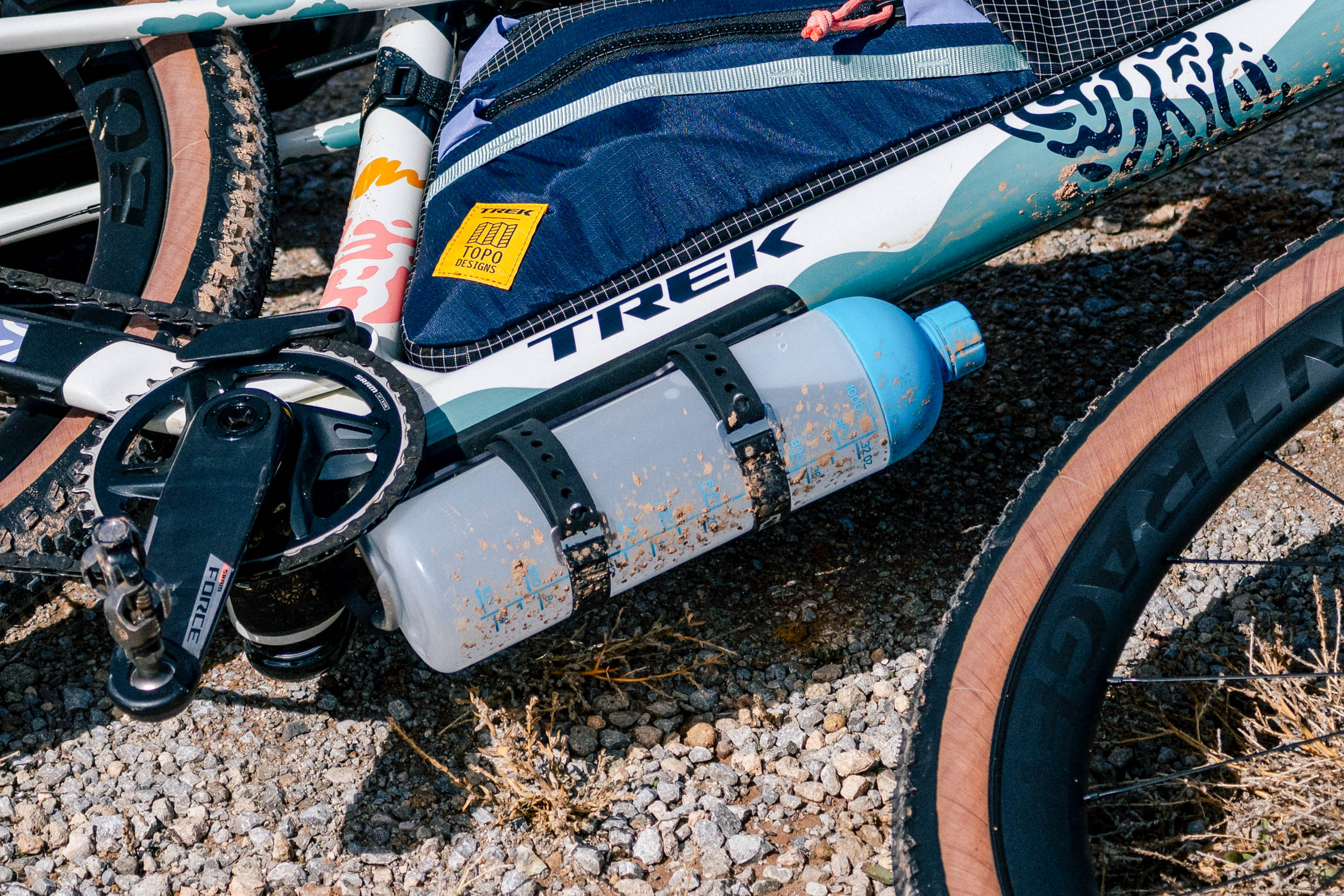
Recently, I went bikepacking with only these six bottles. Though that’s entirely valid, these bottles offer more value as supplemental water storage than as a primary hydration source. Whether you’re pairing bottles with a soft bladder in a frame bag, running them on forks, or carrying extra capacity elsewhere, these are tools to help fine-tune and expand your overall water setup. For example, one of the big advantages of the water bottles I tested is that they work well with 28mm-threaded water filters or plug-in bidets. A use that’s not specific to bikepacking, but one that makes trips a lot easier and more enjoyable.

In my breakdown of each bottle, I’ll focus on durability, actual capacity, dimensions, and overall weight. I’ll also talk about how well they fit on a bike, whether they work with water filters, how easy they are to clean, and finally, price and availability.
Mazama M!GO
132 grams / 1.09L capacity / $19 at Garage Grown Gear
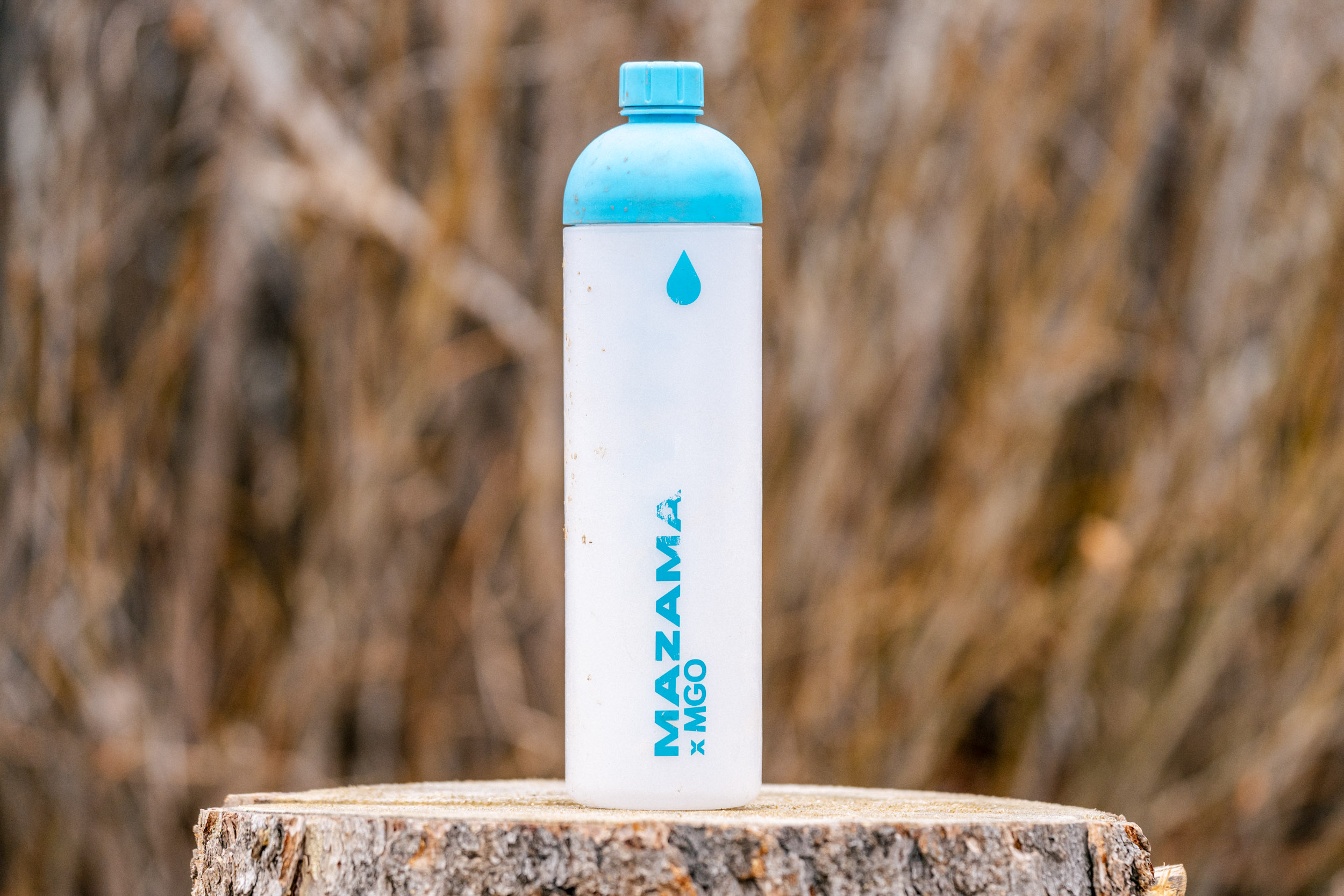
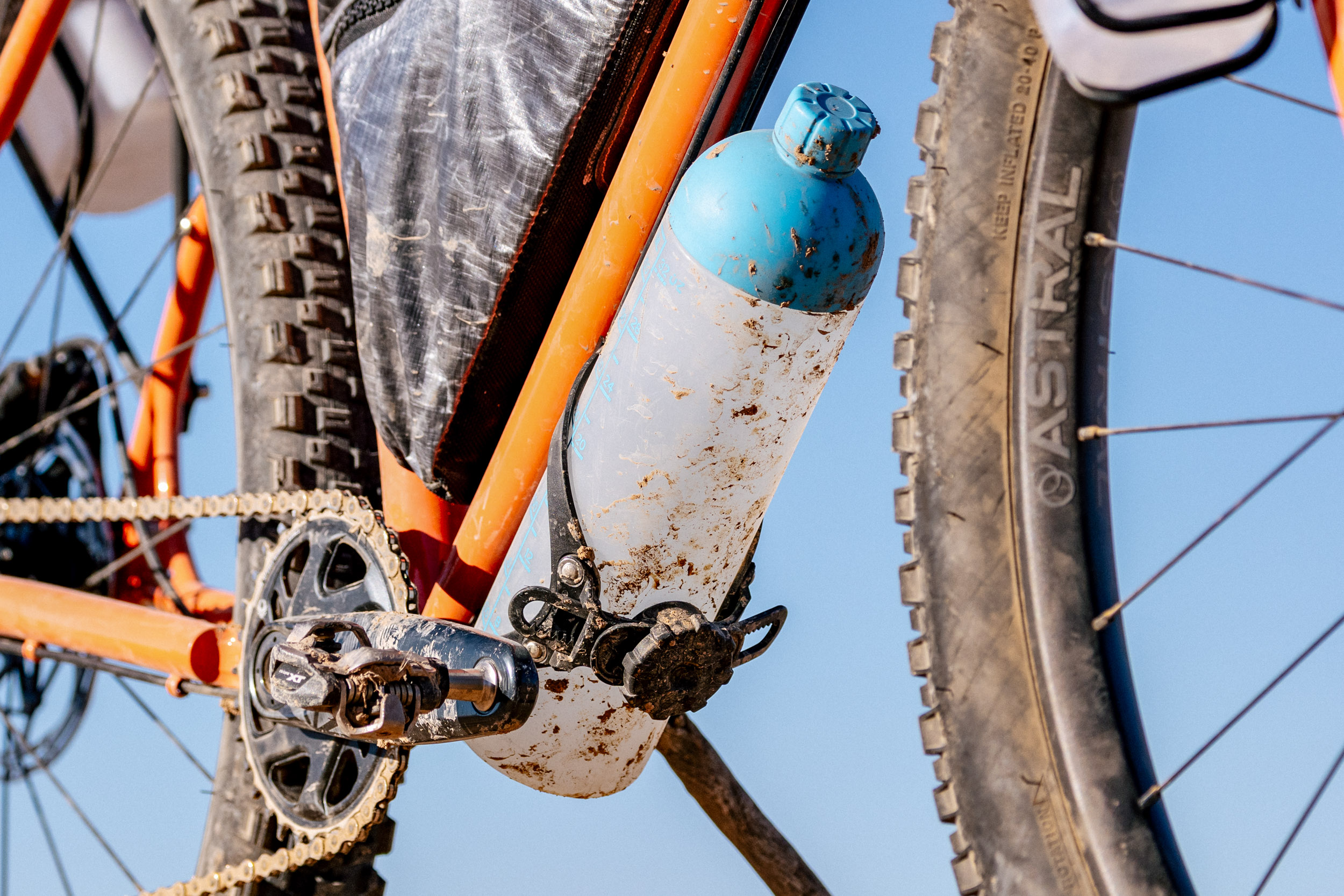
The Migo from Mazama was brought to life through a collaboration between Maranda Webster of the Miranda Goes Outside!! YouTube channel and Mazama. What makes this bottle unique is its dual-threaded design. It has a standard top cap, plus a larger, second threaded opening. The bottom opening makes the bottle much easier to clean, and adds extra capacity. Filled just below the threads, the bottle holds 1 liter. But, if you fill it to the upper threads, you get an additional 90 milliliters. That might not sound like much, but the extra capacity is never a bad thing. Especially during a desert trip with minimal access to refills.
Because of its dual-thread system, the Migo is slightly taller and heavier than most bottles. With a measured length of 29 centimeters, the Migo weighs in at 132 grams. At roughly 247 millimeters, it’s larger than what most standard cycling bottle cages are designed for, which usually fall in the 230 to 240 millimeter range. In my time bikepacking with the Migo, it didn’t fit in any of my standard cages. So, I ended up running it in an Arundel Looney Bin XL cage and a Widefoot cargo cage, which worked great even on some pretty rough terrain.


Overall, the bottle feels impressively durable. It has a solid hand feel but is still easy to squeeze, making it compatible with 28mm-threaded water filters or a bidet. It held up to some big, rough rides without issue and has proven to be totally downtube-worthy thanks to the covered cap. It’s a great bottle to bring into the tent, and it’s easy to fill up and add ice at convenience stores. The volume markings on the side are a nice touch for tracking capacity, though they are starting to rub off with use.

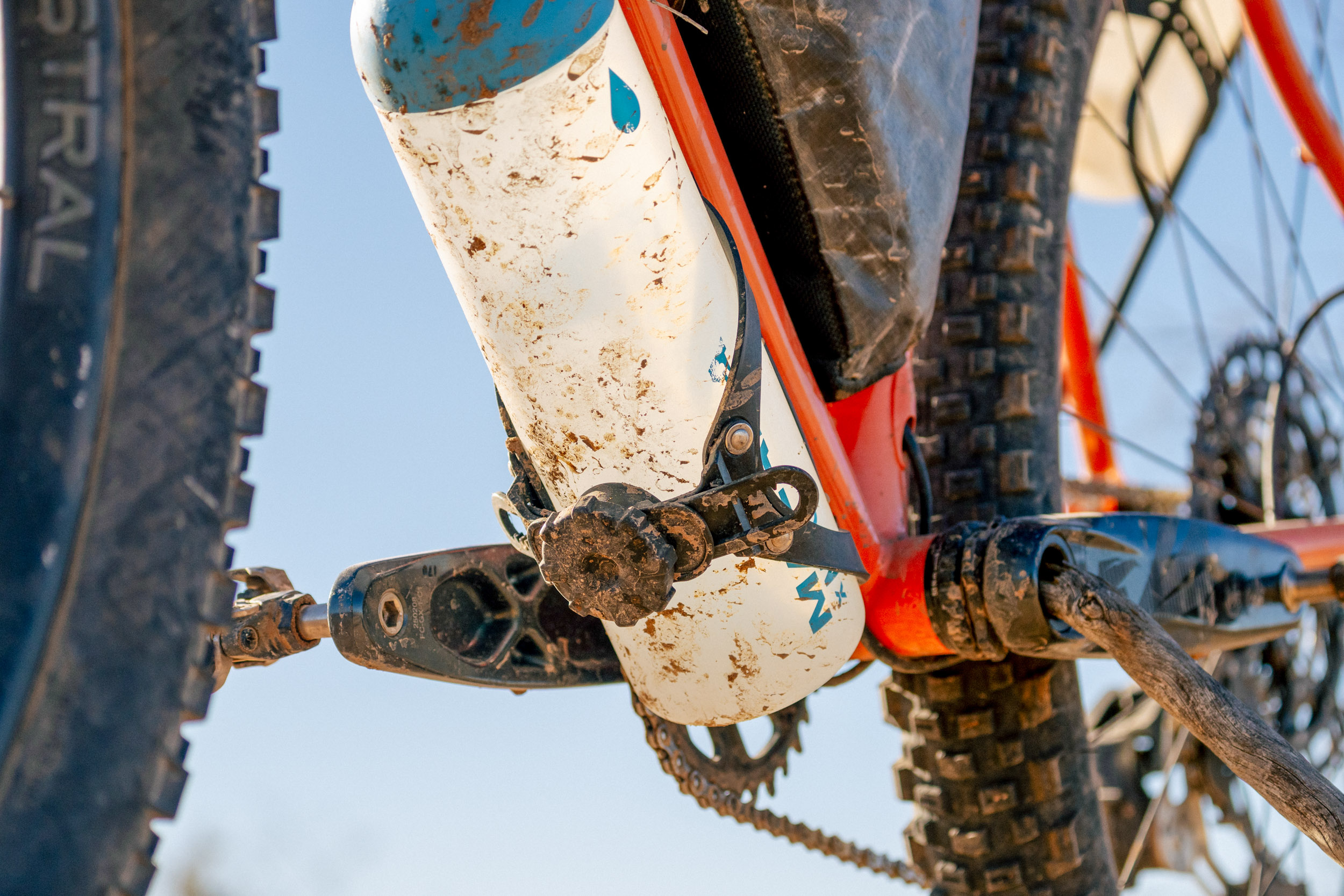

If you have the right cage or plan to stash it in a frame bag, this is a great option. The bottle is made from low-density polyethylene and is BPA, PFAS, and PVC-free. The Migo is made in China, comes in a variety of fun colors, and retails for $18.95 USD.
Pros
- Large capacity makes it ideal for supplemental water storage.
- Works well beneath the downtube.
- 28mm-threaded cap makes it versatile with filters and add-ons.
- High quality and versatile.
Cons
- The fill markers will wear away.
- Doesn’t fit in all standard cycling cages.
CNOC ThruBottle
90 grams / 1.12L capacity / $13 at Garage Grown Gear
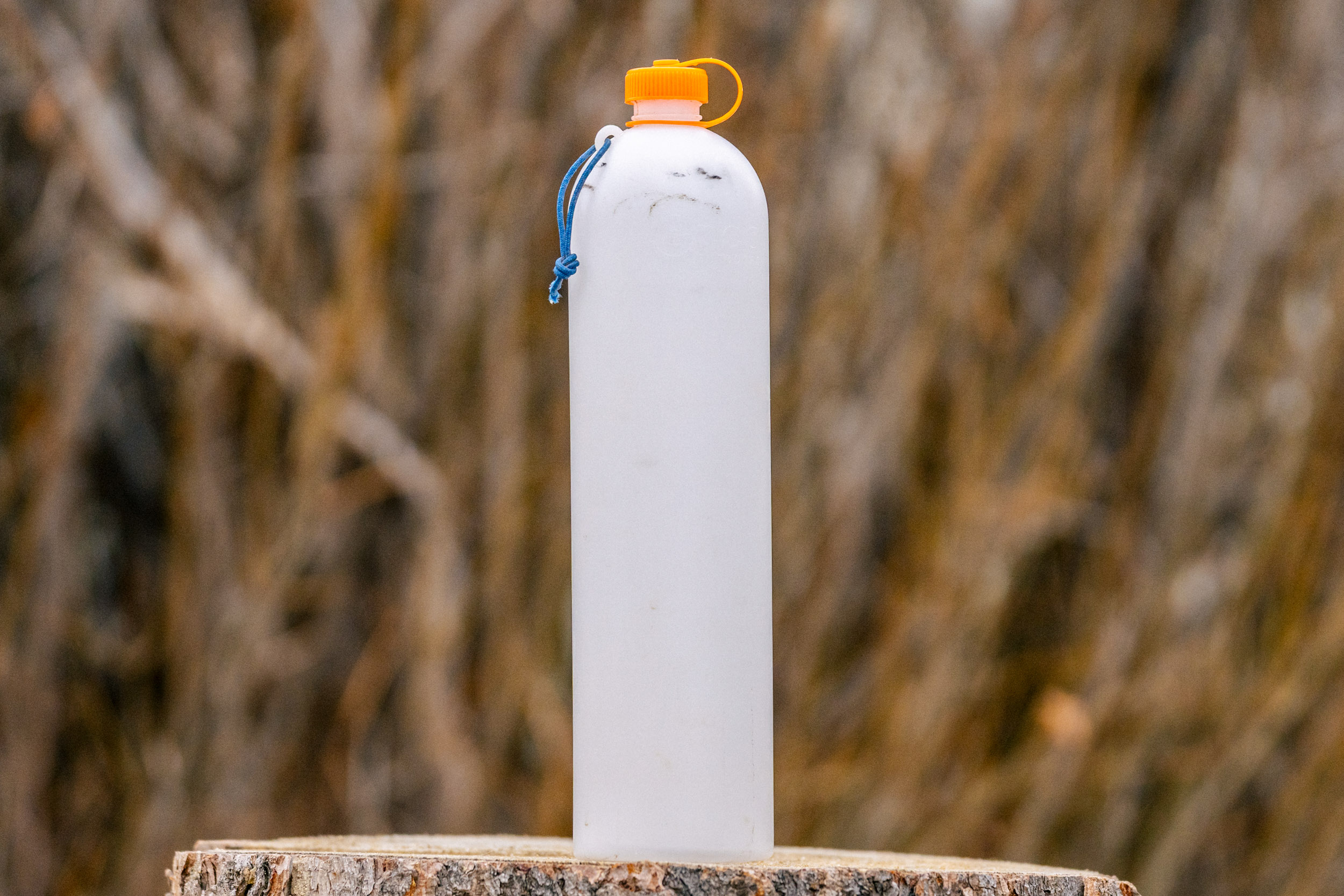
Next up is the ThruBottle, a bottle originally designed for backpackers. It’s a simple design with a 28mm threaded cap. The total capacity is just over one liter, with an additional 120 milliliters when topped off to the threads. This bottle holds the most water of the bunch, even though the Migo looks slightly larger. The volume markings on the side are a bit hard to read, but the upside is that they won’t rub off since they’re molded directly into the bottle. The ThruBottle measures just over 30 centimeters tall, making it the tallest of the lot. It also has a relatively narrow circumference of 236 millimeters, making it compatible with most standard bottle cages. However, it doesn’t have the molded bottle cutout, so it won’t be compatible with every cage. I ran it in a Widefoot Stout cage on several rides, and it worked great, especially when paired with a small TPU strap to keep the top secure.
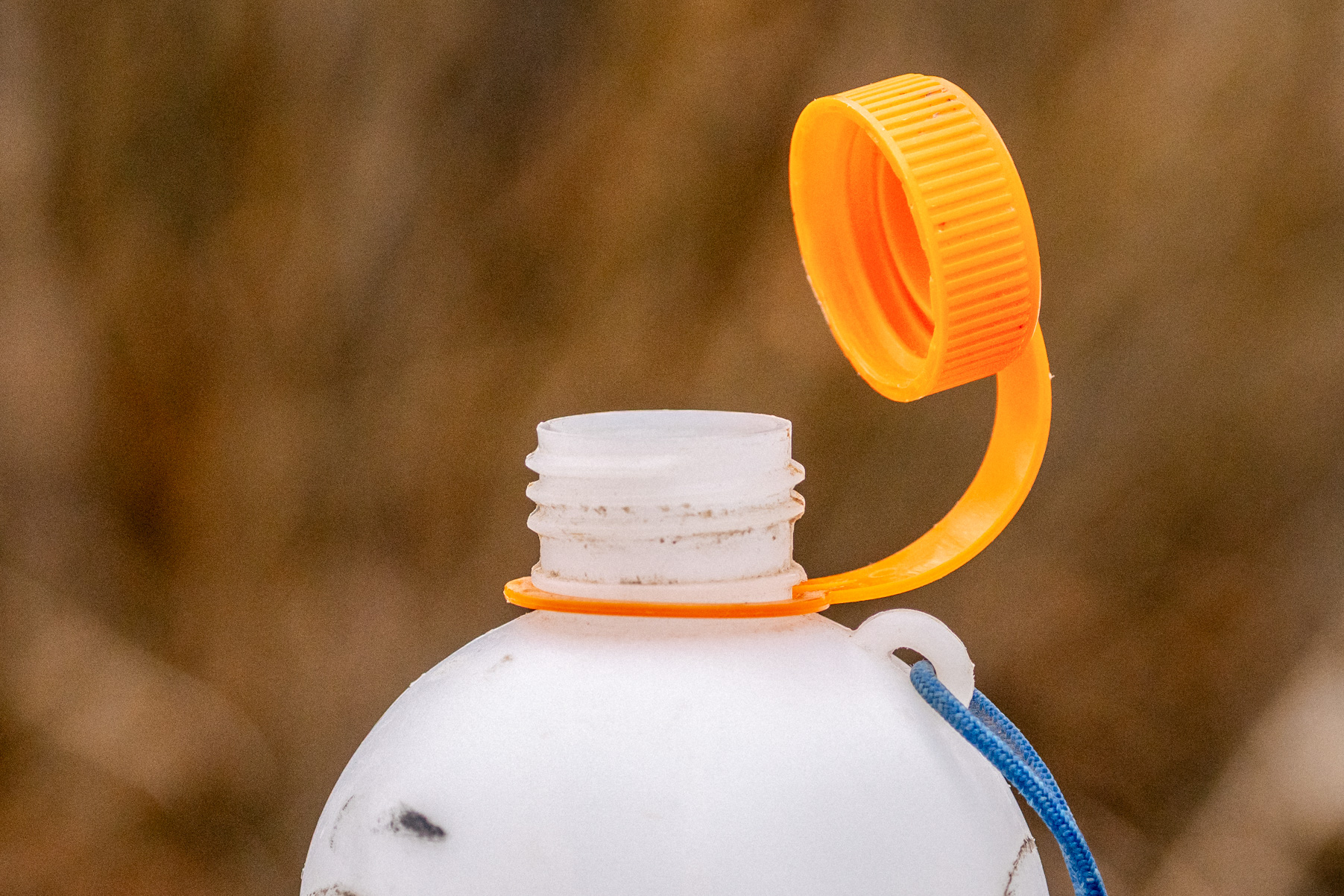


The ThruBottle is noticeably lighter than the Migo, weighing around 90 grams. It uses a lightweight cap that doesn’t feel quite as robust as the Migo, but has an additional string tether molded into the top of the bottle. The Thrubottle is one of the more rigid-feeling bottles in the group and doesn’t squeeze as easily as some of the others. The bottle softens up over time, but it’s something to keep in mind. Personally, I like the stiffer feel, especially when the bottle is strapped to the outside of the bike. One downside to the length is that it won’t fit in most convenience store water dispensers on fountain drink machines, and it’s really hard to clean without a brush.
The ThruBottle is made from HDPE and is BPA, BPS, and BPF-free. These bottles were made overseas, but they are currently moving production to the United States with their next batch. The bottle retails for $12.99 USD.
Pros
- The most capacity of any bottle I tested.
- The attached cord is a nice add-on.
- 28mm-threaded cap is ideal for filters and add-ons
- One of the lighter options on the market.
Cons
- A bit of a task to refill at gas stations.
- Stiffness could prove problematic when storing.
- Doesn’t squeeze as easily as some of the other bottles on this list.
- Difficult to clean without a brush.
Igneous NOBO
64 grams / 1.045L capacity / $22 at Garage Grown Gear

Rounding out the 28mm threaded bottles is the Ingenious NOBO—a one-liter bottle made in the USA that has an additional 45 milliliters of capacity when topped off. Like the other backpacking-focused bottles in this category, it uses a 28mm threaded top, making it compatible with popular screw-on water filters and its own bidet. This bottle is also shorter and wider than the others, measuring 24.5 centimeters in height and about 255 millimeters in circumference. As a result, it won’t work in most standard bottle cages, but it pairs well with cargo cages and a strap or two. I ended up mounting it on this prototype rack from Sklar Bikes, which is designed to strap bottles or cargo between its two rails, and it worked well in that setup.

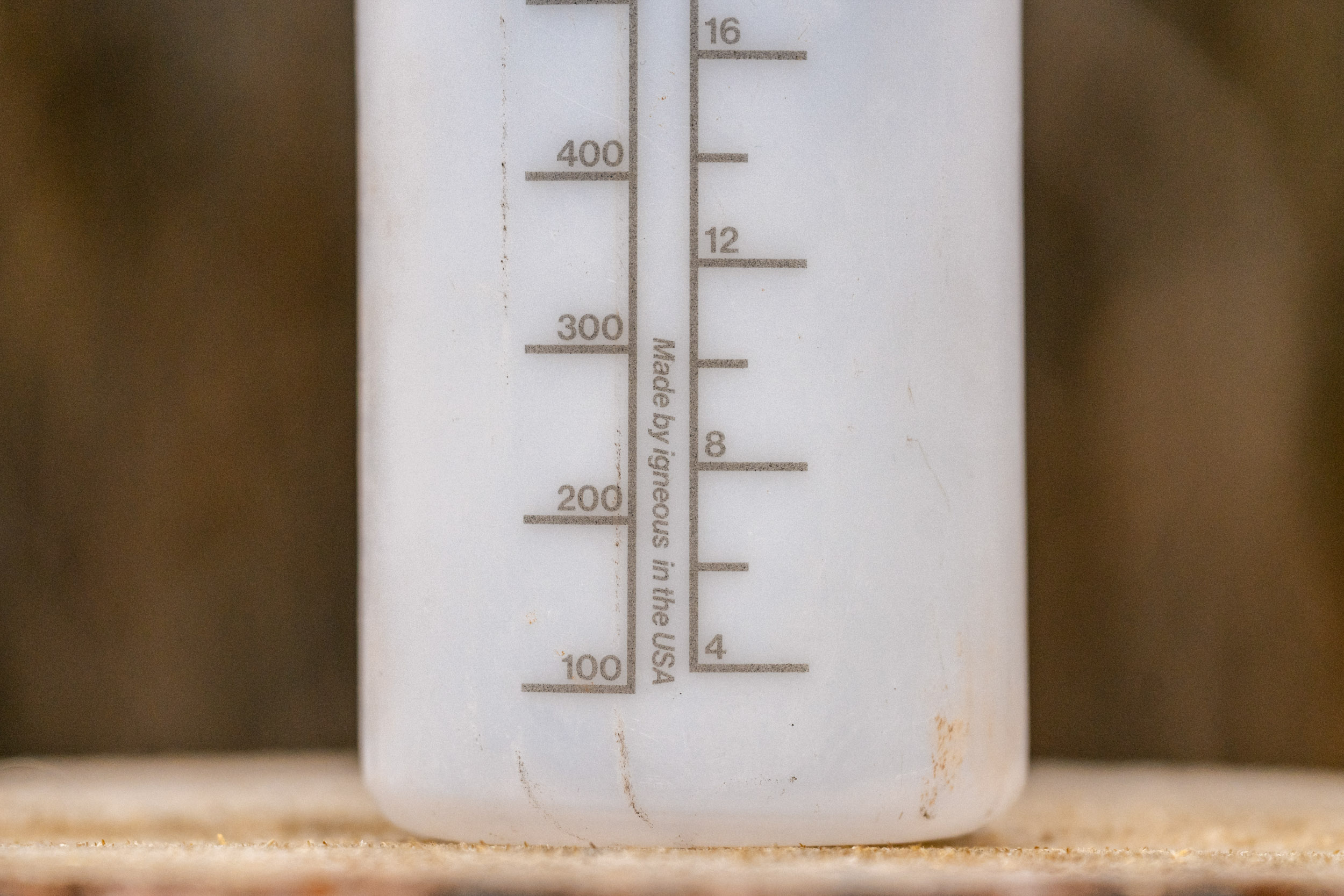

In terms of feel, the Igneous NOBO is the softest and easiest bottle to squeeze among the backpacking options, but it also feels the least durable. I bought two and broke one after dropping it onto the 3D-printed cap while walking. Igneous does sell replacements, but it’s a shame it broke so easily. Like the ThruBottle, it’s difficult to clean without a brush. That said, the softer feel is what makes this my favorite for daily use and in a frame bag on day rides. It has proven to be a reliable option on a few trips over the past couple of months. I really like the TPU cap tether and the cap’s overall feel.
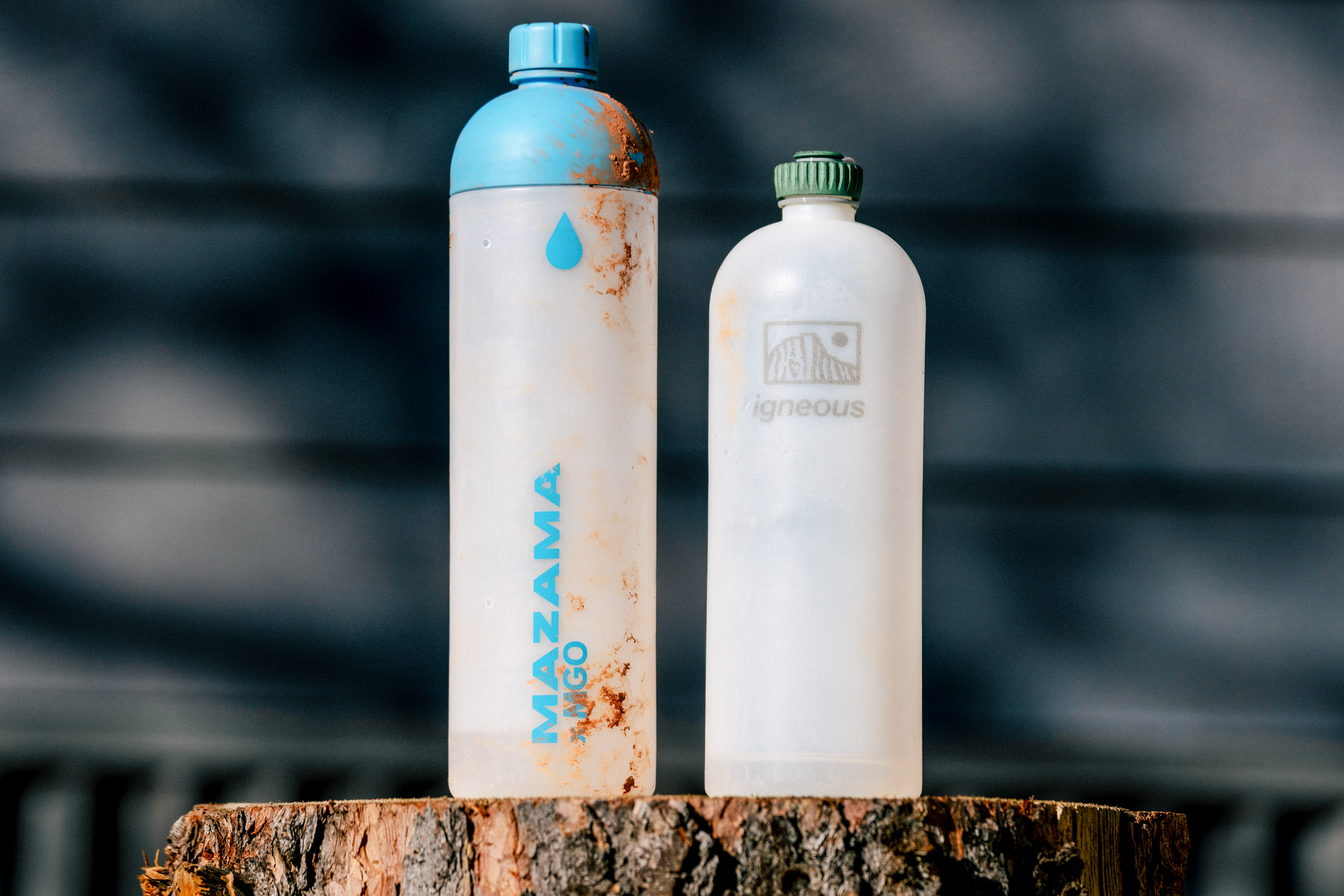
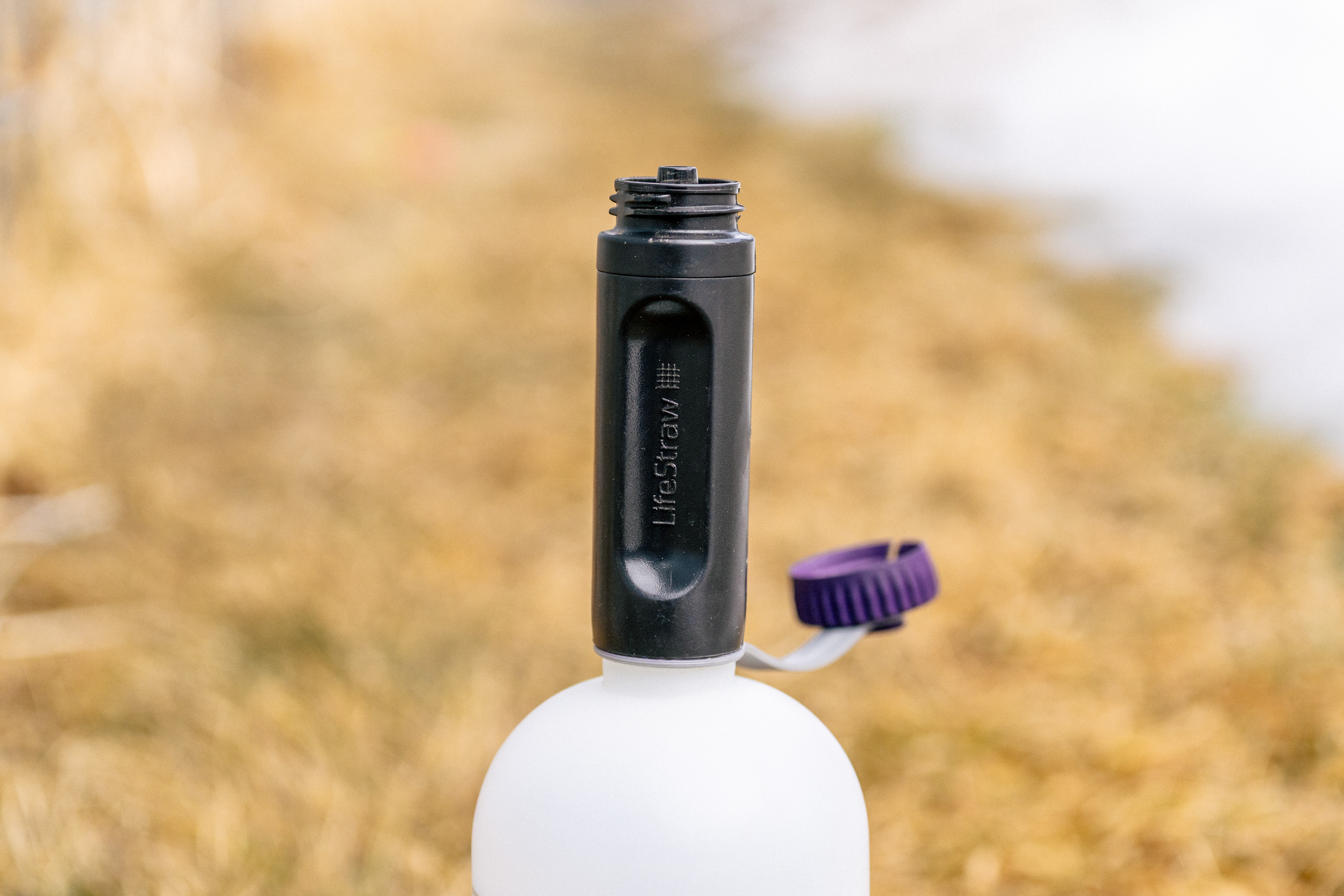
The NOBO is the lightest bottle in the breakdown at just 64 grams. It has carbonized capacity markings on the side that won’t wear off over time. This is a great option if you don’t need it to fit a standard bottle cage and you’re looking for a lightweight, made-in-the-USA bottle. The NOBO is BPA and PFAS-free and retails for $21.99 USD.
Pros
- Exceedingly light.
- Easy to squeeze.
- 28mm-threaded cap makes it ideal for filters and add-ons.
- Made in the USA.
Cons
- The cap broke during testing.
- It’s difficult to clean without a brush.
- Doesn’t work well with standard cages.
Nalgene
177 grams / 1.1L capacity / $17 at REI
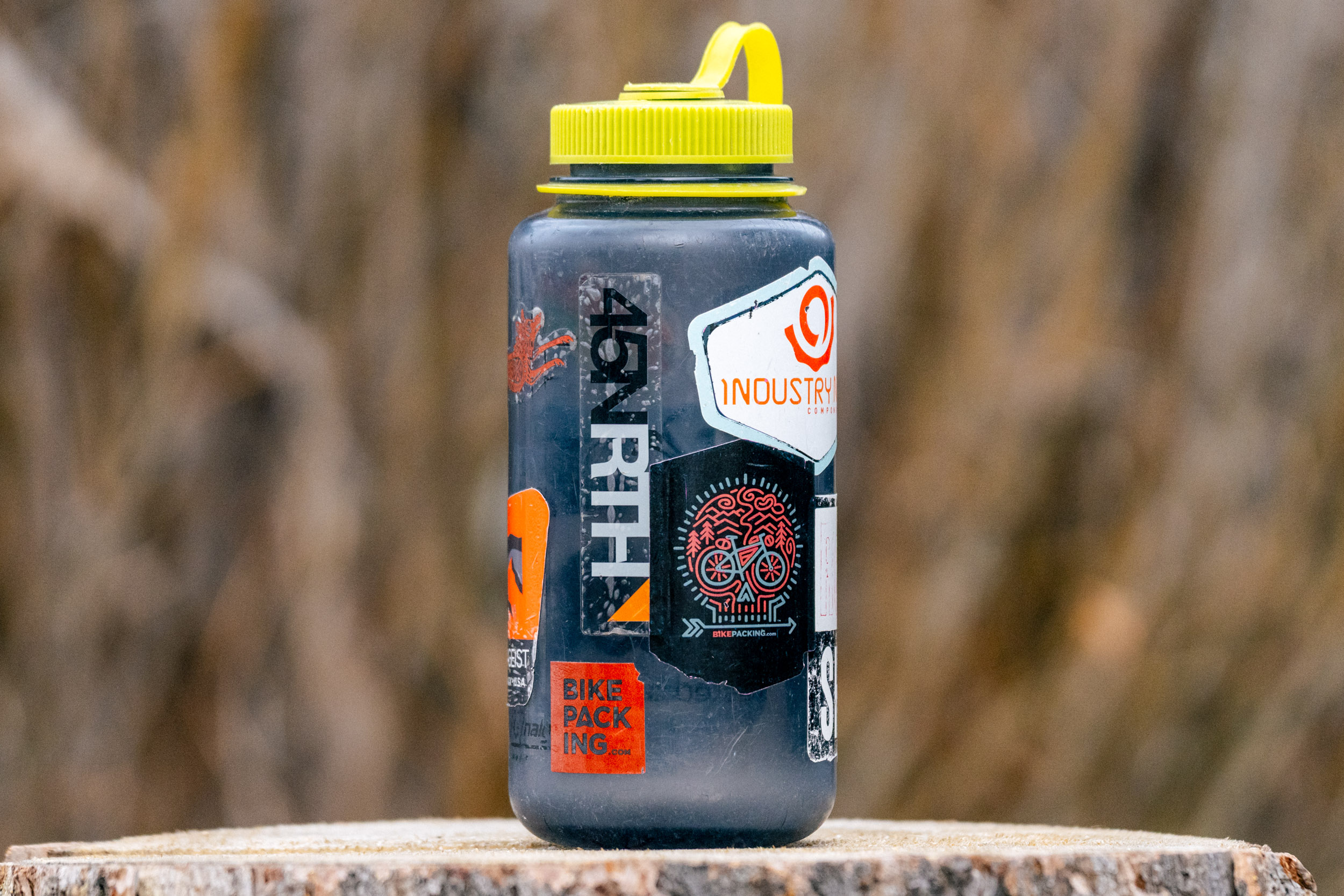
You can’t have a liter bottle breakdown without mentioning the Nalgene. There are some obvious benefits and detriments to its design, as it’s one of the most widely used reusable bottles on the market. All one-liter Nalgenes hold about 100 milliliters of extra water when filled to the top, which adds a nice bonus to their capacity. The bottle itself is fully rigid, making it extremely durable, and its wide-mouth opening makes it easy to fill. Whether you’re pulling water from a stream or throwing in some ice at a convenience store fountain drink dispenser, it’s not a system you’re going to have to fiddle with to refill.


The downside of the Nalgene bottles is that their durable outer shell makes them much heavier than other bottles, at around 177 grams, and they don’t perform particularly well for filtration because of their wide opening. There aren’t many mounting options that work well either, as their large circumference isn’t optimized for most cages on the market. However, there are dedicated options from Velo Orange, Widefoot, and others. All that said, this particular Nalgene is over a decade old. It’s incredibly easy to clean, the lid is durable, and it’s been completely reliable for daily use with very little risk of failure.
Pros
- Durable due to its rigid structure.
- The wide mouth makes it easy to clean and fill.
- Long-lasting.
- Easy to fill in drink fountains due to its shape.
Cons
- Its wide mouth makes it hard to use with filters.
- The rigidity can be challenging for storage.
- These bottles are much heavier than other options.
- They don’t work well with standard cycling cages.
Zefal Magnum Grip
85 grams / .99L capacity / $9 at Performance Bike

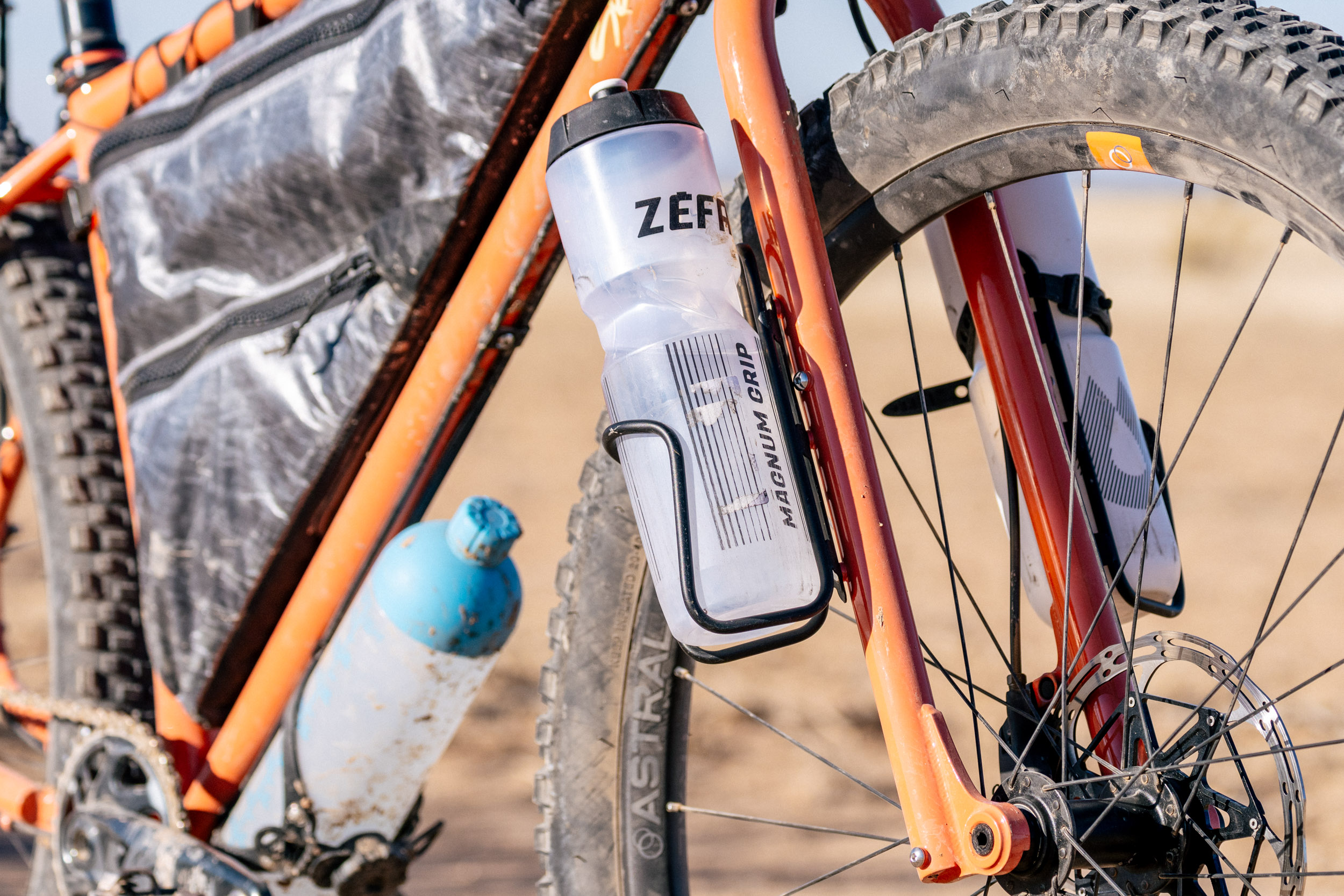
The first cycling-specific option on this list is the Zefal 1L bottle. One of the more popular 1L options in cycling, the Zefal is slightly under capacity in relation to its claimed size, measuring 990 milliliters when filled to the top of the threads. The bottle measures 26 centimeters tall and has a circumference of 238 millimeters, making it a good fit for most standard cages. It also has a molded indentation in the middle that helps it lock into compatible cages. The Zefal uses a standard 63 millimeter cycling-style screw top, making it easy to add ice on hot days. The lid has a well-designed nozzle that’s easy to open and close with your teeth for on-the-bike hydration.


In use, this bottle was especially handy on my last trip. I mounted it on my fork and relied on it heavily for on-bike hydration throughout the ride. It remained secure, even over rough terrain, and was easy to use and intuitive. For a cycling-specific 1L bottle, it’s hard to overlook. When I brought it into my tent at night, I knocked it over while sleeping, but didn’t experience any leaks. The bottle is BPA-free and free of other toxins, weighs 85 grams, is made in France, and retails for $10.99 USD.
Pros
- The cycling-oriented design makes it a good fit with standard cages.
- Keeps its seal nicely.
- Nozzle works well with and without hands.
- Standard bottle top, so you can mix and match lids.
Cons
- Not quite a liter.
Hydrapack Breakaway+ Water Filter Bottle
86 grams / .935L capacity / $19 at REI

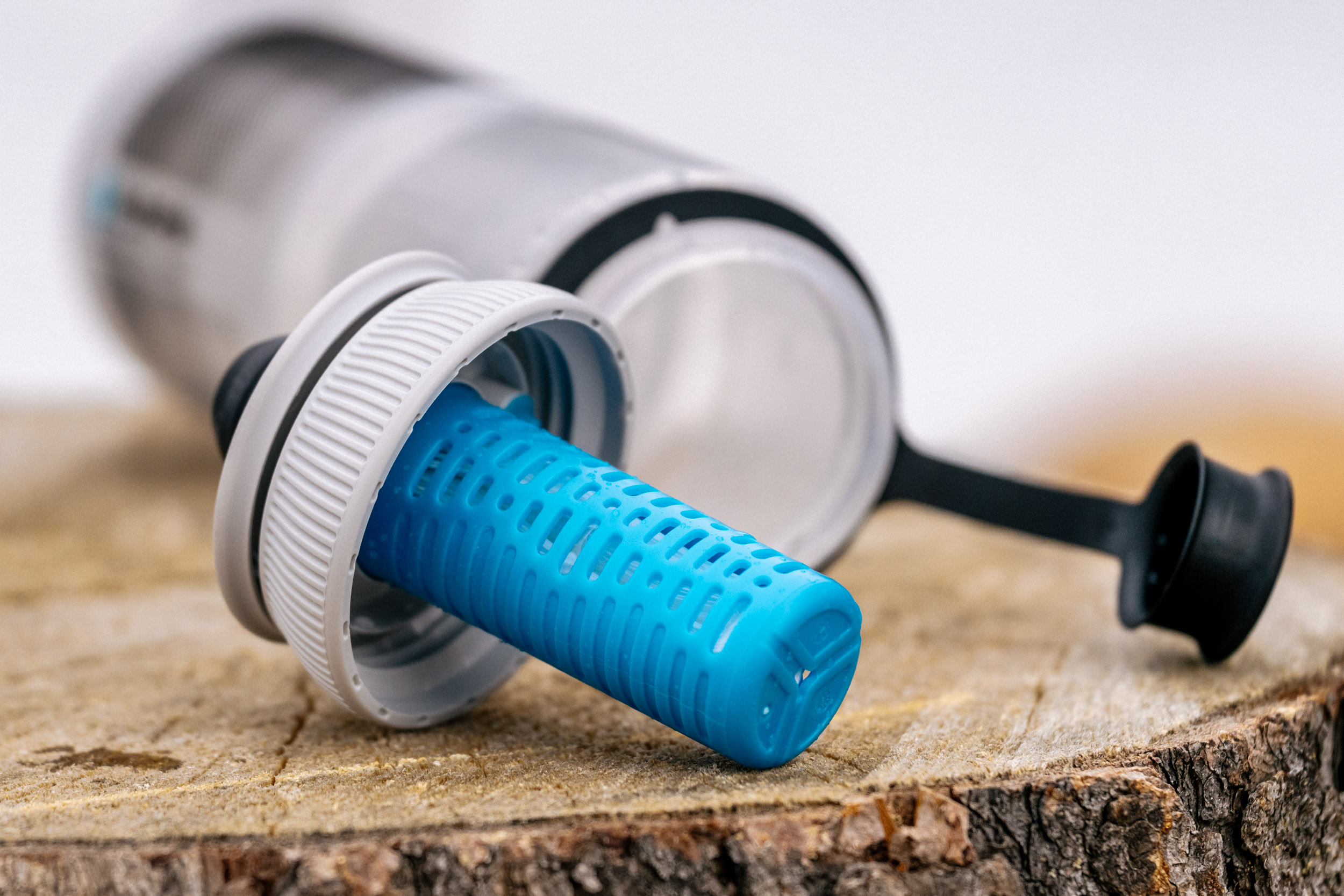


Finally, the Hydrapack Breakaway Bottle is another cycling-specific bottle. Like the Zefal, it measures just shy of a full liter. It claims to hold 890 milliliters, but it actually filled to about 935 milliliters at the threads. The bottle weighs 86 grams, stands 26 centimeters tall, and fits nicely in standard cycling bottle cages. The Breakaway has volume indicators on the side so you can keep track of how much water you have, and it has a standard 63 millimeter threaded opening. The cap locks into place and can be opened with your teeth or by hand. Like the Zefal bottle, it’s leak-proof and dishwasher-safe.


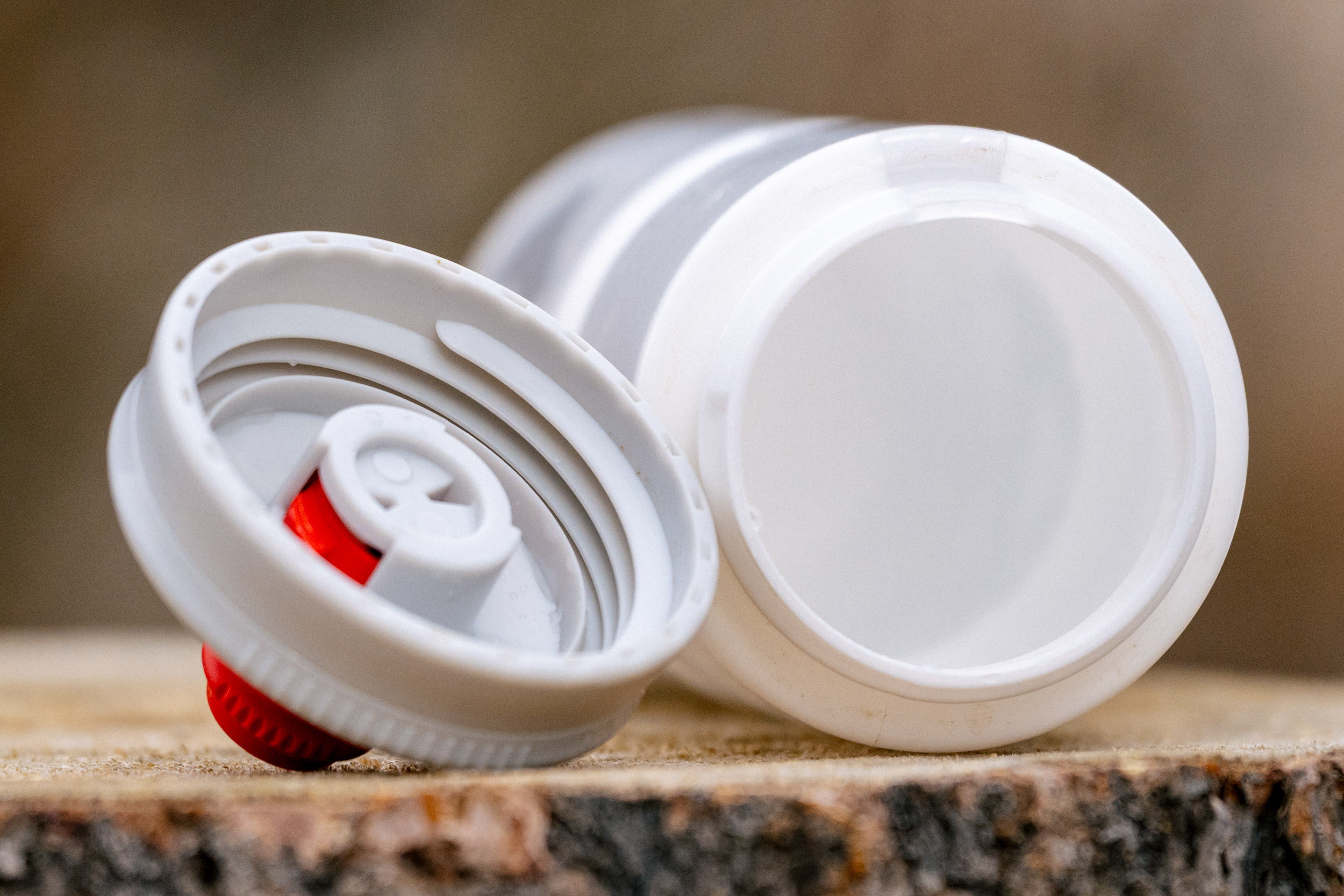
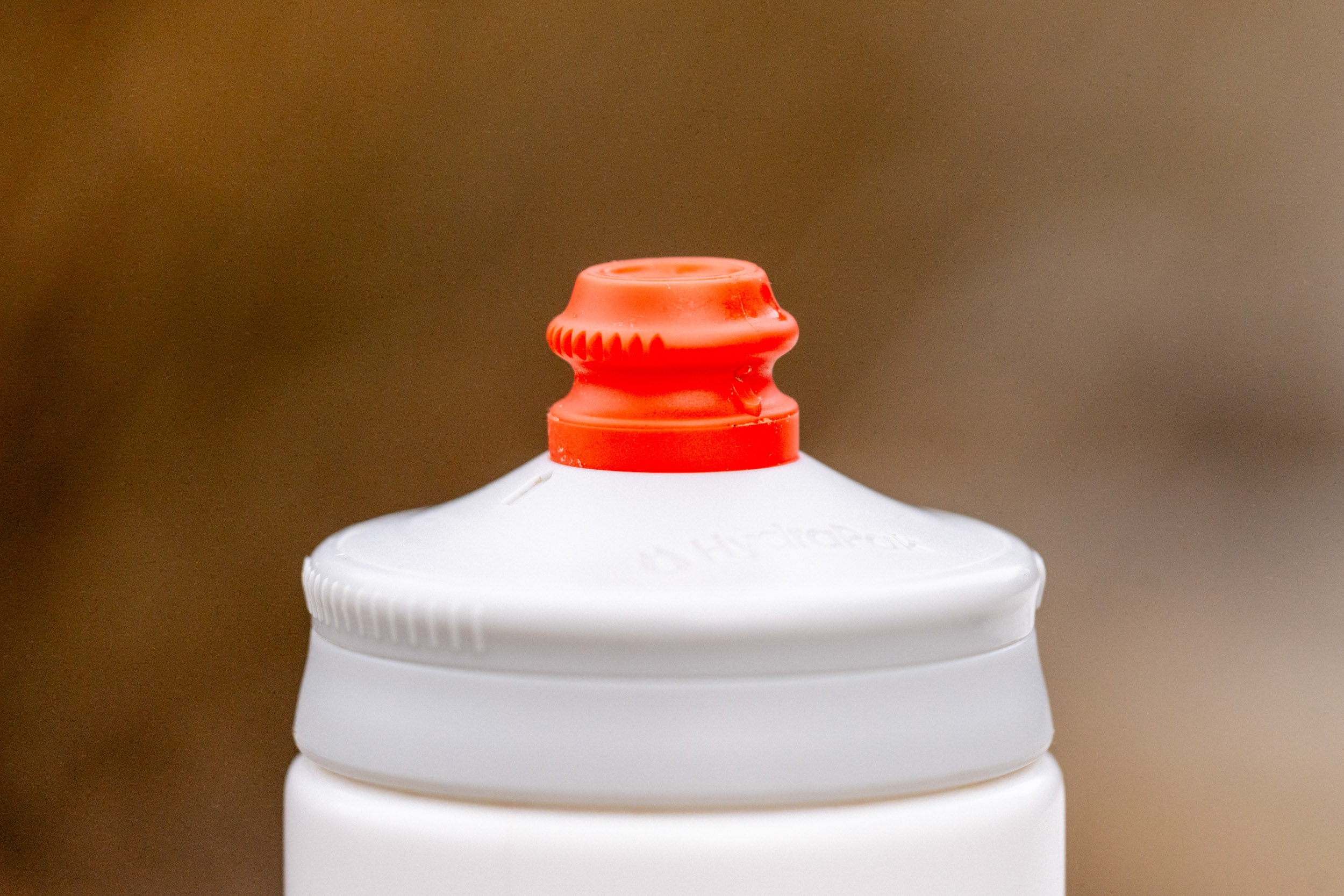
Overall, the feel is quite nice. It squeezes easily and has a good flow rate, though it’s slightly more challenging to squeeze than the Magnum grip bottle. I also like the feel of the locking silicone nozzle. HydraPak also offers a version with a built-in water filter cap, which is why I sought this bottle out in the first place. You can buy the cap separately for use with compatible bottles, or get the bottle and cap together as a complete system. With the hollow-fiber filter cap installed, the capacity drops by about 10 milliliters. The filter cap isn’t designed to work with every bottle, and it doesn’t fit standard Specialized bottles, but it does work on the Zefal without leaking, which is a nice bonus.
For day rides where you want to rely on creeks for water, or for bikepacking when you want the fastest and easiest way to filter water on the go, this system works really well. The filter is fixed to the cap, which means you can’t replace the filter element on its own. Instead, the entire cap and filter need to be replaced. That said, the flow rate is excellent. Both versions of this bottle are made from BPA-free HDPE. The standard Breakaway bottle retails for $22 USD, the bottle with the filter cap retails for $50 USD, and replacement filter caps are $45 USD.
Pros
- Squeezes well and has a nice flow rate.
- Built-in filter cap is a nice option.
- More capacity than advertised.
- It uses a standard 63mm threaded opening.
- Two versions.
Cons
- Pricey with the filter cap and requires replacement of the entire system at the end of its life cycle.
- There is some loss of capacity with the filter installed.
More 1-Liter Bottles
Obviously, there are plenty of other bottles suitable for bikepacking. I even tried a standard Gatorade bottle because I thought it might work. But, with no locking top and a wider circumference, it just isn’t very practical for bikepacking. There are also lots of larger-capacity bottles that are a bit heavier and use less plastic, but I really wanted to highlight some of the more unique, lightweight options. Here are some of the options I didn’t test that might work in your setup.
-

Soma Further Bottle, 36oz
Soma’s Further bottle could be another good option, as it advertises a capacity of about 1L and features two different spout options.
1.06L capacity / $12 at Soma Fab
-
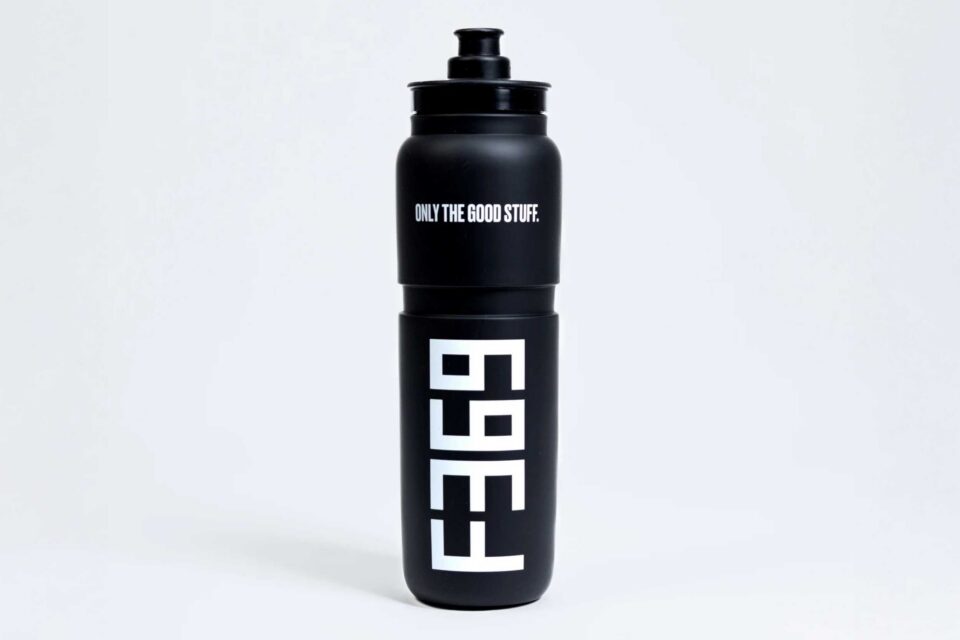
Elite Fly 950, Team Bottle
The Elite Fly 950ml bottle advertises a capacity under 1L, but features a lightweight design that might prove useful to some. They note that the team version features a thicker composite material, making it a more secure fit than the standard, lightweight option.
.95L capacity / $12 at Formula 369
-

Elite Jet 950
The Elite Jet 950ml bottle advertises a capacity under 1L and is made from eco-friendly, biodegradable materials. It also features a no-leak cap and an easy-squeeze design.
.95L capacity / $12 at Jensen USA
-
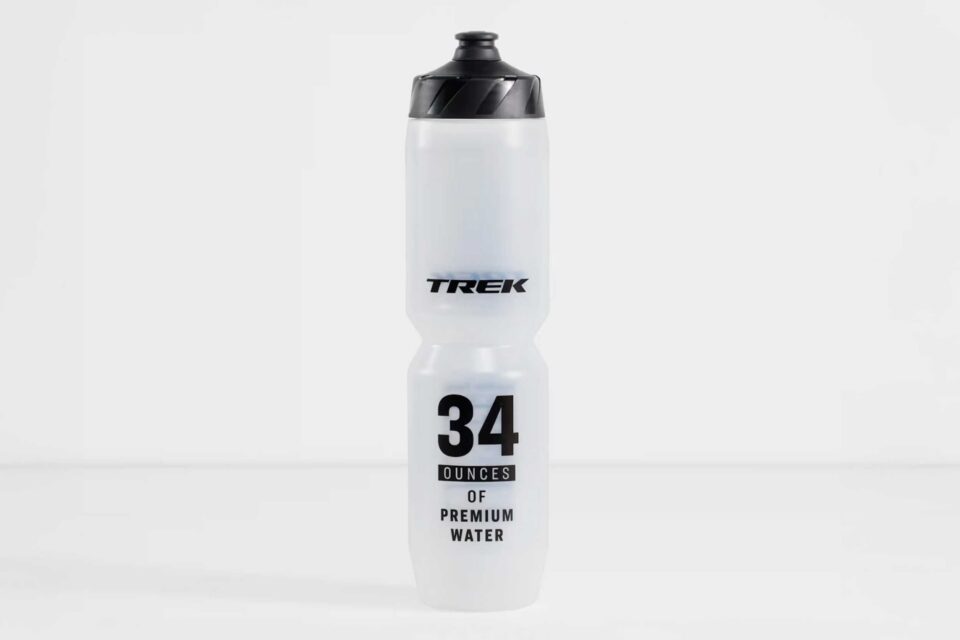
Trek Voda 34oz
The Trek 34oz Voda bottle offers over a liter in capacity and is BPA and phthalate-free. It’s also said to be best used with side-loading cages and fits best on M to XL bikes.
1.06L capacity / $16 at Trek
-

Yeti Yonder Bottle
Yeti has a Yonder model that spans a range of capacities, up to 1.5L. Not a cycling-specific design, it features a leak-proof cap, some moulding to make it easier to grip, and is BPA-free.
1L capacity / $28 at Yeti
-

Gatorade Squeeze Bottle, 32oz
The cheapest option of the bunch is the 32oz Gatorade squeeze bottle. Able to be purchased in bulk, this could be good for the budget-conscious rider.
0.94L capacity / $6 at Dicks


If you know of a one-liter bottle that’s worth mentioning, let us know in the Conversation below…
Further Reading
Make sure to dig into these related articles for more info...

Please keep the conversation civil, constructive, and inclusive, or your comment will be removed.