

 Singletrack/MTB
 Gravel/All-road
 Dirt-road Touring
 Fat-bike

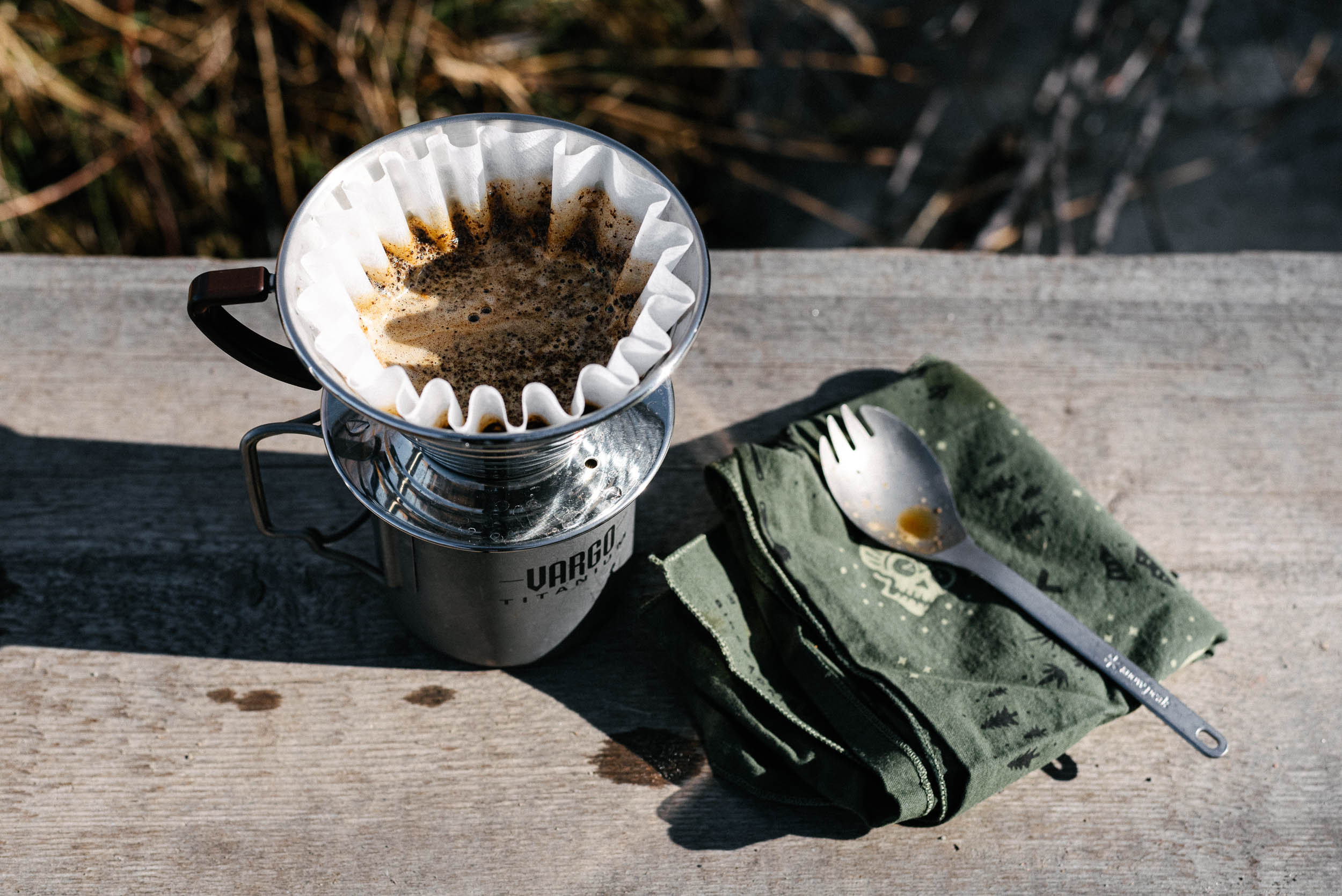
Kalita Wave Coffee Dripper Review: One and Done?



The stainless steel Kalita Wave is a lightweight, durable coffee maker that promises a quality cup with minimal fuss. Three years and a few hundred brews after buying one, Lucas assesses its practicality for daily use at home and around camp. Find his Kalita Wave review here…
PUBLISHED Mar 26, 2026
Some coffee brewers are a joy to use at home, but they prove impractical in a camp setting. Others are impressively travel-friendly but far too fiddly for everyday use at home. Although the brand makes no bold claims about being the ideal brewer for both settings, when the Japan-made Kalita Wave 185 Stainless Steel made its way into my mountain of coffee-making paraphernalia in 2023, I was hopeful it could be the last brewer I’d ever need (yeah, right). Some 300 cups later, it turns out I was only partly correct. Read on to learn why.

For background, if you’ve missed my earlier reviews, I can’t seem to leave well enough alone when it comes to brewing a good cup of coffee outside. And for all the preaching I do about finding contentment with what you have and not overinvesting in bikes and outdoor gear, I suppose I have a blind spot for accumulating coffee stuff. Maybe that’s because there’s a far lower cost of entry to the wide world of coffee-brewing experimentation, but more likely, it’s because I’m somewhat addicted—but not to the caffeine… I swear I can quit any time!
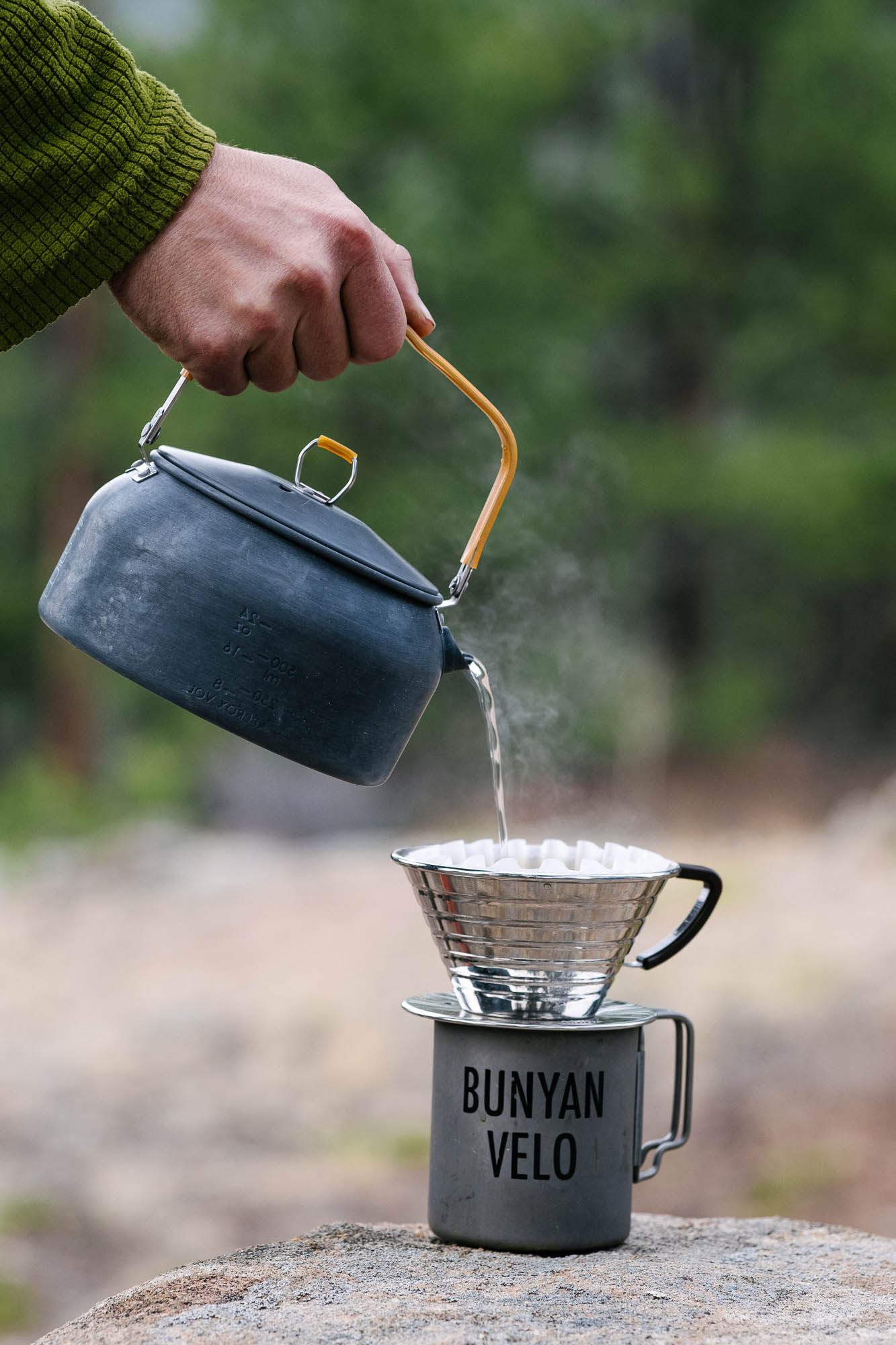
Amid an infinitely deep sea of complex gadgets designed for the comically straightforward task of combining coffee grounds and water, the stainless Kalita Wave 185 is a lighthouse of sanity. Designed to brew for one or two people, it’s compact, consistent, nearly unbreakable, and beautiful in its simplicity. But it’s not without its quirks. In fact, poke around various coffee forums online, and you’ll find it praised and maligned in equal measure.
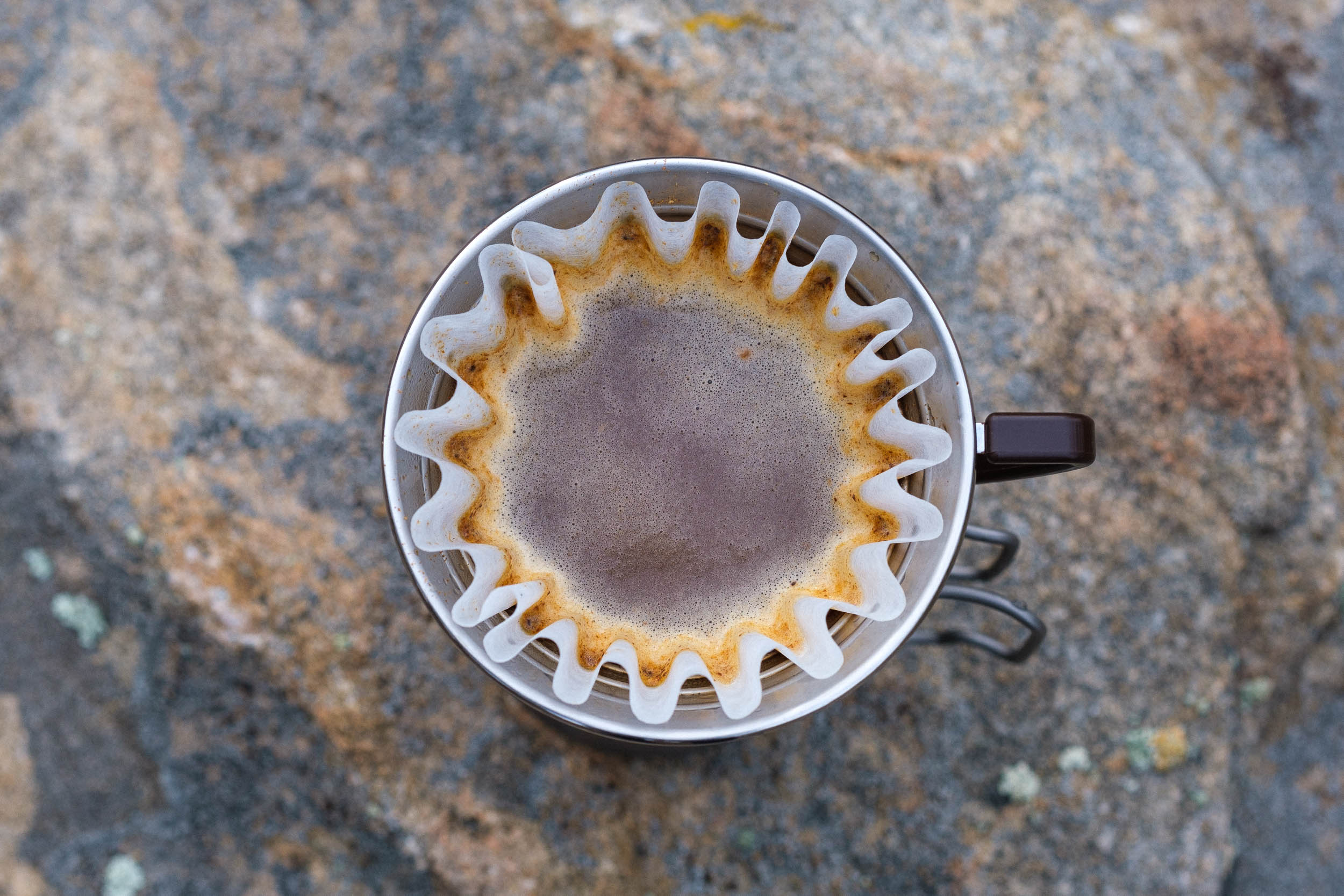
One of the Wave’s distinctive characteristics is its flat-bottom design featuring three small holes. While many pour-over-style brewers have a cone-shaped design that makes it harder to control the flow rate (the faster you pour water in, the shorter the brew time), the Kalita drips at a constant rate, regardless of input. This makes it both beginner-friendly and well-suited to groggy, cold mornings around camp when you can’t be bothered to give much heed to technique. The unique wave filter shape with 20 channels helps direct water evenly where it needs to go, enabling the brewer to work its magic and create a reliably balanced and flavorful cup every time.
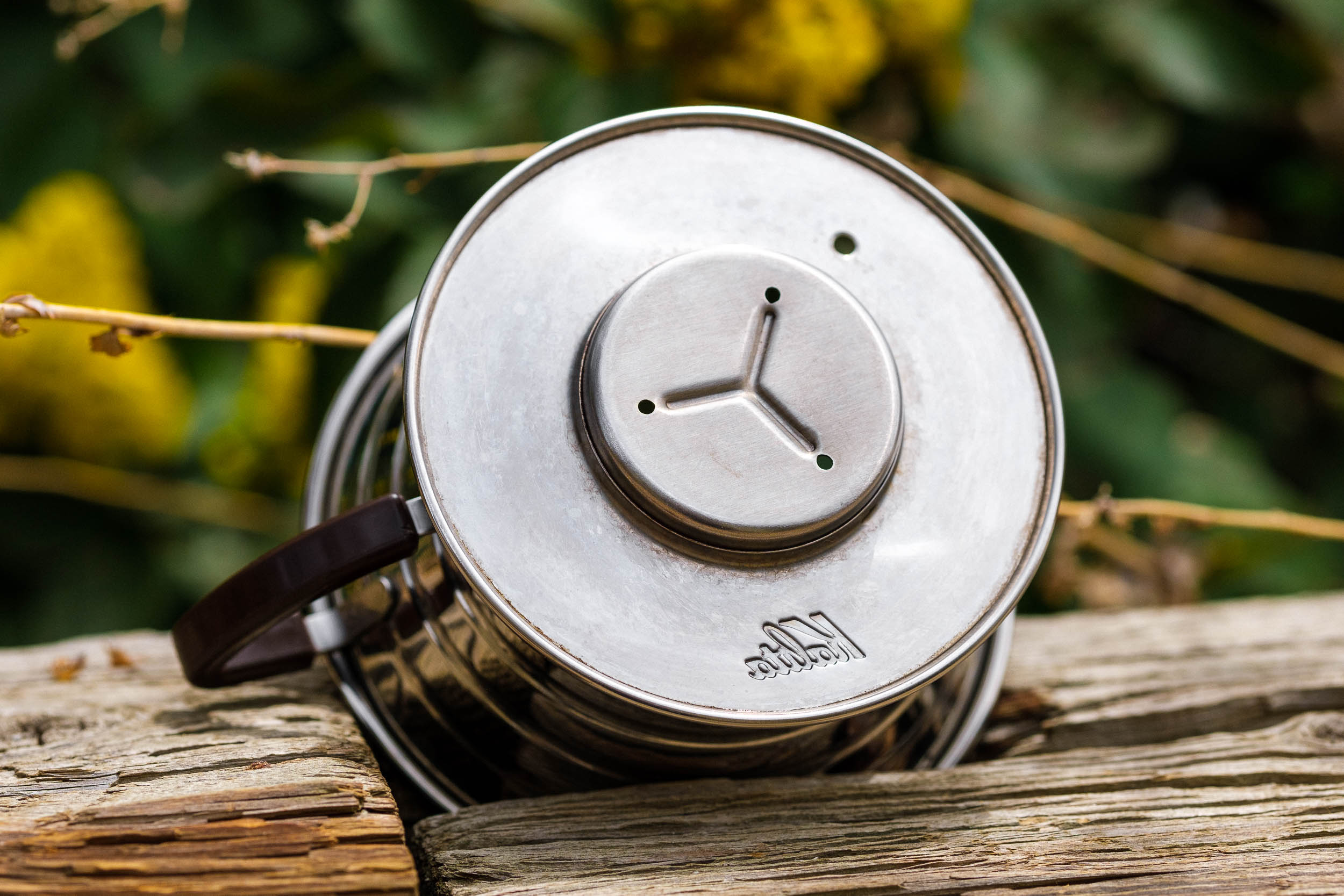
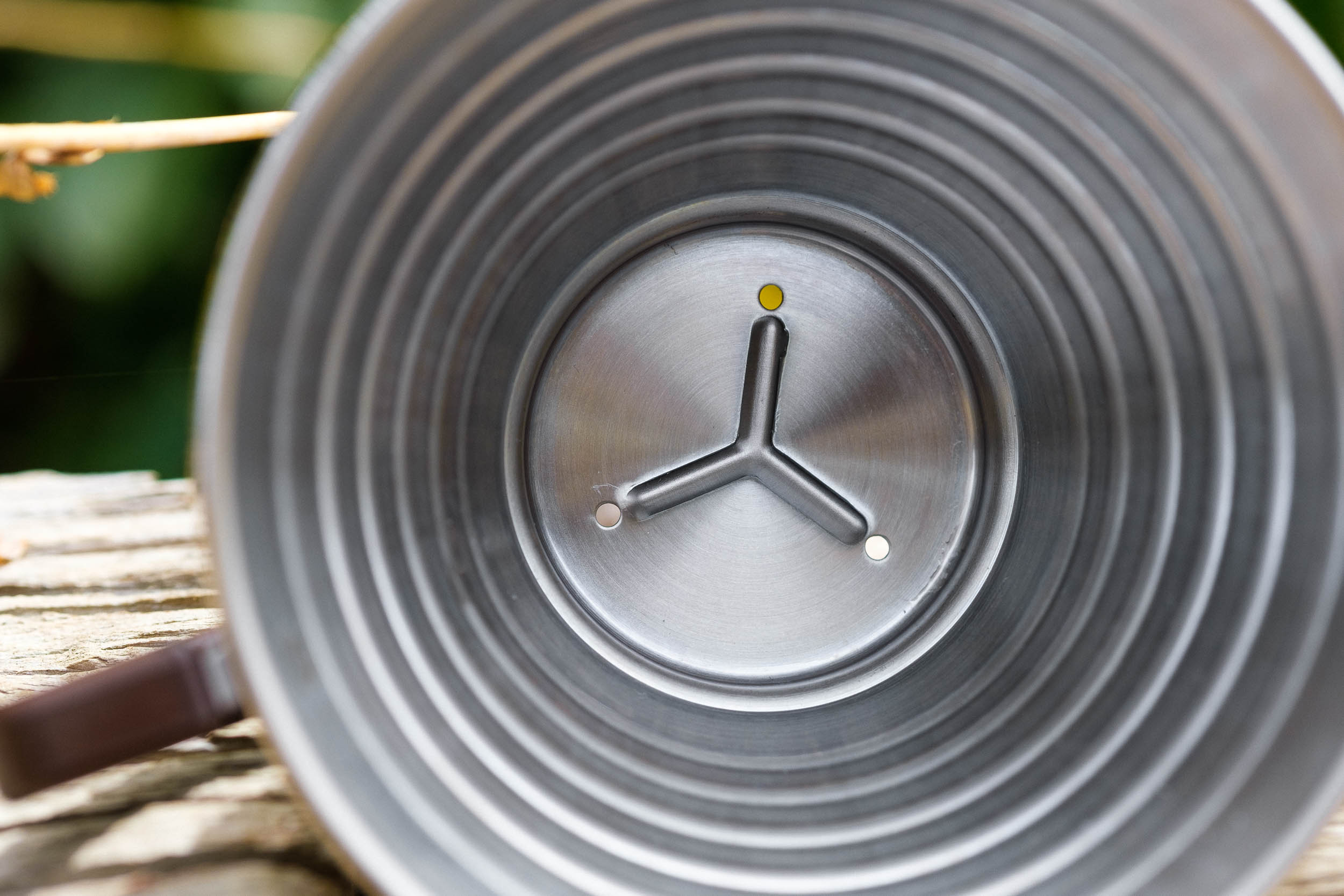

Praise aside, the Wave’s greatest strength can also, unfortunately, be its main weakness. In my experience, the brewing process can occasionally stall out, leading to annoyance and an over-extracted cup. This happens when one or more of the small holes get clogged, typically by the sagging filter paper. The ridges on the base are intended to act as a buffer, but they don’t always work, and stalling is a growing pain you can expect as you get to know the Wave. Thankfully, there are several easy ways around it.
One of the simplest ways to combat stalling is to grind your coffee a little coarser than you would for a brewer like the Hario V60, closer to medium. Doing this will mostly solve the issue, especially if you’re even a little careful not to excessively agitate the grounds while pouring. Not overly pre-rinsing the filter helps, too. Another, more foolproof way to address the stalling issue is to place a small spacer at the bottom of the Wave to act as a physical barrier between the filter and the trio of holes. I paid $6 for one from Coffee Nerd Tools, but you could easily DIY one or pick up a drain strainer at your local hardware store (quick word of caution: I’ve had to dig mine out of the trash several times after mindlessly throwing it away). Alternatively, some users will use a drill to slightly enlarge the Kalita’s drain holes, but going to this length isn’t necessary.
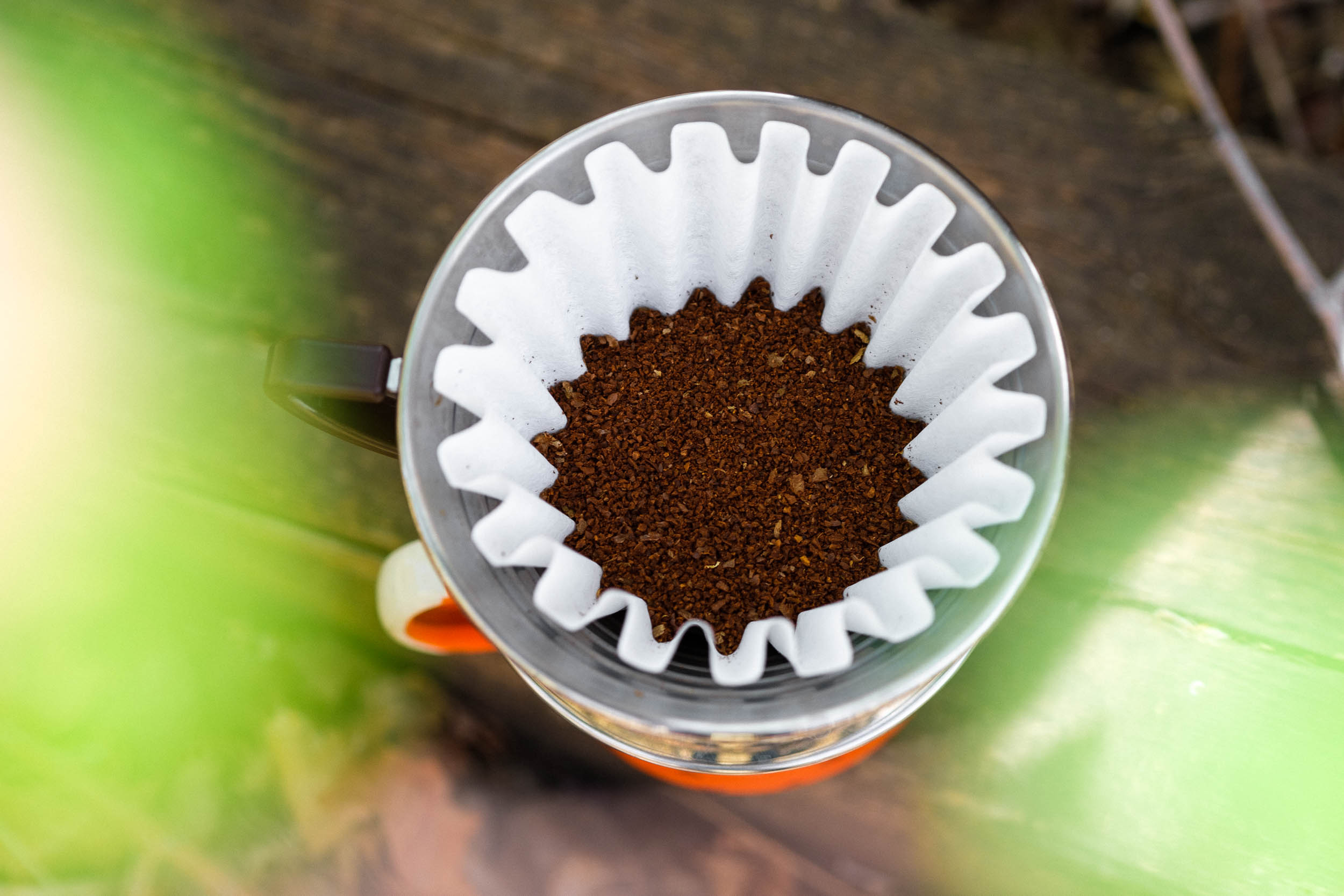
From a bikepacking point of view, there’s a lot to like about the Kalita Wave, though it’s far from perfect. To get it out of the way: if you’re seeking the absolutely lightest, most packable, and easiest way to make the best cup of sunrise coffee after a night outdoors, nothing will ever beat a good packet of instant coffee. But where’s the fun in that? I count myself among those who will happily make a little extra room to haul the gear needed to carefully brew a proper cup of coffee outside, as much for the process as the end product itself—the same way you might choose to carry watercolors when a phone photo would also adequately capture the scene.
In use, I like a 1:15 coffee-to-water ratio at home, typically 25 grams of beans (I’ve been drinking Prodigal and Boxcar lately, both based here in Boulder) to 375 grams of water. Translated to a camp recipe, that’s about a heaping handful of beans to a Ti mugful of water, give or take. I give the filter a quick rinse, drain the water, dump in the grounds, shake the brewer to level them out, then begin pouring, typically wetting all the grounds at first and letting them bloom for 30 or so seconds before pouring the rest of the water in two or three batches.
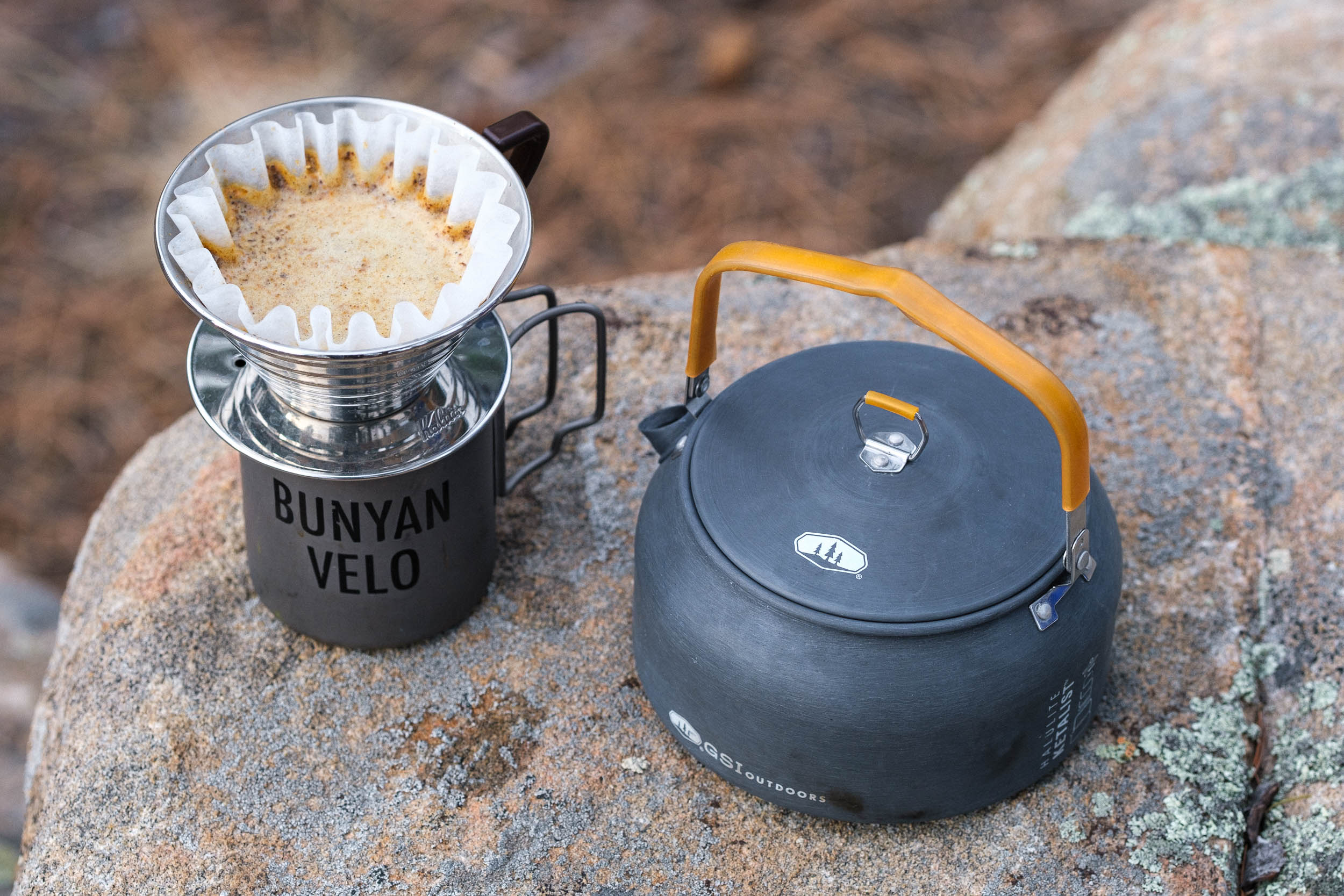
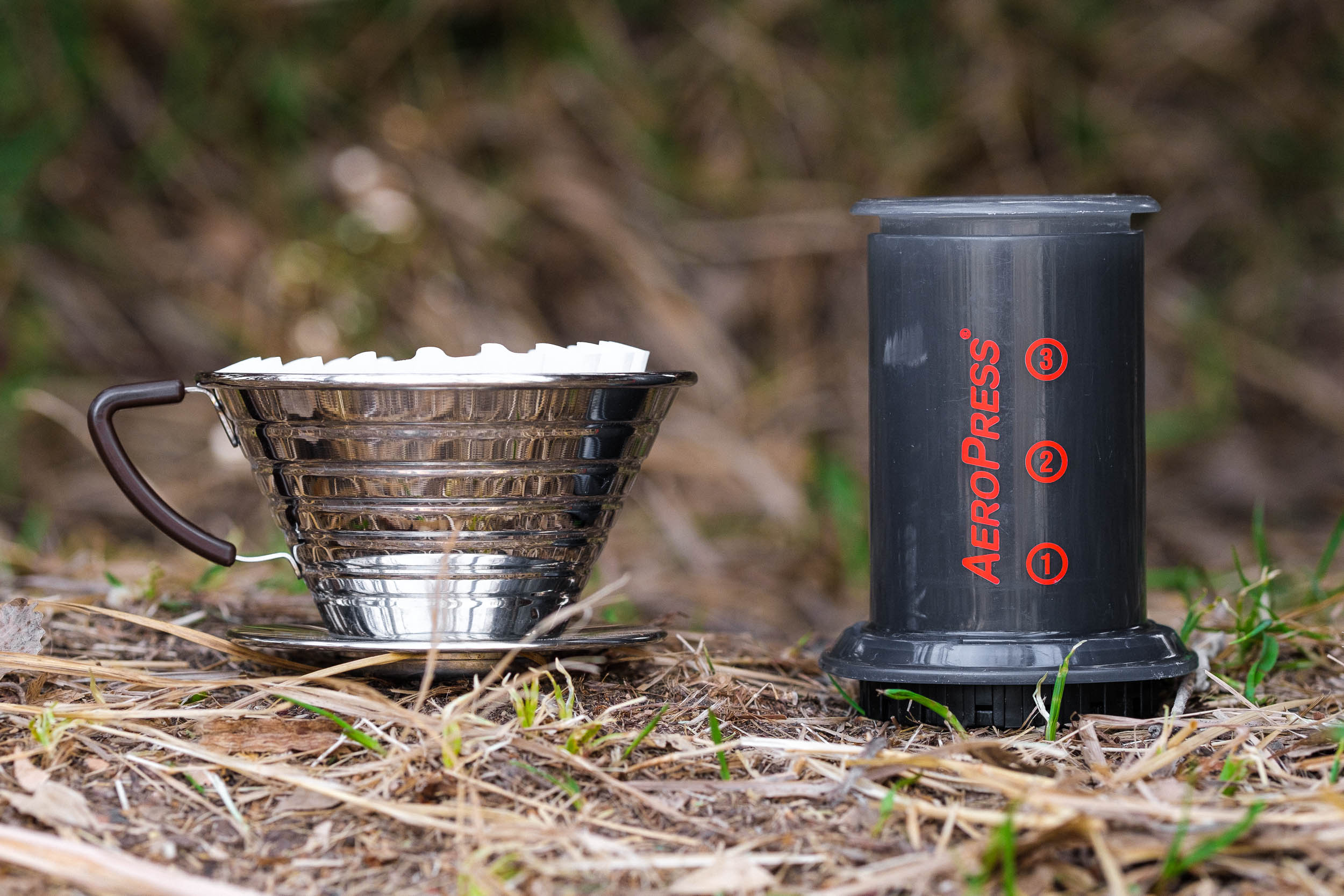

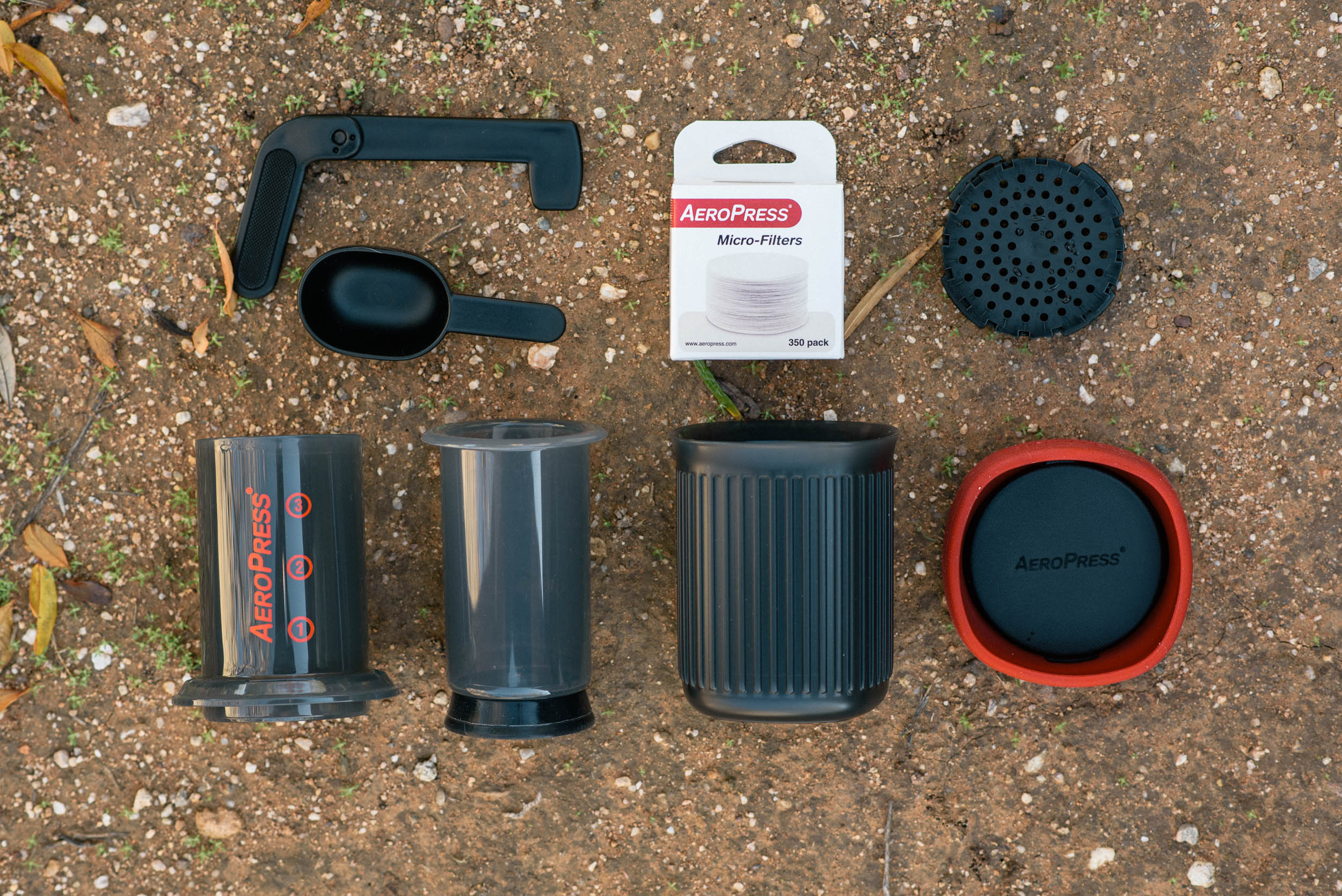
Light as it may be at 115 grams (versus 157 grams for the AeroPress Go), the Wave isn’t the most packable. Measuring 2.75” x 4.37” x 4”, its shape can be slightly awkward in some bike bags, whereas the AeroPress Go can pack inside a mug and slide easily just about anywhere. I mostly tour with top-opening bar bags, where the Wave fits easily, but it’s less optimal for stuffing in a seatpack. On that note, the filters are also relatively large, resulting in more paper waste to dispose of, and it’s easy for them to lose their shape. Once that happens, the risk of stalling increases, so be careful how you store your filters. I’ve found that they tuck neatly into a mug for travel, where I’ll also stuff a small bag of beans or grounds.
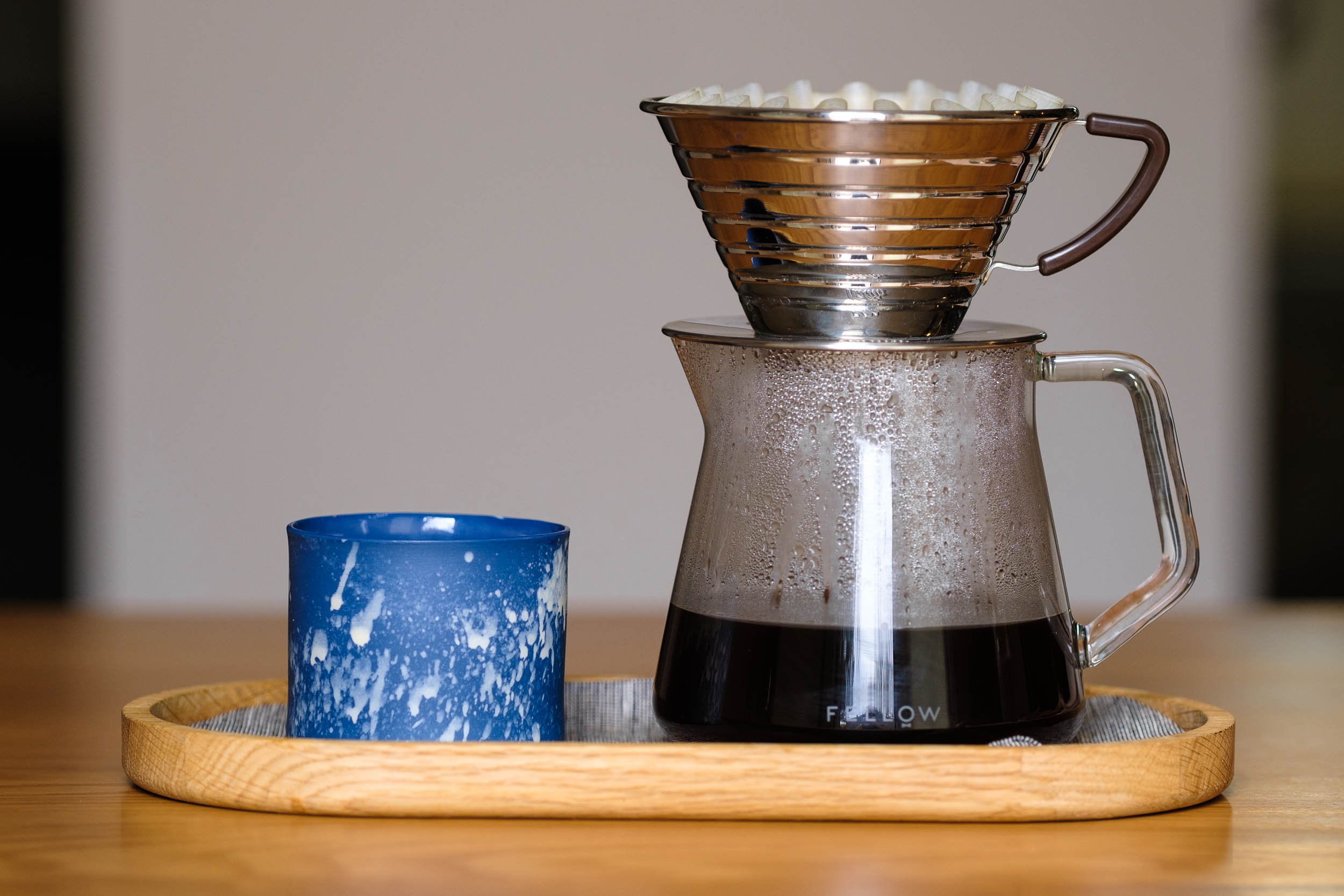
In contrast to the AeroPress, however, the Kalita isn’t plastic, a major selling point for some, nor is it heavy, highly breakable ceramic like the fussier Hario V60 or fragile glass like the Chemex, which makes them unfeasible options for use away from the kitchen. No doubt, there are trade-offs with all brewers, but it’s easy to make the case for the Kalita Wave as an optimal all-rounder.
Despite the Wave’s flaws—inherent to any brewer—the consistently great cup of coffee it creates, plus its hardwearing design, minimal weight, and versatility for use at home or on the go, have made it an enduring favorite in my overflowing collection of coffee contraptions. It’s fairly priced at around $40, roughly on par with other popular brewers.

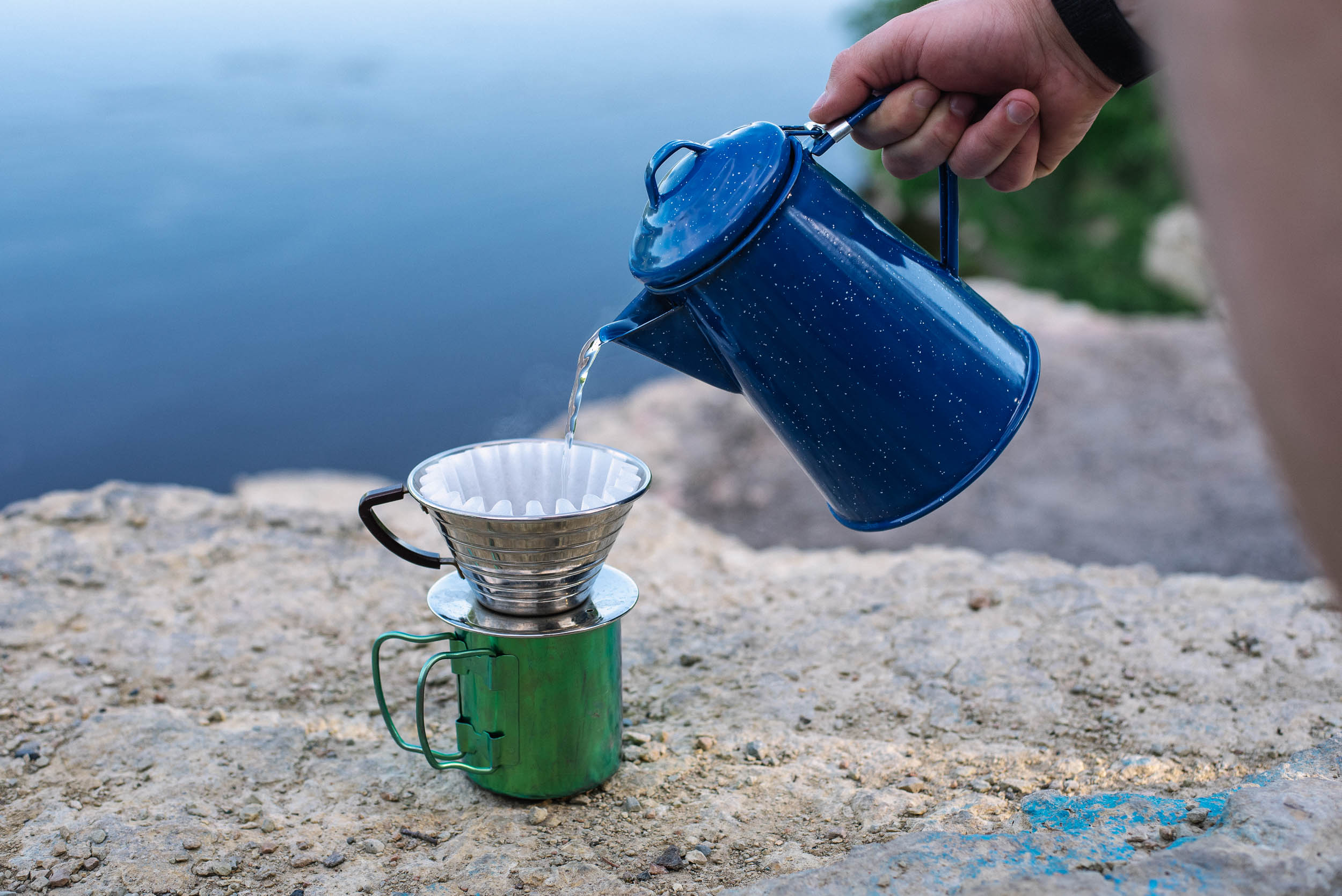
One last note: in addition to ceramic, glass, and steel versions of the Kalita Wave 185, there’s also a smaller 155 version, designed for a single user and with more packable dimensions. I haven’t used it, but it looks just about perfect for a camping-specific brewer, though I’d find it a little small at home with its roughly 20-gram capacity. Again, trade-offs.
- Model/Size Tested: Kalita Wave 185 Stainless Steel
- Actual Weight: 115 grams
- Place of Manufacture: Japan
- Price: $42
- Manufacturer’s Details: KalitaUSA.com
Pros
- Stainless steel is incredibly tough.
- Weighs less than many travel-oriented brewers.
- Works equally well at home and while camping.
- Versatile size for 1-2 people.
- Fuss-free brewing once you learn the basics.
Cons
- Shape isn’t ideal for packing.
- Filters require extra care to protect.
- Stalling can be an issue.
- Heat retention could be better.
Wrap Up
For as much as I take my coffee seriously, I’m not under the illusion that it’s going to win any awards. Still, I’m willing to put in the time and effort to brew the most delicious cup possible, whether I’m cozy in my kitchen or shivering in my sleeping bag. The Kalita makes it easy with considerably less input than many other leading brewers—no timer or careful pouring technique required.
If I could begin my coffee-brewing journey again, I’d seriously consider skipping the dozens of other brewers I’ve owned and going straight for a Wave. It can’t beat the visual appeal of a Chemex or the compact dimensions of an AeroPress Go (especially with its tiny filters), but it truly could be a one-and-done home and travel brewer for someone just getting their start. And with its stainless steel design, there’s no reason why you shouldn’t expect it to serve its purpose for a decade or more, even if it’s regularly getting tossed into a bike bag and rattled around as you ride to brew a cup somewhere with a view.
Do you have experience with the Kalita Wave? Let me know how you got on with it in the Conversation below! And if there’s another brewer you think I should experiment with, I’d love to hear your suggestions.
Further Reading
Make sure to dig into these related articles for more info...

Please keep the conversation civil, constructive, and inclusive, or your comment will be removed.