



 Mountain Bike (MTB)
 Gravel Bike
 All-Terrain Bike (ATB)
 Fat Bike




Madrone Jab Review + Ratio Mech Review: Tale of Two Derailleurs





Two small brands an ocean apart are challenging the status quo with derailleurs built around repairability, compatibility, and mechanical simplicity. In this two-in-one review, we put the Ratio Mech and Madrone Jab to the test on the same bike. The result is a compelling look at what happens when thoughtful engineering meets a growing demand for alternatives to today’s increasingly complex drivetrain ecosystem. Find our full Madrone Jab Review and Ratio Mech Review here…
PUBLISHED Apr 15, 2026
When viewed from the top down, it’s easy to perceive the cycling industry as a churn-and-burn machine. It’s notorious for pushing new standards for the sake of sales, telling consumers what they should be riding on and with, and abandoning technology that until “now” worked just fine. Steel bikes, 11-speed, 29+, cable-actuated everything, and countless other “old” technologies are becoming roadside flotsam on the superhighway to profit and survival. However, when products like Ratio Tech’s The Mech and the Madrone Jab come out, I have hope. Yeah, I know, these two derailleurs are simply products that will, in some sense, just further turn the wheels of capitalism, but they also make you realize that the bike industry is also made up of an intricate web of tinkerers who listen to what people want and come up with clever solutions and workarounds to problems often perpetuated by large corporations.


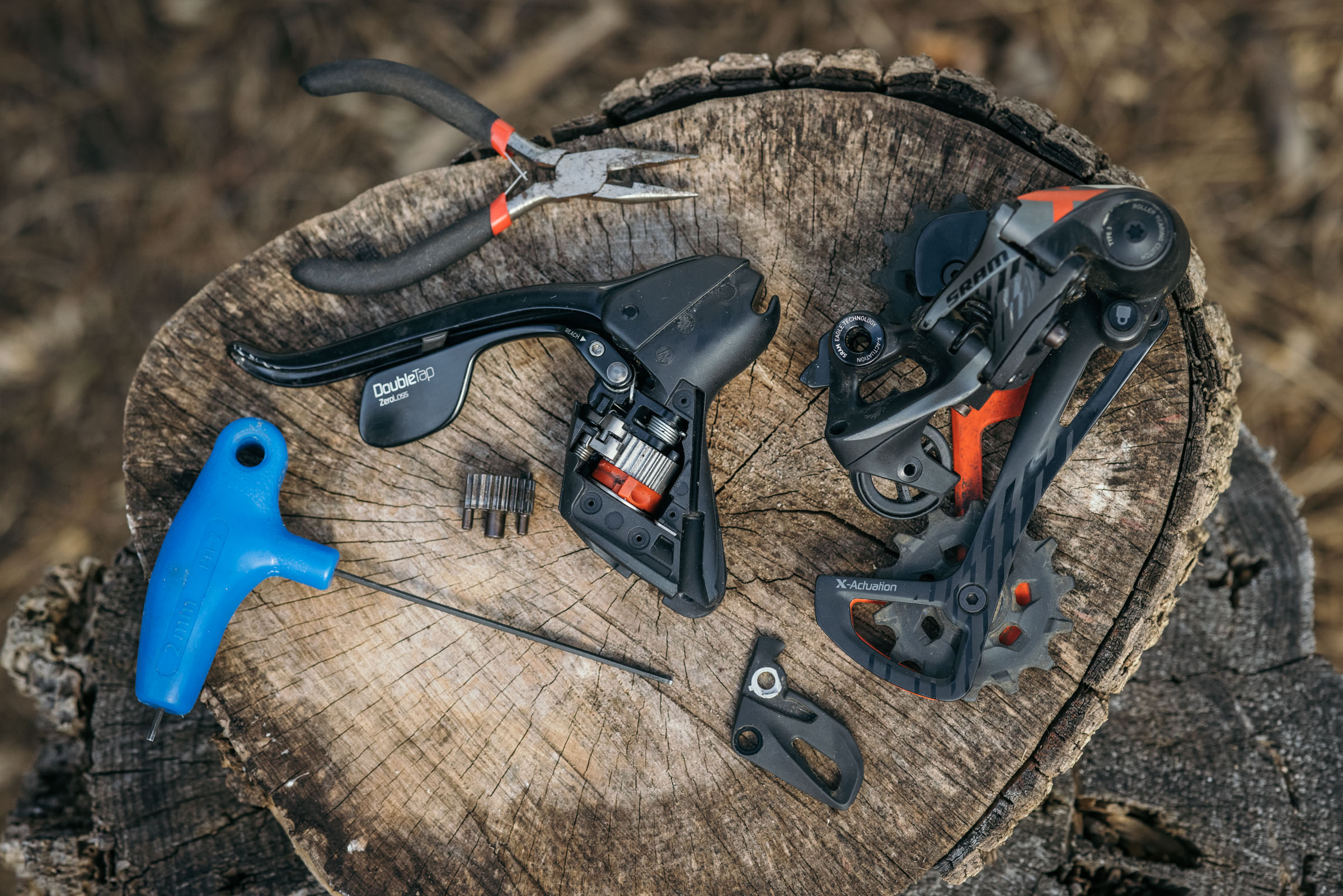

In fact, this is exactly how both Ratio and Madrone—two brands separated by a continent and an ocean—found a foothold in a small corner of the bike component ecosystem. Ratio started by developing a way to retrofit existing 11-speed shifters to work with newer 12-speed derailleurs, and Madrone initially focused on parts and kits to breathe new life into worn-out 12-speed derailleurs and keep them running. Both brands have since drawn on that knowledge, experience, and user feedback to develop their own derailleurs.
Why Now?
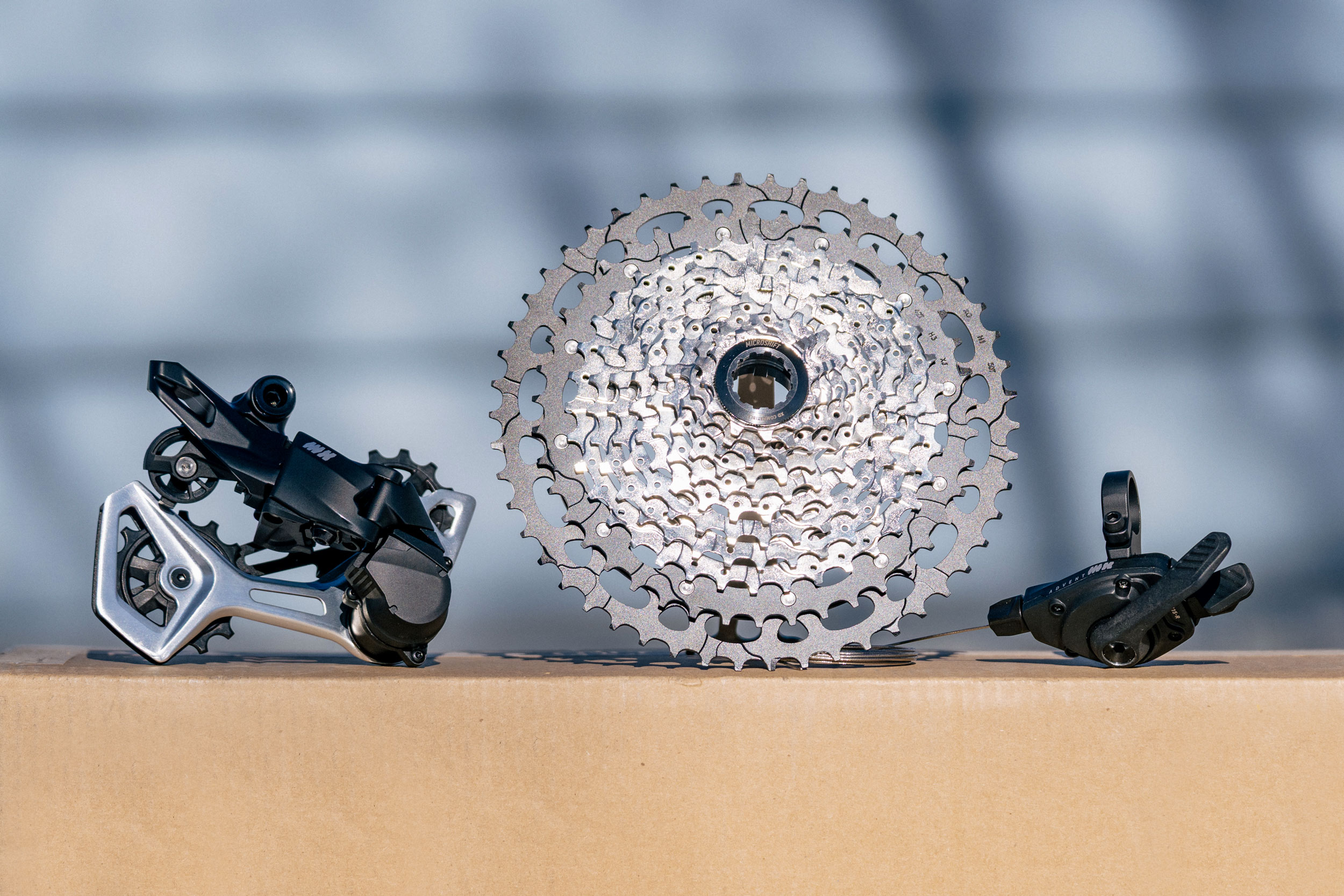
Looking at the Madrone Jab and Ratio Mech—alongside the rise of microSHIFT and Vivo’s Enduro, which I reviewed late last year—you might be wondering why a handful of small-brand derailleurs seem to have emerged out of nowhere. It certainly took a while. After the CNC experimentation boom of the mid-1990s, Shimano largely satisfied the market with a steady run of dependable rear derailleurs. When SRAM entered the picture, it quickly established its own foothold and a handful of key patents, maintaining strong market dominance through the 2010s and into the 2020s, until Shimano began introducing credible competition again.
At the same time, another undercurrent was building. A growing number of riders began pushing back against the direction the major brands were heading: wireless everything, new non-backward-compatible shifting standards and pull ratios, and increasingly complex and bulky designs that felt far removed from the elegantly simple derailleurs of earlier eras. That quiet dissatisfaction seems to have created both the opportunity and the appetite for alternatives.

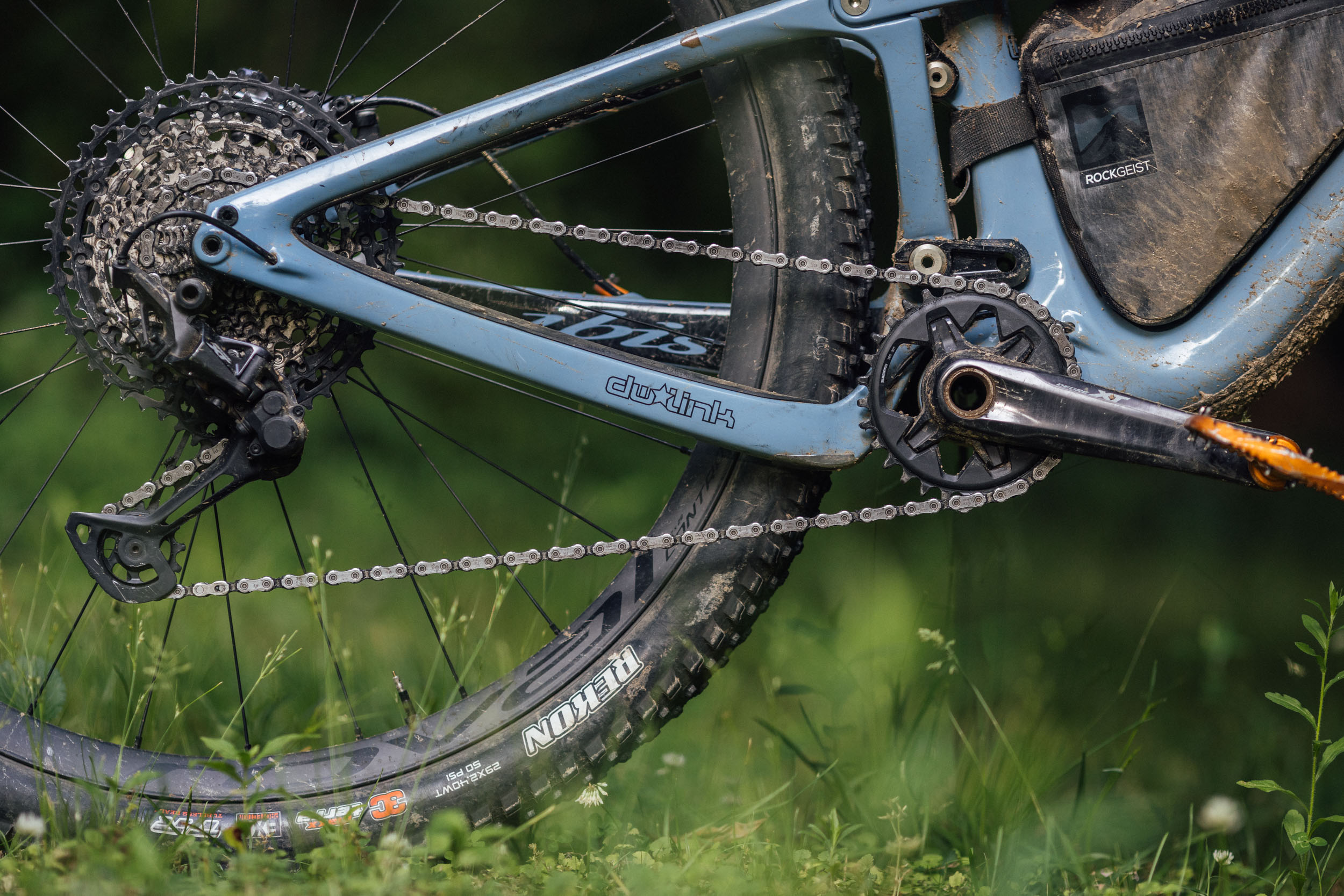
The Jab and Mech speak directly to that shift. Both were designed to work with a wide range of existing shifters and cassettes already out in the wild, favoring flexibility over a single, locked-in standard. I had the chance to test both systems to see how they perform. While I don’t typically combine products in a single comparative review, the overlap here was hard to ignore. Once I started writing, it simply made sense. Read on for my impressions of the Ratio Mech and Madrone Jab, both tested on the same bike with a KMC chain, Shimano XT 12-speed shifter, and Shimano XT cassette.
Ratio Mech Review
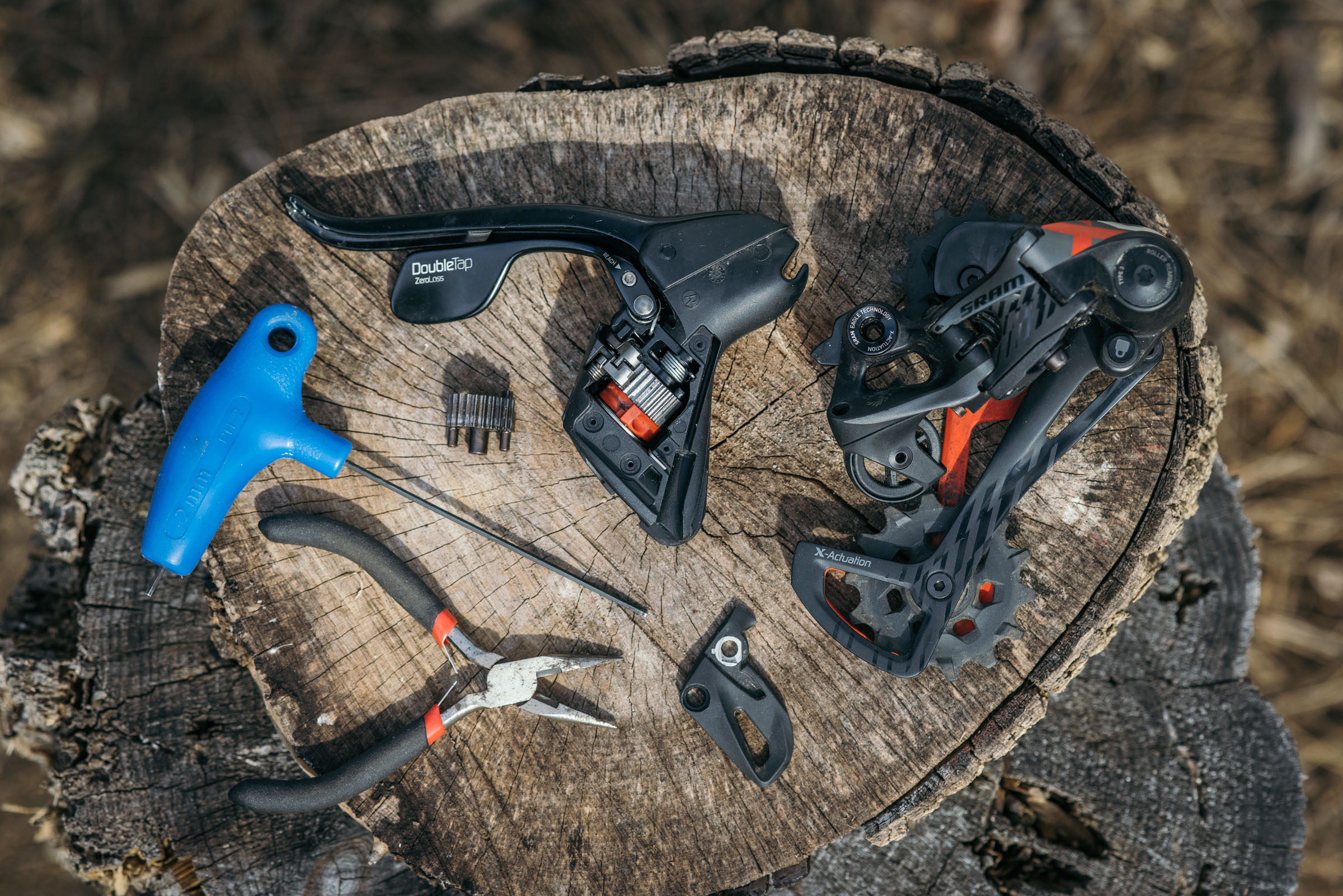
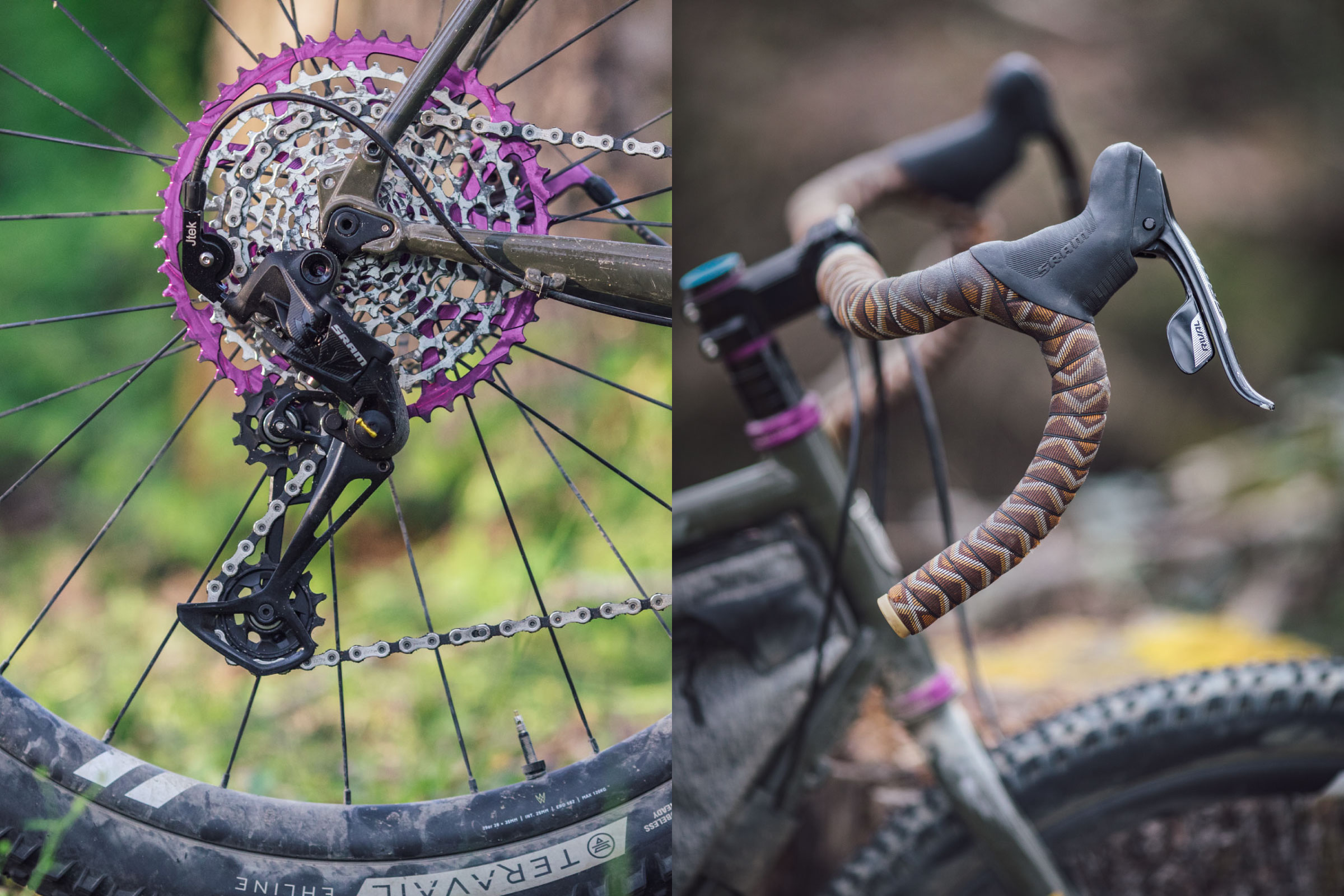
In the late 2010s and early 2020s, I spent countless hours experimenting with all sorts of hacks and Frankenstein-style mashups to achieve a wide-range 1x drivetrain on drop bars. At the time, most road and gravel 1x setups fell short—both in overall range and, more importantly, in offering a truly low climbing gear for loaded bikepacking. There were workarounds that allowed road shifters to play somewhat nicely with mountain derailleurs, but we were still waiting for a clean solution to the 1×12 dirt-drop drivetrain puzzle. That piece finally arrived in 2018, courtesy of Cambridge engineers and Ratio Technology founders Tom Simpson and Felix Barker. Their flagship upgrade kit allowed riders to modify SRAM Red, Force, Rival, Apex, and S-Series shifters with an upgraded ratchet to run Eagle 12-speed derailleurs, making a true bikepacking-friendly drop-bar mullet. I still use it to this day and consider it one of the best products of that era.


Late last year, Ratio took a giant step forward with the release of their own derailleur, the Mech, addressing another modern challenge in an increasingly electronic drivetrain landscape. The goal was to create a serviceable, drivetrain-agnostic component that works across a wide range of shifters, speeds, and cassettes—without locking riders into a single ecosystem. According to Tom Simpson, development on the Mech began in 2023. By then, Ratio’s upgrade kits had been on the market for several years, and customer feedback made it clear that many riders still valued mechanical, serviceable shifting. With larger brands moving in a different direction, Ratio saw an opportunity to double down on compatibility and repairability.

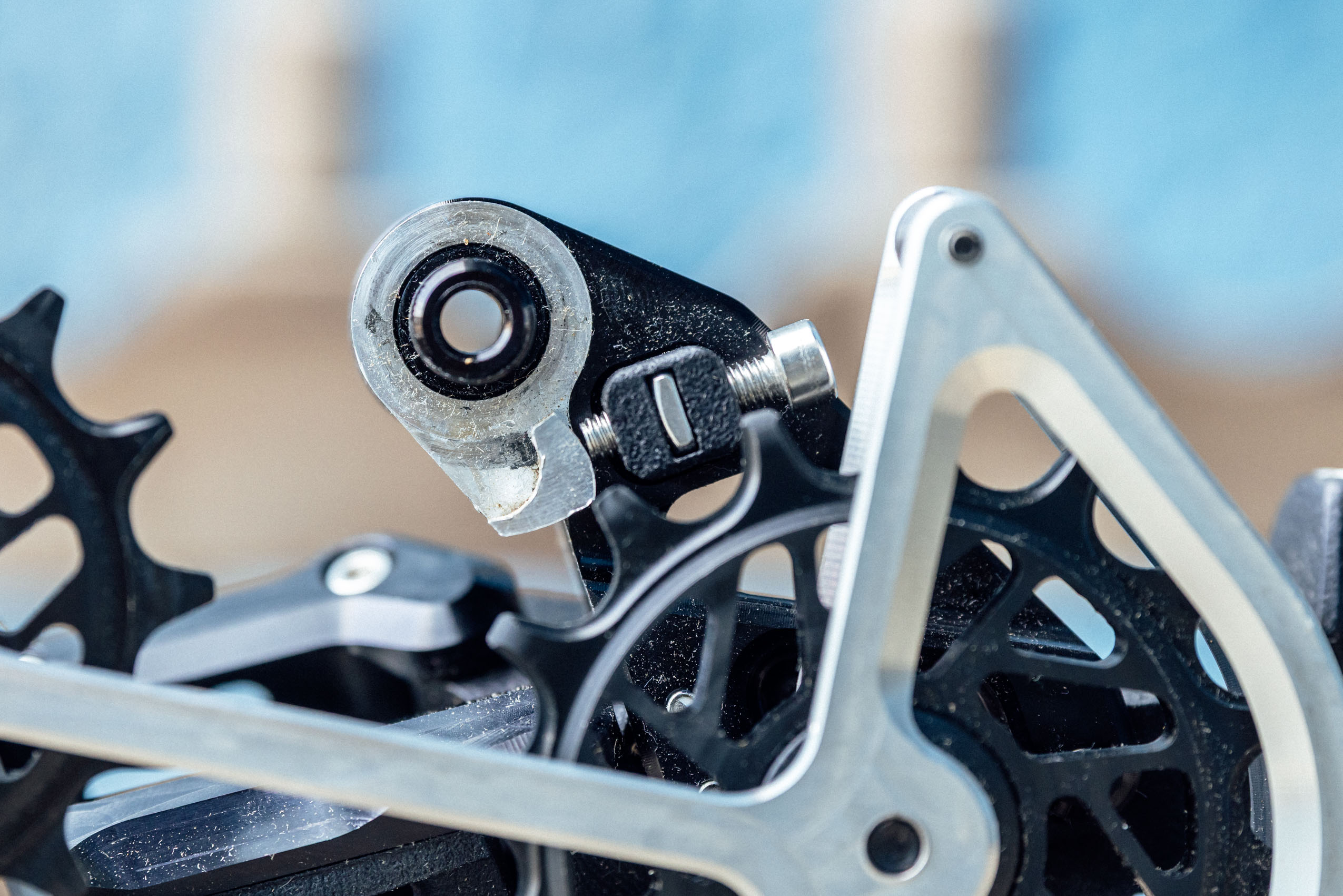


The result is a UK-made, fully serviceable derailleur designed from the ground up to work with a variety of 11-, 12-, and 13-speed setups. Before I dive into the meat of this thing, here’s a quick rundown of the Ratio Mech’s key specs.
- Works with 11-, 12-, and 13-speeds (see chart further below) via eight interchangeable fins
- Fully user-serviceable and modular design; spare parts available on the Ratio website
- Optimized for modern 1x cassettes
- Comes in black or silver; silver version gets a silver cage (as shown) and a silver machined mount (not shown)
- Rotating components run on stainless bearings
- Universal cable routing to avoid tight bends or loops
- Direct Mount configuration compatible with SRAM UDH dropouts for any cassette
- Tool-free Cage Stop (cage lock) design for wheel removal
- Drag spring clutch to limit chain slap, featuring a hardened steel wear surface
- All changes can be made using a multi-tool, including the removal of the cage, which requires one T25 screw and no unwinding of the cage spring
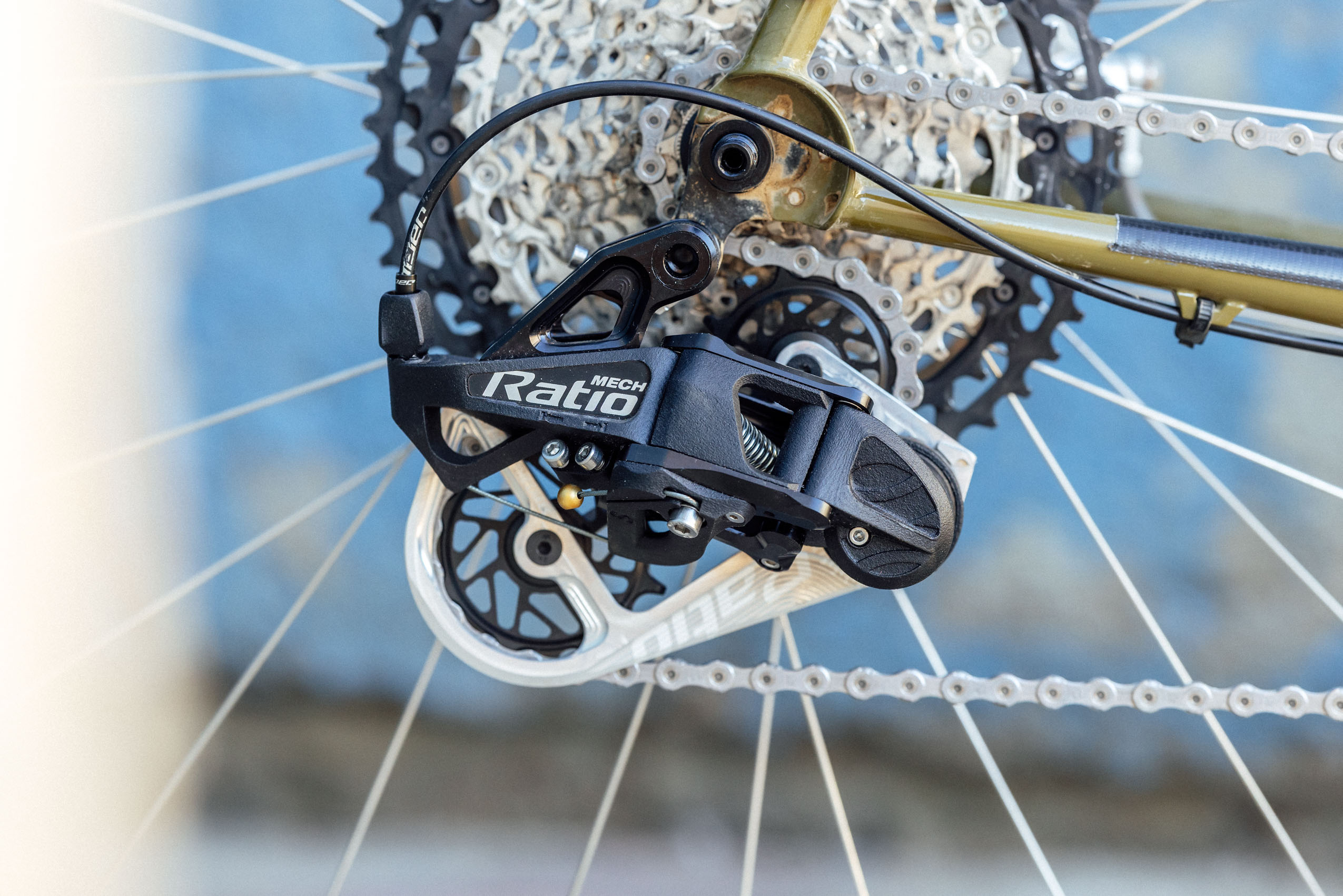


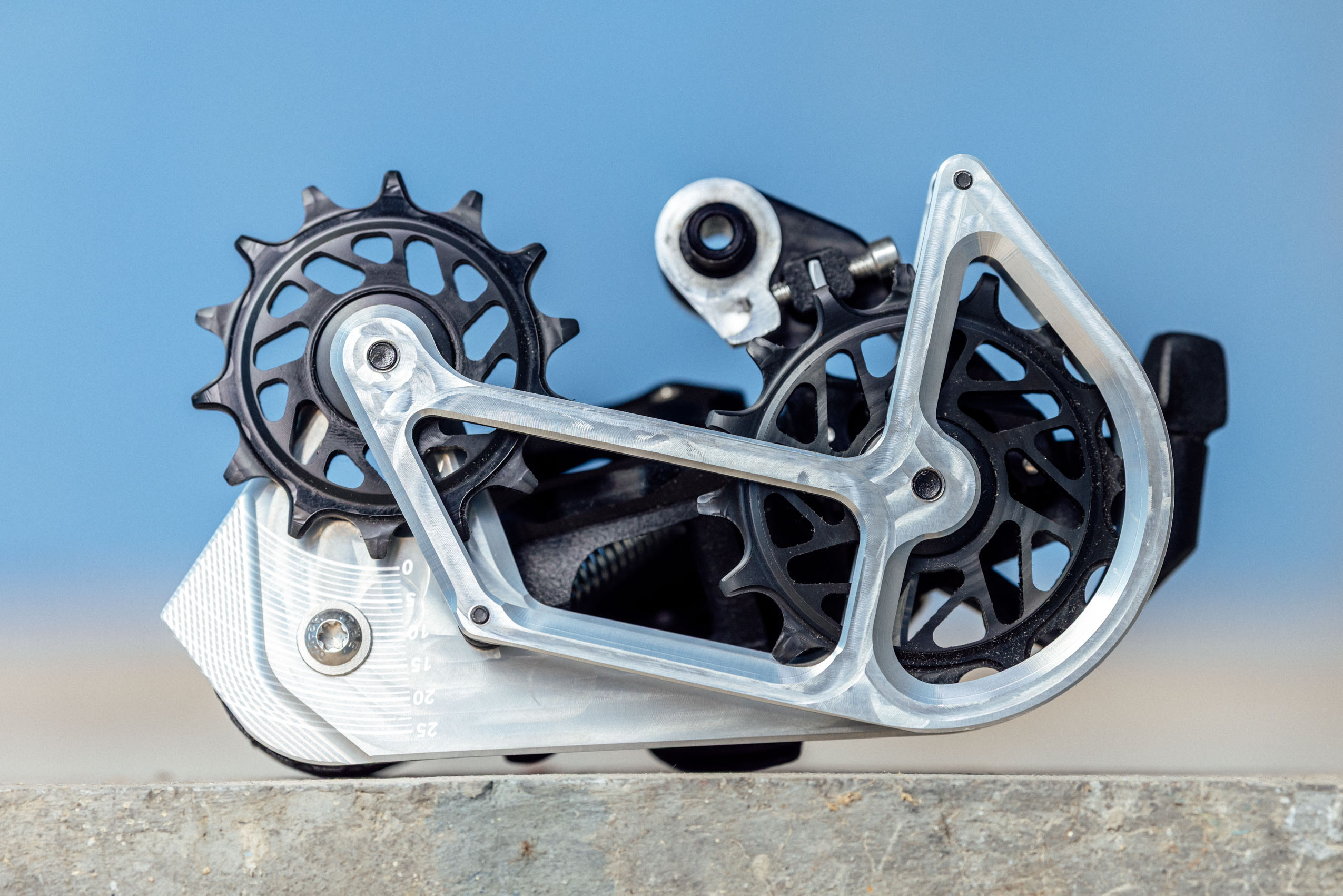
The Ratio Mech is largely manufactured in the north of England at Ratio’s facilities in Cumbria, near the Lake District National Park, hence the “Made in the Lakes” moniker. Key components, such as the links, cage plates, mounting hardware, and arms, are machined in-house from 7075 aluminum, while parts such as the B-adjuster plates use 6082 aluminum. Smaller pieces, including the jockey wheels and end caps, are also produced locally from acetal thermoplastic, and the derailleur runs on stainless Enduro bearings for durability. Even the serviceable wrap-spring clutch—made from a mix of brass, steel, and stainless steel—is machined in the Lakes, while the additive-manufactured nylon knuckles are produced elsewhere in the UK. The result is a predominantly domestically made derailleur with a strong emphasis on in-house machining and thoughtfully sourced materials.

Set Up
Installing the Mech was fairly straightforward, though not without a couple of speed bumps. Ratio includes a brief pamphlet covering chain sizing and basic setup, and most of the process went smoothly until I got to the B-gap. Instead of a single reference mark aligned to the largest sprocket, Ratio uses a system designed to accommodate the wide range of cassettes the Mech supports. The cage is etched with ruled lines on the back side to indicate the distance from the upper jockey wheel teeth to the cassette sprocket, while angular markings on the front align with an embossed mark on the P-knuckle as a secondary check. Once I referenced Ratio’s B-gap guide, it all made sense and was easy to dial in.

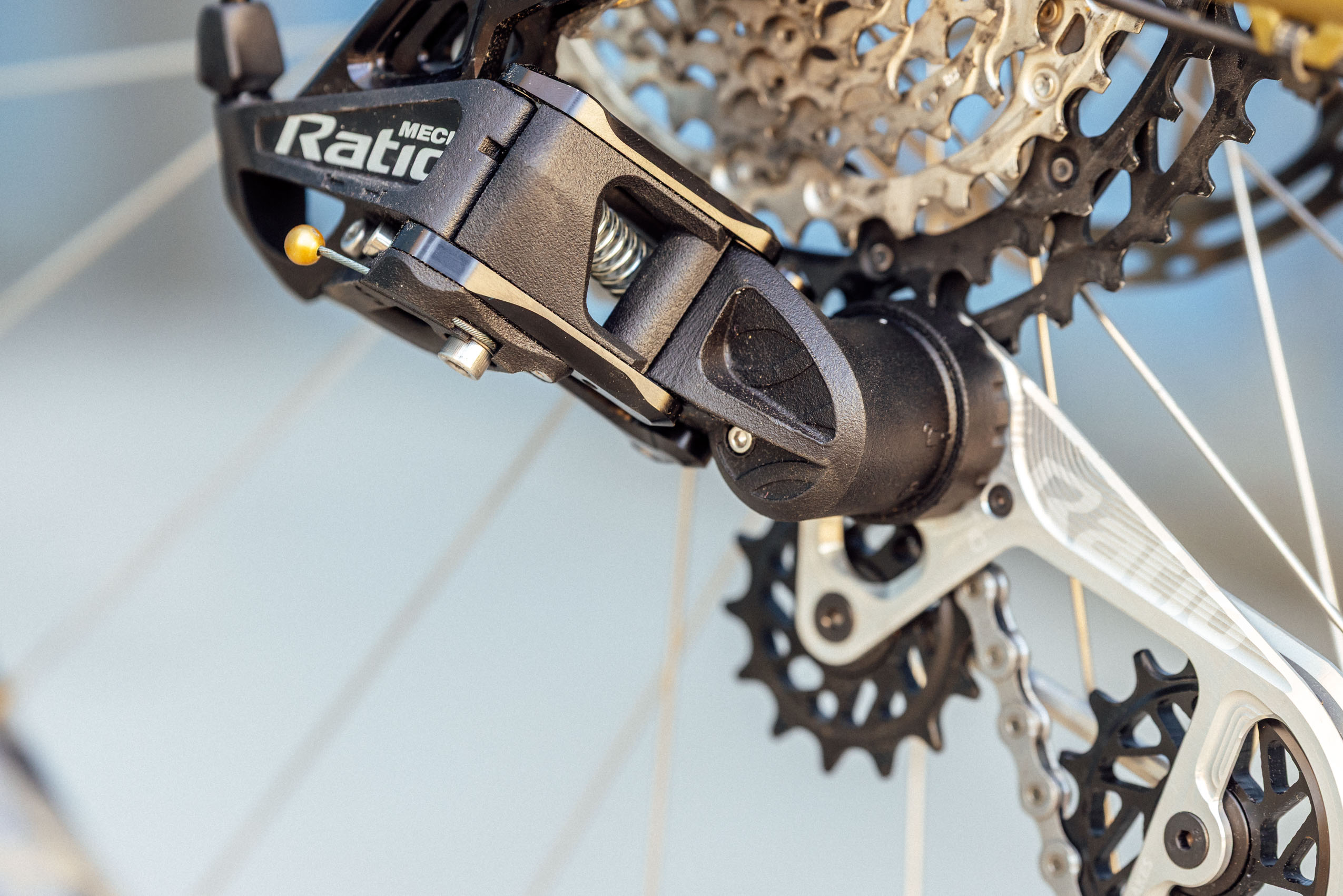


One of the most interesting features of the Mech is the Cage Stop, a clever, tool-free mechanism that locks the derailleur cage in a forward, slackened position, making wheel removal and installation easier. This type of feature is uncommon on many derailleurs, largely because SRAM holds a patent on its Cage Lock design, which uses a button to hold the cage in place. Other brands, including Madrone and Vivo, have worked around this by requiring a tool to brace the cage forward, but I don’t recall seeing a tool-free alternative until now. Ratio seems to have cracked the code.


With modern 1x drivetrains and increasingly large cassettes, pulling the derailleur cage out of the way for wheel removal has become more cumbersome. As Tom filled me in, designing a cage lockout is more complex than it might appear—not only because of patent constraints, but also because the cage needs to rotate fully forward when shifting into the largest sprocket, made especially tricky by massive 51- and 52-tooth cogs. Ratio’s solution synchronizes the catch mechanism with the derailleur’s linkage, allowing it to engage only when the derailleur is in the smallest sprocket. Since that’s the position you’re in when removing a wheel or disconnecting the cable, it works seamlessly. You simply shift into the highest gear and rotate the cage forward, where it slides into a catch joint. At first, I feared for my fingers when engaging it, but after a couple of uses, it felt rock-solid and intuitive. It’s a smart, well-executed design.
In Use
Once I had the Mech properly dialed, I quickly noticed how easy it was to shift—easier than most derailleurs I’ve used recently. In fact, it might be one of the lightest-action derailleurs I’ve ever operated. It immediately made me think of Virginia’s carpal tunnel issues and how well this could suit riders looking for a smoother, lower-effort mechanical setup. Paired with the XT shifter, it felt buttery smooth, and that quality held up over hundreds of miles, regardless of dust and grime. Much of that likely comes down to the low-friction pivots and stainless bearings used throughout its construction. Tom mentioned that during testing in the UK’s cold, wet winters, they found that degradation in shifting performance wasn’t always due to cable friction. Instead, they found it was often the derailleur’s own moving parts that got gummed up and sticky. That insight led them to prioritize stiffer construction and low-friction pivots with stainless bearings instead of bushings.


In terms of feel, I’d compare it to a high-end XTR setup—or a perfectly tuned XT system on a good day. It’s crisp, quick, and consistent, with the occasional signature Shimano downshift stutter. Upshifts have a satisfying clunk, but they’re fairly quick, and the Mech handles light under-load downshifting quite well. After a few months of use, my overall impression is that it behaves like a premium derailleur: quiet, smooth, and dependable.
I’ve also been impressed with the Mech’s clutch. It has a progressive feel that keeps the chain well controlled, even when hammering down rough terrain in the smaller cogs. Given the derailleur’s light action, it’s surprising how little chain slap I experienced on my Stooge MK7. I even left only a strip of duct tape on the chainstay to better pick up audible dings and discern how much movement was happening, but there was very little to note. According to Tom, Ratio opted for a wrap-spring (or drag-spring) clutch rather than the more common needle-roller design. “The problem we’ve found with those is that they can seize and stop slipping in either direction,” he explained. In contrast, the wrap-spring clutch uses a spring wound around a coated steel shaft: it tightens to resist movement in one direction and loosens in the other. The result is a well-balanced level of tension and control that feels just right for mountain biking and rough ATBing.
- Model Tested: Ratio Mech
- Actual Weight: 340 grams
- Place of Manufacture: United Kingdom
- Price: £287.50 (non-UK), £345 (UK)
- Manufacturer’s Details: Ratio Tech
Pros
- Buttery smooth, easy shifting
- Fully rebuildable
- All made in the UK
- It has a tool-free cage lock!
- Works with a variety of speeds and shifter/cassette ecosystems
- Clutch is excellent
Cons
- Expensive
- Not available in “full” silver
Madrone Jab Review
Planned obsolescence feels increasingly common these days, and unfortunately, the bike industry isn’t immune. Madrone Cycles was, in many ways, born out of that reality—though “planned” might be a strong accusation. The fact is, SRAM Eagle 12-speed quickly became the dominant MTB drivetrain around 2018-19, with most mid- to high-end mountain bikes spec’d with GX or X01 derailleurs. A year or two later, the shortcomings became clear: once worn out or damaged, many of these derailleurs were simply trashed. Issues like bent cages, worn link bushings, and general wear weren’t easily repairable. In response, Madrone founder Aaron Bland began experimenting with SRAM AXS derailleurs, developing replacement parts, custom tools, and detailed service instructions to address common failures and keep them out of the landfill.


When I first met Aaron and his team at the 2024 Sea Otter Classic, they were showcasing their solution: complete rebuild kits with machined replacement links, cages, and the tools needed to bring worn-out SRAM Eagle derailleurs back from death’s doorstep. We later tested those kits, and I’m still running one on my Esker Smokey. That hands-on experience Aaron gained from engineering parts to repair and improve existing derailleurs ultimately informed the development of their own rear mech.


At that same Sea Otter booth, Aaron was also quietly showing an early prototype of what would become the Madrone derailleur. It featured ball-bearing pivots, a carbon fiber cage, and a play-free hanger bolt design. At the time, his goal was to create a derailleur compatible with existing SRAM and Shimano shifters and cassettes (via interchangeable cams), while prioritizing precision, responsiveness, reliability, and serviceability. Fast forward a couple of years, and Madrone introduced the Jab. While it shares some DNA with that early prototype, the 2025 production version has evolved into something quite distinct.

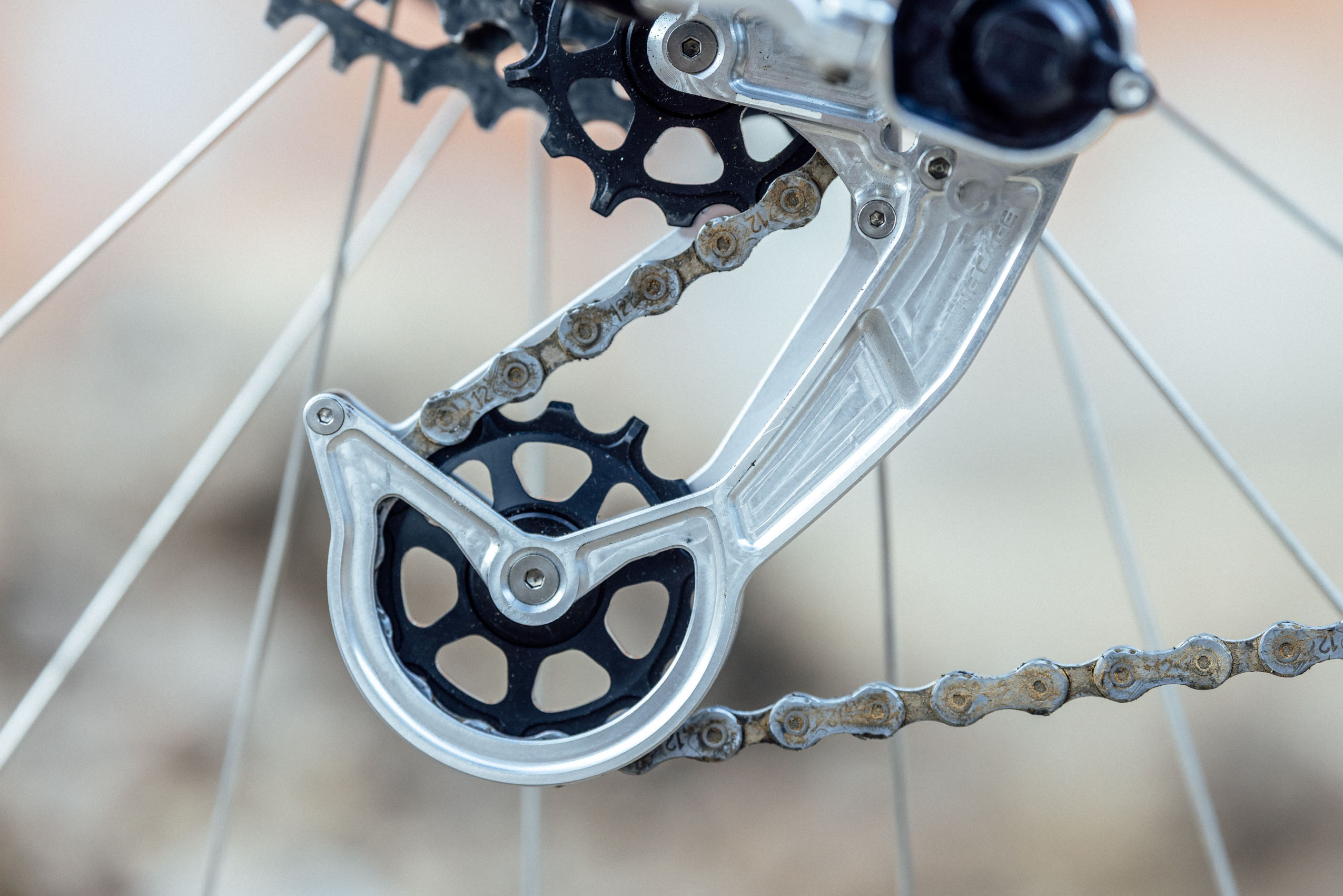


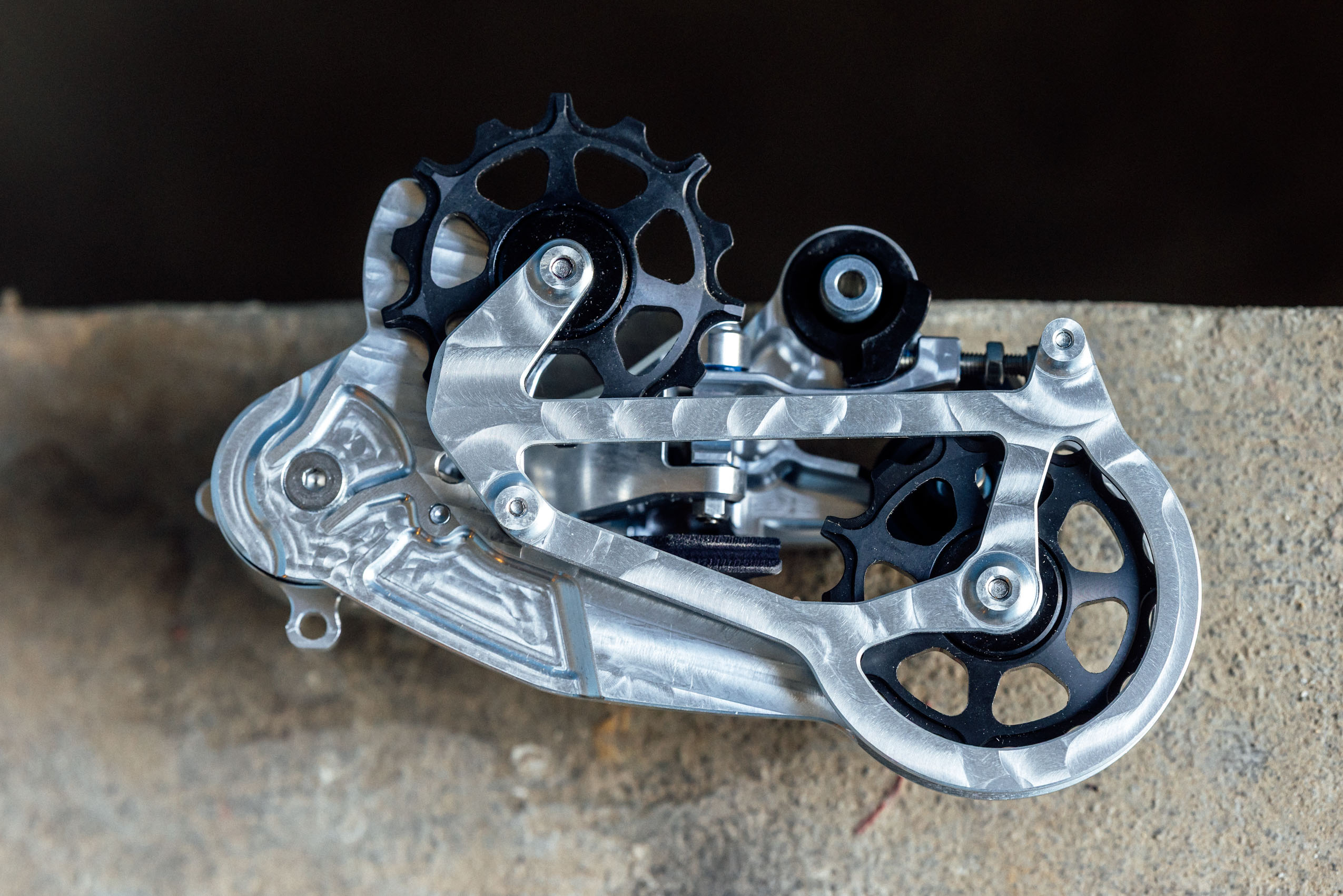
One of the most notable changes is the move away from the carbon cage to a machined aluminum design. In fact, the production Jab features a nearly all-metal construction, aside from a 3D-printed nylon cam and clutch cover, as well as the pulley wheels. Here are the nitty-gritty specs:
- Compatible with 7-, 10-, 11-, and 12-speed setups for both MTB and drop-bar bikes via 11 interchangeable cams
- Available in long- and short-cage options (short cage is a custom order)
- Three versions for mounting configuration: gravel (standard hanger mount), mountain bike (comes with an optional stiffener plate mount for use with UDH hangers), and T-type (comes with stiffener plate and hanger for use with T-Type cassettes)
- Two clutch options for gravel or mountain bike use
- Cage lock for wheel removal via insertion of small Allen key
- Available in all Shiny Silver (as shown), and five colors, each with black cages and mounting hardware: Textured Black, Textured Grey, Shiny Grey, Shiny Blue, Shiny Purple
- There are also three limited colors: Textured Red, Textured Orange, Textured Gold, each with a black cage and mounting hardware
- All individual parts (except the 3D printed cams and clutch covers, both made in the US) are made in Dongguan, China, and derailleurs are assembled in the U.S.
- Metal parts are machined from 6061 and 7075 aluminum and stainless steel
Options and Clutch
As you can glean from the specs above, the Jab is offered in several configurations. To be clear, it’s fundamentally the same derailleur across the board. The differences come down to mounting hardware, cage length, and clutch internals. The Gravel clutch is spec’d on all gravel configurations, while the MTB clutch is used on MTB builds.
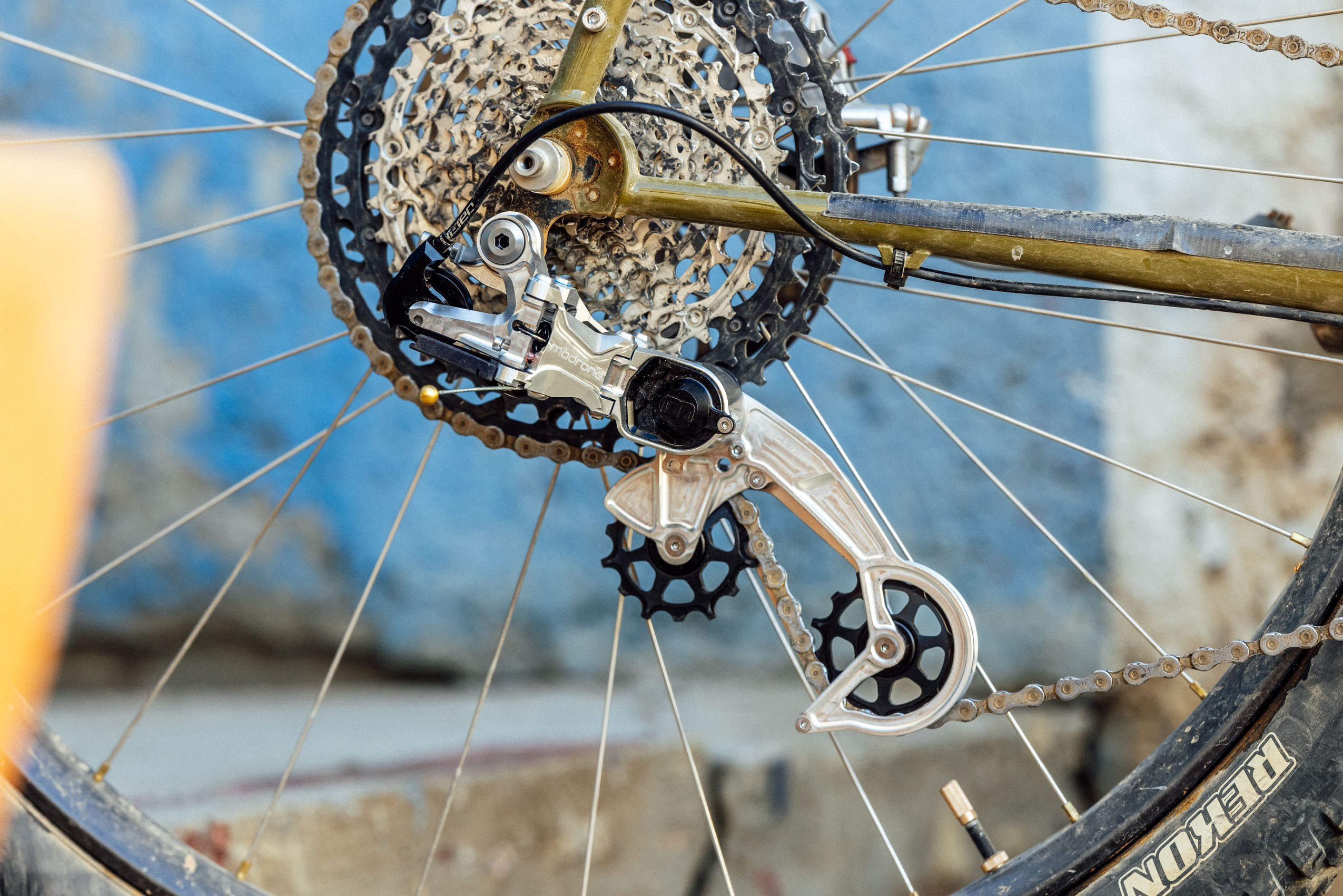
Both versions use spring clutches with friction plates, though the MTB version adds more resistance on the pull stroke. You can learn more about the differences here. Both are adjustable and rebuildable, and the Jab can be converted between the two. I received mine before the two clutch options were introduced, so it’s technically the “MTB” version (because it doesn’t have a barrel adjuster) with a “Gravel” clutch, which Madrone says offers tension and friction similar to a SRAM derailleur. That feels like a fair comparison in use. On the trail, it behaves much like a SRAM setup—there was some minor chain noise on rough descents, but nothing out of the ordinary. The MTB clutch is better suited for bigger hits and rougher trails.
Setup and Installation
Installation was relatively straightforward. I followed the steps outlined on their website and encountered only one minor hiccup. I needed to fine-tune the cable tension a couple of times to get it just right. In general, I found that applying a bit more hand tension before clamping the cable, then making small adjustments with the barrel adjuster, helped dial in smooth shifting across the larger cassette cogs.


In Use
Once I got everything dialed in, I took it out for a spin. On that first ride, I recall needing a couple more twirls of the barrel adjuster before things really clicked. After that, it was nearly perfect. What stood out on that ride—and every ride since—is just how quickly it shifts in both directions. No stuttering, just fast and relatively quiet transitions across the cassette. It kind of reminded me of AXS X01 in that regard. Like the Ratio Mech, it handles shifting under load reasonably well, though I tend to ease off out of habit. A couple of decades of muscle memory are hard to shake.

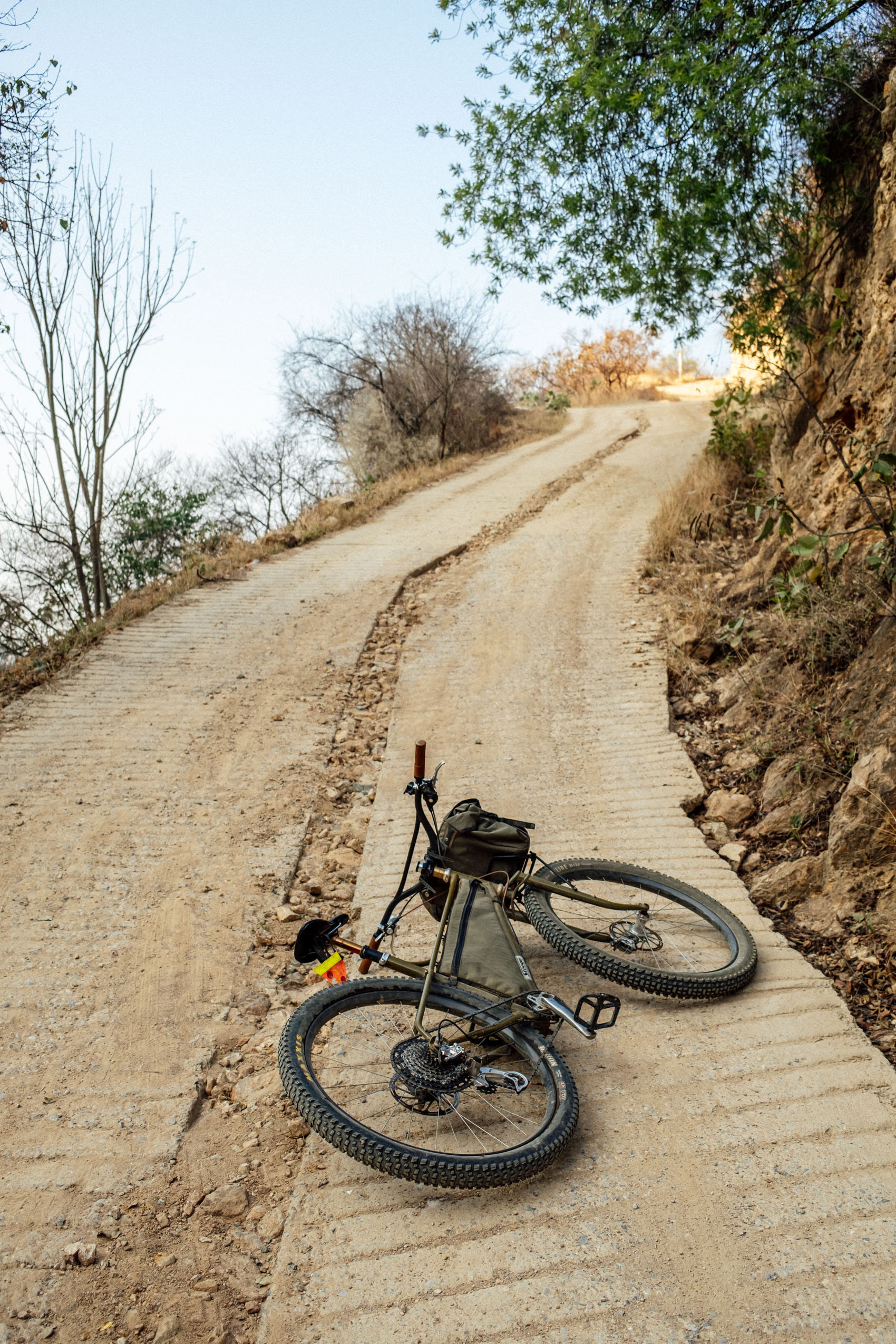

In the higher gears, the action is fairly light, but it does get noticeably heavier in the larger cogs. That’s probably my only real complaint with the Jab. That said, Madrone may have already addressed it. About a month ago, they announced a ball-bearing pivot upgrade for the linkage, replacing the bushings with ball bearings to smooth and lighten the action. Aaron mentioned that the heavier feel was likely due to the bushings sticking.

Upgrades
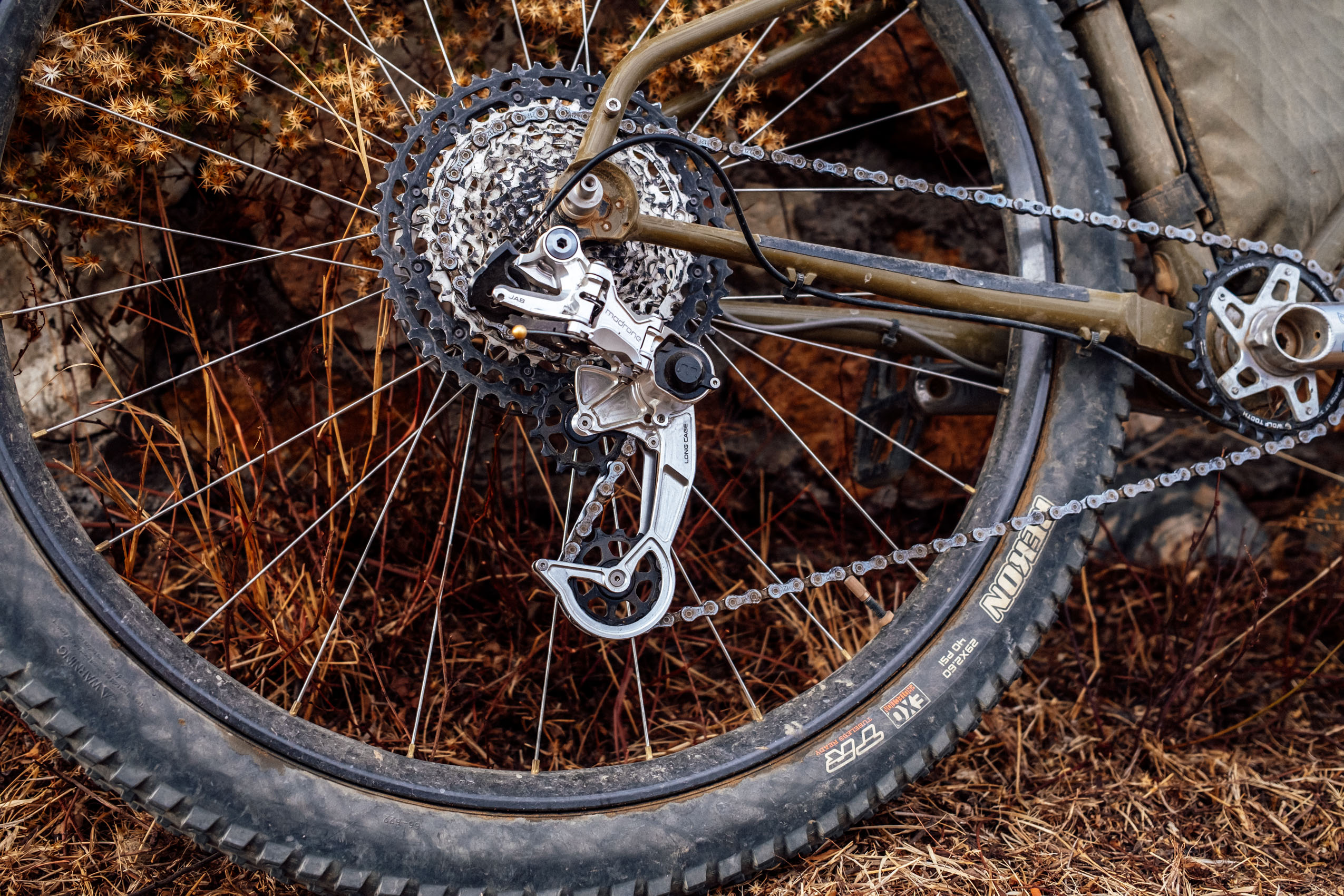
Madrone has made several updates to the Jab since I received mine, including a revised clutch, a linkage bearing upgrade, minor tweaks to the pulley teeth, and a pre-shipment clutch break-in. Considering how well my Jab performs without these changes, it’s impressive to think they’ve improved it further. To their credit, Madrone documents all updates clearly on this page. As Aaron put it, “Actually, our goal now is not to make updates. It can be frustrating for customers if they feel like the Jab they bought needs upgrading. But we do it when we think it genuinely benefits them. So there’s a balance.”


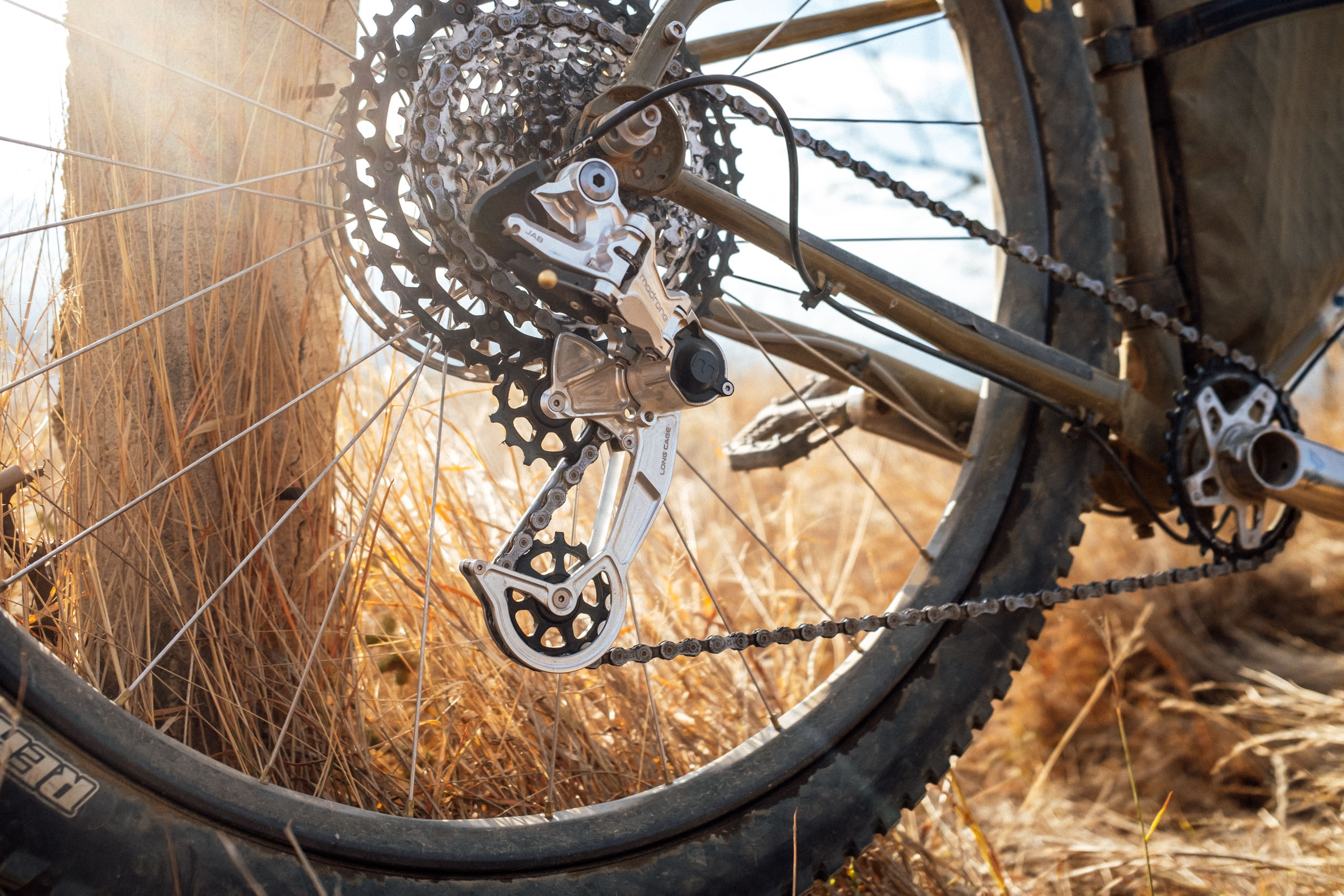
That approach ties into one of Madrone’s standout features: their Stoke Guarantee. It’s essentially a warranty with added flexibility, allowing owners to send their Jab in for updates, repairs, or rebuilds with free labor. They also support each derailleur for life, regardless of ownership or where it was purchased.
In keeping with their right-to-repair ethos, Madrone provides extensive how-to documentation on their website. The Jab is fully rebuildable with standard tools, and individual replacement parts are available, making it easy for riders to service it themselves at home.
- Model Tested: Madrone Jab, Gravel, Shiny Silver
- Actual Weight: 315 grams
- Place of Manufacture: China and USA
- Price: $327 ($298 for non-silver)
- Manufacturer’s Details: Madrone Cycles
Pros
- One of the fastest and most crisp-shifting mechanical derailleurs I’ve tried
- Fully rebuildable
- Works with a variety of shifter/cassette ecosystems
- Clutch is solid, even the “weaker” gravel version I tested
- Offered in all silver and other colors
- Mail-in repair and upgrade options
Cons
- The action isn’t as light as some others when shifting into the big cogs
- Relatively expensive; note that non-silver versions are about $34 less
- Several cool upgrades happened after I got it
Wrap Up
If you’re hoping for a clear winner between the Madrone Jab and the Ratio Mech, I’m afraid it’s not that simple. Both are incredibly impressive in their own right, and each brings a unique set of strengths to the table. In use, both derailleurs delivered precise, reliable shifting and excellent chain control, even on the rough stuff. More importantly, they share a common set of principles: they’re engineered to work across a wide range of existing shifters and cassettes—a refreshing level of flexibility in today’s market. And maybe more importantly, they’re built to be serviced rather than replaced, and supported by brands that clearly value repair over disposability. For riders seeking a drivetrain-agnostic derailleur that can be maintained, rebuilt, and reconfigured over time, it’s hard to go wrong with either option.
I suppose if you are weighing out the options, it’s worth considering the details. Obviously, if you’re in the UK or EU, it may intrinsically make more sense to consider the Ratio Mech. Or if you’re looking for a certain color, maybe the Madrone Jab would better suit your style. Or, if you are looking for a very specific configuration, you can dig into what shifters and cassettes each supports. To start, I put together a chart outlining basic speed and cassette pairings below.
Mountain Bike
| Drivetrain/cassette | Madrone Jab | Ratio Mech |
|---|---|---|
| SRAM Eagle 12 spd (10-52) | ✓ | ✓ |
| SRAM T-Type 12 spd (10-52) | ✓ | ✓ |
| Shimano 12 spd (10-51) | ✓ | ✓ |
| Shimano 12 spd (9/10-45) | ✓ | ✓ |
| SRAM 11 spd (10/11-42) | ✓ | ✓ |
| Shimano HG 11 spd (11-42) | ✓ | |
| Shimano Linkglide 11 spd (11-50) | ✓ | |
| SRAM DH 7 spd | ✓ | |
| Shimano Saint 10 spd | ✓ | |
| TRP Evo 7 | ✓ |
Gravel/Road
| Drivetrain/cassette | Madrone Jab | Ratio Mech |
|---|---|---|
| SRAM XPLR 13 spd (10-46) | ✓ | |
| SRAM Eagle 12 spd (10-52) | ✓ | ✓ |
| SRAM XPLR 12-spd (10-44) | ✓ | |
| SRAM AXS Road 12-spd (10-28/33/36) | ✓ | |
| Shimano GRX 12-spd (9/10-45/51) | ✓ | ✓ |
| Shimano GRX 11-spd (11-42/50) | ✓ | |
| SRAM 1×11 (10/11-42) | ✓ | ✓ |
After thinking about all this and trying to pin down which derailleur I’d keep based on my needs, I came to an impasse. Both work with my preferred Shimano 12-speed setup, and each has features and details I love. They are undoubtedly impressive feats of engineering for one of the most complex components on a bicycle. As Aaron summed up the development of a derailleur, “It was a million details all stacked up in series, kind of like a long ride that you don’t know if you will finish.” Zoomed out, the Jab and Mech are a reminder that innovation in the bike industry doesn’t always mean adding complexity and reinventing the wheel; it can also mean refining, rethinking, and utilizing with what already works.
Further Reading
Make sure to dig into these related articles for more info...


Please keep the conversation civil, constructive, and inclusive, or your comment will be removed.