

 Mountain Bike (MTB)
 Gravel Bike
 All-Terrain Bike (ATB)
 Fat Bike

A First Look at the Revelate Speedbag

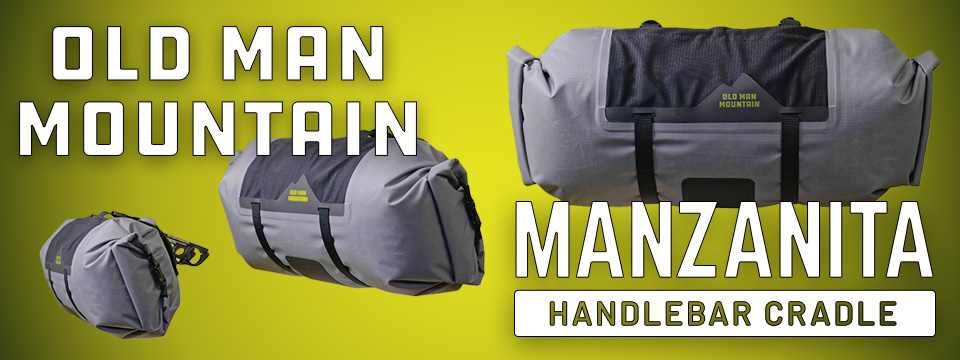



Launched in 2006, the Revelate Mountain Feedbag set the standard for stem bags. After almost 20 years, the larger Mountain Feedbag is now accompanied by a smaller bag with the same DNA, the Revelate Speedbag. Check out Nic’s first look at this new stem bag and find updates on some minor changes to the iconic Mountain Feedbag below…
PUBLISHED Mar 10, 2026
The first bikepacking bag I ever purchased was a Snackhole from Makeshifter, which I bought to carry more water on multi-day getaways. It was the first high-quality bag I ever spent money on, and it has accompanied me on most of the bikepacking trips I’ve taken over the past several years. It fits all kinds of bottles, has a universal design, and works in a variety of applications. My experience with the Snackhole has underlined just how useful these bags are, and it’s a bag that has fit seamlessly on well over 10 bikes.
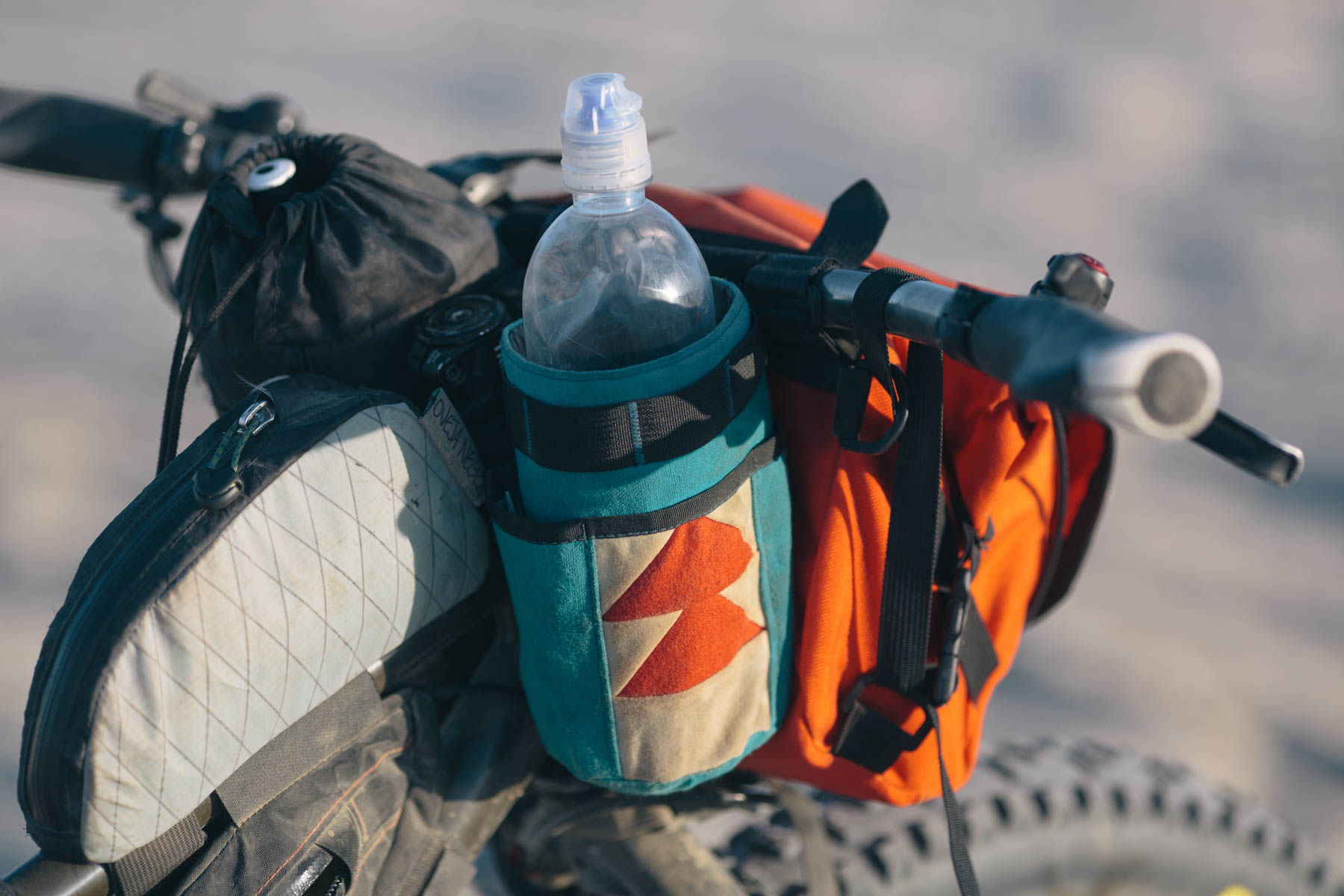
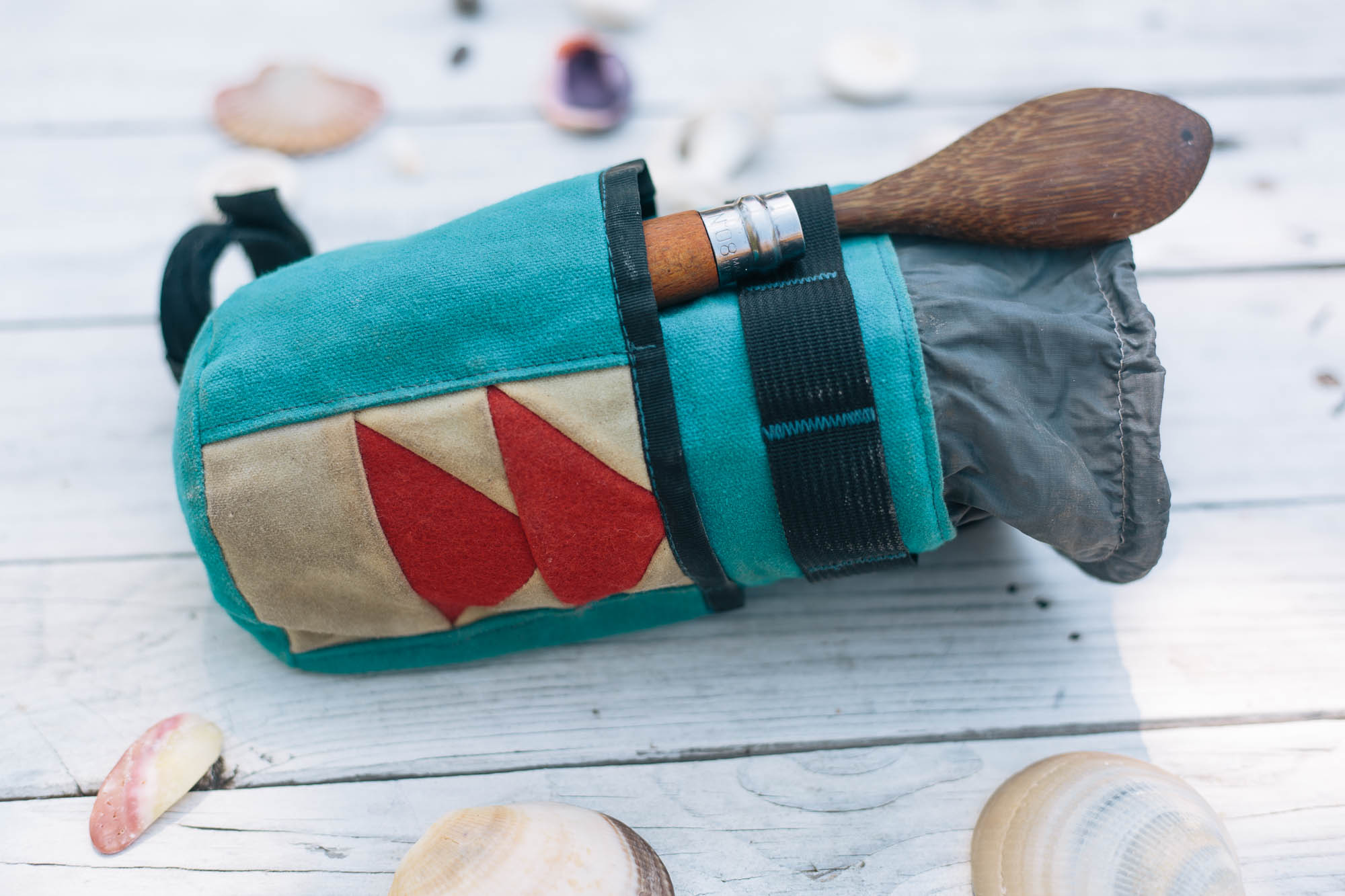
As Logan wrote back in 2016, the Revelate Mountain Feedbag started the category. After iterating on the original concept by Christa Olsen through numerous iterations on a near-perfect design, Revelate has now added to its stem bag offerings with the SpeedBag—a smaller, lighter option based on the Mountain Feedbag. Though I haven’t had much time with it, I put the Speedbag through its paces on some local trails to see if it could improve the experience I’ve had with the Snackhole and whether it adds anything to a now-saturated category.
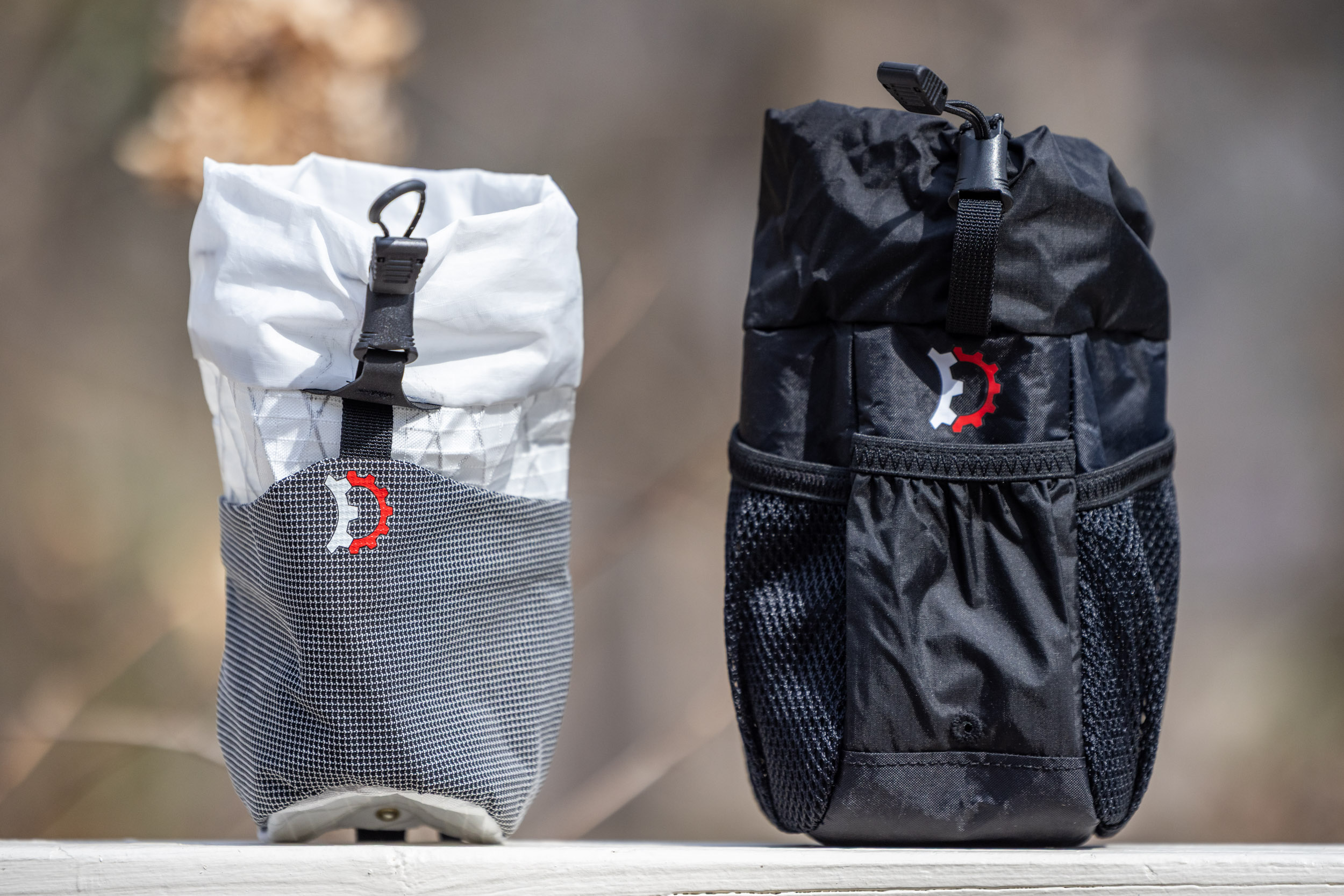
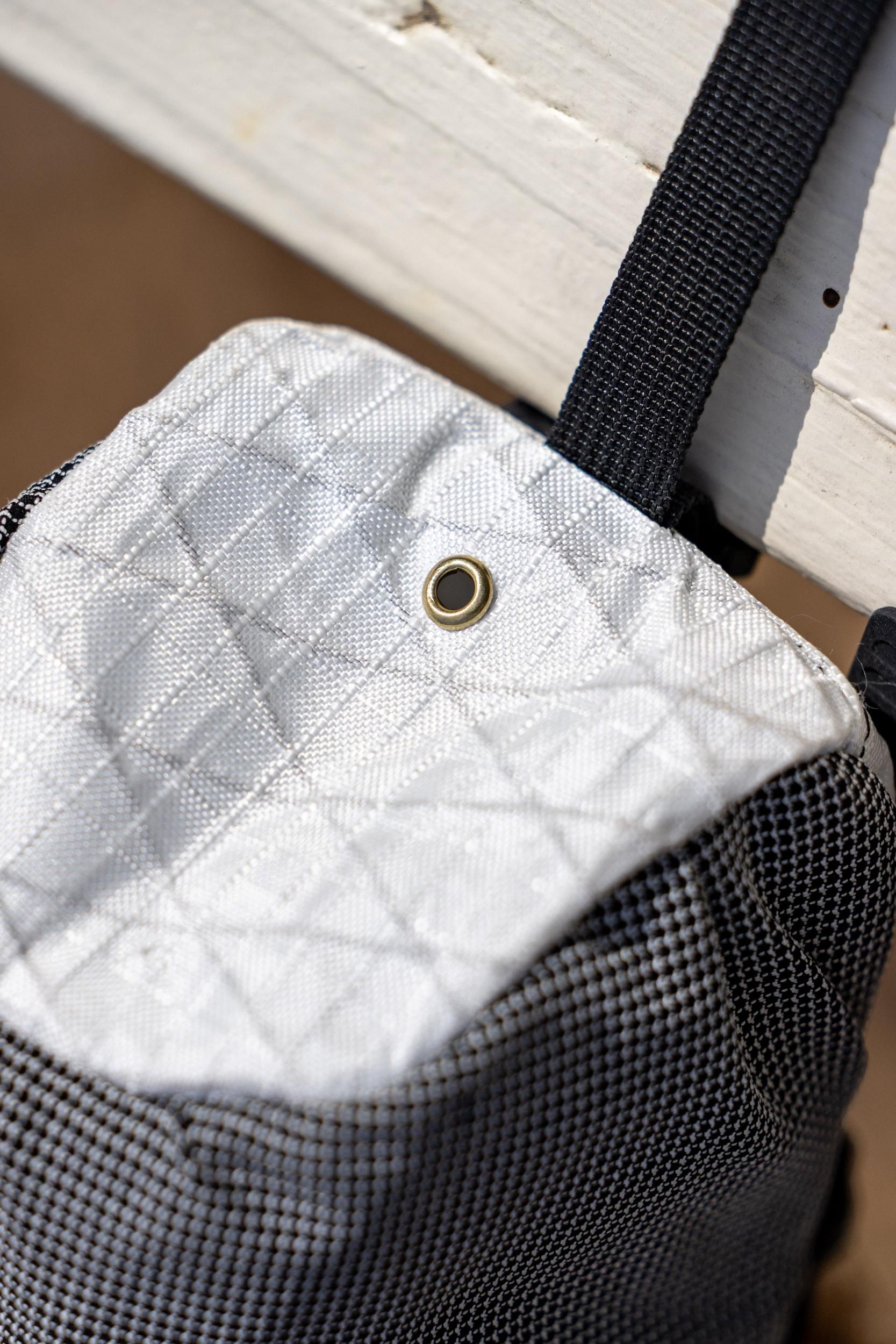
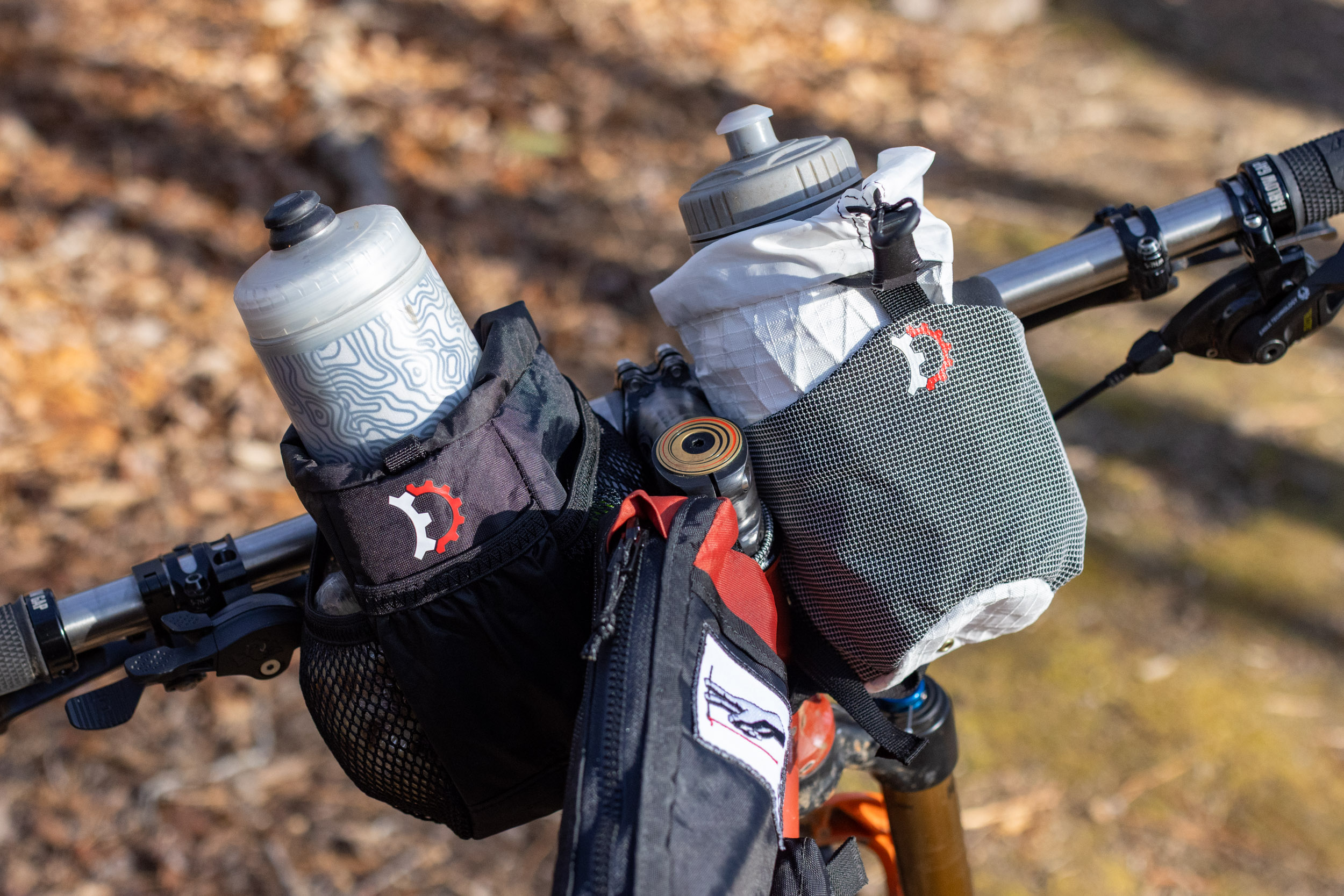
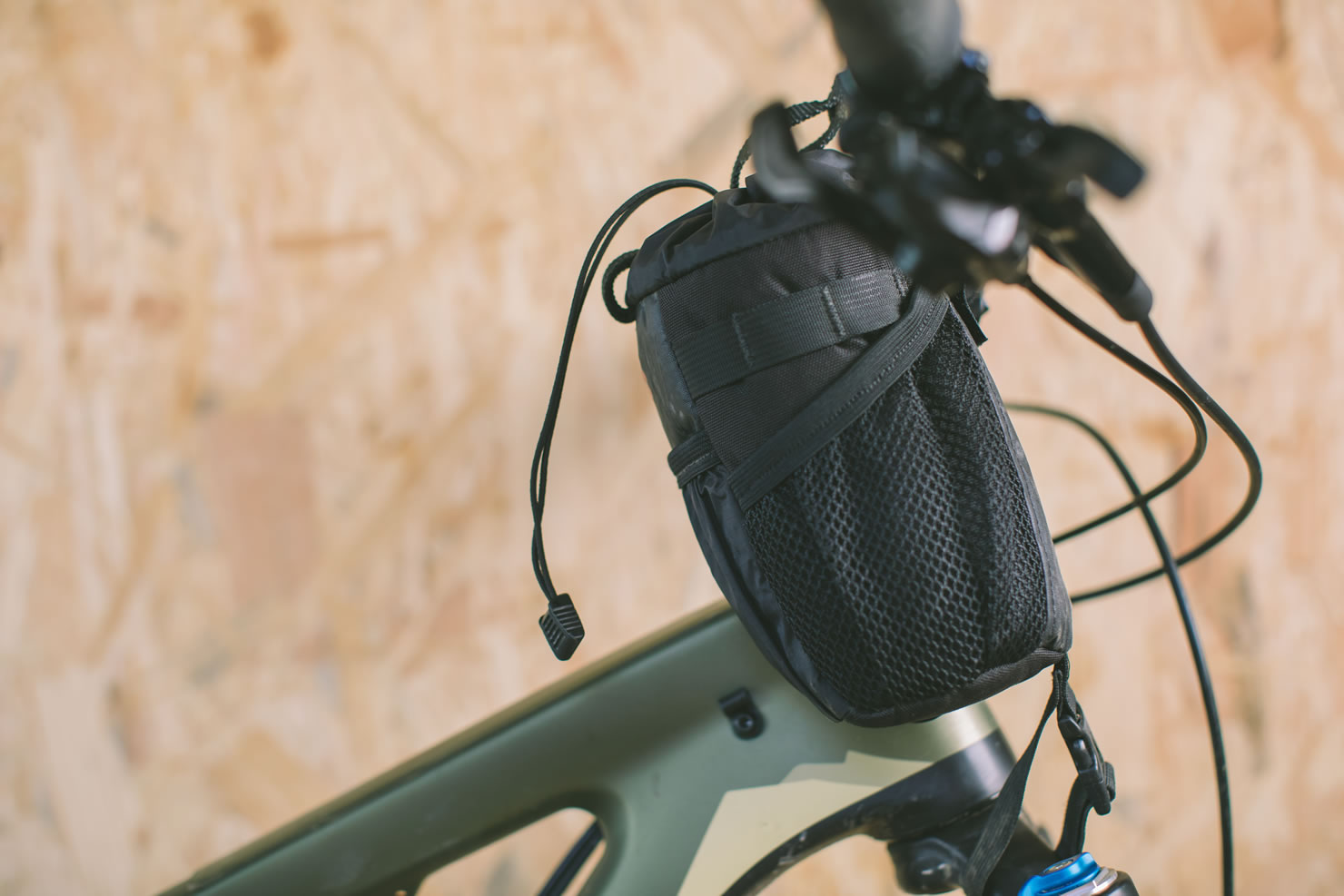
The Speedbag uses three materials across its cylindrical body. The lid is made of 40D Ripstop, the exterior pockets of Challenge Ultra Stretch, and the body fabric is Dimension Polyant UVX40 with Aramid X-Ply. The bag has a single, rigid interior wall and offers an internal capacity just shy of a liter. It also features a slightly angled bottom to provide more clearance against the knees. With straps, the Speedbag weighs just 94 grams, is available in two colors, and is made in the USA.
I’ll focus on the Speedbag, but the Mountain Feedbag also has some minor updates for 2026. Featuring the same shape and number of pockets, the latest version also has a hard inner liner on one side of the bag. The velcro attachment has been replaced with TPU straps, and they’ve moved from an open-cell foam to a closed-cell structure, which allows even more internal space while being less susceptible to absorbing water. The new Mountain Feedbag weighs in at 128 grams with straps and is also made in the USA.



Despite my affinity for the Snackhole, part of the reason I don’t use it outside of bikepacking ventures is the stem bag’s most common issue. While they provide plenty of utility on a bikepacking trip, they tend to rub against my knees when I push out of the saddle. At worst, they can also obstruct handling, as the typical mounting position lies at the farthest points of the turning radius. It’s a shortcoming I’ve come to accept, trading their minor annoyances for the benefit of added storage and utility. Resolving the issue goes beyond the capacity of a redesign, as it’s hard to see how a bag resting next to the stem wouldn’t obstruct the turning radius, but Revelate’s addition of a hard internal liner on one side means their stem bags can be run on either side of the handlebars.
Though this is theoretically true of any feedbag, models like the Snackhole wouldn’t work anywhere near as well as these, as they lack the stability provided by the rigid structure. One-sided for the sake of maintaining flexibility and saving weight, the hard internal liner on the Revelate bags makes its connection to the bike rock solid. I haven’t had the bags for long, but the rides I have subjected them to have been rough and rowdy. With the benefit of suspension and without, these bags—and their contents—remain exactly where they were originally mounted.
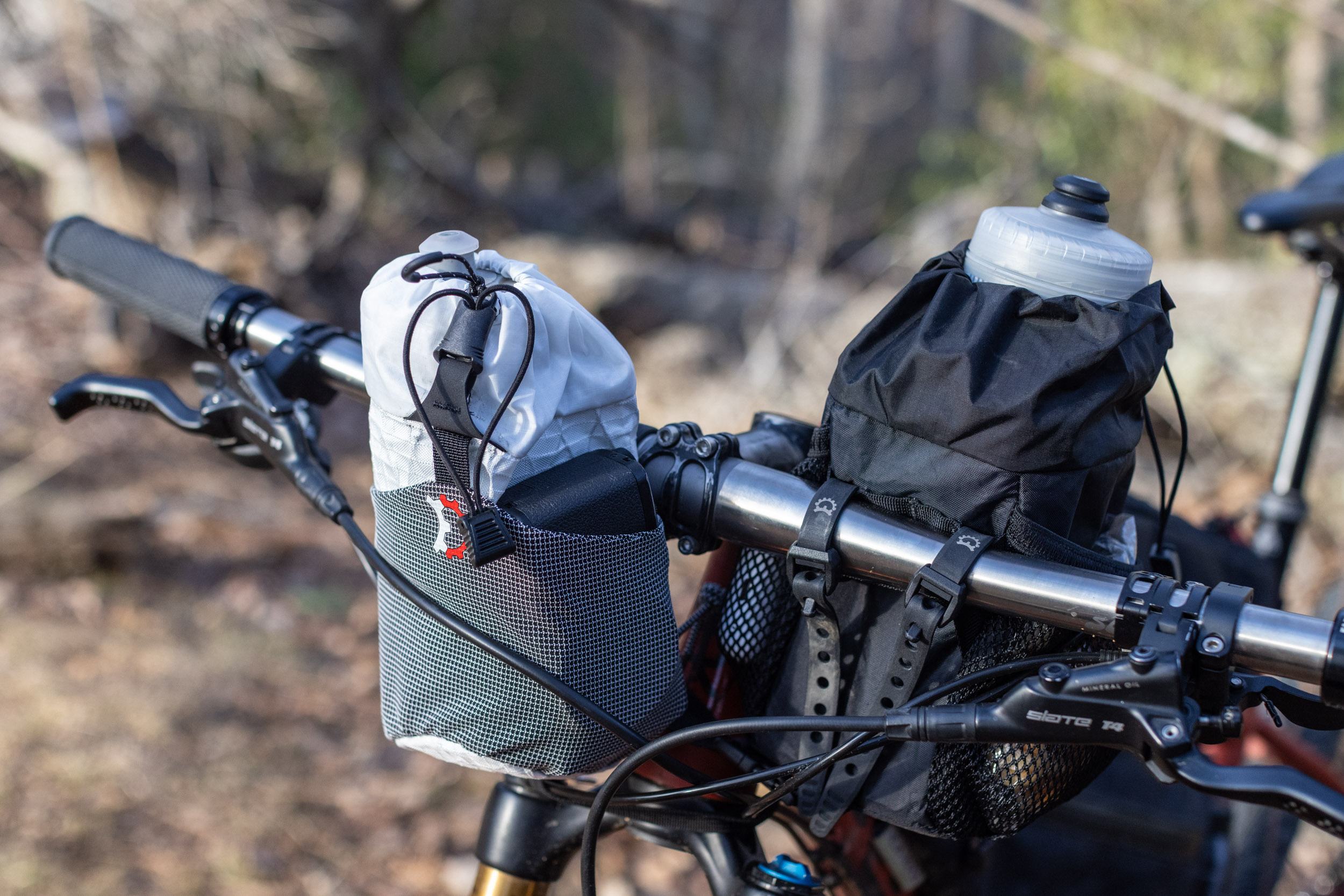
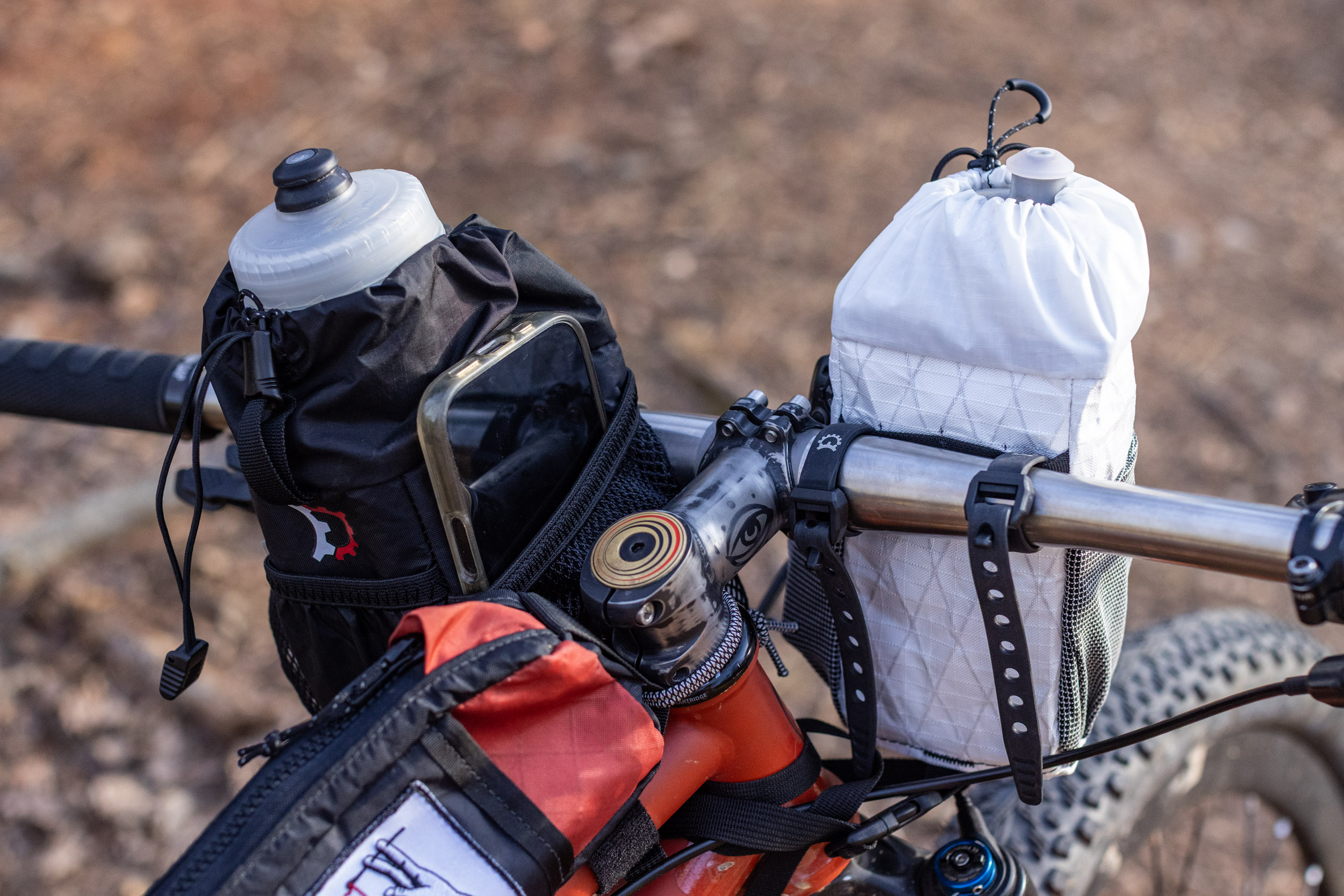
When I spoke to Aurora Hablett at Revelate, she said some of their testers and sponsored riders run the bags on the front of their handlebars to avoid the issues mentioned above. I did this for a few runs down some rough singletrack, and despite my skepticism about the look and function, it worked great. There’s still something in my brain that doesn’t compute with the bags installed on the bike’s front end, and it’s obviously not possible when running a handlebar bag. However, mounting the bags as such does eliminate many of the issues one can experience with a stem bag, and the internal liner and attachment system here make it viable, given their strength and security.
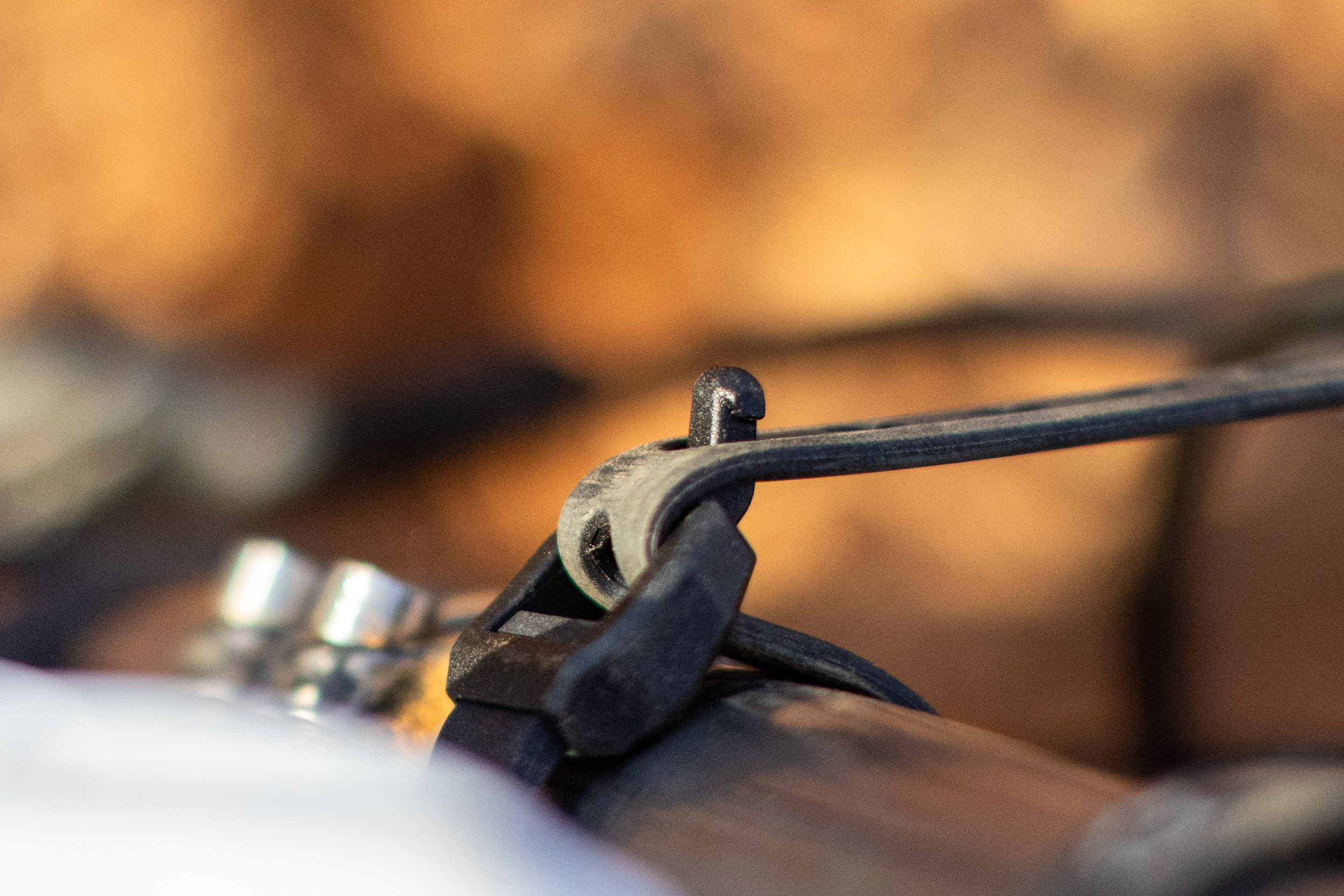
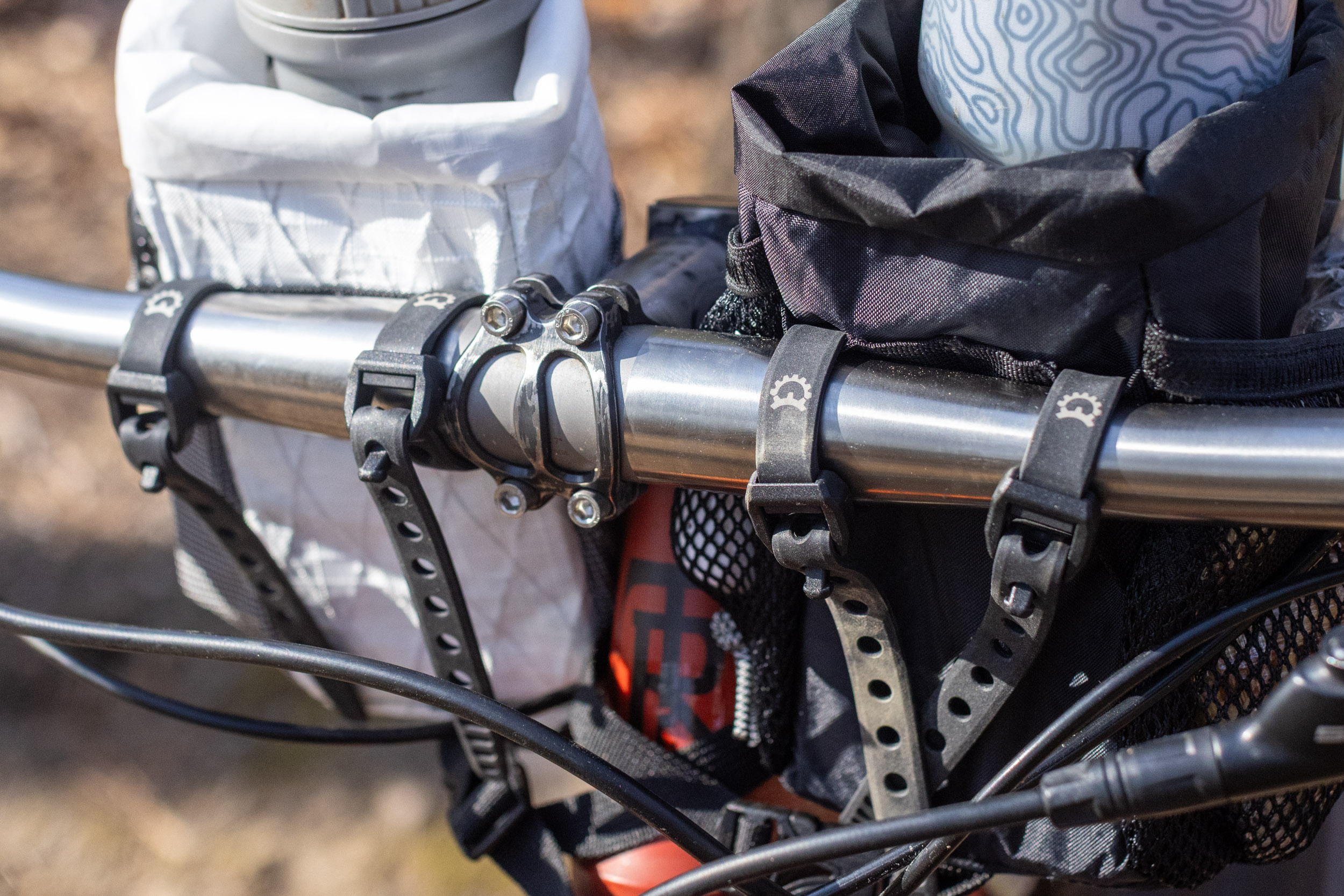
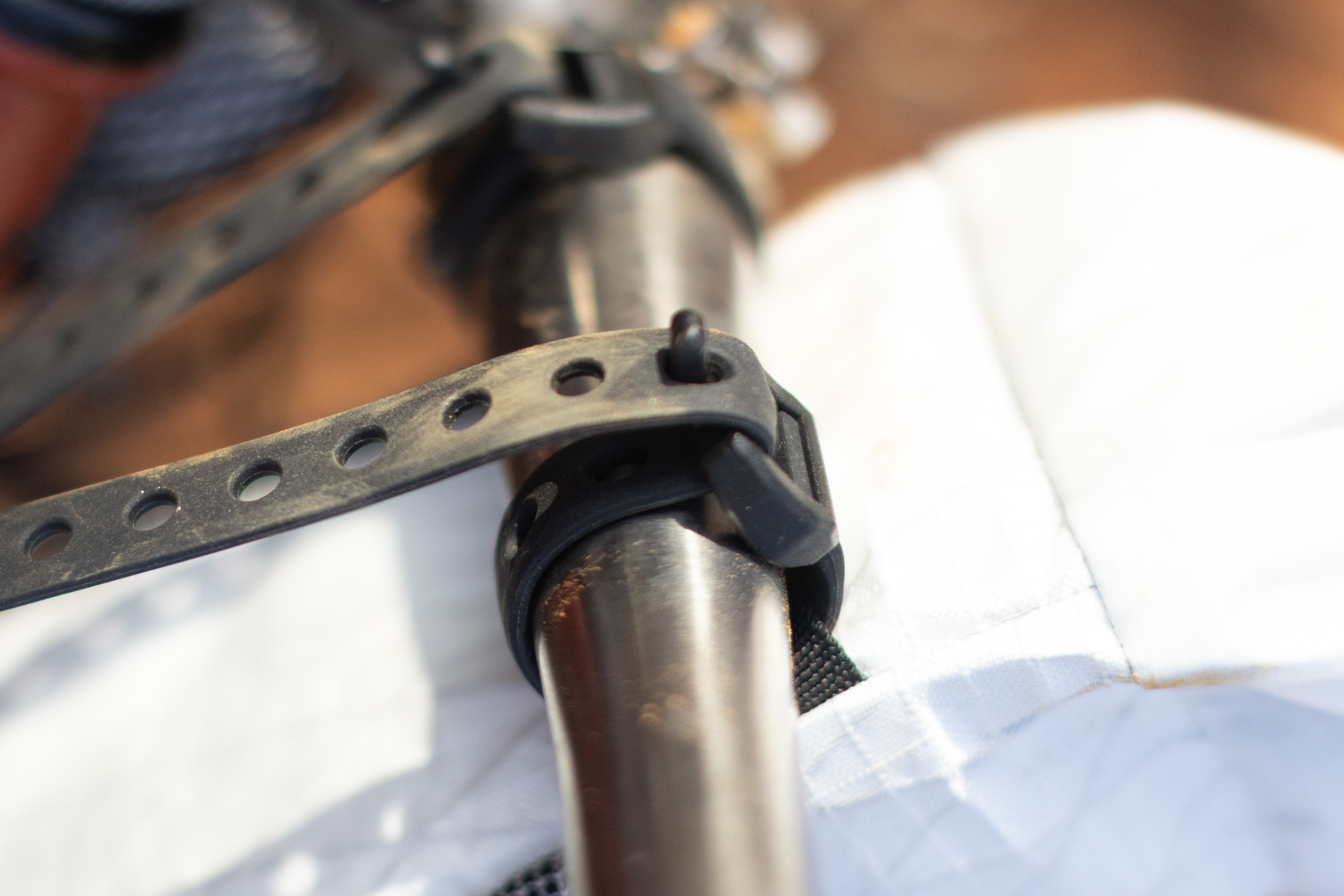
Another element to note is the overall quality of both the bags and their attachment method. I’ve never owned a Revelate product before this review, but I’m familiar with their line because of their presence and influence in the space. Aside from the high-quality construction, smaller details, such as the straps on the bars and the underside of the bag, show the amount of thought that went into them. Voile-esque, the Revelate straps appear to be made of a durable, sturdy material, with an added nub at the end of each strap. I own 50+ standard Voile straps, and despite never having an issue, the added nub provides a feeling of extra security, as standard straps are simply flat and rely on the tension to keep them secure. The bottom strap that attaches to the headtube is also an adjustable clip, which works a lot better than a velcro strap. It’s easy to adjust on the fly and, as a result, far easier to install and remove.

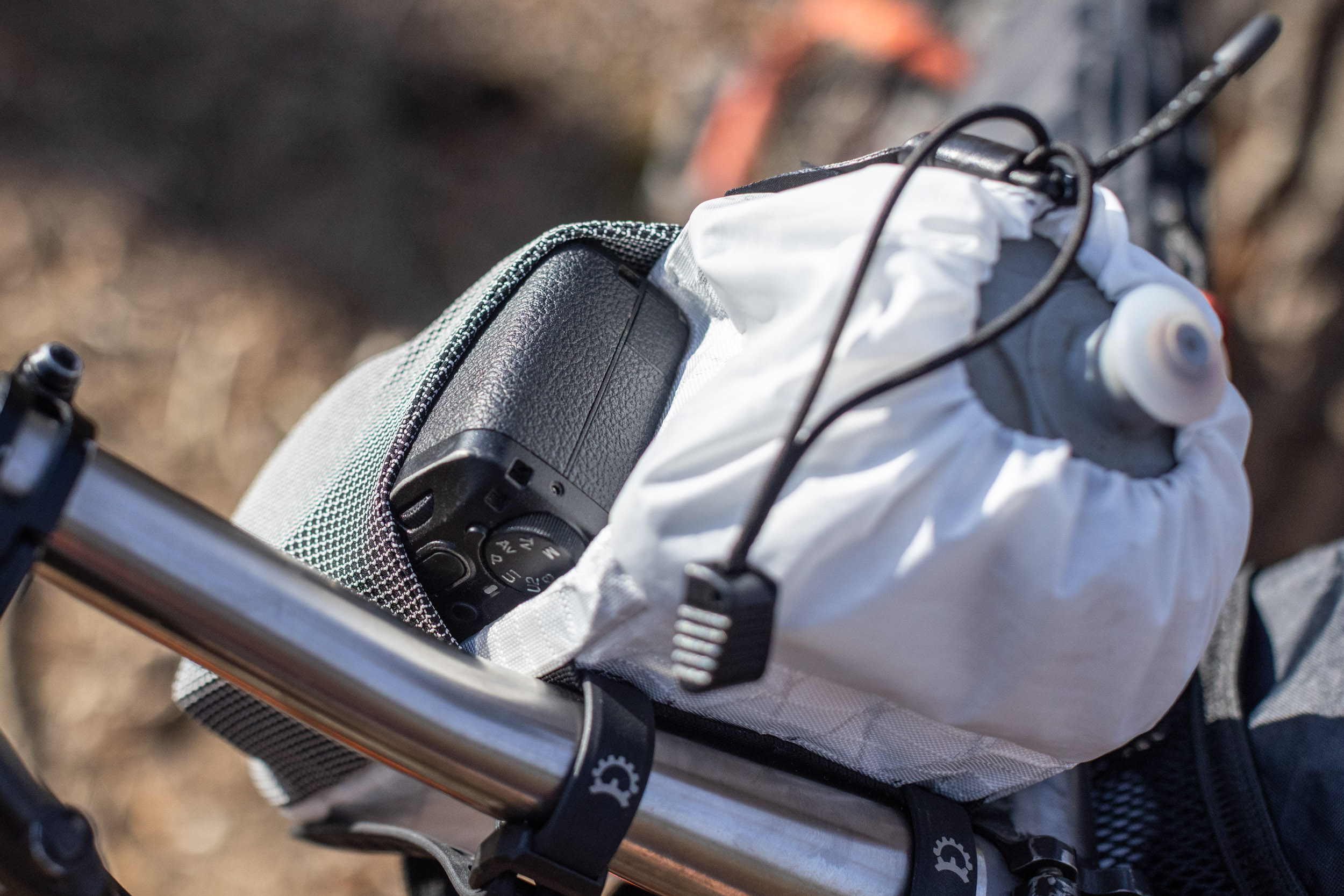

Other than those small details, the Speedbag features Revelate’s one-handed closure system that works exactly as advertised. It’s great while moving, and you only need one hand to open or close it. The Speedbag’s Ultra Sretch pockets also work great for anything from wrappers to AirPods. Slender items like an iPhone aren’t secure here, as the Speedbag doesn’t feature the same elastic topper as the Mountain Feedbag. My Ricoh GR III worked quite well in this space because it filled the fabric and pocket dimensions. It never seemed like it was going to fly out, even on some very rough sections of singletrack.
I tested a variety of bottles in the Speedbag, and most work well. The ideal use for this smaller bag is something like my Ultradynamico 21oz bottle, because of its shape and ability to be fully encapsulated by the upper closure system. However, larger one-liter bottles and a Nalgene still sat in the main compartment quite well and never slipped out.
- Model Tested: Speedbag, white
- Actual Weight: 94 grams (3.31 oz)
- Place of Manufacture: USA
- Price: $85 at Revelate
Pros
- A worthwhile design gets lighter, albeit with fewer pockets and a bit less capacity.
- Straps and rigid liner are high quality and rock-solid in their attachment.
- The one-handed closure system, like before, is useful and works as advertised.
- Versatile positioning eliminates the drawbacks of the bag’s inherent design; no matter how whacky running a stem bag off the front may seem.
Cons
- Depending on frame size and fit, stem bags still have a decent chance of causing knee rub.
- These bags can still obstruct handling.
- Pricey, given it’s smaller than the larger Mountain Feedbag.
- The stretchy pocket is nice, but not the most secure place to keep important items.
Wrap Up
Despite my lack of familiarity with their products, Revelate’s history and experience in the bikepacking bag space are evident. Even something as small as the Speedbag offers a convenient, lightweight, and capable package that stands out in an otherwise saturated space. Combining some of the brand’s most thoughtful designs—such as the one-handed closure system and internal rigid liner—the Speedbag may not set the bikepacking world alight. It is, however, consistent with the rest of their respected, well-loved products.
Further Reading
Make sure to dig into these related articles for more info...


Please keep the conversation civil, constructive, and inclusive, or your comment will be removed.