

 Mountain Bike (MTB)
 Gravel Bike
 All-Terrain Bike (ATB)
 Fat Bike



Rogue Panda Kaibab Cradle Review



The all-new Rogue Panda Kaibab Cradle might be one of the most trail-friendly front cargo systems we’ve tested, combining a solid steerer-mounted design with an elegant, stay-on-bike collar that solves one of this category’s biggest headaches. After months of riding it on technical singletrack in Oaxaca and Colorado, it proved easy to forget about, even when fully loaded. Find our review here…
PUBLISHED Jan 29, 2026
For those just tuning in, we finally published our Gear Index of Handlebar Cradles late last year once a wave of new hardware-based systems landed. A cradle is essentially a mini-rack that holds a dry bag up front and mimics the form factor of a handlebar roll. With several new cradles hitting the market, lingering gaps were filled, the trend matured, and the range of options grew large enough to warrant its own dedicated compendium. We expected more to follow in the new year, given the momentum, and sure enough, January isn’t even over, and Rogue Panda has already dropped another variation. To be fair, we knew the Rogue Panda Kaibab Cradle was coming, and two of us have been testing it in Oaxaca and Colorado over the past several months for this review.

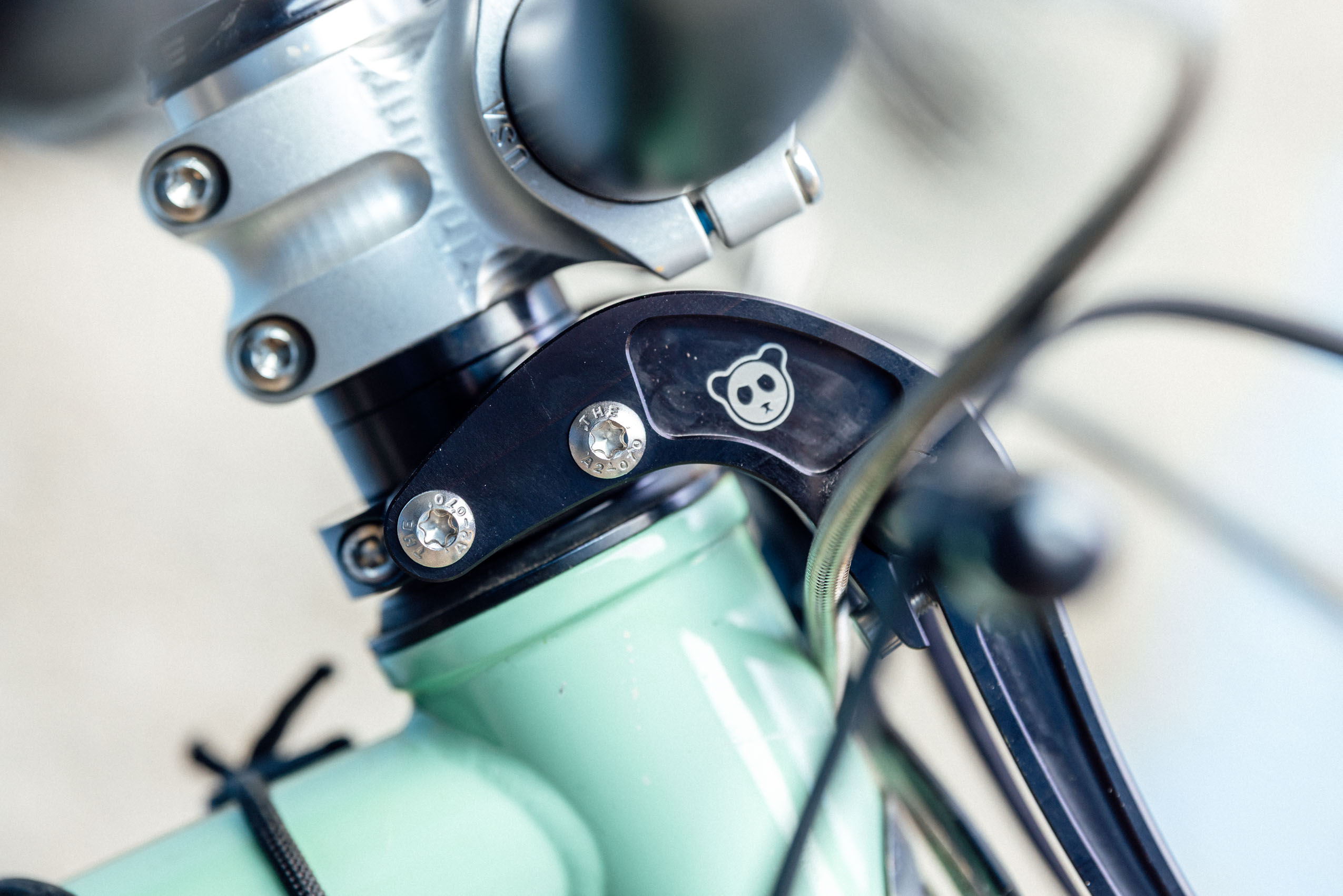

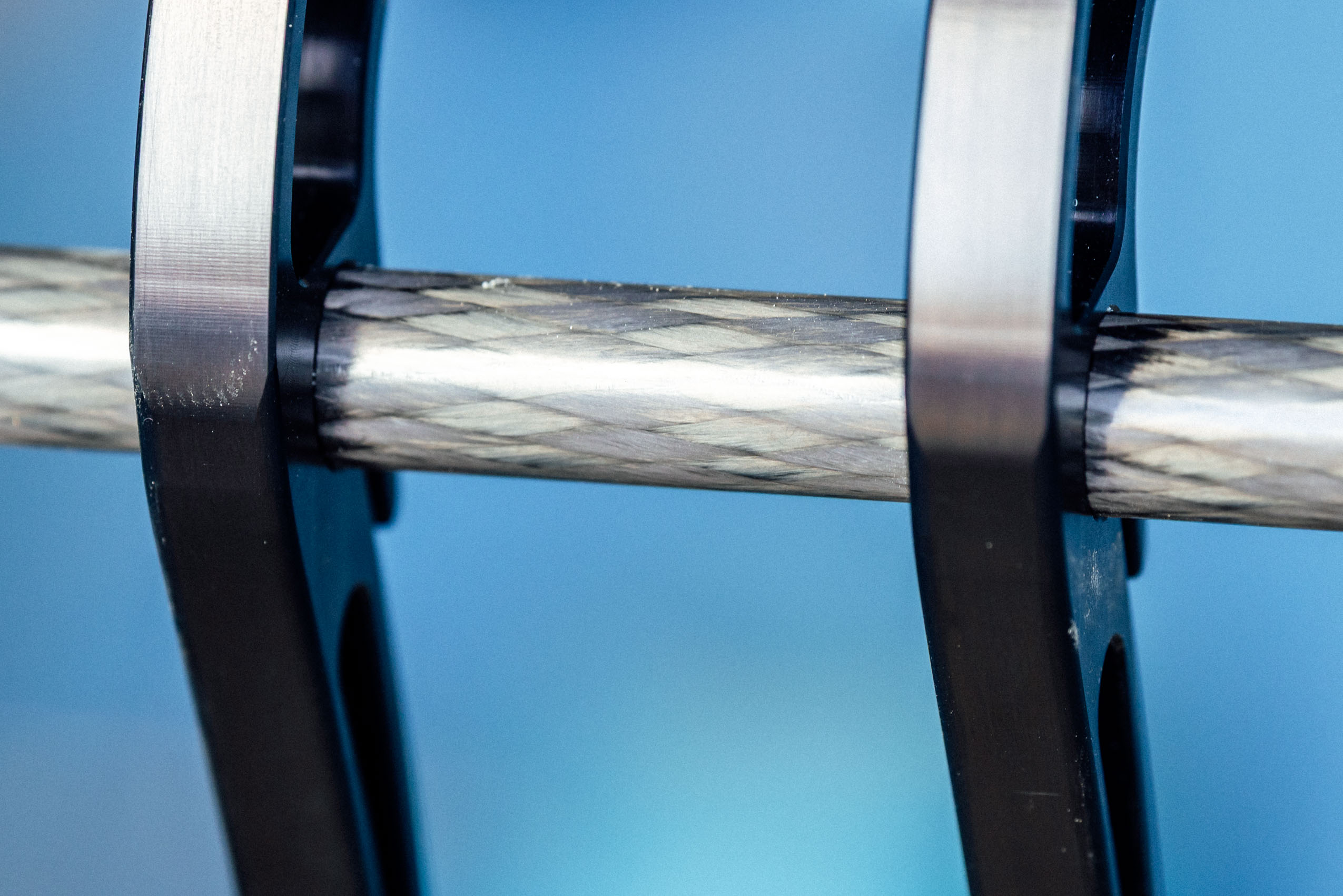
Front cradles fall into one of two camps: those that secure directly to the handlebars, and those that slide onto the fork steerer tube and clamp down via a compression-bolt interface, much like a stem. There are relatively few options in the latter category—mainly the Good Day Curiosity Spacer Cradle and the RatKing Cradle—which is somewhat surprising given that they solve one of the biggest drawbacks of handlebar-mounted designs: they’re impervious to rotation amid rough bumps and impacts. Steerer-mounted cradles also allow the load to sit lower and closer to the head tube, regardless of stem length. There are real trade-offs, though. Adding a steerer clamp increases stack height, which may be an issue for riders who prefer a slammed stem or have limited steerer space, and installation or removal requires pulling the stem to slide the cradle on or off.
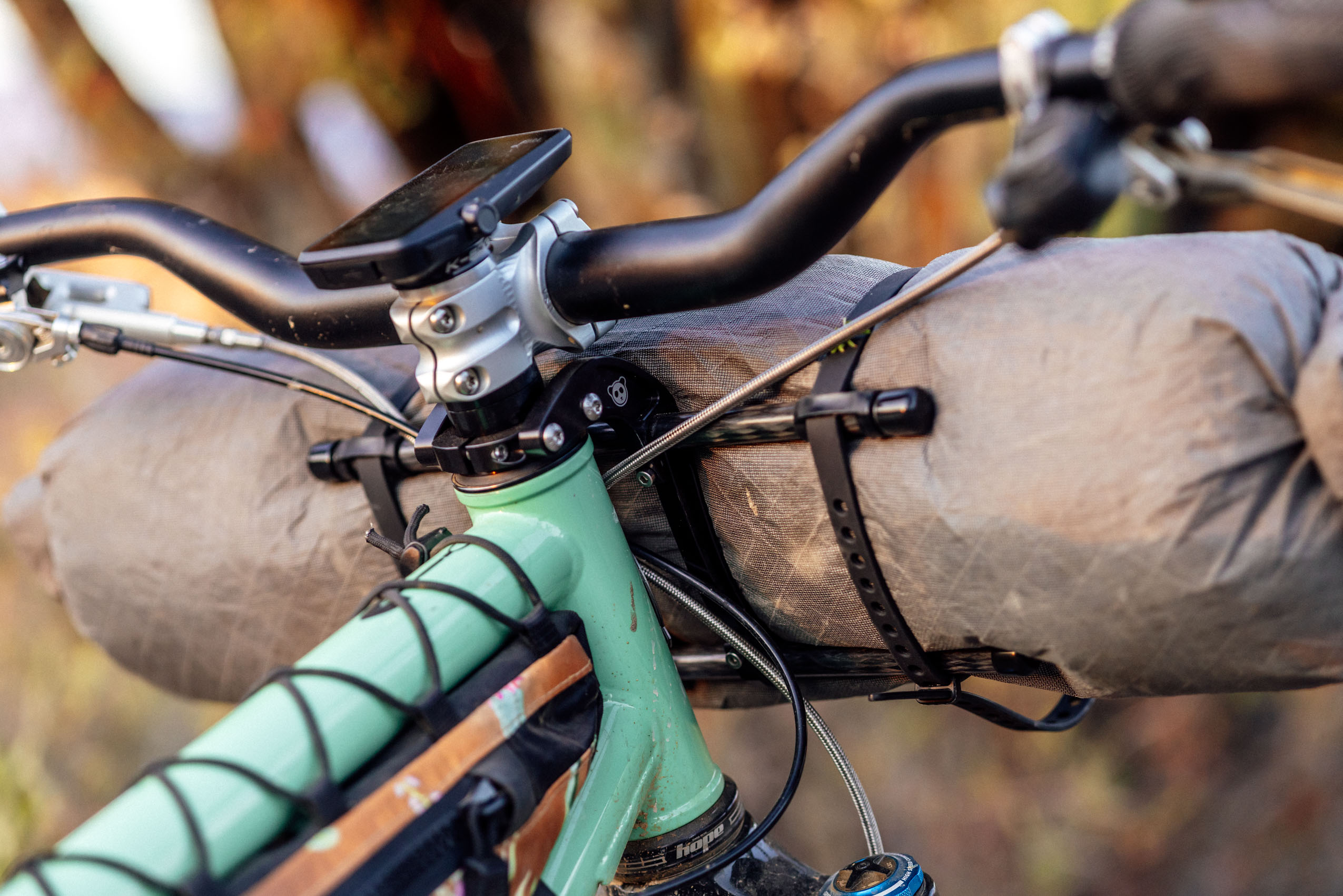
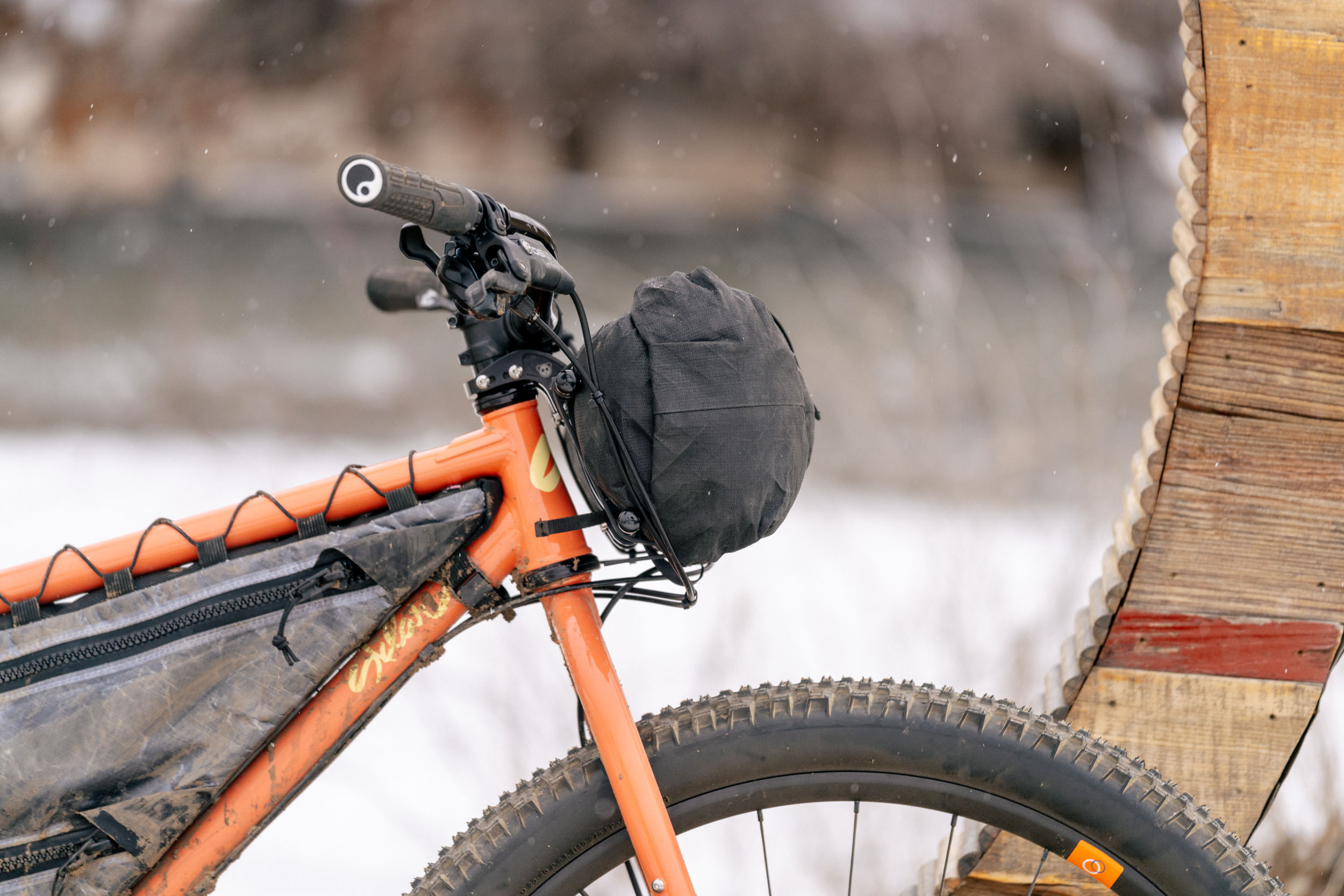
Rogue Panda already offers the Blue Ridge Cradle, which uses the more common handlebar-clamp approach, and with the introduction of the new steerer-mounted Kaibab Cradle, they’re the first brand we’ve seen to offer both styles. In doing so, they’ve also addressed both of the inherent drawbacks of steerer-mounted designs. The solution sits at the heart of the Kaibab Cradle system: a machined collar that separates the steerer clamp from the rest of the cradle, allowing it to be left on the bike when the cradle isn’t in use. This is the first design we’ve encountered that takes this approach, a huge win in my book. At 27 grams, the collar weighs slightly more than the roughly 5-gram stem spacer it replaces, but not enough to raise eyebrows, even among the weeniest of weight-conscious cycle gear nerds. Plus, it’s only 10mm tall, minimizing the necessary stack and steerer tube needed.

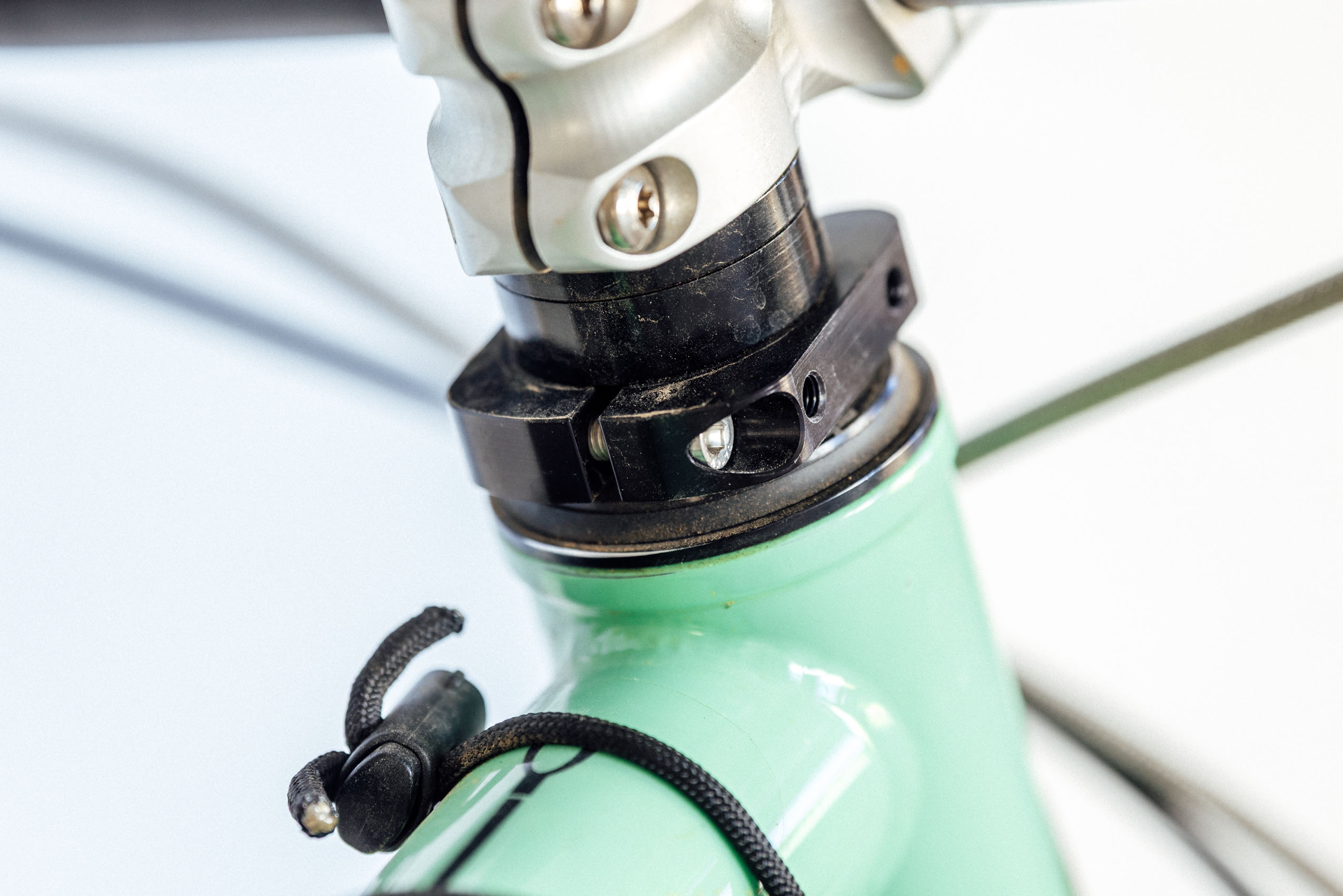


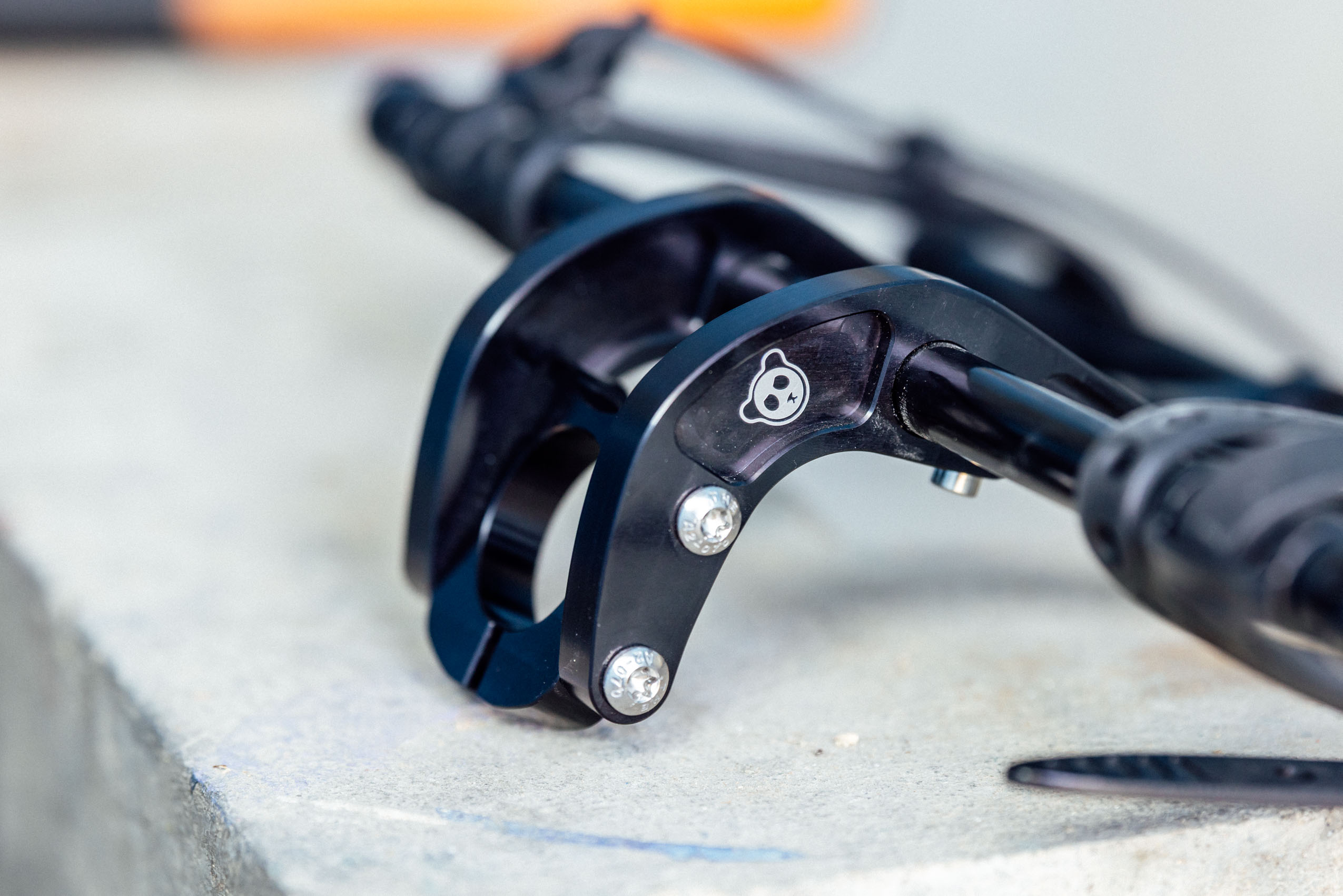
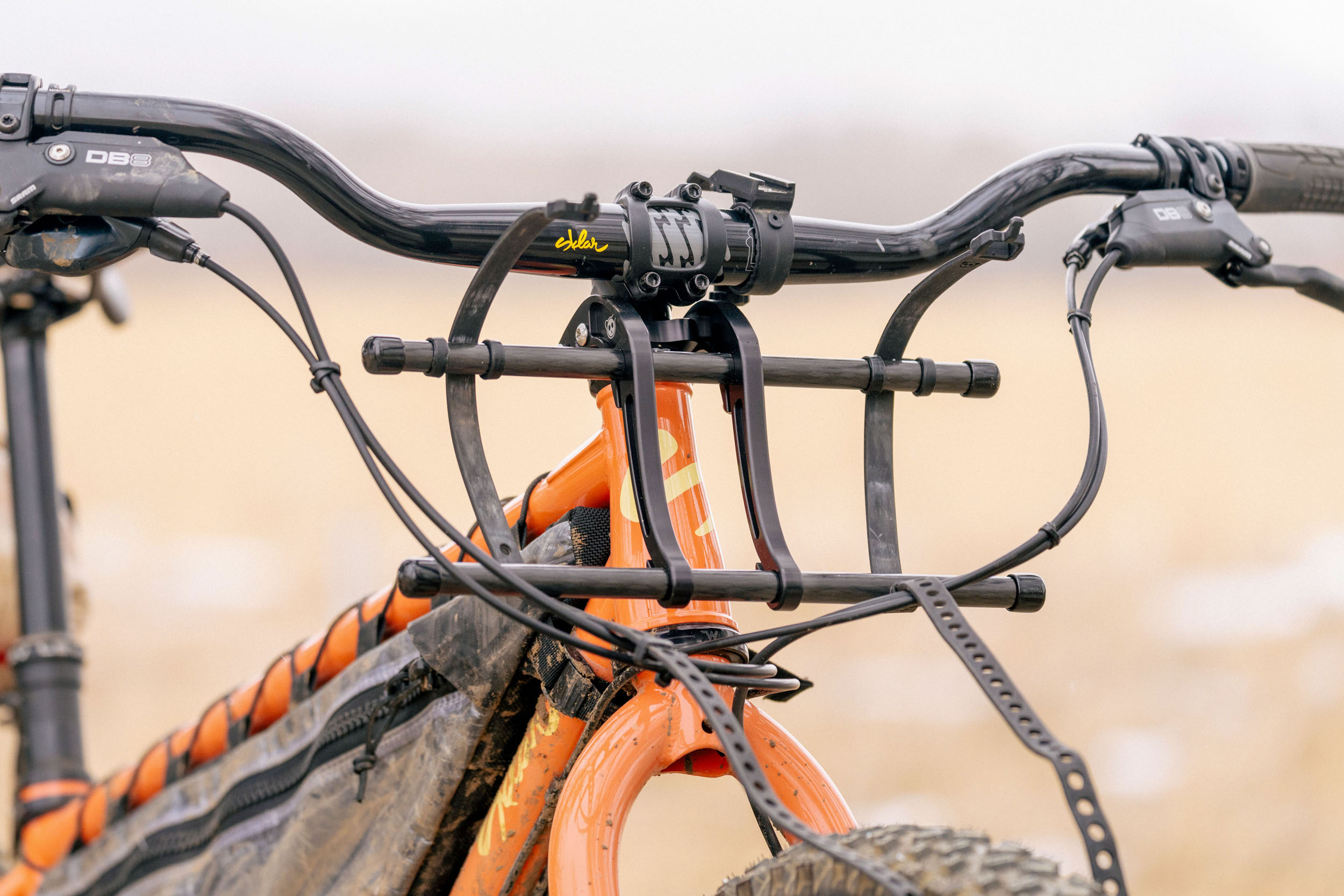
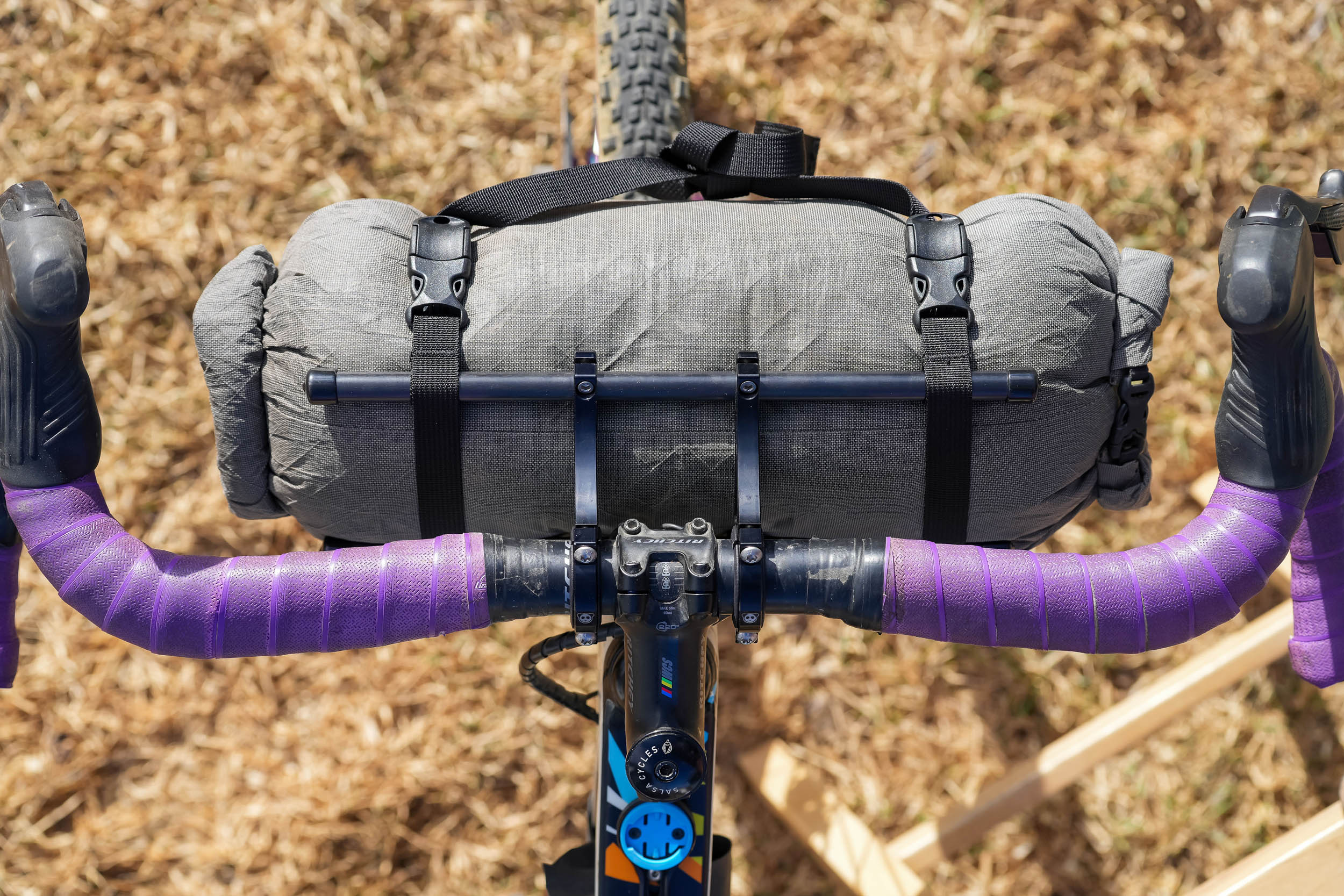
The Rogue Panda Kaibab Cradle is built from five main components: two machined aluminum arms, two carbon tubes, and the machined aluminum steerer collar. It came assembled, but how it’s put together is straightforward, with the carbon tubes sliding through the arms and secured by four machined compression fittings tightened with standard M3 bolts. The arms then bolt to the steerer collar with two T25 torx bolts. The production version has two additional holes on each arm for bolt storage when not in use.


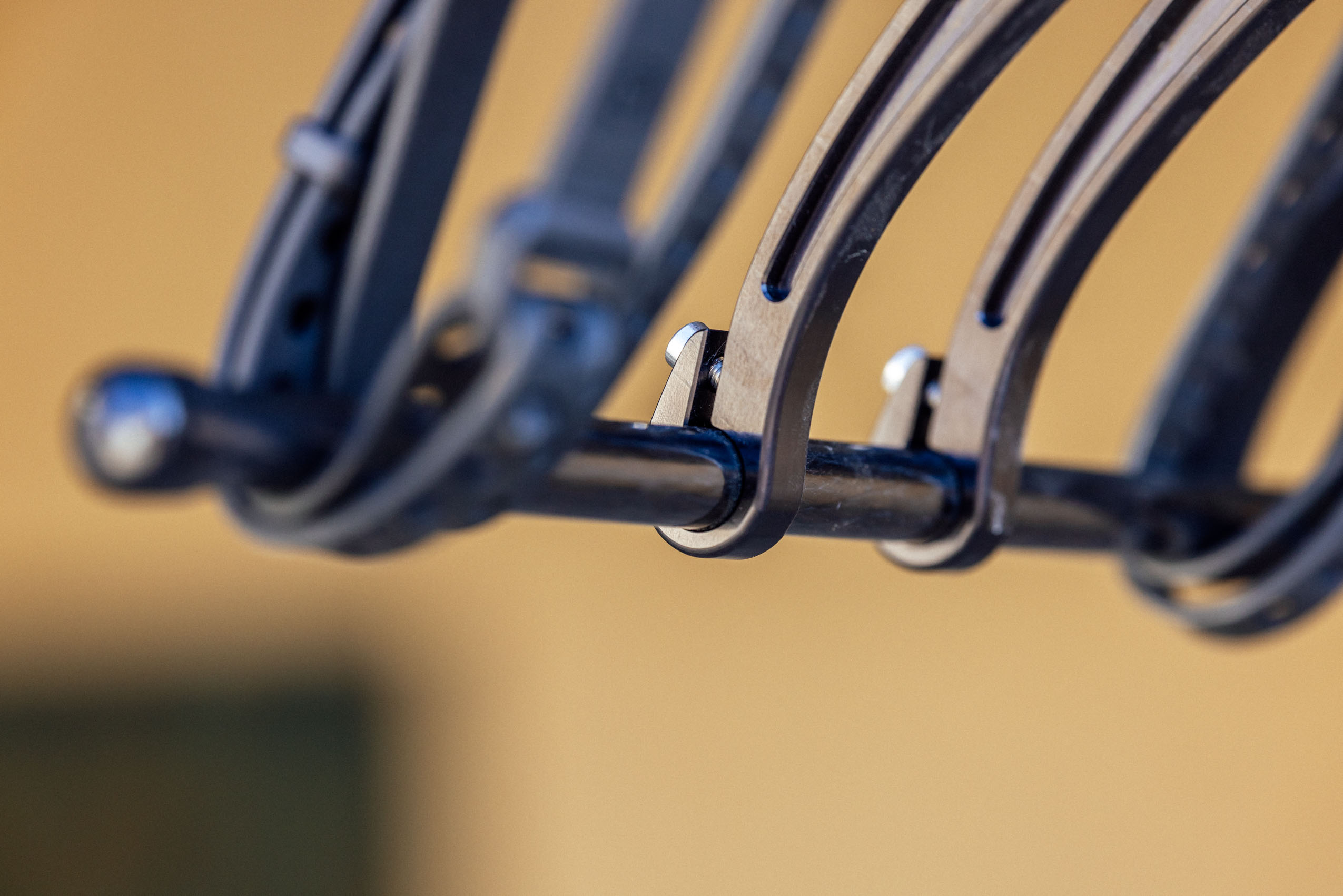

The result is an elegant, tidy design that’s incredibly lightweight. Rogue Panda also includes two plastic strap keepers that slide onto the top tube, four protective caps, and two TPU straps, each with its own keeper. It doesn’t get much lighter or simpler than this. The assembled cradle weighs just 171 grams, the collar is 27, and the straps add another 58 grams, bringing the total system weight to 256 grams, not including a drybag.


What it’s Made For
Like the rest of Rogue Panda’s lineup, the Kaibab is named after a section of the Arizona Trail, which runs less than a mile from their workshop in Flagstaff—making it especially near and dear to the brand. The Kaibab Plateau marks one of the northernmost stretches of the AZT, where northbound riders can almost begin celebrating the completion of their 800-mile vision quest. While I didn’t use the Kaibab Cradle in Arizona, I did put it through its paces on the rugged trails of Oaxaca. To get a sense of fit and compatibility, I tried it on two different bikes, though it made far more sense on the 160mm-travel hardtail I’m currently testing than on my rigid Stooge MK7. It feels particularly well-suited to suspension-equipped, trail-oriented mountain bikes—which is exactly what it was designed for.
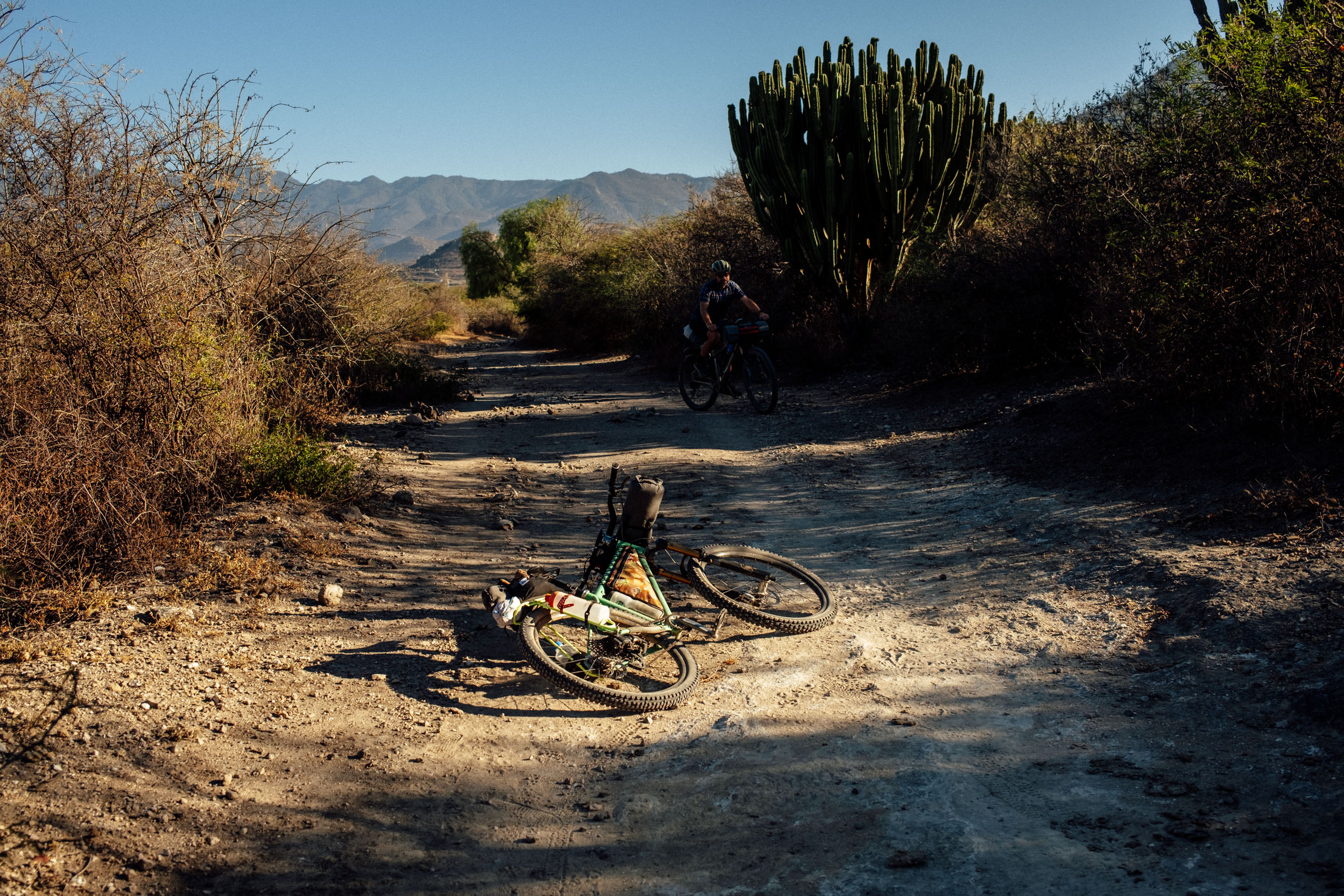
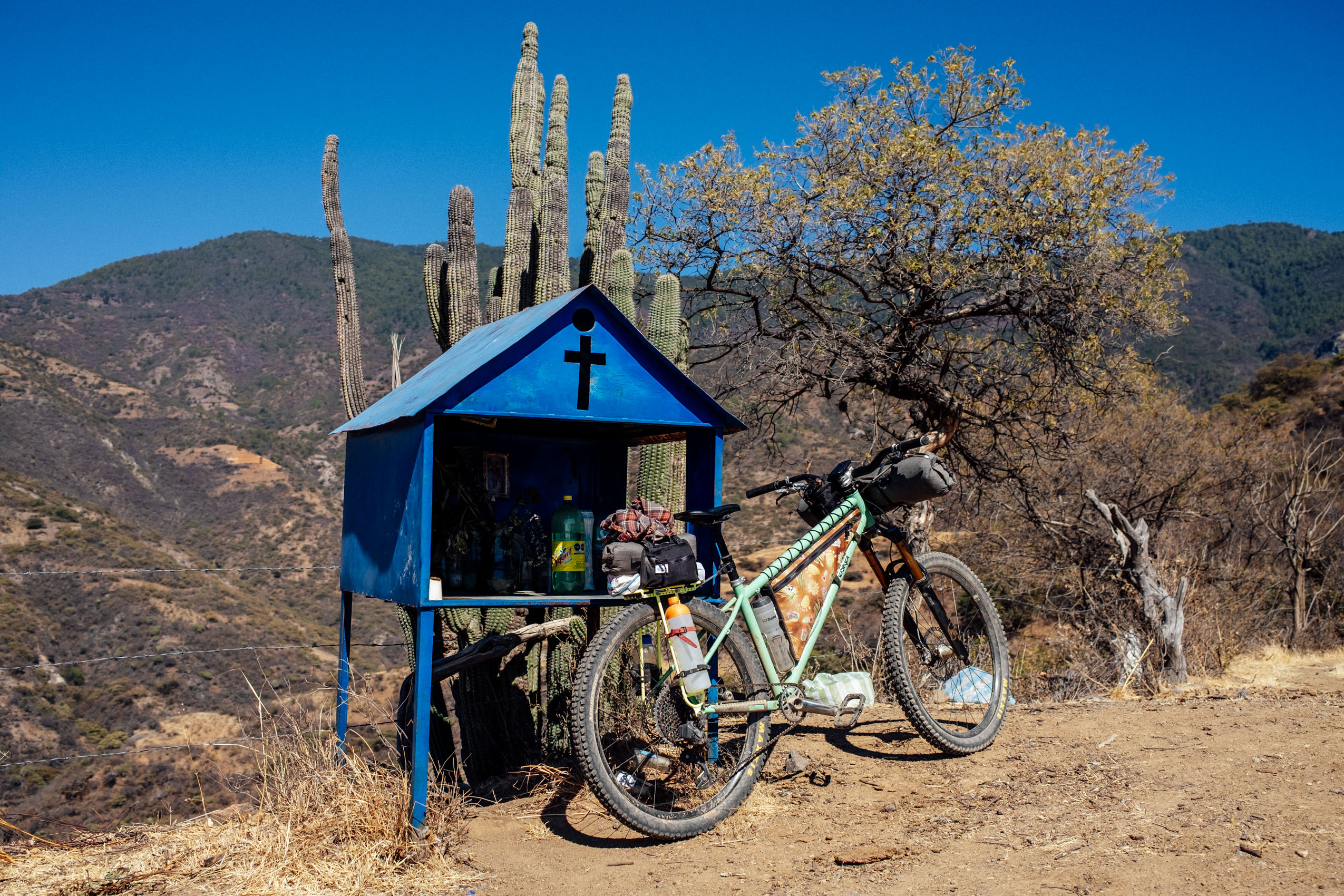
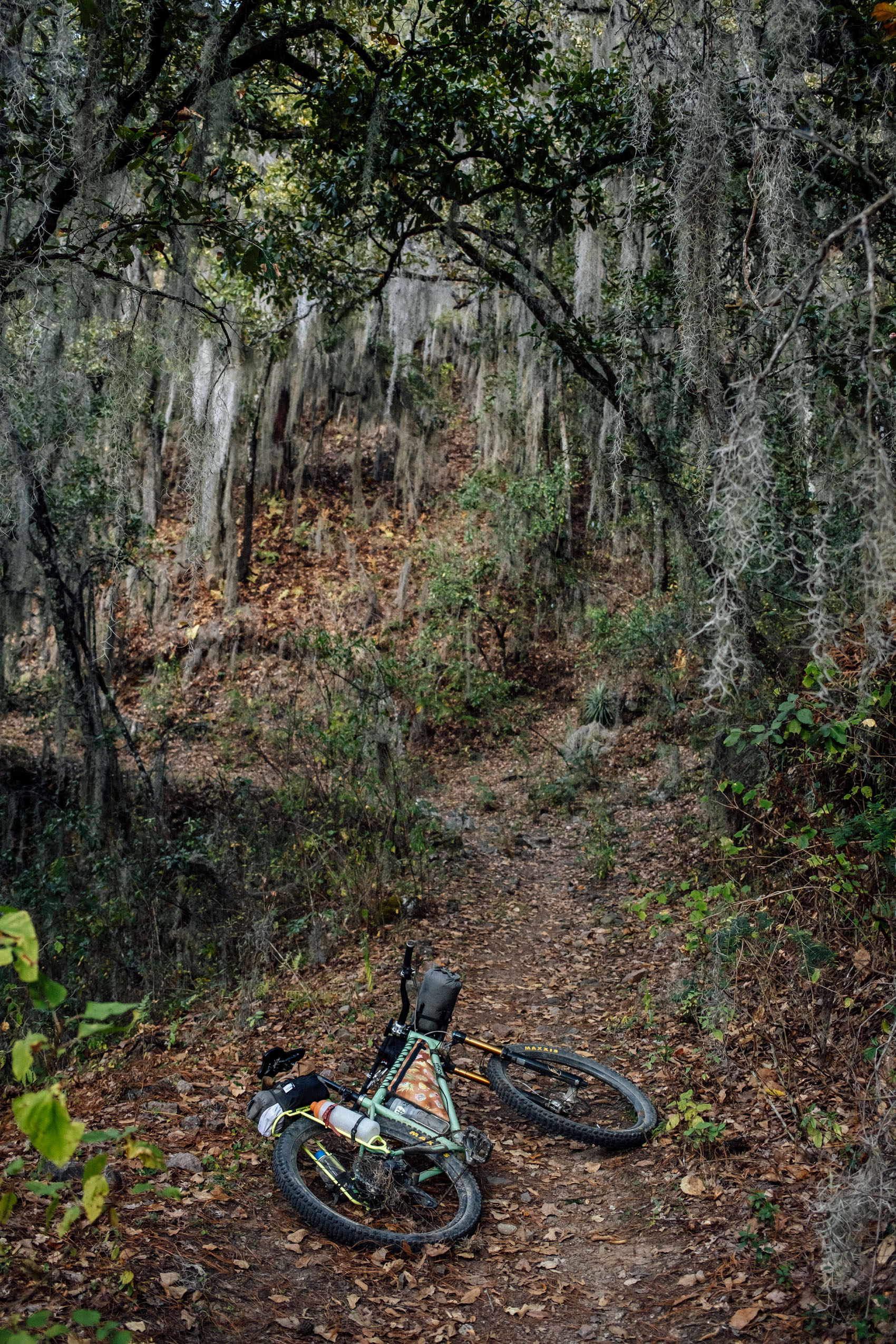
Rogue Panda founder and designer Nick Smolenski placed a high priority on keeping the load as close to the head tube as possible. The result is one of the most technical, trail-friendly handlebar systems I’ve used. I’ve taken it on several multi-day rides since receiving this pre-production version, and the only change since then has been the addition of two extra bolt holes on each arm to store the hardware when the cradle isn’t in use. One ride in particular stands out. A couple of weeks ago, Joe Cruz and I rode the Pueblos Mancomunados loop here in Oaxaca and added the Lachatao extension—one of my all-time favorite trails. The extension includes a techy, rock-strewn 12-kilometer stretch of singletrack that winds through a deep canyon connecting Latuvi to Lachatao, dropping several hundred meters along the way. That, in addition to the other rough and rowdy trails I’ve taken it on, has been a pretty good proving ground.
Load Limits
I loaded the Kaibab with an MLD bag carrying my entire sleep system and a couple of extra layers. All that fit in a size medium Mountain Laurel Designs Ultra X bag that measures about 6.5″/16.5cm in diameter. It’s a perfectly-sized bag for this style of riding, though the Kaibab can accommodate larger-diameter bags. You can use their calculator on the product page to see if yours fits. My pack list included a Tensor Regular Wide All-Season sleeping pad, Hyperlite Mid 1 tent and poles, a 32° Enlightened Equipment quilt (regular length), a Big Agnes AXL Air pillow, a Hyperlite Stuff Pillow, a 7mesh windbreaker, and a Montbell Anorak EX Light down jacket. Altogether, the load came in just a couple dozen grams shy of three kilograms (6.6 pounds). I later learned that this was right at the Kaibab’s recommended limit for gravel and suspension-equipped mountain bike use. Rogue Panda carefully defines load limits by riding style, suggesting a maximum of 2.5 kilograms (5 pounds) for rigid mountain bikes, 3 kilograms (7 pounds) for gravel and suspension-equipped mountain bike use, and up to 4.5 kilograms (10 pounds) for pavement use—conservative figures compared to some other cradles on the market, but in line with popular models from Tailfin, Miss Grape, etc.

Rogue Panda notes that the Kaibab Cradle has lower weight limits than the Blue Ridge Cradle due to its cantilevered load, which is inherently more susceptible to flex. These limitations are particularly notable for rigid mountain bikes, where a maximum weight of five pounds is recommended. In this context, “rigid MTB” refers to demanding, fully loaded trail riding such as the Arizona Trail or Colorado Trail, where gear is subjected to significantly higher forces than on road, gravel, or suspension-equipped mountain bikes.
To reinforce the Kaibab despite these constraints, Rogue Panda focused on two key engineering strategies. First, all stress risers, such as sharp corners, threaded holes, and thinner sections, are positioned at the rear of the arms so they experience compression rather than tension under peak loads. Second, the cradle’s arms feature a smooth transition in cross-sectional area, starting thick and robust at the steerer interface and gradually thinning toward the ends. This allows flex to be distributed along the full length of the arms instead of concentrating at a single weak point.
Given the level of engineering involved, Rogue Panda acknowledges that the stated weight limits are likely conservative, but believes they already exceed what most riders will realistically want to carry. From a handling perspective alone, the company recommends keeping loads under six pounds on any handlebar-mounted harness to preserve steering feel and trail control.
On The Trail
Even with my maxed-out bag, the Kaibab felt rock solid and handled Oaxaca’s rugged trails just fine. And with the weight low and tight, I honestly forgot it was there much of the ride. There was no movement, and the load seemed tucked in and perfectly placed, with little to no effect on steering. It’s also worth noting that with the bag tucked back under the stem, the trail visibility on technical drop-ins is better than I’ve experienced with larger or higher bags. Still, one of the best things about the Kaibab is that after I finished a trip, I could just unbolt the cradle and leave the collar on for normal unloaded rides.
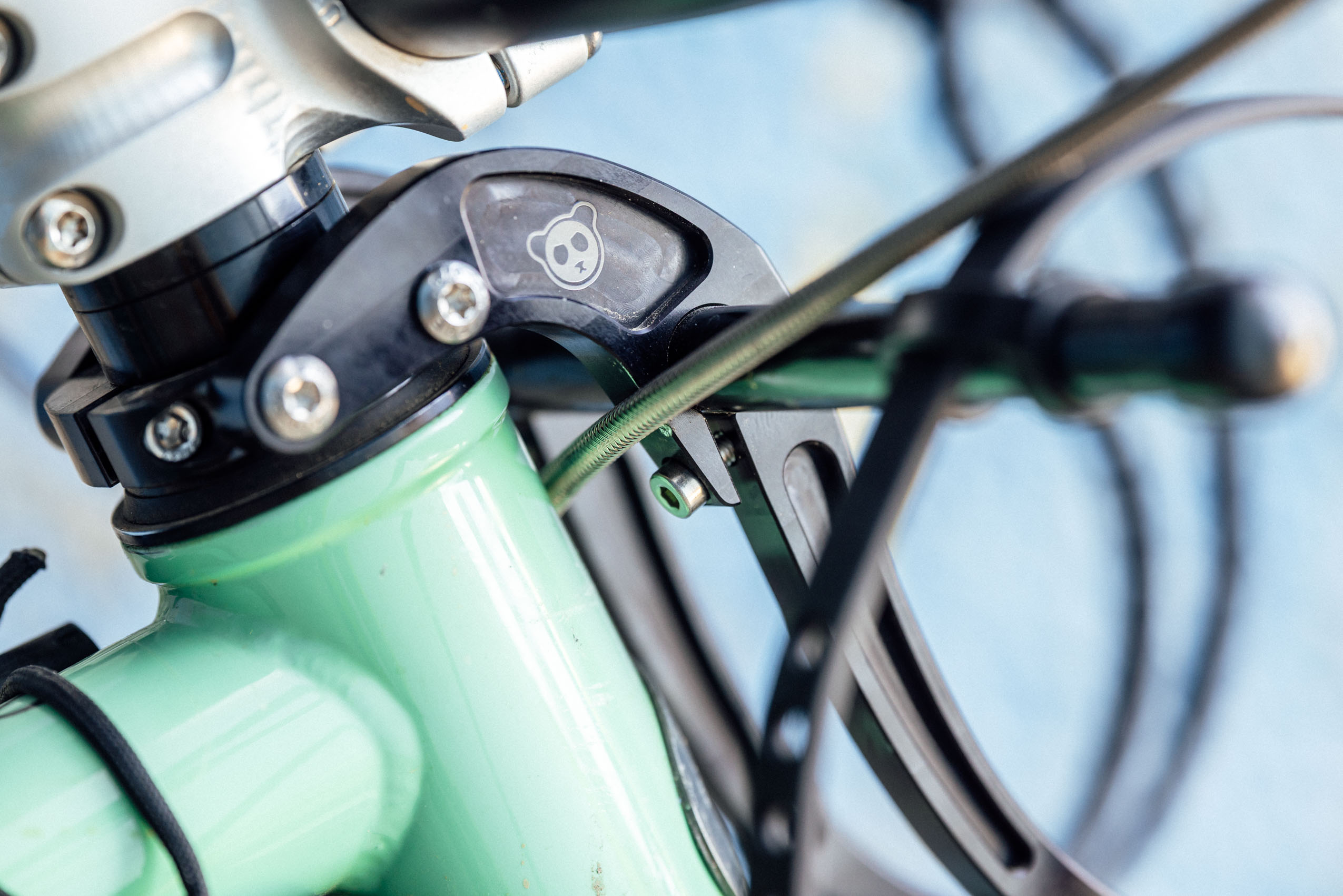

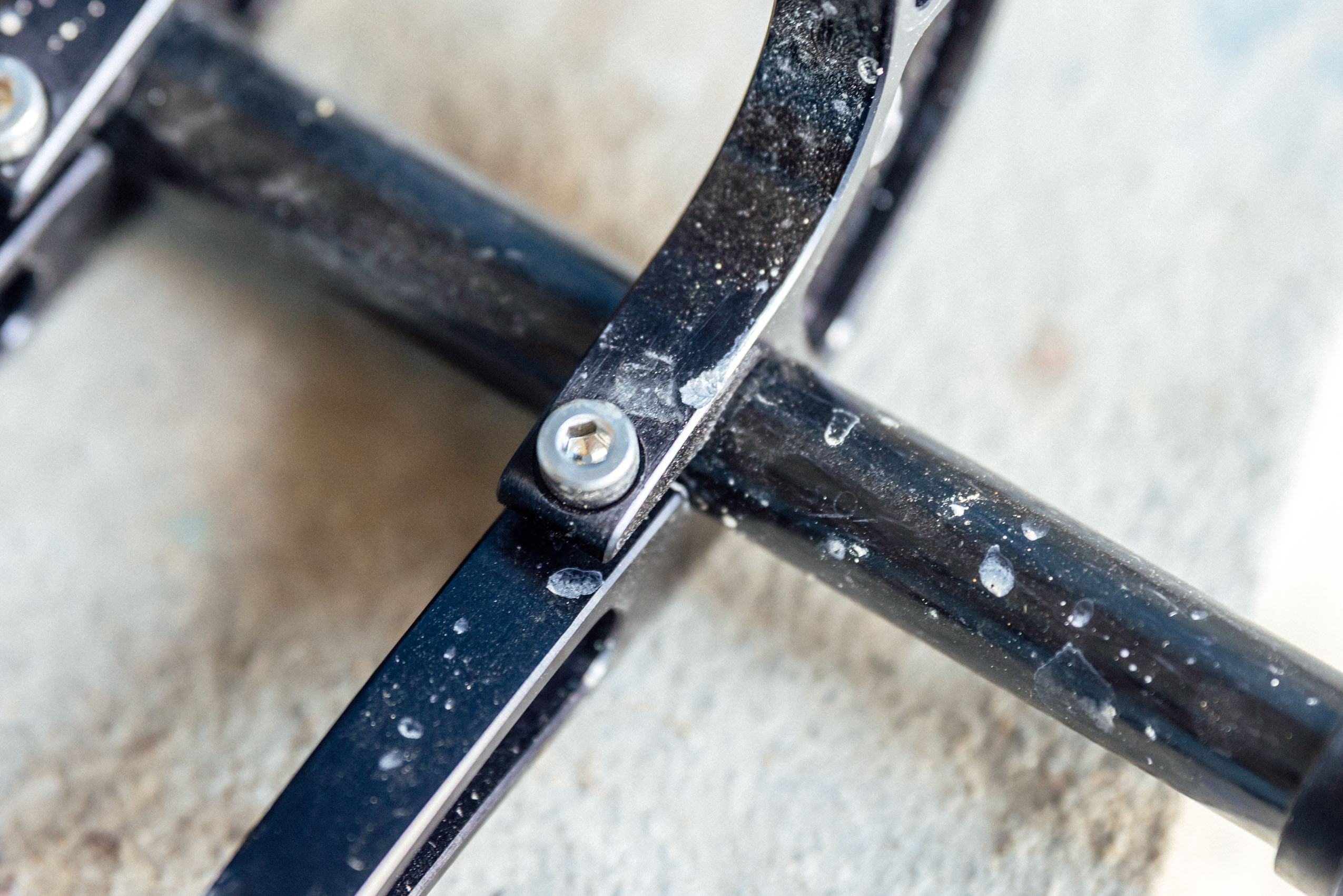
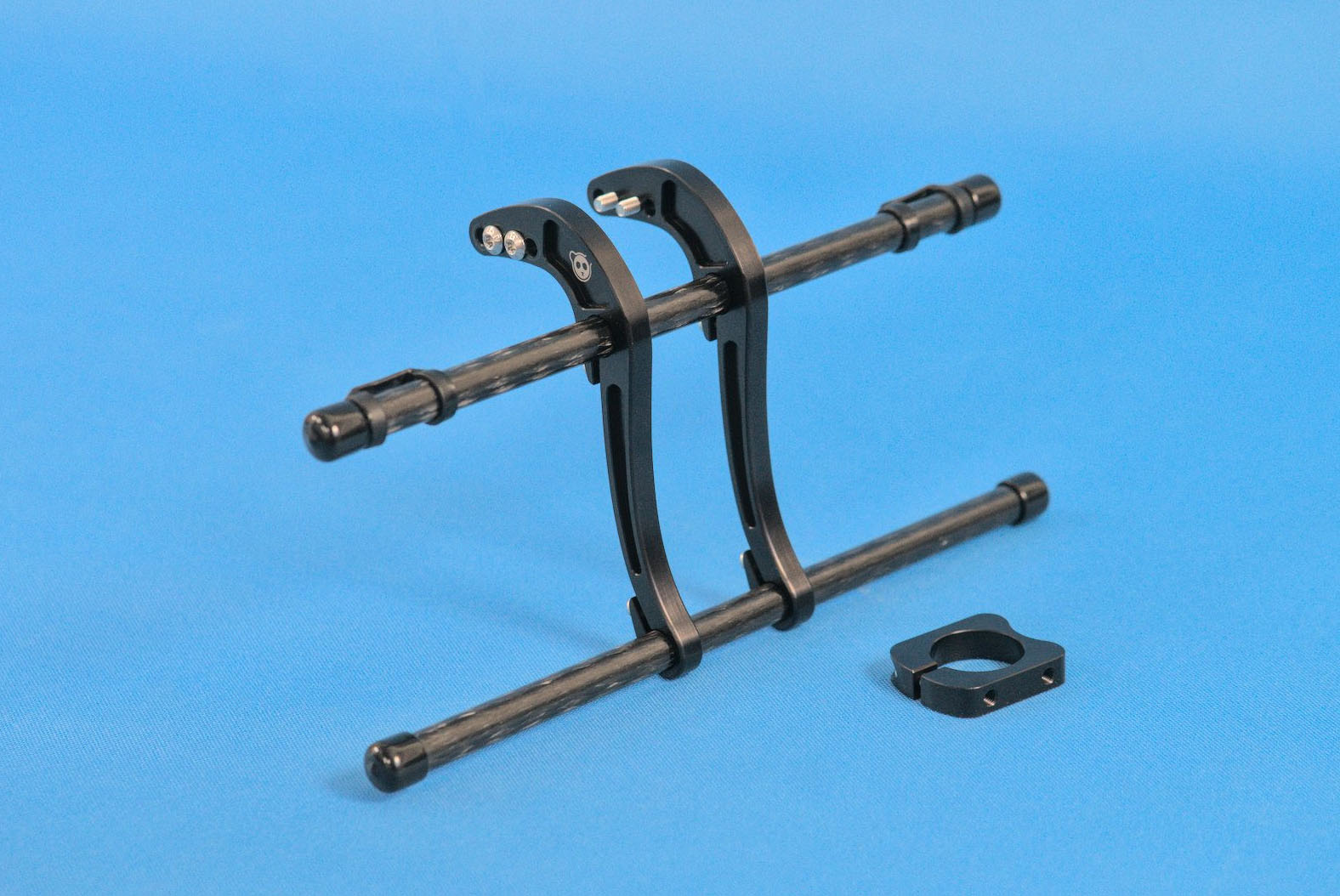

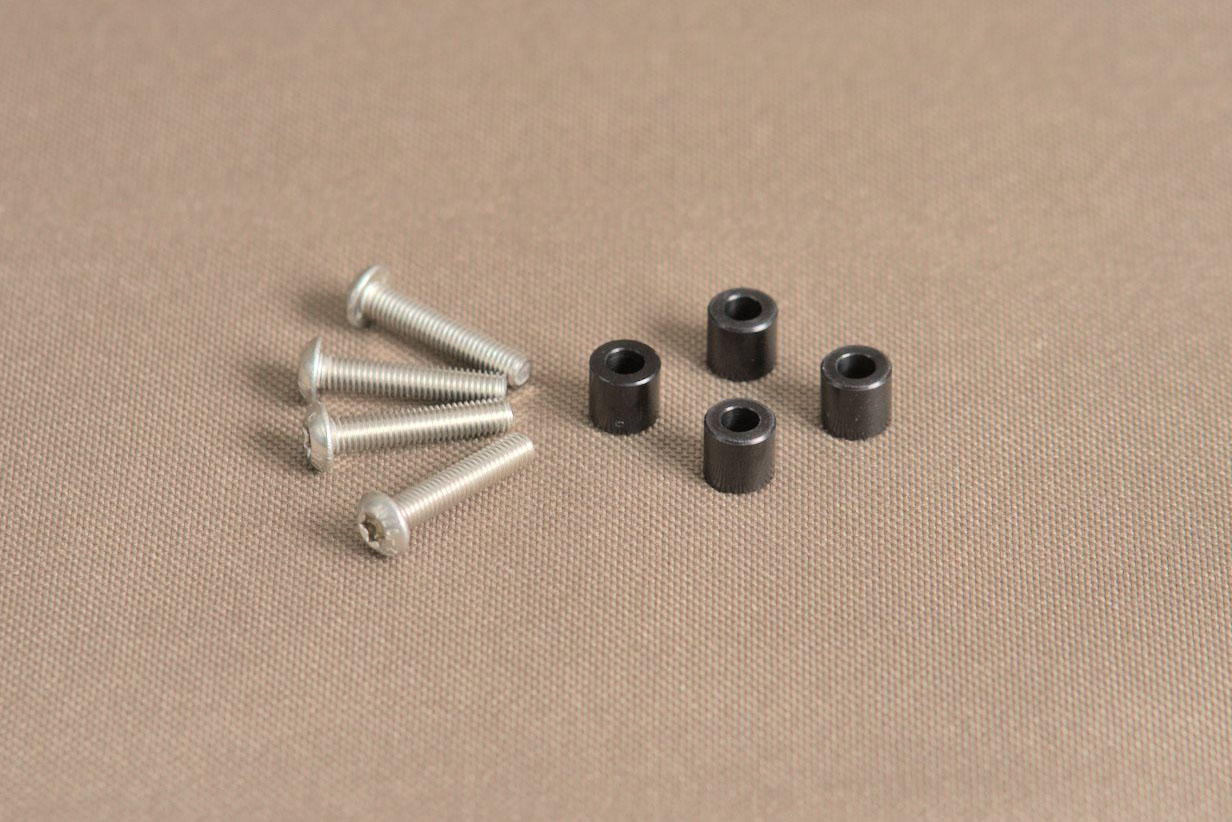
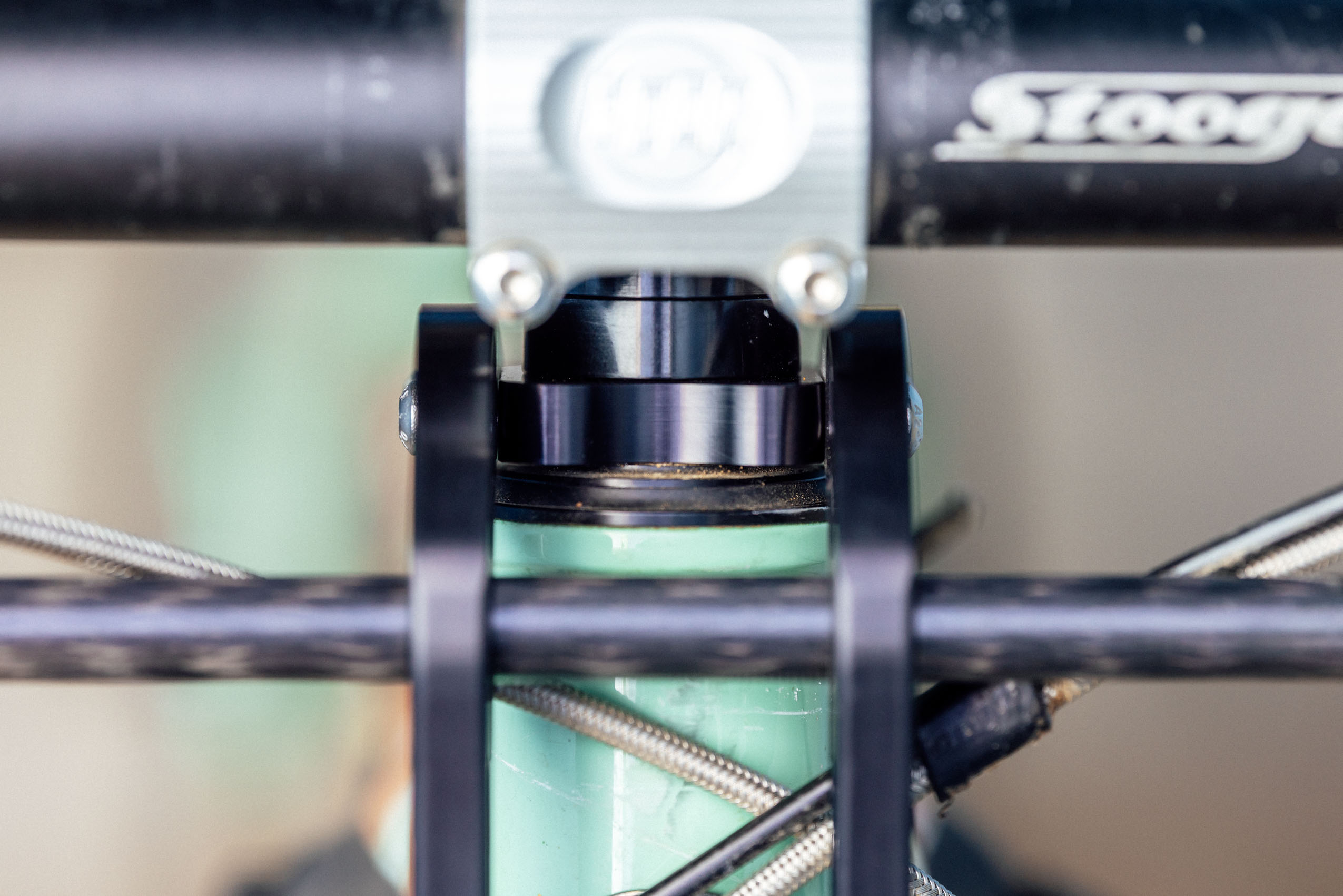
Unfortunately, that perfect tucked-in placement has a slight Achilles heel. Nick mentioned that some early prototypes were a bit farther away, and the steering was noticeably affected. He also admitted that it might not work on most bikes with pre-2023 SRAM Code/Level/Guide brakes, because they stick out so far. I tried it on bikes with Hope Tech4 and Trickstuff levers. There’s a little cable interference on both, but nothing major, and much less than you get using a normal handlebar roll. That said, I had issues with cable rub between the cradle arms and the head tube. As you can see in the photo above, the braided hose rubbed a serious hole in the paint and took some material off the right-hand-side Kaibab arm. On a subsequent trip, I just put some Gorilla tape on the head tube, which kept it from further abrading the paint. But it’s something to consider. I’d love to see a version of the collar with bolt holed moved about 6-8mm forward to eliminate this issue. As shown, they offer an extension kit that moves the arms out about 9mm on each side to accommodate short, wide stems. However, that might also provide a little more breathing room for cables.
- Model/Size Tested: Rogue Panda Kaibab Cradle
- Actual Weight: 256 grams (with straps)
- Place of Manufacture: Arizona
- Price: $185 or $205 with straps
- Manufacturer’s Details: Rogue Panda
Through February 2nd, 2026, Rogue Panda will donate $10 for every Kaibab sold to the Immigrant Rapid Response Fund of The Women’s Foundation of Minnesota.
Pros
- Super lightweight and innovative solution that advances the steerer-mount cradle concept
- Attachment collar can be left on the bike at all times!
- Very stable and little chance of movement
- Design keeps weight low and close to the head tube
- Innovative touches like minimal strap keepers, locking threads, and bolt storage holes
Cons
- Design positions arms close to the head tube, which can be too tight for cables and may pose an issue with thicker head tubes
- 3 kg load limit for gravel and suspension-equipped MTB use will likely be too conservative for some people
Wrap Up
All told, the Kaibab Cradle feels like a thoughtful maturation of a solid idea rather than something completely new and off the wall. Plus, it’s another clear signal that Rogue Panda puts a priority on thinking through systems with technical singletrack riding in mind. The steerer collar is genuinely clever and clean, and the fact that it can stay on the bike when not in use is a unique upside. On the trail, the cradle delivers exactly what steerer-mounted designs should: zero rotation, a low center of gravity, and a load position that fades into the background once you start riding. If fit, cables, and brakes can all line up, I’d say it’s one of the most well-performing front cargo solutions for suspension-equipped bikes I’ve used.
That said, depending on your cable situation and brake setup, you may need to add protectiive tape or a cable sleeve, or try the forthcoming extension kit. Still, these feel like solvable woes rather than fundamental flaws. For riders prioritizing technical trail performance and minimalism, the Kaibab Cradle stands out as one of the most refined, forward-thinking designs currently available. It doesn’t just expand Rogue Panda’s lineup; it pushes the whole category a little further in the right direction.
Rogue Panda Kaibab Cradle Review Video
Neil also extensively tested the Kaibab Cradle, and in our latest video, he breaks down how it works, how it rides, and who it’s for.
In summary, this system was clearly designed to preserve the bike’s natural ride feel and front-end handling. Is it going to work perfectly on every bike? Unfortunately, no. But for bikes where it does fit, it might be one of the best ways to carry cargo up front, and easily one of the least noticeable while riding. That performance does come at the cost of a slightly more involved install, but if you can work through those few shortcomings, I think most folks will be impressed by how naturally it carries a load and how simple this cradle system is to live with.


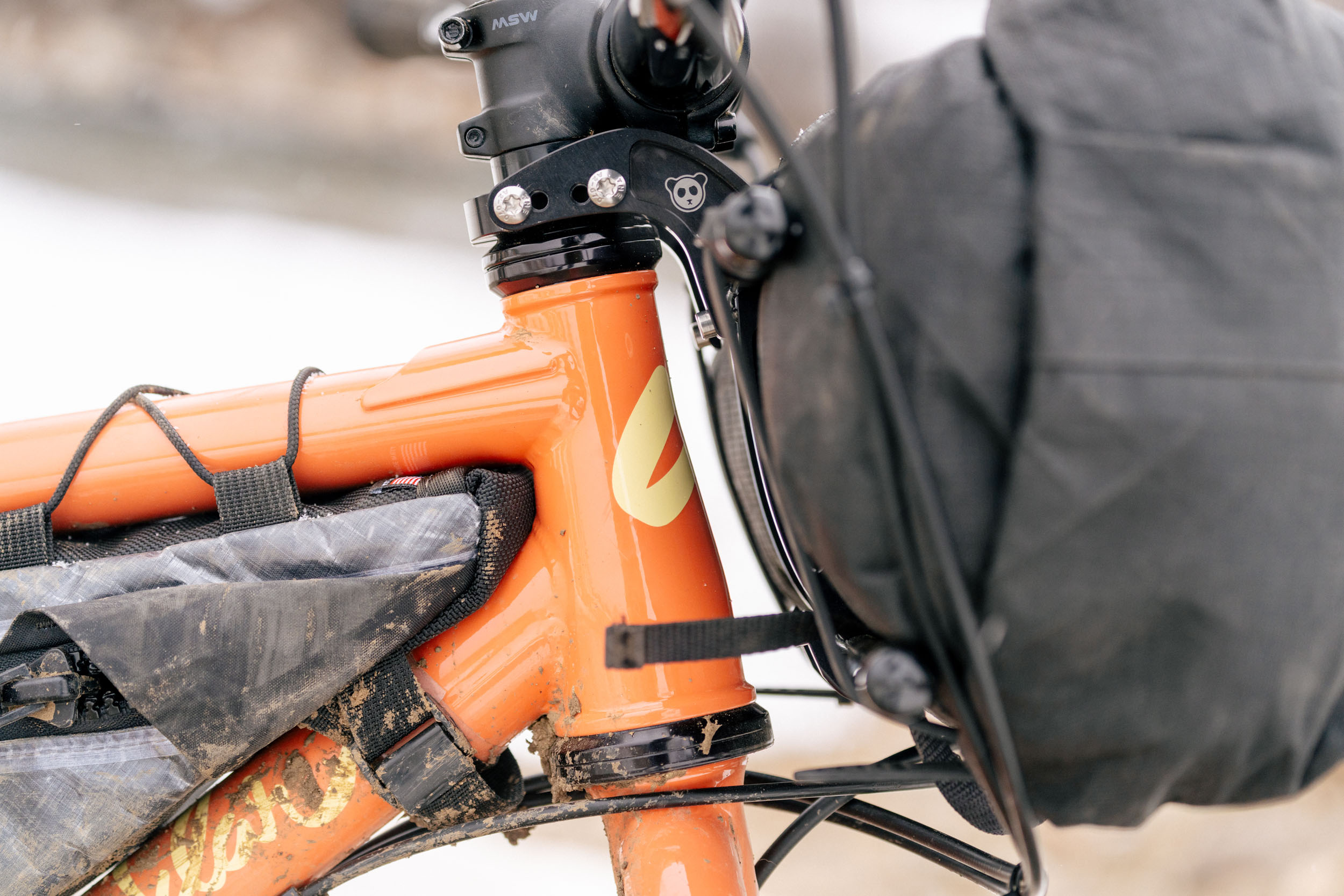
I also love that you can buy extra spacers and leave them mounted on multiple bikes, then quickly move the cradle from one setup to another as your adventures change. Like all Rogue Panda products, the CNC’d aluminum parts are machined in Flagstaff, Arizona, and everything is assembled in their small local shop. None of this comes cheap, but the price reflects Nick’s engineering, supporting local manufacturing, and keeping a small team employed. The cradle itself runs $180, with the TPU straps adding another $20.
Further Reading
Make sure to dig into these related articles for more info...

Please keep the conversation civil, constructive, and inclusive, or your comment will be removed.