


 Mountain Bike (MTB)
 Gravel Bike
 All-Terrain Bike (ATB)
 Fat Bike



Tailfin Journey Rack Review: The Destination?





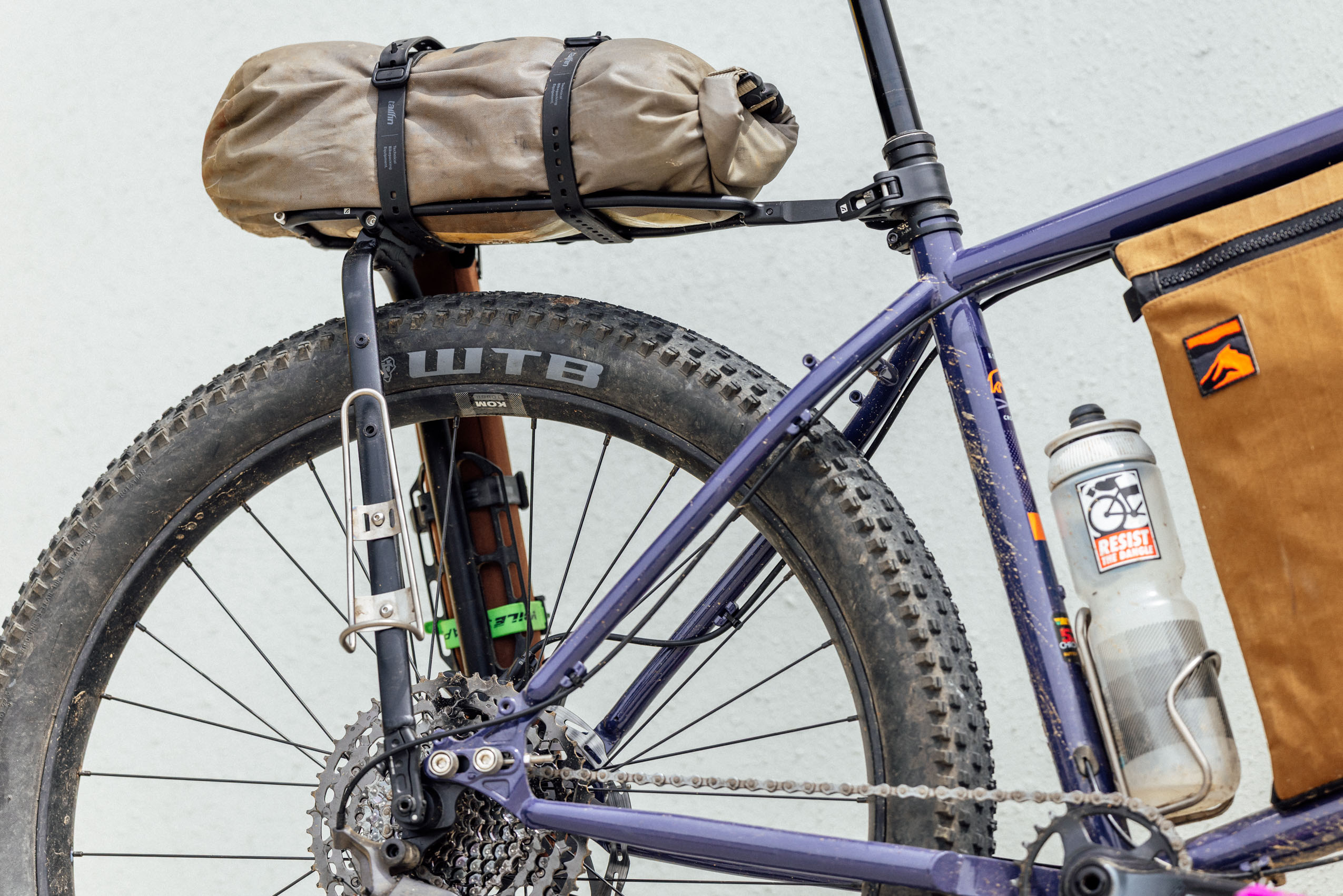
The all-new Tailfin Journey Rack distills the brand’s signature quick-release system into a more open, adaptable platform that works just as well with your existing gear as it does within Tailfin’s own ecosystem. With two versions and several add-ons, it offers many possibilities. We put it through its paces prior to launch for this full review…
PUBLISHED May 14, 2026
We all know the saying, “It’s about the journey…” It’s a bit trite and overused at this point, yet with a dash of irony, it feels perfectly fitting to describe Tailfin’s latest effort. The new Tailfin Journey rack makes it seem as if the UK brand has finally arrived at its destination after circling it for the past decade. It assimilates everything learned from earlier products and refines it into what might be the new beating heart of their rack-and-bag ecosystem. In doing so, the Journey Rack also offers potential customers a more wallet-friendly and versatile way to dip their toe into the Tailfin quick-release pond.


For a variety of reasons, my first thought when Cass and I unboxed a prototype back in January was, “Ah, it all makes sense now,” as if I was unfurling some rug that suddenly tied the room together. Read on for a deeper dive after a couple of months of using it for bikepacking and bikefishing rides. Plus, find Cass’s impressions from a 1,200-kilometer ride through Colombia in February and Neil’s video review at the bottom of the post.
Tailfin Journey Rack Specs
Before I dig in, here’s the rundown. The Tailfin Journey rack is a rear rack designed for on- or off-road use on bikes with tires up to 2.6” wide (interchangeable dropouts increase clearance to 29 x 3.25”). It’s constructed from 6061-T6 aluminum with an anodized finish and is available in versions with dedicated pannier mounts or without, though both can carry panniers. The pannier version has a 16mm pannier mount that’s 6cm below the platform to prioritize a lower weight position. The non-pannier version can run panniers using the platform’s 10mm rails.


The Journey is made to mount to a Tailfin axle or pegs that attach to standard rack mounts, and it’s compatible with all styles of bikes, including full-suspension mountain bikes. Here are more quick specs:
- Completely redesigned Fast Release Dropouts and Seatpost Connector
- Top deck measures 33 x 10 cm
- Mounts on each leg for cages (three-pack on pannier version and four on non-pannier)
- Both are fully compatible with all existing Tailfin rack top bags and panniers
- Compatible with other brands’ panniers (non-pannier version) or boss-mounted bags (both)
- Comes with two Fit Link front connectors to adjust top deck position relative to saddle height
- Ships with Tailfin Axle
- Folds up for flat storage during travel
- Optional light mount system
- Optional mudguard (tire clearance reduces to 29 x 2.25”)
- Pannier version rated up to 32kg of load (10kg per pannier + 12kg rack top bag)
- Non-pannier version rated up to 22kg (6kg per quad bosses + 12kg rack top bag)
- Actual weights: 592 grams for non-pannier version, 763 grams for pannier version, both with all bolts installed
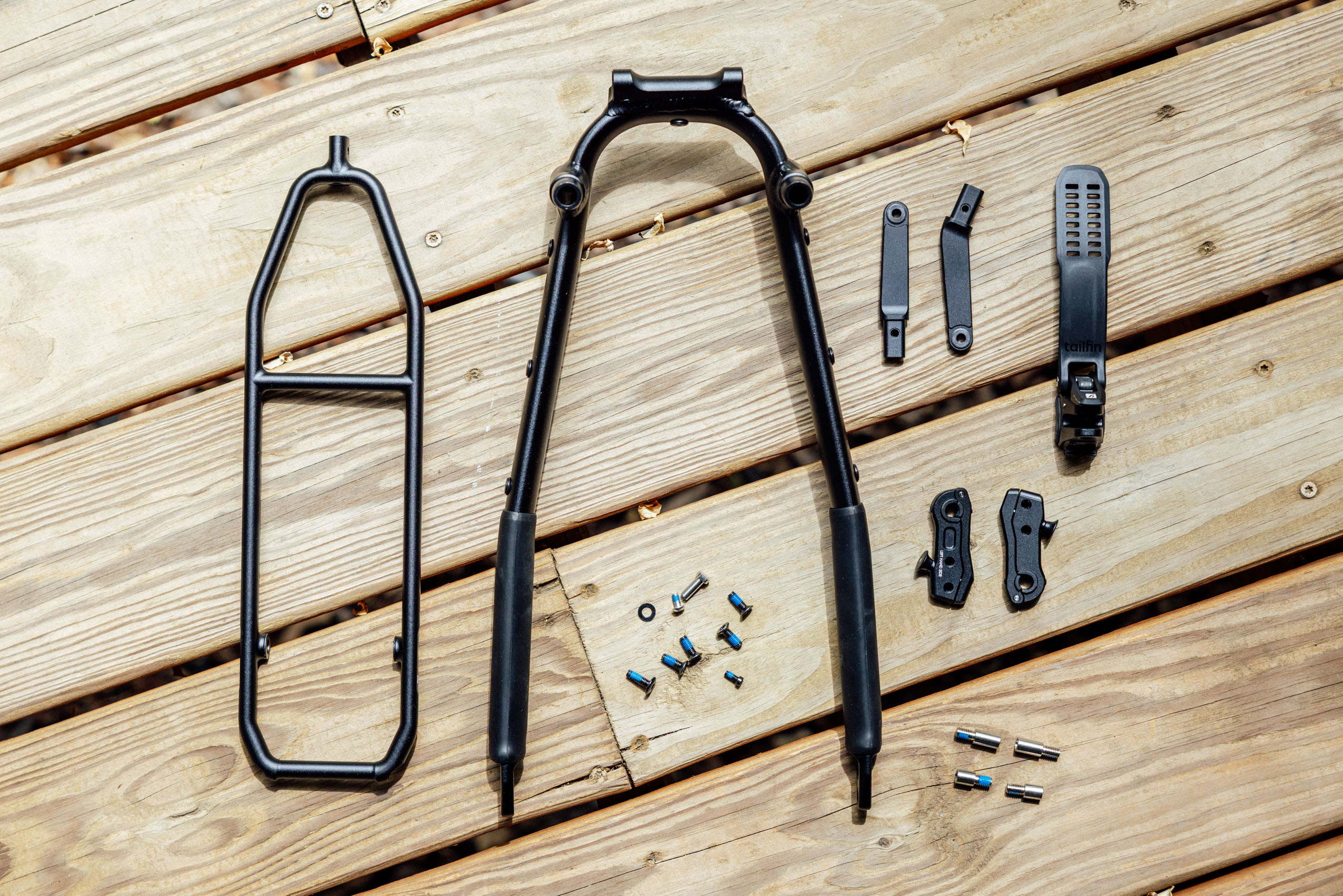
Agnostic Approach
The new rack replaces Tailfin’s eight-year-old Alloy Rack, a platform that originally helped validate their unique, axle-mounted cargo system concept. However, the Alloy Rack was only built to carry Tailfin’s panniers and/or support one of Tailfin’s proprietary top-loading bags, now called the CargoPack and SpeedPack. It wasn’t really something you buy on its own to use with other bags, although people tried. The other option was—and still is—to purchase the complete CargoPack or AeroPack system, selecting from a variety of configuration options, which allows you to choose a carbon or alloy arch with pannier mounts or not. It’s like a set menu with a few variations. And it’s a hefty investment.

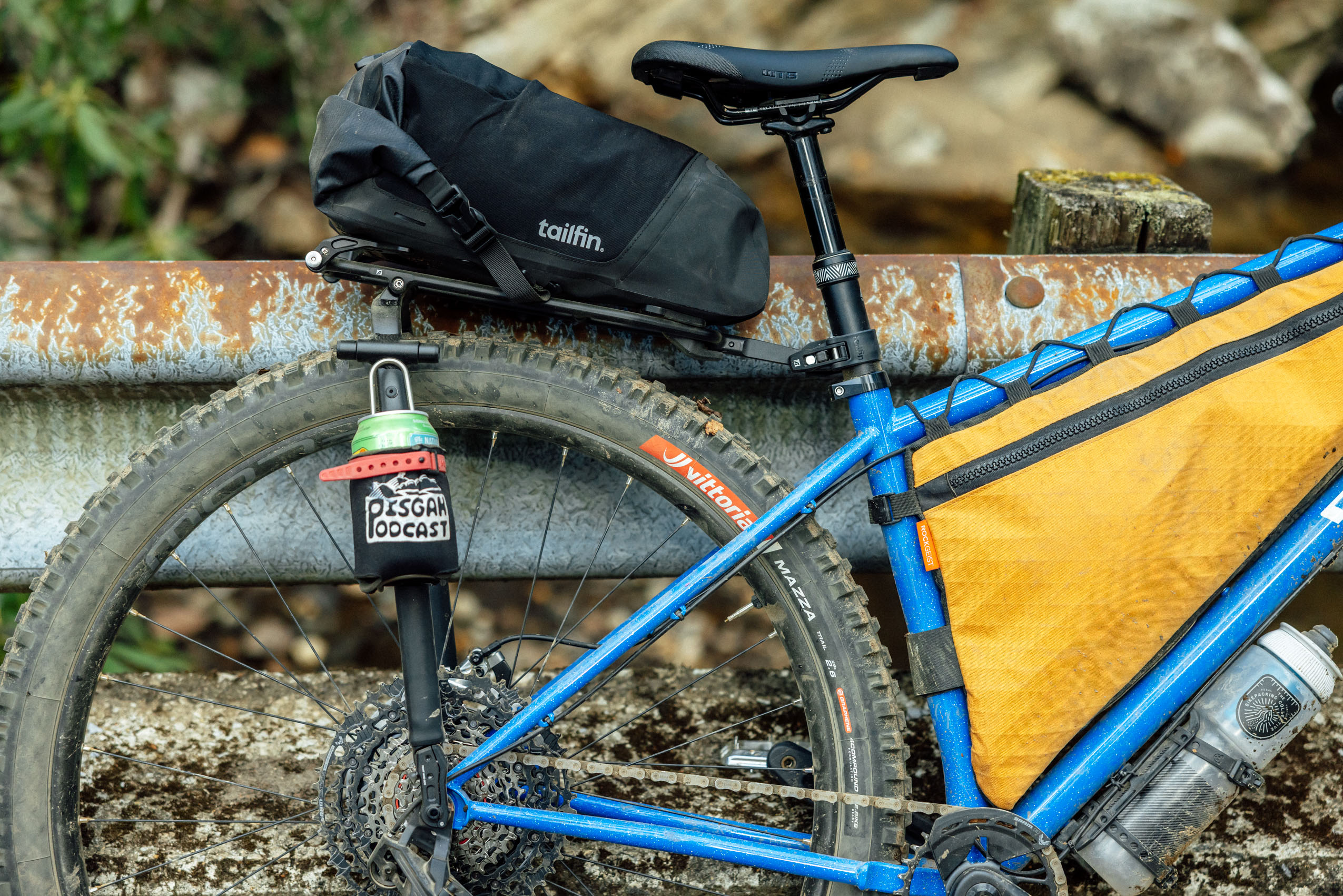
The Journey Rack simplifies things and makes the Tailfin system more à la carte. Now you can start with just the rack and run your own bags, cages, or panniers, then tap into Tailfin’s ecosystem with the detachable CargoPack, Speedpack, and beyond—when and if it makes sense. You’re effectively buying a fully operational quick-release rack with cargo mounts on each leg that can accommodate any cages or direct-mount bags, and a functional platform that works with your choice of panniers or a dry bag you already own. The decision whether to get Tailfin bags is up to you. This is a giant step in the right direction.
From the Feet Up
In addition to this agnostic approach, Tailfin took a ground-up—or feet-up—strategy for the Journey Rack’s industrial design, drawing on many tweaks, updates, and real-world feedback from their Alloy Rack and CargoPack/AeroPack systems. Nearly every part has been reworked, from the redesigned arch to the quick-release dropouts and the expanded mounting options to a stronger top deck.


Starting at the bottom, Tailfin’s Fast Release Dropouts are one of the more distinguishing features on their rear carriers. And in case you haven’t read between the lines, there’s a clear reason for that. Tailfin holds a fairly definitive patent on racks with quick-release lower mounts, specifically, ones that attach to the axle. That gives the brand a solid foothold on this type of design, with Ortlieb being the only other company offering a similar feature with their Quick-Rack L. For the record, Ortlieb actually made an agreement with Tailfin to use their patent in that instance.

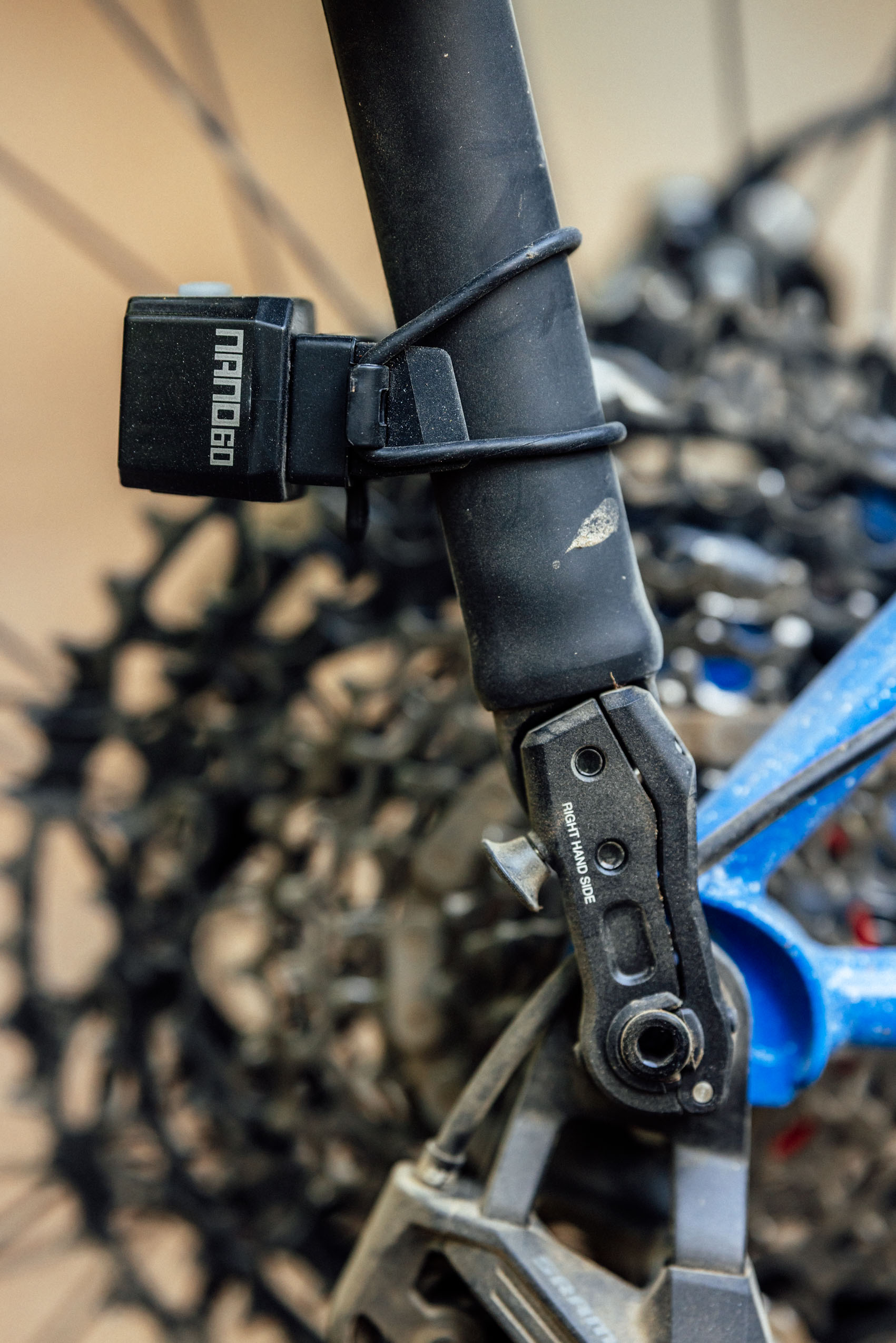


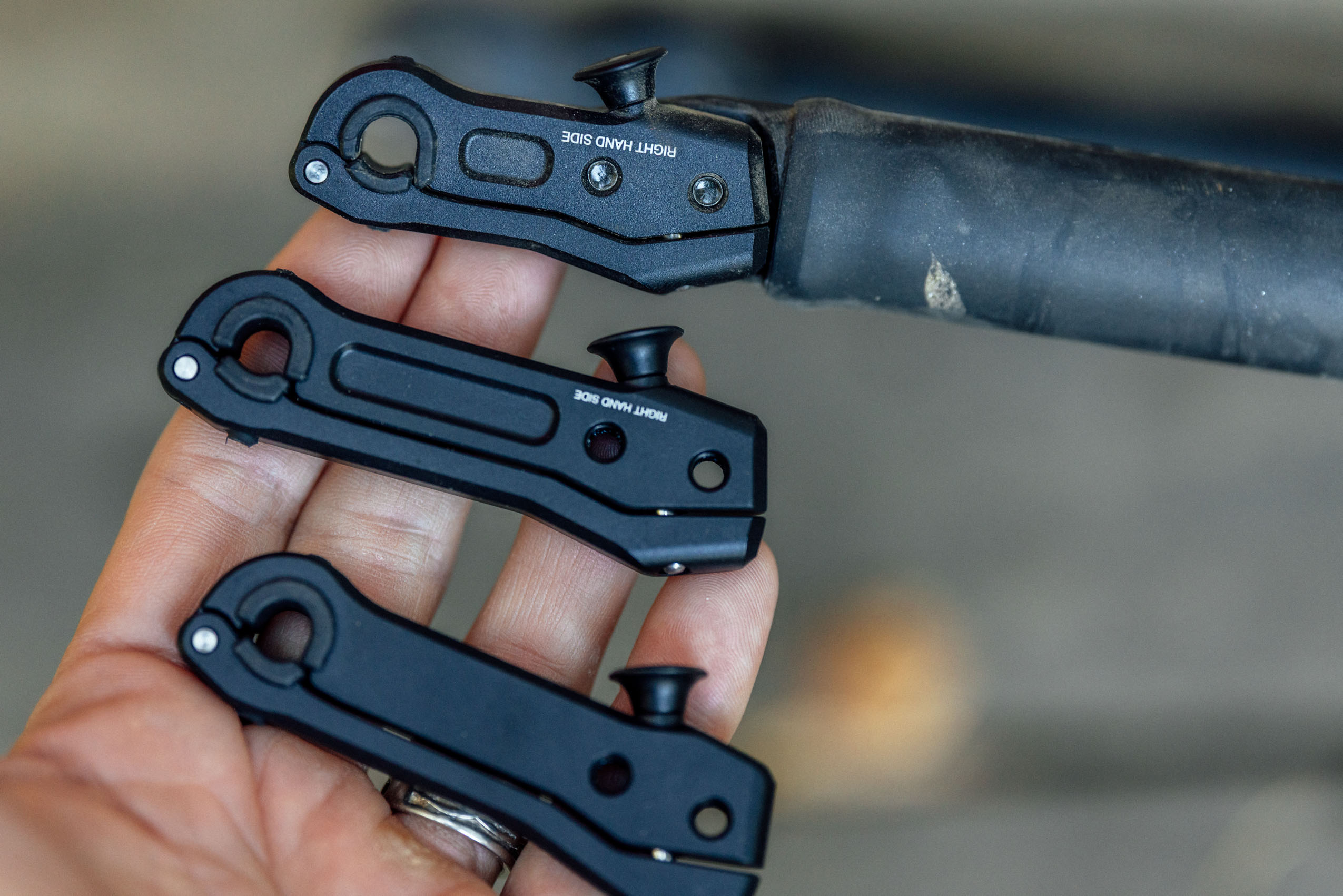
Patenting the idea was a smart move on Tailfin’s part, since the ease of installation and removal is one of the most compelling benefits of the Journey Rack and their other systems. This version of the dropouts functions exactly the same as the ones I was smitten with on my first Tailfin AeroPack—they automatically lock when the clasp is closed around the axle post, and the silver pin releases them when pulled—but they have a few minor refinements. The release button is slightly larger to make it easier to pull, and they have minor aesthetic upgrades, including additional bevels and recesses. They’re also 3mm taller to avoid conflict on the occasional bike with large dropouts. I tried the rack on two bikes, the Neuhaus Solstice and the Kona Unity, both of which I’m currently testing for review. It was slightly challenging to get the feet around the Kona’s bulky sliding dropout bolts. It wasn’t a deal breaker, but it took some flexing and coaxing to install. No issues with the hooded dropouts on the Neuhaus.

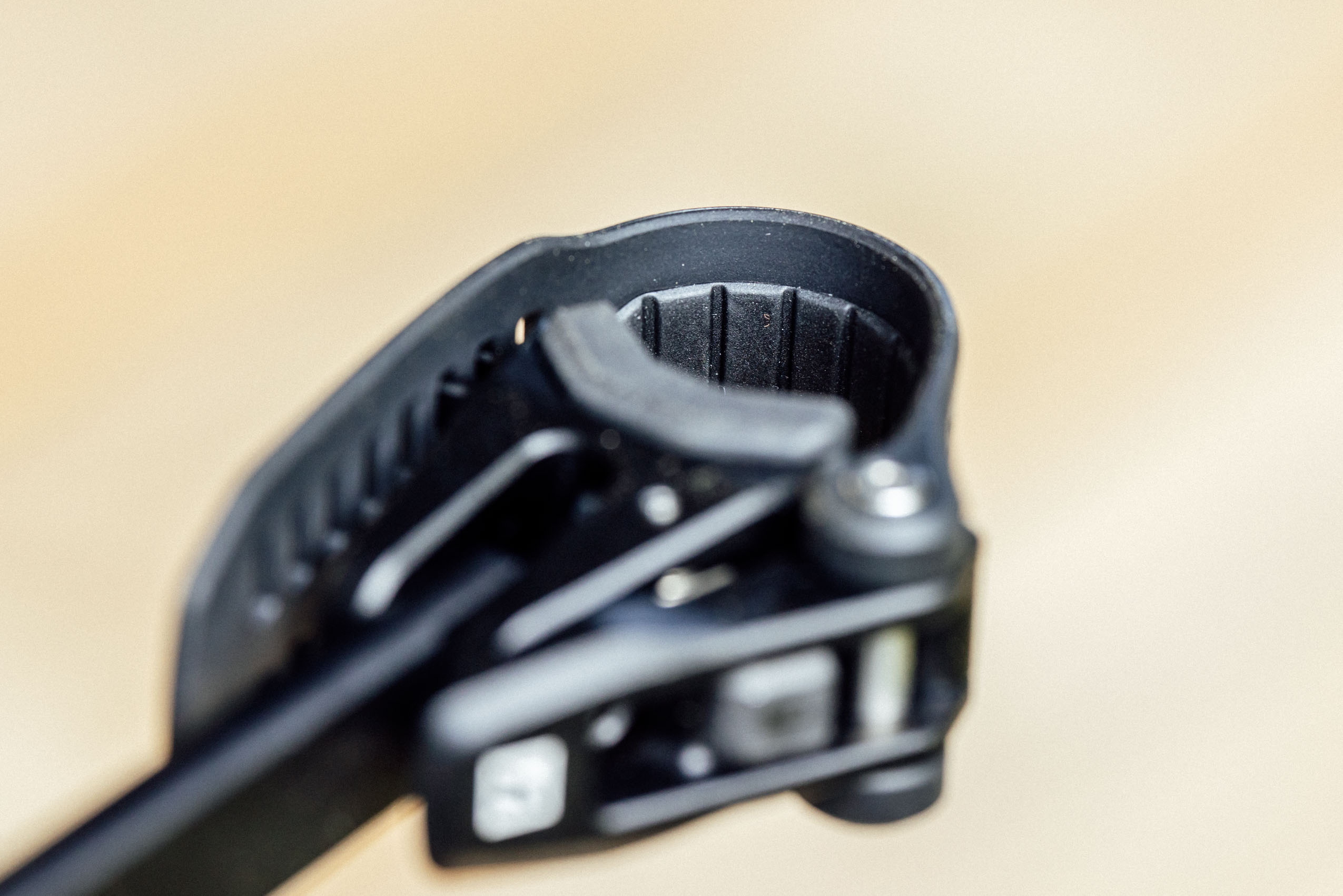

There were more significant updates to the Seatpost Connector clamp. It was mainly refined to improve safety and ease of use while still allowing compatibility with multiple seatpost diameters. The new design features a quad-hook configuration that distributes load more evenly across the strap, along with a revised buckle arrangement that reduces the throw. Tailfin says this change helps prevent issues seen in the previous version, where straps could stretch over time and risk being overtightened.
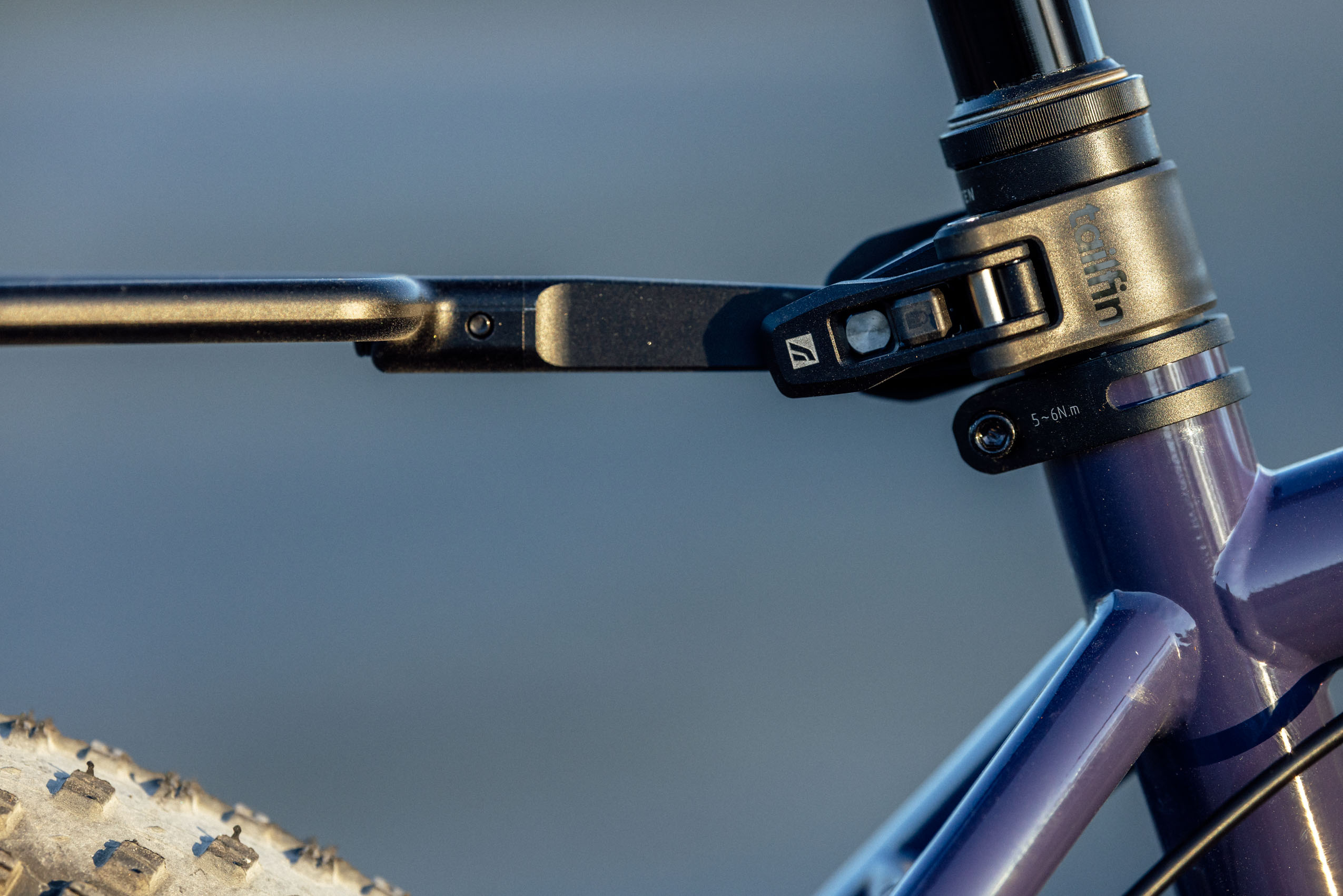
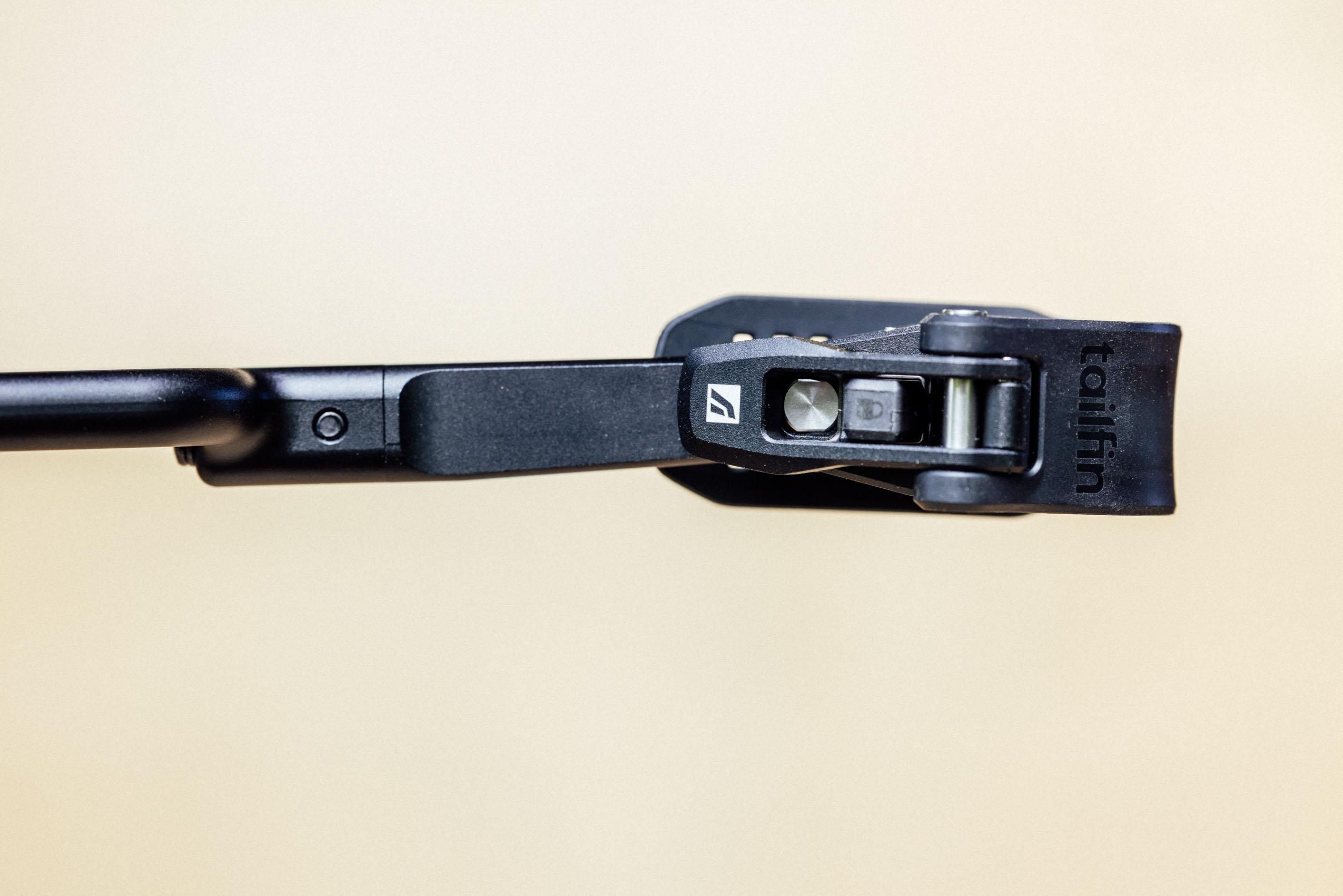


Additional improvements include a more compliant rubber lining on the strap and a softer rubber base, both aimed at better protecting the seatpost while reducing slippage. Mine stayed in place without showing any signs of movement, even on the roughest of trails. The overall aesthetic has also been refined, inspired by high-end ski boot buckles, giving the system a more premium finish.
New Arches
My first experience with any Tailfin product was with a prototype CargoPack they sent for me to try back in 2022. It was a 3D-printed arch that was lower than the version used on the current iterations of CargoPack and SpeedPack, which I always thought were too tall. The arch—or arches, rather—used on the Journey rack reflect the design on my prototype, keeping the load lower, tighter, and closer to the wheel.
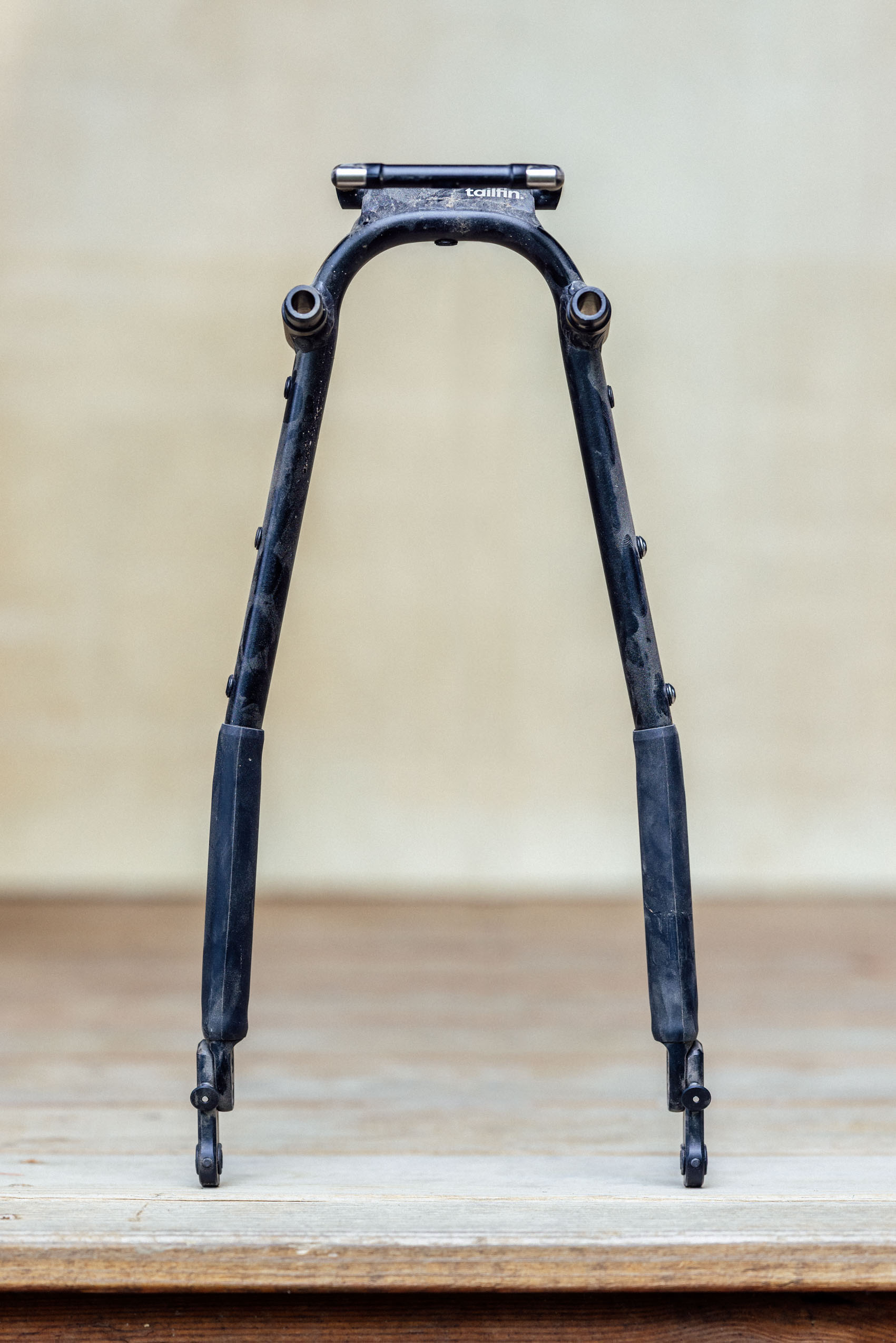

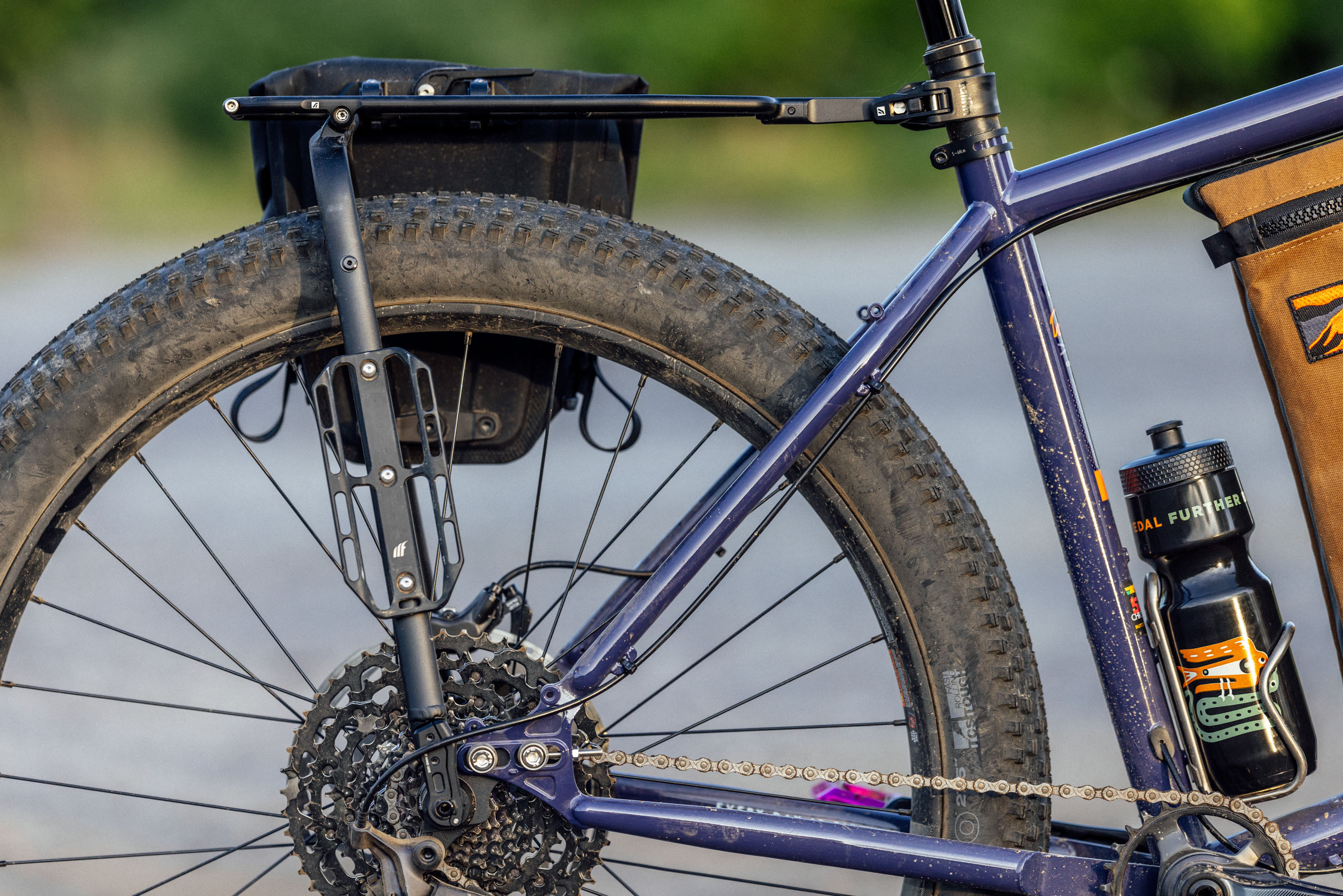
There are some notable differences between the arch used on the pannier and non-pannier versions, however. They both have the same tire clearance and fender mounting capability, but the most obvious difference is that the legs are straight on the non-pannier one and have a slight bend on the version designed to carry Tailfin’s panniers. The latter also has a formed rubber-like armor molded at the bottom to secure the lower pannier hook and minimize rattling noise. I was a little worried that the curved legs would limit the use of different cages, but I tried four options (King Manythings Cage, Wolf Tooth Morse Cargo, Tailfin’s own three-bolt cargo cage, and the Big Foot original cage), and all of them cleared the pannier-mount bulge, no problem. That said, the large pannier bulge might interfere with certain oversized bottles or pots, depending on the cage’s depth. I’m sure there are limitations of the higher three-pack on the pannier version, but I’ve yet to find them. The non-pannier Journey has more placement options, with the four-pack of mounts allowing the load to be positioned 6.4 cm lower.
Also, for the record, Tailfin sent a video showing the pannier version running Ortlieb Panniers mounted to the platform rails. The angled/curved legs push out the lower connection allowing the panniers to clear the Tailfin pannier mount bulge.
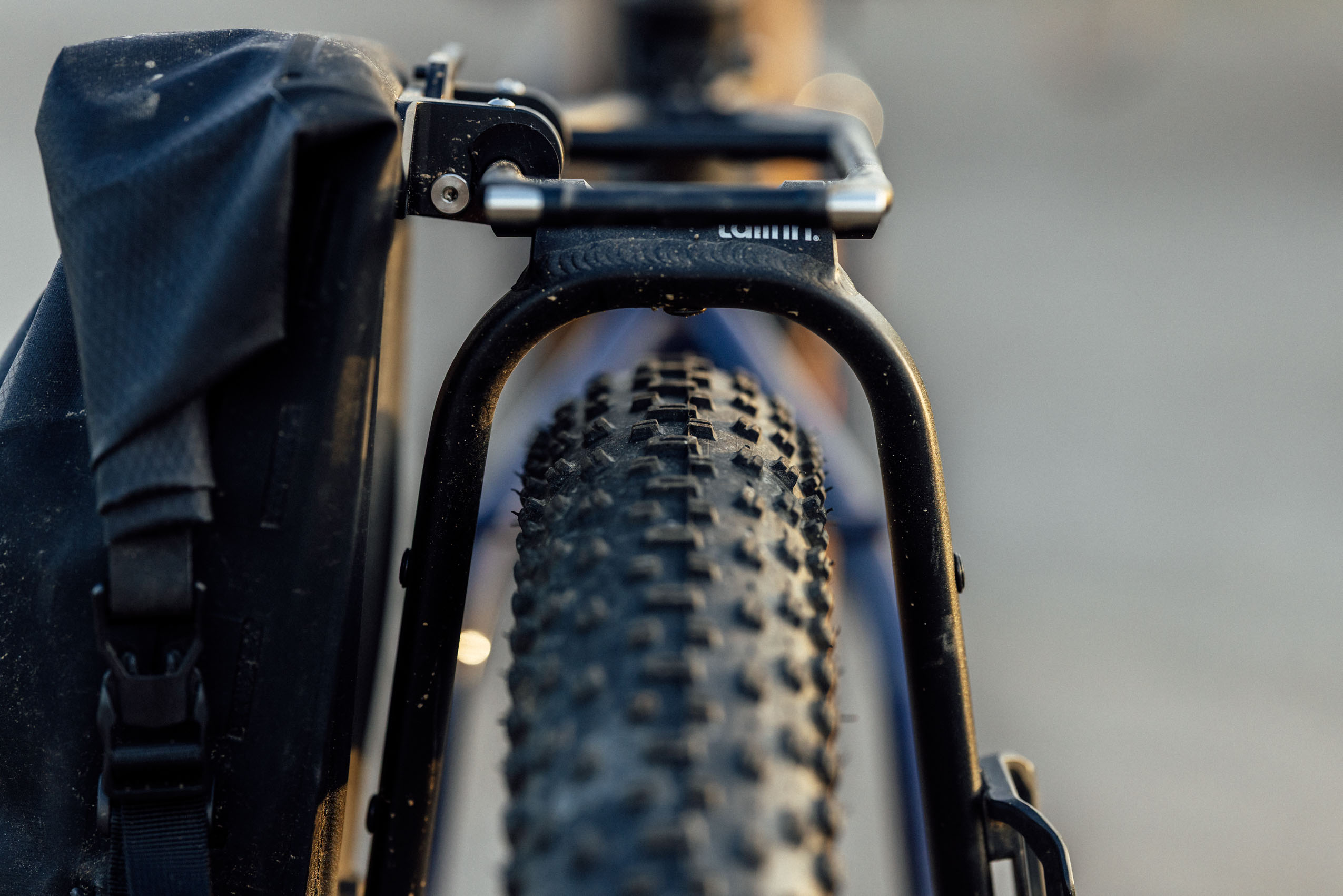

Both arches have the same tire clearance, which Tailfin specifies up to 29 x 2.6” with the normal dropouts. In the photos above, the non-pannier arch is shown on a 27.5 x 3.0” Ranger (left) and a 29 x 2.6” Vittoria Mazza (right). They also offer longer ones (below), which provide enough space for 29 x 3.25” tires. Neil even tested the longer dropouts with a 32er, which was tight, but there was enough room that made him comfortable running it (below right).

Locked and Loaded
Both versions of Journey Rack formed arch are constructed with a forged aluminum crown that’s welded directly onto the top. Tailfin states that this creates a significantly stronger structure than the previous Tailfin Alloy Rack. The Journey rack is tested with standard ISO luggage carrier testing (ISO11243), which requires 100,000 vertical fatigue cycles. Unlike standard ISO bicycle testing, the luggage carrier definition makes no distinction between road and off-road use. Having broken a rack or two myself, I don’t think that seems right. To challenge this test, Tailfin claims the Journey Rack was tested to three times that figure and passed at 10kg per side plus 12kg on top: 32kg (70 lbs) total, which seems substantial. The non-pannier version is rated at 22kg (6kg per leg bosses and 12kg on top), which is still more than I’d ever carry.
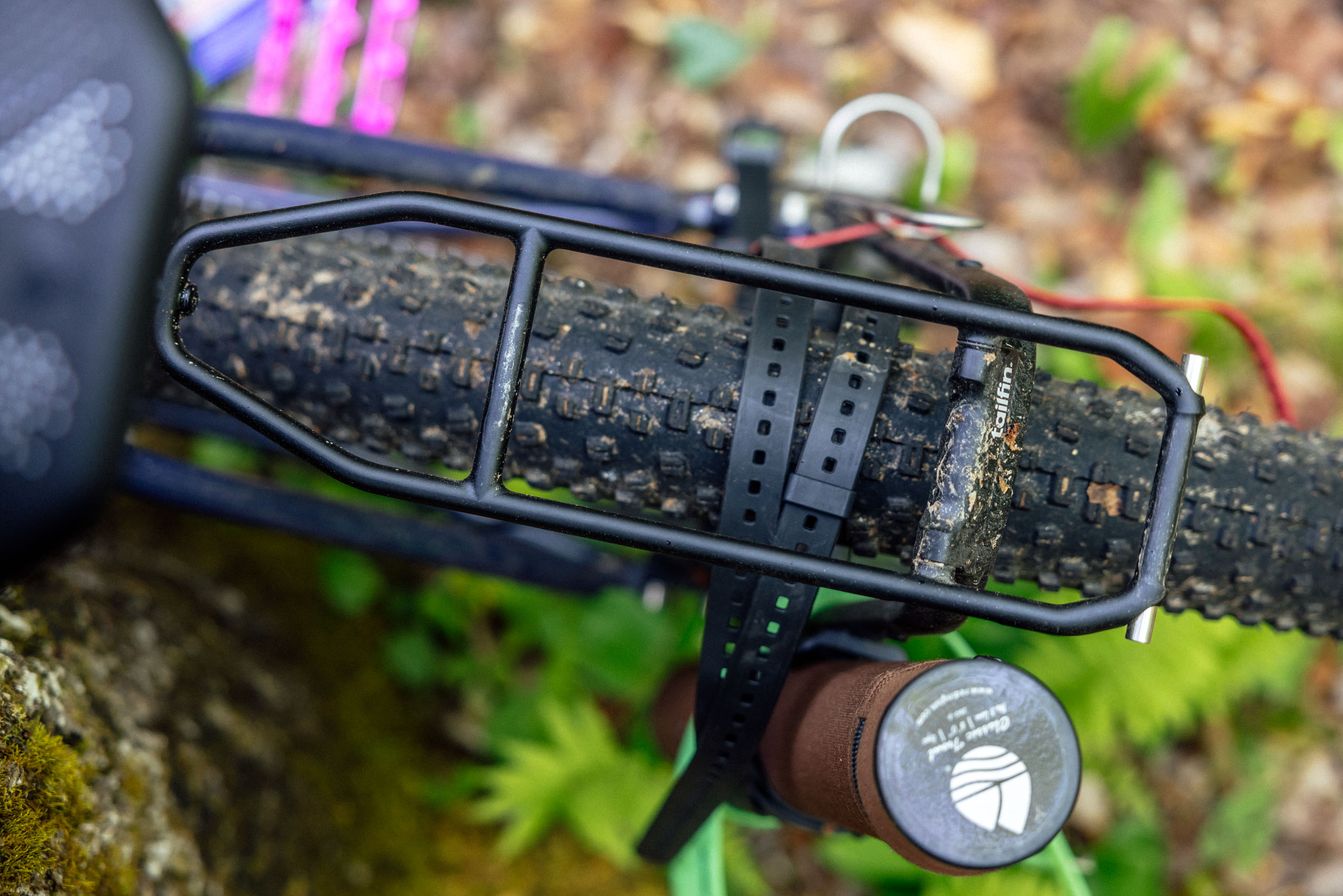
The platform measures 33 x 10 cm and features a tapered front. Compared to others—like the slightly wider 31 x 12 cm Tumbleweed Pannier Rack—it might seem a bit small at first glance. However, much of that impression comes from the taper. In practice, paired with the placement of the arch connection, it creates an ideal support layout for medium-sized dry bags. The close spacing of the rails, along with the taper, prevents poorly packed bags from getting “sucked” down into the rack, an issue I’ve encountered with others, often requiring a rack bag holster like the Rockgeist Armadillo or South City Stitchworks Love Handles. On a couple of occasions, I loaded it with an old Outdoor Research dry bag and even stacked on a camp chair without any issues.




I also had a great experience pairing the Tailfin Journey Rack with the SpeedPack. This was my first time using that bag, and I came away impressed by its size, expandable mesh pocket, and overall attention to detail. Still, the real highlight is the mounting system Tailfin designed for it. The rack uses two optional stainless steel pegs that thread into the platform’s rear, each with a female fitting to accept the retractable pins built into the bag’s hardware. A hook at the front of the bag slips under the platform’s tapered section, then you pull the pins outward, lower the bag into place, and let them snap in. The result is a rock-solid, rattle-free connection that’s incredibly quick and easy to install or remove.

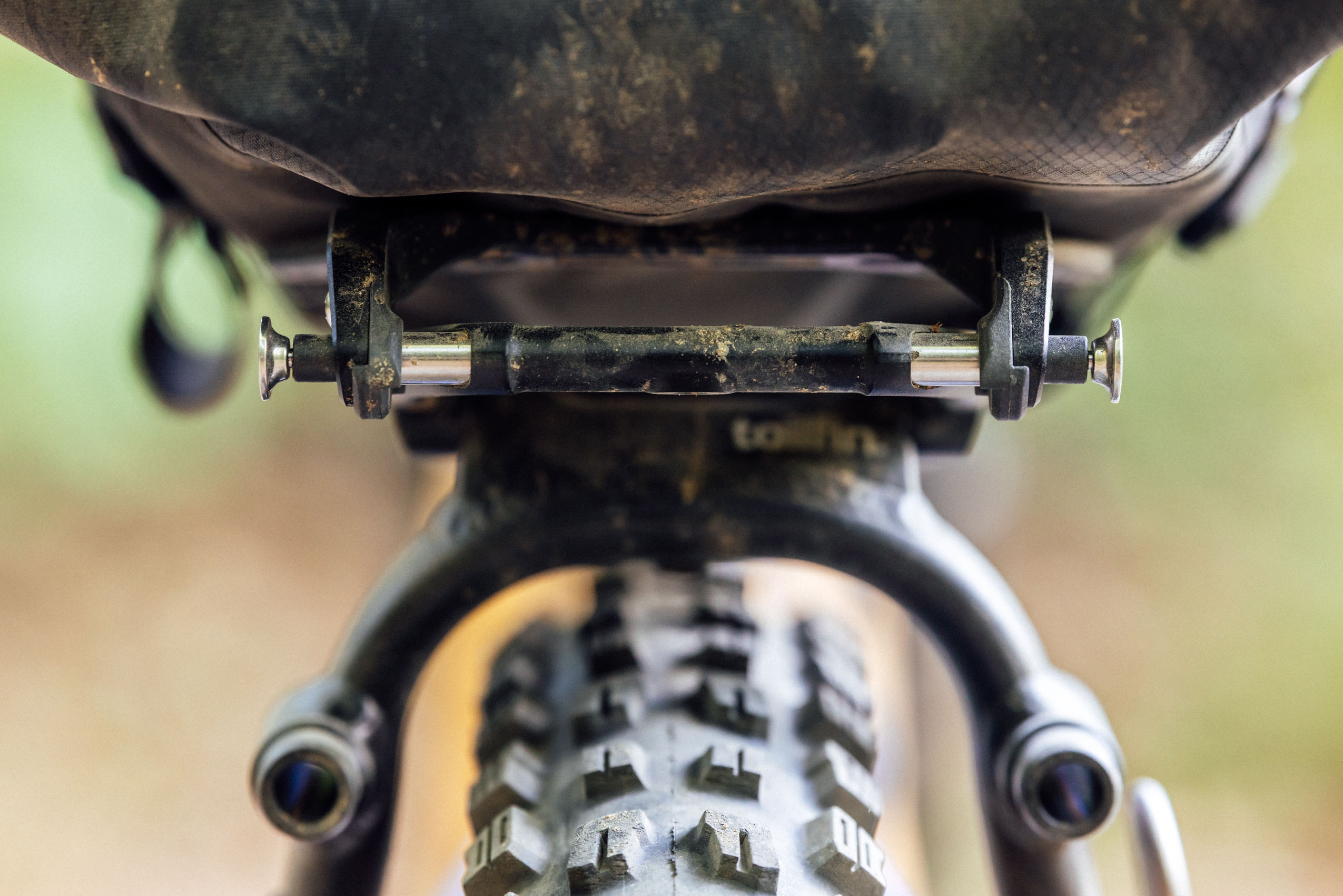

Tailfin mentioned that they tweaked the Journey Rack’s geometry to allow it to sit further back from the saddle, increasing storage space and bringing panniers further forward to improve weight distribution. I’d love to see a slightly longer version of the Fit Link bar, since there was some saddle interference with the SpeedPack when I used it on the large Neuhaus Solstice (saddle slid all the way rearward in the seatpost clamp). It has a moderate-to-steep seat tube angle, too, so slacker angles might have even more of an issue. Still, it isn’t a dealbreaker; I’m simply a sucker for using every bit of dropper post I can.
As mentioned, I tried both versions on two bikes. I didn’t try it on a full-suspension—since I proudly don’t own one—but Tailfin suggests that the Journey Rack’s tri-pivot architecture allows it to move with the bike as the suspension compresses, making it fully compatible with full-suspension mountain bikes. Fortunately, Neil was able to try it, and you can find his impressions in the video embedded at the bottom of this review. I might be hesitant to trust that those pivot points wouldn’t wear down over time on a long tour, but for something like the Colorado Trail, or other routes in the 2-5-week variety, I imagine it’s a solid solution.



The other thing I can’t exactly vouch for is its long-term durability. While I used these racks on a few overnighters, day rides, and bikefishing excursions, I haven’t tested them to their full extent. However, Cass Gilbert took his on a 1,200-kilometer trip in Colombia and a recent week in Peru. Here’s what he had to say:
Long-Term Thoughts
by Cass Gilbert
Logan and Neil have covered all the granular details—this is more a comment on long-term durability, having had the opportunity to try a pre-production version of the Journey during our month-long, 1,200-kilometre tour in Colombia earlier this year. The differences between the two were mainly in the attachment points. Mine used the original version of Tailfin’s Fast Release dropouts and their first-generation seat post connector.
Still, based on that experience, I came away impressed. The Journey Rack handled the task of hauling two relatively weighty 16L panniers without complaint at all over extremely mixed terrain, and the platform proved amply wide enough to lash on a tent when I needed to. The rack also felt stiffer than the previous iteration, which translated into less potential for steering shimmy under a heavy load, helped too by the fact that it now sits lower over the rear wheel. However, it was off the bike that the rack really won me over. Being able to quickly remove it and fold it flat, Ikea-style, made it much easier to slip into my Ground Effect Tardis bike bag—or to store compactly when hopping onto a bus.


After returning from Colombia, Tailfin sent over an “almost-final” version of the Journey, which included the new seat post and Fast Release dropouts. I’m about 400 kilometres into trying it out, including some intense off road riding in Peru. So while it’s not enough time to report on how well it might fare over a really long tour, it’s been a good chance to glean some thorough first impressions. Namely, that the new seatclamp is a real improvement over the old one—it’s noticeably grippier, no longer creeps up the seat post, and improves overall stiffness too. Only time and use will tell how well it holds up after months of opening and closing, but so far, so good—and it doesn’t seem to deform like the original band.

It’s harder for me to assess updated Fast Release dropouts, as unfortunately mine came with thicker rubber “boots” than the shipped version, which made them more awkward to squeeze close than they should, especially when clogged with mud. And, as I didn’t have a set of the 18mm longer dropouts intended for large volume tyres, I used Tailfin’s workaround—their frame mount adapter set—to lift the arch up and provide clearance for 29 x 2.8in Teravail Ehlines. I ran these same rack eyelet “pegs” for my trip to Colombia, allowing ample space for 29 x 3.25in Dura Cruxes.
Still, despite this temporary issue, the Journey Rack as a whole has been absolutely fantastic. I’ve not had a chance to try it with a set of non-Tailfin panniers—like Ortlieb’s perennial touring favourites, the Front-Rollers. Apparently they work, even if the mounting system is less optimised. But for those who already own a set of Tailfin’s excellent panniers, or anyone looking to slowly invest in their somewhat expensive ecosystem—starting with a simple dry bag and cargo racks they already own, for example—I think they’re onto a winner.
Vs. Other Rear Racks
Compared to other rear racks we’ve tested, the Journey has some impressive numbers. To see how it compares with a few other options, I compiled a table outlining pricing and weights for similar axle-mounted racks. For consistency, I’ve included the cost of an axle where necessary. The Hunter is paired with a Robert Axle ($68), and the Tumbleweed with an Ortlieb Thru Axle M6-Connector ($35), which has been reported to work with that setup on some bikes. The Tailfin, Ortlieb, and Restrap prices already include their respective axles. Weight figures reflect the rack only (no axle), except for the Restrap, which includes the Rack Cage for a more accurate comparison.
| Rack | Load Limit | Weight | Price | Tailfin Journey Rack |
48.5 lbs
22 kg
|
20.9 oz
592 g
|
$205 | Tailfin Journey Rack (Pannier Version) |
70.5 lbs
32 kg
|
26.8 oz
761 g
|
$260 |
|---|---|---|---|
| Restrap Switch Rack + Cage |
66.1 lbs
30 kg
|
21.9 oz
621 g
|
$260 |
| Ortlieb Quick Rack L |
44 lbs
20 kg
|
21.3 oz
605 g
|
$175 |
| Old Man Mountain Elkhorn* |
25 lbs
11.34 kg
|
22.5 oz
638 g
|
$236 |
| Tumbleweed T-Rack |
30 lbs
13.6 kg
|
22.8 oz
649 g
|
$180 |
| Tumbleweed Ti Pannier Rack |
45 lbs
20.4 kg
|
15.4 oz
437 g
|
$450 |
| Hunter Cargo Rack |
—
—
|
21.2 oz
~600 g
|
$343 |
As you can see in the chart above, Tailfin managed to create the lightest axle-mount-specific rack on the market with the non-pannier version. And with the retail price of £150/$205/€180 for the non-pannier version (including axle) and £190/$260/€230 for the pannier version, they also kept the value fairly consistent with others.
Add-ons
Tailfin also offers a few interesting add-ons for the Journey Rack, each of which bolts onto a threaded eyelet under the arch. Perhaps the most interesting is the mudguard. It sells for £15/$25/€20 and reduces the tire clearance to 29 x 2.25″ with the standard dropouts, although with the extended dropouts, I’d expect that to increase significantly.


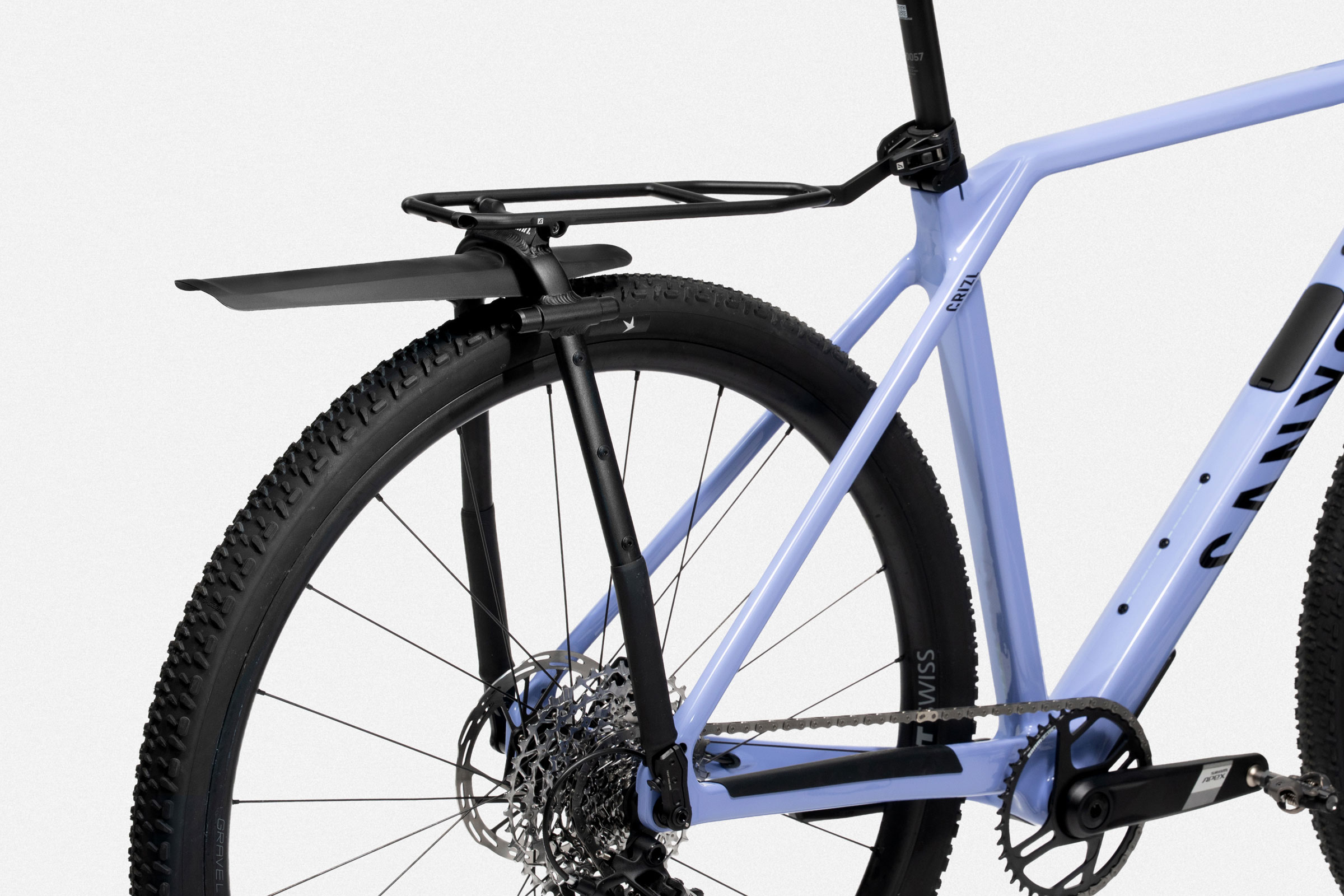

The other two are a light mount shown above (£15/$25/€20) and a Garmin Varia/Wahoo Trackr Radar Mount (£25/$35/€30).

- Model Tested: Tailfin Journey Rack
- Actual Weight (pannier): 763 grams (26.9 ounces)
- Actual Weight (non-pannier): 592 grams (20.9 ounces)
- Place of Manufacture: Taiwan
- Price: $205/$260
- Manufacturer’s Details: Tailfin
Pros
- The Journey Rack, particularly the non-pannier version, is lightweight considering all of its features and functionality
- Tailfin’s improved quick-release connections are best-in-class
- Nicely proportioned and provisioned platform system that can be used with Tailfin’s ecosystem of bags, other brands’ rack packs, or simple dry bags
- Non-pannier version has well-placed four-pack eyelets that work with any cargo cage or bolt-on bags
- Non-pannier version could also be used with Tailfin or non-Tailfin panniers
- Large-diameter legs enable you to strap on a standard taillight, especially on the reinforced pannier version
- Additional light mounts and fenders are nice add-ons
- Folds flat for travel and storage
Cons
- Pannier version weighs a hair more than traditional racks like those from Tubus or Tumbleweed
- Saddle can still interfere with SpeedPack or other bags (I wish the connecting strut were a centimeter or two longer)
- Difficult to choose between the two; I like the ability to tweak the setup with different cages on the lighter one, but I also really like Tailfin’s panniers
- The three-pack mounts might be limiting on the pannier version with some accessories because of the bulgy pannier mount (although I have yet to find the limitations)
- Lots of bolt sizes and parts to contend with
Wrap Up
In many ways, the Tailfin Journey Rack feels like a culmination of everything the brand has been working toward over the past decade. It takes the strengths of their original quick-release system and refines them into a more flexible, accessible platform. By opening up the use of third-party bags and accessories—allowing riders to build their setup over time—it removes much of the friction and some of the cost that previously came with buying into their product line.
After a month or so of use, I’ve become quite enamored. The Journey Rack is stable, well-executed, and impressively versatile, whether paired with Tailfin’s own SpeedPack or a mix of random existing gear. And, of course, the quick removal and installation is much easier than spinning four bolts to accomplish the same thing. There are still a few tradeoffs—namely, weight on the pannier version and minor fit nuances, like getting it around Kona’s massive slider bolts—but none feel like dealbreakers. Ultimately, it has the best of both worlds between innovation and practicality, and it may very well be the most complete and adaptable expression of the Tailfin system to date.
At this point, some of you might be wondering which one you should get. That’s a tricky question. If you know you want to use Tailfin Panniers (which are great) and a Tailfin rack-top pack, then the pannier version is the better option, since you can’t do both with the non-pannier version, at least without having some abrasion issues. However, it gets more difficult from there. For me, the non-pannier version makes the most sense. It’s less expensive and lighter, and I never (or very rarely) need to run both a rack-top bag and panniers. Usually, if I’m using panniers, there’s just a camp chair or something secondary on the top of the rack. That said, the pannier version does lower the load, which I appreciate. It’s a tough call, but in the end, the non-pannier option gets my vote. There’s a catch with that one, however. Right now, it’s only available on pre-order and will ship mid-July.
All that said, Tailfin doesn’t plan to replace the integrated/fixed versions of CargoPack and SpeedPack. Those have fewer parts, are naturally lighter, and have fewer points that could break or be damaged. If you’re racing or prioritize weight, then they might still be the better option for using Tailfin’s bags.
Tailfin Journey Rack Review Video
by Neil Beltchenko
The Tailfin Journey Rack is the latest evolution in Tailfin’s rear cargo lineup. Not only does it reflect clear feedback from riders with its more versatile, do-it-all design, but it also comes in at a more approachable price point, aligning with other options in its class. Neil has been putting it to use for both bikepacking trips and daily commuting over the past month, and he shares his full experience in our latest review video.
Further Reading
Make sure to dig into these related articles for more info...





Please keep the conversation civil, constructive, and inclusive, or your comment will be removed.