

 Mountain Bike (MTB)
 Gravel Bike
 All-Terrain Bike (ATB)
 Fat Bike


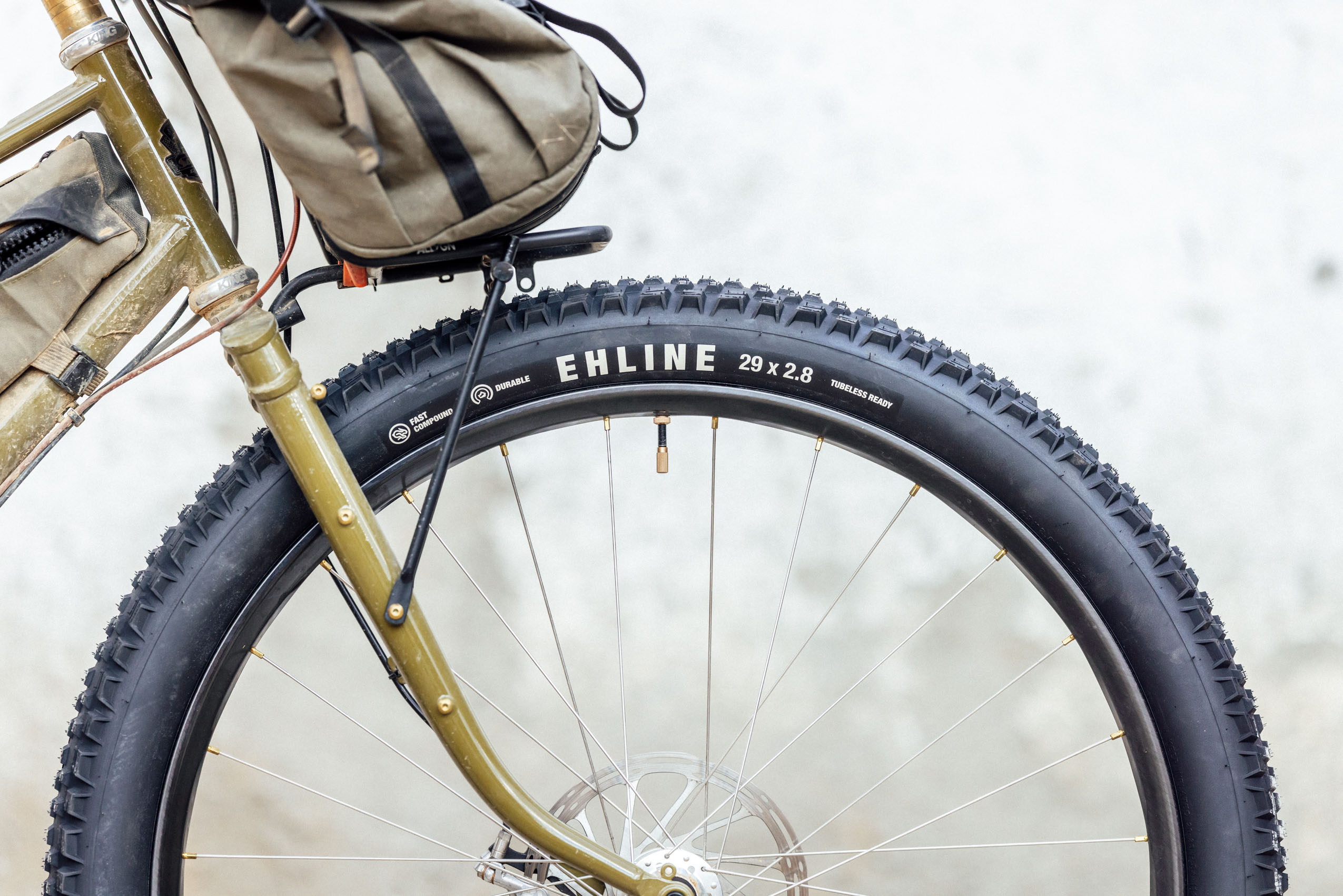
Teravail Ehline 29 x 2.8 Review: Long Live 29+




Over a decade after 29+ helped redefine bikepacking, the format has largely faded from the spotlight. However, many of us outliers still think it’s the perfect tire size. When Teravail mentioned the new Ehline 29 x 2.8, it felt like a welcome renewal of the platform that once inspired entire continents’ worth of dirt touring possibilities. After months riding a pair through the loose, rocky terrain of Oaxaca, Logan shares his review and thoughts on how this modern take on a classic plus tire stacks up…
PUBLISHED Mar 10, 2026
I remember exactly how cold it felt in the garage on December 5th, 2013. I was preparing my shiny new Surly ECR while anxiously awaiting a UPS van to deliver a pair of newly released 27 TPI 29 x 3.0” Knards. I had less than a day to install the tires, box up the bike, and board a plane to South Africa, where I’d start cycling from Cape Town to Tanzania. It’s interesting how stressful situations embed themselves in your memory. I was clearly nervous that the delivery wouldn’t show up, and also about running the novel 29+ tire platform on a multi-month international bikepacking tour. Looking back on the latter, I’m really not sure what I was worried about. That was the best equipment decision I made. 29+ felt like a revelation. Here was a tire size that delivered much of the traction, float, and cushion of a fat bike, but with better rollover, less weight, and more speed.
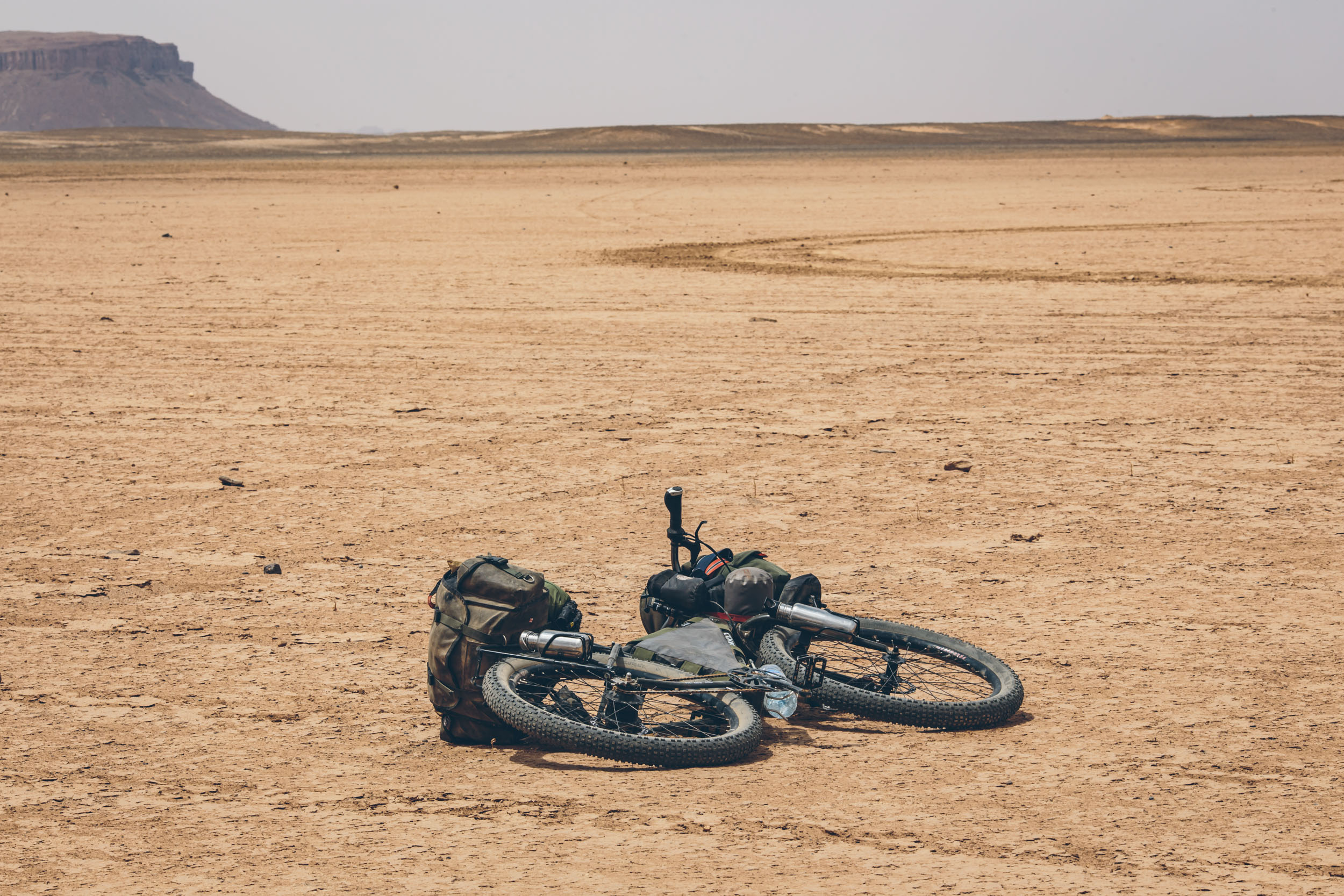

There were skeptics at first, but 29 x 2.8 and 3.0” tires flourished over the next few years. For a young and rapidly evolving bikepacking scene, it was the sweet spot. Riders suddenly had a tire that could smooth out rough backroads, claw up loose climbs, and handle loads without feeling too sluggish. It opened up terrain and possibilities. Tire options multiplied, brands embraced the format, and bikes like the Surly ECR, Trek 1120, Jones Plus, and Tumbleweed Prospector gave the platform a proper home. The development of 29+ paved the way for 27.5+ and eventually the more prevalent 29 x 2.6″ wide trail standard. But trends shifted, brands backed away, and some beloved tires, such as the Maxxis Chronicle and 2.8” Ranger, quietly disappeared. As key bikes were discontinued and the industry gravitated elsewhere, 29+ sadly slipped from the spotlight.
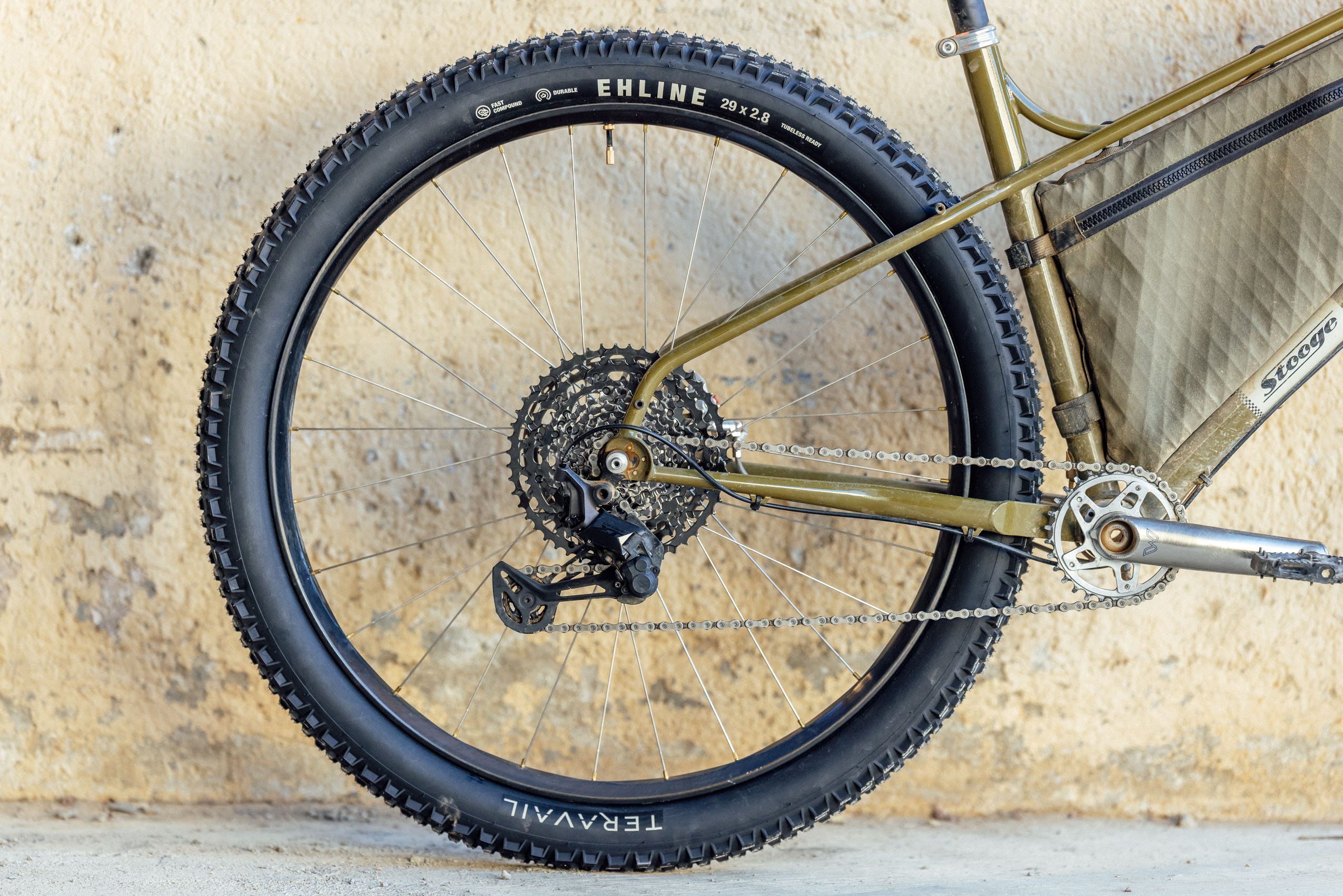


Still, for many of us who value the added comfort, traction, and confidence on loaded dirt tours—even big cross-continent ones—the appeal never faded. So, when Teravail shared word of the forthcoming Ehline 29 x 2.8″ tire, it felt less like a new release and more like a revival. Read on for my impressions after a couple of months riding on a pair.
Quick and Dirty
Teravail announced their first plus tires, the 27.5+ Cumberland and Kennebec, when they launched the brand in 2015, but it wasn’t until 2017 that they rolled out 29+ rubber with the Coronado, later renamed Oxbow. The Oxbow was built with a fast-ish rolling center section and progressively larger side knobs for cornering. But, as many of us have experienced, it lacked traction. Many folks found it to be a good sand tire, for what it’s worth, but I never really cared much for the Oxbow. It didn’t jive with my regular trails, which are littered with hot-buttered roots. The 29 x 2.8” Ehline was designed to retain a fast, touring-friendly demeanor but add more traction in the transition zone and when cornering. For the record, the Ehline 2.8 will replace the Oxbow in Teravail’s lineup, but there are no size or casing options, only a single 29 x 2.8” Durable version in tan or black.
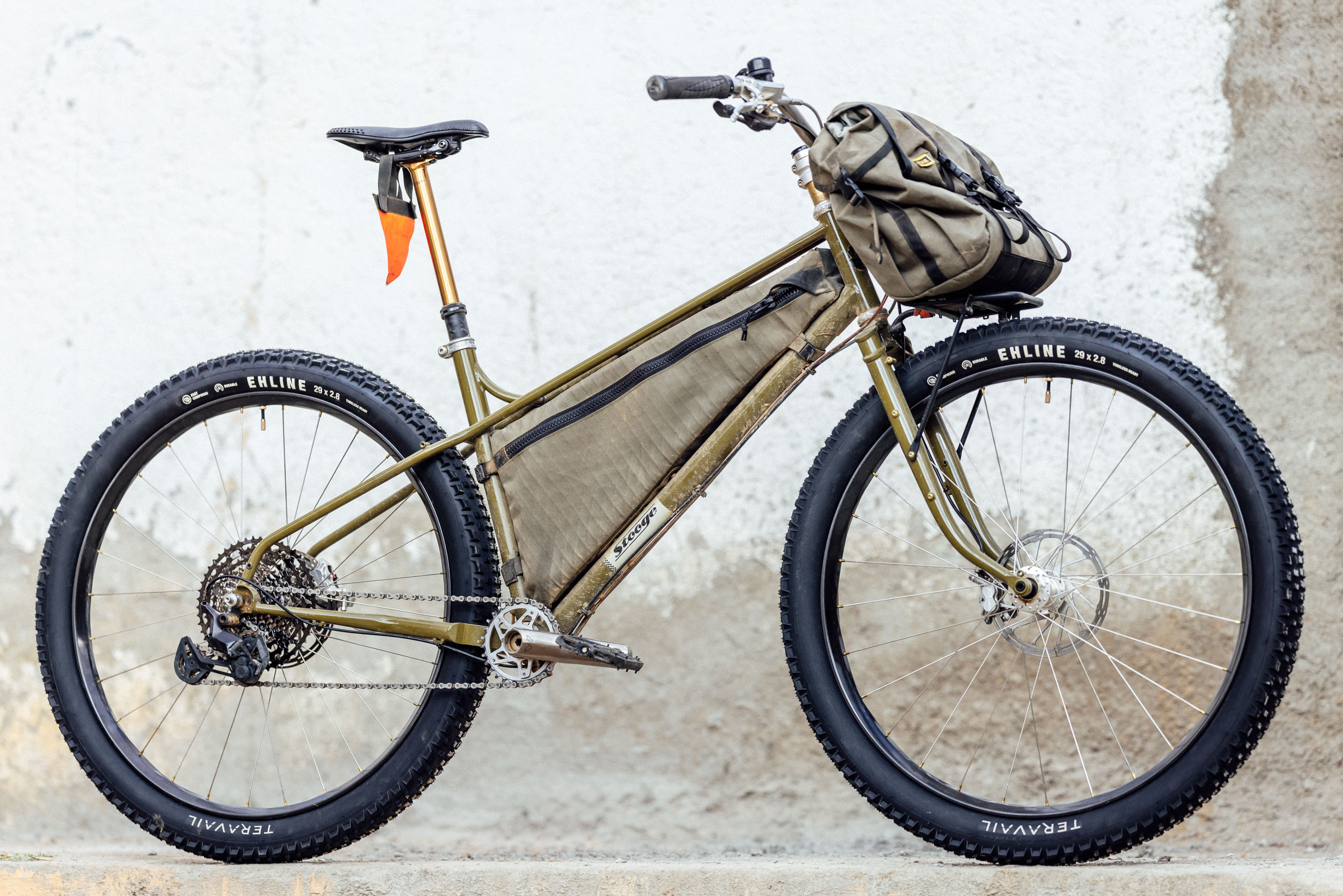

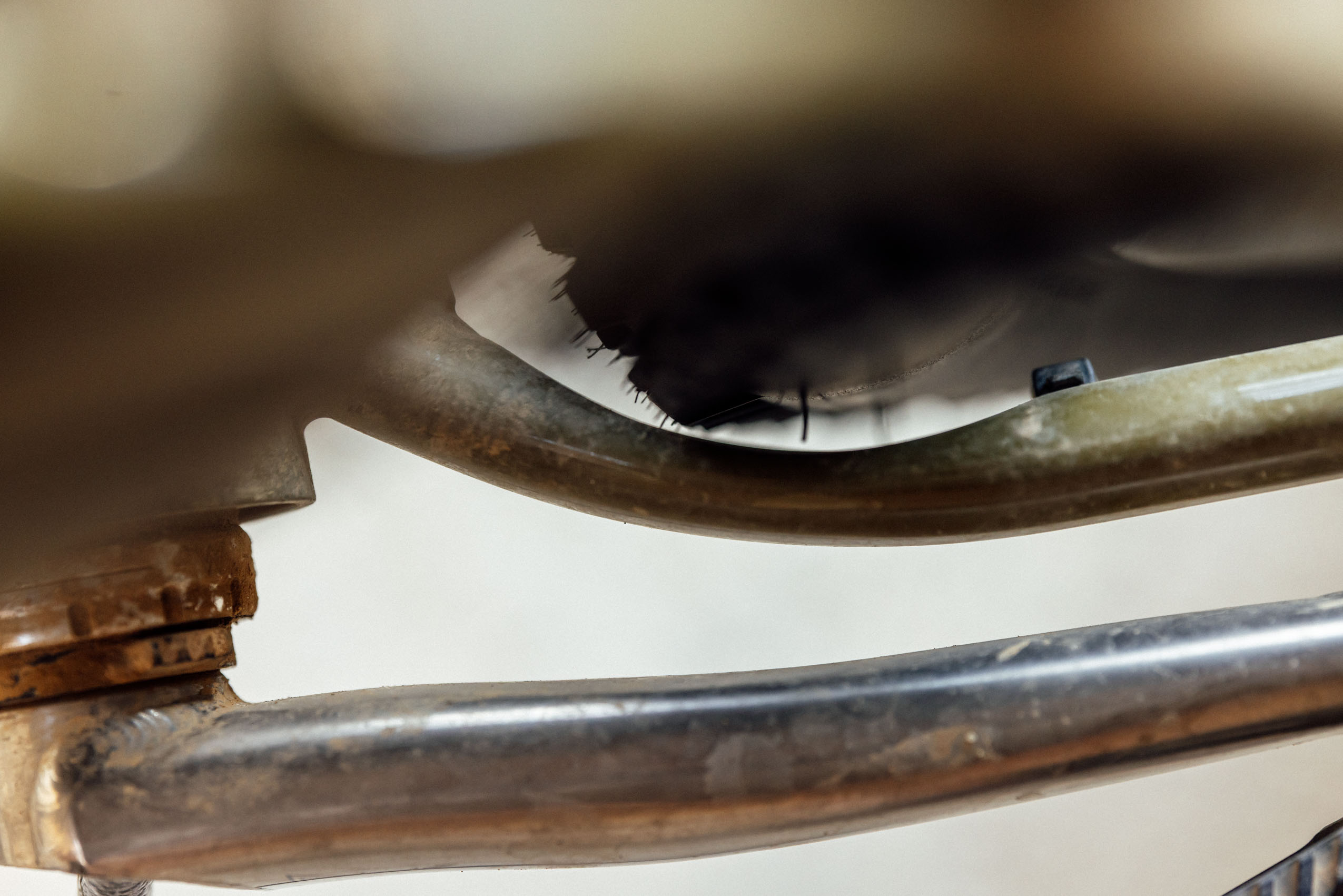
The 2.8” version slots into the Ehline range (Ehline-up?) alongside the 2.3” and 2.5” sizes. I know both of the smaller siblings quite well, and I’ve had the original 29” Ehline in heavy rotation since it was announced in 2019. The 2.3” has been one of my go-tos for drop-bar mountain bikes. It has rather deep tread, but rolls pretty fast. And, it still hooks up in the corners on sloppy gravel and singletrack. It’s also fairly supple with a slight V-shaped profile that adds to its knack for soaking up small bumps and maintaining speed. I’ve also used the 2.5” version as a rear tire on several hardtails for the same reasons. My only complaints were that it lacked climbing and braking traction on steep, loose terrain. Either way, I always consider them a top-three choice for a dirt touring tire when outfitting a bike for a trip.
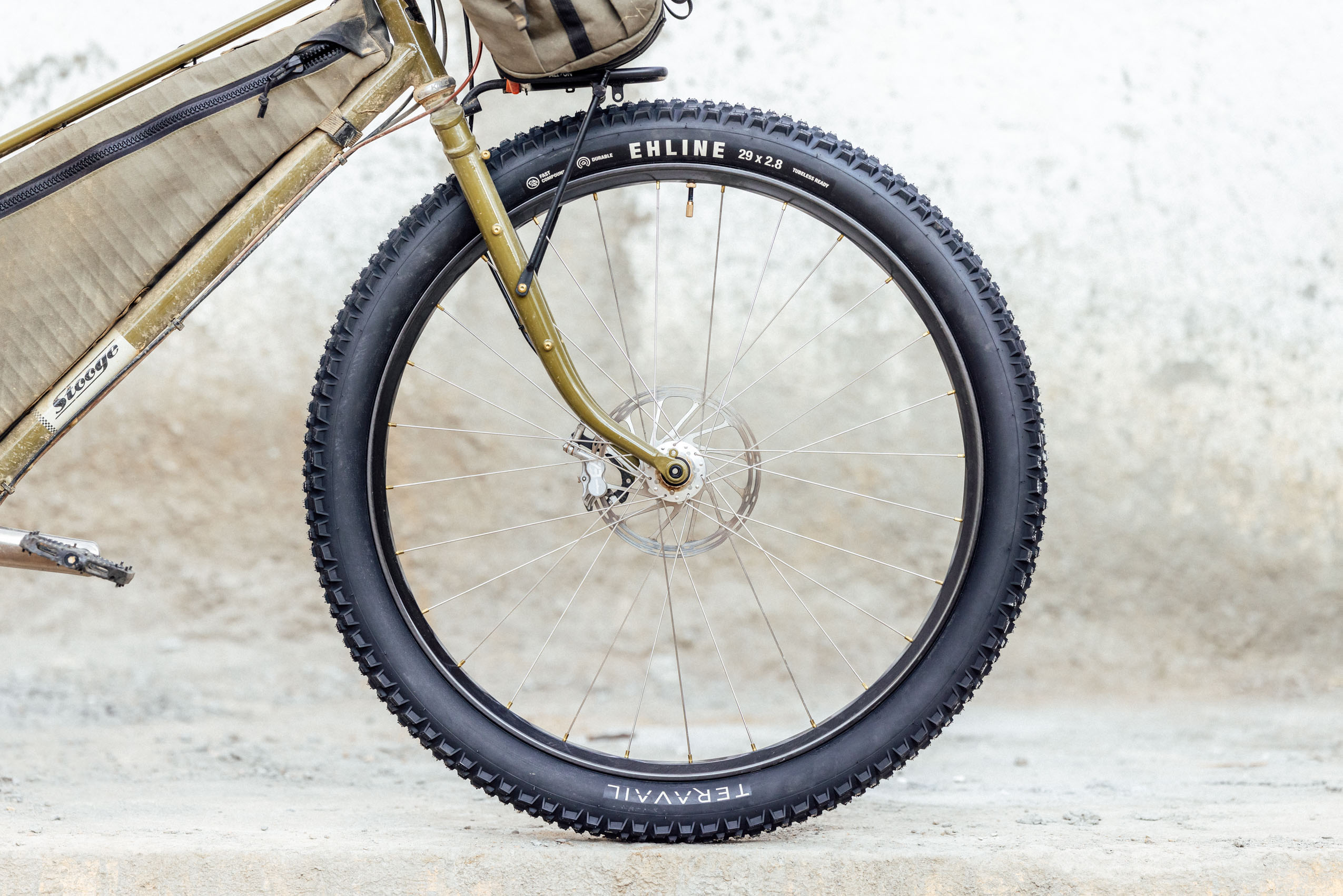
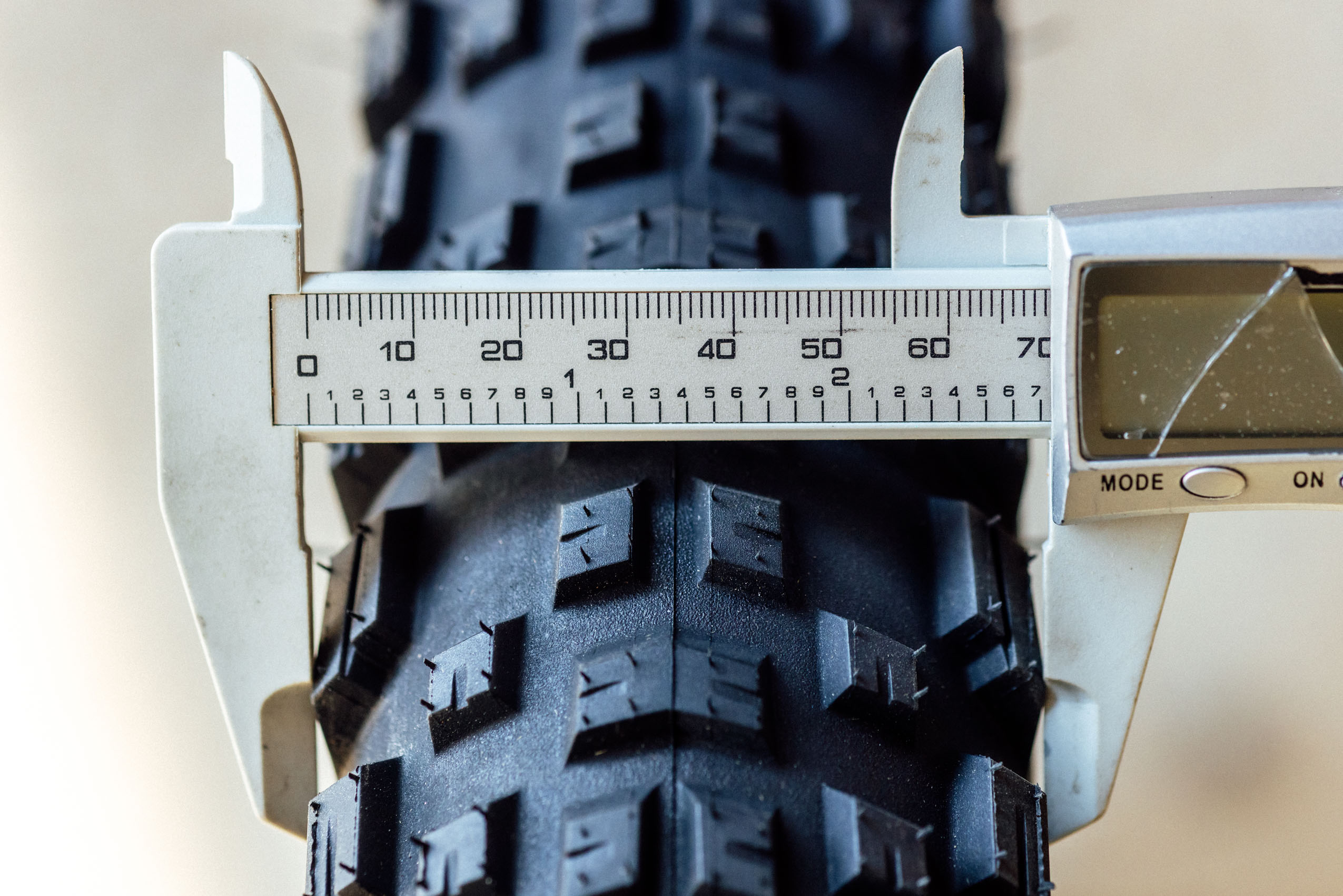
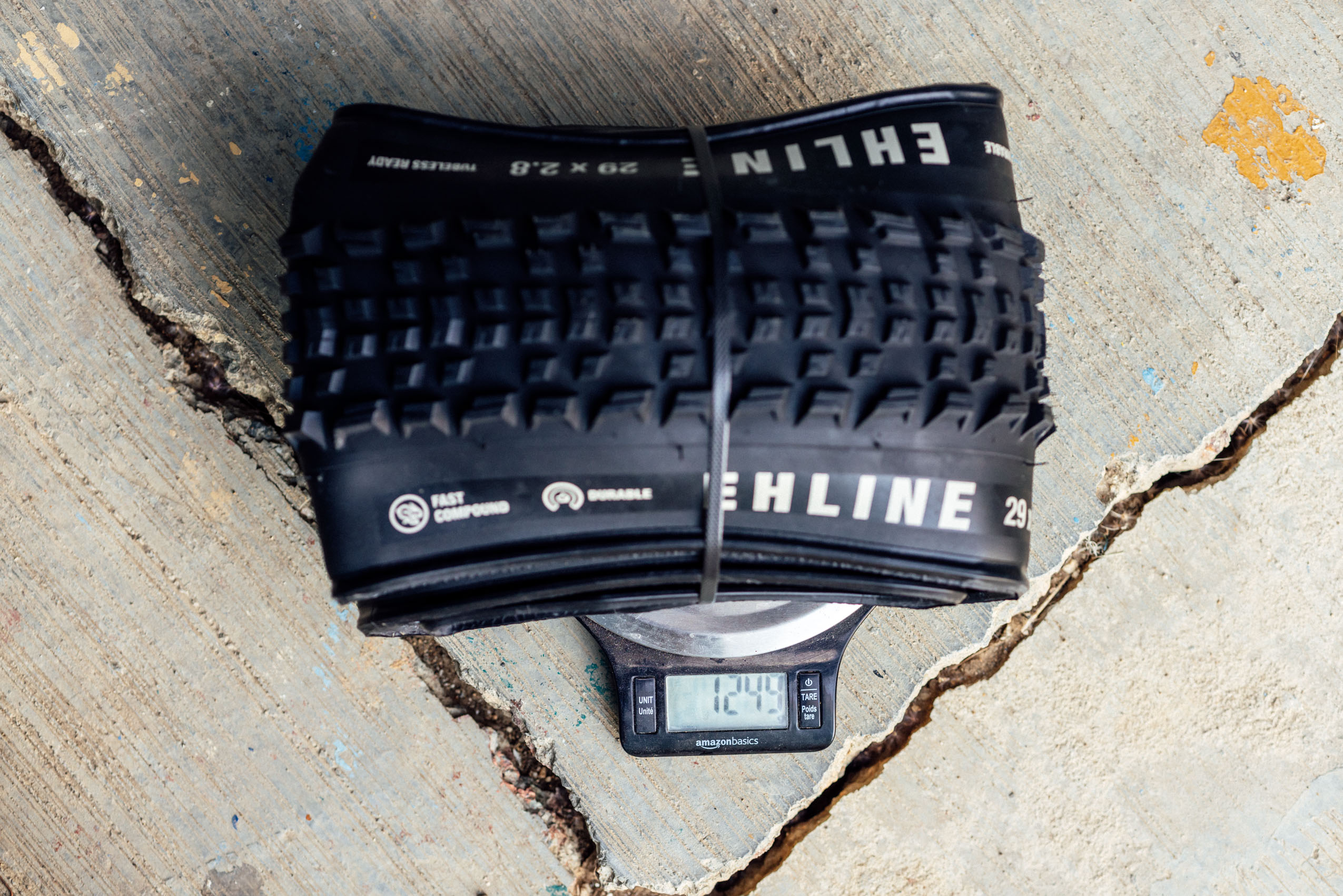
The 29 x 2.8” Ehline is basically a scaled-up version of the original. The knobs are proportionally larger than the 2.5, and it measures exactly 2.75” when mounted on my We Are One rims with a 33mm internal width. Like the two other Ehlines, Teravail used a 60 TPI casing with under-tread casing overlap (for improved puncture protection) and a bead-to-bead breaker layer for additional protection against sidewall cuts. The 2.3 and 2.5” Ehlines come in both Light and Supple and Durable casings, but the new 29 x 2.8” only comes in the Durable casing, which makes sense considering its intent for loaded-down and long-distance rides. It’s clearly biased toward durability and reliability, and its weight reflects that. The Ehline registers 1,249 grams on my scale, a bruiser weight when lined up with some other tires. For comparison, here are the weights of a few others from our 29+ Tire Gear Index:
- Teravail Ehline 29 x 2.8: 1,249 grams
- Maxxis Rekon 29 x 2.8: 1,089 grams
- WTB Ranger 29 x 3.0: 1,145 grams
- Maxxis DHF 29 x 3.0: 1,268 grams
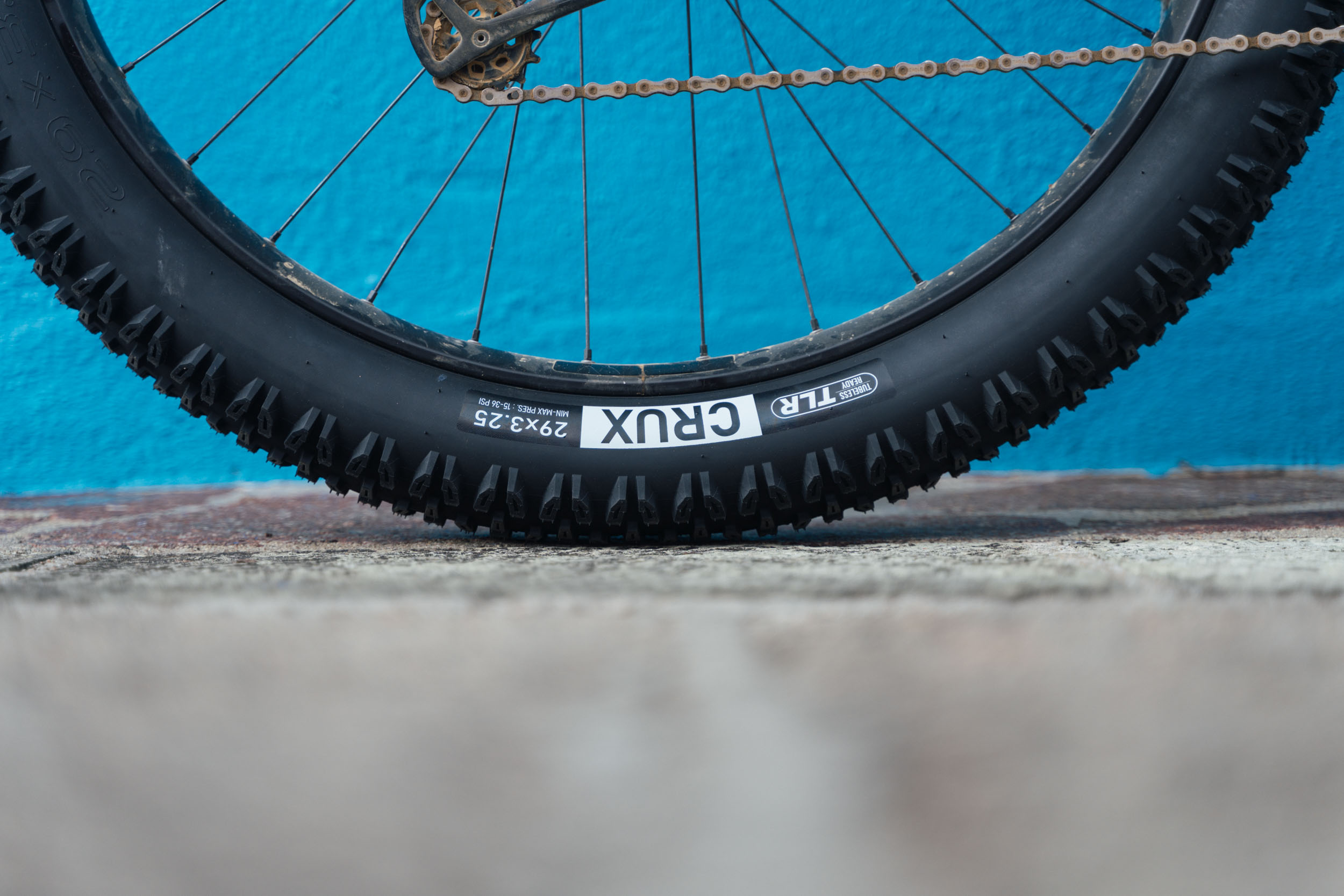
- Duro Crux 29 x 3.25: 1,316 grams
- Terrene McFly 29 x 2.8: 1,083 grams
Ride Quality
You can feel that extra weight in the Ehline to an extent, but the fast center tread counters it. Prior to installing them on my Stooge MK7, I was running a 29 x 2.6” Rekon and a 3.0 Minion DHF, a mullet-like setup geared toward playful trail riding. From the first rotations, I noticed how much quieter the Ehlines were than the Rekon/Minion combo, especially the DHF. And they undoubtedly roll faster, but due to the hefty weight, they didn’t feel much quicker to pedal up to speed. Once they get rolling, they like to keep going, though. There’s one roller on my local loop that I usually tuck through the dip in an attempt to coast up the hill on the other side. It usually requires six or eight out-of-saddle pedals to get up and over. The Ehline-equipped Stooge freewheeled all the way through.
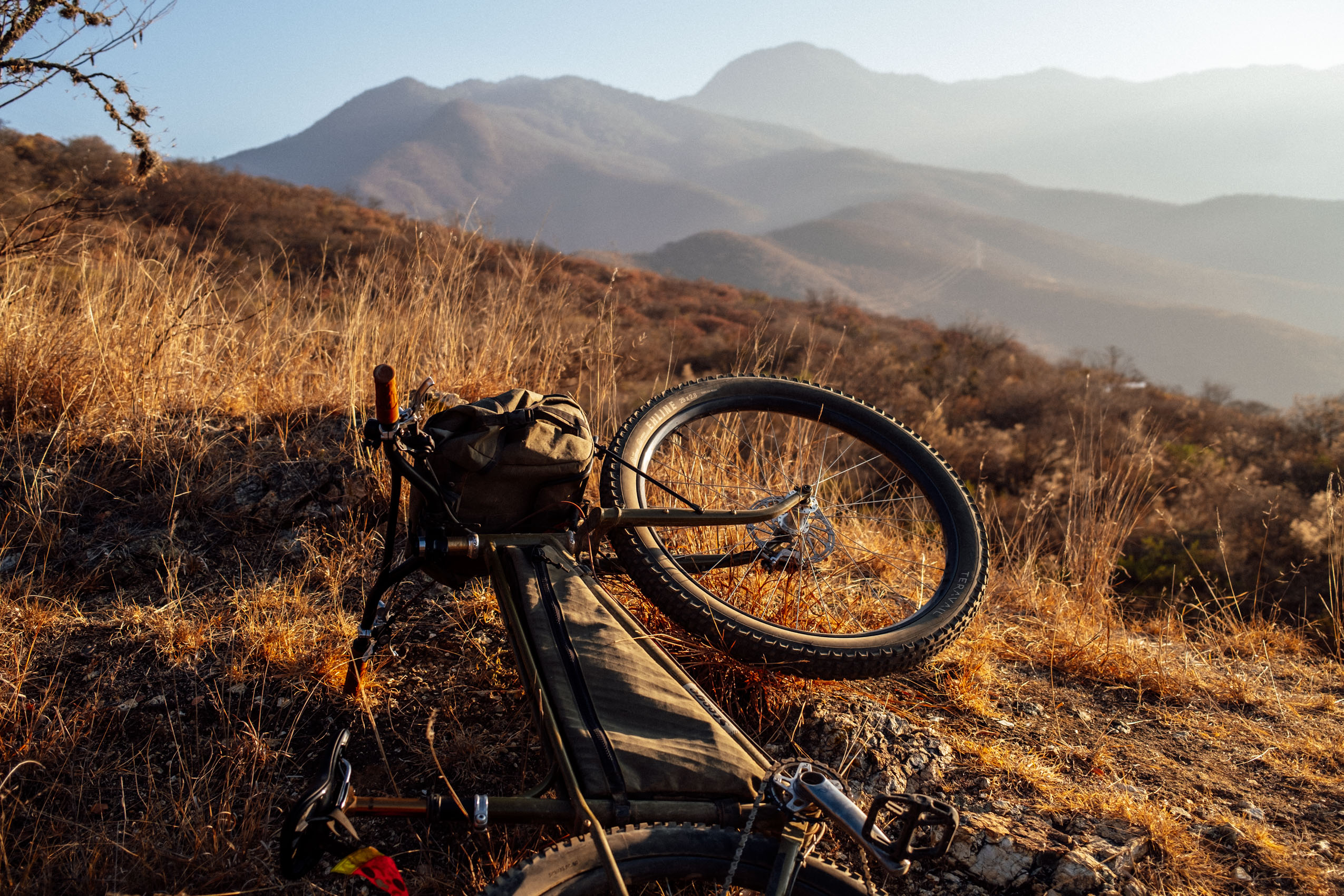
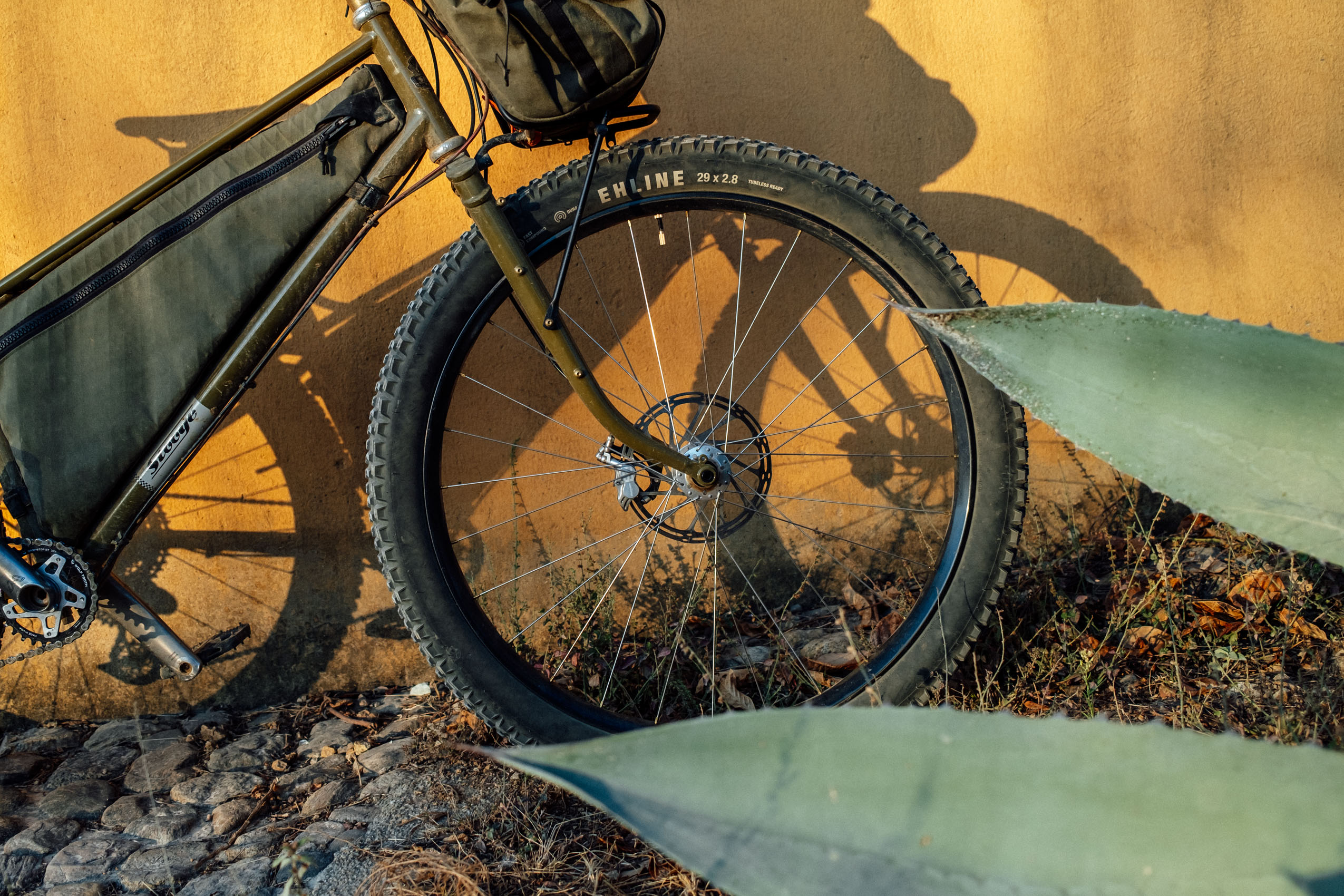

I’m happy to report that the scaled-up Ehlines have much more traction than their smaller 2.3/2.5” siblings. As a rear tire here on the dry, rubbly trails and roads in Oaxaca, the 2.8” Ehline has surprisingly good climbing and braking grip—certainly more than the 2.6” Rekon I was running prior—even once it wore in a little. When clawing up steeper, kitty-litter tracks, it digs in and doesn’t spin out as much as the Rekon or smaller Ehlines. When descending, the same grip carries over to the brakes.
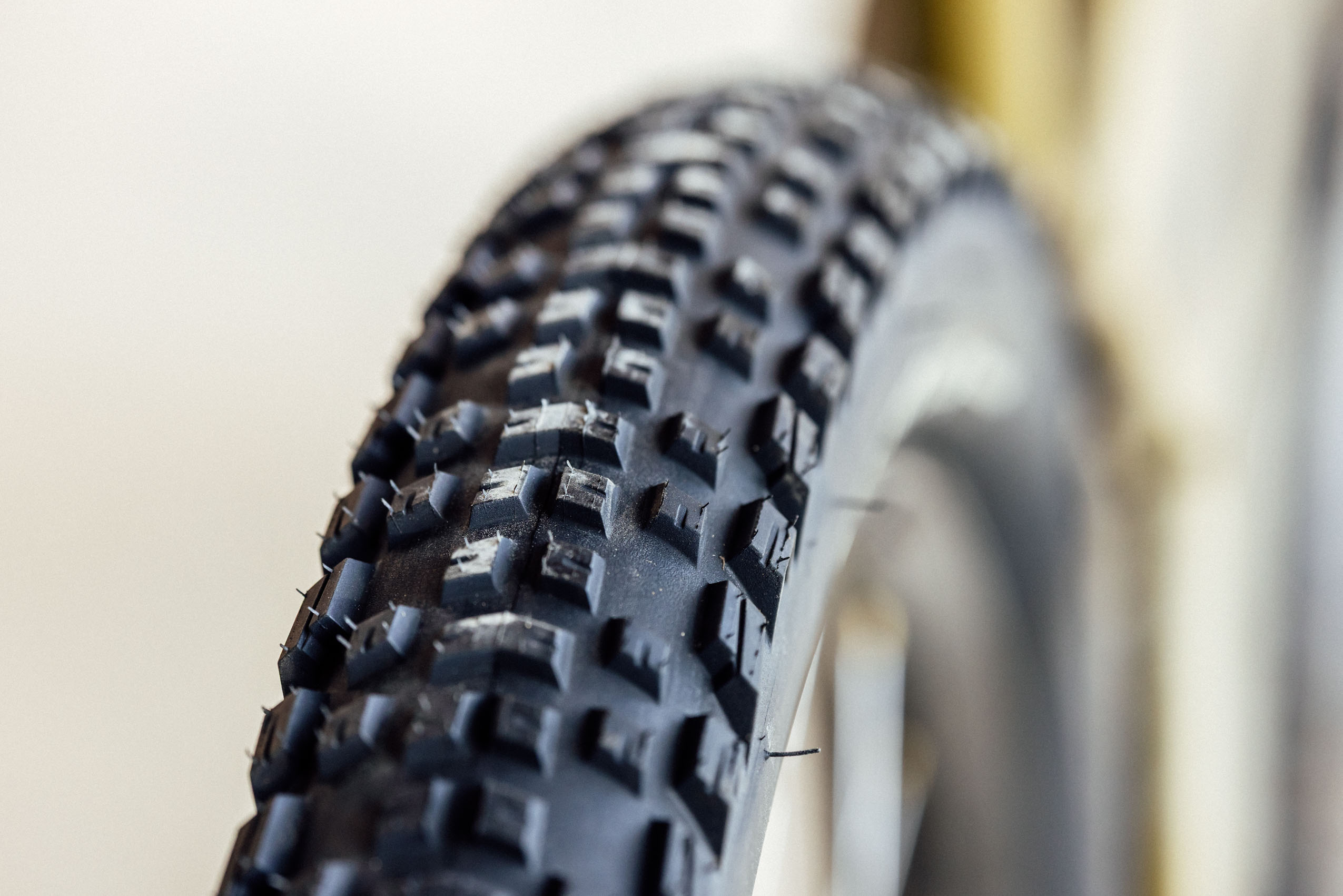
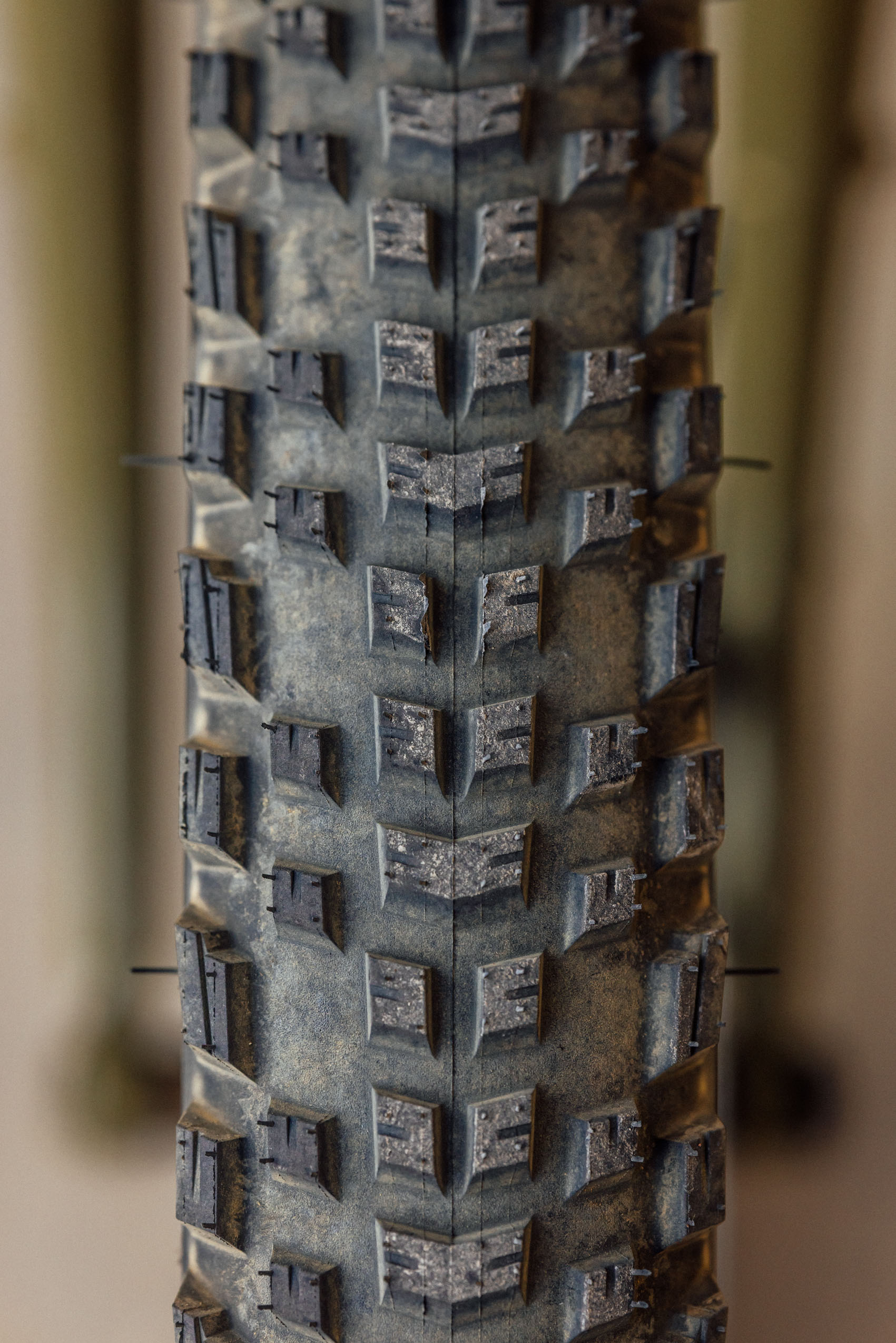

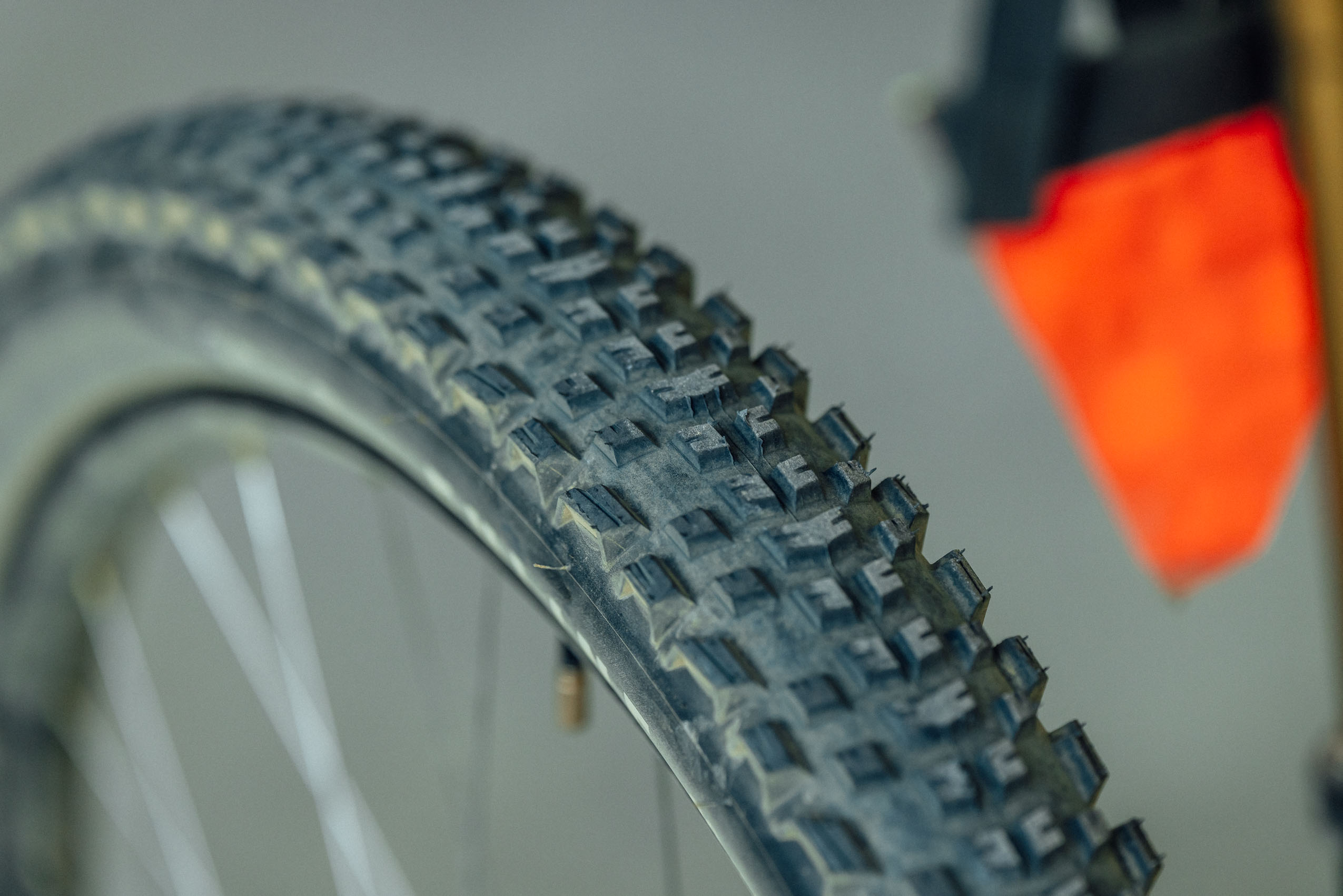
According to Teravail, they’re using a 60A compound on the Ehline, which is formulated to balance rolling efficiency and abrasion resistance. In summary, I found that it exhibits a smooth-rolling quality on hardpack and paved surfaces and maintains bite for climbing, braking, and cornering on scrabbly off-road surfaces.
On Trails
Looking back, the Surly Krampus came nine months earlier than the ECR and was the true impetus for the plus-tire revolution. But unlike its bikepacking-focused successor, it was designed and marketed to be a singletrack trail bike. My mountain bike collection at the time consisted of a Kona Unit singlespeed 29er and a 26” Ibis Mojo. The Krampus was a completely different ballgame. I remember trying it on our local trails shortly after it came out. It was liberating, like riding a big BMX bike with loads of traction and confidence. The fast-rolling Knards were capable of maintaining speed when things got rough because of the larger-volume rubber, and they would roll over anything. I was quickly reminded that a mountain bike could be incredibly fun and capable without suspension. Of course, one of the original challenges with 29+ was tire pressure. There was a fine line between a PSI that was too low, resulting in a folding-over sensation when cornering, and pressure that was too high and missed out on the tires’ built-in, perfectly damped suspension quality.
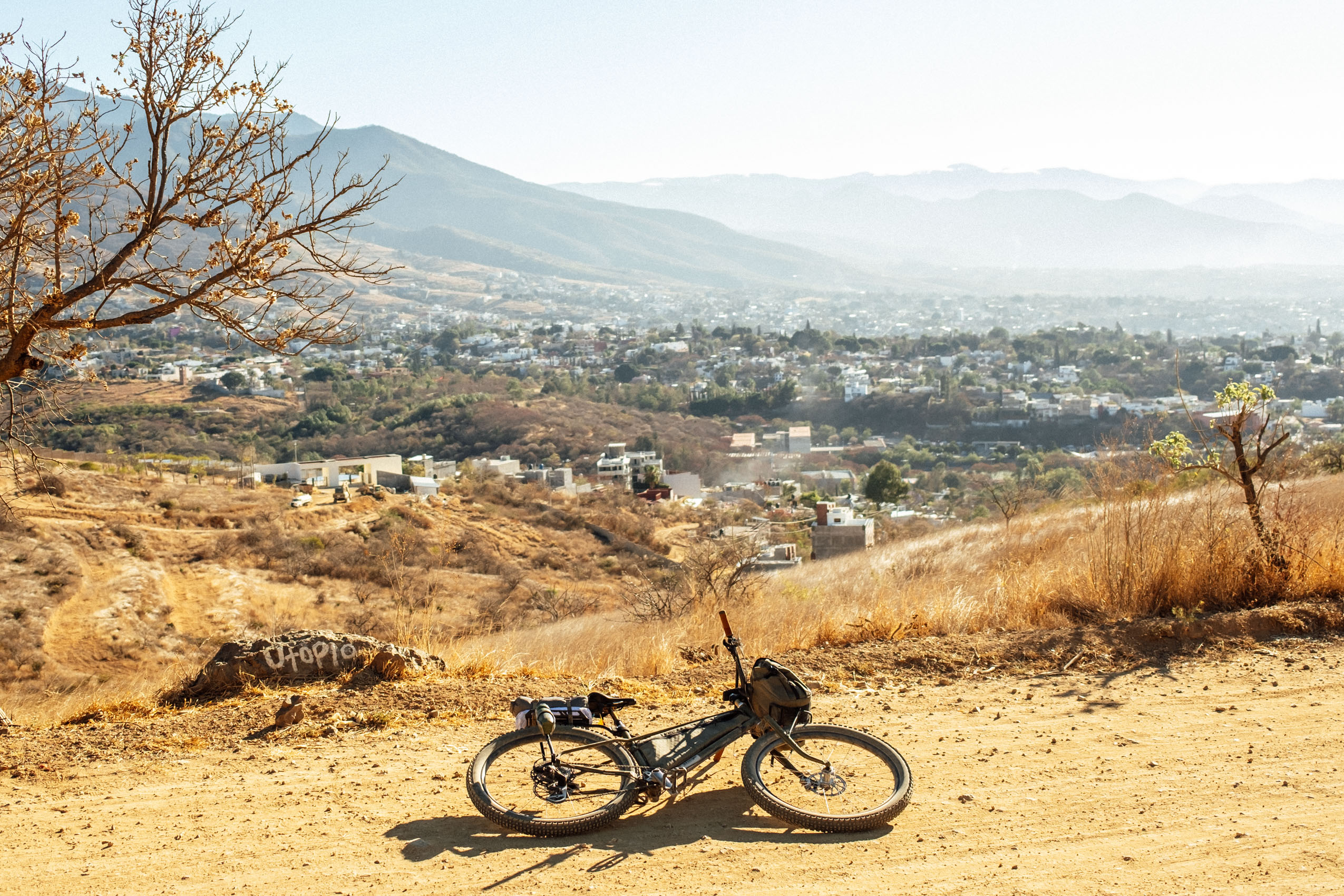

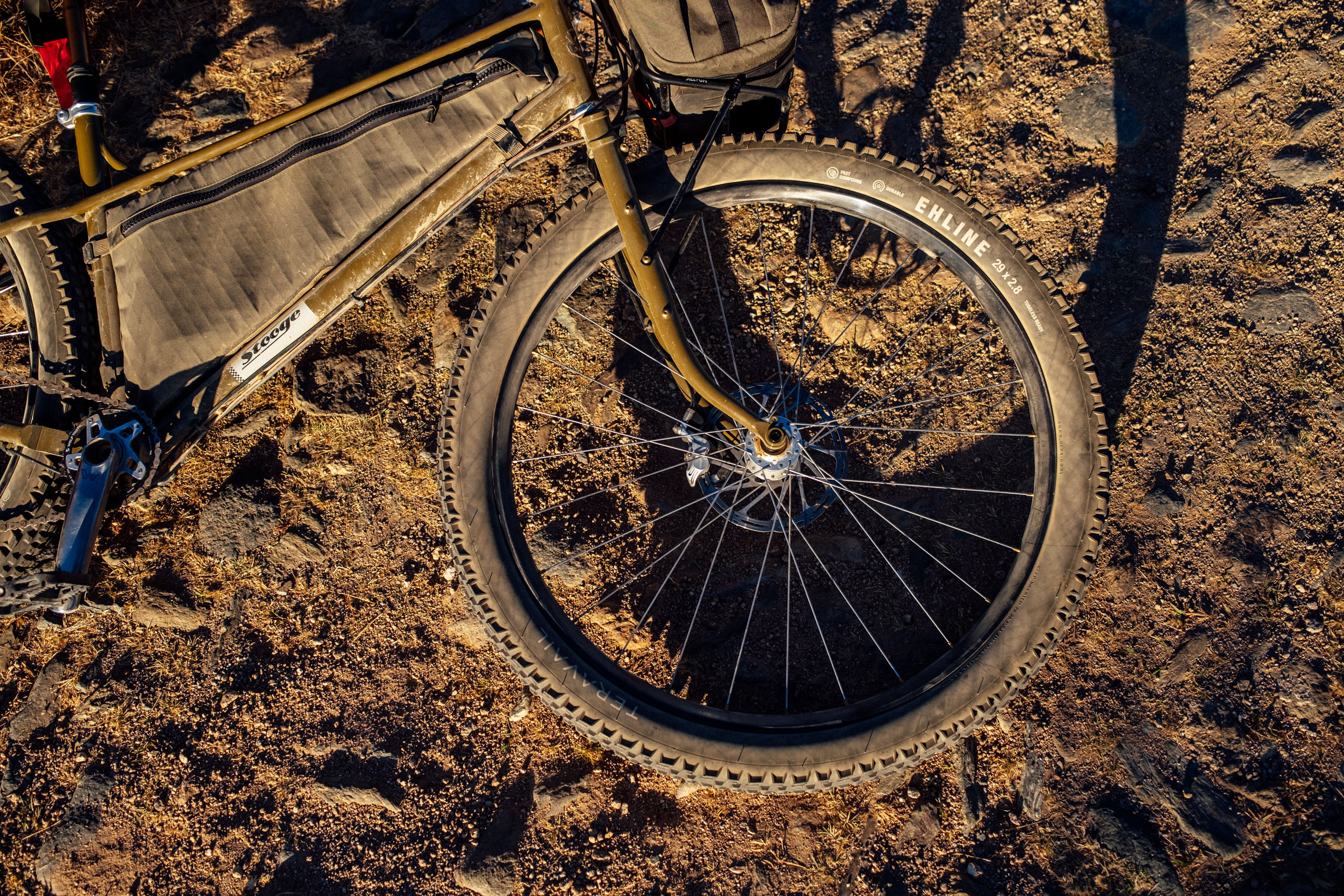
During my test period, I found myself running the Ehline between 9 and 17 PSI, with around 12 or 13 PSI in the front hitting a comfortable sweet spot for rough dirt road and trail riding. Any lower than that, and the bounce and self-steer became more noticeable on pavement and hardpack. The sidewalls feel supportive, more so than the 2.8” Rekon, though not quite as stout as the Minion DHF. I often ride the DHF with closer to 10 PSI, but the Ehline feels a hair less stable with ultra-low pressures, although it’s better than most others in that regard.
Who’s it For
On one hand, I don’t think it’s as much a laser-focused trail front tire as the 3.0 Minion DHF. On the other, with a design that balances rolling speed and traction, coupled with a clear focus on durability, it makes a very compelling tire for riders navigating varied surface conditions over long distances. That summarizes what makes 29+ special: optimizing the simplicity of a rigid setup by eliminating potential maintenance issues and offering best-case traction, rollover, float, and plushness—all characteristics perfect for a long tour through remote places. The Ehline ticks all those boxes and seems like a prime candidate for folks gearing up for a long-distance dirt tour. Note that I haven’t put a proper 1,000 miles on them yet to see how the tread wears in, but I’ll report back when I do.

- Model/Size Tested: Teravail Ehline 29 x 2.8, Durable, Fast Compound
- Actual Weight: 1,249 grams
- Place of Manufacture: Taiwan
- Price: $80/each
- Manufacturer’s Details: Teravail
Pros
- Excellent traction when cornering and in transitions
- Better than expected (and better than smaller Ehline 2.5) when braking and climbing on loose terrain
- Approximately true to size when measured
- A supportive sidewall that doesn’t seem to crumple at pressures around 12-14 PSI, or with a load
- Offers extra cushion that works when there’s more weight on the bike
- Nice, simple graphics and font
Cons
- Noticeable self-steer, similar to some other 2.8-3.0 tires
- Heavy
- Doesn’t come in other sizes or casing options
Wrap Up
Teravail achieved what it set out to accomplish with the Ehline. I’ve only spent a little bit of time on the Oxbow, but as a front tire, the 2.8” Ehline has much better traction in the transition area. It corners quite well, even better than the smaller Ehlines, and remains surefooted on rubbly descents. I haven’t ridden it on wet, slick roots, but I’d surmise that it’s much better than the Oxbow.
I came away feeling like it successfully carries the torch for a tire size that never should have faded away, preserving what makes 29+ special—comfort, traction, rollover, and stability—while improving on some of the shortcomings that plagued earlier options. Compared to Teravail’s own Oxbow and even the smaller Ehline models, the 2.8 adds noticeably better braking and climbing grip without sacrificing the smooth feel that makes these tires appealing for big dirt days.
Yes, the weight is noticeable, and like most tires in the 2.8-3.0 range, it carries a bit of self-steer on pavement and hardpack. Still, those tradeoffs might be reasonable for riders using them for their intended purpose: long-distance riding over unpredictable surfaces with a loaded bike. In that context, the durable casing, supportive sidewalls, and balanced tread pattern make a lot of sense. All told, the Ehline 29 x 2.8 is one of the most compelling options currently available for this purpose.
Further Reading
Make sure to dig into these related articles for more info...
Please keep the conversation civil, constructive, and inclusive, or your comment will be removed.