

 Mountain Bike (MTB)
 Gravel Bike
 All-Terrain Bike (ATB)
 Fat Bike


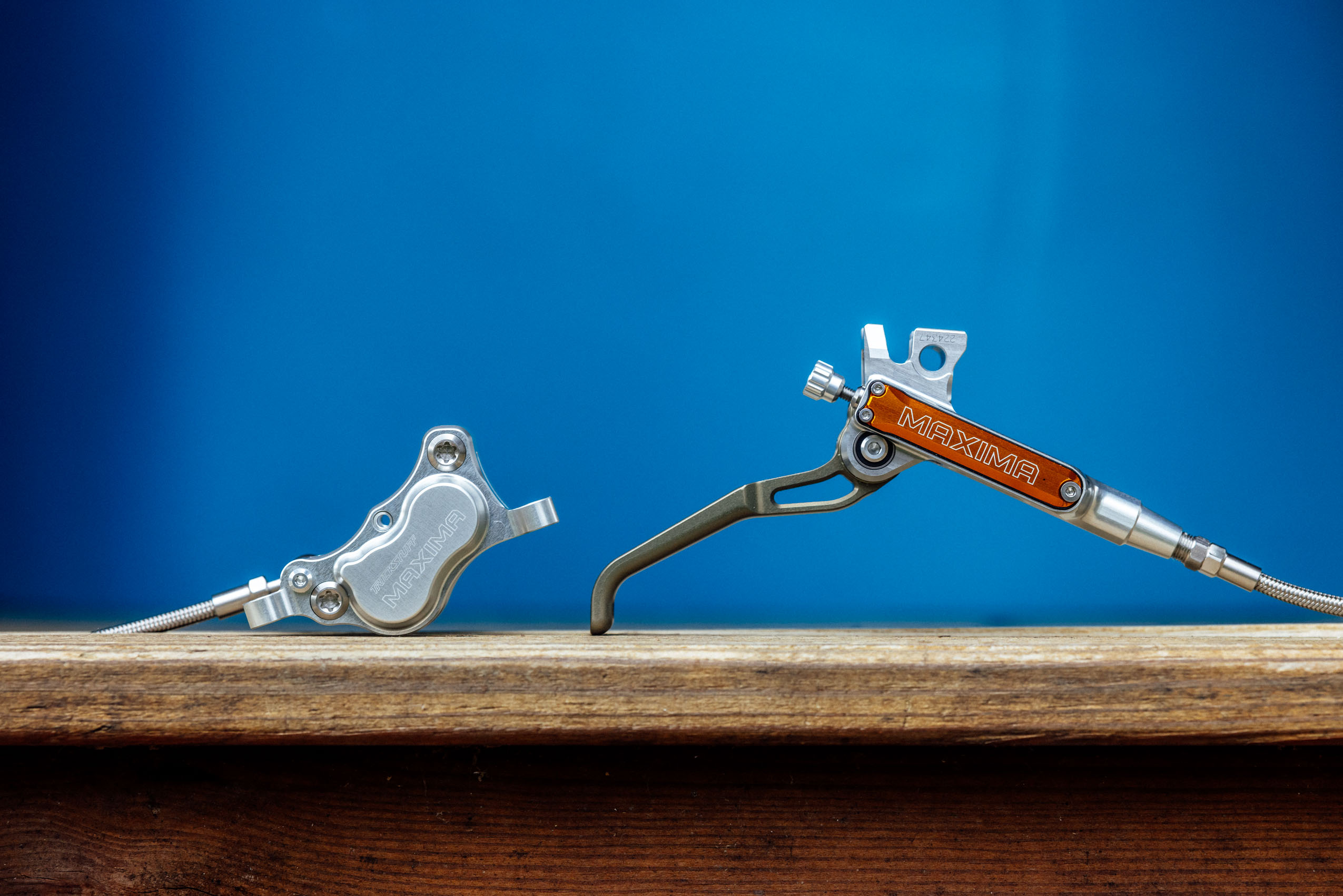
Trickstuff Maxima Brake Review: The Ways of the Force





The Trickstuff Maxima has earned an almost mythical reputation among mountain bikers, pairing eye-watering pricing with claims of unrivaled braking performance. After two years of testing them on the steep descents in Oaxaca, Mexico, Logan weighs in on whether they’re simply boutique bling or genuinely in a class of their own. Find his full Trickstuff Maxima Review here…
PUBLISHED Jul 16, 2026
Whenever we post about ultra high-end, high-dollar components, there’s at least one comment that reads something like: “WTF, a part that costs more than the rest of my bike!? No thanks.” It’s an understandable reaction, but for one reason or another, some premium components are usually spared the criticism. Things like Chris King headsets, PAUL Klampers, and even the now-$1,300 Cane Creek eeWings crankset come to mind. They’re parts that once seemed absurdly expensive (because they are), but they’ve slowly earned a collective green light among the mainstream cycling contingent—especially more affluent cyclists. In essence, what initially feels like sticker shock can, over time, become normalized as more people buy into it, and the performance, aesthetics, or prestige justify the price.
That orthodox acceptance isn’t universal across all components in every category. Riders might rationalize four-figure buzzing wheelsets, pricey bags from Nutmeg country, or boutique space-metal handlebars, yet when steel frames start pushing the $1,200 mark—whether a result of being a small-batch brand or because of tariff insanity—the town criers are often up in arms. Likewise, there’s still something about ultra-premium versions of commodity components, such as derailleurs or brakes, that makes higher prices a tougher pill to swallow, even though they arguably play the most critical role on a mountain bike. That’s exactly where the Trickstuff Maxima Brakes land. They’re wildly expensive, widely known, universally coveted, rarely seen in the wild, and often scoffed at for their price tag.
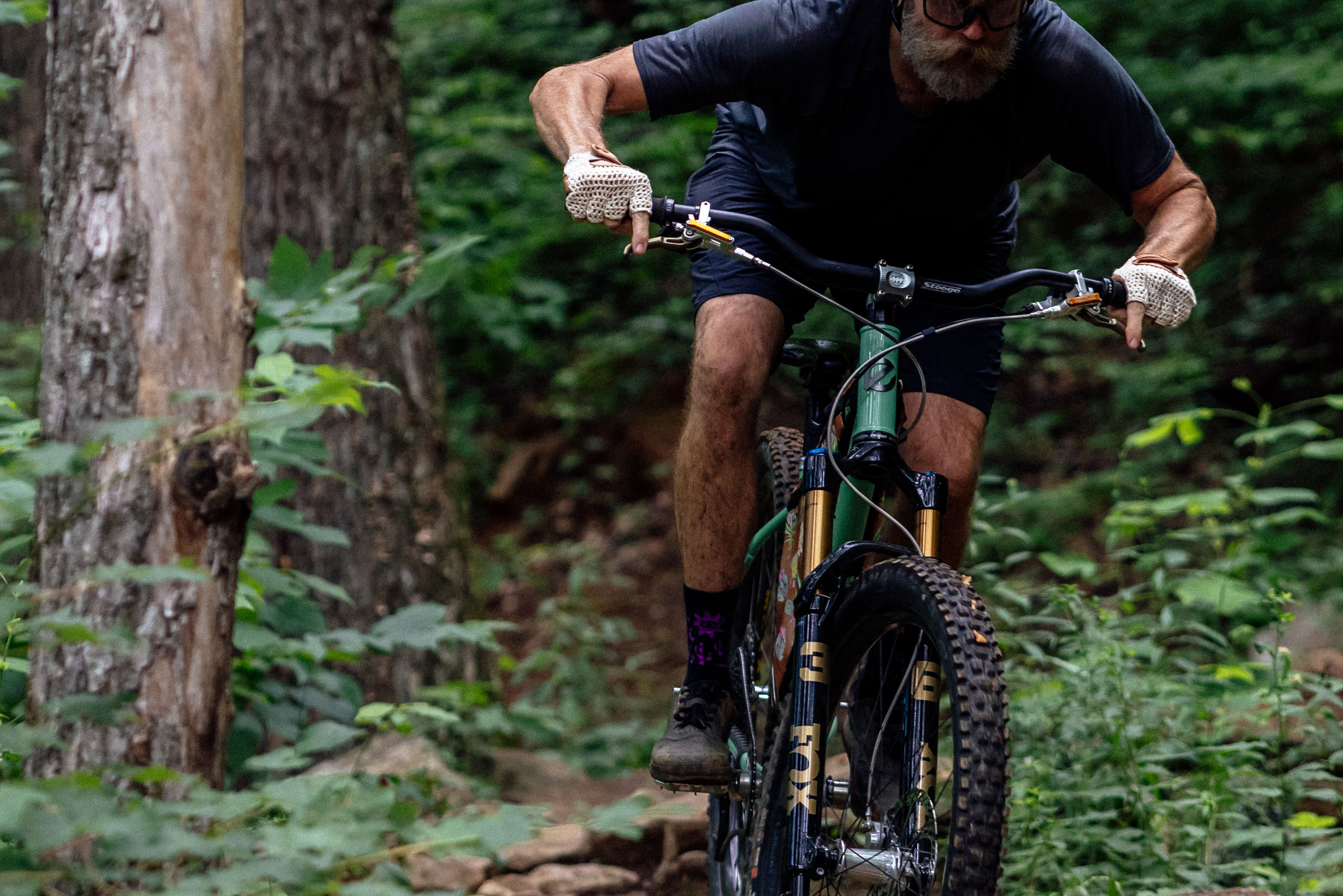

That sums up why I decided to review them. I was curious whether there could possibly be enough of a performance gain to justify the cost. The Trickstuff Maximas cost a whopping three times that of the latest Shimano XT four-piston stoppers and more than double that of the similarly swanky Hope Tech 4. Chances were slim, but I decided to give them a run for the money on all types of rides over the course of two years to see how they fared.
Cachet
Trickstuff built its reputation on hand-assembled, high-performance brakes, pads, and rotors. Founded in the early 2000s in the Freiburg region of Germany, the brand slowly developed a cult following among mountain bikers seeking maximum braking power, refined modulation, and a certain componentry cachet. Based on chatting with people, however, I think the Trickstuff cult is more of a faction of folks who covet their brakes than a committed group of owners.

Since being acquired by DT Swiss in 2022, the brand is in a relatively new phase, leveraging larger-scale manufacturing and supply chain resources while maintaining its identity as a premium, detail-obsessed brake specialist. As of 2025–2026, operations have been restructured across Germany, Switzerland, and Poland, signaling an effort to improve availability while continuing to advance high-end brake performance.
Trickstuff essentially offers three different brake models. The Piccola is the brand’s lighter XC brake, and then there’s the Maxima and Direttissima. The primary difference between the latter two is that the Maxima is 200 euros more expensive, comes standard with Goodridge steel-flex hoses, and has larger caliper pistons for more power and better heat management to suit downhill riders. It’s become a benchmark in the category.
Finish and Feel
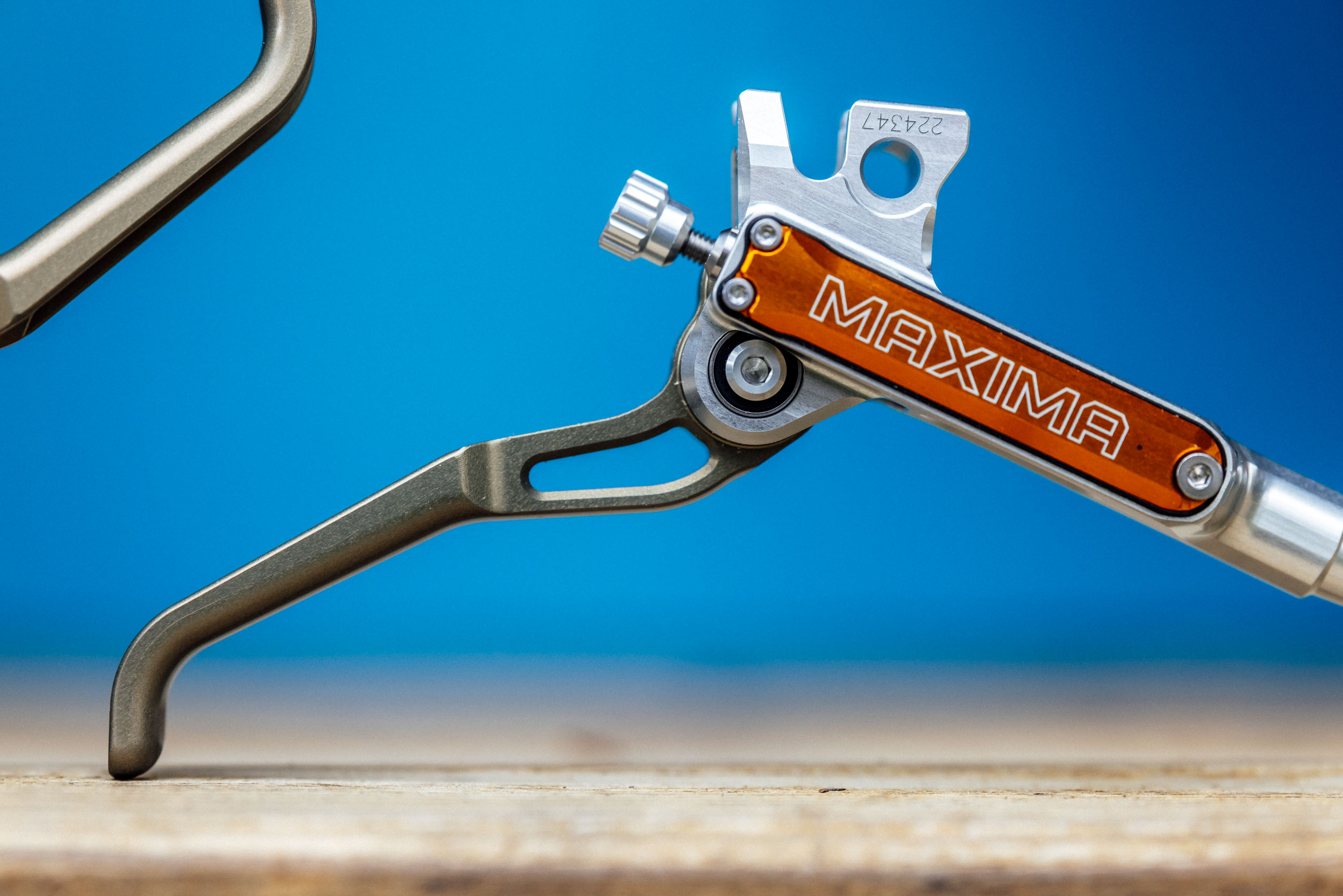
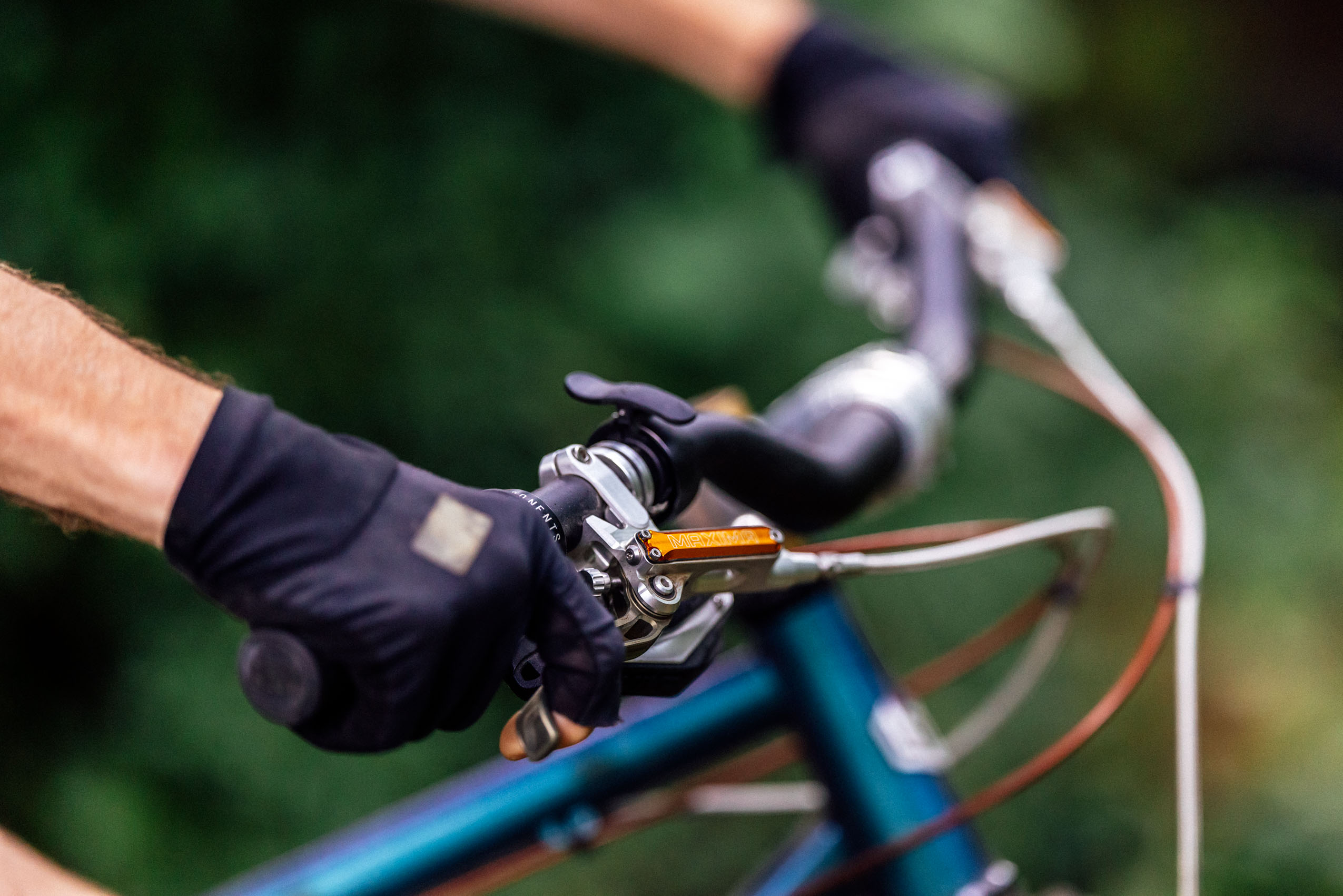
Examined up close, there’s no denying that the Trickstuff Maximas are extremely well made. From the beveled-edge, all-metal aesthetic to the simple-but-exact design, they have an unambiguously German-made quality, complete with precision machining and a very deliberate industrial design on both the levers and calipers. Additionally, the levers are intentionally proportioned for one-finger operation, and I found them very ergonomically comfortable. There was never a point during my testing period where I needed to use more than my index finger for extra juice, which I’ll touch on later.

Each lever has four ball bearings: two in the main pivot and two for the connecting rod. This four-stack not only enhances their extraordinarily silky-smooth light action, but it also eliminates any lateral play. Trickstuff credits this to a tiny ball made of POM plastic clamped in the barrel nut. Either way, the complete lack of play and consistent low friction gives them a positively surgical demeanor. In short, they feel about as clean as they look: solid, precise, and generally flawless in-hand.
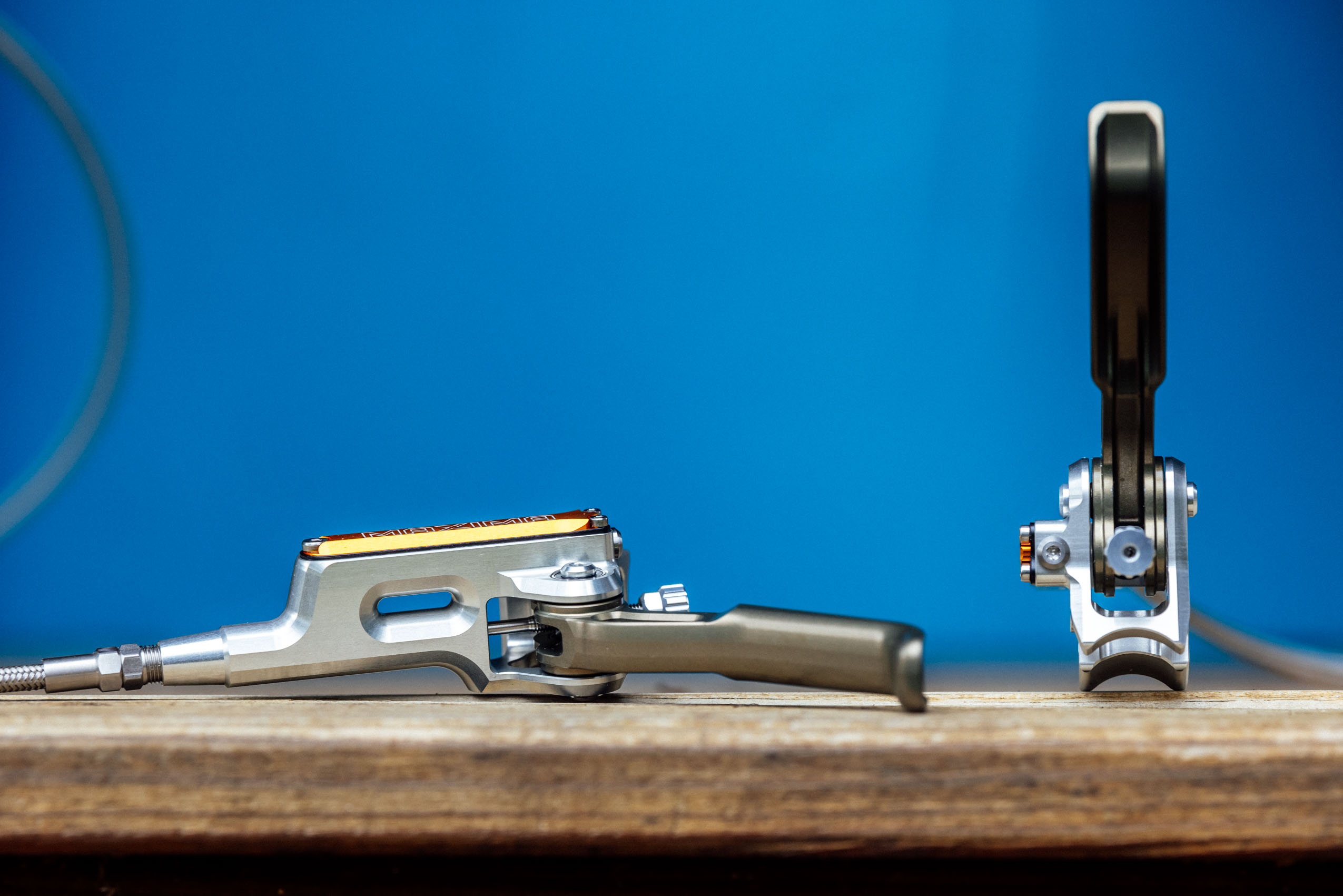
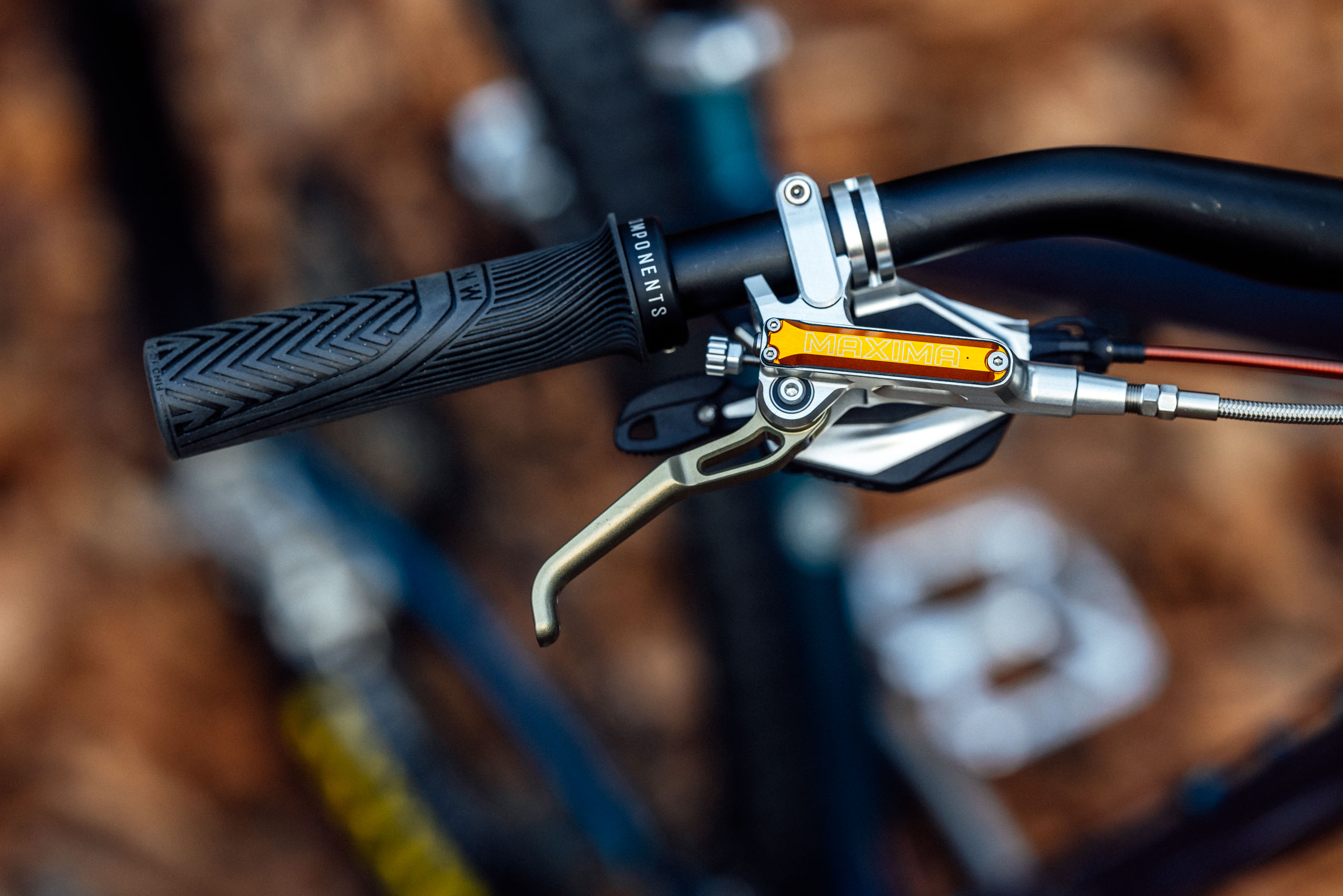
Otherwise, the Trickstuff Maxima levers are pretty simple. They have a single reach adjustment dial behind the knee joint. Unlike the Hope Tech 4, there’s not a second dial to tweak the bite point. I didn’t miss it since I brake with the tip of my index finger, but folks who prefer a particularly close-to-the-bar lever feel—riders who brake with the middle section of their index finger, perhaps—might find that there is not enough force at the right place within the leverage.
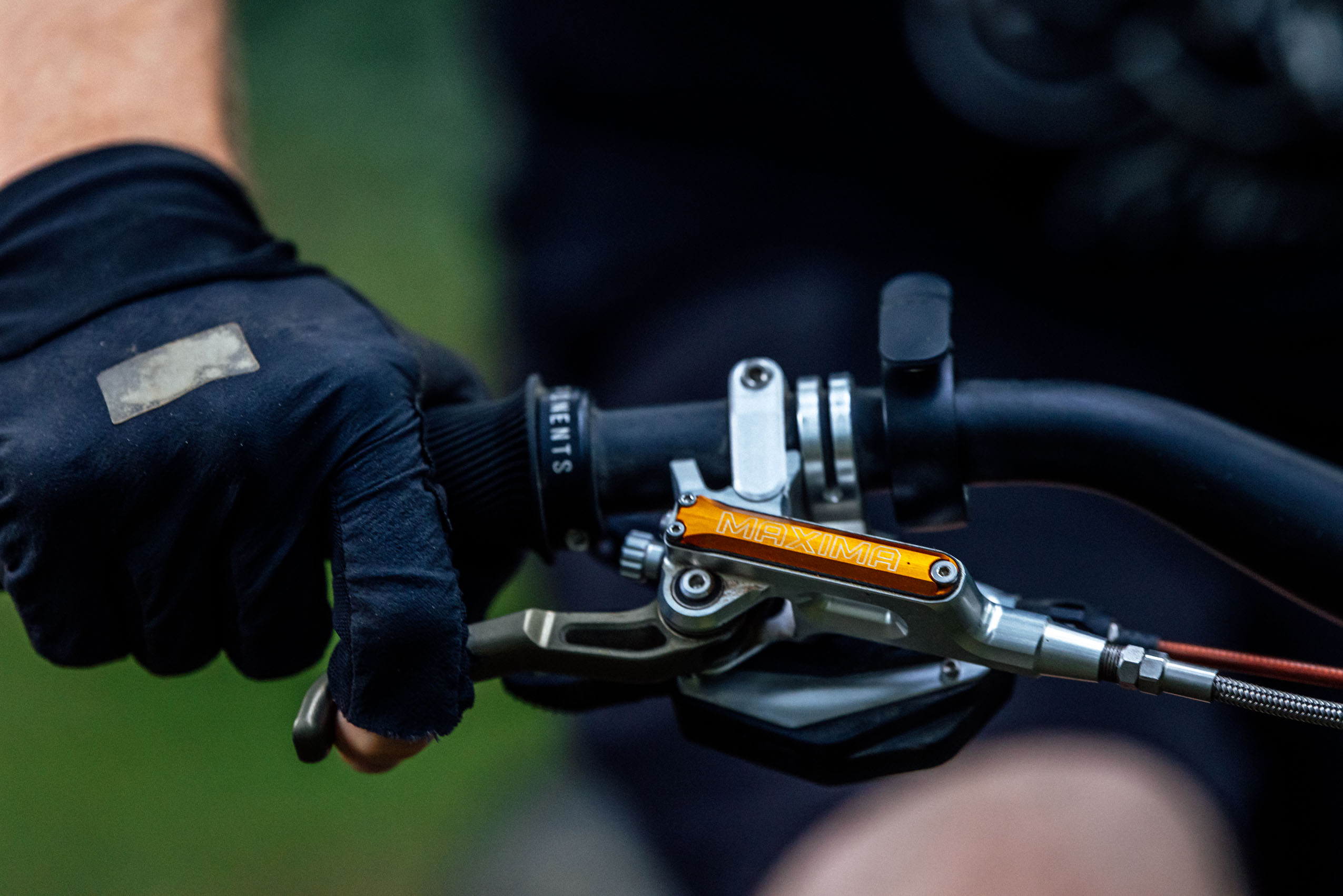
The lever assembly has a hinged clamp with a slotted opening at the bottom. This allows you to use one of four matchmaker-style interfaces to mount a shifter or dropper lever to clean up the cockpit: Shimano ISPEC-EV, Shimano ISPEC-EV DI2, Shimano ISPEC-II, or SRAM MMX. I used the latter to mount a Hope dropper lever.
The Trickstuff Maximas are also one of the more visually pleasing hydraulic brakes I’ve seen. They’re very minimal in stature—counterintuitive to the level of power they dish out—and have a classic color scheme. The lever body, clamp, calipers, and fittings are all silver, and the lever is anodized in a subdued, classic bronze. The reservoir plate adds a splash of color with a bright orange/gold finish.
Setup
The Trickstuff Maximas come with 730 POWER+ pads, lever assemblies, calipers fitted to uncut hoses, mounting hardware and machined clamps, and an M4 bleed adapter. Setup was as expected and comparable to other high-end brakes I’ve used. And as with the multiple pairs of Hopes I’ve configured, bleeding them on install is a must to be sure they’re properly dialed in.


The bleeding process isn’t exactly a routine procedure that any ol’ bike shop will be able to knock out on the spot. For one, you need to have Trickstuff’s specific Bionol fluid on hand. Bionol is a proprietary plant-based brake fluid “designed to deliver consistent braking performance across a wide range of temperatures.” It’s compatible with Trickstuff and many mineral oil brake systems, which means you should be able to use another mineral oil, but that’s not a corner I intended to cut with $1,500 brakes.


I won’t go into the two-syringe bleed process since Trickstuff has a published video tutorial outlining the procedure, but even with that guidance, it was a little more complicated than expected. Note that Maxima has the bleed port oriented laterally near the lever’s knee joint. You can’t do a top bleed or open-reservoir field bleed like you can with Hopes.
Performance
The Trickstuff Maximas’ braking power is every bit as formidable as you might expect. They almost work too well, delivering a huge amount of stopping force when called upon. With this power, however, comes responsibility. The challenge isn’t an abrupt on/off bite point; it’s that these brakes ramp up somewhat quickly. There’s a feathery action with excellent modulation for the first three-quarters of the pull, but deeper in the stroke, you find massive braking power. The trick is that you never have to exert too much squeeze force like some other brakes. The Maxima uses a slack lever angle and proportions designed to exert more pressure on the mineral oil with minimal force. The result is a super-light action that requires a more nuanced touch.
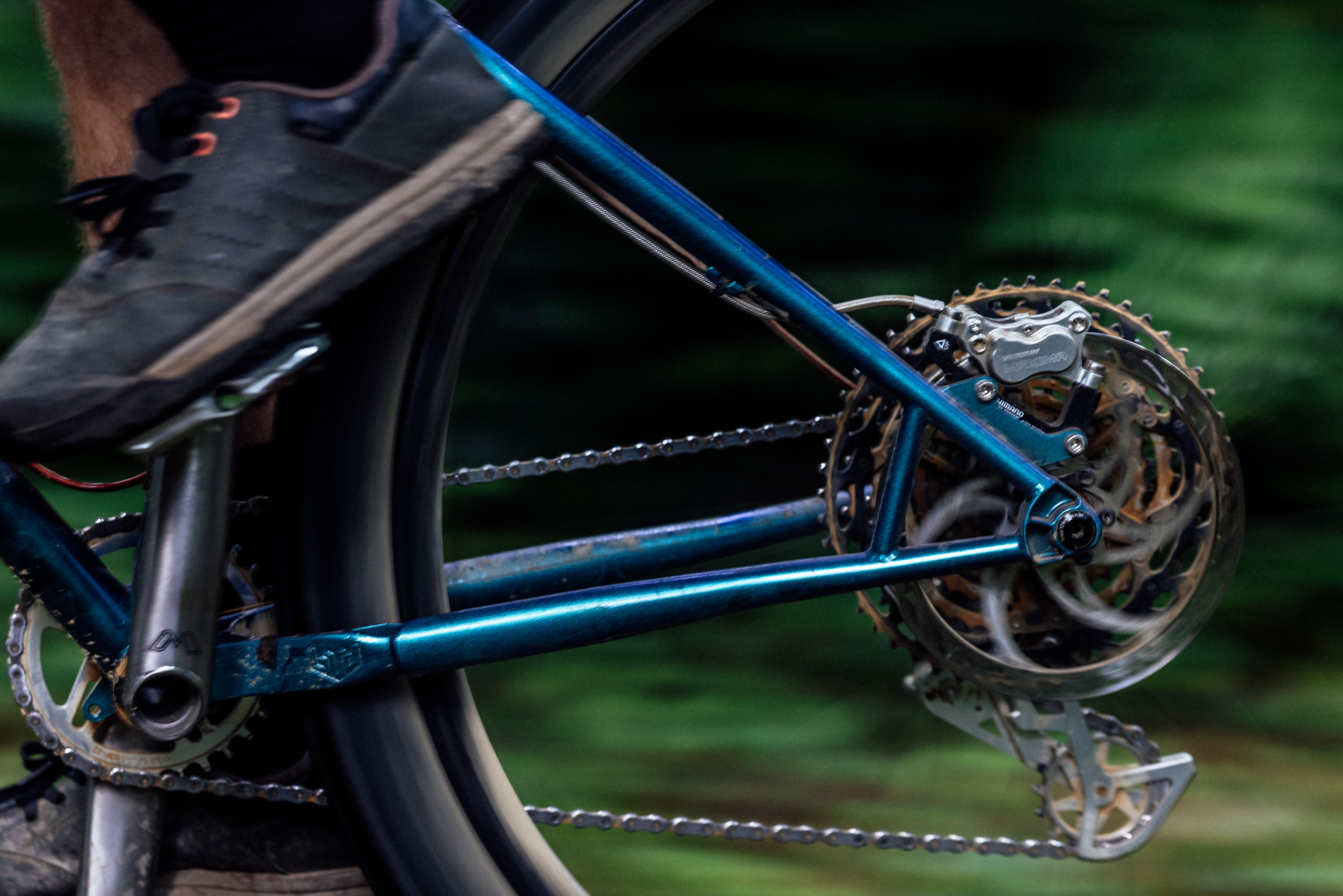
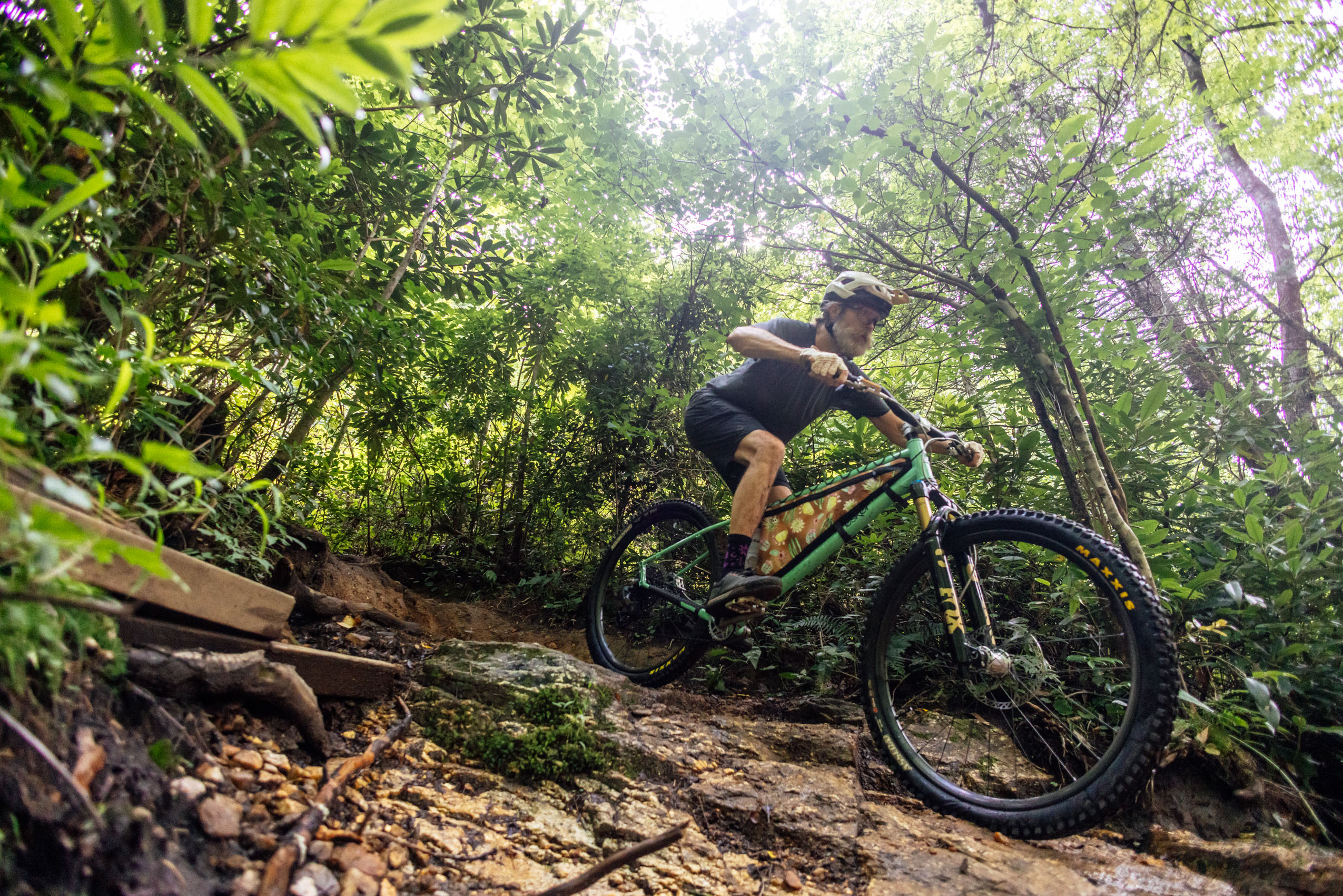
This took a couple rides to get used to. In fact, I had to make some adjustments to compensate, ultimately increasing the air pressure in my 160mm Fox 36 a smidge and tweaking the damper settings to play nicely with the stopping power that the Maxima brings in spades.
For all intents and purposes, the Direttissima would probably have plenty of power to slow down my 165-pound self aboard the relatively light steel Bird Forge and Esker Smokey aggressive hardtails I ran the Maximas on. However, most forum conversations I read suggested splurging for the bigger Maxima—and by bigger we’re only talking about a roughly 20-gram weight difference per lever/caliper combo. The two are nearly identical, with the differentiator being the lever geometry and the piston sizes. Maximas have 16/17mm pistons, and the Derittissimas have 14/17mm. Trickstuff claims the Maxima has 25% more power than the Derritissima, which is about how I’d compare my Hope Tech4 E4s.
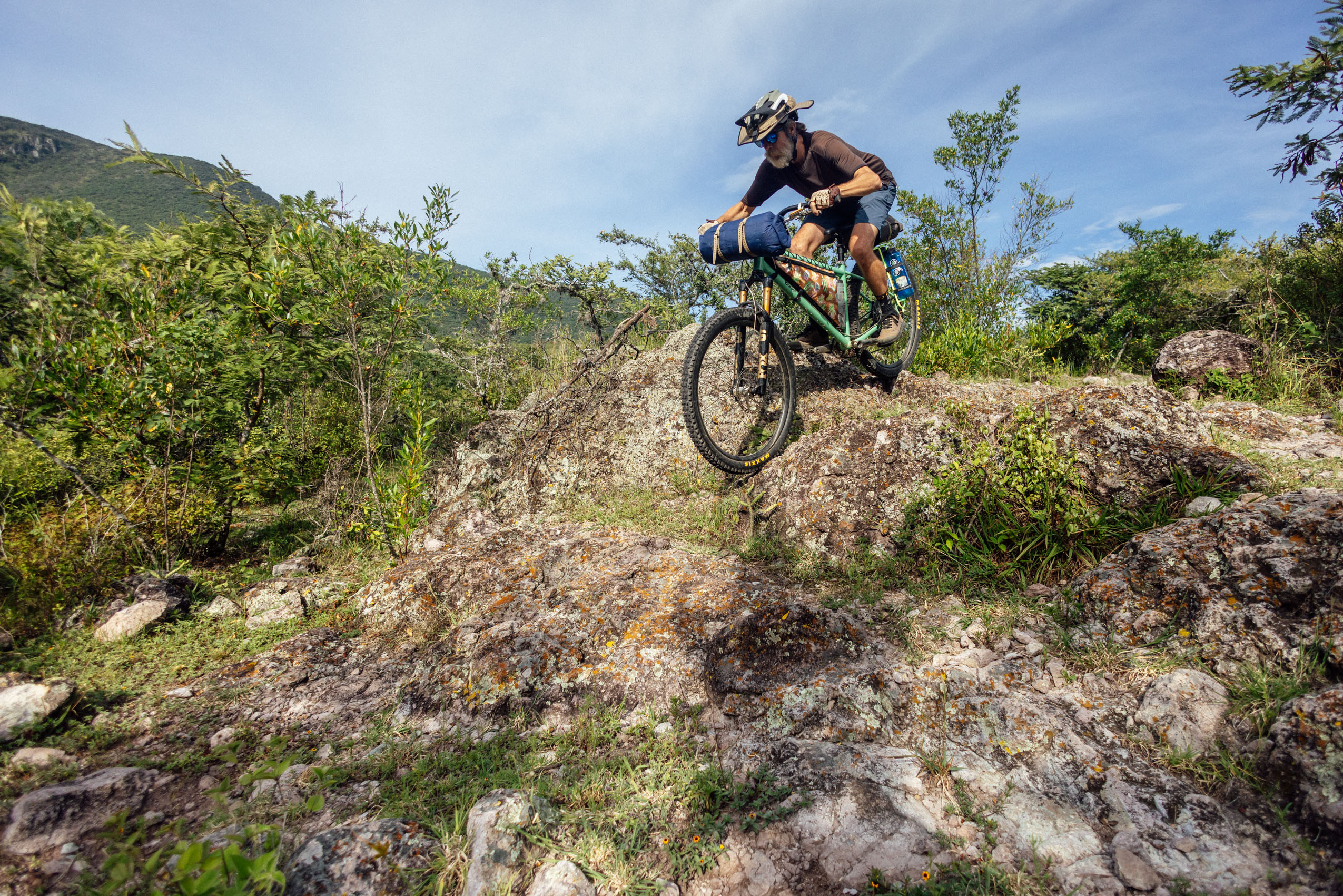
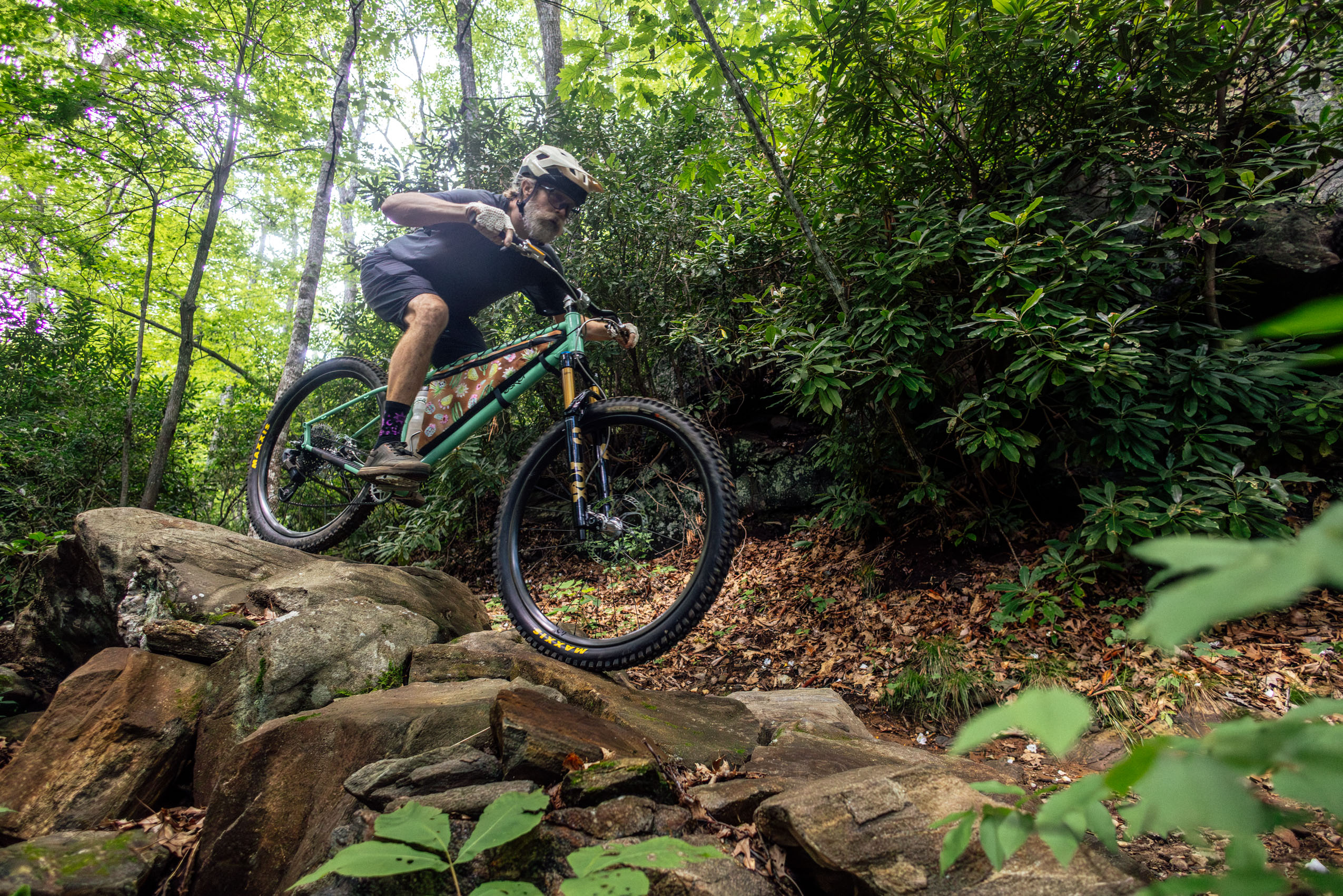
My testing period wasn’t without issue. On the first set of pads, which were the Power+, I got quite a bit of that squealing demon warbling sound in the rear after the break-in period. This quietly subsided when I switched pads to the regular Power. I’ve had this issue with other high-end brakes, like my Tech 4 V4, and I’m not sure whether it was a contaminated pad or some other bit of misfortune, but it went away. Trickstuff’s pads are quite good, otherwise. The organic/steel blend lasts much longer than other organic pads I’ve used, and it’s nice that they’re the same size/standard as the Hopes.
But Is More Better?
If you want to hear all about just how powerful these brakes are compared to others from the minds of hard-driving riders, by all means go check out PinkBike’s Honda Fit Test. I don’t normally read reviews from other outlets about products I’m testing, but I couldn’t help check that one out. And to be clear, I don’t agree with all of their findings, but I’m reviewing the Maximas from a different position. I’m evaluating them from the perspective of someone who casually rides steel hardtails on challenging trails, writing from my own experience and comparing the Maximas to brakes I know well—mainly Hope Tech 4s and the latest Shimano four-piston XTs.

I’d consider the Maximas a little more niche than those two. But everything is niche in bikes at this level. We’re all forced to choose a specific length of fork travel somewhere in the 120-160mm range, and bikes with incrementally different head tube angles that fall within the do-it-all to all-out-rowdy scale. It’s become an exact science based on how and where we want to ride. Brakes are no different. For me, is more stopping force better?
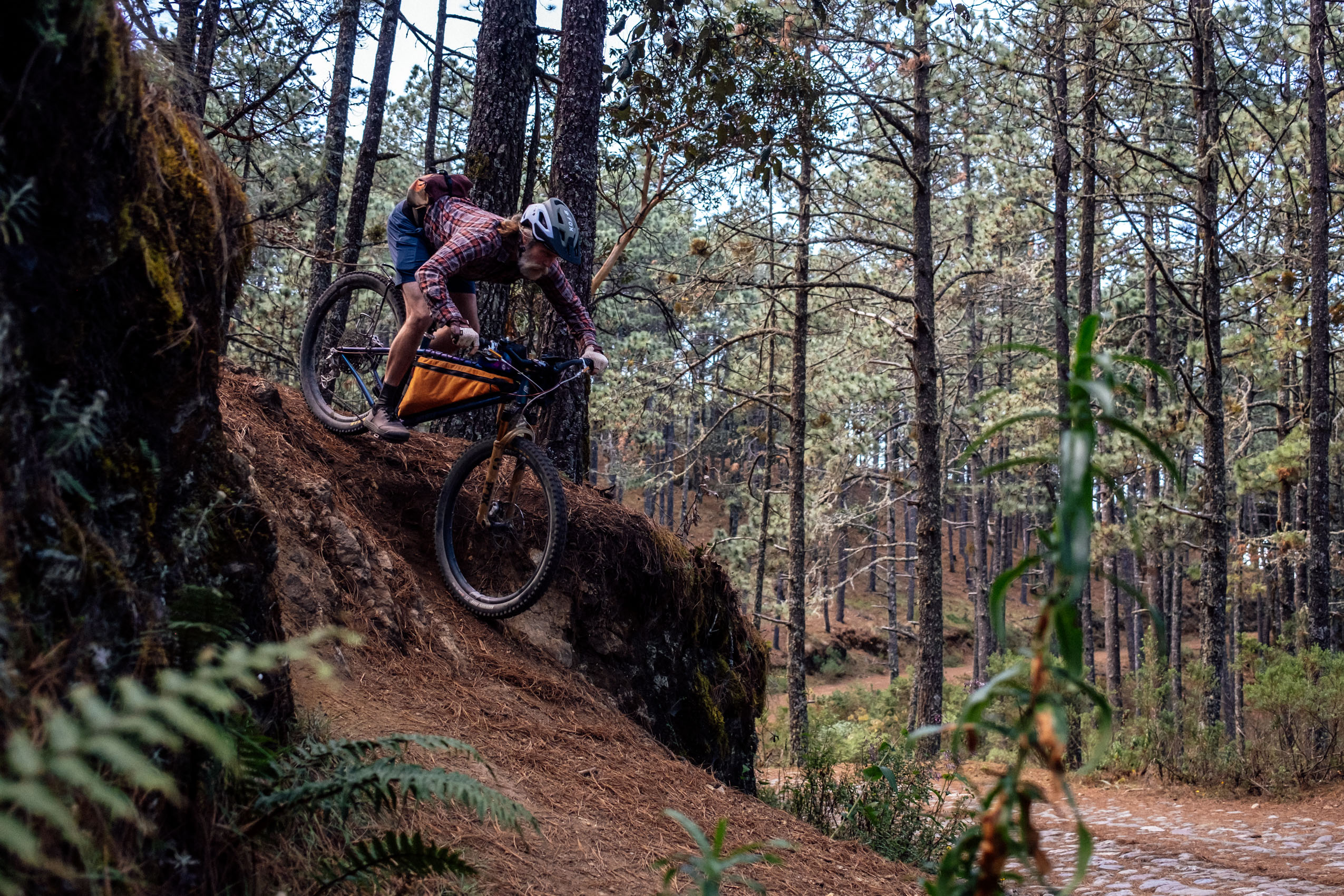
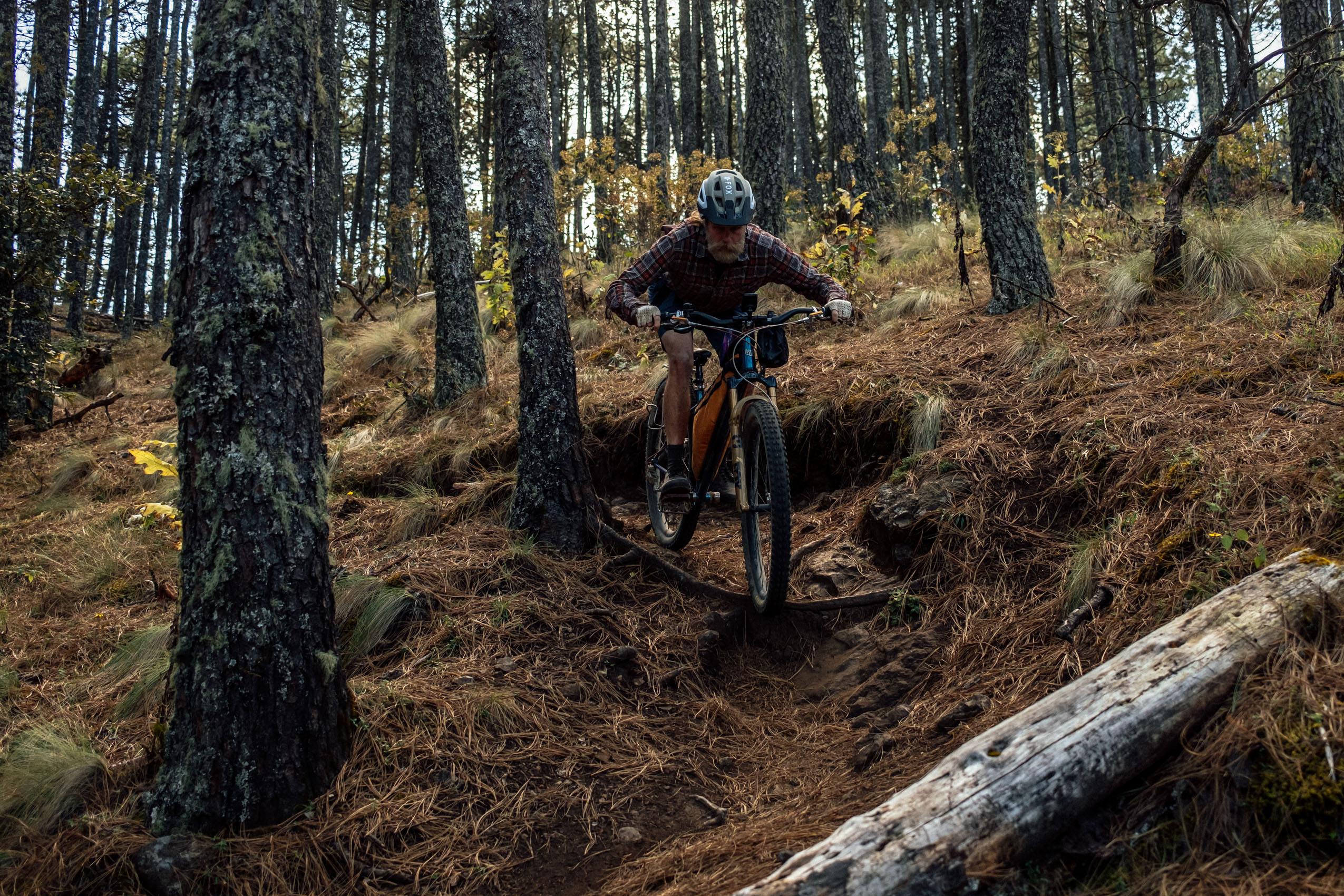
My proving grounds over two seasons with these brakes ranged from my backyard singletrack in Pisgah to the very steep, puckering, long trails in Oaxaca that descend from the Sierra Norte—sometimes carrying a bikepacking load—where control and heat management are major factors. The Maximas allowed me to ride the Smokey the way it should be ridden in this terrain: letting it go and being able to control that speed fast, on a moment’s notice. The Maximas do this better than any other brake I’ve ridden. The light action control is a thing of beauty with the Maximas. And once you learn the ways of the force, it’s easy to be completely smitten by them. At first, I thought they were too powerful, but when I rode my other bike with Hope Tech4 E4s, I found myself missing them dearly.
- Model/Size Tested: Trickstuff Maxima
- Weight: 540 grams per set
- Place of Manufacture: Germany
- Price: €1,300
- Manufacturer’s Details: Trickstuff
Pros
- Sleek looking with a perfect, all-metal finish
- The lever feel matches the finish: crisp, solid, and precise
- The lightest lever action I’ve experienced
- Incredibly powerful braking
- Consistent braking feel and no perceptible fade on long descents
- Excellent, long-lasting pads
Cons
- Expensive
- No way to adjust bite point
- Requires specific bleed hardware and fluid
Wrap Up
In the end, I find myself in the same predicament as “the cult of Trickstuff.” I want them really bad—even more after using them for a while—but dropping €1,300 (roughly $1,500 USD) on a set of brakes is pretty absurd. That said, I once thought the same thing about Cane Creek eeWings, and now I have multiple sets.
The Maximas are one of those products that genuinely deliver on the hype. They don’t magically transform your riding, but they offer a level of refinement, power, and lever feel that few, if any, other brakes can match. Whether that’s worth the premium is entirely subjective. For most riders, Shimano XT four-piston brakes, Hope Tech 4s, or several other high-end options will provide more than enough performance for a fraction of the cost. But for riders who appreciate beautifully machined components, demand the very best braking performance available, or simply enjoy owning exceptional equipment, the Maximas occupy a category of their own.
Trickstuff’s Maximas are a luxury purchase in every sense of the word, complete with the quirks that often accompany boutique products. Yet after two years with them, I can honestly say they’ve spoiled me. Every time I hop back on another bike, I find myself wishing it had Maximas bolted to the bars.
Further Reading
Make sure to dig into these related articles for more info...


Please keep the conversation civil, constructive, and inclusive, or your comment will be removed.