

 Mountain Bike (MTB)
 Gravel Bike
 All-Terrain Bike (ATB)
 Fat Bike

Imposter Syndrome at the 2026 Pinyons and Pines

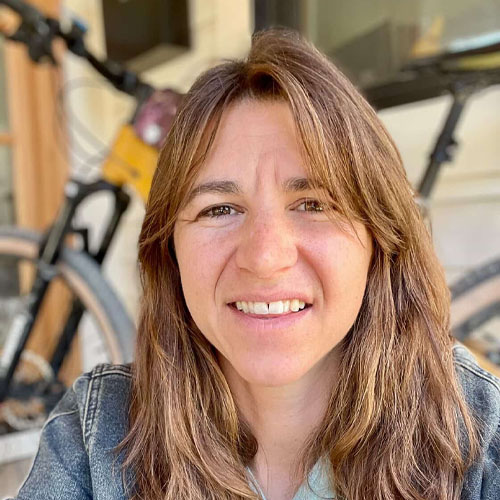
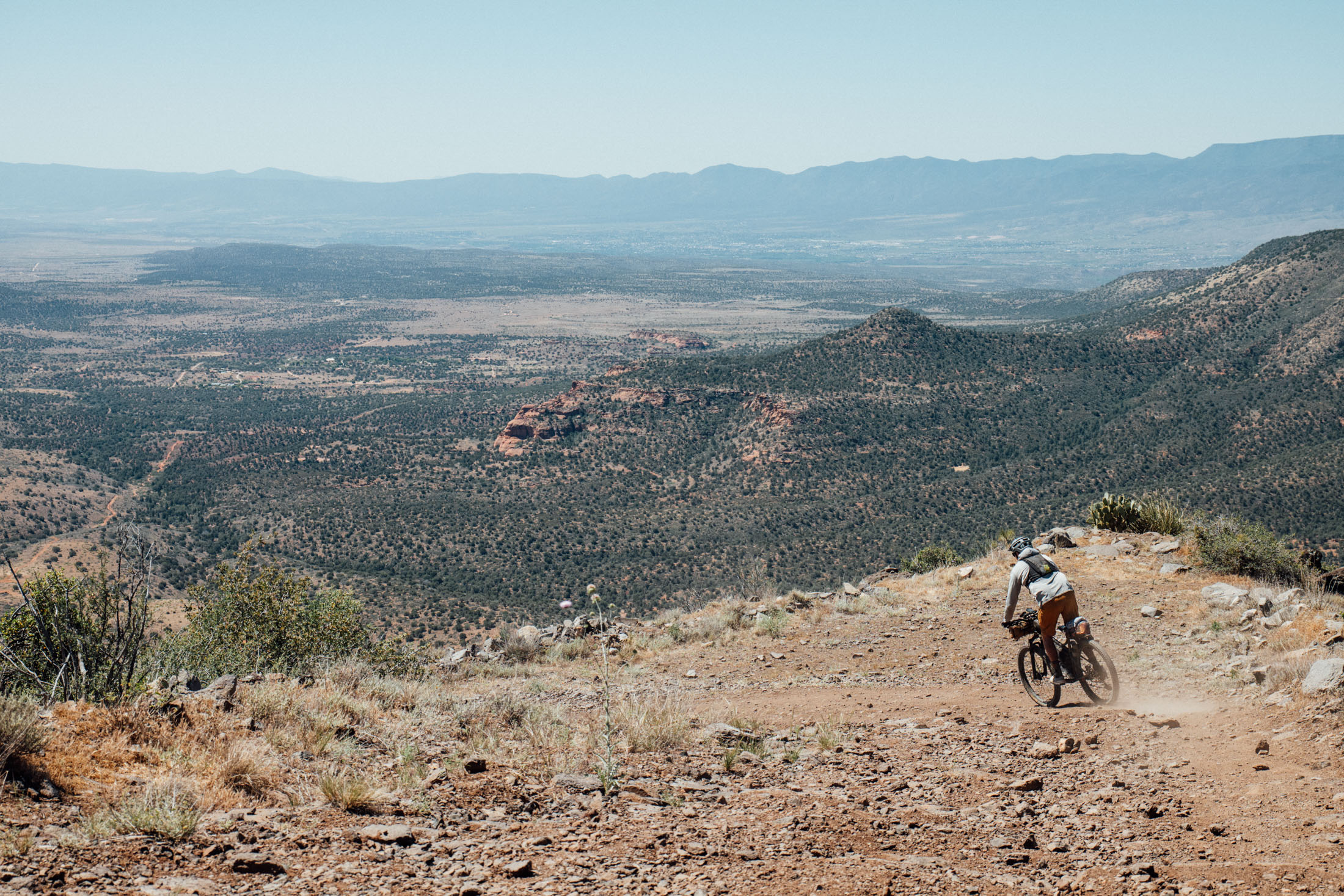
Gwen Cameron put everything she had into this year’s Pinyons and Pines event in Arizona, becoming the first woman to finish and completing her first bikepacking race in the process. Learn what it takes to win the challenging 413-mile route and why Gwen has been wrestling with imposter syndrome ever since in this reflective piece…
PUBLISHED Jun 7, 2026

Photos by Wyatt Spalding
It was February, and I was coming out of a winter of back-to-back bikepacking trips in southern Arizona, Baja, and Chiapas, a quantity of vacation time afforded by my highly seasonal job as a peach farmer in western Colorado. I had racked up a lot of time on my bike, but I wanted more. More miles, planning, researching, and thinking about what gear to bring and what to leave behind. I felt strong, and I wanted to see what I could do with that strength. I wanted to know how hard I had to push to reach my rock bottom, and how I’d respond when I got there. An ultra-distance race sounded like the “more” I was looking for, and Pinyons and Pines felt like the right fit. It looked hard, but I knew the challenges of the desert setting would suit me, at least.
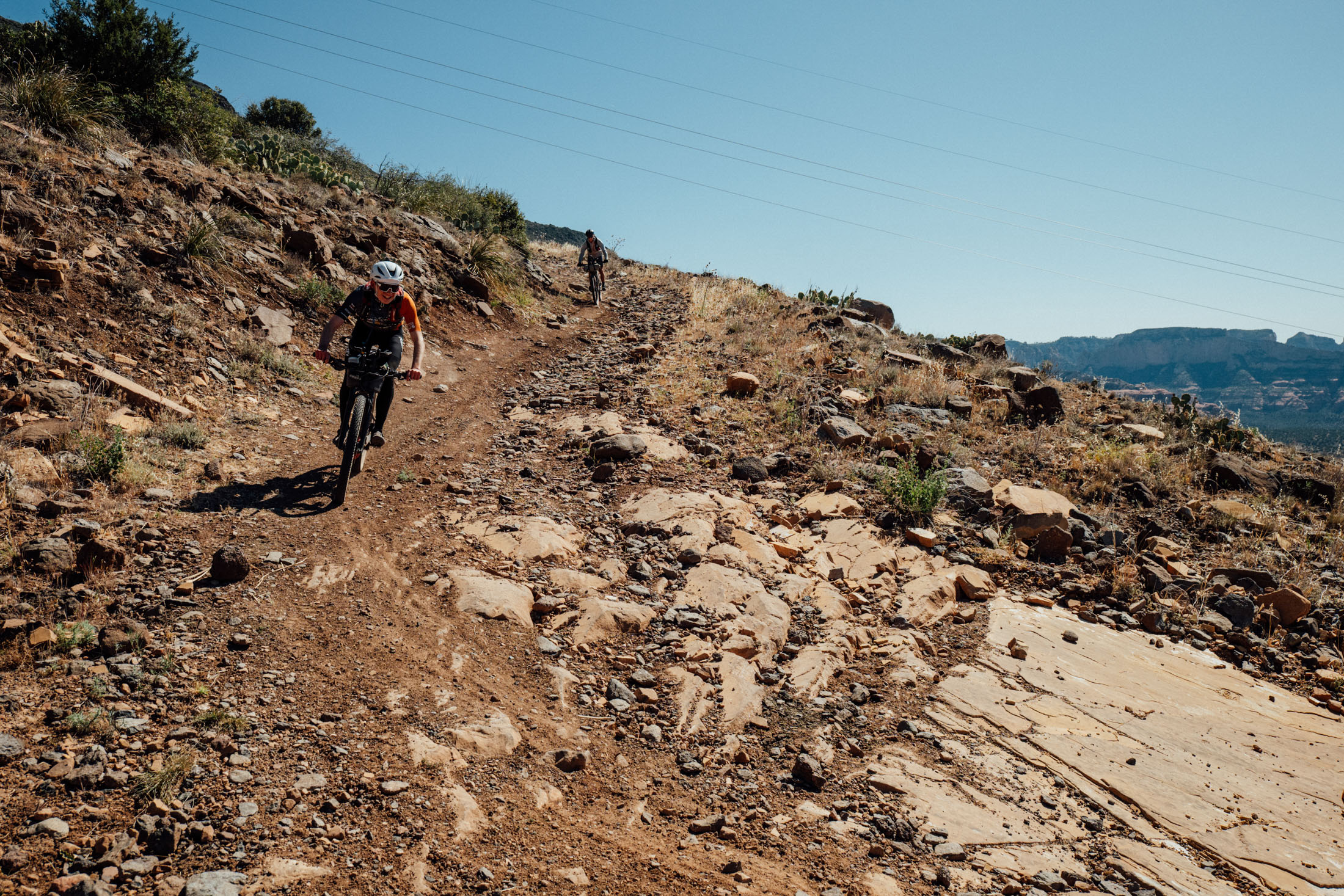
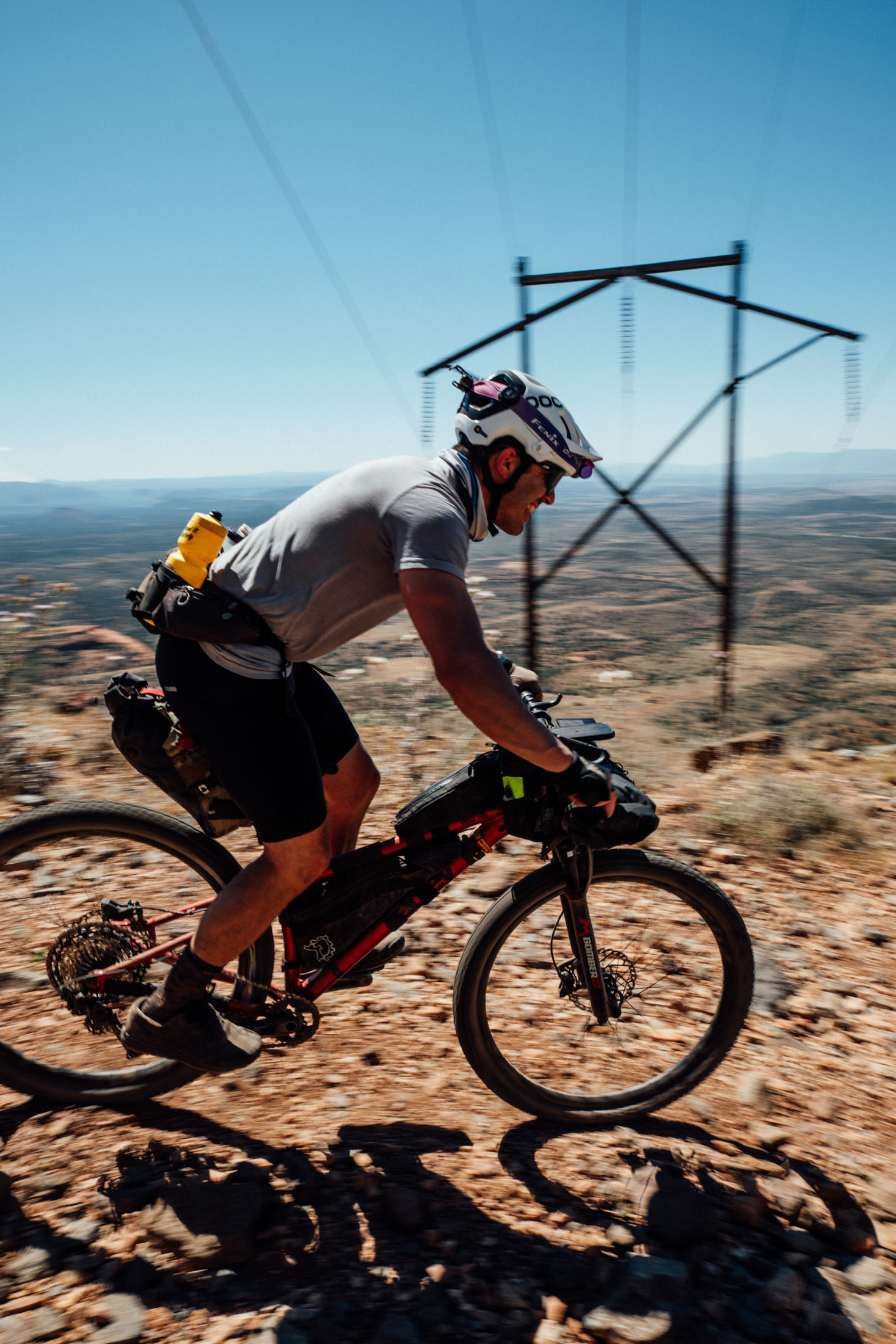

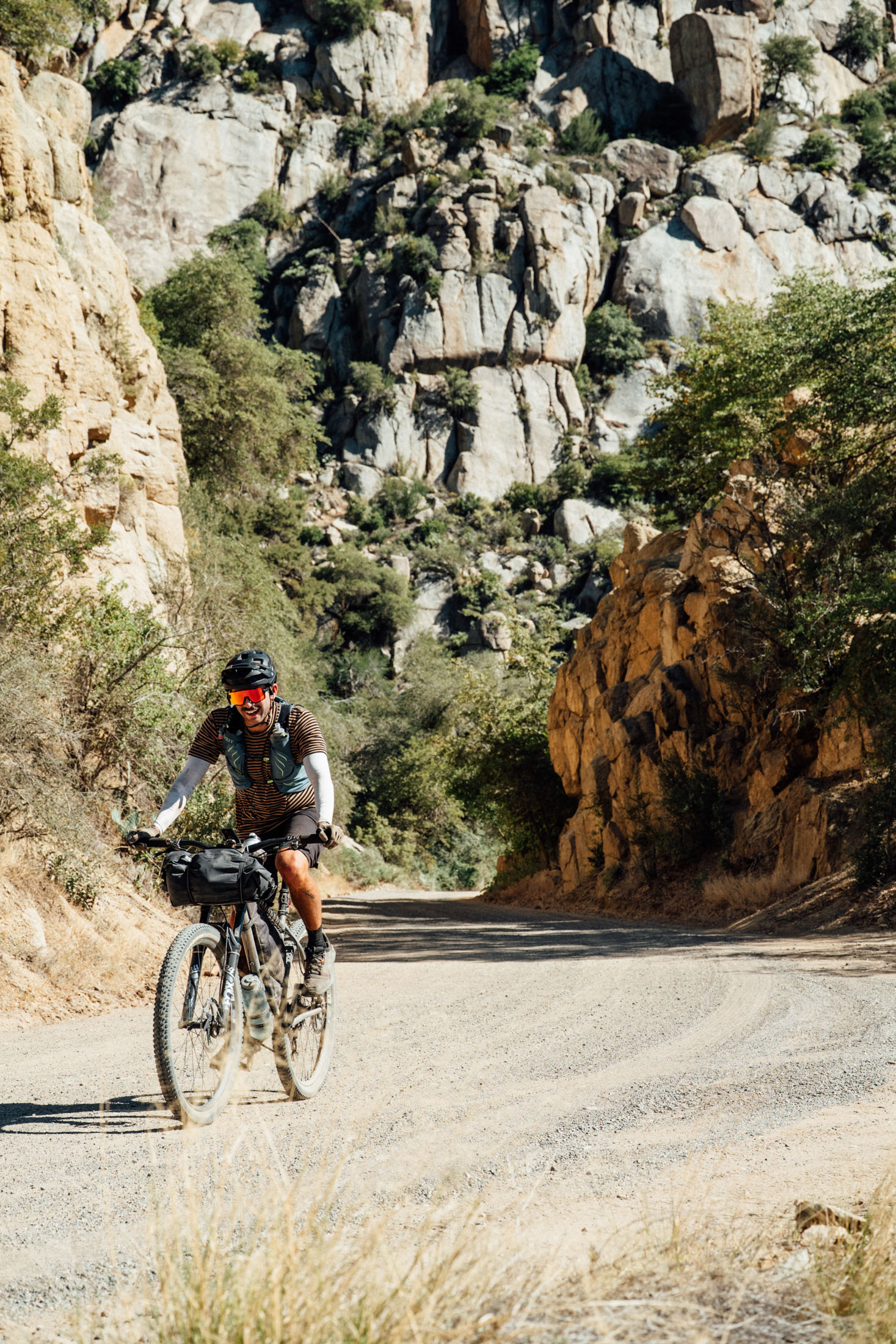
What I didn’t know was how to train my body to complete a 413-mile route with 39,000 feet of elevation gain in just a few days. So I got to work finding people who knew more than me. I bought a latte for the mechanic at the bike shop who was the only person I knew who had done any ultra racing. I called a woman I met once at the Cabo airport, who assured me that it was normal and okay to DNF if that’s what happened. I sat in a breakfast nook with my neighbor Karl, who competed at the Olympic level in steeplechase, and we sketched out some workouts.
I fed a brain dump of everything I gathered into ChatGPT. It spit out a weekly training schedule that I followed rigorously, not knowing enough about the rules of training to know which I could bend or break. I’d heard ultras described as one long eating contest, so I hired my friend Uriell to help me with nutrition. She convinced me I could fuel my rides with real food instead of energy gels and that tallying my hourly carb intake was tedious but worthwhile.
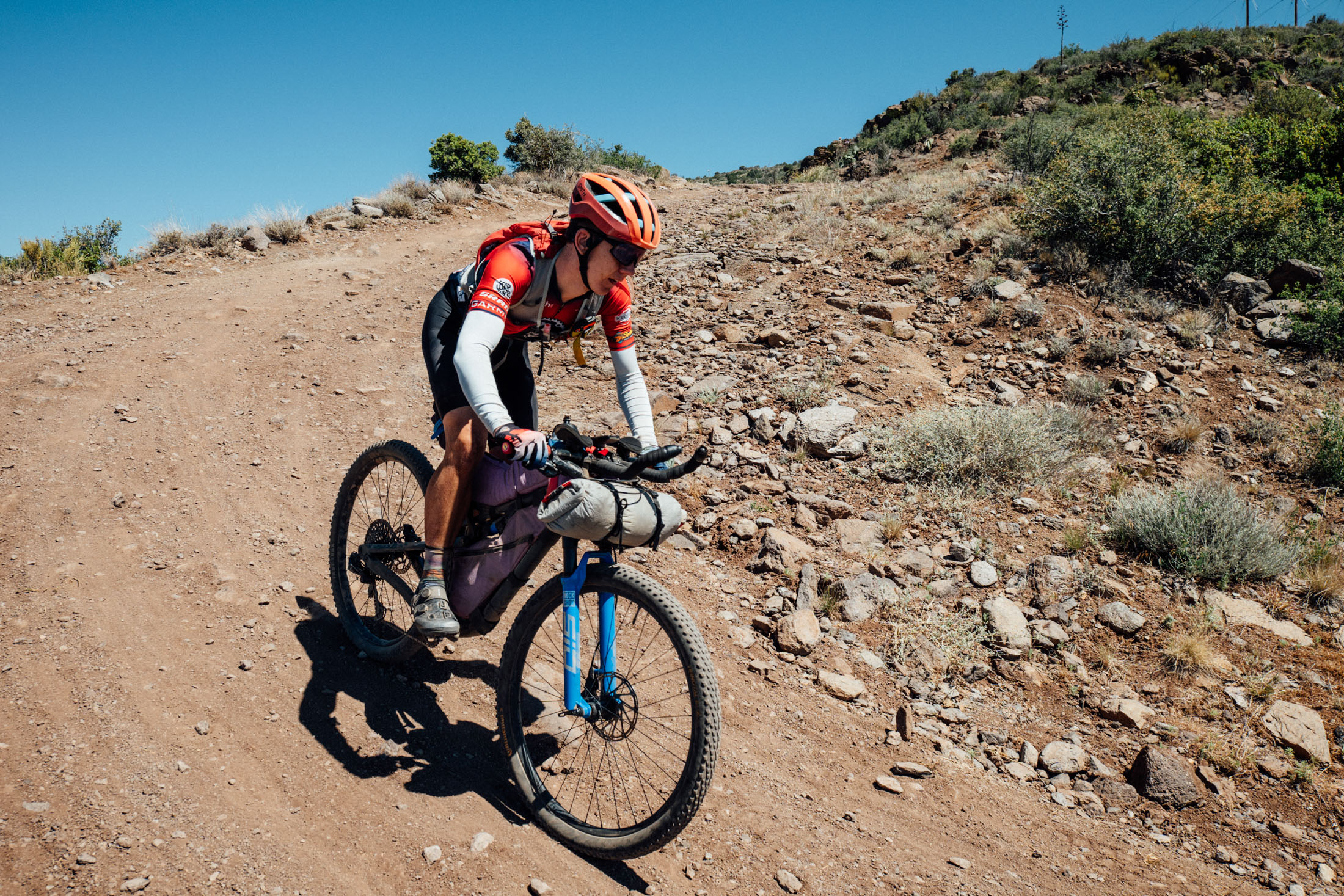

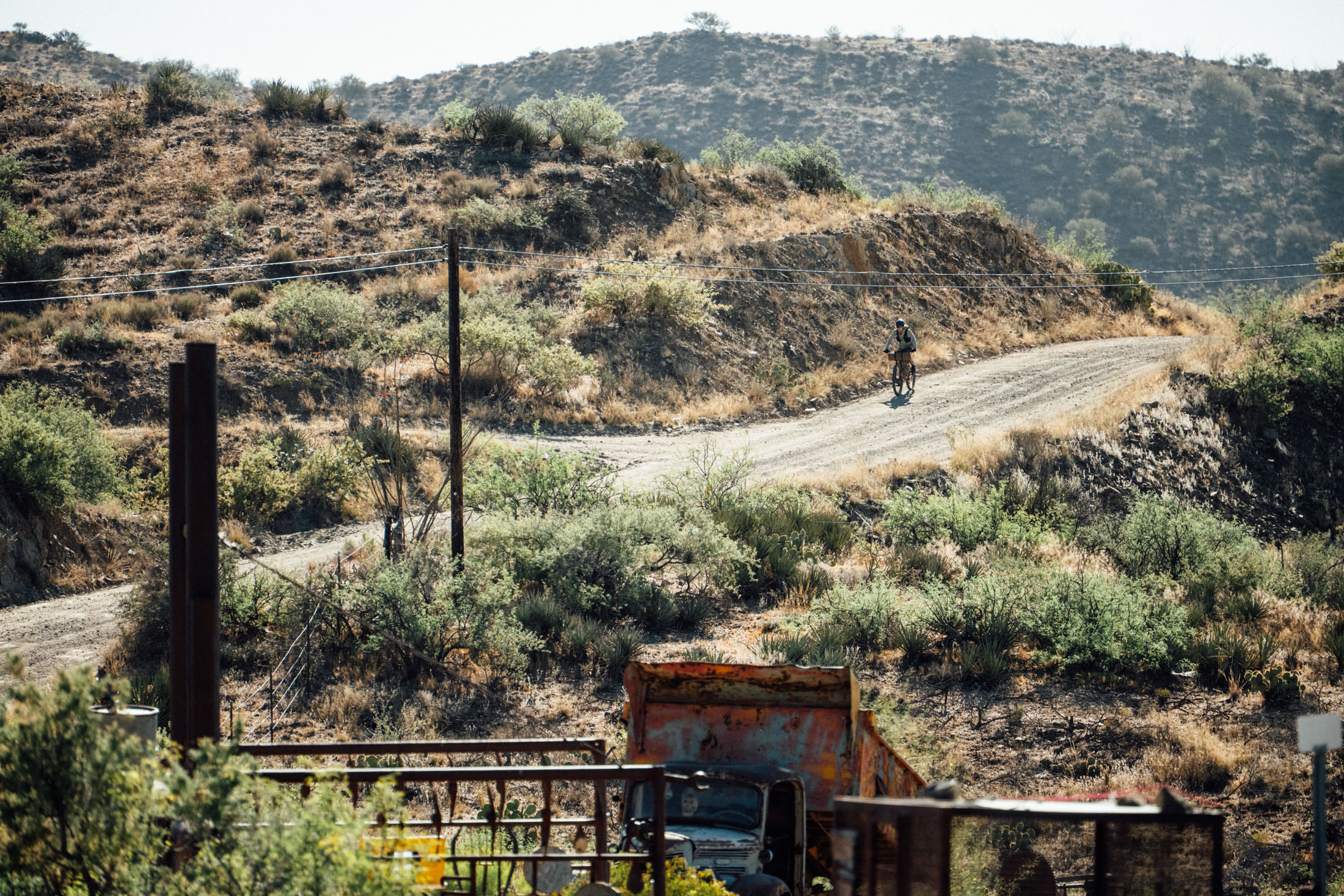
I committed increasingly long hours to strength training, intervals, and long weekend rides. It occurred to me briefly that I should have told Coach GPT, as I took to calling him, that I had a full-time job to work around. But I also relished the hours of pedaling and the obsession it was requiring of me. I logged all my training in a denim blue notebook with this pen I like. I wrote down enough details about my rides to start identifying patterns that helped me predict finish times, calories, and water needs for future rides.
I practiced eating like I was racing and learned things, such as that it’s unwise to stack dried mangos on top of the Nerd Clusters in my feed bag because it creates a mango barrier I can’t navigate around while rattling down chunky singletrack on my hardtail. I started finishing training loops with pockets filled with empty wrappers rather than uneaten snacks, because I knew exactly what I needed and didn’t need. I learned to listen to my body when it told me the solution to my deteriorating attitude is probably another handful of broken cookies.
I had convinced Coach GPT to schedule me for weekend rides of the epic Cedar Mesa Loop, White Rim in a day, and the deviously hard Radium Loop. My saddle sores could never quite heal in between big weekends, but I got a thrill every time I bested my biggest day on a bike: 90 miles, 100 miles, 110 miles. I learned what it was to ride long hours alone, without someone to chit-chat with, but also untethered to another person’s pee schedule or pace that’s just a little faster or slower than my own. When it got hard, or the route looped tantalizingly close to my parked truck with another 50 miles left to ride, mine was the only well of resilience to draw from and choose to keep going.
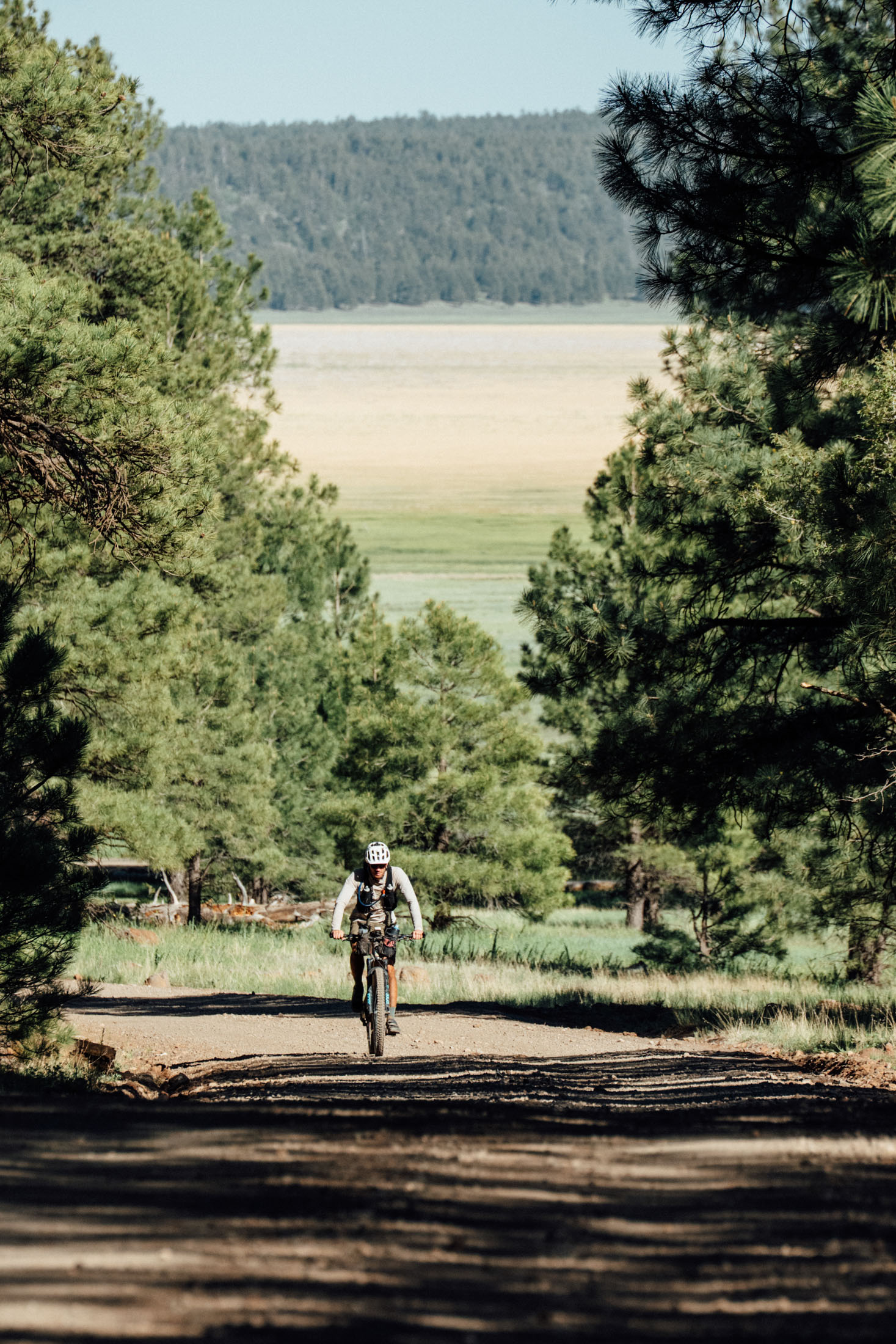
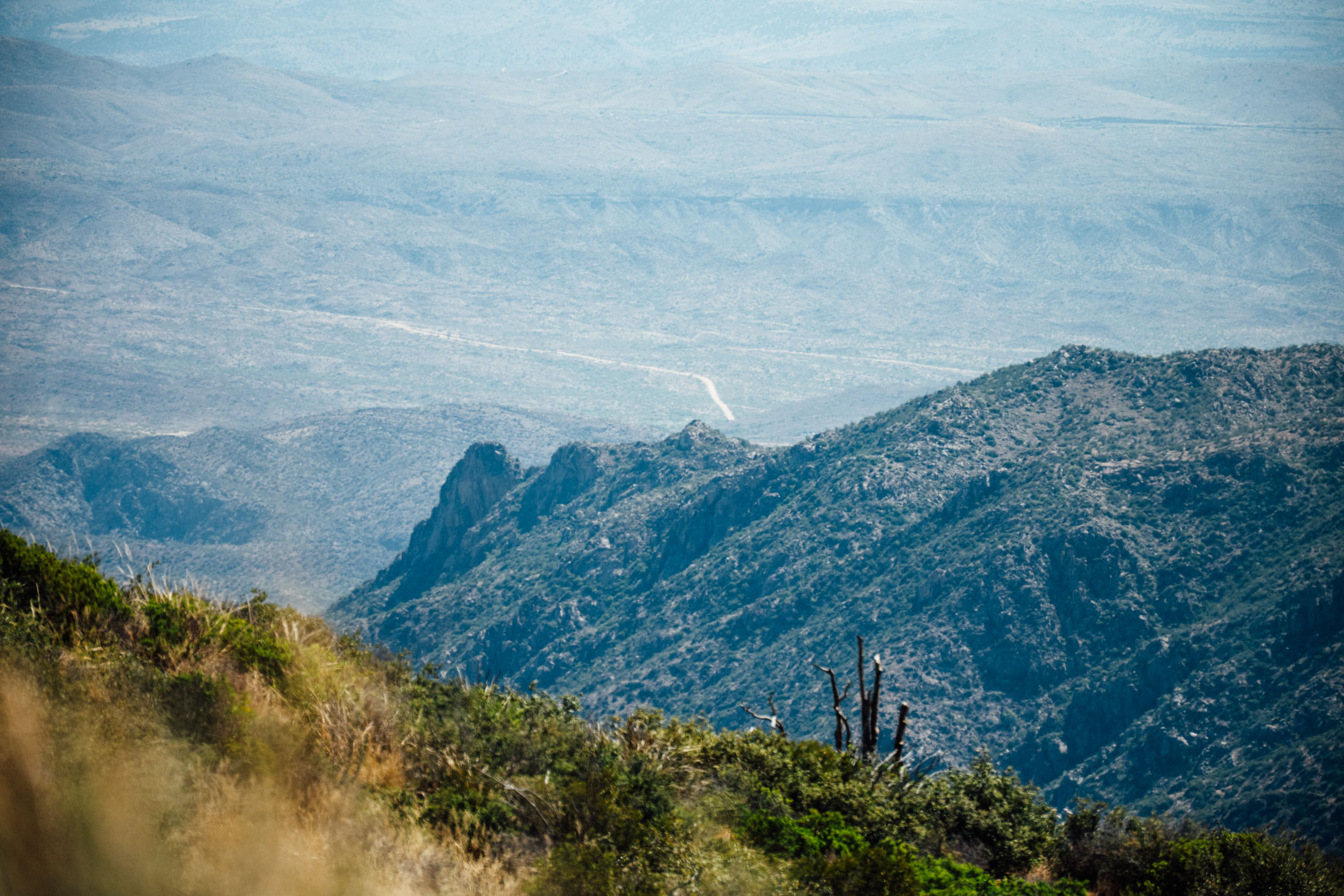

I didn’t arrive in Flagstaff fresh. After six weeks of 20-hour-per-week training, I had expected to reach the end of my taper feeling strong, svelte, springy, and raring to cross the start line. Instead, I felt eager to finally ride this thing, but also worn down by the effort of squeezing so many hours on the bike into a life with other commitments to friends and family and a farm business.
The race kicked off at first light on May 14, and I spent the first couple of days with a mind wholly occupied by a hundred tiny decisions about pacing, hydration, and food. I kept a running mental tally of tasks I needed to do while stopped—pee, sunscreen, rotate food into my top tube bag—and tried not to stop unless my list of to-dos was longer than a couple of items. I woke up cold and stiff on day three, and my body didn’t really want to be back on a bike. I remember staring down at my legs in wonder when the fatigue faded over the course of the next few hours and my legs were still pedaling.
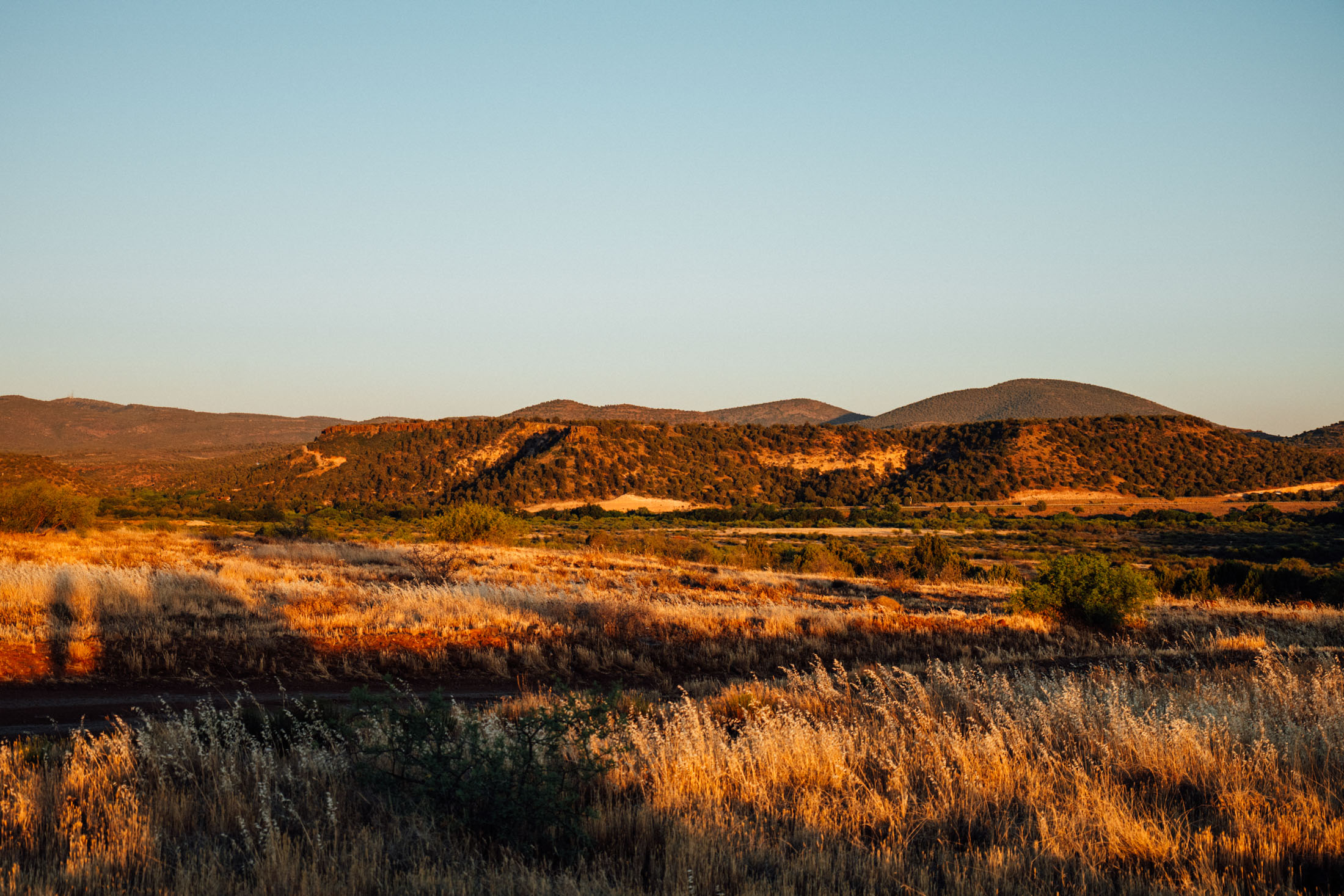
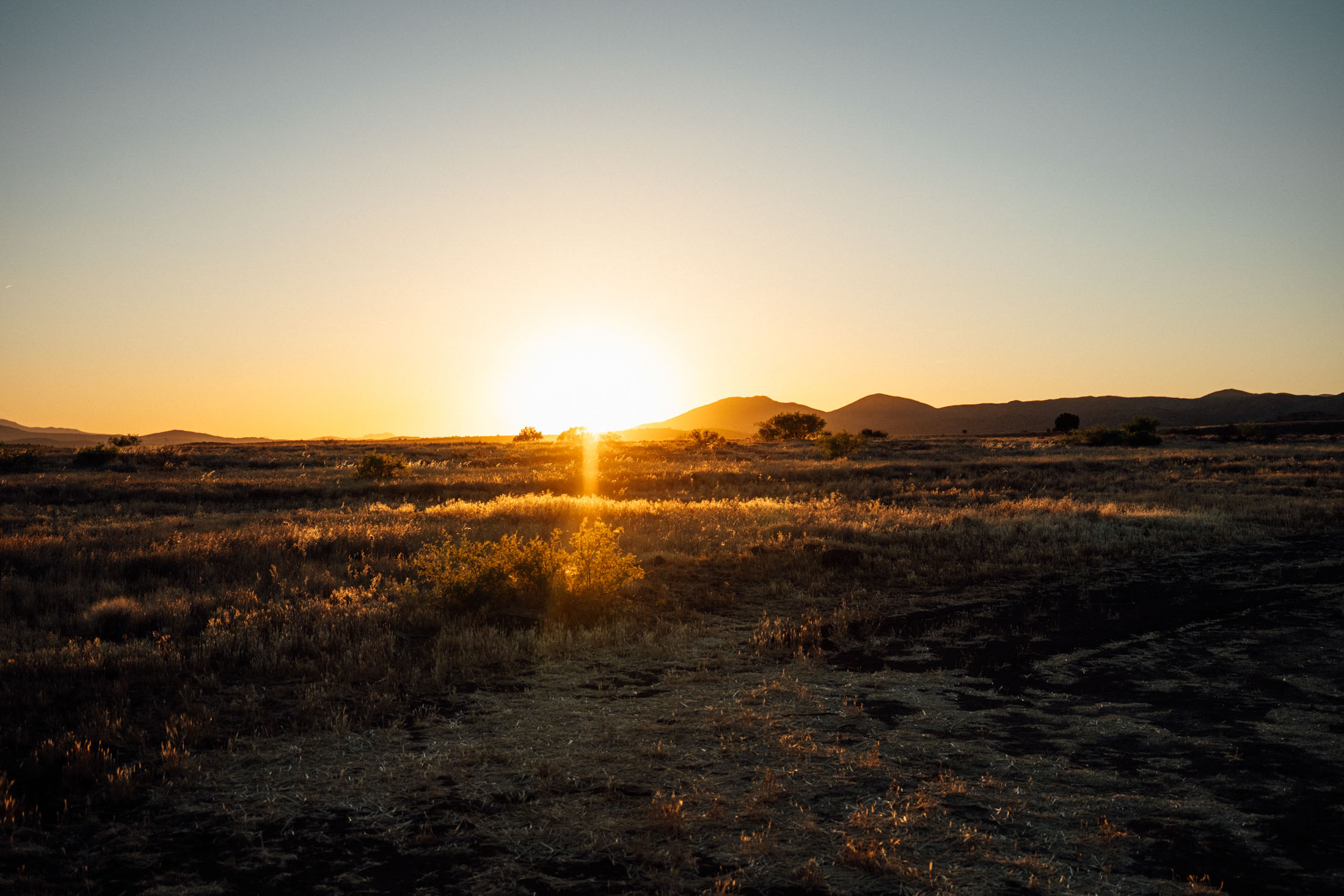

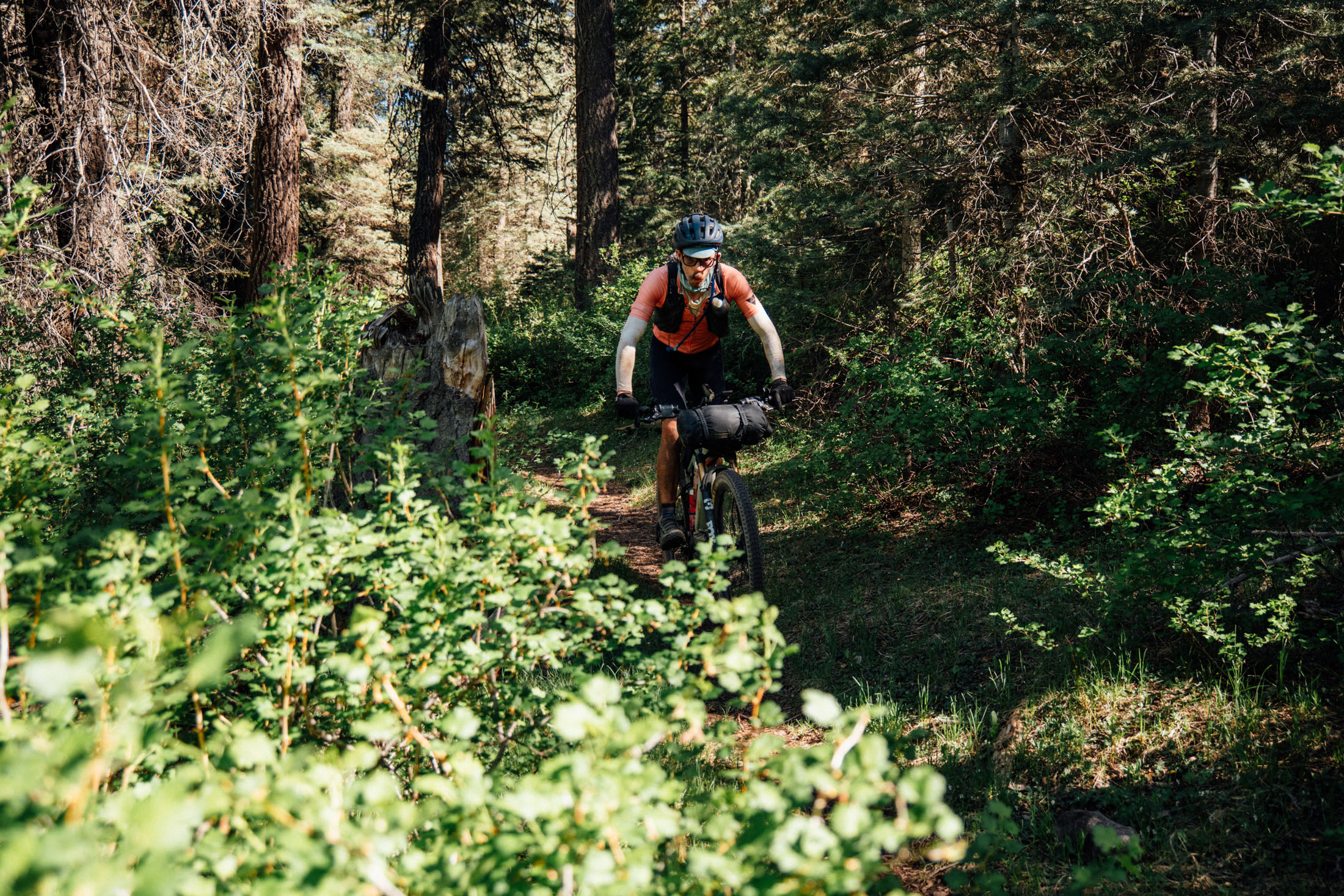
“Your mind will quit before your body” has long been a mantra that has convinced me to push through physical discomfort when I’ve felt the temptation to quit. But that moment was the first time I really saw it to be true. It felt like learning that none of my physical limitations are real. That those limitations are invented by a brain that can be convinced otherwise. Switching my phone out of airplane mode unleashed a staccato of texts from dotwatching friends and farm crew that reminded me the rest of the world was still out there, but otherwise I spent the first half of the ride in my own bubble—until mile 235.
I was at a fancy-ish cafe outside Prescott, where I’d found French pastries and had hoped to do a bit of light lingering. I was drawing concerned side-eyes as I sloshed a cocktail of orange juice, water, and electrolytes into my filthy and partially crushed bike bottles while I waited for Trackleaders to load. When it did, I saw a lengthy list of very strong riders who had scratched, and zoomed in to see my pink dot behind just one other pink dot on the route map. I shot a text off to my nutritionist friend, “Oh my god, am I the second-place female rider right now??”
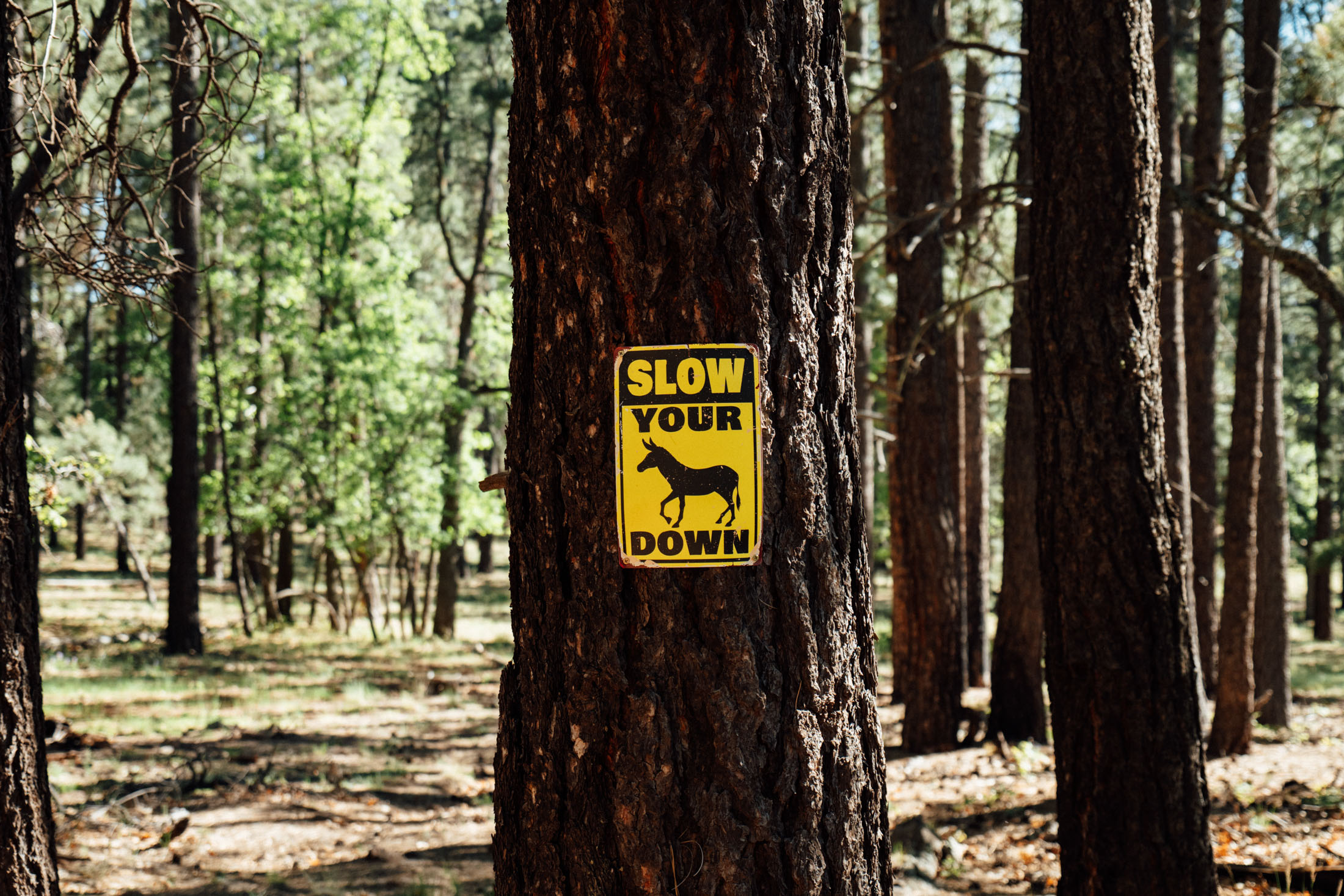
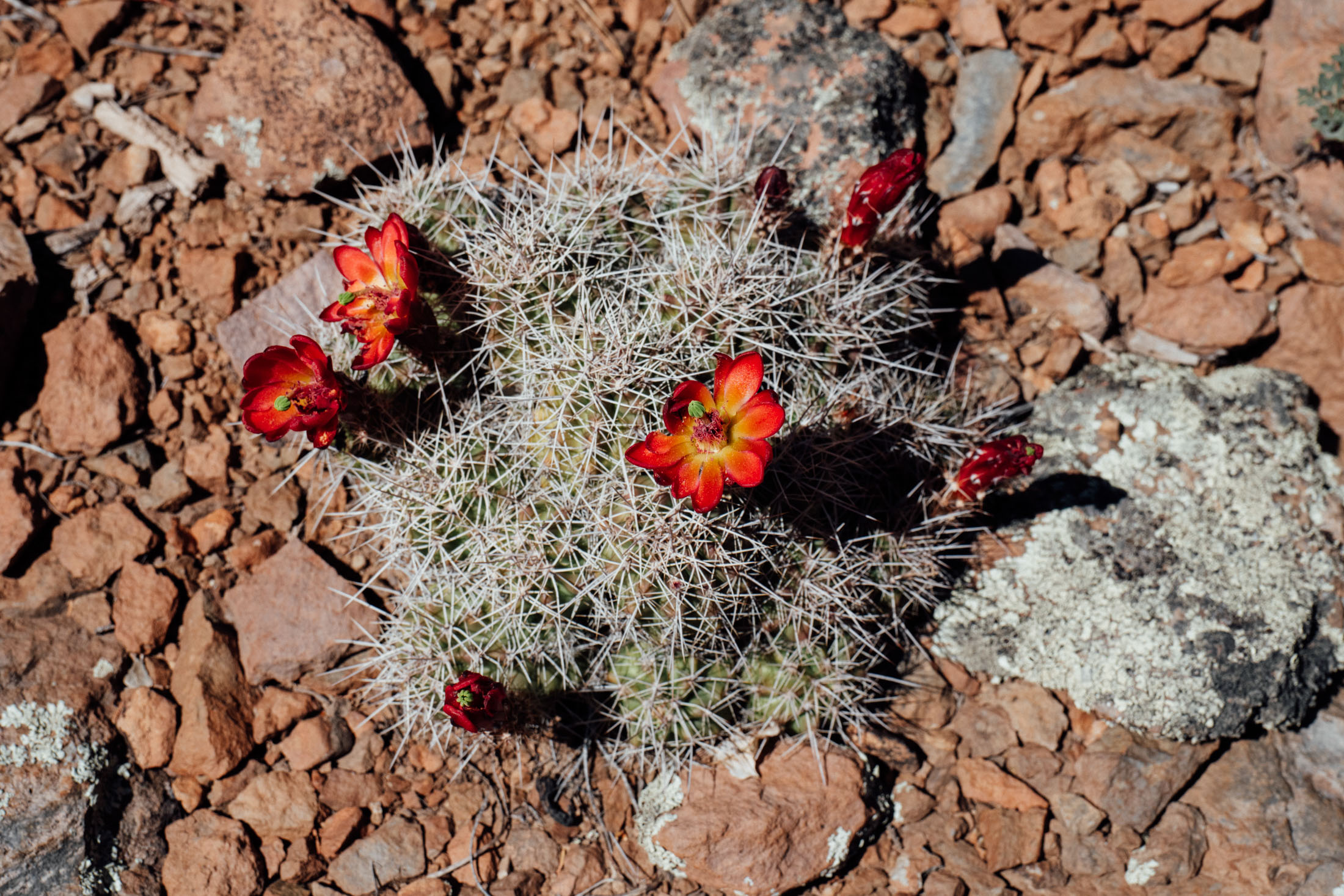
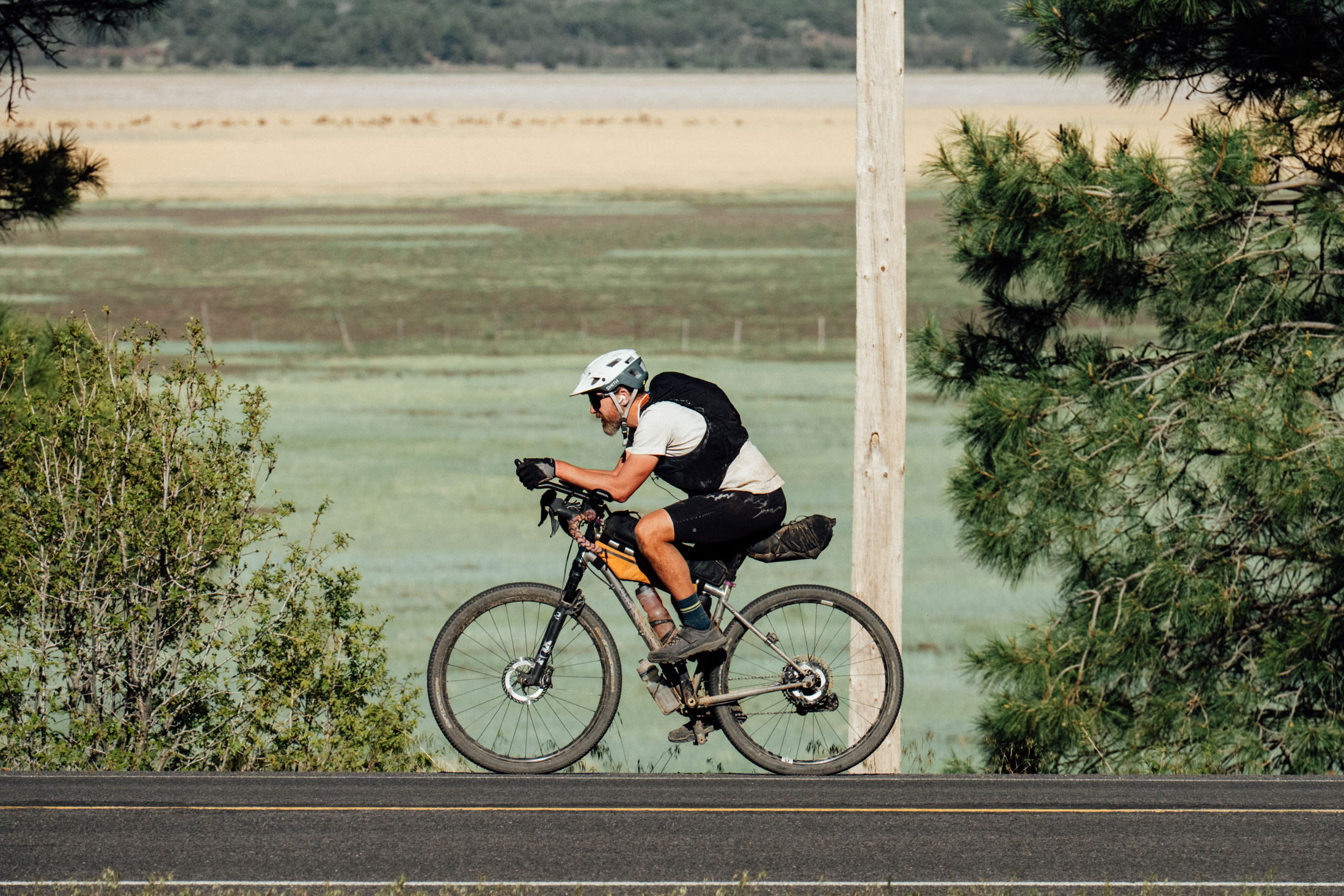
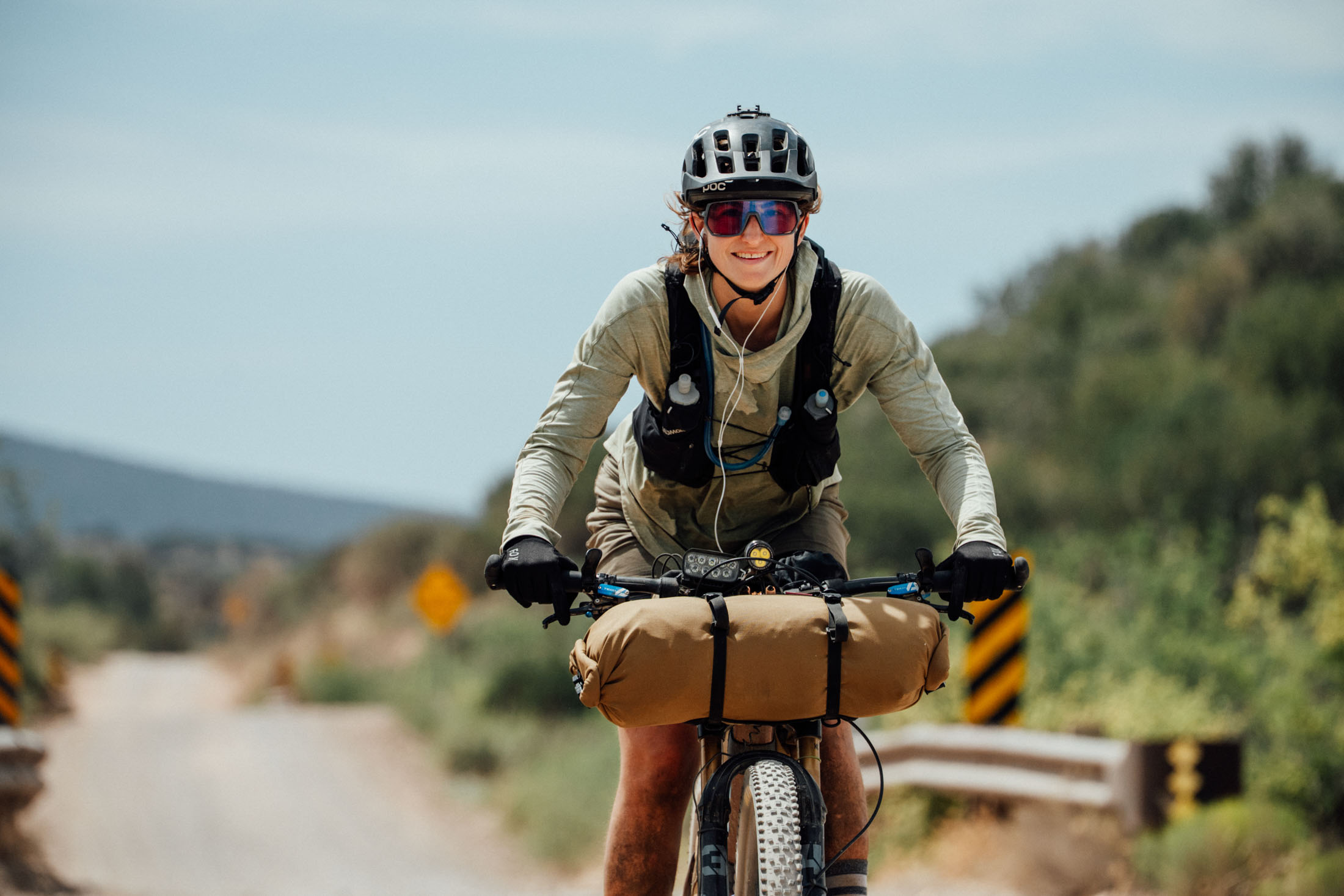

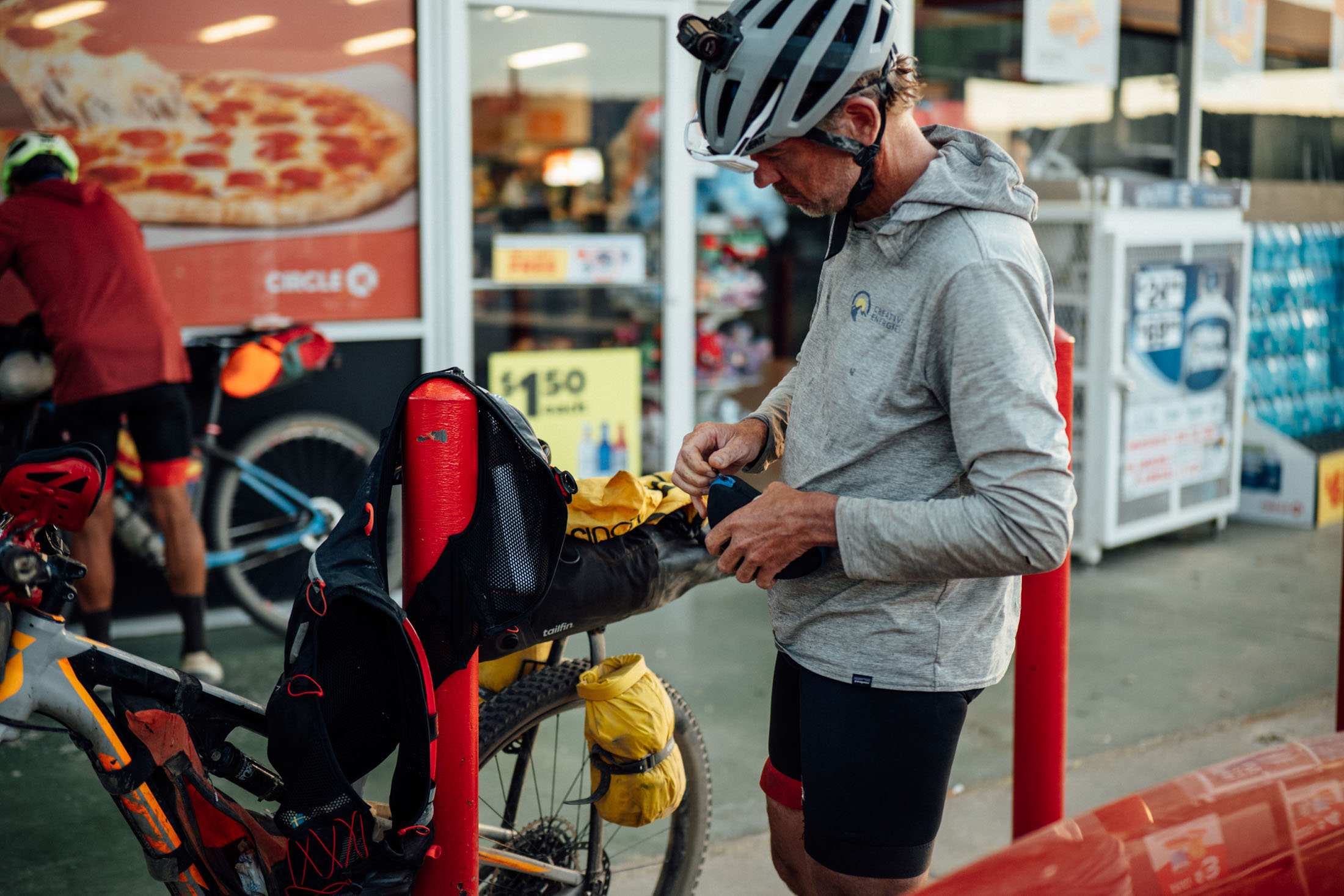
Before I checked Trackleaders in that cafe, I didn’t know I was racing. I had been talking and thinking about racing for months, but I’d been approaching Pinyons almost as another solitary big weekend ride. In the moment I checked Trackleaders, my individual bubble burst, and for the first time, I saw my own effort in the context of all the other riders. I wasn’t just surviving this ride; I was really racing it, and I was racing it faster than some other people. After some frantic and, in retrospect, totally unnecessary stops to buy more snacks and electrolytes, I was hammering up dusty washboard as Prescott fell behind.
I caught Katie on Mt. Union, a devious mandatory out-and-back summit. We ate a snack and headed out together. The gradient slackened, and our pedal strokes fell into sync for the next few hours. We chatted about training and life, took turns charging our battery packs, and she offered me some zip ties so I could reposition my badly mounted bike light. A navigation error while we were separated gave me an adrenaline spike that reminded me we were still racing, but soon after, Katie called it for the night. She had been feeling nauseous for more than 24 hours and needed to stop and try to get more calories in her body. She wished me luck and offered congratulations. We had been leading the women’s race together for 90 miles. When she decided to stop, that left just me.
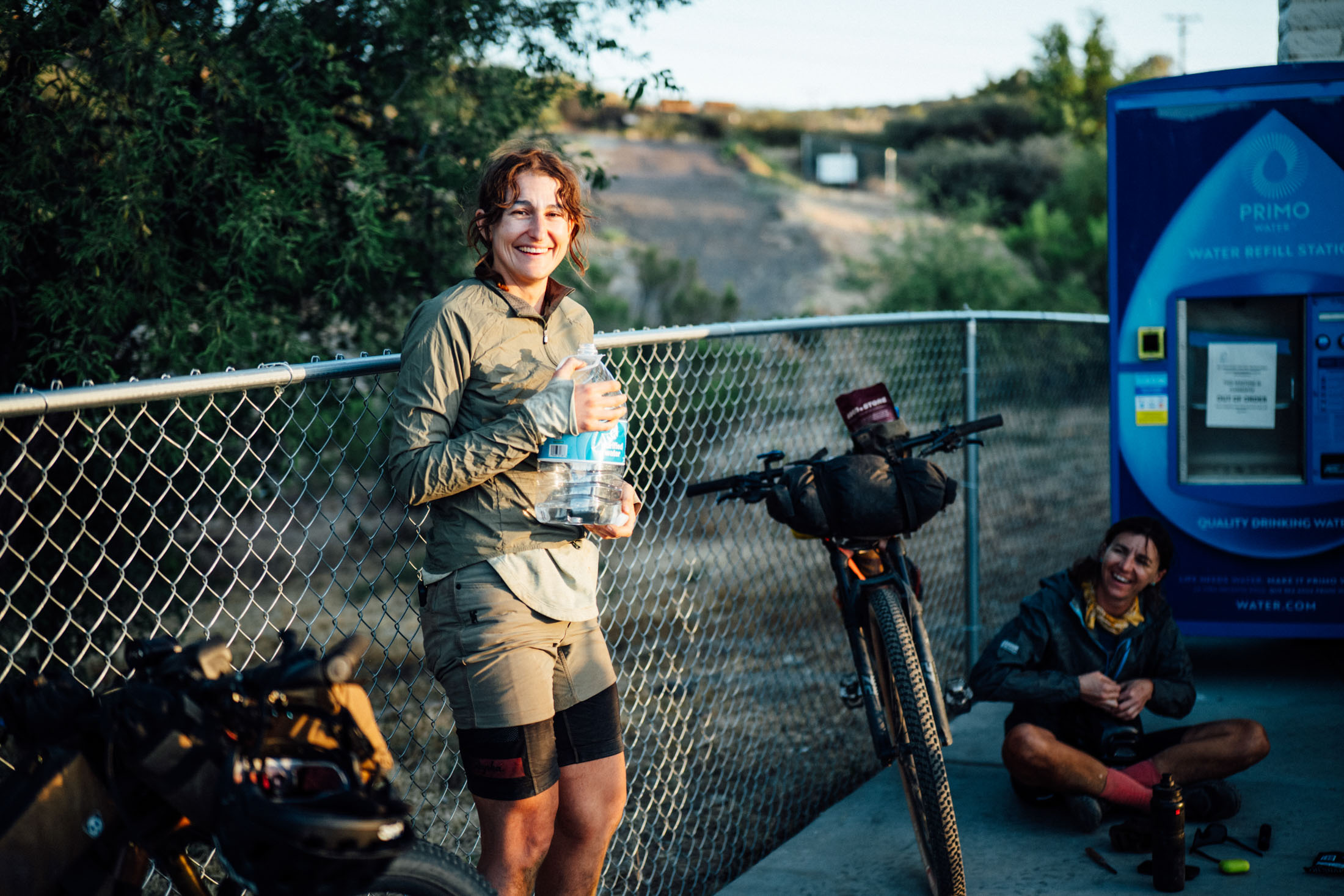


I continued into the night, head still cocked at a slightly awkward angle from botching the light placement on my helmet once again. I planned to pedal maybe 10 more miles and was starting to think about what kind of sleeping situation I wanted. A sandy wash would be nice, but that’s where the cold settles in the night. A flat pullout would be the fastest, but as a woman, that may never feel like a safe option. When I refreshed the route map on the next washboard-free section of gravel, I saw a new constellation of rider dots. I was shocked to see that not one but two Sarahs were not far behind and still on the move.
I washed down the last of my sweet potato chips from the cafe with a mouthful of my orange juice concoction that had been tasting less appealing by the hour, then dropped my derailleur two clicks harder and pressed off into the night. My new plan was to keep pedaling until the Sarahs’ dots stopped moving. We could all get some sleep and battle it out in the morning. After an hour, Sarah Higgins stopped, and I thought my plan would work. But as the smooth, undulating gravel gave way to a terribly straight and consistent pavement climb, Sarah Didier’s dot did not stop, and I was pretty sure it was gaining ground.
At 1:30 a.m., I was wobbling my way up the last few feet of the pavement climb at mile 310, bouncing around on my saddle, hoping for reprieve from the sting of my saddle sores. The section ahead was a long and fast gravel downhill. I weighed the reality of my fatigue and inefficient progress against the temptation to bomb down it, in hopes that my sudden forward progress would convince Sarah to finally call it a night. I opted to pull over and budgeted 3.5 hours of sleep for myself. By then, it would be 5:30 a.m., and other riders would be on the move.

I woke feeling light and optimistic, my attitude buoyed by bites from the cranberry scone in my feed bag and the type of long, gentle downhill grade that’s perfect for mashing out fast miles in the smallest gear. It never fails to convince me I’m faster and less tired than I actually am.
A patch of cell service and a refresh of Trackleaders showed me that Sarah Didier had continued through the night, had already done her final food resupply at a gas station in Camp Verde, and was now far ahead.
“Second place is cool too,” I thought. I had hardly wrapped my head around the possibility of being the first woman to finish in my first ultra race anyway. But having dedicated my entire spring to training for this event, I still wanted to see how fast I was capable of finishing.


I’d spent a lot of time zooming in and out of the elevation profile of this year’s Pinyons route, and of the four major climbs, it was the last 5,500-foot ascent—330 miles deep into the race—that worried me the most. I put on a playlist that I’d been saving, and pressed ahead. Another refresh of the map showed me I was gaining on Sarah. It was tempting to surge forward, but I held myself to a pace that felt quick but not so quick that I would risk blowing myself up in the last miles of the course.
I caught her with 60 miles left to ride, and most of the last big climb still ahead of us. We rode in tandem for a while. She asked about peach farming, and I asked how the heck she balances training with the rest of her life priorities. We were pedaling fast—faster than I had been going when I caught up with her—and I wondered if I could sustain the pace or if my legs would finally give in to fatigue. But Sarah was hurting too, and she peeled off into a campground to rest.
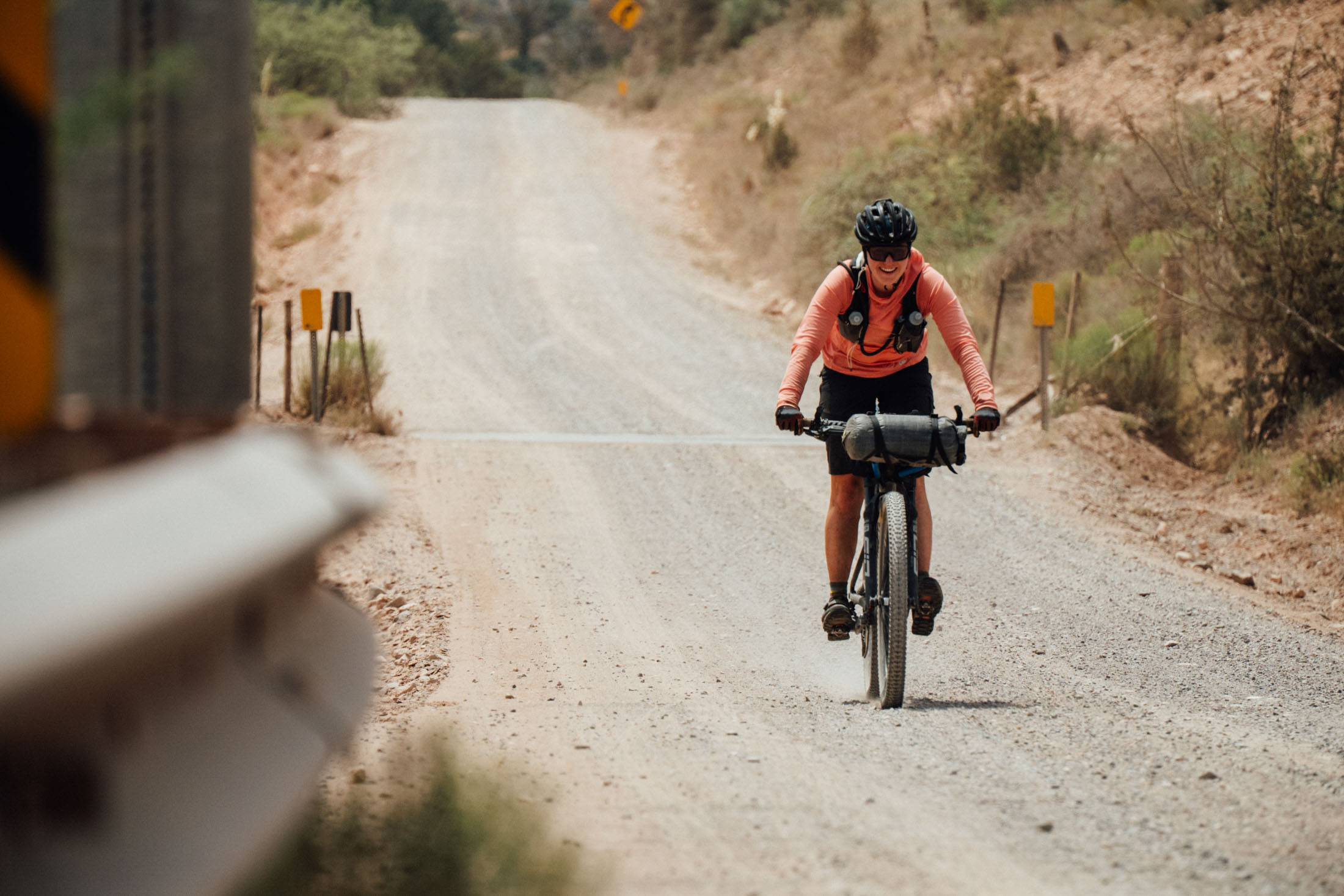
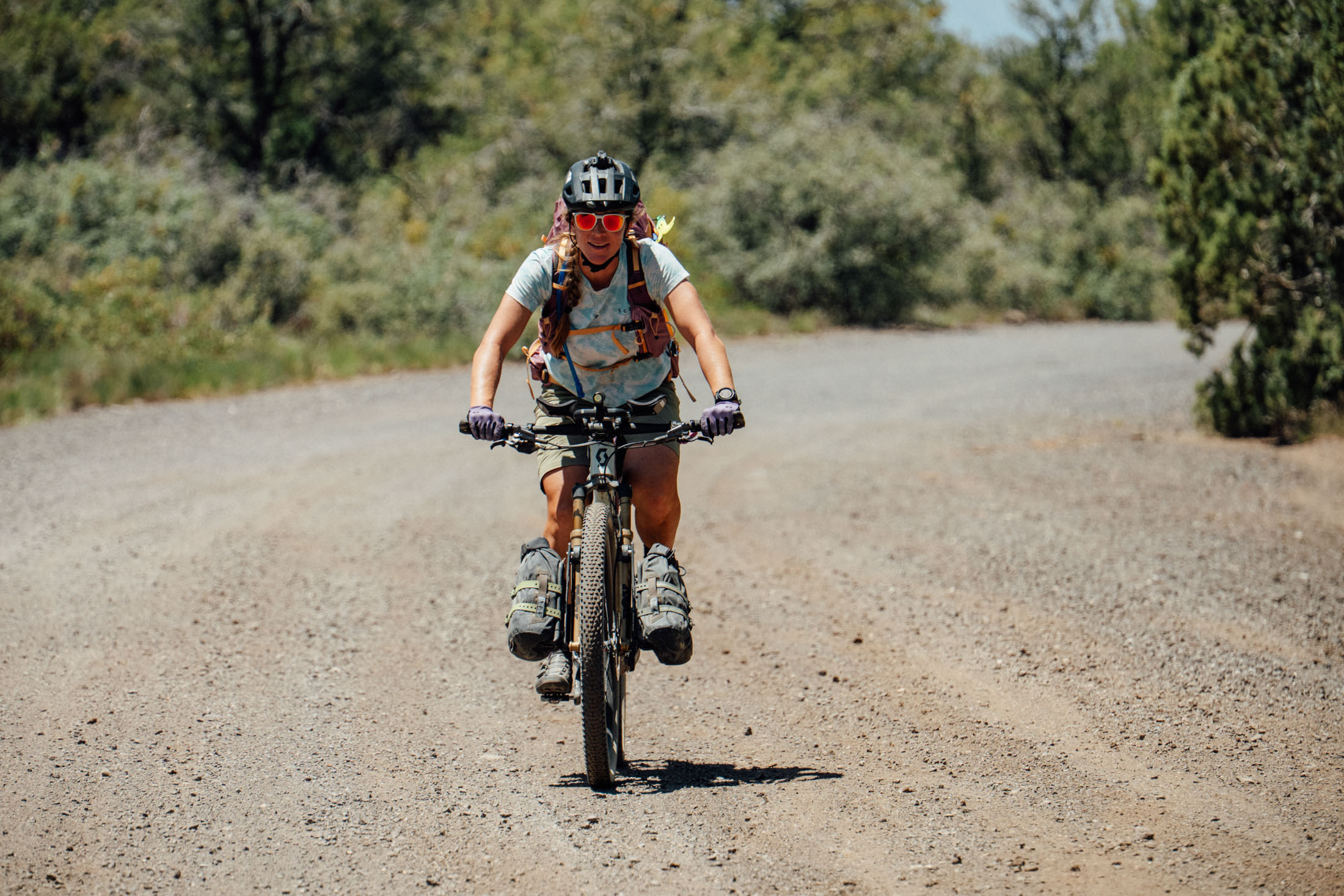
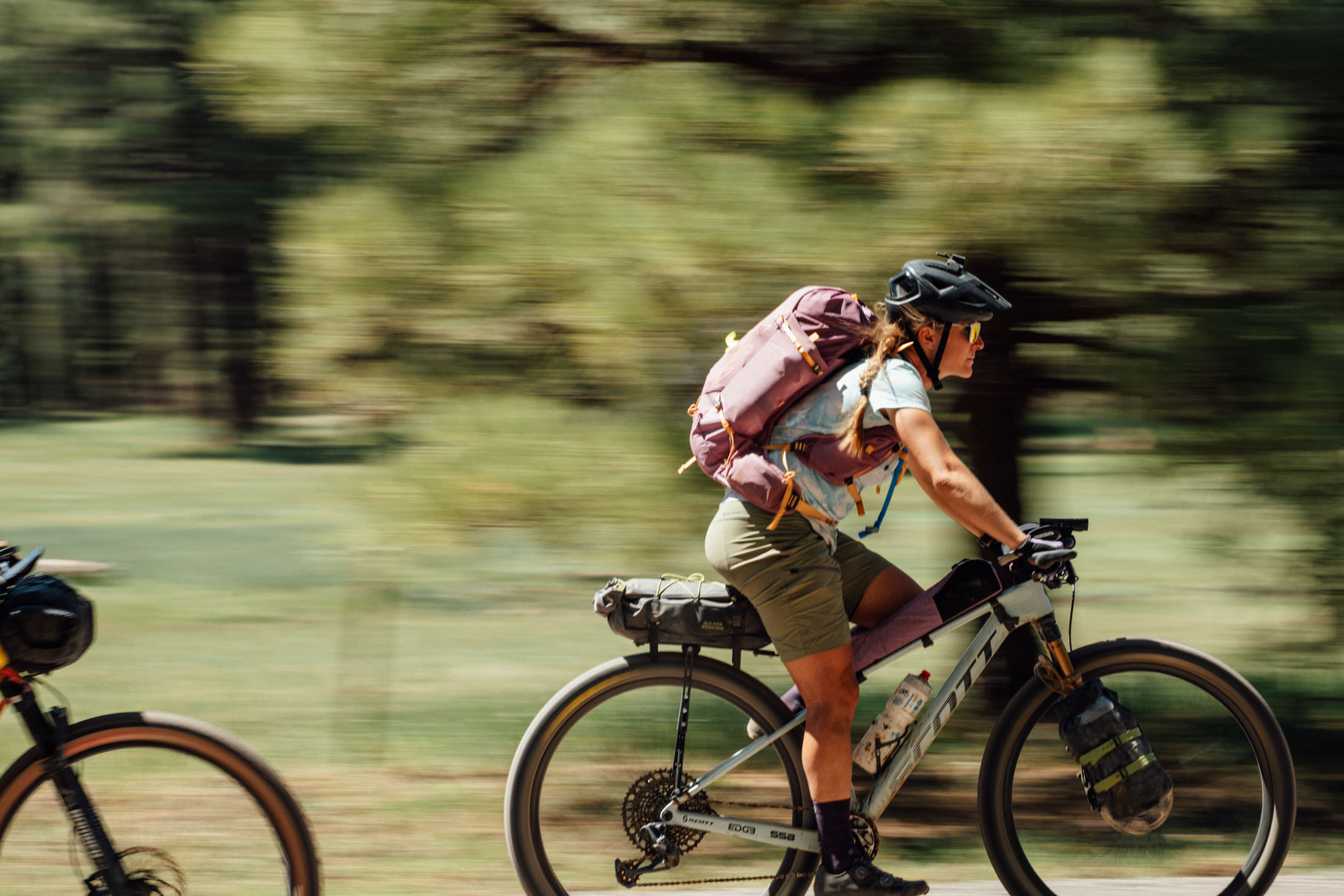
Only after a stumbling hike-a-bike up steep and loose singletrack to tag the summit of Mormon Mountain did I start to resent being on a bike. My thoughts had started to drift from reality, and I think the solidity of the handlebar grips in my palms was the only reason I stayed upright. Beyond the summit, my GPS promised just another 500 feet of climbing to the finish, but that number never seemed to fall even as I huffed up one small hill after another. Long shadows of ponderosa pines cut through the warm glow of golden hour. I thought about how beautiful that probably was, but I didn’t have it in me to appreciate beauty anymore. I probably needed a cookie.
I finally coasted to the finish at dusk, clocking in at 85 hours and 45 minutes, the fastest woman to complete the course.
For the first few days after the race, I wrestled with imposter syndrome. I told myself I was only out in front because some strong and experienced racers had DNFed—that a first-place finish was even possible for me because the pool of female riders at the start line was so small. With more distance from the race, I see that’s still true, but I also see that’s just the nature of unsupported ultra racing. There are so many things that can and do go wrong, from dehydration, digestion issues, sleep problems, crashes, injuries, and all flavors of mechanical issues. On top of that, we’re all out there asking our bodies to pull off this incredible effort. To hit rock bottom and keep pedaling anyway. In some ways, DNFing seems like the most rational choice we can make.
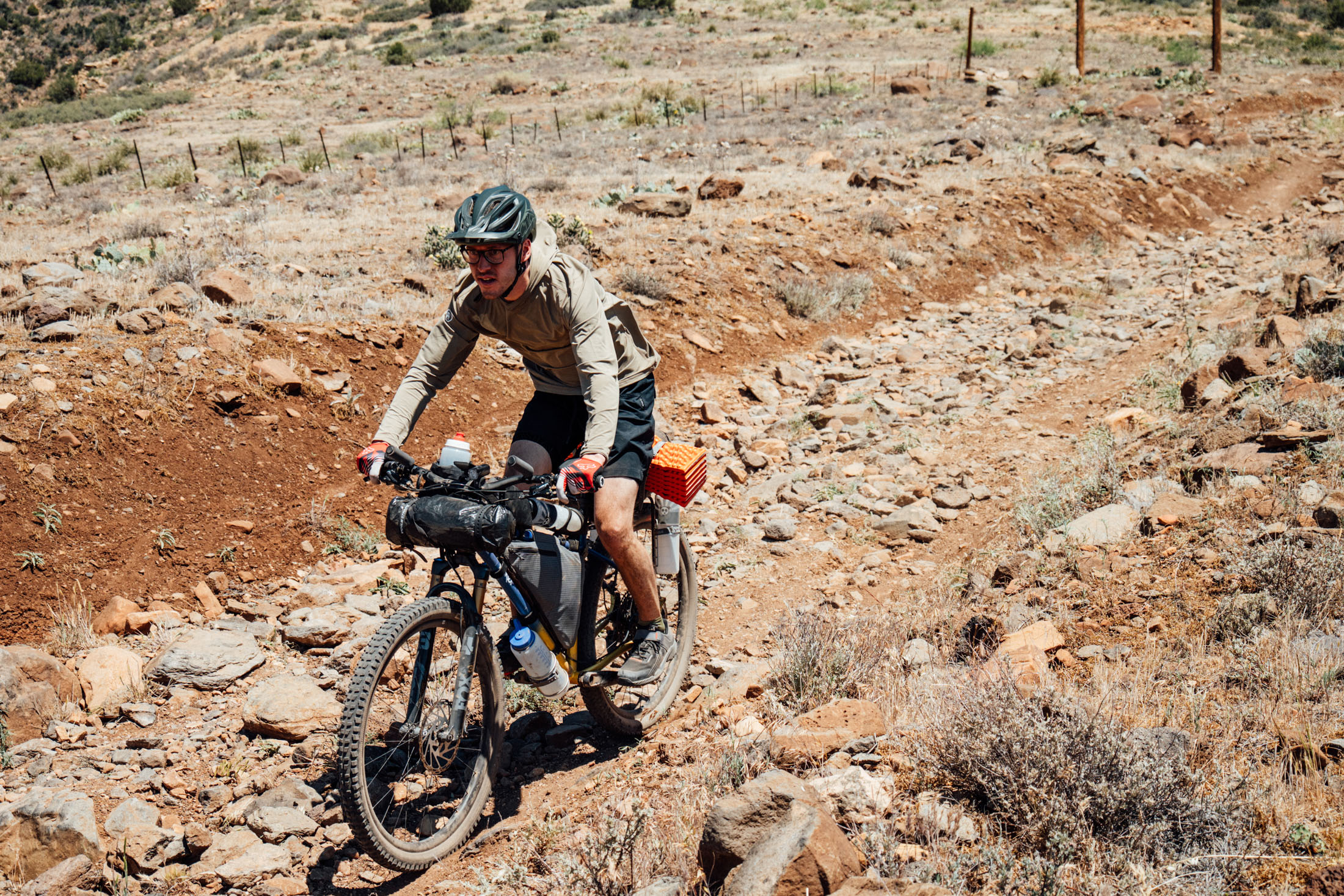
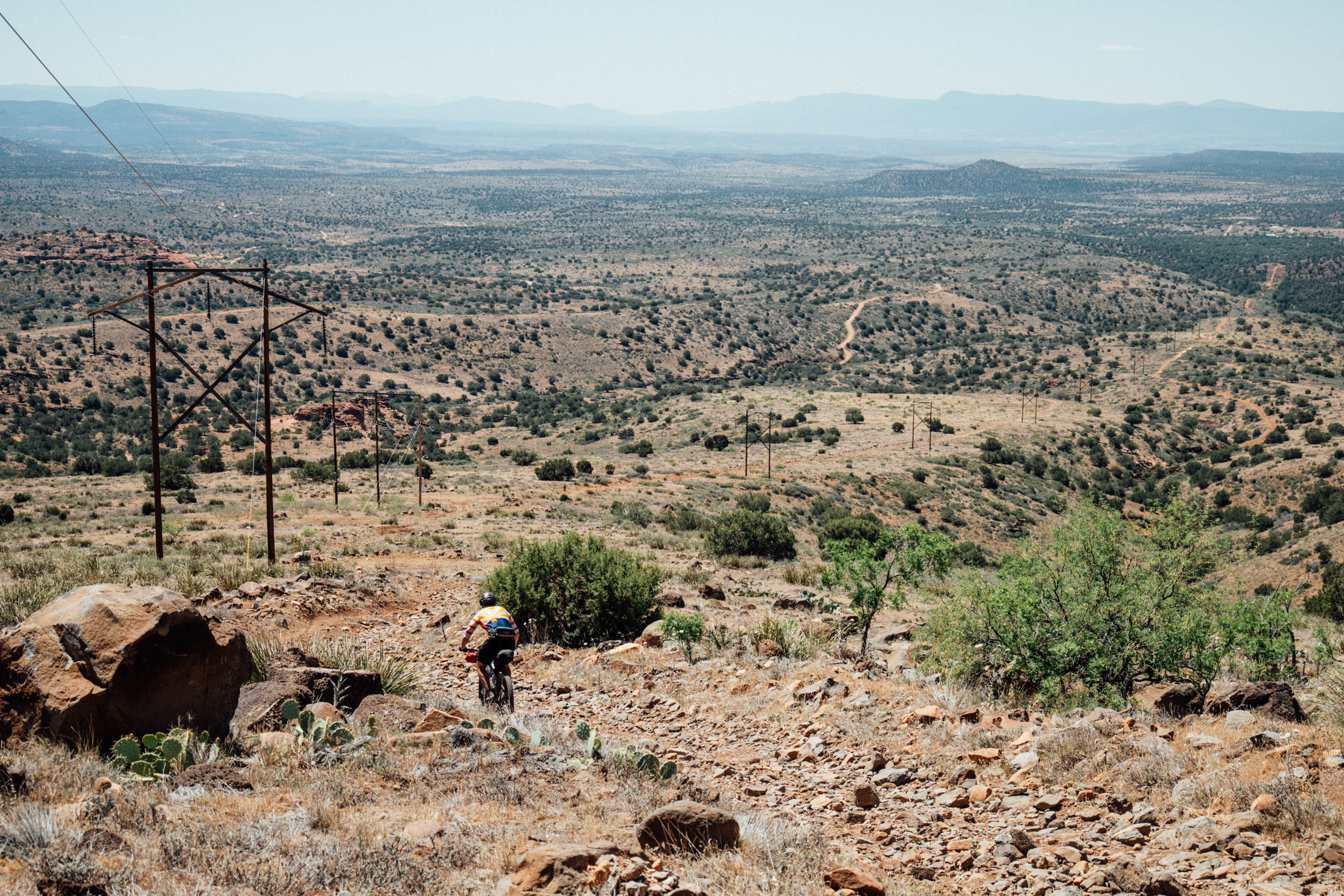
Nearly two weeks out from the race finish, my resting heart rate is returning to normal, but I’m still dreaming of racing every night, waking up sweating through my sheets. Harvest season is here, and I need to upload my new food safety certificate for Whole Foods, but instead I’m listening to podcasts about how to train fatigue resistance and looking up grand depart dates for Doom and Stagecoach and AZT300. I’m totally hooked. I’m hooked on the strategizing and competition as much as I am on the camaraderie of going out there and doing a hard thing all together. I don’t think this will be my last ultra race.
 Check out the 2026 Pinyons and Pines Tracker page for our Rigs Of roundup, winner posts, and more great coverage. Find it here.
Please keep the conversation civil, constructive, and inclusive, or your comment will be removed.