

 Mountain Bike (MTB)
 Gravel Bike
 All-Terrain Bike (ATB)
 Fat Bike

High Velocity Research II: In the Name of Science!

By Friedrich Salewski
Guest Contributor
The second annual High Velocity Research brought together tinkerers and hobby framebuilders who transformed piles of scrap metal into one-of-a-kind bikes made to take on a series of wacky challenges. Find a report from the event in Dresden, Germany, plus a full gallery of unexpected creations and scenes from the chaotic, action-packed day here…
PUBLISHED Oct 27, 2026
Photos by Robert Krügel and Falk Schirmer
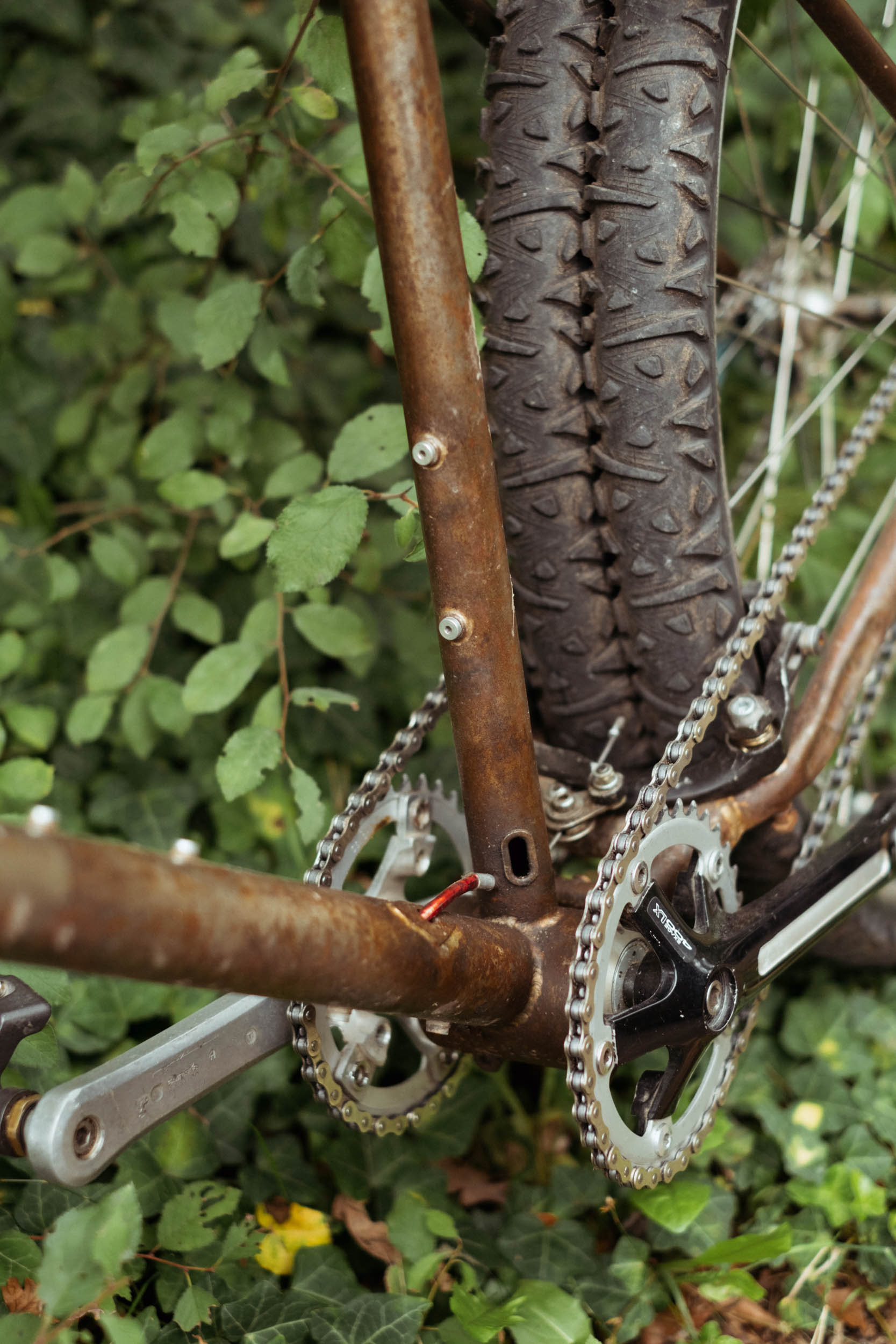
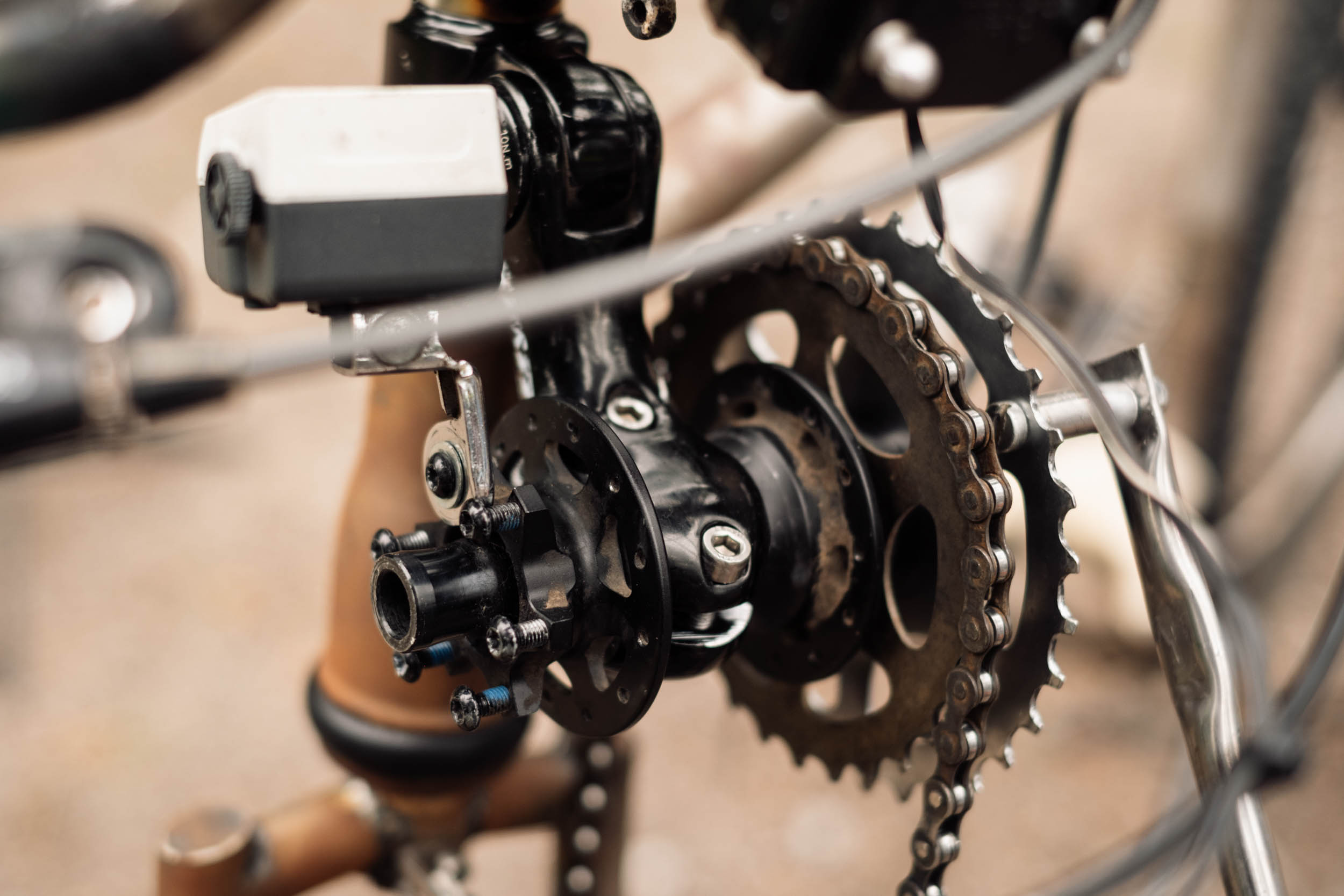
It’s 6:15 a.m. You look at the alarm clock and realize you’ve only slept five hours. You could easily turn over and escape back into the realm of dreams. But there’s one thought keeping you awake, making it impossible to fall back asleep: “How am I going to attach the dropout to the fork, and will I even manage to put the bike together by Saturday?” The race starts in four days!
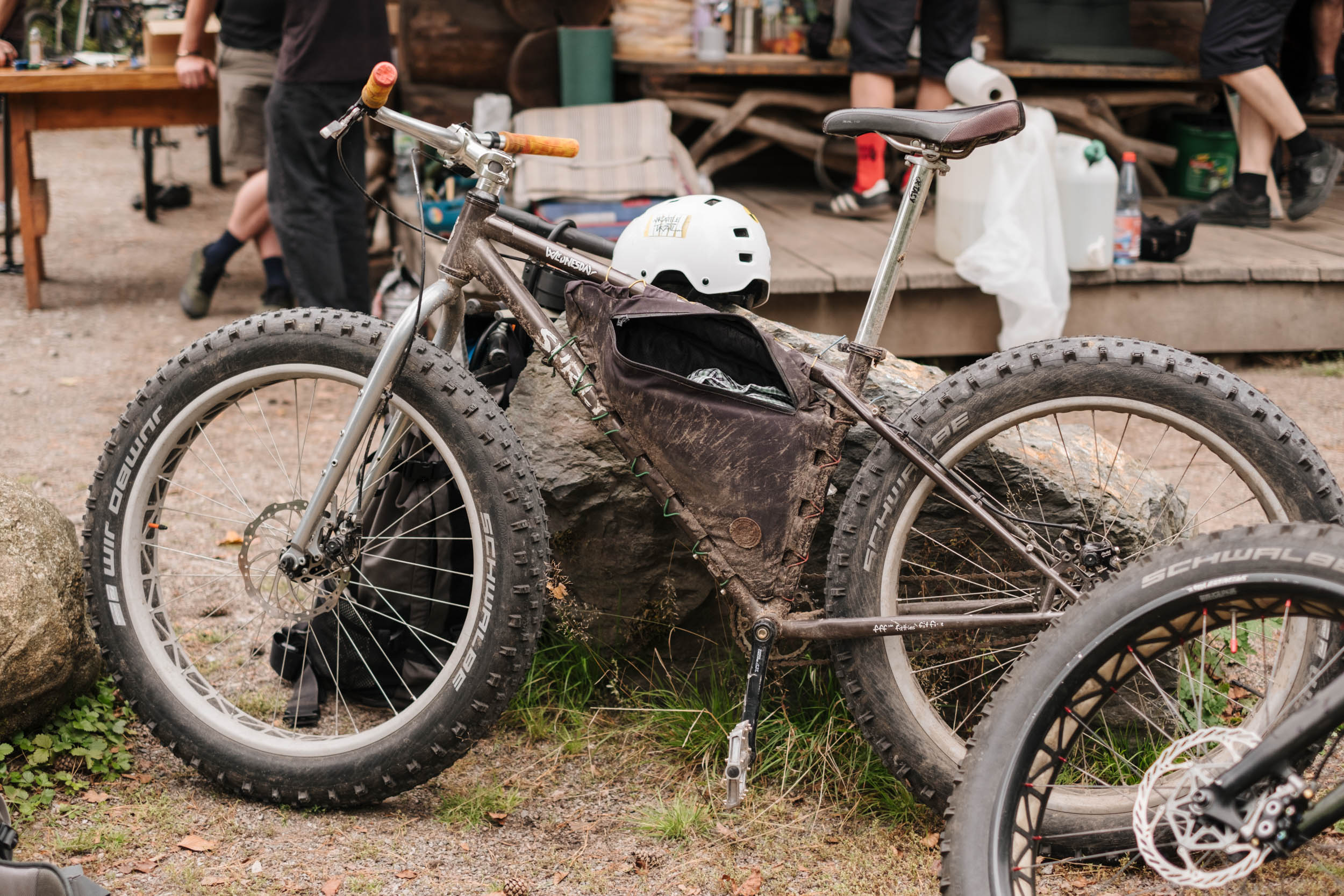
Suddenly, you’re up—tired but full of energy—and your thoughts race, searching for solutions. Or you start dreaming: of speed, wild overtakes, the wind in your face, and innovative technical achievements. And what’s the reason for all of this? High Velocity Research II. But let’s back up to earlier in the year.
At the end of June, a group of bike-obsessed people met in Dresden to kick off High Velocity Research 2026 in glorious summer weather. They gathered conspiratorially at a location inaccessible to the public, known to some as “The Kabuff.” This backyard workshop is considered both a breeding ground for top-secret bicycle experiments and a therapy center for bike-addicted souls.


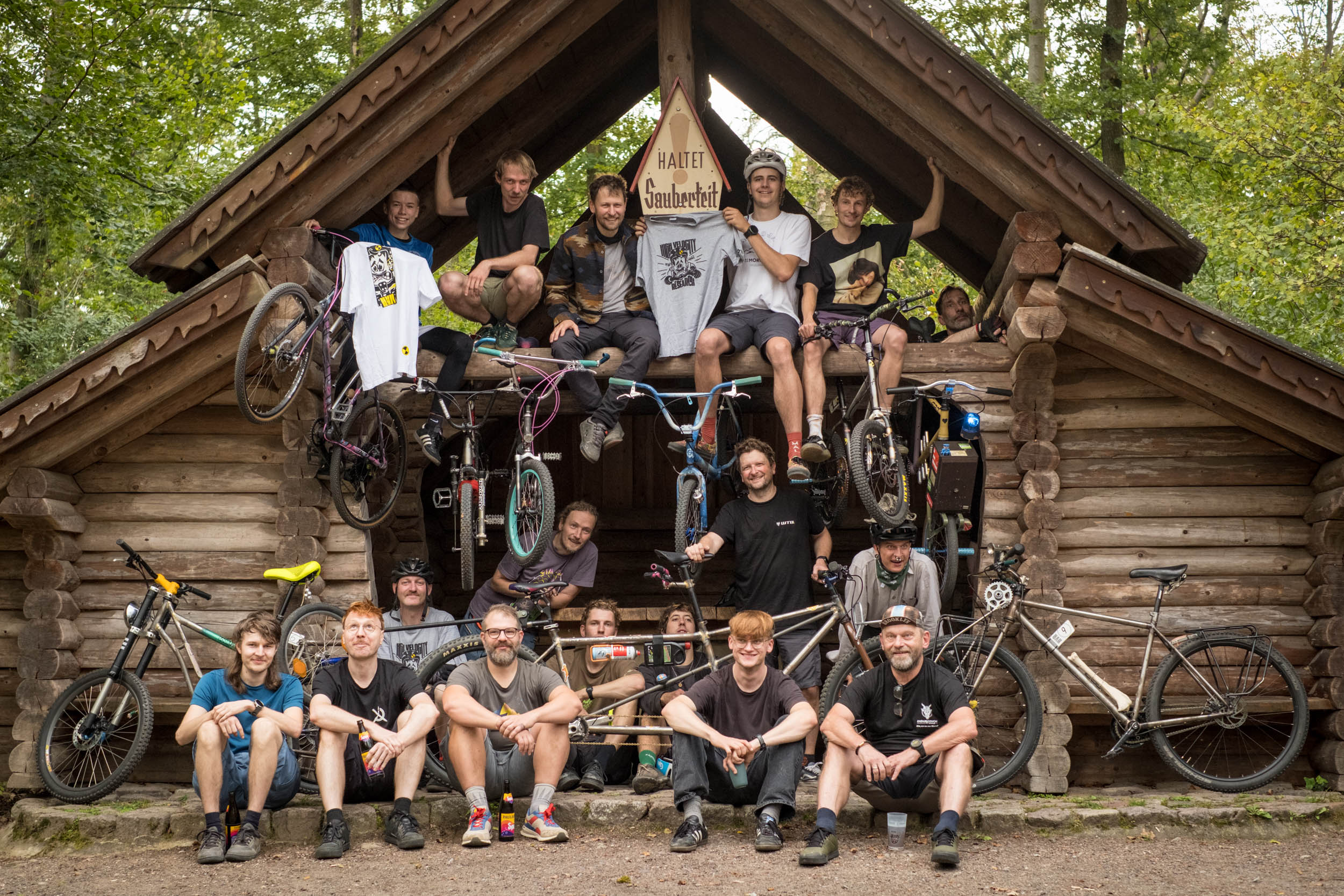
The event began with a gigantic ice cream cake and a group ride through the bone-dry trails of the Dresden Heath. Together, we cooled off in a freezing stream barely two inches deep. Some already knew each other from the previous year, while others met for the first time and started conversations. People had traveled from every direction, braving the blazing heat, all in the name of science.
Back at the Kabuff, the experts—Falk, Marm, Paul, and Toni—began the prepared materials lottery. Every disheveled, sweaty mechanic received a scrap frame and a bag of bicycle parts. They’d been collected from basements, garages, and dusty attic boxes. None had been cleaned or tested to see whether they even worked. Now, the draw would decide everything!

With trembling fingers and eager eyes fixed on the slips of paper in their hands, everyone found out which pile of old metal would become their new property. Some people who couldn’t be there in person joined via live video call so they could inspect their build kit too. Ideas began flashing immediately, and heads started smoking. People whispered about their first concepts, and perhaps a tube or two—or some otherwise useless part—was secretly traded behind the race organizers’ backs.
The day ended with a shared barbecue and plenty of laughter. A sense of conspiracy spread through everyone present. They swore by the manifesto to meet again in three months and bring their hell machines to the test track. Once again, the mission was: “Turn old into new—and make it lightning-fast!” This time, however, the vehicle also had to produce a noise to break through the sound barrier.
Building the Machines
From that point on, workshops everywhere were filled with the sounds of grinding, cutting, milling, bending, welding, soldering, drilling, sanding, filing, polishing, and assembling. Some bikes were finished after what felt like just a week. Others were still being completed on race day.


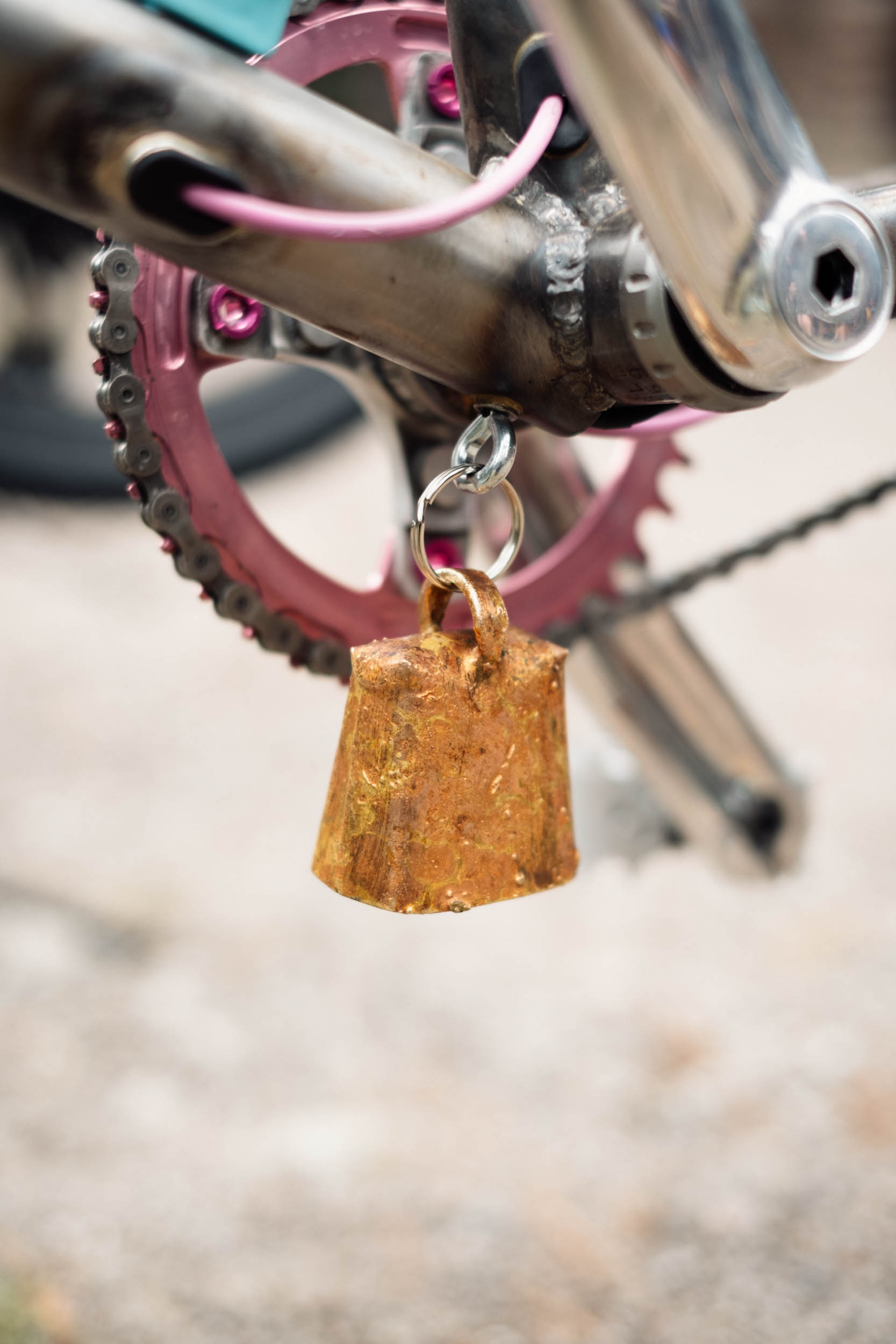
I didn’t have my own workshop, so I was lucky that Hannes opened the Kabuff as an on-site research station. Through his Instagram account, he offered people with less frame-building experience help with both theory and practical work. From then on, we met there at least once a week to develop ideas, discard them, and eventually turn them into reality. Usually, we worked late into the night. One sentence from one of those evenings has stayed with me: “It’s 11 p.m. The perfect time to weld!”
At this point, I want to say a huge thank-you to Hannes for helping me turn my hare-brained idea into reality.
Race Day
On race day, the weather was on our side. The sun shone from a clear sky, and a gentle breeze moved through the forest. The event once again took place at Pfeilhaushütte in the Dresden Heath—a rustic little log cabin in the middle of the woods. Inside, only a few benches and a small stove stood. Thanks to the beautiful weather, we spent the entire day outside. Only at night did a few exhausted, victorious creatures make themselves comfortable under its roof, dreaming of more mischief.
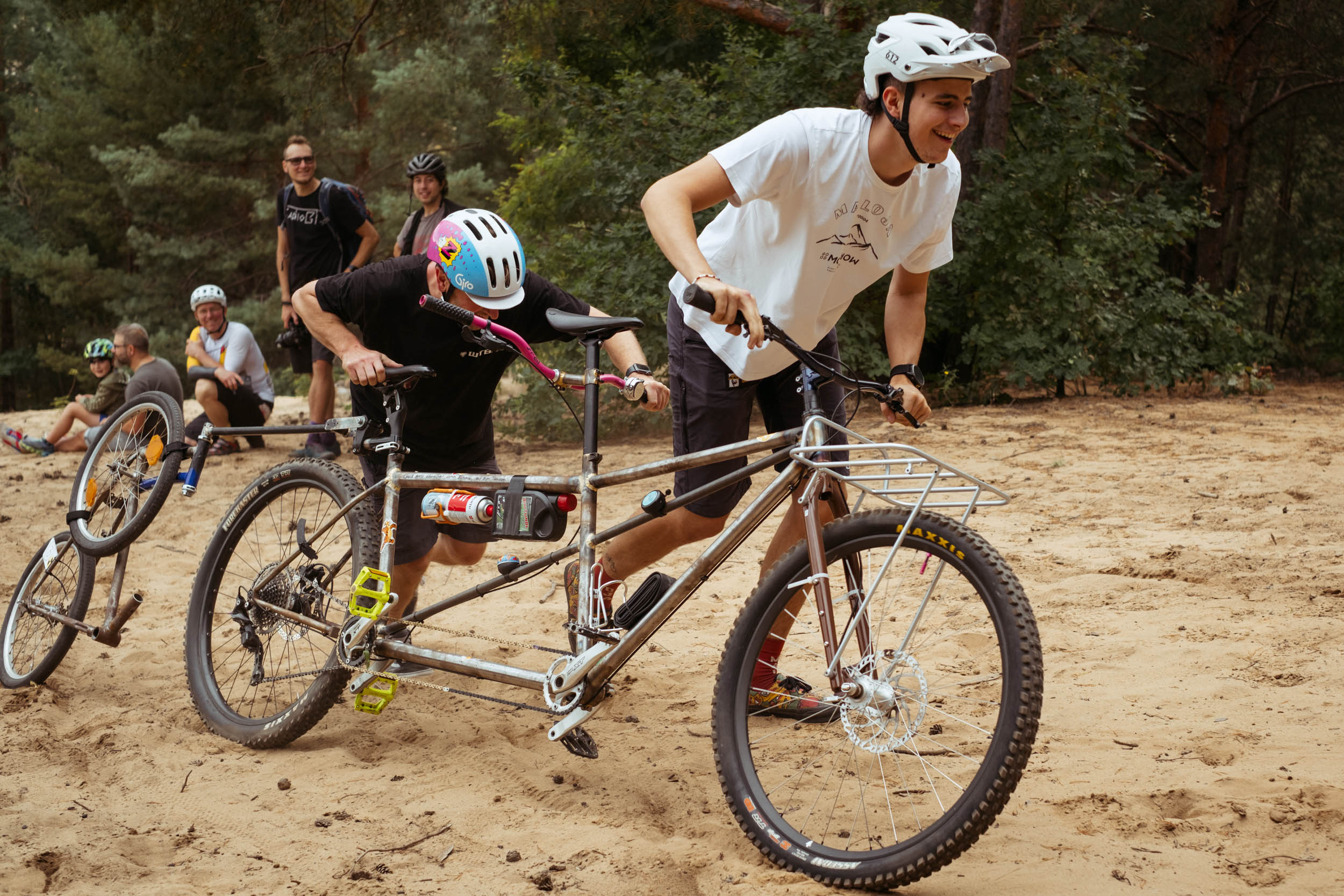
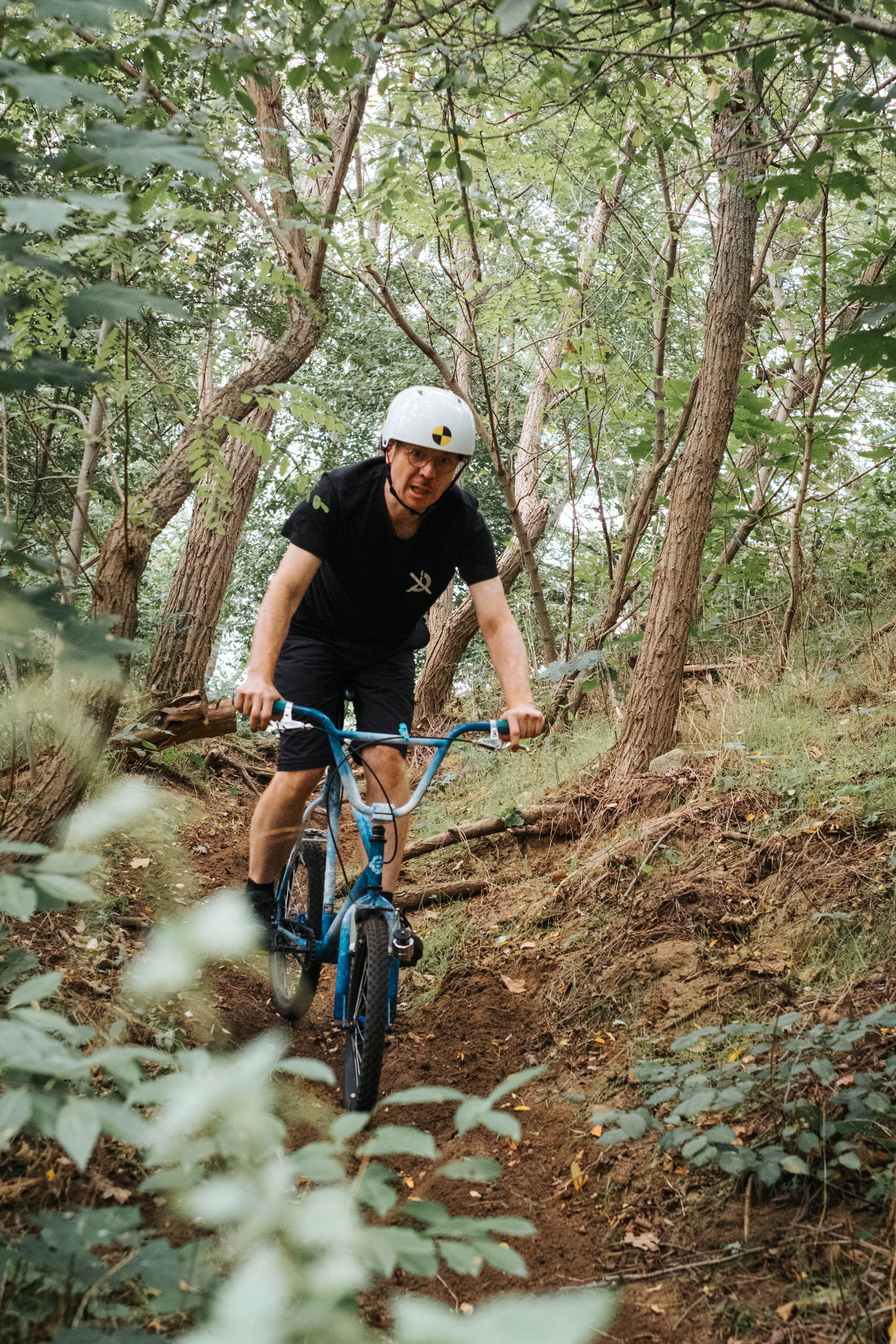
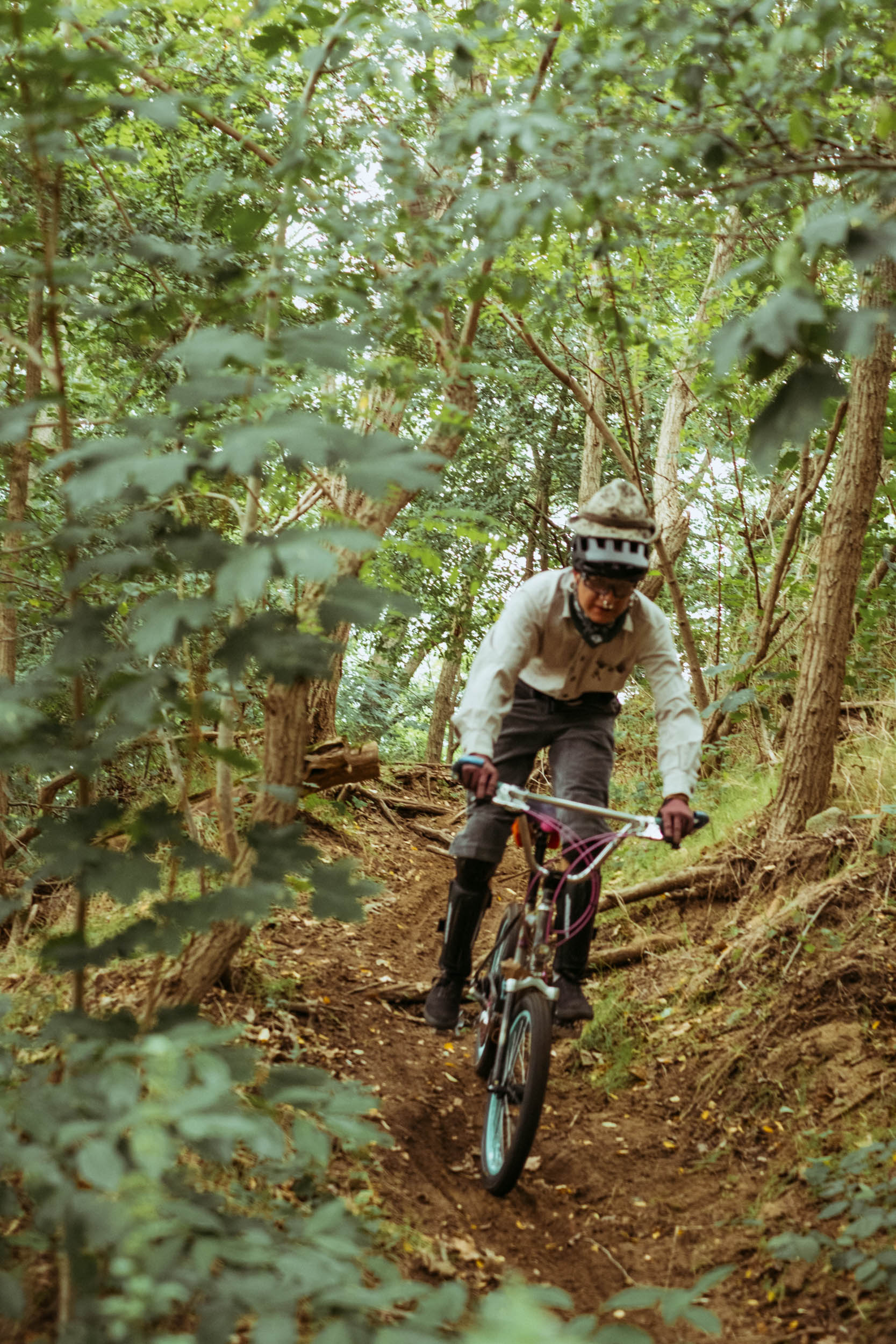
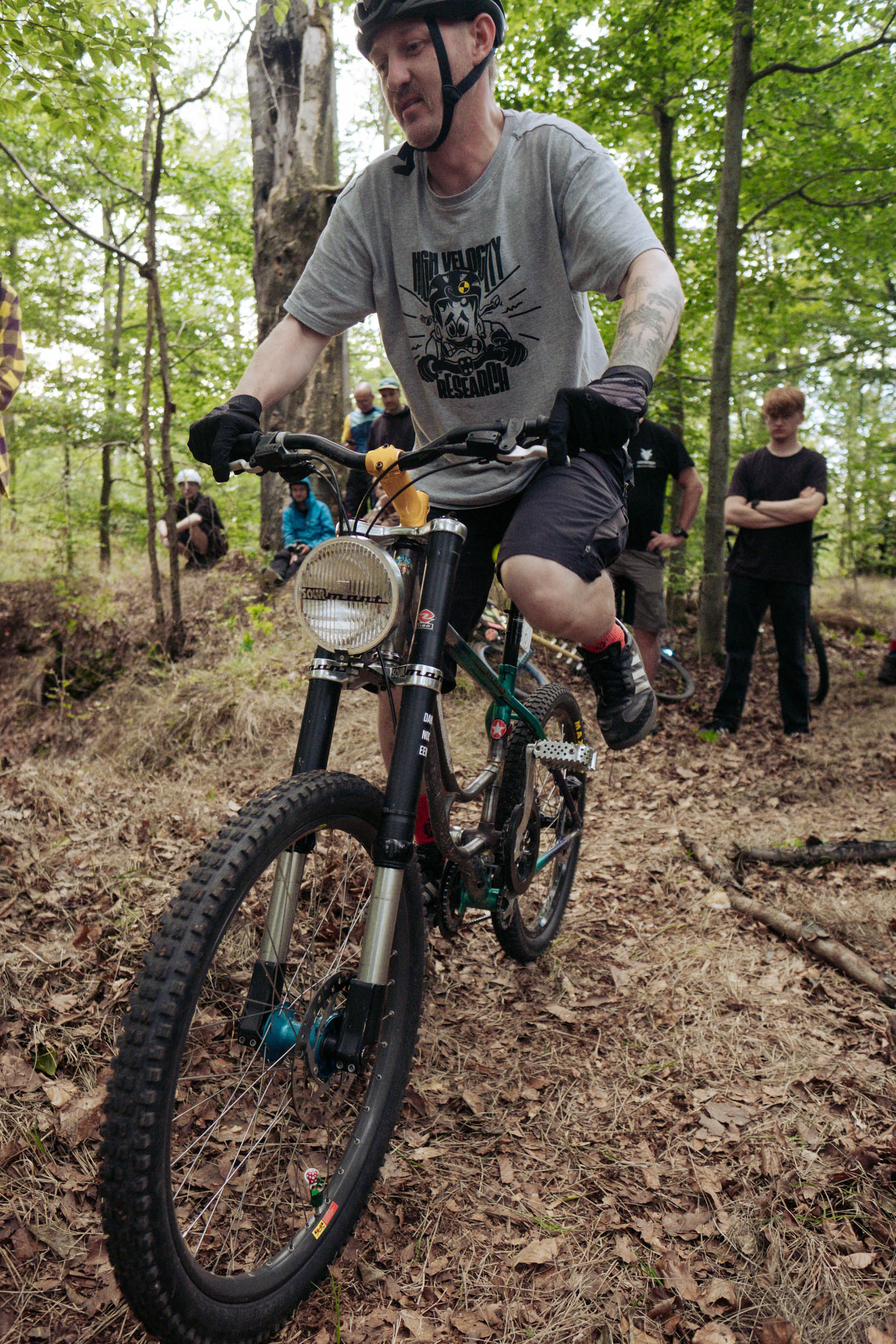
Because it sits in the middle of the forest, the venue offers athletes a wide variety of opportunities. They can use their newly designed, newly built, and possibly never-before-ridden two-wheelers to tackle the trails with nothing but muscle, riding over rocks and roots, uphill and downhill.
This year, another colorful mix of bikes lined up at the starting line. There was:
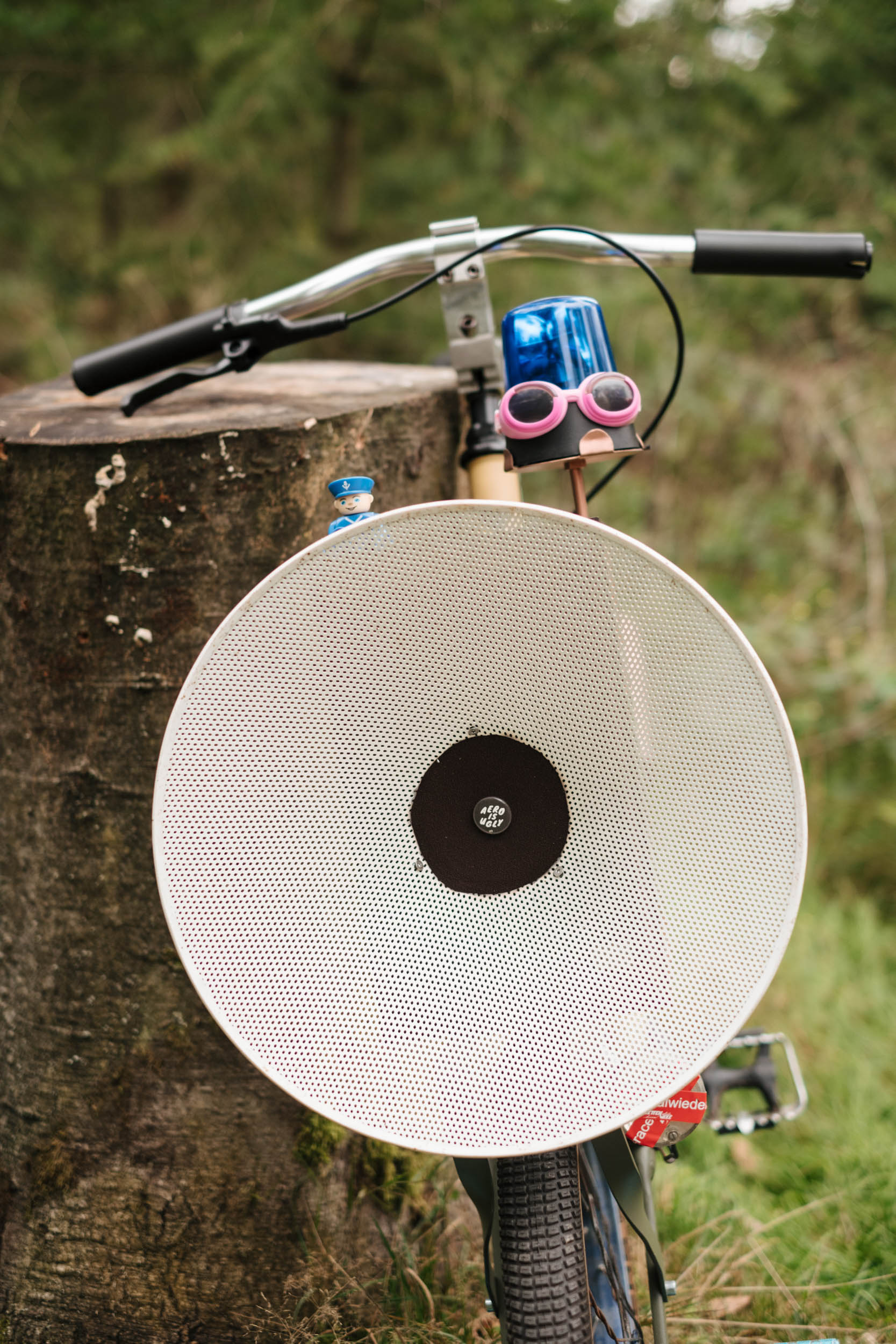
- A speaker truck with a mullet setup.
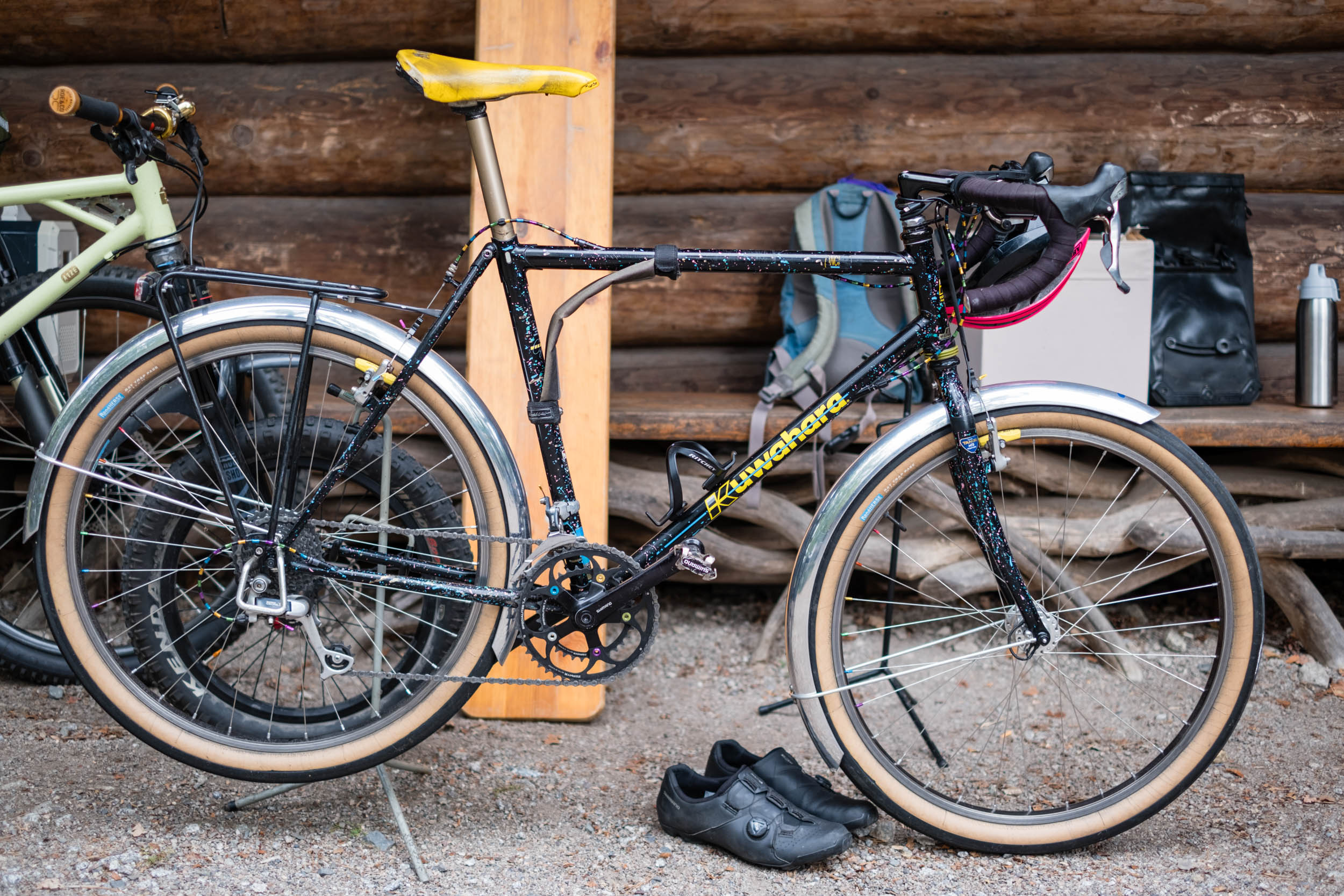
- Five 20-inch mini bikes in a variety of designs.
- A hobby-horsing bike.
- A rideable glockenspiel.
- A mullet monster driven by a secondary chain.
- And, finally, a tandem with extra rear cargo.
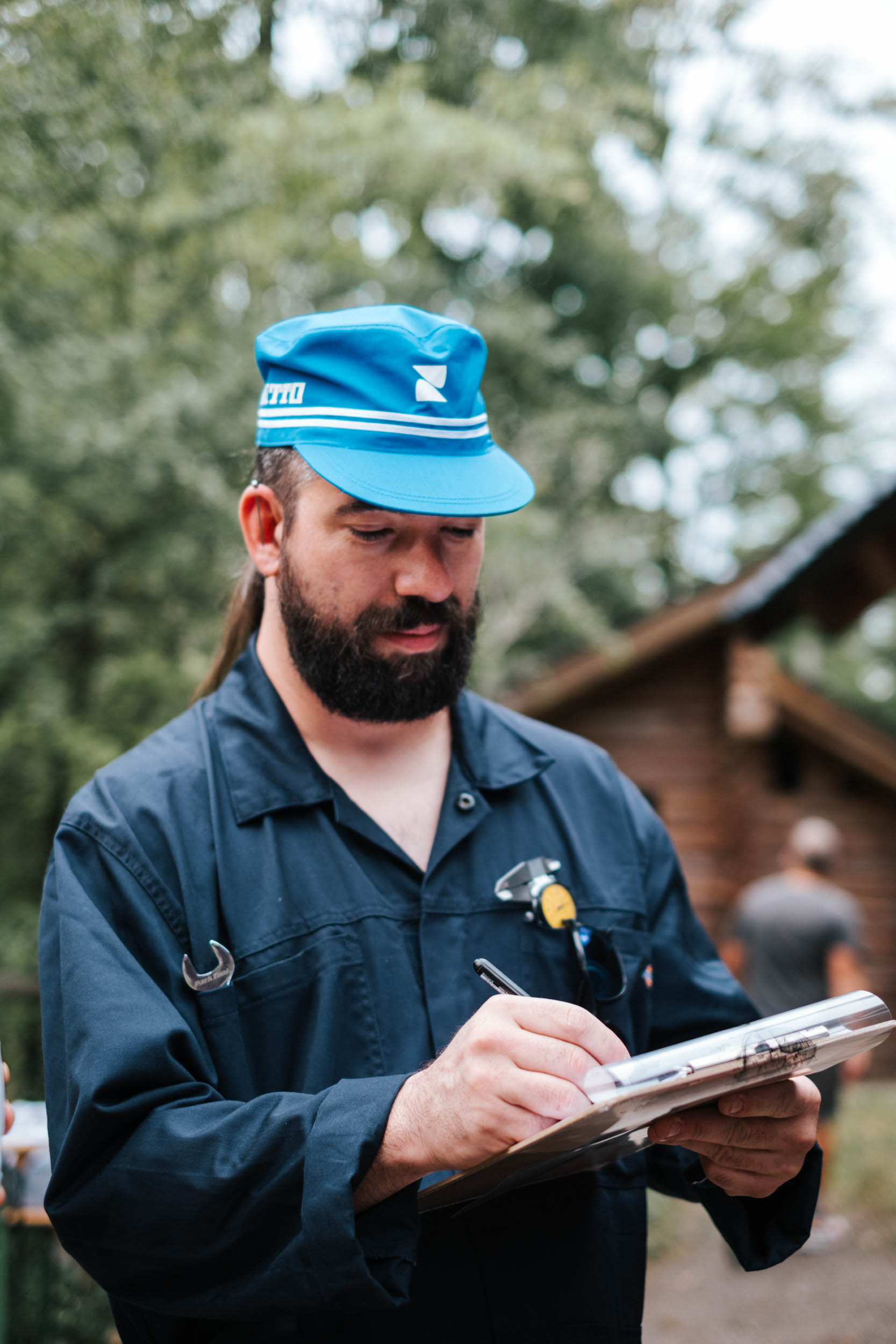
First, every bicycle knight had to present their vehicle for technical inspection. The chief mechanic, Rad Felix, personally checked each bike’s weight, highlight, and most questionable detail. The jury also made sure that the required sound-producing device actually worked.
The sounds included a dynamo-powered speaker that sounded like a UFO coming in for a landing, a bicycle-pump whistle, a metallophone, various bells, a squeaking rubber ducky, a rattling tin can, and many others. Not every sound-producing device survived the first descent, but they all impressed the jury during technical inspection.

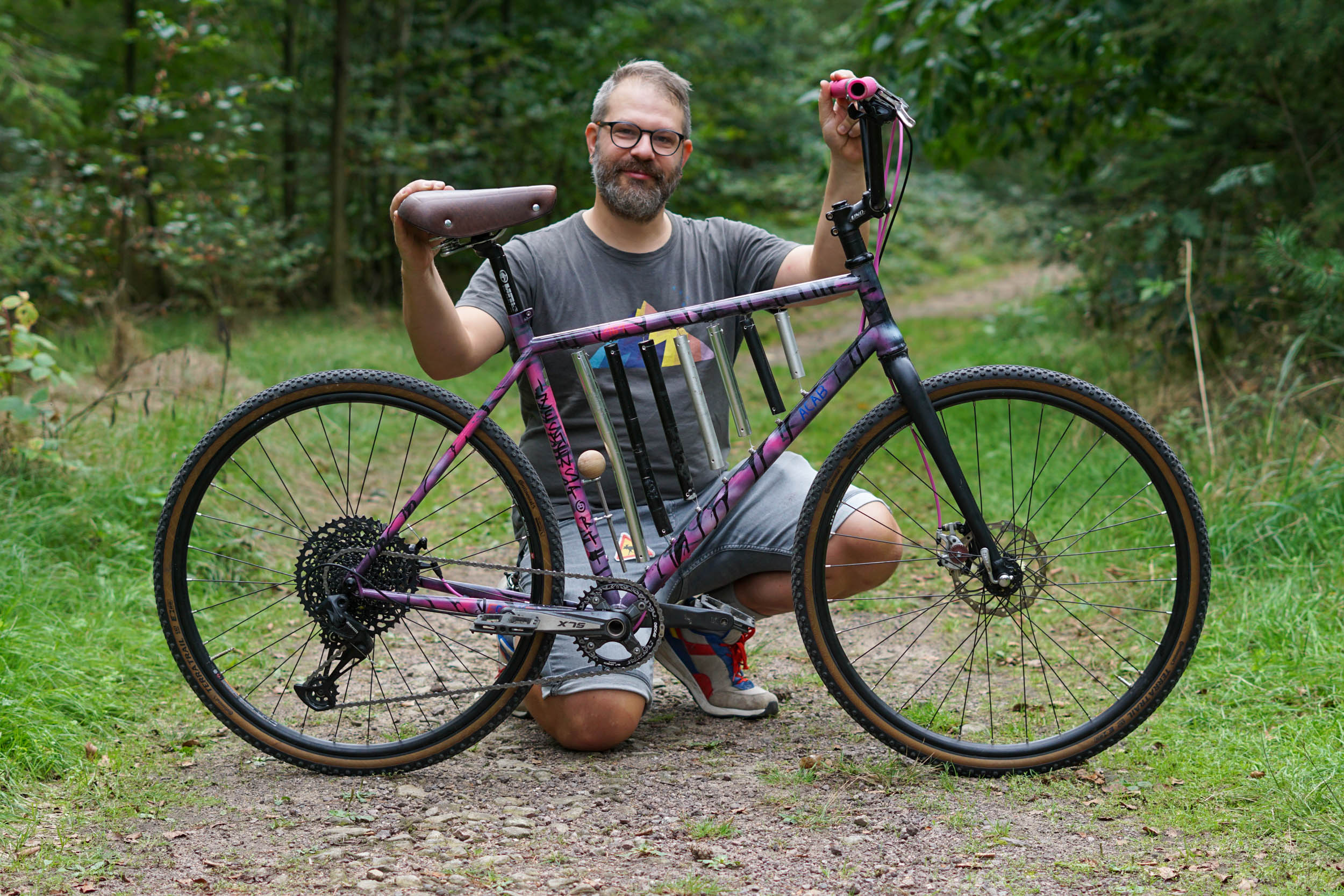

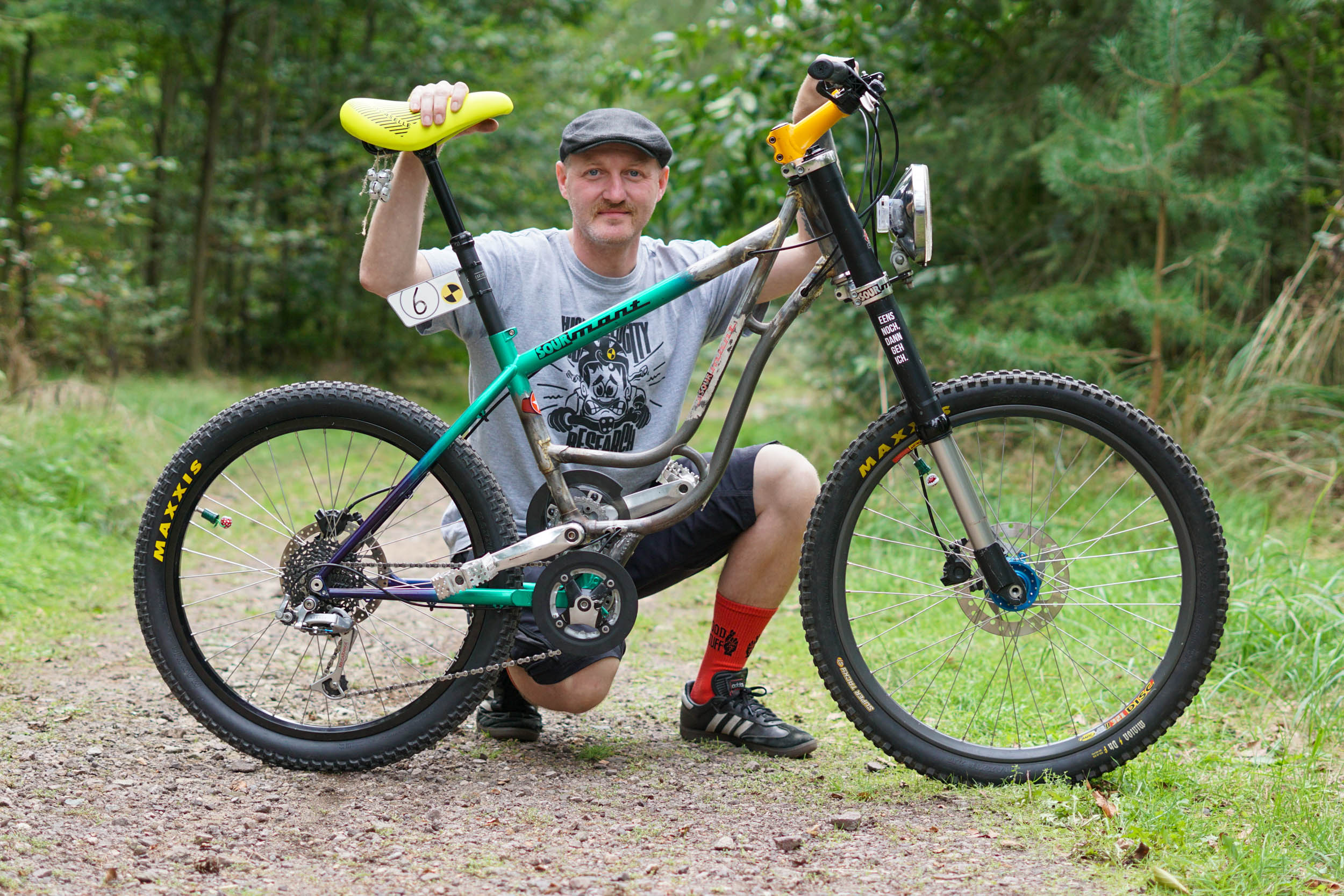
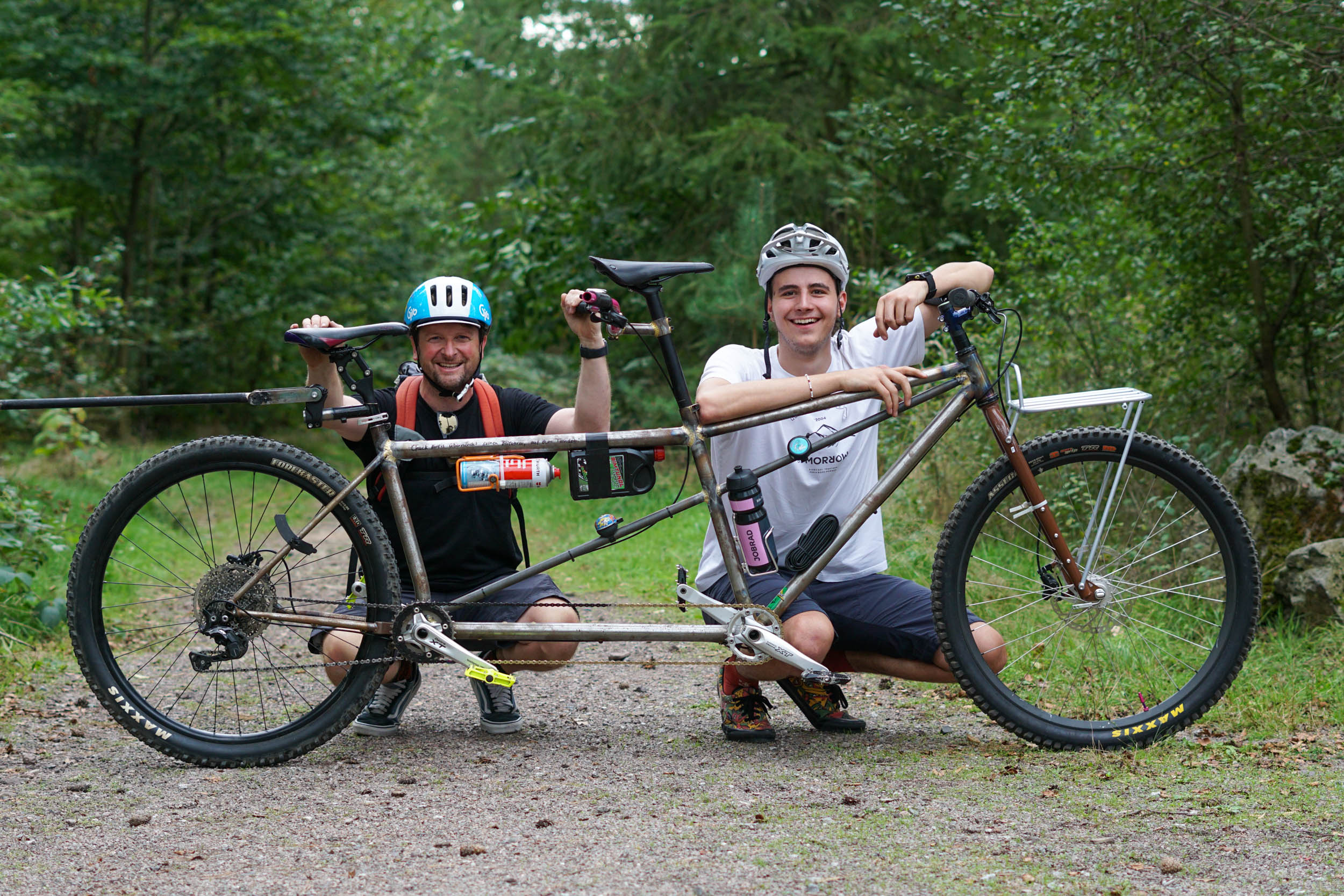
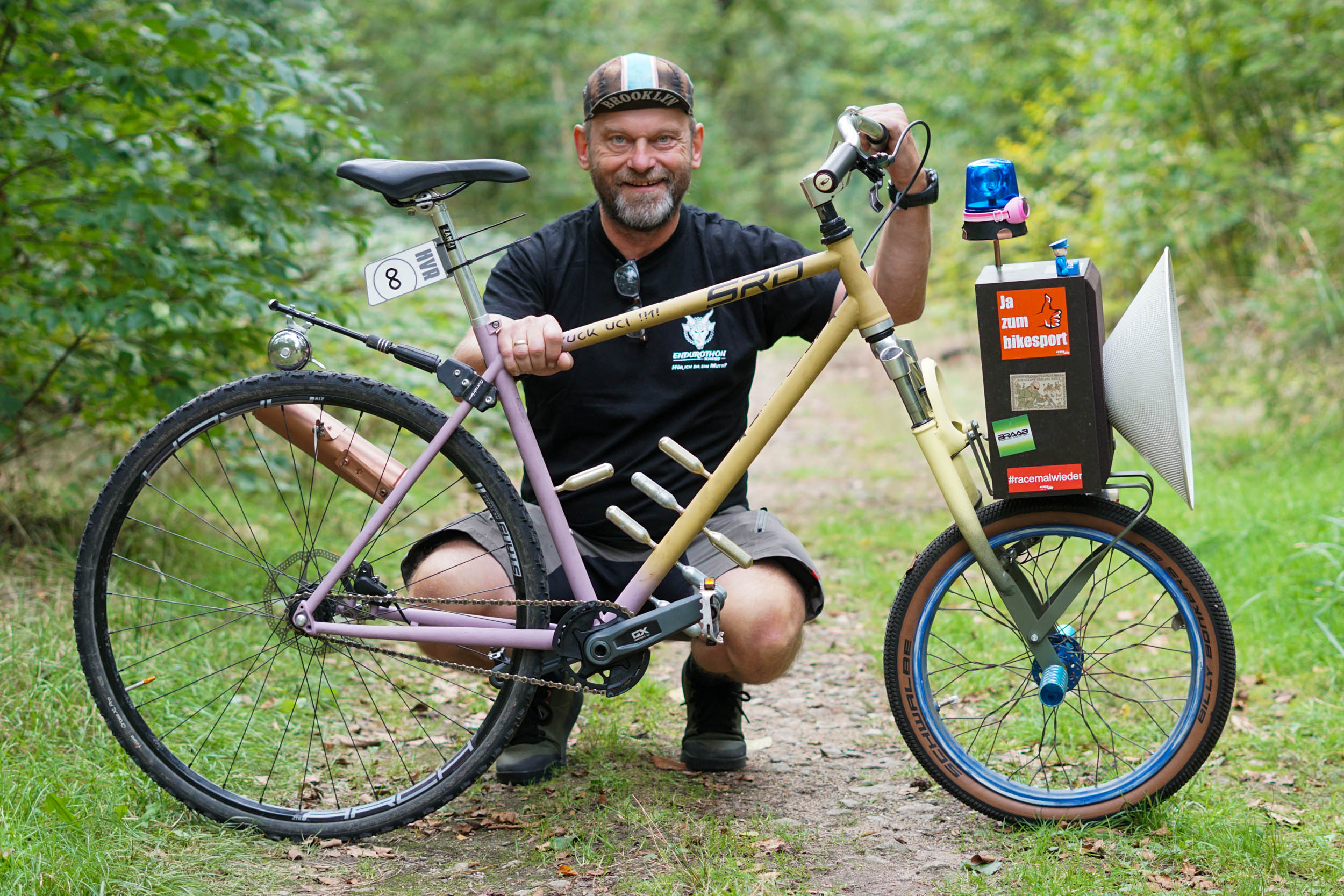


Swipe through the gallery above to see a variety of unique builds.
Then it was time to saddle up. We set off as a convoy along the first trails toward the sand pit. Excavation work takes place there during the week, but over the years, the local cycling scene has built a maze of trails and downhill runs along its edges. For the still-fresh competitors, the hardworking support team had marked out an approximately three-kilometer loop on enchanted trails around the pit. Since this year’s race was contested in pairs, the rule was: one lap per person, two laps in total.
During the pit stop and rider change, an additional challenge emerged: the “tire twist.” The front tire of every bike was marked, removed once, and reinstalled facing the opposite direction of rotation. During this changeover maneuver, the athletes descended into a frenzy, and an everyday task became the deciding factor. Every second counted. Nobody cared whether the tire was properly seated in the rim, whether the valve cap disappeared into the sand, or whether the tire pressure was a little too low for the second lap.


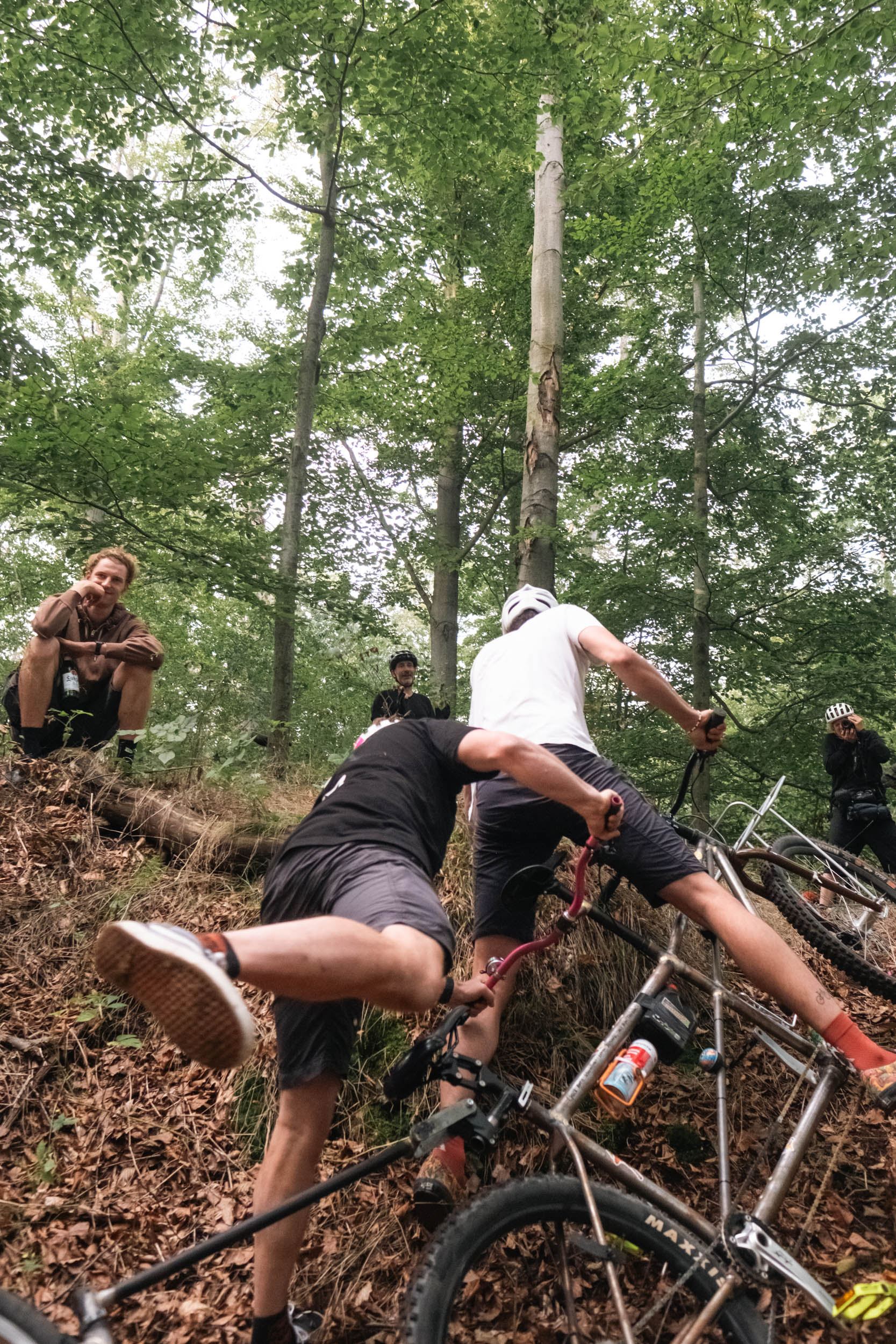
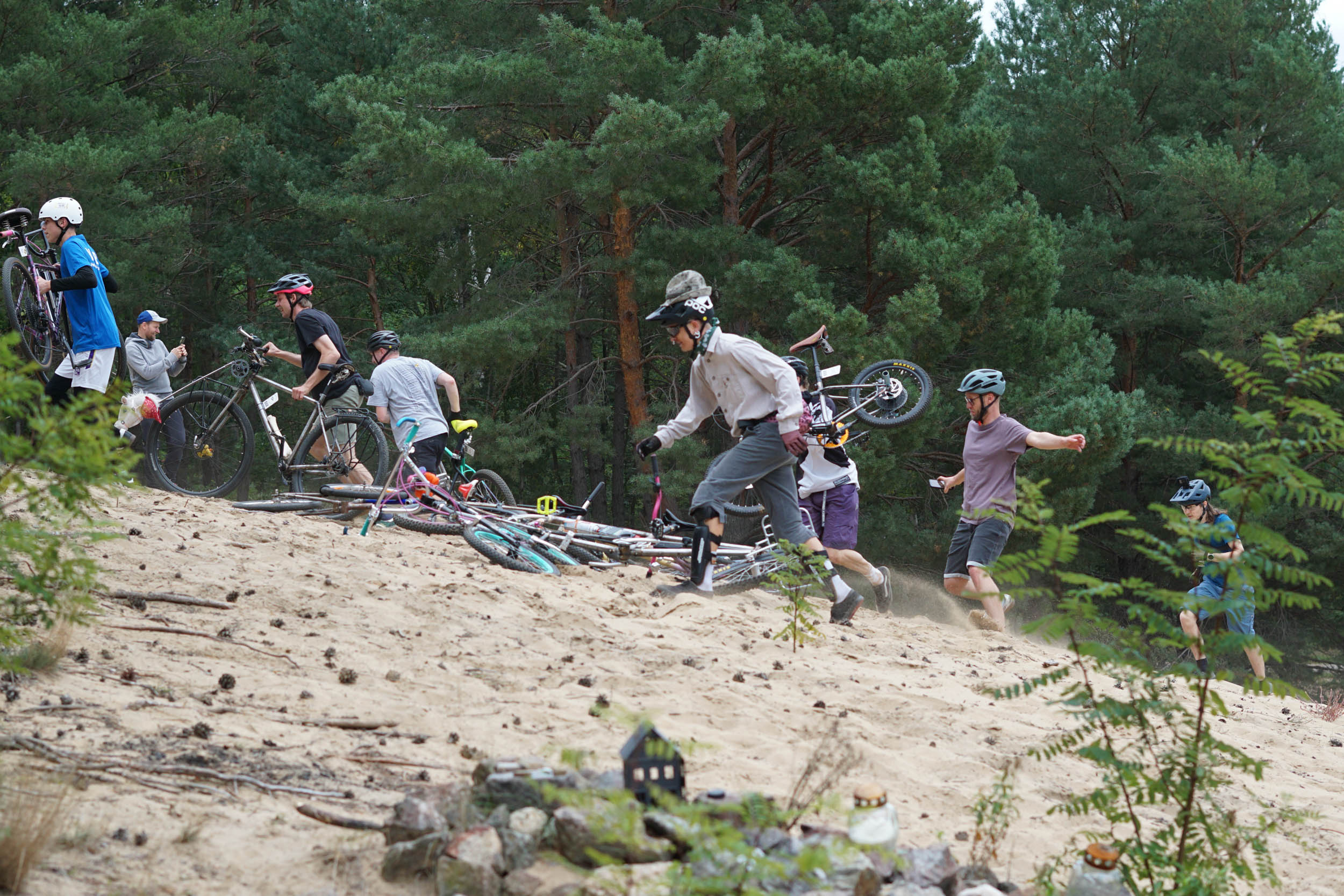
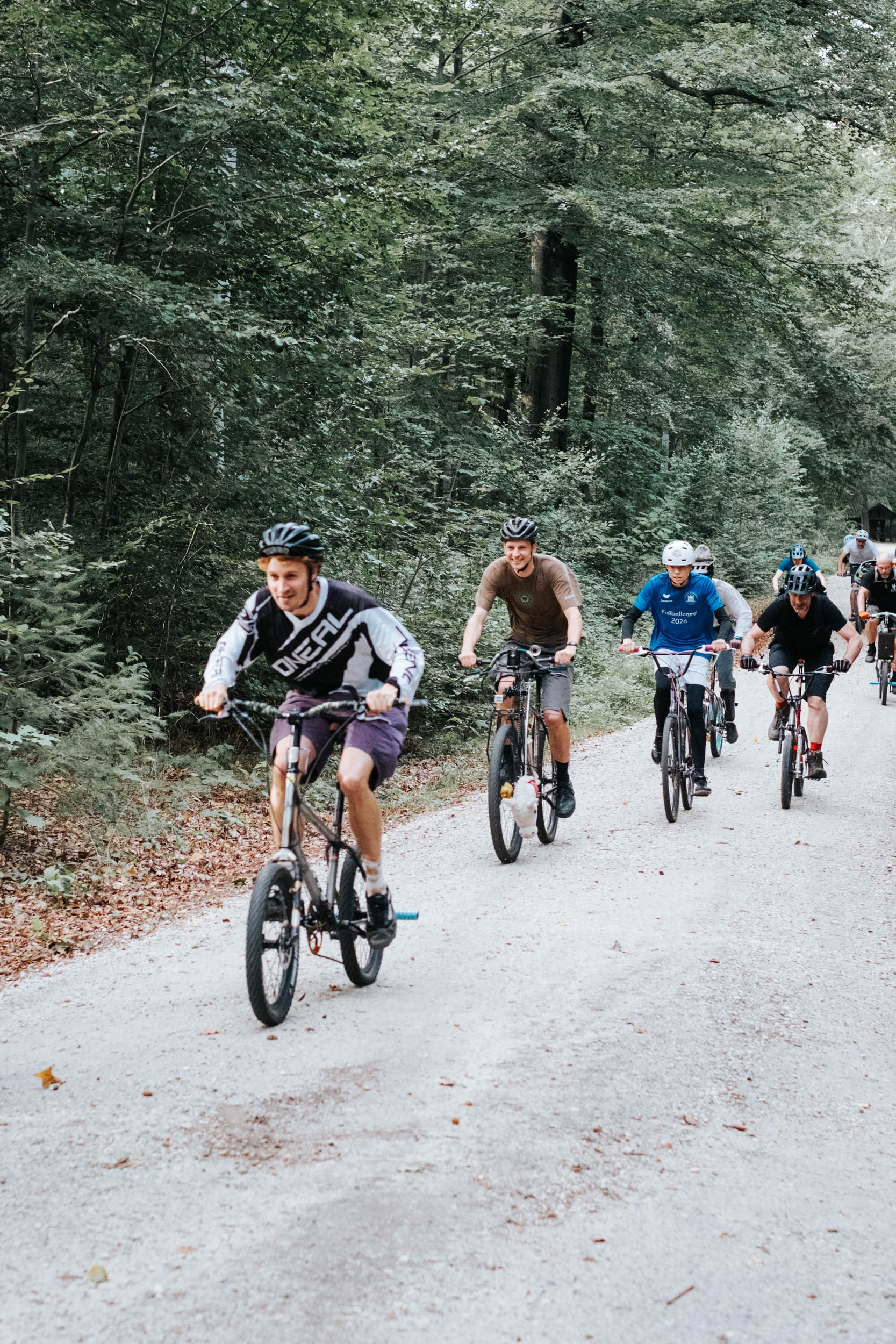
The race began with a Le Mans start. Participants took their positions below a sandy slope while the race organizers lovingly placed their pedal-powered contraptions up the slope, along the route to the starting line. At the signal, everyone sprinted up the hill. Sand steadily filled their shoes, and then they were off on lap one. They waded over rocks and roots, passing startled dog owners. A few riders flew past a turn and lost the chance at a better placing.
In the end, despite their twisted tires, everyone made it to the finish and was cheered on loudly. There was some wear and tear on both people and machines, but fortunately no serious injuries or mechanical failures. As a convoy, we continued along the Prießnitz Valley. This small wooded valley, complete with a stream, stretches into the heart of Dresden’s Neustadt district. Thanks to this natural feature, you can bike from the city to the forest in just five minutes and start a ride into the countryside from there. Whether you’re riding a gravel bike or a mountain bike, there’s something for everyone. Away from the main route, you can always find old and new trails inviting you to explore.
The challenges
At a larger trail junction, the participants faced the next challenge: climbing a 600-meter ascent in record time. The teams briefly discussed which rider would start on the bike, then set off at 30-second intervals. Riders could be pushed at the start, as long as they could maintain the pace. Everyone pushed with all their strength until their feet could no longer keep up.
The only exception was the tandem team, who powered up the hill together, hammering the pedals like a steam locomotive. After this physical ordeal, we headed back toward Pfeilhaushütte. Just before the finish, the organizing team had designated another section for a sprint race. The already battered, sweaty riders lined up again and gave it everything they had. Once the dust settled, everyone was pedaling wildly. Thanks to a brief moment of collective confusion on the course, the lead group thought they had already reached the finish, but they were wrong. There was still a little farther to go!
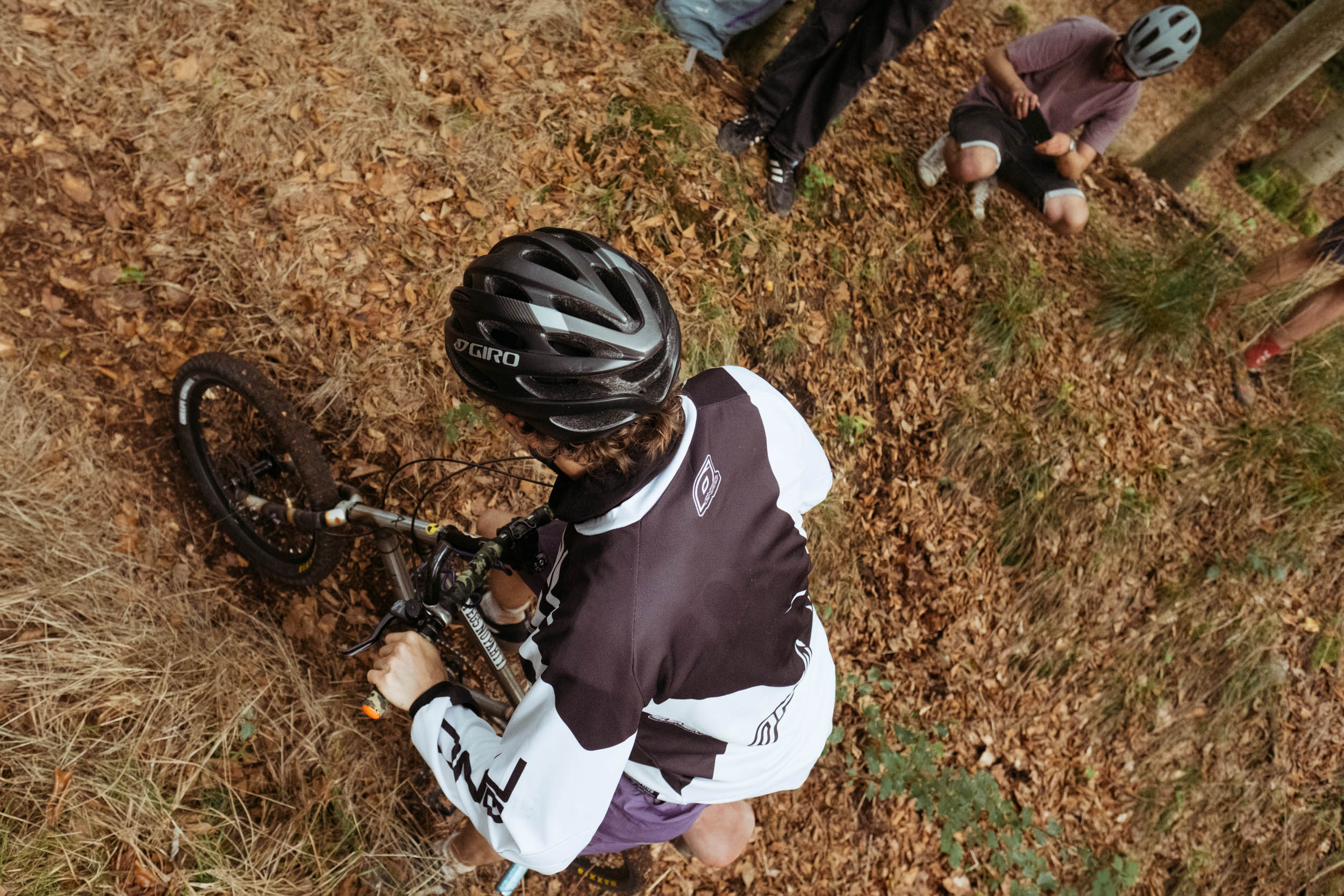

The participants’ faces lit up during the final stretch toward Pfeilhaushütte. The physically demanding part was behind them now, and cold drinks were waiting. After a short break with lemonade and the first beer, the call went out once again: “Everyone back on your hell machines. You still have to go through the hole.”
Those who had taken part the previous year already knew what was coming. At an old bomb crater, a clever mole had built a figure-eight trail course. One final test of skill awaited the riders: pedaling over roots and wooden blocks, under branches, and around trees.
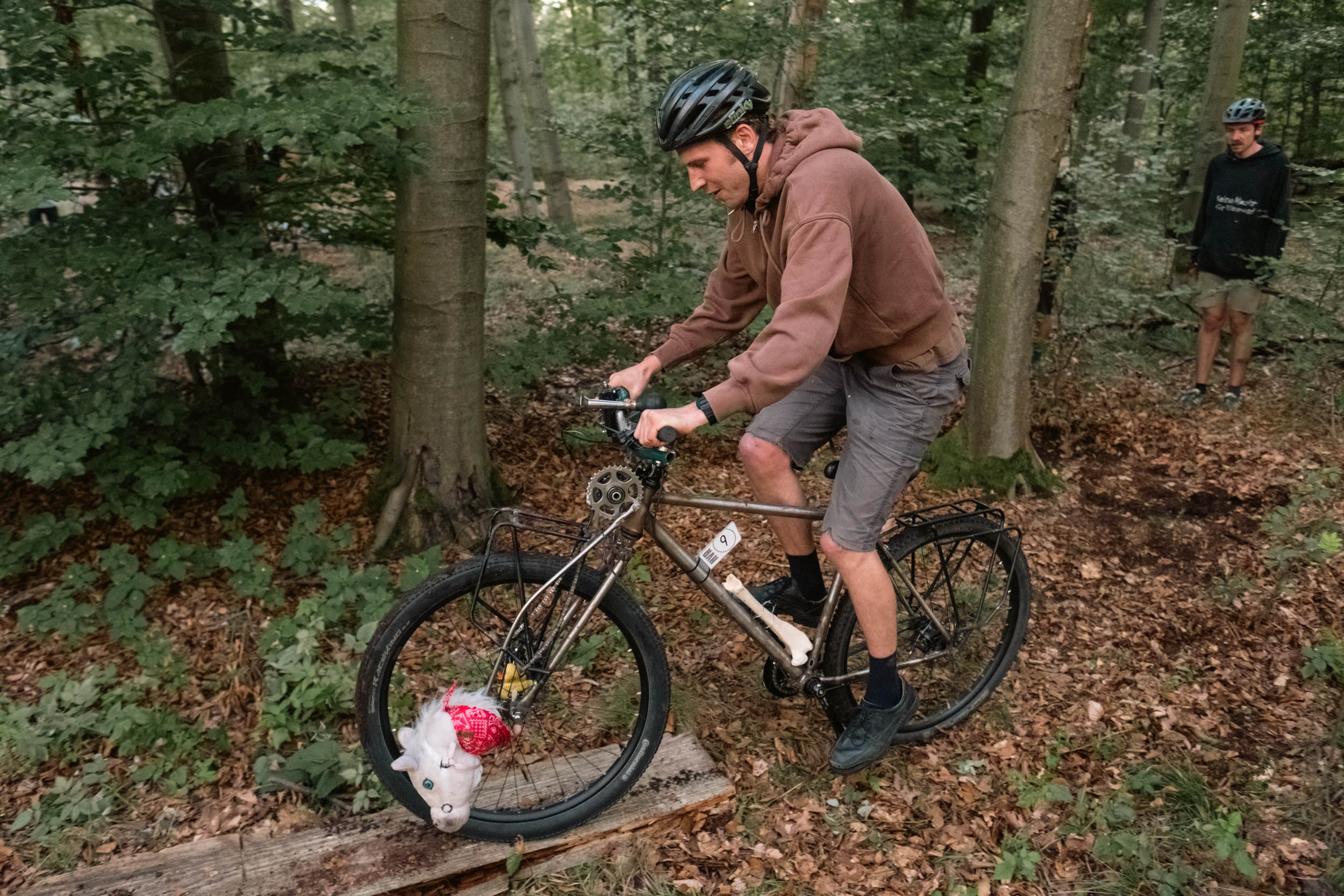
As always, the highlight was riding through “the hole.” To the crowd’s cheers and jeers, every participant fought their way through. Only a few made it up the steep exit. With each attempt, the ruts grew deeper. As the sun sank behind the trees and turned the forest orange, all the racers—and a few brave spectators—fought through this final challenge.
Exhausted but happy, everyone returned to the cabin. The grill was already fired up, and a wonderful meal of seitan steaks, flatbread, vegan potato salad, and vegan tzatziki was waiting. Everyone got their fill, and afterward they rested their battered legs by the campfire with full stomachs. Around the fire, conversations turned to tire compounds, failed overtaking attempts, and other bicycle-related matters.
Meanwhile, the jury met inside the cabin to evaluate the race. After much deliberation, they called everyone together for the awards ceremony. Everyone received a prize, whether they won the loop race or the sprint, built the best show bike, created the strangest sound, or showed the greatest physical commitment. Once again, this event’s incredible sense of community was clear. Everyone was cheered and celebrated, and everyone’s participation was appreciated. That kind of atmosphere isn’t found everywhere, but here it is simply a given.

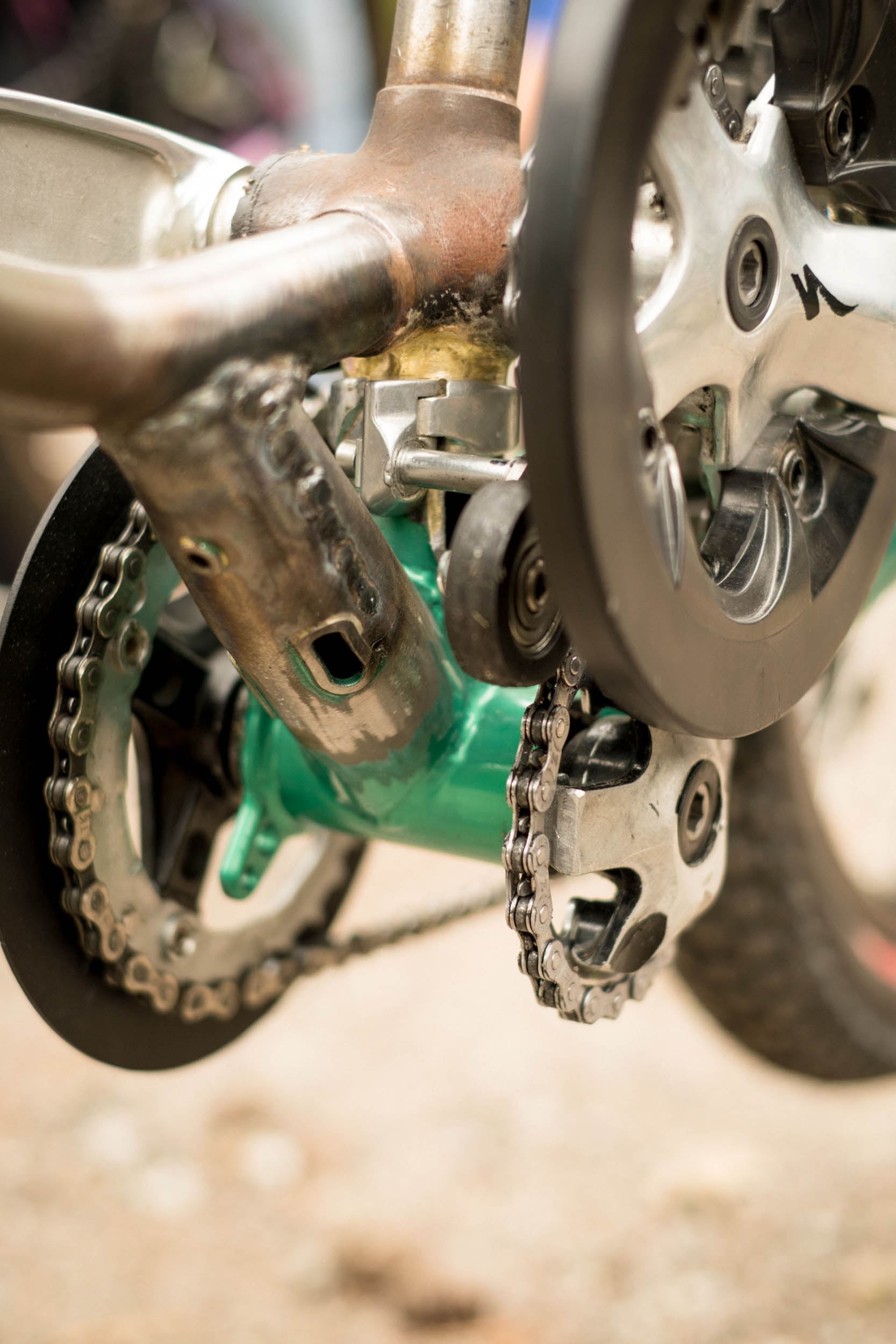
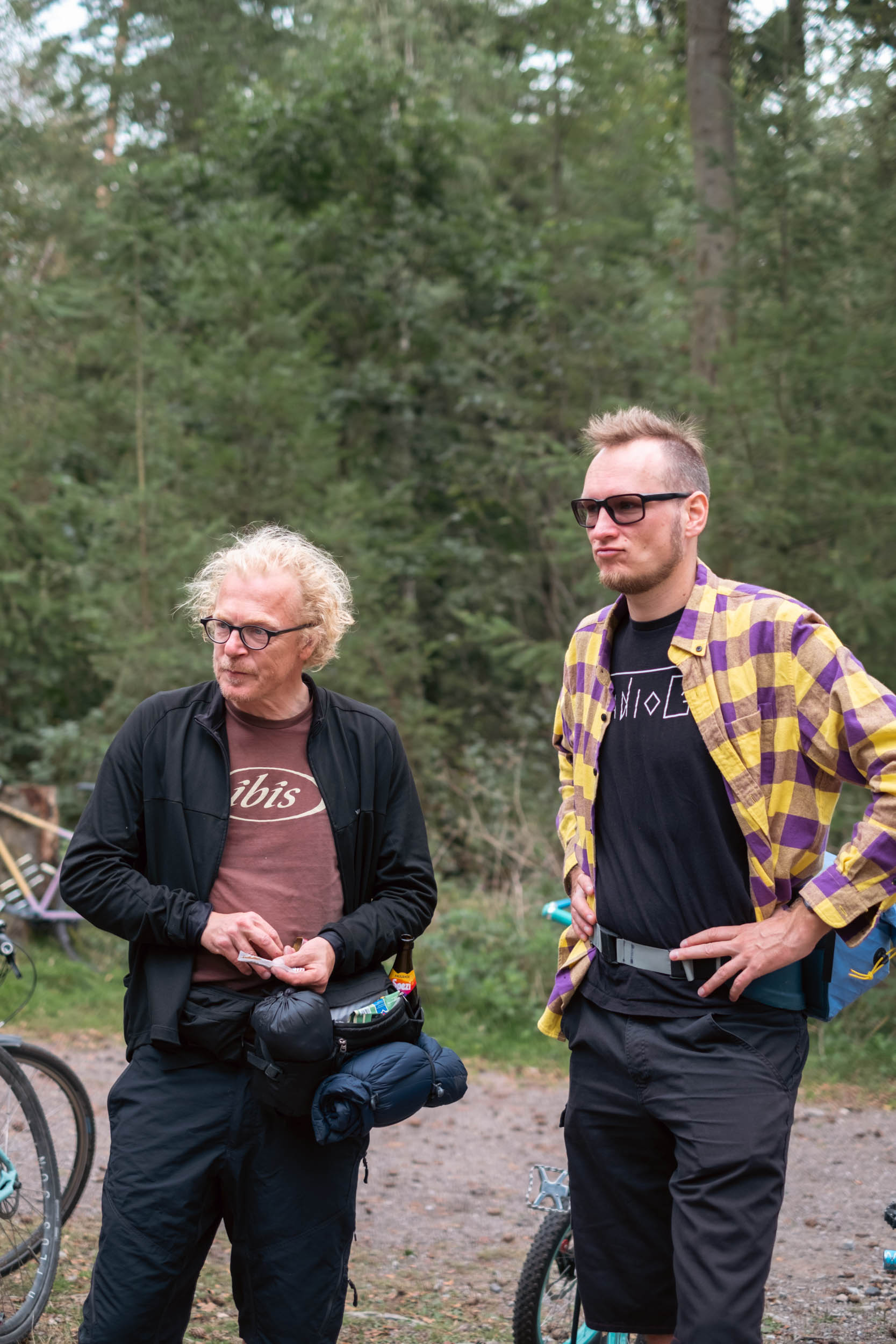
This event is about more than being the fastest. It’s about committing to building something unexpected and recycling old parts. It doesn’t matter whether you’re a professional framebuilder or a complete beginner. It’s about traveling a long way “just” to ride wildly through the forest with other slightly confused people, laughing, sweating, and celebrating together.
Now, several weeks after the event, I realize this was the real prize for me. I got to meet a bunch of cool, clever, and inventive people and talk bikes with them—a subject that has always been close to my heart. Especially because of the people bicycles bring together and the freedom they give me.



I got to be part of a workshop that allowed me to be creative and helped me fulfill my dream of building my own bike. And it all happened far from commercial structures, perfectionism, and sameness. Instead, I became part of something where everyone was free to be whoever they wanted, build whatever they wanted, and support one another. No one was left behind.
In the end, we created something big and fun together. Thank you to all the participants and volunteers who made this possible. I’m already looking forward to the next event when the call goes out again. In the name of science: High Velocity Research!
Further Reading
Make sure to dig into these related articles for more info...


Please keep the conversation civil, constructive, and inclusive, or your comment will be removed.