

 Mountain Bike (MTB)
 Gravel Bike
 All-Terrain Bike (ATB)
 Fat Bike

Inside Rogue Panda Designs: A Decade of Innovation and Efficiency

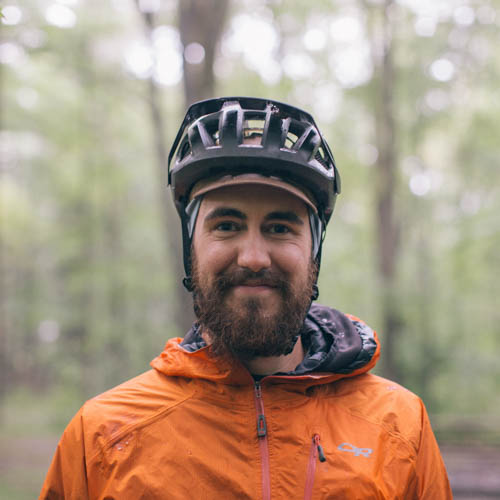
Rogue Panda Designs has been designing bikepacking bags purpose-built for the rigors of the Arizona Trail and beyond since 2014, maintaining its position in the industry by innovating, embracing new manufacturing methods, and adapting. Miles spent a few days with founder Nick Smolinske in Flagstaff, Arizona, exploring the workspace and the local machine shop they partner with. Find photos from his visit and learn how Rogue Panda has labored to earn its success here…
PUBLISHED Jun 18, 2026
It’s not uncommon for a brand to be shaped by its environment. Revelate Designs has a rich history in winter bikepacking expeditions and the wilderness of Alaska. JPaks has unmistakable ties to the rough, technical terrain on the Colorado Trail. In 2016, Tailfin entered the scene with the AeroPack, aimed at ultra-endurance riders in Europe. I can’t think of a bag maker whose identity is more deeply connected to a region, or in this case, a trail, than Rogue Panda Designs.
Founded by Nick Smolinske in 2014, Rogue Panda Designs began as a one-person project. Nick started out making camping gear for himself, and he fell in love with the design process. In 2013, a backpacking trip turned into his first accidental bikepacking trip, so he started making bags for bikes.
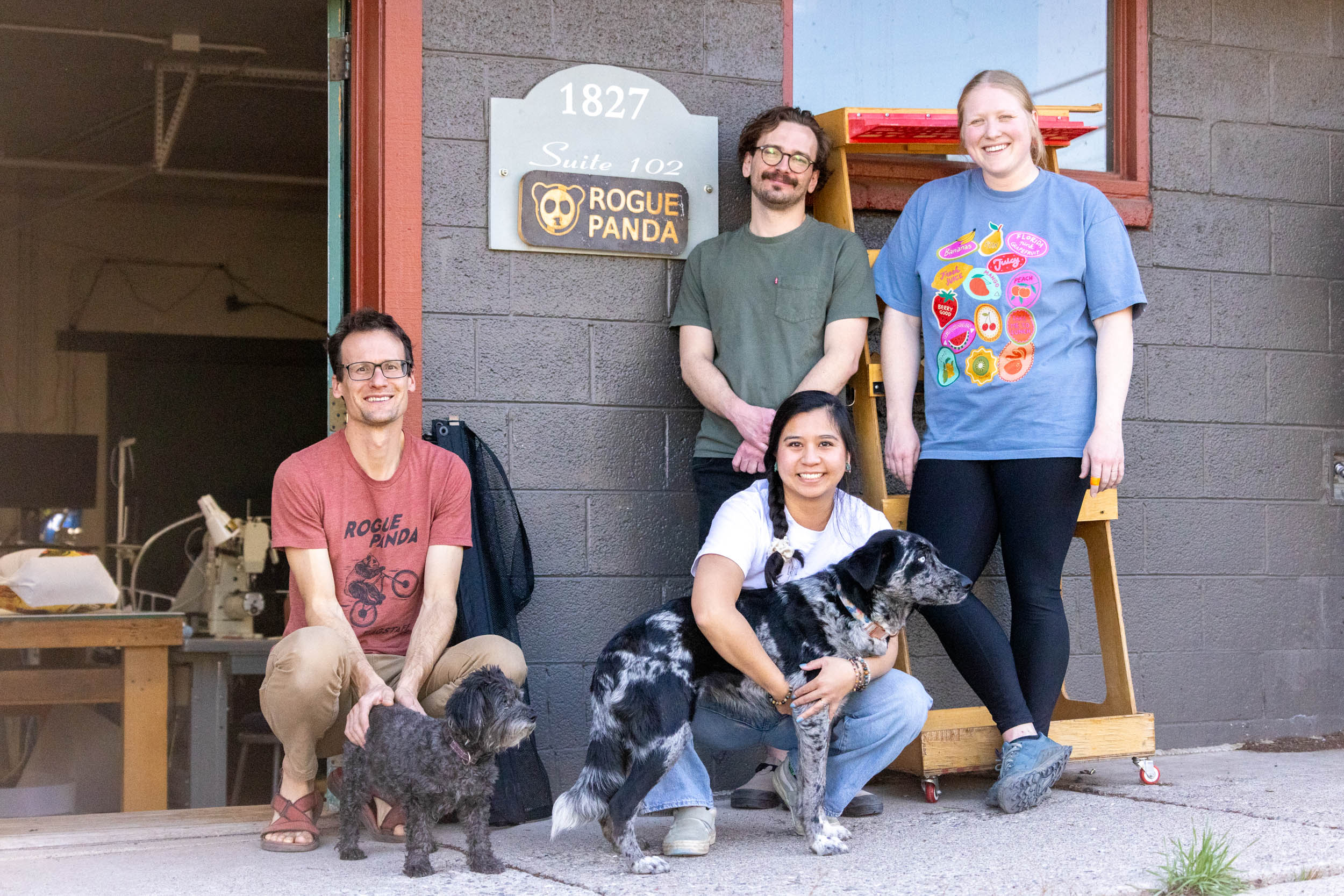


The name “Rogue Panda” is inspired by someone in Flagstaff who hacked into an electronic road sign and changed it to say “Rogue Panda on Rampage.” Despite a somewhat silly name, Nick and his small team design and fabricate some seriously high-quality bikepacking gear. Their Flagstaff workshop isn’t far from where the Arizona Trail (AZT) passes through town, and the trail inspires all their product names. Every Rogue Panda product is named after a place, mountain pass, or point of interest along the 800-mile route.
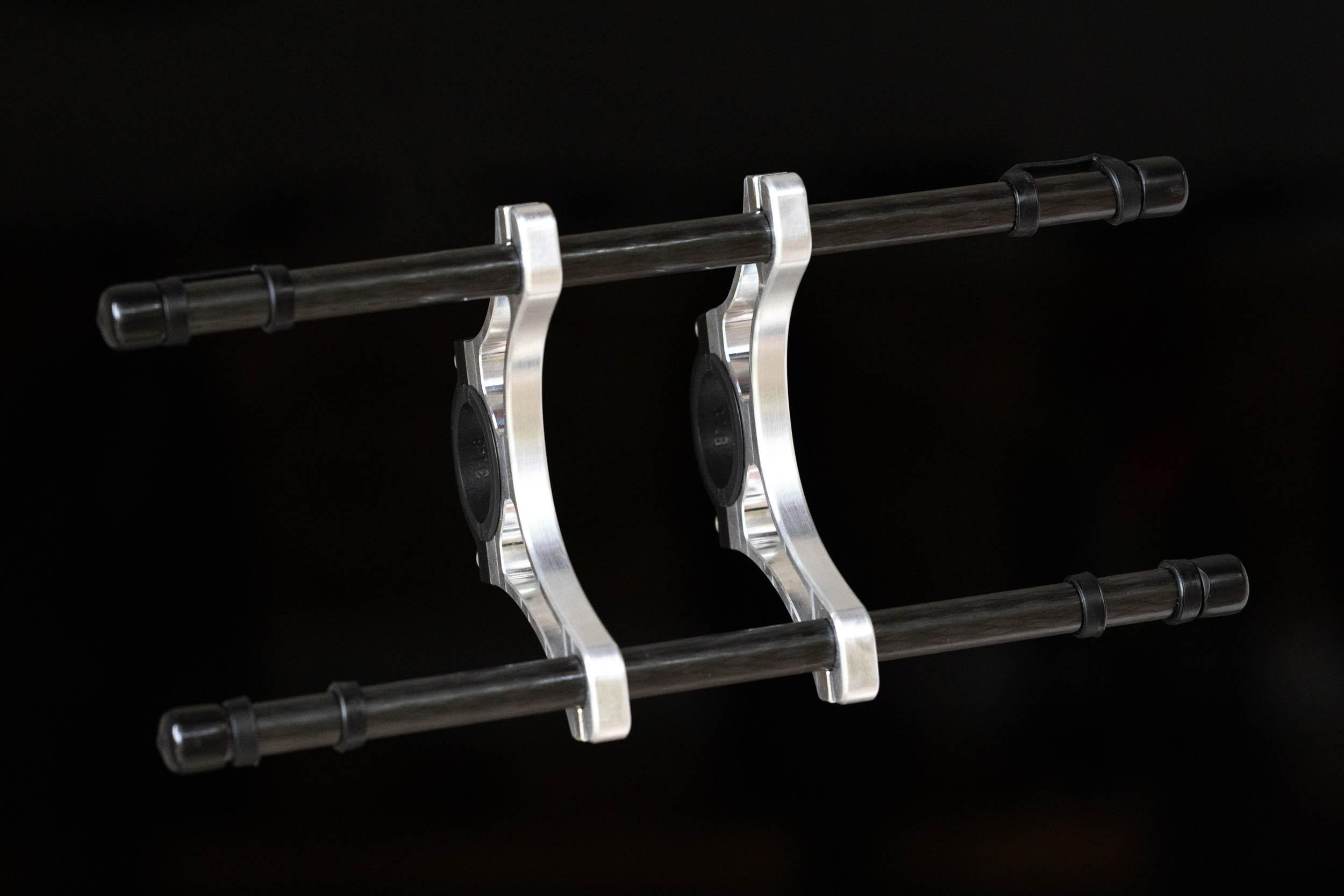
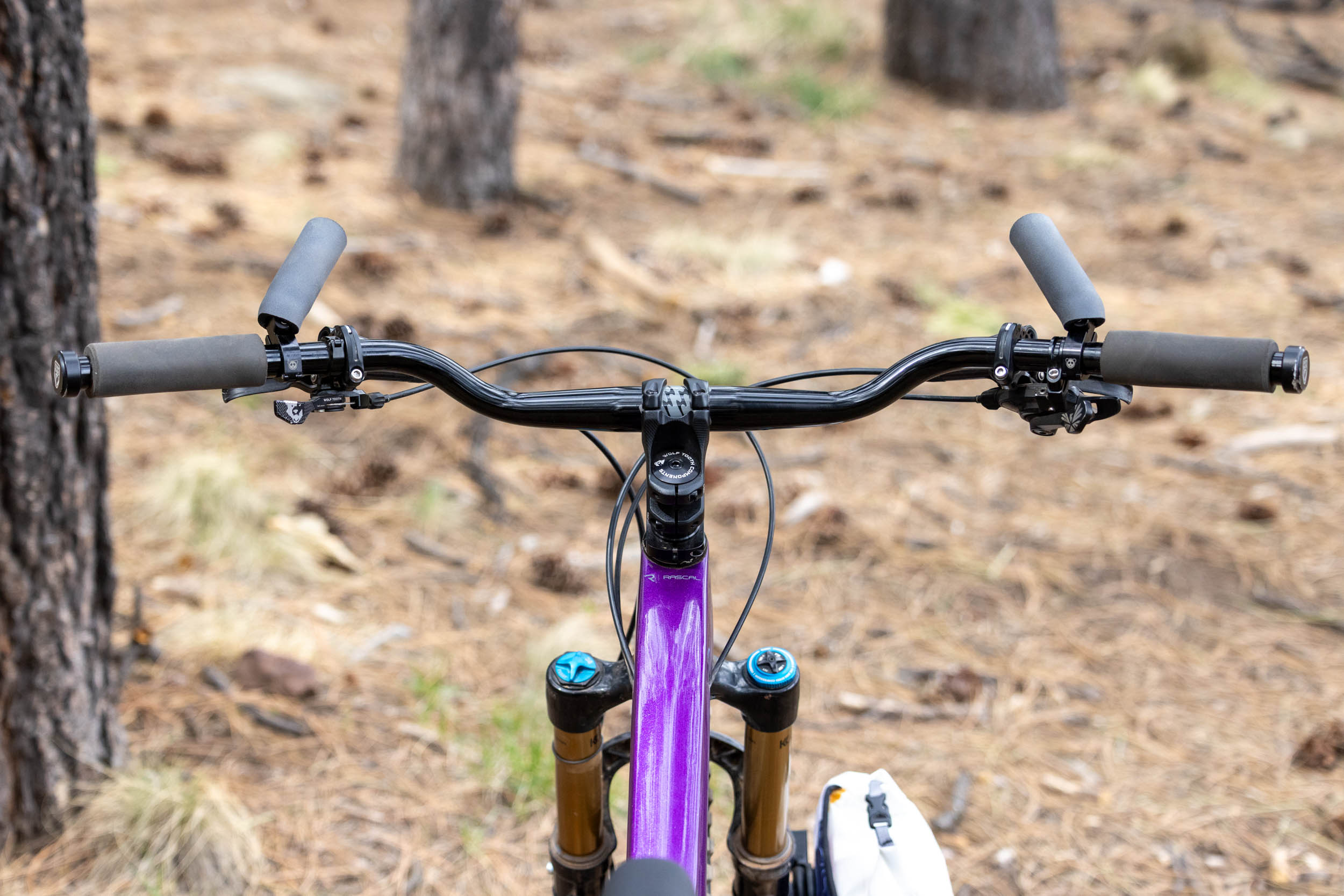
Rogue Panda envisions everything they make with the AZT and similarly rugged terrain in mind. Not just for racers, their gear is designed to be lightweight yet durable enough to handle anything. Rogue Panda is behind several innovations and home runs in the industry, including the Ripsey dropper post bag, the Blue Ridge handlebar cradle, and the Kaibab Cradle. Having used many of their products, I can vouch for their quality and durability.


Often considered the country’s premier desert singletrack bikepacking route, the AZT is a multi-use trail from Mexico to Utah that connects mountain ranges, canyons, deserts, forests, wilderness areas, historic sites, and trail systems. I haven’t yet had the chance to pedal the entire trail, but I’ve ridden several sections on bikepacking trips, including the Madrean Rugged Ramble out of Tucson and the Queen’s Ransom near Phoenix. Despite its unforgiving terrain, I’ve had some of my most rewarding days riding the Arizona Trail.
Growing a Bag Brand
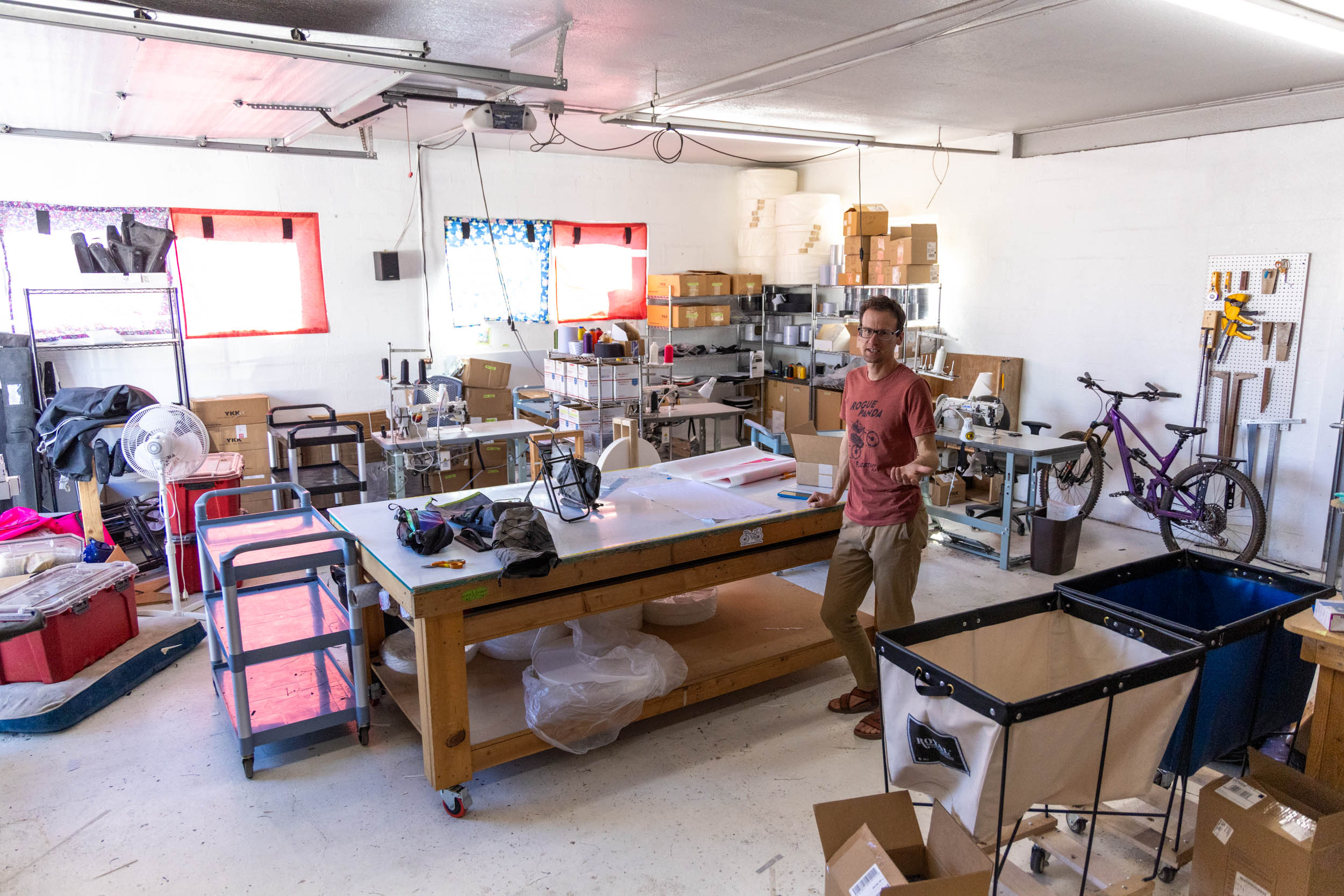
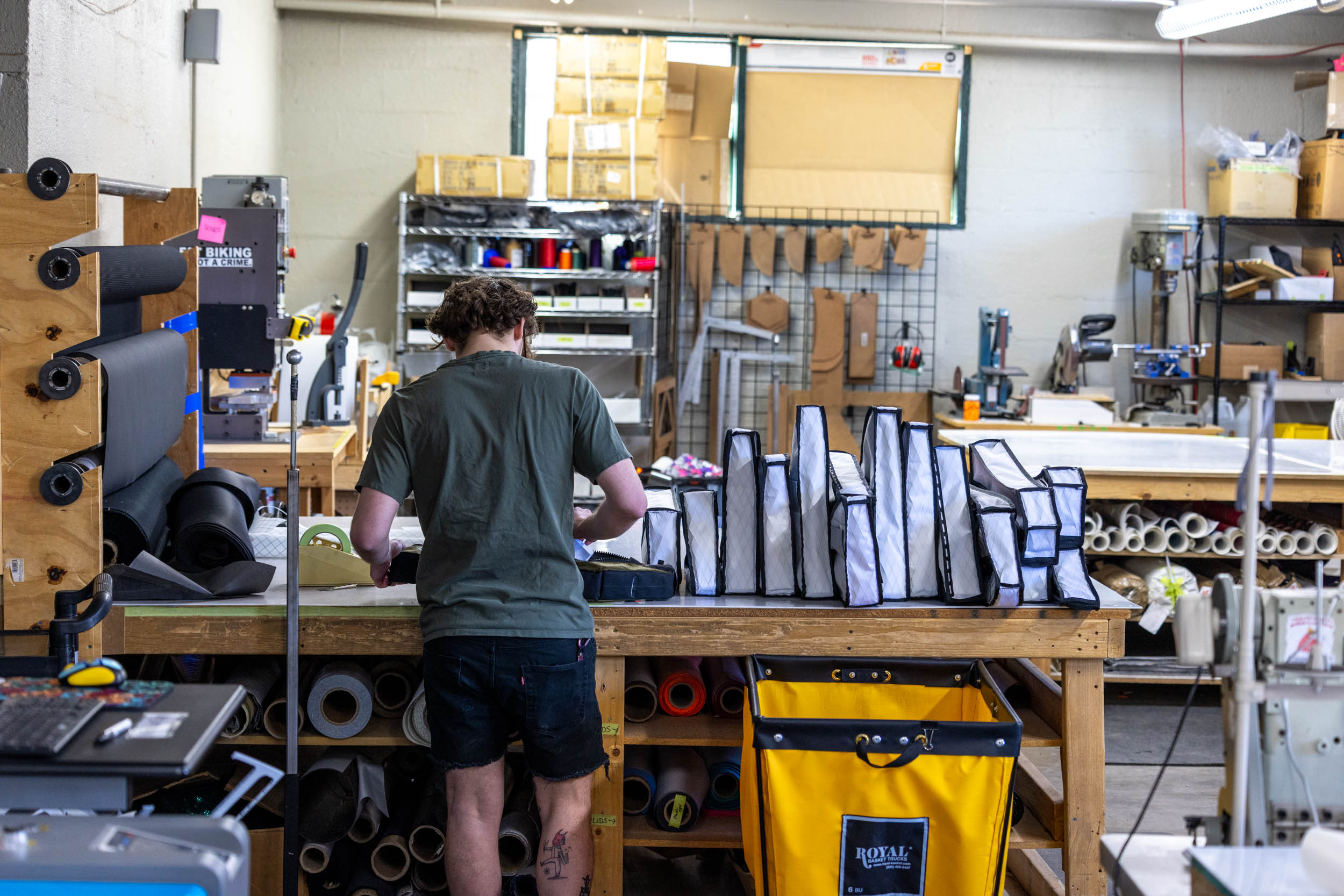
Rogue Panda moved into their current 2,000-square-foot workshop in 2020, doubling their previous capacity. In the early days, Nick worked out of a sunroom when Rogue Panda was very part-time, then his bedroom for a while, but using his bed as a work table got old pretty quickly. He moved the operation into a shed where the landlord let him pay rent based on square footage. It started at around 300 square feet, but eventually grew to 1,200 before finding a better spot on the east side of town.
Every time Nick and his small team moved, they increased capacity. The 2020 expansion was a little different, with the COVID-19 pandemic in full swing, some staff working from home, and production majorly disrupted. Having additional space to set up work “pods” to keep everyone separated was important. The larger workspace has allowed Rogue Panda to bring in new equipment, such as a massive laser cutter and in-house custom printing. Nick says he wouldn’t want any less space, but he also sees the constant expansion as a hindrance. During the first few years of business, they kept growing and adding more staff, which allowed them to do more of what they were already doing, but their processes remained the same. Since their latest expansion, they’ve been focusing on improving internal processes. Nick explained, “That’s made us a lot stronger than if we had kept throwing more staff at producing bags without improving our designs.”
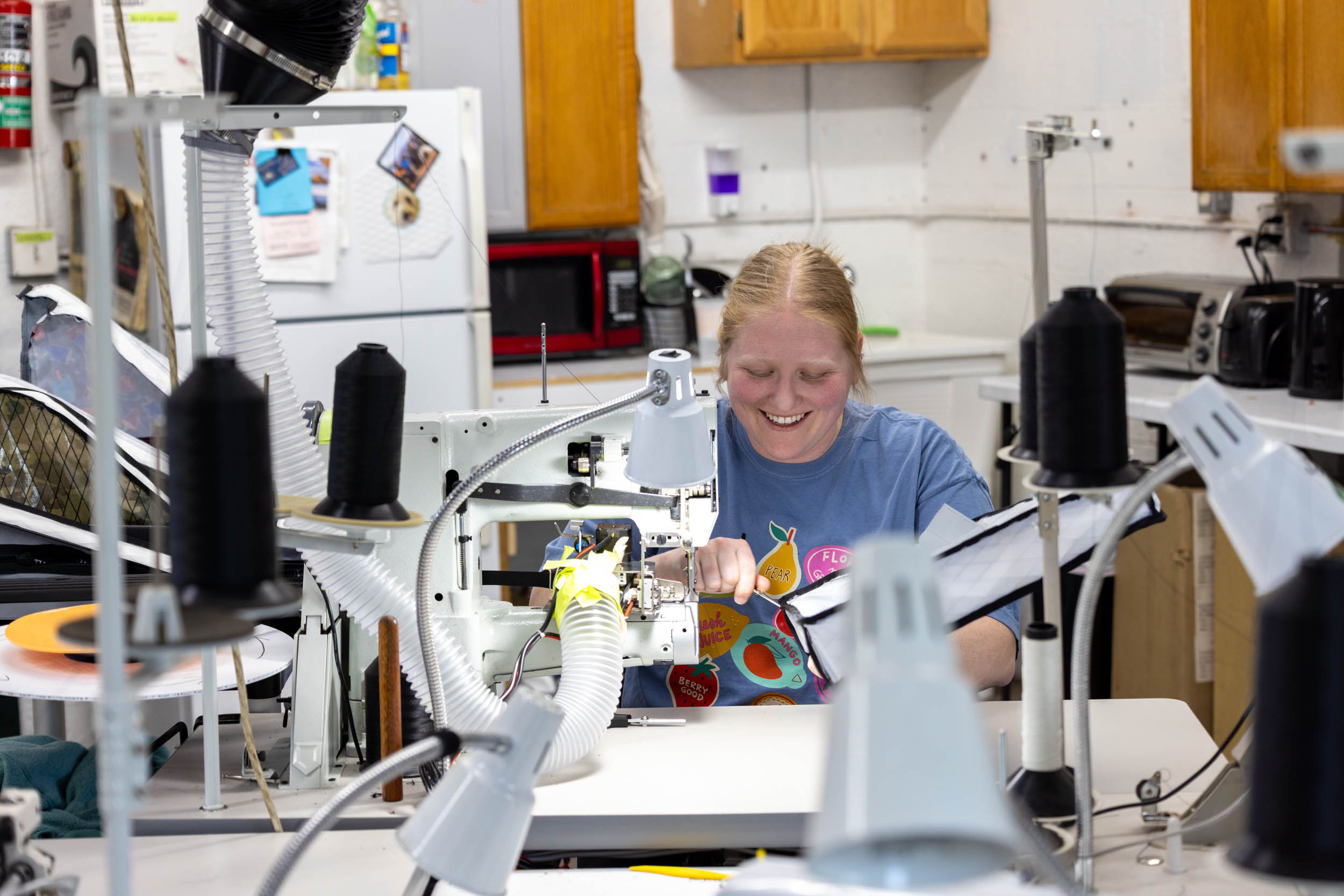
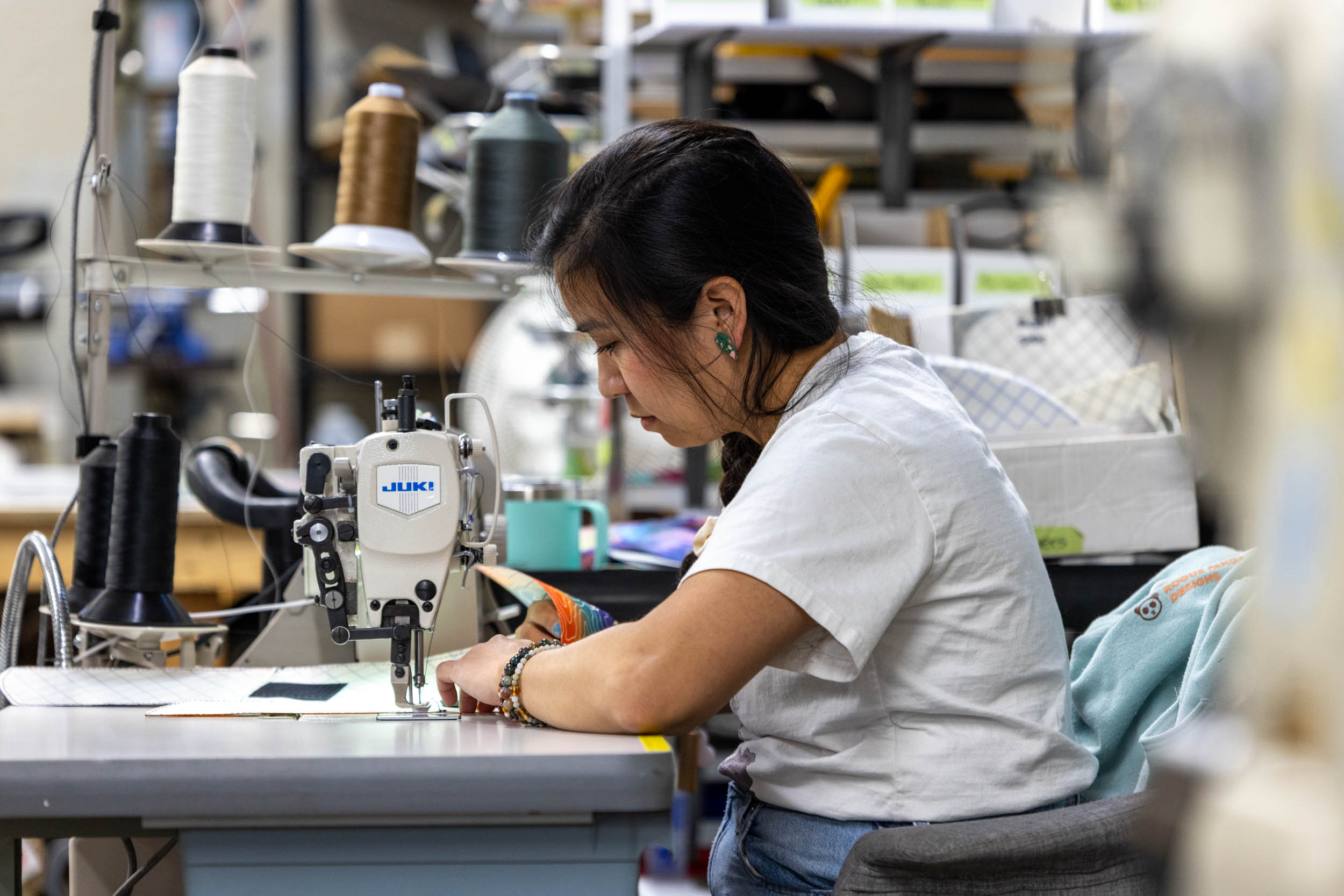


I asked Nick how he finds his staff and what their sewing experience is like, and he explained that in the early days, most of the hires didn’t have much experience, but that’s changing. Regardless of his experience, he still follows the advice he received from the manager of a local bike shop a decade ago, when he was hiring for the first time: Pick folks who seem hard-working and who you want to work with, and worry about training them later. “He said something like, “Humans are smart, and you can teach them to do things, but you’re either a nice person or you’re not, and that’s not gonna change.'”
Hiring more staff isn’t Nick’s first reaction. If it’s at all possible to grow in other ways, he’ll usually take it. There’s a feedback loop when Rogue Panda increases efficiency, which allows higher wages and helps retain staff, keeping things efficient. Rogue Panda has almost tripled its average staff wage since 2020, with little increase in its product prices.
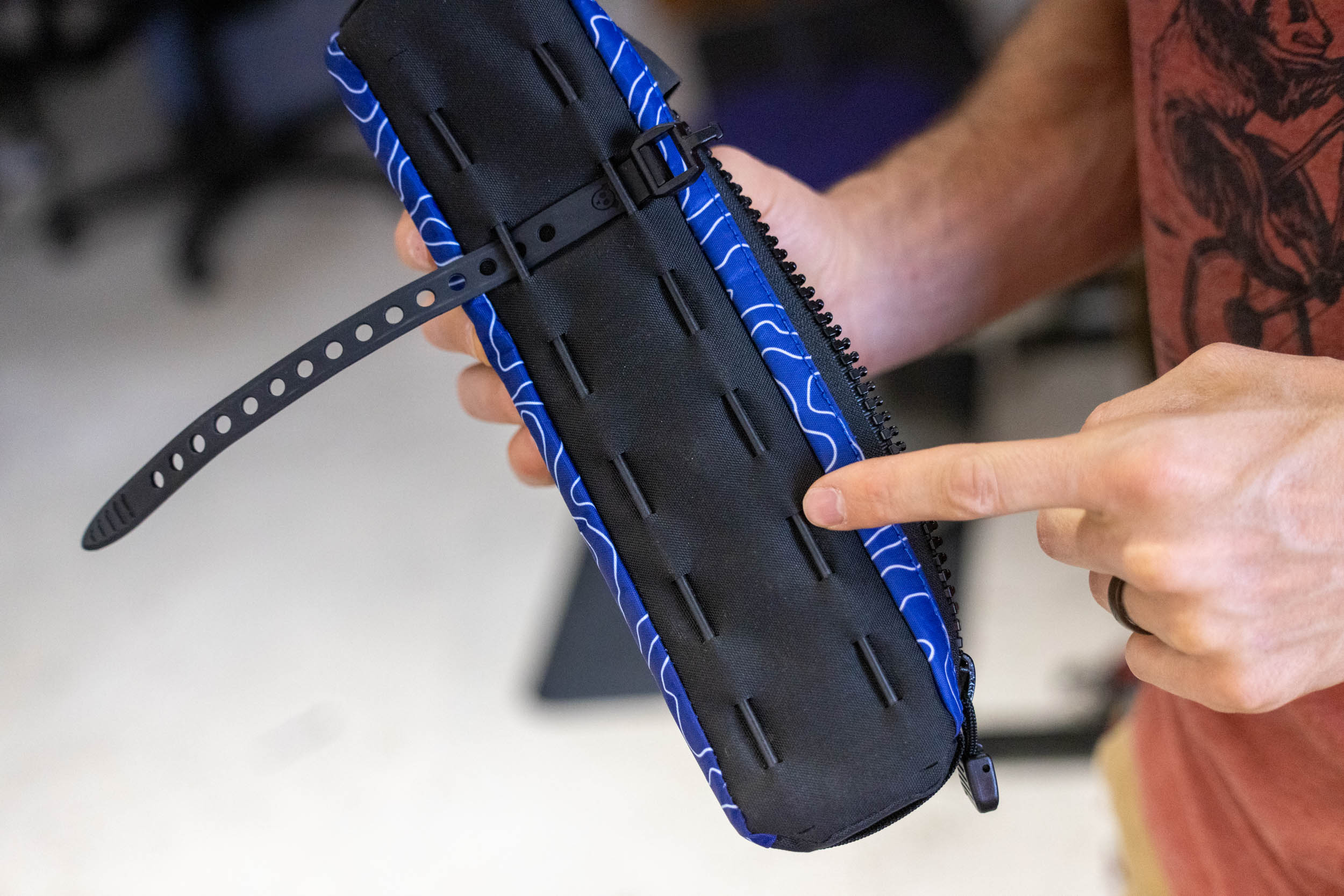

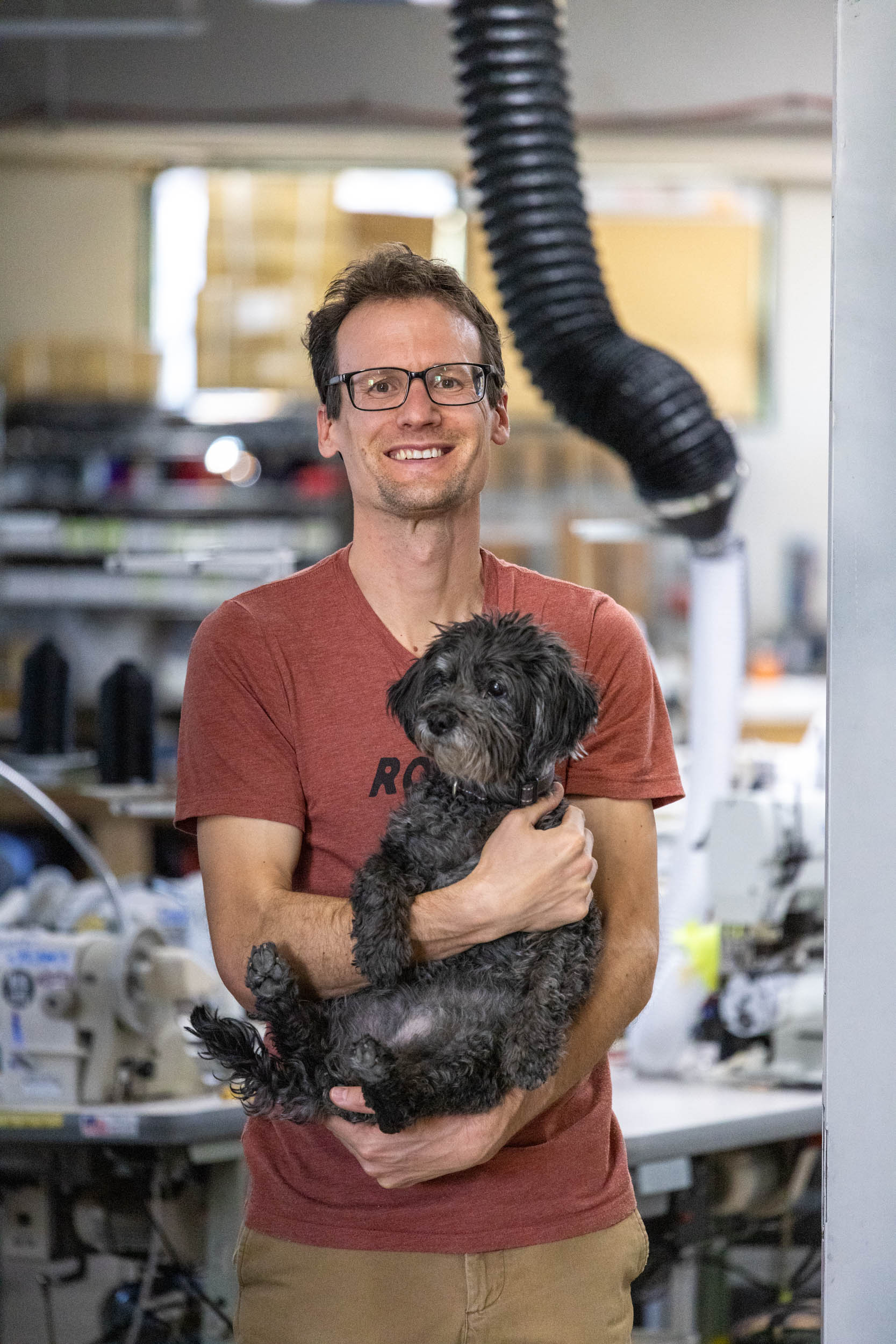
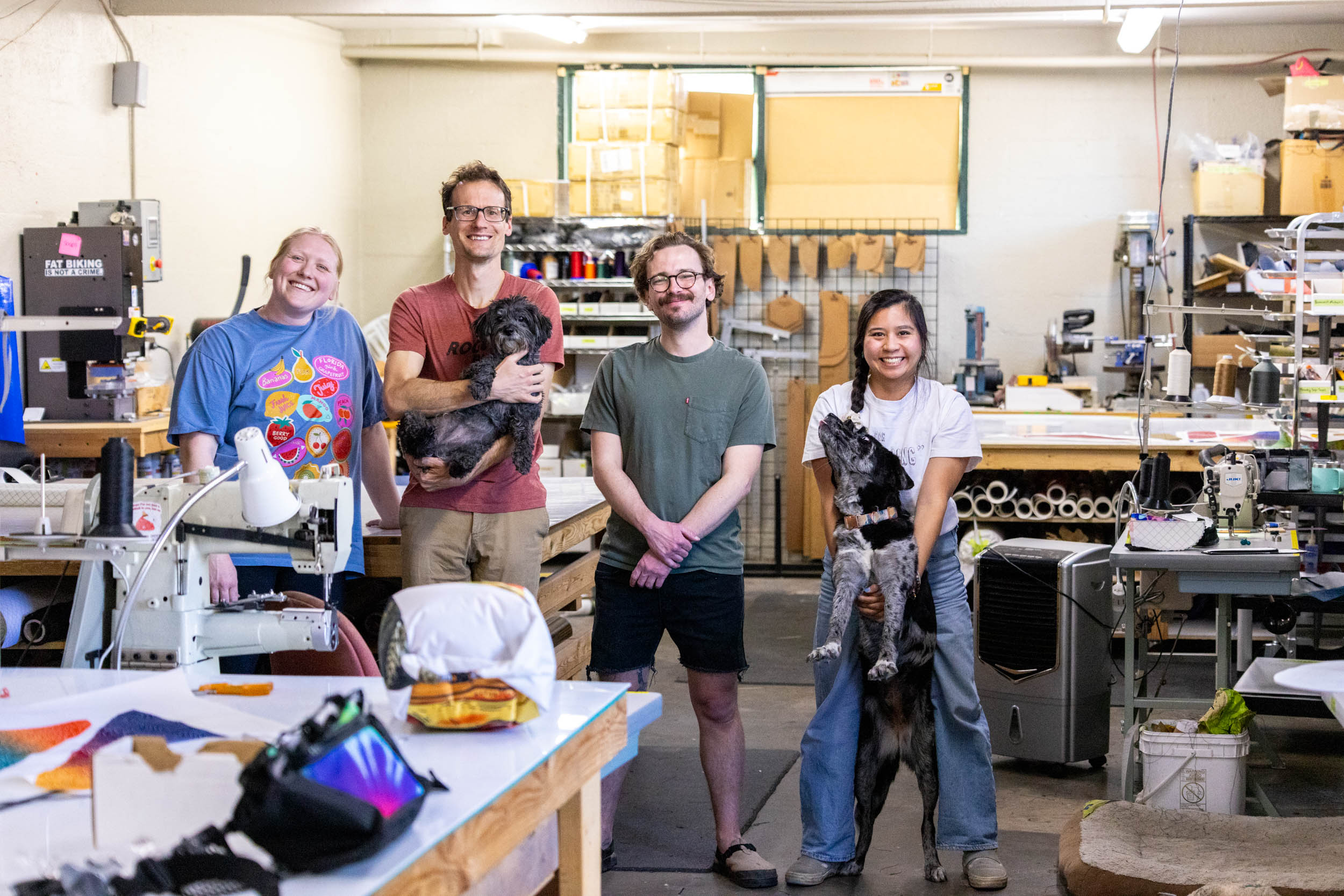
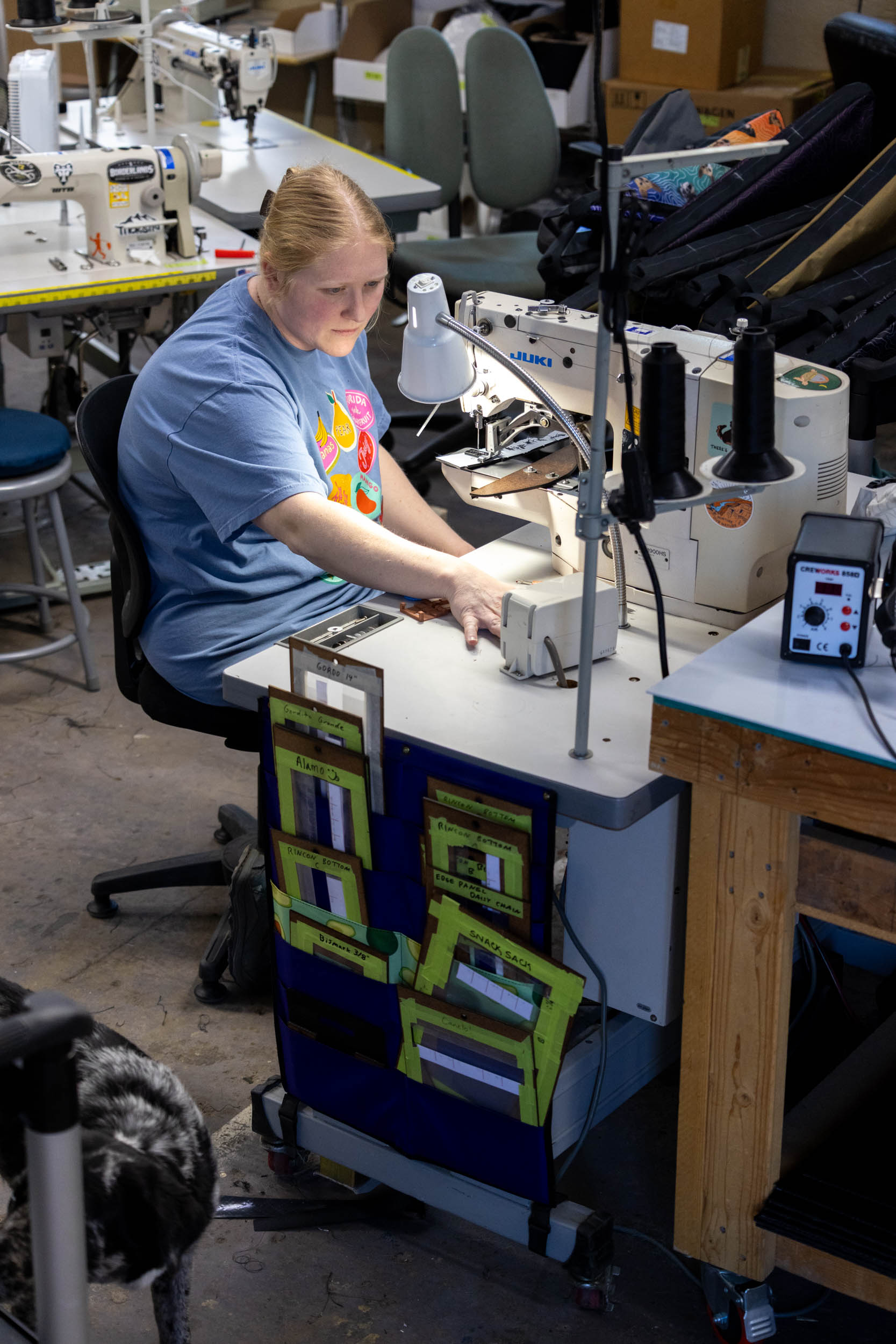
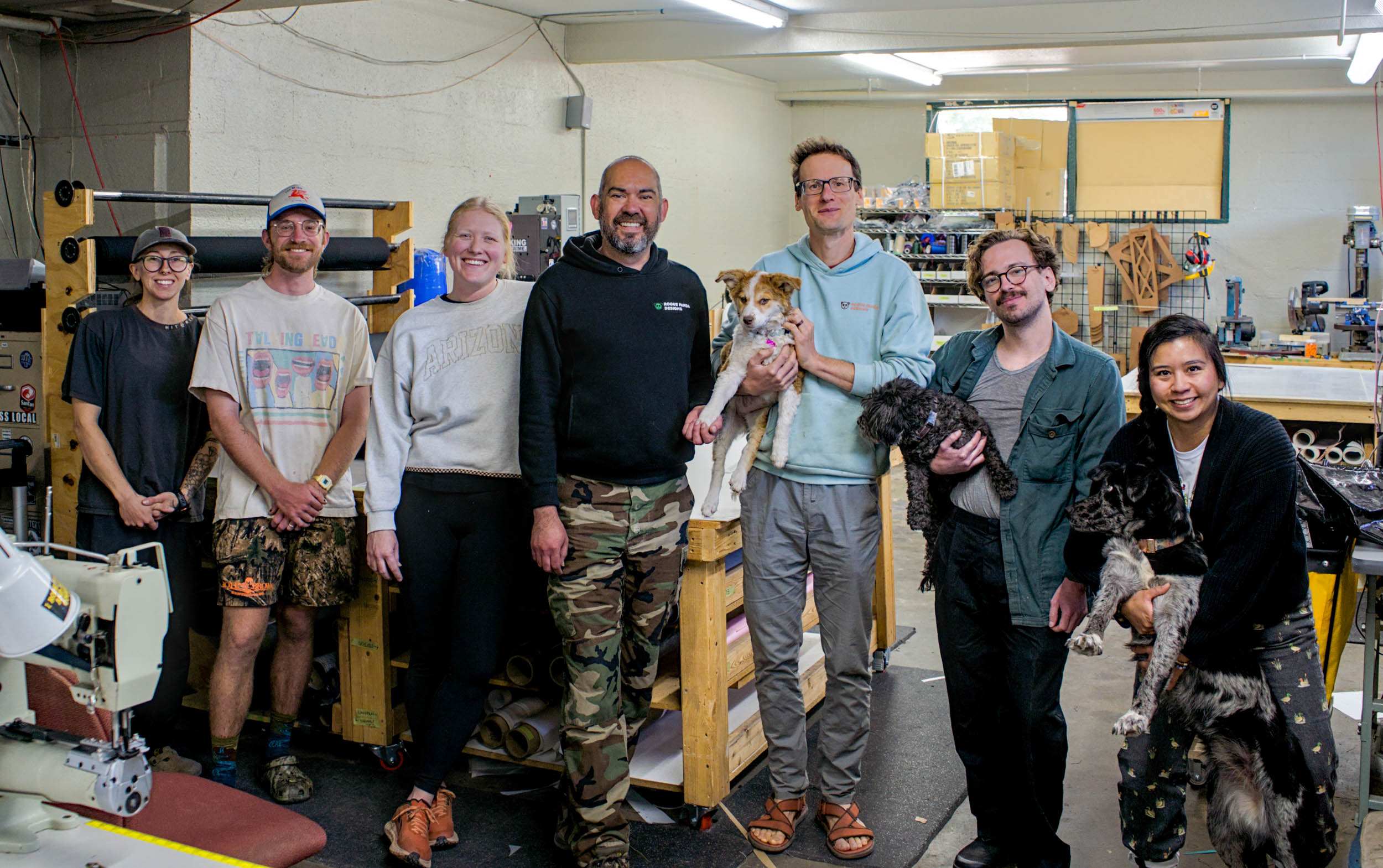
Today, Rogue Panda has seven full-time employees, including Nick. Tommy is their longest-standing employee and leads the frame bag production crew. He’s been sewing for decades, with a background in costume design. Steph is the lead sewist for everything but frame bags. She also came in with a ton of sewing experience and a background in costume design.
Kai and Mackenzie are the other two full-time sewists, and they’re currently working on frame bags. They both have interesting origins before working at Rogue Panda. Kai applied for his job while on the Tour Divide and submitted an application video from the trail. Mackenzie was a mail carrier with USPS, saw all the sewing machines, and dropped off her resume one day. On the admin side, Michael, Kaya, and Nick handle all the emails, phone calls, and other customer service duties. Michael also handles most of the shipping and some production work. Kaya has been taking on all of the custom print design and some of the frame bag design work.
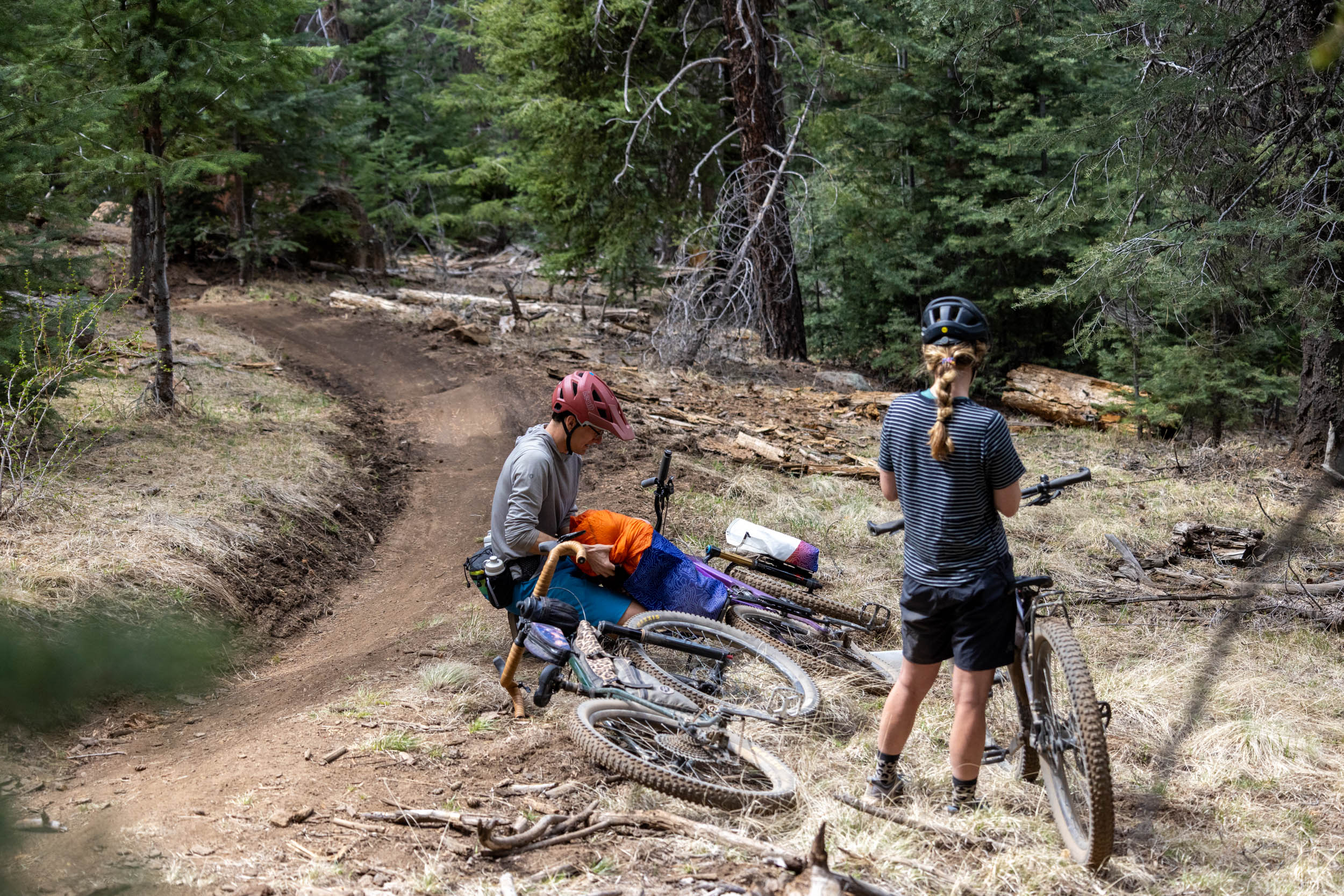

Rogue Panda also has a couple of part-timers, including Stevie, who handles their social media and video editing, as well as some production work when she has time. Sam comes in one day a week in the summer to do machine repairs and other projects. I didn’t get to meet the entire team during my visit, but the energy in the shop felt welcoming and supportive. It’s clear Nick has attracted some really solid people.
Custom-Printed Frame Bags
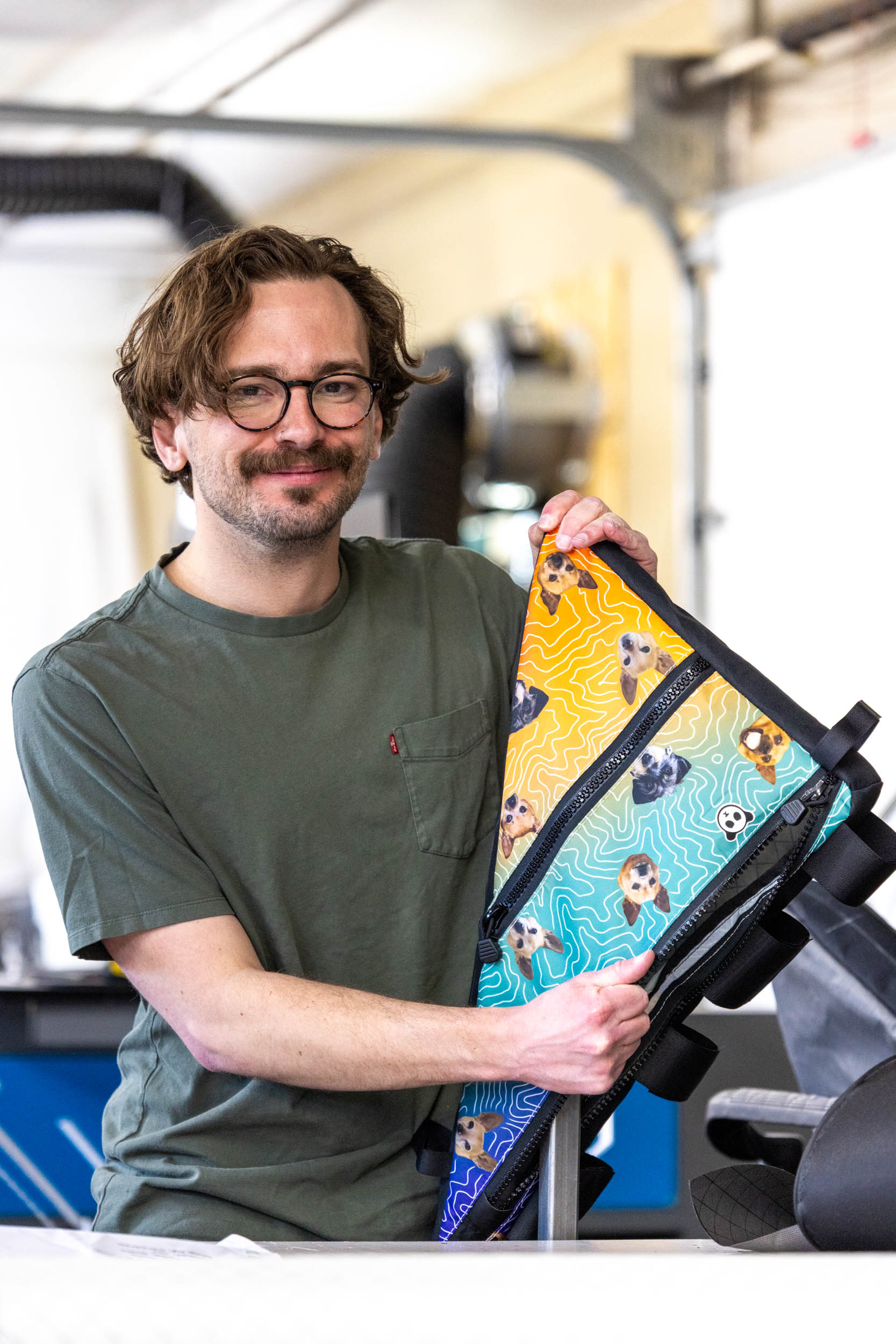
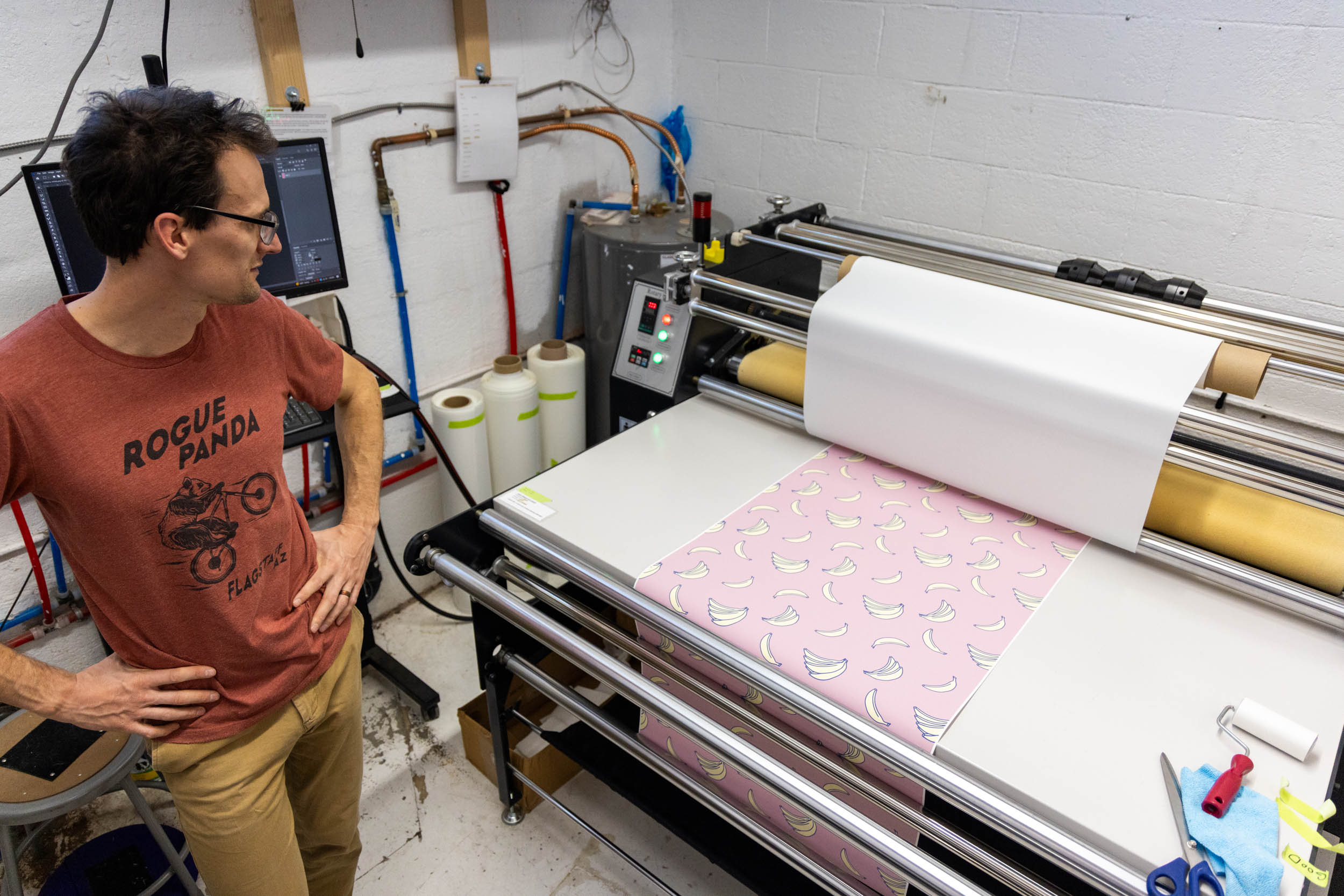
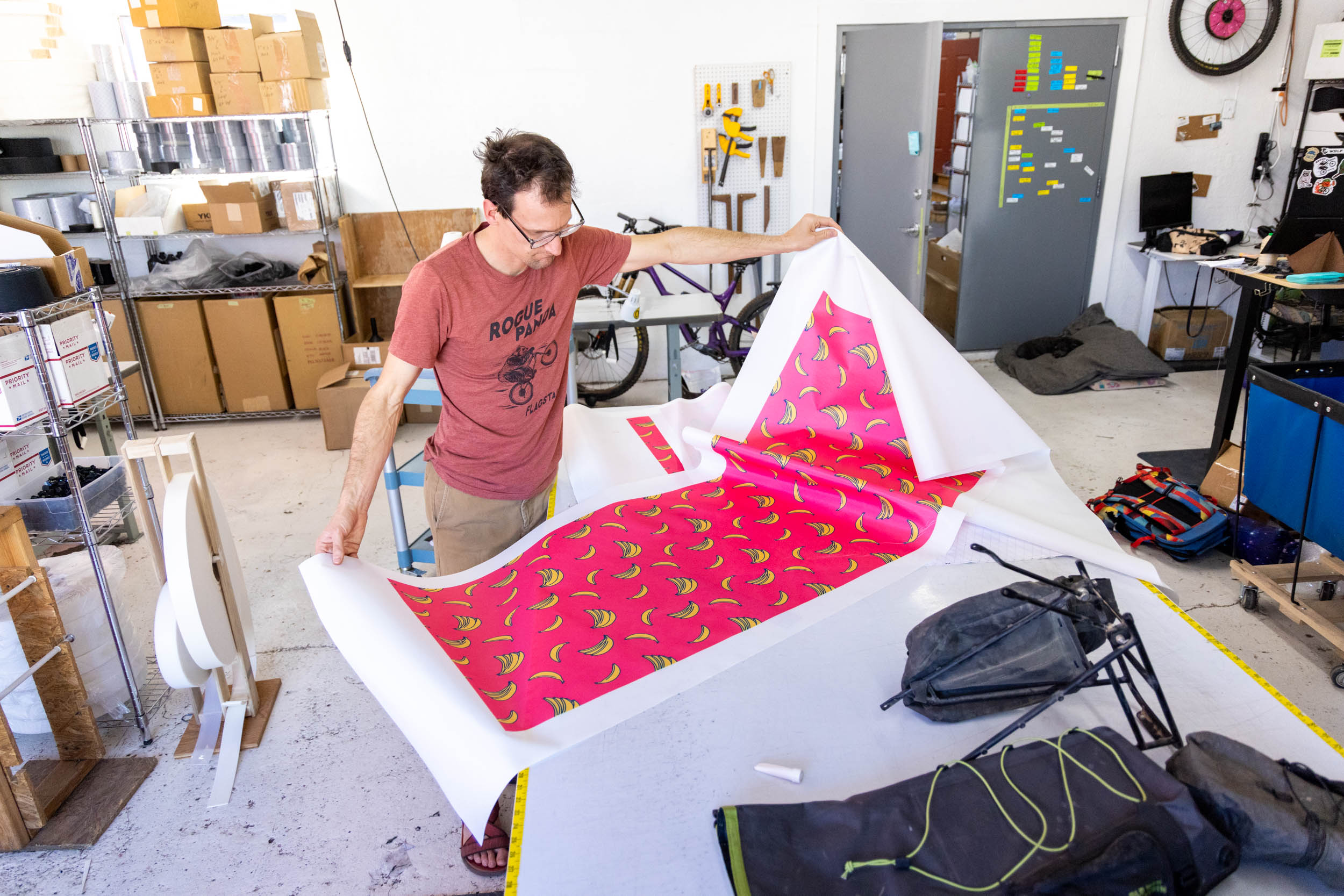
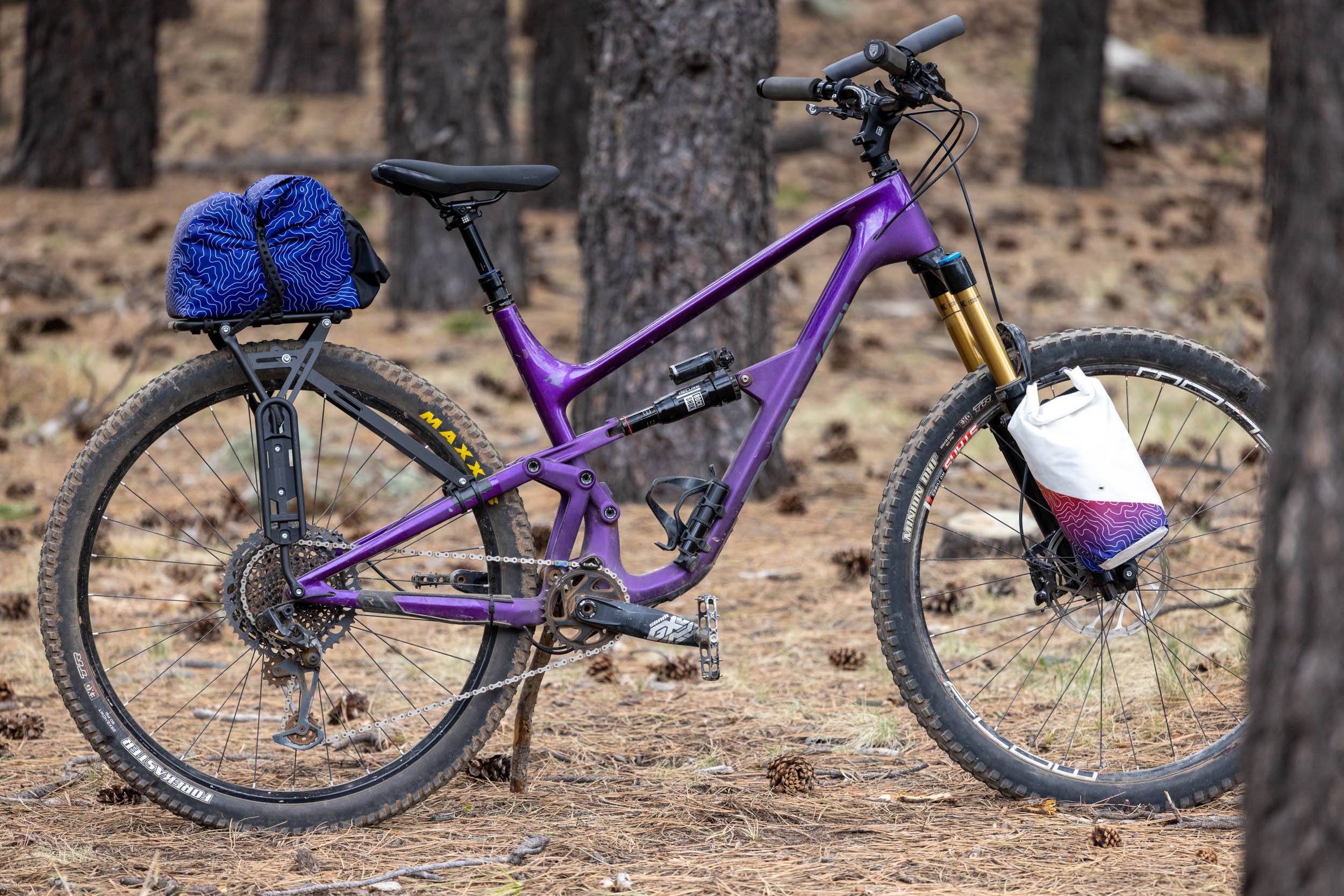
One thing that sets Rogue Panda apart from other custom frame bag makers is their ability to accept, design, and print custom fabric designs and colors in-house. The custom frame bag process starts at the computer, where they use the customer’s PandaVision bike photo to design a custom template for a perfect fit. Once the fit is dialed, they move on to designing the custom print. The options are endless, and customers can work with Rogue Panda or a designer of their choice to create a totally custom look. When I was visiting, they were finishing a frame bag covered in little dog faces. Nick said the entire team loves dogs, so they’ll gladly print any pet-inspired fabric for their customers.
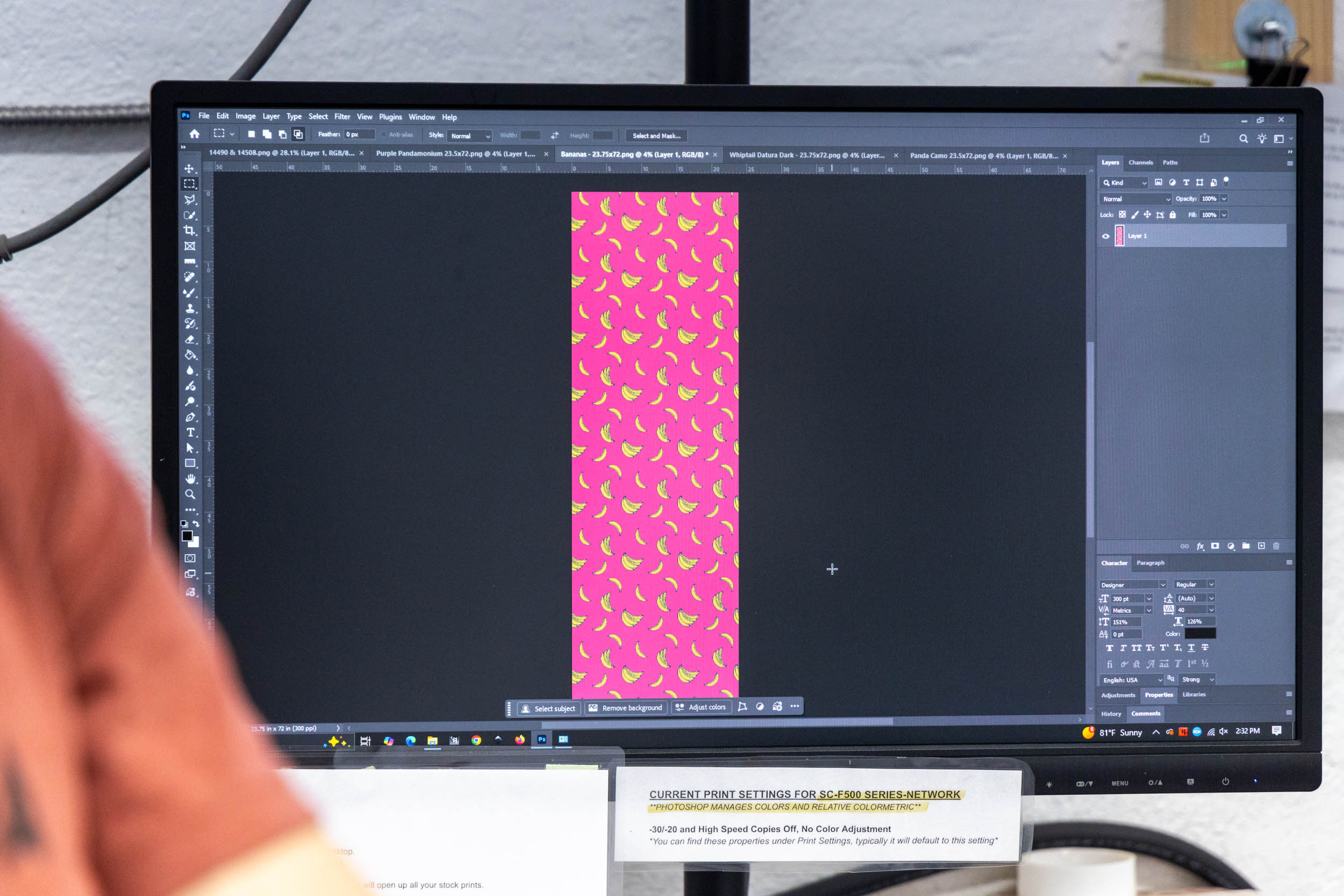
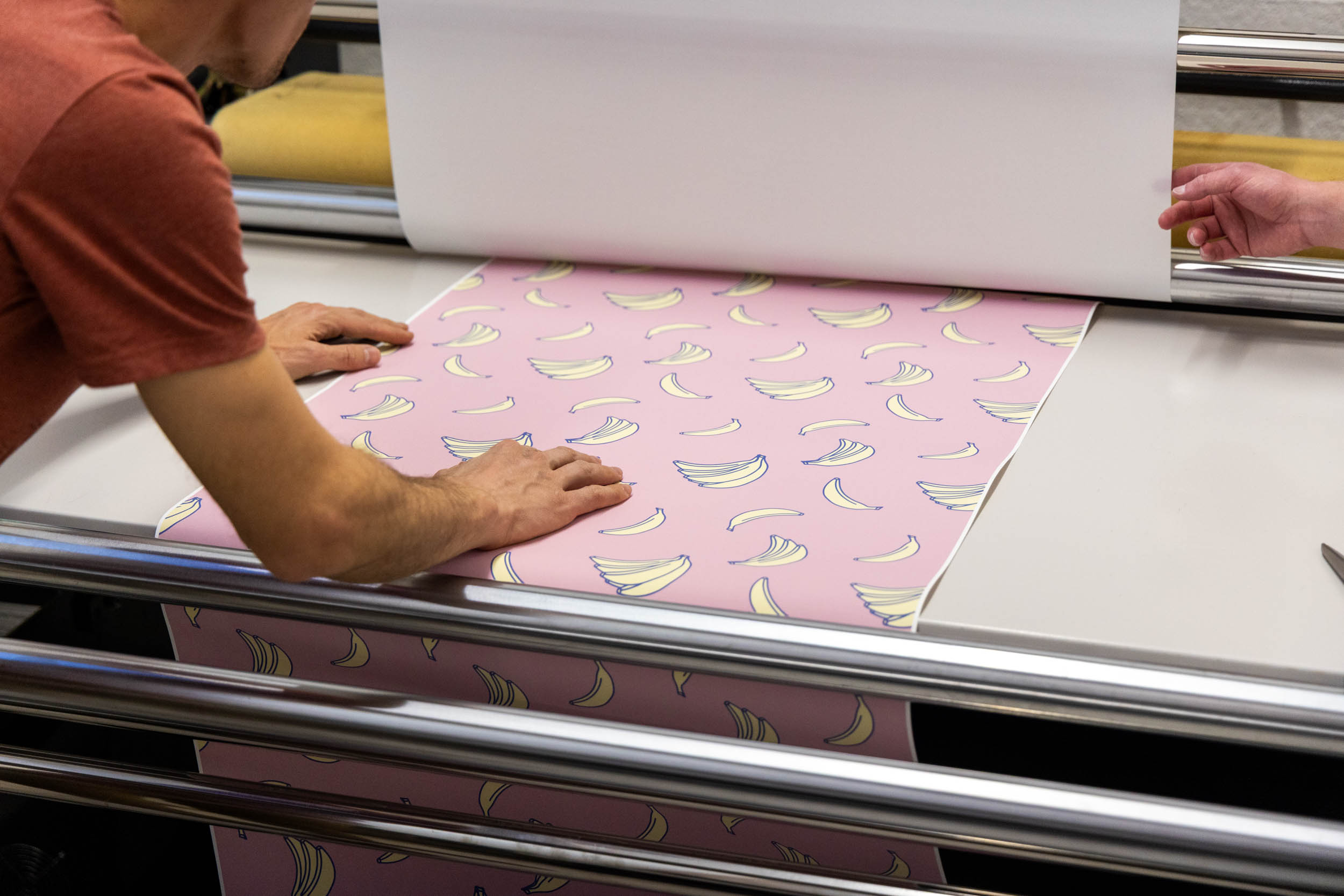
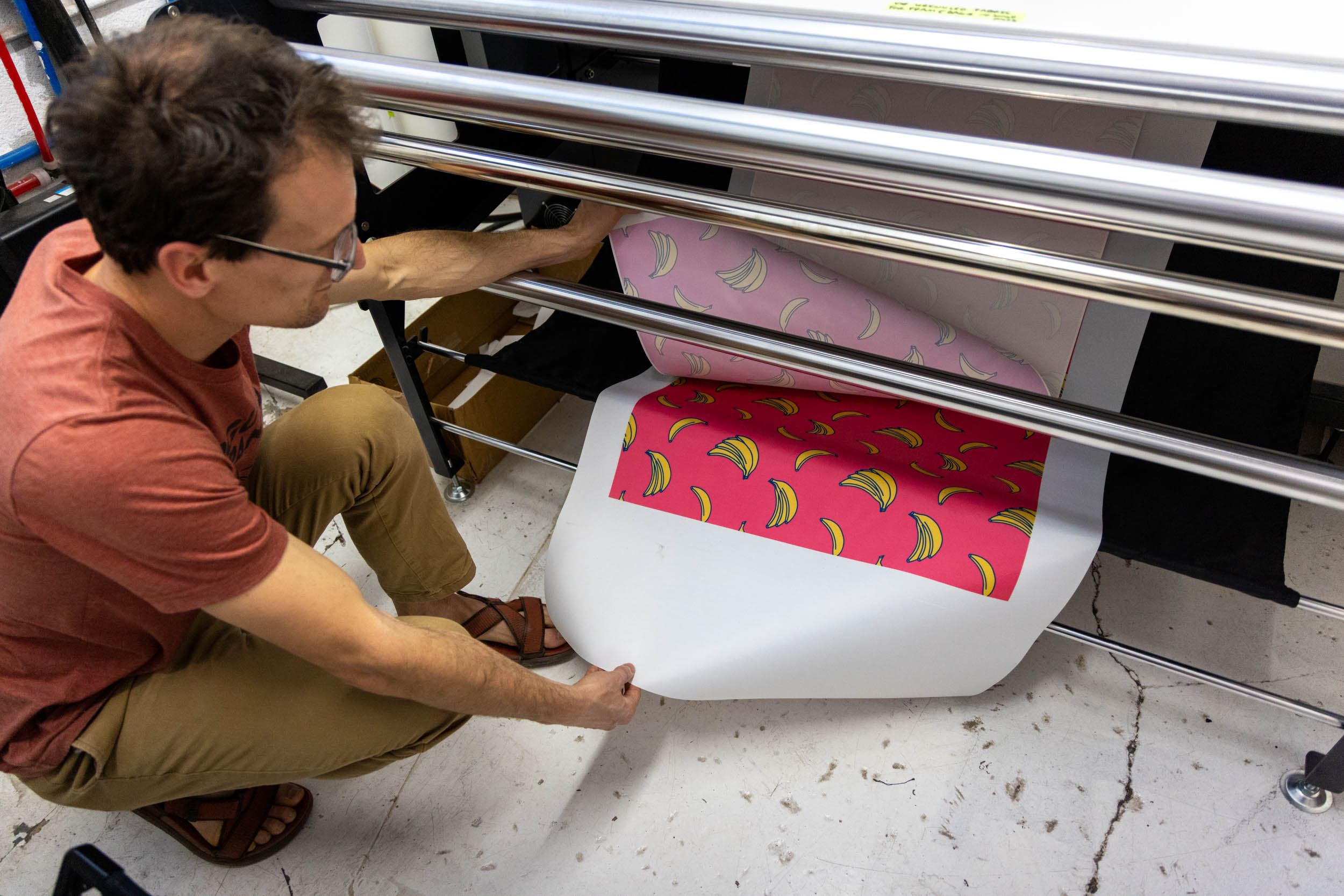
We don’t hear about occupational health and safety when visiting bag makers, but it’s high on Nick’s list of priorities. One of his guiding principles of bag design is to find ways to add stiffening elements at the last possible moment to avoid forceful pinching motions, which are a big no-no for carpal tunnel risk. The order of operations considers concerns like these. Another example of this is the foot-operated press that punches bolt holes through the fabric, stiffener, and foam for bolt-on frame bags. The press is laser-guided and much easier to use than traditional arbor-style presses, which can cause shoulder overuse injuries.


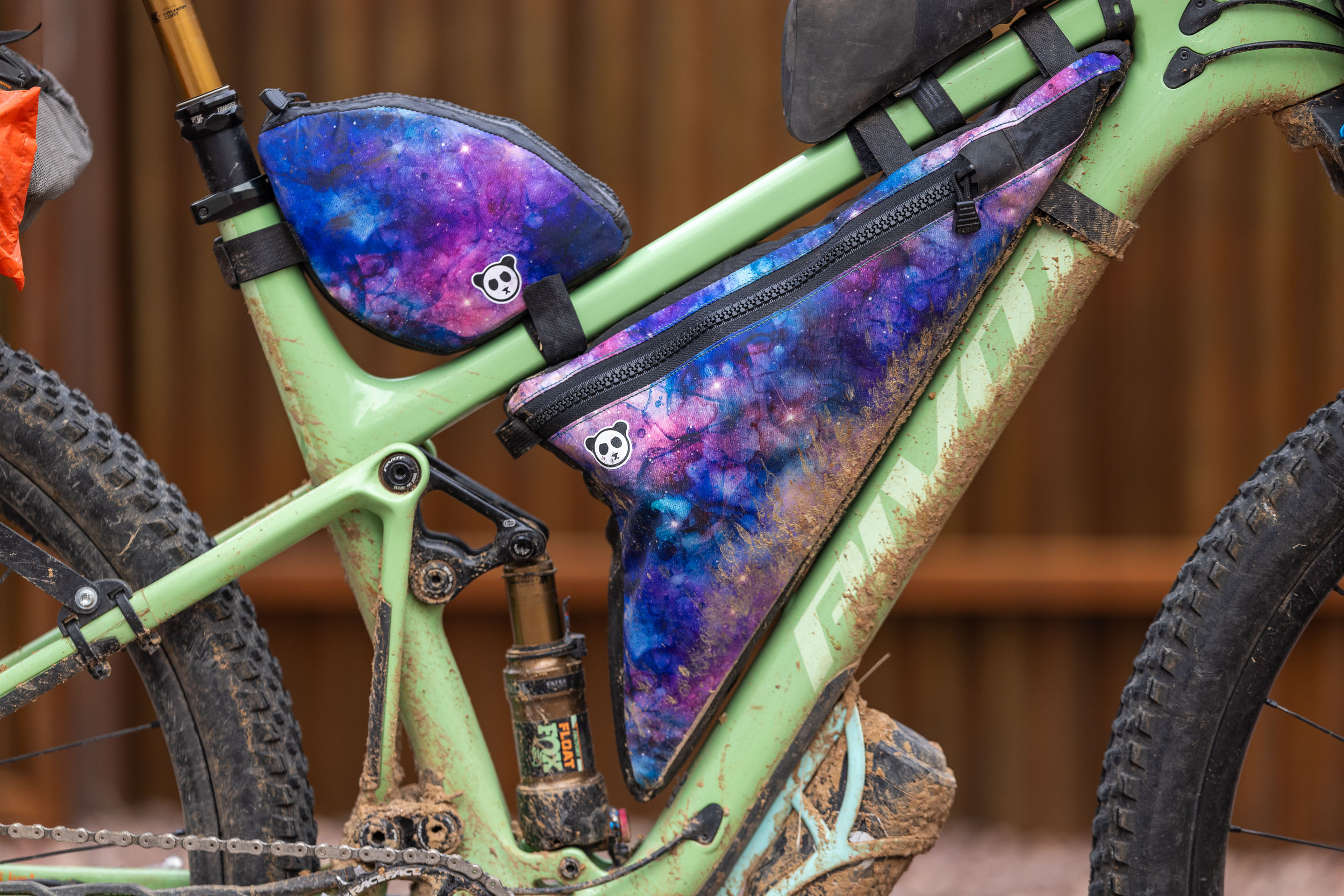
I’ve used several custom Rogue Panda frame bags, and the team’s experience shines when you dig into the details. Not only do the bags fit perfectly, but they’ve hit a nice balance between weight, stiffness, and structure. Nick has been at this for a while now, and it shows. They don’t use metal grommets for bolt-on bags because they’ve seen them damage paint on frames, so instead they designed molded thumb screws that seal the bag without damaging the bike. This expertise didn’t just appear overnight.
Marginal Gains
There have been some learning curves for the Rogue Panda team along the way. One example is the custom printing, which always seems to be evolving. The printing process, known as dye sublimation, tends to darken fabrics when intense heat and pressure are applied, so they use a pure white fabric that can withstand heat, allowing the print to chemically bond to the polyester in it. Ensuring a perfect transfer requires some trial and error, and Nick is currently waffling over a $10,000 heat press sitting in his cart. This would be their fourth heat press, but it could save them a few hours of labor per week, which would pay for itself in under two years—another example of a capital improvement that reduces production time and increases wages.
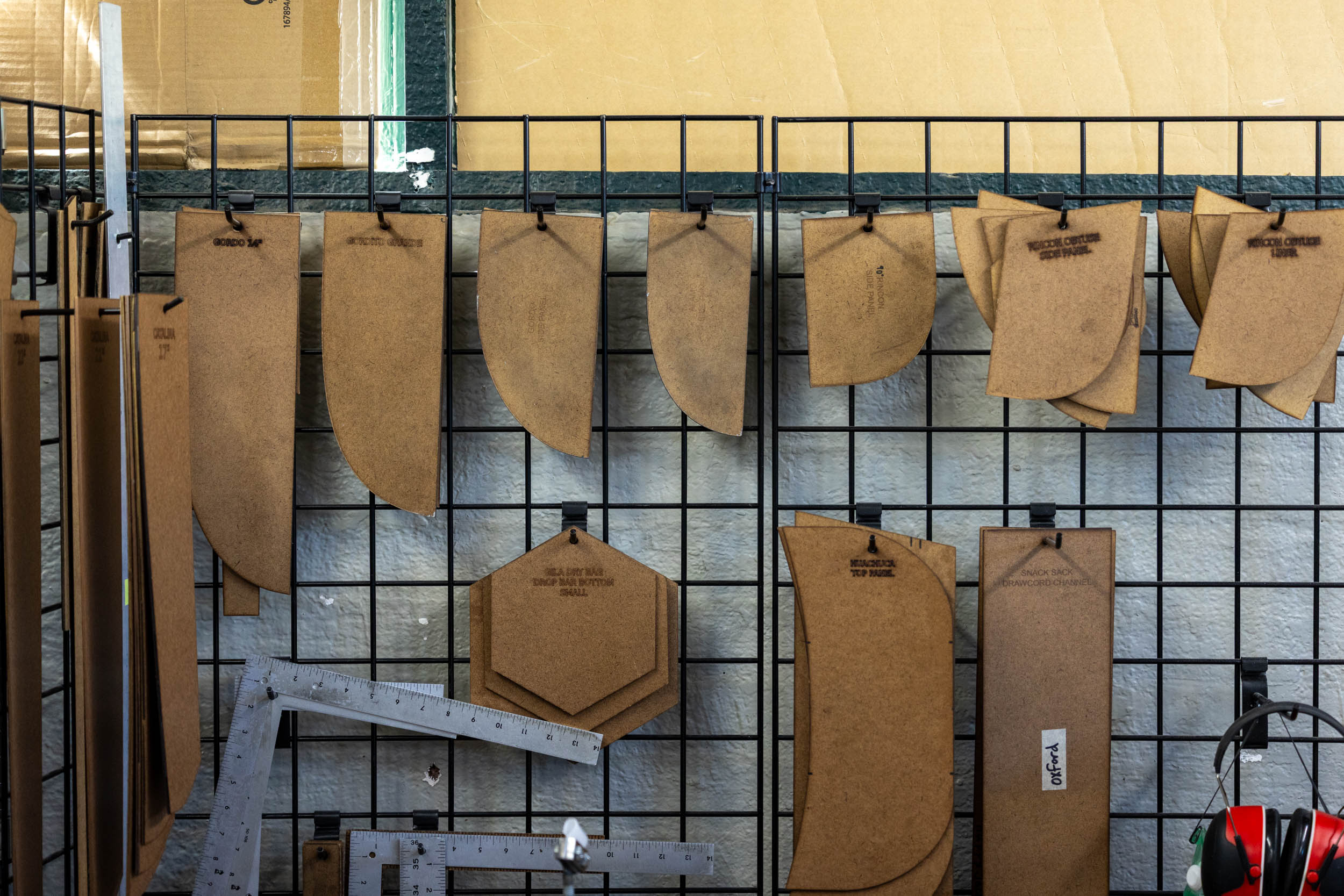
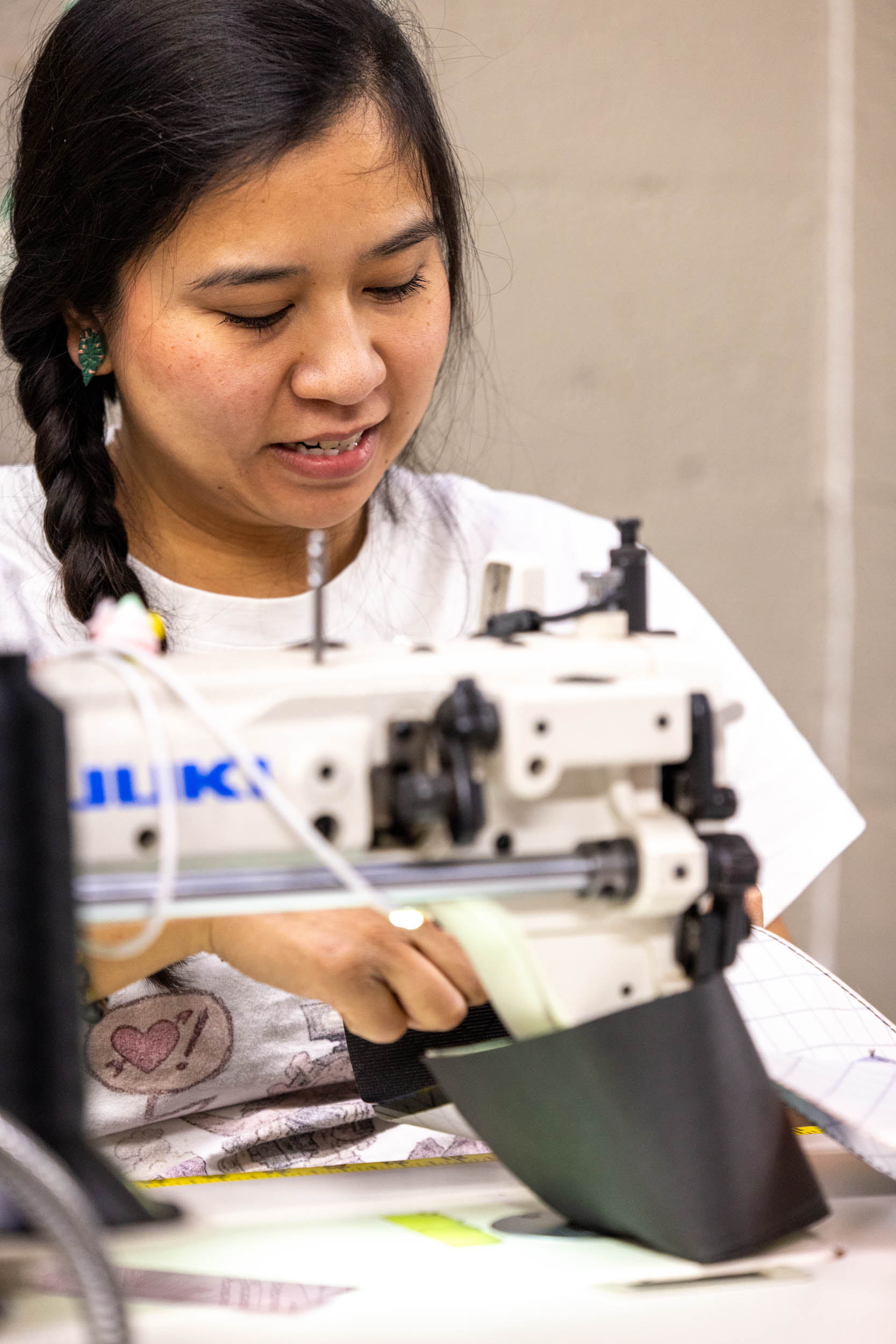


They’ve gone through several iterations of their custom fabric over the years because of its heat resistance. Their latest fabric is made in the USA by Dimension-Polyant (of X-Pac fame). Every manufacturing process occurs under the same roof, resulting in a cleaner product with far fewer defects. The fabric is pre-shrunk for Rogue Panda, so it’s ready to handle the heat of the press. The current version also has fewer layers—one exterior fabric and one interior PET film—which means fewer potential wrinkle issues under heat. The fabric accepts seam tape very well, an important consideration for the newly launched rack bags I tested last month.
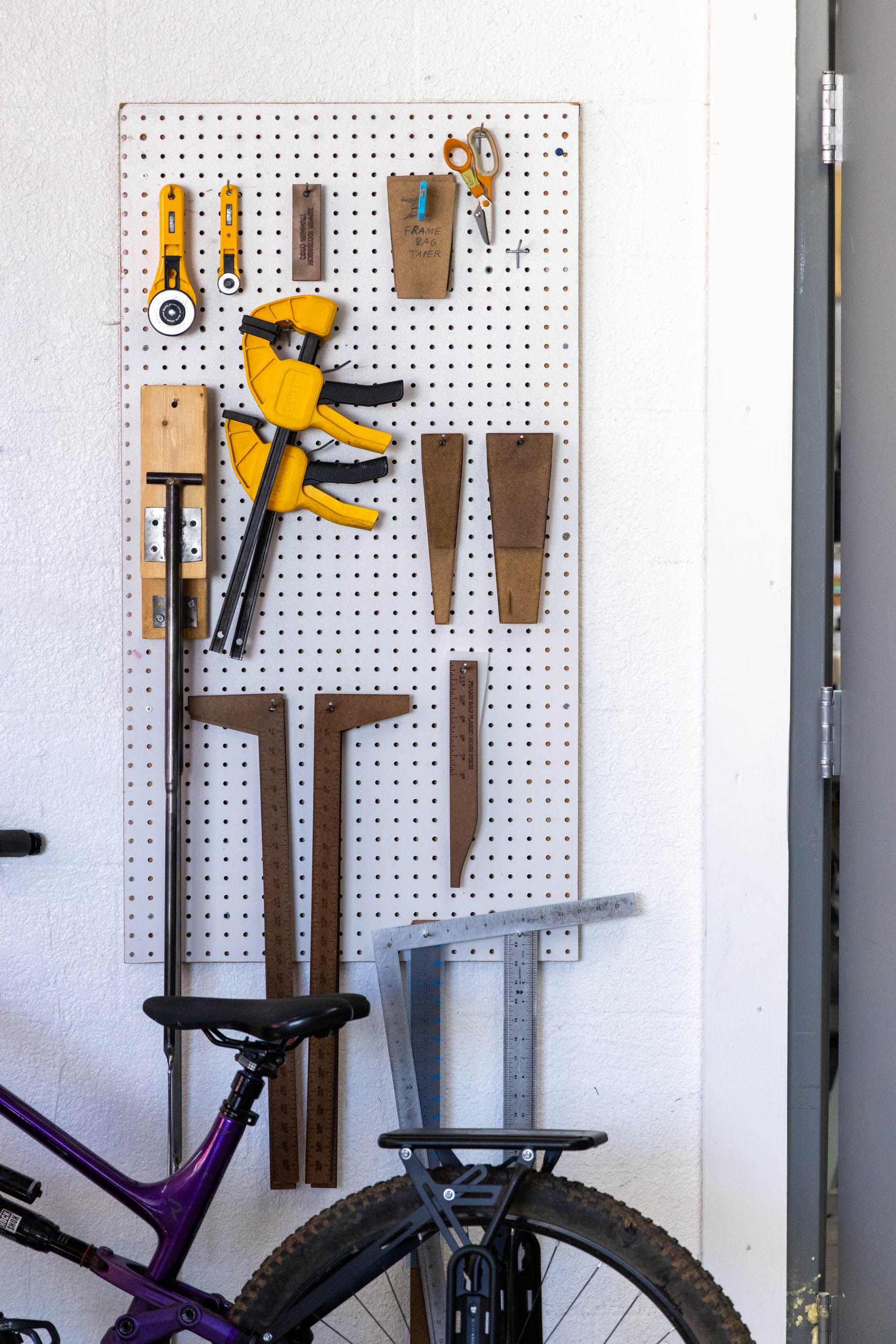
There have been loads of other significant improvements to the shop that help the team operate more efficiently. Sometimes they have to get creative, though, like the zipper cutter they made by removing the wheels from an oscillating blade fabric cutter and mounting it to a table. They set up a little protective wall around the blade, and as Nick explained, “It’s much faster than cutting with scissors and way easier on the hands as well.”
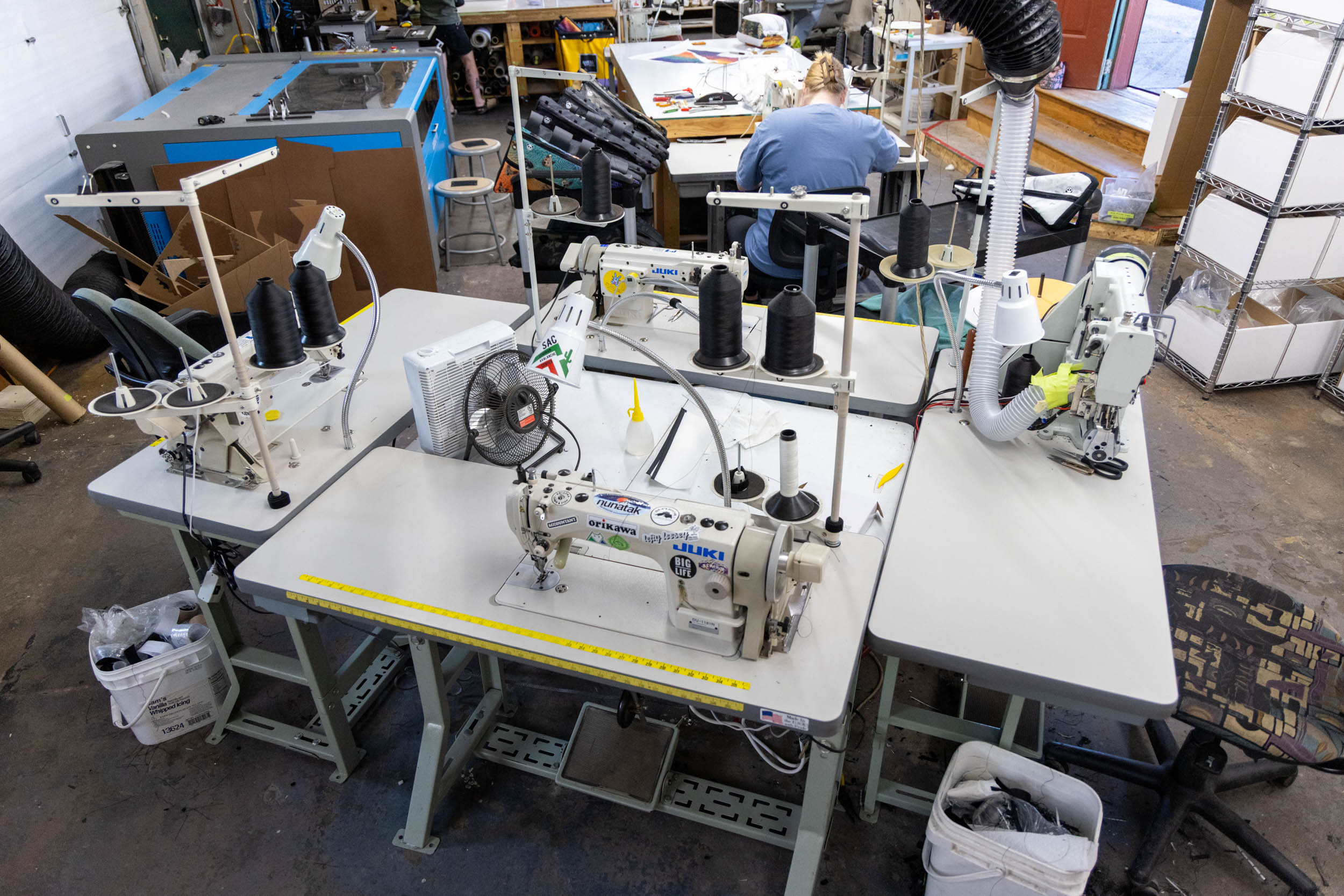
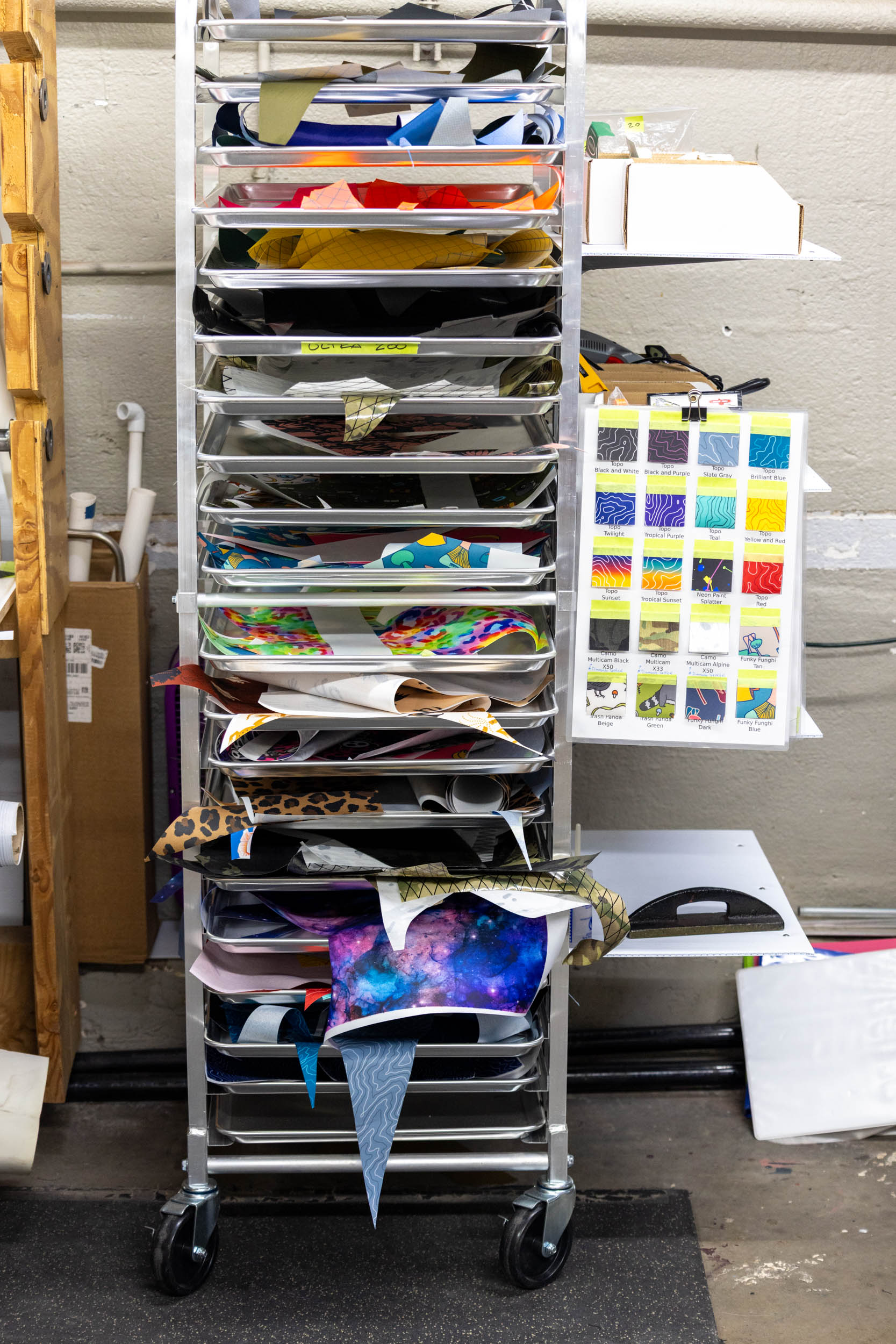
The full-width laser cutter, which takes up a good chunk of the workshop, has also been a game-changer. They can now cut all their Ultra fabric frame bags with it, saving a lot of time because hand-cutting Ultra fabric is difficult. Nick says, “You need special scissors or electronic scissors, and those are both more tedious than the rotary cutters we use on our normal fabrics.”
Evolving the Product Line
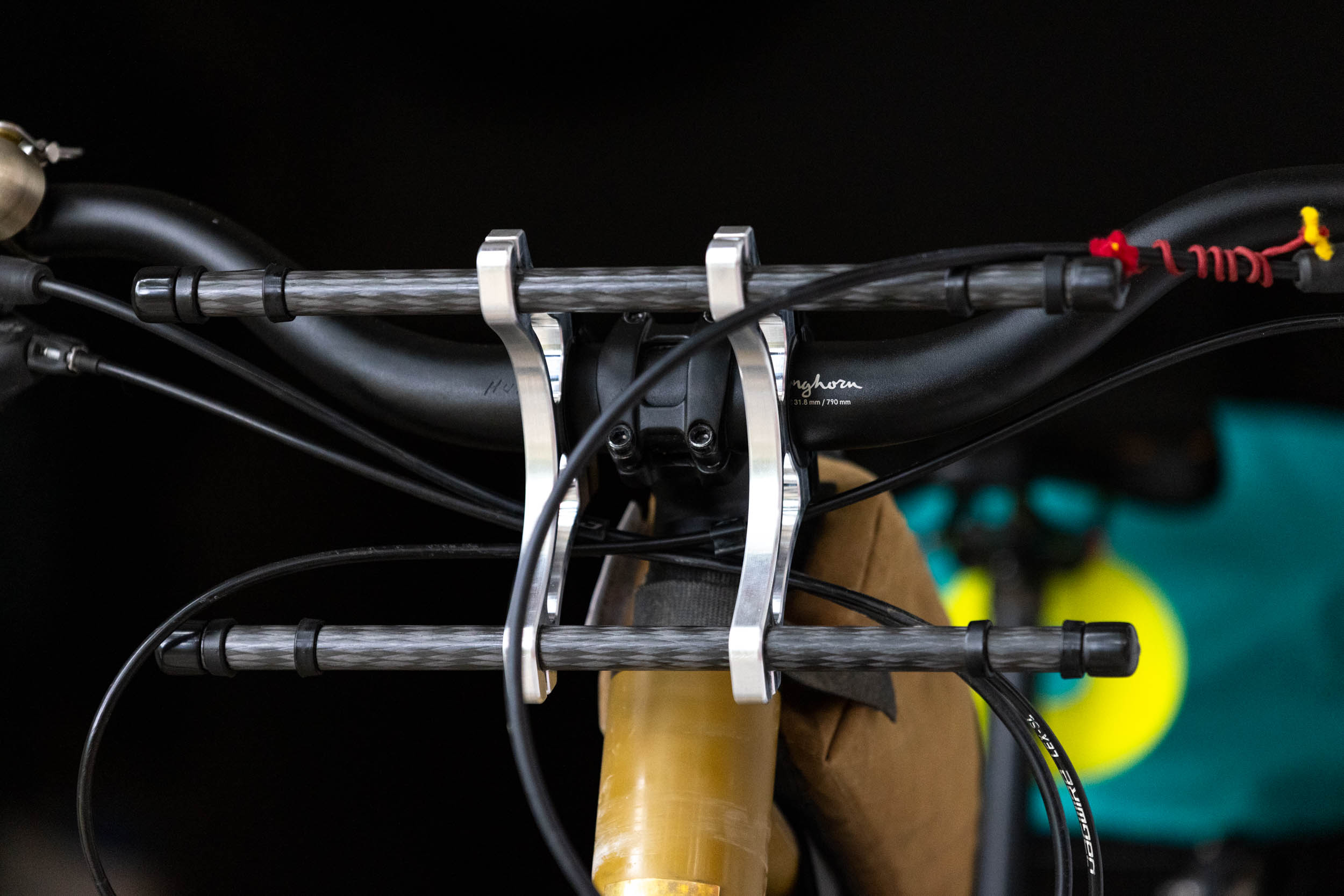
In the last few years, Rogue Panda has done an excellent job not only of increasing efficiency but also evolving its product line. They’ve released several impressive, well-designed products recently, like the Blue Ridge and Kaibab cradles, Bamboo Shoots bar extensions, and the Ripsey dropper post bag. Outside of the shop operations, Nick works with a local engineer to assist with product design, which has been another huge time-saver. Concepts still have to be tested and refined afterward, but it means Nick hasn’t had to learn CAD.
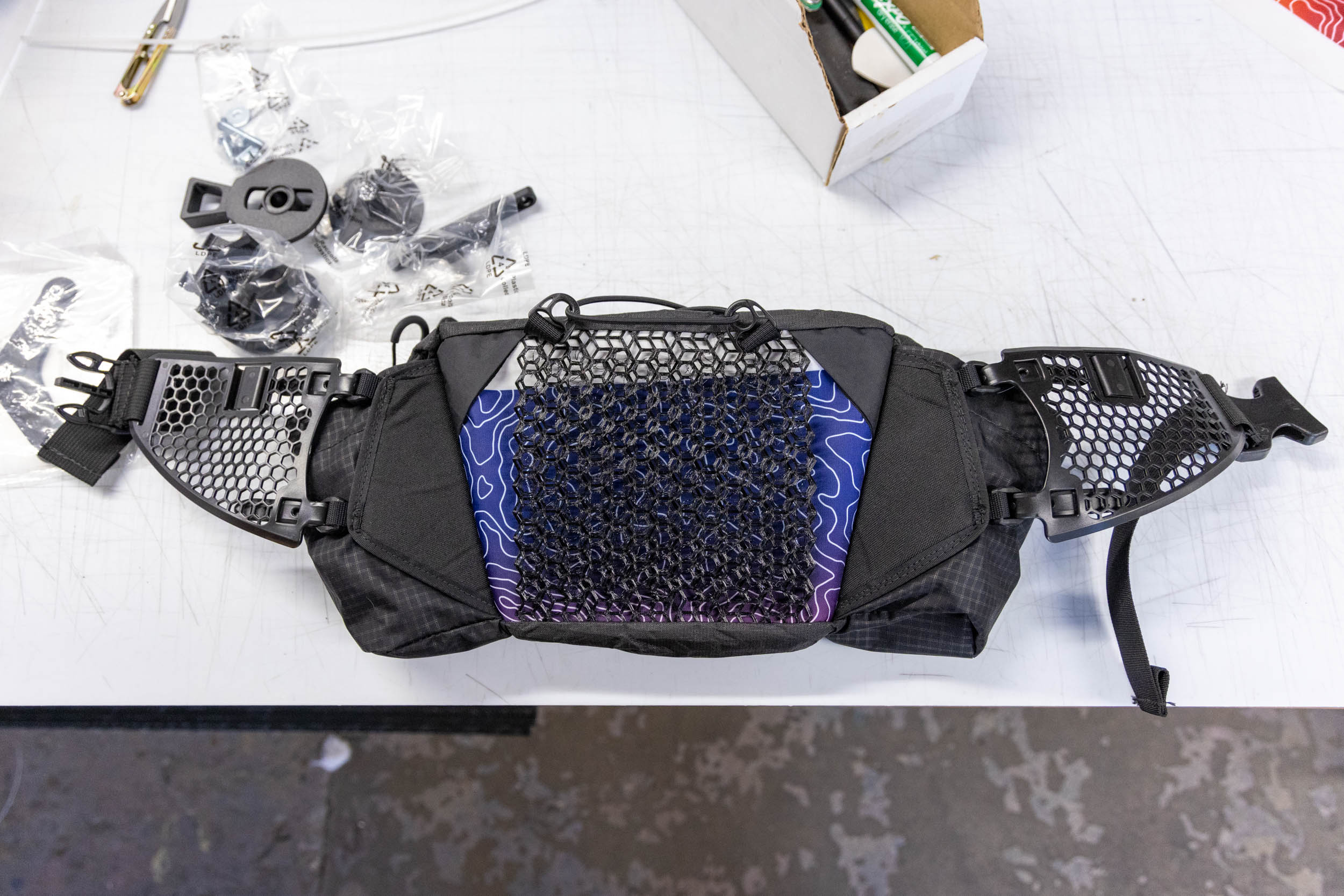
The introduction of machined and injection-molded components all started with the development of the Ripsey dropper post bag. Nick was working on a dropper bag that Liz Sampey, at 5’2″, could still use on her full-suspension mountain bike. The first prototype was sewn, and Nick’s engineer friend said Nick was doing it all wrong and that it should be made of carbon or plastic. A few months later, Esker founder Tim Kreuger pushed Nick to use plastic for the harness. He met with an engineer with extensive molding experience, and things progressed quickly. The result was a dropper-compatible seat pack with a removable dry bag and best-in-class tire-to-saddle clearance to maximize dropper post travel on nearly any bike size.


Nick has gotten good at dreaming up designs that can be machined or molded without causing too much trouble for the mold house or machinist. Compared to sewn products, which require relatively little upfront investment, machined and injection-molded parts are expensive. With their machined parts, the cost is mostly labor and machine time—it adds up quickly.
Injection-molded parts have high upfront costs, which is why the original Ripsey was available via pre-order to help cover some of that investment. “It does feel like we’re punching above our weight class a bit at times,” Nick said. “Some of our tooling will take over three years to break even. But one of the advantages of being a private company is that I don’t have to justify that to shareholders.” Expanding into different manufacturing techniques and developing unique ideas are what set brands like Rogue Panda apart from the growing list of sew-only bag makers. Nick took a chance, and it paid off.
Machining and Molding
Something that has allowed Rogue Panda to take their products beyond sewn bags was the addition of hard goods, specifically machined aluminum parts and injection-molded components. The Ripsey dropper post seat pack was only possible thanks to both manufacturing methods. The Blue Ridge and Kaibab cradles also rely heavily on machined aluminum parts.
Luckily for Rogue Panda, there’s a machine shop just a few miles away. Kenny and Nick met through the overlanding community when there was a Land Cruiser repair shop next door to Rogue Panda. At the time, Nick was working through ideas for the Blue Ridge handlebar cradle, so he sent over his initial drawings to Kenny. The quote for the original design was too high, but the benefit of working with Kenny was that he could explain exactly why it cost so much. Nick went back to the drawing board to reduce the price without sacrificing functionality.


I assumed machining these parts in Arizona would be more expensive than manufacturing them overseas. In reality, the quotes they received from China were within 10% of Kenny’s prices once freight was factored in. Higher volumes and ocean freight could have brought that price down, but then they’d lose the ability to run smaller batches, pivot, and change designs as needed. I’ve always been impressed with Rogue Panda’s ability to release new products and update existing ones efficiently, and overseas manufacturing wouldn’t allow that.
A good example of this is the Blue Ridge accessory bar, which they had to recall due to a fatigue failure. “If we had committed to a massive order of the original design, they would have all gone to waste. Instead, we were able to pivot quickly, and Kenny worked with us on the pricing for all the warranty replacements that we sent out.”
Nick credits much of their success to their move to injection-molded and CNC-machined components. As he explained, there’s no way they could have achieved what they have with sew-only bags. “It’s best to keep sewing to what it’s great at—making bags—and use other techniques for creating the structure needed for things like a seat bag or handlebar harness.”
Bikepacking bags and how we carry gear are evolving. Some armchair experts like to say we’ve “come full circle,” but I’d argue that modern gear carrying solutions, like those from Rogue Panda, are a far cry from traditional racks and bags. When Rogue Panda launched their sewn Canelo, a hybrid harness/cradle with a single carbon rod, they received nothing but positive feedback. Then, as things evolved, they started getting complaints they’d never had before. To Nick, a basic sewn harness doesn’t cut it anymore.


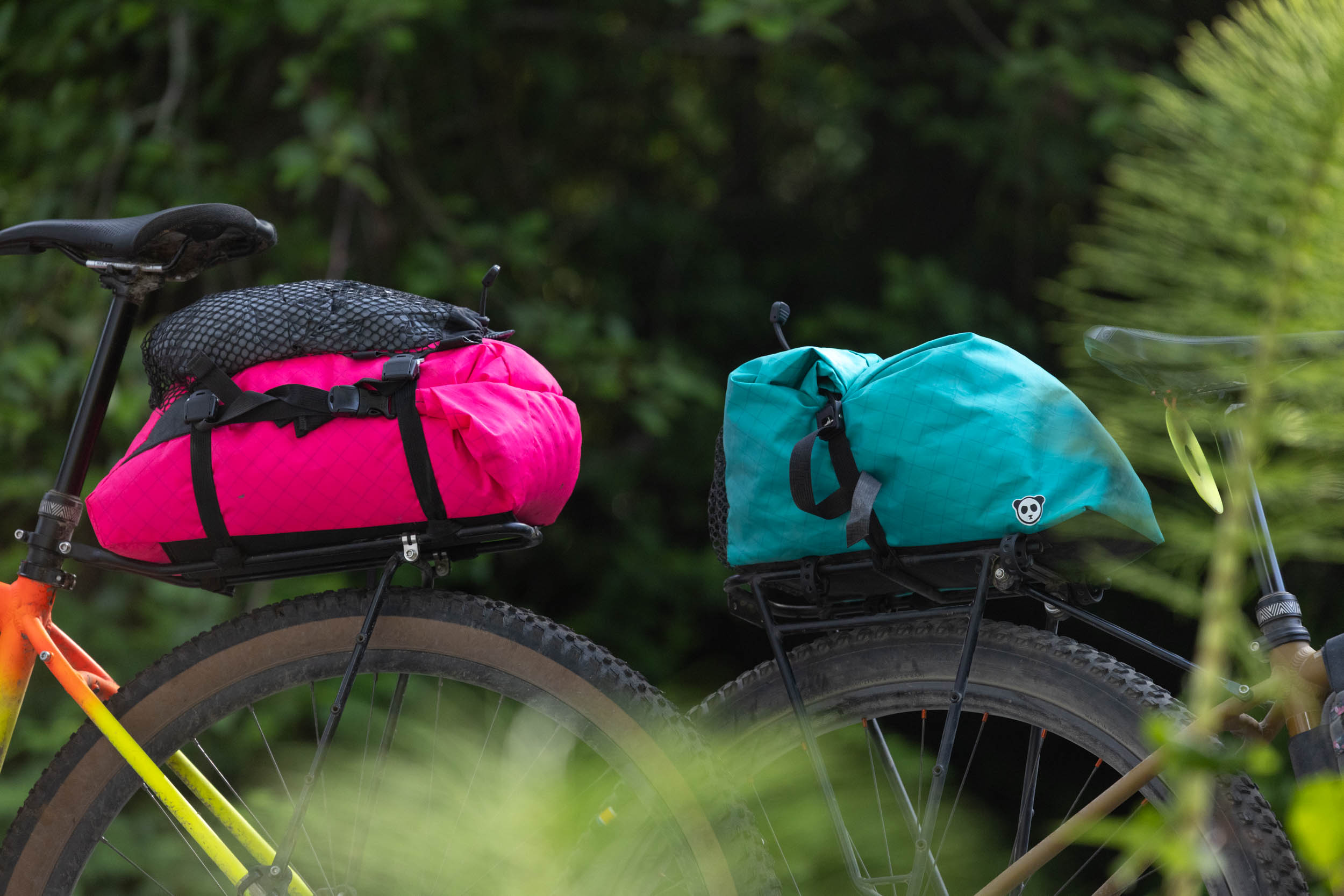
For a long time, Rogue Panda wasn’t necessarily anti-rack, but it had a focus on lightweight, minimal bikepacking setups. Racks are getting lighter and more versatile, and I ran this by Nick to get his thoughts on whether there will always be a place for rackless bikepacking setups. In his eyes, if you don’t need the capacity of a rack, a seat bag will be lighter. Nick packs light and usually has trouble filling up bags, but he understands that certain routes, like those in the desert, often require more carrying capacity for massive water carries. Rogue Panda recently launched some FLiP-equipped panniers, just started stocking Old Man Mountain racks, and is planning to stock Mica racks, so they’re clearly open to different styles of packing.
Inside Tucker Machine Company
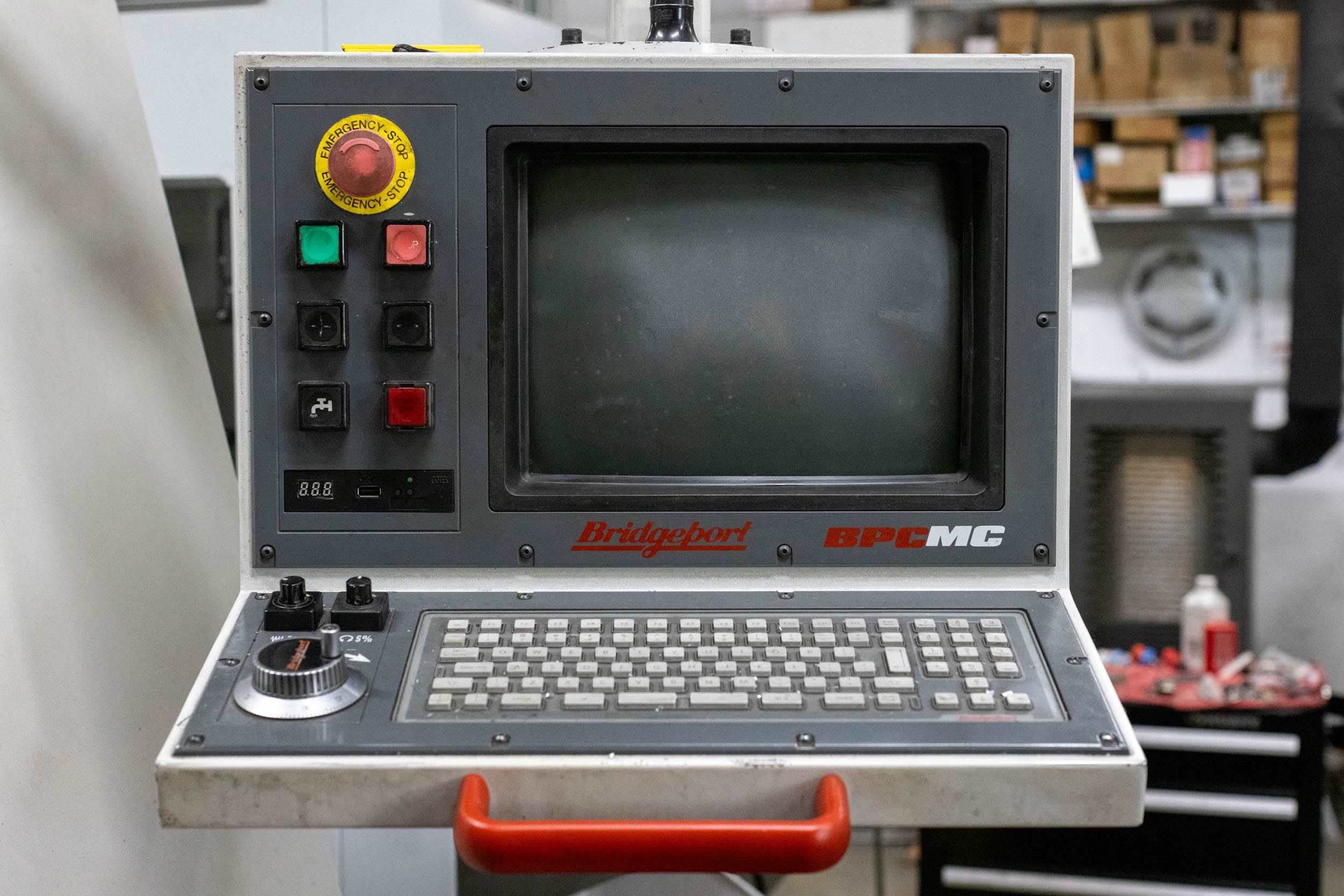
During my visit to Rogue Panda, Nick convinced Kenny to open his machine shop and give us a tour. The shop is located inside a massive multi-car garage on the property where Kenny and his family live. It’s a big space packed with CNC machines, lathes, a few vehicles, and various projects. Looking around, I spotted more than a few recognizable bits and pieces from Rogue Panda’s lineup.
Kenny’s day job is a mechanical engineer at a medical company in Flagstaff. He’s part of the design and automation team, so he designs machinery, hand tools, and fixtures that assist with the production of medical products. Kenny spends his day working in SolidWorks, which is a 3D design and engineering software. He said he needed his own shop so he could have hands-on time with machines. His introduction to his craft came from working on dairy farms around San Diego when he was younger, where he learned to fix tractors and milking equipment, weld, and do some metal fabrication.
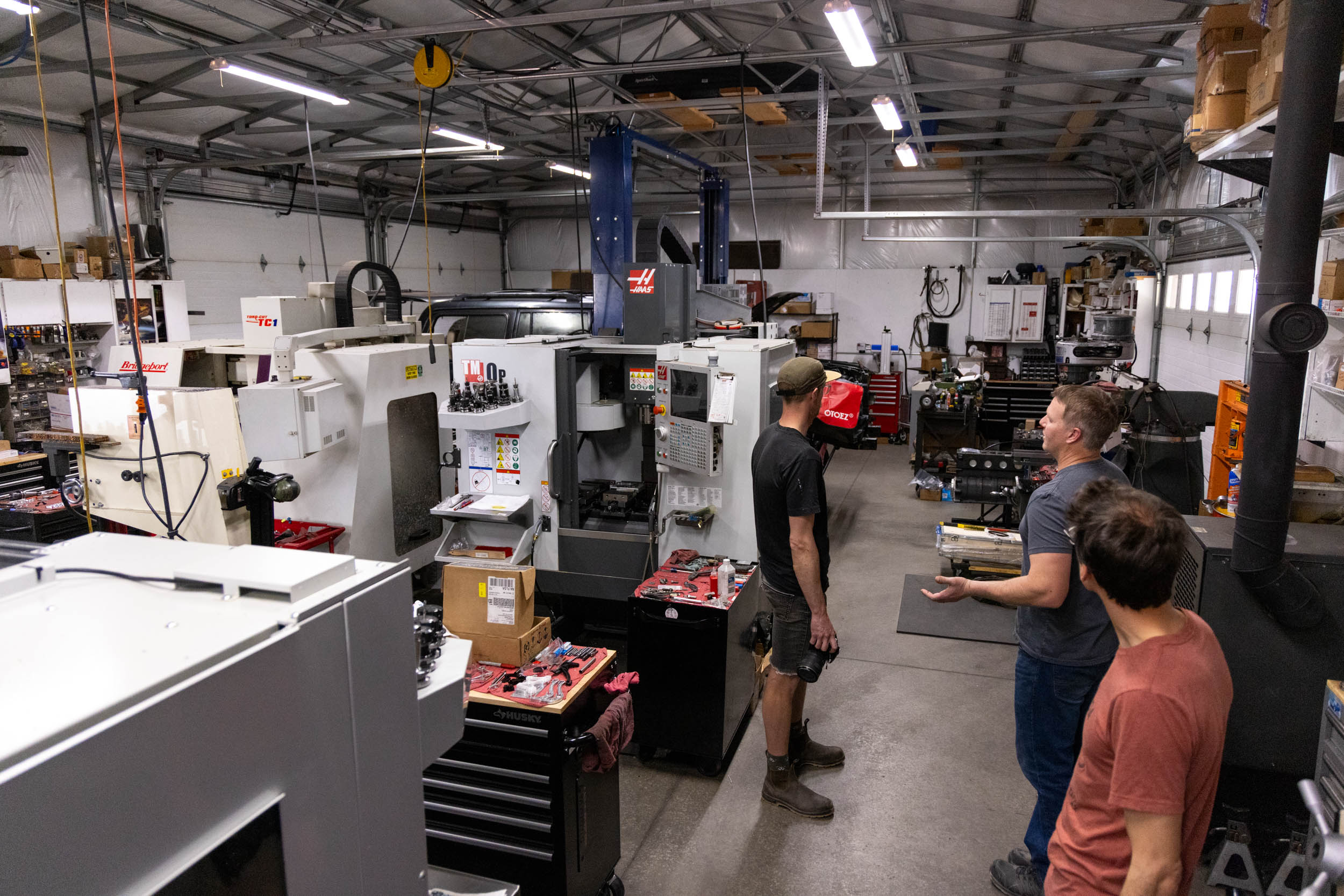
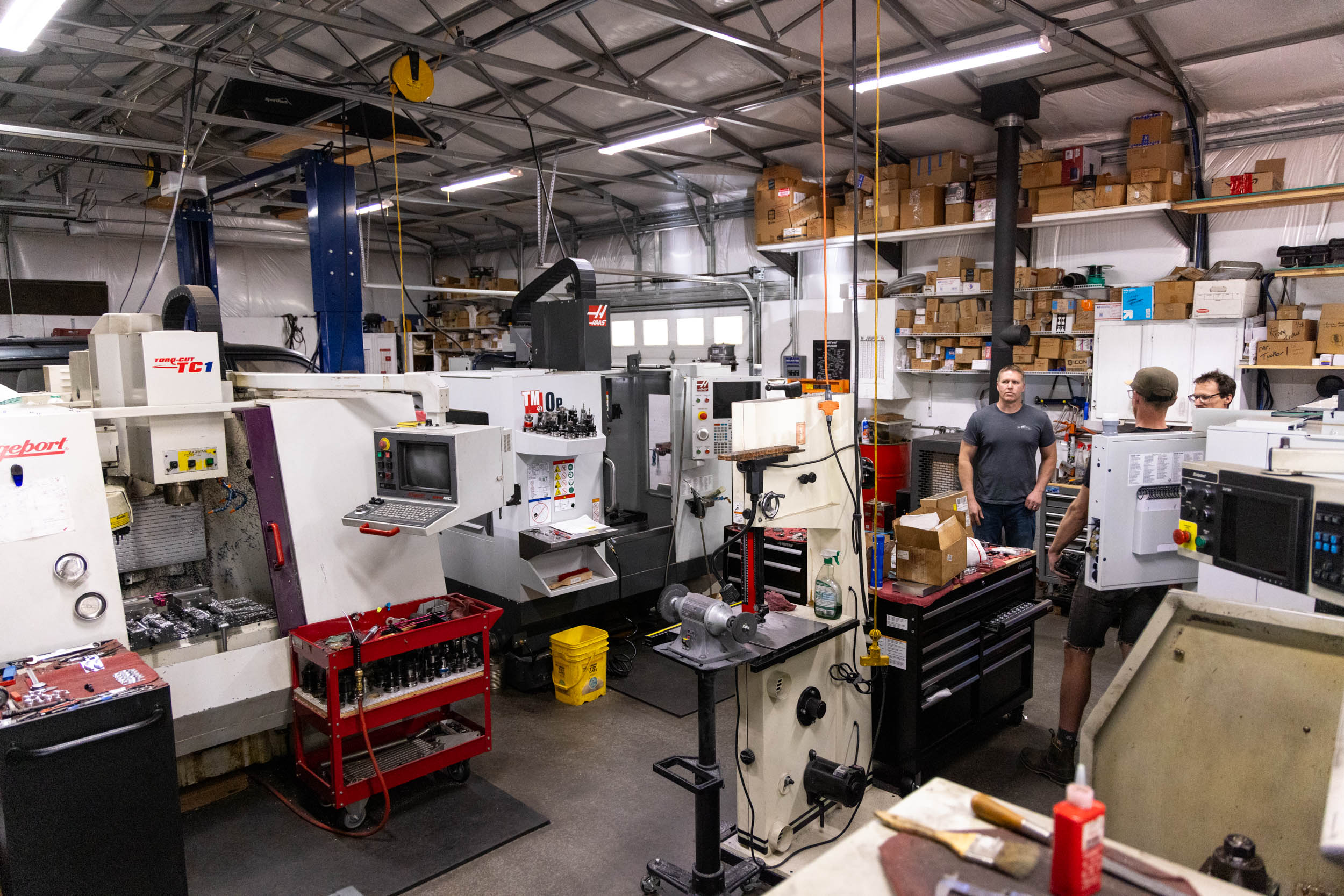

Kenny built the shop out when he moved to Flagstaff in 2015. At the time, he just had a manual mill and a manual lathe, and he wasn’t machining as a side business. That all changed in 2016, when he developed a product for Land Cruisers, posted it on a forum, and eventually a shop reached out and started selling them for him. Within a few years, Kenny was making over 120 of their products, most of which he designed. During those first years, he picked up a CNC mill, and things took off. Today, the shop produces about half Land Cruiser products and half Rogue Panda components.
When I asked Kenny about his relationship with Nick, he said he appreciates how calm and level-headed Nick is, even when things don’t go as planned. Instead of rushing products to market, he takes his time, resulting in better final products and avoiding the risk of it coming back to bite him, which could otherwise make Kenny look bad. Nick’s ability to communicate his ideas clearly and thoroughly also enables them to work together efficiently. Kenny understands Nick’s ideas. They are at the point where Nick can create a rough prototype from wood or acrylic and bring that to Kenny, who then creates a clean 3D CAD file. Something Kenny has had to learn about and consider is the amount of fatigue some of Rogue Panda’s parts see. “Mountain bike parts are unique because you’re trying to shave material and weight but still make a product functional. It’s a little different than most automotive parts,” Kenny explained.

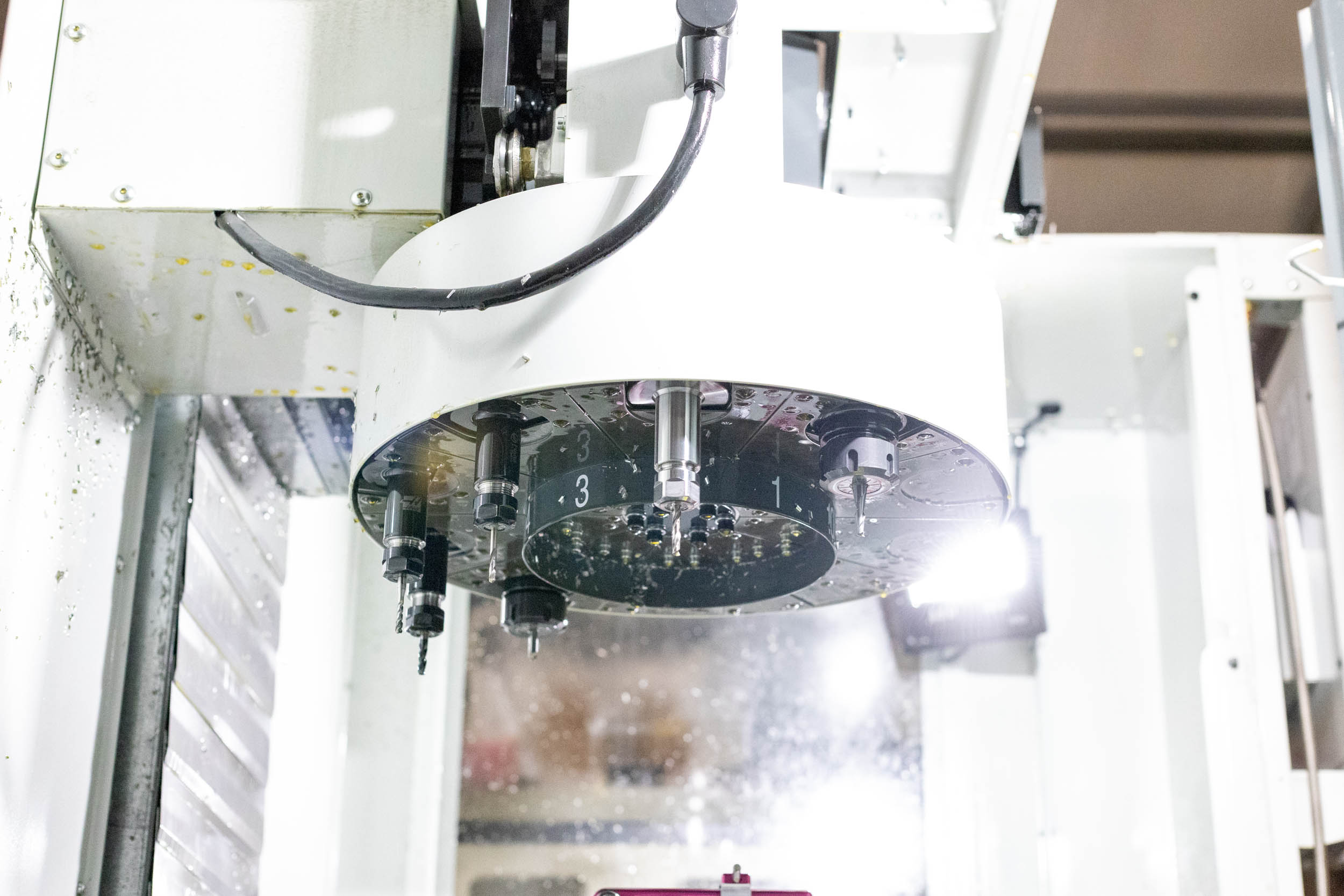
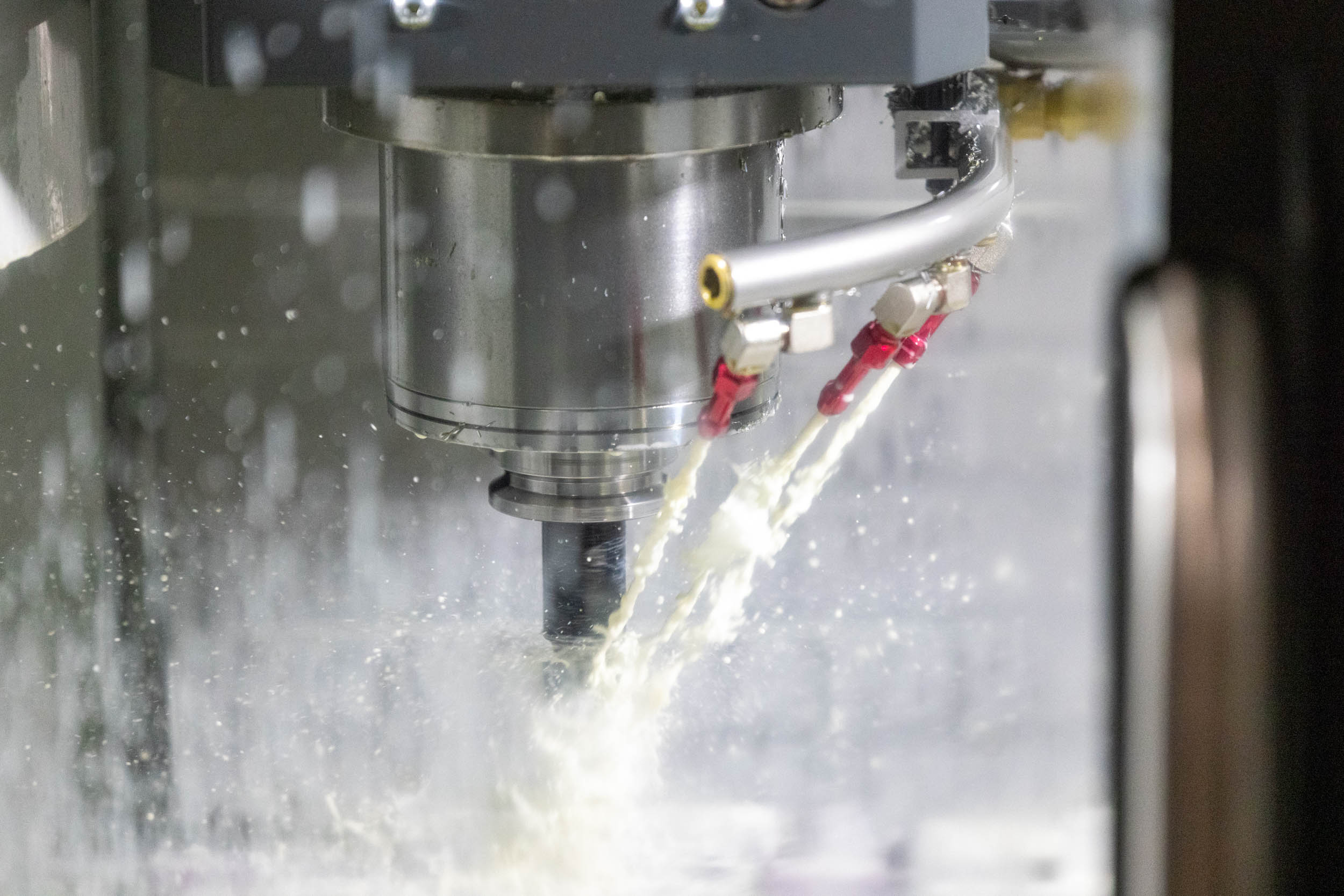


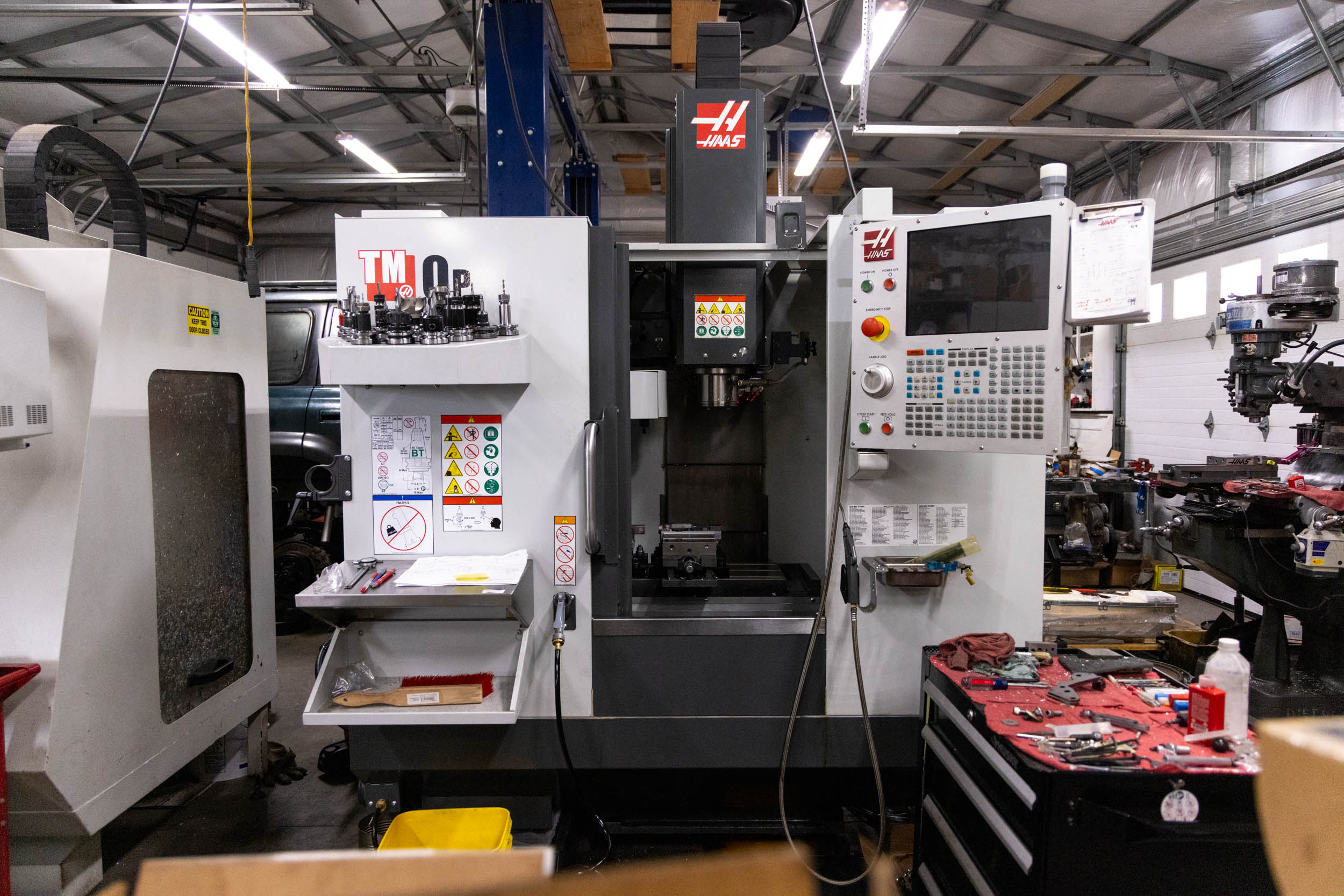
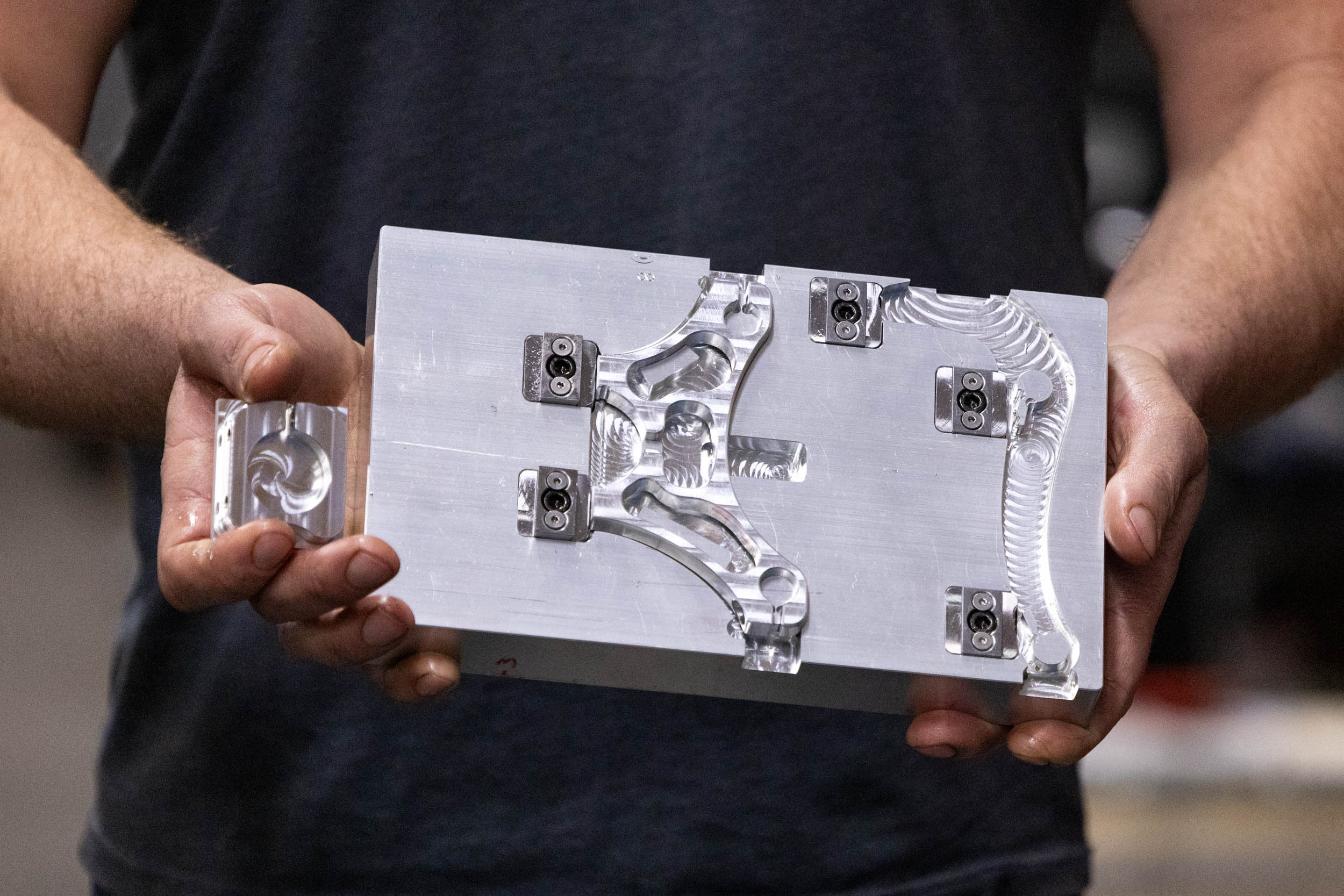
Kenny and Nick’s relationship feels like the perfect collision of skillsets. Nick knows what he wants from a functionality standpoint, and then Kenny finds ways to polish the design for machining. The Blue Ridge cradle was their first project together, and it went through multiple iterations. The first version required four or five operations, which means a tool change within the same machine or a complete machine change, but they got that down to three operations by dialing in the design and machining process. Little details like having all the screw holes on the same axis mean less time flipping the project or making special vices to hold it in the perfect spot each time.
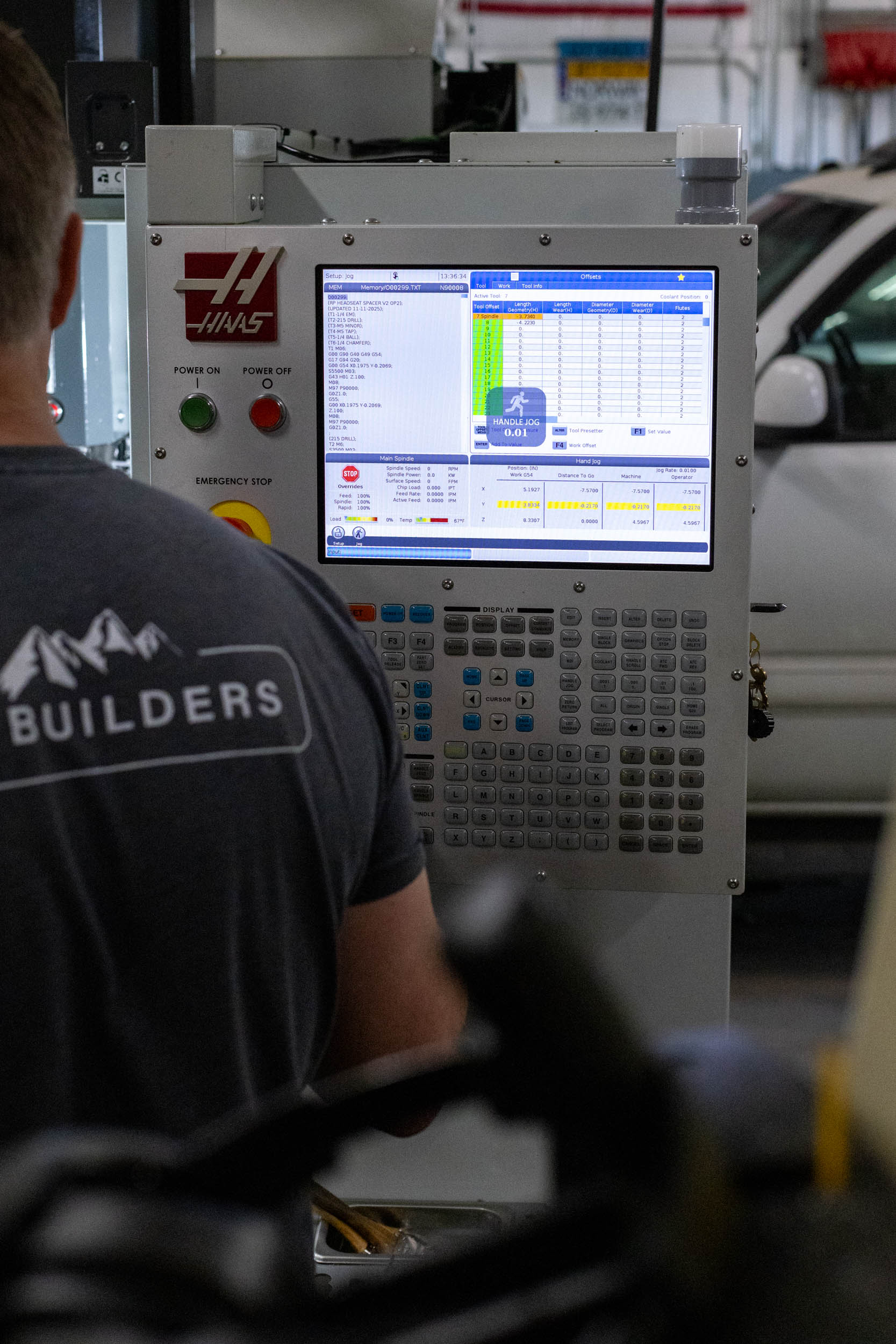
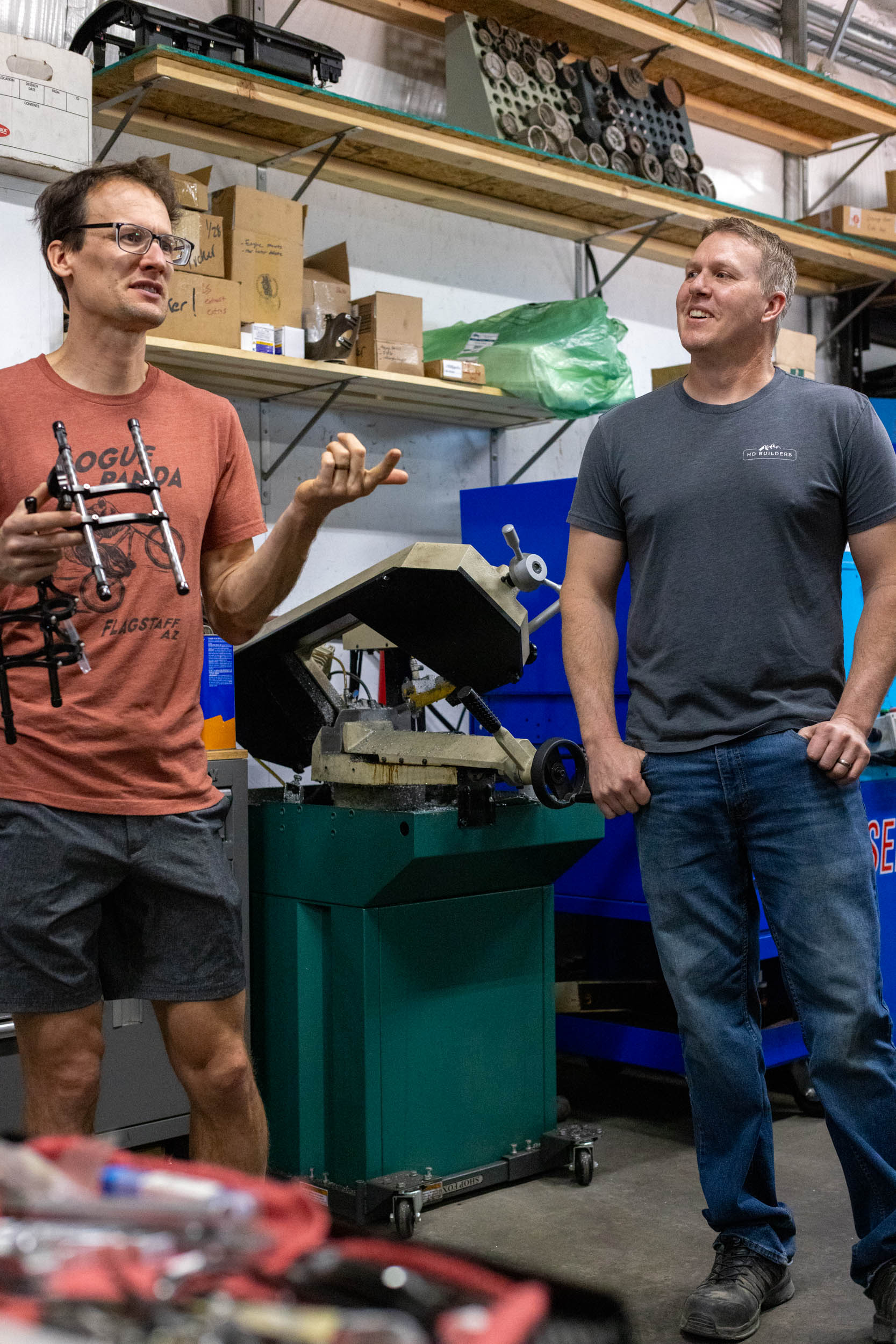


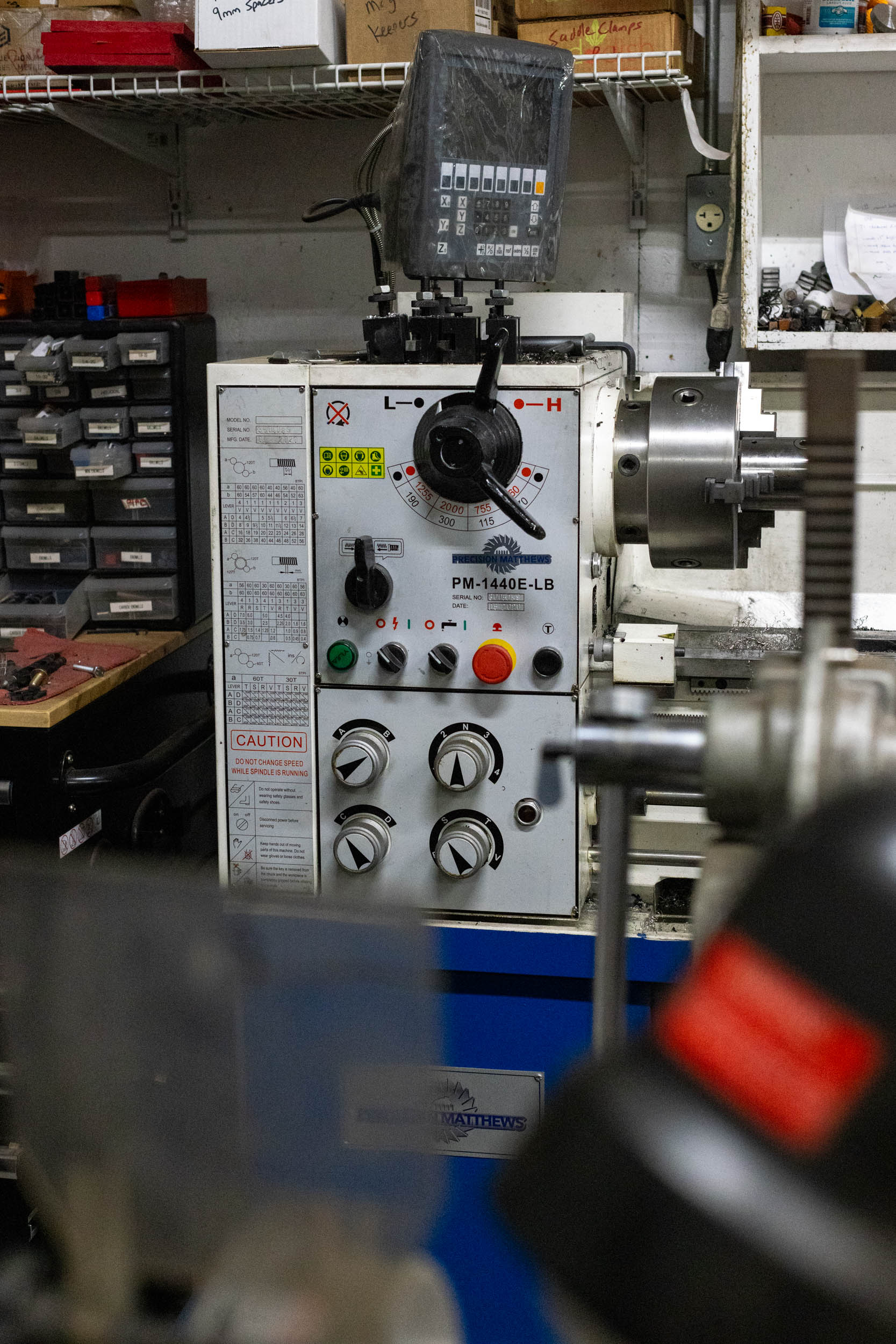
The amount of thought that goes into each step is mind-boggling. There are so many minute details to consider when machining parts that it’s simply impossible for a consumer with no machining experience to understand. For the Kaibab cradle’s head tube spacer, they brought in a special German-made tap based solely on Neil’s feedback from testing a pre-production version. The standard threaded mounting hole was prone to loosening, so they brought in a special tap that creates a trapezoidal hole, providing much better holding strength and resistance to loosening. The aerospace industry and NASA use variations of spiral lock taps because fasteners must withstand extreme vibration without loosening. This is just one example of a specific manufacturing choice that serves a crucial function but isn’t visible to the consumer.


As Kenny walked us around the shop, explaining the functions of different machines and showing us projects at various stages of production, he pulled out one of the original Blue Ridge cradle prototypes that had been 3D-printed before being machined from aluminum. “Look at this ugly thing,” he said jokingly as he pulled it out of a box of misfit parts. “This was before we changed the screw holes to the other side, because it tore some holes in that guy’s dry bag,” Kenny explained, which coincidentally was another piece of feedback Neil provided Nick.

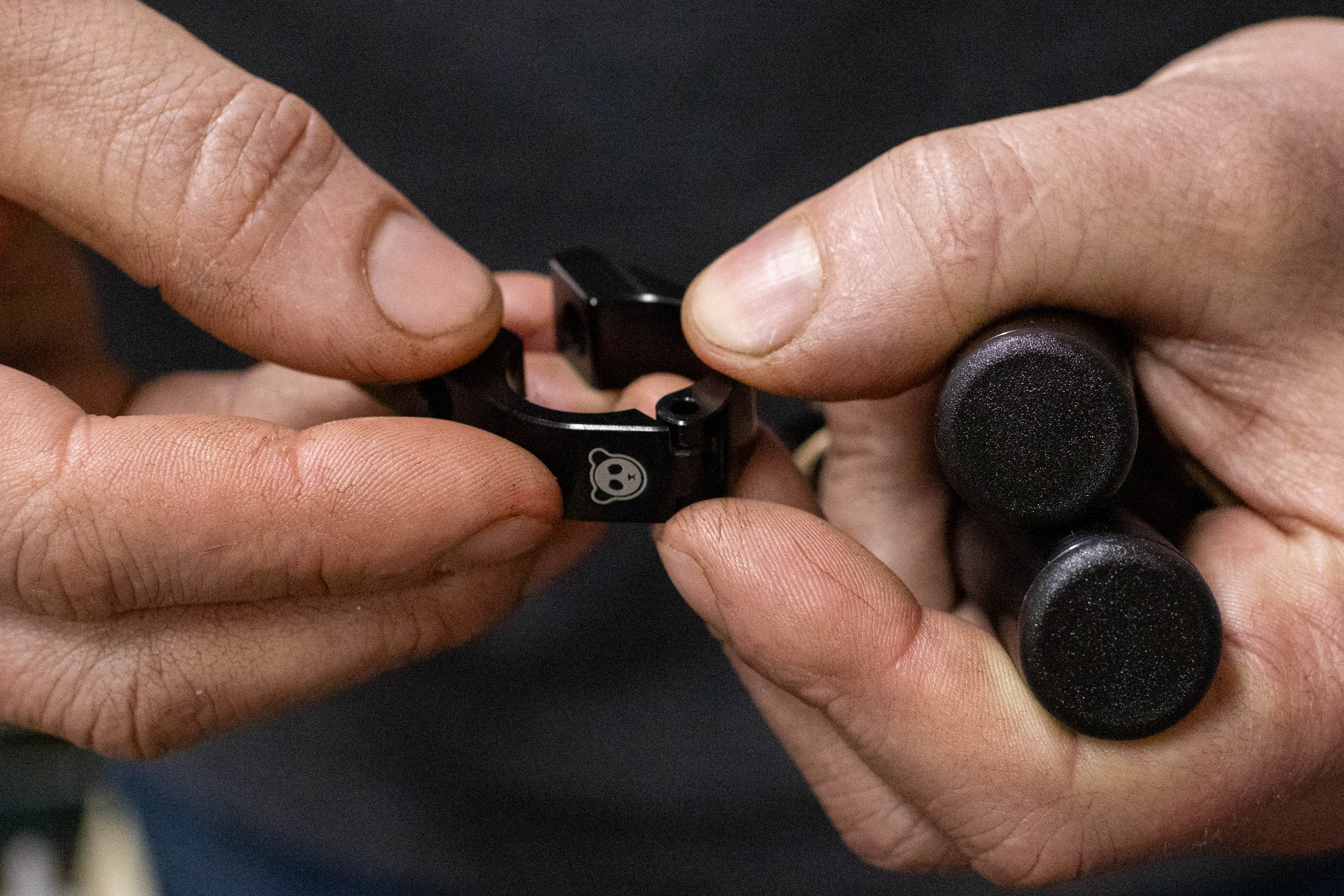

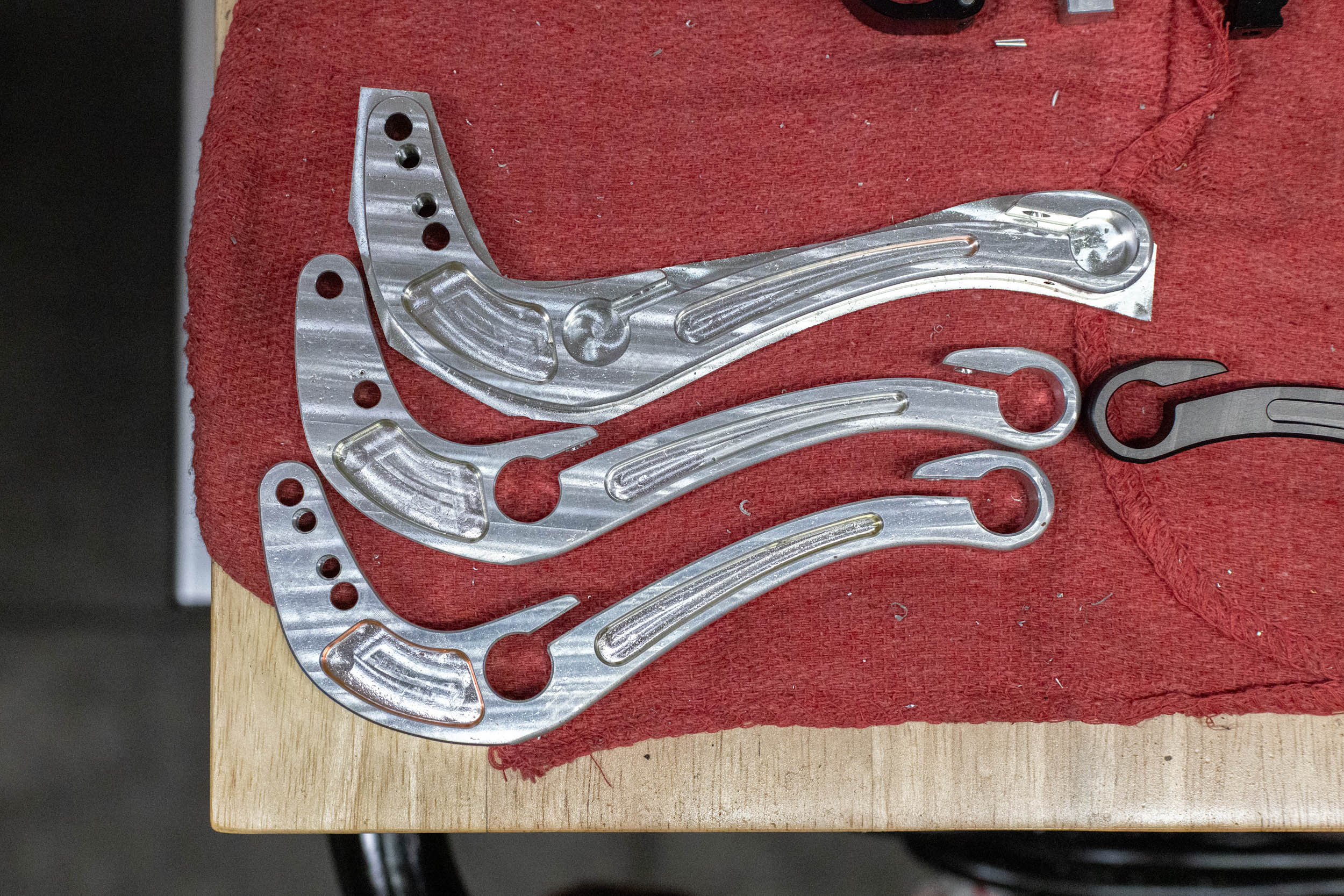
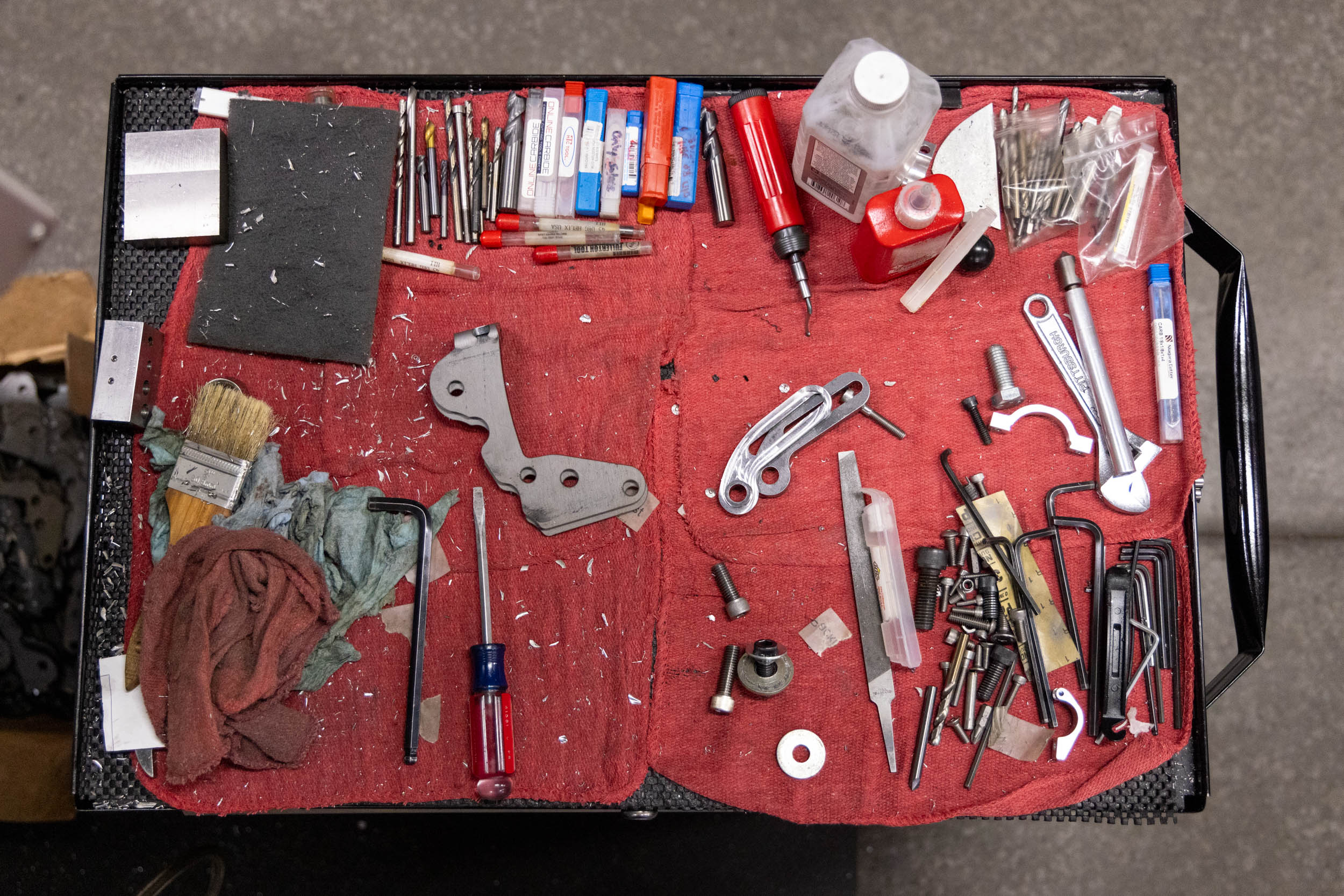
Kenny has a few laser marking machines in the shop, a Fiber Laser and a CO2 Laser, that are used for etching anodized aluminum and brass, cutting gaskets for car projects, and cutting custom felt pieces. They tried using the CO2 laser for the tiny etched Rogue Panda logo on most of the aluminum components, but it didn’t provide enough resolution, so the fiber laser stepped in. I love how adults can talk about lasers so casually, and Nick joked that he has a few lasers in his shop, including a laser-guided heat press, a bolt-hole punch, and a CO2 laser for cutting fabrics. Listening to them talk about all their lasers makes me think their seven-year-old selves would be proud.
Looking Forward
Even though Nick is more of a fan of seat packs, he’s excited about the influx of modern bikepacking racks that accommodate more gear. He’s also psyched to see the continuing evolution of bike geometry and size-specific components, and more people considering things like shorter cranks. “It’s almost a cliche at this point, but for me, having shorter cranks with a steeper seat tube angle has been huge. I ride in a very midfoot position, and the combo has really helped my hips and lower back.” One thing Nick thinks is missing is stack heights that are size-appropriate for larger frame sizes, which is exacerbated by steep seat tubes and shorter cranks.

As far as where Nick sees Rogue Panda heading in the next five or ten years, he’s not sure. It’s hard for him to predict what wild ideas will enter his head between now and then. After the recently teased Elden rack-top bag is released, there is one more major project in the works, and Nick doesn’t have much bandwidth left beyond that. If he had to dream, Nick would love to have their own building with solar panels, efficient heating, and upgraded insulation. Nick says they are in the perfect location for rooftop solar. “It would also be great to have a proper showroom where folks can come by to see frames kitted out with different bag setups. We’ll see if it ever happens. The Flagstaff real estate market is tricky, and buildings our size don’t come up for sale often.”
Nick is eager to tackle the Colorado Trail, but that will more realistically happen in 2027. He and his fiancée recently fostered a dog and her puppies and ended up adopting one, so they’ll be sticking close to home aside from short overnighters and product-testing trips. For anyone visiting Flagstaff this summer, Nick’s new favorite local ride is to start on Elden Lookout Road, go up Upper Oldham (lovely new climbing trail), then down Sunset, up to the top of Full Sail, then over to Meteoride and down.
Wrap Up
It’s interesting to learn about varied roads to success. For brands like Rogue Panda, who have been at it longer than most, there’s even more pressure to remain relevant and evolve. For Nick, the path to success has been purely based on his willingness to adapt and learn, supported by the people he has surrounded himself with, both in the shop and the experts he collaborates with. Despite designing and manufacturing some seriously high-quality gear, they don’t take themselves too seriously, and I think their goofy panda bear head logo is a reminder of that. I’m eager to see what else Rogue Panda gets up to over the next few years and what new technologies or manufacturing methods they embrace.
Further Reading
Make sure to dig into these related articles for more info...


Please keep the conversation civil, constructive, and inclusive, or your comment will be removed.