

 Singletrack/MTB
 Gravel/All-road
 Dirt-road Touring
 Fat-bike


Niokobokk: Cycling & Surfing from France to Senegal


Created by Ben Herrgott and Laura Wilson, “Niokobokk” is an 80-minute film that beautifully captures the details of an incredible 8,000-kilometer bikepacking and surfing journey along the Atlantic coast between France and Senegal. Find the full film, a vivid set of photos, and a written perspective on the trip here…
PUBLISHED Dec 30, 2025
Cycling and surfing along 8,000 kilometres of the Atlantic coastline wasn’t part of our original plans. But at a time when global events felt a little overwhelming and deflating, this seemed like a refreshing and entertaining way to live—to move with intention and to embrace everything around us as we travelled through France, Spain, Portugal, Morocco, the Sahara, Mauritania, Senegal, and The Gambia. We love surfing and don’t mind riding a bike.
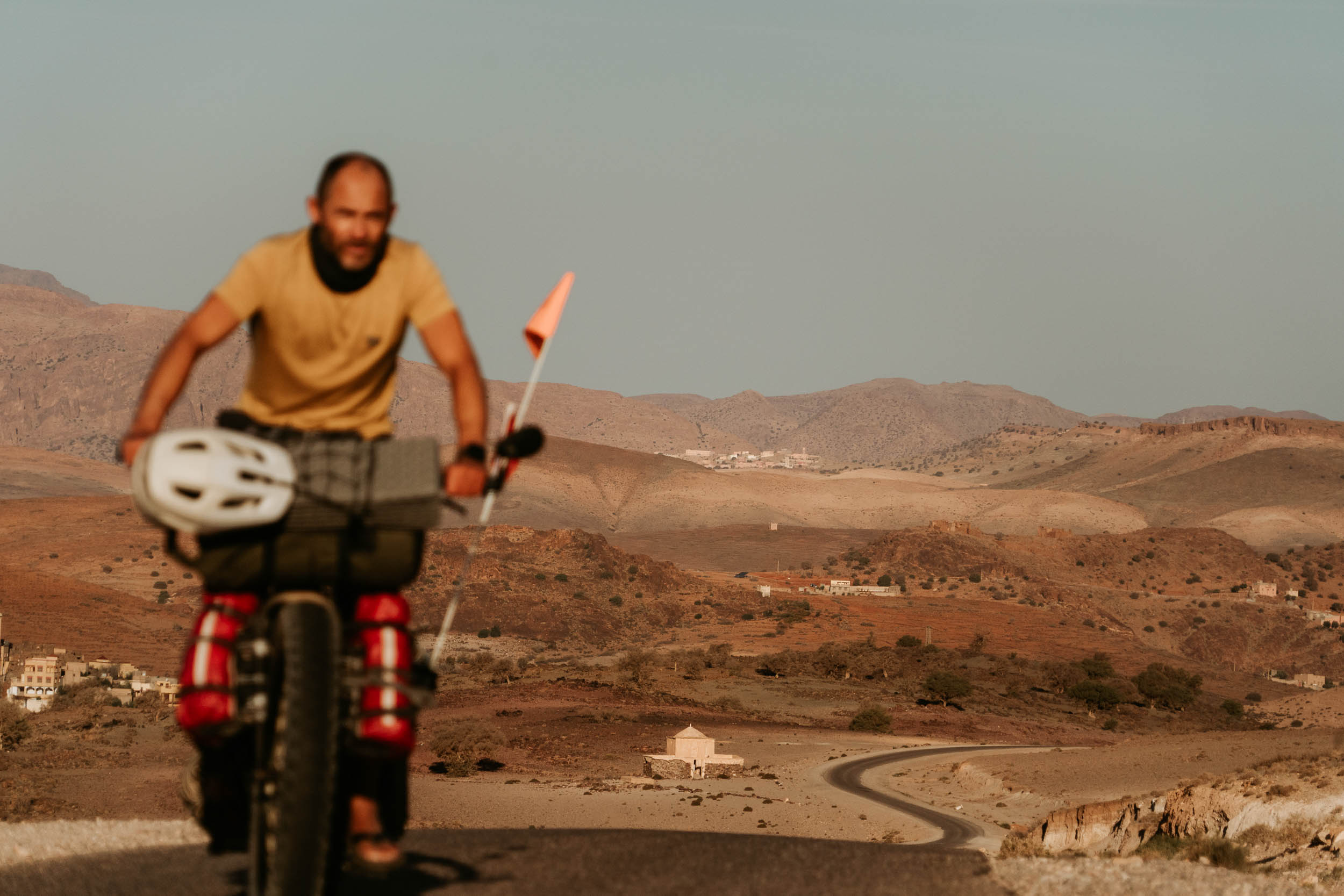

With a camera each and a microphone, we attempted to record what moved us: the wisdom of other cultures and customs, traditional music, and life in the desert and along faraway shores. What we discovered was far more energising than we could have ever imagined, so we made a movie about it, called Niokobokk.
This trip was part of a two-year journey in which we travelled along the coastlines of the Southern, Pacific, and Atlantic Oceans using various modes of transport. We sailed to Antarctica on a 55-foot steel boat with a goal to find surf, clean up a small stretch of coastline, and help raise awareness about the poorly regulated krill industry. After a hectic return across the Drake Passage, we decided to visit the Falkland Islands, where we continued surfing, cleaning up beaches, and even had a go at sheep farming with the friendly locals!


We continued on to Chile and Peru, travelling on buses and in a small campervan. Learning about the communities of these faraway shores and the struggles surrounding the fishing industries had an impact on us. So, we began making documentaries to share what we cared about, while weaving in the adventurous nature of travelling to these regions.
THE EUROPEAN SEGMENT
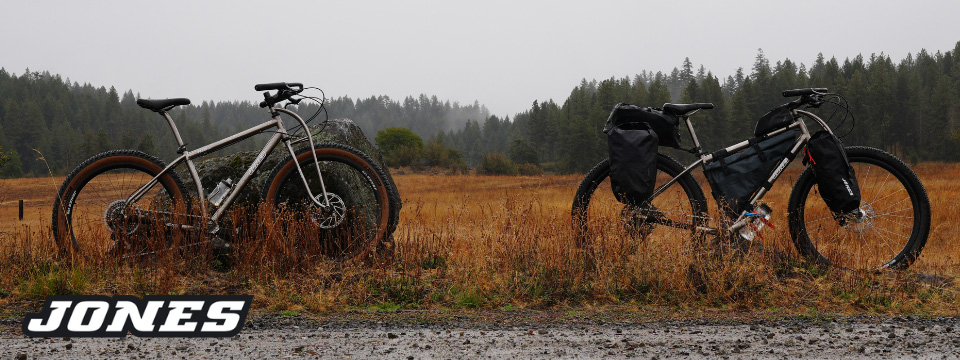
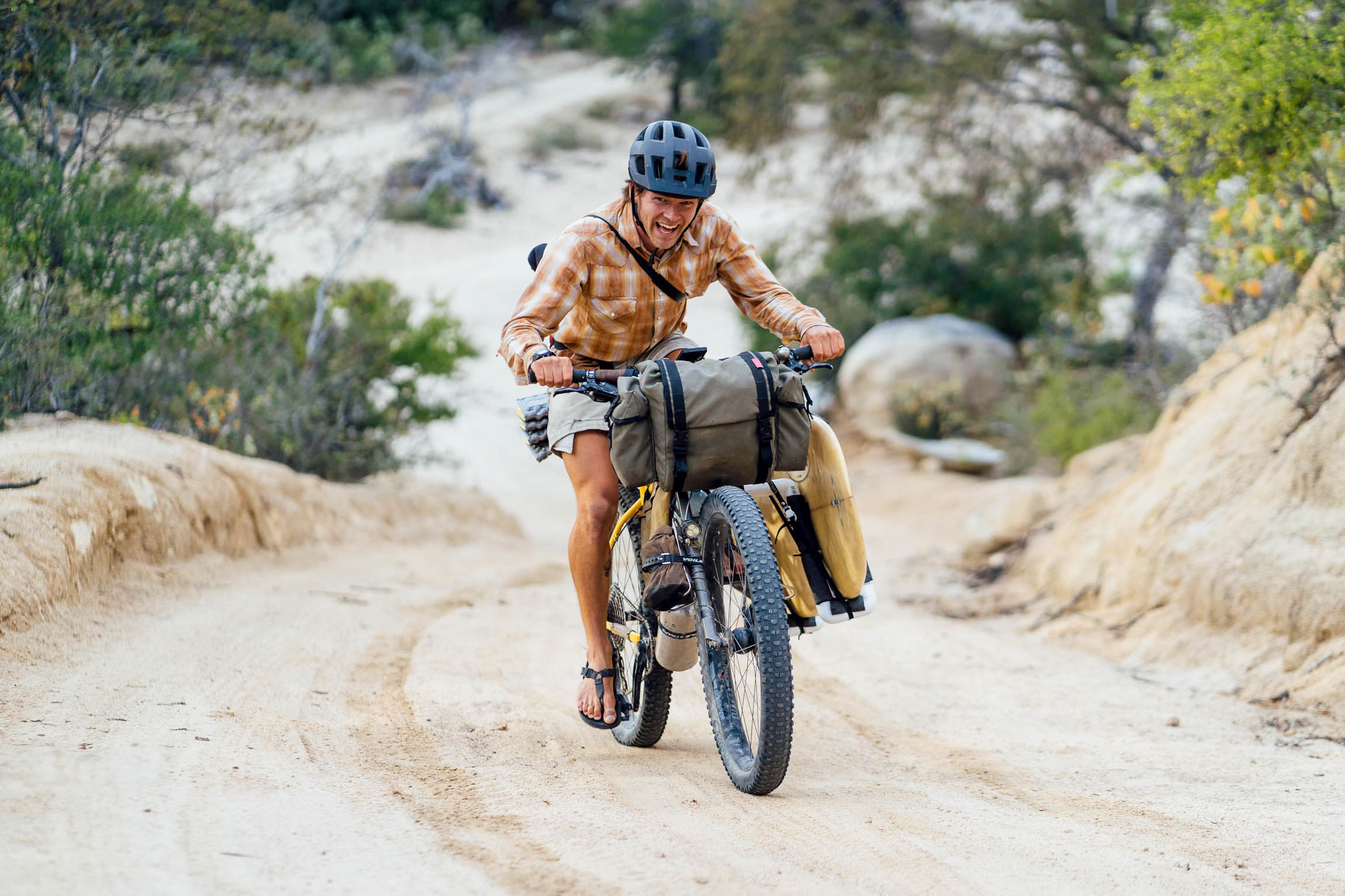
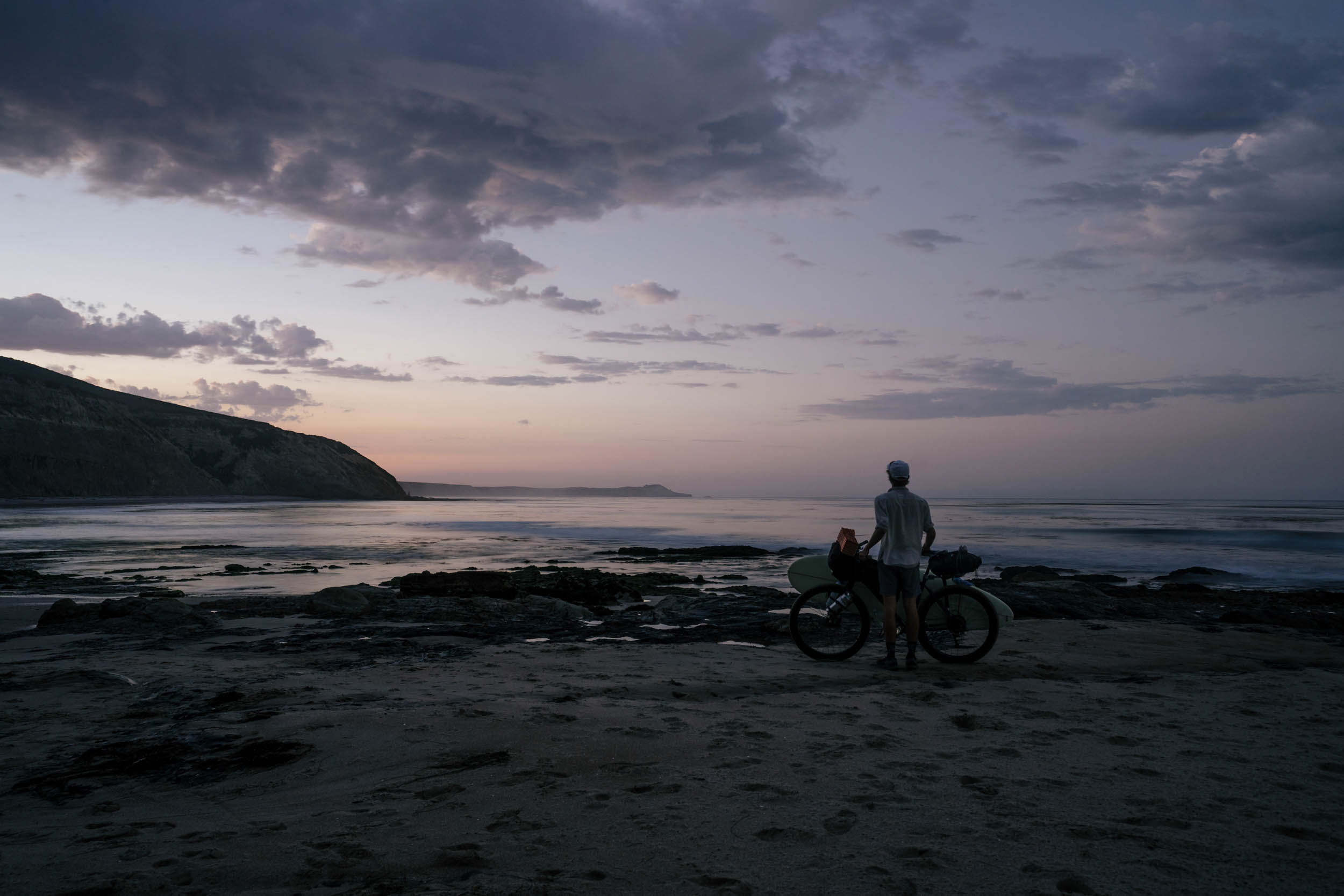
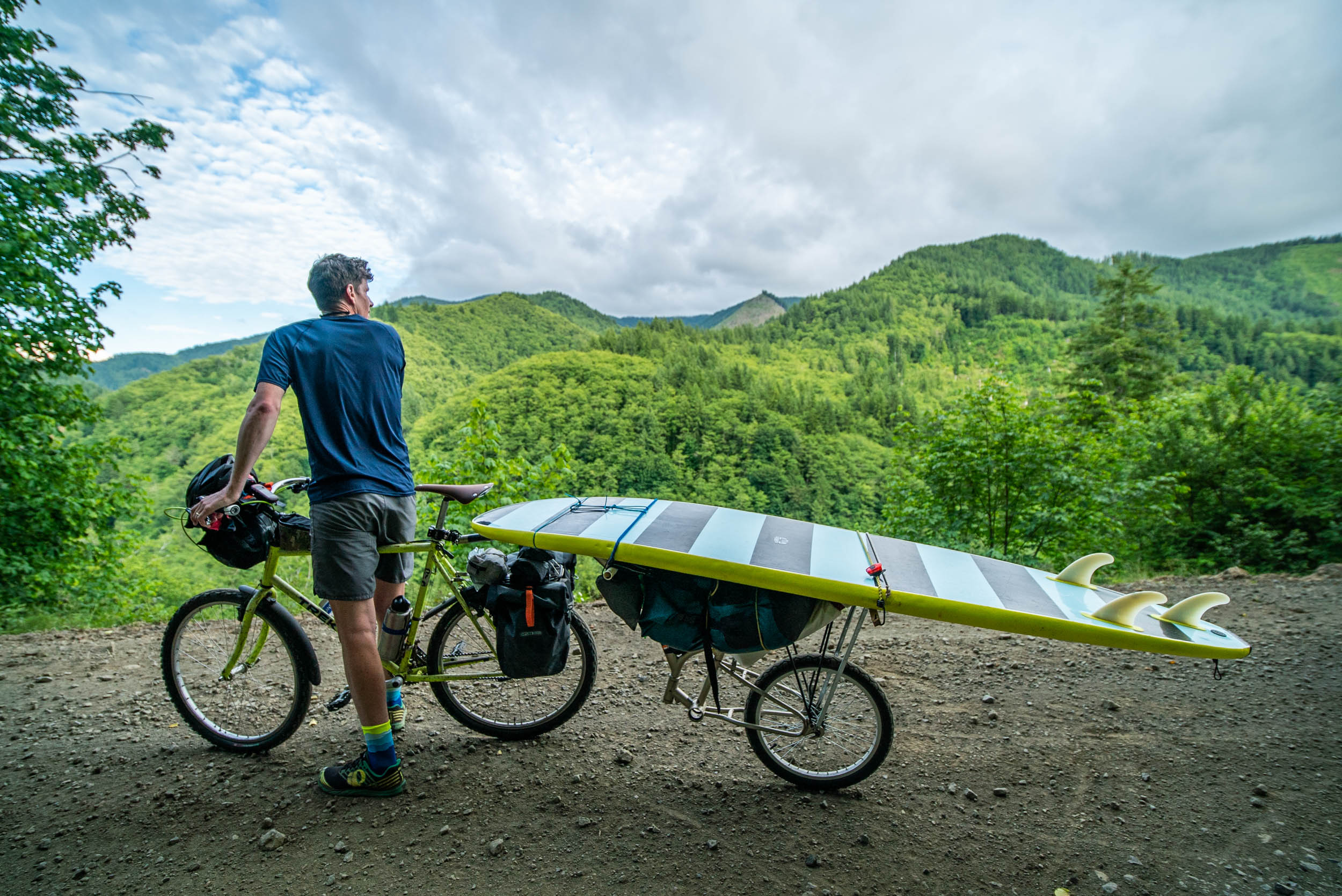
Eventually, we left South America and flew to France, where we jumped on our overloaded mountain bikes: Laura, on a trusty Surly Bridge Club, and me on an old Specialized FatBoy I had bought for $300 second-hand seven-years prior. To carry our surfboards, wetsuits, and a list of “just in case” stuff, we had a sturdy Burley XC Coho trailer.

Crossing France from east to west wasn’t the best warm-up segment: it was all too easy, albeit not so flat! We discovered wild camping spots galore, visited boulangeries several times a day, and meandered along picturesque trails. The north coast of Spain quickly reminded us that it isn’t all sunshine and tailwind when on a pushbike! It rained for six weeks straight across the Basque Country, Asturias, Cantabria, and Galicia, and all the way to the middle of Portugal. We gave up trying to dry our shoes and shorts at night: I bought cheap thongs and wore my boardshorts daily thereafter for faster drying.

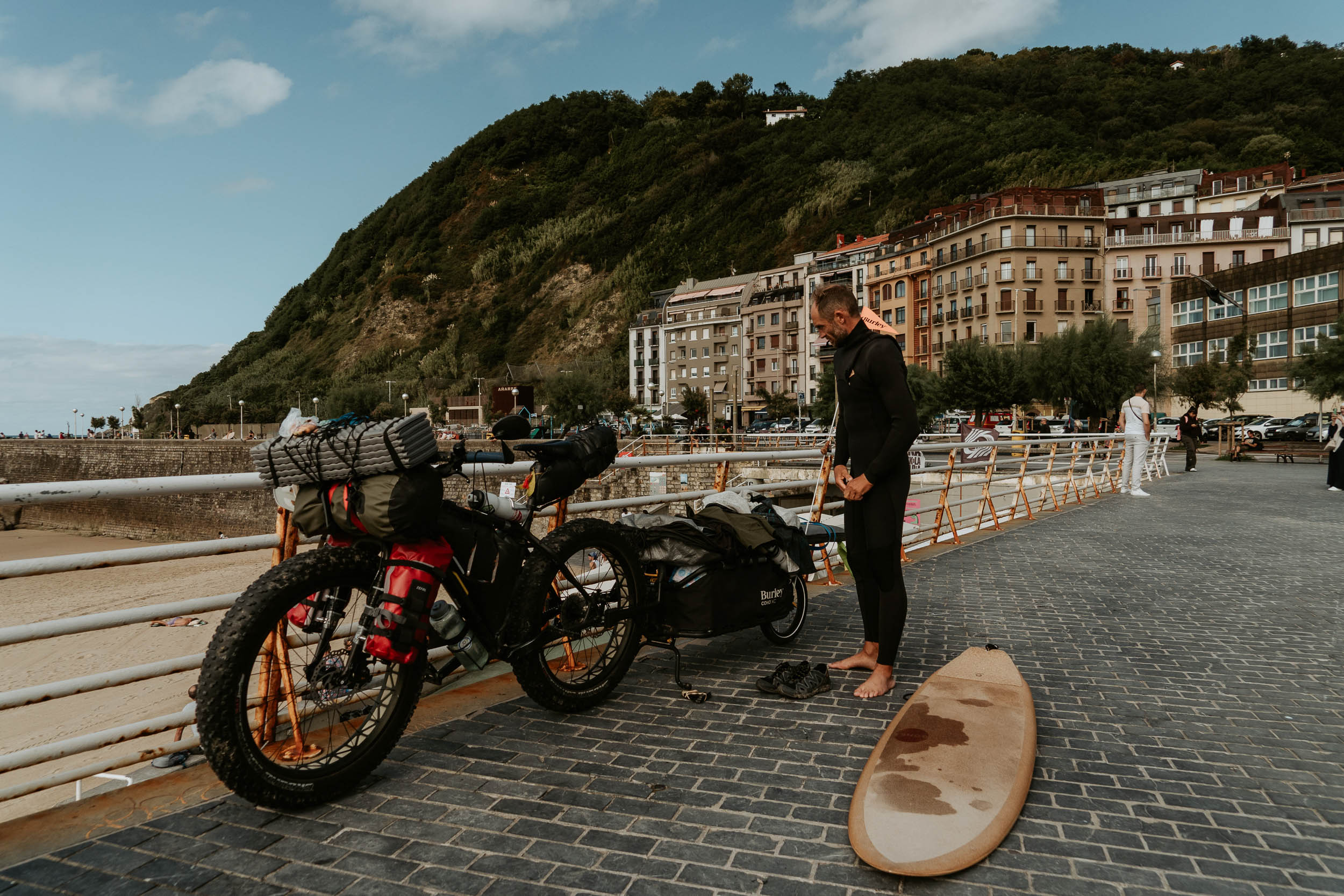
The surf conditions were very poor at best, and wild camping became the number one challenge. We learned that these coastlines are muddy, never flat, and mostly fenced off—basically, not ideal for bikepackers on a budget who spend all their money on croissants and cheese and refuse to pay 30 euros at a campground. Portugal treated us better. The riding was excellent, and it reminded us of home, our beloved Victorian Surfcoast in Australia: Eucalyptus trees, breathtaking cliffs, and a thriving surf culture within reach of many small roads and trails.
THE AFRICAN SEGMENT
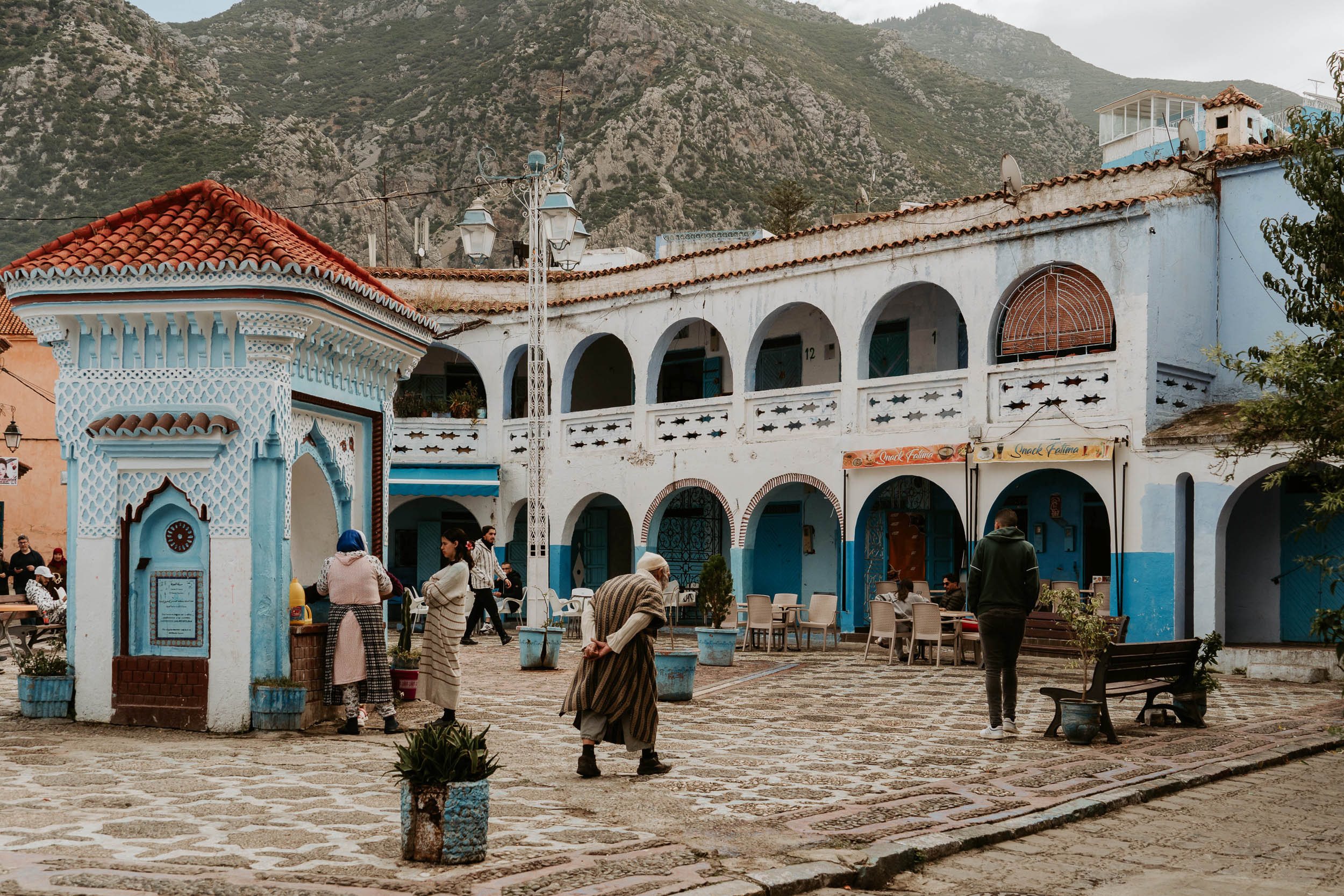
As soon as we reached Africa, our hearts exploded. Solidarity and generosity are two words that come to mind. Excellent food and quality waves are also valid descriptions. For a bit of a change, we headed inland to explore the Rif Mountains of Morocco. We attempted the infamous Route of Caravans, which wasn’t our smartest route choice. My bike, being 70 kilograms with the trailer, and Laura’s close to 50 kilograms, we were tempted to trade them for donkeys, as they seemed much faster than us! Being overtaken by cars in first gear on the way to Chefchaouen was proof that the final climb must have been close to 20 percent, maybe more.
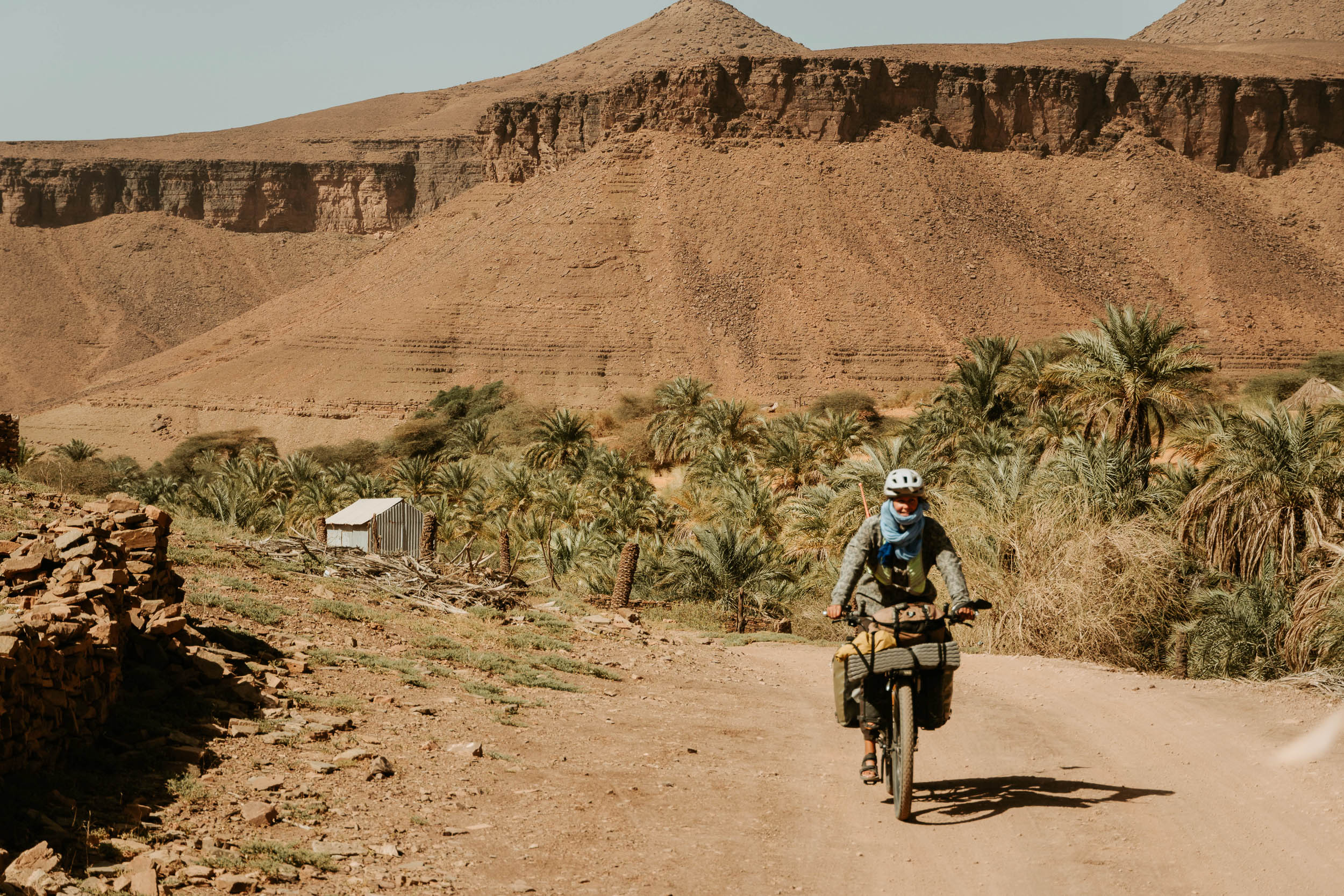
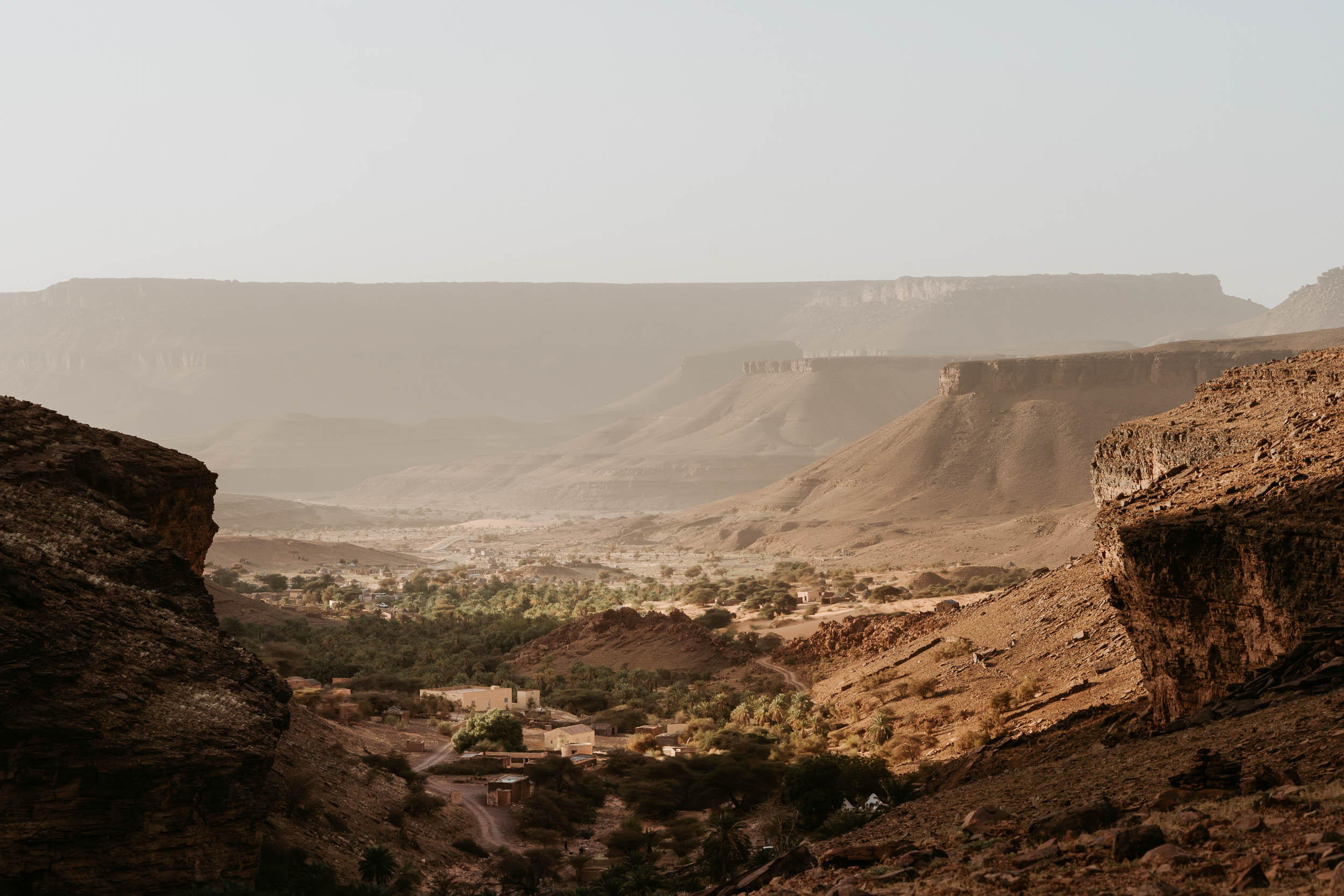
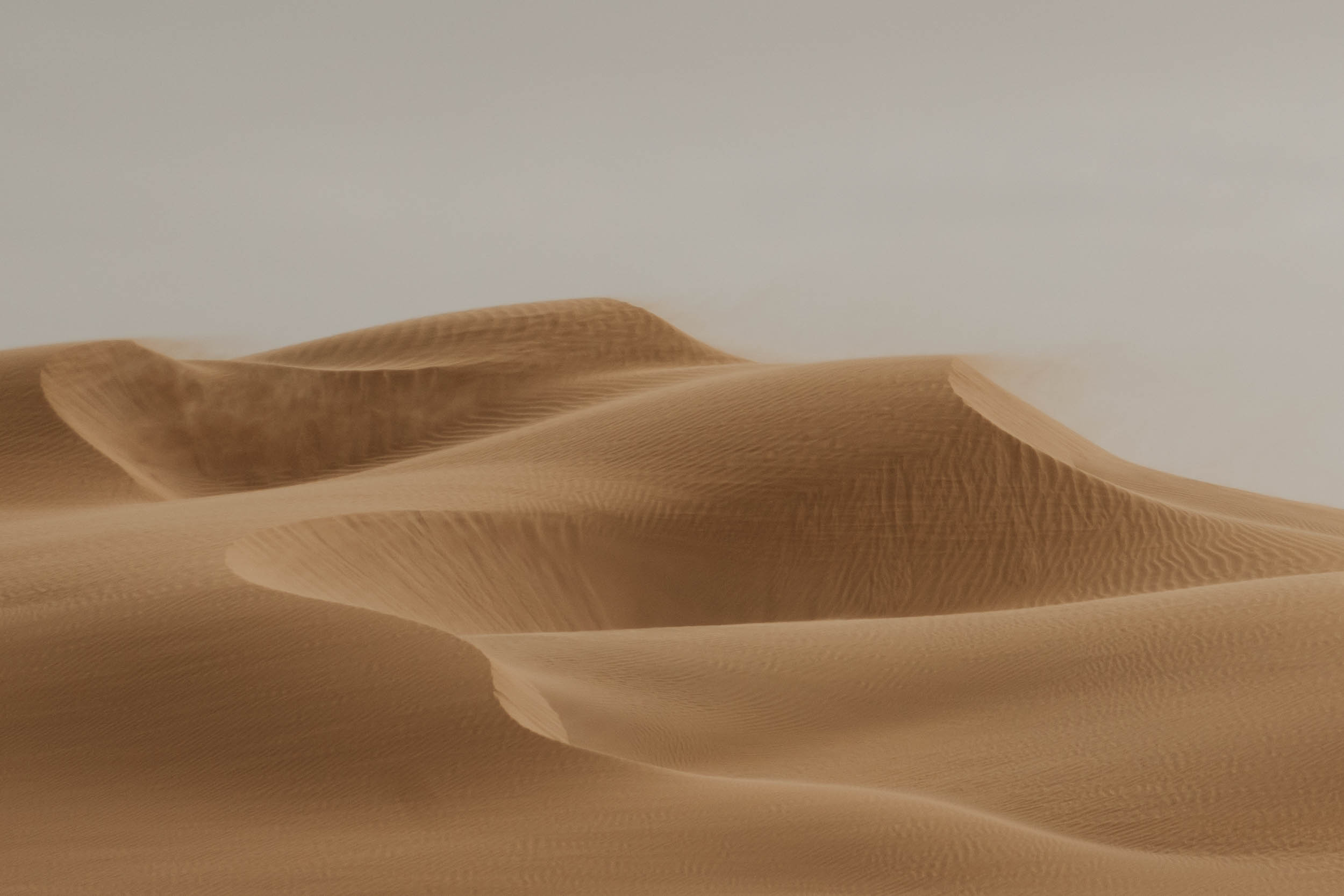
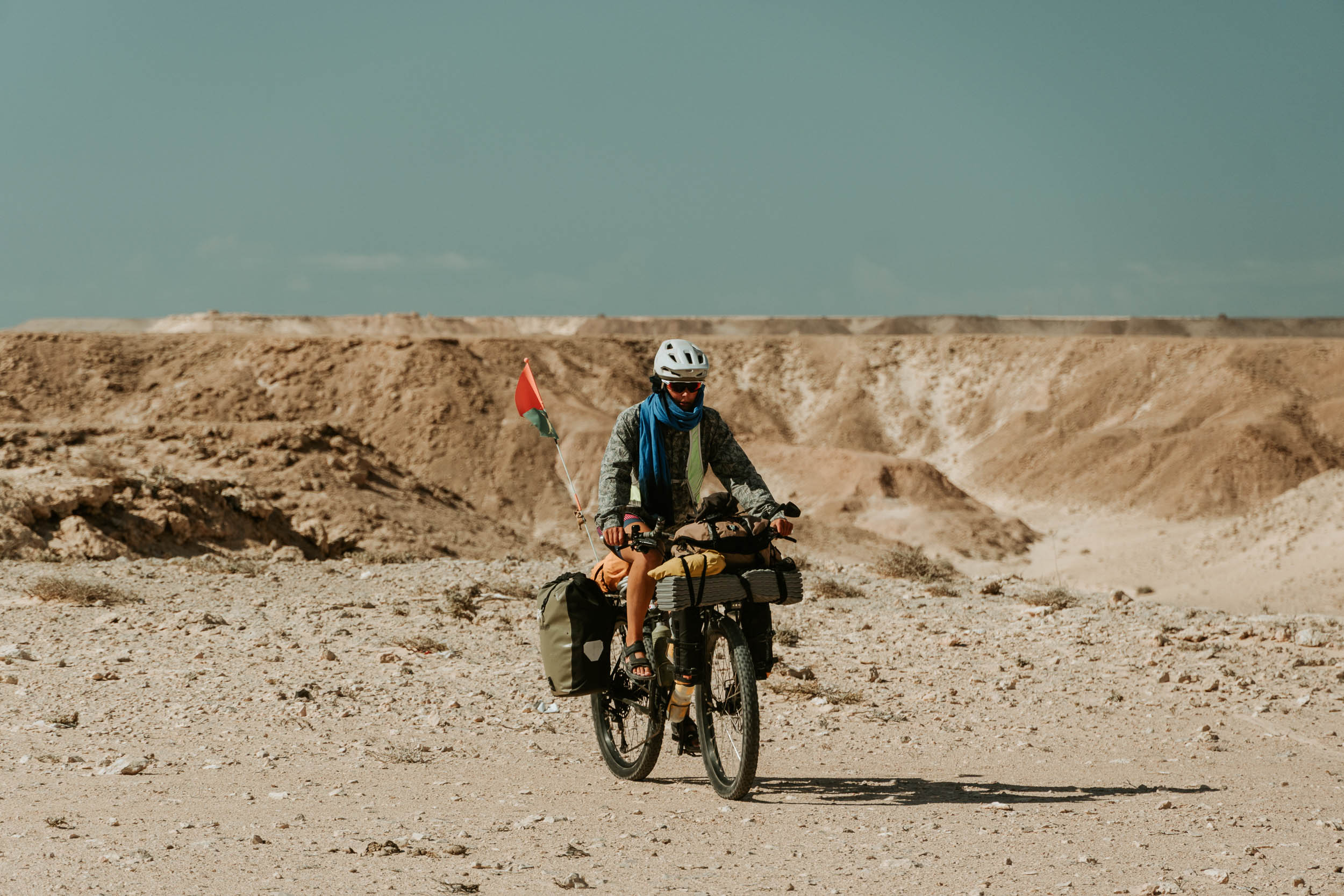
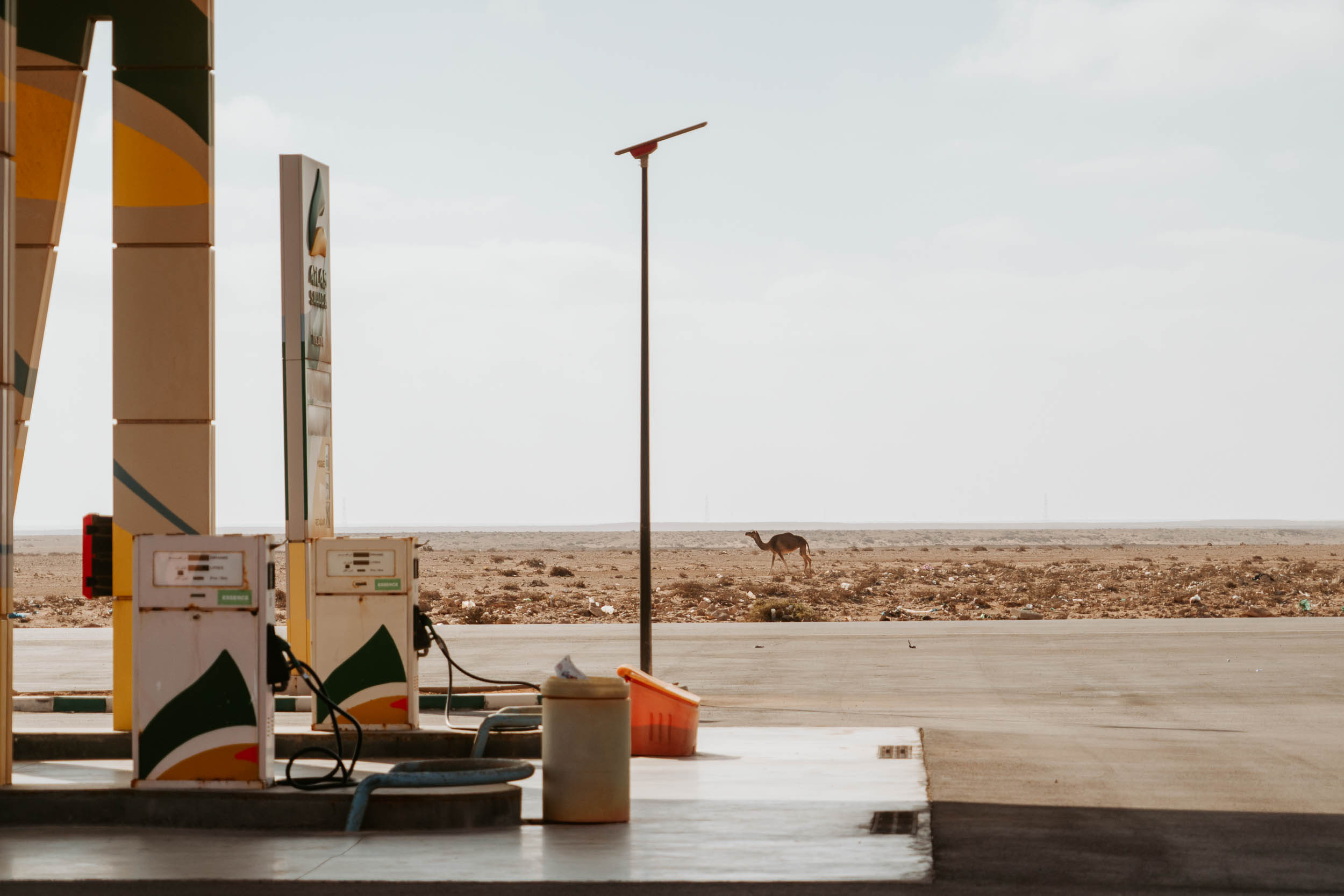
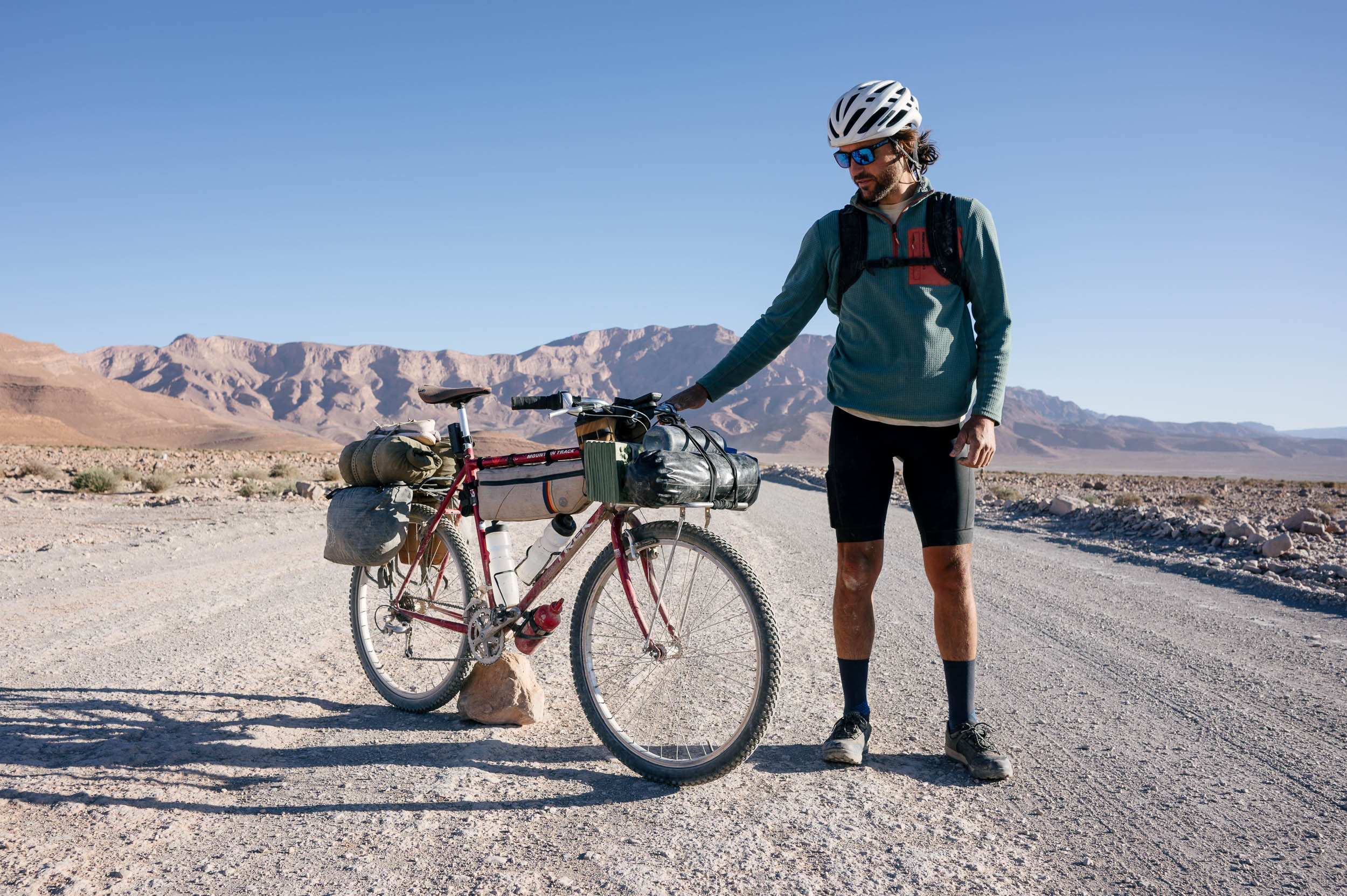
Making our way south into the Sahara, there were fewer off-road trails—just one big highway, more surf, and much more tailwind. We even tried to use some heavy-duty umbrellas to pull us along in 60-kilometre-per-hour winds, and some days we rode more than 170 kilometres. We were flying from one surf spot to another. It was what we’d dreamed of, and better. Somehow, we loved the microcosms of Saharan petrol stations and slept there from time to time. In such places, one can meet all kinds of characters, enjoy a good laugh, and tuck into Berber omelettes for just a dollar or two. Social life in the desert is a thing! We even met several other bikepackers to share camel tagines with and formed a beautiful friendship with Louis and Lena, a French couple who shared our priorities: don’t go too fast, and eat as much as you can along the way. Our paths crossed many times as we cycled south.
A SAD REALISATION
Life on the road was more than enjoyable, but we soon became aware of an alarming situation. Partway down the Sahara, we came across a great surf spot. However, we were quickly asked by the authorities to leave because of high “illegal migration activities” in the area. A little further along, we met two Senegalese men who were walking in the searing heat, with very little in their possession. We helped them with food, water, and cash and learned they were leaving Senegal to look for work in Europe. Walking across such terrain, over such distances, in plastic sandals and with no belongings proved that they were in a desperate situation. We continued our journey, with questions and heavy thoughts on our minds.
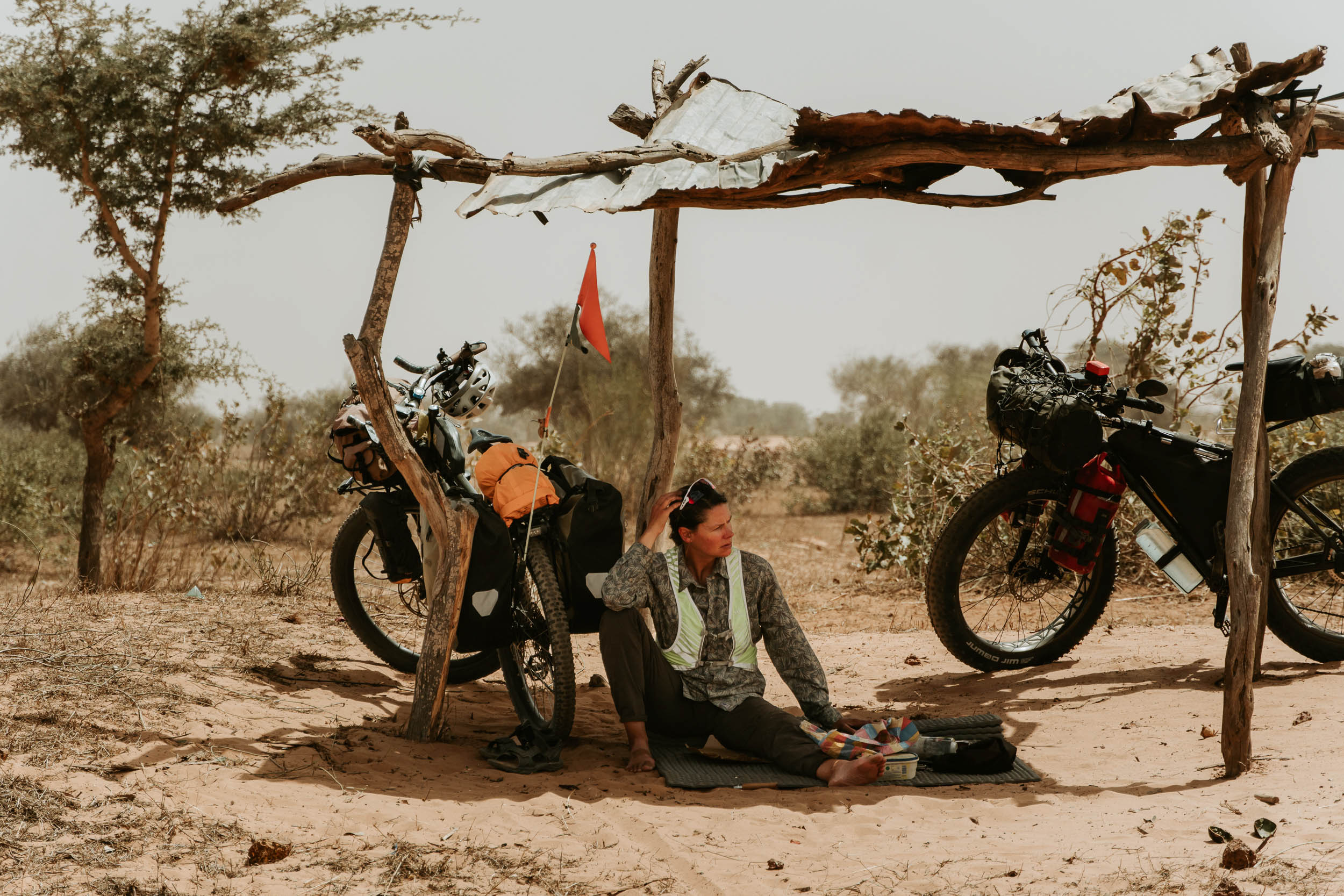

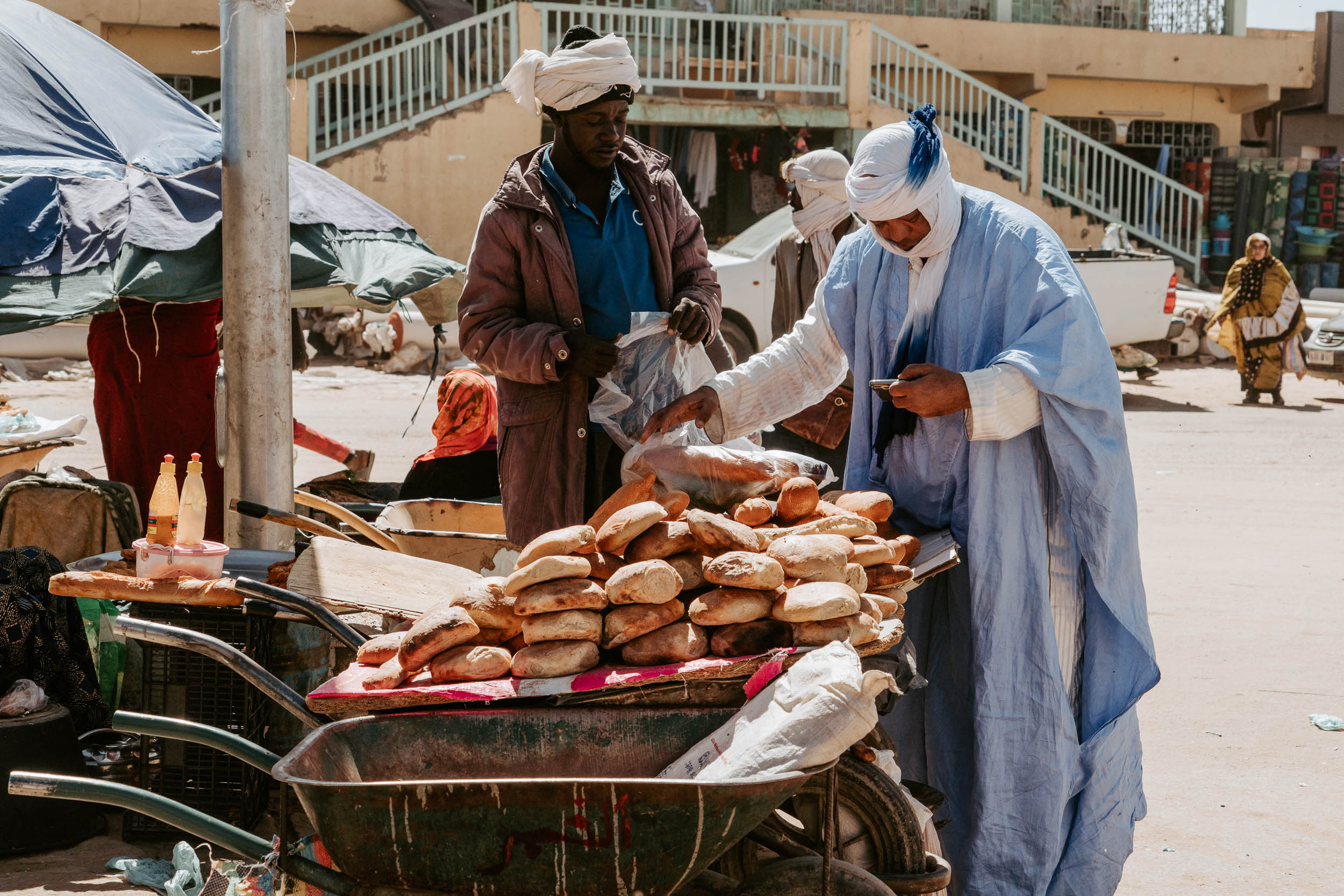
As we entered Mauritania, the wind was next level, so we decided on a detour: to take the iron ore train 400 kilometres east into the desert, then ride 550 kilometres south to the capital, Nouakchott, with the prevailing wind at our back. The 12-hour, cold and dusty open-air freight train journey wasn’t necessarily a great idea, but it was memorable nevertheless!
Life inland was quite harsh, but we loved it. A few rest days in an oasis southeast of Atar made us wonder why more people haven’t visited places like this. Perhaps that is exactly why they linger so brightly in our minds: nobody around with scenery beyond anything we could have imagined. Getting there, however, was anything but easy. The movie will give you a glimpse.

Eventually, we reached the north of Senegal after crossing the expansive Mauritanian landscape. In the fishing villages, we talked with disheartened fishermen, and everything finally started to make sense about the two men we had met in the Saharan desert. These local fishers were resorting to raising sheep on the beach to supplement their dwindling earnings from traditional fishing. The reason: industrial bottom trawlers from Europe and Asia have been illegally emptying the ocean along the Senegalese and Gambian coastline, resulting in an environmental and humanitarian disaster.
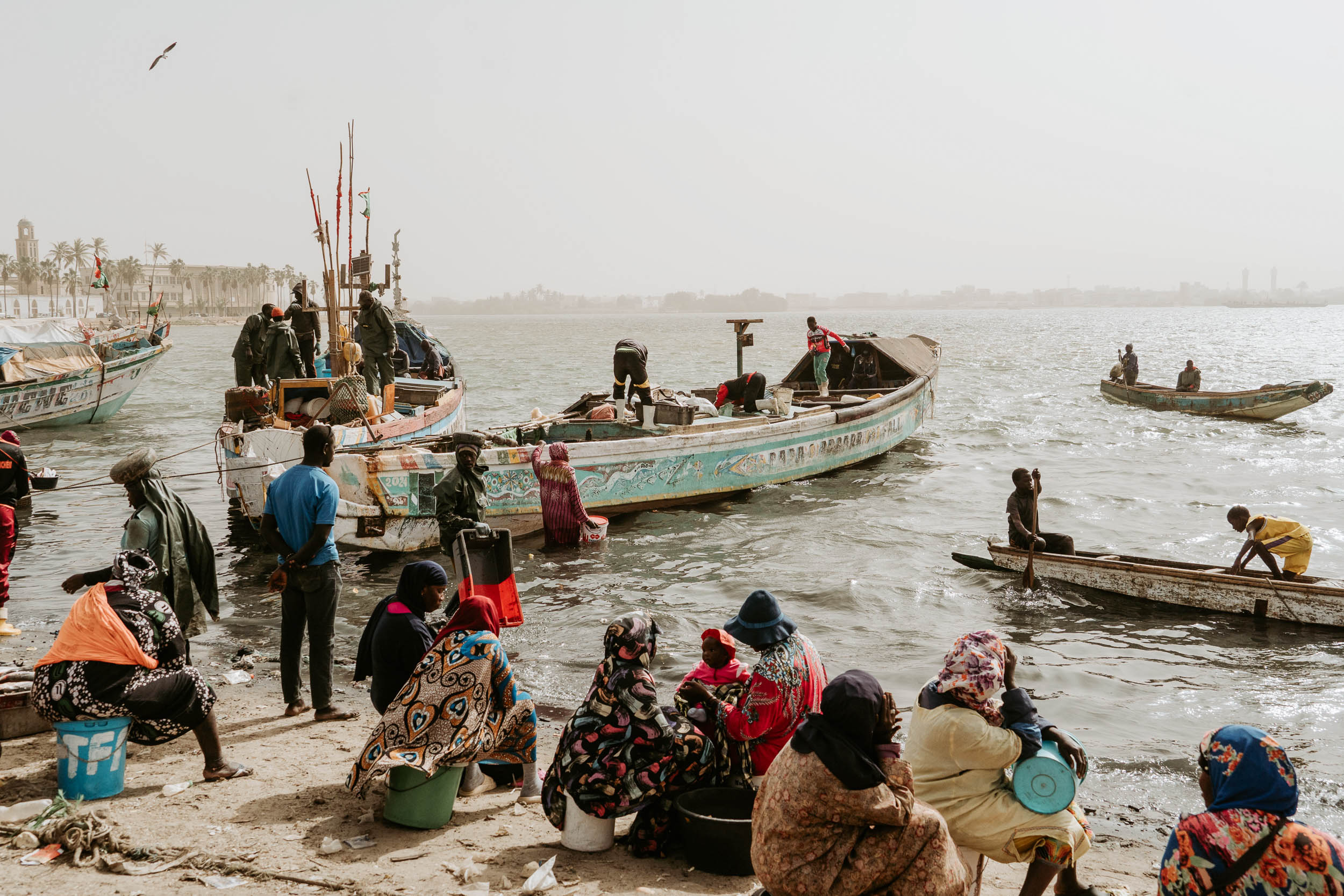
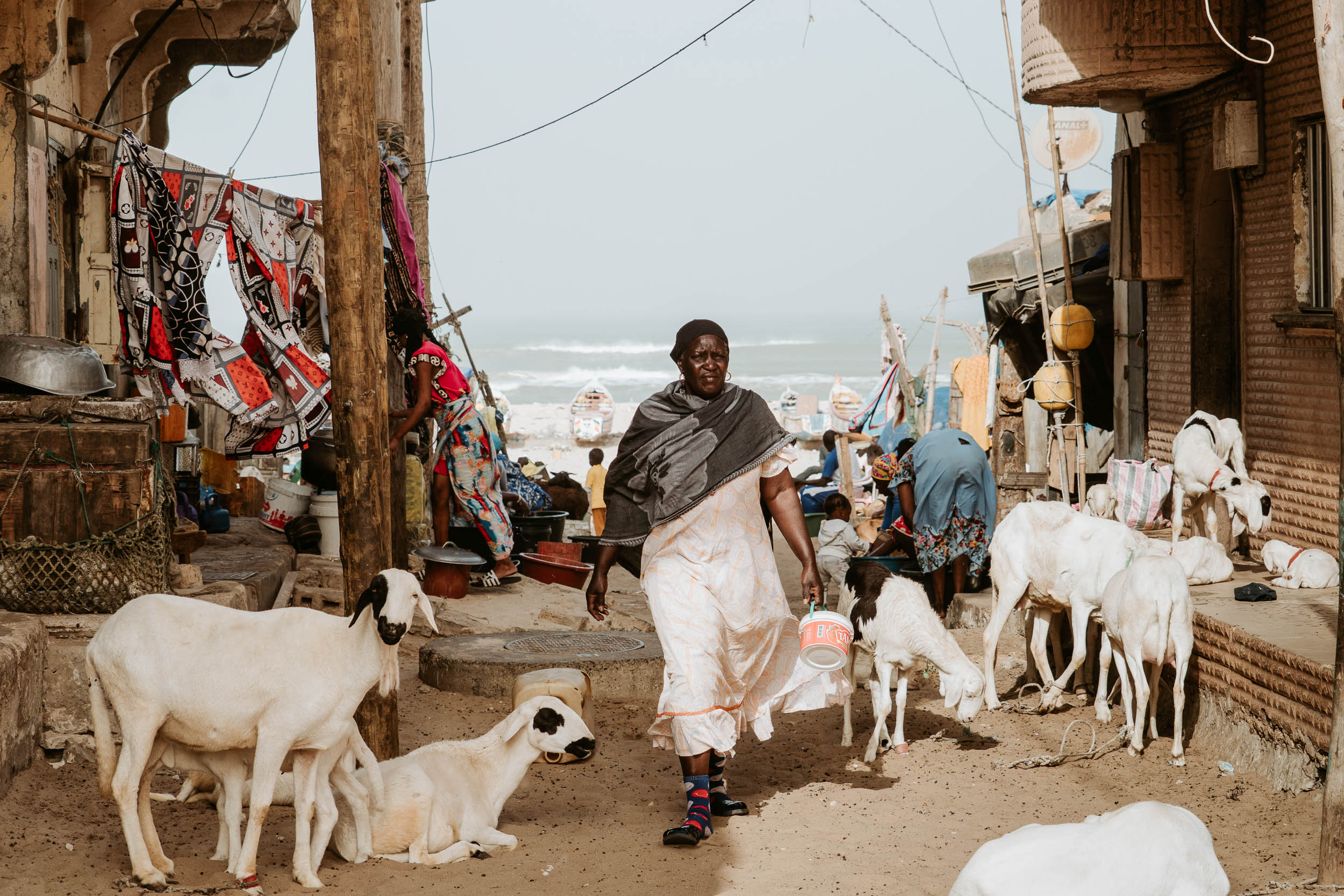
Environmental, because now, 57 percent of Senegal’s fish population is in a state of collapse. In bottom trawling practices, 40 percent of the catch is thrown away, meaning they only keep what they intend to sell. It is worth noting that one bottom trawler net can be as large as 13 jumbo jets. Today, one in five fish sold around the world has been illegally caught, and the global black market for seafood is worth more than $20 billion. Unfathomable.

Humanitarian, because it is forcing the local fishers to leave their families to go look for work in Europe. They often do so by taking their traditional boats across a deadly 1,000-kilometre route to the Spanish archipelago of the Canary Islands. When they finally reach it, they end up being criminalised by the very countries that robbed them of their livelihood. But sadly, they often die en route. Some 9,700 lost their lives in 2024, and each year it is getting worse. As we cycled through villages, we met many people with difficult stories to share about the topic.
DAKAR AND BEYOND
As the kilometres and weeks passed, we enjoyed time with our riding buddies, Louis and Lena, and the landscapes changed once again, giving way to the more tropical atmosphere of Senegal. The surf forecast for Dakar was disappointing, and we weren’t ready to end our adventure yet. So, we decided to continue south, checking out the Sine Saloum region, island-hopping by pirogue, and cycling through charming fishing villages.
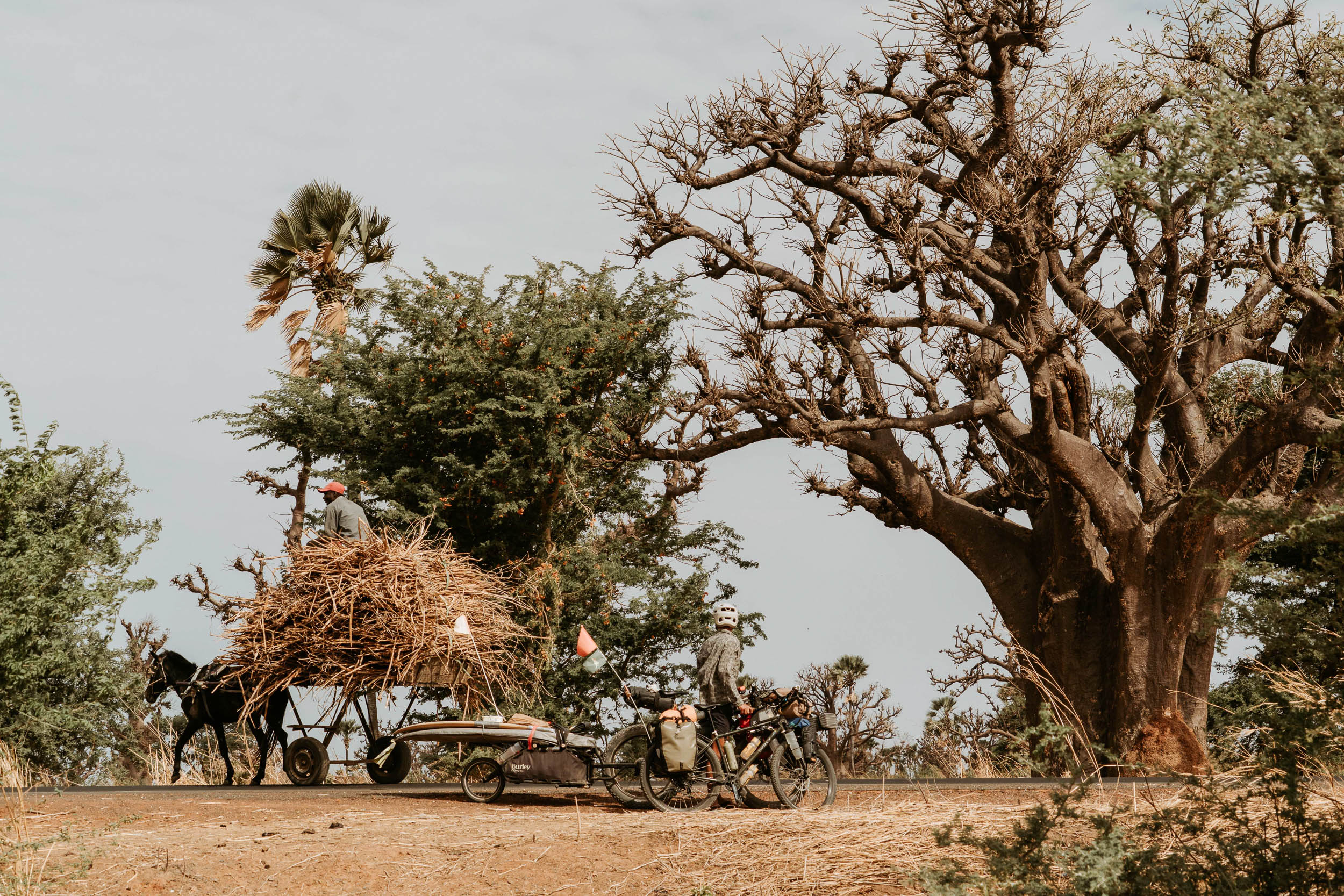
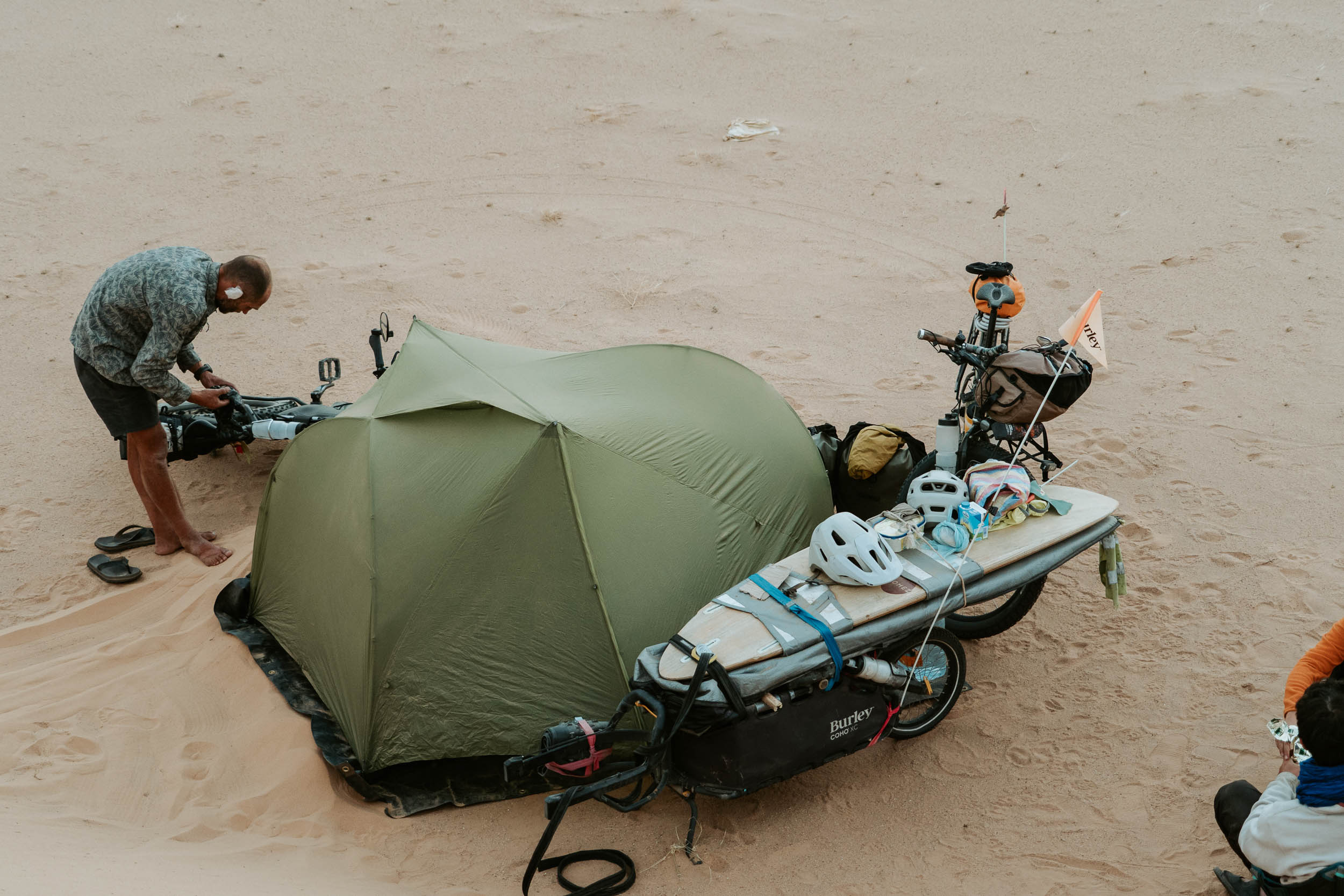
Louis and Lena were aiming for Ivory Coast, so it was time to eventually say goodbye. Meeting hardy travellers in unusual places is a top recipe for strong and instant friendship. Funnily enough, riding to Ivory Coast from France wasn’t enough for these non-cyclists turned bikepackers, and they have since begun riding from Shanghai to France! Scrolling through Instagram and seeing endless reels of people doing incredible things can make it all feel kind of normal. Then you meet those people in real life, and it’s a good reminder of just how wild and hard those achievements actually are.
Soon enough, we had crossed The Gambia and decided to settle in at a camping ground in Cap Skirring, a vibrant town in the Casamance region, just north of Guinea-Bissau. We stayed in Cap Skirring for a whole month, getting to know and surfing alongside the locals. It was a magical time.
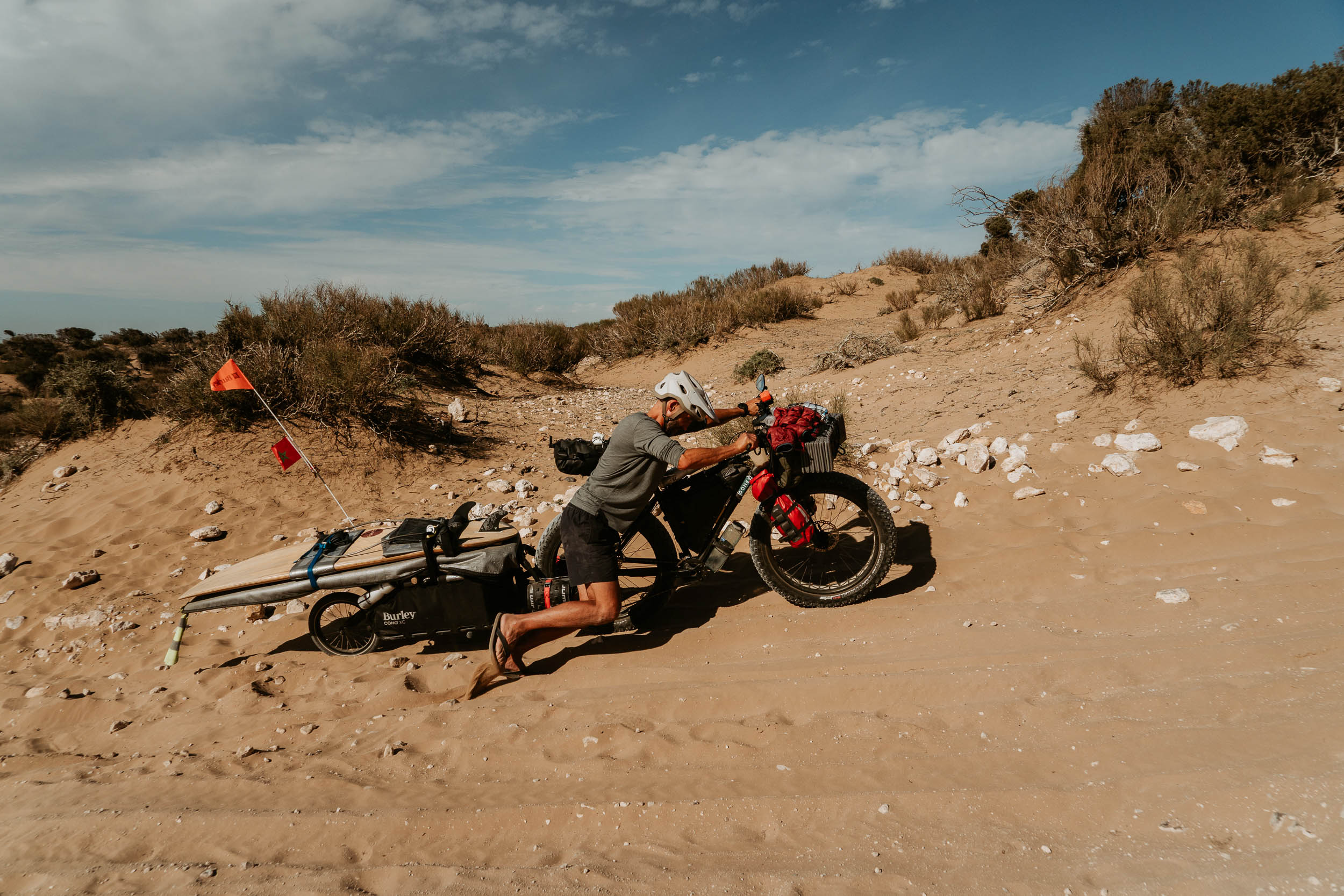
Eventually, our trip had to come to an end, and it was time to slowly make our way back to France. We left our bikes in Cap Skirring (more on that soon) and took a ferry to Dakar and a bus to the Mauritanian border. There, we were more than lucky to hitch a ride in a van with a lovely Frenchman. Out the window, we watched what had been a slow and magical yet sand-blown adventure to the south whiz by us in reverse in a mere portion of the time. A few extra bus trips and a ferry ride later, we arrived back on the shores of France.

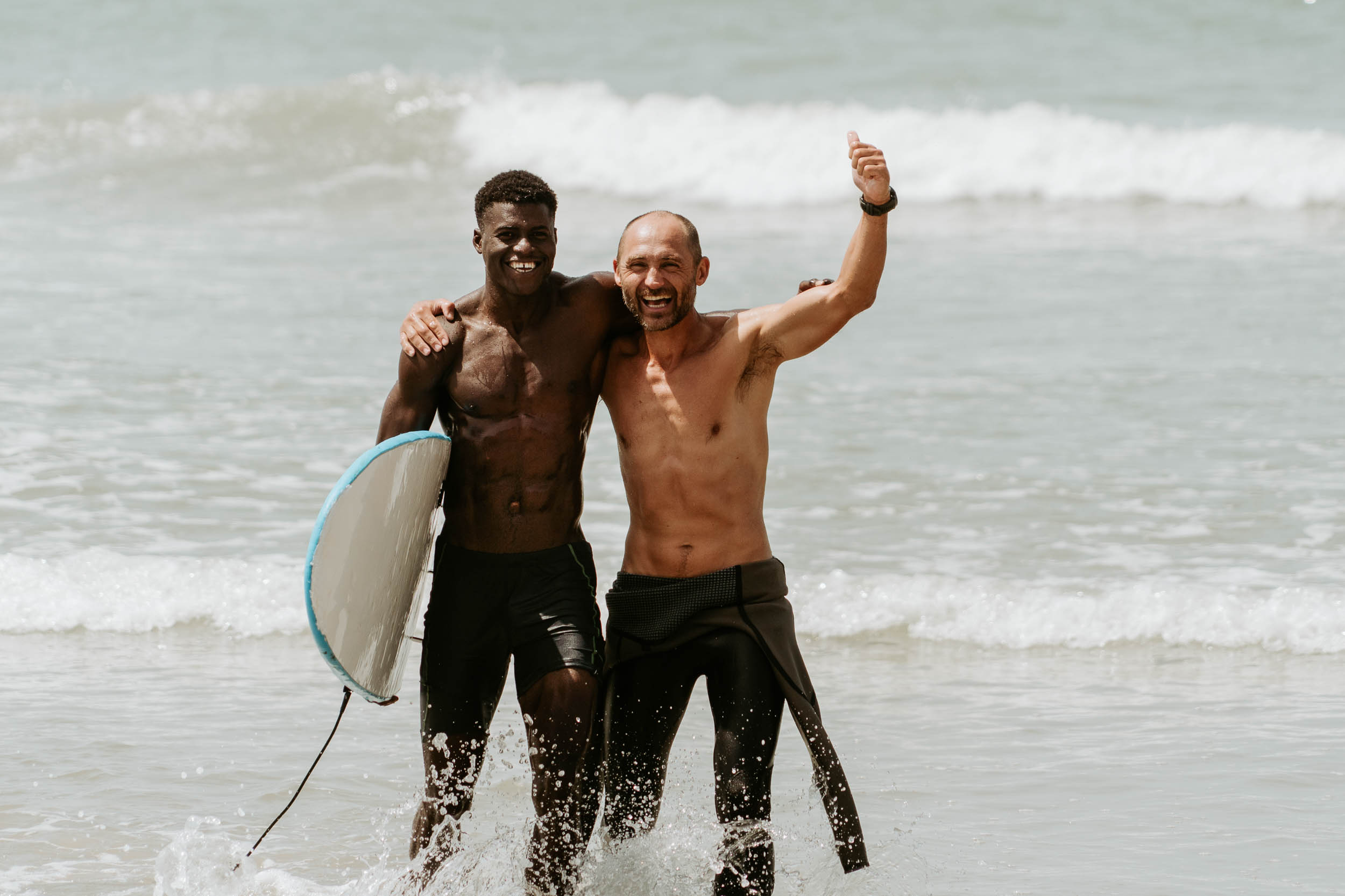

Reflecting on our bikepacking trip, we still can’t believe that our legs took us 8,200 kilometres from the French village of Dolomieu to the most southern part of Senegal. We have asked ourselves why we travel, and I think it all boils down to not being afraid of the world out there or of discovering truths with our own eyes. To continue learning about others around us and to share the stories of humanity and kindness that we encounter every day.
RIDING and SURFING FOR A CAUSE
What we had witnessed in Senegal impacted us, and we couldn’t just note it down as a sad memory in our journals and move on to the next thing. So, in January, we will return to Senegal, pick up our bikes where we left them, and continue cycling and surfing along the west coast of Africa. We aim to ride another 9,000 kilometres to reach Cape Town and raise awareness and funds for the Environmental Justice Foundation, a remarkable NGO that is combating IUU fishing in West Africa. We can’t change the world, but we can try to change theirs. If you have a few spare coins, feel free to donate. It will save lives, well and truly.
Further Reading
Make sure to dig into these related articles for more info...

Please keep the conversation civil, constructive, and inclusive, or your comment will be removed.