

 Singletrack/MTB
 Gravel/All-road
 Dirt-road Touring
 Fat-bike

Editor’s Dozen: Logan and VA’s Favorite Gear and More of 2025




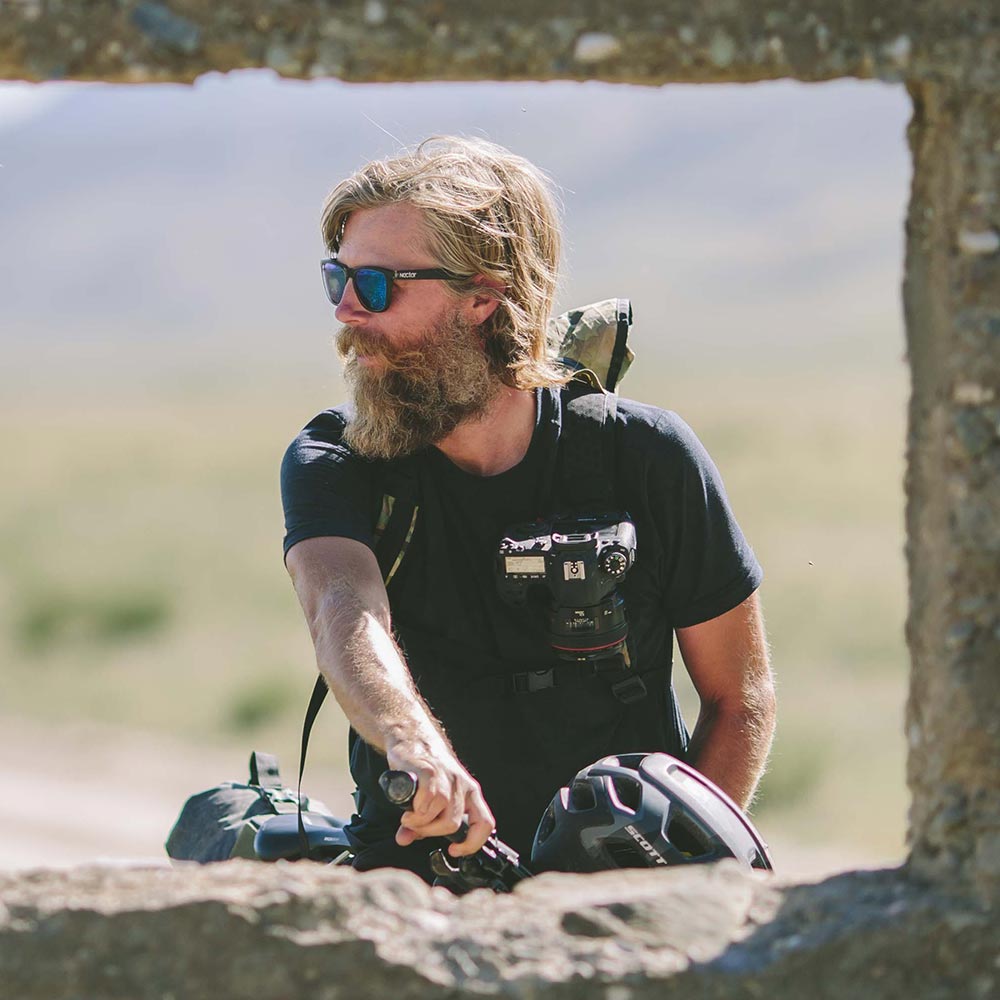
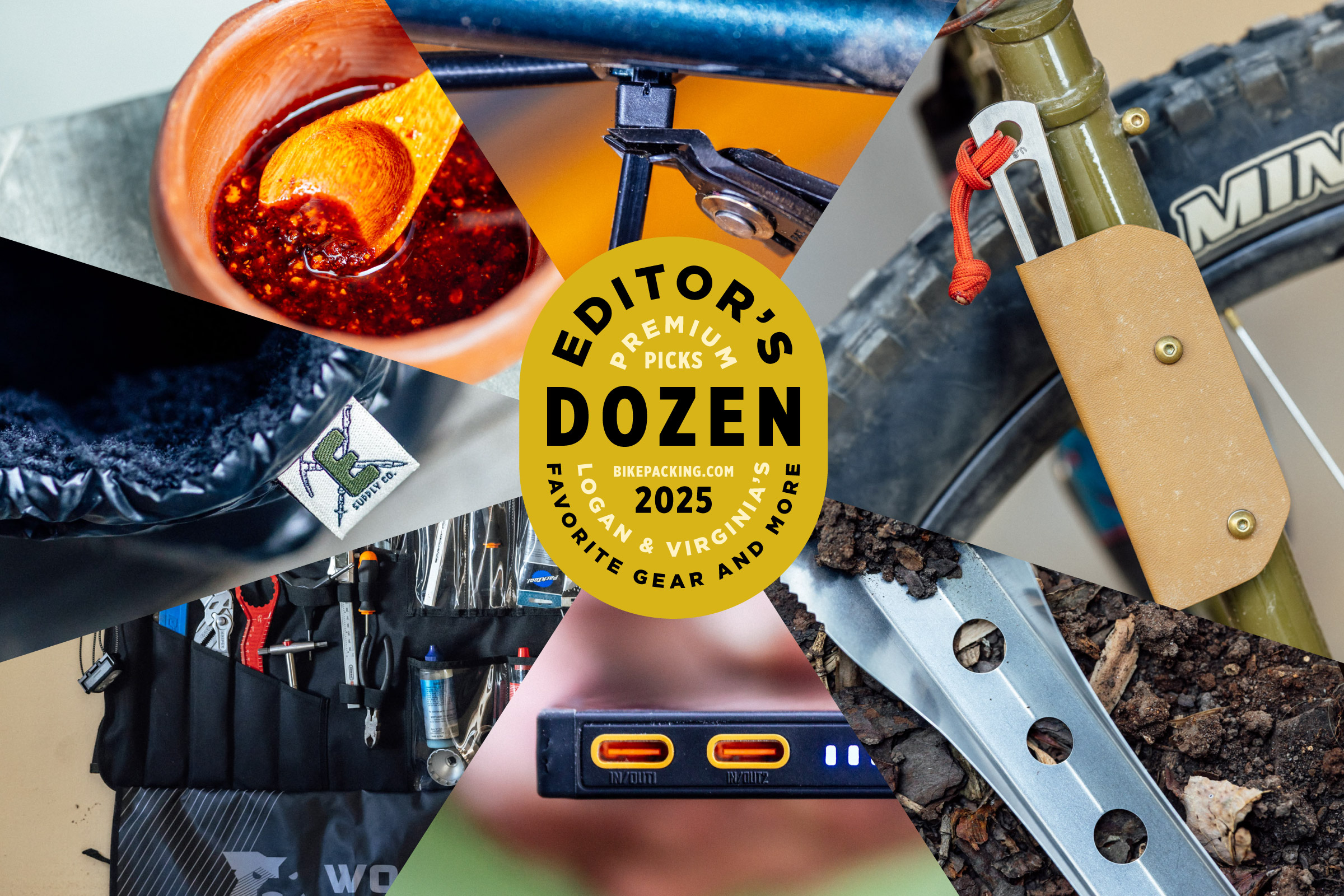
From tiny, free hacks to big, ride-changing upgrades, Logan and Virginia’s end-of-2025 Editor’s Dozen rounds up 12 newfound favorites (plus a bonus pick) that deliver utility, value, and joy. Tested hard on home turf in western North Carolina and Oaxaca’s Sierra Norte, there are a few ideas worth checking out or stealing for your kit…
PUBLISHED Dec 19, 2025
Plenty of the products Virginia and I tested over the past 12 months landed in our 2025 Gear of the Year awards, but we still had more than enough standouts to round out a fresh dozen. In fact, we had a hard time narrowing it down.
We spent most of 2025 on familiar turf, rambling around western North Carolina and Oaxaca’s Sierra Norte, and in the process we put a lot of new gear through tough miles. From small problem-solving realizations to bigger upgrades to newfound loves, a few things rose to the top and became staples in our kit. For this installment of our #editors-dozen series, we pulled together 12 favorites we grew especially fond of in 2025—plus one extra to make a proper baker’s dozen. Dive in below.
Wolf Tooth Travel Tool Wrap
600 grams / Made in Asia / $50 at Wolf Tooth
After spending a couple winters living abroad, I picked up this Wolf Tooth Travel Tool Wrap to help organize and transport a more extensive and mobile set of shop tools. Wolf Tooth designed it as such, although they clearly considered van life as the 60 x 20cm top flap was made to be shut in a car door. Built from ripstop nylon with durable Cordura panels and clear vinyl pockets, the Travel Tool Wrap has spots to organize small parts, longer tools (like a chain whip), and odds-and-ends with a mix of elastic holders, medium/small sleeves, and Cordura pouches.


The top flap can tuck behind (as shown), or it folds over the front along with the 32 x 60cm bottom flap, which allows you to roll it up into a burrito bundle that’s complete with a carrying handle. I found that the 68 x 46cm main body is perfectly sized, and the pocket layout is pretty dialed for everything I’ve needed to carry in order to swap parts for reviews or maintain and repair our bikes while traveling. The anodized aluminum eyelets are a nice touch, and they allow you to hang it on a pegboard or a wall as shown.
Salsa Macha
Made in Mexico
Its name alone made me love Salsa macha; it comes from a tongue-in-cheek feminized version of “macho” for its spicyness. We’ve both become quite addicted to this unique and incredibly flavorful sauce over the last year. A jar of it lasts a while, and it can be brought camping or used in the kitchen on everything from eggs to tacos to avocado toast. We discovered this majestic substance in Oaxaca, Mexico, although Salsa macha originated in the Mexican state of Veracruz.


Traditionally, in Veracruz, it was made by frying chipotle peppers in olive oil with garlic, but here in Oaxaca it’s more common to use chili de árbol as the base. From there, pulverized pumpkin seeds, sesame seeds, or crushed peanuts are added for texture, and there are sometimes other ingredients introduced to provide a sweet hint for balance. We’ve had it made with brown sugar, dried figs, and other such fruit. Our latest jar was whipped up by a chef friend of ours and contains chopped pecans, sesame, and cinnamon. I was around when he made one batch; all the windows in the house had to be opened to avoid coughing fits and stinging eyes. ¡Es muy picante!
Jaguar Zip Tie Cutters
Made in China / $25 at AMZ
Given my vocation, I’m always building bikes, swapping components, and reinventing frames into a variety of experimental iterations. For each of these activities, zip ties are an ever-present necessity. I’ve also become slightly obsessed with trimming the ones that come with various product packaging in order to reuse them. I even picked one up off the street the other day that still had at least 3cm of usable length left. For years I had a small pair of spring-handle-equipped wire cutters whose sole duty was trimming zip ties, but I recently stumbled on Jagwire’s ultra-niche Sport Zip Tie Cutter.
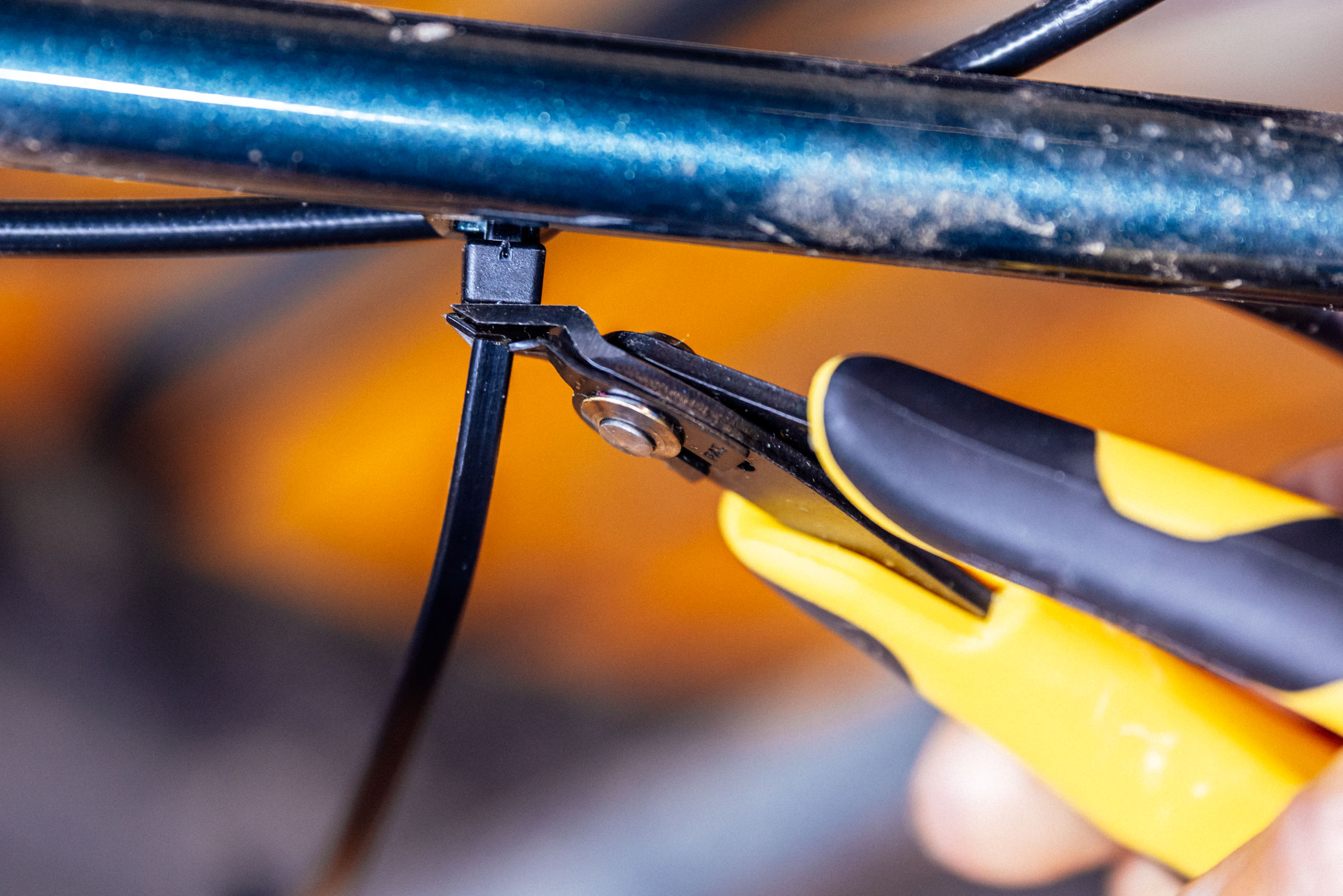

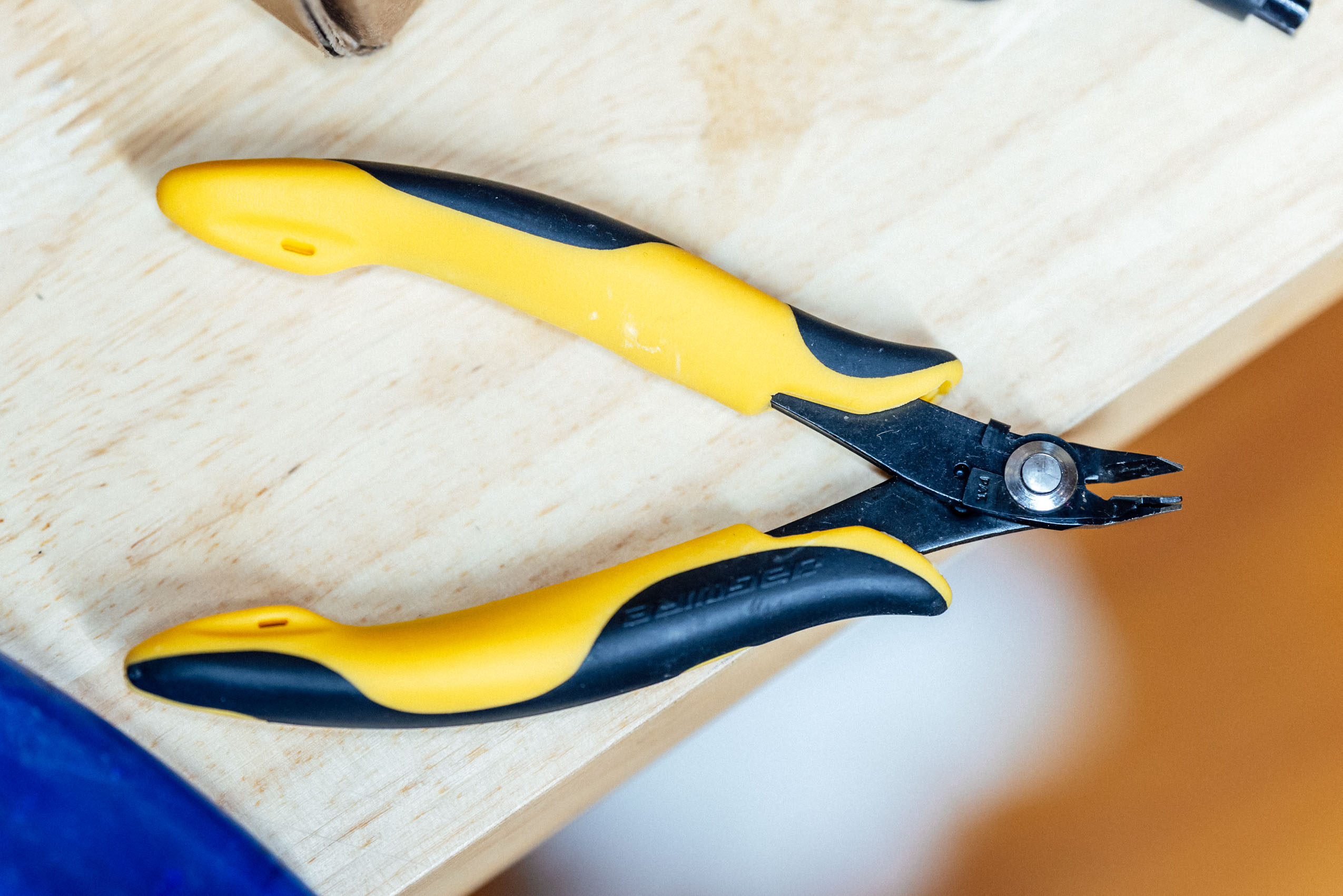
This little tool gives zip ties a clean finish without leaving sharp stubs behind. The flush-cutting blades trim the plastic perfectly. I’m not sure if it’s worth the investment unless you’re a mechanic or professional bike reviewer, but nonetheless, it’s a compact and ergonomic upgrade that basically does one thing well, which I really appreciate.
Horse x RatKing Titanium Pack Knife
68 grams (with sheath) / Made in USA / $185 at Horse
The Horse Titanium Pack Knife is a collaboration between two excellent small makers: Horse Cycles and RatKing. It was released almost exactly one year ago, and the day we announced this beauty I ordered one. However, I honestly didn’t really put it to use until the last couple months. Now it lives on my Stooge MK7 while on bikepacking trips here in Oaxaca, and I affectionately refer to it as my chef’s knife. Reason being, my go-to overnighter camp meal here usually involves gnocchi, olive oil, and garlic as the base that I pack in advance, then I grab some veg along the ride—usually a calabacita and avocado—to make a great gnocchi-squash sauté that I finish off with with an avocado sauce to make a creamy and calorie dense post-ride dish. The pack knife is great for dicing and slicing, and it cleans up easily without having remnants clog up any folding mechanism.
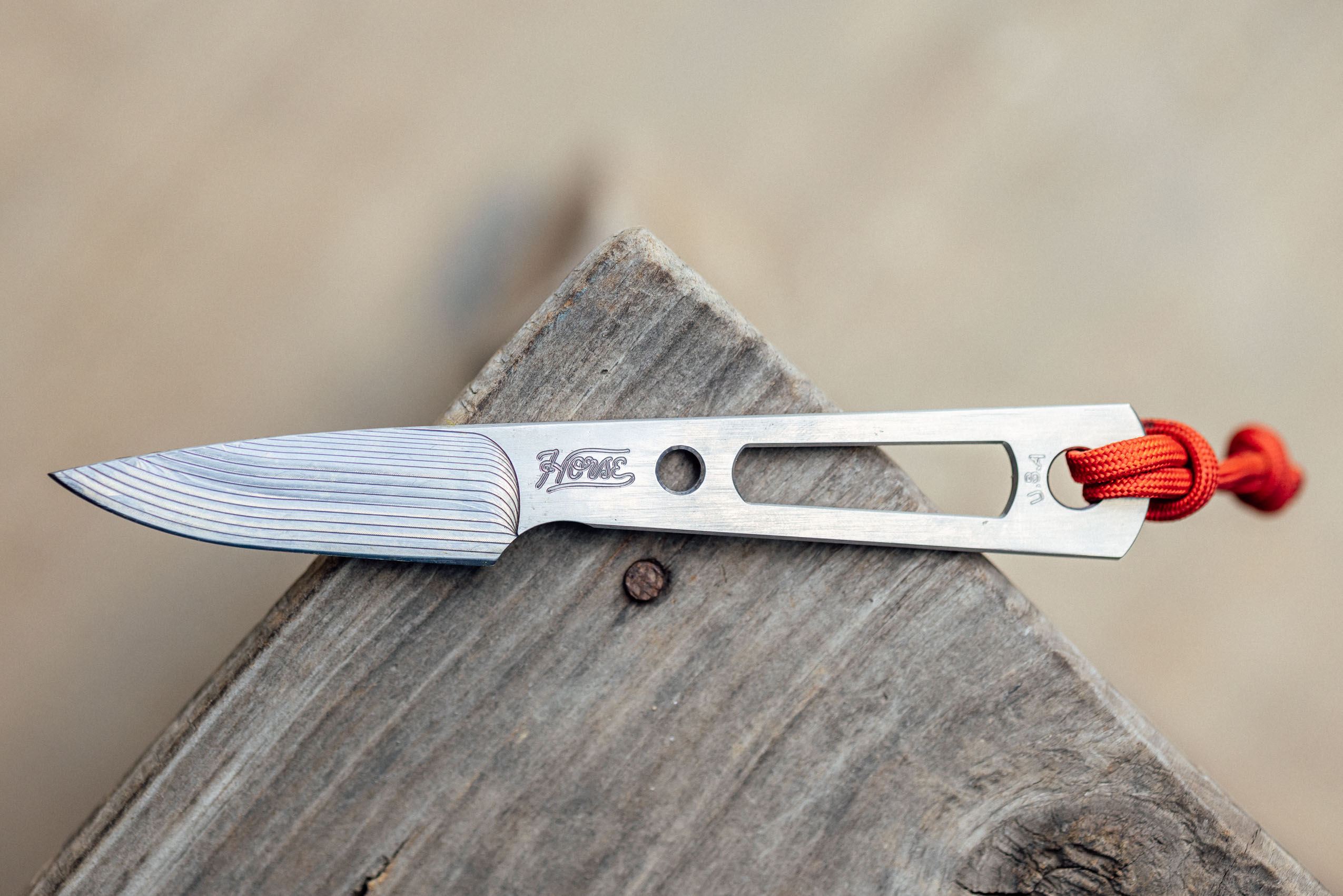


Each blade is CNC-machined one by one from Grade 5 titanium in Seattle by RatKing, then sent to Horse Cycles in New York for final sharpening and QC. The knife measures 6.5″ overall with a 2.75″ blade and a 0.125″ thickness. An optional sheath with a belt clip matches standard bottle-cage bolt spacing, so you can mount it to a frame or fork. Pricing is $185 with the sheath or $165 without. Plus, they also offer steel versions if you’re not into the ultralight 28-gram titanium blade.
Cnoc Vessica and Vecto 2L
68g/79g / Made in USA / $17/$24 at Garage Grown Gear Vessica Vecto
It’s been a while since I’ve needed a new collapsible bladder of any sort—I’ve been rotating a few old 2L Platy bottles for nearly eight years! I decided to trade in the more rigid plastic bags and try some of the latest and greatest soft/flexible TPU bladders. A couple friends recommended Cnoc’s Vesica hybrid collapsible bottle and the Vecto 2L bag, and I’ve been impressed.
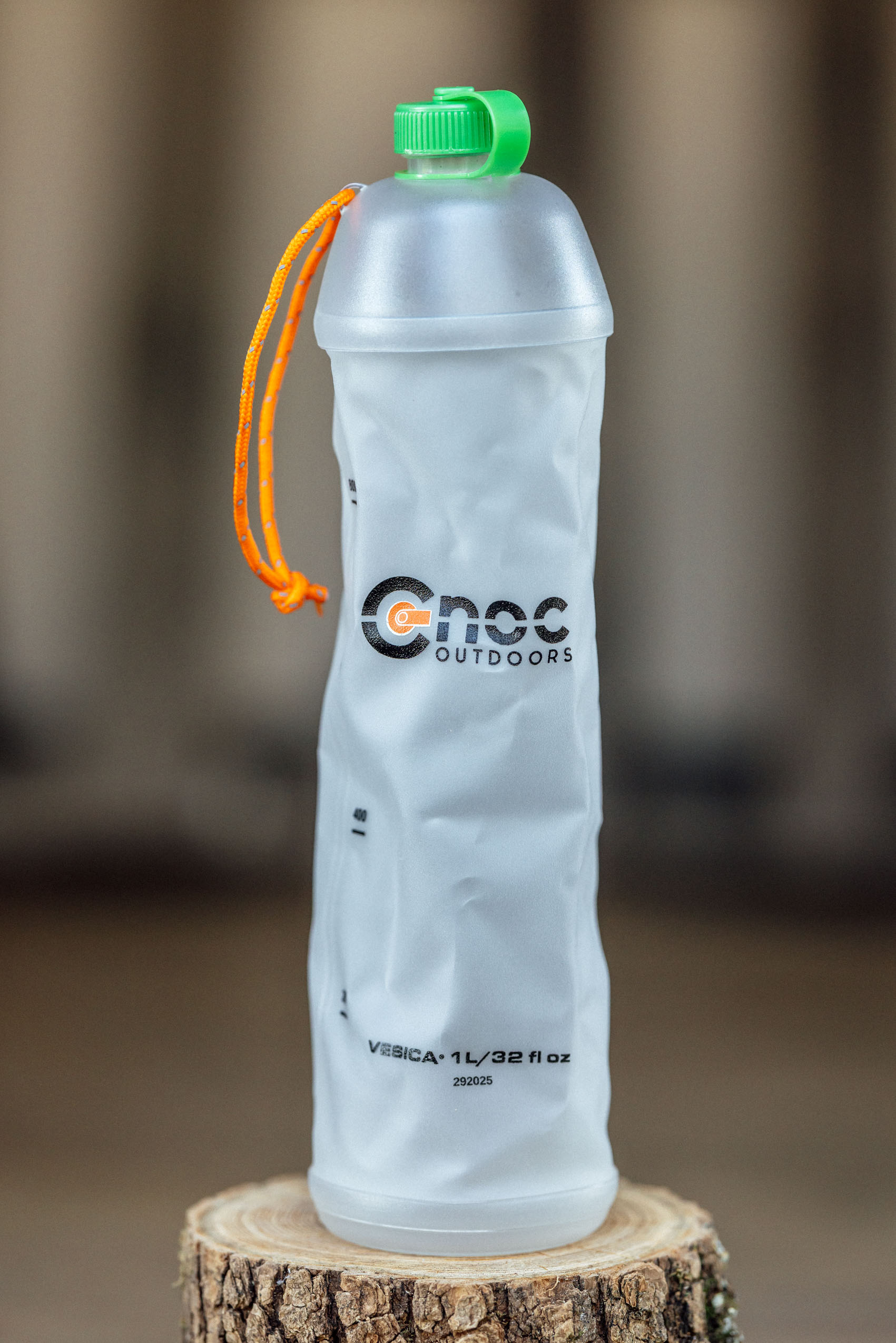

The Vessica is the more interesting of the two. It’s a 1-liter collapsible bottle that acts like a hard bottle but collapses to a small apple-sized bundle in your frame bag when empty. The hard-plastic neck and base let it stand on its own on the ground at camp when when full (or partially full), and the universal 28mm thread pairs with filters like the LifeStraw Flex that Neil’s been using and the Sawyer Squeeze, which I seem to have dozens of that I’ve accumulated over the years. Cnoc claims it’s made from robust 0.4mm TPU that’s FDA-approved and BPA/BPS/BPF-free. I like the fact that the hard plastic bits protect the soft areas from abrading when collapsed, something I always worry about with bladders stashed in bike bags.


The Cnoc Vecto 2L is a little more straightforward. But it’s a nicely designed reservoir that makes normal water sourcing chores a little easier with the wide-opening, slider-sealed mouth. It’s available with a 28mm or 42mm threaded opening to fit popular filters, and the wide-opening end makes it easier to scoop from shallow trickles and for cleaning. It also packs down pretty small when not in use, considering the features. And it has a soft, flexible body that’s proven to be impressively tough for daily use. It’s made from the same FDA-approved material as the Vessica.
Axle-mounted Racks
Aside from those ridiculous long top-tube bags, there was one other component trend that made a few headlines around the bikepacking world in 2025: axle-mounted racks. As I hinted in a Friday Debrief, I’d consider myself a crusader for this innovation and happily run axle mounts on all my bikes. They feel stronger and more stable, heights can be standardized for tire clearance and deck placement, and with the weight riding on the axle, quick-release post-attachment mechanisms are much more plausible.
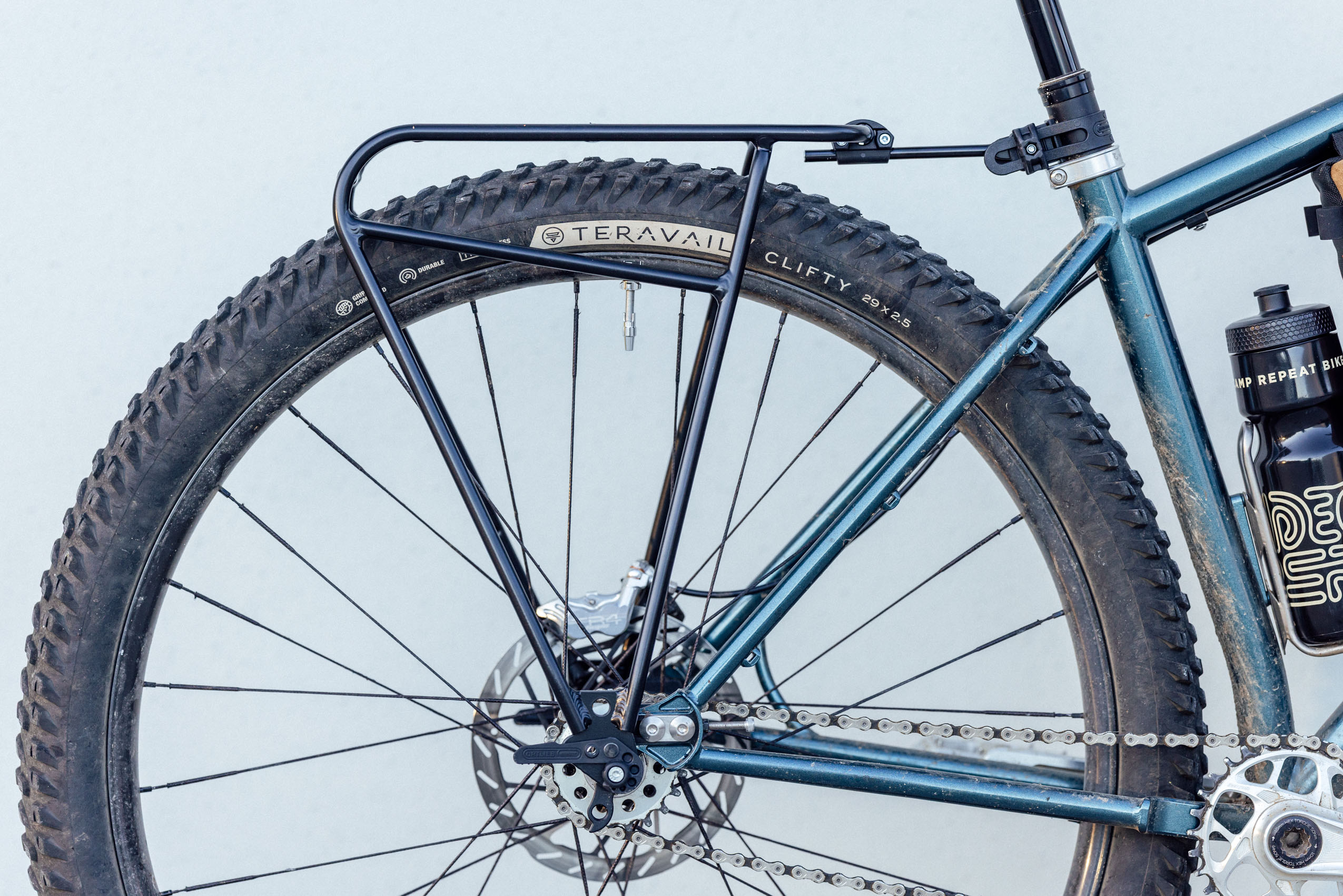


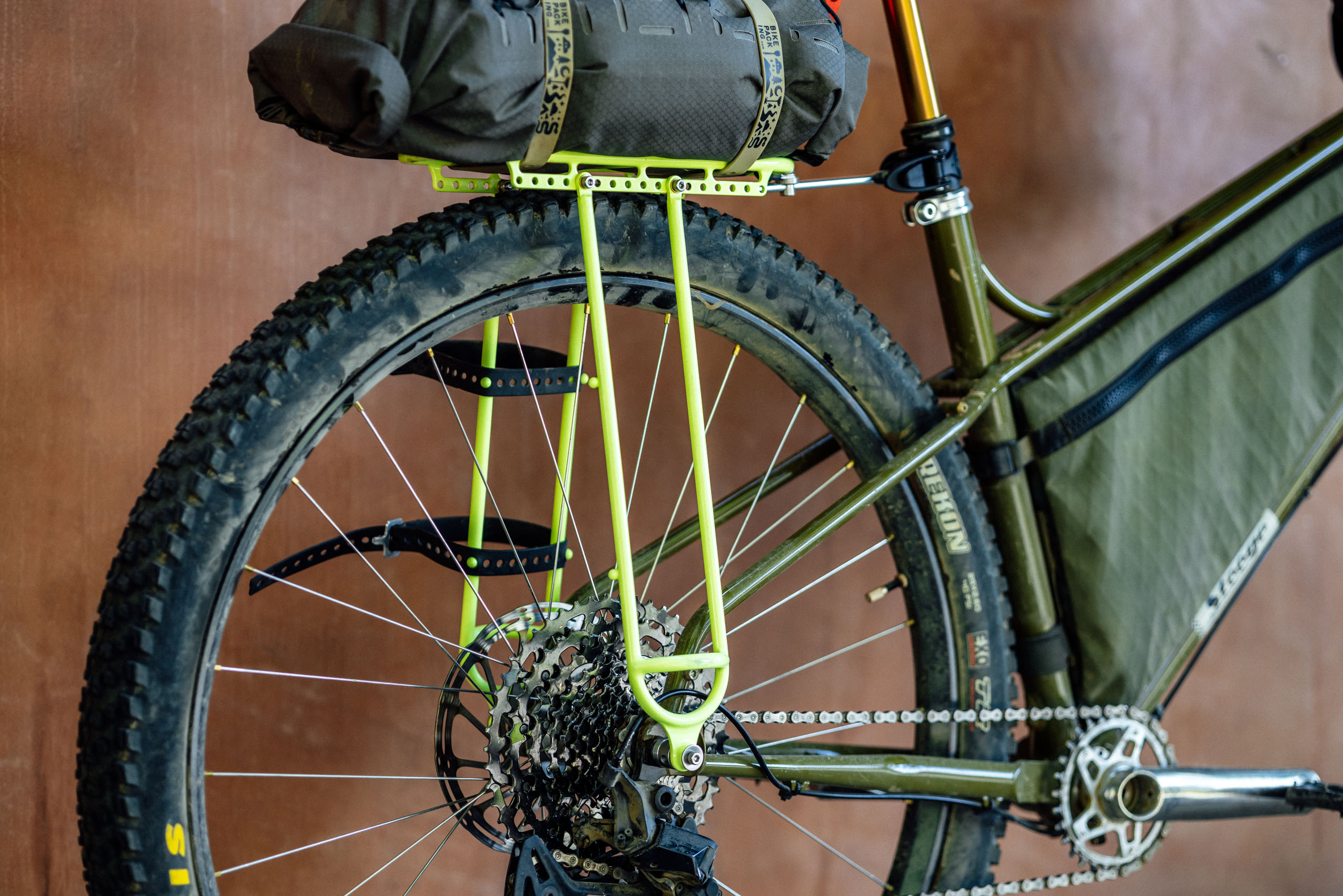
Now there are a few options to choose from, including the Tailfin Speedpack and CargoPack, the Hunter Cargo Rack that we awarded, the Old Man Mountain Elkhorn, and the Ortlieb Quick-Rack L shown here. They’re all rock solid, quick to install and remove, and can be attached to bikes that lack rack mounts. I just wish we had a single axle-mount standard, namely the Old Man Mountain/Robert Axle system, which seems the burliest, and most versatile since it works with most dropouts; the thread-side peg is a separate piece that screws into the axle, which works with dropouts that have a cap insert (like those on Eskers and others). All that being said, I realize there are some issues, to which I don’t know the extent of, with direct mount derailleurs. Either way, I’m all for this rack innovation.
BoglerCo Ultralight Trowel
13 grams / Made in USA / $18 at Garage Grown Gear
I’ve been pretty content with my trusty Vargo titanium Dig Dig Tool for the better part of a decade, but I left it in Mexico and needed a replacement to bring bikepacking when I was back home in North Carolina. Poking around on YouTube, I stumbled on BoglerCo’s small, ridiculously featherlight digger that’s made in the USA from a high-strength aircraft-grade aluminum alloy and weighs less than half the weight of the Vargo.
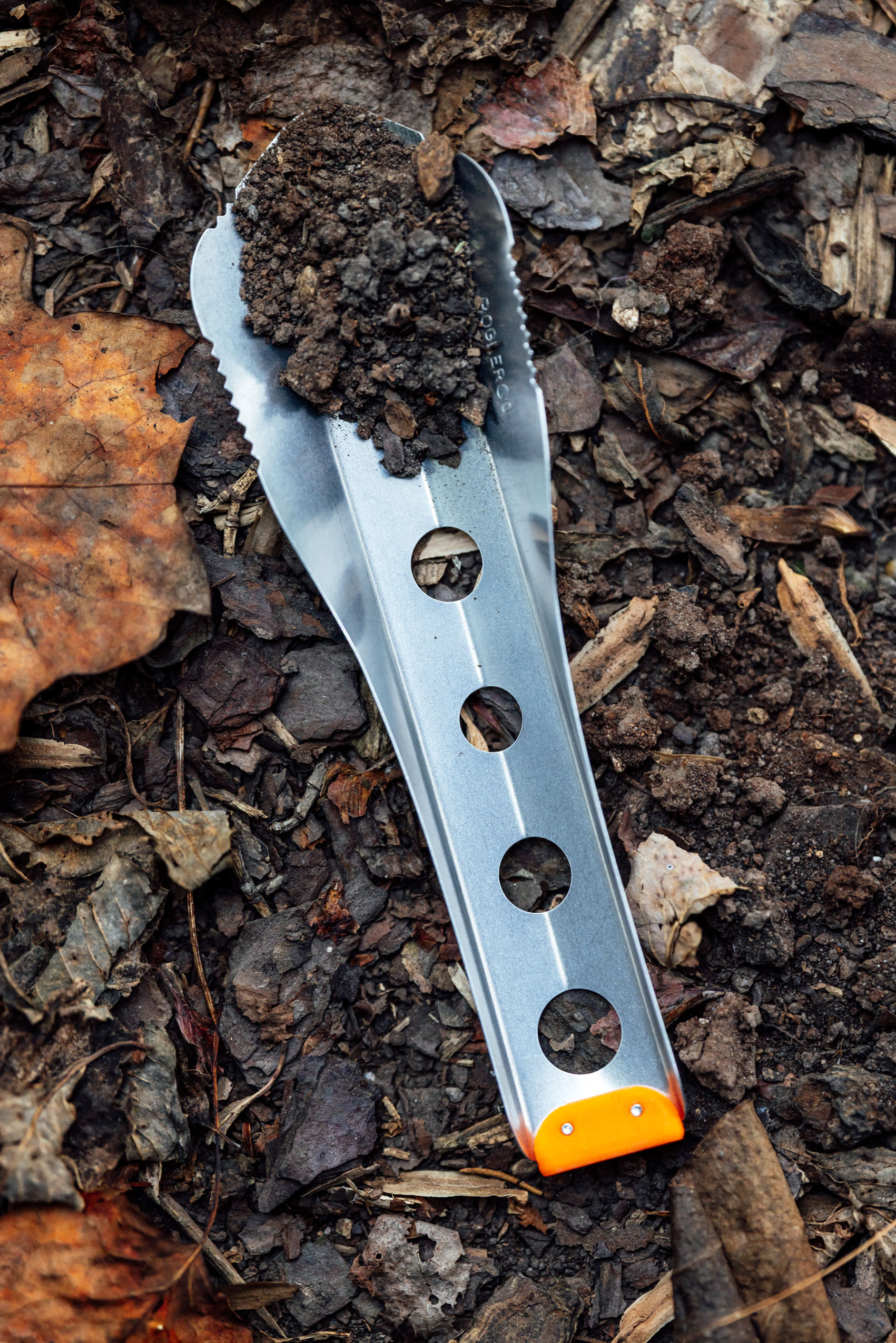

I was a little worried about the comparably flimsy aluminum construction of this thing (vs. the tough titanium on the Vargo), plus the Vargo is notably sharper, but the BoglerCo model seems remarkably effective, and so far impressively tough. It has a thin leading edge for slicing turf and small roots, and dual serrated sides for tougher stuff. Also, the ABS plastic end cap spreads pressure so you can dig with full force without the handle biting your palm.


At just 13 grams (about a half an ounce) and 18.4 cm (7.25”) long, it’s virtually weightless, but so far stout enough to pry through both the rooty soil in Pisgah and the rocky dirt of the Oaxaca Valley without bending. BoglerCo recommends not using it in the campfire to avoid messing up the heat-treatment, for the record, but otherwise it’s backed by a lifetime warranty and it seems like a minimalist’s potty trowel that’s great for its weight.
Innertubes
$0
I rarely carry a spare tube unless I’m going out for more than three or four days. I realize that’s not smart, but I reassure myself by carrying a pretty robust tire repair kit, complete with oversized plugs, sealant, a needle and nylon thread, gorilla tape, etc. Either way, I’ve been putting old tubes to use lately by carving them up into rubber bands. At this point, I’ve become so reliant on them that I have a tube in the top drawer of my toolbox that’s readily available for band fabrication. I use them for everything, including holding my tent stakes, keeping things tight in my on-bike repair kit, and anything else you can imagine. Unlike standard rubber bands, they don’t seem to dry out and snap, and they’re infinitely stronger. Tube-bands are hands down my favorite bike hack.


Little (Backpacking) Things
$13/$25/$65 at Garage Grown Gear Unpaste Thermodrop NB1000
We publish a steady stream of gear news to keep folks abreast of the latest components and camping gear as they are released, but there’s another level of stuff that’s churning and burning screens in the world of backpacking and thru-hiking. A lot of it isn’t necessarily applicable to bikepacking, think backpacks and hiking shoes, and some of it gets rather gimmicky, but I also stumble on clever, low-cost things that are worth sharing from time to time. This year, along the same trajectory as Neil’s small gear discoveries, we found a few inexpensive camp gadgets and accessories that have proven worthy of a permanent spot in out kit.


Nitecore’s NB10000 is one such item. I’ve been using the same heavy Anker (er, anchor) 10,000MaH battery bank for years, but finally decided to upgrade since I’ve happily eliminated all USB and Micro-USB plugs from my kit. This is the Gen 3 version of this power bank, although I don’t have experience with the prior iterations. It’s approximately 12.2 × 5.9 cm and it packs 10,000 mAh into a $65, 150-gram package that’s smaller than a my iPhone. It also supports simultaneous or pass-through charging via two USB-C ports, which is apparently an upgrade from the Gen 2. From my limited time with it, it can recharge my phone from near empty to full almost twice.


Two other items I’ve come to enjoy are the Thermodrop and Unpaste, which also happen to be items Neil recently covered. Until now, I’ve always wondered how cold it actually gets while camping in certain situations, waking up and saying things like, “it must have dipped into the teens last night… I woke up shivering.” Well, now that number is attainable, which is both fun to know and useful for reporting on gear I’m testing. The ThermoWorks Thermodrop records high and low temps when left on and shows the real-time temperature. It’s $25, water-resistant, and weighs only a few grams.
I’ll also have to agree with Neil that Unpaste toothpaste tabs are one of my favorite little upgrades lately. These tiny, pill-shaped tablets turn into toothpaste when you chew them. They’re ultralight, low-waste, and perfect for overnighters and weekend trips when you can toss a few into the DAP kit. A 125-tab pack is $13 and seems to last forever.
Mazama M!GO
132 grams / Made in China / $65 at Garage Grown Gear
My favorite of these backpacker bits might be the Mazama M!GO, so I thought deserved an entry of its own. There’s a bunch of new “thru bottles” that have come out in the last year or so, but I think this one is particularly special. In summary M!GO is a lightweight, reusable alternative to the Smart Water bottle, a single-use plastic bottle that thru-hikers have adopted over the years as a multi-use hiking bottle. The M!GO was co-designed with YouTuber Miranda “Miranda Goes Outside” Webster. It’s made from BPA, PFAS, and PVC-free LDPE and has a dual-cap system that offers a wide mouth for fast filling/cleaning and a narrow 28mm opening compatible with popular filters (e.g., Sawyer), bidets, and other accessories. Ounce/mL markings aid measuring for camp cooking and it has a generous 1,000–1,070 mL (32–38 oz) capacity. It kind of offers the best of both worlds between a Nalgene and a Smart Water bottle, to be honest.


One thing I love about it is its slightly stiffer construction compared to a typical water bottle That makes it a little more sturdy in a cargo cage, or as I’ve mostly used it, strapped to my Hunter Cargo Rack. I suppose that marks its only downside, too. It measures 29 x 7.6 cm (11.5″ x 3”), which doesn’t work with a standard bottle cage (plus it doesn’t have an indentation like a typical bidon to keep it locked in). With that, it has to be strapped to a cargo cage or used in an alternative cage like the Arundel Looney Bin.
Bigger Stanchions All Around
One thing I love about mountain biking and bikepacking is how they constantly nudge you to improve. With that progression comes realizations, whether it’s changing a bad habit to improve cornering, dialing in how your bike fits and rides, or tweaking something about your kit to make it more efficient. This year’s aha moments both involved stanchions—bigger ones. I first glimpsed the benefits of 36mm forks years ago on the Pivot Mach429, but in 2025 I fully ditched 34mm weight-weenie options for larger 36mm legs. The Fox 36SL was the catalyst, which delivered performance gains without a huge penalty, but I had an even better experience with the full-fat Fox 36. The stiffer chassis and larger internals add up to a fork that’s more composed and predictable on rough descents and more consistent over long, punishing rides.

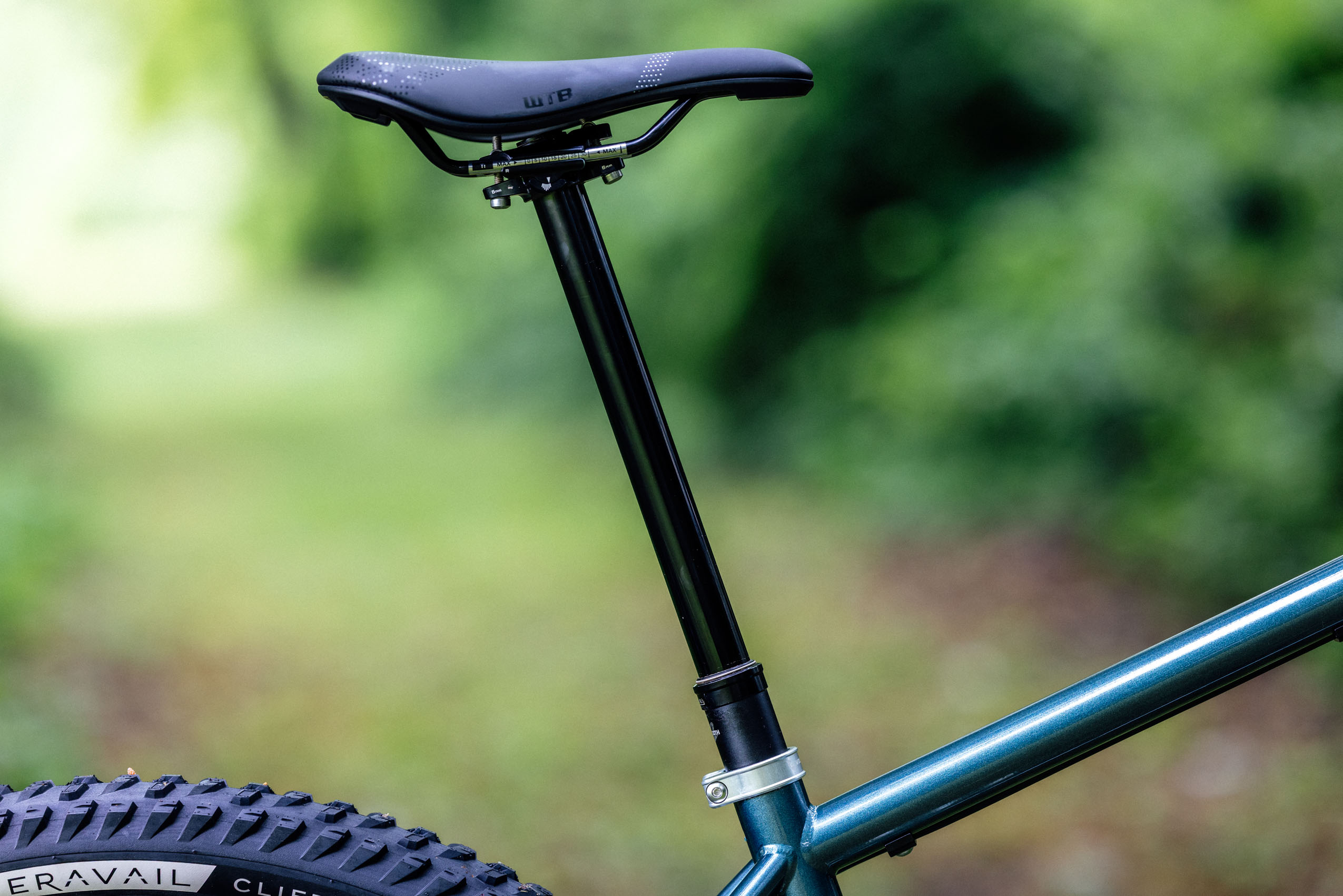

On a parallel path, I’ve recently found similar marginal gains with longer dropper posts. I’ve had 200mm droppers in regular rotation, and while most people would find that to be plenty of travel, I recently went even bigger. Now, believe it or not, anything short of 220 just doesn’t feel right. I had this realization when testing the Neuhaus Hummingbird. It has a cast-steel bottle bracket on the seat tube which keeps bolts from protruding into the tube, allowing you use its full length and maximize dropper-post insertion. I was able to do something I’d never pulled off before: run a 242mm dropper post. While testing this bike on tough trails, I kept realizing how much I appreciate being able to ride low with my back straight, elbows bent, and chin over stem. With extra long legs, having that 40mm of added drop allowed me to be in this position and have the saddle completely out of the way to remain fluid and poised. I wouldn’t say it was a complete game changer, but it’s something I’ll factor in when analyzing frames from here on out.
Evolved Booties
64 grams / Made in USA / $70 at Evolved
“Darwin on The Trail” might ring a bell for some of you. Nic “Darwin” Rakestraw’s YouTube channel is a popular one among backpackers, and over the last few years, the veteran thru-hiker has also been tackling big bikepacking trips. More recently, Darwin spun up a business called Evolved with the mission to design and market gear based on what he saw missing in the marketplace. One such product is the new Evolved Booties, a unique take on camp sleeping slippers designed to keep your feet cozy on cold nights.


Like Darwin, my feet run cold, very cold, so I’ve used down booties which I’ve found to help. Like the cottage-made down foot warmers I’ve tried, the Evolved Booties are made in the USA, but what sets them apart is the insulating material. Evolved designed them around an Alpha Direct 90 liner—which we awarded in our Gear of the Year Awards, as a matter of fact—so your feet stay warm without getting clammy, something I’ve experienced with down booties. They also use Climashield APEX insulation and an ultralight 10D shell to maximize warmth and breathability. I’ve only gotten a couple nights out with these, but so far I really like them. They work as promised, and although they’re not as small and light as minimalist down booties, they only weigh 64 grams and pack up to the size of a large orange. Also, the simple cord-lock closure is a nice touch. I look forward to seeing more stuff from Darwin and Evolved.
Fuzzy “Blankets”
To make this a proper baker’s dozen, here’s something not at all bike- or camp-related. A few months ago, Daniel Jessee shared a new EP by an alt-country musician I’d never heard of on our internal Slack channel. I’m not big on alt-country, but I gave it a shot. What grabbed me was that all the tracks on Stephen Wilson Jr.’s EP are covers of ’90s grunge anthems—songs etched into my brain from those formative years. The title is genius, too: Blankets is exactly what great covers can be when every lyric, riff, and hook wraps you up in the warm embrace of nostalgia. After wearing out his excellent versions of Nirvana’s “Something in the Way” and Temple of the Dog’s “Hunger Strike,” I went down a rabbit hole and made a short list. I already had one all-time favorite: Dinosaur Jr.’s transportive take on The Cure’s “Just Like Heaven.” You’ll find a short playlist below (click the icon in the upper right to view it). I’d love to add more—if you have favorite covers of early metal, alternative rock, or other late-’80s to mid-’90s gems, drop them in the conversation below.
If you’re interested in purchasing any of these products, please support your local bike shop and buy from them when possible. If you can’t, or they're only obtainable online, we’ve provided links to manufacturers and stores where they are currently available; some of these retailers offer a modest referral fee, which helps support this platform. This has no bearing on the review or selection.
Further Reading
Make sure to dig into these related articles for more info...

Please keep the conversation civil, constructive, and inclusive, or your comment will be removed.