

 Mountain Bike (MTB)
 Gravel Bike
 All-Terrain Bike (ATB)
 Fat Bike

Restrap Race Saddle Bag Review
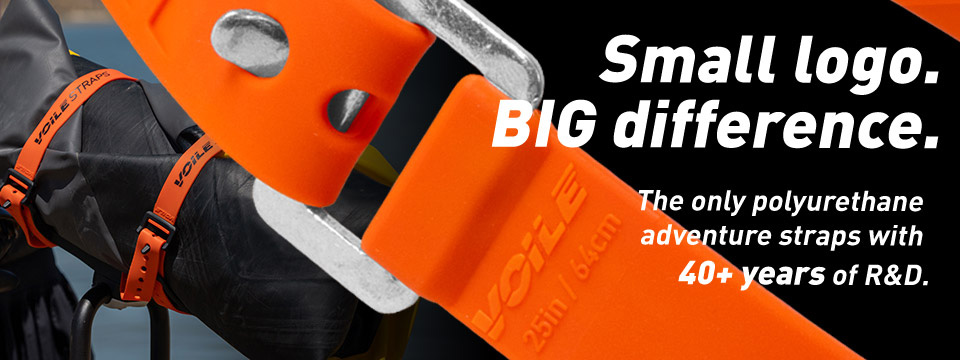




After three years of real-world use, Logan weighs in on the Restrap Race Saddle Bag, a holster-and-drybag setup that’s genuinely waterproof and dropper-friendly. Dive into the review to hear why it’s become one of his go-to seat packs for packing light, plus the full verdict and pros/cons…
PUBLISHED Sep 25, 2025
Most of the time, I’m deliberate about the gear I’m testing—using it as much as possible during a specific time window and logging enough miles to make sure it’s properly thrashed before slating an opinion. This review of the Restrap Race Saddle Bag played out differently. Rather than an intensive test block, I’ve used the holster-and-drybag system intermittently since its 2022 release, and only now—three years on—am I sitting down to write about it.
I suppose the delay reflects how I’ve been packing bikes lately: opting for a rack and dry bag on most occasions and only using a seat pack about a third of the time—either when I don’t need much capacity or if I’m trying to pack particularly light and svelte—or on occasions when I have a large frame bag paired with a voluminous top-opening handlebar bag and already have plenty of room. For all three of those scenarios, the Restrap system has been a recurring, real-world companion that I’ve reached for regularly rather than a project. And although the bag’s not without cons, that statement should sum up that I really like this bag.

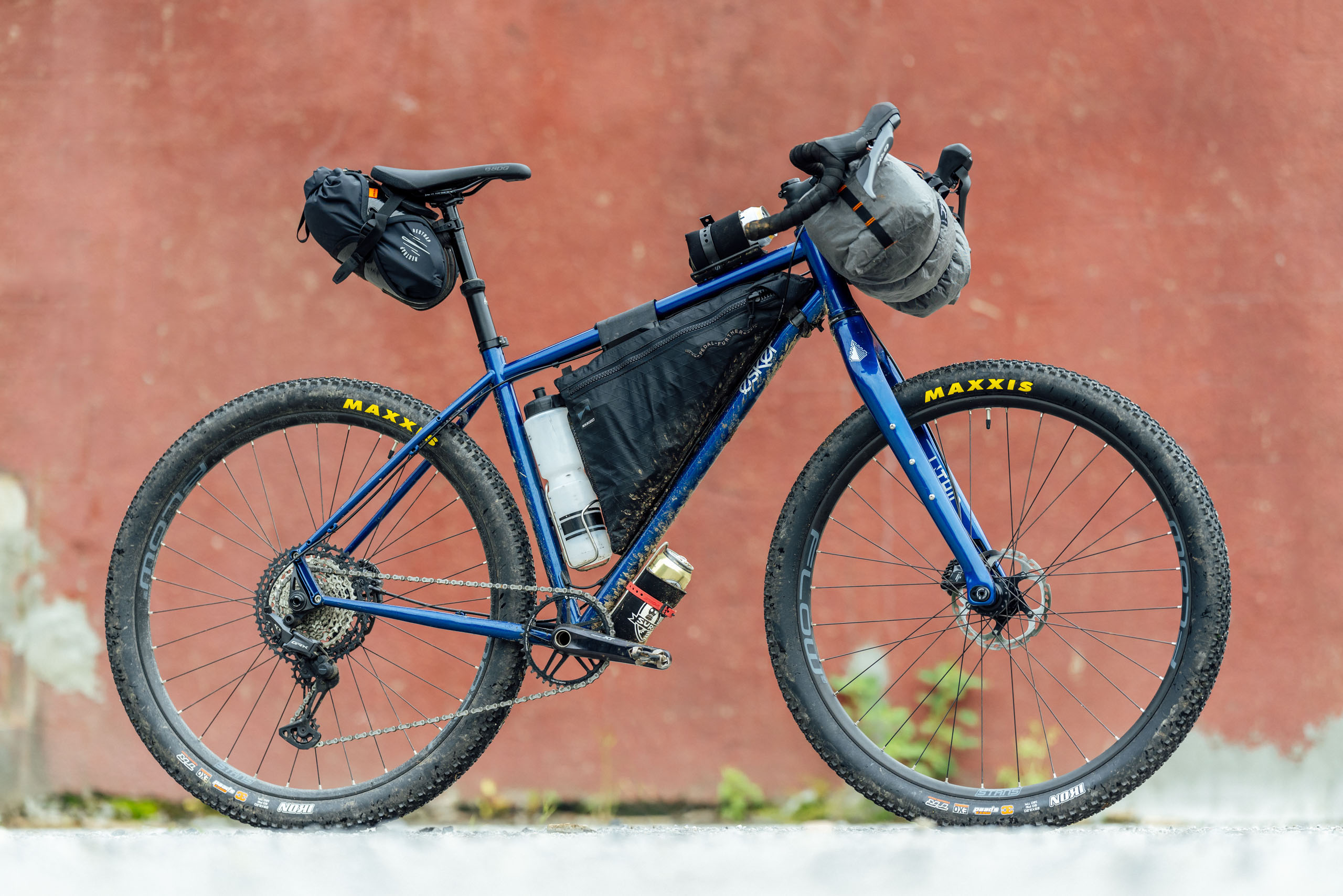
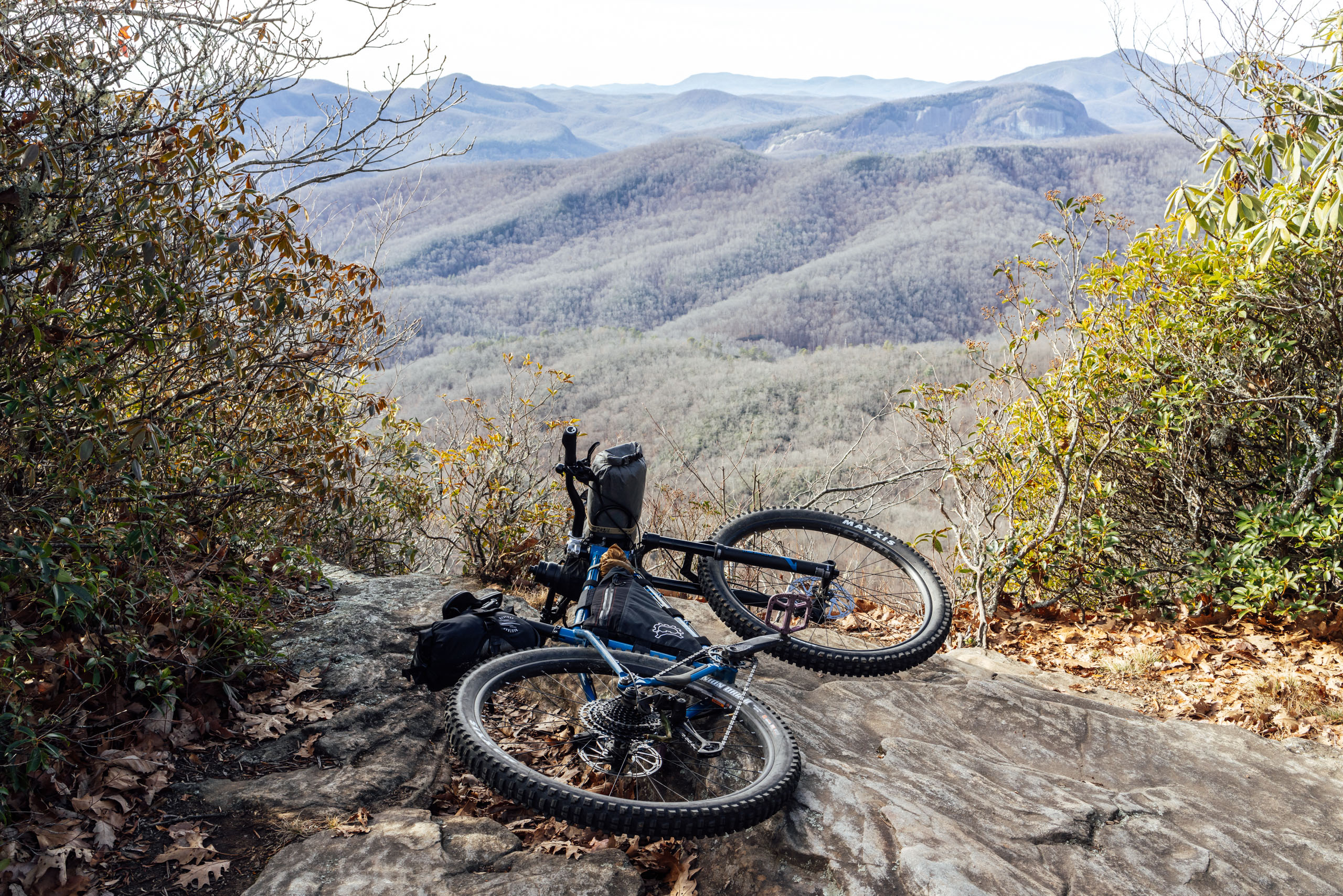
To put it in context, I’ve always preferred holster-style seat packs to versions that don’t have a quick-release bag. The Restrap Race Saddle Bag is similar to other variations I’ve used in the past, such as the Revelate Terrapin and the Wayward Louise. Like those two, it features a semi-rigid cradle that mounts to the seat post and saddle rails which houses a removable dry bag. What makes bags like this style of system special is the fact that it offers waterproof storage that you can pack and unpack off the bike. In my view, that alone makes the holster-style system superior to a more traditional seat pack, particularly because I always use the rear bag to stash extra clothes and layers. Having that be dry storage is key, as is being able to easily remove it for in-the-tent use. For the sake of space and organization, I usually stash whatever loose items I have laying around the tent in the dry bag and stow it in the vestibule while sleeping. Then in the morning it’s pretty easy to gather everything and repack.
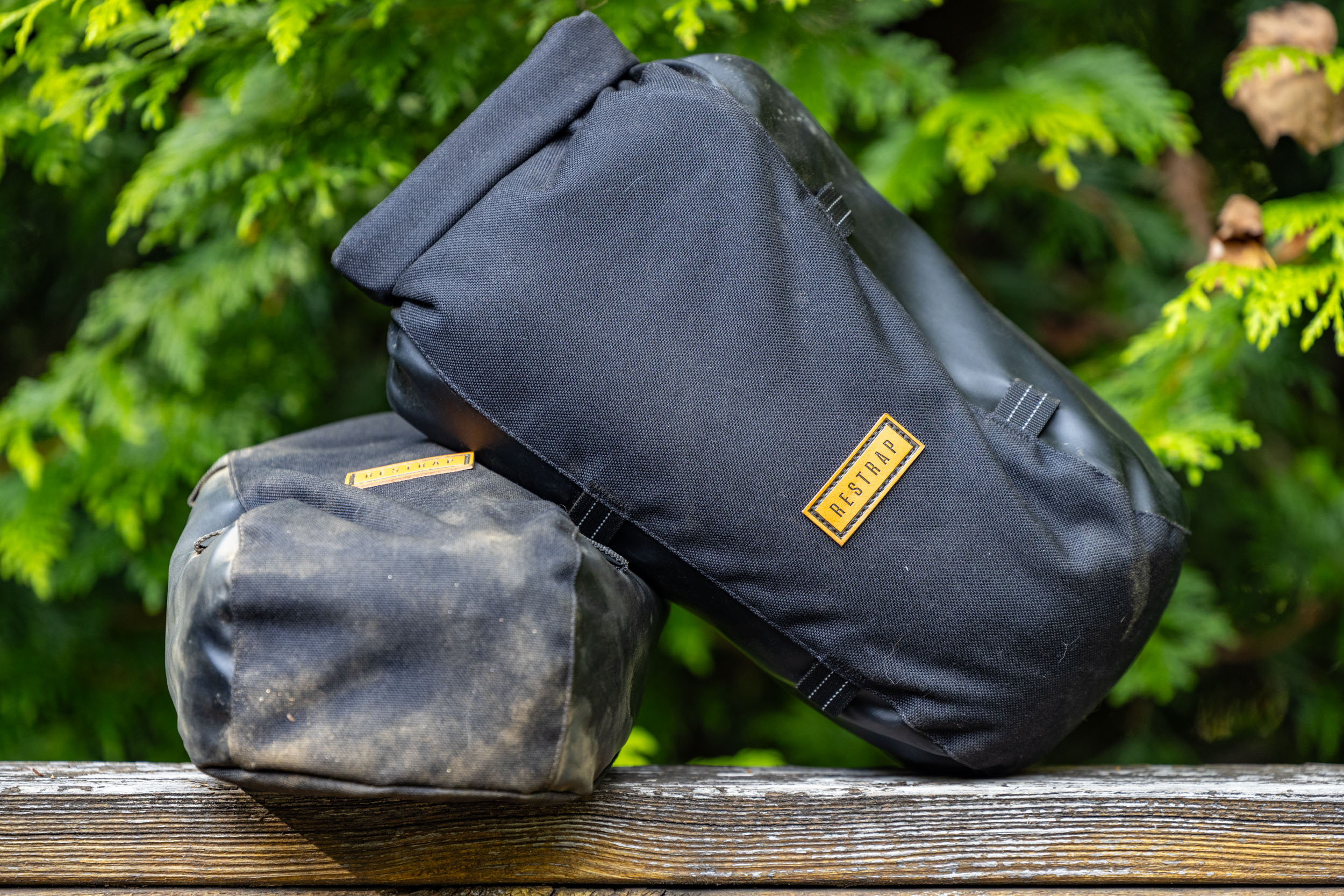
The Race Saddle Bag does all this, and it has a few things that set it apart. It’s been updated with a laser-cut holster that pairs with a dedicated 7L dry bag. The bag is secured in the holster with a magnetic Fidlock buckle, and nylon webbing and burly foam blocks help secure the holster to the saddle/seatpost. Those things alone make it a little different, but there are some broader things at play. For one, it’s smaller than a lot of other seat packs. It’s not tiny like the Rockgeist Gondola or Revelate Shrew, but the bag’s 7-liter form factor fits its target audience: ultra-distance racers and folks who pack light. Daniel Jessee has used one on the Highland Trail 550 and other events, and mentioned that he wishes the dry bag was a couple inches longer. Personally, I think it seems like the Goldilocks size for a seat pack; not too big and not too small. I wouldn’t mind a couple more inches of foldable bag, however.
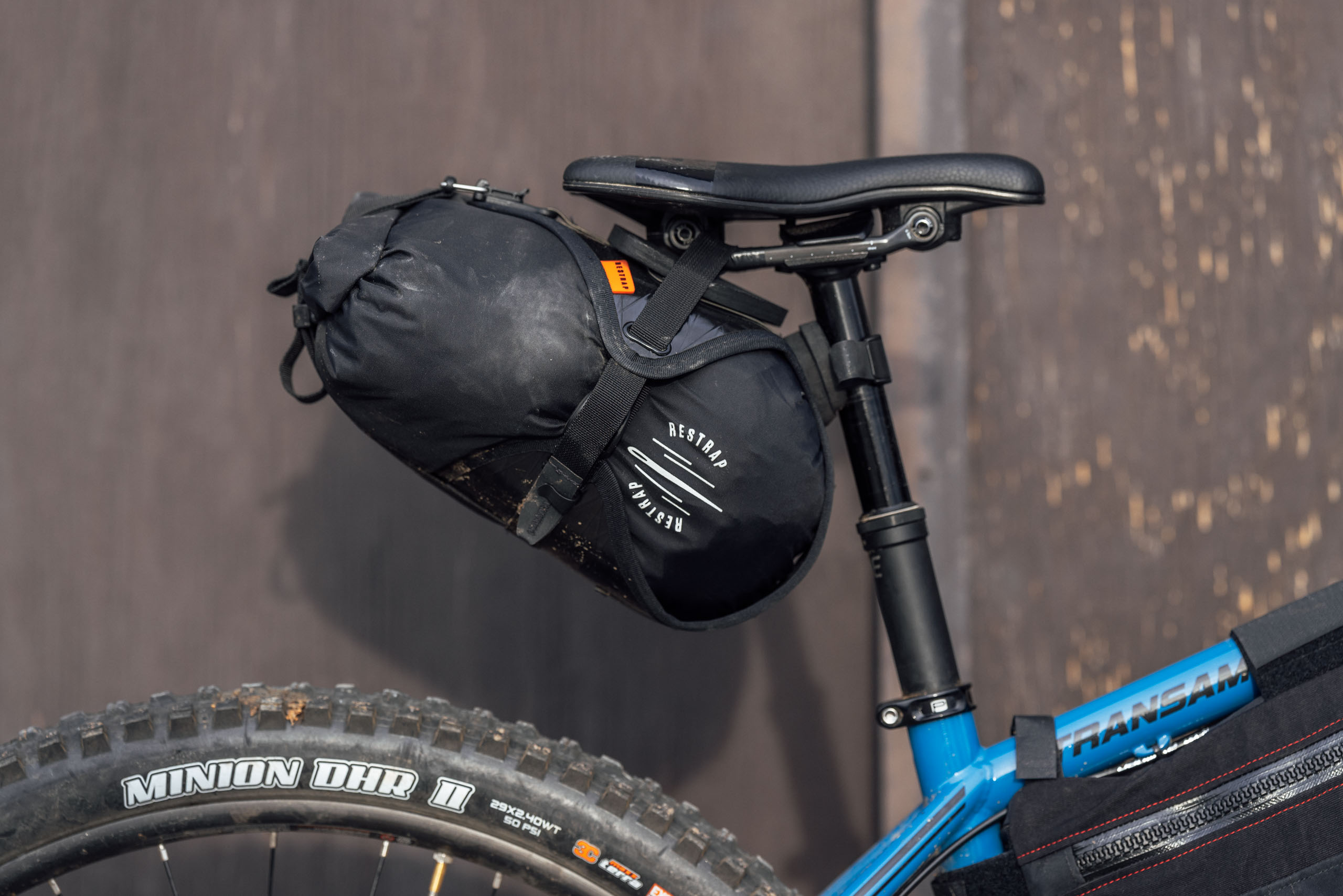
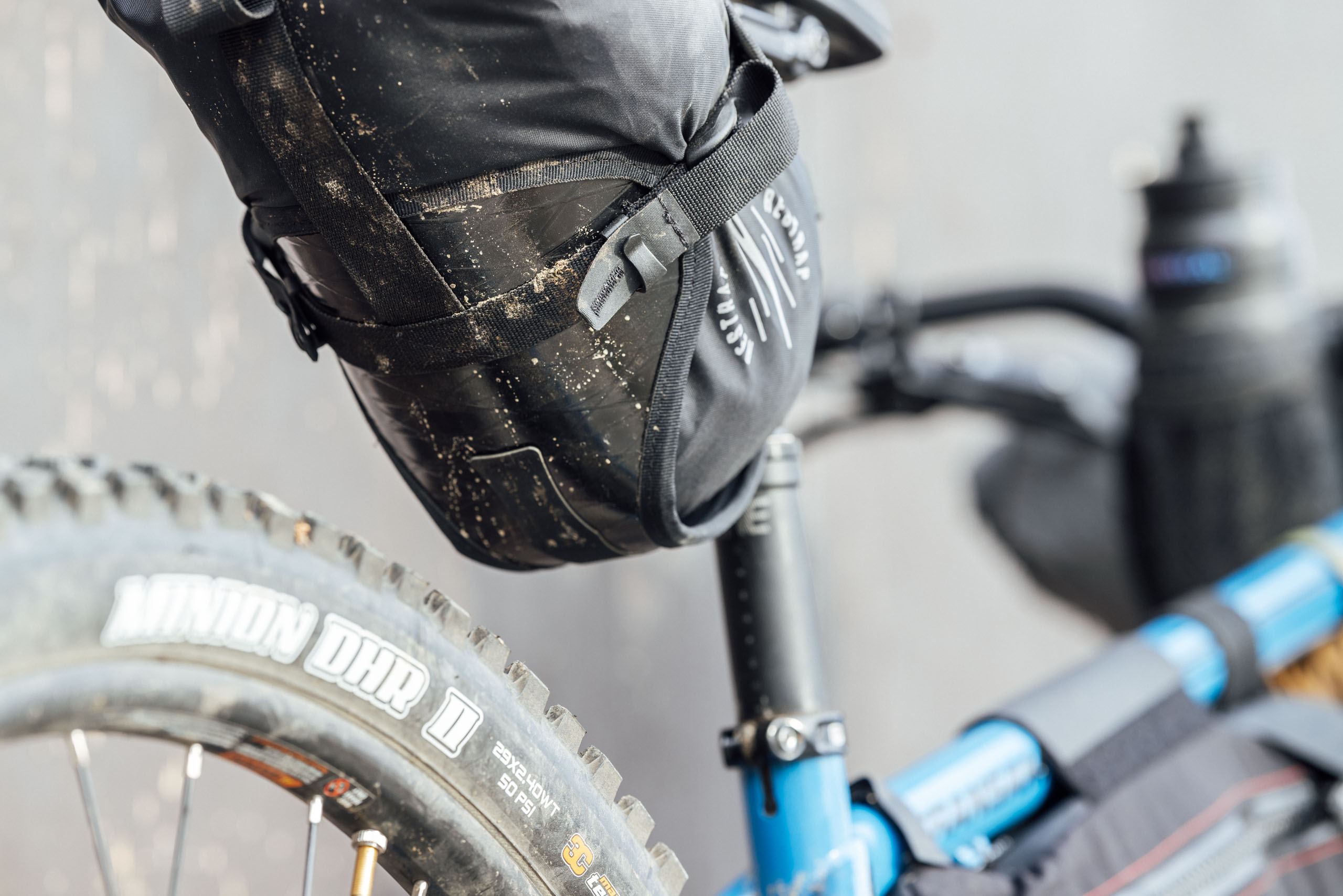
Its smaller form factor is part of what drew me to it, but the feature that caught my attention is the way it mounts to the seat post. It has a small, single post strap and burly oval rubber spacers, which makes it perfectly suited to use with a dropper post—an absolute must in my book. The included soft, Hypalon Fast Strap works well for this purpose since it doesn’t mar or abrade the dropper stanchion. That said, I misplaced it and repurposed a Voile Nano, which also works fine as you can see in many of the photos here.


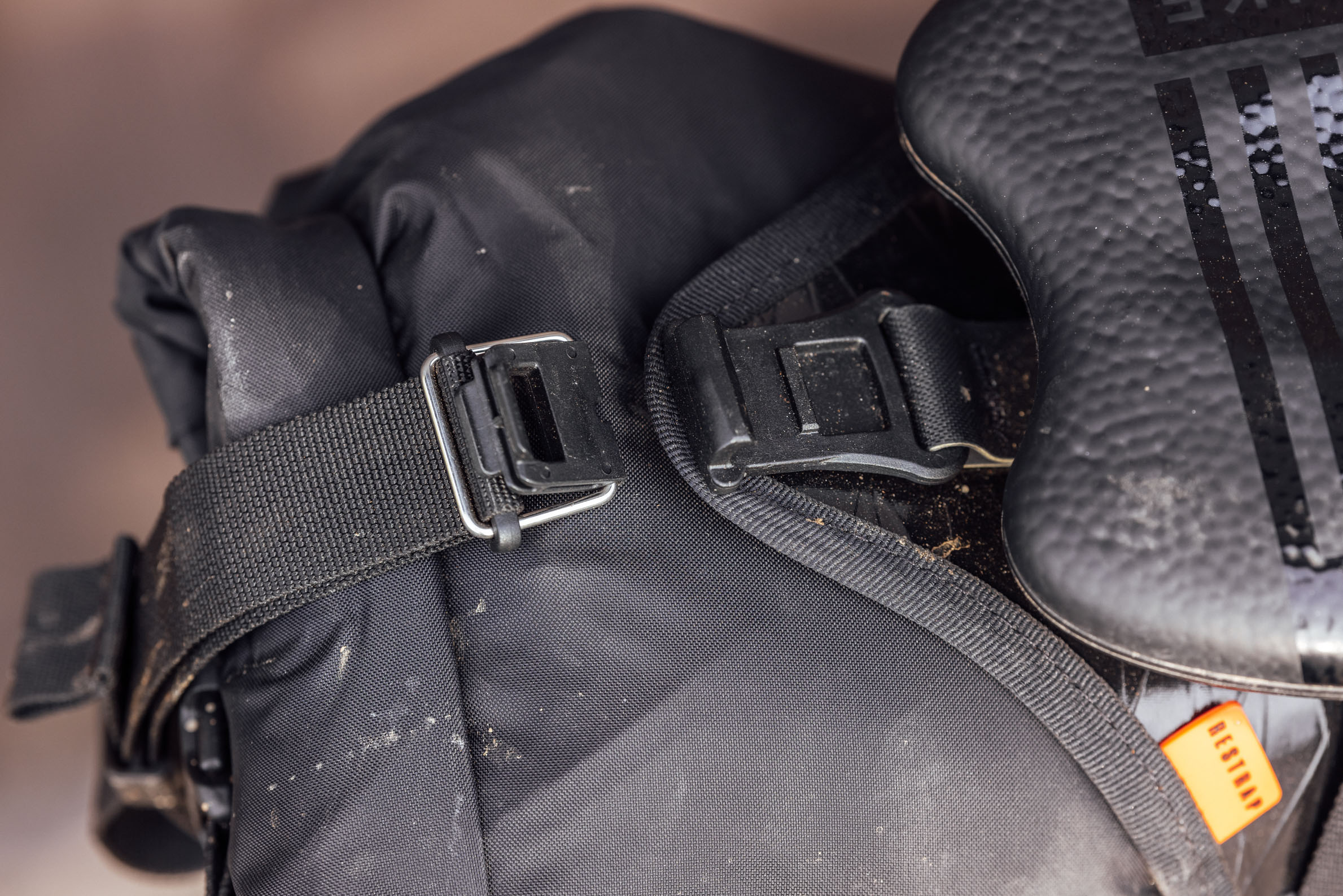

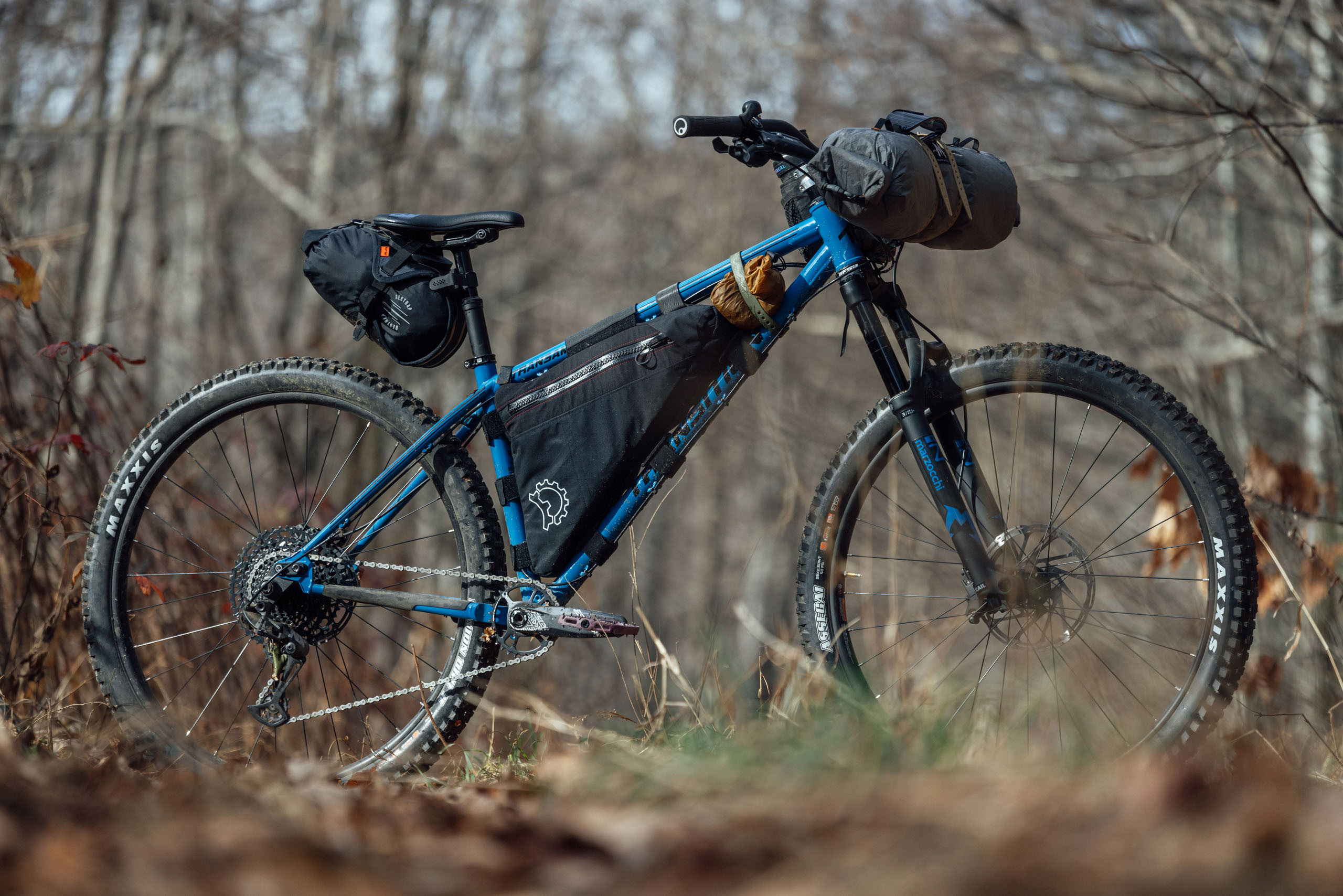


Whether the Race Saddle Bag is made for dropper posts is another story. Its size and mounting method work, but Restrap doesn’t make that claim, and it’s not perfect. I had to forfeit about 4cm of dropper travel due to the placement of the seatpost strap and the saddle rail straps. This may differ depending on the saddle rail dimensions and anatomy, but as is, that’s one of my only cons with the Race Saddle Bag—a slightly different strap configuration could easily solve this, allowing the strap to lash onto the post higher up. There are multiple strap locations, but mine is in the top position as shown in these photos. In other words, that’s as high up on the stanchion as it can go.
The saddle rail straps are fairly straightforward. I laced them up incorrectly on my first go with it. It actually worked fine (shown here on a couple pictures of it mounted to the Transition TransAm), but the straps lace in a slightly different manner and comes out through the upper slot, then through the buckle. The plastic compression buckle works as expected, and they’re fairly easy to cinch down as the load settles and compresses while riding.




The dry bag is lightweight—almost a little too light—and doesn’t inspire confidence in terms of durability. However, neither mine nor Daniel’s have gotten any pinholes. Daniel mentioned that his has not leaked during the countless hours of pounding rain he experienced on the HT550. The dry bag is secured in the holster with a magnetic Fidlock buckle; it works great and is easy to attach and detach once you get used to it, even with gloved hands. The hardshell holster includes additional Hypalon panels to resist scuffs and an additional large rubber spacer protects the top from the saddle rails. It’s a nice touch that I haven’t seen on other seat packs.

Daniel’s Take
I asked Daniel Jessee to weigh in since he’s been using the Race Saddle Bag for a while on some big outings, including a very rainy Highland Trail 550. Here’s what he had to say:
The Restrap Race Saddle Bag hits the ultralight target, pairing a harness with a waterproof dry bag that stayed leak-free through hours of rain during my time slogging through the HT550 and beyond. It’s a great implementation of the holster-style pack, which I much prefer over a traditional fixed version. The angle can be fine-tuned with foam blocks for tire clearance, and while stability is generally good, it can loosen slightly after rough miles. The tradeoffs: strap routing has enough friction to make a truly tight cinch fiddly, the side-buckle/stitched layout slows bag removal, and the dry bag—though effective—feels finicky to seal and a bit short (a slightly longer section to roll would help). Using the foam spacers is basically mandatory to prevent rail rub, but they do nudge the load a touch closer to the rear tire. Overall, it’s a very light, weatherproof, race-oriented seatpack with minor usability quirks. It’s become my go-to regular seat pack, taking the place of several others I have at my disposal.


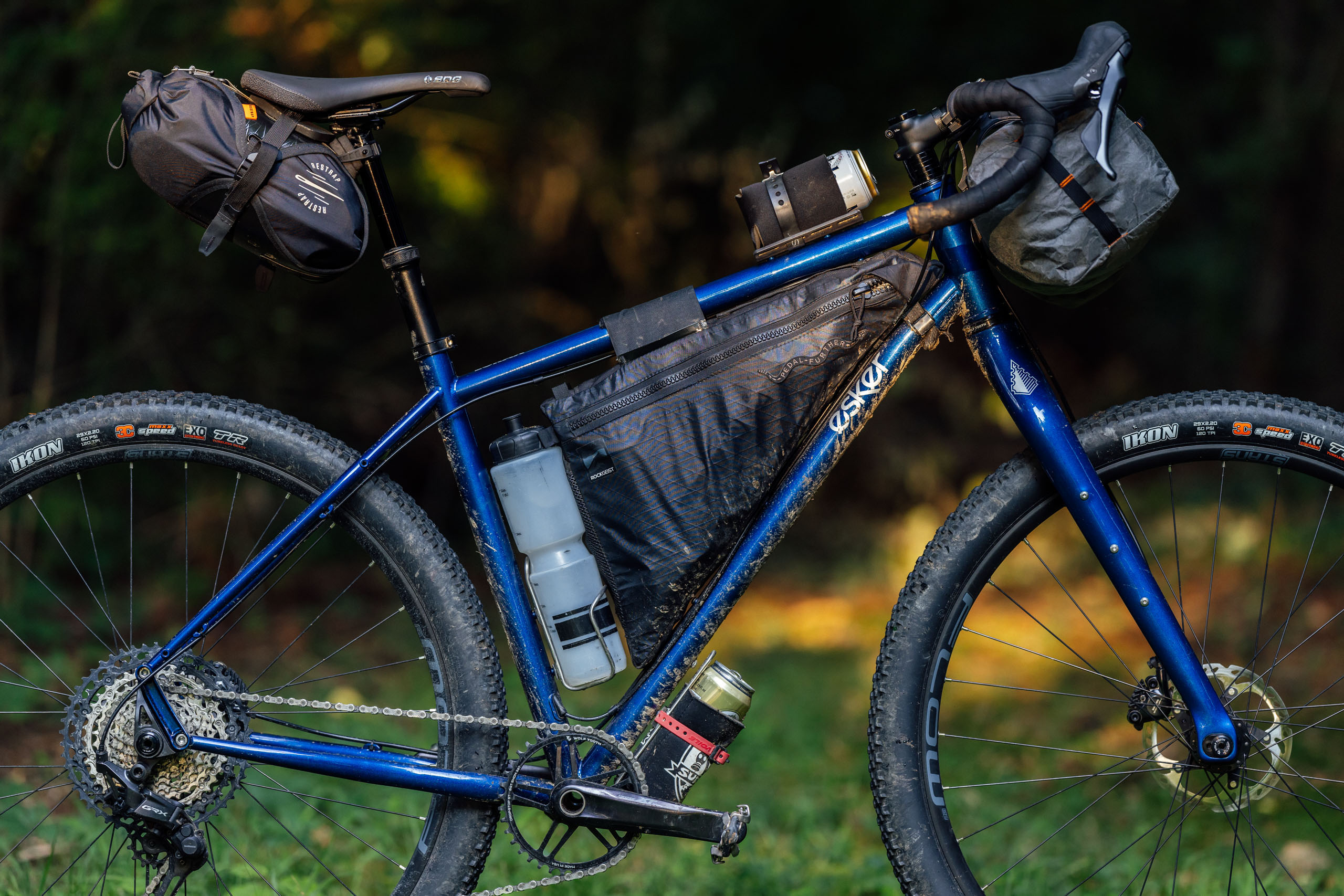
- Model/Size Tested: Restrap Race Saddle Bag
- Weight: 253 grams
- Place of Manufacture: Leeds, UK
- Price: £119.99
- Manufacturer’s Details: Restrap
Pros
- Extremely lightweight holster and bag design
- Despite being lightweight, waterproof dry bag has proved to be durable
- Angle is adjustable for tire clearance using foam blocks
- Fidlock buckle is a nice touch and feels secure
- Great size that works okay with dropper posts
Cons
- Drybag could be a couple inches longer
- I’d like to see it get a design refresh specific for use with a dropper post to take up less stanchion
- More tedious to remove holster from saddle due to side strap buckle style and routing
Wrap Up
In the end, the Restrap Race Saddle Bag delivers exactly what a fast-and-light-leaning seatpack should: low weight, real waterproofing, and the convenience of a removable dry bag you can pack off the bike. The holster is thoughtfully built—durable where it needs to be, with smart protection at likely wear points—and the form factor hits a sweet spot for riders who pack light but still want decent capacity. Paired with a dropper, it’s one of the cleaner and simpler solutions I’ve used, not requiring a special adapter or anything extra.
It isn’t flawless. The compact size may require a touch of restraint (or a longer roll-top option), you have to surrender a few centimeters of dropper travel depending on your saddle/rail combo, the side strap buckle style and routing make getting it on and off the bike kind of fiddly, and it can loosen slightly after rowdy miles. None of that is overly negative, or a dealbreaker, and the stability is good in practice. If your priority is an ultralight, weatherproof rear bag that doesn’t overwhelm a lean kit, it’s a solid option that’s proven its worth.
Further Reading
Make sure to dig into these related articles for more info...



Please keep the conversation civil, constructive, and inclusive, or your comment will be removed.