


 Mountain Bike (MTB)
 Gravel Bike
 All-Terrain Bike (ATB)
 Fat Bike

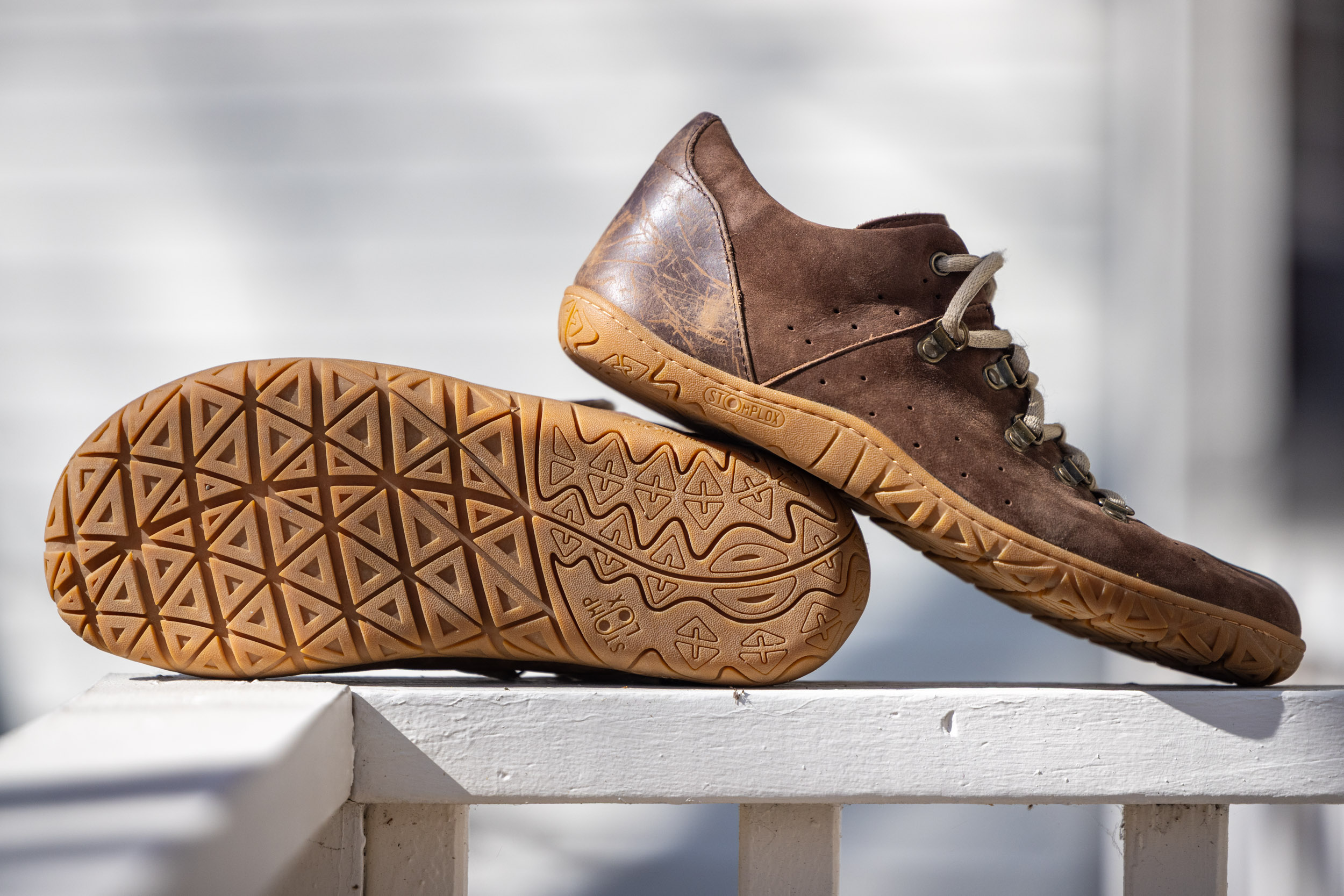
Stomp Lox Trail Worm Review: Grounding




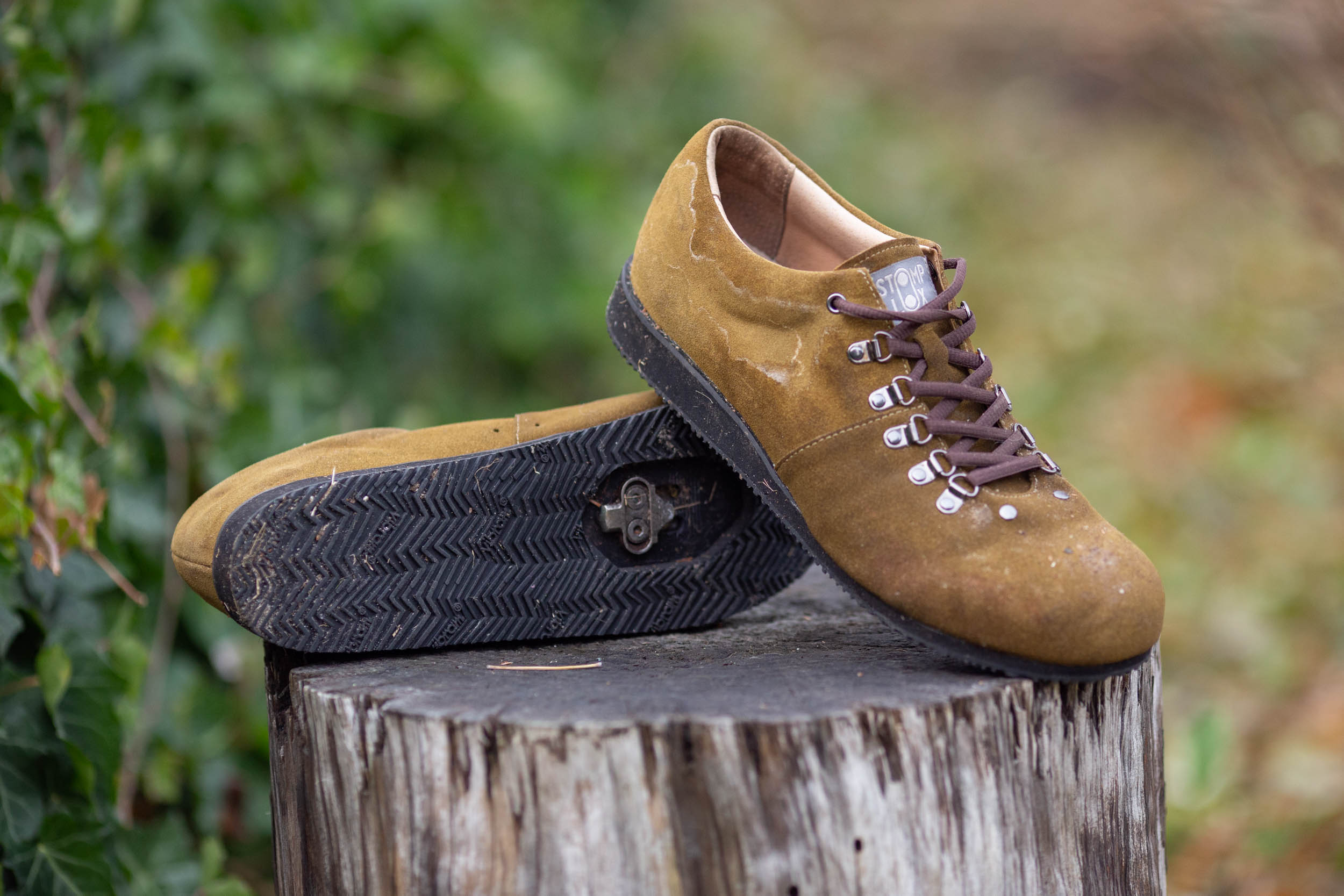
Inspired by their clipless model, Stomp Lox and Ronnie Romance have brought a flat, trail-running-oriented shoe to the bike space. Dubbed the Trail Worm, this barefoot-style design aims to reconnect users with their natural stride and provide a more grounded feel to everyday use. Nic used the Trail Worms on and off the bike and shares his thoughts in this review…
PUBLISHED Apr 15, 2026
Shoes are deceptively complex. Where considerations around style and fit were once the two most important variables, there is now a whole host of things to consider when buying a new pair. Though how we engage with either the earth or, in this case, pedals, hasn’t changed much in the past few years, the kinds of options available to us have exploded. From barefoot options that mimic the natural shape of the foot to super shoes with carbon fiber plates designed to maximize efficiency, shoe technology offers an endless array of options.


When I saw that Ronnie Romance had brought a barefoot-style element to a Stomp Lox trail shoe, I was intrigued. Recent forays into trail running made me think about how my legs engage with both activities and whether this new offering would span the gap between a bike and a trail shoe, given Ronnie’s penchant for both. So, after six months with the Stomp Lox Trail Worm, I dig into dirt and examine the ins and outs of these uniquely shaped shoes.
Specs and Materials
The first thing I noticed about the Trail Worms is the quality. Like most of the products Ronnie has spent time and money bringing to market, the Trail Worms are costly, at $275, but they show obvious craftsmanship in their manufacture. The Trail Worms have a nubuck and leather exterior and a perforated mesh lining at the heel cuff. The shoes are supplied with two insoles—one for running and hiking, the other for cycling—and have a repairable, side-McKay-stitched sole that attaches the rubber to the main shoe body. It also has durable, mountain boot-style eyelets for the laces and a perforated tongue. The Trail Worms come in eight full sizes, with no half sizes available.


Irregular and seemingly far from mass-produced, all the materials on the Trail Worms are durable, hardwearing, and have fared exceptionally well in my extensive testing. As I touched on in my review of the Giro Empire SRCs, my mom used to say I had feet made of acid. Something about how I use footwear seems to weed out the lesser options, and these have easily passed my personal acid test. Given their flat-specific design, I had more than enough time using them both as daily drivers and on bike-heavy days, which allowed me to put some long, consistent hours into their comfortable, foot-shaped design.
Barefoot Design
Predicated on the idea that we’ve stuffed our feet into unnecessarily narrow lasts that not only inhibit our ability to run and walk, but also cause many of the ailments people struggle with today, barefoot shoe design aims to make the most of our natural foot shape. Armed with flexible rubber soles to protect the foot in modern landscapes, they provide a wide, roomy toebox, allowing the foot to engage with the ground as it would if unbound by the confines of a shoe. Per Stomp Lox’s own copy, “Barefoot shoes are designed to help you reconnect with your natural stride, allowing your feet to regain the functions in your joints and primal muscles that can weaken from wearing cushioned, high-tech footwear over time.”


As a lifelong athlete, I’m skeptical of radical designs with such bold claims. Product design can be useful for boosting or, in some cases, correcting human inefficiencies, but when it comes to making declarative statements about “natural stride,” I tend to fret. The human body is unique, varied, and adaptable. As much as we might like to buck the trend with modern designs, there’s a reason some concepts have stuck around.
In Use
That said, my experience with the Trail Worms has opened my eyes. On the bike, specifically when paired with the cycling-specific insole, the Trail Worms are great. Having your foot splayed across the entire surface area feels more engaging than on the narrower platform of clipless shoes. The sensation of comfort and activation of different muscles is one of the first things you notice when simply walking around in the Trail Worms. On a bike, those sensations are amplified as you push through the pedals and activate what appears to be a greater range of motion.


There’s enough protection through the construction to keep things secure in the case of a rock or stick flying at your foot, and they’re comfortable to walk around in at camp or at a food stop. These could easily serve as an all-purpose flat shoe for those looking to simplify their pack list.
For running, however, I’m less sold on the concept. Due to the harsh winter we experienced here in the Southeast, it was hard to get ample time on the bike. Bolstered by a hiking challenge put on by a local conservancy, I put in a significant amount of miles on local trails I otherwise would have never seen on two wheels. Over 100 miles and 32,000+ feet of elevation gain, I used a variety of shoes, including the Trail Worms.


My hesitation about them as trail running shoes is that typical running designs work well. On runs, you’re putting a lot of stress on the foot muscles, as well as your knees, lower leg area, and hips. Even when straying away from harsh concrete surfaces, there’s a lot of impact that trail running shoes help mitigate. I stray away from the larger, ultra-cushioned designs found in many modern shoes because the terrain here in Western North Carolina is technical, slippery, and extremely steep. A large cushion just gets in the way. However, you still need something between the foot and the ground to absorb impact and keep moving efficiently.
Most modern trail shoe designs have a higher stack height, which elevates the rearfoot and encourages a particular kind of stride. I strike between the forefoot, move through the midfoot, and continue on. The Trail Worms zero-stack design puts the foot level, and, in my experience, encourages rearfoot strikes. Despite claims about barefoot shoes encouraging a more natural, midfoot strike, I didn’t find this to be the case. Not only can this potentially damage your heel, but the lack of cushion between your foot and the ground also makes it even more sensitive. Everyone runs, walks, and rides differently, so these might make sense if you have strong foot muscles and a particular kind of stride. I was hesitant to run in the Trail Worms because they offer little protection for your feet during high-impact running on technical terrain. Even when compared to shoes without modern affectations like carbon plates, the sole is incredibly flexible and sensitive. Great for getting a good feel for a pedal, but less so for running fast on sharp, wet, jagged rocks.
- Model Tested: Stomp Lox Trail Worms, size 10
- Actual Weight: 638 grams (22.5 ounces)
- Place of Manufacture: Japan
- Price: $275 at Ron’s Bikes
- Manufacturer’s Details: Stomplox
Pros
- Spacious toe box makes walking and hiking more comfortable
- High-quality construction and ability to be re-soled make it a durable, long-term option
- Lower stack height and flexible sole make for great pedal feel
- Rubber sole is grippy
- Comfortable
Cons
- Costly
- Flexible sole can be rough on the foot
- Some might not get on with the design, particularly with the foot-shaped toebox or low stack height
- No half sizes
- Not as protective as traditional shoes
Wrap Up
The Stomp Lox Trail Worms are wildly different from what you’ll find in many other trail-minded shoes. With high-quality materials, handmade elements, resoleability, and a zero-stack, barefoot design, they’re a significant departure from any flat or clipless shoes I’ve ever used. On the bike, that turned out to be a good thing. They have great pedal feel, tons of built-in comfort for moments on and off the bike, and they’ve stood the test of time. But as a trail-running option, the concept behind the design falls short. Totally sufficient for hike-a-bike sections or milling around a campsite, the barefoot design did not suit my needs for harsh trail running. Still, they’re a well-made, long-lasting option that works if you’re looking for a comfort and quality-first, bike-specific flat-pedal shoe.
Further Reading
Make sure to dig into these related articles for more info...

Please keep the conversation civil, constructive, and inclusive, or your comment will be removed.