

 Singletrack/MTB
 Gravel/All-road
 Dirt-road Touring
 Fat-bike
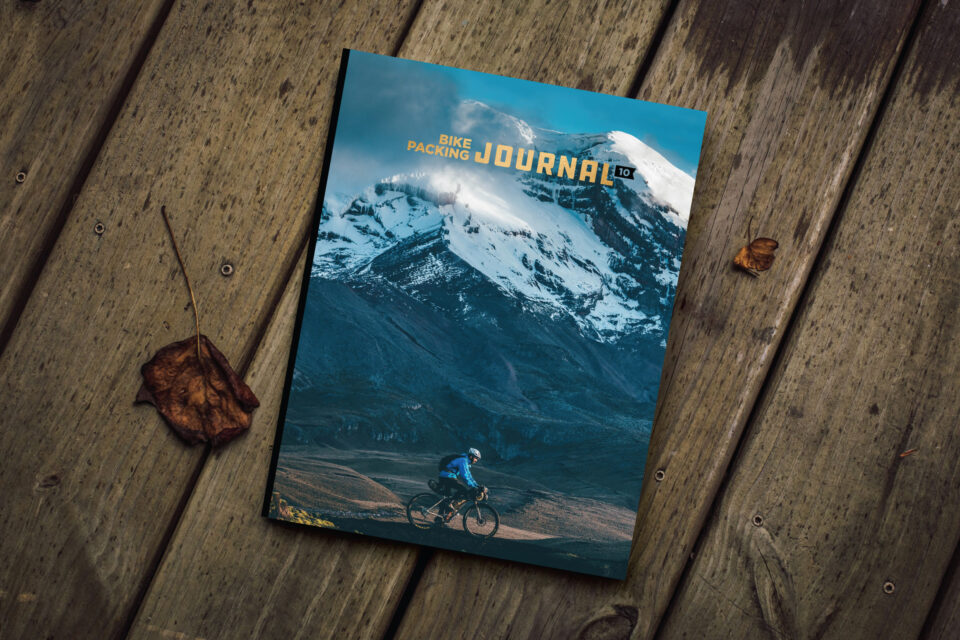

Tailfin SpeedPack Review: The Big Shakeup





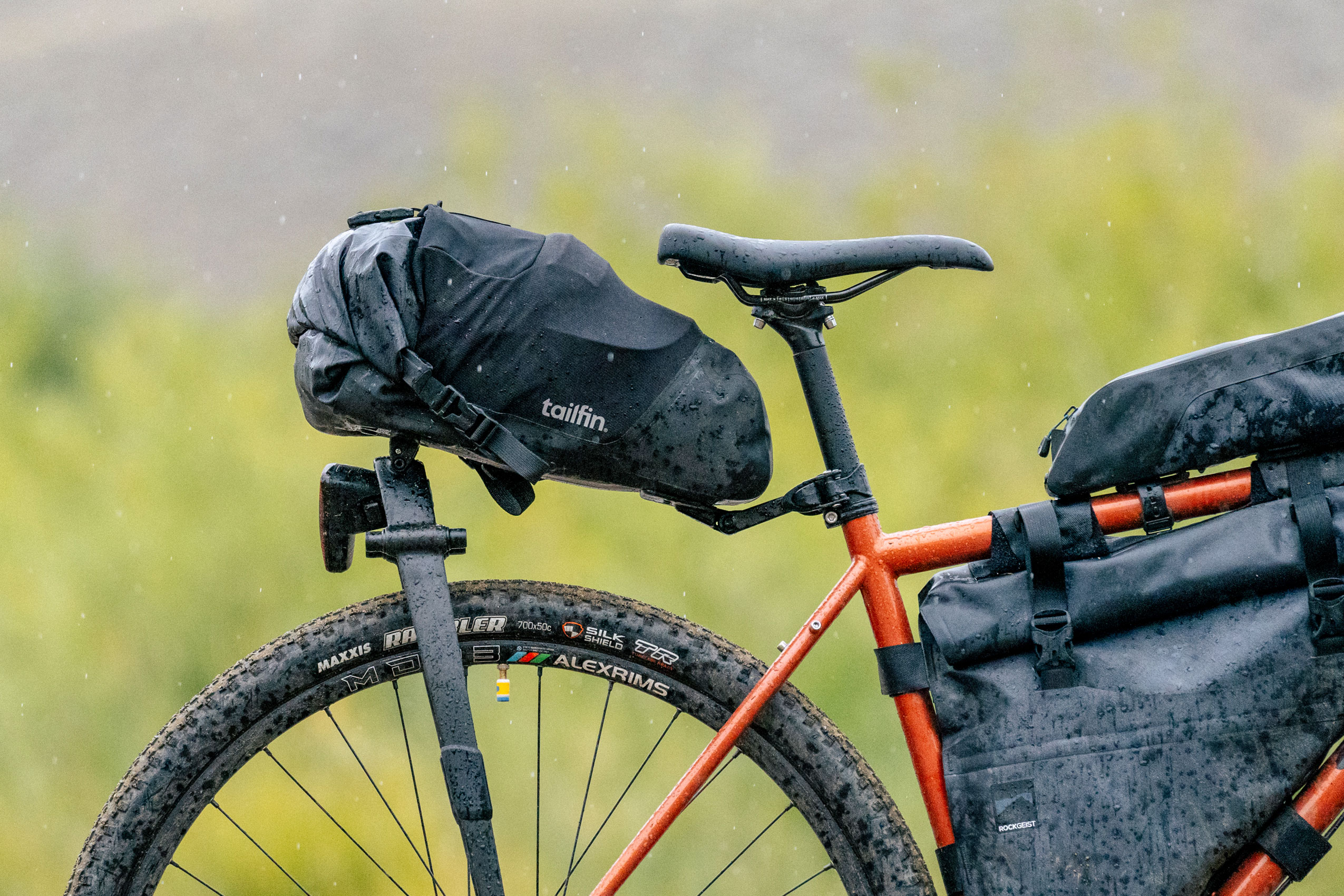
The new Tailfin SpeedPack is a lighter, more minimalist take on the brand’s rock-solid, rack-mounted rear bag. It features a 10-liter main capacity (plus a 3-liter expandable pocket), a carbon-frame body, and the new FitLink seatpost connector for dialed clearance (even with droppers). We put it through the paces on gravel and singletrack to see where it shines for this full review…
PUBLISHED Oct 23, 2025
As with any growing product line, crossover happens, and things can become confusing. That’s no different with Tailfin’s rear bag range. When Tailfin first launched the AeroPack years ago, it was a simple, standout design, and it didn’t really see any significant updates until this past April. That’s when Tailfin introduced the Aeropack Cargo (now called the CargoPack), a redesigned version of the Aeropack that mounts to their integrated and removable racks. Although both were geared more toward casual bikepacking, the CargoPack was the first step in evolving the original AeroPack, catering to bigger trips with 18 liters of internal space and a few liters of external pocket storage.

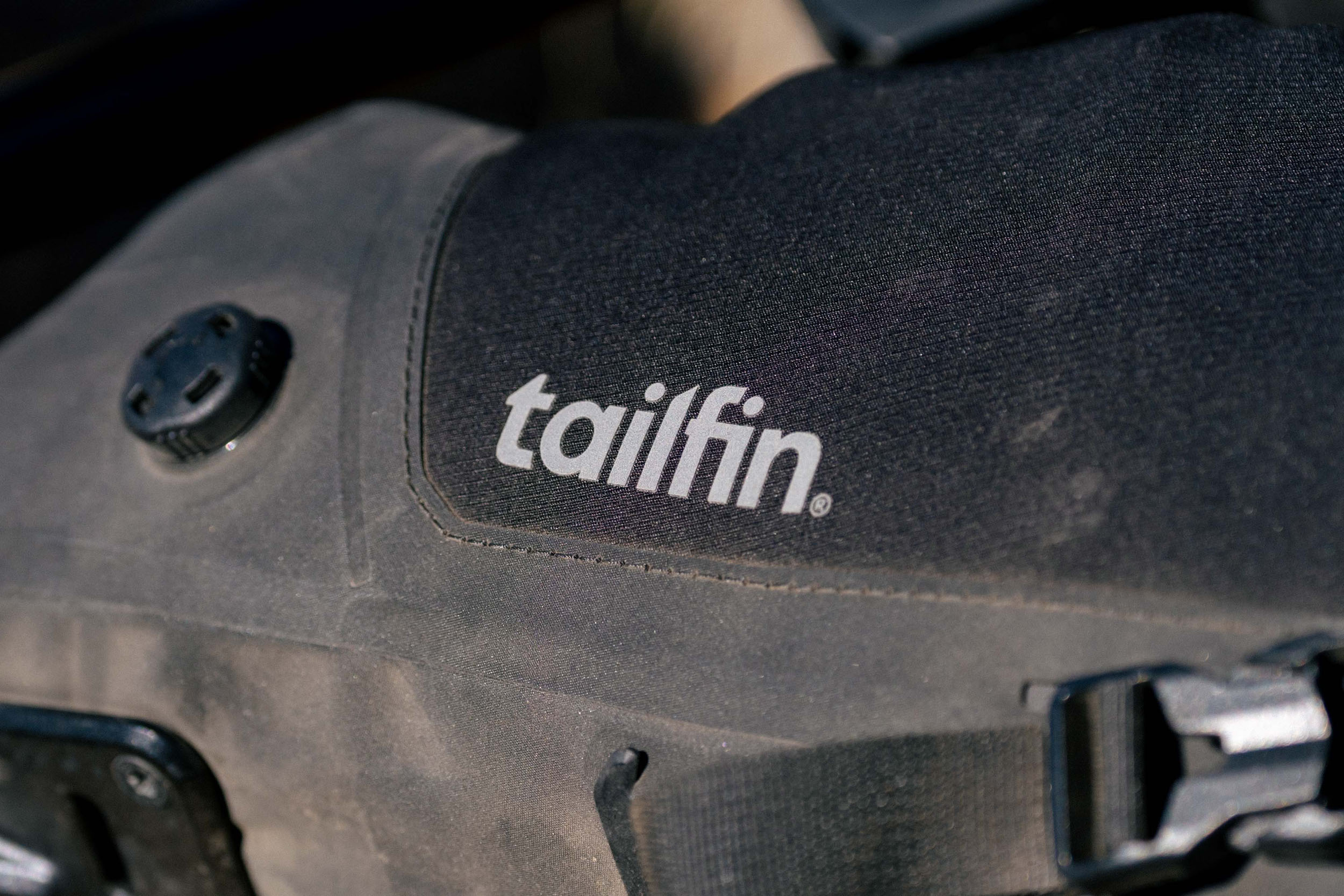


The new SpeedPack joins Tailfin’s lineup as a more minimalist, almost traditional seat pack option, featuring 10 liters of capacity and approximately three liters of expandable pocket space. It features a roll-top closure, similar to many other seat packs. But before diving into the specs, it’s worth noting that Tailfin is officially dropping the “AeroPack” name altogether. Moving forward, there will be two main systems: the CargoPack, for longer trips where weight and speed are less important, and the SpeedPack, for when they are. Ahead of this product line shakeup, I had the chance to put the SpeedPack to the test. Find my full Tailfin SpeedPack review video below, then scroll down for specs, details, and a written version.
Although they have two different names, these systems are compatible with one another. To make sense of it all, Tailfin lays out two mounting options on their site under “How should the bag attach to the rack?” There’s the fixed system, which is what I’ve always used—it’s an integrated arch that mounts directly to the bag. And then there’s the removable system, which lets you quickly take the bag on and off. Both setups work with Tailfin’s standard bags (which are being phased out), the CargoPack, and now the new SpeedPack. The only catch is that the SpeedPack isn’t quite ready for the removable setup just yet, so for now, it’s only available as an integrated system. For what it’s worth, Tailfin mentions that the racks with removable bags are great for road and gravel, while the fully integrated, fixed arch is best suited for mountain biking.

Tailfin SpeedPack Specs
As I mentioned, the bag has a total capacity of 13 liters: a 10-liter main compartment and about three liters in the top mesh pocket. Like all of Tailfin’s bags, the SpeedPack uses Hypalon in the high-wear areas and Diamond Ripstop Nylon elsewhere, all welded together to keep the elements out. The expandable mesh pockets offer a nice bit of extra storage and close using a drawcord, cord lock, and buckle to keep things snug. I actually tossed my small drone and hat in there for a trip, and it worked great. It’d be perfect for quick-access gear or snacks, too.


The body of the bag tapers quite a bit—more than the CargoPack or the older Standard AeroPack bag—and uses a carbon internal frame instead of aluminum. The rear opening is wide, which makes packing things in pretty easy, and when you want to close it, the roll-top closure can be secured in two ways. You can buckle it to itself or connect the roll-top ends down to the corresponding buckles mounted in the slits at the bottom of the bag. Those come with webbing straps that help cinch the load tighter. There’s also a purge valve on the non-drive side so you can squeeze the air out and get a really snug fit once everything’s packed up.


The hardware on this bag is all new, too. Tailfin is now using what they call their FitLink seatpost connection system. The seatpost clamp resembles the previous Cargopack seatpost connector, but the piece that connects the bag to the seatpost connector now pivots, providing more flexibility and adaptability for various bike types, sizes, dropper lengths, and other configurations. It comes with 30, 60, and 90mm Link options and adjusts roughly +/- 50 degrees. The bottom mounting bracket is also more robust, with four contact points. The rear bracket, which connects to the integrated arch, has also been redesigned. It’s stronger, has a lower profile, still pivots, and is easy to install between bags.


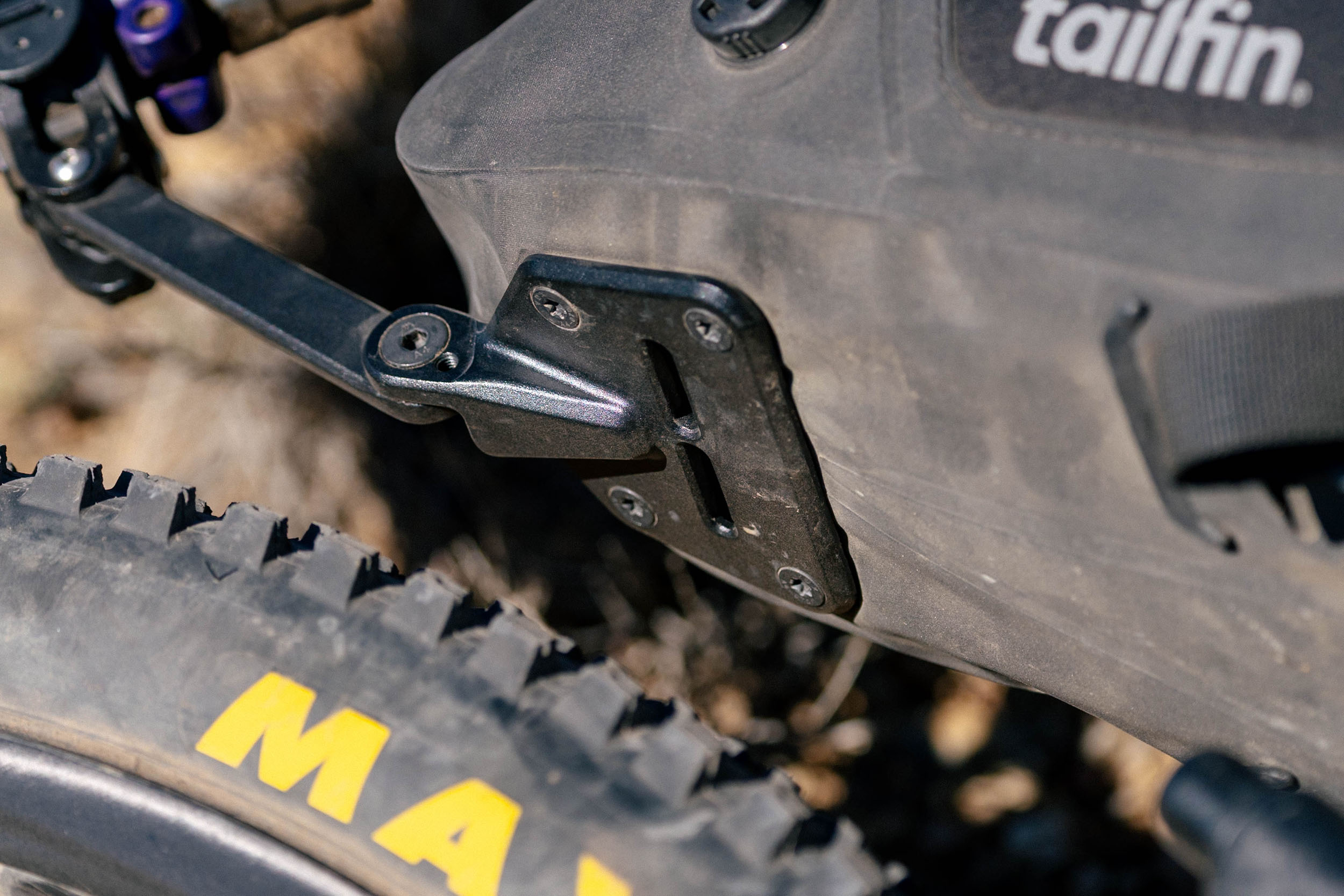
I ran this setup with the integrated carbon arch with pannier mounts. The total weight with the bag came in at 819 grams with the 60mm link attached to the seatpost mount. It’s a little heavier than something like the Ortlieb QR seat pack, which holds 13 liters and weighs 626 grams, but you could save a bit of weight if you skip the pannier-mounted arch. Tailfin mentions that the new pack comes in at 350 grams and as little as 700 grams with the standard carbon arch.
Thoughts on Packing
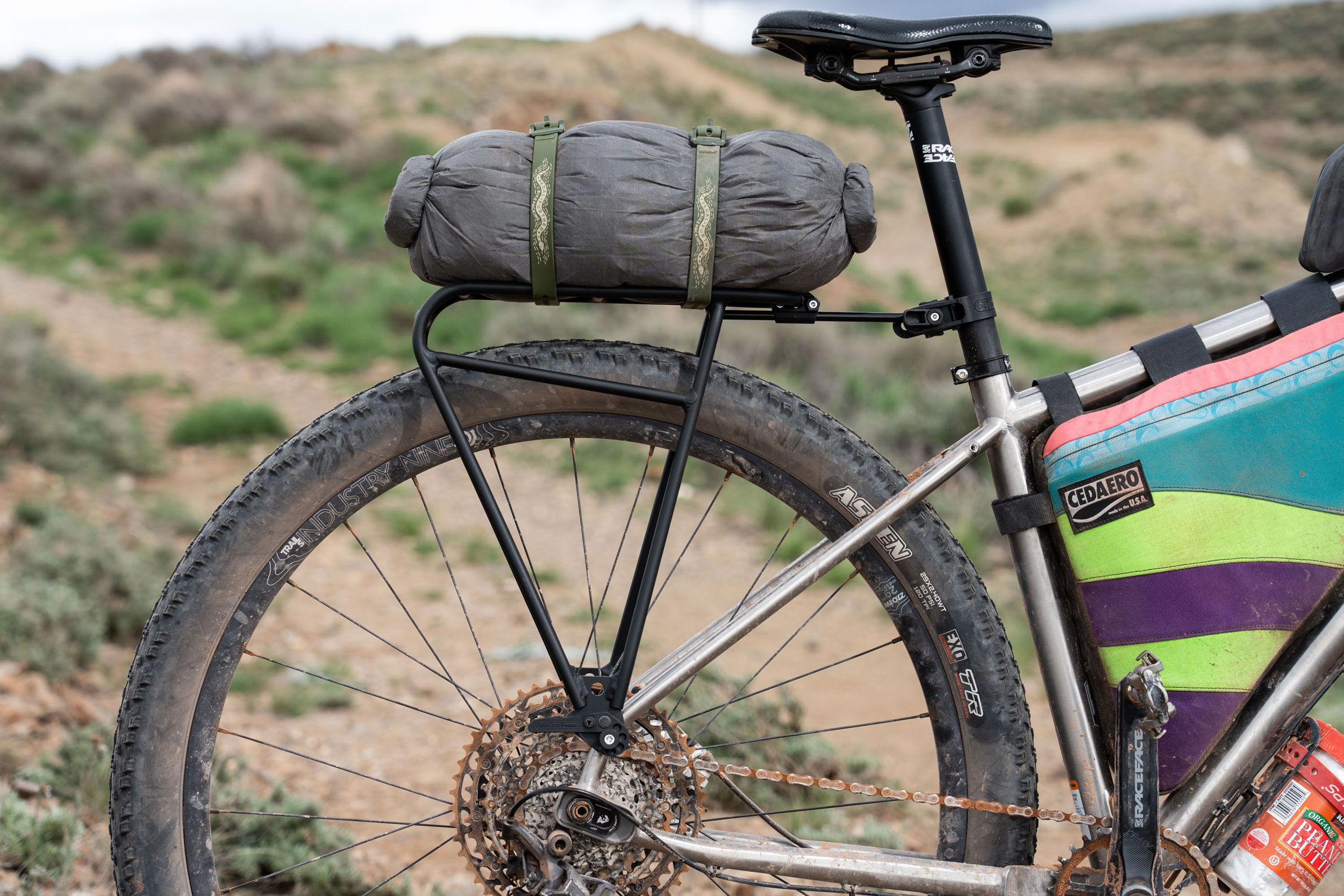
The system works with any of Tailfin’s integrated arches. I used the carbon pannier version, which I’ve been running on the CargoPack, as I mentioned, and the swap was quick and easy. I did most of my testing with the frame-mount adapter instead of axle mounts, and I encountered no issues. If you’d like to learn more about how this system works, check out my review here. From there, I adjusted the seatpost mount to make sure I had good clearance over the rear wheel while still leaving room for a compressed dropper post. This is where the 90mm link arm and the FitLink system overall really came in handy, allowing for a fine-tuned fit.

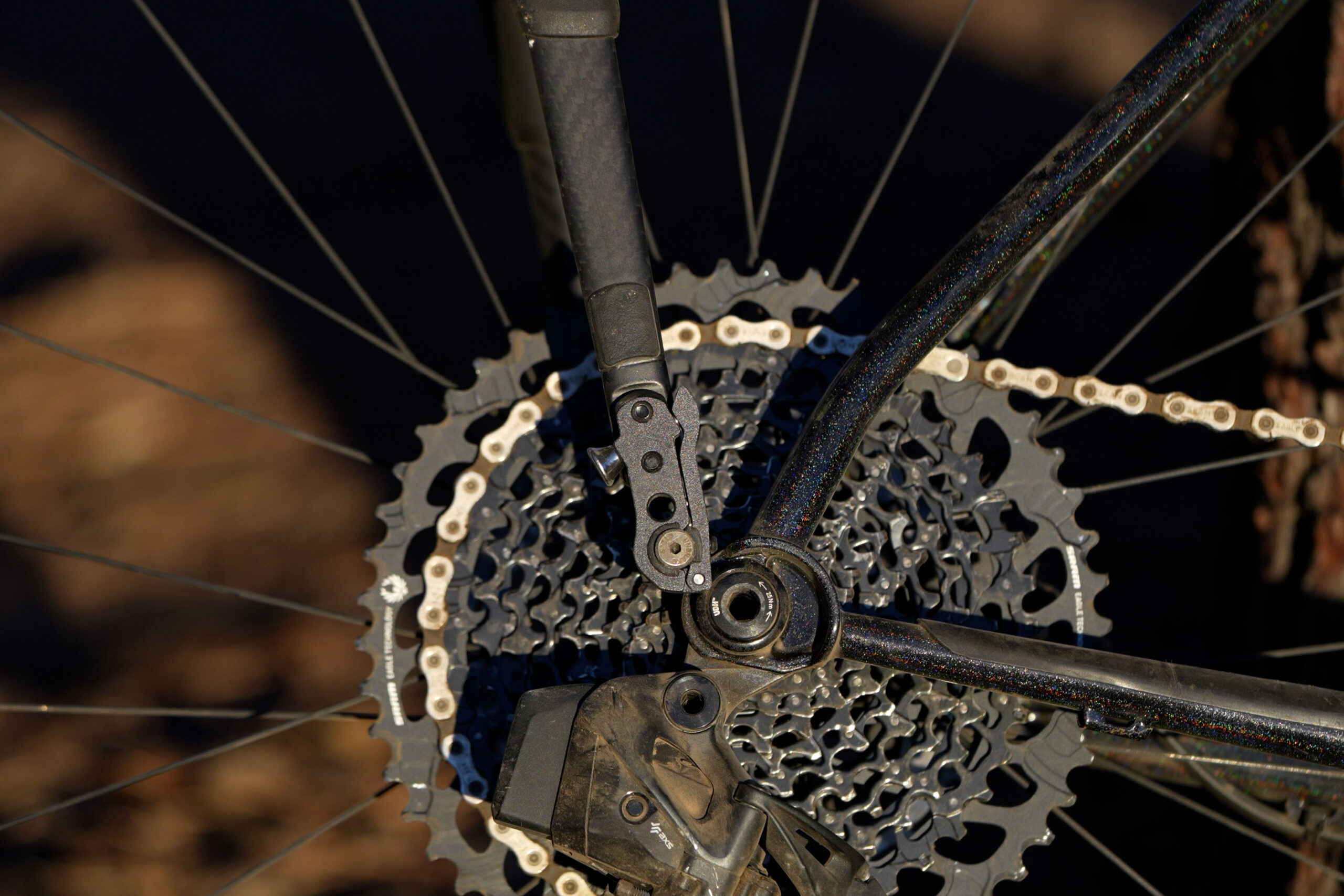


The new FitLink seatpost attachment features a keyed, or toothed, locking interface that allows you to dial in your angle and lock it securely in place. It works well, but the teeth may wear over time if you adjust it frequently or fail to torque it properly to 8Nm. With a similar setup now on the Bar Cage and SpeedPack, I’m not totally in love with it, as I’m a bit cautious about long-term durability and those teeth wearing down.
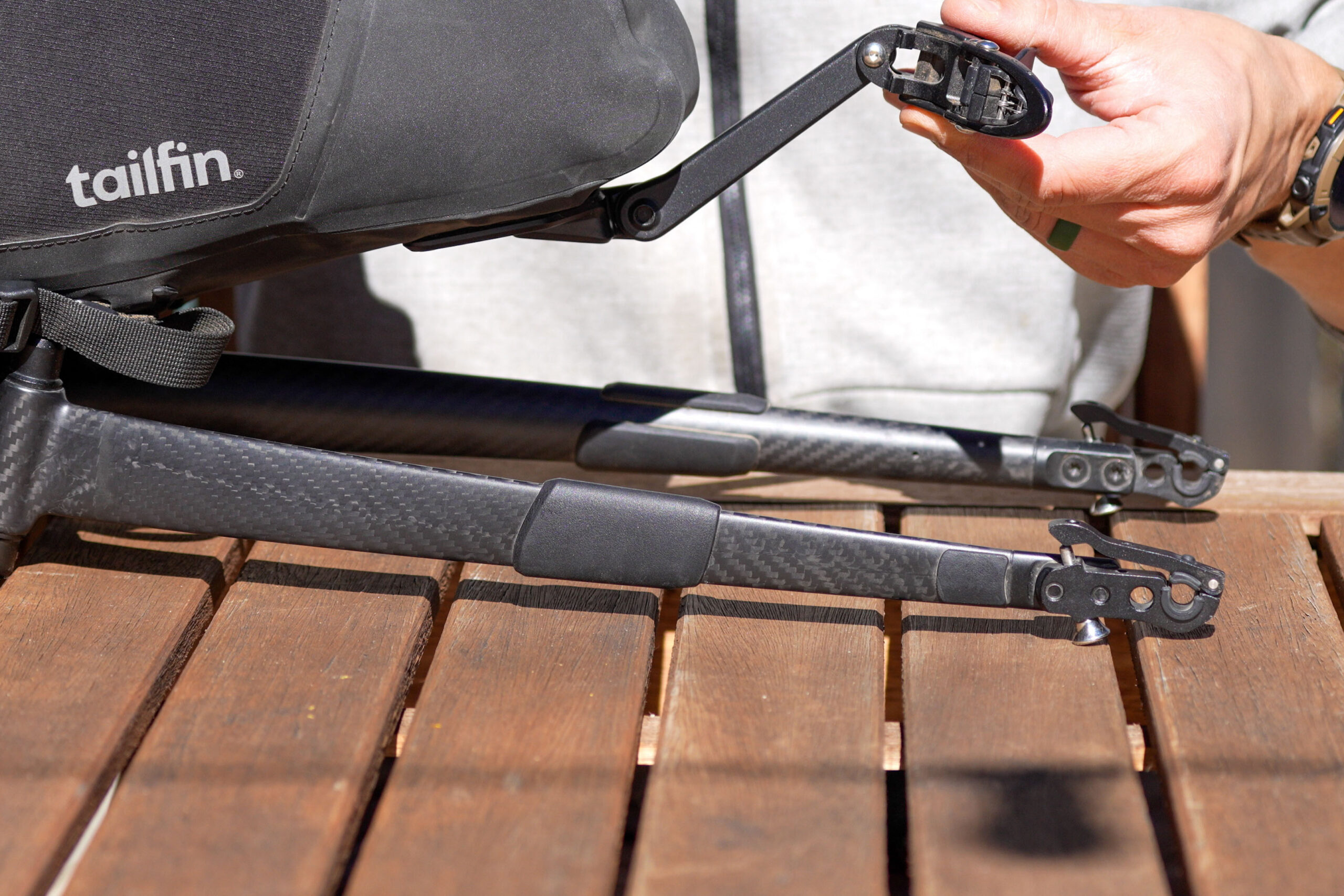


Packing was relatively straightforward, although a bit awkward due to the integrated rack. I tried it both on and off the bike, and while off-bike packing was easier, it’s still not as smooth as the CargoPack or a removable seat pack, with the arch getting in the way somewhat. If Tailfin ever makes a removable rack version more suited for mountain bikes, I think that would make the whole process easier.
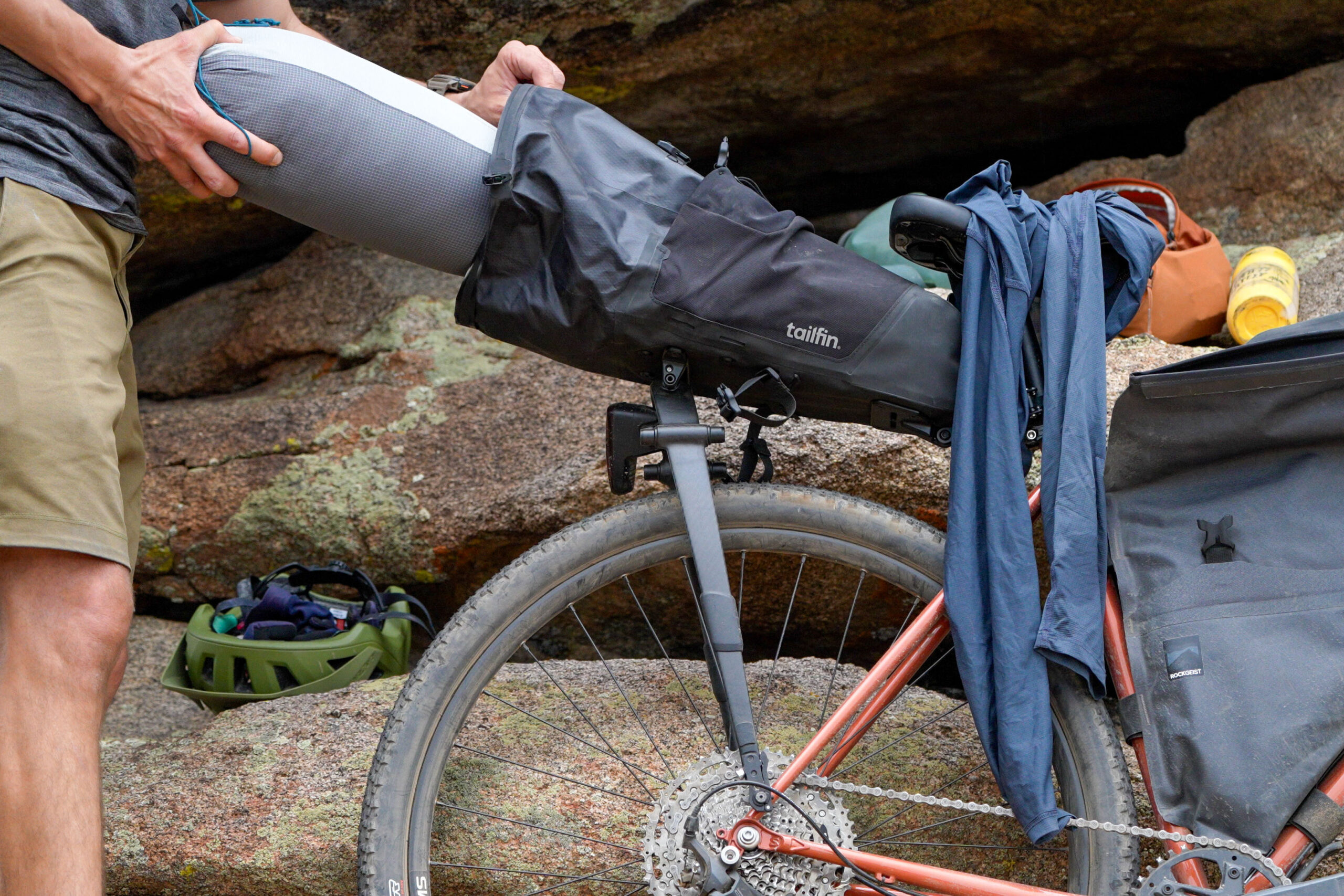

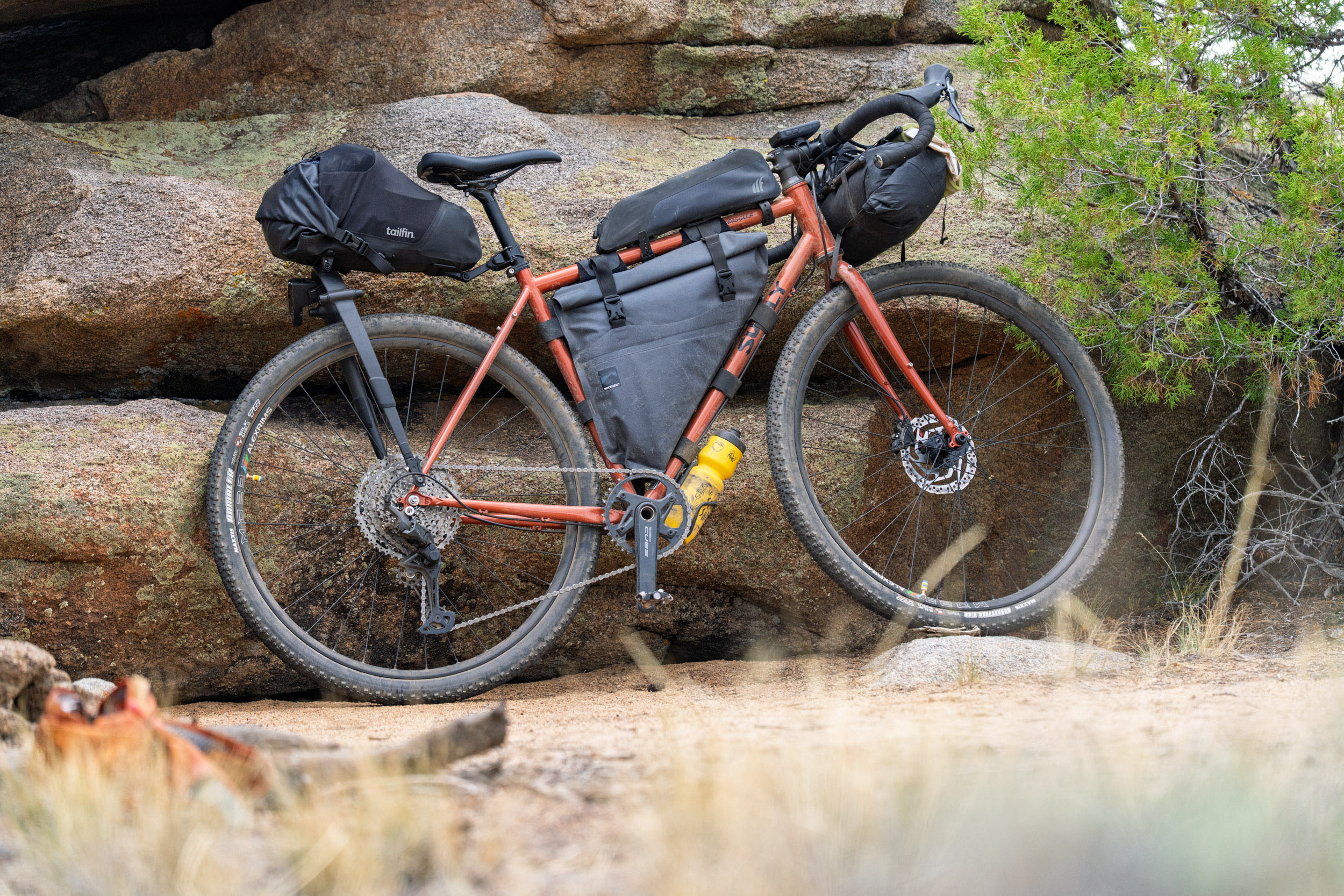


For this system, I packed most of my sleep kit, including my Six Moon Designs Lunar Orbiter 1P tent, a polycro ground cloth, and my Katabatic Gear Palisade quilt, essentially everything except my sleeping pad. The purge valve came in handy when packing on the bike, helping to squeeze out air and tighten everything down. I also tried using a 6.5-liter Tailfin packing cube, which worked fine but didn’t fully fill out the nose of the bag. So, I decided that simply stuffing things inside directly gave me a better use of the space. But the packing cube gave me an idea of how much space I was using, and it was nowhere near 10L, more like 7 or 8.


If I were to use this system for a race, I obviously wouldn’t pack as much—probably just a bivy, pad, ultra-light sleeping bag, and maybe a few extra layers. For that kind of setup, a smaller bag would actually make more sense, since even at the capacity I used it, the side compression straps were cinched all the way down. I get that there probably isn’t a huge market for that, but it might not be a bad idea for Tailfin to offer a smaller option. Maybe something around seven liters, plus a two-liter mesh pocket.
On the Trail
On the bike is where this thing really shines. The SpeedPack felt solid, even with a good bit of weight in it. It didn’t sway or bounce around, which always surprises me with these Tailfin systems. Their mounting setup remains one of the most stable options available, and the carbon arch helps keep things stiff and secure while reducing weight. I rode it on a mix of gravel and singletrack, and honestly, I barely noticed it back there, which is exactly what you want.

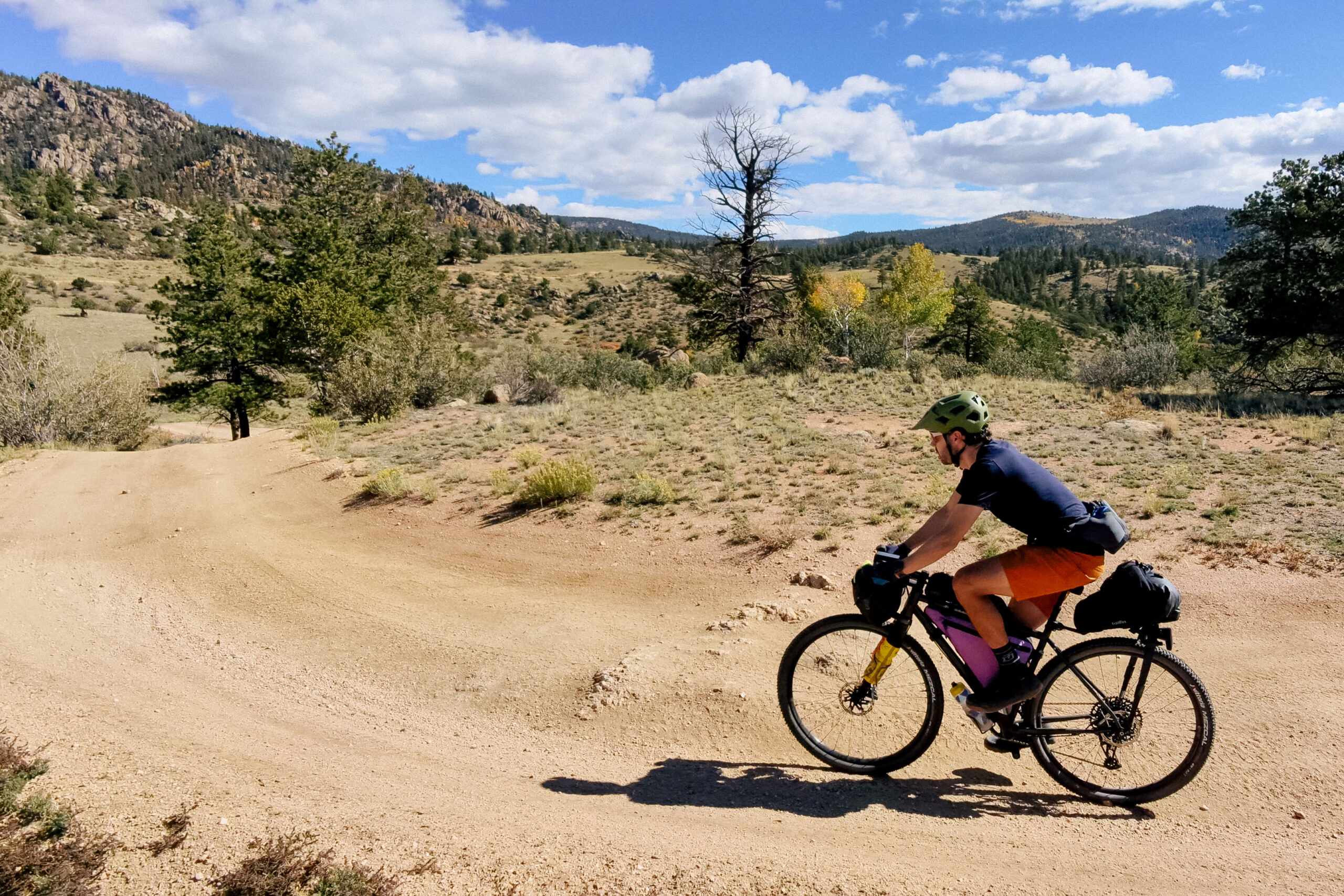


The tapered, lower-profile shape also helps with leg clearance and reduces the likelihood of bumping into the bag on descents. It’s not totally avoidable on the steepest sections of trail, but it does a better job than the CargoPack thanks to its slimmer design. Compared to a seat pack, it plays a similar role in terms of shape and function. However, seat packs specifically designed for dropper posts usually require an attachment on the stanchion itself, which limits their overall dropper travel. This setup gives me full dropper travel, and that’s one of the main reasons I’ve started using racks in general.

Regarding durability, Tailfin’s rear systems have historically performed well for me. Despite only having this bag for a few months, it has seen considerable use. I mentioned the serrated seatpost junction earlier, but it never slipped or shifted. The overall build of this bag has held up great, too, and you can really see the attention to detail in the construction. That said, there are many moving parts and pieces of hardware that you should consider bringing spares for. I always do. The bag also did a great job staying dry during a pretty wet overnighter a few weeks ago. Having that peace of mind, knowing your gear will stay dry, really cuts down on stress, and I’m all for that.


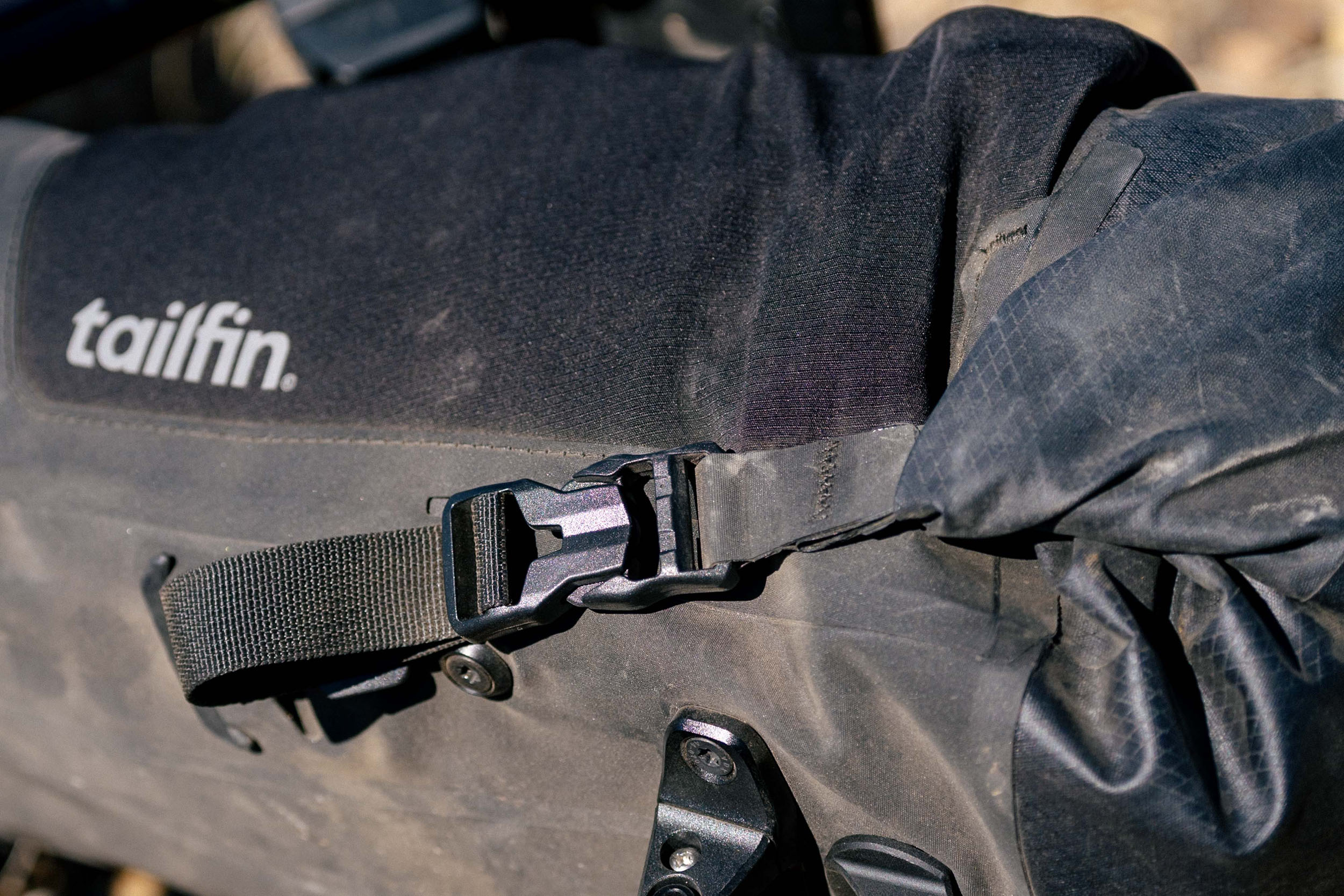
The rear pocket was also a nice touch. I was able to easily grab my drone during the day, pop it up for a few shots, and know it was safe when I packed it away. Like other Tailfin bags, it also supports accessory mounts, so you can attach a small cargo cage for extra gear or water and add a light mount. In my case, I used it for my Wahoo Tracker, which is something I absolutely need when I’m out on the road.


And I’ll admit, while it’s still a little unconventional-looking, it’s not nearly as odd as the CargoPack. Then again, that unique design is what makes this system so good. It’s easily the most stable rear setup out there. Function over fashion—but if Tailfin ever offers one in purple or army green, I’d be the first in line. Come on, Tailfin, do it!
Pricing and Weight Limits
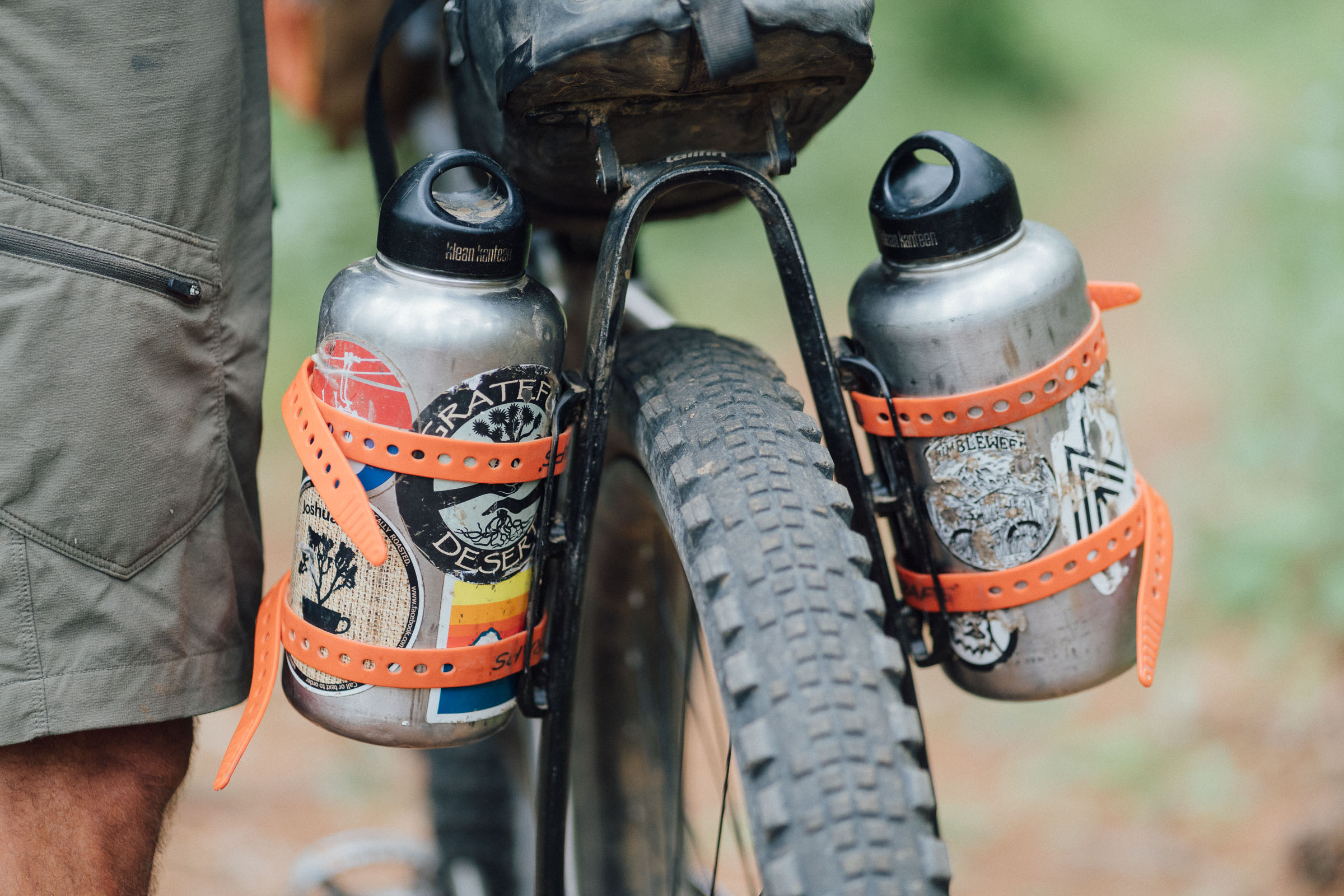
If you already have an arch, you can reuse it; all you’ll need is the pack itself, which costs about $250. The alloy SpeedPack setup costs around $400, and the carbon arch version comes in at $465. As for weight limits, the bag allows eight kilograms on the road, or about 17.5 pounds, and four kilograms off-road, which is just under nine pounds. And if you’re running panniers, you can add another nine kilograms, or right around 20 pounds on each side.
- Model/Size Tested: Tailfin Speedpack
- Actual Weight: 819 grams
- Place of Manufacture: Taiwan and China
- Price: $250 to $465
- Manufacturer’s Details: Tailfin
Pros
- A Smaller, more compact option is finally available! Still plenty big for most use cases.
- FitLink design offers a better fit.
- Stability is unmatched.
- Tapered and lower-profile design offers better clearance.
- Backward-compatible.
- Works with their 6.5L packing cube.
Cons
- Not a fan of serrated hardware use.
- A little awkward to pack despite the large opening.
- Could be nice to offer an even smaller version and shorter rack.
- Expensive.
Wrap Up
After a few months and a handful of trips with the SpeedPack, I think it fills a sweet spot in Tailfin’s lineup. It’s lighter and more compact than the CargoPack but still has that same rock-solid stability Tailfin is known for. If you’re someone who likes to ride fast and light but still wants the security of a rack-mounted setup, this is a great option. It’s perfect for overnighters, race setups, or anyone who wants a clean, stable alternative to a seat pack. I wouldn’t say it replaces the CargoPack entirely, as that one still makes more sense for longer, slower tours and might actually pack more seamlessly. Still, for shorter trips or fast-paced rides where stability and simplicity matter most, the SpeedPack might be the better fit.
Tailfin continues to refine its system instead of overhauling it. The core idea still works; they’ve just made it lighter, cleaner, and more purpose-built. It remains compatible with nearly any bike, including road, gravel, hardtail, and full-suspension bikes. This adaptability makes the system extremely attractive. Like all premium products, though, it does come at a cost.
Further Reading
Make sure to dig into these related articles for more info...



Please keep the conversation civil, constructive, and inclusive, or your comment will be removed.