

 Mountain Bike (MTB)
 Gravel Bike
 All-Terrain Bike (ATB)
 Fat Bike


We Are One Wanderer Wheels Review: The World’s First Bikepacking Wheels?




What makes the perfect bikepacking wheelset? We Are One thinks it has found the answer with new wheels that they claim were designed specifically for bikepacking. Find Miles’s review of the Canadian-made We Are One Wanderer wheels after nearly a year of rugged rides here…
PUBLISHED Jan 27, 2026
When I consider what makes wheels ideal for bikepacking, I can’t help but think that bikepackers’ needs aren’t that different from anyone else’s. Most of us want a wheel that will get us through thousands of day rides, overnighters, or multi-week expeditions without failing. None of us wish spokes to break, we want a strong rim without being too heavy, and we want a wheelset that handles everything we throw at it. After all, isn’t riding a loading bikepacking bike putting the same stress on your wheels as riding down a gnarly enduro-style run full of rocks, roots, and drops? I suppose most of us who bikepack would say we’d prioritize comfort and reliability over all else, but are wheels a component that calls for a “bikepacking-specific” option?
Maybe the industry has been slow to catch up with the rise of bikepacking, but it’s surprising that we haven’t seen more brands claiming they’ve designed the perfect bikepacking wheel. A few brands out there mention “bikepacking” in their marketing spiels, but that’s about it. I ran this question by our team, and the general consensus was that an ideal bikepacking wheelset features at least 28 spokes (32 in the back), carbon rims, quiet high-engagement hubs, and a layup that prioritizes comfort. Rim width is more difficult to lock in because folks running wider tires generally want a 30mm or wider internal width, and others will get by just fine with ~25mm.
Although aluminum wheels are often positioned below carbon options, there’s no question that a good aluminum rim has some benefits over a carbon one. Besides a lower price tag, aluminum rims tend to dent after direct impacts rather than crack or shatter like carbon rims. This means there’s a good chance you’ll be able to bend the rim back into place and keep riding.
However, if you can stomach the price of carbon wheels, they’re easily one of the most noticeable upgrades you can make for your bike. Carbon rims change ride quality for the same reasons it’s used as a frame and fork material: vibration dampening. Carbon is excellent at absorbing and dissipating the energy (vibrations) of the terrain beneath you, rather than transferring it to the bike and rider. Despite being much stiffer than aluminum, which doesn’t sound comfortable, carbon wheels do a good job at smoothing out the trail. The stiffness of carbon rims also means they retain spoke tension more effectively than alloy rims and, in most cases, shave a pound or more off the combined weight of two wheels. When it comes to rotational weight, that’s substantial.
Aluminum is a homogeneous metal, meaning it has a continuous micro-level construction throughout the rim. Carbon rims, on the other hand, are made from layers of carbon that can be used in different thicknesses and directions to fine-tune ride quality. Experienced carbon rim manufacturers have gotten good at balancing stiffness, comfort, and durability.
A Decade of Carbon
Founder and owner Dustin Adams launched We Are One Composites in 2016, but he’s had an entrepreneurial mind all his life. Like many in the bike industry, he raced at the top level for nearly a decade. During my visit to the We Are One shop in 2019, Dustin explained how racing bikes was a form of entrepreneurship and has influenced how he runs his business. “You need to be aggressive, build your brand, and get in front of the right people to grow,” he said.
He owned a CNC countertop business for a number of years, sold the company, and returned to the bike industry as a manager at NOBL wheels. Things moved quickly at NOBL, but Dustin ultimately left because there were major direction changes that didn’t align with his values. He sold everything he owned, moved his family from Squamish back to Kamloops, British Columbia, and went all-in alongside a small team who poured their hearts into getting the new carbon bicycle rim brand off the ground.
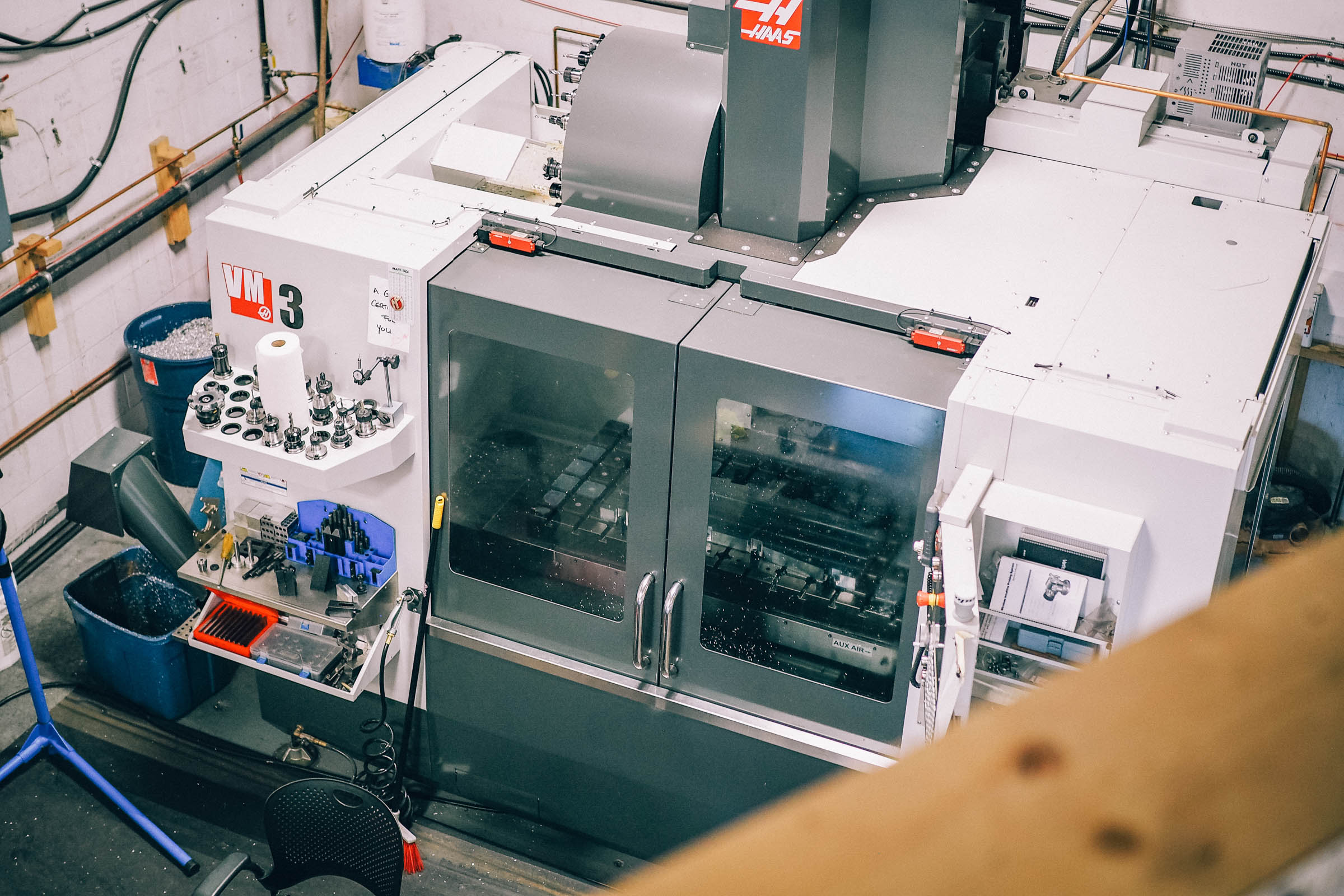


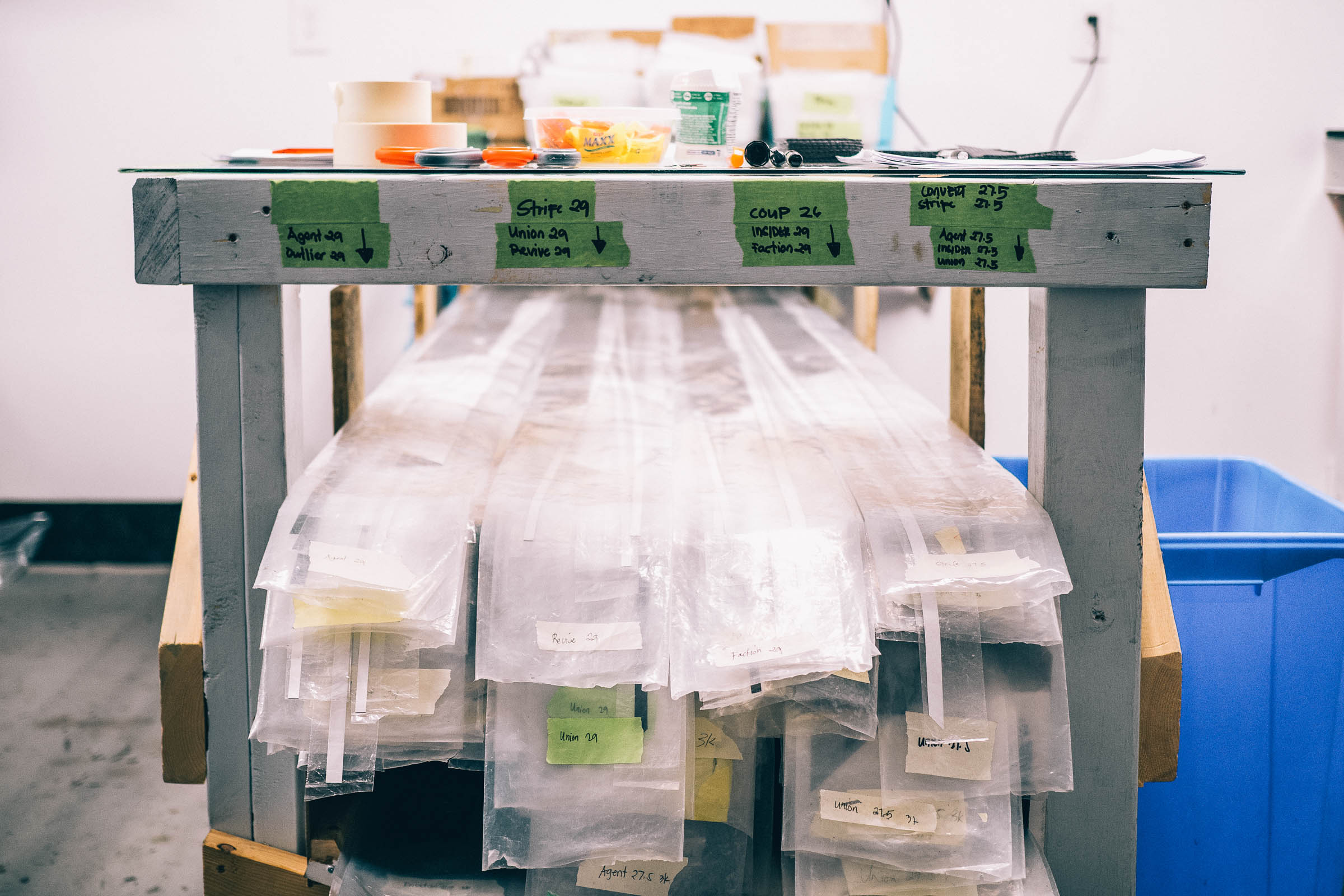

Since launching, We Are One has seen 100% increases annually, and the brand has a strong reputation for designing and fabricating some of the highest-quality carbon bicycle wheels in the game. But that’s not the end of the story. In 2019, they collaborated with 77designz in Germany on a carbon bar/stem combo called Da Package. In 2021, they took a massive chance with a 100% Canadian-made carbon enduro bike called the Arrival. The following year, they announced their Convergence carbon wheel lineup, with a unique twisted profile that their in-house testing showed was 32% stronger than their enduro-rated Union wheel.
Early last year, there were 10 wheel models in the We Are One lineup, ranging from burly downhill rims to options for gravel and dirt jumping. As of the summer, they’ve added a new option to their wheel range, this time aimed squarely at bikepackers. In fact, We Are One is so confident that they’re calling them the “world’s first bikepacking wheels.”
A Closer Look at the We Are One Wanderer Wheels
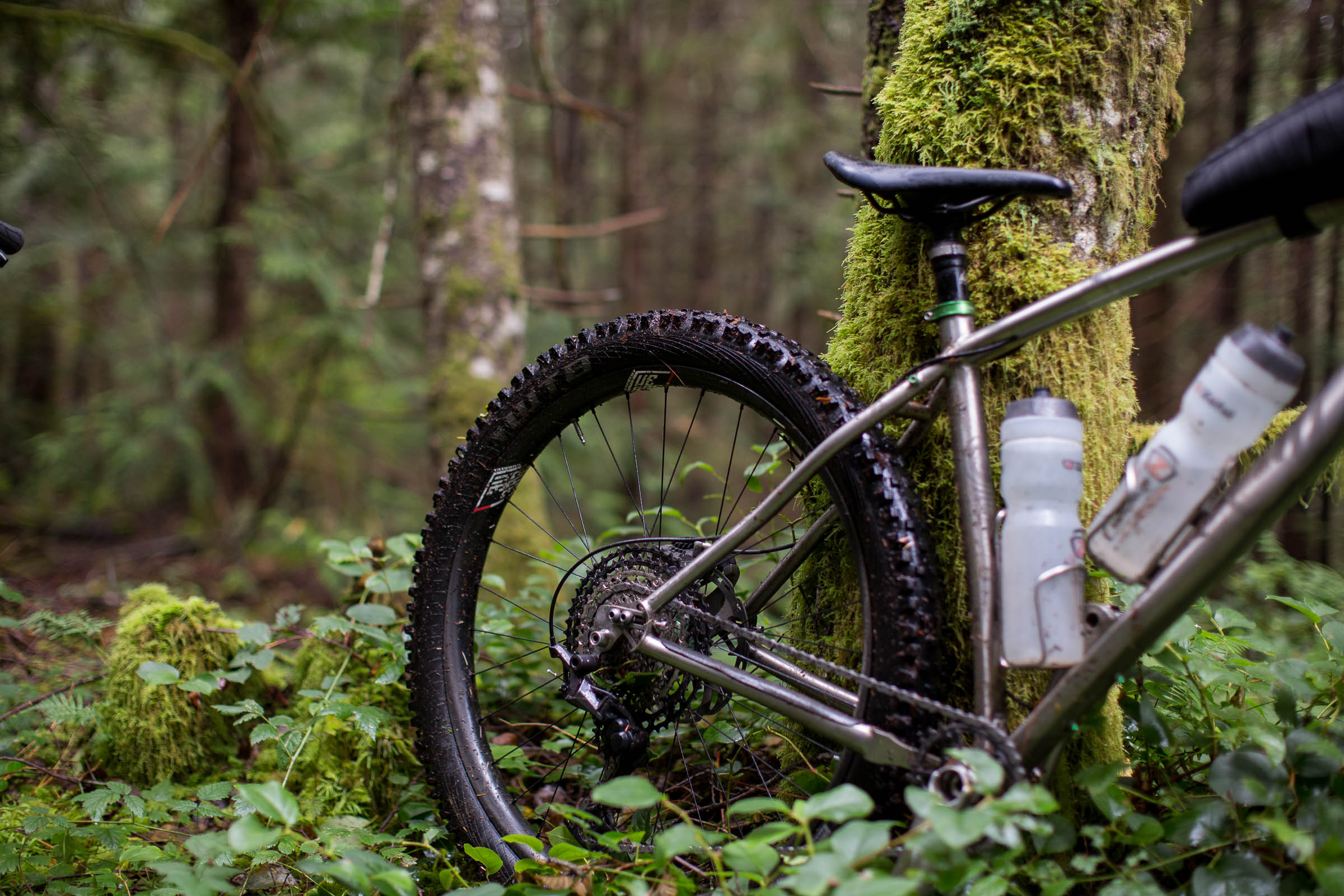
Like their other offerings, the new We Are One Wanderer wheels are hand-made in their Kamloops workshop. They use a similar wild, twisted profile as the rest of the Convergence lineup, resulting in a rim that, according to We Are One, is stronger and more damped than anything they’ve made before. Instead of a uniform spoke face, Convergence wheels use a sinuous, curvy profile with an alternating 7.5° angle, which perfectly aligns the nipple bed with the hub flange, creating a linear spoke line and a 360° contact point between the nipple and the rim bed. The idea is that a spoke sitting flatter against the rim reduces stress on the nipples and spokes, particularly under high loads when/if the wheels lose tension. The Wanderer wheels take this twisted profile a step forward with a 2mm offset and 6° articulation angle, making it the first wheel in the Convergence lineup with an asymmetric profile.
Like the rest of the series, the Wanderer wheels use a layup with ZRT fiber technology from Boston Materials to reinforce key areas. ZRT, or Z-Axis Fiber, is a carbon fiber film used in military and aerospace applications, with vertically aligned fibers at an impressive 13 billion per square meter. As a bonus, it’s made entirely from reclaimed carbon fiber and is fantastic at dissipating mechanical energy and vibration dampening.


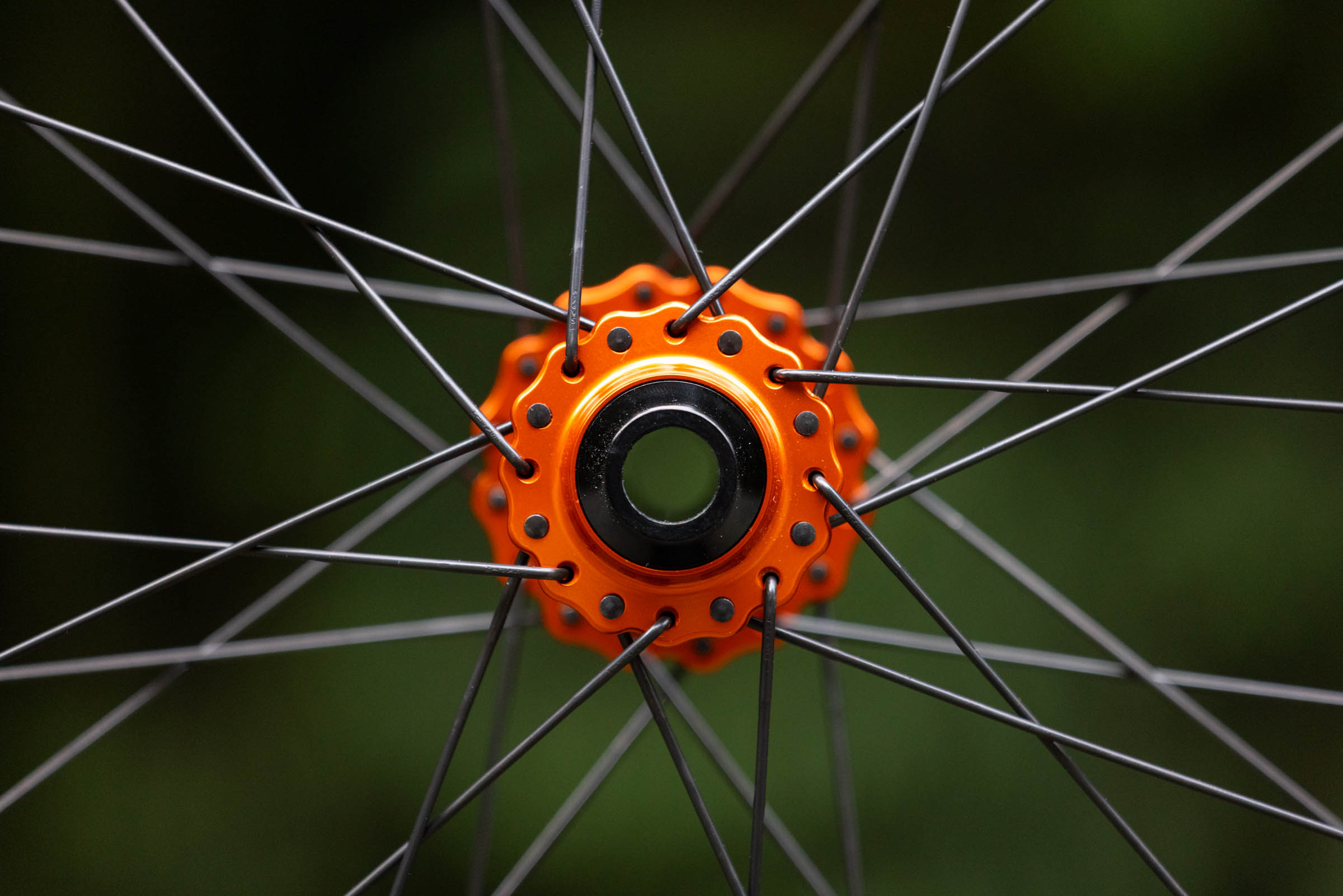
The Wanderer wheels feature a high spoke count—32 to be exact—on both the front and rear wheels. They have a 27mm internal width suitable for 48mm to 2.6″ tires, and are built to order with your choice of hub, freehub spec, spoke type, and rotor style. We Are One put together a perfectly Canadian wheelset for me, built around Project321 G3 hubs, which are also made in Canada.
While this isn’t a hub review, I will say that the G3 hubs’ 1.25° or 288 points of engagement and eight magnetically actuated pawls have performed flawlessly, and the driver’s nearly instant engagement has been great on technical trails. The only downside is that I was kind of hoping We Are One was going to send a silent or at least quiet hub with wheels designed for bikepacking. While they aren’t as noisy as others, including the previous-gen Industry Nine Hydras on my previous We Are One wheels, they don’t exactly fade into the background against the sound of tires on trail and wind in the trees.
In any case, in an industry currently plagued by new tariffs and a growing need for domestic manufacturing, I think it’s quite suitable to see We Are One pairing their Canadian-made wheels with Canadian-made hubs. In fact, I think it’s a good reminder that you can still find domestic bicycle components, support local businesses, and avoid unnecessary tariffs at the same time. You can’t get more Canadian than the Wanderer wheels with G3 hubs. Sorry, friends south of the border.


So, what makes the Wanderer a bikepacking wheel? Well, according to the folks who made them, a few riders reported bending rims like a taco after riding long distances with heavy loads. The goal was to create a durable and reliable wheel that remained compliant and comfortable for back-to-back days of riding. What really sets the Wanderer apart from other carbon wheels is its unique carbon layup, tuned to be compliant under the increased load of a bikepacking setup while still riding well unloaded.
Wandering on Two Wheels, Two Ways
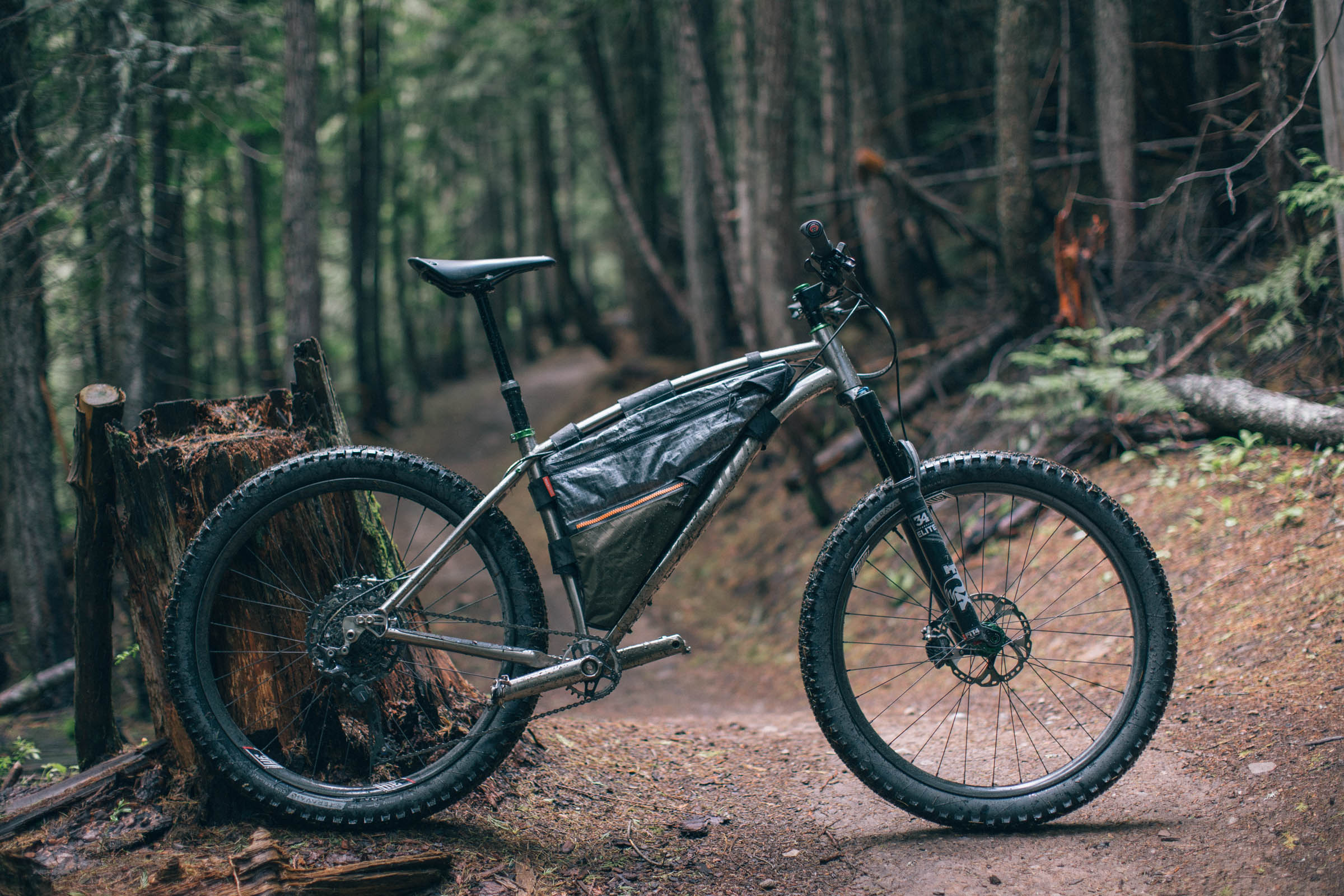
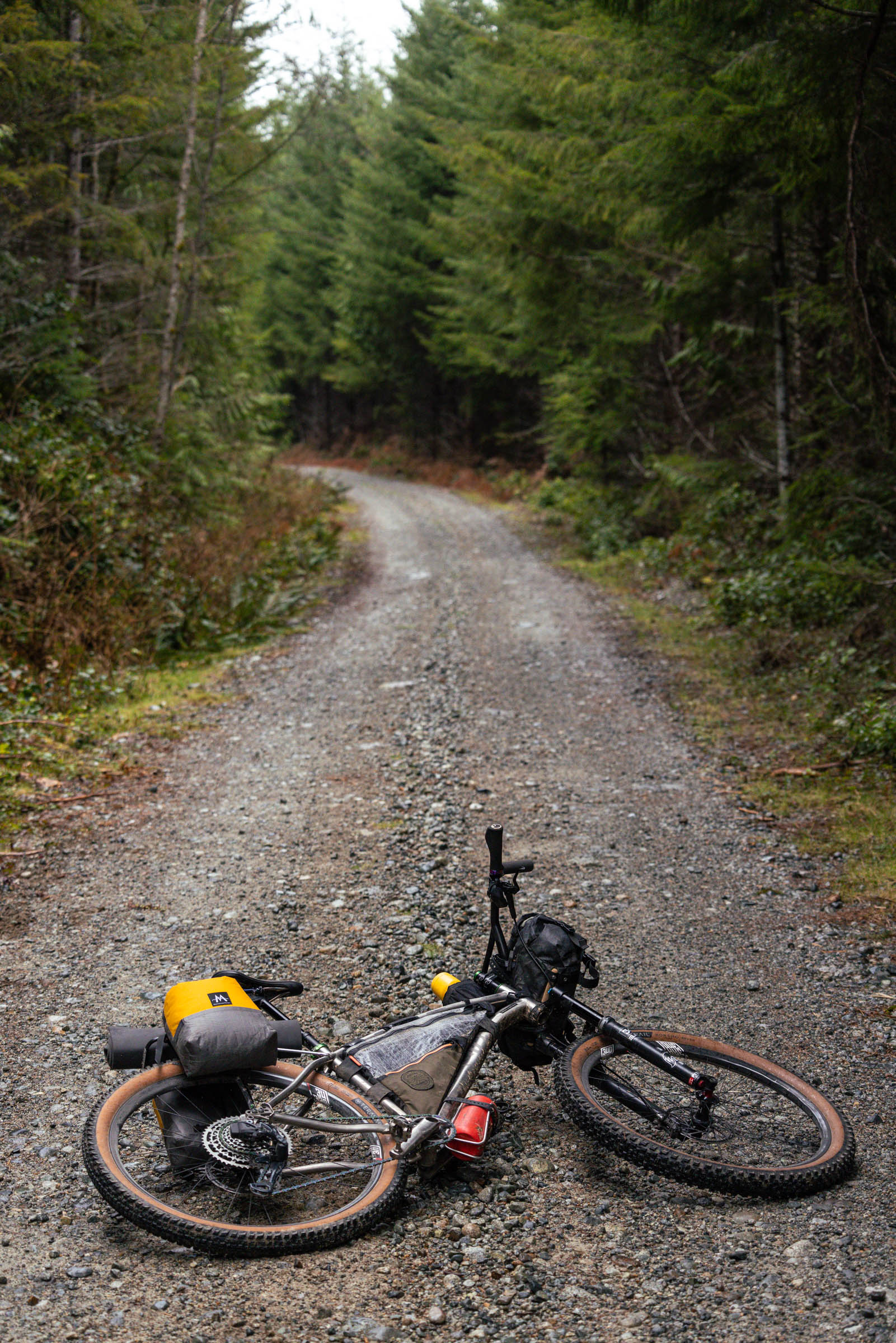
I installed the Wanderer wheels on my Why S7 because it’s the bike I’m most familiar with, and I have a good feel for its ride quality and various nuances. Plus, having spent most of its time set up with 27.5″ We Are One Convert wheels, I felt like I had something to compare it to. For reference, I removed my first-gen Revel RW30 wheels from the S7 for this review.
I purchased some fresh Schwalbe Radial tires, which, in a nutshell, use a new tire carcass construction that allows the tire to deform more and provide a larger contact patch. The real kicker is that because radial constructed tires have less rebound, riders can get away with running much higher pressures than they’re used to. My good friend Justin, who runs TAWS Bike Garage here in qathet, had been bugging me to try them out for months. He explained he was getting equal, if not more, traction while running ~28 PSI compared to traditional tires. Running tire pressures that high while mountain biking in the rooty, slippery conditions here in the Pacific Northwest is pretty much unheard of. While I had surprising traction, even at high pressures, the Schwalbe tires felt a touch harsh on my Why S7 rigid rear end, and I didn’t feel I was getting a good read on what the wheels were doing under me.

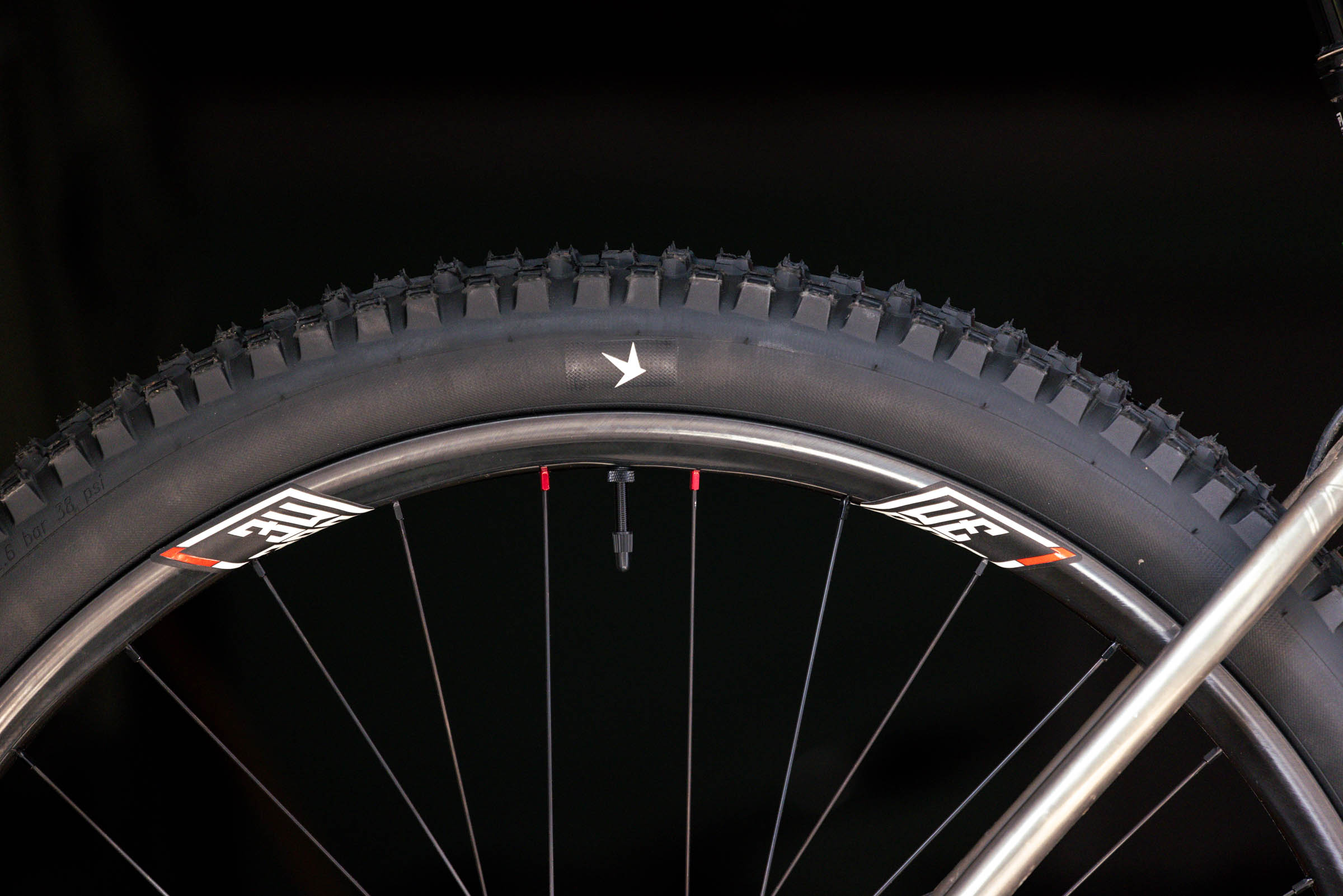

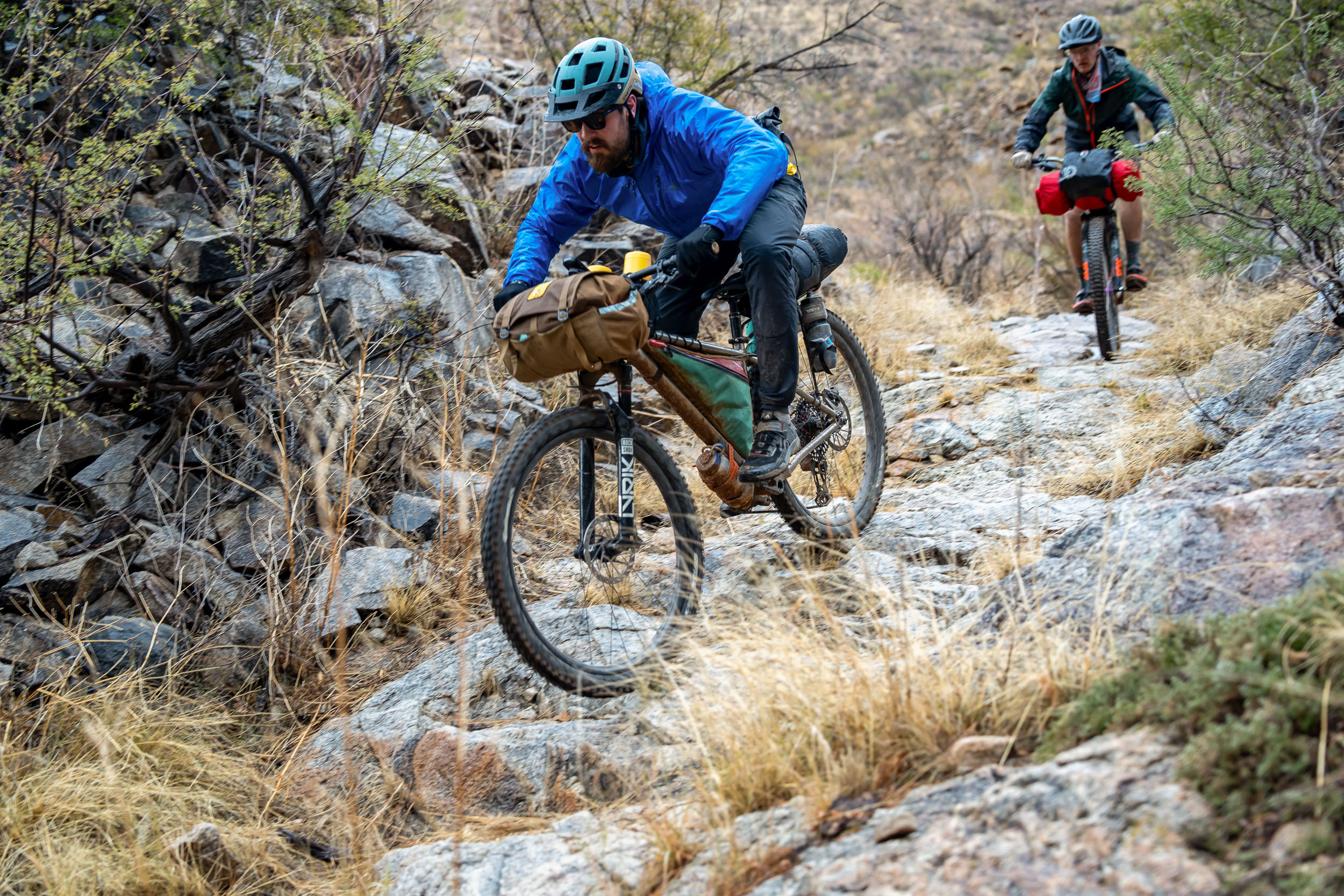
For the remainder of my testing, I swapped those tires out for something that felt a little more “bikepacky.” I ended up with a Teravail Ehline 29 x 2.5″ in the rear and a Honcho 29 x 2.6″ up front, both with the Light & Supple casing. I think We Are One’s claims of the Wanderer’s 27mm width being okay for 2.6″ tires is a bit of a stretch, and Logan and Neil agree with me on this. A slightly more realistic range is 2.0″ to 2.4″, which would reduce chances of a rounded tread or squirmy feel at lower pressures. After a few unloaded rides, I jumped on the opportunity to load up for a spring overnighter on the 10 Lakes Loop. With a cool night and rain expected the next day, my setup wasn’t exactly lightweight, so I was eager to see just how much We Are One could tune the Wanderer wheels.
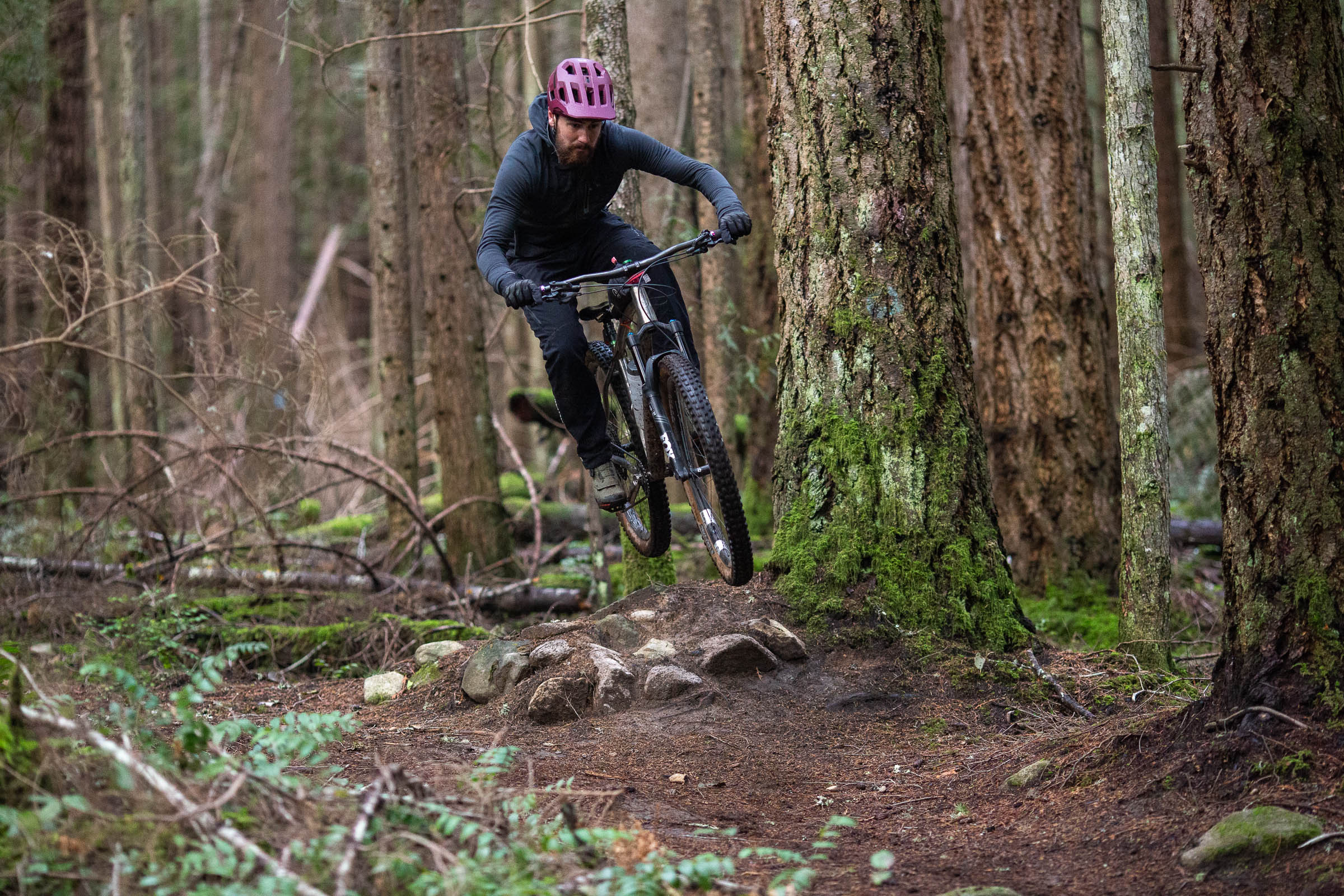
Dialing in wheel ride quality with so many other factors at play is no easy task. With big tires, low pressures, suspension, and the terrain all affecting how a bike feels, I figured it would be difficult to really feel what We Are One set out to achieve. I’m normally leery when it comes to trying to voice thoughts on wheels for these reasons, but the Wanderer wheels are by far the most comfortable wheels I’ve used on the Why S7, and that’s comparing them directly to my previous We Are One wheels and the Revel RW30s.

The We Are One Wanderer Wheels did an excellent job at soaking up vibrations and chunk from the gravel roads on the 10 Lakes Loop, even while running around 25 PSI, which is higher than I’d usually run. I purposefully rode sans chamois, knowing the route is non-technical and requires a lot of time in the saddle, and I was so impressed with the wheels’ compliance that I ended up riding most of the loop with my fork locked out.
I asked Mark Wells, Project321’s Business Development Manager, what he thought an ideal bikepacking hub should look like, and he listed reliability and serviceability as top indicators. In his eyes, a good hub should last without unexpected failures and shouldn’t need servicing outside of regular service intervals. G3 hubs don’t require any proprietary tools for service, and anyone with basic mechanical skills and a few common tools can work on them.
Mark also commented on the redundancy and versatility of their hubs, which make them suitable for bikepacking. Using their patented 6-Lock brake mount, you can run both six-bolt and centerlock brake rotors. So, as long as you have the included flanges, you can run either type if your rotor gets damaged. Similarly, because the G3’s rotor attachment is modular and replaceable, stripping bolt holes or the center lock mount doesn’t require replacing the hub, unlike other hubs.
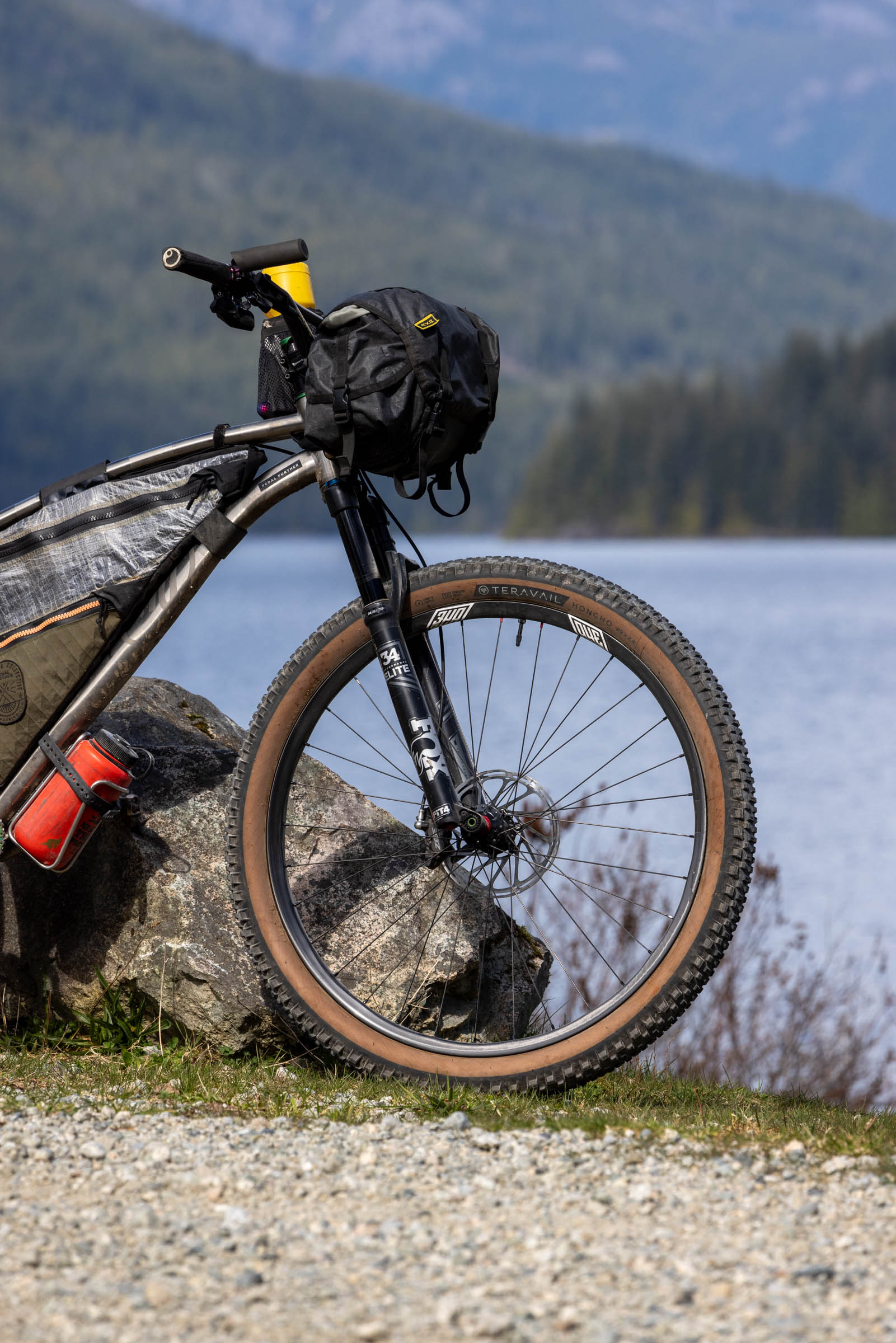



Load carrying performance also came up in our discussion about reliable bikepacking wheels, and how the hub ultimately determines the reliability and performance you get from a wheel. Sometimes weight is prioritized over the shape of the hub, and Mark doesn’t agree with that approach. Mark explained, “While we don’t ignore weight (we should acknowledge weight at the center of the wheel is the easiest to spin and is less impactful on the acceleration characteristics of a wheel), our G3 hubs have nice tall flanges that yield more torsional stiffness under pedaling and braking (think less wasted watts/less squirm under braking).”
And Then Industry Nine Bought We Are One…
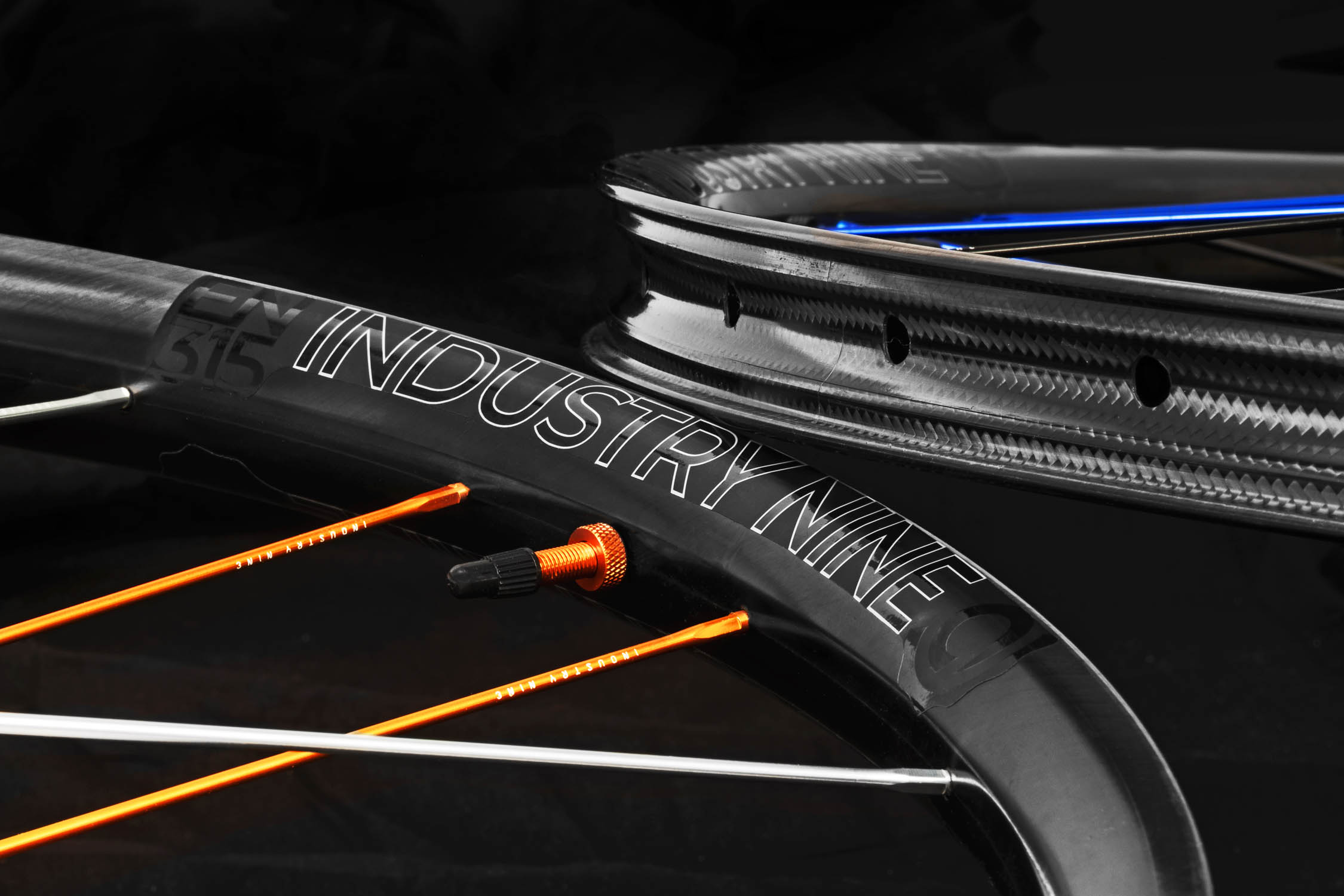
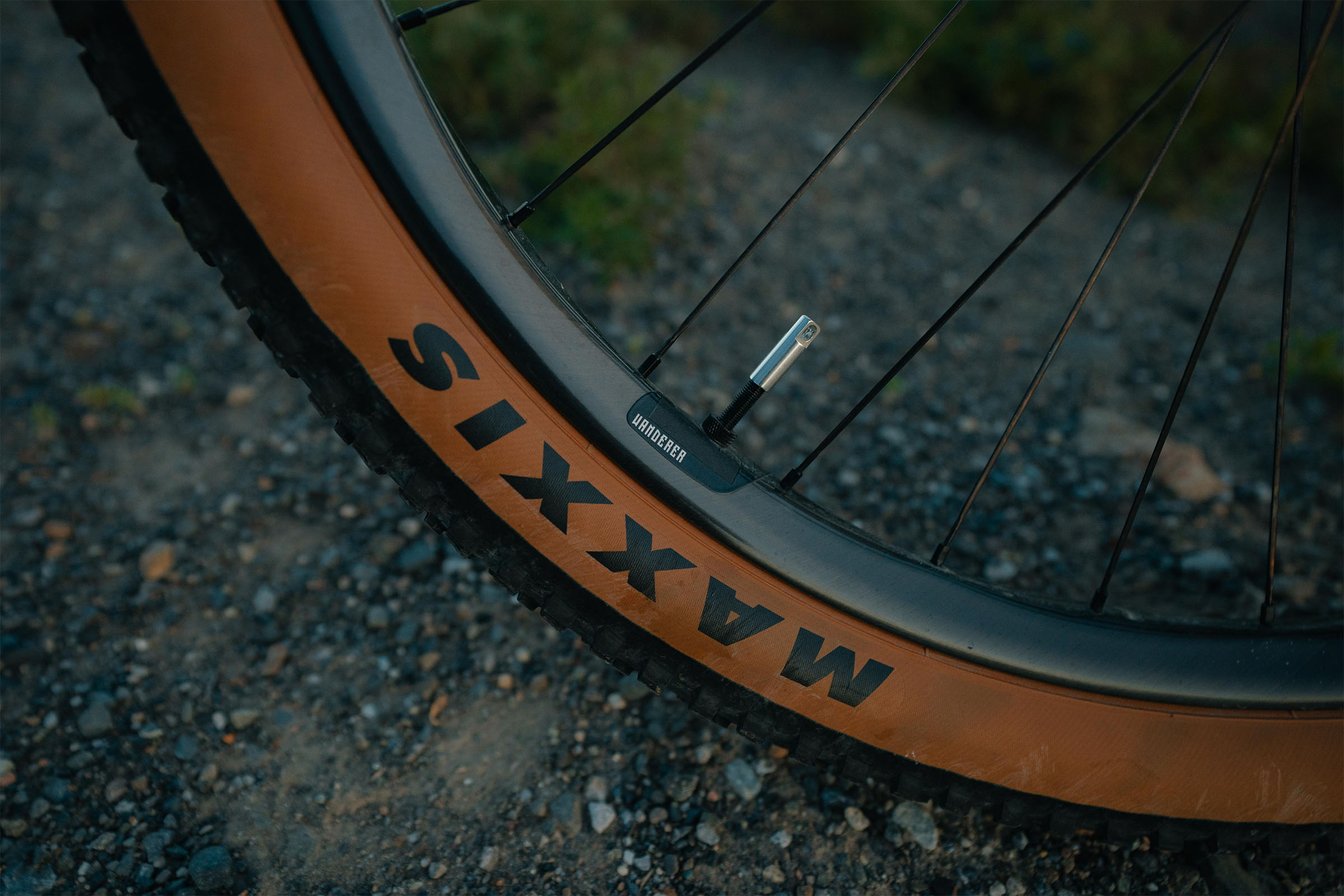
Partway through my test period, North Carolina-based component manufacturer Industry Nine officially merged with We Are One Composites, throwing a hitch in my “all Canadian” bikepacking wheelset angle. It’s no surprise that Industry Nine wanted to see their hubs on We Are One’s latest wheelset, so I had the local shop rebuild the wheels with some fresh Hydra hubs and updated rim decals. When buying through We Are One, customers can choose between Hydra 2 and 1/1 hubs, priced at $2,199 CAD ($1,849 USD) and $1,849 CAD ($1,594 USD), respectively.
I’ll admit I was a little bummed about the swap, though Industry Nine hubs are among the highest-quality hubs out there. I’ve had Industry Nine hubs run for years without fail, but their complex design and fragile lip seal, which Neil reported on in his review of the Hydra 2, resulted in mix feelings. However, I expect Industry Nine parts to be easier to find at bike shops when needed than Project 321 parts, which are far less common despite also being incredibly high-quality.


With the new wheels built up, the 870 points or 0.41° of engagement was noticeable, but not really necessary, compared to the 288 points or 1.25° of the Project 321 G3 hubs. Otherwise, as you might expect, everything else I experienced testing the wheels remained constant. To mix things up, I set the wheels up with some new Teravail tires on Emily’s Hudski Dualist to see if she noticed any major differences. For Emily, the tire tread and wider rubber were making a bigger difference to ride quality than the rim itself, which is likely true for most folks who haven’t experienced different rims or care to really hone in on the difference in ride quality they offer.



Aside from the small but notable ($200 CAD) price increase that came with the Industry Nine merger, it’s especially easy to recommend We Are One products to Canadians looking for high-quality, domestically made rims. We Are One rims are an upgrade, and there are more affordable imported options out there, but after years of using their wheels, I think they’re among the best in the biz. You get what you pay for, and if Industry Nine hubs aren’t your jam, you can buy Wanderer rims for $695 CAD ($595 USD) and have your local shop build them up however you like.


As for whether or not we need “bikepacking wheels,” I’m not sure. Part of me wants to say that’s stupid, because don’t all cyclists want the same out of the wheels? They should be reliable, comfortable, and spin smoothly. The other part of me, maybe a slightly smaller one, is curious just how tuneable modern wheels can be, and I can’t think of a brand better qualified for the task.
For what it’s worth, I asked We Are One/Industry Nine exactly what makes the Wanderer wheels “the world’s first bikepacking wheelset”, and they said it’s “the world’s first carbon rim purpose-built for bikepacking. Designed from the ground-up to prioritize comfort, durability and longevity.” They say its the “Asymmetric Convergence profile, spoke alignment, tuned laminate, trail-damping compliance, and robust nipple beds” that work together to make a reliable and comfortable rim. While it’s nearly impossible to know if these elements are responsible for the experience I had using the Wanderer wheels, real-world testing has aligned with their claims, despite mostly sounding like hyperbolic marketing garble.
The 27mm internal width is also narrower than what I’d choose for my ideal bikepacking wheelset, as someone who often reaches for 2.6 to 2.8″ rubber. However, as the term “bikepacking” expands its reach, I imagine a 2.2 to 2.4″ tire is probably the sweet spot for most people. Our 2025 Tour Divide rig analysis showed similar findings, with 2.2″, 2.25″, and 2.3″ tires being the most used in a 116-rider sample size. That’s just one event, but there’s no question that the Tour Divide influences what gear people use.


Pros
- 32 spoke-count on both front and rear rims
- The same durability we’ve come to expect from We Are One, with no issues after ~1,000 km and plenty of rim strikes
- Rims are made in Canada, Industry Nine hubs are made in the USA
- For those who obsess over the details, the compliance and comfort they offer are noticeable
- Updated rim decal is minimal and slick
- Impressive price tag, considering made-in-North America status
Cons
- 27mm internal width is probably a safe sweet spot for most bikepackers, but I’d have preferred a 30mm option
- Locked into Industry Nine hubs when purchasing a complete wheelset, which could also be a pro if you’ve had good experiences
- An “expensive” upgrade that won’t offer a noticeable change in ride quality for everyone, whereas tire choice, tire pressure, and even cockpit components often can
- Not convinced these are the “the world’s first bikepacking wheels”…
- Internal Width: 27mm
- Depth: 21mm
- Rim Weight: 440 grams (0.97 pounds)
- Front Complete Weight: 825 grams (1.82 pounds)
- Rear Complete Weight: 961 grams (2.12 pounds)
- Place of Manufacture: Canada/USA
- Price: Completes starting at $1,849 CAD ($1,594 USD)
- Manufacturer’s Details: WeAreOneComposites.com
Wrap Up
I’m not convinced that bikepackers demand anything unique from their wheels compared to everyone else. Aren’t durability, reliability, and comfort things everyone can benefit from? Is comfort on a short ride the same as comfort on a long ride? In any case, the We Are One Wanderer wheels are noticeably more absorbent than the stock alloy wheels on several bikes they replaced. Like other We Are One wheels I’ve used, they’ve proven to be exceptionally durable, shrugging off the occasional rock strike and spinning as true as they did on day one after several thousand kilometers.
The kicker with expensive upgrades like the Wanderer wheels is that the changes in performance and therefore the benefits to the user become so subtle that it takes an experienced rider and tinkerer to really gauge them. With this in mind, upgrading your wheels doesn’t offer the best bang for the buck when laying the foundation for a comfortable, reliable bikepacking setup. For folks who are less performance-motivated, I’d probably suggest taking a closer look at your tire pressure, tire casing, handlebars, and grips, which are all either free or cost a fraction of new wheels but will make far more noticeable differences in your riding experience. As a new homeowner, I think I’d compare this to painting the walls before a complete renovation. When the time comes to invest in a new kitchen (or high-quality wheels), you’ll be happy you waited.
Further Reading
Make sure to dig into these related articles for more info...


Please keep the conversation civil, constructive, and inclusive, or your comment will be removed.