

 Singletrack/MTB
 Gravel/All-road
 Dirt-road Touring
 Fat-bike



In this Dark Divide 300 event recap, Connor Azzarello reflects on his time riding this brutal course and what the experience meant to him. Read on below for a touching story of discovery and achievement…
Words and photos by Connor Azzarello
Self-supported bikepacking is, by definition, a solitary pursuit. You carry your own food, repair your own bike, and manage your own time, with most of the effort spent off-road and all of it on your own terms. Like many bikepacking races, the Dark Divide 300 adds a unique challenge by linking together some of the most rugged and remote terrain in Washington’s southern Cascade Range. The route crosses ancestral lands of the Squaxin Island Tribe, Nisqually Tribe of Indians, Cowlitz Indian Tribe, and Confederated Tribes of the Grand Ronde, weaving through the Gifford Pinchot National Forest on forgotten forest roads, scenic byways, and trails that demand patience, skill, and resilience.
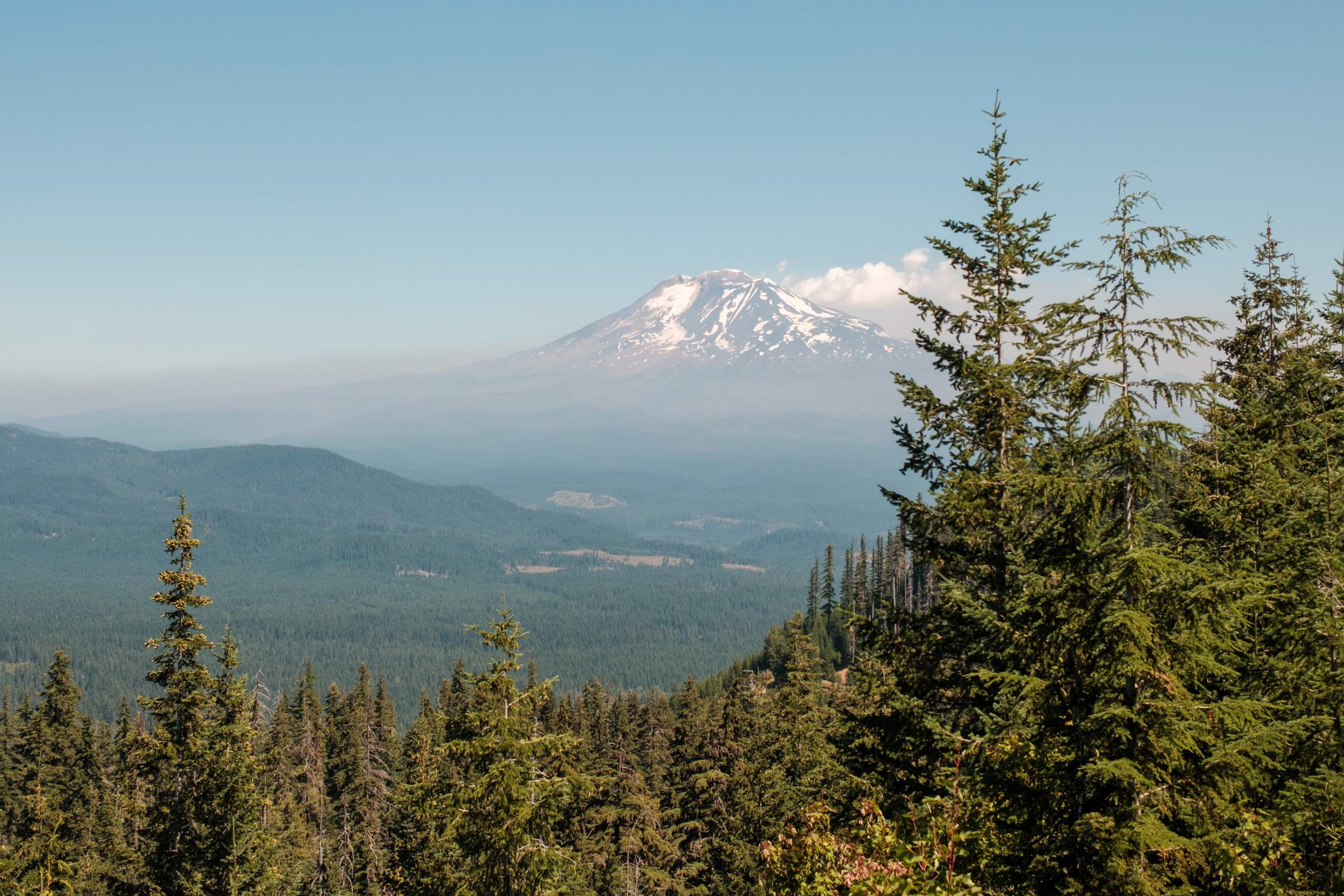
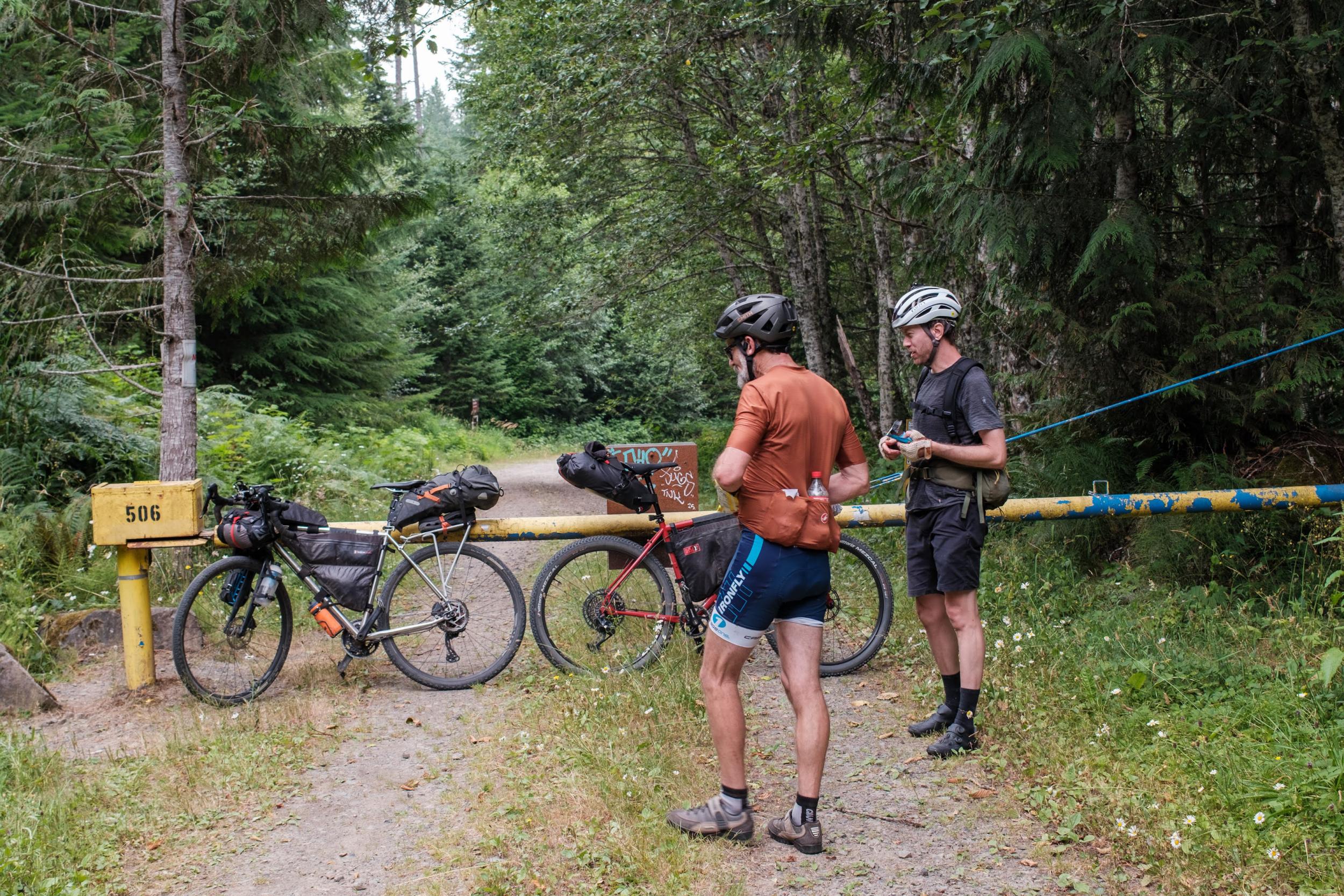

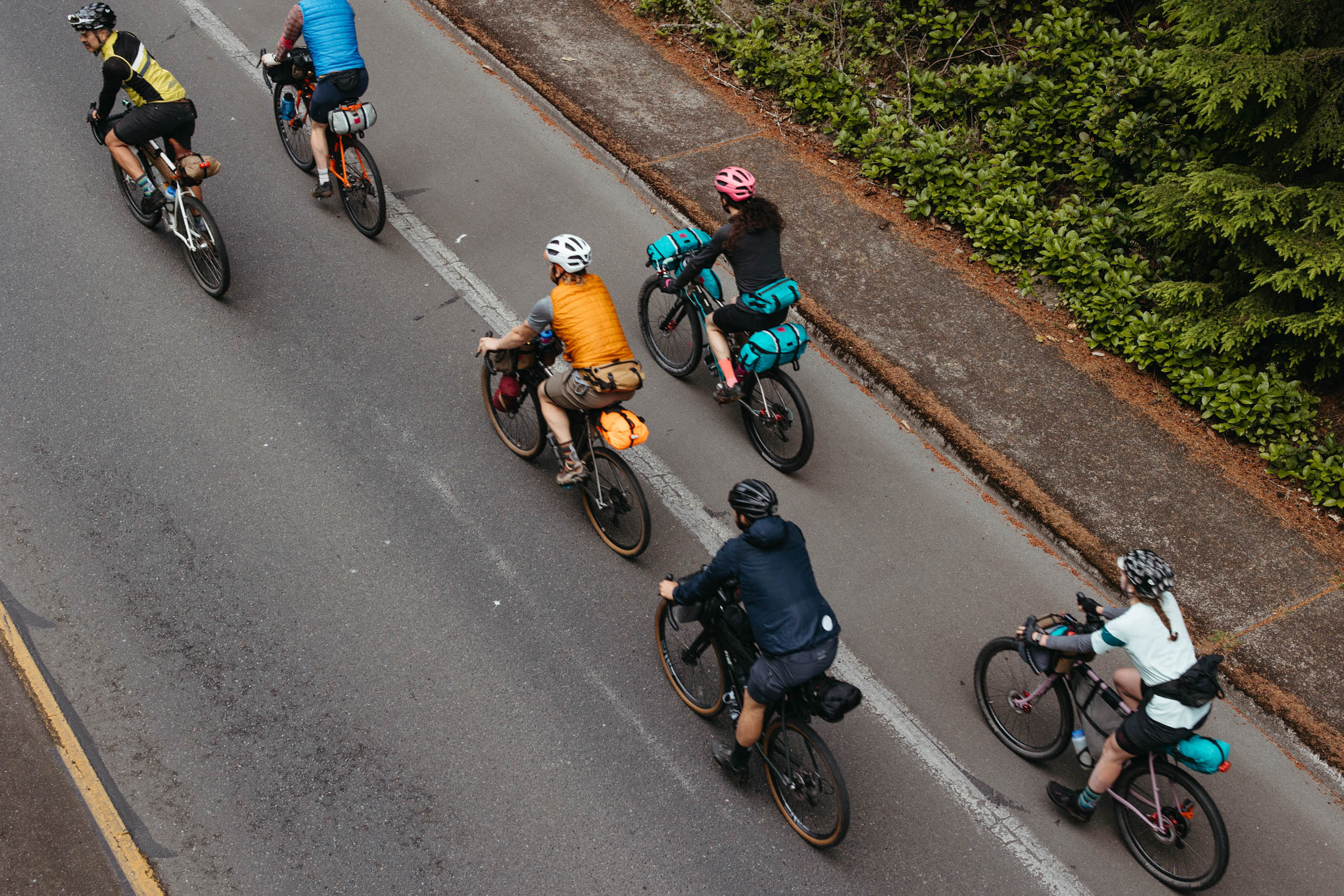
Moments of connection still find their way into even the most solitary rides. At the grand depart, you share the course with dozens of riders, each moving at their own pace, but often within sight of one another. You may ride together for a climb, trade a few words in passing, or share a table at one of the few resupplies on route. No one can shoulder your load or turn your pedals, but their presence can still carry weight. A nod at the right moment, a quick check-in, or even just the silhouette of another rider on the horizon can lift you for miles.
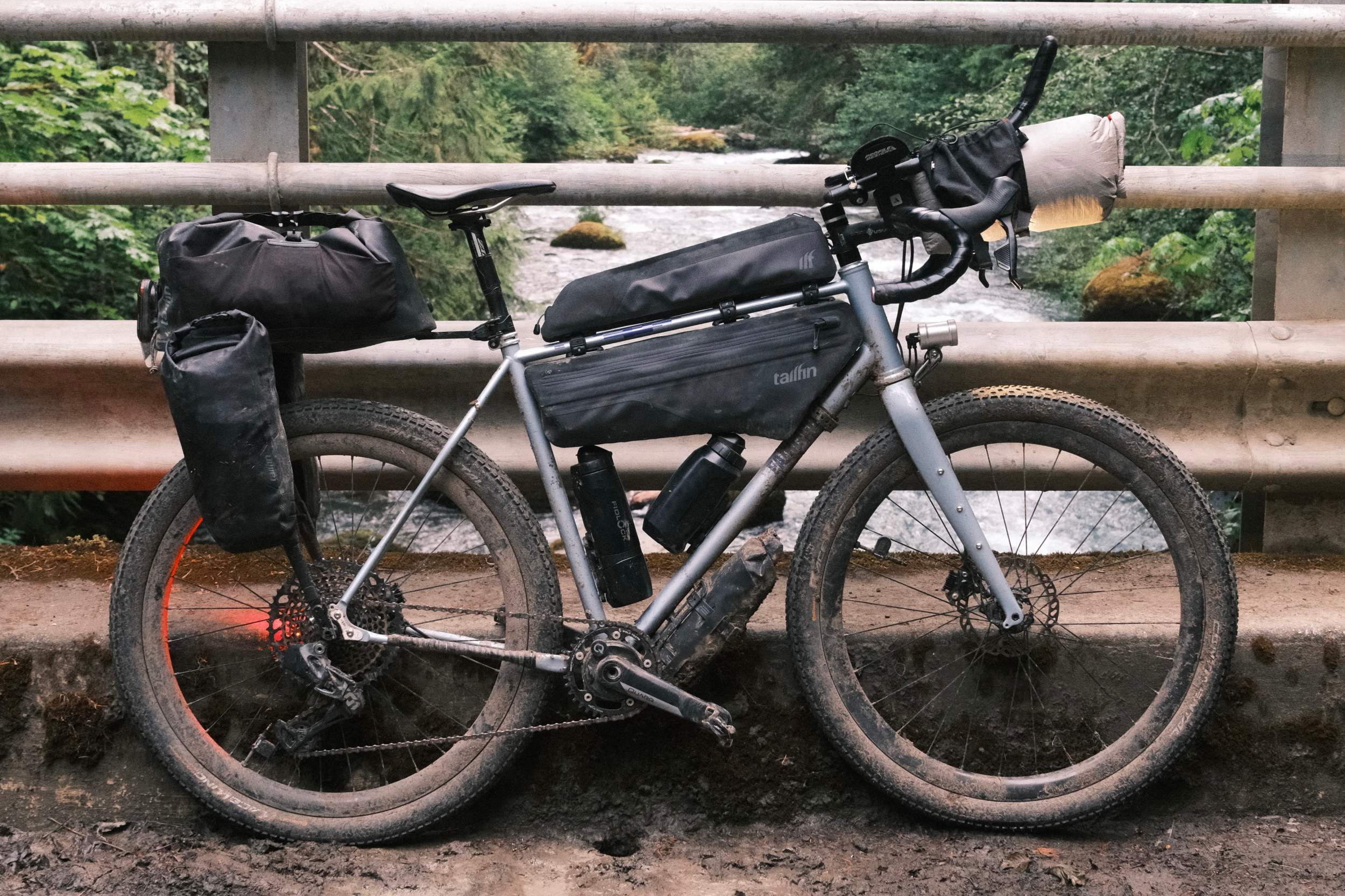
I came to this kind of riding only recently. Two years ago, I started taking bikes more seriously after years of focusing on other hobbies. I had always loved backpacking because of the way it demanded self-reliance, rewarded persistence, and allowed escape into the outdoors. But it wasn’t until I went on my first bikepacking trip last year that I truly fell in love with moving through landscapes this way. After watching the Lael Wilcox and Lachlan Morton Tour Divide documentaries, I knew I wanted to try a self-supported bikepacking race. And so, the Dark Divide 300 became my goal. This year, I arrived at the start line knowing the route’s reputation: long stretches without resupply, climbs that never seem to end, and a notorious ridgeline section looming as the ultimate test.
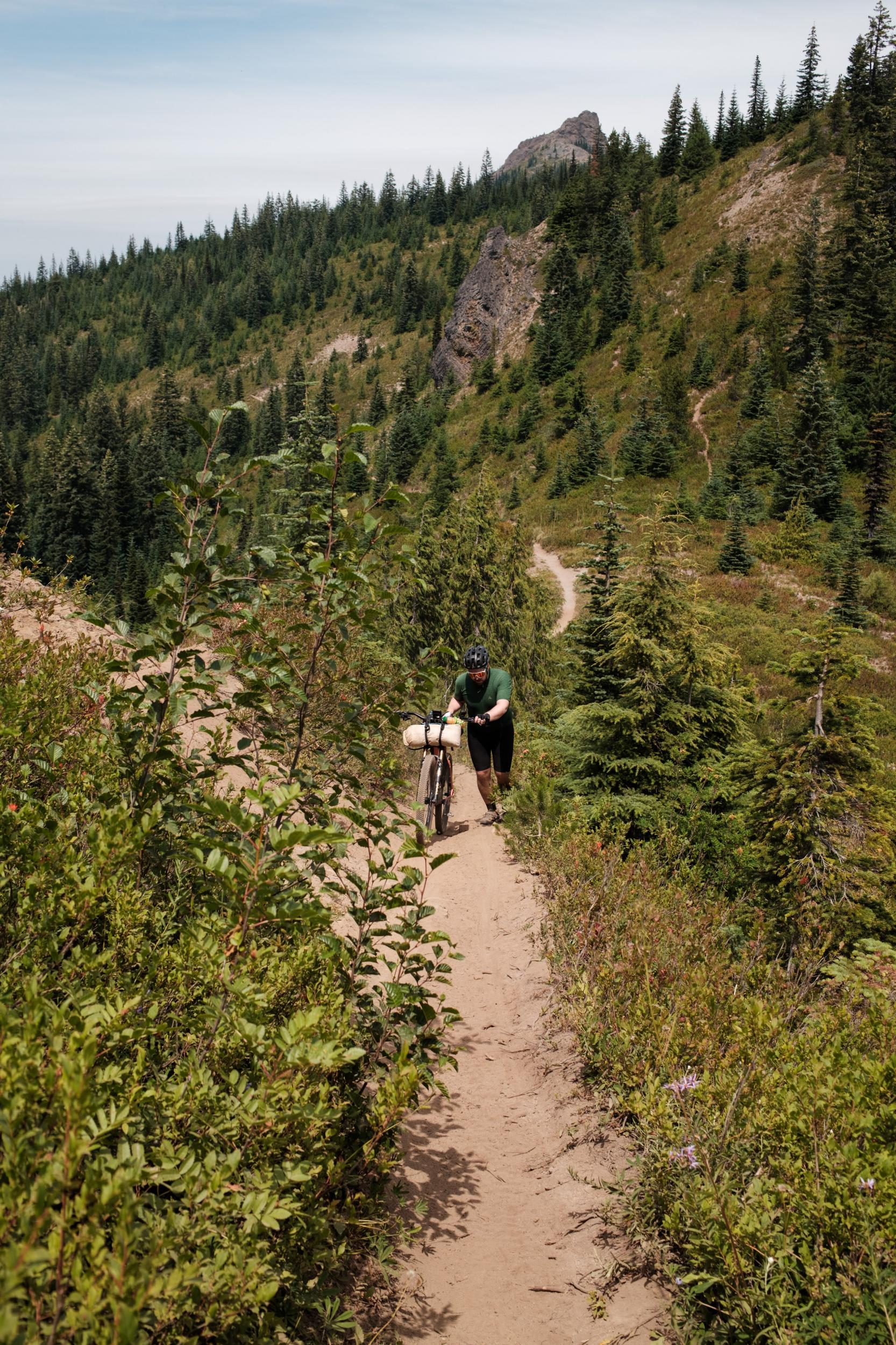

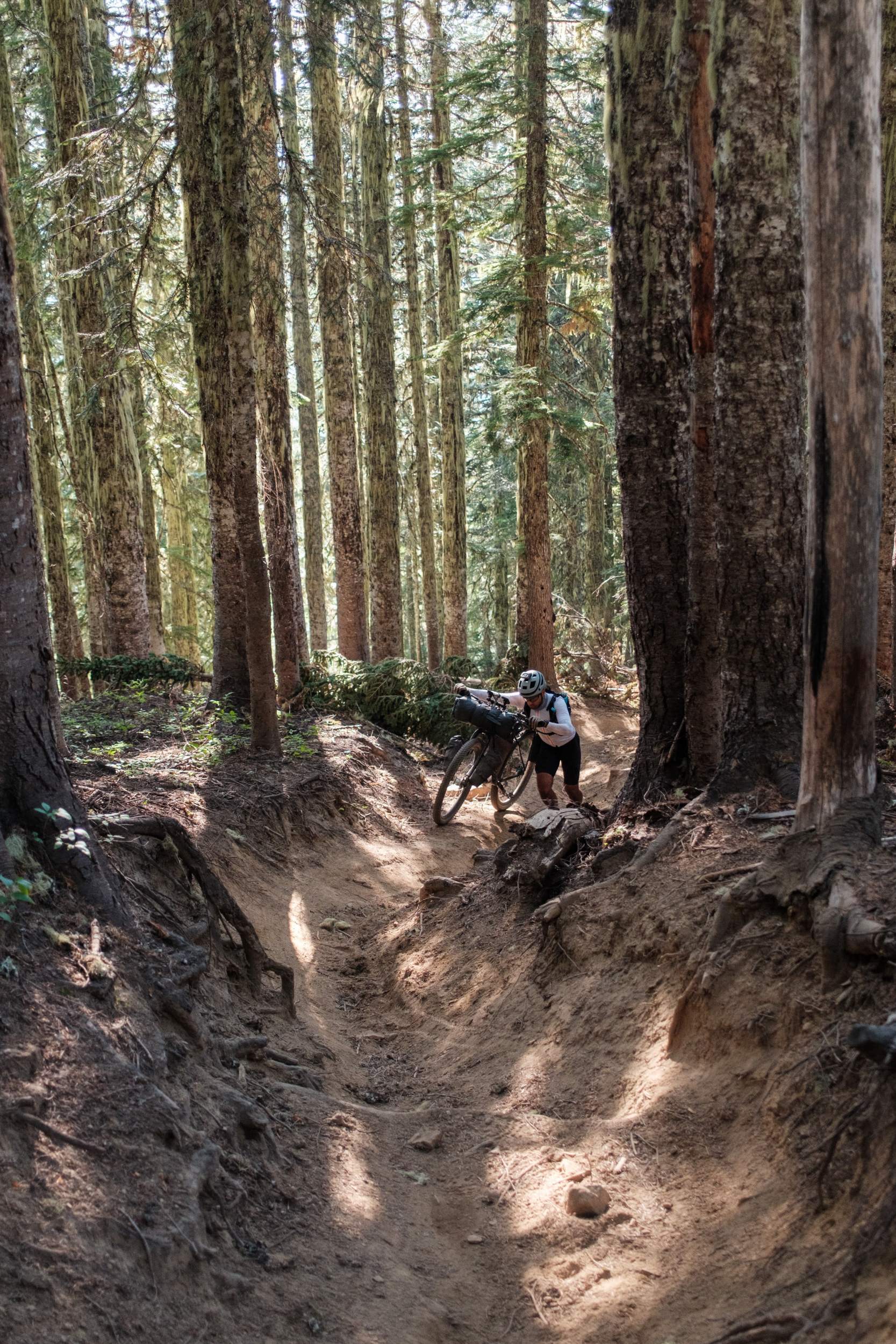

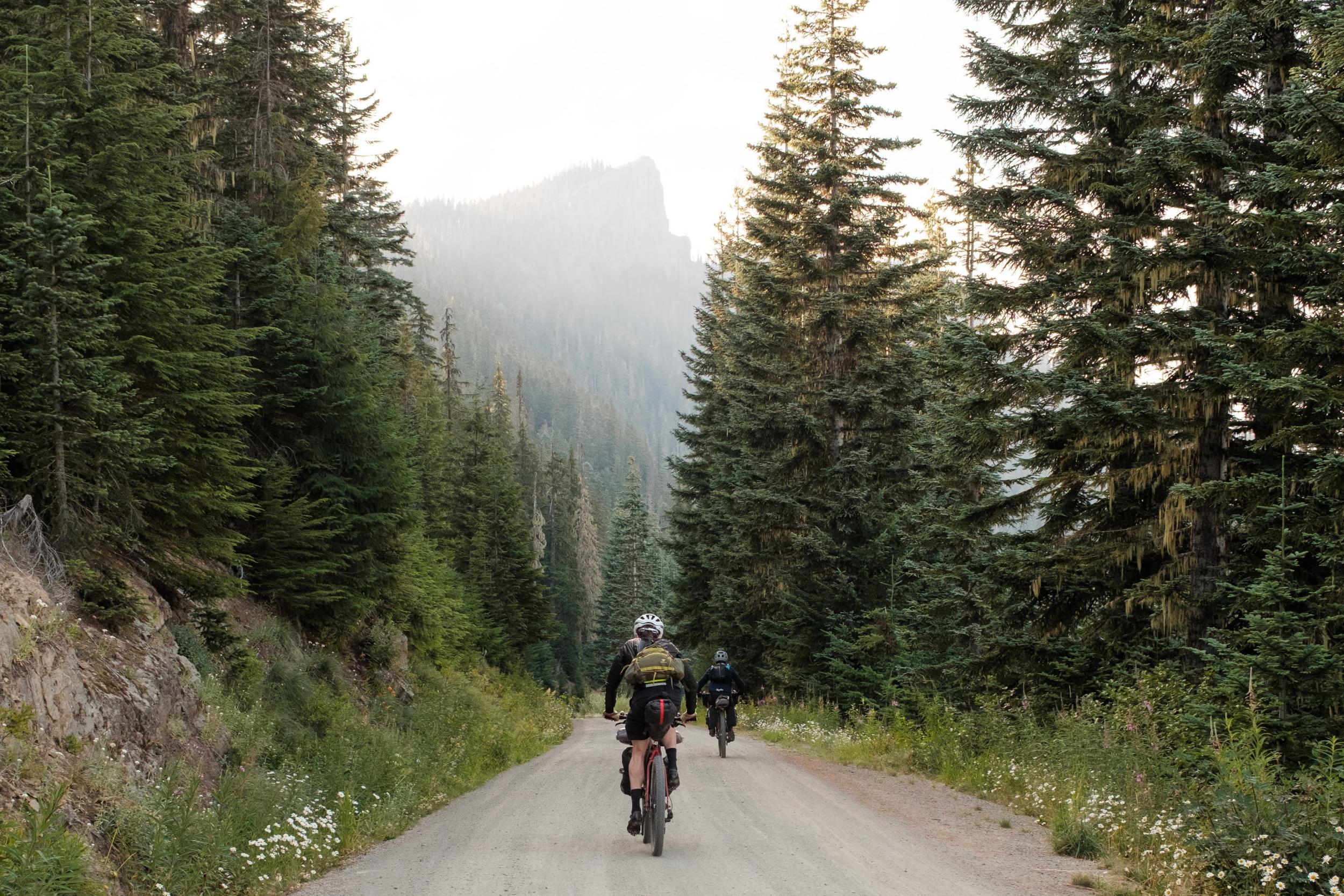
Juniper Ridge exists as the crux of this ride. It is a sandy, rutted, often exposed stretch where the rhythm of pedaling gives way to the strain of pushing and lifting a loaded bike. The air hums with horseflies that seem to sense when you pause, forcing you to keep moving even when every muscle protests. Conversations are short, breaths are labored, and camaraderie is born out of shared discomfort. On the approach, I lay down for a dirt nap on the side of the climb, letting exhaustion and frustration wash over me. Rider after rider passed by, many I had met the morning before, each offering a quick word of encouragement or a simple check-in before continuing.
That night, I camped at the bottom of the descent from Juniper Ridge, spent and ready for rest. I knew I wanted to be in Trout Lake the moment the store opened, which meant a 25-mile ride before 7 a.m. The morning was quiet and cool, a long roll through empty forest roads into town. Trout Lake is the last major resupply before Portland, and it served as the great equalizer. A dozen familiar faces reappeared, many belonging to the same riders who had passed me during my low point, offering encouragement and quick check-ins along the way. I took some time for myself there, with a quick shower at the campground and a real breakfast, and those faces slipped ahead again. My pace was slow and steady, but over the hours that followed, I reeled many of them back in.

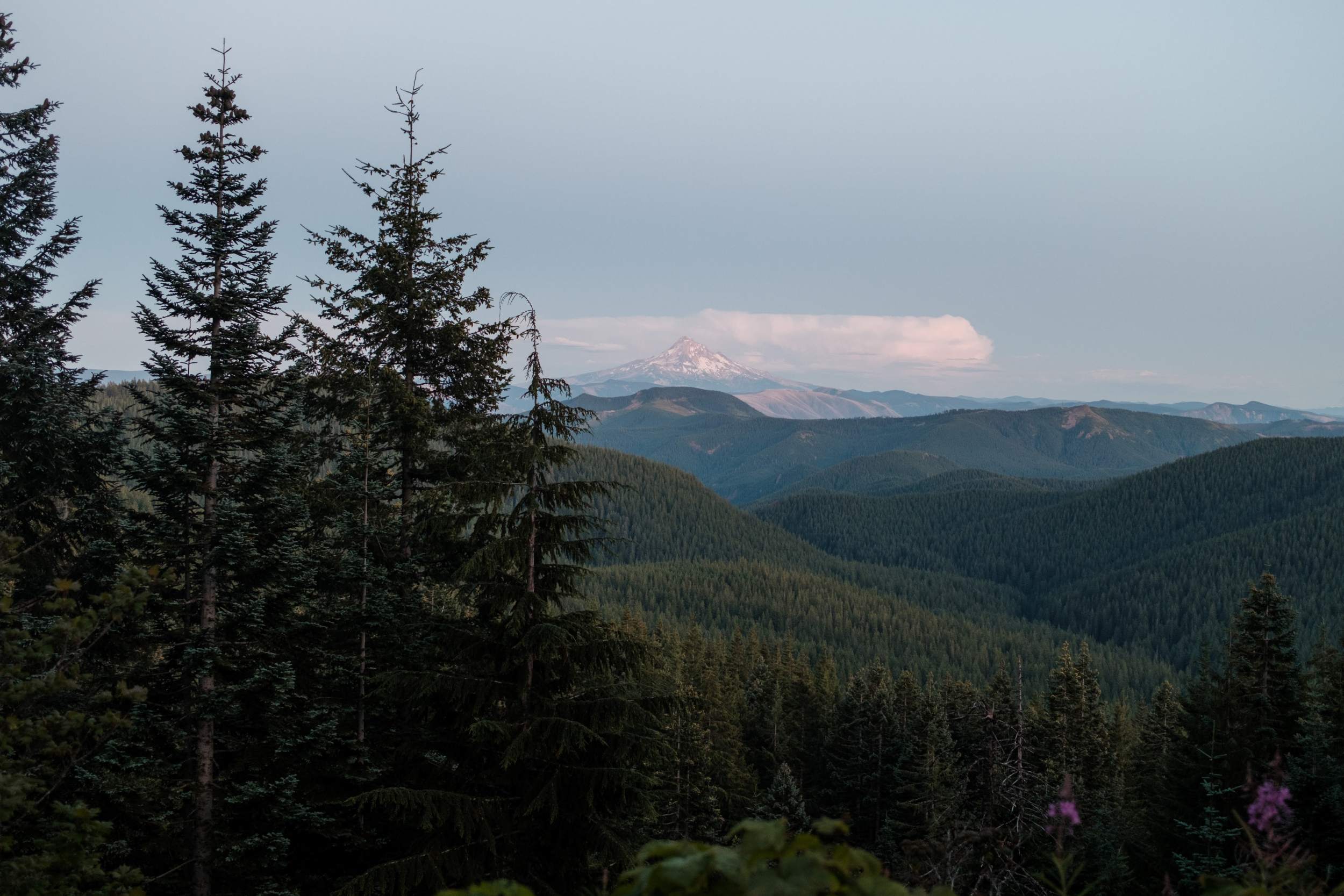
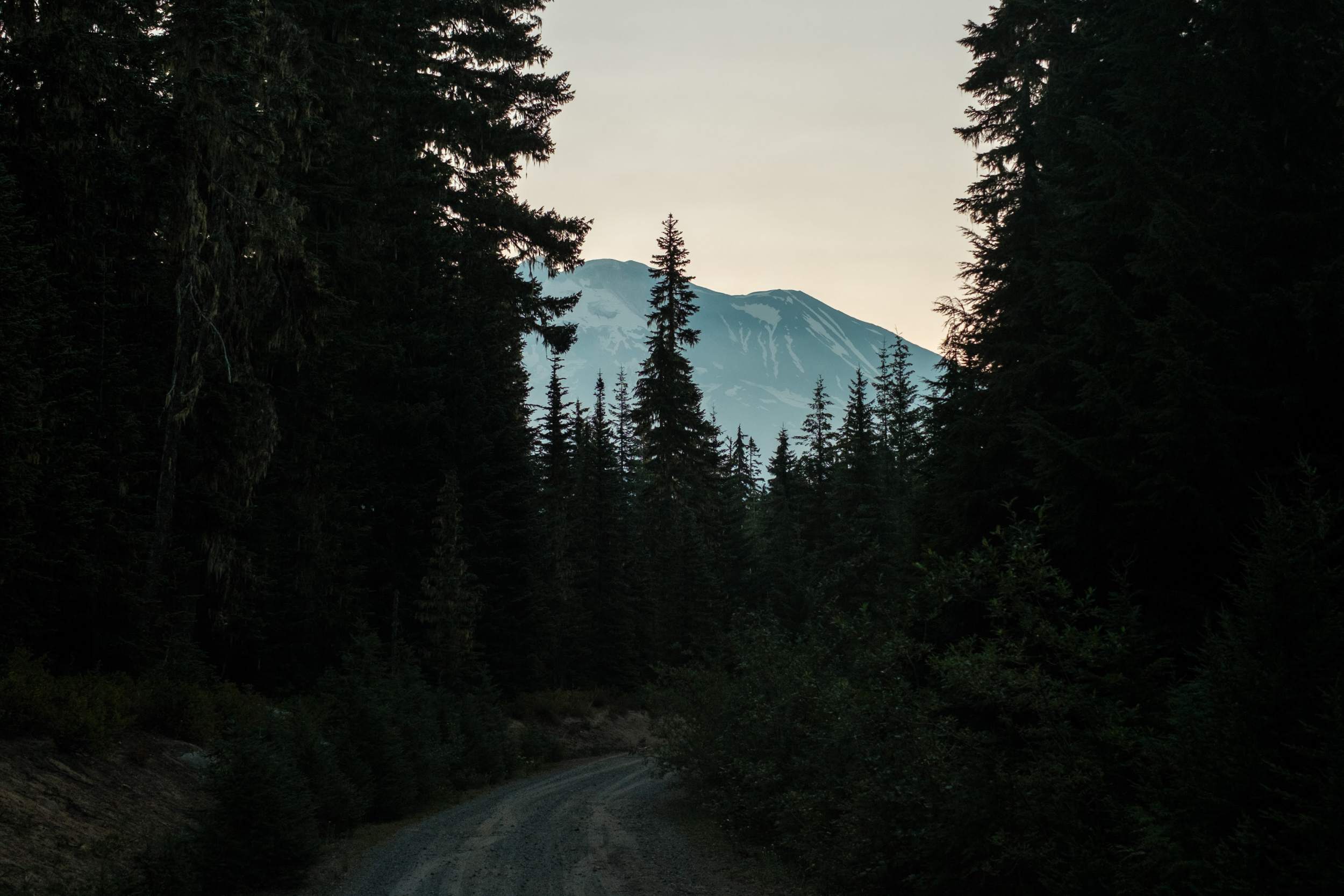
The push from Trout Lake to Portland was some of the most challenging riding I have ever done, climbing nearly 15,000 feet over 160 miles. Somewhere along the way, I caught up to a friend from Seattle, and we rode the final six hours together, sharing the work and the quiet satisfaction of knowing we would finish before dawn. For me, the Dark Divide was never about racing for position. It was about carrying what I needed, fixing what broke, and moving forward until the route was complete. The solitude was real, but so was the camaraderie, and it shaped the ride as much as the terrain itself.
For more on the Dark Divide 300, check out our coverage here.
Further Reading
Make sure to dig into these related articles for more info...

Please keep the conversation civil, constructive, and inclusive, or your comment will be removed.