

 Singletrack/MTB
 Gravel/All-road
 Dirt-road Touring
 Fat-bike


Bikepacking Across Central Afghanistan


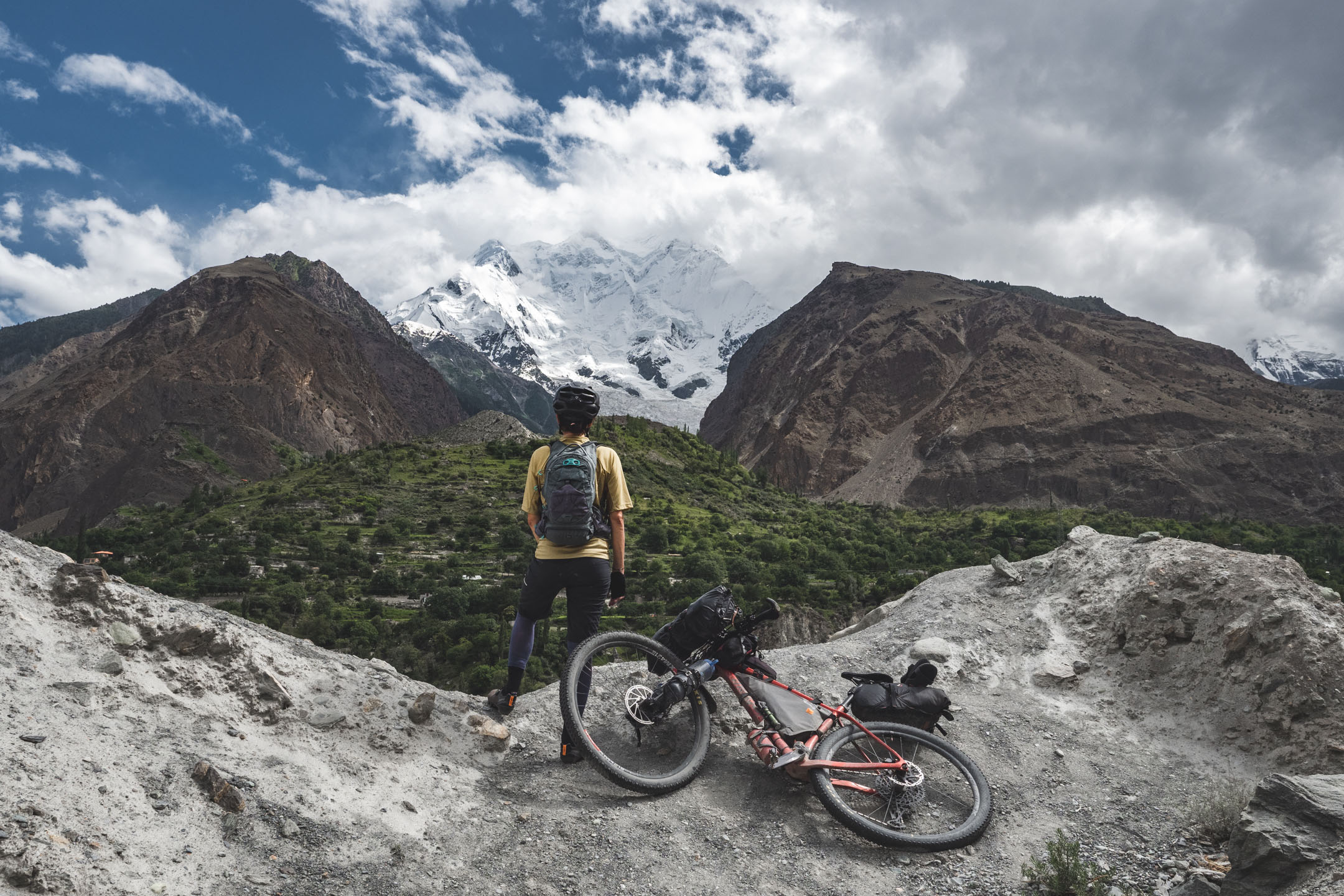
As part of an ongoing multi-year journey around the world, intrepid German bikepacker Max Roving spent time traversing the rugged folds of Afghanistan’s Hindu Kush mountain range this summer. In this piece, he shares a detailed report and a breathtaking photo gallery from his ride. Find it all here…
PUBLISHED Dec 11, 2025
Over the summer, I had the privilege of experiencing Afghanistan by bicycle, something that wouldn’t have been possible—or advisable—for most of the past 40 years, during which the country was plagued by wars and instability. In this piece, I’ll share a little about my experiences, the route I took, and some practical information on logistics, customs, and the realities of cycling through Afghanistan in 2025.

I’ll focus mainly on my crossing of the Hindu Kush mountain range in central Afghanistan, as I may have been the first person to cycle this particular route. Cycling on the Afghan highways—the so-called “Ring Road,” which connects all major cities—is relatively straightforward, and plenty of travelers’ reports can be found online.
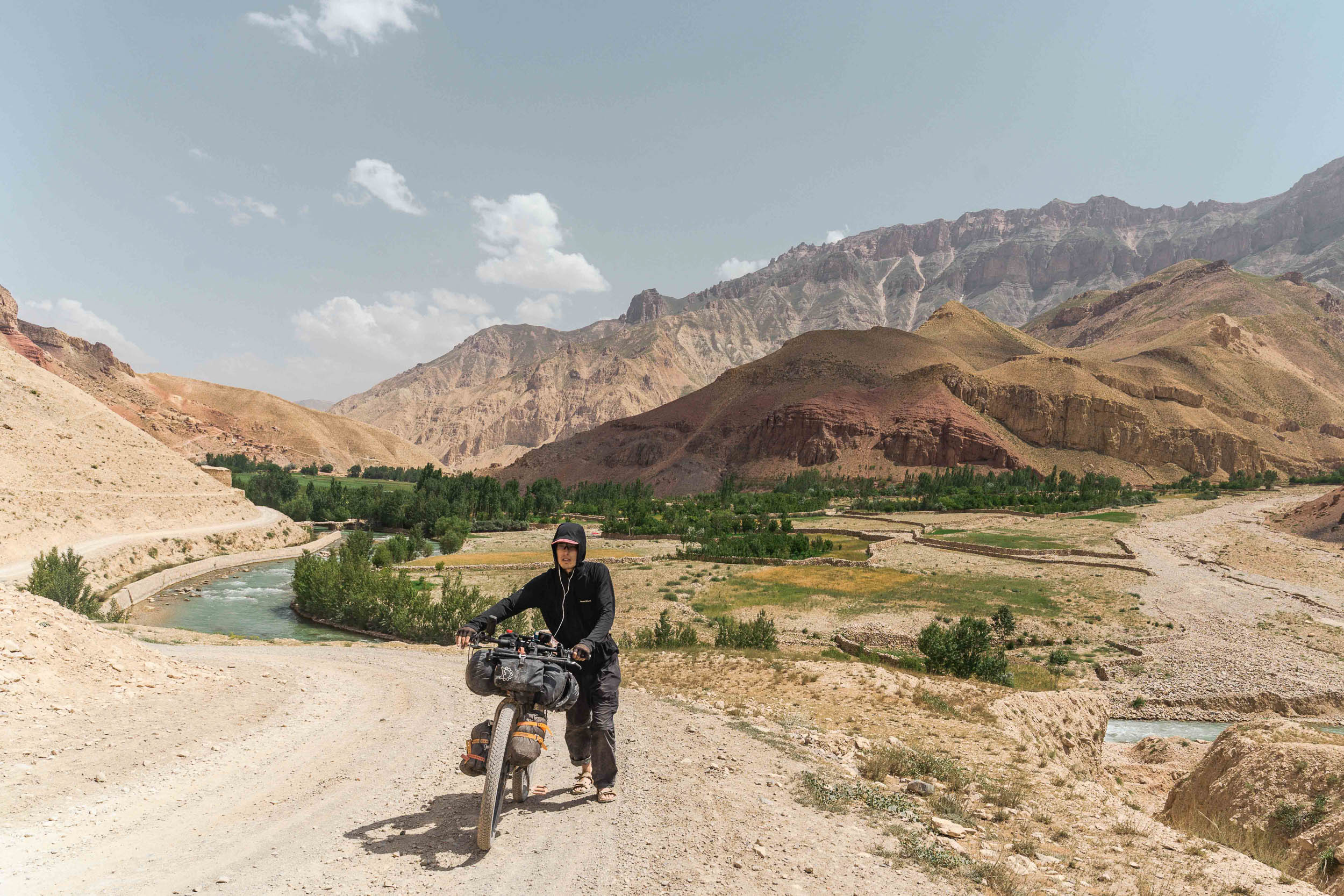
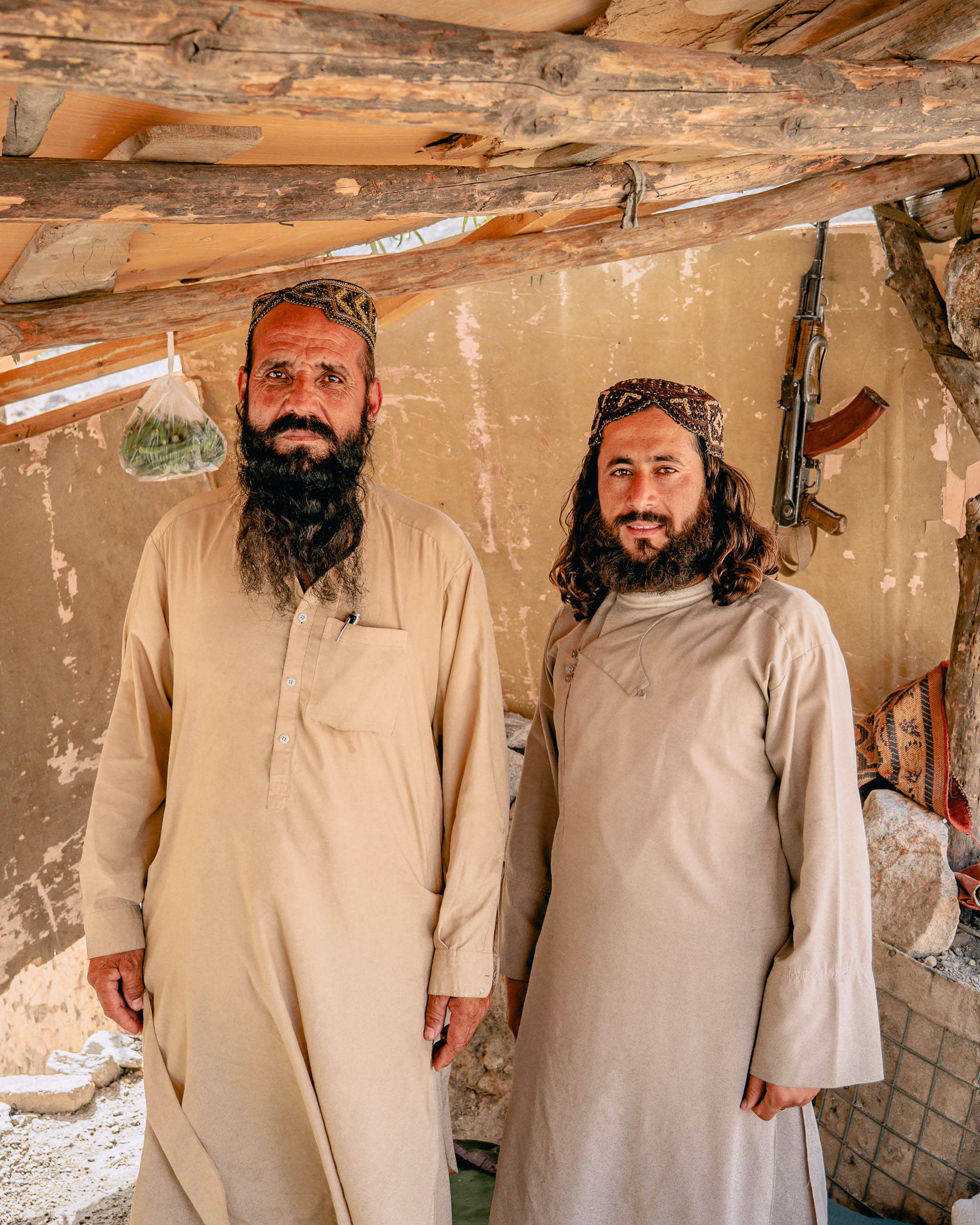

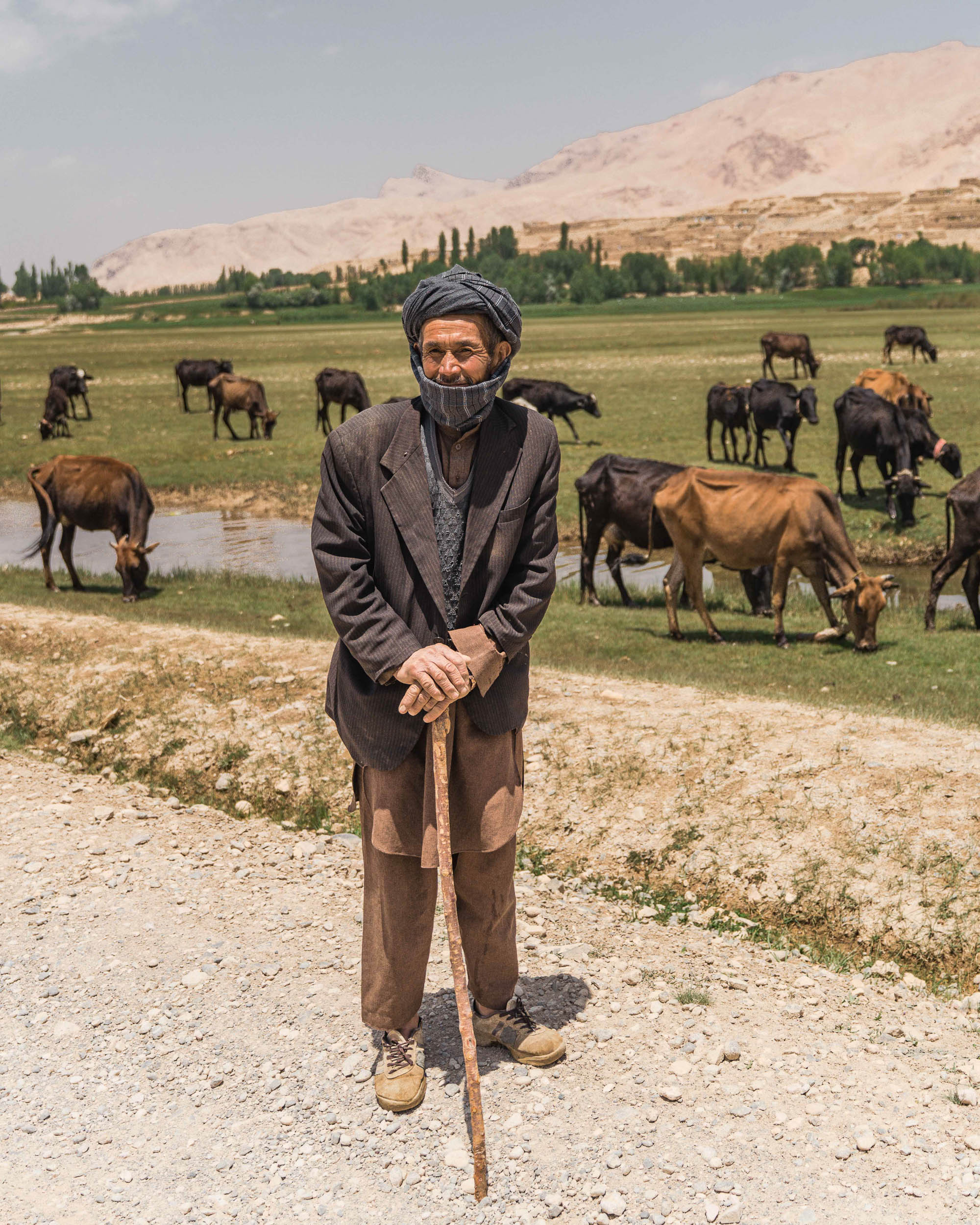
I entered the country from Pakistan via the chaotic Torkham border. Most nationalities require a visa to enter Afghanistan, which typically costs between $80 and $100. Because the Taliban government is not officially recognized in many countries, obtaining this visa can be complicated. Recommended places to apply include the consulate in Peshawar, Pakistan (where I got mine); Termez, Uzbekistan; Dubai, UAE; or on arrival at Shir Khan Bandar when coming from Tajikistan.
From Torkham, I headed towards Jalalabad, the capital of Nangarhar province. This part of the country is primarily inhabited by Pashtuns, and despite their conservative nature, they were very welcoming, often inviting me to eat or spend the night in their homes. Unfortunately, this region was recently struck by a major earthquake, claiming the lives of hundreds of people.


The highway onward to Kabul offers some beautiful scenery, but also a lot of traffic. Kabul and its outskirts still feel heavily fortified, with numerous military and police buildings. The city’s vibe, however, was surprisingly vibrant—a place where many of the country’s diverse ethnic groups live side by side. It’s filled with stunning mosques and shrines, bustling markets, and bustling streets lined with sky-blue taxis.

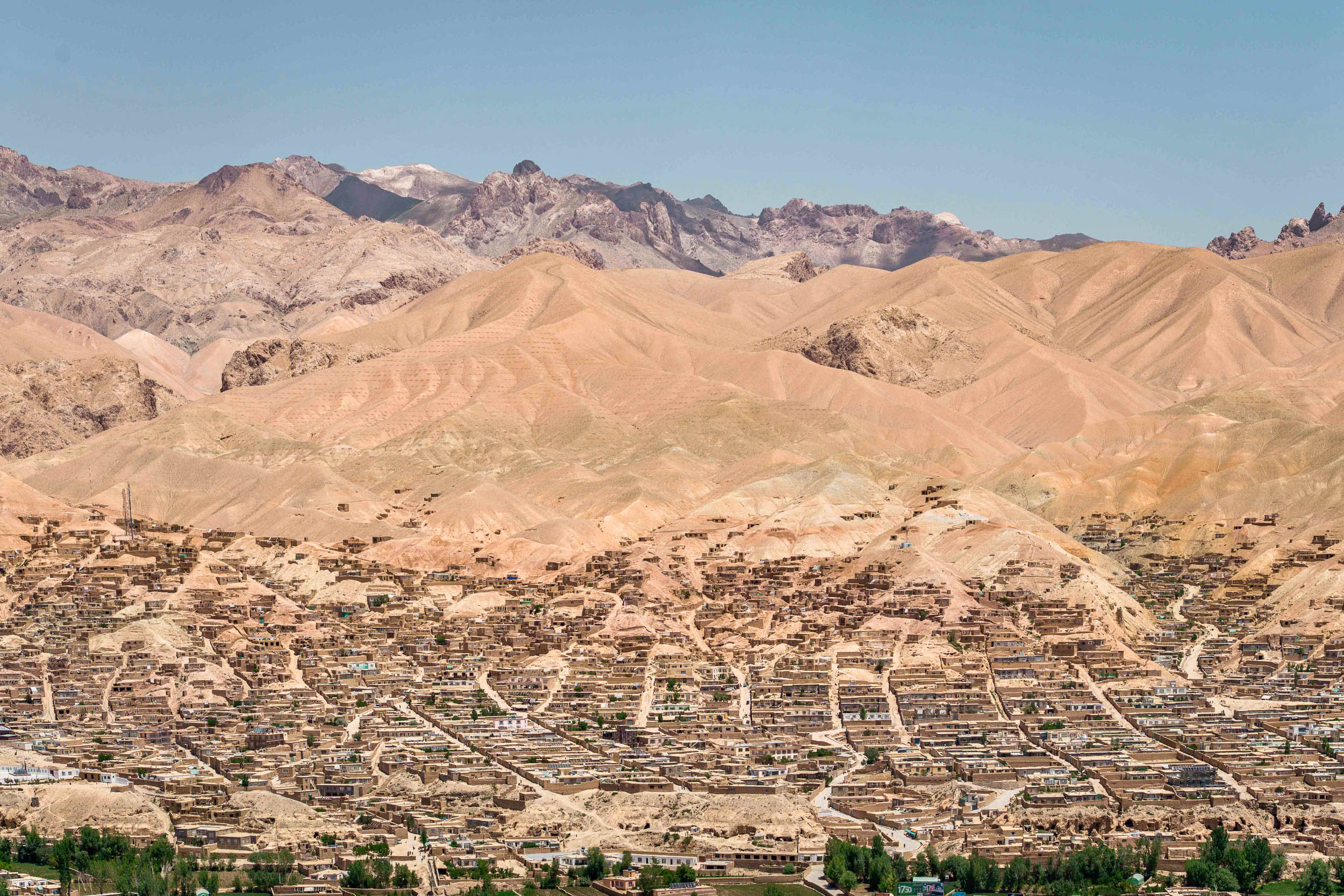

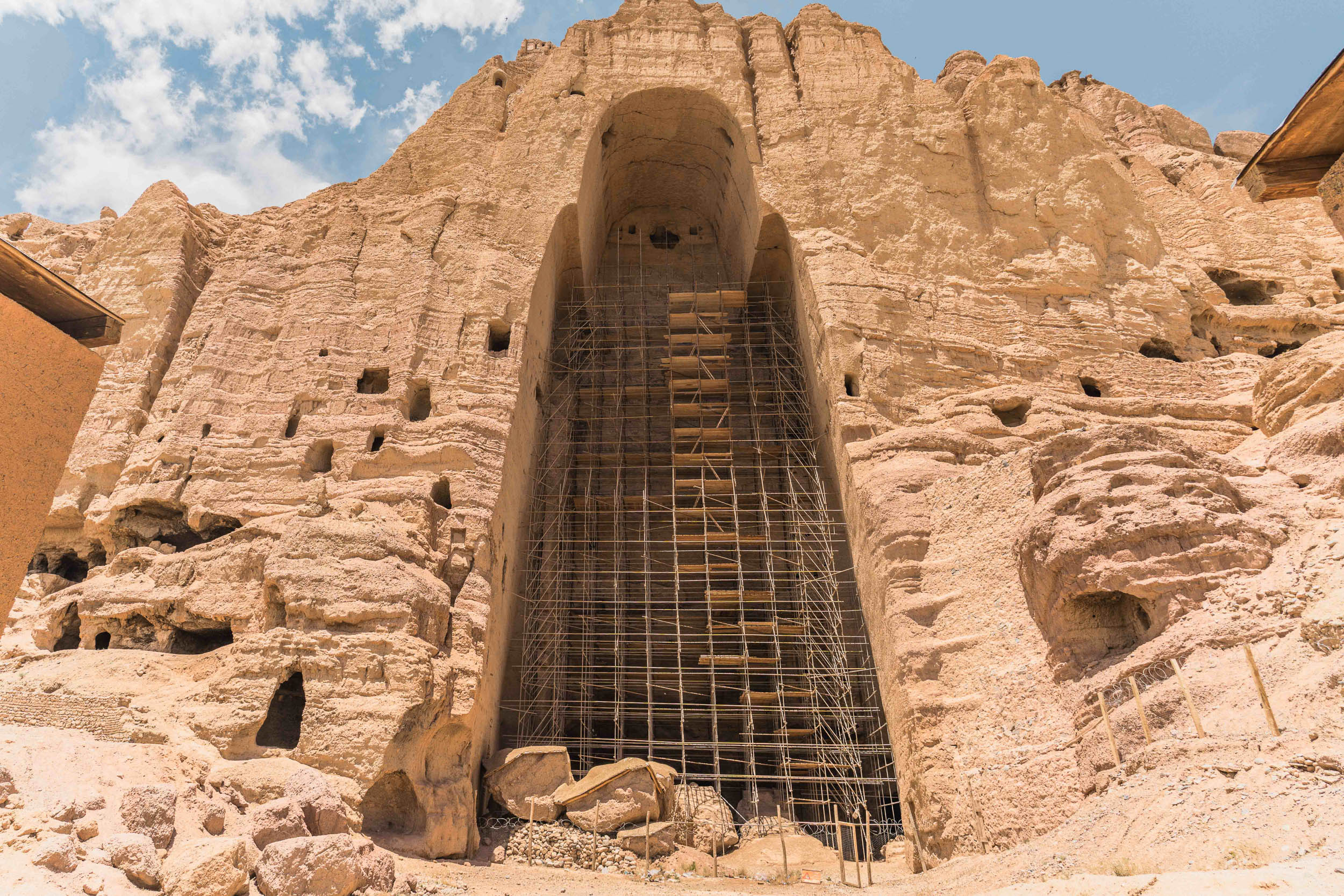
Kabul is one of the highest capitals in the world, situated at around 1,800 meters (5,900 feet) above sea level. Over the following days, I climbed over the Hajigak Pass (3,500 meters/11,480 feet) and descended back down to Bamyan at about 2,500 meters (8,200 feet). Bamyan is renowned as the cultural capital of Afghanistan, home to sites such as the famous Buddhas of Bamyan—once the largest Buddha statues in the world—which were tragically destroyed by the Taliban in 2001.

Western sources say this was done to eradicate “foreign idols,” and the Taliban themselves stated it was a protest against the hypocrisy of foreign nations that were more willing to fund the preservation of statues than to help combat the famine devastating the country at the time. Regardless, the site remains deeply impressive. The surrounding cliffs are dotted with caves carved into the rock by ancient Buddhists who once used them as dwellings. They serve as a powerful reminder of Afghanistan’s rich and complex history. Other historic sites in the area include the imposing Shahr-e Zohak fortress and Shahr-e Gholghola, an ancient citadel perched on a hilltop that was looted and destroyed by Genghis Khan and his Mongol army in 1221.


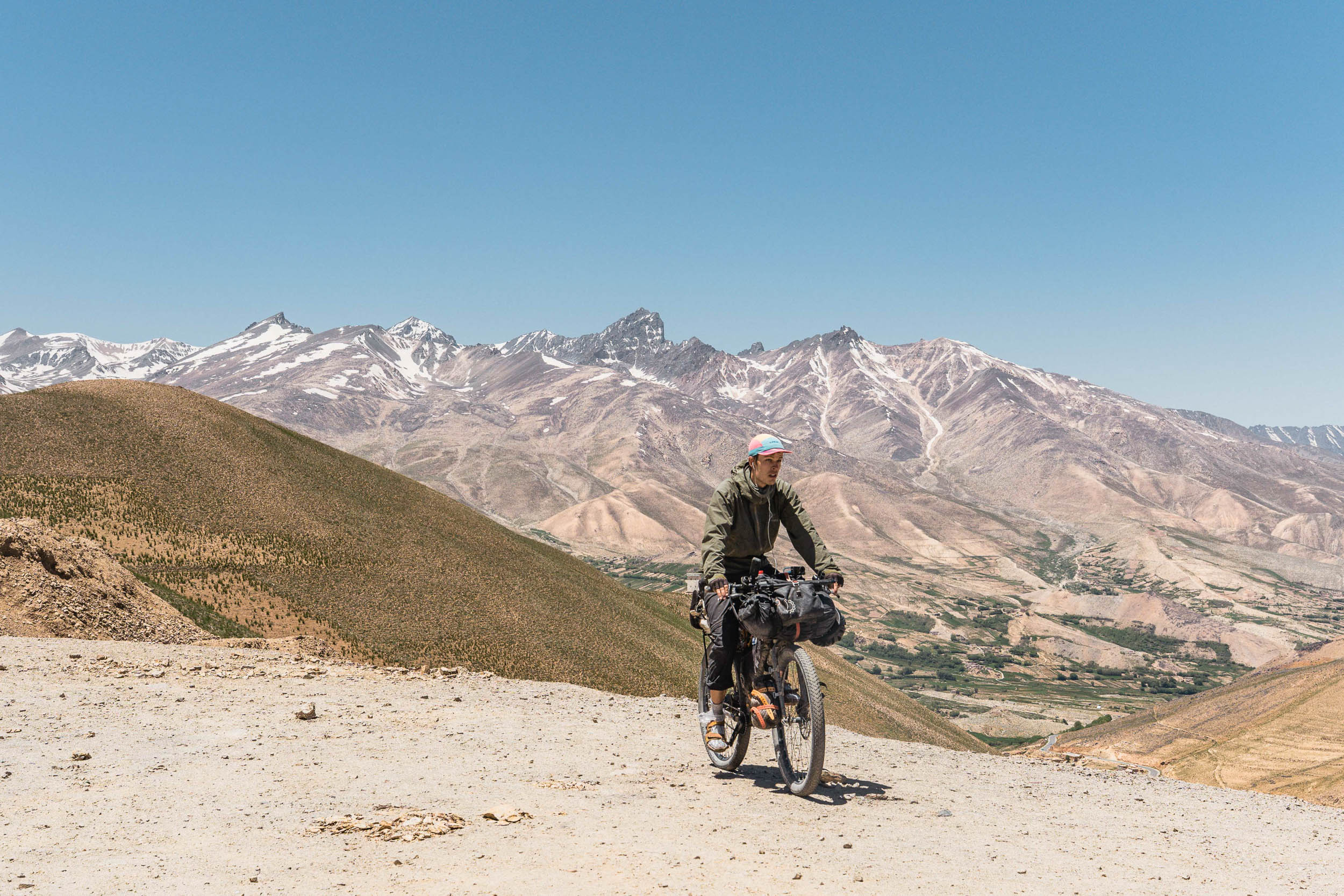
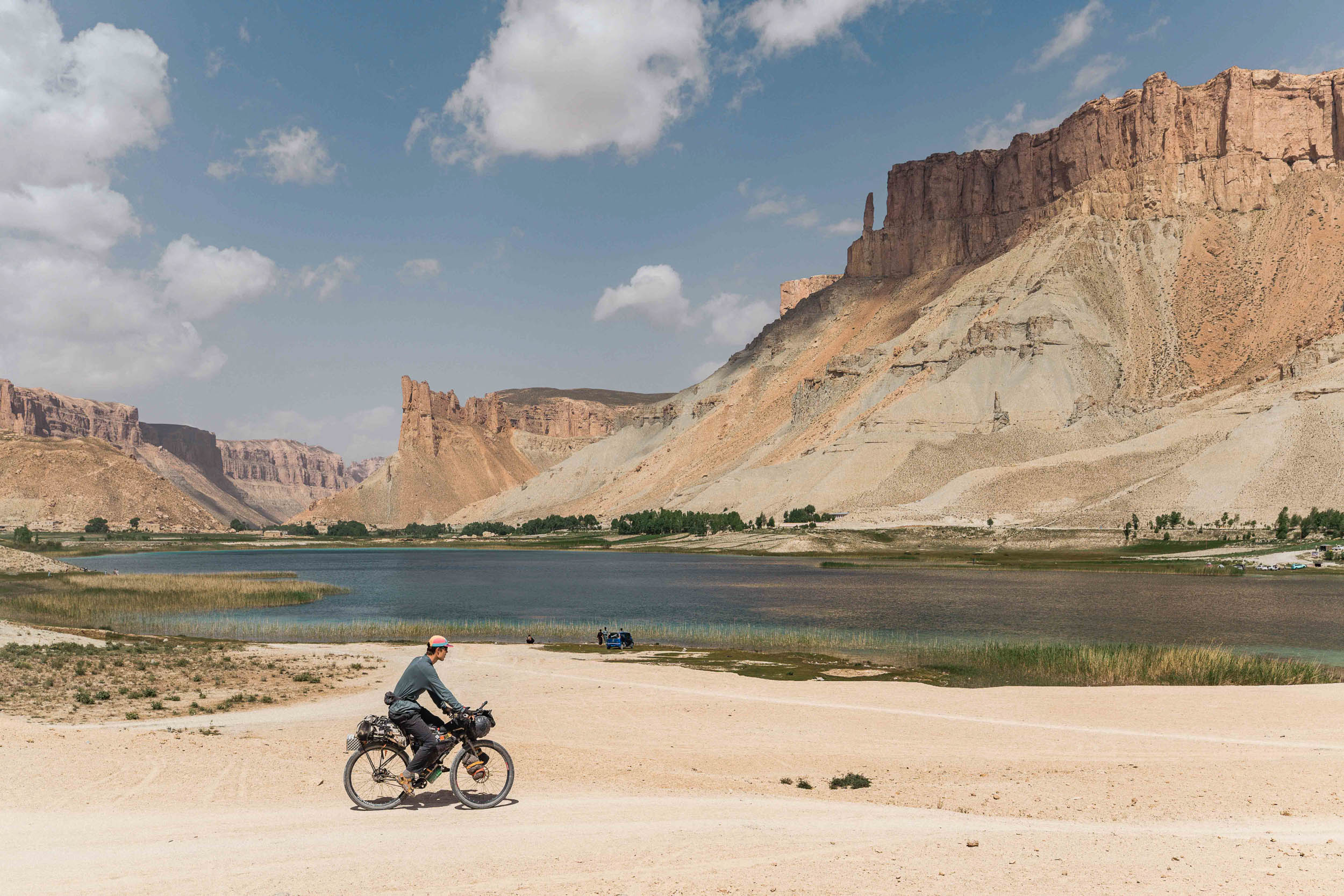
Leaving Bamyan behind, the route climbs higher into the Hindu Kush, eventually reaching the magnificent Band-e Amir Lake, one of Afghanistan’s major natural attractions. Situated at over 3,000 meters (9,840 feet) and rich in minerals that give it its deep blue color, the lake offers fantastic photo opportunities, camping spots, and even a refreshing swim (for men).
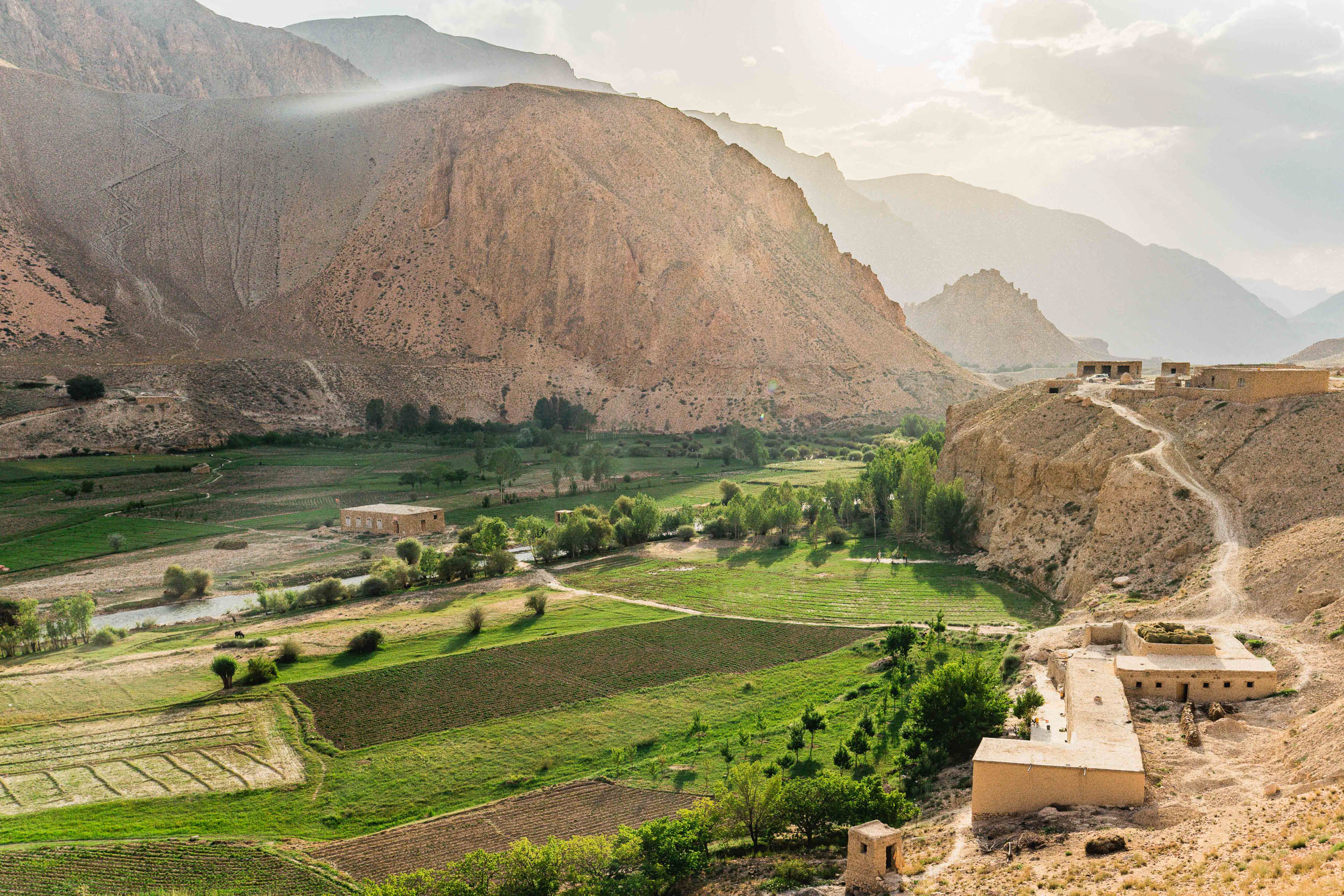
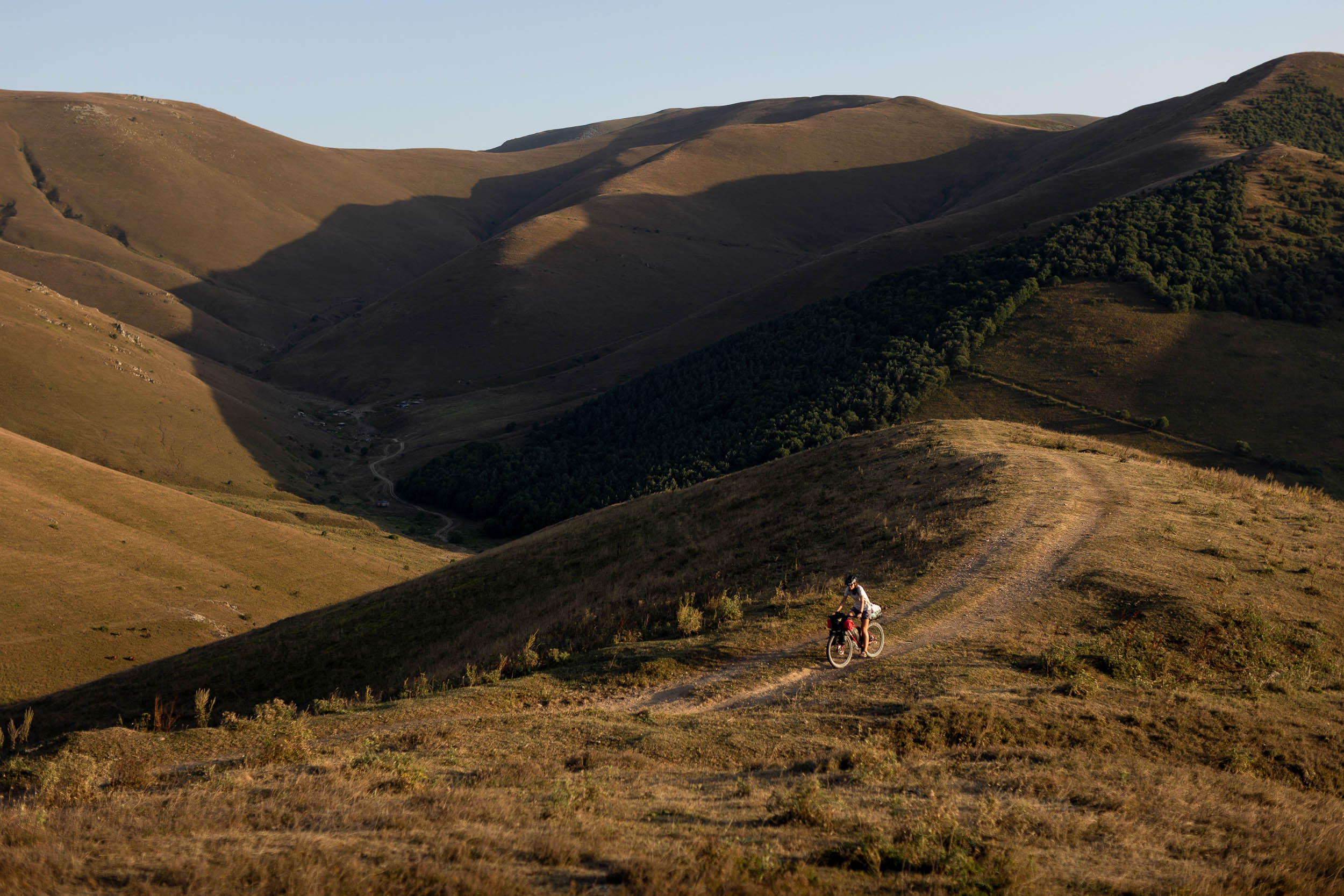
Most tourists would turn back toward Kabul and rejoin the highway at this point, but I decided to take a more adventurous route on unpaved roads through the mountains—a journey likely never before completed by a foreign cyclist. There was virtually no information available about road conditions or general safety in the region, but I’m glad I went for it.

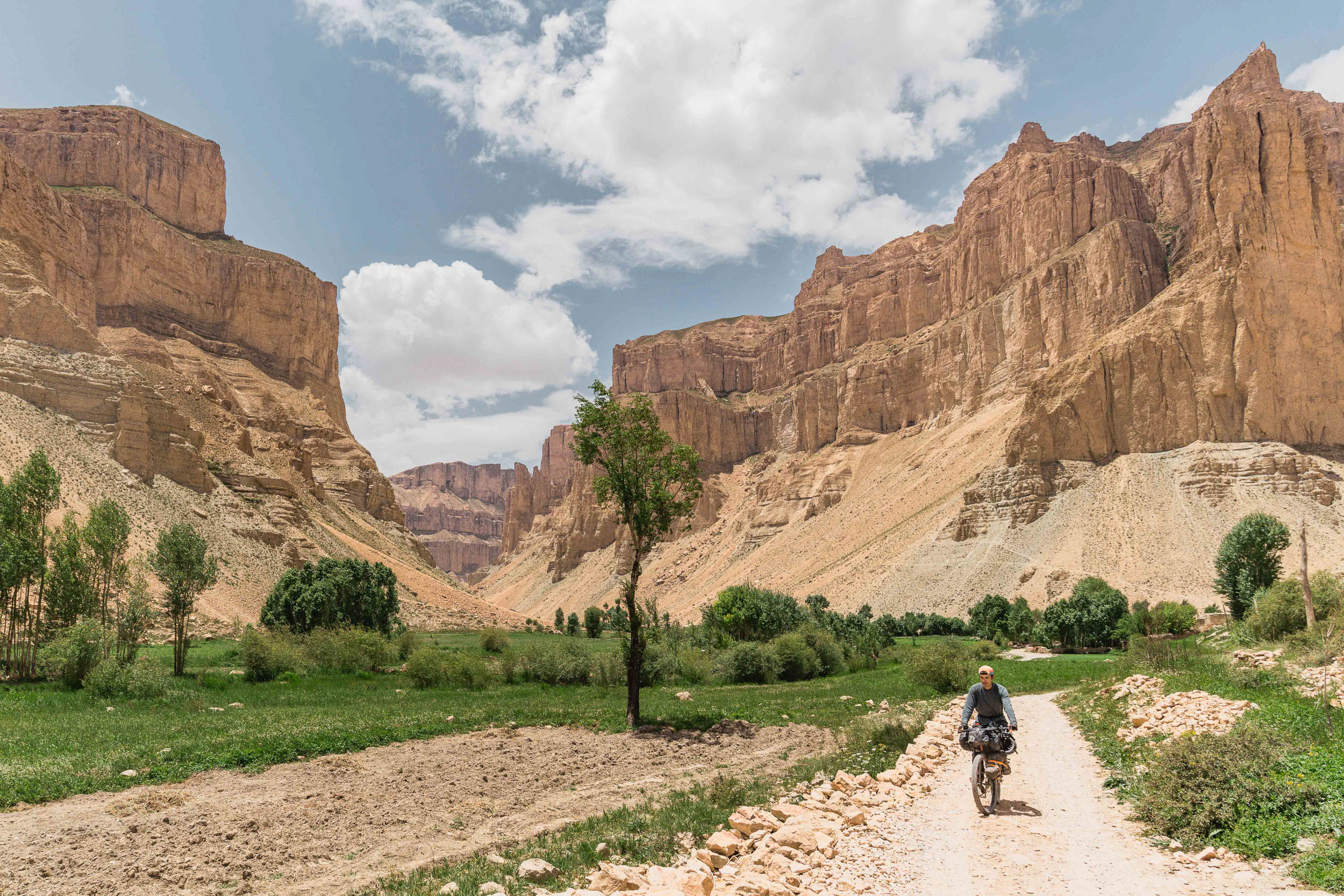
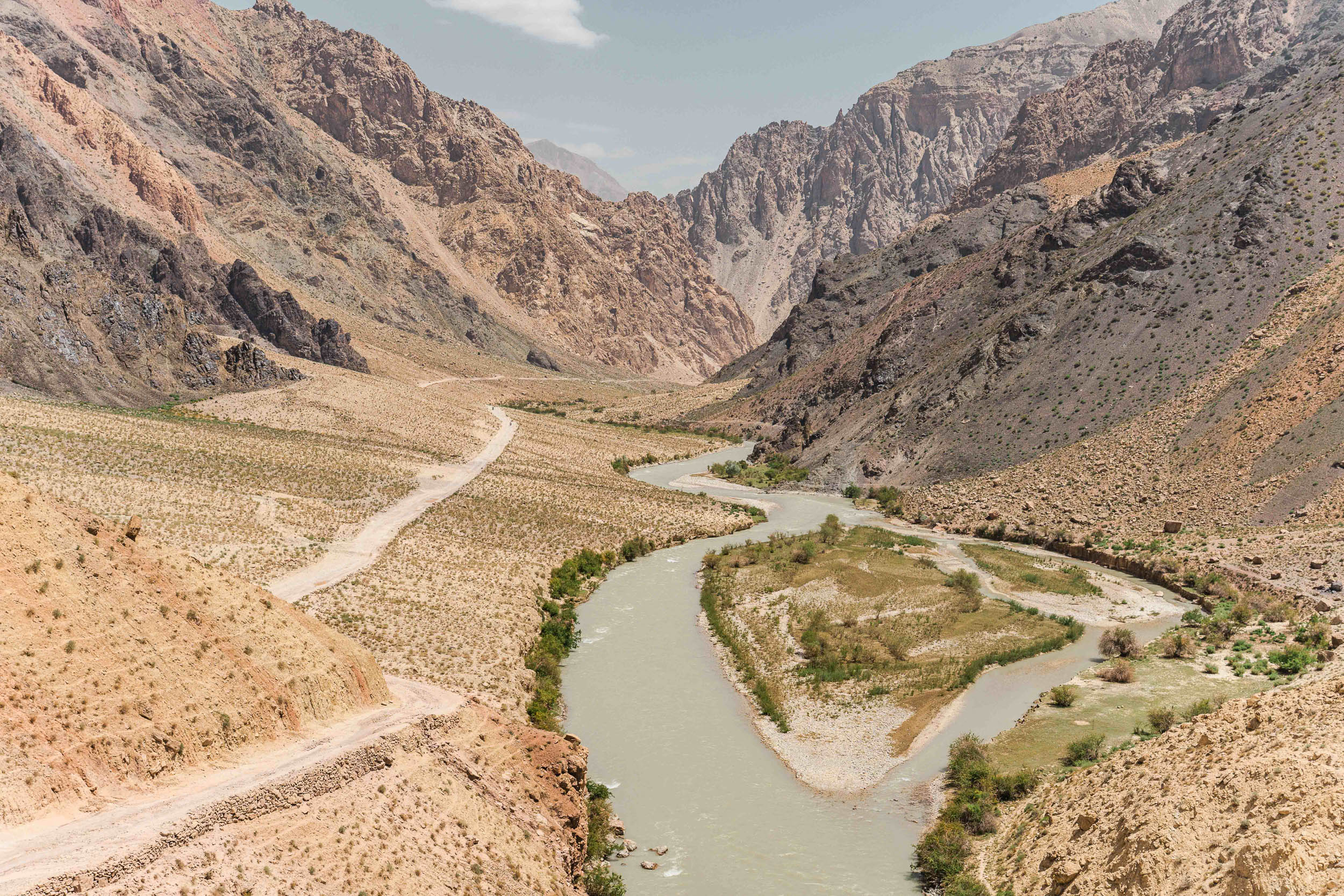
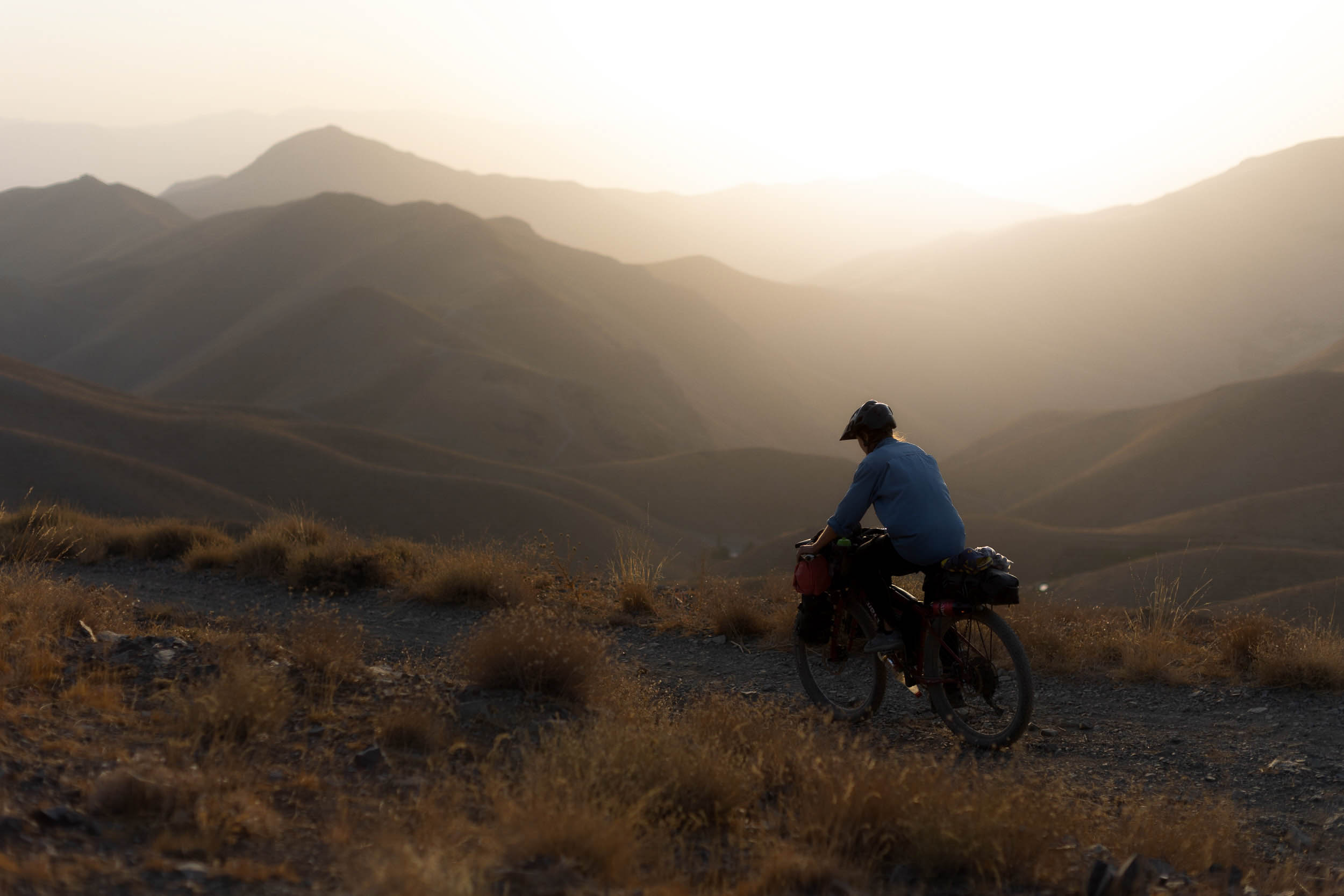
No traffic, friendly locals, and mesmerizing landscapes—reminiscent of the American Southwest—made for incredible bikepacking. Steep gorges, green fields, and rugged peaks surrounded the dirt tracks. Along the way, I came across several historical sites, such as the Chehel Burj (“Forty Towers”) Fortress, which dates back to the Ghurid Empire of the 13th century.
Despite facing fierce headwinds almost daily, rough roads, and the mental exhaustion that comes with constant interactions with kind but very curious locals and authorities, the journey was immensely rewarding—especially one particular stretch. Having previously cycled the Pamir Highway and the Karakoram Highway, I believe I’ve now found a road—parts of which aren’t even mapped—that surpasses both in terms of sheer scenery.
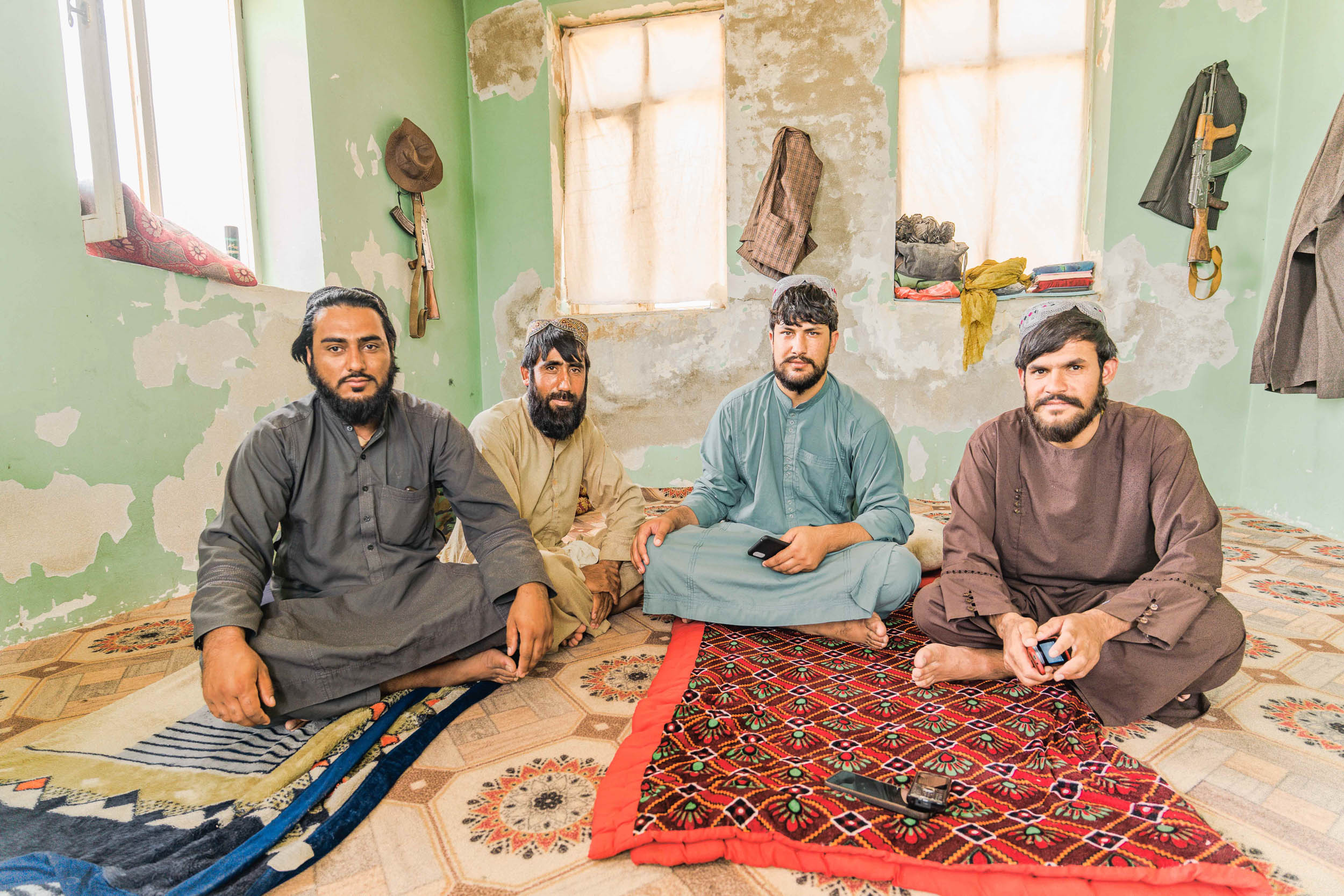

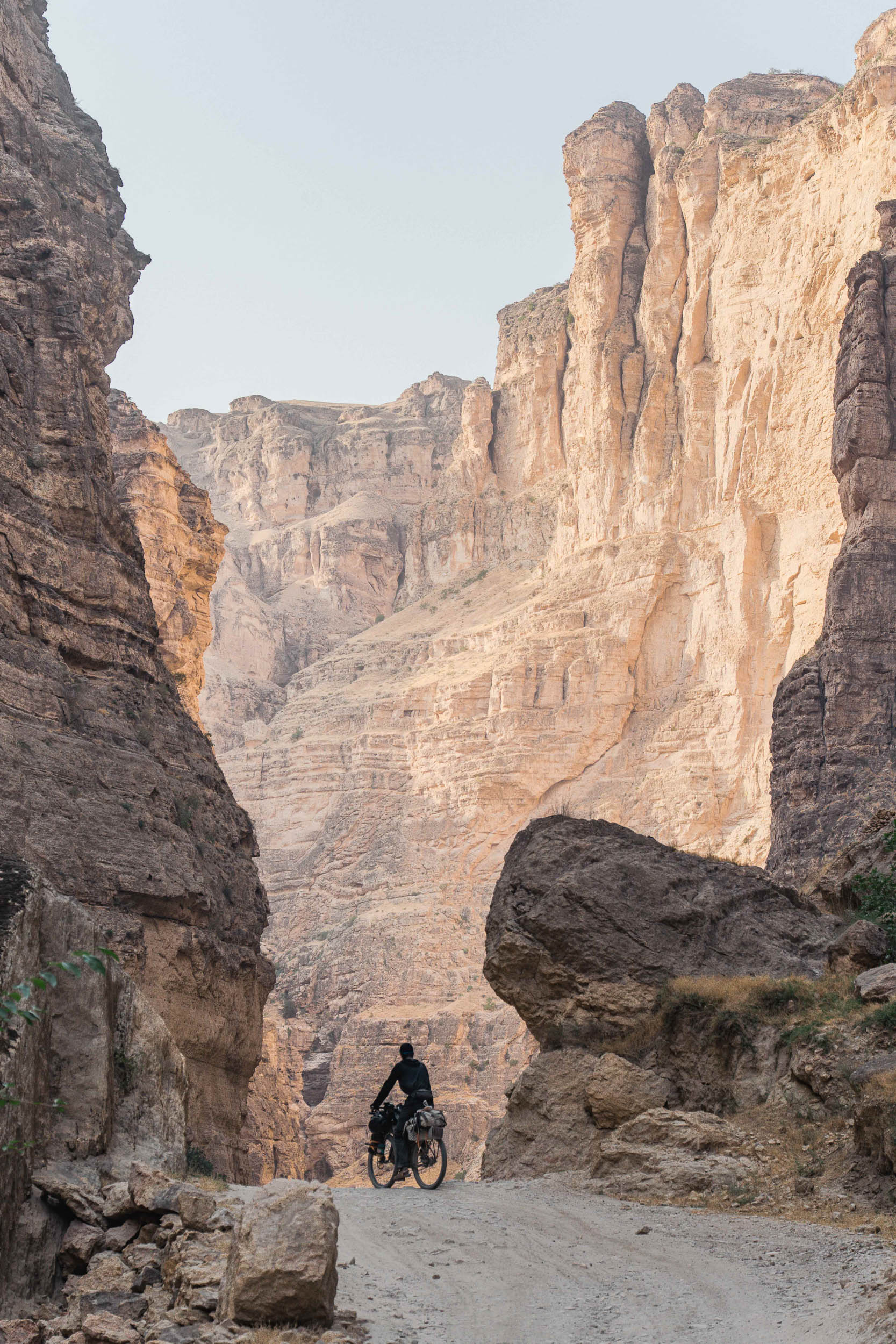


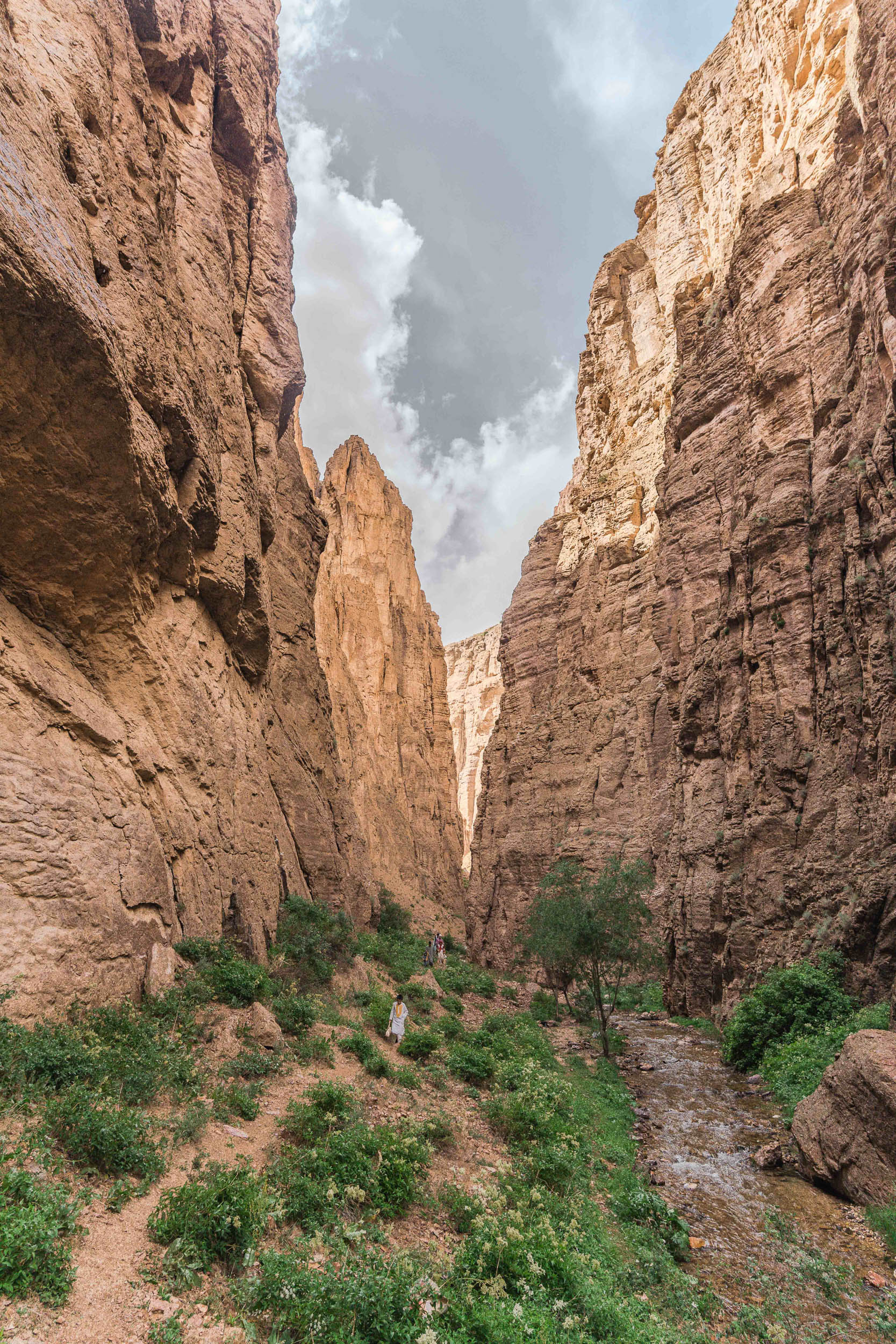
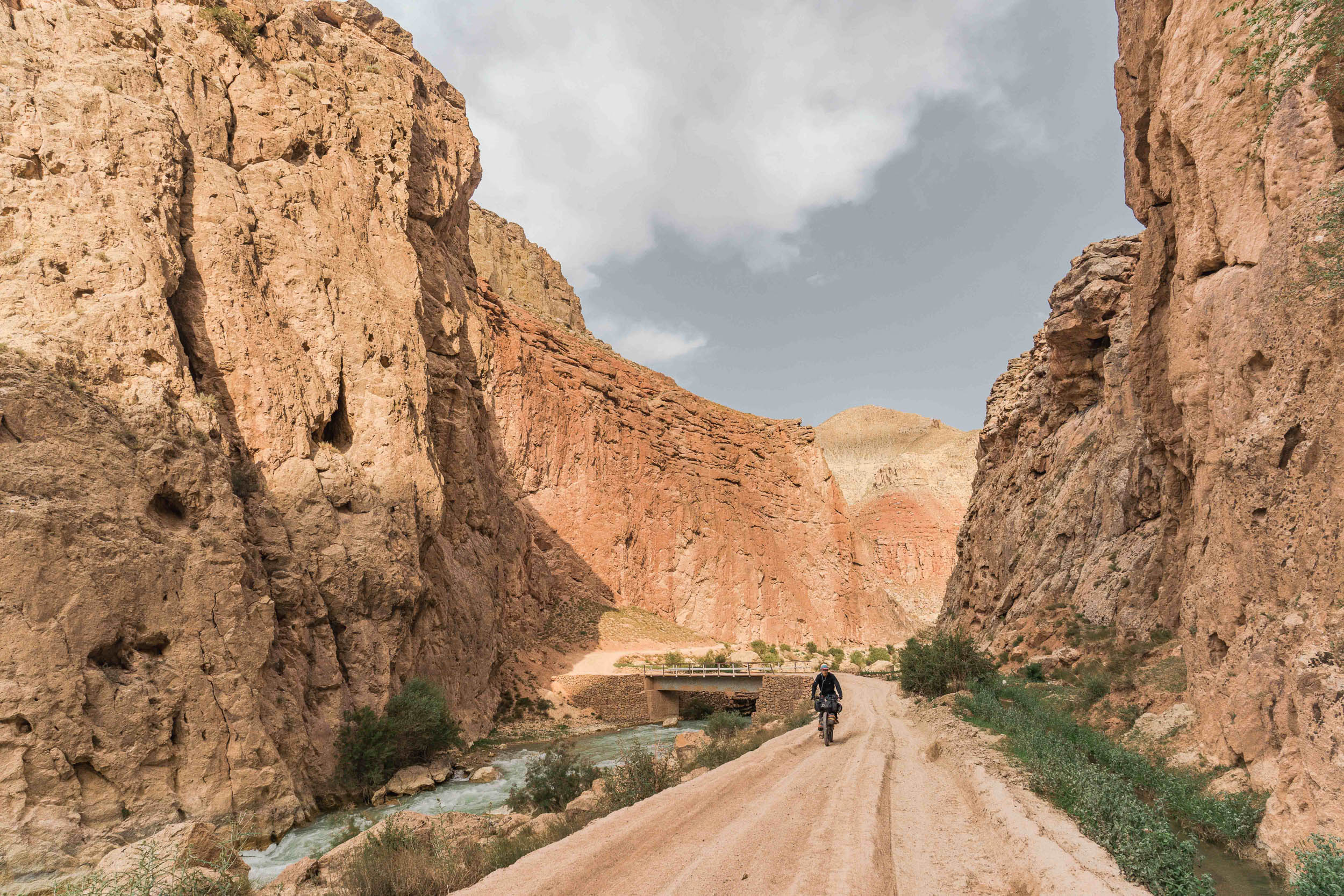
The Balkh River cuts through the Hindu Kush, and just outside the town of Kishindeh, it enters a breathtaking canyon with 500-meter (1,640-foot) vertical cliffs rising directly beside the unpaved road. Cycling through this gorge was an unreal experience, one that photos can hardly capture.


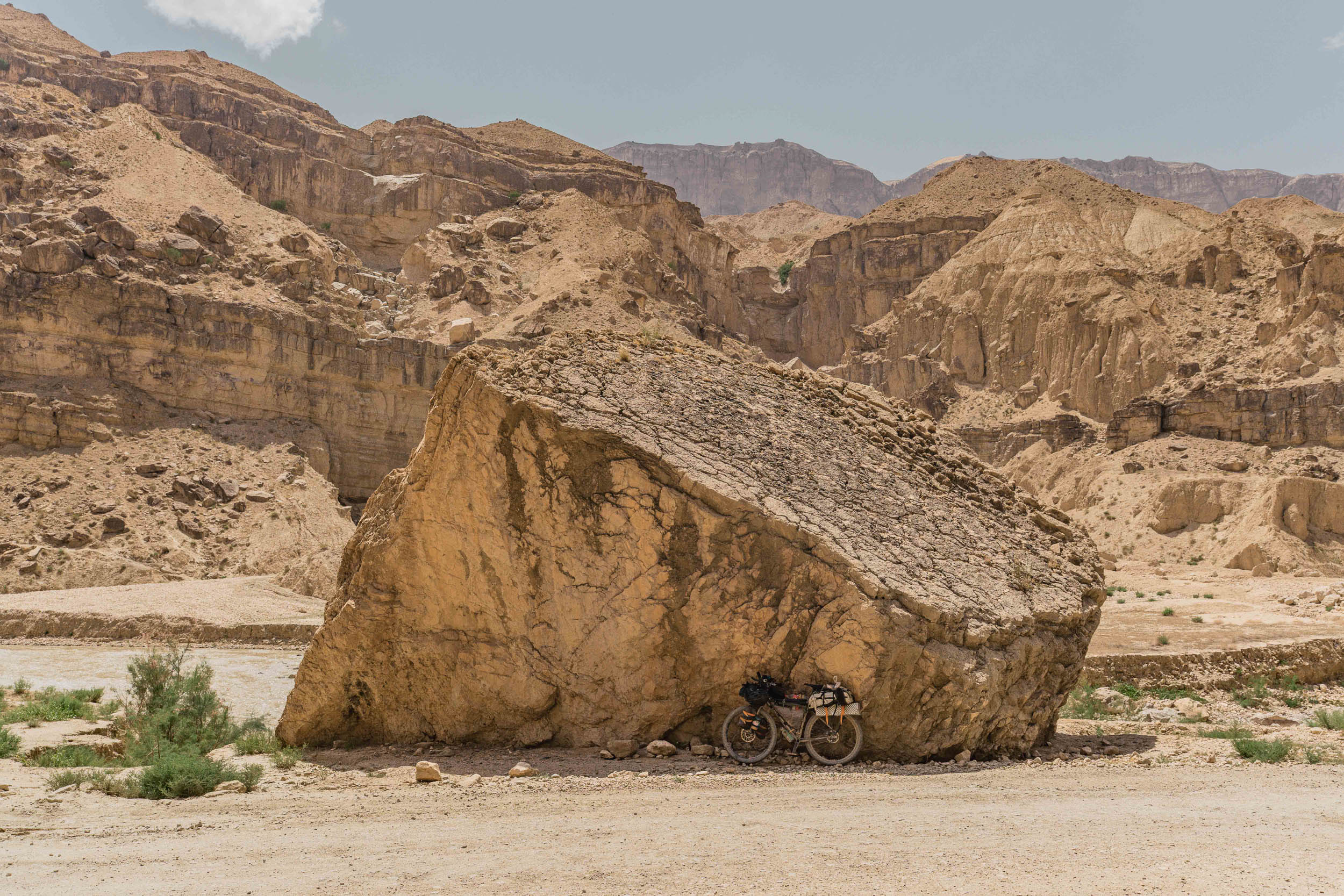
When I reached Kishindeh, I began to feel unwell—likely due to the drastic rise in temperature as I descended from the mountains. Just a few days earlier, nighttime temperatures at Band-e Amir were barely above freezing, while the lowlands were now experiencing a heatwave with temperatures exceeding 40°C (104°F). The Taliban offered to drive me and my bike to the major city of Mazar-e Sharif, an offer I accepted. Once in Mazar, one should definitely visit the famous Blue Mosque (Shrine of Hazrat Ali) before continuing onward to Uzbekistan or Tajikistan.
Direction
It’s advisable to cycle east to west, following the flow of the Balkh River downstream, making for an easier descent overall. Don’t worry, if you’re looking for a challenge, there’s still plenty of elevation gain along the way.


A second reason for choosing this direction concerns travel permits. At present, all foreign travelers in Afghanistan are required to carry a travel permit—commonly referred to as a Maktub. This document must be obtained in the provincial capital of every province you pass through, which can create major detours for cyclists. Fortunately, in Kabul, it’s possible to obtain a single permit valid for all 34 provinces. You can get it at the Ministry of Culture by presenting your passport; the process usually takes just a few minutes and is free of charge.


The procedure in other provincial capitals is similar, though the relevant offices can be difficult to locate. Some tourist agencies can pre-arrange these permits (for a fee), even before you enter the country. If you decide to cycle west to east, this service could save you a lot of time and lengthy detours.
Difficulty and Challenges
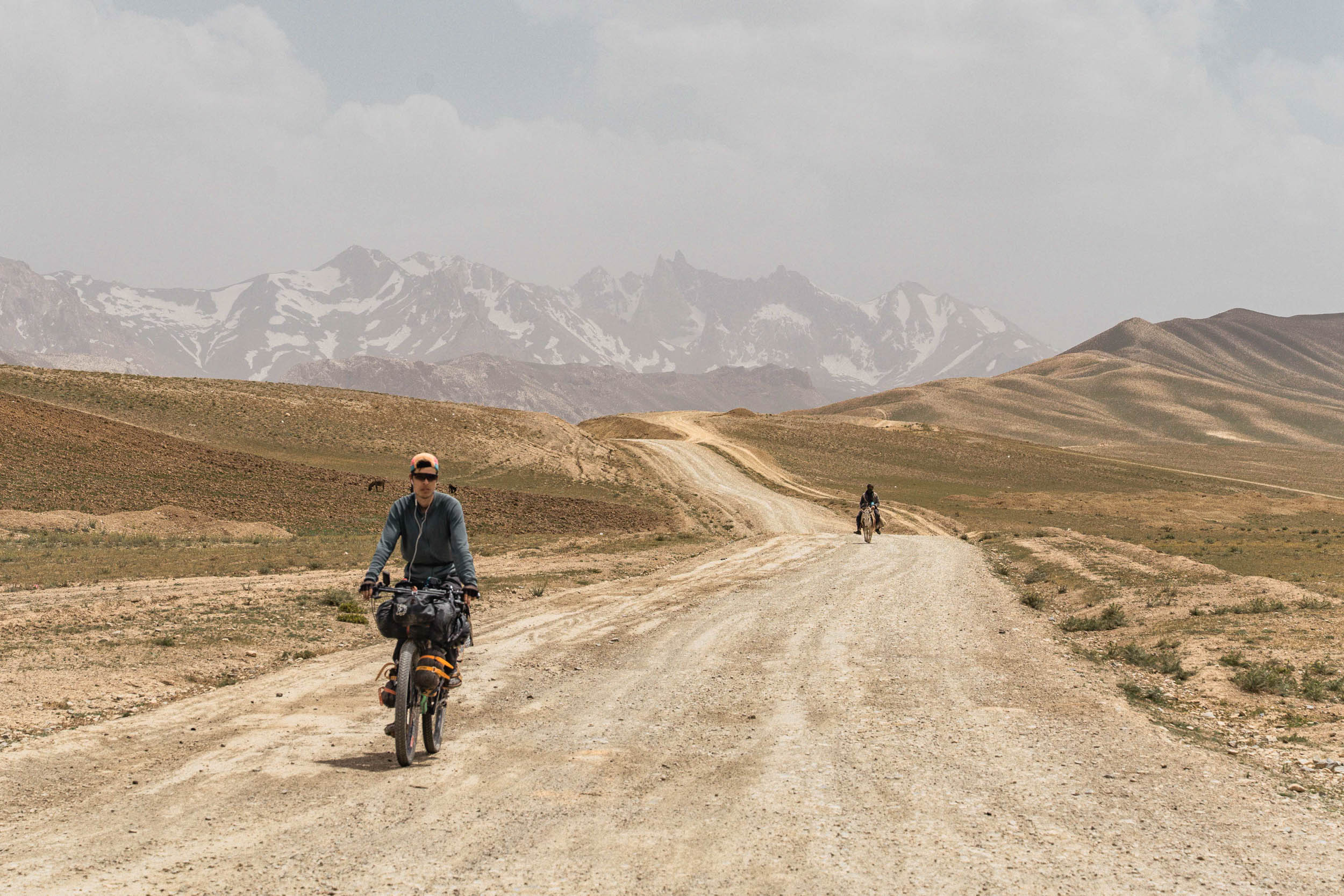
On the map, the route may look manageable, but it’s far from a casual ride. The road is unpaved from Yakawlang to about 20 kilometers (12.5 miles) past Kishindeh, and while it’s rarely impassable, it can be extremely rough. I recommend tires at least 50 millimeters (two inches) wide.
You’ll encounter a few minor stream crossings—possibly more challenging ones in early summer, around May. Regardless of direction, expect many short but steep climbs where the road hugs mountain slopes to avoid flood zones. You’ll likely find yourself pushing your bike at times. The upside? There’s almost no traffic. Another challenge was the constant headwind I faced every day while cycling east to west. This may be a seasonal issue—so if you try this route, let me know how it goes.


Communication was a further hurdle. Most locals in the region are Hazara, an ethnic group of Turkic and Mongol origin who speak Dari, a Persian dialect. Most Taliban personnel, even those stationed in Hazara regions, are Pashtuns and speak Pashto—a completely different language. Neither is easy to learn, and I initially thought I could rely on Google Translate. This turned out to be a mistake, as many rural residents are illiterate and can’t read the translated text.

The voice translation feature would have helped, but it requires an internet connection, which is almost nonexistent in remote areas. I used an Afghan Wireless SIM card, which is recommended for the countryside, but coverage was still unreliable. I suggest either learning a few basic phrases in both languages or recording audio translations in advance while you still have internet access.
Logistics
As mentioned, make sure to obtain your travel permit. It will be checked along with your passport at Taliban checkpoints—usually located just outside cities, at major intersections, or in sensitive areas. Checks typically take just a few minutes. You’ll likely be asked about your plans, possibly offered tea, or, on rare occasions, questioned more seriously.


This happened to me once in Tarkhuj, likely due to miscommunication between checkpoints. I was taken to the local security office, where the Taliban officials inspected my passport and phone (mainly photos and WhatsApp messages). They remained respectful and even invited me for lunch before letting me go once convinced I wasn’t a spy or journalist.
Food and Supplies
In Kabul and other large cities, you’ll find well-stocked supermarkets with Western products. In mid-sized towns like Bamyan, you can easily find everything you need for a cycling trip. Local markets selling fresh produce and bread are common in most towns and larger villages. Smaller settlements often have a single shop selling essentials like noodles, rice, and snacks. You’ll likely pass at least one store each day, but I recommend carrying two days’ worth of food in case of breakdowns. Pharmacies are rare outside towns.

Bike repair options are limited. Mechanics can be found in Kabul and major cities, but none between Bamyan and Mazar-e Sharif. Know how to fix your bike and carry spare parts. Hitchhiking is difficult, as most locals use donkeys or motorbikes.


Between Yakawlang and Kishindeh, I found only two restaurants—one in Tarkhuj (which also serves as the only hotel) and another near a coal mine at approximately 35.72700, 66.98113. Bring a camping stove, tent, and water filter. While bottled water is widely available, but relying solely on it is risky if a shop runs out or is closed. Locals drink stream or well water, which foreigners might not tolerate well. You’ll rarely be without a water source—rivers, streams, and springs are frequent—but always filter or treat your water.
Customs and Rules
If you’re reading this, you’re probably aware of the general situation and valid human rights concerns in Afghanistan under Taliban rule. RAWA is a good resource to read up on. I’ll focus on the practical side.

Foreign women are allowed to travel independently, and I met two solo female travelers (from the United States and Australia) in Kabul. Whether solo cycling for women is feasible remains to be seen—so far, I don’t believe anyone has tried. It should theoretically be possible, as solo women motorcyclists have done it, but traveling with a male partner would likely make things easier in case of women’s health issues or issues with authorities. Generally, the older generation of Taliban members is stricter and more conservative than the younger ones.
Things to Avoid:
- Photographing women or sensitive sites (e.g., checkpoints, military installations)
- Casual conversation with strangers of the opposite gender
- Inappropriate clothing (no shorts for men; women must wear long, loose clothing and a headscarf)
- Criticizing or lecturing the Taliban about their beliefs or governance
Things that should be fine:
- Cycling apparel (tight lycra is acceptable for men if clearly used for sport; not advised for women)
- Listening to music with headphones
- Asking members of the opposite gender for directions or help (briefly and respectfully)
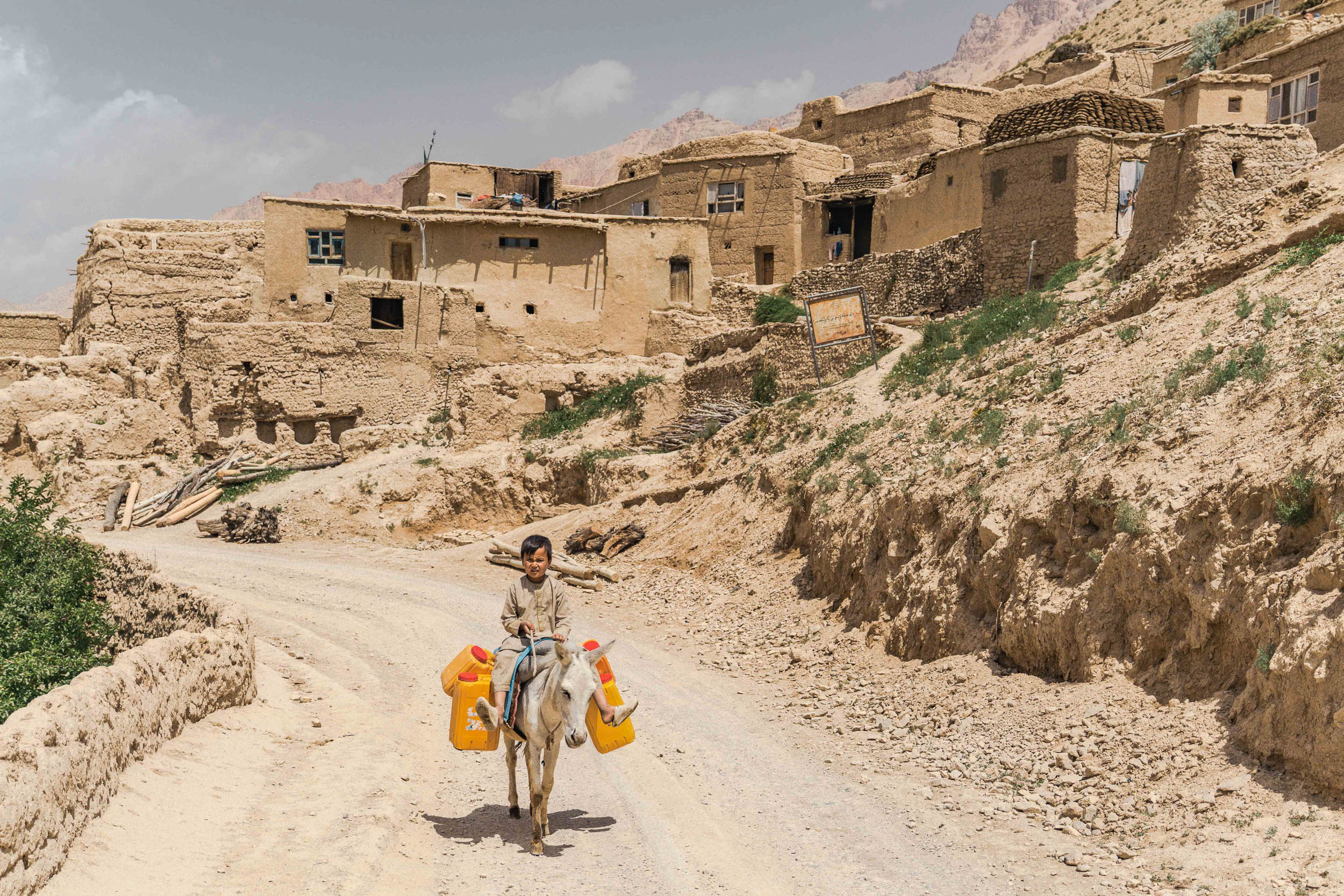
Customs vary significantly by region. Pashtun areas are more conservative, with most women fully veiled. In the Hazara regions—where this route primarily passes—rules are more relaxed. You’ll see fewer burkas, some girls’ schools remain open, and basic interaction with women is possible.
Safety
The most nerve-wracking moment of my trip was during a violent thunderstorm battering my tent above Band-e Amir Lake at 3,000 meters (9,840 feet). Otherwise, the journey was much calmer than expected. While the Taliban remains a designated terrorist organization by the United States, they currently function as the governing authority and are responsible for maintaining safety. As long as you adhere to their rules, they generally treat foreigners well.


Groups like ISIS-K still operate in parts of the country, but the chance of being caught in an attack is minimal. The Taliban’s encouragement of tourism suggests they’re confident about control and stability. Unlike in Iran or Russia, there’s little risk of Western travelers being detained for political reasons.
Because this route crosses Hazara territory, I recommend reading up on the group’s history and its complex relationship with the predominantly Pashtun Taliban. While tensions between Shia Hazaras and Sunni Pashtuns have historically been violent, the regions I passed through appeared calm and stable.
Natural hazards remain a concern: earthquakes, flash floods, rockfalls, and landslides are possible, especially after heavy rain. Emergency services are minimal or non-existent, and rescue operations in remote areas would be difficult, if not impossible.
Finally, traffic can be dangerous. Afghan drivers are often reckless, and I experienced this firsthand when I was struck by a car overtaking me at high speed. Miraculously, I escaped with only bruises—and my bike survived, too.


Despite all the challenges—both physical and mental—Afghanistan turned out to be one of the most rewarding places I’ve ever visited. The people are extraordinarily welcoming, regardless of your nationality. The Taliban, while rightfully intimidating in reputation, were far less hostile toward me as a foreign traveler than expected. The food was excellent, and the landscapes were among the most stunning I’ve seen anywhere in the world.
Would I go back? Probably. Could Afghanistan reach its full potential if government policies changed? Absolutely.
The Route
Further Reading
Make sure to dig into these related articles for more info...

Please keep the conversation civil, constructive, and inclusive, or your comment will be removed.