

 Mountain Bike (MTB)
 Gravel Bike
 All-Terrain Bike (ATB)
 Fat Bike


The Little Bike That Could: Citlaltepetl in a Hot Tent

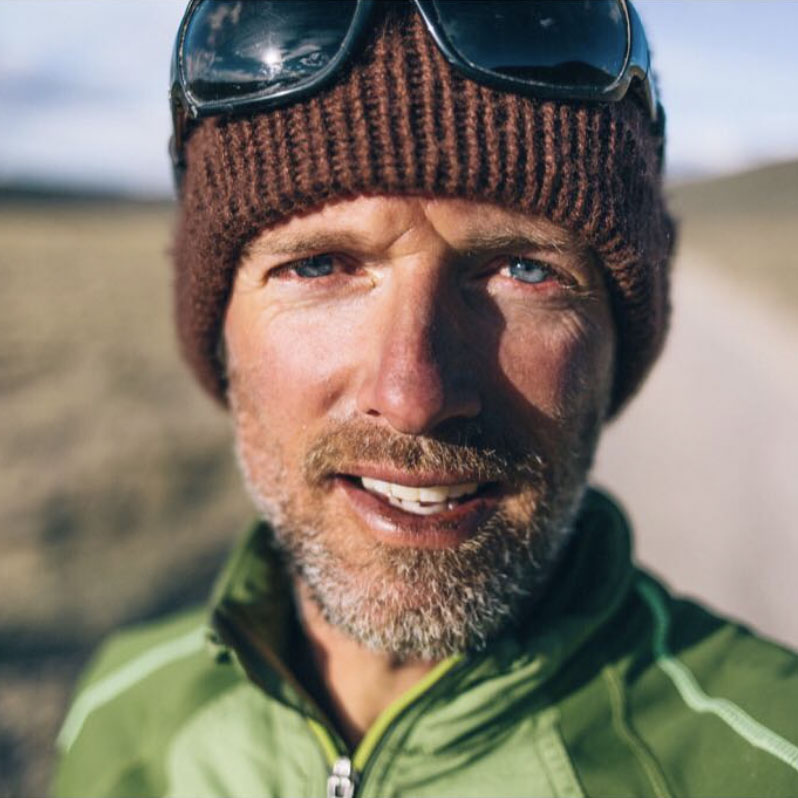
In this cross between a Rider and Rig and Route Report, Cass heads off to ride the epic and wild Vuelta de Citlaltépetl, a loop he’s shared on the site and written about for The Bikepacking Journal, as a yearly bike touring pilgrimage of sorts. This time, he does it in style. Or, at least, in Corey-style, complete with a chimney-equipped hot tent pulled in a trailer by a pink Bike Friday…
PUBLISHED Apr 28, 2026
If you’ve read my piece entitled “In the Natural Habitat of the Clouds” in Issue 14 of The Bikepacking Journal, you might recall that I wrote about the Vuelta de Citlaltépetl, a circumnavigation of Mexico’s highest peak. I ruminated on the idea that this circuito represents such a spectacularly varied, testing, and heart-opening saga of a bicycle tour that I’d try and ride it every year, to mark the passage of time, the changes in the world, and those shifts that come from within.
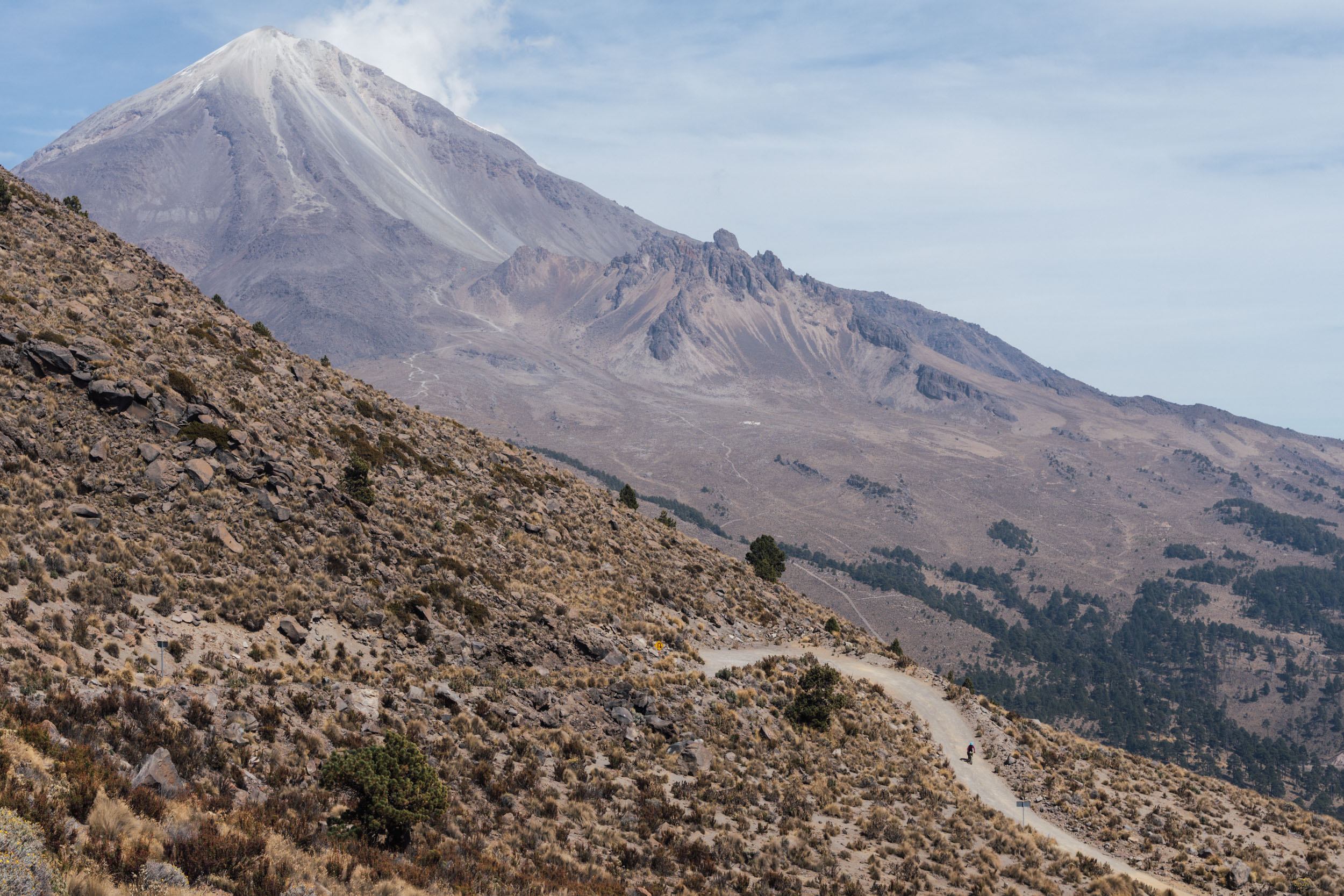
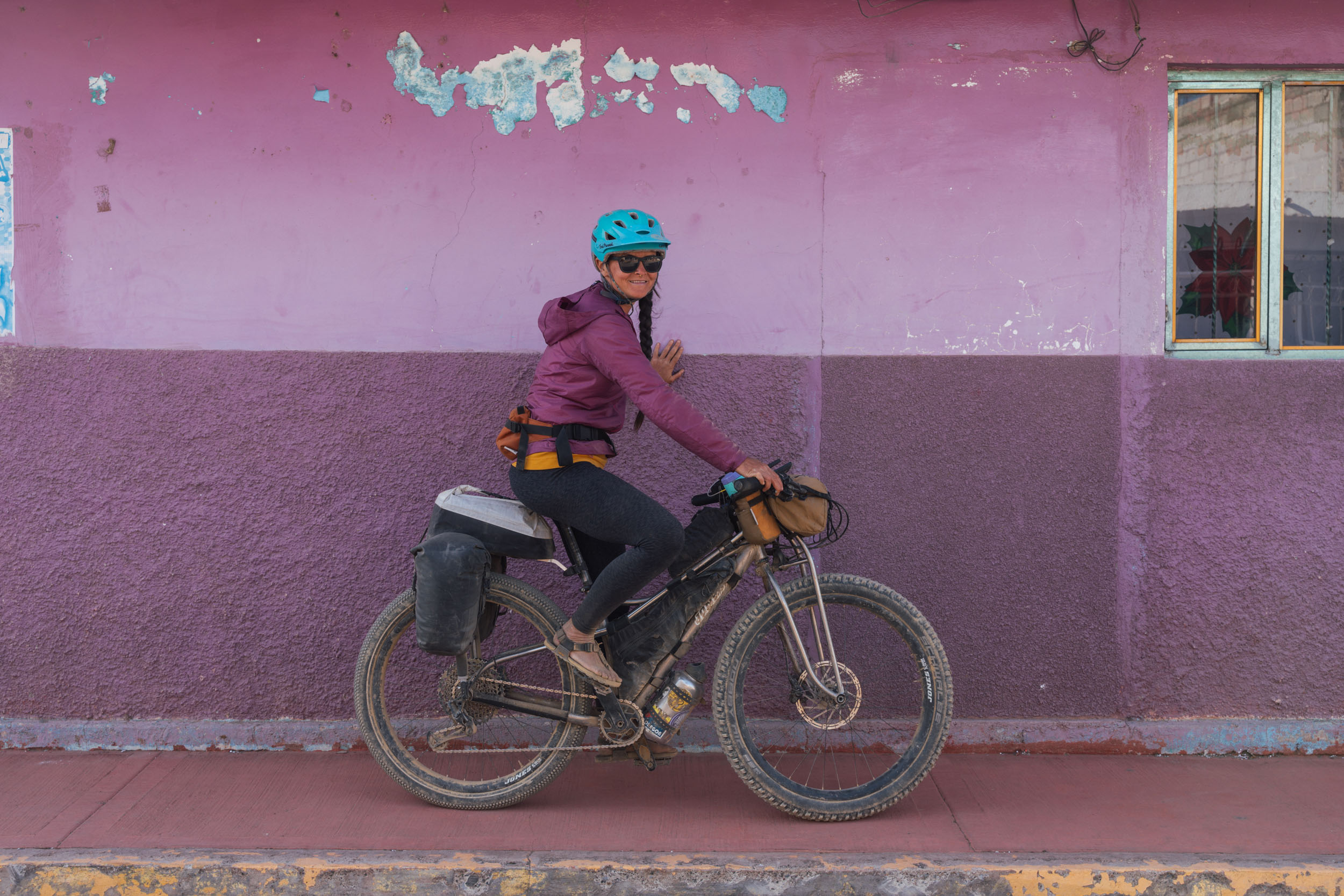
But why the big deal? Well, this is a route that I first rode with Emma when we initially escaped our Oaxaca-phere in 2023, packing up our bikes and busing them over to the neighbouring state of Veracruz and Puebla, home to Parque Nacional Pico de Orizaba. In contrast to the dense, rugged folds of the Sierra Norte, the views there were considerably more epic, complete with active volcanoes that poked out of a high-elevation plateau. It was on a completely different scale to what we were used to, like going from the super mountainous Appalachians on the East Coast to the bigger, grander features and far-reaching vistas of the Rockies in the Southwest.
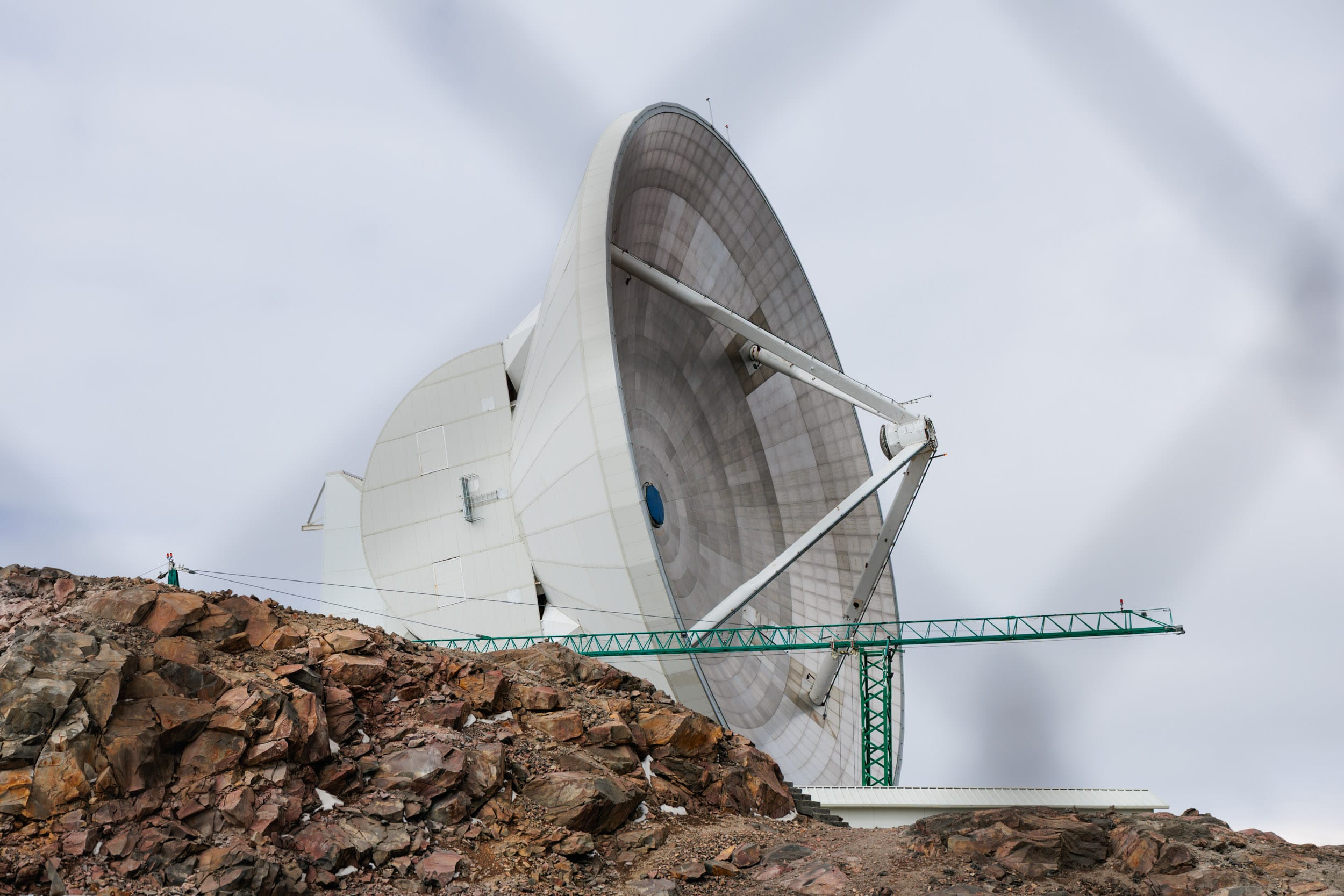
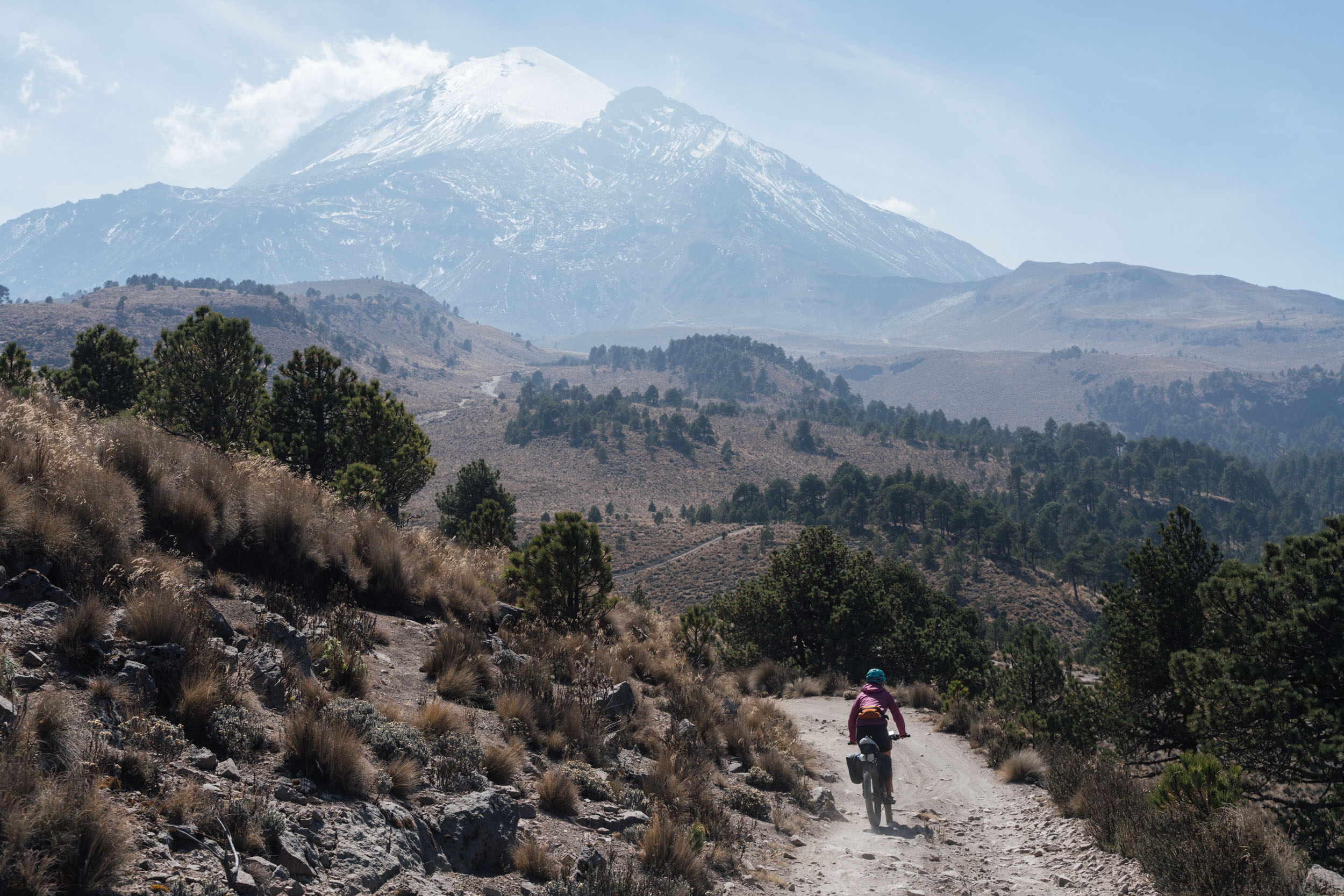
The two of us were enamoured by the variety and vagaries of this loop, which circles all the way around Citlaltépetl (Star Mountain) to give it its Náhuatl name. While a few race around it in two Herculean days that make me sore just thinking about, it takes most bikepacking mortals five or six, hinging around one especially almighty climb to the top of Mexico’s highest motorable road. This ends slap bang in front of the enormous and monolithic Large Millimetre Telescope, which surveys the world from so high above, probing deep space from its perch at 4,600 metres in elevation. Appropriately, Emma was aboard her titanium Jones Spaceframe and kicked up the biggest rooster tail of volcanic dust imaginable behind its monster tyres on her way back down the 3,000-metre descent. Woefully underprepared for the cold after living in balmy Oaxaca, we sourced cheap fleece and thick gloves in the mountain town of Coscomatepec—known for its chayote, a variety of gourd that grows in abundance in the area—once it dawned on us how very cold it would be camping at the kind of elevations I associate with the Andes. The skies were perfectly clear throughout, and through laboured breaths, we observed Citlaltépetl up close and from every angle.
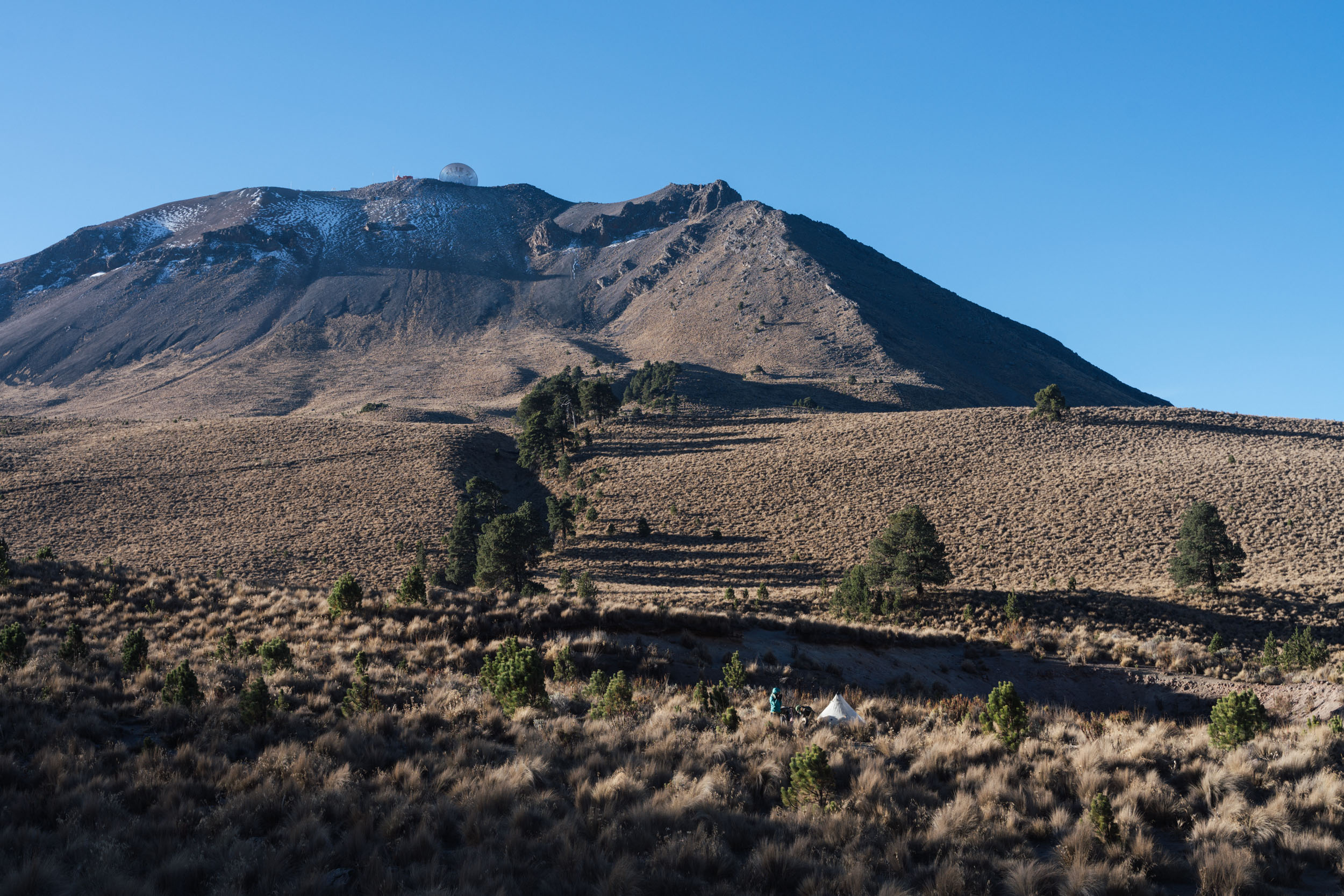
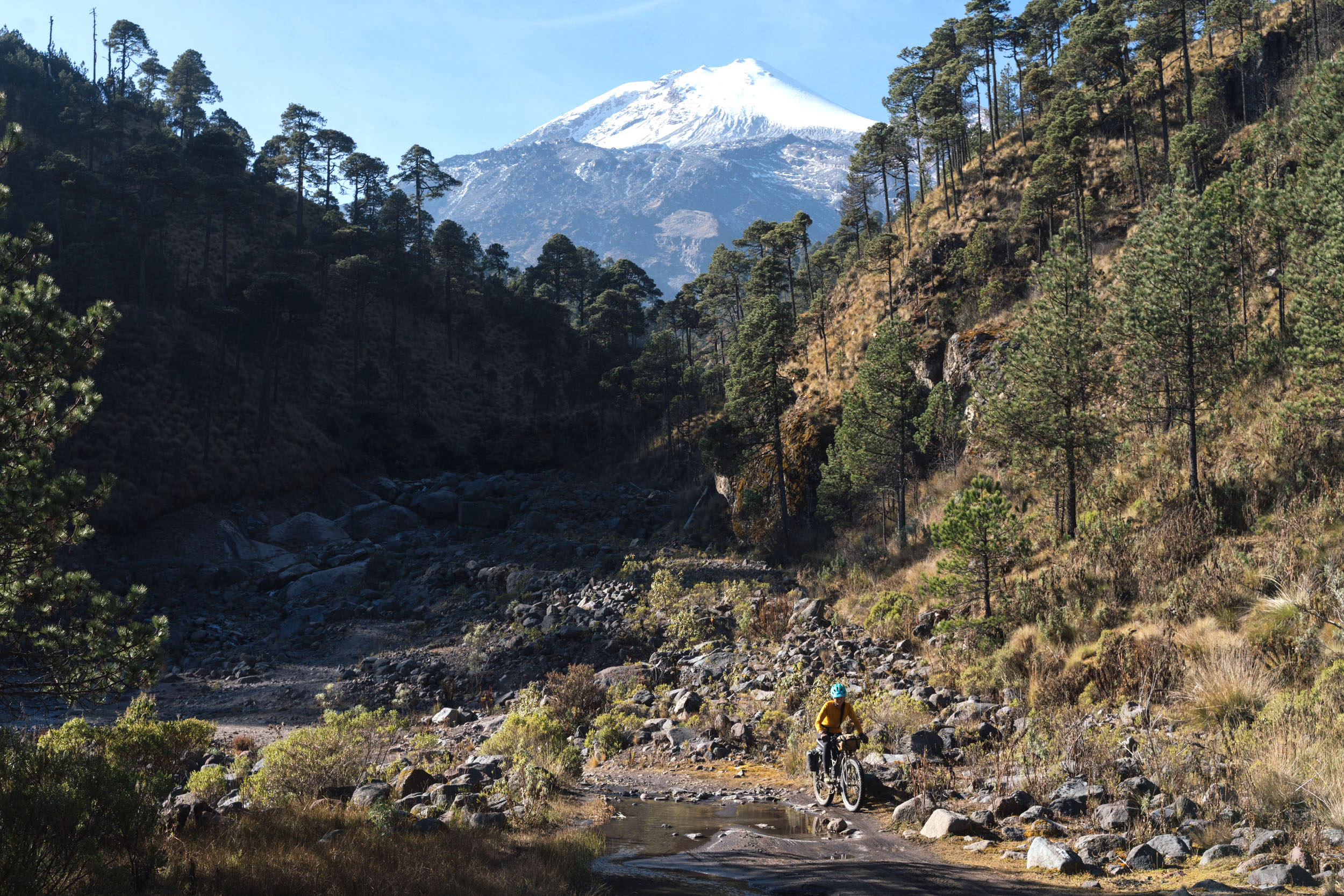
The next year, Mason and I weren’t so fortunate with the forecast, with Pico de Orizaba, as it’s more commonly known by climbers, often lost in a thick band of clouds. Rain pelted down on us for much of the initial climb, and with it, all hopes of seeing the volcano were washed away. Regardless, we still managed to have an unexpectedly wonderful time, perhaps because, as Mason so astutely pointed out, “It’s no less of a peak just because we can’t see it.”
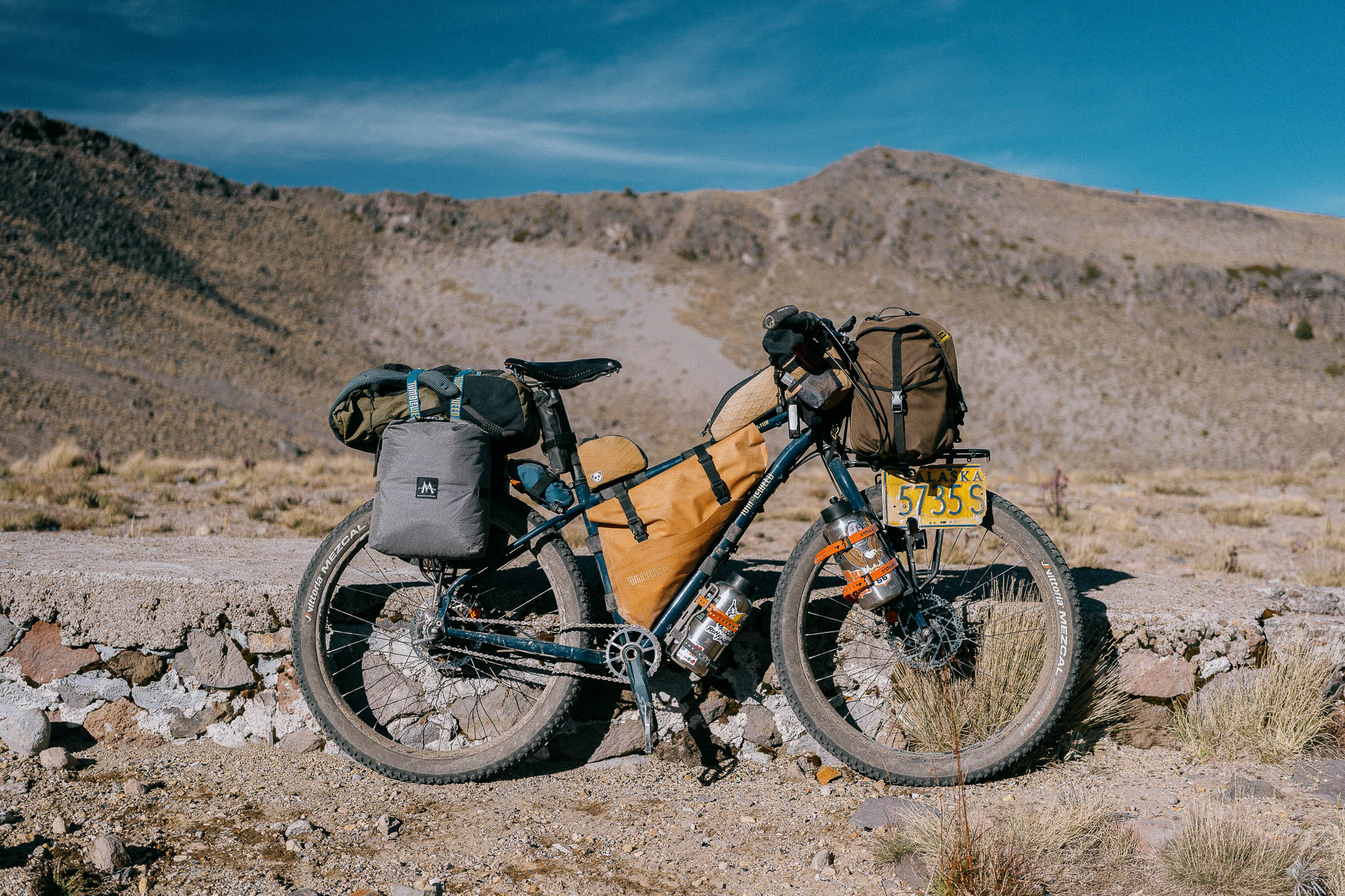
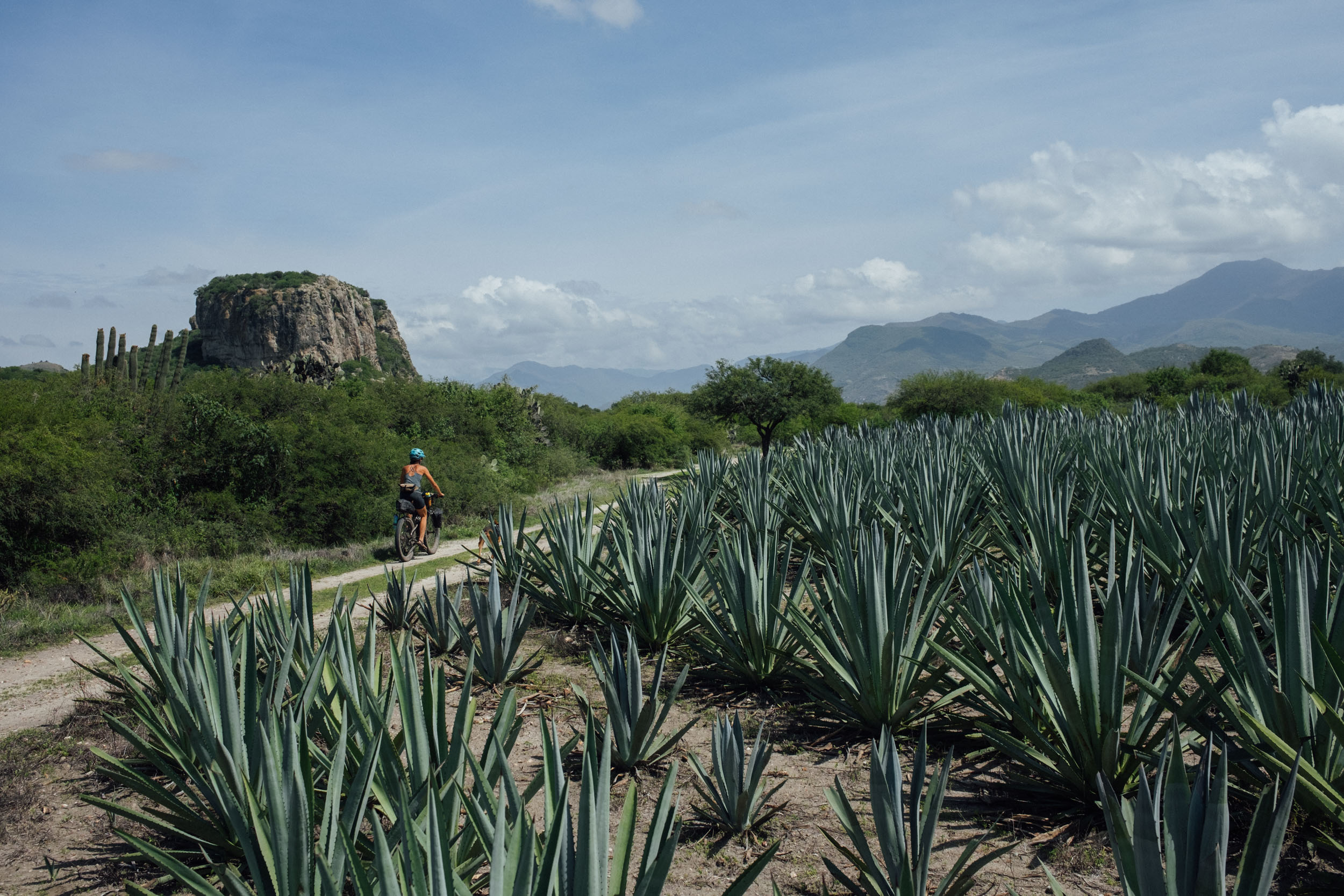
On that occasion, my Jones Spaceframe was joined by Mason’s Crust Evasion, which he’d geared to winch up almost every metre of the initial, often bouldery climb that makes this route so very challenging. It’s a climb that begins amongst plump coffee beans at a sweaty 900 metres and, in one largely uninterrupted stint, reaches over 4,000 metres high, where the air is sharp, and the wind is cool. Mason’s characterful bike was bedecked in colourful homemade bags, aluminium supports, and cargo cradles of his own design. These were made from repurposed offcuts from his work as a seaplane repairer, cleverly customised to carry the likes of industrial steel Klean Kanteens and a compressed local gas bottle for cooking, complementing his homemade dynamo lights. Mason also carried a marvellous and portable espresso maker that leant like the Tower of Pisa, which I dubbed “the contraption.”


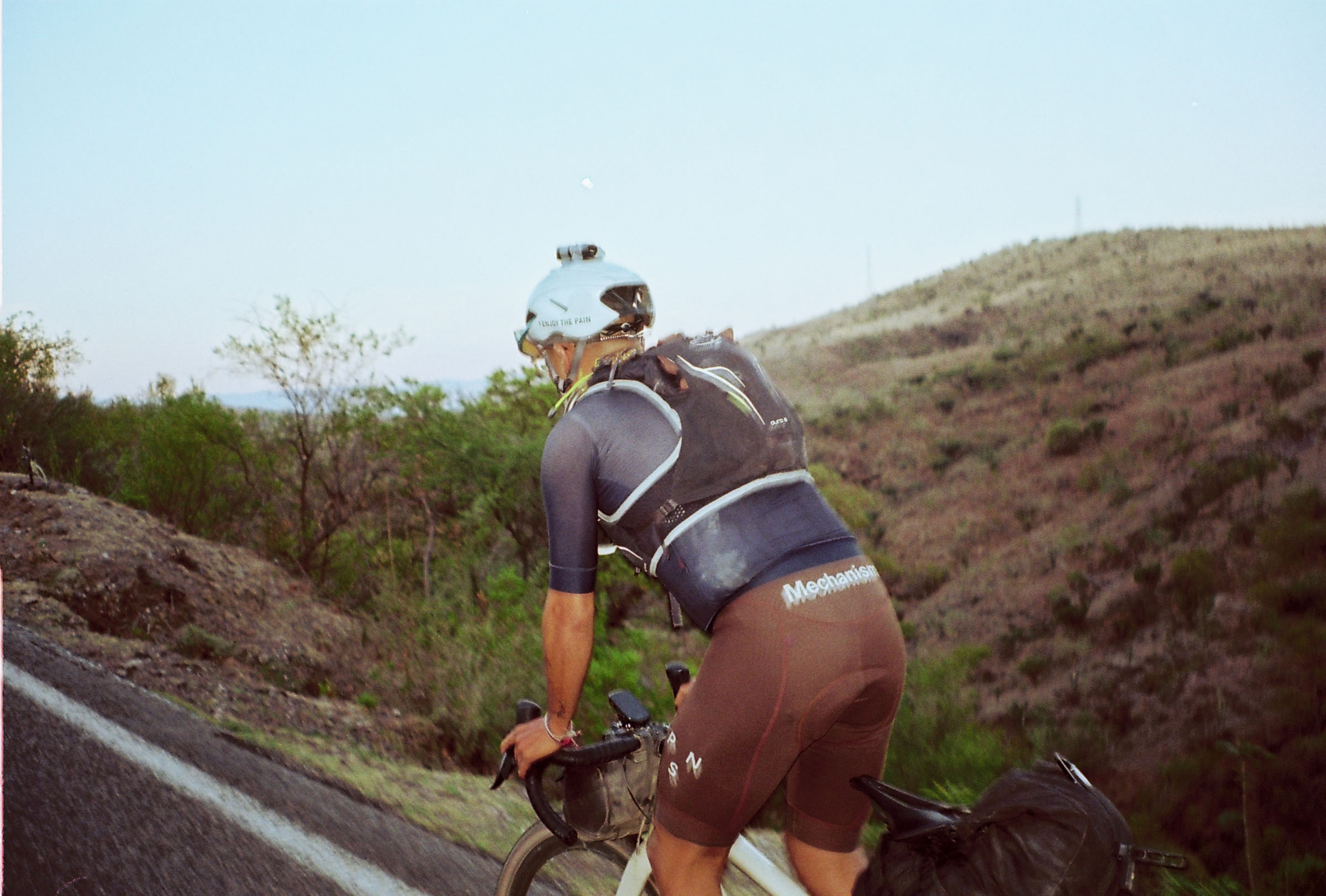
Keen to put my money where my mouth was, I set myself the intention of riding it once again this year, before the dry season was out. And, this time, my riding companion Corey Kronser (and his bicycle setup—more on that in a moment) was no less memorable than the years prior. I met Corey in Oaxaca, where he was passing through town on an extended tour. Together with two other friends, we rode the Remolino de la Reina—aka the Ultimate Shakedown Ride—that starts from my front door and is another ride I’ve enjoyed repeating over the years. Within Corey’s Dodge Sprinter was a bicycle workshop and his clutch of steeds, which included a singlespeed Moonlander behemoth, a folding Bike Friday All-Packa, an e-assisted Salsa Tributary, and a burly, full-suspension Trek Stache. Perhaps such an eclectic collection is no surprise, given Corey’s wrenching job, his guiding business, and his general enthusiasm for madcap ultras that he often dispatches on a singlespeed, or yo-yoed, as he called it—events like Doom, the Arkansas High Country Race, the Olympic 420, Huracan 300, the Fat Pursuit, and a number of others I hadn’t heard of but I’m sure are just as gruelling.


It was the pink Bike Friday that he chose for this undertaking, pulling a Burley Coho single-wheel trailer, no less, and packing… wait for it… a hot tent! Unless you’re brought up in the cold climes of Wisconsin, like Corey, you might not have encountered such a luxurious form of cold-weather camping before. I was familiar with the concept—namely, a tent designed to accommodate a lightweight stove and accompanying chimney—but had never had the good fortune to sleep in one.
The two of us arranged to meet up in Orizaba, having scoped out a potential window for what we hoped would be dry-ish weather—the hot season had been experiencing a surprising amount of rain. I do like this little touristy city, so popular with Mexican nationals. In some ways, it reminds me of an old-fashioned British seaside town, albeit with dense thickets of bamboo and parrots flying overhead, instead of deckchairs and beach huts. Situated in the state of Veracruz, Orizaba is one of Mexico’s much-lauded Pueblo Mágicos, and whilst they’re not necessarily connected, I’ve always felt a sense of magical realism to this old railway settlement and its immediate surroundings.


For a start, its riverside walk is lined with animal cages housing tigers, lions, monkeys, and more—part of a public zoo that’s home to rehomed narco pets. In between hanging bridges coated in bromeliads, there’s all manner of colourful, creative murals, and ancient industrial infrastructure that’s been reinvented for urban adventure. Aside from being the location for Mexico’s oldest and largest port, Veracruz is also well known throughout the country for the quality of its coffee beans. This feeling of the fantastical extends to its coffee shops, or at least one of them. Orizaba is home to a curiosity called the Iron Palace, a fanciful building designed by the French engineer Gustave Eiffel, of Tour d’Eiffel fame, and which houses the popular Gran Café de Orizaba. This metal structure can be completely dismantled and was, in fact, made in Belgium, and then transported by boat to the Port of Veracruz, on the Gulf of Mexico. It was put back together again, piece by piece, in 1894—apparently, it uses a total of 823,222 screws, though who was tasked with counting them, the history books do not say.
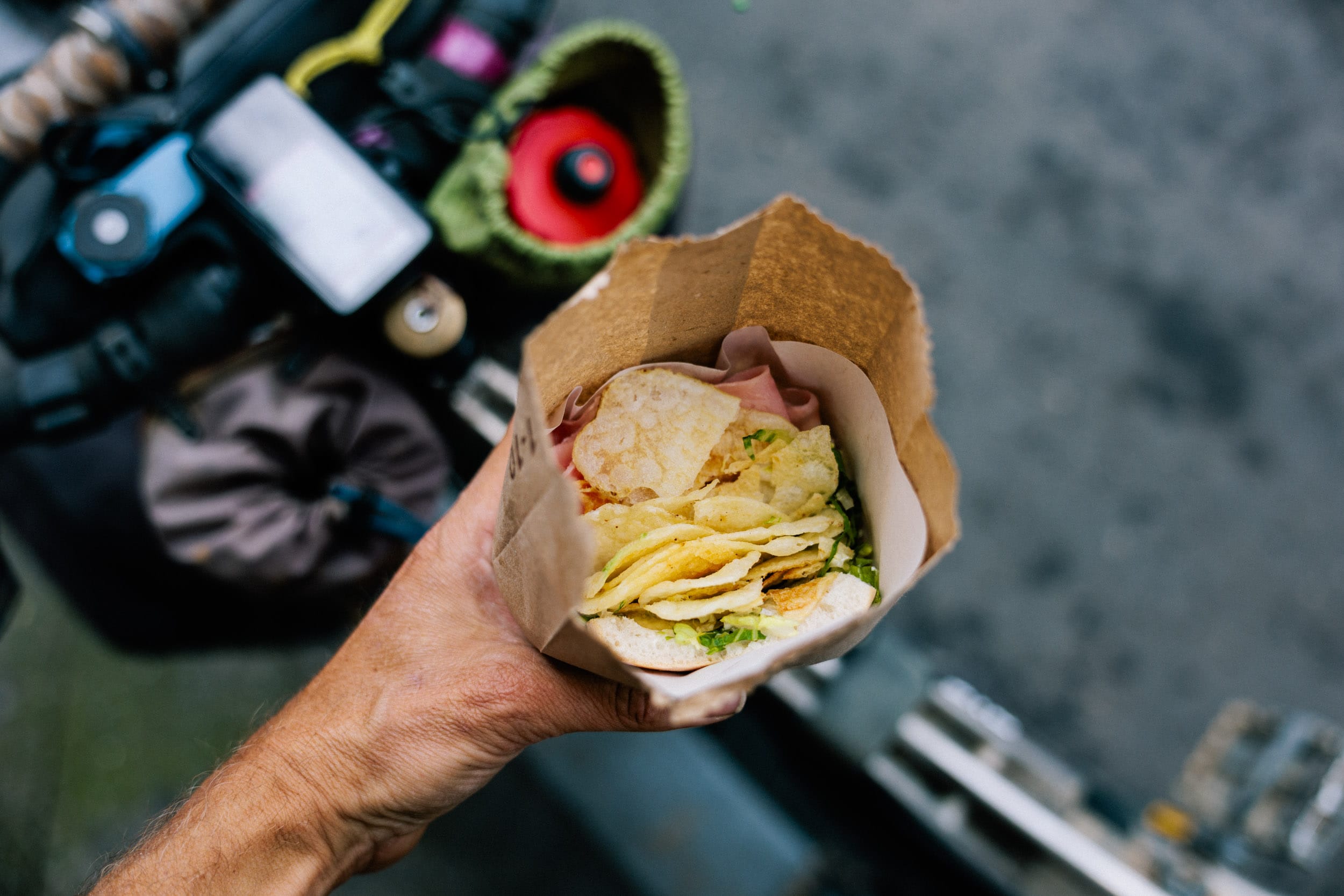


After an initial spin around town to find our bearings—Corey arrived by bus from Mexico City at midday—we loaded up our stem bags with $3 tortas so big, and so crammed with potato chips, that you’d need the jaws of an anaconda to bite into them in one go. Then we despatched with the opening highway junk miles of the route, past cement factories and chemical processing plants, descending to the lowest point of the ride at a jungly 950 metres.


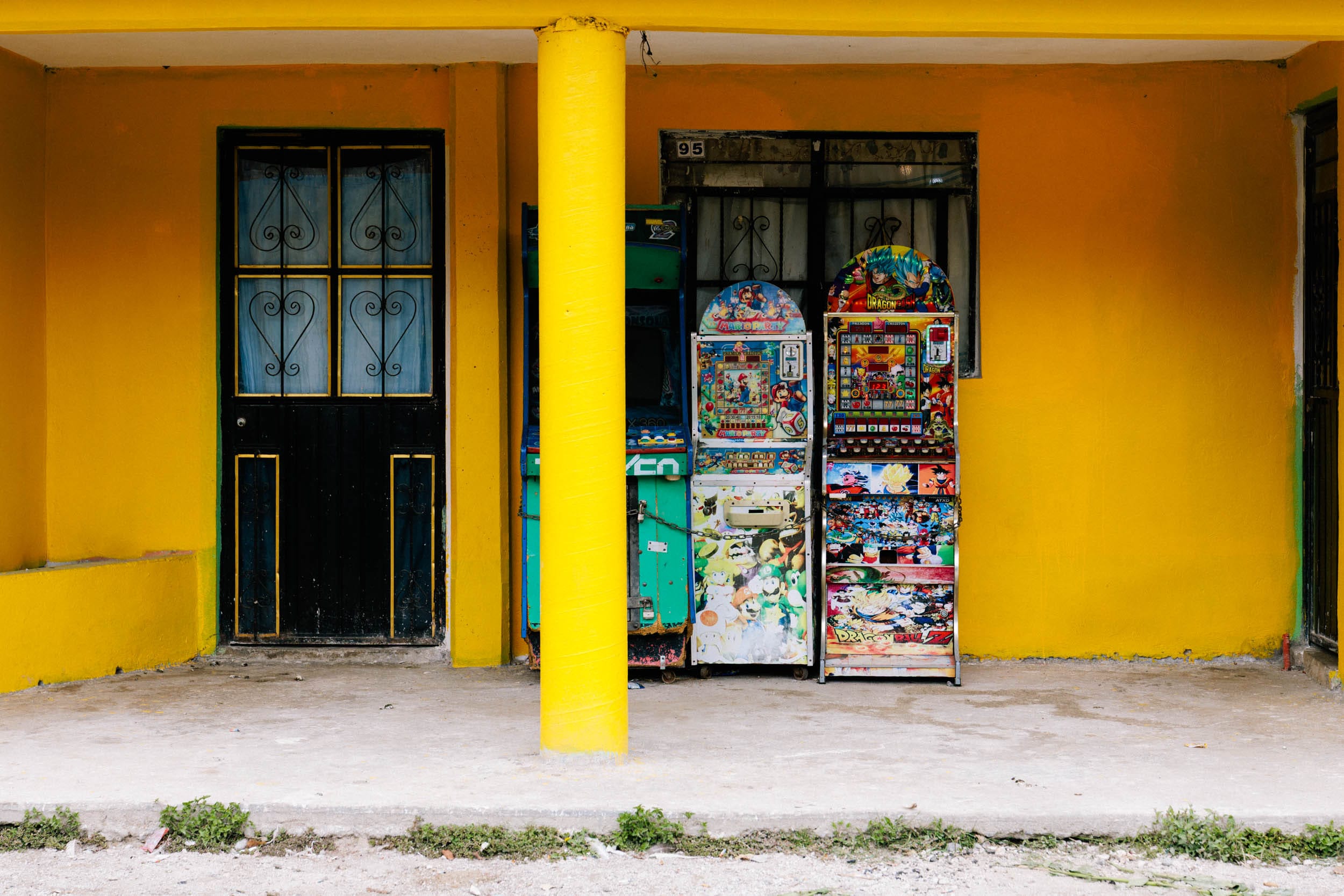
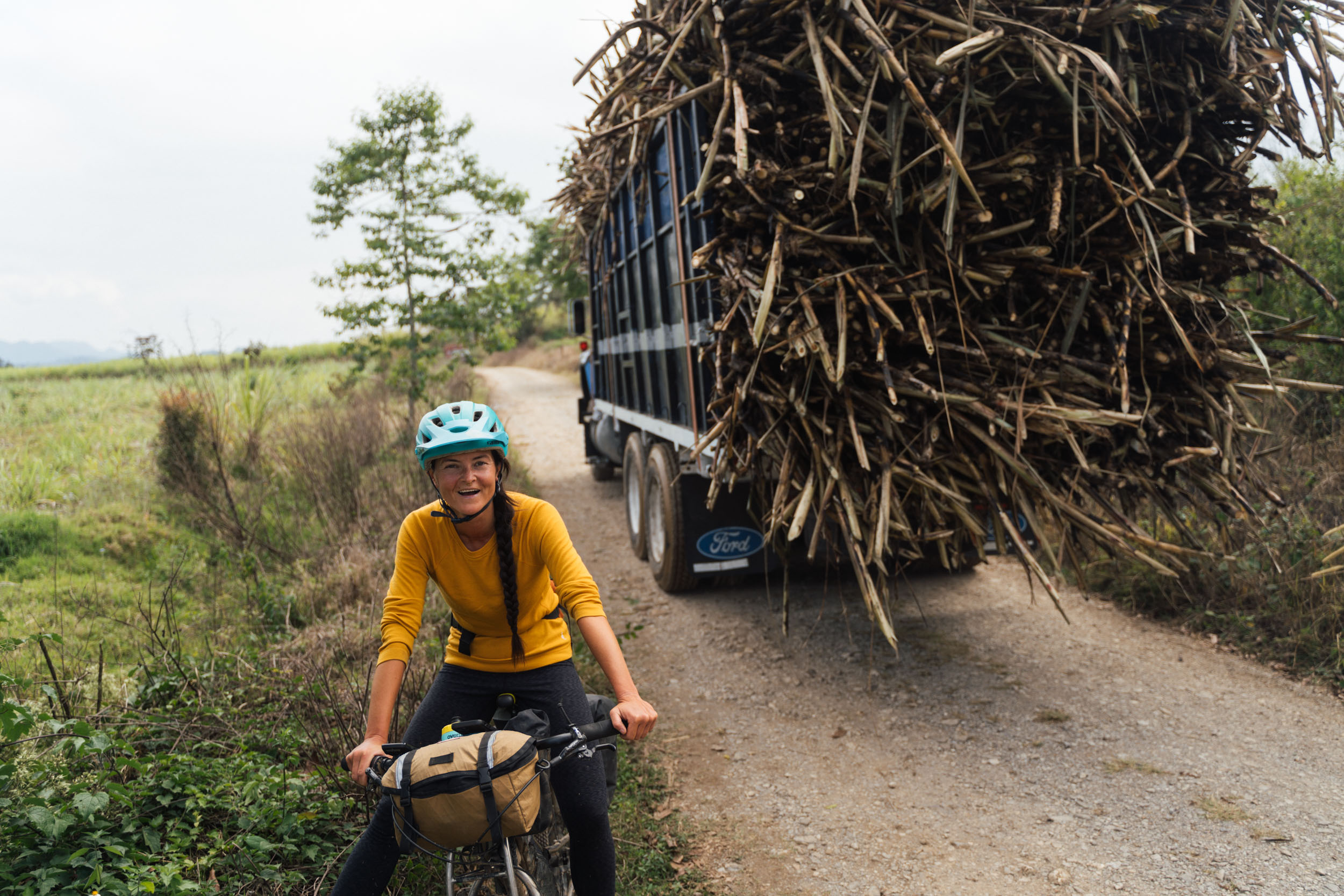
From there, we turned off onto far more calming coffee and sugar cane plantation two-track and began the slow process of clawing back some elevation to Coscomatepec de Bravo, where we spent the night resting up and preparing ourselves for the big climb the next day. We checked into a cheap hotel, and I was happy to crash out, mostly because my night bus from Oaxaca had left at 12 a.m. and arrived at 5:30 a.m., so I was extra exhausted.


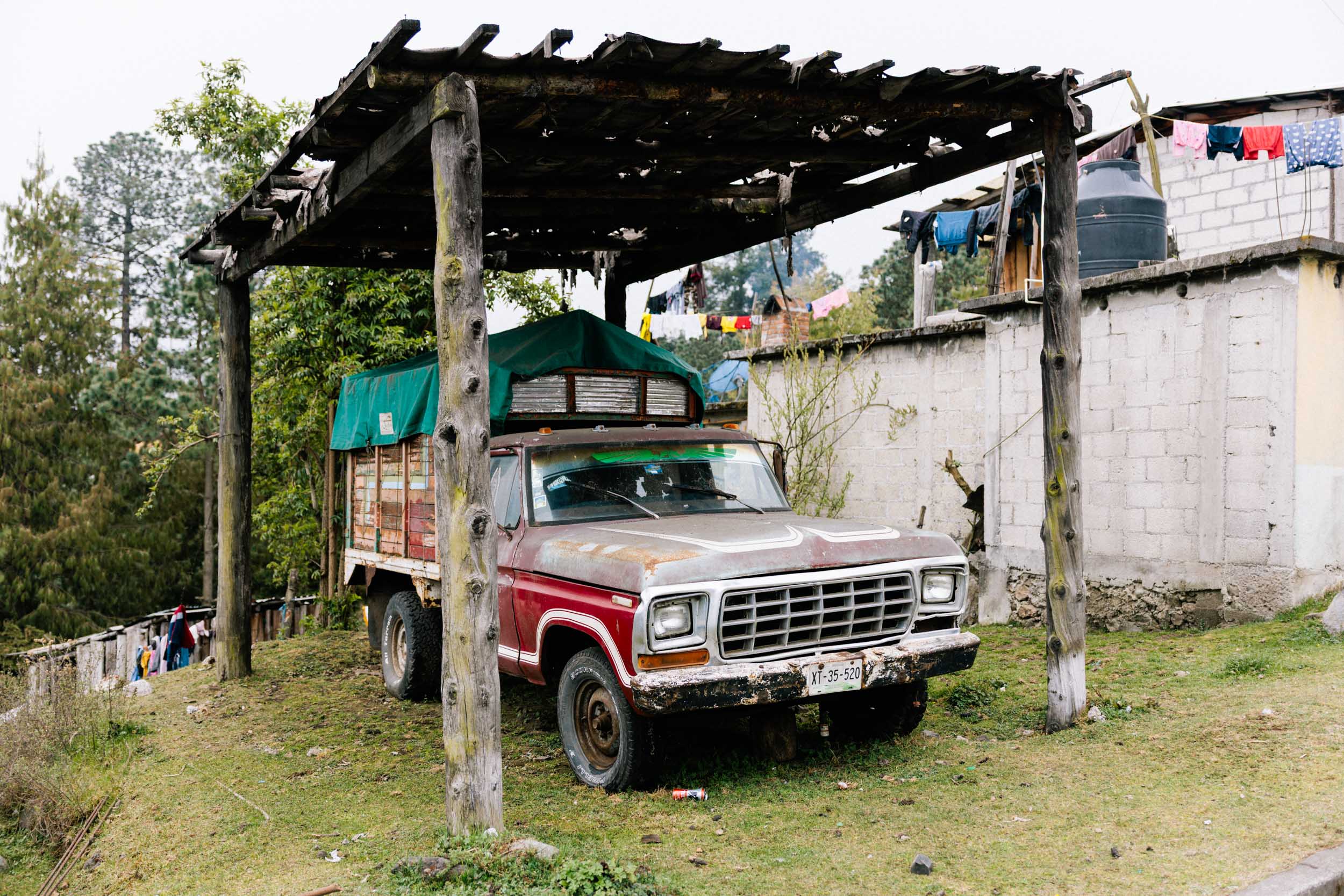


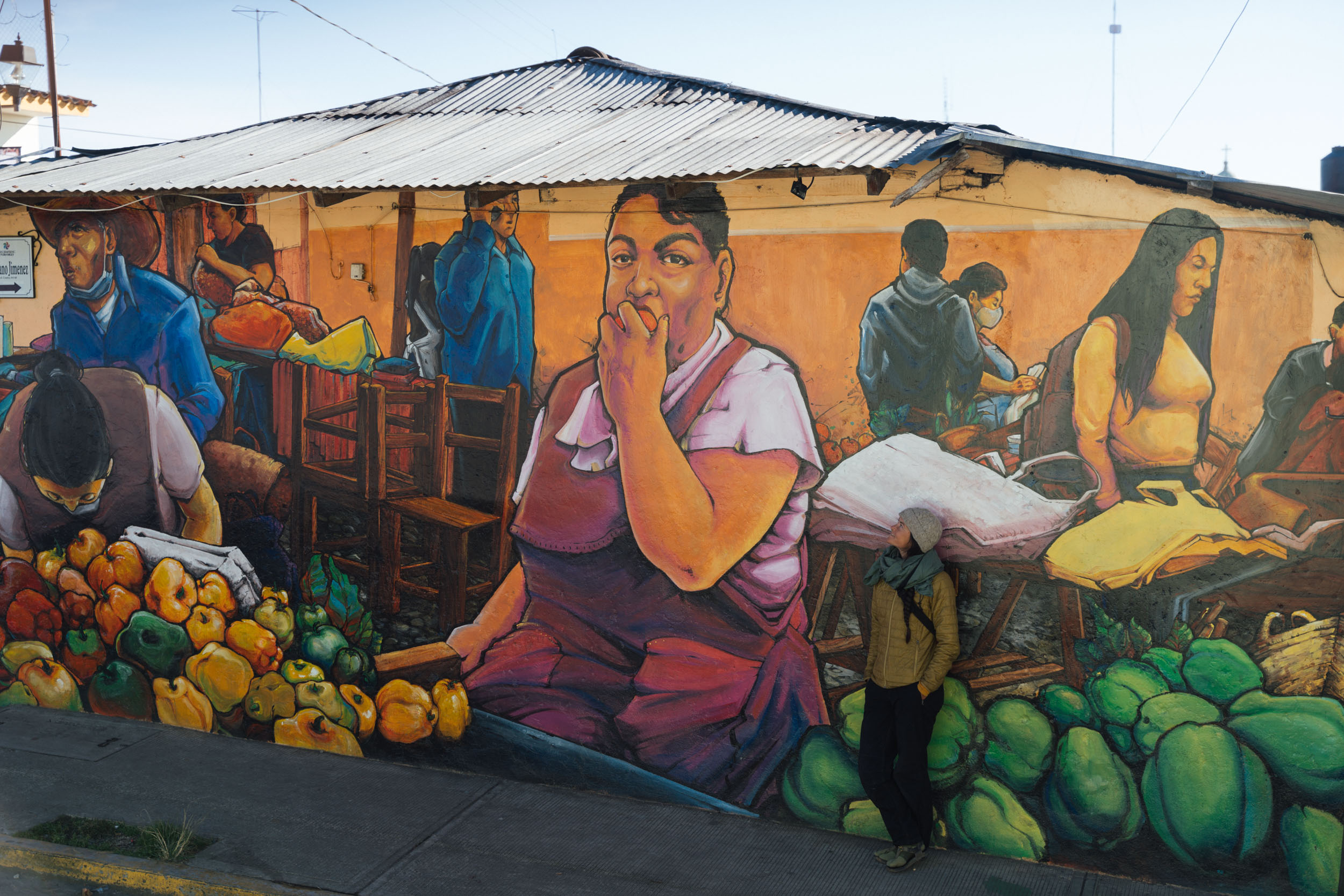
As unrelenting as the climb undoubtedly is from Coscomatepec, or Cosco, as it’s known, at least there are a few unpaved sections and some ridiculously steep concrete stabs that break up any monotony. And, whilst the weather wasn’t as clear as we might have hoped, it did afford some lush green views of the ever-steeper valleys we climbed through. As we neared Nueva Vaquería, the last village before the Parque Nacional Pico de Orizaba begins, mist swirled around us, and the temperature dropped considerably. Here, vying for space with Mad Max-esque logging trucks were muscle-car Nissan Tsurus, complete with exhausts as thick as biceps and colourful paint jobs. As it happens, the Tsuru is a remake of a Nissan that was discontinued in the ’90s. Production in Mexico only stopped less than a decade ago because they proved so reliable and robust, and today, many are found bouncing along some of the roughest rural dirt roads you can imagine.


In fact, from here on we’d be following terrain where only motos and 4WDs—and Tsurus, of course—can safely venture. As the road ramped up, surfaces crumbled into loose dirt and sand. Nonplussed, Corey and his Bike Friday and trailer combo biked and pushed ever onwards, and as if the elevation wasn’t challenging enough, he loaded it with discarded tree limbs. One piece was at least two metres long!

I had a particular camping spot in mind, one that Mason and I had used the year prior, and I’d planned to pitch my own home from home next to Corey’s. But after seeing the palatial proportions of his four-person pyramid tent, and how efficiently he set up the shoebox-sized stove and rolled the chimney together, like he was preparing a giant spliff, I gratefully accepted his invitation to join him. Corey had also packed a compact hatchet and an Opinel hand saw. I mean, who doesn’t? Decked out in digital camo from head to toe, he quickly got to work prepping fuel for the night ahead.


A roaring fire was soon on the go, and the stove window glowed a relaxing, soothing orange. What a treat! On it, we positioned our pots of water, cooking pasta we’d bought from an abarrote—the tiny yet sometimes surprisingly well-stocked micro general stores found in every settlement, no matter its size. I added in fresh garlic and some cream, making quite the feast—after some 2,000 metres of elevation gain that day, I slept deeply and restfully. Note to self: night wigglers like me should allow plenty of space between body and hot tent stoves, or you’ll risk singeing your sleeping bag, as I did.

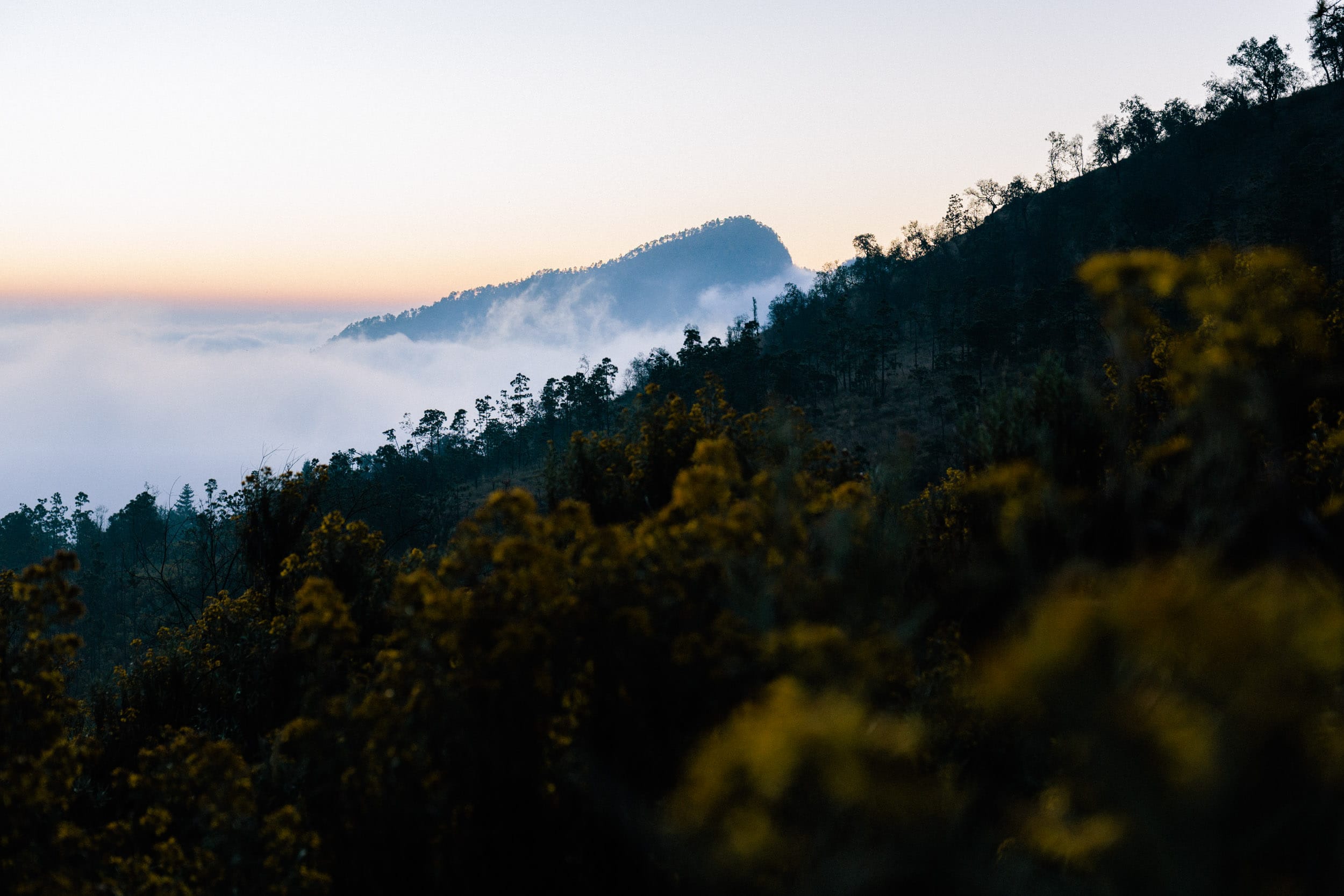


Come dawn, Corey lobbed in another limb from the stack he’d prepared, and the furnace crackled back to life. All we needed to do was place our cups of water on top, and they were soon bubbling away, ready for making coffee. Need I mention that whilst I made do with my usual cowboy-style brew, sipped through clenched teeth, Corey had a hand grinder and an Aeropress—of course he did. Still, while I may lack decorum in coffee making, I consider myself a connoisseur of sunrises, and this particular one was amongst the most spectacular I’d seen in some time. It began with a glorious cloud inversion across the valley, a giant duvet that covered the land from whence we’d ridden, before individual clouds were backlit by a quickly rising sun, like they were part of a changing theatre set. A snow-capped Orizaba appeared to our west, so white I blinked at it against the brightness of the cobalt blue sky.


Once we’d packed up and taken to the bumpy road once more, we were graced by completely clear conditions all day. Citlaltépetl peeked around every corner we turned, and we worked diligently to reel it in. Although this was just one climb in a series of challenging ascents, I consider this section of the route to be the crux of the ride. A dirt road, washed out by countless rains, wends its way first through pine forests and across babyhead rocks, before surfaces morph to volcanic dirt and sand, high above treeline on the northern side of the pico. On this third lap of the peak, it was interesting to note which places stood out. Sometimes, my recollections were jogged by a photo I remembered taking, or a place we stopped to make coffee, or a conversation I had. The familiarity was comforting, as different as each experience also felt.


At this point, we were well above 4,000 metres in elevation, and although we struggled to push our bikes up some of the steeper inclines, given the thin air and jumble of rocks, we detoured up one last climb to Refugio Piedra Grande. There, a local climbing guide shared good news with us. No rain was due for a few more days, and climbers were readying themselves for the demanding glacier traverse to the summit, at 5,636 metres, and some 1,400 metres above the refugio itself.

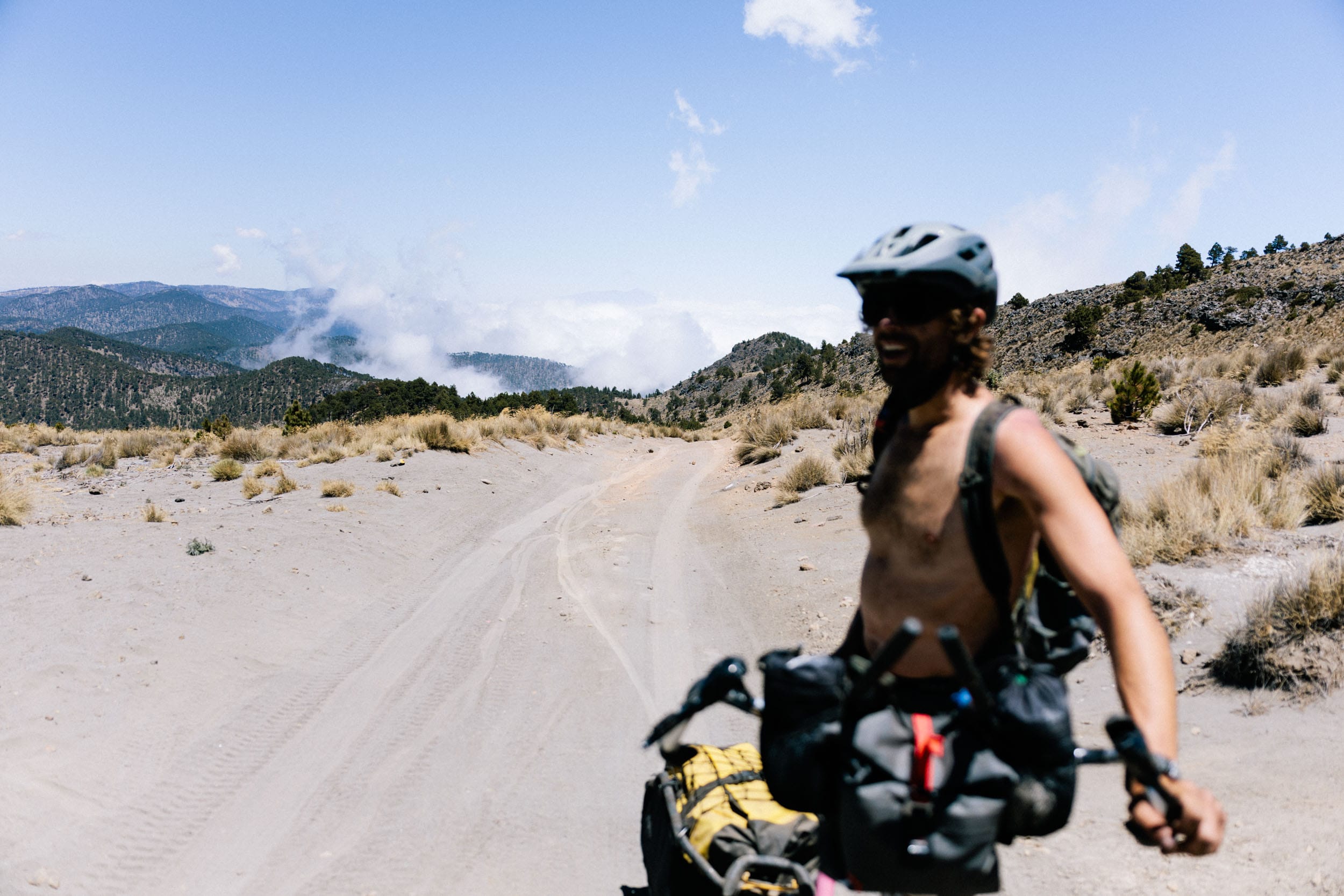


For us, though, it would be a descent from the refugio, just as dramatic as the climb. Initially above treeline, we surfed our way down through thick dust and sand, following bobsleigh-style shutes that whipped us through groves of pine trees and past clearings of tussocky grassland. Then, the dust really kicked up, making close-quarter riding impossible—both for the rider behind to see anything in front of them, and to read the terrain under tyre. Pico de Orizaba straddles the states of Veracruz and Puebla, and the environment on the Puebla side of the volcano is completely different to that in Veracruz, from where we’d come. Gone are the coffee plantations, the fields of avocados, and the vines of chayote, and indeed any hint of the colour green or even a molecule of moisture in the air.


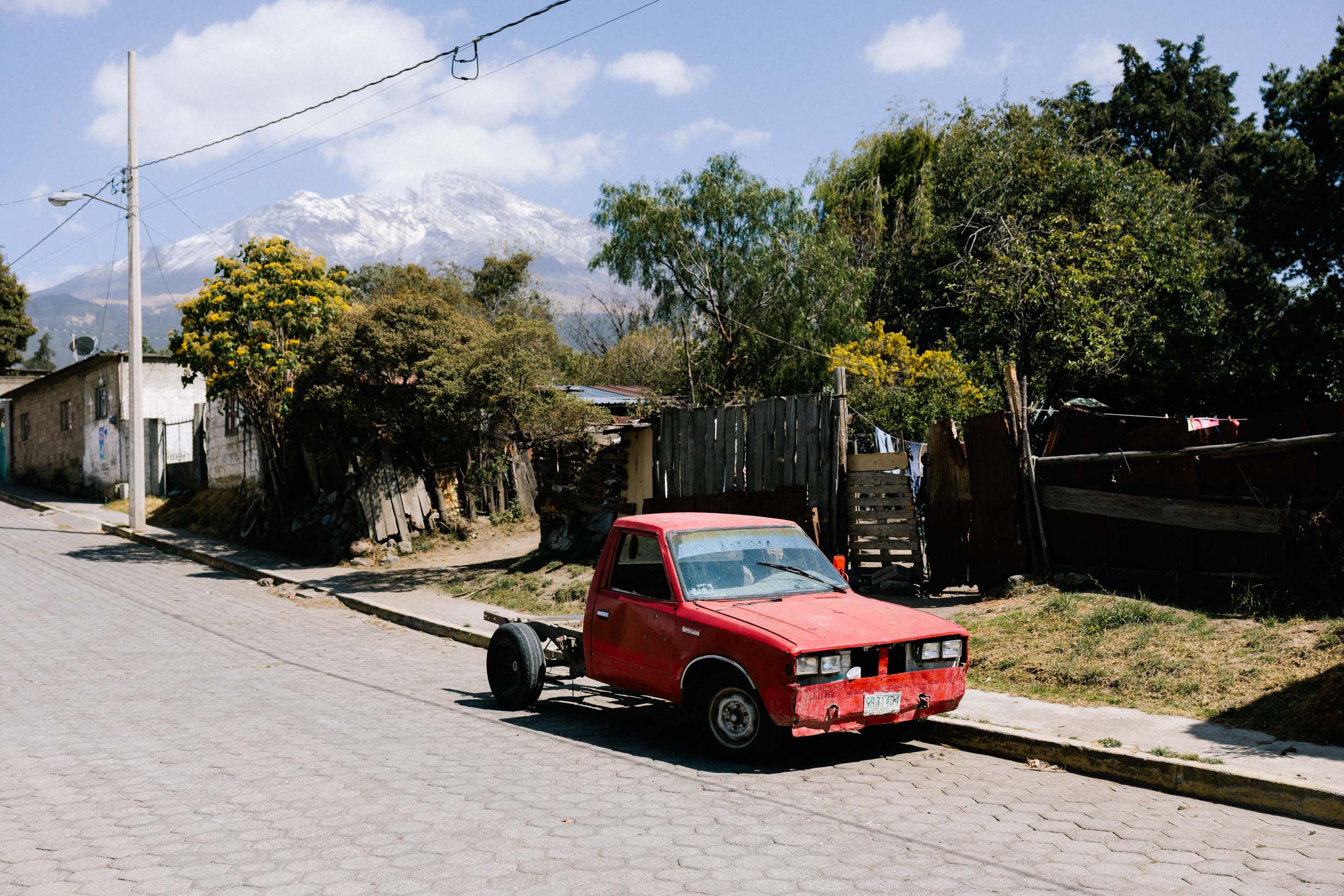
Instead, it was mouth-parchingly dry, dusty, and windswept. This northern side of the volcano reminds me of the opening scenes in the film Interstellar, in which crops can no longer survive, and dust dominates the landscape—even though the volcanic soil here, primarily used to grow maize, is actually very fertile. It was especially blustery on that day and dust devils whirled across the land like dervishes, and a detail-less backdrop obscured any sense of depth or distance. We stood gazing into this abstract land as a funeral procession worked its way through the streets of San Miguel Zoapan, the first significant village on the way down. A live band followed behind the casket, and the wind kicked sand around their feet.
Uninspired by this post-apocalyptic weather to keep riding, we veered off route to Tlachichuca for the night, for a resupply and the promise of dinner, and tracked down a simple hotel. In town, avocados were sold from the back of a pickup truck, announced on an infinity loop by a loud tannoy, and a dozen varieties of sweet bread could be sourced from the trunk of an old SUV. Roof dogs barked at us as we wandered around, stocking up for the days ahead.


Again, there it was, Citlaltépetl, catching our eye down almost every street in Tlachichuca. On this side of the state border, the volcano looked even more prominent, adding to the surreal landscape vibes that surround it. We leafed through the hotel’s visitors’ book, which detailed the names and impressions of almost 30 years of tourists and climbers who had been drawn to Citlaltépetl, just as we had.
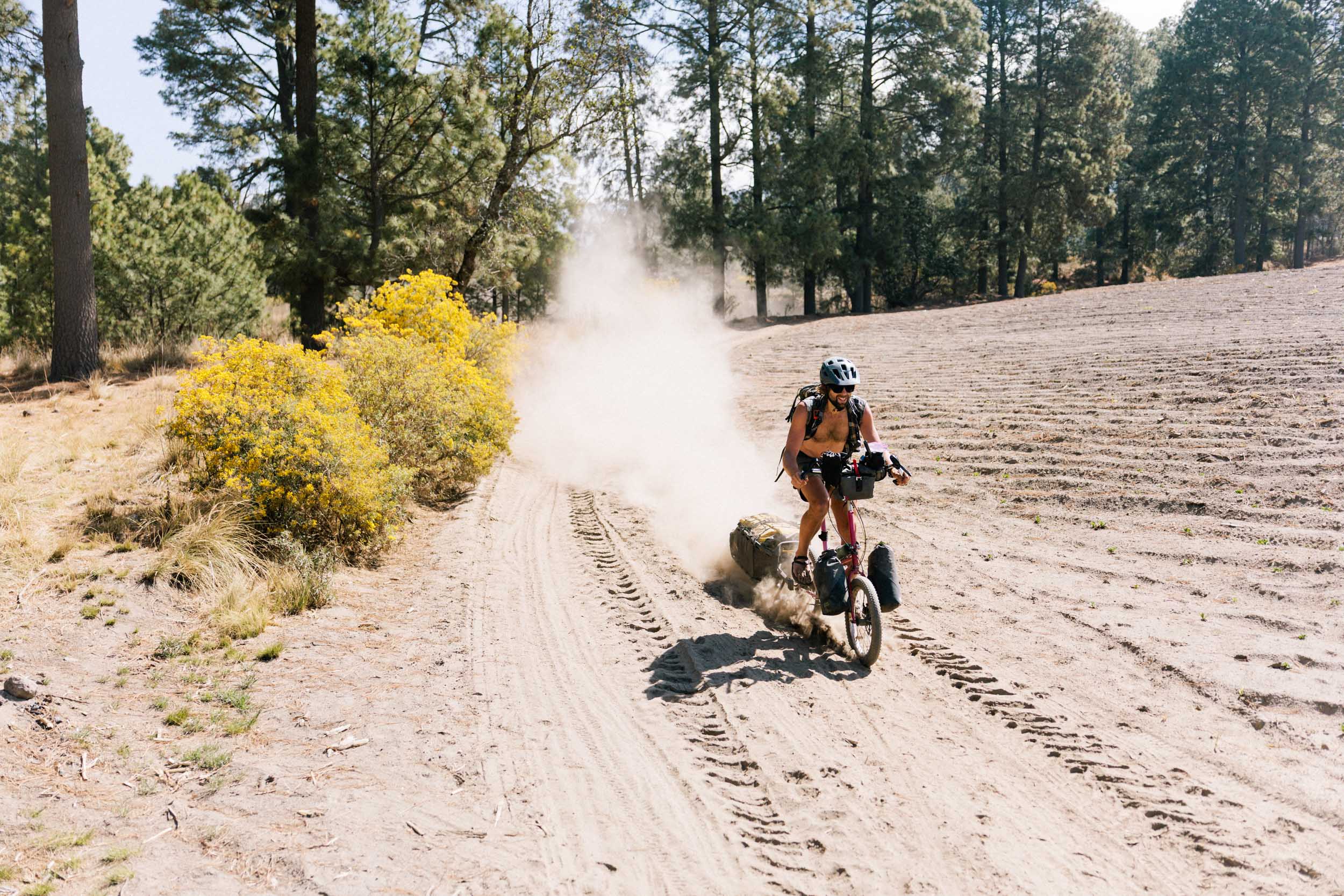


Onwards we rode the following morning, this time climbing up towards the pico from its northern slopes. We’d each bought an extra five generously sized tamales from the tamale-trike-lady in Tlachichuca and were carrying six litres of water, so our bikes were particularly laden for this next stage of the journey. From here, shops are thin on the ground and water sources scarce.


Maybeground isn’t even the right word. The tracks we followed became more like a theoretical concept of fine dust than actually tangible earth, sometimes ankle-deep, in which the Bike Friday’s little wheels sank down almost to their hubs. With bald tyres, extra-especially steep grades, and the weight of the trailer behind him—that hot tent, coffee grinder, and hatchet add up—much of the ascent to 4,000 metres was a head-down push for Corey.


Thankfully, his spirits refused to be dampened, for which I was grateful, as I’m sure it would have been a cold night up at elevation were it not for the hot tent. Again, we basked in near-tropical warmth, which almost felt bizarre given the ambient temperature. I even started sweating a little under my T-shirt. When we arrived, there wasn’t a soul, but being the weekend, the campsite was jam-packed with the haphazard but identical tents of a hiking club, so it felt a little bit like a music festival when we popped our heads out to see who had arrived. Unfortunately, they woke us up at 2 a.m. as they noisily prepared to hit the top of Volcán Sierra Negra in time to see the sunrise. Sierra Negra—or Tliltépetl—was also where we were headed next, albeit at a more appropriate hour. As the big pico’s little sibling, it’s replete with a giant telescope of a crown—El Gran Telescopio Milimétrico Alfonso Serrano—and it was to this that we’d set our sights. As this final stage of the climb is an out-and-back, we stashed surplus gear amongst the tussocky grassland and got to work, zig-zagging our way up the side of the volcano.
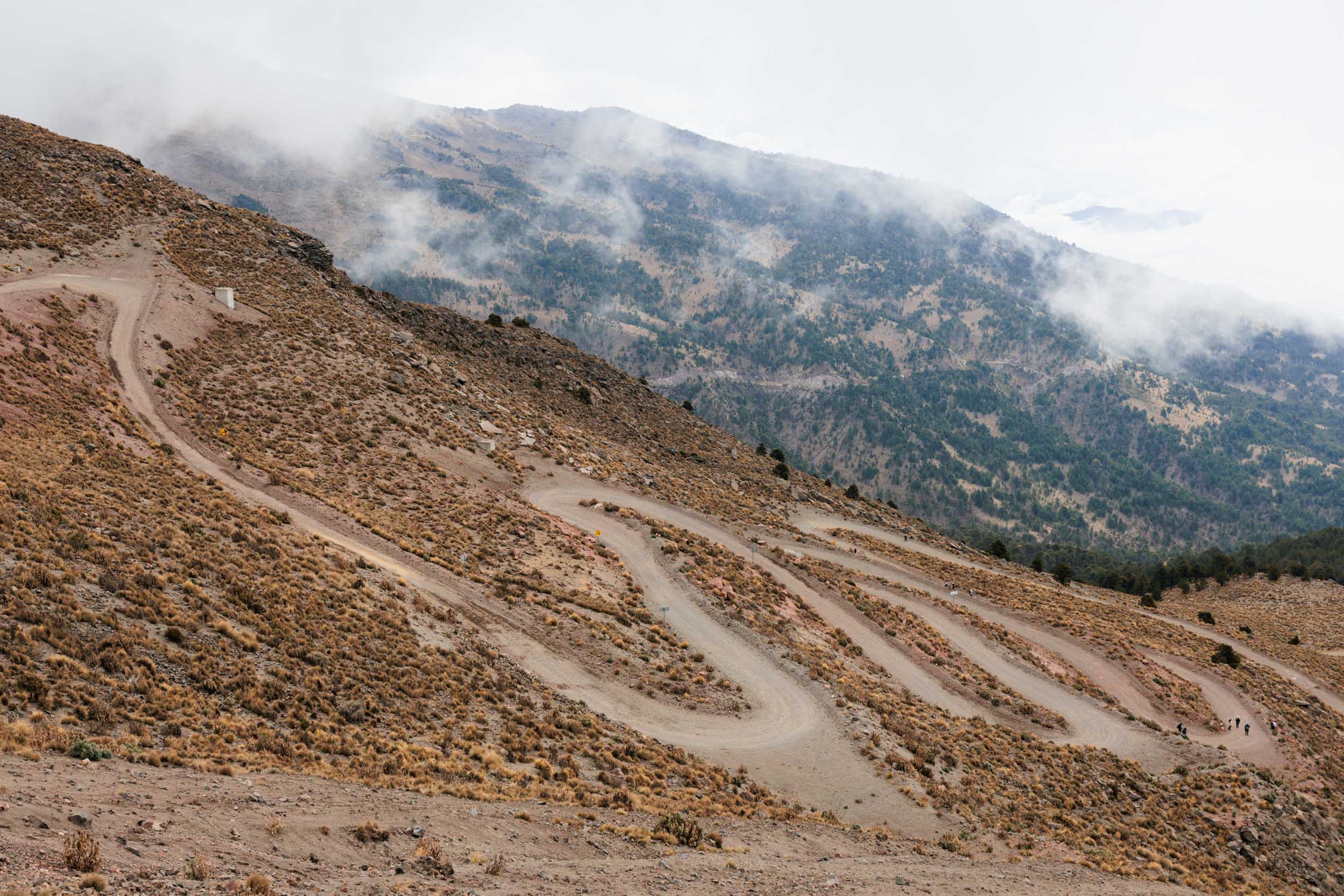
Although the road itself is in much better shape than anything we’d bounced along so far, it probably didn’t help that Corey’s tyres were worn down to just about nothing and provided only the merest suggestion of some grip. He’d just bought them in Oaxaca, but given that most 20-inch tyres available in Mexico are intended for kids’ bikes, he’d probably already put far more miles on his set than they were ever designed for. Still, he was happy to push, and besides, pushing and riding aren’t so different in pace when grades are more than 10 percent, and you’re riding at elevations over 4,000 metres. It didn’t take long before we emerged at the top, leaning our bikes up on the concrete walls of the observatory, up at almost 4,600 metres.


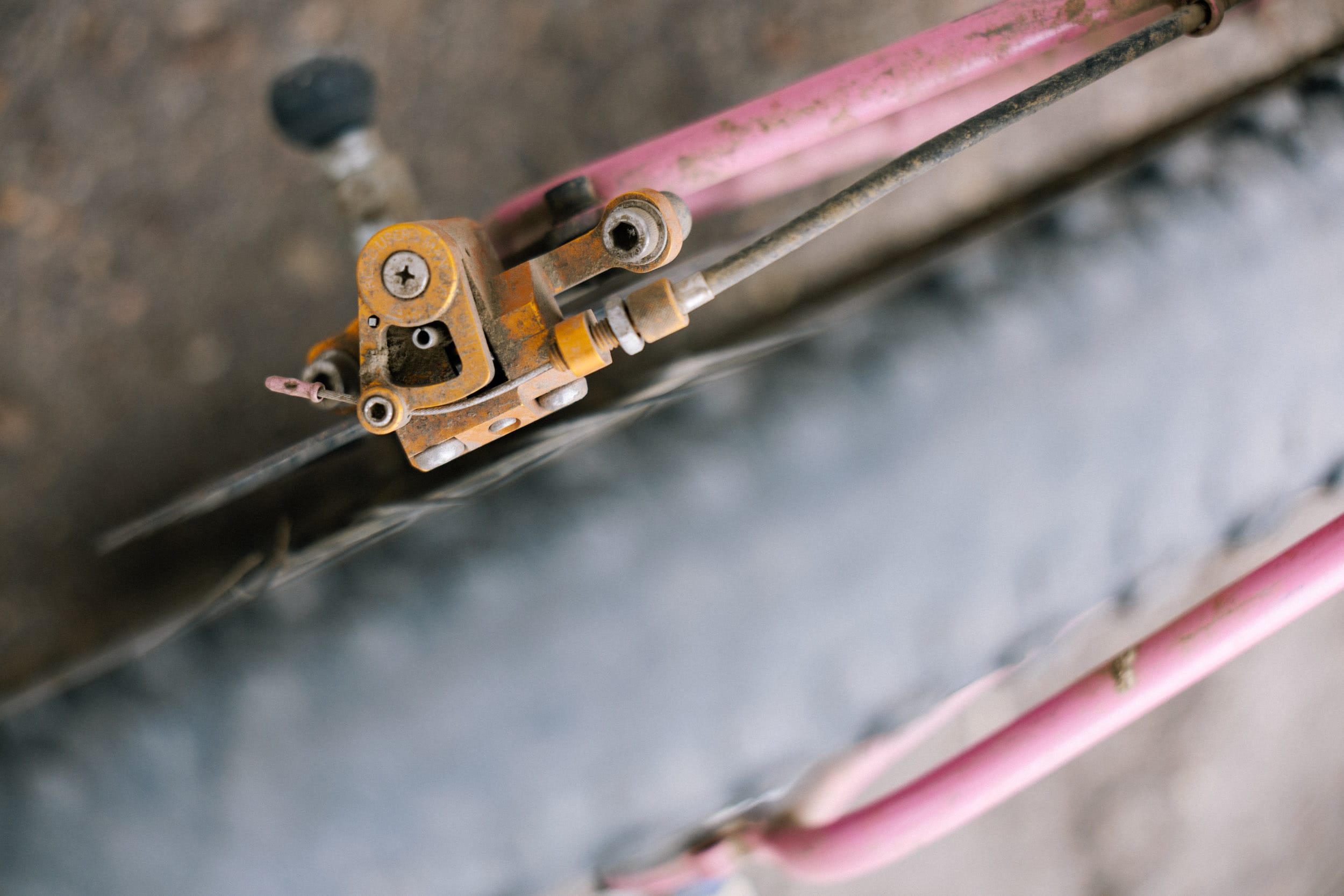
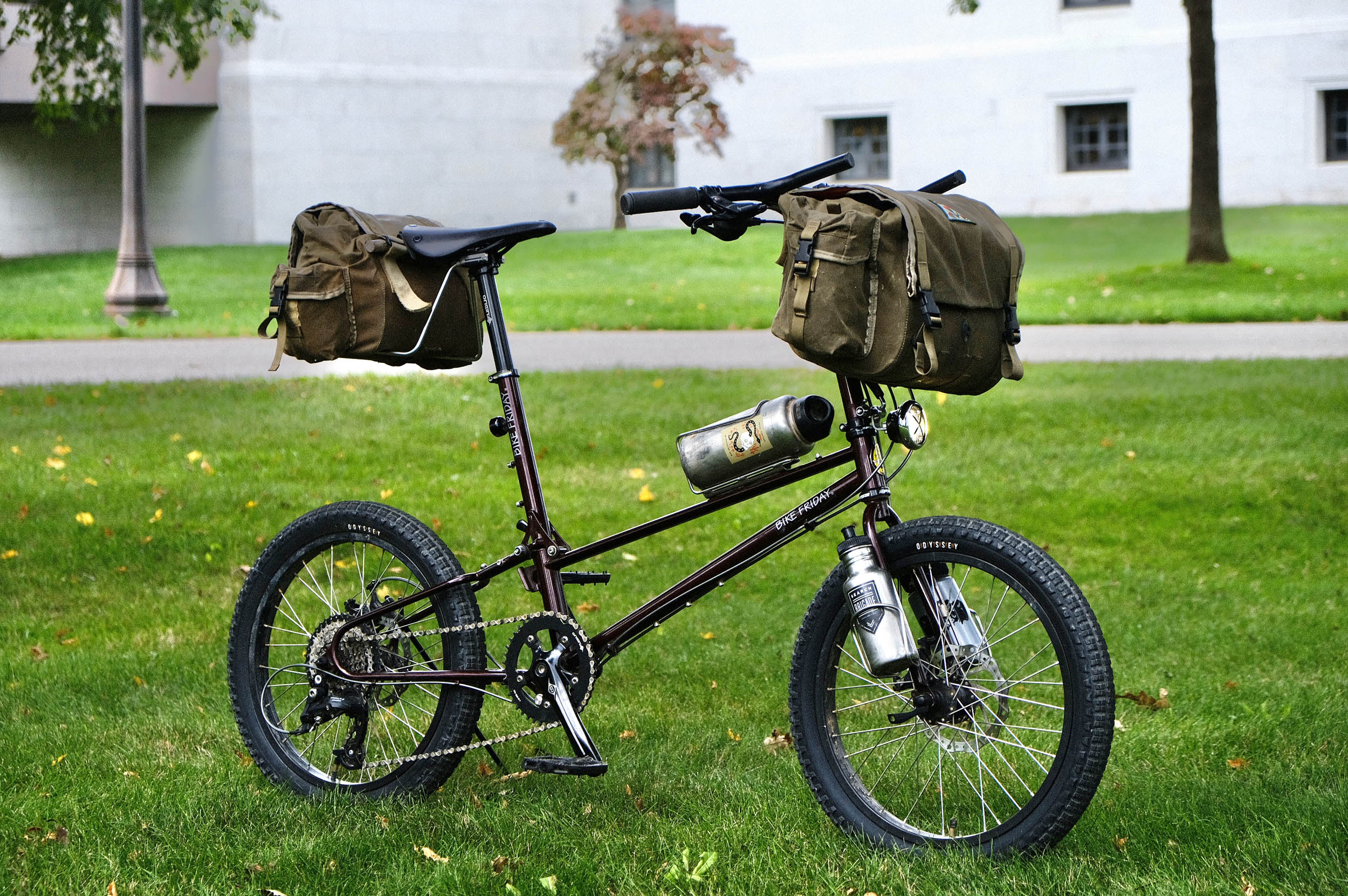
Now is probably a good time to expand upon the Little Bike That Could. It’s painted pink, or rather, a special fade of pink that was chosen to evoke the fields of the cosmos flower found in central Mexico. The Bike Friday frameset was custom-designed around drop bars, which is unique for an All-Packa, with measurements based on the broad Crust Towel Rack. Elsewhere, it sports a Shimano Alfine 8-speed hub and a splattering of boutique US-made parts, including a Wolf Tooth headset, White Industries cranks, and shiny Velocity rims. There are Growtac mechanical brakes to bring even the heaviest of trailers to a controlled stop, with proportionally enormous 180mm Hope rotors that pinged on the ride down. I couldn’t help but appreciate the pink anodised spoke nipples, which tied it all together very nicely.




After celebrating on the last of the tamale power packs we’d bought in Tlachichuca, we began the descent. The route shifted mood once again, following an especially fun and rocky forest track, far removed from the main gravel road that those noisy hikers would have taken. It was recommended to me by Javier, a local enduro guide, and whilst—judging by the comments section of the route—it receives mixed feedback, Corey and I absolutely loved it. Is it full-sus friendly? For sure. Is it rigid ATB terrain? Just about. Is a 20-inch wheel and trailer appropriate? I didn’t think so… but apparently it is! Unfettered by a minor wipeout, onwards Corey raced, as if oblivious to a lack of dropper post and his comically small wheels. Ankle-deep dust. Volcanic baby heads that come at you like meteors. Bring it on!


All that lay ahead was the final 50-kilometre stint back to Orizaba, most of which is a massive descent. It follows, for much of its way, an old railway line that’s still peppered with train track memorabilia and other clues to its past. Again, we both delighted in this specific section of the route, which passes through murky, potholed railway tunnels, is overgrown in places like a jungle, and even tempts the very bravest of cyclists to teeter across an old iron bridge that’s completely bereft of railway ties. Sensibly, we hike-a-biked a parallel trail, portaging the trailer like a canoe, as a slip on the bridge would result in a lost bike at best.


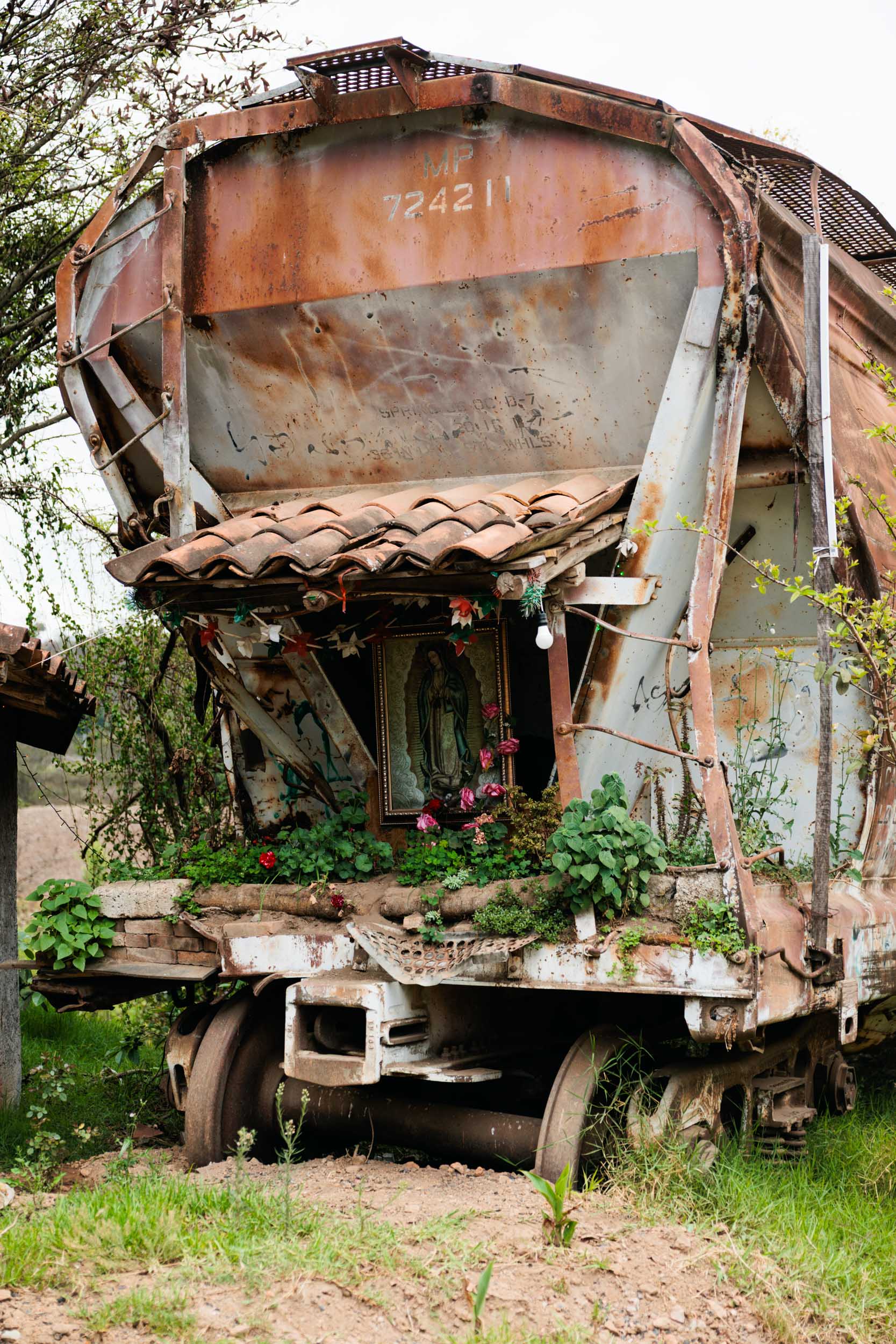
Indeed, this is such an unconventional return to Orizaba that it’s hard to value it any less than the more drama-filled vistas that had come before it. Railroad artefacts includes carriages converted into shrines, old ticket offices with grassy, abandoned platforms, and a former substation, complete with its original, intricate tilework dating back to the late 19th century, plus snake graffiti. What an incredible art or community space it would make!


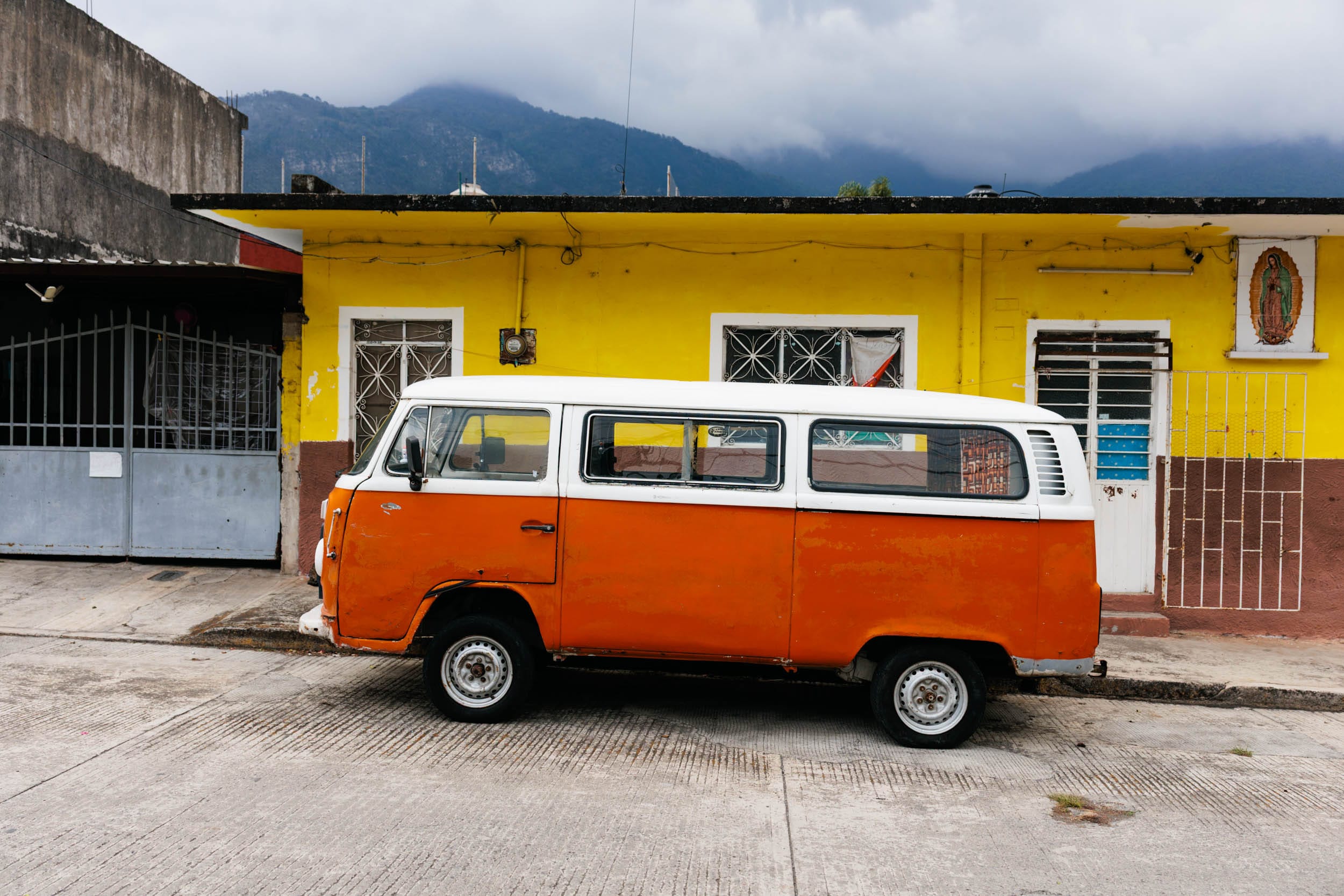

The sun may not have been on our side on this final afternoon, and views of Pico Orizaba were obscured, but at least it didn’t rain, and we made quick progress, following train lines right through the heart of Ciudad Mendoza and all the way into Orizaba itself, where we saw a lady cycling with a chihuahua in her basket and knew we were home and dry. On that last day, we logged an impressive 3,000 metres of descent.
And with that, my third Vuelta was in the books, and what a satisfying entry it was, too. Yes, I’ll gladly ride this route yet again, because as familiar as it’s become, it somehow manages to feel remarkably fresh and worthy of repetition—even if the climbs are sure to be no shorter and the dust unlikely to be any less deep. I can think of few undertakings that embrace such a broad gamut of ecosystems and road conditions in less than a week. This is a rough-hewn, old-fashioned bike tour, with all the impromptu adventures that such a venture promises. And I’m here for it!

I hope to find an equally interesting cast of companions and their steeds next year. I already have my buddy Vaughn signed up, whose mango-green Rivendell will suit the dusty aesthetic perfectly. Whether the skies are clear or the mountains hide Citlaltépetl once more, I look forward to a fourth trip around the star!
Bike Friday All-Packa Highlights
- Frame: Bike Friday All-Packa
- Fork: Bike Friday All-Packa
- Headset: Wolftooth
- Stem: Readshift
- Handleba:r Crust Towel Rack
- Grips: Redshift
- Brakes: Growtac Equal
- Rotors: Hope 180mm
- Shifter: Microshift
- Crank and chainring: White Industries, 36T
- Chain: KMC Rust Buster 8spd
- Front hub: Velocity
- Rear hub: Shimano Alfine 8 speed
- Spokes: Sapim Race double butted
- Rims: Velocity Cliffhanger
- Tires: Bontrager XR1
- Seatpost: Thomson
- Saddle: Brooks Flyer
- Pedals: Wolftooth
Further Reading
Make sure to dig into these related articles for more info...

Please keep the conversation civil, constructive, and inclusive, or your comment will be removed.