

 Singletrack/MTB
 Gravel/All-road
 Dirt-road Touring
 Fat-bike


Revelate Designs Portage Panniers Review: Off-Road Holsters



We spent months testing the new Revelate Designs Portage Panniers before today’s release to see how their long-in-the-works holster/drybag system installs, packs, and holds up. Learn what stood out, what might need improvement, and whether their slick rail-and-hook mount and complex development story set a new benchmark for off-road panniers…
PUBLISHED Nov 24, 2025
Back when I started bike touring, panniers were almost the only game in town. Ortlieb, Carradice, and a few others like Arkel and Jandd offered a modest handful of options—most of them bulky and heavy—and modern seat packs weren’t really a thing yet. If you wanted to pack semi-minimally, you typically ran a single pair of smaller front panniers on a rear rack. A lot has changed since then. There are now more choices than ever and a deep bench of off-road-friendly saddle and handlebar bags.
Racks have improved, too, and panniers have evolved with cleaner attachment systems and a full range of shapes and sizes—including mini versions better suited to off-pavement bikepacking and lightweight dirt touring. Along that trajectory, bag pioneer Revelate Designs introduced its hardware-free Nano Panniers about a decade ago and has quietly been developing a more complex holster-and-drybag system ever since. Ahead of today’s release of the Revelate Designs Portage Panniers, we spent several months testing multiple pairs in different sizes for this review. Also, find Neil’s video review of the 10L version at the bottom of the post.


Chicken or the Egg
Before we dive into how the Portage Panniers work, there might be an elephant in the room for those of you who’ve been keeping score in the bikepacking gear world over the last decade. Revelate’s Portage isn’t the first holster-drybag pannier on the market. Porcelain Rocket beat them to the punch with the Microwave Pannier. It was originally released in 2019 and later stewarded by Rockgeist as part of a larger IP merger. The Microwave and Portage obviously share some similarities—they both have a fabric holster with plastic backing that holds a form-fitted, welded dry bag. They also both attach to a rack using TPU (Voilé-style) straps. However, they differ in other ways, which I’ll cover in detail later.
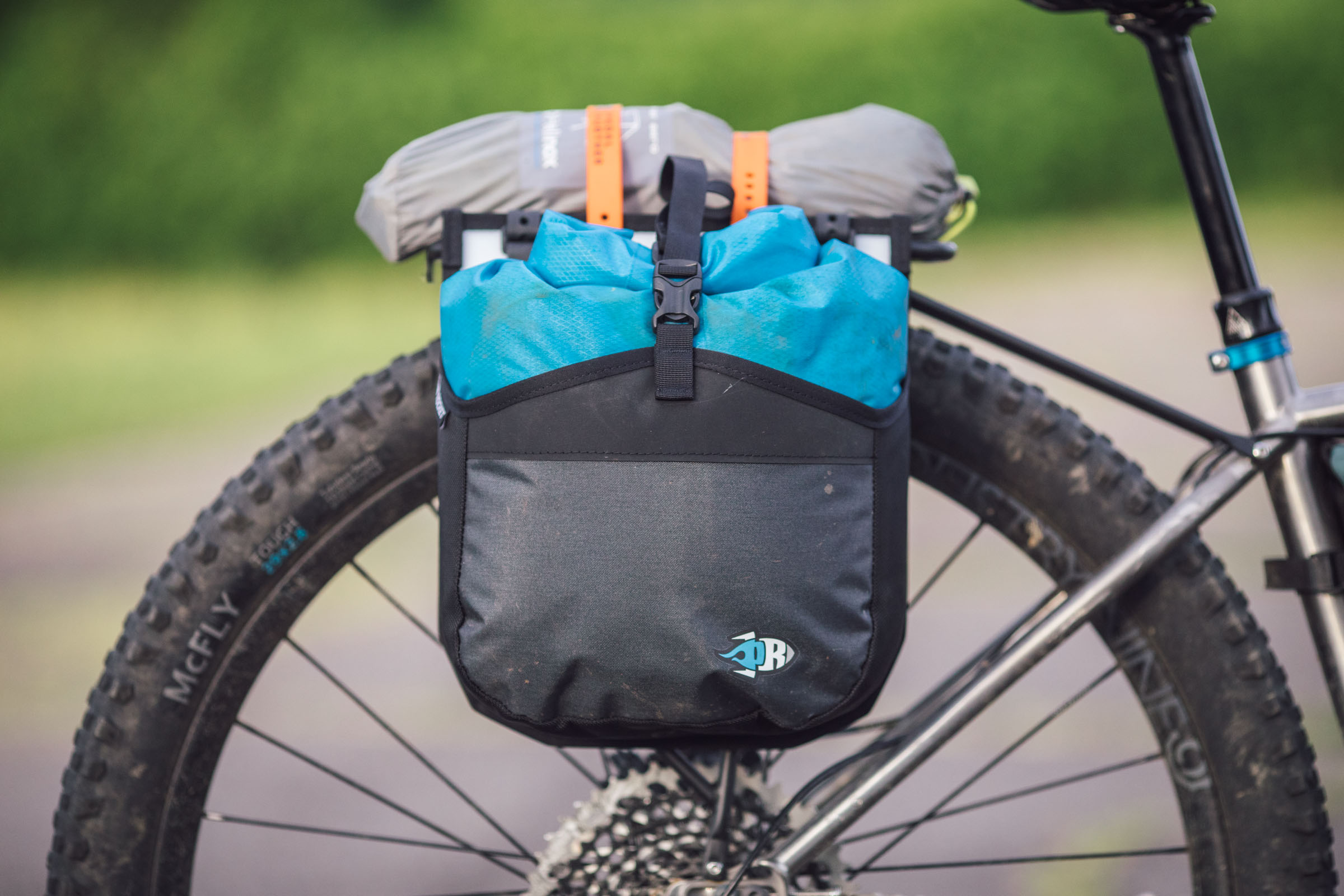

In the grand scheme of things, the holster/drybag concept is nothing new, and for what it’s worth, I believe that Revelate’s own Terrapin seat pack was the first bikepacking bag to offer a waterproof removable drybag within a holster-style harness. Both Porcelain Rocket and Eric—along with several others (such as Arkel)—recognized the appeal of a holster-style system for panniers. You pack off the bike, then slide a dry bag into a side holster, which keeps it stable and makes loading and removal quick. The approach pairs neatly with today’s minimalist rear racks that also play nicely with dropper posts. Several boxes ticked.
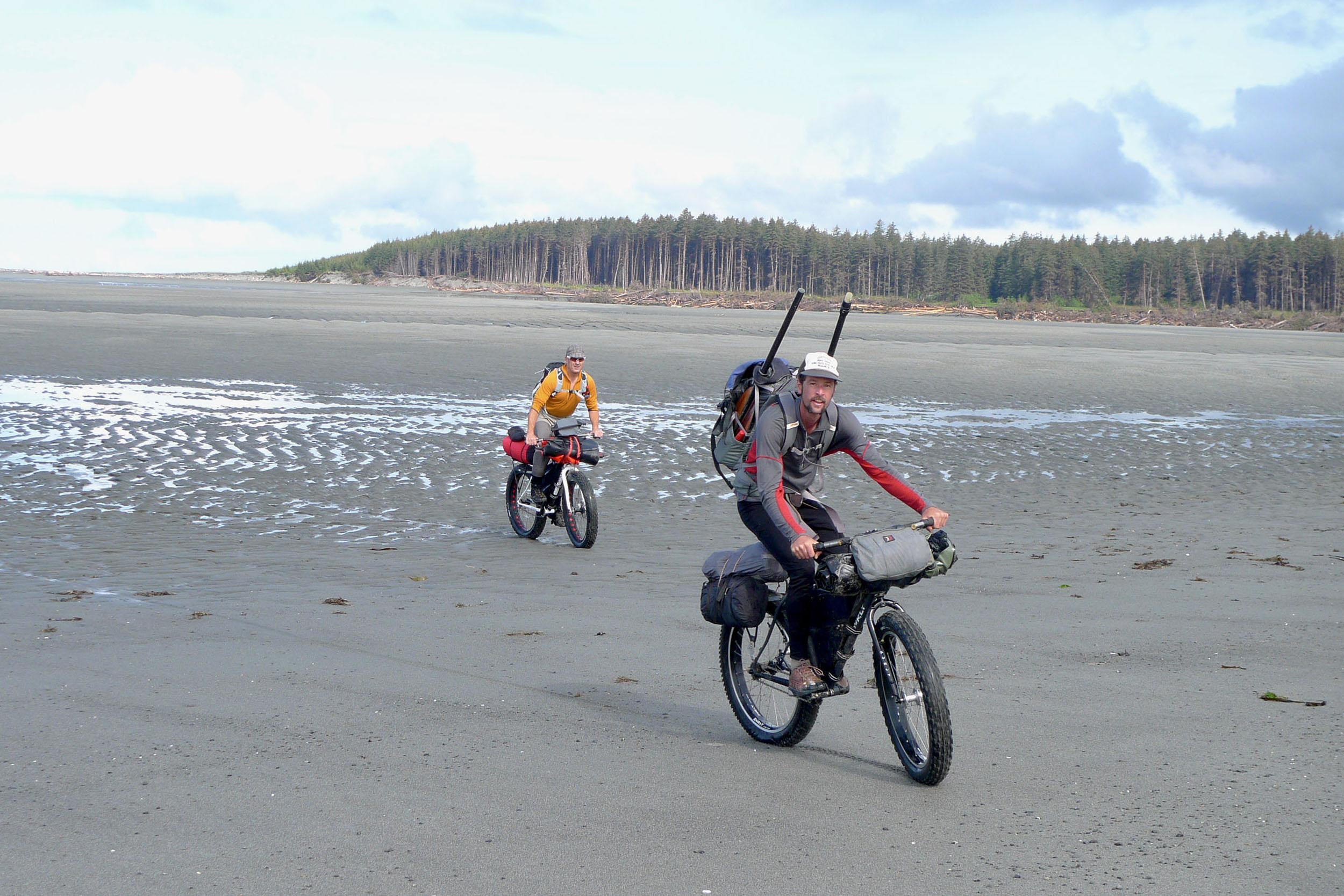
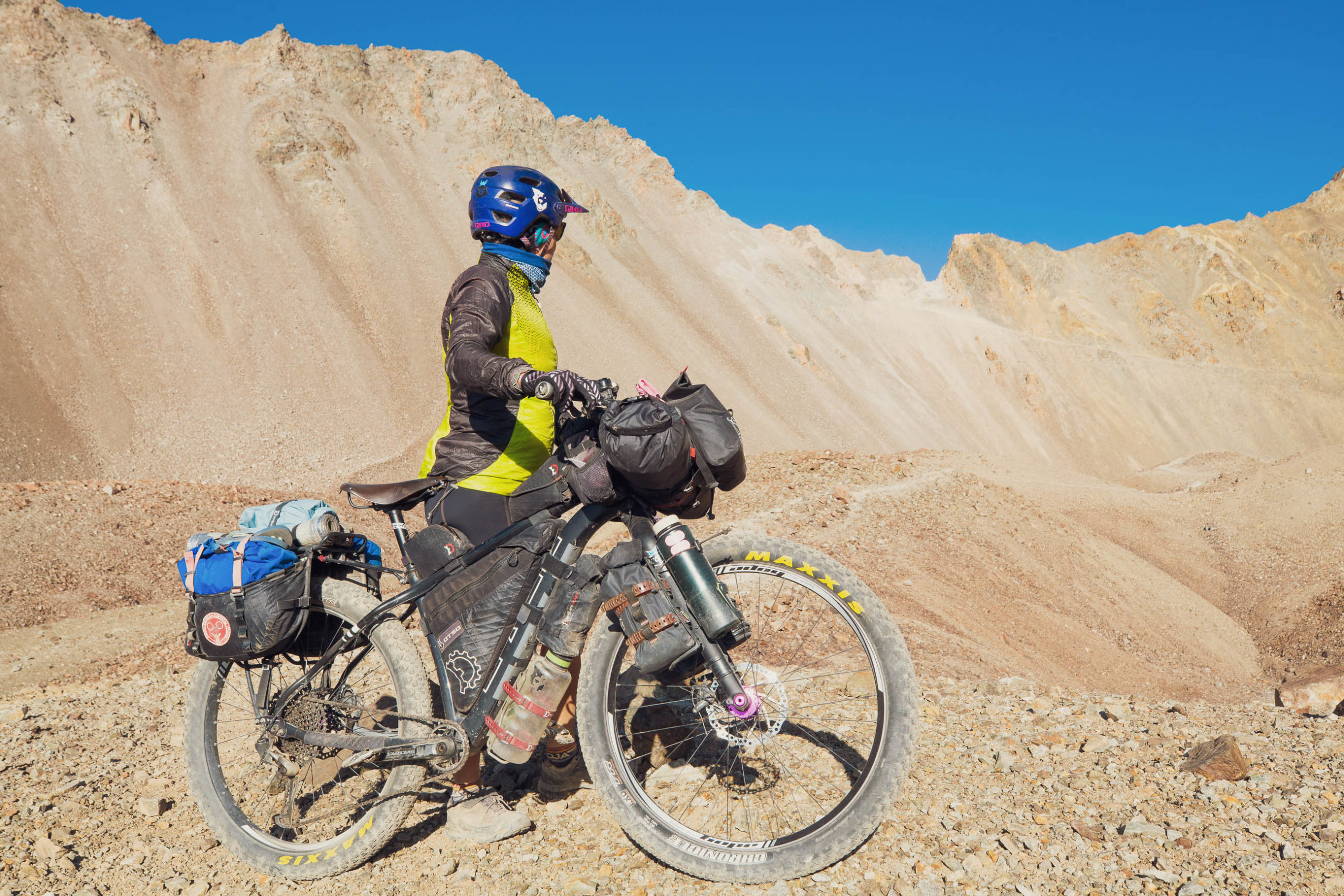


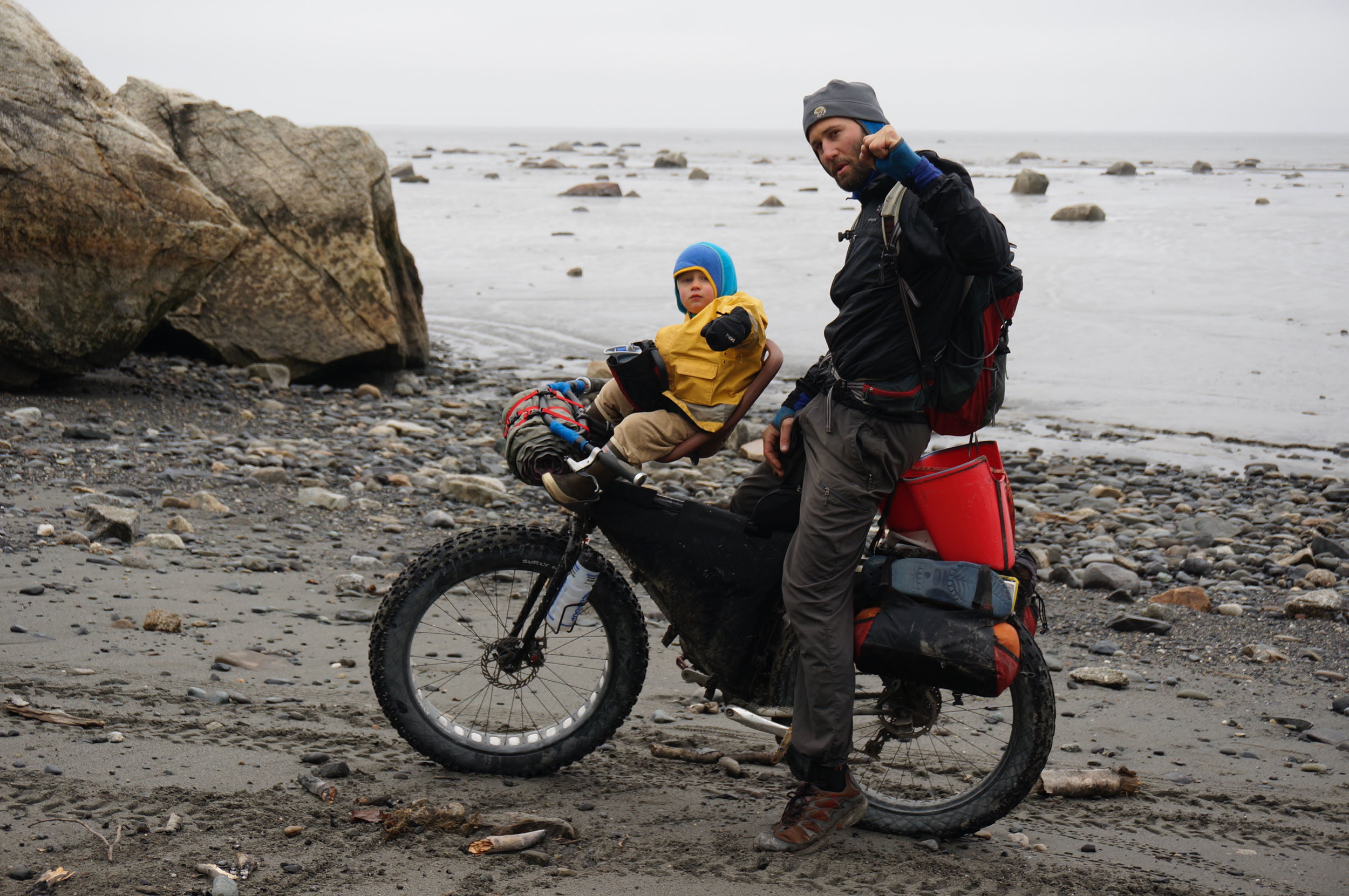
Founder Eric Parsons claims the origin of the Revelate Designs Portage Panniers traces back to his 2011 fatbike expedition with Steve “Doom” Fassbinder, where his DIY rack-mounted carrier/holster (in photos above) sparked the 13-year project that ultimately led to what we see here today. Parsons built and refined several early prototypes that saw heavy use from 2012–2014 (also shown above), then iterated further beginning in 2016 with long-distance testers Mark Watson and Hana Black during their ride through the Americas. I recall spotting them in photos from their route contributions (also above) around that time.

Development accelerated during COVID, culminating in roughly three years of focused work to bring a production system to life after around six holster prototypes and nearly 50 iterations of the mounting hardware, making it the brand’s most longest-running project to date. Parsons notes that Revelate pushed to clearly differentiate the Portage panniers before launching.
The Design
The final design of the Portage Panniers features a custom 420-denier TPU laminated, welded-waterproof drybag that slides into a holster built from Challenge EPLX 400, UHMWPE Ripstop, and webbing stitched to a plastic backer. The additional holster hardware is made up of an array of components: injection-molded plastic, compression-molded rubber, custom wide-flange hardware, TPU straps, webbing, and buckles, all informed by Revelate’s in-house 3D printing, laser cutting, and hot-air seam-taping capabilities. It reads simple from the outside, but it’s a surprisingly intricate system—and, according to Eric, the most complex project he’s tackled. Like many of Revelate’s products, it was designed and developed in Alaska and is made in Vietnam.


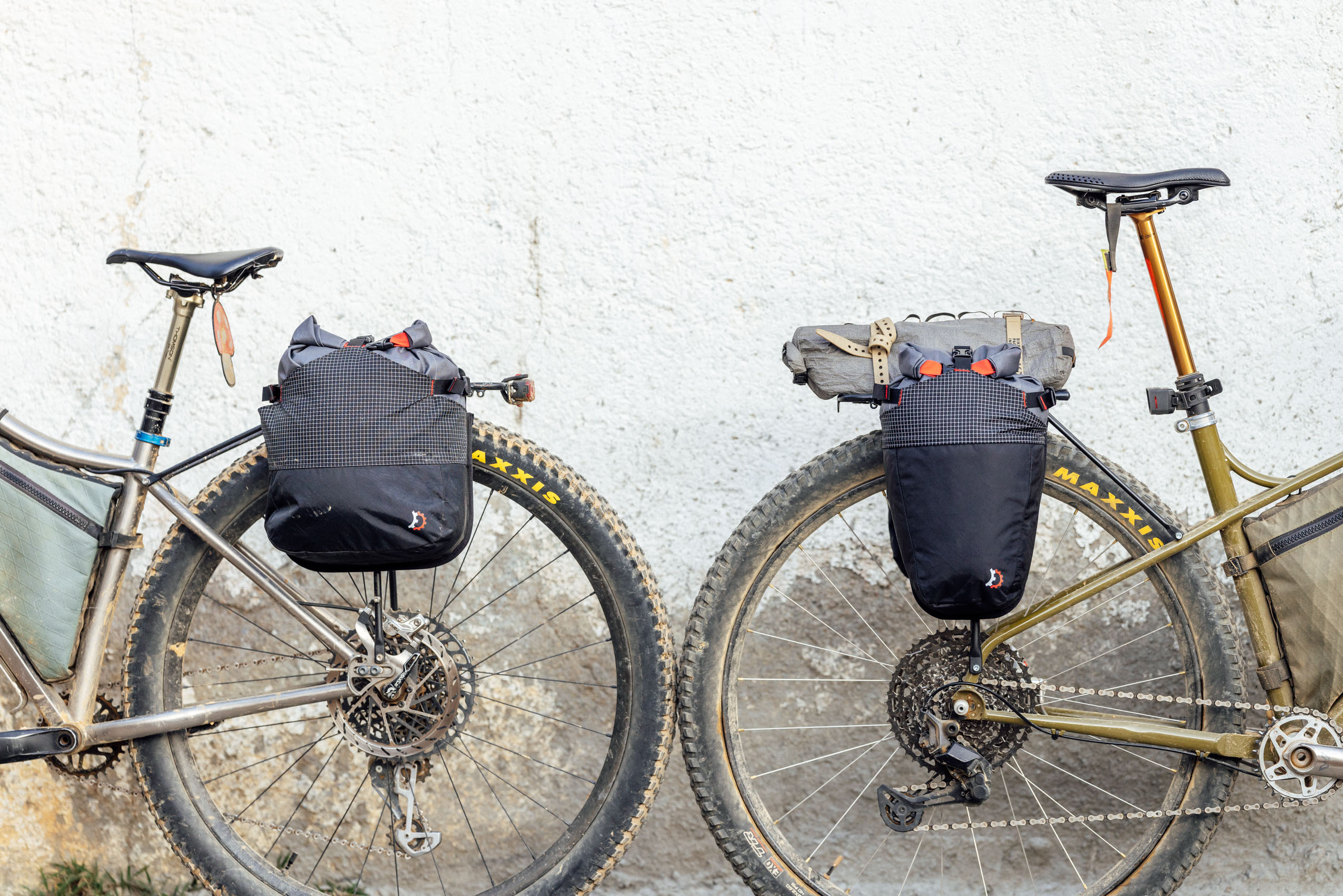
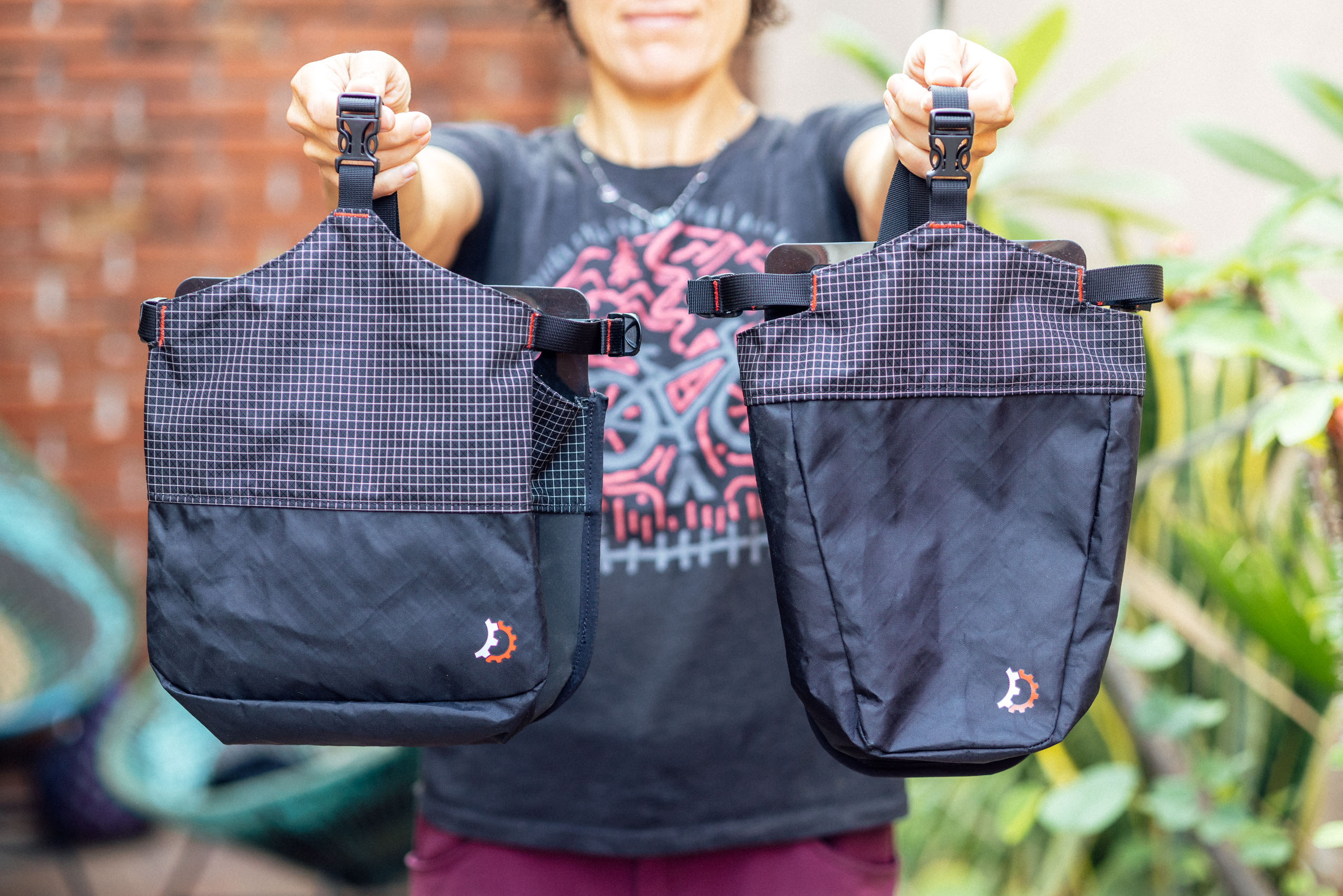


The Portage Panniers come in three sizes: 10L, 14L, and 18L. I didn’t find any of them to be particularly small, so we tested the 10 and 14L versions as they best accomodated the wide variety of uses that fit our style—everything from weekend glam-packing trips to long multi-week tours. Here’s how they measure:
| Size | Weight (each) | Height | Width | Depth |
|---|---|---|---|---|
| 10L Revelate Designs Portage Panniers |
14.12 oz
400 g
|
17”
43.2 cm
|
8.25”
21.0 cm
|
4”
10.2 cm
|
| 14L Revelate Designs Portage Panniers |
15.70 oz
445 g
|
16”
38.1 cm
|
10.5”
26.7 cm
|
4”
10.2 cm
|
| 18L Revelate Designs Portage Panniers |
17.21 oz
488 g
|
16”
40.6 cm
|
12”
30.5 cm
|
4”
10.2 cm
|
I generally pack light, so I found the 10L size to have plenty of room, even when lightly loaded and rolled flush with the rack platform. Plus, they have a generous roll-top, and the cinch strap on the holster is long, so you can pack them well above the top of the harness for expandable storage. The 14L option might be better suited for long trips, cold-weather outings, or for folks who like to bring a lot of extras. The 18L is significantly bigger.


On a recent overnighter with the 10L model, I fit my one-person tent, oversized/wide sleeping pad, camp pillow, rain jacket, down booties, puffy jacket, an extra-long-sleeve shirt, toiletry kit, and a couple of other odds and ends. There was plenty of room to spare.
Installation and Hardware
To better understand all the various components involved in the Portage Panniers, let’s walk through how they’re installed. For both the 10- and 14-liter versions, the left and right harness and drybag are identical, so there’s no particular orientation. Either works on both sides. The larger 18-liter model has an angled lower front edge, so the two sides are different. The first step is to hang the harnesses on the rack using the rubber rail hooks. This bit of engineering might be the most impressive part of the entire system. As mentioned, it took around 50 different prototype iterations to get it dialed in. Not only do they provide a stable, rattle-free connection, but the simple design also offers a third-hand for attaching the straps—similar to most larger touring panniers that have hard plastic or metal hook hardware.
There’s no lever or clamping mechanism with the Portage, however. Instead, the custom-designed hooks hug the rails and act as routing channels to thread the included small TPU straps and secure the top part of the holster to the rack rails. You simply point the strap hook upward, feed the strap through the top slot, wrap it under the hook, pass it through the middle slot, and pull until the Revelate logo is just visible at the top. I found that to be the perfect visual cue for alignment. Once the strap is routed, you can thread the excess into the lower slot of the holster to keep it away from the tire, although I just left it on the outside with the proper alignment and tension, and it was a non-issue.
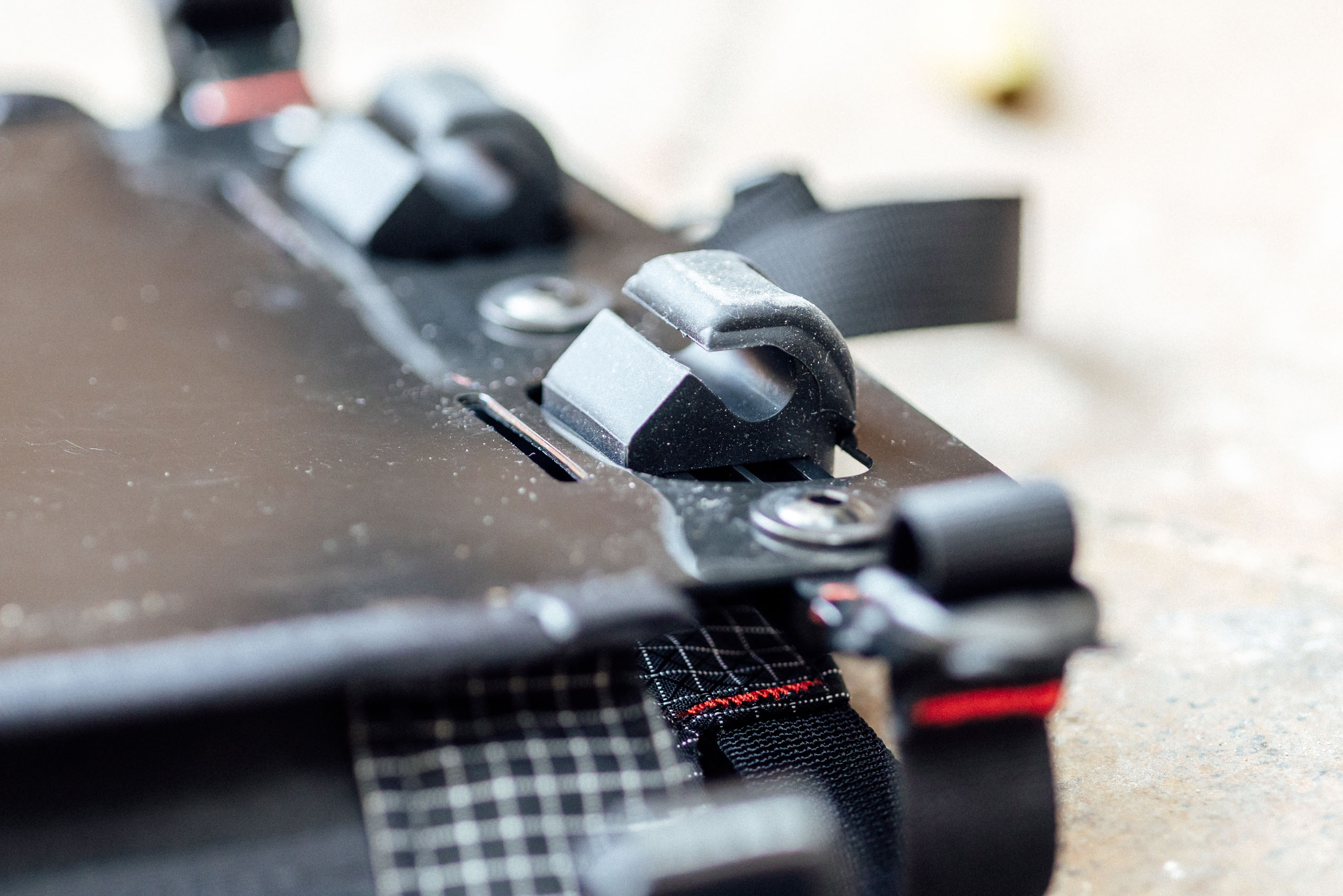


The rubber hook assemblies come in a standard 10mm set that fits most racks, and a 13mm option for racks with larger rails, like the Old Man Mountain aluminum racks. Each hook slides along the injection-molded rail with ~18mm of fore-aft adjustment. That rail stiffens the whole system, and the hooks’ horizontal adjustment area helps the panniers fit a wide range of racks. I used them primarily on the Tumbleweed T Rack but fit them to a couple of others I had on hand without any issues. One downside is if you have a rack with 13mm rails on one bike, and a 10mm rails on another, you’d have to disassemble the rail from the backer to slide the hooks on and swap them.
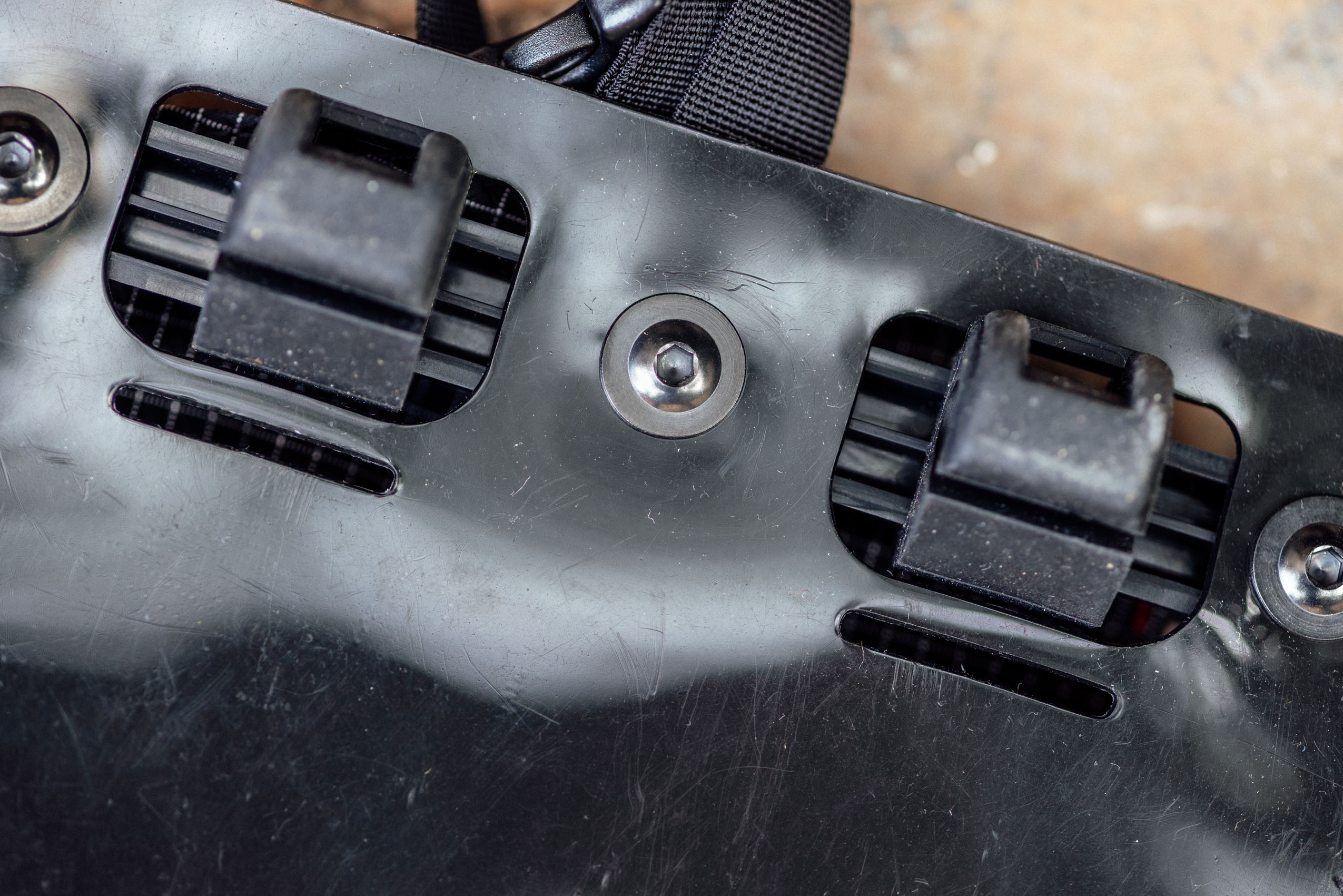


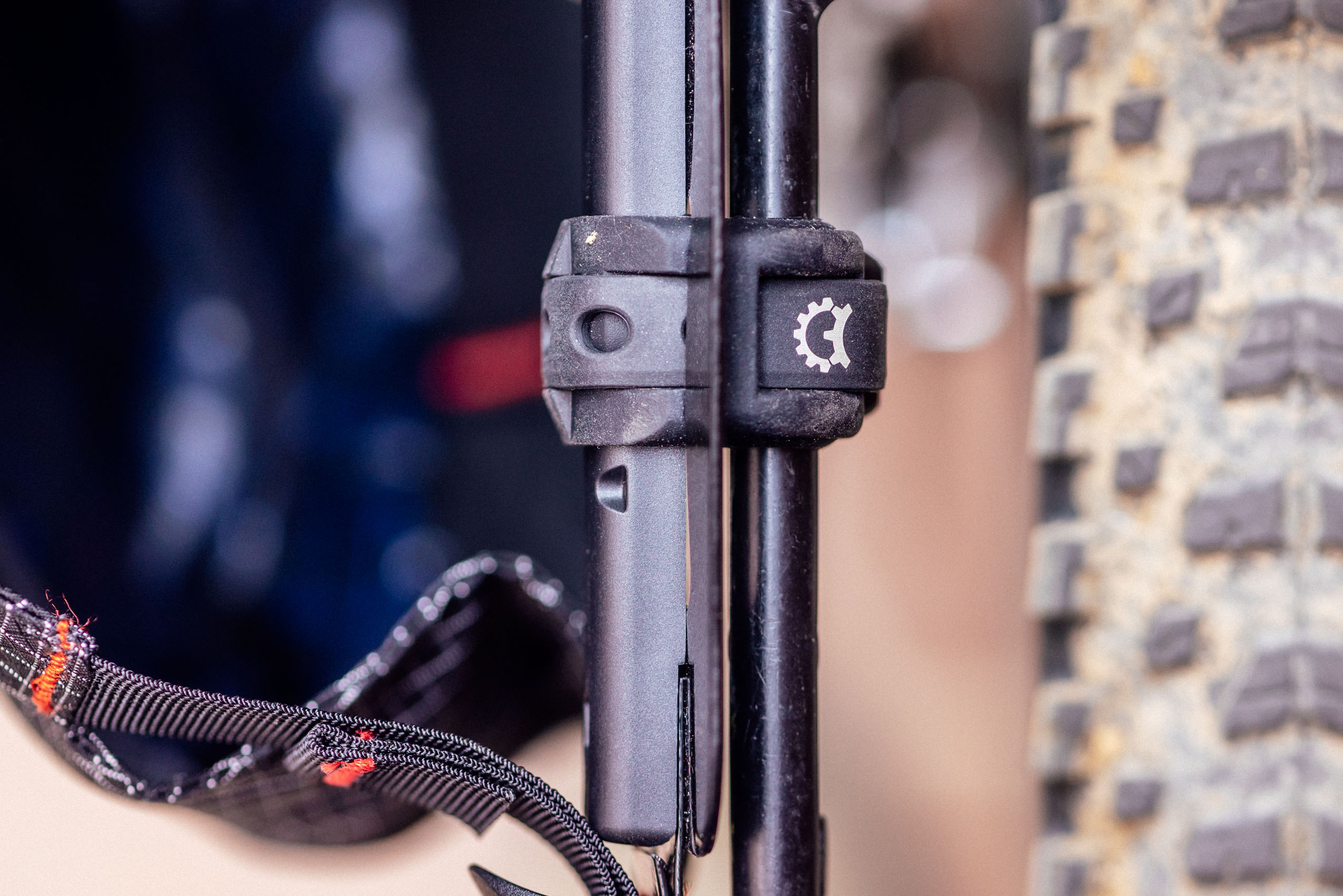
The sliding hooks and fore/aft adjustment also enable you to line up the holster with the rack’s vertical strut to connect the lower strap. Although, the lower attachment system also allows you to adjust the position of the strap placement in roughly 17mm increments: two positions on the 10L holsters and eight on the 14 and 16L models, or 1.7cm and 12.5cm of total adjustment, respectively. The additional slots also allow you to tuck the excess strap into the holster
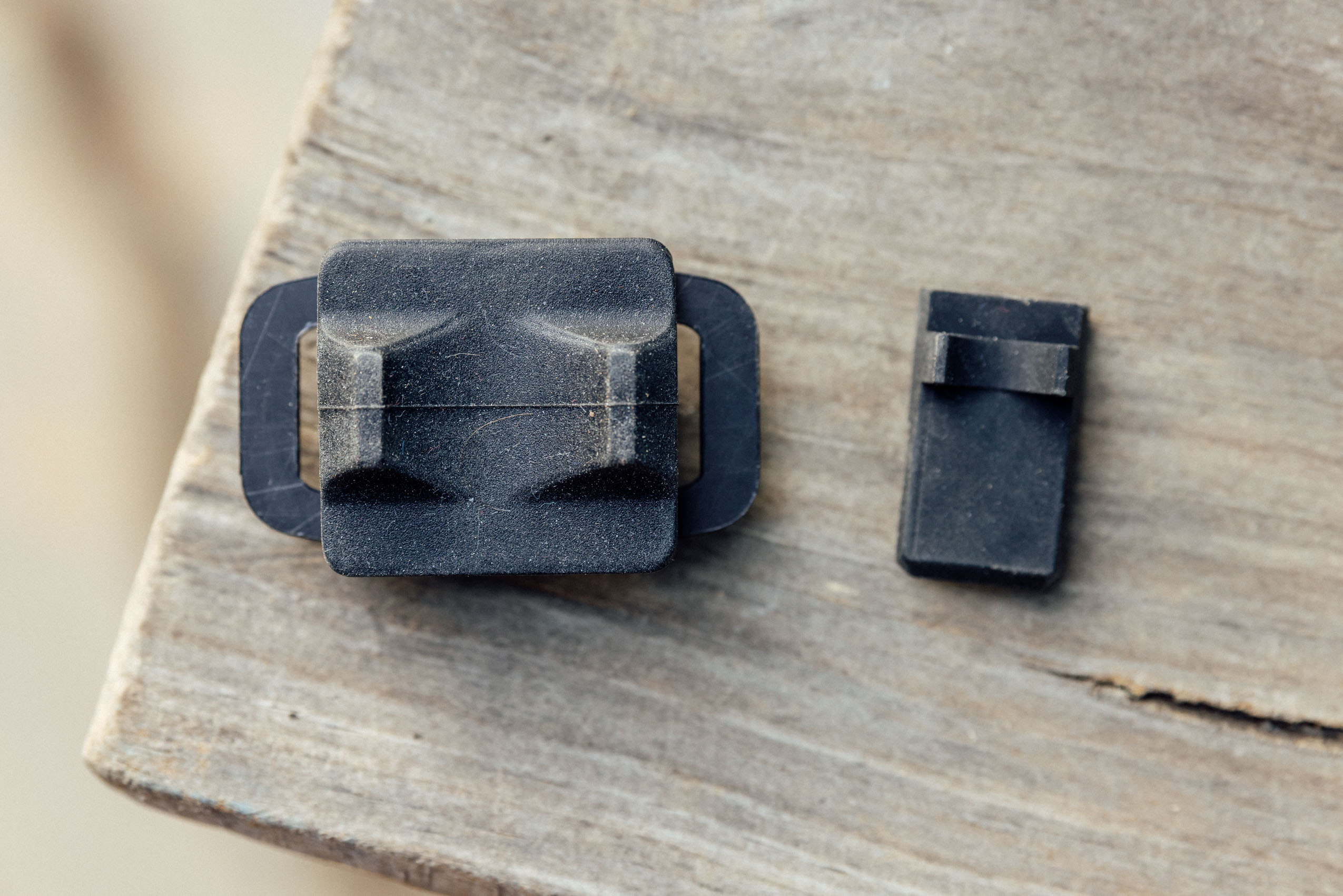


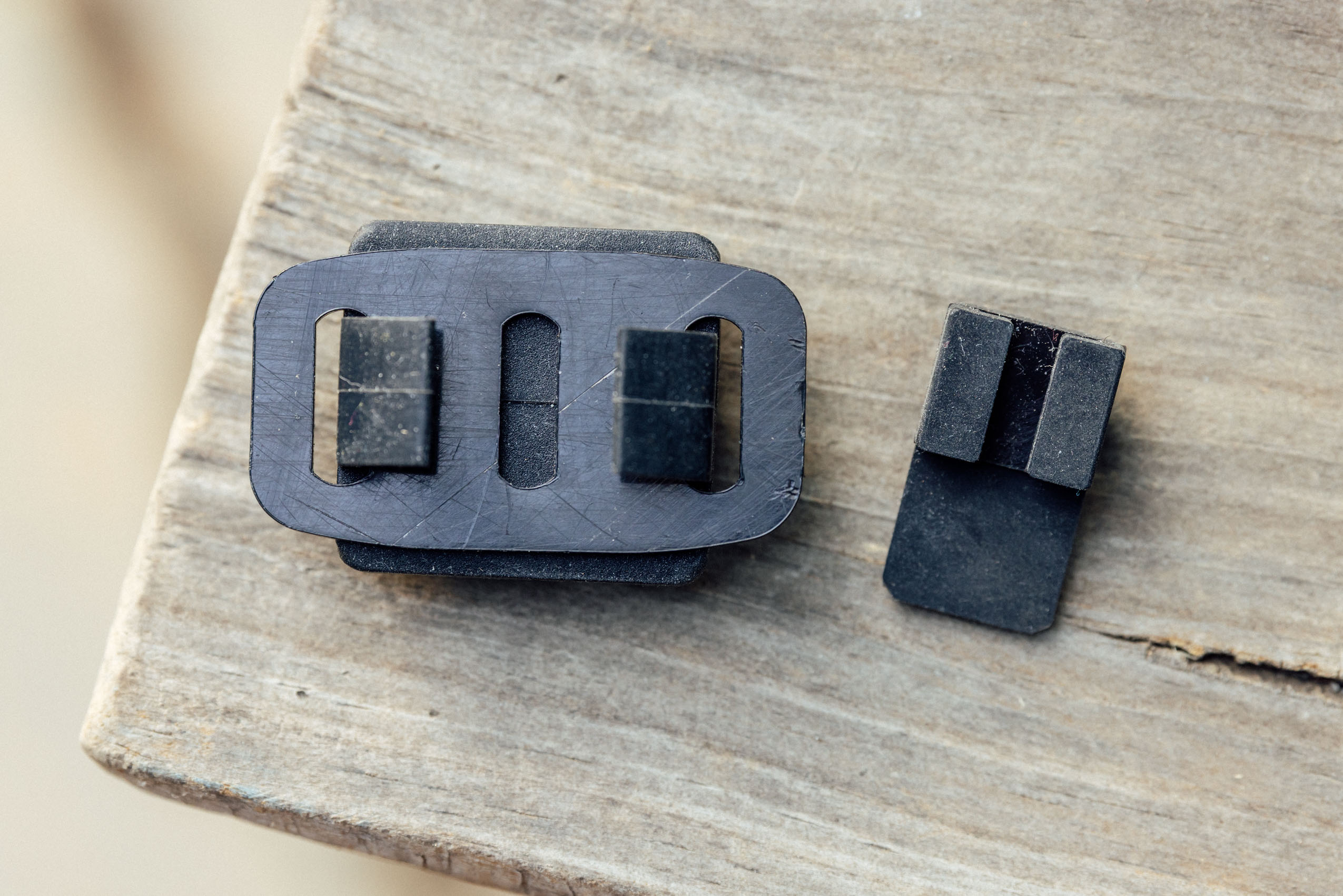
The lower mount is a little more fiddly than the upper. As shown above, I tested two iterations of this attachment. The first was much smaller and had issues. Eric later replaced it with the larger one on the right, which is the production version. To attach it, you insert the lower TPU strap through the slits in the plastic backer and the interior reinforcement plate, then press the rubber hook block into the exterior slots. Center the assembly at the rack strut and tighten the TPU strap. The rubber block likes to wander, and if not carefully held in place, the strap will wiggle out of the inserted fins. You have to work a little bit to get it just right, but once seated, it stays put.
In Use
Now you just load your kit into the drybag, slide it into the holster, and tighten the three compression straps. Sometimes, when packed full, it can take a little work to get the dry bag fully seated in the holster, particularly if there’s excess air. I often had to give a second effort by purging the excess air and loosening up the contents. A valve might help, but it might also be a little over the top. Overall, getting the bag in and out is still fairly straightforward. I cinch the top buckle first, then the two side straps once it’s in place.


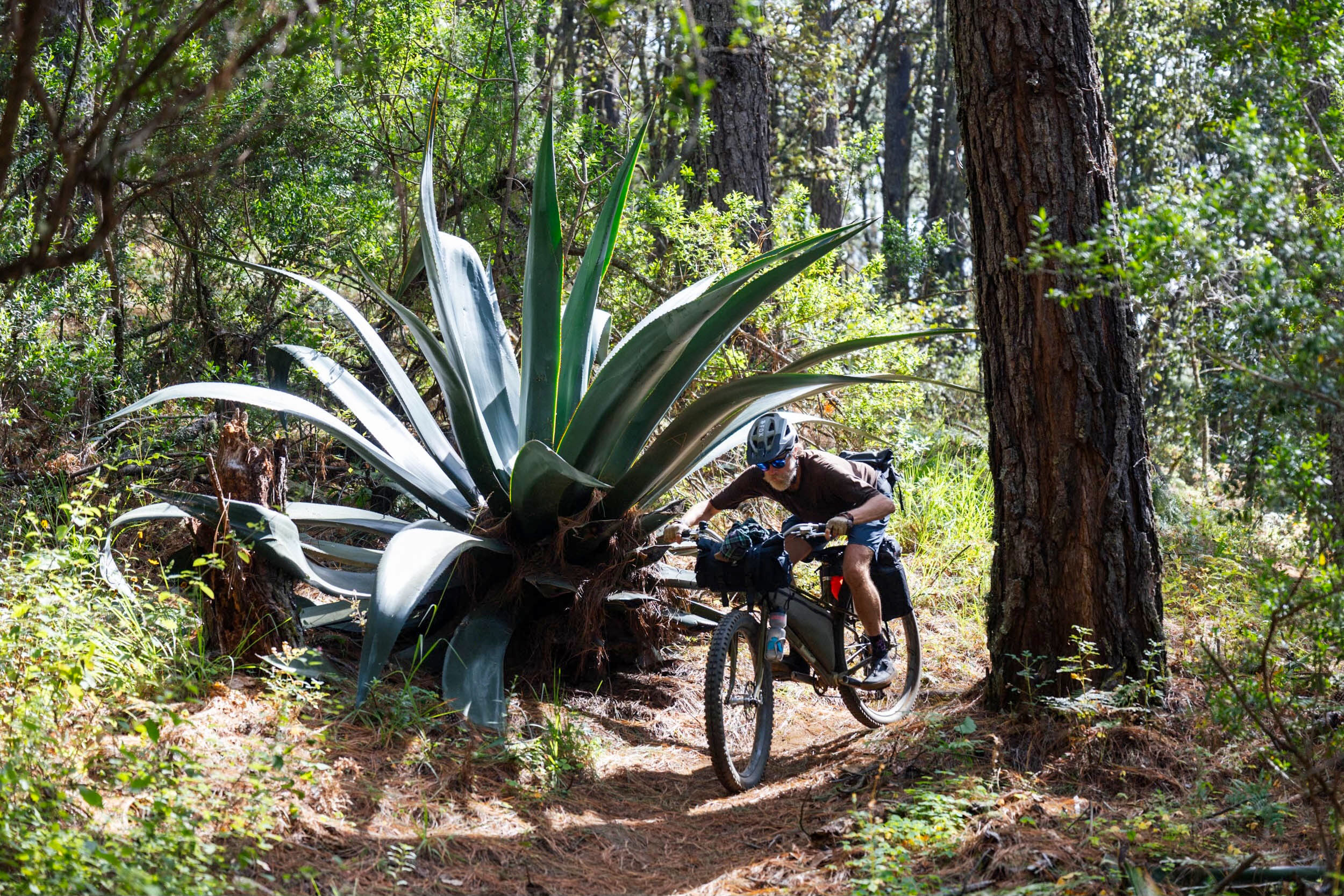
I suppose my only two other gripes are with the compression straps. The main strap that pushes the drybag down is a little long—but they have to be to allow the expandable storage—and there’s no strap-keeper system, so you have to just tuck the excess tail into the holster behind the drybag. I had one pop out and hit the spokes, so I ultimately started tying the two in a loose knot on top of the rack platform load. On the other hand, the side compression straps are just a hair short; if they were a little longer, it might be easier to get the dry bag in and out of the holster.


The drybag-in-harness system offers inherent benefits beyond the obvious off-the-bike packing/unpacking convenience. First, the harness fabric shields the dry bag from the abrasion and wear that’s inevitable on bikepacking trips. Second, which is one of my favorite things about larger bags—like a basket bag or these big pannier bags—is that they can play the role of a yard-sale catch-all around camp: you can toss anything in, hang them from a tree, sit on them to keep your butt dry, or even use them as an impromptu dinner tablecloth. They’re just plain useful. The holster can carry wet or dirty items outside the drybag—think tent fly or damp layers—and has three drain holes along the bottom, a nod to Doom’s 2011 setup that inspired the concept.


Last but not least, while riding rough dirt roads and chunky trails, the Revelate Designs Portage Panniers are about as solid as they come. The rubber contact points eliminate any potential rattling, other than the potential vibration of the plastic backer against the rack uprights, which I didn’t experience. And, there’s zero movement. Revelate didn’t publish the maximum load weight but mentions adhering to rack load limits. The total load limit for the T rack is 30 pounds (13.6 kilos). I can’t imagine ever putting 15 pounds of gear per pannier, but these panniers are built tough, and I’d assume they’d be fine carrying a reasonable load that fits their intended purpose. The smaller TPU straps are the likely weak point.


Revelate Portage Panniers Vs. Others
There aren’t too many options that can be compared directly to the Revelate Designs Portage Panniers. There are only two other original holster panniers, and Arkel’s model is designed for commuting, not bikepacking. Second, the Portage is waterproof, and most other mini-panniers aren’t. Here is a list of a few to offer some perspective, comparing volume, weight, and price.
| Product | Weight/pair | Size/each | Waterproof? | Price (USD)/set |
|---|---|---|---|---|
| Revelate Portage Panniers 10L | 800g | 10L | Yes | $279 |
| Revelate Portage Panniers 14L | 890g | 14L | Yes | $289 |
| Rockgeist Microwave Panniers | 980g | 13L | Yes | $285 |
| Revelate Designs Nano Panniers | 510g | 11L | No | $250 |
| Brooks Scape Panniers (Small) | 1260g | 13L | Yes | $240 |
| Ortlieb Gravel Packs | 1162g | 14.5L | Yes | $195 |
| Tailfin Mini Panniers | 760g | 10L | Yes | $210 |
| MLD Ultra Poco Panniers | 430g | 10-13L | Yes | $225 |
| Old Man Mountain Ponderosa Panniers | 950g | 13L | Yes | $200 |
| Bedrock Hermosa UL Panniers | 630g | 13L | No | $300 |
| Stealth Mountain Panniers | 680g | 8L | No | $170 |
| San Util Mini Panniers | 460g | 4.5-7L | No | $250 |
The Portage’s most obvious direct competitor is the Rockgeist Microwave. Porcelain Rocket (now under Rockgeist) broke ground with the holster-pannier concept on the Microwave, but Revelate’s new Portage pannier feels notably more refined in execution—namely, it’s lighter with cleaner hardware and a more polished finish. Granted, they are two different beasts, one being a design archetype made in the USA by a small brand, which shouldn’t be ignored. In practice, the Portage’s rail-and-hook architecture delivers the best mix of stability, relatively easy installation and removal, and a minimalist approach to a rack attachment system. My guess is that even a major update to the Microwave or other mini panniers would likely converge on a similar rail/hook approach, as I don’t see a path to a clearer, more robust way to achieve the same result. That said, the level at which bikepacking bag companies innovate never ceases to amaze me, so perhaps there’s something we haven’t thought of that’s still to come.


- Model/Size Tested: Revelate Portage Panniers 10L/14L
- Actual Weight (pair): 800/890 grams
- Place of Manufacture: Vietnam
- Price: $279/289
- Manufacturer’s Details: Revelate Designs
Pros
- All the perks of a holster-dry bag seat pack like the Terrapin but with more packing volume
- As stable as a rear bag system gets
- Three sizes seem very well-suited to fit a variety of uses
- Waterproof bags are useful beyond their on-the-bike role
- Upper attachment system is excellent and easy to install
- Sizing of roll-top allows flexible/expandable storage
- Considering all the features, they’re not overly heavy compared to other feature-rich panniers
Cons
- Lower attachment system is a little fiddly and could use improvement
- Hard to stuff in the holster when packed full—a purge valve might help
- Only comes in black/gray
- Main straps are a little unwieldy, and side compression straps are a little short
- Expensive
Wrap Up
After a handful of trips, Revelate’s Portage Panniers feel like a very refined take on the holster pannier concept. The rail-and-hook upper mount is rock solid, quiet, and easy to install and remove. The bags themselves are rugged and genuinely waterproof, and the three sizes cover everything from weekend rides to multi-month tours. The system delivers the expected convenience that makes holster panniers appealing in the first place: pack off the bike, slide in, cinch down, and go—plus the bonus of using the drybag as a catch-all around camp and the holster for wet or dirty gear.
Like all the gear we review, they’re not perfect. The lower attachment takes a little fussing to position and anchor in place, a fully stuffed dry bag can be stubborn to seat, and the long main straps could use tidier management. Color options are limited, and the price reflects the complexity. Even so, once installed, the Portage rides impressively quiet and stable with no rattling, and the expandable roll-top and durable materials make them easy to rely on for bigger trips—much like all the Revelate bags I’ve used over the last decade and a half.
If you’ve been on the lookout for a relatively minimal pannier that combines true bikepacking intent with refined tech and practicality, this is an excellent option. Compared with other strap-on mini panniers, the Portage feels a little more dialed in its execution—arguably the new benchmark for off-road panniers that are free of too many moving parts and clamps.
Neil’s Revelate Designs Portage Panniers Review Video
In this video review, Neil Beltchenko shares takeaways from more than a month with the 10L Revelate Designs Portage Panniers—using them for daily commuting and on the Peaks and Plateaus loop—covering the design’s backstory, how the Portage mounts and packs, and how it performed on rough terrain.
Further Reading
Make sure to dig into these related articles for more info...

Please keep the conversation civil, constructive, and inclusive, or your comment will be removed.