

 Mountain Bike (MTB)
 Gravel Bike
 All-Terrain Bike (ATB)
 Fat Bike

Buena Nota: A (Solo) Bikepacking Journey in Colombia

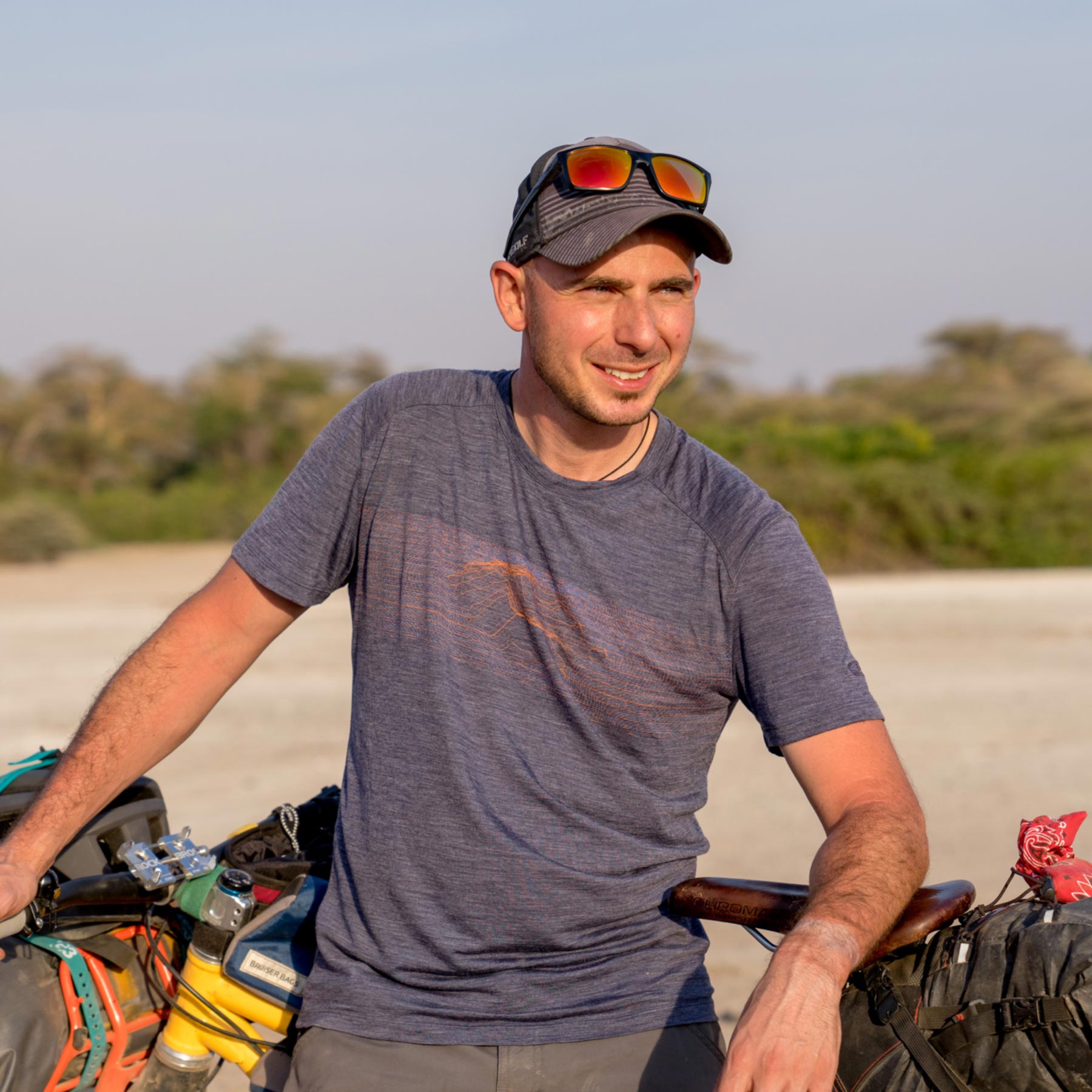
Despite being alone on his bikepacking trip to Colombia last year, Paulo LaBerge quickly learned he’d never truly be on his own in the country, thanks to the countless friendly, helpful people who encouraged and guided him along the way. Read his story of an impromptu ride to Bogotá and find a lush photo gallery here…
PUBLISHED Jul 9, 2026
“Do you have a death wish?!” an old friend exclaimed when I mentioned I was planning a solo bike adventure in Colombia. I received similar reactions from other friends, family, and colleagues. Even my dad, who’s not typically a worrier, expressed mild concern about my choice of travel plans.
I wasn’t entirely surprised. Colombia was notoriously dangerous in the 1980s and 1990s due to its powerful drug cartels and internal armed conflicts, but the country has significantly improved its security in the 2000s. While its negative reputation unfortunately persists, modern Colombia is generally considered quite safe, especially in areas popular with tourists. But, of course, I have never tended to stick to tourist areas.
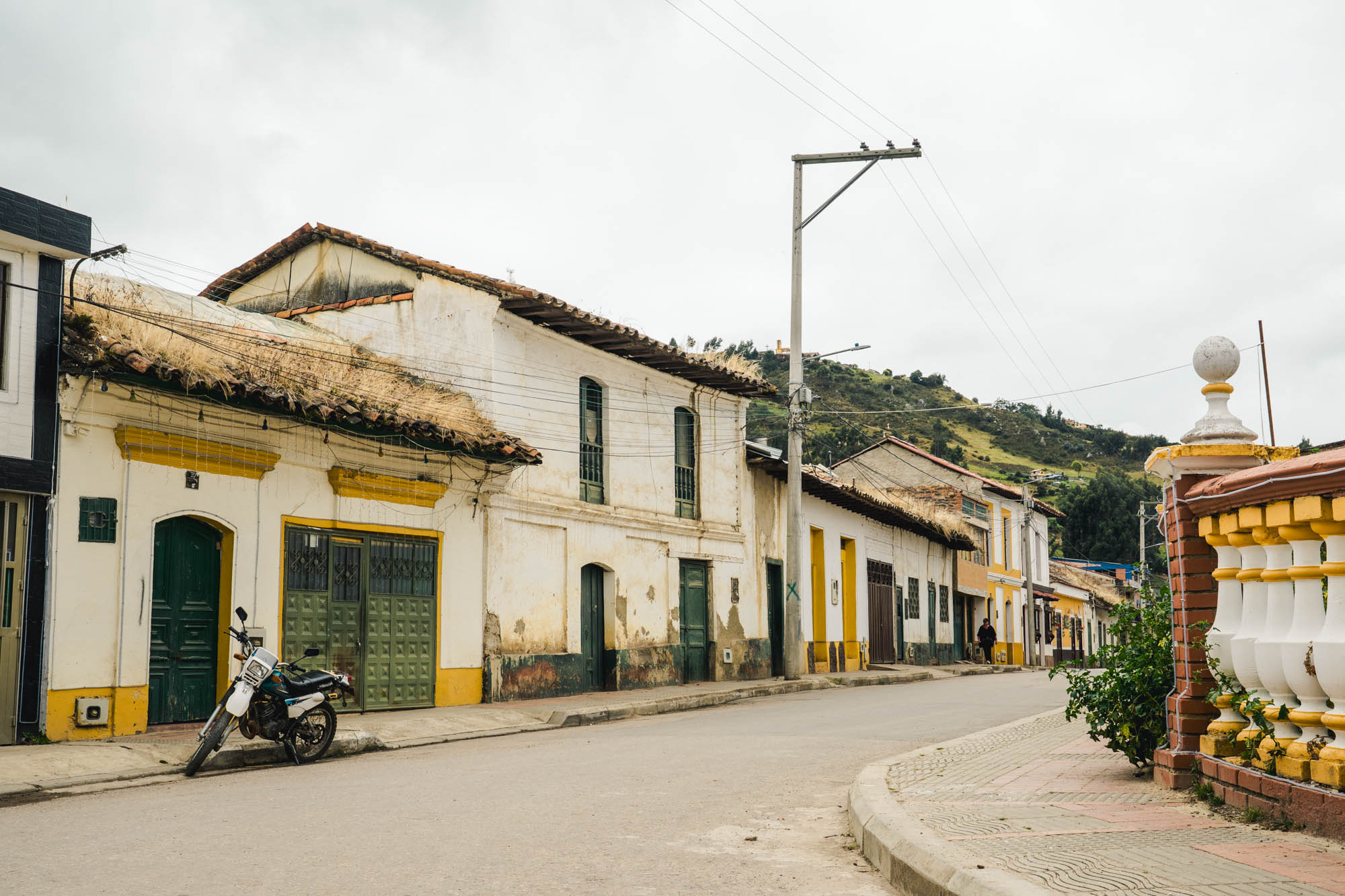
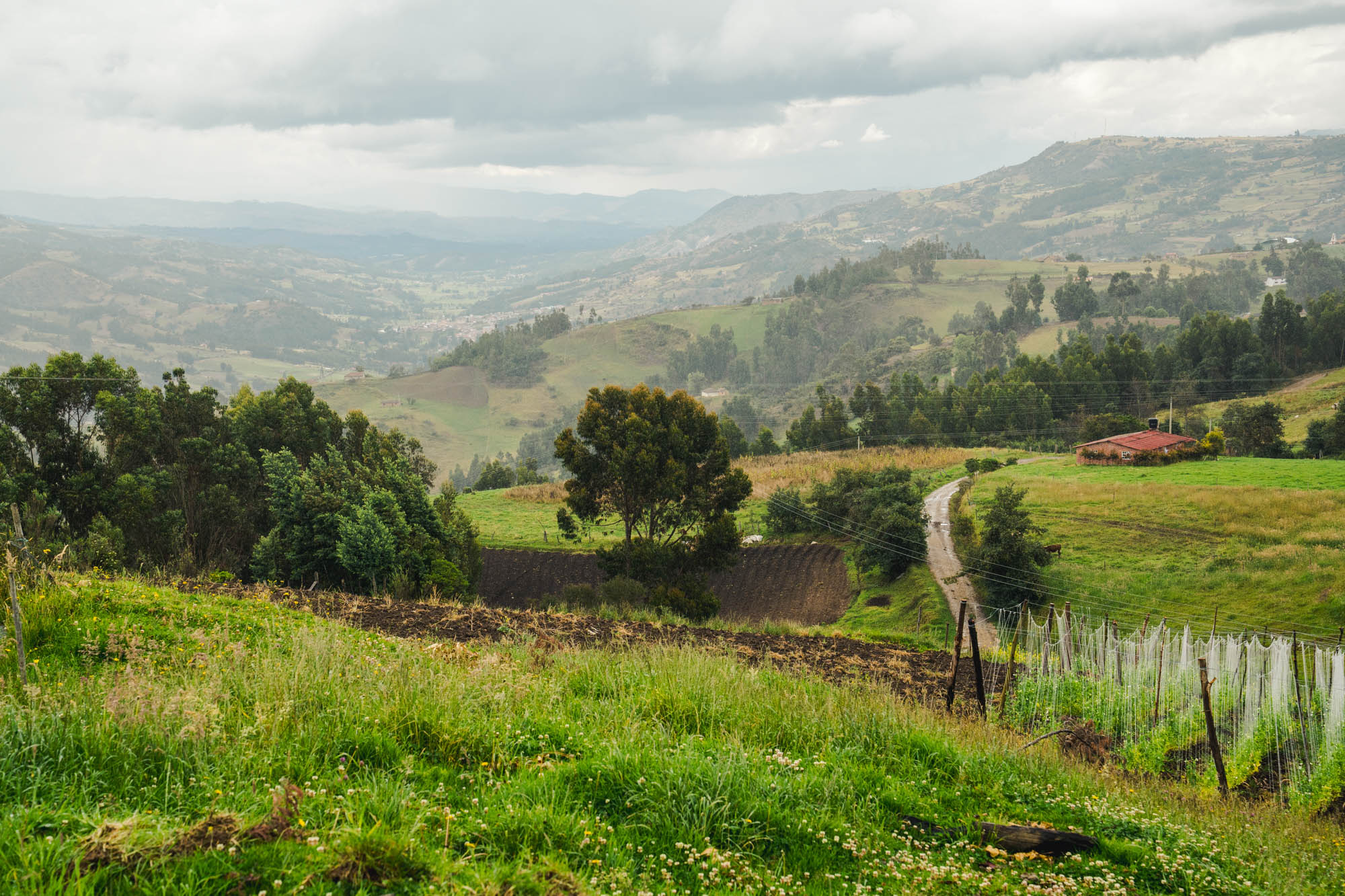
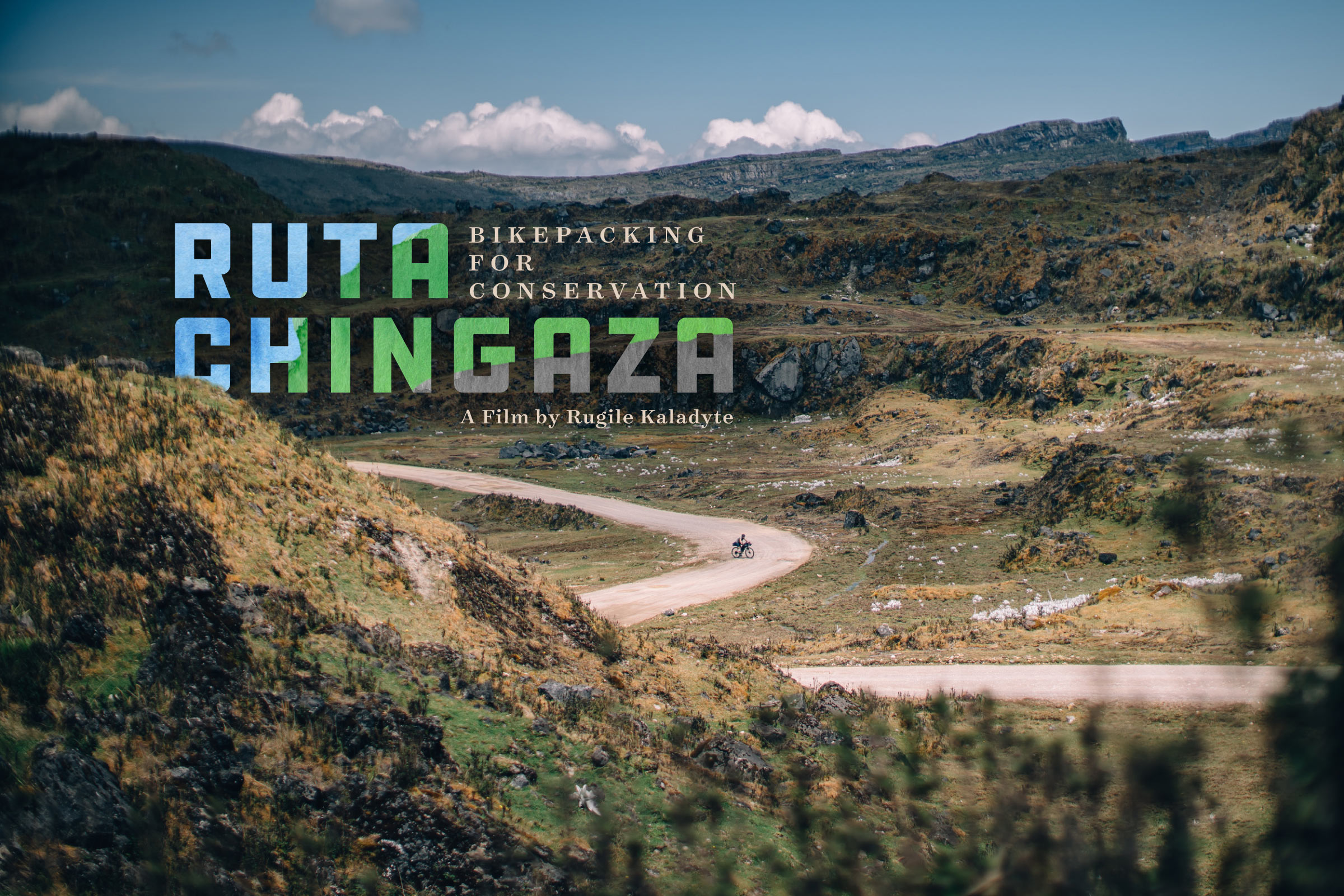
When plans for a group bikepacking trip to Costa Rica for fall 2025 fell through, I went back to the drawing board on destinations. I quickly zeroed in on Colombia and had the Ruta Chingaza in mind, a project developed by the crew here at BIKEPACKING.com along with Conservation International and the legendary Lael Wilcox. After watching the documentary about the route’s development, bikepacking in Colombia and visiting the paramos was quickly added to my bucket list. Unfortunately, Chingaza Natural National Park still prohibits bicycles from entering unless for a special event. I even reached out to the national parks agency in Colombia to see if I could get an exception but was not successful.
With still a month to go before my departure date, I decided to plan my own route. My goal was either to do a big loop starting from Bogotá or to take a bus somewhere and ride backroads en route back to the bustling capital. When I mentioned the upcoming trip to a Colombian colleague, I learned his parents still lived there. Juan suggested I consider their hometown of Sogamoso as a starting point for my ride and connected me with his father, Jorge, who was keen to help with planning and logistics. The route came together quite easily with their help.
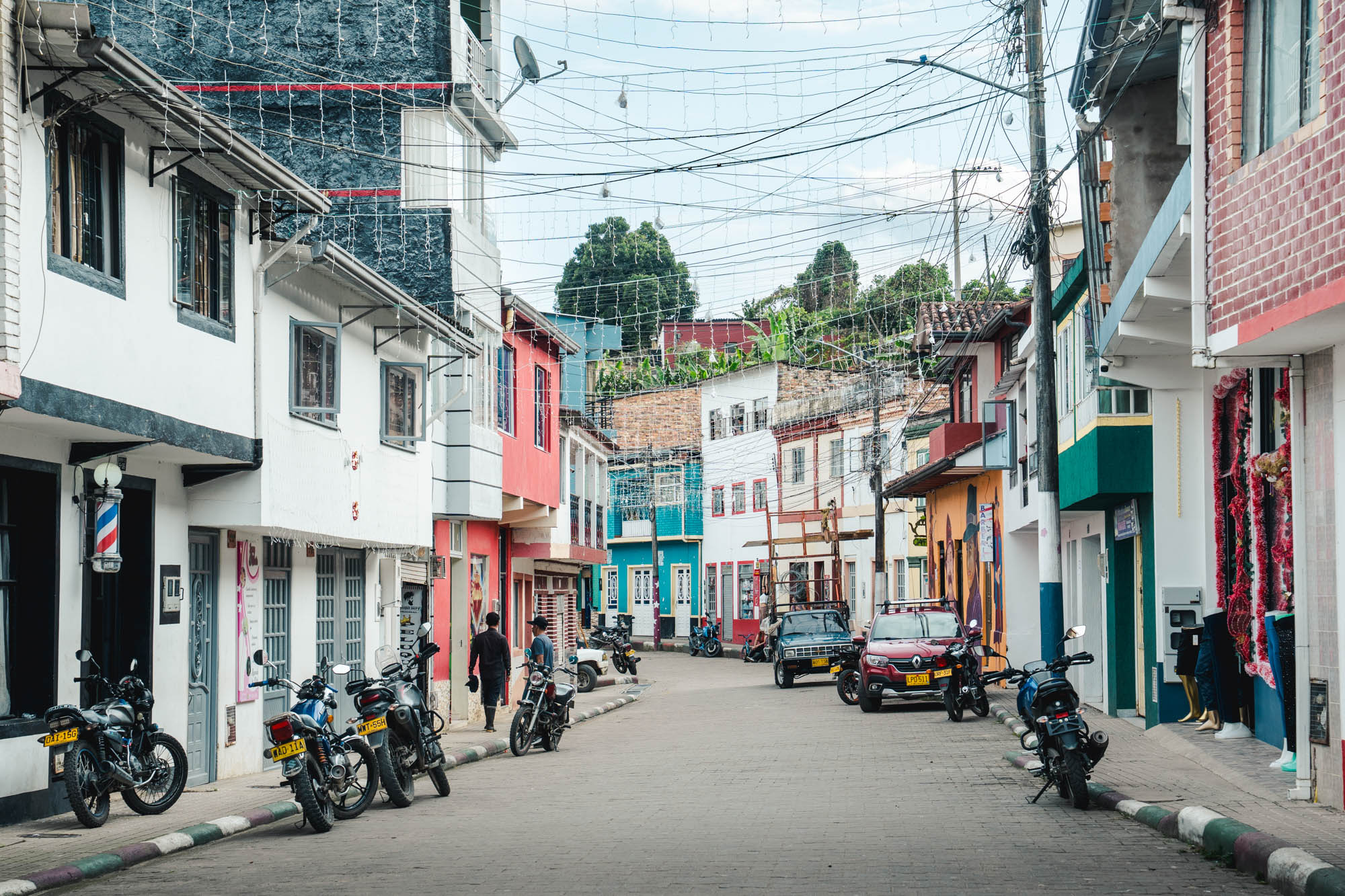


Before long, I was on a red-eye flight to Colombia, where I arrived early on a Sunday morning. Sundays in Bogotá mean it’s Ciclovia, an absolute must on my Colombia to-do list. Although I was fatigued from the long trip, I assembled my bike as quickly as possible after arriving at my downtown hotel and headed off on a 45-kilometer tour around Bogotá. I used a Ciclovia route map as my guide, which worked flawlessly. It was truly amazing how many fellow cyclists were out enjoying the vehicle-free roads. The success and popularity of Ciclovia are a testament to Bogotá’s vibrant cycling culture and its commitment to allowing people to enjoy riding in the downtown streets, which would otherwise be overrun with traffic.

After spending a couple of days in Bogotá, it was time to head to Sogamoso. I met up with Juan’s dad just outside of the city. It was our first in-person meeting, but it felt like Jorge and I had known each other for years. After exchanging pleasantries and sharing a few laughs, we packed my bike into the back of his car and headed north.
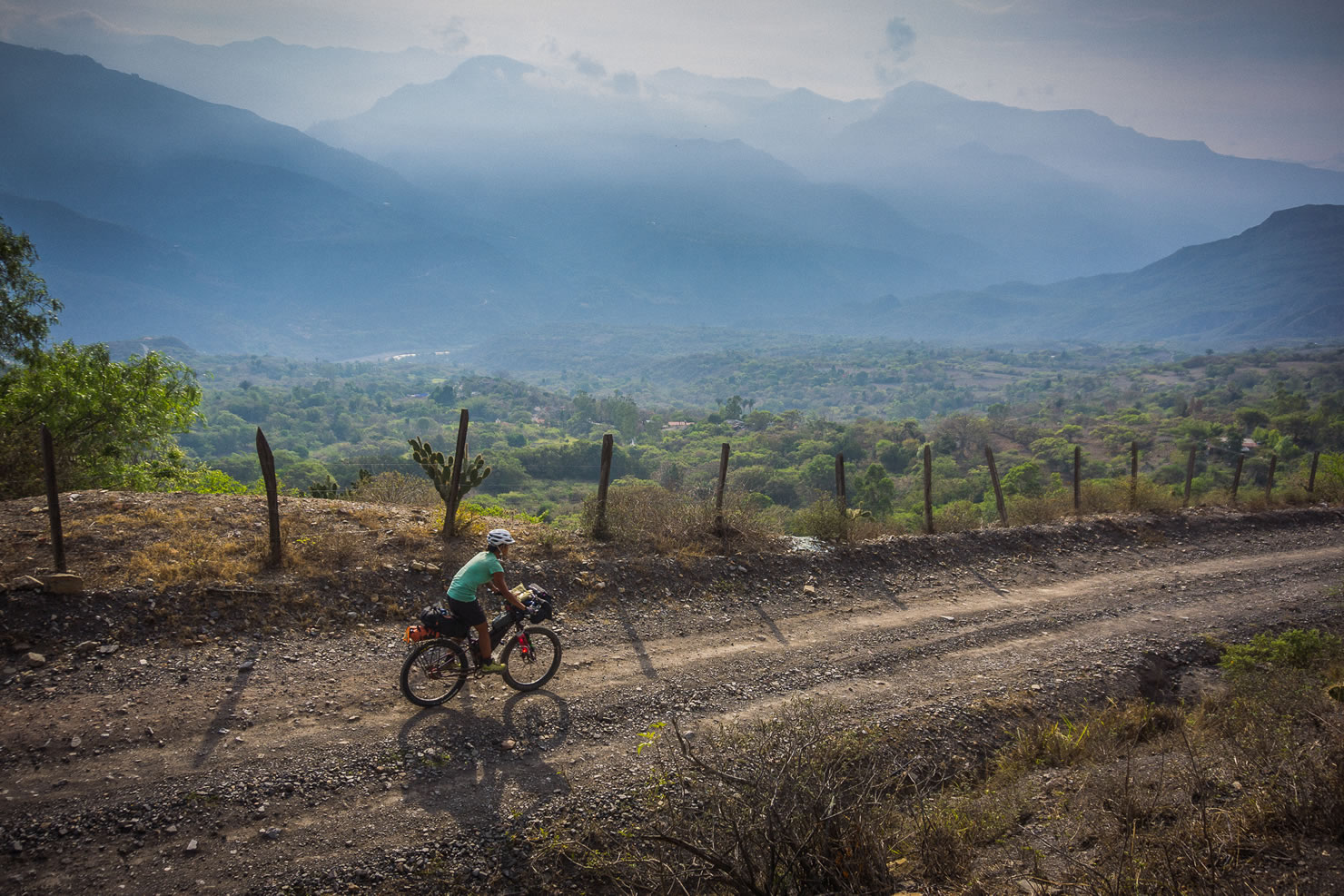
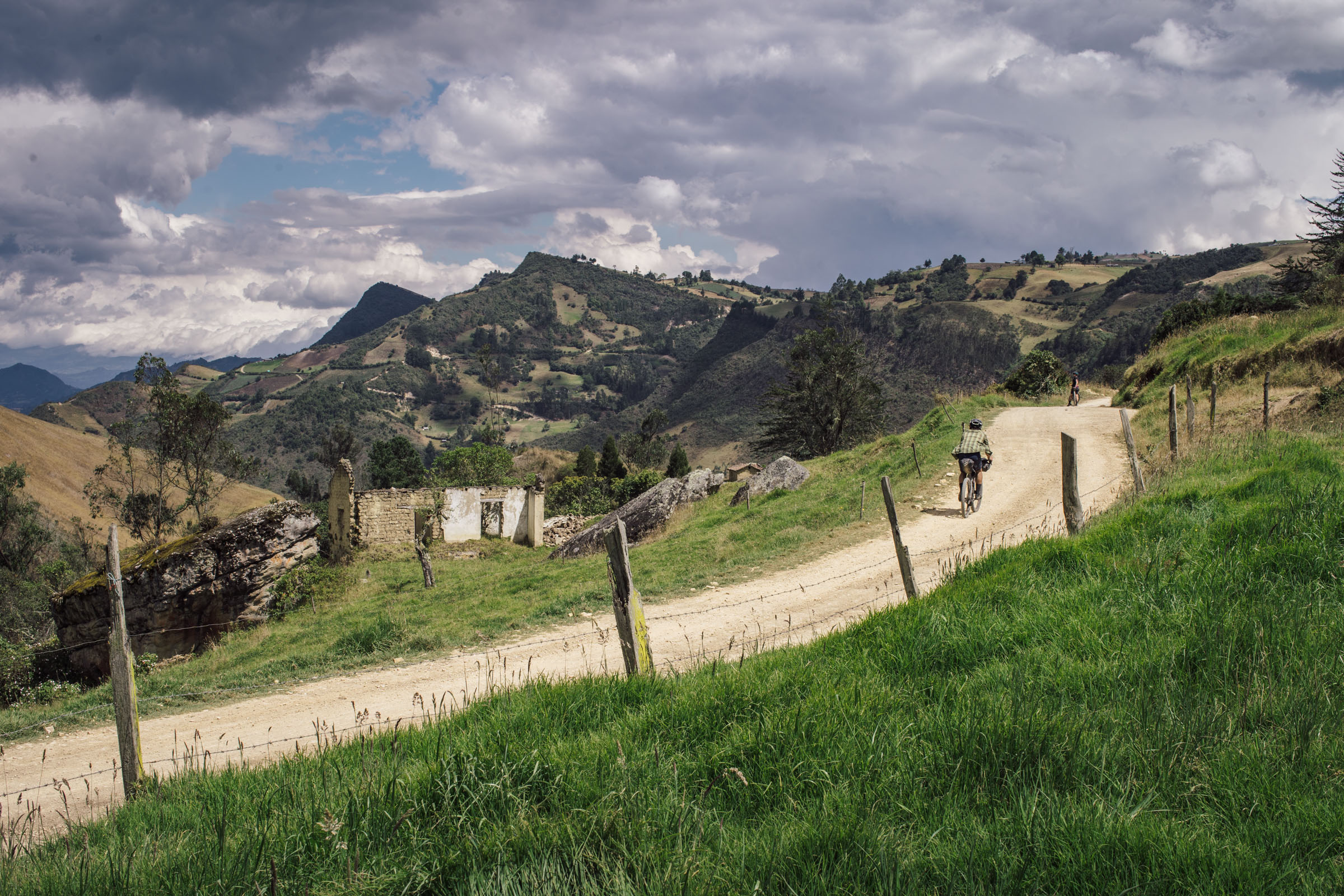
From Sogamoso to Bogotá, the route I generated was just shy of 400 kilometers. It passed through many quaint towns and a couple of paramos via a diverse network of primarily dirt roads, with only a few paved sections. In typical Andes fashion, my route had over 12,000 meters of elevation gain, with a couple of passes over 3,200 meters above sea level.
I always get a thrill from putting together my own routes, especially when in a distant country. I find the research aspect fun—scouring various maps, even if it means examining individual pixels in a satellite image to see whether a mysterious path is rideable. But planning any route from afar has its risks.
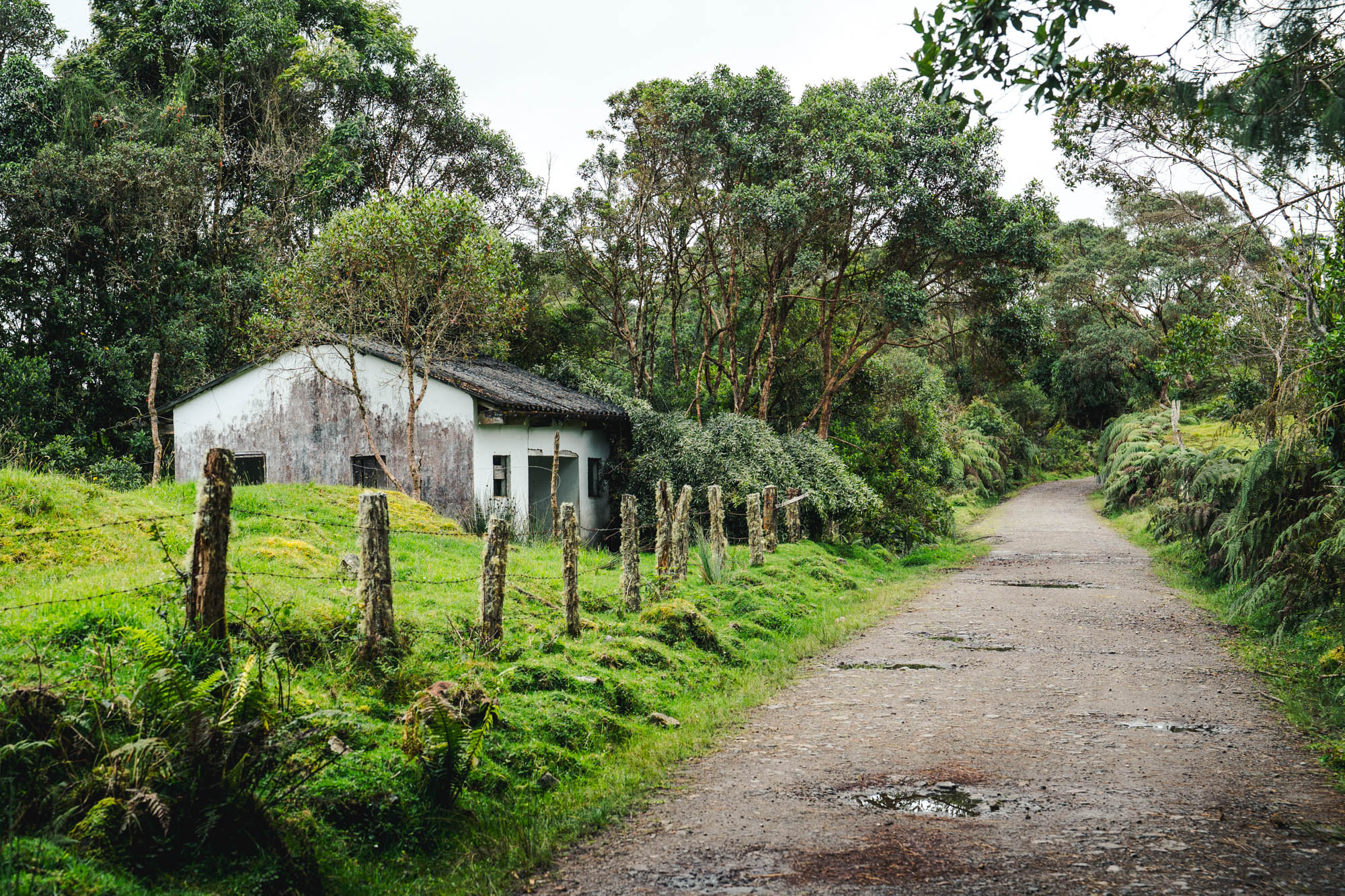

There was a dirt road I had some doubts about, but I didn’t have another option. It was one that led over a high pass on the first day of my journey back to Bogotá. Along the way up, I’d occasionally ask locals I encountered if they could confirm the road was passable. I received mixed opinions, and it seemed there was always another better way. With my rusty Spanish skills, I sometimes struggled to understand everything these helpful folks said to me.

Not so far from the road in question, a young farmer and his partner were coming toward me on their muddy old motorbike. I waved hello as he passed by, and then he hit the brakes. He turned back as if sensing I wanted to ask him something, so I used the opportunity to ask him about the road that was worrying me. With his motor idling and soft voice, I could barely hear what he was saying. But there was something he repeated a few times: “Es un pantano.” After I thanked him for his help and he departed, I took a moment to look up the word pantano. “Oh, shit. A swamp!” I said to myself. Questions and thoughts started racing through my mind: Should I risk it and get muddy? Should I turn back and take another road? I didn’t have much time before sundown, so I decided to stick to the route and tackle whatever challenges arose when I encountered them.
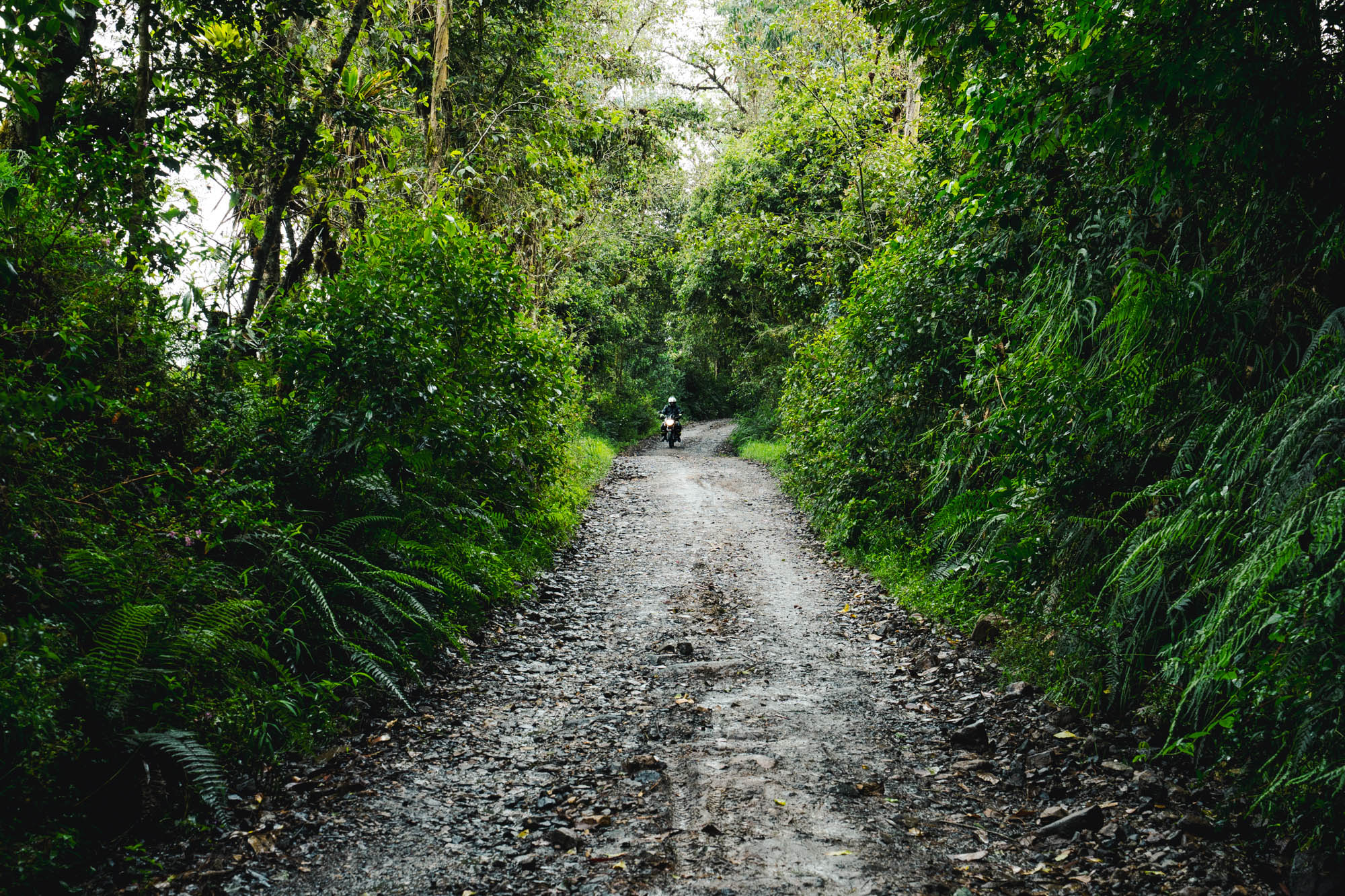

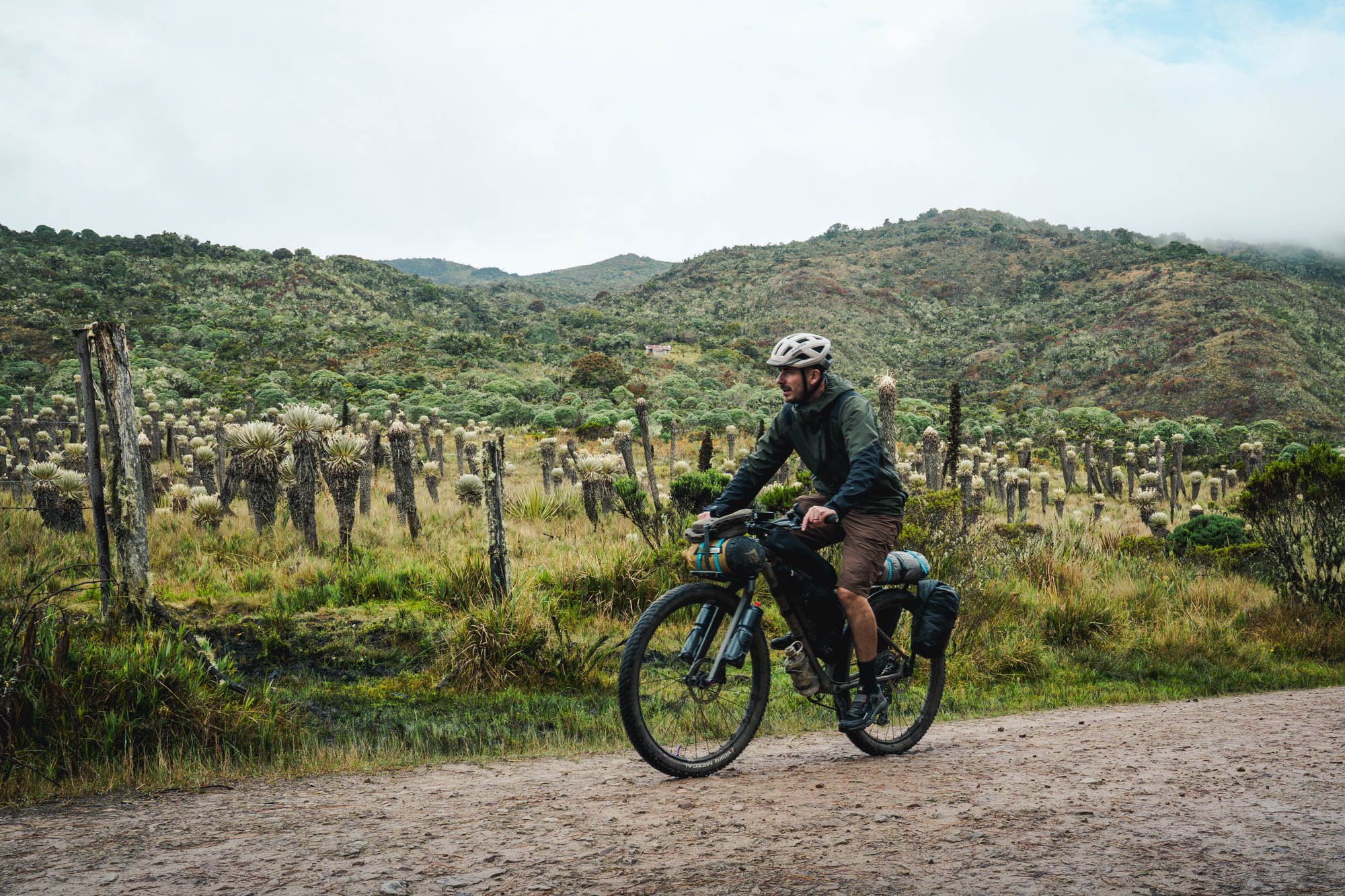
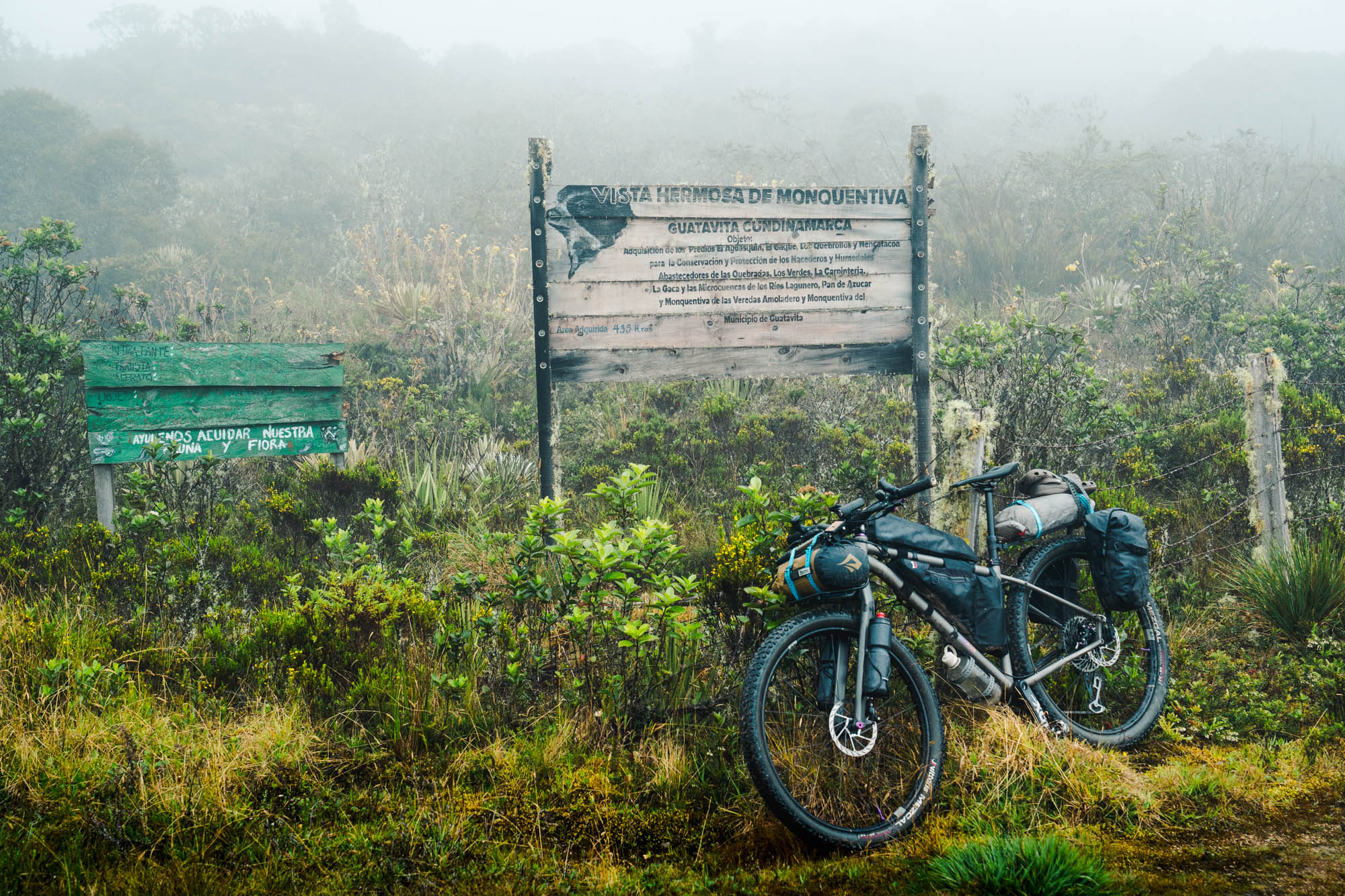
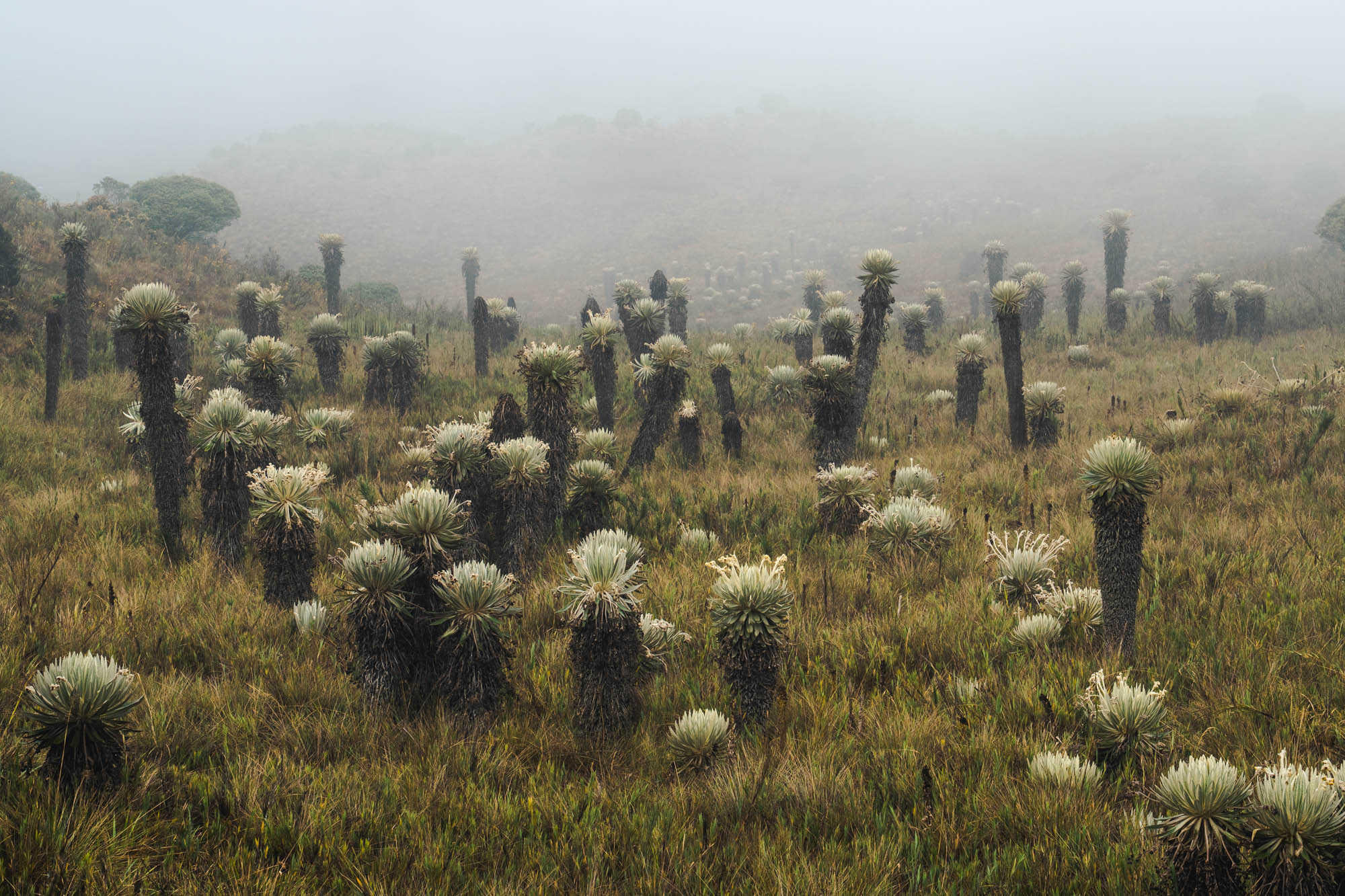
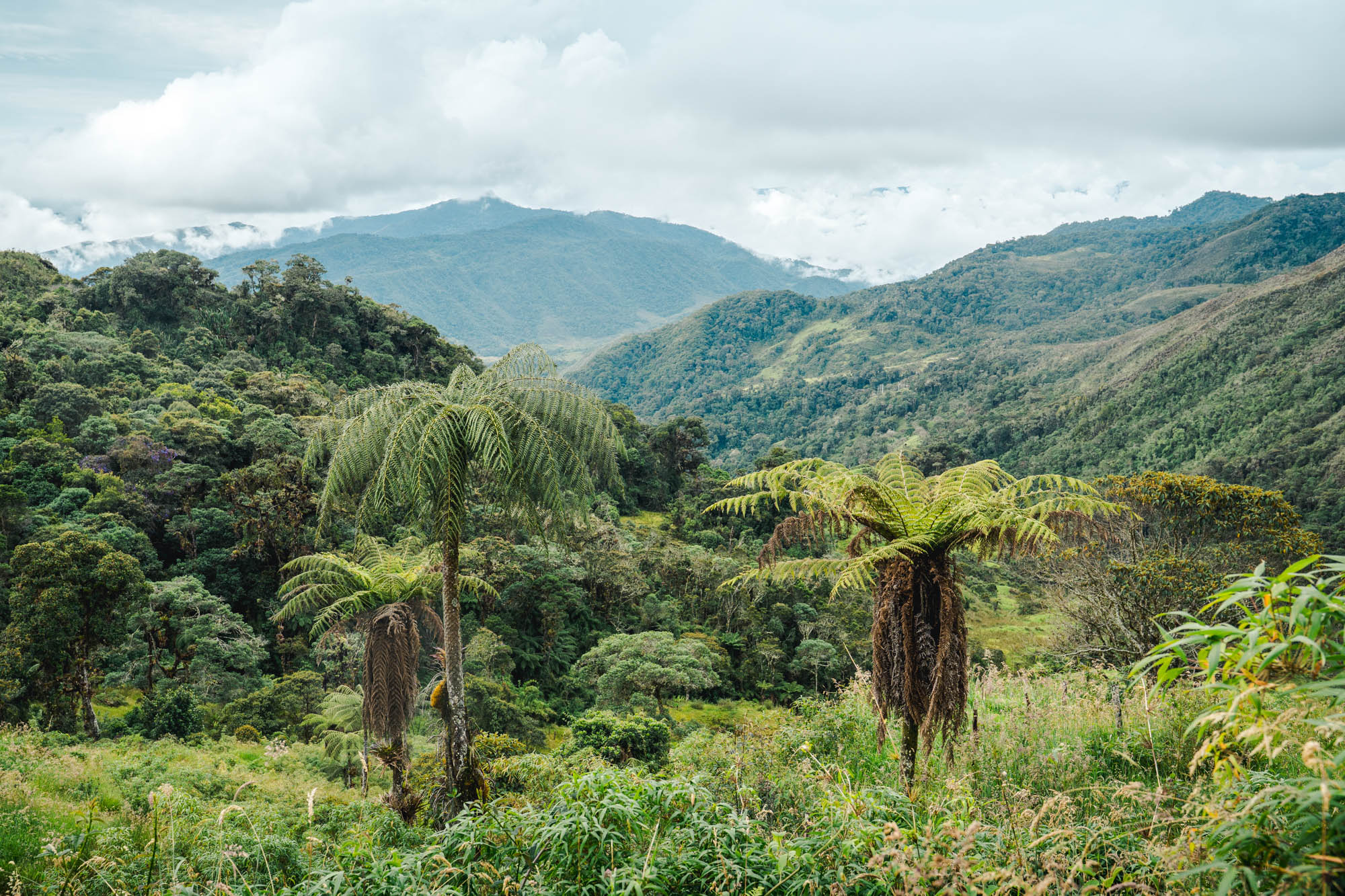
As I traveled up the road in question, it seemed just fine. In fact, it was in better shape than some other roads I was on earlier in the day. There was a magical moment rounding a sharp corner after a big climb and seeing hundreds of frailejones scattered across the landscape. “Oh my god,” I thought, “I made it. I’m in the Paramos!” And at that point, I didn’t care if I was going to go through a swamp. But I never had to. What that young farmer was trying to tell me was that there was a large swamp alongside the road. Phew!
I’m Climbgry
Any multi-day ride in the Colombian cordilleras will inevitably have some major climbing days, and my route had its fair share. A memorable one for me was the route from Miraflores to Garagoa. While on my way, two local cyclists caught up with me, and we got to know each other as we made our way to Miraflores. My new friends, Jorge and Jorge Jr., predicted it would take me at least seven hours to get to Garagoa, given my heavily loaded bike. They warned me about two agonizing climbs ahead.
I had noticed those climbs on the route’s elevation profile, so I knew they were coming. They kindly offered to lighten my bike by transporting my cargo bags to Garagoa, which was 60 kilometers away on a rough road with nearly 2,000 meters of elevation gain. They’d done the ride numerous times before, and it generally took them five hours with two water bottles and some snacks in tow. While I appreciated their generous offer to help, I graciously declined as I could not see myself going anywhere without all my gear. Plus, I’m stubborn and was ready to take on the challenge!
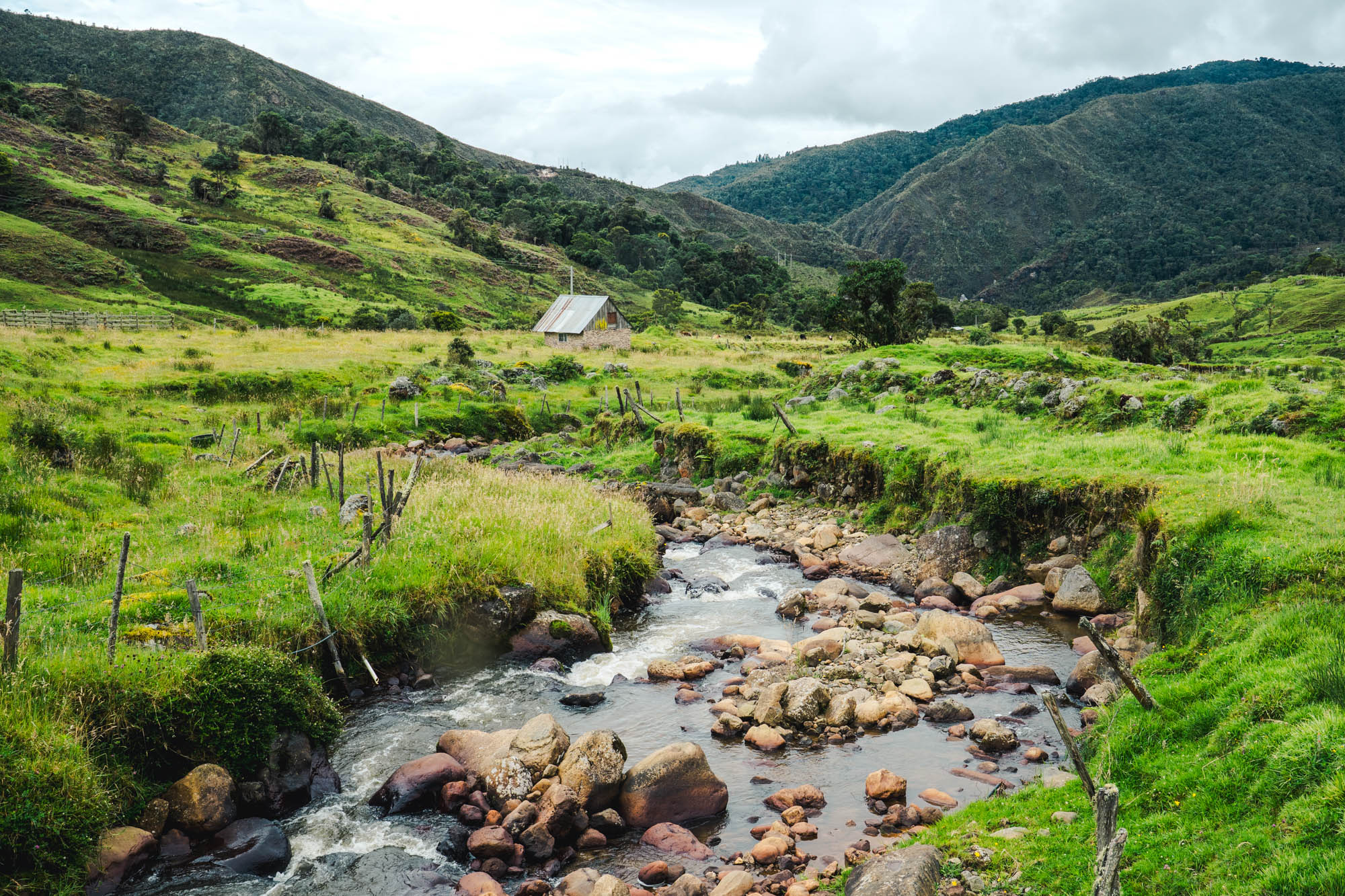

After a delicious and hearty breakfast with the Jorges, the first climb began right in Miraflores. One hour went by, then two hours, and I was still climbing. It was the longest constant climb I’ve ever done. No dips, quick descents, or flat sections—just pure climbing. I didn’t change gears much, either.
During the last few days of this trip, I began noticing that nearly every person on a motorbike (and the odd truck) who passed me while I was climbing beeped their horn as a greeting. I liked to think they were cheering me on for putting myself through this foolish ride. So many motos passed me, and it felt nice to be acknowledged. I lost count of the beeps I got on this first climb.
I finally reached the top after a few hours. I enjoyed a quick lunch, provided by my new friends, got my jacket on, and prepared to rip down in record time. Unfortunately, the descent didn’t go as quickly as hoped.
This next section of road had evidently seen quite a bit of rain recently and was in terrible condition. Truck traffic had torn it up, and the surface was very slippery in sections. Pretty much a night-and-day difference. Eager to make up lost time, I let off the brakes and put my mountain bike skills to the test. While ripping down this gnarly road, I heard a big clunk, and one of my panniers went flying off my bike. There wasn’t a quick fix for the problem; one of the latch hooks bent open, so I used a spare long strap to secure it back onto the bike.
Toward the end of this first descent, I encountered a small group of farm hands enjoying some afternoon cervezas at the only tienda between the two towns. I was relieved to learn they had a set of pliers to bend the hook back. After asking them to lend me the tool, they even offered to fix the broken part for me. The slightly intoxicated group crowded around my bike, each instructing the others on what to do. It was entertaining to watch, but, worried about overbending the small metal part, I opted to tackle the issue myself while they peppered me with questions about my journey, my bike, and life in Canada.

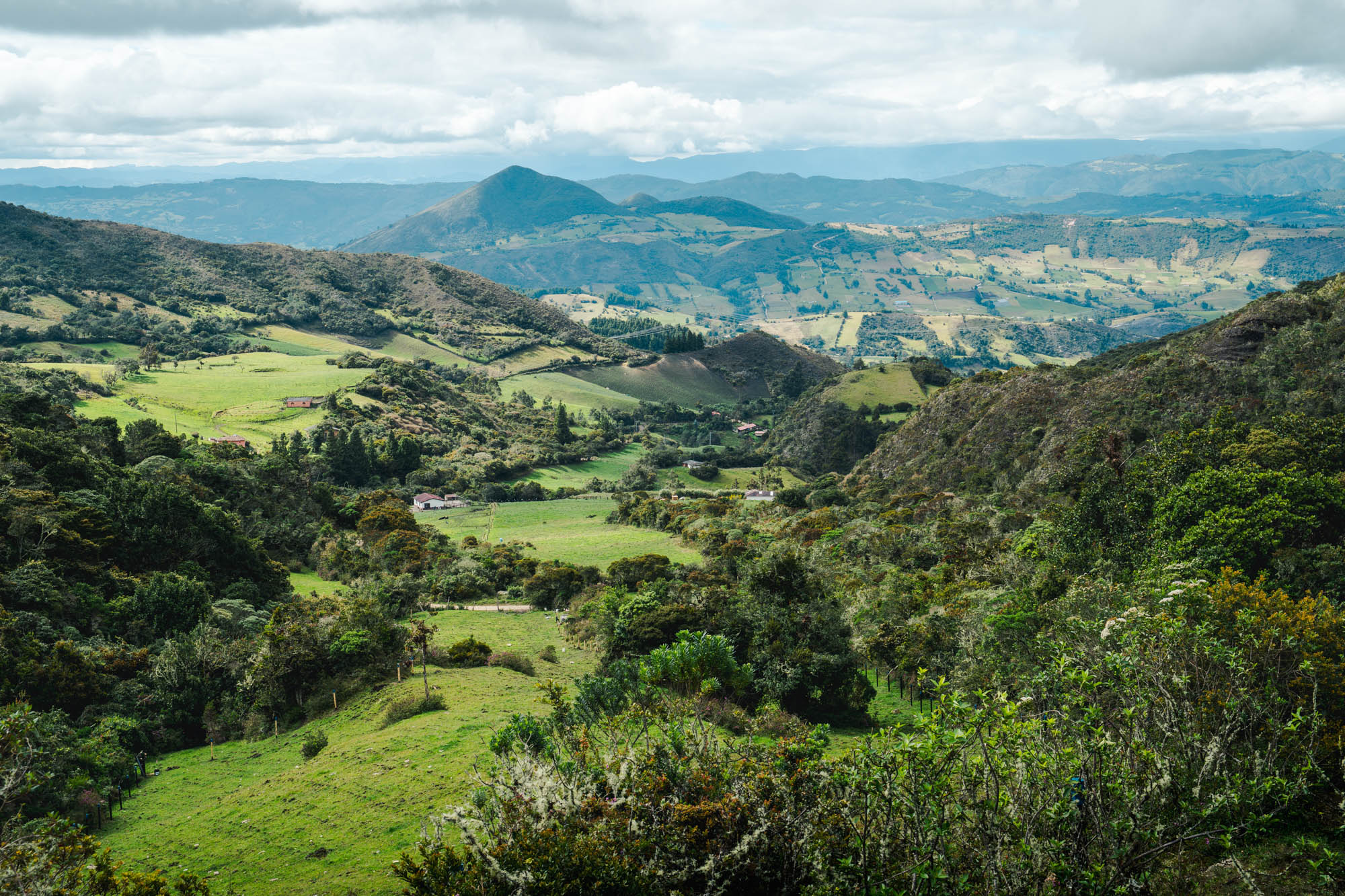
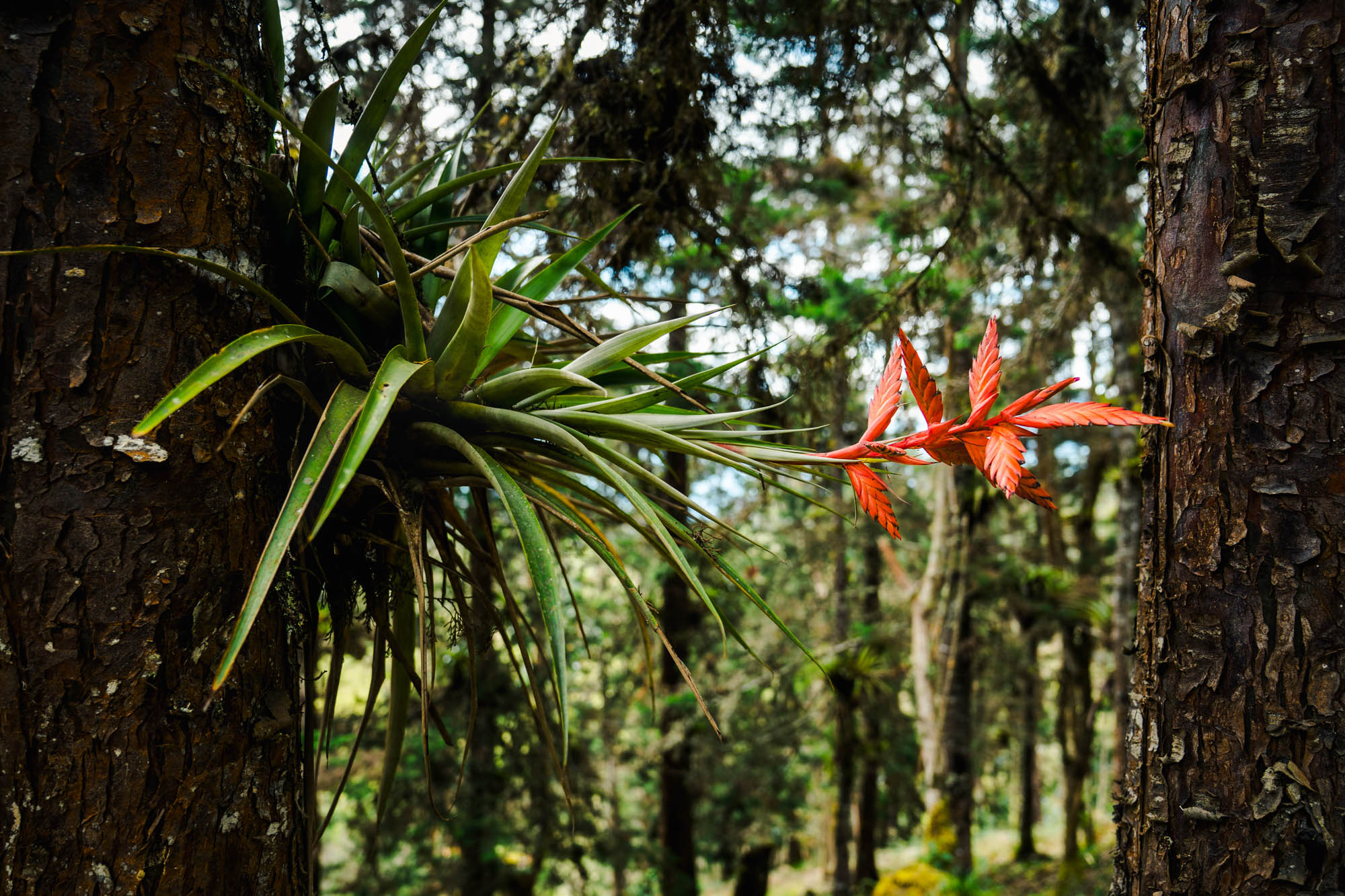

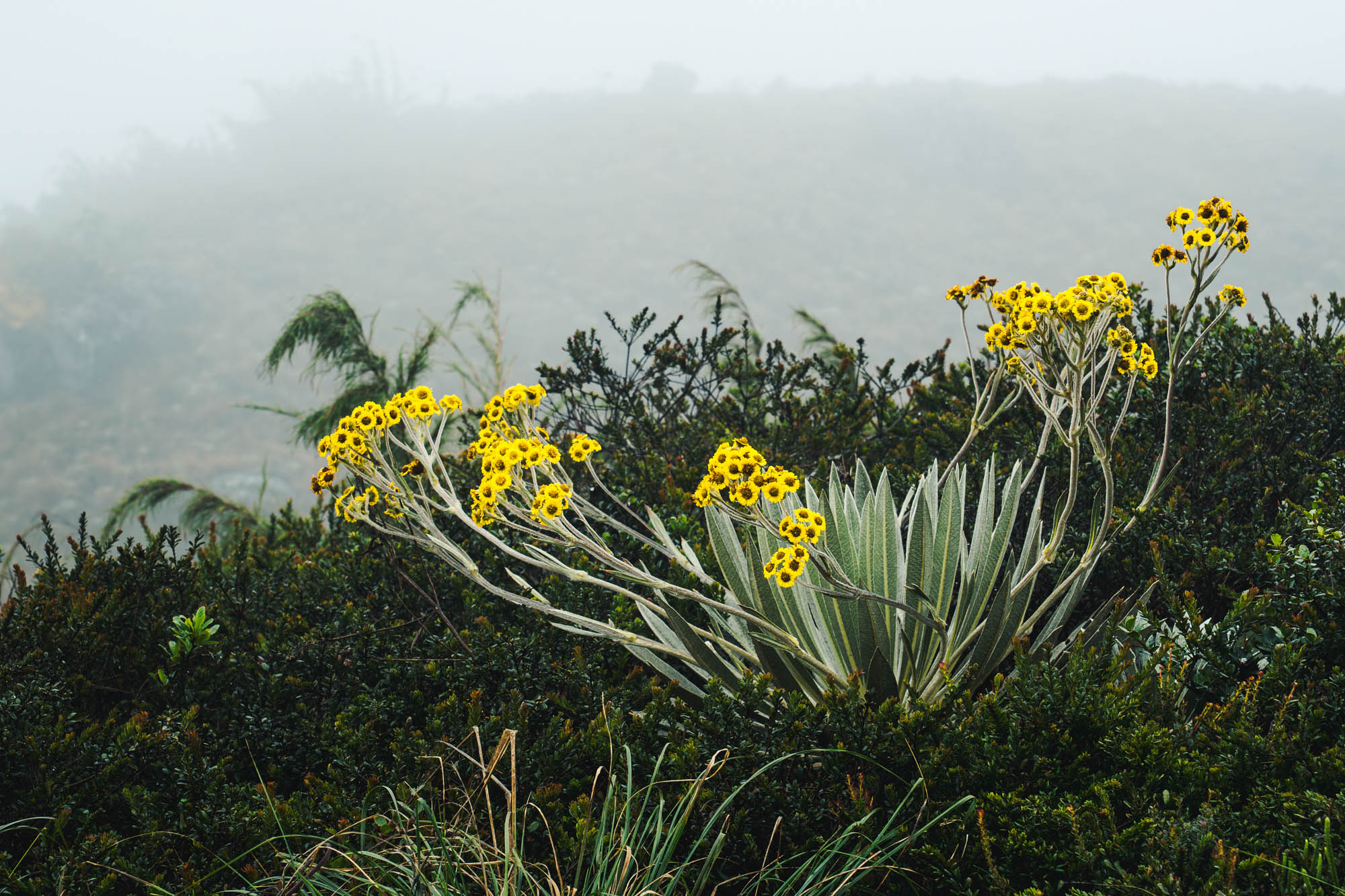
After buying the group a round of beers and chugging a refreshing Gatorade for myself, it was on to the second big climb of the day. Thankfully, the road conditions in this section were better. It was another consistent climb but didn’t seem as steep. As the hours passed, I was beginning to feel frustrated—this climb seemed never-ending! The beeps from passing motorbikes then started to piss me off. Perhaps feeling a bit hangry and tired, I coined a new term for the way I was feeling: climbgry. I reminded myself that each crank stroke put me closer to the top.
By sunset, I finally crested the second peak, and it was a relatively quick descent into Garagoa. I arrived in town at night. It had taken me about nine hours to complete the ride from Miraflores. The streets were busy, and I received a good recommendation for a hotel downtown. When I found the hotel, I left my bike parked at the entrance, at the foot of a long staircase leading to the lobby. As I arranged my evening accommodation, I kept peering down the stairs, concerned about my unattended bike. The hotel owner noticed and assured me I need not worry. “Your bike is safe. This is a good town,” he said.
Wake up, Taxi Driver
Today had the last big climb, leaving a valley in the eastern cordillera before descending toward Bogotá. Over an early breakfast of fresh arepas, scrambled eggs, and a tinto grande, I reviewed the route map in more detail and calculated the day’s elevation gain over distance. I was looking at about 1,500 meters of climbing in the first 27 kilometers. I felt the tension in my legs reading the calculation scribbled into my tiny notepad. The full distance of my planned day, from Gacheta to Guasca, was just 44 kilometers. Still, I knew the climb would take me hours.
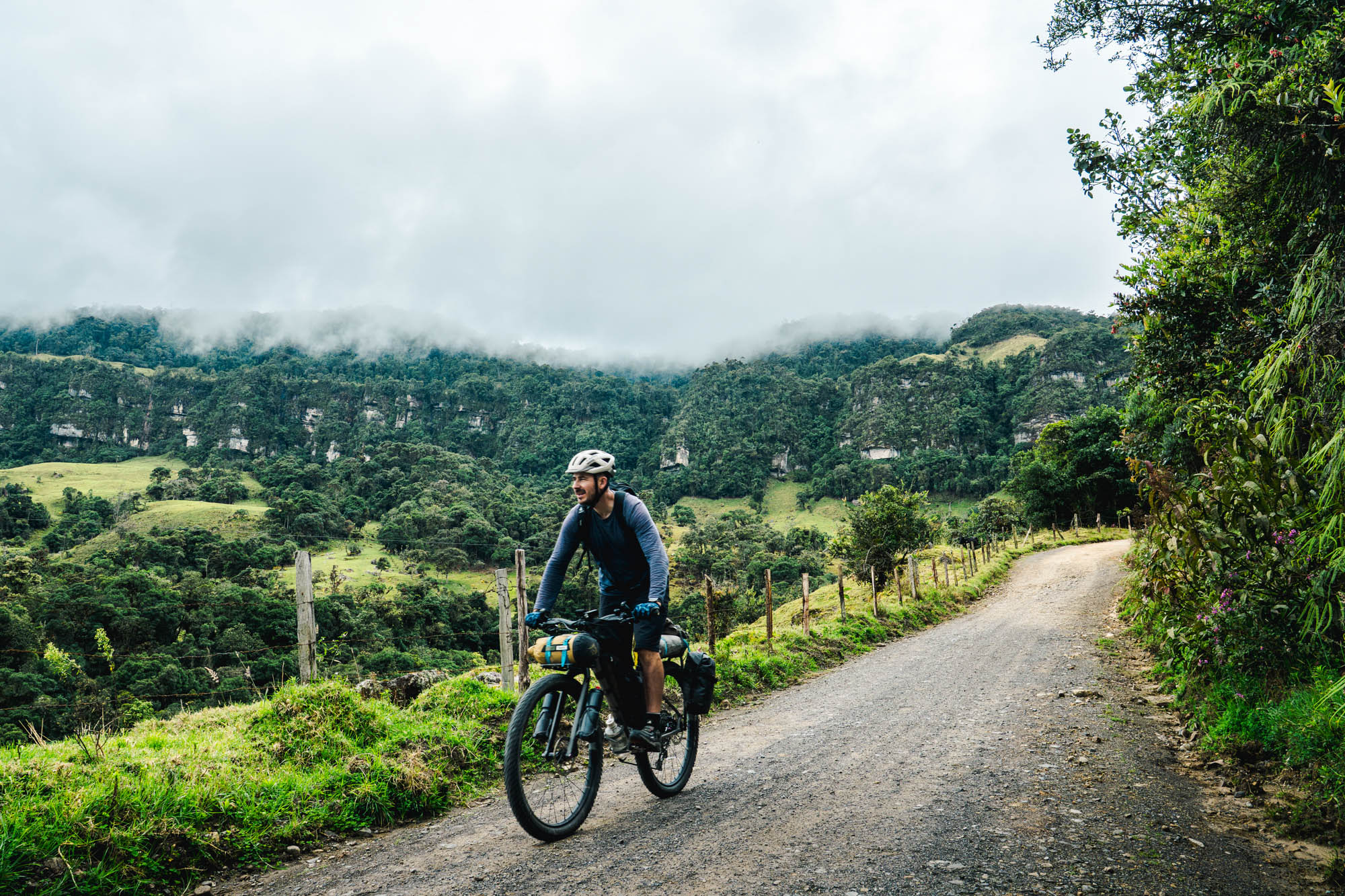
Leaving the local breakfast joint, I was still trying to wrap my head around the day’s likely sufferfest. Then it occurred to me I might be wise to hitch a ride for part of the climb, so I would have some hope of enjoying the ride as I reached higher altitudes. It’s not exactly what I’d originally envisioned, but it felt like a sensible idea. Just outside the restaurant, there were a bunch of beat-up old taxis waiting for their next customer.
I approached the only taxi that appeared to have its driver inside. Hernandez was sound asleep in his reclined driver’s seat. I tapped the driver’s-side door, which slowly woke him from a deep sleep. When he opened his eyes, he looked a bit startled to see me standing beside his taxi with my heavily laden bike.
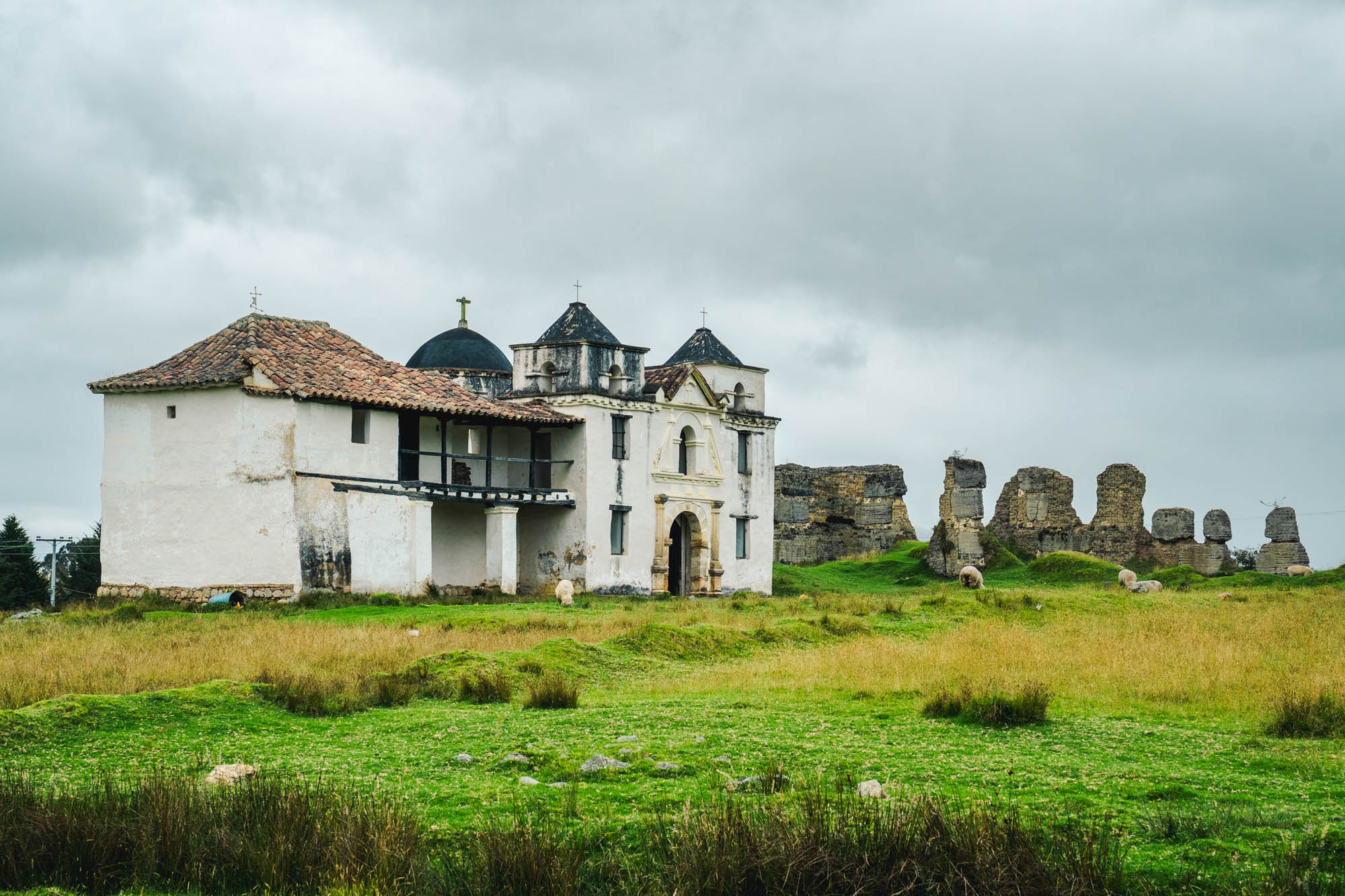
I decided to skip only half the climb. The lower half seemed to be the steepest part, anyway. I showed Hernandez where I wanted to be dropped off, right next to a riverside trout farm, and I sensed some hesitation from him. He was worried about the condition of the roads. He told me it was a very rough, steep road and difficult to reach by car. He called a colleague for some intel on the route and a suggested rate, since it wasn’t somewhere he had driven before. After the call ended, Hernandez said he could take me to the trout farm, but it would be expensive at 100,000 pesos. I decided the rate of around $27 USD was well worth it to me!
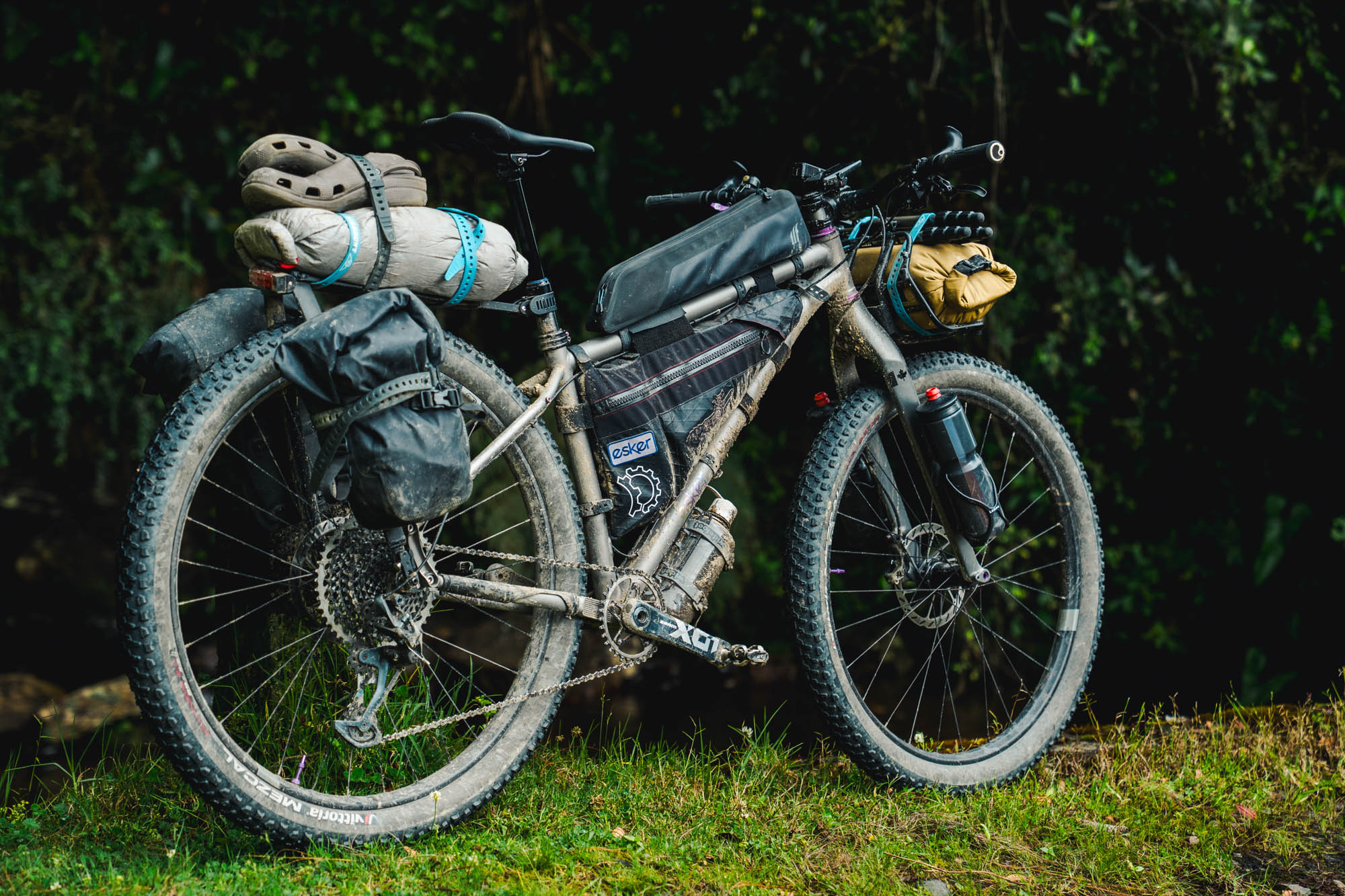
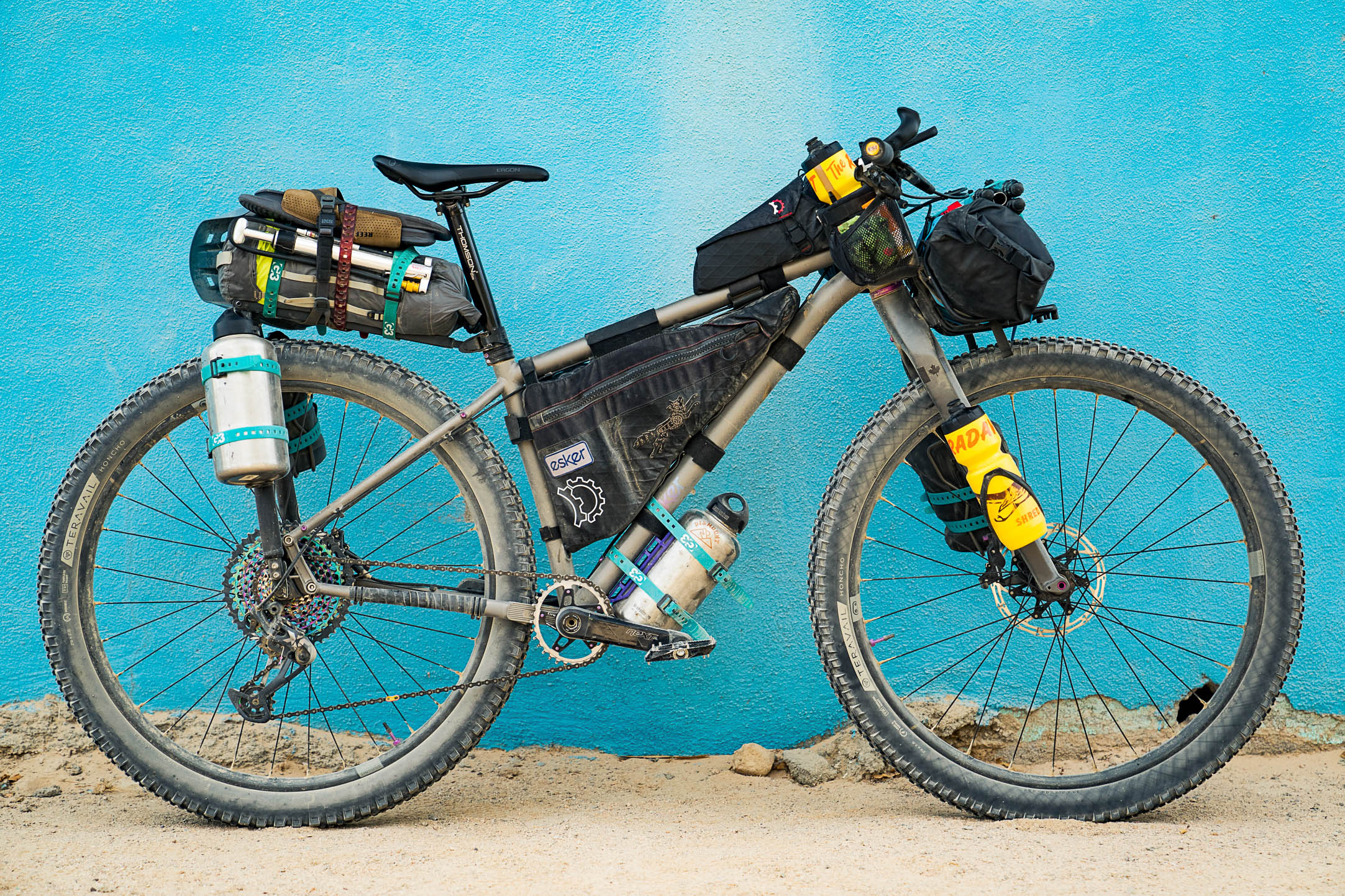
I needed to get myself some Gatorade before we headed off. “Leave your bike here next to my car and follow me,” Hernandez told me as he began walking toward a nearby tienda. Gachetá wasn’t a town that gave me the warm and fuzzies. “Wait, will my bike be safe?” I asked. “It’s fine. Nobody will touch it,” he responded with the utmost confidence. It wasn’t the first time I’d felt vulnerable to thieves by leaving my bike unattended, but sometimes you just have to trust the universe. Upon our return, my bike was still there, and we pulled the front wheel and panniers off. My trusty Esker Hayduke barely fit it into Hernandez’s tiny old beat-up Chevy taxi.
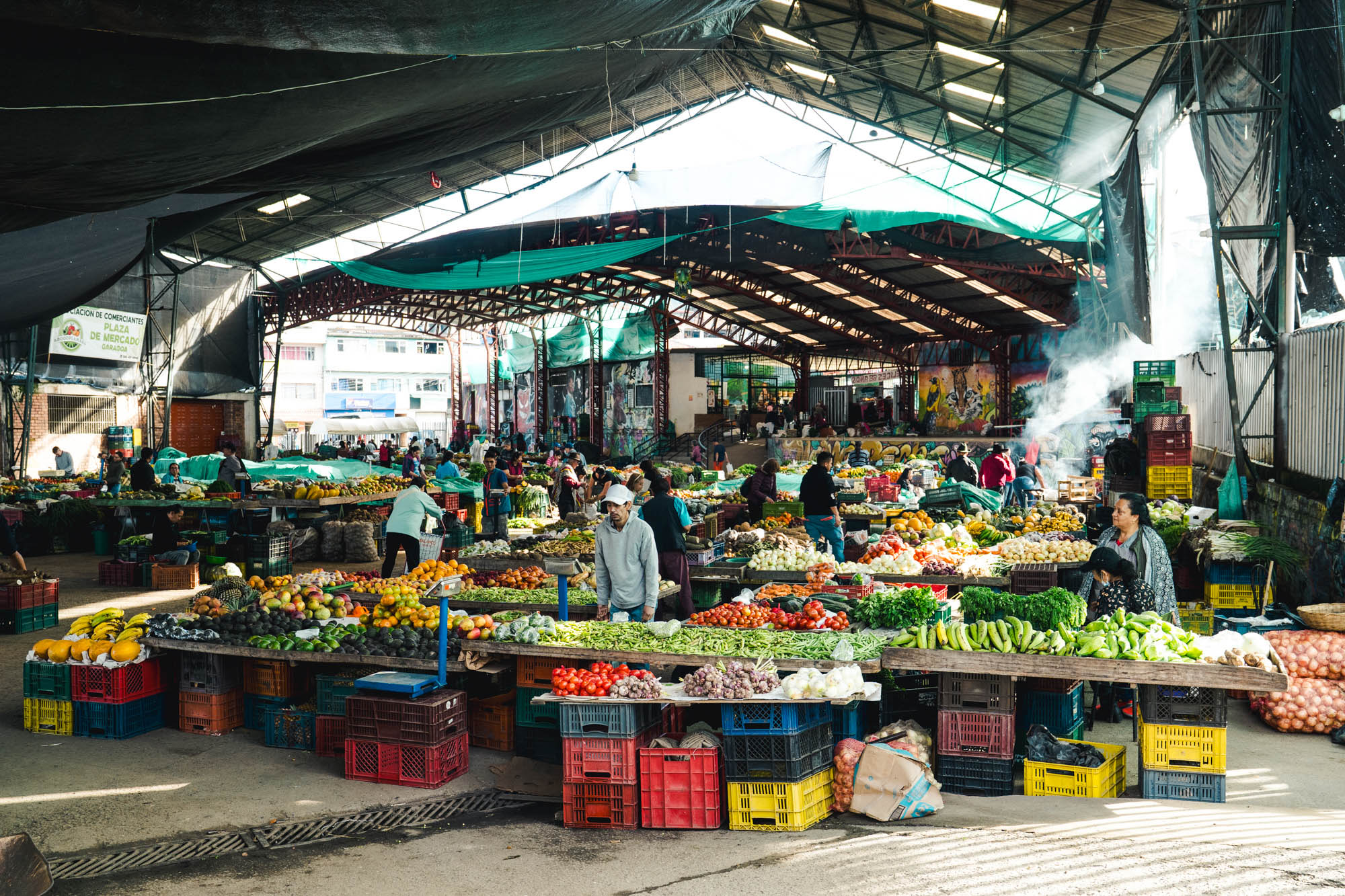


As we inched our way up the steep road, I was thankful the car’s engine was doing the work that otherwise would have been up to my tired legs. Its clunky manual transmission barely ever made it beyond second gear. Hernandez and I talked a bit about our lives. He told me about his family and that he also shared an interest in cycling.
After a 40-minute drive, we arrived at the trout farm. While Hernandez helped unload my bike, he admitted he was intrigued by the farm operations right next to us. He managed to convince the young security guard at the entrance to let us have a quick peek inside. Fresh river water from the high-altitude paramo fed a series of large cascading pools filled with trout. After the last pool, the water would exit back into the river to continue its journey down the mountain. I ate trout a few times on this trip, and it was interesting to see how they’re raised locally.

Just before returning to town, Hernandez wished me well. He said, “Take my phone number, and if you have any troubles, please contact me. I’ll help you.” We exchanged numbers on WhatsApp, shook hands with smiles, and he was off. I had a similar experience before leaving Garagoa, where someone I met in a bike shop offered to give me their number in case I needed help during my trip.
Buena Nota
While on my last stretch of road before the big descent into Bogotá, I began reflecting on the genuine kindness of the Colombian people. Pretty much every day of my journey, and even before it started, the people I met welcomed me, generously offered support, and wanted to ensure my visit to their beautiful country was a wonderful experience. And they certainly succeeded!
I chuckled at the memory of all those beeping motobikers. If I waved to say hello as they passed by, they often stopped to see if I needed assistance. I eventually caught on that, instead of waving hello, just a thumbs-up and a smile were good.
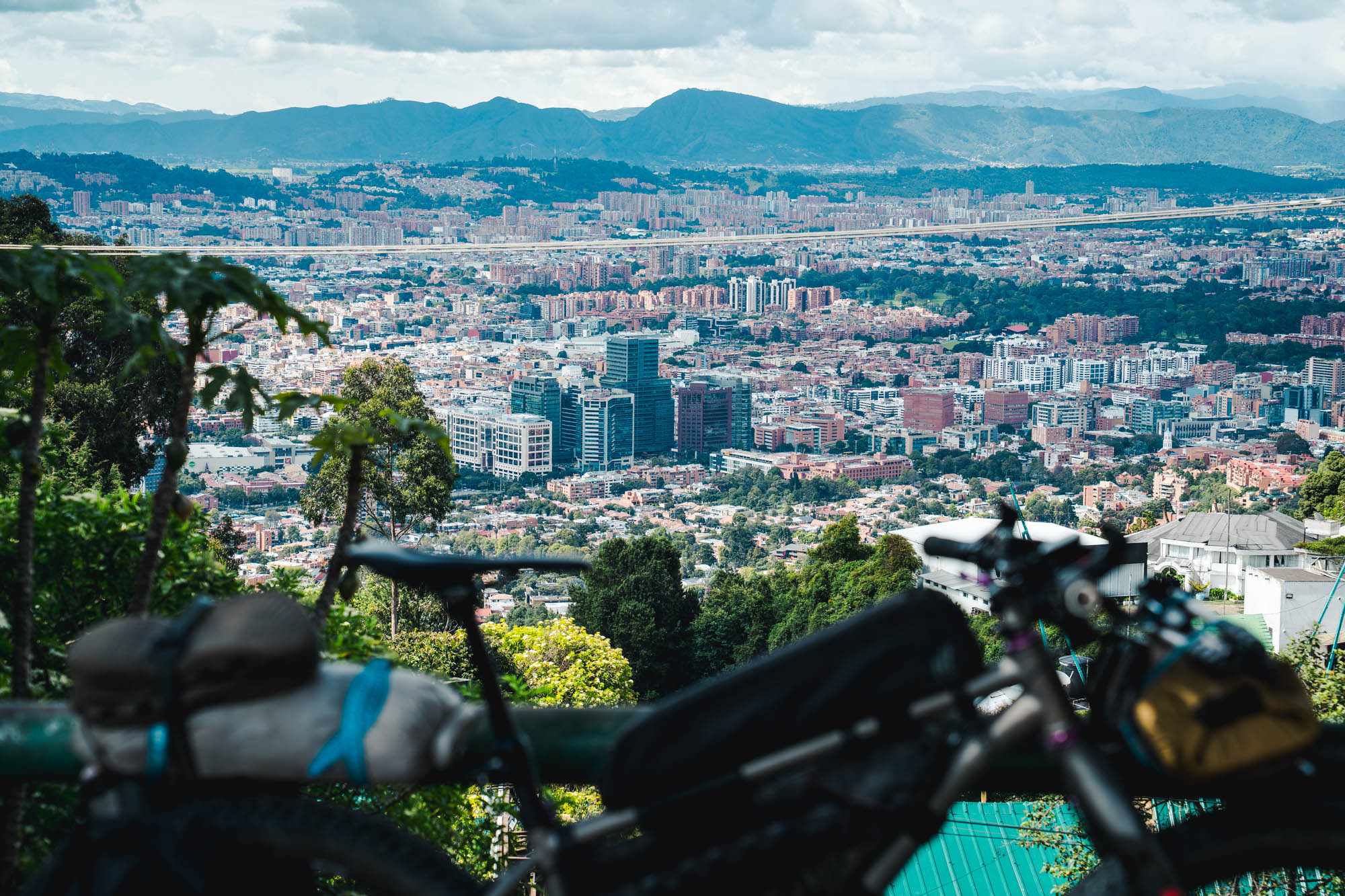

I recalled the warm welcome from a large cycling group in Sogamoso who invited me to join their weekly ride to Pecsa and offered an endless supply of arepas and tinto. They made me feel as if my presence was a highlight of their ride, even though I kept making them wait to snap photos.
Many years ago, my cousin in Costa Rica taught me the term for really nice kind people: buena nota. Of all the places I’ve been fortunate to visit on my bike, I found Colombia to be among the friendliest, with an abundance of people who were genuinely buena nota.

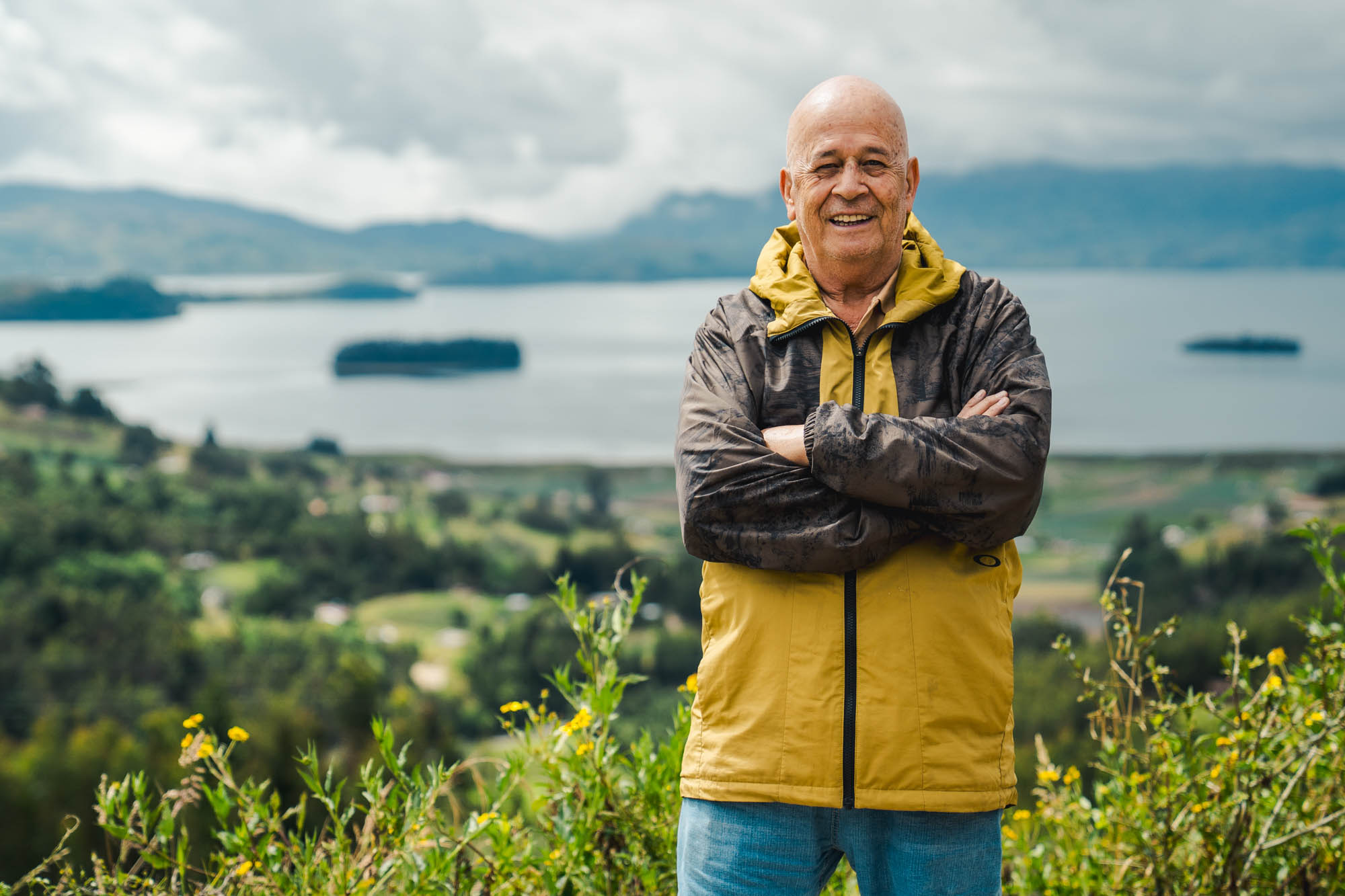
When I left Canada for this bikepacking trip, I only knew one Colombian person—my colleague, Juan—but by the time I departed two weeks later, I had more than half a dozen new phone numbers in my contacts. People I met along the way would chat, wish me well, and then offer their contact info, promising to help me out if I ran into any trouble. “Take my number, just in case…” they would tell me in Spanish. While I’m grateful I never needed to call any of these kind people in distress, I was moved by their instinct to offer a lifeline to a stranger exploring their country by bike.
Colombia is a beautiful and fascinating country to visit, and its charm is only enhanced by the warmth and generosity of its people.
Further Reading
Make sure to dig into these related articles for more info...

Please keep the conversation civil, constructive, and inclusive, or your comment will be removed.