

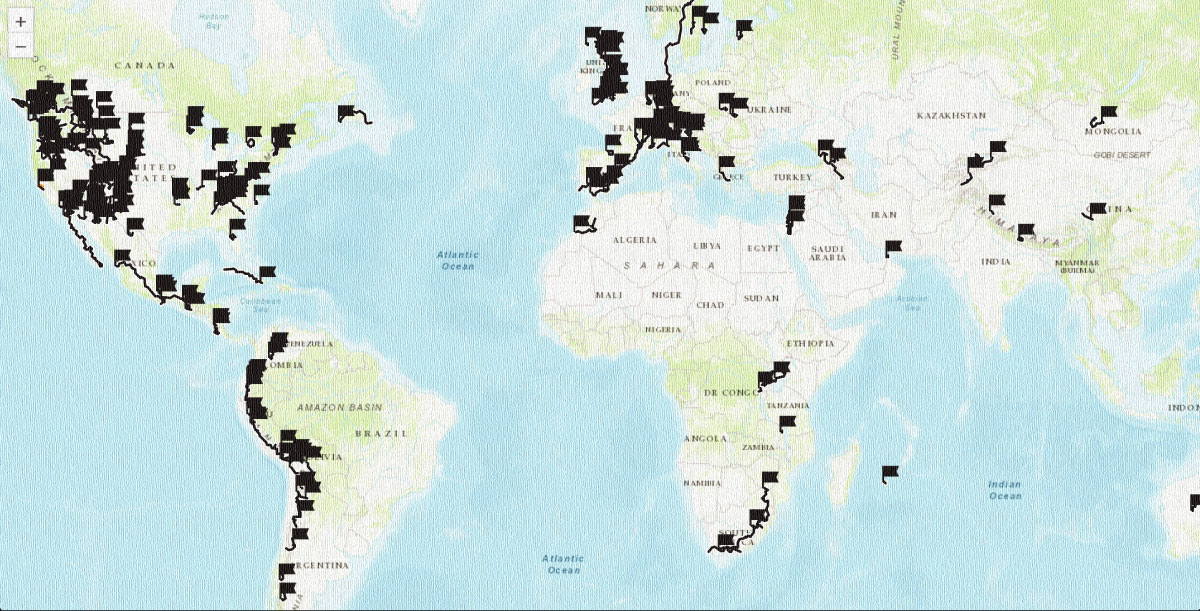
 Mountain Bike (MTB)
 Gravel Bike
 All-Terrain Bike (ATB)
 Fat Bike


Curve Big Kev V2 Review: Embracing The Gravel-Plus Era

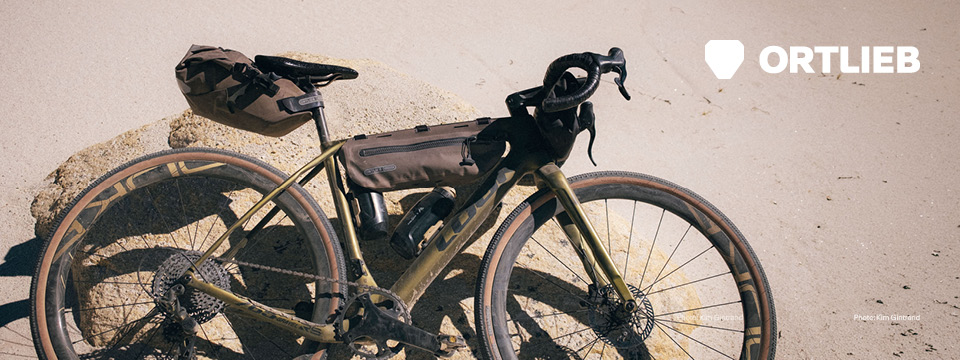


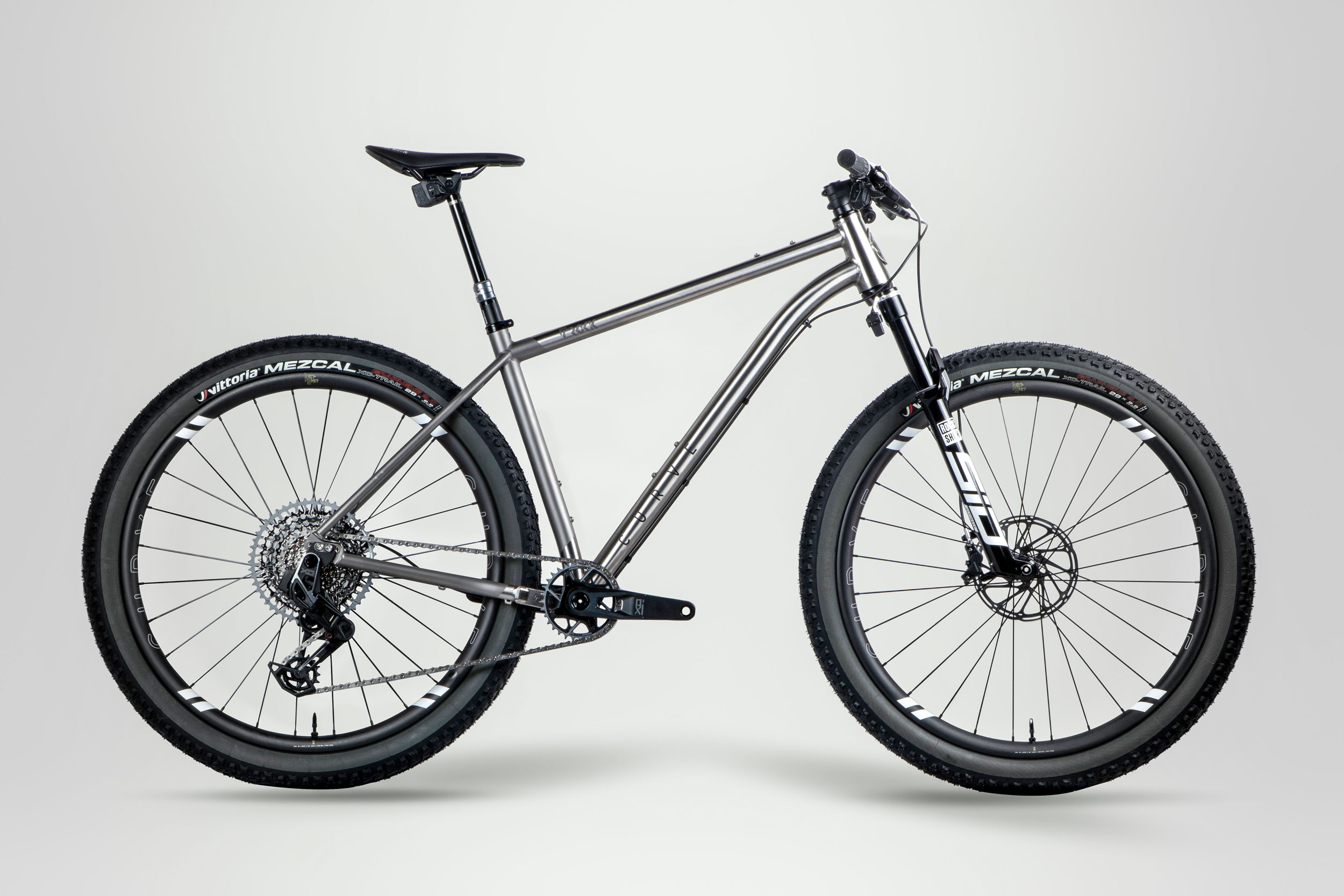
The Curve Big Kev V2 is a titanium gravel bike built around progressive geometry and 29 x 2.4” tires. Having long preferred underbiking on carbon gravel bikes with skinnier tires, Jeff Bartlett spent the last few months testing the Big Kev V2 on Vancouver Island, riding his favorite forest service roads, ripping backyard singletrack, and racing along the Tree to Sea route to find out whether the bike could open his mind. Dive into his Curve Big Kev V2 review here…
PUBLISHED Jul 30, 2026
Riding photos by Mike Short
I’ve always embraced underbiking. I usually opt for a faster gravel race bike, trading comfort for the snappy acceleration that makes stop-sign sprints more fun. But after a grueling 800-mile bikepacking trip in Patagonia on a lightweight carbon bike with 45mm tires, I faced an existential crisis. Underbiking hadn’t been fun. I needed a more comfortable bikepacking setup.

I don’t bikepack every day, so I also need a gravel bike that I’ll reach for daily, whether I’m mixing pavement and gravel, gravel and singletrack, or all three into a single ride. When shopping for a bike, I never find it easy to trust geometry charts or build specs. They never directly answer the most important question: Will the bike paint a smile on my face every time I ride it?
In hopes of finding out, I’ve put nearly 1,000 miles on the Curve Big Kev V2 over the past few months. I’ve loaded it for overnight trips and ridden it on my favorite mixed-terrain loops. With some fall race plans starting to take shape in my mind, I also simulated racing a Traka Adventure or Unbound XL-style effort on the 242-mile Tree to Sea Mini. Read on to discover if it proved to be a worthwhile one-bike option that’s fast enough for daily riding and robust enough for long distances.
It’s Still a Gravel Bike
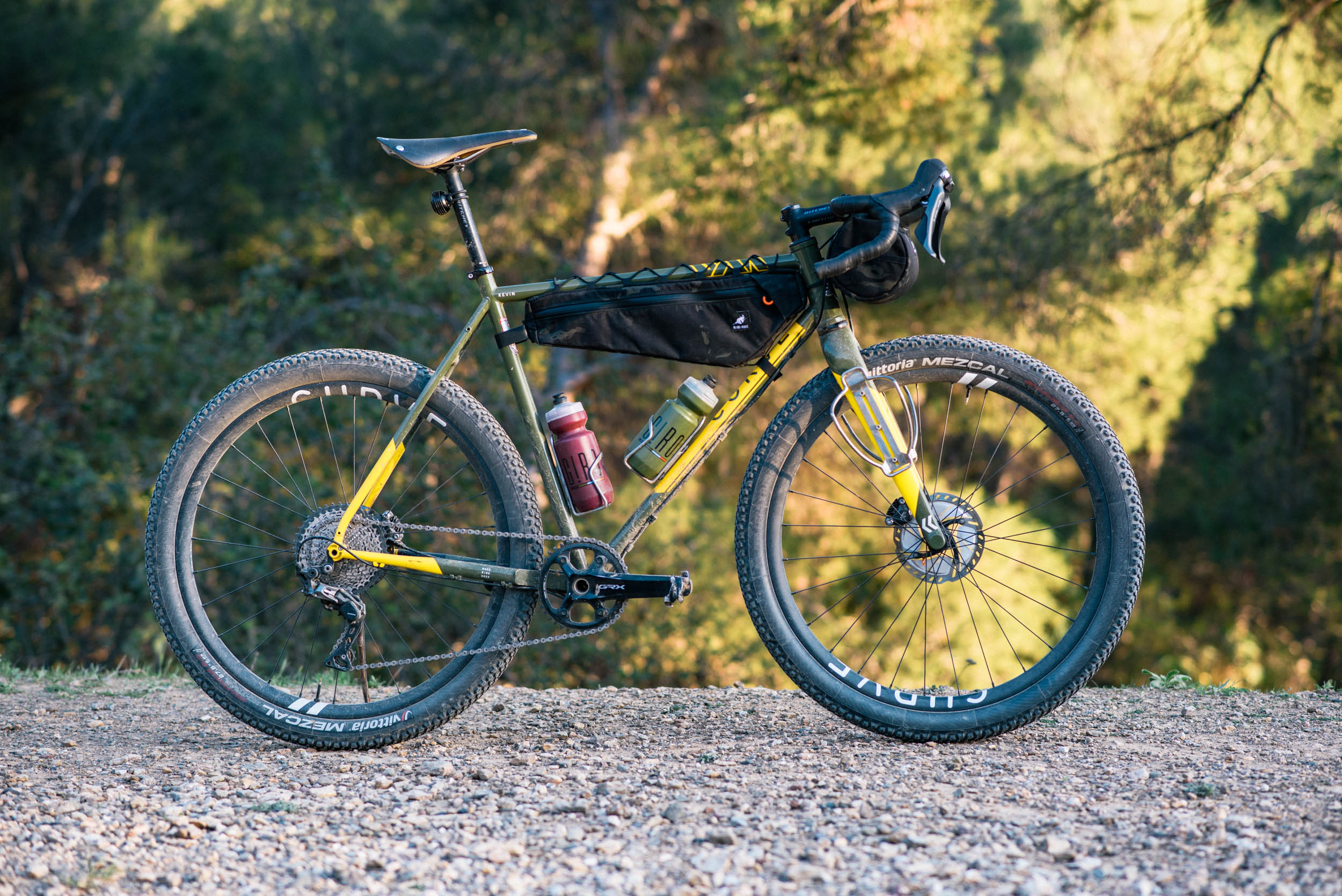
With the release of the original GMX in 2016, Curve became one of the first brands to embrace wide-tire gravel bikes and bring them to market. With the updated Big Kev V2, they’ve pushed the bike into the drop-bar mountain bike category. As you can see in the Gear Index of Drop-Bar 29ers, that category has blossomed since its inception. There are more than 50 bikes with similar tire sizes and mounting points. The Big Kev doesn’t seem out of place alongside the Otso Warakin Ti or Salsa Cutthroat, but it’s a very different bike than the Kona LBF or Chumba Yaupon.
- Highlights
- Frame/fork: Titanium/Carbon
- Angles (58cm): 70.5° Headtube, 74° Seattube
- Stack/Reach: 629mm/437mm
- BB Drop/Chainstay: 70mm/448mm
- Bottom Bracket: T47 DUB
- Hub specs: 12 x 100mm / 12 x 142mm Thru-axle
- Seatpost: 27.2mm
- Max tire size: 29 x 2.4″
- Price: $3,248 (frameset), $8,055 (Force E1 X0)
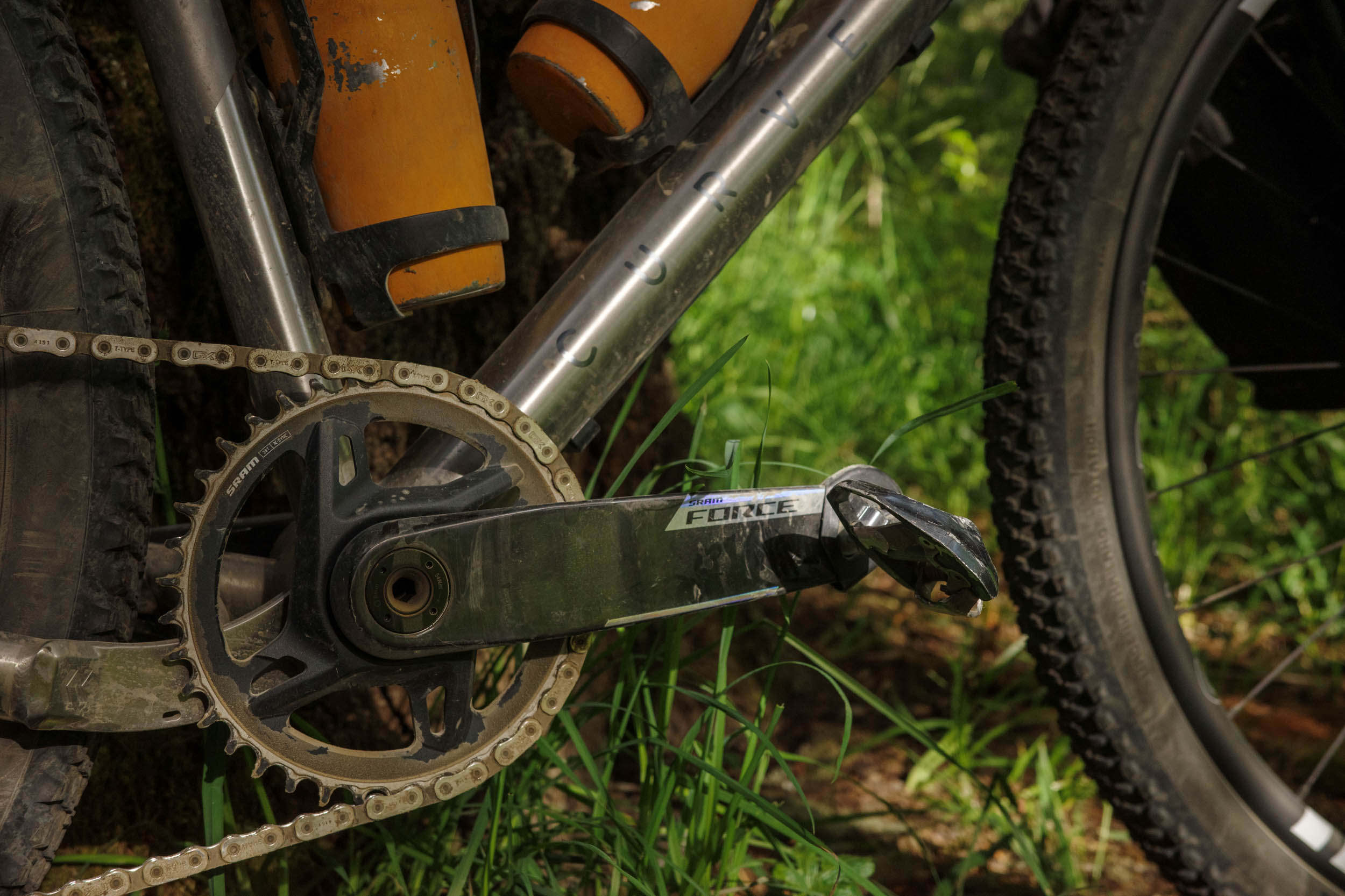
It might seem natural to group all of these bikes together, but don’t be mistaken. The Big Kev V2 leans firmly toward the gravel bike end of this broad segment despite its mountain-bike-sized tires. It uses gravel standards throughout, including 12 x 100 mm (front) and 12 x 142 mm (rear) wheel spacing rather than MTB boost, a SRAM Force XPLR DUB WIDE crankset with a 150-mm Q-factor rather than a wider mountain bike crankset, and a stack of 629 mm in XL. It also maintains a 70.5° head tube angle across all sizes, which is steep by modern standards. Keeping standard gravel spacing while making space for 2.4” tires required a custom yoke with asymmetrical chainstays and dropouts. It’s a relatively unusual and complicated rear end, but it’s proven reliably stiff and responsive even when heavily loaded.
Framing the Features
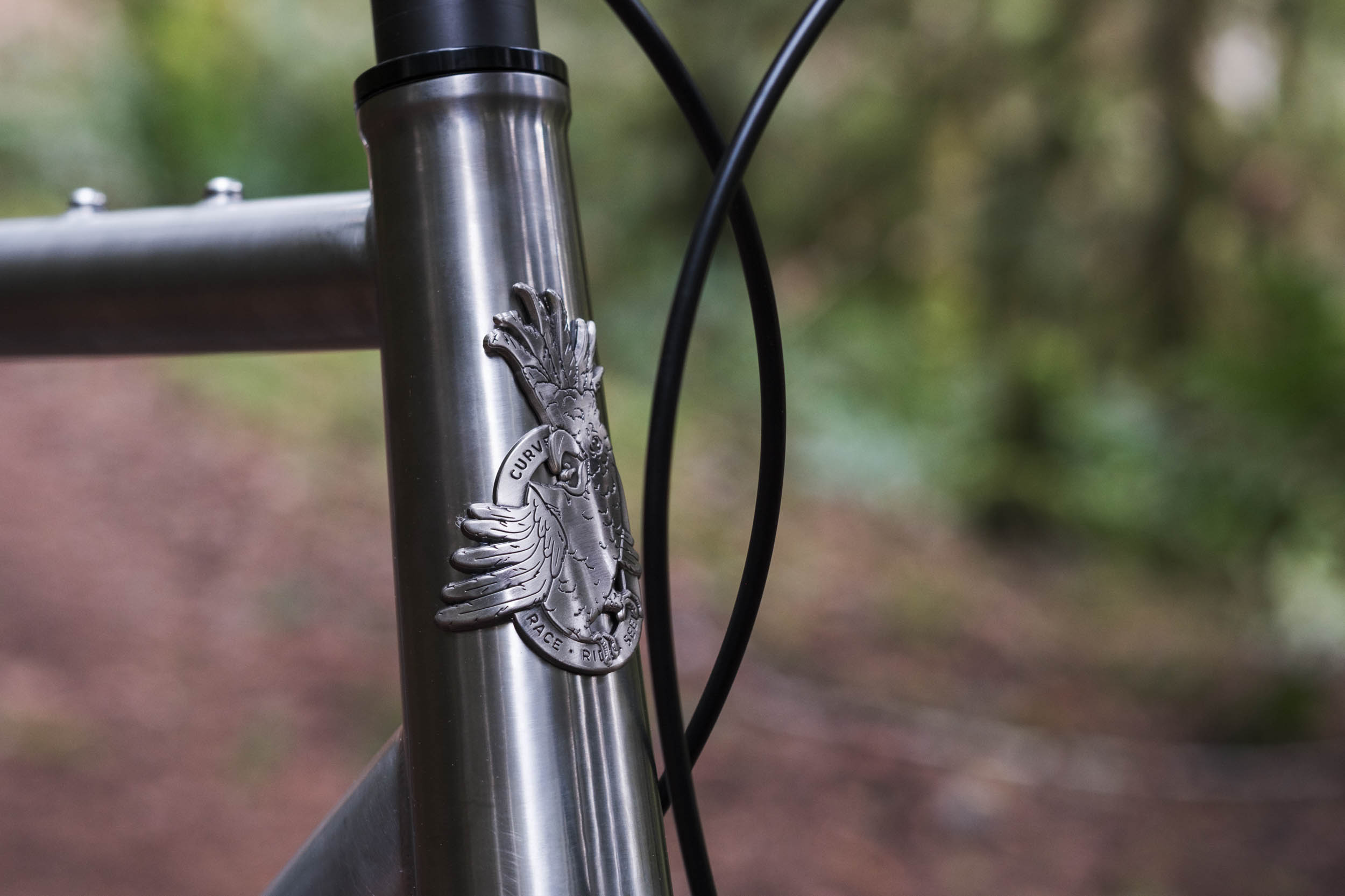
The Big Kev V2 is built around a titanium tubeset and the brand’s own Ride 415 VGM carbon fork. The Cocky Headbadge and Curve logos add some flair to its otherwise austere titanium look. It’s passed industry-standard MTB-level testing and is officially rated to carry 250 pounds. When asked directly, the Curve team said larger riders and heavy bikepacking loads have exceeded that number without issue.


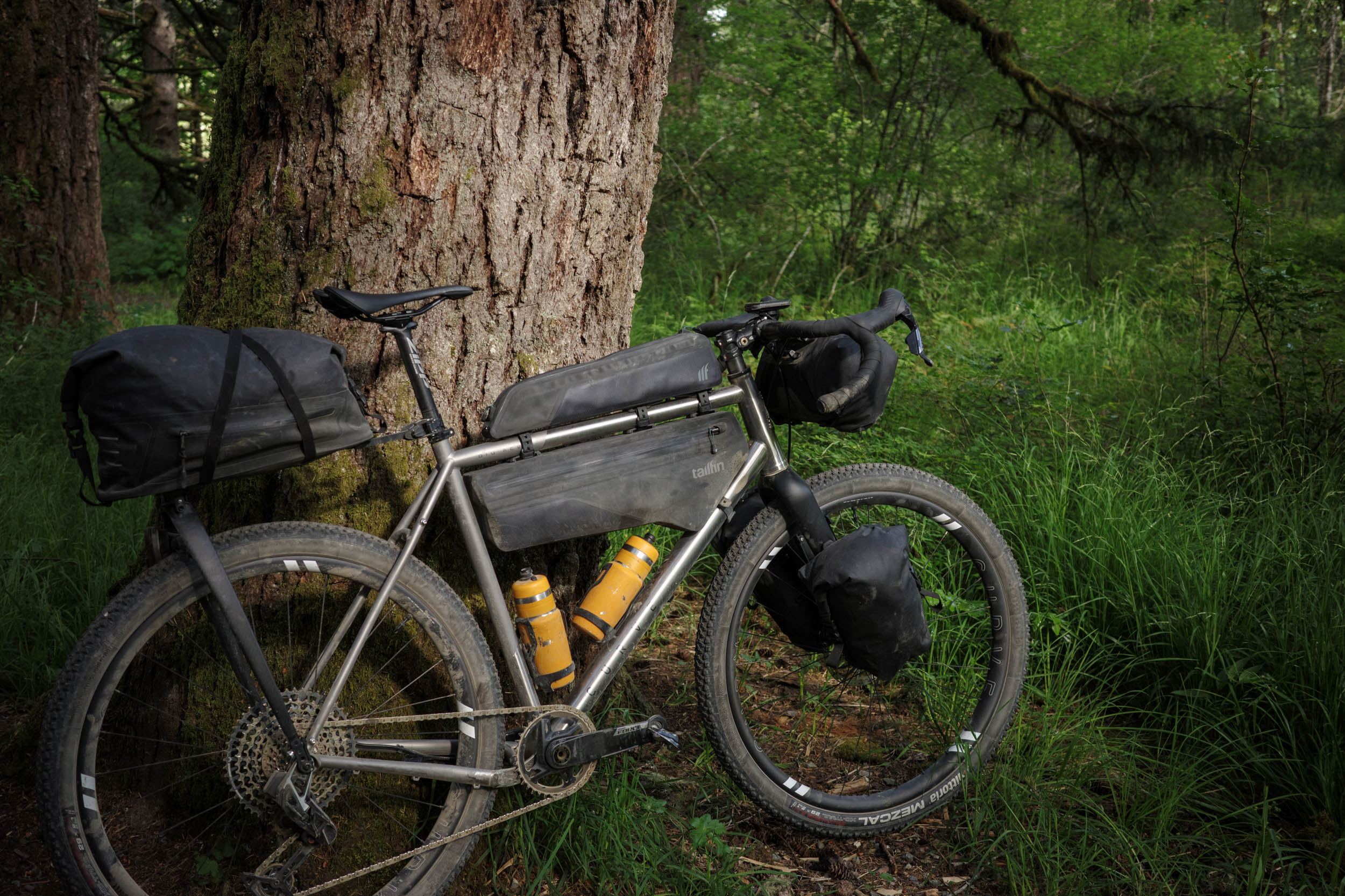
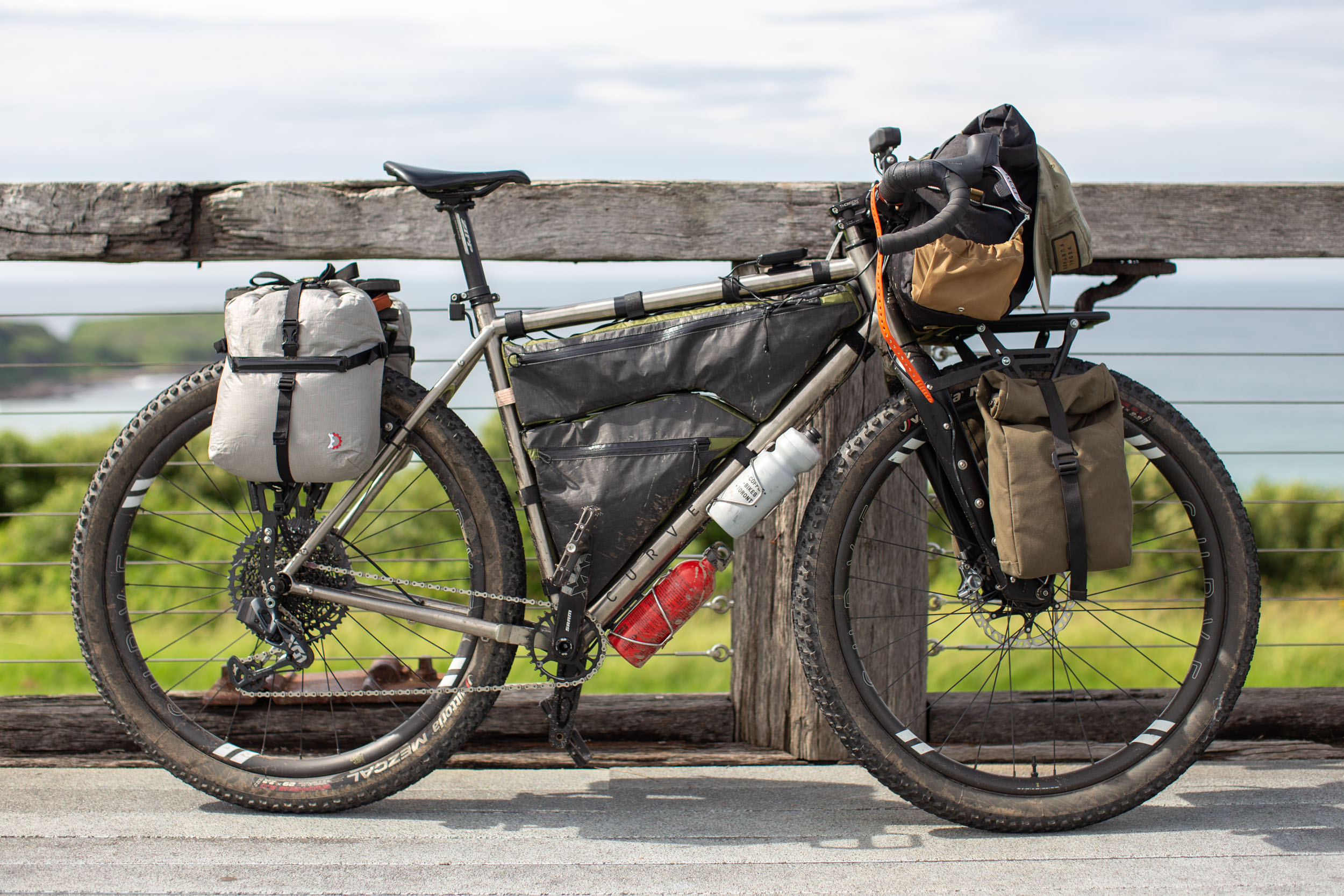
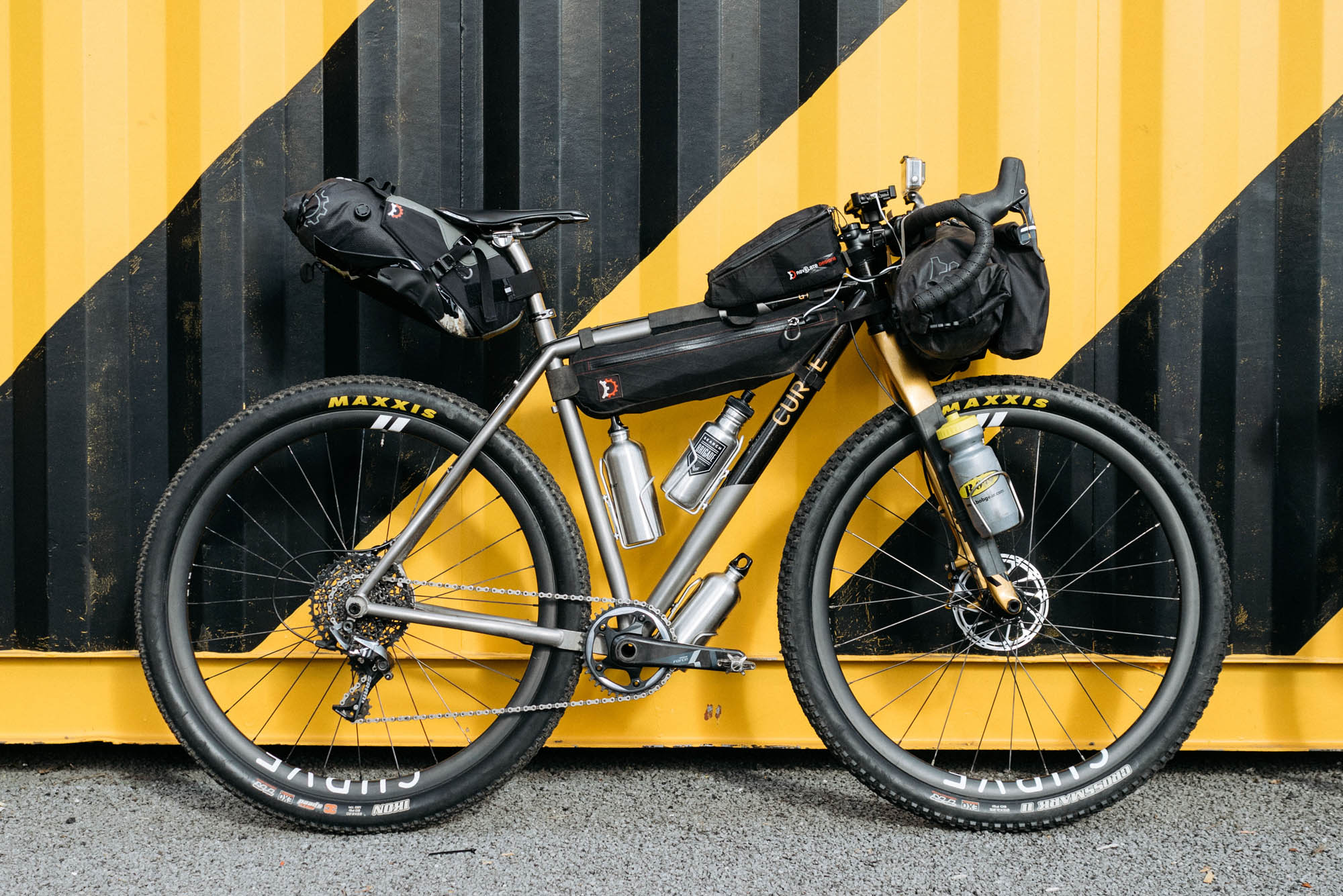
Because it’s built with long-distance trips in mind, there are thoughtful details and mounts throughout. The main triangle is larger than that of most other 29ers, so even smaller frame sizes can fit a full-size frame bag. There are two bottle mounts inside the triangle and one under the downtube, as well as top tube bag, rear rack, and fender mounts. The fork includes three mounts on each leg, rated for up to 8 kilograms per side.
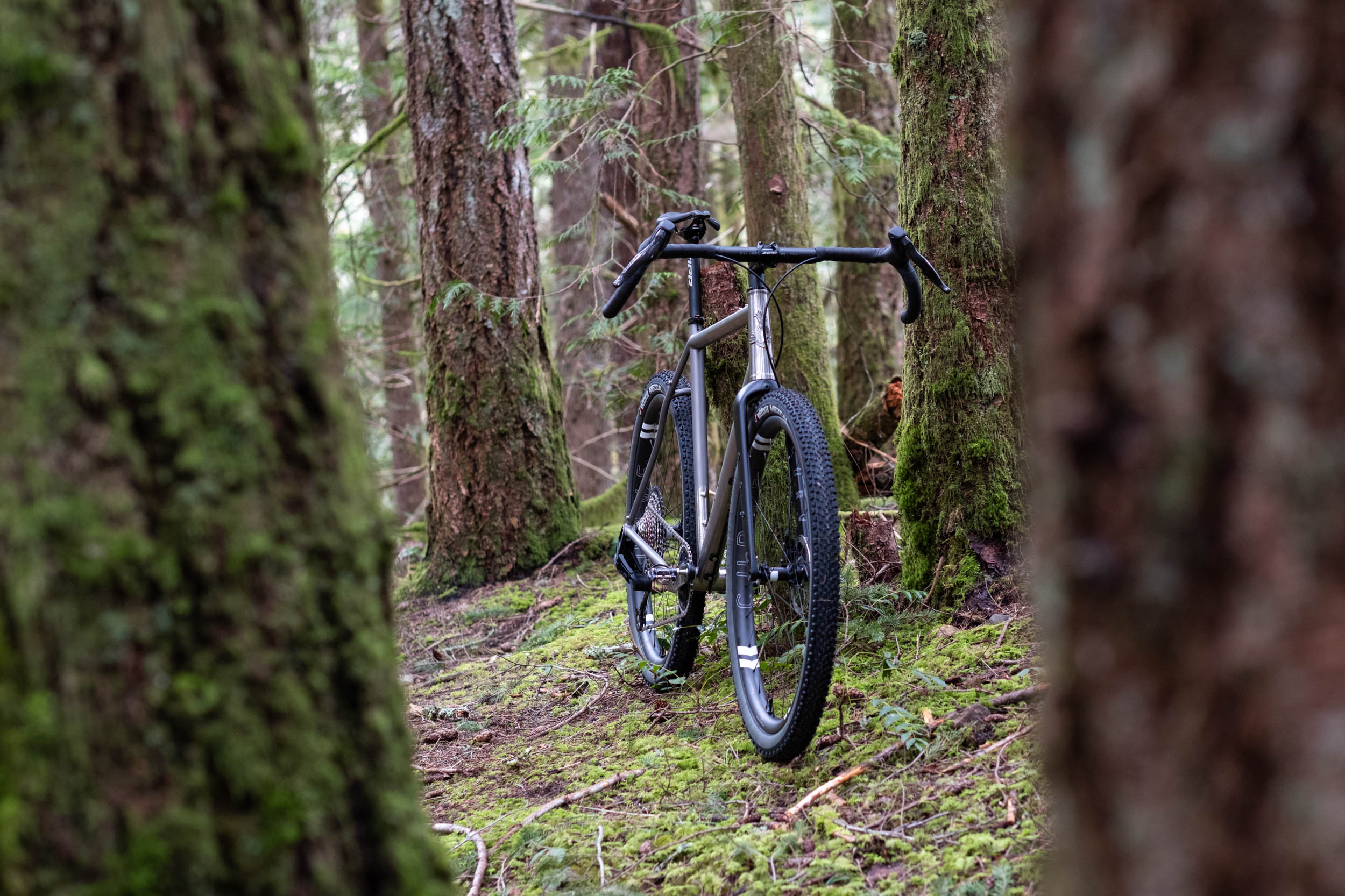
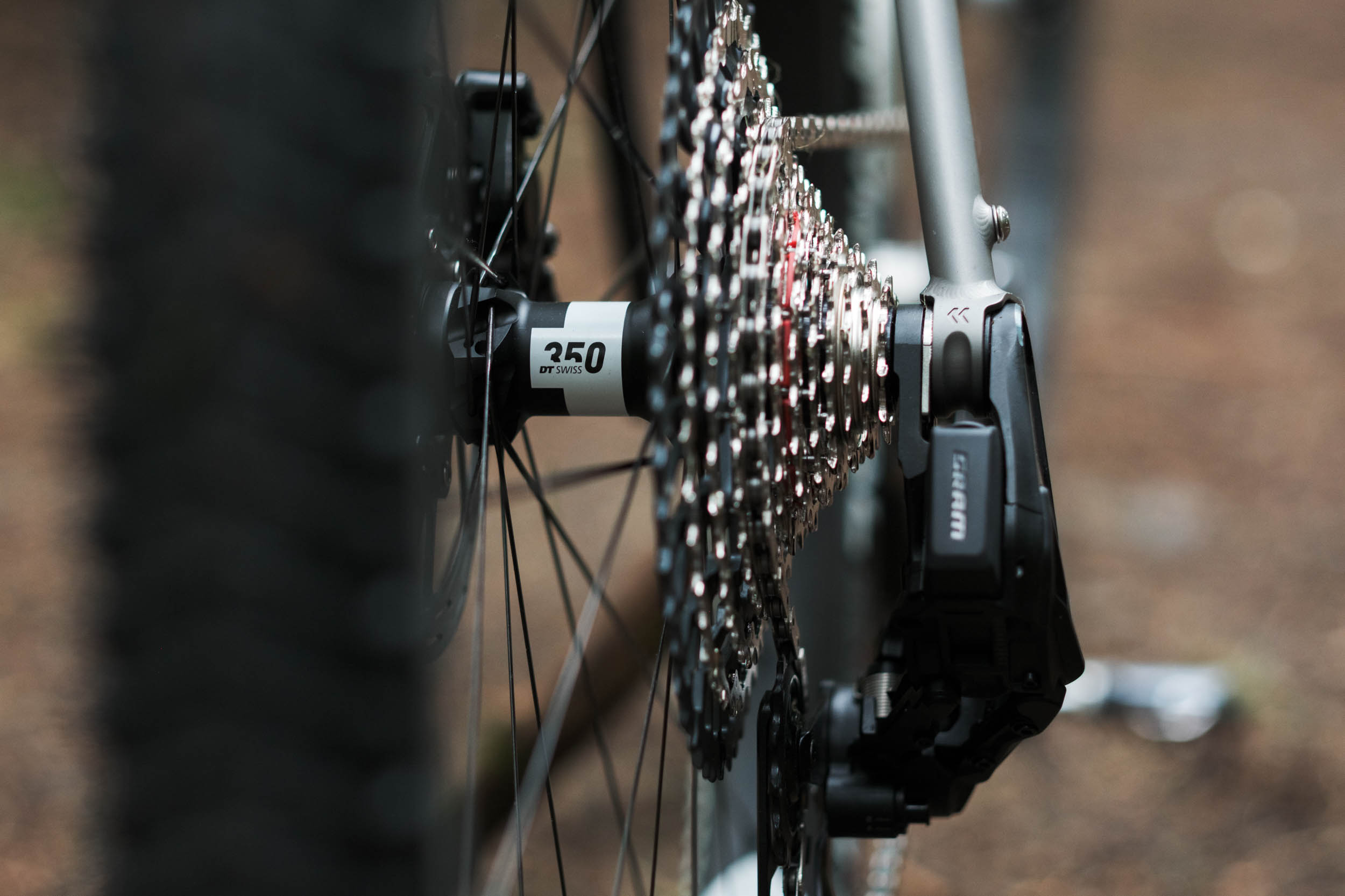
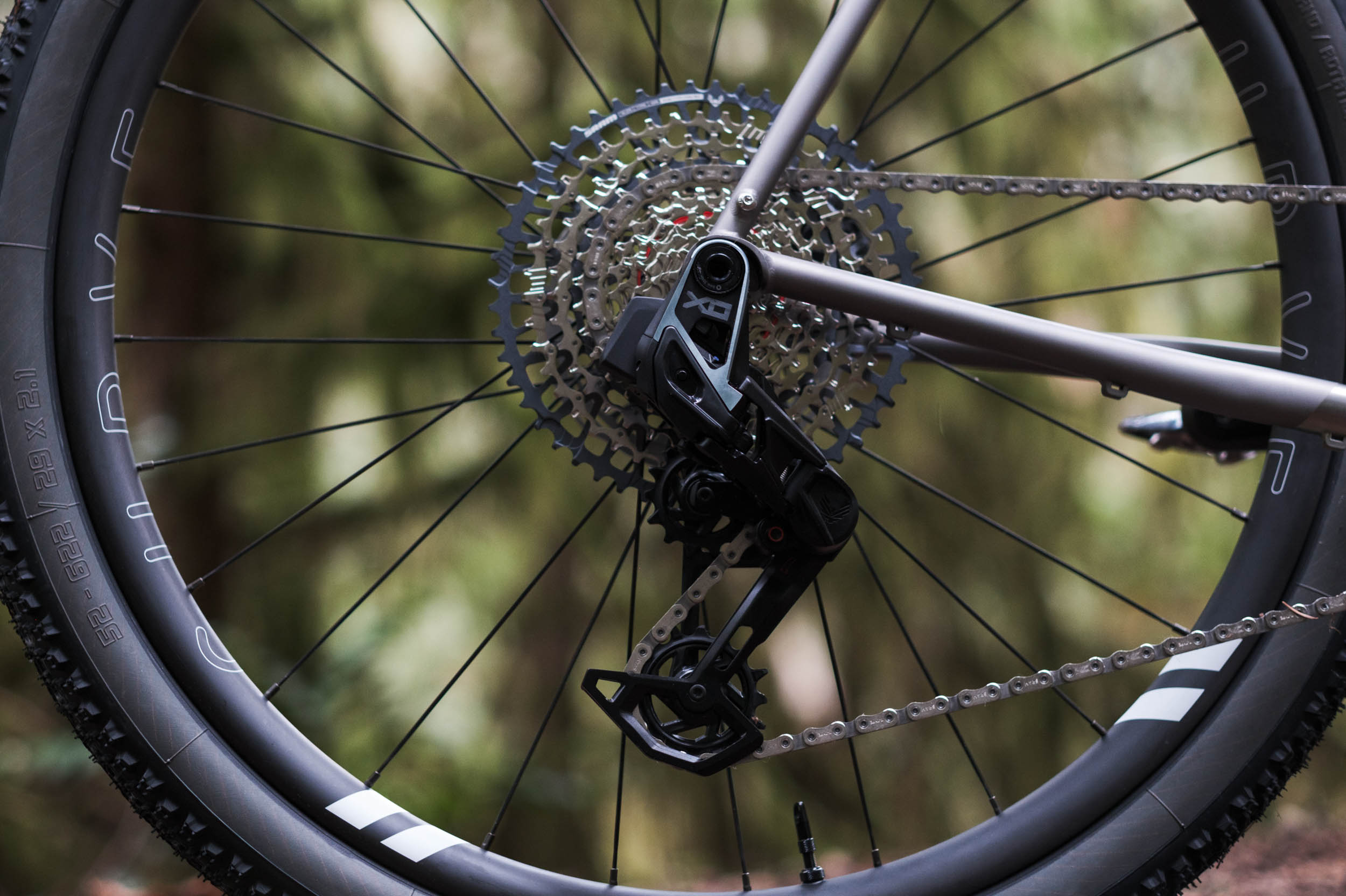
The dropouts have been updated to use the SRAM UDH system, and Curve’s complete bikes ship with Transmission derailleurs and AXS shifting to eliminate the need for cables. Brake lines are still routed externally, and V2 features a dropper post port.
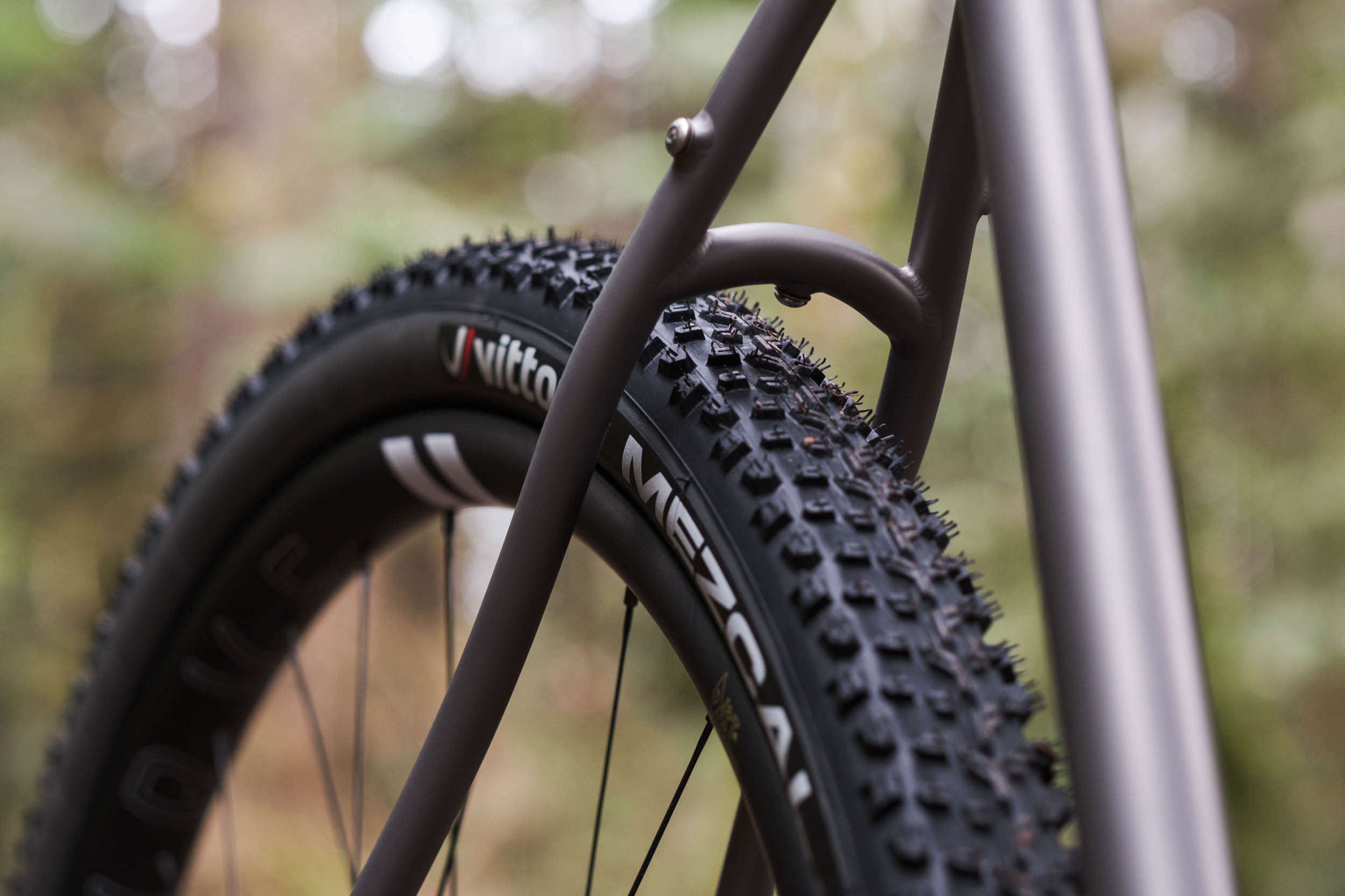
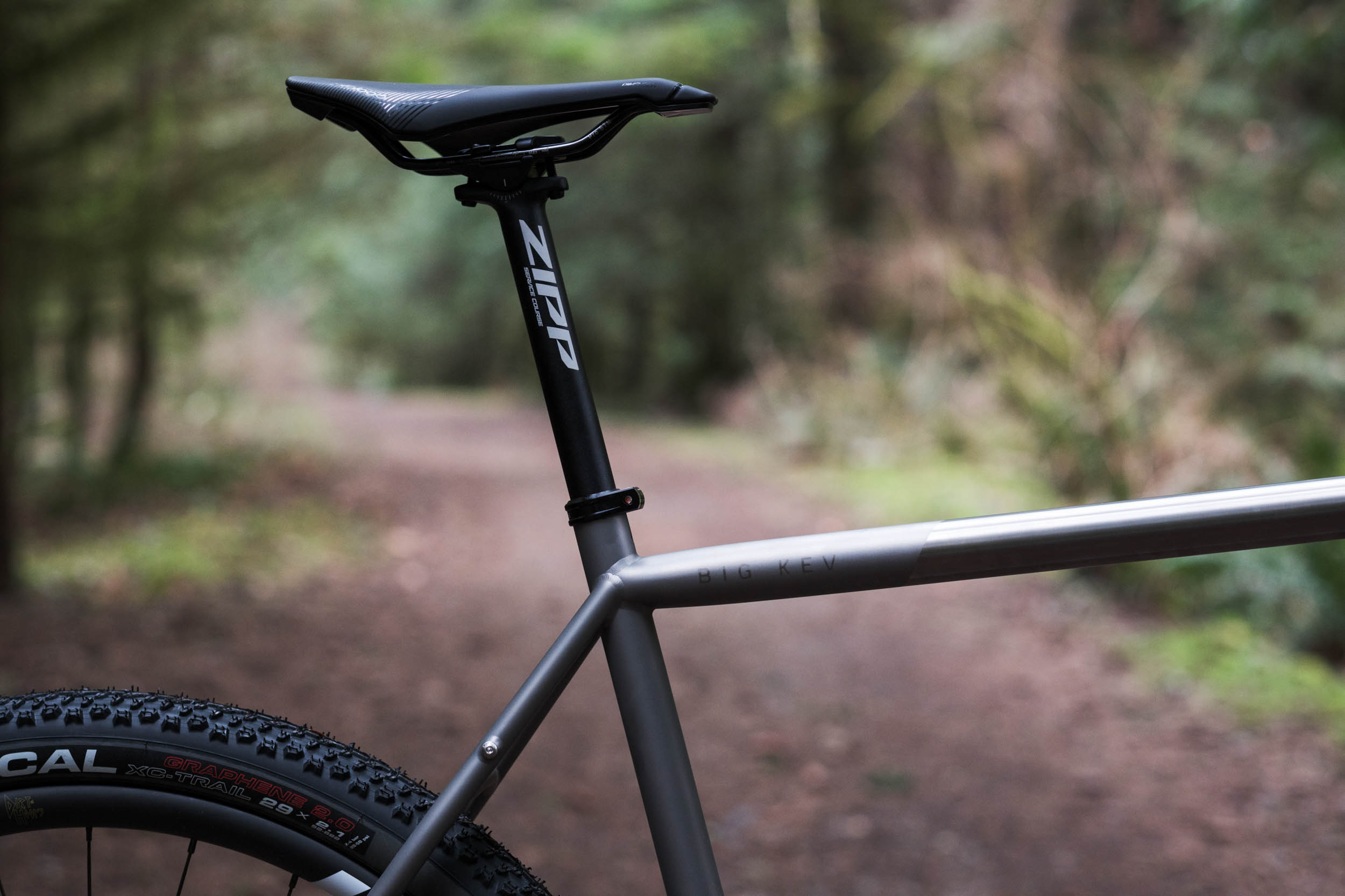
Curve claims the bike is optimized for 2.25” tires but will fit up to a 2.4”. Curiously, the complete bikes ship with 29 x 2.1” Vittoria Mezcal III tires. The large tire clearance limits the bike to 1X drivetrains.
Angles and Fit
When the BIKEPACKING.com team and I initially discussed testing the Big Kev V2, I had my doubts. I’m fortunate to own multiple bicycles, and I’ve never found permanent space in my shed for a drop-bar mountain bike or big-tire gravel bike. Even though I loved my Salsa Cutthroat on longer trips, I sold it because it simply wasn’t being used between trips. I either wanted to be on a faster-feeling gravel bike or a mountain bike. I didn’t love the compromise between the two.
However, once I loaded the Big Kev into Bike Insights and pored over the geometry charts, I was intrigued. The headtube angle, stack, and build spec were everything I expect on a modern gravel bike. It fell almost exactly between the Cutthroat and my current Chapter 2 Kaha gravel race bike in most specs: stack, headtube angle, and trail. With a 437mm reach, it was longer than both and significantly lowered my stack-to-reach ratio. What the numbers told me was this bike could absolutely rip on a race course, while also holding its own on my favorite bikepacking trips.


Rather than four generic sizes that can be adjusted through seatpost offsets, stem lengths, and handlebar options, they offer the Big Kev V2 in an impressive array of eight sizes.
Big Kev V2 Geometry
| Size | XXS | XS | S | M | XM | L | XL | XXL |
|---|---|---|---|---|---|---|---|---|
| Effective Top Tube | 530 | 540 | 555 | 575 | 587 | 599 | 617 | 632 |
| Seattube | 440 | 470 | 495 | 520 | 535 | 550 | 580 | 610 |
| Reach | 377 | 383 | 388 | 404 | 413 | 423 | 437 | 446 |
| Stack | 551 | 567 | 584 | 598 | 608 | 615 | 629 | 648 |
| Head tube angle | 70 | 70.5 | 70.5 | 70.5 | 70.5 | 70.5 | 70.5 | 70.5 |
| Seat tube angle | 74.5 | 74.5 | 74 | 74 | 74 | 74 | 74 | 74 |
| BB Drop | 74 | 74 | 72 | 72 | 72 | 70 | 70 | 70 |
| Chainstay length | 440 | 440 | 442 | 442 | 445 | 445 | 448 | 448 |
| Head tube length | 110 | 125 | 145 | 160 | 170 | 180 | 195 | 215 |
| Fork length | 415 | 415 | 415 | 415 | 415 | 415 | 415 | 415 |
| Wheelbase (52/46 offset)* | 1040/1034 | 1046/1041 | 1060/1054 | 1081/1075 | 1097/1091 | 1110/1105 | 1132/1127 | 1149/1143 |
| Fork Offset** | 52/46 | 52/46 | 52/46 | 52/46 | 52/46 | 52/46 | 52/46 | 52/46 |
| Rec. rider height | 4’10” to 5’2” | 5’1” to 5’5” | 5’3” to 5’7” | 5’6” to 5’10” | 5’9” to 6’1” | 6’0” to 6’4” | 6’3” to 6’7” | 6’6” to 6’10” |
| Rec. saddle height | 610-670 | 650-710 | 680-735 | 715-760 | 740-780 | 770-815 | 805-850 | 840-890 |
** The Ride 415 VGM fork has a flip chip that toggles offset between 52 mm and 46 mm.
When I started my order, Curve provided me with a lengthy sizing document that I filled in. It included all the measurements you’d expect, from my inseam length to my current gravel bike reach. They also went much deeper, asking for the reach from my saddle to my hoods, saddle tip to handlebar, and other measurements. It was quite the process, with numerous back-and-forth emails to make clarifications. Frankly, it was almost frustrating at times, as it seemed overly complicated, but it paid off in the end. Their size chart would have placed me on a large; however, my long legs and arms pushed me onto an extra-large frame. Their detailed process led me to the right bike.
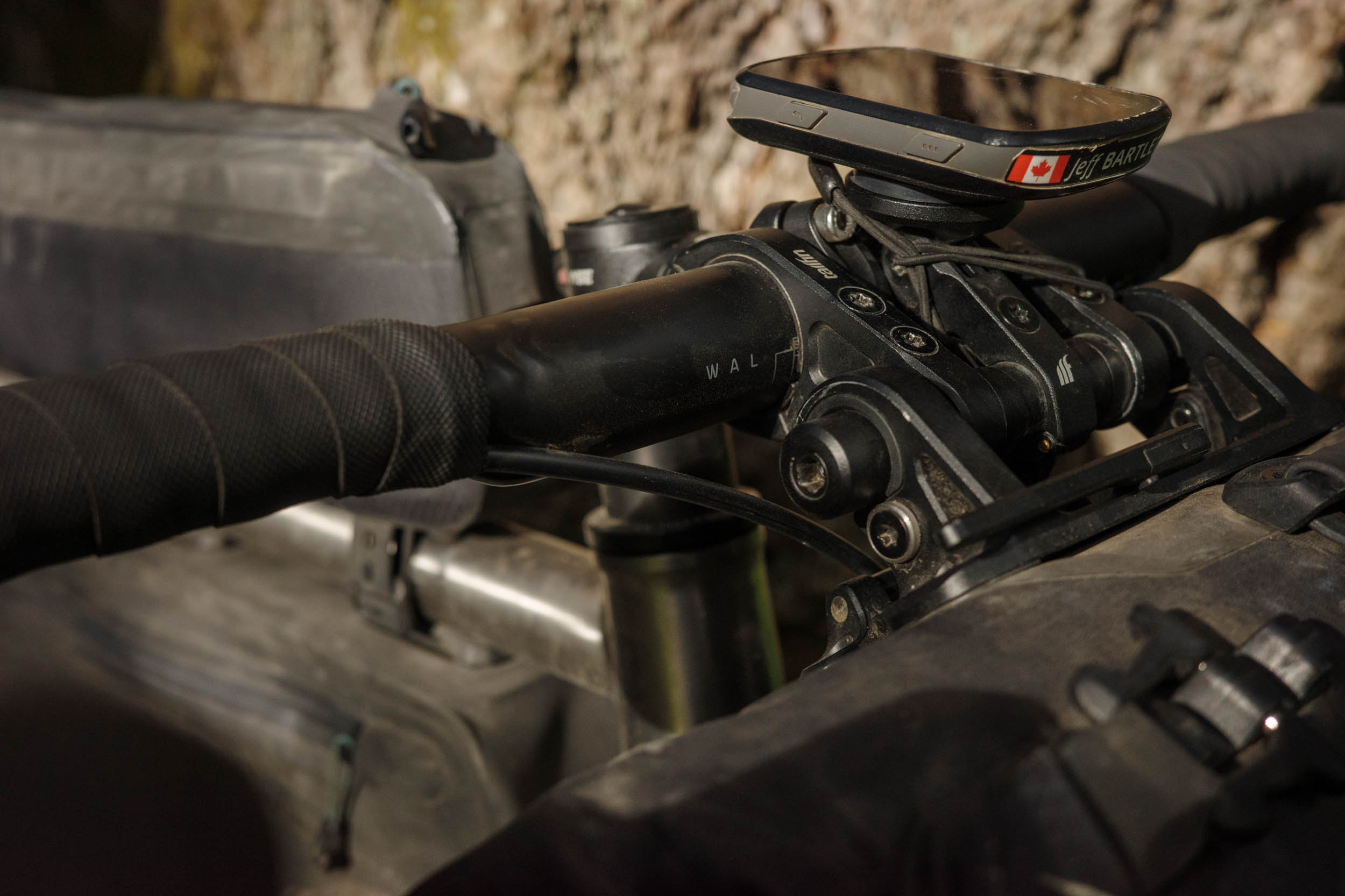
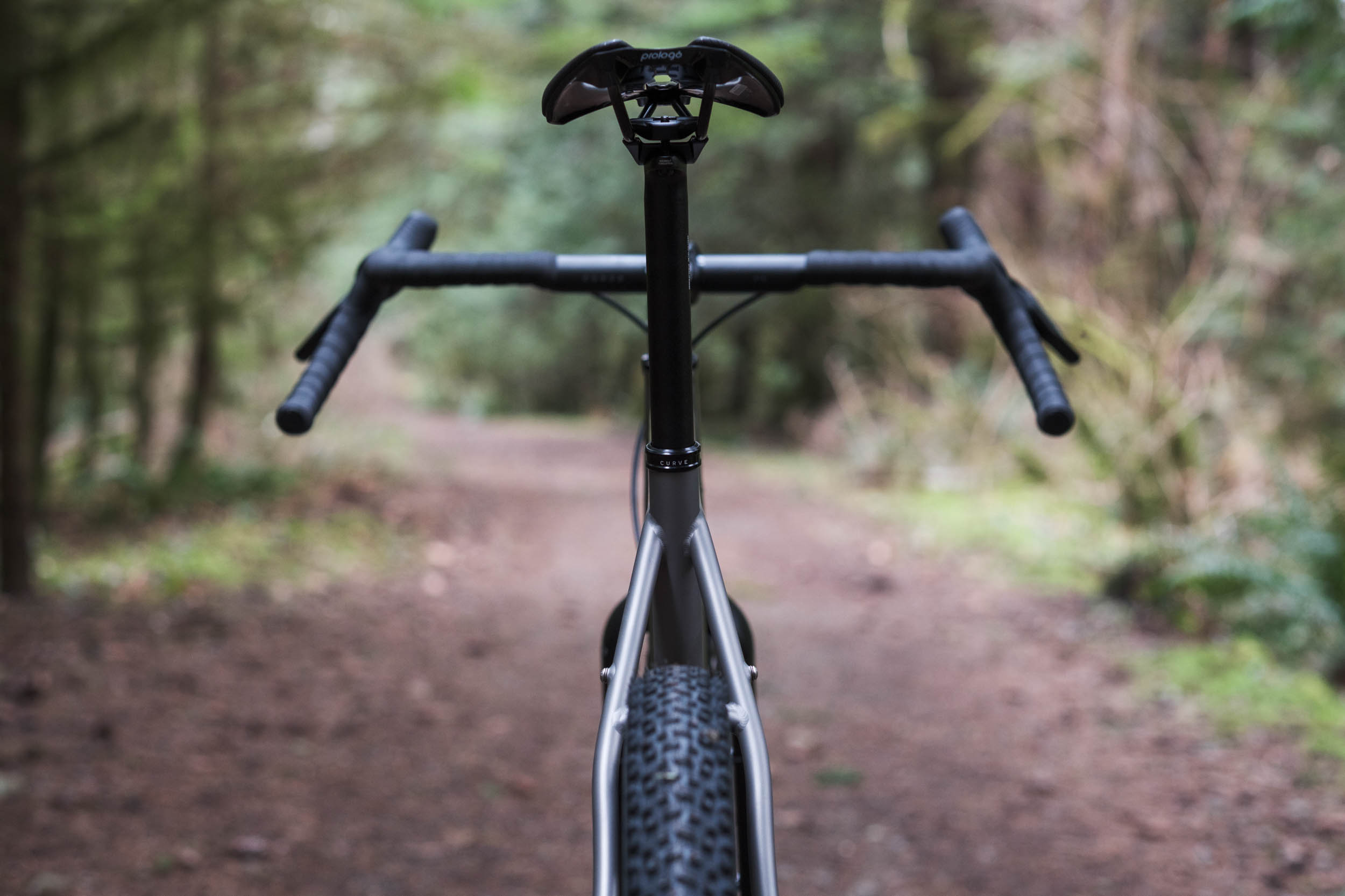
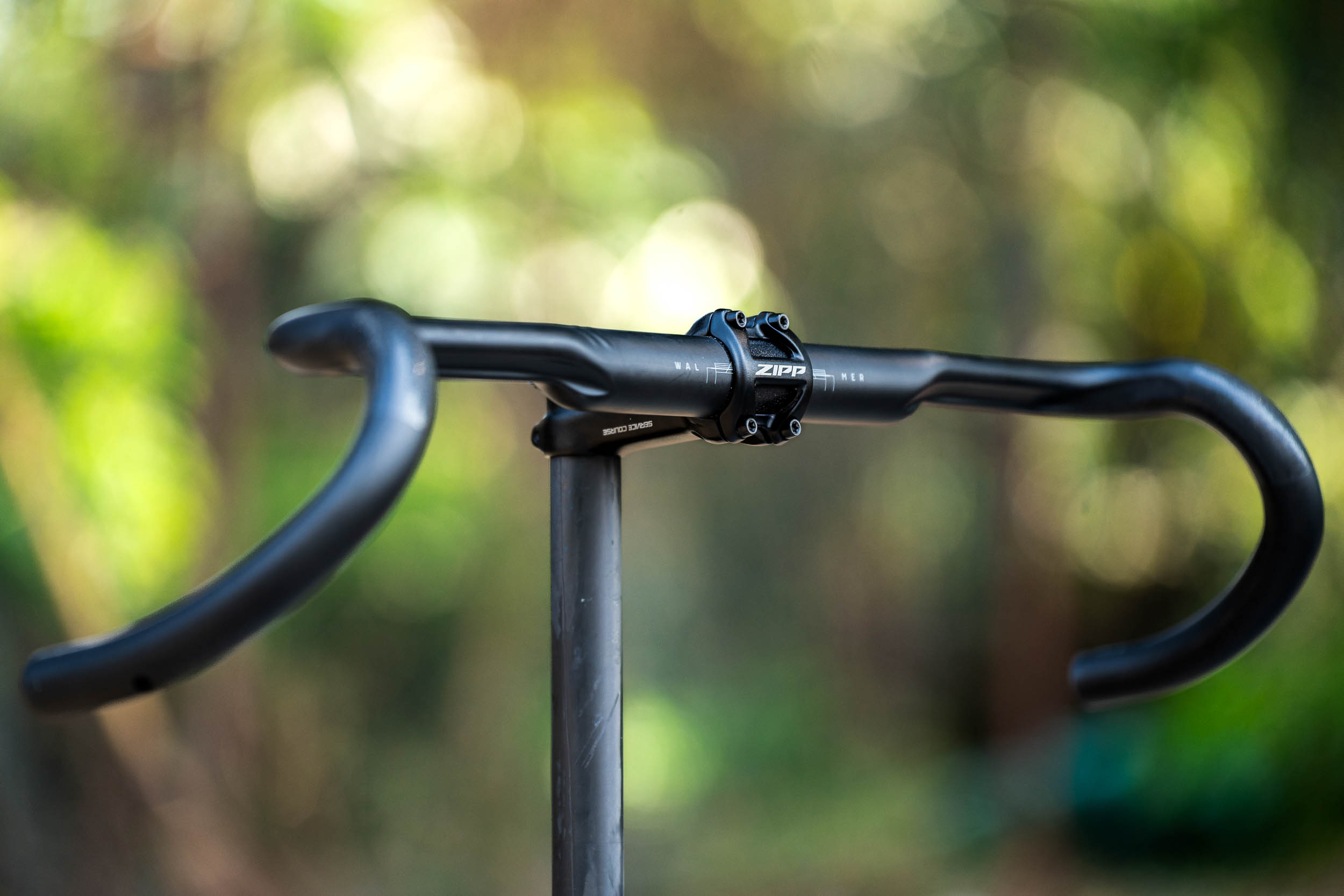
After years on narrower handlebars, they also talked me into the 50 cm Walmer Bar and dialed the bike fit to make them work. When the bike arrived, I simply added pedals, set the seatpost to the right height, and attached the handlebars. It fit perfectly and required no further adjustments.
Getting the Bike Outside
My first ride on the Big Kev V2 was my go-to backyard gravel route along Comox Lake. After a flat few miles on pavement, it’s never flat again. Over the first 12 miles, it gains 1,640 feet of elevation. As if that wasn’t enough, the route then turns onto the East Fork Main Climb Strava segment, which adds another 700 feet of climbing over the final two miles before I turn around and ride back to Cumberland.
As soon as I was riding, I noticed the longer reach, but it didn’t take long to adjust. The fit was great, and I was immediately impressed with how responsive the bike felt despite the bigger tires and wide handlebars. Everything I pushed into the pedals seemed to transfer directly into forward momentum.
On the climbs, I never lost traction. Even if I stood up and really pushed hard, the Vittoria Mezcals gripped. The gearing, with a 38T chainring and a 10-52T cassette, helped on steeper gradients. I put in a solid effort on the Strava segment and lowered my PR from 14:35 to 12:50, which erased any doubts I had about the weight slowing me down.

But the biggest benefit of the bike showed itself on the downhills. The mountain bike tires and wide handlebars give it stability that I’d never felt on a gravel bike. This bike can go downhill. Fast.
There is usually a clinical precision to descending too fast on a gravel bike. I lock in and hold my body position just right. It’s taken more than a year to learn exactly how fast I can go before the short chainstays start working against me and my rear tire loses traction. On this bike, none of that was present. It just made me grin as I barreled downhill.
All-Terrain Riding
Copywriting is a funny thing, but when Curve suggested this bike inspired the confidence to ride light-duty singletrack and the Tour Divide, they could have been writing directly to me. I love pushing big days on the bike and venturing into underbiked territory.
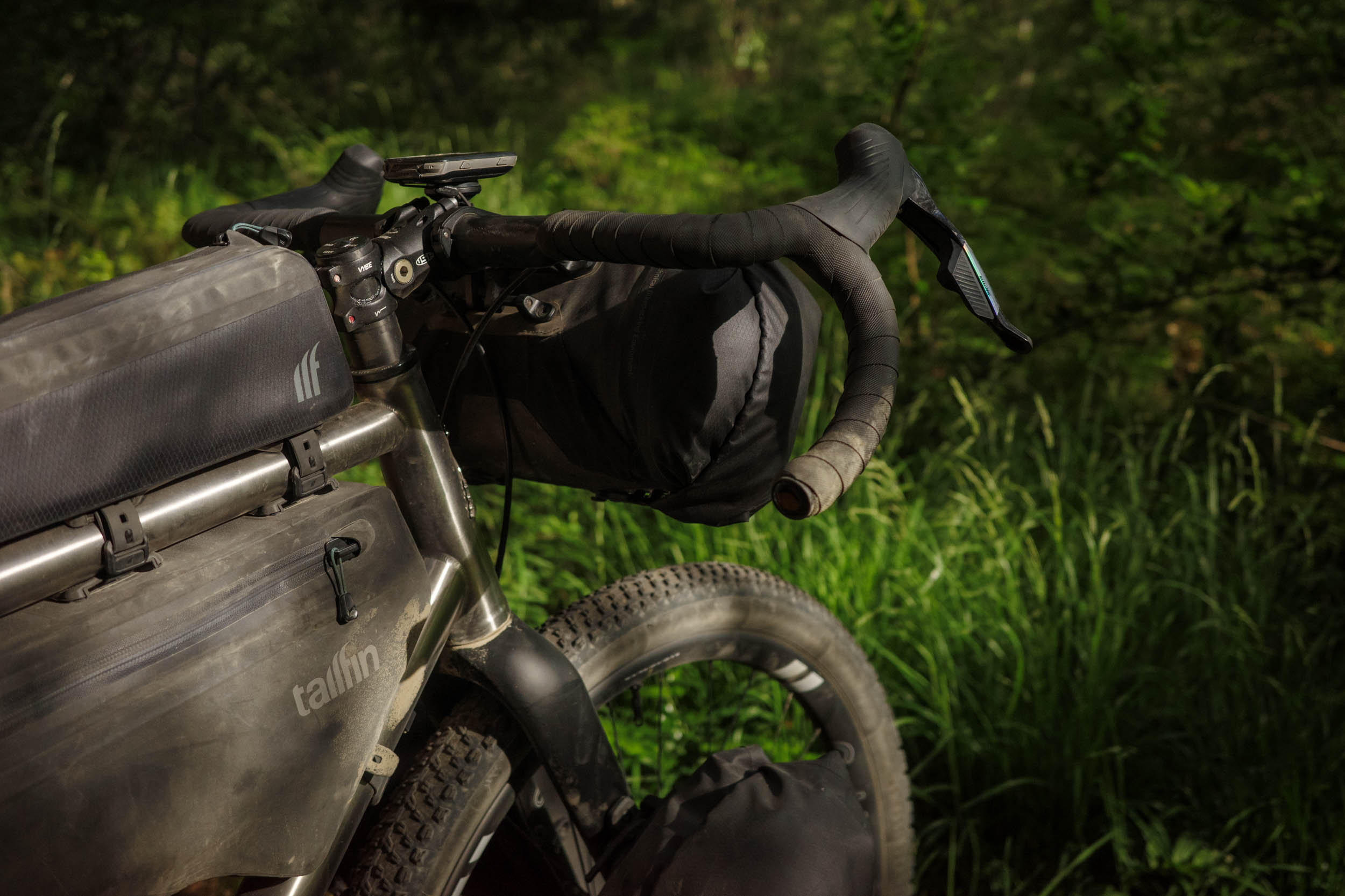
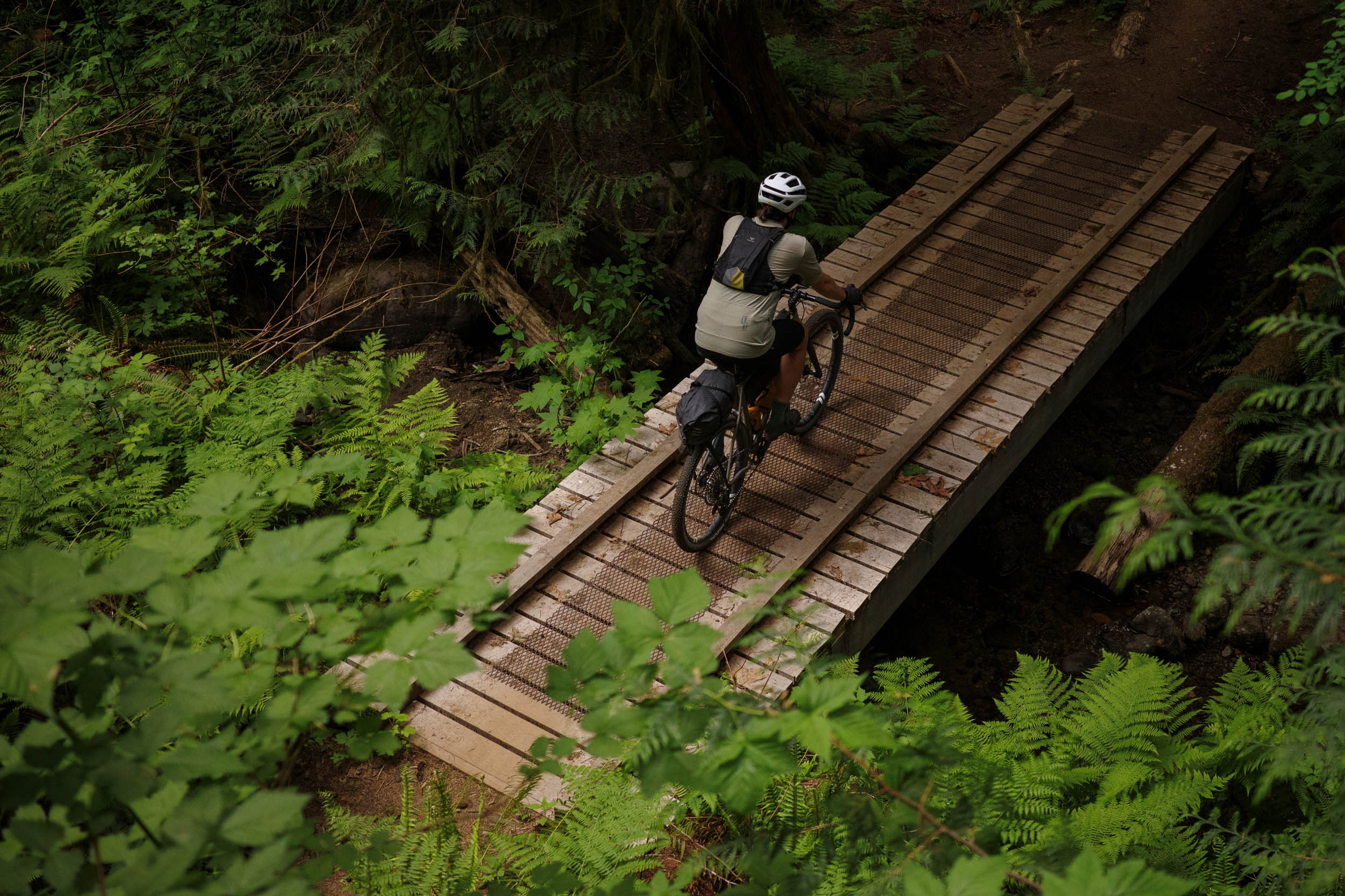
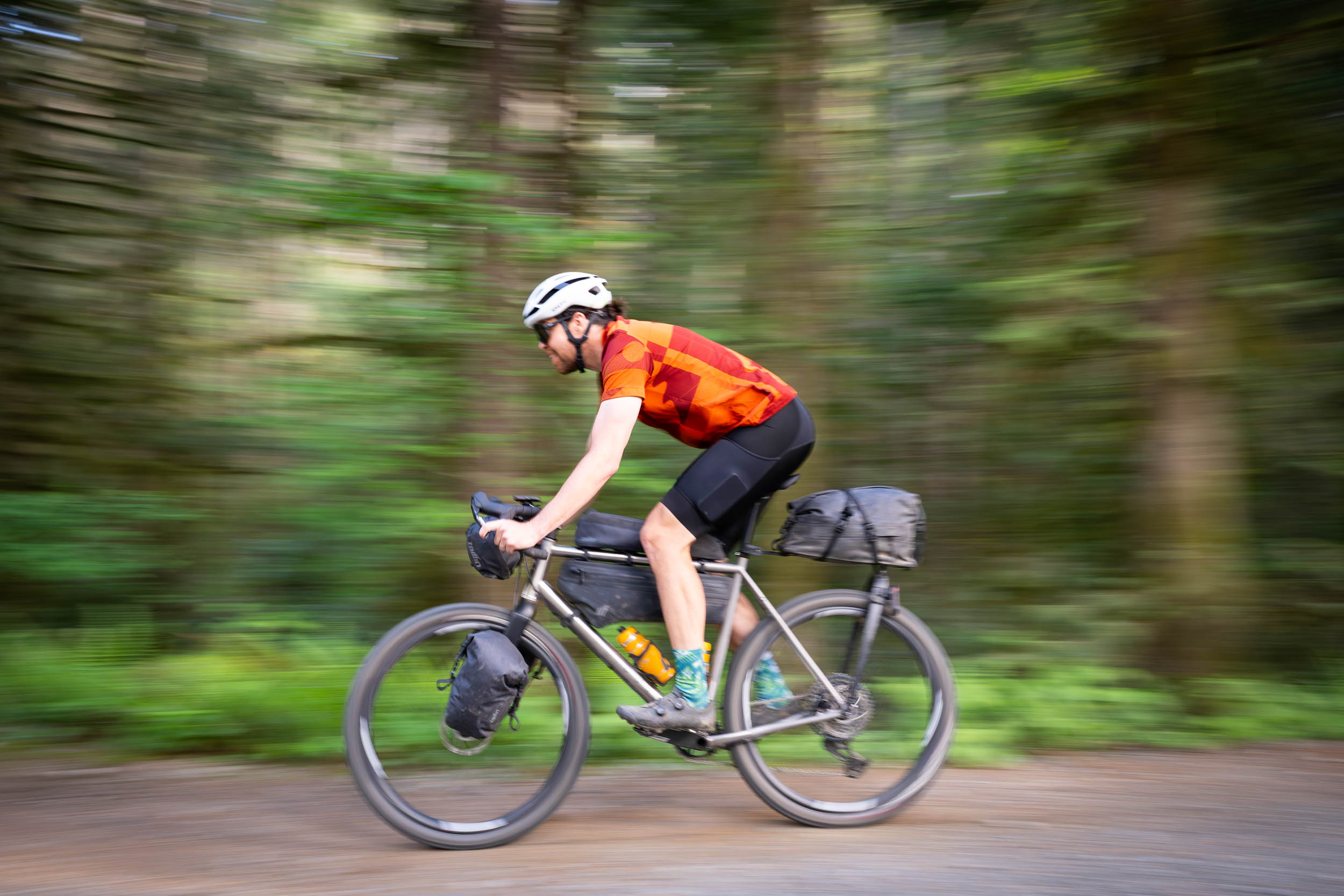
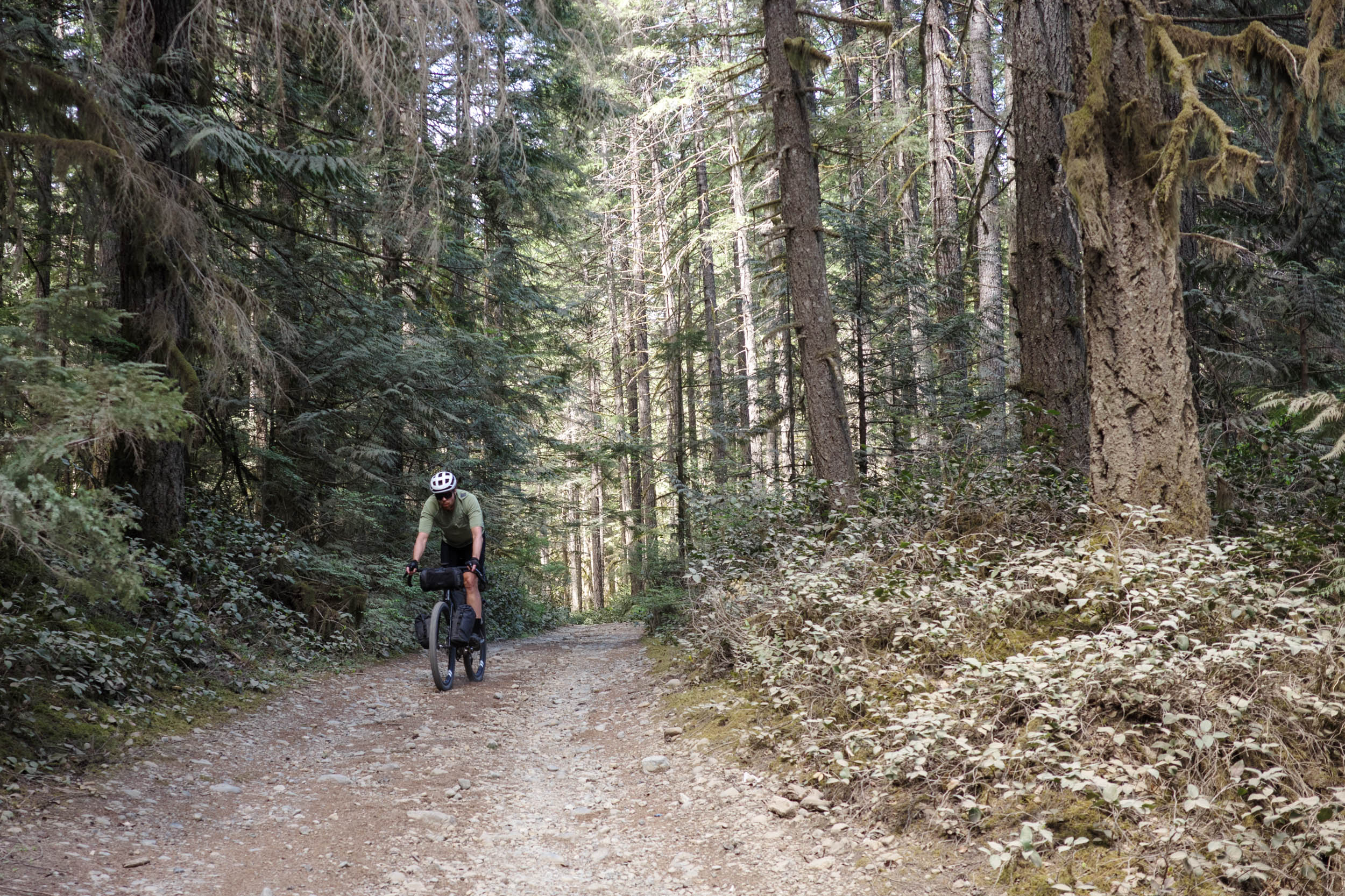
After getting comfortable on the bike over a series of gravel rides closer to home, I packed up for an overnighter near Cowichan River Provincial Park. We used the 50-mile, 4,230-foot Burnt Bridge Gravel Fondo course as our foundation before exploring further along the rail trails toward Cowichan Lake. I overpacked on purpose. This was the bike I wish I’d had in Patagonia, and I packed it almost identically. I used my full Tailfin setup with rear Aeropack, half-frame, top tube, 10L fork, and handlebar bags. The Big Kev handled the weight easily—I could even ride with no hands. The dreaded handlebar shake that plagues gravel bikes with heavily packed rear racks was completely absent.
On unloaded rides, I didn’t notice the drivetrain advantages. The Big Kev runs a SRAM Force AXS drivetrain with a 38T chainring and a 10-52T cassette. When loaded, it was noticeably easier to keep the pedals turning on steep climbs. Doing the math and accounting for tire sizes, the Big Kev works out to 21 gear inches compared to 22 gear inches on a gravel bike running a Shimano GRX 40T 11-51 cassette and 45 mm tires. I’m surprised how obvious this difference felt once climbing with a loaded bike. It turns out the opposite end of the cassette carries an even bigger advantage. The Big Kev reaches 109 gear inches compared to 102 on the same Shimano-equipped gravel bike. These differences might not be as dramatic as what Neil pointed out in his Salsa Fargo 32 Review, but they’re still substantial. This gearing range would save energy and time if I were to return to the Tour Divide.
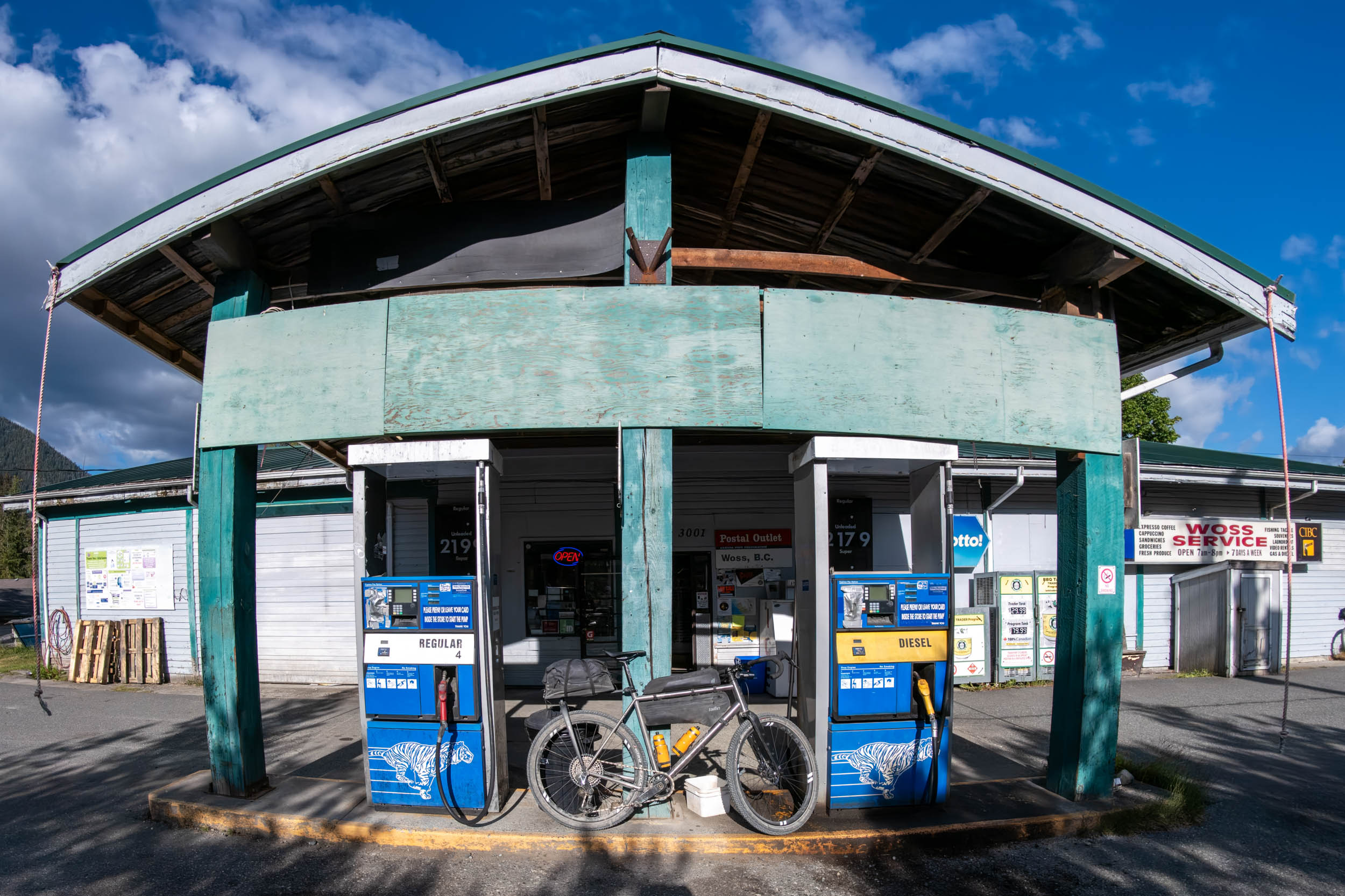
About a week later, I loaded the Snowden or Dust route onto my GPS. While Miles had created this as an overnighter, I wanted to push myself to complete it in a single day. It’s only 45 miles, but it’s a combination of fast gravel roads, old-school singletrack, and modern flow trails. Once again, I overpacked. I opted to take my 24-to-36-hour race setup with extra layers, an emergency bivy, and food for a long ride.
On the smooth gravel roads, the bike felt familiar. It loves going fast and holds speed in undulating terrain. I’m still impressed that the Big Kev feels so fast on smooth roads, given the large tires. The momentum is too real to ignore.
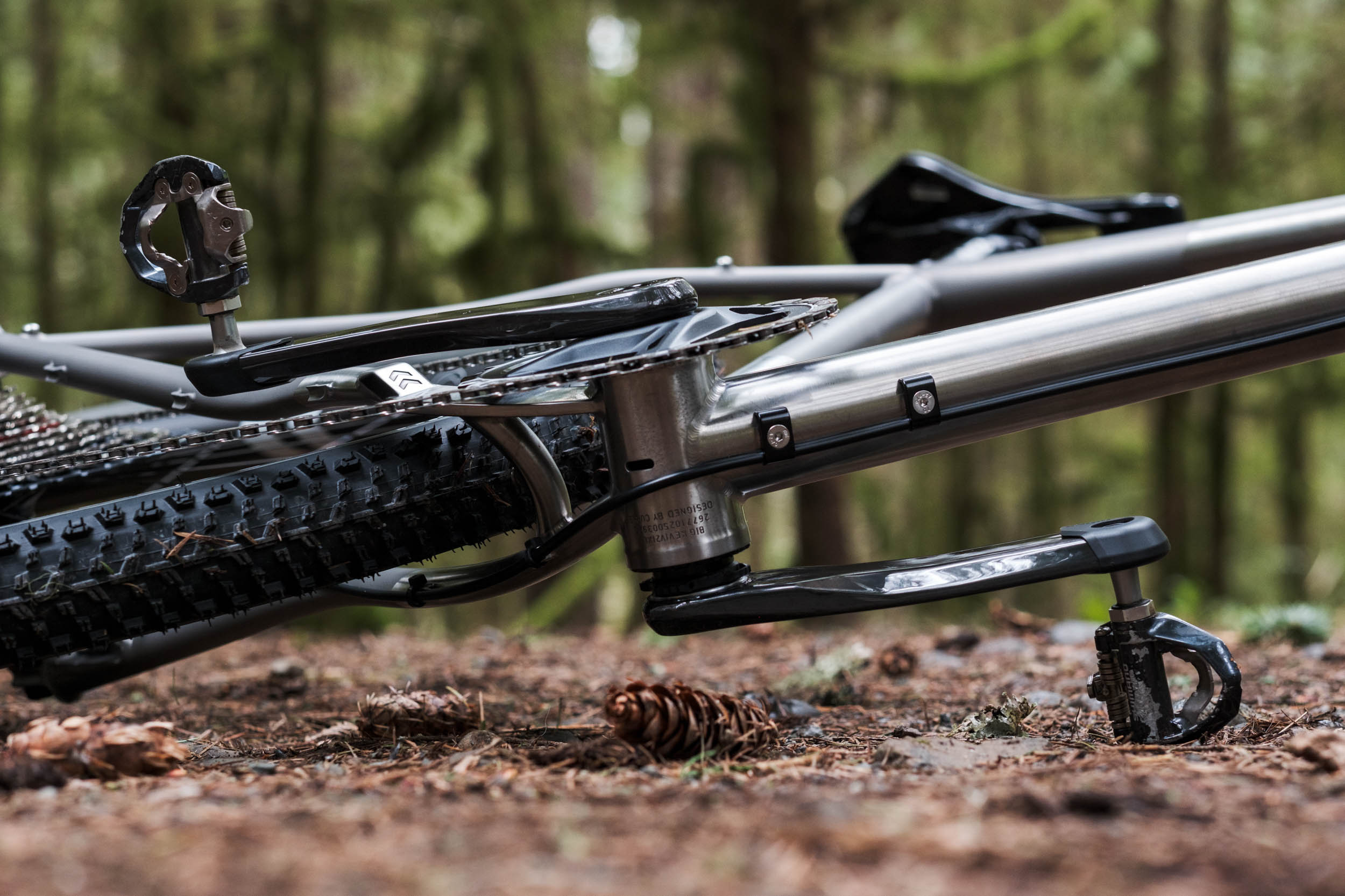
Once into the Snowden mountain bike network, the ride slowed substantially. I’ve ridden these on a full-suspension mountain bike and, unsurprisingly, the trails were far rougher on this bike. In the roughest trails, the head angle made a few steep sections frightening. I dabbed a few times just because I couldn’t commit to lines. The rigid platform made it easy to navigate small technical features that required precision, but it was exhausting. I found myself standing way more often than I would on a mountain bike, simply to limit the impact on my body. I don’t love riding janky old-school trails on any bike, so it wasn’t a surprise to find the bike felt out of its element.
Eventually, we transitioned onto the modern flow trails that Snowden has gained in recent years. This is where the bike came back to life. The tires gave me the grip I only expect from a mountain bike, but with the fast riding position I love on a gravel bike. It turned green and blue flow trails into a fun rollercoaster and brought the smile back to my face.
Against the Clock
Ever since I DNF’d the Traka Adventure in 2025, I’ve wanted to do a non-stop ride against the clock on a longer route. If I were to buy this bike, it would be with an eye on this length of event. I recruited a friend and downloaded the 242-mile Tree to Sea Mini route to my head unit. Ride with GPS estimated a 25-hour ride time. We aimed to come in under 24.
Last summer, I bikepacked the loop over four days, so I knew the resupply points and the terrain. It’s remote, with limited cell coverage, and nowhere to bail out and book a hotel room. I packed accordingly, dropping the handlebar roll and fork bags entirely. In my Aeropack, I carried an emergency bivy, a down jacket, rain layers, and a soft-shell riding jacket. In my frame bag, I had a small repair kit, a pump, arm and leg warmers, a wind shell, and an entire pizza packed two slices per Ziploc. The top tube bag was jammed full of gels, bars, electrolytes, and Haribo.

The route only has four significant climbs that gain more than 1,000 feet. The first one begins almost immediately. The final three are stacked in the second half. On that first climb, everything felt as I expected. Since my first ride, I’ve been impressed with the Big Kev’s balance of compliance and stiffness. It was noticeable again as I settled in for what I knew would be a long ride, hopeful that this comfort would last for 24 hours.
As we hit the undulating terrain to Gold River and then Woss, I was shifting frequently. I just couldn’t seem to find the right gear on flatter sections. My cadence would either be too high or too low. This is a common issue when running a wide-range 1x cassette, but it felt more pronounced with the 10-52T cassette than with Shimano’s more compact 11-51T. While it’s still a trade-off I’m happy to make, it left me wondering whether I should have packed a second AXS battery.

After our final resupply, the route headed into its most remote section. We saw 20 bears between Woss and Naka Creek. This had been my favorite campsite when I rode the route a year earlier, and it delivered again. We took a short break at an oceanfront campsite to watch a spectacular sunset and set up our lights for the night ahead.
We had just passed the halfway point, but three large climbs awaited. Two were close together just after Naka Creek, and they helped establish our new routine. As soon as the sun went down, the temperatures dropped to near freezing. On every climb, I had to stow layers in my Aeropack. On every descent, I had to pull them out again. Because the front triangle on the Big Kev is massive, a full-size frame bag would have made a big difference. I could have packed my layers within easy reach. It’s a benefit of the bike I hadn’t yet taken advantage of.
After finding a tap to refill our water in Sayward, we were on the home stretch. We’d been doing the math throughout the night, calculating the average speed we needed to come in under the 24-hour mark. It looked promising, despite the last climb that loomed ahead.

After dropping down to the ocean at Elk Bay Recreation Site, we started the final climb. It didn’t take long to realize it would be hard. The gradients reached 18%, and the road surface was the worst of the entire ride. Loose rock and washboard made it a challenge. I thought I would have to walk multiple times, but the combination of grip from wide mountain bike tires and a leg-friendly climbing gear kept me on the bike. There are good reasons to ride gravel-plus bikes, and I was done trying to convince myself otherwise.
Just as we topped out on the climb, my head unit chimed. All that shifting meant my AXS battery was critically low, but it held on for the next 12 miles. We arrived back at the start in 23:23:23, setting what might be the route’s FKT. The type-2 fun had already landed.
Completing the Bike
Building a complete bike that aims to be as fast as a gravel bike and as capable as a mountain bike is no easy task. A single wrong choice, such as using something that adds unnecessary weight or speccing too-narrow handlebars, can make the entire bike feel out of context. I think Curve nailed the details.

Walmer Bar Stand Out
This was nearly a sticking point at the beginning. For years, I’ve ridden a 40 cm handlebar on my gravel bike. The stock builds came with a 50 cm Walmer Bar. I argued it was too wide, but they insisted. The compromise was including a 46 cm bar so I could test back and forth. It turns out that the 50 cm bar is the right one. I barely rode the narrower bars before switching back.
The 50s do plenty right, but they came with one drawback I can’t ignore. The flare felt too wide. It makes braking from the drops awkward. Normally, this is where I would have the most bike control and braking power, but the angle made it hard to pull the levers. Beyond that one drawback, everything else about them worked. The wide platform makes the bike feel stable. I could stay in the hoods longer, and I was reaching for the brakes less and less. They’re also spacious, allowing plenty of hand positions, even when running a handlebar roll. More hand positions mean less hand discomfort and finger numbness on long rides. Finally, they’re also built to accept aero bars. While I never had the chance to try this, it’s something I would have appreciated on the Tree to Sea Mini to give my hands a break.

Rolling on Dirt Hoops
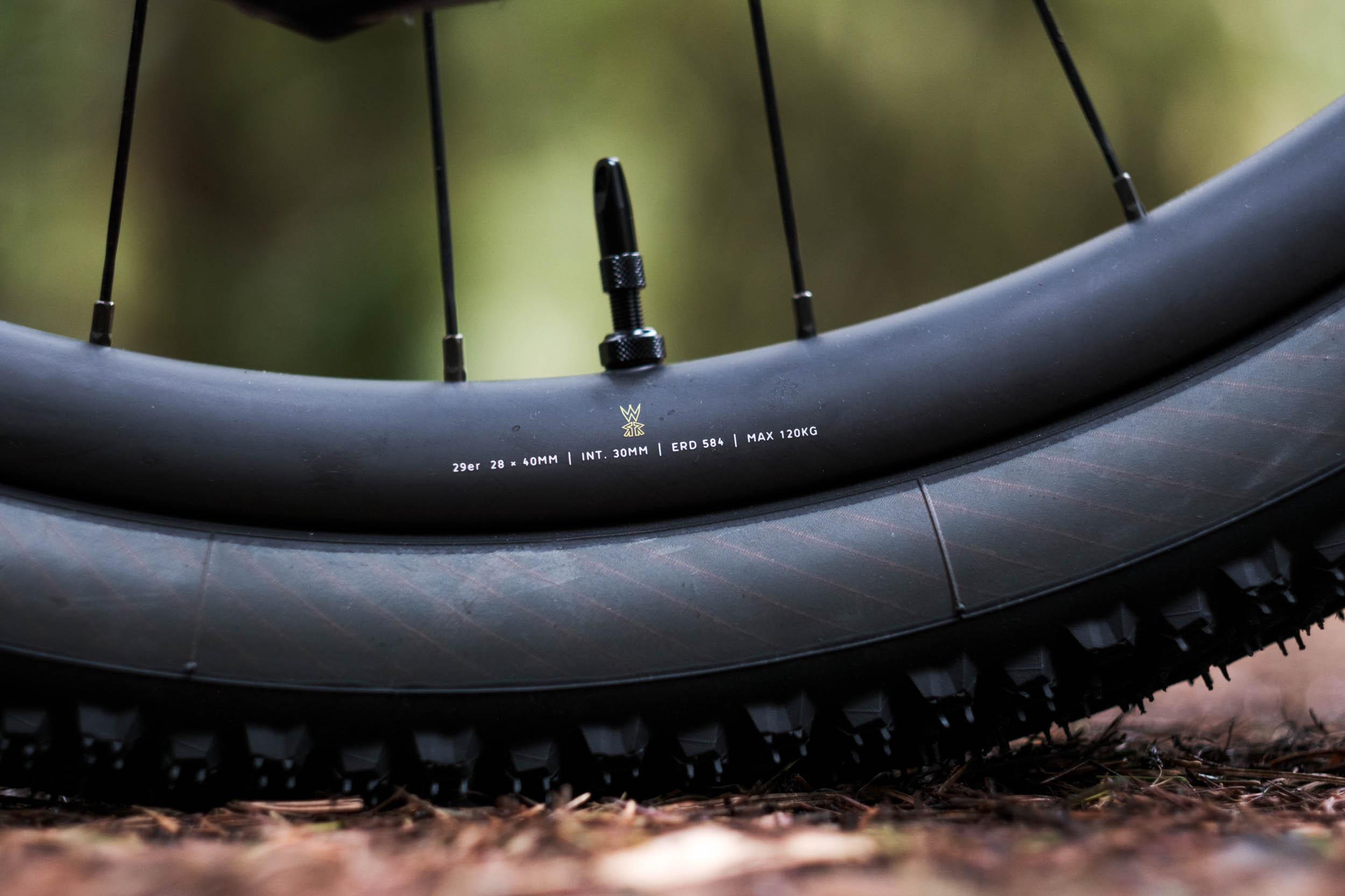
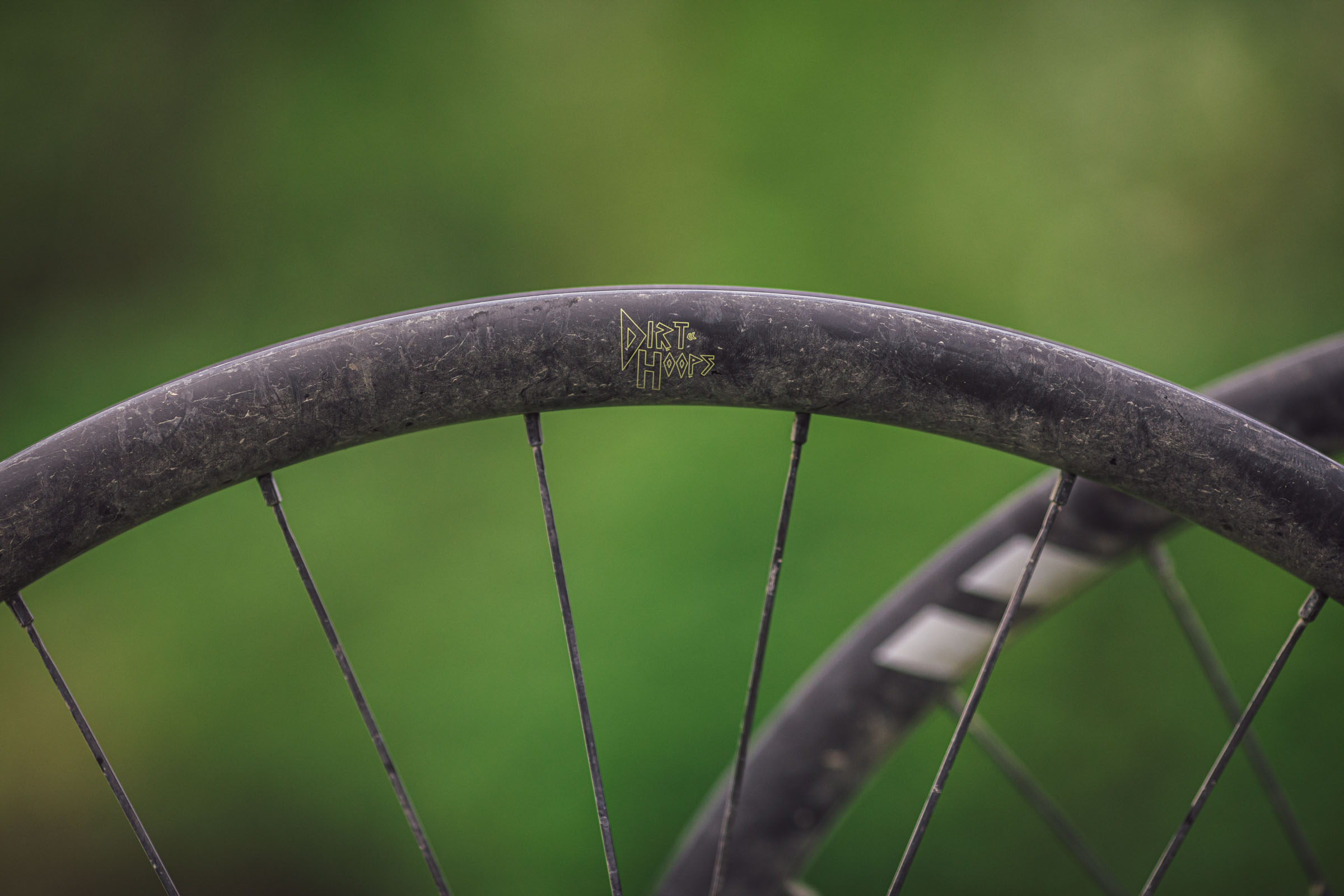
The wheel choice is Dirt Hoops Wider 40, another in-house option. They measure 30 mm internal, 40 mm external, and 28 mm deep and came laced to reliable 28-hole DT Swiss 350 hubs. If I were building a forever bike, these are the hubs I would reach for. They’re durable and easy to service. I’ve had them on my own bikes for over five years and have never encountered a problem.
I wonder if the Dirt Hoops Wider 35 would have been enough, considering they’re still rated for cross-country mountain biking compared to the Wider 40’s all-mountain rating. The lighter wheels would save 110 grams of rotational weight, which could be noticeable. As it is, the wide internal width is great for the 2.1″ to 2.4″ tires this bike is built around.
Curve Big Kev V2 Build Spec
- Frame: Curve Big Kev V2, Titanium
- Fork: Curve Ride 415 VGM
- Rims: Curve Dirt Hoops
- Hubs: DT Swiss 350 28H Center Lock
- Tires: Vittoria Mezcal III 29 x 2.1″
- Handlebars: Curve Walmer Bar 50 cm
- Handlebar tape: Curve black anti-shock
- Headset: Curve Integrated
- Crankset: SRAM Force XPLR DUB WIDE, 38t, 175 mm
- Bottom bracket: Curve T47 DUB
- Cassette: SRAM XG 1275 EAGLE 10-52t
- Derailleur(s): SRAM X0 AXS T-Type 12-speed
- Brake/shift levers: SRAM Force AXS
- Brake calipers: SRAM Force AXS Flat Mount Disc
- Rotors: CLX-R CL Rotors 160 mm
- Saddle: Prologo Dimension 143
- Seatpost: Zipp SC 0 Setback 27.2 mm
- Stem: Zipp Service Course 90 mm
Who is this for?
The Curve Big Kev V2 is for drop-bar fanatics who need wider tires but aren’t looking to move too deep into the drop-bar mountain bike category. If it needs to fit into that category, it’s on the gravel, not the off-road end of the spectrum.

When I look at the bikes I own, it could replace two of them. It does everything my gravel bike does, and it could replace my Surly Krampus as my long-distance bikepacking rig, since most of what I do on the Krampus is dirt-road touring rather than singletrack. There aren’t many bikes that wouldn’t be out of place at most gravel races, would excel at the Unbound XL, and could also handle the Tour Divide. This is one of them.

In North America, the Big Kev is available in two builds, starting from $7,404 USD ($10,290 CAD). The frameset is available for USD $3,505 USD ($4,593 CAD). Curve is just setting up their new HQ in Europe, which will streamline sales across the EU. For now, customers can reach out directly for pricing and options.
It’s expensive, unquestionably, but titanium bikes always are. Luckily, they are built for a lifetime of bikepacking.
- Model/Size Tested: Curve Big Kev V2, Force XO T-Type, XL
- Actual Weight: 21.8 pounds / 9.9 kilograms
- Place of Manufacture: China
- Price: $8,055 USD
- Manufacturer’s Details: CurveCycling.com
Pros
- Titanium frame and carbon wheels deliver a ride quality that is supple where it’s wanted and stiff where it’s needed.
- An oversized frame triangle fits a full-size frame bag, even in smaller sizes.
- Excellent build kit, mixing road/gravel brakes with MTB-range gearing.
- The wide gear range of the 38T × 10-52T setup pays off on long climbs and fast descents alike.
- Electronic shifting and externally routed brakes provide a clean look that’s easy to service.
- Gravel-bike-inspired geometry keeps the bike firmly at the gravel-leaning end of the broad drop-bar MTB category.
- Ample tire clearance makes the bike adaptable for different routes.
Cons
- Curve markets the bike as optimized for 2.25” tires, yet ships it with 2.1” tires.
- The Walmer Bar’s wide flare makes braking from the drops awkward.
- AXS shifting raises concerns about regular charging and battery life on bikepacking trips.
- Titanium frame, carbon wheels, and carbon handlebars push the price into premium territory. While it’s in line with other titanium builds, it still has an exclusive price tag.
- Direct-to-consumer sales mean no test rides before a major purchase.
Wrap Up
Every June, BIKEPACKING.com publishes two “Rigs of the Tour Divide” stories, one for flat-bar bikes and another for drop-bar bikes. The variation in bike choice is wild given the riders are all riding the same course, even if their race ambitions vary. I point this out because Curve didn’t hesitate. They claimed the Big Kev V2 is ready for the Tour Divide. But the real question isn’t if the bike is ready—it’s what type of rider wants this bike on the Tour Divide or other routes like it.
This bike rides a lot like a gravel bike. It’s for the rider who races gravel and bikepacks long routes but isn’t willing to compromise on either. It lets the titanium frame, tire size, and contact points add just enough suppleness to keep things comfortable over distances, without missing a single watt going through the pedals. It’s for the rider still eager to race their friend up a climb at the end of an all-day ride.
I never want to own a bikepacking bike that doesn’t get ridden between trips. This bike would not have that problem. It can replace my go-to gravel race bike and my bikepacking bike, and it’s made me stop arguing about underbiking and embrace the gravel-plus era.
Further Reading
Make sure to dig into these related articles for more info...
Please keep the conversation civil, constructive, and inclusive, or your comment will be removed.